US10169094B2 - Dynamic transaction-persistent server load balancing - Google Patents
Dynamic transaction-persistent server load balancing Download PDFInfo
- Publication number
- US10169094B2 US10169094B2 US13/095,705 US201113095705A US10169094B2 US 10169094 B2 US10169094 B2 US 10169094B2 US 201113095705 A US201113095705 A US 201113095705A US 10169094 B2 US10169094 B2 US 10169094B2
- Authority
- US
- United States
- Prior art keywords
- server
- authentication
- servers
- request
- requests
- Prior art date
- Legal status (The legal status is an assumption and is not a legal conclusion. Google has not performed a legal analysis and makes no representation as to the accuracy of the status listed.)
- Active, expires
Links
Images




Classifications
-
- G—PHYSICS
- G06—COMPUTING OR CALCULATING; COUNTING
- G06F—ELECTRIC DIGITAL DATA PROCESSING
- G06F9/00—Arrangements for program control, e.g. control units
- G06F9/06—Arrangements for program control, e.g. control units using stored programs, i.e. using an internal store of processing equipment to receive or retain programs
- G06F9/46—Multiprogramming arrangements
- G06F9/50—Allocation of resources, e.g. of the central processing unit [CPU]
- G06F9/5005—Allocation of resources, e.g. of the central processing unit [CPU] to service a request
- G06F9/5027—Allocation of resources, e.g. of the central processing unit [CPU] to service a request the resource being a machine, e.g. CPUs, Servers, Terminals
- G06F9/505—Allocation of resources, e.g. of the central processing unit [CPU] to service a request the resource being a machine, e.g. CPUs, Servers, Terminals considering the load
-
- H—ELECTRICITY
- H04—ELECTRIC COMMUNICATION TECHNIQUE
- H04L—TRANSMISSION OF DIGITAL INFORMATION, e.g. TELEGRAPHIC COMMUNICATION
- H04L67/00—Network arrangements or protocols for supporting network services or applications
- H04L67/01—Protocols
- H04L67/10—Protocols in which an application is distributed across nodes in the network
- H04L67/1001—Protocols in which an application is distributed across nodes in the network for accessing one among a plurality of replicated servers
- H04L67/1029—Protocols in which an application is distributed across nodes in the network for accessing one among a plurality of replicated servers using data related to the state of servers by a load balancer
-
- H—ELECTRICITY
- H04—ELECTRIC COMMUNICATION TECHNIQUE
- H04L—TRANSMISSION OF DIGITAL INFORMATION, e.g. TELEGRAPHIC COMMUNICATION
- H04L63/00—Network architectures or network communication protocols for network security
- H04L63/08—Network architectures or network communication protocols for network security for authentication of entities
- H04L63/0892—Network architectures or network communication protocols for network security for authentication of entities by using authentication-authorization-accounting [AAA] servers or protocols
-
- H—ELECTRICITY
- H04—ELECTRIC COMMUNICATION TECHNIQUE
- H04L—TRANSMISSION OF DIGITAL INFORMATION, e.g. TELEGRAPHIC COMMUNICATION
- H04L67/00—Network arrangements or protocols for supporting network services or applications
- H04L67/01—Protocols
- H04L67/10—Protocols in which an application is distributed across nodes in the network
- H04L67/1001—Protocols in which an application is distributed across nodes in the network for accessing one among a plurality of replicated servers
- H04L67/1004—Server selection for load balancing
- H04L67/1008—Server selection for load balancing based on parameters of servers, e.g. available memory or workload
Definitions
- the present disclosure relates to server load balancing in a wireless network, and in particular, one embodiment of the disclosure relates to dynamically load balancing transaction-persistent requests among a set of authentication servers.
- Persistence also known as “stickiness”
- server load balancing Persistence
- server load balancing follows a round robin (RR) approach.
- a load balancer transmits to each server transaction-persistent requests in a periodically repeated order.
- the load balancer will always transmit transaction-persistent requests to the authentication servers according to the following order—AS 1 , AS 2 , AS 3 , AS 1 , AS 2 , AS 3 , AS 1 , . . .
- AS 1 , AS 2 , AS 3 AS 1 , AS 2 , AS 3 , AS 1 , . . .
- a weighted round robin is similar to the simple round robin, but assigns weights to the authentication servers based on their capacities.
- the load balancer will assign weights 2 , 1 , 1 to AS 1 , AS 2 , and AS 3 accordingly.
- the load balancer will transmit transaction-persistent requests to the authentication servers according to the following order—AS 1 , AS 1 , AS 2 , AS 3 , AS 1 , AS 1 , AS 2 , . . .
- WRR requires knowledge of the server capacities.
- both simple RR and WRR are static scheduling approaches that do not consider dynamic real-time transmission latency in a network.
- FIGS. 1A-1C are block diagrams illustrating examples of computing network environments according to embodiments of the present disclosure.
- FIG. 2 is a diagram illustrating an example RADIUS packet and types of RADIUS packet according to embodiments of the present disclosure.
- FIG. 3 is a sequence diagram illustrating RADIUS protocol according to embodiments of the present disclosure.
- FIG. 4 is a sequence diagram illustrating dynamic transaction-persistent server load balancing according to embodiments of the present disclosure.
- FIG. 5 is a diagram illustrating dynamic transaction-persistent server load balancing based on outstanding requests at real-time corresponding to the case scenario illustrated in FIG. 4 according to embodiments of the present disclosure.
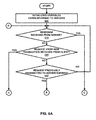
- FIG. 6A-6B are flowcharts illustrating the process of dynamic transaction-persistent server load balancing according to embodiments of the present disclosure.
- FIG. 7 is a block diagram illustrating a Network Access Server (NAS) client system capable of performing dynamic transaction-persistent server load balancing according to embodiments of the present disclosure.
- NAS Network Access Server
- the present disclosure supports dynamic transaction-persistent server load balancing based on the number of outstanding requests associated with each server in a server group.
- receives a client request associated with a new transaction receives a client request associated with a new transaction.
- the system dynamically infers relative capacities of the servers in the group by comparing the numbers of outstanding requests. As an example, when server A has 3 outstanding requests and server B has 5 outstanding requests at a given time, the system can infer that server A has higher relative capacity than server B. Server A is inferred to have higher relative capacity than server B, because server A having fewer outstanding requests than server B suggests that, at the given time when the numbers of outstanding requests are compared, server A has relatively more processing power than server B to handle the next outstanding request regardless of the absolute capacity of each server.
- the system selects a server from the group of servers based on the inferred capacities of the servers, and transmits to the selected server a request corresponding to the received client request from the new transaction. Further, after the server is selected for the new transaction, all subsequent requests within the same transaction will also be transmitted to the selected server.
- the system supports transaction-persistent requests, because the load balancing decisions, e.g., the identification and the selection of a server in the server group to transmit requests, are made at the time when a new transaction is initiated by a client.
- embodiments of the present disclosure may include multiple authentication servers in a network that support Remote Authentication Dial-In User Service (RADIUS) protocol.
- the RADIUS servers authenticate users or devices before granting them access to the network, authorize the users or devices for network services, and account for usage of the authorized services.
- the authentication may comply with any network authentication protocol, such as Institute of Electrical and Electronics Engineers (IEEE) 802.1X protocol.
- IEEE 802.1X authentication transaction typically involves three parties: a suppliant, an authenticator, and an authentication server.
- One or more access points or controllers in a wireless network, or switches in a wired network which act as the authenticator in the 802.1X authentication transaction and communicate to the RADIUS servers as Network Access Server (NAS) clients, can perform the dynamic transaction-persistent server load balancing as described herein. Also, the RADIUS servers act the authentication server in the 802.1X transaction.
- NAS Network Access Server
- the outstanding requests for a given server include all previously transmitted requests to the server, as long as (1) the requests have not expired, and (2) no responses corresponding to the requests have been received from the server. It is important to note that a transaction, which an authentication client initiates, may include one or more requests and zero or more responses. Also, it is possible that, during certain time periods within a transaction, all previously transmitted requests to the server have either expired or already associated with the corresponding responses received from the server. In such cases, the number of outstanding requests for the server would be zero during these time periods, although the transaction has not been completed. Thus, depending on the configuration of the system, the number of outstanding requests may or may not be correlated to the number of the transactions.
- the disclosed system can dynamically infer the relative capacities of the servers, and transmission latencies between a host network device and the servers in the group.
- the system can identify or select servers with relatively high capacity and low transmission latency to the host network device based on inferred information.
- the system then transmits requests from a new transaction to the selected server, thereby performing dynamic transaction-persistent load balancing.
- FIG. 1A is a block diagram illustrating an example of a computing network environment according to one embodiment of the present disclosure.
- FIG. 1A includes network 100 , wireless local area network (WLAN) 105 , access point 110 , multiple clients 120 (including, for example, client 122 , client 124 , client 126 , etc.), and multiple authentication servers 130 (including, for example, authentication server 132 , authentication server 134 , authentication server 136 , etc.).
- WLAN wireless local area network
- network 100 couples one or more access point 110 to a group of authentication servers 130 (e.g., authentication servers 132 - 136 ). Although only one access point 110 is depicted in FIG. 1A , it should be noted that the disclosed system can include multiple access points that are either centrally located or distributed in network 100 .
- Network 100 may be any type of wired or wireless network.
- Access point 110 is coupled with clients 120 over WLAN 105 through any commonly supported wireless communication technology.
- Access point 110 is a hardware unit that acts as a communication node by linking wireless mobile stations such as PCs to a wired backbone network.
- Access point 110 may generally broadcast a service set identifier (SSID).
- SSID service set identifier
- Access point 110 may connect client devices or users to other devices or users in the network, and may serve as a point of connection between WLAN and a wired network.
- Access point 110 may have one or more radios. The radios may be configured to support various wireless communication standards.
- the radios may include multiple antennas to support multiple-input and multiple-output (MIMO) technology as used in Institute of Electrical and Electronics Engineers (IEEE) 802.11n wireless networking standards (WiFi), Worldwide Interoperability for Microwave Access standards (WiMAX), 4th Generation cellular wireless standards (4G), 3rd Generation Partnership Project Long Term Evolution (3GPP LTE), and Evolved High-Speed Packet Access (HSPA+).
- MIMO multiple antennas to support multiple-input and multiple-output
- IEEE Institute of Electrical and Electronics Engineers
- WiFi WiFi
- WiMAX Worldwide Interoperability for Microwave Access standards
- 4G 4th Generation cellular wireless standards
- 3GPP LTE 3rd Generation Partnership Project Long Term Evolution
- HSPA+ Evolved High-Speed Packet Access
- access point 110 performs all media access control (MAC) processing functions, such as, terminating the wireless transmission data and management protocols, translating data between the wired and wireless portions of the network, maintaining statistical information regarding wireless clients and the radio environment, etc.
- MAC media access control
- Clients 120 may be any computing device that includes a communication port, which is capable of WLAN communications.
- clients 120 can be, but are not limited to, a smart mobile phone 122 , a laptop or tablet computing device 124 , a desktop or work station 126 , etc.
- Authentication servers 130 are computing devices hosting applications that facilitate authentication of a client device or a user attempting to access a network. Such device can include, but is not limited to, a computer system, a switch, an access point, or a network access server. Authentication generally refers to the process of determining whether a client user or a client device is in fact who or what it declares itself to be. Authentication servers 130 may use authentication methods based on User Datagram Protocol (UDP), such as Remote Authentication Dial-In User Service (RADIUS), or authentication methods based on Transmission Control Protocol (TCP) such as Terminal Access Controller Access Control System Plus (TACACS+).
- UDP User Datagram Protocol
- RADIUS Remote Authentication Dial-In User Service
- TCP Transmission Control Protocol
- TACACS+ Terminal Access Controller Access Control System Plus
- FIG. 1B is a block diagram illustrating another variation of a computing network environment example.
- FIG. 1B includes network 100 , wireless local area network (WLAN) 105 , access point 110 , controller 115 , multiple clients 120 (including, for example, client 122 , client 124 , client 126 , etc.), and multiple authentication servers 130 (including, for example, authentication server 132 , authentication server 134 , authentication server 136 , etc.).
- WLAN wireless local area network
- network 100 couples one or more controllers 115 to a group of authentication servers 130 (e.g., authentication servers 132 - 136 ). Further, each controller 115 is coupled to one or more access points 110 . Although only one access point 110 and one controller 115 is depicted in FIG. 1B , it should be noted that the disclosed system can include multiple controllers 115 that are either centrally located or distributed in network 100 . Moreover, one controller 115 can be coupled to multiple access points 110 . Also, access points 110 are coupled with clients 120 over WLAN 105 through any commonly supported wireless communication technology.
- Access point 110 and controller 115 split the MAC processing.
- Access point 110 may handle a portion of MAC functions, such as, frame exchange handshake between a client user or device 122 , 124 , or 126 and access point 110 , transmission of beacon frames, buffering frames for power conservation of clients 120 , response to Probe Request frames from clients 120 , monitoring radio channels, layer 2 encryption, etc.
- Other MAC functions can be processed by controller 115 .
- controller 115 may be configured to process user/device authentication, frame translation and bridging, association and de-association of clients 120 , etc.
- split of MAC functions described above is by way of example only.
- the disclosed system can be configured to split the MAC functions differently.
- access point 110 and controller 115 may be integrated in a single device, or maybe physically separated and coupled through a wireless or wired network.
- FIG. 10 is a block diagram illustrating yet another variation of an example computing network environment.
- FIG. 10 includes network 100 , wired network 113 , access point 110 , switch 118 , multiple clients 120 (including, for example, client 122 , client 124 , client 126 , etc.), and multiple authentication servers 130 (including, for example, authentication server 132 , authentication server 134 , authentication server 136 , etc.).
- network 100 couples one or more switches 118 to a group of authentication servers 130 (e.g., authentication servers 132 - 136 ). Further, each switch 118 is coupled to one or more access points 110 . Although only one switch 118 is depicted in FIG. 10 , it should be noted that the disclosed system can include multiple switches 118 that are either centrally located or distributed in network 100 . Moreover, switches 118 are coupled with clients 120 over a wired network, such as Ethernet 113 .
- Switch 118 can be any network device that performs data forwarding tasks.
- Switch 118 may function as a bridge, or a router, and forward frames, packets, or other data units.
- switch 118 can perform enhanced functions, such as device/user authentication, authorization, and/or accounting, access control list filtering, differentiated quality of service prioritization, link monitoring and failure detection, etc.
- FIGS. 1A-1C are provided herein for illustration purposes only. Various embodiments of the disclosure may exist without departing from the spirit of the disclosure.
- a device or a virtual device other than a controller or a switch may be deployed in the system to communicate with the access point(s) or to replace the access point(s).
- Such device or virtual device is coupled to the authentication servers through network and is capable of processing user and/or device authentication for the clients.
- the disclosed system may be configured to use various authentication protocols. As described above, one of the commonly used authentication protocols is Remote Authentication Dial-In User Service (RADIUS).
- RADIUS Remote Authentication Dial-In User Service
- the RADIUS server can support a variety of methods to authenticate the user, including but not limited to, Point-to-Point Protocol Password Authentication Protocol (PPP PAP), Challenge-Handshake Authentication Protocol (CHAP), and other authentication mechanisms.
- PPP PAP Point-to-Point Protocol Password Authentication Protocol
- CHAP Challenge-Handshake Authentication Protocol
- the authentication methods comply with IEEE 802.1X standard for port-based network access control (PNAC).
- FIG. 2 is a diagram illustrating an example data format of a RADIUS packet 260 and different types of the RADIUS packet.
- RADIUS packet 260 includes an 8-bit code field 210 (which identifies the type of the RADIUS packet), an 8-bit identifier field 220 (which facilitates matching between requests and responses), a 16-bit length field 230 (which indicates the length of the RADIUS packet), a 16-byte authenticator field 240 (which is used for authentications), and an attributes field 250 that can have a variable length.
- RADIUS code 210 includes selected examples of values for the code field in RADIUS packet 260 .
- a code value 1 indicates that RADIUS packet 260 is an Access-Request packet
- a code value 2 indicates that RADIUS packet 260 is an Access-Accept packet
- a code value 3 indicates that RADIUS packet 260 is an Access-Reject packet
- a code value 4 indicates that RADIUS packet 260 is an Accounting-Request packet
- a code value 5 indicates that RADIUS packet 260 is an Access-Response packet
- a code value 11 indicates that RADIUS packet 260 is an Access-Challenge packet; etc.
- FIG. 3 illustrates an example of communication exchanges under the RADIUS protocol.
- Communication exchanges under the RADIUS protocol typically involve three parties: a suppliant (e.g., clients 310 ), an authenticator (e.g. NAS client 320 ), and an authentication server (e.g., authentication servers 330 ).
- a Network Access Server NAS
- NAS client 320 can be an access point, a controller, a switch, or any other device, which is coupled to authentication servers 330 through network, and which is capable of processing user and/or device authentication for clients 310 .
- NAS client 320 is responsible for passing user authentication information received from client 310 to designated RADIUS servers in a group of authentication servers 330 , and then acting on responses returned from the RADIUS servers.
- Authentication servers 330 are responsible for receiving requests from NAS clients, performing authentication, and returning configuration information for NAS client 320 to deliver service to clients 310 . Further, authentication servers 330 can act as a proxy server to other RADIUS servers or to other kinds of authentication servers.
- a client C 1 314 initiates an authentication transaction, and transmits client request 322 to NAS client 320 at time t 0 .
- Client request 322 is received by NAS client 320 at time t 1 .
- NAS client 320 subsequently creates a corresponding Access-Request packet, and transmits Access-Request packet 332 to RADIUS authentication server, AS 1 344 , at time t 2 .
- Access-Request packet 332 may contain such attributes as user C 1 314 's name, user C 1 314 's password, NAS client 320 's identifier, and a NAS Port ID corresponding to a port via which user C 1 314 accesses NAS client 320 .
- the password can be hidden using methods RSA-based algorithms.
- request 332 is retransmitted to AS 1 344 . If NAS client 320 still receives no response from AS 1 344 after a number of retransmissions, it can also forward request 332 to another RADIUS server in a server group. Alternatively, alternative RADIUS servers in the server group can be selected for retransmissions in accordance to various load balancing algorithms.
- the RADIUS server, AS 1 344 receives request 332 .
- AS 1 344 validates NAS client 320 that transmits request 332 . Any request from NAS client 320 for which the RADIUS server, AS 1 344 , does not have a shared secret will be silently discarded. If NAS client 320 is valid, the RADIUS server, AS 1 344 , consults a database including user information to find a user entry, the user name of which matches the user name of C 1 314 as included in request 332 . The user entry in the database contains a list of requirements that must be met to allow access for user C 1 314 . In some embodiments, the RADIUS server, AS 1 344 , verifies user's password. In other embodiments, the RADIUS server verifies the NAS client ID and/or the NAS client's port ID to determine whether the user is allowed to access network resources.
- the RADIUS server if a condition is not met, the RADIUS server, AS 1 344 , sends an Access-Reject response indicating that the request from NAS client 320 is invalid.
- the RADIUS server may include a message in the Access-Reject response that may be displayed to the user. No other attributes are permitted in the Access-Reject response.
- RADIUS server AS 1 344 if all conditions are met and RADIUS server AS 1 344 wishes to issue a challenge to which user C 1 314 must respond, RADIUS server AS 1 344 sends Access-Challenge 334 at time t 4 , which is received by NAS client 320 at time t 5 .
- Access-Challenge 334 includes a message 324 (which is transmitted from NAS client 320 to user C 1 314 at time t 6 , and which is received by user C 1 314 at time t 7 ) to be displayed to the user C 1 314 prompting for a response 326 (which is transmitted from user C 1 314 to NAS client 320 at time t 8 , and which is received by NAS client 320 at time t 9 ) to the challenge.
- a message 324 (which is transmitted from NAS client 320 to user C 1 314 at time t 6 , and which is received by user C 1 314 at time t 7 ) to be displayed to the user C 1 314 prompting for a response 326 (which is transmitted from user C 1 314 to NAS client 320 at time t 8 , and which is received by NAS client 320 at time t 9 ) to the challenge.
- Access-Request 336 upon receiving response 326 from user C 1 314 , transmits Access-Request 336 at time t 10 , which is the same as original Access-Request 332 but has a new request identifier.
- the user password attribute is replaced by user C 1 314 's response (encrypted) to RADIUS server AS 1 344 's challenge.
- Access-Request 336 may further include a state attribute if presented in Access-Challenge 334 .
- Access-Request 336 is received by RADIUS server AS 1 344 at time t 11 .
- RADIUS server AS 1 344 can respond to this new Access-Request 336 with an Access-Accept, an Access-Reject, or another Access-Challenge.
- AS 1 314 transmits, at time t 12 , Access-Accept 338 , which is received by NAS client 320 at time t 13 . If all conditions are met, the list of configuration information for the user C 1 314 is placed into Access-Accept 338 .
- the configuration information includes the type of service, for example, Serial Line Internet Protocol (SLIP), Point-to-Point Protocol (PP), login user, and all other necessary information to deliver the desired service.
- SLIP and PPP this may include IP address, subnet mask, MTU, desired compression, and desired packet filter identifiers, etc.
- Access-Challenge 338 typically contains a reply message 328 , including a challenge to be displayed to the user, such as a numeric value unlikely to be repeated.
- this is obtained from an external server that knows what type of authenticator should be in the possession of the authorized user and can therefore choose a random or non-repeating pseudo-random number of an appropriate radix and length.
- the user then responds to the challenge with the user's client device or software, which calculates a response based on what the user enters.
- the client device then forwards the response to the RADIUS server via a new Access-Request. If the response matches the expected response, the RADIUS server replies with an Access-Accept (not shown). Otherwise, the RADIUS server replies with an Access-Reject.
- FIG. 4 illustrates dynamic transaction-persistent server load balancing according to embodiments of the present disclosure.
- clients 410 communicate to a group of authentication servers 430 through NAS client 420 .
- NAS client 420 can be an access point, a controller, a switch, or any other device, which is coupled to authentication servers 430 through network, and which is capable of processing user and/or device authentication for clients 410 .
- the system depicted in FIG. 4 comprises clients 410 , including three users and/or devices, namely C 1 414 , C 2 416 , and C 3 418 , NAS client 420 , and two authentication servers 430 , including AS 1 434 and AS 2 436 .
- the disclosed system should not be restricted to the configuration and network setup as described in FIG. 4 .
- C 1 414 transmits request 441 at time t 0 to NAS client 420 , which receives request 441 at time t 1 .
- NAS client 420 creates and transmits Access-Request 451 to AS 1 434 at time t 2 , which is received by AS 1 434 at time t 3 .
- AS 1 434 transmits Access-Challenge 453 at time t 4 to NAS client 420 .
- NAS client 420 After receiving Access-Challenge 453 at time t 5 , NAS client 420 transmits challenge 443 to C 1 414 at time t 6 .
- C 1 414 receives challenge 443 at time t 7 , and responds with reply message 445 at time t 8 .
- Reply message 445 is received by NAS client 420 at time t 9 .
- NAS client 420 creates new Access-Request 455 including the reply, and transmits new Access-Request 455 to AS 1 434 at time t 10 .
- AS 1 434 receives Access-Request 455 at time t 11 .
- the sequence of communication exchanges between time t 0 and time t 11 described above in reference to FIG. 4 is comparable to the sequence of communication exchanges between time t 0 and time t 11 as described in FIG. 3 . Note that because Access-Request 451 and Access-Request 455 are in the same transaction, the disclosed load balancing system will not load balance them and will transmit both requests to the same authentication server, thereby making both requests transaction-persistent.
- a second user C 2 416 transmits request 461 from a new transaction to NAS client 420 , which receives request 461 at time t 13 .
- NAS client 420 considers load balancing requests from clients 410 , and determines authentication server allocation whenever it receives a first request from a new transaction, e.g., at or after time t 13 .
- NAS client 420 makes the determination based on numbers of outstanding requests at AS 1 and AS 2 respectively. Because after time t 10 , AS 1 434 has 1 previously transmitted request (i.e., Access-Request 455 ) from NAS client 420 , and the request has neither expired nor been matched to a response received from AS 1 434 , the number of outstanding request at AS 1 434 before time t 13 is 1, and the number of outstanding request at AS 2 436 is 0 (i.e., the initialized value). Thus, the system will determine to transmit all requests associated with the new transaction initialized by user C 2 416 to AS 2 , including Access-Request 471 .
- Access-Request 471 is transmitted from NAS client 420 at t 14 and received by AS 2 436 at t 15 . Therefore, subsequent time t 14 and prior to time t 17 when Access-Accept 457 is received by NAS client 420 from AS 1 434 (which transmits Access-Accept 457 at time t 16 ), the number of outstanding request at AS 1 434 is 1 (indicating Access-Request 455 ), and the number of outstanding request at AS 2 436 is also 1 (indicating Access-Request 471 ). If a new client request from a new transaction is received during this time period, NAS client 420 can select either AS 1 434 or AS 2 436 to transmit requests associated with the new transaction in accordance with the load balancing algorithm described herein.
- Access-Accept 457 is received by NAS client 420 at t 17 , and also because the identifier in Access-Accept 457 matches the identifier in Access-Request 455 , after NAS client 420 receives Access-Accept 457 at time t 17 , the number of outstanding requests at AS 1 434 will be updated to 0. Therefore, after time t 17 , NAS client 420 will infer that AS 1 434 has a higher relative server capacity than AS 2 436 .
- user C 3 418 transmits new request 481 from another new transaction at time t 18 to NAS client 420 .
- New request 481 is received by NAS client 420 at time t 19 .
- AS 1 434 is associated with 0 outstanding request
- AS 2 436 is associated with 1 outstanding request, namely Access-Request 471 . Therefore, the disclosed system will determine to transmit Access-Request 491 corresponding to the other new transaction from C 3 418 to AS 1 434 , because AS 1 434 has fewer number of outstanding requests at the time of load balance determination.
- Access-Request 491 is transmitted by NAS client 420 at time t 20 , and received by AS 1 434 at time t 21 . Also, after receiving Access-Accept 457 at time t 17 , NAS client 420 transmits corresponding response 447 to user C 1 414 at t 22 . Response 447 is received by user C 1 414 at time t 23 .
- AS 2 436 determines that one or more conditions in the authentication database are not met. As a result, AS 1 434 sends Access-Reject 473 indicating that request 471 from NAS client 420 is invalid at time t 24 .
- NAS client 420 receives Access-Reject 473 at time t 26 , and transmits reply 463 to user C 2 416 at t 27 .
- Reply 463 informing C 2 416 of the rejection is received by C 2 416 at time t 28 .
- FIG. 5 shows a summary of the number of outstanding requests at AS 1 540 and the number of outstanding requests at AS 2 560 at different time points 520 .
- FIG. 5 further shows AS selection 580 based at least on the relative capacities of AS 1 and AS 2 , and transmission latencies between NAS clients and AS 1 and/or AS 2 at different time points.
- the variables indicating outstanding requests at authentication servers are initialized to zero.
- the variable for an authentication server increases when a new request is transmitted from a NAS client to the authentication server.
- the variable decreases when a previously transmitted request expires, or when a response, which is corresponding to a non-expired previously transmitted request, is received by the NAS client from the authentication server.
- the variable for the authentication server decreases when a new request is transmitted from the NAS client to the authentication server.
- the variable increases when a previously transmitted request expires, or when a response, which is corresponding to a non-expired previously transmitted request, is received by the NAS client from the authentication server.
- any methods capable of tracking incremental and/or decremental changes, or progressions and/or regressions may be used for tracking purposes.
- the metrics may be, for example, numerical, alphabetical, or categorical.
- the relative server capacities and transmission latencies are dynamically inferred from the numbers of outstanding requests at different authentication servers in the server group. For example, during the time period between time t 13 and time t 14 , because the number of outstanding request at AS 1 540 is 1, and the number of outstanding request at AS 2 560 is 0, the disclosed system can infer that AS 2 has a higher capacity and lower transmission latency than AS 1 . Thus, the system will identify AS 2 as the authentication server for processing requests associated with the new transaction initiated by C 2 , and transmits the first request from the new transaction at time t 14 to AS 2 .
- the system therefore infers that AS 1 has a higher capacity and lower transmission latency than AS 2 . Accordingly, the system will select AS 1 for authentication of requests associated with the new transaction initiated by C 3 , and transmits the first request from the new transaction at time t 20 to AS 1 .
- the comparison of the number of outstanding requests may be based on concrete values, statistical values, categorical classifications, etc.
- the system may be configured to identify the authentication server with fewest outstanding requests based the comparison.
- the system may be configured to identify the authentication server with relatively few, but not necessarily the fewest, outstanding requests based on the comparison.
- requests generally include many different types of communication transmissions from the NAS client to authentication servers.
- the requests can include, but are not limited to, Access-Request and Accounting-Request.
- the system can be used to perform load balance among multiple server farms. Each server farm includes a group of servers coupled through a proxy server to a NAS client. The NAS client will transmit requests associated with a new transaction based on comparison of numbers of outstanding requests associated with each proxy server.
- FIG. 6A-6B are flowcharts illustrating the process of dynamic transaction-persistent server load balancing.
- the disclosed system initializes variables corresponding to servers (operation 605 ) to an initial value. Note that separate variables are maintained for different servers.
- the system determines whether a response is received from a corresponding server (operation 615 ). If so, the system updates the variable for the corresponding server (operation 675 ), and subsequently transmits a response to client (operation 695 ). If not, the system continues with additional determinations.
- the system can determine whether a request from a new transaction is received from a client (operation 625 ). If so, the system compares current values of the variables corresponding to the servers (operation 645 ). The system can then infer the relative capacities of the servers, and transmission latencies between the NAS client and the authentication servers based on the comparison (operation 655 ). For example, a server with fewer outstanding requests than another server is inferred to have a higher relative capacity than the other server at a specific time, because the server is presumed to have high processing capacity and low transmission latency based on the low number of outstanding requests. Next, the system identifies and selects a server based on inferred relative capacities of the servers and transmission latencies (operation 665 ). The system also updates the variable for the identified server (operation 675 ), and transmits the request to identified server (operation 685 ).
- the system can determine whether a request that has been previously transmitted to a corresponding server is expired (operation 635 ). If so, the system will update the variable associated with the corresponding server (operation 675 ).
- FIG. 7 is a block diagram illustrating a Network Access Server (NAS) client system capable of performing dynamic transaction-persistent server load balancing in a network.
- Network Access Server (NAS) system 700 includes at least one or more radio antennas 710 capable of either transmitting or receiving radio signals or both, a processor 730 capable of processing computing instructions, a network interface 720 capable of communicating to a wired or wireless network, a memory 740 capable of storing instructions and data, and an authentication mechanism 750 .
- System 700 may be used as a client system, or a server system, or may serve both as a client and a server in a distributed system or a cloud system.
- Radio 710 may be any combination of known or convenient electrical components, including but not limited to, transistors, capacitors, resistors, multiplexers, wiring, registers, diodes or any other electrical components known or later become known.
- Network interface 720 can be any communication interface, which includes but is not limited to, a modem, token ring interface, Ethernet interface, wireless 802.11 interface, cellular wireless interface, satellite transmission interface, or any other interface for coupling network devices.
- Processor 730 can include one or more microprocessors and/or network processors.
- Memory 740 can include storage components, such as, Dynamic Random Access Memory (DRAM), Static Random Access Memory (SRAM), etc.
- DRAM Dynamic Random Access Memory
- SRAM Static Random Access Memory
- Authentication mechanism 750 is coupled to processor 730 and memory 740 to perform the process of dynamic transaction-persistent server load balancing as describe in the present disclosure.
- the present disclosure may be realized in hardware, software, or a combination of hardware and software.
- the present invention may be realized in a centralized fashion in one computer system or in a distributed fashion where different elements are spread across several interconnected computer systems coupled to a network.
- a typical combination of hardware and software may be an access point with a computer program that, when being loaded and executed, controls the device such that it carries out the methods described herein.
- the present disclosure also may be embedded in nontransitory fashion in a computer-readable storage medium, which comprises all the features enabling the implementation of the methods described herein, and which when loaded in a computer system is able to carry out these methods.
- Computer program in the present context means any expression, in any language, code or notation, of a set of instructions intended to cause a system having an information processing capability to perform a particular function either directly or after either or both of the following: a) conversion to another language, code or notation; b) reproduction in a different material form.
- access point generally refers to receiving points for any known or convenient wireless access technology which may later become known.
- AP is not intended to be limited to 802.11 APs.
- APs generally function to allow wireless devices to connect to a wired network via various communications standards.
- nism generally refers to a component of a system or device to serve one or more functions, including but not limited to, software components, electronic components, mechanical components, electro-mechanical components, etc.
Landscapes
- Engineering & Computer Science (AREA)
- Software Systems (AREA)
- Theoretical Computer Science (AREA)
- Physics & Mathematics (AREA)
- General Engineering & Computer Science (AREA)
- General Physics & Mathematics (AREA)
- Computer Networks & Wireless Communication (AREA)
- Signal Processing (AREA)
- Computer And Data Communications (AREA)
Abstract
Description
Claims (17)
Priority Applications (2)
| Application Number | Priority Date | Filing Date | Title |
|---|---|---|---|
| US13/095,705 US10169094B2 (en) | 2011-04-27 | 2011-04-27 | Dynamic transaction-persistent server load balancing |
| US16/211,765 US11036557B2 (en) | 2011-04-27 | 2018-12-06 | Dynamic transaction-persistent server load balancing |
Applications Claiming Priority (1)
| Application Number | Priority Date | Filing Date | Title |
|---|---|---|---|
| US13/095,705 US10169094B2 (en) | 2011-04-27 | 2011-04-27 | Dynamic transaction-persistent server load balancing |
Related Child Applications (1)
| Application Number | Title | Priority Date | Filing Date |
|---|---|---|---|
| US16/211,765 Continuation US11036557B2 (en) | 2011-04-27 | 2018-12-06 | Dynamic transaction-persistent server load balancing |
Publications (2)
| Publication Number | Publication Date |
|---|---|
| US20120278440A1 US20120278440A1 (en) | 2012-11-01 |
| US10169094B2 true US10169094B2 (en) | 2019-01-01 |
Family
ID=47068815
Family Applications (2)
| Application Number | Title | Priority Date | Filing Date |
|---|---|---|---|
| US13/095,705 Active 2033-03-02 US10169094B2 (en) | 2011-04-27 | 2011-04-27 | Dynamic transaction-persistent server load balancing |
| US16/211,765 Active US11036557B2 (en) | 2011-04-27 | 2018-12-06 | Dynamic transaction-persistent server load balancing |
Family Applications After (1)
| Application Number | Title | Priority Date | Filing Date |
|---|---|---|---|
| US16/211,765 Active US11036557B2 (en) | 2011-04-27 | 2018-12-06 | Dynamic transaction-persistent server load balancing |
Country Status (1)
| Country | Link |
|---|---|
| US (2) | US10169094B2 (en) |
Cited By (12)
| Publication number | Priority date | Publication date | Assignee | Title |
|---|---|---|---|---|
| US20170085956A1 (en) * | 2014-06-04 | 2017-03-23 | Saronikos Trading And Services, Unipessoal Lda | Method for Generating Messages, Comprising Information About Radio-Television Programs, in Reply to a Query Made on One or More Radio-Television Program Databases and/or on the Internet, and Radio-Television Apparatus and System Thereof |
| US20180368123A1 (en) * | 2017-06-20 | 2018-12-20 | Citrix Systems, Inc. | Optimized Caching of Data in a Network of Nodes |
| US20190158553A1 (en) * | 2012-12-31 | 2019-05-23 | Divx, Llc | Systems, Methods, and Media for Controlling Delivery Of Content |
| US10992955B2 (en) | 2011-01-05 | 2021-04-27 | Divx, Llc | Systems and methods for performing adaptive bitrate streaming |
| US11394801B2 (en) | 2020-01-21 | 2022-07-19 | Bank Of America Corporation | Resiliency control engine for network service mesh systems |
| US11457054B2 (en) | 2011-08-30 | 2022-09-27 | Divx, Llc | Selection of resolutions for seamless resolution switching of multimedia content |
| US11711552B2 (en) | 2014-04-05 | 2023-07-25 | Divx, Llc | Systems and methods for encoding and playing back video at different frame rates using enhancement layers |
| USRE49990E1 (en) | 2012-12-31 | 2024-05-28 | Divx, Llc | Use of objective quality measures of streamed content to reduce streaming bandwidth |
| US12244878B2 (en) | 2011-09-01 | 2025-03-04 | Divx, Llc | Systems and methods for distributing content using a common set of encryption keys |
| US12407906B2 (en) | 2013-05-30 | 2025-09-02 | Divx, Llc | Network video streaming with trick play based on separate trick play files |
| US12470781B2 (en) | 2006-03-14 | 2025-11-11 | Divx, Llc | Federated digital rights management scheme including trusted systems |
| US12647561B2 (en) | 2013-03-15 | 2026-06-02 | Divx, Llc | Systems, methods, and media for transcoding video data using metadata |
Families Citing this family (6)
| Publication number | Priority date | Publication date | Assignee | Title |
|---|---|---|---|---|
| US9241031B2 (en) * | 2011-08-02 | 2016-01-19 | Verizon Patent And Licensing Inc. | Selecting an auxiliary event-package server |
| US9282456B2 (en) * | 2012-11-30 | 2016-03-08 | Intel Corporation | Techniques for roaming between heterogeneous wireless networks |
| US9032081B1 (en) | 2014-05-29 | 2015-05-12 | Signiant, Inc. | System and method for load balancing cloud-based accelerated transfer servers |
| US10334070B2 (en) * | 2014-11-11 | 2019-06-25 | Unify Gmbh & Co. Kg | Method and system for real-time resource consumption control in a distributed computing environment |
| US10834688B1 (en) * | 2019-08-28 | 2020-11-10 | International Business Machines Corporation | Wireless cross-connect datacenter |
| US12069498B2 (en) * | 2022-07-12 | 2024-08-20 | Dish Wireless L.L.C. | Group monitoring and management of network functions of public cloud-based 5G network |
Citations (20)
| Publication number | Priority date | Publication date | Assignee | Title |
|---|---|---|---|---|
| US6324580B1 (en) * | 1998-09-03 | 2001-11-27 | Sun Microsystems, Inc. | Load balancing for replicated services |
| US20020032777A1 (en) * | 2000-09-11 | 2002-03-14 | Yoko Kawata | Load sharing apparatus and a load estimation method |
| US20030046396A1 (en) * | 2000-03-03 | 2003-03-06 | Richter Roger K. | Systems and methods for managing resource utilization in information management environments |
| US6560717B1 (en) * | 1999-12-10 | 2003-05-06 | Art Technology Group, Inc. | Method and system for load balancing and management |
| US20040143660A1 (en) * | 2000-06-08 | 2004-07-22 | John Dimitroff | System and method for managing data flow and measuring service in a storage network |
| US20040168054A1 (en) * | 2003-02-26 | 2004-08-26 | Halasz David E. | Fast re-authentication with dynamic credentials |
| US6922724B1 (en) * | 2000-05-08 | 2005-07-26 | Citrix Systems, Inc. | Method and apparatus for managing server load |
| US7082122B2 (en) * | 2001-12-24 | 2006-07-25 | Innomedia Pte Ltd. | Method and system for connecting to a proxy server with the lowest workload through a load balancing proxy server |
| US20080034111A1 (en) * | 2006-08-03 | 2008-02-07 | Citrix Systems, Inc. | Systems and Methods for Hierarchical Global Load Balancing |
| US7447166B1 (en) * | 2004-11-02 | 2008-11-04 | Cisco Technology, Inc. | Method to distribute IEEE 802.1X authenticated users among multiple broadcast domains |
| US20090083861A1 (en) * | 2007-09-24 | 2009-03-26 | Bridgewater Systems Corp. | Systems and Methods for Server Load Balancing Using Authentication, Authorization, and Accounting Protocols |
| US20090265467A1 (en) * | 2008-04-17 | 2009-10-22 | Radware, Ltd. | Method and System for Load Balancing over a Cluster of Authentication, Authorization and Accounting (AAA) Servers |
| US7640023B2 (en) * | 2006-05-03 | 2009-12-29 | Cisco Technology, Inc. | System and method for server farm resource allocation |
| US7676561B1 (en) * | 2003-12-02 | 2010-03-09 | Sun Microsystems, Inc. | Method and apparatus for adaptive load balancing |
| US7711956B2 (en) * | 2004-05-14 | 2010-05-04 | International Business Machines Corporation | Information processing apparatus, information system, proxy processing method, and program and recording medium therefor |
| US20110040845A1 (en) * | 2008-05-01 | 2011-02-17 | Yigang Cai | Message restriction for diameter servers |
| US7900040B2 (en) * | 1999-09-01 | 2011-03-01 | Juergen Brendel | Atomic session-start operation combining clear-text and encrypted sessions to provide ID visibility to middleware such as load-balancers |
| US20110078285A1 (en) * | 1998-05-29 | 2011-03-31 | Access Systems Americas, Inc. | Method and apparatus for wireless internet access |
| US20120066371A1 (en) * | 2010-09-10 | 2012-03-15 | Cisco Technology, Inc. | Server Load Balancer Scaling for Virtual Servers |
| US8161252B1 (en) * | 2005-08-01 | 2012-04-17 | Nvidia Corporation | Memory interface with dynamic selection among mirrored storage locations |
Family Cites Families (6)
| Publication number | Priority date | Publication date | Assignee | Title |
|---|---|---|---|---|
| US5519772A (en) * | 1994-01-31 | 1996-05-21 | Bell Communications Research, Inc. | Network-based telephone system having interactive capabilities |
| US6327622B1 (en) * | 1998-09-03 | 2001-12-04 | Sun Microsystems, Inc. | Load balancing in a network environment |
| US6442165B1 (en) * | 1998-12-02 | 2002-08-27 | Cisco Technology, Inc. | Load balancing between service component instances |
| ES2258134T3 (en) * | 2002-01-18 | 2006-08-16 | Nokia Corporation | METHOD AND APPLIANCE FOR ACCESS CONTROL OF A WIRELESS TERMINAL DEVICE IN A COMMUNICATIONS NETWORK. |
| US7606916B1 (en) * | 2003-11-10 | 2009-10-20 | Cisco Technology, Inc. | Method and apparatus for load balancing within a computer system |
| US20110078303A1 (en) * | 2009-09-30 | 2011-03-31 | Alcatel-Lucent Usa Inc. | Dynamic load balancing and scaling of allocated cloud resources in an enterprise network |
-
2011
- 2011-04-27 US US13/095,705 patent/US10169094B2/en active Active
-
2018
- 2018-12-06 US US16/211,765 patent/US11036557B2/en active Active
Patent Citations (20)
| Publication number | Priority date | Publication date | Assignee | Title |
|---|---|---|---|---|
| US20110078285A1 (en) * | 1998-05-29 | 2011-03-31 | Access Systems Americas, Inc. | Method and apparatus for wireless internet access |
| US6324580B1 (en) * | 1998-09-03 | 2001-11-27 | Sun Microsystems, Inc. | Load balancing for replicated services |
| US7900040B2 (en) * | 1999-09-01 | 2011-03-01 | Juergen Brendel | Atomic session-start operation combining clear-text and encrypted sessions to provide ID visibility to middleware such as load-balancers |
| US6560717B1 (en) * | 1999-12-10 | 2003-05-06 | Art Technology Group, Inc. | Method and system for load balancing and management |
| US20030046396A1 (en) * | 2000-03-03 | 2003-03-06 | Richter Roger K. | Systems and methods for managing resource utilization in information management environments |
| US6922724B1 (en) * | 2000-05-08 | 2005-07-26 | Citrix Systems, Inc. | Method and apparatus for managing server load |
| US20040143660A1 (en) * | 2000-06-08 | 2004-07-22 | John Dimitroff | System and method for managing data flow and measuring service in a storage network |
| US20020032777A1 (en) * | 2000-09-11 | 2002-03-14 | Yoko Kawata | Load sharing apparatus and a load estimation method |
| US7082122B2 (en) * | 2001-12-24 | 2006-07-25 | Innomedia Pte Ltd. | Method and system for connecting to a proxy server with the lowest workload through a load balancing proxy server |
| US20040168054A1 (en) * | 2003-02-26 | 2004-08-26 | Halasz David E. | Fast re-authentication with dynamic credentials |
| US7676561B1 (en) * | 2003-12-02 | 2010-03-09 | Sun Microsystems, Inc. | Method and apparatus for adaptive load balancing |
| US7711956B2 (en) * | 2004-05-14 | 2010-05-04 | International Business Machines Corporation | Information processing apparatus, information system, proxy processing method, and program and recording medium therefor |
| US7447166B1 (en) * | 2004-11-02 | 2008-11-04 | Cisco Technology, Inc. | Method to distribute IEEE 802.1X authenticated users among multiple broadcast domains |
| US8161252B1 (en) * | 2005-08-01 | 2012-04-17 | Nvidia Corporation | Memory interface with dynamic selection among mirrored storage locations |
| US7640023B2 (en) * | 2006-05-03 | 2009-12-29 | Cisco Technology, Inc. | System and method for server farm resource allocation |
| US20080034111A1 (en) * | 2006-08-03 | 2008-02-07 | Citrix Systems, Inc. | Systems and Methods for Hierarchical Global Load Balancing |
| US20090083861A1 (en) * | 2007-09-24 | 2009-03-26 | Bridgewater Systems Corp. | Systems and Methods for Server Load Balancing Using Authentication, Authorization, and Accounting Protocols |
| US20090265467A1 (en) * | 2008-04-17 | 2009-10-22 | Radware, Ltd. | Method and System for Load Balancing over a Cluster of Authentication, Authorization and Accounting (AAA) Servers |
| US20110040845A1 (en) * | 2008-05-01 | 2011-02-17 | Yigang Cai | Message restriction for diameter servers |
| US20120066371A1 (en) * | 2010-09-10 | 2012-03-15 | Cisco Technology, Inc. | Server Load Balancer Scaling for Virtual Servers |
Cited By (21)
| Publication number | Priority date | Publication date | Assignee | Title |
|---|---|---|---|---|
| US12470781B2 (en) | 2006-03-14 | 2025-11-11 | Divx, Llc | Federated digital rights management scheme including trusted systems |
| US12262051B2 (en) | 2011-01-05 | 2025-03-25 | Divx, Llc | Systems and methods for performing adaptive bitrate streaming |
| US12250404B2 (en) | 2011-01-05 | 2025-03-11 | Divx, Llc | Systems and methods for performing adaptive bitrate streaming |
| US11638033B2 (en) | 2011-01-05 | 2023-04-25 | Divx, Llc | Systems and methods for performing adaptive bitrate streaming |
| US10992955B2 (en) | 2011-01-05 | 2021-04-27 | Divx, Llc | Systems and methods for performing adaptive bitrate streaming |
| US11457054B2 (en) | 2011-08-30 | 2022-09-27 | Divx, Llc | Selection of resolutions for seamless resolution switching of multimedia content |
| US12244878B2 (en) | 2011-09-01 | 2025-03-04 | Divx, Llc | Systems and methods for distributing content using a common set of encryption keys |
| US20190158553A1 (en) * | 2012-12-31 | 2019-05-23 | Divx, Llc | Systems, Methods, and Media for Controlling Delivery Of Content |
| US10805368B2 (en) * | 2012-12-31 | 2020-10-13 | Divx, Llc | Systems, methods, and media for controlling delivery of content |
| US11785066B2 (en) | 2012-12-31 | 2023-10-10 | Divx, Llc | Systems, methods, and media for controlling delivery of content |
| USRE49990E1 (en) | 2012-12-31 | 2024-05-28 | Divx, Llc | Use of objective quality measures of streamed content to reduce streaming bandwidth |
| US12177281B2 (en) | 2012-12-31 | 2024-12-24 | Divx, Llc | Systems, methods, and media for controlling delivery of content |
| US11438394B2 (en) * | 2012-12-31 | 2022-09-06 | Divx, Llc | Systems, methods, and media for controlling delivery of content |
| US12647561B2 (en) | 2013-03-15 | 2026-06-02 | Divx, Llc | Systems, methods, and media for transcoding video data using metadata |
| US12407906B2 (en) | 2013-05-30 | 2025-09-02 | Divx, Llc | Network video streaming with trick play based on separate trick play files |
| US11711552B2 (en) | 2014-04-05 | 2023-07-25 | Divx, Llc | Systems and methods for encoding and playing back video at different frame rates using enhancement layers |
| US20170085956A1 (en) * | 2014-06-04 | 2017-03-23 | Saronikos Trading And Services, Unipessoal Lda | Method for Generating Messages, Comprising Information About Radio-Television Programs, in Reply to a Query Made on One or More Radio-Television Program Databases and/or on the Internet, and Radio-Television Apparatus and System Thereof |
| US10721719B2 (en) * | 2017-06-20 | 2020-07-21 | Citrix Systems, Inc. | Optimizing caching of data in a network of nodes using a data mapping table by storing data requested at a cache location internal to a server node and updating the mapping table at a shared cache external to the server node |
| US20180368123A1 (en) * | 2017-06-20 | 2018-12-20 | Citrix Systems, Inc. | Optimized Caching of Data in a Network of Nodes |
| US11689641B2 (en) | 2020-01-21 | 2023-06-27 | Bank Of America Corporation | Resiliency control engine for network service mesh systems |
| US11394801B2 (en) | 2020-01-21 | 2022-07-19 | Bank Of America Corporation | Resiliency control engine for network service mesh systems |
Also Published As
| Publication number | Publication date |
|---|---|
| US20120278440A1 (en) | 2012-11-01 |
| US20190114207A1 (en) | 2019-04-18 |
| US11036557B2 (en) | 2021-06-15 |
Similar Documents
| Publication | Publication Date | Title |
|---|---|---|
| US11036557B2 (en) | Dynamic transaction-persistent server load balancing | |
| US11032743B1 (en) | Methods and apparatus for supporting devices of different types using a residential gateway | |
| CN113796111B (en) | Device and method for providing mobile edge computing services in a wireless communication system | |
| EP4247115A2 (en) | Method and device for activating 5g user | |
| JP4713338B2 (en) | Method and apparatus for enabling re-authentication in a cellular communication system | |
| CN102474839B (en) | The method and apparatus of externally network registry in wireless network environment | |
| JP5613324B2 (en) | Secure registration of a group of clients using a single registration procedure | |
| KR102875432B1 (en) | Apparatus and method for providing mobile edge computing service in wireless communication system | |
| US10419411B2 (en) | Network-visitability detection | |
| US20170359344A1 (en) | Network-visitability detection control | |
| US8582476B2 (en) | Communication relay device and communication relay method | |
| US20120230193A1 (en) | Method and system of intelligently load balancing of Wi-Fi access point apparatus in a wlan | |
| RU2639696C2 (en) | Method, device and system for maintaining activity of access session on 802,1x standard | |
| CN111654862B (en) | Registration method and device of terminal equipment | |
| US12348373B2 (en) | Communication method, apparatus, and system | |
| CN108028829A (en) | For obtaining the method being initially accessed and relevant wireless device and network node to network | |
| WO2012040736A2 (en) | System and method for maintaining privacy in a wireless network | |
| US11627465B2 (en) | Token-based access for internet-of-things devices in wireless wide area networks | |
| WO2022046798A1 (en) | Key matching for eapol handshake using distributed computing | |
| CN109803456A (en) | A kind of request restores the method and device of connection | |
| CN111886884B (en) | Method, apparatus and computer readable medium for authentication in communications | |
| JP6861285B2 (en) | Methods and devices for parameter exchange during emergency access | |
| US20240373230A1 (en) | Authentication service with address rotation support | |
| EP4422123A1 (en) | Quantum network slice specific authentication and authorization | |
| US20250219849A1 (en) | Encoding an authentication cookie with metadata |
Legal Events
| Date | Code | Title | Description |
|---|---|---|---|
| AS | Assignment |
Owner name: ARUBA NETWORKS, INC., CALIFORNIA Free format text: ASSIGNMENT OF ASSIGNORS INTEREST;ASSIGNOR:IYER, PRADEEP;REEL/FRAME:026190/0571 Effective date: 20110412 |
|
| AS | Assignment |
Owner name: HEWLETT-PACKARD DEVELOPMENT COMPANY, L.P., TEXAS Free format text: ASSIGNMENT OF ASSIGNORS INTEREST;ASSIGNOR:ARUBA NETWORKS, INC.;REEL/FRAME:035814/0518 Effective date: 20150529 |
|
| AS | Assignment |
Owner name: ARUBA NETWORKS, INC., CALIFORNIA Free format text: ASSIGNMENT OF ASSIGNORS INTEREST;ASSIGNOR:HEWLETT-PACKARD DEVELOPMENT COMPANY, L.P.;REEL/FRAME:036379/0274 Effective date: 20150807 |
|
| AS | Assignment |
Owner name: HEWLETT PACKARD ENTERPRISE DEVELOPMENT LP, TEXAS Free format text: ASSIGNMENT OF ASSIGNORS INTEREST;ASSIGNOR:ARUBA NETWORKS, INC.;REEL/FRAME:045921/0055 Effective date: 20171115 |
|
| STCF | Information on status: patent grant |
Free format text: PATENTED CASE |
|
| MAFP | Maintenance fee payment |
Free format text: PAYMENT OF MAINTENANCE FEE, 4TH YEAR, LARGE ENTITY (ORIGINAL EVENT CODE: M1551); ENTITY STATUS OF PATENT OWNER: LARGE ENTITY Year of fee payment: 4 |
|
| MAFP | Maintenance fee payment |
Free format text: PAYMENT OF MAINTENANCE FEE, 8TH YEAR, LARGE ENTITY (ORIGINAL EVENT CODE: M1552); ENTITY STATUS OF PATENT OWNER: LARGE ENTITY Year of fee payment: 8 |