US10168580B2 - Material of alignment films, methods of fabricating liquid crystal display panels and liquid crystal display panels - Google Patents
Material of alignment films, methods of fabricating liquid crystal display panels and liquid crystal display panels Download PDFInfo
- Publication number
- US10168580B2 US10168580B2 US15/116,225 US201615116225A US10168580B2 US 10168580 B2 US10168580 B2 US 10168580B2 US 201615116225 A US201615116225 A US 201615116225A US 10168580 B2 US10168580 B2 US 10168580B2
- Authority
- US
- United States
- Prior art keywords
- liquid crystal
- fused ring
- aromatic fused
- ring structure
- containing aromatic
- Prior art date
- Legal status (The legal status is an assumption and is not a legal conclusion. Google has not performed a legal analysis and makes no representation as to the accuracy of the status listed.)
- Active, expires
Links
- 239000000463 material Substances 0.000 title claims abstract description 34
- 239000004973 liquid crystal related substance Substances 0.000 title abstract description 93
- 238000000034 method Methods 0.000 title abstract description 20
- 239000000178 monomer Substances 0.000 claims abstract description 79
- 229920005575 poly(amic acid) Polymers 0.000 claims abstract description 34
- 125000003118 aryl group Chemical group 0.000 claims description 124
- 239000002904 solvent Substances 0.000 claims description 19
- 125000004122 cyclic group Chemical group 0.000 claims description 14
- 239000000758 substrate Substances 0.000 abstract description 84
- 229920001721 polyimide Polymers 0.000 abstract description 50
- 229920000642 polymer Polymers 0.000 abstract description 19
- 238000004519 manufacturing process Methods 0.000 abstract description 14
- 239000011248 coating agent Substances 0.000 abstract description 9
- 238000000576 coating method Methods 0.000 abstract description 9
- 230000000694 effects Effects 0.000 abstract description 7
- 230000008569 process Effects 0.000 abstract description 5
- 238000002156 mixing Methods 0.000 abstract description 4
- 239000010408 film Substances 0.000 description 55
- 125000001424 substituent group Chemical group 0.000 description 21
- HNHGUBCXLPVWHN-UHFFFAOYSA-N B.C1CCCCC1 Chemical compound B.C1CCCCC1 HNHGUBCXLPVWHN-UHFFFAOYSA-N 0.000 description 14
- 239000004642 Polyimide Substances 0.000 description 14
- 125000000217 alkyl group Chemical group 0.000 description 14
- 150000004985 diamines Chemical class 0.000 description 14
- 125000002496 methyl group Chemical group [H]C([H])([H])* 0.000 description 14
- 0 *NC.*NC(=O)C1CC(C(=O)NC)C(C(=O)O)CC1C(=O)O.*NC(=O)C1CC(C(=O)NC)C(C(=O)O)CC1C(=O)O.B.C.C.C.C1CCCCC1.C1CCCCC1.CNC Chemical compound *NC.*NC(=O)C1CC(C(=O)NC)C(C(=O)O)CC1C(=O)O.*NC(=O)C1CC(C(=O)NC)C(C(=O)O)CC1C(=O)O.B.C.C.C.C1CCCCC1.C1CCCCC1.CNC 0.000 description 12
- FLMHCSQPHIWFIX-UHFFFAOYSA-N C.C.C.C1CCCCC1.C1CCCCC1.C1CCCCC1 Chemical compound C.C.C.C1CCCCC1.C1CCCCC1.C1CCCCC1 FLMHCSQPHIWFIX-UHFFFAOYSA-N 0.000 description 9
- 238000006243 chemical reaction Methods 0.000 description 9
- 239000000565 sealant Substances 0.000 description 9
- 238000009281 ultraviolet germicidal irradiation Methods 0.000 description 9
- IELNPHMSDRZWTG-UHFFFAOYSA-N C.C.C1=C/C2=C/C=C3/C=CC=C4/C=C\C(=C1)C2C43.C1=CC2=C(C=C1)C1=C(C=CC=C1)C=C2.C1=CC2=C(C=C1)C=CC=C2.C1=CC2=CC3=C(C=CC=C3)C=C2C=C1.C1=CC=C2C=C3C=C4C=CC=CC4=CC3=CC2=C1.C1CCCCC1.C1CCCCC1 Chemical compound C.C.C1=C/C2=C/C=C3/C=CC=C4/C=C\C(=C1)C2C43.C1=CC2=C(C=C1)C1=C(C=CC=C1)C=C2.C1=CC2=C(C=C1)C=CC=C2.C1=CC2=CC3=C(C=CC=C3)C=C2C=C1.C1=CC=C2C=C3C=C4C=CC=CC4=CC3=CC2=C1.C1CCCCC1.C1CCCCC1 IELNPHMSDRZWTG-UHFFFAOYSA-N 0.000 description 8
- DAONSMFTEUKLAJ-UHFFFAOYSA-N C=COC1=CC2=CC3=C(C=C(OC=C)C=C3)C=C2C=C1 Chemical compound C=COC1=CC2=CC3=C(C=C(OC=C)C=C3)C=C2C=C1 DAONSMFTEUKLAJ-UHFFFAOYSA-N 0.000 description 8
- GTDPSWPPOUPBNX-UHFFFAOYSA-N ac1mqpva Chemical compound CC12C(=O)OC(=O)C1(C)C1(C)C2(C)C(=O)OC1=O GTDPSWPPOUPBNX-UHFFFAOYSA-N 0.000 description 8
- MYMOFIZGZYHOMD-UHFFFAOYSA-N Dioxygen Chemical compound O=O MYMOFIZGZYHOMD-UHFFFAOYSA-N 0.000 description 7
- 239000004593 Epoxy Substances 0.000 description 7
- IAYPIBMASNFSPL-UHFFFAOYSA-N Ethylene oxide Chemical group C1CO1 IAYPIBMASNFSPL-UHFFFAOYSA-N 0.000 description 7
- NIXOWILDQLNWCW-UHFFFAOYSA-M acrylate group Chemical group C(C=C)(=O)[O-] NIXOWILDQLNWCW-UHFFFAOYSA-M 0.000 description 7
- 125000004432 carbon atom Chemical group C* 0.000 description 7
- CERQOIWHTDAKMF-UHFFFAOYSA-M methacrylate group Chemical group C(C(=C)C)(=O)[O-] CERQOIWHTDAKMF-UHFFFAOYSA-M 0.000 description 7
- 229910052760 oxygen Inorganic materials 0.000 description 7
- 239000001301 oxygen Substances 0.000 description 7
- 229910052717 sulfur Inorganic materials 0.000 description 7
- 125000004434 sulfur atom Chemical group 0.000 description 7
- 125000000391 vinyl group Chemical group [H]C([*])=C([H])[H] 0.000 description 7
- 229920002554 vinyl polymer Polymers 0.000 description 7
- YMWUJEATGCHHMB-UHFFFAOYSA-N Dichloromethane Chemical compound ClCCl YMWUJEATGCHHMB-UHFFFAOYSA-N 0.000 description 6
- SECXISVLQFMRJM-UHFFFAOYSA-N N-Methylpyrrolidone Chemical compound CN1CCCC1=O SECXISVLQFMRJM-UHFFFAOYSA-N 0.000 description 6
- QUDZXCIMWHPLMO-UHFFFAOYSA-N C1=CC=C(C2CCCCC2)C=C1.C1=CC=CC=C1.C1=CCC=C1.C1CCC(C2CCCCC2)CC1.C1CCCC1.C1CCCCC1 Chemical compound C1=CC=C(C2CCCCC2)C=C1.C1=CC=CC=C1.C1=CCC=C1.C1CCC(C2CCCCC2)CC1.C1CCCC1.C1CCCCC1 QUDZXCIMWHPLMO-UHFFFAOYSA-N 0.000 description 5
- 125000001931 aliphatic group Chemical group 0.000 description 5
- 230000000379 polymerizing effect Effects 0.000 description 5
- UBHDACCIKNPIIS-UHFFFAOYSA-N C.C1=CC2=C(C=C1)C1=C(C=CC=C1)/C=C\2.C1=CC2=C(C=C1)C=CC=C2.C1=CC2=CC3=C(C=CC=C3)C=C2C=C1.C1=CC2=CC=C3/C=C\C=C4\C=C/C(=C1)C2C34.C1=CC=C2/C=C3/C=C4C=CC=CC4=C/C3=C/C2=C1.CC.CC.CC.CC.CC.CC.CC.CC.CC.CC.CC.CC.CC.CC.CC.CC.CC.CC.CC.CC Chemical compound C.C1=CC2=C(C=C1)C1=C(C=CC=C1)/C=C\2.C1=CC2=C(C=C1)C=CC=C2.C1=CC2=CC3=C(C=CC=C3)C=C2C=C1.C1=CC2=CC=C3/C=C\C=C4\C=C/C(=C1)C2C34.C1=CC=C2/C=C3/C=C4C=CC=CC4=C/C3=C/C2=C1.CC.CC.CC.CC.CC.CC.CC.CC.CC.CC.CC.CC.CC.CC.CC.CC.CC.CC.CC.CC UBHDACCIKNPIIS-UHFFFAOYSA-N 0.000 description 4
- IAZDPXIOMUYVGZ-UHFFFAOYSA-N Dimethylsulphoxide Chemical compound CS(C)=O IAZDPXIOMUYVGZ-UHFFFAOYSA-N 0.000 description 4
- JBFHTYHTHYHCDJ-UHFFFAOYSA-N gamma-caprolactone Chemical compound CCC1CCC(=O)O1 JBFHTYHTHYHCDJ-UHFFFAOYSA-N 0.000 description 4
- XDTMQSROBMDMFD-UHFFFAOYSA-N *.C1CCCCC1 Chemical compound *.C1CCCCC1 XDTMQSROBMDMFD-UHFFFAOYSA-N 0.000 description 3
- QNGDWFIIBILDCD-UHFFFAOYSA-N C1=C/C2=C/C=C3/C=CC=C4/C=C\C(=C1)C2C43.C1=CC2=C(C=C1)C1=C(C=CC=C1)/C=C\2.C1=CC2=C(C=C1)C=CC=C2.C1=CC2=CC3=C(C=CC=C3)C=C2C=C1.C1=CC=C2/C=C3/C=C4C=CC=CC4=C/C3=C/C2=C1.CC.CC.CC.CC.CC.CC.CC.CC.CC.CC.CC.CC.CC.CC.CC.CC.CC.CC.CC.CC Chemical compound C1=C/C2=C/C=C3/C=CC=C4/C=C\C(=C1)C2C43.C1=CC2=C(C=C1)C1=C(C=CC=C1)/C=C\2.C1=CC2=C(C=C1)C=CC=C2.C1=CC2=CC3=C(C=CC=C3)C=C2C=C1.C1=CC=C2/C=C3/C=C4C=CC=CC4=C/C3=C/C2=C1.CC.CC.CC.CC.CC.CC.CC.CC.CC.CC.CC.CC.CC.CC.CC.CC.CC.CC.CC.CC QNGDWFIIBILDCD-UHFFFAOYSA-N 0.000 description 3
- 238000001723 curing Methods 0.000 description 3
- 238000010030 laminating Methods 0.000 description 3
- ZFPGARUNNKGOBB-UHFFFAOYSA-N 1-Ethyl-2-pyrrolidinone Chemical compound CCN1CCCC1=O ZFPGARUNNKGOBB-UHFFFAOYSA-N 0.000 description 2
- RENHCTYBEXIVRK-UHFFFAOYSA-N C1=C/C2=C/C=C3/C=CC=C4/C=C\C(=C1)C2C43.C1=CC2=C(C=C1)C1=C(C=CC=C1)C=C2.C1=CC2=C(C=C1)C=CC=C2.C1=CC2=CC3=C(C=CC=C3)C=C2C=C1.C1=CC=C2C=C3C=C4C=CC=CC4=CC3=CC2=C1 Chemical compound C1=C/C2=C/C=C3/C=CC=C4/C=C\C(=C1)C2C43.C1=CC2=C(C=C1)C1=C(C=CC=C1)C=C2.C1=CC2=C(C=C1)C=CC=C2.C1=CC2=CC3=C(C=CC=C3)C=C2C=C1.C1=CC=C2C=C3C=C4C=CC=CC4=CC3=CC2=C1 RENHCTYBEXIVRK-UHFFFAOYSA-N 0.000 description 2
- BAPJBEWLBFYGME-UHFFFAOYSA-N Methyl acrylate Chemical compound COC(=O)C=C BAPJBEWLBFYGME-UHFFFAOYSA-N 0.000 description 2
- 230000009471 action Effects 0.000 description 2
- 239000000853 adhesive Substances 0.000 description 2
- 230000001070 adhesive effect Effects 0.000 description 2
- 230000018044 dehydration Effects 0.000 description 2
- 238000006297 dehydration reaction Methods 0.000 description 2
- 239000011521 glass Substances 0.000 description 2
- 230000000977 initiatory effect Effects 0.000 description 2
- 230000004048 modification Effects 0.000 description 2
- 238000012986 modification Methods 0.000 description 2
- 238000007363 ring formation reaction Methods 0.000 description 2
- 230000006641 stabilisation Effects 0.000 description 2
- 238000011105 stabilization Methods 0.000 description 2
- QBTXXOHPZBAWQV-UHFFFAOYSA-N *.C1CCCCC1.CC.CN Chemical compound *.C1CCCCC1.CC.CN QBTXXOHPZBAWQV-UHFFFAOYSA-N 0.000 description 1
- CSBRIWHWEPJDPE-UHFFFAOYSA-N *.O=C1CC(=O)C2CC3C(=O)OC(=O)C3CC12 Chemical compound *.O=C1CC(=O)C2CC3C(=O)OC(=O)C3CC12 CSBRIWHWEPJDPE-UHFFFAOYSA-N 0.000 description 1
- WUZBBKOSIYOTJW-UHFFFAOYSA-N B.C.C.C.C1CCCCC1.C1CCCCC1.CC.CC.CN1C(=O)C2CC3C(=O)N(C)C(=O)C3CC2C1=O.CN1C(=O)C2CC3C(=O)N(C)C(=O)C3CC2C1=O Chemical compound B.C.C.C.C1CCCCC1.C1CCCCC1.CC.CC.CN1C(=O)C2CC3C(=O)N(C)C(=O)C3CC2C1=O.CN1C(=O)C2CC3C(=O)N(C)C(=O)C3CC2C1=O WUZBBKOSIYOTJW-UHFFFAOYSA-N 0.000 description 1
- REWBLUSYVFDGBH-UHFFFAOYSA-N B.C.C.C.C1CCCCC1.C1CCCCC1.CNC.CNC.CNC(=O)C1CC(C(=O)NC)C(C(=O)O)CC1C(=O)O.CNC(=O)C1CC(C(=O)NC)C(C(=O)O)CC1C(=O)O Chemical compound B.C.C.C.C1CCCCC1.C1CCCCC1.CNC.CNC.CNC(=O)C1CC(C(=O)NC)C(C(=O)O)CC1C(=O)O.CNC(=O)C1CC(C(=O)NC)C(C(=O)O)CC1C(=O)O REWBLUSYVFDGBH-UHFFFAOYSA-N 0.000 description 1
- HVLDFMZFAMLGPO-UHFFFAOYSA-N B.C1CCCCC1.CC.CN Chemical compound B.C1CCCCC1.CC.CN HVLDFMZFAMLGPO-UHFFFAOYSA-N 0.000 description 1
- CTQGBYPCMQXBFP-UHFFFAOYSA-N C=C1OC(=O)C2=CC3=C(C=CC4=C3C=C3C(=O)OC(=O)C3=C4)C=C12 Chemical compound C=C1OC(=O)C2=CC3=C(C=CC4=C3C=C3C(=O)OC(=O)C3=C4)C=C12 CTQGBYPCMQXBFP-UHFFFAOYSA-N 0.000 description 1
- LACDGMNSEGYYBS-UHFFFAOYSA-N CCCC1=CC=C(OC2=C3C=CC(N)=CC3=CC3=C2C=CC(C)=C3)C=C1 Chemical compound CCCC1=CC=C(OC2=C3C=CC(N)=CC3=CC3=C2C=CC(C)=C3)C=C1 LACDGMNSEGYYBS-UHFFFAOYSA-N 0.000 description 1
- XJEFIFPIEOLIBB-UHFFFAOYSA-N CCCC1=CC=C(OC2=C3C=CC(N)=CC3=CC3=C2C=CC(N)=C3)C=C1 Chemical compound CCCC1=CC=C(OC2=C3C=CC(N)=CC3=CC3=C2C=CC(N)=C3)C=C1 XJEFIFPIEOLIBB-UHFFFAOYSA-N 0.000 description 1
- PPKVJUITVSLVHV-UHFFFAOYSA-N CCCC1=CC=C(OC2=C3C=CC(N)=CC3=CC3=C2C=CC(N)=C3)C=C1.CCCC1=CC=C(OC2=C3C=CC(NC(=O)C4=CC5=C(C=C4C(=O)O)C4=C(C=C5)C=C(C(=O)NC)C(C(=O)O)=C4)=CC3=CC3=C2C=CC(NC)=C3)C=C1.O=C1OC(=O)C2=CC3=C(C=CC4=C3C=C3C(=O)OC(=O)C3=C4)C=C12 Chemical compound CCCC1=CC=C(OC2=C3C=CC(N)=CC3=CC3=C2C=CC(N)=C3)C=C1.CCCC1=CC=C(OC2=C3C=CC(NC(=O)C4=CC5=C(C=C4C(=O)O)C4=C(C=C5)C=C(C(=O)NC)C(C(=O)O)=C4)=CC3=CC3=C2C=CC(NC)=C3)C=C1.O=C1OC(=O)C2=CC3=C(C=CC4=C3C=C3C(=O)OC(=O)C3=C4)C=C12 PPKVJUITVSLVHV-UHFFFAOYSA-N 0.000 description 1
- YIKDBCQTSXBEOM-UHFFFAOYSA-N CCCC1=CC=C(OC2=C3C=CC(N4C(=O)C5=C/C6=C(\C=C/5C4=O)C4=C(C=C6)C=C5C(=O)N(C)C(=O)C5=C4)=CC3=CC3=C2C=CC(C)=C3)C=C1 Chemical compound CCCC1=CC=C(OC2=C3C=CC(N4C(=O)C5=C/C6=C(\C=C/5C4=O)C4=C(C=C6)C=C5C(=O)N(C)C(=O)C5=C4)=CC3=CC3=C2C=CC(C)=C3)C=C1 YIKDBCQTSXBEOM-UHFFFAOYSA-N 0.000 description 1
- LRZWEXKOMIHPPT-UHFFFAOYSA-N CCCC1=CC=C(OC2=C3C=CC(N4C(=O)C5=CC6=C(C=C5C4=O)C4=C(C=C6)C=C5C(=O)N(C)C(=O)C5=C4)=CC3=CC3=C2C=CC(C)=C3)C=C1.CCCC1=CC=C(OC2=C3C=CC(NC(=O)C4=CC5=C(C=C4C(=O)O)C4=C(C=C5)C=C(C(=O)NC)C(C(=O)O)=C4)=CC3=CC3=C2C=CC(NC)=C3)C=C1 Chemical compound CCCC1=CC=C(OC2=C3C=CC(N4C(=O)C5=CC6=C(C=C5C4=O)C4=C(C=C6)C=C5C(=O)N(C)C(=O)C5=C4)=CC3=CC3=C2C=CC(C)=C3)C=C1.CCCC1=CC=C(OC2=C3C=CC(NC(=O)C4=CC5=C(C=C4C(=O)O)C4=C(C=C5)C=C(C(=O)NC)C(C(=O)O)=C4)=CC3=CC3=C2C=CC(NC)=C3)C=C1 LRZWEXKOMIHPPT-UHFFFAOYSA-N 0.000 description 1
- NODBDFUGZGLGJV-UHFFFAOYSA-N CCCC1=CC=C(OC2=C3C=CC(N4C(=O)C5=CC6=C(C=C5C4=O)C4=C(C=C6)C=C5C(=O)NC(=O)C5=C4)=CC3=CC3=C2C=CC(C)=C3)C=C1 Chemical compound CCCC1=CC=C(OC2=C3C=CC(N4C(=O)C5=CC6=C(C=C5C4=O)C4=C(C=C6)C=C5C(=O)NC(=O)C5=C4)=CC3=CC3=C2C=CC(C)=C3)C=C1 NODBDFUGZGLGJV-UHFFFAOYSA-N 0.000 description 1
- ACRCURWQTYOAAM-UHFFFAOYSA-N CCCC1=CC=C(OC2=C3C=CC(NC(=O)C4=CC5=C(C=C4C(=O)O)C4=C(C=C5)C=C(C(N)=O)C(C(=O)O)=C4)=CC3=CC3=C2C=CC(NC)=C3)C=C1 Chemical compound CCCC1=CC=C(OC2=C3C=CC(NC(=O)C4=CC5=C(C=C4C(=O)O)C4=C(C=C5)C=C(C(N)=O)C(C(=O)O)=C4)=CC3=CC3=C2C=CC(NC)=C3)C=C1 ACRCURWQTYOAAM-UHFFFAOYSA-N 0.000 description 1
- MBFKWLAZEBBGLV-UHFFFAOYSA-N O=C1OC(=O)C2=CC3=C(C=CC4=C3C=C3C(=O)OC(=O)C3=C4)C=C12 Chemical compound O=C1OC(=O)C2=CC3=C(C=CC4=C3C=C3C(=O)OC(=O)C3=C4)C=C12 MBFKWLAZEBBGLV-UHFFFAOYSA-N 0.000 description 1
- 238000003848 UV Light-Curing Methods 0.000 description 1
- 230000015572 biosynthetic process Effects 0.000 description 1
- 230000008859 change Effects 0.000 description 1
- 239000012141 concentrate Substances 0.000 description 1
- 238000005191 phase separation Methods 0.000 description 1
- 125000001997 phenyl group Chemical group [H]C1=C([H])C([H])=C(*)C([H])=C1[H] 0.000 description 1
- 230000027870 phototropism Effects 0.000 description 1
- 229920006254 polymer film Polymers 0.000 description 1
- 238000010526 radical polymerization reaction Methods 0.000 description 1
- 238000001029 thermal curing Methods 0.000 description 1
- 239000010409 thin film Substances 0.000 description 1
- 238000002834 transmittance Methods 0.000 description 1
Images


Classifications
-
- G—PHYSICS
- G02—OPTICS
- G02F—OPTICAL DEVICES OR ARRANGEMENTS FOR THE CONTROL OF LIGHT BY MODIFICATION OF THE OPTICAL PROPERTIES OF THE MEDIA OF THE ELEMENTS INVOLVED THEREIN; NON-LINEAR OPTICS; FREQUENCY-CHANGING OF LIGHT; OPTICAL LOGIC ELEMENTS; OPTICAL ANALOGUE/DIGITAL CONVERTERS
- G02F1/00—Devices or arrangements for the control of the intensity, colour, phase, polarisation or direction of light arriving from an independent light source, e.g. switching, gating or modulating; Non-linear optics
- G02F1/01—Devices or arrangements for the control of the intensity, colour, phase, polarisation or direction of light arriving from an independent light source, e.g. switching, gating or modulating; Non-linear optics for the control of the intensity, phase, polarisation or colour
- G02F1/13—Devices or arrangements for the control of the intensity, colour, phase, polarisation or direction of light arriving from an independent light source, e.g. switching, gating or modulating; Non-linear optics for the control of the intensity, phase, polarisation or colour based on liquid crystals, e.g. single liquid crystal display cells
- G02F1/133—Constructional arrangements; Operation of liquid crystal cells; Circuit arrangements
- G02F1/1333—Constructional arrangements; Manufacturing methods
- G02F1/1337—Surface-induced orientation of the liquid crystal molecules, e.g. by alignment layers
- G02F1/133711—Surface-induced orientation of the liquid crystal molecules, e.g. by alignment layers by organic films, e.g. polymeric films
- G02F1/133723—Polyimide, polyamide-imide
-
- C—CHEMISTRY; METALLURGY
- C09—DYES; PAINTS; POLISHES; NATURAL RESINS; ADHESIVES; COMPOSITIONS NOT OTHERWISE PROVIDED FOR; APPLICATIONS OF MATERIALS NOT OTHERWISE PROVIDED FOR
- C09K—MATERIALS FOR MISCELLANEOUS APPLICATIONS, NOT PROVIDED FOR ELSEWHERE
- C09K19/00—Liquid crystal materials
- C09K19/52—Liquid crystal materials characterised by components which are not liquid crystals, e.g. additives with special physical aspect: solvents, solid particles
- C09K19/54—Additives having no specific mesophase characterised by their chemical composition
- C09K19/56—Aligning agents
-
- C—CHEMISTRY; METALLURGY
- C08—ORGANIC MACROMOLECULAR COMPOUNDS; THEIR PREPARATION OR CHEMICAL WORKING-UP; COMPOSITIONS BASED THEREON
- C08G—MACROMOLECULAR COMPOUNDS OBTAINED OTHERWISE THAN BY REACTIONS ONLY INVOLVING UNSATURATED CARBON-TO-CARBON BONDS
- C08G73/00—Macromolecular compounds obtained by reactions forming a linkage containing nitrogen with or without oxygen or carbon in the main chain of the macromolecule, not provided for in groups C08G12/00 - C08G71/00
- C08G73/06—Polycondensates having nitrogen-containing heterocyclic rings in the main chain of the macromolecule
- C08G73/10—Polyimides; Polyester-imides; Polyamide-imides; Polyamide acids or similar polyimide precursors
- C08G73/1067—Wholly aromatic polyimides, i.e. having both tetracarboxylic and diamino moieties aromatically bound
-
- C—CHEMISTRY; METALLURGY
- C08—ORGANIC MACROMOLECULAR COMPOUNDS; THEIR PREPARATION OR CHEMICAL WORKING-UP; COMPOSITIONS BASED THEREON
- C08J—WORKING-UP; GENERAL PROCESSES OF COMPOUNDING; AFTER-TREATMENT NOT COVERED BY SUBCLASSES C08B, C08C, C08F, C08G or C08H
- C08J5/00—Manufacture of articles or shaped materials containing macromolecular substances
- C08J5/18—Manufacture of films or sheets
-
- C—CHEMISTRY; METALLURGY
- C08—ORGANIC MACROMOLECULAR COMPOUNDS; THEIR PREPARATION OR CHEMICAL WORKING-UP; COMPOSITIONS BASED THEREON
- C08J—WORKING-UP; GENERAL PROCESSES OF COMPOUNDING; AFTER-TREATMENT NOT COVERED BY SUBCLASSES C08B, C08C, C08F, C08G or C08H
- C08J7/00—Chemical treatment or coating of shaped articles made of macromolecular substances
- C08J7/12—Chemical modification
- C08J7/16—Chemical modification with polymerisable compounds
- C08J7/18—Chemical modification with polymerisable compounds using wave energy or particle radiation
-
- G—PHYSICS
- G02—OPTICS
- G02F—OPTICAL DEVICES OR ARRANGEMENTS FOR THE CONTROL OF LIGHT BY MODIFICATION OF THE OPTICAL PROPERTIES OF THE MEDIA OF THE ELEMENTS INVOLVED THEREIN; NON-LINEAR OPTICS; FREQUENCY-CHANGING OF LIGHT; OPTICAL LOGIC ELEMENTS; OPTICAL ANALOGUE/DIGITAL CONVERTERS
- G02F1/00—Devices or arrangements for the control of the intensity, colour, phase, polarisation or direction of light arriving from an independent light source, e.g. switching, gating or modulating; Non-linear optics
- G02F1/01—Devices or arrangements for the control of the intensity, colour, phase, polarisation or direction of light arriving from an independent light source, e.g. switching, gating or modulating; Non-linear optics for the control of the intensity, phase, polarisation or colour
- G02F1/13—Devices or arrangements for the control of the intensity, colour, phase, polarisation or direction of light arriving from an independent light source, e.g. switching, gating or modulating; Non-linear optics for the control of the intensity, phase, polarisation or colour based on liquid crystals, e.g. single liquid crystal display cells
- G02F1/133—Constructional arrangements; Operation of liquid crystal cells; Circuit arrangements
- G02F1/1333—Constructional arrangements; Manufacturing methods
- G02F1/1337—Surface-induced orientation of the liquid crystal molecules, e.g. by alignment layers
- G02F1/133711—Surface-induced orientation of the liquid crystal molecules, e.g. by alignment layers by organic films, e.g. polymeric films
-
- G—PHYSICS
- G02—OPTICS
- G02F—OPTICAL DEVICES OR ARRANGEMENTS FOR THE CONTROL OF LIGHT BY MODIFICATION OF THE OPTICAL PROPERTIES OF THE MEDIA OF THE ELEMENTS INVOLVED THEREIN; NON-LINEAR OPTICS; FREQUENCY-CHANGING OF LIGHT; OPTICAL LOGIC ELEMENTS; OPTICAL ANALOGUE/DIGITAL CONVERTERS
- G02F1/00—Devices or arrangements for the control of the intensity, colour, phase, polarisation or direction of light arriving from an independent light source, e.g. switching, gating or modulating; Non-linear optics
- G02F1/01—Devices or arrangements for the control of the intensity, colour, phase, polarisation or direction of light arriving from an independent light source, e.g. switching, gating or modulating; Non-linear optics for the control of the intensity, phase, polarisation or colour
- G02F1/13—Devices or arrangements for the control of the intensity, colour, phase, polarisation or direction of light arriving from an independent light source, e.g. switching, gating or modulating; Non-linear optics for the control of the intensity, phase, polarisation or colour based on liquid crystals, e.g. single liquid crystal display cells
- G02F1/133—Constructional arrangements; Operation of liquid crystal cells; Circuit arrangements
- G02F1/1333—Constructional arrangements; Manufacturing methods
- G02F1/1337—Surface-induced orientation of the liquid crystal molecules, e.g. by alignment layers
- G02F1/13378—Surface-induced orientation of the liquid crystal molecules, e.g. by alignment layers by treatment of the surface, e.g. embossing, rubbing or light irradiation
- G02F1/133788—Surface-induced orientation of the liquid crystal molecules, e.g. by alignment layers by treatment of the surface, e.g. embossing, rubbing or light irradiation by light irradiation, e.g. linearly polarised light photo-polymerisation
-
- C—CHEMISTRY; METALLURGY
- C08—ORGANIC MACROMOLECULAR COMPOUNDS; THEIR PREPARATION OR CHEMICAL WORKING-UP; COMPOSITIONS BASED THEREON
- C08J—WORKING-UP; GENERAL PROCESSES OF COMPOUNDING; AFTER-TREATMENT NOT COVERED BY SUBCLASSES C08B, C08C, C08F, C08G or C08H
- C08J2379/00—Characterised by the use of macromolecular compounds obtained by reactions forming in the main chain of the macromolecule a linkage containing nitrogen with or without oxygen, or carbon only, not provided for in groups C08J2361/00 - C08J2377/00
- C08J2379/04—Polycondensates having nitrogen-containing heterocyclic rings in the main chain; Polyhydrazides; Polyamide acids or similar polyimide precursors
- C08J2379/08—Polyimides; Polyester-imides; Polyamide-imides; Polyamide acids or similar polyimide precursors
Definitions
- the present application relates to display technical field, especially to a material of alignment film, a method of fabricating a liquid crystal display panel, and a liquid crystal display panel.
- LCD liquid crystal display
- the backlight type liquid crystal display which includes a liquid crystal display panel and a backlight module.
- the working principle of the liquid crystal display panel is: placing liquid crystal molecules in two parallel glass substrates, which have many vertical and horizontal fine wires between the two glass substrates; controlling the liquid crystal molecules to change direction by energizing or not energizing; and refracting light of the backlight module to produce frames.
- the liquid crystal display panel is consisting of a color filter (CF) substrate, a thin film transistor (TFT) substrate, liquid crystal (LC) interposed between the CF substrate and the TFT substrate, and a sealant.
- CF color filter
- TFT thin film transistor
- LC liquid crystal
- VA vertically aligned
- the VA techniques are mainly divided into multi-domain vertical alignment (MVA) technique, patterned vertical alignment (PVA) technique, and continuous pinwheel alignment (CPA) technique.
- MVA multi-domain vertical alignment
- PVA patterned vertical alignment
- CPA continuous pinwheel alignment
- Such the VA techniques all are needed to design protrusions or slits on the CF side, at the same time of increasing cost, light transmittance of the display screens are also reduced, to solve a problem of implementing a plane control of the CF side from the point or line control, a new VA display technique, called polymer stabilization vertical alignment (PSVA) technique, is produced.
- PSVA polymer stabilization vertical alignment
- FIGS. 1A to 1D The greatest feature of polymer stabilization vertical alignment technique is that a polymer layer, which can allow vertical alignment liquid crystal form a pre-inclination angle, is formed on the alignment film, a formation of this polymer film is shown in FIGS. 1A to 1D , as shown in FIG. 1A , a certain ratio of high purity reactive mesogen (RM) 200 is blended in liquid crystal molecules 100 , this is a phototropism monomer containing a double bond; as shown in FIG. 1B , before ultraviolet (UV) irradiation, an external voltage is applied to a upper substrate 300 and a lower substrate 100 , to allow the liquid crystal molecules generate a pre-inclination angle, corresponding to different domains, inclination directions of the liquid crystal molecules 100 are different; as shown in FIG.
- RM reactive mesogen
- the reactive mesogen 200 polymerizes to form a polymer network 500 that attracts the liquid crystal molecules 100 to form a fixed pre-inclination angle; as shown in FIG. 1D , after the UV irradiation is completed and the external voltage is removed, the liquid crystal molecules 100 on surfaces of the upper substrate 300 and the lower substrate 400 still keep at the certain pre-inclination angle.
- a primary aspect of the present application is to provide a material of alignment film, which can simplify the liquid crystal alignment process, does not contaminate the liquid crystal, and enhances quality of liquid crystal display panel.
- Another aspect of the present application is to provide a method of fabricating a liquid crystal display panel, which can achieve vertical alignment of the liquid crystal molecules and generate a pre-inclination angle thereof, a risk of the polymerizable monomer contaminating the liquid crystal molecules does not exist, and the quality of liquid crystal display panel is enhanced.
- a further aspect of the present application is to provide a liquid crystal display panel, which has a simple structure and good alignment effect, and has excellent display quality.
- the present application firstly provides a material of alignment film including a polyamic acid containing aromatic fused ring structure, a polymerizable monomer containing aromatic fused ring structure, and a solvent;
- the polyamic acid containing aromatic fused ring structure including: one or more than one in
- the polymerizable monomer containing aromatic fused ring structure includes one or more than one in
- X represents a substituent, which is selected from at least one of —F, —Cl, —Br, methyl, —CN, straight or branched chain alkyl of 2 ⁇ 8 carbon atoms, and a group obtained by substituting one or more than one methyl in the alkyl with oxygen or sulfur atom;
- a mass percentage of the polyamic acid containing aromatic fused ring structure is 3 ⁇ 4%
- a mass percentage of the polymerizable monomer containing aromatic fused ring structure is 0.03 ⁇ 0.4%
- a mass percentage of the solvent is 95.6 ⁇ 96.97%.
- the polyamic acid containing aromatic fused ring structure includes
- the polymerizable monomer containing aromatic fused ring structure includes
- the present application further provides a method of fabricating a liquid crystal display panel, including following steps:
- step 1 providing a material of alignment film, the material of alignment film including a polyamic acid containing aromatic fused ring structure, a polymerizable monomer containing aromatic fused ring structure, and a solvent;
- the polyamic acid containing aromatic fused ring structure including one or more than one in
- the polymerizable monomer containing aromatic fused ring structure includes one or more than one in
- X represents a substituent, which is selected from at least one of —F, —Cl, —Br, methyl, —CN, straight or branched chain alkyl of 2-8 carbon atoms, and a group obtained by substituting one or more than one methyl in the alkyl with oxygen or sulfur atom;
- step 2 providing a first substrate and a second substrate, the first substrate including a first underlying substrate and a first electrode disposed on the first underlying substrate, the second substrate including a second underlying substrate and a second electrode disposed on the second underlying substrate;
- step 1 coating the material of alignment film provided in step 1 on a surface of the first electrode of the first substrate and a surface of the second electrode of the second substrate;
- step 3 dripping liquid crystal molecules on the surface of the first substrate or second substrate that the polyimide film is disposed thereon, coating a sealant on a periphery corresponding to the liquid crystal molecules on the side of the second substrate or first substrate that the polyimide film is disposed thereon;
- step 4 laminating the first substrate and the second substrate at corresponding position, so that a liquid crystal layer is formed by the liquid crystal molecules located between the first substrate and the second substrate; curing the sealant, at this time, the liquid crystal molecules arranging perpendicular to the first substrate and the second substrate;
- step 5 applying a voltage to both sides of the liquid crystal layer through the first electrode and the second electrode, after the liquid crystal molecules deflected, at the same time of applying the voltage, performing UV irradiation to the polyimide film, to form polymer protrusions on the surface of the polyimide film by polymerizing the polymerizable monomer containing aromatic fused ring structure by action of photo initiation, so that a first alignment film and a second alignment film are respectively formed on the surfaces of the first substrate and the second substrate, both the first alignment film and the second alignment film include the polyimide film and the polymer protrusions located on the surface of the polyimide film;
- the liquid crystal molecules near surfaces of the first alignment film and the second alignment film generates a pre-inclination angle.
- the polyamic acid containing aromatic fused ring structure includes
- the polymerizable monomer containing aromatic fused ring structure includes
- a mass percentage of the polyamic acid containing aromatic fused ring structure is 3 ⁇ 4%
- a mass percentage of the polymerizable monomer containing aromatic fused ring structure is 0.03 ⁇ 0.4%
- a mass percentage of the solvent is 95.6 ⁇ 96.97%.
- the method of preparing the material of alignment film provided in step 1 including:
- step 11 providing a dianhydride based monomer containing aromatic fused ring structure and a diamine based monomer, dissolving the dianhydride based monomer containing aromatic fused ring structure and the diamine based monomer in the solvent, reacting to obtain the polyamic acid containing aromatic fused ring structure, so as to obtain a polyamic acid solution;
- step 12 providing a polymerizable monomer containing aromatic fused ring structure, adding the polymerizable monomer containing aromatic fused ring structure into the polyamic acid solution obtained in step 11, to obtain the material of alignment film.
- step 5 the voltage applied to the both sides of the liquid crystal layer is 13 ⁇ 25V, an intensity of ultraviolet (UV) during the UV irradiation is 85 ⁇ 100 mW/cm 2 , an irradiation time is 20 ⁇ 30 min.
- UV ultraviolet
- the present application further provides a liquid crystal display panel including: oppositely disposed a first substrate and a second substrate, a liquid crystal layer disposed between the first substrate and the second substrate, a first alignment film disposed on the first substrate near a side of the liquid crystal layer, and a second alignment film disposed on the second substrate near a side of the liquid crystal layer;
- both the first alignment film and the second alignment film including a polyimide film and polymer protrusions located on a surface of the polyimide film;
- the polyimide film including a polyimide containing aromatic fused ring structure, the polyimide containing aromatic fused ring structure including one or more than one in
- the polymer protrusions are formed by polymerizing the polymerizable monomer containing aromatic fused ring structure, the polymerizable monomer containing aromatic fused ring structure includes one or more than one in
- X represents a substituent, which is selected from at least one of —F, —Cl, —Br, methyl, —CN, straight or branched chain alkyl of 2-8 carbon atoms, and a group obtained by substituting one or more than one methyl in the alkyl with oxygen or sulfur atom;
- the polyimide containing aromatic fused ring structure includes
- the polymerizable monomer containing aromatic fused ring structure includes
- the material of alignment film of the present application is obtained by mixing a polymerizable monomer in the polyamic acid solution, thus is easy to fabricate.
- the method of fabricating the liquid crystal display panel of the present application obtains an alignment film including a polyimide film and polymer protrusions located on a surface of the polyimide film by coating the material of alignment film on a substrate, and going through a series of processes; the alignment film can allow liquid crystal molecules arrange in vertical alignment and generate a pre-inclination angle, a risk of the polymerizable monomer contaminating the liquid crystal molecules does not exist, and quality of the liquid crystal display panel is enhanced.
- the liquid crystal display panel of the present application has a simple structure and good alignment effect, and has excellent display quality.
- FIGS. 1A-1D schematically illustrate a process of current polymer vertical alignment technique
- FIG. 2 is a flowchart of a method of fabricating a liquid crystal display panel of the present application
- FIG. 3 schematically illustrates steps 2-4 of the method of fabricating the liquid crystal display panel of the present application.
- FIGS. 4-5 schematically illustrate step 5 of the method of fabricating the liquid crystal display panel of the present application
- FIG. 5 schematically illustrates a structure of a liquid crystal display panel of the present application.
- the present application firstly provides a material of alignment film including a polyamic acid containing aromatic fused ring structure, a polymerizable monomer containing aromatic fused ring structure, and a solvent;
- the polyamic acid containing aromatic fused ring structure including one or more than one in
- the cyclic unit includes one or more than one in five-membered ring and six-membered ring; the six-membered ring includes one or more than one in aromatic ring and aliphatic ring.
- the polyamic acid containing aromatic fused ring structure includes
- the polymerizable monomer containing aromatic fused ring structure includes one or more than one in
- X represents a substituent, which is selected from at least one of —F, —Cl, —Br, methyl, —CN, straight or branched chain alkyl of 2-8 carbon atoms, and a group obtained by substituting one or more than one methyl in the alkyl with oxygen or sulfur atom;
- n+m must be less than or equal a total number of groups capable of connecting to the same aromatic ring.
- the polymerizable monomer containing aromatic fused ring structure includes
- the solvent includes one or more than one of N-methyl pyrrolidone (NMP), N-ethyl pyrrolidone, ⁇ -caprolactone, dimethyl sulfoxide, and methylene chloride.
- NMP N-methyl pyrrolidone
- N-ethyl pyrrolidone N-ethyl pyrrolidone
- ⁇ -caprolactone dimethyl sulfoxide
- methylene chloride methylene chloride
- the solvent is N-methyl pyrrolidone.
- a mass percentage of the polyamic acid containing aromatic fused ring structure is 3 ⁇ 4%
- a mass percentage of the polymerizable monomer containing aromatic fused ring structure is 0.03 ⁇ 0.4%
- a mass percentage of the solvent is 95.6 ⁇ 96.97%.
- the present application provides a method of fabricating a liquid crystal display panel including following steps.
- Step 1 providing a material of alignment film, the material of alignment film including a polyamic acid containing aromatic fused ring structure, a polymerizable monomer containing aromatic fused ring structure, and a solvent.
- the polyamic acid containing aromatic fused ring structure including one or more than one in
- the cyclic unit includes one or more than one in five-membered ring and six-membered ring; the six-membered ring includes one or more than one in aromatic ring and aliphatic ring.
- the polymerizable monomer containing aromatic fused ring structure includes one or more than one in
- X represents a substituent, which is selected from at least one of —F, —Cl, —Br, methyl, —CN, straight or branched chain alkyl of 2-8 carbon atoms, and a group obtained by substituting one or more than one methyl in the alkyl with oxygen or sulfur atom;
- a mass percentage of the polyamic acid containing aromatic fused ring structure is 3 ⁇ 4%
- a mass percentage of the polymerizable monomer containing aromatic fused ring structure is 0.03 ⁇ 0.4%
- a mass percentage of the solvent is 95.6 ⁇ 96.97%.
- the method of preparing the material of alignment film provided in step 1 including:
- step 11 providing a dianhydride based monomer containing aromatic fused ring structure and a diamine based monomer, dissolving the dianhydride based monomer containing aromatic fused ring structure and the diamine based monomer in the solvent, reacting to obtain the polyamic acid containing aromatic fused ring structure, so as to obtain a polyamic acid solution.
- step 11 the dianhydride based monomer containing aromatic fused ring structure and the diamine based monomer are dissolved in the solvent according a molar ratio of 1:1. Specifically, step 11 is performed at room temperature, a reaction is 20 ⁇ 30 hours, preferable 24 hours.
- the dianhydride based monomer containing aromatic fused ring structure is
- the diamine based monomer includes at least one of a diamine based monomer containing aromatic fused ring structure, and a diamine based monomer not containing aromatic fused ring structure.
- the diamine based monomer containing aromatic fused ring structure is N-(2-aminoethyl)-2-aminoethyl-N-(2-aminoethyl)-2-aminoethyl-N-(2-aminoethyl)-2-aminoethyl-N-(2-aminoethyl)-2-aminoethyl-N-(2-aminoethyl)-2-aminoethyl-N-(2-aminoethyl)-2-aminoethyl-N-(2-aminoethyl)-2-aminoethyl-N-(2-aminoethyl)-2-aminoethyl-N-(2-aminoethyl)-2-aminoethyl-N-(2-aminoethyl)-2-aminoethyl-N-(2-aminoethyl)-2-aminoe
- the cyclic unit includes one or more than one in five-membered ring and six-membered ring; the six-membered ring includes one or more than one in aromatic ring and aliphatic ring.
- the solvent includes one or more than one of N-methyl pyrrolidone (NMP), N-ethyl pyrrolidone, ⁇ -caprolactone, dimethyl sulfoxide, and methylene chloride.
- NMP N-methyl pyrrolidone
- N-ethyl pyrrolidone N-ethyl pyrrolidone
- ⁇ -caprolactone dimethyl sulfoxide
- methylene chloride methylene chloride
- the solvent is N-methyl pyrrolidone.
- Step 12 providing a polymerizable monomer containing aromatic fused ring structure, adding the polymerizable monomer containing aromatic fused ring structure into the polyamic acid solution obtained in step 11, to obtain the material of alignment film.
- step 12 the polymerizable monomer containing aromatic fused ring structure is added in the polyamic acid solution according to a ratio of 0.5 ⁇ 10% that is a molar ratio of the polymerizable monomer containing aromatic fused ring structure to the dianhydride based monomer containing aromatic fused ring structure or the diamine based monomer added in step 11.
- the polymerizable monomer containing aromatic fused ring structure includes one or more than one in
- X represents a substituent, which is selected from at least one of —F, —Cl, —Br, methyl, —CN, straight or branched chain alkyl of 2-8 carbon atoms, and a group obtained by substituting one or more than one methyl in the alkyl with oxygen or sulfur atom;
- the polymerizable monomer containing aromatic fused ring structure includes
- the polymerizable monomer containing aromatic fused ring structure selected by the present application has stronger heat resistance and light reaction ability.
- Step 2 please refer to FIG. 3 , providing a first substrate 10 and a second substrate 20 , the first substrate 10 including a first underlying substrate 11 and a first electrode 12 disposed on the first underlying substrate 11 , the second substrate 20 including a second underlying substrate 21 and a second electrode 22 disposed on the second underlying substrate 21 ;
- step 1 coating the material of alignment film provided in step 1 on a surface of the first electrode 12 of the first substrate 10 and a surface of the second electrode 22 of the second substrate 20 ;
- step 2 baking the material of alignment film is performed under a temperature condition of 180 ⁇ 200° C.; a baking time is 20 min-60 min, preferably is 30 min.
- the polyimide containing aromatic fused ring structure obtained in step 2 includes including one or more than one in
- the cyclic unit includes one or more than one in five-membered ring and six-membered ring; the six-membered ring includes one or more than one in aromatic ring and aliphatic ring.
- reaction formula of dehydrating and converting the polyamic acid containing aromatic fused ring structure Preferably, a reaction formula of dehydrating and converting the polyamic acid containing aromatic fused ring structure
- Step 3 please refer to FIG. 3 , dripping liquid crystal molecules on the surface of the first substrate 10 or second substrate 20 that the polyimide film 50 is disposed thereon, coating a sealant 40 on a periphery corresponding to the liquid crystal molecules on the side of the second substrate 20 or first substrate 10 that the polyimide film 50 is disposed thereon.
- step 3 further includes coating a conductive adhesive on a periphery corresponding to the sealant 40 on the side of the second substrate 20 or first substrate 10 .
- Step 4 please refer to FIG. 3 , laminating the first substrate 10 and the second substrate 20 at corresponding position, so that a liquid crystal layer 30 is formed by the liquid crystal molecules located between the first substrate 10 and the second substrate 20 ; curing the sealant 40 , at this time, the liquid crystal molecules arranging perpendicular to the first substrate 10 and the second substrate 20 .
- step 4 laminating the first substrate 10 and the second substrate 20 at corresponding position is performed under a vacuum environment.
- the method of curing the sealant 40 includes one or more than one of thermal curing or UV curing.
- Step 5 please refer to FIGS. 4-5 , applying a voltage to both sides of the liquid crystal layer 30 through the first electrode 12 and the second electrode 22 , after the liquid crystal molecules deflected, at the same time of applying the voltage, performing UV irradiation to the polyimide film 50 , to form polymer protrusions 60 on the surface of the polyimide film 50 by polymerizing the polymerizable monomer containing aromatic fused ring structure by action of photo initiation, so that a first alignment film 61 and a second alignment film 62 are respectively formed on the surfaces of the first substrate 10 and the second substrate 20 , both the first alignment film 61 and the second alignment film 62 include the polyimide film 50 and the polymer protrusions 60 located on the surface of the polyimide film 50 ;
- the liquid crystal molecules near surfaces of the first alignment film 61 and the second alignment film 62 generates a pre-inclination angle.
- step 5 the polymer protrusions 60 play a role of maintaining the deflection angle of the liquid crystal molecules on the surfaces of the first alignment film 61 and the second alignment film 62 .
- step 5 the voltage applied to the both sides of the liquid crystal layer 30 is 13 ⁇ 25V, an intensity of ultraviolet (UV) during the UV irradiation is 85 ⁇ 100 mW/cm 2 , an irradiation time is 20 ⁇ 30 min.
- UV ultraviolet
- the pre-inclination angle of the liquid crystal molecules is 0.5° ⁇ 2°.
- a material of alignment film is obtained by mixing a polymerizable monomer in polyamic acid solution, a polyimide film containing polymerizable monomer containing aromatic fused ring structure is obtained by coating and baking the material of alignment film on a substrate, after UV irradiates the polyimide film, polymer protrusions on the polyimide film are formed by polymerizing the polymerizable monomer, the liquid crystal molecules generate the pre-inclination angle under coordination of the voltage, so as to achieve alignment effect, in comparison with polymer vertical alignment technique, the present application does not need to mix polymerizable monomer in liquid crystal molecules, the residual polymerizable monomer contaminating the liquid crystal molecules after the UV reaction can be obviated, and quality of the liquid crystal display panel is enhanced.
- the present application further provides a liquid crystal display panel including: oppositely disposed a first substrate 10 and a second substrate 20 , a liquid crystal layer 30 disposed between the first substrate 10 and the second substrate 20 , a first alignment film 61 disposed on the first substrate 10 near a side of the liquid crystal layer 30 , and a second alignment 62 film disposed on the second substrate 20 near a side of the liquid crystal layer 30 ;
- both the first alignment film 61 and the second alignment film 62 including a polyimide film 50 and polymer protrusions 60 located on a surface of the polyimide film 50 ;
- the polyimide film including a polyimide containing aromatic fused ring structure, the polyimide containing aromatic fused ring structure including one or more than one in
- the cyclic unit includes one or more than one in five-membered ring and six-membered ring; the six-membered ring includes one or more than one in aromatic ring and aliphatic ring.
- the polyimide containing aromatic fused ring structure includes
- light absorbing ability of the polyimide film 50 can be strengthened, ability of controlling the polymerizable monomer is increased, and heat resistance of the polyimide film 50 is also increased.
- the polymer protrusions are formed by polymerizing the polymerizable monomer containing aromatic fused ring structure, the polymerizable monomer containing aromatic fused ring structure includes one or more than one in
- X represents a substituent, which is selected from at least one of —F, —Cl, —Br, methyl, —CN, straight or branched chain alkyl of 2-8 carbon atoms, and a group obtained by substituting one or more than one methyl in the alkyl with oxygen or sulfur atom;
- the polymerizable monomer containing aromatic fused ring structure includes
- the first substrate 10 includes a first underlying substrate 11 and a first electrode 12 disposed between the first underlying substrate 11 and the first alignment film 61
- the second substrate 20 includes a second underlying substrate 21 and a second electrode 22 disposed between the second underlying substrate 21 and the second alignment film 62 .
- the liquid crystal display panel further includes a sealant 40 disposed between the first substrate 10 and the second substrate 20 , and located on a periphery of the liquid crystal layer 30 .
- the liquid crystal display panel further includes a conductive adhesive disposed between the first substrate 10 and the second substrate 20 , and located on a periphery of the sealant 40 .
- the liquid crystal display panel of the present application has a simple structure and good alignment effect, and has excellent display quality.
- the present application provides a material of alignment film, a method of fabricating a liquid crystal display panel, and a liquid crystal display panel.
- the material of alignment film of the present application is obtained by mixing a polymerizable monomer in the polyamic acid solution, thus is easy to fabricate.
- the method of fabricating the liquid crystal display panel of the present application obtains an alignment film including a polyimide film and polymer protrusions located on a surface of the polyimide film by coating the material of alignment film on a substrate, and going through a series of processes; the alignment film can allow liquid crystal molecules arrange in vertical alignment and generate a pre-inclination angle, and a risk of the polymerizable monomer contaminating the liquid crystal molecules does not exist, so as to enhance quality of the liquid crystal display panel.
- the liquid crystal display panel of the present application has a simple structure and good alignment effect, and has excellent display quality.
Landscapes
- Physics & Mathematics (AREA)
- Chemical & Material Sciences (AREA)
- Nonlinear Science (AREA)
- Crystallography & Structural Chemistry (AREA)
- Organic Chemistry (AREA)
- Engineering & Computer Science (AREA)
- General Physics & Mathematics (AREA)
- Optics & Photonics (AREA)
- Spectroscopy & Molecular Physics (AREA)
- Mathematical Physics (AREA)
- Materials Engineering (AREA)
- Health & Medical Sciences (AREA)
- Medicinal Chemistry (AREA)
- Polymers & Plastics (AREA)
- Chemical Kinetics & Catalysis (AREA)
- Manufacturing & Machinery (AREA)
- General Chemical & Material Sciences (AREA)
- Toxicology (AREA)
- Liquid Crystal (AREA)
- Macromolecular Compounds Obtained By Forming Nitrogen-Containing Linkages In General (AREA)
Abstract
The present application provides a material of alignment film, a method of fabricating a liquid crystal display panel, and a liquid crystal display panel. The material of alignment film of the present application is obtained by mixing a polymerizable monomer in the polyamic acid solution, thus is easy to fabricate. The method of fabricating the liquid crystal display panel of the present application obtains an alignment film including a polyimide film and polymer protrusions located on a surface of the polyimide film by coating the material of alignment film on a substrate, and going through a series of processes; the alignment film can allow liquid crystal molecules arrange in vertical alignment and generate a pre-inclination angle, and a risk of the polymerizable monomer contaminating the liquid crystal molecules does not exist, so as to enhance quality of the liquid crystal display panel. The liquid crystal display panel of the present application has a simple structure and good alignment effect, and has excellent display quality.
Description
The present application relates to display technical field, especially to a material of alignment film, a method of fabricating a liquid crystal display panel, and a liquid crystal display panel.
With the development of display technology, a liquid crystal display (LCD) device has many advantages of high definition, power saving, thin body, and wide application, so it is widely used in a variety of consumer electronic products such as mobile phones, televisions (TV), personal digital assistants, digital cameras, notebook computers, desktop computers etc., and becomes the main stream in the display devices.
Most of the liquid crystal devices in current market are the backlight type liquid crystal display, which includes a liquid crystal display panel and a backlight module. The working principle of the liquid crystal display panel is: placing liquid crystal molecules in two parallel glass substrates, which have many vertical and horizontal fine wires between the two glass substrates; controlling the liquid crystal molecules to change direction by energizing or not energizing; and refracting light of the backlight module to produce frames.
Generally, the liquid crystal display panel is consisting of a color filter (CF) substrate, a thin film transistor (TFT) substrate, liquid crystal (LC) interposed between the CF substrate and the TFT substrate, and a sealant.
In TFT-LCD, vertically aligned (VA) becomes a common mode of large-size TVs, with its advantages of wide viewing angle, high contrast, and no need of friction alignment. The VA techniques are mainly divided into multi-domain vertical alignment (MVA) technique, patterned vertical alignment (PVA) technique, and continuous pinwheel alignment (CPA) technique. Such the VA techniques all are needed to design protrusions or slits on the CF side, at the same time of increasing cost, light transmittance of the display screens are also reduced, to solve a problem of implementing a plane control of the CF side from the point or line control, a new VA display technique, called polymer stabilization vertical alignment (PSVA) technique, is produced.
The greatest feature of polymer stabilization vertical alignment technique is that a polymer layer, which can allow vertical alignment liquid crystal form a pre-inclination angle, is formed on the alignment film, a formation of this polymer film is shown in FIGS. 1A to 1D , as shown in FIG. 1A , a certain ratio of high purity reactive mesogen (RM) 200 is blended in liquid crystal molecules 100, this is a phototropism monomer containing a double bond; as shown in FIG. 1B , before ultraviolet (UV) irradiation, an external voltage is applied to a upper substrate 300 and a lower substrate 100, to allow the liquid crystal molecules generate a pre-inclination angle, corresponding to different domains, inclination directions of the liquid crystal molecules 100 are different; as shown in FIG. 1C , after the pre-inclination angle is determined with the external voltage, performing a specific UV irradiation, at this time, the reactive mesogen 200 polymerizes to form a polymer network 500 that attracts the liquid crystal molecules 100 to form a fixed pre-inclination angle; as shown in FIG. 1D , after the UV irradiation is completed and the external voltage is removed, the liquid crystal molecules 100 on surfaces of the upper substrate 300 and the lower substrate 400 still keep at the certain pre-inclination angle.
However, after the reactive mesogen occurs the free radical polymerization under the UV irradiation, there will be more or less the reactive mesogen left in the liquid crystal; thus contaminating the liquid crystal, resulting in presence of ghost, and reducing quality of the panel.
A primary aspect of the present application is to provide a material of alignment film, which can simplify the liquid crystal alignment process, does not contaminate the liquid crystal, and enhances quality of liquid crystal display panel.
Another aspect of the present application is to provide a method of fabricating a liquid crystal display panel, which can achieve vertical alignment of the liquid crystal molecules and generate a pre-inclination angle thereof, a risk of the polymerizable monomer contaminating the liquid crystal molecules does not exist, and the quality of liquid crystal display panel is enhanced.
A further aspect of the present application is to provide a liquid crystal display panel, which has a simple structure and good alignment effect, and has excellent display quality.
To achieve the aforesaid aspects, the present application firstly provides a material of alignment film including a polyamic acid containing aromatic fused ring structure, a polymerizable monomer containing aromatic fused ring structure, and a solvent;
the polyamic acid containing aromatic fused ring structure including: one or more than one in

wherein

include one or a combination of more than one of

are the same or different;

is a non-aromatic fused ring based group containing a cyclic unit;
the polymerizable monomer containing aromatic fused ring structure includes one or more than one in

wherein P represents the polymerizable group, which is selected from at least one of methacrylate group, acrylate group, vinyl, ethyleneoxy, and epoxy; n is a number of the polymerizable group connecting to the same aromatic ring, n=1, 2 or 3, when n is greater than 1, the n polymerizable groups P are the same or different;
X represents a substituent, which is selected from at least one of —F, —Cl, —Br, methyl, —CN, straight or branched chain alkyl of 2˜8 carbon atoms, and a group obtained by substituting one or more than one methyl in the alkyl with oxygen or sulfur atom; m is a number of the substituent X connecting to the same aromatic ring, m=1, 2 or 3, when m is greater than 1, the m substituents X are the same or different.
A mass percentage of the polyamic acid containing aromatic fused ring structure is 3˜4%, a mass percentage of the polymerizable monomer containing aromatic fused ring structure is 0.03˜0.4%, a mass percentage of the solvent is 95.6˜96.97%.
The polyamic acid containing aromatic fused ring structure includes

the polymerizable monomer containing aromatic fused ring structure includes

The present application further provides a method of fabricating a liquid crystal display panel, including following steps:
the polyamic acid containing aromatic fused ring structure including one or more than one in

wherein

include one or a combination of more than one of

are the same or different;

is a non-aromatic fused ring based group containing cyclic unit;
the polymerizable monomer containing aromatic fused ring structure includes one or more than one in

wherein P represents the polymerizable group, which is selected from at least one of methacrylate group, acrylate group, vinyl, ethyleneoxy, and epoxy; n is a number of the polymerizable group connecting to the same aromatic ring, n=1, 2 or 3, when n is greater than 1, the n polymerizable groups P are the same or different;
X represents a substituent, which is selected from at least one of —F, —Cl, —Br, methyl, —CN, straight or branched chain alkyl of 2-8 carbon atoms, and a group obtained by substituting one or more than one methyl in the alkyl with oxygen or sulfur atom; m is a number of the substituent X connecting to the same aromatic ring, m=1, 2 or 3, when m is greater than 1, the m substituents X are the same or different;
coating the material of alignment film provided in step 1 on a surface of the first electrode of the first substrate and a surface of the second electrode of the second substrate;
baking the material of alignment film, to completely volatilize the solvent, simultaneously to make dehydration and cyclization of the polyamic acid containing aromatic fused ring structure, then to be converted to a polyimide containing aromatic fused ring, to form a polyimide film, and the polyimide film containing a polymerizable monomer containing aromatic fused ring structure;
after the UV irradiation is stopped and the voltage is removed, the liquid crystal molecules near surfaces of the first alignment film and the second alignment film generates a pre-inclination angle.
In the material of alignment film of step 1, the polyamic acid containing aromatic fused ring structure includes

the polymerizable monomer containing aromatic fused ring structure includes

A mass percentage of the polyamic acid containing aromatic fused ring structure is 3˜4%, a mass percentage of the polymerizable monomer containing aromatic fused ring structure is 0.03˜0.4%, a mass percentage of the solvent is 95.6˜96.97%.
The method of preparing the material of alignment film provided in step 1 including:
In step 5, the voltage applied to the both sides of the liquid crystal layer is 13˜25V, an intensity of ultraviolet (UV) during the UV irradiation is 85˜100 mW/cm2, an irradiation time is 20˜30 min.
The present application further provides a liquid crystal display panel including: oppositely disposed a first substrate and a second substrate, a liquid crystal layer disposed between the first substrate and the second substrate, a first alignment film disposed on the first substrate near a side of the liquid crystal layer, and a second alignment film disposed on the second substrate near a side of the liquid crystal layer;
both the first alignment film and the second alignment film including a polyimide film and polymer protrusions located on a surface of the polyimide film;
a material of the polyimide film including a polyimide containing aromatic fused ring structure, the polyimide containing aromatic fused ring structure including one or more than one in

wherein x≥1;
wherein

include one or a combination of more than one of

are the same or different;

is a non-aromatic fused ring based group containing cyclic unit;
the polymer protrusions are formed by polymerizing the polymerizable monomer containing aromatic fused ring structure, the polymerizable monomer containing aromatic fused ring structure includes one or more than one in

P represents a polymerizable group, which is selected from at least one of methacrylate group, acrylate group, vinyl, ethyleneoxy, and epoxy; n is a number of the polymerizable P connecting to the same aromatic ring, n=1, 2, or 3, when n is greater than 1, the n polymerizable groups P are the same or different;
X represents a substituent, which is selected from at least one of —F, —Cl, —Br, methyl, —CN, straight or branched chain alkyl of 2-8 carbon atoms, and a group obtained by substituting one or more than one methyl in the alkyl with oxygen or sulfur atom; m is a number of the substituent X connecting to the same aromatic ring, m=1, 2 or 3, when m is greater than 1, the m substituents X are the same or different.
The polyimide containing aromatic fused ring structure includes

the polymerizable monomer containing aromatic fused ring structure includes

Advantages of the present application: The material of alignment film of the present application is obtained by mixing a polymerizable monomer in the polyamic acid solution, thus is easy to fabricate. The method of fabricating the liquid crystal display panel of the present application obtains an alignment film including a polyimide film and polymer protrusions located on a surface of the polyimide film by coating the material of alignment film on a substrate, and going through a series of processes; the alignment film can allow liquid crystal molecules arrange in vertical alignment and generate a pre-inclination angle, a risk of the polymerizable monomer contaminating the liquid crystal molecules does not exist, and quality of the liquid crystal display panel is enhanced. The liquid crystal display panel of the present application has a simple structure and good alignment effect, and has excellent display quality.
The technical features and other advantages of the present application will become more readily apparent to those ordinarily skilled in the art, by referring the following detailed description of embodiments of the present application in conjunction with the accompanying drawings.
In the accompanying drawings,
In order to further clarify the technical means adopted in the present application and the effects thereof, the preferable embodiments of the present application and the accompanying drawings thereof will be more specifically described as follows.
The present application firstly provides a material of alignment film including a polyamic acid containing aromatic fused ring structure, a polymerizable monomer containing aromatic fused ring structure, and a solvent;
the polyamic acid containing aromatic fused ring structure including one or more than one in

wherein x is 20˜10000;
wherein

include one or a combination of more than one of

are the same or different;

is a non-aromatic fused ring based group containing a cyclic unit.
Specifically, the cyclic unit includes one or more than one in five-membered ring and six-membered ring; the six-membered ring includes one or more than one in aromatic ring and aliphatic ring.
Preferably,

includes one or a combination of more than one of

Preferably, the polyamic acid containing aromatic fused ring structure includes

wherein x is 20˜40000.
The polymerizable monomer containing aromatic fused ring structure includes one or more than one in

wherein P represents the polymerizable group, which is selected from at least one of methacrylate group, acrylate group, vinyl, ethyleneoxy, and epoxy; n is a number of the polymerizable group connecting to the same aromatic ring, n=1, 2 or 3, when n is greater than 1, the n polymerizable groups P are the same or different;
X represents a substituent, which is selected from at least one of —F, —Cl, —Br, methyl, —CN, straight or branched chain alkyl of 2-8 carbon atoms, and a group obtained by substituting one or more than one methyl in the alkyl with oxygen or sulfur atom; m is a number of the substituent X connecting to the same aromatic ring, m=1, 2 or 3, when m is greater than 1, the m substituents X are the same or different.
An ordinarily skilled person in the art can understand that n+m must be less than or equal a total number of groups capable of connecting to the same aromatic ring.
Preferably, the polymerizable monomer containing aromatic fused ring structure includes

Specifically, the solvent includes one or more than one of N-methyl pyrrolidone (NMP), N-ethyl pyrrolidone, γ-caprolactone, dimethyl sulfoxide, and methylene chloride. Preferably, the solvent is N-methyl pyrrolidone.
Specifically, a mass percentage of the polyamic acid containing aromatic fused ring structure is 3˜4%, a mass percentage of the polymerizable monomer containing aromatic fused ring structure is 0.03˜0.4%, a mass percentage of the solvent is 95.6˜96.97%.
Please refer to FIG. 2 , the present application provides a method of fabricating a liquid crystal display panel including following steps.
Specifically, the polyamic acid containing aromatic fused ring structure including one or more than one in

wherein x is 20˜10000;
wherein
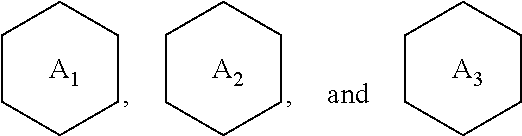
include one or a combination of more than one of

are the same or different;

is a non-aromatic fused ring based group containing cyclic unit.
Specifically, the cyclic unit includes one or more than one in five-membered ring and six-membered ring; the six-membered ring includes one or more than one in aromatic ring and aliphatic ring.
Preferably,

includes one or a combination of more than one of

Specifically, the polymerizable monomer containing aromatic fused ring structure includes one or more than one in

wherein P represents the polymerizable group, which is selected from at least one of methacrylate group, acrylate group, vinyl, ethyleneoxy, and epoxy; n is a number of the polymerizable group connecting to the same aromatic ring, n=1, 2 or 3, when n is greater than 1, the n polymerizable groups P are the same or different;
X represents a substituent, which is selected from at least one of —F, —Cl, —Br, methyl, —CN, straight or branched chain alkyl of 2-8 carbon atoms, and a group obtained by substituting one or more than one methyl in the alkyl with oxygen or sulfur atom; m is a number of the substituent X connecting to the same aromatic ring, m=1, 2 or 3, when m is greater than 1, the m substituents X are the same or different.
Specifically, in the material of alignment film, a mass percentage of the polyamic acid containing aromatic fused ring structure is 3˜4%, a mass percentage of the polymerizable monomer containing aromatic fused ring structure is 0.03˜0.4%, a mass percentage of the solvent is 95.6˜96.97%.
Specifically, the method of preparing the material of alignment film provided in step 1 including:
Specifically, in step 11, the dianhydride based monomer containing aromatic fused ring structure and the diamine based monomer are dissolved in the solvent according a molar ratio of 1:1. Specifically, step 11 is performed at room temperature, a reaction is 20˜30 hours, preferable 24 hours.
Specifically, a structural formula of the dianhydride based monomer containing aromatic fused ring structure is

wherein

includes one or a combination of more than one of

Preferably, the dianhydride based monomer containing aromatic fused ring structure is

Specifically, the diamine based monomer includes at least one of a diamine based monomer containing aromatic fused ring structure, and a diamine based monomer not containing aromatic fused ring structure.
Specifically, a structural formula of the diamine based monomer containing aromatic fused ring structure is

wherein

includes one or a combination of more than one of

Preferably, the diamine based monomer containing aromatic fused ring structure is

Specifically, a structural formula of the diamine based monomer not containing aromatic fused ring structure is

wherein

is non-aromatic fused ring based group containing cyclic unit.
Specifically, the cyclic unit includes one or more than one in five-membered ring and six-membered ring; the six-membered ring includes one or more than one in aromatic ring and aliphatic ring.
Preferably,

includes one or a combination of more than one of

Specifically, a reaction formula that the diamine based monomer containing aromatic fused ring structure

and the diamine based monomer containing aromatic fused ring structure

occur the reaction of forming the polyamic acid containing aromatic fused ring structure is:

the polyamic acid containing aromatic fused ring structure obtained by the aforesaid reaction is

wherein x is 20˜10000.
Specifically, the solvent includes one or more than one of N-methyl pyrrolidone (NMP), N-ethyl pyrrolidone, γ-caprolactone, dimethyl sulfoxide, and methylene chloride. Preferably, the solvent is N-methyl pyrrolidone.
Specifically, in step 12, the polymerizable monomer containing aromatic fused ring structure is added in the polyamic acid solution according to a ratio of 0.5˜10% that is a molar ratio of the polymerizable monomer containing aromatic fused ring structure to the dianhydride based monomer containing aromatic fused ring structure or the diamine based monomer added in step 11.
Specifically, the polymerizable monomer containing aromatic fused ring structure includes one or more than one in

wherein P represents the polymerizable group, which is selected from at least one of methacrylate group, acrylate group, vinyl, ethyleneoxy, and epoxy; n is a number of the polymerizable group connecting to the same aromatic ring, n=1, 2 or 3, when n is greater than 1, the n polymerizable groups P are the same or different;
X represents a substituent, which is selected from at least one of —F, —Cl, —Br, methyl, —CN, straight or branched chain alkyl of 2-8 carbon atoms, and a group obtained by substituting one or more than one methyl in the alkyl with oxygen or sulfur atom; m is a number of the substituent X connecting to the same aromatic ring, m=1, 2 or 3, when m is greater than 1, the m substituents X are the same or different.
Preferably, the polymerizable monomer containing aromatic fused ring structure includes

In comparison with the methylacrylate based polymerizable monomer containing benzene ring selected by the conventional vertical alignment technique, the polymerizable monomer containing aromatic fused ring structure selected by the present application has stronger heat resistance and light reaction ability.
coating the material of alignment film provided in step 1 on a surface of the first electrode 12 of the first substrate 10 and a surface of the second electrode 22 of the second substrate 20;
baking the material of alignment film, to completely volatilize the solvent, simultaneously to make dehydration and cyclization of the polyamic acid containing aromatic fused ring structure, then to be converted to a polyimide containing aromatic fused ring, to form a polyimide film 50, and the polyimide film 50 containing a polymerizable monomer containing aromatic fused ring structure.
Specifically, in step 2, baking the material of alignment film is performed under a temperature condition of 180˜200° C.; a baking time is 20 min-60 min, preferably is 30 min.
Specifically, the polyimide containing aromatic fused ring structure obtained in step 2 includes including one or more than one in

wherein x is 20˜10000;

wherein include one or a combination of more than one of

are the same or different;

is a non-aromatic fused ring based group containing cyclic unit.
Specifically, the cyclic unit includes one or more than one in five-membered ring and six-membered ring; the six-membered ring includes one or more than one in aromatic ring and aliphatic ring.
Preferably,

includes one or a combination of more than one of

Preferably, a reaction formula of dehydrating and converting the polyamic acid containing aromatic fused ring structure

to a polyimide containing aromatic fused ring is:

The polyimide containing aromatic fused ring structure obtained by the aforesaid reaction is

wherein x is 20˜10000.
By introducing the group A containing aromatic fused ring structure in the polyimide, light absorbing ability of the polyimide film 50 can be strengthened, ability of controlling the polymerizable monomer is increased, and heat resistance of the polyimide film 50 is also increased.
Due polarity of the polyimide containing aromatic fused ring structure is stronger than polarity of the polymerizable monomer containing aromatic fused ring structure, the two will produce phase separation, the polymerizable monomer containing aromatic fused ring structure tends to concentrate on the surface of the polyimide film 50.
Preferably, step 3 further includes coating a conductive adhesive on a periphery corresponding to the sealant 40 on the side of the second substrate 20 or first substrate 10.
Specifically, in step 4, laminating the first substrate 10 and the second substrate 20 at corresponding position is performed under a vacuum environment.
Specifically, in step 4, the method of curing the sealant 40 includes one or more than one of thermal curing or UV curing.
after the UV irradiation is stopped and the voltage is removed, the liquid crystal molecules near surfaces of the first alignment film 61 and the second alignment film 62 generates a pre-inclination angle.
Specifically, in step 5, the polymer protrusions 60 play a role of maintaining the deflection angle of the liquid crystal molecules on the surfaces of the first alignment film 61 and the second alignment film 62.
Specifically, in step 5, the voltage applied to the both sides of the liquid crystal layer 30 is 13˜25V, an intensity of ultraviolet (UV) during the UV irradiation is 85˜100 mW/cm2, an irradiation time is 20˜30 min.
Specifically, in step 5, the pre-inclination angle of the liquid crystal molecules is 0.5°˜2°.
In the method of fabricating the liquid crystal display panel of the present application, a material of alignment film is obtained by mixing a polymerizable monomer in polyamic acid solution, a polyimide film containing polymerizable monomer containing aromatic fused ring structure is obtained by coating and baking the material of alignment film on a substrate, after UV irradiates the polyimide film, polymer protrusions on the polyimide film are formed by polymerizing the polymerizable monomer, the liquid crystal molecules generate the pre-inclination angle under coordination of the voltage, so as to achieve alignment effect, in comparison with polymer vertical alignment technique, the present application does not need to mix polymerizable monomer in liquid crystal molecules, the residual polymerizable monomer contaminating the liquid crystal molecules after the UV reaction can be obviated, and quality of the liquid crystal display panel is enhanced.
Please refer to FIG. 5 , based on the aforesaid method of fabricating the liquid crystal display panel, The present application further provides a liquid crystal display panel including: oppositely disposed a first substrate 10 and a second substrate 20, a liquid crystal layer 30 disposed between the first substrate 10 and the second substrate 20, a first alignment film 61 disposed on the first substrate 10 near a side of the liquid crystal layer 30, and a second alignment 62 film disposed on the second substrate 20 near a side of the liquid crystal layer 30;
both the first alignment film 61 and the second alignment film 62 including a polyimide film 50 and polymer protrusions 60 located on a surface of the polyimide film 50;
a material of the polyimide film including a polyimide containing aromatic fused ring structure, the polyimide containing aromatic fused ring structure including one or more than one in

wherein x is 20˜10000;
wherein

include one or a combination of more than one of

are the same or different;

is a non-aromatic fused ring based group containing cyclic unit.
Specifically, the cyclic unit includes one or more than one in five-membered ring and six-membered ring; the six-membered ring includes one or more than one in aromatic ring and aliphatic ring.
Preferably,

includes one or a combination of more than one of

Preferably, the polyimide containing aromatic fused ring structure includes

By introducing the group

containing aromatic fused ring structure in the polyimide, light absorbing ability of the
The polymer protrusions are formed by polymerizing the polymerizable monomer containing aromatic fused ring structure, the polymerizable monomer containing aromatic fused ring structure includes one or more than one in

P represents a polymerizable group, which is selected from at least one of methacrylate group, acrylate group, vinyl, ethyleneoxy, and epoxy; n is a number of the polymerizable P connecting to the same aromatic ring, n=1, 2, or 3, when n is greater than 1, the n polymerizable groups P are the same or different;
X represents a substituent, which is selected from at least one of —F, —Cl, —Br, methyl, —CN, straight or branched chain alkyl of 2-8 carbon atoms, and a group obtained by substituting one or more than one methyl in the alkyl with oxygen or sulfur atom; m is a number of the substituent X connecting to the same aromatic ring, m=1, 2 or 3, when m is greater than 1, the m substituents X are the same or different.
Preferably, the polymerizable monomer containing aromatic fused ring structure includes

By introducing the aromatic fused ring structure in the polymerizable monomer, heat resistance of the polymerizable monomer can be enhanced; simultaneously, light reaction ability of the polymerizable is increased.
Specifically, the first substrate 10 includes a first underlying substrate 11 and a first electrode 12 disposed between the first underlying substrate 11 and the first alignment film 61, the second substrate 20 includes a second underlying substrate 21 and a second electrode 22 disposed between the second underlying substrate 21 and the second alignment film 62.
Specifically, the liquid crystal display panel further includes a sealant 40 disposed between the first substrate 10 and the second substrate 20, and located on a periphery of the liquid crystal layer 30.
Preferably, the liquid crystal display panel further includes a conductive adhesive disposed between the first substrate 10 and the second substrate 20, and located on a periphery of the sealant 40.
The liquid crystal display panel of the present application has a simple structure and good alignment effect, and has excellent display quality.
In summary, the present application provides a material of alignment film, a method of fabricating a liquid crystal display panel, and a liquid crystal display panel. The material of alignment film of the present application is obtained by mixing a polymerizable monomer in the polyamic acid solution, thus is easy to fabricate. The method of fabricating the liquid crystal display panel of the present application obtains an alignment film including a polyimide film and polymer protrusions located on a surface of the polyimide film by coating the material of alignment film on a substrate, and going through a series of processes; the alignment film can allow liquid crystal molecules arrange in vertical alignment and generate a pre-inclination angle, and a risk of the polymerizable monomer contaminating the liquid crystal molecules does not exist, so as to enhance quality of the liquid crystal display panel. The liquid crystal display panel of the present application has a simple structure and good alignment effect, and has excellent display quality.
Based on the above description, an ordinarily skilled in the art can complete various similar modifications and arrangements according to the technical programs and ideas of the present application, and the scope of the appended claims of the present application should encompass all such modifications and arrangements.
Claims (2)
1. A material of alignment film, comprising: a polyamic acid containing aromatic fused ring structure, a polymerizable monomer containing aromatic fused ring structure, and a solvent;
wherein the polyamic acid containing aromatic fused ring structure comprises: one or more than one in

wherein

comprise one or a combination of more than one of

are the same or different;

is a non-aromatic fused ring based group containing a cyclic unit; and
the polymerizable monomer containing aromatic fused ring structure comprises

2. The material of alignment film according to claim 1 , wherein a mass percentage of the polyamic acid containing aromatic fused ring structure is 3˜4%, a mass percentage of the polymerizable monomer containing aromatic fused ring structure is 0.03˜0.4%, a mass percentage of the solvent is 95.6˜96.97%.
Priority Applications (2)
| Application Number | Priority Date | Filing Date | Title |
|---|---|---|---|
| US16/197,293 US10663805B2 (en) | 2016-06-02 | 2018-11-20 | Material of alignment films, methods of fabricating liquid crystal display panels and liquid crystal display panels |
| US16/197,282 US10690966B2 (en) | 2016-06-02 | 2018-11-20 | Material of alignment films, methods of fabricating liquid crystal display panels and liquid crystal display panels |
Applications Claiming Priority (4)
| Application Number | Priority Date | Filing Date | Title |
|---|---|---|---|
| CN201610388392.2A CN106085464B (en) | 2016-06-02 | 2016-06-02 | Alignment film material, the production method of liquid crystal display panel and liquid crystal display panel |
| CN201610388392.2 | 2016-06-02 | ||
| CN201610388392 | 2016-06-02 | ||
| PCT/CN2016/086537 WO2017206204A1 (en) | 2016-06-02 | 2016-06-21 | Alignment film material, liquid crystal display panel manufacturing method, and liquid crystal display panel |
Related Child Applications (2)
| Application Number | Title | Priority Date | Filing Date |
|---|---|---|---|
| US16/197,282 Division US10690966B2 (en) | 2016-06-02 | 2018-11-20 | Material of alignment films, methods of fabricating liquid crystal display panels and liquid crystal display panels |
| US16/197,293 Division US10663805B2 (en) | 2016-06-02 | 2018-11-20 | Material of alignment films, methods of fabricating liquid crystal display panels and liquid crystal display panels |
Publications (2)
| Publication Number | Publication Date |
|---|---|
| US20170371207A1 US20170371207A1 (en) | 2017-12-28 |
| US10168580B2 true US10168580B2 (en) | 2019-01-01 |
Family
ID=57447477
Family Applications (3)
| Application Number | Title | Priority Date | Filing Date |
|---|---|---|---|
| US15/116,225 Active 2036-10-16 US10168580B2 (en) | 2016-06-02 | 2016-06-21 | Material of alignment films, methods of fabricating liquid crystal display panels and liquid crystal display panels |
| US16/197,293 Expired - Fee Related US10663805B2 (en) | 2016-06-02 | 2018-11-20 | Material of alignment films, methods of fabricating liquid crystal display panels and liquid crystal display panels |
| US16/197,282 Expired - Fee Related US10690966B2 (en) | 2016-06-02 | 2018-11-20 | Material of alignment films, methods of fabricating liquid crystal display panels and liquid crystal display panels |
Family Applications After (2)
| Application Number | Title | Priority Date | Filing Date |
|---|---|---|---|
| US16/197,293 Expired - Fee Related US10663805B2 (en) | 2016-06-02 | 2018-11-20 | Material of alignment films, methods of fabricating liquid crystal display panels and liquid crystal display panels |
| US16/197,282 Expired - Fee Related US10690966B2 (en) | 2016-06-02 | 2018-11-20 | Material of alignment films, methods of fabricating liquid crystal display panels and liquid crystal display panels |
Country Status (3)
| Country | Link |
|---|---|
| US (3) | US10168580B2 (en) |
| CN (1) | CN106085464B (en) |
| WO (1) | WO2017206204A1 (en) |
Families Citing this family (14)
| Publication number | Priority date | Publication date | Assignee | Title |
|---|---|---|---|---|
| CN107315284A (en) * | 2017-07-19 | 2017-11-03 | 武汉华星光电技术有限公司 | Liquid crystal display panel and preparation method thereof |
| CN107884995B (en) * | 2017-12-22 | 2021-06-22 | 苏州华星光电技术有限公司 | Display panel |
| US20190250436A1 (en) * | 2018-02-11 | 2019-08-15 | Shenzhen China Star Optoelectronics Semiconductor Display Technology Co., Ltd. | Display assembly and manufacturing method thereof |
| CN108319083A (en) * | 2018-02-11 | 2018-07-24 | 深圳市华星光电半导体显示技术有限公司 | A kind of display module and manufacturing method |
| JP7218100B2 (en) * | 2018-06-01 | 2023-02-06 | 株式会社ジャパンディスプレイ | Varnish for photo-alignment film and liquid crystal display device |
| CN109054017B (en) * | 2018-07-31 | 2021-01-08 | 湖南工业大学 | Hyperbranched polyimide containing phenanthrene ring structure and preparation method and application thereof |
| CN109143688B (en) * | 2018-08-14 | 2021-03-23 | Tcl华星光电技术有限公司 | Alignment film material and manufacturing method of liquid crystal display panel |
| CN109266364B (en) * | 2018-10-19 | 2019-07-30 | 中节能万润股份有限公司 | A kind of aligning agent for liquid crystal, liquid crystal orientation film and liquid crystal display element |
| CN111117666A (en) * | 2019-12-18 | 2020-05-08 | Tcl华星光电技术有限公司 | Alignment film and preparation method thereof, and display panel |
| CN111128021B (en) | 2019-12-23 | 2021-02-23 | 深圳市华星光电半导体显示技术有限公司 | Flexible substrate and preparation method thereof |
| CN111410741B (en) * | 2020-04-08 | 2023-01-24 | Tcl华星光电技术有限公司 | Alignment film material, preparation method of alignment film, display panel and preparation method of display panel |
| CN113698761B (en) * | 2021-08-23 | 2024-03-08 | Tcl华星光电技术有限公司 | High thermal conductivity polyimide composite material, liquid crystal display panel and preparation method |
| CN115960353A (en) * | 2022-12-31 | 2023-04-14 | 上海邃铸科技有限公司 | Polymer for preparing polyimide film, polyimide film and preparation method thereof |
| JP2024162739A (en) * | 2023-05-11 | 2024-11-21 | 株式会社ジャパンディスプレイ | Alignment treatment device and method for producing liquid crystal optical element |
Citations (3)
| Publication number | Priority date | Publication date | Assignee | Title |
|---|---|---|---|---|
| US20110199566A1 (en) * | 2008-10-21 | 2011-08-18 | Masanobu Mazusaki | Orientation film, orientation film material, liquid crystal display having orientation film, and method for forming the same |
| US20120282838A1 (en) * | 2008-09-17 | 2012-11-08 | Kim Jae-Hoon | Liquid crystal display having high response speed |
| US20140375940A1 (en) * | 2013-06-25 | 2014-12-25 | Shenzhen China Star Optoelectronics Technology Co., Ltd. | Alignment Film, A Method of Fabricating The Same, And A Liquid Crystal Display Using The Same |
Family Cites Families (10)
| Publication number | Priority date | Publication date | Assignee | Title |
|---|---|---|---|---|
| CN101633621A (en) * | 2004-04-28 | 2010-01-27 | 日产化学工业株式会社 | Liquid crystal orientation agent, liquid crystal orientation film and liquid crystal display element using liquid crystal orientation agent |
| JP5304174B2 (en) * | 2008-10-29 | 2013-10-02 | Jnc株式会社 | Liquid crystal alignment agent, liquid crystal alignment film, and liquid crystal display element |
| BRPI0921937A2 (en) * | 2008-11-27 | 2016-01-05 | Sharp Kk | orientation film, liquid crystal display having orientation film, and method for forming the orientation film |
| US8647724B2 (en) * | 2009-03-30 | 2014-02-11 | Sharp Kabushiki Kaisha | Liquid crystal display device, process for producing liquid crystal display device, composition for forming polymer layer, and composition for forming liquid crystal layer |
| JP5879693B2 (en) * | 2011-02-22 | 2016-03-08 | Jsr株式会社 | Liquid crystal alignment agent, liquid crystal alignment film, and liquid crystal display element |
| CN102732264B (en) * | 2012-06-04 | 2013-12-25 | 深圳市华星光电技术有限公司 | Liquid crystal reactive monomer and liquid crystal panel |
| CN102888231A (en) * | 2012-09-21 | 2013-01-23 | 深圳市华星光电技术有限公司 | Liquid crystal medium mixture and liquid crystal display using liquid crystal medium mixture |
| CN103254356B (en) * | 2013-04-25 | 2016-01-13 | 深圳市华星光电技术有限公司 | Polymerizable mixture and liquid-crystal composition thereof |
| CN103305235B (en) * | 2013-06-25 | 2015-11-25 | 深圳市华星光电技术有限公司 | The making method of a kind of liquid crystal panel and alignment film thereof, alignment film |
| CN105087021B (en) * | 2015-06-18 | 2017-11-17 | 深圳市华星光电技术有限公司 | A kind of preparation method of liquid crystal vertical-tropism agent, liquid crystal display cells and liquid crystal display cells |
-
2016
- 2016-06-02 CN CN201610388392.2A patent/CN106085464B/en active Active
- 2016-06-21 US US15/116,225 patent/US10168580B2/en active Active
- 2016-06-21 WO PCT/CN2016/086537 patent/WO2017206204A1/en not_active Ceased
-
2018
- 2018-11-20 US US16/197,293 patent/US10663805B2/en not_active Expired - Fee Related
- 2018-11-20 US US16/197,282 patent/US10690966B2/en not_active Expired - Fee Related
Patent Citations (4)
| Publication number | Priority date | Publication date | Assignee | Title |
|---|---|---|---|---|
| US20120282838A1 (en) * | 2008-09-17 | 2012-11-08 | Kim Jae-Hoon | Liquid crystal display having high response speed |
| US20110199566A1 (en) * | 2008-10-21 | 2011-08-18 | Masanobu Mazusaki | Orientation film, orientation film material, liquid crystal display having orientation film, and method for forming the same |
| CN102197333A (en) | 2008-10-21 | 2011-09-21 | 夏普株式会社 | Orientation film, orientation film material, liquid crystal display having orientation film, and method for forming the same |
| US20140375940A1 (en) * | 2013-06-25 | 2014-12-25 | Shenzhen China Star Optoelectronics Technology Co., Ltd. | Alignment Film, A Method of Fabricating The Same, And A Liquid Crystal Display Using The Same |
Also Published As
| Publication number | Publication date |
|---|---|
| WO2017206204A1 (en) | 2017-12-07 |
| US20190086737A1 (en) | 2019-03-21 |
| US20190107757A1 (en) | 2019-04-11 |
| US10690966B2 (en) | 2020-06-23 |
| CN106085464B (en) | 2019-01-15 |
| CN106085464A (en) | 2016-11-09 |
| US20170371207A1 (en) | 2017-12-28 |
| US10663805B2 (en) | 2020-05-26 |
Similar Documents
| Publication | Publication Date | Title |
|---|---|---|
| US10168580B2 (en) | Material of alignment films, methods of fabricating liquid crystal display panels and liquid crystal display panels | |
| US10184080B2 (en) | Liquid crystal materials, methods of fabricating liquid crystal display panels and liquid crystal display panels | |
| JP6488396B2 (en) | Liquid crystal display element and method for preparing liquid crystal display element | |
| WO2018214251A1 (en) | Liquid crystal material, liquid crystal display panel and method for manufacturing same | |
| US10955706B2 (en) | Liquid crystal panel structures containing functionalized graphene layers and methods of preparing functionalized graphene layers | |
| US20170090251A1 (en) | Liquid crystal display device and method for producing liquid crystal display device | |
| WO2017181457A1 (en) | Liquid crystal material, liquid crystal display panel manufacturing method, and liquid crystal display panel | |
| CN105527757B (en) | The preparation method of liquid crystal display panel | |
| US20180030352A1 (en) | Reactive perpendicular aligned material, liquid crystal display panel, and method of liquid crystal alignment | |
| WO2014114010A1 (en) | Frame plastic material, liquid crystal display panel, and corresponding liquid crystal display | |
| US9120971B2 (en) | Polymerizable mixture and liquid crystal composition thereof | |
| US9507209B2 (en) | Liquid crystal display device and method for manufacturing the same | |
| JP6026973B2 (en) | Liquid crystal aligning agent, liquid crystal aligning film, liquid crystal display element and manufacturing method thereof | |
| US9904113B2 (en) | Alignment composition, liquid crystal display panel and method of manufacturing same | |
| CN111198452B (en) | Liquid crystal display device having a plurality of pixel electrodes | |
| CN109143688B (en) | Alignment film material and manufacturing method of liquid crystal display panel | |
| WO2014075261A1 (en) | Photo-sensitive monomer and liquid crystal panel | |
| WO2019148827A1 (en) | Self-aligning material, self-aligning liquid crystal material, and method for manufacturing liquid crystal panel | |
| JP2015082015A (en) | Liquid crystal display | |
| US20140132900A1 (en) | Photosensitive monomer and liquid crystal panel | |
| US10377950B2 (en) | Branched organosilicon material, and method for manufacturing liquid crystal display panels | |
| US20190204648A1 (en) | Display panel, preparation method thereof, and liquid crystal display | |
| US20190250436A1 (en) | Display assembly and manufacturing method thereof | |
| CN121736174A (en) | Liquid crystal alignment agent, liquid crystal alignment film, liquid crystal element and its manufacturing method | |
| US8772383B2 (en) | Material for alignment layer of liquid crystal display |
Legal Events
| Date | Code | Title | Description |
|---|---|---|---|
| AS | Assignment |
Owner name: SHENZHEN CHINA STAR OPTOELECTRONICS TECHNOLOGY CO. Free format text: ASSIGNMENT OF ASSIGNORS INTEREST;ASSIGNOR:LAN, SONG;REEL/FRAME:039321/0144 Effective date: 20160722 |
|
| STCF | Information on status: patent grant |
Free format text: PATENTED CASE |
|
| MAFP | Maintenance fee payment |
Free format text: PAYMENT OF MAINTENANCE FEE, 4TH YEAR, LARGE ENTITY (ORIGINAL EVENT CODE: M1551); ENTITY STATUS OF PATENT OWNER: LARGE ENTITY Year of fee payment: 4 |