US10154043B1 - Management of social network group through the use of embedded limitations - Google Patents
Management of social network group through the use of embedded limitations Download PDFInfo
- Publication number
- US10154043B1 US10154043B1 US15/397,048 US201715397048A US10154043B1 US 10154043 B1 US10154043 B1 US 10154043B1 US 201715397048 A US201715397048 A US 201715397048A US 10154043 B1 US10154043 B1 US 10154043B1
- Authority
- US
- United States
- Prior art keywords
- user
- positive
- action
- social networking
- networking system
- Prior art date
- Legal status (The legal status is an assumption and is not a legal conclusion. Google has not performed a legal analysis and makes no representation as to the accuracy of the status listed.)
- Active
Links
- 230000006855 networking Effects 0.000 claims abstract description 48
- 230000008092 positive effect Effects 0.000 claims description 101
- 238000000034 method Methods 0.000 abstract description 10
- 230000001737 promoting effect Effects 0.000 abstract description 2
- 238000010586 diagram Methods 0.000 description 2
- 230000000977 initiatory effect Effects 0.000 description 1
Images


Classifications
-
- H—ELECTRICITY
- H04—ELECTRIC COMMUNICATION TECHNIQUE
- H04L—TRANSMISSION OF DIGITAL INFORMATION, e.g. TELEGRAPHIC COMMUNICATION
- H04L63/00—Network architectures or network communication protocols for network security
- H04L63/10—Network architectures or network communication protocols for network security for controlling access to devices or network resources
- H04L63/102—Entity profiles
-
- H—ELECTRICITY
- H04—ELECTRIC COMMUNICATION TECHNIQUE
- H04W—WIRELESS COMMUNICATION NETWORKS
- H04W4/00—Services specially adapted for wireless communication networks; Facilities therefor
- H04W4/20—Services signaling; Auxiliary data signalling, i.e. transmitting data via a non-traffic channel
- H04W4/21—Services signaling; Auxiliary data signalling, i.e. transmitting data via a non-traffic channel for social networking applications
-
- H—ELECTRICITY
- H04—ELECTRIC COMMUNICATION TECHNIQUE
- H04L—TRANSMISSION OF DIGITAL INFORMATION, e.g. TELEGRAPHIC COMMUNICATION
- H04L63/00—Network architectures or network communication protocols for network security
- H04L63/10—Network architectures or network communication protocols for network security for controlling access to devices or network resources
-
- H—ELECTRICITY
- H04—ELECTRIC COMMUNICATION TECHNIQUE
- H04L—TRANSMISSION OF DIGITAL INFORMATION, e.g. TELEGRAPHIC COMMUNICATION
- H04L63/00—Network architectures or network communication protocols for network security
- H04L63/10—Network architectures or network communication protocols for network security for controlling access to devices or network resources
- H04L63/104—Grouping of entities
-
- H—ELECTRICITY
- H04—ELECTRIC COMMUNICATION TECHNIQUE
- H04L—TRANSMISSION OF DIGITAL INFORMATION, e.g. TELEGRAPHIC COMMUNICATION
- H04L63/00—Network architectures or network communication protocols for network security
- H04L63/10—Network architectures or network communication protocols for network security for controlling access to devices or network resources
- H04L63/105—Multiple levels of security
Definitions
- This invention relates to social network services and more particularly to a system and method for creation of a targeted group of contacts through the use of limitations within an online social network service.
- Online social network services bring individuals together in communities based on common access to the same online social network service. These online communities may facilitate communication among individual users of an online social network service based on pre-established relationships between the individual users. Such connections may be based on common interests, circumstances, friendships, family relationships, business relationships, and the like. Many online social network services allow users to enter personal information to establish a profile that is visible to other users of the online social network service. A user's profile may be made public or private by manually entering a myriad of commands that can be confusing, easily forgotten after being set and/or easily circumvented by third parties with a desire to view the user's profile. In either case, the user is hesitant to share personal information as they are unsure which connections and/or third parties will be able to access the information.
- the primary object of the present invention is to provide a system and method for managing a social network profile through the use of embedded limitations to ensure a user's privacy from the creation of the profile and throughout the life of the profile, thereby encouraging greater sharing of personal information and use of the social network.
- the present invention fulfills the above and other objects by providing a social networking system wherein an individual may set up a personal profile to share with a select group of friends and/or family.
- the system and method of the present invention implements embedded limitations that maintains a core group of contacts specific to the user's profile, thereby promoting more meaningful exchanges without privacy concerns of personal information being viewed by third parties.
- the privacy concerns that cause many users to limit their use of a social network and/or cease use altogether is a problem specific to online computer networks wherein the sharing of information is conducted.
- the system and method of the present invention implements embedded limitations.
- the use of these embedded limitations or rules by a computer operating in an online environment sets particular animation parameters that may only be accomplished by operation of the computer or other equivalent electronic device within the online environment.
- actions by profile owners or users and third parties in relation to a specific social network profile are accounted for and analyzed in comparison with one or more embedded limitations to determine if the actions should be allowed or denied.
- the actions may be positive or negative to allow the social networking system to identify the actions within specified ranges and adjust the ranges in accordance with the embedded limitation.
- Actions of a user may close an embedded limitation, thereby disallowing further actions to be taken, or open an embedded limitation, thereby allowing further actions to be taken.
- the positive action of adding a contact to a core group may maximize a predetermined range and close an embedded limitation, thereby preventing the further addition of contacts to the core group.
- the negative action of a removal of a contact from core group will open a predetermined range and open an embedded limitation.
- the positive action of a third party such as a request, may force a user or profile owner to take a negative action to open an embedded limitation, thereby allowing the newly opened embedded limitation to allow the third party request.
- FIG. 1 is a schematic diagram showing an online social network in which the system and method of the present invention operates;
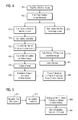
- FIG. 2 is a flow chart showing the steps of a processing a user positive action within a limit of an embedded limitation of the present invention
- FIG. 3 is a flow chart showing the steps of a closed embedded limitation being opened by a user negative action
- FIG. 4 is a flow chart showing the steps of a processing a third party positive action a limit of an embedded limitation of the present invention.
- FIG. 5 is a flow chart showing the steps of a closed embedded limitation being opened by a third party negative action.
- FIG. 1 a schematic diagram showing an online social network 100 in which the system and method of the present invention operates is illustrated.
- a social networking system 101 is accessed by a user 102 though a terminal 103 , such as a computer, smart phone, tablet or equivalent device, over a computer network 104 in order to exchange information with third parties 105 that are members of the user's 102 contact group 106 .
- the social networking system 101 comprises at least one embedded limitation 107 that prevents one or more actions by the user 102 .
- a user positive action 201 is created by initiating a request within the social networking system.
- An embedded limitation 202 of the present invention may comprise a range of allowable specified positive actions.
- the user positive action is added to a number of previously allowed positive actions 203 . If the sum falls within the allowable range of the embedded limitation 204 , then the user positive action will be checked for any required third party allowances 205 . If a third party allowance is required 206 , then the positive user request will be analyzed as a third party request of another user's at least one embedded limitation 207 (as illustrated in FIG. 4 ).
- the user positive action will either be denied 208 or allowed 210 based on the other user's at least one embedded limitation 207 . If a third party allowance is not required 209 , then the user positive action will be allowed 210 . If the user positive action is allowed 210 and the resulting sum falls within the allowable range of the embedded limitation 204 , maximizes the allowed amount of positive actions allowed within the range of the embedded limitation 211 , and then the embedded limitation is closed to preventing future further allowance of positive user actions 212 . If the resulting sum of the user positive action being added to the number of previously allowed positive actions 203 falls outside of the allowable range of the embedded limitation 213 , then the user positive action is denied 214 .
- FIG. 3 a flow chart showing the steps of a closed embedded limitation being opened by a user negative action are illustrated.
- the user may initiate a user negative action 301 which reverses a previous specified user positive action to open the closed embedded limitation 302 range by reversing a previous specified positive action, thereby allowing a future specified positive action to fall within the range of allowable specified positive actions after the user negative action is subtracted from the previously allowed positive actions 303 .
- the embedded limitation is opened 304 , thereby causing the user to only exchange information with contacts within the parameters set forth by the at least one embedded limitation of the present system and method.
- a flow chart showing the steps of processing a third party positive action a limit of an embedded limitation of the present invention are illustrated.
- a third party positive action 401 directed toward a specified user is received within the social networking system 402 .
- the user may deny the third party positive action 412 or accept the third party positive action 403 .
- An embedded limitation 404 of the present invention may comprise a range of allowable specified positive user actions.
- the third party positive action is added to a number of previously allowed positive actions 405 . If the sum falls within the allowable range of the embedded limitation 406 , then the third party positive action is allowed 407 .
- the third party positive action is allowed and the resulting sum falls within the allowable range of the embedded limitation 406 , maximizes the allowed amount of positive actions allowed within the range of the embedded limitation 408 , and then the embedded limitation is closed to prevent further allowance of positive actions 409 . If the resulting sum of the third party positive action being added to the number of previously allowed positive actions 405 falls outside of the allowable range of the embedded limitation 410 , then the user positive action is denied 411 .
- a flow chart showing the steps of a closed embedded limitation being opened by a third party negative action are illustrated.
- a third party negative action 501 may reverse a previous specified positive action to open the closed embedded limitation 502 of a user within the social network system by reversing a previous specified positive action, thereby allowing a future specified positive action to fall within the range of allowable specified positive actions after the third party negative action is subtracted from the previously allowed positive actions 503 .
- the embedded limitation is opened 504 , thereby causing the user to only exchange information with contacts within the parameters set forth by the at least one embedded limitation of the present system and method.
Landscapes
- Engineering & Computer Science (AREA)
- Computer Networks & Wireless Communication (AREA)
- Signal Processing (AREA)
- Computer Hardware Design (AREA)
- Computer Security & Cryptography (AREA)
- Computing Systems (AREA)
- General Engineering & Computer Science (AREA)
- Information Transfer Between Computers (AREA)
Abstract
A social networking system wherein an individual may set up a personal profile to share with a select group of friends and/or family. The system and method of the present invention implements embedded limitations that maintains a core group of contacts specific to the user's profile, thereby promoting more meaningful exchanges without privacy concerns of personal information being viewed by third parties.
Description
This invention relates to social network services and more particularly to a system and method for creation of a targeted group of contacts through the use of limitations within an online social network service.
Online social network services bring individuals together in communities based on common access to the same online social network service. These online communities may facilitate communication among individual users of an online social network service based on pre-established relationships between the individual users. Such connections may be based on common interests, circumstances, friendships, family relationships, business relationships, and the like. Many online social network services allow users to enter personal information to establish a profile that is visible to other users of the online social network service. A user's profile may be made public or private by manually entering a myriad of commands that can be confusing, easily forgotten after being set and/or easily circumvented by third parties with a desire to view the user's profile. In either case, the user is hesitant to share personal information as they are unsure which connections and/or third parties will be able to access the information.
These privacy concerns cause many users to limit their use of a social network and/or cease use altogether. This is a problem specific to online computer networks wherein the sharing of information is conducted.
Therefore, a need exists for a system and method for managing a social network profile through the use of embedded limitations to ensure a user's privacy from the creation of the profile and throughout the life of the profile, thereby encouraging greater sharing of personal information and use of the social network.
The primary object of the present invention is to provide a system and method for managing a social network profile through the use of embedded limitations to ensure a user's privacy from the creation of the profile and throughout the life of the profile, thereby encouraging greater sharing of personal information and use of the social network.
The present invention fulfills the above and other objects by providing a social networking system wherein an individual may set up a personal profile to share with a select group of friends and/or family. The system and method of the present invention implements embedded limitations that maintains a core group of contacts specific to the user's profile, thereby promoting more meaningful exchanges without privacy concerns of personal information being viewed by third parties.
The privacy concerns that cause many users to limit their use of a social network and/or cease use altogether is a problem specific to online computer networks wherein the sharing of information is conducted. The system and method of the present invention implements embedded limitations. The use of these embedded limitations or rules by a computer operating in an online environment sets particular animation parameters that may only be accomplished by operation of the computer or other equivalent electronic device within the online environment.
In an exemplary embodiment, actions by profile owners or users and third parties in relation to a specific social network profile are accounted for and analyzed in comparison with one or more embedded limitations to determine if the actions should be allowed or denied. The actions may be positive or negative to allow the social networking system to identify the actions within specified ranges and adjust the ranges in accordance with the embedded limitation. Actions of a user may close an embedded limitation, thereby disallowing further actions to be taken, or open an embedded limitation, thereby allowing further actions to be taken. For example, the positive action of adding a contact to a core group may maximize a predetermined range and close an embedded limitation, thereby preventing the further addition of contacts to the core group. Likewise, the negative action of a removal of a contact from core group will open a predetermined range and open an embedded limitation. In addition, the positive action of a third party, such as a request, may force a user or profile owner to take a negative action to open an embedded limitation, thereby allowing the newly opened embedded limitation to allow the third party request.
The above and other objects, features and advantages of the present invention should become even more readily apparent to those skilled in the art upon a reading of the following detailed description in conjunction with the drawings wherein there is shown and described illustrative embodiments of the invention.
In the following detailed description, reference will be made to the attached drawings in which:
With reference to FIG. 1 , a schematic diagram showing an online social network 100 in which the system and method of the present invention operates is illustrated. A social networking system 101 is accessed by a user 102 though a terminal 103, such as a computer, smart phone, tablet or equivalent device, over a computer network 104 in order to exchange information with third parties 105 that are members of the user's 102 contact group 106. The social networking system 101 comprises at least one embedded limitation 107 that prevents one or more actions by the user 102.
With reference to FIG. 2 , a flow chart showing the steps of processing a user positive action within a limit of an embedded limitation of the present invention are illustrated. First, a user positive action 201 is created by initiating a request within the social networking system. An embedded limitation 202 of the present invention may comprise a range of allowable specified positive actions. The user positive action is added to a number of previously allowed positive actions 203. If the sum falls within the allowable range of the embedded limitation 204, then the user positive action will be checked for any required third party allowances 205. If a third party allowance is required 206, then the positive user request will be analyzed as a third party request of another user's at least one embedded limitation 207 (as illustrated in FIG. 4 ).
Then the user positive action will either be denied 208 or allowed 210 based on the other user's at least one embedded limitation 207. If a third party allowance is not required 209, then the user positive action will be allowed 210. If the user positive action is allowed 210 and the resulting sum falls within the allowable range of the embedded limitation 204, maximizes the allowed amount of positive actions allowed within the range of the embedded limitation 211, and then the embedded limitation is closed to preventing future further allowance of positive user actions 212. If the resulting sum of the user positive action being added to the number of previously allowed positive actions 203 falls outside of the allowable range of the embedded limitation 213, then the user positive action is denied 214.
With reference to FIG. 3 , a flow chart showing the steps of a closed embedded limitation being opened by a user negative action are illustrated. After an embedded limitation is closed, the user may initiate a user negative action 301 which reverses a previous specified user positive action to open the closed embedded limitation 302 range by reversing a previous specified positive action, thereby allowing a future specified positive action to fall within the range of allowable specified positive actions after the user negative action is subtracted from the previously allowed positive actions 303. After the user negative action is subtracted from the previously allowed positive actions 303, the embedded limitation is opened 304, thereby causing the user to only exchange information with contacts within the parameters set forth by the at least one embedded limitation of the present system and method.
With reference to FIG. 4 , a flow chart showing the steps of processing a third party positive action a limit of an embedded limitation of the present invention are illustrated. First, a third party positive action 401 directed toward a specified user is received within the social networking system 402. The user may deny the third party positive action 412 or accept the third party positive action 403. An embedded limitation 404 of the present invention may comprise a range of allowable specified positive user actions. The third party positive action is added to a number of previously allowed positive actions 405. If the sum falls within the allowable range of the embedded limitation 406, then the third party positive action is allowed 407.
If the third party positive action is allowed and the resulting sum falls within the allowable range of the embedded limitation 406, maximizes the allowed amount of positive actions allowed within the range of the embedded limitation 408, and then the embedded limitation is closed to prevent further allowance of positive actions 409. If the resulting sum of the third party positive action being added to the number of previously allowed positive actions 405 falls outside of the allowable range of the embedded limitation 410, then the user positive action is denied 411.
With reference to FIG. 5 , a flow chart showing the steps of a closed embedded limitation being opened by a third party negative action are illustrated. After an embedded limitation is closed, a third party negative action 501 may reverse a previous specified positive action to open the closed embedded limitation 502 of a user within the social network system by reversing a previous specified positive action, thereby allowing a future specified positive action to fall within the range of allowable specified positive actions after the third party negative action is subtracted from the previously allowed positive actions 503. After the third party negative action is subtracted from the previously allowed positive actions 503, the embedded limitation is opened 504, thereby causing the user to only exchange information with contacts within the parameters set forth by the at least one embedded limitation of the present system and method.
It is to be understood that while a preferred embodiment of the invention is illustrated, it is not to be limited to the specific form or arrangement of parts herein described and shown. It will be apparent to those skilled in the art that various changes may be made without departing from the scope of the invention and the invention is not to be considered limited to what is shown and described in the specification and drawings.
Claims (18)
1. A social networking system comprising:
an online network in which the social networking system operates via a hardware processor and memory;
at least one terminal connected to said social networking system through said online network;
an embedded limitation located within the social networking system that defines a range of specified allowable user positive actions;
said user positive action being analyzed within the online network in accordance with the embedded limitation to determine whether the user positive action falls within a limitation range of the embedded limitation;
a first determination being made within the social networking system that the user positive action falls within the limitation range of the embedded limitation and that the positive user action will be allowed within the social networking system based on the first determination;
said user positive action being analyzed within the online network in accordance with a third party allowance to determine whether the third party allowance is required or not;
a second determination being made that the user positive action does not require the third party allowance and that the positive user action will be allowed within the social networking system based on the second determination;
said user positive action being added to previously allowed user positive actions based on the first determination and the second determination;
said embedded limitation being closed based on the user positive action being added to previously allowed user positive actions;
a user negative action being received within the social networking system;
said user negative action being analyzed within the online network in accordance with the embedded limitation;
said user negative action being subtracted from previously allowed positive actions; and
said embedded limitation being opened based on the user negative action being subtracted from previously allowed positive actions.
2. The social networking system of claim 1 wherein:
said range of specified allowable user positive actions forms a select core group of connections with contacts.
3. The social networking system of claim 2 wherein:
said select core group of connections with contacts is limited to a predetermined number of connections.
4. The social networking system of claim 2 wherein:
said select core group of connections with contacts is limited to a specific number of connections.
5. The social networking system of claim 4 wherein:
subsequent to said user positive action being added to previously allowed user positive actions, a resulting sum falls within the allowable range of the embedded limitation and maximizes allowed amount of positive actions allowed within the range of the embedded limitation limited to the predetermined number of connections, then the embedded limitation is closed to prevent further allowance of positive user actions that would result in said predetermined number of connections being proceeded.
6. The social networking system of claim 4 wherein:
subsequent to said user positive action being added to previously allowed user positive actions, a resulting sum falls within the allowable range of the embedded limitation and maximizes allowed amount of positive actions allowed within the range of the embedded limitation limited to the specific number of connections, then the embedded limitation is closed to prevent further allowance of positive user actions that would result in said specific number of connections being proceeded.
7. A social networking system comprising:
an online network in which the social networking system operates via a hardware processor and memory;
at least one terminal connected to said social networking system through said online network;
an embedded limitation located within the social networking system that defines a range of specified allowable user positive actions;
a user positive action being initiated within the social networking system via the at least one terminal;
said user positive action being analyzed within the online network in accordance with the embedded limitation to determine whether the user positive action falls within a limitation range of the embedded limitation;
a first determination being made within the social networking system that the user positive action falls within the limitation range of the embedded limitation and that the positive user action will be allowed within the social networking system based on the first determination;
said user positive action being analyzed within the online network in accordance with a third party allowance to determine whether the third party allowance is required or not;
a second determination being made that the user positive action does not require the third party allowance and that the positive user action will be allowed within the social networking system based on the second determination;
said user positive action being added to previously allowed user positive actions based on the first determination and the second determination;
said embedded limitation being closed based on the user positive action being added to previously allowed user positive actions;
a user negative action being received within the social networking system;
said user negative action being analyzed within the online network in accordance with the embedded limitation;
said user negative action being subtracted from previously allowed positive action; and
said embedded limitation being opened based on the user negative action being subtracted from previously allowed positive actions.
8. The social networking system of claim 7 wherein:
said range of specified allowable user positive actions forms a select core group of connections with contacts.
9. The social networking system of claim 8 wherein:
said select core group of connections with contacts is limited to a predetermined number of connections.
10. The social networking system of claim 8 wherein:
said select core group of connections with contacts is limited to a specific number of connections.
11. The social networking system of claim 9 wherein:
subsequent to said user positive action being added to previously allowed user positive actions, a resulting sum falls within the allowable range of the embedded limitation and maximizes allowed amount of positive actions allowed within the range of the embedded limitation limited to the predetermined number of connections, then the embedded limitation is closed to prevent further allowance of positive user actions that would result in said predetermined number of connections being proceeded.
12. The social networking system of claim 10 wherein:
subsequent to said user positive action being added to previously allowed user positive actions, a resulting sum falls within the allowable range of the embedded limitation and maximizes allowed amount of positive actions allowed within the range of the embedded limitation limited to the specific number of connections, then the embedded limitation is closed to prevent further allowance of positive user actions that would result in said specific number of connections being proceeded.
13. A social networking system comprising:
an online network in which the social networking system operates via a hardware processor and memory;
at least one terminal connected to said social networking system through said online network;
an embedded limitation located within the social networking system that defines a range of specified allowable user positive actions;
a user positive action being initiated within the social networking system via the at least one terminal;
said user positive action being analyzed within the online network in accordance with the embedded limitation to determine whether the user positive action falls within a limitation range of the embedded limitation;
a first determination being made within the social networking system that the user positive action falls within the limitation range of the embedded limitation and that the positive user action will be allowed within the social networking system based on the first determination embedded limitation;
said user positive action being analyzed within the online network in accordance with a third party allowance to determine whether the third party allowance is required or not;
a second determination being made that the user positive action does not require the third party allowance and that the positive user action will be allowed within the social networking system based on the second determination;
said user positive action being added to previously allowed user positive actions based on the first determination and the second determination;
said embedded limitation being closed based on the user positive action being added to previously allowed user positive actions;
a user negative action being received within the social networking system;
said user negative action being analyzed within the online network in accordance with the embedded limitation;
said user negative action being subtracted from previously allowed positive actions; and
said embedded limitation being opened based on the user negative action being subtracted from previously allowed positive actions.
14. The social networking system of claim 13 wherein:
said range of specified allowable user positive actions forms a select core group of connections with contacts.
15. The social networking system of claim 14 wherein:
said select core group of connections with contacts is limited to a predetermined number of connections.
16. The social networking system of claim 14 wherein: said select core group of connections with contacts is limited to a specific number of connections.
17. The social networking system of claim 15 wherein: subsequent to said user positive action being added to previously allowed user positive actions, a resulting sum falls within the allowable range of the embedded limitation and maximizes allowed amount of positive actions allowed within the range of the embedded limitation limited to the predetermined number of connections, then the embedded limitation is closed to prevent further allowance of positive user actions that would result in said predetermined number of connections being proceeded.
18. The social networking system of claim 16 wherein:
subsequent to said user positive action being added to previously allowed user positive actions, a resulting sum falls within the allowable range of the embedded limitation and maximizes allowed amount of positive actions allowed within the range of the embedded limitation limited to the specific number of connections, then the embedded limitation is closed to prevent further allowance of positive user actions that would result in said specific number of connections being proceeded.
Priority Applications (2)
| Application Number | Priority Date | Filing Date | Title |
|---|---|---|---|
| US15/397,048 US10154043B1 (en) | 2017-01-03 | 2017-01-03 | Management of social network group through the use of embedded limitations |
| US16/182,654 US10482282B1 (en) | 2017-01-03 | 2018-11-07 | Management of a social network contact group through the use of embedded limitations |
Applications Claiming Priority (1)
| Application Number | Priority Date | Filing Date | Title |
|---|---|---|---|
| US15/397,048 US10154043B1 (en) | 2017-01-03 | 2017-01-03 | Management of social network group through the use of embedded limitations |
Related Child Applications (1)
| Application Number | Title | Priority Date | Filing Date |
|---|---|---|---|
| US16/182,654 Continuation-In-Part US10482282B1 (en) | 2017-01-03 | 2018-11-07 | Management of a social network contact group through the use of embedded limitations |
Publications (1)
| Publication Number | Publication Date |
|---|---|
| US10154043B1 true US10154043B1 (en) | 2018-12-11 |
Family
ID=64535960
Family Applications (1)
| Application Number | Title | Priority Date | Filing Date |
|---|---|---|---|
| US15/397,048 Active US10154043B1 (en) | 2017-01-03 | 2017-01-03 | Management of social network group through the use of embedded limitations |
Country Status (1)
| Country | Link |
|---|---|
| US (1) | US10154043B1 (en) |
Citations (13)
| Publication number | Priority date | Publication date | Assignee | Title |
|---|---|---|---|---|
| US20050198031A1 (en) | 2004-03-04 | 2005-09-08 | Peter Pezaris | Method and system for controlling access to user information in a social networking environment |
| US20080189122A1 (en) | 2007-02-02 | 2008-08-07 | Coletrane Candice L | Competitive friend ranking for computerized social networking |
| US7805406B2 (en) | 2006-10-27 | 2010-09-28 | Xystar Technologies, Inc. | Cross-population of virtual communities |
| US7904511B2 (en) | 2001-09-30 | 2011-03-08 | Realcontacts Limited | Personal contact network |
| US8015119B2 (en) | 2004-01-21 | 2011-09-06 | Google Inc. | Methods and systems for the display and navigation of a social network |
| US20120246087A1 (en) * | 2010-11-19 | 2012-09-27 | Naresh Talati | Method and apparatus for establishing an exclusive network of Strong Tie connections which is then used to make referenceable connections between members for various personal and business benefits |
| US8291477B2 (en) | 2004-07-22 | 2012-10-16 | Facebook, Inc. | Authorization and authentication based on an individual's social network |
| US20120271722A1 (en) | 2011-04-25 | 2012-10-25 | Yun-Fang Juan | Top Friend Prediction for Users in a Social Networking System |
| US8707394B2 (en) | 2004-11-04 | 2014-04-22 | Topeer Corporation | System and method for creating a secure trusted social network |
| US20140222445A1 (en) * | 2013-02-04 | 2014-08-07 | Healthsense, Inc. | Health related social networking |
| US8965967B2 (en) | 2009-12-23 | 2015-02-24 | The Board Of Trustees Of The University Of Illinois | Tie strength prediction and social media filtration |
| US20150082462A1 (en) | 2009-06-16 | 2015-03-19 | Facebook, Inc. | Selective Content Accessibility in a Social Network |
| US9104681B2 (en) | 2011-12-27 | 2015-08-11 | Nhn Corporation | Social network service system and method for recommending friend of friend based on intimacy between users |
-
2017
- 2017-01-03 US US15/397,048 patent/US10154043B1/en active Active
Patent Citations (13)
| Publication number | Priority date | Publication date | Assignee | Title |
|---|---|---|---|---|
| US7904511B2 (en) | 2001-09-30 | 2011-03-08 | Realcontacts Limited | Personal contact network |
| US8015119B2 (en) | 2004-01-21 | 2011-09-06 | Google Inc. | Methods and systems for the display and navigation of a social network |
| US20050198031A1 (en) | 2004-03-04 | 2005-09-08 | Peter Pezaris | Method and system for controlling access to user information in a social networking environment |
| US8291477B2 (en) | 2004-07-22 | 2012-10-16 | Facebook, Inc. | Authorization and authentication based on an individual's social network |
| US8707394B2 (en) | 2004-11-04 | 2014-04-22 | Topeer Corporation | System and method for creating a secure trusted social network |
| US7805406B2 (en) | 2006-10-27 | 2010-09-28 | Xystar Technologies, Inc. | Cross-population of virtual communities |
| US20080189122A1 (en) | 2007-02-02 | 2008-08-07 | Coletrane Candice L | Competitive friend ranking for computerized social networking |
| US20150082462A1 (en) | 2009-06-16 | 2015-03-19 | Facebook, Inc. | Selective Content Accessibility in a Social Network |
| US8965967B2 (en) | 2009-12-23 | 2015-02-24 | The Board Of Trustees Of The University Of Illinois | Tie strength prediction and social media filtration |
| US20120246087A1 (en) * | 2010-11-19 | 2012-09-27 | Naresh Talati | Method and apparatus for establishing an exclusive network of Strong Tie connections which is then used to make referenceable connections between members for various personal and business benefits |
| US20120271722A1 (en) | 2011-04-25 | 2012-10-25 | Yun-Fang Juan | Top Friend Prediction for Users in a Social Networking System |
| US9104681B2 (en) | 2011-12-27 | 2015-08-11 | Nhn Corporation | Social network service system and method for recommending friend of friend based on intimacy between users |
| US20140222445A1 (en) * | 2013-02-04 | 2014-08-07 | Healthsense, Inc. | Health related social networking |
Non-Patent Citations (2)
| Title |
|---|
| efamilyleaf.com printout. |
| path.com printout. |
Similar Documents
| Publication | Publication Date | Title |
|---|---|---|
| US10936733B2 (en) | Reducing inappropriate online behavior using analysis of email account usage data to select a level of network service | |
| US11153326B2 (en) | Secure distribution and sharing of meeting content | |
| US20250175555A1 (en) | Systems and methods for blockchain wireless services in a controlled environment | |
| CN103024061B (en) | Network communication contact book shared system and method | |
| US20160191484A1 (en) | Secure Inmate Digital Storage | |
| CN109857943B (en) | Permission level determination method and device, computer equipment and readable storage medium | |
| US20240396727A1 (en) | Security key for geographical locations | |
| US20200092293A1 (en) | Context-based automated task performance for user contacts | |
| KR101118679B1 (en) | Method for controlling access using near field communication | |
| Minch | Location privacy in the era of the internet of things and big data analytics | |
| Medina | The Stored Communications Act: An Old Statute for Modern Times | |
| CN106161406A (en) | The method and apparatus obtaining user account | |
| Haber | The wiretapping of things | |
| US10033965B1 (en) | Overt and covert capture of images of controlled-environment facility residents using intelligent controlled-environment facility resident communications and/or media devices | |
| US10686935B1 (en) | Fraud detection for controlled-environment facility communications system | |
| US20140342661A1 (en) | Social Network Based Wi-Fi Connectivity | |
| Del Rosso et al. | Protecting Online Privacy in the Digital Age: Carpenter v. United States and the Fourth Amendment's Third-Party Doctrine | |
| KR102395500B1 (en) | Things identity authentication system and method thereof | |
| Romansky | Internet of Things and user privacy protection | |
| US10154043B1 (en) | Management of social network group through the use of embedded limitations | |
| US11418477B2 (en) | Local area social networking | |
| US10482282B1 (en) | Management of a social network contact group through the use of embedded limitations | |
| US10498840B2 (en) | Method and system for efficient review of exchanged content | |
| Chang | New technology, new information privacy: social-value-oriented information privacy theory | |
| Jasim et al. | Cloud: privacy For Locations Based-services' through Access Control with dynamic multi-level policy |
Legal Events
| Date | Code | Title | Description |
|---|---|---|---|
| STCF | Information on status: patent grant |
Free format text: PATENTED CASE |
|
| MAFP | Maintenance fee payment |
Free format text: PAYMENT OF MAINTENANCE FEE, 4TH YR, SMALL ENTITY (ORIGINAL EVENT CODE: M2551); ENTITY STATUS OF PATENT OWNER: SMALL ENTITY Year of fee payment: 4 |