US10146863B2 - Example-based item classification - Google Patents
Example-based item classification Download PDFInfo
- Publication number
- US10146863B2 US10146863B2 US14/543,230 US201414543230A US10146863B2 US 10146863 B2 US10146863 B2 US 10146863B2 US 201414543230 A US201414543230 A US 201414543230A US 10146863 B2 US10146863 B2 US 10146863B2
- Authority
- US
- United States
- Prior art keywords
- electronic mail
- subset
- mail messages
- user
- rule
- Prior art date
- Legal status (The legal status is an assumption and is not a legal conclusion. Google has not performed a legal analysis and makes no representation as to the accuracy of the status listed.)
- Active, expires
Links
Images



Classifications
-
- G06F17/30722—
-
- H—ELECTRICITY
- H04—ELECTRIC COMMUNICATION TECHNIQUE
- H04L—TRANSMISSION OF DIGITAL INFORMATION, e.g. TELEGRAPHIC COMMUNICATION
- H04L51/00—User-to-user messaging in packet-switching networks, transmitted according to store-and-forward or real-time protocols, e.g. e-mail
- H04L51/42—Mailbox-related aspects, e.g. synchronisation of mailboxes
-
- G—PHYSICS
- G06—COMPUTING OR CALCULATING; COUNTING
- G06F—ELECTRIC DIGITAL DATA PROCESSING
- G06F16/00—Information retrieval; Database structures therefor; File system structures therefor
- G06F16/30—Information retrieval; Database structures therefor; File system structures therefor of unstructured textual data
- G06F16/33—Querying
- G06F16/332—Query formulation
- G06F16/3329—Natural language query formulation
-
- G—PHYSICS
- G06—COMPUTING OR CALCULATING; COUNTING
- G06F—ELECTRIC DIGITAL DATA PROCESSING
- G06F16/00—Information retrieval; Database structures therefor; File system structures therefor
- G06F16/30—Information retrieval; Database structures therefor; File system structures therefor of unstructured textual data
- G06F16/38—Retrieval characterised by using metadata, e.g. metadata not derived from the content or metadata generated manually
-
- G06F17/30654—
-
- G—PHYSICS
- G06—COMPUTING OR CALCULATING; COUNTING
- G06Q—INFORMATION AND COMMUNICATION TECHNOLOGY [ICT] SPECIALLY ADAPTED FOR ADMINISTRATIVE, COMMERCIAL, FINANCIAL, MANAGERIAL OR SUPERVISORY PURPOSES; SYSTEMS OR METHODS SPECIALLY ADAPTED FOR ADMINISTRATIVE, COMMERCIAL, FINANCIAL, MANAGERIAL OR SUPERVISORY PURPOSES, NOT OTHERWISE PROVIDED FOR
- G06Q10/00—Administration; Management
- G06Q10/10—Office automation; Time management
- G06Q10/107—Computer-aided management of electronic mailing [e-mailing]
Definitions
- the disclosure is related to the field of automatic classification of items in an application program, such as electronic mail (email) messages in an email application.
- an application program such as electronic mail (email) messages in an email application.
- emails may be sorted or categorized by action of a user-created “rule” specifying categorization criteria.
- Rules are created using a structured rule-creating utility of the application program.
- a user is presented with a display panel containing various fields of email messages, such as sender, recipient, subject, etc., and the user enters names, addresses, phrases or other text values and then saves the rule.
- the rule can be applied automatically based on events such as receiving a new email, sending a new email, etc.
- a user can create a rule specifying that emails received from a particular sender be moved to a specified folder. The rule helps the user to efficiently organize the messages in a desired manner.
- classification rules can be used to great benefit
- one drawback of existing systems is the need for a user to manually create the rules such as in the manner described above.
- the process may be seen as cumbersome and time-consuming. It can interfere with user productivity in the moment, and some users may see the process as an interruption or diversion and avoid using it, foregoing the benefits of automatic classification.
- a technique for generating item classification rules based on examples selected by a user.
- a user When used in the context of email, for example, a user might drag and drop a few emails into a new rule, and the email program automatically creates a classification rule based on the examples. The rule can then be used across a larger set of items to obtain automatic classification of similar items according to the rule.
- the technique can overcome or reduce the need for users to manually create classification rules, promoting efficiency and streamlined operation.
- a method is disclosed of operating a computerized device to generate a classification rule for use in an application program to selectively classify items of a set of items and display classified items to a user.
- the application program is an email program such as an email client, and the items are emails.
- the method includes receiving a user selection of an example subset of the set of items, and performing an analysis on the example subset to find one or more shared text-based features that are shared across all items of the example subset. Based on the analysis, a candidate classification rule is generated identifying the shared text-based features. The candidate classification rule is applied to the set of items to identify a resultant subset of the items satisfying the candidate classification rule, the resultant subset generally being a superset of the example subset.
- the example items may be emails all sent from the same sender.
- the rule specifies the shared sender name, and the resultant subset is all emails in the user's In box having that sender name.
- the method further includes displaying the resultant subset to the user, and receiving user input that indicates, based on user review of the resultant subset, whether the candidate classification rule is accepted. If the user input indicates that the candidate classification rule is accepted, then the candidate classification rule is finalized into a final classification rule for future use by the application program in classifying items. Alternatively, the user might indicate rejection of the candidate classification rule by somehow altering the contents of the resultant subset, such as by removing an item that should not be within the rule or by adding an omitted item that should be within the rule. This user action forms an adjusted example subset that is then used in a repetition of the process, which may yield a final rule or may be repeated again based on a further adjusted example subset.
- the example-based analysis can make the process much easier for the user than in prior systems, enabling a user to more easily obtain the benefits of automated classification without a large investment of time and effort into defining rules.
- the technique also retains the ability to generate a specific and accurate rule through use of the repeated analyses with successively adjusted examples.
- the technique may employ a multi-step analysis that stops at the first step that yields a usable candidate rule.
- This technique inherently gives greater weight to some types of commonality among items.
- the analysis may first look at sender and/or recipient addresses among an example subset of emails, and only upon finding no commonality among these items then progress to looking at other features of the emails, such as their textual message contents for example.
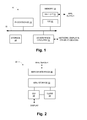
- FIG. 1 is a block diagram of a computerized device such as a personal computer or smartphone;
- FIG. 2 is a block diagram of software-implemented functional components of a computerized device
- FIGS. 3 and 4 are flow diagrams of operation of a computerized device.
- FIG. 1 shows a configuration of computerized device 10 .
- the hardware includes one or more processors 12 , memory 14 , and interface circuitry 16 interconnected by data interconnections 18 such as one or more high-speed data buses.
- the interface circuitry 16 provides a hardware connection to an external network, a user interface display, and other input/output (I/O) devices.
- the memory 14 stores an operating system (O/S) 20 and an application program referred to as a “mail client” (MAIL CLT) 22 that interacts with a separate mail server.
- the processor(s) 12 with connected memory 14 may also be referred to as “processing circuitry” herein.
- the processor(s) 40 execute computer program instructions of the O/S 20 and mail client 22 to cause the hardware to function in a software-defined manner.
- the computer hardware executing instructions of the mail client application 22 can be referred to as a mail client circuit or mail client component, and it will be understood that a collection of such circuits or components can all be realized and interact with each other as one or more sets of computer processing hardware executing different computer programs as generally known in the art.
- the application software may be stored on a non-transitory computer-readable medium such as an optical or magnetic disk, Flash memory or other non-volatile semiconductor memory, etc., from which it is retrieved for execution by the processing circuitry, as also generally known in the art.
- the computerized device 10 of FIG. 1 may be realized in any of a number of commercial forms, including for example a conventional desktop computer, a portable computer, and a smaller portable device such as a smartphone.
- the mail client 22 may be a so-called “fat” application, i.e., one that is installed on the user device, contains all the required data and program elements (e.g., as libraries), and is executed completely locally on a user device.
- fat i.e., one that is installed on the user device, contains all the required data and program elements (e.g., as libraries), and is executed completely locally on a user device.
- the disclosed techniques may also be realized by other forms of implementation.
- the techniques may also be used in so-called thin-client or Web access environments in which many functions are performed by memory-resident applets in the context of a browser application executed on a user device, with separate server code being executed at a separate webmail server.
- Example-based classification such as described herein may be used in other applications requiring efficient classification and organizing of large numbers of data items.
- FIG. 2 shows the organization of the mail client 22 .
- Major components include a server interface 30 , mail storage 32 , a classifier (CLASS) 34 and a graphical user interface (GUI) 36 .
- the mail client 22 communicates with the remote mail server using a mail delivery protocol such as Post Office Protocol (POP), Internet Message Access Protocol (IMAP), etc. to send and receive emails.
- POP Post Office Protocol
- IMAP Internet Message Access Protocol
- Both the classifier 34 and GUI 36 operate upon emails that are stored in the mail storage 32 .
- the GUI 36 provides conventional functions such as viewing contents of the mail storage 32 (e.g.
- the classifier 34 provides functions for automated classification of emails for improved organization and effectiveness of the email user. Using classification, a large set of emails in the mail storage 32 can be more easily organized so that they are more accessible and useful to the email user.
- the classifier 34 works in conjunction with the GUI 36 to provide for email classification based on example groupings that are created by the email user.
- the groupings may be created by a user selecting a subset of a larger set of items. This feature lets a user select a few example emails (e.g., using check boxes, drag and drop, etc.), and generate a candidate classification rule based on the selected emails. Further, the user is showed a candidate rule and corresponding emails that are selected and not selected by the rule. The user can then help refine the candidate rule, such as by identifying misclassified emails, and the system automatically adjusts/refines the candidate rule based on the user input. The process may be repeated until the user is satisfied with an adjusted/refined candidate rule, at which point the rule is finalized and made available for future use in classifying the user's emails.
- FIG. 3 describes the automated classification process at a high level.
- the description uses the term “subset” to refer to a subset of some larger “set” of items.
- the definition and scope of the larger set may vary and may depend on configuration, context, or other circumstances.
- the larger set may be the set of emails in an In box of a user's email application.
- the larger set may be a set of items displayed to the user, such as in a list or array.
- the larger set may be all the items across an entire application, e.g., all emails stored by an email client.
- the classifier 34 receives, via the GUI 36 , user selection of an example subset of items of a larger set. Selection can be made in a variety of ways. In one example, a user may select-click on several items from a list of items and then in some manner initiate the auto classification, such as by selecting a menu item, dragging the selection into an icon/graphic for a new rule, etc.
- the classifier 34 receives the selection as an identification of selected emails that are stored in the mail storage 32 .
- the classifier 34 performs an analysis to identify features (text-based) that are shared among the selected items, i.e., words/phrases/names that are contained in all the items of the subset. This analysis focuses on relatively uncommon words or phrases, and/or special values such as names or email addresses. It ignores very common words such as articles, conjunctions, prepositions, etc. Also, it may employ a hierarchy or weighting scheme to attach more significance to some shared features than others. Natural language processing (NLP) procedures such as stemming may be employed. Additional detail is given below.
- NLP Natural language processing
- the classifier 34 generates a candidate rule based on the result of the analysis. As an example, if the classifier identifies the items as all having the same sender name “jane(at)company(dot)com”, it may generate a rule such as:
- parentheticals are used instead of the corresponding punctuation characters “@” and “.” to accommodate US rules regarding the content of US patent documents.
- the candidate rule is applied to the larger set to find a resultant subset of all items satisfying the rule.
- the resultant subset is a superset of the example set created by the user. For example, if the user has selected three emails with sender name “jane . . . ” as above, and the rule that is generated is a rule requiring this sender name, then the resultant subset will be all items of the larger set of items having the sender name “jane . . . ”.
- the classifier 34 displays the resultant subset to the user and receives further user input for proceeding. If the user indicates his/her satisfaction with the candidate rule, then the rule is finalized and made available for regular future use in automatically classifying emails that are sent/received by the user. For this purpose, the classifier 34 may maintain a store of finalized and actively used classification rules, and it applies these rules regularly during subsequent regular operation of the mail client 22 . It may interface with the GUI 36 as necessary to generate icons, shadings, or other graphical indications of classification of emails. The classifier 34 and GUI 36 may also realize some manner of graphical organization using the classification, using a foldering or similar paradigm.
- the classifier 34 performs additional analysis in an attempt to refine the rule so that it will yield the adjusted example subset identified by the user.
- An example of an adjustment process that may be performed at 48 is given below. The process then returns to 46 to provide another opportunity for either acceptance of the rule or further iteration.
- FIG. 4 shows an example of portions of the process of FIG. 3 in greater detail, specifically focusing on the adjustment at 48 .
- the process uses contents of different structured email fields: Sender, Recipient, cc, bcc, Date/Time Sent, Date/Time Received, and Normalized Subject (subject line modified to remove noise terms such as “re:”, “fwd:” etc.).
- the process may split the email content into the main content and included content (such as earlier message that are copied into replies and forwards in an email thread). All of these are used as inputs which are called email “features”.
- the process performs a first pass of analysis of the user-selected example subset of items.
- a three-level hierarchy is employed: first Subject, then Senders/Recipients, and finally Content.
- the analysis ends when the first (highest level) non-empty result set is found.
- the various steps might be performed simultaneously and the respective results combined in some manner, generally leading to a narrower (more specific) candidate rule.
- the narrower the rule the more likely that it will not match other emails the user wants to match. So as a general matter it may be preferable to err on the side of over-inclusiveness (more generality) in the first pass processing.
- the steps are performed in order and processing stops when the first rule is generated. This approach promotes more general rules.
- the candidate rule is first applied to the full set of emails in order to generate a resultant subset of all emails satisfying the rule, then the resultant subset of emails is presented to the user. This reflects part of the power of the technique.
- the classifier 34 need not be shown every example or potential member of the class that will be defined by the rule, but rather only some smaller number of examples, and the rules that are generated automatically identify all instances that satisfy the rule.
- the user may indicate acceptance and then at 54 the classifier 34 finalizes the candidate rule (as potentially adjusted) into a final rule which will be used going forward. Otherwise, the user adjusts the resultant subset of items in some manner, and an additional pass of processing similar to that at 50 is performed.
- the processing may depend on whether the rule incorrectly omits a desired email (incorrect negative match) or incorrectly includes a non-desired email (incorrect positive match). These two cases correspond to processing at 56 and 58 respectively.
- the omitted email is added to the resultant subset to form an adjusted example subset that is used in a repetition (second pass) of the processing at 50 .
- this will yield a second candidate rule differing from the first one in either or both the hierarchical level of match (i.e., matching at a later step) and/or the shared word, phrase, name or other identifier.
- Processing then returns to 52 with an adjusted resultant subset based on applying the new candidate rule. Again the options are acceptance and finalizing at 54 , or further adjustment by another pass of 56 and/or 58 . There may be some escape mechanism to limit the number of iterations and allow the user to either start over or abandon the task entirely.
- a second type of analysis can be performed that includes a negative or exception clause.
- the search is for all emails with the same shared features, except for any that also include a feature that is unique to the false positive example email.
- a subset of emails are all sent to the same recipients A and B, and a false positive email is also uniquely send to recipient C.
- a rule generated in this example might specify that the recipient fields include A and B and do not include C.
- FIG. 4 which is heuristic-based, is generally only one type of processing that can be used in the overall process of FIG. 3 .
- Other techniques may be used.
- supervised machine learning techniques may be used that can work with a small set of positive only examples.
- a tuning process can be achieved by applying semi-supervised machine learning algorithms that work with few examples.
- the system may automatically suggest a name/title for a classification rule that is generated.
- the user may be given the option of changing the name/title.
- Rule tuning can be performed through iteration and refinement as describe above, and/or it may be more manual (i.e., a user directly editing the contents of a candidate rule).
Landscapes
- Engineering & Computer Science (AREA)
- Theoretical Computer Science (AREA)
- Physics & Mathematics (AREA)
- Business, Economics & Management (AREA)
- Human Resources & Organizations (AREA)
- General Physics & Mathematics (AREA)
- Data Mining & Analysis (AREA)
- Entrepreneurship & Innovation (AREA)
- Strategic Management (AREA)
- Databases & Information Systems (AREA)
- Mathematical Physics (AREA)
- General Engineering & Computer Science (AREA)
- Marketing (AREA)
- Tourism & Hospitality (AREA)
- Computer Hardware Design (AREA)
- Economics (AREA)
- General Business, Economics & Management (AREA)
- Operations Research (AREA)
- Quality & Reliability (AREA)
- Human Computer Interaction (AREA)
- Artificial Intelligence (AREA)
- Library & Information Science (AREA)
- Computational Linguistics (AREA)
- Signal Processing (AREA)
- Computer Networks & Wireless Communication (AREA)
- Information Transfer Between Computers (AREA)
Abstract
Description
-
- sender-name IS jane(at)company(dot)com
-
- 1. Extract the words and phrases that are shared among the Normalized Subjects of the selected items. From this list of extracted words and phrases, any that are very common (e.g., conjunctions, prepositions, etc.) are removed. If the resulting set is not empty, then the candidate rule is generated as specifying that the subject field contain the shared words/phrases. In this case, the title of the rule might be set to: “Emails that include <words/phrases> in their subject”. Then the processing at 50 is complete.
- 2. If the resultant subset in
step 1 is empty, then a similar analysis is done based on the sender and/or recipient fields. This portion may also use multiple hierarchically arranged sub-steps that assign higher priority to one field over another other, e.g., first look for shared senders and then look for shared recipients. In one specific example, the order of analysis can be shared senders, then shared recipients, then shared values in either sender or recipient, as follows: - 2.1 It may first be determined whether there are selected emails having one or more shared senders (i.e., same email address or other sender identifier in the sender field(s) of all the emails). If so, then the candidate rule is generated as specifying that the sender field have the shared sender identifier, and in this case the title of the rule might be set to: “Emails from <identified sender(s)>”. Then the processing at 50 is complete.
- 2.2 If the processing of 2.1 indicates there are no shared senders, it is next determined whether there are recipients that are shared among the example emails. This assessment may either consider or disregard any sharing of the current user, i.e., the user for which the processing is being performed. If there are shared recipients, then the candidate rule is generated as specifying that the recipient field have the shared recipient identifier, and in this case the title of the rule might be set to: “Emails to <identified recipient(s)>”. Then the processing at 50 is complete
- 2.3 If the processing of 2.1 and 2.2 indicates that there are no shared senders or recipients, it is next determined whether there are any shared email addresses (or other sender/recipient identifiers) in either the senders or recipients across all the example emails. This assessment might be across all address fields including cc and bcc fields. An example of this situation is an email exchange in which the identifiers of two participants appear alternately as sender and recipient. If so, then the candidate rule is generated as specifying that the recipient field OR the sender field contain the shared identifier, and in this case the title of the rule might be set to: “Emails between <identified sender(s) and recipient(s)>”. Then the processing at 50 is complete.
- 3. If the processing of #2 above results in an empty set, then the message contents of the emails are compared, similar to the comparison of the subject fields in #1 above. Here, “message contents” can refer to the text contents of the message body of the email, i.e., the text message that a user has entered. It may also refer to the contents of an attachment. These are example of unstructured portions of an email. As with the structured fields, any very common words/phrases (e.g., conjunctions, prepositions, etc.) are removed. If shared words/phrases are found in the remaining text, then the candidate rule is generated as specifying that the message contents contain the shared words or phrases. In this case, the title may be “Emails that contain <shared words and phrases>”. Then the processing at 50 is complete.
Claims (20)
Priority Applications (2)
| Application Number | Priority Date | Filing Date | Title |
|---|---|---|---|
| US14/543,230 US10146863B2 (en) | 2014-11-17 | 2014-11-17 | Example-based item classification |
| PCT/US2015/061094 WO2016081461A1 (en) | 2014-11-17 | 2015-11-17 | Example-based item classification |
Applications Claiming Priority (1)
| Application Number | Priority Date | Filing Date | Title |
|---|---|---|---|
| US14/543,230 US10146863B2 (en) | 2014-11-17 | 2014-11-17 | Example-based item classification |
Publications (2)
| Publication Number | Publication Date |
|---|---|
| US20160140222A1 US20160140222A1 (en) | 2016-05-19 |
| US10146863B2 true US10146863B2 (en) | 2018-12-04 |
Family
ID=54754801
Family Applications (1)
| Application Number | Title | Priority Date | Filing Date |
|---|---|---|---|
| US14/543,230 Active 2037-03-01 US10146863B2 (en) | 2014-11-17 | 2014-11-17 | Example-based item classification |
Country Status (2)
| Country | Link |
|---|---|
| US (1) | US10146863B2 (en) |
| WO (1) | WO2016081461A1 (en) |
Cited By (1)
| Publication number | Priority date | Publication date | Assignee | Title |
|---|---|---|---|---|
| US10789533B2 (en) * | 2017-07-26 | 2020-09-29 | LogMeln, Inc. | Generating a consistently labeled training dataset by automatically generating and displaying a set of most similar previously-labeled texts and their previously assigned labels for each text that is being labeled for the training dataset |
Families Citing this family (3)
| Publication number | Priority date | Publication date | Assignee | Title |
|---|---|---|---|---|
| US11470036B2 (en) | 2013-03-14 | 2022-10-11 | Microsoft Technology Licensing, Llc | Email assistant for efficiently managing emails |
| US10673796B2 (en) * | 2017-01-31 | 2020-06-02 | Microsoft Technology Licensing, Llc | Automated email categorization and rule creation for email management |
| US10511558B2 (en) | 2017-09-18 | 2019-12-17 | Apple Inc. | Techniques for automatically sorting emails into folders |
Citations (4)
| Publication number | Priority date | Publication date | Assignee | Title |
|---|---|---|---|---|
| US7185001B1 (en) * | 2000-10-04 | 2007-02-27 | Torch Concepts | Systems and methods for document searching and organizing |
| US20070094230A1 (en) * | 2001-06-18 | 2007-04-26 | Pavitra Subramaniam | Method, apparatus, and system for searching based on filter search specification |
| US7668849B1 (en) * | 2005-12-09 | 2010-02-23 | BMMSoft, Inc. | Method and system for processing structured data and unstructured data |
| US20100179961A1 (en) | 2009-01-12 | 2010-07-15 | Pauline M Berry | Electronic assistant |
-
2014
- 2014-11-17 US US14/543,230 patent/US10146863B2/en active Active
-
2015
- 2015-11-17 WO PCT/US2015/061094 patent/WO2016081461A1/en not_active Ceased
Patent Citations (4)
| Publication number | Priority date | Publication date | Assignee | Title |
|---|---|---|---|---|
| US7185001B1 (en) * | 2000-10-04 | 2007-02-27 | Torch Concepts | Systems and methods for document searching and organizing |
| US20070094230A1 (en) * | 2001-06-18 | 2007-04-26 | Pavitra Subramaniam | Method, apparatus, and system for searching based on filter search specification |
| US7668849B1 (en) * | 2005-12-09 | 2010-02-23 | BMMSoft, Inc. | Method and system for processing structured data and unstructured data |
| US20100179961A1 (en) | 2009-01-12 | 2010-07-15 | Pauline M Berry | Electronic assistant |
Cited By (1)
| Publication number | Priority date | Publication date | Assignee | Title |
|---|---|---|---|---|
| US10789533B2 (en) * | 2017-07-26 | 2020-09-29 | LogMeln, Inc. | Generating a consistently labeled training dataset by automatically generating and displaying a set of most similar previously-labeled texts and their previously assigned labels for each text that is being labeled for the training dataset |
Also Published As
| Publication number | Publication date |
|---|---|
| WO2016081461A1 (en) | 2016-05-26 |
| US20160140222A1 (en) | 2016-05-19 |
Similar Documents
| Publication | Publication Date | Title |
|---|---|---|
| US10262080B2 (en) | Enhanced search suggestion for personal information services | |
| US11575628B2 (en) | Methods and apparatus for determining non-textual reply content for inclusion in a reply to an electronic communication | |
| US11832023B2 (en) | Virtual background template configuration for video communications | |
| JP6971853B2 (en) | Automatic extraction of commitments and requests from communication and content | |
| US9946783B1 (en) | Methods and systems for classifying data using a hierarchical taxonomy | |
| US10936680B2 (en) | Intent based search result interaction | |
| CN103620587B (en) | Automatic classification of electronic content into projects | |
| US7698335B1 (en) | Cluster organization of electronically-stored items | |
| US11902710B2 (en) | Automated rule generation and virtual background selection for video communications | |
| US20090281991A1 (en) | Providing search results for mobile computing devices | |
| CN108475365A (en) | By management role classification and divide priority | |
| US20160142359A1 (en) | Item importance indication | |
| CN104461239A (en) | Information interaction method and device | |
| US11783125B2 (en) | System and method for electronic text analysis and contextual feedback | |
| CN108885738A (en) | Command and task completion via self-associated messages | |
| US20160140222A1 (en) | Example-based item classification | |
| EP4330891A1 (en) | Dynamic virtual background selection for video communications | |
| US10803390B1 (en) | Method for the management of artifacts in knowledge ecosystems | |
| US20260087061A1 (en) | Systems and methods for managing a database storing clauses | |
| US12021809B2 (en) | Surfacing attachments in email search suggestion dropdown | |
| US12265784B2 (en) | People suggestion in collaborative online text editors | |
| US9491129B2 (en) | Electronic mail delivery negotiation and rejection | |
| US20160142344A1 (en) | Automated response action in messaging application | |
| EP2741455A1 (en) | Methods and system for classifying, processing, and/or generating automatic responses to mail items | |
| US20150200903A1 (en) | Automatic email address input process |
Legal Events
| Date | Code | Title | Description |
|---|---|---|---|
| AS | Assignment |
Owner name: CITRIX SYSTEMS, INC., FLORIDA Free format text: ASSIGNMENT OF ASSIGNORS INTEREST;ASSIGNORS:THAPLIYAL, ASHISH V;LOCK, ANNE MARIE;THAPLIYAL, ELIZABETH;AND OTHERS;SIGNING DATES FROM 20150202 TO 20160329;REEL/FRAME:038487/0026 |
|
| AS | Assignment |
Owner name: GETGO, INC., FLORIDA Free format text: ASSIGNMENT OF ASSIGNORS INTEREST;ASSIGNOR:CITRIX SYSTEMS, INC.;REEL/FRAME:039970/0670 Effective date: 20160901 |
|
| AS | Assignment |
Owner name: JPMORGAN CHASE BANK, N.A., NEW YORK Free format text: SECURITY INTEREST;ASSIGNOR:GETGO, INC.;REEL/FRAME:041588/0143 Effective date: 20170201 |
|
| STCF | Information on status: patent grant |
Free format text: PATENTED CASE |
|
| AS | Assignment |
Owner name: LOGMEIN, INC., MASSACHUSETTS Free format text: ASSIGNMENT OF ASSIGNORS INTEREST;ASSIGNOR:GETGO, INC.;REEL/FRAME:049843/0833 Effective date: 20190227 |
|
| AS | Assignment |
Owner name: LOGMEIN, INC., MASSACHUSETTS Free format text: RELEASE OF SECURITY INTEREST RECORDED AT REEL/FRAME 041588/0143;ASSIGNOR:JPMORGAN CHASE BANK, N.A.;REEL/FRAME:053650/0978 Effective date: 20200831 Owner name: GETGO, INC., FLORIDA Free format text: RELEASE OF SECURITY INTEREST RECORDED AT REEL/FRAME 041588/0143;ASSIGNOR:JPMORGAN CHASE BANK, N.A.;REEL/FRAME:053650/0978 Effective date: 20200831 |
|
| AS | Assignment |
Owner name: U.S. BANK NATIONAL ASSOCIATION, AS NOTES COLLATERAL AGENT, MINNESOTA Free format text: NOTES LIEN PATENT SECURITY AGREEMENT;ASSIGNOR:LOGMEIN, INC.;REEL/FRAME:053667/0032 Effective date: 20200831 Owner name: BARCLAYS BANK PLC, AS COLLATERAL AGENT, NEW YORK Free format text: SECOND LIEN PATENT SECURITY AGREEMENT;ASSIGNOR:LOGMEIN, INC.;REEL/FRAME:053667/0079 Effective date: 20200831 Owner name: BARCLAYS BANK PLC, AS COLLATERAL AGENT, NEW YORK Free format text: FIRST LIEN PATENT SECURITY AGREEMENT;ASSIGNOR:LOGMEIN, INC.;REEL/FRAME:053667/0169 Effective date: 20200831 |
|
| AS | Assignment |
Owner name: LOGMEIN, INC., MASSACHUSETTS Free format text: TERMINATION AND RELEASE OF SECURITY INTEREST IN PATENTS (SECOND LIEN);ASSIGNOR:BARCLAYS BANK PLC, AS COLLATERAL AGENT;REEL/FRAME:055306/0200 Effective date: 20210209 |
|
| AS | Assignment |
Owner name: GOTO GROUP, INC., MASSACHUSETTS Free format text: CHANGE OF NAME;ASSIGNOR:LOGMEIN, INC.;REEL/FRAME:059644/0090 Effective date: 20220131 |
|
| MAFP | Maintenance fee payment |
Free format text: PAYMENT OF MAINTENANCE FEE, 4TH YEAR, LARGE ENTITY (ORIGINAL EVENT CODE: M1551); ENTITY STATUS OF PATENT OWNER: LARGE ENTITY Year of fee payment: 4 |
|
| AS | Assignment |
Owner name: BARCLAYS BANK PLC, AS COLLATERAL AGENT, UNITED KINGDOM Free format text: SECURITY INTEREST;ASSIGNORS:GOTO GROUP, INC.,;GOTO COMMUNICATIONS, INC.;LASTPASS US LP;REEL/FRAME:066508/0443 Effective date: 20240205 |
|
| AS | Assignment |
Owner name: U.S. BANK TRUST COMPANY, NATIONAL ASSOCIATION, AS THE NOTES COLLATERAL AGENT, MINNESOTA Free format text: SECURITY INTEREST;ASSIGNORS:GOTO COMMUNICATIONS, INC.,;GOTO GROUP, INC., A;LASTPASS US LP,;REEL/FRAME:066614/0402 Effective date: 20240205 Owner name: U.S. BANK TRUST COMPANY, NATIONAL ASSOCIATION, AS THE NOTES COLLATERAL AGENT, MINNESOTA Free format text: SECURITY INTEREST;ASSIGNORS:GOTO COMMUNICATIONS, INC.;GOTO GROUP, INC.;LASTPASS US LP;REEL/FRAME:066614/0355 Effective date: 20240205 |
|
| AS | Assignment |
Owner name: GOTO GROUP, INC. (F/K/A LOGMEIN, INC.), MASSACHUSETTS Free format text: TERMINATION AND RELEASE OF SECURITY INTEREST IN PATENTS (REEL/FRAME 053667/0169, REEL/FRAME 060450/0171, REEL/FRAME 063341/0051);ASSIGNOR:BARCLAYS BANK PLC, AS COLLATERAL AGENT;REEL/FRAME:066800/0145 Effective date: 20240313 |