US10124789B2 - In-range current sensor fault detection - Google Patents

In-range current sensor fault detection Download PDF

Info

Publication number
US10124789B2
US10124789B2 US14/015,344 US201314015344A US10124789B2 US 10124789 B2 US10124789 B2 US 10124789B2 US 201314015344 A US201314015344 A US 201314015344A US 10124789 B2 US10124789 B2 US 10124789B2
Authority
US
United States
Prior art keywords
battery
vehicle
drive cycle
soc
current
Prior art date
Legal status (The legal status is an assumption and is not a legal conclusion. Google has not performed a legal analysis and makes no representation as to the accuracy of the status listed.)
Active, expires
Application number
US14/015,344
Other versions
US20150066262A1 (en
Inventor
Xiaoguang Chang
Xu Wang
Chuan He
Josephine S. Lee
Current Assignee (The listed assignees may be inaccurate. Google has not performed a legal analysis and makes no representation or warranty as to the accuracy of the list.)
Ford Global Technologies LLC
Original Assignee
Ford Global Technologies LLC
Priority date (The priority date is an assumption and is not a legal conclusion. Google has not performed a legal analysis and makes no representation as to the accuracy of the date listed.)
Filing date
Publication date
Application filed by Ford Global Technologies LLC filed Critical Ford Global Technologies LLC
Priority to US14/015,344 priority Critical patent/US10124789B2/en
Assigned to FORD GLOBAL TECHNOLOGIES, LLC reassignment FORD GLOBAL TECHNOLOGIES, LLC ASSIGNMENT OF ASSIGNORS INTEREST (SEE DOCUMENT FOR DETAILS). Assignors: CHANG, XIAOGUANG, HE, CHUAN, LEE, JOSEPHINE S., WANG, XU
Priority to CN201410393210.1A priority patent/CN104422917B/en
Priority to DE201410216931 priority patent/DE102014216931A1/en
Publication of US20150066262A1 publication Critical patent/US20150066262A1/en
Application granted granted Critical
Publication of US10124789B2 publication Critical patent/US10124789B2/en
Active legal-status Critical Current
Adjusted expiration legal-status Critical

Links

Images

Classifications

    • BPERFORMING OPERATIONS; TRANSPORTING
    • B60VEHICLES IN GENERAL
    • B60WCONJOINT CONTROL OF VEHICLE SUB-UNITS OF DIFFERENT TYPE OR DIFFERENT FUNCTION; CONTROL SYSTEMS SPECIALLY ADAPTED FOR HYBRID VEHICLES; ROAD VEHICLE DRIVE CONTROL SYSTEMS FOR PURPOSES NOT RELATED TO THE CONTROL OF A PARTICULAR SUB-UNIT
    • B60W20/00Control systems specially adapted for hybrid vehicles
    • B60W20/50Control strategies for responding to system failures, e.g. for fault diagnosis, failsafe operation or limp mode
    • B60W20/106
    • B60L11/1861
    • B60L11/1864
    • BPERFORMING OPERATIONS; TRANSPORTING
    • B60VEHICLES IN GENERAL
    • B60LPROPULSION OF ELECTRICALLY-PROPELLED VEHICLES; SUPPLYING ELECTRIC POWER FOR AUXILIARY EQUIPMENT OF ELECTRICALLY-PROPELLED VEHICLES; ELECTRODYNAMIC BRAKE SYSTEMS FOR VEHICLES IN GENERAL; MAGNETIC SUSPENSION OR LEVITATION FOR VEHICLES; MONITORING OPERATING VARIABLES OF ELECTRICALLY-PROPELLED VEHICLES; ELECTRIC SAFETY DEVICES FOR ELECTRICALLY-PROPELLED VEHICLES
    • B60L3/00Electric devices on electrically-propelled vehicles for safety purposes; Monitoring operating variables, e.g. speed, deceleration or energy consumption
    • B60L3/0023Detecting, eliminating, remedying or compensating for drive train abnormalities, e.g. failures within the drive train
    • B60L3/0038Detecting, eliminating, remedying or compensating for drive train abnormalities, e.g. failures within the drive train relating to sensors
    • BPERFORMING OPERATIONS; TRANSPORTING
    • B60VEHICLES IN GENERAL
    • B60LPROPULSION OF ELECTRICALLY-PROPELLED VEHICLES; SUPPLYING ELECTRIC POWER FOR AUXILIARY EQUIPMENT OF ELECTRICALLY-PROPELLED VEHICLES; ELECTRODYNAMIC BRAKE SYSTEMS FOR VEHICLES IN GENERAL; MAGNETIC SUSPENSION OR LEVITATION FOR VEHICLES; MONITORING OPERATING VARIABLES OF ELECTRICALLY-PROPELLED VEHICLES; ELECTRIC SAFETY DEVICES FOR ELECTRICALLY-PROPELLED VEHICLES
    • B60L58/00Methods or circuit arrangements for monitoring or controlling batteries or fuel cells, specially adapted for electric vehicles
    • B60L58/10Methods or circuit arrangements for monitoring or controlling batteries or fuel cells, specially adapted for electric vehicles for monitoring or controlling batteries
    • B60L58/12Methods or circuit arrangements for monitoring or controlling batteries or fuel cells, specially adapted for electric vehicles for monitoring or controlling batteries responding to state of charge [SoC]
    • BPERFORMING OPERATIONS; TRANSPORTING
    • B60VEHICLES IN GENERAL
    • B60LPROPULSION OF ELECTRICALLY-PROPELLED VEHICLES; SUPPLYING ELECTRIC POWER FOR AUXILIARY EQUIPMENT OF ELECTRICALLY-PROPELLED VEHICLES; ELECTRODYNAMIC BRAKE SYSTEMS FOR VEHICLES IN GENERAL; MAGNETIC SUSPENSION OR LEVITATION FOR VEHICLES; MONITORING OPERATING VARIABLES OF ELECTRICALLY-PROPELLED VEHICLES; ELECTRIC SAFETY DEVICES FOR ELECTRICALLY-PROPELLED VEHICLES
    • B60L58/00Methods or circuit arrangements for monitoring or controlling batteries or fuel cells, specially adapted for electric vehicles
    • B60L58/10Methods or circuit arrangements for monitoring or controlling batteries or fuel cells, specially adapted for electric vehicles for monitoring or controlling batteries
    • B60L58/18Methods or circuit arrangements for monitoring or controlling batteries or fuel cells, specially adapted for electric vehicles for monitoring or controlling batteries of two or more battery modules
    • B60L58/21Methods or circuit arrangements for monitoring or controlling batteries or fuel cells, specially adapted for electric vehicles for monitoring or controlling batteries of two or more battery modules having the same nominal voltage
    • BPERFORMING OPERATIONS; TRANSPORTING
    • B60VEHICLES IN GENERAL
    • B60WCONJOINT CONTROL OF VEHICLE SUB-UNITS OF DIFFERENT TYPE OR DIFFERENT FUNCTION; CONTROL SYSTEMS SPECIALLY ADAPTED FOR HYBRID VEHICLES; ROAD VEHICLE DRIVE CONTROL SYSTEMS FOR PURPOSES NOT RELATED TO THE CONTROL OF A PARTICULAR SUB-UNIT
    • B60W10/00Conjoint control of vehicle sub-units of different type or different function
    • B60W10/04Conjoint control of vehicle sub-units of different type or different function including control of propulsion units
    • B60W10/08Conjoint control of vehicle sub-units of different type or different function including control of propulsion units including control of electric propulsion units, e.g. motors or generators
    • BPERFORMING OPERATIONS; TRANSPORTING
    • B60VEHICLES IN GENERAL
    • B60WCONJOINT CONTROL OF VEHICLE SUB-UNITS OF DIFFERENT TYPE OR DIFFERENT FUNCTION; CONTROL SYSTEMS SPECIALLY ADAPTED FOR HYBRID VEHICLES; ROAD VEHICLE DRIVE CONTROL SYSTEMS FOR PURPOSES NOT RELATED TO THE CONTROL OF A PARTICULAR SUB-UNIT
    • B60W10/00Conjoint control of vehicle sub-units of different type or different function
    • B60W10/24Conjoint control of vehicle sub-units of different type or different function including control of energy storage means
    • B60W10/26Conjoint control of vehicle sub-units of different type or different function including control of energy storage means for electrical energy, e.g. batteries or capacitors
    • BPERFORMING OPERATIONS; TRANSPORTING
    • B60VEHICLES IN GENERAL
    • B60LPROPULSION OF ELECTRICALLY-PROPELLED VEHICLES; SUPPLYING ELECTRIC POWER FOR AUXILIARY EQUIPMENT OF ELECTRICALLY-PROPELLED VEHICLES; ELECTRODYNAMIC BRAKE SYSTEMS FOR VEHICLES IN GENERAL; MAGNETIC SUSPENSION OR LEVITATION FOR VEHICLES; MONITORING OPERATING VARIABLES OF ELECTRICALLY-PROPELLED VEHICLES; ELECTRIC SAFETY DEVICES FOR ELECTRICALLY-PROPELLED VEHICLES
    • B60L2240/00Control parameters of input or output; Target parameters
    • B60L2240/40Drive Train control parameters
    • B60L2240/54Drive Train control parameters related to batteries
    • B60L2240/547Voltage
    • BPERFORMING OPERATIONS; TRANSPORTING
    • B60VEHICLES IN GENERAL
    • B60LPROPULSION OF ELECTRICALLY-PROPELLED VEHICLES; SUPPLYING ELECTRIC POWER FOR AUXILIARY EQUIPMENT OF ELECTRICALLY-PROPELLED VEHICLES; ELECTRODYNAMIC BRAKE SYSTEMS FOR VEHICLES IN GENERAL; MAGNETIC SUSPENSION OR LEVITATION FOR VEHICLES; MONITORING OPERATING VARIABLES OF ELECTRICALLY-PROPELLED VEHICLES; ELECTRIC SAFETY DEVICES FOR ELECTRICALLY-PROPELLED VEHICLES
    • B60L2240/00Control parameters of input or output; Target parameters
    • B60L2240/40Drive Train control parameters
    • B60L2240/54Drive Train control parameters related to batteries
    • B60L2240/549Current
    • BPERFORMING OPERATIONS; TRANSPORTING
    • B60VEHICLES IN GENERAL
    • B60LPROPULSION OF ELECTRICALLY-PROPELLED VEHICLES; SUPPLYING ELECTRIC POWER FOR AUXILIARY EQUIPMENT OF ELECTRICALLY-PROPELLED VEHICLES; ELECTRODYNAMIC BRAKE SYSTEMS FOR VEHICLES IN GENERAL; MAGNETIC SUSPENSION OR LEVITATION FOR VEHICLES; MONITORING OPERATING VARIABLES OF ELECTRICALLY-PROPELLED VEHICLES; ELECTRIC SAFETY DEVICES FOR ELECTRICALLY-PROPELLED VEHICLES
    • B60L2240/00Control parameters of input or output; Target parameters
    • B60L2240/80Time limits
    • BPERFORMING OPERATIONS; TRANSPORTING
    • B60VEHICLES IN GENERAL
    • B60LPROPULSION OF ELECTRICALLY-PROPELLED VEHICLES; SUPPLYING ELECTRIC POWER FOR AUXILIARY EQUIPMENT OF ELECTRICALLY-PROPELLED VEHICLES; ELECTRODYNAMIC BRAKE SYSTEMS FOR VEHICLES IN GENERAL; MAGNETIC SUSPENSION OR LEVITATION FOR VEHICLES; MONITORING OPERATING VARIABLES OF ELECTRICALLY-PROPELLED VEHICLES; ELECTRIC SAFETY DEVICES FOR ELECTRICALLY-PROPELLED VEHICLES
    • B60L2270/00Problem solutions or means not otherwise provided for
    • B60L2270/10Emission reduction
    • B60L2270/12Emission reduction of exhaust
    • BPERFORMING OPERATIONS; TRANSPORTING
    • B60VEHICLES IN GENERAL
    • B60WCONJOINT CONTROL OF VEHICLE SUB-UNITS OF DIFFERENT TYPE OR DIFFERENT FUNCTION; CONTROL SYSTEMS SPECIALLY ADAPTED FOR HYBRID VEHICLES; ROAD VEHICLE DRIVE CONTROL SYSTEMS FOR PURPOSES NOT RELATED TO THE CONTROL OF A PARTICULAR SUB-UNIT
    • B60W2510/00Input parameters relating to a particular sub-units
    • B60W2510/24Energy storage means
    • B60W2510/242Energy storage means for electrical energy
    • B60W2510/244Charge state
    • BPERFORMING OPERATIONS; TRANSPORTING
    • B60VEHICLES IN GENERAL
    • B60WCONJOINT CONTROL OF VEHICLE SUB-UNITS OF DIFFERENT TYPE OR DIFFERENT FUNCTION; CONTROL SYSTEMS SPECIALLY ADAPTED FOR HYBRID VEHICLES; ROAD VEHICLE DRIVE CONTROL SYSTEMS FOR PURPOSES NOT RELATED TO THE CONTROL OF A PARTICULAR SUB-UNIT
    • B60W2710/00Output or target parameters relating to a particular sub-units
    • B60W2710/08Electric propulsion units
    • GPHYSICS
    • G01MEASURING; TESTING
    • G01RMEASURING ELECTRIC VARIABLES; MEASURING MAGNETIC VARIABLES
    • G01R35/00Testing or calibrating of apparatus covered by the other groups of this subclass
    • YGENERAL TAGGING OF NEW TECHNOLOGICAL DEVELOPMENTS; GENERAL TAGGING OF CROSS-SECTIONAL TECHNOLOGIES SPANNING OVER SEVERAL SECTIONS OF THE IPC; TECHNICAL SUBJECTS COVERED BY FORMER USPC CROSS-REFERENCE ART COLLECTIONS [XRACs] AND DIGESTS
    • Y02TECHNOLOGIES OR APPLICATIONS FOR MITIGATION OR ADAPTATION AGAINST CLIMATE CHANGE
    • Y02TCLIMATE CHANGE MITIGATION TECHNOLOGIES RELATED TO TRANSPORTATION
    • Y02T10/00Road transport of goods or passengers
    • Y02T10/60Other road transportation technologies with climate change mitigation effect
    • Y02T10/70Energy storage systems for electromobility, e.g. batteries
    • Y02T10/7005
    • Y02T10/7044
    • Y02T10/7061

Definitions

  • This disclosure relates to detection of a current sensor fault while the sensor is operating within a valid operating range.
  • a sensor fault is determined if the sensor provides an output which is outside of a tolerable range of operation. It is more difficult to detect a sensor fault when the sensor is providing output data which is within a specified and normal operating range.
  • a current sensor fault detection strategy which enables detection of a current sensor fault while the current sensor is operating and providing a current sensor output which is within a normal operating range.
  • the current sensor is monitored by at least one controller which, in certain examples, compares a change in battery state of charge error with a predetermined threshold.
  • the change in battery state of charge error may be derived from a difference between a first change in battery state of charge calculated by integrating battery current with respect to a time and a second change in battery state of charge calculated based on the battery open circuit voltage during the time. If the error is greater than the threshold, the controller may adjust the operation of the electric machine.
  • the operation changes may include limiting the current from the battery or generating a signal.
  • FIG. 1 illustrates an example hybrid-electric vehicle with a battery pack
  • FIG. 2 illustrates a battery pack arrangement comprised of battery cells and battery cell monitoring and controlling systems
  • FIG. 3 is a graph that illustrates the open-circuit voltage (Voc) vs. battery state of charge (SoC) relationship for a typical Li-Ion battery cell;
  • FIG. 4 illustrates different methods of calculating change in SoC using a graph of battery SoC vs. time
  • FIG. 5 illustrates a flow diagram of fault detection determined at system power up at a subsequent power cycle
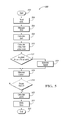
  • FIG. 6 illustrates a flow diagram of fault detection determined at the end of a single power cycle.
  • FIG. 1 depicts an example of a plug-in hybrid-electric vehicle.
  • a plug-in hybrid-electric vehicle 102 may comprise one or more electric motors 104 mechanically connected to a hybrid transmission 106 .
  • the hybrid transmission 106 is mechanically connected to an engine 108 .
  • the hybrid transmission 106 may also be mechanically connected to a drive shaft 110 that is mechanically connected to the wheels 112 .
  • the electric motors 104 can provide propulsion when the engine 108 is turned on.
  • the electric motors 104 can provide deceleration capability when the engine 108 is turned off.
  • the electric motors 104 may be configured as generators and can provide fuel economy benefits by recovering energy that would normally be lost as heat in the friction braking system.
  • the electric motors 104 may also reduce pollutant emissions since the hybrid electric vehicle 102 may be operated in electric mode under certain conditions.
  • the fraction battery or battery pack 114 stores energy that can be used by the electric motors 104 .
  • a vehicle battery pack 114 typically provides a high voltage DC output.
  • the battery pack 114 is electrically connected to a power electronics module 116 .
  • the power electronics module 116 is also electrically connected to the electric motors 104 and provides the ability to bi-directionally transfer energy between the battery pack 114 and the electric motors 104 .
  • a typical battery pack 14 may provide a DC voltage while the electric motors 104 may require a three-phase AC current to function.
  • the power electronics module 116 may convert the DC voltage to a three-phase AC current as required by the electric motors 104 .
  • the power electronics module 116 will convert the three-phase AC current from the electric motors 104 acting as generators to the DC voltage required by the battery pack 114 .
  • the methods described herein are equally applicable to a pure electric vehicle or any other device using a battery pack.
  • the battery pack 114 may provide energy for other vehicle electrical systems.
  • a typical system may include a DC/DC converter module 118 that converts the high voltage DC output of the battery pack 114 to a low voltage DC supply that is compatible with other vehicle loads.
  • Other high voltage loads such as compressors and electric heaters, may be connected directly to the high-voltage bus from the battery pack 114 .
  • the low voltage systems are electrically connected to a 12V battery 120 .
  • An all-electric vehicle may have a similar architecture but without the engine 108 .
  • the battery pack 114 may be recharged by an external power source 126 .
  • the external power source 126 may provide AC or DC power to the vehicle 102 by electrically connecting through a charge port 124 .
  • the charge port 124 may be any type of port configured to transfer power from the external power source 126 to the vehicle 102 .
  • the charge port 124 may be electrically connected to a power conversion module 122 .
  • the power conversion module may condition the power from the external power source 126 to provide the proper voltage and current levels to the battery pack 114 .
  • the external power source 126 may be configured to provide the proper voltage and current levels to the battery pack 114 and the power conversion module 122 may not be necessary.
  • the functions of the power conversion module 122 may reside in the external power source 126 in some applications.
  • the vehicle engine, transmission, electric motors and power electronics may be controlled by a powertrain control module (PCM) 128 .
  • PCM powertrain control module
  • FIG. 1 can illustrate a battery electric vehicle (BEV) if component 108 is removed.
  • FIG. 1 can illustrate a traditional hybrid electric vehicle (HEV) or a power-split hybrid electric vehicle if components 122 , 124 , and 126 are removed.
  • BEV battery electric vehicle
  • HEV traditional hybrid electric vehicle
  • HEV power-split hybrid electric vehicle
  • the individual battery cells within a battery pack may be constructed from a variety of chemical formulations.
  • Typical battery pack chemistries may include but are not limited to lead acid, nickel cadmium (NiCd), nickel-metal hydride (NIMH), Lithium-Ion or Lithium-Ion polymer.
  • FIG. 2 shows a typical battery pack 200 in a simple series configuration of N battery cell modules 202 .
  • the battery cell modules 202 may contain a single battery cell or multiple battery cells electrically connected in parallel.
  • the battery pack may be composed of any number of individual battery cells and battery cell modules connected in series or parallel or some combination thereof.
  • a typical system may have one or more controllers, such as a Battery Control Module (BCM) 208 that monitors and controls the performance of the battery pack 200 .
  • the BCM 208 may monitor several battery pack level characteristics such as pack current measured by a current sensor 206 , pack voltage 210 and pack temperature 212 .
  • the performance of the current sensor 206 may be essential, in certain arrangements, to build a reliable battery monitoring system. The accuracy of the current sensor may be useful to estimate the battery state of charge and capacity.
  • a current sensor may utilize a variety of methods based on physical principles to detect the current including a Hall effect IC sensor, a transformer or current clamp, a resistor where the voltage is directly proportional to the current through it, fiber optics using an interferometer to measure the phase change in the light produced by a magnetic field, or a Rogowski coil.
  • a system may use a sensor module 204 to measure the characteristics of one or more battery cell modules 202 .
  • the characteristics may include battery cell voltage, temperature, age, number of charge/discharge cycles, etc.
  • a sensor module will measure battery cell voltage.
  • Battery cell voltage may be voltage of a single battery or of a group of batteries electrically connected in parallel or in series.
  • the battery pack 200 may utilize up to N c sensor modules 204 to measure the characteristics of all the battery cells 202 .
  • Each sensor module 204 may transfer the measurements to the BCM 208 for further processing and coordination.
  • the sensor module 204 may transfer signals in analog or digital form to the BCM 208 .
  • FIG. 3 is a typical curve 300 showing the open-circuit voltage, V oc , as a function of SoC.
  • the relationship between SoC and V oc may be determined from an analysis of battery properties or from testing the battery cells.
  • the function may be such that SoC may be calculated as f ⁇ 1 (V oc ).
  • the function or the inverse function may be implemented as a table lookup or an equivalent equation.
  • the exact shape of the curve 300 may vary based on the exact formulation of the Lithium-Ion battery.
  • the voltage, V oc changes as a result of charging and discharging of the battery.
  • a battery SoC There are multiple ways to determine a battery SoC including measurement of open circuit voltage, accumulation of the amount of charge that enters or exits the battery, use of a hydrometer on the battery electrolyte, impedance spectroscopy and quantum magnetism.
  • the measurement of open circuit voltage requires that the load is disconnected from the battery and that the battery terminals are “floating.” Along with the terminals “floating,” the battery must “rest” or settle before the measurement is taken. If the battery is under load where current is flowing into or out of the battery, when the battery terminals are disconnected, the open circuit voltage will not be an accurate representation of the battery SoC until the charge has settled. Due to this aspect, using the open circuit voltage is not an ideal way to determine the battery SoC while the battery is in operation.
  • FIG. 4 illustrates different methods of calculating change in SoC using a graph of battery SoC 402 vs. time 404 .
  • a battery SoC may increase during operation, as illustrated as BECM power 418 which is vehicle activation, for many reasons including the use of regenerative braking (a vehicle traveling down a hill or a vehicle deceleration request).
  • the battery SoC may decrease during operation such as utilizing the battery to power an electric machine or electric accessories.
  • the instantaneous SoC 406 shown over a time period T AH has a change in SoC over the time period T AH ( ⁇ SoC AH ) 408 .
  • the change in SoC over a period can be obtained from the ampere hour integration which is based on a current sensor reading.
  • t 0 420 is the point in time at which the system is powered up, the time prior to this point is a pre-drive time.
  • t 1 422 is the point in time at which the system is powered down, where time after this point is a post-drive time and i is the battery pack current measured by the current sensor.
  • ⁇ Ah 1 can be converted to ⁇ SoC AH 408 which is the change in SoC over the time period T AH by dividing ⁇ Ah 1 by the battery Capacity C.
  • Ampere hour integration can also be estimated as ⁇ Ah 2 by measuring the open circuit voltage (OCV) and utilizing the relationship of OCV vs. SoC 300 . This equation is expressed as
  • N is the number of battery cells in the battery pack
  • v n,0 oc is the open circuit voltage measured immediately prior to the last power up
  • SoC OCV (t 0 ) 410 is the SoC of the battery measured by using the SoC-OCV relationship 300 immediately prior to the last power up
  • v n,1 oc is the open circuit voltage measured after a settling time (after the system is powered down)
  • SoC OCV (t 1 ) 412 is the SoC of the battery measured by using the SoC-OCV relationship 300 measured after a settling time after system powered down (t 1 ) .
  • the settling time is the time required for the charge in the battery to substantially reach equilibrium after the battery is powered down.
  • the settling time depends upon many factors including the current flow prior to power down, the age of the battery, the SoC of the battery, the temperature of the battery, etc.
  • T 1 422 is the time the system is powered down and the settling time.
  • One method of determining the relationship, f, is by battery testing and characterization.
  • the relationship, f, for a lithium-ion battery may be represented as a monotone curve as shown in FIG. 3 .
  • ⁇ Ah cb (n) is the ampere-hour integration introduced by both BCM on and off cell balancing for cell n.
  • ⁇ Ah cb (n) equals cell balancing discharge current multiplying the time when cell n's balancing circuit is closed.
  • ⁇ Ah 2 can be converted to ⁇ SoC OCV 416 which is the change in SoC over the time period T AH by dividing ⁇ Ah 2 by the battery capacity C. Also when calculating ⁇ SoC OCV 416 , the point in time to measure the v n,1 oc or SoC OCV (t 1 ) 412 is shown at point t 1 422 . It, however, can be done at any point in between t 1 422 and t 2 424 , which is the point immediately prior to the subsequent power up.
  • SoC OCV (t 2 ) 414 which is illustrated as being equal to SoC OCV (t 1 ), however in practice, the SoC will decrease from SoC OCV (t 1 ) to SoC OCV (t 2 ) 414 as a function of battery age, state of charge, temperature, and other factors.
  • ⁇ Ah 2 is an accurate estimation of the delta ampere-hour change after a driving cycle for many reasons including (i) the battery capacity is substantially constant over a period of time, (ii) the cell voltage sensor is very accurate and (iii) the sensor accuracy remains high even during cell rebalance.
  • An example of the accuracy is that a response of approximately 2 millivolts will result in at most a
  • One of the issues of the use of a current sensor is determining if the sensor is operating properly.
  • One way of determining if the current sensor is operating properly is to read the sensor output. If the sensor output is outside of a valid operational range, the sensor is determined to be at fault. The output may be outside the valid operational range if the output is either 0 or at full-scale, which may indicate that the sensor is possibly shorted to either power or ground, this is called an out-of-range fault. It is difficult to determine if the sensor is at fault when the sensor output is within a valid operational range, referred to as an in-range fault.
  • a reliable and accurate sensor assessment may be determined. If the current sensor is good, the
  • the vehicle operation may enter a specific mode of operation.
  • This operation mode may encompass many different steps and limitation.
  • the BECM may reduce the power limit to the electric machine and energy generated by the engine affecting the drivability, fuel economy and emission. This would be to manage possible SoC changes to reduce the possibility of the SoC decreasing or increasing outside a normal operation range.
  • the BECM may not update SoC because the current reading from the current sensor is not reliable. Then, the BECM may not update the battery model which is used to calculate the battery power capability online and the BECM may not accumulate ampere-hours, which can be used to estimate battery capacity. In a BEV and plug-in vehicle, battery capacity may be important, which determines the EV range. Also, if the current sensor accuracy is not reliable, the battery may not be charged to 100% SoC during a plug-in charge cycle for the PHEV and BEV because the BECM cannot conduct constant-voltage charge if current is not available.
  • FIG. 5 illustrates a flow diagram of the fault detection determined at system power up at a subsequent power cycle 500 . This may performed at time T 2 424 where the start 502 is immediately prior to the system power up.
  • parameters from the last operation are read from RAM, battery back-up RAM, non-volatile memory, or other storage; those parameters may include ⁇ SoC AH 408 , T AH , SoC OCV (t 0 ), etc.
  • ⁇ SoC AH is the change in SoC of the previous drive cycle
  • T AH is the time of the previous drive cycle
  • SoC OCV (t o ) is the beginning SoC value from the previous drive cycle.
  • the OCV is measured in block 506 prior to system power up or incident to system power up.
  • the measurement from block 506 and other data is used to calculate SoC OCV at a point such as T 2 424 .
  • the SoC OCV ( 0 ) is calculated in block 508 from the measurement from block 506 .
  • the ⁇ SoC Error is compared with a threshold value in block 512 . In the event that the ⁇ SoC Error is greater than the threshold value, a signal indicating an error state will be generated in block 514 , and the vehicle operation will change accordingly. If the ⁇ SoC Error is less than the threshold value, the system in block 516 will measure the battery current, i, and calculate ⁇ Ah 1 over the period of time during which the system is powered up, for example from time t 2 424 to a time t 3 (not shown). This can be accomplished as a continuous time domain measurement and integration, or it can be the summation of a series of discrete current measurements. Block 518 will monitor when the system shuts down.
  • the SoC AH will be calculated in block 520 and parameters including ⁇ SoC AH 408 , T AH , SoC OCV (t 0 ) for the recently completed drive cycle will be stored in block 522 .
  • the system will shut down in block 524 .
  • FIG. 6 illustrates a flow diagram of the fault detection determined at the end of a single power cycle 600 . This is performed at time t 1 422 where the start 602 is immediately prior to system power up.
  • battery OCV is calculated in 604 and the SoC OCV (t 0 ) is determined based on the SoC vs. OCV relationship 300 in block 606 .
  • the battery current, I is measured and ⁇ Ah 1 is calculated over the period of time during which the system is powered up, for example from time t 0 420 to a time t 1 422 . This can be accomplished as a continuous time domain measurement and integration, or it can be the summation of a series of discrete current measurements.
  • ⁇ SoC AH is estimated based on the current sensor measurements and the integration or summation of the current over the period of time T AH .
  • ⁇ SoC Error In the event that the ⁇ SoC Error is greater than the threshold value, a signal will be generated in block 620 indicating an error state and the vehicle operation will change accordingly. If the ⁇ SoC Error is less than the threshold value, the system will shut down in block 622 .
  • the processes, methods, or algorithms disclosed herein can be deliverable to/implemented by a processing device, controller, or computer, which can include any existing programmable electronic control unit or dedicated electronic control unit.
  • the processes, methods, or algorithms can be stored as data and instructions executable by a controller or computer in many forms including, but not limited to, information permanently stored on non-writable storage media such as ROM devices and information alterably stored on writeable storage media such as floppy disks, magnetic data tape storage, optical data tape storage, CDs, RAM devices, FLASH devices, MRAM devices and other magnetic and optical media.
  • the processes, methods, or algorithms can also be implemented in a software executable object.
  • the processes, methods, or algorithms can be embodied in whole or in part using suitable hardware components, such as Application Specific Integrated Circuits (ASICs), Field-Programmable Gate Arrays (FPGAs), state machines, controllers, or any other hardware components or devices, or a combination of hardware, software and firmware components.
  • suitable hardware components such as Application Specific Integrated Circuits (ASICs), Field-Programmable Gate Arrays (FPGAs), state machines, controllers, or any other hardware components or devices, or a combination of hardware, software and firmware components.

Landscapes

  • Engineering & Computer Science (AREA)
  • Transportation (AREA)
  • Mechanical Engineering (AREA)
  • Combustion & Propulsion (AREA)
  • Chemical & Material Sciences (AREA)
  • Sustainable Energy (AREA)
  • Power Engineering (AREA)
  • Life Sciences & Earth Sciences (AREA)
  • Sustainable Development (AREA)
  • Health & Medical Sciences (AREA)
  • Biomedical Technology (AREA)
  • General Health & Medical Sciences (AREA)
  • Automation & Control Theory (AREA)
  • Secondary Cells (AREA)
  • Electric Propulsion And Braking For Vehicles (AREA)

Abstract

A current sensor fault detection system is disclosed which enables detection of a current sensor fault while the current sensor is operating and providing a current sensor output which is within a normal operating range. The current sensor is monitored by at least one controller which compares a change in battery state of charge error with a predetermined threshold. The change in battery state of charge error is a difference between a first change in battery state of charge calculated by integrating battery current with respect to a time and a second change in battery state of charge calculated based on the battery open circuit voltage during the time.

Description

TECHNICAL FIELD
This disclosure relates to detection of a current sensor fault while the sensor is operating within a valid operating range.
BACKGROUND
Current sensors are used in hybrid vehicles to measure the current flowing into and out of battery packs. The accuracy and operation of these sensors may be important in monitoring the overall hybrid system operation—allowing for the vehicles to meet the emission and safety requirements. Traditionally, a sensor fault is determined if the sensor provides an output which is outside of a tolerable range of operation. It is more difficult to detect a sensor fault when the sensor is providing output data which is within a specified and normal operating range.
Currently, vehicles equipped with current sensors detect a fault when the sensor stops outputting data or if the output exceeds a specified operating range.
SUMMARY
A current sensor fault detection strategy is disclosed which enables detection of a current sensor fault while the current sensor is operating and providing a current sensor output which is within a normal operating range. The current sensor is monitored by at least one controller which, in certain examples, compares a change in battery state of charge error with a predetermined threshold. The change in battery state of charge error may be derived from a difference between a first change in battery state of charge calculated by integrating battery current with respect to a time and a second change in battery state of charge calculated based on the battery open circuit voltage during the time. If the error is greater than the threshold, the controller may adjust the operation of the electric machine. The operation changes may include limiting the current from the battery or generating a signal.
BRIEF DESCRIPTION OF THE DRAWINGS
FIG. 1 illustrates an example hybrid-electric vehicle with a battery pack;
FIG. 2 illustrates a battery pack arrangement comprised of battery cells and battery cell monitoring and controlling systems;
FIG. 3 is a graph that illustrates the open-circuit voltage (Voc) vs. battery state of charge (SoC) relationship for a typical Li-Ion battery cell;
FIG. 4 illustrates different methods of calculating change in SoC using a graph of battery SoC vs. time;
FIG. 5 illustrates a flow diagram of fault detection determined at system power up at a subsequent power cycle;
FIG. 6 illustrates a flow diagram of fault detection determined at the end of a single power cycle.
DETAILED DESCRIPTION
Embodiments of the present disclosure are described herein. It is to be understood, however, that the disclosed embodiments are merely examples and other embodiments can take various and alternative forms. The figures are not necessarily to scale; some features could be exaggerated or minimized to show details of particular components. Therefore, specific structural and functional details disclosed herein are not to be interpreted as limiting, but merely as a representative basis for teaching one skilled in the art to variously employ the present invention. As those of ordinary skill in the art will understand, various features illustrated and described with reference to any one of the figures can be combined with features illustrated in one or more other figures to produce embodiments that are not explicitly illustrated or described. The combinations of features illustrated provide representative embodiments for typical applications. Various combinations and modifications of the features consistent with the teachings of this disclosure, however, could be desired for particular applications or implementations.
FIG. 1 depicts an example of a plug-in hybrid-electric vehicle. A plug-in hybrid-electric vehicle 102 may comprise one or more electric motors 104 mechanically connected to a hybrid transmission 106. In addition, the hybrid transmission 106 is mechanically connected to an engine 108. The hybrid transmission 106 may also be mechanically connected to a drive shaft 110 that is mechanically connected to the wheels 112. The electric motors 104 can provide propulsion when the engine 108 is turned on. The electric motors 104 can provide deceleration capability when the engine 108 is turned off. The electric motors 104 may be configured as generators and can provide fuel economy benefits by recovering energy that would normally be lost as heat in the friction braking system. The electric motors 104 may also reduce pollutant emissions since the hybrid electric vehicle 102 may be operated in electric mode under certain conditions.
The fraction battery or battery pack 114 stores energy that can be used by the electric motors 104. A vehicle battery pack 114 typically provides a high voltage DC output. The battery pack 114 is electrically connected to a power electronics module 116. The power electronics module 116 is also electrically connected to the electric motors 104 and provides the ability to bi-directionally transfer energy between the battery pack 114 and the electric motors 104. For example, a typical battery pack 14 may provide a DC voltage while the electric motors 104 may require a three-phase AC current to function. The power electronics module 116 may convert the DC voltage to a three-phase AC current as required by the electric motors 104. In a regenerative mode, the power electronics module 116 will convert the three-phase AC current from the electric motors 104 acting as generators to the DC voltage required by the battery pack 114. The methods described herein are equally applicable to a pure electric vehicle or any other device using a battery pack.
In addition to providing energy for propulsion, the battery pack 114 may provide energy for other vehicle electrical systems. A typical system may include a DC/DC converter module 118 that converts the high voltage DC output of the battery pack 114 to a low voltage DC supply that is compatible with other vehicle loads. Other high voltage loads, such as compressors and electric heaters, may be connected directly to the high-voltage bus from the battery pack 114. In a typical vehicle, the low voltage systems are electrically connected to a 12V battery 120. An all-electric vehicle may have a similar architecture but without the engine 108.
The battery pack 114 may be recharged by an external power source 126. The external power source 126 may provide AC or DC power to the vehicle 102 by electrically connecting through a charge port 124. The charge port 124 may be any type of port configured to transfer power from the external power source 126 to the vehicle 102. The charge port 124 may be electrically connected to a power conversion module 122. The power conversion module may condition the power from the external power source 126 to provide the proper voltage and current levels to the battery pack 114. In some applications, the external power source 126 may be configured to provide the proper voltage and current levels to the battery pack 114 and the power conversion module 122 may not be necessary. The functions of the power conversion module 122 may reside in the external power source 126 in some applications. The vehicle engine, transmission, electric motors and power electronics may be controlled by a powertrain control module (PCM) 128.
In addition to illustrating a plug-in hybrid vehicle, FIG. 1 can illustrate a battery electric vehicle (BEV) if component 108 is removed. Likewise, FIG. 1 can illustrate a traditional hybrid electric vehicle (HEV) or a power-split hybrid electric vehicle if components 122, 124, and 126 are removed.
The individual battery cells within a battery pack may be constructed from a variety of chemical formulations. Typical battery pack chemistries may include but are not limited to lead acid, nickel cadmium (NiCd), nickel-metal hydride (NIMH), Lithium-Ion or Lithium-Ion polymer. FIG. 2 shows a typical battery pack 200 in a simple series configuration of N battery cell modules 202. The battery cell modules 202 may contain a single battery cell or multiple battery cells electrically connected in parallel. The battery pack, however, may be composed of any number of individual battery cells and battery cell modules connected in series or parallel or some combination thereof. A typical system may have one or more controllers, such as a Battery Control Module (BCM) 208 that monitors and controls the performance of the battery pack 200. The BCM 208 may monitor several battery pack level characteristics such as pack current measured by a current sensor 206, pack voltage 210 and pack temperature 212. The performance of the current sensor 206 may be essential, in certain arrangements, to build a reliable battery monitoring system. The accuracy of the current sensor may be useful to estimate the battery state of charge and capacity. A current sensor may utilize a variety of methods based on physical principles to detect the current including a Hall effect IC sensor, a transformer or current clamp, a resistor where the voltage is directly proportional to the current through it, fiber optics using an interferometer to measure the phase change in the light produced by a magnetic field, or a Rogowski coil.
In addition to the pack level characteristics, there may be battery cell level characteristics that need to be measured and monitored. For example, the terminal voltage, current, and temperature of each cell may be measured. A system may use a sensor module 204 to measure the characteristics of one or more battery cell modules 202. The characteristics may include battery cell voltage, temperature, age, number of charge/discharge cycles, etc. Typically, a sensor module will measure battery cell voltage. Battery cell voltage may be voltage of a single battery or of a group of batteries electrically connected in parallel or in series. The battery pack 200 may utilize up to Nc sensor modules 204 to measure the characteristics of all the battery cells 202. Each sensor module 204 may transfer the measurements to the BCM 208 for further processing and coordination. The sensor module 204 may transfer signals in analog or digital form to the BCM 208.
For a typical Lithium-Ion battery cell, there is a relationship between SoC and the open-circuit voltage (Voc) such that Voc=f(SoC). FIG. 3 is a typical curve 300 showing the open-circuit voltage, Voc, as a function of SoC. The relationship between SoC and Voc may be determined from an analysis of battery properties or from testing the battery cells. The function may be such that SoC may be calculated as f−1(Voc). The function or the inverse function may be implemented as a table lookup or an equivalent equation. The exact shape of the curve 300 may vary based on the exact formulation of the Lithium-Ion battery. The voltage, Voc, changes as a result of charging and discharging of the battery.
There are multiple ways to determine a battery SoC including measurement of open circuit voltage, accumulation of the amount of charge that enters or exits the battery, use of a hydrometer on the battery electrolyte, impedance spectroscopy and quantum magnetism. The measurement of open circuit voltage requires that the load is disconnected from the battery and that the battery terminals are “floating.” Along with the terminals “floating,” the battery must “rest” or settle before the measurement is taken. If the battery is under load where current is flowing into or out of the battery, when the battery terminals are disconnected, the open circuit voltage will not be an accurate representation of the battery SoC until the charge has settled. Due to this aspect, using the open circuit voltage is not an ideal way to determine the battery SoC while the battery is in operation. The use of Coulomb counting is a preferred method while the battery is in operation. This method measures the current traveling into or out of the battery during a given period of time. One problem with this method is that if there is a fault in the current sensor, the calculation of the battery SoC will not be accurate. During operation of a hybrid vehicle, it is critical to accurately determine the battery SoC so that the BCM 208 can utilize the full operational range of the battery SoC.
FIG. 4 illustrates different methods of calculating change in SoC using a graph of battery SoC 402 vs. time 404. As a vehicle is operated, the battery SoC changes with respect to time. A battery SoC may increase during operation, as illustrated as BECM power 418 which is vehicle activation, for many reasons including the use of regenerative braking (a vehicle traveling down a hill or a vehicle deceleration request). Also, the battery SoC may decrease during operation such as utilizing the battery to power an electric machine or electric accessories. The instantaneous SoC 406 shown over a time period TAH has a change in SoC over the time period TAH (ΔSoCAH) 408. The change in SoC over a period can be obtained from the ampere hour integration which is based on a current sensor reading. The equation is
ΔAh 1=∫t 0 t 1 (t)dt
In this equation t 0 420 is the point in time at which the system is powered up, the time prior to this point is a pre-drive time. t 1 422 is the point in time at which the system is powered down, where time after this point is a post-drive time and i is the battery pack current measured by the current sensor. ΔAh1 can be converted to ΔSoC AH 408 which is the change in SoC over the time period TAH by dividing ΔAh1 by the battery Capacity C.
Ampere hour integration can also be estimated as ΔAh2 by measuring the open circuit voltage (OCV) and utilizing the relationship of OCV vs. SoC 300. This equation is expressed as
Δ Ah 2 = C × n = 1 N [ f ( v n , 0 oc ) - f ( v n , 1 oc ) - Δ Ah cb ( n ) ] N
In this equation, N is the number of battery cells in the battery pack, vn,0 oc is the open circuit voltage measured immediately prior to the last power up, SoCOCV(t0) 410 is the SoC of the battery measured by using the SoC-OCV relationship 300 immediately prior to the last power up. vn,1 oc is the open circuit voltage measured after a settling time (after the system is powered down), SoCOCV(t1) 412 is the SoC of the battery measured by using the SoC-OCV relationship 300 measured after a settling time after system powered down (t1) . The settling time is the time required for the charge in the battery to substantially reach equilibrium after the battery is powered down. The settling time depends upon many factors including the current flow prior to power down, the age of the battery, the SoC of the battery, the temperature of the battery, etc. In this equation, T 1 422 is the time the system is powered down and the settling time. C is the capacity of the battery and f is the relationship between SoC and OCV SOC=f(voc). One method of determining the relationship, f, is by battery testing and characterization. For example, the relationship, f, for a lithium-ion battery may be represented as a monotone curve as shown in FIG. 3. ΔAhcb(n) is the ampere-hour integration introduced by both BCM on and off cell balancing for cell n. ΔAhcb(n) equals cell balancing discharge current multiplying the time when cell n's balancing circuit is closed.
ΔAh2 can be converted to ΔSoC OCV 416 which is the change in SoC over the time period TAH by dividing ΔAh2 by the battery capacity C. Also when calculating ΔSoC OCV 416, the point in time to measure the vn,1 oc or SoCOCV(t1) 412 is shown at point t 1 422. It, however, can be done at any point in between t 1 422 and t 2 424, which is the point immediately prior to the subsequent power up. The SoC value at point t 2 424 is represented as SoCOCV(t2) 414 which is illustrated as being equal to SoCOCV(t1), however in practice, the SoC will decrease from SoCOCV(t1) to SoCOCV(t2) 414 as a function of battery age, state of charge, temperature, and other factors.
Using the ΔAh2 is an accurate estimation of the delta ampere-hour change after a driving cycle for many reasons including (i) the battery capacity is substantially constant over a period of time, (ii) the cell voltage sensor is very accurate and (iii) the sensor accuracy remains high even during cell rebalance. An example of the accuracy is that a response of approximately 2 millivolts will result in at most a
( 0.5 N ) %
relative error in delta ampere-hour measurement.
One of the issues of the use of a current sensor is determining if the sensor is operating properly. One way of determining if the current sensor is operating properly is to read the sensor output. If the sensor output is outside of a valid operational range, the sensor is determined to be at fault. The output may be outside the valid operational range if the output is either 0 or at full-scale, which may indicate that the sensor is possibly shorted to either power or ground, this is called an out-of-range fault. It is difficult to determine if the sensor is at fault when the sensor output is within a valid operational range, referred to as an in-range fault. By evaluating the current sensor performance by using the difference |ΔSoCAH-ΔSoCOCV | between two delta SoC estimates or the two delta ampere-hour estimates, a reliable and accurate sensor assessment may be determined. If the current sensor is good, the |ΔSoCAH-ΔSoCOCV | value will be close to zero. If the current sensor performance is bad, the |ΔSoCAH-ΔSoCOCV | value will be much greater than zero. If |ΔSoCAH-ΔSoCOCV | is greater than a threshold value determined by calibration, engineering analysis or design, the sensor can be determined to be faulty and the battery system can adjust operation accordingly. If the sensor is at fault but not detected, as in an in-range fault not detected, the vehicle fuel economy and drivability will be reduced and the vehicle emission will increase.
When an in-range fault is detected, the vehicle operation may enter a specific mode of operation. This operation mode may encompass many different steps and limitation. First, the BECM may reduce the power limit to the electric machine and energy generated by the engine affecting the drivability, fuel economy and emission. This would be to manage possible SoC changes to reduce the possibility of the SoC decreasing or increasing outside a normal operation range. Second, the BECM may not update SoC because the current reading from the current sensor is not reliable. Then, the BECM may not update the battery model which is used to calculate the battery power capability online and the BECM may not accumulate ampere-hours, which can be used to estimate battery capacity. In a BEV and plug-in vehicle, battery capacity may be important, which determines the EV range. Also, if the current sensor accuracy is not reliable, the battery may not be charged to 100% SoC during a plug-in charge cycle for the PHEV and BEV because the BECM cannot conduct constant-voltage charge if current is not available.
FIG. 5 illustrates a flow diagram of the fault detection determined at system power up at a subsequent power cycle 500. This may performed at time T 2 424 where the start 502 is immediately prior to the system power up. Next, parameters from the last operation are read from RAM, battery back-up RAM, non-volatile memory, or other storage; those parameters may include ΔSoC AH 408, TAH, SoCOCV(t0), etc. ΔSoCAH is the change in SoC of the previous drive cycle, TAH is the time of the previous drive cycle, and SoCOCV(to) is the beginning SoC value from the previous drive cycle. The OCV is measured in block 506 prior to system power up or incident to system power up. The measurement from block 506 and other data is used to calculate SoCOCV at a point such as T 2 424. The SoCOCV(0) is calculated in block 508 from the measurement from block 506. The ΔSoC and error is calculated in block 510 by the following equations:
ΔSoC OCV =SoC OCV(t 2)-SoC OCV(t 0)
ΔSoC Error=|ΔSoC AHSoC OCV |/T AH
The ΔSoC Error is compared with a threshold value in block 512. In the event that the ΔSoC Error is greater than the threshold value, a signal indicating an error state will be generated in block 514, and the vehicle operation will change accordingly. If the ΔSoC Error is less than the threshold value, the system in block 516 will measure the battery current, i, and calculate ΔAh1 over the period of time during which the system is powered up, for example from time t 2 424 to a time t3 (not shown). This can be accomplished as a continuous time domain measurement and integration, or it can be the summation of a series of discrete current measurements. Block 518 will monitor when the system shuts down. After it is determined that the system shut down, the SoCAH will be calculated in block 520 and parameters including ΔSoC AH 408, TAH, SoCOCV(t0) for the recently completed drive cycle will be stored in block 522. The system will shut down in block 524.
FIG. 6 illustrates a flow diagram of the fault detection determined at the end of a single power cycle 600. This is performed at time t 1 422 where the start 602 is immediately prior to system power up. Next, battery OCV is calculated in 604 and the SoCOCV(t0) is determined based on the SoC vs. OCV relationship 300 in block 606. In block 608, the battery current, I, is measured and ΔAh1 is calculated over the period of time during which the system is powered up, for example from time t 0 420 to a time t 1 422. This can be accomplished as a continuous time domain measurement and integration, or it can be the summation of a series of discrete current measurements. The measurement is continued until the system is determined to be powered down in block 610. In block 612, ΔSoCAH is estimated based on the current sensor measurements and the integration or summation of the current over the period of time TAH. In block 614, SoCOCV(t1) is first estimated from the OCV and then ΔSoCOCV is calculated using ΔSoCOCV=SoCOCV(t0)-SoCOCV(t1) and ΔSoC Error is calculated in block 616 using ΔSoC Error=|ΔSoCAH-ΔSoCOCV |/TAH. The ΔSoC Error is compared with a threshold value in block 618. In the event that the ΔSoC Error is greater than the threshold value, a signal will be generated in block 620 indicating an error state and the vehicle operation will change accordingly. If the ΔSoC Error is less than the threshold value, the system will shut down in block 622.
The processes, methods, or algorithms disclosed herein can be deliverable to/implemented by a processing device, controller, or computer, which can include any existing programmable electronic control unit or dedicated electronic control unit. Similarly, the processes, methods, or algorithms can be stored as data and instructions executable by a controller or computer in many forms including, but not limited to, information permanently stored on non-writable storage media such as ROM devices and information alterably stored on writeable storage media such as floppy disks, magnetic data tape storage, optical data tape storage, CDs, RAM devices, FLASH devices, MRAM devices and other magnetic and optical media. The processes, methods, or algorithms can also be implemented in a software executable object. Alternatively, the processes, methods, or algorithms can be embodied in whole or in part using suitable hardware components, such as Application Specific Integrated Circuits (ASICs), Field-Programmable Gate Arrays (FPGAs), state machines, controllers, or any other hardware components or devices, or a combination of hardware, software and firmware components.
While exemplary embodiments are described above, it is not intended that these embodiments describe all possible forms encompassed by the claims. The words used in the specification are words of description rather than limitation, and it is understood that various changes can be made without departing from the spirit and scope of the disclosure. As previously described, the features of various embodiments can be combined to form further embodiments of the invention that may not be explicitly described or illustrated.
While various embodiments could have been described as providing advantages or being preferred over other embodiments or prior art implementations with respect to one or more desired characteristics, those of ordinary skill in the art recognize that one or more features or characteristics can be compromised to achieve desired overall system attributes, which depend on the specific application and implementation. These attributes can include, but are not limited to cost, strength, durability, life cycle cost, marketability, appearance, packaging, size, serviceability, weight, manufacturability, ease of assembly, etc. As such, embodiments described as less desirable than other embodiments or prior art implementations with respect to one or more characteristics are not outside the scope of the disclosure and can be desirable for particular applications.

Claims (9)

What is claimed is:
1. A vehicle comprising:
a battery;
a sensor configured to sense a current of the battery;
an electric machine electrically connected to the battery; and
at least one controller programmed to, in response to detecting an error state for the sensor defined by a difference in pre- and post-drive cycle open circuit voltages of the battery being greater or less than a change in state of charge of the battery for the drive cycle by a predetermined amount, reduced a power limit of the electric machine for a subsequent drive cycle to limit the current from the battery.
2. The vehicle of claim 1, wherein the at least one controller is further programmed to, in response to detecting the error state, output a signal indicating the error state of the current sensor.
3. The vehicle of claim 1, wherein the change in state of charge of the battery is based on a quotient of a net change in ampere-hours of the battery for the drive cycle and a capacity of the battery.
4. A method of controlling a power system for a vehicle comprising:
in response to a request to activate the vehicle, measuring a first open circuit voltage of a fraction battery prior to start of a drive cycle;
measuring a current flow of the traction battery during the drive cycle;
after vehicle deactivation, measuring a second open circuit voltage of the traction battery;
detecting an error state for a current sensor associated with the traction battery based on a difference between the open circuit voltages and the current flow; and
in response to detecting the error state, generating an output indicating the error state of the current sensor and reducing a power limit of the electric machine for a subsequent drive cycle.
5. The method of claim 4, wherein the second open circuit voltage is measured upon expiration of a predefined settling time of the traction battery.
6. The method of claim 5, wherein the predefined settling time of the battery is greater than 4 seconds.
7. The method of claim 4, wherein the detecting of the error state is further based on a capacity of the battery.
8. A vehicle comprising:
a battery; and
at controller programmed to, in response to detecting an error state defined by a difference in pre- and post-drive cycle open circuit voltages of the battery being greater or less than a change in state of charge of the battery for the drive cycle by a predetermined amount, reduced a power limit of an electric machine electrically coupled to the battery for a subsequent drive cycle.
9. The vehicle of claim 8, wherein the change in state of charge of the battery is based on a quotient of a net change in ampere-hours of the battery for the drive cycle and a capacity.
US14/015,344 2013-08-30 2013-08-30 In-range current sensor fault detection Active 2035-02-05 US10124789B2 (en)

Priority Applications (3)

Application Number Priority Date Filing Date Title
US14/015,344 US10124789B2 (en) 2013-08-30 2013-08-30 In-range current sensor fault detection
CN201410393210.1A CN104422917B (en) 2013-08-30 2014-08-12 The fault detection of current sensor in range
DE201410216931 DE102014216931A1 (en) 2013-08-30 2014-08-26 Detection of in-range current sensor errors

Applications Claiming Priority (1)

Application Number Priority Date Filing Date Title
US14/015,344 US10124789B2 (en) 2013-08-30 2013-08-30 In-range current sensor fault detection

Publications (2)

Publication Number Publication Date
US20150066262A1 US20150066262A1 (en) 2015-03-05
US10124789B2 true US10124789B2 (en) 2018-11-13

Family

ID=52470715

Family Applications (1)

Application Number Title Priority Date Filing Date
US14/015,344 Active 2035-02-05 US10124789B2 (en) 2013-08-30 2013-08-30 In-range current sensor fault detection

Country Status (3)

Country Link
US (1) US10124789B2 (en)
CN (1) CN104422917B (en)
DE (1) DE102014216931A1 (en)

Cited By (4)

* Cited by examiner, † Cited by third party
Publication number Priority date Publication date Assignee Title
US10554056B2 (en) * 2016-01-12 2020-02-04 Samsung Electronics Co., Ltd. Faulty cell detection device and faulty cell detection method
US11186198B2 (en) 2019-05-31 2021-11-30 Ford Global Technologies, Llc Methods and systems for vehicle battery cell failure detection and overcharge protection
US11498446B2 (en) * 2020-01-06 2022-11-15 Ford Global Technologies, Llc Plug-in charge current management for battery model-based online learning
US12043124B2 (en) 2022-04-08 2024-07-23 Ford Global Technologies, Llc Isolation fault detection on DC charge bus

Families Citing this family (22)

* Cited by examiner, † Cited by third party
Publication number Priority date Publication date Assignee Title
CN106255782B (en) * 2014-04-24 2019-04-05 沃尔沃建造设备有限公司 Apparatus and method for calculating operating time of hybrid construction machinery
US9156370B1 (en) * 2014-05-15 2015-10-13 Honda Motor Co. Ltd. Offboard power supply system having emission level evaluation for an electric vehicle
DE102014219806B4 (en) * 2014-09-30 2019-03-21 Volkswagen Aktiengesellschaft Method and device for testing the functionality of a current sensor and vehicle
JP6413827B2 (en) * 2015-02-19 2018-10-31 スズキ株式会社 Abnormality diagnosis device
JP6838770B2 (en) * 2015-10-05 2021-03-03 株式会社村田製作所 Fuel gauge, battery pack, power tool, electric aircraft, electric vehicle, power supply and uninterruptible power supply
JP6569446B2 (en) * 2015-10-07 2019-09-04 三菱自動車工業株式会社 Battery control device
DE102017202232B4 (en) 2017-02-13 2024-01-11 Volkswagen Aktiengesellschaft Method for controlling a device for providing electrical energy to a motor vehicle, control device and motor vehicle with a control device
JP2018173370A (en) * 2017-03-31 2018-11-08 住友電気工業株式会社 Abnormality determination device, abnormality determination method, and computer program
CN107015185A (en) * 2017-05-03 2017-08-04 北京新能源汽车股份有限公司 Current sensor fault detection method and device and automobile
US10698033B2 (en) * 2017-12-21 2020-06-30 Robert Bosch Battery Systems, Llc Sensor fault detection using paired sample correlation
KR102427331B1 (en) * 2018-06-28 2022-07-29 주식회사 엘지에너지솔루션 Apparatus and method for diagnosing current sensor
US11913998B2 (en) * 2018-07-25 2024-02-27 Panasonic Intellectual Property Management Co., Ltd. Management device and power supply system
KR102720775B1 (en) * 2018-12-10 2024-10-25 현대자동차주식회사 Vehicle, and controlling method thereof
KR102645052B1 (en) * 2019-03-05 2024-03-08 현대자동차주식회사 Apparatus for controlling driving mode of hybrid vehicle and method thereof
CN110696623A (en) * 2019-10-29 2020-01-17 昆山宝创新能源科技有限公司 Vehicle, battery system and detection method thereof
CN112285413B (en) * 2020-10-15 2024-06-14 中国第一汽车股份有限公司 Current value determining method, device, controller, medium and battery management system
US12265132B2 (en) 2020-12-23 2025-04-01 Medtronic, Inc. Updating battery capacity after clinical implementation
US20220200302A1 (en) * 2020-12-23 2022-06-23 Medtronic, Inc. Control logic to update battery capacity
CN113671393B (en) * 2021-08-11 2024-06-14 东莞新能安科技有限公司 A current collection and detection method, battery pack and power-consuming device
CN114217111B (en) * 2021-12-20 2025-03-21 南京南瑞国盾量子技术有限公司 A method for improving the measurement accuracy of current transformer
TWI866275B (en) * 2023-06-13 2024-12-11 錞鐿科技股份有限公司 Clamp meter system with battery-internal-resistance-measuring function
CN119001585B (en) * 2024-10-25 2025-01-24 中电装备山东电子有限公司 A transformer operation status monitoring terminal based on artificial intelligence

Citations (6)

* Cited by examiner, † Cited by third party
Publication number Priority date Publication date Assignee Title
US7116239B2 (en) 2003-03-31 2006-10-03 Texas Instruments Incorporated Current sense components failure detection in a multi-phase power system
US7994798B2 (en) 2007-11-30 2011-08-09 Caterpillar Inc. Power converter current sensor testing method
US20120139546A1 (en) * 2010-12-07 2012-06-07 Maxim Integrated Products, Inc. State Based Full and Empty Control for Rechargeable Batteries
US20120235622A1 (en) * 2011-03-16 2012-09-20 GM Global Technology Operations LLC Systems and methods for monitoring current in an electric motor
US8390296B2 (en) 2009-03-03 2013-03-05 Lg Chem, Ltd. Method and apparatus for detecting abnormality of current sensor in battery pack
US20130077194A1 (en) 2011-09-23 2013-03-28 GM Global Technology Operations LLC Protection of motor drive systems from current sensor faults

Family Cites Families (4)

* Cited by examiner, † Cited by third party
Publication number Priority date Publication date Assignee Title
JP4501873B2 (en) * 2006-02-27 2010-07-14 トヨタ自動車株式会社 Abnormality judgment device and abnormality judgment method for power supply device
JP2010104175A (en) * 2008-10-24 2010-05-06 Panasonic Corp Fault diagnosis circuit, power supply device, and fault diagnosis method
KR101261149B1 (en) * 2011-07-28 2013-05-06 쌍용자동차 주식회사 Method for estimating state of charge of battery
CN103197188A (en) * 2013-03-05 2013-07-10 上海翼锐汽车科技有限公司 Battery current sensor fault diagnosis system and method thereof

Patent Citations (6)

* Cited by examiner, † Cited by third party
Publication number Priority date Publication date Assignee Title
US7116239B2 (en) 2003-03-31 2006-10-03 Texas Instruments Incorporated Current sense components failure detection in a multi-phase power system
US7994798B2 (en) 2007-11-30 2011-08-09 Caterpillar Inc. Power converter current sensor testing method
US8390296B2 (en) 2009-03-03 2013-03-05 Lg Chem, Ltd. Method and apparatus for detecting abnormality of current sensor in battery pack
US20120139546A1 (en) * 2010-12-07 2012-06-07 Maxim Integrated Products, Inc. State Based Full and Empty Control for Rechargeable Batteries
US20120235622A1 (en) * 2011-03-16 2012-09-20 GM Global Technology Operations LLC Systems and methods for monitoring current in an electric motor
US20130077194A1 (en) 2011-09-23 2013-03-28 GM Global Technology Operations LLC Protection of motor drive systems from current sensor faults

Cited By (4)

* Cited by examiner, † Cited by third party
Publication number Priority date Publication date Assignee Title
US10554056B2 (en) * 2016-01-12 2020-02-04 Samsung Electronics Co., Ltd. Faulty cell detection device and faulty cell detection method
US11186198B2 (en) 2019-05-31 2021-11-30 Ford Global Technologies, Llc Methods and systems for vehicle battery cell failure detection and overcharge protection
US11498446B2 (en) * 2020-01-06 2022-11-15 Ford Global Technologies, Llc Plug-in charge current management for battery model-based online learning
US12043124B2 (en) 2022-04-08 2024-07-23 Ford Global Technologies, Llc Isolation fault detection on DC charge bus

Also Published As

Publication number Publication date
DE102014216931A1 (en) 2015-03-05
CN104422917B (en) 2019-10-11
US20150066262A1 (en) 2015-03-05
CN104422917A (en) 2015-03-18

Similar Documents

Publication Publication Date Title
US10124789B2 (en) In-range current sensor fault detection
US9925888B2 (en) Battery cell state of charge initialization in a presence of voltage measurement uncertainty
US10553896B2 (en) Battery capacity degradation resolution methods and systems
US10124696B2 (en) Estimation and compensation of battery measurement and asynchronization biases
CN105510832B (en) Electric vehicle battery state of charge monitoring using aging compensation
US9205750B2 (en) Method to estimate battery open-circuit voltage based on transient resistive effects
US9770997B2 (en) Detection of imbalance across multiple battery cells measured by the same voltage sensor
US10266063B2 (en) Battery controller and vehicle system
US9472977B2 (en) Battery cell state of charge estimation
US9634361B2 (en) Battery system and associated method for determining the internal resistance of battery cells or battery modules of said battery system
US10809305B2 (en) System and method for detecting and responding to a battery over-discharge condition within a vehicle
US9676288B2 (en) Battery open-circuit voltage measurement using reverse current pulse
US9533598B2 (en) Method for battery state of charge estimation
US9381824B2 (en) Circuit and method for detection of battery cell drain
US10899247B2 (en) System and method for online vehicle battery capacity diagnosis
US9658293B2 (en) Power supply unit, vehicle and storage battery unit equipped with power supply unit, and remaining capacity detecting method of battery
US11899070B2 (en) Battery control device
US11135939B2 (en) System and method for hybrid-electric vehicle battery capacity estimation
US20260027941A1 (en) Controlling vehicle battery based on open circuit voltage

Legal Events

Date Code Title Description
AS Assignment

Owner name: FORD GLOBAL TECHNOLOGIES, LLC, MICHIGAN

Free format text: ASSIGNMENT OF ASSIGNORS INTEREST;ASSIGNORS:CHANG, XIAOGUANG;WANG, XU;HE, CHUAN;AND OTHERS;REEL/FRAME:031133/0739

Effective date: 20130830

STCF Information on status: patent grant

Free format text: PATENTED CASE

MAFP Maintenance fee payment

Free format text: PAYMENT OF MAINTENANCE FEE, 4TH YEAR, LARGE ENTITY (ORIGINAL EVENT CODE: M1551); ENTITY STATUS OF PATENT OWNER: LARGE ENTITY

Year of fee payment: 4