US10102792B2 - Driving circuit of display panel and display apparatus using the same - Google Patents

Driving circuit of display panel and display apparatus using the same Download PDF

Info

Publication number
US10102792B2
US10102792B2 US15/086,035 US201615086035A US10102792B2 US 10102792 B2 US10102792 B2 US 10102792B2 US 201615086035 A US201615086035 A US 201615086035A US 10102792 B2 US10102792 B2 US 10102792B2
Authority
US
United States
Prior art keywords
capacitance
coupled
pixel
current
signal
Prior art date
Legal status (The legal status is an assumption and is not a legal conclusion. Google has not performed a legal analysis and makes no representation as to the accuracy of the status listed.)
Active, expires
Application number
US15/086,035
Other versions
US20170287379A1 (en
Inventor
Ying-Neng Huang
Wen-Shen Wuen
Current Assignee (The listed assignees may be inaccurate. Google has not performed a legal analysis and makes no representation or warranty as to the accuracy of the list.)
Novatek Microelectronics Corp
Original Assignee
Novatek Microelectronics Corp
Priority date (The priority date is an assumption and is not a legal conclusion. Google has not performed a legal analysis and makes no representation as to the accuracy of the date listed.)
Filing date
Publication date
Application filed by Novatek Microelectronics Corp filed Critical Novatek Microelectronics Corp
Priority to US15/086,035 priority Critical patent/US10102792B2/en
Assigned to NOVATEK MICROELECTRONICS CORP. reassignment NOVATEK MICROELECTRONICS CORP. ASSIGNMENT OF ASSIGNORS INTEREST (SEE DOCUMENT FOR DETAILS). Assignors: WUEN, WEN-SHEN, HUANG, YING-NENG
Assigned to NOVATEK MICROELECTRONICS CORP. reassignment NOVATEK MICROELECTRONICS CORP. CORRECTIVE ASSIGNMENT TO CORRECT THE INCORRECT APPL. NO. 13/086,035 PREVIOUSLY RECORDED AT REEL: 038238 FRAME: 0636. ASSIGNOR(S) HEREBY CONFIRMS THE ASSIGNMENT. Assignors: WUEN, WEN-SHEN, HUANG, YING-NENG
Priority to TW105114447A priority patent/TWI590213B/en
Priority to CN201610339570.2A priority patent/CN107293243B/en
Publication of US20170287379A1 publication Critical patent/US20170287379A1/en
Application granted granted Critical
Publication of US10102792B2 publication Critical patent/US10102792B2/en
Active legal-status Critical Current
Adjusted expiration legal-status Critical

Links

Images

Classifications

    • GPHYSICS
    • G09EDUCATION; CRYPTOGRAPHY; DISPLAY; ADVERTISING; SEALS
    • G09GARRANGEMENTS OR CIRCUITS FOR CONTROL OF INDICATING DEVICES USING STATIC MEANS TO PRESENT VARIABLE INFORMATION
    • G09G3/00Control arrangements or circuits, of interest only in connection with visual indicators other than cathode-ray tubes
    • G09G3/20Control arrangements or circuits, of interest only in connection with visual indicators other than cathode-ray tubes for presentation of an assembly of a number of characters, e.g. a page, by composing the assembly by combination of individual elements arranged in a matrix no fixed position being assigned to or needed to be assigned to the individual characters or partial characters
    • G09G3/2092Details of a display terminals using a flat panel, the details relating to the control arrangement of the display terminal and to the interfaces thereto
    • GPHYSICS
    • G09EDUCATION; CRYPTOGRAPHY; DISPLAY; ADVERTISING; SEALS
    • G09GARRANGEMENTS OR CIRCUITS FOR CONTROL OF INDICATING DEVICES USING STATIC MEANS TO PRESENT VARIABLE INFORMATION
    • G09G3/00Control arrangements or circuits, of interest only in connection with visual indicators other than cathode-ray tubes
    • G09G3/20Control arrangements or circuits, of interest only in connection with visual indicators other than cathode-ray tubes for presentation of an assembly of a number of characters, e.g. a page, by composing the assembly by combination of individual elements arranged in a matrix no fixed position being assigned to or needed to be assigned to the individual characters or partial characters
    • G09G3/34Control arrangements or circuits, of interest only in connection with visual indicators other than cathode-ray tubes for presentation of an assembly of a number of characters, e.g. a page, by composing the assembly by combination of individual elements arranged in a matrix no fixed position being assigned to or needed to be assigned to the individual characters or partial characters by control of light from an independent source
    • G09G3/36Control arrangements or circuits, of interest only in connection with visual indicators other than cathode-ray tubes for presentation of an assembly of a number of characters, e.g. a page, by composing the assembly by combination of individual elements arranged in a matrix no fixed position being assigned to or needed to be assigned to the individual characters or partial characters by control of light from an independent source using liquid crystals
    • G09G3/3611Control of matrices with row and column drivers
    • G09G3/3685Details of drivers for data electrodes
    • G09G3/3688Details of drivers for data electrodes suitable for active matrices only
    • GPHYSICS
    • G09EDUCATION; CRYPTOGRAPHY; DISPLAY; ADVERTISING; SEALS
    • G09GARRANGEMENTS OR CIRCUITS FOR CONTROL OF INDICATING DEVICES USING STATIC MEANS TO PRESENT VARIABLE INFORMATION
    • G09G3/00Control arrangements or circuits, of interest only in connection with visual indicators other than cathode-ray tubes
    • G09G3/20Control arrangements or circuits, of interest only in connection with visual indicators other than cathode-ray tubes for presentation of an assembly of a number of characters, e.g. a page, by composing the assembly by combination of individual elements arranged in a matrix no fixed position being assigned to or needed to be assigned to the individual characters or partial characters
    • GPHYSICS
    • G09EDUCATION; CRYPTOGRAPHY; DISPLAY; ADVERTISING; SEALS
    • G09GARRANGEMENTS OR CIRCUITS FOR CONTROL OF INDICATING DEVICES USING STATIC MEANS TO PRESENT VARIABLE INFORMATION
    • G09G3/00Control arrangements or circuits, of interest only in connection with visual indicators other than cathode-ray tubes
    • G09G3/20Control arrangements or circuits, of interest only in connection with visual indicators other than cathode-ray tubes for presentation of an assembly of a number of characters, e.g. a page, by composing the assembly by combination of individual elements arranged in a matrix no fixed position being assigned to or needed to be assigned to the individual characters or partial characters
    • G09G3/22Control arrangements or circuits, of interest only in connection with visual indicators other than cathode-ray tubes for presentation of an assembly of a number of characters, e.g. a page, by composing the assembly by combination of individual elements arranged in a matrix no fixed position being assigned to or needed to be assigned to the individual characters or partial characters using controlled light sources
    • G09G3/30Control arrangements or circuits, of interest only in connection with visual indicators other than cathode-ray tubes for presentation of an assembly of a number of characters, e.g. a page, by composing the assembly by combination of individual elements arranged in a matrix no fixed position being assigned to or needed to be assigned to the individual characters or partial characters using controlled light sources using electroluminescent panels
    • G09G3/32Control arrangements or circuits, of interest only in connection with visual indicators other than cathode-ray tubes for presentation of an assembly of a number of characters, e.g. a page, by composing the assembly by combination of individual elements arranged in a matrix no fixed position being assigned to or needed to be assigned to the individual characters or partial characters using controlled light sources using electroluminescent panels semiconductive, e.g. using light-emitting diodes [LED]
    • G09G3/3208Control arrangements or circuits, of interest only in connection with visual indicators other than cathode-ray tubes for presentation of an assembly of a number of characters, e.g. a page, by composing the assembly by combination of individual elements arranged in a matrix no fixed position being assigned to or needed to be assigned to the individual characters or partial characters using controlled light sources using electroluminescent panels semiconductive, e.g. using light-emitting diodes [LED] organic, e.g. using organic light-emitting diodes [OLED]
    • G09G3/3275Details of drivers for data electrodes
    • G09G3/3283Details of drivers for data electrodes in which the data driver supplies a variable data current for setting the current through, or the voltage across, the light-emitting elements
    • GPHYSICS
    • G09EDUCATION; CRYPTOGRAPHY; DISPLAY; ADVERTISING; SEALS
    • G09GARRANGEMENTS OR CIRCUITS FOR CONTROL OF INDICATING DEVICES USING STATIC MEANS TO PRESENT VARIABLE INFORMATION
    • G09G3/00Control arrangements or circuits, of interest only in connection with visual indicators other than cathode-ray tubes
    • G09G3/20Control arrangements or circuits, of interest only in connection with visual indicators other than cathode-ray tubes for presentation of an assembly of a number of characters, e.g. a page, by composing the assembly by combination of individual elements arranged in a matrix no fixed position being assigned to or needed to be assigned to the individual characters or partial characters
    • G09G3/34Control arrangements or circuits, of interest only in connection with visual indicators other than cathode-ray tubes for presentation of an assembly of a number of characters, e.g. a page, by composing the assembly by combination of individual elements arranged in a matrix no fixed position being assigned to or needed to be assigned to the individual characters or partial characters by control of light from an independent source
    • G09G3/36Control arrangements or circuits, of interest only in connection with visual indicators other than cathode-ray tubes for presentation of an assembly of a number of characters, e.g. a page, by composing the assembly by combination of individual elements arranged in a matrix no fixed position being assigned to or needed to be assigned to the individual characters or partial characters by control of light from an independent source using liquid crystals
    • G09G3/3611Control of matrices with row and column drivers
    • G09G3/3685Details of drivers for data electrodes
    • GPHYSICS
    • G09EDUCATION; CRYPTOGRAPHY; DISPLAY; ADVERTISING; SEALS
    • G09GARRANGEMENTS OR CIRCUITS FOR CONTROL OF INDICATING DEVICES USING STATIC MEANS TO PRESENT VARIABLE INFORMATION
    • G09G2300/00Aspects of the constitution of display devices
    • G09G2300/08Active matrix structure, i.e. with use of active elements, inclusive of non-linear two terminal elements, in the pixels together with light emitting or modulating elements
    • G09G2300/0809Several active elements per pixel in active matrix panels
    • G09G2300/0842Several active elements per pixel in active matrix panels forming a memory circuit, e.g. a dynamic memory with one capacitor
    • GPHYSICS
    • G09EDUCATION; CRYPTOGRAPHY; DISPLAY; ADVERTISING; SEALS
    • G09GARRANGEMENTS OR CIRCUITS FOR CONTROL OF INDICATING DEVICES USING STATIC MEANS TO PRESENT VARIABLE INFORMATION
    • G09G2300/00Aspects of the constitution of display devices
    • G09G2300/08Active matrix structure, i.e. with use of active elements, inclusive of non-linear two terminal elements, in the pixels together with light emitting or modulating elements
    • G09G2300/0809Several active elements per pixel in active matrix panels
    • G09G2300/0871Several active elements per pixel in active matrix panels with level shifting
    • GPHYSICS
    • G09EDUCATION; CRYPTOGRAPHY; DISPLAY; ADVERTISING; SEALS
    • G09GARRANGEMENTS OR CIRCUITS FOR CONTROL OF INDICATING DEVICES USING STATIC MEANS TO PRESENT VARIABLE INFORMATION
    • G09G2310/00Command of the display device
    • G09G2310/02Addressing, scanning or driving the display screen or processing steps related thereto
    • G09G2310/0264Details of driving circuits
    • G09G2310/027Details of drivers for data electrodes, the drivers handling digital grey scale data, e.g. use of D/A converters
    • GPHYSICS
    • G09EDUCATION; CRYPTOGRAPHY; DISPLAY; ADVERTISING; SEALS
    • G09GARRANGEMENTS OR CIRCUITS FOR CONTROL OF INDICATING DEVICES USING STATIC MEANS TO PRESENT VARIABLE INFORMATION
    • G09G2310/00Command of the display device
    • G09G2310/02Addressing, scanning or driving the display screen or processing steps related thereto
    • G09G2310/0264Details of driving circuits
    • G09G2310/0272Details of drivers for data electrodes, the drivers communicating data to the pixels by means of a current
    • GPHYSICS
    • G09EDUCATION; CRYPTOGRAPHY; DISPLAY; ADVERTISING; SEALS
    • G09GARRANGEMENTS OR CIRCUITS FOR CONTROL OF INDICATING DEVICES USING STATIC MEANS TO PRESENT VARIABLE INFORMATION
    • G09G2310/00Command of the display device
    • G09G2310/02Addressing, scanning or driving the display screen or processing steps related thereto
    • G09G2310/0264Details of driving circuits
    • G09G2310/0286Details of a shift registers arranged for use in a driving circuit
    • GPHYSICS
    • G09EDUCATION; CRYPTOGRAPHY; DISPLAY; ADVERTISING; SEALS
    • G09GARRANGEMENTS OR CIRCUITS FOR CONTROL OF INDICATING DEVICES USING STATIC MEANS TO PRESENT VARIABLE INFORMATION
    • G09G2310/00Command of the display device
    • G09G2310/02Addressing, scanning or driving the display screen or processing steps related thereto
    • G09G2310/0264Details of driving circuits
    • G09G2310/0289Details of voltage level shifters arranged for use in a driving circuit
    • GPHYSICS
    • G09EDUCATION; CRYPTOGRAPHY; DISPLAY; ADVERTISING; SEALS
    • G09GARRANGEMENTS OR CIRCUITS FOR CONTROL OF INDICATING DEVICES USING STATIC MEANS TO PRESENT VARIABLE INFORMATION
    • G09G2310/00Command of the display device
    • G09G2310/08Details of timing specific for flat panels, other than clock recovery
    • GPHYSICS
    • G09EDUCATION; CRYPTOGRAPHY; DISPLAY; ADVERTISING; SEALS
    • G09GARRANGEMENTS OR CIRCUITS FOR CONTROL OF INDICATING DEVICES USING STATIC MEANS TO PRESENT VARIABLE INFORMATION
    • G09G2330/00Aspects of power supply; Aspects of display protection and defect management
    • G09G2330/02Details of power systems and of start or stop of display operation
    • G09G2330/021Power management, e.g. power saving
    • GPHYSICS
    • G09EDUCATION; CRYPTOGRAPHY; DISPLAY; ADVERTISING; SEALS
    • G09GARRANGEMENTS OR CIRCUITS FOR CONTROL OF INDICATING DEVICES USING STATIC MEANS TO PRESENT VARIABLE INFORMATION
    • G09G2330/00Aspects of power supply; Aspects of display protection and defect management
    • G09G2330/02Details of power systems and of start or stop of display operation
    • G09G2330/025Reduction of instantaneous peaks of current
    • GPHYSICS
    • G09EDUCATION; CRYPTOGRAPHY; DISPLAY; ADVERTISING; SEALS
    • G09GARRANGEMENTS OR CIRCUITS FOR CONTROL OF INDICATING DEVICES USING STATIC MEANS TO PRESENT VARIABLE INFORMATION
    • G09G2330/00Aspects of power supply; Aspects of display protection and defect management
    • G09G2330/02Details of power systems and of start or stop of display operation
    • G09G2330/028Generation of voltages supplied to electrode drivers in a matrix display other than LCD
    • GPHYSICS
    • G09EDUCATION; CRYPTOGRAPHY; DISPLAY; ADVERTISING; SEALS
    • G09GARRANGEMENTS OR CIRCUITS FOR CONTROL OF INDICATING DEVICES USING STATIC MEANS TO PRESENT VARIABLE INFORMATION
    • G09G2330/00Aspects of power supply; Aspects of display protection and defect management
    • G09G2330/06Handling electromagnetic interferences [EMI], covering emitted as well as received electromagnetic radiation

Definitions

  • the present invention generally relates to a driving circuit, in particular, to a driving circuit of a display panel and a display apparatus using the same.
  • DAC digital to analog converter
  • DACs and voltage buffers have larger circuit areas such that source drivers cannot be made smaller, and the dynamic current and the static current of the DAC and the voltage buffer will consume power dynamically and consume power statically.
  • the changes in dynamic current and static current causes stress on the power supply apparatus and causes electromagnetic interference (EMI), further shortening the lifespan of the display apparatus.
  • EMI electromagnetic interference
  • a range of the gray-level of the frame is increased (for example 8 bits is increased to 10 bits)
  • the circuit area of the digital to analog converter increases significantly, increasing the difficulty of commercialization. Since the trend in miniaturizing circuits, hence how to reduce the circuit area of the source driver and the power consumption is an important design point in the feature.
  • the invention provides a driving circuit of a display panel and a display apparatus thereof, which may reduce a circuit area of the driving circuit and lower a power consumption of the driving circuit.
  • a driving circuit of a display panel of the invention includes a shift register, a latch, a level shifter, a current source and a charge switch.
  • the shift register receives a trigger signal to provide a data latch signal.
  • the latch couples to the shift register, and receives a gray-level data to latch and output the gray-level data according to the data latch signal.
  • the level shifter couples to the latch and provides a charge switch signal according to the gray-level data.
  • the current source provides a charge current.
  • the charge switch couples between the current source and a pixel of the display panel, and receives the charge switch signal to determine whether the current source is coupled to the pixel according to the charge switch signal.
  • a display apparatus of the invention includes a display panel having a pixel and the aforementioned driving circuit of a display panel.
  • a driving circuit and a display panel of a display apparatus since the charge and discharge of the pixels is through current, hence a voltage buffer does not need to be disposed, namely static current is not generated, which may reduce power consumption of the display apparatus and have faster charging speed, and a source driver will not have inrush current. Therefore, the electromagnetic interference of the display apparatus may be reduced.
  • FIG. 1 is a schematic diagram illustrating a system of a display apparatus according to an embodiment of the invention.
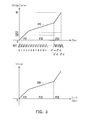
  • FIG. 2 is a schematic diagram illustrating a driving waveform of a driving circuit according to a first embodiment of the invention.
  • FIG. 3 is a schematic diagram illustrating a driving waveform of a driving circuit according to a second embodiment of the invention.
  • FIG. 4 is a schematic diagram illustrating a driving waveform of a driving circuit according to a third embodiment of the invention.
  • FIG. 5 is a schematic diagram illustrating a driving waveform of a driving circuit according to a fourth embodiment of the invention.
  • FIG. 6 is a schematic diagram illustrating a compensation of pixel capacitance according to an embodiment of the invention.
  • FIG. 7 is a schematic circuit diagram illustrating a capacitance readout circuit according to an embodiment of the invention.
  • FIG. 1 is a schematic diagram illustrating a system of a display apparatus according to an embodiment of the invention.
  • a display apparatus 100 includes a driving circuit 110 and a display panel 120 .
  • the driving circuit 110 includes a timing controller 111 , a source driver 113 , a reference signal generator 115 , a capacitance readout circuit 117 and a calibration circuit 119 .
  • the display panel 120 includes a plurality of gate lines 121 , a plurality of source lines 123 and a plurality of pixels PX arranged in an array.
  • Each of the pixels PX includes a pixel switch PSW, a liquid crystal capacitor CL and a storage capacitor CST.
  • a gate of the pixel switch PSW is coupled to a corresponding gate line 121 .
  • a drain of the pixel switch PSW is coupled to a corresponding source line 123 to be coupled to the source driver 113 .
  • the liquid crystal capacitor CL and the storage capacitor CST are coupled in parallel between the source of the pixel switch PSW and a common voltage Vcom.
  • the timing controller 111 is coupled to the source driver 113 so as to provide a trigger signal STR to the source driver 113 during a frame period, receive a plurality of display data DDP to provide a plurality of gray-level data DGR correspondingly to the source driver 113 during a frame period, and receive calibration factors FCR corresponding to each of the pixels to correspondingly adjust the gray-level data DGR that is provided.
  • the reference signal generator 115 is coupled to the source driver 113 to provide a count result RCT and a current setting signal SSC to the source driver 113 .
  • the reference signal generator 115 may include a counter CTR to provide the count result RCT, and include a current reference source CRS to provide the current setting signal SSC, wherein the counter CTR may count the system clock signal (not shown) of the display apparatus 100 or the clock signal that is provided by a phase-locked loop (PLL) to provide the count result RCT.
  • a counter CTR to provide the count result RCT
  • a current reference source CRS to provide the current setting signal SSC
  • PLL phase-locked loop
  • the source driver 113 is coupled to the timing controller 111 to receive the gray-level data DGR according to the trigger signal STR, and is coupled to the reference signal generator 115 to provide a plurality of charge currents (such as Ic 1 , Ic 2 ) and discharge currents (such as Id 1 , Id 2 ) to the pixels PX of the display panel 120 according to the current setting signal SSC, and determines a time for providing the charge current (such as Ic 1 , Ic 2 ) or the discharge current (such as Id 1 , Id 2 ) according to the gray-level data DGR and the count result RCT.
  • a plurality of charge currents such as Ic 1 , Ic 2
  • discharge currents such as Id 1 , Id 2
  • the voltage across each of the pixels PX determines a current value and a time for providing the charge current (such as Ic 1 , Ic 2 ) or the discharge current (such as Id 1 , Id 2 ).
  • V is the voltage across the pixel PX
  • I is the current value of the charge current (such as Ic 1 , Ic 2 ) or the discharge current (such as Id 1 , Id 2 )
  • T is the time for providing the charge current (such as Ic 1 , Ic 2 ) or the discharge current (such as Id 1 , Id 2 ).
  • the capacitance readout circuit 117 is coupled to the pixels PX of the display panel 120 through the source driver 113 , and is used to read out the capacitance of each of the pixels PX to provide a pixel capacitance value VCP.
  • the calibration circuit 119 is coupled to the timing controller 111 , the reference signal generator 115 and the capacitance readout circuit 117 , so as to set the frequency (namely a length of time for a cycle of the count result RCT) of the count result RCT and the current setting signal SSC according to the pixel capacitance value VCP, and provide the calibration factors corresponding to each of the pixels PX to the timing controller 111 according to the pixel capacitance value VCP.
  • the source driver 113 has a plurality of data channels (such as DCH 1 , DCH 2 ), and each of the data channels (such as DCH 1 , DCH 2 ) includes a shift register (such as SR 1 , SR 2 ), a latch (such as LH 1 , LH 2 ), a digital comparator (such as DCR 1 , DCR 2 ), a level shifter (such as LS 1 , LS 2 ), a current source (such as CSR 1 , CSR 2 ), a charge switch (such as CSW 1 , CSW 2 ), a current sink (such as CSK 1 , CSK 2 ), a discharge switch (such as DSW 1 , DSW 2 ) and a readout switch (such as RSW 1 , RSW 2 ).
  • a shift register such as SR 1 , SR 2
  • a latch such as LH 1 , LH 2
  • a digital comparator such as DCR 1 , DCR 2
  • the timing controller 111 and the shift registers are coupled in series.
  • the latches (such as LH 1 , LH 2 ) are coupled to the timing controller 111 , the corresponding shift register (such as SR 1 , SR 2 ) and the corresponding digital comparator (such as DCR 1 , DCR 2 ).
  • the digital comparator (such as DCR 1 , DCR 2 ) is coupled to the counter CTR and the corresponding level shifter (such as LS 1 , LS 2 ).
  • the level shifter (such as LS 1 , LS 2 ) is coupled to the charge switch (such as CSW 1 , CSW 2 ), the discharge switch (such as DSW 1 , DSW 2 ) and the readout switch (such as RSW 1 , RSW 2 ).
  • the current source (such as CSR 1 , CSR 2 ) and the charge switch (such as CSW 1 , CSW 2 ) are coupled between a system high voltage VDD and the display panel 120 , and the current source (such as CSR 1 , CSR 2 ) is coupled to the current reference source CRS.
  • the current sink (such as CSK 1 , CSK 2 ) and the discharge switch (such as DSW 1 , DSW 2 ) are coupled between the display panel 120 and a system low voltage VSS, and the current sink (such as CSK 1 , CSK 2 ) is coupled to the current reference source CRS.
  • the readout switch (such as RSW 1 , RSW 2 ) is coupled between the capacitance readout circuit 117 and the display panel 120 .
  • the display apparatus 100 After the display apparatus 100 is turned-on, the display apparatus 100 first enters a pixel measurement period (namely a pixel measurement mode) to measure the capacitance value of each of the pixels PX, wherein the pixel measurement period is approximately a period for writing a complete frame (namely one frame period).
  • the shift register (such as SR 1 , SR 2 ) will transmit the trigger signal STR sequentially, and the shift register (such as SR 1 , SR 2 ) will provide a measurement signal (such as SM, SM 2 ) to the level shifter (such as LS 1 , LS 2 ) when the trigger signal STR is received.
  • a data latch signal (such as SDL 1 , SDL 2 ) will not be provided.
  • the level shifter (such as LS 1 , LS 2 ) will provide a readout switch signal (such as SRS 1 , SRS 2 ) according to the measurement signal (such as SM 1 , SM 2 ).
  • the readout switch (such as RSW 1 , RSW 2 ) will turn on, namely the readout switch (such as RSW 1 , RSW 2 ) will determine whether the capacitance readout circuit 117 is coupled to the corresponding pixel PX, and that the capacitance readout circuit 117 is coupled to the pixel PX through the readout switch (such as RSW 1 , RSW 2 ) and the source line 123 according to the readout switch signal (such as SRS 1 , SRS 2 ).
  • the timing controller 111 After the capacitance readout circuit 117 completes the readout of the capacitances of all the pixels PX, the timing controller 111 will store the calibration factors FCR corresponding to all of the pixels PX.
  • the display apparatus 100 will enter a frame display period (namely a frame display mode).
  • the shift register (such as SR 1 , SR 2 ) will transmit the trigger signal STR sequentially, and when the shift register (such as SR 1 , SR 2 ) receives the trigger signal STR, the data latch signal (such as SDL 1 , SDL 2 ) is provided to the latch (such as LH 1 , LH 2 ) according to the trigger signal STR.
  • the measurement signal (such as SM, SM 2 ) will not be provided.
  • the timing controller 111 will provide the trigger signal STR once.
  • the latch (such as LH 1 , LH 2 ) receives the gray-level data DGR from the timing controller 111 , and receives the data latch signal (such as SDL 1 , SDL 2 ) from the shift register (such as SR 1 , SR 2 ).
  • the latch (such as LH 1 , LH 2 ) receives the data latch signal (such as SDL 1 , SDL 2 )
  • the latch (such as LH 1 , LH 2 ) latches and outputs the gray-level data (such as DGR 1 , DGR 2 ) to the digital comparator (such as DCR 1 , DCR 2 ) according to the data latch signal (such as SDL 1 , SDL 2 ).
  • the digital comparator (such as DCR 1 , DCR 2 ) receives the count result RCT from the counter CTR, and receives the latched gray-level data DGR from the latch (such as LH 1 , LH 2 ). Next, the digital comparator (such as DCR 1 , DCR 2 ) compares the count result RCT and the corresponding gray-level data DGR (such as DGR 1 , DGR 2 ) to provide a switch reference signal (such as SSR 1 , SSR 2 ) to the level shifter (such as LS 1 , LS 2 ).
  • a switch reference signal such as SSR 1 , SSR 2
  • the level shifter (such as LS 1 , LS 2 ) provides a charge switch signal (such as SCH 1 , SCH 2 ) to the charge switch (such as CSW 1 , CSW 2 ) and provides a discharge switch signal (such as SDC 1 , SDC 2 ) to the discharge switch (such as DSW 1 , DSW 2 ) according to the switch reference signal (such as SSR 1 , SSR 2 ), wherein at least one of the charge switch (such as CSW 1 , CSW 2 ) or the discharge switch (such as DSW 1 , DSW 2 ) is cut-off.
  • the switch reference signal (such as SSR 1 , SSR 2 ) is generated according to the latched gray-level data (such as DGR 1 , DGR 2 ), hence the charge switch signal (such as SCH 1 , SCH 2 ) and the discharge switch signal (such as SDC 1 , SDC 2 ) are generated according to the latched gray-level data (such as DGR 1 , DGR 2 ).
  • the switch reference signal (such as SSR 1 , SSR 2 ) is generated by comparing the latched gray-level data (such as DGR 1 , DGR 2 ) and the count result RCT, therefore the turn-on time of the charge switch (such as CSW 1 , CSW 2 ) and the discharge switch (such as DSW 1 , DSW 2 ) are related to a count value (namely the count result RCT) of the counter CTR, namely 2 to the power of the number of bits of the count value will equal the range of the gray-level of the display apparatus 100 . For example, if the number of bits of the count value is 8, the gray-level data DGR has 256 gray-levels.
  • the charge switch (such as CSW 1 , CSW 2 ) determines whether the current source (such as CSR 1 , CSR 2 ) is coupled to the pixel PX.
  • the discharge switch (such as SDC 1 , SDC 2 ) determines whether the current sink (such as CSK 1 , CSK 2 ) is coupled to the pixel PX.
  • the pixel PX After coupling the current source (such as CSR 1 , CSR 2 ), the pixel PX perform charging according to the charge current (such as Ic 1 , Ic 2 ), therefore the voltage across the pixels PX will increase. On the other hand, after coupling the current sink (such as CSK 1 , CSK 2 ), the pixels PX performs discharging according to the discharge current (such as Id 1 , Id 2 ), therefore the voltage across the pixels PX will decrease.
  • the current source such as CSR 1 , CSR 2
  • the pixels PX After coupling the current sink (such as CSK 1 , CSK 2 ), the pixels PX performs discharging according to the discharge current (such as Id 1 , Id 2 ), therefore the voltage across the pixels PX will decrease.
  • the voltage across the pixels PX may first be returned to the common voltage Vcom through charging or discharging and then the voltage across the pixels PX may be increased or decreased to a target voltage (namely achieving the desired gray-level value for display) through charging or discharging. Or, the voltage across the pixels PX may be increased or decreased to a target voltage (namely achieving the desired gray-level value for display) directly through charging or discharging and it should not be construed as a limitation to the invention.
  • the charge and discharge of the pixels PX is through current, hence a voltage buffer does not need to be disposed, namely static current is not generated, which may reduce power consumption of the display apparatus 100 and may have faster charging speed, and the source driver 113 will not have inrush current. Therefore, the electromagnetic interference (EMI) of the display apparatus 100 may be reduced.
  • the number of bits of the gray-level data DGR of the display apparatus 100 is the same as the number of bits of the count result RCT, and the gray-level data DGR is not converted through a digital-to-analog converter, therefore when the gray-level range of the display apparatus 100 increases, the circuit volume of the source driver 113 will not increase significantly.
  • FIG. 2 is a schematic diagram illustrating a driving waveform of a driving circuit according to a first embodiment of the invention.
  • the charge currents (such as Ic 1 , Ic 2 ) and the discharge currents (such as Id 1 , Id 2 ) are fixed current values, namely the current values of the charge currents (such as Ic 1 , Ic 2 ) and discharge currents (such as Id 1 , Id 2 ) are fixed as current 21 .
  • the count result RCT of the counter CTR is a fixed frequency, namely the beat frequency of the count result RCT is fixed.
  • a voltage VH is a maximum voltage across the pixels PX
  • K is a positive integer and is equal to the number of bits of the count result RCT.
  • the voltage across the pixels PX will increase linearly (such as shown by the line 210 ) along with time, and under conditions of a fixed frequency of the count result RCT, the voltage across the pixels PX and the count value of the count result RCT are also rendered a linear relationship (such as shown by the line 210 ), namely a gamma curve of the present embodiment is linear.
  • FIG. 3 is a schematic diagram illustrating a driving waveform of a driving circuit according to a second embodiment of the invention.
  • the charge currents (such as Ic 1 , Ic 2 ) and the discharge currents (such as Id 1 , Id 2 ) are time-varying current values, for example, during a period P 31 and P 33 the current values of the charge currents (such as Ic 1 , Ic 2 ) and discharge currents (such as Id 1 , Id 2 ) are fixed as current I 31 , and during a period P 32 the current values of the charge currents (such as Ic 1 , Ic 2 ) and discharge currents (such as Id 1 , Id 2 ) are fixed as current I 32 .
  • the count result RCT of the counter CTR is a fixed frequency, namely the beat frequency of the count result RCT is fixed.
  • a voltage VH is a maximum voltage across the pixels PX
  • K is a positive integer and is equal to the number of bits of the count result RCT.
  • the voltage across the pixels PX at different periods will have different slopes (such as shown by the line 310 ), and under conditions of a fixed frequency of the count result RCT, the corresponding relationship of the voltage across the pixels PX and the count value of the count result RCT are rendered as different slopes (such as shown by the line 320 ) corresponding to different periods (such as P 31 ⁇ P 33 ), namely the gamma curve of the present embodiment is linear in sections.
  • FIG. 4 is a schematic diagram illustrating a driving waveform of a driving circuit according to a third embodiment of the invention.
  • the charge currents (such as Ic 1 , Ic 2 ) and the discharge currents (such as Id 1 , Id 2 ) are fixed current values, namely the current values of the charge currents (such as Ic 1 , Ic 2 ) and discharge currents (such as Id 1 , Id 2 ) are fixed as current I 41 .
  • the count result RCT of the counter CTR is a time-varying frequency, for example, the beat frequency of the count result RCT during the period P 41 and P 43 are slower, and the beat frequency of the count result RCT during the period P 42 is faster.
  • the voltage VH is the maximum voltage across the pixels PX
  • K is a positive integer and is equal to the number of bits of the count result RCT.
  • the voltage across the pixels PX will increase linearly (such as shown by the line 410 ) along with time, and under conditions of a varying frequency of the count result RCT, the corresponding relationship of the voltage across the pixels PX and the count value of the count result RCT are rendered as different slopes (such as shown by the line 420 ) corresponding to different periods (such as P 41 ⁇ P 43 ), namely the gamma curve of the present embodiment is linear in sections.
  • FIG. 5 is a schematic diagram illustrating a driving waveform of a driving circuit according to a fourth embodiment of the invention.
  • the charge currents (such as Ic 1 , Ic 2 ) and the discharge currents (such as Id 1 , Id 2 ) are time-varying current values, for example, during a period P 51 and P 53 , the current values of the charge currents (such as Ic 1 , Ic 2 ) and discharge currents (such as Id 1 , Id 2 ) are fixed as current I 51 , and during a period P 52 the current values of the charge currents (such as Ic 1 , Ic 2 ) and discharge currents (such as Id 1 , Id 2 ) are fixed as current I 52 .
  • the count result RCT of the counter CTR is a time-varying frequency, for example, the beat frequency of the count result RCT during the period P 51 and P 53 are slower, and the beat frequency of the count result RCT during the period P 52 is faster.
  • the voltage VH is the maximum voltage across the pixels PX
  • K is a positive integer and is equal to the number of bits of the count result RCT.
  • the voltage across the pixels PX at different periods (such as P 51 ⁇ P 53 ) will have different slopes (such as shown by the line 510 ), and under conditions of a varying frequency of the count result RCT, the corresponding relationship of the voltage across the pixels PX and the count value of the count result RCT are rendered as different slopes (such as shown by the line 520 ) corresponding to different periods (such as P 51 ⁇ P 53 ), namely the gamma curve of the present embodiment is linear in sections.
  • FIG. 6 is a schematic diagram illustrating a compensation of a pixel capacitance according to an embodiment of the invention.
  • the charge currents such as Ic 1 , Ic 2
  • the discharge currents such as Id 1 , Id 2
  • the charge currents are fixed current values, therefore when the capacitance value is lower, the increasing curve of the voltage across the pixels PX is such as shown by 610 , and when the capacitance value is higher, the increasing curve of the voltage across the pixels PX is such as shown by 620 .
  • the time required for the curve 610 is t 1
  • the time required for the curve 620 is t 2 .
  • the curve 610 corresponds to a predetermined capacitance value (namely a reference value needed for designing the system), and the curve 620 is the actual capacitance value corresponding to the pixels PX.
  • the calibration factors corresponding to each of the pixels PX may be data gain values to amplify the corresponding gray-level data DGR, and the aforementioned data gain values are equal to the ratio (namely C2/C1) of the pixel capacitance value (such as the aforementioned C2) to the predetermined capacitance value (such as the aforementioned C1).
  • FIG. 7 is a schematic circuit diagram illustrating a capacitance readout circuit according to an embodiment of the invention.
  • the capacitance readout circuit 117 includes a charge amplifier 710 , a correlated double sampling circuit 720 (CDS circuit) and an analog-to-digital converter 730 (ADC).
  • the charge amplifier 710 is coupled to the pixels PX to provide a capacitance base voltage VCB and a capacitance measurement voltage VCM sequentially.
  • the correlated double sampling circuit 720 is coupled to the charge amplifier 710 to provide a base capacitance value voltage VBCP according to the capacitance base voltage VCB, and provide a measurement capacitance value voltage VMCP according to the capacitance measurement voltage VCM.
  • the ADC 730 is coupled to the correlated double sampling circuit 720 to provide the pixel capacitance value VCP according to the base capacitance value voltage VBCP and the measurement capacitance value voltage VMCP.
  • the charge amplifier 710 includes a switch RSW, a capacitor CX 1 and an operational amplifier OP 1 , wherein the switch RSW and the capacitor CX 1 are coupled in parallel between a first input terminal and an output terminal of the operational amplifier OP 1 .
  • the second input terminal of the operational amplifier OP 1 receives a reference voltage VR.
  • the correlated double sampling circuit 720 includes switches SW 1 ⁇ SW 4 , capacitors Crst, Cstg, CIR, CIS and operational amplifiers OP 2 , OP 3 .
  • the switches SW 1 and SW 2 are coupled in series between the output terminal of the operational amplifier OP 1 and a first input terminal of the operational amplifier OP 2 .
  • the capacitor Crst is coupled between the switches SW 1 , SW 2 and the common voltage Vcom.
  • the switches SW 3 and SW 4 are coupled in series between the output terminal of the operational amplifier OP 1 and a second input terminal of the operational amplifier OP 2 .
  • the capacitor Cstg is coupled between the switches SW 3 , SW 4 and the common voltage Vcom.
  • the capacitor CIR is coupled in parallel between the first input terminal and a first output terminal of the operational amplifier OP 2 to form an integrator.
  • the capacitor CIS is coupled in parallel between the second input terminal and a second output terminal of the operational amplifier OP 2 to form an integrator.
  • a first input terminal of the operational amplifier OP 3 is coupled to the first output terminal of the operational amplifier OP 2 to amplify the analog voltage received, and then provides the base capacitance value voltage VBCP by a first output terminal of the operational amplifier OP 3 .
  • a second input terminal of the operational amplifier OP 3 is coupled to the second output terminal of the operational amplifier OP 2 to amplify the analog voltage received, and then provides the measurement capacitance value voltage VMCP by a second output terminal of the operational amplifier OP 3 .
  • a driving circuit and a display panel of a display apparatus since the charge and discharge of the pixels is through current, hence a voltage buffer does not need to be disposed, namely static current is not generated, which may reduce power consumption of the display apparatus and have faster charging speed, and a source driver will not have inrush current. Therefore, the electromagnetic interference of the display apparatus may be reduced.
  • a number of bits of gray-level data of the display apparatus is the same as a number of bits of a count result, and the gray-level data is not converted through a digital-to-analog converter, therefore when the gray-level range of the display apparatus increases, the circuit volume of the source driver will not increase significantly.

Landscapes

  • Engineering & Computer Science (AREA)
  • Physics & Mathematics (AREA)
  • Computer Hardware Design (AREA)
  • General Physics & Mathematics (AREA)
  • Theoretical Computer Science (AREA)
  • Chemical & Material Sciences (AREA)
  • Crystallography & Structural Chemistry (AREA)
  • Control Of Indicators Other Than Cathode Ray Tubes (AREA)

Abstract

A driving circuit of a display panel and a display apparatus using the same are provided. The driving circuit includes a shift register, a latch, a level shifter, a current source and a charge switch. The shift register receives a trigger signal to provide a data latch signal. The latch couples to the shift register, and receives a gray-level data to latch and output the gray-level data according to the data latch signal. The level shifter couples to the latch and provides a charge switch signal according to the gray-level data. The current source provides a charge current. The charge switch couples between the current source and a pixel of the display panel, and receives the charge switch signal to determine whether the current source is coupled to the pixel according to the charge switch signal.

Description

BACKGROUND OF THE INVENTION 1. Field of the Invention
The present invention generally relates to a driving circuit, in particular, to a driving circuit of a display panel and a display apparatus using the same.
2. Description of Related Art
Along with advances in modern video technology, display apparatuses have been widely used on mobile phones, notebook computers, personal computers, personal digital assistants (PDA) and such display frames of consumer electronic products. In a source driver of the display apparatus, gray-level data are converted to pixel voltages through a digital to analog converter (DAC), and the driving power of the pixel voltage is increased (namely the current value of the pixel voltage is increased) through buffering the pixel voltage by a voltage buffer. However, DACs and voltage buffers have larger circuit areas such that source drivers cannot be made smaller, and the dynamic current and the static current of the DAC and the voltage buffer will consume power dynamically and consume power statically. Wherein, the changes in dynamic current and static current causes stress on the power supply apparatus and causes electromagnetic interference (EMI), further shortening the lifespan of the display apparatus. In addition, when a range of the gray-level of the frame is increased (for example 8 bits is increased to 10 bits), then the circuit area of the digital to analog converter increases significantly, increasing the difficulty of commercialization. Since the trend in miniaturizing circuits, hence how to reduce the circuit area of the source driver and the power consumption is an important design point in the feature.
SUMMARY OF THE INVENTION
The invention provides a driving circuit of a display panel and a display apparatus thereof, which may reduce a circuit area of the driving circuit and lower a power consumption of the driving circuit.
A driving circuit of a display panel of the invention includes a shift register, a latch, a level shifter, a current source and a charge switch. The shift register receives a trigger signal to provide a data latch signal. The latch couples to the shift register, and receives a gray-level data to latch and output the gray-level data according to the data latch signal. The level shifter couples to the latch and provides a charge switch signal according to the gray-level data. The current source provides a charge current. The charge switch couples between the current source and a pixel of the display panel, and receives the charge switch signal to determine whether the current source is coupled to the pixel according to the charge switch signal.
A display apparatus of the invention includes a display panel having a pixel and the aforementioned driving circuit of a display panel.
Based on the above, in a driving circuit and a display panel of a display apparatus according to an embodiment of the invention, since the charge and discharge of the pixels is through current, hence a voltage buffer does not need to be disposed, namely static current is not generated, which may reduce power consumption of the display apparatus and have faster charging speed, and a source driver will not have inrush current. Therefore, the electromagnetic interference of the display apparatus may be reduced.
Several exemplary embodiments accompanied with figures are described in detail below to further describe the disclosure in details.
BRIEF DESCRIPTION OF THE DRAWINGS
The accompanying drawings are included to provide a further understanding of the invention, and are incorporated in and constitute a part of this specification. The drawings illustrate embodiments of the invention and, together with the description, serve to explain the principles of the invention.
FIG. 1 is a schematic diagram illustrating a system of a display apparatus according to an embodiment of the invention.
FIG. 2 is a schematic diagram illustrating a driving waveform of a driving circuit according to a first embodiment of the invention.
FIG. 3 is a schematic diagram illustrating a driving waveform of a driving circuit according to a second embodiment of the invention.
FIG. 4 is a schematic diagram illustrating a driving waveform of a driving circuit according to a third embodiment of the invention.
FIG. 5 is a schematic diagram illustrating a driving waveform of a driving circuit according to a fourth embodiment of the invention.
FIG. 6 is a schematic diagram illustrating a compensation of pixel capacitance according to an embodiment of the invention.
FIG. 7 is a schematic circuit diagram illustrating a capacitance readout circuit according to an embodiment of the invention.
DESCRIPTION OF THE EMBODIMENTS
Reference will now be made in detail to the present preferred embodiments of the invention, examples of which are illustrated in the accompanying drawings. Wherever possible, the same reference numbers are used in the drawings and the description to refer to the same or like parts.
FIG. 1 is a schematic diagram illustrating a system of a display apparatus according to an embodiment of the invention. Referring to FIG. 1, in the present embodiment, a display apparatus 100 includes a driving circuit 110 and a display panel 120. The driving circuit 110 includes a timing controller 111, a source driver 113, a reference signal generator 115, a capacitance readout circuit 117 and a calibration circuit 119.
The display panel 120 includes a plurality of gate lines 121, a plurality of source lines 123 and a plurality of pixels PX arranged in an array. Each of the pixels PX includes a pixel switch PSW, a liquid crystal capacitor CL and a storage capacitor CST. A gate of the pixel switch PSW is coupled to a corresponding gate line 121. A drain of the pixel switch PSW is coupled to a corresponding source line 123 to be coupled to the source driver 113. The liquid crystal capacitor CL and the storage capacitor CST are coupled in parallel between the source of the pixel switch PSW and a common voltage Vcom.
The timing controller 111 is coupled to the source driver 113 so as to provide a trigger signal STR to the source driver 113 during a frame period, receive a plurality of display data DDP to provide a plurality of gray-level data DGR correspondingly to the source driver 113 during a frame period, and receive calibration factors FCR corresponding to each of the pixels to correspondingly adjust the gray-level data DGR that is provided. The reference signal generator 115 is coupled to the source driver 113 to provide a count result RCT and a current setting signal SSC to the source driver 113. The reference signal generator 115 may include a counter CTR to provide the count result RCT, and include a current reference source CRS to provide the current setting signal SSC, wherein the counter CTR may count the system clock signal (not shown) of the display apparatus 100 or the clock signal that is provided by a phase-locked loop (PLL) to provide the count result RCT.
The source driver 113 is coupled to the timing controller 111 to receive the gray-level data DGR according to the trigger signal STR, and is coupled to the reference signal generator 115 to provide a plurality of charge currents (such as Ic1, Ic2) and discharge currents (such as Id1, Id2) to the pixels PX of the display panel 120 according to the current setting signal SSC, and determines a time for providing the charge current (such as Ic1, Ic2) or the discharge current (such as Id1, Id2) according to the gray-level data DGR and the count result RCT. The voltage across each of the pixels PX determines a current value and a time for providing the charge current (such as Ic1, Ic2) or the discharge current (such as Id1, Id2). Namely, V=I*T/C, wherein V is the voltage across the pixel PX, I is the current value of the charge current (such as Ic1, Ic2) or the discharge current (such as Id1, Id2), and T is the time for providing the charge current (such as Ic1, Ic2) or the discharge current (such as Id1, Id2).
The capacitance readout circuit 117 is coupled to the pixels PX of the display panel 120 through the source driver 113, and is used to read out the capacitance of each of the pixels PX to provide a pixel capacitance value VCP. The calibration circuit 119 is coupled to the timing controller 111, the reference signal generator 115 and the capacitance readout circuit 117, so as to set the frequency (namely a length of time for a cycle of the count result RCT) of the count result RCT and the current setting signal SSC according to the pixel capacitance value VCP, and provide the calibration factors corresponding to each of the pixels PX to the timing controller 111 according to the pixel capacitance value VCP.
In the present embodiment, the source driver 113 has a plurality of data channels (such as DCH1, DCH2), and each of the data channels (such as DCH1, DCH2) includes a shift register (such as SR1, SR2), a latch (such as LH1, LH2), a digital comparator (such as DCR1, DCR2), a level shifter (such as LS1, LS2), a current source (such as CSR1, CSR2), a charge switch (such as CSW1, CSW2), a current sink (such as CSK1, CSK2), a discharge switch (such as DSW1, DSW2) and a readout switch (such as RSW1, RSW2).
The timing controller 111 and the shift registers (such as SR1, SR2) are coupled in series. The latches (such as LH1, LH2) are coupled to the timing controller 111, the corresponding shift register (such as SR1, SR2) and the corresponding digital comparator (such as DCR1, DCR2). The digital comparator (such as DCR1, DCR2) is coupled to the counter CTR and the corresponding level shifter (such as LS1, LS2). The level shifter (such as LS1, LS2) is coupled to the charge switch (such as CSW1, CSW2), the discharge switch (such as DSW1, DSW2) and the readout switch (such as RSW1, RSW2). The current source (such as CSR1, CSR2) and the charge switch (such as CSW1, CSW2) are coupled between a system high voltage VDD and the display panel 120, and the current source (such as CSR1, CSR2) is coupled to the current reference source CRS. The current sink (such as CSK1, CSK2) and the discharge switch (such as DSW1, DSW2) are coupled between the display panel 120 and a system low voltage VSS, and the current sink (such as CSK1, CSK2) is coupled to the current reference source CRS. The readout switch (such as RSW1, RSW2) is coupled between the capacitance readout circuit 117 and the display panel 120.
After the display apparatus 100 is turned-on, the display apparatus 100 first enters a pixel measurement period (namely a pixel measurement mode) to measure the capacitance value of each of the pixels PX, wherein the pixel measurement period is approximately a period for writing a complete frame (namely one frame period). During the pixel measurement period, the shift register (such as SR1, SR2) will transmit the trigger signal STR sequentially, and the shift register (such as SR1, SR2) will provide a measurement signal (such as SM, SM2) to the level shifter (such as LS1, LS2) when the trigger signal STR is received. However, a data latch signal (such as SDL1, SDL2) will not be provided.
Next, the level shifter (such as LS1, LS2) will provide a readout switch signal (such as SRS1, SRS2) according to the measurement signal (such as SM1, SM2). After the readout switch signal (such as SRS1, SRS2) is received, the readout switch (such as RSW1, RSW2) will turn on, namely the readout switch (such as RSW1, RSW2) will determine whether the capacitance readout circuit 117 is coupled to the corresponding pixel PX, and that the capacitance readout circuit 117 is coupled to the pixel PX through the readout switch (such as RSW1, RSW2) and the source line 123 according to the readout switch signal (such as SRS1, SRS2).
After the capacitance readout circuit 117 completes the readout of the capacitances of all the pixels PX, the timing controller 111 will store the calibration factors FCR corresponding to all of the pixels PX. Next, the display apparatus 100 will enter a frame display period (namely a frame display mode). During the frame display period, the shift register (such as SR1, SR2) will transmit the trigger signal STR sequentially, and when the shift register (such as SR1, SR2) receives the trigger signal STR, the data latch signal (such as SDL1, SDL2) is provided to the latch (such as LH1, LH2) according to the trigger signal STR. However, the measurement signal (such as SM, SM2) will not be provided. Wherein, in one frame display period, the timing controller 111 will provide the trigger signal STR once.
Next, the latch (such as LH1, LH2) receives the gray-level data DGR from the timing controller 111, and receives the data latch signal (such as SDL1, SDL2) from the shift register (such as SR1, SR2). When the latch (such as LH1, LH2) receives the data latch signal (such as SDL1, SDL2), the latch (such as LH1, LH2) latches and outputs the gray-level data (such as DGR1, DGR2) to the digital comparator (such as DCR1, DCR2) according to the data latch signal (such as SDL1, SDL2).
The digital comparator (such as DCR1, DCR2) receives the count result RCT from the counter CTR, and receives the latched gray-level data DGR from the latch (such as LH1, LH2). Next, the digital comparator (such as DCR1, DCR2) compares the count result RCT and the corresponding gray-level data DGR (such as DGR1, DGR2) to provide a switch reference signal (such as SSR1, SSR2) to the level shifter (such as LS1, LS2). After the switch reference signal (such as SSR1, SSR2) is received, the level shifter (such as LS1, LS2) provides a charge switch signal (such as SCH1, SCH2) to the charge switch (such as CSW1, CSW2) and provides a discharge switch signal (such as SDC1, SDC2) to the discharge switch (such as DSW1, DSW2) according to the switch reference signal (such as SSR1, SSR2), wherein at least one of the charge switch (such as CSW1, CSW2) or the discharge switch (such as DSW1, DSW2) is cut-off.
Since the switch reference signal (such as SSR1, SSR2) is generated according to the latched gray-level data (such as DGR1, DGR2), hence the charge switch signal (such as SCH1, SCH2) and the discharge switch signal (such as SDC1, SDC2) are generated according to the latched gray-level data (such as DGR1, DGR2). And, the switch reference signal (such as SSR1, SSR2) is generated by comparing the latched gray-level data (such as DGR1, DGR2) and the count result RCT, therefore the turn-on time of the charge switch (such as CSW1, CSW2) and the discharge switch (such as DSW1, DSW2) are related to a count value (namely the count result RCT) of the counter CTR, namely 2 to the power of the number of bits of the count value will equal the range of the gray-level of the display apparatus 100. For example, if the number of bits of the count value is 8, the gray-level data DGR has 256 gray-levels.
After receiving the charge switch signal (such as SCH1, SCH2), the charge switch (such as CSW1, CSW2) determines whether the current source (such as CSR1, CSR2) is coupled to the pixel PX. After receiving the discharge switch signal (such as SDC1, SDC2), the discharge switch (such as DSW1, DSW2) determines whether the current sink (such as CSK1, CSK2) is coupled to the pixel PX.
After coupling the current source (such as CSR1, CSR2), the pixel PX perform charging according to the charge current (such as Ic1, Ic2), therefore the voltage across the pixels PX will increase. On the other hand, after coupling the current sink (such as CSK1, CSK2), the pixels PX performs discharging according to the discharge current (such as Id1, Id2), therefore the voltage across the pixels PX will decrease.
In an embodiment of the invention, the voltage across the pixels PX may first be returned to the common voltage Vcom through charging or discharging and then the voltage across the pixels PX may be increased or decreased to a target voltage (namely achieving the desired gray-level value for display) through charging or discharging. Or, the voltage across the pixels PX may be increased or decreased to a target voltage (namely achieving the desired gray-level value for display) directly through charging or discharging and it should not be construed as a limitation to the invention.
According to the above, since the charge and discharge of the pixels PX is through current, hence a voltage buffer does not need to be disposed, namely static current is not generated, which may reduce power consumption of the display apparatus 100 and may have faster charging speed, and the source driver 113 will not have inrush current. Therefore, the electromagnetic interference (EMI) of the display apparatus 100 may be reduced. In addition, the number of bits of the gray-level data DGR of the display apparatus 100 is the same as the number of bits of the count result RCT, and the gray-level data DGR is not converted through a digital-to-analog converter, therefore when the gray-level range of the display apparatus 100 increases, the circuit volume of the source driver 113 will not increase significantly.
FIG. 2 is a schematic diagram illustrating a driving waveform of a driving circuit according to a first embodiment of the invention. Referring to FIG. 1 and FIG. 2, in the present embodiment, the charge currents (such as Ic1, Ic2) and the discharge currents (such as Id1, Id2) are fixed current values, namely the current values of the charge currents (such as Ic1, Ic2) and discharge currents (such as Id1, Id2) are fixed as current 21. In addition, the count result RCT of the counter CTR is a fixed frequency, namely the beat frequency of the count result RCT is fixed. Wherein, a voltage VH is a maximum voltage across the pixels PX, and K is a positive integer and is equal to the number of bits of the count result RCT. Under the conditions of a fixed current value of the charge currents (such as Ic1, Ic2), the voltage across the pixels PX will increase linearly (such as shown by the line 210) along with time, and under conditions of a fixed frequency of the count result RCT, the voltage across the pixels PX and the count value of the count result RCT are also rendered a linear relationship (such as shown by the line 210), namely a gamma curve of the present embodiment is linear.
FIG. 3 is a schematic diagram illustrating a driving waveform of a driving circuit according to a second embodiment of the invention. Referring to FIG. 1 and FIG. 3, in the present embodiment, the charge currents (such as Ic1, Ic2) and the discharge currents (such as Id1, Id2) are time-varying current values, for example, during a period P31 and P33 the current values of the charge currents (such as Ic1, Ic2) and discharge currents (such as Id1, Id2) are fixed as current I31, and during a period P32 the current values of the charge currents (such as Ic1, Ic2) and discharge currents (such as Id1, Id2) are fixed as current I32. In addition, the count result RCT of the counter CTR is a fixed frequency, namely the beat frequency of the count result RCT is fixed. Wherein, a voltage VH is a maximum voltage across the pixels PX, and K is a positive integer and is equal to the number of bits of the count result RCT. Under the conditions of varying current values of the charge currents (such as Ic1, Ic2), the voltage across the pixels PX at different periods (such as P31˜P33) will have different slopes (such as shown by the line 310), and under conditions of a fixed frequency of the count result RCT, the corresponding relationship of the voltage across the pixels PX and the count value of the count result RCT are rendered as different slopes (such as shown by the line 320) corresponding to different periods (such as P31˜P33), namely the gamma curve of the present embodiment is linear in sections.
FIG. 4 is a schematic diagram illustrating a driving waveform of a driving circuit according to a third embodiment of the invention. Referring to FIG. 1 and FIG. 4, in the present embodiment, the charge currents (such as Ic1, Ic2) and the discharge currents (such as Id1, Id2) are fixed current values, namely the current values of the charge currents (such as Ic1, Ic2) and discharge currents (such as Id1, Id2) are fixed as current I41. In addition, the count result RCT of the counter CTR is a time-varying frequency, for example, the beat frequency of the count result RCT during the period P41 and P43 are slower, and the beat frequency of the count result RCT during the period P42 is faster. Wherein, the voltage VH is the maximum voltage across the pixels PX, and K is a positive integer and is equal to the number of bits of the count result RCT. Under the conditions of fixed current values of the charge currents (such as Ic1, Ic2), the voltage across the pixels PX will increase linearly (such as shown by the line 410) along with time, and under conditions of a varying frequency of the count result RCT, the corresponding relationship of the voltage across the pixels PX and the count value of the count result RCT are rendered as different slopes (such as shown by the line 420) corresponding to different periods (such as P41˜P43), namely the gamma curve of the present embodiment is linear in sections.
FIG. 5 is a schematic diagram illustrating a driving waveform of a driving circuit according to a fourth embodiment of the invention. Referring to FIG. 1 and FIG. 5, in the present embodiment, the charge currents (such as Ic1, Ic2) and the discharge currents (such as Id1, Id2) are time-varying current values, for example, during a period P51 and P53, the current values of the charge currents (such as Ic1, Ic2) and discharge currents (such as Id1, Id2) are fixed as current I51, and during a period P52 the current values of the charge currents (such as Ic1, Ic2) and discharge currents (such as Id1, Id2) are fixed as current I52. In addition, the count result RCT of the counter CTR is a time-varying frequency, for example, the beat frequency of the count result RCT during the period P51 and P53 are slower, and the beat frequency of the count result RCT during the period P52 is faster. Wherein, the voltage VH is the maximum voltage across the pixels PX, and K is a positive integer and is equal to the number of bits of the count result RCT. Under the conditions of varying current values of the charge currents (such as Ic1, Ic2), the voltage across the pixels PX at different periods (such as P51˜P53) will have different slopes (such as shown by the line 510), and under conditions of a varying frequency of the count result RCT, the corresponding relationship of the voltage across the pixels PX and the count value of the count result RCT are rendered as different slopes (such as shown by the line 520) corresponding to different periods (such as P51˜P53), namely the gamma curve of the present embodiment is linear in sections.
FIG. 6 is a schematic diagram illustrating a compensation of a pixel capacitance according to an embodiment of the invention. Referring to FIG. 1 and FIG. 6, in the present embodiment, the charge currents (such as Ic1, Ic2) and the discharge currents (such as Id1, Id2) are fixed current values, therefore when the capacitance value is lower, the increasing curve of the voltage across the pixels PX is such as shown by 610, and when the capacitance value is higher, the increasing curve of the voltage across the pixels PX is such as shown by 620. Using a target voltage VX as an example, the time required for the curve 610 is t1, and the time required for the curve 620 is t2.
Suppose the curve 610 corresponds to a predetermined capacitance value (namely a reference value needed for designing the system), and the curve 620 is the actual capacitance value corresponding to the pixels PX. Here, the pixels PX require more time for performing charging (such as shown by the time td) to achieve the target voltage VX, wherein t2=t1(C2/C1), C1 is the capacitance value corresponding to the curve 610, and C2 is the capacitance value corresponding to the curve 620. Therefore, gray-level data DGR corresponding to the pixels PX may be amplified correspondingly to obtain a sufficient charging time. In other words, the calibration factors corresponding to each of the pixels PX may be data gain values to amplify the corresponding gray-level data DGR, and the aforementioned data gain values are equal to the ratio (namely C2/C1) of the pixel capacitance value (such as the aforementioned C2) to the predetermined capacitance value (such as the aforementioned C1).
FIG. 7 is a schematic circuit diagram illustrating a capacitance readout circuit according to an embodiment of the invention. Referring to FIG. 1 and FIG. 7, in the present embodiment, the capacitance readout circuit 117 includes a charge amplifier 710, a correlated double sampling circuit 720 (CDS circuit) and an analog-to-digital converter 730 (ADC). The charge amplifier 710 is coupled to the pixels PX to provide a capacitance base voltage VCB and a capacitance measurement voltage VCM sequentially. The correlated double sampling circuit 720 is coupled to the charge amplifier 710 to provide a base capacitance value voltage VBCP according to the capacitance base voltage VCB, and provide a measurement capacitance value voltage VMCP according to the capacitance measurement voltage VCM. The ADC 730 is coupled to the correlated double sampling circuit 720 to provide the pixel capacitance value VCP according to the base capacitance value voltage VBCP and the measurement capacitance value voltage VMCP.
More specifically, the charge amplifier 710 includes a switch RSW, a capacitor CX1 and an operational amplifier OP1, wherein the switch RSW and the capacitor CX1 are coupled in parallel between a first input terminal and an output terminal of the operational amplifier OP1. The second input terminal of the operational amplifier OP1 receives a reference voltage VR. The correlated double sampling circuit 720 includes switches SW1˜SW4, capacitors Crst, Cstg, CIR, CIS and operational amplifiers OP2, OP3. The switches SW1 and SW2 are coupled in series between the output terminal of the operational amplifier OP1 and a first input terminal of the operational amplifier OP2. The capacitor Crst is coupled between the switches SW1, SW2 and the common voltage Vcom. The switches SW3 and SW4 are coupled in series between the output terminal of the operational amplifier OP1 and a second input terminal of the operational amplifier OP2. The capacitor Cstg is coupled between the switches SW3, SW4 and the common voltage Vcom. The capacitor CIR is coupled in parallel between the first input terminal and a first output terminal of the operational amplifier OP2 to form an integrator. The capacitor CIS is coupled in parallel between the second input terminal and a second output terminal of the operational amplifier OP2 to form an integrator. A first input terminal of the operational amplifier OP3 is coupled to the first output terminal of the operational amplifier OP2 to amplify the analog voltage received, and then provides the base capacitance value voltage VBCP by a first output terminal of the operational amplifier OP3. In addition, a second input terminal of the operational amplifier OP3 is coupled to the second output terminal of the operational amplifier OP2 to amplify the analog voltage received, and then provides the measurement capacitance value voltage VMCP by a second output terminal of the operational amplifier OP3.
In summary, in a driving circuit and a display panel of a display apparatus according to an embodiment of the invention, since the charge and discharge of the pixels is through current, hence a voltage buffer does not need to be disposed, namely static current is not generated, which may reduce power consumption of the display apparatus and have faster charging speed, and a source driver will not have inrush current. Therefore, the electromagnetic interference of the display apparatus may be reduced. In addition, a number of bits of gray-level data of the display apparatus is the same as a number of bits of a count result, and the gray-level data is not converted through a digital-to-analog converter, therefore when the gray-level range of the display apparatus increases, the circuit volume of the source driver will not increase significantly.
It will be apparent to those skilled in the art that various modifications and variations can be made to the structure of the present invention without departing from the scope or spirit of the invention. In view of the foregoing, it is intended that the present invention cover modifications and variations of this invention provided they fall within the scope of the following claims and their equivalents.

Claims (18)

What is claimed is:
1. A driving circuit of a display panel, comprising:
a shift register, receiving a trigger signal to provide a data latch signal;
a latch, coupled to the shift register, and receiving a gray-level data to latch and output the gray-level data according to the data latch signal;
a level shifter, coupled to the latch and providing a charge switch signal according to the gray-level data;
a current source, providing a charge current; and
a charge switch, coupled between the current source and a pixel of the display panel, and receiving the charge switch signal to determine whether the current source is coupled to the pixel according to the charge switch signal,
a current sink, receiving a discharge current; and
a discharge switch, coupled between the current sink and the pixel, and coupled to the level shifter to receive a discharge switch signal, the discharge switch determining whether the current sink is coupled to the pixel according to the discharge switch signal.
2. The driving circuit of a display panel as claimed in claim 1, further comprising:
a digital comparator, coupled to the latch and the level shifter to receive a count result and the gray-level data, and comparing the count result and the gray-level data to provide a switch reference signal to the level shifter, wherein the level shifter provides the charge switch signal according to the switch reference signal.
3. The driving circuit of a display panel as claimed in claim 2, further comprising:
a reference signal generator, coupled to the digital comparator to provide the count result, and coupled to the current source and the current sink to provide a current setting signal to the current source and the current sink.
4. The driving circuit of a display panel as claimed in claim 3, wherein the count result is a fixed frequency.
5. The driving circuit of a display panel as claimed in claim 3, wherein the count result is a time-varying frequency.
6. The driving circuit of a display panel as claimed in claim 3, further comprising:
a timing controller, coupled to the latch and the shift register, and receiving display data to provide the gray-level data to the latch, and providing the trigger signal to the shift register.
7. The driving circuit of a display panel as claimed in claim 6, further comprising:
a capacitance readout circuit, used to read a capacitance value of the pixel to provide a pixel capacitance value;
a readout switch, coupled to the capacitance readout circuit and the pixel, and receiving a readout switch signal to determine whether the capacitance readout circuit is coupled to the pixel according to the readout switch signal; and
a calibration circuit, coupled to the capacitance readout circuit, the reference signal generator and the timing controller, so as to set a frequency of the count result and the current setting signal according to the pixel capacitance, and provide a calibration factor to the timing controller according to the pixel capacitance to adjust the gray-level data provided by the timing controller.
8. The driving circuit of a display panel as claimed in claim 7, wherein the capacitance readout circuit comprises:
a charge amplifier, coupled to the pixel to provide a capacitance base voltage and a capacitance measurement voltage sequentially;
a correlated double sampling circuit, coupled to the charge amplifier to provide a base capacitance voltage according to the capacitance base voltage, and provide a measurement capacitance voltage according to the capacitance measurement voltage; and
an analog-to-digital converter, coupled to the correlated double sampling circuit to provide the pixel capacitance according to the base capacitance value voltage and the measurement capacitance voltage.
9. The driving circuit of a display panel as claimed in claim 7, wherein the calibration factor is a data gain value, and the data gain value is equal to a ratio of the pixel capacitance to a predetermined capacitance.
10. The driving circuit of a display panel as claimed in claim 7, wherein during a pixel measurement period, the shift register provides a measurement signal to the level shifter according to the trigger signal, and the level shifter provides the readout switch signal according to the measurement signal, and during a pixel display period, the shift register provides the data latch signal to the latch according to the trigger signal.
11. The driving circuit of a display panel as claimed in claim 1, wherein the charge current and the discharge current are fixed current values.
12. The driving circuit of a display panel as claimed in claim 1, wherein the charge current and the discharge current are time-varying current values.
13. A display apparatus, comprising:
a display panel, having a pixel; and
a driving circuit, comprising:
a shift register, receiving a trigger signal to provide a data latch signal;
a latch, coupled to the shift register, and receiving a gray-level data to latch and output the gray-level data according to the data latch signal;
a level shifter, coupled to the latch and providing a charge switch signal according to the gray-level data;
a current source, providing a charge current; and
a charge switch, coupled between the current source and a pixel of the display panel, and receiving the charge switch signal to determine whether the current source is coupled to the pixel according to the charge switch signal,
a current sink, receiving a discharge current; and
a discharge switch, coupled between the current sink and the pixel, and coupled to the level shifter to receive a discharge switch signal, the discharge switch determining whether the current sink is coupled to the pixel according to the discharge switch signal.
14. The display apparatus as claimed in claim 13, the driving circuit further comprising:
a digital comparator, coupled to the latch and the level shifter to receive a count result and the gray-level data, and comparing the count result and the gray-level data to provide a switch reference signal to the level shifter, wherein the level shifter provides the charge switch signal according to the switch reference signal.
15. The display apparatus as claimed in claim 14, further comprising:
a reference signal generator, coupled to the digital comparator to provide the count result, and coupled to the current source and the current sink to provide a current setting signal to the current source and the current sink.
16. The display apparatus as claimed in claim 15, the driving circuit further comprising:
a capacitance readout circuit, used to read a capacitance value of the pixel to provide a pixel capacitance;
a readout switch, coupled to the capacitance readout circuit and the pixel, and receiving a readout switch signal to determine whether the capacitance readout circuit is coupled to the pixel according to the readout switch signal; and
a calibration circuit, coupled to the capacitance readout circuit, the reference signal generator and a timing controller, so as to set a frequency of the count result and the current setting signal according to the pixel capacitance, and provide a calibration factor to the timing controller according to the pixel capacitance to adjust the gray-level data provided by the timing controller.
17. The display apparatus as claimed in claim 16, wherein the capacitance readout circuit comprises:
a charge amplifier, coupled to the pixel to provide a capacitance base voltage and a capacitance measurement voltage sequentially;
a correlated double sampling circuit, coupled to the charge amplifier to provide a base capacitance voltage according to the capacitance base voltage, and provide a measurement capacitance voltage according to the capacitance measurement voltage; and
an analog-to-digital converter, coupled to the correlated double sampling circuit to provide the pixel capacitance according to the base capacitance voltage and the measurement capacitance voltage.
18. The display apparatus as claimed in claim 16, wherein the calibration factor is a data gain value, and the data gain value is equal to a ratio of the pixel capacitance to a predetermined capacitance.
US15/086,035 2016-03-30 2016-03-30 Driving circuit of display panel and display apparatus using the same Active 2036-06-24 US10102792B2 (en)

Priority Applications (3)

Application Number Priority Date Filing Date Title
US15/086,035 US10102792B2 (en) 2016-03-30 2016-03-30 Driving circuit of display panel and display apparatus using the same
TW105114447A TWI590213B (en) 2016-03-30 2016-05-10 Driving circuit of display panel and display apparatus using the same
CN201610339570.2A CN107293243B (en) 2016-03-30 2016-05-20 Display panel drive circuit and display device thereof

Applications Claiming Priority (1)

Application Number Priority Date Filing Date Title
US15/086,035 US10102792B2 (en) 2016-03-30 2016-03-30 Driving circuit of display panel and display apparatus using the same

Publications (2)

Publication Number Publication Date
US20170287379A1 US20170287379A1 (en) 2017-10-05
US10102792B2 true US10102792B2 (en) 2018-10-16

Family

ID=59961791

Family Applications (1)

Application Number Title Priority Date Filing Date
US15/086,035 Active 2036-06-24 US10102792B2 (en) 2016-03-30 2016-03-30 Driving circuit of display panel and display apparatus using the same

Country Status (3)

Country Link
US (1) US10102792B2 (en)
CN (1) CN107293243B (en)
TW (1) TWI590213B (en)

Families Citing this family (4)

* Cited by examiner, † Cited by third party
Publication number Priority date Publication date Assignee Title
TWI703549B (en) * 2018-03-08 2020-09-01 瑞鼎科技股份有限公司 Voltage calibration circuit and method applied to display apparatus
TWI709949B (en) * 2019-12-16 2020-11-11 新唐科技股份有限公司 Control circuit
CN115223498A (en) * 2021-04-14 2022-10-21 孙丽娜 Gamma voltage generating circuit, display device and gamma voltage generating method
CN115472131B (en) * 2022-08-26 2024-03-22 苇创微电子(上海)有限公司 Electric balance method of display device source electrode driving circuit and source electrode driving circuit thereof

Citations (33)

* Cited by examiner, † Cited by third party
Publication number Priority date Publication date Assignee Title
US5751263A (en) * 1996-05-23 1998-05-12 Motorola, Inc. Drive device and method for scanning a monolithic integrated LED array
US20020011796A1 (en) * 2000-05-08 2002-01-31 Semiconductor Energy Laboratory Co., Ltd. Light-emitting device, and electric device using the same
US6806859B1 (en) * 1995-07-11 2004-10-19 Texas Instruments Incorporated Signal line driving circuit for an LCD display
US20050062508A1 (en) 2003-09-22 2005-03-24 Nec Electronics Corporation Driver circuit
US20050099412A1 (en) 2003-11-11 2005-05-12 Seiko Epson Corporation Pixel circuit, method of driving the same, and electronic apparatus
US20050122321A1 (en) * 2003-12-08 2005-06-09 Akihito Akai Driver for driving a display device
US20050134537A1 (en) * 2003-12-19 2005-06-23 Mitsubishi Denki Kabushiki Kaisha Current amplifying circuit with stabilized output voltage and liquid crystal display including the same
US20050156842A1 (en) * 2003-12-25 2005-07-21 Nec Electronics Corporation Drive circuit for display device
US20060214901A1 (en) * 2004-12-03 2006-09-28 Semiconductor Energy Laboratory Co., Ltd. Semiconductor circuit, display device, electronic apparatus
US20060232678A1 (en) * 2005-03-19 2006-10-19 Choi Sang M Pixel and organic light emitting display using the pixel
US20060262059A1 (en) * 2005-05-23 2006-11-23 Nec Electronics Corporation Drive circuit for display apparatus and driving method
US20060279260A1 (en) * 2003-05-07 2006-12-14 Toshiba Matsushita Display Technology Co., Ltd. Current output type of semiconductor circuit, source driver for display drive, display device, and current output method
US20070001205A1 (en) * 2005-06-30 2007-01-04 Semiconductor Energy Laboratory Co., Ltd. Semiconductor device, display device, and electronic appliance
US20070132674A1 (en) 2003-12-02 2007-06-14 Toshiba Matsushita Display Technology Co., Ltd. Driving method of self-luminous type display unit, display control device of self-luminous type display unit, current output type drive circuit of self-luminous type display unit
US20070164935A1 (en) * 2006-01-19 2007-07-19 I-Shu Lee Active matrix organic light emitting diode display and driving method thereof
US7304628B2 (en) * 2003-12-04 2007-12-04 Nec Electronics Corporation Display device, driver circuit therefor, and method of driving same
US20080278420A1 (en) 2007-05-09 2008-11-13 Denmos Technology Inc. Source driver and gamma correction method thereof
US20090002405A1 (en) * 2007-06-29 2009-01-01 Casio Computer Co., Ltd. Display drive apparatus, display apparatus and drive control method thereof
US20090146920A1 (en) * 2004-12-06 2009-06-11 Semiconductor Energy Laboratory Co., Ltd. Display device and electronic apparatus using the same
US20090160848A1 (en) 2007-12-19 2009-06-25 Nec Electronics Corporation Level shift circuit, and driver and display system using the same
US20100073265A1 (en) * 2007-05-30 2010-03-25 Canon Kabushiki Kaisha Active-matrix display and drive method thereof
US20100164929A1 (en) * 2008-10-15 2010-07-01 Raydium Semiconductor Corporation Source driver
US7839356B2 (en) * 2005-02-23 2010-11-23 Pixtronix, Incorporated Display methods and apparatus
US20110007102A1 (en) * 2009-07-10 2011-01-13 Casio Computer Co., Ltd. Pixel drive apparatus, light-emitting apparatus and drive control method for light-emitting apparatus
US7969398B2 (en) * 2006-08-01 2011-06-28 Casio Computer Co., Ltd. Display drive apparatus and display apparatus
US8400207B2 (en) * 2009-08-26 2013-03-19 Renesas Electronics Corporation Level shift circuit, and driver and display device using the same
US8497828B2 (en) * 2009-11-12 2013-07-30 Ignis Innovation Inc. Sharing switch TFTS in pixel circuits
TWI404040B (en) 2010-03-10 2013-08-01 Au Optronics Corp Pixel circuit and driving method thereof and display panel and display using the same
US8587507B2 (en) * 2010-07-05 2013-11-19 Oki Semiconductor Co., Ltd. Driving circuit and display apparatus having operational amplifiers with parasitic diodes
US8653893B2 (en) * 2010-06-08 2014-02-18 Renesas Electronics Corporation Output circuit, data driver circuit and display device
US20140204071A1 (en) * 2013-01-24 2014-07-24 Oh-Jo Kwon Organic light emitting display device and driving method thereof
US8816944B2 (en) * 2005-06-15 2014-08-26 Samsung Display Co., Ltd. Driving current output apparatus, method of manufacturing the same, display device and driving apparatus thereof
US9311844B2 (en) * 2013-08-06 2016-04-12 Novatek Microelectronics Corp. Source driver and method to reduce peak current therein

Family Cites Families (2)

* Cited by examiner, † Cited by third party
Publication number Priority date Publication date Assignee Title
EP1695333A1 (en) * 2003-12-08 2006-08-30 Koninklijke Philips Electronics N.V. Display device driving circuit
TW201237831A (en) * 2011-03-11 2012-09-16 Raydium Semiconductor Corp Liquid crystal display driver and display device having the same

Patent Citations (44)

* Cited by examiner, † Cited by third party
Publication number Priority date Publication date Assignee Title
US6806859B1 (en) * 1995-07-11 2004-10-19 Texas Instruments Incorporated Signal line driving circuit for an LCD display
US5751263A (en) * 1996-05-23 1998-05-12 Motorola, Inc. Drive device and method for scanning a monolithic integrated LED array
US20020011796A1 (en) * 2000-05-08 2002-01-31 Semiconductor Energy Laboratory Co., Ltd. Light-emitting device, and electric device using the same
US20060279260A1 (en) * 2003-05-07 2006-12-14 Toshiba Matsushita Display Technology Co., Ltd. Current output type of semiconductor circuit, source driver for display drive, display device, and current output method
US7561147B2 (en) 2003-05-07 2009-07-14 Toshiba Matsushita Display Technology Co., Ltd. Current output type of semiconductor circuit, source driver for display drive, display device, and current output method
TWI270049B (en) 2003-05-07 2007-01-01 Toshiba Matsushita Display Tec Current output type semiconductor circuit, source driver for display device, display device and method for outputting current
US7321246B2 (en) 2003-09-22 2008-01-22 Nec Electronics Corporation Driver circuit for a liquid crystal display
US20060186934A1 (en) 2003-09-22 2006-08-24 Nec Electronics Corporation Driver circuit
CN1601595A (en) 2003-09-22 2005-03-30 恩益禧电子股份有限公司 Drive circuit
US20050062508A1 (en) 2003-09-22 2005-03-24 Nec Electronics Corporation Driver circuit
US7075342B2 (en) 2003-09-22 2006-07-11 Nec Electronics Corporation Driver circuit
US20050099412A1 (en) 2003-11-11 2005-05-12 Seiko Epson Corporation Pixel circuit, method of driving the same, and electronic apparatus
TWI246043B (en) 2003-11-11 2005-12-21 Seiko Epson Corp Method of driving pixel circuit, pixel circuit and electronic apparatus
US20070132674A1 (en) 2003-12-02 2007-06-14 Toshiba Matsushita Display Technology Co., Ltd. Driving method of self-luminous type display unit, display control device of self-luminous type display unit, current output type drive circuit of self-luminous type display unit
TWI287777B (en) 2003-12-02 2007-10-01 Toshiba Matsushita Display Tec Driving method of self-luminous type display unit, display control device of self-luminous type display unit, current output type drive circuit of self-luminous type display unit
US7304628B2 (en) * 2003-12-04 2007-12-04 Nec Electronics Corporation Display device, driver circuit therefor, and method of driving same
US20050122321A1 (en) * 2003-12-08 2005-06-09 Akihito Akai Driver for driving a display device
US20050134537A1 (en) * 2003-12-19 2005-06-23 Mitsubishi Denki Kabushiki Kaisha Current amplifying circuit with stabilized output voltage and liquid crystal display including the same
US20050156842A1 (en) * 2003-12-25 2005-07-21 Nec Electronics Corporation Drive circuit for display device
US20060214901A1 (en) * 2004-12-03 2006-09-28 Semiconductor Energy Laboratory Co., Ltd. Semiconductor circuit, display device, electronic apparatus
US20090146920A1 (en) * 2004-12-06 2009-06-11 Semiconductor Energy Laboratory Co., Ltd. Display device and electronic apparatus using the same
US7839356B2 (en) * 2005-02-23 2010-11-23 Pixtronix, Incorporated Display methods and apparatus
US20060232678A1 (en) * 2005-03-19 2006-10-19 Choi Sang M Pixel and organic light emitting display using the pixel
US20060262059A1 (en) * 2005-05-23 2006-11-23 Nec Electronics Corporation Drive circuit for display apparatus and driving method
US8816944B2 (en) * 2005-06-15 2014-08-26 Samsung Display Co., Ltd. Driving current output apparatus, method of manufacturing the same, display device and driving apparatus thereof
US20070001205A1 (en) * 2005-06-30 2007-01-04 Semiconductor Energy Laboratory Co., Ltd. Semiconductor device, display device, and electronic appliance
US20070164935A1 (en) * 2006-01-19 2007-07-19 I-Shu Lee Active matrix organic light emitting diode display and driving method thereof
US7683862B2 (en) 2006-01-19 2010-03-23 Au Optronics Corp. Active matrix organic light emitting diode display capable of driving and pre-charging pixels using a current source and driving method thereof
TWI323872B (en) 2006-01-19 2010-04-21 Au Optronics Corp Active matrix organic light emitting diode display and driving method thereof
US7969398B2 (en) * 2006-08-01 2011-06-28 Casio Computer Co., Ltd. Display drive apparatus and display apparatus
US20080278420A1 (en) 2007-05-09 2008-11-13 Denmos Technology Inc. Source driver and gamma correction method thereof
TW200845772A (en) 2007-05-09 2008-11-16 Denmos Technology Inc Source driver and Gamma correction method thereof
US20100073265A1 (en) * 2007-05-30 2010-03-25 Canon Kabushiki Kaisha Active-matrix display and drive method thereof
US20090002405A1 (en) * 2007-06-29 2009-01-01 Casio Computer Co., Ltd. Display drive apparatus, display apparatus and drive control method thereof
US20090160848A1 (en) 2007-12-19 2009-06-25 Nec Electronics Corporation Level shift circuit, and driver and display system using the same
US20100164929A1 (en) * 2008-10-15 2010-07-01 Raydium Semiconductor Corporation Source driver
US20110007102A1 (en) * 2009-07-10 2011-01-13 Casio Computer Co., Ltd. Pixel drive apparatus, light-emitting apparatus and drive control method for light-emitting apparatus
US8400207B2 (en) * 2009-08-26 2013-03-19 Renesas Electronics Corporation Level shift circuit, and driver and display device using the same
US8497828B2 (en) * 2009-11-12 2013-07-30 Ignis Innovation Inc. Sharing switch TFTS in pixel circuits
TWI404040B (en) 2010-03-10 2013-08-01 Au Optronics Corp Pixel circuit and driving method thereof and display panel and display using the same
US8653893B2 (en) * 2010-06-08 2014-02-18 Renesas Electronics Corporation Output circuit, data driver circuit and display device
US8587507B2 (en) * 2010-07-05 2013-11-19 Oki Semiconductor Co., Ltd. Driving circuit and display apparatus having operational amplifiers with parasitic diodes
US20140204071A1 (en) * 2013-01-24 2014-07-24 Oh-Jo Kwon Organic light emitting display device and driving method thereof
US9311844B2 (en) * 2013-08-06 2016-04-12 Novatek Microelectronics Corp. Source driver and method to reduce peak current therein

Non-Patent Citations (1)

* Cited by examiner, † Cited by third party
Title
"Office Action of Taiwan Counterpart Application", dated Mar. 8, 2017, p. 1-p. 5.

Also Published As

Publication number Publication date
CN107293243A (en) 2017-10-24
TW201734991A (en) 2017-10-01
US20170287379A1 (en) 2017-10-05
TWI590213B (en) 2017-07-01
CN107293243B (en) 2020-12-04

Similar Documents

Publication Publication Date Title
US11263946B2 (en) Reference voltage generating circuit and display device
US9159750B2 (en) Solid-state image sensing device
KR102221788B1 (en) Display driver ic for driving with high speed and controlling method thereof
US20070195054A1 (en) Source driver circuit for controlling slew rate according to frame frequency and method of controlling slew rate according to frame frequency in the source driver circuit
US10715168B2 (en) Systems and methods for driving an electronic display using a ramp DAC
US10102792B2 (en) Driving circuit of display panel and display apparatus using the same
US9577619B2 (en) Buffer circuit having amplifier offset compensation and source driving circuit including the same
JP2012168537A (en) Source driver, display equipped therewith, and driving method thereof
US20080062155A1 (en) Display device and method capable of adjusting slew rate
US8982259B2 (en) Analog-to-digital converters and related image sensors
US9182277B2 (en) Light sensing apparatus and adjustment method thereof
US20160322011A1 (en) Liquid crystal display and a driving method thereof
US11531435B2 (en) Low-emissions touch controller
US10847110B2 (en) Display device and method of driving the same
CN101378252B (en) Delay circuit, semiconductor control circuit, display device, and electronic device
KR102057873B1 (en) Data driving device and display device including the same
US11984080B2 (en) Pixel compensation circuit and driving method therefor, and display apparatus
KR20090099732A (en) Display driving circuit using ping-pong type sample / hold circuit
US7158065B2 (en) Signal driving circuits
US11003034B2 (en) Display device
US9859913B2 (en) Calibration of ramp digital to analog converter
US10735011B2 (en) Digital-to-analog converter and driving circuit of display device having the same
US20230317025A1 (en) Driver, electro-optical device and electronic apparatus
CN102376239B (en) Pixel circuit of display device
US20210056904A1 (en) Auto-zero applied buffer for display circuitry

Legal Events

Date Code Title Description
AS Assignment

Owner name: NOVATEK MICROELECTRONICS CORP., TAIWAN

Free format text: ASSIGNMENT OF ASSIGNORS INTEREST;ASSIGNORS:HUANG, YING-NENG;WUEN, WEN-SHEN;SIGNING DATES FROM 20160226 TO 20160301;REEL/FRAME:038238/0636

AS Assignment

Owner name: NOVATEK MICROELECTRONICS CORP., TAIWAN

Free format text: CORRECTIVE ASSIGNMENT TO CORRECT THE INCORRECT APPL. NO. 13/086,035 PREVIOUSLY RECORDED AT REEL: 038238 FRAME: 0636. ASSIGNOR(S) HEREBY CONFIRMS THE ASSIGNMENT;ASSIGNORS:HUANG, YING-NENG;WUEN, WEN-SHEN;SIGNING DATES FROM 20160226 TO 20160301;REEL/FRAME:038488/0901

STCF Information on status: patent grant

Free format text: PATENTED CASE

MAFP Maintenance fee payment

Free format text: PAYMENT OF MAINTENANCE FEE, 4TH YEAR, LARGE ENTITY (ORIGINAL EVENT CODE: M1551); ENTITY STATUS OF PATENT OWNER: LARGE ENTITY

Year of fee payment: 4