US10100047B2 - Piperidine derivatives as orexin receptor antagonist - Google Patents
Piperidine derivatives as orexin receptor antagonist Download PDFInfo
- Publication number
- US10100047B2 US10100047B2 US15/123,014 US201515123014A US10100047B2 US 10100047 B2 US10100047 B2 US 10100047B2 US 201515123014 A US201515123014 A US 201515123014A US 10100047 B2 US10100047 B2 US 10100047B2
- Authority
- US
- United States
- Prior art keywords
- compound
- substituted
- group
- pharmaceutically acceptable
- acceptable salt
- Prior art date
- Legal status (The legal status is an assumption and is not a legal conclusion. Google has not performed a legal analysis and makes no representation as to the accuracy of the status listed.)
- Active
Links
- 0 *.*C.*C.*C.*C.*C.*C.C1=CC=NC=C1.CC1=CC=C(C2=NC=CC=N2)C(C(=O)N2C[C@H](COC3=NC=C(F)C=C3)CC[C@H]2C)=C1.[3*]C1CCC(C([4*])([5*])OC)CN1C(C)=O Chemical compound *.*C.*C.*C.*C.*C.*C.C1=CC=NC=C1.CC1=CC=C(C2=NC=CC=N2)C(C(=O)N2C[C@H](COC3=NC=C(F)C=C3)CC[C@H]2C)=C1.[3*]C1CCC(C([4*])([5*])OC)CN1C(C)=O 0.000 description 11
- YTZKOQUCBOVLHL-UHFFFAOYSA-N CC(C)(C)c1c-cc-cc-1 Chemical compound CC(C)(C)c1c-cc-cc-1 YTZKOQUCBOVLHL-UHFFFAOYSA-N 0.000 description 5
- IORNPTDHRCBFER-UHFFFAOYSA-N CC(C)(C)C1=NC2=CC=CC=C2O1 Chemical compound CC(C)(C)C1=NC2=CC=CC=C2O1 IORNPTDHRCBFER-UHFFFAOYSA-N 0.000 description 2
- MINNIBSGEKTHOW-UHFFFAOYSA-N CC(C)(C)COC1=CC=C(F)C=C1.CC(C)(C)COC1=CC=C(F)C=N1.CC(C)(C)COC1=CC=CC=N1.CC(C)(C)OC1=CC=C(F)C=C1.CC(C)(C)OC1=CC=C(F)C=N1.CC1=C(F)C=CC(OC(C)(C)C)=C1.CC1=C(F)C=CC(OCC(C)(C)C)=C1.CC1=C(F)C=NC(OC(C)(C)C)=C1.CC1=C(F)C=NC(OCC(C)(C)C)=C1.CC1=C(OCC(C)(C)C)N=CC(Cl)=C1.CC1=CC=C(OCC(C)(C)C)N=C1 Chemical compound CC(C)(C)COC1=CC=C(F)C=C1.CC(C)(C)COC1=CC=C(F)C=N1.CC(C)(C)COC1=CC=CC=N1.CC(C)(C)OC1=CC=C(F)C=C1.CC(C)(C)OC1=CC=C(F)C=N1.CC1=C(F)C=CC(OC(C)(C)C)=C1.CC1=C(F)C=CC(OCC(C)(C)C)=C1.CC1=C(F)C=NC(OC(C)(C)C)=C1.CC1=C(F)C=NC(OCC(C)(C)C)=C1.CC1=C(OCC(C)(C)C)N=CC(Cl)=C1.CC1=CC=C(OCC(C)(C)C)N=C1 MINNIBSGEKTHOW-UHFFFAOYSA-N 0.000 description 2
- YHHVARIOLOUDBR-PQHWSOKGSA-N [H][C@]1(COC2=CC=C(F)C=N2)CC[C@@H]2CCC1N2C(=O)C1=C(N2C=CN=N2)C=CC(Cl)=C1 Chemical compound [H][C@]1(COC2=CC=C(F)C=N2)CC[C@@H]2CCC1N2C(=O)C1=C(N2C=CN=N2)C=CC(Cl)=C1 YHHVARIOLOUDBR-PQHWSOKGSA-N 0.000 description 2
- LITIQGZMKUVVCN-UHFFFAOYSA-N C.C.C.C.C.C.C.C.C.C.C.C.CC(C)(C)C1=C(N2C=CN=N2)C=CC(Cl)=C1.CC(C)(C)C1=C(N2N=CC=N2)C=C(F)C=C1.CC(C)(C)C1=C(N2N=CC=N2)C=CC(Cl)=C1.CC(C)(C)C1=C(N2N=CC=N2)C=CC(F)=C1.CC1=CC(C(C)(C)C)=C(C2=CC=CC=C2)C=C1.CC1=CC(C(C)(C)C)=C(C2=CC=CC=N2)C=C1.CC1=CC(C(C)(C)C)=C(C2=CC=CN=C2)C=C1.CC1=CC(C(C)(C)C)=C(C2=CC=NC=C2)C=C1.CC1=CC(C(C)(C)C)=C(N2C=CC=N2)C=C1.CC1=CC(C(C)(C)C)=C(N2N=CC=N2)C=C1.CC1=CC(C(C)(C)C)=CC=C1.CC1=CC=CC(N2N=CC=N2)=C1C(C)(C)C.CC1=NC(C(C)(C)C)=C(C2=CC=CC=C2)S1 Chemical compound C.C.C.C.C.C.C.C.C.C.C.C.CC(C)(C)C1=C(N2C=CN=N2)C=CC(Cl)=C1.CC(C)(C)C1=C(N2N=CC=N2)C=C(F)C=C1.CC(C)(C)C1=C(N2N=CC=N2)C=CC(Cl)=C1.CC(C)(C)C1=C(N2N=CC=N2)C=CC(F)=C1.CC1=CC(C(C)(C)C)=C(C2=CC=CC=C2)C=C1.CC1=CC(C(C)(C)C)=C(C2=CC=CC=N2)C=C1.CC1=CC(C(C)(C)C)=C(C2=CC=CN=C2)C=C1.CC1=CC(C(C)(C)C)=C(C2=CC=NC=C2)C=C1.CC1=CC(C(C)(C)C)=C(N2C=CC=N2)C=C1.CC1=CC(C(C)(C)C)=C(N2N=CC=N2)C=C1.CC1=CC(C(C)(C)C)=CC=C1.CC1=CC=CC(N2N=CC=N2)=C1C(C)(C)C.CC1=NC(C(C)(C)C)=C(C2=CC=CC=C2)S1 LITIQGZMKUVVCN-UHFFFAOYSA-N 0.000 description 1
- ZHCPHMPNFLLIOM-UHFFFAOYSA-N C.C.C.C.C.C.C.C.CC(C)(C)C1=C(C2=NC=CC=N2)C(F)=CC=C1.CC(C)(C)C1=C(C2=NC=CC=N2)C=C(F)C=C1.CC(C)(C)C1=C(C2=NC=CC=N2)C=CC(Cl)=C1.CC(C)(C)C1=C(C2=NC=CC=N2)C=CC(F)=C1.CC(C)(C)C1=C(C2=NC=CC=N2)C=CC(F)=C1.CC1=CC(C(C)(C)C)=C(C2=NC=CC=N2)C=C1.CC1=CC(C(C)(C)C)=C(C2=NC=CC=N2)C=C1.CC1=CC(C2=NC=CC=N2)=C(C(C)(C)C)C=C1.CC1=CC=CC(C(C)(C)C)=C1C1=NC=CC=N1.CC1=CC=CC(C2=NC=CC=N2)=C1C(C)(C)C.CC1=CC=CC(C2=NC=CC=N2)=C1C(C)(C)C Chemical compound C.C.C.C.C.C.C.C.CC(C)(C)C1=C(C2=NC=CC=N2)C(F)=CC=C1.CC(C)(C)C1=C(C2=NC=CC=N2)C=C(F)C=C1.CC(C)(C)C1=C(C2=NC=CC=N2)C=CC(Cl)=C1.CC(C)(C)C1=C(C2=NC=CC=N2)C=CC(F)=C1.CC(C)(C)C1=C(C2=NC=CC=N2)C=CC(F)=C1.CC1=CC(C(C)(C)C)=C(C2=NC=CC=N2)C=C1.CC1=CC(C(C)(C)C)=C(C2=NC=CC=N2)C=C1.CC1=CC(C2=NC=CC=N2)=C(C(C)(C)C)C=C1.CC1=CC=CC(C(C)(C)C)=C1C1=NC=CC=N1.CC1=CC=CC(C2=NC=CC=N2)=C1C(C)(C)C.CC1=CC=CC(C2=NC=CC=N2)=C1C(C)(C)C ZHCPHMPNFLLIOM-UHFFFAOYSA-N 0.000 description 1
- KPMHPOSFZSQRPW-TZPWHZOBSA-N C.C.C.C.C.CCOC(=O)C1=CCC2CCC1C2.CCOC(=O)C1CCC2CCC1C2.FC1=CC=C(OCC2CCC3CCC2C3)C=C1.FC1=CN=C(F)C=C1.FC1=CN=C(OCC2CCC3CCC2C3)C=C1.FC1=CN=C(OC[C@@H]2CCC3CCC2C3)C=C1.OCC1CCC2CCC1C2 Chemical compound C.C.C.C.C.CCOC(=O)C1=CCC2CCC1C2.CCOC(=O)C1CCC2CCC1C2.FC1=CC=C(OCC2CCC3CCC2C3)C=C1.FC1=CN=C(F)C=C1.FC1=CN=C(OCC2CCC3CCC2C3)C=C1.FC1=CN=C(OC[C@@H]2CCC3CCC2C3)C=C1.OCC1CCC2CCC1C2 KPMHPOSFZSQRPW-TZPWHZOBSA-N 0.000 description 1
- XEBPIDAYUIHKBM-JPXALNMASA-N C.C.CCOC(=O)C#N.CCOC(=O)C1C(=O)CC2CCC1C2.CCOC(=O)C1C(O)CC2CCC1C2.CCOC(=O)C1C2CCC(C2)CC1OS(C)(=O)=O.CS(=O)(=O)Cl.O=C1CC2CC[C@@H](C1)C2.[H][C@]1(COC2=NC=C(F)C=C2)CCC2CC[C@@H]1N2C(=O)C1=C(N2N=CC=N2)C=CC(C)=C1.[H][C@]1(COC2=NC=C(F)C=C2)CC[C@@H]2CCC1N2C(=O)C1=C(N2N=CC=N2)C=CC(C)=C1 Chemical compound C.C.CCOC(=O)C#N.CCOC(=O)C1C(=O)CC2CCC1C2.CCOC(=O)C1C(O)CC2CCC1C2.CCOC(=O)C1C2CCC(C2)CC1OS(C)(=O)=O.CS(=O)(=O)Cl.O=C1CC2CC[C@@H](C1)C2.[H][C@]1(COC2=NC=C(F)C=C2)CCC2CC[C@@H]1N2C(=O)C1=C(N2N=CC=N2)C=CC(C)=C1.[H][C@]1(COC2=NC=C(F)C=C2)CC[C@@H]2CCC1N2C(=O)C1=C(N2N=CC=N2)C=CC(C)=C1 XEBPIDAYUIHKBM-JPXALNMASA-N 0.000 description 1
- JHLUYOPCHGSELR-CBNFSLARSA-N C.CC1=CC(C(=O)N2C3CCC(COC4=NC=C(F)C=C4)C2CC3)=C(N2N=CC=N2)C=C1.CC1=CC(C(=O)O)=C(N2N=CC=N2)C=C1.Cl.FC1=CN=C(OCC2CCC3CCC2C3)C=C1.FC1=CN=C(OCC2CCC3CCC2N3)C=C1.[H]C1CC(COC2=NC=C(F)C=C2)[C@@H]2CCC1N2C(=O)C1=C(N2N=CC=N2)C=CC(C)=C1 Chemical compound C.CC1=CC(C(=O)N2C3CCC(COC4=NC=C(F)C=C4)C2CC3)=C(N2N=CC=N2)C=C1.CC1=CC(C(=O)O)=C(N2N=CC=N2)C=C1.Cl.FC1=CN=C(OCC2CCC3CCC2C3)C=C1.FC1=CN=C(OCC2CCC3CCC2N3)C=C1.[H]C1CC(COC2=NC=C(F)C=C2)[C@@H]2CCC1N2C(=O)C1=C(N2N=CC=N2)C=CC(C)=C1 JHLUYOPCHGSELR-CBNFSLARSA-N 0.000 description 1
- FZRGZSVCUPZJFR-BBRLNJHFSA-N C.[H][C@]1(COC2=NC=C(F)C=C2)CCC2CC[C@@H]1N2C(=O)C1=C(C2=NC=CC=N2)C=CC(C)=C1.[H][C@]1(COC2=NC=C(F)C=C2)CC[C@@H]2CCC1N2C(=O)C1=C(C2=NC=CC=N2)C=CC(C)=C1 Chemical compound C.[H][C@]1(COC2=NC=C(F)C=C2)CCC2CC[C@@H]1N2C(=O)C1=C(C2=NC=CC=N2)C=CC(C)=C1.[H][C@]1(COC2=NC=C(F)C=C2)CC[C@@H]2CCC1N2C(=O)C1=C(C2=NC=CC=N2)C=CC(C)=C1 FZRGZSVCUPZJFR-BBRLNJHFSA-N 0.000 description 1
- KTYLHCABXPEGHT-UHFFFAOYSA-N C1=CCC2(C=C1)CCCCC2.C1=CCC2(C=C1)CCCCC2.CC.CC(C)(C)C Chemical compound C1=CCC2(C=C1)CCCCC2.C1=CCC2(C=C1)CCCCC2.CC.CC(C)(C)C KTYLHCABXPEGHT-UHFFFAOYSA-N 0.000 description 1
- AWKBVLVKQQRRFQ-UHFFFAOYSA-N CC(=O)C1=C(C)C=CC(C)=C1 Chemical compound CC(=O)C1=C(C)C=CC(C)=C1 AWKBVLVKQQRRFQ-UHFFFAOYSA-N 0.000 description 1
- ZZJWDIUHKUAXOO-UHFFFAOYSA-N CC(=O)C1=C(C2=CC=CC=C2)C=CC(C)=C1 Chemical compound CC(=O)C1=C(C2=CC=CC=C2)C=CC(C)=C1 ZZJWDIUHKUAXOO-UHFFFAOYSA-N 0.000 description 1
- LCNBFHSLQAJLHE-UHFFFAOYSA-N CC(=O)C1=C(C2=CC=CC=N2)C=CC(C)=C1 Chemical compound CC(=O)C1=C(C2=CC=CC=N2)C=CC(C)=C1 LCNBFHSLQAJLHE-UHFFFAOYSA-N 0.000 description 1
- UMNOQEPOGAKWBP-UHFFFAOYSA-N CC(=O)C1=C(C2=CC=CN=C2)C=CC(C)=C1 Chemical compound CC(=O)C1=C(C2=CC=CN=C2)C=CC(C)=C1 UMNOQEPOGAKWBP-UHFFFAOYSA-N 0.000 description 1
- CLDVIQUCSBLSHB-UHFFFAOYSA-N CC(=O)C1=C(C2=CC=NC=C2)C=CC(C)=C1 Chemical compound CC(=O)C1=C(C2=CC=NC=C2)C=CC(C)=C1 CLDVIQUCSBLSHB-UHFFFAOYSA-N 0.000 description 1
- SQPHSKRGXNUMFK-UHFFFAOYSA-N CC(=O)C1=C(C2=CN=CN=C2)C=CC(C)=C1 Chemical compound CC(=O)C1=C(C2=CN=CN=C2)C=CC(C)=C1 SQPHSKRGXNUMFK-UHFFFAOYSA-N 0.000 description 1
- SBQWBVZCYWBGAZ-UHFFFAOYSA-N CC(=O)C1=C(C2=NC=CC=N2)C=CC(C(F)(F)F)=C1 Chemical compound CC(=O)C1=C(C2=NC=CC=N2)C=CC(C(F)(F)F)=C1 SBQWBVZCYWBGAZ-UHFFFAOYSA-N 0.000 description 1
- FNUJGGLZKUUMTL-UHFFFAOYSA-N CC(=O)C1=C(C2=NC=CC=N2)C=CC(Cl)=C1 Chemical compound CC(=O)C1=C(C2=NC=CC=N2)C=CC(Cl)=C1 FNUJGGLZKUUMTL-UHFFFAOYSA-N 0.000 description 1
- JSKFNAUEPUCCRJ-UHFFFAOYSA-N CC(=O)C1=C(C2=NC=CC=N2)C=CC(F)=C1 Chemical compound CC(=O)C1=C(C2=NC=CC=N2)C=CC(F)=C1 JSKFNAUEPUCCRJ-UHFFFAOYSA-N 0.000 description 1
- JVQMCLAGGAEBTB-UHFFFAOYSA-N CC(=O)C1=C(C2=NC=CS2)C=CC(C)=C1 Chemical compound CC(=O)C1=C(C2=NC=CS2)C=CC(C)=C1 JVQMCLAGGAEBTB-UHFFFAOYSA-N 0.000 description 1
- ISAACSYSFLHYMV-UHFFFAOYSA-N CC(=O)C1=C(N2C=CC=N2)C=CC(C)=C1 Chemical compound CC(=O)C1=C(N2C=CC=N2)C=CC(C)=C1 ISAACSYSFLHYMV-UHFFFAOYSA-N 0.000 description 1
- MNMHPVAHXZEWNG-UHFFFAOYSA-N CC(=O)C1=C(N2C=CN=N2)C=CC(Cl)=C1 Chemical compound CC(=O)C1=C(N2C=CN=N2)C=CC(Cl)=C1 MNMHPVAHXZEWNG-UHFFFAOYSA-N 0.000 description 1
- WHXBRKMJRYNSRM-UHFFFAOYSA-N CC(=O)C1=C(N2N=CC=N2)C=C(F)C=C1 Chemical compound CC(=O)C1=C(N2N=CC=N2)C=C(F)C=C1 WHXBRKMJRYNSRM-UHFFFAOYSA-N 0.000 description 1
- ONDWEFWMDLWTMG-UHFFFAOYSA-N CC(=O)C1=C(N2N=CC=N2)C=CC(Cl)=C1 Chemical compound CC(=O)C1=C(N2N=CC=N2)C=CC(Cl)=C1 ONDWEFWMDLWTMG-UHFFFAOYSA-N 0.000 description 1
- ZOFNXTQEFNKSGH-UHFFFAOYSA-N CC(=O)C1=C(N2N=CC=N2)C=CC(F)=C1 Chemical compound CC(=O)C1=C(N2N=CC=N2)C=CC(F)=C1 ZOFNXTQEFNKSGH-UHFFFAOYSA-N 0.000 description 1
- VFDKIXVDRZPQPK-UHFFFAOYSA-N CC(C)(C)C.[V][V][V][V][v]1[v][V]([V])[v]([V][V])[v]-1[V][V][V] Chemical compound CC(C)(C)C.[V][V][V][V][v]1[v][V]([V])[v]([V][V])[v]-1[V][V][V] VFDKIXVDRZPQPK-UHFFFAOYSA-N 0.000 description 1
- YSKSMXKVOYTADJ-UHFFFAOYSA-N CC(C)(C)C1=C(C2=NC=CC=N2)C(F)=CC=C1.CC(C)(C)C1=C(C2=NC=CC=N2)C=C(F)C=C1.CC(C)(C)C1=C(C2=NC=CC=N2)C=CC(F)=C1.CC(C)(C)C1=C(C2=NC=CC=N2)C=CC(F)=C1.CC(C)(C)C1=C(C2=NC=CC=N2)C=CC=C1F.CC1=CC(C(C)(C)C)=C(C2=NC=CC=N2)C=C1.CC1=CC(C(C)(C)C)=C(C2=NC=CC=N2)C=C1.CC1=CC(C2=NC=CC=N2)=C(C(C)(C)C)C=C1.CC1=CC=CC(C(C)(C)C)=C1C1=NC=CC=N1.CC1=CC=CC(C2=NC=CC=N2)=C1C(C)(C)C Chemical compound CC(C)(C)C1=C(C2=NC=CC=N2)C(F)=CC=C1.CC(C)(C)C1=C(C2=NC=CC=N2)C=C(F)C=C1.CC(C)(C)C1=C(C2=NC=CC=N2)C=CC(F)=C1.CC(C)(C)C1=C(C2=NC=CC=N2)C=CC(F)=C1.CC(C)(C)C1=C(C2=NC=CC=N2)C=CC=C1F.CC1=CC(C(C)(C)C)=C(C2=NC=CC=N2)C=C1.CC1=CC(C(C)(C)C)=C(C2=NC=CC=N2)C=C1.CC1=CC(C2=NC=CC=N2)=C(C(C)(C)C)C=C1.CC1=CC=CC(C(C)(C)C)=C1C1=NC=CC=N1.CC1=CC=CC(C2=NC=CC=N2)=C1C(C)(C)C YSKSMXKVOYTADJ-UHFFFAOYSA-N 0.000 description 1
- RBENYADHQSTCKG-UHFFFAOYSA-N CC(C)(C)C1=C(C2=NC=CC=N2)C=CC(Cl)=C1.CC(C)(C)C1=C(N2N=CC=N2)C=CC(F)=C1.CC(C)(C)C1=C(N2N=CC=N2)C=CC=C1F.CC1=CC(C(C)(C)C)=C(C2=CC=CC=C2)C=C1.CC1=CC(C(C)(C)C)=C(C2=CC=CC=N2)C=C1.CC1=CC(C(C)(C)C)=C(C2=CC=CN=C2)C=C1.CC1=CC(C(C)(C)C)=C(C2=CC=NC=C2)C=C1.CC1=CC(C(C)(C)C)=C(N2C=CC=N2)C=C1.CC1=CC(C(C)(C)C)=C(N2N=CC=N2)C=C1.CC1=NC(C(C)(C)C)=C(C2=CC=CC=C2)S1 Chemical compound CC(C)(C)C1=C(C2=NC=CC=N2)C=CC(Cl)=C1.CC(C)(C)C1=C(N2N=CC=N2)C=CC(F)=C1.CC(C)(C)C1=C(N2N=CC=N2)C=CC=C1F.CC1=CC(C(C)(C)C)=C(C2=CC=CC=C2)C=C1.CC1=CC(C(C)(C)C)=C(C2=CC=CC=N2)C=C1.CC1=CC(C(C)(C)C)=C(C2=CC=CN=C2)C=C1.CC1=CC(C(C)(C)C)=C(C2=CC=NC=C2)C=C1.CC1=CC(C(C)(C)C)=C(N2C=CC=N2)C=C1.CC1=CC(C(C)(C)C)=C(N2N=CC=N2)C=C1.CC1=NC(C(C)(C)C)=C(C2=CC=CC=C2)S1 RBENYADHQSTCKG-UHFFFAOYSA-N 0.000 description 1
- HPEAHFLCJFOKPR-UHFFFAOYSA-N CC(C)(C)C1=C(N2C=CN=N2)C=CC(Cl)=C1.CC(C)(C)C1=C(N2N=CC=N2)C=C(F)C=C1.CC1=C(N2N=CC=N2)C=CC(Cl)=C1.CC1=CC(C(C)(C)C)=CC=C1 Chemical compound CC(C)(C)C1=C(N2C=CN=N2)C=CC(Cl)=C1.CC(C)(C)C1=C(N2N=CC=N2)C=C(F)C=C1.CC1=C(N2N=CC=N2)C=CC(Cl)=C1.CC1=CC(C(C)(C)C)=CC=C1 HPEAHFLCJFOKPR-UHFFFAOYSA-N 0.000 description 1
- UMUHRKNWRCCCGI-UHFFFAOYSA-N CC(C)(C)C1=NC2=CC=CC=C2O1.CC(C)(C)CC1=NC2=CC=CC=C2O1 Chemical compound CC(C)(C)C1=NC2=CC=CC=C2O1.CC(C)(C)CC1=NC2=CC=CC=C2O1 UMUHRKNWRCCCGI-UHFFFAOYSA-N 0.000 description 1
- KEVZCRNJNPBESK-ZCFIWIBFSA-N CC(C)(C)[C@](C)(NN)/N=N\NN Chemical compound CC(C)(C)[C@](C)(NN)/N=N\NN KEVZCRNJNPBESK-ZCFIWIBFSA-N 0.000 description 1
- ZYFRKOCXVOSMQM-UHFFFAOYSA-N CC(C)(C)c1c-c2c-cc-cc-2C1 Chemical compound CC(C)(C)c1c-c2c-cc-cc-2C1 ZYFRKOCXVOSMQM-UHFFFAOYSA-N 0.000 description 1
- HPJJTQMSWQNGAM-UHFFFAOYSA-N CC1=CC(C(=O)N2C3CCC(C(=O)CC4=C(O)C=CC=C4)C2CC3)=C(C2=NC=CC=N2)C=C1.CC1=CC(C(=O)N2C3CCC(C(=O)CC4=C(O)C=CC=C4)C2CC3)=C(C2=NC=CC=N2)C=C1.CC1=CC(C(=O)N2C3CCC(C(=O)O)C2CC3)=C(C2=NC=CC=N2)C=C1.CCOC(=O)C1CCC2CCC1N2C(=O)C1=C(C2=NC=CC=N2)C=CC(C)=C1.NC1=C(O)C=CC=C1 Chemical compound CC1=CC(C(=O)N2C3CCC(C(=O)CC4=C(O)C=CC=C4)C2CC3)=C(C2=NC=CC=N2)C=C1.CC1=CC(C(=O)N2C3CCC(C(=O)CC4=C(O)C=CC=C4)C2CC3)=C(C2=NC=CC=N2)C=C1.CC1=CC(C(=O)N2C3CCC(C(=O)O)C2CC3)=C(C2=NC=CC=N2)C=C1.CCOC(=O)C1CCC2CCC1N2C(=O)C1=C(C2=NC=CC=N2)C=CC(C)=C1.NC1=C(O)C=CC=C1 HPJJTQMSWQNGAM-UHFFFAOYSA-N 0.000 description 1
- JACDYYCPDWNIIY-UHFFFAOYSA-N CC1=CC(C(=O)N2C3CCC(C(=O)CC4=C(O)C=CC=C4)C2CC3)=C(C2=NC=CC=N2)C=C1.CC1=CC(C(=O)N2C3CCC(C4=NC5=C(C=CC=C5)O4)C2CC3)=C(C2=NC=CC=N2)C=C1.CC1=CC(C(=O)N2C3CCC(C4=NC5=C(C=CC=C5)O4)C2CC3)=C(C2=NC=CC=N2)C=C1 Chemical compound CC1=CC(C(=O)N2C3CCC(C(=O)CC4=C(O)C=CC=C4)C2CC3)=C(C2=NC=CC=N2)C=C1.CC1=CC(C(=O)N2C3CCC(C4=NC5=C(C=CC=C5)O4)C2CC3)=C(C2=NC=CC=N2)C=C1.CC1=CC(C(=O)N2C3CCC(C4=NC5=C(C=CC=C5)O4)C2CC3)=C(C2=NC=CC=N2)C=C1 JACDYYCPDWNIIY-UHFFFAOYSA-N 0.000 description 1
- JYUJIVKICWZZQU-UHFFFAOYSA-N CC1=CC(C(=O)N2C3CCC(CO)C2CC3)=C(C2=NC=CC=N2)C=C1.CC1=CN=C(F)C=C1.CC1=CN=C(OCC2CCC3CCC2N3C(=O)C2=C(C3=NC=CC=N3)C=CC(C)=C2)C=C1.CC1=CN=C(OCC2CCC3CCC2N3C(=O)C2=C(C3=NC=CC=N3)C=CC(C)=C2)C=C1 Chemical compound CC1=CC(C(=O)N2C3CCC(CO)C2CC3)=C(C2=NC=CC=N2)C=C1.CC1=CN=C(F)C=C1.CC1=CN=C(OCC2CCC3CCC2N3C(=O)C2=C(C3=NC=CC=N3)C=CC(C)=C2)C=C1.CC1=CN=C(OCC2CCC3CCC2N3C(=O)C2=C(C3=NC=CC=N3)C=CC(C)=C2)C=C1 JYUJIVKICWZZQU-UHFFFAOYSA-N 0.000 description 1
- DSXMWQRQVHLKLR-UHFFFAOYSA-N CC1=CC(C(=O)N2C3CCC(COC4=NC=C(Cl)C=C4F)C2CC3)=C(C2=NC=CC=N2)C=C1 Chemical compound CC1=CC(C(=O)N2C3CCC(COC4=NC=C(Cl)C=C4F)C2CC3)=C(C2=NC=CC=N2)C=C1 DSXMWQRQVHLKLR-UHFFFAOYSA-N 0.000 description 1
- HIOZLZUXLPQEER-RLSOFWOXSA-N CC1=CC(C(=O)N2C3CCC(COC4=NC=C(F)C=C4)C2CC3)=C(C2=NC=CC=N2)C=C1.CC1=CC(C(=O)O)=C(C2=NC=CC=N2)C=C1.Cl.FC1=CN=C(OCC2CCC3CCC2N3)C=C1.[H][C@]1(COC2=NC=C(F)C=C2)CCC2CC[C@@H]1N2C(=O)C1=C(C2=NC=CC=N2)C=CC(C)=C1.[H][C@]1(COC2=NC=C(F)C=C2)CC[C@@H]2CCC1N2C(=O)C1=C(C2=NC=CC=N2)C=CC(C)=C1 Chemical compound CC1=CC(C(=O)N2C3CCC(COC4=NC=C(F)C=C4)C2CC3)=C(C2=NC=CC=N2)C=C1.CC1=CC(C(=O)O)=C(C2=NC=CC=N2)C=C1.Cl.FC1=CN=C(OCC2CCC3CCC2N3)C=C1.[H][C@]1(COC2=NC=C(F)C=C2)CCC2CC[C@@H]1N2C(=O)C1=C(C2=NC=CC=N2)C=CC(C)=C1.[H][C@]1(COC2=NC=C(F)C=C2)CC[C@@H]2CCC1N2C(=O)C1=C(C2=NC=CC=N2)C=CC(C)=C1 HIOZLZUXLPQEER-RLSOFWOXSA-N 0.000 description 1
- RMXYJFJEZHMZAC-UHFFFAOYSA-N CC1=CC(C(=O)N2C3CCC2C(F)(COC2=CC=C(F)C=N2)CC3)=C(C2=NC=CC=N2)C=C1.CCOC(=O)C1(F)CCC2CCC1C2.CCOC(=O)C1CCC2CCC1C2.FC1=CN=C(F)C=C1.FC1=CN=C(OCC2(F)CCC3CCC2C3)C=C1.OCC1(F)CCC2CCC1C2 Chemical compound CC1=CC(C(=O)N2C3CCC2C(F)(COC2=CC=C(F)C=N2)CC3)=C(C2=NC=CC=N2)C=C1.CCOC(=O)C1(F)CCC2CCC1C2.CCOC(=O)C1CCC2CCC1C2.FC1=CN=C(F)C=C1.FC1=CN=C(OCC2(F)CCC3CCC2C3)C=C1.OCC1(F)CCC2CCC1C2 RMXYJFJEZHMZAC-UHFFFAOYSA-N 0.000 description 1
- WPFOFBWSRSXJKC-UHFFFAOYSA-N CC1=CC(C(=O)N2C3CCC2C(F)(COC2=FC=C(F)C=C2)CC3)=C(C2=NC=CC=N2)C=C1.CC1=CC(C(=O)O)=C(C2=NC=CC=N2)C=C1.FC1=CF=C(OCC2(F)CCC3CCC2N3)C=C1 Chemical compound CC1=CC(C(=O)N2C3CCC2C(F)(COC2=FC=C(F)C=C2)CC3)=C(C2=NC=CC=N2)C=C1.CC1=CC(C(=O)O)=C(C2=NC=CC=N2)C=C1.FC1=CF=C(OCC2(F)CCC3CCC2N3)C=C1 WPFOFBWSRSXJKC-UHFFFAOYSA-N 0.000 description 1
- BCDZCPACXGKTPQ-OVVHUZHLSA-N CC1=CC(C(=O)N2C3CCC2[C@H](COC2=NC=C(F)C=C2)CC3)=C(C2=NC=CC=N2)C=C1.CC1=CC(C(=O)O)=C(C2=NC=CC=N2)C=C1.Cl.FC1=CN=C(OC[C@@H]2CCC3CCC2N3)C=C1.[H][C@@]1(COC2=NC=C(F)C=C2)CCC2CC[C@@H]1N2C(=O)C1=C(C2=NC=CC=N2)C=CC(C)=C1.[H][C@@]1(COC2=NC=C(F)C=C2)CC[C@@H]2CCC1N2C(=O)C1=C(C2=NC=CC=N2)C=CC(C)=C1.[H][C@@]1(COC2=NC=C(F)C=C2)CC[C@@H]2CCC1N2C(=O)C1=C(C2=NC=CC=N2)C=CC(C)=C1 Chemical compound CC1=CC(C(=O)N2C3CCC2[C@H](COC2=NC=C(F)C=C2)CC3)=C(C2=NC=CC=N2)C=C1.CC1=CC(C(=O)O)=C(C2=NC=CC=N2)C=C1.Cl.FC1=CN=C(OC[C@@H]2CCC3CCC2N3)C=C1.[H][C@@]1(COC2=NC=C(F)C=C2)CCC2CC[C@@H]1N2C(=O)C1=C(C2=NC=CC=N2)C=CC(C)=C1.[H][C@@]1(COC2=NC=C(F)C=C2)CC[C@@H]2CCC1N2C(=O)C1=C(C2=NC=CC=N2)C=CC(C)=C1.[H][C@@]1(COC2=NC=C(F)C=C2)CC[C@@H]2CCC1N2C(=O)C1=C(C2=NC=CC=N2)C=CC(C)=C1 BCDZCPACXGKTPQ-OVVHUZHLSA-N 0.000 description 1
- DTRTXWHMGUNTKZ-CAVCJYQTSA-N CC1=CC(C(=O)N2C3CCC2[C@H](COC2=NC=C(F)C=C2)CC3)=C(N2N=CC=N2)C=C1.Cl.FC1=CN=C(OC[C@@H]2CCC3CCC2C3)C=C1.FC1=CN=C(OC[C@@H]2CCC3CCC2N3)C=C1.O=C(O)C1=C(N2N=CC=N2)C=CC=C1.[H][C@@]1(COC2=CC=C(F)C=C2)CCC2CC[C@@H]1N2C(=O)C1=C(N2N=CC=N2)C=CC(C)=C1.[H][C@@]1(COC2=NC=C(F)C=C2)CC[C@@H]2CCC1N2C(=O)C1=C(N2N=CC=N2)C=CC(C)=C1 Chemical compound CC1=CC(C(=O)N2C3CCC2[C@H](COC2=NC=C(F)C=C2)CC3)=C(N2N=CC=N2)C=C1.Cl.FC1=CN=C(OC[C@@H]2CCC3CCC2C3)C=C1.FC1=CN=C(OC[C@@H]2CCC3CCC2N3)C=C1.O=C(O)C1=C(N2N=CC=N2)C=CC=C1.[H][C@@]1(COC2=CC=C(F)C=C2)CCC2CC[C@@H]1N2C(=O)C1=C(N2N=CC=N2)C=CC(C)=C1.[H][C@@]1(COC2=NC=C(F)C=C2)CC[C@@H]2CCC1N2C(=O)C1=C(N2N=CC=N2)C=CC(C)=C1 DTRTXWHMGUNTKZ-CAVCJYQTSA-N 0.000 description 1
- STDLVTUNWRRODL-WLZIWEJISA-N CC1=CC(C(=O)N2C3CC[C@H]2CCC3COC2=CC=C(Cl)C=C2F)=C(C2=NC=CC=N2)C=C1.CC1=CC(C(=O)N2C3CC[C@H]2CCC3COC2=CC=CC=C2)=C(C2=NC=CC=N2)C=C1.CC1=CC=C(OCC2CC[C@@H]3CCC2N3C(=O)C2=C(C3=NC=CC=N3)C=CC(C)=C2)C=C1 Chemical compound CC1=CC(C(=O)N2C3CC[C@H]2CCC3COC2=CC=C(Cl)C=C2F)=C(C2=NC=CC=N2)C=C1.CC1=CC(C(=O)N2C3CC[C@H]2CCC3COC2=CC=CC=C2)=C(C2=NC=CC=N2)C=C1.CC1=CC=C(OCC2CC[C@@H]3CCC2N3C(=O)C2=C(C3=NC=CC=N3)C=CC(C)=C2)C=C1 STDLVTUNWRRODL-WLZIWEJISA-N 0.000 description 1
- XQSPYLUGMNYQGX-VXPIRHPASA-N CC1=CC(C(=O)N2C3CC[C@H]2CCC3COC2=CC=C(Cl)C=C2F)=C(C2=NC=CC=N2)C=C1.CC1=CC(C(=O)N2C3CC[C@H]2CCC3COC2=CC=CC=C2)=C(C2=NC=CC=N2)C=C1.CC1=CC=C(OCC2CC[C@@H]3CCC2N3C(=O)C2=C(C3=NC=CC=N3)C=CC(C)=C2)C=C1.[H][C@]1(COC2=CC=C(F)C=C2)CCC2CCC1N2C(=O)C1=CC=CC(C)=C1.[H][C@]1(COC2=CC=C(F)C=C2)CCC2CCC1N2S(=O)(=O)C1=CC=CC(C)=C1 Chemical compound CC1=CC(C(=O)N2C3CC[C@H]2CCC3COC2=CC=C(Cl)C=C2F)=C(C2=NC=CC=N2)C=C1.CC1=CC(C(=O)N2C3CC[C@H]2CCC3COC2=CC=CC=C2)=C(C2=NC=CC=N2)C=C1.CC1=CC=C(OCC2CC[C@@H]3CCC2N3C(=O)C2=C(C3=NC=CC=N3)C=CC(C)=C2)C=C1.[H][C@]1(COC2=CC=C(F)C=C2)CCC2CCC1N2C(=O)C1=CC=CC(C)=C1.[H][C@]1(COC2=CC=C(F)C=C2)CCC2CCC1N2S(=O)(=O)C1=CC=CC(C)=C1 XQSPYLUGMNYQGX-VXPIRHPASA-N 0.000 description 1
- ROZSGZAYSMZRCD-RBCRPGIUSA-N CC1=CC(C(=O)O)=C(C2=NC=CC=N2)C=C1.FC1=NC=CC=C1.[H][C@]1(C(=O)OCC)CCC2CCC1N2.[H][C@]1(C(=O)OCC)CCC2CCC1N2C(=O)C1=C(C2=NC=CC=N2)C=CC(C)=C1.[H][C@]1(CO)CCC2CCC1N2C(=O)C1=C(C2=NC=CC=N2)C=CC(C)=C1.[H][C@]1(COC2=NC=CC=C2)CCC2CCC1N2C(=O)C1=C(C2=NC=CC=N2)C=CC(C)=C1 Chemical compound CC1=CC(C(=O)O)=C(C2=NC=CC=N2)C=C1.FC1=NC=CC=C1.[H][C@]1(C(=O)OCC)CCC2CCC1N2.[H][C@]1(C(=O)OCC)CCC2CCC1N2C(=O)C1=C(C2=NC=CC=N2)C=CC(C)=C1.[H][C@]1(CO)CCC2CCC1N2C(=O)C1=C(C2=NC=CC=N2)C=CC(C)=C1.[H][C@]1(COC2=NC=CC=C2)CCC2CCC1N2C(=O)C1=C(C2=NC=CC=N2)C=CC(C)=C1 ROZSGZAYSMZRCD-RBCRPGIUSA-N 0.000 description 1
- HBGAAFTZCGVMTE-YHMLGHSJSA-N CC1=CC=CC(C(=O)Cl)=C1.Cl.[H][C@]1(COC2=CC=C(F)C=N2)CC[C@@H]2CCC1N2.[H][C@]1(COC2=CC=C(F)C=N2)CC[C@@H]2CCC1N2C(=O)C1=CC=CC(C)=C1.[H][C@]1(COC2=CC=C(F)C=N2)CC[C@@H]2CCC1N2C(=O)C1=CC=CC(C)=C1 Chemical compound CC1=CC=CC(C(=O)Cl)=C1.Cl.[H][C@]1(COC2=CC=C(F)C=N2)CC[C@@H]2CCC1N2.[H][C@]1(COC2=CC=C(F)C=N2)CC[C@@H]2CCC1N2C(=O)C1=CC=CC(C)=C1.[H][C@]1(COC2=CC=C(F)C=N2)CC[C@@H]2CCC1N2C(=O)C1=CC=CC(C)=C1 HBGAAFTZCGVMTE-YHMLGHSJSA-N 0.000 description 1
- GXNFLYSEBWZIQY-QERBVDEDSA-N CC1=CC=CC(S(=O)(=O)Cl)=C1.Cl.[H][C@]1(COC2=CC=C(F)C=N2)CC[C@@H]2CCC1N2.[H][C@]1(COC2=CC=C(F)C=N2)CC[C@@H]2CCC1N2S(=O)(=O)C1=CC=CC(C)=C1.[H][C@]1(COC2=CC=C(F)C=N2)CC[C@@H]2CCC1N2S(=O)(=O)C1=CC=CC(C)=C1 Chemical compound CC1=CC=CC(S(=O)(=O)Cl)=C1.Cl.[H][C@]1(COC2=CC=C(F)C=N2)CC[C@@H]2CCC1N2.[H][C@]1(COC2=CC=C(F)C=N2)CC[C@@H]2CCC1N2S(=O)(=O)C1=CC=CC(C)=C1.[H][C@]1(COC2=CC=C(F)C=N2)CC[C@@H]2CCC1N2S(=O)(=O)C1=CC=CC(C)=C1 GXNFLYSEBWZIQY-QERBVDEDSA-N 0.000 description 1
- NMJYTYWYEPQTIF-UHFFFAOYSA-N CC1=CN=C(F)C(F)=C1 Chemical compound CC1=CN=C(F)C(F)=C1 NMJYTYWYEPQTIF-UHFFFAOYSA-N 0.000 description 1
- RIEFYJQNFVFVHC-MYXQOQTPSA-N CC1=NC(C(=O)O)=C(C2=CC=CC=C2)S1.Cl.[H][C@]1(COC2=CC=C(F)C=N2)CC[C@@H]2CCC1N2.[H][C@]1(COC2=CC=C(F)C=N2)CC[C@@H]2CCC1N2C(=O)C1=C(C2=CC=CC=C2)SC(C)=N1.[H][C@]1(COC2=CC=C(F)C=N2)CC[C@@H]2CCC1N2C(=O)C1=C(C2=CC=CC=C2)SC(C)=N1 Chemical compound CC1=NC(C(=O)O)=C(C2=CC=CC=C2)S1.Cl.[H][C@]1(COC2=CC=C(F)C=N2)CC[C@@H]2CCC1N2.[H][C@]1(COC2=CC=C(F)C=N2)CC[C@@H]2CCC1N2C(=O)C1=C(C2=CC=CC=C2)SC(C)=N1.[H][C@]1(COC2=CC=C(F)C=N2)CC[C@@H]2CCC1N2C(=O)C1=C(C2=CC=CC=C2)SC(C)=N1 RIEFYJQNFVFVHC-MYXQOQTPSA-N 0.000 description 1
- KALAWPDADXIXGV-CGHJUBPDSA-N CCC1N(C(c2cc(C)ccc2-c2ccccc2)=O)[IH]CC[C@@H]1COc(cc1)ncc1F Chemical compound CCC1N(C(c2cc(C)ccc2-c2ccccc2)=O)[IH]CC[C@@H]1COc(cc1)ncc1F KALAWPDADXIXGV-CGHJUBPDSA-N 0.000 description 1
- JKWCFNZNNYBKFG-GZIYOJRKSA-N CCOC(=O)C1CCC2CCC1C2.CCOC(=O)C1CCC2CCC1C2.CCOC(=O)C1CCC2CCC1N2.[H][C@]1(C(=O)OCC)CCC2CCC1C2.[H][C@]1(COC2=NC=CC=C2)CCC2CCC1N2C(=O)C1=C(C2=NC=CC=N2)C=CC(C)=C1 Chemical compound CCOC(=O)C1CCC2CCC1C2.CCOC(=O)C1CCC2CCC1C2.CCOC(=O)C1CCC2CCC1N2.[H][C@]1(C(=O)OCC)CCC2CCC1C2.[H][C@]1(COC2=NC=CC=C2)CCC2CCC1N2C(=O)C1=C(C2=NC=CC=N2)C=CC(C)=C1 JKWCFNZNNYBKFG-GZIYOJRKSA-N 0.000 description 1
- QYKOJCMFBCHUFF-BFVQVLJESA-N CCOC(=O)C1CCC2CCC1N2C(=O)C1=C(C2=NC=CC=N2)C=CC(C)=C1.[H][C@]1(C(=O)OCC)CC[C@@H]2CCC1N2C(=O)C1=C(C2=NC=CC=N2)C=CC(C)=C1.[H][C@]1(CO)CC[C@@H]2CCC1N2C(=O)C1=C(C2=NC=CC=N2)C=CC(C)=C1.[H][C@]1(COC2=CC=C(F)C=C2)CC[C@@H]2CCC1N2C(=O)C1=C(C2=NC=CC=N2)C=CC(C)=C1 Chemical compound CCOC(=O)C1CCC2CCC1N2C(=O)C1=C(C2=NC=CC=N2)C=CC(C)=C1.[H][C@]1(C(=O)OCC)CC[C@@H]2CCC1N2C(=O)C1=C(C2=NC=CC=N2)C=CC(C)=C1.[H][C@]1(CO)CC[C@@H]2CCC1N2C(=O)C1=C(C2=NC=CC=N2)C=CC(C)=C1.[H][C@]1(COC2=CC=C(F)C=C2)CC[C@@H]2CCC1N2C(=O)C1=C(C2=NC=CC=N2)C=CC(C)=C1 QYKOJCMFBCHUFF-BFVQVLJESA-N 0.000 description 1
- SAAHORDXKSMOLD-IYMOSDBZSA-N C[C@@]1(CC[C@H](COc(cc2)ncc2F)C2CC1)N2C(c1cc(F)ccc1-[n]1nccn1)=O Chemical compound C[C@@]1(CC[C@H](COc(cc2)ncc2F)C2CC1)N2C(c1cc(F)ccc1-[n]1nccn1)=O SAAHORDXKSMOLD-IYMOSDBZSA-N 0.000 description 1
- NPFDWHQSDBWQLH-QZTJIDSGSA-N C[C@H](CC[C@@H](COc(cc1)ncc1F)C1)N1C(c1cc(C)ccc1-c1ncccn1)=O Chemical compound C[C@H](CC[C@@H](COc(cc1)ncc1F)C1)N1C(c1cc(C)ccc1-c1ncccn1)=O NPFDWHQSDBWQLH-QZTJIDSGSA-N 0.000 description 1
- YOICROINUNSPHO-UHFFFAOYSA-N Cc1ccc(-c2cnccc2)c(C(O)=O)c1 Chemical compound Cc1ccc(-c2cnccc2)c(C(O)=O)c1 YOICROINUNSPHO-UHFFFAOYSA-N 0.000 description 1
- NJCBSWGFNRJLGQ-UHFFFAOYSA-N Cc1ccc(-c2cncnc2)c(C(O)=O)c1 Chemical compound Cc1ccc(-c2cncnc2)c(C(O)=O)c1 NJCBSWGFNRJLGQ-UHFFFAOYSA-N 0.000 description 1
- WKCBUPRUOFFHCU-UPWNHTAXSA-N Cl.O=C(O)C1=C(N2N=CC=N2)C=CC=C1F.[H][C@]1(COC2=NC=C(F)C=C2)CCC2CCC1C2.[H][C@]1(COC2=NC=C(F)C=C2)CC[C@@H]2CCC1C2.[H][C@]1(COC2=NC=C(F)C=C2)CC[C@@H]2CCC1N2.[H][C@]1(COC2=NC=C(F)C=C2)CC[C@@H]2CCC1N2C(=O)C1=C(N2N=CC=N2)C=CC=C1F Chemical compound Cl.O=C(O)C1=C(N2N=CC=N2)C=CC=C1F.[H][C@]1(COC2=NC=C(F)C=C2)CCC2CCC1C2.[H][C@]1(COC2=NC=C(F)C=C2)CC[C@@H]2CCC1C2.[H][C@]1(COC2=NC=C(F)C=C2)CC[C@@H]2CCC1N2.[H][C@]1(COC2=NC=C(F)C=C2)CC[C@@H]2CCC1N2C(=O)C1=C(N2N=CC=N2)C=CC=C1F WKCBUPRUOFFHCU-UPWNHTAXSA-N 0.000 description 1
- MEVMHIUARVKVNZ-NKGSEHICSA-N OC1=CC=C(F)C=C1.[H][C@]1(CO)CC[C@@H]2CCC1N2C(=O)C1=C(C2=NC=CC=N2)C=CC(C)=C1.[H][C@]1(COC2=CC=C(F)C=C2)CC[C@@H]2CCC1N2C(=O)C1=C(C2=NC=CC=N2)C=CC(C)=C1.[H][C@]1(COS(C)(=O)=O)CC[C@@H]2CCC1N2C(=O)C1=C(C2=NC=CC=N2)C=CC(C)=C1 Chemical compound OC1=CC=C(F)C=C1.[H][C@]1(CO)CC[C@@H]2CCC1N2C(=O)C1=C(C2=NC=CC=N2)C=CC(C)=C1.[H][C@]1(COC2=CC=C(F)C=C2)CC[C@@H]2CCC1N2C(=O)C1=C(C2=NC=CC=N2)C=CC(C)=C1.[H][C@]1(COS(C)(=O)=O)CC[C@@H]2CCC1N2C(=O)C1=C(C2=NC=CC=N2)C=CC(C)=C1 MEVMHIUARVKVNZ-NKGSEHICSA-N 0.000 description 1
- GJIJEPBUNVQXQM-QPWZCWHXSA-N OC1=CC=C(F)C=C1F.[H][C@]1(COC2=C(F)C=C(F)C=C2)CC[C@@H]2CCC1N2C(=O)C1=C(C2=NC=CC=N2)C=CC(C)=C1.[H][C@]1(COC2=C(F)C=C(F)C=C2)CC[C@@H]2CCC1N2C(=O)C1=C(C2=NC=CC=N2)C=CC(C)=C1.[H][C@]1(COS(C)(=O)=O)CC[C@@H]2CCC1N2C(=O)C1=C(C2=NC=CC=N2)C=CC(C)=C1 Chemical compound OC1=CC=C(F)C=C1F.[H][C@]1(COC2=C(F)C=C(F)C=C2)CC[C@@H]2CCC1N2C(=O)C1=C(C2=NC=CC=N2)C=CC(C)=C1.[H][C@]1(COC2=C(F)C=C(F)C=C2)CC[C@@H]2CCC1N2C(=O)C1=C(C2=NC=CC=N2)C=CC(C)=C1.[H][C@]1(COS(C)(=O)=O)CC[C@@H]2CCC1N2C(=O)C1=C(C2=NC=CC=N2)C=CC(C)=C1 GJIJEPBUNVQXQM-QPWZCWHXSA-N 0.000 description 1
- ISWSIDIOOBJBQZ-UHFFFAOYSA-N OC1=CC=CC=C1 Chemical compound OC1=CC=CC=C1 ISWSIDIOOBJBQZ-UHFFFAOYSA-N 0.000 description 1
- GCNTZFIIOFTKIY-UHFFFAOYSA-N OC1=CC=NC=C1 Chemical compound OC1=CC=NC=C1 GCNTZFIIOFTKIY-UHFFFAOYSA-N 0.000 description 1
- GRFNBEZIAWKNCO-UHFFFAOYSA-N Oc1cccnc1 Chemical compound Oc1cccnc1 GRFNBEZIAWKNCO-UHFFFAOYSA-N 0.000 description 1
- PMJPLAGTPPVSRL-RLPNNEDTSA-N [H][C@@]1(COC2=NC=C(F)C=C2)CCC2CC[C@@H]1N2C(=O)C1=C(C2=NC=CC=N2)C=CC(C)=C1 Chemical compound [H][C@@]1(COC2=NC=C(F)C=C2)CCC2CC[C@@H]1N2C(=O)C1=C(C2=NC=CC=N2)C=CC(C)=C1 PMJPLAGTPPVSRL-RLPNNEDTSA-N 0.000 description 1
- UPDYICNGUBHHDG-MFIRLLACSA-N [H][C@@]1(COC2=NC=C(F)C=C2)CCC2CC[C@@H]1N2C(=O)C1=C(N2N=CC=N2)C=CC(C)=C1.[H][C@@]1(COC2=NC=C(F)C=C2)CC[C@@H]2CCC1N2C(=O)C1=C(N2N=CC=N2)C=CC(C)=C1 Chemical compound [H][C@@]1(COC2=NC=C(F)C=C2)CCC2CC[C@@H]1N2C(=O)C1=C(N2N=CC=N2)C=CC(C)=C1.[H][C@@]1(COC2=NC=C(F)C=C2)CC[C@@H]2CCC1N2C(=O)C1=C(N2N=CC=N2)C=CC(C)=C1 UPDYICNGUBHHDG-MFIRLLACSA-N 0.000 description 1
- SDNQOEZCIGEJGA-UNIOUAMYSA-N [H][C@]1(COC2=CC=C(F)C=C2)CCC2CCC1N2C(=O)C1=C(C2=CC=CC=C2)SC(C)=N1.[H][C@]1(COC2=CC=C(F)C=C2)CC[C@@H]2CCC1N2C(=O)C1=C(C2=NC=CC=N2)C=CC(C)=C1.[H][C@]1(COC2=CC=C(F)C=C2)CC[C@@H]2CCC1N2C(=O)C1=C(N2N=CC=N2)C=CC(C)=C1.[H][C@]1(COC2=CC=C(F)C=C2)CC[C@@H]2CCC1N2C(=O)C1=C(N2N=CC=N2)C=CC=C1F Chemical compound [H][C@]1(COC2=CC=C(F)C=C2)CCC2CCC1N2C(=O)C1=C(C2=CC=CC=C2)SC(C)=N1.[H][C@]1(COC2=CC=C(F)C=C2)CC[C@@H]2CCC1N2C(=O)C1=C(C2=NC=CC=N2)C=CC(C)=C1.[H][C@]1(COC2=CC=C(F)C=C2)CC[C@@H]2CCC1N2C(=O)C1=C(N2N=CC=N2)C=CC(C)=C1.[H][C@]1(COC2=CC=C(F)C=C2)CC[C@@H]2CCC1N2C(=O)C1=C(N2N=CC=N2)C=CC=C1F SDNQOEZCIGEJGA-UNIOUAMYSA-N 0.000 description 1
- DYNHGDGYMNBCOV-CODDJXQWSA-N [H][C@]1(COC2=CC=C(F)C=C2)CCC2CCC1N2C(=O)C1=C(C2=CC=CC=C2)SC(C)=N1.[H][C@]1(COC2=CC=C(F)C=C2)CC[C@@H]2CCC1N2C(=O)C1=C(C2=NC=CC=N2)C=CC(C)=C1.[H][C@]1(COC2=CC=C(F)C=C2)CC[C@@H]2CCC1N2C(=O)C1=C(N2N=CC=N2)C=CC(C)=C1.[H][C@]1(COC2=CC=C(F)C=C2)CC[C@@H]2CCC1N2C(=O)C1=C(N2N=CC=N2)C=CC=C1F.[H][C@]1(COC2=CC=C(F)C=N2)CC[C@@H]2CCC1N2C(=O)C1=C(C2=CC=CC=N2)C=CC(C)=C1 Chemical compound [H][C@]1(COC2=CC=C(F)C=C2)CCC2CCC1N2C(=O)C1=C(C2=CC=CC=C2)SC(C)=N1.[H][C@]1(COC2=CC=C(F)C=C2)CC[C@@H]2CCC1N2C(=O)C1=C(C2=NC=CC=N2)C=CC(C)=C1.[H][C@]1(COC2=CC=C(F)C=C2)CC[C@@H]2CCC1N2C(=O)C1=C(N2N=CC=N2)C=CC(C)=C1.[H][C@]1(COC2=CC=C(F)C=C2)CC[C@@H]2CCC1N2C(=O)C1=C(N2N=CC=N2)C=CC=C1F.[H][C@]1(COC2=CC=C(F)C=N2)CC[C@@H]2CCC1N2C(=O)C1=C(C2=CC=CC=N2)C=CC(C)=C1 DYNHGDGYMNBCOV-CODDJXQWSA-N 0.000 description 1
- NLTBELUAJWZZDX-BHTGEQTHSA-N [H][C@]1(COC2=CC=C(F)C=C2)CCC2CCC1N2C(=O)C1=C(C2=NC=CC=N2)C=CC(Cl)=C1.[H][C@]1(COC2=CC=C(F)C=C2)CCC2CCC1N2C(=O)C1=C(C2=NC=CC=N2)C=CC(F)=C1.[H][C@]1(COC2=CC=C(F)C=C2)CCC2CCC1N2C(=O)C1=C(N2C=CC=N2)C=CC(C)=C1.[H][C@]1(COC2=CC=C(F)C=C2)CCC2CCC1N2C(=O)C1=C(N2C=CN=N2)C=CC(Cl)=C1 Chemical compound [H][C@]1(COC2=CC=C(F)C=C2)CCC2CCC1N2C(=O)C1=C(C2=NC=CC=N2)C=CC(Cl)=C1.[H][C@]1(COC2=CC=C(F)C=C2)CCC2CCC1N2C(=O)C1=C(C2=NC=CC=N2)C=CC(F)=C1.[H][C@]1(COC2=CC=C(F)C=C2)CCC2CCC1N2C(=O)C1=C(N2C=CC=N2)C=CC(C)=C1.[H][C@]1(COC2=CC=C(F)C=C2)CCC2CCC1N2C(=O)C1=C(N2C=CN=N2)C=CC(Cl)=C1 NLTBELUAJWZZDX-BHTGEQTHSA-N 0.000 description 1
- NRRAKVHVWFJFDW-QAKMZWFMSA-N [H][C@]1(COC2=CC=C(F)C=C2)CCC2CCC1N2C(=O)C1=C(C2=NC=CC=N2)C=CC(Cl)=C1.[H][C@]1(COC2=CC=C(F)C=C2)CCC2CCC1N2C(=O)C1=C(C2=NC=CC=N2)C=CC(F)=C1.[H][C@]1(COC2=CC=C(F)C=C2)CCC2CCC1N2C(=O)C1=C(N2N=CC=N2)C=C(F)C=C1.[H][C@]1(COC2=CC=C(F)C=C2)CCC2CCC1N2C(=O)C1=C(N2N=CC=N2)C=CC(Cl)=C1 Chemical compound [H][C@]1(COC2=CC=C(F)C=C2)CCC2CCC1N2C(=O)C1=C(C2=NC=CC=N2)C=CC(Cl)=C1.[H][C@]1(COC2=CC=C(F)C=C2)CCC2CCC1N2C(=O)C1=C(C2=NC=CC=N2)C=CC(F)=C1.[H][C@]1(COC2=CC=C(F)C=C2)CCC2CCC1N2C(=O)C1=C(N2N=CC=N2)C=C(F)C=C1.[H][C@]1(COC2=CC=C(F)C=C2)CCC2CCC1N2C(=O)C1=C(N2N=CC=N2)C=CC(Cl)=C1 NRRAKVHVWFJFDW-QAKMZWFMSA-N 0.000 description 1
- ZOXKCJDERADGFW-BGYLEPFDSA-N [H][C@]1(COC2=CC=C(F)C=C2)CCC2CCC1N2C(=O)C1=C(N2C=CC=N2)C=CC(C)=C1.[H][C@]1(COC2=CC=C(F)C=C2)CCC2CCC1N2C(=O)C1=C(N2C=CN=N2)C=CC(Cl)=C1.[H][C@]1(COC2=CC=C(F)C=C2)CCC2CCC1N2C(=O)C1=CC=CC(C)=C1.[H][C@]1(COC2=CC=C(F)C=C2)CCC2CCC1N2S(=O)(=O)C1=CC=CC(C)=C1 Chemical compound [H][C@]1(COC2=CC=C(F)C=C2)CCC2CCC1N2C(=O)C1=C(N2C=CC=N2)C=CC(C)=C1.[H][C@]1(COC2=CC=C(F)C=C2)CCC2CCC1N2C(=O)C1=C(N2C=CN=N2)C=CC(Cl)=C1.[H][C@]1(COC2=CC=C(F)C=C2)CCC2CCC1N2C(=O)C1=CC=CC(C)=C1.[H][C@]1(COC2=CC=C(F)C=C2)CCC2CCC1N2S(=O)(=O)C1=CC=CC(C)=C1 ZOXKCJDERADGFW-BGYLEPFDSA-N 0.000 description 1
- IANSWHOILVBARU-FRCOAYJWSA-N [H][C@]1(COC2=CC=C(F)C=C2)CCC2CCC1N2C(=O)C1=C(N2N=CC=N2)C=C(F)C=C1.[H][C@]1(COC2=CC=C(F)C=C2)CCC2CCC1N2C(=O)C1=C(N2N=CC=N2)C=CC(Cl)=C1.[H][C@]1(COC2=CC=C(F)C=N2)CC[C@@H]2CCC1N2C(=O)C1=C(C2=CC=CC=C2)C=CC(C)=C1.[H][C@]1(COC2=CC=C(F)C=N2)CC[C@@H]2CCC1N2C(=O)C1=C(C2=CC=NC=C2)C=CC(C)=C1.[H][C@]1(COC2=CC=C(F)C=N2)CC[C@@H]2CCC1N2C(=O)C1=C(N2N=CC=N2)C=CC(F)=C1 Chemical compound [H][C@]1(COC2=CC=C(F)C=C2)CCC2CCC1N2C(=O)C1=C(N2N=CC=N2)C=C(F)C=C1.[H][C@]1(COC2=CC=C(F)C=C2)CCC2CCC1N2C(=O)C1=C(N2N=CC=N2)C=CC(Cl)=C1.[H][C@]1(COC2=CC=C(F)C=N2)CC[C@@H]2CCC1N2C(=O)C1=C(C2=CC=CC=C2)C=CC(C)=C1.[H][C@]1(COC2=CC=C(F)C=N2)CC[C@@H]2CCC1N2C(=O)C1=C(C2=CC=NC=C2)C=CC(C)=C1.[H][C@]1(COC2=CC=C(F)C=N2)CC[C@@H]2CCC1N2C(=O)C1=C(N2N=CC=N2)C=CC(F)=C1 IANSWHOILVBARU-FRCOAYJWSA-N 0.000 description 1
- UXMUPESXHDPCRY-JVIIGWRGSA-N [H][C@]1(COC2=CC=C(F)C=N2)CCC2CCC1N2C(=O)C1=CC(C)=CC=C1C1=CC=CN=C1 Chemical compound [H][C@]1(COC2=CC=C(F)C=N2)CCC2CCC1N2C(=O)C1=CC(C)=CC=C1C1=CC=CN=C1 UXMUPESXHDPCRY-JVIIGWRGSA-N 0.000 description 1
- WOGNNWPPVQUOOW-WMAFBANVSA-N [H][C@]1(COC2=CC=C(F)C=N2)CCC2CCC1N2C(=O)C1=CC(C)=CC=C1C1=CN=CN=C1 Chemical compound [H][C@]1(COC2=CC=C(F)C=N2)CCC2CCC1N2C(=O)C1=CC(C)=CC=C1C1=CN=CN=C1 WOGNNWPPVQUOOW-WMAFBANVSA-N 0.000 description 1
- AVWUDRONLVZZFE-OBNZWGTRSA-N [H][C@]1(COC2=CC=C(F)C=N2)CC[C@@H]2CCC1N2C(=O)C1=C(C2=CC=CC=C2)C=CC(C)=C1 Chemical compound [H][C@]1(COC2=CC=C(F)C=N2)CC[C@@H]2CCC1N2C(=O)C1=C(C2=CC=CC=C2)C=CC(C)=C1 AVWUDRONLVZZFE-OBNZWGTRSA-N 0.000 description 1
- QVRWBGJNYKIZQU-WRAWGVENSA-N [H][C@]1(COC2=CC=C(F)C=N2)CC[C@@H]2CCC1N2C(=O)C1=C(C2=CC=CC=C2)C=CC(C)=C1.[H][C@]1(COC2=CC=C(F)C=N2)CC[C@@H]2CCC1N2C(=O)C1=C(C2=CC=CC=N2)C=CC(C)=C1.[H][C@]1(COC2=CC=C(F)C=N2)CC[C@@H]2CCC1N2C(=O)C1=C(C2=CC=NC=C2)C=CC(C)=C1.[H][C@]1(COC2=CC=C(F)C=N2)CC[C@@H]2CCC1N2C(=O)C1=C(N2N=CC=N2)C=CC(F)=C1 Chemical compound [H][C@]1(COC2=CC=C(F)C=N2)CC[C@@H]2CCC1N2C(=O)C1=C(C2=CC=CC=C2)C=CC(C)=C1.[H][C@]1(COC2=CC=C(F)C=N2)CC[C@@H]2CCC1N2C(=O)C1=C(C2=CC=CC=N2)C=CC(C)=C1.[H][C@]1(COC2=CC=C(F)C=N2)CC[C@@H]2CCC1N2C(=O)C1=C(C2=CC=NC=C2)C=CC(C)=C1.[H][C@]1(COC2=CC=C(F)C=N2)CC[C@@H]2CCC1N2C(=O)C1=C(N2N=CC=N2)C=CC(F)=C1 QVRWBGJNYKIZQU-WRAWGVENSA-N 0.000 description 1
- DJLHOIHZDVIJKO-YUBCUAJFSA-N [H][C@]1(COC2=CC=C(F)C=N2)CC[C@@H]2CCC1N2C(=O)C1=C(C2=CC=CC=N2)C=CC(C)=C1 Chemical compound [H][C@]1(COC2=CC=C(F)C=N2)CC[C@@H]2CCC1N2C(=O)C1=C(C2=CC=CC=N2)C=CC(C)=C1 DJLHOIHZDVIJKO-YUBCUAJFSA-N 0.000 description 1
- NFBXCMWOWGYPBE-MRBOTJLVSA-N [H][C@]1(COC2=CC=C(F)C=N2)CC[C@@H]2CCC1N2C(=O)C1=C(C2=CC=NC=C2)C=CC(C)=C1 Chemical compound [H][C@]1(COC2=CC=C(F)C=N2)CC[C@@H]2CCC1N2C(=O)C1=C(C2=CC=NC=C2)C=CC(C)=C1 NFBXCMWOWGYPBE-MRBOTJLVSA-N 0.000 description 1
- PQWYQWXCXUTRSC-SRMPMCCKSA-N [H][C@]1(COC2=CC=C(F)C=N2)CC[C@@H]2CCC1N2C(=O)C1=C(C2=NC=CC=N2)C=CC(C(F)(F)F)=C1 Chemical compound [H][C@]1(COC2=CC=C(F)C=N2)CC[C@@H]2CCC1N2C(=O)C1=C(C2=NC=CC=N2)C=CC(C(F)(F)F)=C1 PQWYQWXCXUTRSC-SRMPMCCKSA-N 0.000 description 1
- JESYXJOLSYDCJJ-SRMPMCCKSA-N [H][C@]1(COC2=CC=C(F)C=N2)CC[C@@H]2CCC1N2C(=O)C1=C(C2=NC=CC=N2)C=CC(Cl)=C1 Chemical compound [H][C@]1(COC2=CC=C(F)C=N2)CC[C@@H]2CCC1N2C(=O)C1=C(C2=NC=CC=N2)C=CC(Cl)=C1 JESYXJOLSYDCJJ-SRMPMCCKSA-N 0.000 description 1
- NODOXMSPWRUISQ-SRMPMCCKSA-N [H][C@]1(COC2=CC=C(F)C=N2)CC[C@@H]2CCC1N2C(=O)C1=C(C2=NC=CC=N2)C=CC(F)=C1 Chemical compound [H][C@]1(COC2=CC=C(F)C=N2)CC[C@@H]2CCC1N2C(=O)C1=C(C2=NC=CC=N2)C=CC(F)=C1 NODOXMSPWRUISQ-SRMPMCCKSA-N 0.000 description 1
- FYSCEQYMQATWMO-ONTUJTEPSA-N [H][C@]1(COC2=CC=C(F)C=N2)CC[C@@H]2CCC1N2C(=O)C1=C(N2C=CC=N2)C=CC(C)=C1 Chemical compound [H][C@]1(COC2=CC=C(F)C=N2)CC[C@@H]2CCC1N2C(=O)C1=C(N2C=CC=N2)C=CC(C)=C1 FYSCEQYMQATWMO-ONTUJTEPSA-N 0.000 description 1
- LVIKVOCQYFBIKD-PQHWSOKGSA-N [H][C@]1(COC2=CC=C(F)C=N2)CC[C@@H]2CCC1N2C(=O)C1=C(N2N=CC=N2)C=C(F)C=C1 Chemical compound [H][C@]1(COC2=CC=C(F)C=N2)CC[C@@H]2CCC1N2C(=O)C1=C(N2N=CC=N2)C=C(F)C=C1 LVIKVOCQYFBIKD-PQHWSOKGSA-N 0.000 description 1
- LBCQMYORRFHHLF-PQHWSOKGSA-N [H][C@]1(COC2=CC=C(F)C=N2)CC[C@@H]2CCC1N2C(=O)C1=C(N2N=CC=N2)C=CC(Cl)=C1 Chemical compound [H][C@]1(COC2=CC=C(F)C=N2)CC[C@@H]2CCC1N2C(=O)C1=C(N2N=CC=N2)C=CC(Cl)=C1 LBCQMYORRFHHLF-PQHWSOKGSA-N 0.000 description 1
- ODCTUYIGLQXASE-PQHWSOKGSA-N [H][C@]1(COC2=CC=C(F)C=N2)CC[C@@H]2CCC1N2C(=O)C1=C(N2N=CC=N2)C=CC(F)=C1 Chemical compound [H][C@]1(COC2=CC=C(F)C=N2)CC[C@@H]2CCC1N2C(=O)C1=C(N2N=CC=N2)C=CC(F)=C1 ODCTUYIGLQXASE-PQHWSOKGSA-N 0.000 description 1
- QHASIFHWJCJJFL-SCCQQYQZSA-N [H][C@]1(COC2=CC=NC=C2)CC[C@@H]2CCC1N2C(=O)C1=C(C2=NC=CC=N2)C=CC(C)=C1 Chemical compound [H][C@]1(COC2=CC=NC=C2)CC[C@@H]2CCC1N2C(=O)C1=C(C2=NC=CC=N2)C=CC(C)=C1 QHASIFHWJCJJFL-SCCQQYQZSA-N 0.000 description 1
- GHYMXPSKBQWJEB-SCCQQYQZSA-N [H][C@]1(COC2=CN=CC=C2)CC[C@@H]2CCC1N2C(=O)C1=C(C2=NC=CC=N2)C=CC(C)=C1 Chemical compound [H][C@]1(COC2=CN=CC=C2)CC[C@@H]2CCC1N2C(=O)C1=C(C2=NC=CC=N2)C=CC(C)=C1 GHYMXPSKBQWJEB-SCCQQYQZSA-N 0.000 description 1
- QCYGISNESMWDCY-OWLZILENSA-N [H][C@]1(COC2=NC=C(F)C=C2)CCC2CC[C@@H]1N2C(=O)C1=C(N2N=CC=N2)C=CC(C)=C1 Chemical compound [H][C@]1(COC2=NC=C(F)C=C2)CCC2CC[C@@H]1N2C(=O)C1=C(N2N=CC=N2)C=CC(C)=C1 QCYGISNESMWDCY-OWLZILENSA-N 0.000 description 1
- YDGSKUMPOQIYHR-CMCURQENSA-N [H][C@]1(COC2=NC=C(F)C=C2)CC[C@@H]2CCC1N2C(=O)C1=C(N2N=CC=N2)C=CC=C1F Chemical compound [H][C@]1(COC2=NC=C(F)C=C2)CC[C@@H]2CCC1N2C(=O)C1=C(N2N=CC=N2)C=CC=C1F YDGSKUMPOQIYHR-CMCURQENSA-N 0.000 description 1
- JONXOYXATNYFBK-QJQMAANRSA-N [H][C@]1(OCC2=CC=C(F)C=N2)CC[C@@H]2CCC1N2C(=O)C1=C(C)C=CC(C)=C1 Chemical compound [H][C@]1(OCC2=CC=C(F)C=N2)CC[C@@H]2CCC1N2C(=O)C1=C(C)C=CC(C)=C1 JONXOYXATNYFBK-QJQMAANRSA-N 0.000 description 1
- MMFYCAXUVPFVPU-HURFNXGFSA-N [H][C@]1(OCC2=CC=C(F)C=N2)CC[C@@H]2CCC1N2C(=O)C1=CC(C)=CC=C1C1=NC=CS1 Chemical compound [H][C@]1(OCC2=CC=C(F)C=N2)CC[C@@H]2CCC1N2C(=O)C1=CC(C)=CC=C1C1=NC=CS1 MMFYCAXUVPFVPU-HURFNXGFSA-N 0.000 description 1
- YBYIRNPNPLQARY-UHFFFAOYSA-N c1c-cc2Ccc-c-2c-1 Chemical compound c1c-cc2Ccc-c-2c-1 YBYIRNPNPLQARY-UHFFFAOYSA-N 0.000 description 1
- JUJWROOIHBZHMG-UHFFFAOYSA-N c1ccncc1 Chemical compound c1ccncc1 JUJWROOIHBZHMG-UHFFFAOYSA-N 0.000 description 1
Classifications
-
- C—CHEMISTRY; METALLURGY
- C07—ORGANIC CHEMISTRY
- C07D—HETEROCYCLIC COMPOUNDS
- C07D451/00—Heterocyclic compounds containing 8-azabicyclo [3.2.1] octane, 9-azabicyclo [3.3.1] nonane, or 3-oxa-9-azatricyclo [3.3.1.0<2,4>] nonane ring systems, e.g. tropane or granatane alkaloids, scopolamine; Cyclic acetals thereof
- C07D451/02—Heterocyclic compounds containing 8-azabicyclo [3.2.1] octane, 9-azabicyclo [3.3.1] nonane, or 3-oxa-9-azatricyclo [3.3.1.0<2,4>] nonane ring systems, e.g. tropane or granatane alkaloids, scopolamine; Cyclic acetals thereof containing not further condensed 8-azabicyclo [3.2.1] octane or 3-oxa-9-azatricyclo [3.3.1.0<2,4>] nonane ring systems, e.g. tropane; Cyclic acetals thereof
-
- A—HUMAN NECESSITIES
- A61—MEDICAL OR VETERINARY SCIENCE; HYGIENE
- A61K—PREPARATIONS FOR MEDICAL, DENTAL OR TOILETRY PURPOSES
- A61K31/00—Medicinal preparations containing organic active ingredients
- A61K31/33—Heterocyclic compounds
- A61K31/395—Heterocyclic compounds having nitrogen as a ring hetero atom, e.g. guanethidine or rifamycins
- A61K31/435—Heterocyclic compounds having nitrogen as a ring hetero atom, e.g. guanethidine or rifamycins having six-membered rings with one nitrogen as the only ring hetero atom
- A61K31/46—8-Azabicyclo [3.2.1] octane; Derivatives thereof, e.g. atropine, cocaine
-
- A—HUMAN NECESSITIES
- A61—MEDICAL OR VETERINARY SCIENCE; HYGIENE
- A61P—SPECIFIC THERAPEUTIC ACTIVITY OF CHEMICAL COMPOUNDS OR MEDICINAL PREPARATIONS
- A61P11/00—Drugs for disorders of the respiratory system
-
- A—HUMAN NECESSITIES
- A61—MEDICAL OR VETERINARY SCIENCE; HYGIENE
- A61P—SPECIFIC THERAPEUTIC ACTIVITY OF CHEMICAL COMPOUNDS OR MEDICINAL PREPARATIONS
- A61P11/00—Drugs for disorders of the respiratory system
- A61P11/08—Bronchodilators
-
- A—HUMAN NECESSITIES
- A61—MEDICAL OR VETERINARY SCIENCE; HYGIENE
- A61P—SPECIFIC THERAPEUTIC ACTIVITY OF CHEMICAL COMPOUNDS OR MEDICINAL PREPARATIONS
- A61P25/00—Drugs for disorders of the nervous system
- A61P25/20—Hypnotics; Sedatives
-
- A—HUMAN NECESSITIES
- A61—MEDICAL OR VETERINARY SCIENCE; HYGIENE
- A61P—SPECIFIC THERAPEUTIC ACTIVITY OF CHEMICAL COMPOUNDS OR MEDICINAL PREPARATIONS
- A61P25/00—Drugs for disorders of the nervous system
- A61P25/22—Anxiolytics
-
- A—HUMAN NECESSITIES
- A61—MEDICAL OR VETERINARY SCIENCE; HYGIENE
- A61P—SPECIFIC THERAPEUTIC ACTIVITY OF CHEMICAL COMPOUNDS OR MEDICINAL PREPARATIONS
- A61P25/00—Drugs for disorders of the nervous system
- A61P25/30—Drugs for disorders of the nervous system for treating abuse or dependence
-
- A—HUMAN NECESSITIES
- A61—MEDICAL OR VETERINARY SCIENCE; HYGIENE
- A61P—SPECIFIC THERAPEUTIC ACTIVITY OF CHEMICAL COMPOUNDS OR MEDICINAL PREPARATIONS
- A61P25/00—Drugs for disorders of the nervous system
- A61P25/30—Drugs for disorders of the nervous system for treating abuse or dependence
- A61P25/34—Tobacco-abuse
-
- A—HUMAN NECESSITIES
- A61—MEDICAL OR VETERINARY SCIENCE; HYGIENE
- A61P—SPECIFIC THERAPEUTIC ACTIVITY OF CHEMICAL COMPOUNDS OR MEDICINAL PREPARATIONS
- A61P3/00—Drugs for disorders of the metabolism
- A61P3/04—Anorexiants; Antiobesity agents
-
- A—HUMAN NECESSITIES
- A61—MEDICAL OR VETERINARY SCIENCE; HYGIENE
- A61P—SPECIFIC THERAPEUTIC ACTIVITY OF CHEMICAL COMPOUNDS OR MEDICINAL PREPARATIONS
- A61P43/00—Drugs for specific purposes, not provided for in groups A61P1/00-A61P41/00
-
- C—CHEMISTRY; METALLURGY
- C07—ORGANIC CHEMISTRY
- C07D—HETEROCYCLIC COMPOUNDS
- C07D401/00—Heterocyclic compounds containing two or more hetero rings, having nitrogen atoms as the only ring hetero atoms, at least one ring being a six-membered ring with only one nitrogen atom
- C07D401/14—Heterocyclic compounds containing two or more hetero rings, having nitrogen atoms as the only ring hetero atoms, at least one ring being a six-membered ring with only one nitrogen atom containing three or more hetero rings
Definitions
- the present invention relates to piperidine derivatives as orexin receptor antagonists and compositions thereof, and relates to their uses in preparing a medication for treatment of insomnia, chronic obstructive pulmonary disease, obstructive sleep apnea, hypersomnia, anxiety, obsessive-compulsive disorder, panic attack, nicotine addiction, or binge eating disorder.
- Orexin (or orexine) produced by the hypothalamus includes two neuropeptides: the orexin A (OX-A) (a peptide with 33 amino acids) and the orexin B (OX-B) (a peptide with 28 amino acids) (Sakurai T., et al., Cell, 1998, 92, 573-585). It is found that orexin can stimulate food consumption in rats, that is to say, in the center feedback mechanism of regulation of feeding behavior, the peptide has a physiological role as a medium (Sakurai T. et al., Cell, 1998, 92, 573-585).
- Orexin can regulate sleep and insomnia status, thereby potentially providing a new method for treatment of sleep in patients with insomnia or paroxysmal (Chemelli R. M. et al., Cell, 1999, 98, 437-451). Orexin also play a role in awakening, motivation, learning and memory (Harris, et al., Trends Neuroscl., 2006, 29 (10), 571-577). Two orexin receptors have been cloned and characterized in mammals, which belong to the G protein-coupled receptor superfamily (Sakurai T.
- orexin-1 receptor (0X or 0X1R) is selective for OX-A
- orexin-2 receptor OX2 or OX2R
- OXI receptor two subtypes of orexin receptor
- Orexin receptors can be found in brain of warm-blooded animals, and is involved in many diseases, e.g., depression; anxiety; addiction; obsessive compulsory disorder; affective neurosis; depressive neurosis; anxiety neurosis; dysthymic disorder; behavioral disorders; mood disorders; sexual dysfunction; psychosexual dysfunction; gender disorder; schizophrenia; manic depression; delirium; dementia; severe mental retardation and movement disorders, such as Huntington's disease and Tourette syndrome; eating disorders such as anorexia, bulimia, cachexia, and obesity; addictive feeding behavior; binge eating crash feeding behavior; cardiovascular disease; diabetes; appetite or taste disorders; emesis, vomiting, nausea; asthma; cancer; Parkinson's disease; Cushing's syndrome; basophil adenoma; prolactinoma; hyperprolactinemia; pituitary tumor or adenoma; under hypothalamic disease; inflammatory bowel disease; gastric dysfunction; gastric ulcer; obesity genital degradation; pituitary disorders; pituitary gland disorders
- Some orexin receptor antagonists are disclosed in the following patents: WO99/09024, WO 99/58533, WO 00/47576, WO 00/47577, WO 00/47580, WO 01/68609, WO01/85693, WO 01/96302, WO 2002/044172, WO 2002/051232, WO 2002/051838, WO2002/089800, WO 2002/090355, WO 2003/002559, WO 2003/002561, WO 2003/032991, WO2003/037847, WO 2003/041711, WO 2003/051368, WO 2003/051872, WO 2003/051873, WO2004/004733, WO 2004/026866, WO 2004/033418, WO 2004/041807, WO 2004/041816, WO2004/052876, WO 2004/083218, WO 2004/085403, WO 2004/096780, WO 2005/060959, WO2005/0754
- WO2008147518 (or CN101679366 B) has disclosed a structure of formula B-I and MK6096:
- the purpose of the present invention is to provide a compound of formula (I), or a pharmaceutically acceptable salt thereof,
- A is selected from an optionally substituted 3-12 membered cyclohydrocarbyl or heterocyclohydrocarbyl or cyclic heterohydrocarbyl; wherein the cyclohydrocarbyl or heterocyclohydrocarbyl or cyclic heterohydrocarbyl is in form of single ring, bicyclic ring, spiro ring, condensed ring or fused ring, and the substituent is selected from the group consisting of F, Cl, Br, I, CN, ⁇ O, ⁇ S, OH, SH, NH 2 , a halogen-substituted, hydroxy-substituted, amino-substituted or unsubstituted C 1-6 alkyl or heteroalkyl or alkyl hetero group or heteroalkyl hetero group, and a halogen-substituted, hydroxy-substituted, amino-substituted or unsubstituted C 3-8 cyclic group or heterocyclic group or
- B is selected from C( ⁇ O), S( ⁇ O) or S( ⁇ O) 2 ;
- X is selected from optionally substituted (CH 2 ) r1 (U) r2 (CH 2 ) r3 , wherein the substituent is selected from the group consisting of F, Cl, Br, I, CN, ⁇ O, ⁇ S, OH, SH, NH 2 , halogen-substituted, hydroxy-substituted, amino-substituted or unsubstituted C 1-6 alkyl or heteroalkyl or alkyl hetero group or heteroalkyl hetero group, halogen-substituted, hydroxy-substituted, amino-substituted or unsubstituted C 3-8 cyclic group or heterocyclic group or cyclic hetero group or heterocyclic hetero group, wherein the hetero atom or heteroatom group is independently selected from C 1-6 alkyl substituted, C 3-8 cycloalkyl substituted or unsubstituted C( ⁇ O)NH, C( ⁇ O)O, C 1-6 alkyl substituted
- r 1 and r 3 are independently selected from 0, 1 or 2, r 2 is selected from 0 or 1, and when r 1 , r 2 and r 3 are all 0, it means that X is a single bond of linkage;
- U is selected from halogen-substituted, hydroxy-substituted, amino-substituted or unsubstituted CH 2 , C 1-6 alkyl substituted or C 3-8 cycloalkyl substituted or unsubstituted C( ⁇ O)NH, C( ⁇ O)O, C 1-6 alkyl substituted or C 3-8 cycloalkyl substituted or unsubstituted NH, O, S, C 1-6 alkyl substituted or C 3-8 cycloalkyl substituted or unsubstituted C ⁇ NH, C ⁇ O, C ⁇ S, S( ⁇ O) and/or S( ⁇ O) 2 , wherein the number of substituent is arbitrary as long as chemical stability is achievable;
- D and L are independently selected from optionally substituted CH 2 , wherein the substituent is selected from F, Cl, Br, I, CN, ⁇ O, ⁇ S, OH, SH, NH 2 , halogen-substituted, hydroxy-substituted, amino-substituted or unsubstituted C 1-6 alkyl or heteroalkyl or alkyl hetero group or heteroalkyl hetero group, halogen-substituted, hydroxy-substituted, amino-substituted or unsubstituted C 3-8 cyclic group or heterocyclic group or cyclic hetero group or heterocyclic hetero group, wherein the hetero atom or heteroatom group is independently selected from C 1-6 alkyl substituted, C 3-8 cycloalkyl substituted or unsubstituted C( ⁇ O)NH, C( ⁇ O)O, C 1-6 alkyl substituted or C 3-8 cycloalkyl substituted or unsubstituted NH, O
- T is selected from C or a single bond of linkage, and R 2 and R 3 are none when T is a single bond of linkage;
- M is selected from C(Y)(R 1a ) when Q is selected from C(R 1b )(R 1c ), or M is selected from C(R 1b )(R 1c ) when Q is selected from C(Y)(R 1a );
- Y is selected from —(CH 2 ) r4 (G) r5 (CH 2 ) r6 —Y 1 , wherein Y 1 is selected from —O-E or a structure of formula (Y 2 ),
- G is selected from halogen-substituted, hydroxy-substituted, amino-substituted or unsubstituted CH 2 , C 1-6 alkyl substituted, C 3-8 cycloalkyl substituted or unsubstituted NH, O, S, S( ⁇ O), S( ⁇ O) 2 , C( ⁇ O) or C( ⁇ S), wherein the number of substituent is arbitrary as long as chemical stability is achievable;
- r 4 and r 6 are independently selected from 0, 1 or 2, r 5 is selected from 0 or 1, and when r 4 , r 5 and r 6 are all 0, it means the corresponding structure is a single bond of linkage;
- E is selected from optionally substituted 5-6 membered cyclohydrocarbyl or heterocyclic group, wherein the substituent is selected from F, Cl, Br, I, CN, ⁇ O, ⁇ S, OH, SH, NH 2 , halogen-substituted, hydroxy-substituted, amino-substituted or unsubstituted C 1-6 alkyl or heteroalkyl or alkyl hetero group or heteroalkyl hetero group, halogen-substituted, hydroxy-substituted, amino-substituted or unsubstituted C 3-8 cyclic group or heterocyclic group or cyclic hetero group or heterocyclic hetero group, wherein the hetero atom or heteroatom group is independently selected from C 1-6 alkyl substituted, C 3-8 cycloalkyl substituted or unsubstituted C( ⁇ O)NH, C( ⁇ O)O, C 1-6 alkyl substituted or C 3-8 cycloalkyl substitute
- each of Y 2a , Y 2b , Y 2c , Y 2d , Y 2e , Y 2f , and Y 2g is selected from optionally substituted CH 2 , CH, NH, or is selected from N, O, S, S( ⁇ O), S( ⁇ O) 2 , C( ⁇ O) or C( ⁇ S), and at least one of Y 2a , Y 2b , Y 2c , Y 2d , Y 2e , Y 2f , and Y 2g is optionally substituted CH, CH 2 or NH, wherein the substituent is selected from F, Cl, Br, I, CN, ⁇ O, ⁇ S, OH, SH, NH 2 , halogen-substituted, hydroxy-substituted, amino-substituted or unsubstituted C 1-6 alkyl or heteroalkyl or alkyl hetero group or heteroalkyl hetero group, halogen-substit
- each of R 1a , R 1b , R 1c , R 2 , and R 3 is independently selected from H, F, Cl, Br, I, CN, ⁇ O, ⁇ S, OH, SH, NH 2 , halogen-substituted, hydroxy-substituted, amino-substituted or unsubstituted C 1-6 alkyl or heteroalkyl or alkyl hetero group or heteroalkyl hetero group, halogen-substituted, hydroxy-substituted, amino-substituted or unsubstituted C 3-8 cyclic group or heterocyclic group or cyclic hetero group or heterocyclic hetero group, wherein the hetero atom or heteroatom group is independently selected from C 1-6 alkyl substituted, C 3-8 cycloalkyl substituted or unsubstituted C( ⁇ O)NH, C( ⁇ O)O, C 1-6 alkyl substituted or C 3-8 cycloalkyl substituted or unsubsti
- the compound or the pharmaceutically acceptable salt thereof comprises one or more chiral center.
- A is selected from a structure unit as shown in formula (A 1 ) or (A 2 ):
- Z 1 , Z 2 , Z 3 , Z 4 , and Z 5 are independently selected from halogen-substituted, hydroxy-substituted, amino-substituted or unsubstituted CH or CH 2 , or C 1-6 alkyl substituted or C 3-8 cycloalkyl substituted or unsubstituted C( ⁇ O)NH or NH, C ⁇ N, N, O, S, S( ⁇ O), S( ⁇ O) 2 , C( ⁇ O)O, C( ⁇ O) or C( ⁇ S), wherein the number of substituent is arbitrary as long as chemical stability is achievable;
- V 1 , V 2 , V 3 , V 4 , and V 5 are independently selected from halogen-substituted, hydroxy-substituted, amino-substituted or unsubstituted CH or CH 2 , C 1-6 alkyl substituted or C 3-8 cycloalkyl substituted or unsubstituted C( ⁇ O)NH or NH, C ⁇ N, C, N, O, S, S( ⁇ O), S( ⁇ O) 2 , C( ⁇ O)O, C( ⁇ O) or C( ⁇ S), and at least one of V 1 to V 5 is C or N, wherein the number of substituent is arbitrary as long as chemical stability is achievable;
- R 4 and R 6 are independently selected from H, F, Cl, Br, I, CN, ⁇ O, ⁇ S, OH, SH, NH 2 , halogen-substituted, hydroxy-substituted, amino-substituted or unsubstituted C 1-6 alkyl or heteroalkyl or alkyl hetero group or heteroalkyl hetero group, halogen-substituted, hydroxy-substituted, amino-substituted or unsubstituted C 3-8 cyclic group or heterocyclic group or cyclic hetero group or heterocyclic hetero group, wherein the hetero atom or heteroatom group is independently selected from C 1-6 alkyl substituted, C 3-8 cycloalkyl substituted or unsubstituted C( ⁇ O)NH, C( ⁇ O)O, C 1-6 alkyl substituted or C 3-8 cycloalkyl substituted or unsubstituted NH, O, S, C 1-6 alkyl substituted or
- R 5 and R 7 are independently selected from optionally substituted 5-6 membered cyclohydrocarbyl or heterocyclic group, while the substituent is selected from F, Cl, Br, I, CN, ⁇ O, ⁇ S, OH, SH, NH 2 , halogen-substituted, hydroxy-substituted, amino-substituted or unsubstituted C 1-6 alkyl or heteroalkyl or alkyl hetero group or heteroalkyl hetero group, halogen-substituted, hydroxy-substituted, amino-substituted or unsubstituted C 3-8 cyclic group or heterocyclic group or cyclic hetero group or heterocyclic hetero group, wherein the hetero atom or heteroatom group is independently selected from C 1-6 alkyl substituted, C 3-8 cycloalkyl substituted or unsubstituted C( ⁇ O)NH, C( ⁇ O)O, C 1-6 alkyl substituted or C 3-8 cyclo
- n 4 is selected from 0, 1, 2, 3, 4;
- n 6 is selected from 0, 1, 2, 3.
- formula (A 2 ) is selected from a structure of formula (A 21 ):
- V 1 , V 2 , V 3 , V 4 , V 5 , R 6 , R 7 and n 6 are defined as in formula (A 2 ).
- A is selected from a structure unit of formula (A 22 ):
- R 6 and R 7 are defined as in formula (A 2 ); and n 6a is selected from 0, 1 or 2.
- the 5-6 membered cyclohydrocarbyl or heterocyclic group are independently selected from phenyl, pyridyl, furyl, thienyl, thiazolyl, pyrimidinyl, pyrazolyl, 1,2,3-triazolyl or 1,2,5-triazolyl.
- A is selected from:
- formula (Y 2 ) is selected from a structure of formula (Y 21 ):
- Y 2a , Y 2b , Y 2c , Y 2d , Y 2e , Y 2f and Y 2g are defined as in formula (I).
- formula (Y 21 ) is selected from a structure of formula (Y 22 ) which is optionally substituted:
- substituent is selected from F, Cl, Br, I, CN, ⁇ O, ⁇ S, OH, SH, NH 2 , halogen-substituted, hydroxy-substituted, amino-substituted or unsubstituted C 1-6 alkyl or heteroalkyl or alkyl hetero group or heteroalkyl hetero group, halogen-substituted, hydroxy-substituted, amino-substituted or unsubstituted C 3-8 cyclic group or heterocyclic group or cyclic hetero group or heterocyclic hetero group, wherein the hetero atom or heteroatom group is independently selected from C 1-6 alkyl substituted, C 3-8 cycloalkyl substituted or unsubstituted C( ⁇ O)NH, C( ⁇ O)O, C 1-6 alkyl substituted or C 3-8 cycloalkyl substituted or unsubstituted NH, O, S, C 1-6 alkyl substituted or C 3-8 cyclo
- Y is selected from optionally substituted
- Y is selected from —CH 2 —O-E or —O-E, wherein E is defined as in formula (I).
- E is selected from a structure unit of formula (E a ):
- E 1 , E 2 , E 3 , and E 4 are independently selected from halogen-substituted, hydroxy-substituted, amino-substituted or unsubstituted CH, N; and
- R 8 and R 9 are independently selected from H, F, Cl, Br, I, CN, ⁇ O, ⁇ S, OH, SH, NH 2 , halogen-substituted, hydroxy-substituted, amino-substituted or unsubstituted C 1-6 alkyl or heteroalkyl or alkyl hetero group or heteroalkyl hetero group, halogen-substituted, hydroxy-substituted, amino-substituted or unsubstituted C 3-8 cyclic group or heterocyclic group or cyclic hetero group or heterocyclic hetero group, wherein the hetero atom or heteroatom group is independently selected from C 1-6 alkyl substituted, C 3-8 cycloalkyl substituted or unsubstituted C( ⁇ O)NH, C( ⁇ O)O, C 1-6 alkyl substituted or C 3-8 cycloalkyl substituted or unsubstituted NH, O, S, C 1-6 alkyl substituted or
- Y is selected from:
- U, X, and G are independently selected from NH or N(C 1-6 alkyl).
- R 1a , R 1b , and R 1c are independently selected from H, methyl, or fluoro.
- R 2 and R 3 are independently selected from H, methyl, fluoro or cyclopropyl.
- R 2 and R 3 together form 3-8 membered cycloalkyl.
- R 2 and R 3 together form cyclopropyl.
- the C 1-6 alkyl is selected from methyl, ethyl, propyl, butyl, pentyl, and hexyl, wherein propyl, butyl, pentyl, and hexyl are optionally cyclized or partially cyclized.
- the above compound or the pharmaceutically acceptable salt thereof has any of the following structures:
- Another object of the present invention is to provide a pharmaceutical composition
- a pharmaceutical composition comprising a therapeutically effective amount of the above compound or a pharmaceutically acceptable salt thereof, and a pharmaceutically acceptable carrier.
- Another object of the present invention is to provide a use of the above compound or the pharmaceutically acceptable salt thereof in preparing a medicament for treatment of insomnia, chronic obstructive pulmonary disease, obstructive sleep apnea, hypersomnia, anxiety, obsessive-compulsive disorder, panic attack, nicotine addiction, or binge eating disorder.
- pharmaceutically acceptable salt refers to a salt of the compound of the present invention, which is prepared by a compound having the specific substituents provided in the present invention with a relatively nontoxic acid or base.
- base addition salts may be obtained by using a sufficient amount of base to contact with the neutral form of such compound in pure solution or suitable inert solvents.
- Pharmaceutically acceptable base addition salt comprises sodium, potassium, calcium, ammonium, organic amine, magnesium salt or the like.
- acid addition salt may be obtained by using a sufficient amount of acid to contact with the neutral form of such compound in pure solution or suitable inert solvents.
- Examples of pharmaceutically acceptable acid addition salt comprises inorganic acid salts, wherein the inorganic acid comprises e.g., hydrochloric acid, hydrobromic acid, nitric acid, carbonate, bicarbonate, phosphate, hydrogen phosphate, dihydrogen phosphate, sulfate, bisulfate, hydroiodic, phosphorous and the like; and organic acid salts, wherein the organic acid comprises e.g., acetic acid, propionic acid, isobutyric acid, maleic acid, malonic acid, benzoic acid, succinic acid, suberic acid, fumaric acid, lactic acid, mandelic acid, phthalic acid, benzenesulfonic acid, p-toluene sulfonic acid, citric acid, tartaric acid and methanesulfonic acid, and the like.
- the inorganic acid comprises e.g., hydrochloric acid, hydrobromic acid, nitric acid, carbonate, bicarbonate
- salt of amino acids such as arginine, etc.
- salt of organic acids such as glucuronic acid, etc.
- Certain compounds of the present invention contain both basic and acidic functional groups, so they can be converted into either base or acid addition salts.
- the compound is contacted with a base or an acid in conventional manner, and the parent compound is isolated, thereby regenerating a neutral form of compound.
- the difference of the form of the parent compound and its various forms of salt is certain physical properties, for example, the different solubility in polar solvents.
- pharmaceutically acceptable salt is a derivative of the compound of the present invention, wherein the parent compound is modified by salt formation with an acid or with a base.
- pharmaceutically acceptable salts include, but are not limited to: inorganic or organic acid salt of basic groups such as amines, alkali metal or organic salts of acid radicals such as carboxylic acid.
- the pharmaceutically acceptable salts include conventional non-toxic salts or quaternary ammonium salts of the parent compound, such as salts formed with non-toxic inorganic or organic acid.
- non-toxic salts include, but are not limited to those derived from inorganic acids and organic acids, said inorganic or organic acid selected from 2-acetoxybenzoic acid, 2-oxyethylsulfonic acid, acetic acid, ascorbic acid, benzenesulfonic acid, benzoic acid, bicarbonate, carbonate, citric acid, edetic acid, ethanedisulfonic acid, ethanesulfonic acid, fumaric acid, glucoheptonate, gluconic acid, glutamic acid, glycolic acid, hydrobromic acid, hydrochloric acid, hydrogen iodide, hydroxyl, hydroxylnaphthalene, isethionic acid, lactic acid, lactose, lauryl acid, maleic acid, malic acid, mandelic acid, loprazolam, nitric acid, oxalic acid, pamoic acid, pantothenic acid, phenylacetic acid, phosphoric acid, polygalactur
- the pharmaceutically acceptable salts of the present invention may be synthesized by using a parent compound containing acid radical or basic group with a conventional chemical method.
- the preparation method of such salts includes: in water or organic solvent or the mixture thereof, the compound in free acid or base form reacts with a stoichiometric amount of appropriate base or acid.
- non-aqueous mediums such as ether, ethyl acetate, ethanol, isopropanol, or acetonitrile are preferred.
- the compound of the present invention can be provided in prodrug form.
- a prodrug of the compound described herein can readily undergo chemical changes under physiological conditions to convert into the compound of the present invention.
- prodrugs can be converted by chemical or biochemical methods in in vivo environment into the compound of invention.
- Certain compounds of the present invention may be in non-solvation form or solvation form, including hydrated form. Generally, the solvation form and non-solvation form are comparative, and are both within the scope of the present invention. Certain compounds of the present invention may exist in polycrystal or amorphous form.
- Certain compounds of the present invention may have asymmetric carbon atoms (optical centers) or double bonds. Racemates, diastereomers, geometric isomers and individual isomers are within the scope of the present invention.
- substituted refers to any one or more hydrogen atom on particular atoms is (are) substituted by a substituent, including deuterium and variants of hydrogen, as long as the particular atom is of normal valence and the compound is stable after substitution.
- a substituent is ketone group (i.e., ⁇ O)
- ⁇ O ketone group
- Ketone group substitution does not occur on the aromatic group.
- optionally substituted means that it may be substituted, or may be unsubstituted.
- the type and number of substituents may be arbitrary as long as it is chemically achievable.
- any variable e.g., R
- its definition in each case are independent.
- the group may optionally be substituted with up to two R, and R in each case can be independent.
- the combination of substituents and/or the variants thereof is allowed only if such combination results in a stable compound.
- A-L-Z means that the structure is actually A-Z.
- a bond of a group or a substituent when a bond of a group or a substituent can be cross-connected to two atoms on a ring, the group or substituent can be bonded to any atom of the ring. If the atom in the exemplified group or substituent connected to the general chemical structure is not specified when a particular compound is not mentioned, the group or substituent may be bonded via any atom. A combination of groups or substituents and/or the variants thereof is allowed only if such combination results in a stable compound. For example, structure unit
- hydrocarbyl or the specific concept (such as alkyl, alkenyl, alkynyl, phenyl, etc.) by itself or as a part of another substituent represents a straight, branched or cyclic hydrocarbon radical or combinations thereof, may be fully saturated, mono- or poly-unsaturated, may be mono-, di- or poly-substituted, and may include divalent or multivalent radicals, and has certain number of carbon atoms (for example, C1-C10 indicates 1 to 10 carbons).
- the hydrocarbon groups include aliphatic hydrocarbon groups and aromatic hydrocarbon groups.
- the aliphatic hydrocarbon groups include linear and cyclic groups, and include but are not limited to alkyl group, alkenyl group, and alkynyl group; the aromatic hydrocarbon groups include but are not limited to 6-12 membered aromatic hydrocarbon groups, such as benzene, naphthalene and the like.
- the term “alkyl” represents linear, branched or cyclic radicals or the combinations thereof, which may be fully saturated, mono- or poly-unsaturated and can include di- or multivalent radicals.
- saturated hydrocarbon radicals include, but are not limited to, methyl, ethyl, n-propyl, isopropyl, n-butyl, isobutyl, sec-butyl, isobutyl, cyclohexyl, (cyclohexyl) methyl, cyclopropylmethyl, and homologs or isomers of n-pentyl, n-hexyl, n-heptyl, n-octyl radicals.
- Unsaturated alkyl groups have one or more double or triple bonds, examples of which include but are not limited to, ethenyl, 2-propenyl, butenyl, crotyl, 2-isopentenyl, 2-(butadienyl), 2,4-pentadienyl, 3-(1,4-pentadienyl), ethynyl, 1- and 3-propynyl, 3-butynyl, and higher homologs and isomers.
- hetero hydrocarbon group, heterocyclic group, hydrocarbon hetero group, cyclic hetero group, hetero hydrocarbon hetero group, heterocyclic hetero group mean that there is hetero atom or hetero atom group on a particular group, wherein the hetero atom or hetero atom group includes but is not limited to N, NH, substituted or protected NH, O, S, S ( ⁇ O), S( ⁇ O) 2 .
- the hetero hydrocarbon group or heterocyclic group connects with the rest of the molecule via a carbon atom, that is to say, the hetero atom can be located at any interior position of the group but not at the position attached to the remainder of the molecule; the hydrocarbon hetero group or cyclic hetero group connects to the rest of the molecule via a heteroatom, that is to say, the heteroatom is located in the position attached to the remainder of the molecule; and the hetero hydrocarbon hetero group or heterocyclic hetero group connects to the rest of the molecule via a heteroatom, and the hetero atom may be located at any interior position of the group including the position attached to the rest of the molecule.
- heterohydrocarbyl or the specific concepts thereof (e.g. heteroalkyl, heteroalkenyl, heteroalkynyl, heteroaryl, etc.) by itself or in combination with other terms indicates a stable straight chain, branched chain or cyclic hydrocarbon radical, or the combinations thereof and comprises a certain number of carbon atoms and at least one hetero atoms.
- heterohydrocarbyl or the specific concepts thereof (e.g.
- heteroalkyl heteroalkenyl, heteroalkynyl, heteroaryl, etc.
- a heteroatom is selected from B, O, N and S, wherein the nitrogen and sulfur atoms are optionally oxidized and the nitrogen atom is optionally quaternized.
- Heteroatoms B, O, N and S may be located on any interior position of heterohydrocarbyl (except the positions on which the hydrocarbon group attached to the remainder of the molecule).
- Embodiments comprise but are not limited to —CH 2 —CH 2 —O—CH 3 , —CH 2 —CH 2 —NH—CH 3 , —CH 2 —CH 2 —N(CH 3 )—CH 3 , —CH 2 —S—CH 2 —CH 3 , —CH 2 —CH 2 , —S(O)—CH 3 , —CH 2 —CH 2 —S(O) 2 —CH 3 , —CH ⁇ CH—O—CH 3 , —CH 2 —CH ⁇ N—OCH 3 and —CH ⁇ CH—N(CH 3 )—CH 3 .
- Up to two heteroatoms may be consecutive, such as —CH 2 —NH—OCH 3 .
- alkoxy refers to an alkyl connected to the rest part of molecules via an oxygen atom, an amino group or a sulfur atom.
- cycloalkyl refers to any compound that has a specific concept thereof (such as aryl, heteroaryl, aryl hetero, cycloalkyl, heterocycloalkyl, cycloalkyl hetero, cycloalkenyl, heterocycloalkenyl, cycloalkenyl hetero group, cycloalkynyl, heterocycloalkynyl, cycloalkynyl hetero group, etc.) by itself or in combination with other terms represent, respectively, a cyclized “hydrocarbon group”, “heterohydrocarbyl” or “hydrocarbon hetero group”.
- cycloalkyl examples include, but are not limited to, cyclopentyl, cyclohexyl, 1-cyclohexenyl, 3-cyclohexenyl, cycloheptyl and the like.
- heterocyclic group examples include 1-(1,2,5,6-tetrahydropyridyl), 1-piperidinyl, 2-piperidinyl, 3-piperidinyl, 4-morpholinyl, 3-morpholinyl, tetrahydrofuran-2-yl, tetrahydrofuranindole-3-yl, tetrahydrothien-2-yl, tetrahydrothien-3-yl, 1-piperazinyl and 2-piperazinyl.
- halogen element or “halo” by itself or as a part of another substituent denotes fluorine, chlorine, bromine or iodine atom.
- haloalkyl means to include monohaloalkyl and polyhaloalkyl.
- halo (C 1 -C 4 ) alkyl is intended to include, but not limited to, trifluoromethyl, 2,2,2-trifluoroethyl, 4-chlorobutyl and 3-bromopropyl and the like.
- aryl means polyunsaturated aromatic hydrocarbon substituents, which may be mono-, di- or polysubstituted, it may be in single ring or multiple ring form (preferably 1-3 rings), fused together or linked covalently.
- heteroaryl refers to an aryl group (or ring) with one to four heteroatoms.
- a heteroatom is selected from B, N, O and S, wherein the nitrogen and sulfur atoms are optionally oxidized and the nitrogen atom is optionally quaternized.
- the heteroaryl may connect to the other parts of molecular via heteroatom.
- Non-limiting examples of aryl or heteroaryl groups include phenyl, 1-naphthyl, 2-naphthyl, 4-biphenyl, 1-pyrrolyl, 2-pyrrolyl, 3-pyrrolyl, 3-pyrazolyl, 2-imidazolyl, 4-imidazolyl, pyrazinyl, 2-oxazolyl, 4-oxazolyl, 2-phenyl-4-oxazolyl, 5-oxazolyl, 3-isoxazolyl, 4-isoxazolyl, 5-isoxazolyl, 2-thiazolyl, 4-thiazolyl, 5-thiazolyl, 2-furyl, 3-furyl, 2-thienyl, 3-thienyl, 2-pyridyl, 3-pyridyl, 4-pyridyl, 2-pyrimidyl, 4-pyrimidyl, 5-benzothiazolyl, purinyl, 2-benzimidazolyl, 5-indolyl, 1-isoquinoly
- aryl group when used in combination with other terms (e.g. aryloxy group, arylthio group, arylalkyl group), the aryl group includes aryl or heteroaryl ring as defined above.
- aralkyl means to include those atomic groups in which aryl group is attached to an alkyl (e.g.
- benzyl, phenethyl, pyridylmethyl, etc. and to include those groups in which the carbon atom (e.g., methylene group) has been replaced with e.g., oxygen, e.g., phenoxymethyl, 2-pyridyloxymethyl-3-(1-naphthyloxy)propyl, and the like.
- ring represents a substituted or unsubstituted cycloalkyl, a substituted or unsubstituted heterocyclic alkyl, a substituted or unsubstituted aryl group or a substituted or unsubstituted heteroaryl.
- the ring includes a condensed ring.
- the number of ring atoms is usually defined as the member number in a ring, for example, “5 to 7-membered ring” means 5 to 7 atoms are arranged in a cycle.
- the ring optionally contains 1 to 3 hetero atoms.
- “5 to 7-membered ring” includes for example, phenyl pyridine and piperidinyl; on the other hand, the term “5 to 7-membered heterocycloalkyl ring” include pyridyl and piperidyl, but excluding phenyl.
- the term “ring” also includes ring systems containing at least one ring, wherein each “ring” independently meets the above definition.
- heteroatom includes atoms other than carbon (C) and hydrogen (H), for example, including oxygen (O), nitrogen (N), sulfur (S), silicon (Si), germanium (Ge), aluminum (Al) and boron (B) and the like.
- leaving group refers to a functional group or atom which can be substituted by another functional group or atom through substitution reaction (such as nucleophilic substitution reaction).
- representative leaving groups include triflate; chlorine, bromine and iodine; sulphonate groups, such as mesylate, tosylate, brosylate, p-toluenesulfonic acid esters and the like; acyloxy groups, such as acetoxy, trifluoroacetoxy and the like.
- protecting group includes, but is not limited to “amino protecting group”, “hydroxy protecting group” or “mercapto-protecting group”.
- amino protecting group means a protecting group suitable for blocking the amino nitrogen side-reactions.
- Representative amino protecting groups include, but are not limited to: formyl; acyl groups such as alkanoyl (e.g.
- acetyl, trichloroacetyl or trifluoroacetyl group alkoxycarbonyl, such as tert-butoxycarbonyl (Boc); arylmethoxycarbonyl group such as benzyloxycarbonyl (Cbz) and 9-fluorenyl methoxycarbonyl (Fmoc); arylmethyl group such as benzyl (Bn), trityl (Tr), 1,1-di-(4′-methoxyphenyl) methyl; silyl groups such as trimethylsilyl group (TMS) and tert-butyldimethylsilyl (TBS) and the like.
- alkoxycarbonyl such as tert-butoxycarbonyl (Boc); arylmethoxycarbonyl group such as benzyloxycarbonyl (Cbz) and 9-fluorenyl methoxycarbonyl (Fmoc); arylmethyl group such as benzy
- hydroxy protecting group means a protecting group suitable for blocking the hydroxy side-reactions.
- Representative hydroxy protecting groups include, but are not limited to: alkyl such as methyl, ethyl and t-butyl; acyl, e.g. alkanoyl group (e.g. acetyl); arylmethyl group such as benzyl (Bn), p-toluenesulfonic methoxybenzyl (PMB), 9-fluorenyl methyl (Fm), and diphenylmethyl (benzhydryl, DPM); silyl groups such as trimethylsilyl group (TMS) and tert-butyl dimethyl silyl (TBS) and the like.
- alkyl such as methyl, ethyl and t-butyl
- acyl e.g. alkanoyl group (e.g. acetyl)
- arylmethyl group such as benzyl (Bn), p-
- haloalkyl groups include, but are not limited to: trifluoromethyl, trichloromethyl, pentafluoroethyl, and pentachloroethyl.
- Alkoxy represents an alkyl group attached via an oxygen bridge and having the above specified carbon atom number.
- C 1-6 alkyoxy includes C 1 , C 2 , C 3 , C 4 , C 5 and C 6 alkyoxy.
- Examples of alkoxy include, but are not limited to: methoxy, ethoxy, n-propoxy, isopropoxy, n-butoxy, sec-butoxy, tert-butoxy, n-pentyloxy and S-pentoxy.
- Cycloalkyl includes saturated ring groups, such as cyclopropyl, cyclobutyl or cyclopentyl. 3-7 cycloalkyl includes C 3 , C 4 , C 5 , C 6 , C 7 and C 6 cycloalkyl. “Alkenyl” includes hydrocarbon chain in straight or branched chain configuration, where there are one or more carbon-carbon double bonds on stable sites of the chain, such as vinyl and propenyl.
- halogen refers to fluorine, chlorine, bromine and iodine.
- heterocycle or “heterocyclic group” means a stable monocyclic ring or bicyclic ring or bicyclic heterocyclic ring which may be saturated, partially unsaturated or unsaturated (or aromatic), and comprises carbon atoms and 1, 2, 3 or 4 ring heteroatoms independently selected from N, O and S, wherein said heterocyclic ring may optionally fused to a benzene ring to form a bicyclic.
- heterocyclic compounds include, but are not limited to: acridinyl, azocinoyl, benzimidazolyl, benzofuranyl, benzomercaptofuryl, benzomercaptobenzyl, benzoxazolyl, benzooxazolinyl, benzothiazolyl, benzotriazolyl, benzotetrazolyl, benzo-isoxazolyl, benzo-isothiazole, benzo-imidazolyl, carbazolyl, 4aH-carbazolyl, carbolinyl, chromanyl, chromene, cinnolinyl tetrahydroquinolinyl, 2H, 6H-1,5,2-dithiazinyl, dihydrofuranyl [2, 3-b] tetrahydrofuranyl, furanyl, furazanyl, imidazolidinyl, imidazolinyl, imidazolyl, 1H-
- the compounds of the present invention may be prepared by various synthetic methods well known to those skilled in the art, including the specific embodiments enumerated below, embodiments in conjunction with other methods of chemical synthesis, and the equivalents familiar for the skilled in the art.
- the preferred embodiments include but are not limited to the examples of the present invention.
- the structure of the compound is determined by nuclear magnetic resonance (NMR) and/or liquid mass spectrometry (LCMS).
- NMR chemical shift ( ⁇ ) are provided in 10 ⁇ 6 (ppm) unit.
- NMR is measured by Bruker AVANCE-400 NMR instrument, measuring solvent comprises deuterated dimethylsulfoxide (DMSO-d 6 ), deuterated chloroform (CDCl 3 ), or deuterated methanol (CD 3 OD), and the internal standard is tetramethylsilane (TMS).
- DMSO-d 6 deuterated dimethylsulfoxide
- CDCl 3 deuterated chloroform
- CD 3 OD deuterated methanol
- TMS tetramethylsilane
- the determination of absolute configuration is conducted by conventional method single crystal X-Ray diffraction measurement.
- equipment used was Bruker APEX-II CCD, temperature was 296K, radiation wavelength was 1.54178, radiation type was Cu-Ka, and the test results were shown in Figur 1.
- liquid chromatogram of liquid mass spectrometry LCMS was conducted by using Agilent 1200 (Xtimate C18 2.1*30 mm column), and mass spectrometry was conducted by using Agilent 6110 (Ion source: ESI).
- the plates used in thin layer chromatography was Yantai Huanghai HSGF254 silica gel plates or Qingdao GF254 silica gel plates and silica gel plates used in thin layer chromatography (TLC) were 0.15 mm-0.2 mm.
- the plates used in thin layer chromatography separation and purification were 0.4 mm-0.5 mm.
- column chromatography on silica gel generally uses Yantai Huanghai 200-300 mesh silica gel as a carrier.
- the known starting materials of the present invention may be synthesized by methods known in the art, or may be purchased from ABCR GmbH & Co. KG, Acros Organics, Aldrich Chemical Company, TCI, Alfa, Accela ChemBio Inc, Ouhechem Inc. and other companies.
- the reactions can be carried out both in argon atmosphere or nitrogen atmosphere.
- Argon or nitrogen atmosphere means that the reaction flask is connected to an argon or nitrogen balloon in 1 L volume.
- hydrogen atmosphere means that the reaction flask is connected to a hydrogen balloon in 1 L volume.
- the pressured hydrogenation uses Parr 3916EKX type hydrogenation apparatus and QingLan QL-500 type hydrogen generator or HC2-SS-type hydrogenation instrument.
- the hydrogenation reaction is usually evacuated, filled with hydrogen, and repeated for three times.
- the microwave reaction uses a CEM Discover-S 908860 microwave or Biotage Initiator 60 microwave reactor.
- the solution refers to aqueous solution.
- reaction temperature is room temperature, which is 20° C. to 30° C.
- the monitoring of the reaction process is conducted by thin layer chromatography (TLC), the developing agent systems used in the reactions of are: A: methylene chloride and methanol system, B: n-hexane and ethyl acetate, C: petroleum ether and ethyl acetate system, D: acetone, wherein the volume ratio of the solvent is adjusted according to the different polarity of the compound.
- TLC thin layer chromatography
- the eluent systems used in column chromatography and the developing agent systems in thin layer chromatography column chromatography used in the purification of compounds include: A: methylene chloride and methanol system, B: petroleum ether and ethyl acetate system, C: methylene chloride and acetone system, wherein the volume ratio of the solvent is adjusted according to the different polarity of the compound, and a small amount of basic or acidic agent such as triethylamine or acetic acid can be used for conditioning.
- the equipment used in HPLC separation is Shimadzu LC-8A Prep.; the separation column is Phenomenex Luna C18 250*50 mm, 10 ⁇ m; mobile phase is respectively A: Water (0.2% FA), B: CH 3 CN; wherein the mobile phase gradient (0-100% B) is determined according to the different polarity of the compound; isolating time is 25 min; flowing rate is 90 mL/min; and Detection wavelength is: 220/254 nm.
- the solvents used in the present invention are commercially available, and can be used without further purification.
- aq represents water
- HATU O-(7-azabenzotriazol-1-yl)-N, N, N′,N′-tetramethylurea hexafluorophosphate
- EDC represents N-(3-dimethylaminopropyl)-N′-ethylcarbodiimide hydrochloride
- m-CPBA 3-chloroperoxybenzoic acid
- eq represents equivalents or equal amount
- CDI represents carbonyl diimidazole
- DCM dichloromethane
- PE represents petroleum ether
- DIAD represents diisopropyl azodicarboxylate
- DMF represents N, N-dimethylformamide
- DMSO represents dimethylsulfoxide
- EtOAc represents ethyl acetate
- EtOH represents ethanol
- MeOH represents methanol
- CBz represents benzyloxycarbonyl, which is an amine protecting group
- BOC represents t-butanedi
- the compounds of the present invention When compared to the existing technology, the compounds of the present invention have high efficiency and low toxicity, and show significant, even unexpected progress in the activity, half-life, solubility, pharmacokinetic and other aspects, so that they are very suitable for pharmaceutical uses.
- a wavy bond indicates that the bond may be upward or downward, and is not influenced by other groups (It has the same meaning hereinafter).
- the crude compound 1-4 (1.4 g) was dissolved in 40 mL dichloromethane. Triethylamine (1.01 g, 10 mmol) and methanesulfonyl chloride (1.12 g, 9.86 mmol) were added under 0° C. After stirred for 30 minutes, the mixture was warmed to room temperature and stirred under room temperature for 10 hours. The reaction mixture was poured into water and extracted with dichloromethane (100 mL ⁇ 3).
- the compound 1-7 (300 mg, 1.06 mmol) was dissolved in 30 mL tetrahydrofuran. Under 0° C., LAH (80 mg, 2 mmol) was added in several batches with small amount for each batch. After addition, the ice bath was removed and mixture was warmed to room temperature, and the reaction was conducted under room temperature for 4 hours. Into the reaction mixture were successively added 0.08 mL water, 0.08 mL 15% aqueous sodium hydroxide and 0.24 mL water. A small amount of magnesium sulfate was added. The mixture was filtered after being stirred for 10 minutes, and the filtrate was dried under rotation to obtain the product 1-8, which was used in next step without purification.
- Racemic compound 1-15 (28 mg) was separated via SFC separation (separation method: Instrument Model: MG II preparative SFC; separation column: phenomenex Lux C2, 250 ⁇ 30 mm I.D.; mobile phase: A: CO 2 , B: ethanol (0.1% aqueous ammonia); density: B 40%; flow rate: 50 mL/min; back flow pressure: 100 bar; column temperature: 38° C.; UV detection wavelength: 220 nm) to give optically pure compound 1-16 (10 mg, white solid, yield: 71%) and the optically pure compound 2-1 (10 mg, white solid, yield: 71%).
- the absolute configuration of compound 1-16 was confirmed by single crystal X-ray spectra.
- Racemic compound 3-2 (30 mg) was separated via SFC separation (separation method: Instrument Model: MG II preparative SFC; separation column: ChiralPak IC, 250 ⁇ 30 mm I.D.; mobile phase: A: CO 2 , B: ethanol (0.1% aqueous ammonia); density: B 50%; flow rate: 45 mL/min; back flow pressure: 100 bar; column temperature: 38° C.; detection wavelength: 220 nm) to give optically pure compound 3-3 (12 mg, white solid, yield: 80%) and optically pure compound 4-1 (12 mg, white solid, yield: 80%).
- (3-3 and 4-1 were a pair of enantiomers, and the relative structures were hypothetical structures, and the absolute structure was yet unconfirmed).
- Racemic compound 5-2 (24 mg) was separated via SFC separation (separation method: Instrument Model: MG II preparative SFC; separation column: ChiralPak IC, 250 ⁇ 30 mm I.D.; mobile phase: A: CO 2 , B: ethanol (0.1% aqueous ammonia); density: B 45%; flow rate: 40 mL/min; back flow pressure: 100 bar; column temperature: 38° C.; detection wavelength: 220 nm) to give optically pure compound 5-3 (8 mg, white solid) and compound 6-1 (8 mg, white solid). The total yield of two compounds was 67%.
- Racemic compound 7-1 (30 mg) was separated via SFC separation (separation method: Instrument Model: MG II preparative SFC; separation column: ChiralPak AS, 250 ⁇ 30 mm I.D.; mobile phase: A: CO 2 , B: ethanol (0.1% aqueous ammonia); density: B 15%; flow rate: 60 mL/min; back flow pressure: 100 bar; column temperature: 38° C.; detection wavelength: 220 nm) to give optically pure compound 7-2 (12 mg, white solid, yield: 80%) and optically pure compound 8-1 (12 mg, white solid, yield: 80%).
- Racemic compound 1-11 (280 mg) was separated via SFC separation (separation method: Instrument Model: MG II preparative SFC (SFC-1); separation column: ChiralPak AS, 250 ⁇ 30 mm I.D.; mobile phase: A: CO 2 , B: ethanol (0.1% aqueous ammonia); density: B 25%; flow rate: 60 mL/min; back flow pressure: 100 bar; column temperature: 38° C.; detection wavelength: 220 nm) to give optically pure product 9-1 (100 mg, white solid, yield: 71%).
- Example 11 followed the synthetic route of example 10, wherein the reagent 10-1 was replaced with 11-1:
- Example 12 followed the synthetic route of example 10, wherein the reagent 10-1 was replaced with 12-1:
- Example 13 followed the synthetic route of example 10, wherein the reagent 10-1 was replaced with 13-1:
- Example 14 followed the synthetic route of example 10, wherein the reagent 10-1 was replaced with 14-1:
- Example 15 followed the synthetic route of example 10, wherein the reagent 10-1 was replaced with 15-1:
- Example 16 followed the synthetic route of example 10, wherein the reagent 10-1 was replaced with 16-1:
- Example 17 followed the synthetic route of example 10, wherein the reagent 10-1 was replaced with 17-1:
- Example 18 followed the synthetic route of example 10, wherein the reagent 10-1 was replaced with 18-1:
- Example 19 followed the synthetic route of example 10, wherein the reagent 10-1 was replaced with 19-1:
- Example 20 followed the synthetic route of example 10, wherein the reagent 10-1 was replaced with 20-1:
- Example 25 followed the synthetic route of example 24, wherein the reagent 24-1 was replaced with 25-1:
- the compound 26-1 (1.8 g, 6.0 mmol) was dissolved in 30 mL tetrahydrofuran. Under 0° C., LAH (500 mg, 13.15 mmol) was added in several batches with small amount for each batch. After addition was completed, the mixture was warmed to room temperature, and the reaction was conducted under room temperature overnight. 0.5 mL water, 0.5 mL 15% aqueous sodium hydroxide and 1.5 mL water were successively added into the reaction mixture. A small amount of magnesium sulfate was added. The mixture was filtered after being stirred for 10 minutes, and the filtrate was dried under rotation to obtain product 26-2, which was used in next step without purification.
- LAH 500 mg, 13.15 mmol
- the compound 26-2 (1.5 g, 5.88 mmol) was dissolved in 20 mL DMF. Under 0° C., NaH (800 mg, 20.0 mmol) was added in several batches with small amount for each batch. The mixture was stirred under the same temperature for 30 minutes, and the compound 1-9 (676 mg, 5.88 mmol) was added. After the addition, the reaction was conducted under room temperature for 10 hours. The reaction mixture was poured into 30 mL water. 10 mL saturated NaCl solution was added. The mixture was extracted with ethyl acetate (30 mL ⁇ 3).
- Example 31 followed the synthetic route of example 30, wherein the reagent 30-1 was replaced with 31-1:
- Example 31 followed the synthetic route of example 30, wherein the reagent 30-1 was replaced with 32-1:
- Example 33 followed the synthetic route of example 10, wherein the reagent 10-1 was replaced with 33-1:
- Example 34 followed the synthetic route of example 10, wherein the reagent 10-1 was replaced with 34-1:
- Example 35 followed the synthetic route of example 10, wherein the reagent 10-1 was replaced with 35-1:
- Example 36 followed the synthetic route of example 10, wherein the reagent 10-1 was replaced with 36-1:
- Example 37 followed the synthetic route of example 10, wherein the reagent 10-1 was replaced with 37-1:
- the inhibitive effect of a compound on OX1 and OX2 GPCR receptor was evaluated by detecting calcium signal change in cells with FLIPR, and IC 50 value of compound was used as an indication.
Landscapes
- Health & Medical Sciences (AREA)
- Chemical & Material Sciences (AREA)
- Organic Chemistry (AREA)
- Medicinal Chemistry (AREA)
- Pharmacology & Pharmacy (AREA)
- Life Sciences & Earth Sciences (AREA)
- Animal Behavior & Ethology (AREA)
- General Health & Medical Sciences (AREA)
- Public Health (AREA)
- Veterinary Medicine (AREA)
- Chemical Kinetics & Catalysis (AREA)
- General Chemical & Material Sciences (AREA)
- Engineering & Computer Science (AREA)
- Nuclear Medicine, Radiotherapy & Molecular Imaging (AREA)
- Bioinformatics & Cheminformatics (AREA)
- Biomedical Technology (AREA)
- Neurology (AREA)
- Neurosurgery (AREA)
- Addiction (AREA)
- Psychiatry (AREA)
- Pulmonology (AREA)
- Epidemiology (AREA)
- Emergency Medicine (AREA)
- Anesthesiology (AREA)
- Obesity (AREA)
- Hematology (AREA)
- Diabetes (AREA)
- Child & Adolescent Psychology (AREA)
- Pharmaceuticals Containing Other Organic And Inorganic Compounds (AREA)
- Plural Heterocyclic Compounds (AREA)
- Nitrogen Condensed Heterocyclic Rings (AREA)
- Hydrogenated Pyridines (AREA)
Abstract
Description


is selected from phenyl or pyridyl;

is selected from furyl, thienyl or thiazolyl.


is defined into phenyl or pyridyl, or is replaced with thienyl or furyl.


represent that the substitution can be happened in any position of the cyclohexyl or cyclohexadiene. Unless otherwise specified, the term “hydrocarbyl” or the specific concept (such as alkyl, alkenyl, alkynyl, phenyl, etc.) by itself or as a part of another substituent represents a straight, branched or cyclic hydrocarbon radical or combinations thereof, may be fully saturated, mono- or poly-unsaturated, may be mono-, di- or poly-substituted, and may include divalent or multivalent radicals, and has certain number of carbon atoms (for example, C1-C10 indicates 1 to 10 carbons). The hydrocarbon groups include aliphatic hydrocarbon groups and aromatic hydrocarbon groups. The aliphatic hydrocarbon groups include linear and cyclic groups, and include but are not limited to alkyl group, alkenyl group, and alkynyl group; the aromatic hydrocarbon groups include but are not limited to 6-12 membered aromatic hydrocarbon groups, such as benzene, naphthalene and the like. In some embodiments, the term “alkyl” represents linear, branched or cyclic radicals or the combinations thereof, which may be fully saturated, mono- or poly-unsaturated and can include di- or multivalent radicals. Examples of saturated hydrocarbon radicals include, but are not limited to, methyl, ethyl, n-propyl, isopropyl, n-butyl, isobutyl, sec-butyl, isobutyl, cyclohexyl, (cyclohexyl) methyl, cyclopropylmethyl, and homologs or isomers of n-pentyl, n-hexyl, n-heptyl, n-octyl radicals. Unsaturated alkyl groups have one or more double or triple bonds, examples of which include but are not limited to, ethenyl, 2-propenyl, butenyl, crotyl, 2-isopentenyl, 2-(butadienyl), 2,4-pentadienyl, 3-(1,4-pentadienyl), ethynyl, 1- and 3-propynyl, 3-butynyl, and higher homologs and isomers.


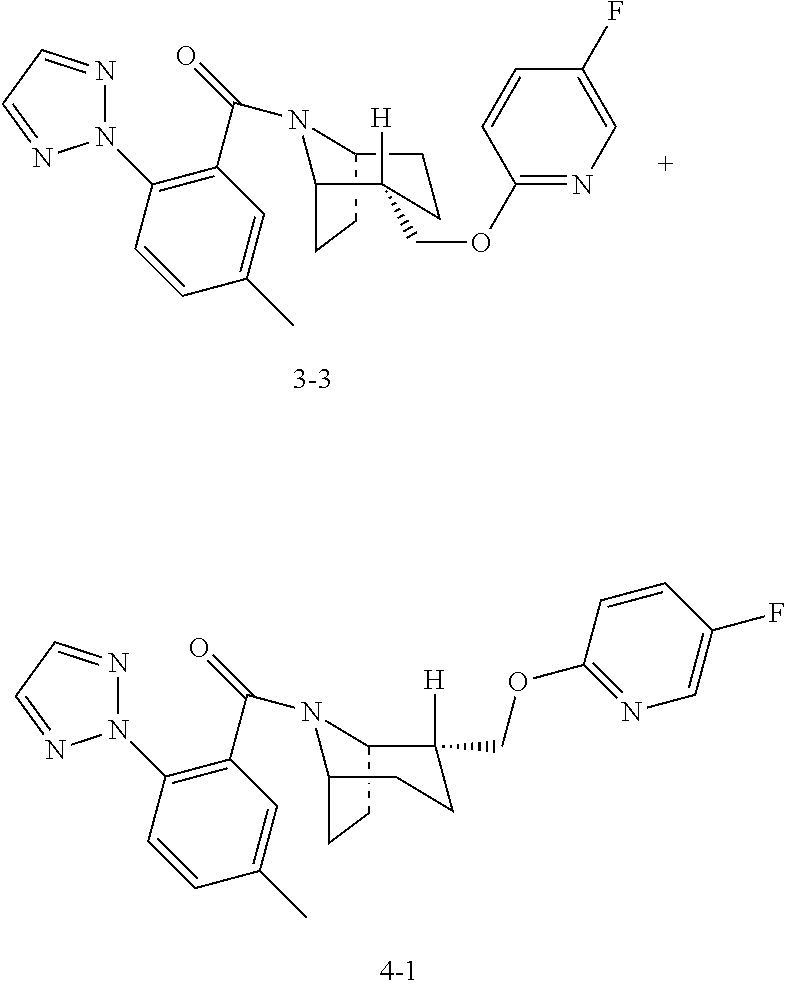


and the product 11-2 was obtained by preparative HPLC purification (24 mg, white solid, yield: 25%).


and the product 12-2 was obtained by preparative HPLC purification (8 mg, white solid, yield: 9%).


and the product 13-2 was obtained by preparative HPLC purification (37 mg, white solid, yield: 32%).


and the product 14-2 was obtained by preparative HPLC purification (19 mg, pale yellow solid, yield: 20%).


and the product 15-2 was obtained by preparative HPLC purification (17 mg, pale yellow solid, yield: 18%).


and the product 16-2 was obtained by preparative HPLC purification (6.5 mg, white solid, yield: 1.5%).


and the product 17-2 was obtained by preparative HPLC purification (4.3 mg, white solid, yield: 3.5%).


and the product 18-2 was obtained by preparative HPLC purification (4.3 mg, white solid, yield: 9.5%).


and the product 19-2 was obtained by preparative HPLC purification (29 mg, white solid, yield: 7%).


and the product 20-2 was obtained by preparative HPLC purification (51 mg, white solid, yield: 55%).


and the product 25-2 was obtained by TLC plate purification (33.72 mg, white solid, yield: 22%).


and the product 31-2 was obtained by preparative HPLC purification (5.79 mg, white solid, yield: 5.9%).


and the product 32-2 was obtained by preparative HPLC purification (7.32 mg, white solid, yield: 7.46%).


and the product 33-2 was obtained by preparative HPLC purification (25 mg, pale yellow solid, yield: 29%).


and the product 34-2 was obtained by preparative HPLC purification (30 mg, pale yellow solid, yield: 34.5%).


and the product 35-2 was obtained by preparative HPLC purification (4.47 mg, white solid, yield: 4.6%).


and the product 36-2 was obtained by preparative HPLC purification (25.32 mg, white solid, yield: 34.4%).


and the product 37-2 was obtained by preparative HPLC purification (29.63 mg, beige solid, yield: 33.9%).
-
- Cell line: HEK293-OX1 and OX2 stable cell strain
- HEK293-OX1 cell culture media (DMEM, Invitrogen#11960-044, 10% serum Gibco#10099141, L-Glutamine 1×, Gibco#25030, sodium pyruvate 1×, Gibco #11360, Geneticin 300 μg/ml, Gibco #10131).
- HEK293-OX2 cell culture media (DMEM, Invitrogen#11960-044, 10% serum Gibco#10099141, L-Glutamine 1×, Gibco#25030, sodium pyruvate 1×, Gibco #11360, Geneticin 300 μg/ml, Gibco #10131, Blasticin 2 μg/ml, Invitrogen # R21001).
- Pancreatic enzyme (Invitrogen, #25200-072)
- DPBS (Hyclone, #SH30028.01B)
- Fluo-4 AM, Invitrogen# F14202
- F-127, Invitrogen # P3000MP
- Probenecid, Sigma # P8761
- 384-well cell plate, Greiner #781946
- 384-well compound plate, Greiner #781280
- CO2 incubator, Thermo#371
- Centrifuge, Eppendorf #5810R
- Vi-cell cytometry, Beckman Coulter
- POD 810 Plate Assembler Automatic microplate pretreatment system
- Labcyte FLIPR, Molecular Device.
-
- 1) The medium trypsin, and DPBS were preheated at 37° C. under water bath. Culture medium of cells was sucked and cells were washed with 10 mL DPBS.
- 2) The preheated trypsin was added into the culture bottle which was rotated so that trypsin uniformly covered the bottle. It was placed in an incubator (37° C., 5% CO2) to digest for 1-2 minutes;
- 3) Each T150 was suspended with 10-15 mL of culture medium, and centrifuged at 800 rpm for 5 minutes. Cells were resuspended with 10 mL medium, and 1 mL of the cell re-suspension was sucked out and counted with Vi-cell cytometry.
- 4) The OX1 cells were diluted with culture medium to 5×10⁵ cells/mL, and OX2 cells were diluted to 4×10⁵ cells/mL. The diluted cells were added into 384 plate (Greiner. 781946) with multichannel pipettes (50 μL/hole, OX1 cells: 25000 cells/hole; and OX2 cells: 20000 cells/hole). The cell plate was placed in an incubator (37° C., 5% CO2) overnight.
-
- 1) DMSO was used to dilute the compound into 20 mM by using 3-fold dilution. 8 gradients in duplicate wells were used. Echo liquid handler was used to add the compound into a compound plate. Then 20 μL buffer was added to ensure that the final DMSO concentration was 0.1%.
-
- 1) The cell culture medium in 384-well plate was washed away with a vacuum pump. 30 μL fluorescent dye Fluo4AM was added. The cell was incubated at 37° C., 5% CO2 in an incubator for 1 hr and then re-equilibrated under room temperature for 10 minutes.
- 2) EC50 Test: Orexin A was diluted manually on ice by using 3-fold diluted. 8 gradients in duplicate wells were used. Then the DMSO plate was prepared and the DMSO concentration was 0.5%. The cell plate, Orexin A plate, and DMSO plate were placed into FLIPR respectively, and the fluorescence values were read.
- 3) EC70 value was calculated based on EC50 value of Orexin A. 5×EC70 solution was prepared and added into a 384-well compound plate with multichannel pipettes. The plate was placed on ice for preservation.
- 4) In the FLIPR, the compound plate, 5×EC70 plate, cell plate and FLIPR tips were placed respectively. The program was run and the fluorescence values were read.
| TABLE 1 |
| IC50 experimental results detected in FLIPR |
| Test sample | ||||
| (title compound) | hOX1R (nM) | hOX2R (nM) | ||
| MK6096 | 36 | 29 | ||
| Example 1 (1-16) | 10 | 24 | ||
| Example 2 (2-1) | 2296 | 2508 | ||
| Example 3 (3-3) | 2072 | 1425 | ||
| Example 4 (4-1) | 217 | 195 | ||
| Example 5 (5-3) | 20 | 36 | ||
| Example 6 (6-1) | 2552 | 4189 | ||
| Example 7 (7-3) | 1270 | 291 | ||
| Example 8 (8-1) | 4255 | 4609 | ||
| Example 9 (9-4) | 24 | 15 | ||
| Example 10 (10-2) | 29 | 73 | ||
| Example 11 (11-2) | 321 | 363 | ||
| Example 12 (12-2) | 219 | 206 | ||
| Example 13 (13-2) | 47 | 663 | ||
| Example 14 (14-2) | 16 | 20 | ||
| Example 15 (15-2) | 37 | 55 | ||
| Example 16 (16-2) | 56 | 440 | ||
| Example 17 (17-2) | 43 | 47 | ||
| Example 18 (18-2) | 127 | 904 | ||
| Example 19 (19-2) | 41 | 372 | ||
| Example 20 (20-2) | 7 | 26 | ||
| Example 21 (21-2) | 567 | 741 | ||
| Example 22 (22-2) | 2418 | 1371 | ||
| Example 23 (23-8) | 45 | 97 | ||
| Example 24 (24-2) | 56 | 87 | ||
| Example 25 (25-2) | 113 | 124 | ||
| Example 26 (26-5) | 48 | 37 | ||
| Example 27 (27-3) | 3000 | 3000 | ||
| Example 28 (28-1) | 34 | 23 | ||
| Example 29 (29-5) | 68 | 121 | ||
| Example 30 (30-2) | 489 | 262 | ||
| Example 31 (31-2) | 305 | 221 | ||
| Example 32 (32-2) | 7 | 6 | ||
| Example 33 (33-2) | 10 | 24 | ||
| Example 34 (34-2) | 2296 | 2508 | ||
| Example 35 (35-2) | 2072 | 1425 | ||
| Example 36 (36-2) | 217 | 195 | ||
| Example 37 (37-2) | 20 | 36 | ||
Claims (10)


Applications Claiming Priority (4)
| Application Number | Priority Date | Filing Date | Title |
|---|---|---|---|
| CN201410081220.1 | 2014-03-06 | ||
| CN201410081220 | 2014-03-06 | ||
| CN201410081220 | 2014-03-06 | ||
| PCT/CN2015/073330 WO2015131773A1 (en) | 2014-03-06 | 2015-02-27 | Piperidine derivatives as orexin receptor antagonist |
Publications (2)
| Publication Number | Publication Date |
|---|---|
| US20170233385A1 US20170233385A1 (en) | 2017-08-17 |
| US10100047B2 true US10100047B2 (en) | 2018-10-16 |
Family
ID=54054589
Family Applications (1)
| Application Number | Title | Priority Date | Filing Date |
|---|---|---|---|
| US15/123,014 Active US10100047B2 (en) | 2014-03-06 | 2015-02-27 | Piperidine derivatives as orexin receptor antagonist |
Country Status (16)
| Country | Link |
|---|---|
| US (1) | US10100047B2 (en) |
| EP (1) | EP3115362B1 (en) |
| JP (1) | JP6262885B2 (en) |
| KR (1) | KR101920472B1 (en) |
| CN (1) | CN106414439B (en) |
| AU (1) | AU2015226679B2 (en) |
| CA (1) | CA2941663C (en) |
| CL (1) | CL2016002240A1 (en) |
| IL (1) | IL247584A0 (en) |
| MX (1) | MX2016011549A (en) |
| NZ (1) | NZ723671A (en) |
| PE (1) | PE20170184A1 (en) |
| RU (1) | RU2669701C2 (en) |
| SG (2) | SG11201607183PA (en) |
| WO (1) | WO2015131773A1 (en) |
| ZA (1) | ZA201606141B (en) |
Cited By (2)
| Publication number | Priority date | Publication date | Assignee | Title |
|---|---|---|---|---|
| US10508083B2 (en) | 2016-02-04 | 2019-12-17 | Takeda Pharmaceutical Company Limited | Substituted piperidine compound and use thereof |
| US20230149402A1 (en) * | 2020-04-17 | 2023-05-18 | Shanghai Haiyan Pharmaceutical Technology Co., Ltd. | Solid pharmaceutical preparation, preparation method therefor and use thereof |
Families Citing this family (6)
| Publication number | Priority date | Publication date | Assignee | Title |
|---|---|---|---|---|
| KR102280614B1 (en) | 2013-03-15 | 2021-07-21 | 글로벌 블러드 테라퓨틱스, 인크. | Compounds and uses thereof for the modulation of hemoglobin |
| EA201992707A1 (en) | 2013-11-18 | 2020-06-30 | Глобал Блад Терапьютикс, Инк. | COMPOUNDS AND THEIR APPLICATIONS FOR HEMOGLOBIN MODULATION |
| WO2017012502A1 (en) | 2015-07-17 | 2017-01-26 | Sunshine Lake Pharma Co., Ltd. | Substituted quinazoline compounds and preparation and uses thereof |
| WO2017028732A1 (en) | 2015-08-14 | 2017-02-23 | 上海海雁医药科技有限公司 | Crystal form of orexin receptor antagonist compound, and preparation method and application thereof |
| SG11201804223TA (en) | 2015-11-23 | 2018-06-28 | Sunshine Lake Pharma Co Ltd | OCTAHYDROPYRROLO [3, 4-c] PYRROLE DERIVATIVES AND USES THEREOF |
| CN112480107B (en) * | 2020-11-30 | 2022-08-16 | 上海海雁医药科技有限公司 | Substituted azabicyclooctane compounds, intermediates therefor and processes for their preparation |
Citations (7)
| Publication number | Priority date | Publication date | Assignee | Title |
|---|---|---|---|---|
| WO2004101562A2 (en) | 2003-05-13 | 2004-11-25 | Schering Corporation | Bridged n-arylsulfonylpiperidines as gamma-secretase inhibitors |
| WO2008147518A1 (en) * | 2007-05-23 | 2008-12-04 | Merck & Co., Inc. | Pyridyl piperidine orexin receptor antagonists |
| EP2261210A1 (en) | 2008-02-06 | 2010-12-15 | Banyu Pharmaceutical Co., Ltd. | 3-substituted sulfonyl piperazine derivative |
| US20110009401A1 (en) | 2008-02-21 | 2011-01-13 | Hamed Aissaoui | 2-aza-bicyclo[2.2.1]heptane derivatives |
| WO2014075392A1 (en) | 2012-11-16 | 2014-05-22 | Merck Sharp & Dohme Corp. | Purine inhibitors of human phosphatidylinositol 3-kinase delta |
| WO2014159591A1 (en) | 2013-03-13 | 2014-10-02 | Janssen Pharmaceutica Nv | Substituted 7-azabicycles and their use as orexin receptor modulators |
| WO2014165070A1 (en) | 2013-03-13 | 2014-10-09 | Janssen Pharmaceutica Nv | Substituted 2-azabicycles and their use as orexin receptor modulators |
Family Cites Families (13)
| Publication number | Priority date | Publication date | Assignee | Title |
|---|---|---|---|---|
| EP2056828A4 (en) * | 2006-08-21 | 2010-06-23 | Merck Sharp & Dohme | SULFONYLATED PIPERAZINES AS MODULATORS OF THE CANNABINOID-1 RECEPTOR |
| JP2010527924A (en) * | 2007-05-18 | 2010-08-19 | メルク・シャープ・エンド・ドーム・コーポレイション | Oxo-bridged diazepan orexin receptor antagonist |
| US8030495B2 (en) * | 2007-05-23 | 2011-10-04 | Coleman Paul J | Cyclopropyl pyrrolidine orexin receptor antagonists |
| JP2012506375A (en) * | 2008-10-21 | 2012-03-15 | メルク・シャープ・エンド・ドーム・コーポレイション | 2,5-disubstituted piperidine orexin receptor antagonist |
| WO2010048016A1 (en) * | 2008-10-21 | 2010-04-29 | Merck Sharp & Dohme Corp. | 2,3-disubstituted piperidine orexin receptor antagonists |
| AU2009307918A1 (en) * | 2008-10-21 | 2010-04-29 | Merck Sharp & Dohme Corp. | 2,4-disubstituted pyrrolidine orexin receptor antagonists |
| CA2739915A1 (en) * | 2008-10-21 | 2010-04-29 | Merck Sharp & Dohme Corp. | 2,5-disubstituted piperidine orexin receptor antagonists |
| ES2543692T3 (en) * | 2010-04-29 | 2015-08-21 | The University Of Edinburgh | (8-aza-bicyclo [3.2.1 bicyclo [oct-8-yl) - [5- (1H-pyrazol-4-yl) -thiophene-3-yl] -metathones 3,3-disubstituted as 11 beta-HSD1 inhibitors |
| KR101764952B1 (en) * | 2010-07-29 | 2017-08-03 | 리겔 파마슈티칼스, 인크. | Ampk-activating heterocyclic compounds and methods for using the same |
| JPWO2013005755A1 (en) * | 2011-07-05 | 2015-02-23 | 大正製薬株式会社 | Methylpiperidine derivatives |
| AR088352A1 (en) * | 2011-10-19 | 2014-05-28 | Merck Sharp & Dohme | ANTAGONISTS OF THE RECEIVER OF 2-PIRIDILOXI-4-NITRILE OREXINE |
| EP2752410B1 (en) * | 2011-10-25 | 2016-08-31 | Shionogi & Co., Ltd. | Heterocycle derivative having pgd2 receptor antagonist activity |
| JOP20130213B1 (en) * | 2012-07-17 | 2021-08-17 | Takeda Pharmaceuticals Co | Oppositions to the 5-HT3 Future |
-
2015
- 2015-02-27 JP JP2016572879A patent/JP6262885B2/en active Active
- 2015-02-27 NZ NZ723671A patent/NZ723671A/en unknown
- 2015-02-27 RU RU2016130937A patent/RU2669701C2/en active
- 2015-02-27 WO PCT/CN2015/073330 patent/WO2015131773A1/en not_active Ceased
- 2015-02-27 CN CN201580012396.4A patent/CN106414439B/en active Active
- 2015-02-27 KR KR1020167027668A patent/KR101920472B1/en active Active
- 2015-02-27 SG SG11201607183PA patent/SG11201607183PA/en unknown
- 2015-02-27 MX MX2016011549A patent/MX2016011549A/en unknown
- 2015-02-27 SG SG10201900536TA patent/SG10201900536TA/en unknown
- 2015-02-27 AU AU2015226679A patent/AU2015226679B2/en active Active
- 2015-02-27 PE PE2016001578A patent/PE20170184A1/en not_active Application Discontinuation
- 2015-02-27 US US15/123,014 patent/US10100047B2/en active Active
- 2015-02-27 EP EP15758792.4A patent/EP3115362B1/en active Active
- 2015-02-27 CA CA2941663A patent/CA2941663C/en active Active
-
2016
- 2016-08-31 IL IL247584A patent/IL247584A0/en unknown
- 2016-09-05 ZA ZA2016/06141A patent/ZA201606141B/en unknown
- 2016-09-06 CL CL2016002240A patent/CL2016002240A1/en unknown
Patent Citations (7)
| Publication number | Priority date | Publication date | Assignee | Title |
|---|---|---|---|---|
| WO2004101562A2 (en) | 2003-05-13 | 2004-11-25 | Schering Corporation | Bridged n-arylsulfonylpiperidines as gamma-secretase inhibitors |
| WO2008147518A1 (en) * | 2007-05-23 | 2008-12-04 | Merck & Co., Inc. | Pyridyl piperidine orexin receptor antagonists |
| EP2261210A1 (en) | 2008-02-06 | 2010-12-15 | Banyu Pharmaceutical Co., Ltd. | 3-substituted sulfonyl piperazine derivative |
| US20110009401A1 (en) | 2008-02-21 | 2011-01-13 | Hamed Aissaoui | 2-aza-bicyclo[2.2.1]heptane derivatives |
| WO2014075392A1 (en) | 2012-11-16 | 2014-05-22 | Merck Sharp & Dohme Corp. | Purine inhibitors of human phosphatidylinositol 3-kinase delta |
| WO2014159591A1 (en) | 2013-03-13 | 2014-10-02 | Janssen Pharmaceutica Nv | Substituted 7-azabicycles and their use as orexin receptor modulators |
| WO2014165070A1 (en) | 2013-03-13 | 2014-10-09 | Janssen Pharmaceutica Nv | Substituted 2-azabicycles and their use as orexin receptor modulators |
Non-Patent Citations (5)
Cited By (5)
| Publication number | Priority date | Publication date | Assignee | Title |
|---|---|---|---|---|
| US10508083B2 (en) | 2016-02-04 | 2019-12-17 | Takeda Pharmaceutical Company Limited | Substituted piperidine compound and use thereof |
| US10898737B2 (en) | 2016-02-04 | 2021-01-26 | Takeda Pharmaceutical Company Limited | Substituted piperidine compound and use thereof |
| US11292766B2 (en) | 2016-02-04 | 2022-04-05 | Takeda Pharmaceutical Company Limited | Substituted piperidine compound and use thereof |
| US12281073B2 (en) | 2016-02-04 | 2025-04-22 | Takeda Pharmaceutical Company Limited | Substituted piperidine compound and use thereof |
| US20230149402A1 (en) * | 2020-04-17 | 2023-05-18 | Shanghai Haiyan Pharmaceutical Technology Co., Ltd. | Solid pharmaceutical preparation, preparation method therefor and use thereof |
Also Published As
| Publication number | Publication date |
|---|---|
| EP3115362A4 (en) | 2017-08-16 |
| IL247584A0 (en) | 2016-11-30 |
| US20170233385A1 (en) | 2017-08-17 |
| JP2017507185A (en) | 2017-03-16 |
| KR101920472B1 (en) | 2019-02-08 |
| CN106414439A (en) | 2017-02-15 |
| KR20160143668A (en) | 2016-12-14 |
| NZ723671A (en) | 2017-05-26 |
| PE20170184A1 (en) | 2017-04-07 |
| ZA201606141B (en) | 2017-05-31 |
| EP3115362B1 (en) | 2019-06-12 |
| CA2941663A1 (en) | 2015-09-11 |
| WO2015131773A1 (en) | 2015-09-11 |
| CL2016002240A1 (en) | 2017-02-17 |
| SG11201607183PA (en) | 2016-10-28 |
| AU2015226679A1 (en) | 2016-09-15 |
| SG10201900536TA (en) | 2019-02-27 |
| CA2941663C (en) | 2020-02-18 |
| RU2016130937A (en) | 2018-04-09 |
| JP6262885B2 (en) | 2018-01-17 |
| EP3115362A1 (en) | 2017-01-11 |
| RU2669701C2 (en) | 2018-10-15 |
| MX2016011549A (en) | 2017-05-08 |
| CN106414439B (en) | 2017-12-08 |
| AU2015226679B2 (en) | 2017-05-25 |
Similar Documents
| Publication | Publication Date | Title |
|---|---|---|
| EP3115362B1 (en) | Piperidine derivatives as orexin receptor antagonist | |
| US11040968B2 (en) | Pyridine derivative as ASK1 inhibitor and preparation method and use thereof | |
| TWI444378B (en) | Sulfur-containing heterocyclic derivative having β-secretase inhibitory action and use thereof | |
| US10981900B2 (en) | Spiro compound and use thereof | |
| RS58024B1 (en) | Bicyclic heterocyclyl derivatives as irak4 inhibitors | |
| CA3054324C (en) | Tri-cycle compound and applications thereof | |
| CA3222626A1 (en) | Compound having anti-tumor activity and use thereof | |
| WO2018202689A1 (en) | Preparation of 2-([1,2,3]triazol-2-yl)-benzoic acid derivatives | |
| TWI706950B (en) | Diaza-benzofluoranthene compound | |
| US20120101110A1 (en) | Diaza-spiro[5.5]undecanes | |
| JP6772251B2 (en) | Crystal form of orexin receptor antagonist compound and its production method and use | |
| US20130150376A1 (en) | Novel Sultam Compounds | |
| JP2018513199A (en) | Imidazole compounds | |
| AU2023259291B2 (en) | Piperidine carboxamide azaindane derivative, method for preparing same, and use thereof | |
| TWI631120B (en) | Acridine derivative as an appetite hormone receptor antagonist | |
| WO2024249867A1 (en) | Compounds for treating fibrotic diseases | |
| RU2772274C2 (en) | Selective hdac6 inhibitors, their production method and their application | |
| TW202530205A (en) | Substituted aryl sulfonamides and compositions and uses thereof | |
| CA3049834A1 (en) | Hdac6 selective inhibitors, preparation method therefor, and application thereof | |
| JPH11217377A (en) | New alkylamino derivatives |
Legal Events
| Date | Code | Title | Description |
|---|---|---|---|
| AS | Assignment |
Owner name: SHANGHAI HAIYAN PHARMACEUTICAL TECHNOLOGY CO., LTD Free format text: ASSIGNMENT OF ASSIGNORS INTEREST;ASSIGNORS:HE, HAIYING;WU, SONGLIANG;ZHANG, YANG;AND OTHERS;SIGNING DATES FROM 20160825 TO 20160907;REEL/FRAME:040309/0841 Owner name: YANGTZE RIVER PHARMACEUTICAL GROUP CO., LTD., CHIN Free format text: ASSIGNMENT OF ASSIGNORS INTEREST;ASSIGNORS:HE, HAIYING;WU, SONGLIANG;ZHANG, YANG;AND OTHERS;SIGNING DATES FROM 20160825 TO 20160907;REEL/FRAME:040309/0841 |
|
| STCF | Information on status: patent grant |
Free format text: PATENTED CASE |
|
| MAFP | Maintenance fee payment |
Free format text: PAYMENT OF MAINTENANCE FEE, 4TH YEAR, LARGE ENTITY (ORIGINAL EVENT CODE: M1551); ENTITY STATUS OF PATENT OWNER: LARGE ENTITY Year of fee payment: 4 |
|
| MAFP | Maintenance fee payment |
Free format text: PAYMENT OF MAINTENANCE FEE, 8TH YEAR, LARGE ENTITY (ORIGINAL EVENT CODE: M1552); ENTITY STATUS OF PATENT OWNER: LARGE ENTITY Year of fee payment: 8 |