US10098870B2 - Polyethylene glycol-cactus oligopeptide bonding rapamycin derivatives - Google Patents
Polyethylene glycol-cactus oligopeptide bonding rapamycin derivatives Download PDFInfo
- Publication number
- US10098870B2 US10098870B2 US15/170,894 US201615170894A US10098870B2 US 10098870 B2 US10098870 B2 US 10098870B2 US 201615170894 A US201615170894 A US 201615170894A US 10098870 B2 US10098870 B2 US 10098870B2
- Authority
- US
- United States
- Prior art keywords
- tumor
- lpr
- group
- rapamycin
- polyethylene glycol
- Prior art date
- Legal status (The legal status is an assumption and is not a legal conclusion. Google has not performed a legal analysis and makes no representation as to the accuracy of the status listed.)
- Active
Links
- QFJCIRLUMZQUOT-HPLJOQBZSA-N sirolimus Chemical class C1C[C@@H](O)[C@H](OC)C[C@@H]1C[C@@H](C)[C@H]1OC(=O)[C@@H]2CCCCN2C(=O)C(=O)[C@](O)(O2)[C@H](C)CC[C@H]2C[C@H](OC)/C(C)=C/C=C/C=C/[C@@H](C)C[C@@H](C)C(=O)[C@H](OC)[C@H](O)/C(C)=C/[C@@H](C)C(=O)C1 QFJCIRLUMZQUOT-HPLJOQBZSA-N 0.000 title claims abstract description 63
- 102000015636 Oligopeptides Human genes 0.000 title abstract description 20
- -1 Polyethylene Polymers 0.000 title description 29
- 239000004698 Polyethylene Substances 0.000 title description 13
- 229920000573 polyethylene Polymers 0.000 title description 13
- 206010028980 Neoplasm Diseases 0.000 claims abstract description 141
- 229960002930 sirolimus Drugs 0.000 claims abstract description 67
- 239000002202 Polyethylene glycol Substances 0.000 claims abstract description 59
- 229920001223 polyethylene glycol Polymers 0.000 claims abstract description 59
- ZAHRKKWIAAJSAO-UHFFFAOYSA-N rapamycin Natural products COCC(O)C(=C/C(C)C(=O)CC(OC(=O)C1CCCCN1C(=O)C(=O)C2(O)OC(CC(OC)C(=CC=CC=CC(C)CC(C)C(=O)C)C)CCC2C)C(C)CC3CCC(O)C(C3)OC)C ZAHRKKWIAAJSAO-UHFFFAOYSA-N 0.000 claims abstract description 54
- 150000001875 compounds Chemical class 0.000 claims abstract description 44
- 150000003839 salts Chemical class 0.000 claims abstract description 10
- 206010052779 Transplant rejections Diseases 0.000 claims abstract description 6
- 238000000034 method Methods 0.000 claims description 15
- 230000002401 inhibitory effect Effects 0.000 claims description 13
- 206010058467 Lung neoplasm malignant Diseases 0.000 claims description 6
- 201000005202 lung cancer Diseases 0.000 claims description 6
- 208000020816 lung neoplasm Diseases 0.000 claims description 6
- 206010006187 Breast cancer Diseases 0.000 claims description 4
- 208000026310 Breast neoplasm Diseases 0.000 claims description 4
- 201000007270 liver cancer Diseases 0.000 claims description 4
- 208000014018 liver neoplasm Diseases 0.000 claims description 4
- 206010039073 rheumatoid arthritis Diseases 0.000 claims description 4
- 206010003571 Astrocytoma Diseases 0.000 claims description 3
- 206010033128 Ovarian cancer Diseases 0.000 claims description 3
- 206010061535 Ovarian neoplasm Diseases 0.000 claims description 3
- 206010060862 Prostate cancer Diseases 0.000 claims description 3
- 208000000236 Prostatic Neoplasms Diseases 0.000 claims description 3
- 108010038807 Oligopeptides Proteins 0.000 abstract description 17
- 238000002360 preparation method Methods 0.000 abstract description 12
- 241000219357 Cactaceae Species 0.000 abstract description 7
- 239000008194 pharmaceutical composition Substances 0.000 abstract description 7
- 206010017533 Fungal infection Diseases 0.000 abstract description 5
- 208000031888 Mycoses Diseases 0.000 abstract description 5
- 230000001506 immunosuppresive effect Effects 0.000 abstract description 5
- 230000001965 increasing effect Effects 0.000 abstract description 4
- 208000023275 Autoimmune disease Diseases 0.000 abstract description 3
- 208000024172 Cardiovascular disease Diseases 0.000 abstract description 3
- 208000026106 cerebrovascular disease Diseases 0.000 abstract description 3
- 206010062016 Immunosuppression Diseases 0.000 abstract description 2
- 230000002526 effect on cardiovascular system Effects 0.000 abstract 1
- 238000011282 treatment Methods 0.000 description 53
- 230000000259 anti-tumor effect Effects 0.000 description 46
- 230000037396 body weight Effects 0.000 description 43
- 241000699670 Mus sp. Species 0.000 description 42
- 210000004027 cell Anatomy 0.000 description 35
- 238000002474 experimental method Methods 0.000 description 31
- 241001465754 Metazoa Species 0.000 description 30
- 238000011081 inoculation Methods 0.000 description 30
- YMWUJEATGCHHMB-UHFFFAOYSA-N Dichloromethane Chemical compound ClCCl YMWUJEATGCHHMB-UHFFFAOYSA-N 0.000 description 27
- 239000003814 drug Substances 0.000 description 26
- 229930012538 Paclitaxel Natural products 0.000 description 25
- 229960001592 paclitaxel Drugs 0.000 description 25
- RCINICONZNJXQF-MZXODVADSA-N taxol Chemical compound O([C@@H]1[C@@]2(C[C@@H](C(C)=C(C2(C)C)[C@H](C([C@]2(C)[C@@H](O)C[C@H]3OC[C@]3([C@H]21)OC(C)=O)=O)OC(=O)C)OC(=O)[C@H](O)[C@@H](NC(=O)C=1C=CC=CC=1)C=1C=CC=CC=1)O)C(=O)C1=CC=CC=C1 RCINICONZNJXQF-MZXODVADSA-N 0.000 description 25
- 210000004881 tumor cell Anatomy 0.000 description 25
- 229940079593 drug Drugs 0.000 description 24
- 238000006243 chemical reaction Methods 0.000 description 22
- VHYFNPMBLIVWCW-UHFFFAOYSA-N 4-Dimethylaminopyridine Chemical compound CN(C)C1=CC=NC=C1 VHYFNPMBLIVWCW-UHFFFAOYSA-N 0.000 description 18
- 238000011156 evaluation Methods 0.000 description 18
- 229910052739 hydrogen Inorganic materials 0.000 description 18
- 239000001257 hydrogen Substances 0.000 description 18
- 238000002054 transplantation Methods 0.000 description 18
- FAPWRFPIFSIZLT-UHFFFAOYSA-M Sodium chloride Chemical compound [Na+].[Cl-] FAPWRFPIFSIZLT-UHFFFAOYSA-M 0.000 description 16
- 206010073071 hepatocellular carcinoma Diseases 0.000 description 16
- 239000011780 sodium chloride Substances 0.000 description 16
- 239000000243 solution Substances 0.000 description 16
- 0 *[C@@H]1CCC(C[C@@H](C)[C@@H]2CC(=O)[C@H](C)/C=C(\C)[C@@H](O)[C@@H](OC)C(=O)[C@H](C)C[C@H](C)/C=C/C=C/C=C(\C)[C@@H](OC)C[C@@H]3CC[C@@H](C)[C@@](O)(C3)C(=O)C(=O)N3CCCC[C@H]3C(=O)O2)C[C@H]1OC.CC(=O)C(C)(CO)CO.CCCO.CO.CP(C)(C)=O Chemical compound *[C@@H]1CCC(C[C@@H](C)[C@@H]2CC(=O)[C@H](C)/C=C(\C)[C@@H](O)[C@@H](OC)C(=O)[C@H](C)C[C@H](C)/C=C/C=C/C=C(\C)[C@@H](OC)C[C@@H]3CC[C@@H](C)[C@@](O)(C3)C(=O)C(=O)N3CCCC[C@H]3C(=O)O2)C[C@H]1OC.CC(=O)C(C)(CO)CO.CCCO.CO.CP(C)(C)=O 0.000 description 15
- 230000000694 effects Effects 0.000 description 15
- 150000002431 hydrogen Chemical group 0.000 description 15
- 239000002504 physiological saline solution Substances 0.000 description 15
- 239000013558 reference substance Substances 0.000 description 15
- 238000007920 subcutaneous administration Methods 0.000 description 15
- 239000004220 glutamic acid Substances 0.000 description 14
- DHMQDGOQFOQNFH-UHFFFAOYSA-N Glycine Chemical compound NCC(O)=O DHMQDGOQFOQNFH-UHFFFAOYSA-N 0.000 description 13
- QTBSBXVTEAMEQO-UHFFFAOYSA-N Acetic acid Chemical compound CC(O)=O QTBSBXVTEAMEQO-UHFFFAOYSA-N 0.000 description 12
- 238000001727 in vivo Methods 0.000 description 11
- KFZMGEQAYNKOFK-UHFFFAOYSA-N Isopropanol Chemical compound CC(C)O KFZMGEQAYNKOFK-UHFFFAOYSA-N 0.000 description 10
- 229940024606 amino acid Drugs 0.000 description 10
- 125000002887 hydroxy group Chemical group [H]O* 0.000 description 10
- 208000002154 non-small cell lung carcinoma Diseases 0.000 description 10
- 208000029729 tumor suppressor gene on chromosome 11 Diseases 0.000 description 10
- QOSSAOTZNIDXMA-UHFFFAOYSA-N Dicylcohexylcarbodiimide Chemical compound C1CCCCC1N=C=NC1CCCCC1 QOSSAOTZNIDXMA-UHFFFAOYSA-N 0.000 description 9
- 239000004471 Glycine Substances 0.000 description 9
- OKKJLVBELUTLKV-UHFFFAOYSA-N Methanol Chemical compound OC OKKJLVBELUTLKV-UHFFFAOYSA-N 0.000 description 9
- 235000001014 amino acid Nutrition 0.000 description 9
- PEDCQBHIVMGVHV-UHFFFAOYSA-N Glycerine Chemical compound OCC(O)CO PEDCQBHIVMGVHV-UHFFFAOYSA-N 0.000 description 8
- 125000000217 alkyl group Chemical group 0.000 description 8
- 125000003277 amino group Chemical group 0.000 description 8
- 239000011734 sodium Substances 0.000 description 8
- 230000004614 tumor growth Effects 0.000 description 8
- 239000003981 vehicle Substances 0.000 description 8
- ASOKPJOREAFHNY-UHFFFAOYSA-N 1-Hydroxybenzotriazole Chemical compound C1=CC=C2N(O)N=NC2=C1 ASOKPJOREAFHNY-UHFFFAOYSA-N 0.000 description 7
- 150000001413 amino acids Chemical class 0.000 description 7
- 238000004458 analytical method Methods 0.000 description 7
- 238000010171 animal model Methods 0.000 description 7
- 230000008859 change Effects 0.000 description 7
- 238000000338 in vitro Methods 0.000 description 7
- 239000000203 mixture Substances 0.000 description 7
- 238000011580 nude mouse model Methods 0.000 description 7
- 238000012360 testing method Methods 0.000 description 7
- BUROJSBIWGDYCN-GAUTUEMISA-N AP 23573 Chemical compound C1C[C@@H](OP(C)(C)=O)[C@H](OC)C[C@@H]1C[C@@H](C)[C@H]1OC(=O)[C@@H]2CCCCN2C(=O)C(=O)[C@](O)(O2)[C@H](C)CC[C@H]2C[C@H](OC)/C(C)=C/C=C/C=C/[C@@H](C)C[C@@H](C)C(=O)[C@H](OC)[C@H](O)/C(C)=C/[C@@H](C)C(=O)C1 BUROJSBIWGDYCN-GAUTUEMISA-N 0.000 description 6
- CSCPPACGZOOCGX-UHFFFAOYSA-N Acetone Chemical compound CC(C)=O CSCPPACGZOOCGX-UHFFFAOYSA-N 0.000 description 6
- 108091003079 Bovine Serum Albumin Proteins 0.000 description 6
- 108010016626 Dipeptides Proteins 0.000 description 6
- HEDRZPFGACZZDS-MICDWDOJSA-N Trichloro(2H)methane Chemical compound [2H]C(Cl)(Cl)Cl HEDRZPFGACZZDS-MICDWDOJSA-N 0.000 description 6
- 230000003698 anagen phase Effects 0.000 description 6
- 238000004113 cell culture Methods 0.000 description 6
- 230000029087 digestion Effects 0.000 description 6
- 239000012091 fetal bovine serum Substances 0.000 description 6
- 210000003709 heart valve Anatomy 0.000 description 6
- 230000000361 pesticidal effect Effects 0.000 description 6
- 239000002356 single layer Substances 0.000 description 6
- RIOQSEWOXXDEQQ-UHFFFAOYSA-N triphenylphosphine Chemical compound C1=CC=CC=C1P(C=1C=CC=CC=1)C1=CC=CC=C1 RIOQSEWOXXDEQQ-UHFFFAOYSA-N 0.000 description 6
- HKVAMNSJSFKALM-GKUWKFKPSA-N Everolimus Chemical compound C1C[C@@H](OCCO)[C@H](OC)C[C@@H]1C[C@@H](C)[C@H]1OC(=O)[C@@H]2CCCCN2C(=O)C(=O)[C@](O)(O2)[C@H](C)CC[C@H]2C[C@H](OC)/C(C)=C/C=C/C=C/[C@@H](C)C[C@@H](C)C(=O)[C@H](OC)[C@H](O)/C(C)=C/[C@@H](C)C(=O)C1 HKVAMNSJSFKALM-GKUWKFKPSA-N 0.000 description 5
- 125000003342 alkenyl group Chemical group 0.000 description 5
- 125000003178 carboxy group Chemical group [H]OC(*)=O 0.000 description 5
- 238000005886 esterification reaction Methods 0.000 description 5
- NPZTUJOABDZTLV-UHFFFAOYSA-N hydroxybenzotriazole Substances O=C1C=CC=C2NNN=C12 NPZTUJOABDZTLV-UHFFFAOYSA-N 0.000 description 5
- 239000007788 liquid Substances 0.000 description 5
- 239000013641 positive control Substances 0.000 description 5
- 208000037803 restenosis Diseases 0.000 description 5
- 229960001302 ridaforolimus Drugs 0.000 description 5
- XLYOFNOQVPJJNP-UHFFFAOYSA-N water Substances O XLYOFNOQVPJJNP-UHFFFAOYSA-N 0.000 description 5
- RTZKZFJDLAIYFH-UHFFFAOYSA-N Diethyl ether Chemical compound CCOCC RTZKZFJDLAIYFH-UHFFFAOYSA-N 0.000 description 4
- 208000009329 Graft vs Host Disease Diseases 0.000 description 4
- KDLHZDBZIXYQEI-UHFFFAOYSA-N Palladium Chemical compound [Pd] KDLHZDBZIXYQEI-UHFFFAOYSA-N 0.000 description 4
- 206010035664 Pneumonia Diseases 0.000 description 4
- PXIPVTKHYLBLMZ-UHFFFAOYSA-N Sodium azide Chemical compound [Na+].[N-]=[N+]=[N-] PXIPVTKHYLBLMZ-UHFFFAOYSA-N 0.000 description 4
- UIIMBOGNXHQVGW-UHFFFAOYSA-M Sodium bicarbonate Chemical compound [Na+].OC([O-])=O UIIMBOGNXHQVGW-UHFFFAOYSA-M 0.000 description 4
- CBPNZQVSJQDFBE-FUXHJELOSA-N Temsirolimus Chemical compound C1C[C@@H](OC(=O)C(C)(CO)CO)[C@H](OC)C[C@@H]1C[C@@H](C)[C@H]1OC(=O)[C@@H]2CCCCN2C(=O)C(=O)[C@](O)(O2)[C@H](C)CC[C@H]2C[C@H](OC)/C(C)=C/C=C/C=C/[C@@H](C)C[C@@H](C)C(=O)[C@H](OC)[C@H](O)/C(C)=C/[C@@H](C)C(=O)C1 CBPNZQVSJQDFBE-FUXHJELOSA-N 0.000 description 4
- 230000005856 abnormality Effects 0.000 description 4
- 125000003545 alkoxy group Chemical group 0.000 description 4
- 238000007112 amidation reaction Methods 0.000 description 4
- 229960005167 everolimus Drugs 0.000 description 4
- 208000024908 graft versus host disease Diseases 0.000 description 4
- 239000002609 medium Substances 0.000 description 4
- 201000006417 multiple sclerosis Diseases 0.000 description 4
- 239000000546 pharmaceutical excipient Substances 0.000 description 4
- 239000007787 solid Substances 0.000 description 4
- 229960000235 temsirolimus Drugs 0.000 description 4
- QFJCIRLUMZQUOT-UHFFFAOYSA-N temsirolimus Natural products C1CC(O)C(OC)CC1CC(C)C1OC(=O)C2CCCCN2C(=O)C(=O)C(O)(O2)C(C)CCC2CC(OC)C(C)=CC=CC=CC(C)CC(C)C(=O)C(OC)C(O)C(C)=CC(C)C(=O)C1 QFJCIRLUMZQUOT-UHFFFAOYSA-N 0.000 description 4
- 238000005160 1H NMR spectroscopy Methods 0.000 description 3
- 208000016683 Adult T-cell leukemia/lymphoma Diseases 0.000 description 3
- WVDDGKGOMKODPV-UHFFFAOYSA-N Benzyl alcohol Chemical compound OCC1=CC=CC=C1 WVDDGKGOMKODPV-UHFFFAOYSA-N 0.000 description 3
- LFQSCWFLJHTTHZ-UHFFFAOYSA-N Ethanol Chemical compound CCO LFQSCWFLJHTTHZ-UHFFFAOYSA-N 0.000 description 3
- XEKOWRVHYACXOJ-UHFFFAOYSA-N Ethyl acetate Chemical compound CCOC(C)=O XEKOWRVHYACXOJ-UHFFFAOYSA-N 0.000 description 3
- UFHFLCQGNIYNRP-UHFFFAOYSA-N Hydrogen Chemical compound [H][H] UFHFLCQGNIYNRP-UHFFFAOYSA-N 0.000 description 3
- 241000699660 Mus musculus Species 0.000 description 3
- HEMHJVSKTPXQMS-UHFFFAOYSA-M Sodium hydroxide Chemical compound [OH-].[Na+] HEMHJVSKTPXQMS-UHFFFAOYSA-M 0.000 description 3
- 102000013530 TOR Serine-Threonine Kinases Human genes 0.000 description 3
- 108010065917 TOR Serine-Threonine Kinases Proteins 0.000 description 3
- 206010047924 Wheezing Diseases 0.000 description 3
- 201000006966 adult T-cell leukemia Diseases 0.000 description 3
- 125000003710 aryl alkyl group Chemical group 0.000 description 3
- 125000003118 aryl group Chemical group 0.000 description 3
- KRKNYBCHXYNGOX-UHFFFAOYSA-N citric acid Chemical compound OC(=O)CC(O)(C(O)=O)CC(O)=O KRKNYBCHXYNGOX-UHFFFAOYSA-N 0.000 description 3
- 208000037265 diseases, disorders, signs and symptoms Diseases 0.000 description 3
- 230000005764 inhibitory process Effects 0.000 description 3
- 238000010253 intravenous injection Methods 0.000 description 3
- 210000003734 kidney Anatomy 0.000 description 3
- 210000005265 lung cell Anatomy 0.000 description 3
- 108010082117 matrigel Proteins 0.000 description 3
- 125000000956 methoxy group Chemical group [H]C([H])([H])O* 0.000 description 3
- 125000002496 methyl group Chemical group [H]C([H])([H])* 0.000 description 3
- 239000011259 mixed solution Substances 0.000 description 3
- 230000000144 pharmacologic effect Effects 0.000 description 3
- 229940002612 prodrug Drugs 0.000 description 3
- 239000000651 prodrug Substances 0.000 description 3
- 239000000047 product Substances 0.000 description 3
- 238000011321 prophylaxis Methods 0.000 description 3
- 238000006722 reduction reaction Methods 0.000 description 3
- 239000002904 solvent Substances 0.000 description 3
- 239000000126 substance Substances 0.000 description 3
- 239000000725 suspension Substances 0.000 description 3
- 231100000331 toxic Toxicity 0.000 description 3
- 230000002588 toxic effect Effects 0.000 description 3
- ARXKVVRQIIOZGF-UHFFFAOYSA-N 1,2,4-butanetriol Chemical compound OCCC(O)CO ARXKVVRQIIOZGF-UHFFFAOYSA-N 0.000 description 2
- PPXUUPXQWDQNGO-UHFFFAOYSA-N 2-azidoacetic acid Chemical compound OC(=O)CN=[N+]=[N-] PPXUUPXQWDQNGO-UHFFFAOYSA-N 0.000 description 2
- 125000000094 2-phenylethyl group Chemical group [H]C1=C([H])C([H])=C(C([H])=C1[H])C([H])([H])C([H])([H])* 0.000 description 2
- FCSKOFQQCWLGMV-UHFFFAOYSA-N 5-{5-[2-chloro-4-(4,5-dihydro-1,3-oxazol-2-yl)phenoxy]pentyl}-3-methylisoxazole Chemical compound O1N=C(C)C=C1CCCCCOC1=CC=C(C=2OCCN=2)C=C1Cl FCSKOFQQCWLGMV-UHFFFAOYSA-N 0.000 description 2
- IJGRMHOSHXDMSA-UHFFFAOYSA-N Atomic nitrogen Chemical compound N#N IJGRMHOSHXDMSA-UHFFFAOYSA-N 0.000 description 2
- MHUBNPUIDRLFLF-UHFFFAOYSA-N CCC(CCI)CCI Chemical compound CCC(CCI)CCI MHUBNPUIDRLFLF-UHFFFAOYSA-N 0.000 description 2
- 201000004624 Dermatitis Diseases 0.000 description 2
- OAKJQQAXSVQMHS-UHFFFAOYSA-N Hydrazine Chemical compound NN OAKJQQAXSVQMHS-UHFFFAOYSA-N 0.000 description 2
- VEXZGXHMUGYJMC-UHFFFAOYSA-N Hydrochloric acid Chemical compound Cl VEXZGXHMUGYJMC-UHFFFAOYSA-N 0.000 description 2
- 206010061218 Inflammation Diseases 0.000 description 2
- XEEYBQQBJWHFJM-UHFFFAOYSA-N Iron Chemical compound [Fe] XEEYBQQBJWHFJM-UHFFFAOYSA-N 0.000 description 2
- WHUUTDBJXJRKMK-VKHMYHEASA-N L-glutamic acid Chemical compound OC(=O)[C@@H](N)CCC(O)=O WHUUTDBJXJRKMK-VKHMYHEASA-N 0.000 description 2
- 241000124008 Mammalia Species 0.000 description 2
- 208000018262 Peripheral vascular disease Diseases 0.000 description 2
- 201000004681 Psoriasis Diseases 0.000 description 2
- 239000012980 RPMI-1640 medium Substances 0.000 description 2
- 238000011579 SCID mouse model Methods 0.000 description 2
- 206010041067 Small cell lung cancer Diseases 0.000 description 2
- WYURNTSHIVDZCO-UHFFFAOYSA-N Tetrahydrofuran Chemical compound C1CCOC1 WYURNTSHIVDZCO-UHFFFAOYSA-N 0.000 description 2
- DTQVDTLACAAQTR-UHFFFAOYSA-N Trifluoroacetic acid Chemical compound OC(=O)C(F)(F)F DTQVDTLACAAQTR-UHFFFAOYSA-N 0.000 description 2
- HCHKCACWOHOZIP-UHFFFAOYSA-N Zinc Chemical compound [Zn] HCHKCACWOHOZIP-UHFFFAOYSA-N 0.000 description 2
- AVJYMJJJBRIKJO-UHFFFAOYSA-N acetic acid azide Chemical compound [N-]=[N+]=[N-].C(C)(=O)O AVJYMJJJBRIKJO-UHFFFAOYSA-N 0.000 description 2
- 239000004480 active ingredient Substances 0.000 description 2
- 239000002671 adjuvant Substances 0.000 description 2
- 239000000443 aerosol Substances 0.000 description 2
- 125000001797 benzyl group Chemical group [H]C1=C([H])C([H])=C(C([H])=C1[H])C([H])([H])* 0.000 description 2
- 238000006065 biodegradation reaction Methods 0.000 description 2
- 239000002775 capsule Substances 0.000 description 2
- PFKFTWBEEFSNDU-UHFFFAOYSA-N carbonyldiimidazole Chemical compound C1=CN=CN1C(=O)N1C=CN=C1 PFKFTWBEEFSNDU-UHFFFAOYSA-N 0.000 description 2
- 239000000969 carrier Substances 0.000 description 2
- 230000015556 catabolic process Effects 0.000 description 2
- 239000007795 chemical reaction product Substances 0.000 description 2
- 239000003153 chemical reaction reagent Substances 0.000 description 2
- 239000003638 chemical reducing agent Substances 0.000 description 2
- 239000003795 chemical substances by application Substances 0.000 description 2
- 238000004440 column chromatography Methods 0.000 description 2
- 238000009833 condensation Methods 0.000 description 2
- 230000005494 condensation Effects 0.000 description 2
- 230000007547 defect Effects 0.000 description 2
- 230000007812 deficiency Effects 0.000 description 2
- 238000006731 degradation reaction Methods 0.000 description 2
- 201000010099 disease Diseases 0.000 description 2
- 239000002552 dosage form Substances 0.000 description 2
- 239000006196 drop Substances 0.000 description 2
- 230000002708 enhancing effect Effects 0.000 description 2
- 125000001495 ethyl group Chemical group [H]C([H])([H])C([H])([H])* 0.000 description 2
- 238000001914 filtration Methods 0.000 description 2
- 239000008187 granular material Substances 0.000 description 2
- 230000012010 growth Effects 0.000 description 2
- 125000005059 halophenyl group Chemical group 0.000 description 2
- 230000003463 hyperproliferative effect Effects 0.000 description 2
- 230000004054 inflammatory process Effects 0.000 description 2
- 239000007924 injection Substances 0.000 description 2
- 238000002347 injection Methods 0.000 description 2
- 239000000865 liniment Substances 0.000 description 2
- 239000006210 lotion Substances 0.000 description 2
- 239000003120 macrolide antibiotic agent Substances 0.000 description 2
- GRVDJDISBSALJP-UHFFFAOYSA-N methyloxidanyl Chemical group [O]C GRVDJDISBSALJP-UHFFFAOYSA-N 0.000 description 2
- 239000002674 ointment Substances 0.000 description 2
- WXZMFSXDPGVJKK-UHFFFAOYSA-N pentaerythritol Chemical compound OCC(CO)(CO)CO WXZMFSXDPGVJKK-UHFFFAOYSA-N 0.000 description 2
- 229940124531 pharmaceutical excipient Drugs 0.000 description 2
- 125000001997 phenyl group Chemical group [H]C1=C([H])C([H])=C(*)C([H])=C1[H] 0.000 description 2
- 239000006187 pill Substances 0.000 description 2
- 239000000843 powder Substances 0.000 description 2
- 230000035755 proliferation Effects 0.000 description 2
- 239000011541 reaction mixture Substances 0.000 description 2
- 208000000587 small cell lung carcinoma Diseases 0.000 description 2
- 235000017557 sodium bicarbonate Nutrition 0.000 description 2
- 229910000030 sodium bicarbonate Inorganic materials 0.000 description 2
- HPALAKNZSZLMCH-UHFFFAOYSA-M sodium;chloride;hydrate Chemical class O.[Na+].[Cl-] HPALAKNZSZLMCH-UHFFFAOYSA-M 0.000 description 2
- 239000000829 suppository Substances 0.000 description 2
- 239000003826 tablet Substances 0.000 description 2
- BNWCETAHAJSBFG-UHFFFAOYSA-N tert-butyl 2-bromoacetate Chemical compound CC(C)(C)OC(=O)CBr BNWCETAHAJSBFG-UHFFFAOYSA-N 0.000 description 2
- 238000010998 test method Methods 0.000 description 2
- JOXIMZWYDAKGHI-UHFFFAOYSA-N toluene-4-sulfonic acid Chemical compound CC1=CC=C(S(O)(=O)=O)C=C1 JOXIMZWYDAKGHI-UHFFFAOYSA-N 0.000 description 2
- 231100000419 toxicity Toxicity 0.000 description 2
- 230000001988 toxicity Effects 0.000 description 2
- 230000002792 vascular Effects 0.000 description 2
- 229910052725 zinc Inorganic materials 0.000 description 2
- 239000011701 zinc Substances 0.000 description 2
- MTCFGRXMJLQNBG-REOHCLBHSA-N (2S)-2-Amino-3-hydroxypropansäure Chemical compound OC[C@H](N)C(O)=O MTCFGRXMJLQNBG-REOHCLBHSA-N 0.000 description 1
- SPFMQWBKVUQXJV-BTVCFUMJSA-N (2r,3s,4r,5r)-2,3,4,5,6-pentahydroxyhexanal;hydrate Chemical compound O.OC[C@@H](O)[C@@H](O)[C@H](O)[C@@H](O)C=O SPFMQWBKVUQXJV-BTVCFUMJSA-N 0.000 description 1
- HOVAGTYPODGVJG-UVSYOFPXSA-N (3s,5r)-2-(hydroxymethyl)-6-methoxyoxane-3,4,5-triol Chemical compound COC1OC(CO)[C@@H](O)C(O)[C@H]1O HOVAGTYPODGVJG-UVSYOFPXSA-N 0.000 description 1
- ICLYJLBTOGPLMC-KVVVOXFISA-N (z)-octadec-9-enoate;tris(2-hydroxyethyl)azanium Chemical compound OCCN(CCO)CCO.CCCCCCCC\C=C/CCCCCCCC(O)=O ICLYJLBTOGPLMC-KVVVOXFISA-N 0.000 description 1
- BDNKZNFMNDZQMI-UHFFFAOYSA-N 1,3-diisopropylcarbodiimide Chemical compound CC(C)N=C=NC(C)C BDNKZNFMNDZQMI-UHFFFAOYSA-N 0.000 description 1
- LMDZBCPBFSXMTL-UHFFFAOYSA-N 1-ethyl-3-(3-dimethylaminopropyl)carbodiimide Chemical compound CCN=C=NCCCN(C)C LMDZBCPBFSXMTL-UHFFFAOYSA-N 0.000 description 1
- FPIRBHDGWMWJEP-UHFFFAOYSA-N 1-hydroxy-7-azabenzotriazole Chemical compound C1=CN=C2N(O)N=NC2=C1 FPIRBHDGWMWJEP-UHFFFAOYSA-N 0.000 description 1
- PTBDIHRZYDMNKB-UHFFFAOYSA-N 2,2-Bis(hydroxymethyl)propionic acid Chemical compound OCC(C)(CO)C(O)=O PTBDIHRZYDMNKB-UHFFFAOYSA-N 0.000 description 1
- XZIIFPSPUDAGJM-UHFFFAOYSA-N 6-chloro-2-n,2-n-diethylpyrimidine-2,4-diamine Chemical compound CCN(CC)C1=NC(N)=CC(Cl)=N1 XZIIFPSPUDAGJM-UHFFFAOYSA-N 0.000 description 1
- 206010003267 Arthritis reactive Diseases 0.000 description 1
- 201000001320 Atherosclerosis Diseases 0.000 description 1
- 208000032116 Autoimmune Experimental Encephalomyelitis Diseases 0.000 description 1
- 239000004322 Butylated hydroxytoluene Substances 0.000 description 1
- NLZUEZXRPGMBCV-UHFFFAOYSA-N Butylhydroxytoluene Chemical compound CC1=CC(C(C)(C)C)=C(O)C(C(C)(C)C)=C1 NLZUEZXRPGMBCV-UHFFFAOYSA-N 0.000 description 1
- BRVOHDZCNATGPY-UHFFFAOYSA-N C.C.C.C.CN(CCOCCCO)C(=O)COCCCO Chemical compound C.C.C.C.CN(CCOCCCO)C(=O)COCCCO BRVOHDZCNATGPY-UHFFFAOYSA-N 0.000 description 1
- WZIUBDSLDHZVPD-UHFFFAOYSA-N C.C.CCC(O)O Chemical compound C.C.CCC(O)O WZIUBDSLDHZVPD-UHFFFAOYSA-N 0.000 description 1
- IJJCKGUDFKIZDN-UHFFFAOYSA-N C=O.C=O.CC(CCC(=O)O)C(=O)CC(CCC(=O)O)C(=O)O.CC(CCO)N(CC(=O)CC(CCC(=O)O)C(=O)CC(CCC(=O)O)C(=O)O)C(=O)COCCCO.CCN(C(=O)COCCCO)C(C)CCO Chemical compound C=O.C=O.CC(CCC(=O)O)C(=O)CC(CCC(=O)O)C(=O)O.CC(CCO)N(CC(=O)CC(CCC(=O)O)C(=O)CC(CCC(=O)O)C(=O)O)C(=O)COCCCO.CCN(C(=O)COCCCO)C(C)CCO IJJCKGUDFKIZDN-UHFFFAOYSA-N 0.000 description 1
- NVAHWQQJOGBQGL-SJKCXGKHSA-N CC(=O)CN=[N+]=[N-].CC(C)(C)OC(=O)CBr.CO[C@H]1C[C@@H]2CC[C@@H](C)[C@@](O)(C2)C(=O)C(=O)N2CCCC[C@H]2C(=O)O[C@H]([C@H](C)CC2CC[C@@H](O)[C@H](OC)C2)CC(=O)[C@H](C)/C=C(\C)[C@@H](O)[C@@H](OC)C(=O)[C@H](C)C[C@H](C)/C=C/C=C/C=C/1C.CO[C@H]1C[C@@H]2CC[C@@H](C)[C@@](O)(C2)C(=O)C(=O)N2CCCC[C@H]2C(=O)O[C@H]([C@H](C)CC2CC[C@@H](OC(=O)CN=[N+]=[N-])[C@H](OC)C2)CC(=O)[C@H](C)/C=C(\C)[C@@H](O)[C@@H](OC)C(=O)[C@H](C)C[C@H](C)/C=C/C=C/C=C/1C.[N-]=[N+]=NCC(=O)O Chemical compound CC(=O)CN=[N+]=[N-].CC(C)(C)OC(=O)CBr.CO[C@H]1C[C@@H]2CC[C@@H](C)[C@@](O)(C2)C(=O)C(=O)N2CCCC[C@H]2C(=O)O[C@H]([C@H](C)CC2CC[C@@H](O)[C@H](OC)C2)CC(=O)[C@H](C)/C=C(\C)[C@@H](O)[C@@H](OC)C(=O)[C@H](C)C[C@H](C)/C=C/C=C/C=C/1C.CO[C@H]1C[C@@H]2CC[C@@H](C)[C@@](O)(C2)C(=O)C(=O)N2CCCC[C@H]2C(=O)O[C@H]([C@H](C)CC2CC[C@@H](OC(=O)CN=[N+]=[N-])[C@H](OC)C2)CC(=O)[C@H](C)/C=C(\C)[C@@H](O)[C@@H](OC)C(=O)[C@H](C)C[C@H](C)/C=C/C=C/C=C/1C.[N-]=[N+]=NCC(=O)O NVAHWQQJOGBQGL-SJKCXGKHSA-N 0.000 description 1
- HCXHRDPYVROMIJ-CHIBSJOGSA-N CC(=O)COCCCO.COCCOCC(=O)CCC(=O)O[C@@H]1CCC(C[C@@H](C)[C@@H]2CC(=O)[C@H](C)/C=C(\C)[C@@H](O)[C@@H](OC)C(=O)[C@H](C)C[C@H](C)/C=C/C=C/C=C(\C)[C@@H](OC)C[C@@H]3CC[C@@H](C)[C@@](O)(C3)C(=O)C(=O)N3CCCC[C@H]3C(=O)O2)C[C@H]1OC.CO[C@H]1C[C@@H]2CC[C@@H](C)[C@@](O)(C2)C(=O)C(=O)N2CCCC[C@H]2C(=O)O[C@H]([C@H](C)CC2CC[C@@H](OC(=O)CN)[C@H](OC)C2)CC(=O)[C@H](C)/C=C(\C)[C@@H](O)[C@@H](OC)C(=O)[C@H](C)C[C@H](C)/C=C/C=C/C=C/1C Chemical compound CC(=O)COCCCO.COCCOCC(=O)CCC(=O)O[C@@H]1CCC(C[C@@H](C)[C@@H]2CC(=O)[C@H](C)/C=C(\C)[C@@H](O)[C@@H](OC)C(=O)[C@H](C)C[C@H](C)/C=C/C=C/C=C(\C)[C@@H](OC)C[C@@H]3CC[C@@H](C)[C@@](O)(C3)C(=O)C(=O)N3CCCC[C@H]3C(=O)O2)C[C@H]1OC.CO[C@H]1C[C@@H]2CC[C@@H](C)[C@@](O)(C2)C(=O)C(=O)N2CCCC[C@H]2C(=O)O[C@H]([C@H](C)CC2CC[C@@H](OC(=O)CN)[C@H](OC)C2)CC(=O)[C@H](C)/C=C(\C)[C@@H](O)[C@@H](OC)C(=O)[C@H](C)C[C@H](C)/C=C/C=C/C=C/1C HCXHRDPYVROMIJ-CHIBSJOGSA-N 0.000 description 1
- ZWEHNKRNPOVVGH-UHFFFAOYSA-N CCC(C)=O Chemical compound CCC(C)=O ZWEHNKRNPOVVGH-UHFFFAOYSA-N 0.000 description 1
- IETWMGYLEKZYBB-UHFFFAOYSA-N CCCC(CCC(=O)CCI)C(=O)CCI Chemical compound CCCC(CCC(=O)CCI)C(=O)CCI IETWMGYLEKZYBB-UHFFFAOYSA-N 0.000 description 1
- YUUYLVSBFGOOLD-UHFFFAOYSA-N COCC(COC)(COC)COC.COCC(COC)OC Chemical compound COCC(COC)(COC)COC.COCC(COC)OC YUUYLVSBFGOOLD-UHFFFAOYSA-N 0.000 description 1
- JDFDHBSESGTDAL-UHFFFAOYSA-N COCCCO Chemical compound COCCCO JDFDHBSESGTDAL-UHFFFAOYSA-N 0.000 description 1
- YOUXSDHTLVJUFD-OZBJPXDMSA-N CO[C@H]1C[C@@H]2CC[C@@H](C)[C@@](O)(C2)C(=O)C(=O)N2CCCC[C@H]2C(=O)O[C@H]([C@H](C)CC2CC[C@@H](OC(=O)CN)[C@H](OC)C2)CC(=O)[C@H](C)/C=C(\C)[C@@H](O)[C@@H](OC)C(=O)[C@H](C)C[C@H](C)/C=C/C=C/C=C/1C.CO[C@H]1C[C@@H]2CC[C@@H](C)[C@@](O)(C2)C(=O)C(=O)N2CCCC[C@H]2C(=O)O[C@H]([C@H](C)CC2CC[C@@H](OC(=O)CN=[N+]=[N-])[C@H](OC)C2)CC(=O)[C@H](C)/C=C(\C)[C@@H](O)[C@@H](OC)C(=O)[C@H](C)C[C@H](C)/C=C/C=C/C=C/1C Chemical compound CO[C@H]1C[C@@H]2CC[C@@H](C)[C@@](O)(C2)C(=O)C(=O)N2CCCC[C@H]2C(=O)O[C@H]([C@H](C)CC2CC[C@@H](OC(=O)CN)[C@H](OC)C2)CC(=O)[C@H](C)/C=C(\C)[C@@H](O)[C@@H](OC)C(=O)[C@H](C)C[C@H](C)/C=C/C=C/C=C/1C.CO[C@H]1C[C@@H]2CC[C@@H](C)[C@@](O)(C2)C(=O)C(=O)N2CCCC[C@H]2C(=O)O[C@H]([C@H](C)CC2CC[C@@H](OC(=O)CN=[N+]=[N-])[C@H](OC)C2)CC(=O)[C@H](C)/C=C(\C)[C@@H](O)[C@@H](OC)C(=O)[C@H](C)C[C@H](C)/C=C/C=C/C=C/1C YOUXSDHTLVJUFD-OZBJPXDMSA-N 0.000 description 1
- KLWPJMFMVPTNCC-UHFFFAOYSA-N Camptothecin Natural products CCC1(O)C(=O)OCC2=C1C=C3C4Nc5ccccc5C=C4CN3C2=O KLWPJMFMVPTNCC-UHFFFAOYSA-N 0.000 description 1
- 241000222122 Candida albicans Species 0.000 description 1
- 201000009030 Carcinoma Diseases 0.000 description 1
- 101000741396 Chlamydia muridarum (strain MoPn / Nigg) Probable oxidoreductase TC_0900 Proteins 0.000 description 1
- 101000741399 Chlamydia pneumoniae Probable oxidoreductase CPn_0761/CP_1111/CPj0761/CpB0789 Proteins 0.000 description 1
- 101000741400 Chlamydia trachomatis (strain D/UW-3/Cx) Probable oxidoreductase CT_610 Proteins 0.000 description 1
- NJLHHACGWKAWKL-UHFFFAOYSA-N ClP(Cl)=O Chemical compound ClP(Cl)=O NJLHHACGWKAWKL-UHFFFAOYSA-N 0.000 description 1
- FKLJPTJMIBLJAV-UHFFFAOYSA-N Compound IV Chemical compound O1N=C(C)C=C1CCCCCCCOC1=CC=C(C=2OCCN=2)C=C1 FKLJPTJMIBLJAV-UHFFFAOYSA-N 0.000 description 1
- 206010056489 Coronary artery restenosis Diseases 0.000 description 1
- FBPFZTCFMRRESA-FSIIMWSLSA-N D-Glucitol Natural products OC[C@H](O)[C@H](O)[C@@H](O)[C@H](O)CO FBPFZTCFMRRESA-FSIIMWSLSA-N 0.000 description 1
- FBPFZTCFMRRESA-JGWLITMVSA-N D-glucitol Chemical compound OC[C@H](O)[C@@H](O)[C@H](O)[C@H](O)CO FBPFZTCFMRRESA-JGWLITMVSA-N 0.000 description 1
- 206010012289 Dementia Diseases 0.000 description 1
- 208000004232 Enteritis Diseases 0.000 description 1
- CWYNVVGOOAEACU-UHFFFAOYSA-N Fe2+ Chemical class [Fe+2] CWYNVVGOOAEACU-UHFFFAOYSA-N 0.000 description 1
- WHUUTDBJXJRKMK-UHFFFAOYSA-N Glutamic acid Natural products OC(=O)C(N)CCC(O)=O WHUUTDBJXJRKMK-UHFFFAOYSA-N 0.000 description 1
- 206010020751 Hypersensitivity Diseases 0.000 description 1
- 206010061216 Infarction Diseases 0.000 description 1
- XUJNEKJLAYXESH-REOHCLBHSA-N L-Cysteine Chemical compound SC[C@H](N)C(O)=O XUJNEKJLAYXESH-REOHCLBHSA-N 0.000 description 1
- ONIBWKKTOPOVIA-BYPYZUCNSA-N L-Proline Chemical compound OC(=O)[C@@H]1CCCN1 ONIBWKKTOPOVIA-BYPYZUCNSA-N 0.000 description 1
- QNAYBMKLOCPYGJ-REOHCLBHSA-N L-alanine Chemical compound C[C@H](N)C(O)=O QNAYBMKLOCPYGJ-REOHCLBHSA-N 0.000 description 1
- AGPKZVBTJJNPAG-WHFBIAKZSA-N L-isoleucine Chemical compound CC[C@H](C)[C@H](N)C(O)=O AGPKZVBTJJNPAG-WHFBIAKZSA-N 0.000 description 1
- ROHFNLRQFUQHCH-YFKPBYRVSA-N L-leucine Chemical compound CC(C)C[C@H](N)C(O)=O ROHFNLRQFUQHCH-YFKPBYRVSA-N 0.000 description 1
- FFEARJCKVFRZRR-BYPYZUCNSA-N L-methionine Chemical compound CSCC[C@H](N)C(O)=O FFEARJCKVFRZRR-BYPYZUCNSA-N 0.000 description 1
- COLNVLDHVKWLRT-QMMMGPOBSA-N L-phenylalanine Chemical compound OC(=O)[C@@H](N)CC1=CC=CC=C1 COLNVLDHVKWLRT-QMMMGPOBSA-N 0.000 description 1
- AYFVYJQAPQTCCC-GBXIJSLDSA-N L-threonine Chemical compound C[C@@H](O)[C@H](N)C(O)=O AYFVYJQAPQTCCC-GBXIJSLDSA-N 0.000 description 1
- OUYCCCASQSFEME-QMMMGPOBSA-N L-tyrosine Chemical compound OC(=O)[C@@H](N)CC1=CC=C(O)C=C1 OUYCCCASQSFEME-QMMMGPOBSA-N 0.000 description 1
- KZSNJWFQEVHDMF-BYPYZUCNSA-N L-valine Chemical compound CC(C)[C@H](N)C(O)=O KZSNJWFQEVHDMF-BYPYZUCNSA-N 0.000 description 1
- ROHFNLRQFUQHCH-UHFFFAOYSA-N Leucine Natural products CC(C)CC(N)C(O)=O ROHFNLRQFUQHCH-UHFFFAOYSA-N 0.000 description 1
- 241000699666 Mus <mouse, genus> Species 0.000 description 1
- 208000010428 Muscle Weakness Diseases 0.000 description 1
- 206010028372 Muscular weakness Diseases 0.000 description 1
- 206010061902 Pancreatic neoplasm Diseases 0.000 description 1
- 102000035195 Peptidases Human genes 0.000 description 1
- 108091005804 Peptidases Proteins 0.000 description 1
- NBIIXXVUZAFLBC-UHFFFAOYSA-N Phosphoric acid Chemical group OP(O)(O)=O NBIIXXVUZAFLBC-UHFFFAOYSA-N 0.000 description 1
- ONIBWKKTOPOVIA-UHFFFAOYSA-N Proline Natural products OC(=O)C1CCCN1 ONIBWKKTOPOVIA-UHFFFAOYSA-N 0.000 description 1
- 229910052772 Samarium Inorganic materials 0.000 description 1
- 206010039491 Sarcoma Diseases 0.000 description 1
- MTCFGRXMJLQNBG-UHFFFAOYSA-N Serine Natural products OCC(N)C(O)=O MTCFGRXMJLQNBG-UHFFFAOYSA-N 0.000 description 1
- PMZURENOXWZQFD-UHFFFAOYSA-L Sodium Sulfate Chemical compound [Na+].[Na+].[O-]S([O-])(=O)=O PMZURENOXWZQFD-UHFFFAOYSA-L 0.000 description 1
- 241000187391 Streptomyces hygroscopicus Species 0.000 description 1
- 229930006000 Sucrose Natural products 0.000 description 1
- CZMRCDWAGMRECN-UGDNZRGBSA-N Sucrose Chemical compound O[C@H]1[C@H](O)[C@@H](CO)O[C@@]1(CO)O[C@@H]1[C@H](O)[C@@H](O)[C@H](O)[C@@H](CO)O1 CZMRCDWAGMRECN-UGDNZRGBSA-N 0.000 description 1
- AYFVYJQAPQTCCC-UHFFFAOYSA-N Threonine Natural products CC(O)C(N)C(O)=O AYFVYJQAPQTCCC-UHFFFAOYSA-N 0.000 description 1
- 239000004473 Threonine Substances 0.000 description 1
- ATJFFYVFTNAWJD-UHFFFAOYSA-N Tin Chemical compound [Sn] ATJFFYVFTNAWJD-UHFFFAOYSA-N 0.000 description 1
- 206010067584 Type 1 diabetes mellitus Diseases 0.000 description 1
- KZSNJWFQEVHDMF-UHFFFAOYSA-N Valine Natural products CC(C)C(N)C(O)=O KZSNJWFQEVHDMF-UHFFFAOYSA-N 0.000 description 1
- 208000024248 Vascular System injury Diseases 0.000 description 1
- 208000012339 Vascular injury Diseases 0.000 description 1
- 206010072810 Vascular wall hypertrophy Diseases 0.000 description 1
- 239000002253 acid Substances 0.000 description 1
- 150000007513 acids Chemical class 0.000 description 1
- 230000009471 action Effects 0.000 description 1
- 230000002776 aggregation Effects 0.000 description 1
- 238000004220 aggregation Methods 0.000 description 1
- 235000004279 alanine Nutrition 0.000 description 1
- 230000001476 alcoholic effect Effects 0.000 description 1
- 229910052784 alkaline earth metal Inorganic materials 0.000 description 1
- 150000001342 alkaline earth metals Chemical class 0.000 description 1
- 229930013930 alkaloid Natural products 0.000 description 1
- 208000030961 allergic reaction Diseases 0.000 description 1
- CECABOMBVQNBEC-UHFFFAOYSA-K aluminium iodide Chemical compound I[Al](I)I CECABOMBVQNBEC-UHFFFAOYSA-K 0.000 description 1
- 230000009435 amidation Effects 0.000 description 1
- 208000007502 anemia Diseases 0.000 description 1
- 238000002399 angioplasty Methods 0.000 description 1
- 230000001093 anti-cancer Effects 0.000 description 1
- 230000000843 anti-fungal effect Effects 0.000 description 1
- 239000002246 antineoplastic agent Substances 0.000 description 1
- 229940041181 antineoplastic drug Drugs 0.000 description 1
- 239000003963 antioxidant agent Substances 0.000 description 1
- 208000010668 atopic eczema Diseases 0.000 description 1
- 230000004888 barrier function Effects 0.000 description 1
- 230000009286 beneficial effect Effects 0.000 description 1
- 235000019445 benzyl alcohol Nutrition 0.000 description 1
- 229960004217 benzyl alcohol Drugs 0.000 description 1
- 210000001185 bone marrow Anatomy 0.000 description 1
- 235000010354 butylated hydroxytoluene Nutrition 0.000 description 1
- 229940095259 butylated hydroxytoluene Drugs 0.000 description 1
- VSJKWCGYPAHWDS-FQEVSTJZSA-N camptothecin Chemical compound C1=CC=C2C=C(CN3C4=CC5=C(C3=O)COC(=O)[C@]5(O)CC)C4=NC2=C1 VSJKWCGYPAHWDS-FQEVSTJZSA-N 0.000 description 1
- 229940127093 camptothecin Drugs 0.000 description 1
- 201000011510 cancer Diseases 0.000 description 1
- 229940095731 candida albicans Drugs 0.000 description 1
- 229910052799 carbon Inorganic materials 0.000 description 1
- 125000004432 carbon atom Chemical group C* 0.000 description 1
- 230000004663 cell proliferation Effects 0.000 description 1
- 229960004106 citric acid Drugs 0.000 description 1
- 239000000562 conjugate Substances 0.000 description 1
- 239000012059 conventional drug carrier Substances 0.000 description 1
- 210000004087 cornea Anatomy 0.000 description 1
- 208000029078 coronary artery disease Diseases 0.000 description 1
- 235000018417 cysteine Nutrition 0.000 description 1
- XUJNEKJLAYXESH-UHFFFAOYSA-N cysteine Natural products SCC(N)C(O)=O XUJNEKJLAYXESH-UHFFFAOYSA-N 0.000 description 1
- 230000001419 dependent effect Effects 0.000 description 1
- 206010012601 diabetes mellitus Diseases 0.000 description 1
- COQHHPUFSUVJEZ-UHFFFAOYSA-N dichloromethyl(methyl)borinothioic acid Chemical compound ClC(B(S)C)Cl COQHHPUFSUVJEZ-UHFFFAOYSA-N 0.000 description 1
- 208000035475 disorder Diseases 0.000 description 1
- VSJKWCGYPAHWDS-UHFFFAOYSA-N dl-camptothecin Natural products C1=CC=C2C=C(CN3C4=CC5=C(C3=O)COC(=O)C5(O)CC)C4=NC2=C1 VSJKWCGYPAHWDS-UHFFFAOYSA-N 0.000 description 1
- 239000003937 drug carrier Substances 0.000 description 1
- 239000003995 emulsifying agent Substances 0.000 description 1
- 206010014801 endophthalmitis Diseases 0.000 description 1
- 125000004185 ester group Chemical group 0.000 description 1
- 230000032050 esterification Effects 0.000 description 1
- 239000000706 filtrate Substances 0.000 description 1
- 235000013922 glutamic acid Nutrition 0.000 description 1
- 125000003827 glycol group Chemical group 0.000 description 1
- 210000002216 heart Anatomy 0.000 description 1
- 208000019622 heart disease Diseases 0.000 description 1
- 231100000844 hepatocellular carcinoma Toxicity 0.000 description 1
- 230000007062 hydrolysis Effects 0.000 description 1
- 238000006460 hydrolysis reaction Methods 0.000 description 1
- 229940125721 immunosuppressive agent Drugs 0.000 description 1
- 239000003018 immunosuppressive agent Substances 0.000 description 1
- 238000009169 immunotherapy Methods 0.000 description 1
- 229910052738 indium Inorganic materials 0.000 description 1
- APFVFJFRJDLVQX-UHFFFAOYSA-N indium atom Chemical compound [In] APFVFJFRJDLVQX-UHFFFAOYSA-N 0.000 description 1
- 230000007574 infarction Effects 0.000 description 1
- 230000002757 inflammatory effect Effects 0.000 description 1
- 239000003112 inhibitor Substances 0.000 description 1
- 208000028774 intestinal disease Diseases 0.000 description 1
- 238000001990 intravenous administration Methods 0.000 description 1
- 229910052742 iron Inorganic materials 0.000 description 1
- 235000014705 isoleucine Nutrition 0.000 description 1
- AGPKZVBTJJNPAG-UHFFFAOYSA-N isoleucine Natural products CCC(C)C(N)C(O)=O AGPKZVBTJJNPAG-UHFFFAOYSA-N 0.000 description 1
- 229960000310 isoleucine Drugs 0.000 description 1
- 125000001449 isopropyl group Chemical group [H]C([H])([H])C([H])(*)C([H])([H])[H] 0.000 description 1
- 235000005772 leucine Nutrition 0.000 description 1
- 208000032839 leukemia Diseases 0.000 description 1
- 229940040145 liniment Drugs 0.000 description 1
- 125000005647 linker group Chemical group 0.000 description 1
- 239000002502 liposome Substances 0.000 description 1
- 239000012280 lithium aluminium hydride Substances 0.000 description 1
- 210000004185 liver Anatomy 0.000 description 1
- 210000004072 lung Anatomy 0.000 description 1
- 206010025135 lupus erythematosus Diseases 0.000 description 1
- 239000008176 lyophilized powder Substances 0.000 description 1
- 229940124302 mTOR inhibitor Drugs 0.000 description 1
- 230000003211 malignant effect Effects 0.000 description 1
- 208000015486 malignant pancreatic neoplasm Diseases 0.000 description 1
- 239000003628 mammalian target of rapamycin inhibitor Substances 0.000 description 1
- 201000001441 melanoma Diseases 0.000 description 1
- 230000008018 melting Effects 0.000 description 1
- 238000002844 melting Methods 0.000 description 1
- 235000006109 methionine Nutrition 0.000 description 1
- 229930182817 methionine Natural products 0.000 description 1
- HOVAGTYPODGVJG-UHFFFAOYSA-N methyl beta-galactoside Natural products COC1OC(CO)C(O)C(O)C1O HOVAGTYPODGVJG-UHFFFAOYSA-N 0.000 description 1
- 230000004048 modification Effects 0.000 description 1
- 238000012986 modification Methods 0.000 description 1
- 238000002715 modification method Methods 0.000 description 1
- 125000004123 n-propyl group Chemical group [H]C([H])([H])C([H])([H])C([H])([H])* 0.000 description 1
- 230000007935 neutral effect Effects 0.000 description 1
- 229910052757 nitrogen Inorganic materials 0.000 description 1
- 231100000252 nontoxic Toxicity 0.000 description 1
- 230000003000 nontoxic effect Effects 0.000 description 1
- 239000012074 organic phase Substances 0.000 description 1
- 239000003960 organic solvent Substances 0.000 description 1
- 239000006174 pH buffer Substances 0.000 description 1
- 210000000496 pancreas Anatomy 0.000 description 1
- 201000002528 pancreatic cancer Diseases 0.000 description 1
- 208000008443 pancreatic carcinoma Diseases 0.000 description 1
- 230000006320 pegylation Effects 0.000 description 1
- 230000035699 permeability Effects 0.000 description 1
- 229920003168 pharmaceutical polymer Polymers 0.000 description 1
- 239000000825 pharmaceutical preparation Substances 0.000 description 1
- 235000008729 phenylalanine Nutrition 0.000 description 1
- COLNVLDHVKWLRT-UHFFFAOYSA-N phenylalanine Natural products OC(=O)C(N)CC1=CC=CC=C1 COLNVLDHVKWLRT-UHFFFAOYSA-N 0.000 description 1
- 230000004962 physiological condition Effects 0.000 description 1
- 229920000642 polymer Polymers 0.000 description 1
- 239000002861 polymer material Substances 0.000 description 1
- 238000006116 polymerization reaction Methods 0.000 description 1
- 229920001184 polypeptide Polymers 0.000 description 1
- 125000002924 primary amino group Chemical group [H]N([H])* 0.000 description 1
- 102000004196 processed proteins & peptides Human genes 0.000 description 1
- 108090000765 processed proteins & peptides Proteins 0.000 description 1
- 235000013930 proline Nutrition 0.000 description 1
- 230000002035 prolonged effect Effects 0.000 description 1
- 235000019833 protease Nutrition 0.000 description 1
- 239000000376 reactant Substances 0.000 description 1
- 208000002574 reactive arthritis Diseases 0.000 description 1
- 230000009467 reduction Effects 0.000 description 1
- 238000011160 research Methods 0.000 description 1
- 238000002390 rotary evaporation Methods 0.000 description 1
- KZUNJOHGWZRPMI-UHFFFAOYSA-N samarium atom Chemical compound [Sm] KZUNJOHGWZRPMI-UHFFFAOYSA-N 0.000 description 1
- 238000012216 screening Methods 0.000 description 1
- 238000000926 separation method Methods 0.000 description 1
- 235000004400 serine Nutrition 0.000 description 1
- 208000017520 skin disease Diseases 0.000 description 1
- 210000000813 small intestine Anatomy 0.000 description 1
- 150000003384 small molecules Chemical group 0.000 description 1
- 210000000329 smooth muscle myocyte Anatomy 0.000 description 1
- 239000012279 sodium borohydride Substances 0.000 description 1
- 229910000033 sodium borohydride Inorganic materials 0.000 description 1
- 239000002689 soil Substances 0.000 description 1
- 229940035044 sorbitan monolaurate Drugs 0.000 description 1
- 239000000600 sorbitol Substances 0.000 description 1
- 241000894007 species Species 0.000 description 1
- 239000005720 sucrose Substances 0.000 description 1
- PXQLVRUNWNTZOS-UHFFFAOYSA-N sulfanyl Chemical class [SH] PXQLVRUNWNTZOS-UHFFFAOYSA-N 0.000 description 1
- 208000024891 symptom Diseases 0.000 description 1
- 201000000596 systemic lupus erythematosus Diseases 0.000 description 1
- 230000008685 targeting Effects 0.000 description 1
- 235000007586 terpenes Nutrition 0.000 description 1
- YLQBMQCUIZJEEH-UHFFFAOYSA-N tetrahydrofuran Natural products C=1C=COC=1 YLQBMQCUIZJEEH-UHFFFAOYSA-N 0.000 description 1
- 230000001225 therapeutic effect Effects 0.000 description 1
- 235000008521 threonine Nutrition 0.000 description 1
- 210000001519 tissue Anatomy 0.000 description 1
- 150000005671 trienes Chemical class 0.000 description 1
- 229940117013 triethanolamine oleate Drugs 0.000 description 1
- 230000004565 tumor cell growth Effects 0.000 description 1
- 208000035408 type 1 diabetes mellitus 1 Diseases 0.000 description 1
- OUYCCCASQSFEME-UHFFFAOYSA-N tyrosine Natural products OC(=O)C(N)CC1=CC=C(O)C=C1 OUYCCCASQSFEME-UHFFFAOYSA-N 0.000 description 1
- 235000002374 tyrosine Nutrition 0.000 description 1
- 235000014393 valine Nutrition 0.000 description 1
- 239000004474 valine Substances 0.000 description 1
- 208000019553 vascular disease Diseases 0.000 description 1
- 239000000080 wetting agent Substances 0.000 description 1
Images
Classifications
-
- A—HUMAN NECESSITIES
- A61—MEDICAL OR VETERINARY SCIENCE; HYGIENE
- A61K—PREPARATIONS FOR MEDICAL, DENTAL OR TOILETRY PURPOSES
- A61K31/00—Medicinal preparations containing organic active ingredients
- A61K31/33—Heterocyclic compounds
- A61K31/395—Heterocyclic compounds having nitrogen as a ring hetero atom, e.g. guanethidine or rifamycins
- A61K31/435—Heterocyclic compounds having nitrogen as a ring hetero atom, e.g. guanethidine or rifamycins having six-membered rings with one nitrogen as the only ring hetero atom
- A61K31/4353—Heterocyclic compounds having nitrogen as a ring hetero atom, e.g. guanethidine or rifamycins having six-membered rings with one nitrogen as the only ring hetero atom ortho- or peri-condensed with heterocyclic ring systems
- A61K31/436—Heterocyclic compounds having nitrogen as a ring hetero atom, e.g. guanethidine or rifamycins having six-membered rings with one nitrogen as the only ring hetero atom ortho- or peri-condensed with heterocyclic ring systems the heterocyclic ring system containing a six-membered ring having oxygen as a ring hetero atom, e.g. rapamycin
-
- A61K47/48215—
-
- A61K47/48338—
-
- A—HUMAN NECESSITIES
- A61—MEDICAL OR VETERINARY SCIENCE; HYGIENE
- A61K—PREPARATIONS FOR MEDICAL, DENTAL OR TOILETRY PURPOSES
- A61K47/00—Medicinal preparations characterised by the non-active ingredients used, e.g. carriers or inert additives; Targeting or modifying agents chemically bound to the active ingredient
- A61K47/50—Medicinal preparations characterised by the non-active ingredients used, e.g. carriers or inert additives; Targeting or modifying agents chemically bound to the active ingredient the non-active ingredient being chemically bound to the active ingredient, e.g. polymer-drug conjugates
- A61K47/51—Medicinal preparations characterised by the non-active ingredients used, e.g. carriers or inert additives; Targeting or modifying agents chemically bound to the active ingredient the non-active ingredient being chemically bound to the active ingredient, e.g. polymer-drug conjugates the non-active ingredient being a modifying agent
- A61K47/56—Medicinal preparations characterised by the non-active ingredients used, e.g. carriers or inert additives; Targeting or modifying agents chemically bound to the active ingredient the non-active ingredient being chemically bound to the active ingredient, e.g. polymer-drug conjugates the non-active ingredient being a modifying agent the modifying agent being an organic macromolecular compound, e.g. an oligomeric, polymeric or dendrimeric molecule
- A61K47/59—Medicinal preparations characterised by the non-active ingredients used, e.g. carriers or inert additives; Targeting or modifying agents chemically bound to the active ingredient the non-active ingredient being chemically bound to the active ingredient, e.g. polymer-drug conjugates the non-active ingredient being a modifying agent the modifying agent being an organic macromolecular compound, e.g. an oligomeric, polymeric or dendrimeric molecule obtained otherwise than by reactions only involving carbon-to-carbon unsaturated bonds, e.g. polyureas or polyurethanes
- A61K47/60—Medicinal preparations characterised by the non-active ingredients used, e.g. carriers or inert additives; Targeting or modifying agents chemically bound to the active ingredient the non-active ingredient being chemically bound to the active ingredient, e.g. polymer-drug conjugates the non-active ingredient being a modifying agent the modifying agent being an organic macromolecular compound, e.g. an oligomeric, polymeric or dendrimeric molecule obtained otherwise than by reactions only involving carbon-to-carbon unsaturated bonds, e.g. polyureas or polyurethanes the organic macromolecular compound being a polyoxyalkylene oligomer, polymer or dendrimer, e.g. PEG, PPG, PEO or polyglycerol
-
- A—HUMAN NECESSITIES
- A61—MEDICAL OR VETERINARY SCIENCE; HYGIENE
- A61K—PREPARATIONS FOR MEDICAL, DENTAL OR TOILETRY PURPOSES
- A61K47/00—Medicinal preparations characterised by the non-active ingredients used, e.g. carriers or inert additives; Targeting or modifying agents chemically bound to the active ingredient
- A61K47/50—Medicinal preparations characterised by the non-active ingredients used, e.g. carriers or inert additives; Targeting or modifying agents chemically bound to the active ingredient the non-active ingredient being chemically bound to the active ingredient, e.g. polymer-drug conjugates
- A61K47/51—Medicinal preparations characterised by the non-active ingredients used, e.g. carriers or inert additives; Targeting or modifying agents chemically bound to the active ingredient the non-active ingredient being chemically bound to the active ingredient, e.g. polymer-drug conjugates the non-active ingredient being a modifying agent
- A61K47/62—Medicinal preparations characterised by the non-active ingredients used, e.g. carriers or inert additives; Targeting or modifying agents chemically bound to the active ingredient the non-active ingredient being chemically bound to the active ingredient, e.g. polymer-drug conjugates the non-active ingredient being a modifying agent the modifying agent being a protein, peptide or polyamino acid
- A61K47/65—Peptidic linkers, binders or spacers, e.g. peptidic enzyme-labile linkers
-
- A—HUMAN NECESSITIES
- A61—MEDICAL OR VETERINARY SCIENCE; HYGIENE
- A61P—SPECIFIC THERAPEUTIC ACTIVITY OF CHEMICAL COMPOUNDS OR MEDICINAL PREPARATIONS
- A61P11/00—Drugs for disorders of the respiratory system
-
- A—HUMAN NECESSITIES
- A61—MEDICAL OR VETERINARY SCIENCE; HYGIENE
- A61P—SPECIFIC THERAPEUTIC ACTIVITY OF CHEMICAL COMPOUNDS OR MEDICINAL PREPARATIONS
- A61P19/00—Drugs for skeletal disorders
- A61P19/02—Drugs for skeletal disorders for joint disorders, e.g. arthritis, arthrosis
-
- A—HUMAN NECESSITIES
- A61—MEDICAL OR VETERINARY SCIENCE; HYGIENE
- A61P—SPECIFIC THERAPEUTIC ACTIVITY OF CHEMICAL COMPOUNDS OR MEDICINAL PREPARATIONS
- A61P25/00—Drugs for disorders of the nervous system
-
- A—HUMAN NECESSITIES
- A61—MEDICAL OR VETERINARY SCIENCE; HYGIENE
- A61P—SPECIFIC THERAPEUTIC ACTIVITY OF CHEMICAL COMPOUNDS OR MEDICINAL PREPARATIONS
- A61P29/00—Non-central analgesic, antipyretic or antiinflammatory agents, e.g. antirheumatic agents; Non-steroidal antiinflammatory drugs [NSAID]
-
- A—HUMAN NECESSITIES
- A61—MEDICAL OR VETERINARY SCIENCE; HYGIENE
- A61P—SPECIFIC THERAPEUTIC ACTIVITY OF CHEMICAL COMPOUNDS OR MEDICINAL PREPARATIONS
- A61P31/00—Antiinfectives, i.e. antibiotics, antiseptics, chemotherapeutics
- A61P31/10—Antimycotics
-
- A—HUMAN NECESSITIES
- A61—MEDICAL OR VETERINARY SCIENCE; HYGIENE
- A61P—SPECIFIC THERAPEUTIC ACTIVITY OF CHEMICAL COMPOUNDS OR MEDICINAL PREPARATIONS
- A61P35/00—Antineoplastic agents
-
- A—HUMAN NECESSITIES
- A61—MEDICAL OR VETERINARY SCIENCE; HYGIENE
- A61P—SPECIFIC THERAPEUTIC ACTIVITY OF CHEMICAL COMPOUNDS OR MEDICINAL PREPARATIONS
- A61P35/00—Antineoplastic agents
- A61P35/02—Antineoplastic agents specific for leukemia
-
- A—HUMAN NECESSITIES
- A61—MEDICAL OR VETERINARY SCIENCE; HYGIENE
- A61P—SPECIFIC THERAPEUTIC ACTIVITY OF CHEMICAL COMPOUNDS OR MEDICINAL PREPARATIONS
- A61P37/00—Drugs for immunological or allergic disorders
-
- A—HUMAN NECESSITIES
- A61—MEDICAL OR VETERINARY SCIENCE; HYGIENE
- A61P—SPECIFIC THERAPEUTIC ACTIVITY OF CHEMICAL COMPOUNDS OR MEDICINAL PREPARATIONS
- A61P37/00—Drugs for immunological or allergic disorders
- A61P37/02—Immunomodulators
- A61P37/06—Immunosuppressants, e.g. drugs for graft rejection
-
- A—HUMAN NECESSITIES
- A61—MEDICAL OR VETERINARY SCIENCE; HYGIENE
- A61P—SPECIFIC THERAPEUTIC ACTIVITY OF CHEMICAL COMPOUNDS OR MEDICINAL PREPARATIONS
- A61P9/00—Drugs for disorders of the cardiovascular system
-
- A—HUMAN NECESSITIES
- A61—MEDICAL OR VETERINARY SCIENCE; HYGIENE
- A61P—SPECIFIC THERAPEUTIC ACTIVITY OF CHEMICAL COMPOUNDS OR MEDICINAL PREPARATIONS
- A61P9/00—Drugs for disorders of the cardiovascular system
- A61P9/14—Vasoprotectives; Antihaemorrhoidals; Drugs for varicose therapy; Capillary stabilisers
-
- C—CHEMISTRY; METALLURGY
- C07—ORGANIC CHEMISTRY
- C07D—HETEROCYCLIC COMPOUNDS
- C07D498/00—Heterocyclic compounds containing in the condensed system at least one hetero ring having nitrogen and oxygen atoms as the only ring hetero atoms
- C07D498/12—Heterocyclic compounds containing in the condensed system at least one hetero ring having nitrogen and oxygen atoms as the only ring hetero atoms in which the condensed system contains three hetero rings
- C07D498/18—Bridged systems
-
- C—CHEMISTRY; METALLURGY
- C08—ORGANIC MACROMOLECULAR COMPOUNDS; THEIR PREPARATION OR CHEMICAL WORKING-UP; COMPOSITIONS BASED THEREON
- C08G—MACROMOLECULAR COMPOUNDS OBTAINED OTHERWISE THAN BY REACTIONS ONLY INVOLVING UNSATURATED CARBON-TO-CARBON BONDS
- C08G65/00—Macromolecular compounds obtained by reactions forming an ether link in the main chain of the macromolecule
- C08G65/02—Macromolecular compounds obtained by reactions forming an ether link in the main chain of the macromolecule from cyclic ethers by opening of the heterocyclic ring
- C08G65/32—Polymers modified by chemical after-treatment
- C08G65/329—Polymers modified by chemical after-treatment with organic compounds
- C08G65/331—Polymers modified by chemical after-treatment with organic compounds containing oxygen
-
- C—CHEMISTRY; METALLURGY
- C08—ORGANIC MACROMOLECULAR COMPOUNDS; THEIR PREPARATION OR CHEMICAL WORKING-UP; COMPOSITIONS BASED THEREON
- C08G—MACROMOLECULAR COMPOUNDS OBTAINED OTHERWISE THAN BY REACTIONS ONLY INVOLVING UNSATURATED CARBON-TO-CARBON BONDS
- C08G65/00—Macromolecular compounds obtained by reactions forming an ether link in the main chain of the macromolecule
- C08G65/02—Macromolecular compounds obtained by reactions forming an ether link in the main chain of the macromolecule from cyclic ethers by opening of the heterocyclic ring
- C08G65/32—Polymers modified by chemical after-treatment
- C08G65/329—Polymers modified by chemical after-treatment with organic compounds
- C08G65/331—Polymers modified by chemical after-treatment with organic compounds containing oxygen
- C08G65/3311—Polymers modified by chemical after-treatment with organic compounds containing oxygen containing a hydroxy group
-
- C—CHEMISTRY; METALLURGY
- C08—ORGANIC MACROMOLECULAR COMPOUNDS; THEIR PREPARATION OR CHEMICAL WORKING-UP; COMPOSITIONS BASED THEREON
- C08G—MACROMOLECULAR COMPOUNDS OBTAINED OTHERWISE THAN BY REACTIONS ONLY INVOLVING UNSATURATED CARBON-TO-CARBON BONDS
- C08G65/00—Macromolecular compounds obtained by reactions forming an ether link in the main chain of the macromolecule
- C08G65/02—Macromolecular compounds obtained by reactions forming an ether link in the main chain of the macromolecule from cyclic ethers by opening of the heterocyclic ring
- C08G65/32—Polymers modified by chemical after-treatment
- C08G65/329—Polymers modified by chemical after-treatment with organic compounds
- C08G65/333—Polymers modified by chemical after-treatment with organic compounds containing nitrogen
- C08G65/33303—Polymers modified by chemical after-treatment with organic compounds containing nitrogen containing amino group
-
- C—CHEMISTRY; METALLURGY
- C08—ORGANIC MACROMOLECULAR COMPOUNDS; THEIR PREPARATION OR CHEMICAL WORKING-UP; COMPOSITIONS BASED THEREON
- C08G—MACROMOLECULAR COMPOUNDS OBTAINED OTHERWISE THAN BY REACTIONS ONLY INVOLVING UNSATURATED CARBON-TO-CARBON BONDS
- C08G65/00—Macromolecular compounds obtained by reactions forming an ether link in the main chain of the macromolecule
- C08G65/02—Macromolecular compounds obtained by reactions forming an ether link in the main chain of the macromolecule from cyclic ethers by opening of the heterocyclic ring
- C08G65/32—Polymers modified by chemical after-treatment
- C08G65/329—Polymers modified by chemical after-treatment with organic compounds
- C08G65/333—Polymers modified by chemical after-treatment with organic compounds containing nitrogen
- C08G65/33396—Polymers modified by chemical after-treatment with organic compounds containing nitrogen having oxygen in addition to nitrogen
-
- C—CHEMISTRY; METALLURGY
- C08—ORGANIC MACROMOLECULAR COMPOUNDS; THEIR PREPARATION OR CHEMICAL WORKING-UP; COMPOSITIONS BASED THEREON
- C08G—MACROMOLECULAR COMPOUNDS OBTAINED OTHERWISE THAN BY REACTIONS ONLY INVOLVING UNSATURATED CARBON-TO-CARBON BONDS
- C08G2650/00—Macromolecular compounds obtained by reactions forming an ether link in the main chain of the macromolecule
- C08G2650/28—Macromolecular compounds obtained by reactions forming an ether link in the main chain of the macromolecule characterised by the polymer type
- C08G2650/30—Macromolecular compounds obtained by reactions forming an ether link in the main chain of the macromolecule characterised by the polymer type branched
-
- C—CHEMISTRY; METALLURGY
- C08—ORGANIC MACROMOLECULAR COMPOUNDS; THEIR PREPARATION OR CHEMICAL WORKING-UP; COMPOSITIONS BASED THEREON
- C08L—COMPOSITIONS OF MACROMOLECULAR COMPOUNDS
- C08L2203/00—Applications
- C08L2203/02—Applications for biomedical use
Definitions
- the present invention relates to polyethylene glycol-cactus oligopeptide bonding rapamycin derivatives, preparation method thereof and pharmaceutical composition containing them.
- the present invention further relates to the use of these compounds to induce immunosuppression and treat graft rejection, graft versus host disease, autoimmune disease, inflammation, adult T-cell leukemia/lymphoma, solid tumors, fungal infection, cardiovascular disease, cerebrovascular disease, peripheral vascular disease or vascular hyperproliferative disease.
- Rapamycin (also known as “sirolimus”) is a triene macrolide antibiotic produced by Streptomyces hygroscopicus , found in the soil on Easter Island, Chile in 1975. Rapamycin has an antifungal activity, particularly can against Candida albicans , both in vitro and in vivo. Rapamycin has a significant immunosuppressive activity which can be used for prophylaxis of allergic encephalomyelitis, multiple sclerosis and reactive arthritis. Rapamycin can also be used for prophylaxis and treatment of systemic lupus erythematosus, pneumonia, insulin-dependent diabetes mellitus, skin diseases (e.g.
- Rapamycin was developed by American Wyeth Company, and approved the listing for immunotherapy of patients after kidney transplantation by U.S. Food and Drug Administration (FDA) in 1999.
- IC 50 1.7 ⁇ mol/L
- rapamycin was approved for drug-eluting stents by the FDA due to its anti coronary artery restenosis effect.
- tumor tissues and animal models such as leukemia, breast cancer, pancreatic cancer, melanoma, small cell lung cancer, liver cancer, etc., rapamycin could concentration-dependently inhibit tumor cell growth.
- rapamycin shows good prospects in clinical application, it still has a low bioavailability ( ⁇ 15%), poor water-solubility and other defects, a number of rapamycin derivatives with a high efficiency and specificity such as everolimus (2), temsirolimus (3), ridaforolimus (4) and the like were further developed in the late 1990s.
- Everolimus (RAD001,2), that is 42-O-(2-hydroxyethyl)-rapamycin, is a novel oral mTOR inhibitor, with a better water-solubility than that of rapamycin, however, experiments have shown that everolimus had a poor oral bioavailability (about 15% to 30%), and half-life of 16 ⁇ 19 h in human body.
- Temsirolimus (CCI-779,3) is obtained after the hydroxyl group on the 42th position of rapamycin being esterifed with 2,2-bis(hydroxymethyl) propionic acid, temsirolimus is suitable for intravenous administration, and it is hydrolyzed to be rapamycin in vivo with a half-life of 13 ⁇ 15 h.
- Ridaforolimus (deforolimus, AP23573, MK-8668, 4) is a semi-synthetic derivative designed by CADD with an inhibition activity against mTOR.
- rapamycin derivatives have been listed and in clinical research stage, according to principle of prodrug, many studies of structure modification for rapamycin by small molecular groups are conducted, such as U.S. Pat. No. 6,342,507, US20050026868, US20050101624, U.S. Pat. No. 5,432,183, etc., a hydroxyl group, alkyl group, amino group or phosphoric acid group, etc., is introduced into rapamycin and its derivatives to achieve of purpose of increasing the water-solubility or enhancing the stability.
- Polyethylene glycol is a neutral polymer with a linear type or branched chains and various molecular weights and can be dissolved in water and majority of organic solvents.
- PEG is a viscous colorless liquid when its molecular weight is less than 1000; and it is a ceraceous white solid with a higher molecular weight, and the melting point of the solid is raised with increasing molecular weight and no longer increases until reaching 67° C.
- PEG is nontoxic in vivo and it is a pharmaceutical polymer material accepted by the FDA and collected in Chinese, British, American and other national pharmacopoeia. It is reported that PEGylation of organic molecules can increase the water-solubility thereof and impart other beneficial properties, such as improved half-life in plasma, improved biological distribution and reduced toxicity.
- previous experiment methods are improved: (1) first conducting an esterification connection of a small molecule fragment containing a carboxyl group and a latent amino group with rapamycin, and the reaction product is a small molecule compound which can be purified by conventional chemical methods such as separation on columns; (2) then converting the latent amino group into an amino group to give an amino acid ester of rapamycin by reduction, hydrolysis and the like methods; (3) finally conducting an amidation connection of the amino acid ester of rapamycin with polyethylene glycol-cactus oligopeptide, since the nucleophilicity of an amino group is much stronger than that of an alcoholic hydroxyl group, so the amidation reaction can be carried out more easily and more completely than the esterification reaction, and remaining hydroxyl groups of rapamycin are substantially non-reactive due to a much weaker activity thereof than that of an amino group.
- the improved method can not only improve the loading rate on polyethylene glycol, but also obtain a rapamycin derivative with a comparatively single structure.
- One aspect of the present invention is to provide a compound of formula I, or a pharmaceutically acceptable salt thereof:
- MI is a residue of an immunosuppressive macrolide, having a structure of formula II:
- R 1 is selected from the group consisting of hydrogen, C 1 -C 10 straight or branched alkyl, C 2 -C 10 straight or branched alkenyl, C 6 -C 12 substituted or unsubstituted aryl and C 7 -C 12 substituted or unsubstituted aralkyl;
- R 2 is selected from the group consisting of hydrogen, hydroxyl and C 1 -C 10 straight or branched alkoxyl;
- R 3 is selected from the group consisting of hydrogen, C 1 -C 10 straight or branched alkyl, C 2 -C 10 straight or branched alkenyl, C 6 -C 12 substituted or unsubstituted aryl, C 7 -C 12 substituted or unsubstituted aralkyl and —C(O)R 31 , wherein R 31 is selected from the group consisting of hydrogen, C 1 -C 10 straight or branched alkyl, C 2 -C 10 straight or branched alkenyl, C 6 -C 12 substituted or unsubstituted aryl, C 7 -C 12 substituted or unsubstituted aralkyl;
- R 4 is selected from the group consisting of hydrogen, hydroxyl and C 1 -C 10 straight or branched alkoxyl;
- (A 1 ) m represents a polycarboxylic oligopeptide, wherein A 1 represents residues of the same or different polycarboxy amino acids constituting the said polycarboxylic oligopeptide, the said polycarboxy amino acid contains two or more carboxyl groups and an amino group, and one of the carboxyl groups and the said amino group are attached to the same carbon atom; m is an integer of 2-12 representing the degree of polymerization of the said polycarboxylic oligopeptide;
- a 2 has a structure of following formula, in the said structure the carboxyl is linked with MI and the amino is linked with the said polycarboxylic oligopeptide:
- R 5 and R 6 are the same or different, selected from hydrogen, C 1 -C 6 substituted or unsubstituted alkyl; a is an integer of 1-5;
- PEG represents polyethylene glycol with a structure of straight-chain, Y-type or multi-branch, and a number average molecular weight of 300-60,000 Daltons;
- X has a structure of following formula:
- b is an integer of 0-6.
- the said R 1 is preferably selected from hydrogen, C 1 -C 6 straight alkyl, more preferably selected from hydrogen, methyl, ethyl.
- the said R 2 is preferably selected from hydrogen, hydroxyl and C 1 -C 6 straight alkoxyl, more preferably selected from —OCH 3 , —OCH 2 CH 3 , —O(CH 2 ) 2 CH 3 .
- the said R 3 is preferably selected from hydrogen, C 1 -C 6 straight alkyl, C 2 -C 10 straight alkenyl, phenyl, halophenyl, benzyl, phenethyl, —C(O)R 31 , wherein R 31 is selected from hydrogen, C 1 -C 6 straight alkyl, C 2 -C 10 straight alkenyl, phenyl, halophenyl, benzyl, phenethyl, more preferably selected from hydrogen, —OCH 3 , —OCH 2 CH 3 , —O(CH 2 ) 2 CH 3 .
- the said R 4 is preferably selected from hydrogen, hydroxyl and C 1 -C 6 straight alkoxyl, more preferably selected from —OCH 3 , —OCH 2 CH 3 , —O(CH 2 ) 2 CH 3 .
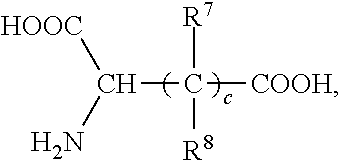
- the said polycarboxylic oligopeptide has a structure of following formula:
- R 7 and R 8 are the same or different, selected from hydrogen, methyl, ethyl, n-propyl and isopropyl;
- c is an integer of 1-10.
- both IC and R 8 are hydrogen.
- c is 2, the said compound has a structure of formula III:
- m is 2 or 3.
- a is 1.
- the said A 2 is a residue of amino acid selected from the group consisting of glycine, alanine, leucine, isoleucine, valine, proline, phenylalanine, methionine, serine, threonine, cysteine and tyrosine.
- the said A 2 is a residue of glycine, i.e., both R 5 and R 6 are hydrogen, a is 1.
- b is 1.
- the said PEG has a straight-chain structure of the following formula:
- n is an integer greater than zero, and the said PEG has a number average molecular weight of 300-60,000 Daltons.
- PEG has a number average molecular weight of 10,000-20,000 Daltons, and a more preferable number average molecular weight of 20,000 Daltons.
- the said PEG has a Y-type structure of the following formula:
- n is an integer greater than zero, and the said PEG has a number average molecular weight of 300-60,000 Daltons.
- PEG has a number average molecular weight of 10,000-40,000 Daltons, and a more preferable number average molecular weight of 20,000-40,000 Daltons.
- the said PEG has a multi-branched structure of the following formula:
- n is an integer greater than zero
- R is a core molecule and a residue of the following polyhydroxy compound molecule selected from the group consisting of pentaerythritol, oligomeric pentaerythritol, glycerol, poly-glycerol, sorbitol, 1,2,4-butanetriol, methyl glucoside and sucrose;
- the said R is selected from
- z is an integer of 3-8 representing the number of branches
- the said PEG has a number average molecular weight of 300-60,000 Daltons.
- z is 4.
- the said polyethylene glycol has a number average molecular weight of 5,000-50,000 Daltons.
- the PEG has a number average molecular weight of 10,000-40,000 Daltons, and a more preferable number average molecular weight of 20,000-40,000 Daltons.
- R 1 is methyl
- R 2 is methoxyl
- R 3 is H
- R 4 is methoxyl
- the said compound is 42 esterified rapamycin derivative.
- the compound of the present invention is:
- n is an integer of 200-1,000, preferably an integer of 200-500.
- the compound of the present invention is:
- n is an integer of 100-500, preferably an integer of 100-250.
- Another aspect of the present invention is to provide a method for preparing the compound of formula I, wherein, the said method comprising the steps as follow:
- the said compound V is obtained by a reaction of
- the said esterification reaction and said amidation reaction are conducted in the presence of a condensation agent
- the said condensation agent is selected from the group consisting of N-hydroxy-7-azabenzotriazole, 1-hydroxybenzotriazol, 2-(7-azabenzotriazole)-N,N,N′,N′-tetramethyluronium hexafluorophosphate, benzotriazole-N,N,N′,N′-tetramethyluronium hexafluorophosphate), bis(2-oxo-3-oxazolidiny) phosphonic chloride, 1H-benzotriazol-1-yloxy-tris (1-pyrrolidinyl) phosphine hexafluorophosphate, 1,3-dicyclohexyl carbodiimide, N,N′-carbonyldiimidazole, 1-ethyl-(3-dim ethyl aminopropyl) carbodi
- the said reduction reaction is conducted in the presence of a reducing agent
- the said reducing agent is selected from the group consisting of triphenylphosphine, hydrogen, sodium borohydride, zinc borohydride, lithium aluminum hydride, dichloro-dimethyl-sulfhydryl-borane, alkaline earth metals, metallic indium, metallic samarium, metallic tin, metallic zinc, hydrazine, metallic iron, ferrous salts, aluminum triiodide and tetrathiomolybdates.
- Another aspect of the present invention is to provide use of a compound as described in the present invention or a pharmaceutically acceptable salt thereof in treatment or inhibition of graft rejection or graft versus host disease, solid tumor, fungal infection, rheumatoid arthritis, multiple sclerosis, cardiac valve restenosis or pneumonia in a mammal.
- Another aspect of the present invention is to provide a pharmaceutical composition
- a pharmaceutical composition comprising a compound as described in the present invention or a pharmaceutically acceptable salt thereof and a pharmaceutically acceptable carrier or excipient.
- the dosage form of the said pharmaceutical composition is tablet, capsule, pill, granule, powder, suppository, injection, solution, suspension, ointment, patch, lotion, drop, liniment or aerosol.
- Anti-tumor activity of the compounds of the present invention could be verified by standard pharmacological test procedures using compound LPR-2 and LPR-3, as representative compounds of the present invention, which could measure the inhibition level of growth of human hepatoma cells (plc/prf/5).
- the results obtained from the standard pharmacological test procedures showed that the compounds of the present invention could inhibit growth of tumor and could be used as antineoplastic drugs.
- the compounds of the present invention can be used for treating or inhibiting the growth of solid tumors, including sarcomas and carcinomas, such as astrocytoma, liver cancer, prostate cancer, breast cancer, lung cancer and ovarian cancer.
- the compound of the present invention may also be used for treating or inhibiting graft rejection, such as the transplantation of kidney, heart, liver, lung, bone marrow, pancreas, cornea, small intestine, etc., skin allograft, cardiac valve xenograft, etc.; may also be used for treating or inhibiting graft versus host disease; and may also be used for treating or inhibiting autoimmune diseases such as lupus, rheumatoid arthritis, diabetes, severe muscle weakness and multiple sclerosis; and inflammation such as psoriasis, dermatitis, eczema, enteritis and pneumonia, etc.; adult T-cell leukemia/lymphoma; fungal infections; hyperproliferative vascular disease, cardiac valve restenosis, transplanted vascular atherosclerosis; and cardiovascular disease, cerebrovascular disease, peripheral vascular disease, coronary artery disease; and used for inhibiting stroke or multiple infarct dementia.
- graft rejection such as the transplantation of kidney, heart
- cardiac valve restenosis When used for cardiac valve restenosis, it is preferred to be used for treating cardiac valve restenosis occurs after the operation of angioplasty, and the compounds of the present invention may be administrated before, during or after the operation.
- the effective amount of the compounds described in the present invention may be dependent on and change with the specific compound used, administration mode, symptom and its severity, as well as a variety of factors related to the individual being treated.
- a compound as described in the present invention or a pharmaceutically acceptable salt thereof in prophylaxis, treatment and/or inhibiting of graft rejection or graft versus host disease, solid tumor, fungal infection, rheumatoid arthritis, multiple sclerosis, cardiac valve restenosis or pneumonia in a mammal is provided.
- the said solid tumor is one of astrocytoma, liver cancer, prostate cancer, breast cancer, lung cancer or ovarian cancer.
- the lung cancer is human small cell lung cancer.
- each terminal group of polyethylene glycol could bond with only one molecule of rapamycin.
- polyethylene glycol is used to bond with cactus oligopeptide, followed by drug moleculars of rapamycin, enabling each terminal group of polyethylene glycol to bond with a plurality of rapamycin molecules, which could greatly increase drug loading rate on polyethylene glycol.
- a greatly reduced preparation specification may be obtained with the same dosage of administration; and a greatly increased amount of administration may be obtained with the same preparation specification.
- the implementation of the present invention may increase not only the diversity of preparation species, but also the diversity of preparation specifications.
- the inventors of the present invention have further discovered that polyethylene glycol-cactus oligopeptide bonding rapamycin (LPR-2 and LPR-3) had a stronger antitumor activity than that of polyethylene glycol-rapamycin (LPR-1).
- Polyethylene glycol used in LPR-2 and LPR-1 had both the same structure and the same number average molecular weight, while a cactus oligopeptide was added into the structure of LPR-2, and LPR-2 had a significantly better anticancer activity against subcutaneous transplantation tumor model of human hepatocellular carcinoma plc/prf/5 than that of LPR-1 with administrating by the same drug dose counting by rapamycin.
- FIG. 1 shows the results of change in body weight of mice bearing human hepatoma cell plc/prf/5 caused by LPR-1, LPR-2, LPR-3 and vehicle;
- FIG. 2 shows the results of antitumor activity of LPR-1, LPR-2, LPR-3 and vehicle against subcutaneous transplantation tumor model of human hepatoma cell plc/prf/5;
- FIG. 3 shows the results of change in body weight of mice bearing human hepatoma cell PLC/PRF/5 caused by LPR-2 and reference substance;
- FIG. 4 shows the results of antitumor activity of LPR-2 and reference substance against subcutaneous transplantation tumor model of human hepatoma cell PLC/PRF/5;
- FIG. 5 shows the results of change in body weight of mice bearing human hepatoma cell Hep3B caused by LPR-2 and reference substance
- FIG. 6 shows the results of antitumor activity of LPR-2 and reference substance against subcutaneous transplantation tumor model of human hepatoma cell Hep3B;
- FIG. 7 shows the results of change in body weight of mice bearing human non-small cell lung cancer cell H460 caused by LPR-2 and reference substance;
- FIG. 8 shows the results of antitumor activity of LPR-2 and reference substance against subcutaneous transplantation tumor model of human non-small cell lung cancer cell H460;
- FIG. 9 shows the results of change in body weight of mice bearing human lung cell Calu-6 caused by LPR-2 and reference substance
- FIG. 10 shows the results of antitumor activity of LPR-2 and reference substance against subcutaneous transplantation tumor model of human lung cell Calu-6;
- FIG. 11 shows the results of change in body weight of mice bearing human non-small cell lung cancer cell A549 caused by LPR-2 and reference substance;
- FIG. 12 shows the results of antitumor activity of LPR-2 and reference substance against subcutaneous transplantation tumor model of human non-small cell lung cancer cell A549.
- Rapamycin shows good prospects in clinical application, but it still has a low bioavailability ( ⁇ 15%), poor water-solubility and other defects, a number of rapamycin derivatives with a high efficiency and specificity such as everolimus, temsirolimus, ridaforolimus and the like were further developed in the late 1990s, which are obtained by introducing polar groups into molecule of rapamycin to achieve the goal of enhancing the water-solubility of rapamycin. Rapamycin is so sensitive to acids and bases that it will be degraded even under physiological conditions, and the products obtained after degradation have no immunosuppressive activity, and it is a problem to be solved that how to increase the stability.
- Rapamycin due to the hydroxyl groups in its structure, can be esterified with polyethylene glycol-cactus oligopeptide to form a prodrug to obtain an improved water-solubility, accelerated distribution of drug molecules, as well as a better permeability to tumor to avoid an allergic reaction induced by local aggregation of the drug; additionally, the polyethylene glycol fragment can form a hydrophilic barrier to prevent an excessive degradation of rapamycin, thus to obtain a rational use of rapamycin.
- a molecular conformation which is similar to but better than liposome is formed by chemically bonding of the drug with the amphiphilic substance to obtain an increase bioavailability of drug, reduced dosage, reduced side effects and prolonged duration of action by using the targeting towards tumors.
- the pharmaceutically active ingredient is released by biodegradation of the ester group in vivo.
- the drug improved by this method has a good water-solubility, rapid onset, long duration and effective therapeutic effect.
- a cactus oligopeptide is used to enable rapamycin to bond with polyethylene glycol.
- the oligopeptide used in the present invention refers to a polypeptide comprising 2-12 amino acids, which can be completely hydrolyzed to be free amino acids by peptidase and enter the bloodstream in the form of free amino acids.
- Amino acids have a good biocompatibility, and is dispersible in vivo and safe after biodegradation, at the same time, the cactus oligopeptide can provide more reactive sites, a larger loading rate to bond with more drug moleculars and to increase the range of choice of polyethylene glycol used.
- the conjugates according to the present invention may be administered in the form of pure compound or suitable pharmaceutical compositions with any acceptable modes of administration or regents for similar application.
- the conjugates according to the present invention may be administered orally, nasally, parenterally, topically, transdermally or rectally, in the form of solid, semi-solid, lyophilized powder, or liquid medicaments, e.g., tablets, capsules, pills, granules, powders, suppositories, injections, solutions, suspensions, ointments, patches, lotions, drops, liniments, aerosols, etc.
- the unit dosage forms which are suitable for precise and simple administration are preferred.
- the composition may contain conventional pharmaceutical carriers or excipients and conjugates according to the present invention as active ingredients (one or more), as well as other medicaments, carriers and adjuvants etc.
- the pharmaceutically acceptable composition contains the conjugate according to the present invention with a weight percentage of about 1 to about 99 and a suitable pharmaceutical excipient with a weight percentage of about 99 to 1.
- the composition comprising conjugate according to the present invention with a weight percentage of about 5 to 75 with the rest being a suitable pharmaceutical excipient is preferred.
- compositions may be administered in liquid form, e.g. by dissolving or dispersing the conjugates according to the present invention (from about 0.5 to about 20%) and pharmaceutically acceptable adjuvants which are employed selectively into carriers to thereby form a solution or suspension
- carrier examples of carrier are water, saline, glucose hydrate, glycerol and ethanol etc.
- compositions according to the present invention may also contain minor amounts of auxiliary substances such as wetting agents or emulsifiers, pH buffers, antioxidants, etc., for example: citric acid, sorbitan monolaurate, triethanolamine oleate and butylated hydroxy toluene, etc.
- auxiliary substances such as wetting agents or emulsifiers, pH buffers, antioxidants, etc., for example: citric acid, sorbitan monolaurate, triethanolamine oleate and butylated hydroxy toluene, etc.
- Rapamycin and L-(+)-glutamic acid used in the embodiments are purchased from Wuhan Yuanchenggongchuang Technology Co., Ltd. and Beijing Chemical Reagent Company, respectively, tert-butyl bromoacetate, triphenylphosphine, p-toluenesulfonic acid, benzyl alcohol and dicyclohexylcarbodiimide (DCC) are purchased from Sinopharm Chemical Reagent Co., Ltd., 4-dimethylaminopyridine (DMAP) and 1-hydroxy benzotriazole (HOBt) are purchased from Shanghai MEDPEP Co., Ltd., N-t-butoxycarbonyl-L-glutamic acid-5-benzyl ester is purchased from Sichuan Tongsheng Amino Acid Co., Ltd., monomethoxy polyethylene glycol acetic acid, monomethoxy polyethylene glycol-glutamic acid dipeptide, Y-type polyethylene glycol acetic acid are provided by Beijing Jenkem
- Azidoacetic acid (253 mg, 2.5 mmoL) and rapamycin (2.28 g, 2.5 mmoL) were added to the reaction flask, dissolved with dichloromethane, cooled by an ice bath, and then 4-dimethylaminopyridine (DMAP, 611 mg, 5 mmoL) and N,N-dicyclohexylcarbodiimide (DCC, 1.03 g, 5 mmoL) were added to the reaction flask, the mixture was continued to be stirred at room temperature overnight after the addition.
- DMAP 4-dimethylaminopyridine
- DCC N,N-dicyclohexylcarbodiimide
- Monomethoxy polyethylene glycol-glutamic acid dipeptide (20 K, 0.5 g, 0.025 mmol), glycine ester of rapamycin 48.6 mg (0.05 mmoL) prepared in Example 1, HOBt (3.4 mg, 0.025 mmoL) and DMAP 6.1 mg (0.05 mmoL) were added to the reaction flask, dissolved with dichloromethane, cooled by an ice bath, then added dropwise by a solution obtained by DCC 15.5 mg (0.075 mmoL) dissolved in dichloromethane, warmed to room temperature naturally after the dropping, the reaction was kept overnight.
- N-t-butoxycarbonyl-benzyl glutamate dipeptide (0.78 g, 1.2 mmoL) (Example 3) was dissolved in dichloromethane (10 mL), added by 3 mL of trifluoroacetic acid, the reaction was kept at room temperature for 2 h. 100 mL of dichloromethane was added after removal of solvent, and sodium bicarbonate solution with a concentration of 5% was added to adjust the value of pH to 7-8. The reaction mixture was extracted and separated, the organic phase was washed with sodium bicarbonate solution with a concentration of 5% twice, dried with anhydrous sodium sulfate.
- Y-type polyethylene glycol-glutamic acid dipeptide 40 K, 0.5 g, 0.0125 mmol
- glycine ester of rapamycin 24.3 mg (0.025 mmol) prepared in Example 1
- HOBt 1.7 mg, 0.0125 mmo
- DMAP 3 mg 0.025 mmol
- Plc/prf/5 cells were cultured with a monolayer in vitro in MEM medium supplied with heat-inactivated fetal bovine serum with a volume ratio of 10%, and an incubator at 37° C. with the air containing CO 2 with a proportion of 5%.
- the tumor cells were passaged with digestion by trypsin-EDTA twice a week.
- the cells in the exponential growth phase were collected, counted, and used for inoculation.
- Body weight of animal (g) a Days after LPR-1 LPR-2 LPR-3 inoculation Vehicle control 10 mg/kg 10 mg/kg 10 mg/kg 24 17.6 ⁇ 0.5 19.2 ⁇ 0.7 19.6 ⁇ 1.5 19.2 ⁇ 0.7 27 18.3 ⁇ 0.3 19.5 ⁇ 0.8 18.6 ⁇ 1.2 18.0 ⁇ 0.4 31 17.4 ⁇ 0.1 18.4 ⁇ 0.6 18.0 ⁇ 1.2 17.7 ⁇ 0.4 34 18.0 ⁇ 0.2 19.1 ⁇ 0.8 18.5 ⁇ 1.2 18.2 ⁇ 0.7 38 18.1 ⁇ 0.2 18.8 ⁇ 0.5 18.1 ⁇ 1.2 17.8 ⁇ 0.7 Note: a mean value ⁇ standard error
- Tumor volume (mm 3 ) a Days after LPR-1 LPR-2 LPR-3 inoculation Vehicle control 10 mg/kg 10 mg/kg 10 mg/kg 24 355 ⁇ 64 352 ⁇ 49 353 ⁇ 54 358 ⁇ 62 27 763 ⁇ 102 598 ⁇ 80 404 ⁇ 89 455 ⁇ 85 31 1048 ⁇ 104 670 ⁇ 74 391 ⁇ 72 569 ⁇ 100 34 1439 ⁇ 130 738 ⁇ 74 456 ⁇ 77 754 ⁇ 151 38 1801 ⁇ 162 919 ⁇ 78 536 ⁇ 77 848 ⁇ 178 Note: a mean value ⁇ standard error
- the pesticide effects in vivo of LPR-1, LPR-2 and LPR-3 on subcutaneous transplantation tumor model of human hepatoma cell plc/prf/5 were evaluated.
- the tumor volume of each treatment group at different time points is shown in Table 2 and FIG. 2 . 38 days later after inoculation of plc/prf/5 tumor cells to NOD/SCID mice, the tumor volume of the vehicle control group reached 1801 mm 3 .
- the test compounds LPR-1, LPR-2 and LPR-3 showed a certain anti-tumor effect, wherein LPR-2 showed obviously the maximum anti-tumor effect with a T/C value less than 40%, and p value of 0.000 representing a significant difference compared with the vehicle control group.
- test drugs LPR-1, LPR-2 and LPR-3 showed an anti-tumor effect on subcutaneous transplantation tumor model of human hepatoma cell plc/prf/5, wherein LPR-2 showed obviously the maximum anti-tumor effect, no obvious toxic reaction of each treatment group was observed during the experiment.
- the polyethylene glycol used in LPR-1 and LPR-2 had the same structure and number average molecular weight, but in structure of LPR-1 polyethylene glycol bonded with rapamycin only through glycine molecular causing that each terminal group of polyethylene glycol bonding with only one rapamycin molecular; while in structure of LPR-2 polyethylene glycol bonded with rapamycin through glutamic acid dipeptide and glycine causing that each terminal group of polyethylene glycol bonding with three rapamycin molecular.
- LPR-2 had a drug loading rate 3 times as much as that of LPR-1, and anti-tumor effect significantly higher than that of LPR-1.
- Example 6 the Inhibitory Activity of Monomethoxy Polyethylene Glycol (with a Number Average Molecular Weight of 20,000)-Glutamic Acid Dipeptide-Rapamycin Conjugate (LPR-2) and Reference Substance against PLC/PRF/5 Hepatoma Cells
- Plc/prf/5 cells were cultured with a monolayer in vitro in MEM medium supplied with heat-inactivated fetal bovine serum with a volume ratio of 10%, and an incubator at 37° C. with the air containing CO 2 with a proportion of 5%.
- the tumor cells were passaged with digestion by trypsin-EDTA twice a week.
- the cells in the exponential growth phase were collected, counted, and used for inoculation.
- LPR-2 and 5-FU had an effect on body weight of mice bearing xenograft tumor model of plc/prf/5.
- Tumor volume (mm 3 ) a Days after Physiological 5-FU LPR-2 LPR-2 inoculation saline 25 mg/kg 30 mg/kg 45 mg/kg 10 171 ⁇ 18 170 ⁇ 16 171 ⁇ 15 171 ⁇ 19 13 269 ⁇ 37 118 ⁇ 7 176 ⁇ 11 180 ⁇ 25 17 507 ⁇ 77 69 ⁇ 4 217 ⁇ 25 234 ⁇ 28 20 645 ⁇ 105 260 ⁇ 30 257 ⁇ 24 24 886 ⁇ 130 303 ⁇ 32 399 ⁇ 25 27 1,119 ⁇ 156 317 ⁇ 42 496 ⁇ 39 31 1,299 ⁇ 154 395 ⁇ 39 607 ⁇ 60 34 b 1,455 ⁇ 157 437 ⁇ 44 640 ⁇ 93 38 1,973 ⁇ 211 553 ⁇ 63 948 ⁇ 144 Note: a mean value ⁇ standard error; b last administration.
- the pesticide effect in vivo of LPR-2 on subcutaneous transplantation tumor model of human hepatoma cell plc/prf/5 in immune deficiency mice was evaluated.
- the tumor volume of each treatment group at different time points is shown in Table 7 and FIG. 4 . 38 days later after inoculation of plc/prf/5 tumor cells, the tumor volume and tumor weight of the physiological saline control group reached 1973 mm 3 and 1877 mg, respectively.
- the 5-FU positive control group (25 mg/kg) showed an obvious anti-tumor effect, but was so toxic with this dosage that all the animals died.
- the analysis result of tumor weight was consistent with the tumor volume.
- the test drug LPR-2 with dosages of 30 and 45 mg/kg showed significant anti-tumor effect on xenograft tumor model of human hepatoma cell plc/prf/5, and the animals treated with LPR-2 showed a good tolerance and no death of animals occurred in the treatment group.
- the positive drug 5-FU had a significant toxicity and the whole group of animals died.
- Example 7 the Inhibitory Activity of Monomethoxy Polyethylene Glycol (with a Number Average Molecular Weight of 20,000)-Glutamic Acid Dipeptide-Rapamycin Conjugate (LPR-2) and Reference Substance against Hep3B Hepatoma Cells
- Hep3B cells were cultured with a monolayer in vitro in MEM medium supplied with heat-inactivated fetal bovine serum with a volume ratio of 10%, and an incubator at 37° C. with the air containing CO 2 with a proportion of 5%.
- the tumor cells were passaged with digestion by trypsin-EDTA twice a week.
- the cells in the exponential growth phase were collected, counted, and used for inoculation.
- LPR-2 and 5-FU had an effect on body weight of mice bearing xenograft tumor model of Hep3B.
- the pesticide effect in vivo of LPR-2 on subcutaneous transplantation tumor model of human hepatoma cell Hep3B in immune deficiency mice was evaluated.
- the tumor volume of each treatment group at different time points is shown in Table 11 and FIG. 6 . 44 days later after inoculation of Hep3B tumor cells, the tumor volume and tumor weight of the physiological saline control group reached 1984 mm 3 and 1555 mg, respectively.
- the anti-tumor effect of 5-FU positive control group (15 mg/kg) was not significant with T/C value and p value of 106% and 0.996, respectively.
- the low dose (30 mg/kg) and high dose (45 mg/kg) group of LPR-2 had an anti-tumor effect slightly better than that of the 5-FU with tumor volume of 1074 and 827 mm 3 , respectively, at the end of experiment, and T/C value of 54% and 42% and p value of 0.177 and 0.089, compared with the physiological saline group.
- the analysis result of tumor weight was consistent with the tumor volume.
- test drug LPR-2 with dosages of 30 and 45 mg/kg showed a common anti-tumor effect on xenograft tumor model of human hepatoma cell Hep3B, and the animals administrated showed a good tolerance and no death of animals occurred.
- Example 8 the Inhibitory Activity of Monomethoxy Polyethylene Glycol (with a Number Average Molecular Weight of 20,000)-Glutamic Acid Dipeptide-Rapamycin Conjugate (LPR-2) and Reference Substance against H460 Human Non-Small Cell Lung Cancer Cells
- H460 cells were cultured with a monolayer in vitro in RPMI1640 medium supplied with heat-inactivated fetal bovine serum with a volume ratio of 10%, and an incubator at 37° C. with the air containing CO 2 with a proportion of 5%.
- the tumor cells were passaged with digestion by trypsin-EDTA twice a week.
- the cells in the exponential growth phase were collected, counted, and used for inoculation.
- mice 5.0 ⁇ 10 6 of H460 tumor cells were suspended in 0.1 ml of PBS, inoculated to each nude mouse at the right shoulder, and there were totally 34 mice inoculated. 8 days later the mean tumor volume was desired to reach about 143 mm 3 , the mice with a smaller or larger tumor were removed and the remaining 24 mice were divided into groups randomly according to tumor volume and administrated.
- LPR-2 and Paclitaxel had an effect on body weight of mice bearing xenograft tumor model of H460.
- Tumor volume (mm 3 ) a LPR-2 LPR-2 Days after Physiological Paclitaxel 30 mg/kg 45 mg/kg inoculation saline 15 mg/kg BIW ⁇ 3W QW ⁇ 3W 8 145 ⁇ 21 143 ⁇ 15 143 ⁇ 16 143 ⁇ 18 12 391 ⁇ 66 295 ⁇ 42 213 ⁇ 40 194 ⁇ 33 15 595 ⁇ 112 400 ⁇ 70 208 ⁇ 44 260 ⁇ 46 19 905 ⁇ 149 519 ⁇ 97 259 ⁇ 50 282 ⁇ 46 22 1,176 ⁇ 180 680 ⁇ 110 343 ⁇ 67 346 ⁇ 53 26 b 1,643 ⁇ 286 944 ⁇ 117 459 ⁇ 70 468 ⁇ 57 29 2,157 ⁇ 387 1,281 ⁇ 184 505 ⁇ 87 549 ⁇ 76 Note: a mean value ⁇ standard error; b last administration.
- the pesticide effect in vivo of LPR-2 on subcutaneous transplantation tumor model of H460 human non-small cell lung cancer in nude mice was evaluated.
- the tumor volume of each treatment group at different time points is shown in Table 15 and FIG. 8 . 29 days later after inoculation of H460 tumor cells, the tumor volume and tumor weight of the physiological saline control group reached 2157 mm 3 and 1602 mg, respectively.
- the paclitaxe positive control group of showed a certain anti-tumor effect with a T/C value of 59% and p value of 0.212.
- the two groups of LPR-2 with different dosages (30 and 45 mg/kg) showed a significant anti-tumor effect with tumor volume of 505 and 549 mm 3 , respectively, at the end of experiment, and T/C value of 22% and 25% and p value of 0.019 and 0.022, compared with the physiological saline group.
- the analysis result of tumor weight was consistent with the tumor volume.
- test drug LPR-2 with dosages of 30 and 45 mg/kg showed a significant anti-tumor effect on xenograft tumor model of H460 human non-small cell lung cancer, and the animals administrated showed a good tolerance and no death of animals occurred.
- Example 9 the Inhibitory Activity of Monomethoxy Polyethylene Glycol (with a Number Average Molecular Weight of 20,000)-Glutamic Acid Dipeptide-Rapamycin Conjugate (LPR-2) and Reference Substance Against Calu-6 Human Lung Cells
- Calu-6 cells were cultured with a monolayer in vitro in MEM medium supplied with heat-inactivated fetal bovine serum with a volume ratio of 10%, and an incubator at 37° C. with the air containing CO 2 with a proportion of 5%.
- the tumor cells were passaged with digestion by trypsin-EDTA twice a week.
- the cells in the exponential growth phase were collected, counted, and used for inoculation.
- mice 5.0 ⁇ 10 6 of Calu-6 tumor cells were suspended in 0.1 ml of PBS, inoculated to each nude mouse at the right shoulder, and there were totally 34 mice inoculated. 14 days later the mean tumor volume was desired to reach about 138 mm 3 , the mice with a smaller or larger tumor were removed and the remaining 24 mice were divided into groups randomly according to tumor volume and administrated.
- LPR-2 and paclitaxel had an effect on body weight of mice bearing xenograft tumor model of Calu-6.
- Tumor volume (mm 3 ) a LPR-2 LPR-2 Days after Physiological Paclitaxel 30 mg/kg 45 mg/kg inoculation saline 15 mg/kg BIW ⁇ 4W QW ⁇ 4W 14 138 ⁇ 20 138 ⁇ 14 139 ⁇ 18 137 ⁇ 22 17 196 ⁇ 23 159 ⁇ 18 160 ⁇ 25 152 ⁇ 25 21 301 ⁇ 28 222 ⁇ 23 201 ⁇ 40 204 ⁇ 38 24 407 ⁇ 68 219 ⁇ 26 241 ⁇ 50 245 ⁇ 40 28 568 ⁇ 137 229 ⁇ 37 274 ⁇ 57 293 ⁇ 44 31 769 ⁇ 188 264 ⁇ 53 335 ⁇ 76 323 ⁇ 45 35 1,108 ⁇ 246 281 ⁇ 59 422 ⁇ 108 436 ⁇ 74 38 b 1,474 ⁇ 325 282 ⁇ 60 504 ⁇ 119 518 ⁇ 87 42
- the pesticide effect in vivo of LPR-2 on subcutaneous transplantation tumor model of calu-6 human lung cancer cell in nude mice was evaluated.
- the tumor volume of each treatment group at different time points is shown in Table 19 and FIG. 10 . 42 days later after inoculation of calu-6 tumor cells, the tumor volume and tumor weight of the physiological saline control group reached 1889 mm 3 and 1616 mg, respectively.
- the paclitaxel positive control group showed a significant anti-tumor effect with a T/C value of 16% and p value of 0.019.
- the two groups of LPR-2 with different dosages (30 and 45 mg/kg) showed a significant anti-tumor effect with tumor volume of 449 and 602 mm 3 , respectively, at the end of experiment, and T/C value of 31% and 38% and p value of 0.042 and 0.065, compared with the physiological saline group.
- the analysis result of tumor weight was basically consistent with relative tumor proliferation rate, however, compared with the control group, no significant difference was obtained from the analysis for statistical results of paclitaxel and LPR-2 (30 mg/kg, BIW ⁇ 4W) due to a large difference between tumor weight data in each experimental group.
- test drug LPR-2 with dosages of 30 and 45 mg/kg showed a significant anti-tumor effect on xenograft tumor model of calu-6 human lung cancer cell, and the animals administrated showed a good tolerance and no death of animals occurred.
- Example 10 the Inhibitory Activity of Monomethoxy Polyethylene Glycol (with a Number Average Molecular Weight of 20,000)-Glutamic Acid Dipeptide-Rapamycin Conjugate (LPR-2) and Reference Substance against A549 Human Non-Small Cell Lung Cancer Cells
- A549 cells were cultured with a monolayer in vitro in RPMI1640 medium supplied with heat-inactivated fetal bovine serum with a volume ratio of 10%, and an incubator at 37° C. with the air containing CO 2 with a proportion of 5%.
- the tumor cells were passaged with digestion by trypsin-EDTA twice a week.
- the cells in the exponential growth phase were collected, counted, and used for inoculation.
- mice 1.0 ⁇ 10 7 of A549 tumor cells were suspended in 0.1 ml of PBS, inoculated to each nude mouse at the right shoulder, and there were totally 36 mice inoculated. 24 days later the mean tumor volume was desired to reach about 138 mm 3 , the mice with a smaller or larger tumor were removed and the remaining 24 mice were divided into groups randomly according to tumor volume and administrated.
- LPR-2 and paclitaxel had an effect on body weight of mice bearing xenograft tumor model of A549.
- the pesticide effect in vivo of LPR-2 on subcutaneous transplantation tumor model of A549 human non-small cell lung cancer in nude mice was evaluated.
- the tumor volumes of each treatment group at different time points are shown in Table 23 and FIG. 12 . 52 days later after inoculation of A549 tumor cells, the tumor volume and tumor weight of the physiological saline control group reached 1351 mm 3 and 1302 mg, respectively.
- the paclitaxel positive control group showed a significant anti-tumor effect with a T/C value of 24% and p value of 0.019.
- the two groups of LPR-2 with different dosages (30 and 45 mg/kg) showed a significant anti-tumor effect with tumor volume of 127 and 145 mm 3 , respectively, at the end of experiment, and T/C value of 10% and 11% and p value of 0.009 and 0.010, compared with the physiological saline group.
- the analysis result of tumor weight was basically consistent with relative tumor proliferation rate, however, compared with the control group, no significant difference was obtained from the analysis for statistical results of each administration group due to a large difference between tumor weight data in each experimental group.
- test drug LPR-2 with dosages of 30 and 45 mg/kg showed a significant anti-tumor effect on xenograft tumor model of A549 human non-small cell lung cancer, and the animals administrated showed a good tolerance and no death of animals occurred.
Landscapes
- Health & Medical Sciences (AREA)
- Chemical & Material Sciences (AREA)
- Organic Chemistry (AREA)
- Medicinal Chemistry (AREA)
- Chemical Kinetics & Catalysis (AREA)
- General Chemical & Material Sciences (AREA)
- Life Sciences & Earth Sciences (AREA)
- Pharmacology & Pharmacy (AREA)
- Animal Behavior & Ethology (AREA)
- General Health & Medical Sciences (AREA)
- Public Health (AREA)
- Veterinary Medicine (AREA)
- Bioinformatics & Cheminformatics (AREA)
- Engineering & Computer Science (AREA)
- Nuclear Medicine, Radiotherapy & Molecular Imaging (AREA)
- Polymers & Plastics (AREA)
- Epidemiology (AREA)
- Immunology (AREA)
- Proteomics, Peptides & Aminoacids (AREA)
- Rheumatology (AREA)
- Oncology (AREA)
- Cardiology (AREA)
- Heart & Thoracic Surgery (AREA)
- Vascular Medicine (AREA)
- Pain & Pain Management (AREA)
- Transplantation (AREA)
- Hematology (AREA)
- Communicable Diseases (AREA)
- Orthopedic Medicine & Surgery (AREA)
- Physical Education & Sports Medicine (AREA)
- Biomedical Technology (AREA)
- Neurology (AREA)
- Neurosurgery (AREA)
- Pulmonology (AREA)
- Medicinal Preparation (AREA)
- Pharmaceuticals Containing Other Organic And Inorganic Compounds (AREA)
Abstract
The present invention provides compounds represented by formula (I) and pharmaceutical acceptable salts thereof, preparation method therefor and pharmaceutical composition containing the compounds represented by formula (I) and pharmaceutical acceptable salts thereof. In the compounds of the present invention, each terminal group of polyethylene glycol molecule can bond with a plurality of rapamycin molecules by cactus oligopeptide, with the loading rate of the pharmaceutical being increased. The compounds can be used to induce immunosuppression and treat graft rejection, autoimmune disease, solid tumors, fungal infection, and cardiovascular and cerebrovascular disease.
Description
The application is a continuation of PCT/CN2014/092646 (filed on Dec. 1, 2014), which claims priority from CN Patent Application Serial No. 201310632830.1 (filed on Dec. 2, 2013), the entire contents of which are incorporated herein by reference for all purposes.
The present invention relates to polyethylene glycol-cactus oligopeptide bonding rapamycin derivatives, preparation method thereof and pharmaceutical composition containing them. The present invention further relates to the use of these compounds to induce immunosuppression and treat graft rejection, graft versus host disease, autoimmune disease, inflammation, adult T-cell leukemia/lymphoma, solid tumors, fungal infection, cardiovascular disease, cerebrovascular disease, peripheral vascular disease or vascular hyperproliferative disease.
Rapamycin (also known as “sirolimus”) is a triene macrolide antibiotic produced by Streptomyces hygroscopicus, found in the soil on Easter Island, Chile in 1975. Rapamycin has an antifungal activity, particularly can against Candida albicans, both in vitro and in vivo. Rapamycin has a significant immunosuppressive activity which can be used for prophylaxis of allergic encephalomyelitis, multiple sclerosis and reactive arthritis. Rapamycin can also be used for prophylaxis and treatment of systemic lupus erythematosus, pneumonia, insulin-dependent diabetes mellitus, skin diseases (e.g. psoriasis), intestinal disorders, smooth muscle cell proliferation and vascular injury caused by intimal thickening, adult T-cell leukemia/lymphoma, ophthalmia, malignant cancer, inflammatory heart disease and anemia, etc. Rapamycin was developed by American Wyeth Company, and approved the listing for immunotherapy of patients after kidney transplantation by U.S. Food and Drug Administration (FDA) in 1999.
Rapamycin is the earliest mTOR (mammalian target of rapamycin) inhibitor (IC50=1.7 μmol/L) discovered, with a half-life of 40˜50 h in human body. In 1999 the FDA approved rapamycin as an immunosuppressive agent for kidney transplantation. In 2003 rapamycin was approved for drug-eluting stents by the FDA due to its anti coronary artery restenosis effect. In many tumor tissues and animal models, such as leukemia, breast cancer, pancreatic cancer, melanoma, small cell lung cancer, liver cancer, etc., rapamycin could concentration-dependently inhibit tumor cell growth.
Although rapamycin shows good prospects in clinical application, it still has a low bioavailability (<15%), poor water-solubility and other defects, a number of rapamycin derivatives with a high efficiency and specificity such as everolimus (2), temsirolimus (3), ridaforolimus (4) and the like were further developed in the late 1990s.
Everolimus (RAD001,2), that is 42-O-(2-hydroxyethyl)-rapamycin, is a novel oral mTOR inhibitor, with a better water-solubility than that of rapamycin, however, experiments have shown that everolimus had a poor oral bioavailability (about 15% to 30%), and half-life of 16˜19 h in human body. Temsirolimus (CCI-779,3) is obtained after the hydroxyl group on the 42th position of rapamycin being esterifed with 2,2-bis(hydroxymethyl) propionic acid, temsirolimus is suitable for intravenous administration, and it is hydrolyzed to be rapamycin in vivo with a half-life of 13˜15 h.
Ridaforolimus (deforolimus, AP23573, MK-8668, 4) is a semi-synthetic derivative designed by CADD with an inhibition activity against mTOR.
In addition to rapamycin derivatives have been listed and in clinical research stage, according to principle of prodrug, many studies of structure modification for rapamycin by small molecular groups are conducted, such as U.S. Pat. No. 6,342,507, US20050026868, US20050101624, U.S. Pat. No. 5,432,183, etc., a hydroxyl group, alkyl group, amino group or phosphoric acid group, etc., is introduced into rapamycin and its derivatives to achieve of purpose of increasing the water-solubility or enhancing the stability.
Polyethylene glycol (PEG) is a neutral polymer with a linear type or branched chains and various molecular weights and can be dissolved in water and majority of organic solvents. PEG is a viscous colorless liquid when its molecular weight is less than 1000; and it is a ceraceous white solid with a higher molecular weight, and the melting point of the solid is raised with increasing molecular weight and no longer increases until reaching 67° C. PEG is nontoxic in vivo and it is a pharmaceutical polymer material accepted by the FDA and collected in Chinese, British, American and other national pharmacopoeia. It is reported that PEGylation of organic molecules can increase the water-solubility thereof and impart other beneficial properties, such as improved half-life in plasma, improved biological distribution and reduced toxicity.
In U.S. Pat. Nos. 5,955,457, 5,780,462, 6,432,973, 6,331,547 and International Patent WO2007/103348, the preparation of conjugates of PEG with rapamycin and its derivatives is described. PEG or a mercapto derivative thereof is used to be linded with modified rapamycin or a derivative thereof to form a water-soluble derivative of rapamycin. Although this modification method could improve the water-solubility of rapamycin, a low loading rate for drug is obtained because each terminal group of polyethylene glycol molecule is bonded with only one drug molecule which causes great pressure on pharmaceutical preparations.
In Chinese Patent CN 02106691, CN 03801105, CN 200410048016 and CN200610150011, a method for preparation of a prodrug derivative by bonding polyethylene glycol with drug molecule through a cactus oligopeptide is described, wherein the drug mentioned include paclitaxel which is a terpenes compound and camptothecin which is an alkaloids compound, etc. Because of the two or more carboxyl groups in cactus oligopeptide which can bond with two or more drug molecules, therefore this method can greatly improve the loading rate of drug molecules on polyethylene glycol molecule. However, because of a large molecular structure of rapamycin and two reactive hydroxyl groups in the molecular structure, when the esterification reaction of rapamycin with polyethylene glycol-cactus oligopeptide is conducted, an incomplete reaction is easily obtained and a phenomenon of a rapamycin bonding with a plurality of polyethylene glycol molecules may appear, thus resulting in a reduced loading rate and complex reaction products, meanwhile the references described above do not disclose a group of —CO—CH2— as the linking group between PEG molecule and oligopeptide.
In the present invention previous experiment methods are improved: (1) first conducting an esterification connection of a small molecule fragment containing a carboxyl group and a latent amino group with rapamycin, and the reaction product is a small molecule compound which can be purified by conventional chemical methods such as separation on columns; (2) then converting the latent amino group into an amino group to give an amino acid ester of rapamycin by reduction, hydrolysis and the like methods; (3) finally conducting an amidation connection of the amino acid ester of rapamycin with polyethylene glycol-cactus oligopeptide, since the nucleophilicity of an amino group is much stronger than that of an alcoholic hydroxyl group, so the amidation reaction can be carried out more easily and more completely than the esterification reaction, and remaining hydroxyl groups of rapamycin are substantially non-reactive due to a much weaker activity thereof than that of an amino group. The improved method can not only improve the loading rate on polyethylene glycol, but also obtain a rapamycin derivative with a comparatively single structure.
One aspect of the present invention is to provide a compound of formula I, or a pharmaceutically acceptable salt thereof:
MI is a residue of an immunosuppressive macrolide, having a structure of formula II:
wherein, R1 is selected from the group consisting of hydrogen, C1-C10 straight or branched alkyl, C2-C10 straight or branched alkenyl, C6-C12 substituted or unsubstituted aryl and C7-C12 substituted or unsubstituted aralkyl;
R2 is selected from the group consisting of hydrogen, hydroxyl and C1-C10 straight or branched alkoxyl;
R3 is selected from the group consisting of hydrogen, C1-C10 straight or branched alkyl, C2-C10 straight or branched alkenyl, C6-C12 substituted or unsubstituted aryl, C7-C12 substituted or unsubstituted aralkyl and —C(O)R31, wherein R31 is selected from the group consisting of hydrogen, C1-C10 straight or branched alkyl, C2-C10 straight or branched alkenyl, C6-C12 substituted or unsubstituted aryl, C7-C12 substituted or unsubstituted aralkyl;
R4 is selected from the group consisting of hydrogen, hydroxyl and C1-C10 straight or branched alkoxyl;
(A1)m represents a polycarboxylic oligopeptide, wherein A1 represents residues of the same or different polycarboxy amino acids constituting the said polycarboxylic oligopeptide, the said polycarboxy amino acid contains two or more carboxyl groups and an amino group, and one of the carboxyl groups and the said amino group are attached to the same carbon atom; m is an integer of 2-12 representing the degree of polymerization of the said polycarboxylic oligopeptide;
A2 has a structure of following formula, in the said structure the carboxyl is linked with MI and the amino is linked with the said polycarboxylic oligopeptide:
wherein, R5 and R6 are the same or different, selected from hydrogen, C1-C6 substituted or unsubstituted alkyl; a is an integer of 1-5;
PEG represents polyethylene glycol with a structure of straight-chain, Y-type or multi-branch, and a number average molecular weight of 300-60,000 Daltons;
X has a structure of following formula:
wherein, b is an integer of 0-6.
In some embodiments, the said R1 is preferably selected from hydrogen, C1-C6 straight alkyl, more preferably selected from hydrogen, methyl, ethyl.
In some embodiments, the said R2 is preferably selected from hydrogen, hydroxyl and C1-C6 straight alkoxyl, more preferably selected from —OCH3, —OCH2CH3, —O(CH2)2CH3.
In some embodiments, the said R3 is preferably selected from hydrogen, C1-C6 straight alkyl, C2-C10 straight alkenyl, phenyl, halophenyl, benzyl, phenethyl, —C(O)R31, wherein R31 is selected from hydrogen, C1-C6 straight alkyl, C2-C10 straight alkenyl, phenyl, halophenyl, benzyl, phenethyl, more preferably selected from hydrogen, —OCH3, —OCH2CH3, —O(CH2)2CH3.
In some embodiments, the said R4 is preferably selected from hydrogen, hydroxyl and C1-C6 straight alkoxyl, more preferably selected from —OCH3, —OCH2CH3, —O(CH2)2CH3.
In some embodiments, the said polycarboxylic oligopeptide has a structure of following formula:
wherein, R7 and R8 are the same or different, selected from hydrogen, methyl, ethyl, n-propyl and isopropyl;
c is an integer of 1-10.
In some embodiments, both IC and R8 are hydrogen.
In some embodiments, c is 2, the said compound has a structure of formula III:
In some embodiments, m is 2 or 3.
In some embodiments, a is 1.
In some embodiments, the said A2 is a residue of amino acid selected from the group consisting of glycine, alanine, leucine, isoleucine, valine, proline, phenylalanine, methionine, serine, threonine, cysteine and tyrosine.
In some embodiments, the said A2 is a residue of glycine, i.e., both R5 and R6 are hydrogen, a is 1.
In some embodiments, b is 1.
In some embodiments, the said PEG has a straight-chain structure of the following formula:
wherein n is an integer greater than zero, and the said PEG has a number average molecular weight of 300-60,000 Daltons.
In some embodiments, PEG has a number average molecular weight of 10,000-20,000 Daltons, and a more preferable number average molecular weight of 20,000 Daltons.
In some embodiments, the said PEG has a Y-type structure of the following formula:
wherein n is an integer greater than zero, and the said PEG has a number average molecular weight of 300-60,000 Daltons.
In some embodiments, PEG has a number average molecular weight of 10,000-40,000 Daltons, and a more preferable number average molecular weight of 20,000-40,000 Daltons.
In some embodiments, the said PEG has a multi-branched structure of the following formula:
wherein n is an integer greater than zero;
R is a core molecule and a residue of the following polyhydroxy compound molecule selected from the group consisting of pentaerythritol, oligomeric pentaerythritol, glycerol, poly-glycerol, sorbitol, 1,2,4-butanetriol, methyl glucoside and sucrose;
In some embodiments, the said R is selected from
z is an integer of 3-8 representing the number of branches;
The said PEG has a number average molecular weight of 300-60,000 Daltons.
In some embodiments, z is 4.
In some embodiments, the said polyethylene glycol has a number average molecular weight of 5,000-50,000 Daltons.
In some embodiments, the PEG has a number average molecular weight of 10,000-40,000 Daltons, and a more preferable number average molecular weight of 20,000-40,000 Daltons.
In some embodiments, R1 is methyl, R2 is methoxyl, R3 is H, R4 is methoxyl, the said compound is 42 esterified rapamycin derivative.
In some embodiments, the compound of the present invention is:
wherein n is an integer of 200-1,000, preferably an integer of 200-500.
In some embodiments, the compound of the present invention is:
wherein n is an integer of 100-500, preferably an integer of 100-250.
Another aspect of the present invention is to provide a method for preparing the compound of formula I, wherein, the said method comprising the steps as follow:
(1) conducting an esterification reaction of a compound IV
with a compound V
to obtain a compound VI
(2) conducting a reduction reaction of said compound VI to obtain a compound VII
(3) conducting an amidation reaction of said compound VII with a polyethylene glycol-oligopeptide VIII
to obtain the compound of formula I.
In some embodiments, the said compound V is obtained by a reaction of
In some embodiments, in the said step (1) and (3), the said esterification reaction and said amidation reaction are conducted in the presence of a condensation agent, the said condensation agent is selected from the group consisting of N-hydroxy-7-azabenzotriazole, 1-hydroxybenzotriazol, 2-(7-azabenzotriazole)-N,N,N′,N′-tetramethyluronium hexafluorophosphate, benzotriazole-N,N,N′,N′-tetramethyluronium hexafluorophosphate), bis(2-oxo-3-oxazolidiny) phosphonic chloride, 1H-benzotriazol-1-yloxy-tris (1-pyrrolidinyl) phosphine hexafluorophosphate, 1,3-dicyclohexyl carbodiimide, N,N′-carbonyldiimidazole, 1-ethyl-(3-dim ethyl aminopropyl) carbodiimide, N,N′-diisopropyl carbodiimide, 4-dimethylaminopyridine and combinations thereof.
In some embodiments, in the said step (2), the said reduction reaction is conducted in the presence of a reducing agent, the said reducing agent is selected from the group consisting of triphenylphosphine, hydrogen, sodium borohydride, zinc borohydride, lithium aluminum hydride, dichloro-dimethyl-sulfhydryl-borane, alkaline earth metals, metallic indium, metallic samarium, metallic tin, metallic zinc, hydrazine, metallic iron, ferrous salts, aluminum triiodide and tetrathiomolybdates.
Another aspect of the present invention is to provide use of a compound as described in the present invention or a pharmaceutically acceptable salt thereof in treatment or inhibition of graft rejection or graft versus host disease, solid tumor, fungal infection, rheumatoid arthritis, multiple sclerosis, cardiac valve restenosis or pneumonia in a mammal.
Another aspect of the present invention is to provide a pharmaceutical composition comprising a compound as described in the present invention or a pharmaceutically acceptable salt thereof and a pharmaceutically acceptable carrier or excipient.
In some embodiments, the dosage form of the said pharmaceutical composition is tablet, capsule, pill, granule, powder, suppository, injection, solution, suspension, ointment, patch, lotion, drop, liniment or aerosol.
Anti-tumor activity of the compounds of the present invention could be verified by standard pharmacological test procedures using compound LPR-2 and LPR-3, as representative compounds of the present invention, which could measure the inhibition level of growth of human hepatoma cells (plc/prf/5). The results obtained from the standard pharmacological test procedures showed that the compounds of the present invention could inhibit growth of tumor and could be used as antineoplastic drugs. Specifically, the compounds of the present invention can be used for treating or inhibiting the growth of solid tumors, including sarcomas and carcinomas, such as astrocytoma, liver cancer, prostate cancer, breast cancer, lung cancer and ovarian cancer.
The compound of the present invention may also be used for treating or inhibiting graft rejection, such as the transplantation of kidney, heart, liver, lung, bone marrow, pancreas, cornea, small intestine, etc., skin allograft, cardiac valve xenograft, etc.; may also be used for treating or inhibiting graft versus host disease; and may also be used for treating or inhibiting autoimmune diseases such as lupus, rheumatoid arthritis, diabetes, severe muscle weakness and multiple sclerosis; and inflammation such as psoriasis, dermatitis, eczema, enteritis and pneumonia, etc.; adult T-cell leukemia/lymphoma; fungal infections; hyperproliferative vascular disease, cardiac valve restenosis, transplanted vascular atherosclerosis; and cardiovascular disease, cerebrovascular disease, peripheral vascular disease, coronary artery disease; and used for inhibiting stroke or multiple infarct dementia.
When used for cardiac valve restenosis, it is preferred to be used for treating cardiac valve restenosis occurs after the operation of angioplasty, and the compounds of the present invention may be administrated before, during or after the operation.
When the compound is used to treat or inhibit a particular disease state or disorder, it should be understood that the effective amount of the compounds described in the present invention may be dependent on and change with the specific compound used, administration mode, symptom and its severity, as well as a variety of factors related to the individual being treated.
In an embodiment of the present invention, use of a compound as described in the present invention or a pharmaceutically acceptable salt thereof in prophylaxis, treatment and/or inhibiting of graft rejection or graft versus host disease, solid tumor, fungal infection, rheumatoid arthritis, multiple sclerosis, cardiac valve restenosis or pneumonia in a mammal is provided. Wherein, the said solid tumor is one of astrocytoma, liver cancer, prostate cancer, breast cancer, lung cancer or ovarian cancer. Preferably, the lung cancer is human small cell lung cancer.
In U.S. Pat. Nos. 5,955,457, 5,780,462, 6,432,973, 6,331,547 and International Patent WO 2007,103,348, each terminal group of polyethylene glycol could bond with only one molecule of rapamycin. In the present invention, polyethylene glycol is used to bond with cactus oligopeptide, followed by drug moleculars of rapamycin, enabling each terminal group of polyethylene glycol to bond with a plurality of rapamycin molecules, which could greatly increase drug loading rate on polyethylene glycol. A greatly reduced preparation specification may be obtained with the same dosage of administration; and a greatly increased amount of administration may be obtained with the same preparation specification. Therefore, the implementation of the present invention may increase not only the diversity of preparation species, but also the diversity of preparation specifications. In studies of screening for pharmacological activity, the inventors of the present invention have further discovered that polyethylene glycol-cactus oligopeptide bonding rapamycin (LPR-2 and LPR-3) had a stronger antitumor activity than that of polyethylene glycol-rapamycin (LPR-1). Polyethylene glycol used in LPR-2 and LPR-1 had both the same structure and the same number average molecular weight, while a cactus oligopeptide was added into the structure of LPR-2, and LPR-2 had a significantly better anticancer activity against subcutaneous transplantation tumor model of human hepatocellular carcinoma plc/prf/5 than that of LPR-1 with administrating by the same drug dose counting by rapamycin.
Rapamycin shows good prospects in clinical application, but it still has a low bioavailability (<15%), poor water-solubility and other defects, a number of rapamycin derivatives with a high efficiency and specificity such as everolimus, temsirolimus, ridaforolimus and the like were further developed in the late 1990s, which are obtained by introducing polar groups into molecule of rapamycin to achieve the goal of enhancing the water-solubility of rapamycin. Rapamycin is so sensitive to acids and bases that it will be degraded even under physiological conditions, and the products obtained after degradation have no immunosuppressive activity, and it is a problem to be solved that how to increase the stability.
Rapamycin, due to the hydroxyl groups in its structure, can be esterified with polyethylene glycol-cactus oligopeptide to form a prodrug to obtain an improved water-solubility, accelerated distribution of drug molecules, as well as a better permeability to tumor to avoid an allergic reaction induced by local aggregation of the drug; additionally, the polyethylene glycol fragment can form a hydrophilic barrier to prevent an excessive degradation of rapamycin, thus to obtain a rational use of rapamycin. Furthermore, a molecular conformation which is similar to but better than liposome is formed by chemically bonding of the drug with the amphiphilic substance to obtain an increase bioavailability of drug, reduced dosage, reduced side effects and prolonged duration of action by using the targeting towards tumors. Particularly, the pharmaceutically active ingredient is released by biodegradation of the ester group in vivo. The drug improved by this method has a good water-solubility, rapid onset, long duration and effective therapeutic effect.
Unlike the PEGylated rapamycin derivative in patent WO2007/103348, a cactus oligopeptide is used to enable rapamycin to bond with polyethylene glycol. The oligopeptide used in the present invention refers to a polypeptide comprising 2-12 amino acids, which can be completely hydrolyzed to be free amino acids by peptidase and enter the bloodstream in the form of free amino acids. Amino acids have a good biocompatibility, and is dispersible in vivo and safe after biodegradation, at the same time, the cactus oligopeptide can provide more reactive sites, a larger loading rate to bond with more drug moleculars and to increase the range of choice of polyethylene glycol used.
The conjugates according to the present invention may be administered in the form of pure compound or suitable pharmaceutical compositions with any acceptable modes of administration or regents for similar application. Thus, the conjugates according to the present invention may be administered orally, nasally, parenterally, topically, transdermally or rectally, in the form of solid, semi-solid, lyophilized powder, or liquid medicaments, e.g., tablets, capsules, pills, granules, powders, suppositories, injections, solutions, suspensions, ointments, patches, lotions, drops, liniments, aerosols, etc. The unit dosage forms which are suitable for precise and simple administration are preferred. The composition may contain conventional pharmaceutical carriers or excipients and conjugates according to the present invention as active ingredients (one or more), as well as other medicaments, carriers and adjuvants etc.
Generally, according to the desired mode of administration, the pharmaceutically acceptable composition contains the conjugate according to the present invention with a weight percentage of about 1 to about 99 and a suitable pharmaceutical excipient with a weight percentage of about 99 to 1. The composition comprising conjugate according to the present invention with a weight percentage of about 5 to 75 with the rest being a suitable pharmaceutical excipient is preferred.
The pharmaceutical compositions may be administered in liquid form, e.g. by dissolving or dispersing the conjugates according to the present invention (from about 0.5 to about 20%) and pharmaceutically acceptable adjuvants which are employed selectively into carriers to thereby form a solution or suspension, the examples of carrier are water, saline, glucose hydrate, glycerol and ethanol etc.
If necessary, the pharmaceutical compositions according to the present invention may also contain minor amounts of auxiliary substances such as wetting agents or emulsifiers, pH buffers, antioxidants, etc., for example: citric acid, sorbitan monolaurate, triethanolamine oleate and butylated hydroxy toluene, etc.
The following examples are used to illustrate the present invention but are not used to limit the present invention.
Rapamycin and L-(+)-glutamic acid used in the embodiments are purchased from Wuhan Yuanchenggongchuang Technology Co., Ltd. and Beijing Chemical Reagent Company, respectively, tert-butyl bromoacetate, triphenylphosphine, p-toluenesulfonic acid, benzyl alcohol and dicyclohexylcarbodiimide (DCC) are purchased from Sinopharm Chemical Reagent Co., Ltd., 4-dimethylaminopyridine (DMAP) and 1-hydroxy benzotriazole (HOBt) are purchased from Shanghai MEDPEP Co., Ltd., N-t-butoxycarbonyl-L-glutamic acid-5-benzyl ester is purchased from Sichuan Tongsheng Amino Acid Co., Ltd., monomethoxy polyethylene glycol acetic acid, monomethoxy polyethylene glycol-glutamic acid dipeptide, Y-type polyethylene glycol acetic acid are provided by Beijing Jenkem Technology Co., Ltd., other reagents are commercially available.
Tert-butyl bromoacetate (5.82 g, 30 mmoL) was added to the reaction flask and dissolved by acetone (80 mL), a solution obtained by sodium azide (4.55 g, 70 mmoL) dissolved in water (40 mL) was then added, the mixture obtained was heated and refluxed overnight. Acetone was distilled off the reaction solution, the residue was extracted with ether, the extract obtained was washed by saturated brine, dried and concentrated under reduced pressure to give an oily liquid. This liquid was dissolved by methanol (90 mL) and added by 1 N of sodium hydroxide solution (90 mL), stirred, heated and refluxed for 3 h. After being cooled, methanol was distilled off under reduced pressure, the residue was cooled by an ice bath and added by 6 N of hydrochloric acid to adjust the value of pH to 2, and then extracted with ether, the extract obtained was washed by water, dried, and concentrated to give azidoacetic acid, MS m/z: 124 [M+Na]+.
Azidoacetic acid (253 mg, 2.5 mmoL) and rapamycin (2.28 g, 2.5 mmoL) were added to the reaction flask, dissolved with dichloromethane, cooled by an ice bath, and then 4-dimethylaminopyridine (DMAP, 611 mg, 5 mmoL) and N,N-dicyclohexylcarbodiimide (DCC, 1.03 g, 5 mmoL) were added to the reaction flask, the mixture was continued to be stirred at room temperature overnight after the addition. The residue obtained after concentration of the reaction solution was purified by column chromatography to give 1.42 g of azide acetate of rapamycin with a yield of 57%, MS m/z: 1020 [M+Na]+.
Azide acetate of rapamycin (0.7 g, 0.7 mmoL) and triphenylphosphine (0.37 g, 1.4 mmoL) were added to the reaction flask, then a mixture of tetrahydrofuran and water (5:1, 180 mL) was added, the reaction was heated to 50° C. overnight, the residue obtained after the concentration of reaction solution was extracted with ethyl acetate, the extract obtained was washed by saturated brine, dried. The residue obtained after concentration under reduced pressure was purified by column chromatography to give 0.48 g of glycine ester of rapamycin with a yield of 70%, MS m/z: 994 [M+Na]+.
Monomethoxy polyethylene glycol acetic acid (20 K, 1 g, 0.05 mmoL), glycine ester of rapamycin (97 mg, 0.1 mmoL) prepared in Example 1, 1-hydroxy benzotriazole (HOBt, 6.8 mg, 0.05 mmoL) and DMAP (12.2 mg, 0.1 mmoL) were added to the reaction flask, dissolved with dichloromethane, cooled by an ice bath, then added dropwise by a solution obtained by DCC (15.5 mg, 0.075 mmoL) dissolved in dichloromethane, warmed to room temperature naturally after the dropping, the reaction was kept overnight, the next day the reaction solution was concentrated and the residue was crystallized with isopropanol to give 0.82 g of monomethoxy polyethylene glycol (20 K)-rapamycin conjugate (LPR-1) (n is about 450).
1H-NMR (300 MHz, CDCl3): 0.90 (Me, 3H, 43), 0.92 (Me, 3H, 49), 0.94 (Me, 3H, 46), 0.96 (Me, 3H, 48), 0.97 (Me, 3H, 45), 1.10 (CH2, 2H, 24), 1.11 (CH2, 2H, 36), 1.20 (CH2, 2H, 42), 1.33 (CH2, 2H, 41), 1.37 (CH, 1H, 37), 1.45 (CH2, 2H, 5), 1.47 (CH2, 2H, 4), 1.60 (CH2, 2H, 13), 1.61 (CH2, 2H, 12), 1.65 (CH2, 2H, 15), 1.65 (CH2, 2H, 44), 1.74 (Me, 3H, 47), 1.75 (CH, 1H, 35), 2.07 (CH, 4H, 3, 11, 23, 25), 2.08 (CH2, 2H, 33), 3.14 (Me, 3H, 50), 3.33 (CH, 1H, 31), 3.36 (Me, 3H, 51), 3.37 (CH2, 2H, 6), 3.42 (CH, 1H, 40), 3.44 (Me, 3H, 52), 3.56 (CH, 1H, 39), 3.64 (CH2, 1800H, PEG), 3.71 (CH, 1H, 16), 3.72 (CH, 1H, 27), 3.86 (CH, 1H, 14), 4.17 (CH2, 2H, 54), 4.19 (CH, 1H, 28), 5.16 (CH, 1H, 2), 5.17 (CH, 1H, 34), 5.29 (═CH, 1H, 30), 5.39 (═CH, 1H, 22), 5.95 (═CH, 1H, 18), 6.13 (═CH, 1H, 21), 6.31 (═CH, 1H, 20), 6.38 (═CH, 1H, 19), 8.34 (CH, 1H, 55).
Monomethoxy polyethylene glycol-glutamic acid dipeptide (20 K, 0.5 g, 0.025 mmol), glycine ester of rapamycin 48.6 mg (0.05 mmoL) prepared in Example 1, HOBt (3.4 mg, 0.025 mmoL) and DMAP 6.1 mg (0.05 mmoL) were added to the reaction flask, dissolved with dichloromethane, cooled by an ice bath, then added dropwise by a solution obtained by DCC 15.5 mg (0.075 mmoL) dissolved in dichloromethane, warmed to room temperature naturally after the dropping, the reaction was kept overnight. The next day the reaction solution was concentrated and the residue was crystallized with isopropanol to give 0.41 g of monomethoxy polyethylene glycol (20K)-glutamic acid dipeptide-rapamycin conjugate (LPR-2) (n is about 450).
1H-NMR (300 MHz, CDCl3): 0.90 (Me, 9H, 43), 0.92 (Me, 9H, 49), 0.94 (Me, 9H, 46), 0.96 (Me, 9H, 48), 0.97 (Me, 9H, 45), 1.10 (CH2, 6H, 24), 1.11 (CH2, 6H, 36), 1.20 (CH2, 6H, 42), 1.33 (CH2, 6H, 41), 1.37 (CH, 3H, 37), 1.45 (CH2, 6H, 5), 1.47 (CH2, 6H, 4), 1.60 (CH2, 6H, 13), 1.61 (CH2, 6H, 12), 1.65 (CH2, 6H, 15), 1.65 (CH2, 6H, 44), 1.74 (Me, 9H, 47), 1.75 (CH, 3H, 35), 2.07 (CH, 12H, 3, 11, 23, 25), 2.08 (CH2, 6H, 33), 3.14 (Me, 9H, 50), 3.33 (CH, 3H, 31), 3.36 (Me, 9H, 51), 3.37 (CH2, 6H, 6), 3.42 (CH, 3H, 40), 3.44 (Me, 9H, 52), 3.56 (CH, 3H, 39), 3.64 (CH2, 1800H, PEG), 3.71 (CH, 3H, 16), 3.72 (CH, 3H, 27), 3.86 (CH, 3H, 14), 4.17 (CH2, 6H, 54), 4.19 (CH, 3H, 28), 5.16 (CH, 3H, 2), 5.17 (CH, 3H, 34), 5.29 (═CH, 3H, 30), 5.39 (═CH, 3H, 22), 5.95 (═CH, 3H, 18), 6.13 (═CH, 3H, 21), 6.31 (═CH, 3H, 20), 6.38 (═CH, 3H, 19), 8.34 (CH, 3H, 55).
N-t-butoxycarbonyl-benzyl glutamate dipeptide (0.78 g, 1.2 mmoL) (Example 3) was dissolved in dichloromethane (10 mL), added by 3 mL of trifluoroacetic acid, the reaction was kept at room temperature for 2 h. 100 mL of dichloromethane was added after removal of solvent, and sodium bicarbonate solution with a concentration of 5% was added to adjust the value of pH to 7-8. The reaction mixture was extracted and separated, the organic phase was washed with sodium bicarbonate solution with a concentration of 5% twice, dried with anhydrous sodium sulfate. The filtrate obtained after filtration was added directly to the reaction flask, and Y-type polyethylene glycol acetic acid (40 K, 40.0 g, 1 mmoL), DMAP (245 mg, 2 mmol), HOBt (135 mg, 1 mmol) were added under the protection of nitrogen. After reactants being completely dissolved, DCC (412 mg, 2 mmol) was added. The reaction was stirred at room temperature overnight. The reaction mixture was filtered and rotary evaporated to remove the solvent, the residue obtained was added by 500 mL of isopropanol, filtered, and the product obtained was dried under vacuum. This product was dissolved in 200 mL of anhydrous methanol, added by 1.0 g of palladium on carbon and introduced by hydrogen overnight at room temperature. Palladium on carbon was removed by filtration, the solvent was removed by rotary evaporation, the residue obtained was added into 500 mL of isopropanol, filtered and dried under vacuum. 33.4 g of Y-type polyethylene glycol-glutamic acid dipeptide (40 K) was obtained.
Y-type polyethylene glycol-glutamic acid dipeptide (40 K, 0.5 g, 0.0125 mmol), glycine ester of rapamycin 24.3 mg (0.025 mmol) prepared in Example 1, HOBt (1.7 mg, 0.0125 mmo) and DMAP 3 mg (0.025 mmol) were added to the reaction flask, dissolved with dichloromethane, cooled by an ice bath, then added dropwise by a solution obtained by DCC 4.1 mg (0.02 mmol) dissolved in dichloromethane, the mixture was warmed to room temperature naturally after the dropping, the reaction was kept overnight. The next day the reaction solution was concentrated and the residue was crystallized with isopropanol to give 0.44 g of Y-type polyethylene glycol (40K)-glutamic acid dipeptide-rapamycin conjugate (LPR-3) (n is about 450).
1H-NMR (300 MHz, CDCl3): 0.90 (Me, 9H, 43), 0.92 (Me, 9H, 49), 0.94 (Me, 9H, 46), 0.96 (Me, 9H, 48), 0.97 (Me, 9H, 45), 1.10 (CH2, 6H, 24), 1.11 (CH2, 6H, 36), 1.20 (CH2, 6H, 42), 1.33 (CH2, 6H, 41), 1.37 (CH, 3H, 37), 1.45 (CH2, 6H, 5), 1.47 (CH2, 6H, 4), 1.60 (CH2, 6H, 13), 1.61 (CH2, 6H, 12), 1.65 (CH2, 6H, 15), 1.65 (CH2, 6H, 44), 1.74 (Me, 9H, 47), 1.75 (CH, 3H, 35), 2.07 (CH, 12H, 3, 11, 23, 25), 2.08 (CH2, 6H, 33), 3.14 (Me, 9H, 50), 3.33 (CH, 3H, 31), 3.36 (Me, 9H, 51), 3.37 (CH2, 6H, 6), 3.42 (CH, 3H, 40), 3.44 (Me, 9H, 52), 3.56 (CH, 3H, 39), 3.64 (CH2, 1800H, PEG), 3.71 (CH, 3H, 16), 3.72 (CH, 3H, 27), 3.86 (CH, 3H, 14), 4.17 (CH2, 6H, 54), 4.19 (CH, 3H, 28), 5.16 (CH, 3H, 2), 5.17 (CH, 3H, 34), 5.29 (═CH, 3H, 30), 5.39 (═CH, 3H, 22), 5.95 (═CH, 3H, 18), 6.13 (═CH, 3H, 21), 6.31 (CH, 3H, 20), 6.38 (═CH, 3H, 19), 8.34 (CH, 3H, 55).
(1) Experimental Method and Procedure
(a) Cell Culture
Plc/prf/5 cells were cultured with a monolayer in vitro in MEM medium supplied with heat-inactivated fetal bovine serum with a volume ratio of 10%, and an incubator at 37° C. with the air containing CO2 with a proportion of 5%. The tumor cells were passaged with digestion by trypsin-EDTA twice a week. The cells in the exponential growth phase were collected, counted, and used for inoculation.
(b) Inoculation of Tumor Cells, Grouping and Administration
1×10⁷ of plc/prf/5 tumor cells were suspended in 0.1 ml of mixed solution (PBS:Matrigel=4:1), inoculated to each NOD/SCID mouse at the right shoulder. 24 days later the mean tumor volume was desired to reach about 350 mm3, the mice with a smaller or larger tumor were removed and the remaining mice were divided into groups randomly according to tumor size and administrated.
(c) Experimental Scheme
| TABLE 1 |
| The grouping and dosage regimen of experimental animals |
| Compound used | Dosage a | Dosing volume | Route of | Dosage | |||
| Group | N | for treatment | (mg/kg) | (μl/g) | | regimen | |
| 1 | 5 | Vehicle control | — | 10 | i.v. | Q2W × | |
| 2 | 5 | LPR-1 | 10 mg/ | 10 | i.v. | Q2W × | |
| 3 | 5 | LPR-2 | 10 mg/ | 10 | i.v. | Q2W × 2W | |
| 4 | 5 | LPR-3 | 10 mg/ | 10 | i.v. | Q2W × 2W | |
| a The dosage is counted with rapamycin, the same below. | |||||||
Wherein Q2W×2W represents intravenous injection twice a week for 2 weeks, the same below.
(2) Experimental Results
(a) Body Weight
Changes in body weight of tumor-bearing mice in each treatment group are shown in Table 2 and FIG. 1 .
| TABLE 2 |
| The body weight of each treatment group at different time points |
| Body weight of animal (g)a |
| Days after | LPR-1 | LPR-2 | LPR-3 | ||
| | Vehicle control | 10 mg/ |
10 mg/ |
10 mg/ |
|
| 24 | 17.6 ± 0.5 | 19.2 ± 0.7 | 19.6 ± 1.5 | 19.2 ± 0.7 | |
| 27 | 18.3 ± 0.3 | 19.5 ± 0.8 | 18.6 ± 1.2 | 18.0 ± 0.4 | |
| 31 | 17.4 ± 0.1 | 18.4 ± 0.6 | 18.0 ± 1.2 | 17.7 ± 0.4 | |
| 34 | 18.0 ± 0.2 | 19.1 ± 0.8 | 18.5 ± 1.2 | 18.2 ± 0.7 | |
| 38 | 18.1 ± 0.2 | 18.8 ± 0.5 | 18.1 ± 1.2 | 17.8 ± 0.7 | |
| Note: | |||||
| amean value ± standard error | |||||
(b) Tumor Volume
Changes in tumor volume of each treatment group are shown in Table 3 and FIG. 2 .
| TABLE 3 |
| The tumor volume of each treatment group at different time points |
| Tumor volume (mm3)a |
| Days after | LPR-1 | LPR-2 | LPR-3 | ||
| | Vehicle control | 10 mg/ |
10 mg/ |
10 mg/ |
|
| 24 | 355 ± 64 | 352 ± 49 | 353 ± 54 | 358 ± 62 | |
| 27 | 763 ± 102 | 598 ± 80 | 404 ± 89 | 455 ± 85 | |
| 31 | 1048 ± 104 | 670 ± 74 | 391 ± 72 | 569 ± 100 | |
| 34 | 1439 ± 130 | 738 ± 74 | 456 ± 77 | 754 ± 151 | |
| 38 | 1801 ± 162 | 919 ± 78 | 536 ± 77 | 848 ± 178 | |
| Note: | |||||
| amean value ± standard error | |||||
(c) Evaluation of Anti-Tumor Effect
The evaluation indexes of anti-tumor effect of LPR 1,2,3 on subcutaneous transplantation tumor model of plc/prf/5 are shown in Table 4.
| TABLE 4 |
| Evaluation of anti-tumor effect of each treatment group |
| Tumor | Days for delaying | |||
| Tumor volume | control rate | tumor growth | ||
| Group | (mm3)a | T/C (%) | (to 1000 mm3) | P value |
| Vehicle | 1801 ± 162 | — | — | — |
| control | — | — | ||
| LPR-1 | 919 ± 78 | 51 | 7 | 0.000 |
| (10 mg/kg) | ||||
| LPR-2 | 536 ± 77 | 30 | >7 | 0.000 |
| (10 mg/kg) | ||||
| LPR-3 | 848 ± 178 | 47 | >7 | 0.000 |
| (10 mg/kg) | ||||
| Note: | ||||
| amean value ± standard error | ||||
(3) Summary and Discussion of Experimental Results
In the experiment, the pesticide effects in vivo of LPR-1, LPR-2 and LPR-3 on subcutaneous transplantation tumor model of human hepatoma cell plc/prf/5 were evaluated. The tumor volume of each treatment group at different time points is shown in Table 2 and FIG. 2 . 38 days later after inoculation of plc/prf/5 tumor cells to NOD/SCID mice, the tumor volume of the vehicle control group reached 1801 mm3. The test compounds LPR-1, LPR-2 and LPR-3 showed a certain anti-tumor effect, wherein LPR-2 showed obviously the maximum anti-tumor effect with a T/C value less than 40%, and p value of 0.000 representing a significant difference compared with the vehicle control group.
Effect of changes in body weight of tumor-bearing mice in each treatment group is shown in Table 1 and FIG. 1 . No obvious toxic reaction of each treatment group was observed during the experiment.
In summary, in this study, the test drugs LPR-1, LPR-2 and LPR-3 showed an anti-tumor effect on subcutaneous transplantation tumor model of human hepatoma cell plc/prf/5, wherein LPR-2 showed obviously the maximum anti-tumor effect, no obvious toxic reaction of each treatment group was observed during the experiment. The polyethylene glycol used in LPR-1 and LPR-2 had the same structure and number average molecular weight, but in structure of LPR-1 polyethylene glycol bonded with rapamycin only through glycine molecular causing that each terminal group of polyethylene glycol bonding with only one rapamycin molecular; while in structure of LPR-2 polyethylene glycol bonded with rapamycin through glutamic acid dipeptide and glycine causing that each terminal group of polyethylene glycol bonding with three rapamycin molecular. LPR-2 had a drug loading rate 3 times as much as that of LPR-1, and anti-tumor effect significantly higher than that of LPR-1.
(1) Experimental Method and Procedure
(a) Cell Culture
Plc/prf/5 cells were cultured with a monolayer in vitro in MEM medium supplied with heat-inactivated fetal bovine serum with a volume ratio of 10%, and an incubator at 37° C. with the air containing CO2 with a proportion of 5%. The tumor cells were passaged with digestion by trypsin-EDTA twice a week. The cells in the exponential growth phase were collected, counted, and used for inoculation.
(b) Inoculation of Tumor Cells, Grouping and Administration
8.32×10⁶ of plc/prf/5 tumor cells were suspended in 0.1 ml of mixed solution (PBS:Matrigel=6:4), inoculated to each nude mouse at the right shoulder, and there were totally 36 mice inoculated. 10 days later the mean tumor volume was desired to reach about 161 mm3, the mice with a smaller or larger tumor were removed and the remaining 24 mice were divided into groups randomly according to tumor volume and administrated.
(c) Experimental Scheme
| TABLE 5 |
| The grouping and dosage regimen of experimental animals |
| Compound used | Dosage | Dosing volume | Route of | Dosage | |||
| Group | N | for treatment | (mg/kg) | (μl/g) | | regimen | |
| 1 | 6 | Physiological saline | — | 10 | i.v. | QW × | |
| 2 | 6 | 5- | 25 | 10 | i.v. | QD × 5 | |
| 3 | 6 | LPR-2 | 30 | 10 | i.v. | BIW × 4W | |
| 4 | 6 | LPR-2 | 45 | 15 | i.v. | QW × 4W | |
Wherein QW×4W represents intravenous injection once a week for 4 weeks, BIW×4W represents intravenous injection once every two weeks for 4 weeks, the same below.
(2) Experimental Results
(a) Body Weight
LPR-2 and 5-FU had an effect on body weight of mice bearing xenograft tumor model of plc/prf/5.
Changes in body weight of tumor-bearing mice in each treatment group are shown in Table 6 and FIG. 3 .
| TABLE 6 |
| The body weight of each treatment group at different time points |
| Body weight of animal (g)a |
| Days after | Physiological | 5-FU | LPR-2 | LPR-2 | |
| | saline | 25 mg/ |
30 mg/ |
45 mg/ |
|
| 10 | 19.4 ± 0.5 | 19.6 ± 0.3 | 19.9 ± 0.5 | 19.8 ± 0.5 | |
| 13 | 19.9 ± 0.4 | 18.4 ± 0.5 | 19.6 ± 0.8 | 18.9 ± 0.5 | |
| 17 | 19.4 ± 0.2 | 14.7 ± 0.5 | 20.7 ± 0.7 | 20.2 ± 0.3 | |
| 20 | 19.5 ± 0.2 | 20.4 ± 0.6 | 19.7 ± 0.3 | ||
| 24 | 19.7 ± 0.4 | 20.6 ± 0.7 | 21.1 ± 0.3 | ||
| 27 | 20.0 ± 0.2 | 20.5 ± 0.6 | 20.7 ± 0.2 | ||
| 31 | 19.8 ± 0.2 | 20.1 ± 0.6 | 21.0 ± 0.2 | ||
| 34b | 20.0 ± 0.3 | 19.5 ± 0.6 | 19.7 ± 0.5 | ||
| 38 | 20.0 ± 0.4 | 19.8 ± 0.7 | 20.7 ± 0.3 | ||
| Note: | |||||
| amean value ± standard error; | |||||
| blast administration. | |||||
(b) Tumor Growth
Changes in tumor volume of each treatment group are shown in Table 7 and FIG. 4 .
| TABLE 7 |
| The tumor volume of each treatment group at different time points |
| Tumor volume (mm3)a |
| Days after | Physiological | 5-FU | LPR-2 | LPR-2 | |
| | saline | 25 mg/ |
30 mg/ |
45 mg/ |
|
| 10 | 171 ± 18 | 170 ± 16 | 171 ± 15 | 171 ± 19 | |
| 13 | 269 ± 37 | 118 ± 7 | 176 ± 11 | 180 ± 25 | |
| 17 | 507 ± 77 | 69 ± 4 | 217 ± 25 | 234 ± 28 | |
| 20 | 645 ± 105 | 260 ± 30 | 257 ± 24 | ||
| 24 | 886 ± 130 | 303 ± 32 | 399 ± 25 | ||
| 27 | 1,119 ± 156 | 317 ± 42 | 496 ± 39 | ||
| 31 | 1,299 ± 154 | 395 ± 39 | 607 ± 60 | ||
| 34b | 1,455 ± 157 | 437 ± 44 | 640 ± 93 | ||
| 38 | 1,973 ± 211 | 553 ± 63 | 948 ± 144 | ||
| Note: | |||||
| amean value ± standard error; | |||||
| blast administration. | |||||
(c) Evaluation of Anti-Tumor Effect
The evaluation indexes of anti-tumor effect of LPR-2 and 5-FU on xenograft tumor model of plc/prf/5 are shown in Table 8.
| TABLE 8 |
| Evaluation of anti-tumor effect of each treatment group |
| Tumor volume | Tumor weight | TGD |
| (mm3)b | RTVb | (mg)b | (to 1,000 | T/C (%) | P |
| Group | N |
| a | 10th | 38th day | (38th day) | (38th day) | mm3) | RTV | TWc | RTV | TWc |
| Physiological | 6 | 171 ± 18 | 1,973 ± 211 | 12.05 ± 1.63 | 1877 ± 195 | 0 | 100 | 100 | 1.000 | 1.000 |
| saline | ||||||||||
| LPR-2 | 6 | 171 ± 15 | 553 ± 63 | 3.48 ± 0.68 | 517 ± 67 | >12 | 29 | 27 | 0.000 | 0.000 |
| (30 mg/kg) | ||||||||||
| LPR-2 | 6 | 171 ± 19 | 948 ± 144 | 5.61 ± 0.67 | 845 ± 87 | >12 | 46 | 45 | 0.001 | 0.000 |
| (45 mg/kg) | ||||||||||
| Note: | ||||||||||
| athe number of surviving animals in each group after completion of the treatment; | ||||||||||
| bMean ± SEM; | ||||||||||
| cTW (Tumor Weight). | ||||||||||
(3) Summary and Discussion of Experimental Results
In the experiment, the pesticide effect in vivo of LPR-2 on subcutaneous transplantation tumor model of human hepatoma cell plc/prf/5 in immune deficiency mice was evaluated. The tumor volume of each treatment group at different time points is shown in Table 7 and FIG. 4 . 38 days later after inoculation of plc/prf/5 tumor cells, the tumor volume and tumor weight of the physiological saline control group reached 1973 mm3 and 1877 mg, respectively.
The 5-FU positive control group (25 mg/kg) showed an obvious anti-tumor effect, but was so toxic with this dosage that all the animals died. Two groups of LPR-2 with different dosages (30 and 45 mg/kg) had significant anti-tumor effect, with tumor volume of 553 and 948 mm3, respectively, at the end of experiment, and T/C values of 29% and 46% and p values of 0.000 and 0.001, compared with the physiological saline group. The analysis result of tumor weight was consistent with the tumor volume.
Effect of changes in body weight of tumor-bearing mice in each group is shown in Table 6 and FIG. 3 . No abnormality in each group administrated with LPR-2 before or after administration was observed and body weight remained stable during the administration period.
In summary, in this study, the test drug LPR-2 with dosages of 30 and 45 mg/kg showed significant anti-tumor effect on xenograft tumor model of human hepatoma cell plc/prf/5, and the animals treated with LPR-2 showed a good tolerance and no death of animals occurred in the treatment group. The positive drug 5-FU had a significant toxicity and the whole group of animals died.
(1) Experimental Method and Procedure
(a) Cell Culture
Hep3B cells were cultured with a monolayer in vitro in MEM medium supplied with heat-inactivated fetal bovine serum with a volume ratio of 10%, and an incubator at 37° C. with the air containing CO2 with a proportion of 5%. The tumor cells were passaged with digestion by trypsin-EDTA twice a week. The cells in the exponential growth phase were collected, counted, and used for inoculation.
(b) Inoculation of Tumor Cells, Grouping and Administration
5.67×10⁶ of Hep3B tumor cells were suspended in 0.1 ml of mixed solution (PBS:Matrigel=7:3), inoculated to each mouse at the right shoulder, and there were totally 37 mice inoculated. 16 days later the mean tumor volume was desired to reach about 453 mm3, the mice with a smaller or larger tumor were removed and the remaining 24 mice were divided into groups randomly according to tumor volume and administrated.
(c) Experimental Scheme
| TABLE 9 |
| The grouping and dosage regimen of experimental animals |
| Compound used | Dosage | Dosing volume | Route of | Dosage | |||
| Group | N | for treatment | (mg/kg) | (μl/g) | | regimen | |
| 1 | 6 | Physiological saline | — | 10 | i.v. | QW × | |
| 2 | 6 | 5- | 15 | 10 | i.v. | (QD × 5) × | |
| 3 | 6 | LPR-2 | 30 | 10 | i.v. | BIW × 4W | |
| 4 | 6 | LPR-2 | 45 | 15 | i.v. | QW × 4W | |
(2) Experimental Results
(a) Body Weight
LPR-2 and 5-FU had an effect on body weight of mice bearing xenograft tumor model of Hep3B.
Changes in body weight of tumor-bearing mice in each treatment group are shown in Table 10 and FIG. 5 .
| TABLE 10 |
| The weight of each treatment group at different time points |
| Body weight of animal (g)a |
| LPR-2 | LPR-2 | |||
| Days after | Physiological | 5- |
30 mg/ |
45 mg/ |
| inoculation | saline | |||
| 15 mg/kg | BIW × 4W | QW × |
||
| 16 | 20.1 ± 0.4 | 20.7 ± 0.4 | 20.2 ± 0.6 | 19.2 ± 0.5 |
| 20 | 19.7 ± 0.4 | 19.4 ± 0.4 | 19.7 ± 0.4 | 18.6 ± 0.4 |
| 23 | 19.6 ± 0.5 | 19.7 ± 0.3 | 20.4 ± 0.5 | 18.6 ± 0.4 |
| 27 | 19.2 ± 0.6 | 18.6 ± 0.3 | 19.7 ± 0.5 | 17.9 ± 0.4 |
| 30 | 18.6 ± 0.4 | 18.1 ± 0.3 | 19.1 ± 0.5 | 18.2 ± 0.4 |
| 34 | 18.2 ± 0.4 | 18.5 ± 0.4 | 19.1 ± 0.6 | 18.2 ± 0.4 |
| 37 | 18.0 ± 0.5 | 18.3 ± 0.3 | 18.6 ± 0.4 | 18.0 ± 0.3 |
| 41b | 17.7 ± 0.5 | 18.1 ± 0.3 | 17.9 ± 0.3 | 16.7 ± 0.5 |
| 44 | 17.3 ± 0.4 | 18.4 ± 0.3 | 17.3 ± 0.3 | 17.1 ± 0.4 |
| Note: | ||||
| amean value ± standard error; | ||||
| blast administration. | ||||
(b) Tumor Growth
Changes in tumor volume of each treatment group are shown in Table 11 and FIG. 6 .
| TABLE 11 |
| The tumor volume of each treatment group at different time points |
| Tumor volume (mm3)a |
| LPR-2 | LPR-2 | |||
| Days after | Physiological | 5- |
30 mg/ |
45 mg/ |
| inoculation | saline | |||
| 15 mg/kg | BIW × 4W | QW × |
||
| 16 | 453 ± 72 | 453 ± 66 | 454 ± 60 | 453 ± 56 |
| 20 | 701 ± 116 | 567 ± 84 | 524 ± 47 | 490 ± 73 |
| 23 | 860 ± 147 | 667 ± 105 | 622 ± 37 | 549 ± 83 |
| 27 | 1,056 ± 157 | 820 ± 149 | 643 ± 45 | 589 ± 91 |
| 30 | 1,192 ± 163 | 850 ± 150 | 689 ± 57 | 584 ± 87 |
| 34 | 1,374 ± 225 | 1,123 ± 226 | 761 ± 82 | 608 ± 89 |
| 37 | 1,576 ± 239 | 1,500 ± 295 | 899 ± 97 | 699 ± 102 |
| 41b | 1,775 ± 274 | 1,793 ± 342 | 995 ± 126 | 733 ± 93 |
| 44 | 1,984 ± 317 | 2,114 ± 395 | 1,074 ± 130 | 827 ± 112 |
| Note: | ||||
| amean value ± standard error; | ||||
| blast administration. | ||||
(c) Evaluation of Anti-Tumor Effect
The evaluation indexes of anti-tumor effect of LPR-2 and 5-FU on xenograft tumor model of Hep3B are shown in Table 12.
| TABLE 12 |
| Evaluation of anti-tumor effect of each treatment group |
| Tumor volume | Tumor weight | TGD |
| (mm3)b | RTVb | (mg)b | (to 1,000 | T/C (%) | P |
| Group | N |
| a | 16th | 44th day | (44th day) | (44th day) | mm3) | RTV | TWc | RTV | TWc |
| Physiological | 6 | 453 ± 72 | 1,984 ± 317 | 5.00 ± 0.95 | 1555 ± 267 | 0 | 100 | 100 | 1.000 | 1.000 |
| saline | ||||||||||
| 5- | 6 | 453 ± 66 | 2,114 ± 395 | 4.53 ± 0.32 | 1695 ± 289 | 6 | 106 | 109 | 0.996 | 0.999 |
| (15 mg/kg) | ||||||||||
| LPR-2 | 6 | 454 ± 60 | 1,074 ± 130 | 2.43 ± 0.19 | 720 ± 94 | 17 | 54 | 46 | 0.177 | 0.113 |
| (30 mg/kg) | ||||||||||
| BIW × 4W | ||||||||||
| LPR-2 | 6 | 453 ± 56 | 827 ± 112 | 1.85 ± 0.17 | 625 ± 84 | >17 | 42 | 40 | 0.089 | 0.075 |
| (45 mg/kg) | ||||||||||
| QW × 4W | ||||||||||
| Note: | ||||||||||
| athe number of surviving animals in each group after completion of the treatment; | ||||||||||
| bMean ± SEM; | ||||||||||
| cTW (Tumor Weight). | ||||||||||
(3) Summary and Discussion of Experimental Results
In the experiment, the pesticide effect in vivo of LPR-2 on subcutaneous transplantation tumor model of human hepatoma cell Hep3B in immune deficiency mice was evaluated. The tumor volume of each treatment group at different time points is shown in Table 11 and FIG. 6 . 44 days later after inoculation of Hep3B tumor cells, the tumor volume and tumor weight of the physiological saline control group reached 1984 mm3 and 1555 mg, respectively.
The anti-tumor effect of 5-FU positive control group (15 mg/kg) was not significant with T/C value and p value of 106% and 0.996, respectively. The low dose (30 mg/kg) and high dose (45 mg/kg) group of LPR-2 had an anti-tumor effect slightly better than that of the 5-FU with tumor volume of 1074 and 827 mm3, respectively, at the end of experiment, and T/C value of 54% and 42% and p value of 0.177 and 0.089, compared with the physiological saline group. The analysis result of tumor weight was consistent with the tumor volume.
Effect of changes in body weight of tumor-bearing mice in each group is shown in Table 10 and FIG. 5 . The animals in each group had a declined body weight in the late stage of experiment which may be related to the tumor growth.
In summary, in this study, the test drug LPR-2 with dosages of 30 and 45 mg/kg showed a common anti-tumor effect on xenograft tumor model of human hepatoma cell Hep3B, and the animals administrated showed a good tolerance and no death of animals occurred.
(1) Experimental Method and Procedure
(a) Cell Culture
H460 cells were cultured with a monolayer in vitro in RPMI1640 medium supplied with heat-inactivated fetal bovine serum with a volume ratio of 10%, and an incubator at 37° C. with the air containing CO2 with a proportion of 5%. The tumor cells were passaged with digestion by trypsin-EDTA twice a week. The cells in the exponential growth phase were collected, counted, and used for inoculation.
(b) Inoculation of Tumor Cells, Grouping and Administration
5.0×10⁶ of H460 tumor cells were suspended in 0.1 ml of PBS, inoculated to each nude mouse at the right shoulder, and there were totally 34 mice inoculated. 8 days later the mean tumor volume was desired to reach about 143 mm3, the mice with a smaller or larger tumor were removed and the remaining 24 mice were divided into groups randomly according to tumor volume and administrated.
(c) Experimental Scheme
| TABLE 13 |
| The grouping and dosage regimen of experimental animals |
| Compound used | Dosage | Dosing volume | Route of | Dosage | |||
| Group | N | for treatment | (mg/kg) | (μl/g) | | regimen | |
| 1 | 6 | Physiological saline | — | 10 | i.v. | QW × | |
| 2 | 6 | | 15 | 10 | i.v. | BIW × | |
| 3 | 6 | LPR-2 | 30 | 10 | i.v. | BIW × 3W | |
| 4 | 6 | LPR-2 | 45 | 15 | i.v. | QW × 3W | |
(2) Experimental Results
(a) Body Weight
LPR-2 and Paclitaxel had an effect on body weight of mice bearing xenograft tumor model of H460.
Changes in body weight of tumor-bearing mice in each treatment group are shown in Table 14 and FIG. 7 .
| TABLE 14 |
| The weight of each treatment group at different time points |
| Body weight of animal (g)a |
| LPR-2 | LPR-2 | ||||
| Days after | | Paclitaxel | 30 mg/ |
45 mg/ | |
| inoculation | saline | ||||
| 15 mg/kg | BIW × 3W | QW × 3W | |||
| 8 | 20.6 ± 0.3 | 20.1 ± 0.4 | 20.5 ± 0.5 | 20.2 ± 0.4 | |
| 12 | 20.7 ± 0.4 | 19.9 ± 0.3 | 20.3 ± 0.5 | 19.8 ± 0.3 | |
| 15 | 21.1 ± 0.4 | 19.8 ± 0.2 | 20.7 ± 0.4 | 20.9 ± 0.3 | |
| 19 | 21.4 ± 0.4 | 19.5 ± 0.2 | 21.0 ± 0.5 | 20.7 ± 0.3 | |
| 22 | 21.4 ± 0.5 | 18.6 ± 0.3 | 20.7 ± 0.4 | 20.4 ± 0.3 | |
| 26b | 22.6 ± 0.5 | 18.4 ± 0.3 | 20.9 ± 0.5 | 21.4 ± 0.3 | |
| 29 | 22.8 ± 0.5 | 18.7 ± 0.4 | 21.1 ± 0.4 | 22.1 ± 0.3 | |
| Note: | |||||
| amean value ± standard error; | |||||
| blast administration. | |||||
(b) Tumor Growth
| TABLE 15 |
| The tumor volume of each treatment group at different time points |
| Tumor volume (mm3)a |
| LPR-2 | LPR-2 | ||||
| Days after | | Paclitaxel | 30 mg/ |
45 mg/ | |
| inoculation | saline | ||||
| 15 mg/kg | BIW × 3W | QW × 3W | |||
| 8 | 145 ± 21 | 143 ± 15 | 143 ± 16 | 143 ± 18 | |
| 12 | 391 ± 66 | 295 ± 42 | 213 ± 40 | 194 ± 33 | |
| 15 | 595 ± 112 | 400 ± 70 | 208 ± 44 | 260 ± 46 | |
| 19 | 905 ± 149 | 519 ± 97 | 259 ± 50 | 282 ± 46 | |
| 22 | 1,176 ± 180 | 680 ± 110 | 343 ± 67 | 346 ± 53 | |
| 26b | 1,643 ± 286 | 944 ± 117 | 459 ± 70 | 468 ± 57 | |
| 29 | 2,157 ± 387 | 1,281 ± 184 | 505 ± 87 | 549 ± 76 | |
| Note: | |||||
| amean value ± standard error; | |||||
| blast administration. | |||||
(c) Evaluation of Anti-Tumor Effect
The evaluation indexes of anti-tumor effect of LPR-2 and paclitaxel on xenograft tumor model of H460 are shown in Table 16.
| TABLE 16 |
| Evaluation of anti-tumor effect of each treatment group |
| Tumor volume | Tumor weight | TGD |
| (mm3)b | RTVb | (mg)b | (to 1,000 | T/C (%) | P value |
| Group | Na | 8th | 29th day | (29th day) | (29th day) | mm3) | RTV | TWc | RTV | TWc |
| physiological | 6 | 145 ± 21 | 2,157 ± 387 | 15.28 ± 2.40 | 1602 ± 354 | 0 | 100 | 100 | 1.000 | 1.000 |
| | ||||||||||
| Paclitaxel | ||||||||||
| 6 | 143 ± 15 | 1,281 ± 184 | 9.03 ± 0.93 | 1053 ± 146 | 7 | 59 | 66 | 0.212 | 0.061 | |
| (15 mg/kg) | ||||||||||
| LPR-2 | 6 | 143 ± 16 | 505 ± 87 | 3.43 ± 0.32 | 364 ± 54 | >9 | 22 | 23 | 0.019 | 0.000 |
| (30 mg/kg) | ||||||||||
| BIW × 3W | ||||||||||
| LPR-2 | 6 | 143 ± 18 | 549 ± 76 | 3.86 ± 0.42 | 406 ± 60 | >9 | 25 | 25 | 0.022 | 0.000 |
| (45 mg/kg) | ||||||||||
| QW × 3W | ||||||||||
| Note: | ||||||||||
| athe number of surviving animals in each group after completion of the treatment; | ||||||||||
| bMean ± SEM; | ||||||||||
| cTW (Tumor Weight). | ||||||||||
(3) Summary and Discussion of Experimental Results
In the experiment, the pesticide effect in vivo of LPR-2 on subcutaneous transplantation tumor model of H460 human non-small cell lung cancer in nude mice was evaluated. The tumor volume of each treatment group at different time points is shown in Table 15 and FIG. 8 . 29 days later after inoculation of H460 tumor cells, the tumor volume and tumor weight of the physiological saline control group reached 2157 mm3 and 1602 mg, respectively.
The paclitaxe positive control group of showed a certain anti-tumor effect with a T/C value of 59% and p value of 0.212.
The two groups of LPR-2 with different dosages (30 and 45 mg/kg) showed a significant anti-tumor effect with tumor volume of 505 and 549 mm3, respectively, at the end of experiment, and T/C value of 22% and 25% and p value of 0.019 and 0.022, compared with the physiological saline group. The analysis result of tumor weight was consistent with the tumor volume.
Effect of changes in body weight of tumor-bearing mice in each group is shown in Table 14 and FIG. 7 . In paclitaxel administration group, animals appeared to wheeze and hold still after being administrated and returned to normal after half an hour, and had a declined body weight in the late stage of administration. No abnormality in each group administrated with LPR-2 before or after administration was observed and body weight remained stable during the administration period. No animals died in this experiment.
In summary, in this study, the test drug LPR-2 with dosages of 30 and 45 mg/kg showed a significant anti-tumor effect on xenograft tumor model of H460 human non-small cell lung cancer, and the animals administrated showed a good tolerance and no death of animals occurred.
(1) Experimental Method and Procedure
(a) Cell Culture
Calu-6 cells were cultured with a monolayer in vitro in MEM medium supplied with heat-inactivated fetal bovine serum with a volume ratio of 10%, and an incubator at 37° C. with the air containing CO2 with a proportion of 5%. The tumor cells were passaged with digestion by trypsin-EDTA twice a week. The cells in the exponential growth phase were collected, counted, and used for inoculation.
(b) Inoculation of Tumor Cells, Grouping and Administration
5.0×10⁶ of Calu-6 tumor cells were suspended in 0.1 ml of PBS, inoculated to each nude mouse at the right shoulder, and there were totally 34 mice inoculated. 14 days later the mean tumor volume was desired to reach about 138 mm3, the mice with a smaller or larger tumor were removed and the remaining 24 mice were divided into groups randomly according to tumor volume and administrated.
(c) Experimental Scheme
| TABLE 17 |
| The grouping and dosage regimen of experimental animals |
| Compound used | Dosage | Dosing volume | Route of | Dosage | |||
| Group | N | for treatment | (mg/kg) | (μl/g) | | regimen | |
| 1 | 6 | Physiological saline | — | 10 | i.v. | QW × | |
| 2 | 6 | | 15 | 10 | i.v. | BIW × | |
| 3 | 6 | LPR-2 | 30 | 10 | i.v. | BIW × 4W | |
| 4 | 6 | LPR-2 | 45 | 15 | i.v. | QW × 4W | |
(2) Experimental Results
(a) Body Weight
LPR-2 and paclitaxel had an effect on body weight of mice bearing xenograft tumor model of Calu-6.
Changes in body weight of tumor-bearing mice in each treatment group are shown in Table 18 and FIG. 9 .
| TABLE 18 |
| The weight of each treatment group at different time points |
| Body weight of animal (g)a |
| LPR-2 | LPR-2 | ||||
| Days after | | Paclitaxel | 30 mg/ |
45 mg/ | |
| inoculation | saline | ||||
| 15 mg/kg | BIW × 4W | QW × |
|||
| 14 | 21.4 ± 0.3 | 20.7 ± 0.2 | 20.9 ± 0.4 | 20.6 ± 0.4 | |
| 17 | 21.2 ± 0.2 | 20.5 ± 0.2 | 21.0 ± 0.4 | 20.0 ± 0.4 | |
| 21 | 21.3 ± 0.3 | 20.5 ± 0.3 | 21.7 ± 0.4 | 19.9 ± 0.6 | |
| 24 | 21.0 ± 0.3 | 19.6 ± 0.4 | 21.6 ± 0.3 | 20.9 ± 0.5 | |
| 28 | 21.8 ± 0.3 | 19.8 ± 0.4 | 22.4 ± 0.4 | 21.3 ± 0.6 | |
| 31 | 21.6 ± 0.3 | 19.7 ± 0.6 | 21.6 ± 0.4 | 20.7 ± 0.6 | |
| 35 | 21.9 ± 0.5 | 20.1 ± 0.5 | 22.2 ± 0.4 | 21.8 ± 0.6 | |
| 38b | 22.6 ± 0.5 | 20.1 ± 0.4 | 22.3 ± 0.4 | 21.2 ± 0.5 | |
| 42 | 23.6 ± 0.5 | 20.7 ± 0.4 | 22.4 ± 0.3 | 21.5 ± 0.5 | |
| Note: | |||||
| amean value ± standard error; | |||||
| blast administration. | |||||
(b) Tumor Growth
Changes in tumor volume of each treatment group are shown in Table 19 and FIG. 10 .
| TABLE 19 |
| The tumor volume of each treatment group at different time points |
| Tumor volume (mm3)a |
| LPR-2 | LPR-2 | ||||
| Days after | | Paclitaxel | 30 mg/ |
45 mg/ | |
| inoculation | saline | ||||
| 15 mg/kg | BIW × 4W | QW × |
|||
| 14 | 138 ± 20 | 138 ± 14 | 139 ± 18 | 137 ± 22 | |
| 17 | 196 ± 23 | 159 ± 18 | 160 ± 25 | 152 ± 25 | |
| 21 | 301 ± 28 | 222 ± 23 | 201 ± 40 | 204 ± 38 | |
| 24 | 407 ± 68 | 219 ± 26 | 241 ± 50 | 245 ± 40 | |
| 28 | 568 ± 137 | 229 ± 37 | 274 ± 57 | 293 ± 44 | |
| 31 | 769 ± 188 | 264 ± 53 | 335 ± 76 | 323 ± 45 | |
| 35 | 1,108 ± 246 | 281 ± 59 | 422 ± 108 | 436 ± 74 | |
| 38b | 1,474 ± 325 | 282 ± 60 | 504 ± 119 | 518 ± 87 | |
| 42 | 1,889 ± 416 | 314 ± 72 | 627 ± 145 | 720 ± 106 | |
| Note: | |||||
| amean value ± standard error; | |||||
| blast administration. | |||||
(c) Evaluation of Anti-Tumor Effect
The evaluation indexes of anti-tumor effect of LPR-2 and paclitaxel on xenograft tumor model of calu-6 are shown in Table 24.
| TABLE 20 |
| Evaluation of anti-tumor effect of each treatment group |
| Tumor volume | Tumor weight | TGD |
| (mm3)b | RTVb | (mg)b | (to 1,000 | T/C (%) | P |
| Group | N |
| a | 14th | 42nd day | (42nd day) | (42nd day) | mm3) | RTV | TWc | RTV | TWc |
| physiological | 6 | 138 ± 20 | 1,889 ± 416 | 14.29 ± 2.45 | 1616 ± 369 | 0 | 100 | 100 | 1.000 | 1.000 |
| | ||||||||||
| Paclitaxel | ||||||||||
| 6 | 138 ± 14 | 314 ± 72 | 2.31 ± 0.53 | 202 ± 52 | >8 | 16 | 13 | 0.019 | 0.054 | |
| (15 mg/kg) | ||||||||||
| LPR-2 | 6 | 139 ± 18 | 627 ± 145 | 4.39 ± 0.59 | 449 ± 89 | >8 | 31 | 28 | 0.042 | 0.107 |
| (30 mg/kg) | ||||||||||
| BIW × 4W | ||||||||||
| LPR-2 | 6 | 137 ± 22 | 720 ± 106 | 5.41 ± 0.51 | 602 ± 83 | >8 | 38 | 37 | 0.065 | 0.170 |
| (45 mg/kg) | ||||||||||
| QW × 4W | ||||||||||
| Note: | ||||||||||
| athe number of surviving animals in each group after completion of the treatment; | ||||||||||
| bMean ± SEM; | ||||||||||
| cTW (Tumor Weight). | ||||||||||
(3) Summary and Discussion of Experimental Results
In the experiment, the pesticide effect in vivo of LPR-2 on subcutaneous transplantation tumor model of calu-6 human lung cancer cell in nude mice was evaluated. The tumor volume of each treatment group at different time points is shown in Table 19 and FIG. 10 . 42 days later after inoculation of calu-6 tumor cells, the tumor volume and tumor weight of the physiological saline control group reached 1889 mm3 and 1616 mg, respectively.
The paclitaxel positive control group showed a significant anti-tumor effect with a T/C value of 16% and p value of 0.019.
The two groups of LPR-2 with different dosages (30 and 45 mg/kg) showed a significant anti-tumor effect with tumor volume of 449 and 602 mm3, respectively, at the end of experiment, and T/C value of 31% and 38% and p value of 0.042 and 0.065, compared with the physiological saline group.
The analysis result of tumor weight was basically consistent with relative tumor proliferation rate, however, compared with the control group, no significant difference was obtained from the analysis for statistical results of paclitaxel and LPR-2 (30 mg/kg, BIW× 4W) due to a large difference between tumor weight data in each experimental group.
Effect of changes in body weight of tumor-bearing mice in each group is shown in Table 18 and FIG. 9 . In paclitaxel administration group, animals appeared to wheeze and hold still after being administrated and returned to normal after half an hour. No abnormality in each group administrated with LPR-2 before or after administration was observed. The body weight of each experimental group remained stable during the administration period and no animals died in this experiment.
In summary, in this study, the test drug LPR-2 with dosages of 30 and 45 mg/kg showed a significant anti-tumor effect on xenograft tumor model of calu-6 human lung cancer cell, and the animals administrated showed a good tolerance and no death of animals occurred.
(1) Experimental Method and Procedure
(a) Cell Culture
A549 cells were cultured with a monolayer in vitro in RPMI1640 medium supplied with heat-inactivated fetal bovine serum with a volume ratio of 10%, and an incubator at 37° C. with the air containing CO2 with a proportion of 5%. The tumor cells were passaged with digestion by trypsin-EDTA twice a week. The cells in the exponential growth phase were collected, counted, and used for inoculation.
(b) Inoculation of Tumor Cells, Grouping and Administration
1.0×10⁷ of A549 tumor cells were suspended in 0.1 ml of PBS, inoculated to each nude mouse at the right shoulder, and there were totally 36 mice inoculated. 24 days later the mean tumor volume was desired to reach about 138 mm3, the mice with a smaller or larger tumor were removed and the remaining 24 mice were divided into groups randomly according to tumor volume and administrated.
(c) Experimental Scheme
| TABLE 21 |
| The grouping and dosage regimen of experimental animals |
| Compound used | Dosage | Dosing volume | Route of | Dosage | |||
| Group | N | for treatment | (mg/kg) | (μl/g) | | regimen | |
| 1 | 6 | Physiological saline | — | 10 | i.v. | QW × | |
| 2 | 6 | | 15 | 10 | i.v. | BIW × | |
| 3 | 6 | LPR-2 | 30 | 10 | i.v. | BIW × 4W | |
| 4 | 6 | LPR-2 | 45 | 15 | i.v. | QW × 4W | |
(2) Experimental Results
(a) Body Weight
LPR-2 and paclitaxel had an effect on body weight of mice bearing xenograft tumor model of A549.
Changes in body weight of tumor-bearing mice in each treatment group are shown in Table 22 and FIG. 11 .
| TABLE 22 |
| The weight of each treatment group at different time points |
| Body weight of animal (g)a |
| LPR-2 | LPR-2 | ||||
| Days after | | Paclitaxel | 30 mg/ |
45 mg/ | |
| inoculation | saline | ||||
| 15 mg/kg | BIW × 4W | QW × |
|||
| 24 | 20.7 ± 0.3 | 20.6 ± 0.4 | 21.6 ± 0.5 | 20.9 ± 0.3 | |
| 28 | 21.5 ± 0.3 | 20.8 ± 0.4 | 20.9 ± 0.4 | 20.8 ± 0.1 | |
| 31 | 21.3 ± 0.2 | 20.6 ± 0.4 | 21.4 ± 0.4 | 21.1 ± 0.2 | |
| 35 | 21.9 ± 0.3 | 20.8 ± 0.5 | 21.8 ± 0.4 | 21.1 ± 0.3 | |
| 38 | 22.1 ± 0.3 | 20.8 ± 0.6 | 21.6 ± 0.4 | 21.6 ± 0.3 | |
| 42 | 21.9 ± 0.3 | 21.6 ± 0.6 | 22.5 ± 0.3 | 22.0 ± 0.3 | |
| 45 | 21.9 ± 0.4 | 21.3 ± 0.6 | 22.2 ± 0.3 | 22.4 ± 0.3 | |
| 49b | 22.8 ± 0.4 | 21.3 ± 0.7 | 22.0 ± 0.3 | 21.5 ± 0.3 | |
| 52 | 23.0 ± 0.4 | 21.8 ± 0.6 | 22.0 ± 0.3 | 22.1 ± 0.3 | |
| Note: | |||||
| amean value ± standard error; | |||||
| blast administration. | |||||
(b) Tumor Growth
Changes in tumor volume of each treatment group are shown in Table 23 and FIG. 12 .
| TABLE 23 |
| The tumor volume of each treatment group at different time points |
| Tumor volume (mm3)a |
| LPR-2 | LPR-2 | ||||
| Days after | | Paclitaxel | 30 mg/ |
45 mg/ | |
| inoculation | saline | ||||
| 15 mg/kg | BIW × 4W | QW × |
|||
| 24 | 138 ± 13 | 138 ± 13 | 140 ± 11 | 139 ± 11 | |
| 28 | 259 ± 28 | 196 ± 24 | 131 ± 8 | 115 ± 8 | |
| 31 | 345 ± 50 | 230 ± 35 | 134 ± 11 | 126 ± 10 | |
| 35 | 521 ± 87 | 260 ± 49 | 124 ± 15 | 122 ± 13 | |
| 38 | 654 ± 120 | 265 ± 48 | 131 ± 13 | 120 ± 13 | |
| 42 | 849 ± 167 | 294 ± 41 | 122 ± 8 | 124 ± 9 | |
| 45 | 1,047 ± 254 | 327 ± 54 | 131 ± 9 | 140 ± 11 | |
| 49b | 1,224 ± 251 | 342 ± 54 | 128 ± 9 | 138 ± 14 | |
| 52 | 1,391 ± 288 | 331 ± 49 | 127 ± 6 | 145 ± 14 | |
| Note: | |||||
| amean value ± standard error; | |||||
| blast administration. | |||||
(c) Evaluation of Anti-Tumor Effect
The evaluation indexes of anti-tumor effect of LPR-2 and paclitaxel on xenograft tumor model of A549 are shown in Table 24.
| TABLE 24 |
| Evaluation of anti-tumor effect of each treatment group |
| Tumor volume | Tumor weight | TGD |
| (mm3)b | RTVb | (mg)b | (to 1,000 | T/C (%) | P |
| Group | N |
| a | 24th day | 52nd day | (52nd day) | (52nd day) | mm3) | RTV | TWc | RTV | TWc |
| Physiological | 6 | 138 ± 13 | 1,391 ± 288 | 9.81 ± 1.50 | 1302 ± 326 | 0 | 100 | 100 | 1.000 | 1.000 |
| | ||||||||||
| Paclitaxel | ||||||||||
| 6 | 138 ± 13 | 331 ± 49 | 2.35 ± 0.16 | 253 ± 52 | >7 | 24 | 19 | 0.019 | 0.101 | |
| (15 mg/kg) | ||||||||||
| LPR-2 | 6 | 140 ± 11 | 127 ± 6 | 0.94 ± 0.11 | 102 ± 15 | >7 | 10 | 8 | 0.009 | 0.063 |
| (30 mg/kg) | ||||||||||
| BIW × 4W | ||||||||||
| LPR-2 | 6 | 139 ± 11 | 145 ± 14 | 1.05 ± 0.11 | 129 ± 20 | >7 | 11 | 10 | 0.010 | 0.069 |
| (45 mg/kg) | ||||||||||
| QW × 4W | ||||||||||
| Note: | ||||||||||
| athe number of surviving animals in each group after completion of the treatment; | ||||||||||
| bMean ± SEM; | ||||||||||
| cTW (Tumor Weight). | ||||||||||
(3) Summary and Discussion of Experimental Results
In the experiment, the pesticide effect in vivo of LPR-2 on subcutaneous transplantation tumor model of A549 human non-small cell lung cancer in nude mice was evaluated. The tumor volumes of each treatment group at different time points are shown in Table 23 and FIG. 12 . 52 days later after inoculation of A549 tumor cells, the tumor volume and tumor weight of the physiological saline control group reached 1351 mm3 and 1302 mg, respectively.
The paclitaxel positive control group showed a significant anti-tumor effect with a T/C value of 24% and p value of 0.019.
The two groups of LPR-2 with different dosages (30 and 45 mg/kg) showed a significant anti-tumor effect with tumor volume of 127 and 145 mm3, respectively, at the end of experiment, and T/C value of 10% and 11% and p value of 0.009 and 0.010, compared with the physiological saline group.
The analysis result of tumor weight was basically consistent with relative tumor proliferation rate, however, compared with the control group, no significant difference was obtained from the analysis for statistical results of each administration group due to a large difference between tumor weight data in each experimental group.
Effect of changes in body weight of tumor-bearing mice in each group is shown in Table 22 and FIG. 11 . In paclitaxel administration group, animals appeared to wheeze and hold still after being administrated and returned to normal after half an hour. No abnormality in each group administrated with LPR-2 before or after administration was observed. The body weight of each experimental group remained stable during the administration period and no animals died in this experiment.
In summary, in this study, the test drug LPR-2 with dosages of 30 and 45 mg/kg showed a significant anti-tumor effect on xenograft tumor model of A549 human non-small cell lung cancer, and the animals administrated showed a good tolerance and no death of animals occurred.
Claims (4)
2. A method of treating and/or inhibiting graft rejection in a subject in need thereof, the method comprising administering to the subject the compound of claim 1 or a pharmaceutically acceptable salt thereof.
3. A method of treating rheumatoid arthritis in a subject in need thereof, the method comprising administering to the subject the compound of claim 1 or a pharmaceutically acceptable salt thereof.
4. A method of treating solid tumor in a subject in need thereof, the method comprising administering to the subject the compound of claim 1 or a pharmaceutically acceptable salt thereof, wherein the solid tumor is selected from the group consisting of astrocytoma, liver cancer, prostate cancer, breast cancer, lung cancer and ovarian cancer.
Applications Claiming Priority (4)
| Application Number | Priority Date | Filing Date | Title |
|---|---|---|---|
| CN201310632830/1 | 2013-12-02 | ||
| CN201310632830 | 2013-12-02 | ||
| CN201310632830 | 2013-12-02 | ||
| PCT/CN2014/092646 WO2015081821A1 (en) | 2013-12-02 | 2014-12-01 | Polyethylene glycol -cactus oligopeptide bonding rapamycin derivatives |
Related Parent Applications (1)
| Application Number | Title | Priority Date | Filing Date |
|---|---|---|---|
| PCT/CN2014/092646 Continuation WO2015081821A1 (en) | 2013-12-02 | 2014-12-01 | Polyethylene glycol -cactus oligopeptide bonding rapamycin derivatives |
Publications (2)
| Publication Number | Publication Date |
|---|---|
| US20160271116A1 US20160271116A1 (en) | 2016-09-22 |
| US10098870B2 true US10098870B2 (en) | 2018-10-16 |
Family
ID=52895092
Family Applications (1)
| Application Number | Title | Priority Date | Filing Date |
|---|---|---|---|
| US15/170,894 Active US10098870B2 (en) | 2013-12-02 | 2016-06-01 | Polyethylene glycol-cactus oligopeptide bonding rapamycin derivatives |
Country Status (3)
| Country | Link |
|---|---|
| US (1) | US10098870B2 (en) |
| CN (1) | CN104448295B (en) |
| WO (1) | WO2015081821A1 (en) |
Families Citing this family (10)
| Publication number | Priority date | Publication date | Assignee | Title |
|---|---|---|---|---|
| CN106146325B (en) * | 2015-04-24 | 2019-01-29 | 北京键凯科技股份有限公司 | A kind of Y type multicondensed ethylene glycol derivative and preparation method thereof |
| EP3629774A4 (en) | 2017-05-26 | 2021-03-03 | Mercator Medsystems, Inc. | Combination therapy for treatment of restenosis |
| WO2019178228A1 (en) | 2018-03-14 | 2019-09-19 | Mercator Medsystems, Inc. | Medical instrument and medical method for localized drug delivery |
| US20210023232A1 (en) * | 2018-03-29 | 2021-01-28 | Jenkem Technology Co., Ltd. (Tianjin) | Combination of polyethylene glycol and rapamycin and use thereof |
| WO2020186217A1 (en) * | 2019-03-14 | 2020-09-17 | Children's Hospital Medical Center | Methods and compositions for treatment of lysosomal storage disorder |
| JP7411188B2 (en) * | 2019-03-29 | 2024-01-11 | 日油株式会社 | Branched degradable polyethylene glycol derivative |
| EP4036149A4 (en) * | 2019-09-26 | 2023-10-25 | NOF Corporation | HETEROBIFUNCTIONAL MONODISPERSED POLYETHYLENE GLYCOL HAVING A PEPTIDE LINKER |
| CN115160559B (en) * | 2021-04-02 | 2024-02-02 | 杭州宜生医药科技发展有限公司 | PEGylated rapamycin compound and preparation method and application thereof |
| AU2022421244A1 (en) | 2021-12-22 | 2024-07-11 | Camp4 Therapeutics Corporation | Modulation of gene transcription using antisense oligonucleotides targeting regulatory rnas |
| CN116808229A (en) * | 2022-03-22 | 2023-09-29 | 长沙创新药物工业技术研究院有限公司 | Polyethylene glycol-nemaltevir prodrug as well as preparation method and application thereof |
Citations (4)
| Publication number | Priority date | Publication date | Assignee | Title |
|---|---|---|---|---|
| US20050147617A1 (en) * | 2002-03-05 | 2005-07-07 | Shishan Ji | Compounds of hydrophilic polymer-polycarboxyl oligopeptide and medicines, medical composite comprising above compound and use of above compound in medicimes |
| WO2005092898A1 (en) * | 2004-03-29 | 2005-10-06 | Beijing Jenkem Technology Co., Ltd. | The conjugates of a hydrophilic polymer-tripterygium's extracts and the pharmaceutical compositions thereof |
| US20070212371A1 (en) * | 2006-03-07 | 2007-09-13 | Wyeth | Processes for preparing water-soluble polyethylene glycol conjugates of macrolide immunosuppressants |
| CN103083680A (en) * | 2011-11-07 | 2013-05-08 | 北京键凯科技有限公司 | Polyethylene glycol (PEG)-amino acid oligopeptide-irinotecan combo and its medicinal composition |
Family Cites Families (4)
| Publication number | Priority date | Publication date | Assignee | Title |
|---|---|---|---|---|
| DE60012192T2 (en) * | 1999-08-18 | 2005-09-08 | Wyeth | WATER-SOLUBLE SDZ-WHEEL ESTER |
| CN100475837C (en) * | 2004-06-11 | 2009-04-08 | 北京键凯科技有限公司 | Branched polyglycol-amino acid oligopeptide and active derivative and medicinal composition thereof |
| WO2009141823A2 (en) * | 2008-05-22 | 2009-11-26 | Ramot At Tel Aviv University Ltd. | Conjugates of a polymer, a bisphosphonate and an anti-angiogenesis agent and uses thereof in the treatment and monitoring of bone related diseases |
| WO2011112969A1 (en) * | 2010-03-11 | 2011-09-15 | Intezyne Technologies, Inc. | Poly(ethylene glycol) derivatives for metal-free click chemistry |
-
2014
- 2014-12-01 WO PCT/CN2014/092646 patent/WO2015081821A1/en not_active Ceased
- 2014-12-01 CN CN201410715522.XA patent/CN104448295B/en active Active
-
2016
- 2016-06-01 US US15/170,894 patent/US10098870B2/en active Active
Patent Citations (4)
| Publication number | Priority date | Publication date | Assignee | Title |
|---|---|---|---|---|
| US20050147617A1 (en) * | 2002-03-05 | 2005-07-07 | Shishan Ji | Compounds of hydrophilic polymer-polycarboxyl oligopeptide and medicines, medical composite comprising above compound and use of above compound in medicimes |
| WO2005092898A1 (en) * | 2004-03-29 | 2005-10-06 | Beijing Jenkem Technology Co., Ltd. | The conjugates of a hydrophilic polymer-tripterygium's extracts and the pharmaceutical compositions thereof |
| US20070212371A1 (en) * | 2006-03-07 | 2007-09-13 | Wyeth | Processes for preparing water-soluble polyethylene glycol conjugates of macrolide immunosuppressants |
| CN103083680A (en) * | 2011-11-07 | 2013-05-08 | 北京键凯科技有限公司 | Polyethylene glycol (PEG)-amino acid oligopeptide-irinotecan combo and its medicinal composition |
Non-Patent Citations (5)
| Title |
|---|
| Cloughesy et al, Antitumor Activity of Rapamycin in a Phase I Trial for Patients with Recurrent PTEN-Deficient Glioblastoma, PLoS Med, 2008, 5: e8, pp. 0139-0151. * |
| Machine translation of CN 103083680 A, accessed Feb. 14, 2017, pp. 1-25. * |
| Machine translation of WO 2005/092898 A1, accessed Feb. 21, 2017, pp. 1-23. * |
| Turecek et al, PEGylation of Biopharmaceuticals: A Review of Chemistry and Nonclinical Safety Information of Approved Drugs, Journal of Pharmaceutical Sciences, 2016, 105, pp. 460-475. * |
| Veronese et al, PEGylation, successful approach to drug delivery, DDT, 2005, 10, pp. 1451-1458. * |
Also Published As
| Publication number | Publication date |
|---|---|
| US20160271116A1 (en) | 2016-09-22 |
| CN104448295B (en) | 2018-01-23 |
| CN104448295A (en) | 2015-03-25 |
| WO2015081821A1 (en) | 2015-06-11 |
Similar Documents
| Publication | Publication Date | Title |
|---|---|---|
| US10098870B2 (en) | Polyethylene glycol-cactus oligopeptide bonding rapamycin derivatives | |
| CN112351976B (en) | Taxane-lipid-polysaccharide double-type coupling body, preparation method and application thereof | |
| EP1319008B1 (en) | Water soluble rapamycin esters | |
| US11413281B2 (en) | Ternary conjugate of antitumor drug, and synthesis and application | |
| CN113274507B (en) | Preparation and use of immunostimulatory coupled complexes for targeted delivery and activation | |
| AU2020442003C1 (en) | A camptothecin drug and its antibody conjugate thereof | |
| US20130018010A1 (en) | Polymeric conjugates of adenine nucleoside analogs | |
| US20140349945A1 (en) | Peg-amino acid-oligopeptide-irinotecan drug conjugates and the pharmaceutical compositions | |
| US20040213757A1 (en) | Water soluble wortmannin derivatives | |
| WO2005092898A1 (en) | The conjugates of a hydrophilic polymer-tripterygium's extracts and the pharmaceutical compositions thereof | |
| CN104478890B (en) | A kind of all-trans-retinoic acid-camptothecin cancer therapy drug conjugate and its preparation method and application | |
| EP2737896B1 (en) | Umirolimus micelle for the treating cancer | |
| CN106620714B (en) | 7-Ethyl-10-hydroxycamptothecin-polymer conjugated drug and preparation method thereof | |
| US11833128B2 (en) | Ketone carbonyl-containing hydrophobic antitumor drug and conjugate thereof as well as nano preparation containing conjugate, preparation method therefor, and application thereof | |
| JP6770008B2 (en) | Water-soluble rapamycin derivative | |
| CN107773762B (en) | ADC based on PD-L1 antibody coupling chemotherapeutic drug, and preparation method and application thereof | |
| CN105343888B (en) | Taccalonolide cyclodextrin inclusion compound and preparation method thereof and a kind of pharmaceutical composition | |
| Choi et al. | Effect of tacrolimus derivatives on immunosuppression | |
| TW202539625A (en) | Conjugate compound comprising 9-cis-retinoic acid and monosaccharide | |
| CN104619325A (en) | Drug composition for treating tumors and application thereof | |
| HK40066837A (en) | Camptothecin drug and antibody conjugate thereof |
Legal Events
| Date | Code | Title | Description |
|---|---|---|---|
| AS | Assignment |
Owner name: JENKEM TECHNOLOGY CO., LTD. (BEIJING), CHINA Free format text: ASSIGNMENT OF ASSIGNORS INTEREST;ASSIGNORS:JIA, JIANHUAN;FENG, ZEWANG;WANG, JINLIANG;AND OTHERS;REEL/FRAME:038769/0215 Effective date: 20160503 |
|
| STCF | Information on status: patent grant |
Free format text: PATENTED CASE |
|
| MAFP | Maintenance fee payment |
Free format text: PAYMENT OF MAINTENANCE FEE, 4TH YR, SMALL ENTITY (ORIGINAL EVENT CODE: M2551); ENTITY STATUS OF PATENT OWNER: SMALL ENTITY Year of fee payment: 4 |