US10093822B2 - Amphiphilic polymers, coating compositions, and methods - Google Patents
Amphiphilic polymers, coating compositions, and methods Download PDFInfo
- Publication number
- US10093822B2 US10093822B2 US15/502,622 US201515502622A US10093822B2 US 10093822 B2 US10093822 B2 US 10093822B2 US 201515502622 A US201515502622 A US 201515502622A US 10093822 B2 US10093822 B2 US 10093822B2
- Authority
- US
- United States
- Prior art keywords
- amphiphilic polymer
- groups
- monomeric units
- polymer
- coating composition
- Prior art date
- Legal status (The legal status is an assumption and is not a legal conclusion. Google has not performed a legal analysis and makes no representation as to the accuracy of the status listed.)
- Active, expires
Links
Images




Classifications
-
- C—CHEMISTRY; METALLURGY
- C08—ORGANIC MACROMOLECULAR COMPOUNDS; THEIR PREPARATION OR CHEMICAL WORKING-UP; COMPOSITIONS BASED THEREON
- C08G—MACROMOLECULAR COMPOUNDS OBTAINED OTHERWISE THAN BY REACTIONS ONLY INVOLVING UNSATURATED CARBON-TO-CARBON BONDS
- C08G65/00—Macromolecular compounds obtained by reactions forming an ether link in the main chain of the macromolecule
- C08G65/002—Macromolecular compounds obtained by reactions forming an ether link in the main chain of the macromolecule from unsaturated compounds
- C08G65/005—Macromolecular compounds obtained by reactions forming an ether link in the main chain of the macromolecule from unsaturated compounds containing halogens
- C08G65/007—Macromolecular compounds obtained by reactions forming an ether link in the main chain of the macromolecule from unsaturated compounds containing halogens containing fluorine
-
- C—CHEMISTRY; METALLURGY
- C09—DYES; PAINTS; POLISHES; NATURAL RESINS; ADHESIVES; COMPOSITIONS NOT OTHERWISE PROVIDED FOR; APPLICATIONS OF MATERIALS NOT OTHERWISE PROVIDED FOR
- C09D—COATING COMPOSITIONS, e.g. PAINTS, VARNISHES OR LACQUERS; FILLING PASTES; CHEMICAL PAINT OR INK REMOVERS; INKS; CORRECTING FLUIDS; WOODSTAINS; PASTES OR SOLIDS FOR COLOURING OR PRINTING; USE OF MATERIALS THEREFOR
- C09D133/00—Coating compositions based on homopolymers or copolymers of compounds having one or more unsaturated aliphatic radicals, each having only one carbon-to-carbon double bond, and at least one being terminated by only one carboxyl radical, or of salts, anhydrides, esters, amides, imides, or nitriles thereof; Coating compositions based on derivatives of such polymers
- C09D133/04—Homopolymers or copolymers of esters
- C09D133/14—Homopolymers or copolymers of esters of esters containing halogen, nitrogen, sulfur or oxygen atoms in addition to the carboxy oxygen
- C09D133/16—Homopolymers or copolymers of esters containing halogen atoms
-
- C—CHEMISTRY; METALLURGY
- C08—ORGANIC MACROMOLECULAR COMPOUNDS; THEIR PREPARATION OR CHEMICAL WORKING-UP; COMPOSITIONS BASED THEREON
- C08F—MACROMOLECULAR COMPOUNDS OBTAINED BY REACTIONS ONLY INVOLVING CARBON-TO-CARBON UNSATURATED BONDS
- C08F220/00—Copolymers of compounds having one or more unsaturated aliphatic radicals, each having only one carbon-to-carbon double bond, and only one being terminated by only one carboxyl radical or a salt, anhydride ester, amide, imide or nitrile thereof
- C08F220/02—Monocarboxylic acids having less than ten carbon atoms; Derivatives thereof
- C08F220/10—Esters
- C08F220/26—Esters containing oxygen in addition to the carboxy oxygen
- C08F220/28—Esters containing oxygen in addition to the carboxy oxygen containing no aromatic rings in the alcohol moiety
-
- C—CHEMISTRY; METALLURGY
- C08—ORGANIC MACROMOLECULAR COMPOUNDS; THEIR PREPARATION OR CHEMICAL WORKING-UP; COMPOSITIONS BASED THEREON
- C08F—MACROMOLECULAR COMPOUNDS OBTAINED BY REACTIONS ONLY INVOLVING CARBON-TO-CARBON UNSATURATED BONDS
- C08F220/00—Copolymers of compounds having one or more unsaturated aliphatic radicals, each having only one carbon-to-carbon double bond, and only one being terminated by only one carboxyl radical or a salt, anhydride ester, amide, imide or nitrile thereof
- C08F220/02—Monocarboxylic acids having less than ten carbon atoms; Derivatives thereof
- C08F220/10—Esters
- C08F220/26—Esters containing oxygen in addition to the carboxy oxygen
- C08F220/28—Esters containing oxygen in addition to the carboxy oxygen containing no aromatic rings in the alcohol moiety
- C08F220/285—Esters containing oxygen in addition to the carboxy oxygen containing no aromatic rings in the alcohol moiety and containing a polyether chain in the alcohol moiety
- C08F220/286—Esters containing oxygen in addition to the carboxy oxygen containing no aromatic rings in the alcohol moiety and containing a polyether chain in the alcohol moiety and containing polyethylene oxide in the alcohol moiety, e.g. methoxy polyethylene glycol (meth)acrylate
-
- C—CHEMISTRY; METALLURGY
- C08—ORGANIC MACROMOLECULAR COMPOUNDS; THEIR PREPARATION OR CHEMICAL WORKING-UP; COMPOSITIONS BASED THEREON
- C08G—MACROMOLECULAR COMPOUNDS OBTAINED OTHERWISE THAN BY REACTIONS ONLY INVOLVING UNSATURATED CARBON-TO-CARBON BONDS
- C08G65/00—Macromolecular compounds obtained by reactions forming an ether link in the main chain of the macromolecule
- C08G65/02—Macromolecular compounds obtained by reactions forming an ether link in the main chain of the macromolecule from cyclic ethers by opening of the heterocyclic ring
- C08G65/32—Polymers modified by chemical after-treatment
- C08G65/329—Polymers modified by chemical after-treatment with organic compounds
- C08G65/331—Polymers modified by chemical after-treatment with organic compounds containing oxygen
- C08G65/332—Polymers modified by chemical after-treatment with organic compounds containing oxygen containing carboxyl groups, or halides, or esters thereof
- C08G65/3322—Polymers modified by chemical after-treatment with organic compounds containing oxygen containing carboxyl groups, or halides, or esters thereof acyclic
-
- C—CHEMISTRY; METALLURGY
- C08—ORGANIC MACROMOLECULAR COMPOUNDS; THEIR PREPARATION OR CHEMICAL WORKING-UP; COMPOSITIONS BASED THEREON
- C08L—COMPOSITIONS OF MACROMOLECULAR COMPOUNDS
- C08L33/00—Compositions of homopolymers or copolymers of compounds having one or more unsaturated aliphatic radicals, each having only one carbon-to-carbon double bond, and only one being terminated by only one carboxyl radical, or of salts, anhydrides, esters, amides, imides or nitriles thereof; Compositions of derivatives of such polymers
- C08L33/04—Homopolymers or copolymers of esters
- C08L33/14—Homopolymers or copolymers of esters of esters containing halogen, nitrogen, sulfur, or oxygen atoms in addition to the carboxy oxygen
- C08L33/16—Homopolymers or copolymers of esters containing halogen atoms
-
- C—CHEMISTRY; METALLURGY
- C09—DYES; PAINTS; POLISHES; NATURAL RESINS; ADHESIVES; COMPOSITIONS NOT OTHERWISE PROVIDED FOR; APPLICATIONS OF MATERIALS NOT OTHERWISE PROVIDED FOR
- C09D—COATING COMPOSITIONS, e.g. PAINTS, VARNISHES OR LACQUERS; FILLING PASTES; CHEMICAL PAINT OR INK REMOVERS; INKS; CORRECTING FLUIDS; WOODSTAINS; PASTES OR SOLIDS FOR COLOURING OR PRINTING; USE OF MATERIALS THEREFOR
- C09D143/00—Coating compositions based on homopolymers or copolymers of compounds having one or more unsaturated aliphatic radicals, each having only one carbon-to-carbon double bond, and containing boron, silicon, phosphorus, selenium, tellurium, or a metal; Coating compositions based on derivatives of such polymers
- C09D143/02—Homopolymers or copolymers of monomers containing phosphorus
-
- C—CHEMISTRY; METALLURGY
- C09—DYES; PAINTS; POLISHES; NATURAL RESINS; ADHESIVES; COMPOSITIONS NOT OTHERWISE PROVIDED FOR; APPLICATIONS OF MATERIALS NOT OTHERWISE PROVIDED FOR
- C09D—COATING COMPOSITIONS, e.g. PAINTS, VARNISHES OR LACQUERS; FILLING PASTES; CHEMICAL PAINT OR INK REMOVERS; INKS; CORRECTING FLUIDS; WOODSTAINS; PASTES OR SOLIDS FOR COLOURING OR PRINTING; USE OF MATERIALS THEREFOR
- C09D171/00—Coating compositions based on polyethers obtained by reactions forming an ether link in the main chain; Coating compositions based on derivatives of such polymers
- C09D171/02—Polyalkylene oxides
-
- C—CHEMISTRY; METALLURGY
- C08—ORGANIC MACROMOLECULAR COMPOUNDS; THEIR PREPARATION OR CHEMICAL WORKING-UP; COMPOSITIONS BASED THEREON
- C08F—MACROMOLECULAR COMPOUNDS OBTAINED BY REACTIONS ONLY INVOLVING CARBON-TO-CARBON UNSATURATED BONDS
- C08F220/00—Copolymers of compounds having one or more unsaturated aliphatic radicals, each having only one carbon-to-carbon double bond, and only one being terminated by only one carboxyl radical or a salt, anhydride ester, amide, imide or nitrile thereof
- C08F220/02—Monocarboxylic acids having less than ten carbon atoms; Derivatives thereof
- C08F220/10—Esters
- C08F220/26—Esters containing oxygen in addition to the carboxy oxygen
- C08F220/28—Esters containing oxygen in addition to the carboxy oxygen containing no aromatic rings in the alcohol moiety
- C08F220/281—Esters containing oxygen in addition to the carboxy oxygen containing no aromatic rings in the alcohol moiety and containing only one oxygen, e.g. furfuryl (meth)acrylate or 2-methoxyethyl (meth)acrylate
-
- C08F2220/281—
-
- C—CHEMISTRY; METALLURGY
- C08—ORGANIC MACROMOLECULAR COMPOUNDS; THEIR PREPARATION OR CHEMICAL WORKING-UP; COMPOSITIONS BASED THEREON
- C08G—MACROMOLECULAR COMPOUNDS OBTAINED OTHERWISE THAN BY REACTIONS ONLY INVOLVING UNSATURATED CARBON-TO-CARBON BONDS
- C08G2650/00—Macromolecular compounds obtained by reactions forming an ether link in the main chain of the macromolecule
- C08G2650/28—Macromolecular compounds obtained by reactions forming an ether link in the main chain of the macromolecule characterised by the polymer type
- C08G2650/46—Macromolecular compounds obtained by reactions forming an ether link in the main chain of the macromolecule characterised by the polymer type containing halogen
- C08G2650/48—Macromolecular compounds obtained by reactions forming an ether link in the main chain of the macromolecule characterised by the polymer type containing halogen containing fluorine, e.g. perfluropolyethers
-
- C—CHEMISTRY; METALLURGY
- C08—ORGANIC MACROMOLECULAR COMPOUNDS; THEIR PREPARATION OR CHEMICAL WORKING-UP; COMPOSITIONS BASED THEREON
- C08L—COMPOSITIONS OF MACROMOLECULAR COMPOUNDS
- C08L2201/00—Properties
- C08L2201/54—Aqueous solutions or dispersions
-
- C—CHEMISTRY; METALLURGY
- C08—ORGANIC MACROMOLECULAR COMPOUNDS; THEIR PREPARATION OR CHEMICAL WORKING-UP; COMPOSITIONS BASED THEREON
- C08L—COMPOSITIONS OF MACROMOLECULAR COMPOUNDS
- C08L71/00—Compositions of polyethers obtained by reactions forming an ether link in the main chain; Compositions of derivatives of such polymers
- C08L71/02—Polyalkylene oxides
Definitions
- the present disclosure provides an amphiphilic polymer and aqueous coating composition (e.g., aqueous dispersion) containing such polymer that can prevent the surfaces to which they are applied from getting oily.
- aqueous coating composition e.g., aqueous dispersion
- the surfaces attract less dirt than control or non-coated surfaces.
- dirt does collect, such coated surfaces can be more easily cleaned (e.g., using a simple wet cloth, water wash, or water dipping depending upon the harshness of the grime).
- the present disclosure provides an amphiphilic polymer including: at least 10 wt-% (i.e., weight percent) monomeric units comprising alkylene oxide moieties, wherein a majority of the alkylene oxide moieties are ethylene oxide moieties; monomeric units comprising hexafluoropropylene oxide oligomeric moieties having the formula C 3 F 7 O—(CF(CF 3 )CF 2 O) a CF(CF 3 )—C(O)N(H)-Q-, wherein Q is a linking group with at least one carbon atom (e.g., —C 2 H 4 —, —C 3 H 6 —, —C 4 H 8 —, phenyl, benzyl, cyclohexyl) and “a” is at least 5; and monomeric units comprising pendant groups selected from phosphate groups, phosphonate groups, sulfonate groups, and combinations thereof; wherein the amphiphilic polymer is water dispers
- the present disclosure provides an aqueous dispersion including the amphiphilic polymer as described herein.
- the present disclosure provides a method of treating a hard surface (e.g., a metal such as stainless steel or aluminum, a ceramic, wood, wood laminate, polyurethane-coated wood or glass) by applying such aqueous dispersion to a hard surface to form an easy clean coating.
- a hard surface e.g., a metal such as stainless steel or aluminum, a ceramic, wood, wood laminate, polyurethane-coated wood or glass
- the present disclosure provides a method of treating a hard surface, wherein the method includes: providing a coating composition that includes: water; and an amphiphilic polymer including: at least 10 wt-% monomeric units comprising alkylene oxide moieties, wherein a majority of the alkylene oxide moieties are ethylene oxide moieties; monomeric units comprising hexafluoropropylene oxide oligomeric moieties having the formula C 3 F 7 O—(CF(CF 3 )CF 2 O) a CF(CF 3 )—C(O)N(H)-Q-, wherein Q is a linking group with at least one carbon atom (e.g., —C 2 H 4 —, —C 3 H 6 —, —C 4 H 8 —, phenyl, benzyl, cyclohexyl) and “a” is at least 5; and monomeric units comprising pendant groups selected from phosphate groups, phosphonate groups, sulfonate groups
- a “self water dispersible” polymer is one that shows no visible separation of the polymer from water at 0.1 wt-% to 40 wt-% concentration, without the aid of added surfactants, co-solvents, or alkaline materials, at room temperature.
- a “stable” aqueous dispersion is one that shows no visible separation of the polymer from water at 0.1 wt-% to 40 wt-% concentration for at least one month at room temperature.
- polymer includes, but is not limited to, homopolymers, copolymers, such as for example, block, graft, random and alternating copolymers, terpolymers, etc., and blends and modifications thereof. Furthermore, unless otherwise specifically limited, the term “polymer” shall include all possible geometrical configurations of the material. These configurations include, but are not limited to, isotactic, syndiotactic, and atactic symmetries.
- alkyl refers to a monovalent group that is a radical of an alkane and includes straight-chain, branched, cyclic, and bicyclic alkyl groups, and combinations thereof, including both unsubstituted and substituted alkyl groups. Unless otherwise indicated, the alkyl groups typically contain from 1 to 30 carbon atoms. In some embodiments, the alkyl group contains 1 to 20 carbon atoms, 1 to 10 carbon atoms, 1 to 6 carbon atoms, 1 to 4 carbon atoms, or 1 to 3 carbon atoms.
- alkyl groups include, but are not limited to, methyl, ethyl, n-propyl, n-butyl, n-pentyl, isobutyl, t-butyl, isopropyl, n-octyl, n-heptyl, ethylhexyl, cyclopentyl, cyclohexyl, cycloheptyl, adamantyl, norbornyl, and the like.
- alkylene oxide refers to a divalent group that is an oxy group bonded directly to an alkylene group.
- alkylene refers to a divalent group that is a radical of an alkane and includes groups that are linear, branched, cyclic, bicyclic, or a combination thereof. Unless otherwise indicated, the alkylene group typically has 1 to 30 carbon atoms. In some embodiments, the alkylene group has 1 to 20 carbon atoms, 1 to 10 carbon atoms, 1 to 6 carbon atoms, or 1 to 4 carbon atoms.
- alkylene groups include, but are not limited to, methylene, ethylene, 1,3-propylene, 1,2-propylene, 1,4-butylene, 1,4-cyclohexylene, and 1,4-cyclohexyldimethylene.
- the recitations of numerical ranges by endpoints include all numbers subsumed within that range as well as the endpoints (e.g., 1 to 5 includes 1, 1.5, 2, 2.75, 3, 3.80, 4, 5, etc.). And, the phrase “up to” a particular number includes that number (e.g., “up to 80 wt-%” includes 80 wt-%).
- room temperature refers to a temperature of 20° C. to 25° C. or 22° C. to 25° C.
- FIG. 1A is a photograph of a stainless steel baffle treated with a coating composition of the present disclosure, compared to FIG. 1B , which is a photograph of an untreated stainless steel baffle, both of which were subjected to real life cooking conditions, and cleaned.
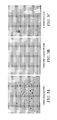
- FIG. 2A and FIG. 2B are photographs of a glass surface treated with a coating composition of the present disclosure, compared to FIG. 2C , which is a photograph of an untreated glass surface.
- the glass surfaces shown in FIG. 2B and FIG. 2C were challenged with vegetable oil and cleaned.
- FIG. 2A is a photograph of the treated glass surface challenged with oil
- FIG. 2B is a photograph of the oil-challenged treated glass surface after being cleaned
- FIG. 2C is a photograph of the untreated glass surface after being cleaned.
- FIG. 3A and FIG. 3B are photographs of a melamine laminated wood surface treated with a coating composition of the present disclosure, compared to FIG. 3C , which is a photograph of an untreated melamine laminated wood surface.
- the melamine laminated wood surfaces shown in FIG. 3B and FIG. 3C were challenged with vegetable oil and cleaned.
- FIG. 3A is a photograph of the treated surface challenged with oil
- FIG. 3B is a photograph of the oil-challenged treated surface after being cleaned
- FIG. 3C is a photograph of the untreated surface after being cleaned.
- FIG. 4A /B and FIG. 5A /B are photographs of ceramic tiles treated with a coating composition of the present disclosure, compared to untreated ceramic tiles, both of which were challenged with vegetable oil.
- FIG. 4A and FIG. 4B show the untreated and treated tiles, respectively, challenged with oil, before cleaning.
- FIG. 5A and FIG. 5B show the untreated and treated tiles, respectively, after being challenged and cleaned.
- FIG. 6A /B and FIG. 7A /B are photographs of polyurethane-coated wood treated with a coating composition of the present disclosure, compared to untreated polyurethane-coated wood, both of which were challenged with vegetable oil.
- FIG. 6A and FIG. 6B show the untreated and treated wood, respectively, challenged with oil, before cleaning.
- FIG. 7A and FIG. 7B show the untreated and treated wood, respectively, after being challenged and cleaned.
- the present disclosure provides an amphiphilic polymer and a coating composition that carries multiple advantages for providing easy-to-clean surfaces.
- the amphiphilic polymer and coating composition are best suited for surfaces subjected to extremely harsh conditions, for example, the oil and dirt (i.e., the combination of which forms grime) deposited on kitchen surfaces and which cannot be cleaned (easily) by available cleaning solutions (mostly based on surfactants).
- Kitchen surfaces can be made, for example, of ceramic tiles or metals (e.g., aluminum or stainless steel). Such kitchen surfaces include, for example, exhaust fans and other exhaust hood components.
- the present disclosure provides an amphiphilic polymer and a coating composition (typically, an aqueous dispersion) that can prevent the surfaces to which they are applied from getting oily.
- a coating composition typically, an aqueous dispersion
- the surfaces attract less dirt than control or non-coated surfaces.
- such coated surfaces can be more easily cleaned (e.g., using a simple wet cloth, water wash, or water dipping depending upon the harshness of the grime).
- the amphiphilic polymer includes: at least 10 wt-% monomeric units comprising alkylene oxide moieties, wherein a majority of the alkylene oxide moieties are ethylene oxide moieties; monomeric units comprising hexafluoropropylene oxide oligomeric moieties having the formula C 3 F 7 O—(CF(CF 3 )CF 2 O) a CF(CF 3 )—C(O)N(H)-Q-, wherein Q is a linking group with at least one carbon atom (e.g., —C 2 H 4 —, —C 3 H 6 —, —C 4 H 8 —, phenyl, benzyl, cyclohexyl) and “a” is at least 5, and often up to 15; and monomeric units comprising pendant groups selected from phosphate groups, phosphonate groups, sulfonate groups, and combinations thereof; wherein the amphiphilic polymer is water dispersible.
- monomeric units comprising alky
- the amphiphilic polymer comprises at least 3 monomeric units, one being hydrophilic, one being oleophobic and one being an anchoring group for the substrate.
- the amphiphilic polymer monomers include an alcohol of “HFPO-Amide” moiety esterified to form a methacrylate (oleophobic), a polyethyleneglycol moiety esterified to methacrylic acid (hydrophilic), and an ethyleneglycol methacrylate phosphate (for anchoring to a substrate surface).
- An amphiphilic polymer of the present disclosure may include block or random orientation of the monomeric units.
- the polymer includes a random orientation of the at least three (and preferably, three) different types of monomeric units.
- the amphiphilic polymer of the present disclosure is incorporated in a coating composition, particularly an aqueous dispersion.
- a coating composition e.g., aqueous dispersion
- Such coating composition can be applied to a hard surface (such as those in a kitchen) to form an easy clean coating.
- the present disclosure provides a method of treating a hard surface, wherein the method includes: providing a coating composition that includes: water; and an amphiphilic polymer including: at least 10 wt-% monomeric units comprising alkylene oxide moieties, wherein a majority of the alkylene oxide moieties are ethylene oxide moieties; monomeric units comprising hexafluoropropylene oxide oligomeric moieties having the formula C 3 F 7 O—(CF(CF 3 )CF 2 O) a CF(CF 3 )—C(O)N(H)-Q-, wherein Q is a linking group with at least one carbon atom (e.g., —C 2 H 4 —, —C 3 H 6 —, —C 4 H 8 —, phenyl, benzyl, cyclohexyl) and “a” is at least 5, and often up to 15; and monomeric units comprising pendant groups selected from phosphate groups, phosphonate groups, s
- An amphiphilic polymer includes both hydrophilic and oleophobic moieties.
- An amphiphilic polymer of the present disclosure includes monomeric units that include alkylene oxide moieties, monomeric units that include hexafluoropropylene oxide oligomeric moieties, and monomeric units that include pendant groups selected from phosphate groups, phosphonate groups, sulfonate groups, and combinations thereof.
- the amphiphilic polymer is water dispersible (i.e., one that shows no visible separation of the polymer from water at 0.1 wt-% to 40 wt-% concentration).
- the amphiphilic polymer is “self water dispersible.” By this it is meant that the amphiphilic polymer is one that shows no visible separation of the polymer from water at 0.1 wt-% to 40 wt-% concentration, without the aid of added surfactants, co-solvents, or alkaline materials, at room temperature.
- an amphiphilic polymer of the present disclosure in water forms an aqueous dispersion.
- such aqueous dispersion is stable for at least one month in water at 0.1 wt-% concentration at room temperature.
- the monomeric units are typically derived from ethylenically unsaturated monomers.
- the monomeric units are (meth)acrylate-containing units. That is, the monomeric units of the polymer are derived from (meth)acrylate monomers (i.e., methacrylate monomers and acrylate monomers).
- a majority (i.e., greater than 50% by weight) of the alkylene oxide moieties are ethylene oxide moieties.
- all of the alkylene oxide moieties are ethylene oxide moieties.
- At least 10 weight percent (wt-%), or at least 20 wt-%, or at least 30 wt-%, or at least 40 wt-%, of the monomeric units of the amphiphilic polymer include alkylene oxide moieties.
- up to 60 wt-%, or up to 70 wt-%, or up to 80 wt-%, of the monomeric units of the amphiphilic polymer are those that include alkylene oxide moieties.
- the monomeric units that include alkylene oxide moieties may also include free hydroxyl groups, alkyl-capped hydroxyl groups, or combinations thereof.
- alkylene oxide-containing monomers are (meth)acrylate monomers (i.e., acrylate and methacrylate monomers) including 2-(ethoxy) ethoxy ethyl acrylate, methyl ether capped polyethyleneglycol methylethyl methacrylate (e.g., of molecular weight 1100, commercially available from Sigma-Aldrich, St. Louis, Mo.), methyl ether capped polyethyleneglycol methacrylate (e.g., of molecular weight 500, commercially available from Sigma-Aldrich, St.
- (meth)acrylate monomers i.e., acrylate and methacrylate monomers
- 2-(ethoxy) ethoxy ethyl acrylate e.g., 2-(ethoxy) ethoxy ethyl acrylate
- methyl ether capped polyethyleneglycol methylethyl methacrylate e.g., of molecular weight 1100
- methyl ether capped polyethyleneglycol acrylate e.g., of molecular weight 480, commercially available from Sigma-Aldrich, St. Louis, Mo.
- methyl ether capped polyethyleneglycol methylacrylate e.g., of molecular weight 1100, commercially available from Sigma-Aldrich, St. Louis, Mo.
- free hydroxyl (uncapped) polyethyleneglycol methylacrylate e.g., of molecular weight 526, commercially available from Sigma-Aldrich, St. Louis, Mo.
- methyl ether capped polyethyleneglycol methylacrylate e.g., of molecular weight 360, commercially available from Sigma-Aldrich, St.
- At least 10 wt-%, or at least 20 wt-%, or at least 30 wt-%, of the monomeric units of the amphiphilic polymer include hexafluoropropylene oxide oligomeric moieties having the formula C 3 F 7 O—(CF(CF 3 )CF 2 O) a CF(CF 3 )—C(O)N(H)-Q-, wherein Q is a linking group with at least one carbon atom (e.g., —C 2 H 4 —, —C 3 H 6 —, —C 4 H 8 —, phenyl, benzyl, cyclohexyl) and “a” is at least 5, and often up to 15.
- up to 50 wt-%, or up to 60 wt-%, or up to 70 wt-%, of the monomeric units of the amphiphilic polymer are those that include hexafluoropropylene oxide oligomeric moieties having the formula C 3 F 7 O—(CF(CF 3 )CF 2 O) a CF(CF 3 )—C(O)N(H)-Q-, wherein Q is a linking group with at least one carbon atom (e.g., —C 2 H 4 —, —C 3 H 6 —, —C 4 H 8 —, phenyl, benzyl, cyclohexyl) and “a” is at least 5, and often up to 15.
- Hexafluoropropylene oxide oligomeric moieties are made from HFPO-Amide-containing monomers.
- HFPO-Amide refers to the group C 3 F 7 O—(CF(CF 3 )CF 2 O) a CF(CF 3 )—C(O)N(H)-Q-.
- “a” is at least 5. In some embodiments “a” is up to 15. In some embodiments, “a” is 5 to 10, or in some embodiments, “a” is 5 to 8.
- Such species generally exist as a distribution or mixture of oligomers with a range of values for “a”, so that the value of “a” may be an average, and thus, a non-integer.
- Q is a linking group with at least one carbon atom (e.g., —C 2 H 4 —, —C 3 H 6 —, —C 4 H 8 —, phenyl, benzyl, cyclohexyl).
- hexafluoropropylene oxide oligomeric monomers that include moieties having the formula C 3 F 7 O—(CF(CF 3 )CF 2 O) a CF(CF 3 )—C(O)N(H)-Q- include: a hexafluoropropyleneoxideoligomer-methacrylate of the formula C 3 F 7 O—[CF(CF 3 )CF 2 O] 6.3 CF(CF 3 )C(O)N(H)CH 2 CH 2 OC(O)C(CH 3 ) ⁇ CH 2 (which is a methacrylic acid ester of an oligomeric hexafluoropropylene oxide amide alcohol made as described in Preparative Example 3 of U.S. Pat.
- Various combinations of such monomers can be used in making the amphiphilic polymers of the present disclosure.
- At least 1 wt-%, or at least 5 wt-%, or at least 7 wt-%, of the monomeric units of the amphiphilic polymer include pendant groups selected from phosphate groups, phosphonate groups, sulfonate groups, and combinations thereof.
- up to 10 wt-%, or up to 12 wt-%, or up to 15 wt-%, of the monomeric units of the amphiphilic polymer are those that include pendant groups selected from phosphate groups, phosphonate groups, sulfonate groups, and combinations thereof.
- the pendant groups of the amphiphilic polymer are in the acid form.
- Examples of monomers that include pendant groups selected from phosphate groups, phosphonate groups, sulfonate groups, and combinations thereof include: pendant phosphate-containing monomers such as phosphate methacrylate monomer, ethyleneglycol methacrylate phosphate, HEMA-phosphate; pendant phosphonate-containing monomers such as vinyl phosphonic acid; and pendant sulfonate-containing monomers such as 2-acrylamido-2-methyl-1-propanesulfonic acid.
- pendant phosphate-containing monomers such as phosphate methacrylate monomer, ethyleneglycol methacrylate phosphate, HEMA-phosphate
- pendant phosphonate-containing monomers such as vinyl phosphonic acid
- pendant sulfonate-containing monomers such as 2-acrylamido-2-methyl-1-propanesulfonic acid.
- Various combinations of such monomers can be used in making the amphiphilic polymers of the present disclosure.
- various other monomers can be used in making the amphiphilic polymers of the present disclosure. If used, such “other” monomeric units may be present in relatively small amounts (e.g., less than 5 wt-%) in amphiphilic polymers of the present disclosure.
- Examples of such monomers other than the alkylene oxide-containing monomers, the hexafluoropropylene oxide oligomeric monomers, and the monomers that include pendant groups selected from phosphate groups, phosphonate groups, sulfonate groups, and combinations thereof, include, for example, (meth)acrylic acid and methylmethacrylate.
- amphiphilic polymer of the present disclosure further includes monomeric units that include pendant carboxylic acid groups.
- monomers that include carboxylic acid groups include acrylic acid, CH 2 ⁇ C(R)—COO—C 2 H 4 OCOC 2 H 4 COOH where R ⁇ H or CH 3 .
- the amphiphilic polymer of the present disclosure includes 0 to less than 2 wt-% alkoxy silane groups. In certain embodiments, the amphiphilic polymer of the present disclosure does not include alkoxy silane groups.
- alkoxy silane groups refer to the group —Si(OR) 3 , wherein R is independently hydrogen or an alkyl group having 1 to 4 carbon atoms. If used, examples of monomers that include alkoxy silane groups include 3-(trimethoxysilyl)propylmethacrylate.
- Amphiphilic polymers described herein may be prepared, for example, by reacting a mixture containing at least the three types of monomers (i.e., the alkylene oxide-containing monomers, the hexafluoropropylene oxide oligomeric monomers, and the monomers that include pendant groups selected from phosphate groups, phosphonate groups, sulfonate groups, and combinations thereof) typically in the presence of a chain transfer agent and an initiator (i.e., catalyst).
- a chain transfer agent and an initiator i.e., catalyst
- an oligomer or polymer may be formed.
- the polymer or oligomer has a distribution of molecular weights and compositions.
- Polymerization conditions can be readily determined by one of skill in the art.
- the polymerization can be carried out at a wide variety of temperatures suitable for conducting an organic free-radical reaction.
- Temperature and solvent for a particular use can be selected by those skilled in the art based on considerations such as the solubility of reagents, temperature required for the use of a particular initiator, and desired molecular weight. While it is not practical to enumerate a particular temperature suitable for all initiators and all solvents, generally suitable temperatures are in a range of 30° C. to 200° C.
- Free-radical polymerizations may be carried out in the presence of chain transfer agents.
- Typical chain transfer agents that may be used in the preparation of compositions described herein include hydroxyl-substituted mercaptans (e.g., 2-mercaptoethanol, 3-mercapto-2-butanol, 3-mercapto-2-propanol, 3-mercapto-1-propanol, and 3-mercapto-1,2-propanediol (i.e., thioglycerol)); amino-substituted mercaptans (e.g., 2-mercaptoethylamine); difunctional mercaptans (e.g., di(2-mercaptoethyl)sulfide); and aliphatic mercaptans (e.g., octylmercaptan, dodecylmercaptan, and octadecylmercaptan). Others include methylmercaptopropionate and mercapto
- Free-radical polymerizations may be carried out in the presence of initiators (i.e., catalysts).
- initiators i.e., catalysts.
- Typical initiators that may be used in the preparation of compositions described herein include radical-generating initiators including peroxide-based initiators.
- An example includes 2,2′-azobis(2-methylbutyronitrile) commercially available from DuPont, Wilmington, Del. under the trade designation “VAZO 67.”
- the reaction is carried out in one or more organic solvents.
- the components may be present in the reaction medium at any suitable concentration (e.g., from 5 percent to 80 percent by weight based on the total weight of the reaction mixture).
- suitable solvents include ethers (e.g., diethyl ether, glyme, diglyme, and diisopropyl ether), esters (e.g., ethyl acetate and butyl acetate), alcohols (e.g., ethanol and isopropyl alcohol), ketones (e.g., acetone, methyl ethyl ketone and methyl isobutyl ketone), halogenated solvents (e.g., methylchloroform, 1,1,2-trichloro-1,2,2-trifluoroethane, trichloroethylene, and trifluorotoluene), and mixtures thereof.
- ethers e.g., diethyl ether, glyme,
- the present disclosure provides a coating composition that can be used in a method of treating a hard surface to provide an easy-clean surface.
- the hard surface can include metal (e.g., stainless steel or aluminum), wood, wood laminate, polyurethane-coated wood, glass, ceramic, or a combination thereof.
- the coating composition is preferably an aqueous dispersion.
- the amphiphilic polymer of the coating composition can be present in an amount of at least 0.1 wt-%, based on the total weight of the coating composition.
- the amphiphilic polymer of the coating composition can be present in an amount of up to 1.0 wt-%, based on the total weight of the coating composition.
- the coating composition includes water in an amount of at least 80 wt-%, based on the total weight of the coating composition. In certain embodiments, the coating composition includes water in an amount of no greater than 99.9 wt-%, based on the total weight of the coating composition.
- the coating composition can be in a sprayable form.
- it can be used in a wipable or dippable form.
- it can be used either by a consumer or a manufacturer, on, for example, a stove-top surface.
- no organic solvent is used in the coating composition.
- the coating composition can also include a water-miscible organic solvent.
- suitable water-miscible organic solvents include isopropanol, ethanol, methanol, n-butanol, dipropylene glycol monomethyl ether, dipropylene glycol, and combinations thereof. If used, the water-miscible organic solvent is typically present in an amount of at least 10 wt-%, based on the total weight of the coating composition. If used, the water-miscible organic solvent is typically present in an amount of no greater than 50 wt-%, based on the total weight of the coating composition.
- the coating composition can also include one or more additives.
- suitable additives include fragrances, preservatives, pigments, stabilizers, anti-foaming agents, anti-soiling agents, and combinations thereof. If used, the amount of each of these additives is readily determined by one of skill in the art.
- the coating composition can be applied using any of a variety of liquid coating techniques (e.g., spraying, dipping, painting, etc.). It can be simply dried at room temperature to remove at least a portion of the water or organic solvent that may be included. If desired, the coating composition can be heated, after coating, to a temperature above room temperature (e.g., 130° C.) for improved performance.
- liquid coating techniques e.g., spraying, dipping, painting, etc.
- Embodiment 1 is an amphiphilic polymer comprising (or consisting essentially of, or consisting of): at least 10 wt-% monomeric units comprising alkylene oxide moieties, wherein a majority of the alkylene oxide moieties are ethylene oxide moieties; monomeric units comprising hexafluoropropylene oxide oligomeric moieties; and monomeric units comprising pendant groups selected from phosphate groups, phosphonate groups, sulfonate groups, and combinations thereof; wherein the amphiphilic polymer is water dispersible.
- Embodiment 2 is the amphiphilic polymer of embodiment 1 wherein the pendant groups are in the acid form.
- Embodiment 3 is the amphiphilic polymer of embodiment 1 or 2 which forms a stable dispersion for at least one month in water at 0.1 wt-% concentration at room temperature.
- Embodiment 4 is the amphiphilic polymer of any of embodiments 1 through 3 which includes 0 to less than 2 wt-% alkoxy silane groups.
- Embodiment 5 is the amphiphilic polymer of embodiment 4 which does not include alkoxy silane groups.
- Embodiment 6 is the amphiphilic polymer of any of embodiments 1 through 5 wherein the monomeric units are (meth)acrylate-containing units.
- Embodiment 7 is the amphiphilic polymer of any of embodiments 1 through 6 further comprising monomeric units comprising pendant carboxylic acid groups.
- Embodiment 8 is the amphiphilic polymer of any of embodiments 1 through 7 comprising 10-80 wt-% of the monomeric units comprising alkylene oxide moieties.
- Embodiment 9 is the amphiphilic polymer of any of embodiments 1 through 8 comprising 10-60 wt-% of the monomeric units comprising hexafluoropropylene oxide oligomeric having the formula C 3 F 7 O—(CF(CF 3 )CF 2 O) a CF(CF 3 )—C(O)N(H)-Q-, wherein Q is a linking group with at least one carbon atom (e.g., —C 2 H 4 —, —C 3 H 6 —, —C 4 H 8 —, phenyl, benzyl, cyclohexyl) and “a” is at least 5.
- Q is a linking group with at least one carbon atom (e.g., —C 2 H 4 —, —C 3 H 6 —, —C 4 H 8 —, phenyl, benzyl, cyclohexyl) and “a” is at least 5.
- Embodiment 10 is the amphiphilic polymer of any of embodiments 1 through 9 comprising 1-10 wt-% of the monomeric units comprising pendant groups selected from phosphate groups, phosphonate groups, sulfonate groups, and combinations thereof.
- Embodiment 11 is the amphiphilic polymer of any of embodiments 1 through 10 wherein the monomeric units comprising alkylene oxide moieties comprise free hydroxyl groups, alkyl-capped hydroxyl groups, or combinations thereof.
- Embodiment 12 is the amphiphilic polymer of any of embodiments 1 through 11 wherein “a” is up to 15 (or, 5 to 10, or 5 to 8).
- Embodiment 13 is an aqueous dispersion comprising the amphiphilic polymer of any one of embodiments 1 through 12.
- Embodiment 14 is a method of treating a hard surface, the method comprising: providing the aqueous dispersion of embodiment 13; and applying a coating composition comprising the aqueous dispersion to the hard surface to form an easy clean coating.
- Embodiment 15 is a method of treating a hard surface, the method comprising: providing a coating composition comprising: water; and an amphiphilic polymer comprising: at least 10 wt-% monomeric units comprising alkylene oxide moieties, wherein a majority of the alkylene oxide moieties are ethylene oxide moieties; monomeric units comprising hexafluoropropylene oxide oligomeric moieties having the formula C 3 F 7 O—(CF(CF 3 )CF 2 O) a CF(CF 3 )—C(O)N(H)-Q-, wherein Q is a linking group with at least one carbon atom (e.g., —C 2 H 4 —, —C 3 H 6 —, —C 4 H 8 —, phenyl, benzyl, cyclohexyl) and “a” is at least 5; and monomeric units comprising pendant groups selected from phosphate groups, phosphonate groups, sulfonate groups,
- Embodiment 16 is the method of embodiment 14 or 15 wherein the hard surface comprises metal, wood, wood laminate, polyurethane-coated wood, glass, ceramic, or a combination thereof.
- Embodiment 17 is the method of any of embodiments 14 through 16 wherein the amphiphilic polymer of the coating composition is present in an amount of 0.1 wt-% to 1.0 wt-%, based on the total weight of the coating composition.
- Embodiment 18 is the method of any of embodiments 14 through 17 wherein the coating composition further comprises one or more water-miscible organic solvents.
- Embodiment 19 is the method of any of embodiments 14 through 18 wherein the amphiphilic polymer includes 0 to less than 2 wt-% alkoxy silane groups.
- Embodiment 20 is the method of any of embodiments 15 through 19 wherein the monomeric units of the amphiphilic polymer are (meth)acrylate-containing units.
- Embodiment 21 is the method of any of embodiments 15 through 20 wherein the amphiphilic polymer comprises (or consists essentially of, or consists of): 10-80 weight percent of the monomeric units comprising alkylene oxide moieties; 10-60 weight percent of the monomeric units comprising hexafluoropropylene oxide oligomeric moieties having the formula C 3 F 7 O—(CF(CF 3 )CF 2 O) a CF(CF 3 )—C(O)N(H)-Q-, wherein Q is a linking group with at least one carbon atom (e.g., —C 2 H 4 —, —C 3 H 6 —, —C 4 H 8 —, phenyl, benzyl, cyclohexyl) and “a” is at least 5; and 1-10 weight percent of the monomeric units comprising pendant groups selected from phosphate groups, phosphonate groups, sulfonate groups, and combinations thereof.
- the amphiphilic polymer comprises
- Embodiment 22 is the method of any of embodiments 15 through 21 wherein “a” is up to 15 (or, 5 to 10, or 5 to 8).
- PM1 A 50:50 mix of 2-(ethoxy) ethoxy ethyl acrylate monomer and phosphate methacrylate monomer commercially available from Sartomer, Exton, Pa. under the trade designation “CD9050.”
- PM2 Ethyleneglycol methacrylate phosphate or HEMA-Phosphate commercially available from ESSTECH, Inc. as HEMA-Phosphate Part No. X7440000.
- PM3 Vinyl phosphonic acid commercially available from Sigma-Aldrich, St. Louis, Mo.
- MMP Chain transfer agent
- PEG1100MEM methyl ether capped polyethyleneglycol methylethyl methacrylate having a number average molecular weight (MW) 1100, commercially available from Sigma-Aldrich, St. Louis, Mo.
- PEG500MA methyl ether capped polyethyleneglycol methacrylate, number average MW 500 commercially available from Sigma-Aldrich, St. Louis, Mo.
- PEG480A methyl ether capped polyethyleneglycol acrylate, number average MW 480 commercially available from Sigma-Aldrich, St. Louis, Mo.
- PEG1100MA methyl ether capped polyethyleneglycol methylacrylate, number average MW 1100 commercially available from Sigma-Aldrich, St. Louis, Mo.
- PEG526MAU Free hydroxyl (uncapped) polyethyleneglycol methylacrylate, number average MW 526 commercially available from Sigma-Aldrich, St. Louis, Mo.
- PEG360MA methyl ether capped polyethyleneglycol methylacrylate, number average MW 360 commercially available from Sigma-Aldrich, St. Louis, Mo.
- TMSPMA 3-(trimethoxysilyl)propylmethacrylate commercially available from Sigma-Aldrich, St. Louis, Mo.
- HFPO-Amide-MA Hexafluoropropyleneoxide oligomer-methacrylate.
- the methacrylate of an oligomeric hexafluoropropylene oxide amide alcohol made as described in Preparative Example 3 of U.S. Pat. Pub. No. 2005/0137355.
- HFPO-Amide-Quat Silane a hexafluoropropylene oxide oligomer-quat silane of the formula C 3 F 7 O—(CF(CF 3 )CF 2 O) a CF(CF 3 )—C(O)N(H)—C 3 H 6 N(CH 3 ) 2 + (Cl ⁇ )C 3 H 6 —Si—(OCH 3 ) 3 prepared as per Example 1 of U.S. Pat. No. 8,080,170 wherein “a” is 6.3.
- C4A C 4 F 9 SO 2 N(CH 3 )C 2 H 4 COO—CH ⁇ CH 2 prepared as described in U.S. Pat. No.
- ODMA octadecylmethacrylate commercially available from Sigma-Aldrich, St. Louis, Mo.
- ODM C 18 H 37 OCOC 2 H 4 SH commercially available from Sigma-Aldrich, St. Louis, Mo.
- ODA octadecyl acrylate commercially available from Sigma-Aldrich, St. Louis, Mo.
- DDM dodecylmercaptan commercially available from Sigma-Aldrich, St. Louis, Mo.
- MMA methylmethacrylate commercially available from Sigma-Aldrich, St. Louis, Mo.
- AMPS 2-acrylamido-2-methyl-1-propanesulfonic acid from Sigma-Aldrich, St. Louis, Mo. Generic Polymerization Procedure
- the monomers and a blend of solvents (methyl isobutyl ketone (MIBK)/isopropanol (IPA) with the monomer amounts and solvent ratios shown in Table 1 (except for Comparative Example G which was water/IPA) were added to a 500 milliliter (500-mL) bottle and nitrogen was bubbled for 10 minutes (min). Then 0.5 grams (g) of “V-67” was added and the bottle sealed and heated at 70° C. for 15 hours (hrs). The resulting polymer was analyzed by IR, which showed the disappearance of >C ⁇ C ⁇ peaks indicating polymer formation (believed to be random polymers).
- MIBK methyl isobutyl ketone
- IPA isopropanol
- the resulting polymer/solvent mix was observed and the observation recorded as “VS” for very soluble cold, “H” for hazy, “G” for gelled, “C” for clear, “2 layers,” “P” for precipitate, “SM” for skim milk appearance and “V” for viscous.
- the polymer/solvent was heated to 50° C. for further observation and if the polymer/solvent had two layers, had gelled, or had precipitated, no attempt was made to add water to make a water dispersion, and no oil challenge testing was done. Otherwise a 100-gram portion of the above polymer/solvent solution and 200 g deionized water was added and either sonicated for 4 min or passed through a microfluidizer two times.
- the solvent in the resulting dispersion was removed by vacuum distillation using a rotoevaporator at 40° C. Appearance of the aqueous mix after solvent removal was recorded as “M” for microemulsion, “VM” for viscous microemulsion, “C” for clear, “AC” for almost clear, “H” for hazy or “2 layers.”
- the panel was then exposed to 3 drops of oil and rubbed to evenly coat the substrate (0.07 grams total for the 3 drops). After 5 min, the panel was rinsed under running 20° C. tap water (no cleaners or surfactants or abrasion of any kind were used) for 20 seconds (700 grams water used in 20 seconds). Oil removal results are recorded as “None” if visually the majority did not wash off or “All” if visually the oil completely washed off “Easy clean” is defined as having the “All” rating.
- Example 1 the oil removal test was repeated two more times on the same panel after the first test by re-drying at 20° C. for 1 hr before challenging with the oil. The panel was then re-exposed to three drops of oil and rubbed to evenly coat the substrate. Then again after 5 min the panel was rinsed under running 20° C. tap water for 20 seconds. This was repeated once again for a total of three challenge/rinse cycles. This showed that the treatment was durable for 3 challenge/rinse cycles as indicated in Table 2.
- the coated and uncoated panels were then rinsed under identical flow conditions of running 20° C. tap water for 20 seconds (700 grams water used in 20 seconds). No cleaners or surfactants were used. No abrading of any kind was done.
- HFPO-Amide-MA vs Ex. 1 (50 w/w %) 9 Terpolymer of 35 g Higher level of 2 layers H; All HFPO-Amide-MA, HFPO-Amide- on No bluish 10 g PEG500MA, and containing cooling; tinge; 5 g PM2 monomer than Ex.
- Example 1 polymer at 0.1% in water was spray coated on a stainless steel baffle and allowed to dry at 20° C.
- the coated and uncoated baffle in a vent hood were subjected to real life cooking conditions in a home for a month, after which both baffles were removed for cleaning.
- FIG. 1A shows clearly that the coated baffle cleaned very easily after dipping in warm tap water (30-35° C. for 20-30 min).
- the oil was clearly not removed, as seen in FIG. 1B .
- Example 1 The polymer of Example 1 was next tested against a competitive commercial hard surface cleaner additive (commercially available from Croda, Inc., Edison, N.J. under the trade name “MODISURF”) that advertises it makes soils easier to remove and provides a protective surface layer against future soils.
- a 1% solution of MODISURF in water and 0.5% Example 1 polymer solution in water were evaluated. Both the solutions were spray coated onto steel panels and tested as per “Oil Removal Test B” but after the oil coated panels were allowed to dry for 1 hour, 0.1 g of roadside clay dirt (ground in a mortar and pestle and sieved with a 45-micron size sieve) was sprinkled uniformly on top of the oil-coated panels.
- Example 1 polymer coated panel retained 40-50% less dirt compared to “MODISURF” polymer. These were allowed to sit at ambient temperature for 24 hrs so as to give sufficient time for the oil and dust to sit on the surface.
- Example 1 polymer did a much better job in cleaning the oil and dirt from the surface, as was seen in real life conditions under the vent hoods.
- Example 1 The polymer of Example 1 (0.5 wt-% in water) was next evaluated for its cleaning ability on a glass surface ( FIG. 2A-2C ), melamine laminated wood top sheet ( FIG. 3A-3C ), ceramic tile ( FIG. 4A-4B, 5A-5B ), and polyurethane coated wood ( FIG. 6A-6B, 7A-7B ).
- This solution was sprayed on glass panels 5 cm ⁇ 10 cm (2 in ⁇ 5 in) and tested as per “Oil Removal Test B.”
- the coated panel with Example 1 polymer showed complete removal of vegetable oil while the uncoated panel ( FIG. 2C, 3C, 5A, 7A ) had essentially all the oil remaining on the surface after cleaning.
Landscapes
- Chemical & Material Sciences (AREA)
- Organic Chemistry (AREA)
- Chemical Kinetics & Catalysis (AREA)
- Health & Medical Sciences (AREA)
- Medicinal Chemistry (AREA)
- Polymers & Plastics (AREA)
- Life Sciences & Earth Sciences (AREA)
- Engineering & Computer Science (AREA)
- Materials Engineering (AREA)
- Wood Science & Technology (AREA)
- General Chemical & Material Sciences (AREA)
- Paints Or Removers (AREA)
- Polyethers (AREA)
- Addition Polymer Or Copolymer, Post-Treatments, Or Chemical Modifications (AREA)
Abstract
Description
HFPO-Amide-Phosphate=C3F7O—[CF(CF3)CF2O]aCF(CF3)C(O)N(H)CH2CH2OP(O)(OH)2 prepared as described in U.S. Pat. Pub. No. 2005/0048288 Example 1 where a=3-10.
HFPO-Amide-Quat Silane=a hexafluoropropylene oxide oligomer-quat silane of the formula C3F7O—(CF(CF3)CF2O)aCF(CF3)—C(O)N(H)—C3H6N(CH3)2 +(Cl−)C3H6—Si—(OCH3)3 prepared as per Example 1 of U.S. Pat. No. 8,080,170 wherein “a” is 6.3.
C4A=C4F9SO2N(CH3)C2H4COO—CH═CH2 prepared as described in U.S. Pat. No. 2,803,615 Example 1 except N-propyl, N-ethanolperfluorooctanesulfonamide was replaced with N-Methyl, N-ethanol perfluorobutanesulfonamide.
C6A=FLUOWET AC600 commercially available from Clariant/Archroma, Reinach, Switzerland.
C4MA=C4F9SO2N(CH3)C2H4COO—C(CH3)═CH2 prepared as described in U.S. Pat. No. 2,803,615, Example 4, where N-butyl, N-butanol perfluorooctanesulfonamide was replaced by N-methyl, N-ethanol perfluorobutanesulfonamide.
ODMA=octadecylmethacrylate commercially available from Sigma-Aldrich, St. Louis, Mo.
ODM=C18H37OCOC2H4SH commercially available from Sigma-Aldrich, St. Louis, Mo.
ODA=octadecyl acrylate commercially available from Sigma-Aldrich, St. Louis, Mo.
DDM=dodecylmercaptan commercially available from Sigma-Aldrich, St. Louis, Mo.
MMA=methylmethacrylate commercially available from Sigma-Aldrich, St. Louis, Mo.
AMPS=2-acrylamido-2-methyl-1-propanesulfonic acid from Sigma-Aldrich, St. Louis, Mo.
Generic Polymerization Procedure
| TABLE 1 |
| Comparative Examples |
| Solubility | |||||
| in solvent | |||||
| C. | and solvent | Dispersion | |||
| Ex. | Description | Comments | ratio | in water | Oil Removal Test |
| A | No polymer treatment | NA | NA | None | |
| B | HFPO-Amide- | Too | NA | NT | None; |
| Phosphate | hydrophobic | The solid polymer | |||
| (no PEG monomer) | was diluted to 1% | ||||
| w/w (weight | |||||
| percent) with IPA | |||||
| and tested as such | |||||
| C | HFPO-Amide-Quat- | Too | NA | NT | None; |
| Silane (no PEG or | hydrophobic | The 50% w/w | |||
| phosphate monomers) | polymer in IPA was | ||||
| diluted to 1% w/w | |||||
| with water and | |||||
| tested as such | |||||
| D | Terpolymer of C4A, | Too | VS; | C | All; |
| PEG480A, and PM1 | hydrophilic; | 100/15 | However, dried | ||
| (No HFPO-Amide- | C4 acrylate | polymer VS in hot | |||
| containing monomer) | monomer not a | water so don't | |||
| substitute for | expect good | ||||
| HFPO-Amide- | durability; | ||||
| containing | Oil and treatment | ||||
| monomer | both removed in | ||||
| first wash | |||||
| E | Terpolymer of C4A, | Too | VS; | M | All; |
| PEG500MA, and PM1 | hydrophilic. | 100/15 | However, dried | ||
| (No HFPO-Amide- | C4 acrylate not | polymer VS in hot | |||
| containing monomer) | substitute for | water so don't | |||
| HFPO-Amide- | expect good | ||||
| containing | durability; | ||||
| monomer even | Oil and treatment | ||||
| when making | both removed in | ||||
| more | first wash | ||||
| hydrophobic | |||||
| with PEG | |||||
| methacrylate | |||||
| monomer | |||||
| F | Terpolymer of 20 g | No HFPO- | G; | NT | NT |
| ODMA with 25 g | Amide- | 80/15 | |||
| PEG500MA and 5 g | containing | ||||
| PM2 (No HFPO- | monomer | ||||
| Amide-containing | |||||
| monomer) | |||||
| G | Copolymer of 22.5 g | No HFPO- | G; | NT | NT |
| PEG500MA and 2.5 g | Amide- | 50/10 | |||
| PM2 (No HFPO- | containing | H2O/IPA | |||
| Amide-containing | monomer | ||||
| monomer) | |||||
| H | Terpolymer of 20 g | Carboxyl- | C; | Sonicating | NT |
| HFPO-Amide-MA, 25 | containing | 100/20 | did not | ||
| g PEG 500MA, and 5 g | monomer does | result in | |||
| AA (No phosphate) | not substitute | dispersion | |||
| for phosphate- | |||||
| containing | |||||
| monomer | |||||
| I | Terpolymer of 10 g | High | P (lots of it); | NT | NT |
| PM2, 20 g HFPO- | phosphate- | 120/20 | |||
| Amide-MA, and 20 g | containing | ||||
| PEG500MA | monomer | ||||
| (20% w/w) | |||||
| J | Terpolymer of 20 g | Too | G; | NT | NT |
| C4MA, 25 g | hydrophilic. | 120/20 | |||
| PEG500MA, and 5 g | C4 acrylate | ||||
| PM2 (No HFPO- | monomer is | ||||
| Amide-containing | not substitute | ||||
| monomer) | for HFPO- | ||||
| Amide- | |||||
| containing | |||||
| monomer even | |||||
| when making | |||||
| more | |||||
| hydrophobic | |||||
| with PEG | |||||
| methacrylate | |||||
| monomer | |||||
| K | Quad polymer of 10 g | 4th monomer | G; | NT | NT |
| HFPO-Amide-MA, 10 | of methyl | 120/20 | |||
| g MMA, 25 g | methacrylate | ||||
| PEG500MA, and 5 g | caused gelling | ||||
| PM2 | |||||
| L | Ex. 1 of WO | C; | SM | None | |
| 2013/031594 (24 g | 30/30 | ||||
| C6A, 3 g AA, 2.4 g | |||||
| PEG360MA, and 0.6 g | |||||
| PM2) | |||||
| M | Ex. 1 of WO | Effect of AA | P; | NT | |
| 2013/031594 with 24 g | 30/30 | ||||
| HFPO-Amide-MA | |||||
| substituted for C6A | |||||
| N | Terpolymer of 5 g | Uncapped | P (some); | Some sediment | |
| PM2, 20 g HFPO- | PEG effect | 120/20 | |||
| Amide-MA, and 25 g | |||||
| PEG526MAU | |||||
| O | Quad polymer of 20 g | Effect of | V (some | Viscous solution; | |
| HFPO-Amide-MA, | alkoxy silane | sediment); | Did not emulsify | ||
| 24.7 g PEG500MA, 5 g | at 0.7 w/w % | 120/20 | |||
| PM2, and 0.35 g | |||||
| TMSPMA | |||||
| P | Quad polymer of 20 g | Effect of | G; | NT | NT |
| HFPO-Amide-MA, | alkoxy silane | 120/20 | |||
| 24.15 g PEG500MA, 5 | at 1.7 w/w % | ||||
| g PM2, and 0.85 g | |||||
| TMSPMA | |||||
| NA = not applicable | |||||
| NT = not tested | |||||
| TABLE 2 |
| Examples |
| Solubility | |||||
| in | Dispersion | Oil Removal | |||
| Ex. | Description | Comments | solvent | in water | Test |
| 1 | Terpolymer “H-10” | Amphiphilic | H; | M; | All; |
| of 20 g HFPO- | terpolymer with | 120/20 | Dried | Durable after 3 | |
| Amide-MA, 25 g | right ratios of | polymer | oil removal test | ||
| PEG500MA, and 5 g | monomers (40 w/w | NOT | challenges | ||
| PM1 | % HFPO-Amide- | soluble in | |||
| MA) | hot water | ||||
| 2 | Terpolymer of 20 g | Amphiphilic | VS; | M; | All; |
| HFPO-Amide-MA, | terpolymer with | 120/20 | Dried | Good oil | |
| 24.5 g | right ratios of | polymer VS | repellancy on | ||
| PEG1100MEM, 5 g | monomers; Higher | in cold | stainless steel | ||
| PM2, and 1% CTA | MW PEG monomer | water | |||
| than Ex. 1 makes | |||||
| more water soluble | |||||
| but still durable | |||||
| 3 | Terpolymer of 20 g | Amphiphilic | VS; | M; | All |
| HFPO-Amide-MA, | terpolymer with | 100/15 | Dried | ||
| 25 g PEG480A, and 5 | right ratios of | polymer VS | |||
| g PM1 | monomers | in hot water | |||
| 4 | Terpolymer of 20 g | Amphiphilic | C; | M; | All; |
| HFPO-Amide-MA, | terpolymer with | 100/15 | Viscous | Good oil | |
| 25 g PEG500MA, and | right ratios of | Dried | repellancy on | ||
| 5 g PM1 | monomers | polymer not | stainless steel | ||
| soluble in | |||||
| hot water | |||||
| 5 | Terpolymer of 20 g | Amphiphilic | H; | M | All |
| HFPO-Amide-MA, | terpolymer with | 120/20 | |||
| 27 g PEG500MA, and | right ratios of | ||||
| 4 g PM2 | monomers; | ||||
| 8% phosphate | |||||
| 6 | Terpolymer of 20 g | Amphiphilic | H; | M; | All |
| HFPO-Amide-MA, | terpolymer with | 120/20 | Dried | ||
| 25 g PEG500MA, and | right ratios of | polymer | |||
| 5 g PM3 | monomers; | NOT | |||
| Alternate | soluble in | ||||
| phophonate- | hot water | ||||
| containing | |||||
| monomer replacing | |||||
| phosphate- | |||||
| containing | |||||
| monomer | |||||
| 7 | 10 g HFPO-Amide- | 4th monomer of | VS; | Premix | All |
| MA, 10 g C4MA, 25 | C4MA substituting | 100/20 | foamy and | ||
| g PEG500MA, and 5 | for part of HFPO- | milky but | |||
| g PM2 | Amide-MA | clear after | |||
| solvent | |||||
| removal | |||||
| 8 | Terpolymer of 25 g | Amphiphilic | SM; | AC; Dried | All |
| HFPO-Amide-MA, | terpolymer with | 100/20 | polymer | ||
| 20 g PEG500MA, and | right ratios of | NOT | |||
| 5 g PM2 | monomers; | soluble in | |||
| Higher level of | hot water. | ||||
| HFPO-Amide-MA | |||||
| vs Ex. 1 (50 w/w %) | |||||
| 9 | Terpolymer of 35 g | Higher level of | 2 layers | H; | All |
| HFPO-Amide-MA, | HFPO-Amide- | on | No bluish | ||
| 10 g PEG500MA, and | containing | cooling; | tinge; | ||
| 5 g PM2 | monomer than Ex. 8 | 100/20 | Sediment; | ||
| (70% w/w) | Dried | ||||
| polymer | |||||
| NOT | |||||
| soluble in | |||||
| hot water | |||||
| 10 | Terpolymer of 35 g | 2 layers | H; | All | |
| HFPO-Amide-MA, | on | No bluish | |||
| 10 g PEG1100MEM, | cooling; | tinge; | |||
| and 5 g PM2 | 100/20 | Dried | |||
| polymer | |||||
| NOT | |||||
| soluble in | |||||
| hot water | |||||
| 11 | Terpolymer of 20 g | Sulfonate- | H | All | |
| HFPO-Amide-MA, | containing | ||||
| 20 g PEG500MA, and | monomer can | ||||
| 5 g AMPS | substitute for | ||||
| phosphate- or | |||||
| phosphonate- | |||||
| containing | |||||
| monomers | |||||
| 12 | Terpolymer of 2 g | Uncapped PEG | P (very | H | All |
| PM2, 23 g HFPO- | effect | small | |||
| Amide-MA, and 25 g | amount); | ||||
| PEG526MAU | 120/30 | ||||
| 13 | Terpolymer of 5 g | Low HFPO-Amide- | H; | All | |
| HFPO-Amide-MA | MA (10% w/w) | 120/20 | |||
| with 42.5 g | |||||
| PEG500MA and 5 g | |||||
| PM2 | |||||
| 14 | Terpolymer of 2 g | Low phosphate- | H; | All | |
| PM2, 20 g HFPO- | containing | 120/20 | |||
| Amide-MA, and 29 g | monomer (4% w/w) | ||||
| PEG500MA | |||||
| NA = not applicable | |||||
| NT = not tested | |||||
Real Life Baffle Testing
Claims (20)
Applications Claiming Priority (3)
| Application Number | Priority Date | Filing Date | Title |
|---|---|---|---|
| IN4038/CHE/2014 | 2014-08-19 | ||
| IN4038CH2014 | 2014-08-19 | ||
| PCT/US2015/043902 WO2016028499A1 (en) | 2014-08-19 | 2015-08-06 | Amphiphilic polymers, coating compositions, and methods |
Publications (2)
| Publication Number | Publication Date |
|---|---|
| US20170226372A1 US20170226372A1 (en) | 2017-08-10 |
| US10093822B2 true US10093822B2 (en) | 2018-10-09 |
Family
ID=53901139
Family Applications (1)
| Application Number | Title | Priority Date | Filing Date |
|---|---|---|---|
| US15/502,622 Active 2035-09-22 US10093822B2 (en) | 2014-08-19 | 2015-08-06 | Amphiphilic polymers, coating compositions, and methods |
Country Status (7)
| Country | Link |
|---|---|
| US (1) | US10093822B2 (en) |
| EP (1) | EP3183309A1 (en) |
| KR (1) | KR20170042683A (en) |
| CN (1) | CN106661221B (en) |
| BR (1) | BR112017003223A2 (en) |
| MX (1) | MX2017001922A (en) |
| WO (1) | WO2016028499A1 (en) |
Families Citing this family (4)
| Publication number | Priority date | Publication date | Assignee | Title |
|---|---|---|---|---|
| KR102808740B1 (en) | 2014-09-18 | 2025-05-16 | 쓰리엠 이노베이티브 프로퍼티즈 캄파니 | Aqueous compositions for coating metallic surfaces, methods, and articles |
| EP3208319A1 (en) * | 2016-02-19 | 2017-08-23 | 3M Innovative Properties Company | Amphiphilic copolymers with mixed functionalities |
| WO2018118962A1 (en) * | 2016-12-20 | 2018-06-28 | 3M Innovative Properties Company | Fluorinated anionic polymers and compositions including them |
| WO2021124019A1 (en) | 2019-12-19 | 2021-06-24 | 3M Innovative Properties Company | Block copolymers with a fluorinated block and a phosphorus-containing block |
Citations (11)
| Publication number | Priority date | Publication date | Assignee | Title |
|---|---|---|---|---|
| US2803615A (en) | 1956-01-23 | 1957-08-20 | Minnesota Mining & Mfg | Fluorocarbon acrylate and methacrylate esters and polymers |
| US20050048288A1 (en) | 2003-08-21 | 2005-03-03 | 3M Innovative Properties Company | Perfluoropolyether amide-linked phosphonates, phosphates, and derivatives thereof |
| US20050137355A1 (en) * | 2003-12-17 | 2005-06-23 | Buckanin Richard S. | Coating compositions with reactive fluorinated copolymers having pendant perfluoropolyether groups |
| WO2005090423A1 (en) | 2004-03-23 | 2005-09-29 | Asahi Glass Company, Limited | Waterproofing/oilproofing agent composition |
| WO2009076389A1 (en) | 2007-12-12 | 2009-06-18 | 3M Innovative Properties Company | Hardcoats comprising perfluoropolyether polymers with poly(alkylene oxide) repeat units |
| US8080170B2 (en) | 2007-10-01 | 2011-12-20 | 3M Innovative Properties Company | Cationic fluorinated ether silane compositions and related methods |
| EP2444428A1 (en) | 2007-06-06 | 2012-04-25 | 3M Innovative Properties Company | Fluorinated compositions and surface treatments made therefrom |
| WO2012061021A1 (en) | 2010-11-04 | 2012-05-10 | 3M Innovative Properties Company | Fluorinated composition comprising phosphorus containing acid group and alkoxy silane group |
| WO2013031594A1 (en) | 2011-08-29 | 2013-03-07 | Agcセイミケミカル株式会社 | Copolymer for cosmetics, surface treatment agent for cosmetic powder, powder for cosmetics, and cosmetic preparation |
| JP2013124280A (en) | 2011-12-14 | 2013-06-24 | Kmew Co Ltd | Contamination-resistant coating, and building board |
| WO2013191861A1 (en) | 2012-06-19 | 2013-12-27 | 3M Innovative Properties Company | Additive comprising low surface energy group and hydroxyl groups and coating compositions |
Family Cites Families (1)
| Publication number | Priority date | Publication date | Assignee | Title |
|---|---|---|---|---|
| DE102006046368A1 (en) * | 2006-09-29 | 2008-04-03 | Construction Research & Technology Gmbh | New functionalized polyurethane resins, based on fluoro-modified, stabilized oligo- or polyurethane binder, useful for permanent oil-, water- and dirt-repellent coating of surfaces |
-
2015
- 2015-08-06 CN CN201580043064.2A patent/CN106661221B/en not_active Expired - Fee Related
- 2015-08-06 US US15/502,622 patent/US10093822B2/en active Active
- 2015-08-06 EP EP15753546.9A patent/EP3183309A1/en not_active Withdrawn
- 2015-08-06 MX MX2017001922A patent/MX2017001922A/en unknown
- 2015-08-06 BR BR112017003223A patent/BR112017003223A2/en not_active Application Discontinuation
- 2015-08-06 WO PCT/US2015/043902 patent/WO2016028499A1/en not_active Ceased
- 2015-08-06 KR KR1020177006849A patent/KR20170042683A/en not_active Withdrawn
Patent Citations (20)
| Publication number | Priority date | Publication date | Assignee | Title |
|---|---|---|---|---|
| US2803615A (en) | 1956-01-23 | 1957-08-20 | Minnesota Mining & Mfg | Fluorocarbon acrylate and methacrylate esters and polymers |
| US20050048288A1 (en) | 2003-08-21 | 2005-03-03 | 3M Innovative Properties Company | Perfluoropolyether amide-linked phosphonates, phosphates, and derivatives thereof |
| US20050137355A1 (en) * | 2003-12-17 | 2005-06-23 | Buckanin Richard S. | Coating compositions with reactive fluorinated copolymers having pendant perfluoropolyether groups |
| WO2005061638A1 (en) | 2003-12-17 | 2005-07-07 | 3M Innovative Properties Company | Coating compositions with reactive fluorinated copolymers having pendant perfluoropolyether groups |
| US6995222B2 (en) * | 2003-12-17 | 2006-02-07 | 3M Innovative Properties Company | Coating compositions with reactive fluorinated copolymers having pendant perfluoropolyether groups |
| WO2005090423A1 (en) | 2004-03-23 | 2005-09-29 | Asahi Glass Company, Limited | Waterproofing/oilproofing agent composition |
| US8945712B2 (en) | 2007-06-06 | 2015-02-03 | 3M Innovative Properties Company | Fluorinated compositions and surface treatments made therefrom |
| EP2444428A1 (en) | 2007-06-06 | 2012-04-25 | 3M Innovative Properties Company | Fluorinated compositions and surface treatments made therefrom |
| US8080170B2 (en) | 2007-10-01 | 2011-12-20 | 3M Innovative Properties Company | Cationic fluorinated ether silane compositions and related methods |
| WO2009076389A1 (en) | 2007-12-12 | 2009-06-18 | 3M Innovative Properties Company | Hardcoats comprising perfluoropolyether polymers with poly(alkylene oxide) repeat units |
| US9377563B2 (en) * | 2007-12-12 | 2016-06-28 | 3M Innovative Properties Company | Hardcoats comprising perfluoropolyether polymers with poly(alkylene oxide) repeat units |
| US20140094580A1 (en) * | 2007-12-12 | 2014-04-03 | 3M Innovative Properties Company | Hardcoats comprising perfluoropolyether polymers with poly(alkylene oxide) repeat units |
| WO2012061021A1 (en) | 2010-11-04 | 2012-05-10 | 3M Innovative Properties Company | Fluorinated composition comprising phosphorus containing acid group and alkoxy silane group |
| WO2013031594A1 (en) | 2011-08-29 | 2013-03-07 | Agcセイミケミカル株式会社 | Copolymer for cosmetics, surface treatment agent for cosmetic powder, powder for cosmetics, and cosmetic preparation |
| EP2752435A1 (en) | 2011-08-29 | 2014-07-09 | AGC Seimi Chemical Co., Ltd. | Copolymer for cosmetics, surface treatment agent for cosmetic powder, powder for cosmetics, and cosmetic preparation |
| US20140228450A1 (en) * | 2011-08-29 | 2014-08-14 | Agc Seimi Chemical Co., Ltd. | Copolymer for cosmetics, surface treatment agent for cosmetic powder, powder for cosmetics, and cosmetic preparation |
| JP2013124280A (en) | 2011-12-14 | 2013-06-24 | Kmew Co Ltd | Contamination-resistant coating, and building board |
| WO2013191861A1 (en) | 2012-06-19 | 2013-12-27 | 3M Innovative Properties Company | Additive comprising low surface energy group and hydroxyl groups and coating compositions |
| US20150126654A1 (en) * | 2012-06-19 | 2015-05-07 | 3M Innovative Properties Company | Additive comprising low surface energy group and hydroxyl groups and coating compositions |
| US9441135B2 (en) * | 2012-06-19 | 2016-09-13 | 3M Innovative Properties Company | Additive comprising low surface energy group and hydroxyl groups and coating compositions |
Non-Patent Citations (1)
| Title |
|---|
| International Search Report for PCT International Application No. PCT/US2015/043902, dated Oct. 29, 2015, 4 pages. |
Also Published As
| Publication number | Publication date |
|---|---|
| CN106661221A (en) | 2017-05-10 |
| BR112017003223A2 (en) | 2017-11-28 |
| KR20170042683A (en) | 2017-04-19 |
| EP3183309A1 (en) | 2017-06-28 |
| WO2016028499A1 (en) | 2016-02-25 |
| US20170226372A1 (en) | 2017-08-10 |
| CN106661221B (en) | 2018-11-30 |
| MX2017001922A (en) | 2017-04-27 |
Similar Documents
| Publication | Publication Date | Title |
|---|---|---|
| US11976215B2 (en) | Scuff resistant and chip resistant architectural compositions | |
| US10093822B2 (en) | Amphiphilic polymers, coating compositions, and methods | |
| AU748686B2 (en) | Polymer compositions | |
| KR101992859B1 (en) | Aqueous coating compositions | |
| AU2019221451B2 (en) | Scuff resistant and chip resistant architectural compositions | |
| JP2002105433A (en) | Fluorine-containing surface treatment agent | |
| JP2007519777A (en) | Latex paint compositions and coatings | |
| US10696850B2 (en) | Ethylenically crosslinkable fluorinated polymer additives for architectural coatings | |
| EP3208319A1 (en) | Amphiphilic copolymers with mixed functionalities | |
| US6476108B1 (en) | Aqueous coating composition | |
| JP2013531708A (en) | Fluoropolymer additives for coating | |
| US20150025177A1 (en) | Coating compositions having chelant functionality | |
| JP5943910B2 (en) | Solvent-based fluoropolymer additives and their use in coating compositions | |
| US2866767A (en) | Composition containing copolymer of ethylencially unsaturated compounds and a diglycidyl ester of a dicarboxylic acid and process of making same | |
| CA3090503C (en) | Chip resistant architectural compositions | |
| JP2011038243A (en) | Kitchen sink | |
| JPS6158104B2 (en) |
Legal Events
| Date | Code | Title | Description |
|---|---|---|---|
| AS | Assignment |
Owner name: 3M INNOVATIVE PROPERTIES COMPANY, MINNESOTA Free format text: ASSIGNMENT OF ASSIGNORS INTEREST;ASSIGNORS:JARIWALA, CHETAN P.;CLEAR, SUSANNAH C.;PANDEY, RUCHI;SIGNING DATES FROM 20170519 TO 20170605;REEL/FRAME:042710/0629 |
|
| STCF | Information on status: patent grant |
Free format text: PATENTED CASE |
|
| CC | Certificate of correction | ||
| MAFP | Maintenance fee payment |
Free format text: PAYMENT OF MAINTENANCE FEE, 4TH YEAR, LARGE ENTITY (ORIGINAL EVENT CODE: M1551); ENTITY STATUS OF PATENT OWNER: LARGE ENTITY Year of fee payment: 4 |
|
| MAFP | Maintenance fee payment |
Free format text: PAYMENT OF MAINTENANCE FEE, 8TH YEAR, LARGE ENTITY (ORIGINAL EVENT CODE: M1552); ENTITY STATUS OF PATENT OWNER: LARGE ENTITY Year of fee payment: 8 |