US10089095B2 - Alerting the presence of bundled software during an installation - Google Patents
Alerting the presence of bundled software during an installation Download PDFInfo
- Publication number
- US10089095B2 US10089095B2 US14/705,662 US201514705662A US10089095B2 US 10089095 B2 US10089095 B2 US 10089095B2 US 201514705662 A US201514705662 A US 201514705662A US 10089095 B2 US10089095 B2 US 10089095B2
- Authority
- US
- United States
- Prior art keywords
- information
- software
- software product
- bundled
- instance
- Prior art date
- Legal status (The legal status is an assumption and is not a legal conclusion. Google has not performed a legal analysis and makes no representation as to the accuracy of the status listed.)
- Active, expires
Links
Images



Classifications
-
- G—PHYSICS
- G06—COMPUTING OR CALCULATING; COUNTING
- G06F—ELECTRIC DIGITAL DATA PROCESSING
- G06F8/00—Arrangements for software engineering
- G06F8/60—Software deployment
- G06F8/61—Installation
-
- G—PHYSICS
- G06—COMPUTING OR CALCULATING; COUNTING
- G06F—ELECTRIC DIGITAL DATA PROCESSING
- G06F21/00—Security arrangements for protecting computers, components thereof, programs or data against unauthorised activity
- G06F21/50—Monitoring users, programs or devices to maintain the integrity of platforms, e.g. of processors, firmware or operating systems
- G06F21/51—Monitoring users, programs or devices to maintain the integrity of platforms, e.g. of processors, firmware or operating systems at application loading time, e.g. accepting, rejecting, starting or inhibiting executable software based on integrity or source reliability
-
- G—PHYSICS
- G06—COMPUTING OR CALCULATING; COUNTING
- G06F—ELECTRIC DIGITAL DATA PROCESSING
- G06F21/00—Security arrangements for protecting computers, components thereof, programs or data against unauthorised activity
- G06F21/50—Monitoring users, programs or devices to maintain the integrity of platforms, e.g. of processors, firmware or operating systems
- G06F21/55—Detecting local intrusion or implementing counter-measures
- G06F21/56—Computer malware detection or handling, e.g. anti-virus arrangements
- G06F21/562—Static detection
- G06F21/564—Static detection by virus signature recognition
-
- G—PHYSICS
- G06—COMPUTING OR CALCULATING; COUNTING
- G06F—ELECTRIC DIGITAL DATA PROCESSING
- G06F21/00—Security arrangements for protecting computers, components thereof, programs or data against unauthorised activity
- G06F21/50—Monitoring users, programs or devices to maintain the integrity of platforms, e.g. of processors, firmware or operating systems
- G06F21/57—Certifying or maintaining trusted computer platforms, e.g. secure boots or power-downs, version controls, system software checks, secure updates or assessing vulnerabilities
-
- G—PHYSICS
- G06—COMPUTING OR CALCULATING; COUNTING
- G06F—ELECTRIC DIGITAL DATA PROCESSING
- G06F3/00—Input arrangements for transferring data to be processed into a form capable of being handled by the computer; Output arrangements for transferring data from processing unit to output unit, e.g. interface arrangements
- G06F3/01—Input arrangements or combined input and output arrangements for interaction between user and computer
- G06F3/048—Interaction techniques based on graphical user interfaces [GUI]
- G06F3/0481—Interaction techniques based on graphical user interfaces [GUI] based on specific properties of the displayed interaction object or a metaphor-based environment, e.g. interaction with desktop elements like windows or icons, or assisted by a cursor's changing behaviour or appearance
- G06F3/0482—Interaction with lists of selectable items, e.g. menus
-
- G—PHYSICS
- G06—COMPUTING OR CALCULATING; COUNTING
- G06F—ELECTRIC DIGITAL DATA PROCESSING
- G06F3/00—Input arrangements for transferring data to be processed into a form capable of being handled by the computer; Output arrangements for transferring data from processing unit to output unit, e.g. interface arrangements
- G06F3/01—Input arrangements or combined input and output arrangements for interaction between user and computer
- G06F3/048—Interaction techniques based on graphical user interfaces [GUI]
- G06F3/0484—Interaction techniques based on graphical user interfaces [GUI] for the control of specific functions or operations, e.g. selecting or manipulating an object, an image or a displayed text element, setting a parameter value or selecting a range
- G06F3/04842—Selection of displayed objects or displayed text elements
-
- H—ELECTRICITY
- H04—ELECTRIC COMMUNICATION TECHNIQUE
- H04L—TRANSMISSION OF DIGITAL INFORMATION, e.g. TELEGRAPHIC COMMUNICATION
- H04L63/00—Network architectures or network communication protocols for network security
- H04L63/14—Network architectures or network communication protocols for network security for detecting or protecting against malicious traffic
- H04L63/1408—Network architectures or network communication protocols for network security for detecting or protecting against malicious traffic by monitoring network traffic
- H04L63/1425—Traffic logging, e.g. anomaly detection
-
- H—ELECTRICITY
- H04—ELECTRIC COMMUNICATION TECHNIQUE
- H04L—TRANSMISSION OF DIGITAL INFORMATION, e.g. TELEGRAPHIC COMMUNICATION
- H04L63/00—Network architectures or network communication protocols for network security
- H04L63/14—Network architectures or network communication protocols for network security for detecting or protecting against malicious traffic
- H04L63/1441—Countermeasures against malicious traffic
- H04L63/145—Countermeasures against malicious traffic the attack involving the propagation of malware through the network, e.g. viruses, trojans or worms
-
- G—PHYSICS
- G06—COMPUTING OR CALCULATING; COUNTING
- G06F—ELECTRIC DIGITAL DATA PROCESSING
- G06F9/00—Arrangements for program control, e.g. control units
- G06F9/06—Arrangements for program control, e.g. control units using stored programs, i.e. using an internal store of processing equipment to receive or retain programs
- G06F9/44—Arrangements for executing specific programs
- G06F9/451—Execution arrangements for user interfaces
- G06F9/453—Help systems
-
- H—ELECTRICITY
- H04—ELECTRIC COMMUNICATION TECHNIQUE
- H04L—TRANSMISSION OF DIGITAL INFORMATION, e.g. TELEGRAPHIC COMMUNICATION
- H04L67/00—Network arrangements or protocols for supporting network services or applications
- H04L67/34—Network arrangements or protocols for supporting network services or applications involving the movement of software or configuration parameters
Definitions
- Embodiments described herein generally relate to client and server network traffic, and more particularly to systems and methods for alerting a user of the presence of bundled software during installation of a software product.
- PUP potentially unwanted programs
- a PUP is unwanted and/or malicious software, which is distributed by discreetly bundling a requested software product that a user has requested with the unwanted software product that the user may have no knowledge of or interest in.
- Software agreements that refer to these additional bundled software may often be buried within an end user license agreement (EULA) that is obscured from a user or be hidden under advanced selection buttons as options in a graphical user interlace (GUI) instance displayed during an installation process.
- EULA end user license agreement
- GUI graphical user interlace
- PUPs can be malware such as, for example, adware or spyware that cause undesirable system behavior or alter the security state and privacy posture of the system on which they are installed.
- spyware may also eavesdrop on a user's activities by collecting personal information like Internet surfing habits, user logins, and bank or credit account information, or may interfere with a user's control of the computer by installing additional harmful software or redirecting web browsers to unintended sites.
- Malware may also change a computer's settings, which can result in slow Internet connection speeds, unauthorized changes in browser settings, changes to software settings, or the like.
- FIG. 1 is a diagram illustrating a system for detecting bundled software products during an installation of a software product according to one embodiment.
- FIGS. 2A-B are examples of a graphical user interface that is created during installation of a software product according to one embodiment.
- FIG. 3 is another example of a user interface that is created during installation of a software product according to one embodiment.
- FIGS. 4A-4B are flowcharts illustrating a technique for detecting bundled software products during installation of a software product according to one embodiment.
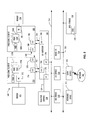
- FIG. 5 is a block diagram illustrating a computing device for use with techniques described herein according to one embodiment.
- FIG. 6 is a block diagram illustrating a computing device for use with techniques described herein according to another embodiment.
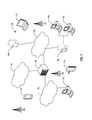
- FIG. 7 is a block diagram illustrating a network of programmable devices according to one embodiment.
- computer system can refer to a single computer or a plurality of computers working together to perform the function described as being performed on or by a computer system.
- malware can refer to any software used to disrupt operation of a programmable device, gather sensitive information or gain access to private systems or networks.
- Malware includes computer viruses (including worms, Trojan horses, etc.), Bots, ransomware, spyware, adware, tracking cookies, scareware and any other type of malicious programs.
- a technique allows a client computing system with a user client to receive a user-intended software product in an installation package from a server.
- the user-intended software product may be bundled with a potentially unwanted program.
- the user client can include logic to determine if the user-intended software product includes other bundled software products by reading one or more software identifiers located in graphical user interface instances that are created during installation of the user-intended software product or other non-GUI files that are included in the installation package.
- graphical user interface instances are read to identify information that are related to software identifiers for the user-intended software product and software identifiers of potentially unwanted programs that are included in the installation package.
- the software identifiers may be used to determine whether potentially unwanted programs are bundled with the user intended software product.
- a signature file may be received from a server and the software identifiers of the user-intended software product and the potentially unwanted programs can be checked against the signature file during installation of the user-intended software product in order to detect the presence of potentially unwanted programs that may be bundled with user-intended software product.
- software products may include license text and/or instances of graphical user interface that are provided during installation, users may not be able to discriminate that additional bundled software is included, which may be malware, for example, adware or tracking cookies that may potentially harm a user's compute form a mere reading of the test of a license or graphical user interface provided during installation.
- the technique allows all software installers including novice software installers to determine whether the bundled software products may be malware although bundled as necessary components of the user-intended software.
- FIG. 1 illustrates a system 100 for performing a security check of a software product that may be received by a user client 106 in order to identify the software product a user intends to install, to detect the presence of bundled software in the software product, and to alert the user of the bundled software during installation of the software product (hereinafter “user-intended software product”) according to one embodiment.
- System 100 may include a content server 102 , network 104 , user client machine 106 (or user client 106 ), third-party server 112 , and reputation server 116 .
- Content server 102 may be in communication with user client 106 over network 104 and be configured to communicate software applications, documents, or other content from server 102 to user client 106 in response to a request for software or applications made from user client 106 (i.e., the user-intended software products) via network 104 .
- a user may install the user-intended software products from a memory device connected to user client 106 .
- the software product that is received from server 102 may include additional software components or applications such as, for example, plug-ins, browser extensions, or software that may be transmitted to user client 106 along with the user-intended software products that may be received from server 102 via network 104 .
- Network 104 is not limited to a network of interconnected computer networks that use an internet protocol (TCP/IP), and can also include other high-speed data networks and/or telecommunications networks that are configured to pass information back and forth to user client 106 .
- TCP/IP internet protocol
- servers 102 , 112 , and 116 are shown in the example of system 100 , any number of servers are contemplated to be in communication with user client 106 .
- System 100 may also include a third-party server 112 that is in communication with user client 106 via network 104 .
- Third-party server 112 is associated with a service provider and may be configured to generate a signature file 110 that may be distributed to user client 106 for use in identifying the user-intended software products that a user intends to install and for identifying additional bundled software that may be unwanted and not a necessary part of the installation package for user-intended software products.
- third-party server 112 may be configured to gather information about software names and bundling of software including gathering information associated with blacklisted and whitelisted sites or domains in order to build signature file 110 .
- third-party server 112 may be configured to determine the presence of additional bundled software on behalf of user client 106 by receiving software identifiers from user client 106 that were extracted during installation of user-intended software products and comparing the software identifiers against a signature file in order to identify the presence of additional software components.
- User client 106 may include a desktop computer, laptop computer, smart phone, tablet device, and any other types of computing devices having a processor and networking capabilities.
- User client 106 may include a malware software checker 108 and, optionally, signature file 110 that may be received from third-party server 112 .
- Signature file 110 can include software names and bundled information as well as names of blacklisted and whitelisted software, sites, domains and other keywords.
- malware checker 108 may be configured to scan the user-intended software products and flag each indicator of an instance of a software identifier (for example, a software name) during installation of the user-intended software products in order to determine whether additional bundled software products are being installed during installation of the user-intended software products from the software identifiers.
- malware checker 108 may utilize signature file 110 during the security check of the user-intended software products that are downloaded from server 102 , for comparison against software identifiers in the user-intended software products that indicates the presence of bundled software.
- user client 106 may communicate, with reputation server 116 , information related to a match so that reputation server 116 can update statistical information on the user-intended software product and its bundled software.
- user client may communicate with reputation server 116 information related to software identifiers for which no known signature exists in signature file 110 upon which user client 106 may either terminate installation or allow installation of user-intended software products on user client 106 .
- Malware software checker 108 may be configured with logic to extract information from GUI's launched during installation of user-intended software products or extracted from non-GUIs that may include information that may serve to identity user-intended software products or other bundled software.
- textual information may be extracted from EULA text in a EULA GUI or from GUI objects such as check-boxes
- non-textual information may be extracted from GUIs such as, for example, graphical objects such as icons
- information may be extracted front files that art not displayed on user client 106 such as, for sample, textual or non-textual information in file names with executable files (for example, an installation package for user-intended software product can include a bundled software executable file as an “.exe”) or textual information from text files that include identifiers of software projects that are included in the installation of user-intended software products.
- Malware software checker 108 may also be configured to compare information in signature file 110 with information extracted from user-intended software products in order to determine the presence of additional bundled software in the user-intended software products that may potentially be installed during installation.
- malware software checker 108 may be configured within an existing anti-virus software residing on user client 106 such as, for example, McAfee® anti-virus software by McAfee, Inc. or may be a standalone solution for detecting malware in user-intended software products. In one embodiment, with additional reference to FIGS.
- malware software checker 108 may be configured to identity software name from name 202 in GUI 200 or within EULA text 212 in GUI 210 , respectively, and compare the software name to keywords in signature file 110 in order to determine the presence of bundled software in GUI 210 user-intended software products.
- malware software checker 108 FIG. 1
- malware software checker 108 may also be configured to read text and keywords in boxes 302 , 308 and check-box 306 in order to determine the presence of additional bundled software in GUI 300 , use software information in signature file 110 said from information
- FIGS. 2A-2B depict samples of GUIs that may be created during installation of a user-intended software product on system 100 ( FIG. 1 ) according to one embodiment.
- FIG. 2A depicts an example of an instance of an initial GUI 200 that may be launched or created on user client 106 ( FIG. 1 ) during software installation of a user-intended software product according to one embodiment.
- the user-intended software products may be installed using a software installer that is configured to perform software installation by creating GUIs, creating directories, registering shared libraries, updating system configuration settings, or the like.
- GUI 200 is initially launched or created when installation of the user-intended software product is initialed.
- GUI 200 may include software name 202 such as, for example, “Application 1”, and GUI buttons 204 and 206 that a user may use to interact with the software during software installation.
- GUI 210 depicts an instance of a subsequent GUI that may be created during installation of a user-intended software product.
- GUI 210 may be created after the initial instance of GUI 200 .
- GUI 210 may also include text in addition to GUI buttons during installation of the user-intended software product, for example, Application 1 on user client 106 ( FIG. 1 ).
- Text can include text 212 for a EULA that is displayed in window 214 when GUI 210 is launched during installation.
- GUI 210 may also include scroll bar 216 and buttons 218 , 220 and 222 .
- Scroll bar 216 may be selectively movable, for example, movable upwards or downwards in FIG. 2B in order to access additional lines of text 212 .
- buttons 218 - 222 may be respectively selected by a user during the installation process of the user-intended software product in order to move backwards, forwards, or cancel the installation.
- FIG. 3 is another example of an instance of a GUI 300 that is created on user client 106 ( FIG. 1 ) during a software installation process according to one embodiment.
- GUI 300 may include text box 302 that provides instructions during software installation of user-intended software 304 , for example, instructions to install “Application 3” using the Application 2 installer.
- FIG. 3 also depicts a bundled software product that is bundled with Application 3.
- an option box 306 in this example, a check-box
- text box 308 indicates that another software application such as, for example, “Application 4” may be bundled with Application 3 within Application 2 and may be installed with Application 3.
- a user may manually and selectively uncheck or deselect option box 306 in order to prevent Optimizer Pro from being installed with Application 3 on user client 106 .
- FIG. 4 is a flowchart illustrating an embodiment of method 400 that may be used for detecting the presence of bundled software during installation of a user-intended software product that is received from a server 102 ( FIG. 1 ).
- the method 400 allows software users including novice software users to determine whether bundled components are included that may be unwanted although bundled as necessary components of the user-intended software.
- FIG. 1 is also referenced in the description of method 400 .
- Method 400 begins in step 405 when installation of user-intended software product is initiated.
- the user-intended product may be received from server 102 in response to a request sent from user client 106 via network 104 .
- an initial software process is tracked. For example, a user on user client 106 may initiate installation of the user-intended software product which instantiates a software process that is associated with an instance of the installation of the user-intended software product. This initial software process is tracked or monitored during installation of the user-intended software product. In an embodiment, installation of the user-intended software product may instantiate additional software processes that may be tracked during installation.
- system 100 determines if a GUI is displayed during software installation.
- step 420 “Y”
- software identifiers that identify the software the user intends to install as well as other bundled software products may be extracted from non-GUI files that are not displayed on user client 106 .
- software identifiers may be extracted from information within executable files (for example, a software installer executable files having an .exe extension) or may be extracted from information within text files (for example, files with a .txt extension).
- the extracted from non-GUIs are stored in memory. Step 425 proceeds to step 450 .
- the GUI may be scanned to flag each indicator of a software identifier for a name of the software (e.g., software name 202 in FIG.
- step 440 “Y”)
- information from the subsequent GUI instance may be scanned to identify software names of user-intended software products and other bundled software in the GUI.
- a subsequent GUI instance (for example, GUI 210 in FIG. 2B or GUI 300 in FIG. 3 ) may be created when a user selects a button to continue installation, for example, by selecting GUI button 204 in GUI 200 ( FIG. 2A ).
- the subsequent GUI instance may be read to identify software identifiers that can be used to determine user-intended software products and other additional bundled software such as, in some non-limiting examples, textual information within a EULA that is displayed in the GUI, information extracted from GUI objects such as check-boxes and non-textual material and graphical objects such as icons.
- the GUI instance may be scanned in order to identify software names as well as identifying installation options provided in the GUI, for example, identifying installation options such as option box 306 in order to determine whether the installation options are components to be included in order to install user-intended software product or whether the installation options are options only associated with bundled PUPs.
- malware software checker 108 uses software identifiers that were flagged during scanning of user-intended software products to determine if bundled software products are included.
- User client 106 may compare the extracted software information such as, for example, compare the extracted software identifiers with information on software names in order to identify the user-intended software products and whether additional PUPs or components may be bundled that are unwanted for installation of the user-intended software products.
- Method 400 ends in step 430 when analysis of the user-intended software product is completed or installation is completed.
- step 465 extracted information including software identifiers is compared with information in signature file 110 and with blacklisted and whitelisted information in order to identify the user-intended software products as well as other bundled software as part of the installation of the user-intended software products.
- User client 106 may receive an updated signature file 110 in response to a request that is sent from user client 106 during installation of the user-intended software products or signature file 110 may receive an updated signature file 110 periodically from third-party server 112 .
- comparison with the signature file 110 is performed at user client 106 , which receives signature file 110 from third-party server 112 .
- User client 106 may compare the extracted software information with signature file 110 such as, for example, compare the extracted software identifiers with information on software names with their associated bundled components in signature file 110 in order to identify the user-intended software products and whether additional PUPs or components may be bundled that are unwanted for installation of the user-intended software products.
- user client 106 may compare the extracted software information with blacklisted software names or blacklisted sites and domains in signature file 110 for identifying undesirable applications that are known to contain threats or vulnerabilities and to compare the extracted software information with whitelisted software names and whitelisted sites and domains in order to identify known good applications that may be permitted to execute.
- comparison with the signature file 110 may be performed at third-party server 112 , which receives extracted software information from user client 106 .
- Third-party server 112 may use signature file 110 to compare the extracted software identifiers with signature file 110 in order to identify the user-intended software products and whether additional PUPs or components are bundled that are unwanted for installation of the user-intended software products.
- third-party server 112 may compare the extracted software information with blacklisted software and blacklisted sites and domains in signature file 110 in order to identify undesirable applications that are known to contain threats or vulnerabilities and to compare the extracted software information with whitelisted software and whitelisted sites and domains in order to identify known good applications that may be permitted to execute.
- a visual alert may be displayed on a display of user client 106 that provides a warning to a user and installation of the user-intended software product may be blocked by terminating the initial software process.
- the visual alert may be provided based on analysis performed by user client 106 during installation of the user-intended software products or may be provided based on analysis performed by third-party server 112 that returns the analysis to user client 106 .
- a visual alert may be presented via an anti-virus software on user client 106 by notifying the user that the user-intended software product includes bundled PUPs and that installation is being terminated.
- a user may also be presented with an option to deselect one or more installation options for the bundled PUPs by displaying a GUI instance with installation options that a user can select or deselect.
- a user may choose to continue the initial software process and continue installation of the user-intended software product and the bundled PUPs without deselecting any installation options.
- embodiments may default to not installing the bundled PUPs without affirmative action selecting the PUPs.
- step 470 “N”
- step 470 “N”
- FIG. 5 a block diagram illustrates a programmable device 500 that may be used within user client 106 in accordance with one embodiment.
- the programmable device 500 illustrated in FIG. 5 is a multiprocessor programmable device that includes a first processing element 570 and a second processing element 580 . While two processing elements 570 and 580 are shown, an embodiment of programmable device 500 may also include only one such processing element.
- Programmable device 500 is illustrated as a point-to-point interconnect system, in which the first processing element 570 and second processing element 580 are coupled via a point-to-point interconnect 550 .
- Any or all of the interconnects illustrated in FIG. 5 may be implemented as a multi-drop bus rather than point-to-point interconnects.
- each of processing elements 570 and 580 may be multicore processors, including first and second processor cores (i.e., processor cores 574 s and 574 b and processor cores 584 a and 584 b ). Such cores 574 a , 574 b , 584 a , 584 b may be configured to execute instruction code in a manner similar to that discussed above in connection with FIGS. 1-4 . However, other embodiments may use processing elements that are single core processors as desired. In embodiments with multiple processing elements 570 , 580 , each processing element may be implemented with different numbers of cores as desired.
- Each processing element 570 , 580 may include at least one shared cache 546 .
- the shared cache 546 a , 546 b may store data (e.g., instructions) that are utilized by one or more components of the processing element, such as the cores 574 a , 574 b and 584 a , 584 b , respectively.
- the shared cache may locally cache data stored in a memory 532 , 534 for faster access by components of the processing elements 570 , 580 .
- the shared cache 546 a , 546 b may include one or more mid-level caches, such as level 2 (L2), level 3 (L3), level 4 (L4), or other levels of cache, a last level cache (LLC), or combinations thereof.
- L2 level 2
- L3 level 3
- L4 level 4
- LLC last level cache
- FIG. 5 illustrates a programmable device with two processing elements 570 , 580 for clarity of the drawing
- processing elements 570 , 580 may be an element other than a processor, such as an graphics processing unit (GPU), a digital signal processing (DSP) unit, a field programmable gate array, or any other programmable processing element.
- Processing element 580 may be heterogeneous or asymmetric to processing element 570 .
- the various processing elements 570 , 580 may reside in the same die package.
- First processing element 570 may further include memory controller logic (MC) 572 and point-to-point (P-P) interconnects 576 and 578 .
- second processing element 580 may include a MC 582 and P-P interconnects 586 and 588 .
- MCs 572 and 582 couple processing elements 570 , 580 to respective memories, namely a memory 532 and a memory 534 , which may be portions of main memory locally attached to the respective processors.
- MC logic 572 and 582 is illustrated as integrated into processing elements 570 , 580 , in some embodiments the memory controller logic may be discrete logic outside processing elements 570 , 580 rather than integrated therein.
- Processing element 570 and processing element 580 may be coupled to an I/O subsystem 590 via respective P-P interconnects 576 and 586 through links 552 and 554 .
- I/O subsystem 590 includes P-P interconnects 594 and 598 .
- I/O subsystem 500 includes an interface 592 to couple I/O subsystem 590 with a high performance graphics engine 538 .
- a bus (not shown) may be used to couple graphics engine 538 to I/O subsystem 590 .
- a point-to-point interconnect 539 may couple these components.
- I/O subsystem 590 may be coupled to a first link 516 via an interface 596 .
- first link 516 may be a Peripheral Component Interconnect (PCI) bus, or a bus such as a PCI Express bus or another I/O interconnect bus, although the scope of the present invention is not so limited.
- PCI Peripheral Component Interconnect
- various 1 /O devices 514 , 524 may be coupled to first link 516 , along with a bridge 518 which may couple first link 516 to a second link 520 .
- second link 520 may be a low pin count (LPC) bus.
- Various devices may be coupled to second link 520 including, for example, a keyboard/mouse 512 , communication device(s) 526 (which may in turn be in communication with the computer network 503 ), and a data storage unit 528 such as a disk drive or other mass storage device which may include code 530 , in one embodiment.
- the code 530 may include instructions for performing embodiments of one or more of the techniques described above.
- an audio I/O 524 may be coupled to second bus 520 .
- a system may implement a multi-drop bus or another such communication topology.
- links 516 and 520 are illustrated as busses in FIG. 4 , any desired type of link may be used.
- the elements of FIG. 5 may alternatively be partitioned using more or fewer integrated chips than illustrated in FIG. 5 .
- FIG. 6 a block diagram illustrates a programmable device 600 according to another embodiment. Certain aspects of FIG. 5 have been omitted from FIG. 6 in order to avoid obscuring other aspects of FIG. 6 .
- FIG. 6 illustrates that processing elements 670 , 680 may include integrated memory and I/O control logic (“CL”) 672 and 682 , respectively.
- the 672 , 682 may include memory control logic (MC) such as that described above in connection with FIG. 5 .
- CL 672 , 682 may also include I/O control logic.
- FIG. 6 illustrates that not only may the memories 632 , 634 be coupled to the 672 , 682 , but also that I/O devices 644 may be coupled to the control logic 672 , 682 .
- Legacy I/O devices 615 may be coupled to the I/O subsystem 690 by interlace 696 .
- Each processing element 670 , 680 may include multiple processor cores, illustrated in FIG.
- I/O subsystem 690 includes P-P interconnects 694 and 698 that connect to P-P interconnects 676 and 686 of the processing elements 670 and 680 with links 652 and 654 .
- Processing elements 670 and 680 may also be interconnected by link 650 and interconnects 678 and 688 , respectively.
- FIGS. 5 and 6 are schematic illustrations of embodiments of programmable devices which may be utilized to implement various embodiments discussed herein. Various components of the programmable devices depicted in FIGS. 5 and 6 may be combined in a system-on-a-chip (SoC) architecture.
- SoC system-on-a-chip
- Infrastructure 700 contains computer networks 702 .
- Computer networks 702 may include many different types of computer networks available today, such as the Internet, a corporate network, or a Local Area Network (LAN). Each of these networks can contain wired or wireless programmable devices and operate using any number of network protocols (e.g., TCP/IP).
- Networks 702 may be connected to gateways and routers (represented by 708 ), end user computers 706 , and computer servers 704 .
- Infrastructure 700 also includes cellular network 703 for use with mobile communication devices. Mobile cellular networks support mobile phones and many other types of mobile devices.
- Mobile devices in the infrastructure 700 are illustrated as mobile phones 710 , laptops 712 , and tablets 714 .
- a mobile device such as mobile phone 710 may interact with one or more mobile provider networks as the mobile device moves, typically interacting with a plurality of mobile network towers 720 , 730 , and 740 for connecting to the cellular network 703 .
- a mobile device may interact with towers of more than one provider network, as well as with multiple non-cellular devices such as wireless access points and routers 708 .
- mobile devices 710 , 712 , and 714 may interact with non-mobile devices such as computers 704 and 706 for desired services, which may include checking for the presence of bundled software in an application as described above.
- non-mobile devices such as computers 704 and 706 for desired services, which may include checking for the presence of bundled software in an application as described above.
- the functionality of user client 106 may be implemented in any device or combination of devices illustrated in FIG. 7 ; however, most commonly is implemented in a firewall or intrusion protection system in a gateway or router.
- Example 1 is a machine readable medium, on which are stored instructions, comprising instructions that when executed by a processor cause a machine to: identify an instance of a software process associated with installation of a software product; scan the software product for identifying first information in the software product; continue scanning the software product for identifying second information in the software product; compare the first information with second information responsive to scanning the software product; and determine whether one or more additional software products are to be installed with the software product responsive to comparing the first information and the second information.
- Example 2 the subject matter of Example 1 can optionally include, wherein the instructions further comprise instructions that when executed cause the machine to display an alert on an user interface responsive to determining that the software product includes the one or more additional software products.
- Example 1 the subject matter of Example 1 to 2 can optionally include, wherein the instructions to display the alert further comprise instructions that when executed cause the machine to terminate the instance of the software process responsive to determining that the software product includes the one or more additional software products.
- Example 4 the subject matter of Example 1 to 2 can optionally include, wherein the instructions to identify the first information further comprise instructions that when executed cause the machine to read textual information in at least one graphical user interface (GUI) of the software product.
- GUI graphical user interface
- Example 5 the subject matter of Example 1 to 2 can optionally include, wherein the instructions to identify the first information further comprise instructions that when executed cause the machine to read textual information from one or more files that are associated with the software product.
- Example 6 the subject matter of Example 1 and 2 can optionally include, wherein the instructions further comprise instructions that when executed cause the machine to receive a signature file from a server.
- Example 7 the subject matter of Example 6 can optionally include, wherein the instructions further comprise instructions that when executed cause the machine to compare the first and the second information to the signature file responsive to receiving the signature file from the server.
- Example 8 the subject matter of Example 1 and 2 can optionally include, wherein the first information comprises a name of the software product.
- Example 9 the subject matter of Example 1 and 2 can optionally include, wherein the second information comprises a name for the one or more additional software products.
- Example 10 is a computer system for detecting bundled software during installation of a software product, comprising: one or more processors; and a memory coupled to the one or more processors, on which are stored instructions, comprising instructions that when executed cause one or more of the processors to: identify an instance of a software process associated with installation of a software product; scan the software product for identifying first information in the software product; continue scanning the software product for identifying second information in the software product; compare the first information and the second information with information in a signature file; and determine whether one or more additional software products are to be installed with the software product responsive to comparing the first information and the second information.
- Example 11 the subject matter of Example 10 can optionally include, wherein the instructions further comprise instructions that when executed cause the one or more of the processors to terminate the instance of the software process responsive to determining that the one or more additional software products are not to be installed with the software product.
- Example 12 the subject matter of Example 10 to 11 can optionally include, wherein the instructions further comprise instructions that when executed cause the one or more of the processors to display an alert on an user interface responsive to determining that the software product includes the one or more additional software products.
- Example 13 the subject matter of Example 10 and 11 can optionally include, wherein the instructions further comprise instructions that when executed cause the one or more of the processors to read textual information in at least one graphical user interface (GUI) of the software product.
- GUI graphical user interface
- Example 14 the subject matter of Example 10 to 11 can optionally include, wherein the instructions further comprise instructions that when executed cause the one or more of the processor to read textual information from one more files that are associated with the software product.
- Example 15 the subject matter of Example 10 to 11 can optionally include, wherein the instructions further comprise instructions that when executed cause the one or more of the processors to receive the signature file from a server.
- Example 16 the subject matter of Example 10 to 11, can optionally include, wherein the first information comprises a name of the software product.
- Example 17 the subject matter of Example 10 to 11 can optionally include, wherein the second information comprises a name for each of the one or more additional software products.
- Example 18 the subject matter of Example 10 to 11 can optionally include, wherein the instructions further comprise instructions that when executed cause the one or more of the processors to transmit the first information to a server.
- Example 19 the subject matter of Example 18 can optionally include, wherein the instructions further comprise instructions that when executed cause the one or more of the processors to receive information related to determining that the one or more additional software products are not to be installed with the software product responsive to transmitting the first information to the server.
- Example 20 is a method for detecting bundled software during installation of a software product, comprising: receiving first information related to software names and associated bundled components; receiving second information related to at least one of blacklisted and whitelisted information; generating a signature file from at least one of the first and the second information; receiving a request for the signature file from a user client; and transmitting the signature file to the user client responsive to receiving the request for the signature file.
- Example 21 the subject matter of Example 20 can optionally include, further comprising receiving software information associated with the software product from the user client.
- Example 22 the subject matter of Example 21 can optionally include, further comprising: comparing the software information with information in the signature file; and determining whether at least one additional software product is to be installed with the software product responsive to comparing the software information and the signature file.
- Example 23 the subject matter of Example 22 can optionally include, further comprising transmitting instructions for terminating the installation of the software product responsive to determining that the software product includes the one or more additional software products.
- Example 24 the subject matter of Example 20 to 23 can optionally include, further comprising receiving textual information in at least one graphical user interface (GUI) of the software product from the user client, wherein the textual information comprises a name of the software product.
- GUI graphical user interface
- Example 25 the subject matter of Example 20 to 23 can optionally include, further comprising receiving textual information from one or more files that are associated with the software product.
- Example 26 is a computer system for detecting bundled software during installation of a software product, comprising: one or more processors; and a memory coupled to the one or more processors, on which are stored instructions, comprising instructions that when executed cause one or more of the processors to: identify an instance of a software process associated with installation of a software product; scan the software product for identifying first information in the software product; continue scanning the software product for identifying second information in the software product; compare the first information and the second information with information in a signature file; and determine whether one or more additional software products are to be installed with the software product responsive to comparing the first information and the second information.
- Example 27 the subject matter of Example 26 can optionally include, wherein the instruction further comprise instructions that when executed cause the one or more of the processors to terminate the instance of the software process responsive to determining that the one or more additional software products are not to be installed with the software product.
- Example 28 the subject matter of Example 26 to 27 can optionally include, wherein the instructions further comprise instructions that when executed cause the one or more of the processors to display an alert on an user interlace responsive to determining that the software product includes the one or more additional software products.
- Example 29 the subject matter of Example 26 to 27 can optionally include, wherein the instructions further comprise instructions that when executed cause the one or more of the processors to read textual information in at least one graphical user interlace (GUI) of the software product.
- GUI graphical user interlace
- Example 30 the subject matter of Example 26 to 27 can optionally include, wherein the instructions further comprise instructions that when executed cause the one or more of the processors to read textual information from one or more files that are associated with the software product.
- Example 31 the subject matter of Example 26 to 27 can optionally include, wherein the instructions further comprise instructions that when executed cause the one or more of the processors to receive the signature file from a server.
- Example 32 the subject matter of Example 26 to 27 can optionally include, wherein the first information comprises a name of the software product.
- Example 33 the subject matter of Example 26 to 27 can optionally include, wherein the second information comprises a name for each of the one or more additional software products.
- Example 34 the subject matter of Example 26 to 27 can optionally include, wherein the instructions further comprise instructions that when executed cause the one or more of the processors to transmit the first information to a server.
- Example 35 the subject matter of Example 34 can optionally include, wherein, the instructions further comprise instructions that when executed cause the one or more of the processors to receive information related to determining that the one or more additional software products are not to be installed with the software product responsive to transmitting the first information to the server.
Landscapes
- Engineering & Computer Science (AREA)
- Computer Security & Cryptography (AREA)
- General Engineering & Computer Science (AREA)
- Theoretical Computer Science (AREA)
- Software Systems (AREA)
- Computer Hardware Design (AREA)
- Physics & Mathematics (AREA)
- General Physics & Mathematics (AREA)
- Virology (AREA)
- Health & Medical Sciences (AREA)
- General Health & Medical Sciences (AREA)
- Computer Networks & Wireless Communication (AREA)
- Signal Processing (AREA)
- Computing Systems (AREA)
- Human Computer Interaction (AREA)
- Stored Programmes (AREA)
- Debugging And Monitoring (AREA)
- User Interface Of Digital Computer (AREA)
- Information Transfer Between Computers (AREA)
Abstract
Description
Claims (25)
Priority Applications (6)
| Application Number | Priority Date | Filing Date | Title |
|---|---|---|---|
| US14/705,662 US10089095B2 (en) | 2015-05-06 | 2015-05-06 | Alerting the presence of bundled software during an installation |
| EP16789722.2A EP3292497A4 (en) | 2015-05-06 | 2016-04-05 | Alerting the presence of bundled software during an installation |
| CN201680039558.8A CN107924304A (en) | 2015-05-06 | 2016-04-05 | Warn about the presence of bundled software during installation |
| PCT/US2016/026003 WO2016178766A2 (en) | 2015-05-06 | 2016-04-05 | Alerting the presence of bundled software during an installation |
| US16/101,159 US10255053B2 (en) | 2015-05-06 | 2018-08-10 | Alerting the presence of bundled software during an installation |
| US16/298,711 US10521212B2 (en) | 2015-05-06 | 2019-03-11 | Alerting the presence of bundled software during an installation |
Applications Claiming Priority (1)
| Application Number | Priority Date | Filing Date | Title |
|---|---|---|---|
| US14/705,662 US10089095B2 (en) | 2015-05-06 | 2015-05-06 | Alerting the presence of bundled software during an installation |
Related Child Applications (1)
| Application Number | Title | Priority Date | Filing Date |
|---|---|---|---|
| US16/101,159 Continuation US10255053B2 (en) | 2015-05-06 | 2018-08-10 | Alerting the presence of bundled software during an installation |
Publications (2)
| Publication Number | Publication Date |
|---|---|
| US20160328223A1 US20160328223A1 (en) | 2016-11-10 |
| US10089095B2 true US10089095B2 (en) | 2018-10-02 |
Family
ID=57217784
Family Applications (3)
| Application Number | Title | Priority Date | Filing Date |
|---|---|---|---|
| US14/705,662 Active 2035-07-25 US10089095B2 (en) | 2015-05-06 | 2015-05-06 | Alerting the presence of bundled software during an installation |
| US16/101,159 Active US10255053B2 (en) | 2015-05-06 | 2018-08-10 | Alerting the presence of bundled software during an installation |
| US16/298,711 Active US10521212B2 (en) | 2015-05-06 | 2019-03-11 | Alerting the presence of bundled software during an installation |
Family Applications After (2)
| Application Number | Title | Priority Date | Filing Date |
|---|---|---|---|
| US16/101,159 Active US10255053B2 (en) | 2015-05-06 | 2018-08-10 | Alerting the presence of bundled software during an installation |
| US16/298,711 Active US10521212B2 (en) | 2015-05-06 | 2019-03-11 | Alerting the presence of bundled software during an installation |
Country Status (4)
| Country | Link |
|---|---|
| US (3) | US10089095B2 (en) |
| EP (1) | EP3292497A4 (en) |
| CN (1) | CN107924304A (en) |
| WO (1) | WO2016178766A2 (en) |
Cited By (1)
| Publication number | Priority date | Publication date | Assignee | Title |
|---|---|---|---|---|
| US10367833B2 (en) * | 2017-03-07 | 2019-07-30 | International Business Machines Corporation | Detection of forbidden software through analysis of GUI components |
Families Citing this family (15)
| Publication number | Priority date | Publication date | Assignee | Title |
|---|---|---|---|---|
| US10169033B2 (en) | 2016-02-12 | 2019-01-01 | International Business Machines Corporation | Assigning a computer to a group of computers in a group infrastructure |
| US11635908B2 (en) | 2017-06-22 | 2023-04-25 | Adobe Inc. | Managing digital assets stored as components and packaged files |
| US10970302B2 (en) | 2017-06-22 | 2021-04-06 | Adobe Inc. | Component-based synchronization of digital assets |
| US10481898B2 (en) * | 2017-11-03 | 2019-11-19 | Salesforce.Com, Inc. | Automated software package deployment |
| CN108984184A (en) * | 2018-06-22 | 2018-12-11 | 珠海市君天电子科技有限公司 | A kind of software installation method, device and electronic equipment, storage medium |
| US11321012B2 (en) | 2018-10-12 | 2022-05-03 | Adobe Inc. | Conflict resolution within synchronized composite-part-based digital assets |
| US11450069B2 (en) | 2018-11-09 | 2022-09-20 | Citrix Systems, Inc. | Systems and methods for a SaaS lens to view obfuscated content |
| US11201889B2 (en) | 2019-03-29 | 2021-12-14 | Citrix Systems, Inc. | Security device selection based on secure content detection |
| US11544415B2 (en) | 2019-12-17 | 2023-01-03 | Citrix Systems, Inc. | Context-aware obfuscation and unobfuscation of sensitive content |
| US11539709B2 (en) | 2019-12-23 | 2022-12-27 | Citrix Systems, Inc. | Restricted access to sensitive content |
| US11582266B2 (en) * | 2020-02-03 | 2023-02-14 | Citrix Systems, Inc. | Method and system for protecting privacy of users in session recordings |
| US11361113B2 (en) | 2020-03-26 | 2022-06-14 | Citrix Systems, Inc. | System for prevention of image capture of sensitive information and related techniques |
| WO2022041058A1 (en) | 2020-08-27 | 2022-03-03 | Citrix Systems, Inc. | Privacy protection during video conferencing screen share |
| WO2022041163A1 (en) | 2020-08-29 | 2022-03-03 | Citrix Systems, Inc. | Identity leak prevention |
| US11144978B1 (en) * | 2021-02-25 | 2021-10-12 | Mythical, Inc. | Systems and methods to support custom bundling of virtual items within an online game |
Citations (25)
| Publication number | Priority date | Publication date | Assignee | Title |
|---|---|---|---|---|
| US5931909A (en) * | 1996-04-19 | 1999-08-03 | Sun Microsystems, Inc. | System for multiple-client software installation and upgrade |
| US6023763A (en) * | 1997-04-23 | 2000-02-08 | Fisher Controls International, Inc. | Method of and apparatus for protecting and upgrading software using a removable hardlock |
| US20030126472A1 (en) * | 2001-12-31 | 2003-07-03 | Banzhof Carl E. | Automated computer vulnerability resolution system |
| US20030149670A1 (en) * | 2002-02-05 | 2003-08-07 | Cronce Paul A. | Method and system for delivery of secure software license information |
| US20030156719A1 (en) * | 2002-02-05 | 2003-08-21 | Cronce Paul A. | Delivery of a secure software license for a software product and a toolset for creating the sorftware product |
| US6614457B1 (en) * | 1998-10-27 | 2003-09-02 | Matsushita Electric Industrial Co., Ltd. | Focus control device that moves a focus in a GUI screen |
| US20030220883A1 (en) * | 2002-05-21 | 2003-11-27 | Block Jeffrey Alan | Mechanisms for handling software license agreements on multi-user system |
| US6789215B1 (en) * | 2000-04-21 | 2004-09-07 | Sprint Communications Company, L.P. | System and method for remediating a computer |
| US20060095470A1 (en) * | 2004-11-04 | 2006-05-04 | Cochran Robert A | Managing a file in a network environment |
| US20060136727A1 (en) * | 2004-12-20 | 2006-06-22 | Motorola, Inc. | Distributed digital signature generation |
| US20070162975A1 (en) * | 2006-01-06 | 2007-07-12 | Microssoft Corporation | Efficient collection of data |
| US20070198423A1 (en) * | 2006-02-20 | 2007-08-23 | Giancarlo Carbone | Method,system and computer program for metering usage of multiple instances of software components |
| US20090241105A1 (en) * | 2008-03-20 | 2009-09-24 | International Business Machines Corporation | Detecting Applications in a Virtualization Environment |
| US7739682B1 (en) * | 2005-03-24 | 2010-06-15 | The Weather Channel, Inc. | Systems and methods for selectively blocking application installation |
| US20110047621A1 (en) * | 2009-08-20 | 2011-02-24 | Brando Danny | System and method for detection of non-compliant software installation |
| US20110055823A1 (en) * | 2009-08-27 | 2011-03-03 | Microsoft Corporation | Logical Migration Of Applications And Data |
| US8312262B2 (en) * | 2004-04-30 | 2012-11-13 | Qualcomm Incorporated | Management of signing privileges for a cryptographic signing service |
| US8321949B1 (en) * | 2008-08-29 | 2012-11-27 | Adobe Systems Incorporated | Managing software run in a computing system |
| US20130067459A1 (en) * | 2011-09-09 | 2013-03-14 | Microsoft Corporation | Order-Independent Deployment Collections with Dependency Package Identifiers |
| US20130159719A1 (en) * | 2011-12-19 | 2013-06-20 | Kt Corporation | Apparatus and method for signing application |
| US20130198842A1 (en) * | 2012-01-31 | 2013-08-01 | Trusteer Ltd. | Method for detecting a malware |
| US20130275960A1 (en) * | 2012-04-17 | 2013-10-17 | Lazar Kirchev | Validation of current states of provisioned software products in a cloud environment |
| US20140019474A1 (en) * | 2012-07-12 | 2014-01-16 | Sony Corporation | Transmission apparatus, information processing method, program, reception apparatus, and application-coordinated system |
| US8744852B1 (en) * | 2004-10-01 | 2014-06-03 | Apple Inc. | Spoken interfaces |
| US20140282488A1 (en) * | 2013-03-14 | 2014-09-18 | International Business Machines Corporation | Automatic quality assurance for software installers |
Family Cites Families (13)
| Publication number | Priority date | Publication date | Assignee | Title |
|---|---|---|---|---|
| US6108420A (en) * | 1997-04-10 | 2000-08-22 | Channelware Inc. | Method and system for networked installation of uniquely customized, authenticable, and traceable software application |
| US20050268112A1 (en) * | 2004-05-28 | 2005-12-01 | Microsoft Corporation | Managing spyware and unwanted software through auto-start extensibility points |
| US7685149B2 (en) * | 2005-03-28 | 2010-03-23 | Microsoft Corporation | Identifying and removing potentially unwanted software |
| US8448163B2 (en) * | 2006-08-15 | 2013-05-21 | International Business Machines Corporation | Deploying J2EE web applications in an OSGI environment |
| EP2107460A1 (en) * | 2008-04-04 | 2009-10-07 | Alcatel Lucent | Method for improving native library and native application compatibily |
| US20100106977A1 (en) * | 2008-10-24 | 2010-04-29 | Jan Patrik Persson | Method and Apparatus for Secure Software Platform Access |
| US9792429B2 (en) * | 2010-10-06 | 2017-10-17 | Red Hat, Inc. | Detection of malicious software packages |
| CN102088379B (en) * | 2011-01-24 | 2013-03-13 | 国家计算机网络与信息安全管理中心 | Detecting method and device of client honeypot webpage malicious code based on sandboxing technology |
| CN103092638A (en) * | 2011-10-31 | 2013-05-08 | 北京千橡网景科技发展有限公司 | Method and device for propagating mobile application software |
| US8782793B2 (en) * | 2012-05-22 | 2014-07-15 | Kaspersky Lab Zao | System and method for detection and treatment of malware on data storage devices |
| US20140096246A1 (en) * | 2012-10-01 | 2014-04-03 | Google Inc. | Protecting users from undesirable content |
| CN103235913B (en) * | 2013-04-03 | 2016-12-28 | 北京奇虎科技有限公司 | A kind of for identifying, intercept the system of bundled software, Apparatus and method for |
| CN104050409B (en) * | 2014-06-30 | 2016-10-05 | 安一恒通(北京)科技有限公司 | A kind of method identifying tied software and device thereof |
-
2015
- 2015-05-06 US US14/705,662 patent/US10089095B2/en active Active
-
2016
- 2016-04-05 EP EP16789722.2A patent/EP3292497A4/en not_active Ceased
- 2016-04-05 WO PCT/US2016/026003 patent/WO2016178766A2/en not_active Ceased
- 2016-04-05 CN CN201680039558.8A patent/CN107924304A/en active Pending
-
2018
- 2018-08-10 US US16/101,159 patent/US10255053B2/en active Active
-
2019
- 2019-03-11 US US16/298,711 patent/US10521212B2/en active Active
Patent Citations (25)
| Publication number | Priority date | Publication date | Assignee | Title |
|---|---|---|---|---|
| US5931909A (en) * | 1996-04-19 | 1999-08-03 | Sun Microsystems, Inc. | System for multiple-client software installation and upgrade |
| US6023763A (en) * | 1997-04-23 | 2000-02-08 | Fisher Controls International, Inc. | Method of and apparatus for protecting and upgrading software using a removable hardlock |
| US6614457B1 (en) * | 1998-10-27 | 2003-09-02 | Matsushita Electric Industrial Co., Ltd. | Focus control device that moves a focus in a GUI screen |
| US6789215B1 (en) * | 2000-04-21 | 2004-09-07 | Sprint Communications Company, L.P. | System and method for remediating a computer |
| US20030126472A1 (en) * | 2001-12-31 | 2003-07-03 | Banzhof Carl E. | Automated computer vulnerability resolution system |
| US20030149670A1 (en) * | 2002-02-05 | 2003-08-07 | Cronce Paul A. | Method and system for delivery of secure software license information |
| US20030156719A1 (en) * | 2002-02-05 | 2003-08-21 | Cronce Paul A. | Delivery of a secure software license for a software product and a toolset for creating the sorftware product |
| US20030220883A1 (en) * | 2002-05-21 | 2003-11-27 | Block Jeffrey Alan | Mechanisms for handling software license agreements on multi-user system |
| US8312262B2 (en) * | 2004-04-30 | 2012-11-13 | Qualcomm Incorporated | Management of signing privileges for a cryptographic signing service |
| US8744852B1 (en) * | 2004-10-01 | 2014-06-03 | Apple Inc. | Spoken interfaces |
| US20060095470A1 (en) * | 2004-11-04 | 2006-05-04 | Cochran Robert A | Managing a file in a network environment |
| US20060136727A1 (en) * | 2004-12-20 | 2006-06-22 | Motorola, Inc. | Distributed digital signature generation |
| US7739682B1 (en) * | 2005-03-24 | 2010-06-15 | The Weather Channel, Inc. | Systems and methods for selectively blocking application installation |
| US20070162975A1 (en) * | 2006-01-06 | 2007-07-12 | Microssoft Corporation | Efficient collection of data |
| US20070198423A1 (en) * | 2006-02-20 | 2007-08-23 | Giancarlo Carbone | Method,system and computer program for metering usage of multiple instances of software components |
| US20090241105A1 (en) * | 2008-03-20 | 2009-09-24 | International Business Machines Corporation | Detecting Applications in a Virtualization Environment |
| US8321949B1 (en) * | 2008-08-29 | 2012-11-27 | Adobe Systems Incorporated | Managing software run in a computing system |
| US20110047621A1 (en) * | 2009-08-20 | 2011-02-24 | Brando Danny | System and method for detection of non-compliant software installation |
| US20110055823A1 (en) * | 2009-08-27 | 2011-03-03 | Microsoft Corporation | Logical Migration Of Applications And Data |
| US20130067459A1 (en) * | 2011-09-09 | 2013-03-14 | Microsoft Corporation | Order-Independent Deployment Collections with Dependency Package Identifiers |
| US20130159719A1 (en) * | 2011-12-19 | 2013-06-20 | Kt Corporation | Apparatus and method for signing application |
| US20130198842A1 (en) * | 2012-01-31 | 2013-08-01 | Trusteer Ltd. | Method for detecting a malware |
| US20130275960A1 (en) * | 2012-04-17 | 2013-10-17 | Lazar Kirchev | Validation of current states of provisioned software products in a cloud environment |
| US20140019474A1 (en) * | 2012-07-12 | 2014-01-16 | Sony Corporation | Transmission apparatus, information processing method, program, reception apparatus, and application-coordinated system |
| US20140282488A1 (en) * | 2013-03-14 | 2014-09-18 | International Business Machines Corporation | Automatic quality assurance for software installers |
Cited By (2)
| Publication number | Priority date | Publication date | Assignee | Title |
|---|---|---|---|---|
| US10367833B2 (en) * | 2017-03-07 | 2019-07-30 | International Business Machines Corporation | Detection of forbidden software through analysis of GUI components |
| US10938843B2 (en) * | 2017-03-07 | 2021-03-02 | International Business Machines Corporation | Detection of forbidden software through analysis of GUI components |
Also Published As
| Publication number | Publication date |
|---|---|
| US20160328223A1 (en) | 2016-11-10 |
| EP3292497A4 (en) | 2018-12-26 |
| EP3292497A2 (en) | 2018-03-14 |
| US20180349123A1 (en) | 2018-12-06 |
| WO2016178766A2 (en) | 2016-11-10 |
| CN107924304A (en) | 2018-04-17 |
| US10521212B2 (en) | 2019-12-31 |
| US10255053B2 (en) | 2019-04-09 |
| US20190272163A1 (en) | 2019-09-05 |
Similar Documents
| Publication | Publication Date | Title |
|---|---|---|
| US10521212B2 (en) | Alerting the presence of bundled software during an installation | |
| US10834107B1 (en) | Launcher for setting analysis environment variations for malware detection | |
| US12166786B1 (en) | Malware detection verification and enhancement by coordinating endpoint and malware detection systems | |
| AU2018217323B2 (en) | Methods and systems for identifying potential enterprise software threats based on visual and non-visual data | |
| US10164993B2 (en) | Distributed split browser content inspection and analysis | |
| US10893059B1 (en) | Verification and enhancement using detection systems located at the network periphery and endpoint devices | |
| US8813232B2 (en) | Systems and methods for risk rating and pro-actively detecting malicious online ads | |
| JP5912185B2 (en) | Detect and prevent illegal purchases of content on the Internet | |
| Shahriar et al. | Mobile phishing attacks and mitigation techniques | |
| US12363161B2 (en) | Neutralizing evasion techniques of malicious websites | |
| US11785044B2 (en) | System and method for detection of malicious interactions in a computer network | |
| US11706251B2 (en) | Simulating user interactions for malware analysis | |
| WO2015081900A1 (en) | Method, device, and system for cloud-security-based blocking of advertisement programs | |
| US11330010B2 (en) | Detecting malicious web pages by analyzing elements of hypertext markup language (HTML) files | |
| US10747900B1 (en) | Discovering and controlling sensitive data available in temporary access memory | |
| EP3353983B1 (en) | Method and system with a passive web application firewall | |
| US8266704B1 (en) | Method and apparatus for securing sensitive data from misappropriation by malicious software | |
| US20200067973A1 (en) | Safer Password Manager, Trusted Services, and Anti-Phishing Process | |
| Walls et al. | A study of the effectiveness abs reliability of android free anti-mobile malware apps | |
| RU2494448C1 (en) | Using protected device for provision of secure data transfer in insecure networks |
Legal Events
| Date | Code | Title | Description |
|---|---|---|---|
| AS | Assignment |
Owner name: MCAFEE, INC., CALIFORNIA Free format text: ASSIGNMENT OF ASSIGNORS INTEREST;ASSIGNORS:GIRI, BABU NATH;RAMAGOPAL, PRASHANTH P.;THOMAS, VINOO;SIGNING DATES FROM 20160621 TO 20160622;REEL/FRAME:039457/0572 |
|
| AS | Assignment |
Owner name: MCAFEE, LLC, CALIFORNIA Free format text: CHANGE OF NAME AND ENTITY CONVERSION;ASSIGNOR:MCAFEE, INC.;REEL/FRAME:043665/0918 Effective date: 20161220 |
|
| AS | Assignment |
Owner name: JPMORGAN CHASE BANK, N.A., NEW YORK Free format text: SECURITY INTEREST;ASSIGNOR:MCAFEE, LLC;REEL/FRAME:045055/0786 Effective date: 20170929 Owner name: MORGAN STANLEY SENIOR FUNDING, INC., MARYLAND Free format text: SECURITY INTEREST;ASSIGNOR:MCAFEE, LLC;REEL/FRAME:045056/0676 Effective date: 20170929 |
|
| STCF | Information on status: patent grant |
Free format text: PATENTED CASE |
|
| AS | Assignment |
Owner name: MORGAN STANLEY SENIOR FUNDING, INC., MARYLAND Free format text: CORRECTIVE ASSIGNMENT TO CORRECT THE REMOVE PATENT 6336186 PREVIOUSLY RECORDED ON REEL 045056 FRAME 0676. ASSIGNOR(S) HEREBY CONFIRMS THE SECURITY INTEREST;ASSIGNOR:MCAFEE, LLC;REEL/FRAME:054206/0593 Effective date: 20170929 Owner name: JPMORGAN CHASE BANK, N.A., NEW YORK Free format text: CORRECTIVE ASSIGNMENT TO CORRECT THE REMOVE PATENT 6336186 PREVIOUSLY RECORDED ON REEL 045055 FRAME 786. ASSIGNOR(S) HEREBY CONFIRMS THE SECURITY INTEREST;ASSIGNOR:MCAFEE, LLC;REEL/FRAME:055854/0047 Effective date: 20170929 |
|
| AS | Assignment |
Owner name: MCAFEE, LLC, CALIFORNIA Free format text: RELEASE OF INTELLECTUAL PROPERTY COLLATERAL - REEL/FRAME 045055/0786;ASSIGNOR:JPMORGAN CHASE BANK, N.A., AS COLLATERAL AGENT;REEL/FRAME:054238/0001 Effective date: 20201026 |
|
| AS | Assignment |
Owner name: MCAFEE, LLC, CALIFORNIA Free format text: RELEASE OF INTELLECTUAL PROPERTY COLLATERAL - REEL/FRAME 045056/0676;ASSIGNOR:MORGAN STANLEY SENIOR FUNDING, INC., AS COLLATERAL AGENT;REEL/FRAME:059354/0213 Effective date: 20220301 |
|
| AS | Assignment |
Owner name: JPMORGAN CHASE BANK, N.A., AS ADMINISTRATIVE AGENT AND COLLATERAL AGENT, NEW YORK Free format text: SECURITY INTEREST;ASSIGNOR:MCAFEE, LLC;REEL/FRAME:059354/0335 Effective date: 20220301 |
|
| MAFP | Maintenance fee payment |
Free format text: PAYMENT OF MAINTENANCE FEE, 4TH YEAR, LARGE ENTITY (ORIGINAL EVENT CODE: M1551); ENTITY STATUS OF PATENT OWNER: LARGE ENTITY Year of fee payment: 4 |
|
| AS | Assignment |
Owner name: JPMORGAN CHASE BANK, N.A., AS ADMINISTRATIVE AGENT, NEW YORK Free format text: CORRECTIVE ASSIGNMENT TO CORRECT THE THE PATENT TITLES AND REMOVE DUPLICATES IN THE SCHEDULE PREVIOUSLY RECORDED AT REEL: 059354 FRAME: 0335. ASSIGNOR(S) HEREBY CONFIRMS THE ASSIGNMENT;ASSIGNOR:MCAFEE, LLC;REEL/FRAME:060792/0307 Effective date: 20220301 |
|
| MAFP | Maintenance fee payment |
Free format text: PAYMENT OF MAINTENANCE FEE, 8TH YEAR, LARGE ENTITY (ORIGINAL EVENT CODE: M1552); ENTITY STATUS OF PATENT OWNER: LARGE ENTITY Year of fee payment: 8 |