US10087205B2 - Metal organic frameworks comprising a plurality of SBUS with different metal ions and/or a plurality of organic linking ligands with different functional groups - Google Patents

Metal organic frameworks comprising a plurality of SBUS with different metal ions and/or a plurality of organic linking ligands with different functional groups Download PDF

Info

Publication number
US10087205B2
US10087205B2 US15/128,225 US201515128225A US10087205B2 US 10087205 B2 US10087205 B2 US 10087205B2 US 201515128225 A US201515128225 A US 201515128225A US 10087205 B2 US10087205 B2 US 10087205B2
Authority
US
United States
Prior art keywords
mof
optionally substituted
sbus
metal ions
metal
Prior art date
Legal status (The legal status is an assumption and is not a legal conclusion. Google has not performed a legal analysis and makes no representation as to the accuracy of the status listed.)
Active
Application number
US15/128,225
Other versions
US20170101429A1 (en
Inventor
Omar M. Yaghi
Mitsuharu Suzuki
Hexiang Deng
Lisa Wang
Current Assignee (The listed assignees may be inaccurate. Google has not performed a legal analysis and makes no representation or warranty as to the accuracy of the list.)
University of California San Diego UCSD
Original Assignee
University of California San Diego UCSD
Priority date (The priority date is an assumption and is not a legal conclusion. Google has not performed a legal analysis and makes no representation as to the accuracy of the date listed.)
Filing date
Publication date
Application filed by University of California San Diego UCSD filed Critical University of California San Diego UCSD
Priority to US15/128,225 priority Critical patent/US10087205B2/en
Assigned to THE REGENTS OF THE UNIVERSITY OF CALIFORNIA reassignment THE REGENTS OF THE UNIVERSITY OF CALIFORNIA ASSIGNMENT OF ASSIGNORS INTEREST (SEE DOCUMENT FOR DETAILS). Assignors: DENG, HEXIANG, SUZUKI, MITSUHARU, WANG, LISA, YAGHI, OMAR M.
Publication of US20170101429A1 publication Critical patent/US20170101429A1/en
Application granted granted Critical
Publication of US10087205B2 publication Critical patent/US10087205B2/en
Active legal-status Critical Current
Anticipated expiration legal-status Critical

Links

Images

Classifications

    • CCHEMISTRY; METALLURGY
    • C07ORGANIC CHEMISTRY
    • C07FACYCLIC, CARBOCYCLIC OR HETEROCYCLIC COMPOUNDS CONTAINING ELEMENTS OTHER THAN CARBON, HYDROGEN, HALOGEN, OXYGEN, NITROGEN, SULFUR, SELENIUM OR TELLURIUM
    • C07F19/00Metal compounds according to more than one of main groups C07F1/00 - C07F17/00
    • C07F19/005Metal compounds according to more than one of main groups C07F1/00 - C07F17/00 without metal-C linkages
    • BPERFORMING OPERATIONS; TRANSPORTING
    • B01PHYSICAL OR CHEMICAL PROCESSES OR APPARATUS IN GENERAL
    • B01DSEPARATION
    • B01D53/00Separation of gases or vapours; Recovering vapours of volatile solvents from gases; Chemical or biological purification of waste gases, e.g. engine exhaust gases, smoke, fumes, flue gases, aerosols
    • B01D53/02Separation of gases or vapours; Recovering vapours of volatile solvents from gases; Chemical or biological purification of waste gases, e.g. engine exhaust gases, smoke, fumes, flue gases, aerosols by adsorption, e.g. preparative gas chromatography
    • BPERFORMING OPERATIONS; TRANSPORTING
    • B01PHYSICAL OR CHEMICAL PROCESSES OR APPARATUS IN GENERAL
    • B01JCHEMICAL OR PHYSICAL PROCESSES, e.g. CATALYSIS OR COLLOID CHEMISTRY; THEIR RELEVANT APPARATUS
    • B01J20/00Solid sorbent compositions or filter aid compositions; Sorbents for chromatography; Processes for preparing, regenerating or reactivating thereof
    • B01J20/22Solid sorbent compositions or filter aid compositions; Sorbents for chromatography; Processes for preparing, regenerating or reactivating thereof comprising organic material
    • B01J20/223Solid sorbent compositions or filter aid compositions; Sorbents for chromatography; Processes for preparing, regenerating or reactivating thereof comprising organic material containing metals, e.g. organo-metallic compounds, coordination complexes
    • B01J20/226Coordination polymers, e.g. metal-organic frameworks [MOF], zeolitic imidazolate frameworks [ZIF]
    • BPERFORMING OPERATIONS; TRANSPORTING
    • B01PHYSICAL OR CHEMICAL PROCESSES OR APPARATUS IN GENERAL
    • B01JCHEMICAL OR PHYSICAL PROCESSES, e.g. CATALYSIS OR COLLOID CHEMISTRY; THEIR RELEVANT APPARATUS
    • B01J31/00Catalysts comprising hydrides, coordination complexes or organic compounds
    • B01J31/16Catalysts comprising hydrides, coordination complexes or organic compounds containing coordination complexes
    • B01J31/1691Coordination polymers, e.g. metal-organic frameworks [MOF]
    • BPERFORMING OPERATIONS; TRANSPORTING
    • B01PHYSICAL OR CHEMICAL PROCESSES OR APPARATUS IN GENERAL
    • B01JCHEMICAL OR PHYSICAL PROCESSES, e.g. CATALYSIS OR COLLOID CHEMISTRY; THEIR RELEVANT APPARATUS
    • B01J31/00Catalysts comprising hydrides, coordination complexes or organic compounds
    • B01J31/16Catalysts comprising hydrides, coordination complexes or organic compounds containing coordination complexes
    • B01J31/22Organic complexes
    • B01J31/2204Organic complexes the ligands containing oxygen or sulfur as complexing atoms
    • B01J31/2208Oxygen, e.g. acetylacetonates
    • B01J31/2226Anionic ligands, i.e. the overall ligand carries at least one formal negative charge
    • B01J31/223At least two oxygen atoms present in one at least bidentate or bridging ligand
    • B01J31/2239Bridging ligands, e.g. OAc in Cr2(OAc)4, Pt4(OAc)8 or dicarboxylate ligands
    • CCHEMISTRY; METALLURGY
    • C07ORGANIC CHEMISTRY
    • C07FACYCLIC, CARBOCYCLIC OR HETEROCYCLIC COMPOUNDS CONTAINING ELEMENTS OTHER THAN CARBON, HYDROGEN, HALOGEN, OXYGEN, NITROGEN, SULFUR, SELENIUM OR TELLURIUM
    • C07F3/00Compounds containing elements of Groups 2 or 12 of the Periodic Table
    • C07F3/02Magnesium compounds
    • FMECHANICAL ENGINEERING; LIGHTING; HEATING; WEAPONS; BLASTING
    • F17STORING OR DISTRIBUTING GASES OR LIQUIDS
    • F17CVESSELS FOR CONTAINING OR STORING COMPRESSED, LIQUEFIED OR SOLIDIFIED GASES; FIXED-CAPACITY GAS-HOLDERS; FILLING VESSELS WITH, OR DISCHARGING FROM VESSELS, COMPRESSED, LIQUEFIED, OR SOLIDIFIED GASES
    • F17C11/00Use of gas-solvents or gas-sorbents in vessels
    • FMECHANICAL ENGINEERING; LIGHTING; HEATING; WEAPONS; BLASTING
    • F17STORING OR DISTRIBUTING GASES OR LIQUIDS
    • F17CVESSELS FOR CONTAINING OR STORING COMPRESSED, LIQUEFIED OR SOLIDIFIED GASES; FIXED-CAPACITY GAS-HOLDERS; FILLING VESSELS WITH, OR DISCHARGING FROM VESSELS, COMPRESSED, LIQUEFIED, OR SOLIDIFIED GASES
    • F17C11/00Use of gas-solvents or gas-sorbents in vessels
    • F17C11/005Use of gas-solvents or gas-sorbents in vessels for hydrogen
    • FMECHANICAL ENGINEERING; LIGHTING; HEATING; WEAPONS; BLASTING
    • F17STORING OR DISTRIBUTING GASES OR LIQUIDS
    • F17CVESSELS FOR CONTAINING OR STORING COMPRESSED, LIQUEFIED OR SOLIDIFIED GASES; FIXED-CAPACITY GAS-HOLDERS; FILLING VESSELS WITH, OR DISCHARGING FROM VESSELS, COMPRESSED, LIQUEFIED, OR SOLIDIFIED GASES
    • F17C11/00Use of gas-solvents or gas-sorbents in vessels
    • F17C11/007Use of gas-solvents or gas-sorbents in vessels for hydrocarbon gases, such as methane or natural gas, propane, butane or mixtures thereof [LPG]
    • BPERFORMING OPERATIONS; TRANSPORTING
    • B01PHYSICAL OR CHEMICAL PROCESSES OR APPARATUS IN GENERAL
    • B01DSEPARATION
    • B01D2253/00Adsorbents used in seperation treatment of gases and vapours
    • B01D2253/20Organic adsorbents
    • B01D2253/204Metal organic frameworks (MOF's)
    • BPERFORMING OPERATIONS; TRANSPORTING
    • B01PHYSICAL OR CHEMICAL PROCESSES OR APPARATUS IN GENERAL
    • B01DSEPARATION
    • B01D2257/00Components to be removed
    • B01D2257/10Single element gases other than halogens
    • B01D2257/108Hydrogen
    • BPERFORMING OPERATIONS; TRANSPORTING
    • B01PHYSICAL OR CHEMICAL PROCESSES OR APPARATUS IN GENERAL
    • B01DSEPARATION
    • B01D2257/00Components to be removed
    • B01D2257/50Carbon oxides
    • B01D2257/504Carbon dioxide
    • BPERFORMING OPERATIONS; TRANSPORTING
    • B01PHYSICAL OR CHEMICAL PROCESSES OR APPARATUS IN GENERAL
    • B01DSEPARATION
    • B01D2257/00Components to be removed
    • B01D2257/70Organic compounds not provided for in groups B01D2257/00 - B01D2257/602
    • B01D2257/702Hydrocarbons
    • B01D2257/7022Aliphatic hydrocarbons
    • B01D2257/7025Methane
    • BPERFORMING OPERATIONS; TRANSPORTING
    • B01PHYSICAL OR CHEMICAL PROCESSES OR APPARATUS IN GENERAL
    • B01JCHEMICAL OR PHYSICAL PROCESSES, e.g. CATALYSIS OR COLLOID CHEMISTRY; THEIR RELEVANT APPARATUS
    • B01J2531/00Additional information regarding catalytic systems classified in B01J31/00
    • B01J2531/20Complexes comprising metals of Group II (IIA or IIB) as the central metal
    • B01J2531/22Magnesium
    • BPERFORMING OPERATIONS; TRANSPORTING
    • B01PHYSICAL OR CHEMICAL PROCESSES OR APPARATUS IN GENERAL
    • B01JCHEMICAL OR PHYSICAL PROCESSES, e.g. CATALYSIS OR COLLOID CHEMISTRY; THEIR RELEVANT APPARATUS
    • B01J2531/00Additional information regarding catalytic systems classified in B01J31/00
    • B01J2531/20Complexes comprising metals of Group II (IIA or IIB) as the central metal
    • B01J2531/23Calcium
    • BPERFORMING OPERATIONS; TRANSPORTING
    • B01PHYSICAL OR CHEMICAL PROCESSES OR APPARATUS IN GENERAL
    • B01JCHEMICAL OR PHYSICAL PROCESSES, e.g. CATALYSIS OR COLLOID CHEMISTRY; THEIR RELEVANT APPARATUS
    • B01J2531/00Additional information regarding catalytic systems classified in B01J31/00
    • B01J2531/20Complexes comprising metals of Group II (IIA or IIB) as the central metal
    • B01J2531/24Strontium
    • BPERFORMING OPERATIONS; TRANSPORTING
    • B01PHYSICAL OR CHEMICAL PROCESSES OR APPARATUS IN GENERAL
    • B01JCHEMICAL OR PHYSICAL PROCESSES, e.g. CATALYSIS OR COLLOID CHEMISTRY; THEIR RELEVANT APPARATUS
    • B01J2531/00Additional information regarding catalytic systems classified in B01J31/00
    • B01J2531/20Complexes comprising metals of Group II (IIA or IIB) as the central metal
    • B01J2531/25Barium
    • BPERFORMING OPERATIONS; TRANSPORTING
    • B01PHYSICAL OR CHEMICAL PROCESSES OR APPARATUS IN GENERAL
    • B01JCHEMICAL OR PHYSICAL PROCESSES, e.g. CATALYSIS OR COLLOID CHEMISTRY; THEIR RELEVANT APPARATUS
    • B01J2531/00Additional information regarding catalytic systems classified in B01J31/00
    • B01J2531/20Complexes comprising metals of Group II (IIA or IIB) as the central metal
    • B01J2531/26Zinc
    • BPERFORMING OPERATIONS; TRANSPORTING
    • B01PHYSICAL OR CHEMICAL PROCESSES OR APPARATUS IN GENERAL
    • B01JCHEMICAL OR PHYSICAL PROCESSES, e.g. CATALYSIS OR COLLOID CHEMISTRY; THEIR RELEVANT APPARATUS
    • B01J2531/00Additional information regarding catalytic systems classified in B01J31/00
    • B01J2531/20Complexes comprising metals of Group II (IIA or IIB) as the central metal
    • B01J2531/27Cadmium
    • BPERFORMING OPERATIONS; TRANSPORTING
    • B01PHYSICAL OR CHEMICAL PROCESSES OR APPARATUS IN GENERAL
    • B01JCHEMICAL OR PHYSICAL PROCESSES, e.g. CATALYSIS OR COLLOID CHEMISTRY; THEIR RELEVANT APPARATUS
    • B01J2531/00Additional information regarding catalytic systems classified in B01J31/00
    • B01J2531/70Complexes comprising metals of Group VII (VIIB) as the central metal
    • B01J2531/72Manganese
    • BPERFORMING OPERATIONS; TRANSPORTING
    • B01PHYSICAL OR CHEMICAL PROCESSES OR APPARATUS IN GENERAL
    • B01JCHEMICAL OR PHYSICAL PROCESSES, e.g. CATALYSIS OR COLLOID CHEMISTRY; THEIR RELEVANT APPARATUS
    • B01J2531/00Additional information regarding catalytic systems classified in B01J31/00
    • B01J2531/80Complexes comprising metals of Group VIII as the central metal
    • B01J2531/84Metals of the iron group
    • B01J2531/842Iron
    • BPERFORMING OPERATIONS; TRANSPORTING
    • B01PHYSICAL OR CHEMICAL PROCESSES OR APPARATUS IN GENERAL
    • B01JCHEMICAL OR PHYSICAL PROCESSES, e.g. CATALYSIS OR COLLOID CHEMISTRY; THEIR RELEVANT APPARATUS
    • B01J2531/00Additional information regarding catalytic systems classified in B01J31/00
    • B01J2531/80Complexes comprising metals of Group VIII as the central metal
    • B01J2531/84Metals of the iron group
    • B01J2531/845Cobalt
    • BPERFORMING OPERATIONS; TRANSPORTING
    • B01PHYSICAL OR CHEMICAL PROCESSES OR APPARATUS IN GENERAL
    • B01JCHEMICAL OR PHYSICAL PROCESSES, e.g. CATALYSIS OR COLLOID CHEMISTRY; THEIR RELEVANT APPARATUS
    • B01J2531/00Additional information regarding catalytic systems classified in B01J31/00
    • B01J2531/80Complexes comprising metals of Group VIII as the central metal
    • B01J2531/84Metals of the iron group
    • B01J2531/847Nickel
    • FMECHANICAL ENGINEERING; LIGHTING; HEATING; WEAPONS; BLASTING
    • F17STORING OR DISTRIBUTING GASES OR LIQUIDS
    • F17CVESSELS FOR CONTAINING OR STORING COMPRESSED, LIQUEFIED OR SOLIDIFIED GASES; FIXED-CAPACITY GAS-HOLDERS; FILLING VESSELS WITH, OR DISCHARGING FROM VESSELS, COMPRESSED, LIQUEFIED, OR SOLIDIFIED GASES
    • F17C2221/00Handled fluid, in particular type of fluid
    • F17C2221/01Pure fluids
    • F17C2221/012Hydrogen
    • FMECHANICAL ENGINEERING; LIGHTING; HEATING; WEAPONS; BLASTING
    • F17STORING OR DISTRIBUTING GASES OR LIQUIDS
    • F17CVESSELS FOR CONTAINING OR STORING COMPRESSED, LIQUEFIED OR SOLIDIFIED GASES; FIXED-CAPACITY GAS-HOLDERS; FILLING VESSELS WITH, OR DISCHARGING FROM VESSELS, COMPRESSED, LIQUEFIED, OR SOLIDIFIED GASES
    • F17C2221/00Handled fluid, in particular type of fluid
    • F17C2221/01Pure fluids
    • F17C2221/013Carbon dioxide
    • FMECHANICAL ENGINEERING; LIGHTING; HEATING; WEAPONS; BLASTING
    • F17STORING OR DISTRIBUTING GASES OR LIQUIDS
    • F17CVESSELS FOR CONTAINING OR STORING COMPRESSED, LIQUEFIED OR SOLIDIFIED GASES; FIXED-CAPACITY GAS-HOLDERS; FILLING VESSELS WITH, OR DISCHARGING FROM VESSELS, COMPRESSED, LIQUEFIED, OR SOLIDIFIED GASES
    • F17C2221/00Handled fluid, in particular type of fluid
    • F17C2221/03Mixtures
    • F17C2221/032Hydrocarbons
    • F17C2221/033Methane, e.g. natural gas, CNG, LNG, GNL, GNC, PLNG
    • YGENERAL TAGGING OF NEW TECHNOLOGICAL DEVELOPMENTS; GENERAL TAGGING OF CROSS-SECTIONAL TECHNOLOGIES SPANNING OVER SEVERAL SECTIONS OF THE IPC; TECHNICAL SUBJECTS COVERED BY FORMER USPC CROSS-REFERENCE ART COLLECTIONS [XRACs] AND DIGESTS
    • Y02TECHNOLOGIES OR APPLICATIONS FOR MITIGATION OR ADAPTATION AGAINST CLIMATE CHANGE
    • Y02CCAPTURE, STORAGE, SEQUESTRATION OR DISPOSAL OF GREENHOUSE GASES [GHG]
    • Y02C20/00Capture or disposal of greenhouse gases
    • Y02C20/20Capture or disposal of greenhouse gases of methane
    • YGENERAL TAGGING OF NEW TECHNOLOGICAL DEVELOPMENTS; GENERAL TAGGING OF CROSS-SECTIONAL TECHNOLOGIES SPANNING OVER SEVERAL SECTIONS OF THE IPC; TECHNICAL SUBJECTS COVERED BY FORMER USPC CROSS-REFERENCE ART COLLECTIONS [XRACs] AND DIGESTS
    • Y02TECHNOLOGIES OR APPLICATIONS FOR MITIGATION OR ADAPTATION AGAINST CLIMATE CHANGE
    • Y02CCAPTURE, STORAGE, SEQUESTRATION OR DISPOSAL OF GREENHOUSE GASES [GHG]
    • Y02C20/00Capture or disposal of greenhouse gases
    • Y02C20/40Capture or disposal of greenhouse gases of CO2
    • YGENERAL TAGGING OF NEW TECHNOLOGICAL DEVELOPMENTS; GENERAL TAGGING OF CROSS-SECTIONAL TECHNOLOGIES SPANNING OVER SEVERAL SECTIONS OF THE IPC; TECHNICAL SUBJECTS COVERED BY FORMER USPC CROSS-REFERENCE ART COLLECTIONS [XRACs] AND DIGESTS
    • Y02TECHNOLOGIES OR APPLICATIONS FOR MITIGATION OR ADAPTATION AGAINST CLIMATE CHANGE
    • Y02EREDUCTION OF GREENHOUSE GAS [GHG] EMISSIONS, RELATED TO ENERGY GENERATION, TRANSMISSION OR DISTRIBUTION
    • Y02E60/00Enabling technologies; Technologies with a potential or indirect contribution to GHG emissions mitigation
    • Y02E60/30Hydrogen technology
    • Y02E60/32Hydrogen storage
    • YGENERAL TAGGING OF NEW TECHNOLOGICAL DEVELOPMENTS; GENERAL TAGGING OF CROSS-SECTIONAL TECHNOLOGIES SPANNING OVER SEVERAL SECTIONS OF THE IPC; TECHNICAL SUBJECTS COVERED BY FORMER USPC CROSS-REFERENCE ART COLLECTIONS [XRACs] AND DIGESTS
    • Y02TECHNOLOGIES OR APPLICATIONS FOR MITIGATION OR ADAPTATION AGAINST CLIMATE CHANGE
    • Y02PCLIMATE CHANGE MITIGATION TECHNOLOGIES IN THE PRODUCTION OR PROCESSING OF GOODS
    • Y02P20/00Technologies relating to chemical industry
    • Y02P20/151Reduction of greenhouse gas [GHG] emissions, e.g. CO2
    • YGENERAL TAGGING OF NEW TECHNOLOGICAL DEVELOPMENTS; GENERAL TAGGING OF CROSS-SECTIONAL TECHNOLOGIES SPANNING OVER SEVERAL SECTIONS OF THE IPC; TECHNICAL SUBJECTS COVERED BY FORMER USPC CROSS-REFERENCE ART COLLECTIONS [XRACs] AND DIGESTS
    • Y02TECHNOLOGIES OR APPLICATIONS FOR MITIGATION OR ADAPTATION AGAINST CLIMATE CHANGE
    • Y02PCLIMATE CHANGE MITIGATION TECHNOLOGIES IN THE PRODUCTION OR PROCESSING OF GOODS
    • Y02P20/00Technologies relating to chemical industry
    • Y02P20/151Reduction of greenhouse gas [GHG] emissions, e.g. CO2
    • Y02P20/156Methane [CH4]

Definitions

  • the disclosure provides for metal organic frameworks (MOFs) which comprise a plurality of SBUs comprising different metals or metal ions and/or a plurality of organic linking moieties comprising different functional groups.
  • MOFs metal organic frameworks
  • the disclosure further provides for the use of these MOFs in variety of applications, including for gas separation, gas storage, catalysis, and water storage.
  • Metal-organic frameworks are porous crystalline nano-materials that are constructed by linking metal clusters called Secondary Building Units (SBUs) and organic linking ligands. MOFs have high surface area and high porosity which enable them to be utilized in diverse fields, such as gas storage, catalysis, and sensors.
  • SBUs Secondary Building Units
  • MOFs have high surface area and high porosity which enable them to be utilized in diverse fields, such as gas storage, catalysis, and sensors.
  • the disclosure provides a Metal-Organic Framework (MOF) comprising a plurality of secondary Building units (SBUs) that are linked together by a plurality of organic linking ligands, the MOF being selected from the group consisting of: (a) homogeneous SBUs and a plurality of organic linking ligands that have been alkyl or amine functionalized, such that alkyl or amine functional groups extend into the pores of the MOF; (b) a plurality of different SBUs and a plurality of homogeneous organic linking ligand linking the SBUs; (c) a plurality of different SBUs and a plurality of organic linking ligands that have been alkyl or amine functionalized, such that alkyl or amine functional groups extend into the pores of the MOF; and (d) a plurality of different SBUs and a plurality of organic linking ligands wherein at least two of the organic linking ligands comprise a different number or a different type of functional group(s).
  • the disclosure provides for MOFs that comprise a plurality of organic linking ligands linked to a plurality of SBUs, wherein two or more of the organic linking ligands are comprised of different types of functional groups and/or different numbers of functional groups.
  • the disclosure also provides for MOFs that comprise a plurality organic linking ligands that are linked to a plurality of SBUs, wherein two or more of the SBUs are comprised of different metal or metal ions.
  • the disclosure further provides for MOFs that comprise a plurality organic linking ligands linked to a plurality of different SBUs, wherein two or more organic linking are comprised of different types of functional groups and/or different numbers of functional groups and wherein two or more SBUs are comprised of different metal or metal ions.
  • the MOFs of the disclosure are multivariate in that the material properties can be readily modified by changing the ratio between multiple types of metal ions in SBUs or the ratio between multiple types of differently functionalized organic linking ligands.
  • a MOF of the disclosure is multivariate in that the material properties of the MOF can be readily modified by changing the ratio between multiple types of metal ions in SBUs and/or by changing the ratio of different types of organic linking ligands. Accordingly, a MOF of the disclosure may be topologically uniform, while not being uniform in terms of the SBU being comprised of the same metal or metal ion, and/or not being uniform in terms of the organic linking ligands having the same structure.
  • MOFs of the disclosure therefore allows for fine-tuning of the structure.
  • MOFs can be synthesized to have certain properties and functionality in order to meet certain intended applications, such as for gas separation, gas storage, water storage and release, or catalysis.
  • the disclosure also provides methods to synthesize the MOFs of the disclosure.
  • the disclosure provides for a Metal-Organic Framework (MOF) comprising a plurality of secondary Building units (SBUs) that are linked together by a plurality of organic linking ligands, wherein at least two of the SBUs comprise different metals or metal ions and/or wherein at least two of the organic linking ligands comprise a different number or a different type of functional group(s).
  • MOF Metal-Organic Framework
  • SBUs secondary Building units
  • the plurality of organic linking ligands comprise a structure of Formula I and/or II:
  • n is a number from 0 to 10;
  • a 1 -A 8 are independently a C or N;
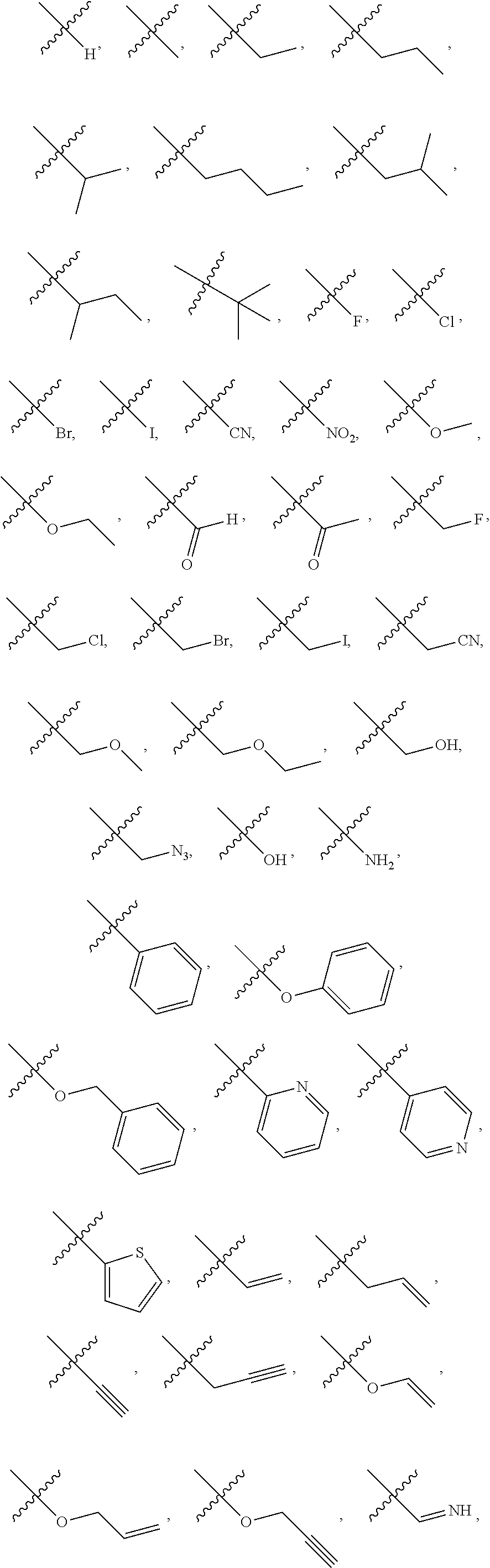
  • R 1 -R 12 are independently selected from H, D, FG, optionally substituted (C 1 -C 12 )alkyl, optionally substituted hetero-(C 1 -C 12 )alkyl, optionally substituted (C 1 -C 12 )alkenyl, optionally substituted hetero-(C 1 -C 12 )alkenyl, optionally substituted (C 1 -C 12 )alkynyl, optionally substituted hetero-(C 1 -C 12 )alkynyl, optionally substituted (C 1 -C 12 )cycloalkyl, optionally substituted (C 1 -C 12 )cycloalkenyl, optionally substituted aryl, optionally substituted heterocycle, optionally substituted mixed ring system, —C(R 13 ) 3 , —CH(R 13 ) 2 , —CH 2 R 13 ,
  • R 6 -R 9 are independently selected from:
  • the plurality of organic linking ligands comprise a least one organic linking ligand having the structure of:
  • the disclosure further provides that the organic linking ligands which comprise hydroxyl groups may further comprise a hydroxyl protecting group.
  • the disclosure further provides that the organic linking moieties which comprise amine groups may further comprise an amine protecting group.
  • the amine protecting group is a tert-butyl carbamate (Boc) group.
  • the disclosure further provides that the organic linking moieties which comprise carbonyl groups may further comprise a carbonyl protecting group.
  • the disclosure provides for a MOF comprising a plurality of SBUs that are linked together by a plurality of organic linking ligands, wherein at least two of the SBUs comprise different metals or metal ions and/or wherein at least two of the organic linking ligands comprise a different number or a different type of functional group(s).
  • the plurality of SBUs comprise at least two, at least three, or at least three SBUs that differ by being comprised of different metals or metal ions.
  • the plurality of SBUs comprise one or more metals or metal ions selected from: Li + , Na + , K + , Rb + , Cs + , Be 2+ , Mg 2+ , Ca 2+ , Sr 2+ , Ba 2+ , Sc 3+ , Sc 2+ , Sc + , Y 3+ , Y 2+ , Y + , Ti 4+ , Ti 3+ , Ti 2+ , Zr 4+ , Zr 3+ , Zr 2+ , Hf 4+ , Hf 3+ , V + , V 4+ , V 3+ , V 2+ , Nb 5+ , Nb 4+ , Nb 3+ , Nb 2+ , Ta 5+ , Ta 4+ , Ta 3+ , Ta 2+ , Cr 6+ , Cr 5+ , Cr 4+ , Cr 3+ , Cr 2+ , Cr + , Cr, Mo 6+ , Mo 5+ , Mo 5+ ,
  • the plurality of SBUs comprise one or more divalent metal ions selected from: Be 2+ , Mg 2+ , Ca 2+ , Sr 2+ , Ba 2+ , Sc 2+ , Y 2+ , Ti 2+ , Zr 2+ , V 2+ , Nb 2+ , Ta 2+ , Cr 2+ , Mo 2+ , W 2+ , Mn 2+ , Re 2+ , Fe 2+ , Ru 2+ , Os 2+ , Co 2+ , Rh 2+ , Ir 2+ , Ni 2+ , Pd 2+ , Pt 2+ , Cu 2+ , Ag 2+ , Au 2+ , Zn 2+ , Cd 2+ , Hg 2+ , B 2+ , Al 2+ , Ga 2+ , In 2+ , Si 2+ , Ge 2+ , Sn 2+ , Pb 2+ , As 2+ , Te 2+ , La 2+ , Ce 2
  • the plurality of SBUs comprise one or more divalent metal ions selected from: Mg 2+ , Ca 2+ , Sr 2+ , Mn 2+ , Fe 2+ , Co 2+ , Ni 2+ , and Zn 2+ , including any complexes which contain the metal ions, as well as any corresponding metal salt counter-anions.
  • the plurality of SBUs all have the same topology.
  • the disclosure provides for a MOF that comprises a structure that is similar to or a variant of MOF-74 or IRMOF-74.
  • the disclosure also provides for a device comprising a MOF disclosed herein.
  • the device is a gas separation and/or gas storage device.
  • the device is a water storage device.
  • the disclosure further provides a method of separating one or more gases from a gas mixture comprising contacting the gas mixture with a MOF of the disclosure.
  • the disclosure provides a method of catalyzing the formation of one or more products from one or more reactants by using a one-pot co-catalyst system that comprises contacting the one or more reactants with a MOF disclosed herein.
  • FIG. 1A-C shows mm-MOFs of the disclosure.
  • A provides an exemplary scheme for combination of metal ions used to synthesize mm-MOF-74.
  • B presents the experimental powder X-ray diffraction pattern (PXRD) for mm-MOF-74's which contains different metal as compared to the calculated MOF-74 PXRD (bottom). A comparison of the peaks shows agreement between the patterns, indicating that the synthesized material has MOF-74 topology.
  • (C) shows the ratio of metals found in three distinct regions of a M10M-MOF-74 sample (inset: SEM image indicating the specific region (1, 2 and 3) in which EDS was collected to quantify the ratio of metals present).
  • FIG. 2 presents the PXRD pattern of IRMOF-74-III[(CH 2 NHMe) 2 ] [(CH 2 OH) 2 ] (top) as compared to the calculated pattern for IRMOF-III (bottom). A comparison of the peaks shows agreement between the patterns, indicating that the synthesized material has the MOF-74-III structure.
  • FIG. 3A-B presents (A) an 1 H NMR spectrum of a hydrolytically degraded sample of IRMOF-74-III[(CH 2 NHMe) 2 ][(CH 2 OH) 2 ] at 500 MHz, using DMSO-d 6 /D 2 O/DCl. The spectrum shows that the product is comprised of two different linking ligands. (B) Nitrogen adsorption isotherms of a series of MM-MOF-74 measured at 77 K. As a reference, the isotherm of Mg-MOF-74 is overlaid.
  • FIG. 4 presents that the multi-functional MOFs disclosed herein can be utilized as a one-pot co-catalyst system.
  • FIG. 5 presents a scheme for the development of multi-functional MOFs for multifaceted applications.
  • FIG. 6 presents the components of the Mg-MOF-74 framework.
  • FIG. 7A-B provides (A) a reaction scheme for the synthesis of IRMOF-74-III.
  • On the right is shown a schematic representation of the IRMOF-74-III pore as functionalized with the organic linkers 5a-5d and post-synthetic deprotection of Boc groups.
  • FIG. 8A-B presents the results of functionalizing IRMOF-74-III.
  • A Presents the structures of functionalized organic links resulting from high-yielding, scalable syntheses.
  • B Presents PXRD patterns of seven functionalized IRMOF-74-III derivatives.
  • FIG. 9 presents the structures of 12 different organic linking moieties that have been synthesized for IRMOF-74-III. Eleven of them formed the target morphology. Further, clean postsynthetic deprotection of Boc-amine moieties was achieved.
  • FIG. 10 presents a scheme for the synthesis of an (CH 2 NMeBoc) 2 based organic linker that can be used to synthesize a functionalized Mg-IRMOF-74-III.
  • FIG. 11 presents various organic moieties with a variety of functional groups that can be used the synthesis of functionalized Mg-IRMOF-74-III.
  • FIG. 12 presents PXRD patterns comparing the as-synthesized IRMOF-74-III products with the simulated patterns.
  • FIG. 13 provides an 1 H NMR spectrum of IRMOF-74-III[(CH 2 NMeBoc) 2 ] at 400 MHz, using DMSO-d 6 +DCl/D 2 O.
  • the NMR spectrum shows that the Boc groups are intact during MOF synthesis.
  • FIG. 14 provides an 1 H NMR spectrum of IRMOF-74-III[CH 2 NHBoc] at 400 MHz, using DMSO-d 6 +DCl/D 2 O.
  • the NMR spectrum shows that the Boc groups are intact during MOF synthesis.
  • FIG. 15 provides an 1 H NMR spectrum of IRMOF-74-III[CO 2 t Bu] at 400 MHz, using DMSO-d 6 +DCl/D 2 O.
  • the NMR spectrum shows that the t-butyl groups are intact during MOF synthesis.
  • FIG. 16 provides an 1 H NMR spectrum of deprotected IRMOF-74-III[CH 2 NHBoc] at 400 MHz, using DMSO-d 6 +DCl/D 2 O.
  • the NMR shows that by-products are formed when the Boc group was removed by heating at 200° C. for 2 hours in DEF.
  • FIG. 17 provides for the synthesis of organic linking moieties that have sec- and aromatic amines.
  • FIG. 18 provides thermogravimetric analysis (TGA) data for IRMOF-74-III[CH 2 NHBoc] indicating that a higher temperature is required for deprotection.
  • FIG. 19 presents an 1 H NMR spectrum of digested IRMOF-74-III[(CH 2 NHMeBoc) 2 ] at 400 MHz, using DMSO-d 6 +DCl/D 2 O.
  • the NMR spectrum indicates the peak location for a Boc protected N-linked group and a peak indicating the Boc group's removal from the N-linked group.
  • FIG. 20 presents an 1 H NMR spectrum of deprotected IRMOF-74-III[(CH 2 NHMeBoc) 2 ] at 500 MHz, using DMSO-d 6 +DCl/D 2 O.
  • the NMR spectrum indicates the complete, clean removal of Boc groups was achieved by ⁇ -wave heating at 230° C. in DMF.
  • FIG. 21 provides PXRD tracings indicating that the deprotection of IRMOF-74-III[(CH 2 NHMe) 2 ] in DMF at 230° C. for 10 minutes provides a still crystalline deprotected IRMOF-74-III[(CH 2 NHMe) 2 ].
  • FIG. 22 presents an 1 H NMR spectrum of digested IRMOF-74-III[CH 2 NHBoc] at 500 MHz, using DMSO-d 6 +DCl/D 2 O.
  • the NMR indicates that the removal of the BOC group of IRMOF-74-III[CH 2 NHBoc] using DMF at 230° C. for 10 minutes is less effective than the deprotection of the Boc groups for IRMOF-74-III[(CH 2 NHBoc) 2 ].
  • FIG. 23 presents an 1 H NMR spectrum of digested IRMOF-74-III[CH 2 NH 2 ] at 400 MHz, using DMSO-d 6 +DCl/D 2 O.
  • the NMR indicates that a 2-ethyl-1-hexanol/ethylene glycol/water mixed solvent system allows for complete removal of the Boc protecting group.
  • FIG. 24 presents an 1 H NMR spectrum demonstrating the clean deprotection of the Boc protecting group of IRMOF-74-III[CH 2 NHBoc](DMSO-d 6 +DCl/D 2 O) using 2-ethyl-1-hexanol/ethylene glycol/water mixed-solvent system at 230° C. for 10 minutes.
  • FIG. 25 provides PXRD tracings indicating that the IRMOF-74-III frameworks are still crystalline post deprotection using a 2-ethyl-1-hexanol/ethylene glycol/water mixed-solvent system at 230° C. for 10 minutes.
  • FIG. 26 demonstrates the scope of the alkylamine functionality and examples of reactions that can lead to additional multifunctional framework systems.
  • FIG. 27 presents an N 2 -isotherm at 77K demonstrating reasonable N 2 uptake by IRMOF-74-III[(CH 2 NHMe) 2 )].
  • Activation procedure was with DMF, solvent exchange to MeOH, and evacuate at room temperature for 12 hour and then 100° C. for 12 hours.
  • FIG. 28 presents that N-Boc deprotection was successful for mixed linker systems.
  • FIG. 29 presents an 1 H NMR spectrum of IRMOF-74-III [(CH 2 NHMe) 2 ][(CH 2 OH) 2 ] at 500 MHz, using DMSO-d 6 +DCl/D 2 O.
  • the NMR indicates the clean removal of the Boc protecting groups.
  • FIG. 30 shows nitrogen adsorption isotherms for functionalized IRMOF-74-III measured at 77 K.
  • IRMOF-74-III-CH 3 IRMOF-74-III-NH 2 , IRMOF-74-III-CH 2 NHBoc, IRMOF-74-III-CH 2 NH 2 , IRMOF-74-III-CH 2 NMeBoc, and IRMOF-74-III-CH 2 NHMe.
  • a wavy line intersecting another line that is connected to an atom indicates that this atom is covalently bonded to another entity that is present but not being depicted in the structure.
  • a wavy line that does not intersect a line but is connected to an atom indicates that this atom is interacting with another atom by a bond or some other type of identifiable association.
  • a bond indicated by a straight line and a dashed line indicates a bond that may be a single covalent bond or alternatively a double covalent bond. But in the case where an atom's maximum valence would be exceeded by forming a double covalent bond, then the bond would be a single covalent bond.
  • alkyl refers to an organic group that is comprised of carbon and hydrogen atoms that contain single covalent bonds between carbons.
  • an “alkyl” as used in this disclosure refers to an organic group that contains 1 to 30 carbon atoms, unless stated otherwise. Where if there is more than 1 carbon, the carbons may be connected in a linear manner, or alternatively if there are more than 2 carbons then the carbons may also be linked in a branched fashion so that the parent chain contains one or more secondary, tertiary, or quaternary carbons.
  • An alkyl may be substituted or unsubstituted, unless stated otherwise.
  • alkenyl refers to an organic group that is comprised of carbon and hydrogen atoms that contains at least one double covalent bond between two carbons.
  • an “alkenyl” as used in this disclosure refers to organic group that contains 1 to 30 carbon atoms, unless stated otherwise. While a C 1 -alkenyl can form a double bond to a carbon of a parent chain, an alkenyl group of three or more carbons can contain more than one double bond. It certain instances the alkenyl group will be conjugated, in other cases an alkenyl group will not be conjugated, and yet other cases the alkenyl group may have stretches of conjugation and stretches of nonconjugation.
  • the carbons may be connected in a linear manner, or alternatively if there are more than 3 carbons then the carbons may also be linked in a branched fashion so that the parent chain contains one or more secondary, tertiary, or quaternary carbons.
  • An alkenyl may be substituted or unsubstituted, unless stated otherwise.
  • alkynyl refers to an organic group that is comprised of carbon and hydrogen atoms that contains a triple covalent bond between two carbons.
  • an “alkynyl” as used in this disclosure refers to organic group that contains 1 to 30 carbon atoms, unless stated otherwise. While a C 1 -alkynyl can form a triple bond to a carbon of a parent chain, an alkynyl group of three or more carbons can contain more than one triple bond.
  • the carbons may be connected in a linear manner, or alternatively if there are more than 4 carbons then the carbons may also be linked in a branched fashion so that the parent chain contains one or more secondary, tertiary, or quaternary carbons.
  • An alkynyl may be substituted or unsubstituted, unless stated otherwise.
  • aryl refers to a conjugated planar ring system with delocalized pi electron clouds that contain only carbon as ring atoms.
  • An “aryl” for the purposes of this disclosure encompass from 1 to 12 aryl rings wherein when the aryl is greater than 1 ring the aryl rings are joined so that they are linked, fused, or a combination thereof.
  • An aryl may be substituted or unsubstituted, or in the case of more than one aryl ring, one or more rings may be unsubstituted, one or more rings may be substituted, or a combination thereof.
  • cluster refers to identifiable associations of 2 or more atoms. Such associations are typically established by some type of bond-ionic, covalent, Van der Waal, coordinate and the like.
  • cycloalkyl refers to an alkyl that contains at least 3 carbon atoms but no more than 12 carbon atoms connected so that it forms a ring.
  • a “cycloalkyl” for the purposes of this disclosure encompass from 1 to 12 cycloalkyl rings, wherein when the cycloalkyl is greater than 1 ring, then the cycloalkyl rings are joined so that they are linked, fused, or a combination thereof.
  • a cycloalkyl may be substituted or unsubstituted, or in the case of more than one cycloalkyl ring, one or more rings may be unsubstituted, one or more rings may be substituted, or a combination thereof.
  • cycloalkenyl refers to an alkene that contains at least 3 carbon atoms but no more than 12 carbon atoms connected so that it forms a ring.
  • a “cycloalkenyl” for the purposes of this disclosure encompass from 1 to 12 cycloalkenyl rings, wherein when the cycloalkenyl is greater than 1 ring, then the cycloalkenyl rings are joined so that they are linked, fused, or a combination thereof.
  • a cycloalkenyl may be substituted or unsubstituted, or in the case of more than one cycloalkenyl ring, one or more rings may be unsubstituted, one or more rings may be substituted, or a combination thereof.
  • framework refers to a highly ordered structure comprised of secondary building units (SBUs) that can be linked together in defined, repeated and controllable manner, such that the resulting structure is characterized as being porous, periodic and crystalline.
  • SBUs secondary building units
  • “frameworks” are two dimensional (2D) or three dimensional (3D) structures.
  • Examples of “frameworks” include, but are not limited to, “metal-organic frameworks” or “MOFs”, “zeolitic imidazolate frameworks” or “ZIFs”, or “covalent organic frameworks” or “COFs”.
  • MOFs and ZIFs comprise SBUs of metals or metal ions linked together by forming covalent bonds with linking clusters on organic linking moieties
  • COFs are comprised of SBUs of organic linking moieties that are linked together by forming covalent bonds via linking clusters.
  • Framework are highly ordered and extended structures that are not based upon a centrally coordinated ion, but involve many repeated secondary building units (SBUs) linked together. Accordingly, “frameworks” are orders of magnitude much larger than coordination complexes and have different structural and chemical properties due to the framework's open and ordered structure.
  • FG refers to specific groups of atoms within molecules that are responsible for the characteristic chemical reactions of those molecules. While the same functional group will undergo the same or similar chemical reaction(s) regardless of the size of the molecule it is a part of, its relative reactivity can be modified by nearby functional groups. The atoms of functional groups are linked to each other and to the rest of the molecule by covalent bonds.
  • Examples of FG include, but are not limited to, substituted or unsubstituted alkyls, substituted or unsubstituted alkenyls, substituted or unsubstituted alkynyls, substituted or unsubstituted aryls, substituted or unsubstituted hetero-alkyls, substituted or unsubstituted hetero-alkenyls, substituted or unsubstituted hetero-alkynyls, substituted or unsubstituted cycloalkyls, substituted or unsubstituted cycloalkenyls, substituted or unsubstituted hetero-aryls, substituted or unsubstituted heterocycles, halos, hydroxyls, anhydrides, carbonyls, carboxyls, carbonates, carboxylates, aldehydes, haloformyls, esters, hydroperoxy, peroxy, ethers, orthoesters,
  • heterocycle refers to ring structures that contain at least 1 noncarbon ring atom.
  • a “heterocycle” for the purposes of this disclosure encompass from 1 to 12 heterocycle rings wherein when the heterocycle is greater than 1 ring the heterocycle rings are joined so that they are linked, fused, or a combination thereof.
  • a heterocycle may be a hetero-aryl or nonaromatic, or in the case of more than one heterocycle ring, one or more rings may be nonaromatic, one or more rings may be hetero-aryls, or a combination thereof.
  • a heterocycle may be substituted or unsubstituted, or in the case of more than one heterocycle ring one or more rings may be unsubstituted, one or more rings may be substituted, or a combination thereof.
  • the noncarbon ring atom is N, O, S, Si, Al, B, or P.
  • these noncarbon ring atoms can either be the same element, or combination of different elements, such as N and O.
  • heterocycles include, but are not limited to: a monocyclic heterocycle such as, aziridine, oxirane, thiirane, azetidine, oxetane, thietane, pyrrolidine, pyrroline, imidazolidine, pyrazolidine, pyrazoline, dioxolane, sulfolane 2,3-dihydrofuran, 2,5-dihydrofuran tetrahydrofuran, thiophane, piperidine, 1,2,3,6-tetrahydropyridine, piperazine, morpholine, thiomorpholine, pyran, thiopyran, 2,3-dihydropyran, tetrahydropyran, 1,4-dihydropyridine, 1,4-dioxane, 1,3-dioxane, dioxane, homopiperidine, 2,3,4,7-tetrahydro-1H-azepine homopiperaz
  • heterocycle includes polycyclic heterocycles wherein the ring fusion between two or more rings includes more than one bond common to both rings and more than two atoms common to both rings.
  • bridged heterocycles include quinuclidine, diazabicyclo[2.2.1]heptane and 7-oxabicyclo[2.2.1]heptane.
  • hetero-aryl used alone or as a suffix or prefix, refers to a heterocycle or heterocyclyl having aromatic character.
  • heteroaryls include, but are not limited to, pyridine, pyrazine, pyrimidine, pyridazine, thiophene, furan, furazan, pyrrole, imidazole, thiazole, oxazole, pyrazole, isothiazole, isoxazole, 1,2,3-triazole, tetrazole, 1,2,3-thiadiazole, 1,2,3-oxadiazole, 1,2,4-triazole, 1,2,4-thiadiazole, 1,2,4-oxadiazole, 1,3,4-triazole, 1,3,4-thiadiazole, and 1,3,4-oxadiazole.
  • heterocyclic group refers to a heterocycle that has had one or more hydrogens removed therefrom.
  • hetero- when used as a prefix, such as, hetero-alkyl, hetero-alkenyl, hetero-alkynyl, or hetero-hydrocarbon, for the purpose of this disclosure refers to the specified hydrocarbon having one or more carbon atoms replaced by non-carbon atoms as part of the parent chain.
  • non-carbon atoms include, but are not limited to, N, O, S, Si, Al, B, and P. If there is more than one non-carbon atom in the hetero-based parent chain then this atom may be the same element or may be a combination of different elements, such as N and O.
  • hydrocarbons refers to groups of atoms that contain only carbon and hydrogen. Examples of hydrocarbons that can be used in this disclosure include, but are not limited to, alkanes, alkenes, alkynes, arenes, and benzyls.
  • linking ligand or “organic linking ligand” refers to a parent chain that binds a metal or metal ion or a plurality of metals or metal ions.
  • a linking moiety may be further substituted post-synthesis by reacting with one or more post-framework reactants.
  • linking cluster refers to one or more atoms capable of forming an association, e.g. covalent bond, polar covalent bond, ionic bond, and Van Der Waal interactions, with one or more atoms of another linking moiety, and/or one or more metal or metal ions.
  • a linking cluster can be part of the parent chain itself and/or additionally can arise from functionalizing the parent chain, e.g. adding carboxylic acid groups to the parent chain.
  • a linking cluster can comprise NN(H)N, N(H)NN, CO 2 H, CS 2 H, NO 2 , SO 3 H, Si(OH) 3 , Ge(OH) 3 , Sn(OH) 3 , Si(SH) 4 , Ge(SH) 4 , Sn(SH) 4 , PO 3 H, AsO 3 H, AsO 4 H, P(SH) 3 , As(SH) 3 , CH(RSH) 2 , C(RSH) 3 , CH(RNH 2 ) 2 , C(RNH 2 ) 3 , CH(ROH) 2 , C(ROH) 3 , CH(RCN) 2 , C(RCN) 3 , CH(SH) 2 , C(SH) 3 , CH(NH 2 ) 2 , C(NH 2 ) 3 , CH(OH) 2 , C(OH) 3 , CH(CN) 2 , and C(CN) 3 , wherein R is an alkyl group having from 1 to 5 carbon
  • the linking clusters disclosed herein are Lewis bases, and therefore have lone pair electrons available and/or can be deprotonated to form stronger Lewis bases.
  • the deprotonated version of the linking clusters therefore, are encompassed by the disclosure and anywhere a linking cluster that is depicted in a non-de-protonated form, the de-protonated form should be presumed to be included, unless stated otherwise.
  • a “metal” refers to a solid material that is typically hard, shiny, malleable, fusible, and ductile, with good electrical and thermal conductivity. “Metals” used herein refer to metals selected from alkali metals, alkaline earth metals, lanthanides, actinides, transition metals, and post transition metals.
  • a “metal ion” refers to an ion of a metal.
  • Metal ions are generally Lewis Acids and can form coordination complexes.
  • the metal ions used for forming a coordination complex in a framework are ions of transition metals.
  • mixed ring system refers to optionally substituted ring structures that contain at least two rings, and wherein the rings are joined together by linking, fusing, or a combination thereof.
  • a mixed ring system comprises a combination of different ring types, including cycloalkyl, cycloalkenyl, aryl, and heterocycle.
  • post-framework reactants refers to all known substances that are directly involved in a chemical reaction. Post-framework reactants typically are substances, either elemental or MOF frameworks, which have not reached the optimum number of electrons in their outer valence levels, and/or have not reached the most favorable energetic state due to ring strain, bond length, low bond dissociation energy, and the like. Some examples of post-framework reactants include, but are not limited to:
  • each R is independently selected from the group comprising: H, sulfonates, tosylates, azides, triflates, ylides, alkyl, aryl, OH, alkoxy, alkenes, alkynes, phenyl and substitutions of the foregoing, sulfur-containing groups (e.g., thioalkoxy, thionyl chloride), silicon-containing groups, nitrogen-containing groups (e.g., amides and amines), oxygen-containing groups (e.g., ketones, carbonates, aldehydes, esters, ethers, and anhydrides), halogen, nitro, nitrile, nitrate, nitroso, amino, cyano, ureas, boron-containing groups (e.g., sodium borohydride, and catechol
  • substituted with respect to hydrocarbons, heterocycles, and the like, refers to structures wherein the parent chain contains one or more substituents.
  • substituted refers to an atom or group of atoms substituted in place of a hydrogen atom.
  • a substituent would include deuterium atoms.
  • Metal-organic frameworks are porous crystalline materials that are constructed by linking metal clusters called Secondary Building Units (SBUs) and organic linking moieties.
  • SBUs Secondary Building Units
  • the pore environment in MOFs depends on the nature and combination of those building units; thus, the property and function of MOFs can be varied by employing different building units to gain optimal performance for each intended application.
  • the high structural tunability and diversity are distinguishing characteristics of MOFs, it is highly challenging to synthesize a MOF in which the SBUs are linked by multiple types of differently functionalized organic linking ligands and/or where the SBUs are comprised of different metal atoms.
  • the disclosure provides for MOFs that comprise a plurality of different types of organic linking moieties, and/or a plurality of different types of SBUs.
  • the disclosure further provides that the MOFs of the disclosure comprise SBUs which are linked by functionalized organic linking ligands.
  • the MOF comprises two or more types of differently functionalized linking ligands.
  • the disclosure provides that the MOFs of the disclosure comprise organic linking moieties which are linked to two or more SBUs that comprise different metal, metal ions or metal clusters.
  • the disclosure provides for MOFs comprising SBUs which are linked by two or more types of differently functionalized organic linking ligands, wherein the different types of functional groups on different organic linking moieties modify the chemical and physical properties of a MOF disclosed herein.
  • the MOFs of the disclosure comprise organic linking moieties which are linked to two or more SBUs that comprise different metal or metal ion atoms, and comprise SBUs which are linked by a functionalized linking ligand or wherein the SUBs are linked by two or more types of differently functionalized organic linking ligands.
  • the MOFs of the disclosure are multivariate in that the material properties can be readily modified by changing the ratio between multiple types of metal ions in SBUs or the type or ratio between multiple types of differently functionalized organic linking ligands.
  • a MOF of the disclosure is multivariate in that the material properties of the MOF can be readily modified by changing the ratio between multiple types of metals or metal ions in the SBUs or the type, or ratio between multiple types, of differently functionalized organic linking ligands.
  • the MOF is topologically uniform, but is not uniform in terms of the metal composition of the SBUs or the structure of the organic linking ligands.
  • the structural tunability of the MOFs disclosed herein exceeds that of previously known systems, allowing for an extremely high level of optimization for various applications such as gas separation, gas storage, water storage and release, or catalysis.
  • the disclosure provides compositions and methods of making mixed-metal MOFs (mm-MOFs).
  • mm-MOFs of the disclosure can be generally characterized as having the formula:
  • the disclosure provides a MOF wherein the MOF comprises different metals, metal ions and/or metal clusters and the same linking ligand.
  • the disclosure provides a MOF wherein the metals, metal ions or metal clusters are the same but the linking ligands in the MOF are variant.
  • M 1 -M n comprise 2 different metal, metal ions or metal clusters.
  • the 2 different metal are selected from the group consisting of Li + , Na + , K + , Rb + , Cs + , Be 2+ , Mg 2+ , Ca 2+ , Sr 2+ , Ba 2+ , Sc 3+ , Sc 2+ , Sc + , Y 3+ , Y 2+ , Y + , Ti 4+ , Ti 3+ , Ti 2+ , Zr 4+ , Zr 3+ , Zr 2+ , Hf 4+ , Hf 3+ , V 5+ , V 4+ , V 3+ , V 2+ , Nb 5+ , Nb 4+ , Nb 3+ , Nb 2+ , Ta 5+ , Ta 4+ , Ta 3+ , Ta 2+ , Cr 6+ , Cr 5+ , Cr 4+ , Cr 3+ , Cr 2+ ,
  • the metals are comprised of different types of divalent metal ions or divalent metal ion complexes.
  • divalent metal ions include Be 2+ , Mg 2+ , Ca 2+ , Sr 2+ , Ba 2+ , Sc 2+ , Y 2+ , Ti 2+ , Zr 2+ , V 2+ , Nb 2+ , Ta 2+ , Cr 2+ , Mo 2+ , W 2+ , Mn 2+ , Re 2+ , Fe 2+ , Ru 2+ , Os 2+ , Co 2+ , Rh 2+ , Ir 2+ , Ni 2+ , Pd 2+ , Pt 2+ , Cu + , Ag 2+ , Au 2+ , Zn 2+ , Cd 2+ , Hg 2+ , B 2+ , Al 2+ , Ga 2+ , In 2+ , Si 2+ , Ge 2+ , Sn 2+ , Pb 2+ , As
  • the 2 metal are selected from the group consisting of Mg, Ca, Sr, Ba, Mn, Fe, Co, Ni, Zn, and Cd.
  • the linking ligand comprise a structure of Formula I and/or II:
  • n is a number from 0 to 10;
  • a 1 -A 8 are independently a C or N;
  • R 1 -R 12 are independently selected from H, D, FG, optionally substituted (C 1 -C 12 )alkyl, optionally substituted hetero-(C 1 -C 12 )alkyl, optionally substituted (C 1 -C 12 )alkenyl, optionally substituted hetero-(C 1 -C 12 )alkenyl, optionally substituted (C 1 -C 12 )alkynyl, optionally substituted hetero-(C 1 -C 12 )alkynyl, optionally substituted (C 1 -C 12 )cycloalkyl, optionally substituted (C 1 -C 12 )cycloalkenyl, optionally substituted aryl, optionally substituted heterocycle, optionally substituted mixed ring system, —C(R 13 ) 3 , —CH(R 13 ) 2 , —CH 2 R 13 , —C(R 14 ) 3 , —CH(R 14 ) 2 , —CH 2 R 14 ,
  • R 13 is selected from FG, optionally substituted (C 1 -C 12 )alkyl, optionally substituted hetero-(C 1 -C 12 )alkyl, optionally substituted (C 1 -C 12 )alkenyl, optionally substituted hetero-(C 1 -C 12 )alkenyl, optionally substituted (C 1 -C 12 )alkynyl, optionally substituted hetero-(C 1 -C 12 )alkynyl, hemiacetal, hemiketal, acetal, ketal, and orthoester; and
  • R 14 is selected from one or more substituted or unsubstituted rings selected from cycloalkyl, aryl and heterocycle.
  • M 1 -M n comprise 4 different metal, metal ions or metal clusters.
  • the 4 different metal are selected from the group consisting of Li + , Na + , K + , Rb + , Cs + , Be 2+ , Mg 2+ , Ca 2+ , Sr 2+ , Ba 2+ , Sc 3+ , Sc 2+ , Sc + , Y 3+ , Y 2+ , Y + , Ti 4+ , Ti 3+ , Ti 2+ , Zr 4+ , Zr 3+ , Zr 2+ , Hf 4+ , Hf 3+ , V 5+ , V 4+ , V 3+ , V 2+ , Nb 5+ , Nb 4+ , Nb 3+ , Nb 2+ , Ta 5+ , Ta 4+ , Ta 3+ , Ta 2+ , Cr + , Cr 5+ , Cr 4+ , Cr 3+ , Cr 2+ , Cr
  • the metals are comprised of different types of divalent metal ions or divalent metal ion complexes.
  • divalent metal ions include Be 2+ , Mg 2+ , Ca 2+ , Sr 2+ , Ba 2+ , Sc 2+ , Y 2+ , Ti 2+ , Zr 2+ , V 2+ , Nb 2+ , Ta 2+ , Cr 2+ , Mo 2+ , W 2+ , Mn 2+ , Re 2+ , Fe 2+ , Ru 2+ , Os 2+ , Co 2+ , Rh 2+ , Ir 2+ , Ni 2+ , Pd 2+ , Pt 2+ , Cu 2+ , Ag 2+ , Au 2+ , Zn 2+ , Cd 2+ , Hg 2+ , B 2+ , Al 2+ , Ga 2+ , In 2+ , Si 2+ , Ge 2+ , Sn 2+ , Pb 2+ ,
  • the 4 metal are selected from the group consisting of Mg, Ca, Sr, Ba, Mn, Fe, Co, Ni, Zn, and Cd.
  • the linking ligand comprise a structure of Formula I and/or II as set forth above.
  • M 1 -M n comprise 6 different metal, metal ions or metal clusters.
  • the 6 different metal are selected from the group consisting of Li + , Na + , K + , Rb + , Cs + , Be 2+ , Mg 2+ , Ca 2+ , Sr 2+ , Ba 2+ , Sc 3+ , Sc 2+ , Sc + , Y 3+ , Y 2+ , Y + , Ti 4+ , Ti 3+ , Ti 2+ , Zr 4+ , Zr 3+ , Zr 2+ , Hf 4+ , Hf 3+ , V 5+ , V 4+ , V 3+ , V 2+ , Nb 5+ , Nb 4+ , Nb 3+ , Nb 2+ , Ta 5+ , Ta 4+ , Ta 3+ , Ta 2+ , Cr 6+ , Cr 5+ , Cr 4+ , Cr 3+ , Cr 2+ ,
  • the metals are comprised of different types of divalent metal ions or divalent metal ion complexes.
  • divalent metal ions include Be 2+ , Mg 2+ , Ca 2+ , Sr 2+ , Ba 2+ , Sc 2+ , Y 2+ , Ti 2+ , Zr 2+ , V 2+ , Nb 2+ , Ta 2+ , Cr 2+ , Mo 2+ , W 2+ , Mn 2+ , Re 2+ , Fe 2+ , Ru 2+ , Os 2+ , Co 2+ , Rh 2+ , Ir 2+ , Ni 2+ , Pd 2+ , Pt 2+ , Cu 2+ , Ag 2+ , Au 2+ , Zn 2+ , Cd 2+ , Hg 2+ , B 2+ , Al 2+ , Ga 2+ , In 2+ , Si 2+ , Ge 2+ , Sn 2+ , Pb 2+ ,
  • the 6 metal are selected from the group consisting of Mg, Ca, Sr, Ba, Mn, Fe, Co, Ni, Zn, and Cd.
  • the linking ligand comprise a structure of Formula I and/or II.
  • M 1 -M n comprise 8 different metal, metal ions or metal clusters.
  • the 8 different metal are selected from the group consisting of Li + , Na + , K + , Rb + , Cs + , Be 2+ , Mg 2+ , Ca 2+ , Sr 2+ , Ba 2+ , Sc 3+ , Sc 2+ , Sc + , Y 3+ , Y 2+ , Y + , Ti 4+ , Ti 3+ , Ti 2+ , Zr 4+ , Zr 3+ , Zr 2+ , Hf 4+ , Hf 3+ , V 5+ , V 4+ , V 3+ , V 2+ , Nb 5+ , Nb 4+ , Nb 3+ , Nb 2+ , Ta 5+ , Ta 4+ , Ta 3+ , Ta 2+ , Cr 6+ , Cr 5+ , Cr 4+ , Cr 3+ , Cr 2+ ,
  • the metals are comprised of different types of divalent metal ions or divalent metal ion complexes.
  • divalent metal ions include Be 2+ , Mg 2+ , Ca 2+ , Sr 2+ , Ba 2+ , Sc 2+ , Y 2+ , Ti 2+ , Zr 2+ , V 2+ , Nb 2+ , Ta 2+ , Cr 2+ , Mo 2+ , W 2+ , Mn 2+ , Re 2+ , Fe 2+ , Ru 2+ , Os 2+ , Co 2+ , Rh 2+ , Ir 2+ , Ni 2+ , Pd 2+ , Pt 2+ , Cu 2+ , Ag 2+ , Au 2+ , Zn 2+ , Cd 2+ , Hg 2+ , B 2+ , Al 2+ , Ga 2+ , In 2+ , Si 2+ , Ge 2+ , Sn 2+ , Pb 2+ ,
  • the 8 metal are selected from the group consisting of Mg, Ca, Sr, Ba, Mn, Fe, Co, Ni, Zn, and Cd.
  • the linking ligand comprise a structure of Formula I and/or II.
  • M 1 -M n comprise 10 or more different metal, metal ions or metal clusters.
  • the 10 or more different metal are selected from the group consisting of Li + , Na + , K + , Rb + , Cs + , Be 2+ , Mg 2+ , Ca 2+ , Sr 2+ , Ba 2+ , Sc 3+ , Sc 2+ , Sc + , Y 3+ , Y 2+ , Y + , Ti 4+ , Ti 3+ , Ti 2+ , Zr 4+ , Zr 3+ , Zr 2+ , Hf 4+ , Hf 3+ , V 5+ , V 4+ , V 3+ , V 2+ , Nb 5+ , Nb 4+ , Nb 3+ , Nb 2+ , Ta 5+ , Ta 4+ , Ta 3+ , Ta 2+ , Cr 6+ , Cr 5+ , Cr 4+ , Cr 3+ , Cr
  • the metals are comprised of different types of divalent metal ions or divalent metal ion complexes.
  • divalent metal ions include Be 2+ , Mg 2+ , Ca 2+ , Sr 2+ , Ba 2+ , Sc 2+ , Y 2+ , Ti 2+ , Zr 2+ , V 2+ , Nb 2+ , Ta 2+ , Cr 2+ , Mo 2+ , W 2+ , Mn 2+ , Re 2+ , Fe 2+ , Ru 2+ , Os 2+ , Co 2+ , Rh 2+ , Ir 2+ , Ni 2+ , Pd 2+ , Pt 2+ , Cu 2+ , Ag 2+ , Au 2+ , Zn 2+ , Cd 2+ , Hg 2+ , B 2+ , Al 2+ , Ga 2+ , In 2+ , Si 2+ , Ge 2+ , Sn 2+ , Pb 2+ ,
  • the 10 metal are selected from the group consisting of Mg, Ca, Sr, Ba, Mn, Fe, Co, Ni, Zn, and Cd.
  • the linking ligand comprise a structure of Formula I and/or II.
  • the disclosure exemplifies, but is not limited to, a plurality of mm-MOFs based upon MOF-74.
  • the disclosure demonstrates the synthesis of five isostructural, single-phase MOF-74 structures having 2 (Mg and Co; “M2M-”), 4 (Mg, Co, Ni and ZN; “M4M-”), 6 (Mg, Sr, Mn, Co, Ni and Zn; “M6M-”), 8 (Mg, CA SR, Mn, Fe, Co, Ni and Zn; “M8M-”) and 10 (Mg, Ca, Sr, Ba, Mn, Fe, Co, Ni, Zn, and Cd; “M10M-”) divalent metals (see, e.g., FIG. 1A ).
  • an mm-MOF using a linking ligand of Formula I and/or II comprising 10 different metals comprises ratios of metals as follows: Mg, 1.00; Ca, 0.08 ⁇ 0.02; Sr, 0.11 ⁇ 0.01; Ba, 0.28 ⁇ 0.04; Mn, 0.87 ⁇ 0.06; Fe, 1.57 ⁇ 0.34; Co, 1.01 ⁇ 0.11; Ni, 1.05 ⁇ 0.04; Zn, 0.74 ⁇ 0.04; Cd, 0.73 ⁇ 0.09.
  • the disclosure provides a mm-MOF having the empirical formula of Mg 0.269 Ca 0.022 Sr 0.030 Ba 0.075 Mn 0.234 Fe 0.422 Co 0.272 Ni 0.282 Zn 0.199 Cd 0.196 (DOT).(H 2 O) 7.8 .
  • the final molar ratio of the metal ions is affected by many factors, such as the reactivity, solubility, and coordination sphere of the metal ions and the pH of the reaction mixture.
  • Table 1 provides example of metal ratios of exemplary mm-MOF-74 crystals.
  • Table 2 provides porosity data of the exemplary mm-MOF-74 crystals of the disclosure.
  • mm-MOFs were characterized by PXRD, inductively coupled plasma optical emission and energy-dispersive X-ray spectroscopies (ICP-OES and EDS), scanning electron microscopy (SEM) and N 2 adsorption measurements.
  • ICP-OES and EDS inductively coupled plasma optical emission and energy-dispersive X-ray spectroscopies
  • SEM scanning electron microscopy
  • N 2 adsorption measurements The results demonstrate that mm-MOFs (e.g., mm-MOF-74) of varying metal composition containing up to 10 different metal ions, is obtained through a one-pot solvothermal reaction with good reproducibility and that his approach can be employed to incorporate metal ions (e.g., CA, Sr, Ba and Cd).
  • metal ions e.g., CA, Sr, Ba and Cd
  • the disclosure also provides methods of making mm-MOFs of the disclosure.
  • the method comprises a solvothermal reaction of a mixture comprising a desired linking ligand and a plurality of different metal salts dissolved in a solvent mixture comprising a polar aprotic solvent and heating the mixture to 70-150° C. for 10-48 hours.
  • the mixture comprises DMF.
  • the mixture comprises DMF, ethanol and water.
  • the mixture is heated to about 120° C. for 20-24 hours.
  • the resulting crystal can be isolated, washed, purified and dried as desired.
  • the disclosure provides for MOFs that can be tuned to adsorb a specific gas or multiple gases from mixed gas stream or liquid.
  • a MOF disclosed herein that is comprised of multiple different types of SBUs can provide open metal sites from different metals that have differential binding/interaction characteristics for specific gas molecules.
  • These MOFs can be further modified by manipulating the type of linking ligand and the linking ligand's characteristics.
  • a MOF disclosed herein that is comprised of specifically functionalized linking ligands or comprises multiple types of organic linking ligands can provide functional groups that have differential binding/interaction characteristics for specific gas molecules.
  • a MOF disclosed herein comprising a single type of SBU (i.e., homogenous metals) that is comprised of specifically functionalized linking ligands or comprises multiple types of organic linking ligands can provide functional groups that have differential binding/interaction characteristics for specific gas molecules.
  • a MOF disclosed herein can be comprised of both multiple different types of SBUs and multiple types of organic linking moieties so as to facilitate the adsorption of specific gas molecules from a gas mixture, including separating and/or storing gas molecules that are highly similar.
  • a MOF disclosed herein can be optimized to be a one-pot co-catalyst system which utilizes relay, tandem or synergistic catalytic cycles (e.g., see FIG. 4 ) by providing organic moieties that comprise different catalytic functional groups and/or different catalytic metal or metallated sites.
  • organic linking ligands that are differentially functionalized presynthesis i.e., constructing the framework with organic linking ligands that differ by the number and/or type of functional groups
  • organic linking ligands that comprise functional groups that are modified post-synthesis of the framework by reacting the functional group with a post-framework reactant organic linking ligands that comprise functional group(s) that are protected with a suitable protecting group which can then be removed post-synthesis of the framework, wherein the de-protected functional groups may be modified by reacting with a post-framework reactant
  • organic linking ligands that comprise functional groups which are protected with one type of protecting group while other functional groups are protected with a different type of protecting group such that the protecting groups can be differentially removed post-synthesis of the framework by using different reaction conditions.
  • MOFs which are comprised of a plurality of secondary building units (SBUs) that are linked together by a plurality of organic linking ligands, wherein at least two of the SBUs comprise different metals or metal ions and/or wherein at least two of the organic linking ligands comprise a different number and/or different type of functional group.
  • the MOF is comprised of at least two SBUs which comprise different metal or metal ions (i.e., a multi-metal MOF). The metals or metal ions modify the chemical and physical properties of the MOF.
  • the multi-metal MOFs of the disclosure are multivariate in that the material properties can be readily modified by changing the ratio between multiple types of metals or metal ions in SBUs.
  • a MOF of the disclosure comprises a plurality of SBUs, wherein at least 2, 3, 4, 5, 6, 7, 8, 9, 10 or more of the SBUs differ by being comprised of different metals or metal ions.
  • a MOF of the disclosure comprise a plurality of SBUs, wherein at least 2, 3, 4, 5, 6, 7, or 8 of the SBUs differ by being comprised of different types of divalent metal ions selected from the group consisting of Mg 2+ , Ca 2+ , Sr 2+ , Mn 2+ , Fe 2+ , Co 2+ , Ni 2+ , and Zn 2+ , including any complexes which contain the metal ions listed, as well as any corresponding metal salt counter-anions.
  • the disclosure provides for MOFs that comprise a plurality SBUs that are linked together by a plurality of organic linking ligands that are comprised of substituted (C 1 -C 20 ) alkyls, substituted (C 1 -C 20 ) alkenyls, substituted (C 1 -C 20 ) alkynyls, optionally substituted (C 1 -C 20 ) hetero-alkyls, optionally substituted (C 1 -C 20 ) hetero-alkenyls, optionally substituted (C 1 -C 20 ) hetero-alkynyls, substituted (C 3 -C 12 ) cycloalkyls, substituted (C 3 -C 12 ) cycloalkenyls, substituted aryls, optionally substituted heterocycles or optionally substituted mixed ring systems; wherein the organic linking ligands comprise functional groups that can form bond(s) with one or more SBUs; and wherein the linking ligands comprise functional groups that
  • the disclosure provides for MOFs that comprise a plurality SBUs that are linked together by a plurality of organic linking ligands that comprise a structure of Formula I and/or II:
  • n is a number from 0 to 10;
  • a 1 -A 8 are independently a C or N;
  • R 1 -R 12 are independently selected from H, D, functional group (FG), optionally substituted (C 1 -C 12 )alkyl, optionally substituted hetero-(C 1 -C 12 )alkyl, optionally substituted (C 1 -C 12 )alkenyl, optionally substituted hetero-(C 1 -C 12 )alkenyl, optionally substituted (C 1 -C 12 )alkynyl, optionally substituted hetero-(C 1 -C 12 )alkynyl, optionally substituted (C 1 -C 12 )cycloalkyl, optionally substituted (C 1 -C 12 )cycloalkenyl, optionally substituted aryl, optionally substituted heterocycle, optionally substituted mixed ring system, —C(R 13 ) 3 , —CH(R 13 ) 2 , —CH 2 R 13 , —C(R 14 ) 3 , —CH(R 14 ) 2 , —CH 2 R 14
  • R 14 is selected from one or more substituted or unsubstituted rings selected from cycloalkyl, aryl and heterocycle;
  • the MOF comprises two or more organic linking ligands which comprise different functional groups, and/or wherein the MOF comprises two or more SBUs that comprise different metals, metal ions, or metal containing complexes.
  • the disclosure provides for MOFs that comprise a plurality SBUs that are linked together by a plurality of organic linking ligands that comprise a structure of Formula III:
  • R 6 -R 9 are independently selected from:
  • the MOF comprises two or more organic linking ligands which comprise different functional groups, and/or wherein the MOF comprises two or more SBUs that comprise different metals, metal ions, or metal containing complexes.
  • a MOF of the disclosure comprises at least one organic linking ligand selected from:
  • the disclosure exemplifies the modifications of the pores by showing how the interior of porous MOFs can be designed to overcome the complications presented by the competition of water with CO 2 .
  • the disclosure also demonstrates the synthesis, characterization, porosity, and CO 2 capture properties (in dry and wet nitrogen streams) of IRMOF-74-III with the six different functionalities.
  • IRMOF-74-III-CH 2 NH 2 and —CH 2 NHMe exhibit strong binding of CO 2 and have the highest uptake, and that in breakthrough experiments the —CH 2 NH 2 form shows selectivity toward CO 2 in a wet nitrogen gas stream with 65% relative humidity (RH). Indeed, the behavior of this material under wet conditions remains unchanged from that observed under dry gas stream.
  • hydroxyl groups may further comprise a hydroxyl protecting group
  • amine groups may further comprise an amine protecting group
  • carbonyl groups may further comprise a carbonyl protecting group, unless stated otherwise herein.
  • an organic linking moiety comprising one or more amine groups may further comprise a tert-butyl carbamate protecting group (Boc group) that can be removed during or post-synthesis of the MOF framework.
  • hydroxyl protecting groups include, but are not limited to, methyl, tert-butyl, allyl, propargyl, p-chlorophenyl, p-methoxyphenyl, p-nitrophenyl, 2,4-dinitrophenyl, 2,3,5,6-tetrafluoro-4-(trifluoromethyl)phenyl, methoxymethyl, methylthiomethyl, (phenyldimethylsilyl)methoxymethyl, benzyloxymethyl, p-methoxy-benzyloxymethyl, p-nitrobenzyloxymethyl, o-nitrobenzyloxymethyl, (4-methoxyphenoxy)methyl, guaiacolmethyl, tert-butoxymethyl, 4-pentenyloxymethyl, tert-butyldimethylsiloxymethyl, thexyldimethylsiloxymethyl, tert-butyldiphenylsiloxymethyl, 2-methoxyethoxymethyl, 2,2,2-trich
  • carbonyl protecting groups include, but are not limited to, dimethyl acetal, 1-3-dioxane, 1-3-dioxolane, S,S′-dimethylthioacetal, 1,3-dithiane, 1,3-dithiolane, 1,3-oxathiolane, methyl ester, t-Butyl ester, allyl ester, 1,1-dimethylallyl ester, 2,2,2-trifluoroethyl ester, phenyl ester, benzyl ester, 4-methoxybenzyl ester, silyl ester, ortho ester, 9-fluorenylmethyl esters, 2-(trimethylsilyl)ethoxymethyl ester, 2-(trimethylsily)ethyl ester, halo esters, o-nitrobenzyl ester, and OBO ester.
  • amine protecting groups include, but are not limited to, methyl carbonate, 9-fluorenylmethyl carbamate (Fmoc), 2,2,2-trichloroethyl carbamate (Troc), t-butyl carbamate (Boc), 2-(trimethylsilyl)ethyl carbamate (Teoc), allyl carbamate (Alloc), benzyl carbamate (Cbz), trifluoroacetamide, benzylamine, allylamine, and tritylamine.
  • linking moieties that possess appropriate reactive functionalities can be chemically transformed by a suitable reactant post-synthesis of the framework to add further functionalities to the framework.
  • a suitable reactant post-synthesis of the framework to add further functionalities to the framework.
  • the MOFs of the disclosure may be generated by first utilizing a plurality of linking moieties having different functional groups, wherein at least one of these functional groups may be modified, substituted, or eliminated with a different functional group post-synthesis of the framework.
  • at least one linking ligand comprises a functional group that may be reacted with a post-framework reactant to further increase the diversity of the functional groups of the MOFs disclosed herein.
  • the MOF disclosed herein is MOF-74 or IRMOF-74 comprising one or more types of differently functionalized linking ligands wherein one or more types of the linking ligands can undergo post-synthetic modification with post-framework reactant so as to further functionalize the framework.
  • the MOFs of the disclosure may be further modified by reacting with one or more post-framework reactants that may or may not have denticity.
  • a MOF as-synthesized is reacted with at least one, at least two, or at least three post-framework reactants.
  • a MOF as-synthesized is reacted with at least two post-framework reactants.
  • a MOF as-synthesized is reacted with at least one post-framework reactant that will result in adding denticity to the framework.
  • a MOF disclosed herein can be modified by a post-framework reactant by using chemical reactions that modify, substitute, or eliminate a functional group post-synthesis. These chemical reactions may use one or more similar or divergent chemical reaction mechanisms depending on the type of functional group and/or post-framework reactant used in the reaction.
  • Examples of chemical reaction include, but are not limited to, radical-based, unimolecular nuclephilic substitution (SN1), bimolecular nucleophilic substitution (SN2), unimolecular elimination (E1), bimolecular elimination (E2), E1cB elimination, nucleophilic aromatic substitution (SnAr), nucleophilic internal substitution (SNi), nucleophilic addition, electrophilic addition, oxidation, reduction, cycloadition, ring closing metathesis (RCM), pericylic, electrocylic, rearrangement, carbene, carbenoid, cross coupling, and degradation.
  • Other agents can be added to increase the rate of the reactions disclosed herein, including adding catalysts, bases, and acids.
  • a post-framework reactant adds at least one effect to a MOF of the disclosure including, but not limited to, modulating the gas storage ability of the MOF; modulating the sorption properties of the MOF; modulating the pore size of the MOF; modulating the catalytic activity of the MOF; modulating the conductivity of the MOF; and modulating the sensitivity of the MOF to the presence of an analyte of interest.
  • a post-framework reactant adds at least two effects to the MOF of the disclosure including, but not limited to, modulating the gas storage ability of the MOF; modulating the sorption properties of the MOF; modulating the pore size of the MOF; modulating the catalytic activity of the MOF; modulating the conductivity of the MOF; and modulating the sensitivity of the MOF to the presence of an analyte of interest.
  • a post-framework reactant can be a saturated or unsaturated heterocycle.
  • a post-framework reactant has 1-20 carbons with functional groups including atoms such as N, S, and O.
  • a post-framework reactant is selected to modulate the size of the pores of a MOF disclosed herein.
  • a post-framework reactant is selected to increase the hydrophobicity of a MOF disclosed herein.
  • a post-framework reactant is selected to modulate gas separation of a MOF disclosed herein.
  • a post-framework reactant creates an electric dipole moment on the surface of a MOF of the disclosure when it chelates a metal ion.
  • a post-framework reactant is selected to modulate the gas sorption properties of a MOF of the disclosure.
  • a post-framework reactant is selected to promote or increase greenhouse gas sorption of a MOF disclosed herein.
  • a post-framework reactant is selected to promote or increase hydrocarbon gas sorption of a MOF of the disclosure.
  • a post-framework reactant is selected to increase or add catalytic efficiency to a MOF disclosed herein.
  • a post-framework reactant is selected so that organometallic complexes can be tethered to a MOF of the disclosure.
  • organometallic complexes can be used, for example, as heterogeneous catalysts.
  • a MOF of the disclosure can be used for a variety of applications, including for catalysis, gas storage, gas separation, or water storage and release.
  • a gas storage or gas separation material comprising a MOF of the disclosure.
  • a MOF of the disclosure includes a number of adsorption sites for storing and/or separating gas molecules. Suitable examples of such gases include, but are not limited to, gases comprising ammonia, argon, methane, propane, carbon dioxide, carbon monoxide, sulfur dioxide, hydrogen sulfide, phosphine, nitrous oxide, hydrogen, oxygen, nitrogen, fluorine, chlorine, helium, carbonyl sulfide, and combinations thereof.
  • a MOF disclosed herein is a hydrogen storage material that is used to store hydrogen (H 2 ).
  • a MOF disclosed herein is a carbon dioxide storage material that may be used to separate carbon dioxide from a gaseous mixture.
  • a MOF disclosed herein is a methane storage material that may be used to separate methane from a gaseous mixture.
  • the disclosure also provides an apparatus and method for separating one or more components from a multi-component gas using a separation system having a feed side and an effluent side separated by a MOF of the disclosure.
  • the apparatus may comprise a column separation format.
  • Natural gas refers to a multi-component gas obtained from a crude oil well (associated gas) or from a subterranean gas-bearing formation (non-associated gas).
  • the composition and pressure of natural gas can vary significantly.
  • a typical natural gas stream contains methane as a significant component.
  • the natural gas will also typically contain ethane, higher molecular weight hydrocarbons, one or more acid gases (such as carbon dioxide, hydrogen sulfide, carbonyl sulfide, carbon disulfide, and mercaptans), and minor amounts of contaminants such as water, nitrogen, iron sulfide, wax, and crude oil.
  • a MOF of the disclosure can be used as an adsorbent for methane.
  • a MOF disclosed herein can be used to separate and/or store one or more gases from a natural gas stream. In another embodiment, a MOF disclosed herein can be used to separate and/or store methane from a natural gas stream. In yet another embodiment, a MOF disclosed herein can be used to separate and/or store methane from a town gas stream. In yet another embodiment, a MOF disclosed herein can be used to separate and/or store methane from a biogas stream. In a certain embodiment, a MOF disclosed herein can be used to separate and/or store methane from a syngas stream. In an alternate embodiment, a MOF disclosed herein can be used to separate and/or store hexane isomers from a mixed gas stream.
  • a MOF disclosed herein is part of a device.
  • a gas separation device comprises a MOF of the disclosure.
  • a gas separation device used to separate one or more component gases from a multi-component gas mixture comprises a MOF disclosed herein.
  • gas separation and/or gas storage devices include, but are not limited to, purifiers, filters, scrubbers, pressure swing adsorption devices, molecular sieves, hollow fiber membranes, ceramic membranes, cryogenic air separation devices, and hybrid gas separation devices.
  • a gas separation device used to separate one or more gases with high electron density from gas mixture comprises a MOF of the disclosure.
  • a gas separation device used to separate methane, nitrogen, carbon dioxide, of water from a mixed gas stream comprises a MOF of the disclosure.
  • a gas storage material comprises a MOF disclosed herein.
  • a gas that may be stored or separated by the methods, compositions and systems of the disclosure includes gases such as ammonia, argon, methane, propane, carbon dioxide, carbon monoxide, sulfur dioxide, hydrogen sulfide, phosphine, nitrous oxide, hydrogen, oxygen, nitrogen, fluorine, chlorine, helium, carbonyl sulfide, and combinations thereof.
  • a gas binding material is a carbon dioxide binding material that may be used to separate carbon dioxide from a gaseous mixture.
  • a gas storage material is a hydrogen storage material that is used to store hydrogen (H 2 ).
  • a gas storage material is a carbon dioxide storage material that may be used to separate methane from a gaseous mixture.
  • a MOF disclosed herein can be used to separate and/or store one or more gases selected from the group comprising ammonia, argon, methane, propane, carbon dioxide, carbon monoxide, sulfur dioxide, hydrogen sulfide, phosphine, nitrous oxide, hydrogen, oxygen, nitrogen, fluorine, chlorine, helium, and carbonyl sulfide.
  • a MOF disclosed herein can be used to separate and/or store methane or hydrogen.
  • a MOF disclosed herein can be used to separate and/or store methane.
  • a MOF disclosed herein can be used to separate and/or store CO 2 .
  • a gas storage device comprises a MOF disclosed herein.
  • a gas storage device used to adsorb and/or absorb one or more component gases from a multi-component gas mixture comprises a MOF disclosed herein.
  • a gas storage device used to adsorb and/or absorb methane, hydrogen, carbon dioxide, or water from gas mixture comprises a MOF disclosed herein.
  • a MOF of the disclosure can be used as heterogeneous catalysts.
  • a MOF can be synthesized to have catalytic activity or be functionalized post synthetically with a post-framework reactant to become catalytic. Catalytic activities would include, but are not limited to, hydrolysis reactions, oxidations, reductions, ring closure reactions, metathesis reactions, and isomerizations.
  • a method to separate or store one or more gases comprises contacting one or more gases with a MOF of the disclosure.
  • a method to separate or store one or more gases from a mixed gas mixture comprises contacting the gas mixture with a MOF disclosed herein.
  • a method to separate or store one or more gases from a fuel gas stream comprises contacting the fuel gas stream with a MOF disclosed herein.
  • a method to separate or store methane from a natural gas stream comprises contacting the natural gas stream with a MOF disclosed herein.
  • a method to separate or store water from the exhaust of a combustion engine comprises contacting the exhaust with a MOF disclosed herein.
  • a method to separate or store one or more gases from flue-gas comprises contacting the flue-gas with a MOF disclosed herein.
  • Sorption is a general term that refers to a process resulting in the association of atoms or molecules with a target material. Sorption includes both adsorption and absorption. Absorption refers to a process in which atoms or molecules move into the bulk of a porous material, such as the absorption of water by a sponge. Adsorption refers to a process in which atoms or molecules move from a bulk phase (that is, solid, liquid, or gas) onto a solid or liquid surface. The term adsorption may be used in the context of solid surfaces in contact with liquids and gases.
  • adsorbates Molecules that have been adsorbed onto solid surfaces are referred to generically as adsorbates, and the surface to which they are adsorbed as the substrate or adsorbent.
  • Adsorption is usually described through isotherms, that is, functions which connect the amount of adsorbate on the adsorbent, with its pressure (if gas) or concentration (if liquid).
  • desorption refers to the reverse of adsorption, and is a process in which molecules adsorbed on a surface are transferred back into a bulk phase.
  • MOFs of the disclosure can be used as standard compounds for sorption instruments, and obtained results would be helpful to improve various industrial plants (i.e. separation or recovery of chemical substance).
  • the gaseous storage site comprises a MOF with a pore which has been functionalized with a group having a desired size or charge.
  • this activation involves removing one or more chemical moieties (guest molecules) from a MOF disclosed herein.
  • guest molecules include species such as water, solvent molecules contained within a MOF disclosed herein, and other chemical moieties having electron density available for attachment.
  • a MOFs used in the embodiments of the disclosure include a plurality of pores for gas adsorption.
  • the plurality of pores has a unimodal size distribution.
  • the plurality of pores have a multimodal (e.g., bimodal) size distribution.
  • H 4 DOT 2,5-dihydroxyterephthalic acid
  • mm-MOF-74 compounds were synthesized using varying amounts of metal salts combined with H 4 DOT.
  • the solid reagents were then dissolved in DMF/EtOH/water (in a 15:1:1 ratio respectively) and heated at 120° C. for 20-24 h.
  • the resulting crystals were soaked and washed, first with 75 mL of fresh DMF solvent for 5 exchanges over a 3 day period, and then with 180 mL of anhydrous MeOH for 12 exchanges over a 4 day period.
  • the porous MOF compounds were then activated to remove all solvent by evacuating under vacuum (100-200 mTorr) overnight, and then heating stepwise under vacuum at 4° C./min to 80° C.
  • Relative amounts (moles) of metals in the empirical formula were determined from experimental weight percent values.
  • the linker, DOT has a total anionic charge of four, with a minus charge on each carboxylate group and a minus charge on each hydroxyl group. Charge balance was achieved by assuming all metals were divalent and constraining the total moles of metals to 1.0. The empirical equations were then fit by varying the number of water molecules.
  • H 4 DOT (30 mg, 1.5 ⁇ 10 ⁇ 4 mol), Mg(NO 3 ) 2 .6H 2 O (58.2 mg, 2.27 ⁇ 10 ⁇ 4 mol), Co(NO 3 ) 2 .6H 2 O (66.1 mg, 2.27 ⁇ 10 ⁇ 4 mol) were sonicated and dissolved in 10 mL DMF, 0.6 mL EtOH, and 0.6 mL H 2 O in a 20-mL scintillation vial. The vial was sealed tightly and placed in an isothermal oven at 120° C. for 20 h for the completion of the solvothermal reaction. The resulting as-synthesized product was a red microcrystalline powder.
  • H 4 DOT (30 mg, 1.5 ⁇ 10 ⁇ 4 mol), Mg(NO 3 ) 2 .6H 2 O (30.7 mg, 1.20 ⁇ 10 ⁇ 4 mol), Co(NO 3 ) 2 .6H 2 O (34.9 mg, 1.20 ⁇ 10 ⁇ 4 mol), Ni(NO 3 ) 2 .6H 2 O (34.9 mg, 1.20 ⁇ 10 ⁇ 4 mol), Zn(NO 3 ) 2 .6H 2 O (35.7 mg, 1.20 ⁇ 10 ⁇ 4 mol) were sonicated and dissolved in 10 mL DMF, 0.6 mL EtOH, and 0.6 mL H 2 O in a 20-mL scintillation vial.
  • the vial was sealed tightly and placed in an isothermal oven at 120° C. for 24 h for the completion of the solvothermal reaction.
  • the resulting as-synthesized product was an orange microcrystalline powder. Different sizes of rod shaped single crystals and aggregates were seen under an optical microscope.
  • the PXRD pattern of the synthesized compound matches the simulated MOF-74 powder diffraction pattern. Elemental Analysis (activated): Calculated for Mg 0.190 Co 0.612 Ni 0.562 Zn 0.636 C 8 H 18.8 O 14.4 ⁇ Mg 0.190 Co 0.612 Ni 0.562 Zn 0.636 (DOT).(H 2 O) 8.4 (%): C, 20.86; H, 4.11; N, 0.00. Found (%): C, 20.37; H, 3.72; N, ⁇ 0.1.
  • H 4 DOT (30 mg, 1.5 ⁇ 10 ⁇ 4 mol), Mg(NO 3 ) 2 .6H 2 O (25.6 mg, 9.98 ⁇ 10 ⁇ 5 mol), Sr(NO 3 ) 2 (21.2 mg, 1.00 ⁇ 10 ⁇ 4 mol), Mn(NO 3 ) 2 .4H 2 O (25.1 mg, 1.00 ⁇ 10 ⁇ 4 mol), Co(NO 3 ) 2 .6H 2 O (29.1 mg, 1.00 ⁇ 10 ⁇ 4 mol), Ni(NO 3 ) 2 .6H 2 O (29.1 mg, 1.00 ⁇ 10 ⁇ 4 mol), Zn(NO 3 ) 2 .6H 2 O (29.7 mg, 9.98 ⁇ 10 ⁇ 5 mol) were sonicated and dissolved in 10 mL DMF, 0.6 mL EtOH, and 0.6 mL H 2 O in a 20-mL scintillation vial.
  • the vial was sealed tightly and placed in an isothermal oven at 120° C. for 22 h for the completion of the solvothermal reaction.
  • the resulting as-synthesized product was a green-black microcrystalline powder. Crystals were too small to be seen under an optical microscope.
  • the PXRD pattern of the synthesized compound matches the simulated MOF-74 powder diffraction pattern.
  • H 4 DOT (30 mg, 1.5 ⁇ 10 ⁇ 4 mol), Mg(NO 3 ) 2 .6H 2 O (14.6 mg, 5.69 ⁇ 10 ⁇ 5 mol), Ca(NO 3 ) 2 .4H 2 O (13.5 mg, 5.72 ⁇ 10 ⁇ 5 mol), Sr(NO 3 ) 2 (12.1 mg, 5.72 ⁇ 10 ⁇ 5 mol), Mn(NO 3 ) 2 .4H 2 O (14.3 mg, 5.70 ⁇ 10 ⁇ 5 mol), Fe(OAc) 2 (9.9 mg, 5.7 ⁇ 10 ⁇ 5 mol), Co(NO 3 ) 2 .6H 2 O (16.5 mg, 5.67 ⁇ 10 ⁇ 5 mol), Ni(NO 3 ) 2 .6H 2 O (16.5 mg, 5.67 ⁇ 10 ⁇ 5 mol), Zn(NO 3 ) 2 .6H 2 O (16.7 mg, 5.61 ⁇ 10 ⁇ 5 mol) were sonicated and dissolved in 10 mL DMF, 0.6 mL EtOH, and 0.6 mL
  • the vial was sealed tightly and placed in an isothermal oven at 120° C. for 24 h for the completion of the solvothermal reaction.
  • the resulting as-synthesized product was a black microcrystalline powder. Crystals were too small to be seen under an optical microscope.
  • the PXRD pattern of the synthesized compound matches the simulated MOF-74 powder diffraction pattern.
  • the vial was sealed tightly and placed in an isothermal oven at 120° C. for 24 h for the completion of the solvothermal reaction.
  • the resulting as-synthesized product was a black microcrystalline powder. Crystals were too small to be seen under an optical microscope.
  • the PXRD pattern of the synthesized compound matches the simulated MOF-74 powder diffraction pattern.
  • All MM-MOF-74 samples were prepared for SEM by dispersing the material onto a double sided adhesive conductive carbon tape that was attached to a flat aluminum sample holder. The samples were imaged at a working distance of 5-6 mm with accelerating voltage of 10 kV using a low vacuum detector (LVD) on an FEI Nova NanoSEM 230. Several samples of each MM-MOF-74 compound were imaged and compared. Multiple regions of each compound were seen to have crystalline material of the same morphology in varying sizes and aggregations.
  • LLD low vacuum detector
  • TGA measurements for all MM-MOF-74 samples were collected using a Perkin Elmer Pyris Diamond TG/DTA. Samples were heated at a constant rate of 5° C./min in a continuous air flow atmosphere (200 mL/min flow rate) on a platinum pan. The samples were activated prior to sample loading and weight stabilization, which was done in air.
  • the TGA profiles for MM-MOF-74 compounds are similar to those of the single-metal MOF-74 compounds.
  • the first weight loss (100-270° C.) is attributed to the removal of occluded and coordinated water molecules.
  • the second weight loss (approximately 300° C.) is related to the decomposition of organic linkers in air and the residual weight percent is assigned to the remaining metal oxides.
  • the weight percent of water molecules observed in the TGA curve (calculated value) for M2M-, M4M-, M6M-, M8M-, and M10M-MOF-74 are found to be 31.5% (33.2%), 29.9% (32.9%), 29.1% (32.3%), 32.0% (32.8%), and 34.3% (30.6%), respectively. If MgO, CaO, SrO, BaO, MnO 2 , Fe 2 O 3 , CoO, NiO, ZnO, and CdO are selectively formed as metal oxide residues, the final weight percent of the residue (calc.
  • M2M-, M4M-, M6M-, M8M-, and M10M-MOF-74 is estimated to be 30.6% (30.4%), 34.6% (32.0%), 33.0% (33.1%), 36.3% (32.7%), and 34.0% (35.6%), respectively.
  • the observed values for the first weight loss and final metal oxide residues are in good agreement with the calculated values.
  • the porosities of the M2M-, M4M-, M6M-, M8M-, and M10M-MOF-74 were investigated using a Quantachrome Autosorb-1 volumetric gas adsorption analyzer. All samples were activated and loaded into the sample holder in an argon glovebox. The N 2 adsorption measurements were carried out at 77 K, using a liquid N 2 bath. Ultra-high-purity grade N 2 and He (99.999% purity) were used throughout the adsorption experiments.
  • EDS X-Ray Energy Dispersive Spectroscopy
  • All MM-MOF-74 compounds for EDS were analyzed were prepared in the same way as for SEM in an FEI Nova NanoSEM 230 operated at 15 kV with Thermo Fisher Scientific Noran System Six Energy Dispersive X-ray Spectrometer.
  • the metals were identified for localized regions using the point and shoot mode.
  • the samples were all analyzed at several different areas that are not closely neighboring one another to get a survey of the metals in the sample. Mapping of the metals and oxygen for some of the compounds were also taken using spectral mapping mode. Table 1 presents normalized ratios.
  • the aqueous layer was acidified with dilute HCl (1-3 M) and the resulting precipitate was collected by vacuum filtration, washed with ample H 2 O, and dried in air for 24 h then in vacuo for 6 h to provide the corresponding hydrolysed product as typically a white powder.
  • Dioxane (450 mL) was added to a flask containing iodide 1 (25.0 g, 90.0 mmol), bis(pinacolato)diboron (25.1 g, 98.8 mmol), KOAc (29.1 g, 297 mmol), and PdCl 2 (PPh 3 ) 2 (1.26 g, 1.80 mmol).
  • iodide 1 (25.0 g, 90.0 mmol)
  • bis(pinacolato)diboron (25.1 g, 98.8 mmol)
  • KOAc 29.1 g, 297 mmol
  • PdCl 2 (PPh 3 ) 2 (1.26 g, 1.80 mmol).
  • the resulting suspension was deoxygenated by nitrogen bubbling at room temperature for 30 min, then immersed in oil bath preheated to 120° C., and stirred at reflux for 16 h. After cooled down to room temperature, the mixture was filtered to remove the in
  • 2,5-Dibromoaniline (1.00 g, 3.99 mmol) was dissolved in THF (10 mL). After addition of di-tbutyl dicarbonate (2.60 g, 11.9 mmol) and 4-dimethylaminopyridine (49.1 mg, 0.402 mmol), the solution was stirred at 40° C. for 5 h. The reaction mixture was cooled down to room temperature and evaporated to dryness to give brown oil. Acetonitrile (40 mL) and LiBr (1.07 g, 12.3 mmol) were added to the oil, and the resulting suspension was stirred at 65° C. for 8 h before cooled down to room temperature then evaporated to dryness.
  • Methyl 2,5-dibromobenzoate (10.1 g, 34.4 mmol) was dissolved in 7 M NH 3 solution in methanol (100 mL) in air. The resulting solution was evenly separated to ten 20-mL scintillation vials, and stirred at room temperature for 20 h with the caps tightly closed. The reaction mixtures were combined and filtered to collect the white precipitate, which was then dispersed in hexanes (200 mL), recollected by filtration, and dried in vacuo to give 2,5-dibromobenzamide (9.44 g, 33.8 mmol, 98%).
  • the combined organic phase was dried over Na 2 SO 4 , filtered, and evaporated to give a light yellow liquid.
  • the liquid was dissolved in CH 2 Cl 2 (15 mL), to which di-tbutyl dicarbonate (2.65 mL, 11.5 mmol) was added. The solution was stirred for 2.5 h at room temperature, before addition of ethanolamine (0.33 mL). After further stirring at room temperature for 1 h, the reaction mixture was partitioned between CH 2 Cl 2 (15 mL) and water (15 mL). The organic phase was isolated and the aqueous phase was extracted with CH 2 Cl 2 (3 ⁇ 15 mL).
  • N-Bromosuccinimide (1.78 g, 10.0 mmol) was added to a 200 mL two necked round bottom flask and the atmosphere was replaced from air to nitrogen. Anhydrous CH 2 Cl 2 (80 mL) was then added to the flask and the solution was cooled to 0° C. Once the temperature was reached, ZrCl 4 (118 mg, 0.500 mmol) and 2,5-dibromotoluene (1.38 mL, 10.0 mmol) were added to the solution. The reaction was stirred 48 h from 0° C.
  • the liquid was then decanted and process repeated three times per day for 3 days. This whole protocol was repeated with methanol during 2 days to obtain the solid with washed interior.
  • the solvent within the pores of the resulting solid was removed under dynamic vacuum initially at room temperature and then by heating at 120° C. for 8 h.
  • the guest free samples were analyzed by PXRD and their surface area was determined by nitrogen adsorption experiments.
  • the functionalized IRMOF-74-III crystals were subjected to solvent washing procedure.
  • the compounds were transferred using a glass pipette into a 10 mL reaction tube containing 3 mL of 2-ethyl-1-hexanol, 150 ⁇ L of ethylene glycol and 150 ⁇ L of deionized water.
  • the heterogeneous mixture was subjected to 230° C. microwave heating for 10 minutes. The mixture was allowed to cool down to room temperature and the DMF and methanol solvent washing procedure was repeated.
  • the obtained microcrystalline samples were analyzed by PXRD and 1 HNMR after digestion.
  • the Boc protecting group was removed by microwave heating.
  • the yellow crystals of IRMOF-74-III-CH 2 NH 2 were recovered in 98% reaction yield.
  • PXRD was collected on activated sample (guest free).
  • the high degree of correspondence between the sample pattern and that of the sample before the deprotection procedure indicates that the bulk material remains crystalline and with the same underlying topology after the post-synthetic deprotection.
  • the successful Boc-deprotection was confirmed by the absence of the Boc resonance peak at 1.35 ppm in the 1 H NMR of digested samples in 50 mM DCl in a DMSO-d6/D2O mixture.
  • the Boc group was removed by microwave heating.
  • the strong yellow crystals of IRMOF-74-III-CH 2 NHMe were recovered in 94% reaction yield.
  • PXRD was collected on activated sample (guest free).
  • the high degree of correspondence between the sample pattern and that of the sample before the deprotection procedure indicates that the bulk material remains crystalline and with the same underlying topology after the post-synthetic deprotection.
  • the successful Boc-deprotection was confirmed by the absence of the Boc resonance peak at 1.27 ppm in the 1 H NMR of digested samples in 50 mM DCl in a DMSO-d6/D2O mixture.
  • MOFs of the disclosure were synthesized by following the reaction schemes presented in FIGS. 7, 10, 11, and 17 . These MOFs as well as other MOFs of the disclosure (e.g., see FIG. 8(A) and FIG. 9 ) were characterized by NMR (e.g., see FIGS. 13-16, 19, 20, 22-24 and 29 ), by PXRD (e.g., see FIG. 8(B) , 12 , 21 and 25 ) by TGA (e.g., FIG. 18 ) or by isotherms with N 2 (e.g., FIG. 27 ).
  • NMR e.g., see FIGS. 13-16, 19, 20, 22-24 and 29
  • PXRD e.g., see FIG. 8(B) , 12 , 21 and 25
  • TGA e.g., FIG. 18
  • isotherms with N 2 e.g., FIG. 27 .
  • FIG. 30 shows nitrogen absorption isotherms for functionalized IRMOF-74s of the disclosure.
  • Pore Volume BET Langmuir IRMOF-74-III (cm 3 g ⁇ 1 ) (m 2 g ⁇ 1 ) (m 2 g ⁇ 1 ) —CH 3 1.37 2640 3940 —NH 2 1.44 2720 4130 —CH 2 NHBoc 0.95 2170 2720 —CH 2 NH 2 1.14 2310 3270 —CH 2 NMeBoc 0.89 2220 2540 —CH 2 NHMe 1.13 2250 3150
  • IRMOF-74-III-CH 3 open magnesium sites are not available in IRMOF-74-III-CH 2 NH 2 . This explains why IRMOF-74-III-CH 2 NH 2 did not show a significant improvement compared to IRMOF-74-III-CH 3 at 760 Torr, even when new chemisorption sites were created by the introduction of amine functionalities in IRMOF-74-III-CH 3 .
  • the total carbon dioxide uptake should be the sum of the uptake at the open magnesium sites and at the chemisorptions sites. If all open metal sites in IRMOF-74-III-CH 3 are fully occupied by carbon dioxide at 760 Torr and 25° C., expected uptake based only on the magnesium sites is ca. 100 cm 3 g ⁇ 1 . Similarly if all amine functionalities in IRMOF-74-III-CH 2 NH 2 form carbamates, expected carbon dioxide uptake based only on the chemisorption sites is ca. 50 cm 3 g ⁇ 1 .

Landscapes

  • Chemical & Material Sciences (AREA)
  • Engineering & Computer Science (AREA)
  • Organic Chemistry (AREA)
  • Chemical Kinetics & Catalysis (AREA)
  • Inorganic Chemistry (AREA)
  • Analytical Chemistry (AREA)
  • General Engineering & Computer Science (AREA)
  • Mechanical Engineering (AREA)
  • Materials Engineering (AREA)
  • General Chemical & Material Sciences (AREA)
  • Oil, Petroleum & Natural Gas (AREA)
  • Manufacture And Refinement Of Metals (AREA)
  • Catalysts (AREA)

Abstract

The disclosure provides for metal organic frameworks (MOFs) which comprise a plurality of SBUs comprising different metals or metal ions and/or a plurality of organic linking moieties comprising different functional groups.

Description

CROSS REFERENCE TO RELATED APPLICATIONS
This application is a U.S. National Stage Application filed under 35 U.S.C. § 371 and claims priority to International Application No. PCT/US2015/023173, filed Mar. 27, 2015, which application claims priority under 35 U.S.C. § 119 from Provisional Application Ser. No. 61/972,124, filed Mar. 28, 2014, the disclosures of which are incorporated herein by reference.
STATEMENT OF GOVERNMENT FUNDING
This invention was made with government support under Grant Number HDTRA 12-1-0053 awarded by the United States Department of Defense and under Grant Number DE-AR0000185 awarded by the United States Department of Energy. The government has certain rights in the invention.
TECHNICAL FIELD
The disclosure provides for metal organic frameworks (MOFs) which comprise a plurality of SBUs comprising different metals or metal ions and/or a plurality of organic linking moieties comprising different functional groups. The disclosure further provides for the use of these MOFs in variety of applications, including for gas separation, gas storage, catalysis, and water storage.
BACKGROUND
Metal-organic frameworks (MOFs) are porous crystalline nano-materials that are constructed by linking metal clusters called Secondary Building Units (SBUs) and organic linking ligands. MOFs have high surface area and high porosity which enable them to be utilized in diverse fields, such as gas storage, catalysis, and sensors.
SUMMARY
The disclosure provides a Metal-Organic Framework (MOF) comprising a plurality of secondary Building units (SBUs) that are linked together by a plurality of organic linking ligands, the MOF being selected from the group consisting of: (a) homogeneous SBUs and a plurality of organic linking ligands that have been alkyl or amine functionalized, such that alkyl or amine functional groups extend into the pores of the MOF; (b) a plurality of different SBUs and a plurality of homogeneous organic linking ligand linking the SBUs; (c) a plurality of different SBUs and a plurality of organic linking ligands that have been alkyl or amine functionalized, such that alkyl or amine functional groups extend into the pores of the MOF; and (d) a plurality of different SBUs and a plurality of organic linking ligands wherein at least two of the organic linking ligands comprise a different number or a different type of functional group(s). In one embodiment, the linking ligands comprise the structure of Formula I and/or II below.
The disclosure provides for MOFs that comprise a plurality of organic linking ligands linked to a plurality of SBUs, wherein two or more of the organic linking ligands are comprised of different types of functional groups and/or different numbers of functional groups. The disclosure also provides for MOFs that comprise a plurality organic linking ligands that are linked to a plurality of SBUs, wherein two or more of the SBUs are comprised of different metal or metal ions. The disclosure further provides for MOFs that comprise a plurality organic linking ligands linked to a plurality of different SBUs, wherein two or more organic linking are comprised of different types of functional groups and/or different numbers of functional groups and wherein two or more SBUs are comprised of different metal or metal ions.
The MOFs of the disclosure are multivariate in that the material properties can be readily modified by changing the ratio between multiple types of metal ions in SBUs or the ratio between multiple types of differently functionalized organic linking ligands. In a certain embodiment, a MOF of the disclosure is multivariate in that the material properties of the MOF can be readily modified by changing the ratio between multiple types of metal ions in SBUs and/or by changing the ratio of different types of organic linking ligands. Accordingly, a MOF of the disclosure may be topologically uniform, while not being uniform in terms of the SBU being comprised of the same metal or metal ion, and/or not being uniform in terms of the organic linking ligands having the same structure. The structural tunability of the MOFs of the disclosure therefore allows for fine-tuning of the structure. Thus, MOFs can be synthesized to have certain properties and functionality in order to meet certain intended applications, such as for gas separation, gas storage, water storage and release, or catalysis. The disclosure also provides methods to synthesize the MOFs of the disclosure.
In particular embodiment, the disclosure provides for a Metal-Organic Framework (MOF) comprising a plurality of secondary Building units (SBUs) that are linked together by a plurality of organic linking ligands, wherein at least two of the SBUs comprise different metals or metal ions and/or wherein at least two of the organic linking ligands comprise a different number or a different type of functional group(s). In a further embodiment, the plurality of organic linking ligands comprise a structure of Formula I and/or II:
Figure US10087205-20181002-C00001

wherein, n is a number from 0 to 10; A1-A8 are independently a C or N; R1-R12 are independently selected from H, D, FG, optionally substituted (C1-C12)alkyl, optionally substituted hetero-(C1-C12)alkyl, optionally substituted (C1-C12)alkenyl, optionally substituted hetero-(C1-C12)alkenyl, optionally substituted (C1-C12)alkynyl, optionally substituted hetero-(C1-C12)alkynyl, optionally substituted (C1-C12)cycloalkyl, optionally substituted (C1-C12)cycloalkenyl, optionally substituted aryl, optionally substituted heterocycle, optionally substituted mixed ring system, —C(R13)3, —CH(R13)2, —CH2R13, —C(R14)3, —CH(R14)2, —CH2R14, —OC(R13)3, OCH(R13)2, —OCH2R13, —OC(R14)3, —OCH(R14)2, OCH2R14, wherein R4-R11 when adjacent can be linked together to form one or more optionally substituted rings selected from the group comprising cycloalkyl, cycloalkenyl, heterocycle, aryl, and mixed ring system; R13 is selected from FG, optionally substituted (C1-C12)alkyl, optionally substituted hetero-(C1-C12)alkyl, optionally substituted (C1-C12)alkenyl, optionally substituted hetero-(C1-C12)alkenyl, optionally substituted (C1-C12)alkynyl, optionally substituted hetero-(C1-C12)alkynyl, hemiacetal, hemiketal, acetal, ketal, and orthoester; and R14 is selected from one or more substituted or unsubstituted rings selected from cycloalkyl, aryl and heterocycle. In yet a further embodiment, the plurality of organic linking ligands comprise a structure of Formula III:
Figure US10087205-20181002-C00002

wherein, R6-R9 are independently selected from:
Figure US10087205-20181002-C00003
Figure US10087205-20181002-C00004
Figure US10087205-20181002-C00005
Figure US10087205-20181002-C00006
Figure US10087205-20181002-C00007
Figure US10087205-20181002-C00008
Figure US10087205-20181002-C00009
Figure US10087205-20181002-C00010
Figure US10087205-20181002-C00011
In another embodiment, the plurality of organic linking ligands comprise a least one organic linking ligand having the structure of:
Figure US10087205-20181002-C00012
Figure US10087205-20181002-C00013
Figure US10087205-20181002-C00014
Figure US10087205-20181002-C00015
In a certain embodiment, the disclosure further provides that the organic linking ligands which comprise hydroxyl groups may further comprise a hydroxyl protecting group. In another embodiment, the disclosure further provides that the organic linking moieties which comprise amine groups may further comprise an amine protecting group. In a particular embodiment, the amine protecting group is a tert-butyl carbamate (Boc) group. In yet another embodiment, the disclosure further provides that the organic linking moieties which comprise carbonyl groups may further comprise a carbonyl protecting group.
In particular embodiment, the disclosure provides for a MOF comprising a plurality of SBUs that are linked together by a plurality of organic linking ligands, wherein at least two of the SBUs comprise different metals or metal ions and/or wherein at least two of the organic linking ligands comprise a different number or a different type of functional group(s). In a further embodiment, the plurality of SBUs comprise at least two, at least three, or at least three SBUs that differ by being comprised of different metals or metal ions. In a yet further embodiment, the plurality of SBUs comprise one or more metals or metal ions selected from: Li+, Na+, K+, Rb+, Cs+, Be2+, Mg2+, Ca2+, Sr2+, Ba2+, Sc3+, Sc2+, Sc+, Y3+, Y2+, Y+, Ti4+, Ti3+, Ti2+, Zr4+, Zr3+, Zr2+, Hf4+, Hf3+, V+, V4+, V3+, V2+, Nb5+, Nb4+, Nb3+, Nb2+, Ta5+, Ta4+, Ta3+, Ta2+, Cr6+, Cr5+, Cr4+, Cr3+, Cr2+, Cr+, Cr, Mo6+, Mo5+, Mo4+, Mo3+, Mo2+, Mo+, Mo, W6+, W5+, W4+, W3+, W2+, W+, W, Mn7+, Mn6+, Mn5+, Mn4+, Mn3+, Mn2+, Mn+, Re7+, Re6+, Re5+, Re4+, Re3+, Re2+, Re+, Re, Fe6+, Fe4+, Fe3+, Fe2+, Fe+, Fe, Ru8+, Ru7+, Ru6+, Ru4+, Ru3+, Ru2+, Os8+, Os7+, Os6+, Os5+, Os4+, Os3+, Os2+, Os+, Os, Co5+, Co4+, Co3+, Co2+, Co+, Rh6+, Rh5+, Rh4+, Rh3+, Rh2+, Rh+, Ir6+, Ir5+, Ir4+, Ir3+, Ir2+, Ir+, Ir, Ni3+, Ni2+, Ni+, Ni, Pd6+, Pd4+, Pd2+, Pd+, Pd, Pt6+, Pt5+, Pt4+, Pt3+, Pt2+, Pt+, Cu4+, Cu3+, Cu2+, Cu+, Ag3+, Ag2+, Ag+, Au5+, Au4+, Au3+, Au2+, Au+, Zn2+, Zn+, Zn, Cd2+, Cd+, Hg4+, Hg2+, Hg+, B3+, B2+, B+, Al3+, Al2+, Al+, Ga3+, Ga2+, Ga+, In3+, In2+, In1+, Tl3+, Tl+, Si4+, Si3+, Si2+, Si+, Ge4+, Ge3+, Ge2+, Ge+, Ge, Sn4+, Sn2+, Pb4+, Pb2+, As5+, As3+, As2+, As+, Sb5+, Sb3+, Bi5+, Bi3+, Te6+, Te5+, Te4+, Te2+, La3+, La2+, Ce4+, Ce3+, Ce2+, Pr4+, Pr3+, Pr2+, Nd3+, Nd2+, Sm3+, Sm2+, Eu3+, Eu2+, Gd3+, Gd2+, Gd+, Tb4+, Tb3+, Tb2+, Tb+, Db3+, Db2+, Ho3+, Er3+, Tm4+, Tm3+, Tm2+, Yb3+, Yb2+, Lu3+, La3+, La2+, La+, and combinations thereof, including any complexes which contain the metals or metal ions, as well as any corresponding metal salt counter-anions. In another embodiment, the plurality of SBUs comprise one or more divalent metal ions selected from: Be2+, Mg2+, Ca2+, Sr2+, Ba2+, Sc2+, Y2+, Ti2+, Zr2+, V2+, Nb2+, Ta2+, Cr2+, Mo2+, W2+, Mn2+, Re2+, Fe2+, Ru2+, Os2+, Co2+, Rh2+, Ir2+, Ni2+, Pd2+, Pt2+, Cu2+, Ag2+, Au2+, Zn2+, Cd2+, Hg2+, B2+, Al2+, Ga2+, In2+, Si2+, Ge2+, Sn2+, Pb2+, As2+, Te2+, La2+, Ce2+, Pr2+, Nd2+, Sm2+, Eu2+, Gd2+, Tb2+, Db2+, Tm2+, Yb2+, and La2+, including any complexes which contain the metal ions, as well as any corresponding metal salt counter-anions. In yet another embodiment, the plurality of SBUs comprise one or more divalent metal ions selected from: Mg2+, Ca2+, Sr2+, Mn2+, Fe2+, Co2+, Ni2+, and Zn2+, including any complexes which contain the metal ions, as well as any corresponding metal salt counter-anions. In a particular embodiment, the plurality of SBUs all have the same topology.
In a certain embodiment, the disclosure provides for a MOF that comprises a structure that is similar to or a variant of MOF-74 or IRMOF-74.
In another embodiment, the disclosure also provides for a device comprising a MOF disclosed herein. In a further embodiment, the device is a gas separation and/or gas storage device. In yet a further embodiment, the device is a water storage device.
In a particular embodiment, the disclosure further provides a method of separating one or more gases from a gas mixture comprising contacting the gas mixture with a MOF of the disclosure. In another embodiment, the disclosure provides a method of catalyzing the formation of one or more products from one or more reactants by using a one-pot co-catalyst system that comprises contacting the one or more reactants with a MOF disclosed herein.
DESCRIPTION OF DRAWINGS
FIG. 1A-C shows mm-MOFs of the disclosure. (A) provides an exemplary scheme for combination of metal ions used to synthesize mm-MOF-74. (B) presents the experimental powder X-ray diffraction pattern (PXRD) for mm-MOF-74's which contains different metal as compared to the calculated MOF-74 PXRD (bottom). A comparison of the peaks shows agreement between the patterns, indicating that the synthesized material has MOF-74 topology. (C) shows the ratio of metals found in three distinct regions of a M10M-MOF-74 sample (inset: SEM image indicating the specific region (1, 2 and 3) in which EDS was collected to quantify the ratio of metals present).
FIG. 2 presents the PXRD pattern of IRMOF-74-III[(CH2NHMe)2] [(CH2OH)2] (top) as compared to the calculated pattern for IRMOF-III (bottom). A comparison of the peaks shows agreement between the patterns, indicating that the synthesized material has the MOF-74-III structure.
FIG. 3A-B presents (A) an 1H NMR spectrum of a hydrolytically degraded sample of IRMOF-74-III[(CH2NHMe)2][(CH2OH)2] at 500 MHz, using DMSO-d6/D2O/DCl. The spectrum shows that the product is comprised of two different linking ligands. (B) Nitrogen adsorption isotherms of a series of MM-MOF-74 measured at 77 K. As a reference, the isotherm of Mg-MOF-74 is overlaid.
FIG. 4 presents that the multi-functional MOFs disclosed herein can be utilized as a one-pot co-catalyst system.
FIG. 5 presents a scheme for the development of multi-functional MOFs for multifaceted applications.
FIG. 6 presents the components of the Mg-MOF-74 framework.
FIG. 7A-B provides (A) a reaction scheme for the synthesis of IRMOF-74-III. (B) Synthetic pathway for the functionalized organic linkers used in the synthesis of IRMOF-74-III. This methodology allowed us to prepare —CH3 (5a), —NH2, (5b), —CH2NHBoc (5c), and —CH2NMeBoc (5d) functionalized linkers. On the right is shown a schematic representation of the IRMOF-74-III pore as functionalized with the organic linkers 5a-5d and post-synthetic deprotection of Boc groups.
FIG. 8A-B presents the results of functionalizing IRMOF-74-III. (A) Presents the structures of functionalized organic links resulting from high-yielding, scalable syntheses. (B) Presents PXRD patterns of seven functionalized IRMOF-74-III derivatives.
FIG. 9 presents the structures of 12 different organic linking moieties that have been synthesized for IRMOF-74-III. Eleven of them formed the target morphology. Further, clean postsynthetic deprotection of Boc-amine moieties was achieved.
FIG. 10 presents a scheme for the synthesis of an (CH2NMeBoc)2 based organic linker that can be used to synthesize a functionalized Mg-IRMOF-74-III.
FIG. 11 presents various organic moieties with a variety of functional groups that can be used the synthesis of functionalized Mg-IRMOF-74-III.
FIG. 12 presents PXRD patterns comparing the as-synthesized IRMOF-74-III products with the simulated patterns.
FIG. 13 provides an 1H NMR spectrum of IRMOF-74-III[(CH2NMeBoc)2] at 400 MHz, using DMSO-d6+DCl/D2O. The NMR spectrum shows that the Boc groups are intact during MOF synthesis.
FIG. 14 provides an 1H NMR spectrum of IRMOF-74-III[CH2NHBoc] at 400 MHz, using DMSO-d6+DCl/D2O. The NMR spectrum shows that the Boc groups are intact during MOF synthesis.
FIG. 15 provides an 1H NMR spectrum of IRMOF-74-III[CO2 tBu] at 400 MHz, using DMSO-d6+DCl/D2O. The NMR spectrum shows that the t-butyl groups are intact during MOF synthesis.
FIG. 16 provides an 1H NMR spectrum of deprotected IRMOF-74-III[CH2NHBoc] at 400 MHz, using DMSO-d6+DCl/D2O. The NMR shows that by-products are formed when the Boc group was removed by heating at 200° C. for 2 hours in DEF.
FIG. 17 provides for the synthesis of organic linking moieties that have sec- and aromatic amines.
FIG. 18 provides thermogravimetric analysis (TGA) data for IRMOF-74-III[CH2NHBoc] indicating that a higher temperature is required for deprotection.
FIG. 19 presents an 1H NMR spectrum of digested IRMOF-74-III[(CH2NHMeBoc)2] at 400 MHz, using DMSO-d6+DCl/D2O. The NMR spectrum indicates the peak location for a Boc protected N-linked group and a peak indicating the Boc group's removal from the N-linked group.
FIG. 20 presents an 1H NMR spectrum of deprotected IRMOF-74-III[(CH2NHMeBoc)2] at 500 MHz, using DMSO-d6+DCl/D2O. The NMR spectrum indicates the complete, clean removal of Boc groups was achieved by μ-wave heating at 230° C. in DMF.
FIG. 21 provides PXRD tracings indicating that the deprotection of IRMOF-74-III[(CH2NHMe)2] in DMF at 230° C. for 10 minutes provides a still crystalline deprotected IRMOF-74-III[(CH2NHMe)2].
FIG. 22 presents an 1H NMR spectrum of digested IRMOF-74-III[CH2NHBoc] at 500 MHz, using DMSO-d6+DCl/D2O. The NMR indicates that the removal of the BOC group of IRMOF-74-III[CH2NHBoc] using DMF at 230° C. for 10 minutes is less effective than the deprotection of the Boc groups for IRMOF-74-III[(CH2NHBoc)2].
FIG. 23 presents an 1H NMR spectrum of digested IRMOF-74-III[CH2NH2] at 400 MHz, using DMSO-d6+DCl/D2O. The NMR indicates that a 2-ethyl-1-hexanol/ethylene glycol/water mixed solvent system allows for complete removal of the Boc protecting group.
FIG. 24 presents an 1H NMR spectrum demonstrating the clean deprotection of the Boc protecting group of IRMOF-74-III[CH2NHBoc](DMSO-d6+DCl/D2O) using 2-ethyl-1-hexanol/ethylene glycol/water mixed-solvent system at 230° C. for 10 minutes.
FIG. 25 provides PXRD tracings indicating that the IRMOF-74-III frameworks are still crystalline post deprotection using a 2-ethyl-1-hexanol/ethylene glycol/water mixed-solvent system at 230° C. for 10 minutes.
FIG. 26 demonstrates the scope of the alkylamine functionality and examples of reactions that can lead to additional multifunctional framework systems.
FIG. 27 presents an N2-isotherm at 77K demonstrating reasonable N2 uptake by IRMOF-74-III[(CH2NHMe)2)]. Activation procedure: was with DMF, solvent exchange to MeOH, and evacuate at room temperature for 12 hour and then 100° C. for 12 hours.
FIG. 28 presents that N-Boc deprotection was successful for mixed linker systems.
FIG. 29 presents an 1H NMR spectrum of IRMOF-74-III [(CH2NHMe)2][(CH2OH)2] at 500 MHz, using DMSO-d6+DCl/D2O. The NMR indicates the clean removal of the Boc protecting groups.
FIG. 30 shows nitrogen adsorption isotherms for functionalized IRMOF-74-III measured at 77 K. IRMOF-74-III-CH3, IRMOF-74-III-NH2, IRMOF-74-III-CH2NHBoc, IRMOF-74-III-CH2NH2, IRMOF-74-III-CH2NMeBoc, and IRMOF-74-III-CH2NHMe.
DETAILED DESCRIPTION
As used herein and in the appended claims, the singular forms “a,” “and,” and “the” include plural referents unless the context clearly dictates otherwise. Thus, for example, reference to “an organic linking ligand” includes a plurality of such linking ligands and reference to “the metal ion” includes reference to one or more metal ions and equivalents thereof known to those skilled in the art, and so forth.
Also, the use of “or” means “and/or” unless stated otherwise. Similarly, “comprise,” “comprises,” “comprising” “include,” “includes,” and “including” are interchangeable and not intended to be limiting.
It is to be further understood that where descriptions of various embodiments use the term “comprising,” those skilled in the art would understand that in some specific instances, an embodiment can be alternatively described using language “consisting essentially of” or “consisting of.”
All publications mentioned throughout the disclosure are incorporated herein by reference in full for the purpose of describing and disclosing the methodologies, which might be used in connection with the description herein. Moreover, with respect to similar or identical terms found in the incorporated references and terms expressly defined in this disclosure, the term definitions provided in this disclosure will control in all respects.
Unless defined otherwise, all technical and scientific terms used herein have the same meaning as commonly understood to one of ordinary skill in the art. Although there are many methods and reagents similar or equivalent to those described herein, the exemplary methods and materials are presented herein.
As used herein, a wavy line intersecting another line that is connected to an atom indicates that this atom is covalently bonded to another entity that is present but not being depicted in the structure. A wavy line that does not intersect a line but is connected to an atom indicates that this atom is interacting with another atom by a bond or some other type of identifiable association.
A bond indicated by a straight line and a dashed line indicates a bond that may be a single covalent bond or alternatively a double covalent bond. But in the case where an atom's maximum valence would be exceeded by forming a double covalent bond, then the bond would be a single covalent bond.
The term “alkyl”, refers to an organic group that is comprised of carbon and hydrogen atoms that contain single covalent bonds between carbons. Typically, an “alkyl” as used in this disclosure, refers to an organic group that contains 1 to 30 carbon atoms, unless stated otherwise. Where if there is more than 1 carbon, the carbons may be connected in a linear manner, or alternatively if there are more than 2 carbons then the carbons may also be linked in a branched fashion so that the parent chain contains one or more secondary, tertiary, or quaternary carbons. An alkyl may be substituted or unsubstituted, unless stated otherwise.
The term “alkenyl”, refers to an organic group that is comprised of carbon and hydrogen atoms that contains at least one double covalent bond between two carbons. Typically, an “alkenyl” as used in this disclosure, refers to organic group that contains 1 to 30 carbon atoms, unless stated otherwise. While a C1-alkenyl can form a double bond to a carbon of a parent chain, an alkenyl group of three or more carbons can contain more than one double bond. It certain instances the alkenyl group will be conjugated, in other cases an alkenyl group will not be conjugated, and yet other cases the alkenyl group may have stretches of conjugation and stretches of nonconjugation. Additionally, if there is more than 1 carbon, the carbons may be connected in a linear manner, or alternatively if there are more than 3 carbons then the carbons may also be linked in a branched fashion so that the parent chain contains one or more secondary, tertiary, or quaternary carbons. An alkenyl may be substituted or unsubstituted, unless stated otherwise.
The term “alkynyl”, refers to an organic group that is comprised of carbon and hydrogen atoms that contains a triple covalent bond between two carbons. Typically, an “alkynyl” as used in this disclosure, refers to organic group that contains 1 to 30 carbon atoms, unless stated otherwise. While a C1-alkynyl can form a triple bond to a carbon of a parent chain, an alkynyl group of three or more carbons can contain more than one triple bond. Where if there is more than 1 carbon, the carbons may be connected in a linear manner, or alternatively if there are more than 4 carbons then the carbons may also be linked in a branched fashion so that the parent chain contains one or more secondary, tertiary, or quaternary carbons. An alkynyl may be substituted or unsubstituted, unless stated otherwise.
The term “aryl”, as used in this disclosure, refers to a conjugated planar ring system with delocalized pi electron clouds that contain only carbon as ring atoms. An “aryl” for the purposes of this disclosure encompass from 1 to 12 aryl rings wherein when the aryl is greater than 1 ring the aryl rings are joined so that they are linked, fused, or a combination thereof. An aryl may be substituted or unsubstituted, or in the case of more than one aryl ring, one or more rings may be unsubstituted, one or more rings may be substituted, or a combination thereof.
The term “cluster” refers to identifiable associations of 2 or more atoms. Such associations are typically established by some type of bond-ionic, covalent, Van der Waal, coordinate and the like.
The term “cylcloalkyl”, as used in this disclosure, refers to an alkyl that contains at least 3 carbon atoms but no more than 12 carbon atoms connected so that it forms a ring. A “cycloalkyl” for the purposes of this disclosure encompass from 1 to 12 cycloalkyl rings, wherein when the cycloalkyl is greater than 1 ring, then the cycloalkyl rings are joined so that they are linked, fused, or a combination thereof. A cycloalkyl may be substituted or unsubstituted, or in the case of more than one cycloalkyl ring, one or more rings may be unsubstituted, one or more rings may be substituted, or a combination thereof.
The term “cylcloalkenyl”, as used in this disclosure, refers to an alkene that contains at least 3 carbon atoms but no more than 12 carbon atoms connected so that it forms a ring. A “cycloalkenyl” for the purposes of this disclosure encompass from 1 to 12 cycloalkenyl rings, wherein when the cycloalkenyl is greater than 1 ring, then the cycloalkenyl rings are joined so that they are linked, fused, or a combination thereof. A cycloalkenyl may be substituted or unsubstituted, or in the case of more than one cycloalkenyl ring, one or more rings may be unsubstituted, one or more rings may be substituted, or a combination thereof.
The term “framework” as used herein, refers to a highly ordered structure comprised of secondary building units (SBUs) that can be linked together in defined, repeated and controllable manner, such that the resulting structure is characterized as being porous, periodic and crystalline. Typically, “frameworks” are two dimensional (2D) or three dimensional (3D) structures. Examples of “frameworks” include, but are not limited to, “metal-organic frameworks” or “MOFs”, “zeolitic imidazolate frameworks” or “ZIFs”, or “covalent organic frameworks” or “COFs”. While MOFs and ZIFs comprise SBUs of metals or metal ions linked together by forming covalent bonds with linking clusters on organic linking moieties, COFs are comprised of SBUs of organic linking moieties that are linked together by forming covalent bonds via linking clusters. “Frameworks” are highly ordered and extended structures that are not based upon a centrally coordinated ion, but involve many repeated secondary building units (SBUs) linked together. Accordingly, “frameworks” are orders of magnitude much larger than coordination complexes and have different structural and chemical properties due to the framework's open and ordered structure.
The term “functional group” or “FG” refers to specific groups of atoms within molecules that are responsible for the characteristic chemical reactions of those molecules. While the same functional group will undergo the same or similar chemical reaction(s) regardless of the size of the molecule it is a part of, its relative reactivity can be modified by nearby functional groups. The atoms of functional groups are linked to each other and to the rest of the molecule by covalent bonds. Examples of FG that can be used in this disclosure, include, but are not limited to, substituted or unsubstituted alkyls, substituted or unsubstituted alkenyls, substituted or unsubstituted alkynyls, substituted or unsubstituted aryls, substituted or unsubstituted hetero-alkyls, substituted or unsubstituted hetero-alkenyls, substituted or unsubstituted hetero-alkynyls, substituted or unsubstituted cycloalkyls, substituted or unsubstituted cycloalkenyls, substituted or unsubstituted hetero-aryls, substituted or unsubstituted heterocycles, halos, hydroxyls, anhydrides, carbonyls, carboxyls, carbonates, carboxylates, aldehydes, haloformyls, esters, hydroperoxy, peroxy, ethers, orthoesters, carboxamides, amines, imines, imides, azides, azos, cyanates, isocyanates, nitrates, nitriles, isonitriles, nitrosos, nitros, nitrosooxy, pyridyls, sulfhydryls, sulfides, disulfides, sulfinyls, sulfos, thiocyanates, isothiocyanates, carbonothioyls, phosphinos, phosphonos, phosphates, Si(OH)3, Ge(OH)3, Sn(OH)3, Si(SH)4, Ge(SH)4, AsO3H, AsO4H, P(SH)3, As(SH)3, SO3H, Si(OH)3, Ge(OH)3, Sn(OH)3, Si(SH)4, Ge(SH)4, Sn(SH)4, AsO3H, AsO4H, P(SH)3, and As(SH)3.
The term “heterocycle”, as used in this disclosure, refers to ring structures that contain at least 1 noncarbon ring atom. A “heterocycle” for the purposes of this disclosure encompass from 1 to 12 heterocycle rings wherein when the heterocycle is greater than 1 ring the heterocycle rings are joined so that they are linked, fused, or a combination thereof. A heterocycle may be a hetero-aryl or nonaromatic, or in the case of more than one heterocycle ring, one or more rings may be nonaromatic, one or more rings may be hetero-aryls, or a combination thereof. A heterocycle may be substituted or unsubstituted, or in the case of more than one heterocycle ring one or more rings may be unsubstituted, one or more rings may be substituted, or a combination thereof.
Typically, the noncarbon ring atom is N, O, S, Si, Al, B, or P. In case where there is more than one noncarbon ring atom, these noncarbon ring atoms can either be the same element, or combination of different elements, such as N and O. Examples of heterocycles include, but are not limited to: a monocyclic heterocycle such as, aziridine, oxirane, thiirane, azetidine, oxetane, thietane, pyrrolidine, pyrroline, imidazolidine, pyrazolidine, pyrazoline, dioxolane, sulfolane 2,3-dihydrofuran, 2,5-dihydrofuran tetrahydrofuran, thiophane, piperidine, 1,2,3,6-tetrahydropyridine, piperazine, morpholine, thiomorpholine, pyran, thiopyran, 2,3-dihydropyran, tetrahydropyran, 1,4-dihydropyridine, 1,4-dioxane, 1,3-dioxane, dioxane, homopiperidine, 2,3,4,7-tetrahydro-1H-azepine homopiperazine, 1,3-dioxepane, 4,7-dihydro-1,3-dioxepin, and hexamethylene oxide; and polycyclic heterocycles such as, indole, indoline, isoindoline, quinoline, tetrahydroquinoline, isoquinoline, tetrahydroisoquinoline, 1,4-benzodioxan, coumarin, dihydrocoumarin, benzofuran, 2,3-dihydrobenzofuran, isobenzofuran, chromene, chroman, isochroman, xanthene, phenoxathiin, thianthrene, indolizine, isoindole, indazole, purine, phthalazine, naphthyridine, quinoxaline, quinazoline, cinnoline, pteridine, phenanthridine, perimidine, phenanthroline, phenazine, phenothiazine, phenoxazine, 1,2-benzisoxazole, benzothiophene, benzoxazole, benzthiazole, benzimidazole, benztriazole, thioxanthine, carbazole, carboline, acridine, pyrolizidine, and quinolizidine. In addition to the polycyclic heterocycles described above, heterocycle includes polycyclic heterocycles wherein the ring fusion between two or more rings includes more than one bond common to both rings and more than two atoms common to both rings. Examples of such bridged heterocycles include quinuclidine, diazabicyclo[2.2.1]heptane and 7-oxabicyclo[2.2.1]heptane.
The term “hetero-aryl” used alone or as a suffix or prefix, refers to a heterocycle or heterocyclyl having aromatic character. Examples of heteroaryls include, but are not limited to, pyridine, pyrazine, pyrimidine, pyridazine, thiophene, furan, furazan, pyrrole, imidazole, thiazole, oxazole, pyrazole, isothiazole, isoxazole, 1,2,3-triazole, tetrazole, 1,2,3-thiadiazole, 1,2,3-oxadiazole, 1,2,4-triazole, 1,2,4-thiadiazole, 1,2,4-oxadiazole, 1,3,4-triazole, 1,3,4-thiadiazole, and 1,3,4-oxadiazole.
The terms “heterocyclic group”, “heterocyclic moiety”, “heterocyclic”, or “heterocyclo” used alone or as a suffix or prefix, refers to a heterocycle that has had one or more hydrogens removed therefrom.
The term “hetero-” when used as a prefix, such as, hetero-alkyl, hetero-alkenyl, hetero-alkynyl, or hetero-hydrocarbon, for the purpose of this disclosure refers to the specified hydrocarbon having one or more carbon atoms replaced by non-carbon atoms as part of the parent chain. Examples of such non-carbon atoms include, but are not limited to, N, O, S, Si, Al, B, and P. If there is more than one non-carbon atom in the hetero-based parent chain then this atom may be the same element or may be a combination of different elements, such as N and O.
The term “hydrocarbons” refers to groups of atoms that contain only carbon and hydrogen. Examples of hydrocarbons that can be used in this disclosure include, but are not limited to, alkanes, alkenes, alkynes, arenes, and benzyls.
A “linking ligand” or “organic linking ligand” refers to a parent chain that binds a metal or metal ion or a plurality of metals or metal ions. A linking moiety may be further substituted post-synthesis by reacting with one or more post-framework reactants.
The term “linking cluster” refers to one or more atoms capable of forming an association, e.g. covalent bond, polar covalent bond, ionic bond, and Van Der Waal interactions, with one or more atoms of another linking moiety, and/or one or more metal or metal ions. A linking cluster can be part of the parent chain itself and/or additionally can arise from functionalizing the parent chain, e.g. adding carboxylic acid groups to the parent chain. For example, a linking cluster can comprise NN(H)N, N(H)NN, CO2H, CS2H, NO2, SO3H, Si(OH)3, Ge(OH)3, Sn(OH)3, Si(SH)4, Ge(SH)4, Sn(SH)4, PO3H, AsO3H, AsO4H, P(SH)3, As(SH)3, CH(RSH)2, C(RSH)3, CH(RNH2)2, C(RNH2)3, CH(ROH)2, C(ROH)3, CH(RCN)2, C(RCN)3, CH(SH)2, C(SH)3, CH(NH2)2, C(NH2)3, CH(OH)2, C(OH)3, CH(CN)2, and C(CN)3, wherein R is an alkyl group having from 1 to 5 carbon atoms, or an aryl group comprising 1 to 2 phenyl rings and CH(SH)2, C(SH)3, CH(NH2)2, C(NH2)3, CH(OH)2, C(OH)3, CH(CN)2, and C(CN)3. Generally, the linking clusters disclosed herein are Lewis bases, and therefore have lone pair electrons available and/or can be deprotonated to form stronger Lewis bases. The deprotonated version of the linking clusters, therefore, are encompassed by the disclosure and anywhere a linking cluster that is depicted in a non-de-protonated form, the de-protonated form should be presumed to be included, unless stated otherwise.
A “metal” refers to a solid material that is typically hard, shiny, malleable, fusible, and ductile, with good electrical and thermal conductivity. “Metals” used herein refer to metals selected from alkali metals, alkaline earth metals, lanthanides, actinides, transition metals, and post transition metals.
A “metal ion” refers to an ion of a metal. Metal ions are generally Lewis Acids and can form coordination complexes. Typically, the metal ions used for forming a coordination complex in a framework are ions of transition metals.
The term “mixed ring system” refers to optionally substituted ring structures that contain at least two rings, and wherein the rings are joined together by linking, fusing, or a combination thereof. A mixed ring system comprises a combination of different ring types, including cycloalkyl, cycloalkenyl, aryl, and heterocycle.
The term “post-framework reactants” refers to all known substances that are directly involved in a chemical reaction. Post-framework reactants typically are substances, either elemental or MOF frameworks, which have not reached the optimum number of electrons in their outer valence levels, and/or have not reached the most favorable energetic state due to ring strain, bond length, low bond dissociation energy, and the like. Some examples of post-framework reactants include, but are not limited to:
Figure US10087205-20181002-C00016

I—R, Br—R, CR3—Mg—Br, CH2R—Li, CR3, Na—R, and K—R; and wherein each R is independently selected from the group comprising: H, sulfonates, tosylates, azides, triflates, ylides, alkyl, aryl, OH, alkoxy, alkenes, alkynes, phenyl and substitutions of the foregoing, sulfur-containing groups (e.g., thioalkoxy, thionyl chloride), silicon-containing groups, nitrogen-containing groups (e.g., amides and amines), oxygen-containing groups (e.g., ketones, carbonates, aldehydes, esters, ethers, and anhydrides), halogen, nitro, nitrile, nitrate, nitroso, amino, cyano, ureas, boron-containing groups (e.g., sodium borohydride, and catecholborane), phosphorus-containing groups (e.g., phosphorous tribromide), and aluminum-containing groups (e.g., lithium aluminum hydride).
The term “substituted” with respect to hydrocarbons, heterocycles, and the like, refers to structures wherein the parent chain contains one or more substituents.
The term “substituent” refers to an atom or group of atoms substituted in place of a hydrogen atom. For purposes of this disclosure, a substituent would include deuterium atoms.
The term “unsubstituted” with respect to hydrocarbons, heterocycles, and the like, refers to structures wherein the parent chain contains no substituents.
Metal-organic frameworks (MOFs) are porous crystalline materials that are constructed by linking metal clusters called Secondary Building Units (SBUs) and organic linking moieties. The pore environment in MOFs depends on the nature and combination of those building units; thus, the property and function of MOFs can be varied by employing different building units to gain optimal performance for each intended application. However, while the high structural tunability and diversity are distinguishing characteristics of MOFs, it is highly challenging to synthesize a MOF in which the SBUs are linked by multiple types of differently functionalized organic linking ligands and/or where the SBUs are comprised of different metal atoms.
The disclosure provides for MOFs that comprise a plurality of different types of organic linking moieties, and/or a plurality of different types of SBUs. In a particular embodiment, the disclosure further provides that the MOFs of the disclosure comprise SBUs which are linked by functionalized organic linking ligands. In some embodiments, the MOF comprises two or more types of differently functionalized linking ligands. In another embodiment, the disclosure provides that the MOFs of the disclosure comprise organic linking moieties which are linked to two or more SBUs that comprise different metal, metal ions or metal clusters. In yet another embodiment, the disclosure provides for MOFs comprising SBUs which are linked by two or more types of differently functionalized organic linking ligands, wherein the different types of functional groups on different organic linking moieties modify the chemical and physical properties of a MOF disclosed herein. In a further embodiment, the MOFs of the disclosure comprise organic linking moieties which are linked to two or more SBUs that comprise different metal or metal ion atoms, and comprise SBUs which are linked by a functionalized linking ligand or wherein the SUBs are linked by two or more types of differently functionalized organic linking ligands. The MOFs of the disclosure are multivariate in that the material properties can be readily modified by changing the ratio between multiple types of metal ions in SBUs or the type or ratio between multiple types of differently functionalized organic linking ligands. In a certain embodiment, a MOF of the disclosure is multivariate in that the material properties of the MOF can be readily modified by changing the ratio between multiple types of metals or metal ions in the SBUs or the type, or ratio between multiple types, of differently functionalized organic linking ligands. Accordingly, the MOF is topologically uniform, but is not uniform in terms of the metal composition of the SBUs or the structure of the organic linking ligands. The structural tunability of the MOFs disclosed herein exceeds that of previously known systems, allowing for an extremely high level of optimization for various applications such as gas separation, gas storage, water storage and release, or catalysis.
The disclosure provides compositions and methods of making mixed-metal MOFs (mm-MOFs). The mm-MOFs of the disclosure can be generally characterized as having the formula:
Figure US10087205-20181002-C00017

wherein at least two of M1-Mn (wherein n is greater than 2) comprise different metals, metal ions or metal clusters and wherein L-Ln are the same or are different (e.g., multivariate). In a specific embodiment, the disclosure provides a MOF wherein the MOF comprises different metals, metal ions and/or metal clusters and the same linking ligand. In another embodiment, the disclosure provides a MOF wherein the metals, metal ions or metal clusters are the same but the linking ligands in the MOF are variant. Although the general structure above is depicted as being cuboidal, the actual geometry of the MOF will depend upon the metal and linking ligands used and of course the respective bond angles.
In one embodiment, M1-Mn comprise 2 different metal, metal ions or metal clusters. In a further embodiment the 2 different metal are selected from the group consisting of Li+, Na+, K+, Rb+, Cs+, Be2+, Mg2+, Ca2+, Sr2+, Ba2+, Sc3+, Sc2+, Sc+, Y3+, Y2+, Y+, Ti4+, Ti3+, Ti2+, Zr4+, Zr3+, Zr2+, Hf4+, Hf3+, V5+, V4+, V3+, V2+, Nb5+, Nb4+, Nb3+, Nb2+, Ta5+, Ta4+, Ta3+, Ta2+, Cr6+, Cr5+, Cr4+, Cr3+, Cr2+, Cr+, Cr, Mo6+, Mo5+, Mo4+, Mo3+, Mo2+, Mo+, Mo, W6+, W5+, W4+, W3+, W2+, W+, W, Mn7+, Mn6+, Mn5+, Mn4+, Mn3+, Mn2+, Mn+, Re7+, Re6+, Re5+, Re4+, Re3+, Re2+, Re+, Re, Fe6+, Fe4+, Fe3+, Fe2+, Fe+, Fe, Ru8+, Ru7+, Ru6+, Ru4+, Ru3+, Ru2+, Os8+, Os7+, Os6+, Os5+, Os4+, Os3+, Os2+, Os+, OS, Co5+, Co4+, Co3+, Co2+, Co+, Rh6+, Rh5+, Rh4+, Rh3+, Rh2+, Rh+, Ir6+, Ir5+, Ir4+, Ir3+, Ir2+, Ir+, Ir, Ni3+, Ni2+, Ni+, Ni, Pd6+, Pd4+, Pd2+, Pd+, Pd, Pt6+, Pt5+, Pt4+, Pt3+, Pt2+, Pt+, Cu4+, Cu3+, Cu2+, Cu+, Ag3+, Ag2+, Ag+, Au5+, Au4+, Au3+, Au2+, Au+, Zn2+, Zn+, Zn, Cd2+, Cd+, Hg4+, Hg2+, Hg+, B3+, B2+, B+, Al3+, Al2+, Al+, Ga3+, Ga2+, Ga+, In3+, In2+, In1+, Tl3+, Tl+, Si4+, Si3+, Si2+, Si+, Ge4+, Ge3+, Ge2+, Ge+, Ge, Sn4+, Sn2+, Pb4+, Pb2+, As5+, As3+, As2+, As+, Sb5+, Sb3+, Bi5+, Bi3+, Te6+, Te5+, Te4+, Te2+, La3+, La2+, Ce4+, Ce3+, Ce2+, Pr4+, Pr3+, Pr2+, Nd3+, Nd2+, Sm3+, Sm2+, Eu3+, Eu2+, Gd3+, Gd2+, Gd+, Tb4+, Tb3+, Tb2+, Tb+, Db3+, Db2+, Ho3+, Er3+, Tm4+, Tm3+, Tm2+, Yb3+, Yb2+, Lu3+, La3+, La2+, La+, including any complexes which contain the metals or metal ions listed above, as well as any corresponding metal salt counter-anions. In a particular embodiment, the metals are comprised of different types of divalent metal ions or divalent metal ion complexes. Examples of divalent metal ions include Be2+, Mg2+, Ca2+, Sr2+, Ba2+, Sc2+, Y2+, Ti2+, Zr2+, V2+, Nb2+, Ta2+, Cr2+, Mo2+, W2+, Mn2+, Re2+, Fe2+, Ru2+, Os2+, Co2+, Rh2+, Ir2+, Ni2+, Pd2+, Pt2+, Cu+, Ag2+, Au2+, Zn2+, Cd2+, Hg2+, B2+, Al2+, Ga2+, In2+, Si2+, Ge2+, Sn2+, Pb2+, As2+, Te2+, La2+, Ce2+, Pr2+, Nd2+, Sm2+, Eu2+, Gd2+, Tb2+, Db2+, Tm2+, Yb2+, and La2+, including any complexes which contain the metals or metal ions listed above, as well as any corresponding metal salt counter-anions. In a further embodiment, the 2 metal are selected from the group consisting of Mg, Ca, Sr, Ba, Mn, Fe, Co, Ni, Zn, and Cd. In a further embodiment, of any of the foregoing embodiment, the linking ligand comprise a structure of Formula I and/or II:
Figure US10087205-20181002-C00018

wherein,
n is a number from 0 to 10;
A1-A8 are independently a C or N;
R1-R12 are independently selected from H, D, FG, optionally substituted (C1-C12)alkyl, optionally substituted hetero-(C1-C12)alkyl, optionally substituted (C1-C12)alkenyl, optionally substituted hetero-(C1-C12)alkenyl, optionally substituted (C1-C12)alkynyl, optionally substituted hetero-(C1-C12)alkynyl, optionally substituted (C1-C12)cycloalkyl, optionally substituted (C1-C12)cycloalkenyl, optionally substituted aryl, optionally substituted heterocycle, optionally substituted mixed ring system, —C(R13)3, —CH(R13)2, —CH2R13, —C(R14)3, —CH(R14)2, —CH2R14, —OC(R13)3, OCH(R13)2, —OCH2R13, —OC(R14)3, —OCH(R14)2, OCH2R14, wherein R4-R11 when adjacent can be linked together to form one or more substituted rings selected from the group comprising cycloalkyl, cycloalkenyl, heterocycle, aryl, and mixed ring system;
R13 is selected from FG, optionally substituted (C1-C12)alkyl, optionally substituted hetero-(C1-C12)alkyl, optionally substituted (C1-C12)alkenyl, optionally substituted hetero-(C1-C12)alkenyl, optionally substituted (C1-C12)alkynyl, optionally substituted hetero-(C1-C12)alkynyl, hemiacetal, hemiketal, acetal, ketal, and orthoester; and
R14 is selected from one or more substituted or unsubstituted rings selected from cycloalkyl, aryl and heterocycle.
In one embodiment, M1-Mn comprise 4 different metal, metal ions or metal clusters. In a further embodiment the 4 different metal are selected from the group consisting of Li+, Na+, K+, Rb+, Cs+, Be2+, Mg2+, Ca2+, Sr2+, Ba2+, Sc3+, Sc2+, Sc+, Y3+, Y2+, Y+, Ti4+, Ti3+, Ti2+, Zr4+, Zr3+, Zr2+, Hf4+, Hf3+, V5+, V4+, V3+, V2+, Nb5+, Nb4+, Nb3+, Nb2+, Ta5+, Ta4+, Ta3+, Ta2+, Cr+, Cr5+, Cr4+, Cr3+, Cr2+, Cr+, Cr, Mo6+, Mo5+, Mo4+, Mo3+, Mo2+, Mo+, Mo, W6+, W5+, W4+, W3+, W2+, W+, W, Mn7+, Mn6+, Mn5+, Mn4+, Mn3+, Mn2+, Mn+, Re7+, Re6+, Re5+, Re4+, Re3+, Re2+, Re+, Re, Fe6+, Fe4+, Fe3+, Fe2+, Fe+, Fe, Ru8+, Ru7+, Ru6+, Ru4+, Ru3+, Ru2+, Os8+, Os7+, Os6+, Os5+, Os4+, Os3+, Os2+, Os+, Os, Co5+, Co4+, Co3+, Co2+, Co+, Rh6+, Rh5+, Rh4+, Rh3+, Rh2+, Rh+, Ir6+, Ir5+, Ir4+, Ir3+, Ir2+, Ir+, Ir, Ni3+, Ni2+, Ni+, Ni, Pd6+, Pd4+, Pd2+, Pd+, Pd, Pt6+, Pt5+, Pt4+, Pt3+, Pt2+, Pt+, Cu4+, Cu3+, Cu2+, Cu+, Ag3+, Ag2+, Ag+, Au5+, Au4+, Au3+, Au2+, Au+, Zn2+, Zn+, Zn, Cd2+, Cd+, Hg4+, Hg2+, Hg+, B3+, B2+, B+, Al3+, Al2+, Al+, Ga3+, Ga2+, Ga+, In3+, In2+, In1+, Tl3+, Tl+, Si4+, Si3+, Si2+, Si+, Ge4+, Ge3+, Ge2+, Ge+, Ge, Sn4+, Sn2+, Pb4+, Pb2+, As5+, As3+, As2+, As+, Sb5+, Sb3+, Bi5+, Bi3+, Te6+, Te5+, Te4+, Te2+, La3+, La2+, Ce4+, Ce3+, Ce2+, Pr4+, Pr3+, Pr2+, Nd3+, Nd2+, Sm3+, Sm2+, Eu3+, Eu2+, Gd3+, Gd2+, Gd+, Tb4+, Tb3+, Tb2+, Tb+, Db3+, Db2+, Ho3+, Er3+, Tm4+, Tm3+, Tm2+, Yb3+, Yb2+, Lu3+, La3+, La2+, La+, including any complexes which contain the metals or metal ions listed above, as well as any corresponding metal salt counter-anions. In a particular embodiment, the metals are comprised of different types of divalent metal ions or divalent metal ion complexes. Examples of divalent metal ions include Be2+, Mg2+, Ca2+, Sr2+, Ba2+, Sc2+, Y2+, Ti2+, Zr2+, V2+, Nb2+, Ta2+, Cr2+, Mo2+, W2+, Mn2+, Re2+, Fe2+, Ru2+, Os2+, Co2+, Rh2+, Ir2+, Ni2+, Pd2+, Pt2+, Cu2+, Ag2+, Au2+, Zn2+, Cd2+, Hg2+, B2+, Al2+, Ga2+, In2+, Si2+, Ge2+, Sn2+, Pb2+, As2+, Te2+, La2+, Ce2+, Pr2+, Nd2+, Sm2+, Eu2+, Gd2+, Tb2+, Db2+, Tm2+, Yb2+, and La2+, including any complexes which contain the metals or metal ions listed above, as well as any corresponding metal salt counter-anions. In a further embodiment, the 4 metal are selected from the group consisting of Mg, Ca, Sr, Ba, Mn, Fe, Co, Ni, Zn, and Cd. In a further embodiment, of any of the foregoing embodiment, the linking ligand comprise a structure of Formula I and/or II as set forth above.
In one embodiment, M1-Mn comprise 6 different metal, metal ions or metal clusters. In a further embodiment the 6 different metal are selected from the group consisting of Li+, Na+, K+, Rb+, Cs+, Be2+, Mg2+, Ca2+, Sr2+, Ba2+, Sc3+, Sc2+, Sc+, Y3+, Y2+, Y+, Ti4+, Ti3+, Ti2+, Zr4+, Zr3+, Zr2+, Hf4+, Hf3+, V5+, V4+, V3+, V2+, Nb5+, Nb4+, Nb3+, Nb2+, Ta5+, Ta4+, Ta3+, Ta2+, Cr6+, Cr5+, Cr4+, Cr3+, Cr2+, Cr+, Cr, Mo6+, Mo5+, Mo4+, Mo3+, Mo2+, Mo+, Mo, W6+, W5+, W4+, W3+, W2+, W+, W, Mn7+, Mn6+, Mn5+, Mn4+, Mn3+, Mn2+, Mn+, Re7+, Re6+, Re5+, Re4+, Re3+, Re2+, Re+, Re, Fe6+, Fe4+, Fe3+, Fe2+, Fe+, Fe, Ru8+, Ru7+, Ru6+, Ru4+, Ru3+, Ru2+, Os8+, Os7+, Os6+, Os5+, Os4+, Os3+, Os2+, Os+, OS, Co5+, Co4+, Co3+, Co2+, Co+, Rh6+, Rh5+, Rh4+, Rh3+, Rh2+, Rh+, Ir6+, Ir5+, Ir4+, Ir3+, Ir2+, Ir+, Ir, Ni3+, Ni2+, Ni+, Ni, Pd6+, Pd4+, Pd2+, Pd+, Pd, Pt6+, Pt5+, Pt4+, Pt3+, Pt2+, Pt+, Cu4+, Cu3+, Cu2+, Cu+, Ag3+, Ag2+, Ag+, Au5+, Au4+, Au3+, Au2+, Au+, Zn2+, Zn+, Zn, Cd2+, Cd+, Hg4+, Hg2+, Hg+, B3+, B2+, B+, Al3+, Al+, Al+, Ga3+, Ga2+, Ga+, In3+, In2+, In1+, Tl3+, Tl+, Si4+, Si3+, Si2+, Si+, Ge4+, Ge3+, Ge2+, Ge+, Ge, Sn4+, Sn2+, Pb4+, Pb2+, As5+, As3+, As2+, As+, Sb5+, Sb3+, Bi5+, Bi3+, Te6+, Te5+, Te4+, Te2+, La3+, La+, Ce4+, Ce3+, Ce2+, Pr4+, Pr3+, Pr2+, Nd3+, Nd2+, Sm3+, Sm2+, Eu3+, Eu2+, Gd3+, Gd2+, Gd+, Tb4+, Tb3+, Tb2+, Tb+, Db3+, Db2+, Ho3+, Er3+, Tm4+, Tm3+, Tm2+, Yb3+, Yb2+, Lu3+, La3+, La2+, La+, including any complexes which contain the metals or metal ions listed above, as well as any corresponding metal salt counter-anions. In a particular embodiment, the metals are comprised of different types of divalent metal ions or divalent metal ion complexes. Examples of divalent metal ions include Be2+, Mg2+, Ca2+, Sr2+, Ba2+, Sc2+, Y2+, Ti2+, Zr2+, V2+, Nb2+, Ta2+, Cr2+, Mo2+, W2+, Mn2+, Re2+, Fe2+, Ru2+, Os2+, Co2+, Rh2+, Ir2+, Ni2+, Pd2+, Pt2+, Cu2+, Ag2+, Au2+, Zn2+, Cd2+, Hg2+, B2+, Al2+, Ga2+, In2+, Si2+, Ge2+, Sn2+, Pb2+, As2+, Te2+, La2+, Ce2+, Pr2+, Nd2+, Sm2+, Eu2+, Gd2+, Tb2+, Db2+, Tm2+, Yb2+, and La2+, including any complexes which contain the metals or metal ions listed above, as well as any corresponding metal salt counter-anions. In a further embodiment, the 6 metal are selected from the group consisting of Mg, Ca, Sr, Ba, Mn, Fe, Co, Ni, Zn, and Cd. In a further embodiment, of any of the foregoing embodiment, the linking ligand comprise a structure of Formula I and/or II.
In one embodiment, M1-Mn comprise 8 different metal, metal ions or metal clusters. In a further embodiment the 8 different metal are selected from the group consisting of Li+, Na+, K+, Rb+, Cs+, Be2+, Mg2+, Ca2+, Sr2+, Ba2+, Sc3+, Sc2+, Sc+, Y3+, Y2+, Y+, Ti4+, Ti3+, Ti2+, Zr4+, Zr3+, Zr2+, Hf4+, Hf3+, V5+, V4+, V3+, V2+, Nb5+, Nb4+, Nb3+, Nb2+, Ta5+, Ta4+, Ta3+, Ta2+, Cr6+, Cr5+, Cr4+, Cr3+, Cr2+, Cr+, Cr, Mo6+, Mo5+, Mo4+, Mo3+, Mo2+, Mo+, Mo, W6+, W5+, W4+, W3+, W2+, W+, W, Mn7+, Mn6+, Mn5+, Mn4+, Mn3+, Mn2+, Mn+, Re7+, Re6+, Re5+, Re4+, Re3+, Re2+, Re+, Re, Fe6+, Fe4+, Fe3+, Fe2+, Fe+, Fe, Ru8+, Ru7+, Ru6+, Ru4+, Ru3+, Ru2+, Os8+, Os7+, Os6+, Os5+, Os4+, Os3+, Os2+, Os+, Os, Co5+, Co4+, Co3+, Co2+, Co+, Rh6+, Rh5+, Rh4+, Rh3+, Rh2+, Rh+, Ir6+, Ir5+, Ir4+, Ir3+, Ir2+, Ir+, Ir, Ni3+, Ni2+, Ni+, Ni, Pd6+, Pd4+, Pd2+, Pd+, Pd, Pt6+, Pt5+, Pt4+, Pt3+, Pt2+, Pt+, Cu4+, Cu3+, Cu2+, Cu+, Ag3+, Ag2+, Ag+, Au5+, Au4+, Au3+, Au2+, Au+, Zn2+, Zn+, Zn, Cd2+, Cd+, Hg4+, Hg2+, Hg+, B3+, B2+, B+, Al3+, Al2+, Al+, Ga3+, Ga2+, Ga+, In3+, In2+, In1+, Tl3+, Tl+, Si4+, Si3+, Si2+, Si+, Ge4+, Ge3+, Ge2+, Ge+, Ge, Sn4+, Sn2+, Pb4+, Pb2+, As5+, As3+, As2+, As+, Sb5+, Sb3+, Bi5+, Bi3+, Te6+, Te5+, Te4+, Te2+, La3+, La2+, Ce4+, Ce3+, Ce2+, Pr4+, Pr3+, Pr2+, Nd3+, Nd2+, Sm3+, Sm2+, Eu3+, Eu2+, Gd3+, Gd2+, Gd+, Tb4+, Tb3+, Tb2+, Tb+, Db3+, Db2+, Ho3+, Er3+, Tm4+, Tm3+, Tm2+, Yb3+, Yb2+, Lu3+, La3+, La2+, La+, including any complexes which contain the metals or metal ions listed above, as well as any corresponding metal salt counter-anions. In a particular embodiment, the metals are comprised of different types of divalent metal ions or divalent metal ion complexes. Examples of divalent metal ions include Be2+, Mg2+, Ca2+, Sr2+, Ba2+, Sc2+, Y2+, Ti2+, Zr2+, V2+, Nb2+, Ta2+, Cr2+, Mo2+, W2+, Mn2+, Re2+, Fe2+, Ru2+, Os2+, Co2+, Rh2+, Ir2+, Ni2+, Pd2+, Pt2+, Cu2+, Ag2+, Au2+, Zn2+, Cd2+, Hg2+, B2+, Al2+, Ga2+, In2+, Si2+, Ge2+, Sn2+, Pb2+, As2+, Te2+, La2+, Ce2+, Pr2+, Nd2+, Sm2+, Eu2+, Gd2+, Tb2+, Db2+, Tm2+, Yb2+, and La2+, including any complexes which contain the metals or metal ions listed above, as well as any corresponding metal salt counter-anions. In a further embodiment, the 8 metal are selected from the group consisting of Mg, Ca, Sr, Ba, Mn, Fe, Co, Ni, Zn, and Cd. In a further embodiment, of any of the foregoing embodiment, the linking ligand comprise a structure of Formula I and/or II.
In one embodiment, M1-Mn comprise 10 or more different metal, metal ions or metal clusters. In a further embodiment the 10 or more different metal are selected from the group consisting of Li+, Na+, K+, Rb+, Cs+, Be2+, Mg2+, Ca2+, Sr2+, Ba2+, Sc3+, Sc2+, Sc+, Y3+, Y2+, Y+, Ti4+, Ti3+, Ti2+, Zr4+, Zr3+, Zr2+, Hf4+, Hf3+, V5+, V4+, V3+, V2+, Nb5+, Nb4+, Nb3+, Nb2+, Ta5+, Ta4+, Ta3+, Ta2+, Cr6+, Cr5+, Cr4+, Cr3+, Cr2+, Cr+, Cr, Mo6+, Mo5+, Mo4+, Mo3+, Mo2+, Mo+, Mo, W6+, W5+, W4+, W3+, W2+, W+, W, Mn7+, Mn6+, Mn5+, Mn4+, Mn3+, Mn2+, Mn+, Re7+, Re6+, Re5+, Re4+, Re3+, Re2+, Re+, Re, Fe6+, Fe4+, Fe3+, Fe2+, Fe+, Fe, Ru8+, Ru7+, Ru6+, Ru4+, Ru3+, Ru2+, Os8+, Os7+, Os6+, Os5+, Os4+, Os3+, Os2+, Os+, Os, Co5+, Co4+, Co3+, Co2+, Co+, Rh6+, Rh5+, Rh4+, Rh3+, Rh2+, Rh+, Ir6+, Ir5+, Ir4+, Ir3+, Ir2+, Ir+, Ir, Ni3+, Ni2+, Ni+, Ni, Pd6+, Pd4+, Pd2+, Pd+, Pd, Pt6+, Pt5+, Pt4+, Pt3+, Pt2+, Pt+, Cu4+, Cu3+, Cu2+, Cu+, Ag3+, Ag2+, Ag+, Au5+, Au4+, Au3+, Au2+, Au+, Zn2+, Zn+, Zn, Cd2+, Cd+, Hg4+, Hg2+, Hg+, B3+, B2+, B+, Al3+, Al2+, Al+, Ga3+, Ga2+, Ga+, In3+, In2+, In1+, Tl3+, Tl+, Si4+, Si3+, Si2+, Si+, Ge4+, Ge3+, Ge2+, Ge+, Ge, Sn4+, Sn2+, Pb4+, Pb2+, As5+, As3+, As2+, As+, Sb5+, Sb3+, Bi5+, Bi3+, Te6+, Te5+, Te4+, Te2+, La3+, La2+, Ce4+, Ce3+, Ce2+, Pr4+, Pr3+, Pr2+, Nd3+, Nd2+, Sm3+, Sm2+, Eu3+, Eu2+, Gd3+, Gd2+, Gd+, Tb4+, Tb3+, Tb2+, Tb+, Db3+, Db2+, Ho3+, Er3+, Tm4+, Tm3+, Tm2+, Yb3+, Yb2+, Lu3+, La3+, La2+, La+, including any complexes which contain the metals or metal ions listed above, as well as any corresponding metal salt counter-anions. In a particular embodiment, the metals are comprised of different types of divalent metal ions or divalent metal ion complexes. Examples of divalent metal ions include Be2+, Mg2+, Ca2+, Sr2+, Ba2+, Sc2+, Y2+, Ti2+, Zr2+, V2+, Nb2+, Ta2+, Cr2+, Mo2+, W2+, Mn2+, Re2+, Fe2+, Ru2+, Os2+, Co2+, Rh2+, Ir2+, Ni2+, Pd2+, Pt2+, Cu2+, Ag2+, Au2+, Zn2+, Cd2+, Hg2+, B2+, Al2+, Ga2+, In2+, Si2+, Ge2+, Sn2+, Pb2+, As2+, Te2+, La2+, Ce2+, Pr2+, Nd2+, Sm2+, Eu2+, Gd2+, Tb2+, Db2+, Tm2+, Yb2+, and La2+, including any complexes which contain the metals or metal ions listed above, as well as any corresponding metal salt counter-anions. In a further embodiment, the 10 metal are selected from the group consisting of Mg, Ca, Sr, Ba, Mn, Fe, Co, Ni, Zn, and Cd. In a further embodiment, of any of the foregoing embodiment, the linking ligand comprise a structure of Formula I and/or II.
The disclosure exemplifies, but is not limited to, a plurality of mm-MOFs based upon MOF-74. For example, the disclosure demonstrates the synthesis of five isostructural, single-phase MOF-74 structures having 2 (Mg and Co; “M2M-”), 4 (Mg, Co, Ni and ZN; “M4M-”), 6 (Mg, Sr, Mn, Co, Ni and Zn; “M6M-”), 8 (Mg, CA SR, Mn, Fe, Co, Ni and Zn; “M8M-”) and 10 (Mg, Ca, Sr, Ba, Mn, Fe, Co, Ni, Zn, and Cd; “M10M-”) divalent metals (see, e.g., FIG. 1A).
In one embodiment, an mm-MOF using a linking ligand of Formula I and/or II comprising 10 different metals comprises ratios of metals as follows: Mg, 1.00; Ca, 0.08±0.02; Sr, 0.11±0.01; Ba, 0.28±0.04; Mn, 0.87±0.06; Fe, 1.57±0.34; Co, 1.01±0.11; Ni, 1.05±0.04; Zn, 0.74±0.04; Cd, 0.73±0.09. In a specific embodiment, the disclosure provides a mm-MOF having the empirical formula of Mg0.269Ca0.022Sr0.030Ba0.075Mn0.234Fe0.422Co0.272Ni0.282 Zn0.199Cd0.196 (DOT).(H2O)7.8. It is to be noted that the final molar ratio of the metal ions is affected by many factors, such as the reactivity, solubility, and coordination sphere of the metal ions and the pH of the reaction mixture. Table 1 provides example of metal ratios of exemplary mm-MOF-74 crystals.
TABLE 1
Ratio of metals found for mm-MOF-74 crystals. The ratios for each metal in all samples were normalized to value of 1.0
for the metal Mg.
MOF Mg Ca Sr Ba Ma Fe Co Ni Za Cd
M2M-MOF-74 1.0 n/a n/a n/a n/a n/a 3.20 ± 0.38 n/a n/a n/a
M4M-MOF-74 1.0 n/a n/a n/a n/a n/a 2.46 ± 0.48 2.30 ± 0.42 2.62 ± 0.44 n/a
M6M-MOF-74 1.0 n/a 0.05 ± 0.02 n/a 1.62 ± 0.06 n/a 4.11 ± 0.40 3.97 ± 0.20 3.57 ± 0.49 n/a
M8M-MOF-74 1.0 0.10 ± 0.03 0.16 ± 0.04 n/a 0.92 ± 0.07 1.07 ± 0.13 1.40 ± 0.25 1.38 ± −0.18 0.94 ± 0.07 n/a
M10M-MOF-74 1.0 0.08 ± 0.02 0.11 ± 0.01 0.28 ± 0.04 0.87 ± 0.06 1.57 ± 0.34 1.01 ± 0.11 1.05 ± 0.04 0.74 ± 0.04 0.73 ± 0.09
(n/a = not applicable)
Table 2 provides porosity data of the exemplary mm-MOF-74 crystals of the disclosure.
TABLE 2
BET Langmuir
Formula SA SA
MOF Metal ions weighta (m2/g) (m2/g)
M2M-MOF-74 Mg, Co 297.1 1200 1310
M4M-MOF-74 Mg, Co, Ni, Zn 309.4 900 1040
M6M-MOF-74 Mg, Sr, Mn, Co, 310.3 1100 1240
Ni, Zn
M8M-MOF-74 Mg, Ca, Sr, Mn, 303.0 1070 1210
Fe, Co, Ni, Zn
M10M-MOF-74 Mg, Ca, Sr, Ba, 318.5 1140 1280
Mn, Fe, Co, Ni,
Zn, Cd
Mg-MOF-74 Mg 242.7 1350 1490
The mm-MOFs were characterized by PXRD, inductively coupled plasma optical emission and energy-dispersive X-ray spectroscopies (ICP-OES and EDS), scanning electron microscopy (SEM) and N2 adsorption measurements. The results demonstrate that mm-MOFs (e.g., mm-MOF-74) of varying metal composition containing up to 10 different metal ions, is obtained through a one-pot solvothermal reaction with good reproducibility and that his approach can be employed to incorporate metal ions (e.g., CA, Sr, Ba and Cd).
The disclosure also provides methods of making mm-MOFs of the disclosure. The method comprises a solvothermal reaction of a mixture comprising a desired linking ligand and a plurality of different metal salts dissolved in a solvent mixture comprising a polar aprotic solvent and heating the mixture to 70-150° C. for 10-48 hours. In a specific embodiment, the mixture comprises DMF. In a further embodiment, the mixture comprises DMF, ethanol and water. In a further embodiment, the mixture is heated to about 120° C. for 20-24 hours. The resulting crystal can be isolated, washed, purified and dried as desired.
In particular embodiments, the disclosure provides for MOFs that can be tuned to adsorb a specific gas or multiple gases from mixed gas stream or liquid. For example, a MOF disclosed herein that is comprised of multiple different types of SBUs can provide open metal sites from different metals that have differential binding/interaction characteristics for specific gas molecules. These MOFs can be further modified by manipulating the type of linking ligand and the linking ligand's characteristics. For example, a MOF disclosed herein that is comprised of specifically functionalized linking ligands or comprises multiple types of organic linking ligands can provide functional groups that have differential binding/interaction characteristics for specific gas molecules.
Alternatively, a MOF disclosed herein comprising a single type of SBU (i.e., homogenous metals) that is comprised of specifically functionalized linking ligands or comprises multiple types of organic linking ligands can provide functional groups that have differential binding/interaction characteristics for specific gas molecules. Moreover, a MOF disclosed herein can be comprised of both multiple different types of SBUs and multiple types of organic linking moieties so as to facilitate the adsorption of specific gas molecules from a gas mixture, including separating and/or storing gas molecules that are highly similar.
In a certain embodiment, a MOF disclosed herein can be optimized to be a one-pot co-catalyst system which utilizes relay, tandem or synergistic catalytic cycles (e.g., see FIG. 4) by providing organic moieties that comprise different catalytic functional groups and/or different catalytic metal or metallated sites.
It should be understood that for the MOFs disclosed herein which comprise multiple types of differently functionalized organic linking ligands can originate from (1) organic linking ligands that are differentially functionalized presynthesis (i.e., constructing the framework with organic linking ligands that differ by the number and/or type of functional groups); (2) organic linking ligands that comprise functional groups that are modified post-synthesis of the framework by reacting the functional group with a post-framework reactant; (3) organic linking ligands that comprise functional group(s) that are protected with a suitable protecting group which can then be removed post-synthesis of the framework, wherein the de-protected functional groups may be modified by reacting with a post-framework reactant; and (4) organic linking ligands that comprise functional groups which are protected with one type of protecting group while other functional groups are protected with a different type of protecting group, such that the protecting groups can be differentially removed post-synthesis of the framework by using different reaction conditions. Using such a strategy, one can selectively de-protect certain functional groups while leaving other functional groups protected, so that the newly de-protected groups may be modified by reacting with a post-framework reactant. The remaining protected functional groups may then be de-protected and be modified if so desired by reacting with a post-framework reactant, etc.
The disclosure provides for MOFs which are comprised of a plurality of secondary building units (SBUs) that are linked together by a plurality of organic linking ligands, wherein at least two of the SBUs comprise different metals or metal ions and/or wherein at least two of the organic linking ligands comprise a different number and/or different type of functional group. In a particular embodiment, the MOF is comprised of at least two SBUs which comprise different metal or metal ions (i.e., a multi-metal MOF). The metals or metal ions modify the chemical and physical properties of the MOF. The multi-metal MOFs of the disclosure are multivariate in that the material properties can be readily modified by changing the ratio between multiple types of metals or metal ions in SBUs. The multi-metal MOFs of the disclosure while they are not uniform in terms of the composition of the SBUs, can be designed so that they are generally uniform in topology.
In a certain embodiment, a MOF of the disclosure comprises a plurality of SBUs, wherein at least 2, 3, 4, 5, 6, 7, 8, 9, 10 or more of the SBUs differ by being comprised of different metals or metal ions.
In a further embodiment, a MOF of the disclosure comprise a plurality of SBUs, wherein at least 2, 3, 4, 5, 6, 7, or 8 of the SBUs differ by being comprised of different types of divalent metal ions selected from the group consisting of Mg2+, Ca2+, Sr2+, Mn2+, Fe2+, Co2+, Ni2+, and Zn2+, including any complexes which contain the metal ions listed, as well as any corresponding metal salt counter-anions.
In a particular embodiment, the disclosure provides for MOFs that comprise a plurality SBUs that are linked together by a plurality of organic linking ligands that are comprised of substituted (C1-C20) alkyls, substituted (C1-C20) alkenyls, substituted (C1-C20) alkynyls, optionally substituted (C1-C20) hetero-alkyls, optionally substituted (C1-C20) hetero-alkenyls, optionally substituted (C1-C20) hetero-alkynyls, substituted (C3-C12) cycloalkyls, substituted (C3-C12) cycloalkenyls, substituted aryls, optionally substituted heterocycles or optionally substituted mixed ring systems; wherein the organic linking ligands comprise functional groups that can form bond(s) with one or more SBUs; and wherein the linking ligand has been functionalized or wherein at least two of the organic linking ligands comprise different numbers or different types of functional groups.
In a particular embodiment, the disclosure provides for MOFs that comprise a plurality SBUs that are linked together by a plurality of organic linking ligands that comprise a structure of Formula I and/or II:
Figure US10087205-20181002-C00019

wherein,
n is a number from 0 to 10;
A1-A8 are independently a C or N;
R1-R12 are independently selected from H, D, functional group (FG), optionally substituted (C1-C12)alkyl, optionally substituted hetero-(C1-C12)alkyl, optionally substituted (C1-C12)alkenyl, optionally substituted hetero-(C1-C12)alkenyl, optionally substituted (C1-C12)alkynyl, optionally substituted hetero-(C1-C12)alkynyl, optionally substituted (C1-C12)cycloalkyl, optionally substituted (C1-C12)cycloalkenyl, optionally substituted aryl, optionally substituted heterocycle, optionally substituted mixed ring system, —C(R13)3, —CH(R13)2, —CH2R13, —C(R14)3, —CH(R14)2, —CH2R14, —OC(R13)3, OCH(R13)2, —OCH2R13, —OC(R14)3, —OCH(R14)2, OCH2R14, wherein R4-R11 when adjacent can be linked together to form one or more optionally substituted rings selected from the group comprising cycloalkyl, cycloalkenyl, heterocycle, aryl, and mixed ring system; R13 is selected from FG, optionally substituted (C1-C12)alkyl, optionally substituted hetero-(C1-C12)alkyl, optionally substituted (C1-C12)alkenyl, optionally substituted hetero-(C1-C12)alkenyl, optionally substituted (C1-C12)alkynyl, optionally substituted hetero-(C1-C12)alkynyl, hemiacetal, hemiketal, acetal, ketal, and orthoester; and
R14 is selected from one or more substituted or unsubstituted rings selected from cycloalkyl, aryl and heterocycle;
wherein, in some embodiments, the MOF comprises two or more organic linking ligands which comprise different functional groups, and/or wherein the MOF comprises two or more SBUs that comprise different metals, metal ions, or metal containing complexes.
In another embodiment, the disclosure provides for MOFs that comprise a plurality SBUs that are linked together by a plurality of organic linking ligands that comprise a structure of Formula III:
Figure US10087205-20181002-C00020

wherein,
R6-R9 are independently selected from:
Figure US10087205-20181002-C00021
Figure US10087205-20181002-C00022
Figure US10087205-20181002-C00023
Figure US10087205-20181002-C00024
Figure US10087205-20181002-C00025
Figure US10087205-20181002-C00026
Figure US10087205-20181002-C00027
Figure US10087205-20181002-C00028
Figure US10087205-20181002-C00029

and wherein M is an alkaline metal species, an alkaline-earth metal species, or transition metal species that has a formal charge of +1 or +2 and that can be coordinated by one or more neutral or charged ligands. In one embodiment, the MOF comprises two or more organic linking ligands which comprise different functional groups, and/or wherein the MOF comprises two or more SBUs that comprise different metals, metal ions, or metal containing complexes.
In a further embodiment, a MOF of the disclosure comprises at least one organic linking ligand selected from:
Figure US10087205-20181002-C00030
Figure US10087205-20181002-C00031
Figure US10087205-20181002-C00032
Figure US10087205-20181002-C00033
The disclosure exemplifies the modifications of the pores by showing how the interior of porous MOFs can be designed to overcome the complications presented by the competition of water with CO2. The disclosure exemplifies this using a MOF constructed from magnesium oxide rods joined by terphenylene organic linkers (IRMOF-74-III, Mg2 (DH3PhDC), where H4DH3PhDC=2′,5′-dimethyl-3,3″-dihydroxy-[1,1′: 4′,1″-terphenyl]-4,4″-dicarboxylic acid, FIG. 7A-B) to make an extended structure with an etb topology supporting one-dimensional channels of 25 Å in their diagonal.
In this embodiment, the organic linkers and their corresponding IRMOF-74-III structures were functionalized with —CH3, —NH2, —CH2NHBoc, —CH2NMeBoc, —CH2NH2, and —CH2NHMe (Boc=tertbutyloxycarbonyl), which point toward the center of the channels (FIG. 7B).
The disclosure also demonstrates the synthesis, characterization, porosity, and CO2 capture properties (in dry and wet nitrogen streams) of IRMOF-74-III with the six different functionalities. At low pressure IRMOF-74-III-CH2NH2 and —CH2NHMe exhibit strong binding of CO2 and have the highest uptake, and that in breakthrough experiments the —CH2NH2 form shows selectivity toward CO2 in a wet nitrogen gas stream with 65% relative humidity (RH). Indeed, the behavior of this material under wet conditions remains unchanged from that observed under dry gas stream.
It is yet further contemplated by this disclosure that to enhance chemoselectivity it may be desirable to protect one or more functional groups that would generate unfavorable products upon a chemical reaction desired for another functional group, and then deprotect this protected group after the desired reaction is completed. Employing such a protection/deprotection strategy can be used for one or more functional groups of any organic linking ligand described herein, including any structures depicted herein. Accordingly, hydroxyl groups may further comprise a hydroxyl protecting group, amine groups may further comprise an amine protecting group, and carbonyl groups may further comprise a carbonyl protecting group, unless stated otherwise herein. In a particular embodiment, an organic linking moiety comprising one or more amine groups may further comprise a tert-butyl carbamate protecting group (Boc group) that can be removed during or post-synthesis of the MOF framework.
Examples of hydroxyl protecting groups include, but are not limited to, methyl, tert-butyl, allyl, propargyl, p-chlorophenyl, p-methoxyphenyl, p-nitrophenyl, 2,4-dinitrophenyl, 2,3,5,6-tetrafluoro-4-(trifluoromethyl)phenyl, methoxymethyl, methylthiomethyl, (phenyldimethylsilyl)methoxymethyl, benzyloxymethyl, p-methoxy-benzyloxymethyl, p-nitrobenzyloxymethyl, o-nitrobenzyloxymethyl, (4-methoxyphenoxy)methyl, guaiacolmethyl, tert-butoxymethyl, 4-pentenyloxymethyl, tert-butyldimethylsiloxymethyl, thexyldimethylsiloxymethyl, tert-butyldiphenylsiloxymethyl, 2-methoxyethoxymethyl, 2,2,2-trichloroethoxymethyl, bis(2-chloroethoxy)methyl, 2-(trimethylsilyl)ethoxymethyl, menthoxymethyl, 1-ethoxyethyl, 1-(2-chloroethoxy)ethyl, 1-[2-(trimethylsilyl)ethoxy]ethyl, 1-methyl-1-ethoxyethyl, 1-methyl-1-benzyloxyethyl, 1-methyl-1-benzyloxy-2-fluoroethyl, 1-methyl-1-phenoxyethyl, 2,2,2-trichloroethyl, 1-dianisyl-2,2,2-trichloroethyl, 1,1,1,3,3,3-hexafluoro-2-phenylisopropyl, 2-trimethylsilylethyl, 2-(benzylthio)ethyl, 2-(phenylselenyl)ethyl, tetrahydropyranyl, 3-bromotetrahydropyranyl, tetrahydrothiopyranyl, 1-methoxycyclohexyl, 4-methoxytetrahydropyranyl, 4-methoxytetrahydrothiopyranyl, 4-methoxytetrahydropyranyl S,S-dioxide, 1-[(2-chloro-4-methyl)phenyl]-4-methoxypiperidin-4-yl, 1-(2-fluorophenyl)-4-methoxypiperidin-4-yl, 1,4-dioxan-2-yl, tetrahydrofuranyl, tetrahydrothiofuranyl and the like; Benzyl, 2-nitrobenzyl, 2-trifluoromethylbenzyl, 4-methoxybenzyl, 4-nitrobenzyl, 4-chlorobenzyl, 4-bromobenzyl, 4-cyanobenzyl, 4-phenylbenzyl, 4-acylaminobenzyl, 4-azidobenzyl, 4-(methylsulfinyl)benzyl, 2,4-dimethoxybenzyl, 4-azido-3-chlorobenzyl, 3,4-dimethoxybenzyl, 2,6-dichlorobenzyl, 2,6-difluorobenzyl, 1-pyrenylmethyl, diphenylmethyl, 4,4′-dinitrobenzhydryl, 5-benzosuberyl, triphenylmethyl (trityl), α-naphthyldiphenylmethyl, (4-methoxyphenyl)-diphenyl-methyl, di-(p-methoxyphenyl)-phenylmethyl, tri-(p-methoxyphenyl)methyl, 4-(4′-bromophenacyloxy)-phenyldiphenylmethyl, 4,4′,4″-tris(4,5-dichlorophthalimidophenyl)methyl, 4,4′,4″-tris(levulinoyloxyphenyl)methyl, 4,4′-dimethoxy-3″-[N-(imidazolylmethyl)]trityl, 4,4′-dimethoxy-3″-[N-(imidazolylethyl)carbamoyl]trityl, 1,1-bis(4-methoxyphenyl)-1′-pyrenylmethyl, 4-(1 7-tetrabenzo[a,c,g,I]fluorenylmethyl)-4,4′-dimethoxytrityl, 9-anthryl, 9-(9-phenyl)xanthenyl, 9-(9-phenyl-10-oxo)anthryl and the like; trimethylsilyl, triethylsilyl, triisopropylsilyl, dimethylisopropylsilyl, diethylisopropylsilyl, dimethylhexylsilyl, tert-butyldimethylsilyl, tert-butyldiphenylsilyl, tribenzylsilyl, tri-p-xylylsilyl, triphenylsilyl, diphenylmethylsilyl, di-tert-butylmethylsilyl, tris(trimethylsilyl)silyl, (2-hydroxystyryl)dimethylsilyl, (2-hydroxystyryl)diisopropylsilyl, tert-butylmethoxyphenylsilyl, tert-butoxydiphenylsilyl and the like; —C(O)R40, where R40 is selected from the group consisting of alkyl, substituted alkyl, aryl and more specifically R40=methyl, ethyl, tert-butyl, adamantyl, crotyl, chloromethyl, dichloromethyl, trichloromethyl, trifluoromethyl, methoxymethyl, triphenylmethoxymethyl, phenoxymethyl, 4-chlorophenoxymethyl, phenylmethyl, diphenylmethyl, 4-methoxycrotyl, 3-phenylpropyl, 4-pentenyl, 4-oxopentyl, 4,4-(ethylenedithio)pentyl, 5-[3-bis(4-methoxyphenyl)hydroxymethylphenoxy]-4-oxopentyl, phenyl, 4-methylphenyl, 4-nitrophenyl, 4-fluorophenyl, 4-chlorophenyl, 4-methoxyphenyl, 4-phenylphenyl, 2,4,6-trimethylphenyl, α-naphthyl, benzoyl and the like; —C(O)OR41, where R41 is selected from alkyl, substituted alkyl, aryl and more specifically R41=methyl, methoxymethyl, 9-fluorenylmethyl, ethyl, 2,2,2-trichloromethyl, 1,1-dimethyl-2,2,2-trichloroethyl, 2-(trimethylsilyl)ethyl, 2-(phenylsulfonyl)ethyl, isobutyl, tert-butyl, vinyl, allyl, 4-nitrophenyl, benzyl, 2-nitrobenzyl, 4-nitrobenzyl, 4-methoxybenzyl, 2,4-dimethoxybenzyl, 3,4-dimethoxybenzyl, 2-(methylthiomethoxy)ethyl, 2-dansenylethyl, 2-(4-nitrophenyl)ethyl, 2-(2,4-dinitrophenyl)ethyl, 2-cyano-1-phenylethyl, thiobenzyl, 4-ethoxy-1-naphthyl and the like.
Examples of carbonyl protecting groups include, but are not limited to, dimethyl acetal, 1-3-dioxane, 1-3-dioxolane, S,S′-dimethylthioacetal, 1,3-dithiane, 1,3-dithiolane, 1,3-oxathiolane, methyl ester, t-Butyl ester, allyl ester, 1,1-dimethylallyl ester, 2,2,2-trifluoroethyl ester, phenyl ester, benzyl ester, 4-methoxybenzyl ester, silyl ester, ortho ester, 9-fluorenylmethyl esters, 2-(trimethylsilyl)ethoxymethyl ester, 2-(trimethylsily)ethyl ester, halo esters, o-nitrobenzyl ester, and OBO ester.
Examples of amine protecting groups include, but are not limited to, methyl carbonate, 9-fluorenylmethyl carbamate (Fmoc), 2,2,2-trichloroethyl carbamate (Troc), t-butyl carbamate (Boc), 2-(trimethylsilyl)ethyl carbamate (Teoc), allyl carbamate (Alloc), benzyl carbamate (Cbz), trifluoroacetamide, benzylamine, allylamine, and tritylamine.
All the aforementioned linking moieties that possess appropriate reactive functionalities can be chemically transformed by a suitable reactant post-synthesis of the framework to add further functionalities to the framework. By modifying the organic links within the framework post-synthetically, access to functional groups that were previously inaccessible or accessible only through great difficulty and/or cost is possible and facile.
The MOFs of the disclosure may be generated by first utilizing a plurality of linking moieties having different functional groups, wherein at least one of these functional groups may be modified, substituted, or eliminated with a different functional group post-synthesis of the framework. In other words, at least one linking ligand comprises a functional group that may be reacted with a post-framework reactant to further increase the diversity of the functional groups of the MOFs disclosed herein. In a particular embodiment, the MOF disclosed herein is MOF-74 or IRMOF-74 comprising one or more types of differently functionalized linking ligands wherein one or more types of the linking ligands can undergo post-synthetic modification with post-framework reactant so as to further functionalize the framework.
In a further embodiment, the MOFs of the disclosure may be further modified by reacting with one or more post-framework reactants that may or may not have denticity. In another embodiment, a MOF as-synthesized is reacted with at least one, at least two, or at least three post-framework reactants. In yet another embodiment, a MOF as-synthesized is reacted with at least two post-framework reactants. In a further embodiment, a MOF as-synthesized is reacted with at least one post-framework reactant that will result in adding denticity to the framework.
The disclosure provides that a MOF disclosed herein can be modified by a post-framework reactant by using chemical reactions that modify, substitute, or eliminate a functional group post-synthesis. These chemical reactions may use one or more similar or divergent chemical reaction mechanisms depending on the type of functional group and/or post-framework reactant used in the reaction. Examples of chemical reaction include, but are not limited to, radical-based, unimolecular nuclephilic substitution (SN1), bimolecular nucleophilic substitution (SN2), unimolecular elimination (E1), bimolecular elimination (E2), E1cB elimination, nucleophilic aromatic substitution (SnAr), nucleophilic internal substitution (SNi), nucleophilic addition, electrophilic addition, oxidation, reduction, cycloadition, ring closing metathesis (RCM), pericylic, electrocylic, rearrangement, carbene, carbenoid, cross coupling, and degradation. Other agents can be added to increase the rate of the reactions disclosed herein, including adding catalysts, bases, and acids.
In another embodiment, a post-framework reactant adds at least one effect to a MOF of the disclosure including, but not limited to, modulating the gas storage ability of the MOF; modulating the sorption properties of the MOF; modulating the pore size of the MOF; modulating the catalytic activity of the MOF; modulating the conductivity of the MOF; and modulating the sensitivity of the MOF to the presence of an analyte of interest. In a further embodiment, a post-framework reactant adds at least two effects to the MOF of the disclosure including, but not limited to, modulating the gas storage ability of the MOF; modulating the sorption properties of the MOF; modulating the pore size of the MOF; modulating the catalytic activity of the MOF; modulating the conductivity of the MOF; and modulating the sensitivity of the MOF to the presence of an analyte of interest.
In one embodiment, a post-framework reactant can be a saturated or unsaturated heterocycle. In another embodiment, a post-framework reactant has 1-20 carbons with functional groups including atoms such as N, S, and O.
In yet another embodiment, a post-framework reactant is selected to modulate the size of the pores of a MOF disclosed herein.
In another embodiment, a post-framework reactant is selected to increase the hydrophobicity of a MOF disclosed herein.
In yet another embodiment, a post-framework reactant is selected to modulate gas separation of a MOF disclosed herein. In a certain embodiment, a post-framework reactant creates an electric dipole moment on the surface of a MOF of the disclosure when it chelates a metal ion.
In a further embodiment, a post-framework reactant is selected to modulate the gas sorption properties of a MOF of the disclosure. In another embodiment, a post-framework reactant is selected to promote or increase greenhouse gas sorption of a MOF disclosed herein. In another embodiment, a post-framework reactant is selected to promote or increase hydrocarbon gas sorption of a MOF of the disclosure.
In yet a further embodiment, a post-framework reactant is selected to increase or add catalytic efficiency to a MOF disclosed herein.
In another embodiment, a post-framework reactant is selected so that organometallic complexes can be tethered to a MOF of the disclosure. Such tethered organometallic complexes can be used, for example, as heterogeneous catalysts.
In a particular embodiment, a MOF of the disclosure can be used for a variety of applications, including for catalysis, gas storage, gas separation, or water storage and release.
In one embodiment, a gas storage or gas separation material comprising a MOF of the disclosure is provided. Advantageously, a MOF of the disclosure includes a number of adsorption sites for storing and/or separating gas molecules. Suitable examples of such gases include, but are not limited to, gases comprising ammonia, argon, methane, propane, carbon dioxide, carbon monoxide, sulfur dioxide, hydrogen sulfide, phosphine, nitrous oxide, hydrogen, oxygen, nitrogen, fluorine, chlorine, helium, carbonyl sulfide, and combinations thereof. In a particularly useful variation, a MOF disclosed herein is a hydrogen storage material that is used to store hydrogen (H2). In another particularly useful variation, a MOF disclosed herein is a carbon dioxide storage material that may be used to separate carbon dioxide from a gaseous mixture. In yet another particularly useful variation, a MOF disclosed herein is a methane storage material that may be used to separate methane from a gaseous mixture.
The disclosure also provides an apparatus and method for separating one or more components from a multi-component gas using a separation system having a feed side and an effluent side separated by a MOF of the disclosure. The apparatus may comprise a column separation format.
“Natural gas” refers to a multi-component gas obtained from a crude oil well (associated gas) or from a subterranean gas-bearing formation (non-associated gas). The composition and pressure of natural gas can vary significantly. A typical natural gas stream contains methane as a significant component. The natural gas will also typically contain ethane, higher molecular weight hydrocarbons, one or more acid gases (such as carbon dioxide, hydrogen sulfide, carbonyl sulfide, carbon disulfide, and mercaptans), and minor amounts of contaminants such as water, nitrogen, iron sulfide, wax, and crude oil. In a particular embodiment, a MOF of the disclosure can be used as an adsorbent for methane. In a certain embodiment, a MOF disclosed herein can be used to separate and/or store one or more gases from a natural gas stream. In another embodiment, a MOF disclosed herein can be used to separate and/or store methane from a natural gas stream. In yet another embodiment, a MOF disclosed herein can be used to separate and/or store methane from a town gas stream. In yet another embodiment, a MOF disclosed herein can be used to separate and/or store methane from a biogas stream. In a certain embodiment, a MOF disclosed herein can be used to separate and/or store methane from a syngas stream. In an alternate embodiment, a MOF disclosed herein can be used to separate and/or store hexane isomers from a mixed gas stream.
In a particular embodiment, a MOF disclosed herein is part of a device. In another embodiment, a gas separation device comprises a MOF of the disclosure. In a further embodiment, a gas separation device used to separate one or more component gases from a multi-component gas mixture comprises a MOF disclosed herein. Examples of gas separation and/or gas storage devices include, but are not limited to, purifiers, filters, scrubbers, pressure swing adsorption devices, molecular sieves, hollow fiber membranes, ceramic membranes, cryogenic air separation devices, and hybrid gas separation devices. In a certain embodiment, a gas separation device used to separate one or more gases with high electron density from gas mixture comprises a MOF of the disclosure. In a further embodiment, a gas separation device used to separate methane, nitrogen, carbon dioxide, of water from a mixed gas stream comprises a MOF of the disclosure.
In a particular embodiment of the disclosure, a gas storage material comprises a MOF disclosed herein. A gas that may be stored or separated by the methods, compositions and systems of the disclosure includes gases such as ammonia, argon, methane, propane, carbon dioxide, carbon monoxide, sulfur dioxide, hydrogen sulfide, phosphine, nitrous oxide, hydrogen, oxygen, nitrogen, fluorine, chlorine, helium, carbonyl sulfide, and combinations thereof. In particularly useful variation, a gas binding material is a carbon dioxide binding material that may be used to separate carbon dioxide from a gaseous mixture. In another particularly useful variation a gas storage material is a hydrogen storage material that is used to store hydrogen (H2). In another particularly useful variation, a gas storage material is a carbon dioxide storage material that may be used to separate methane from a gaseous mixture.
In yet a further embodiment, a MOF disclosed herein can be used to separate and/or store one or more gases selected from the group comprising ammonia, argon, methane, propane, carbon dioxide, carbon monoxide, sulfur dioxide, hydrogen sulfide, phosphine, nitrous oxide, hydrogen, oxygen, nitrogen, fluorine, chlorine, helium, and carbonyl sulfide. In yet another embodiment, a MOF disclosed herein can be used to separate and/or store methane or hydrogen. In a certain embodiment, a MOF disclosed herein can be used to separate and/or store methane. In an embodiment, a MOF disclosed herein can be used to separate and/or store CO2.
In another embodiment, a gas storage device comprises a MOF disclosed herein. In a further embodiment, a gas storage device used to adsorb and/or absorb one or more component gases from a multi-component gas mixture comprises a MOF disclosed herein. In a certain embodiment, a gas storage device used to adsorb and/or absorb methane, hydrogen, carbon dioxide, or water from gas mixture comprises a MOF disclosed herein.
In a certain embodiment, a MOF of the disclosure can be used as heterogeneous catalysts. A MOF can be synthesized to have catalytic activity or be functionalized post synthetically with a post-framework reactant to become catalytic. Catalytic activities would include, but are not limited to, hydrolysis reactions, oxidations, reductions, ring closure reactions, metathesis reactions, and isomerizations.
The disclosure also provides methods using a MOF disclosed herein. In a certain embodiment, a method to separate or store one or more gases comprises contacting one or more gases with a MOF of the disclosure. In a further embodiment, a method to separate or store one or more gases from a mixed gas mixture comprises contacting the gas mixture with a MOF disclosed herein. In a certain embodiment, a method to separate or store one or more gases from a fuel gas stream comprises contacting the fuel gas stream with a MOF disclosed herein. In a further embodiment, a method to separate or store methane from a natural gas stream comprises contacting the natural gas stream with a MOF disclosed herein. In yet another embodiment, a method to separate or store water from the exhaust of a combustion engine comprises contacting the exhaust with a MOF disclosed herein. In a certain embodiment, a method to separate or store one or more gases from flue-gas comprises contacting the flue-gas with a MOF disclosed herein.
Sorption is a general term that refers to a process resulting in the association of atoms or molecules with a target material. Sorption includes both adsorption and absorption. Absorption refers to a process in which atoms or molecules move into the bulk of a porous material, such as the absorption of water by a sponge. Adsorption refers to a process in which atoms or molecules move from a bulk phase (that is, solid, liquid, or gas) onto a solid or liquid surface. The term adsorption may be used in the context of solid surfaces in contact with liquids and gases. Molecules that have been adsorbed onto solid surfaces are referred to generically as adsorbates, and the surface to which they are adsorbed as the substrate or adsorbent. Adsorption is usually described through isotherms, that is, functions which connect the amount of adsorbate on the adsorbent, with its pressure (if gas) or concentration (if liquid). In general, desorption refers to the reverse of adsorption, and is a process in which molecules adsorbed on a surface are transferred back into a bulk phase.
MOFs of the disclosure can be used as standard compounds for sorption instruments, and obtained results would be helpful to improve various industrial plants (i.e. separation or recovery of chemical substance).
In a variation of this embodiment, the gaseous storage site comprises a MOF with a pore which has been functionalized with a group having a desired size or charge. In a refinement, this activation involves removing one or more chemical moieties (guest molecules) from a MOF disclosed herein. Typically, such guest molecules include species such as water, solvent molecules contained within a MOF disclosed herein, and other chemical moieties having electron density available for attachment.
A MOFs used in the embodiments of the disclosure include a plurality of pores for gas adsorption. In one variation, the plurality of pores has a unimodal size distribution. In another variation, the plurality of pores have a multimodal (e.g., bimodal) size distribution.
The following examples are intended to illustrate but not limit the disclosure. While they are typical of those that might be used, other procedures known to those skilled in the art may alternatively be used.
EXAMPLES Example 1: mm-MOFs
General Procedure for Preparing Mm-MOF-74 Compounds
2,5-dihydroxyterephthalic acid (H4DOT), cobalt nitrate hexahydrate [Co(NO3)2.6H2O], magnesium nitrate hexahydrate [Mg(NO3)2.6H2O], nickel nitrate hexahydrate [Ni(NO3)2.6H2O], zinc nitrate hexahydrate [Zn(NO3)2.6H2O], manganese nitrate tetrahydrate [Mn(NO3)2.4H2O], strontium nitrate [Sr(NO3)2], iron acetate [Fe(OAc)2], calcium nitrate tetrahydrate [Ca(NO3)2.4H2O], barium nitrate [Ba(NO3)2], and cadmium acetate dihydrate [Cd(OAc)2.2H2O], N,N-dimethylformamide (DMF), ethanol (EtOH), and methanol (MeOH) were purchased from Aldrich Chemical Co.
mm-MOF-74 compounds were synthesized using varying amounts of metal salts combined with H4DOT. The solid reagents were then dissolved in DMF/EtOH/water (in a 15:1:1 ratio respectively) and heated at 120° C. for 20-24 h. The resulting crystals were soaked and washed, first with 75 mL of fresh DMF solvent for 5 exchanges over a 3 day period, and then with 180 mL of anhydrous MeOH for 12 exchanges over a 4 day period. The porous MOF compounds were then activated to remove all solvent by evacuating under vacuum (100-200 mTorr) overnight, and then heating stepwise under vacuum at 4° C./min to 80° C. and held at that temperature for 1 h, then at 4° C./min to 100° C. and held for 1 h, then at 4° C./min to 150° C. and held for 1 h, then at 4° C./min to 200° C. and held for 1 h, and lastly at 4° C./min to 250° C. held for 10 h (30 mTorr). Synthesis of each MM-MOF-74 compound was repeated three separate times. The PXRD pattern of each sample was checked to match the simulated MOF-74 powder pattern. The metal values were recorded by inductively coupled plasma optical emission (ICP-OES) spectroscopy. The averaged values for the three experiments for each compound is reported with standard errors in Table 1.
Elemental Analysis of MM-MOF-74 Compounds.
All measurements for the analysis of carbon, hydrogen, and nitrogen were taken on a Thermo (Carlo Erba) Flash EA112 Combustion CHNS analyzer using 2-3 mg of a mm-MOF-74 sample.
Metal detection for all samples was carried out on a TJA radial IRIS 1000 ICP-OES spectroscope with a charge injection device array of 512×512 pixels of a continuous wavelength detector. All solid samples (0.5-1 mg) were first digested using 200 microliters of fuming nitric acid purchased from Aldrich Chemical Co., and then the samples were diluted with 2% nitric acid to a total volume of 10 mL in a volumetric flask. The solutions were then transferred to low density polyethylene tubes purchased from Fisher Scientific International Inc. The solution, 2% nitric acid in water, was prepared by using fuming nitric acid purchased from Aldrich Chemical Co. and ultrapure water. The solid MOF samples immediately dissolved upon treatment with 2% nitric acid. All glassware for ICP-OES was rinsed thoroughly for a minimum of five times with ultrapure water. Standards were prepared from Inorganic Ventures' multi-element standard solutions of Mg, Ca, Sr, Ba, Mn, Fe, Co, Ni, Zn, and Cd. R.F. power was 1150 watts, auxiliary flow was 0.5 L/min, nebulizer flow was 32.06 psi, pump rate was 70 rpm, CID temperature was −41° C., and the FPA temperature was 28.3° C.
Relative amounts (moles) of metals in the empirical formula were determined from experimental weight percent values. The linker, DOT, has a total anionic charge of four, with a minus charge on each carboxylate group and a minus charge on each hydroxyl group. Charge balance was achieved by assuming all metals were divalent and constraining the total moles of metals to 1.0. The empirical equations were then fit by varying the number of water molecules.
Powder X-Ray Diffraction Analysis of MM-MOF-74 Compounds.
All PXRD patterns were collected with a Bruker AXS D8 Advance diffractometer at 40 kV, 40 mA using Cu Kα radiation (λ=1.5406 Å). The PXRD pattern for each compound was compared to a simulated MOF-74 PXRD pattern. The simulated MOF-74 PXRD pattern was calculated using the software Powder Cell v. 2.2.
Synthesis of MM-MOF-74s (Mg, Co) M2M-MOF-74, Mg0.428Co1.572(DOT).(H2O)8.2
H4DOT (30 mg, 1.5×10⁻⁴ mol), Mg(NO3)2.6H2O (58.2 mg, 2.27×10⁻⁴ mol), Co(NO3)2.6H2O (66.1 mg, 2.27×10⁻⁴ mol) were sonicated and dissolved in 10 mL DMF, 0.6 mL EtOH, and 0.6 mL H2O in a 20-mL scintillation vial. The vial was sealed tightly and placed in an isothermal oven at 120° C. for 20 h for the completion of the solvothermal reaction. The resulting as-synthesized product was a red microcrystalline powder. Different sizes of rod shaped single crystals and aggregates were seen under an optical microscope. The PXRD pattern of the synthesized compound matches the simulated MOF-74 powder diffraction pattern. Elemental Analysis (activated): Calculated for Mg0.428Co1.572CH18.4O14.2═Mg0.428Co1.572(DOT).(H2O)8.2: C, 21.60; H, 4.17; N, 0.00. Found (%): C, 21.18; H, 4.12; N, <0.1.
(Mg, Co, Ni, Zn) M4M-MOF-74, Mg0.190Co0.612Ni0.562Zn0.636 (DOT).(H2O)8.4:
H4DOT (30 mg, 1.5×10⁻⁴ mol), Mg(NO3)2.6H2O (30.7 mg, 1.20×10⁻⁴ mol), Co(NO3)2.6H2O (34.9 mg, 1.20×10⁻⁴ mol), Ni(NO3)2.6H2O (34.9 mg, 1.20×10⁻⁴ mol), Zn(NO3)2.6H2O (35.7 mg, 1.20×10⁻⁴ mol) were sonicated and dissolved in 10 mL DMF, 0.6 mL EtOH, and 0.6 mL H2O in a 20-mL scintillation vial. The vial was sealed tightly and placed in an isothermal oven at 120° C. for 24 h for the completion of the solvothermal reaction. The resulting as-synthesized product was an orange microcrystalline powder. Different sizes of rod shaped single crystals and aggregates were seen under an optical microscope. The PXRD pattern of the synthesized compound matches the simulated MOF-74 powder diffraction pattern. Elemental Analysis (activated): Calculated for Mg0.190Co0.612Ni0.562 Zn0.636C8H18.8O14.4═Mg0.190Co0.612Ni0.562Zn0.636(DOT).(H2O)8.4(%): C, 20.86; H, 4.11; N, 0.00. Found (%): C, 20.37; H, 3.72; N, <0.1.
(Mg, Sr, Mn, Co, Ni, Zn) M6M-MOF-74, Mg0.124Sr0.004Mn0.212Co0.592Ni0.528Zn0.540(DOT).(H2O)8.2:
H4DOT (30 mg, 1.5×10⁻⁴ mol), Mg(NO3)2.6H2O (25.6 mg, 9.98×10⁻⁵ mol), Sr(NO3)2 (21.2 mg, 1.00×10⁻⁴ mol), Mn(NO3)2.4H2O (25.1 mg, 1.00×10⁻⁴ mol), Co(NO3)2.6H2O (29.1 mg, 1.00×10⁻⁴ mol), Ni(NO3)2.6H2O (29.1 mg, 1.00×10⁻⁴ mol), Zn(NO3)2.6H2O (29.7 mg, 9.98×10⁻⁵ mol) were sonicated and dissolved in 10 mL DMF, 0.6 mL EtOH, and 0.6 mL H2O in a 20-mL scintillation vial. The vial was sealed tightly and placed in an isothermal oven at 120° C. for 22 h for the completion of the solvothermal reaction. The resulting as-synthesized product was a green-black microcrystalline powder. Crystals were too small to be seen under an optical microscope. The PXRD pattern of the synthesized compound matches the simulated MOF-74 powder diffraction pattern. Elemental Analysis (activated): Calculated for Mg0.124Sr0.004Mn0.212Co0.592Ni0.528Zn0.540C8H18.4O14.2═Mg0.124Sr0.004Mn0.212Co0.592Ni0.528 Zn0.540(DOT).(H2O)8.2(%): C, 20.98; H, 4.05; N, 0.00. Found (%): C, 20.89; H, 3.61; N, <0.1.
(Mg, Ca, Sr, Mn, Fe, Co, Ni, Zn) M8M-MOF-74, Mg0.268Ca0.034Sr0.048Mn0.258Fe0.314Co0.432Ni0.392Zn0.254(DOT).(H2O)8.2:
H4DOT (30 mg, 1.5×10⁻⁴ mol), Mg(NO3)2.6H2O (14.6 mg, 5.69×10⁻⁵ mol), Ca(NO3)2.4H2O (13.5 mg, 5.72×10⁻⁵ mol), Sr(NO3)2 (12.1 mg, 5.72×10⁻⁵ mol), Mn(NO3)2.4H2O (14.3 mg, 5.70×10⁻⁵ mol), Fe(OAc)2 (9.9 mg, 5.7×10⁻⁵ mol), Co(NO3)2.6H2O (16.5 mg, 5.67×10⁻⁵ mol), Ni(NO3)2.6H2O (16.5 mg, 5.67×10⁻⁵ mol), Zn(NO3)2.6H2O (16.7 mg, 5.61×10⁻⁵ mol) were sonicated and dissolved in 10 mL DMF, 0.6 mL EtOH, and 0.6 mL H2O in a 20-mL scintillation vial. The vial was sealed tightly and placed in an isothermal oven at 120° C. for 24 h for the completion of the solvothermal reaction. The resulting as-synthesized product was a black microcrystalline powder. Crystals were too small to be seen under an optical microscope. The PXRD pattern of the synthesized compound matches the simulated MOF-74 powder diffraction pattern. Elemental Analysis (activated): Calculated for Mg0.268Ca0.034Sr0.048Mn0.258Fe0.314Co0.432Ni0.392Zn0.254C8H18.4O14.2═Mg0.268Ca0.034Sr0.048Mn0.258Fe0.314 Co0.432Ni0.392Zn0.254(DOT).(H2O)8.2(%): C, 21.49; H, 4.06; N, 0.00. Found (%): C, 20.96; H, 4.12; N, <0.1.
(Mg, Ca, Sr, Ba, Mn, Fe, Co, Ni, Zn, Cd) M10M-MOF-74, Mg0.269Ca0.022 Sr0.030Ba0.075Mn0.234Fe0.422C0.272Ni0.282Zn0.199Cd0.19(DOT).(H2O) 7.8:
H4DOT (30 mg, 1.5×10⁻⁴ mol), Mg(NO3)2.6H2O (11.6 mg, 4.52×10⁻⁵ mol), Ca(NO3)2.4H2O (10.6 mg, 4.49×10⁻⁵ mol), Sr(NO3)2 (9.6 mg, 4.5×10⁻⁵ mol), Ba(NO3)2 (11.8 mg, 4.52×10⁻⁵ mol), Mn(NO3)2.4H2O (11.3 mg, 4.50×10⁻⁵ mol), Fe(OAc)2 (7.9 mg, 4.5×10⁻⁵ mol), Co(NO3)2′6H2O (13.2 mg, 4.54×10⁻⁵ mol), Ni(NO3)2.6H2O (13.2 mg, 4.54×10⁻⁵ mol), Zn(NO3)2.6H2O (13.4 mg, 4.50×10⁻⁵ mol), Cd(OAc)2.2H2O (12.0 mg, 4.50×10⁻⁵ mol) were sonicated and dissolved in 10 mL DMF, 0.6 mL EtOH, and 0.6 mL H2O in a 20-mL scintillation vial. The vial was sealed tightly and placed in an isothermal oven at 120° C. for 24 h for the completion of the solvothermal reaction. The resulting as-synthesized product was a black microcrystalline powder. Crystals were too small to be seen under an optical microscope. The PXRD pattern of the synthesized compound matches the simulated MOF-74 powder diffraction pattern. Elemental Analysis (activated): Calculated for Mg0.269Ca0.022Sr0.030 Ba0.075Mn0.234Fe0.422Co0.272Ni0.282Zn0.199Cd0.196C8H17.6O13.8═Mg0.269Ca0.022 Sr0.030Ba0.075Mn0.234Fe0.422Co0.272Ni0.282Zn0.199Cd0.196(DOT).(H2O) 7.8(%): C, 20.93; H, 3.86; N, 0.00. Found (%): C, 21.41; H, 3.67; N, <0.1.
Scanning Electron Microscopy Imaging (SEM).
All MM-MOF-74 samples were prepared for SEM by dispersing the material onto a double sided adhesive conductive carbon tape that was attached to a flat aluminum sample holder. The samples were imaged at a working distance of 5-6 mm with accelerating voltage of 10 kV using a low vacuum detector (LVD) on an FEI Nova NanoSEM 230. Several samples of each MM-MOF-74 compound were imaged and compared. Multiple regions of each compound were seen to have crystalline material of the same morphology in varying sizes and aggregations.
Thermogravimetric Analysis (TGA).
TGA measurements for all MM-MOF-74 samples were collected using a Perkin Elmer Pyris Diamond TG/DTA. Samples were heated at a constant rate of 5° C./min in a continuous air flow atmosphere (200 mL/min flow rate) on a platinum pan. The samples were activated prior to sample loading and weight stabilization, which was done in air. The TGA profiles for MM-MOF-74 compounds are similar to those of the single-metal MOF-74 compounds.
The first weight loss (100-270° C.) is attributed to the removal of occluded and coordinated water molecules. The second weight loss (approximately 300° C.) is related to the decomposition of organic linkers in air and the residual weight percent is assigned to the remaining metal oxides.
The weight percent of water molecules observed in the TGA curve (calculated value) for M2M-, M4M-, M6M-, M8M-, and M10M-MOF-74 are found to be 31.5% (33.2%), 29.9% (32.9%), 29.1% (32.3%), 32.0% (32.8%), and 34.3% (30.6%), respectively. If MgO, CaO, SrO, BaO, MnO2, Fe2O3, CoO, NiO, ZnO, and CdO are selectively formed as metal oxide residues, the final weight percent of the residue (calc. value) for M2M-, M4M-, M6M-, M8M-, and M10M-MOF-74 is estimated to be 30.6% (30.4%), 34.6% (32.0%), 33.0% (33.1%), 36.3% (32.7%), and 34.0% (35.6%), respectively. The observed values for the first weight loss and final metal oxide residues are in good agreement with the calculated values.
N2 Adsorption Measurements.
The porosities of the M2M-, M4M-, M6M-, M8M-, and M10M-MOF-74 were investigated using a Quantachrome Autosorb-1 volumetric gas adsorption analyzer. All samples were activated and loaded into the sample holder in an argon glovebox. The N2 adsorption measurements were carried out at 77 K, using a liquid N2 bath. Ultra-high-purity grade N2 and He (99.999% purity) were used throughout the adsorption experiments.
X-Ray Energy Dispersive Spectroscopy (EDS).
All MM-MOF-74 compounds for EDS were analyzed were prepared in the same way as for SEM in an FEI Nova NanoSEM 230 operated at 15 kV with Thermo Fisher Scientific Noran System Six Energy Dispersive X-ray Spectrometer. The metals were identified for localized regions using the point and shoot mode. The samples were all analyzed at several different areas that are not closely neighboring one another to get a survey of the metals in the sample. Mapping of the metals and oxygen for some of the compounds were also taken using spectral mapping mode. Table 1 presents normalized ratios.
Example 2: Multi-Linker MOF-74
Synthesis of organic linkers—General: All reactions were carried out under nitrogen unless otherwise noted. Tetrahydrofuran (THF) and dichloromethane (CH2C12) were treated with a Grubbs-type apparatus prior to use. Anhydrous N,N-dimethylformamide (DMF), and methanol were obtained from EMD Millipore Chemicals. Other solvents and reagents were obtained from commercial sources and used without further purification. 1H and 13C{1H} NMR spectra were acquired on a Bruker ARX-500 (500 MHz), DRX-500 (500 MHz), or AVB-400 (400 MHz) spectrometer at 297-300 K, and chemical shifts were calculated using the solvent resonances as internal standards (1H: 7.26 ppm for CHCl3, 2.05 ppm for acetone-d6, 2.50 ppm for DMSO; 13C{1H}: 77.00 ppm for CDCl3, 29.84 ppm for acetone-d6, 39.51 ppm for DMSO-d6). Infrared spectra were recorded on a Bruker ALPHA Platinum ATR-FTIR Spectrometer equipped with a single reflection diamond ATR module, and wavenumbers are reported in cm−1 with peak descriptions: s (strong), m (medium), w (weak), br (broad), sh (shoulder). High Resolution Electrospray Ionization mass (HR-ESI) was acquired on an Finnigan LTQ FT (Thermo Electron Corporation) instrument, using negative mode and by direct injection of methanol solutions of the samples using syringe pump with a flow rate of 5 μL min−1. Column chromatography was performed on silica gel purchased from Sorbent Technologies (standard grade, 60 Å, 40-63 μm). Analytical thin layer chromatography (TLC) was performed on Whatman 250 μm-thick silica gel 60 plates with a fluorescent indicator. Visualization of TLC spots was accomplished with UV light at 254 nm.
Procedures and Spectral Data.
Synthesis of organic linkers 5a-5d was started with Miyaura borylation of commercially available iodide 1. The resulting pinacol borate 2 was then subjected to the two fold Suzuki coupling with dibromide 3a-3d to give the corresponding dimethyl terphenyldicarboxylate derivatives 4a-4d. The target linkers were obtained by saponification of 4a-4d followed by, in the case of aniline derivative 5b, thermolysis of the Boc protecting group. The procedure is summarized in Scheme 1.
Figure US10087205-20181002-C00034
Figure US10087205-20181002-C00035
General procedure 2 (saponification). To a solution of the required ester (1.0 relative mol amount) in THF was added a solution of NaOH (10 relative mol amount) in H2O to obtain a final concentration of 0.2 M for the ester (equal volumes of H2O and THF). The resulting solution was stirred vigorously at 50° C. until the reaction completes (progress periodically checked by TLC). After cooled down to room temperature, THF was removed under vacuum to give typically slightly yellow solution. While being stirred, the aqueous layer was acidified with dilute HCl (1-3 M) and the resulting precipitate was collected by vacuum filtration, washed with ample H2O, and dried in air for 24 h then in vacuo for 6 h to provide the corresponding hydrolysed product as typically a white powder.
Figure US10087205-20181002-C00036
Dioxane (450 mL) was added to a flask containing iodide 1 (25.0 g, 90.0 mmol), bis(pinacolato)diboron (25.1 g, 98.8 mmol), KOAc (29.1 g, 297 mmol), and PdCl2(PPh3)2 (1.26 g, 1.80 mmol). The resulting suspension was deoxygenated by nitrogen bubbling at room temperature for 30 min, then immersed in oil bath preheated to 120° C., and stirred at reflux for 16 h. After cooled down to room temperature, the mixture was filtered to remove the insoluble material using AcOEt to rinse the filter cake. The filtrate was evaporated to give brown oil which solidified slowly at room temperature. The crude product was purified by flash silica gel column chromatography (hexanes/AcOEt, 10:1) followed by recrystallization from hot hexanes to provide compound 2 as colorless crystals (20.3 g, 73.1 mmol, 81%). 1H NMR (400 MHz, CDCl3), [ppm]: 1.34 (s, 12H), 3.94 (s, 3H), 7.27 (d, J=8.1 Hz, 1H), 7.41 (s, 1H), 7.80 (d, J=7.9 Hz, 1H), 10.6 (s, 1H); 13C{1H}NMR (100 MHz, CDCl3), [ppm]: 24.8, 52.3, 84.2, 114.2, 123.8, 124.7, 128.9, 160.7, 170.5; (Carbon directly bonded to boron was not observed). IR (ATR), vmax [cm−1]: 3177 (br), 2982 (w), 1676 (m), 1619 (w), 1557 (w), 1502 (w), 1438 (w), 1371 (sh), 1359 (s), 1329 (s), 1282 (m), 1220 (m), 1192 (m), 1169 (sh), 1136 (s), 1099 (s) 961 (w), 920 (m), 850 (m), 821 (w), 788 (s), 712 (s), 638 (m), 663 (m), 562 (m), 547 (m), 500 (w), 467 (w).
Figure US10087205-20181002-C00037
2,5-Dibromoaniline (1.00 g, 3.99 mmol) was dissolved in THF (10 mL). After addition of di-tbutyl dicarbonate (2.60 g, 11.9 mmol) and 4-dimethylaminopyridine (49.1 mg, 0.402 mmol), the solution was stirred at 40° C. for 5 h. The reaction mixture was cooled down to room temperature and evaporated to dryness to give brown oil. Acetonitrile (40 mL) and LiBr (1.07 g, 12.3 mmol) were added to the oil, and the resulting suspension was stirred at 65° C. for 8 h before cooled down to room temperature then evaporated to dryness. The crude product was subjected to flash silica gel column chromatography (hexanes/AcOEt, 20:1) to provide compound 3b as a slightly yellow solid (1.24 g, 3.41 mmol, 85%). The material was subjected to the next step without further purification. 1H NMR (400 MHz, CDCl3), [ppm]: 1.53 (s, 9H), 6.99 (br s, 1H), 7.10 (dd, J=8.5, 2.4 Hz, 1H), 7.33 (d, J=8.5 Hz, 1H), 8.39 (d, J=2.1 Hz, 1H); 13C{1H} NMR (100 MHz, CDCl3), [ppm]: 28.2, 81.6, 110.5, 122.0, 122.5, 126.6, 133.1, 137.4, 151.9.
Figure US10087205-20181002-C00038
Methyl 2,5-dibromobenzoate (10.1 g, 34.4 mmol) was dissolved in 7 M NH3 solution in methanol (100 mL) in air. The resulting solution was evenly separated to ten 20-mL scintillation vials, and stirred at room temperature for 20 h with the caps tightly closed. The reaction mixtures were combined and filtered to collect the white precipitate, which was then dispersed in hexanes (200 mL), recollected by filtration, and dried in vacuo to give 2,5-dibromobenzamide (9.44 g, 33.8 mmol, 98%). 1H NMR (400 MHz, acetone-d6), [ppm]: 7.04 (br s, 1H), 7.34 (br s, 1H), 7.51 (dd, J=8.5, 2.4 Hz, 1H), 7.58 (d, J=8.5 Hz, 1H), 7.62 (d, J=2.4 Hz, 1H); 13C{1H} NMR (100 MHz, acetone-d6), [ppm]: 118.8, 121.5, 132.4, 134.4, 135.8, 142.0, 168.2.
To a flask containing 2,5-dibromobenzamide (3.05 g, 10.9 mmol) was added 1 M BH3 solution in THF (30 mL, 30 mmol), which was then stirred at reflux for 24 h before quenched by adding conc. HCl (3 mL). The solution was further refluxed for 2 h before cooled down to room temperature and basified to pH˜10 by adding sat. Na2CO3. The reaction was partitioned between AcOEt (30 mL) and water (15 mL). The organic phase was isolated, and the aqueous phase was extracted with CH2Cl2 (3×30 mL). The combined organic phase was dried over Na2SO4, filtered, and evaporated to give a light yellow liquid. The liquid was dissolved in CH2Cl2 (15 mL), to which di-tbutyl dicarbonate (2.65 mL, 11.5 mmol) was added. The solution was stirred for 2.5 h at room temperature, before addition of ethanolamine (0.33 mL). After further stirring at room temperature for 1 h, the reaction mixture was partitioned between CH2Cl2 (15 mL) and water (15 mL). The organic phase was isolated and the aqueous phase was extracted with CH2Cl2 (3×15 mL). The combined organic layer was dried over Na2SO4, filtered, and evaporated to give light yellow oil, which was purified by flash silica gel column chromatography (CH2Cl2/hexanes/AcOEt, 20:30:1). Compound 3c was obtained as a white powder (2.55 g, 6.99 mmol, 64% from 2,5-dibromobenzoic acid). 1H NMR (400 MHz, CDCl3), [ppm]: 1.46 (s, 9H), 4.33 (d, J=6.0 Hz, 2H), 5.06 (br s, 1H), 7.24 (dd, J=8.4, 2.2 Hz, 1H), 7.38 (d, J=8.4 Hz, 1H), 7.48 (d, J=2.3 Hz, 1H); 13C{1H}NMR (100 MHz, CDCl3), [ppm]: 28.3, 44.5, 80.0, 121.5, 121.8, 131.8, 132.1, 134.0, 140.0, 155.7; IR (ATR), vmax [cm−1]: 3344 (m), 3086 (w), 3065 (w), 3009 (w), 2979 (w), 2971 (w), 2938 (w), 1682 (s), 1514 (s), 1461 (m), 1428 (m), 1392 (m), 1365 (m), 1303 (m), 1273 (s), 1251 (s), 1234 (m), 1195 (m), 1159 (s), 1083 (m), 1041 (w), 1026 (s), 930 (m), 918 (m), 886 (m), 851 (m), 811 (s), 784 (m), 768 (m), 726 (w), 611 (m), 547 (w), 511 (m), 459 (m), 443 (s).
Figure US10087205-20181002-C00039
N-Bromosuccinimide (1.78 g, 10.0 mmol) was added to a 200 mL two necked round bottom flask and the atmosphere was replaced from air to nitrogen. Anhydrous CH2Cl2 (80 mL) was then added to the flask and the solution was cooled to 0° C. Once the temperature was reached, ZrCl4 (118 mg, 0.500 mmol) and 2,5-dibromotoluene (1.38 mL, 10.0 mmol) were added to the solution. The reaction was stirred 48 h from 0° C. to room temperature and then quenched by adding a saturated aqueous solution of NaHCO3 (20 mL) The organic phase was separated and extracted with saturated aqueous NaCl solution (3×20 mL). The organic phase was dried over Na2SO4, filtered, and evaporated to give a brown/yellow liquid, which was purified by silica gel column chromatography (hexanes/CH2Cl2, 60:40). 2-(Bromomethyl)-1,4-dibromobenzene was obtained as a white powder (2.17 g, 6.60 mmol, 66% from 2,5-dibromotoluene). 1H NMR (400 MHz, CDCl3), [ppm]: 4.53 (s, 2H), 7.29 (dd, J=8.5, 2.3 Hz, 1H), 7.43 (d, J=8.5 Hz, 1H), 7.59 (d, J=2.4 Hz, 1H). This intermediate was utilized in the next step without further purification.
To a 200 mL flask containing 2-(bromomethyl)-1,4-dibromobenzene (1.13 g, 3.40 mmol), were added 60 mL of THF and 1.8 mL of an aqueous methylamine solution (40 wt. %). The reaction was stirred at room temperature 18 h under nitrogen. The solvent was then removed under reduced pressure and the residue was partitioned in 110 mL of a mixture of CH2Cl2/15 wt. % NaHCO3 in deionized water (60:50). The aqueous fraction was washed with CH2Cl2 (2×30 mL) and the organic fractions were collected, dried over anhydrous Na2SO4 and filtered. The solvent was evaporated under reduced pressure and the yellow oil was utilized in the next step without further purification.
The liquid was dissolved in CH2Cl2 (80 mL), to which di-tbutyl dicarbonate (1.48 mL, 6.42 mmol) was added. The solution was stirred for 18 h at room temperature and under nitrogen, before addition of ethanolamine (0.33 mL). After further stirring at room temperature for 3 h, the reaction mixture was partitioned between CH2Cl2 (15 mL) and water (15 mL). The organic phase was isolated and the aqueous phase was extracted with CH2Cl2 (3×15 mL). The combined organic layer was dried over Na2SO4, filtered, and evaporated to give light yellow oil, which was purified by flash silica gel column chromatography (CH2Cl2/AcOEt, 100:1). Compound 3d was obtained as a white powder (1.15 g, 3.00 mmol, 88% from 2-(bromomethyl)-1,4-dibromobenzene). 1H NMR (400 MHz, CDCl3), [ppm]: 1.47 (d, J=34.4 Hz, 9H), 2.90 (d, J=20.1 Hz, 3H), 4.47 (d, J=50.3 Hz, 2H), 7.26 (m, 2H), 7.48 (d, J=8.3 Hz, 1H).
Figure US10087205-20181002-C00040
Boronate 2 (4.67 g, 16.8 mmol) and dibromide 3a (1.10 mL, 7.98 mmol) were subjected to Suzuki-Miyaura coupling. After cooling down to room temperature, the reaction mixture was partitioned between CH2Cl2 (300 mL) and 10% NH4Cl (60 mL). The organic layer was isolated and the aqueous layer was extracted with CH2Cl2 (2×60 mL). The organic layers were combined, dried over Na2SO4, filtered, and evaporated in vacuo to provide a dark brown solid, which was then subjected to a filtration through a pad of silica gel (CH2Cl2). The filtrate was evaporated in vacuo and the resulting light yellow solid was recrystallized from hot toluene to provide 4a as white needles (2.72 g, 6.94 mmol, 87%). 1H NMR (500 MHz, CDCl3), [ppm]: 2.35 (s, 3H), 3.98 and 3.99 (two s, 6H in total), 6.88 (dd, J=6.9, 1.4 Hz, 1H), 6.99 (d, J=1.3 Hz, 1H), 7.16 (dd, J=8.2, 1.5 Hz, 1H), 7.25 (d, J=1.4 Hz, 1H), 7.31 (d, J=7.8 Hz, 1H), 7.50 (d, J=7.9 Hz, 1H), 7.53 (s, 1H), 7.89 (d, J=7.9 Hz, 1H), 7.90 (d, J=8.1 Hz, 1H), 10.83 and 10.84 (two s, 2H in total); 13C{1H} NMR (126 MHz, CDCl3), [ppm]: 20.5, 52.3, 52.3, 111.1, 111.2, 115.7, 118.1, 118.1, 120.4, 124.7, 129.3, 129.7, 129.9, 130.3, 135.8, 139.2, 140.8, 148.0, 149.1, 161.3, 161.8, 170.5.
Compound 4a (2.43 g, 6.20 mmol) was hydrolyzed as described above using 3 M HCl for acidification to attain a pH<2. After drying, linker 5a was obtained as an off-white powder (2.08 g, 5.71 mmol, 92%). 1H NMR (400 MHz, DMSO-d6), [ppm]: 2.32 (s, 3H), 6.72-6.74 (overlapping s and dd, J=5.9, 1.5 Hz, 2H), 7.07-7.09 (two m, 2H), 7.27 (d, 7.9 Hz, 1H), 7.53 (dd, J=7.9, 1.4 Hz, 1H), 7.60 (s, 1H), 7.79-7.83 (two m, 2H); 13C{1H} NMR (100 MHz, DMSO-d6), [ppm]: 20.3, 114.1, 115.8, 116.6, 116.9, 118.2, 124.3, 128.8, 129.8, 130.0, 130.7, 135.3, 138.7, 140.6, 144.3, 145.6, 161.9, 162.4, 171.9; IR (ATR), vmax [cm−1]: 3355 (br w), 3396 (br w), 3015 (w), 2944 (w), 2914 (w), 2859 (w), 1650 (m), 1621 (m), 1577 (s), 1515 (m), 1481 (m), 1435 (m), 1404 (m), 1358 (m), 1330 (m), 1291 (m), 1259 (m), 1206 (m), 1159 (m), 903 (m), 816 (m), 780 (s), 700 (m), 577 (m), 445 (w), 427 (w); MS (HR-ESI), m/z calcd. for C21H15O6 [M-H] 363.0869. found 363.0869.
Figure US10087205-20181002-C00041
Boronate 2 (1.50 g, 5.39 mmol) and dibromide 3b (0.901 g, 2.57 mmol) were subjected to Suzuki-Miyaura coupling. After cooled down to room temperature, the reaction mixture was partitioned between AcOEt (100 mL) and 10% NH4Cl (50 mL). The organic layer was isolated and the aqueous layer was extracted with AcOEt (3×50 mL). The organic layers were combined, washed with brine (50 mL), dried over Na2SO4, filtered, and evaporated in vacuo to provide a dark grey solid, which was then subjected to flash silica gel chromatography [CH2Cl2, then CH2Cl2/AcOEt (50:1)]. The fractions containing compound 4b were collected and evaporated in vacuo. The resulting light yellow solid was dissolved in hot toluene (10 mL) and the solution was cooled to room temperature to form white precipitates over a period of 40 min. Hexanes (10 mL) was added dropwise to form additional precipitate before the precipitate was collected by filtration then rinsed by toluene/hexanes (1:1, 40 mL) then hexanes (40 mL). The filtrate was evaporated and the resulting yellow solid was subjected to recrystallization in the same manner as above using 2 mL of toluene and 2 mL of hexanes. The first and second crops were combined and dried under vacuum to provide compound 4b as a white powder (1.04 g, 2.10 mmol, 82%). 1H NMR (500 MHz, CDCl3), [ppm]: 1.48 (s, 9H), 3.97 and 3.98 (two s, 6H in total), 6.59 (s, 1H), 6.92 (dd, J=8.1, 1.5 Hz, 1H), 7.02 (d, J=1.4 Hz, 1H), 7.20 (dd, J=8.3, 1.6 Hz, 1H), 7.26 (d, J=8.0 Hz, 1H), 7.27 (d, J=1.5 Hz, 1H), 7.34 (dd, J=8.0, 1.6 Hz, 1H), 7.87 (d, J=8.2 Hz, 1H), 7.94 (d, J=8.1 Hz, 1H), 8.44 (s, 1H), 10.81 (s, 1H), 10.90 (s, 1H); 13C{1H} NMR (126 MHz, CDCl3), [ppm]: 28.2, 52.3, 52.4, 80.9, 111.3, 111.8, 115.8, 118.1, 118.3, 118.7, 120.0, 121.8, 130.0, 130.2, 130.2, 130.7, 135.6, 140.4, 145.5, 147.7, 152.6, 161.7, 161.9, 170.2, 170.4.
Compound 4b (0.485 g, 0.983 mmol) was hydrolyzed as described above using 1 M HCl for acidification to attain a pH6. After drying, the resulting white powder was heated under nitrogen at 180° C. for 2.5 h to remove tert-butyloxycarbonyl moieties to provide linker 5b as a yellow powder (0.248 mg, 0.679 mmol, 69%). 1H NMR (400 MHz, DMSO-d6), [ppm]: 6.98 (dd, J=8.0, 1.5 Hz, 1H), 7.03-7.05 (overlapping s and dd, 2H), 7.12-7.15 (overlapping peaks, 3H), 7.18 (dd, J=8.3, 1.6 Hz, 1H), 7.85 and 7.87 (two s, 2H); 13C{1H} NMR (126 MHz, CDCl3), [ppm]: 111.5, 111.9, 113.9, 114.4, 115.5, 116.7, 117.5, 119.7, 124.7, 130.6, 130.7, 130.8, 139.3, 145.6, 146.7, 147.4, 161.4, 161.4, 171.8, 171.8; IR (ATR), vmax [cm−1]: 3349 (br w), 2991 (br m), 2848 (br m), 2554 (br w), 1652 (s), 1616 (s), 1561 (m), 1483 (m), 1451 (s), 1433 (s), 1347 (m), 1259 (s), 1228 (s), 1201 (s), 1161 (s), 1100 (m), 1022 (w), 964 (m), 904 (m), 861 (m), 806 (w), 774 (s), 693 (m), 671 (m), 651 (w), 637 (w), 594 (w), 578 (w), 539 (w), 517 (w), 495 (w), 478 (w), 447 (w); MS (HR-ESI), m/z calcd. for C20H14NO6 [M-H] 364.0821. found 364.0822.
Figure US10087205-20181002-C00042
Boronate 2 (3.20 g, 11.5 mmol) and dibromide 3c (2.01 g, 5.51 mmol) were subjected to Suzuki-Miyaura coupling. After cooling to room temperature, the reaction mixture was partitioned between AcOEt (200 mL) and 10% NH4Cl (50 mL). The organic layer was isolated and the aqueous layer was extracted with AcOEt (3×25 mL) The organic layers were combined, washed with brine (50 mL), dried over Na2SO4, filtered, and evaporated in vacuo to provide a black solid, which was then subjected to flash silica gel chromatography [CH2Cl2, then CH2Cl2/AcOEt (50:1)]. The fractions containing compound 4c were collected and evaporated in vacuo. The resulting light yellow solid was dissolved in toluene (20 mL), to which hexanes (20 mL) was added dropwise to form a white precipitate. The precipitate was collected by filtration, rinsed with toluene/hexanes (1:1, 10 mL), then dried in vacuo to provide pure 4c as a white powder (2.14 g, 4.21 mmol, 76%). 1H NMR (400 MHz, CDCl3), [ppm]: 1.42 (s, 9H), 3.97 (s, 6H), 4.33 (d, J=3.5 Hz, 2H), 4.79 (s, 1H), 6.85 (d, J=7.8 Hz, 1H), 6.94 (s, 1H), 7.14 (d, J=7.9 Hz, 1H), 7.29 (s, 1H), 7.29 (d, J=7.7 Hz, 1H), 7.55 (d, J=7.3 Hz, 1H), 7.68 (s, 1H), 7.87-7.90 (two overlapping d, 2H), 10.82 and 10.84 (two s, 2H); 13C{1H} NMR (100 MHz, CDCl3), [ppm]: 28.3, 42.3, 52.3, 52.3, 79.6, 111.4, 111.4, 115.7, 117.9, 118.0, 120.2, 126.0, 127.0, 129.9, 130.2, 130.3, 136.6, 139.6, 140.2, 147.6, 147.9, 155.7, 161.4, 161.8, 170.3, 170.4.
Compound 4c (2.10 g, 4.15 mmol) was hydrolyzed as described above to provide linker 5c as an off-white powder (1.88 g, 3.92 mmol, 95%). 1H NMR (500 MHz, DMSO-d6), [ppm]: 1.20 and 1.37 (two s, 9H), 4.16 (d, J=5.9 Hz, 2H), 6.94 (d, J=8.3 Hz, 1H), 6.96 (s, 1H), 7.25 and 7.27 (overlapping s and d, 2H), 7.33 (d, J=8.0 Hz, 1H), 7.49 (t, J=5.9 Hz, 1H), 7.68 (d, J=7.9 Hz, 1H), 7.85 (d, J=8.0 Hz, 1H), 7.90 (d, J=8.7 Hz, 1H); 13C{1H} NMR (126 MHz, DMSO-d6), [ppm]: 28.3, 41.3, 78.0, 112.1, 112.3, 114.7, 117.5, 117.6, 120.3, 125.4, 126.2, 130.1, 130.3, 131.1, 137.7, 138.3, 139.5, 146.7, 147.2, 155.8, 161.0, 161.6, 171.9; IR (ATR), vmax [cm−1]: 3400-2700 (br w), 2976 (w), 2931 (w), 2871 (w), 2567 (w), 1659 (s), 1619 (s), 1563 (m), 1500 (m), 1480 (m), 1454 (m), 1434 (m), 1394 (w), 1366 (m), 1340 (m), 1251 (s), 1202 (s), 1158 (s), 1097 (m), 1046 (w), 1027 (w), 905 (m), 875 (m), 844 (w), 816 (m), 778 (s), 692 (m), 595 (w), 569 (w), 510 (w), 456 (w); MS (HR-ESI), m/z calcd. for C26H24NO8 [M-H] 478.1502. found 478.1499.
Figure US10087205-20181002-C00043
Boronate 2 (1.2 g, 4.3 mmol) and dibromide 3d (0.80 g, 2.1 mmol) were subjected to Suzuki-Miyaura coupling. After cooling to room temperature, the reaction mixture was partitioned between CH2C12 (300 mL) and 10% NH4Cl (60 mL). The organic layer was isolated and the aqueous layer was extracted with CH2C12 (2×60 mL). The organic layers were combined, dried over Na2SO4, filtered, and evaporated in vacuo to provide a dark brown solid, which was then subjected to a filtration through a pad of silica gel (CH2Cl2). The filtrate was evaporated in vacuo and the resulting light yellow solid was subjected to flash silica gel chromatography [hexanes/AcOEt (90:10)]. Solvent evaporation in vacuo to provide pure 4d as a white powder (1.0 g, 1.9 mmol, 90%). 1H NMR (400 MHz, CDCl3), [ppm]: 1.45 (d, J=19.7 Hz, 9H), 2.72 (d, J=29.3 Hz, 3H), 3.98 (s, 6H), 4.48 (d, J=24.4 Hz, 2H), 6.83 (d, J=6.9 Hz, 1H), 6.94 (s, 1H), 7.13 (d, J=8.0 Hz, 1H), 7.23, (s, 1H), 7.31 (d, J=7.9 Hz, 1H), 7.55 (m, 2H), 7.90 (m, 2H), 10.83 (s, 2H).
Compound 4d (0.98 g, 1.9 mmol) was hydrolyzed as described above. After drying, linker 5d was obtained as an off-white powder (0.83 g, 1.7 mmol, 90%). 1H NMR (400 MHz, CDCl3), [ppm]: 1.31 (d, J=42.2, 9H), 2.65 (s, 3H), 4.44 (s, 2H), 6.90 (m, 2H), 7.23 (m, 2H), 7.35 (d, J=7.9 Hz, 1H), 7.52 (s, 1H), 7.70 (dd, J=7.9, 1.7 Hz, 1H), 7.87 (m, 2H); 13C{1H} NMR (126 MHz, CDCl3), [ppm]: 27.90, 34.36, 54.90, 78.78, 112.16, 112.27, 114.63, 117.25, 117.51, 119.99, 125.68, 130.28, 131.04, 138.48, 146.54, 147.04, 160.90, 161.55, 171.72, 171.77. IR (ATR), vmax [cm−1]: 3400-2700 (br w), 2986 (w), 2933 (w), 2857 (w), 2560 (w), 1657 (s), 1641 (s), 1564 (m), 1500 (m), 1482 (m), 1454 (s), 1420 (m), 1321 (m), 1315 (m), 1256 (s), 1210 (s), 1149 (s), 910 (m), 901 (m), 822 (m), 782 (s), 694 (m), 602 (w), 570 (w), 508 (m), 448 (w), 424 (w); MS (HR-ESI), m/z calcd. for C27H26NO8 [M-H] 492.1658. found 492.1655.
Functionalized IRMOF-74-III Compounds were Prepared as Follows:
Mg(NO3)2.6H2O (160 mg, 0.62 mmol) and the organic linker (0.188 mmol) were added into a 20-mL scintillation vials and dissolved with 15 mL of DMF. The vial was sonicated for 10 minutes and 1.0 mL of methanol followed by 1.0 mL of deionized water, were added to this solution. The vial was sonicated again for 10 minutes and the sealed vial with the resulting clear solutions, was placed into an isothermal oven at 120° C. for 20 h. After cooling down to room temperature, the solution was removed by syringe and the solid was immersed in 10 mL of DMF for 3 h. The liquid was then decanted and process repeated three times per day for 3 days. This whole protocol was repeated with methanol during 2 days to obtain the solid with washed interior. The solvent within the pores of the resulting solid was removed under dynamic vacuum initially at room temperature and then by heating at 120° C. for 8 h. The guest free samples were analyzed by PXRD and their surface area was determined by nitrogen adsorption experiments.
IRMOF-74-III-CH3:
The synthesis was performed as above, yielding 90% of white crystals. PXRD was collected on activated sample (guest free). The high degree of correspondence between the sample pattern and that of the simulated model indicates that the bulk material has the same crystal structure as the predicted by simulation. To determine the presence of functional groups in the MOF pores, 1H NMR of digested samples was performed in 50 mM DCl in a DMSO-d6/D2O mixture.
IRMOF-74-III-NH2:
Due to the lower solubility of the organic linker in comparison with other linkers reported here, the procedure for this MOF synthesis was slightly modified. Mg(NO3)2.6H2O (160 mg, 0.62 mmol) and the organic linker 5b (68.7 mg, 0.188 mmol) were added into a 20-mL scintillation vials and dissolved with 15 mL of DMF. The vial was sonicated for 10 minutes and 2.5 mL of methanol followed by 2.5 mL of deionized water were added to this solution. The vial was sonicated again for 10 minutes and the sealed vial with the resulting clear solutions, was placed into an isothermal oven at 120° C. for 20 h. Yellow crystals were obtained in 84% reaction yield. PXRD was collected on activated sample (guest free). The high degree of correspondence between the sample pattern and that of the simulated model indicates that the bulk material has the same crystal structure as the predicted by simulation. To determine the presence of functional groups in the MOF pores, 1H NMR of digested samples was performed in 50 mM DCl in a DMSO-d6/D2O mixture. The absence of aliphatic signals and the correspondence of the aromatic proton integrals confirm the presence of —NH2 functional group in the framework. IR (ATR), vmax [cm−1]: 3330 (br w), 3027 (br w), 1608 (s), 1577 (s), 1524 (m), 1440 (s) 1418 (s), 1372 (m), 1219 (m) 930 (m), 793 (m), 709 (m), 610 (m).
IRMOF-74-III-CH2NHBoc:
The synthesis was realized according to the general procedure above, yielding 81% of pale yellow crystals. PXRD was collected on activated sample (guest free). The high degree of correspondence between the sample pattern and that of the simulated model indicates that the bulk material has the same crystal structure as the predicted by simulation. To determine the presence of functional groups in the MOF pores, 1H NMR of digested samples was performed in 50 mM DCl in a DMSO-d6/D2O mixture. The resonance peaks at 1.35 ppm (d, 9H) and 4.14 ppm (s, 2H) corresponding to the Boc protecting group and benzyl amine (—CH2—) respectively; confirm the presence of —CH2NHBoc functional group in the framework. IR (ATR), vmax [cm−1]: 3360 (br w), 2979 (w), 1692 (s), 1585 (s), 1516 (m), 1433 (s) 1372 (s), 1250 (w), 1219 (m) 1159 (m), 1045 (w), 922 (m), 892 (w), 831 (m), 793 (m), 709 (m), 610 (m).
IRMOF-74-III-CH2NMeBoc:
The synthesis was realized according to the general procedure above, yielding 81% of pale yellow crystals. PXRD was collected on activated sample (guest free). The high degree of correspondence between the sample pattern and that of the simulated model indicates that the bulk material has the same crystal structure as the predicted by simulation. To determine the presence of functional groups in the MOF pores, 1H NMR of digested samples was performed in 50 mM DCl in a DMSO-d6/D2O mixture. The resonance peaks at 1.27 ppm (d, 9H), 2.63 ppm (s, 3H) and 4.42 ppm (s, 2H) corresponding to the Boc protecting group, N—CH3 and benzyl amine —CH2— respectively; confirm the presence of —CH2NMeBoc functional group in the framework. IR (ATR), vmax [cm−1]: 3360 (br w), 2979 (m), 2926 (m), 1661 (m), 1600 (sh), 1577 (s), 1432 (s), 1402 (m) 1372 (m), 1257 (m), 1218 (m) 1151 (m), 967 (w), 930 (m), 876 (w), 830 (m), 792 (m), 709 (m), 571 (w).
The functionalized IRMOF-74-III crystals were subjected to solvent washing procedure. The compounds were transferred using a glass pipette into a 10 mL reaction tube containing 3 mL of 2-ethyl-1-hexanol, 150 μL of ethylene glycol and 150 μL of deionized water. The heterogeneous mixture was subjected to 230° C. microwave heating for 10 minutes. The mixture was allowed to cool down to room temperature and the DMF and methanol solvent washing procedure was repeated. The obtained microcrystalline samples were analyzed by PXRD and 1HNMR after digestion.
IRMOF-74-III-CH2NH2:
The Boc protecting group was removed by microwave heating. The yellow crystals of IRMOF-74-III-CH2NH2 were recovered in 98% reaction yield. PXRD was collected on activated sample (guest free). The high degree of correspondence between the sample pattern and that of the sample before the deprotection procedure indicates that the bulk material remains crystalline and with the same underlying topology after the post-synthetic deprotection. The successful Boc-deprotection was confirmed by the absence of the Boc resonance peak at 1.35 ppm in the 1H NMR of digested samples in 50 mM DCl in a DMSO-d6/D2O mixture. IR (ATR), vmax [cm−1]: 3024 (br w), 2940 (w), 1607 (sh), 1584 (s), 1516 (sh), 1440 (s) 1402 (sh), 1371 (s), 1325 (m), 1264 (w), 1219 (m), 1158 (w), 967 (w), 929 (m), 884 (w), 837 (m), 792 (m), 708 (m), 610 (m), 571 (w).
IRMOF-74-III-CH2NHMe:
The Boc group was removed by microwave heating. The strong yellow crystals of IRMOF-74-III-CH2NHMe were recovered in 94% reaction yield. PXRD was collected on activated sample (guest free). The high degree of correspondence between the sample pattern and that of the sample before the deprotection procedure indicates that the bulk material remains crystalline and with the same underlying topology after the post-synthetic deprotection. The successful Boc-deprotection was confirmed by the absence of the Boc resonance peak at 1.27 ppm in the 1H NMR of digested samples in 50 mM DCl in a DMSO-d6/D2O mixture. IR (ATR), vmax [cm−1]: 3064 (br w), 1608 (m), 1585 (s), 1524 (sh), 1440 (s) 1410 (m), 1372 (m), 1326 (w), 1257 (w), 1219 (m), 1151 (w), 978 (w), 922 (m), 884 (w), 831 (m), 793 (m), 709 (m), 610 (m), 572 (w).
Additional MOFs of the disclosure were synthesized by following the reaction schemes presented in FIGS. 7, 10, 11, and 17. These MOFs as well as other MOFs of the disclosure (e.g., see FIG. 8(A) and FIG. 9) were characterized by NMR (e.g., see FIGS. 13-16, 19, 20, 22-24 and 29), by PXRD (e.g., see FIG. 8(B), 12, 21 and 25) by TGA (e.g., FIG. 18) or by isotherms with N2 (e.g., FIG. 27).
Nitrogen Adsorption Measurements.
BET surface area reflects the geometrical surface of MOF materials; therefore, bulky functionalities may create more accessible surface. FIG. 30 shows nitrogen absorption isotherms for functionalized IRMOF-74s of the disclosure.
TABLE 3
Summary of pore volumes and surface areas
for IFMOF-74-IIIs of the disclosure:
Pore Volume BET Langmuir
IRMOF-74-III (cm3 g−1) (m2 g−1) (m2 g−1)
—CH3 1.37 2640 3940
—NH2 1.44 2720 4130
—CH2NHBoc 0.95 2170 2720
—CH2NH2 1.14 2310 3270
—CH2NMeBoc 0.89 2220 2540
—CH2NHMe 1.13 2250 3150
Carbon Dioxide Uptake Capacities.
To prepare guest free form of IRMOF-74-III-CH2NH2, the same (and modified) activation procedures of IRMOF-74-III-CH3 were used. However, digestion NMR spectra of activated IRMOF-74-III-CH2NH2 showed presence of small amounts of solvent molecules (larger amount of water compared to the Boc protected compounds, presumably due to the use of water as solvent for the Boc deprotection procedure). This observation implies that these solvent molecules remained in the MOF even after the activation procedure. Due to the employed activation conditions (120° C. and vacuum) it is reasonable to think that the solvent molecules were occupying strong binding sites in the MOF, such as metal coordination sites. Therefore, unlike in IRMOF-74-III-CH3, open magnesium sites are not available in IRMOF-74-III-CH2NH2. This explains why IRMOF-74-III-CH2NH2 did not show a significant improvement compared to IRMOF-74-III-CH3 at 760 Torr, even when new chemisorption sites were created by the introduction of amine functionalities in IRMOF-74-III-CH3.
The total carbon dioxide uptake should be the sum of the uptake at the open magnesium sites and at the chemisorptions sites. If all open metal sites in IRMOF-74-III-CH3 are fully occupied by carbon dioxide at 760 Torr and 25° C., expected uptake based only on the magnesium sites is ca. 100 cm3 g−1. Similarly if all amine functionalities in IRMOF-74-III-CH2NH2 form carbamates, expected carbon dioxide uptake based only on the chemisorption sites is ca. 50 cm3 g−1.
TABLE 4
Carbon Dioxide uptake capacities of 800 Torr and
25° C. for the IRMOF-74-IIIs of the disclosure:
CO2 uptake CO2 uptake
IRMOF-74-III (cm3 g−1) (mol f.n.−1)*
—CH3 66.1 1.2
—NH2 71.0 1.3
—CH2NHBoc 46.7 1.1
—CH2NH2 73.2 1.4
—CH2NMeBoc 42.7 1.0
—CH2NHMe 63.9 1.2
A number of embodiments have been described herein. Nevertheless, it will be understood that various modifications may be made without departing from the spirit and scope of this disclosure. Accordingly, other embodiments are within the scope of the following claims.
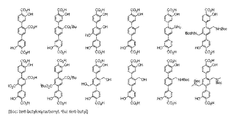
Claims (15)

What is claimed is:
1. A Metal-Organic Framework (MOF) comprising a plurality of secondary building units (SBUs) that are linked together by a plurality of organic linking ligands, the MOF selected from the group consisting of:
(a) a plurality of different SBUs, at least two SBUs of the plurality of SBUs comprising different metals or metal ions and a plurality of homogenous organic linking ligands that have been alkyl or amine functionalized; and
(b) a plurality of SBUs and a plurality of organic linking ligands wherein at least two of the organic linking ligands comprise a different number or a different type of functional group(s),
wherein the plurality of organic linking ligands comprise a structure of Formula I and/or II:
Figure US10087205-20181002-C00044
wherein,
n is a number from 0 to 10;
A1-A8 are independently a C or N;
R1-R12 are independently selected from H, D, optionally substituted (C1-C12)alkyl, optionally substituted hetero-(C1-C12 alkyl, optionally substituted (C1-C12)alkenyl, optionally substituted hetero-(C1-C12)alkenyl, optionally substituted (C1-C12)alkynyl, optionally substituted hetero-(C1-C12)alkynyl, optionally substituted (C1-C12)cycloalkyl, optionally substituted (C1-C12)cycloalkenyl, optionally substituted aryl, optionally substituted heterocycle, optionally substituted mixed ring system, —C(R13)3, —CH(R13)2, —CH2R13, —C(R14)3, —CH(R14)2, —CH2R14, —OC(R13)3, OCH(R13)2, —OCH2R13, —OC(R14)3, —OCH(R14)2, OCH2R14, wherein R4-R11 when adjacent can be linked together to form one or more optionally substituted rings selected from the group consisting of cycloalkyl, cycloalkenyl, heterocycle, aryl, and mixed ring system;
R13 is selected from optionally substituted (C1-C12)alkyl, optionally substituted hetero-(C1-C12)alkyl, optionally substituted (C1-C12)alkenyl, optionally substituted hetero-(C1-C12)alkenyl, optionally substituted (C1-C12)alkynyl, optionally substituted hetero-(C1-C12)alkynyl, hemiacetal, hemiketal, acetal, ketal, and orthoester; and
R14 is selected from one or more substituted or unsubstituted rings selected from cycloalkyl, aryl and heterocycle.
2. The MOF of claim 1, wherein the plurality of organic linking ligands comprise a structure of Formula III:
Figure US10087205-20181002-C00045
wherein,
R6-R9 are independently selected from:
Figure US10087205-20181002-C00046
Figure US10087205-20181002-C00047
Figure US10087205-20181002-C00048
Figure US10087205-20181002-C00049
Figure US10087205-20181002-C00050
Figure US10087205-20181002-C00051
Figure US10087205-20181002-C00052
Figure US10087205-20181002-C00053
Figure US10087205-20181002-C00054
wherein M is an alkaline metal species, an alkaline-earth metal species, or transition metal species that has a formal charge of +1 or +2 and that can be coordinated by one or more neutral or charged ligands.
3. The MOF of claim 1, wherein the plurality of organic linking ligands comprise at least one organic linking ligand having the structure of:
Figure US10087205-20181002-C00055
Figure US10087205-20181002-C00056
Figure US10087205-20181002-C00057
Figure US10087205-20181002-C00058
4. The MOF of claim 1, wherein any hydroxyl group is protected with a hydroxyl protecting group, any amine group is protected with an amine protecting group, and/or any carbonyl is protected with a carbonyl protecting group.
5. The MOF of claim 4, wherein the amine protecting group is a tert-butyl carbamate (Boc) group.
6. The MOF of claim 1, wherein the plurality of SBUs comprise at least three SBUs that differ by being comprised of different metals or metal ions.
7. The MOF of claim 1, wherein the plurality of SBUs comprise at least four SBUs that differ by being comprised of different metals or metal ions.
8. The MOF of claim 1, wherein the plurality of SBUs comprise one or more metals or metal ions selected from: Li+, Na+, K+, Rb+, Cs+, Be2+, Mg2+, Ca2+, Sr2+, Ba2+, Sc3+, Sc2+, Sc+, Y3+, Y2+, Y+, Ti4+, Ti3+, Ti2+, Zr4+, Zr3+, Zr2+, Hf4+, Hf3+, V5+, V4+, V3+, V2+, Nb5+, Nb4+, Nb3+, Nb2+, Ta5+, Ta4+, Ta3+, Ta2+, Cr6+, Cr5+, Cr4+, Cr3+, Cr2+, Cr+, Cr, Mo6+, Mo5+, Mo4+, Mo3+, Mo2+, Mo+, Mo, W6+, W5+, W4+, W3+, W2+, W+, W, Mn7+, Mn6+, Mn5+, Mn4+, Mn3+, Mn2+, Mn+, Re7+, Re6+, Re5+, Re4+, Re3+, Re2+, Re+, Re, Fe6+, Fe4+, Fe3+, Fe2+, Fe+, Fe, Ru8+, Ru7+, Ru6+, Ru4+, Ru3+, Ru2+, Os8+, Os7+, Os6+, Os5+, Os4+, Os3+, Os2+, Os+, Os, Co5+, Co4+, Co3+, Co2+, Co+, Rh6+, Rh5+, Rh4+, Rh3+, Rh2+, Rh+, Ir6+, Ir5+, Ir4+, Ir3+, Ir2+, Ir+, Ir, Ni3+, Ni2+, Ni+, Ni, Pd6+, Pd4+, Pd2+, Pd+, Pd, Pt6+, Pt5+, Pt4+, Pt3+, Pt2+, Pt+, Cu4+, Cu3+, Cu2+, Cu+, Ag3+, Ag2+, Ag+, Au5+, Au4+, Au3+, Au2+, Au+, Zn2+, Zn+, Zn, Cd2+, Cd+, Hg4+, Hg2+, Hg+, B3+, B2+, B+, Al3+, Al2+, Al+, Ga3+, Ga2+, Ga+, In3+, In2+, In1+, Tl3+, Tl+, Si4+, Si3+, Si2+, Si+, Ge4+, Ge3+, Ge2+, Ge+, Ge, Sn4+, Sn2+, Pb4+, Pb2+, As5+, As3+, As2+, As+, Sb5+, Sb3+, Bi5+, Bi3+, Te6+, Te5+, Te4+, Te2+, La3+, La2+, Ce4+, Ce3+, Ce2+, Pr4+, Pr3+, Pr2+, Nd3+, Nd2+, Sm3+, Sm2+, Eu3+, Eu2+, Gd3+, Gd2+, Gd+, Tb4+, Tb3+, Tb2+, Tb+, Db3+, Db2+, Ho3+, Er3+, Tm4+, Tm3+, Tm2+, Yb3+, Yb2+, Lu3+, La3+, La2+, La+, and combinations thereof, including any complexes which contain the metals or metal ions, as well as any corresponding metal salt counter-anions.
9. The MOF of claim 1, wherein the plurality of SBUs comprise one or more divalent metal ions selected from: Be2+, Mg2+, Ca2+, Sr2+, Ba2+, Sc2+, Y2+, Ti2+, Zr2+, V2+, Nb2+, Ta2+, Cr2+, Mo2+, W2+, Mn2+, Re2+, Fe2+, Ru2+, Os2+, Co2+, Rh2+, Ir2+, Ni2+, Pd2+, Pt2+, Cu2+, Ag2+, Au2+, Zn2+, Cd2+, Hg2+, B2+, Al2+, Ga2+, In2+, Si2+, Ge2+, Sn2+, Pb2+, As2+, Te2+, La2+, Ce2+, Pr2+, Nd2+, Sm2+, Eu2+, Gd2+, Tb2+, Db2+, Tm2+, Yb2+, and La2+, including any complexes which contain the metal ions, as well as any corresponding metal salt counter-anions.
10. The MOF of claim 1, wherein the plurality of SBUs comprise one or more divalent metal ions selected from: Mg2+, Ca2+, Sr2+, Mn2+, Fe2+, Co2+, Ni2+, and Zn2+, including any complexes which contain the metal ions, as well as any corresponding metal salt counter-anions.
11. The MOF of claim 1, wherein the plurality of SBUs all have the same topology.
12. The MOF of claim 1, wherein the MOF comprises an M2M-MOF-74, and M4M-MOF-74, and M6M-MOF-74, and M8M-MOF-74 or an M10M-MOF-74.
13. A device comprising a MOF of claim 1.
14. A method of separating one or more gases from a gas mixture comprising contacting the gas mixture with a MOF of claim 1.
15. A method of catalyzing the formation of one or more products from one or more reactants by using a one-pot co-catalyst system that comprises contacting the one or more reactants with a MOF of claim 1.
US15/128,225 2014-03-28 2015-03-27 Metal organic frameworks comprising a plurality of SBUS with different metal ions and/or a plurality of organic linking ligands with different functional groups Active US10087205B2 (en)

Priority Applications (1)

Application Number Priority Date Filing Date Title
US15/128,225 US10087205B2 (en) 2014-03-28 2015-03-27 Metal organic frameworks comprising a plurality of SBUS with different metal ions and/or a plurality of organic linking ligands with different functional groups

Applications Claiming Priority (3)

Application Number Priority Date Filing Date Title
US201461972124P 2014-03-28 2014-03-28
US15/128,225 US10087205B2 (en) 2014-03-28 2015-03-27 Metal organic frameworks comprising a plurality of SBUS with different metal ions and/or a plurality of organic linking ligands with different functional groups
PCT/US2015/023173 WO2015195179A2 (en) 2014-03-28 2015-03-27 Metal organic frameworks comprising a plurality of sbus with different metal ions and/or a plurality of organic linking ligands with different functional groups.

Publications (2)

Publication Number Publication Date
US20170101429A1 US20170101429A1 (en) 2017-04-13
US10087205B2 true US10087205B2 (en) 2018-10-02

Family

ID=54289050

Family Applications (1)

Application Number Title Priority Date Filing Date
US15/128,225 Active US10087205B2 (en) 2014-03-28 2015-03-27 Metal organic frameworks comprising a plurality of SBUS with different metal ions and/or a plurality of organic linking ligands with different functional groups

Country Status (2)

Country Link
US (1) US10087205B2 (en)
WO (1) WO2015195179A2 (en)

Cited By (1)

* Cited by examiner, † Cited by third party
Publication number Priority date Publication date Assignee Title
US20220401916A1 (en) * 2019-06-25 2022-12-22 Rikkyo Educational Corporation Metal-organic framework having terephthalic acid based ligand

Families Citing this family (14)

* Cited by examiner, † Cited by third party
Publication number Priority date Publication date Assignee Title
US10569252B2 (en) * 2016-04-22 2020-02-25 The Board Of Regents Of The University Of Texas System UTSA-74: a metal organic framework with two accessible binding sites per metal center for gas separation and gas storage
US10490825B2 (en) 2016-12-06 2019-11-26 Savannah River Nuclear Solutions, Llc Non-platinum group oxygen reduction reaction catalysts
WO2018222785A1 (en) * 2017-06-01 2018-12-06 Regents Of The University Of California Calcium l-lactate frameworks as naturally degradable carriers
CN107601580A (en) * 2017-09-22 2018-01-19 合肥工业大学 A kind of method for preparing nickel cobalt oxide as presoma by the use of metal organic framework and application thereof
JP7554184B2 (en) * 2018-09-28 2024-09-19 ザ リージェンツ オブ ザ ユニバーシティ オブ カリフォルニア Control of metal-organic framework phase and crystallite shape
CN109592715B (en) * 2018-12-21 2021-04-20 陕西师范大学 A method for the controllable preparation of manganese oxides with different structures using manganese terephthalate dihydrate as a precursor
GB201903058D0 (en) * 2019-03-07 2019-04-24 Johnson Matthey Plc Adsorption
EP3959008A1 (en) * 2019-04-26 2022-03-02 ExxonMobil Research and Engineering Company Mixed-metal mixed-organic framework systems for selective co capture
CN110256688B (en) * 2019-06-27 2021-03-23 商丘师范学院 A kind of dissimilar metal [CdMn] fluorescent magnetic refrigeration material and preparation method thereof
JP7504190B2 (en) * 2019-07-15 2024-06-21 エクソンモービル テクノロジー アンド エンジニアリング カンパニー Metal-organic frameworks with localized defects for gas separation
WO2021172433A1 (en) * 2020-02-27 2021-09-02 学校法人立教学院 Metal-organic framework with carboxylic acid ion having terphenyl skeleton as ligand
WO2023018601A1 (en) * 2021-08-12 2023-02-16 The Regents Of The University Of California Shaping the water sorption properties of mofs
CN114751462B (en) * 2022-03-17 2023-10-03 吉林师范大学 A preparation method based on iron ion exchange Cd-MOF derivative materials and its application in lithium-ion battery negative electrodes
CN114773550B (en) * 2022-04-25 2023-04-07 四川大学 Covalent organic framework material with hardness and softness as well as preparation method and application thereof

Citations (87)

* Cited by examiner, † Cited by third party
Publication number Priority date Publication date Assignee Title
US2684967A (en) 1953-03-19 1954-07-27 Union Oil Co Process for manufacture of olefin oxides
US4532225A (en) 1983-02-11 1985-07-30 Mobil Oil Corporation Preparation of metal-containing zeolite catalysts of increased stability and activity
US5064804A (en) 1987-11-25 1991-11-12 Union Carbide Chemicals And Plastics Technology Corporation Mixed metal framework compositions for monoalkylene glycol production
US5160500A (en) 1985-10-21 1992-11-03 Mobil Oil Corporation Zeolite synthesis using an alcohol or like molecules
US5208335A (en) 1991-03-19 1993-05-04 Air Products And Chemicals, Inc. Reversible oxygen sorbent compositions
US5617467A (en) 1993-03-26 1997-04-01 Siemens Aktiengesellschaft Communication system for connection to a base station of a multi-cellular wireless telephone system
US5648508A (en) 1995-11-22 1997-07-15 Nalco Chemical Company Crystalline metal-organic microporous materials
US5733505A (en) 1995-03-14 1998-03-31 Goldstein; Mark K. Non-regenerating carbon monoxide sensor
US5779904A (en) 1992-03-31 1998-07-14 Inrad Synthesis of inorganic membranes on supports
WO1999005151A1 (en) 1997-07-25 1999-02-04 Isis Innovation Limited Porous solid products of 1,3,5-benzenetricarboxylate and metal ions
EP1070538A2 (en) 1999-07-22 2001-01-24 The Boc Group, Inc. Metallo-organic polymers for gas separation and purification
US6479447B2 (en) 1999-12-23 2002-11-12 Unilever Home & Personal Care Usa, Division Of Conopco, Inc. Bleaching composition for dry cleaning containing transition metal bleach catalyst
US6501000B1 (en) 2000-04-04 2002-12-31 Exxonmobil Research And Engineering Company Late transition metal catalyst complexes and oligomers therefrom
US20030004364A1 (en) 2001-04-30 2003-01-02 Yaghi Omar M. Isoreticular metal-organic frameworks, process for forming the same, and systematic design of pore size and functionality therein, with application for gas storage
US20030078311A1 (en) 2001-10-19 2003-04-24 Ulrich Muller Process for the alkoxylation of organic compounds in the presence of novel framework materials
US20030148165A1 (en) 2002-02-01 2003-08-07 Ulrich Muller Method of storing, uptaking, releasing of gases by novel framework materials
US6617467B1 (en) 2002-10-25 2003-09-09 Basf Aktiengesellschaft Process for producing polyalkylene carbonates
US6624318B1 (en) 2002-05-30 2003-09-23 Basf Aktiengesellschaft Process for the epoxidation of an organic compound with oxygen or an oxygen-delivering compounds using catalysts containing metal-organic frame-work materials
US20030222023A1 (en) 2002-05-30 2003-12-04 Basf Aktiengesellschaft Shaped bodies containing metal-organic frameworks
US6686428B2 (en) 2001-03-30 2004-02-03 The Penn State Research Foundation Metal catalyzed reactions
US20040081611A1 (en) 2002-10-25 2004-04-29 Basf Akiengesellschaft Process for preparing hydrogen peroxide from the elements
US20040225134A1 (en) 2003-05-09 2004-11-11 The Regents Of The University Of Michigan Implementation of a strategy for achieving extraordinary levels of surface area and porosity in crystals
US20040265670A1 (en) 2003-06-30 2004-12-30 Basf Aktiengesellschaft Gas storage system
US20050004404A1 (en) 2003-07-03 2005-01-06 Basf Akiengesellschaft Process for the alkoxylation of monools in the presence of metallo-organic framework materials
US20050014371A1 (en) 2003-03-06 2005-01-20 Michael Tsapatsis Crystalline membranes
US20050124819A1 (en) 2003-12-05 2005-06-09 The Regents Of The University Of Michigan Metal-organic polyhedra
US20050154222A1 (en) 2004-01-13 2005-07-14 Basf Aktiengesellschaft Process for preparing an organometallic framework material
WO2006047423A2 (en) 2004-10-22 2006-05-04 The Regents Of The University Of Michigan Covalently linked organic frameworks and polyhedra
WO2006072573A2 (en) 2005-01-07 2006-07-13 Basf Aktiengesellschaft Adsorptive production of xenon from krypton/xenon gas mixtures
US20060185388A1 (en) 2005-02-23 2006-08-24 Basf Aktiengesellschaft Metal-organic framework materials for gaseous hydrocarbon storage
WO2006110740A2 (en) 2005-04-07 2006-10-19 The Regents Of The University Of Michigan High gas adsorption in a microporous metal-organic framework with open-metal sites
WO2006116340A1 (en) 2005-04-22 2006-11-02 University Of South Florida Zeolite-like metal organic frameworks (zmofs): modular approach to the synthesis of organic-inorganic hybrid porous materials having a zeolite like topology
US20060252972A1 (en) 2005-05-04 2006-11-09 Pilliod Dana L Adsorption process with on-line adsorbent removal
WO2006122920A1 (en) 2005-05-18 2006-11-23 Basf Aktiengesellschaft Gas odorous substance separation
WO2006125761A2 (en) 2005-05-24 2006-11-30 Basf Aktiengesellschaft Method for producing porous metal-organic framework materials
WO2007007113A2 (en) 2005-07-14 2007-01-18 Universitetet I Oslo Metal-organic framework catalysts and their use in hydrocarbon transformation
US20070068389A1 (en) 2005-09-26 2007-03-29 Yaghi Omar M Metal-organic frameworks with exceptionally high capacity for storage of carbon dioxide at room-temperature
WO2007054581A2 (en) 2005-11-14 2007-05-18 Basf Se Porous organo-metallic skeleton material containing an additional polymer
US7229943B2 (en) 2003-03-20 2007-06-12 Innovene Europe Limited Polymerisation and oligomerisation catalysts
US20070202038A1 (en) 2006-02-28 2007-08-30 The Regents Of The University Of Michigan Preparation of functionalized zeolitic frameworks
WO2007098263A2 (en) 2006-02-24 2007-08-30 University Of South Carolina Synthesis of a highly crystalline, covalently linked porous network
US20070217982A1 (en) 2006-03-08 2007-09-20 Wright Allen B Air collector with functionalized ion exchange membrane for capturing ambient co2
WO2007111739A2 (en) 2005-12-21 2007-10-04 Uop Llc The use of mofs in pressure swing adsorption
US20070248575A1 (en) 2006-04-19 2007-10-25 Jerome Connor Bone graft composition
WO2007118843A1 (en) 2006-04-18 2007-10-25 Basf Se Metal oxides produced from metal-organic framework materials
US20080017036A1 (en) 2004-03-01 2008-01-24 Eurofilters N.V. Adsorbing Agent, Dust Collection Chamber And Method For Adsorbing Odours
WO2008091976A1 (en) 2007-01-24 2008-07-31 The Regents Of The University Of California Crystalline 3d- and 2d-covalent organic frameworks
US20080184883A1 (en) 2007-02-02 2008-08-07 Miami University Mesh-Adjustable Molecular Sieve
WO2008138989A1 (en) 2007-05-14 2008-11-20 Shell Internationale Research Maatschappij B.V. Process for producing purified natural gas from natural gas comprising water and carbon dioxide
WO2008140788A1 (en) 2007-05-11 2008-11-20 The Regents Of The University Of California Adsorptive gas separation of multi-component gases
WO2009020745A2 (en) 2007-07-17 2009-02-12 The Regents Of The University Of California Preparation of functionalized zeolitic frameworks
WO2009042802A1 (en) 2007-09-25 2009-04-02 The Regents Of The University Of California Edible and biocompatible metal-organic frameworks
US7524444B2 (en) 2004-11-09 2009-04-28 Basf Aktiengesellschaft Shaped bodies containing metal-organic frameworks
WO2009056184A1 (en) 2007-11-04 2009-05-07 BLüCHER GMBH Sorption filter material and use thereof
WO2009073739A1 (en) 2007-12-03 2009-06-11 The Regents Of The University Of Michigan Microporous coordination polymers as novel sorbents for gas separation
US20090183996A1 (en) 2006-05-16 2009-07-23 Basf Se Porous metal organic framework based on pyrroles and pyridinones
US20090216059A1 (en) 2008-02-21 2009-08-27 Reyes Sebastian C Separation of methane from higher carbon number hydrocarbons utilizing zeolitic imidazolate framework materials
US20090247654A1 (en) 2008-03-25 2009-10-01 Santhosh Kumar Rajendran Polymeric foams with nanocellular morphology and methods for making them
WO2009149381A2 (en) 2008-06-05 2009-12-10 The Regents Of University Of California Chemical framework compositions and methods of use
US7637983B1 (en) 2006-06-30 2009-12-29 Uop Llc Metal organic framework—polymer mixed matrix membranes
US20100069234A1 (en) 2008-09-12 2010-03-18 Willis Richard R Gas adsorption on metal-organic frameworks
WO2010056092A2 (en) 2008-11-17 2010-05-20 (주)인실리코텍 Organic framework
WO2010078337A1 (en) 2008-12-29 2010-07-08 The Regents Of The University Of California A gas sensor incorporating a porous framework
WO2010080618A2 (en) 2008-12-18 2010-07-15 The Regents Of The University Of California Porous reactive frameworks
WO2010083418A1 (en) 2009-01-15 2010-07-22 The Regents Of The University Of California Conductive organometallic framework
WO2010088629A1 (en) 2009-02-02 2010-08-05 The Regents Of The University Of California Reversible ethylene oxide capture in porous frameworks
WO2010090683A1 (en) 2008-12-18 2010-08-12 The Regents Of The University Of California Metal organic frameworks (mofs ) for gas purification
WO2010148276A2 (en) 2009-06-19 2010-12-23 The Regents Of The University Of California Carbon dioxide capture and storage using open frameworks
WO2010148374A2 (en) 2009-06-19 2010-12-23 The Regents Of The University Of California Organo-metallic frameworks and methods of making same
WO2010148296A2 (en) 2009-06-19 2010-12-23 The Regents Of The University Of California Complex mixed ligand open framework materials
US20110015388A1 (en) 2005-06-03 2011-01-20 Youngblood W Justin Substituted benzazoloporphyrazines for polymerization and surface attachment and articles formed therefrom
WO2011014503A1 (en) 2009-07-27 2011-02-03 The Regents Of The University Of California Oxidative homo-coupling reactions of aryl boronic acids using a porous copper metal-organic framework as a highly efficient heterogeneous catalyst
WO2011038208A2 (en) 2009-09-25 2011-03-31 The Regents Of The University Of California Open metal organic frameworks with exceptional surface area and high gas strorage capacity
WO2011127301A2 (en) 2010-04-07 2011-10-13 Cornell University Covalent organic frameworks and methods of making same
US20110282071A1 (en) 2010-05-12 2011-11-17 Xiaodong Shi 1,2,3-triazole based metal-organic framework as photo-active materials
US20110282067A1 (en) 2010-05-17 2011-11-17 Rutgers, The State University Of New Jersey Zeolitic imidazolate frameworks for kinetic separation of propane and propene
WO2011146155A2 (en) 2010-02-12 2011-11-24 The Regents Of The University Of California Organo-metallic frameworks derived from carbenophilic metals and method of making same
WO2012012495A2 (en) 2010-07-20 2012-01-26 The Regents Of The University Of California Functionalization of organic molecules using metal-organic frameworks (mofs) as catalysts
WO2012082213A2 (en) 2010-09-27 2012-06-21 The Regents Of The University Of California Conductive open frameworks
WO2012100224A2 (en) 2011-01-21 2012-07-26 The Regents Of The University Of California Preparation of metal-triazolate frameworks
WO2012106451A2 (en) 2011-02-04 2012-08-09 The Regents Of The University Of California Preparation of metal-catecholate frameworks
US8343260B2 (en) 2007-09-14 2013-01-01 University Of North Texas Fluorinated metal-organic frameworks for gas storage
US20130047849A1 (en) 2010-03-19 2013-02-28 The Regents Of The University Of Colorado Organic Porous Materials Comprising Shape-Persistent Three-Dimensional Molecular Cage Building Blocks
US20130096210A1 (en) 2011-10-13 2013-04-18 The Regents Of The University Of California Metal-organic frameworks with exceptionally large pore aperatures
US8518264B2 (en) 2006-04-18 2013-08-27 Basf Se Method of using a metal organic frameworks based on aluminum fumarate
US8524932B2 (en) 2010-09-30 2013-09-03 Basf Se Process for preparing porous metal-organic frameworks based on aluminum fumarate
US20140037944A1 (en) 2010-09-13 2014-02-06 Cornell University Covalent organic framework films, and methods of making and uses of same

Patent Citations (129)

* Cited by examiner, † Cited by third party
Publication number Priority date Publication date Assignee Title
US2684967A (en) 1953-03-19 1954-07-27 Union Oil Co Process for manufacture of olefin oxides
US4532225A (en) 1983-02-11 1985-07-30 Mobil Oil Corporation Preparation of metal-containing zeolite catalysts of increased stability and activity
US5160500A (en) 1985-10-21 1992-11-03 Mobil Oil Corporation Zeolite synthesis using an alcohol or like molecules
US5064804A (en) 1987-11-25 1991-11-12 Union Carbide Chemicals And Plastics Technology Corporation Mixed metal framework compositions for monoalkylene glycol production
US5208335A (en) 1991-03-19 1993-05-04 Air Products And Chemicals, Inc. Reversible oxygen sorbent compositions
US5779904A (en) 1992-03-31 1998-07-14 Inrad Synthesis of inorganic membranes on supports
US5617467A (en) 1993-03-26 1997-04-01 Siemens Aktiengesellschaft Communication system for connection to a base station of a multi-cellular wireless telephone system
US5733505A (en) 1995-03-14 1998-03-31 Goldstein; Mark K. Non-regenerating carbon monoxide sensor
US5648508A (en) 1995-11-22 1997-07-15 Nalco Chemical Company Crystalline metal-organic microporous materials
WO1999005151A1 (en) 1997-07-25 1999-02-04 Isis Innovation Limited Porous solid products of 1,3,5-benzenetricarboxylate and metal ions
EP1070538A2 (en) 1999-07-22 2001-01-24 The Boc Group, Inc. Metallo-organic polymers for gas separation and purification
US6479447B2 (en) 1999-12-23 2002-11-12 Unilever Home & Personal Care Usa, Division Of Conopco, Inc. Bleaching composition for dry cleaning containing transition metal bleach catalyst
US6501000B1 (en) 2000-04-04 2002-12-31 Exxonmobil Research And Engineering Company Late transition metal catalyst complexes and oligomers therefrom
US6686428B2 (en) 2001-03-30 2004-02-03 The Penn State Research Foundation Metal catalyzed reactions
US20030004364A1 (en) 2001-04-30 2003-01-02 Yaghi Omar M. Isoreticular metal-organic frameworks, process for forming the same, and systematic design of pore size and functionality therein, with application for gas storage
US7196210B2 (en) * 2001-04-30 2007-03-27 The Regents Of The University Of Michigan Isoreticular metal-organic frameworks, process for forming the same, and systematic design of pore size and functionality therein, with application for gas storage
US20050192175A1 (en) 2001-04-30 2005-09-01 Yaghi Omar M. Isoreticular metal-organic frameworks, process for forming the same, and systematic design of pore size and functionality therein, with application for gas storage
US6930193B2 (en) * 2001-04-30 2005-08-16 The Regents Of The University Of Michigan Isoreticular metal-organic frameworks, process for forming the same, and systematic design of pore size and functionality therein, with application for gas storage
US20040249189A1 (en) 2001-10-19 2004-12-09 Ulrich Mueller Process for the alkoxylation of organic compounds in the presence of novel framework materials
WO2003035717A1 (en) 2001-10-19 2003-05-01 Basf Aktiengesellschaft Process for the alkoxylation of organic compounds in the presence of novel framework materials
US7279517B2 (en) 2001-10-19 2007-10-09 Basf Aktiengesellschaft Process for the alkoxylation of organic compounds in the presence of novel framework materials
US20030078311A1 (en) 2001-10-19 2003-04-24 Ulrich Muller Process for the alkoxylation of organic compounds in the presence of novel framework materials
US20030148165A1 (en) 2002-02-01 2003-08-07 Ulrich Muller Method of storing, uptaking, releasing of gases by novel framework materials
US6929679B2 (en) 2002-02-01 2005-08-16 Basf Aktiengesellschaft Method of storing, uptaking, releasing of gases by novel framework materials
US6624318B1 (en) 2002-05-30 2003-09-23 Basf Aktiengesellschaft Process for the epoxidation of an organic compound with oxygen or an oxygen-delivering compounds using catalysts containing metal-organic frame-work materials
US20030222023A1 (en) 2002-05-30 2003-12-04 Basf Aktiengesellschaft Shaped bodies containing metal-organic frameworks
US6893564B2 (en) 2002-05-30 2005-05-17 Basf Aktiengesellschaft Shaped bodies containing metal-organic frameworks
US20040081611A1 (en) 2002-10-25 2004-04-29 Basf Akiengesellschaft Process for preparing hydrogen peroxide from the elements
US6617467B1 (en) 2002-10-25 2003-09-09 Basf Aktiengesellschaft Process for producing polyalkylene carbonates
US20060057057A1 (en) 2002-10-25 2006-03-16 Basf Aktiengesellschaft Process for preparing hydrogen peroxide from the elements
US20050014371A1 (en) 2003-03-06 2005-01-20 Michael Tsapatsis Crystalline membranes
US7229943B2 (en) 2003-03-20 2007-06-12 Innovene Europe Limited Polymerisation and oligomerisation catalysts
US7652132B2 (en) 2003-05-09 2010-01-26 The Regents Of The University Of Michigan Implementation of a strategy for achieving extraordinary levels of surface area and porosity in crystals
US20040225134A1 (en) 2003-05-09 2004-11-11 The Regents Of The University Of Michigan Implementation of a strategy for achieving extraordinary levels of surface area and porosity in crystals
WO2004101575A2 (en) 2003-05-09 2004-11-25 The Regents Of The University Of Michigan Implementation of a strategy for achieving extraordinary levels of surface and porosity in crystals
US7309380B2 (en) 2003-06-30 2007-12-18 Basf Aktiengesellschaft Gas storage system
US20040265670A1 (en) 2003-06-30 2004-12-30 Basf Aktiengesellschaft Gas storage system
US20060135824A1 (en) 2003-07-03 2006-06-22 Basf Aktiengesellschaft Process for the alkoxylation of monools in the presence of metallo-organic framework materials
US7202385B2 (en) 2003-07-03 2007-04-10 Basf Aktiengesellschaft Process for the alkoxylation of monools in the presence of metallo-organic framework materials
US20050004404A1 (en) 2003-07-03 2005-01-06 Basf Akiengesellschaft Process for the alkoxylation of monools in the presence of metallo-organic framework materials
US20050124819A1 (en) 2003-12-05 2005-06-09 The Regents Of The University Of Michigan Metal-organic polyhedra
US20050154222A1 (en) 2004-01-13 2005-07-14 Basf Aktiengesellschaft Process for preparing an organometallic framework material
US7411081B2 (en) 2004-01-13 2008-08-12 Basf Aktiengesellschaft Process for preparing and organometallic framework material
US20080017036A1 (en) 2004-03-01 2008-01-24 Eurofilters N.V. Adsorbing Agent, Dust Collection Chamber And Method For Adsorbing Odours
US20060154807A1 (en) 2004-10-22 2006-07-13 Yaghi Omar M Covalently linked organic frameworks and polyhedra
US7582798B2 (en) 2004-10-22 2009-09-01 The Regents Of The University Of Michigan Covalently linked organic frameworks and polyhedra
WO2006047423A2 (en) 2004-10-22 2006-05-04 The Regents Of The University Of Michigan Covalently linked organic frameworks and polyhedra
US7524444B2 (en) 2004-11-09 2009-04-28 Basf Aktiengesellschaft Shaped bodies containing metal-organic frameworks
US20090155588A1 (en) 2004-11-09 2009-06-18 Basf Aktiengesellschaft Shaped bodies containing metal-organic frameworks
WO2006072573A2 (en) 2005-01-07 2006-07-13 Basf Aktiengesellschaft Adsorptive production of xenon from krypton/xenon gas mixtures
US20060185388A1 (en) 2005-02-23 2006-08-24 Basf Aktiengesellschaft Metal-organic framework materials for gaseous hydrocarbon storage
US7343747B2 (en) 2005-02-23 2008-03-18 Basf Aktiengesellschaft Metal-organic framework materials for gaseous hydrocarbon storage
US20060252641A1 (en) 2005-04-07 2006-11-09 Yaghi Omar M High gas adsorption in a microporous metal-organic framework with open-metal sites
WO2006110740A2 (en) 2005-04-07 2006-10-19 The Regents Of The University Of Michigan High gas adsorption in a microporous metal-organic framework with open-metal sites
US7662746B2 (en) 2005-04-07 2010-02-16 The Regents Of The University Of Michigan High gas adsorption metal-organic framework
US20060287190A1 (en) 2005-04-22 2006-12-21 Mohamed Eddaoudi Zeolite-like metal organic frameworks (ZMOFS): modular approach to the synthesis of organic-inorganic hybrid porous materials having a zeolite like topology
WO2006116340A1 (en) 2005-04-22 2006-11-02 University Of South Florida Zeolite-like metal organic frameworks (zmofs): modular approach to the synthesis of organic-inorganic hybrid porous materials having a zeolite like topology
US20060252972A1 (en) 2005-05-04 2006-11-09 Pilliod Dana L Adsorption process with on-line adsorbent removal
US20080190289A1 (en) 2005-05-18 2008-08-14 Ulrich Muller Gas Odorous Substance Separation
WO2006122920A1 (en) 2005-05-18 2006-11-23 Basf Aktiengesellschaft Gas odorous substance separation
WO2006125761A2 (en) 2005-05-24 2006-11-30 Basf Aktiengesellschaft Method for producing porous metal-organic framework materials
US20110015388A1 (en) 2005-06-03 2011-01-20 Youngblood W Justin Substituted benzazoloporphyrazines for polymerization and surface attachment and articles formed therefrom
WO2007007113A2 (en) 2005-07-14 2007-01-18 Universitetet I Oslo Metal-organic framework catalysts and their use in hydrocarbon transformation
US7799120B2 (en) 2005-09-26 2010-09-21 The Regents Of The University Of Michigan Metal-organic frameworks with exceptionally high capacity for storage of carbon dioxide at room-temperature
US20070068389A1 (en) 2005-09-26 2007-03-29 Yaghi Omar M Metal-organic frameworks with exceptionally high capacity for storage of carbon dioxide at room-temperature
US7815716B2 (en) 2005-11-14 2010-10-19 Basf Aktiengesellschaft Porous organo-metallic skeleton material containing an additional polymer
WO2007054581A2 (en) 2005-11-14 2007-05-18 Basf Se Porous organo-metallic skeleton material containing an additional polymer
WO2007111739A2 (en) 2005-12-21 2007-10-04 Uop Llc The use of mofs in pressure swing adsorption
WO2007098263A2 (en) 2006-02-24 2007-08-30 University Of South Carolina Synthesis of a highly crystalline, covalently linked porous network
WO2007101241A2 (en) 2006-02-28 2007-09-07 The Regents Of The University Of Michigan Preparation of functionalized zeolitic frameworks
US20070202038A1 (en) 2006-02-28 2007-08-30 The Regents Of The University Of Michigan Preparation of functionalized zeolitic frameworks
US20070217982A1 (en) 2006-03-08 2007-09-20 Wright Allen B Air collector with functionalized ion exchange membrane for capturing ambient co2
US8501150B2 (en) 2006-04-18 2013-08-06 Basf Aktiengesellschaft Metal oxides from metal-organic framework materials
WO2007118843A1 (en) 2006-04-18 2007-10-25 Basf Se Metal oxides produced from metal-organic framework materials
US8518264B2 (en) 2006-04-18 2013-08-27 Basf Se Method of using a metal organic frameworks based on aluminum fumarate
US20070248575A1 (en) 2006-04-19 2007-10-25 Jerome Connor Bone graft composition
US20090183996A1 (en) 2006-05-16 2009-07-23 Basf Se Porous metal organic framework based on pyrroles and pyridinones
US7637983B1 (en) 2006-06-30 2009-12-29 Uop Llc Metal organic framework—polymer mixed matrix membranes
WO2008091976A1 (en) 2007-01-24 2008-07-31 The Regents Of The University Of California Crystalline 3d- and 2d-covalent organic frameworks
US20100143693A1 (en) 2007-01-24 2010-06-10 The Regents Of The University Of California Crystalline 3d- and 2d covalent organic frameworks
US20080184883A1 (en) 2007-02-02 2008-08-07 Miami University Mesh-Adjustable Molecular Sieve
US20100132549A1 (en) 2007-05-11 2010-06-03 The Regents Of The University Of California Adsorptive gas separation of multi-component gases
WO2008140788A1 (en) 2007-05-11 2008-11-20 The Regents Of The University Of California Adsorptive gas separation of multi-component gases
WO2008138989A1 (en) 2007-05-14 2008-11-20 Shell Internationale Research Maatschappij B.V. Process for producing purified natural gas from natural gas comprising water and carbon dioxide
WO2009020745A2 (en) 2007-07-17 2009-02-12 The Regents Of The University Of California Preparation of functionalized zeolitic frameworks
US20100186588A1 (en) 2007-07-17 2010-07-29 The Regents Of The University Of California Preparation of functionalized zeolitic frameworks
US8343260B2 (en) 2007-09-14 2013-01-01 University Of North Texas Fluorinated metal-organic frameworks for gas storage
WO2009042802A1 (en) 2007-09-25 2009-04-02 The Regents Of The University Of California Edible and biocompatible metal-organic frameworks
US20100286022A1 (en) 2007-09-25 2010-11-11 The Regents Of The University Of California Edible and biocompatible metal-organic frameworks
WO2009056184A1 (en) 2007-11-04 2009-05-07 BLüCHER GMBH Sorption filter material and use thereof
WO2009073739A1 (en) 2007-12-03 2009-06-11 The Regents Of The University Of Michigan Microporous coordination polymers as novel sorbents for gas separation
US20090216059A1 (en) 2008-02-21 2009-08-27 Reyes Sebastian C Separation of methane from higher carbon number hydrocarbons utilizing zeolitic imidazolate framework materials
US20090247654A1 (en) 2008-03-25 2009-10-01 Santhosh Kumar Rajendran Polymeric foams with nanocellular morphology and methods for making them
WO2009149381A2 (en) 2008-06-05 2009-12-10 The Regents Of University Of California Chemical framework compositions and methods of use
US20110137025A1 (en) 2008-06-05 2011-06-09 The Regents Of The University Of California Chemical framework compositions and methods of use
US20100069234A1 (en) 2008-09-12 2010-03-18 Willis Richard R Gas adsorption on metal-organic frameworks
WO2010056092A2 (en) 2008-11-17 2010-05-20 (주)인실리코텍 Organic framework
WO2010090683A1 (en) 2008-12-18 2010-08-12 The Regents Of The University Of California Metal organic frameworks (mofs ) for gas purification
WO2010080618A2 (en) 2008-12-18 2010-07-15 The Regents Of The University Of California Porous reactive frameworks
US8480955B2 (en) 2008-12-29 2013-07-09 The Regents Of The University Of California Gas sensor incorporating a porous framework
US20120028846A1 (en) 2008-12-29 2012-02-02 Basf Se Gas sensor incorporating a porous framework
US8735161B2 (en) 2008-12-29 2014-05-27 The Regents Of The University Of California Gas sensor incorporating a porous framework
WO2010078337A1 (en) 2008-12-29 2010-07-08 The Regents Of The University Of California A gas sensor incorporating a porous framework
WO2010083418A1 (en) 2009-01-15 2010-07-22 The Regents Of The University Of California Conductive organometallic framework
WO2010088629A1 (en) 2009-02-02 2010-08-05 The Regents Of The University Of California Reversible ethylene oxide capture in porous frameworks
US8709134B2 (en) 2009-02-02 2014-04-29 The Regents Of The University Of California Reversible ethylene oxide capture in porous frameworks
US20120031268A1 (en) 2009-02-02 2012-02-09 Basf Se Reversible ethylene oxide capture in porous frameworks
WO2010148296A2 (en) 2009-06-19 2010-12-23 The Regents Of The University Of California Complex mixed ligand open framework materials
WO2010148374A2 (en) 2009-06-19 2010-12-23 The Regents Of The University Of California Organo-metallic frameworks and methods of making same
WO2010148276A2 (en) 2009-06-19 2010-12-23 The Regents Of The University Of California Carbon dioxide capture and storage using open frameworks
US20120133939A1 (en) 2009-06-19 2012-05-31 The Regents Of The University Of California Carbon dioxide capture and storage using open frameworks
WO2011014503A1 (en) 2009-07-27 2011-02-03 The Regents Of The University Of California Oxidative homo-coupling reactions of aryl boronic acids using a porous copper metal-organic framework as a highly efficient heterogeneous catalyst
US20120130113A1 (en) 2009-07-27 2012-05-24 Basf Se Oxidative homo-coupling reactions of aryl boronic acids using a porous copper metal-organic framework as a highly efficient heterogeneous catalyst
WO2011038208A2 (en) 2009-09-25 2011-03-31 The Regents Of The University Of California Open metal organic frameworks with exceptional surface area and high gas strorage capacity
WO2011146155A2 (en) 2010-02-12 2011-11-24 The Regents Of The University Of California Organo-metallic frameworks derived from carbenophilic metals and method of making same
US20130047849A1 (en) 2010-03-19 2013-02-28 The Regents Of The University Of Colorado Organic Porous Materials Comprising Shape-Persistent Three-Dimensional Molecular Cage Building Blocks
US20140148596A1 (en) 2010-04-07 2014-05-29 Cornell University Covalent Organic Frameworks and Methods of Making Same
WO2011127301A2 (en) 2010-04-07 2011-10-13 Cornell University Covalent organic frameworks and methods of making same
US20110282071A1 (en) 2010-05-12 2011-11-17 Xiaodong Shi 1,2,3-triazole based metal-organic framework as photo-active materials
US20110282067A1 (en) 2010-05-17 2011-11-17 Rutgers, The State University Of New Jersey Zeolitic imidazolate frameworks for kinetic separation of propane and propene
WO2012012495A2 (en) 2010-07-20 2012-01-26 The Regents Of The University Of California Functionalization of organic molecules using metal-organic frameworks (mofs) as catalysts
US20140037944A1 (en) 2010-09-13 2014-02-06 Cornell University Covalent organic framework films, and methods of making and uses of same
WO2012082213A2 (en) 2010-09-27 2012-06-21 The Regents Of The University Of California Conductive open frameworks
US8524932B2 (en) 2010-09-30 2013-09-03 Basf Se Process for preparing porous metal-organic frameworks based on aluminum fumarate
WO2012100224A2 (en) 2011-01-21 2012-07-26 The Regents Of The University Of California Preparation of metal-triazolate frameworks
WO2012106451A2 (en) 2011-02-04 2012-08-09 The Regents Of The University Of California Preparation of metal-catecholate frameworks
US8742152B2 (en) 2011-02-04 2014-06-03 The Regents Of The University Of California Preparation of metal-catecholate frameworks
US20130096210A1 (en) 2011-10-13 2013-04-18 The Regents Of The University Of California Metal-organic frameworks with exceptionally large pore aperatures
US9078922B2 (en) 2011-10-13 2015-07-14 The Regents Of The University Of California Metal-organic frameworks with exceptionally large pore aperatures

Non-Patent Citations (393)

* Cited by examiner, † Cited by third party
Title
"IUPAC Gold Book-cryptand", http://goldbook.iupac.org/C01426.html, accessed Jan. 30, 2014.
"IUPAC Gold Book-macrocycle". http://goldbook.iupac.org/M03662.html, accessed Jan. 30, 2014.
Adkins, Chinessa T. Final Office Action for U.S. Appl. No. 12/524,205, dated Sep. 27, 2012.
Adkins, Chinessa T. Nonfinal Office Action for U.S. Appl. No. 12/524,205, dated Apr. 17, 2012.
Akporiaye et al., ‘Combinatorial Approach to the Hydrothermal Synthesis of Zeolites,’ Angew. Chemie 37(5):609-611 (1998).
ANDREW D BURROWS, CHRISTOPHER G FROST, MARY F MAHON, CHRISTOPHER RICHARDSON: "Post-Synthetic Modification of Tagged Metal�Organic Frameworks", ANGEWANDTE CHEMIE INTERNATIONAL EDITION, VERLAG CHEMIE, vol. 47, no. 44, 20 October 2008 (2008-10-20), pages 8482 - 8486, XP008150669, ISSN: 1433-7851, DOI: 10.1002/anie.200802908
Ashton, Peter R. et al., ‘Hydrogen-Bonded Complexes of Aromatic Crown Ethers with (9-Anthracenyl) methylammonium Derivatives’ J. Am. Chem. Soc., 1997, 119 (44), pp. 10641-10651.
Baharlou, Simin, International Preliminary Report on Patentability for PCT/US2009/043373, The International Bureau of WIPO, dated Feb. 9, 2012.
Baharlou, Simin, International Preliminary Report on Patentability for PCT/US2009/046463, The International Bureau of WIPO, dated Dec. 16, 2010.
Baharlou, Simin, International Preliminary Report on Patentability for PCT/US2011/024671, The International Bureau of WIPO, dated Aug. 23, 2012.
Bai, Lingfei, International Preliminary Report on Patentability and Written Opinion, The International Bureau of WIPO, PCT/US2012/022114 dated Jul. 23, 2013.
Banerjee et al., ‘Control of Pore Size and Functionality in Isoreticular Zeolitic Imidazolate Frameworks and their Carbon Dioxide Selective Capture Properties,’ J. Am. Chem. Soc. 131:3875-3877 (2009).
Banerjee et al., ‘High-Throughput Synthesis of Zeiolitic Imidazolate Frameworks and Application to CO2 Capture,’ Science, 2008, pp. 939-943, vol. 319.
Barman et al., ‘Azulene Based Metal-Organic Frameworks for Strong Adsorption of H2,’ Chem. Commun. 46:7981-7983 (2010).
Barman et al., ‘Incorporation of active metal sites in MOFs via in situ generated ligand deficient metal-linker complexes’ Chem. Commun. 47:11882-11884 (Oct. 11, 2011).
Barman et al., "Incorporation of active metal sites in MOFs via in situ generated ligand deficient metal-linker complexes", Chem. Comm., 2011, pp. 1-3.
Barton et al., ‘Tailored Porous Materials,’ Chem. Mater. 11:2633-2656 (1999).
Becamel, Philippe, International Preliminary Report on Patentability, PCT/US2012/023516, The International Bureau of WIPO, dated Aug. 6, 2013.
Becamel, Philippe, International Preliminary Report on Patentability, PCT/US2012/059877, The International Bureau of WIPO, dated Sep. 18, 2014.
Bhakta et al., ‘Metal organic frameworks as templates for nanoscale NaAlH4’, Journal of American Chemical Society, vol. 131, No. 37, Sep. 23, 2009, pp. S1-S14.
BINLING CHEN, YANG ZHUXIAN, ZHU YANQIU, XIA YONGDE: "Zeolitic imidazolate framework materials: recent progress in synthesis and applications", JOURNAL OF MATERIALS CHEMISTRY A, ROYAL SOCIETY OF CHEMISTRY, GB, vol. 2, no. 40, 17 July 2014 (2014-07-17), GB, pages 16811 - 16831, XP055337959, ISSN: 2050-7488, DOI: 10.1039/C4TA02984D
Bjai, Lingfei, International Preliminary Report on Patentability and Written Opinion, PCT/US2015/021107, The International Bureau of WIPO, dated Sep. 20, 2016.
Bloch et al., ‘Metal Insertion in a Microporous Metal-Organic Framework Lined with 2,2′-Bipyridine’ J. Am. Chem. Soc. 132:14382-14384 (2010).
Bork, Ana-Marie., International Search Report for PCT/US2011/24671, European Patent Office, dated Nov. 30, 2011.
Braun et al., ‘1,4-Benzenedicarboxylate Derivatives as Links in the Design of Paddle-Wheel Units and Metal-Organic Frameworks,’ Chem. Commun. 24:2532-2533 (2001).
Britt et al., ‘Highly efficient separation of carbon dioxide by a metal-organic framework replete with open metal sites,’ Proc. Natl. Acad. Sci. USA 106:20637-20640 (2009).
Britt et al., ‘Ring-Opening Reactions Within Metal-Organic Frameworks,’ Inorg. Chem. 49:6387-6389 (2010).
Britt et al., "Metal-Organic frameworks with high capacity and selectivity for harmful gases", PNAS, 2008, vol. 105, No. 33, pp. 11623-11627.
Burrows et al., ‘Post-Synthetic Modification of Tagged MOFs,’ Angew. Chem. Int. Ed. 47:8482-8486 (2008).
Burrows, Andrew D., "Mixed-component metal-organic frameworks (MC-MOFs): enhancing functionality through solid solution formation and surface modifications", Crystengcomm, vol. 13, No. 11, Jan. 1, 2011, pp. 3623-3642.
Burrows, Andrew D., et al., "Post-Synthetic Modification of Tagged MOFs", Angewa. Chem. Int . Ed., (Oct. 20, 2008), vol. 47, pp. 8482-8486, XP008150669.
Carboni et al., "Highly porous and stable metal-organic frameworks for uranium extraction," Chemical Science, 1:2396-2402, Apr. 4, 2013.
Carlucci et al., ‘Nanoporous three-dimensional networks topologically related to cooperite from the self-assembly of copper(I)centres and 1,2,4,5-tetracyanobenzene,’ New J. Chem. 23(23):397-401 (1999).
Carlucci, Lucia etal., ‘Polycatenation, polythreading and polyknotting in coordination network chemistry’ Coordination Chemistry Reviews 246, 2003, pp. 247-289.
Caskey et al., ‘Dramatic Tuning of CO2 Uptake via Metal Substitution in a Coordination Polymer with Cylindrical Pores,’ JACS 130(33):10870-10871 (2008).
Caskey et al., ‘Selected Applications of Metal-Organic Frameworks in Sustainable Energy Technologies,’ Material Matters 4.4:111 (2009).
Centrone et al., ‘Raman Spectra of Hydrogen and Deuterium Adsorbed on a Metal-Organic Framework,’ Chem. Phys. Lett. 411:516-519 (2005).
Chae et al., ‘A Route to High Surface Area, Porosity and Inclusion of Large Molecules in Crystals,’ Nature427, 523-527 (2004); Featured in (1) Chemical & Engineering News magazine, Feb. 9, 2004, (2) BBC World Service, Feb. 2004, (3) New Scientist, Feb. 2004.
Chae et al., ‘Design of Frameworks with Mixed Triangular and Octahedral Building Blocks Exemplified by the Structure of [Zn40(TCA)2] Having the Pyrite Topology,’ Angew. Chem. Int. Ed. 42:3907-3909 (2003).
Chae et al., ‘Tertiary Building Units: Synthesis, Structure, and Porosity of a Metal-Organic Dendrimer Framework (MODF-1),’ J. Am. Chem. Soc, 2001, 123, 11482-11483.
Chambron, Jean-Claude, "Interlacing molecular threads on transition metals", Pure and Applied Chemistry, 1990, 62 (6), 1027-1034.
Che et al., "Mono- and Diprotonation of the [(n5-C5H5)Ti(W5018)]3- and [(n5-05Me5)Ti(W5O18)]3-Anions," Inorg. Chem. 1992, 31, 2920-2928.
Chen et al. "Photoluminescent Metal-Organic Polymer Constructed from Trimetallic Clusters and Mixed Carboxylates", Inorg. Chem. 2003, 42, 944-946.
Chen et al., ‘A Microporous Metal-Organic Framework for Gas-Chomatographic Separation of Alkanes,’ Angew. Chem. Int. Ed. 45:1390-1393 (2006).
Chen et al., ‘Cu2(ATC) 6H20: Design of Open Metal Sites in Porous Metal-Organic Crystals (ATC: 1,3,5,7-adamantane tetracarboxylate),’ J. Am. Chem. Soc, 2000,122,11559-11560.
Chen et al., ‘High H2 Adsorption in a Microporous Metal-Organic Framework with Open-Metal Sites,’ Angew. Chem. Int. Ed. 44:4745-4749 (2005).
Chen et al., ‘Interwoven Metal-Organic Framework on a Periodic Minimal Surface with Extra-Large Pores,’ Science, 2001, 291,1021-1023: Featured in Chemical and Engineering News, Feb. 21, 2001.
Chen et al., ‘Noncovalently Netted, Photoconductive Sheets with Extremely High Carrier Mobility and Conduction Anisotropy from Triphenylene-Fused Meetal Trigon Conjugates,’ In. J. Am. Chem. Soc. 131:7287-7297 (2009).
Chen et al., ‘Transformation of a Metal-Organic Framework from the NbO to PtS Net,’ Inorg. Chem. 41:181-183 (2005).
Chen, Binling, et. al., "Zeolitic imidazolate framework materials: recent progress in synthesis and applications", Journal of Materials Chemistry A: Materials for Energy and Sustainability, GB, (20140717), vol. 2, No. 40, doi:10.1039/C4TA02984D, ISSN 2050-7488, pp. 16811-16831, XP055337959.
Cho et al., ‘A metal-organic framework material that functions as an enantioselective catalyst for olefin epoxidation,’ Chem. Comm. 24:2563-2565 (2006).
Choi et al., ‘Heterogeneity within Order in Crystals of a Porous Metal Organic Framework,’ J. Am. Chem. Soc. 133:11920-11923 (2011).
Choi et al., ‘Reversible Interpenetration in a Metal-Organic Framework Triggered by Ligand Removal and Addition,’ Angew. Chem. Int. Ed. 51:8791-8795 (2012).
Chun et al., ‘Concomitant Formation of N-Heterocyclic Carbene-Copper Comlexies within a Supramolecular Network in the Self-Assembly of Immidzolium Dicarboxylate with Metal Ions,’ Inorganic Chemistry, Jul. 20, 2009, pp. 6353-6355, vol. 48, No. 14.
Chun et al., ‘Cu20: A versatile Reagent for Base-Free Direct Synthesis of NHC-Copper Complexes and Decoration of 3D-MOF with Coordinatively Unsaturated NHC-Copper Species,’ Organometallics, Mar. 16, 2010, pp. 1518-1521, vol. 29, No. 7.
Cordero Garcia, Marcela M. Nonfinal Office Action for U.S. Appl. No. 12/680,141, dated Nov. 2, 2012.
Corma et al., ‘A large-cavity zeolite with wide pore windows and potential as an oil refining catalyst,’ Nature, vol. 418, pp. 514-517 (Aug. 2002).
Corma et al., "From MOFs to zeolites: zirconium sites for epoxide rearrangement," New J. of Chem. 37:3496-3502, Aug. 2, 2013.
Coskun et al., ‘Metal-Organic Frameworks Incorporating Copper-Complexed Rotaxanes,’ Angew. Chem. Int. Ed., 51:2160-2163 (2012).
Costa ("Chemical Modification of a Bridging Ligand Inside a Metal-Organic Framework while Maintaining the 3D Structure" Eur. J. Inorg. Chem (2008) 10, 1551-1554).
Costa et al., ‘Chemical Modification of a Bridging Ligand Inside a Metal-Organic Framework while Maintaining the 3D Structure,’ Eur. J. Inorg. Chem. 10:1539-1545 (2008).
Cote et al., ‘Porous, Crystalline, Covalent Organic Frameworks,’ Science 310:1166-1170 (2005).
Cote et al., ‘Reticular Synthesis of Microporous and Mesoporous 2D Covalent Organic Frameworks,’ J. Am. Chem. Soc. 129:12914-12915 (2007).
Crees et al., ‘Synthesis of a Zinc(II) Imidazolium Dicarboxylate Logand Metal-Organic Framework (MOF): A Potential Precursor to MOF-Tethered N-Heterocyclic Carbene Compounds,’ Inorganic Chemistry, Jan. 19, 2010, vol. 49, No. 1, pp. 1712-1719.
Cui et al., ‘In Situ Hydrothermal Growth of Metal-Organic Framework 199 Films on Stainless Steel Fibers for Solid-Phase Microextraction of Gaseous Benzene Homologues,’ Anal. Chem. 81(23):9771-9777 (2009).
Czaja et al., ‘Industrial applications of metal-organic frameworks,’ Chemical Society Reviews 38(5):1284-1293 (2009).
Day et al., "A New Structure Type in Polyoxoanion Chemistry: Synthesis and Structure of the V5O143-Anion", J. Am. Chem. Soc. 1989, 111, 4518-4519.
Day et al., "Synthesis and Characterization of a Soluble Oxide Inclusion Complex, [CH3CNC(V12O324-)]", J. Am. Chem. Soc. 1989, 111, 5959-5961.
Delgado-Friedrichs et al. ‘Three-Periodic Nets and Tilings: Edge-Transitive Binodal Structures,’ Acta Cryst. 62:350-355 (2006).
Delgado-Friedrichs et al. ‘What Do We Know About Three-Periodic Nets?,’ J. Solid State Chem. 178:2533-2554 (2005).
Delgado-Friedrichs et al., ‘Taxonomy of Periodic Nets and the Design of Materials,’ Phys. Chem. 9:1035-1043 (2007).
Delgado-Friedrichs et al., ‘The CdSO4, Rutile, Cooperate and Quartz Dual Nets: Interpenetration and Catenation,’ Solid State Sciences 5:73-78 (2003).
Delgado-Friedrichs et al., ‘Three-Periodic Nets and Tilings: Regular and Quasiregular Nets,’ Acta Cryst. A59:22-27 (2003).
Delgado-Friedrichs et al., ‘Three-Periodic Nets and Tilings: Semiregular Nets,’ Acta Cryst. A59:515-525 (2003).
Demessence, A et al., ‘Strong CO2 Bnding in a Water-Stable, Triazolate-Bridged Metal-Organic Framework Functionalized with Ethylenediamine,’ J. Am. Chem. Soc. 131:8784-8786 (2009).
Demir et al., ‘Role of Copper Species in the Oxidative Dimerization of Arylboronic Acids: Synthesis of Symmetrical Biaryls,’ Journal of Organic Chemistry 68(26):10130-10134 (2003).
Deng et al., ‘Large-Pore Apertures in a Series of Metal-Organic Frameworks,’ Science 336:1018-1023 (May 25, 2012).
Deng et al., ‘Robust dynamics’ Nature Chem. 2:439-443 (2010).
Deng et al., "Large-Pore Apertures in a Series of Metal-Organic Frameworks." Science, vol. 336, May 25, 2012, pp. 1018-1023. *
Deng et al., "Multiple Functional Groups of Varying Ratios in Metal-Organic Frameworks", Science, vol. 327, No. 5967, Feb. 12, 2010, pp. 846-850.
Deng, H. et al., "Large-Pore Apertures in a Series of Metal-Organic Frameworks," Science, vol. 336, No. 6084, May 12, 2012, pp. 1018-1023.
Deska, Malgorzata, "Donor-acceptor rotaxanes with tetracationic cyclophane ring", ARKIVOC, 2013, i, 185-242.
Deska, Malgorzata, "Rotaxanes and pseudorotaxanes with threads containing viologen units", ARKIVOC, 2013, i, 56-100.
Dhakshinamoorthy et al., "Metal-organic frameworks as heterogeneous catalysts for oxidation reactions", Catal. Sci. Technol., Apr. 28, 2011, 1, 856-867.
Dietzel, Pascal D. C., et. al., "Application of metal-organic frameworks with coordinatively unsaturated metal sites in storage and separation of methane and carbon dioxide", Journal of Materials Chemistry, (Aug. 21, 2009), vol. 19, No. 39, doi:10.1039/b911242a, ISSN 0959-9428, pp. 7362-7370, XP055197279.
Doonan et al., ‘Exceptional ammonia uptake by a covalent organic framework,’ Nature Chem. 2:235-238 (2010).
Doonan et al., ‘Hydrogen Storage in Metal-Organic Frameworks’, Annual Merit Review Proceedings of DOE Hydrogen Program, May 22, 2009, pp. 1-27.
Doonan et al., ‘Isoreticular Metalation of Metal-Organic Frameworks,’ J. Am. Chem. Soc. 131:9492-9493 (2009).
Du et al., "Direction of unusual mixed-ligand metal-organic frameworks: a new type of 3-D polythreading involving 1-D and 2-D structural motifs and a 2-fold interpenetrating porous network", Chem. Commun., 2005, 5521-5523.
Dugan et al., ‘Covalent modification of a metal-organic framework with isocyanates: probing substrate scope and reactivity,’ 29:3366-3368 (2008).
Duren et al., ‘Design of New Materials for Methane Storage,’ Langmuir 20:2683-2689 (2004).
Eberhard, Michael, Extended European Search Report, EP11810321, dated Jan. 14, 2014.
Eberhard, Michael, International Search Report and Written Opinion, PCT/US2012/059877, European Patent Office, dated Oct. 15, 2013.
Eddaoudi et al., ‘Cu2[o-Br-C6H3(C02)2]2(H20)2-(DMF)8(H20)2: A Framework Deliberately Designed to have the NbO Structure Type,’ J. Am. Chem. Soc.124:376-377 (2002).
Eddaoudi et al., ‘Design and Synthesis of Metal-Organic Frameworks with Permanent Porosity,’ In Topics in Catalysis, G. A. Somorjai and J. M. Thomas, Eds., 9:105 (1999).
Eddaoudi et al., ‘Geometric Requirements and Examples of Important Structures in the Assembly of Square Building Blocks,’ Proc. Natl. Acad. Sci. 99:4900-4904 (2002).
Eddaoudi et al., ‘Highly Porous and Stable Metal-Organic Framework: Structure Design and Sorption Properties,’ J. Am. Chem. Soc. 121:1391-1397 (2000).
Eddaoudi et al., ‘Modular Chemistry: Secondary Building Units as a Basis for the Design of Highly Porous and Robust Metal-Organic Carboxylate Frameworks’ Acc. Chem. Res. 34:319-330 (2001).
Eddaoudi et al., ‘Porous Metal-Organic Polyhedra: 25 a Cuboctahedron Constructed from Twelve Cu2(C02)4 Paddle-Wheel Building Blocks,’ J. Am. Chem. Soc. 123:4368-4369 (2001).
Eddaoudi et al., ‘Systematic Design of Pore Size and Functionality in Isoreticular Metal-Organic Frameworks and Application in Methane Storage,’ Science 295:469-472 (2002): Featured in (1) Chemical and Engineering News, Jan. 21, 2002, and (2) Chemical Insight magazine, Nov. 15, 2002.
Eddaoudi, M et al., "Systematic Design of Pore Size and Functionality in Isoreticular MOFs and Their application in Methane Storage" Science, (2002), vol. 295, pp. 469-472.
Eiichiro Mizushima, Notice of Reasons for Rejection, Japanese Patent Application No. 2012-516363, dated Aug. 26, 2014.
El-Kaden et al., ‘Designed Synthesis of 3D Covalent Organic Frameworks,’ Science 316:268-272 (2007).
El-Kaden et al., "Supporting Online Material for Designed Synthesis of 3D Covalent Organic Frameworks", Science 316, 268 (2007).
El-Kaden, Hani M., et al., "Designed Synthesis of 3D Covalent Organic Frameworks", Science 316, 268 (Published Apr. 13, 2007), S1-S75.
Fang et al. A Metal-Organic Framework with the Zeolite MTN Topology Containing Large Cages of vol. 2.5 nm3. Ang Chem Int Ed 2005, vol. 44, pp. 3845-3848.
Fei et al., ‘A Nearly Planar Water Sheet Sndwiched between Strontium-Imidazolium Carboxylate Coordination Polymers,’ Inorg. Chem., 2005, pp. 5200-5202, vol. 44.
Ferragut et al., ‘Positronium Formation in Porous Materials for Antihydrogen Production,’ J. Phys. Conf. Ser. 225:1-8 (2010).
Finger, Gabriela, International Search Report and Written Opinion, PCT/US2010/043373, European Patent Office, dated Oct. 6, 2010.
Finger, Gabriela, International Search Report and Written Opinion, PCT/US2015/021107, European Patent Office, dated Aug. 17, 2015.
First Office Action issued in Chinese Patent Application No. 201180045210.8, dated Sep. 28, 2014.
Forster et al., ‘A High-Throughput Investigation of the Role of pH, Temperature, Concentration, and Time on the Synthesis of Hybrid Inorganic-Organic Materials,’ Angew. Chemie Int. Ed. 44(46):7608-7611 (2005).
Fracaroli et al., ‘Isomers of Metal-Organic Complex Arrays,’ Inorg. Chem. 51: 6437-6439 (Jun. 5, 2012).
Fracaroli, A.M. et al., "Metal-Organic Frameworks with Precisely Designed Interior for Carbon Dioxide Capture in be Presence of Water", J. Am. Chem. Soc., Jun. 25, 2014, vol. 136, No. 25, pp. 8863-8866.
Furukawa et al., ‘Control of Vertex Geometry, Structure Dimensionality, Functionality, and Pore Metrics in the Reticular Synthesis of Crystalline Metal-Organic Frameworks and Polyhedra,’ J. Am. Chem. Soc.130:11650-11661 (2008).
Furukawa et al., ‘Crystal Structure, Dissolution, and Deposition of a 5 nm Functionalized Metal-Organic Great Rhombicuboctahedron,’ J. Am. Chem. Soc. 128:8398-8399 (2006).
Furukawa et al., ‘Independent verification of the saturation hydrogen uptake in MOF-177 and establishment of a benchmark for hydrogen adsorption in metal-organic frameworks,’ J. Mater. Chem. 17:3197-3204 (2007).
Furukawa et al., ‘Isoreticular Expansion of MetalOrganic Frameworks with Triangular and Square Building Units and the Lowest Calculated Density for Porous Crystals,’ Inorg. Chem. 50:9147-9152 (2011).
Furukawa et al., ‘Storage of Hydrogen, Methane, and Carbon Dioxide in Highly Porous Covalent Organic Frameworks for Clean Energy Applications,’ J. Am. Chem. Soc. 25:8876-8883 (2009).
Furukawa et al., ‘Ultra-High Porosity in Metal-Organic Frameworks,’ Science 239:424-428 (2010).
Furukawa et al., "Water Adsorption in Porous Metal-Organic Frameworks and Related Materials," J. of the Amer. Chem. Soc, vol. 136, No. 11, pp. 4369-4381, Published: Mar. 3, 2014.
Gadzikwa, T. et al., ‘Selective Bifunctional Modification of a Non-catenated Metal-Organic Framework Material via slick Chemistry,’ J. Am. Chem. Soc. 131:13613-13615 (2009).
Galli et al., ‘Adsorption of Harmful Organic Vapors by Flexible Hydrophobic Bis-pyrazolate Based MOFs,’ Chem. Mater. 22(5):1664-1672 (2010).
Gandara et al., ‘High Methane Storage Capacity in Aluminum Metal-Organic Frameworks’, Journal of the American Chemical Society, vol. 136, No. 14, Mar. 21, 2014, pp. 5271-5274.
Gandara et al., ‘Porous, Conductive Metal-Triazolates and Their Structural Elucidation by the Charge-Flipping Method,’ Chem. Eur. J. 18:10595-10601 (2012).
Gandara, Felipe, et al., "Crystallography of metal-organic frameworks", IUCRJ, vol. 1, No. 6, Oct. 28, 2014, pp. 563-570.
Garibay et al., "Isoreticular synthesis and modification of frameworks with the UiO-66 topology," Chemical Communications, 46:7700-7702, Sep. 27, 2010.
Gassensmith et al., ‘Strong and Reversible Binding of Carbon Dioxide in a Green Metal-Organic Framework,’ J. Am. Chem. Soc. 133:15312-15315 (Aug. 30, 2011).
Glover et al., ‘MOF-74 building unit has a direct impact on toxic gas adsorption,’ J. Chem. Eng. Sci. 66:163-170 (2011).
Goebel, Matthias, Supplemental European Search Report and Written Opinion for EP08754337. Date of Completion of Search and Written Opinion: Dec. 3, 2010.
Goebel, Matthias, Supplemental European Search Report and Written Opinion for EP08826913. Date of Completion of Search and Written Opinion: Nov. 10, 2010.
Gonzalez-Arellano et al., ‘Homogeneous and heterogeneous Au(III) Schiff base-complexes as selective and general catalysts for self-coupling of aryl boronic acids,’ Chem. Comm. 15:1990-1992 (2005).
Goto, Y et al., "Clickable Metal-Organic Framework," J. Am. Chem. Soc. 130:14354-14355 (2008).
Gould et al., "Amphidynamic Character of Crystalline MOF-5: Rotational Dynamics of Terephthalate Phenylenes in a Free-Volume, Sterically Unhindered Environment", J. Am. Chem. Soc. 130:3246-3247 (2008).
Grzesiak et al., ‘Polymer-Induced Heteronucleation for the Discovery of New Extended Solids,’ Angew. Chem. Int. Ed. 45:2553-2556 (2006).
Halper et al., ‘Topological Control in Heterom etal lie Metal-Organic Frameworks by Anion templating and Metalloligand Design,’ J. Am. Chem. Soc, 2006, pp. 15255-15268, vol. 128.
Han et al., ‘Covalent Organic Frameworks as Exceptional Hydrogen Storage Materials,’ J. Am. Chem. Soc. 130: 11580-11581 (2008).
Han, SS et al., ‘Improved designs of metal-organic frameworks for hydrogen storage’, Angew. Chem. Int. Ed., 2007, 46, pp. 6289-6292.
Hassan et al., "Aryl-Aryl Bond Formation One Century After the Discovery of the Ullmann Reaction", Chem. Rev., Published on Web: Mar. 8, 2002, 102, 1359-1469.
Hayashi et al., ‘Zeolite A Imidazolate Frameworks,’ Nature Materials 6:501-506 (Jul. 2007).
Hexiang et al., ‘Multiple Functional Groups of Varying Rations in Metal-Organic Frameworks,’ Science 327 (5967):846-850 (2010).
Hmadeh et al., ‘New Porous Crystals of Extended Metal-Catecholates,’ J. Chem. Mater. 24:3511-3513 (Aug. 28, 2012).
HOLLER C J, MULLER-BUSCHBAUM K: "The first dinitrile frameworks of the rare earth elements: 3[LnCl3(1,4-Ph(CN)2] and 3[Ln2Cl6(1,4Ph(CN)2], Ln = Sm, Gd, Tb, Y;Access to novel metal-organic frameworks by solvent free synthesis in molten 1,4-benzodinitril", INORGANIC CHEMISTRY, AMERICAN CHEMICAL SOCIETY., EASTON, US, vol. 47, no. 21, 3 November 2008 (2008-11-03), EASTON, US, pages 10141 - 10149, XP002574067, ISSN: 0020-1669, DOI: 10.1021/ic800635u
Holler et al., ‘The first dinitrile frameworks of the rare earth elements: [LnCl3(1,4-Ph(CN)2] and [Ln2Cl6(1,4Ph(CN)2], Ln = Sm, Gd, Tb, Y; Access to novel metal-organic frameworks by solvent free synthesis in molten 1,4-benodinitrile,’ Inorganic Chemistry 47(21): 10141-9 (2008).
Holler et al., "The First Dintrile Frameworks of the Rare Earth Elements: 3[LnCL3(1,4-Ph(CN2)] and 3[Ln2CL6(1,4-Ph(CN)2)], Ln=Sm, Gd, Tb, Y; Access to Novel Metal-Organic Frameworks by Solvent Free Synthesis in Molten 1,4-Benzodinitrile," Inorganic Chemistry, 2008, pp. 10141-10149, vol. 47, No. 21.
Holler, Christoph J.,et. al., "The first dinitrile frameworks of the rare earth elements: [LnCl3(1,4-Ph(CN)2] and [Ln2C16(1,4Ph(CN)2], Ln = Sm, Gd, Tb, Y;Access to novel metal-organic frameworks by solvent free synthesis in molten 1,4-benzodinitril", Inorganic Chemistry, (20080810), vol. 47, No. 21, p. 10141, XP002574067.
Honda, Masashi, International Preliminary Report on Patentability for PCT/US2008/051859, dated Jul. 28, 2009.
Howe, Patrick, International Search Report and Written Opinion, Application No. PCT/US2009/068849, dated Jun. 4, 2010.
Howe, Patrick, International Search Report and Written Opinion, Application No. PCT/US2010/022777, dated Jun. 7, 2010.
Huang et al., ‘Ligand-Directed Strategy for Zeolite-Type Metal—Organic Frameworks: Zinc(II) Imidazolates with Unusual Zeolitic Topologies,’ Angew. Chem. Int. Ed. 45:1557-1559 (2006).
Huang et al., ‘Thermal Conductivity of Metal-Organic Framework 5 (MOF-5): Part II. Measurement,’ Int. J. Heat Mass Transfer 50:405-411 (2007).
Hunt et al., ‘Reticular Synthesis of Covalent Organic Borosilicate Frameworks,’ J. Am. Chem. Soc. 130: 11872-11873 (2008).
Hurenkamp, Jaap, International Search Report and Written Opinion, PCT/US2015/023173, European Patent Office, dated Apr. 11, 2016.
Hurenkamp, Jaap, International Search Report and Written Opinion, PCTUS2015/016555, European Patent Office, dated May 6, 2015.
Ingleson et al., ‘Framework fractionalization triggers metal complex binding,’ Chem. Comm. 23:2680-2682 (2008).
Isaeva et al., ‘Metal-organic frameworks-new materials for hydrogen storage,’ Russian Journal of General Chemistry 77(4):721-739(2007).
Jeong et al., ‘Asymmetric Catalytic Reactions by NbO-Type Chiral Metal-Organic Frameworks,’ Chem. Sci. 2:877-882 (2011).
Jia, Xiao, The Third Office Action, Chinese Patent Application No. 201080021284.2, dated Aug. 19, 2014.
Jones, Christopher. Nonfinal Office Action for U.S. Appl. No. 12/598,855, dated Jun. 14, 2012.
Jones, Christopher. Nonfinal Office Action for U.S. Appl. No. 12/598,855, dated Oct. 12, 2012.
Kandiah et al., ‘Post-synthetic modification of the metal-organic framework compound UiO-66,’ J. of Mater. Chem., vol. 20, No. 44, pp. 9848-9851, 2010.
Kaye et al., ‘Impact of Preparation and Handling on the Hydrogen Storage Properties of Zn4O(1,4-benzenedicarboxylate)3 (MOF-5),’ J. Am. Chem. Soc. 129:14176-14177 (2007).
Kim et al., ‘Assembly of Metal-Organic Frameworks from Large organic and Inorganic Secondary Building Units: New Examples and Simplifying Principles for Complex Structures,’ J. Am. Chem. Soc, 2001, 123, 8239-8247.
Kim et al., "Isoreticular MOFs based on a rhombic dodecahedral mop as a tertiary building unit", CrystEngComm, Mar. 3, 2014, vol. 16, pp. 6391-6397.
Kim, Su Mi, International Search Report and Written Opinion for PCT/US2009/068731, dated Aug. 19, 2010.
Kim, Su Mi, International Search Report and Written Opinion, Application No. PCT/US09/046463, dated Feb. 24, 2010.
Kim, Su Mi, International Search Report and Written Opinion, PCT/US2010/039154, Korean Intellectual Property Office, dated Feb. 23, 2011.
Kim, Su Mi. International Search Report for PCT/US2010/039154, dated Feb. 23, 2011.
Kirai et al., ‘Homocoupling of arylboronic acids catalyzed by 1,10-phenanthroline—ligated copper complexes in air,’ European Journal of Organic Chemistry 12:1864-1867 (2009).
Klaes, Daphane, International Search Report and Written Opinion for PCT/US2010/021201, European Patent Office, dated Apr. 27, 2010.
Klaes, Daphne. International Search Report and Written Opinion for PCT/US2010/021201, dated Apr. 27, 2010.
Klein et al., ‘Combinatorial Material Libraries on the Microgram Scale with an Example of Hydrothermal Synthesis,’ Angew. Chemie 37(24):3369-3372 (1998).
Klemperer et al., "New Directions in Polyvanadate Chemistry: From Cages and Clusters to Baskets, Belts, Bowls, and Barrels", Angew. Chem. Int. Ed. Engl. 31 (1992) No. 1, pp. 49-51.
Koh et al., ‘A Crystalline Mesoporous Coordination Copolymer with High Microporosity,’ Angew Chem Inn, 2008, pp. 677-680, vol. 47.
Koh et al., "A Crystalline Mesoporous Coordination Copolymer with High Microporosity", Angew. Chem. Int. Ed. 2008, 120, pp. 689-692.
Koh, Kyoungmoo, et al., "A Crystalline Mesoporous Coordination Copolymer with High Microporosity", Angewandte Chemie International Edition, (Jan. 11, 2008), vol. 47, No. Issue, pp. 689-692, XP008150670.
Kokubo, Atsuki, Office Action, Japanese Patent Application No. 2012-553065, dated Feb. 3, 2015.
Kong et al., "Mapping of Functional Groups in Metal-Organic Frameworks", Science, vol. 341, No. 6148, Jul. 25, 2013, pp. 882-885.
Koza et al., ‘An efficient High Yielding Approach for the Homocoupling of Aryl Boronic Acids,’ Synthesis 15:2183-2186 (2002).
Kyoungmoo et al., ‘A Crystalline Mesoporous Coordination Copolymer with High Microporosity,’ Angew. Chem. Int. Ed. 17(4):677-680 (2008).
Kyoungmoo et al., "A Crystalline Mesoporous Coordination Copolymer with High Microporosity," Angew. Chem. Int. Ed. 47(4):689-92 (2008).
KYOUNGMOO KOH, ANTEK G. WONG-FOY AND ADAM J. MATZGER: "A Crystalline Mesoporous Coordination Copolymer with High Microporosity", ANGEWANDTE CHEMIE INTERNATIONAL EDITION, VERLAG CHEMIE, vol. 47, no. 4, 11 January 2008 (2008-01-11), pages 677 - 680, XP008150670, ISSN: 1433-7851, DOI: 10.1002/anie.200705020
Lange Tim, International Search Report, Application No. PCT/US2015/021090, dated Sep. 21, 2015.
Lawrence, Frank M. Nonfinal Office Action for U.S. Appl. No. 12/699,616, dated Apr. 10, 2012.
Lawrence, Frank M., Non-Final Office Action for U.S. Appl. No. 12/699,616, United States Patent and Trademark Office, dated Aug. 3, 2012.
Lee et al., ‘Synthesis and Gas Sorption Properties of a Metal-Azolium Framework (MAF) Material,’ Inorganic Chemistry, Nov. 2, 2009, pp. 9971-9973, vol. 48, No. 21.
Lee, Ji Min, International Search Report and Written Opinion, Application No. PCT/US2010/039284, dated Feb. 23, 2011.
Leus et al., "The remarkable catalytic activity of the saturated metal organic framework V-MIL-47 in the cyclohexene oxidation", Chem. Comm., Jun. 18, 2010, 46, 5085-5087.
Li et al., ‘[Cd16In64S134]44-: 31-A Tetrahedron with a Large Cavity,’ Angew. Chem. Int. Ed., 42:1819-1821 (2003).
Li et al., ‘20 A [Cd4In16S35]14-Supertetrahedral T4 Clusters as Building Units in Decorated Cristobalite Frameworks,’J. Am. Chem. Soc, 2001, 123, 4867-4868.
Li et al., ‘A Catenated Strut in a Catenated Metal-Organic Framework,’ Angew. Chem. Int. Ed. 49:6751-6755 (2010).
Li et al., ‘A metal-organic framework replete with ordered donor-acceptor catenanes,’ Chem. Commun. 46:380-382 (2010).
Li et al., ‘An Open-Framework Germanate with Polycubane-Like Topology,’ Angew. Chem. Int. Ed., 38:653-655 (1999).
Li et al., ‘Coordinatively Unsaturated Metal Centers in the Extended Porous Framework of Zn3(BDC)36CH30H (BDG =1,4-Benzenedicarboxylate),’ J. Am. Chem. Soc, 1998, 120, 2186-2187.
Li et al., ‘Design and Synthesis of an Exceptionally Stable and Highly Porous Metal-Organic Framework,’ Nature, 1999, 402, 276-279: Featured in (1) Chemical and Engineering News, Nov. 22, 1999, and (2) Science News, Nov. 20, 1999.
Li et al., ‘Docking in Metal-Organic Frameworks’, Science, 325, 855 (2009).
Li et al., ‘Establishing Microporosity in Open Metal-Organic Frameworks: Gas Sorption Isotherms for Zn(BDC) (BDC=1,4-Benzenedicarboxylate),’ J. Am. Chem. Soc, 1998, 120, 8571-8572.
Li et al., ‘Ge2Zr06F2 (H2DAB)H20: A 4-Connected Microporous Material with ‘Bow Tie’ Building Units and an Exceptional Proportion of 3-Rings,’ J. Am. Chem. Soc, 2000, 122, 12409-12410.
Li et al., ‘Non-interpenetrating Indium Sulfide with a Supertetrahedral Cristobalite Framework,’ J. Am. Chem. Soc, 1999, 121,6096-6097.
Li et al., ‘Supertetrahedral Sulfide Crystals with Giant Cavities and Channels,’ Science, 1999, 283, 1145-1147.
Li et al., ‘Synthesis and Structural Characterization of a New 3D Lead Coordination Polymer with a Tetrazole-1-acetate Ligand,’ Chinese J. Struct. Chem. 30(7): 1049-1053 (2011).
Li et al., ‘Transformation of Germanium Dioxide to 4-Connected Porous Germanate Net,’ J. Am. Chem. Soc, 1998, 120, 10569-10570.
Li Hailian, et al., ‘Porous Germanates: Synthesis, Structure and Inclusion Properties of Ge7014.5F2[(CH3)2NH2]3(H20) 0.86,’ J. Am. Chem. Soc, 1998, 120, 8567-8568.
Li, Y. et al., ‘Hydrogen Storage in Metal-Organic and Covalent-Organic Frameworks by Spillover,’ AlChe Journal 54 (1):269-279 (2008).
Linder, Nora, International Preliminary Report on Patentability and Written Opinion, Application No. PCT/US2010/022777, dated Aug. 2, 2011.
Lindner, Nora, International Preliminary Report on Patentability and Written Opinion, The International Bureau of WIPO, PCT/US2011/044625, dated Jan. 31, 2013.
Lindner, Nora, International Preliminary Report on Patentability, PCT/US2011/053423, The International Bureau of WIPO, dated Apr. 2, 2013.
Ling et al., ‘A zinc(II) metal-organic framework based on triazole and dicarboxylate ligands for selective adsorption of hexane isomers,’ Chem. Comm. 47:7197-7199 (2011).
Liu, Lei, First Office Action, Chinese Patent Application No. 201180009370.6,The State Intellectual Property Office of the People's Republic of China, dated Mar. 3, 2014.
Liu., Y., "Dynamic Chirality in Donor-Acceptor Pretzelanes", Journal of Organic Chemistry, 2005, 70, 9334-9344.
Llabres, Francesc X. et al., ‘Activity, reusability and shape-sensitivity of a Pd-containing MOF’, Journal of catalysis, Sep. 10, 2007, 250, pp. 294-298.
Loeb, ‘Rotaxanes as ligands: from molecules to materials’, Chem. Soc. Rev., 2007, 36, 226-235.
Long et al., ‘The Pervasive Chemistry of Metal-Organic Frameworks,’ Chem. Soc. Rev. 38:1213-1214 (2009).
Lu et al., ‘Synthesis and Structure of Chemically Stable Metal-Organic Polyhedra,’ J. Am. Chem. Soc. 131:(35) 12532-12533 (2009).
Lun et al., "A General Thermolabile Protecting Group Strategy for Organocatalytic Metal-Organic Frameworks." J. Am. Chem. Soc., 2011, vol. 133, pp. 5806-5809 (published online Mar. 28, 2011). *
Luo et al., ‘Two new metal-triazole-benzenedicarboxylate frameworks affording an uncommon 3,4-connected net and unique 4,6-connected rod packing: hydrothermal synthesis, structure, thermostability and luminescence studies,’ CrystEngComm 11 (6): 1097-1102 (2009).
Mashiyama, Shinya, Office Action issued in Japanese Patent Application No. 2012-522962, Japanese Patent Office, dated May 27, 2014.
Mason, Jarad A., "Evaluating metal-organic frameworks for natural gas storage", Chemical Science, vol. 5, Accepted Oct. 22, 2013, pp. 32-51.
McDonald, Thomas M. et al., ‘Capture of Carbon Dioxide from Air and Flue Gas in the Alkylamine-Appended Metal-Organic Framework mmen-Mg 2 (dobpdc)’, Journal of the American Chemical Society, vol. 134, No. 16, Apr. 4, 2012, pp. 7056-7065.
McKeown et al., ‘Phthalocyanine-Based Nanoporous Network Polymers,’ Chem. Comm. 23:2780-2781 (Oct. 31, 2002).
McKeown et al., ‘Porphyrin-Based Nanoporous Network Polymers,’ Chem. Comm. 23:2782-2783 (Oct. 31, 2002).
Mendoza-Cortes et al., ‘Adsorption Mechanism and Uptake of Methane in Covalent Organic Frameworks: Theory and Experiment,’ J. Phys. Chem. 114:10824-10833 (2010).
Meneses, Ociel Esau Andrade, First Office Action, Mexican Application No. MX/a/2013/00469, Mexican Institute of Industrial Property (IMPI), dated Jan. 26, 2015.
Michalitsch, Richard, International Search Report and Written Opinion for PCT/US2009/069700, European Patent Office, dated May 7, 2010.
Millward et al., ‘Metal-Organic Frameworks with Exceptionally High Capacity for Storage of Carbon Dioxide at Room Temperature,’ J. Am. Chem. Soc. 127:17998-17999 (2005).
Mineko Mohri, International Preliminary Report on Patentability and Written Opinion, PCT/US2015/016555, The International Bureau of WIPO, dated Sep. 1, 2016.
Morris et al., ‘A Combined Experimental—Computational Investigation of Carbon Dioxide Capture in a Series of Isoreticular Zeolitic Imidazolate Frameworks,’ J. Am. Chem. Soc. 132:11006-11008 (2010).
Morris et al., ‘Crystals as Molecules: Postsynthesis Covalent Functionalization of Zeolitic Imidazolate Frameworks,’ J. Am. Chem. Soc. 130:12626-12627 (2008).
Morris et al., ‘Framework mobility in the metal-organic framework crystal IRMOF-3: Evidence for aromatic ring and amine rotation,’ Journal of Molecular Structure 1004:94-101 (2011).
Morris et al., ‘NMR and X-ray Study Revealing the Rigidity of Zeolitic Imidazolate Frameworks,’ J. Phys. Chem. 116 (24)13307-13312 (Jun. 1, 2012).
Morris et al., ‘Postsynthetic Modification of a Metal-Organic Framework for Stabilization of a Hemiaminal and Ammonia Uptake,’ Inorg. Chem. 50:6853-6855 (2011).
Morris et al., ‘Synthesis, Structure, and Metalation of Two New Highly Porous Zirconium Metal-Organic Frameworks,’ Inorg. Chem. 51:6443-6445 (Jun. 7, 2012).
Morris, et al., ‘Crystals as Molecules: Postsynthesis Covalent Functionalization of Zeolitic Imidazolate Frameworks’, J. Am. Chem. Soc., (Aug. 2008), vol. 130, No. 38, pp. 12626-12627.
Moyse, Ellen, International Preliminary Report on Patentability and Written Opinion, dated Nov. 17, 2009, International Application No. PCT/US08/006008.
Moyse, Ellen, International Preliminary Report on Patentability and Written Opinion, PCT/US08/006008, The International Bureau of WIPO, dated Nov. 26, 2009.
Mulfort et al., ‘Chemical Reduction of Metal-Organic Framework Materials as a Method to Enhance Gas Uptake and Binding,’ J. Am. Chem. Soc. 129:9604-9605 (2007).
Mulhausen, Dorothee, International Preliminary Report on Patentability, PCT/US2009/069700, The International Bureau of WIPO, dated Jul. 7, 2011.
Mulhausen, Dorothee, International Preliminary Report on Patentability, PCT/US2010/021201, The International Bureau of WIPO, dated Jul. 28, 2011.
Mulhausen, Dorothee. International Preliminary Report on Patentability for PCT/US2010/021201, dated Jul. 28, 2011.
Natarajan et al., ‘Non-carboxylate based metal-organic frameworks (MOFs) and related aspects,’ Current Opinion in Solid State and Materials Science 13(3-4):46-53 (2009).
Ni et al., ‘Porous Metal-Organic Truncated Octahedron Constructed from Paddle-Wheel Squares and Terthiophene Links,’ J. Am. Chem. Soc. 127:12752-12753 (2005).
Nickitas-Etienne, Athina, International Preliminary Report on Patentability and Written Opinion, Date of Issuance of the Report: dated Jan. 19, 2010, International Application No. PCT/US08/70149.
Nickitas-Etienne, Athina, International Preliminary Report on Patentability and Written Opinion, PCT/US2015/023173, The International Bureau of WIPO, dated Oct. 13, 2016.
Nickitas-Etienne, Athina, International Preliminary Report on Patentability and Written Report, Application No. PCT/US2015/021090, dated Sep. 20, 2016.
Nickitas-Etienne, Athina, International Preliminary Report on Patentability for PCT/US2009/068731, dated Jun. 21, 2011.
Nickitas-Etienne, Athina, International Preliminary Report on Patentability, PCT/US2009/068731, The International Bureau of WIPO, dated Jun. 30, 2011.
Nickitas-Etienne, Athina, International Preliminary Report on Patentability,PCT/US2008/077741, The Intemationa Bureau of WIPO, dated Mar. 30, 2010.
Nickitas-Etienne, Athina. International Preliminary Report on Patentability for PCT/US2009/068849, dated Jun. 30, 2011.
Niu et al., ‘Synthesis and structural characterization of the one dimensional polymers [Rh2(OAc)4(NCPhCN)S, S =CH3COCH3, CH30H, C2H50H, C4H80, and C6H6,’ Polyhedron 17(23-24):4079-89 (1998).
Novoa, Carlos, International Search Report and Written Opinion for PCT/US2010/021201, European Patent Office, dated Apr. 27, 2010.
Nu et al., ‘Structural Study of New Hydrocarbon Nano-Crystals by Energy-Filtered Electron Diffraction,’ Ultramicroscopy 98:145-150 (2004).
Ockwig et al., ‘Reticular Chemistry: Occurrence and Taxonomy of Nets, and Grammar for the Design of Frameworks,’ Acc. Chem. Res. 38:176-182 (2005).
Oisaki et al., "A Metal-Organic Framework with Covalently Bound Organometallic Complexes," J. of the Amer. Chem. Soc., pp. 9262-9264, vol. 132, No. 27, 2010.
O'Keefe et al., ‘Germanate Zeolites: Contrasting the Behavior of Germanate and Silicate Structures Built from Cubic T8O20 units (T = Si or Ge),’ Chem. Eur. J., 1999, 5, 2796-2801.
O'Keeffe et al., ‘Deconstructing the Crystal Structures of Metal-Organic Frameworks and Related Materials into Their Underlying Nets,’ Chem. Rev. 112(2):675-702 (Feb. 8, 2012).
O'Keeffe et al., ‘Frameworks for Extended Solids: Geometrical Design Principles,’ J. Solid State Chem. 152:3-20 (2000).
O'Keeffe et al., ‘The Reticular Chemistry Structure Resource (RCSR) Database of, and Symbols for, Crystal Nets,’ Am. Chem. Res. 41:1782-1789 (2008).
Okeefffe et al., ‘Reticular Chemistry—Present and Future Prospects—Introduction,’ J. Solid State Chem.178:V-VI (2005).
Park, H. et al., ‘Synthesis, Structure Determination and Hydrogen Sorption Studies of New Metal-Organic Frameworks Using Triazole and Naphthalenedicarboxylic Acid’, Chem. Natur. 19:1302-1308 (2007).
Park, Jae Woo. International Search Report for PCT/US2010/039123, dated Feb. 24, 2011.
Park, Jae Woo. International Search Report for PCT/US2010/039123, Korean Intellectual Property Office, dated Feb. 24, 2011.
Park, Kyo Sung et al., ‘Exceptional chemical and thermal stability of zeolitic imidazolate frameworks,’ Proc. Natl. Acad. Sci., Jul. 5, 2006, vol. 103, No. 27, pp. 10186-10191.
PASCAL D. C. DIETZEL, BESIKIOTIS VASILEIOS, BLOM RICHARD: "Application of metal–organic frameworks with coordinatively unsaturated metal sites in storage and separation of methane and carbon dioxide", JOURNAL OF MATERIALS CHEMISTRY, ROYAL SOCIETY OF CHEMISTRY, vol. 19, no. 39, 21 October 2009 (2009-10-21), pages 7362 - 7370, XP055197279, ISSN: 09599428, DOI: 10.1039/b911242a
Patteux, Claudine, International Search Report and Written Opinion, Application No. PCT/US2010/043373, dated Oct. 6, 2010.
Patteux, Claudine. International Search Report for PCT/US2010/043373, dated Oct. 10, 2010.
Pawsey et al., ‘Hyperpolarized 129Xe Nuclear Magnetic Resonance Studies of Isoreticular Metal-Organic Frameworks,’ Phys. Chem. 111:6060-6067 (2007).
Peng et al., ‘Methane Storage in Metal-Organic Frameworks: Current Records, Surprise Findings, and Challenges’, Journal of the American Chemical Society, vol. 135, No. 2, Aug. 14, 2013, pp. 11887-11894.
Peterson et al., ‘Ammonia Vapor Removal by Cu3(BTC)2 and Its Characterization by MAS NMR,’ J. Phys. Chem. C. 113(32):13906-13917 (2009).
Phan et al., ‘Metal-Organic Frameworks of Vanadium as Catalysts for Conversion of Methane to Acetic Acid,’ Inorg. Chem. 50:7388-7390 (2011).
Phan et al., ‘Synthesis, Structure, and Carbon Dioxide Capture Properties of Zeolitic Imidazolate Frameworks,’ Am. Chem. Res 43:58-67 (2009).
Plevert et al., ‘A Flexible Germanate Structure Containing 24-Ring Channels With Very Low Framework Density,’ J. Am. Chem. Soc, 2001, 123, 12706-12707.
Plevert et al., ‘Layered Structures Constructed from New Linkages of Ge7(0,OH,F)19 Clusters,’ Chem. Mater. 15:714-718(2003).
Plevert et al., ‘Synthesis and Characterization of Zirconogermanates,’ Inorg. Chem., 42:5954-5959 (2003).
Prajapati et al., "Metal-organic frameworks (MOFs) constructed from ZnII/CdII-2,2′-bipyridines and polycarboxylic acids: Synthesis, characterization and microstructural studies", Polyhedron 28 (2009) 600-608.
Qiu, Xiaowei, Chinese Application No. 201180056905.5, Second Office Action, dated Feb. 3, 2015.
Qiu, Xiaowei, Chinese Patent Application No. 201180056905.5, First Office Action, dated Jul. 18, 2014.
Queen et al., ‘Site-Specific C02 Adsorption and Zero Thermal Expansion in an Anisotropic Pore Network,’ J. Phys. Chem. C, 115:24915-24919 (Nov. 8, 2011).
Reineke et al., ‘A Microporosity of Lanthanide-Organic Frameworks,’ Angew. Chem. Int. Ed. 38:2590-2594 (1999).
Reineke et al., ‘From Condensed Ianthanide Coordination Solids to Microporous Frameworks having Accessible Metal Sites,’ J. Am. Chem. Soc, 1999, 121, 1651-1657.
Reineke et al., ‘Large Free Volume in Interpenetrating Networks: The Role of Secondary Building Units Exemplified by Tb2(ADB)3[(CH3)2SO]4-16[(CH3)2SO],’ J. Am. Chem. Soc, 2000, 122, 4843-4844: Featured in Science Magazine, Editors Choice, Nov. 2000.
Ren Shi-Bin et al, "The variety of conformational isomerism of a flexible organic linker induced by the position and amounts of aromatic carboxylic groups", Polyhedron, (Jun. 4, 2014), vol. 83, doi:10.1016/JPOLY.2014.05.069, ISSN 3277-5387, pp. 130-136, XP029080831.
REN SHI-BIN; LIN YONG-QIANG; ZHANG QUAN; TANG WEN-YUAN; DAI GUO-LIANG; ZHOU QI-ZHONG; LI FANG; JIA WEN-PING; HAN DE-MAN: "The variety of conformational isomerism of a flexible organic linker induced by the position and amounts of aromatic carboxylic groups", POLYHEDRON., PERGAMON PRESS, OXFORD., GB, vol. 83, 1 January 1900 (1900-01-01), GB, pages 130 - 136, XP029080831, ISSN: 0277-5387, DOI: 10.1016/j.poly.2014.05.069
Richter, Herbert, Supplementary European Search Report, European Patent Application No. 11848340.3, European Patent Office, dated Feb. 6, 2014.
Rinkel, Bert. Extended European Search Report for European Patent Application EP08713961, dated Jan. 2, 2012.
Rosi et al., ‘Advances in the Chemistry of Metal-Organic Frameworks,’ CrystEngComm, 2002, 4, 401-404.
Rosi et al., ‘Infinite Secondary Building Units and Forbidden Catenation in Metal-Organic Frameworks,’ Angew. Chem. Int. Ed. 41:294-297 (2002).
Rosi et al., ‘Rod-Packings and Metal-Organic Frameworks Constructed from Rod-Shaped Secondary Building Units,’ J. Am. Chem. Soc. 127:1504-1518 (2005).
Rosi etal., ‘Hydrogen Storage in Microporous Metal-Organic Frameworks,’ Science 300:1127-1129 (2003); Featured in (1) Chemical & Engineering News magazine, May 19, 2004, and (2) Technology Research News Magazine, May 21, 2003.
Rouseau-Jager, Nadia, International Search Report and Written Opinion, PCT/US2011/024671, European Patent Office, dated Dec. 13, 2011.
Rowsell et al., ‘Characterization of H2 Binding sites in prototypical metal-organic frameworks by inelastic neutron scattering,’ J. Am. Chem. Soc. 127:14904-14910 (2005).
Rowsell et al., ‘Effects of Functionalization, Catenation, and Variation of the Metal Oxide and Organic Linking Units on the Low-Pressure Hydrogen Adsorption Properties of Metal-Organic Frameworks,’ J. Am. Chem. Soc. 128: 1304-1315(2006).
Rowsell et al., ‘Gas Adsorption Sites in a Large-Pore Metal-Organic Framework,’ Science 309:1350-1354 (2005).
Rowsell et al., ‘Hydrogen Sorption in Functionalized Metal-Organic Frameworks,’ J. Am. Chem. Soc.126: 5666-5667 (2004).
Rowsell et al., ‘Metal-Organic Frameworks: A New Class of Porous Materials,’ Microporous Mesoporous Mater. 73:3-14 (2004).
Rowsell et al., ‘Strategies for Hydrogen Storage in Metal-Organic Frameworks,’ Angew. Chem. Int. Ed. 44: 4670-4679 (2005).
Seo et al., ‘A homochiral metal-organic porous material for enantioselective separation and catalysis,’ Nature 404:982-986 (2000).
Shi-Jie et al., "Synthesis and Structural Characterization of a New 3D Lead Coordination Polymer with a Tetrazole-1-acetate Ligand", Chinese J. Struct. Chem., vol. 30, No. 7, 2011, pp. 1049-1053.
Siberio-Perez, ‘Raman Spectroscopic Investigation of CH4 and N2 Adsorption in Metal-Organic Frameworks,’ Chem. Mater. 19:3681-3685 (2007).
Sigma-Aldrich, Basolite C300 (MOF-199), catalog No. 688614; Copyright 2014.
Sigma-Aldrich, Basolite C300 (MOF-199), catalog No. 688614; http://www.sigmaaldrich.com/catalog/ProductDetail.do?D7=0&N5=SEARCH.sub.—-Concat.sub.-PNO%7CBRAND.sub.-KEY&N4=688614%7CALDRICH&N25=0&Qs=ON&F=SPEC- , obtained online in 2014.
Sigma-Aldrich, Citric acid, ACS reagent. Accessed online at https://www.sigmaaldrich.com/catalog/product/sial/251275?lang=en&region=US, 1 page.
Sines, Brian J. Nonfinal Office Action for U.S. Appl. No. 13/142,564, dated Jul. 9, 2012.
Smaldone et al., ‘Metal-Organic Frameworks from Edible Nature Products,’ Angew. Chem. Int. Ed. 49:8630-8634 (2010).
Song et al., ‘A Multiunit Catalyst with Synergistic Stability and Reactivity: A PolyoxometalateMetal Organic Framework for Aerobic Decontamination,’ J. Am. Chem. Soc. 133(42):16839-16846 (Sep. 13, 2011).
Song et al., ‘Hydrothermal Synthesis and Structural Characterization of Three-dimensional Metal-organic Framework [Zn3(C2H2N3)2(C7H502)4],’ Chem. Res. Chinese Universities 25(1):1-4 (2009).
Spencer et al., ‘Determination of the Hydrogen Absorption Sites in Zn40(1,4-benzenedicarboxylate) by Single crystal Neutron Diffraction,’ Chem. Commun. 3:278-280 (2006); Epub Dec. 6, 2005.
Spitler et al., ‘Lewis acid-catalysed formation of two-dimensional phthalocyanine covalent organic frameworks’, Nature Chemistry, vol. 2, Aug. 2010, pp. 672-677.
Stallmach et al., ‘NMR Studies on the Diffusion of Hydrocarbons on the Metal-Organic Framework Material MOF-5,’ Angew. Chem. Int. Ed. 45:2123-2126 (2006).
Sudik et al., ‘A Metal-Organic Framework with a Hierarchical System of Pores and Tetrahedral Bbuilding Blocks,’ Angew. Chem. Int. Ed. 45:2528-2533 (2006).
Sudik et al., ‘Design, Synthesis, Structure, and Gas (N2, Ar, CO2, CH4 and H2) Sorption Properties of Porous Metal-Organic Tetrahedral and Heterocuboidal Polyhedra,’ J. Am. Chem. Soc. 127:7110-7118 (2005).
Sudik et al., ‘Metal-Organic Frameworks Based on Trigonal Prismatic Building Blocks and the New ‘acs’ Topology,’ Inorg. Chem. 44:2998-3000 (2005).
Szeto et al., "A Thermally Stable Pt/Y-Based Metal-Organic Framework: Exploring the Accessibility of the Metal Centers with Spectroscopic Methods Using H2O, CH3OH, and CH3CN as Probes", J. Phys. Chem. B, 2006, 110, 21509-21520.
Szeto et al., "Characterization of a New Porous Pt-Containing Metal-Organic Framework Containing Potentially catalytically Active Sites: Local Electronic Structure at the Metal Centers", Chem. Mater., 2007, 19, 211-220.
Tanabe et al., ‘Systematic Functionalization of a Metal-Organic Framework via a Postsynthetic Modification Approach,’ J. Am. Chem. Soc. 130(26):8508-8517 (2008).
Tilford et al., ‘Facile Synthesis of a Highly Crystalline, Covalently Porous Boronate Network,’ 18(22):5296-5301 (Oct. 11, 2006).
Tranchemontagne et al. ‘Metal-Organic Frameworks with High Capacity and Selectivity for Harmful Gases,’ Proc. Natl. Acad. Sci. USA 105:11623-11627 (2008).
Tranchemontagne et al. ‘Secondary Building Units, Nets and Bonding in the Chemistry of Metal-Organic Frameworks,’ Chem. Soc. Rev. 38:1257-1283 (2009).
Tranchemontagne et al. "Hydrogen Storage in New Metal-Organic Frameworks, " J. Phys. Chem. C 116, (24):13143-13151.
Tranchemontagne et al., ‘Hydrogen Storage in New Metal-Organic Frameworks,’ J. Phys. Chem. C 116 (24):13143-13151 (May 24, 2012).
Tranchemontagne et al., ‘Reticular Chemistry of Metal-Organic Polyhedra,’ Angew. Chem. Int. Ed., 2008, 47:5136-5147 (2008).
Tranchemontagne et al., ‘Room Temperature Synthesis of Metal-organic Frameworks: MOF-5, MOF-74, MOF-177, MOF-199, and IRMOF-0,’ Tetrahedron 64:8553-8557 (2008).
Uribe-Romo et al., ‘A Crystalline Imine-Linked 3-D Porous Covalent Organic Framework,’ J. Am. Chem. Soc. 131:4570-4571 (2009).
Uribe-Romo et al., ‘Crystalline Covalent Organic Frameworks with Hydrazone Linkages,’ J. Am. Chem. Soc. 133: 11478-11481 (2011).
Vairaprakash et al., ‘Synthesis of Metal-Organic Complex Arrays,’ J. Am. Chem. Soc. 133:759-761 (2011).
Valente et al., ‘Metal-organic Frameworks with Designed Chiral Recognition Sites,’ Chem. Commun. 46:4911-4913 (2010).
Vitillo et al., ‘Role of Exposed Metal Sites in Hydrogen Storage in MOFs,’ J. Am. Chem. Soc. 130(26):8386-8396 (2008).
Vodak et al., ‘Computation of Aromatic C3N4 Networks and Synthesis of the Molecular Precursor N(C3N3)3C16,’ Chem. Eur. J. 9:4197-4201 (2003).
Vodak et al., ‘Metal-Organic Frameworks Constructed from Pentagonal Antiprismatic and Cuboctahedral Secondary Building Units,’ Chem. Commun. 2534-2535 (2001).
Vodak et al., ‘One-Step Synthesis and Structure of an Oligo(spiro-orthocarbonate),’ J. Am. Chem. Soc.124 (18):4942-4943 (2002).
Walton et al., ‘Understanding Inflections and Steps in Carbon Dioxide Adsorption Isotherms in Metal-Organic Frameworks,’ J. Am. Chem. Soc. 130:406-407 (2008).
Wan et al, ‘A Belt-Shaped, Blue Luminescent, and Semiconducting Covalent Organic Framework.’ Angew. Chem. Int. Ed. 47:8826-8830 (2008).
Wan et al., ‘Covalent Organic Frameworks with High Charge Carrier Mobility,’ Chem. Mater. 23:4094-4097 (Aug. 22, 2011).
Wang et al., ‘Colossal Cages in Zeolitic Imidazolate Frameworks as Selective Carbon Dioxide Reserviors,’ Nature 453:207-211 (2008).
Wang et al., ‘Postsynthetic Covalent Modification of a Neutral Metal-Organic Framework,’ J. Am. Chem. Soc. 129 (41):12368-12369 (2007).
Wang et al., ‘Tandem Modification of Metal-Organic Frameworks by a Postsynthetic Approach,’ Angew. Chem. Int. 47:4699-4702 (2008).
Wang, Yiting, First Office Action, Chinese Patent Application No. CN201080036940.6, dated Dec. 4, 2013.
Wang, Zhenqiang, et al., ‘Postsynthetic Covalent Modification of a Neutral Metal—Organic Framework’, J. Am. Chem. Soc., (2007), vol. 129, No. 41, pp. 12368-12369.
Wardencki et al. Green Chemistry—Current and Future Issues. Review. Polish Journal of Environmental Studies. 2005. vol. 14, No. 4, pp. 389-395.
Whiffield et al. Metal-organic frameworks based on iron oxide octahedral chains connected by benzendicarboxylate dianions. Solid State Sciences, 2005. vol. 7, pp. 1096-1103.
Wong-Foy, Ag et al., ‘Exceptional H2 Saturation uptake in microporous metal-organic frameworks’ J. Am. Chem. Soc, 2006, 128, pp. 3494-3495.
Wu et al., ‘Structural Study of New Hydrocarbon Nano-Crystals by Energy-Filtered Electron Diffraction,’ Ultramicroscopy 98:145-150 (2004).
Yaghi et al., ‘A Molecular Railroad with Large Pores: Synthesis and Structure of Ni(4,4′-bpy)2.5(H20)2(Cl04)2.1.5(4,4′-bpy)2(H2O),’ Inorg. Chem., 1997, 36, 4292-4293.
Yaghi et al., ‘A Molecular World Full of Holes,’ Chem. Innov. p. 3 (2000).
Yaghi et al., ‘Construction of a New Open-Framework Solid from 1,3,5-Cyclohexanetricarboxylate and Zinc(II) Building Blocks,’ J. Chem. Soc, Dalton Trans., 1997, 2383-2384.
Yaghi et al., ‘Construction of Microporous Materials from Molecular Building Blocks,’ Fundamental Materials Research, T. J. Pinnavaia and M. F. Thorpe, eds., vol. II, Plenum: New York, p. 111 (1995).
Yaghi et al., ‘Construction of Porous Solids from Hydrogen-Bonded Metal Complexes of 1,3,5-Benzenetricarboxylic Acid,’ J. Am. Chem. Soc, 1996, 118, 9096-9101.
Yaghi et al., ‘Conversion of Hydrogen-Bonded Manganese(II) and Zinc(II) Squarate (C4042-) Molecules, Chains, and Sheets to 3-D Cage Networks,’ J. Chem. Soc, Dalton Trans., 1995, 727-732.
Yaghi et al., ‘Conversion of Molecules and Clusters to Extended 3-D Cage and Channel Networks,’ Metal Containing Polymeric Materials, C. U. Pittman, C. E. Carraher, B. M. Culbertson, M. Zeldin, J. E. Sheets, Eds., Plenum: New York p. 219(1996).
Yaghi et al., ‘Crystal Growth of Extended Solids by Nonaqueous Gel Diffusion,’ Chem. Mater., 1997, 9, 1074-1076.
Yaghi et al., ‘Design of Solids Molecular Building Blocks: Golden Opportunities for Solid State Chemistry,’ J. Solid State Chem. 152, 1-2 (2000).
Yaghi et al., ‘Designing Microporosity in Coordination Solids,’ Modular Chemistry, J. Michl (ed.), Kluwer Academic Publishers, p. 663-670 (1997).
Yaghi et al., ‘Hydrothermal Synthesis of a Metal-Organic Framework Containing Large Rectangular Channels,’ J. Am. Chem. Soc, 1995, 117, 10401-10402.
Yaghi et al., ‘Metal-Organic Frameworks: A Tale of Two Entanglements,’ Nature materials 6:92-93 (2007).
Yaghi et al., ‘Mutually Interpenetrating Sheets and Channels in the Extended Structure of Cu(4,4′-Bipyridine)Cl,’ Angew. Chem. Int. Ed. Engl., 1995, 34, No. 2, 207-209.
Yaghi et al., ‘Open-Framework Solids with Diamond-Like Structures Prepared from Clusters and Metal-Organic Building Blocks,’Mater. Res. Soc. Symp. Proc, 1995, 371, 15.
Yaghi et al., ‘Reticular Chemistry and Metal-Organic Frameworks for Clean Energy,’ MRS Bulletin 34:682-690 (2009).
Yaghi et al., ‘Reticular Synthesis and the Design of New Materials,’ Nature 423:705-714 (2003).
Yaghi et al., ‘Selective binding and removal of guests in a microporous metal-organic framework,’ Nature, Dec. 1995, pp. 703-706, vol. 378.
Yaghi et al., ‘Selective Guest Binding by Tailored Channels in a 3-D Porous Zinc(II)-1,3,5-Benzenetricarboxylate Network,’ J. Am. Chem. Soc, 1997, 119, 2861-2868.
Yaghi et al., ‘Synthesis and Structure of a Metal-Organic Solid Having the Cadmium (II) Sulfate Net,’ Mater. Res. Soc. Symp. Proc. 453:127, (1997).
Yaghi et al., ‘Synthetic Strategies, Structure Patterns, and Emerging Properties in the Chemistry of Modular Porous Solids,’ Acc. Chem. Res. 31:474-484 (1998).
Yaghi et al., ‘Transformation of Germanium Dioxide to 4-Connected Porous Germanate Net,’ J. Am. Chem. Soc, 20:10569-10570(1998).
Yaghi et al., ‘T-Shaped Molecular Building Units in the Porous Structure of Ag(4,4′-bpy) N03,’ J. Am. Chem. Soc, 1996, 118, 295-296.
Yaghi et al., "Directed Transformation of Molecules to Solids: Synthesis of a Microporous Sulfide from Molecular Germanium Sulfide Cages", J. Am. Chem. Soc. 1994, 116, 807-808.
Yaghi et al., "Preparation of Single Crystals of Coordination Solids in Silica Gels: Synthesis and Structure of Cull (1,4-C4H4N2)(C4O4)(OH2)4", Journal of Solid State Chemistry, 117, 256-260 (1995).
Yaghi et al., "Rhenium-Selenium-Chlorine Solid Phases: Cluster Excision and Core Substitution Reactions of Molecular Species", Inorg. Chem. 1992, 31, 4778-4784.
Yaghi, Omar, ‘Hydrogen Storage in Metal-Organic Frameworks,’ slide presentation to DOE Hydrogen Program 2007 Annual Merit Review, US Department of Energy, on May 15,2007 at http://www.hydrogen.energy.gov/pdfs/review07/St_10_yaghi.pdf.
Yaghi, Omar., ‘Porous Crystals for Carbon Dioxide Storage,’ slide presentation at the Fifth Annual Conference on Carbon Capture & Sequestration, US Department of Energy on May 10, 2006 http://www.netl.doe.gov/publications/proceedings/06/carbon-seqirech.degre- e.20Session.degree.20193.pdf.
Yang et al. ‘Two Novel Triazole-Based Metal-Organic Frameworks Consolidated by a Flexible Dicarboxylate Co-ligand: Hydrothermal Synthesis, Crystal Structure, and Luminescence Properties,’ Australian Journal of Chemistry 61 (10):813-820 (2008).
Yang et al., ‘CH4 storage and C02 capture in highly porous zirconium oxide based metal-organic frameworks,’ Chem. Commun., 48:9831-9833, Aug. 15, 2012.
Yang et al., ‘Four Novel Three-Dimensional Triazole-Based Zinc(II) Metal-Organic Frameworks Controlled by the Spacers of Dicarboxylate Ligands: Hydrothermal Synthesis, Crystal Structure, and Luminescence Properties,’ Crystal Growth Design 7(10):2009-2015 (2007).
Young, Jung Doo, International Search Report & Written Opinion, Korean Application No. PCT/US2011/044625, dated Feb. 24, 2012.
Young, Jung Doo, International Search Report and Written Opinion, Application No. PCT/US2010/050170, dated Jun. 8, 2011.
Young, Jung Doo, International Search Report and Written Opinion, Application No. PCT/US2012/022114, dated Aug. 22, 2012.
Young, Jung Doo, Written Opinion, PCT/US2011/053423, Korean Intellectual Property Office, dated Jul. 23, 2012.
Young, Jung Doo. International Search Report and Written Opinion for PCT/US2011/053423, dated Jul. 23, 2012.
Young, Lee W., ‘International search Report and Written Opinion,’ PCT/US08/06008, United States Patent & Trademark Office, dated Aug. 20, 2008.
Young, Lee W., International Search Report and Written Opinion, Application No. PCT/US08/70149, dated Jan. 12, 2009.
Young, Lee W., International Search Report and Written Opinion, dated Dec. 2, 2008, International Application No. PCT/US08/77741.
Young, Lee W., International Search Report and Written Opinion, dated Jan. 12, 2009, International Application No. PCT/US08/70149.
Young, Lee W., International Search Report and Written Opinion, dated May 7, 2008, International Application No. PCT/US08/51859.
Zhang et al., ‘Crystal engineering of binary metal imidazolate and triazolate frameworks,’ Chem. Comm. 1689-1699 (2006).
Zhang et al., ‘Exceptional Framework Flexibility and Sorption Behavior of a Multifunctional Porous Cuprous Triazolate Framework,’ J. Am. Chem. Soc. 130:6010-6017 (2008).
Zhang et al., ‘Syntheses, Structures, and Porous/Luminescent Properties of Silver 3-Alkyl-1,2,4-Triazolate Frameworks with Rare 3-Connected Topologies,’ Crystal Growth and Design 11:796-802 (2011).
Zhao et al., ‘Rigid-Strut-Containing Crown Ethers and [2]Catenanes for Incorporation into Metal-Organic Frameworks,’ Chem. Eur. J. 15:13356-13380 (2009).
Zhao, Office Action in Chinese Patent Application No. 20088031572, dated Aug. 5, 2011.
Zhao, Wei, First Office Action for Chinese Application No. 200880003157.2, The State Intellectual Property Office of the People's Republic of China, dated Aug. 5, 2011.
Zhaofu et al., ‘A Nearly Planar Water Sheet Sandwiched between Strontium-Imidazolium Carboxylate Coordination Polymers,’ Inorg. Chem. 44:5200-5202 (2005).
Zhenqiang Wang et al., ‘Tandem Modification of Metal-Organic Frameworks by a Postsynthetic Approach’, Angew Chem Int Ed, (200800686), vol. 47, pp. 4699-4702.
Zhou et al., ‘Introduction to Metal-Organic Frameworks,’ Chemical Reviews 112:673-674 (Jan. 26, 2012).
Zhou, X et al., ‘Hydrothermal Syntheses and Structures of Three Novel Coordination Polymers Assembled from 1,2,3-Triazolate Ligands,’ CrystEngComm. 11:1964-1970 (2009).
Zhu, A. et al., ‘Isomeric Zinc(II) Triazolate Frameworks with 3-Connected Networks: Syntheses, Structures, and Sorption Properties,’ Inorg. Chem. 48:3882-3889 (2009).
Zou et al., "Novel Eclipsed 2D Cadmium(II) Coordination Polymers with Open-Channel Structure Constructed from Terephthalate and 3-(2-Pyridyl)pyrazole: Crystal Structures, Emission Properties, and Inclusion of Guest Molecules", Inorg. Chem. 2004, 43, 5382-5386.

Cited By (1)

* Cited by examiner, † Cited by third party
Publication number Priority date Publication date Assignee Title
US20220401916A1 (en) * 2019-06-25 2022-12-22 Rikkyo Educational Corporation Metal-organic framework having terephthalic acid based ligand

Also Published As

Publication number Publication date
US20170101429A1 (en) 2017-04-13
WO2015195179A2 (en) 2015-12-23
WO2015195179A3 (en) 2016-05-26

Similar Documents

Publication Publication Date Title
US10087205B2 (en) Metal organic frameworks comprising a plurality of SBUS with different metal ions and/or a plurality of organic linking ligands with different functional groups
EP2766046B1 (en) Metal-organic frameworks with exceptionally large pore aperatures
US8742152B2 (en) Preparation of metal-catecholate frameworks
US11426714B2 (en) Metal organic frameworks (MOFs) and methods of synthesizing and using the same
US9978474B2 (en) Conductive open frameworks
EP3074404B1 (en) Acid, solvent, and thermal resistant metal-organic frameworks
US8852320B2 (en) Preparation of metal-triazolate frameworks
WO2015157239A1 (en) Functionalized and multivariate btb-based metal organic frameworks
US10035127B2 (en) Metal-organic frameworks with a high density of highly charged exposed metal cation sites
US9512145B2 (en) Porous reactive framework
AU2011256793A1 (en) Organo-metallic frameworks derived from carbenophilic metals and method of making same
WO2010148374A2 (en) Organo-metallic frameworks and methods of making same
US20120259117A1 (en) Organo-metallic frameworks and methods of making same
WO2015161037A1 (en) Very low density metal organic frameworks with large pore volumes
US12459877B1 (en) Recyclable catalyst for carbon dioxide capture
Nomiya et al. Tetranuclear hafnium (IV) and zirconium (IV) cationic complexes sandwiched between two di-lacunary species of α-Keggin polyoxometalates: Lewis acid catalysis of the Mukaiyama–Aldol reaction
Sánchez Novel Pillar-Layered Metal Organic Frameworks Based on Pyrazole-Carboxylate Linkers for Co2Adsorption
EP2533898A2 (en) Organo-metallic frameworks derived from carbenophilic metals and method of making same
AU2012212243A1 (en) Preparation of metal-catecholate frameworks

Legal Events

Date Code Title Description
AS Assignment

Owner name: THE REGENTS OF THE UNIVERSITY OF CALIFORNIA, CALIF

Free format text: ASSIGNMENT OF ASSIGNORS INTEREST;ASSIGNORS:YAGHI, OMAR M.;SUZUKI, MITSUHARU;WANG, LISA;AND OTHERS;SIGNING DATES FROM 20140627 TO 20150321;REEL/FRAME:040081/0749

FEPP Fee payment procedure

Free format text: ENTITY STATUS SET TO UNDISCOUNTED (ORIGINAL EVENT CODE: BIG.); ENTITY STATUS OF PATENT OWNER: SMALL ENTITY

Free format text: ENTITY STATUS SET TO UNDISCOUNTED (ORIGINAL EVENT CODE: BIG.); ENTITY STATUS OF PATENT OWNER: LARGE ENTITY

STCF Information on status: patent grant

Free format text: PATENTED CASE

FEPP Fee payment procedure

Free format text: ENTITY STATUS SET TO SMALL (ORIGINAL EVENT CODE: SMAL); ENTITY STATUS OF PATENT OWNER: SMALL ENTITY

MAFP Maintenance fee payment

Free format text: PAYMENT OF MAINTENANCE FEE, 4TH YR, SMALL ENTITY (ORIGINAL EVENT CODE: M2551); ENTITY STATUS OF PATENT OWNER: SMALL ENTITY

Year of fee payment: 4