US10085953B2 - Skin cancer treatment - Google Patents
Skin cancer treatment Download PDFInfo
- Publication number
- US10085953B2 US10085953B2 US15/360,084 US201515360084A US10085953B2 US 10085953 B2 US10085953 B2 US 10085953B2 US 201515360084 A US201515360084 A US 201515360084A US 10085953 B2 US10085953 B2 US 10085953B2
- Authority
- US
- United States
- Prior art keywords
- group
- egf
- compound
- cpla2α
- formula
- Prior art date
- Legal status (The legal status is an assumption and is not a legal conclusion. Google has not performed a legal analysis and makes no representation as to the accuracy of the status listed.)
- Active
Links
- WODGUXUKFAIQCK-JOYYXUAZSA-N CC/C=C\C/C=C\C/C=C\C/C=C\C/C=C\CCOCC(C)=O.CC/C=C\C/C=C\C/C=C\C/C=C\C/C=C\CCSCC(C)=O.CC/C=C\C/C=C\C/C=C\C/C=C\C/C=C\CCSOCC(C)=O.CC/C=C\C/C=C\C/C=C\C/C=C\CC/C=C/CSCC(C)=O Chemical compound CC/C=C\C/C=C\C/C=C\C/C=C\C/C=C\CCOCC(C)=O.CC/C=C\C/C=C\C/C=C\C/C=C\C/C=C\CCSCC(C)=O.CC/C=C\C/C=C\C/C=C\C/C=C\C/C=C\CCSOCC(C)=O.CC/C=C\C/C=C\C/C=C\C/C=C\CC/C=C/CSCC(C)=O WODGUXUKFAIQCK-JOYYXUAZSA-N 0.000 description 2
- NVEVHZOLYVKRNI-KTCDXJKWSA-N CC/C=C\C/C=C\C/C=C\C/C=C\C/C=C\CCSCC(C)=O.CC/C=C\C/C=C\C/C=C\C/C=C\CC/C=C/CSCC(C)=O Chemical compound CC/C=C\C/C=C\C/C=C\C/C=C\C/C=C\CCSCC(C)=O.CC/C=C\C/C=C\C/C=C\C/C=C\CC/C=C/CSCC(C)=O NVEVHZOLYVKRNI-KTCDXJKWSA-N 0.000 description 2
- LGXYQOZJWBEHRU-PWCQTSIFSA-N C.CN.CN(C)CC(O)C(F)(F)F.CN1C(=O)C2=C(/C=C\C=C/2)C1=O.CN=BOC.CNC.CNCC(=O)C(F)(F)F.CNCC(O)C(F)(F)F.CO.O=BC#CO.O=C1NC(=O)C2=CC=CC=C12.O=P.O=P.[3H]F.[3H]F Chemical compound C.CN.CN(C)CC(O)C(F)(F)F.CN1C(=O)C2=C(/C=C\C=C/2)C1=O.CN=BOC.CNC.CNCC(=O)C(F)(F)F.CNCC(O)C(F)(F)F.CO.O=BC#CO.O=C1NC(=O)C2=CC=CC=C12.O=P.O=P.[3H]F.[3H]F LGXYQOZJWBEHRU-PWCQTSIFSA-N 0.000 description 1
- UWTFFQGOMVVLSV-AAQCHOMXSA-N CC/C=C\C/C=C\C/C=C\C/C=C\C/C=C\CCSCC Chemical compound CC/C=C\C/C=C\C/C=C\C/C=C\C/C=C\CCSCC UWTFFQGOMVVLSV-AAQCHOMXSA-N 0.000 description 1
- QMLDRSUCKVBCBU-AHKWFRQQSA-N CC/C=C\C/C=C\C/C=C\C/C=C\C/C=C\CCSCC.CC/C=C\C/C=C\C/C=C\C/C=C\CC/C=C/CSCC(C)=O Chemical compound CC/C=C\C/C=C\C/C=C\C/C=C\C/C=C\CCSCC.CC/C=C\C/C=C\C/C=C\C/C=C\CC/C=C/CSCC(C)=O QMLDRSUCKVBCBU-AHKWFRQQSA-N 0.000 description 1
- FXVXKHFIFUUINK-FIVJYPHISA-N CC/C=C\C/C=C\C/C=C\C/C=C\CC/C=C/CSCC Chemical compound CC/C=C\C/C=C\C/C=C\C/C=C\CC/C=C/CSCC FXVXKHFIFUUINK-FIVJYPHISA-N 0.000 description 1
- BXSYXFDKZOHXGY-UOEZJAOGSA-N CC/C=C\C/C=C\C/C=C\C/C=C\CC/C=C/C[S+](C)CC Chemical compound CC/C=C\C/C=C\C/C=C\C/C=C\CC/C=C/C[S+](C)CC BXSYXFDKZOHXGY-UOEZJAOGSA-N 0.000 description 1
Images


Classifications
-
- C—CHEMISTRY; METALLURGY
- C07—ORGANIC CHEMISTRY
- C07C—ACYCLIC OR CARBOCYCLIC COMPOUNDS
- C07C323/00—Thiols, sulfides, hydropolysulfides or polysulfides substituted by halogen, oxygen or nitrogen atoms, or by sulfur atoms not being part of thio groups
- C07C323/22—Thiols, sulfides, hydropolysulfides or polysulfides substituted by halogen, oxygen or nitrogen atoms, or by sulfur atoms not being part of thio groups containing thio groups and doubly-bound oxygen atoms bound to the same carbon skeleton
-
- A—HUMAN NECESSITIES
- A61—MEDICAL OR VETERINARY SCIENCE; HYGIENE
- A61K—PREPARATIONS FOR MEDICAL, DENTAL OR TOILETRY PURPOSES
- A61K31/00—Medicinal preparations containing organic active ingredients
- A61K31/12—Ketones
- A61K31/121—Ketones acyclic
-
- A—HUMAN NECESSITIES
- A61—MEDICAL OR VETERINARY SCIENCE; HYGIENE
- A61K—PREPARATIONS FOR MEDICAL, DENTAL OR TOILETRY PURPOSES
- A61K31/00—Medicinal preparations containing organic active ingredients
- A61K31/095—Sulfur, selenium, or tellurium compounds, e.g. thiols
- A61K31/10—Sulfides; Sulfoxides; Sulfones
-
- A—HUMAN NECESSITIES
- A61—MEDICAL OR VETERINARY SCIENCE; HYGIENE
- A61K—PREPARATIONS FOR MEDICAL, DENTAL OR TOILETRY PURPOSES
- A61K9/00—Medicinal preparations characterised by special physical form
- A61K9/0012—Galenical forms characterised by the site of application
- A61K9/0014—Skin, i.e. galenical aspects of topical compositions
-
- A—HUMAN NECESSITIES
- A61—MEDICAL OR VETERINARY SCIENCE; HYGIENE
- A61K—PREPARATIONS FOR MEDICAL, DENTAL OR TOILETRY PURPOSES
- A61K9/00—Medicinal preparations characterised by special physical form
- A61K9/0012—Galenical forms characterised by the site of application
- A61K9/0053—Mouth and digestive tract, i.e. intraoral and peroral administration
-
- A—HUMAN NECESSITIES
- A61—MEDICAL OR VETERINARY SCIENCE; HYGIENE
- A61P—SPECIFIC THERAPEUTIC ACTIVITY OF CHEMICAL COMPOUNDS OR MEDICINAL PREPARATIONS
- A61P35/00—Antineoplastic agents
Definitions
- This invention relates to the use of certain polyunsaturated long-chain ketones for the treatment of skin cancer such as basal cell carcinoma and in particular to ketones carrying electron withdrawing substituents alpha to the carbonyl functionality in such treatment.
- the invention also relates to methods of treating skin cancer in patients comprising administration of the compounds of the invention to the patient, ideally topically.
- Basal cell carcinoma is a common, non-melanoma skin cancer, originating in the basal stem cells of the epidermis. The sun-exposed areas of the head and neck are the most commonly involved sites. Basal cell carcinoma (BCC) predominantly affects Caucasians and is very uncommon in dark-skinned races. BCC is the most common cancer in Europe, Australia and the USA and is showing a worldwide increase in incidence. The most significant aetiological factors appear to be genetic predisposition and exposure to ultraviolet (UV) radiation.
- UV ultraviolet
- cytosolic phospholipase A2 group IVa (cPLA2 ⁇ ) enzyme may be involved in the pathogenesis of basal cell carcinoma and other related cancers.
- the phospholipases A2 enzymes are a group of lipases that by hydrolysis release unsaturated fatty acids from the sn2 position of membrane phospholipids. Once released, the fatty acids are converted by various enzymes into biologically important signalling molecules.
- Cytosolic group IVa PLA2 (cPLA2 ⁇ ) is pivotal in inflammation; it is activated by intracellular calcium and by phosphorylation in response to stimuli such as pro-inflammatory cytokines and mitogenic growth factors.
- cPLA2 ⁇ is selective for AA-containing acyl chains in vitro, and is considered a central enzyme in AA-derived eicosanoid production.
- Eicosanoids are important in a variety of physiological processes and play a central role in inflammation. Elevated levels of arachidonic acid, eicosanoids and other bioactive lipid mediators are reported in inflammatory dermatoses.
- the present inventors also realise that a chronic inflammatory microenvironment is now recognized as a hallmark of cancer, promoting the progression of malignancy, including initiation, growth, angiogenesis, invasion and metastasis.
- lipid autocoids such as platelet activating factor, lysophosphatidic acid, prostaglandins and leukotrienes, with their specific receptors and pathways, have been shown to play a critical role in cancer initiation and progression.
- bioactive lipids may represent a link between inflammation and cancer.
- the pleiotropic epidermal growth factor (EGF) and its receptors are recognized to have pivotal roles in various solid tumours and the EGF pathway is commonly targeted in cancer treatment.
- EGF epidermal growth factor
- EGFR is predominantly expressed in the basal layer, with increased expression in basal-cell carcinoma relative to normal skin.
- GPCRs G-protein coupled receptors
- EGFR and COX/LOX are accepted treatment targets in cancer, including BCC.
- BCC common interactor enzyme
- EGF activates cPLA2 ⁇ in keratinocytes in a time-dependent manner
- EGF-induced cPLA2 ⁇ activity is halted by use of certain polyunsaturated ketones in a dose-dependent manner
- Psoriasis is an autoimmune induced, chronic disease of skin, characterized by T-cell accumulation, inflammation and hyperproliferation of keratinocytes in epidermis.
- Psoriasis has very different biochemistry/immunology than BCC.
- the compounds have also been suggested, in WO2010/139482, for the treatment of glomerulonephritis or for the treatment of rheumatoid arthritis in WO2012/028688. Again, these uses are far removed from the present application.
- the present inventors have now shown experimentally that the compounds of the invention have utility in the treatment of skin cancer through a series of valuable biochemical processes, not limited to cPLA2 inhibition. It is the ability of these compounds to affect multiple biochemical processes that makes them attractive in skin cancer treatment.
- R is a C 10-24 unsaturated hydrocarbon group optionally interrupted by one or more heteroatoms or groups of heteroatoms selected from S, O, N, SO, SO 2 , said hydrocarbon group comprising at least 4 non-conjugated double bonds;
- L is a linking group forming a bridge of 1 to 5 atoms between the R group and the carbonyl CO wherein L comprises at least one heteroatom in the backbone of the linking group;
- X is an electron withdrawing group or a salt thereof
- the invention provides a method of treating skin cancer such as basal cell carcinoma comprising administering to an animal, preferably a mammal, in need thereof, e.g. human, an effective amount of a compound of formula (I): R-L-CO—X (I)
- R is a C 10-24 unsaturated hydrocarbon group optionally interrupted by one or more heteroatoms or groups of heteroatoms selected from S, O, N, SO, SO 2 , said hydrocarbon group comprising at least 4 non-conjugated double bonds;
- L is a linking group forming a bridge of 1 to 5 atoms between the R group and the carbonyl CO wherein L comprises at least one heteroatom in the backbone of the linking group;
- X is an electron withdrawing group or a salt thereof.
- the invention provides use of a compound of formula (I) or a salt thereof as hereinbefore described for use in the manufacture of a medicament for treating skin cancer such as basal cell carcinoma.
- R is a C 10-24 unsaturated hydrocarbon group optionally interrupted by one or more heteroatoms or groups of heteroatoms selected from S, O, N, SO, SO 2 , said hydrocarbon group comprising at least 4 non-conjugated double bonds;
- L is a linking group forming a bridge of 1 to 5 atoms between the R group and the carbonyl CO wherein L comprises at least one heteroatom in the backbone of the linking group;
- X is an electron withdrawing group or a salt thereof
- This invention involves the use of compounds of formula (I) or a salt thereof in the treatment of skin cancer such as basal cell carcinoma, squamous cell carcinoma and related conditions.
- skin cancer such as basal cell carcinoma, squamous cell carcinoma and related conditions.
- Such related conditions may, in particular, be cancers in which basal cells play an active role.
- This invention targets skin cancer such as squamous cell carcinoma and in particular basal cell carcinoma.
- BCCs are abnormal, uncontrolled growths or lesions that arise in the skin's basal cells, which line the deepest layer of the epidermis. BCCs often look like open sores, red patches, pink growths, shiny bumps, or scars. Usually caused by a combination of cumulative UV exposure and intense, occasional UV exposure, BCC can be highly disfiguring if allowed to grow, but almost never spreads (metastasizes) beyond the original tumor site. Only in exceedingly rare cases can BCC spread to other parts of the body and become life-threatening.
- R is a C 10-24 unsaturated hydrocarbon group optionally interrupted by one or more heteroatoms or groups of heteroatoms selected from S, O, N, SO, SO 2 , said hydrocarbon group comprising at least 4 non-conjugated double bonds;
- L is a linking group forming a bridge of 1 to 5 atoms between the R group and the carbonyl CO wherein L comprises at least one heteroatom in the backbone of the linking group;
- X is an electron withdrawing group or a salt thereof.
- the group R preferably comprises 5 to 9 double bonds, preferably 5 or 8 double bonds, e.g. 5 to 7 double bonds such as 5 or 6 double bonds. These bonds should be non-conjugated. It is also preferred if the double bonds do not conjugate with the carbonyl functionality.
- the double bonds present in the group R may be in the cis or trans configuration however, it is preferred if the majority of the double bonds present (i.e. at least 50%) are in the cis configuration. In further advantageous embodiments all the double bonds in the group R are in the cis configuration or all double bonds are in the cis configuration except the double bond nearest the carbonyl group which may be in the trans configuration.
- the group R may have between 10 and 24 carbon atoms, preferably 12 to 20 carbon atoms, especially 17 to 19 carbon atoms.
- R group can be interrupted by at least one heteroatom or group of heteroatoms, this is not preferred and the R group backbone preferably contains only carbon atoms.
- the R group may carry up to three substituents, e.g. selected from halo, C 1-6 alkyl e.g. methyl, C 1-6 alkoxy. If present, the substituents are preferably non-polar, and small, e.g. a methyl group. It is preferred however, if the R group remains unsubstituted.
- substituents e.g. selected from halo, C 1-6 alkyl e.g. methyl, C 1-6 alkoxy. If present, the substituents are preferably non-polar, and small, e.g. a methyl group. It is preferred however, if the R group remains unsubstituted.
- the R group is preferably linear. It preferably derives from a natural source such as a long chain fatty acid or ester. In particular, the R group may derive from AA, EPA or DHA.
- R is a C 10-24 unsubstituted unsaturated hydrocarbon group said hydrocarbon group comprising at least 4 non-conjugated double bonds;
- L is a linking group forming a bridge of 1 to 5 atoms between the R group and the carbonyl CO wherein L comprises at least one heteroatom in the backbone of the linking group;
- X is an electron withdrawing group or a salt thereof.
- R is linear.
- R is therefore preferably a C 10-24 polyalkylene chain.
- the linking group L provides a bridging group of 1 to 5 backbone atoms, preferably 2 to 4 backbone atoms between the R group and the carbonyl.
- the atoms in the backbone of the linker may be carbon and/or be heteroatoms such as N, O, S, SO, SO 2 .
- the atoms should not form part of a ring and the backbone atoms of the linking group can be substituted with side chains, e.g. with groups such as C 1-6 alkyl, oxo, alkoxy, or halo.
- Preferred components of the linking group are —CH 2 —, —CH(C 1-6 alkyl)-, —N(C 1-6 alkyl)-, —NH—, —S—, —O—, —CH ⁇ CH—, —CO—, —SO—, —SO 2 — which can be combined with each other in any (chemically meaningful) order to form the linking group.
- the linker —SCH 2 CH 2 — is formed. It will be appreciated that at least one component of the linker provides a heteroatom in the backbone.
- the linking group L contains at least one heteroatom in the backbone. It is also preferred if the first backbone atom of the linking group attached to the R group is a heteroatom or group of heteroatoms.
- the linking group L contains at least one —CH 2 — link in the backbone. Ideally the atoms of the linking group adjacent the carbonyl are —CH 2 —.
- the group R or the group L (depending on the size of the L group) provides a heteroatom or group of heteroatoms positioned ⁇ , ⁇ , ⁇ , or ⁇ to the carbonyl, preferably ⁇ or ⁇ to the carbonyl.
- the heteroatom is O, N or S or a sulphur derivative such as SO.
- Highly preferred linking groups L therefore are —NH 2 CH 2 , —NH(Me)CH 2 —, —SCH 2 —, —SOCH 2 —, or —COCH 2 —
- the linking group should not comprise a ring.
- Highly preferred linking groups L are SCH 2 , NHCH 2 , and N(Me)CH 2 .
- the group X is an electron withdrawing group.
- Suitable groups in this regard include O—C 1-6 alkyl, CN, OCO 2 —C 1-6 alkyl, phenyl, CHal 3 , CHal 2 H, CHalH 2 wherein Ha1 represents a halogen, e. g. fluorine, chlorine, bromine or iodine, preferably fluorine.
- the electron withdrawing group is CHal 3 , especially CF 3 .
- preferred compounds of formula (I) are those of formula (I′) R—Y1-Y2-CO—X
- Y1 is selected from O, S, NH, N(C 1-6 -alkyl), SO or SO 2 and
- Y2 is (CH 2 ) n or CH(C 1-6 alkyl);
- n 1 to 3, preferably 1.
- X is as hereinbefore defined such as CF 3 .
- the compounds of the invention can be administered in salt, solvate, prodrug or ester form, especially salt form. Preferably however, no such form is used.
- a pharmaceutical acceptable salt may be readily prepared by using a desired acid.
- the salt may precipitate from solution and be collected by filtration or may be recovered by evaporation of the solvent.
- an aqueous solution of an acid such as hydrochloric acid may be added to an aqueous suspension of a compound of formula (I) and the resulting mixture evaporated to dryness (lyophilised) to obtain the acid addition salt as a solid.
- a compound of formula (I) may be dissolved in a suitable solvent, for example an alcohol such as isopropanol, and the acid may be added in the same solvent or another suitable solvent.
- the resulting acid addition salt may then be precipitated directly, or by addition of a less polar solvent such as diisopropyl ether or hexane, and isolated by filtration.
- Suitable addition salts are formed from inorganic or organic acids which form non-toxic salts and examples are hydrochloride, hydrobromide, hydroiodide, sulphate, bisulphate, nitrate, phosphate, hydrogen phosphate, acetate, trifluoroacetate, maleate, malate, fumarate, lactate, tartrate, citrate, formate, gluconate, succinate, pyruvate, oxalate, oxaloacetate, trifluoroacetate, saccharate, benzoate, alkyl or aryl sulphonates (eg methanesulphonate, ethanesulphonate, benzenesulphonate or p-toluenesulphonate) and isethionate.
- Representative examples include trifluoroacetate and formate salts, for example the bis or tris trifluoroacetate salts and the mono or diformate salts, in particular the tris or bis trifluoroa
- the compound of the invention is a sulphonium salt.
- a sulphur atom in the backbone of the molecule e.g. in the linker group, is functionalised to carry a C1-6-alkyl group. This can be achieved through reaction with an alkyl halide, e.g. methyl iodide. The halide ion forms the counterion of the salt.
- the invention provides a sulphonium salt of a compound of formula (I).
- the compound is of formula (VI) RS(C 1-6 alkyl)CH 2 —COX + Z ⁇ (VI) where R and X are as hereinbefore defined and Z is a counterion, e.g. halide; e.g. the compound
- Compounds of formula (I) may be manufactured using known chemical synthetic routes. It is convenient to begin synthesis from the commercially available compounds arachidonic acid (AA), EPA (all-Z-eicosa-5,8,11,14,17-pentaenoic acid) or DHA (all-Z-docosa-4,7,10,13,16,19-hexaenoic acid). Conversion of the acid functionality of these compounds into, for example a —COCF 3 group can be achieved readily, e.g. by converting the carboxylic acid into its corresponding acid chloride and reacting the same with trifluoroacetic anhydride in the presence of pyridine.
- AA arachidonic acid
- EPA all-Z-eicosa-5,8,11,14,17-pentaenoic acid
- DHA all-Z-docosa-4,7,10,13,16,19-hexaenoic acid
- the starting acid is reduced to an alcohol and, if required, converted to the corresponding thiol.
- the nucleophilic thiol may then be reacted with a group such as BrCH 2 COCF 3 thereby introducing the carbonyl and electron withdrawing species.
- a group such as BrCH 2 COCF 3
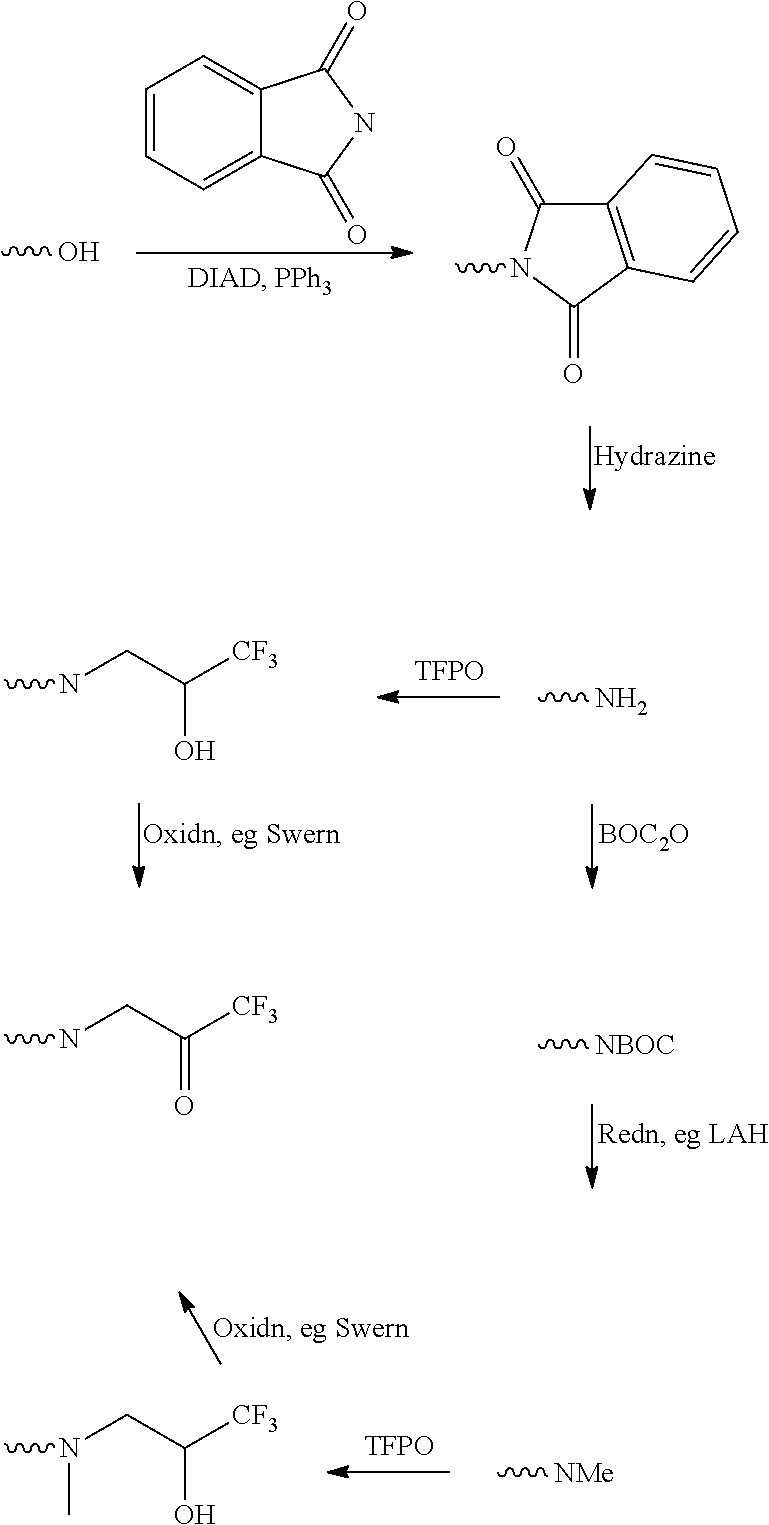
- Methylation of the nitrogen can be effected before this reaction by the formation of an N—BOC group and reduction, e.g. with lithium aluminium hydride. Reaction with TFPO and oxidation yields the linker NMe-CH 2 .
- the compounds of the invention are proposed primarily for use in the treatment of, inter alia, skin cancer.
- treating or treatment is meant at least one of:
- the benefit to a subject to be treated is either statistically significant or at least perceptible to the patient or to the physician. In general a skilled man can appreciate when “treatment” occurs. It is particularly preferred if the compounds of the invention are used therapeutically, i.e. to treat a condition which has manifested rather than prophylactically. It may be that the compounds of the invention are more effective when used therapeutically than prophylactically.
- the compounds of the invention can be used on any animal subject, in particular a mammal and more particularly to a human or an animal serving as a model for a disease (e.g., mouse, monkey, etc.).
- a mammal in particular a mammal and more particularly to a human or an animal serving as a model for a disease (e.g., mouse, monkey, etc.).
- a “therapeutically effective amount” means the amount of a compound that, when administered to an animal for treating a state, disorder or condition, is sufficient to effect such treatment.
- the “therapeutically effective amount” will vary depending on the compound, the disease and its severity and the age, weight, physical condition and responsiveness of the subject to be treated and will be ultimately at the discretion of the attendant doctor.
- a compound of formula I may be administered as the bulk substance, it is preferable to present the active ingredient in a pharmaceutical formulation, for example, wherein the agent is in admixture with a pharmaceutically acceptable carrier selected with regard to the intended route of administration and standard pharmaceutical practice.
- carrier refers to a diluent, excipient, and/or vehicle with which an active compound is administered.
- the pharmaceutical compositions of the invention may contain combinations of more than one carrier. Such pharmaceutical carriers are well known in the art.
- the pharmaceutical compositions may also comprise any suitable binder(s), lubricant(s), suspending agent(s), coating agent(s), and/or solubilizing agent(s) and so on.
- the compositions can also contain other active components, e.g. other drugs for the treatment of skin cancer.
- the active agent of the invention may therefore be combined with steroids or barrier materials (such as zinc oxide).
- compositions for use in accordance with the present invention may be in the form of oral, parenteral, transdermal, sublingual, topical, implant, nasal, or enterally administered (or other mucosally administered) suspensions, capsules or tablets, which may be formulated in conventional manner using one or more pharmaceutically acceptable carriers or excipients.
- the compositions of the invention could also be formulated as nanoparticle formulations.
- compositions of the invention will preferably be administered orally or ideally for skin cancer topically.
- the compound may therefore be provided in the form of an ointment, cream, salve or gel.
- compositions of the invention may contain from 0.01 to 99% weight-per volume of the active material.
- a therapeutically effective amount of the compound of the present invention can be determined by methods known in the art.
- the therapeutically effective quantities will depend on the age and on the general physiological condition of the patient, the route of administration and the pharmaceutical formulation used.
- the therapeutic doses will generally be between about 10 and 2000 mg/day and preferably between about 30 and 1500 mg/day. Other ranges may be used, including, for example, 50-500 mg/day, 50-300 mg/day, 100-200 mg/day.
- Administration may be once a day, twice a day, or more often, and may be decreased during a maintenance phase of the disease or disorder, e.g. once every second or third day instead of every day or twice a day.
- the dose and the administration frequency will depend on the clinical signs, which confirm maintenance of the remission phase, with the reduction or absence of at least one or more preferably more than one clinical signs of the acute phase known to the person skilled in the art.
- the compounds of the invention may be used to treat cancer in combination with other known pharmaceuticals for said purpose and this forms a further aspect of the invention.
- a combination with Imiquimod, 5-Fluorouracil (5-FU) or ErivedgeTM (vismodegib) is contemplated.
- the compounds of the invention might be used in combination with radiotherapy, cryotherapy, phototherapy, laser therapy or radiation therapy.
- radiotherapy cryotherapy
- phototherapy phototherapy
- laser therapy radiation therapy
- FIG. 1A /B shows that AVX001 reduces EGF-induced cPLA2 ⁇ activation and AA/OA release in keratinocytes, suggesting that cPLA2 ⁇ inhibition is a promising treatment strategy for epithelial hyperproliferation and cancer.
- EGF activates cPLA2 ⁇ in human keratinocytes as shown by immunoblotting (A) and by cPLA2 ⁇ in vitro activity assay (B).
- FIG. 2 a / 2 b show that AVX001 reduce EGF-induced cPLA2 ⁇ activation and AA/OA release in keratinocytes, suggesting that cPLA2 ⁇ inhibition is a promising treatment strategy for epithelial hyperproliferation and cancer.
- FIG. 3 a/b shows that EGF activates post-confluent keratinocytes and leads more cells into S-phase at the expense of G1/G2-M phases.
- Treatment with cPLA2 ⁇ inhibitor AVX001 may counteract this entry into S-phase and restrain the resting keratinocytes in G1 phase.
- Post-confluent cells were serum starved, pretreated with AVX001 (5 ⁇ M) for 2 hrs and stimulated with EGF (100 ng/ml) for 24 hrs as described in the methods section.
- a EGF activates post-confluent keratinocytes and leads more cells into S-phase at the expense of G1/G2-M phases.
- Treatment with cPLA2a inhibitor AVX001 may counteract this entry into S-phase and restrain the resting keratinocytes in G1 phase.
- EGF activates post-confluent keratinocytes and leads more cells into S-phase at the expense of G1/G2-M phases.
- Histograms show cell phase distribution for untreated cells (A), cells treated with EGF (B) and cells treated with both EGF and 5 ⁇ M AVX001 (C). Treatment with cPLA2 ⁇ inhibitor AVX001 may counteract this entry into S-phase and restrain the resting keratinocytes in G1 phase.
- Post-confluent cells were serum starved, pretreated with AVX001 (5 ⁇ M) for 2 hrs and stimulated with EGF (100 ng/ml) for 24 hrs as described in the Methods section.
- One representative histogram shown for each treatment group from 6 independent experiments performed.
- FIG. 4 shows the cycle of S, G2, M and G1.
- EGF human epidermal growth factor
- PBS Phosphate-buffered saline solution
- Labelled [5,6,8,9,11,12,14,15- 3 H]-arachidonic acid, L- ⁇ -1-palmitoyl-2-arachidonyl-[arachidonyl-1- 14 C]-phosphatidylcholine and liquid scintillation cocktail Ultima Gold were from NEN Perkin Elmer.
- Dulbecco's Modified Eagle Medium DMEM
- foetal bovine serum FBS
- fatty acid-free bovine serum albumin fBSA
- dimethyl-sulpfoxide DMSO
- gentamicin L-glutamine
- RNase RNase
- PI propidium iodide
- BEL bromoenol lactone
- DTT dithiothreitol
- Leupeptin and pepstatin were from Roche Molecular Biochemicals.
- PGE2 ELISA kit was from Cayman Chemicals.
- Phospho-cPLA2 (Ser505) antibody was from Cell Signal Technology.
- ⁇ -tubulin antibody was from Santa Cruz Biotechnology.
- Polyclonal goat anti-mouse immunoglobulins horse raddish peroxidase-conjugated secondary antibody was from Dako. Hybond-C nitrocellulose membranes were from GE Healthcare. NuPAGE gel system (10% Bis-Tris gel) was from Invitrogen. SuperSignal® West Femto Maximum Sensivity substrate was from Thermo Scientific. Fluoroketones AVX001 and AVX002 were synthesized and characterized according to Holmeide and Skattebol (Supra) and kindly provided by Dr. Inger Reidun Aukrust and Dr. Marcel Sandberg (Synthetica AS, Norway). Both compounds were stored at ⁇ 80° C. as 20 mM stock solution in ethanol under argon gas to minimize oxidation.
- the spontaneously immortalized skin keratinocyte cell line HaCaT (kindly provided by Prof. N. Fusenig, Heidelberg, Irishs Krebsgeberstechnik, Germany) [1] was cultured in DMEM supplemented with 10% (v/v) FBS, 0.3 mg/ml glutamine, and 0.1 mg/ml gentamicin at 37° C. with 5% CO2 in a humidified atmosphere.
- DMEM fetal calfate
- flow cytometry cell cycle analysis and in vitro cPLA2 ⁇ activity assay cells were grown in 48 well trays or in 6 well trays, respectively. Cells were cultivated until 2 days post-confluency; serum starved in DMEM/0.5% FBS overnight and processed at day 3 post-confluence to ensure differentiation [2].
- Lysates were cleared by centrifugation, separated by SDS-PAGE and electrophoretically transferred to Hybond-C nitrocellulose membranes (GE Healthcare) using the NuPAGE gel system (10% Bis-Tris gel) from Invitrogen.
- Membranes were blocked in Tris-buffered saline containing 0.1% Tween 20 and 5% non-fat dry milk for 1 hour at room temperature before incubation with the desired antibodies overnight at 4° C. Following washing three times with Tris-buffered saline containing 20% Tween 20, immunoreactive proteins were detected by horseradish peroxidase-conjugated secondary antibody (1 hour at room temperature) and SuperSignal® West Femto Maximum Sensivity substrate.
- EGF Induced cPLA2 ⁇ Enzyme Activity in Post-Confluent Keratinocytes is Abrogated by cPLA2 ⁇ Inhibitor AVX001.
- cPLA2 ⁇ can be activated by phosphorylation at Ser 505 .
- EGF epidermal growth hormone
- the increase in phosphorylated cPLA2 ⁇ in response to EGF indicates that EGF activates cPLA2 ⁇ .
- EGF Induced Keratinocyte AA Release is Efficiently Inhibited by AVX001 and AVX002 cPLA2 ⁇ Inhibitors.
- EGF activates cPLA2 ⁇ in keratinocytes
- DNA-propidium iodide stain flow cytometry analysis we observed that in response to EGF a fraction of post-confluent cells re-entered cell cycle; less cells were found in G1/G2-M phases and more cells were residing in the S-phase following 24 hrs of EGF treatment ( FIG. 3 a/b ). This shift from resting phase to active, DNA-synthesis phase was in part reversed by the cPLA2 ⁇ inhibitor AVX001 that was able to restrain most cells in G1 phase.
Landscapes
- Health & Medical Sciences (AREA)
- Chemical & Material Sciences (AREA)
- Public Health (AREA)
- Medicinal Chemistry (AREA)
- Veterinary Medicine (AREA)
- Pharmacology & Pharmacy (AREA)
- Life Sciences & Earth Sciences (AREA)
- Animal Behavior & Ethology (AREA)
- General Health & Medical Sciences (AREA)
- Epidemiology (AREA)
- Organic Chemistry (AREA)
- Nutrition Science (AREA)
- Physiology (AREA)
- Dermatology (AREA)
- Nuclear Medicine, Radiotherapy & Molecular Imaging (AREA)
- General Chemical & Material Sciences (AREA)
- Chemical Kinetics & Catalysis (AREA)
- Pharmaceuticals Containing Other Organic And Inorganic Compounds (AREA)
- Acyclic And Carbocyclic Compounds In Medicinal Compositions (AREA)
- Medicines That Contain Protein Lipid Enzymes And Other Medicines (AREA)
Abstract
R-L-CO—X (I)
-
- wherein R is a C10-24 unsaturated hydrocarbon group optionally interrupted by one or more heteroatoms or groups of heteroatoms selected from S, O, N, SO, SO2, said hydrocarbon group comprising at least 4 non-conjugated double bonds;
- L is a linking group forming a bridge of 1 to 5 atoms between the R group and the carbonyl CO wherein L comprises at least one heteroatom in the backbone of the linking group; and
- X is an electron withdrawing group or a salt thereof
- for use in the treatment of skin cancer such as basal cell carcinoma.
Description
R-L-CO—X (I)
R-L-CO—X (I)
R-L-CO—X (I)
R-L-CO—X (I)
R-L-CO—X (I′)
R—Y1-Y2-CO—X


RS(C1-6alkyl)CH2—COX+Z− (VI)
where R and X are as hereinbefore defined and Z is a counterion, e.g. halide; e.g. the compound


Materials
cPLA2α Enzyme In Vitro Activity Assay
Lysate from stimulated HaCaT keratinocytes was used as the source for cPLA2α enzyme in the in vitro activity assay as described by Wijkander et al [3] with some modifications. HaCaT keratinocytes were serum starved over-night before stimulation with EGF (100 ng/ml) for 1 and 2 hours. Cells were lysed and 200 μg of total protein was analyzed for cPLA2α activity as described [4-7]. Bromoenol lactone (BEL) (25 μM) and dithiothreitol (DTT) (2.36 mM) were included in all reactions to inhibit activity of iPLA2 and sPLA2 [7].
Immunoblotting
Following EGF (100 ng/ml) treatment for the indicated times with or without AVX001 and AVX002 inhibitors, cells were washed in PBS and lysed in buffer containing 50 mM Tris pH 7.5, 150 mM NaCl, 10% glycerol, 0.5% Triton-X-100, 2 mM EDTA, 40 mM β-glycero-phosphate, 100 mM NaF, 200 μM Na3VO4, 10 μg leupeptin, 1 μM pepstatin and 1 mM phenylmethylsulfonyl fluoride. Lysates were cleared by centrifugation, separated by SDS-PAGE and electrophoretically transferred to Hybond-C nitrocellulose membranes (GE Healthcare) using the NuPAGE gel system (10% Bis-Tris gel) from Invitrogen. Membranes were blocked in Tris-buffered saline containing 0.1
[3H]-Arachidonic Acid Release Assay
At 2 days post-confluency, HaCaT were labelled for 18 h with 3H-AA (0.4 μCi/ml) in DMEM/0.5% FBS. After labelling, the cells were washed twice with phosphate-buffered saline (PBS) containing fatty acid free BSA (2 mg/ml) (fBSA) in order to remove unincorporated radioactivity. After stimulation, the supernatants were cleared of detached cells by centrifugation (13000 rpm, 10 min). The release of 3H-AA from the cells was assessed by liquid scintillation counting in a LS 6500 Multi-Purpose Scintillation Counter, Beckman Coulter. Adherent cells were dissolved in 1M NaOH in order to determine incorporated 3H-AA in the cells by liquid scintillation counting. The results are given as released 3H-AA in the supernatants relative to total 3H-AA incorporated into the cells.
Cell Cycle Phase Analysis by Flow Cytometry
- 1. Boukamp, P., et al., Normal keratinization in a spontaneously immortalized aneuploid human keratinocyte cell line. J. Cell Biol., 1988. 106(3): p. 761-771.
- 2. Jorgensen, K. M., et al., Platelet activating factor stimulates arachidonic acid release in differentiated keratinocytes via arachidonyl non-selective phospholipase A2. Arch Dermatol Res, 2010. 302(3): p. 221-7.
- 3. Wijkander, J. and R. Sundler, An 100-kDa arachidonate-mobilizing phospholipase A2 in mouse spleen and the macrophage cell line J774. European Journal of Biochemistry, 1991. 202(3): p. 873-880.
- 4. Anthonsen, M. W., et al., Atypical λ/tPKC Conveys 5-Lipoxygenase/Leukotriene B4-mediated Cross-talk between Phospholipase A2s Regulating NF-κB Activation in Response to Tumor Necrosis Factor-α and Interleukin-1β. J Biol Chem, 2001. 276(38): p. 35344-35351.
- 5. Huwiler, A., et al., The ω3-polyunsaturated fatty acid derivatives AVX001 and AVX002 directly inhibit cytosolic phospholipase A2 and suppress prostaglandin E2 formation in mesangial cells. Br J Pharmacol, 2012. 168(8): p. 1691-1701.
- 6. Wijkander, J. and R. Sundler, An 100-kDa arachidonate-mobilizing phospholipase A2 in mouse spleen and the macrophage cell line J774. Eur J Biochem, 1991. 202(3): p. 873-880.
- 7. Lucas, K. K. and E. A. Dennis, Distinguishing phospholipase A2 types in biological samples by employing group-specific assays in the presence of inhibitors. Prostaglandins Other Lipid Mediat, 2005. 77(1-4): p. 235-248.
Claims (17)
R—Y1-Y2-CO—X (I′)


Applications Claiming Priority (3)
| Application Number | Priority Date | Filing Date | Title |
|---|---|---|---|
| GBGB1409363.7A GB201409363D0 (en) | 2014-05-27 | 2014-05-27 | Skin cancer treatment |
| GB1409363.7 | 2014-05-27 | ||
| PCT/EP2015/061534 WO2015181135A1 (en) | 2014-05-27 | 2015-05-26 | Skin cancer treatment |
Publications (2)
| Publication Number | Publication Date |
|---|---|
| US20170119694A1 US20170119694A1 (en) | 2017-05-04 |
| US10085953B2 true US10085953B2 (en) | 2018-10-02 |
Family
ID=51177485
Family Applications (1)
| Application Number | Title | Priority Date | Filing Date |
|---|---|---|---|
| US15/360,084 Active US10085953B2 (en) | 2014-05-27 | 2015-05-26 | Skin cancer treatment |
Country Status (8)
| Country | Link |
|---|---|
| US (1) | US10085953B2 (en) |
| EP (1) | EP3148519B1 (en) |
| KR (1) | KR102381684B1 (en) |
| CN (1) | CN106458877A (en) |
| AU (1) | AU2015266114B2 (en) |
| CA (1) | CA2949233C (en) |
| GB (1) | GB201409363D0 (en) |
| WO (1) | WO2015181135A1 (en) |
Cited By (3)
| Publication number | Priority date | Publication date | Assignee | Title |
|---|---|---|---|---|
| US10953004B2 (en) | 2016-03-14 | 2021-03-23 | Avexxin As | Combination therapy for proliferative diseases |
| US11351127B2 (en) | 2016-09-21 | 2022-06-07 | Avexxin As | Pharmaceutical composition |
| US20220265576A1 (en) * | 2019-07-25 | 2022-08-25 | Coegin Pharma As | Phospholipase-a2 inhibitors for the prevention of cancer metastasis |
Families Citing this family (2)
| Publication number | Priority date | Publication date | Assignee | Title |
|---|---|---|---|---|
| GB201501144D0 (en) | 2015-01-23 | 2015-03-11 | Avexxin As | Process for the preparation of a polyunsaturated ketone compound |
| GB202020843D0 (en) * | 2020-12-31 | 2021-02-17 | Coegin Pharma Ab | Actinic keratosis treatment |
Citations (21)
| Publication number | Priority date | Publication date | Assignee | Title |
|---|---|---|---|---|
| US4670465A (en) | 1986-05-21 | 1987-06-02 | Syntex (U.S.A.) Inc. | Arachidonic acid analogs |
| EP0418680A2 (en) | 1989-09-18 | 1991-03-27 | Givaudan-Roure (International) S.A. | Oxygen or sulfur containing acyclic terpenes |
| EP0765661A2 (en) | 1995-09-26 | 1997-04-02 | Shiseido Company Limited | Use of docosahexaenoic acid for the manufacture of a medicament for the treatment of glumerulonephritis |
| JPH09268153A (en) | 1996-04-02 | 1997-10-14 | Sagami Chem Res Center | Trifluoromethyl ketone derivative and phospholipase a2 inhibitor |
| WO1997038688A1 (en) | 1996-04-12 | 1997-10-23 | Peptide Technology Pty. Limited | Methods of treating immunopathologies using polyunsaturated fattyacids |
| WO2000002561A1 (en) | 1998-07-13 | 2000-01-20 | University Of South Florida | Modulation of the phospholipase a2 pathway as a therapeutic |
| WO2002060535A1 (en) | 2001-01-31 | 2002-08-08 | Leff Alan R | Method of treating inflammatory conditions by inhibiting cytosolic phospholipase a¿2? |
| WO2003063878A1 (en) | 2002-01-29 | 2003-08-07 | Leiv Eiriksson Nyskaping As | Use of polyunsaturated ketones for the treatment of psoriasis |
| WO2006096579A1 (en) | 2005-03-04 | 2006-09-14 | Abbott Laboratories | Nutritional products for ameliorating symptoms of rheumatoid arthristis |
| WO2006106438A2 (en) | 2005-01-11 | 2006-10-12 | Evolva Sa | Modulators of ppar activity |
| WO2008075978A2 (en) | 2006-12-20 | 2008-06-26 | Seperex Nutritionals Limited | An extract |
| WO2008075366A2 (en) | 2006-12-20 | 2008-06-26 | Medwell Laboratories Ltd. | Novel conjugates of polyunsaturated fatty acids with amines and therapeutic uses thereof |
| WO2009038671A2 (en) | 2007-09-14 | 2009-03-26 | Resolvyx Pharmaceuticals, Inc. | Oxylipin compounds for treating autoimmune diseases |
| US20090192201A1 (en) | 2008-01-28 | 2009-07-30 | Guillermo Selman-Housein Sosa | Composition and method for treating and preventing musculoskeletal and connective tissue disorders |
| US20100204298A1 (en) | 2006-09-28 | 2010-08-12 | Rachel Levy | Use of Antisense Oligonucleotides Against CPLA2 in the Treatment of Cancer |
| WO2010128401A1 (en) | 2009-05-08 | 2010-11-11 | Pronova Biopharma Norge As | Polyunsaturated fatty acids for the treatment of diseases related to cardiovascular, metabolic and inflammatory disease areas |
| WO2010139482A1 (en) | 2009-06-04 | 2010-12-09 | Avexxin As | Glomerulonephritis treatment |
| WO2011039365A1 (en) | 2009-10-02 | 2011-04-07 | Avexxin As | Anti inflammatory 2-oxothiazoles and 2 -oxooxazoles |
| WO2011097276A1 (en) | 2010-02-02 | 2011-08-11 | Martek Biosciences Corporation | Methods and compositions for treating arthritis with docosahexaenoic acid |
| WO2012028688A1 (en) | 2010-09-02 | 2012-03-08 | Avexxin As | Rheumatoid arthritis treatment using polyunsaturated long chain ketones |
| WO2014082960A1 (en) | 2012-11-27 | 2014-06-05 | Avexxin As | Dermatitis treatment |
-
2014
- 2014-05-27 GB GBGB1409363.7A patent/GB201409363D0/en not_active Ceased
-
2015
- 2015-05-26 KR KR1020167035592A patent/KR102381684B1/en not_active Expired - Fee Related
- 2015-05-26 CN CN201580027916.9A patent/CN106458877A/en active Pending
- 2015-05-26 EP EP15724306.4A patent/EP3148519B1/en active Active
- 2015-05-26 US US15/360,084 patent/US10085953B2/en active Active
- 2015-05-26 WO PCT/EP2015/061534 patent/WO2015181135A1/en not_active Ceased
- 2015-05-26 CA CA2949233A patent/CA2949233C/en active Active
- 2015-05-26 AU AU2015266114A patent/AU2015266114B2/en not_active Ceased
Patent Citations (24)
| Publication number | Priority date | Publication date | Assignee | Title |
|---|---|---|---|---|
| US4670465A (en) | 1986-05-21 | 1987-06-02 | Syntex (U.S.A.) Inc. | Arachidonic acid analogs |
| EP0418680A2 (en) | 1989-09-18 | 1991-03-27 | Givaudan-Roure (International) S.A. | Oxygen or sulfur containing acyclic terpenes |
| EP0765661A2 (en) | 1995-09-26 | 1997-04-02 | Shiseido Company Limited | Use of docosahexaenoic acid for the manufacture of a medicament for the treatment of glumerulonephritis |
| JPH09268153A (en) | 1996-04-02 | 1997-10-14 | Sagami Chem Res Center | Trifluoromethyl ketone derivative and phospholipase a2 inhibitor |
| WO1997038688A1 (en) | 1996-04-12 | 1997-10-23 | Peptide Technology Pty. Limited | Methods of treating immunopathologies using polyunsaturated fattyacids |
| WO2000002561A1 (en) | 1998-07-13 | 2000-01-20 | University Of South Florida | Modulation of the phospholipase a2 pathway as a therapeutic |
| WO2002060535A1 (en) | 2001-01-31 | 2002-08-08 | Leff Alan R | Method of treating inflammatory conditions by inhibiting cytosolic phospholipase a¿2? |
| WO2003063878A1 (en) | 2002-01-29 | 2003-08-07 | Leiv Eiriksson Nyskaping As | Use of polyunsaturated ketones for the treatment of psoriasis |
| CN1678323A (en) | 2002-01-29 | 2005-10-05 | 埃维克辛公司 | Application of polyunsaturated ketones in the treatment of psoriasis |
| WO2006106438A2 (en) | 2005-01-11 | 2006-10-12 | Evolva Sa | Modulators of ppar activity |
| WO2006096579A1 (en) | 2005-03-04 | 2006-09-14 | Abbott Laboratories | Nutritional products for ameliorating symptoms of rheumatoid arthristis |
| US20100204298A1 (en) | 2006-09-28 | 2010-08-12 | Rachel Levy | Use of Antisense Oligonucleotides Against CPLA2 in the Treatment of Cancer |
| WO2008075366A2 (en) | 2006-12-20 | 2008-06-26 | Medwell Laboratories Ltd. | Novel conjugates of polyunsaturated fatty acids with amines and therapeutic uses thereof |
| WO2008075978A2 (en) | 2006-12-20 | 2008-06-26 | Seperex Nutritionals Limited | An extract |
| WO2009038671A2 (en) | 2007-09-14 | 2009-03-26 | Resolvyx Pharmaceuticals, Inc. | Oxylipin compounds for treating autoimmune diseases |
| US20090192201A1 (en) | 2008-01-28 | 2009-07-30 | Guillermo Selman-Housein Sosa | Composition and method for treating and preventing musculoskeletal and connective tissue disorders |
| WO2010128401A1 (en) | 2009-05-08 | 2010-11-11 | Pronova Biopharma Norge As | Polyunsaturated fatty acids for the treatment of diseases related to cardiovascular, metabolic and inflammatory disease areas |
| WO2010139482A1 (en) | 2009-06-04 | 2010-12-09 | Avexxin As | Glomerulonephritis treatment |
| WO2011039365A1 (en) | 2009-10-02 | 2011-04-07 | Avexxin As | Anti inflammatory 2-oxothiazoles and 2 -oxooxazoles |
| WO2011097276A1 (en) | 2010-02-02 | 2011-08-11 | Martek Biosciences Corporation | Methods and compositions for treating arthritis with docosahexaenoic acid |
| WO2012028688A1 (en) | 2010-09-02 | 2012-03-08 | Avexxin As | Rheumatoid arthritis treatment using polyunsaturated long chain ketones |
| CN103249408A (en) | 2010-09-02 | 2013-08-14 | 阿伟克斯新有限公司 | Rheumatoid arthritis treatment using polyunsaturated long chain ketones |
| WO2014082960A1 (en) | 2012-11-27 | 2014-06-05 | Avexxin As | Dermatitis treatment |
| CN104968349A (en) | 2012-11-27 | 2015-10-07 | 埃维克辛公司 | Dermatitis treatment |
Non-Patent Citations (18)
| Title |
|---|
| Albrightson et al., Selective inhibition of 5-lipoxygenase attenuates glomerulonephritis in the rat. Kidney Int. May 1994;45(5):1301-10. |
| Alexander et al., Arachidonic acid induces ERK activation via Src SH2 domain association with the epidermal growth factor receptor. Kidney Int. May 2006;69(10):1823-32. |
| Costabile et al., The immunomodulatory effects of novel beta-oxa, beta-thia, and gamma-thia polyunsaturated fatty acids on human T lymphocyte proliferation, cytokine production, and activation of protein kinase C and MAPKs. J Immunol. Jan. 1, 2005;174(1):233-43. |
| Cybulsky et al., Complement C5b-9 membrane attack complex increases expression of endoplasmic reticulum stress proteins in glomerular epithelial cells. J Biol Chem. Nov. 1, 2002;277(44):41342-51. |
| Flock et al., Syntheses of some polyunsaturated sulfur- and oxygen-containing fatty acids related to eicosapentaenoic and docosahexaenoic acids. Acta Chem Scand. Jun. 1999;53(6):436-45. |
| Holmeide et al., Syntheses okf some polyunsaturated trifluoromethyl ketones as potential phospholipase A2 inhibitors. J Chem Soc Perkins Trans 1. 2000;1(14)2271-2276. |
| Huwiler et al (British Journal of Pharmacology (2012) 167 1691-1701). * |
| Ingber et al., A novel treatment of contactdermatitis by topical application of phospholipase A2 inhibitor: a double-blind placebo-controlled pilot study. Int J Immunopathol Pharmacol. Jan.-Mar. 2007;20(1):191-5. |
| Johannesdottir et al., Nonsteroidal anti-inflammatory drugs and the risk of skin cancer: a population-based case-control study. Cancer. Oct. 1, 2012;118(19):4768-76. |
| Liu et al., EGFR signaling is required for TGF-beta 1 mediated COX-2 induction in human bronchial epithelial cells. Am J Respir Cell Mol Biol. Nov. 2007;37(5):578-88. |
| Matsuzawa et al., Activation of cytosolic phospholipase A2alpha by epidermal growth factor (EGF) and phorbol ester in HeLa cells: different effects of inhibitors for EGF receptor, protein kinase C, Src, and C-Raf. J Pharmacol Sci. Oct. 2009;111(2):182-92. |
| Rodriguez et al., Hyperosmotic stress induces phosphorylation of cytosolic phospholipase A(2) in HaCaT cells by an epidermal growth factor receptor-mediated process. Cell Signal. Oct. 2002;14(10):839-48. |
| Sakaguchi et al., Truncation of annexin A1 is a regulatory lever for linking epidermal growth factor signaling with cytosolic phospholipase A2 in normal and malignant squamous epithelial cells. J Biol Chem. Dec. 7, 2007;282(49):35679-86. |
| Schalkwijk et al., Maximal epidermal growth-factor-induced cytosolic phospholipase A2 activation in vivo requires phosphorylation followed by an increased intracellular calcium concentration. Biochem J. Jan. 1, 1996;313 ( Pt 1):91-6. |
| Scuderi et al., Expression of Ca(2+)-independent and Ca(2+)-dependent phospholipases A(2) and cyclooxygenases in human melanocytes and malignant melanoma cell lines. Biochim Biophys Acta. Oct. 2008;1781(10):635-42. |
| Sommerfelt et al., Cytosolic phospholipase A2 regulates TNF-induced production of joint destructive effectors in synoviocytes. PLoS One. Dec. 12, 2013;8(12):e83555. 8 pages. |
| Thommesen et al., Selective inhibitors of cytosolic or secretory phospholipase A2 block TNF-induced activation of transcription factor nuclear factor-kappa B and expression of ICAM-1. J Immunol. Oct. 1, 1988;161(7):3421-30. |
| Yan et al., Cytosolic Phospholipase A2 is Involved in Epidermal Growth Factor and Fetal Bovine Serum-induced Proliferation in Hela Cells. Chinese Doctoral Dissertation & Masters Theses. 68 pages (2005). |
Cited By (3)
| Publication number | Priority date | Publication date | Assignee | Title |
|---|---|---|---|---|
| US10953004B2 (en) | 2016-03-14 | 2021-03-23 | Avexxin As | Combination therapy for proliferative diseases |
| US11351127B2 (en) | 2016-09-21 | 2022-06-07 | Avexxin As | Pharmaceutical composition |
| US20220265576A1 (en) * | 2019-07-25 | 2022-08-25 | Coegin Pharma As | Phospholipase-a2 inhibitors for the prevention of cancer metastasis |
Also Published As
| Publication number | Publication date |
|---|---|
| CA2949233A1 (en) | 2015-12-03 |
| AU2015266114A1 (en) | 2016-12-01 |
| EP3148519B1 (en) | 2020-01-08 |
| WO2015181135A1 (en) | 2015-12-03 |
| GB201409363D0 (en) | 2014-07-09 |
| KR102381684B1 (en) | 2022-03-31 |
| CN106458877A (en) | 2017-02-22 |
| US20170119694A1 (en) | 2017-05-04 |
| CA2949233C (en) | 2022-11-15 |
| AU2015266114B2 (en) | 2018-05-10 |
| KR20170005116A (en) | 2017-01-11 |
| EP3148519A1 (en) | 2017-04-05 |
Similar Documents
| Publication | Publication Date | Title |
|---|---|---|
| EP3148519B1 (en) | Skin cancer treatment | |
| US8283382B2 (en) | Vitamin K for prevention and treatment of skin rash secondary to anti-EGFR therapy | |
| JP5587969B2 (en) | Compounds for the treatment of inflammation and pain | |
| Sintov et al. | Inhibition of cancer growth and induction of apoptosis by BGP-13 and BGP-15, new calcipotriene-derived vitamin D3 analogs, in-vitro and in-vivo studies | |
| US20210101913A1 (en) | 2-oxothiatole compounds having activity as cpla2 inhibitors for the treatment of inflammatory disorders and hyperproliferative disorders | |
| KR20110025168A (en) | Pharmaceutical composition | |
| US20050137247A1 (en) | Methods and compositions for treatment of hypertension | |
| US9834575B2 (en) | Cancer therapy | |
| JP2023523051A (en) | Compounds for prevention or treatment of lipid metabolism-related diseases | |
| EP3429572B1 (en) | Combination therapy for proliferative diseases | |
| KR20110004846A (en) | Modulation of the structure, activity and / or expression of enzymes | |
| US20240074989A1 (en) | Actinic keratosis treatment | |
| WO2018079855A1 (en) | Pharmaceutical composition for inducing programmed cell death in cancer cells | |
| CN114630659A (en) | Phospholipase A2 inhibitors for preventing cancer metastasis | |
| US20220331274A1 (en) | Methods of treating cancer |
Legal Events
| Date | Code | Title | Description |
|---|---|---|---|
| AS | Assignment |
Owner name: AVEXXIN AS, NORWAY Free format text: ASSIGNMENT OF ASSIGNORS INTEREST;ASSIGNORS:JOHANSEN, BERIT;FEUERHERM, ASTRID JULLUMISTRO, MS.;REEL/FRAME:040784/0553 Effective date: 20161213 |
|
| STCF | Information on status: patent grant |
Free format text: PATENTED CASE |
|
| MAFP | Maintenance fee payment |
Free format text: PAYMENT OF MAINTENANCE FEE, 4TH YR, SMALL ENTITY (ORIGINAL EVENT CODE: M2551); ENTITY STATUS OF PATENT OWNER: SMALL ENTITY Year of fee payment: 4 |
|
| FEPP | Fee payment procedure |
Free format text: MAINTENANCE FEE REMINDER MAILED (ORIGINAL EVENT CODE: REM.); ENTITY STATUS OF PATENT OWNER: SMALL ENTITY |