US10082963B2 - Low capacity latency storage enclosure with expander - Google Patents

Low capacity latency storage enclosure with expander Download PDF

Info

Publication number
US10082963B2
US10082963B2 US15/132,145 US201615132145A US10082963B2 US 10082963 B2 US10082963 B2 US 10082963B2 US 201615132145 A US201615132145 A US 201615132145A US 10082963 B2 US10082963 B2 US 10082963B2
Authority
US
United States
Prior art keywords
cables
hard drives
data
expander
interface unit
Prior art date
Legal status (The legal status is an assumption and is not a legal conclusion. Google has not performed a legal analysis and makes no representation as to the accuracy of the status listed.)
Active, expires
Application number
US15/132,145
Other versions
US20170300238A1 (en
Inventor
Kelvin TSENG
Trina SHIH
Lawrence H. LIANG
Richard Chen
Current Assignee (The listed assignees may be inaccurate. Google has not performed a legal analysis and makes no representation or warranty as to the accuracy of the list.)
Super Micro Computer Inc
Original Assignee
Super Micro Computer Inc
Priority date (The priority date is an assumption and is not a legal conclusion. Google has not performed a legal analysis and makes no representation as to the accuracy of the date listed.)
Filing date
Publication date
Application filed by Super Micro Computer Inc filed Critical Super Micro Computer Inc
Priority to US15/132,145 priority Critical patent/US10082963B2/en
Assigned to SUPER MICRO COMPUTER, INC. reassignment SUPER MICRO COMPUTER, INC. ASSIGNMENT OF ASSIGNORS INTEREST (SEE DOCUMENT FOR DETAILS). Assignors: CHEN, RICHARD, LIANG, LAWRENCE H., SHIH, TRINA, TSENG, KELVIN
Priority to TW106112606A priority patent/TWI635397B/en
Priority to CN201710254632.4A priority patent/CN107450847B/en
Publication of US20170300238A1 publication Critical patent/US20170300238A1/en
Application granted granted Critical
Publication of US10082963B2 publication Critical patent/US10082963B2/en
Active legal-status Critical Current
Adjusted expiration legal-status Critical

Links

Images

Classifications

    • GPHYSICS
    • G06COMPUTING OR CALCULATING; COUNTING
    • G06FELECTRIC DIGITAL DATA PROCESSING
    • G06F3/00Input arrangements for transferring data to be processed into a form capable of being handled by the computer; Output arrangements for transferring data from processing unit to output unit, e.g. interface arrangements
    • G06F3/06Digital input from, or digital output to, record carriers, e.g. RAID, emulated record carriers or networked record carriers
    • G06F3/0601Interfaces specially adapted for storage systems
    • G06F3/0602Interfaces specially adapted for storage systems specifically adapted to achieve a particular effect
    • G06F3/0604Improving or facilitating administration, e.g. storage management
    • G06F3/0607Improving or facilitating administration, e.g. storage management by facilitating the process of upgrading existing storage systems, e.g. for improving compatibility between host and storage device
    • GPHYSICS
    • G06COMPUTING OR CALCULATING; COUNTING
    • G06FELECTRIC DIGITAL DATA PROCESSING
    • G06F3/00Input arrangements for transferring data to be processed into a form capable of being handled by the computer; Output arrangements for transferring data from processing unit to output unit, e.g. interface arrangements
    • G06F3/06Digital input from, or digital output to, record carriers, e.g. RAID, emulated record carriers or networked record carriers
    • G06F3/0601Interfaces specially adapted for storage systems
    • G06F3/0602Interfaces specially adapted for storage systems specifically adapted to achieve a particular effect
    • G06F3/061Improving I/O performance
    • G06F3/0611Improving I/O performance in relation to response time
    • GPHYSICS
    • G06COMPUTING OR CALCULATING; COUNTING
    • G06FELECTRIC DIGITAL DATA PROCESSING
    • G06F3/00Input arrangements for transferring data to be processed into a form capable of being handled by the computer; Output arrangements for transferring data from processing unit to output unit, e.g. interface arrangements
    • G06F3/06Digital input from, or digital output to, record carriers, e.g. RAID, emulated record carriers or networked record carriers
    • G06F3/0601Interfaces specially adapted for storage systems
    • G06F3/0602Interfaces specially adapted for storage systems specifically adapted to achieve a particular effect
    • G06F3/061Improving I/O performance
    • G06F3/0613Improving I/O performance in relation to throughput
    • GPHYSICS
    • G06COMPUTING OR CALCULATING; COUNTING
    • G06FELECTRIC DIGITAL DATA PROCESSING
    • G06F3/00Input arrangements for transferring data to be processed into a form capable of being handled by the computer; Output arrangements for transferring data from processing unit to output unit, e.g. interface arrangements
    • G06F3/06Digital input from, or digital output to, record carriers, e.g. RAID, emulated record carriers or networked record carriers
    • G06F3/0601Interfaces specially adapted for storage systems
    • G06F3/0602Interfaces specially adapted for storage systems specifically adapted to achieve a particular effect
    • G06F3/0626Reducing size or complexity of storage systems
    • GPHYSICS
    • G06COMPUTING OR CALCULATING; COUNTING
    • G06FELECTRIC DIGITAL DATA PROCESSING
    • G06F3/00Input arrangements for transferring data to be processed into a form capable of being handled by the computer; Output arrangements for transferring data from processing unit to output unit, e.g. interface arrangements
    • G06F3/06Digital input from, or digital output to, record carriers, e.g. RAID, emulated record carriers or networked record carriers
    • G06F3/0601Interfaces specially adapted for storage systems
    • G06F3/0628Interfaces specially adapted for storage systems making use of a particular technique
    • G06F3/0629Configuration or reconfiguration of storage systems
    • GPHYSICS
    • G06COMPUTING OR CALCULATING; COUNTING
    • G06FELECTRIC DIGITAL DATA PROCESSING
    • G06F3/00Input arrangements for transferring data to be processed into a form capable of being handled by the computer; Output arrangements for transferring data from processing unit to output unit, e.g. interface arrangements
    • G06F3/06Digital input from, or digital output to, record carriers, e.g. RAID, emulated record carriers or networked record carriers
    • G06F3/0601Interfaces specially adapted for storage systems
    • G06F3/0628Interfaces specially adapted for storage systems making use of a particular technique
    • G06F3/0629Configuration or reconfiguration of storage systems
    • G06F3/0635Configuration or reconfiguration of storage systems by changing the path, e.g. traffic rerouting, path reconfiguration
    • GPHYSICS
    • G06COMPUTING OR CALCULATING; COUNTING
    • G06FELECTRIC DIGITAL DATA PROCESSING
    • G06F3/00Input arrangements for transferring data to be processed into a form capable of being handled by the computer; Output arrangements for transferring data from processing unit to output unit, e.g. interface arrangements
    • G06F3/06Digital input from, or digital output to, record carriers, e.g. RAID, emulated record carriers or networked record carriers
    • G06F3/0601Interfaces specially adapted for storage systems
    • G06F3/0628Interfaces specially adapted for storage systems making use of a particular technique
    • G06F3/0655Vertical data movement, i.e. input-output transfer; data movement between one or more hosts and one or more storage devices
    • GPHYSICS
    • G06COMPUTING OR CALCULATING; COUNTING
    • G06FELECTRIC DIGITAL DATA PROCESSING
    • G06F3/00Input arrangements for transferring data to be processed into a form capable of being handled by the computer; Output arrangements for transferring data from processing unit to output unit, e.g. interface arrangements
    • G06F3/06Digital input from, or digital output to, record carriers, e.g. RAID, emulated record carriers or networked record carriers
    • G06F3/0601Interfaces specially adapted for storage systems
    • G06F3/0628Interfaces specially adapted for storage systems making use of a particular technique
    • G06F3/0655Vertical data movement, i.e. input-output transfer; data movement between one or more hosts and one or more storage devices
    • G06F3/0658Controller construction arrangements
    • GPHYSICS
    • G06COMPUTING OR CALCULATING; COUNTING
    • G06FELECTRIC DIGITAL DATA PROCESSING
    • G06F3/00Input arrangements for transferring data to be processed into a form capable of being handled by the computer; Output arrangements for transferring data from processing unit to output unit, e.g. interface arrangements
    • G06F3/06Digital input from, or digital output to, record carriers, e.g. RAID, emulated record carriers or networked record carriers
    • G06F3/0601Interfaces specially adapted for storage systems
    • G06F3/0668Interfaces specially adapted for storage systems adopting a particular infrastructure
    • G06F3/067Distributed or networked storage systems, e.g. storage area networks [SAN], network attached storage [NAS]
    • GPHYSICS
    • G06COMPUTING OR CALCULATING; COUNTING
    • G06FELECTRIC DIGITAL DATA PROCESSING
    • G06F3/00Input arrangements for transferring data to be processed into a form capable of being handled by the computer; Output arrangements for transferring data from processing unit to output unit, e.g. interface arrangements
    • G06F3/06Digital input from, or digital output to, record carriers, e.g. RAID, emulated record carriers or networked record carriers
    • G06F3/0601Interfaces specially adapted for storage systems
    • G06F3/0668Interfaces specially adapted for storage systems adopting a particular infrastructure
    • G06F3/0671In-line storage system
    • G06F3/0683Plurality of storage devices
    • GPHYSICS
    • G06COMPUTING OR CALCULATING; COUNTING
    • G06FELECTRIC DIGITAL DATA PROCESSING
    • G06F3/00Input arrangements for transferring data to be processed into a form capable of being handled by the computer; Output arrangements for transferring data from processing unit to output unit, e.g. interface arrangements
    • G06F3/06Digital input from, or digital output to, record carriers, e.g. RAID, emulated record carriers or networked record carriers
    • G06F3/0601Interfaces specially adapted for storage systems
    • G06F3/0668Interfaces specially adapted for storage systems adopting a particular infrastructure
    • G06F3/0671In-line storage system
    • G06F3/0683Plurality of storage devices
    • G06F3/0689Disk arrays, e.g. RAID, JBOD
    • GPHYSICS
    • G06COMPUTING OR CALCULATING; COUNTING
    • G06FELECTRIC DIGITAL DATA PROCESSING
    • G06F13/00Interconnection of, or transfer of information or other signals between, memories, input/output devices or central processing units
    • G06F13/38Information transfer, e.g. on bus
    • G06F13/382Information transfer, e.g. on bus using universal interface adapter
    • G06F13/385Information transfer, e.g. on bus using universal interface adapter for adaptation of a particular data processing system to different peripheral devices
    • GPHYSICS
    • G06COMPUTING OR CALCULATING; COUNTING
    • G06FELECTRIC DIGITAL DATA PROCESSING
    • G06F13/00Interconnection of, or transfer of information or other signals between, memories, input/output devices or central processing units
    • G06F13/38Information transfer, e.g. on bus
    • G06F13/40Bus structure
    • G06F13/4004Coupling between buses
    • G06F13/4022Coupling between buses using switching circuits, e.g. switching matrix, connection or expansion network
    • GPHYSICS
    • G06COMPUTING OR CALCULATING; COUNTING
    • G06FELECTRIC DIGITAL DATA PROCESSING
    • G06F3/00Input arrangements for transferring data to be processed into a form capable of being handled by the computer; Output arrangements for transferring data from processing unit to output unit, e.g. interface arrangements
    • G06F3/06Digital input from, or digital output to, record carriers, e.g. RAID, emulated record carriers or networked record carriers
    • G06F3/0601Interfaces specially adapted for storage systems
    • G06F3/0628Interfaces specially adapted for storage systems making use of a particular technique
    • G06F3/0655Vertical data movement, i.e. input-output transfer; data movement between one or more hosts and one or more storage devices
    • G06F3/0659Command handling arrangements, e.g. command buffers, queues, command scheduling

Definitions

  • Embodiments of the present invention relate generally to storage enclosures, and, more specifically, to low latency storage enclosure with large capacity.
  • a conventional storage enclosure includes an expander coupled to an interface unit that, in turn, is coupled to a single large printed circuit board (PCB).
  • the single large PCB includes a collection of ports for mounting hard drives.
  • the PCB includes a set of traces that couple the hard drives to the interface unit and, in turn, to the expander.
  • the expander may be coupled to a host computer system and receive input/output (I/O) commands from that host computer. The expander transmits these commands to the interface unit.
  • the interface unit includes routing circuitry that routes I/O commands from the expander to specific PCB traces, thereby providing access to individual hard drives.
  • the routing circuitry within the interface unit includes a rather complex arrangement of traces that tends to induce crosstalk.
  • a storage enclosure with 30 hard drives could include routing circuitry with 30 or more locations where traces cross over one another.
  • the crosstalk not only can degrade the quality of the signals transmitted via the traces, the crosstalk also limits the number of hard drives that can be included in the storage enclosure, because the crosstalk increases as the number of hard drives included in the storage enclosure increases.
  • a conventional storage enclosure typically includes 30 or fewer hard drives.
  • PCB traces within the single large PCB also induce crosstalk, which further limits the number of drives that can be included within the storage enclosure. Further, if the traces within the large PCB exceed a certain length, then the quality of the signals transmitted via those traces can significantly degrade. This constraint limits the size of the PCB, and, in turn, the number of hard drives that the PCB can support.
  • One embodiment of the present invention sets forth a storage enclosure, including a first expander configured to receive input/output (I/O) data from a host computer system, and a plurality of hard drives coupled to the first expander via a plurality of cables, wherein the plurality of cables routes the I/O data between the first expander and the plurality of hard drives to perform memory access operations.
  • I/O input/output
  • At least one advantage of the disclosed approach is that the storage enclosure may support a greater number of hard drives than possible with conventional approaches. Specifically, the dual-pass cables are shielded, and so crosstalk may be reduced significantly compared to previous approaches that rely on PCB traces.
  • FIG. 1 is a block diagram of a storage enclosure, according to various embodiments of the present invention.
  • FIG. 2 is a block diagram of a hard drive sub-board within the storage enclosure of FIG. 1 , according to various embodiments of the present invention
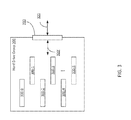
  • FIG. 3 is a block diagram of a hard drive group within the disk sub-board of FIG. 2 , according to various embodiments of the present invention
  • FIG. 4 is a block diagram of an interface unit within the storage enclosure of FIG. 1 , according to various embodiments of the present invention.
  • FIG. 5 is a block diagram of an expander within the storage enclosure of FIG. 1 , according to various embodiments of the present invention.
  • FIG. 6 is a more detailed block diagram of the storage enclosure of FIG. 1 , according to various embodiments of the present invention.
  • FIG. 7 is a block diagram of a set of cables configured to implement I/O data routing within the storage enclosure of FIG. 1 , according to various embodiments of the present invention
  • FIG. 8 is a block diagram of another set of cables configured to implement I/O data routing within the storage enclosure of FIG. 1 , according to various embodiments of the present invention.
  • FIG. 9 is a block diagram of yet another set of cables configured to implement I/O data routing within the storage enclosure of FIG. 1 , according to various embodiments of the present invention.
  • FIG. 1 is a block diagram of a storage enclosure, according to various embodiments of the present invention.
  • storage enclosure 100 includes a plurality of expanders 110 - 0 through 110 -M, an interface unit 120 , and a plurality of hard drive sub-boards 130 - 0 through 130 -N, each configured to include a plurality of hard drives (not shown here).
  • Expanders 110 are coupled to interface unit 120 , and interface unit 120 is coupled to hard drive sub-boards 130 .
  • Expanders 110 include a plurality of plugs (not shown) which couple directly to interface unit 120 .
  • Interface unit 120 is coupled to each hard drive sub-board 130 via a set of cables 140 .
  • Cables 140 may include multiple different subsets of cables, where each subset is coupled to a different hard drive sub-board, as described in greater detail below in conjunction with FIGS. 7-9 .
  • Storage enclosure 100 may include any number of expanders 110 , although in one implementation, storage enclosure 100 includes two expanders. Similarly, storage enclosure 100 may include any number of hard drive sub-boards 130 , although in one implementation, storage enclosure 100 includes three hard drive sub-boards 130 .
  • expanders 110 transport I/O data to and from a host computer system (not shown) coupled upstream of those expanders.
  • I/O data generally includes input commands and associated write data or output commands and associated read data.
  • Expanders 110 include various circuitry configured to transport the I/O data to and from specific ports within interface unit 120 . An exemplary expander 110 is discussed in greater detail below in conjunction with FIG. 5 .
  • Interface unit 120 receives I/O data from expanders 110 and then transmits that data along cables 140 to specific hard drives within hard drive sub-boards 130 . Interface unit 120 may also receive I/O data from the hard drives within hard drive sub-boards 130 via cables 140 and then provide that data to expanders 110 for transmission to the host computer system. When transporting I/O data, interface unit 130 implements a signal mapping procedure to map specific signal pins of interface unit 120 to specific signal wires within cable 140 . The specific signal mapping for a given cable 140 may mitigate latency issues or improve signal timing for the associated hard drive. Interface unit 120 is described in greater detail below in conjunction with FIG. 4 .
  • Each hard drive sub-board 130 includes a plurality of hard drive groups (not shown here). Each hard drive group includes a set of hard drives. A given hard drive group performs a signal remapping procedure with the corresponding cable 140 to remap specific signal wires of a cable 140 to specific signal pins associated with the hard drives in the group. Generally, the signal remapping procedure implemented within a hard drive group is complementary to the signal mapping procedure performed by interface unit 120 , for a given cable 140 .
  • An exemplary hard drive sub-board 130 and an exemplary hard drive group are described in greater detail below in conjunction with FIGS. 2-3 .
  • FIG. 2 is a block diagram of a hard drive sub-board within the storage enclosure of FIG. 1 , according to various embodiments of the present invention.
  • hard drive sub-board 130 includes hard drive groups 200 - 0 through 200 -P.
  • Hard drive sub-board 130 may include any number of hard drive groups, although in one implementation, hard drive sub-board 130 includes five hard drive groups 200 .
  • FIG. 3 is a block diagram of a hard drive group within the disk sub-board of FIG. 2 , according to various embodiments of the present invention.
  • disk group 200 includes hard drives 300 - 0 through 300 -R and signal remapping unit 310 .
  • Hard drives 300 may be any technically feasible variety of computer-readable/writable memory, including a hard disk drive (HDD), a solid-state drive (SSD), and so forth.
  • Signal remapping unit 310 is coupled to one or more of cables 140 , and to remap signal wire assignment 320 associated with cables 140 to signal pin assignment 320 ′.
  • signal remapping unit 310 receives I/O data via cables 140 , performs a signal remapping, and then forwards the received I/O data to hard drives 300 .
  • Hard drives 300 may respond with other I/O data, and then signal remapping unit 310 performs the reverse signal remapping, and forwards the I/O data to interface unit 120 via cables 140 .
  • FIG. 4 is a block diagram of an interface unit within the storage enclosure of FIG. 1 , according to various embodiments of the present invention.
  • interface unit 120 includes a plurality of signal mapping units 400 - 0 through 400 -M.
  • the number of signal mapping units 400 is equal to the number of expanders 110 included in storage enclosure 100 .
  • Each signal mapping unit 400 receives I/O data via a set of plugs within interface unit 120 that have a signal pin assignment 410 .
  • Each signal mapping unit 400 then performs a signal remapping procedure to map those signal pins to specific signal wires within cables 140 .
  • Cables 140 generally have signal wire assignment 320 , as discussed above in conjunction with FIG. 3 .
  • Interface unit 120 performs the signal mapping procedure discussed above in order to minimize latencies during transmission across cables 140 and/or to minimize the length of cables 140 .
  • the specific signal mappings used may vary across cables 140 , and may be determined via any technically feasible approach.
  • the signal mapping for each different cable 140 is generated based on empirical data and/or simulation data.
  • FIG. 5 is a block diagram of an expander within the storage enclosure of FIG. 1 , according to various embodiments of the present invention.
  • expander 110 includes peripheral chipsets 500 - 0 though 500 -S, central chipset 510 , complex logic device (CPLD) 520 , and ports 530 .
  • CPLD 520 may be implemented by a field-programmable gate array (FPGA) or any other type of processing unit or logic device.
  • FPGA field-programmable gate array
  • CPLD 520 is configured to receive I/O data from a host computer system 540 and to transmit that data to chipsets 500 and 510 .
  • Each of chipsets 500 and 510 generally processes I/O data for a different subset of hard drives 300 within storage enclosure 100 .
  • a given chipset 500 or 510 may forward write commands and write data to a particular subset of hard drives 300 , or transmit read commands to the subset of hard drives 300 and receive read data in response to those commands.
  • chipset 500 - 0 processes I/O data for 39 hard drives 300
  • chipset 500 -S processes I/O commands for 39 other hard drives 300
  • chipset 510 processes I/O commands for 12 remaining hard drives 300 .
  • Chipsets 500 - 0 and 500 -S route I/O data via chipset 510 to and from ports 530 .
  • Chipset 510 routes I/O data directly to and from ports 530 .
  • Ports 530 are generally I/O ports coupled to plugs in interface unit 120 .
  • I/O data routed from the host computer system through chipset 510 may be delivered to the relevant hard drive 300 faster than I/O commands routed through chipsets 500 , because chipset 500 is coupled directly to ports 530 .
  • I/O data routed through chipsets 500 may be delivered to the relevant hard drive slower than I/O data routed through chipset 510 , because chipsets 500 are not coupled directly to ports 530 .
  • This arrangement may cause timing differences between I/O data routed to different hard drives and/or cause latencies that may affect performance.
  • chipset 510 may be coupled to a subset of hard drives 300 that are relatively farther from expander 110 compared to another subset of hard drives 300 to which chipsets 500 are coupled.
  • I/O commands routed through chipsets 500 and 510 may have similar timing and/or latencies.
  • chipset 510 and a subset of cables 140 forms a first data pathway between CPLD 520 and a subset of hard drives 300
  • chipset 510 , one of chipsets 500 , and another subset of cables 140 forms a second data pathway between CPLD 520 and another subset of hard drives 300
  • the routing of the different subsets of cables may be tailored to compensate for the latency differences incurred by chipset 510 versus chipsets 500 , potentially equalizing the overall latencies of those data pathways, as also discussed in greater detail below in conjunction with FIGS. 7-9 .
  • FIG. 6 is a more detailed block diagram of the storage enclosure of FIG. 1 , according to various embodiments of the present invention.
  • storage enclosure 100 includes the various components described in detail in conjunction with FIGS. 1-5 .
  • Cables 140 are configured to couple interface unit 120 to each hard drive sub-board 130 , each hard drive group 200 , and each hard drive 300 .
  • cables 140 include multiple shielded dual-pass cables configured to implement specific routing and signal assignments that balance timing differences across the various cables.
  • FIGS. 7-9 illustrate exemplary cables that couple hard drives 300 within each of the different hard drive sub-boards 130 to interface unit 120 .
  • FIG. 7 is a block diagram of a set of cables configured to implement I/O data routing within the storage enclosure of FIG. 1 , according to various embodiments of the present invention.
  • hard drive sub-board 130 -N is coupled to interface unit 120 via cables 140 -N.
  • cables 140 -N couple signal mapping units 400 and 400 -M to hard drive groups 200 and 200 -P within hard drive sub-board 130 -N.
  • hard drive sub-board 130 -N is located at the far end of storage enclosure 100 relative to expanders 110 , hard drive sub-board 130 -N may be coupled to and configured to transmit and receive I/O data to and from chipset 510 as opposed to chipsets 500 .
  • chipset 510 within a given expander 110 is coupled directly to ports 530 , and may thus transport I/O data faster than chipsets 500 .
  • hard drive sub-board 130 -N is coupled to chipset 500 to reduce latency potentially incurred by the distant placement of hard drive sub-board 130 -N relative to expanders 110 .
  • the specific signal mappings implemented in cables 140 -N may be tailored to minimize and/or equalize cable length and generally improve the ability of interface unit 120 to communicate with hard drive sub-board 130 -N.
  • FIG. 8 is a block diagram of another set of cables configured to implement I/O data routing within the storage enclosure of FIG. 1 , according to various embodiments of the present invention.
  • hard drive sub-board 130 - 1 is coupled to interface unit 120 via cables 140 - 1 .
  • cables 140 - 1 couple signal mapping units 400 and 400 -M to hard drive groups 200 and 200 -P within hard drive sub-board 130 - 1 .
  • hard drive sub-board 130 - 1 is located in the middle of storage enclosure 100 relative to expanders 110 , hard drive sub-board 130 - 1 may be coupled to and configured to transmit and receive I/O data to and from either of chipsets 510 and/or chipsets 500 .
  • the specific pin mappings implemented in cables 140 - 1 may be tailored to minimize cable length and generally improve the ability of interface unit 120 to communicate with hard drive sub-board 130 - 1 .
  • FIG. 9 is a block diagram of yet another set of cables configured to implement I/O data routing within the storage enclosure of FIG. 1 , according to various embodiments of the present invention.
  • hard drive sub-board 130 - 0 is coupled to interface unit 120 via cables 140 - 0 .
  • cables 140 - 0 couple signal mapping units 400 and 400 -M to hard drive groups 200 and 200 -P within hard drive sub-board 130 - 0 .
  • hard drive sub-board 130 - 0 is located close to expanders 110 , hard drive sub-board 130 - 0 may be coupled to and configured to transmit and receive I/O data from chipsets 500 without incurring significant latency penalties.
  • the specific signal mappings implemented in cables 140 - 0 may be tailored to minimize cable length and generally improve the ability of interface unit 120 to communicate with hard drive sub-board 130 - 0 .
  • cables 140 may generally be distributed in such a fashion that the transmission of I/O data across those cables is minimized and/or equilibrated across multiple different cables 140 .
  • the signal mapping techniques described above in conjunction with FIGS. 3-4 may also be implemented to further improve the timing characteristics of I/O data transported via cables 140 .
  • a storage enclosure includes a plurality of hard drive sub-boards, each configured to include a plurality of hard drives.
  • Each hard drive sub-board is coupled to one or more expanders, via and interface unit, with a set of dual-pass shielded cables.
  • the expander includes a plurality of chipsets coupled to a complex logic device. Each chipset may communicate with a different subset of hard drives with potentially different timing characteristics.
  • the dual-pass shielded cables may be arranged to mitigate these differences.
  • pin assignments associated with the cables may be set in order to further mitigate the timing differences.
  • the storage enclosure may support a greater number of hard drives than possible with conventional approaches.
  • the dual-pass cables are shielded, and so crosstalk may be reduced significantly compared to previous approaches that rely on PCB traces.
  • This feature also allows the cables to be much longer than conventional PCB traces without significant signal degradation.
  • more hard drives may be included in the storage enclosure.
  • the routing from the expanders to the hard drive groups may occur via appropriate routing of cables, and so the interface unit need not include complex routing circuitry, thereby further reducing crosstalk.
  • those timing differences can be reduced or eliminated via specific cable routings and pin assignments.
  • aspects of the present embodiments may be embodied as a system, method or computer program product. Accordingly, aspects of the present disclosure may take the form of an entirely hardware embodiment, an entirely software embodiment (including firmware, resident software, micro-code, etc.) or an embodiment combining software and hardware aspects that may all generally be referred to herein as a “circuit,” “module” or “system.” Furthermore, aspects of the present disclosure may take the form of a computer program product embodied in one or more computer readable medium(s) having computer readable program code embodied thereon.
  • the computer readable medium may be a computer readable signal medium or a computer readable storage medium.
  • a computer readable storage medium may be, for example, but not limited to, an electronic, magnetic, optical, electromagnetic, infrared, or semiconductor system, apparatus, or device, or any suitable combination of the foregoing.
  • a computer readable storage medium may be any tangible medium that can contain, or store a program for use by or in connection with an instruction execution system, apparatus, or device.
  • each block in the flowchart or block diagrams may represent a module, segment, or portion of code, which comprises one or more executable instructions for implementing the specified logical function(s).
  • the functions noted in the block may occur out of the order noted in the figures. For example, two blocks shown in succession may, in fact, be executed substantially concurrently, or the blocks may sometimes be executed in the reverse order, depending upon the functionality involved.

Landscapes

  • Engineering & Computer Science (AREA)
  • Theoretical Computer Science (AREA)
  • Human Computer Interaction (AREA)
  • Physics & Mathematics (AREA)
  • General Engineering & Computer Science (AREA)
  • General Physics & Mathematics (AREA)
  • Computer Networks & Wireless Communication (AREA)
  • Signal Processing For Digital Recording And Reproducing (AREA)
  • Information Transfer Systems (AREA)
  • Multi Processors (AREA)

Abstract

A storage enclosure includes a plurality of hard drive sub-boards, each configured to include a plurality of hard drives. Each hard drive sub-board is coupled to one or more expanders, via and interface unit, with a set of dual-pass shielded cables. The expander includes a plurality of chipsets coupled to a complex logic device. Each chipset may communicate with a different subset of hard drives with potentially different timing characteristics. The dual-pass shielded cables may be arranged to mitigate these differences. In addition, pin assignments associated with the cables may be set in order to further mitigate the timing differences.

Description

BACKGROUND OF THE INVENTION Field of the Invention
Embodiments of the present invention relate generally to storage enclosures, and, more specifically, to low latency storage enclosure with large capacity.
Description of the Related Art
A conventional storage enclosure includes an expander coupled to an interface unit that, in turn, is coupled to a single large printed circuit board (PCB). The single large PCB includes a collection of ports for mounting hard drives. The PCB includes a set of traces that couple the hard drives to the interface unit and, in turn, to the expander. The expander may be coupled to a host computer system and receive input/output (I/O) commands from that host computer. The expander transmits these commands to the interface unit. The interface unit includes routing circuitry that routes I/O commands from the expander to specific PCB traces, thereby providing access to individual hard drives.
One drawback of the configuration described above is that the routing circuitry within the interface unit includes a rather complex arrangement of traces that tends to induce crosstalk. For example, a storage enclosure with 30 hard drives could include routing circuitry with 30 or more locations where traces cross over one another. The crosstalk not only can degrade the quality of the signals transmitted via the traces, the crosstalk also limits the number of hard drives that can be included in the storage enclosure, because the crosstalk increases as the number of hard drives included in the storage enclosure increases. Thus, if too many hard drives are included in the storage disclosure, then the crosstalk within the interface can increase beyond acceptable levels. Consequently, a conventional storage enclosure typically includes 30 or fewer hard drives.
Another drawback of the convention storage enclosure configuration described above is that the PCB traces within the single large PCB also induce crosstalk, which further limits the number of drives that can be included within the storage enclosure. Further, if the traces within the large PCB exceed a certain length, then the quality of the signals transmitted via those traces can significantly degrade. This constraint limits the size of the PCB, and, in turn, the number of hard drives that the PCB can support.
Yet another drawback of the above configuration is that the complex routing scheme implemented to properly couple all of the hard drives to the interface unit via the PCB traces creates timing differences in signals that are transmitted to different hard drives. For example, a first hard drive with relatively simple routing that is positioned relatively close to the interface unit receives I/O commands much sooner than a second hard drive with more complex routing and positioned relatively far away from the interface unit. These timing differences can make synchronization between hard drives difficult or impossible. Generally, reducing the number of drives in the storage enclosure is one way to reduce the complexity of the routing scheme in order to mitigate such timing differences.
As the foregoing illustrates, what is needed in the art is a storage enclosure design capable of supporting a larger number of hard drives than conventional enclosure designs.
SUMMARY OF THE INVENTION
One embodiment of the present invention sets forth a storage enclosure, including a first expander configured to receive input/output (I/O) data from a host computer system, and a plurality of hard drives coupled to the first expander via a plurality of cables, wherein the plurality of cables routes the I/O data between the first expander and the plurality of hard drives to perform memory access operations.
At least one advantage of the disclosed approach is that the storage enclosure may support a greater number of hard drives than possible with conventional approaches. Specifically, the dual-pass cables are shielded, and so crosstalk may be reduced significantly compared to previous approaches that rely on PCB traces.
BRIEF DESCRIPTION OF THE DRAWINGS
So that the manner in which the above recited features of the present invention can be understood in detail, a more particular description of the invention, briefly summarized above, may be had by reference to embodiments, some of which are illustrated in the appended drawings. It is to be noted, however, that the appended drawings illustrate only typical embodiments of this invention and are therefore not to be considered limiting of its scope, for the invention may admit to other equally effective embodiments.
FIG. 1 is a block diagram of a storage enclosure, according to various embodiments of the present invention;
FIG. 2 is a block diagram of a hard drive sub-board within the storage enclosure of FIG. 1, according to various embodiments of the present invention;
FIG. 3 is a block diagram of a hard drive group within the disk sub-board of FIG. 2, according to various embodiments of the present invention;
FIG. 4 is a block diagram of an interface unit within the storage enclosure of FIG. 1, according to various embodiments of the present invention;
FIG. 5 is a block diagram of an expander within the storage enclosure of FIG. 1, according to various embodiments of the present invention;
FIG. 6 is a more detailed block diagram of the storage enclosure of FIG. 1, according to various embodiments of the present invention;
FIG. 7 is a block diagram of a set of cables configured to implement I/O data routing within the storage enclosure of FIG. 1, according to various embodiments of the present invention;
FIG. 8 is a block diagram of another set of cables configured to implement I/O data routing within the storage enclosure of FIG. 1, according to various embodiments of the present invention; and
FIG. 9 is a block diagram of yet another set of cables configured to implement I/O data routing within the storage enclosure of FIG. 1, according to various embodiments of the present invention.
DETAILED DESCRIPTION
In the following description, numerous specific details are set forth to provide a more thorough understanding of the present invention. However, it will be apparent to one of skill in the art that the present invention may be practiced without one or more of these specific details.
FIG. 1 is a block diagram of a storage enclosure, according to various embodiments of the present invention. As shown, storage enclosure 100 includes a plurality of expanders 110-0 through 110-M, an interface unit 120, and a plurality of hard drive sub-boards 130-0 through 130-N, each configured to include a plurality of hard drives (not shown here). Expanders 110 are coupled to interface unit 120, and interface unit 120 is coupled to hard drive sub-boards 130. Expanders 110 include a plurality of plugs (not shown) which couple directly to interface unit 120. Interface unit 120 is coupled to each hard drive sub-board 130 via a set of cables 140. Cables 140 may include multiple different subsets of cables, where each subset is coupled to a different hard drive sub-board, as described in greater detail below in conjunction with FIGS. 7-9. Storage enclosure 100 may include any number of expanders 110, although in one implementation, storage enclosure 100 includes two expanders. Similarly, storage enclosure 100 may include any number of hard drive sub-boards 130, although in one implementation, storage enclosure 100 includes three hard drive sub-boards 130.
In operation, expanders 110 transport I/O data to and from a host computer system (not shown) coupled upstream of those expanders. As referred to herein, “I/O data” generally includes input commands and associated write data or output commands and associated read data. Expanders 110 include various circuitry configured to transport the I/O data to and from specific ports within interface unit 120. An exemplary expander 110 is discussed in greater detail below in conjunction with FIG. 5.
Interface unit 120 receives I/O data from expanders 110 and then transmits that data along cables 140 to specific hard drives within hard drive sub-boards 130. Interface unit 120 may also receive I/O data from the hard drives within hard drive sub-boards 130 via cables 140 and then provide that data to expanders 110 for transmission to the host computer system. When transporting I/O data, interface unit 130 implements a signal mapping procedure to map specific signal pins of interface unit 120 to specific signal wires within cable 140. The specific signal mapping for a given cable 140 may mitigate latency issues or improve signal timing for the associated hard drive. Interface unit 120 is described in greater detail below in conjunction with FIG. 4.
Each hard drive sub-board 130 includes a plurality of hard drive groups (not shown here). Each hard drive group includes a set of hard drives. A given hard drive group performs a signal remapping procedure with the corresponding cable 140 to remap specific signal wires of a cable 140 to specific signal pins associated with the hard drives in the group. Generally, the signal remapping procedure implemented within a hard drive group is complementary to the signal mapping procedure performed by interface unit 120, for a given cable 140. An exemplary hard drive sub-board 130 and an exemplary hard drive group are described in greater detail below in conjunction with FIGS. 2-3.
FIG. 2 is a block diagram of a hard drive sub-board within the storage enclosure of FIG. 1, according to various embodiments of the present invention. As shown, hard drive sub-board 130 includes hard drive groups 200-0 through 200-P. Hard drive sub-board 130 may include any number of hard drive groups, although in one implementation, hard drive sub-board 130 includes five hard drive groups 200.
FIG. 3 is a block diagram of a hard drive group within the disk sub-board of FIG. 2, according to various embodiments of the present invention. As shown, disk group 200 includes hard drives 300-0 through 300-R and signal remapping unit 310. Hard drives 300 may be any technically feasible variety of computer-readable/writable memory, including a hard disk drive (HDD), a solid-state drive (SSD), and so forth. Signal remapping unit 310 is coupled to one or more of cables 140, and to remap signal wire assignment 320 associated with cables 140 to signal pin assignment 320′. In this fashion, signal remapping unit 310 receives I/O data via cables 140, performs a signal remapping, and then forwards the received I/O data to hard drives 300. Hard drives 300 may respond with other I/O data, and then signal remapping unit 310 performs the reverse signal remapping, and forwards the I/O data to interface unit 120 via cables 140.
FIG. 4 is a block diagram of an interface unit within the storage enclosure of FIG. 1, according to various embodiments of the present invention. As shown, interface unit 120 includes a plurality of signal mapping units 400-0 through 400-M. Generally, the number of signal mapping units 400 is equal to the number of expanders 110 included in storage enclosure 100. Each signal mapping unit 400 receives I/O data via a set of plugs within interface unit 120 that have a signal pin assignment 410. Each signal mapping unit 400 then performs a signal remapping procedure to map those signal pins to specific signal wires within cables 140. Cables 140 generally have signal wire assignment 320, as discussed above in conjunction with FIG. 3. Interface unit 120 performs the signal mapping procedure discussed above in order to minimize latencies during transmission across cables 140 and/or to minimize the length of cables 140. The specific signal mappings used may vary across cables 140, and may be determined via any technically feasible approach. In one embodiment, the signal mapping for each different cable 140 is generated based on empirical data and/or simulation data.
FIG. 5 is a block diagram of an expander within the storage enclosure of FIG. 1, according to various embodiments of the present invention. As shown, expander 110 includes peripheral chipsets 500-0 though 500-S, central chipset 510, complex logic device (CPLD) 520, and ports 530. In one embodiment, CPLD 520 may be implemented by a field-programmable gate array (FPGA) or any other type of processing unit or logic device. CPLD 520 is configured to receive I/O data from a host computer system 540 and to transmit that data to chipsets 500 and 510. Each of chipsets 500 and 510 generally processes I/O data for a different subset of hard drives 300 within storage enclosure 100. In doing so, a given chipset 500 or 510 may forward write commands and write data to a particular subset of hard drives 300, or transmit read commands to the subset of hard drives 300 and receive read data in response to those commands. In one embodiment, chipset 500-0 processes I/O data for 39 hard drives 300, chipset 500-S processes I/O commands for 39 other hard drives 300, and chipset 510 processes I/O commands for 12 remaining hard drives 300. Chipsets 500-0 and 500-S route I/O data via chipset 510 to and from ports 530. Chipset 510 routes I/O data directly to and from ports 530. Ports 530 are generally I/O ports coupled to plugs in interface unit 120.
In the configuration shown, I/O data routed from the host computer system through chipset 510 may be delivered to the relevant hard drive 300 faster than I/O commands routed through chipsets 500, because chipset 500 is coupled directly to ports 530. Conversely, I/O data routed through chipsets 500 may be delivered to the relevant hard drive slower than I/O data routed through chipset 510, because chipsets 500 are not coupled directly to ports 530. This arrangement may cause timing differences between I/O data routed to different hard drives and/or cause latencies that may affect performance. However, in order to compensate for these differences, chipset 510 may be coupled to a subset of hard drives 300 that are relatively farther from expander 110 compared to another subset of hard drives 300 to which chipsets 500 are coupled. Thus, in operation, I/O commands routed through chipsets 500 and 510 may have similar timing and/or latencies.
In one embodiment, chipset 510 and a subset of cables 140 forms a first data pathway between CPLD 520 and a subset of hard drives 300, while chipset 510, one of chipsets 500, and another subset of cables 140 forms a second data pathway between CPLD 520 and another subset of hard drives 300. In this embodiment, the routing of the different subsets of cables may be tailored to compensate for the latency differences incurred by chipset 510 versus chipsets 500, potentially equalizing the overall latencies of those data pathways, as also discussed in greater detail below in conjunction with FIGS. 7-9.
FIG. 6 is a more detailed block diagram of the storage enclosure of FIG. 1, according to various embodiments of the present invention. As shown, storage enclosure 100 includes the various components described in detail in conjunction with FIGS. 1-5. Cables 140 are configured to couple interface unit 120 to each hard drive sub-board 130, each hard drive group 200, and each hard drive 300. In one implementation, cables 140 include multiple shielded dual-pass cables configured to implement specific routing and signal assignments that balance timing differences across the various cables. FIGS. 7-9 illustrate exemplary cables that couple hard drives 300 within each of the different hard drive sub-boards 130 to interface unit 120.
FIG. 7 is a block diagram of a set of cables configured to implement I/O data routing within the storage enclosure of FIG. 1, according to various embodiments of the present invention. As shown, hard drive sub-board 130-N is coupled to interface unit 120 via cables 140-N. Specifically, cables 140-N couple signal mapping units 400 and 400-M to hard drive groups 200 and 200-P within hard drive sub-board 130-N. Since hard drive sub-board 130-N is located at the far end of storage enclosure 100 relative to expanders 110, hard drive sub-board 130-N may be coupled to and configured to transmit and receive I/O data to and from chipset 510 as opposed to chipsets 500. Again, chipset 510 within a given expander 110 is coupled directly to ports 530, and may thus transport I/O data faster than chipsets 500. Thus, hard drive sub-board 130-N is coupled to chipset 500 to reduce latency potentially incurred by the distant placement of hard drive sub-board 130-N relative to expanders 110. In addition, the specific signal mappings implemented in cables 140-N may be tailored to minimize and/or equalize cable length and generally improve the ability of interface unit 120 to communicate with hard drive sub-board 130-N.
FIG. 8 is a block diagram of another set of cables configured to implement I/O data routing within the storage enclosure of FIG. 1, according to various embodiments of the present invention. As shown, hard drive sub-board 130-1 is coupled to interface unit 120 via cables 140-1. Specifically, cables 140-1 couple signal mapping units 400 and 400-M to hard drive groups 200 and 200-P within hard drive sub-board 130-1. Since hard drive sub-board 130-1 is located in the middle of storage enclosure 100 relative to expanders 110, hard drive sub-board 130-1 may be coupled to and configured to transmit and receive I/O data to and from either of chipsets 510 and/or chipsets 500. In addition, the specific pin mappings implemented in cables 140-1 may be tailored to minimize cable length and generally improve the ability of interface unit 120 to communicate with hard drive sub-board 130-1.
FIG. 9 is a block diagram of yet another set of cables configured to implement I/O data routing within the storage enclosure of FIG. 1, according to various embodiments of the present invention. As shown, hard drive sub-board 130-0 is coupled to interface unit 120 via cables 140-0. Specifically, cables 140-0 couple signal mapping units 400 and 400-M to hard drive groups 200 and 200-P within hard drive sub-board 130-0. Since hard drive sub-board 130-0 is located close to expanders 110, hard drive sub-board 130-0 may be coupled to and configured to transmit and receive I/O data from chipsets 500 without incurring significant latency penalties. In addition, the specific signal mappings implemented in cables 140-0 may be tailored to minimize cable length and generally improve the ability of interface unit 120 to communicate with hard drive sub-board 130-0.
Referring generally to FIGS. 7-9, the exemplary cable mappings shown in these Figures are exemplary in nature and not meant to be limiting. Persons skilled in the art will recognize that cables 140 may generally be distributed in such a fashion that the transmission of I/O data across those cables is minimized and/or equilibrated across multiple different cables 140. In addition, the signal mapping techniques described above in conjunction with FIGS. 3-4 may also be implemented to further improve the timing characteristics of I/O data transported via cables 140.
In sum, a storage enclosure includes a plurality of hard drive sub-boards, each configured to include a plurality of hard drives. Each hard drive sub-board is coupled to one or more expanders, via and interface unit, with a set of dual-pass shielded cables. The expander includes a plurality of chipsets coupled to a complex logic device. Each chipset may communicate with a different subset of hard drives with potentially different timing characteristics. The dual-pass shielded cables may be arranged to mitigate these differences. In addition, pin assignments associated with the cables may be set in order to further mitigate the timing differences.
One advantage of the approach described above is that the storage enclosure may support a greater number of hard drives than possible with conventional approaches. Specifically, the dual-pass cables are shielded, and so crosstalk may be reduced significantly compared to previous approaches that rely on PCB traces. This feature also allows the cables to be much longer than conventional PCB traces without significant signal degradation. Thus, more hard drives may be included in the storage enclosure. In addition, the routing from the expanders to the hard drive groups may occur via appropriate routing of cables, and so the interface unit need not include complex routing circuitry, thereby further reducing crosstalk. Finally, in architectures that involve multiple chipsets with potentially different timing characteristics, those timing differences can be reduced or eliminated via specific cable routings and pin assignments. These various advantages allow the storage enclosure to be larger, and therefore support more hard drives.
The descriptions of the various embodiments have been presented for purposes of illustration, but are not intended to be exhaustive or limited to the embodiments disclosed. Many modifications and variations will be apparent to those of ordinary skill in the art without departing from the scope and spirit of the described embodiments.
Aspects of the present embodiments may be embodied as a system, method or computer program product. Accordingly, aspects of the present disclosure may take the form of an entirely hardware embodiment, an entirely software embodiment (including firmware, resident software, micro-code, etc.) or an embodiment combining software and hardware aspects that may all generally be referred to herein as a “circuit,” “module” or “system.” Furthermore, aspects of the present disclosure may take the form of a computer program product embodied in one or more computer readable medium(s) having computer readable program code embodied thereon.
Any combination of one or more computer readable medium(s) may be utilized. The computer readable medium may be a computer readable signal medium or a computer readable storage medium. A computer readable storage medium may be, for example, but not limited to, an electronic, magnetic, optical, electromagnetic, infrared, or semiconductor system, apparatus, or device, or any suitable combination of the foregoing. More specific examples (a non-exhaustive list) of the computer readable storage medium would include the following: an electrical connection having one or more wires, a portable computer diskette, a hard disk, a random access memory (RAM), a read-only memory (ROM), an erasable programmable read-only memory (EPROM or Flash memory), an optical fiber, a portable compact disc read-only memory (CD-ROM), an optical storage device, a magnetic storage device, or any suitable combination of the foregoing. In the context of this document, a computer readable storage medium may be any tangible medium that can contain, or store a program for use by or in connection with an instruction execution system, apparatus, or device.
Aspects of the present disclosure are described above with reference to flowchart illustrations and/or block diagrams of methods, apparatus (systems) and computer program products according to embodiments of the disclosure. It will be understood that each block of the flowchart illustrations and/or block diagrams, and combinations of blocks in the flowchart illustrations and/or block diagrams, can be implemented by computer program instructions. These computer program instructions may be provided to a processor of a general purpose computer, special purpose computer, or other programmable data processing apparatus to produce a machine, such that the instructions, which execute via the processor of the computer or other programmable data processing apparatus, enable the implementation of the functions/acts specified in the flowchart and/or block diagram block or blocks. Such processors may be, without limitation, general purpose processors, special-purpose processors, application-specific processors, or field-programmable processors or gate arrays.
The flowchart and block diagrams in the figures illustrate the architecture, functionality, and operation of possible implementations of systems, methods and computer program products according to various embodiments of the present disclosure. In this regard, each block in the flowchart or block diagrams may represent a module, segment, or portion of code, which comprises one or more executable instructions for implementing the specified logical function(s). It should also be noted that, in some alternative implementations, the functions noted in the block may occur out of the order noted in the figures. For example, two blocks shown in succession may, in fact, be executed substantially concurrently, or the blocks may sometimes be executed in the reverse order, depending upon the functionality involved. It will also be noted that each block of the block diagrams and/or flowchart illustration, and combinations of blocks in the block diagrams and/or flowchart illustration, can be implemented by special purpose hardware-based systems that perform the specified functions or acts, or combinations of special purpose hardware and computer instructions.
While the preceding is directed to embodiments of the present disclosure, other and further embodiments of the disclosure may be devised without departing from the basic scope thereof, and the scope thereof is determined by the claims that follow.

Claims (18)

The invention claimed is:
1. A storage enclosure, comprising:
a first expander configured to receive input/output (I/O) data from a host computer system, wherein the first expander includes a plurality of chipsets;
a plurality of hard drives coupled to the first expander via a plurality of cables, wherein the plurality of cables routes the I/O data between the first expander and the plurality of hard drives to perform memory access operations; and
an interface unit coupled between the first expander and the plurality of hard drives and configured to:
receive the I/O data from a first chipset included in the first expander through a set of signal pins included in the interface unit;
determine a mapping between the set of signal pins and a set of signal wires included in the plurality of cables based on a signal pin assignment that is uniquely associated with the set of signal pins and the first chipset, wherein the signal pin assignment identifies only one path of a plurality of paths from the interface unit to a first hard drive included in the plurality of hard drives, wherein the only one path includes the set of signal wires, and
based on the mapping, transport the I/O data from the first expander to the first hard drive included in the plurality of hard drives via the set of signal wires.
2. The storage enclosure of claim 1, wherein the plurality of hard drives includes:
a first subset of hard drives coupled to the interface unit via a first subset of cables included in the plurality of cables; and
a second subset of hard drives coupled to the interface unit via a second subset of cables included in the plurality of cables.
3. The storage enclosure of claim 2, wherein the first subset of hard drives and the second subset of hard drives are connected to a first hard drive sub-board.
4. The storage enclosure of claim 2, wherein the first subset of hard drives is coupled to a first hard drive sub-board, and the second subset of hard drives is coupled to a second hard drive sub-board.
5. The storage enclosure of claim 1, wherein the first expander is further configured to transmit first I/O data to a first hard drive via a first cable included in the plurality of cables.
6. The storage enclosure of claim 1, further comprising a second expander coupled to the interface unit and configured to:
receive the I/O data from the host computer system; and
transmit second I/O data to a second hard drive via a second cable included in the plurality of cables.
7. The storage enclosure of claim 6, wherein the interface unit is further configured to perform a second signal remapping with respect to a second signal transmitted via the second cable to reduce a second latency associated with the second cable.
8. The storage enclosure of claim 1, wherein the I/O data comprises a write command and corresponding write data.
9. The storage enclosure of claim 1, wherein the I/O data comprises a read command, and at least one hard drive in the plurality of hard drives transmits read data in response to the read command.
10. The storage enclosure of claim 1, wherein the mapping is generated based on simulation data.
11. The storage enclosure of claim 1, wherein the mapping is generated based on a physical distance between the expander and the first hard drive.
12. A system, comprising:
a host computer configured to communicate input/output (I/O) data with a storage subsystem; and
the storage subsystem, comprising:
a first expander configured to receive input/output (I/O) data from a host computer system, wherein the first expander includes a plurality of chipsets;
a plurality of hard drives coupled to the first expander via a plurality of cables, wherein the plurality of cables routes the I/O data between the first expander and the plurality of hard drives to perform memory access operations; and
an interface unit coupled between the first expander and the plurality of hard drives and configured to:
receive the I/O data from a first chipset included in the first expander through a set of signal pins included in the interface unit;
determine a mapping between the set of signal pins and a set of signal wires included in the plurality of cables based on a signal pin assignment that is uniquely associated with the set of signal pins and the first chipset, wherein the signal pin assignment identifies only one path of a plurality of paths from the interface unit to a first hard drive included in the plurality of hard drives, wherein the only one path includes the set of signal wires, and
based on the mapping, transport the I/O data from the first expander to the first hard drive included in the plurality of hard drives via the set of signal wires.
13. The system of claim 12, wherein the plurality of hard drives includes:
a first subset of hard drives coupled to the interface unit via a first subset of cables included in the plurality of cables; and
a second subset of hard drives coupled to the interface unit via a second subset of cables included in the plurality of cables.
14. The system of claim 13, wherein the first subset of hard drives and the second subset of hard drives are connected to a first hard drive sub-board.
15. The system of claim 13, wherein the first subset of hard drives is coupled to a first hard drive sub-board, and the second subset of hard drives is coupled to a second hard drive sub-board.
16. The system of claim 12, further comprising a second expander coupled to the interface unit and configured to:
receive the I/O data from the host computer system; and
transmit second I/O data to the second hard drive via a second cable included in the plurality of cables,
wherein the interface unit is further configured to perform a second signal remapping with respect to a second signal transmitted via the second cable to reduce a second latency associated with the second cable.
17. The system of claim 12, wherein the mapping is generated based on simulation data.
18. The system of claim 12, wherein the mapping is generated based on a physical distance between the expander and the first hard drive.
US15/132,145 2016-04-18 2016-04-18 Low capacity latency storage enclosure with expander Active 2036-05-13 US10082963B2 (en)

Priority Applications (3)

Application Number Priority Date Filing Date Title
US15/132,145 US10082963B2 (en) 2016-04-18 2016-04-18 Low capacity latency storage enclosure with expander
TW106112606A TWI635397B (en) 2016-04-18 2017-04-14 Storage enclosure and system thereof
CN201710254632.4A CN107450847B (en) 2016-04-18 2017-04-18 Storage box and system thereof

Applications Claiming Priority (1)

Application Number Priority Date Filing Date Title
US15/132,145 US10082963B2 (en) 2016-04-18 2016-04-18 Low capacity latency storage enclosure with expander

Publications (2)

Publication Number Publication Date
US20170300238A1 US20170300238A1 (en) 2017-10-19
US10082963B2 true US10082963B2 (en) 2018-09-25

Family

ID=60038827

Family Applications (1)

Application Number Title Priority Date Filing Date
US15/132,145 Active 2036-05-13 US10082963B2 (en) 2016-04-18 2016-04-18 Low capacity latency storage enclosure with expander

Country Status (3)

Country Link
US (1) US10082963B2 (en)
CN (1) CN107450847B (en)
TW (1) TWI635397B (en)

Citations (9)

* Cited by examiner, † Cited by third party
Publication number Priority date Publication date Assignee Title
US20020143488A1 (en) * 2001-03-30 2002-10-03 Barnes Cooper Method and apparatus for optimizing thermal solutions
US20020144043A1 (en) * 2001-03-30 2002-10-03 Bennett Joseph A. Apparatus and method for parallel and serial PCI hot plug signals
US20020188788A1 (en) * 2001-06-06 2002-12-12 Addy Gary D. Method and apparatus for utilizing different frequencies on a bus
US20040120353A1 (en) * 2002-09-06 2004-06-24 Ook Kim Method and apparatus for double data rate serial ATA phy interface
US6785767B2 (en) * 2000-12-26 2004-08-31 Intel Corporation Hybrid mass storage system and method with two different types of storage medium
US20060047908A1 (en) * 2004-09-01 2006-03-02 Hitachi, Ltd. Disk array apparatus
US7107369B2 (en) * 2002-12-19 2006-09-12 Intel Corporation Connecting storage devices to a processor-based device
US8473675B2 (en) * 2009-07-13 2013-06-25 Fujitsu Limited Memory system and information processing device
US20160147478A1 (en) * 2014-11-21 2016-05-26 Fujitsu Limited System, method and relay device

Family Cites Families (9)

* Cited by examiner, † Cited by third party
Publication number Priority date Publication date Assignee Title
US6449281B1 (en) * 1997-09-30 2002-09-10 Intel Corporation Interface control of communication between a control processor and a digital signal processor
US6944091B2 (en) * 2002-07-10 2005-09-13 Samsung Electronics Co., Ltd. Latency control circuit and method of latency control
US7124234B2 (en) * 2003-12-22 2006-10-17 Intel Corporation Managing transmissions between devices
US7483978B2 (en) * 2006-05-15 2009-01-27 Computer Associates Think, Inc. Providing a unified user interface for managing a plurality of heterogeneous computing environments
JP2010205208A (en) * 2009-03-06 2010-09-16 Nec Corp Host computer, multipath system, and method and program for allocating path
US20120066444A1 (en) * 2010-09-14 2012-03-15 Advanced Micro Devices, Inc. Resolution Enhancement of Video Stream Based on Spatial and Temporal Correlation
US8959220B2 (en) * 2010-11-02 2015-02-17 International Business Machines Corporation Managing a workload of a plurality of virtual servers of a computing environment
US8782335B2 (en) * 2010-11-08 2014-07-15 Lsi Corporation Latency reduction associated with a response to a request in a storage system
EP3049938B1 (en) * 2013-09-27 2019-03-13 Hewlett-Packard Enterprise Development LP Data management on memory modules

Patent Citations (9)

* Cited by examiner, † Cited by third party
Publication number Priority date Publication date Assignee Title
US6785767B2 (en) * 2000-12-26 2004-08-31 Intel Corporation Hybrid mass storage system and method with two different types of storage medium
US20020143488A1 (en) * 2001-03-30 2002-10-03 Barnes Cooper Method and apparatus for optimizing thermal solutions
US20020144043A1 (en) * 2001-03-30 2002-10-03 Bennett Joseph A. Apparatus and method for parallel and serial PCI hot plug signals
US20020188788A1 (en) * 2001-06-06 2002-12-12 Addy Gary D. Method and apparatus for utilizing different frequencies on a bus
US20040120353A1 (en) * 2002-09-06 2004-06-24 Ook Kim Method and apparatus for double data rate serial ATA phy interface
US7107369B2 (en) * 2002-12-19 2006-09-12 Intel Corporation Connecting storage devices to a processor-based device
US20060047908A1 (en) * 2004-09-01 2006-03-02 Hitachi, Ltd. Disk array apparatus
US8473675B2 (en) * 2009-07-13 2013-06-25 Fujitsu Limited Memory system and information processing device
US20160147478A1 (en) * 2014-11-21 2016-05-26 Fujitsu Limited System, method and relay device

Also Published As

Publication number Publication date
CN107450847B (en) 2020-08-28
US20170300238A1 (en) 2017-10-19
CN107450847A (en) 2017-12-08
TWI635397B (en) 2018-09-11
TW201738768A (en) 2017-11-01

Similar Documents

Publication Publication Date Title
US11157200B2 (en) Communicating over portions of a communication medium
US10452576B2 (en) NVMe drive detection from a SAS/SATA connector
EP3113029B1 (en) Systems and methods for asymmetric memory access to memory banks within integrated circuit systems
US9940280B1 (en) Provisioning an enclosure with PCIe connectivity and storage devices
US10372364B2 (en) Storage enclosure with daisy-chained sideband signal routing and distributed logic devices
US10423545B2 (en) Adjusting an optimization parameter to customize a signal eye for a target chip on a shared bus
US10013368B2 (en) Adjusting an optimization parameter to customize a signal eye for a target chip on a shared bus
US9330737B2 (en) Allocating memory address space between DIMMs using memory controllers
US10296228B2 (en) Low capacity latency storage enclosure with logic device
US7447834B2 (en) Managing serial attached small computer systems interface communications
US9769062B2 (en) Load balancing input/output operations between two computers
US20150269073A1 (en) Compiler-generated memory mapping hints
US10114788B2 (en) Adjusting an optimization parameter to customize a signal eye for a target chip on a shared bus
US10082963B2 (en) Low capacity latency storage enclosure with expander
US11757220B2 (en) Paddle card for crosstalk cancellation in high-speed signaling
US11176063B2 (en) Optimized use of processor memory for I/O operations
US20190373714A1 (en) Printed circuit board and storage device including printed circuit board
US20140129816A1 (en) System and Method for Booting Multiple Servers from Snapshots of an Operating System Installation Image
US10203960B2 (en) Reconfigurable processor and conditional execution method for the same
US9977624B2 (en) Storage control apparatus and storage control method
US10061662B2 (en) Routing data streams around faults in strands
US20140317328A1 (en) Serial attached scsi expander and interface expanding device with the same
CN107533528A (en) Data channel is distributed
US20170052911A1 (en) Memory module having a memory controller for controlling non-volatile memory
US20160246748A1 (en) Enhanced connection pathway architectures for sas systems

Legal Events

Date Code Title Description
AS Assignment

Owner name: SUPER MICRO COMPUTER, INC., CALIFORNIA

Free format text: ASSIGNMENT OF ASSIGNORS INTEREST;ASSIGNORS:TSENG, KELVIN;SHIH, TRINA;LIANG, LAWRENCE H.;AND OTHERS;SIGNING DATES FROM 20160408 TO 20160413;REEL/FRAME:038310/0095

STCF Information on status: patent grant

Free format text: PATENTED CASE

MAFP Maintenance fee payment

Free format text: PAYMENT OF MAINTENANCE FEE, 4TH YEAR, LARGE ENTITY (ORIGINAL EVENT CODE: M1551); ENTITY STATUS OF PATENT OWNER: LARGE ENTITY

Year of fee payment: 4