US10076672B2 - Methods for employing digital root techniques to generate computer-input data - Google Patents

Methods for employing digital root techniques to generate computer-input data Download PDF

Info

Publication number
US10076672B2
US10076672B2 US14/946,605 US201514946605A US10076672B2 US 10076672 B2 US10076672 B2 US 10076672B2 US 201514946605 A US201514946605 A US 201514946605A US 10076672 B2 US10076672 B2 US 10076672B2
Authority
US
United States
Prior art keywords
cellular structure
radiation
digital root
operational
radiation unit
Prior art date
Legal status (The legal status is an assumption and is not a legal conclusion. Google has not performed a legal analysis and makes no representation as to the accuracy of the status listed.)
Active, expires
Application number
US14/946,605
Other versions
US20170143992A1 (en
Inventor
Robert Edward Grant
Current Assignee (The listed assignees may be inaccurate. Google has not performed a legal analysis and makes no representation or warranty as to the accuracy of the list.)
Crown Holdings LLC
Original Assignee
Strathspey Crown Holdings LLC
Priority date (The priority date is an assumption and is not a legal conclusion. Google has not performed a legal analysis and makes no representation as to the accuracy of the date listed.)
Filing date
Publication date
Application filed by Strathspey Crown Holdings LLC filed Critical Strathspey Crown Holdings LLC
Priority to US14/946,605 priority Critical patent/US10076672B2/en
Assigned to Strathspey Crown Holdings, LLC reassignment Strathspey Crown Holdings, LLC ASSIGNMENT OF ASSIGNORS INTEREST (SEE DOCUMENT FOR DETAILS). Assignors: GRANT, Robert Edward
Publication of US20170143992A1 publication Critical patent/US20170143992A1/en
Application granted granted Critical
Publication of US10076672B2 publication Critical patent/US10076672B2/en
Assigned to CROWN HOLDINGS, LLC reassignment CROWN HOLDINGS, LLC CHANGE OF NAME (SEE DOCUMENT FOR DETAILS). Assignors: Strathspey Crown, LLC
Active legal-status Critical Current
Adjusted expiration legal-status Critical

Links

Images

Classifications

    • AHUMAN NECESSITIES
    • A61MEDICAL OR VETERINARY SCIENCE; HYGIENE
    • A61NELECTROTHERAPY; MAGNETOTHERAPY; RADIATION THERAPY; ULTRASOUND THERAPY
    • A61N5/00Radiation therapy
    • A61N5/10X-ray therapy; Gamma-ray therapy; Particle-irradiation therapy
    • A61N5/103Treatment planning systems
    • AHUMAN NECESSITIES
    • A61MEDICAL OR VETERINARY SCIENCE; HYGIENE
    • A61NELECTROTHERAPY; MAGNETOTHERAPY; RADIATION THERAPY; ULTRASOUND THERAPY
    • A61N5/00Radiation therapy
    • A61N5/06Radiation therapy using light

Definitions

  • the present invention pertains generally to systems and methods for incorporating informational numbers into a set-up operation for implementing a radiation therapy. More particularly, the present invention pertains to the manipulation of numbers for the purpose of establishing operational parameters which can be used by a radiation unit to perform a protocol that will influence cellular structure in a target tissue of a patient. The present invention is particularly, but not exclusively, useful for employing digital root technology to define a radiation strategy for influencing cellular structure in a patient.
  • a number is a symbol or a group of symbols showing how many of something there are, or at what place something may be in a sequence. As a practical matter, however, a number can mean much more. Indeed, to name but a few of their attributes, numbers convey information that describe, differentiate, evaluate, predict, quantify, justify and regulate much of what we do in our everyday lives. In sum, all measurements are based on numbers.
  • Numbers do not exist in isolation, without any meaning. They always require context. Moreover, comparisons between different numbers often add meaning to a particular circumstance that, without context, would otherwise be nonsensical (e.g. weight and balance calculations for a flyable aircraft, or stock market trends). Further, it has happened that numbers for many circumstances have become so extremely complex, and numbers often have such orders of magnitude, that the number becomes essentially incomprehensible (e.g. the national debt).
  • tissue volume practical dimensions, tissue type, fundamental frequencies, cellular structure, abnormalities, and various combinations of these. It happens that all of the operational parameters and tissue characteristics can each be somehow identified by a number.
  • the respective numbers can be lengthy and be either very large or extremely small. Moreover, they may be different from each other by many orders of magnitude. Despite such disparities, however, for operational purposes the numbers may need to be congruent.
  • the present invention recognizes that in almost any circumstance, an operation can be described by selecting appropriate numbers. Furthermore, the present invention recognizes that numbers can be selected which will cooperatively interact with each other to achieve a purpose. As noted above, however, and depending on the particular operation of interest, the selected numbers may have many digits, be cumbersome and difficult to manipulate. In such situations, it is desirable if the numbers can somehow be simplified.
  • a digital root is a non-negative integer that is obtained by an iterative process of summing digits.
  • an object of the present invention to provide a method for setting a protocol which uses radiation to influence a cellular structure in a tissue wherein an operable cooperation between the radiation and the cellular structure of the tissue is achieved by evaluating numerical attributes of both.
  • Another object of the present invention is to set a protocol for a radiation unit which employs operational parameters for the radiation unit that are congruent with physical attributes of the target tissue.
  • Still another object of the present invention is to provide a system and method for influencing the health and wellness of a patient that is easy to implement, is simple to operate and is comparatively cost effective.
  • n is a number that is characteristic of a physical attribute of a cellular structure.
  • the letter m is used to identify an m number of different attributes, where m is a number from 1 to m.
  • each individual attribute can be designated n m .
  • a capital letter N is a number which characterizes the magnitude of an operational parameter for the radiation device that is used to implement a protocol affecting a particular cellular structure. It is envisioned there will be a p number of operational parameters required for the radiation device, where p is a number from 1 to p. Thus, each operational parameter can be designated N p .
  • a preferred embodiment of the present invention envisions an operational protocol wherein it is first necessary to determine the digital root dr (nm) of a selected number n that is characteristic of a cellular structure.
  • this selected number dr (nm) will represent the characteristic (attribute) of the m number cellular structure.
  • the selected number will be based on cellular attributes such as cell type, resonant frequency, size, chemical structure, anatomical structure, atomic number, and atomic weight.
  • the selected number n can be obtained from look-up tables, data banks, and/or clinical evaluations.
  • a digital root dr (nm) will be calculated for the selected number (i.e. cellular attribute).
  • the digital root dr (Np) is then expanded into a range for selection of the operational parameter of the radiation unit that is to be used for influencing the cellular structure.
  • operational parameters of interest will typically include wavelength ( ⁇ ), intensity (I), pulse duration, focal spot size, scan rate, fluence and phase.
  • each operational parameter N p will be appropriately selected based on considerations of frequency range, harmonic interactions and other numerical relationships.
  • the above process can then be repeated as necessary, for a plurality of cellular structure characteristics dr (nm) , and for a plurality of radiation unit parameters dr (Np) .
  • the protocol can be performed on the cellular structure.
  • the digital root of the cellular structure dr (nm) and the digital root of an operational parameter dr (Np) are calculated independently.
  • N p is determined slightly differently, but it is still implemented as disclosed above for the preferred embodiment.
  • FIG. 1 is a functional schematic of the interactive components that are involved in setting up a protocol in accordance with the present invention
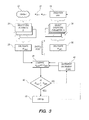
  • FIG. 2 is a logic flow chart of the interactive tasks and data flow required for a preferred embodiment of the present invention.
  • FIG. 3 is a logic flow chart of the interactive tasks and data flow required for an alternate embodiment of the present invention.
  • FIG. 1 a system in accordance with the present invention is shown and is generally designated 10 .
  • the system 10 includes a computer 12 that receives target data 14 and operational parameters 16 as input.
  • FIG. 1 shows that the output of computer 12 is directed to a radiation unit 18 .
  • the radiation unit 18 generates a radiation beam 20 that is directed onto target tissue 22 .
  • both the target data 14 and the operational parameters 16 can both be represented by characteristic numbers.
  • the target data 14 will include various cellular structures of the target tissue 22 (not specifically shown) which will each have attributes that can be associated with a respective number.
  • each attribute can be characterized by a number n.
  • attributes of a cellular structure such as cell type, resonant frequency, size, chemical structure, anatomical structure, atomic number and atomic weight can each be associated with a number.
  • the operational parameters 16 will include various characteristics of the radiation beam 20 that will be established to influence a cellular structure in the target tissue 22 .
  • characteristics typically include such factors as wavelength ( ⁇ ), intensity (I), pulse duration, focal spot size, scan rate, fluence and phase.
  • each operational parameter will be represented by a number N.
  • n and N will respectively determine how the radiation beam 20 will affect a cellular structure in the target tissue 22 .
  • n and N should be congruent.
  • the present invention uses the manipulation of numbers by digital root techniques to thereby establish an operational interaction between characteristics of the radiation beam 20 (i.e. operational parameters 16 ) and attributes of cellular structure target tissue 22 (i.e. target data 14 ).
  • the objective is to somehow influence cellular structure within the target tissue 22 with the radiation beam 20 .
  • digital root techniques can be manipulated in either of two ways.
  • One way (a first embodiment), is shown in FIG. 2 .
  • Another way (a second embodiment) is shown in FIG. 3 .
  • the first embodiment requires selecting attributes of interest for the cellular structure in target tissue 22 .
  • the target data 14 is then based on these selections.
  • Each selected attribute i.e. target data 14
  • n is then represented by a number n [see block(s) 24 in FIG. 2 ].
  • numbers n m are to be considered, where m is an integer from 1 to m.
  • the digital roots dr (nm) for selected attributes of the cellular structure in target tissue 22 are calculated, in a manner similar to that disclosed above for the first embodiment [see blocks 24 and 26 in FIGS. 2 and 3 ].
  • a digital root dr (nm) is selected from within the operational range of the particular operational parameter 16 of interest [see block 34 ].
  • the digital root dr (Np) for the selected N p is then calculated [see block 36 ].
  • dr (Np) is compared with the corresponding dr (nm) [see block 38 ].
  • dr (nm) dr (Np) [block 38 ]

Landscapes

  • Health & Medical Sciences (AREA)
  • Engineering & Computer Science (AREA)
  • Biomedical Technology (AREA)
  • Nuclear Medicine, Radiotherapy & Molecular Imaging (AREA)
  • Radiology & Medical Imaging (AREA)
  • Life Sciences & Earth Sciences (AREA)
  • Animal Behavior & Ethology (AREA)
  • General Health & Medical Sciences (AREA)
  • Public Health (AREA)
  • Veterinary Medicine (AREA)
  • Pathology (AREA)
  • Radiation-Therapy Devices (AREA)

Abstract

A methodology in accordance with the present invention is directed toward optimizing the operational parameters of a radiation unit which will be used in a protocol to influence a target tissue (cellular structure), in a predetermined manner. Specifically, digital root techniques are used for this purpose. To do this, the digital root is determined for a number that is characteristic of a cellular structure attribute that is to be influenced by radiation. This digital root is then expanded into the range of a selected operational parameter for the radiation unit. Thus, a number in the operational range of the radiation unit is selected to establish an appropriate radiation parameter for influencing the cellular structure.

Description

FIELD OF THE INVENTION
The present invention pertains generally to systems and methods for incorporating informational numbers into a set-up operation for implementing a radiation therapy. More particularly, the present invention pertains to the manipulation of numbers for the purpose of establishing operational parameters which can be used by a radiation unit to perform a protocol that will influence cellular structure in a target tissue of a patient. The present invention is particularly, but not exclusively, useful for employing digital root technology to define a radiation strategy for influencing cellular structure in a patient.
BACKGROUND OF THE INVENTION
As a mathematical definition, a number is a symbol or a group of symbols showing how many of something there are, or at what place something may be in a sequence. As a practical matter, however, a number can mean much more. Indeed, to name but a few of their attributes, numbers convey information that describe, differentiate, evaluate, predict, quantify, justify and regulate much of what we do in our everyday lives. In sum, all measurements are based on numbers.
Numbers do not exist in isolation, without any meaning. They always require context. Moreover, comparisons between different numbers often add meaning to a particular circumstance that, without context, would otherwise be nonsensical (e.g. weight and balance calculations for a flyable aircraft, or stock market trends). Further, it has happened that numbers for many circumstances have become so extremely complex, and numbers often have such orders of magnitude, that the number becomes essentially incomprehensible (e.g. the national debt).
Nevertheless, despite the above observations, numbers remain an essential means for transferring information. For example, consider health and wellness issues which are presently being confronted in the field of medicine. Pharmaceutical preparations for instance result from clinical studies wherein numbers provide very important information about the safety and efficacy of a particular preparation. Likewise, the evaluation of medical devices and surgical protocols require number comparisons. Clinical considerations for the health and wellness of a patient are now, however, looking beyond the more traditional techniques. Still, and perhaps more so, numbers are important.
Of particular interest here is the use of radiation treatments for curing health and wellness issues. In this context, radiations throughout the electromagnetic spectrum are of general interest. More particularly, sonic radiation as disclosed in U.S. patent application Ser. No. 14/488,101 filed on Sep. 16, 2014, and electromagnetic radiation as disclosed in U.S. patent application Ser. No. 14/632,941 filed on Feb. 26, 2015, are considered for purposes of the present invention. For these considerations, physical characteristics of the radiation's operational parameters must be established (e.g. wavelength λ, intensity, pulse duration, fluence, optics, and variations of these). Similarly, physical characteristics of the tissue that is to be radiated must also be identified (e.g. tissue volume, practical dimensions, tissue type, fundamental frequencies, cellular structure, abnormalities, and various combinations of these). It happens that all of the operational parameters and tissue characteristics can each be somehow identified by a number. The respective numbers, however, can be lengthy and be either very large or extremely small. Moreover, they may be different from each other by many orders of magnitude. Despite such disparities, however, for operational purposes the numbers may need to be congruent.
With the above in mind, the present invention recognizes that in almost any circumstance, an operation can be described by selecting appropriate numbers. Furthermore, the present invention recognizes that numbers can be selected which will cooperatively interact with each other to achieve a purpose. As noted above, however, and depending on the particular operation of interest, the selected numbers may have many digits, be cumbersome and difficult to manipulate. In such situations, it is desirable if the numbers can somehow be simplified.
There are several numerology techniques that are familiar for associating and manipulating numbers with other numbers. Of these, digital root techniques appear promising insofar as manipulating lengthy numbers, with significantly different orders of magnitude, is concerned. Importantly, digital root techniques can be computer-implemented. In overview, a digital root, dr, is a non-negative integer that is obtained by an iterative process of summing digits.
For a brief discussion of digital root techniques, consider the number 7,851,437 whose digital root, dr, is 8. Because:
7+8+5+1+4+3+7=35; and 3+5=8
Similarly, the number 92,546 also has the digital root 8. Because:
9+2+5+4+6=26; and 2+6=8
The import here is the number 8 is easier to deal with than either 7,851,437 or 92,546. Moreover, there is congruency, which establishes a unique relationship between the various numbers. As a step further in this process, it is also known that the products obtained when digital roots are multiplied together can be arranged in a so called “Vedic square” which illustrates other relationships between numbers.
In light of the above, it is an object of the present invention to provide a method for setting a protocol which uses radiation to influence a cellular structure in a tissue wherein an operable cooperation between the radiation and the cellular structure of the tissue is achieved by evaluating numerical attributes of both. Another object of the present invention is to set a protocol for a radiation unit which employs operational parameters for the radiation unit that are congruent with physical attributes of the target tissue. Still another object of the present invention is to provide a system and method for influencing the health and wellness of a patient that is easy to implement, is simple to operate and is comparatively cost effective.
SUMMARY OF THE INVENTION
As used here, a small letter, n, is a number that is characteristic of a physical attribute of a cellular structure. For a plurality of different attributes, the letter m is used to identify an m number of different attributes, where m is a number from 1 to m. Thus, each individual attribute can be designated nm. Similarly, as used here, a capital letter N is a number which characterizes the magnitude of an operational parameter for the radiation device that is used to implement a protocol affecting a particular cellular structure. It is envisioned there will be a p number of operational parameters required for the radiation device, where p is a number from 1 to p. Thus, each operational parameter can be designated Np.
A preferred embodiment of the present invention envisions an operational protocol wherein it is first necessary to determine the digital root dr(nm) of a selected number n that is characteristic of a cellular structure. As indicated above, for purposes of the present invention, this selected number dr(nm) will represent the characteristic (attribute) of the m number cellular structure. Typically, the selected number will be based on cellular attributes such as cell type, resonant frequency, size, chemical structure, anatomical structure, atomic number, and atomic weight. Further, the selected number n can be obtained from look-up tables, data banks, and/or clinical evaluations. In any event, a digital root dr(nm) will be calculated for the selected number (i.e. cellular attribute).
The digital root dr(nm) that is calculated for the cellular structure is then used as the digital root dr(Np) for a number Np that is representative of a predetermined operational parameter of the radiation unit (i.e. dr(nm)=dr(Np)). The digital root dr(Np) is then expanded into a range for selection of the operational parameter of the radiation unit that is to be used for influencing the cellular structure. For example, operational parameters of interest will typically include wavelength (λ), intensity (I), pulse duration, focal spot size, scan rate, fluence and phase. Further, each operational parameter Np will be appropriately selected based on considerations of frequency range, harmonic interactions and other numerical relationships.
The above process can then be repeated as necessary, for a plurality of cellular structure characteristics dr(nm), and for a plurality of radiation unit parameters dr(Np). Once the operational parameter(s) is (are) identified for the operation of the radiation unit, the protocol can be performed on the cellular structure.
For an alternate embodiment of the present invention, the digital root of the cellular structure dr(nm) and the digital root of an operational parameter dr(Np) are calculated independently. The digital roots dr(nm) and dr(Np) are then compared with each other. If they are equal, i.e. dr(nm)=dr(Np), then the operational parameter number Np is used for the protocol. Otherwise, dr(Np) is appropriately incremented or decremented until dr(Np) is equal to dr(nm). Thus, in the alternate embodiment, Np is determined slightly differently, but it is still implemented as disclosed above for the preferred embodiment.
BRIEF DESCRIPTION OF THE DRAWINGS
The novel features of this invention, as well as the invention itself, both as to its structure and its operation, will be best understood from the accompanying drawings, taken in conjunction with the accompanying description, in which similar reference characters refer to similar parts, and in which:
FIG. 1 is a functional schematic of the interactive components that are involved in setting up a protocol in accordance with the present invention;
FIG. 2 is a logic flow chart of the interactive tasks and data flow required for a preferred embodiment of the present invention; and
FIG. 3 is a logic flow chart of the interactive tasks and data flow required for an alternate embodiment of the present invention.
DESCRIPTION OF THE PREFERRED EMBODIMENTS
Referring initially to FIG. 1 a system in accordance with the present invention is shown and is generally designated 10. As shown, the system 10 includes a computer 12 that receives target data 14 and operational parameters 16 as input. Further, FIG. 1 shows that the output of computer 12 is directed to a radiation unit 18. In turn, it is shown that the radiation unit 18 generates a radiation beam 20 that is directed onto target tissue 22.
It is an important concept of the present invention that both the target data 14 and the operational parameters 16 can both be represented by characteristic numbers. Specifically, it is to be appreciated that the target data 14 will include various cellular structures of the target tissue 22 (not specifically shown) which will each have attributes that can be associated with a respective number. Thus, each attribute can be characterized by a number n. For instance, attributes of a cellular structure, such as cell type, resonant frequency, size, chemical structure, anatomical structure, atomic number and atomic weight can each be associated with a number.
Similarly, the operational parameters 16 will include various characteristics of the radiation beam 20 that will be established to influence a cellular structure in the target tissue 22. For example, such characteristics typically include such factors as wavelength (λ), intensity (I), pulse duration, focal spot size, scan rate, fluence and phase. In this case, each operational parameter will be represented by a number N.
As recognized for the present invention, a number n and a number N will respectively determine how the radiation beam 20 will affect a cellular structure in the target tissue 22. For purposes of the present invention it is recognized that n and N should be congruent. In particular, with congruence in mind, the present invention uses the manipulation of numbers by digital root techniques to thereby establish an operational interaction between characteristics of the radiation beam 20 (i.e. operational parameters 16) and attributes of cellular structure target tissue 22 (i.e. target data 14). Depending on the particular application, the objective is to somehow influence cellular structure within the target tissue 22 with the radiation beam 20.
For an operation of the present invention, digital root techniques can be manipulated in either of two ways. One way (a first embodiment), is shown in FIG. 2. Another way (a second embodiment) is shown in FIG. 3.
As shown in FIG. 2, the first embodiment requires selecting attributes of interest for the cellular structure in target tissue 22. The target data 14 is then based on these selections. Each selected attribute (i.e. target data 14) is then represented by a number n [see block(s) 24 in FIG. 2]. As indicated above, if an m number of attributes are selected, numbers nm are to be considered, where m is an integer from 1 to m.
Once the numbers nm are determined, their digital roots dr(nm) are then individually calculated [see block 26 in FIG. 2]. Note: at this point, the number N for operational parameters 16 of the radiation beam 20 has (have) not yet been determined. Also, if there are a p number of undetermined operational characteristics for the radiation beam 20, where p is an integer from 1 to p, the various numbers Np still need to be determined.
In accordance with the first embodiment of the present invention (FIG. 2), although Np is still not known after dr(nm) has been calculated, an operational range for a particular operational parameter 16 of the radiation beam 20 is known. Therefore, to be congruent with nm, the digital root of a number Np, dr(Np), which is representative of an operational parameter 16, can be considered to be equal to the digital root dr(nm) of a selected attribute of a cellular structure in the target tissue 22 (i.e. dr(nm)=dr(Np)) [see block 28 in FIG. 2]. Consequently, dr(nm) (i.e. dr(Np) can be expanded into the known operational range of an operational parameter 16 [see block 30]. An appropriate number Np can then be selected from the operational range which is representative of an operational parameter 16 of the radiation beam 20.
For the second embodiment of the present invention, shown in FIG. 3, the digital roots dr(nm) for selected attributes of the cellular structure in target tissue 22 are calculated, in a manner similar to that disclosed above for the first embodiment [see blocks 24 and 26 in FIGS. 2 and 3]. For the second embodiment, however, after a digital root dr(nm) has been calculated, a number Np is selected from within the operational range of the particular operational parameter 16 of interest [see block 34]. The digital root dr(Np) for the selected Np is then calculated [see block 36]. Next, dr(Np) is compared with the corresponding dr(nm) [see block 38].
Based on the comparison of dr(nm) with dr(Np) [block 38], a determination is made as to whether they are equal (i.e. is dr(nm)=dr(Np) [see inquiry block 40]. If they are not equal, dr(Np) is incremented or decremented until dr(nm)=dr(Np) [see block 42]. The digital root dr(Np) is then used for the number Np [see Block 44].
While the particular Methods for Employing Digital Root Techniques to Generate Computer-Input Data as herein shown and disclosed in detail is fully capable of obtaining the objects and providing the advantages herein before stated, it is to be understood that it is merely illustrative of the presently preferred embodiments of the invention and that no limitations are intended to the details of construction or design herein shown other than as described in the appended claims.

Claims (7)

What is claimed is:
1. A method for establishing a radiation protocol to influence cellular structure in a tissue, the method comprising the steps of:
identifying a target tissue;
choosing a cellular structure in the target tissue to be influenced; attributing a number, n, to the cellular structure chosen during the choosing step, wherein n is characteristic of a physical attribute of the cellular structure;
repeating the attributing step an m number of times to attribute a number nm for each of m different attributes of the cellular structure, wherein m is a number from 1 to m;
calculating a digital root, dr(nm), for each nm;
conforming a digital root dr(nm) selected from the calculating step with a digital root dr(np) of a number Np, wherein the magnitude of the number Np is characteristic of an operational parameter for a radiation unit, wherein Np is within the operational range of the radiation unit and there are a p number of operational parameters, and further wherein p is a number from 1 to p;
determining an optimal congruence based on the conforming step for each combination of nm and Np; and
operating the radiation unit with the Np of the determining step to influence cellular structure of the tissue.
2. The method of claim 1 wherein the conforming step comprises the steps of:
setting the digital root for each Np, dr(Np), equal to the digital dr(nmJ obtained during the calculating step; and expanding d(nm) into the operational range for Np.
3. The method of claim 1 wherein the conforming step comprises the steps of:
comparing dr(Np) with dr(nm);
incrementing/decrementing dr(Np) until dr(Np) equals dr(nm); and
selecting an Np for operation of the radiation unit, wherein a selection of Np is based on dr(Np) being set equal to drrnmJ of the chosen cellular structure dr(nm)=dr(Np).
4. The method of claim 1 further comprising the step of weighting each number nm according to its susceptibility for influence by a radiation.
5. The method of claim 1 further comprising the step of varying Np within its operational range.
6. The method of claim 1 further comprising the step of selecting nm from the group consisting of cell type, resonant frequency, size, chemical structure, anatomical structure, atomic number and atomic weight.
7. The method of claim 1 further comprising the step of selecting Np from the group consisting of wavelength (λ), intensity (I), pulse duration, focal spot size, scan rate, fluence and phase.
US14/946,605 2015-11-19 2015-11-19 Methods for employing digital root techniques to generate computer-input data Active 2036-11-08 US10076672B2 (en)

Priority Applications (1)

Application Number Priority Date Filing Date Title
US14/946,605 US10076672B2 (en) 2015-11-19 2015-11-19 Methods for employing digital root techniques to generate computer-input data

Applications Claiming Priority (1)

Application Number Priority Date Filing Date Title
US14/946,605 US10076672B2 (en) 2015-11-19 2015-11-19 Methods for employing digital root techniques to generate computer-input data

Publications (2)

Publication Number Publication Date
US20170143992A1 US20170143992A1 (en) 2017-05-25
US10076672B2 true US10076672B2 (en) 2018-09-18

Family

ID=58719508

Family Applications (1)

Application Number Title Priority Date Filing Date
US14/946,605 Active 2036-11-08 US10076672B2 (en) 2015-11-19 2015-11-19 Methods for employing digital root techniques to generate computer-input data

Country Status (1)

Country Link
US (1) US10076672B2 (en)

Also Published As

Publication number Publication date
US20170143992A1 (en) 2017-05-25

Similar Documents

Publication Publication Date Title
Benjamin et al. Three recommendations for improving the use of p-values
Epskamp et al. Estimating psychological networks and their accuracy: A tutorial paper
Atas et al. Joint probability densities of level spacing ratios in random matrices
Brusatte et al. Gradual assembly of avian body plan culminated in rapid rates of evolution across the dinosaur-bird transition
Dhiaulhaq et al. Resolving industrial plantation conflicts in Indonesia: Can mediation deliver?
CN104240166B (en) The method and apparatus of information are shared in a management system
Hajjej et al. [Retracted] A Comparison of Decision Tree Algorithms in the Assessment of Biomedical Data
Yu Group decision making under interval‐valued multiplicative intuitionistic fuzzy environment based on Archimedean t‐conorm and t‐norm
Nelson et al. Quantum enhancements and biquandle brackets
Rosenblum et al. Optimal, two-stage, adaptive enrichment designs for randomized trials, using sparse linear programming
Giuggioli et al. Fokker–Planck description for a linear delayed Langevin equation with additive Gaussian noise
US10076672B2 (en) Methods for employing digital root techniques to generate computer-input data
Smyth et al. Method of developing analytical multipartite delocalization measures for mixed W-like states
Guan et al. Medical image fusion algorithm based on multi-resolution analysis coupling approximate spare representation
Hlávka et al. Multivariate quantile-based permutation tests with application to functional data
Aschbacher Highly complex proofs and implications of such proofs
Govindaraju et al. Selection of multiple deferred state MDS-1 sampling plans for given acceptable quality level and limiting quality level involving minimum risks
TWI682281B (en) Information processing device, information processing method and computer readable recording medium
Hoffmann et al. Coherent states for ladder operators of general order related to exceptional orthogonal polynomials
Li et al. Mitigating study power loss caused by clinical Trial Disruptions Due to the COVID-19 pandemic: leveraging external data via propensity score-integrated approaches
O´ Neill et al. Debate: should we use variable adjusted life displays (VLAD) to identify variations in performance in general surgery?
Abramenko et al. Correlation functions of photospheric magnetic fields in solar active regions
Huang et al. Learning image representations for content-based image retrieval of radiotherapy treatment plans
Masson et al. Modulation of additive and interactive effects by trial history revisited
Saba et al. Enhancing trustworthiness and reliability: advance explainable artificial intelligence framework for real world Sclerosis detection

Legal Events

Date Code Title Description
AS Assignment

Owner name: STRATHSPEY CROWN HOLDINGS, LLC, CALIFORNIA

Free format text: ASSIGNMENT OF ASSIGNORS INTEREST;ASSIGNOR:GRANT, ROBERT EDWARD;REEL/FRAME:037403/0743

Effective date: 20151124

FEPP Fee payment procedure

Free format text: ENTITY STATUS SET TO SMALL (ORIGINAL EVENT CODE: SMAL); ENTITY STATUS OF PATENT OWNER: SMALL ENTITY

STCF Information on status: patent grant

Free format text: PATENTED CASE

MAFP Maintenance fee payment

Free format text: PAYMENT OF MAINTENANCE FEE, 4TH YR, SMALL ENTITY (ORIGINAL EVENT CODE: M2551); ENTITY STATUS OF PATENT OWNER: SMALL ENTITY

Year of fee payment: 4

AS Assignment

Owner name: CROWN HOLDINGS, LLC, CALIFORNIA

Free format text: CHANGE OF NAME;ASSIGNOR:STRATHSPEY CROWN, LLC;REEL/FRAME:063439/0244

Effective date: 20230216