US10034043B2 - Recorded multimedia and live television roaming - Google Patents
Recorded multimedia and live television roaming Download PDFInfo
- Publication number
- US10034043B2 US10034043B2 US14/041,962 US201314041962A US10034043B2 US 10034043 B2 US10034043 B2 US 10034043B2 US 201314041962 A US201314041962 A US 201314041962A US 10034043 B2 US10034043 B2 US 10034043B2
- Authority
- US
- United States
- Prior art keywords
- channel
- content
- tuner
- output
- buffered
- Prior art date
- Legal status (The legal status is an assumption and is not a legal conclusion. Google has not performed a legal analysis and makes no representation as to the accuracy of the status listed.)
- Active, expires
Links
Images




Classifications
-
- H—ELECTRICITY
- H04—ELECTRIC COMMUNICATION TECHNIQUE
- H04N—PICTORIAL COMMUNICATION, e.g. TELEVISION
- H04N21/00—Selective content distribution, e.g. interactive television or video on demand [VOD]
- H04N21/40—Client devices specifically adapted for the reception of or interaction with content, e.g. set-top-box [STB]; Operations thereof
- H04N21/43—Processing of content or additional data, e.g. demultiplexing additional data from a digital video stream; Elementary client operations, e.g. monitoring of home network or synchronising decoder's clock; Client middleware
- H04N21/44—Processing of video elementary streams, e.g. splicing a video clip retrieved from local storage with an incoming video stream or rendering scenes according to encoded video stream scene graphs
- H04N21/44004—Processing of video elementary streams, e.g. splicing a video clip retrieved from local storage with an incoming video stream or rendering scenes according to encoded video stream scene graphs involving video buffer management, e.g. video decoder buffer or video display buffer
-
- H—ELECTRICITY
- H04—ELECTRIC COMMUNICATION TECHNIQUE
- H04N—PICTORIAL COMMUNICATION, e.g. TELEVISION
- H04N21/00—Selective content distribution, e.g. interactive television or video on demand [VOD]
- H04N21/40—Client devices specifically adapted for the reception of or interaction with content, e.g. set-top-box [STB]; Operations thereof
- H04N21/41—Structure of client; Structure of client peripherals
- H04N21/426—Internal components of the client ; Characteristics thereof
- H04N21/42607—Internal components of the client ; Characteristics thereof for processing the incoming bitstream
- H04N21/4263—Internal components of the client ; Characteristics thereof for processing the incoming bitstream involving specific tuning arrangements, e.g. two tuners
-
- H—ELECTRICITY
- H04—ELECTRIC COMMUNICATION TECHNIQUE
- H04N—PICTORIAL COMMUNICATION, e.g. TELEVISION
- H04N21/00—Selective content distribution, e.g. interactive television or video on demand [VOD]
- H04N21/40—Client devices specifically adapted for the reception of or interaction with content, e.g. set-top-box [STB]; Operations thereof
- H04N21/43—Processing of content or additional data, e.g. demultiplexing additional data from a digital video stream; Elementary client operations, e.g. monitoring of home network or synchronising decoder's clock; Client middleware
- H04N21/433—Content storage operation, e.g. storage operation in response to a pause request, caching operations
- H04N21/4333—Processing operations in response to a pause request
-
- H—ELECTRICITY
- H04—ELECTRIC COMMUNICATION TECHNIQUE
- H04N—PICTORIAL COMMUNICATION, e.g. TELEVISION
- H04N21/00—Selective content distribution, e.g. interactive television or video on demand [VOD]
- H04N21/40—Client devices specifically adapted for the reception of or interaction with content, e.g. set-top-box [STB]; Operations thereof
- H04N21/43—Processing of content or additional data, e.g. demultiplexing additional data from a digital video stream; Elementary client operations, e.g. monitoring of home network or synchronising decoder's clock; Client middleware
- H04N21/442—Monitoring of processes or resources, e.g. detecting the failure of a recording device, monitoring the downstream bandwidth, the number of times a movie has been viewed, the storage space available from the internal hard disk
Definitions
- This disclosure relates to the facilitation of pausing playback or recorded multimedia or live television on a multimedia player and resuming playback from the pause point on the same or a different multimedia player.
- MSO Multiple services operators
- CATV community access television
- VoD video on demand
- multiple set-top boxes are installed in a customer's premise to allow content to be viewed in multiple rooms within the premise.
- Digital video recorders (DVRs) and personal video recorders (PVRs) have allowed users to record programs for later viewing, thereby time-shifting their television viewing.
- DVRs digital video recorders
- PVRs personal video recorders
- the amount of content available for viewing or recording is limited by the number of tuners in a set-top box installed at the customer's premise. It is desirable to provide users with the ability to move from room to room within a premise and seamlessly access content throughout the premise.
- FIG. 1 is a block diagram illustrating an example system operable to facilitate pausing playback of recorded multimedia or live television on a multimedia player and resuming playback from the pause point on the same or a different multimedia player.
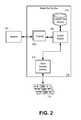
- FIG. 2 is a block diagram illustrating an example device operable to facilitate pausing playback of recorded multimedia or live television on a multimedia player and resuming playback from the pause point on the same or a different multimedia player.
- FIG. 3 is a block diagram illustrating an example dependent multimedia player operable to facilitate pausing playback of recorded multimedia or live television and resuming playback from the pause point on the same multimedia player or a different multimedia player.
- FIG. 4 is a flowchart illustrating an example process operable to facilitate pausing playback of recorded multimedia or live television on a multimedia player and resuming playback from the pause point on a different multimedia player.
- FIG. 5 is a diagram illustrating interactions between a plurality of multimedia players and a controller operable to facilitate pausing playback of recorded multimedia or live television on a multimedia player and resuming playback from the pause point on a different multimedia player.
- FIG. 6 is a flowchart illustrating an example process operable to facilitate pausing a first recorded or live television multimedia content on a multimedia player, viewing a second recorded or live television multimedia content on the same multimedia player and resuming play of the first recorded or live television multimedia content from the pause point on the same multimedia player.
- FIG. 7 is a diagram illustrating interactions between a multimedia player and a controller operable to facilitate pausing a first recorded or live television multimedia content on a multimedia player, viewing a second recorded or live television multimedia content on the same multimedia player and resuming play of the first recorded or live television multimedia content from the pause point on the same multimedia player.
- FIG. 8 is a flowchart illustrating an example process operable to facilitate pausing and buffering a first multimedia stream when a multimedia player is directed to a second multimedia stream.
- FIG. 9 is a flowchart illustrating an example process operable to facilitate resuming play of a paused channel from a point in the multimedia content at which it was paused.
- FIG. 10 is a component diagram of an example device operable to facilitate pausing playback of recorded or live television on a multimedia player and resuming playback from the pause point on the same or a different multimedia player.
- systems and methods can operate to facilitate pausing playback of recorded multimedia or live television on a multimedia player and resuming playback from the pause point on the same or a different multimedia player.
- Customers have the ability to pause a program on a set-top box, but are unable to resume play of the paused program on a different set-top box within the customer's premise. Also, customers are unable to pause a program on a set-top box and tune to a different program on the set-top box without losing stored content associated with the paused program.
- systems and methods can operate to allow a customer to pause a program and resume play of the paused program on a different set-top box or tune the same set-top box to a different program without losing stored content associated with the paused channel.
- FIG. 1 is a block diagram illustrating an example system 100 operable to facilitate pausing playback of recorded multimedia or live television on a multimedia player and resuming playback from the pause point on the same or a different multimedia player.
- a headend 105 can provide video service(s) (e.g., video content received by a headend 105 from one or more video sources 120 or one or more VoD servers 125 via a network 130 ) to one or more customer premise equipment (CPE) devices (e.g., master set-top box 110 ) in one or more subscriber groups (e.g., service group(s)).
- CPE customer premise equipment
- a headend can deliver live television (e.g., media streaming in real time from a television channel) to one or more CPE devices.
- live television can include playback of a record buffer associated with a buffered television channel, pay-per view channels, and other types of content delivered from a headend to one or more CPE devices.
- a headend can deliver stored content (e.g., VoD signals) to one or more CPE devices.
- a customer can access content stored on a CPE device (e.g., DVR content).
- a master set-top box 110 can facilitate communications from the headend 105 to a television and/or one or more dependent set-top boxes or multimedia players 115 .
- one or more dependent set-top boxes or multimedia players 115 can be connected to a master set-top box 110 and can be located in one or more different rooms within a customer's premise.
- FIG. 2 is a block diagram illustrating an example master set-top box 110 operable to facilitate pausing playback of recorded multimedia or live television on a multimedia player and resuming playback from the pause point on the same or a different multimedia player.
- a master set-top box 110 can include one or more tuners 200 , a control module 205 (e.g., a processor), one or more content data stores 210 , and a home network interface 215 .
- video content from one or more video source(s) 120 of FIG. 1 or one or more VoD server(s) 125 of FIG. 1 can be received through one or more tuner(s) 200 via an interface with a headend 105 .
- the master set-top box 110 has more than one tuner
- a customer can view content from a first channel on a display device connected to the set-top box while the set-top box records content from a plurality of other channels.
- the set-top box can record content from a number of channels equal to the number of tuners in the set-top box.
- a tuner may be a single device used to capture information related to a channel or program, or the tuner may be a virtual tuner that uses IP or other protocols to access information related to a specific channel or program.
- a narrowband quadrature amplitude modulation (QAM) tuner for a device attached to a CATV hybrid fiber coaxial (HFC) network, a narrowband quadrature amplitude modulation (QAM) tuner, a wideband tuner, or a collection of narrowband tuners can be used to access a program stream within a data over cable service interface specification (DOCSIS) bonded channel.
- DOCSIS data over cable service interface specification
- Other implementations using other broadband access networks may not use explicit tuners, but can extract the relevant channel or program information directly from an IP network.
- a control module 205 can receive video content from the one or more tuners 200 .
- the control module can instruct the one or more tuners to tune to a specific channel.
- the control module can instruct a tuner to tune to a channel designated for live viewing by a customer.
- the control module can instruct a tuner to tune to a channel designated for recording by a customer.
- the control module 205 can forward content to a data store. For example, when a user designates a channel for recording or pauses a channel, the control module can forward content associated with the channel to one or more content data stores 210 .
- the control module 205 upon receiving video content, the control module 205 can forward the content to one or more media players.
- the control module can forward content received from a tuner 200 to a multimedia player 115 for display on a television (or other display device).
- the control module can forward content associated with the paused channel (e.g., content stored on the content data store 210 ) to the media player 115 via a home network interface 215 .
- a tuner 200 can be configured to tune to a specific channel and a control module 205 can convert a signal received through the tuner into stream data (e.g., MPEG stream data) for transmission to a multimedia player and/or a storage device (e.g., content data store(s) 210 ) as a program file.
- the control module 205 can generate an index to associate a timestamp with a specific location of the program file.
- a transport control command e.g., rewind, replay, fast-forward, skip, etc.
- the control module 205 can interpret the command and can use the index to retrieve the corresponding data from storage for transmission to the multimedia player.
- a control module 205 when a control module 205 receives a request to pause a channel, the control module can create a television roaming pause (TVRP) (the point in a video content stream at which the stream is paused and the point from which the video content stream will resume) at the point in the content at which the channel associated with the content was paused.
- TVRP television roaming pause
- a TVRP can be automatically (e.g., the TVRP is created without any additional input from a user) created in storage (e.g., in memory or storage, such as content data stores 210 ).
- a program allocation table can be used by the control module 205 to identify what packets to decode and store.
- control module 205 can identify what packets are associated with a paused program based upon information in a program allocation table.
- the control module 205 can use an index to locate data in a program file that corresponds to a specific TVRP.
- a TVRP associated with a live television stream can have a predetermined maximum age. For example, when a TVRP has been set for a time period longer than its predetermined maximum age, the TVRP can be cleared from the tuner upon which it is stored.
- a predetermined TVRP maximum age can be stored as a setting on the master set-top box 110 and can be set and/or changed in various ways (e.g., by the customer, device manufacturer, MSO, etc.).
- a live television program can have a unique TVRP maximum age. For example, a television network can establish unique TVRP maximum ages associated with the network's television programs.
- a TVRP associated with a DVR recording can be associated with the DVR recording itself, rather than a tuner. Therefore, a TVRP associated with a DVR recording can persist until the TVRP is used or the DVR recording is deleted. In such embodiments, a TVRP associated with a DVR recording can persist without the application of a predetermined TVRP maximum age. Furthermore, a TVRP associated with a DVR recording can persist when a master set-top box or multimedia player associated with the DVR recording is rebooted.
- the new TVRP can replace the previously existing TVRP on the tuner.
- a new TVRP associated with the second channel can be set on a second tuner without clearing the TVRP associated with the first channel from the first tuner.
- a TVRP when playback of a live television record buffer is paused, a TVRP can be set at the point in the live television stream at which playback was paused or at the point in the live television record buffer at which playback was paused. In such embodiments, when the live television record buffer no longer includes the TVRP point, playback of the live television record buffer can resume from the earliest point in the live television record buffer.
- the control module can forward content associated with the paused channel to a content data store 210 .
- the control module 205 receives a request to resume play of the paused channel, the control module can retrieve stored content associated with the paused channel, beginning at the TVRP, and forward the content to a multimedia player 115 .
- the control module can retrieve stored content associated with the paused channel, beginning at the TVRP, and forward the content to the multimedia player.
- FIG. 3 is a block diagram illustrating an example dependent multimedia player 115 operable to facilitate pausing playback of recorded multimedia or live television and resuming playback from the pause point on the same multimedia player or a different multimedia player.
- a multimedia player 115 can include, a control module 300 (e.g., a processor), a control signal interface 310 , and a master set-top box interface 320 .
- control signals can be communicated from a remote control device 330 to a control signal interface 310 .
- the control signals can operate to provide requests from a customer to the control module 300 which can communicate with the master set-top box 110 using the master set-top box interface 320 .
- the control module 205 of FIG. 2 can act based upon the requests received through the control signal interface 310 .
- a customer can use a remote control device to communicate trickplay requests (e.g., pause, play, stop, fast-forward, etc.) and/or tuning designations (e.g., channel to tune to, channel to record, etc.) to the control module via the control signal interface.
- the control module 300 can forward video content received from a master set-top box to a display device 340 .
- a subscriber can resume playback of a live television stream or a DVR recording from a TVRP point. For example, when a subscriber tunes a multimedia player 115 to a channel for which a TVRP is set, the channel can resume playback from the TVRP point.
- a subscriber can direct a multimedia player to tune to a specific channel using a variety of inputs on a remote control device 330 (e.g., entering the number associated with the channel and pressing “OK,” entering the number associated with the channel and waiting for the media player to automatically tune to the channel number, pressing the “Last” key to return to a previously viewed channel, navigating to a specific channel using a channel guide or channel grid, etc.).
- a subscriber can resume playback of a live television stream or a DVR recording from a TVRP point on the multimedia player from which the TVRP was set or on another multimedia player within the subscriber's premise.
- a TVRP can be cleared from a tuner when playback of a channel associated with the TVRP is resumed from the TVRP point.
- the TVRP can remain on the tuner without being cleared.
- a message can be displayed on a display device 340 informing the subscriber that playback has resumed from a TVRP.
- FIG. 4 is a flowchart illustrating an example process 400 operable to facilitate pausing playback of recorded multimedia or live television on a multimedia player and resuming playback from the pause point on a different multimedia player.
- the process 400 can start at 405 when a user selects a program on a first multimedia player.
- the user can select a live television program to view on a multimedia player.
- the user can select recorded content to be viewed on the multimedia player (e.g., DVR content, VoD content, etc.).
- the user can pause play of the program.
- the user can pause play of the program by using a pause function on an input device (e.g., remote control) associated with the first multimedia player.
- a TVRP can be associated with the program.
- the user can prevent the first multimedia player from resuming play of the program after a predetermined pause timeout period has lapsed.
- the user can use a stop function on an input device associated with the first multimedia player to prevent the first multimedia player from resuming play of the paused program.
- the user can access the paused program on a second multimedia player.
- a second multimedia player e.g., the user tunes the second multimedia player to the channel associated with the paused program
- the second multimedia player can resume play of the program from the TVRP that was set when the program was paused on the first multimedia player.
- FIG. 5 is a diagram 500 illustrating interactions between a plurality of multimedia players and a controller operable to facilitate pausing playback of recorded multimedia or live television on a multimedia player and resuming playback from the pause point on a different multimedia player.
- a first multimedia player can select a program and the program can be streamed from a tuner to the first multimedia player via a controller through interaction 510 .
- a user can pause a program streaming to the first multimedia player from the tuner at point 520 .
- the first multimedia player can instruct the controller (e.g., through interaction 530 ) to record the paused program and set a TVRP.
- the controller can direct the program information from the tuner into a data store for later access.
- a TVRP the point 540 at which the data store begins storing program information associated with the paused program, can be set by the controller and stored in the data store.
- the user can return to the paused program on a second multimedia player at point 550 .
- the second multimedia player can select the paused program (e.g., the user tunes the second multimedia player to the channel associated with the paused program) and the controller can direct the data store to stream the paused program to the second multimedia player through interaction 560 .
- the controller can direct the data store to stream a recording of the paused program beginning at the TVRP 540 , and the data store can stream the recording to the second multimedia player through interaction 570 .
- FIG. 6 is a flowchart illustrating an example process 600 operable to facilitate pausing a first recorded or live television multimedia content on a multimedia player, viewing a second recorded or live television multimedia content on the same multimedia player and resuming play of the first recorded or live television multimedia content from the pause point on the same multimedia player.
- the process 600 can start at 610 when a user tunes a multimedia player to a first program.
- the user can tune a multimedia player to view live television.
- the user can tune a multimedia player to view recorded content.
- the user can pause play of the first program.
- the user can pause play of the first program by using a pause function on an input device (e.g., remote control) associated with the multimedia player.
- a first TVRP can be set on a first data store record associated with the first program and with the multimedia player.
- the user can select a second program.
- the user can use the multimedia player to view live television.
- the user can use the multimedia player to view recorded content.
- the user can pause play of the second program.
- the user can pause play of the second program by using a pause function on an input device (e.g., remote control) associated with the multimedia player.
- a second TVRP can be set on a second data store record associated with the second program and associated with the multimedia player.
- the user can resume the first program on the multimedia player.
- the multimedia player can resume play of the first program from the first TVRP that was set when the program was paused on the multimedia player.
- the user can pause the first program and, at 670 , the user can resume viewing the second program on the multimedia player.
- the multimedia player can resume play of the second program from the second TVRP that was set when the second program was paused on the multimedia player.
- FIG. 7 is a diagram 700 illustrating interactions between a multimedia player and a controller operable to facilitate pausing a first recorded or live television multimedia content on a multimedia player, viewing a second recorded or live television multimedia content on the same multimedia player and resuming play of the first recorded or live television multimedia content from the pause point on the same multimedia player.
- a multimedia player can tune to a first program and the program can be streamed from a first tuner to the multimedia player through interaction 705 .
- a user can pause a first program streaming to the multimedia player from the first tuner at point 710 .
- the multimedia player can instruct the controller (e.g., through interaction 715 ) to record the paused first program on a data store associated with the first tuner.
- the controller e.g., through interaction 715
- the point 720 at which the data store begins recording the paused first program can be set by the controller and can be stored on a data store associated with the first tuner.
- the user can tune the multimedia player to a second program, and the program can be streamed from a second tuner to the multimedia player through interaction 725 .
- the user can pause the second program (e.g., through interaction 730 ) and a second TVRP can be set by the controller and can be stored on a data store associated with the second tuner at point 735 . It should be understood that the interactions illustrated in FIG. 7 can take place in a single DVR or in multiple DVRs.
- the user can resume the paused first program through interaction 740 .
- the data store associated with the first tuner can stream a recording of the paused first program to the multimedia player beginning at the TVRP associated with the first program (e.g., beginning at point 720 ).
- the user can pause the resumed play of the first program (e.g., through interaction 745 ) and resume the paused second program through interaction 750 .
- a TVRP can be set on the data store associated with the first tuner at point 755 and can replace the first TVRP at point 720 .
- the data store associated with the second tuner can stream a recording of the paused second program to the multimedia player, beginning at the second TVRP associated with the second program (e.g., beginning at point 735 ).
- FIG. 8 is a flowchart illustrating an example process 800 operable to facilitate pausing and buffering a first multimedia stream when a multimedia player is directed to a second multimedia stream.
- the process 800 can start at 810 when a multimedia player (e.g., master STB 110 or dependent STB 115 of FIG. 1 ) receives a request from a user to tune from a first channel to a second channel.
- a multimedia player e.g., master STB 110 or dependent STB 115 of FIG. 1
- the user can select a live television program or recorded multimedia to view on a multimedia player.
- a determination can be made whether a free tuner or resource with which to receive the requested multimedia content is available.
- a master STB e.g., master STB 110 of FIG. 1
- each tuner can receive multimedia content from a downstream channel.
- a dependent STB e.g., dependent STB 115 of FIG. 1
- a multimedia player e.g., master STB 110 or dependent STB 115 of FIG.
- the multimedia player can determine whether there are any tuners associated with the multimedia player that are not being used. For example, a tuner available for use can be one that is neither being used to receive live or streaming multimedia content nor to buffer live or streaming multimedia content. Where the determination is made that a tuner or resource is available to the multimedia player, the process 800 can proceed to 830 .
- an available tuner can be directed to the second channel.
- the tuner can be directed to the second channel, for example, by the multimedia player that received the request to tune from the first channel to the second channel. It should be understood that the available tuner can be embedded within or separate from the multimedia player that received the request to tune from the first channel to the second channel.
- the multimedia content being received from the first channel can be buffered.
- the tuner that is receiving content from the first channel can remain on the first channel.
- the multimedia player is outputting multimedia content from the next channel
- the multimedia content from the first channel can be buffered.
- multimedia content received by a first tuner e.g., one of the tuner(s) 200 of FIG. 2
- multimedia content received by a second tuner e.g., a different one of the tuner(s) 200
- the first channel can become a buffered channel.
- an input request can be generated and presented to the user.
- the multimedia player that received the request to tune from the first channel to the second channel can inform the user that there are no available tuners or resources with which to receive multimedia content from the second channel.
- the multimedia player can present the user with the option to direct the tuner that is receiving content from the first channel to tune away from the first channel to the second channel, or to direct the tuner to continue receiving content from the first channel.
- FIG. 9 is a flowchart illustrating an example process 900 operable to facilitate resuming play of a paused channel from a point in the multimedia content at which it was paused.
- the process 900 can start at 910 when a multimedia player (e.g., master STB 110 or dependent STB 115 of FIG. 1 ) receives a request from a user to tune from a current channel to a buffered channel.
- a multimedia player e.g., master STB 110 or dependent STB 115 of FIG. 1
- the user can select a live television program or recorded multimedia to view on a multimedia player.
- a tuner associated with the buffered channel can be identified.
- a multimedia player can be associated with a plurality of tuners.
- a multimedia player e.g., master STB 110 or dependent STB 115 of FIG. 1
- the tuners can be tuned to and can receive multimedia content from different upstream channels.
- the tuners can be embedded within or can be separate from the multimedia player
- a resume point associated with the buffered channel can be identified.
- multimedia content from the first channel that is received by the first tuner can be buffered or stored for as long as the first tuner is tuned to the first channel.
- a resume point e.g., TVRP
- multimedia content received by a tuner can be stored in a content data store 210 of FIG. 2
- the resume point (e.g., TVRP) of the multimedia content can be flagged within the content data store 210 .
- the multimedia player can begin outputting the stored multimedia content associated with the buffered channel from the resume point.
- the multimedia player can request the multimedia content from a data store (e.g., content data store 210 of FIG. 2 ) and can output the multimedia content to a display device (e.g., display device 340 of FIG. 3 ).
- a data store e.g., content data store 210 of FIG. 2
- a display device e.g., display device 340 of FIG. 3 .
- FIG. 10 is a component diagram of an example device 1000 operable to facilitate pausing playback of recorded or live television on a multimedia player and resuming playback from the pause point on the same or a different multimedia player.
- the device 1000 can include a processor 1010 , a memory 1020 , a storage device 1030 , and an input/output device 1040 .
- Each of the components 1010 , 1020 , 1030 , and 1040 can, for example, be interconnected using a system bus 1050 .
- the processor 1010 can be capable of processing instructions for execution within the device 1000 .
- the processor 1010 can be a single-threaded processor.
- the processor 1010 can be a multi-threaded processor.
- the processor 1010 can be capable of processing instructions stored in the memory 1020 or on the storage device 1030 .
- the memory 1020 can store information within the hardware configuration of the device 1000 .
- the memory 1020 can be a computer-readable medium.
- the memory 1020 can be a volatile memory unit.
- the memory 1020 can be a non-volatile memory unit.
- the storage device 1030 can be capable of providing mass storage for the device 1000 .
- the storage device 1030 can be a computer-readable medium.
- the storage device 1030 can, for example, include a hard disk device, an optical disk device, flash memory or some other large capacity storage device.
- the storage device 1030 can be a DVR or PVR.
- the input/output device 1040 can provide input/output operations for the device 1000 .
- the input/output device can include driver devices configured to receive input data from and send output data to a display device 340 of FIG. 3 .
- the input/output device can include driver devices configured to receive input data from and send output data to a headend 105 .
- the input/output device can include driver devices configured to receive input data from and send output data to a plurality of dependent set-top boxes or multimedia players 115 .
- the input/output device can include driver devices configured to receive input data from a user input device 330 of FIG. 3 .
- the invention improves user experience when pausing and recording live television. Moreover, the invention improves user ability to pause live television on a multimedia player and continue watching the paused, live television on another multimedia player.
- the methods, systems, and apparatuses described in this disclosure enable communications between a gateway and one or more associated multimedia players. Moreover, the subject matter of this disclosure enables pausing and recording of a first multimedia stream where a multimedia player outputs a second multimedia stream.
- a multimedia player can begin recording a first channel received on a first tuner when the multimedia player outputs a second channel that is received on a second tuner. Further, in embodiments, a multimedia player can output paused multimedia content from the point at which the content was paused when the multimedia player is tuned to a channel associated with the multimedia content.
- Such instructions can, for example, comprise interpreted instructions, such as script instructions, e.g., JavaScript or ECMAScript instructions, or executable code, or other instructions stored in a computer readable medium.
- Implementations of the subject matter and the functional operations described in this specification can be provided in digital electronic circuitry, or in computer software, firmware, or hardware, including the structures disclosed in this specification and their structural equivalents, or in combinations of one or more of them.
- Embodiments of the subject matter described in this specification can be implemented as one or more computer program products, i.e., one or more modules of computer program instructions encoded on a tangible program carrier for execution by, or to control the operation of, data processing apparatus.
- the tangible program carrier can be a computer readable medium.
- the computer readable medium can be a machine readable storage device, a machine readable storage substrate, a memory device, or a combination of one or more of them.
- system processor encompasses all apparatus, devices, and machines for processing data, including by way of example a programmable processor, a computer, or multiple processors or computers.
- the system processor can include, in addition to hardware, code that creates an execution environment for the computer program in question, e.g., code that constitutes processor firmware, a protocol stack, a database management system, an operating system, or a combination of one or more of them.
- a computer program (also known as a program, software, software application, script, or code) can be written in any form of programming language, including compiled or interpreted languages, or declarative or procedural languages, and it can be deployed in any form, including as a stand-alone program or as a module, component, subroutine, or other unit suitable for use in a computing environment.
- a computer program does not necessarily correspond to a file in a file system.
- a program can be stored in a portion of a file that holds other programs or data (e.g., one or more scripts stored in a markup language document), in a single file dedicated to the program in question, or in multiple coordinated files (e.g., files that store one or more modules, sub programs, or portions of code).
- a computer program can be deployed to be executed on one computer or on multiple computers that are located at one site or distributed across multiple sites and interconnected by a communication network.
- the processes and logic flows described in this specification are performed by one or more programmable processors executing one or more computer programs to perform functions by operating on input data and generating output thereby tying the process to a particular machine (e.g., a machine programmed to perform the processes described herein).
- the processes and logic flows can also be performed by, and apparatus can also be implemented as, special purpose logic circuitry, e.g., an FPGA (field programmable gate array) or an ASIC (application specific integrated circuit).
- processors suitable for the execution of a computer program include, by way of example, both general and special purpose microprocessors, and any one or more processors of any kind of digital computer.
- a processor will receive instructions and data from a read only memory or a random access memory or both.
- the elements of a computer typically include a processor for performing instructions and one or more memory devices for storing instructions and data.
- a computer will also include, or be operatively coupled to receive data from or transfer data to, or both, one or more mass storage devices for storing data, e.g., magnetic, magneto optical disks, or optical disks.
- mass storage devices for storing data, e.g., magnetic, magneto optical disks, or optical disks.
- a computer need not have such devices.
- a computer can be embedded in another device, e.g., a mobile communications device, a telephone, a cable modem, a set-top box, a mobile audio or video player, or a game console, to name just a few
- Computer readable media suitable for storing computer program instructions and data include all forms of non volatile memory, media and memory devices, including by way of example semiconductor memory devices, e.g., EPROM, EEPROM, and flash memory devices; magnetic disks, e.g., internal hard disks or removable disks; magneto optical disks; and CD ROM and DVD ROM disks.
- semiconductor memory devices e.g., EPROM, EEPROM, and flash memory devices
- magnetic disks e.g., internal hard disks or removable disks
- magneto optical disks e.g., CD ROM and DVD ROM disks.
- the processor and the memory can be supplemented by, or incorporated in, special purpose logic circuitry.
- embodiments of the subject matter described in this specification can be operable to interface with a computing device having a display, e.g., a CRT (cathode ray tube) or LCD (liquid crystal display) monitor, for displaying information to the user and a keyboard and a pointing device, e.g., a mouse or a trackball, by which the user can provide input to the computer.
- a remote control e.g., a device using infrared or radio frequency signals
- a remote control can be used to provide for interaction with a user.
- feedback provided to the user can be any form of sensory feedback, e.g., visual feedback, auditory feedback, or tactile feedback; and input from the user can be received in any form, including acoustic, speech, or tactile input.
Landscapes
- Engineering & Computer Science (AREA)
- Multimedia (AREA)
- Signal Processing (AREA)
- Computer Networks & Wireless Communication (AREA)
- Databases & Information Systems (AREA)
- Television Signal Processing For Recording (AREA)
- Two-Way Televisions, Distribution Of Moving Picture Or The Like (AREA)
Abstract
Description
Claims (23)
Priority Applications (1)
| Application Number | Priority Date | Filing Date | Title |
|---|---|---|---|
| US14/041,962 US10034043B2 (en) | 2012-09-29 | 2013-09-30 | Recorded multimedia and live television roaming |
Applications Claiming Priority (2)
| Application Number | Priority Date | Filing Date | Title |
|---|---|---|---|
| US201261707903P | 2012-09-29 | 2012-09-29 | |
| US14/041,962 US10034043B2 (en) | 2012-09-29 | 2013-09-30 | Recorded multimedia and live television roaming |
Publications (2)
| Publication Number | Publication Date |
|---|---|
| US20140096166A1 US20140096166A1 (en) | 2014-04-03 |
| US10034043B2 true US10034043B2 (en) | 2018-07-24 |
Family
ID=50386567
Family Applications (1)
| Application Number | Title | Priority Date | Filing Date |
|---|---|---|---|
| US14/041,962 Active 2034-02-08 US10034043B2 (en) | 2012-09-29 | 2013-09-30 | Recorded multimedia and live television roaming |
Country Status (1)
| Country | Link |
|---|---|
| US (1) | US10034043B2 (en) |
Cited By (1)
| Publication number | Priority date | Publication date | Assignee | Title |
|---|---|---|---|---|
| US11792470B2 (en) | 2020-02-07 | 2023-10-17 | Arris Enterprises Llc | Transfer of media content viewing experience using EPG guide |
Families Citing this family (18)
| Publication number | Priority date | Publication date | Assignee | Title |
|---|---|---|---|---|
| US9219947B2 (en) * | 2011-12-06 | 2015-12-22 | Comcast Cable Communications, Llc | Indirect control of content consumption in an appliance |
| US9654821B2 (en) | 2011-12-30 | 2017-05-16 | Sonos, Inc. | Systems and methods for networked music playback |
| US9674587B2 (en) | 2012-06-26 | 2017-06-06 | Sonos, Inc. | Systems and methods for networked music playback including remote add to queue |
| US9501533B2 (en) | 2013-04-16 | 2016-11-22 | Sonos, Inc. | Private queue for a media playback system |
| US9247363B2 (en) | 2013-04-16 | 2016-01-26 | Sonos, Inc. | Playback queue transfer in a media playback system |
| US9361371B2 (en) | 2013-04-16 | 2016-06-07 | Sonos, Inc. | Playlist update in a media playback system |
| US9684484B2 (en) * | 2013-05-29 | 2017-06-20 | Sonos, Inc. | Playback zone silent connect |
| US9798510B2 (en) | 2013-05-29 | 2017-10-24 | Sonos, Inc. | Connected state indicator |
| US9953179B2 (en) | 2013-05-29 | 2018-04-24 | Sonos, Inc. | Private queue indicator |
| US9735978B2 (en) | 2013-05-29 | 2017-08-15 | Sonos, Inc. | Playback queue control via a playlist on a mobile device |
| US9703521B2 (en) | 2013-05-29 | 2017-07-11 | Sonos, Inc. | Moving a playback queue to a new zone |
| US10715973B2 (en) | 2013-05-29 | 2020-07-14 | Sonos, Inc. | Playback queue control transition |
| US9495076B2 (en) | 2013-05-29 | 2016-11-15 | Sonos, Inc. | Playlist modification |
| US10296884B2 (en) * | 2013-09-30 | 2019-05-21 | Sonos, Inc. | Personalized media playback at a discovered point-of-sale display |
| WO2015182976A1 (en) | 2014-05-28 | 2015-12-03 | Samsung Electronics Co., Ltd. | Mobile apparatus, display apparatus, and multimedia output method using the same |
| GB2536887B (en) * | 2015-03-27 | 2021-05-05 | Sony Europe Bv | Video content replay |
| US11317158B2 (en) * | 2018-11-02 | 2022-04-26 | Netflix, Inc. | Video playback in an online streaming environment |
| CN111083514B (en) * | 2019-12-26 | 2021-05-18 | 北京达佳互联信息技术有限公司 | Live broadcast method and device, electronic equipment and storage medium |
Citations (8)
| Publication number | Priority date | Publication date | Assignee | Title |
|---|---|---|---|---|
| US20020009285A1 (en) * | 2000-03-08 | 2002-01-24 | General Instrument Corporation | Personal versatile recorder: enhanced features, and methods for its use |
| US20060080707A1 (en) * | 2001-05-24 | 2006-04-13 | Indra Laksono | Channel selection in a multimedia system |
| US20080022330A1 (en) * | 2006-06-30 | 2008-01-24 | Microsoft Corporation | Multi-DVR Content Management |
| US20080060027A1 (en) * | 2006-09-04 | 2008-03-06 | Hsing-Yuan Yang | Method and apparatus for managing time-shifting among a plurality of channels |
| US20090089832A1 (en) * | 2005-07-18 | 2009-04-02 | Thomson Licensing | System, method and apparatus for enabling channel surfing while buffering and recording of preferred channels |
| US20110162017A1 (en) * | 2009-12-31 | 2011-06-30 | Sony Europe Limited | Audiovisual multi-room support |
| US20120079547A1 (en) * | 2010-09-24 | 2012-03-29 | Seong-Hwan Kim | Multimedia Network Interface Device with Table-Based Connection Management |
| WO2013089670A1 (en) * | 2011-12-13 | 2013-06-20 | Thomson Licensing | Method and system for providing universal follow-me functionality |
-
2013
- 2013-09-30 US US14/041,962 patent/US10034043B2/en active Active
Patent Citations (8)
| Publication number | Priority date | Publication date | Assignee | Title |
|---|---|---|---|---|
| US20020009285A1 (en) * | 2000-03-08 | 2002-01-24 | General Instrument Corporation | Personal versatile recorder: enhanced features, and methods for its use |
| US20060080707A1 (en) * | 2001-05-24 | 2006-04-13 | Indra Laksono | Channel selection in a multimedia system |
| US20090089832A1 (en) * | 2005-07-18 | 2009-04-02 | Thomson Licensing | System, method and apparatus for enabling channel surfing while buffering and recording of preferred channels |
| US20080022330A1 (en) * | 2006-06-30 | 2008-01-24 | Microsoft Corporation | Multi-DVR Content Management |
| US20080060027A1 (en) * | 2006-09-04 | 2008-03-06 | Hsing-Yuan Yang | Method and apparatus for managing time-shifting among a plurality of channels |
| US20110162017A1 (en) * | 2009-12-31 | 2011-06-30 | Sony Europe Limited | Audiovisual multi-room support |
| US20120079547A1 (en) * | 2010-09-24 | 2012-03-29 | Seong-Hwan Kim | Multimedia Network Interface Device with Table-Based Connection Management |
| WO2013089670A1 (en) * | 2011-12-13 | 2013-06-20 | Thomson Licensing | Method and system for providing universal follow-me functionality |
Cited By (1)
| Publication number | Priority date | Publication date | Assignee | Title |
|---|---|---|---|---|
| US11792470B2 (en) | 2020-02-07 | 2023-10-17 | Arris Enterprises Llc | Transfer of media content viewing experience using EPG guide |
Also Published As
| Publication number | Publication date |
|---|---|
| US20140096166A1 (en) | 2014-04-03 |
Similar Documents
| Publication | Publication Date | Title |
|---|---|---|
| US10034043B2 (en) | Recorded multimedia and live television roaming | |
| USRE50355E1 (en) | Reducing unicast session duration with restart TV | |
| US8625974B1 (en) | Obscuring advertisements during trick mode operation | |
| US12047631B2 (en) | Network recorder buffer | |
| US10057543B2 (en) | Digital video recorder having live-off-disk buffer for receiving missing portions of buffered events | |
| US8505055B2 (en) | Enhanced simultaneous recording in multi-room digital video recorder | |
| US10205973B2 (en) | Method and system for linking real-time broadcasting with non-real-time video service using user history information | |
| US10999627B2 (en) | Playback manipulation in response to notification | |
| US20110099582A1 (en) | Systems and Methods to Perform Actions Upon Content Items Associated with Multiple Series Subscriptions | |
| US9554167B2 (en) | Network media program restart | |
| US12075111B2 (en) | Methods and apparatus for responding to inoperative commands | |
| US20140064711A1 (en) | Systems, Methods, and Media for Presenting Media Content Using Cached Assets | |
| US20180288122A1 (en) | Recognition-Based Content Skipping | |
| US20160212483A1 (en) | Hybrid program change for ip-enabled multimedia devices | |
| US9788052B1 (en) | Multiple recording devices connected in a home network | |
| US8261314B2 (en) | Apparatus and method for managing media content presentation | |
| US9883221B1 (en) | System and method for optimizing real-time video-on-demand recording in a content delivery network | |
| US10939184B2 (en) | Image capture of multimedia content | |
| KR101308916B1 (en) | Broadcasting service system and method for processing background image without using set-top box memory | |
| US20230031530A1 (en) | Service Switching for Content Output | |
| US11617004B2 (en) | Resolving tuner conflicts at digital video recorder | |
| US20190373307A1 (en) | Window displaying navigable program information | |
| HK1164596A (en) | Enhanced simultaneous recording in multi-room digital video recorder |
Legal Events
| Date | Code | Title | Description |
|---|---|---|---|
| AS | Assignment |
Owner name: ARRIS ENTERPRISES, INC., GEORGIA Free format text: ASSIGNMENT OF ASSIGNORS INTEREST;ASSIGNORS:CHANG, GLEN C;KNEELING, JOHN;GORDON, ALAN;REEL/FRAME:031524/0732 Effective date: 20131031 |
|
| AS | Assignment |
Owner name: BANK OF AMERICA, N.A., AS ADMINISTRATIVE AGENT, NORTH CAROLINA Free format text: SECURITY INTEREST;ASSIGNORS:ARRIS GROUP, INC.;ARRIS ENTERPRISES, INC.;ARRIS INTERNATIONAL LIMITED;AND OTHERS;REEL/FRAME:036020/0789 Effective date: 20150618 Owner name: BANK OF AMERICA, N.A., AS ADMINISTRATIVE AGENT, NO Free format text: SECURITY INTEREST;ASSIGNORS:ARRIS GROUP, INC.;ARRIS ENTERPRISES, INC.;ARRIS INTERNATIONAL LIMITED;AND OTHERS;REEL/FRAME:036020/0789 Effective date: 20150618 |
|
| AS | Assignment |
Owner name: ARRIS ENTERPRISES LLC, PENNSYLVANIA Free format text: CHANGE OF NAME;ASSIGNOR:ARRIS ENTERPRISES INC;REEL/FRAME:041995/0031 Effective date: 20151231 |
|
| STCF | Information on status: patent grant |
Free format text: PATENTED CASE |
|
| AS | Assignment |
Owner name: ARRIS TECHNOLOGY, INC., PENNSYLVANIA Free format text: TERMINATION AND RELEASE OF SECURITY INTEREST IN PATENTS;ASSIGNOR:BANK OF AMERICA, N.A., AS ADMINISTRATIVE AGENT;REEL/FRAME:050721/0401 Effective date: 20190404 Owner name: GIC INTERNATIONAL CAPITAL LLC, PENNSYLVANIA Free format text: TERMINATION AND RELEASE OF SECURITY INTEREST IN PATENTS;ASSIGNOR:BANK OF AMERICA, N.A., AS ADMINISTRATIVE AGENT;REEL/FRAME:050721/0401 Effective date: 20190404 Owner name: ARRIS ENTERPRISES, INC., PENNSYLVANIA Free format text: TERMINATION AND RELEASE OF SECURITY INTEREST IN PATENTS;ASSIGNOR:BANK OF AMERICA, N.A., AS ADMINISTRATIVE AGENT;REEL/FRAME:050721/0401 Effective date: 20190404 Owner name: JERROLD DC RADIO, INC., PENNSYLVANIA Free format text: TERMINATION AND RELEASE OF SECURITY INTEREST IN PATENTS;ASSIGNOR:BANK OF AMERICA, N.A., AS ADMINISTRATIVE AGENT;REEL/FRAME:050721/0401 Effective date: 20190404 Owner name: TEXSCAN CORPORATION, PENNSYLVANIA Free format text: TERMINATION AND RELEASE OF SECURITY INTEREST IN PATENTS;ASSIGNOR:BANK OF AMERICA, N.A., AS ADMINISTRATIVE AGENT;REEL/FRAME:050721/0401 Effective date: 20190404 Owner name: NEXTLEVEL SYSTEMS (PUERTO RICO), INC., PENNSYLVANI Free format text: TERMINATION AND RELEASE OF SECURITY INTEREST IN PATENTS;ASSIGNOR:BANK OF AMERICA, N.A., AS ADMINISTRATIVE AGENT;REEL/FRAME:050721/0401 Effective date: 20190404 Owner name: ARCHIE U.S. HOLDINGS LLC, PENNSYLVANIA Free format text: TERMINATION AND RELEASE OF SECURITY INTEREST IN PATENTS;ASSIGNOR:BANK OF AMERICA, N.A., AS ADMINISTRATIVE AGENT;REEL/FRAME:050721/0401 Effective date: 20190404 Owner name: ARCHIE U.S. MERGER LLC, PENNSYLVANIA Free format text: TERMINATION AND RELEASE OF SECURITY INTEREST IN PATENTS;ASSIGNOR:BANK OF AMERICA, N.A., AS ADMINISTRATIVE AGENT;REEL/FRAME:050721/0401 Effective date: 20190404 Owner name: ARRIS HOLDINGS CORP. OF ILLINOIS, INC., PENNSYLVAN Free format text: TERMINATION AND RELEASE OF SECURITY INTEREST IN PATENTS;ASSIGNOR:BANK OF AMERICA, N.A., AS ADMINISTRATIVE AGENT;REEL/FRAME:050721/0401 Effective date: 20190404 Owner name: ARRIS GROUP, INC., PENNSYLVANIA Free format text: TERMINATION AND RELEASE OF SECURITY INTEREST IN PATENTS;ASSIGNOR:BANK OF AMERICA, N.A., AS ADMINISTRATIVE AGENT;REEL/FRAME:050721/0401 Effective date: 20190404 Owner name: BIG BAND NETWORKS, INC., PENNSYLVANIA Free format text: TERMINATION AND RELEASE OF SECURITY INTEREST IN PATENTS;ASSIGNOR:BANK OF AMERICA, N.A., AS ADMINISTRATIVE AGENT;REEL/FRAME:050721/0401 Effective date: 20190404 Owner name: ARRIS SOLUTIONS, INC., PENNSYLVANIA Free format text: TERMINATION AND RELEASE OF SECURITY INTEREST IN PATENTS;ASSIGNOR:BANK OF AMERICA, N.A., AS ADMINISTRATIVE AGENT;REEL/FRAME:050721/0401 Effective date: 20190404 Owner name: ARRIS INTERNATIONAL LIMITED, PENNSYLVANIA Free format text: TERMINATION AND RELEASE OF SECURITY INTEREST IN PATENTS;ASSIGNOR:BANK OF AMERICA, N.A., AS ADMINISTRATIVE AGENT;REEL/FRAME:050721/0401 Effective date: 20190404 Owner name: GIC INTERNATIONAL HOLDCO LLC, PENNSYLVANIA Free format text: TERMINATION AND RELEASE OF SECURITY INTEREST IN PATENTS;ASSIGNOR:BANK OF AMERICA, N.A., AS ADMINISTRATIVE AGENT;REEL/FRAME:050721/0401 Effective date: 20190404 Owner name: POWER GUARD, INC., PENNSYLVANIA Free format text: TERMINATION AND RELEASE OF SECURITY INTEREST IN PATENTS;ASSIGNOR:BANK OF AMERICA, N.A., AS ADMINISTRATIVE AGENT;REEL/FRAME:050721/0401 Effective date: 20190404 Owner name: ARRIS GLOBAL SERVICES, INC., PENNSYLVANIA Free format text: TERMINATION AND RELEASE OF SECURITY INTEREST IN PATENTS;ASSIGNOR:BANK OF AMERICA, N.A., AS ADMINISTRATIVE AGENT;REEL/FRAME:050721/0401 Effective date: 20190404 Owner name: NEXTLEVEL SYSTEMS (PUERTO RICO), INC., PENNSYLVANIA Free format text: TERMINATION AND RELEASE OF SECURITY INTEREST IN PATENTS;ASSIGNOR:BANK OF AMERICA, N.A., AS ADMINISTRATIVE AGENT;REEL/FRAME:050721/0401 Effective date: 20190404 Owner name: ARRIS HOLDINGS CORP. OF ILLINOIS, INC., PENNSYLVANIA Free format text: TERMINATION AND RELEASE OF SECURITY INTEREST IN PATENTS;ASSIGNOR:BANK OF AMERICA, N.A., AS ADMINISTRATIVE AGENT;REEL/FRAME:050721/0401 Effective date: 20190404 |
|
| AS | Assignment |
Owner name: ARRIS ENTERPRISES LLC, GEORGIA Free format text: CHANGE OF NAME;ASSIGNOR:ARRIS ENTERPRISES, INC.;REEL/FRAME:049586/0470 Effective date: 20151231 |
|
| AS | Assignment |
Owner name: WILMINGTON TRUST, NATIONAL ASSOCIATION, AS COLLATE Free format text: PATENT SECURITY AGREEMENT;ASSIGNOR:ARRIS ENTERPRISES LLC;REEL/FRAME:049820/0495 Effective date: 20190404 Owner name: JPMORGAN CHASE BANK, N.A., NEW YORK Free format text: ABL SECURITY AGREEMENT;ASSIGNORS:COMMSCOPE, INC. OF NORTH CAROLINA;COMMSCOPE TECHNOLOGIES LLC;ARRIS ENTERPRISES LLC;AND OTHERS;REEL/FRAME:049892/0396 Effective date: 20190404 Owner name: JPMORGAN CHASE BANK, N.A., NEW YORK Free format text: TERM LOAN SECURITY AGREEMENT;ASSIGNORS:COMMSCOPE, INC. OF NORTH CAROLINA;COMMSCOPE TECHNOLOGIES LLC;ARRIS ENTERPRISES LLC;AND OTHERS;REEL/FRAME:049905/0504 Effective date: 20190404 Owner name: WILMINGTON TRUST, NATIONAL ASSOCIATION, AS COLLATERAL AGENT, CONNECTICUT Free format text: PATENT SECURITY AGREEMENT;ASSIGNOR:ARRIS ENTERPRISES LLC;REEL/FRAME:049820/0495 Effective date: 20190404 |
|
| AS | Assignment |
Owner name: WILMINGTON TRUST, DELAWARE Free format text: SECURITY INTEREST;ASSIGNORS:ARRIS SOLUTIONS, INC.;ARRIS ENTERPRISES LLC;COMMSCOPE TECHNOLOGIES LLC;AND OTHERS;REEL/FRAME:060752/0001 Effective date: 20211115 |
|
| MAFP | Maintenance fee payment |
Free format text: PAYMENT OF MAINTENANCE FEE, 4TH YEAR, LARGE ENTITY (ORIGINAL EVENT CODE: M1551); ENTITY STATUS OF PATENT OWNER: LARGE ENTITY Year of fee payment: 4 |
|
| AS | Assignment |
Owner name: APOLLO ADMINISTRATIVE AGENCY LLC, NEW YORK Free format text: SECURITY INTEREST;ASSIGNORS:ARRIS ENTERPRISES LLC;COMMSCOPE TECHNOLOGIES LLC;COMMSCOPE INC., OF NORTH CAROLINA;AND OTHERS;REEL/FRAME:069889/0114 Effective date: 20241217 |
|
| AS | Assignment |
Owner name: RUCKUS WIRELESS, LLC (F/K/A RUCKUS WIRELESS, INC.), NORTH CAROLINA Free format text: RELEASE OF SECURITY INTEREST AT REEL/FRAME 049905/0504;ASSIGNOR:JPMORGAN CHASE BANK, N.A., AS COLLATERAL AGENT;REEL/FRAME:071477/0255 Effective date: 20241217 Owner name: COMMSCOPE TECHNOLOGIES LLC, NORTH CAROLINA Free format text: RELEASE OF SECURITY INTEREST AT REEL/FRAME 049905/0504;ASSIGNOR:JPMORGAN CHASE BANK, N.A., AS COLLATERAL AGENT;REEL/FRAME:071477/0255 Effective date: 20241217 Owner name: COMMSCOPE, INC. OF NORTH CAROLINA, NORTH CAROLINA Free format text: RELEASE OF SECURITY INTEREST AT REEL/FRAME 049905/0504;ASSIGNOR:JPMORGAN CHASE BANK, N.A., AS COLLATERAL AGENT;REEL/FRAME:071477/0255 Effective date: 20241217 Owner name: ARRIS SOLUTIONS, INC., NORTH CAROLINA Free format text: RELEASE OF SECURITY INTEREST AT REEL/FRAME 049905/0504;ASSIGNOR:JPMORGAN CHASE BANK, N.A., AS COLLATERAL AGENT;REEL/FRAME:071477/0255 Effective date: 20241217 Owner name: ARRIS TECHNOLOGY, INC., NORTH CAROLINA Free format text: RELEASE OF SECURITY INTEREST AT REEL/FRAME 049905/0504;ASSIGNOR:JPMORGAN CHASE BANK, N.A., AS COLLATERAL AGENT;REEL/FRAME:071477/0255 Effective date: 20241217 Owner name: ARRIS ENTERPRISES LLC (F/K/A ARRIS ENTERPRISES, INC.), NORTH CAROLINA Free format text: RELEASE OF SECURITY INTEREST AT REEL/FRAME 049905/0504;ASSIGNOR:JPMORGAN CHASE BANK, N.A., AS COLLATERAL AGENT;REEL/FRAME:071477/0255 Effective date: 20241217 |