US10033820B2 - Method and system for opportunistic delivery of less-than-best-effort application data over communication networks - Google Patents
Method and system for opportunistic delivery of less-than-best-effort application data over communication networks Download PDFInfo
- Publication number
- US10033820B2 US10033820B2 US12/217,820 US21782008A US10033820B2 US 10033820 B2 US10033820 B2 US 10033820B2 US 21782008 A US21782008 A US 21782008A US 10033820 B2 US10033820 B2 US 10033820B2
- Authority
- US
- United States
- Prior art keywords
- mobile client
- network
- application server
- packet data
- wireless
- Prior art date
- Legal status (The legal status is an assumption and is not a legal conclusion. Google has not performed a legal analysis and makes no representation as to the accuracy of the status listed.)
- Active, expires
Links
Images


Classifications
-
- H—ELECTRICITY
- H04—ELECTRIC COMMUNICATION TECHNIQUE
- H04L—TRANSMISSION OF DIGITAL INFORMATION, e.g. TELEGRAPHIC COMMUNICATION
- H04L67/00—Network arrangements or protocols for supporting network services or applications
- H04L67/50—Network services
- H04L67/54—Presence management, e.g. monitoring or registration for receipt of user log-on information, or the connection status of the users
-
- H04L67/24—
Definitions
- the present invention relates to communications and, more particularly, to methods and systems for controlling data flow in wireless communication networks.
- Wireless radio frequency communication systems enable people to communicate with one another over long distances without having to access landline-connected devices such as conventional telephones. While early systems were primarily configured for voice communications, technological improvements have enabled the development of “3-G” (third generation) and similar wireless networks for both voice and high-speed packet data transfer. For example, CDMA-based, “1 ⁇ -EVDO” (Evolution Data Optimized, or Evolution Data Only) wireless communication networks, now implemented in many parts of the U.S. and elsewhere, use the CDMA2000® 3-G mobile telecommunications protocol/specification for the high-speed wireless transmission of both voice and non-voice data.
- CDMA-based, “1 ⁇ -EVDO” Kerned Optimized, or Evolution Data Only
- 1 ⁇ -EVDO is an implementation of CDMA2000® that supports high data rates, specifically, forward link data rates up to 3.1 Mbit/s, and reverse link rates up to 1.8 Mbit/s in a radio channel dedicated to carrying high-speed packet data, e.g., a 1.25 MHz-bandwidth (or greater) radio channel separate from the radio channel for carrying voice data.
- a radio channel dedicated to carrying high-speed packet data e.g., a 1.25 MHz-bandwidth (or greater) radio channel separate from the radio channel for carrying voice data.
- IP Internet Protocol
- VoIP voice over IP
- a wireless communication network such as a cellular phone network typically includes one or more fixed base stations each with a base station controller and various transceivers and antennae for carrying out wireless, radio-frequency communications with a number of distributed wireless units.
- the wireless units may include mobile phones, wireless PDA's, wireless devices with high-speed data transfer capabilities, such as those compliant with “3-G” or “4-G” standards, for example, “WiFi”-equipped computer terminals, and the like.
- the base stations are in turn interfaced with a core data network and/or public switched telephone network through one or more network controllers or control centers, which act as the interface between the wireless/radio end of the network and the landline portion of the network, including performing the signaling functions necessary to establish calls and other data transfer to and from the wireless units.
- the network controller may be part of the base station equipment, or it may be a separate mobile switching center (“MSC”), radio network controller (“RNC”), or the like that services a number of base stations.
- an application running on an external application server, connected to the Internet may communicate with a mobile client through the core network by transmitting packets over the network.
- flow of a packet from the application server to the mobile client will first be routed over the Internet to the wide area network's (“WAN”) home agent.
- the packet is then routed to the Packet Data Servicing Node (“PDSN”) and on to the Packet Control Function (“PCF”).
- PDSN Packet Data Servicing Node
- PCF Packet Control Function
- the packet is sent to the Radio Network Controller (“RNC”), which transmits the packet to the mobile client through a Base Transmission Station (“BTS”).
- RNC Radio Network Controller
- Wireless communications between the base transmission stations and wireless units are carried out using standard methods depending on the type and configuration of the wireless network.
- the network may be a GSM network, a 1 ⁇ -EVDO network, or the like.
- GSM is the Global System for Mobile Communications standard, used predominantly in Europe and Asia.
- 1 ⁇ -EVDO is an implementation of the CDMA2000® “3-G”/third generation mobile telecommunications protocol/specification configured for the high-speed wireless transmission of both voice and non-voice data, used in North America.
- the air interface in a wireless network is dynamic by nature, and thus, there may be occasions where not enough bandwidth is available to accommodate every active user according to target quality of service (“QOS”) levels. Additionally, even if bandwidth is available, there may be times when it is not possible to meet target or required QOS levels in transmitting data packets to a wireless access terminal, due to varying radio airlink conditions or the like.
- QOS quality of service
- each element of network infrastructure e.g., wireless units, base stations, RNC, etc.
- each element of network infrastructure will typically include one or more microprocessors or other electronic processing units.
- processor resources may be overextended, e.g., in a particular leg/hop of the communication channel there may not be enough processing power to accommodate the data load according to required or target QOS levels.
- a mobile client can be in either an idle state where battery resources are preserved or a connected state where significantly more air interface resources are consumed.
- In the idle state user data cannot flow, whereas data may flow in either direction in the connected state.
- Radio access network (“RAN”) resources are consumed not only in maintaining the connected state, but also in transitioning from the idle state to the connected state, in particular, for mobile terminated data where the mobile must first be located. Additional RAN resources are consumed prior to releasing traffic connection resources because an inactivity timer is employed to prevent premature release of resources.
- RAN Radio access network
- chatty or bursty applications Some applications with which a mobile client will transact may be classified as chatty or bursty applications. Chatty or bursty applications are characterized in that they have low average bit rates and large interpacket spacing, which makes chatty applications inefficient with regard to total data delivered per network resource used. The inefficiency of chatty applications, therefore, makes it highly inefficient to employ network resources to initiate or maintain a connected state solely for the chatty application. Furthermore, because of the inefficiency of chatty applications, wide scale deployment of chatty applications over a wireless network can compound the above-mentioned network resource problems by easily congesting an entire wireless network, resulting in flow drop and dropped packets, which leads to poor quality calls and unacceptable system performance.
- An embodiment of the present invention relates to a method and system for packet delivery from an application server to a mobile client in a wireless network, e.g. for reducing network resource overload caused by chatty applications.
- the wireless network includes one or more base stations and one or more upstream network entities, e.g., a radio network controller (“RNC”), connected to the base station(s).
- the upstream network entities include necessary components (e.g., a packet data serving node (“PDSN”)) to enable communication between an application server connected to the Internet and the end user mobile clients.
- the base station wirelessly communicates with a set of distributed end user mobile clients, e.g., mobile phones.
- the RNC (or other upstream network entity) acts as an interface between the base station and the upstream portion of the network.
- the network additionally includes a wireless information node (“WIN”) network having at least one wireless information node and at least one wireless information database.
- the WIN network is connected to the RAN network such that the WIN network is capable of detecting an element of the RAN network servicing the mobile client, e.g.
- the WIN network is adapted for connection to the application server, e.g. information may be transmitted between the WIN network and the application server. Since the WIN network is connected to both the RAN network and the application server, the WIN network provides linkage between the IP data flows and the RAN elements or nodes that are delivering the flows to the mobile client, thereby eliminating the need for the RAN to inspect the data packets flowing through the RAN network.
- an application server registers with the WIN network to be notified when the mobile client with which communication is desired transitions to or from a connected state, e.g. from an idle state to a connected state.
- the WIN network detects the element(s) in the RAN network serving the mobile client and subscribes with the element(s) to be notified when the connection state changes.
- the element(s) serving the mobile client detects the connection state of the mobile client and notifies the WIN network of a change in the connection state of the mobile client, e.g. from idle to connected.
- the WIN network in turn notifies the application server of the change in the connection state of the mobile client, whereby the application server delivers packets to the mobile client upon notification of a connected state at the application server.
- the WIN network Since the WIN network is connected to both the RAN network and the application server, the WIN network eliminates the need for the RAN to inspect the data packets flowing through the RAN network because the WIN network provides a linkage between the IP data flows and the RAN elements or nodes that are delivering the flows to the mobile client.
- the RAN network automatically delays paging to initiate delivery of network initiated non-latency sensitive data, e.g. the data from an application server having Quality of Service (“QoS”) requirements that allow the data to be delivered in the background.
- QoS Quality of Service
- An application server registered with the WIN network may bypass the automatic delay by sending a page request to the WIN network, the WIN network triggering paging upon receipt of the page request.
- detection that the mobile client has activated it's traffic channel may be performed through analysis of accounting records.
- the WIN network detects the resource level of the element of the RAN servicing the mobile, while the mobile client is in an idle state. If it is detected that the element has available resources that can be provided for the application server registered with the WIN network, the WIN network notifies the application server, and upon notification, the application server may deliver queued presence information to the mobile client.
- the WIN network is notified when the mobile client becomes idle or disconnects from the network, e.g. the mobile client's traffic connection is closed.
- the WIN network notifies the application server that the mobile client's traffic connection has been closed, whereby the application server identifies when to renew queuing incoming packets.
- FIG. 1 is a schematic diagram of a cellular network according to an embodiment of the present invention
- FIG. 2 is a flowchart, showing a method of opportunistic delivery of application data according to an embodiment of the present invention
- FIG. 3 is a flowchart showing a method of opportunistic delivery of application data according to another embodiment of the present invention.
- FIG. 4 is a schematic diagram of a cellular network according to an embodiment of the present invention.
- FIG. 5 is a flowchart showing a method of opportunistic delivery of application data according to another embodiment of the present invention.
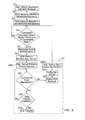
- FIG. 6 is a flowchart showing a method of opportunistic delivery of application data according to another embodiment of the present invention.
- an embodiment of a method and apparatus for opportunistic delivery of less-than-best-effort application data are implemented on or as part of a wireless communication network 10 , e.g., a CDMA-based 1 ⁇ -EVDO network or other wireless network.
- the wireless network 10 may include a radio access network (“RAN”) portion 12 and a core IP (Internet Protocol) portion 14 , which contains a carrier wide area network (“WAN”) 15 .
- RAN radio access network
- WAN carrier wide area network
- the RAN portion 12 includes one or more fixed base stations 16 , each with various transceivers and antennae for wireless radio communications with a number of distributed wireless mobile clients 18 a - 18 c , e.g., mobile phones, “3-G” (third generation) wireless devices, wireless computers, and the like.
- the base stations 16 are in turn connected to a mobile switching center and/or radio network controller (“RNC”) 22 and other components which together act as the interface between the base stations 16 and the core IP portion 14 , including directing data transfer to and from the base stations 16 for transmission to the mobile clients 18 a - 18 c.
- RNC radio network controller
- the base stations 16 when communicating with the mobile clients 18 a - 18 c , transfer a designated amount of data 24 over a network airlink 26 , 28 to the mobile clients 18 a - 18 c .
- Transfer it is meant the reception and/or transmission of data.
- Airlink refers to any radio channel or link over which data is transferred, e.g., the forward and/or reverse radio links 26 , 28 of the wireless network 10 , respectively.
- the method of the present invention may be implemented on different types of wireless communications networks, for example the CDMA-based 1 ⁇ -EVDO network 10 shown in FIG. 1 .
- 1 ⁇ -EVDO is an implementation of the CDMA2000® 3-G mobile telecommunications protocol/specification configured for the high-speed wireless transmission of both voice and non-voice data.
- the RAN portion 12 For conducting wireless communications between the base stations 16 and the wireless mobile clients 18 a - 18 c , the RAN portion 12 utilizes a CDMA (code division multiple access) spread-spectrum multiplexing scheme.
- CDMA code division multiple access
- transmissions from mobile clients 18 a - 18 c to base stations 16 are across a single frequency bandwidth known as the reverse link 28 , e.g., a 1.25 MHz bandwidth centered at a first designated frequency.
- each mobile client 18 a - 18 c is allocated the entire bandwidth all the time, with the signals from individual wireless units being differentiated from one another using an encoding scheme.
- Transmissions from base stations 16 to mobile clients 18 a - 18 c are across a similar frequency bandwidth (e.g., 1.25 MHz centered at a second designated frequency) known as the forward link 26 .
- the forward and reverse links may each comprise a number of traffic channels and signaling or control channels, the former primarily for carrying data, and the latter primarily for carrying the control, synchronization, and other signals required for implementing CDMA communications.
- the RAN portion 12 may be geographically divided into contiguous cells, each serviced by a base station 16 , and/or into sectors, which are portions of a cell typically serviced by different antennae/receivers supported on a single base station 16 .
- Specific elements of the RAN portion 12 i.e. a specified base station 16 and RNC 22 , service a specified mobile client 18 a , depending largely upon the location of the specified mobile client 18 a .
- the elements of the RAN portion 12 servicing the specified mobile client 18 a receive signaling from the specified mobile client 18 a , for example, the specified mobile client 18 a sends a connection request to the servicing base station 16 when a connected state is desired by the specified mobile client 18 a.
- the wireless network 10 may be connected to external networks such as a public switched telephone network, or to the Internet 30 .
- the network 10 may use the Internet Protocol, where data is broken into a plurality of addressed data packets.
- voice over IP (“VoIP”) may be used for voice-data transmission.
- VoIP voice over IP
- Both voice and non-voice data packets are transmitted and routed over the wireless network 10 , where they are received and reassembled by the mobile clients 18 a - 18 c to which the data packets are addressed.
- the core IP portion 14 of the wireless network 10 will typically include one or more intermediate network elements, connected through the WAN 15 .
- the core IP portion 14 may include a home agent (“HA”) 32 where the packet or other data is initially routed from the Internet 30 , a packet data serving node (“PDSN”) 34 for routing wireless unit originated or terminated packet data, and an authentication, authorization, and accounting module (“AAA”) 36 .
- HA home agent
- PDSN packet data serving node
- AAA authentication, authorization, and accounting module
- the WAN 15 may employ a firewall 38 for protection.
- packet data 40 (e.g., arriving from the Internet 34 for transfer to an wireless unit 18 a ) is typically routed from the PDSN 34 to the RNC portion 12 .
- the PDSN 34 may include a foreign agent (“FA”) 42 for providing a serving care-of address to the home agent 32 during IP mobility, i.e. a temporary IP address for the specified mobile client 18 a , thereby allowing the home agent 32 to communicate with the specified mobile client 18 a .
- FA foreign agent
- PMIP Proxy Mobile IP
- a proxy in the network rather than the foreign agent 42 such as the PDSN 34 , handles mobility registration on behalf of the mobile clients 18 a - 18 c .
- the RAN portion 12 may include a packet control function (“PCF”) 44 for managing the relay of data packets between the PDSN 34 and base stations 16 . From the PCF 44 , the packet data is transferred to the RNC 22 , and then to the base stations 16 .
- PCF packet control function
- an application running on an external application server 46 may transfer data to any of the mobile clients 18 a - 18 c in the manner described above.
- the network 10 includes a wireless information node (“WIN”) network 48 having at least one wireless information node 50 (“WIN”) and at least one wireless information database 52 .
- the WIN 50 is able to extract information from the RNC 22 and make the extracted information available to the external application server 46 through the Internet 30 .
- a current geolocation of the mobile client 18 a may be known by specific element of the RAN portion 12 , e.g. the base station 16 servicing the mobile client 18 a , and this information may be extracted by the WIN 50 and made available to the external application server 46 through the WIN network 48 .
- the WIN network 48 Since the WIN network 48 is connected to both the RAN portion 12 and the application server 46 , the WIN network 48 eliminates the need for the RAN to inspect the data packets 40 flowing through the RAN network, which is difficult or impossible for the RAN to do because the packets are likely tunneled or encrypted. The need for inspection by the RAN is eliminated because the WIN network 48 provides a linkage between the IP data flows and the RAN elements, i.e. the RNC 22 , that are delivering the flows to the mobile client.
- the WIN 50 is able to function without requiring a special unit with which to communicate on the mobile client 18 a - 18 c . Therefore, the WIN 50 may provide the same benefit to all mobile clients 18 a - 18 c without modification to the mobile clients 18 a - 18 c .
- the WIN network 48 By extracting information from the RAN portion 12 , further benefit is achieved through the use of the WIN network 48 because there is no direct or additional signaling between the mobile clients 18 a - 18 c and the WIN 50 . Additionally, no direct signaling between the mobile clients 18 a - 18 c and the application server 46 is necessary for the WIN 50 to extract information from the wireless network 10 .
- the WAN 15 may be connected to a plurality of RAN portions 12 , each of which has its own plurality of base stations 16 . Therefore, in a typical wireless network, the application server 46 , which wants to transfer data to the mobile client 18 a , is not able to determine to which leg of the wireless network 10 , i.e. RNC 22 and base station 16 , the mobile client 18 a is connected.
- the wireless network 10 includes the WIN network 48 , which is able to provide information to the application server 46 about the location of the mobile clients 18 a - 18 c.
- the WIN network 48 may determine bindings between RAN layer 2 mobile client device and subscriber identifiers, e.g. the mobile client's International Subscriber Identity, Electronic Serial Number, or Mobile Equipment Identifier and higher layer identifiers such as internet protocol (IP) addresses or Network Address Identifiers. This information is used by the WIN network 48 to determine which elements of the RAN portion 12 are servicing the specified mobile client 18 a , i.e. which RNC 22 and/or base station 16 is communicating with mobile client 18 a . This WIN network 48 may then make this communication information available to the external application server 46 through the Internet 30 .
- IP internet protocol
- a specified mobile client 18 a can be in one of two states, the idle state where user data cannot flow or the connected state where data may flow both to and from the mobile client 18 a .
- the WIN network 48 provides for the identification of the elements of the RAN portion 12 that are servicing the specified mobile client 18 a both in the idle state and the connected state.
- an application running on an external application server 46 e.g.
- a chatty application registers with the WIN network 48 to be notified when the specified mobile client 18 a transitions to or from the connected state.
- Session Initiation Protocol (SIP) mechanisms of SUBSCRIBE and NOTIFY may be utilized.
- the WIN network 48 identifies the elements in the RAN portion 12 servicing the specified mobile client 18 a .
- the identification of the elements in the RAN portion 12 servicing the desired mobile client 18 a may be accomplished by detecting the bindings between the RAN layer 2 identifiers and the higher layer identifiers.
- step S 3 the WIN network 48 registers with the elements of the RAN portion 12 servicing the specified mobile client 18 a to be notified whenever the connection state of the specified mobile client 18 a changes.
- step S 4 the elements in the RAN portion 12 servicing the specified mobile client 18 a detect whether the specified mobile client 18 a is in a connected state or in an idle state, which may be done in the manner discussed above. If the elements of the RAN portion 12 detect an idle state, they wait until a connected state is detected.
- step S 5 when the elements of the RAN portion 12 servicing the specified mobile client 18 a detect that the mobile client 18 a is in a connected state, the elements servicing the specified mobile client 18 a notify the WIN network 48 of the connected state. Then, in step S 6 , the WIN network 48 notifies the application server 46 of the connected state. In step S 7 , upon notification of the connected state at the application server 46 , the application server 46 delivers packet data 40 , in the manner described above, to the specified mobile client 18 a .
- the chatty application which has QoS requirements that allow data to be delivered in the background, is able to deliver data to the specified mobile client 18 a when the mobile client 18 a is connected to the wireless network 10 for some other purpose, thereby minimizing the total usage of the wireless network 10 .
- the RAN portion 12 of the wireless network 10 may be configured to automatically delay paging to initiate delivery of any network initiated non-latency sensitive data, e.g. the data sent by a chatty application.
- Latency in a communication network is a packet-oriented measure of the duration of processing for packets at a network node.
- Latency sensitive data is data wherein the packets are sensitive to latency such that delay may induce jitter and/or packet loss degrading performance of the system.
- QoS levels allow latency sensitive data to pass through the network with higher priority that non-latency sensitive data.
- the WIN network 48 may be implemented to bypass the automatic delay for friendly non-latency sensitive data, i.e.
- step S 8 upon notification at the application server 46 of the connected state for the specified mobile client 18 a (step S 6 , FIG. 2 ), it is first determined in step S 8 whether the application server 46 registered with the WIN network 48 (step S 1 , FIG. 2 ). If the application server 46 did register with the WIN network 48 , the application server 46 may send a page request to the WIN network 48 in Step S 9 .
- an SIP mechanism of PAGE_REQUEST may be used.
- step S 10 the application server 46 begins paging to initiate packet delivery to the desired mobile client 18 a .
- step S 11 the RAN portion 12 evaluates whether the data is latency sensitive data or non-latency sensitive data. For example, QoS levels could be used by the RAN portion 12 to identify non-latency sensitive data, e.g. the data sent by a chatty application, from latency sensitive data.
- step S 12 if the data is latency sensitive data, the data is delivered by the RAN portion 12 , without delay.
- step 13 if the data is identified as non-latency sensitive data, i.e.
- step S 11 it is evaluated whether the application server 46 sent a page request (step S 9 ) to the WIN network 48 . If the application server 46 did send a page request to the WIN network 48 , in step S 14 , the WIN network 48 immediately triggers paging to initiate data delivery, and the data is delivered without delay in step S 15 . However, if a page request was not sent by the application server 46 to the WIN network 48 , in step S 16 , paging to initiate delivery of the data is delayed by the RAN portion 12 prior to delivery in step S 17 . Therefore, while the automatic delay creates a penalty for setting up a connection, those applications that are latency sensitive and non-latency sensitive friendly applications, i.e. applications running on application servers 46 that register with the WIN network 48 , will see improved delay performance.
- the detection that the specified mobile client 18 a has a connected or idle connection state has thus far been described in terms of detection at the base station 16 or RNC 22 because these elements of the RAN portion 12 receive signals directly from the mobile clients 18 a - 18 c whenever the connection state of the mobile clients 18 a - 18 c change.
- Another embodiment for detecting the connected state of the mobile clients 18 a - 18 c in the wireless network 10 by the WIN network 48 is accomplished through analysis of accounting records.
- the PDSN 34 may act as a network access server by sending network access accounting information regarding the specified mobile client 18 a to the AAA 36 over the WAN 15 when the specified mobile client 18 a is assigned a traffic channel, i.e. enters a connected state.
- detection that the specified mobile client 18 a has activated its traffic channel is performed by analysis of accounting records.
- the WIN network 48 which is connected to the WAN 15 , may identify the elements of the WAN 15 , i.e. the PDSN 34 or AAA 36 , transferring access accounting information regarding the specified mobile client 18 a in step S 2 .
- the WIN network 48 may then register, in step S 3 , with the PDSN 34 or the AAA 36 to be notified when the connection state of the specified mobile client 18 a changes, whereby the WAN elements detect the connected state of the mobile client 18 a in step S 4 .
- the WAN elements notify the WIN network in step S 5 , and the WIN network 48 may then notify the application server 46 , which is able to opportunistically deliver packets when the specified mobile client 18 a is connected to the wireless network 10 for some other purpose.
- an eavesdropping device 54 such as a port mirror, may be connected to the WAN 15 to analyze network access accounting records to detect the connection state of the specified mobile client 18 a .
- the WIN network 48 would register with the eavesdropping device 54 to be notified when the connection state of the specified mobile client 18 a changed.
- the WIN network 48 evaluates the resource level of the RAN portion 12 at the elements servicing the specified mobile client 18 a and determines if RAN portion 12 has available resources at the elements to provide to the application server 46 even if the specified mobile client 18 a is not in a connected connection state. If the elements of the RAN portion 12 servicing the specified mobile client 18 a detect that the mobile client 18 a is in an idle state, i.e. the answer to step S 4 is no, then, rather than waiting for a connected state as was done in the embodiment shown in FIG. 2 , the WIN network 48 evaluates the resource level of the elements of the RAN portion 12 servicing the specified mobile client 18 a in step S 18 .
- the WIN network 48 measures the loading condition at the specified elements of the RAN portion 12 .
- the WIN network 48 determines if the elements of the RAN portion 12 servicing the specified mobile client 18 a have available resources. If not, the application server 46 waits until either the specified mobile client 18 a enters a connected state or until the WIN network 48 determines that the elements servicing the specified mobile client 18 a have available resources, at which time, the WIN network 48 notifies the application server 46 in step S 6 and the application server 46 delivers the packets in step S 7 .
- This embodiment allows the application server 48 to immediately deliver any queued presence information when resources are available, without the penalty incurred for the high demand in establishing a connection negatively impacting the wireless network loading. Additionally, by performing the data transfer after the mobile client 18 a performs layer 2 registration for mobility management purposes, the paging to deliver such data is more efficient because the mobile client's current location is known.
- the WIN network 48 is not only able to determine when a specified mobile client 18 a enters a connected state where its traffic channel becomes active, but also when a specified mobile client 18 a enters an idle state where its traffic channel becomes idle.
- the detection may be caused by a layer 2 signal to release the connection, communicated directly from the mobile client 18 a .
- the signal that the specified mobile client 18 a has transitioned from a connected state to an idle state may be used by the application server 46 while delivering packet data 40 , i.e. executing step S 7 of FIG. 2 , to determine when to renew queuing incoming packets if the specified mobile client 18 a enters an idle state.
- the application server 46 begins delivering data packets to the specified mobile client 18 a .
- the elements of the RAN portion 12 servicing the specified mobile client 18 a or where detection is performed by analysis of accounting records, the PDSN 34 , AAA 36 or eavesdropping device 54 , continue to evaluate whether the connection state of the specified mobile client 18 a changes to an idle state.
- step S 21 If the specified mobile client 18 a enters an idle state, i.e. the answer to step S 21 is no, then the element detecting the connection state notifies the WIN network 48 in step S 22 . In step S 23 , the WIN network 48 then notifies the application server 46 . In step S 24 , the application server 46 uses this information to determine when to renew queuing of incoming packets. Then, the application server 46 waits for the specified mobile client 18 a to resume a connected state. This allows the application server 46 to resume the data packet transfer from the queue when the specified mobile client 18 a resumes a connected state. If during the packet transfer the connected state of the specified mobile client 18 a is maintained, i.e. the answer to step S 21 is yes, the data packet delivery continues until completed in step S 35 . When the data transfer is complete, the data transfer ends in step S 26 .
Landscapes
- Engineering & Computer Science (AREA)
- Computer Networks & Wireless Communication (AREA)
- Signal Processing (AREA)
- Mobile Radio Communication Systems (AREA)
Abstract
Description
Claims (19)
Priority Applications (1)
| Application Number | Priority Date | Filing Date | Title |
|---|---|---|---|
| US12/217,820 US10033820B2 (en) | 2008-07-09 | 2008-07-09 | Method and system for opportunistic delivery of less-than-best-effort application data over communication networks |
Applications Claiming Priority (1)
| Application Number | Priority Date | Filing Date | Title |
|---|---|---|---|
| US12/217,820 US10033820B2 (en) | 2008-07-09 | 2008-07-09 | Method and system for opportunistic delivery of less-than-best-effort application data over communication networks |
Publications (2)
| Publication Number | Publication Date |
|---|---|
| US20100011056A1 US20100011056A1 (en) | 2010-01-14 |
| US10033820B2 true US10033820B2 (en) | 2018-07-24 |
Family
ID=41506098
Family Applications (1)
| Application Number | Title | Priority Date | Filing Date |
|---|---|---|---|
| US12/217,820 Active 2033-11-17 US10033820B2 (en) | 2008-07-09 | 2008-07-09 | Method and system for opportunistic delivery of less-than-best-effort application data over communication networks |
Country Status (1)
| Country | Link |
|---|---|
| US (1) | US10033820B2 (en) |
Families Citing this family (11)
| Publication number | Priority date | Publication date | Assignee | Title |
|---|---|---|---|---|
| GB0919329D0 (en) | 2009-11-04 | 2009-12-23 | Roke Manor Research | Power control method |
| US8914049B2 (en) * | 2010-09-28 | 2014-12-16 | Alcatel Lucent | Method for managing a status of a mobile station in a wireless network |
| US9026077B2 (en) | 2013-03-30 | 2015-05-05 | International Business Machines Corporation | Delayed delivery with bounded interference in a cellular data network |
| US9565116B2 (en) | 2013-08-29 | 2017-02-07 | Globalfoundries Inc. | Executing variable-priority jobs using multiple statistical thresholds in cellular networks |
| US9247559B2 (en) | 2014-01-31 | 2016-01-26 | International Business Machines Corporation | Dynamically delayed delivery of content in a network |
| US10374945B1 (en) * | 2018-03-21 | 2019-08-06 | Citrix Systems, Inc. | Application-centric method to find relative paths |
| JP7395211B2 (en) | 2019-09-24 | 2023-12-11 | プライビット テクノロジー インク | System for authenticating and controlling network connections of terminals and related methods |
| US12348494B2 (en) * | 2019-09-24 | 2025-07-01 | Pribit Technology, Inc. | Network access control system and method therefor |
| US12519754B2 (en) | 2019-09-24 | 2026-01-06 | Pribit Technology, Inc. | System for controlling network access of node on basis of tunnel and data flow, and method therefor |
| US12381890B2 (en) | 2019-09-24 | 2025-08-05 | Pribit Technology, Inc. | System and method for secure network access of terminal |
| US12166759B2 (en) | 2019-09-24 | 2024-12-10 | Pribit Technology, Inc. | System for remote execution code-based node control flow management, and method therefor |
Citations (15)
| Publication number | Priority date | Publication date | Assignee | Title |
|---|---|---|---|---|
| US20020191575A1 (en) * | 2001-06-18 | 2002-12-19 | Broadwave, Inc. | Method and apparatus for converging local area and wide area wireless data networks |
| US20030061323A1 (en) * | 2000-06-13 | 2003-03-27 | East Kenneth H. | Hierarchical system and method for centralized management of thin clients |
| US20030194987A1 (en) * | 2002-04-15 | 2003-10-16 | Ganesh Pattabiraman | Synchronization of an emulated device over a local link |
| US20040184461A1 (en) * | 2003-03-18 | 2004-09-23 | Nokia Corporation | Method, communications network arrangement, communications network server, terminal, and software means for selecting and changing operating modes for packet-switched voice connection |
| US20040248574A1 (en) * | 2003-05-07 | 2004-12-09 | Ntt Docomo, Inc. | Mobile communications network system, mobile terminal, and paging method |
| US20050003765A1 (en) * | 2003-01-23 | 2005-01-06 | Alfano Nicholas P. | Methods and apparatus for re-establishing communication for a wireless communication device after a communication loss in a wireless communication network |
| US20050085229A1 (en) * | 2000-03-31 | 2005-04-21 | Nec Corporation | Mobile communication system, mobile communication method and mobile communication program |
| US20050213555A1 (en) * | 2001-06-25 | 2005-09-29 | Vedat Eyuboglu | Radio network control |
| US20060007862A1 (en) * | 2004-07-06 | 2006-01-12 | Sayeedi Shahab M | Method and apparatus for managing packet data loss in a wireless network |
| US20070133484A1 (en) * | 2005-12-12 | 2007-06-14 | Albal Nandakishore A | System and method for dynamically selecting wireless information communication modes for a wireless communication device |
| US20070187491A1 (en) * | 2006-02-13 | 2007-08-16 | Godwin Bryan W | Processing Cashless Transactions of Remote Field Assets |
| US20070207825A1 (en) * | 2005-12-15 | 2007-09-06 | Harris John M | System and method for initiating communications between mobile stations |
| US20080176583A1 (en) * | 2005-10-28 | 2008-07-24 | Skyhook Wireless, Inc. | Method and system for selecting and providing a relevant subset of wi-fi location information to a mobile client device so the client device may estimate its position with efficient utilization of resources |
| US20080182558A1 (en) * | 2007-01-31 | 2008-07-31 | Samsung Electronics Co., Ltd. | Contents management method and apparatus |
| US20100057884A1 (en) * | 2008-05-30 | 2010-03-04 | Jason Brownell | Browser-based download manager |
-
2008
- 2008-07-09 US US12/217,820 patent/US10033820B2/en active Active
Patent Citations (15)
| Publication number | Priority date | Publication date | Assignee | Title |
|---|---|---|---|---|
| US20050085229A1 (en) * | 2000-03-31 | 2005-04-21 | Nec Corporation | Mobile communication system, mobile communication method and mobile communication program |
| US20030061323A1 (en) * | 2000-06-13 | 2003-03-27 | East Kenneth H. | Hierarchical system and method for centralized management of thin clients |
| US20020191575A1 (en) * | 2001-06-18 | 2002-12-19 | Broadwave, Inc. | Method and apparatus for converging local area and wide area wireless data networks |
| US20050213555A1 (en) * | 2001-06-25 | 2005-09-29 | Vedat Eyuboglu | Radio network control |
| US20030194987A1 (en) * | 2002-04-15 | 2003-10-16 | Ganesh Pattabiraman | Synchronization of an emulated device over a local link |
| US20050003765A1 (en) * | 2003-01-23 | 2005-01-06 | Alfano Nicholas P. | Methods and apparatus for re-establishing communication for a wireless communication device after a communication loss in a wireless communication network |
| US20040184461A1 (en) * | 2003-03-18 | 2004-09-23 | Nokia Corporation | Method, communications network arrangement, communications network server, terminal, and software means for selecting and changing operating modes for packet-switched voice connection |
| US20040248574A1 (en) * | 2003-05-07 | 2004-12-09 | Ntt Docomo, Inc. | Mobile communications network system, mobile terminal, and paging method |
| US20060007862A1 (en) * | 2004-07-06 | 2006-01-12 | Sayeedi Shahab M | Method and apparatus for managing packet data loss in a wireless network |
| US20080176583A1 (en) * | 2005-10-28 | 2008-07-24 | Skyhook Wireless, Inc. | Method and system for selecting and providing a relevant subset of wi-fi location information to a mobile client device so the client device may estimate its position with efficient utilization of resources |
| US20070133484A1 (en) * | 2005-12-12 | 2007-06-14 | Albal Nandakishore A | System and method for dynamically selecting wireless information communication modes for a wireless communication device |
| US20070207825A1 (en) * | 2005-12-15 | 2007-09-06 | Harris John M | System and method for initiating communications between mobile stations |
| US20070187491A1 (en) * | 2006-02-13 | 2007-08-16 | Godwin Bryan W | Processing Cashless Transactions of Remote Field Assets |
| US20080182558A1 (en) * | 2007-01-31 | 2008-07-31 | Samsung Electronics Co., Ltd. | Contents management method and apparatus |
| US20100057884A1 (en) * | 2008-05-30 | 2010-03-04 | Jason Brownell | Browser-based download manager |
Also Published As
| Publication number | Publication date |
|---|---|
| US20100011056A1 (en) | 2010-01-14 |
Similar Documents
| Publication | Publication Date | Title |
|---|---|---|
| US20100011056A1 (en) | Method and system for opportunistic delivery of less-than-best-effort application data over communication networks | |
| US8787159B2 (en) | Mechanism for wireless access networks to throttle traffic during congestion | |
| US8520584B2 (en) | Data over signaling (DOS) optimization over wireless access networks | |
| JP6140306B2 (en) | Service control method, mobility management entity, and mobile switching center | |
| KR101778705B1 (en) | Method and system for controlling pcc based location in mobile communication system, packet data network controlling pcc based location | |
| US20230209490A1 (en) | Method for radio access network information exposure | |
| US8804544B2 (en) | System and method for limiting access to an IP-based wireless telecommunications network based on access point IP address and/or MAC address | |
| JP5607085B2 (en) | Method for managing emergency bearer service in a wireless communication system | |
| US8379598B2 (en) | Apparatus, system and method for transferring an active call between wireless communication networks | |
| US8045522B2 (en) | Method and system for performing handoff in wireless networks | |
| US8351942B2 (en) | Signaling method to support geo-location emergency services | |
| CN109314918B (en) | Paging system and method in communication system | |
| US9154911B2 (en) | Selective delivery of presence messages for wireless communication devices | |
| WO2010069400A1 (en) | Method and entity for conveying data units | |
| WO2008111001A2 (en) | System for establishing and controlling emergency priority in a communication system | |
| US10091761B2 (en) | Apparatus and method for paging in wireless communication system | |
| EP2367378A1 (en) | Apparatus and methods for controlling sequenced message transfer during signal radio voice call continuity (SRVCC) | |
| KR100958050B1 (en) | Method and apparatus for exchanging packet data between a wireless access terminal and a packet switched communication system via a circuit switched communication system | |
| US11265771B2 (en) | AT commands for supporting session and service continuity modes of 5G protocol data unitsession operations | |
| US9313636B2 (en) | Method of handling emergency session and related communication device | |
| US8265662B1 (en) | Data mode paging in wireless communication networks | |
| CA2737332C (en) | Method and system for handling qos flows when moving between systems | |
| WO2011037256A1 (en) | Terminal device and communication method |
Legal Events
| Date | Code | Title | Description |
|---|---|---|---|
| AS | Assignment |
Owner name: LUCENT TECHNOLOGIES INC., NEW JERSEY Free format text: ASSIGNMENT OF ASSIGNORS INTEREST;ASSIGNORS:BRYSON, SIDNEY LLEWELLYN;ROSSETTI, DAVID ALBERT;RUBIN, HARVEY;AND OTHERS;REEL/FRAME:021689/0396;SIGNING DATES FROM 20080702 TO 20080709 Owner name: LUCENT TECHNOLOGIES INC., NEW JERSEY Free format text: ASSIGNMENT OF ASSIGNORS INTEREST;ASSIGNORS:BRYSON, SIDNEY LLEWELLYN;ROSSETTI, DAVID ALBERT;RUBIN, HARVEY;AND OTHERS;SIGNING DATES FROM 20080702 TO 20080709;REEL/FRAME:021689/0396 |
|
| AS | Assignment |
Owner name: CREDIT SUISSE AG, NEW YORK Free format text: SECURITY INTEREST;ASSIGNOR:ALCATEL-LUCENT USA INC.;REEL/FRAME:030510/0627 Effective date: 20130130 |
|
| AS | Assignment |
Owner name: ALCATEL-LUCENT USA INC., NEW JERSEY Free format text: RELEASE BY SECURED PARTY;ASSIGNOR:CREDIT SUISSE AG;REEL/FRAME:033949/0016 Effective date: 20140819 |
|
| STCF | Information on status: patent grant |
Free format text: PATENTED CASE |
|
| MAFP | Maintenance fee payment |
Free format text: PAYMENT OF MAINTENANCE FEE, 4TH YEAR, LARGE ENTITY (ORIGINAL EVENT CODE: M1551); ENTITY STATUS OF PATENT OWNER: LARGE ENTITY Year of fee payment: 4 |
|
| FEPP | Fee payment procedure |
Free format text: MAINTENANCE FEE REMINDER MAILED (ORIGINAL EVENT CODE: REM.); ENTITY STATUS OF PATENT OWNER: LARGE ENTITY |