US10028330B2 - Load power consumption management in discontinuous reception - Google Patents

Load power consumption management in discontinuous reception Download PDF

Info

Publication number
US10028330B2
US10028330B2 US15/328,534 US201515328534A US10028330B2 US 10028330 B2 US10028330 B2 US 10028330B2 US 201515328534 A US201515328534 A US 201515328534A US 10028330 B2 US10028330 B2 US 10028330B2
Authority
US
United States
Prior art keywords
group
ues
drx
onduration
base station
Prior art date
Legal status (The legal status is an assumption and is not a legal conclusion. Google has not performed a legal analysis and makes no representation as to the accuracy of the status listed.)
Active, expires
Application number
US15/328,534
Other versions
US20170215222A1 (en
Inventor
Jung-Fu Cheng
Sorour Falahati
Havish Koorapaty
Daniel Larsson
Current Assignee (The listed assignees may be inaccurate. Google has not performed a legal analysis and makes no representation or warranty as to the accuracy of the list.)
Telefonaktiebolaget LM Ericsson AB
Original Assignee
Telefonaktiebolaget LM Ericsson AB
Priority date (The priority date is an assumption and is not a legal conclusion. Google has not performed a legal analysis and makes no representation as to the accuracy of the date listed.)
Filing date
Publication date
Application filed by Telefonaktiebolaget LM Ericsson AB filed Critical Telefonaktiebolaget LM Ericsson AB
Priority to US15/328,534 priority Critical patent/US10028330B2/en
Assigned to TELEFONAKTIEBOLAGET L M ERICSSON (PUBL) reassignment TELEFONAKTIEBOLAGET L M ERICSSON (PUBL) ASSIGNMENT OF ASSIGNORS INTEREST (SEE DOCUMENT FOR DETAILS). Assignors: LARSSON, DANIEL, CHENG, JUNG-FU, KOORAPATY, HAVISH, FALAHATI, SOROUR
Assigned to TELEFONAKTIEBOLAGET LM ERICSSON (PUBL) reassignment TELEFONAKTIEBOLAGET LM ERICSSON (PUBL) CHANGE OF NAME (SEE DOCUMENT FOR DETAILS). Assignors: TELEFONAKTIEBOLAGET L M ERICSSON (PUBL)
Publication of US20170215222A1 publication Critical patent/US20170215222A1/en
Application granted granted Critical
Publication of US10028330B2 publication Critical patent/US10028330B2/en
Active legal-status Critical Current
Adjusted expiration legal-status Critical

Links

Images

Classifications

    • HELECTRICITY
    • H04ELECTRIC COMMUNICATION TECHNIQUE
    • H04WWIRELESS COMMUNICATION NETWORKS
    • H04W76/00Connection management
    • H04W76/20Manipulation of established connections
    • H04W76/28Discontinuous transmission [DTX]; Discontinuous reception [DRX]
    • HELECTRICITY
    • H04ELECTRIC COMMUNICATION TECHNIQUE
    • H04WWIRELESS COMMUNICATION NETWORKS
    • H04W16/00Network planning, e.g. coverage or traffic planning tools; Network deployment, e.g. resource partitioning or cells structures
    • H04W16/14Spectrum sharing arrangements between different networks
    • HELECTRICITY
    • H04ELECTRIC COMMUNICATION TECHNIQUE
    • H04WWIRELESS COMMUNICATION NETWORKS
    • H04W52/00Power management, e.g. Transmission Power Control [TPC] or power classes
    • H04W52/02Power saving arrangements
    • H04W52/0203Power saving arrangements in the radio access network or backbone network of wireless communication networks
    • H04W52/0206Power saving arrangements in the radio access network or backbone network of wireless communication networks in access points, e.g. base stations
    • HELECTRICITY
    • H04ELECTRIC COMMUNICATION TECHNIQUE
    • H04WWIRELESS COMMUNICATION NETWORKS
    • H04W52/00Power management, e.g. Transmission Power Control [TPC] or power classes
    • H04W52/02Power saving arrangements
    • H04W52/0209Power saving arrangements in terminal devices
    • H04W52/0212Power saving arrangements in terminal devices managed by the network, e.g. network or access point is leader and terminal is follower
    • HELECTRICITY
    • H04ELECTRIC COMMUNICATION TECHNIQUE
    • H04WWIRELESS COMMUNICATION NETWORKS
    • H04W52/00Power management, e.g. Transmission Power Control [TPC] or power classes
    • H04W52/02Power saving arrangements
    • H04W52/0209Power saving arrangements in terminal devices
    • H04W52/0212Power saving arrangements in terminal devices managed by the network, e.g. network or access point is leader and terminal is follower
    • H04W52/0216Power saving arrangements in terminal devices managed by the network, e.g. network or access point is leader and terminal is follower using a pre-established activity schedule, e.g. traffic indication frame
    • HELECTRICITY
    • H04ELECTRIC COMMUNICATION TECHNIQUE
    • H04WWIRELESS COMMUNICATION NETWORKS
    • H04W52/00Power management, e.g. Transmission Power Control [TPC] or power classes
    • H04W52/02Power saving arrangements
    • H04W52/0209Power saving arrangements in terminal devices
    • H04W52/0212Power saving arrangements in terminal devices managed by the network, e.g. network or access point is leader and terminal is follower
    • H04W52/0219Power saving arrangements in terminal devices managed by the network, e.g. network or access point is leader and terminal is follower where the power saving management affects multiple terminals
    • HELECTRICITY
    • H04ELECTRIC COMMUNICATION TECHNIQUE
    • H04WWIRELESS COMMUNICATION NETWORKS
    • H04W72/00Local resource management
    • H04W72/12Wireless traffic scheduling
    • H04W72/121Wireless traffic scheduling for groups of terminals or users
    • H04W72/1278
    • HELECTRICITY
    • H04ELECTRIC COMMUNICATION TECHNIQUE
    • H04WWIRELESS COMMUNICATION NETWORKS
    • H04W72/00Local resource management
    • H04W72/20Control channels or signalling for resource management
    • H04W76/048
    • HELECTRICITY
    • H04ELECTRIC COMMUNICATION TECHNIQUE
    • H04WWIRELESS COMMUNICATION NETWORKS
    • H04W72/00Local resource management
    • H04W72/20Control channels or signalling for resource management
    • H04W72/23Control channels or signalling for resource management in the downlink direction of a wireless link, i.e. towards a terminal
    • HELECTRICITY
    • H04ELECTRIC COMMUNICATION TECHNIQUE
    • H04WWIRELESS COMMUNICATION NETWORKS
    • H04W72/00Local resource management
    • H04W72/50Allocation or scheduling criteria for wireless resources
    • H04W72/52Allocation or scheduling criteria for wireless resources based on load
    • YGENERAL TAGGING OF NEW TECHNOLOGICAL DEVELOPMENTS; GENERAL TAGGING OF CROSS-SECTIONAL TECHNOLOGIES SPANNING OVER SEVERAL SECTIONS OF THE IPC; TECHNICAL SUBJECTS COVERED BY FORMER USPC CROSS-REFERENCE ART COLLECTIONS [XRACs] AND DIGESTS
    • Y02TECHNOLOGIES OR APPLICATIONS FOR MITIGATION OR ADAPTATION AGAINST CLIMATE CHANGE
    • Y02DCLIMATE CHANGE MITIGATION TECHNOLOGIES IN INFORMATION AND COMMUNICATION TECHNOLOGIES [ICT], I.E. INFORMATION AND COMMUNICATION TECHNOLOGIES AIMING AT THE REDUCTION OF THEIR OWN ENERGY USE
    • Y02D30/00Reducing energy consumption in communication networks
    • Y02D30/70Reducing energy consumption in communication networks in wireless communication networks

Definitions

  • the present disclosure relates to discontinuous reception (DRX), and in particular to methods and apparatus for managing DRX.
  • LTE networks use Orthogonal Frequency-Division Multiplexing (OFDM) in the downlink and DFT-spread OFDM in the uplink.
  • OFDM Orthogonal Frequency-Division Multiplexing
  • the basic LTE downlink physical resource can thus be seen as a time-frequency grid as illustrated in FIG. 1 , where each resource element corresponds to one OFDM subcarrier during one OFDM symbol interval.
  • Tsubframe 1 ms.
  • one subframe consists of 14 OFDM symbols.
  • the duration of each OFDM symbol is approximately 71.4 ⁇ s.
  • resource allocation in LTE is typically described in terms of resource blocks, where a resource block corresponds to one slot (0.5 ms) in the time domain and 12 contiguous subcarriers in the frequency domain.
  • a pair of two adjacent resource blocks in time direction (1.0 ms) is known as a resource block pair.
  • Resource blocks are numbered in the frequency domain, starting with 0 from one end of the system bandwidth.
  • Downlink transmissions are dynamically scheduled, i.e., in each subframe the base station transmits control information about which terminals data is transmitted to and upon which resource blocks the data is transmitted, in the current downlink subframe.
  • CFI Control Format Indicator
  • the downlink subframe also contains common reference symbols, which are known to the receiver and used for coherent demodulation of e.g., the control information.
  • resource assignments can be scheduled on the enhanced Physical Downlink Control Channel (EPDCCH).
  • EPDCCH enhanced Physical Downlink Control Channel
  • PDCH Physical Downlink Control Channel
  • the reference symbols shown in FIG. 3 are the cell specific reference symbols (CRS) and are used to support multiple functions including fine time and frequency synchronization and channel estimation for certain transmission modes.
  • CRS cell specific reference symbols
  • the scheduler that makes the decisions on the transmission parameters is typically located in the base station (eNB). Hence, it can measure channel properties of the UL directly using known reference signals that the terminals (user equipment or “UEs”) transmit. These measurements then form a basis for the UL scheduling decisions that the eNB makes, which are then sent to the UEs via a downlink control channel.
  • eNB base station
  • CSI Channel-State Information
  • CSI-RS Channel-State Information Reference Symbols
  • RRC radio resource signaling
  • T ⁇ 5, 10, 20, 40, 80 ⁇ ms (i.e., every T th subframe).
  • NZP non-zero power
  • ZP zero power
  • the ZP CSI-RS can also be used as CSI-IM as introduced in Rel.11 and explained below.
  • the format of the CSI reports are specified in detail and may contain CQI (Channel-Quality Information), a Rank Indicator (RI), and a Precoding Matrix Indicator. See 3GPP Specification 36.213.
  • the CSI reports can be wideband or applicable to subbands. They can be configured by a radio resource control (RRC) message to be sent periodically or in an aperiodic manner, triggered by a control message from the eNB to a UE.
  • RRC radio resource control
  • the quality and reliability of the CSI are crucial for the eNB in order to make the best possible scheduling decisions for upcoming DL transmissions.
  • the LTE standard does not specify in detail how the UE should obtain and average these measurements from multiple time instants.
  • the UE may measure over a time frame unknown to the eNB and combine several measurements in a UE-proprietary way to create the CSI-values that are reported, either periodically or triggered.
  • CSI-RS resources In the context of LTE, the available CSI-RS are referred to as “CSI-RS resources”.
  • CSI-IM resources where IM stands for “Interference Measurement”.
  • ZP CSI-RS Zero power
  • Each UE can be configured with one, three, or four different CSI processes.
  • Each CSI process is associated with one CSI-RS and one CSI-IM where these CSI-RS resources have been configured to the UE by RRC signaling and are thus periodically transmitted/occurring with a periodicity of T and with a given subframe offset relative to the frame start.
  • the CSI-IM reflect the interference from transmission in all other eNBs except the eNB serving the UE, i.e., the serving cell uses a ZP CSI-RS that overlaps with the CSI-IM configured to the UE, but in other adjacent eNBs, there is no ZP CSI-RS on these resource elements. In this way, the UE will measure the interference from adjacent cells when measuring the received power in the resource elements configured as CSI-IM.
  • CSI feedback to support coordinated scheduling between eNBs is enabled with the use of multiple CSI processes where a first CSI process can be configured to the UE to feed back CSI for the full interference case and a second CSI process feeds back CSI for the case when a (preferably a strong interfering) adjacent cell is muted.
  • the eNB receives CSI feedback for two possible transmission hypotheses and will then use this in the coordinated scheduler.
  • up to four CSI processes can be configured to the UE, thereby enabling feedback of four different transmission hypotheses.
  • PDCCH Physical Downlink Control Channel
  • EPDCCH Enhanced PDCCH
  • the PDCCH/EPDCCH is used to carry downlink control information (DCI) such as scheduling decisions and power-control commands. More specifically, the DCI includes:
  • One PDCCH/EPDCCH carries one DCI message containing one of the groups of information listed above.
  • Each scheduling message is transmitted on separate PDCCH/EPDCCH resources, and consequently there are typically multiple simultaneous PDCCH/EPDCCH transmissions within each subframe in each cell.
  • link adaptation can be used, where the code rate of the PDCCH/EPDCCH is selected by adapting the resource usage for the PDCCH/EPDCCH, to match the radio-channel conditions.
  • LTE Rel-10 supports bandwidths larger than 20 MHz.
  • One important requirement on LTE Rel-10 is to assure backward compatibility with LTE Rel-8. This should also include spectrum compatibility. That would imply that an LTE Rel-10 carrier, wider than 20 MHz, should appear as a number of LTE carriers to an LTE Rel-8 terminal. Each such carrier can be referred to as a Component Carrier (CC).
  • CC Component Carrier
  • CA Carrier Aggregation
  • the number of aggregated CCs as well as the bandwidth of the individual CCs may be different for uplink and downlink.
  • a symmetric configuration refers to the case where the number of CCs in the downlink and uplink is the same, whereas an asymmetric configuration refers to the case that the number of CCs is different. It is important to note that the number of CCs configured in a cell may be different from the number of CCs seen by a terminal. A terminal may for example support more downlink CCs than uplink CCs, even though the cell is configured with the same number of uplink and downlink CCs.
  • Scheduling of a CC is done on the PDCCH or EPDCCH via downlink assignments.
  • Control information on the PDCCH/EPDCCH is formatted as a Downlink Control Information (DCI) message.
  • DCI Downlink Control Information
  • a terminal only operates with one DL and one UL CC.
  • the association between DL assignment, UL grants, and the corresponding DL and UL CCs is therefore clear.
  • two modes of CA needs to be distinguished. The first case is very similar to the operation of multiple Rel-8 terminals, a DL assignment or UL grant contained in a DCI message transmitted on a CC is either valid for the DL CC itself or for an associated (either via cell-specific or UE specific linking) UL CC.
  • a second mode of operation augments a DCI message with the Carrier Indicator Field (CIF).
  • CIF Carrier Indicator Field
  • a DCI containing a DL assignment with CIF is valid for that DL CC indicated with CIF and a DCI containing an UL grant with CIF is valid for the indicated UL CC.
  • the DCI transmitted using EPDCCH which was introduced in Rel-11 can also carry CIF which means that cross carrier scheduling is supported also when using EPDCCH.
  • LAA Licensed Assisted Access
  • one way to utilize the unlicensed spectrum reliably is to transmit essential control signals and channels on a licensed carrier. That is, as shown in FIG. 5 , a UE is connected to a PCell in the licensed band and one or more SCells in the unlicensed band.
  • a secondary cell in unlicensed spectrum as a “license assisted secondary cell” (LA SCell).
  • the small cell on/off feature One of the mechanisms for interference avoidance and coordination among small cells is the small cell on/off feature. According to this feature the small cell may be turned on and off where the “on” and “off” period may depend on the criteria or application. Another purpose of small cell on/off can be for energy saving.
  • a discovery signal might be needed.
  • the discovery signal needs to support the properties required for enabling RRM measurements, RLM related procedures, and coarse time/frequency synchronization.
  • the eNB has to wake up periodically (e.g., once every 80 ms, or 160 ms, etc.) and send the discovery signal so that it can be used by the UE for mobility related operations such as cell identification, RLM, and measurement.
  • transmission points there may be multiple transmission points, from which the downlink signal can transmitted. Examples of this are a distributed antenna system, where multiple radio remote heads that are physically dislocated within the cell, transmit signals that all belong to the same cell (i.e., same CellID).
  • the term transmission point may also refer to a sector of a site where the different sectors of the same site then constitute different transmission points.
  • the discovery signal should also be capable of identifying individual transmission points and enabling RRM measurements for them.
  • the discovery signals will contain the PSS, SSS, and the CRS.
  • the CSI-RS may optionally be present when configured.
  • the discovery signal can be transmitted at least with the periodicities of 40, 80, and 160 ms.
  • the duration of the discovery signal will be 5 subframes or less.
  • the discovery signal parameters will be communicated to the UE by the network node in order to enable the UE to make measurements. These parameters may include, e.g., a duration of each occasion when the discovery signal is transmitted (referred to as the DRS occasion), a periodicity of the occurrence of the occasion of discovery signals, a timing (in terms of a start time or an offset from a reference point such as a particular frame and subframe number) of the discovery signal occasions.
  • the DRS occasion a duration of each occasion when the discovery signal is transmitted
  • a periodicity of the occurrence of the occasion of discovery signals e.g., a timing of the occurrence of the occasion of discovery signals, a timing (in terms of a start time or an offset from a reference point such as a particular frame and subframe number) of the discovery signal occasions.
  • DMTC discovery measurement timing configuration
  • the signaling of the DMTC is currently being discussed in 3GPP.
  • DRX is a RRC configured mechanism which enables the UE to save power during a cycle, referred to as the DRX cycle.
  • the DRX cycle When the UE is in DRX, it can sleep by relaxing its receiver for the remaining portion of the DRX cycle.
  • the time that the UE is not in DRX can be considered as the “Active Time.” In the following, some important aspects of the DRX mechanism are described.
  • a UE When a UE is configured with a (long) DRX cycle, it monitors the downlink control channel in some configured subframes during a DRX cycle referred to as the “onDuration,” where if the UE fails to decode any DL transmission, it goes to DRX. In case the UE decodes DL transmission, it comes out of DRX by starting a timer, referred to as the “drx-InactivityTimer” and continues monitoring the downlink control channel until the timer is expired. This timer starts or restarts with decoding any new DL assignment. When the drx-InactivityTimer expires the UE returns to DRX and sleeps until the next onDuration of the DRX cycle. Additionally, the DL and UL HARQ retransmissions occur as usual irrespective of the DRX cycle.
  • a UE configured with the long DRX cycle can be also configured with a short DRX cycle.
  • Such a UE when coming out of long DRX, uses the short DRX cycle for a configured number of cycles and can fall back again to the long DRX cycle. An example of this is shown in FIG.
  • a UE is configured with DRX for the purpose of power saving.
  • the UE monitors the (E)PDCCH during the Active Time where timers such as the onDuration Timer or the drx-InactivityTimer are started or restarted.
  • the onDuration Timer starts or restarts as soon as the UE comes out of DRX and the drx-InactivityTimer starts or restarts as soon as the UE decodes an (E)PDCCH.
  • the signaling to a group of UEs could be, for example, a physical layer signal which uses a particular DCI format.
  • the physical layer signal or a physical layer signal to a group of UEs is transmitted from an eNB and contains some common information being shared among the UEs within the group.
  • the physical layer group signaling can be transmitted from cell X for the cell Y, i.e., the physical layer group signaling conveys information which corresponds to the UEs served by cell Y.
  • the cells X and Y can be different (e.g., the physical layer group signaling can be transmitted from a PCell but for an SCell), or the cells X and Y can be the same (e.g., the physical layer signal can be transmitted from an SCell and be applicable to UEs in the same SCell).
  • cell Y is referred to as the serving cell.
  • the problem of degradation in system throughput due to overloading of the control and shared data channels at high load scenarios when UEs comes out of DRX can be solved by applying scheduling policies at the eNB such that the eNB schedules as many UEs as possible during the onDuration even though the scheduling may be for a very small amount of data.
  • Another method to solve this problem is obtained by using physical layer group signaling that includes some common information to a group of UEs about the signal transmission from the eNB where the signaling can additionally contain some information for each UE such that different UEs can be differentiated regarding their corresponding ongoing traffic and consequently behave differently in DRX procedure.
  • a method is implemented by a base station that supports user equipment (UEs) that are configured to use discontinuous reception (DRX).
  • the base station transmits respective scheduling assignments to each of a plurality of the UEs within an initial, onDuration portion of a DRX cycle, to prevent the plurality of UEs from immediately entering a DRX mode after the onDuration portion of the DRX cycle.
  • the base station subsequently transmits, during the DRX cycle but after the onDuration portion, respective data transmissions to each of the plurality of UEs according to the scheduling assignments.
  • the scheduling assignment transmissions may be multiplexed in time, frequency, or both, for example.
  • a base station which is configured to support UEs that use DRX.
  • the base station includes a transmission circuit, and one or more processing circuits.
  • the one or more processing circuits are configured to transmit respective scheduling assignments to each of a plurality of the UEs within an initial, onDuration portion of a DRX cycle, to prevent the plurality of UEs from immediately entering a DRX mode after the onDuration portion of the DRX cycle.
  • the one or more processing circuits are further configured to subsequently transmit, during the DRX cycle but after the onDuration portion, respective data transmissions to each of the plurality of UEs according to the scheduling assignments.
  • the scheduling assignments and data transmissions are transmitted via the transmission circuit.
  • the scheduling assignment transmissions may be multiplexed in time, frequency, or both, for example.
  • a method is implemented by a base station that supports a plurality of UEs that are configured to use DRX.
  • the base station transmits respective individual scheduling assignments to each UE in a group of the UEs during an initial, onDuration portion of a DRX cycle, thereby preventing the group of UEs from immediately entering a DRX mode after the onDuration of the DRX cycle.
  • the scheduling assignments schedule a respective first data transmission during the onDuration, and also schedule a respective second data transmission after the onDuration but within the DRX cycle.
  • the base station also transmits the scheduled first data transmissions during the onDuration of the DRX cycle, and transmits the scheduled second data transmissions after the onDuration but within the DRX cycle. For each UE in the group, its second data transmission includes more data than its first data transmission.
  • a base station configured to support a plurality of UEs that are configured to use DRX.
  • the base station includes a transmission circuit configured to transmit respective individual scheduling assignments to each UE in a group of the UEs during an initial, onDuration portion of a DRX cycle, thereby preventing the group of UEs from immediately entering a DRX mode after the onDuration of the DRX cycle.
  • the scheduling assignments schedule a respective first data transmission during the onDuration, and also schedule a respective second data transmission after the onDuration but within the DRX cycle.
  • the transmission circuit is further configured to transmit the scheduled first data transmissions during the onDuration of the DRX cycle, and transmit the scheduled second data transmissions after the onDuration but within the DRX cycle. For each UE in the group, its second data transmission includes more data than its first data transmission.
  • a method is implemented by a UE that is part of a group of UEs, each of which is configured to use DRX.
  • the UE receives physical layer group signaling from a base station, with the group signaling being sent from the base station to the group of UEs over a control channel.
  • the UE determines, based on the group signaling, whether data will be transmitted by the base station to one or more UEs in the group during a current DRX cycle. If the determining indicates that no data will be transmitted to any UE in the group during the current DRX cycle, the UE enters a DRX mode for the rest of the DRX cycle. If the determining indicates that data will be transmitted to any UE in the group during the current DRX cycle, the UE starts or restarts a DRX inactivity timer and monitors the control channel until the DRX inactivity timer expires.
  • a UE which is configured to be part of a group of UEs that use DRX.
  • the UE includes a receiver circuit configured to receive physical layer group signaling from a base station, with the group signaling being sent from the base station to the group of UEs over a control channel.
  • the UE also includes one or more processing circuits configured to determine, based on the group signaling, whether data will be transmitted by the base station to any UE in the group during a current DRX cycle.
  • the one or more processing circuits are further configured to, if the determining indicates that no data will be transmitted to any UE in the group during the current DRX cycle, cause the UE to enter a DRX mode for the rest of the DRX cycle.
  • the one or more processing circuits are further configured to, if the determining indicates that data will be transmitted to one or more UEs in the group during the current DRX cycle, start or restart a DRX inactivity timer and monitor the control channel via the receiver circuit until the DRX inactivity timer expires.
  • a method is implemented by a UE that is part of a group of UEs, each of which is configured to use DRX.
  • the UE receives physical layer group signaling from a base station, with the group signaling being sent from the base station to the group of UEs over a control channel.
  • the UE determines, based on the group signaling, whether data will be transmitted by the base station to the UE during a current DRX cycle. If the determining indicates that no data will be transmitted to the UE during the current DRX cycle, the UE enters a DRX mode for the rest of the DRX cycle. If the determining indicates that data will be transmitted to the UE during the current DRX cycle, the UE starts or restarts a DRX inactivity timer and monitors the control channel until the DRX inactivity timer expires.
  • a UE configured to be part of a group of UEs that use DRX.
  • the UE includes a receiver circuit configured to receive physical layer group signaling from a base station, with the group signaling being sent from the base station to the group of UEs over a control channel.
  • the UE also includes one or more processing circuits configured to determine, based on the group signaling, whether data will be transmitted by the base station to the UE during a current DRX cycle.
  • the one or more processing circuits are further configured to, if the determining indicates that no data will be transmitted to the UE during the current DRX cycle, cause the UE to enter a DRX mode for the rest of the DRX cycle.
  • the one or more processing circuits are further configured to, if the determining indicates that data will be transmitted to the UE during the current DRX cycle, start or restart a DRX inactivity timer and monitor the control channel via the receiver circuit until the DRX inactivity timer expires.
  • a method is disclosed which is implemented by a UE that is part of a group of UEs, each of which is configured to use DRX.
  • the UE attempts to decode physical layer group signaling from a base station, with the group signaling being sent from the base station to the group of UEs over a control channel during a DRX cycle. If the group signaling cannot be decoded, the UE enters a DRX mode for the rest of the DRX cycle. If the group signaling is successfully decoded, the UE starts or restarts a DRX inactivity timer and monitors the control channel until the DRX inactivity timer expires.
  • a UE which is configured to be part of a group of UEs that use DRX.
  • the UE includes a receiver circuit and one or more processing circuits.
  • the one or more processing circuits are configured to attempt to decode physical layer group signaling from a base station, with the group signaling being sent from the base station to the group of UEs over a control channel during a DRX cycle.
  • the one or more processing circuits are further configured to, if the group signaling cannot be decoded, cause the UE to enter a DRX mode for the rest of the DRX cycle.
  • the one or more processing circuits are further configured to, if the group signaling is successfully decoded, start or restart a DRX inactivity timer and monitor the control channel via the receiver circuit until the DRX inactivity timer expires.
  • a method is disclosed which is implemented by a UE that is part of a group of UEs, each of which is configured to use DRX.
  • the UE attempts to decode physical layer group signaling from a base station, with the group signaling being sent by the base station to the group of UEs over a control channel during a DRX cycle. If the group signaling cannot be decoded, the UE enters a DRX mode for the rest of the DRX cycle. If the group signaling is successfully decoded and indicates that no data will be transmitted to the UE during the current DRX cycle, the UE enters the DRX mode for the rest of the DRX cycle.
  • the UE If the group signaling is successfully decoded and indicates that data will be transmitted to the UE during the current DRX cycle, the UE starts or restarts a DRX inactivity timer and monitors the control channel until the DRX inactivity timer expires.
  • a UE which is configured to be part of a group of UEs that use DRX.
  • the UE includes a receiver circuit and one or more processing circuits.
  • the one or more processing circuits are configured to attempt to decode physical layer group signaling from a base station, with the group signaling being sent by the base station to the group of UEs over a control channel during a DRX cycle.
  • the one or more processing circuits are further configured to, if the group signaling cannot be decoded, cause the UE to enter a DRX mode for the rest of the DRX cycle.
  • the one or more processing circuits are further configured to, if the group signaling is successfully decoded and indicates that no data will be transmitted to the UE during the current DRX cycle, cause the UE to enter the DRX mode for the rest of the DRX cycle.
  • the one or more processing circuits are further configured to, if the group signaling is successfully decoded and indicates that data will be transmitted to the UE during the current DRX cycle, start or restart a DRX inactivity timer and monitor the control channel via the receiver circuit until the DRX inactivity timer expires.
  • FIG. 1 illustrates a Long Term Evolution (LTE) downlink physical resource.
  • LTE Long Term Evolution
  • FIG. 2 illustrates an LTE time-domain structure.
  • FIG. 3 illustrates an LTE downlink subframe.
  • FIG. 4 illustrates an example of carrier aggregation.
  • FIG. 5 illustrates an example of license-assisted access (LAA) to unlicensed spectrum using LTE carrier aggregation.
  • LAA license-assisted access
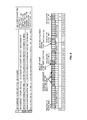
  • FIG. 6 is an example illustration of DRX timing for a UE configured with both long and short DRX cycles.
  • FIG. 7 illustrates an example wireless communication network.
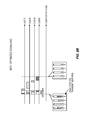
  • FIGS. 8A-B are example illustrations of the impact of an optimized scheduling method in relation to a DRX procedure.
  • FIG. 9 illustrates an example method implemented by a base station.
  • FIG. 10 illustrates an example base station.
  • FIGS. 11A-B are example illustrations of the impact of an optimized group signaling method in relation to DRX procedure.
  • FIG. 12 also illustrates an example method implemented by a base station.
  • FIG. 13 illustrates an example method implemented by a user equipment.
  • FIG. 14 illustrates another example method implemented by a user equipment.
  • FIG. 15 illustrates another example method implemented by a user equipment.
  • FIG. 16 illustrates another example method implemented by a user equipment.
  • FIG. 17 illustrates an example user equipment.
  • the embodiments are described with main emphasis on single carrier operation of the UE. However the embodiments are applicable for multi-carrier or carrier aggregation operation of the UE. Therefore the embodiment methods of signaling information to the UE or to the other network node can be carried out independently for each cell on each carrier frequency supported by the network node.
  • FIG. 7 illustrates an example wireless communication network in which a base station 40 (e.g., a eNodeB) supports a cell 42 .
  • a number of UEs 44 A-D (also labeled as UE 1 -UE 4 ) communicate with the base station in the cell 42 , and form group 46 .
  • FIG. 7 will be used to describe the various embodiments discussed below.
  • the scheduler at the eNB (e.g., base station 40 ) distributes the available resources during the onDuration such that the number of served UEs among all UEs or a subset of UEs is increased.
  • the applied method at the scheduler aims to minimize the amount of served data to each UE in order to maximize the number of served UEs during onDuration of the DRX cycle in order to force a greater number of UEs out of their DRX cycle.
  • One example to realize this method is to schedule the UEs with short packets during the onDuration. This will result in an increased number of scheduled UEs during the onDuration. These UEs that are coming out of DRX and are monitoring the control channel for scheduling assignments during the onDuration will decode scheduling assignments and therefore prolong their Active Time and be able to receive more data later.
  • the scheduler can apply the above method only to the subset of UEs which are prioritized for data transmission. Those UEs can be the UEs with high priority or low latency requirements.
  • FIGS. 8A-B show an example of how this method improves the system throughput.
  • FIGS. 8A-B shows the scheduling of the data packets within the onDuration being multiplexed in time
  • the packets could also be multiplexed in frequency within the same subframe.
  • FIG. 9 illustrates an example method 100 that is implemented by a base station that supports UEs that are configured to use DRX.
  • the base station transmits (block 102 ) respective scheduling assignments to each of a plurality of the UEs within an initial, onDuration portion of a DRX cycle, to prevent the plurality of UEs from immediately entering a DRX mode after the onDuration portion of the DRX cycle (see, e.g., onDuration in FIG. 8B ).
  • the base station subsequently transmits (block 104 ), during the DRX cycle but after the onDuration portion, respective data transmissions to each of the plurality of UEs according to the scheduling assignments.
  • the scheduling assignment transmissions may be multiplexed in time (as in FIG. 8B ), in frequency, or both, for example.
  • FIG. 10 illustrates a base station 700 configured to support UEs that use DRX.
  • the base station 700 includes one or more processing circuits (shown as “processor” 710 ), and a transmission circuit 720 .
  • the processor 710 may include one or more microprocessors, microcontrollers, digital signal processors, or the like, for example.
  • the one or more processing circuits are configured to transmit respective scheduling assignments to each of a plurality of the UEs within an initial onDuration portion of a DRX cycle to prevent the plurality of UEs from immediately entering a DRX mode after the onDuration portion of the DRX cycle (e.g., as shown in FIG. 8B ).
  • the one or more processing circuits are further configured to subsequently transmit, during the DRX cycle but after the onDuration portion, respective data transmissions to each of the plurality of UEs according to the scheduling assignments.
  • the scheduling assignments and data transmissions are transmitted via the transmission circuit 720 .
  • the base station 700 also includes a memory circuit 730 that stores transmit buffers (e.g., those shown in FIG. 8B ).
  • the physical layer control signaling that is used in this method conveys some common information applicable to a group or some groups of UEs about the transmission from the cell (e.g., group 46 in FIG. 7 ). It can further include information for each UE in that group or groups, for example, regarding whether there are going to be transmissions specifically for that UE or not. For example, the information could inform a group of UEs about whether the cell is ON or OFF without providing any details, or about whether a UE is going to receive data or not.
  • control physical layer group signaling examples are using a DCI format on the DL control channel.
  • DCI format 1C or DCI format 1A is the DCI format 1C or DCI format 1A.
  • RNTI Radio Network Temporary Identifier
  • This RNTI can, for example, be referred to as I-RNTI to represent the group Indicator RNTI.
  • an existing RNTI is reused, such as the RNTI for group power control commands, i.e., TPC-PUSCH-RNTI or TPC-PUCCH-RNTI. This could be performed together with the signaling for those specific RNTI, wherein a bit-map is signaled and corresponding bit(s) assigned to the UE indicates the activity status on the intended cell.
  • a further alternative is that another RNTI is used, for example the SI-RNTI or the P-RNTI together or without a specific bit sequence in the DCI message indicating that this is an indicator RNTI.
  • An example of such an indicator would be an invalid resource block assignment for DCI format 1A, e.g., the resource block assignment field is set to all ones. For the case the remaining bits in the DCI message can indicate which group of UEs the indicator is intended for.
  • the UEs within the group can be identified by different methods.
  • One method for example is to use a bitmap configured by a higher layer understandable for each UE within the group.
  • Another method is to use a function based on C-RNTI that provides differentiations among UEs and enables different UEs to determine if they are specifically addressed or not.
  • the eNB can transmit the physical layer group signaling periodically or triggered by some event. Examples of the events can be incoming traffic for some UEs or successful access to a channel on an unlicensed carrier where access to the channel is intermittent.
  • the UEs When the UEs are coming out of DRX and start to monitor the cell during the onDuration, by detecting the physical layer group signaling, they can extend their corresponding Active Time. This provides the opportunity for the scheduler at the eNB to distribute the load of the control channel for data scheduling on a longer time interval than the onDuration of the DRX cycle based on the fact that the UEs are going to be monitoring the channel.
  • the eNB can include the relevant information in the physical layer group signaling by indicating to each UE whether to expect data or not even though for example the eNB is going to transmit some signal. That information helps some UEs within a group of UE to return to DRX if they prefer and hence improve their corresponding power consumption.
  • Examples of the information included in the physical layer group signaling are the following:
  • Examples on transmission timing of the physical layer group signaling include the following:
  • examples of the time period that the information within the physical layer group signaling corresponds to include:
  • the UE When the UE is configured with DRX, it monitors the group physical layer signaling during the Active Time. In particular, when the UE is coming out of DRX, it starts monitoring the group physical layer signal during the onDuration.
  • the UE decodes the physical layer group signaling, depending on the information contained in the physical layer group signaling, it can behave differently. Examples of the UE behaviors are listed in the following:
  • the same DRX configuration can be applied for all serving cells for a given UE.
  • the intended UE behavior for such a case may not be exactly as described above. If, for example, the UE detects a signal that triggers a start/restarts of its drx-InactivityTimer this would apply for all serving cells of the UE. If the UE does not detect any signaling on a specific serving cell during the onDuration, the UE may anyway prolong the onDuration period for that serving cell by a trigger from another serving cell. Further the DRX can also be applied on a single serving cell as more described in the above example, or also extended to a group of serving cells.
  • the optimization of the group signaling adds information for individual UEs even though the information for each UE is sent in a single group message element.
  • FIG. 12 illustrates an example method ( 150 ) implemented by a base station (e.g., base station 40 of FIG. 7 ) that supports a plurality of user equipment (UEs) that are configured to use discontinuous reception (DRX).
  • the base station transmits respective individual scheduling assignments to each UE in a group of the UEs during an initial, onDuration portion of a DRX cycle (block 152 ), thereby preventing the group of UEs from immediately entering a DRX mode after the onDuration of the DRX cycle.
  • the scheduling assignments schedule a respective first data transmission during the onDuration, and also schedule a respective second data transmission after the onDuration but within the DRX cycle.
  • the base station transmits the scheduled first data transmissions during the onDuration of the DRX cycle (block 154 ), and transmits the scheduled second data transmissions after the onDuration but within the DRX cycle (block 156 ).
  • its second data transmission includes more data than its first data transmission. An example of this is shown in FIG. 8 , where data packets are scheduled within the onDuration of a DRX cycle, and are also scheduled after the OnDuration but within the same DRX cycle.
  • Each UE in the group is configured to be active during a predefined onDuration portion of a DRX cycle, and to enter a DRX mode for the rest of the DRX cycle if no scheduling information is received during the onDuration. However, because the scheduling assignments are received during the onDuration and schedule first and second data transmissions for each UE in the group, the UEs are thereby prevented from immediately entering the DRX mode after the onDuration of the DRX cycle.
  • a base station 700 is schematically illustrated that is configured to support a plurality of UEs that are configured to use DRX.
  • the one or more processing circuits of processor 710 are configured to transmit respective individual scheduling assignments to each UE in a group of the UEs during an initial, onDuration portion of a DRX cycle, thereby preventing the group of UEs from immediately entering a DRX mode after the onDuration of the DRX cycle.
  • the scheduling assignments schedule a respective first data transmission during the onDuration, and also schedule a respective second data transmission after the onDuration but within the DRX cycle.
  • the one or more processing circuits are further configured to transmit the scheduled first data transmissions during the onDuration of the DRX cycle, and transmit the scheduled second data transmissions after the onDuration but within the DRX cycle. For each UE in the group, its second data transmission includes more data than its first data transmission.
  • FIG. 13 illustrates a method 200 implemented by a UE that is part of a group of UEs (e.g., UE 1 in group 46 of FIG. 7 ), each of which is configured to use DRX.
  • the UE receives (block 202 ) physical layer group signaling from a base station, with the group signaling being sent from the base station to the group of UEs over a control channel (e.g., the PDCCH or EPDCCH).
  • the UE determines (block 204 ), based on the group signaling, whether data will be transmitted by the base station any UE in the group during a current DRX cycle.
  • the UE enters a DRX mode for the rest of the DRX cycle (block 210 ). If the determining indicates that data will be transmitted to any UE in the group during the current DRX cycle (a “yes” to block 206 ), the UE starts or restarts a DRX inactivity timer (e.g., drx-InactivityTimer) and monitors the control channel until the DRX inactivity timer expires (block 208 ).
  • a DRX inactivity timer e.g., drx-InactivityTimer
  • FIG. 14 illustrates a method 300 implemented by a UE that is part of a group of UEs (e.g., UE 1 in group 46 of FIG. 7 ), each of which is configured to use DRX.
  • the UE receives (block 302 ) physical layer group signaling from a base station, with the group signaling being sent from the base station to the group of UEs over a control channel (e.g., the PDCCH or EPDCCH).
  • the UE determines (block 304 ), based on the group signaling, whether data will be transmitted by the base station to the UE during a current DRX cycle.
  • the UE If the determining indicates that no data will be transmitted to the UE during the current DRX cycle (a “no” to block 306 ), the UE enters a DRX mode for the rest of the DRX cycle. If the determining indicates that data will be transmitted to the UE during the current DRX cycle (a “yes” to block 306 ), the UE starts or restarts a DRX inactivity timer (e.g., drx-InactivityTimer) and monitors the control channel until the DRX inactivity timer expires (block 308 ).
  • a DRX inactivity timer e.g., drx-InactivityTimer
  • FIG. 15 illustrates a method 400 implemented by a UE that is part of a group of UEs (e.g., UE 1 in group 46 of FIG. 7 ), each of which is configured to use DRX.
  • the UE attempts to decode physical layer group signaling from a base station, with the group signaling being sent from the base station to the group of UEs over a control channel (e.g., the PDCCH or EPDCCH) during a DRX cycle (block 402 ). If the group signaling cannot be decoded (a “no” to block 404 ), the UE enters a DRX mode for the rest of the DRX cycle (block 408 ).
  • a control channel e.g., the PDCCH or EPDCCH
  • the UE starts or restarts a DRX inactivity timer (e.g., drx-InactivityTimer) and monitors the control channel until the DRX inactivity timer expires.
  • a DRX inactivity timer e.g., drx-InactivityTimer
  • the method 400 could be used according to example (C) above, for example.
  • FIG. 16 illustrates a method 500 implemented by a UE that is part of a group of UEs (e.g., UE 1 in group 46 of FIG. 7 ), each of which is configured to use DRX.
  • the UE attempts to decode physical layer group signaling from a base station, with the group signaling being sent by the base station to the group of UEs over a control channel (e.g., the PDCCH or EPDCCH) during a DRX cycle (block 502 ). If the group signaling cannot be decoded (a “no” to block 504 ), the UE enters a DRX mode for the rest of the DRX cycle (block 508 ).
  • a control channel e.g., the PDCCH or EPDCCH
  • the UE If the group signaling is successfully decoded and indicates that no data will be transmitted to the UE during the current DRX cycle (a “no” to block 506 ), the UE enters the DRX mode for the rest of the DRX cycle (block 508 ). If the group signaling is successfully decoded and indicates that data will be transmitted to the UE during the current DRX cycle (a “yes” to block 506 ), the UE starts or restarts a DRX inactivity timer (e.g., drx-InactivityTimer) and monitors the control channel until the DRX inactivity timer expires (block 510 ).
  • the method 500 could be used according to example (D) above, for example.
  • FIG. 17 illustrates a UE 800 configured be part of a group of UEs that use DRX (e.g., the group 46 in FIG. 7 ).
  • the UE 800 includes one or more processing circuits (shown as “processor” 810 ), a receiver circuit 820 , and a memory circuit 830 .
  • the processor 810 may include one or more microprocessors, microcontrollers, digital signal processors, or the like, for example.
  • the receiver circuit 820 is configured to receive physical layer group signaling from a base station, with the group signaling being sent from the base station to the group of UEs over a control channel (e.g., the PDCCH or EPDCCH).
  • the memory circuit 830 is configured to track one or more DRX timers (e.g., a DRX inactivity timer).
  • the one or more processing circuits can be configured to implement any combination of the methods 200 - 500 discussed above.
  • the one or more processing circuits ( 810 ) are configured to:
  • the one or more processing circuits ( 810 ) are configured to:
  • the one or more processing circuits ( 810 ) are configured to:
  • the one or more processing circuits ( 810 ) are configured to:
  • the base station 700 may also be configured to transmit group signaling that indicates which UEs in a group (e.g., group 46 ) can expect to receive data transmissions during a given DRX cycle. This may be performed in connection with any combination of the methods 200 , 300 , 400 , and 500 .
  • Part I can be always used. However, in high load scenarios, there is a risk that the load on the (E)PDCCH increases due to scheduling many UEs in a short time which can affect the reliability of the control channel and results in performance degradation. In such scenarios it is preferable that the eNB uses the embodiment of Part II.
  • the indicator in the embodiment of Part II only gives the information to the UE that it should stay awake a bit longer such that the eNB can schedule it.
  • the eNB is serving many UEs, i.e., that each group is quite large or one group is very large.
  • the eNB would then be able to choose to indicate that the group should not wake up but instead use the implementation scheme in Part I.
  • the eNB can use some criteria to choose which method to use (e.g., should method 100 be performed or one or methods 200 - 500 be performed).
  • the criteria can be based on the load and ongoing traffic on the system, and/or based on the number of active UEs and the corresponding group sizes and the activity within a group.
  • Some non-limiting advantages of the techniques described above include increased system throughput performance and UE power saving by efficient scheduling policies and without imposing any changes in the UE behavior (e.g., in the method 100 ). Additionally, increased system throughput performance and UE power saving can be achieved by optimizing the physical layer group signaling design (e.g., using the methods 200 - 500 ).

Landscapes

  • Engineering & Computer Science (AREA)
  • Computer Networks & Wireless Communication (AREA)
  • Signal Processing (AREA)
  • Mobile Radio Communication Systems (AREA)

Abstract

An example method is disclosed that is implemented by a base station that supports a plurality of UEs configured to use DRX. The base station transmits respective individual scheduling assignments to each UE in a group of the UEs during an initial, on Duration portion of a DRX cycle, thereby preventing the group of UEs from immediately entering a DRX mode after the onDuration of the DRX cycle. For each UE in the group, the scheduling assignments schedule a respective first data transmission during the onDuration, and also schedule a respective second data transmission after the onDuration but within the DRX cycle. The base station transmits the scheduled first data transmissions during the onDuration of the DRX cycle, and transmits the scheduled second data transmissions after the onDuration but within the DRX cycle. For each UE in the group, its second data transmission includes more data than its first data transmission.

Description

This application claims the benefit of U.S. Provisional Application No. 62/034,548 filed Aug. 7, 2014, the disclosure of which is incorporated herein by reference in its entirety.
TECHNICAL FIELD
The present disclosure relates to discontinuous reception (DRX), and in particular to methods and apparatus for managing DRX.
BACKGROUND
Long Term Evolution (LTE) networks use Orthogonal Frequency-Division Multiplexing (OFDM) in the downlink and DFT-spread OFDM in the uplink. The basic LTE downlink physical resource can thus be seen as a time-frequency grid as illustrated in FIG. 1, where each resource element corresponds to one OFDM subcarrier during one OFDM symbol interval.
In the time domain, LTE downlink transmissions are organized into radio frames of 10 ms, each radio frame consisting of ten equally-sized subframes of length Tsubframe=1 ms. For a normal cyclic prefix, one subframe consists of 14 OFDM symbols. The duration of each OFDM symbol is approximately 71.4 μs.
Furthermore, the resource allocation in LTE is typically described in terms of resource blocks, where a resource block corresponds to one slot (0.5 ms) in the time domain and 12 contiguous subcarriers in the frequency domain. A pair of two adjacent resource blocks in time direction (1.0 ms) is known as a resource block pair. Resource blocks are numbered in the frequency domain, starting with 0 from one end of the system bandwidth.
Downlink transmissions are dynamically scheduled, i.e., in each subframe the base station transmits control information about which terminals data is transmitted to and upon which resource blocks the data is transmitted, in the current downlink subframe. This control signaling is typically transmitted in the first 1, 2, 3 or 4 OFDM symbols in each subframe and the number n=1, 2, 3 or 4 is known as the Control Format Indicator (CFI). The downlink subframe also contains common reference symbols, which are known to the receiver and used for coherent demodulation of e.g., the control information. A downlink system with CFI=3 OFDM symbols as control is illustrated in FIG. 3.
From LTE Rel-11 onwards, resource assignments can be scheduled on the enhanced Physical Downlink Control Channel (EPDCCH). For Rel-8 to Rel-10 only the Physical Downlink Control Channel (PDCCH) is available.
The reference symbols shown in FIG. 3 are the cell specific reference symbols (CRS) and are used to support multiple functions including fine time and frequency synchronization and channel estimation for certain transmission modes.
In a cellular communication system there is a need to measure the channel conditions in order to know what transmission parameters to use. These parameters include, e.g., modulation type, coding rate, transmission rank, and frequency allocation. This applies to uplink (UL) as well as downlink (DL) transmissions.
The scheduler that makes the decisions on the transmission parameters is typically located in the base station (eNB). Hence, it can measure channel properties of the UL directly using known reference signals that the terminals (user equipment or “UEs”) transmit. These measurements then form a basis for the UL scheduling decisions that the eNB makes, which are then sent to the UEs via a downlink control channel.
However, for the DL the eNB is unable to measure any channel parameters. Rather, it must rely on information that the UEs can gather and subsequently send back to the eNB. This so-called Channel-State Information (CSI) is obtained in the UEs by measuring on known reference symbols, Channel-State Information Reference Symbols (CSI-RS), transmitted in the DL. See the 3GPP specification 36.211, which pertains to LTE specifically.
The CSI-RS are UE specifically configured by radio resource signaling (RRC), with a certain configured periodicity, T={5, 10, 20, 40, 80} ms (i.e., every Tth subframe). There is a possibility to configure both non-zero power (NZP) CSI-RS and zero power (ZP) CSI-RS, where the ZP CSI-RS is simply an unused resource that can be matched to a NZP CSI-RS in an adjacent eNB. This will improve the SINR for the CSI-RS measurements for a UE served by the adjacent cell. The ZP CSI-RS can also be used as CSI-IM as introduced in Rel.11 and explained below.
In LTE, the format of the CSI reports are specified in detail and may contain CQI (Channel-Quality Information), a Rank Indicator (RI), and a Precoding Matrix Indicator. See 3GPP Specification 36.213. The CSI reports can be wideband or applicable to subbands. They can be configured by a radio resource control (RRC) message to be sent periodically or in an aperiodic manner, triggered by a control message from the eNB to a UE. The quality and reliability of the CSI are crucial for the eNB in order to make the best possible scheduling decisions for upcoming DL transmissions.
The LTE standard does not specify in detail how the UE should obtain and average these measurements from multiple time instants. For example, the UE may measure over a time frame unknown to the eNB and combine several measurements in a UE-proprietary way to create the CSI-values that are reported, either periodically or triggered.
In the context of LTE, the available CSI-RS are referred to as “CSI-RS resources”. In addition, there are also “CSI-IM resources”, where IM stands for “Interference Measurement”. The latter are defined from the same set of possible physical locations in the time/frequency grid as the CSI-RS, but with zero power, hence “ZP CSI-RS.” In other words, they are “silent” CSI-RS and when the eNB is transmitting the shared data channel, it avoids mapping data to those resource elements used for CSI-IM. These are intended to give a UE the possibility to measure the power of any interference from another transmitter than its serving node.
Each UE can be configured with one, three, or four different CSI processes. Each CSI process is associated with one CSI-RS and one CSI-IM where these CSI-RS resources have been configured to the UE by RRC signaling and are thus periodically transmitted/occurring with a periodicity of T and with a given subframe offset relative to the frame start.
If only one CSI process is used, then it is common to let the CSI-IM reflect the interference from transmission in all other eNBs except the eNB serving the UE, i.e., the serving cell uses a ZP CSI-RS that overlaps with the CSI-IM configured to the UE, but in other adjacent eNBs, there is no ZP CSI-RS on these resource elements. In this way, the UE will measure the interference from adjacent cells when measuring the received power in the resource elements configured as CSI-IM.
If additional CSI processes are configured to the UE, then there is a possibility for the network to also configure a ZP CSI-RS in the adjacent eNB that overlaps with a CSI-IM for this CSI process for the UE in the serving eNB. In this way the UE will send accurate CSI feedback also for the case when this adjacent cell is not transmitting. Hence, CSI feedback to support coordinated scheduling between eNBs is enabled with the use of multiple CSI processes where a first CSI process can be configured to the UE to feed back CSI for the full interference case and a second CSI process feeds back CSI for the case when a (preferably a strong interfering) adjacent cell is muted. Hence, the eNB receives CSI feedback for two possible transmission hypotheses and will then use this in the coordinated scheduler. As mentioned above, up to four CSI processes can be configured to the UE, thereby enabling feedback of four different transmission hypotheses.
Physical Downlink Control Channel (PDCCH) and Enhanced PDCCH (EPDCCH)
The PDCCH/EPDCCH is used to carry downlink control information (DCI) such as scheduling decisions and power-control commands. More specifically, the DCI includes:
    • Downlink scheduling assignments, including PDSCH resource indication, transport format, hybrid-ARQ information, and control information related to spatial multiplexing (if applicable). A downlink scheduling assignment also includes a command for power control of the PUCCH used for transmission of hybrid-ARQ acknowledgements in response to downlink scheduling assignments.
    • Uplink scheduling grants, including PUSCH resource indication, transport format, and hybrid-ARQ-related information. An uplink scheduling grant also includes a command for power control of the PUSCH.
    • Power-control commands for a set of terminals as a complement to the commands included in the scheduling assignments/grants.
One PDCCH/EPDCCH carries one DCI message containing one of the groups of information listed above. As multiple terminals can be scheduled simultaneously, and each terminal can be scheduled on both downlink and uplink simultaneously, there must be a possibility to transmit multiple scheduling messages within each subframe. Each scheduling message is transmitted on separate PDCCH/EPDCCH resources, and consequently there are typically multiple simultaneous PDCCH/EPDCCH transmissions within each subframe in each cell. Furthermore, to support different radio-channel conditions, link adaptation can be used, where the code rate of the PDCCH/EPDCCH is selected by adapting the resource usage for the PDCCH/EPDCCH, to match the radio-channel conditions.
Carrier Aggregation
The LTE Rel-10 standard supports bandwidths larger than 20 MHz. One important requirement on LTE Rel-10 is to assure backward compatibility with LTE Rel-8. This should also include spectrum compatibility. That would imply that an LTE Rel-10 carrier, wider than 20 MHz, should appear as a number of LTE carriers to an LTE Rel-8 terminal. Each such carrier can be referred to as a Component Carrier (CC). In particular for early LTE Rel-10 deployments it can be expected that there will be a smaller number of LTE Rel-10-capable terminals compared to many LTE legacy terminals. Therefore, it is necessary to assure an efficient use of a wide carrier also for legacy terminals, i.e., that it is possible to implement carriers where legacy terminals can be scheduled in all parts of the wideband LTE Rel-10 carrier. The straightforward way to obtain this would be by means of Carrier Aggregation (CA). CA implies that an LTE Rel-10 terminal can receive multiple CCs, where the CCs have, or at least the possibility to have, the same structure as a Rel-8 carrier. CA is illustrated in FIG. 4.
The number of aggregated CCs as well as the bandwidth of the individual CCs may be different for uplink and downlink. A symmetric configuration refers to the case where the number of CCs in the downlink and uplink is the same, whereas an asymmetric configuration refers to the case that the number of CCs is different. It is important to note that the number of CCs configured in a cell may be different from the number of CCs seen by a terminal. A terminal may for example support more downlink CCs than uplink CCs, even though the cell is configured with the same number of uplink and downlink CCs.
Cross-Carrier Scheduling
Scheduling of a CC is done on the PDCCH or EPDCCH via downlink assignments. Control information on the PDCCH/EPDCCH is formatted as a Downlink Control Information (DCI) message. In Rel-8 a terminal only operates with one DL and one UL CC. The association between DL assignment, UL grants, and the corresponding DL and UL CCs is therefore clear. In Rel-10 two modes of CA needs to be distinguished. The first case is very similar to the operation of multiple Rel-8 terminals, a DL assignment or UL grant contained in a DCI message transmitted on a CC is either valid for the DL CC itself or for an associated (either via cell-specific or UE specific linking) UL CC. A second mode of operation augments a DCI message with the Carrier Indicator Field (CIF). A DCI containing a DL assignment with CIF is valid for that DL CC indicated with CIF and a DCI containing an UL grant with CIF is valid for the indicated UL CC. The DCI transmitted using EPDCCH which was introduced in Rel-11 can also carry CIF which means that cross carrier scheduling is supported also when using EPDCCH.
Licensed Assisted Access (LAA) to Unlicensed Spectrum Using LTE
Up to now, the spectrum used by LTE is dedicated to LTE. This has the advantage that LTE systems do not need to care about the coexistence issue, and the spectrum efficiency can be maximized. However, the spectrum allocated to LTE is limited, which cannot meet the ever increasing demand for larger throughput from applications/services. Therefore, discussions are ongoing in 3GPP to initiate a new study item on extending LTE to exploit unlicensed spectrum in addition to licensed spectrum. Unlicensed spectrum can, by definition, be simultaneously used by multiple different technologies. Therefore, LTE needs to consider the coexistence issue with other systems such as IEEE 802.11 (Wi-Fi). Operating LTE in the same manner in unlicensed spectrum as in licensed spectrum can seriously degrade the performance of Wi-Fi as Wi-Fi will not transmit once it detects that a channel is occupied.
Furthermore, one way to utilize the unlicensed spectrum reliably is to transmit essential control signals and channels on a licensed carrier. That is, as shown in FIG. 5, a UE is connected to a PCell in the licensed band and one or more SCells in the unlicensed band. In this application we denote a secondary cell in unlicensed spectrum as a “license assisted secondary cell” (LA SCell).
Small Cells ON/OFF
One of the mechanisms for interference avoidance and coordination among small cells is the small cell on/off feature. According to this feature the small cell may be turned on and off where the “on” and “off” period may depend on the criteria or application. Another purpose of small cell on/off can be for energy saving.
Discovery Signals
In LTE Rel-12, for small cell on/off where the eNB can be off for long periods of time, in order to assist the UE with the measurements, a discovery signal might be needed. The discovery signal needs to support the properties required for enabling RRM measurements, RLM related procedures, and coarse time/frequency synchronization. In order to make UE measurements possible, the eNB has to wake up periodically (e.g., once every 80 ms, or 160 ms, etc.) and send the discovery signal so that it can be used by the UE for mobility related operations such as cell identification, RLM, and measurement.
Within one cell, there may be multiple transmission points, from which the downlink signal can transmitted. Examples of this are a distributed antenna system, where multiple radio remote heads that are physically dislocated within the cell, transmit signals that all belong to the same cell (i.e., same CellID). The term transmission point may also refer to a sector of a site where the different sectors of the same site then constitute different transmission points. The discovery signal should also be capable of identifying individual transmission points and enabling RRM measurements for them.
In 3GPP, it has been agreed that the discovery signals will contain the PSS, SSS, and the CRS. The CSI-RS may optionally be present when configured. The discovery signal can be transmitted at least with the periodicities of 40, 80, and 160 ms. The duration of the discovery signal will be 5 subframes or less.
The discovery signal parameters will be communicated to the UE by the network node in order to enable the UE to make measurements. These parameters may include, e.g., a duration of each occasion when the discovery signal is transmitted (referred to as the DRS occasion), a periodicity of the occurrence of the occasion of discovery signals, a timing (in terms of a start time or an offset from a reference point such as a particular frame and subframe number) of the discovery signal occasions. In addition to the timing, periodicity and duration of the DRS occasion, and the discovery measurement timing configuration (DMTC) may also be signaled to the UE which tells the UE which subframes should be used to make measurements on the discovery signal. The signaling of the DMTC is currently being discussed in 3GPP.
DRX (Discontinuous Reception)
DRX is a RRC configured mechanism which enables the UE to save power during a cycle, referred to as the DRX cycle. When the UE is in DRX, it can sleep by relaxing its receiver for the remaining portion of the DRX cycle. The time that the UE is not in DRX can be considered as the “Active Time.” In the following, some important aspects of the DRX mechanism are described.
When a UE is configured with a (long) DRX cycle, it monitors the downlink control channel in some configured subframes during a DRX cycle referred to as the “onDuration,” where if the UE fails to decode any DL transmission, it goes to DRX. In case the UE decodes DL transmission, it comes out of DRX by starting a timer, referred to as the “drx-InactivityTimer” and continues monitoring the downlink control channel until the timer is expired. This timer starts or restarts with decoding any new DL assignment. When the drx-InactivityTimer expires the UE returns to DRX and sleeps until the next onDuration of the DRX cycle. Additionally, the DL and UL HARQ retransmissions occur as usual irrespective of the DRX cycle.
Moreover, two types of DRX cycles are introduced in the standards namely as the long and short DRX cycles, where the long cycle should be a multiple integer of the short cycle. A UE configured with the long DRX cycle can be also configured with a short DRX cycle. Such a UE, when coming out of long DRX, uses the short DRX cycle for a configured number of cycles and can fall back again to the long DRX cycle. An example of this is shown in FIG. 6, which is an example illustration of DRX timing event for a UE configured with both long and short DRX cycles only considering the DL control and data shared channel without the impact of the HARQ retransmissions, in which the variables “N” and “n” refer to the radio frame index and subframe index, respectively.
Assume that a UE is configured with DRX for the purpose of power saving. When the UE comes out of DRX, it monitors the (E)PDCCH during the Active Time where timers such as the onDuration Timer or the drx-InactivityTimer are started or restarted. The onDuration Timer starts or restarts as soon as the UE comes out of DRX and the drx-InactivityTimer starts or restarts as soon as the UE decodes an (E)PDCCH.
There is a potential problem in relation to the DRX procedure especially for groups of UEs with aligned onDuration periods that may particularly arise in high load scenarios which can result in system throughput performance degradation. When the load is high, it is probable that for groups of UEs with aligned onDuration, due to overloading of the control and shared data channels to support the current traffic, the scheduling assignments to some UEs could be postponed and earliest transmitted at some time beyond the onDuration of DRX cycle of those UEs. This implies that those UEs would return to DRX due to the lack of decoding of any scheduling assignment during the onDuration and consequently would wait another DRX cycle to check for a possible scheduling assignment which results in system throughput loss. The degradation is apparently more severe if such events occur when the UEs are using a long DRX cycle.
Another possible problem can occur in relation to UE behavior during the DRX procedure when DRX is operated alongside other procedures which rely on signaling to a group of UEs. The signaling to a group of UEs could be, for example, a physical layer signal which uses a particular DCI format. The physical layer signal or a physical layer signal to a group of UEs is transmitted from an eNB and contains some common information being shared among the UEs within the group. In general, the physical layer group signaling can be transmitted from cell X for the cell Y, i.e., the physical layer group signaling conveys information which corresponds to the UEs served by cell Y. The cells X and Y can be different (e.g., the physical layer group signaling can be transmitted from a PCell but for an SCell), or the cells X and Y can be the same (e.g., the physical layer signal can be transmitted from an SCell and be applicable to UEs in the same SCell). In the following, cell Y is referred to as the serving cell.
When group signaling occurs during the onDuration, and is decoded by the intended UEs, it forces all those UEs to remain active during their corresponding Active Time. However, the data traffic situation may differ for these UEs within the group. For example some of the UEs which have been forced to wake up due to the group signaling may not have any ongoing traffic but they have to continue monitoring the presence of scheduling assignments until their corresponding timer expires. This behavior results in an unnecessary increase in UE power consumption. This impact is further increased for such UEs if the short DRX cycle is configured because the UE has to go through the short DRX cycles until it can commence the long DRX cycle which means additionally increased power consumption due to more monitoring occasions in short DRX cycles.
SUMMARY
The problem of degradation in system throughput due to overloading of the control and shared data channels at high load scenarios when UEs comes out of DRX can be solved by applying scheduling policies at the eNB such that the eNB schedules as many UEs as possible during the onDuration even though the scheduling may be for a very small amount of data.
Another method to solve this problem is obtained by using physical layer group signaling that includes some common information to a group of UEs about the signal transmission from the eNB where the signaling can additionally contain some information for each UE such that different UEs can be differentiated regarding their corresponding ongoing traffic and consequently behave differently in DRX procedure.
According to one aspect of the present disclosure, a method is implemented by a base station that supports user equipment (UEs) that are configured to use discontinuous reception (DRX). According to the method, the base station transmits respective scheduling assignments to each of a plurality of the UEs within an initial, onDuration portion of a DRX cycle, to prevent the plurality of UEs from immediately entering a DRX mode after the onDuration portion of the DRX cycle. The base station subsequently transmits, during the DRX cycle but after the onDuration portion, respective data transmissions to each of the plurality of UEs according to the scheduling assignments. The scheduling assignment transmissions may be multiplexed in time, frequency, or both, for example.
In a complementary aspect of the present disclosure, a base station is disclosed which is configured to support UEs that use DRX. The base station includes a transmission circuit, and one or more processing circuits. The one or more processing circuits are configured to transmit respective scheduling assignments to each of a plurality of the UEs within an initial, onDuration portion of a DRX cycle, to prevent the plurality of UEs from immediately entering a DRX mode after the onDuration portion of the DRX cycle. The one or more processing circuits are further configured to subsequently transmit, during the DRX cycle but after the onDuration portion, respective data transmissions to each of the plurality of UEs according to the scheduling assignments. The scheduling assignments and data transmissions are transmitted via the transmission circuit. The scheduling assignment transmissions may be multiplexed in time, frequency, or both, for example.
According to one aspect of the present disclosure, a method is implemented by a base station that supports a plurality of UEs that are configured to use DRX. The base station transmits respective individual scheduling assignments to each UE in a group of the UEs during an initial, onDuration portion of a DRX cycle, thereby preventing the group of UEs from immediately entering a DRX mode after the onDuration of the DRX cycle. For each UE in the group, the scheduling assignments schedule a respective first data transmission during the onDuration, and also schedule a respective second data transmission after the onDuration but within the DRX cycle. The base station also transmits the scheduled first data transmissions during the onDuration of the DRX cycle, and transmits the scheduled second data transmissions after the onDuration but within the DRX cycle. For each UE in the group, its second data transmission includes more data than its first data transmission.
In a complementary aspect of the present disclosure, a base station is disclosed that is configured to support a plurality of UEs that are configured to use DRX. The base station includes a transmission circuit configured to transmit respective individual scheduling assignments to each UE in a group of the UEs during an initial, onDuration portion of a DRX cycle, thereby preventing the group of UEs from immediately entering a DRX mode after the onDuration of the DRX cycle. For each UE in the group, the scheduling assignments schedule a respective first data transmission during the onDuration, and also schedule a respective second data transmission after the onDuration but within the DRX cycle. The transmission circuit is further configured to transmit the scheduled first data transmissions during the onDuration of the DRX cycle, and transmit the scheduled second data transmissions after the onDuration but within the DRX cycle. For each UE in the group, its second data transmission includes more data than its first data transmission.
According to one aspect of the present disclosure, a method is implemented by a UE that is part of a group of UEs, each of which is configured to use DRX. The UE receives physical layer group signaling from a base station, with the group signaling being sent from the base station to the group of UEs over a control channel. The UE determines, based on the group signaling, whether data will be transmitted by the base station to one or more UEs in the group during a current DRX cycle. If the determining indicates that no data will be transmitted to any UE in the group during the current DRX cycle, the UE enters a DRX mode for the rest of the DRX cycle. If the determining indicates that data will be transmitted to any UE in the group during the current DRX cycle, the UE starts or restarts a DRX inactivity timer and monitors the control channel until the DRX inactivity timer expires.
According to a complementary aspect of the present disclosure, a UE is disclosed which is configured to be part of a group of UEs that use DRX. The UE includes a receiver circuit configured to receive physical layer group signaling from a base station, with the group signaling being sent from the base station to the group of UEs over a control channel. The UE also includes one or more processing circuits configured to determine, based on the group signaling, whether data will be transmitted by the base station to any UE in the group during a current DRX cycle. The one or more processing circuits are further configured to, if the determining indicates that no data will be transmitted to any UE in the group during the current DRX cycle, cause the UE to enter a DRX mode for the rest of the DRX cycle. The one or more processing circuits are further configured to, if the determining indicates that data will be transmitted to one or more UEs in the group during the current DRX cycle, start or restart a DRX inactivity timer and monitor the control channel via the receiver circuit until the DRX inactivity timer expires.
According to one aspect of the present disclosure, a method is implemented by a UE that is part of a group of UEs, each of which is configured to use DRX. The UE receives physical layer group signaling from a base station, with the group signaling being sent from the base station to the group of UEs over a control channel. The UE determines, based on the group signaling, whether data will be transmitted by the base station to the UE during a current DRX cycle. If the determining indicates that no data will be transmitted to the UE during the current DRX cycle, the UE enters a DRX mode for the rest of the DRX cycle. If the determining indicates that data will be transmitted to the UE during the current DRX cycle, the UE starts or restarts a DRX inactivity timer and monitors the control channel until the DRX inactivity timer expires.
According to a complementary aspect of the present disclosure, a UE is disclosed that is configured to be part of a group of UEs that use DRX. The UE includes a receiver circuit configured to receive physical layer group signaling from a base station, with the group signaling being sent from the base station to the group of UEs over a control channel. The UE also includes one or more processing circuits configured to determine, based on the group signaling, whether data will be transmitted by the base station to the UE during a current DRX cycle. The one or more processing circuits are further configured to, if the determining indicates that no data will be transmitted to the UE during the current DRX cycle, cause the UE to enter a DRX mode for the rest of the DRX cycle. The one or more processing circuits are further configured to, if the determining indicates that data will be transmitted to the UE during the current DRX cycle, start or restart a DRX inactivity timer and monitor the control channel via the receiver circuit until the DRX inactivity timer expires.
According to one aspect of the present disclosure, a method is disclosed which is implemented by a UE that is part of a group of UEs, each of which is configured to use DRX. The UE attempts to decode physical layer group signaling from a base station, with the group signaling being sent from the base station to the group of UEs over a control channel during a DRX cycle. If the group signaling cannot be decoded, the UE enters a DRX mode for the rest of the DRX cycle. If the group signaling is successfully decoded, the UE starts or restarts a DRX inactivity timer and monitors the control channel until the DRX inactivity timer expires.
According to a complementary aspect of the present disclosure, a UE is disclosed which is configured to be part of a group of UEs that use DRX. The UE includes a receiver circuit and one or more processing circuits. The one or more processing circuits are configured to attempt to decode physical layer group signaling from a base station, with the group signaling being sent from the base station to the group of UEs over a control channel during a DRX cycle. The one or more processing circuits are further configured to, if the group signaling cannot be decoded, cause the UE to enter a DRX mode for the rest of the DRX cycle. The one or more processing circuits are further configured to, if the group signaling is successfully decoded, start or restart a DRX inactivity timer and monitor the control channel via the receiver circuit until the DRX inactivity timer expires.
According to one aspect of the present disclosure, a method is disclosed which is implemented by a UE that is part of a group of UEs, each of which is configured to use DRX. The UE attempts to decode physical layer group signaling from a base station, with the group signaling being sent by the base station to the group of UEs over a control channel during a DRX cycle. If the group signaling cannot be decoded, the UE enters a DRX mode for the rest of the DRX cycle. If the group signaling is successfully decoded and indicates that no data will be transmitted to the UE during the current DRX cycle, the UE enters the DRX mode for the rest of the DRX cycle. If the group signaling is successfully decoded and indicates that data will be transmitted to the UE during the current DRX cycle, the UE starts or restarts a DRX inactivity timer and monitors the control channel until the DRX inactivity timer expires.
According to a complementary aspect of the present disclosure, a UE is disclosed which is configured to be part of a group of UEs that use DRX. The UE includes a receiver circuit and one or more processing circuits. The one or more processing circuits are configured to attempt to decode physical layer group signaling from a base station, with the group signaling being sent by the base station to the group of UEs over a control channel during a DRX cycle. The one or more processing circuits are further configured to, if the group signaling cannot be decoded, cause the UE to enter a DRX mode for the rest of the DRX cycle. The one or more processing circuits are further configured to, if the group signaling is successfully decoded and indicates that no data will be transmitted to the UE during the current DRX cycle, cause the UE to enter the DRX mode for the rest of the DRX cycle. The one or more processing circuits are further configured to, if the group signaling is successfully decoded and indicates that data will be transmitted to the UE during the current DRX cycle, start or restart a DRX inactivity timer and monitor the control channel via the receiver circuit until the DRX inactivity timer expires.
Of course, the present disclosure is not limited to the above features and advantages. Indeed, those skilled in the art will recognize additional features and advantages upon reading the following detailed description, and upon viewing the accompanying drawings.
BRIEF DESCRIPTION OF THE DRAWINGS
FIG. 1 illustrates a Long Term Evolution (LTE) downlink physical resource.
FIG. 2 illustrates an LTE time-domain structure.
FIG. 3 illustrates an LTE downlink subframe.
FIG. 4 illustrates an example of carrier aggregation.
FIG. 5 illustrates an example of license-assisted access (LAA) to unlicensed spectrum using LTE carrier aggregation.
FIG. 6 is an example illustration of DRX timing for a UE configured with both long and short DRX cycles.
FIG. 7 illustrates an example wireless communication network.
FIGS. 8A-B are example illustrations of the impact of an optimized scheduling method in relation to a DRX procedure.
FIG. 9 illustrates an example method implemented by a base station.
FIG. 10 illustrates an example base station.
FIGS. 11A-B are example illustrations of the impact of an optimized group signaling method in relation to DRX procedure.
FIG. 12 also illustrates an example method implemented by a base station.
FIG. 13 illustrates an example method implemented by a user equipment.
FIG. 14 illustrates another example method implemented by a user equipment.
FIG. 15 illustrates another example method implemented by a user equipment.
FIG. 16 illustrates another example method implemented by a user equipment.
FIG. 17 illustrates an example user equipment.
DETAILED DESCRIPTION Terminologies
The following commonly terminologies are used in the embodiments and are elaborated below:
    • Network node: In some embodiments a more general term “network node” is used and it can correspond to any type of radio network node or any network node, which communicates with a UE and/or with another network node. Examples of network nodes are Node B, base station (BS), multi-standard radio (MSR) radio node such as MSR BS, eNodeB (eNB), network controller, radio network controller (RNC), base station controller (BSC), relay, donor node controlling relay, base transceiver station (BTS), access point (AP), transmission points, transmission nodes, RRU, RRH, nodes in distributed antenna system (DAS), core network node (e.g., MSC, MME etc.), O&M, OSS, SON, positioning node (e.g., E-SMLC), MDT, etc.
    • User equipment: In some embodiments the non-limiting term user equipment (UE) is used and it refers to any type of wireless device communicating with a network node and/or with another UE in a cellular or mobile communication system. Examples of UE are target device, device to device (D2D) UE, machine type UE or UE capable of machine to machine (M2M) communication, PDA, iPAD, tablet, mobile terminals, smart phone, laptop embedded equipped (LEE), laptop mounted equipment (LME), USB dongles, etc.
Note that although terminology from 3GPP LTE has been used to describe the present disclosure, this should not be seen as limiting the scope of the present disclosure to only the aforementioned system. Other wireless systems, including WCDMA, HSPA, WiMax, WiFi, WLAN, and GSM/GERAN, may also benefit from exploiting the ideas covered within this disclosure.
The embodiments are described with main emphasis on single carrier operation of the UE. However the embodiments are applicable for multi-carrier or carrier aggregation operation of the UE. Therefore the embodiment methods of signaling information to the UE or to the other network node can be carried out independently for each cell on each carrier frequency supported by the network node.
In this section, the present disclosure will be illustrated in more detail by a number of example embodiments. It should be noted that these embodiments are not mutually exclusive. Components from one embodiment may be tacitly assumed to be present in another embodiment and it will be obvious to a person skilled in the art how those components may be used in the other example embodiments. The main embodiments covered by the present disclosure are:
    • Part I—methods in the network for optimized scheduling policies in relation to DRX.
    • Part II—methods in the network and UEs for optimized physical layer group signaling in relation to DRX.
FIG. 7 illustrates an example wireless communication network in which a base station 40 (e.g., a eNodeB) supports a cell 42. A number of UEs 44A-D (also labeled as UE1-UE4) communicate with the base station in the cell 42, and form group 46. FIG. 7 will be used to describe the various embodiments discussed below.
Part I—Methods in the Network for Optimized Scheduling in Relation to DRX
The scheduler at the eNB (e.g., base station 40) distributes the available resources during the onDuration such that the number of served UEs among all UEs or a subset of UEs is increased.
In this embodiment, the applied method at the scheduler aims to minimize the amount of served data to each UE in order to maximize the number of served UEs during onDuration of the DRX cycle in order to force a greater number of UEs out of their DRX cycle. One example to realize this method is to schedule the UEs with short packets during the onDuration. This will result in an increased number of scheduled UEs during the onDuration. These UEs that are coming out of DRX and are monitoring the control channel for scheduling assignments during the onDuration will decode scheduling assignments and therefore prolong their Active Time and be able to receive more data later.
The scheduler can apply the above method only to the subset of UEs which are prioritized for data transmission. Those UEs can be the UEs with high priority or low latency requirements. FIGS. 8A-B show an example of how this method improves the system throughput.
It may be noted that while the example of FIGS. 8A-B shows the scheduling of the data packets within the onDuration being multiplexed in time, the packets could also be multiplexed in frequency within the same subframe.
FIG. 9 illustrates an example method 100 that is implemented by a base station that supports UEs that are configured to use DRX. According to the method 100, the base station transmits (block 102) respective scheduling assignments to each of a plurality of the UEs within an initial, onDuration portion of a DRX cycle, to prevent the plurality of UEs from immediately entering a DRX mode after the onDuration portion of the DRX cycle (see, e.g., onDuration in FIG. 8B). The base station subsequently transmits (block 104), during the DRX cycle but after the onDuration portion, respective data transmissions to each of the plurality of UEs according to the scheduling assignments. The scheduling assignment transmissions may be multiplexed in time (as in FIG. 8B), in frequency, or both, for example.
FIG. 10 illustrates a base station 700 configured to support UEs that use DRX. The base station 700 includes one or more processing circuits (shown as “processor” 710), and a transmission circuit 720. The processor 710 may include one or more microprocessors, microcontrollers, digital signal processors, or the like, for example. In one or more embodiments, the one or more processing circuits are configured to transmit respective scheduling assignments to each of a plurality of the UEs within an initial onDuration portion of a DRX cycle to prevent the plurality of UEs from immediately entering a DRX mode after the onDuration portion of the DRX cycle (e.g., as shown in FIG. 8B). The one or more processing circuits are further configured to subsequently transmit, during the DRX cycle but after the onDuration portion, respective data transmissions to each of the plurality of UEs according to the scheduling assignments. The scheduling assignments and data transmissions are transmitted via the transmission circuit 720. The base station 700 also includes a memory circuit 730 that stores transmit buffers (e.g., those shown in FIG. 8B).
Part II—Methods in the Network and UEs for Optimized Physical Layer Group Signaling in Relation to DRX
In this embodiment, we explain methods to manage the load on the control channel and improve UE throughput and delay performance by using proper design of the physical layer group signaling. These methods can also improve UE power efficiency.
The physical layer control signaling that is used in this method conveys some common information applicable to a group or some groups of UEs about the transmission from the cell (e.g., group 46 in FIG. 7). It can further include information for each UE in that group or groups, for example, regarding whether there are going to be transmissions specifically for that UE or not. For example, the information could inform a group of UEs about whether the cell is ON or OFF without providing any details, or about whether a UE is going to receive data or not.
Examples of the control physical layer group signaling are using a DCI format on the DL control channel. One specific example of that is the DCI format 1C or DCI format 1A.
In order for the control physical layer group signaling to be identified by its corresponding group, a Radio Network Temporary Identifier (RNTI) specific to that group can be used for example to be scrambled with the CRC of the DCI format in the physical layer group signaling. This RNTI can, for example, be referred to as I-RNTI to represent the group Indicator RNTI. An alternative is that an existing RNTI is reused, such as the RNTI for group power control commands, i.e., TPC-PUSCH-RNTI or TPC-PUCCH-RNTI. This could be performed together with the signaling for those specific RNTI, wherein a bit-map is signaled and corresponding bit(s) assigned to the UE indicates the activity status on the intended cell. A further alternative is that another RNTI is used, for example the SI-RNTI or the P-RNTI together or without a specific bit sequence in the DCI message indicating that this is an indicator RNTI. An example of such an indicator would be an invalid resource block assignment for DCI format 1A, e.g., the resource block assignment field is set to all ones. For the case the remaining bits in the DCI message can indicate which group of UEs the indicator is intended for.
Moreover, in case that the physical layer group signaling includes some information for each UE within a group, the UEs within the group can be identified by different methods. One method for example is to use a bitmap configured by a higher layer understandable for each UE within the group. Another method is to use a function based on C-RNTI that provides differentiations among UEs and enables different UEs to determine if they are specifically addressed or not.
The eNB can transmit the physical layer group signaling periodically or triggered by some event. Examples of the events can be incoming traffic for some UEs or successful access to a channel on an unlicensed carrier where access to the channel is intermittent.
When the UEs are coming out of DRX and start to monitor the cell during the onDuration, by detecting the physical layer group signaling, they can extend their corresponding Active Time. This provides the opportunity for the scheduler at the eNB to distribute the load of the control channel for data scheduling on a longer time interval than the onDuration of the DRX cycle based on the fact that the UEs are going to be monitoring the channel.
In addition, if the eNB assesses, based on some criteria, that some UEs for some time interval are less probable to be scheduled with any data and instead can save power by stopping to monitor the (E)PDCCH, the eNB can include the relevant information in the physical layer group signaling by indicating to each UE whether to expect data or not even though for example the eNB is going to transmit some signal. That information helps some UEs within a group of UE to return to DRX if they prefer and hence improve their corresponding power consumption.
In the teaching of these embodiments, we describe the design aspects of the physical layer group signaling from the eNB side and continue by determining the corresponding UE behavior in order to clarify how these methods improve the system performance by managing the load on the control and shared data channel as well as improving UE power consumption.
The Information Included in the Physical Layer Group Signaling (eNB Behavior):
Examples of the information included in the physical layer group signaling are the following:
    • A) Whether the serving cell is going to transmit some signal (such as reference signals or other transmissions that are not actual PDSCH transmissions) or not for an upcoming period of time, and whether the serving eNB is going to schedule some data (without indicating to each UE) for an upcoming period of time.
    • B) Whether the serving cell is going to transmit some signal or not for an upcoming period of time and whether the serving eNB is going to schedule data for an upcoming period of time and if for each UE within the group, whether the eNB is going to schedule data for it or not.
    • C) The serving cell is going to transmit some signal for an upcoming period of time and whether the serving eNB is going to schedule data (without indicating to each UE) for an upcoming period of time.
    • D) The serving cell is going to transmit some signal for an upcoming period of time and whether the serving eNB is going to schedule data for an upcoming period of time and for each UE within the group, whether the eNB is going to schedule data for it or not.
      The Timing of the Physical Layer Group Signaling (eNB Behavior):
Examples on transmission timing of the physical layer group signaling include the following:
    • A) during the Active Time;
    • B) during the onDuration of the DRX cycle; and
    • C) during the onDuration of only the Short DRX cycle if it is configured.
Moreover, examples of the time period that the information within the physical layer group signaling corresponds to include:
    • A) The time interval starting from the transmission time of the physical layer group signaling and ending at a time configured by higher layers for the time interval that is signaled to the UEs.
    • B) The time interval starting from the transmission time of the physical layer group signaling until the transmission time when a new physical layer group signaling is transmitted.
      The UE Behavior in Relation to the Physical Layer Group Signaling:
When the UE is configured with DRX, it monitors the group physical layer signaling during the Active Time. In particular, when the UE is coming out of DRX, it starts monitoring the group physical layer signal during the onDuration.
If the UE decodes the physical layer group signaling, depending on the information contained in the physical layer group signaling, it can behave differently. Examples of the UE behaviors are listed in the following:
    • A) The following behaviors correspond to the case that an eNB provides the information (A) mentioned above in the physical layer group signaling:
      • If the UE decodes that there is no upcoming signal from the serving cell, the UE can stop monitoring on that serving cell until the next configured onDuration occasion.
      • Else if the UE decodes that there is an upcoming signal from the serving cell, the UE starts/restarts its drx-InactivityTimer and monitors the (E)PDCCH.
    • B) The following behaviors correspond to the case that an eNB provides the information (B) mentioned above in the physical layer group signaling:
      • If the UE decodes that there is no upcoming signal from the serving cell, the UE can stop monitoring on that serving cell until the next configured onDuration occasion.
      • Else if the UE decodes that there is an upcoming signal from the serving cell;
        • if the UE decodes that there is upcoming data for that UE, the UE starts/restarts its drx-InactivityTimer and monitors (E)PDCCH;
        • otherwise, the UE can stop monitoring on that serving cell until the next configured onDuration occasion.
    • C) The following behaviors correspond to the case that an eNB provides the information (C) mentioned above in the physical layer group signaling:
      • If the UE decodes the physical layer group signaling from that serving cell the UE starts/restarts its drx-InactivityTimer and monitors (E)PDCCH.
      • Otherwise the UE can stop monitoring on that serving cell until the next configured onDuration occasion.
    • D) The following behaviors correspond to the case that an eNB provides the information (D) mentioned above in the physical layer group signaling:
      • If the UE decodes the physical layer signal from that serving cell;
        • if the UE decodes that there is upcoming data for that UE, the UE starts/restarts its drxInactivityTimer monitors (E)PDCCH;
        • otherwise, the UE can stop monitoring on that serving cell until the next configured onDuration occasion.
      • Else if the UE fails to decode the physical layer signal from that serving cell, the UE can stop monitoring on that serving cell until the next configured onDuration occasion.
It can be understood as well from the above example that the same DRX configuration can be applied for all serving cells for a given UE. Hence the intended UE behavior for such a case may not be exactly as described above. If, for example, the UE detects a signal that triggers a start/restarts of its drx-InactivityTimer this would apply for all serving cells of the UE. If the UE does not detect any signaling on a specific serving cell during the onDuration, the UE may anyway prolong the onDuration period for that serving cell by a trigger from another serving cell. Further the DRX can also be applied on a single serving cell as more described in the above example, or also extended to a group of serving cells.
As it can be understood from the examples above on the UE behavior, all types of behaviors, i.e., A to D, provide some level of improvement in the control channel load management, especially when the cell transitions between ON and OFF DRX states. Moreover, UE behaviors in examples B and D provide some additional benefit in terms of improving UE power consumption. An example is shown in FIGS. 11A-B.
As can be seen in FIGS. 11A-B, the optimization of the group signaling adds information for individual UEs even though the information for each UE is sent in a single group message element.
FIG. 12 illustrates an example method (150) implemented by a base station (e.g., base station 40 of FIG. 7) that supports a plurality of user equipment (UEs) that are configured to use discontinuous reception (DRX). According to the method (150), the base station transmits respective individual scheduling assignments to each UE in a group of the UEs during an initial, onDuration portion of a DRX cycle (block 152), thereby preventing the group of UEs from immediately entering a DRX mode after the onDuration of the DRX cycle. For each UE in the group, the scheduling assignments schedule a respective first data transmission during the onDuration, and also schedule a respective second data transmission after the onDuration but within the DRX cycle. The base station transmits the scheduled first data transmissions during the onDuration of the DRX cycle (block 154), and transmits the scheduled second data transmissions after the onDuration but within the DRX cycle (block 156). For each UE in the group, its second data transmission includes more data than its first data transmission. An example of this is shown in FIG. 8, where data packets are scheduled within the onDuration of a DRX cycle, and are also scheduled after the OnDuration but within the same DRX cycle.
Each UE in the group is configured to be active during a predefined onDuration portion of a DRX cycle, and to enter a DRX mode for the rest of the DRX cycle if no scheduling information is received during the onDuration. However, because the scheduling assignments are received during the onDuration and schedule first and second data transmissions for each UE in the group, the UEs are thereby prevented from immediately entering the DRX mode after the onDuration of the DRX cycle.
Referring again to FIG. 10, a base station 700 is schematically illustrated that is configured to support a plurality of UEs that are configured to use DRX. In one or more embodiments, the one or more processing circuits of processor 710 are configured to transmit respective individual scheduling assignments to each UE in a group of the UEs during an initial, onDuration portion of a DRX cycle, thereby preventing the group of UEs from immediately entering a DRX mode after the onDuration of the DRX cycle. For each UE in the group, the scheduling assignments schedule a respective first data transmission during the onDuration, and also schedule a respective second data transmission after the onDuration but within the DRX cycle. The one or more processing circuits are further configured to transmit the scheduled first data transmissions during the onDuration of the DRX cycle, and transmit the scheduled second data transmissions after the onDuration but within the DRX cycle. For each UE in the group, its second data transmission includes more data than its first data transmission.
FIG. 13 illustrates a method 200 implemented by a UE that is part of a group of UEs (e.g., UE1 in group 46 of FIG. 7), each of which is configured to use DRX. The UE receives (block 202) physical layer group signaling from a base station, with the group signaling being sent from the base station to the group of UEs over a control channel (e.g., the PDCCH or EPDCCH). The UE determines (block 204), based on the group signaling, whether data will be transmitted by the base station any UE in the group during a current DRX cycle. If the determining indicates that no data will be transmitted to any UEs in the group during the current DRX cycle (a “no” to block 206), the UE enters a DRX mode for the rest of the DRX cycle (block 210). If the determining indicates that data will be transmitted to any UE in the group during the current DRX cycle (a “yes” to block 206), the UE starts or restarts a DRX inactivity timer (e.g., drx-InactivityTimer) and monitors the control channel until the DRX inactivity timer expires (block 208). The method 200 could be used according to example (A) above, for example.
FIG. 14 illustrates a method 300 implemented by a UE that is part of a group of UEs (e.g., UE1 in group 46 of FIG. 7), each of which is configured to use DRX. The UE receives (block 302) physical layer group signaling from a base station, with the group signaling being sent from the base station to the group of UEs over a control channel (e.g., the PDCCH or EPDCCH). The UE determines (block 304), based on the group signaling, whether data will be transmitted by the base station to the UE during a current DRX cycle. If the determining indicates that no data will be transmitted to the UE during the current DRX cycle (a “no” to block 306), the UE enters a DRX mode for the rest of the DRX cycle. If the determining indicates that data will be transmitted to the UE during the current DRX cycle (a “yes” to block 306), the UE starts or restarts a DRX inactivity timer (e.g., drx-InactivityTimer) and monitors the control channel until the DRX inactivity timer expires (block 308). The method 300 could be used according to example (B) above, for example.
FIG. 15 illustrates a method 400 implemented by a UE that is part of a group of UEs (e.g., UE1 in group 46 of FIG. 7), each of which is configured to use DRX. The UE attempts to decode physical layer group signaling from a base station, with the group signaling being sent from the base station to the group of UEs over a control channel (e.g., the PDCCH or EPDCCH) during a DRX cycle (block 402). If the group signaling cannot be decoded (a “no” to block 404), the UE enters a DRX mode for the rest of the DRX cycle (block 408). If the group signaling is successfully decoded (a “yes” to block 404), the UE starts or restarts a DRX inactivity timer (e.g., drx-InactivityTimer) and monitors the control channel until the DRX inactivity timer expires. The method 400 could be used according to example (C) above, for example.
FIG. 16 illustrates a method 500 implemented by a UE that is part of a group of UEs (e.g., UE1 in group 46 of FIG. 7), each of which is configured to use DRX. The UE attempts to decode physical layer group signaling from a base station, with the group signaling being sent by the base station to the group of UEs over a control channel (e.g., the PDCCH or EPDCCH) during a DRX cycle (block 502). If the group signaling cannot be decoded (a “no” to block 504), the UE enters a DRX mode for the rest of the DRX cycle (block 508). If the group signaling is successfully decoded and indicates that no data will be transmitted to the UE during the current DRX cycle (a “no” to block 506), the UE enters the DRX mode for the rest of the DRX cycle (block 508). If the group signaling is successfully decoded and indicates that data will be transmitted to the UE during the current DRX cycle (a “yes” to block 506), the UE starts or restarts a DRX inactivity timer (e.g., drx-InactivityTimer) and monitors the control channel until the DRX inactivity timer expires (block 510). The method 500 could be used according to example (D) above, for example.
FIG. 17 illustrates a UE 800 configured be part of a group of UEs that use DRX (e.g., the group 46 in FIG. 7). The UE 800 includes one or more processing circuits (shown as “processor” 810), a receiver circuit 820, and a memory circuit 830. The processor 810 may include one or more microprocessors, microcontrollers, digital signal processors, or the like, for example. The receiver circuit 820 is configured to receive physical layer group signaling from a base station, with the group signaling being sent from the base station to the group of UEs over a control channel (e.g., the PDCCH or EPDCCH). The memory circuit 830 is configured to track one or more DRX timers (e.g., a DRX inactivity timer). The one or more processing circuits can be configured to implement any combination of the methods 200-500 discussed above.
Thus, in one embodiment, the one or more processing circuits (810) are configured to:
    • determine, based on the group signaling, whether data will be transmitted by the base station to any UE in the group during a current DRX cycle;
    • if the determining indicates that no data will be transmitted to any UEs in the group during the current DRX cycle, cause the UE to enter a DRX mode for the rest of the DRX cycle; and
    • if the determining indicates that data will be transmitted to any UE in the group during the current DRX cycle, start or restart a DRX inactivity timer and monitor the control channel via the receiver circuit until the DRX inactivity timer expires.
In the same or another embodiment, the one or more processing circuits (810) are configured to:
    • determine, based on the group signaling, whether data will be transmitted by the base station to the UE during a current DRX cycle;
    • if the determining indicates that no data will be transmitted to the UE during the current DRX cycle, cause the UE to enter a DRX mode for the rest of the DRX cycle; and
    • if the determining indicates that data will be transmitted to the UE during the current DRX cycle, start or restart a DRX inactivity timer and monitor the control channel via the receiver circuit until the DRX inactivity timer expires.
In the same or another embodiment, the one or more processing circuits (810) are configured to:
    • attempt to decode physical layer group signaling received from a base station (via receiver circuit 820), with the group signaling being sent from the base station to the group of UEs over a control channel during a DRX cycle;
    • if the group signaling cannot be decoded, cause the UE to enter a DRX mode for the rest of the DRX cycle; and
    • if the group signaling is successfully decoded, start or restart a DRX inactivity timer and monitor the control channel via the receiver circuit until the DRX inactivity timer expires.
In the same or another embodiment, the one or more processing circuits (810) are configured to:
    • attempt to decode physical layer group signaling received from a base station (via receiver circuit 820), the group signaling being sent by the base station to the group of UEs over a control channel during a DRX cycle;
    • if the group signaling cannot be decoded, cause the UE to enter a DRX mode for the rest of the DRX cycle;
    • if the group signaling is successfully decoded and indicates that no data will be transmitted to the UE during the current DRX cycle, cause the UE to enter the DRX mode for the rest of the DRX cycle; and
    • if the group signaling is successfully decoded and indicates that data will be transmitted to the UE during the current DRX cycle, start or restart a DRX inactivity timer and monitor the control channel via the receiver circuit until the DRX inactivity timer expires.
The base station 700 may also be configured to transmit group signaling that indicates which UEs in a group (e.g., group 46) can expect to receive data transmissions during a given DRX cycle. This may be performed in connection with any combination of the methods 200, 300, 400, and 500.
Note the embodiment of Part I can be always used. However, in high load scenarios, there is a risk that the load on the (E)PDCCH increases due to scheduling many UEs in a short time which can affect the reliability of the control channel and results in performance degradation. In such scenarios it is preferable that the eNB uses the embodiment of Part II.
As another example, consider the case that the indicator in the embodiment of Part II only gives the information to the UE that it should stay awake a bit longer such that the eNB can schedule it. Furthermore, assume that the eNB is serving many UEs, i.e., that each group is quite large or one group is very large. When there is only a very limited number of UEs in a group that the eNB would like to schedule, the eNB would then be able to choose to indicate that the group should not wake up but instead use the implementation scheme in Part I.
Therefore, the eNB can use some criteria to choose which method to use (e.g., should method 100 be performed or one or methods 200-500 be performed). The criteria can be based on the load and ongoing traffic on the system, and/or based on the number of active UEs and the corresponding group sizes and the activity within a group.
Some non-limiting advantages of the techniques described above include increased system throughput performance and UE power saving by efficient scheduling policies and without imposing any changes in the UE behavior (e.g., in the method 100). Additionally, increased system throughput performance and UE power saving can be achieved by optimizing the physical layer group signaling design (e.g., using the methods 200-500).
Thus, the foregoing description and the accompanying drawings represent non-limiting examples of the methods and apparatus taught herein. As such, the present disclosure is not limited by the foregoing description and accompanying drawings.
The present disclosure may, of course, be carried out in other ways than those specifically set forth herein without departing from essential characteristics of the present disclosure. The present embodiments are to be considered in all respects as illustrative and not restrictive, and all changes coming within the meaning and equivalency range of the appended claims are intended to be embraced therein.
Abbreviations
  • CQI CHANNEL-QUALITY INDICATOR
  • CSI CHANNEL-STATE INFORMATION
  • CSI-IM CHANNEL-STATE INFORMATION-INTERFERENCE MEASUREMENT
  • CSI-RS CHANNEL-STATE INFORMATION-REFERENCE SIGNAL
  • DL DOWNLINK
  • DMRS DEMODULATION REFERENCE SIGNALS
  • ENB EVOLVED NODEB, BASE STATION
  • PMI PRECODING MATRIX INDICATOR
  • RI RANK INDICATOR
  • TTI TRANSMISSION-TIME INTERVAL
  • UE USER EQUIPMENT
  • UL UPLINK
  • LA LICENSE ASSISTED
  • LAA LICENSE ASSISTED ACCESS
  • DRS DISCOVERY REFERENCE SIGNAL
  • QCL QUASI-CO-LOCATION
  • PQI PDSCH RE MAPPING AND QUASI-CO-LOCATION INDICATOR
  • LBT LISTEN-BEFORE-TALK
  • EPDCCH ENHANCED PHYSICAL DOWNLINK CONTROL CHANNEL
  • PDSCH PHYSICAL DOWNLINK SHARED CHANNEL
  • DRX DISCONTINUOUS RECEPTION
  • WCDMA WIDEBAND CODE DIVISION MULTIPLE ACCESS
  • HSDPA HIGH SPEED DOWNLINK PACKET ACCESS
  • WiMax WORLDWIDE INTEROPERABILITY FOR MICROWAVE ACCESS)
  • WLAN WIRELESS LOCAL AREA NETWORK
  • GSM GLOBAL SYSTEM FOR MOBILE COMMUNICATIONS GERAN
  • EDGE ENHANCED DATA RATES FOR GSM EVOLUTION

Claims (20)

What is claimed is:
1. A method, implemented by a base station that supports a plurality of user equipment (UEs) that are configured to use discontinuous reception (DRX), the method comprising:
transmitting respective individual scheduling assignments to each UE in a group of the UEs during an initial portion (onDuration) of a DRX cycle, thereby preventing the group of UEs from immediately entering a DRX mode after the onDuration of the DRX cycle, wherein for each UE in the group, the scheduling assignments schedule a respective first data transmission during the onDuration, and also schedule a respective second data transmission after the onDuration but within the DRX cycle;
transmitting the scheduled first data transmissions during the onDuration of the DRX cycle; and
transmitting the scheduled second data transmissions after the onDuration but within the DRX cycle;
wherein for each UE in the group, its second data transmission includes more data than its first data transmission.
2. The method of claim 1:
wherein the transmitting of the individual scheduling assignments and first and second data transmissions is performed if one or more conditions are met;
further comprising, if the one or more conditions are not met:
transmitting scheduling assignments to the group of UEs during the onDuration of the DRX cycle as physical layer group signaling, thereby preventing the group of UEs from immediately entering the DRX mode after the onDuration of the DRX cycle.
3. The method of claim 2, wherein the one or more conditions are based on one or more of:
a number of active UEs supported by the base station;
a number of UEs in the group; and
a load of the base station.
4. The method of claim 2, wherein the group signaling identifies the group of UEs through use of a common Radio Network Temporary Identifier (RNTI).
5. The method of claim 2, wherein the group signaling uses a bitmap to identify particular UEs in the group.
6. The method of claim 2, wherein the individual scheduling assignments and/or the group signaling of scheduling assignments are multiplexed in time and/or frequency.
7. The method of claim 2:
wherein the individual scheduling assignments and the group signaling of scheduling assignments are transmitted over a control channel on a first carrier; and
wherein the data transmissions scheduled by the individual scheduling assignments;
wherein the group signaling of scheduling assignments are transmitted over a second carrier that is different from the first carrier.
8. The method of claim 7, wherein one of the first and second carriers is part of licensed spectrum, and another of the first and second carriers is part of unlicensed spectrum.
9. The method of claim 8, wherein the first carrier is part of the licensed spectrum, and the second carrier is part of the unlicensed spectrum.
10. The method of claim 7:
wherein the first carrier is a Primary Cell (PCell); and
wherein the second carrier is a Secondary Cell (SCell).
11. A base station that is configured to support a plurality of user equipment (UEs) that are configured to use discontinuous reception (DRX), the base station comprising:
a transmission circuit;
processing circuitry configured to:
transmit, via the transmission circuit, respective individual scheduling assignments to each UE in a group of the UEs during an initial portion (onDuration) of a DRX cycle, thereby preventing the group of UEs from immediately entering a DRX mode after the onDuration of the DRX cycle, wherein for each UE in the group, the scheduling assignments schedule a respective first data transmission during the onDuration, and also schedule a respective second data transmission after the onDuration but within the DRX cycle;
transmit, via the transmission circuit, the scheduled first data transmissions during the onDuration of the DRX cycle; and
transmit, via the transmission circuit, the scheduled second data transmissions after the onDuration but within the DRX cycle;
wherein for each UE in the group, its second data transmission includes more data than its first data transmission.
12. The base station of claim 11, wherein the processing circuitry is configured to:
determine whether one or more conditions are met;
transmit, via the transmission circuit, the individual scheduling assignments and first and second data transmissions if the one or more conditions are met; and
transmit, via the transmission circuit and if the one or more conditions are not met, scheduling assignments to the group of UEs during the onDuration of the DRX cycle as physical layer group signaling, thereby preventing the group of UEs from immediately entering the DRX mode after the onDuration of the DRX cycle.
13. The base station of claim 12, wherein the one or more conditions are based on one or more of:
a number of active UEs supported by the base station;
a number of UEs in the group; and
a load of the base station.
14. The base station of claim 12, wherein the group signaling identifies the group of UEs through use of a common Radio Network Temporary Identifier (RNTI).
15. The base station of claim 12, wherein the group signaling uses a bitmap to identify particular UEs in the group.
16. The base station of claim 12, wherein the individual scheduling assignments and/or the group signaling of scheduling assignments are multiplexed in time and/or frequency.
17. The base station of claim 12, wherein the processing circuitry is configured to transmit, via the transmission circuit:
the individual scheduling assignments and the group signaling of scheduling assignments over a control channel on a first carrier; and
the data transmissions scheduled by the individual scheduling assignments and the group signaling of scheduling assignments over a second carrier that is different from the first carrier.
18. The base station of claim 17, wherein one of the first and second carriers is part of licensed spectrum, and another of the first and second carriers is part of unlicensed spectrum.
19. The base station of claim 18, wherein the first carrier is part of the licensed spectrum, and the second carrier is part of the unlicensed spectrum.
20. The base station of claim 17:
wherein the first carrier is a Primary Cell (PCell); and
wherein the second carrier is a Secondary Cell (SCell).
US15/328,534 2014-08-07 2015-08-05 Load power consumption management in discontinuous reception Active 2035-10-02 US10028330B2 (en)

Priority Applications (1)

Application Number Priority Date Filing Date Title
US15/328,534 US10028330B2 (en) 2014-08-07 2015-08-05 Load power consumption management in discontinuous reception

Applications Claiming Priority (3)

Application Number Priority Date Filing Date Title
US201462034548P 2014-08-07 2014-08-07
US15/328,534 US10028330B2 (en) 2014-08-07 2015-08-05 Load power consumption management in discontinuous reception
PCT/SE2015/050850 WO2016022062A1 (en) 2014-08-07 2015-08-05 Load power consumption management in discontinuous reception

Publications (2)

Publication Number Publication Date
US20170215222A1 US20170215222A1 (en) 2017-07-27
US10028330B2 true US10028330B2 (en) 2018-07-17

Family

ID=54011058

Family Applications (1)

Application Number Title Priority Date Filing Date
US15/328,534 Active 2035-10-02 US10028330B2 (en) 2014-08-07 2015-08-05 Load power consumption management in discontinuous reception

Country Status (3)

Country Link
US (1) US10028330B2 (en)
EP (1) EP3178263B1 (en)
WO (1) WO2016022062A1 (en)

Families Citing this family (9)

* Cited by examiner, † Cited by third party
Publication number Priority date Publication date Assignee Title
WO2016152806A1 (en) * 2015-03-23 2016-09-29 日本電気株式会社 Wireless communication system, wireless communication network, wireless terminal, and wireless communication method
EP3476170B1 (en) 2016-06-22 2021-07-21 Telefonaktiebolaget LM Ericsson (Publ) Multi-grant for listen-before-talk based uplink transmission attempts
WO2018062937A1 (en) 2016-09-29 2018-04-05 엘지전자(주) Method for transmitting and receiving data in wireless communication system and apparatus therefor
US10219312B2 (en) * 2016-11-04 2019-02-26 Qualcomm Incorporated Wakeup techniques for improved connected mode discontinuous reception
KR102339952B1 (en) 2017-08-25 2021-12-16 광동 오포 모바일 텔레커뮤니케이션즈 코포레이션 리미티드 Discontinuous reception method, terminal device and network device
JP2019118036A (en) * 2017-12-27 2019-07-18 シャープ株式会社 Base station device, terminal device, and communication method
US11438959B2 (en) * 2018-05-31 2022-09-06 Apple Inc. Power optimization for LAA cells without neighbor cell measurement configuration
CN113812184B (en) * 2019-05-09 2024-02-13 上海诺基亚贝尔股份有限公司 Wake-up signaling processing in discontinuous reception
WO2021003625A1 (en) * 2019-07-05 2021-01-14 小米通讯技术有限公司 Method and apparatus for controlling active time, and computer-readable storage medium

Citations (14)

* Cited by examiner, † Cited by third party
Publication number Priority date Publication date Assignee Title
US20090175186A1 (en) * 2008-01-08 2009-07-09 Lei Du Method and apparatus for setting active period starting point for user equipment
US20100215011A1 (en) * 2009-02-26 2010-08-26 Interdigital Patent Holdings, Inc. Method and apparatus for switching a resource assignment mode for a plurality of component carriers
US20110243047A1 (en) * 2010-03-31 2011-10-06 Qualcomm Incorporated Method and apparatus to facilitate support for multi-radio coexistence
US20110267957A1 (en) * 2009-01-07 2011-11-03 Lei Du Discontinuous Reception in Carrier Aggregation Wireless Communication Systems
US20110294491A1 (en) * 2009-06-15 2011-12-01 Mo-Han Fong Method and System for Discontinuous Reception Operation for Long Term Evolution Advanced Carrier Aggregation
US20120275364A1 (en) * 2011-04-29 2012-11-01 Nicholas William Anderson Managing group messages for lte wakeup
US20130163497A1 (en) * 2010-09-30 2013-06-27 Sony Corporation Discontinuous reception method, mobile station, base station and wireless communication system
EP2621242A1 (en) 2012-01-26 2013-07-31 Panasonic Corporation Improved discontinuous reception operation with additional wake up opportunities
US20130194994A1 (en) * 2010-08-05 2013-08-01 Qualcomm Incorporated Multi-radio coexistence
US20130301421A1 (en) * 2011-03-31 2013-11-14 Seung June Yi Method and apparatus for monitoring downlink control channel
US20130301420A1 (en) * 2012-05-11 2013-11-14 Yujian Zhang Radio coexistence in wireless networks
WO2014109769A1 (en) 2013-01-14 2014-07-17 Nokia Corporation Improved handling of control signaling
US20150085841A1 (en) * 2013-09-24 2015-03-26 Qualcomm Incorporated Carrier sense adaptive transmission (csat) in unlicensed spectrum
US20150319744A1 (en) * 2012-11-29 2015-11-05 Lg Electronics Inc. Method of reporting information on ue state performed by ue in wireless communication system and device for supporting said method

Patent Citations (14)

* Cited by examiner, † Cited by third party
Publication number Priority date Publication date Assignee Title
US20090175186A1 (en) * 2008-01-08 2009-07-09 Lei Du Method and apparatus for setting active period starting point for user equipment
US20110267957A1 (en) * 2009-01-07 2011-11-03 Lei Du Discontinuous Reception in Carrier Aggregation Wireless Communication Systems
US20100215011A1 (en) * 2009-02-26 2010-08-26 Interdigital Patent Holdings, Inc. Method and apparatus for switching a resource assignment mode for a plurality of component carriers
US20110294491A1 (en) * 2009-06-15 2011-12-01 Mo-Han Fong Method and System for Discontinuous Reception Operation for Long Term Evolution Advanced Carrier Aggregation
US20110243047A1 (en) * 2010-03-31 2011-10-06 Qualcomm Incorporated Method and apparatus to facilitate support for multi-radio coexistence
US20130194994A1 (en) * 2010-08-05 2013-08-01 Qualcomm Incorporated Multi-radio coexistence
US20130163497A1 (en) * 2010-09-30 2013-06-27 Sony Corporation Discontinuous reception method, mobile station, base station and wireless communication system
US20130301421A1 (en) * 2011-03-31 2013-11-14 Seung June Yi Method and apparatus for monitoring downlink control channel
US20120275364A1 (en) * 2011-04-29 2012-11-01 Nicholas William Anderson Managing group messages for lte wakeup
EP2621242A1 (en) 2012-01-26 2013-07-31 Panasonic Corporation Improved discontinuous reception operation with additional wake up opportunities
US20130301420A1 (en) * 2012-05-11 2013-11-14 Yujian Zhang Radio coexistence in wireless networks
US20150319744A1 (en) * 2012-11-29 2015-11-05 Lg Electronics Inc. Method of reporting information on ue state performed by ue in wireless communication system and device for supporting said method
WO2014109769A1 (en) 2013-01-14 2014-07-17 Nokia Corporation Improved handling of control signaling
US20150085841A1 (en) * 2013-09-24 2015-03-26 Qualcomm Incorporated Carrier sense adaptive transmission (csat) in unlicensed spectrum

Non-Patent Citations (5)

* Cited by examiner, † Cited by third party
Title
3rd Generation Partnership Project. Technical Specification Group Radio Access Netowrk; Evolved Universal Terrestrial Radio Access (E-UTRA): Medium Access Control (MAC) protocol specification (Release 11); TS 36.321 V11.3.0; Jun. 2013; pp. 1-57; Sophia Antipolis, Valbonne, France.
3rd Generation Partnership Project. Technical Specification Group Radio Access Netowrk; Evolved Universal Terrestrial Radio Access (E-UTRA): Physical Channels and Modulation (Release 11); TS 36.211 V11.3.0 Physical Channels and Modulation; Jun. 2013; pp. 1-108; Sophia Antipolis, Valbonne, France.
3rd Generation Partnership Project. Technical Specification Group Radio Access Netowrk; Evolved Universal Terrestrial Radio Access (E-UTRA): Physical layer procedures (Release 11); TS 36.213 V11.3.0; Jun. 2013; pp. 1-176; Sophia Antipolis, Valbonne, France.
3rd Generation Partnership Project. Technical Specification Group Radio Access Netowrk; Evolved Universal Terrestrial Radio Access (E-UTRA): Radio Resource Control (RRC): Protocol specification (Release 11); TS 36.331 V11.3.0; Jun. 2013; TS 36.331 V11.3.0; pp. 1-344; Sophia Antipolis, Valbonne, France.
NTT Docomo, Inc. "Inactivity timer disablement"; 3GPP TSG RAN WG2 #60bis; Tdoc-R2-080432; Seville, Spain; Jan. 14-18, 2008; pp. 1-2.

Also Published As

Publication number Publication date
EP3178263A1 (en) 2017-06-14
US20170215222A1 (en) 2017-07-27
EP3178263B1 (en) 2018-10-03
WO2016022062A1 (en) 2016-02-11

Similar Documents

Publication Publication Date Title
US9730208B2 (en) Load power consumption management in discontinuous reception
JP7332685B2 (en) Method and apparatus for wireless transmit/receive unit (WTRU) power control
US20240413959A1 (en) Methods, base station and wireless device for supporting radio communication
US10652879B2 (en) Semi-persistent scheduling for transmissions
AU2019200598B2 (en) Control flow enhancements for lte-unlicensed
US11647464B2 (en) Wake-up dci for wireless devices in connected mode
US10028330B2 (en) Load power consumption management in discontinuous reception
HK1233394A1 (en) Channel state information measurements for license-assisted access

Legal Events

Date Code Title Description
AS Assignment

Owner name: TELEFONAKTIEBOLAGET L M ERICSSON (PUBL), SWEDEN

Free format text: ASSIGNMENT OF ASSIGNORS INTEREST;ASSIGNORS:CHENG, JUNG-FU;FALAHATI, SOROUR;KOORAPATY, HAVISH;AND OTHERS;SIGNING DATES FROM 20150805 TO 20150820;REEL/FRAME:041056/0105

Owner name: TELEFONAKTIEBOLAGET LM ERICSSON (PUBL), SWEDEN

Free format text: CHANGE OF NAME;ASSIGNOR:TELEFONAKTIEBOLAGET L M ERICSSON (PUBL);REEL/FRAME:041467/0385

Effective date: 20151119

STCF Information on status: patent grant

Free format text: PATENTED CASE

MAFP Maintenance fee payment

Free format text: PAYMENT OF MAINTENANCE FEE, 4TH YEAR, LARGE ENTITY (ORIGINAL EVENT CODE: M1551); ENTITY STATUS OF PATENT OWNER: LARGE ENTITY

Year of fee payment: 4

MAFP Maintenance fee payment

Free format text: PAYMENT OF MAINTENANCE FEE, 8TH YEAR, LARGE ENTITY (ORIGINAL EVENT CODE: M1552); ENTITY STATUS OF PATENT OWNER: LARGE ENTITY

Year of fee payment: 8