US10027654B2 - Method for authenticating a client device to a server using a secret element - Google Patents
Method for authenticating a client device to a server using a secret element Download PDFInfo
- Publication number
- US10027654B2 US10027654B2 US14/881,014 US201514881014A US10027654B2 US 10027654 B2 US10027654 B2 US 10027654B2 US 201514881014 A US201514881014 A US 201514881014A US 10027654 B2 US10027654 B2 US 10027654B2
- Authority
- US
- United States
- Prior art keywords
- token
- client device
- server
- signature
- encryption
- Prior art date
- Legal status (The legal status is an assumption and is not a legal conclusion. Google has not performed a legal analysis and makes no representation as to the accuracy of the status listed.)
- Active, expires
Links
Images




Classifications
-
- H—ELECTRICITY
- H04—ELECTRIC COMMUNICATION TECHNIQUE
- H04L—TRANSMISSION OF DIGITAL INFORMATION, e.g. TELEGRAPHIC COMMUNICATION
- H04L63/00—Network architectures or network communication protocols for network security
- H04L63/08—Network architectures or network communication protocols for network security for authentication of entities
- H04L63/083—Network architectures or network communication protocols for network security for authentication of entities using passwords
-
- H—ELECTRICITY
- H04—ELECTRIC COMMUNICATION TECHNIQUE
- H04L—TRANSMISSION OF DIGITAL INFORMATION, e.g. TELEGRAPHIC COMMUNICATION
- H04L9/00—Cryptographic mechanisms or cryptographic arrangements for secret or secure communications; Network security protocols
- H04L9/008—Cryptographic mechanisms or cryptographic arrangements for secret or secure communications; Network security protocols involving homomorphic encryption
-
- H—ELECTRICITY
- H04—ELECTRIC COMMUNICATION TECHNIQUE
- H04L—TRANSMISSION OF DIGITAL INFORMATION, e.g. TELEGRAPHIC COMMUNICATION
- H04L9/00—Cryptographic mechanisms or cryptographic arrangements for secret or secure communications; Network security protocols
- H04L9/32—Cryptographic mechanisms or cryptographic arrangements for secret or secure communications; Network security protocols including means for verifying the identity or authority of a user of the system or for message authentication, e.g. authorization, entity authentication, data integrity or data verification, non-repudiation, key authentication or verification of credentials
- H04L9/3218—Cryptographic mechanisms or cryptographic arrangements for secret or secure communications; Network security protocols including means for verifying the identity or authority of a user of the system or for message authentication, e.g. authorization, entity authentication, data integrity or data verification, non-repudiation, key authentication or verification of credentials using proof of knowledge, e.g. Fiat-Shamir, GQ, Schnorr, ornon-interactive zero-knowledge proofs
-
- H—ELECTRICITY
- H04—ELECTRIC COMMUNICATION TECHNIQUE
- H04L—TRANSMISSION OF DIGITAL INFORMATION, e.g. TELEGRAPHIC COMMUNICATION
- H04L9/00—Cryptographic mechanisms or cryptographic arrangements for secret or secure communications; Network security protocols
- H04L9/32—Cryptographic mechanisms or cryptographic arrangements for secret or secure communications; Network security protocols including means for verifying the identity or authority of a user of the system or for message authentication, e.g. authorization, entity authentication, data integrity or data verification, non-repudiation, key authentication or verification of credentials
- H04L9/3218—Cryptographic mechanisms or cryptographic arrangements for secret or secure communications; Network security protocols including means for verifying the identity or authority of a user of the system or for message authentication, e.g. authorization, entity authentication, data integrity or data verification, non-repudiation, key authentication or verification of credentials using proof of knowledge, e.g. Fiat-Shamir, GQ, Schnorr, ornon-interactive zero-knowledge proofs
- H04L9/3221—Cryptographic mechanisms or cryptographic arrangements for secret or secure communications; Network security protocols including means for verifying the identity or authority of a user of the system or for message authentication, e.g. authorization, entity authentication, data integrity or data verification, non-repudiation, key authentication or verification of credentials using proof of knowledge, e.g. Fiat-Shamir, GQ, Schnorr, ornon-interactive zero-knowledge proofs interactive zero-knowledge proofs
-
- H—ELECTRICITY
- H04—ELECTRIC COMMUNICATION TECHNIQUE
- H04L—TRANSMISSION OF DIGITAL INFORMATION, e.g. TELEGRAPHIC COMMUNICATION
- H04L9/00—Cryptographic mechanisms or cryptographic arrangements for secret or secure communications; Network security protocols
- H04L9/32—Cryptographic mechanisms or cryptographic arrangements for secret or secure communications; Network security protocols including means for verifying the identity or authority of a user of the system or for message authentication, e.g. authorization, entity authentication, data integrity or data verification, non-repudiation, key authentication or verification of credentials
- H04L9/3226—Cryptographic mechanisms or cryptographic arrangements for secret or secure communications; Network security protocols including means for verifying the identity or authority of a user of the system or for message authentication, e.g. authorization, entity authentication, data integrity or data verification, non-repudiation, key authentication or verification of credentials using a predetermined code, e.g. password, passphrase or PIN
-
- H—ELECTRICITY
- H04—ELECTRIC COMMUNICATION TECHNIQUE
- H04L—TRANSMISSION OF DIGITAL INFORMATION, e.g. TELEGRAPHIC COMMUNICATION
- H04L9/00—Cryptographic mechanisms or cryptographic arrangements for secret or secure communications; Network security protocols
- H04L9/32—Cryptographic mechanisms or cryptographic arrangements for secret or secure communications; Network security protocols including means for verifying the identity or authority of a user of the system or for message authentication, e.g. authorization, entity authentication, data integrity or data verification, non-repudiation, key authentication or verification of credentials
- H04L9/3247—Cryptographic mechanisms or cryptographic arrangements for secret or secure communications; Network security protocols including means for verifying the identity or authority of a user of the system or for message authentication, e.g. authorization, entity authentication, data integrity or data verification, non-repudiation, key authentication or verification of credentials involving digital signatures
Definitions
- This invention relates in a general manner to the authentication of a client to a server.
- the invention more particularly relates to a secure authentication method using a secret element protected against server or client tampering.
- a client generally provides a server with proof of its identity by sending a secret element specific to itself, such as a password or PIN code.
- a secret element such as a password or PIN code.
- the server can store, possibly in an encoded manner, the secret elements of the clients enrolled with it.
- the existing authentication methods can be sensitive to replay attacks wherein an attacker re-uses data previously transmitted by a client and poses as this client to a server.
- This data can, for example, have been acquired by a “man-in-the-middle”-type attack, whereby the attacker intercepts the communications between the client and a server.
- this invention therefore relates to a method for authenticating a client device to a server using a secret element known only by the client device,
- said client device having an authentication token generated by means of a pseudo-homomorphic function and based on said secret element, said method comprising the following steps:
- the server can therefore verify that the client device does indeed have an authentication token, and that the client device has knowledge of the secret element used to generate this authentication token, without revealing the authentication token thanks to the use of the first mask data item.
- this method can further comprise an acquisition step for acquiring, by the server, a proof verification key associated with said proof generation key.
- the verification step for verifying the validity of the proof of knowledge therefore comprises a verification by the server of the validity of the proof of knowledge using the proof verification key acquired.
- the server verifies the validity of the proof of knowledge based on the masked authentication token received.
- Such an authentication token can comprise an encryption token acquired by encryption based on said secret element using a pseudo-homomorphic encryption function.
- the authentication token further comprises a signature token corresponding to the result of the signature of the encryption token using a pseudo-homomorphic signature function
- the transmission step for transmitting the masked authentication token comprises the transmission, by the client device to the server, of the encryption token held, masked using the first mask data item, and the transmission, by the client device to the server, of the signature token held, masked using the first mask data item;
- the verification step for verifying the masked authentication token comprises the verification by the server, of the validity of the signature of the masked signature token received based on the masked encryption token received.
- the generation step for generating proof of knowledge of the secret element comprises the transmission of a challenge by the server to the client device, and the generation, by the client device, of a signature data item acquired by signing the received challenge using said masked proof generation key,
- the transmission step for transmitting, to the server by the client device, said proof of knowledge of the secret element comprises the transmission, by the client device, of said signature data item to the server.
- the transmission step for transmitting the masked authentication token comprises the transmission, by the client device to the server, of the encryption token held, masked using the first mask data item,
- the acquisition step for acquiring the proof verification key based on the masked authentication token received comprises the decryption, by the server, of the received masked encryption token using the pseudo-homomorphic encryption function so as to acquire a proof verification key,
- the verification step for verifying the validity of the proof of knowledge comprises the verification, by the server, of the validity of the signature of the received signature data item using the proof verification key acquired.
- the server can therefore verify that the client device does indeed have an encryption token and the associated signature token, and that the client device has knowledge of the secret element used to generate this encryption token, without revealing the encryption token or the signature token thanks to the use of the first mask data item.
- said authentication method according to the first aspect can comprise the following steps:
- the secret element determination step can comprise the selection of the secret element by a client in possession of the client device and the encryption token generation step can comprise the generation of the encryption token by the client device.
- the secret element therefore remains unknown to the server, thus protecting the authentication method against the tampering of the former's memory.
- the secret element determination step can comprise the selection of the secret element by a client in possession of the client device and the transmission of the selected secret element to the server
- the encryption and signature token generation steps can comprise the generation of the encryption token and the signature token by the server and the transmission of these tokens to the client device.
- the encryption token generation step can comprise the calculation of a hash value of the secret element based on a hash function and the encryption of said hash using the pseudo-homomorphic encryption function.
- the secret element is therefore used during the generation of the encryption token only in the form of a hash value, which limits the risk of an attacker being able to retrieve the secret element from the encryption token in the event that the memory of the client device is compromised.
- the encryption token generation step can comprise the generation, by the server, of a temporary secret element, the generation of a temporary encryption token based on the temporary secret element, the transmission of the temporary secret element and of the temporary encryption token to the client device and the generation, by the client device, of an encryption token based on the temporary encryption token, the temporary secret element and the secret element,
- the signature token generation step can comprise the generation, by the server, of a temporary signature token by signing the temporary encryption token, the transmission of the temporary signature token to the client device, and the generation, by the client device, of a signature token based on the temporary signature token, the temporary secret element and the secret element.
- This embodiment enables the client device to acquire a secret element of its choice and the corresponding encryption and signature tokens without transmitting any of these elements to the server, thus limiting the risks of interception or re-use of this data following the tampering of the server's memory.
- the generation of the temporary encryption token can comprise the calculation of a hash value of the temporary secret element based on a hash function and the encryption of said hash value using the pseudo-homomorphic encryption function.
- the calculation step for calculating a hash value of a secret element can comprise the calculation of a hash value of said secret element and of at least one additional secret element based on a hash function.
- the encryption token generation step can be performed by the client device
- the signature token generation step can comprise:
- said signature token being acquired based on said second signature data item using the second mask data item.
- Said client device can verify the validity of the signature of said second signature data item.
- the client device therefore ensures that the validity of the signature token acquired can be verified during the authentication phase in order to prevent a situation wherein it cannot authenticate itself due to the lack of a valid signature token.
- the encryption and signature functions can be asymmetric functions.
- the authentication method according to the first aspect can comprise the implementation by the server of the following steps:
- Said encryption and/or signature keys can be associated with an identifier identifying the client in possession of the client device.
- said encryption and/or signature keys are matched with an identifier identifying the client in possession of the client device in a database.
- Such an alternative embodiment enables the server to easily determine which keys to use when authenticating a certain client device.
- said encryption and/or signature keys are derived from a hash value of the identifier identifying the client in possession of the client device.
- Such an alternative is used to maintain the secrecy of the match between the identity of a client and the associated keys, even in the event of the tampering of the server's memory.
- the authentication token can also be generated using a secret user key.
- Such an embodiment enables the server to verify, during authentication, that the token provided by a client device was indeed generated using the secret user key associated with this client device, thus making the authentication token of a client device unusable by any other device.
- the authentication token can be acquired by encryption of the secret user key and of the proof generation key using a second pseudo-homomorphic encryption function.
- This token therefore enables proving both the knowledge of the proof generation key, as well as that the client device providing the token for its authentication is indeed that for which the token was generated.
- the client device can also have a first encrypted token acquired by encrypting the secret user key using a first pseudo-homomorphic encryption function and further comprising a transmission step for transmitting the first encrypted token by the client device to the server.
- this enables the server to verify the consistency of the authentication token with this first additional encrypted token, thus making any fraudulent use of the authentication token more difficult.
- the authentication method can therefore comprise a step for determining a first parameter by the client device and of a second encrypted token acquired by encrypting the secret user key and said first parameter using the first pseudo-homomorphic encryption function and a step for transmitting the second encrypted token by the client device to the server.
- the step for generating proof of knowledge of the secret element of the method according to the first aspect can comprise the transmission of a challenge by the server to the client device, and the generation by the client device of a signature data item acquired based on the first parameter, a first hash value and the masked proof generation key, said first hash value being acquired based on the challenge received, the first encrypted token, the authentication token masked using the first mask data item and the second encrypted token,
- the step for transmitting, to the server by the client device, said proof of knowledge of the secret element of the method according to the first aspect can therefore comprise the transmission, by the client device, of said signature data item to the server.
- This is used to link the secret user key k and the first parameter t, corresponding to an element of the proof of knowledge of the secret element, in the second encrypted token.
- the verification of this proof of knowledge, and therefore the user's authentication thus requires the client device to provide four elements to the server (the proof of knowledge, the authentication token and the first and second encrypted tokens) that are consistent, i.e. that correspond to the same secret element P, to the same secret key k, to the same first parameter t and to the same masking data item ⁇ .
- the verification steps for verifying, by the server, the validity of the masked authentication token received and the validity of the proof of knowledge can comprise:
- the server therefore simultaneously verifies the validity of the authentication token J and the proof of knowledge Z, these verification operations providing proof that the user device does indeed have the correct secret element and that the elements provided do indeed correspond to the same secret user key.
- this invention relates to a computer programme product comprising programme code instructions for executing the steps of the method according to the first aspect, when said programme is run on a computer.
- this invention relates to a system comprising at least one client device and an authentication server of the client device using a secret element known only by the client device, said client device being configured to:
- said server being configured to:
- Such a computer programme product and system have the same advantages as those stipulated for the methods according to the first aspect.
- FIG. 1 illustrates a flow chart representing the different phases of an authentication method according to the invention.
- FIG. 2 illustrates a flow chart representing one embodiment of an authentication phase of an authentication method according to the invention.
- FIG. 3 illustrates a flow chart representing one embodiment of an initialisation phase of an authentication method according to the invention.
- FIG. 4 illustrates a flow chart representing a first embodiment of an enrolment phase of an authentication method according to the invention.
- FIG. 5 illustrates a flow chart representing a second embodiment of an enrolment phase of an authentication method according to the invention.
- FIG. 6 illustrates a flow chart representing a third embodiment of an enrolment phase of an authentication method according to the invention.
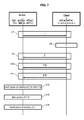
- FIG. 7 illustrates a flow chart representing a first embodiment of an authentication phase of an authentication method according to the invention.
- FIG. 8 illustrates a flow chart representing a second embodiment of an authentication phase of an authentication method according to the invention.
- FIG. 9 illustrates a flow chart representing a third embodiment of an authentication phase of an authentication method according to the invention.
- FIG. 10 illustrates a flow chart representing one embodiment wherein the authentication token is generated based on pseudo-homomorphic double encryption on elliptic curves.
- One embodiment concerns a method for authenticating a client device to an authentication server using a secret element such as one or multiple passwords, a PIN code, a key, a biometric data item or a key derived from another data item such as a biometric data item, a user identifier or a mobile device identifier.
- a secret element such as one or multiple passwords, a PIN code, a key, a biometric data item or a key derived from another data item such as a biometric data item, a user identifier or a mobile device identifier.
- the purpose of this embodiment is to enable the client device to prove its knowledge of a specific secret element without revealing it, without storing it in memory and without the authentication server becoming aware of this specific secret element.
- the server in a preliminary initialisation phase P 1 , the server generates the elements (keys, integers, vectors, etc.) required to implement the later enrolment and authentication phases.
- the client enrolls with an enrollment server and acquires an authentication token J generated based on said secret element PIN.
- the authentication server can be different from or the same as the enrolment server. In the following paragraphs, the two servers are assumed to be the same.
- said authentication phase P 3 comprises a proof of knowledge generation step A 1 wherein the client device generates proof of knowledge of the secret element PIN generated using a proof generation key masked with a first mask data item ⁇ , said first mask data item being a non-public, random data item known only by the client device and said masked proof generation key being designed to prove the knowledge of said secret element PIN without revealing it.
- Said authentication phase P 3 further comprises a first transmission step A 2 wherein the client device transmits to the server said proof of knowledge of the secret element generated.
- the authentication phase can comprise multiple data transmissions between the client device and the server to result in the transmission to the server of the proof of knowledge of the secret element.
- the client device can generate a first part of the proof of knowledge, then transmit this to the server.
- the latter can then send a challenge to the client device, which can then generate a second part of the proof of knowledge based on this challenge, and transmit it to the server.
- Said authentication phase P 3 further comprises a second transmission step A 3 wherein the client device transmits to the server the authentication token J masked using the first mask data item ⁇ .
- the first transmission step A 2 and the second transmission step A 3 can be merged, whereby the proof of knowledge and the authentication token are transmitted at the same time to the server by the client device.
- Said authentication phase P 3 further comprises a first verification step A 4 wherein the server verifies the validity of the masked authentication token received.
- Said authentication phase P 3 finally comprises a second verification step A 6 wherein the server verifies the validity of the proof of knowledge. This verification can take place based on the masked authentication token received.
- Said authentication phase P 3 can also comprise an acquisition step A 5 wherein the server acquires a proof verification key associated with said proof generation key.
- the verification step A 6 for verifying the validity of the proof of knowledge therefore comprises a verification by the server of the validity of the proof of knowledge using the proof verification key.
- the authentication token is sent by the client device to the server in a masked manner so that no-one, not even the server, can re-use it during a subsequent authentication process to pose as the client device.
- the client device can prove its knowledge of the secret element to which the authentication token corresponds, without revealing this element.
- the client device can also prove the validity of the authentication token.
- the authentication token J can be stored in the internal memory of the client device or in an external memory connected to the client device via a local connection such as a USB connection or a network connection.
- the authentication token of the user can therefore be partially or fully stored in a network storage location shared by multiple client devices belonging to the same user.
- the authentication token J can be generated using a pseudo-homomorphic function in several ways and via different embodiments resulting therefrom, as described hereinbelow.
- Such a function can also be homomorphic between two operations Op 1 and Op 2 if performing the operation Op 2 on (f(x), f(y)) can be used to obtain f(x Op 1 y).
- the authentication token J can comprise an encryption token C acquired by encryption based on said secret element PIN using a pseudo-homomorphic encryption function Enc. It can further comprise a signature token S corresponding to the result of the signature of the encryption token C using a pseudo-homomorphic signature function Sign.
- the server can begin by generating the keys required by the encryption and signature functions, the latter capable of being asymmetric functions.
- the server can generate a pair of asymmetric signature keys (pkSign, skSign) dedicated to the implementation of the pseudo-homomorphic signature algorithm Sign.
- a signature algorithm can be a multiplicatively homomorphic algorithm such as the Gennaro algorithm according to the following reference: Rosario Gennaro, Jonathan Katz, Hugo Krawczyk, Tal Rabin, Secure network coding over the integers, Public Key Cryptography 2010, 142-160.
- the server can generate a pair of asymmetric encryption keys (pkEnc, skEnc) dedicated to the implementation of the pseudo-homomorphic encryption algorithm Enc.
- asymmetric encryption keys pkEnc, skEnc
- Such an algorithm can, for example, be an ElGamal algorithm or a Paillier algorithm according to the following references: Taher El Gamal, A public-key cryptosystem and a signature scheme based on discrete logarithms, IEEE Transactions on Information Theory 31 (4), 469-472, doi:10.1109/TIT.1985.1057074, CRYPTO'84, 10-18 and Pascal Paillier, Public-key cryptosystems based on composite degree residuosity classes, EUROCRYPT 1999, 223-238.
- the server can transmit to the client device the public encryption key of said pair of asymmetric encryption keys pkEnc and the public signature key of said pair of asymmetric signature keys pkSign.
- the encryption algorithm is intended to be implemented by the server only, the latter only transmits the public signature key to the client device.
- the client device therefore has a signature key that enables it to verify the validity of the signature tokens generated by the server.
- the client can therefore have an encryption key that enables it to generate an encryption token that can be decrypted by the server.
- the server has the corresponding private keys enabling it to respectively generate signature tokens and decrypt encryption tokens.
- the encryption and/or signature keys can be associated with an identifier identifying the client in possession of the client device.
- Such an association strengthens the protection of the authentication method against attacks by imposing, for example, that an encryption token used by a client device was generated with the encryption key associated with this client device; conversely, the authentication operations performed by the server will result in a failure and the client device will not be authenticated.
- said encryption and/or signature keys can be matched with an identifier identifying the client in possession of the client device in a database that can be stored in the storage means of the server.
- said encryption and/or signature keys can be derived from a hash value function of the identifier identifying the client in possession of the client device, thus avoiding the need to physically store the exact matching at server level.
- Such a hash value can be generated by a hash function on integers or on elliptic curves.
- the method can then continue via an enrolment phase, enrolling the client device with the enrolment server, wherein the client device acquired the authentication token J.
- This phase can comprise a secret element determination step by the client device E 4 , an encryption token generation step E 5 and a signature token generation step E 6 .
- the secret element determination step E 4 comprises the selection of the secret element by a client in possession of the client device and the encryption token generation step E 5 comprises the generation of the encryption token by the client device.
- the encryption token generation step E 5 can comprise a first hash value calculation step E 51 wherein a hash value of the secret element is calculated by the client device based on a hash function.
- the first hash value calculation step E 51 can comprise the calculation of a hash value of said secret element and of at least one additional secret element based on a hash function.
- an additional secret element can, for example, be an additional key or an element linked to the configuration of the client device such as a character string derived from the hardware configuration of the client device, from an address of a specific data item in memory, etc.
- the encryption token generation step E 5 can then comprise a first encryption step E 52 wherein the client device generates an encryption token by encrypting a data item depending on the secret element PIN chosen using its public encryption key pkEnc dedicated to the implementation of the encryption function Enc.
- the client device can generate an encryption token C equal to Enc(g ⁇ P, pkEnc), where P is the hash value calculated during the first hash value calculation step E 51 and g is a high-order group generator.
- the client device therefore has an encrypted version of the secret element chosen.
- the generator g can be the same for all client devices or be specific to a given client device. In the latter case, the correspondence between the generator g chosen for each client and the identity of each client can be stored in a database on the server or the generator g can be generated by elliptic curve point encoding.
- the signature token generation step E 6 can comprise a first masking step E 61 wherein the client device masks the encryption token C using a second mask data item ⁇ .
- This second mask data item is a random data item known only by the client device.
- the masked encryption token can be written as C ⁇ . Given the homomorphism property of the encryption function Enc, this masked encryption token corresponds to the result of the encryption of the secret element masked by the second mask data item ⁇ .
- the signature token generation step E 6 can then comprise a first token transmission step E 62 wherein the client device transmits the masked encryption token C ⁇ to the server.
- the signature token generation step E 6 can then comprise a second token transmission step E 64 wherein the server transmits the second signature data item Sm to the client.
- the client device stores the second signature data item Sm and the second mask data item ⁇ in memory.
- the client device is therefore able, when required, to unmask the second signature data item Sm to acquire the unmasked signature token S.
- the enrolment of the client device takes place with a trusted enrolment server capable of becoming aware of the secret element chosen by the client.
- the secret element determination step E 4 therefore comprises the selection of the secret element by a client in possession of the client device and the transmission of the selected secret element to the server, in a masked or encrypted form, and the encryption token generation step E 5 and signature token generation step E 6 comprise the generation of the encryption token and the signature token by the server and the transmission of these tokens to the client device.
- the encryption token generation step E 5 can comprise a first hash value calculation step E 51 and a first encryption step E 52 similar to those described hereinabove in the first embodiment, however which are implemented by the enrolment server.
- the encryption token generated by the enrolment server can depend on a secret key k of the enrolment server.
- such a key can depend on the identity of the client.
- the encryption token generation step E 5 can also comprise a third token transmission step E 53 wherein the server transmits the encryption token generated during the first encryption step E 52 to the client device.
- the encryption token transmitted can be accompanied by an additional element C 2 dependent on the secret key k of the enrolment server.
- the signature token generation step E 6 can then comprise a fourth token transmission step E 66 wherein the server transmits the signature token S generated to the client.
- the encryption token generation step E 5 can comprise the generation, by the server, of a temporary secret element, the generation of a temporary encryption token based on the temporary secret element, the transmission of the temporary secret element and the temporary encryption token to the client device and the generation, by the client device, of an encryption token based on the temporary encryption token, the temporary secret element and the secret element (PIN) chosen by the client during the secret element determination step E 4 .
- the signature token generation step E 6 can comprise the generation, by the server, of a temporary signature token by signing the temporary encryption token, the transmission of the temporary signature token to the client device, and the generation, by the client device, of a signature token based on the temporary signature token, the temporary secret element and the secret element (PIN). The client device can therefore generate its encryption and signature tokens itself, corresponding to its secret element PIN based on the temporary tokens transmitted by the server.
- the encryption token generation step E 5 can comprise a temporary secret element generation step E 54 wherein the server generates a temporary secret element PINtemp, that is, for example, random.
- the encryption token generation step E 5 can then comprise a first temporary token generation step E 55 wherein the server generates a temporary encryption token Ctemp, based on the temporary secret element PINtemp, and potentially an additional secret element as described hereinabove.
- the encryption token generation step E 5 can then comprise a fifth token transmission step E 56 wherein the server transmits the temporary secret element PINtemp and the temporary encryption token Ctemp to the client device.
- the encryption token generation step E 5 can then comprise a first token derivation step E 57 wherein the client device derives an encryption token C corresponding to its secret element PIN based on the temporary encryption token Ctemp, the temporary secret element PINtemp and the secret element PIN chosen by the client during the secret element determination step E 4 . Thanks to the homomorphism property of the encryption function Enc, the client device can actually replace the temporary secret element PINtemp by the secret element PIN in the encryption token Ctemp.
- the signature token generation step E 6 can comprise a second temporary token generation step E 67 wherein the server generates a temporary signature token Stemp based on the temporary encryption token Ctemp.
- the signature token generation step E 6 can then comprise a sixth token transmission step E 68 wherein the server transmits the temporary signature token Stemp to the client device.
- the client device can have an encryption token C corresponding to the result of the encryption of its secret element PIN using a pseudo-homomorphic encryption function Enc, as well as a signature token S corresponding to the result of the signature by the enrolment server of the encryption token C using a pseudo-homomorphic signature function Sign, or a second signature data item Sm and a second mask data item ⁇ enabling it to generate the signature token S.
- the client device can verify the validity of the signature token S or of the second signature data item Sm received using the public signature key pkSign transmitted by the server.
- the method according to the invention can then continue via an authentication phase for authenticating the client device to the authentication server.
- the proof of knowledge generation step A 1 can comprise a challenge transmission step E 7 wherein the server transmits a challenge r to the client device.
- the proof of knowledge generation step A 1 can comprise a message determination step E 7 wherein the client device determines a message r based on the identity of the client and a timestamp. The client device can also determine an authentication counter.
- a third alternative embodiment described in FIG. 7 the proof of knowledge generation step A 1 can comprise a challenge transmission step E 7 wherein the server transmits a challenge r to the client device.
- the proof of knowledge generation step A 1 can comprise a message determination step E 7 wherein the client device determines a message r based on the identity of the client and a timestamp. The client device can also determine an authentication counter.
- the proof of knowledge generation step A 1 can comprise a challenge transmission and message determination step E 7 wherein the server transmits a challenge d to the client device and the latter determines a message r based on the challenge d received, the identity of the client and a timestamp.
- the authentication phase can then comprise a third signature generation step E 8 wherein the client device generates a signature data item Z by signing the challenge or message r using a proof generation key masked with a random, non-public data item known only by the client device, referred to as first mask data item ⁇ , whereby said masked key enables the knowledge of the secret element PIN to be proven without revealing it.
- the client device In order to generate this signature data item, the client device must have access to the value of the secret element to generate the masked proof generation key.
- the client in possession of the client device can, at this time, enter the secret element PIN on the client device.
- the client device can, after a first entry by the client, temporarily store the value of the secret element or its encrypted value in memory, for example for the duration of an ongoing session.
- the signature algorithm used to generate the signature data item Z is a DSA, ECDSA or Schnorr-type signature algorithm.
- the first transmission step A 2 can then comprise a signature data transmission step E 9 wherein the client device transmits the signature data item Z to the server.
- the second transmission step A 3 can comprise a seventh token transmission step E 10 wherein the client device transmits to the server its encryption token C masked using the first mask data item ⁇ .
- the client device transmits the data item C ⁇ .
- this masked encryption token corresponds to the result of the encryption by the encryption function Enc of the hash P of the secret element PIN masked using the first mask data item ⁇ .
- the second transmission step A 3 can further comprise an eighth token transmission step E 11 wherein the client device transmits to the server its signature token S masked using the first mask data item ⁇ .
- the client device transmits the data item S ⁇ . Thanks to the homomorphism property of the signature function, this masked signature token corresponds to the result of the signature by the signature function Sign of the encryption token C masked using the first mask data item ⁇ .
- the client device transmits the value g ⁇ (P* ⁇ ) during the eighth token transmission step E 11 .
- the first verification step A 4 can comprise a third verification step E 12 wherein the server verifies the validity of the signature of the masked signature token S ⁇ received based on the masked encryption token C ⁇ received.
- the server can therefore verify that the client device has an encryption token and the corresponding signature token generated using the private key pkSign of the signature function Sign, known only by the server. Thanks to the masking by the first mask data item ⁇ , this verification is performed without revealing the encryption token C and the signature token S of the client device, thus preventing this data from being intercepted and re-used by an attacker.
- the proof verification key can be the masked authentication token itself.
- the proof verification key is associated with the masked proof generation key.
- the proof verification key can, for example, be the public key corresponding to the private proof generation key P* ⁇ in a public key/private key signature scheme.
- the proof verification key can, for example, be equal to g ⁇ (P* ⁇ ).
- the proof verification key can be equal to g ⁇ (P* ⁇ *k) if the token transmitted is dependent on a secret key of the enrolment server.
- the server can therefore ensure that the client has knowledge of the secret element used to generate the encryption token provided to it in a masked form. This verification can take place without revealing the secret element or the masked key and without the latter being known by the server.
- the server In the event that the encryption and signature keys used to generate the encryption and signature tokens C and S depend on the identity of the user, the server must use the keys corresponding to the identity of the client to implement the signature verification during the third verification step E 12 and the decryption during the decryption step E 13 . For example, this enables the server to verify that the encryption token provided to it corresponds to the client that provided it, i.e. that the encryption token was indeed generated with the key corresponding to this client; conversely, the decryption of this token fails. Similarly, in the event that the generator g is specific to a given client device, the server must use the generator corresponding to the identity of the client to implement the signature verification during the fourth verification step E 14 .
- the identity of the client could have been transmitted to the server by the client device either in an automated manner or after the input of an identifier by the client in possession of the client device.
- the server does not know the identity of the client and attempts to implement the third verification step E 12 and the decryption step E 13 with its different keys until these operations are successful or until it has used all of the keys at its disposal.
- the authentication token J can be generated as a single element using a symmetric, pseudo-homomorphic MAC algorithm.
- the server can determine a pseudorandom number generator PRG from a set K G in the set Zp 2 , and a pseudorandom function PRF from K F ⁇ G> in the set Zp, where G is a prime-order group p of generator g.
- a security parameter ⁇ a non-zero integer, can also be defined, such as
- the method can then continue via an enrolment phase, enrolling the client device with the enrolment server, wherein the client device acquires the authentication token J.
- This phase can comprise a secret element PIN determination step by the client device E 4 , and an authentication token J generation step.
- the secret element determination step E 4 comprises the selection of the secret element by a client in possession of the client device.
- the authentication token J generation step can comprise a hash value P calculation step identical to the first hash value calculation step E 51 described hereinabove.
- the authentication token J generation step can then comprise the following steps:
- the method according to the invention can then continue via an authentication phase for authenticating the client device to the authentication server.
- the generation step for generating proof of knowledge of the secret element A 1 comprises the generation by the client device of a signature data item Z acquired by signing a challenge r ⁇ 0,1 ⁇ transmitted by the server using a proof generation key masked with a first mask data item ⁇ .
- a masked proof generation key is, for example, equal to P* ⁇ .
- the client device In order to generate this signature data item, the client device must have access to the value of the secret element to generate the masked proof generation key.
- the client in possession of the client device can, at this time, enter the secret element PIN on the client device.
- the client device can, after a first entry by the client, temporarily store the value of the secret element or its encrypted value in memory, for example for the duration of an ongoing session.
- the signature used can be a signature acquired by implementing the Schnorr algorithm.
- the proof of knowledge generated i.e. the signature data item Z is then transmitted during the proof transmission step A 2 from the client device to the server.
- the value g ⁇ P or the corresponding encryption Enc(g ⁇ (P)), required to calculate the masked control value can be stored by the client device in the enrolment phase, or be determined on the fly from the value of the secret element entered by the client at the beginning of the authentication phase.
- the first verification step A 4 can comprise a verification step wherein the server verifies the validity of the masked authentication token J′ received.
- the verification key acquisition step A 5 can comprise the acquisition of a verification key associated with the proof generation key.
- the verification key can, for example, be the public key corresponding to the private key P* ⁇ in a public key/private key signature example.
- the proof verification key can be equal to g ⁇ (P* ⁇ ).
- the enrolment server defines a security parameter ⁇ , a non-zero integer. It also determines an elliptic curve (p, G, g), where p is a prime number, order of the group G of the points of the curve, such that
- 2 ⁇ , and where g is a generator of the group G.
- This phase can comprise a secret element determination step by the client device E 4 , and an authentication token J generation step.
- the secret element determination step E 4 comprises the selection of the secret element by a client in possession of the client device.
- the authentication token J generation step can comprise a hash value P calculation step identical to the first hash value calculation step E 51 described hereinabove.
- the authentication token J generation step can then comprise the following steps:
- the generation step for generating proof of knowledge of the secret element A 1 comprises the generation by the client device of a signature data item Z acquired by signing a challenge r ⁇ 0,1 ⁇ transmitted by the server using a proof generation key masked with a first mask data item ⁇ .
- a masked proof generation key is, for example, equal to P* ⁇ .
- the client device In order to generate this signature data item, the client device must have access to the value of the secret element to generate the masked proof generation key.
- the client in possession of the client device can, at this time, enter the secret element PIN on the client device.
- the client device can, after a first entry by the client, temporarily store the value of the secret element or its encryption in memory, for example for the duration of an ongoing session.
- the signature used can be a signature acquired by implementing the Schnorr or ECDSA algorithm, whereby the secret keys must be in Zp*.
- the proof of knowledge generated i.e. the signature data item Z is then transmitted during the proof transmission step A 2 from the client device to the server.
- the value g ⁇ P or the corresponding encryption Enc(g ⁇ (P)), required to calculate the masked control value can be stored by the client device in the enrolment phase, or be determined on the fly from the value of the secret element entered by the client at the beginning of the authentication phase.
- the first verification step A 4 can comprise a verification step wherein the server verifies the validity of the masked authentication token J′ received.
- the server can acquire g ⁇ (P* ⁇ ) from the masked control value, if required by its decryption, acquire the derived user key k and verify if (g ⁇ (P* ⁇ )) ⁇ k is equal to J ⁇ .
- the verification key acquisition step A 5 can comprise the acquisition of a verification key associated with the proof generation key.
- the verification key can, for example, be the public key corresponding to the private key P* ⁇ in a public key/private key signature example.
- the proof verification key can be calculated from g ⁇ (k*P* ⁇ ), i.e. from the masked authentication token itself.
- the enrolment server defines a security parameter ⁇ , a non-zero integer. It also determines an elliptic curve (p, G, g), where p is a prime number, order of the group G of the points of the curve, such that
- 2 ⁇ , and where g is a generator of the group G.
- This phase can comprise a secret element determination step by the client device E 4 , and an authentication token J generation step.
- the secret element determination step E 4 comprises the selection of the secret element by a client in possession of the client device.
- the authentication token J generation step can comprise a hash value P calculation step identical to the first hash value calculation step E 51 described hereinabove.
- the authentication token J generation step can then comprise the following steps:
- the generation step for generating proof of knowledge of the secret element A 1 comprises the generation by the client device of a signature data item Z acquired by signing a challenge r ⁇ 0,1 ⁇ transmitted by the server with a proof generation key masked with a first mask data item ⁇ .
- a masked proof generation key is, for example, equal to P* ⁇ .
- the client device In order to generate this signature data item, the client device must have access to the value of the secret element to generate the masked proof generation key. The client in possession of the client device can, at this time, enter the secret element PIN on the client device.
- the signature used can be a signature acquired by implementing the Schnorr or ECDSA algorithm, whereby the secret keys must be in Zp*.
- the proof of knowledge generated i.e. the signature data item Z is then transmitted during the proof transmission step A 2 from the client device to the server.
- the verification key acquisition step A 5 can comprise the acquisition of a verification key associated with the proof generation key.
- the verification key can, for example, be the public key corresponding to the private key P* ⁇ in a public key/private key signature example.
- the proof verification key can be calculated from g ⁇ (P* ⁇ *k), i.e. from the masked authentication token itself.
- the enrolment server defines a security parameter ⁇ , a non-zero integer, defining the size of the cryptographic objects to be used.
- N the result of the multiplication of two prime integers and d, the inverse of e modulo N
- R a string of bits r containing information specific to the user and calculates R equal to HQ(r), where HQ is an application from ⁇ 0, 1 ⁇ * in a group G of generator g.
- HQ is an application from ⁇ 0, 1 ⁇ * in a group G of generator g.
- the server then transmits N, e and R to the client device.
- This phase comprises a secret element determination step by the client device E 4 , and an authentication token J generation step.
- the secret element determination step E 4 can comprise the selection of the secret element by a client in possession of the client device.
- the authentication token J generation step can comprise a hash value P calculation step identical to the first hash value calculation step E 51 described hereinabove.
- the authentication token J generation step can then comprise the following steps:
- the generation step for generating proof of knowledge of the secret element A 1 comprises the generation by the client device of a signature data item Z acquired by signing a challenge r ⁇ 0,1 ⁇ transmitted by the server with a proof generation key masked with a first mask data item ⁇ .
- a masked proof generation key is, for example, equal to P* ⁇ .
- the client device In order to generate this signature data item, the client device must have access to the value of the secret element to generate the masked proof generation key. The client in possession of the client device can, at this time, enter the secret element PIN on the client device.
- the signature used can be a signature acquired by implementing any signature algorithm compatible with G.
- the proof of knowledge generated i.e. the signature data item Z is then transmitted during the proof transmission step A 2 from the client device to the server.
- the verification key acquisition step A 5 can comprise the acquisition of a verification key associated with the proof generation key.
- the verification key can, for example, be the public key corresponding to the private key P* ⁇ in a public key/private key signature example.
- the enrolment server defines a security parameter ⁇ , a non-zero integer. It also determines an elliptic curve (p, ⁇ G>, G) where p is a prime number such as
- 2 ⁇ . p is the order of the group ⁇ G> of the points of the curve of generator G.
- U corresponds to a first public key associated with a first private secret key [u] of a first asymmetric pseudo-homomorphic encryption function Enc 1 such as the ElGamal algorithm.
- V corresponds to a second public key associated with a second secret private key [v] of a second asymmetric pseudo-homomorphic encryption function Enc 2 such as the ElGamal algorithm.
- the secret keys [u] and [v] can be different or identical to each other.
- the first and second functions can be different or identical to each other.
- This phase can comprise a secret element determination step by the client device E 4 , and an authentication token J generation step.
- the secret element determination step E 4 comprises the selection of the secret element by a client in possession of the client device.
- the authentication token J generation step can comprise a hash value P calculation step identical to the first hash value calculation step E 51 described hereinabove.
- the authentication token J generation step can then comprise the following steps:
- the client device can therefore have a first encrypted token and an authentication token, respectively corresponding to the encrypted values of k and kP.
- These tokens encrypted with the public keys U and V can only be decrypted by the server, the sole equipment in possession of the associated private keys u and v.
- the client device can therefore use these tokens to prove to the server its knowledge of the secret element PIN without revealing it and to prove that the two tokens have been generated from the same user key k.
- the generation step for generating proof of knowledge of the secret element A 1 comprises the transmission of a challenge r ⁇ 0,1 ⁇ by the server to the client device, and the generation by the client device of a signature data item Z acquired, for example according to a Schnorr signature algorithm, based on a first parameter t, of first hash value c and a proof generation key masked with a first mask data item ⁇ .
- a masked proof generation key is, for example, equal to P* ⁇ .
- the client device In order to generate this signature data item, the client device must have access to the value of the secret element to generate the masked proof generation key. The client in possession of the client device can, at this time, enter the secret element PIN on the client device.
- Said first hash value c is acquired based on the challenge r received, the first encrypted token (U 1 , U 2 ), the authentication token J′ masked using the first mask data item and a second encrypted token (R 1 , R 2 ).
- the signature data item Z can, for example, be determined at a step F 8 by the client device by implementing the following steps:
- the proof of knowledge generated i.e. the signature data item Z is then transmitted F 9 during the proof transmission step A 2 from the client device to the server.
- the server then simultaneously implements a verification A 4 of the validity of the masked authentication token J′ received and a verification A 6 of the validity of the proof of knowledge Z based on the masked authentication token received.
- the server can implement the following steps:
- the server can also perform an additional verification by testing if H(K′) is equal to H(K). Such an additional verification is used to check that the secret user key k used to generate the tokens provided by the client device during its authentication is the same as that stored in memory by the server for this client during his/her enrolment.
- session keys such as encryption keys and MAC integrity keys can be generated and shared between the client device and the server, then used as valid keys to secure the exchanges between the client device and the server, for example until expiry of an ongoing session.
- these keys can be derived from the verification key g ⁇ (P* ⁇ ), used as a secret, shared between the client device and the server.
- a recovery mechanism can be provided for the hash value P of the secret element PIN to retrieve this hash value in the event that the client in possession of the client device has forgotten the PIN.
- the secret element is not known to the server, the latter cannot send it back to the client.
- One solution consists in that the client device stores a value ⁇ , known as a secret element complement, such that the value ⁇ +P can be easily attacked, for example by a brute force dictionary attack, i.e. that the server can retrieve ⁇ +P from g ⁇ ( ⁇ +P).
- the latter therefore retrieves the value ⁇ +P and re-transmits this to the client device so that it can recover the value P, as it already knows the value ⁇ .
- a mechanism can also be provided for modifying the secret element by the client device. New signature and encryption tokens can thus be generated based on a new secret element chosen by the client according to the third generation mode described hereinabove, using temporary tokens generated by the server.
- the client in possession of the client device can prove to the server its knowledge of the secret element PIN, without storing this secret element in the memory of the client device or the server, thus making the method insensitive to tampering of the memory of the client device or server.
- the data exchanged between the client device and the server can be masked by masking data, making their re-use by an attacker difficult and thus protecting the method against replay attacks.
- no complex calculation is required, thus limiting the computing power required and enabling this method to be implemented on a thin client such as a mobile phone.
Landscapes
- Engineering & Computer Science (AREA)
- Computer Security & Cryptography (AREA)
- Computer Networks & Wireless Communication (AREA)
- Signal Processing (AREA)
- Computer Hardware Design (AREA)
- Computing Systems (AREA)
- General Engineering & Computer Science (AREA)
- Storage Device Security (AREA)
- Collating Specific Patterns (AREA)
Abstract
-
- the generation (A1), by the client device, of proof of knowledge of the secret element based on a proof generation key masked with a first mask data item, said masked proof generation key being dependent on said secret element,
- the transmission to the server by the client device, of said generated proof of knowledge of the secret element (A2) and of the authentication token (J) masked using the mask data item (A3),
- the verification of the validity of the masked authentication token (A4) and of the validity of the proof of knowledge by the server (A6) by a zero-knowledge proof, proving the knowledge of said secret element by the client device without revealing it.
Description
-
- the generation, by the client device, of proof of knowledge of the secret element based on a proof generation key masked with a first mask data item, said first mask data item being a non-public, random data item known only by the client device and said masked proof generation key being dependent on said secret element,
- the transmission to the server by the client device, of said generated proof of knowledge of the secret element,
- the transmission to the server by the client device, of the authentication token masked using the first mask data item,
- the verification by the server of the validity of the masked authentication token received,
- the verification by the server of the validity of the proof of knowledge by a zero-knowledge proof, proving the knowledge of said secret element by the client device without revealing it.
-
- the masking of said encryption token using a second, random mask data item α known only by the client device,
- the transmission of said masked encryption token to the server;
- the generation, by the server, of a second signature data item by signing the received masked encryption token using the pseudo-homomorphic signature function;
- the transmission, by the server, of the second signature data item to the client device;
-
- the generation of a pair of asymmetric signature keys for implementing the pseudo-homomorphic signature function;
- the generation of a pair of asymmetric encryption keys for implementing the pseudo-homomorphic encryption function;
- the transmission of the public encryption key of said pair of asymmetric encryption keys, and of the public signature key of said pair of asymmetric signature keys so that the client device performs the encryptions and can verify the signature tokens emitted generated by the server using said public keys and so that the server performs the decryptions and generates the signature tokens using the private keys of said pairs of asymmetric keys.
-
- the calculation of a second hash value based on the challenge, the first encrypted token, the masked authentication token and the second encrypted token received;
- the calculation of a first decrypted token by decryption of the first encrypted token using the first pseudo-homomorphic encryption function;
- the calculation of a proof verification key by decryption of the masked authentication token using the second pseudo-homomorphic encryption function;
- the calculation of a second decrypted token by decryption of the second encrypted token using the first pseudo-homomorphic encryption function;
- the verification of the validity of the masked authentication token received and the proof of knowledge based on the signature data item received, the first decrypted token, the second decrypted token, the second hash value and the proof verification key.
-
- hold an authentication token generated by means of a pseudo-homomorphic function and based on said secret element,
- generate a proof of knowledge of the secret element based on a proof generation key masked with a first mask data item, said first mask data item being a non-public, random data item known only by the client device and said masked proof generation key being dependent on said secret element,
- transmit to the server said proof of knowledge of the secret element generated,
- transmit to the server the authentication token masked using the first mask data item,
-
- the calculation of the values X1=g^(P*α) and X2=g^α, where α is a second mask data item known only by the client device,
- the transmission of the values X1 and X2 calculated to the enrolment server,
- the drawing by the server of an element R in the group G, potentially dependent on the identity of the client device,
- the calculation by the server of u=(u1, u2)=PRG(K1), b=PRF(K2, R),
- the calculation by the server of a masked authentication token T′=X1^u1*X2^(u2+b),
- the transmission by the server of the masked authentication token T′ and of the element R to the client device,
- the determination by the client device of the authentication token J based on the masked authentication token T′ by raising it to the power of 1/α,
- the storage by the client device of the authentication token J.
Authentication Phase
-
- the calculation by the client device of a value Y=g^(P*α), where α is a mask data item known only by the client device;
- the transmission of said value Y to the server;
- the derivation of a user key kϵZp* by the server;
- the calculation by the server of a masked authentication token T′=Y^k;
- the transmission of the masked authentication token T′ to the client device;
- the determination by the client device of the authentication token J based on the masked authentication token T′ received by raising it to the power of α^(−1) mod p.
- the storage by the client device of an authentication token J.
-
- the calculation by the client device of a value Y equal to g^(P*α), where α is a mask data item known only by the client device;
- the transmission of said value Y to the enrolment server;
- the derivation of a user key kϵZp* by the server and the storage of this key by the server in the form K=g^k;
- the calculation by the server of a masked server token T′=Y^k;
- the transmission of the masked server token T′ to the client device;
- the determination by the client device of the authentication token J based on the masked server token T′ received by raising it to the power of α^(−1) mod p.
- the storage by the client device of an authentication token J.
-
- the calculation and transmission by the client device to the enrolment server of a value H′ equal to g^(P*α), where α is a mask data item known only by the client device and of a value R′ equal to R masked with the mask data item α: R′=R^α;
- the calculation and transmission by the server to the client device of a masked server token S′ equal to (R′·H′)^d mod N.
- the determination by the client device of a server token S based on the masked server token S′ received by raising it to the power of 1/α.
- the storage by the client device of an authentication token J=(R, S), as well as the values N and e.
-
- the calculation by the client device of a value Y equal to [P*α]*G, where α is a mask data item known only by the client device;
- the transmission of said value Y to the enrolment server;
- the derivation of a secret user key kϵZp* by the server;
- the calculation by the server of a first encrypted token (U1, U2), resulting from an encryption by the first asymmetric pseudo-homomorphic encryption function Enc1 of the secret user key k with the first public key U associated with the first private secret key u. For example, U1=[r1]*U, U2=[k]*G+[r1]*G, where r1 is determined by the server and belongs to Zp;
- the calculation of a masked server token (V1″, V2″) resulting from an encryption by the second asymmetric pseudo-homomorphic encryption function Enc2, with the second public key V associated with the second private secret key v, of the secret user key k and of the proof generation key P masked by the mask data item α. The masked server token can therefore correspond to the result of the encryption by Enc2 of the product [kPα] *G with the second public key V. For example, V1″=[r2′]*V and V2″=[k]*Y+[r2′]*G, where r2′ is determined by the server and belongs to Zp;
- the transmission of the first encrypted token (U1, U2) and of the masked server token (V1″, V2″) to the client device;
- optionally, the storage by the server of H1(K), where H1 is a hash function chosen by the server and where K is equal to [k]*G;
- the determination by the client of the authentication token (V1, V2) based on the masked server token (V1″, V2″) received by multiplying it by a factor of α^(−1) mod p;
- the storage by the client device of the first encrypted token (U1, U2), as well as of the authentication token J.
-
- optionally, the determination F80 of a first random encrypted token (U1′, U2′) by applying a random variable to the first encrypted token (U1, U2). For example U1′=U1+[rr]*U and U2′=U2+[rr]*G, where [rr] is a scalar chosen at random, belonging to Zp*; The application of such a random variable to the result of a probabilistic encryption prevents an attacker from being able to trace an initial data item subject to the encryption and the application of the random variable, as the results of the encryption and the application of the random variable will be different for the same initial data item. If this step is not performed, the first encrypted token (U1, U2) is equal to the first random encrypted token (U1′, U2′) in the remainder of the description.
- the calculation F81 of the second encrypted token (R1, R2) corresponding to the encryption by the first asymmetric pseudo-homomorphic encryption function Enc1 of the secret user key k and a first parameter t drawn in Zp* by the client device with the first public key U associated with the first private secret key u. The second encrypted token can correspond to the encryption of [t k]*G. The second encrypted token is calculated from the first random encrypted token (U1′, U2′) and the first parameter t. For example: R1=[t]*U1′ and R2=[t]*U2′,
- the calculation F82 of the masked authentication token obtained by masking the authentication token (V1, V2) using the first mask data item β: J′=(V1′, V2′) where V1′=[β]*V1 and V2′=[β]*V2
- the calculation F83 of a first hash value c based on the challenge r, the first random encrypted token (U1′, U2′), the masked authentication token J′ and the second encrypted token (R1, R2). For example, such a first hash value c can be equal to H2(U1′∥U2′∥V1′∥V2′∥R1∥R2∥r), where H2 is a hash function from {0,1}* in {0,1}^λ, and where the sign “∥” represents the concatenation operation,
- the calculation F84 of the signature data item Z from the first parameter t, the first has value c and the proof generation key masked using the first mask data item β: P*β. For example Z can be equal to t+c*P*β mod p.
-
- the calculation F12 of a second hash value c′ based on the challenge r, the first random encrypted token (U1′, U2′), the authentication token J′ masked using the first mask data item β, J′ and the second encrypted token (R1, R2) received. For example, such a first hash value c can be equal to H2(U1′∥U2′∥V1′∥V2′∥R1∥R2∥r).
- the calculation F13 of a first decrypted token K′ by decrypting the first random encrypted token (U1′, U2′) with the first private secret key u of the first asymmetric pseudo-homomorphic encryption function. For example, such a first decrypted token K′ can be equal to U2′−[u*]*U1′, where u*=u−1 mod p; The first decrypted token K′ can therefore depend on [k]*G,
- the calculation F14 of a proof verification key T′ by decrypting the masked authentication token (V1′, V2′) with the second private secret key v of the second asymmetric pseudo-homomorphic encryption function Enc2; For example, the second decrypted token T′ can be equal to V2′−[v*]*V1′, where v*=v−1 mod p; The second decrypted token T′ can therefore depend on [k β P]*G,
- the calculation F15 of a second decrypted token R by decrypting the second encrypted token (R1, R2) with the first private secret key u of the first asymmetric pseudo-homomorphic encryption function Enc1; For example, the third decrypted token R can be equal to R2
- [u*]*R1; The third decrypted token R can therefore depend on [t k]*G,
- the verification F16 by the server of the validity of the masked authentication token received and the proof of knowledge based on the signature data item Z received, the first decrypted token K′, the second decrypted token R, the second hash value c′ and the proof verification key T′, for example by verifying the following equality: Z*K′=R+[c′]*T′. This verification enables the server to determine the validity of the authentication token masked using the first mask data item β received J′ and the validity of the proof of knowledge Z. The client device has thus proven to the server its knowledge of the secret element PIN without revealing it. Furthermore, by verifying this equality, the server ensures that the tokens have indeed been generated from the same user key k.
Claims (30)
Applications Claiming Priority (2)
| Application Number | Priority Date | Filing Date | Title |
|---|---|---|---|
| FR1459804A FR3027177B1 (en) | 2014-10-13 | 2014-10-13 | METHOD OF AUTHENTICATING A CLIENT DEVICE FROM A SERVER USING A SECRET ELEMENT |
| FR1459804 | 2014-10-13 |
Publications (2)
| Publication Number | Publication Date |
|---|---|
| US20160105414A1 US20160105414A1 (en) | 2016-04-14 |
| US10027654B2 true US10027654B2 (en) | 2018-07-17 |
Family
ID=52589487
Family Applications (1)
| Application Number | Title | Priority Date | Filing Date |
|---|---|---|---|
| US14/881,014 Active 2035-12-20 US10027654B2 (en) | 2014-10-13 | 2015-10-12 | Method for authenticating a client device to a server using a secret element |
Country Status (3)
| Country | Link |
|---|---|
| US (1) | US10027654B2 (en) |
| EP (1) | EP3010177B8 (en) |
| FR (1) | FR3027177B1 (en) |
Cited By (4)
| Publication number | Priority date | Publication date | Assignee | Title |
|---|---|---|---|---|
| US10785036B2 (en) * | 2016-12-07 | 2020-09-22 | Idemia Identity & Security France | Method for generating an electronic signature of a document associated with a condensate |
| US11956226B2 (en) | 2021-07-29 | 2024-04-09 | Evernorth Strategic Development, Inc. | Medical records access system |
| US12315604B2 (en) | 2022-06-02 | 2025-05-27 | Evernorth Stragic Development, Inc. | Recurring remote monitoring with real-time exchange to analyze health data and generate action plans |
| US12567482B2 (en) | 2022-06-02 | 2026-03-03 | Evernorth Strategic Development, Inc. | Survey and suggestion system |
Families Citing this family (36)
| Publication number | Priority date | Publication date | Assignee | Title |
|---|---|---|---|---|
| CN106301788B (en) * | 2016-08-12 | 2019-03-19 | 武汉大学 | A group key management method supporting user identity authentication |
| EP3316549B1 (en) * | 2016-10-31 | 2023-10-11 | Idemia Identity & Security France | Method for verifying the identity of a user by means of a public database |
| FR3058292B1 (en) * | 2016-10-31 | 2019-01-25 | Idemia Identity And Security | METHOD FOR PROVIDING SERVICE TO A USER |
| EP3334083A1 (en) * | 2016-12-08 | 2018-06-13 | Gemalto SA | Method of rsa signature or decryption protected using a homomorphic encryption |
| US11895240B2 (en) * | 2016-12-15 | 2024-02-06 | Nec Corporation | System, apparatus, method and program for preventing illegal distribution of an access token |
| US11507683B2 (en) | 2017-01-20 | 2022-11-22 | Enveil, Inc. | Query processing with adaptive risk decisioning |
| US11196541B2 (en) | 2017-01-20 | 2021-12-07 | Enveil, Inc. | Secure machine learning analytics using homomorphic encryption |
| US10903976B2 (en) | 2017-01-20 | 2021-01-26 | Enveil, Inc. | End-to-end secure operations using a query matrix |
| US11777729B2 (en) | 2017-01-20 | 2023-10-03 | Enveil, Inc. | Secure analytics using term generation and homomorphic encryption |
| US10880275B2 (en) | 2017-01-20 | 2020-12-29 | Enveil, Inc. | Secure analytics using homomorphic and injective format-preserving encryption |
| WO2018136811A1 (en) | 2017-01-20 | 2018-07-26 | Enveil, Inc. | Secure web browsing via homomorphic encryption |
| US10530585B2 (en) * | 2017-06-07 | 2020-01-07 | Bar-Ilan University | Digital signing by utilizing multiple distinct signing keys, distributed between two parties |
| KR101945885B1 (en) * | 2017-07-07 | 2019-06-11 | 서울대학교산학협력단 | Method for Authenticating Evaluation Results of Homomorphic-Encrypted Data |
| WO2019116187A1 (en) * | 2017-12-13 | 2019-06-20 | nChain Holdings Limited | System and method for securely sharing cryptographic material |
| WO2019216950A1 (en) * | 2018-05-08 | 2019-11-14 | Visa International Service Association | Password based threshold token generation |
| CN110661610B (en) * | 2018-06-29 | 2020-11-03 | 创新先进技术有限公司 | Input acquisition method and device of secure multi-party computing protocol |
| US10902133B2 (en) | 2018-10-25 | 2021-01-26 | Enveil, Inc. | Computational operations in enclave computing environments |
| US10817262B2 (en) | 2018-11-08 | 2020-10-27 | Enveil, Inc. | Reduced and pipelined hardware architecture for Montgomery Modular Multiplication |
| GB201907396D0 (en) | 2019-05-24 | 2019-07-10 | Nchain Holdings Ltd | Hash function attacks |
| GB2584154A (en) * | 2019-05-24 | 2020-11-25 | Nchain Holdings Ltd | Knowledge proof |
| GB201907392D0 (en) | 2019-05-24 | 2019-07-10 | Nchain Holdings Ltd | Proof-of-work |
| GB201907394D0 (en) * | 2019-05-24 | 2019-07-10 | Nchain Holdings Ltd | Knowledge proof |
| CN110190950B (en) * | 2019-06-11 | 2021-04-27 | 飞天诚信科技股份有限公司 | Method and device for realizing security signature |
| US10985921B1 (en) * | 2019-11-05 | 2021-04-20 | Capital One Services, Llc | Systems and methods for out-of-band authenticity verification of mobile applications |
| US12099997B1 (en) | 2020-01-31 | 2024-09-24 | Steven Mark Hoffberg | Tokenized fungible liabilities |
| CN113691366A (en) * | 2020-05-16 | 2021-11-23 | 成都天瑞芯安科技有限公司 | Desensitized Secure Biometric Authentication System |
| CN111817856B (en) * | 2020-06-30 | 2023-03-24 | 北京安御道合科技有限公司 | Identity authentication method and system based on zero-knowledge proof and password technology |
| FR3113800B1 (en) | 2020-09-02 | 2022-09-23 | Idemia Identity & Security France | Data exchange between a client and a remote device, for example a secure module |
| US11601258B2 (en) | 2020-10-08 | 2023-03-07 | Enveil, Inc. | Selector derived encryption systems and methods |
| US12671656B2 (en) * | 2021-03-04 | 2026-06-30 | Huawei Technologies Co., Ltd. | Token-based networking data plane protocol and token processing engine |
| US12088558B2 (en) * | 2021-06-29 | 2024-09-10 | Charter Communications Operating, Llc | Method and apparatus for automatically switching between virtual private networks |
| WO2023219956A1 (en) * | 2022-05-10 | 2023-11-16 | Liveperson, Inc. | Systems and methods for account synchronization and authentication in multichannel communications |
| US12418413B2 (en) * | 2022-12-05 | 2025-09-16 | Electronics And Telecommunications Research Institute | Apparatus and method for validating data |
| CN116506154B (en) * | 2023-03-20 | 2025-08-05 | 湖南科技大学 | Secure and verifiable federated learning method |
| US12149616B1 (en) * | 2023-10-31 | 2024-11-19 | Massood Kamalpour | Systems and methods for digital data management including creation of storage location with storage access ID |
| CN118074905B (en) * | 2024-03-18 | 2026-02-13 | 山东大学 | A post-quantum-secure VOPRF protocol, anonymous token authentication method and system |
Citations (4)
| Publication number | Priority date | Publication date | Assignee | Title |
|---|---|---|---|---|
| US20070204078A1 (en) * | 2006-02-09 | 2007-08-30 | Intertrust Technologies Corporation | Digital rights management engine systems and methods |
| WO2008022158A2 (en) * | 2006-08-14 | 2008-02-21 | The Regents Of The University Of California | System for non-interactive zero-knowledge proofs |
| US20110265159A1 (en) * | 2008-11-04 | 2011-10-27 | Troy Jacob Ronda | System and Methods for Online Authentication |
| US20130067552A1 (en) * | 2010-11-06 | 2013-03-14 | Qualcomm Incorporated | Authentication in secure user plane location (supl) systems |
-
2014
- 2014-10-13 FR FR1459804A patent/FR3027177B1/en active Active
-
2015
- 2015-10-12 US US14/881,014 patent/US10027654B2/en active Active
- 2015-10-13 EP EP15189617.2A patent/EP3010177B8/en active Active
Patent Citations (4)
| Publication number | Priority date | Publication date | Assignee | Title |
|---|---|---|---|---|
| US20070204078A1 (en) * | 2006-02-09 | 2007-08-30 | Intertrust Technologies Corporation | Digital rights management engine systems and methods |
| WO2008022158A2 (en) * | 2006-08-14 | 2008-02-21 | The Regents Of The University Of California | System for non-interactive zero-knowledge proofs |
| US20110265159A1 (en) * | 2008-11-04 | 2011-10-27 | Troy Jacob Ronda | System and Methods for Online Authentication |
| US20130067552A1 (en) * | 2010-11-06 | 2013-03-14 | Qualcomm Incorporated | Authentication in secure user plane location (supl) systems |
Non-Patent Citations (3)
| Title |
|---|
| French Search Report, dated Jun. 16, 2015, French Application No. 1459804. |
| Herbst, Christoph, et al., "An AES Smart Card Implementation Resistant to Power Analysis Attacks", Applied Cryptography and Network Security Lecture Notes in Computer Science, (Jan. 1, 2006), 239-252. |
| Yang, Yanjiang, et al., "A New Approach for Anonymous Password Authentication", Computer Security Applications Conference, (Dec. 7, 2009), 199-208. |
Cited By (4)
| Publication number | Priority date | Publication date | Assignee | Title |
|---|---|---|---|---|
| US10785036B2 (en) * | 2016-12-07 | 2020-09-22 | Idemia Identity & Security France | Method for generating an electronic signature of a document associated with a condensate |
| US11956226B2 (en) | 2021-07-29 | 2024-04-09 | Evernorth Strategic Development, Inc. | Medical records access system |
| US12315604B2 (en) | 2022-06-02 | 2025-05-27 | Evernorth Stragic Development, Inc. | Recurring remote monitoring with real-time exchange to analyze health data and generate action plans |
| US12567482B2 (en) | 2022-06-02 | 2026-03-03 | Evernorth Strategic Development, Inc. | Survey and suggestion system |
Also Published As
| Publication number | Publication date |
|---|---|
| FR3027177B1 (en) | 2016-11-04 |
| EP3010177B1 (en) | 2018-07-25 |
| EP3010177A1 (en) | 2016-04-20 |
| FR3027177A1 (en) | 2016-04-15 |
| US20160105414A1 (en) | 2016-04-14 |
| EP3010177B8 (en) | 2018-09-12 |
Similar Documents
| Publication | Publication Date | Title |
|---|---|---|
| US20160105414A1 (en) | Method for Authenticating a Client Device to a Server Using a Secret Element | |
| US11882218B2 (en) | Matching system, method, apparatus, and program | |
| US10211981B2 (en) | System and method for generating a server-assisted strong password from a weak secret | |
| US10015159B2 (en) | Terminal authentication system, server device, and terminal authentication method | |
| US8589693B2 (en) | Method for two step digital signature | |
| JP6950745B2 (en) | Key exchange device, key exchange system, key exchange method, and key exchange program | |
| US12063293B2 (en) | Collation system, client and server | |
| CN112106322A (en) | Password-based threshold token generation | |
| US9531540B2 (en) | Secure token-based signature schemes using look-up tables | |
| JP2012521109A (en) | Identification method and shared key generation method | |
| Pathak et al. | Secure authentication using zero knowledge proof | |
| CN109936456B (en) | Anti-quantum computation digital signature method and system based on private key pool | |
| CN101626364A (en) | Method for authentication for resisting secrete data disclosure and key exchange based on passwords | |
| CN113486324A (en) | Method for realizing three-factor anonymous identity authentication based on SM2 algorithm | |
| CN103988466A (en) | Group encryption method and device | |
| CN110572257B (en) | Identity-based data source identification method and system | |
| De Lacerda Filho et al. | Improving data security, privacy, and interoperability for the IEEE biometric open protocol standard | |
| CN117714074B (en) | Identity authentication system and method based on TLCP, storage medium and electronic equipment | |
| CN113545004A (en) | Authentication system with reduced attack surface | |
| Yuen et al. | Related randomness attacks for public key cryptosystems | |
| Abduljabbar et al. | Towards efficient authentication scheme with biometric key management in cloud environment | |
| Duc et al. | Diae: Re-rolling the dise | |
| EP3361670B1 (en) | Multi-ttp-based method and device for verifying validity of identity of entity | |
| Islam et al. | Improved remote login scheme based on ECC | |
| Candan et al. | Robust Two-factor smart card authentication |
Legal Events
| Date | Code | Title | Description |
|---|---|---|---|
| AS | Assignment |
Owner name: MORPHO, FRANCE Free format text: ASSIGNMENT OF ASSIGNORS INTEREST;ASSIGNORS:BRINGER, JULIEN;CHABANNE, HERVE;CIPIERE, OLIVIER;AND OTHERS;REEL/FRAME:038484/0797 Effective date: 20160320 |
|
| STCF | Information on status: patent grant |
Free format text: PATENTED CASE |
|
| AS | Assignment |
Owner name: IDEMIA IDENTITY & SECURITY, FRANCE Free format text: CHANGE OF NAME;ASSIGNOR:SAFRAN IDENTITY & SECURITY;REEL/FRAME:047529/0948 Effective date: 20171002 |
|
| AS | Assignment |
Owner name: SAFRAN IDENTITY & SECURITY, FRANCE Free format text: CHANGE OF NAME;ASSIGNOR:MORPHO;REEL/FRAME:048039/0605 Effective date: 20160613 |
|
| AS | Assignment |
Owner name: IDEMIA IDENTITY & SECURITY FRANCE, FRANCE Free format text: CORRECTIVE ASSIGNMENT TO CORRECT THE CORRECT THE ASSIGNEE NAME PREVIOUSLY RECORDED AT REEL: 047529 FRAME: 0949. ASSIGNOR(S) HEREBY CONFIRMS THE ASSIGNMENT;ASSIGNOR:SAFRAN IDENTITY & SECURITY;REEL/FRAME:052551/0082 Effective date: 20171002 |
|
| AS | Assignment |
Owner name: IDEMIA IDENTITY & SECURITY FRANCE, FRANCE Free format text: CORRECTIVE ASSIGNMENT TO CORRECT THE THE RECEIVING PARTY DATA PREVIOUSLY RECORDED ON REEL 047529 FRAME 0948. ASSIGNOR(S) HEREBY CONFIRMS THE CHANGE OF NAME;ASSIGNOR:SAFRAN IDENTITY AND SECURITY;REEL/FRAME:055108/0009 Effective date: 20171002 |
|
| AS | Assignment |
Owner name: IDEMIA IDENTITY & SECURITY FRANCE, FRANCE Free format text: CORRECTIVE ASSIGNMENT TO CORRECT THE APPLICATION NUMBER PREVIOUSLY RECORDED AT REEL: 055108 FRAME: 0009. ASSIGNOR(S) HEREBY CONFIRMS THE CHANGE OF NAME;ASSIGNOR:SAFRAN IDENTITY AND SECURITY;REEL/FRAME:055314/0930 Effective date: 20171002 |
|
| MAFP | Maintenance fee payment |
Free format text: PAYMENT OF MAINTENANCE FEE, 4TH YEAR, LARGE ENTITY (ORIGINAL EVENT CODE: M1551); ENTITY STATUS OF PATENT OWNER: LARGE ENTITY Year of fee payment: 4 |
|
| AS | Assignment |
Owner name: IDEMIA IDENTITY & SECURITY FRANCE, FRANCE Free format text: CORRECTIVE ASSIGNMENT TO CORRECT THE THE REMOVE PROPERTY NUMBER 15001534 PREVIOUSLY RECORDED AT REEL: 055314 FRAME: 0930. ASSIGNOR(S) HEREBY CONFIRMS THE ASSIGNMENT;ASSIGNOR:SAFRAN IDENTITY & SECURITY;REEL/FRAME:066629/0638 Effective date: 20171002 Owner name: IDEMIA IDENTITY & SECURITY, FRANCE Free format text: CORRECTIVE ASSIGNMENT TO CORRECT THE ERRONEOUSLY NAMED PROPERTIES 14/366,087 AND 15/001,534 PREVIOUSLY RECORDED ON REEL 047529 FRAME 0948. ASSIGNOR(S) HEREBY CONFIRMS THE CHANGE OF NAME;ASSIGNOR:SAFRAN IDENTITY & SECURITY;REEL/FRAME:066343/0232 Effective date: 20171002 Owner name: SAFRAN IDENTITY & SECURITY, FRANCE Free format text: CORRECTIVE ASSIGNMENT TO CORRECT THE ERRONEOUSLY NAMED PROPERTIES 14/366,087 AND 15/001,534 PREVIOUSLY RECORDED ON REEL 048039 FRAME 0605. ASSIGNOR(S) HEREBY CONFIRMS THE CHANGE OF NAME;ASSIGNOR:MORPHO;REEL/FRAME:066343/0143 Effective date: 20160613 Owner name: IDEMIA IDENTITY & SECURITY FRANCE, FRANCE Free format text: CORRECTIVE ASSIGNMENT TO CORRECT THE REMOVE ERRONEOUSLY NAME PROPERTIES/APPLICATION NUMBERS PREVIOUSLY RECORDED AT REEL: 055108 FRAME: 0009. ASSIGNOR(S) HEREBY CONFIRMS THE ASSIGNMENT;ASSIGNOR:SAFRAN IDENTITY & SECURITY;REEL/FRAME:066365/0151 Effective date: 20171002 |
|
| AS | Assignment |
Owner name: IDEMIA IDENTITY & SECURITY USA LLC, DELAWARE Free format text: ASSIGNMENT OF ASSIGNORS INTEREST;ASSIGNOR:IDEMIA IDENTITY & SECURITY FRANCE;REEL/FRAME:071702/0508 Effective date: 20241231 |
|
| AS | Assignment |
Owner name: IDEMIA CIVIL IDENTITY NA LLC, MASSACHUSETTS Free format text: ASSIGNMENT OF ASSIGNORS INTEREST;ASSIGNOR:IDEMIA IDENTITY & SECURITY USA LLC;REEL/FRAME:073792/0001 Effective date: 20250901 |
|
| MAFP | Maintenance fee payment |
Free format text: PAYMENT OF MAINTENANCE FEE, 8TH YEAR, LARGE ENTITY (ORIGINAL EVENT CODE: M1552); ENTITY STATUS OF PATENT OWNER: LARGE ENTITY Year of fee payment: 8 |
|
| AS | Assignment |
Owner name: IDEMIA IDENTITY & SECURITY USA LLC, DELAWARE Free format text: CORRECTIVE ASSIGNMENT TO CORRECT THE A PATENT SHOULDNT OF BEEN INCLUDED IN THE ORIGINAL ASSIGNMENT PREVIOUSLY RECORDED ON REEL 71702 FRAME 508. ASSIGNOR(S) HEREBY CONFIRMS THE ASSIGNMENT DEED;ASSIGNOR:IDEMIA IDENTITY & SECURITY FRANCE;REEL/FRAME:074767/0001 Effective date: 20241231 |
|
| AS | Assignment |
Owner name: IDEMIA IDENTITY & SECURITY USA LLC, DELAWARE Free format text: ASSIGNMENT OF ASSIGNORS INTEREST;ASSIGNOR:IDEMIA IDENTITY & SECURITY FRANCE;REEL/FRAME:075371/0030 Effective date: 20250623 |