US10025069B2 - Optical imaging lens - Google Patents
Optical imaging lens Download PDFInfo
- Publication number
- US10025069B2 US10025069B2 US15/177,123 US201615177123A US10025069B2 US 10025069 B2 US10025069 B2 US 10025069B2 US 201615177123 A US201615177123 A US 201615177123A US 10025069 B2 US10025069 B2 US 10025069B2
- Authority
- US
- United States
- Prior art keywords
- lens element
- lens
- optical imaging
- optical axis
- imaging lens
- Prior art date
- Legal status (The legal status is an assumption and is not a legal conclusion. Google has not performed a legal analysis and makes no representation as to the accuracy of the status listed.)
- Active
Links
Images




Classifications
-
- G—PHYSICS
- G02—OPTICS
- G02B—OPTICAL ELEMENTS, SYSTEMS OR APPARATUS
- G02B13/00—Optical objectives specially designed for the purposes specified below
- G02B13/001—Miniaturised objectives for electronic devices, e.g. portable telephones, webcams, PDAs, small digital cameras
- G02B13/0055—Miniaturised objectives for electronic devices, e.g. portable telephones, webcams, PDAs, small digital cameras employing a special optical element
-
- G—PHYSICS
- G02—OPTICS
- G02B—OPTICAL ELEMENTS, SYSTEMS OR APPARATUS
- G02B13/00—Optical objectives specially designed for the purposes specified below
- G02B13/001—Miniaturised objectives for electronic devices, e.g. portable telephones, webcams, PDAs, small digital cameras
- G02B13/0015—Miniaturised objectives for electronic devices, e.g. portable telephones, webcams, PDAs, small digital cameras characterised by the lens design
- G02B13/002—Miniaturised objectives for electronic devices, e.g. portable telephones, webcams, PDAs, small digital cameras characterised by the lens design having at least one aspherical surface
- G02B13/0045—Miniaturised objectives for electronic devices, e.g. portable telephones, webcams, PDAs, small digital cameras characterised by the lens design having at least one aspherical surface having five or more lenses
-
- G—PHYSICS
- G02—OPTICS
- G02B—OPTICAL ELEMENTS, SYSTEMS OR APPARATUS
- G02B13/00—Optical objectives specially designed for the purposes specified below
- G02B13/001—Miniaturised objectives for electronic devices, e.g. portable telephones, webcams, PDAs, small digital cameras
- G02B13/0015—Miniaturised objectives for electronic devices, e.g. portable telephones, webcams, PDAs, small digital cameras characterised by the lens design
-
- G—PHYSICS
- G02—OPTICS
- G02B—OPTICAL ELEMENTS, SYSTEMS OR APPARATUS
- G02B13/00—Optical objectives specially designed for the purposes specified below
- G02B13/02—Telephoto objectives, i.e. systems of the type + - in which the distance from the front vertex to the image plane is less than the equivalent focal length
-
- G—PHYSICS
- G02—OPTICS
- G02B—OPTICAL ELEMENTS, SYSTEMS OR APPARATUS
- G02B27/00—Optical systems or apparatus not provided for by any of the groups G02B1/00 - G02B26/00, G02B30/00
- G02B27/0025—Optical systems or apparatus not provided for by any of the groups G02B1/00 - G02B26/00, G02B30/00 for optical correction, e.g. distorsion, aberration
-
- G—PHYSICS
- G02—OPTICS
- G02B—OPTICAL ELEMENTS, SYSTEMS OR APPARATUS
- G02B9/00—Optical objectives characterised both by the number of the components and their arrangements according to their sign, i.e. + or -
- G02B9/62—Optical objectives characterised both by the number of the components and their arrangements according to their sign, i.e. + or - having six components only
Definitions
- the present disclosure relates to an optical imaging lens, and particularly, to an optical imaging lens having six lens elements.
- optical imaging lens improves every day, continuously expanding consumer demand for increasingly compact electronic devices. This applies in the context of telephoto lens characteristics, in that key components for optical imaging lenses incorporated into consumer electronic products should keep pace with technological improvements in order to meet the expectations of consumers expectations.
- Some important characteristics of an optical imaging lens include image quality and size. Improvements in image sensor technology play an important role in raising consumer expectations related to image quality.
- reducing the size of the imaging lens while achieving good optical characteristics presents challenging problems. For example, in a typical optical imaging lens system having six lens elements, the distance from the object side surface of the first lens element to the image plane along the optical axis is too large to accommodate the slim profile of today's cell phones or digital cameras.
- Decreasing the dimensions of an optical lens while maintaining good optical performance may not only be achieved by scaling down the lens. Rather, these benefits may be realized by improving other aspects of the design process, such as by varying the material used for the lens, or adjusting the assembly yield.
- the present disclosure provides for an optical imaging lens.
- the length of the optical imaging lens may be shortened while maintaining good optical characteristics and system functionality.
- an optical imaging lens may comprise sequentially from an object side to an image side along an optical axis, a first, second, third, fourth, fifth and sixth lens elements and a filtering unit. Each of the first, second, third, fourth, fifth and sixth lens elements may have refracting power. Additionally, the optical imaging lens may comprise an object-side surface facing toward the object side, an image-side surface facing toward the image side, and a central thickness defined along the optical axis.
- the optical imaging lens may further comprise an aperture stop positioned between the object and the first lens element, two adjacent lens elements or the sixth lens element and the image plane, such as glare stop or field stop, which may provide a reduction in stray light that is favorable for improving image quality.
- an aperture stop positioned between the object and the first lens element, two adjacent lens elements or the sixth lens element and the image plane, such as glare stop or field stop, which may provide a reduction in stray light that is favorable for improving image quality.
- the aperture stop in the optical imaging lens of the present disclosure, can be positioned between the object and the first lens element as a front aperture stop or between the first lens element and the image plane as a middle aperture stop. If the aperture stop is the front aperture stop, a longer distance between the exit pupil of the optical imaging lens for imaging pickup and the image plane may provide the telecentric effect and may improve the efficiency of receiving images by the image sensor, which may comprise a CCD or CMOS image sensor. If the aperture stop is a middle aperture stop, the view angle of the optical imaging lens may be increased, such that the optical imaging lens for imaging pickup has the advantage of a wide-angle lens.
- the first lens element may have positive refracting power; the object-side surface of the second lens element may comprise a convex portion in a vicinity of a periphery of the second lens element; the object-side surface of the third lens element may comprise a convex portion in a vicinity of a periphery of the third lens element; the material of the fourth lens element may be plastic; the material of the fifth lens element may be plastic; the object-side surface of the sixth lens element may comprise a concave portion in a vicinity of a periphery of the sixth lens element; the image-side surface of the sixth lens element may comprise a convex portion in a vicinity of a periphery of the sixth lens element; and the optical imaging lens may comprise no other lenses having refracting power beyond the six lens elements.
- EFL and TTL could be controlled to satisfy the equation as follows: EFL/TTL ⁇ 1 Equation (1); and TTL and Gmax could be controlled to satisfy the equation as follows: TTL/G max ⁇ 7.65 Equation (2).
- BFL, T2 and G56 could be controlled to satisfy the equation as follows: BFL /( T 2+ G 56) ⁇ 1.5 Equation (3); EFL and T4 could be controlled to satisfy the equation as follows: EFL/T 4 ⁇ 8.5 Equation (4); BFL, G23 and G56 could be controlled to satisfy the equation as follows: BFL /( G 23+ G 56) ⁇ 1.5 Equation (5); TTL and T4 could be controlled to satisfy the equation as follows: TTL/T 4 ⁇ 9 Equation (6); G34, T5 and T6 could be controlled to satisfy the equation as follows: ( G 34+ T 5)/ T 6 ⁇ 11.5 Equation (7); T3, G34 and T6 could be controlled to satisfy the equation as follows: ( T 3+ G 34)/ T 6 ⁇ 11.5 Equation (8); G34 and T6 could be controlled to satisfy the equation as follows: G 34/ T 6 ⁇ 7.5 Equation (9); T2, T5 and T6 could be controlled to satisfy the equation as follows: ( T2 and T4 could be controlled to satisfy the equation as follows
- Aforesaid embodiments are not limited and could be selectively incorporated in other embodiments described herein.
- more details about the convex or concave surface structure could be incorporated for one specific lens element or broadly for plural lens elements to enhance the control for the system performance and/or resolution. It is noted that the details listed here could be incorporated into example embodiments if no inconsistency occurs.
- exemplary embodiments of the optical imaging lens systems herein achieve good optical characteristics, provide an enlarged aperture, reduce the field of view, increase assembly yield, and effectively shorten the length of the optical imaging lens.
- FIG. 1 depicts a cross-sectional view of one single lens element according to the present disclosure
- FIG. 2 depicts a schematic view of the relation between the surface shape and the optical focus of the lens element
- FIG. 3 depicts a schematic view of a first example of the surface shape and the efficient radius of the lens element
- FIG. 4 depicts a schematic view of a second example of the surface shape and the efficient radius of the lens element
- FIG. 5 depicts a schematic view of a third example of the surface shape and the efficient radius of the lens element
- FIG. 6 depicts a cross-sectional view of a first embodiment of an optical imaging lens having six lens elements according to the present disclosure
- FIG. 7 depicts a chart of longitudinal spherical aberration and other kinds of optical aberrations of a first embodiment of the optical imaging lens according to the present disclosure
- FIG. 8 depicts a table of optical data for each lens element of the optical imaging lens of a first embodiment of the present disclosure
- FIG. 9 depicts a table of aspherical data of a first embodiment of the optical imaging lens according to the present disclosure.
- FIG. 10 depicts a cross-sectional view of a second embodiment of an optical imaging lens having six lens elements according to the present disclosure
- FIG. 11 depicts a chart of longitudinal spherical aberration and other kinds of optical aberrations of a second embodiment of the optical imaging lens according the present disclosure
- FIG. 12 depicts a table of optical data for each lens element of the optical imaging lens of a second embodiment of the present disclosure
- FIG. 13 depicts a table of aspherical data of a second embodiment of the optical imaging lens according to the present disclosure
- FIG. 14 depicts a cross-sectional view of a third embodiment of an optical imaging lens having six lens elements according to the present disclosure
- FIG. 15 depicts a chart of longitudinal spherical aberration and other kinds of optical aberrations of a third embodiment of the optical imaging lens according the present disclosure
- FIG. 16 depicts a table of optical data for each lens element of the optical imaging lens of a third embodiment of the present disclosure
- FIG. 17 depicts a table of aspherical data of a third embodiment of the optical imaging lens according to the present disclosure.
- FIG. 18 depicts a cross-sectional view of a fourth embodiment of an optical imaging lens having six lens elements according to the present disclosure
- FIG. 19 depicts a chart of longitudinal spherical aberration and other kinds of optical aberrations of a fourth embodiment of the optical imaging lens according the present disclosure.
- FIG. 20 depicts a table of optical data for each lens element of the optical imaging lens of a fourth embodiment of the present disclosure
- FIG. 21 depicts a table of aspherical data of a fourth embodiment of the optical imaging lens according to the present disclosure.
- FIG. 22 depicts a cross-sectional view of a fifth embodiment of an optical imaging lens having six lens elements according to the present disclosure
- FIG. 23 depicts a chart of longitudinal spherical aberration and other kinds of optical aberrations of a fifth embodiment of the optical imaging lens according the present disclosure
- FIG. 24 depicts a table of optical data for each lens element of the optical imaging lens of a fifth embodiment of the present disclosure
- FIG. 25 depicts a table of aspherical data of a fifth embodiment of the optical imaging lens according to the present disclosure.
- FIG. 26 depicts a cross-sectional view of a sixth embodiment of an optical imaging lens having six lens elements according to the present disclosure
- FIG. 27 depicts a chart of longitudinal spherical aberration and other kinds of optical aberrations of a sixth embodiment of the optical imaging lens according to the present disclosure
- FIG. 28 depicts a table of optical data for each lens element of a sixth embodiment of an optical imaging lens according to the present disclosure
- FIG. 29 depicts a table of aspherical data of a sixth embodiment of the optical imaging lens according to the present disclosure.
- FIG. 30 depicts a cross-sectional view of a seventh embodiment of an optical imaging lens having six lens elements according to the present disclosure
- FIG. 31 depicts a chart of longitudinal spherical aberration and other kinds of optical aberrations of a seventh embodiment of the optical imaging lens according to the present disclosure
- FIG. 32 depicts a table of optical data for each lens element of the optical imaging lens of a seventh embodiment of the present disclosure
- FIG. 33 depicts a table of aspherical data of a seventh embodiment of the optical imaging lens according to the present disclosure
- FIG. 34 depicts a cross-sectional view of an eighth embodiment of an optical imaging lens having six lens elements according to the present disclosure
- FIG. 35 depicts a chart of longitudinal spherical aberration and other kinds of optical aberrations of an eighth embodiment of the optical imaging lens according to the present disclosure
- FIG. 36 depicts a table of optical data for each lens element of the optical imaging lens of an eighth embodiment of the present disclosure.
- FIG. 37 depicts a table of aspherical data of an eighth embodiment of the optical imaging lens according to the present disclosure.
- FIG. 38 depicts a cross-sectional view of a ninth embodiment of an optical imaging lens having six lens elements according to the present disclosure
- FIG. 39 depicts a chart of longitudinal spherical aberration and other kinds of optical aberrations of a ninth embodiment of the optical imaging lens according to the present disclosure.
- FIG. 40 depicts a table of optical data for each lens element of the optical imaging lens of a ninth embodiment of the present disclosure
- FIG. 41 depicts a table of aspherical data of a ninth embodiment of the optical imaging lens according to the present disclosure
- FIG. 42 depicts a cross-sectional view of a tenth embodiment of an optical imaging lens having six lens elements according to the present disclosure
- FIG. 43 depicts a chart of longitudinal spherical aberration and other kinds of optical aberrations of a tenth embodiment of the optical imaging lens according to the present disclosure
- FIG. 44 depicts a table of optical data for each lens element of the optical imaging lens of a tenth embodiment of the present disclosure
- FIG. 45 depicts a table of aspherical data of a tenth embodiment of the optical imaging lens according to the present disclosure
- FIG. 46 depicts a cross-sectional view of an eleventh embodiment of an optical imaging lens having six lens elements according to the present disclosure
- FIG. 47 depicts a chart of longitudinal spherical aberration and other kinds of optical aberrations of an eleventh embodiment of the optical imaging lens according to the present disclosure
- FIG. 48 depicts a table of optical data for each lens element of the optical imaging lens of an eleventh embodiment of the present disclosure
- FIG. 49 depicts a table of aspherical data of an eleventh embodiment of the optical imaging lens according to the present disclosure.
- FIG. 50 depicts a cross-sectional view of a twelfth embodiment of an optical imaging lens having six lens elements according to the present disclosure
- FIG. 51 depicts a chart of longitudinal spherical aberration and other kinds of optical aberrations of a twelfth embodiment of the optical imaging lens according to the present disclosure
- FIG. 52 depicts a table of optical data for each lens element of the optical imaging lens of a twelfth embodiment of the present disclosure
- FIG. 53 depicts a table of aspherical data of a twelfth embodiment of the optical imaging lens according to the present disclosure
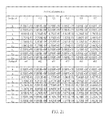
- FIG. 54A and FIG. 54B are tables for the values of EFL, TL, BFL, TTL, Gmax, ALT, Gaa, EFL/TTL, TTL/Gmax, BFL/(T2+G56), EFL/T4, BFL/(G23+G56), TTL/T4, (G34+T5)/T6, (T3+G34)/T6, G34/T6, (T2+T5)/T6, Gmax/G23, (G12+T3)/T6, (G45+G56)/T6, (G34+T6)/T6, (T2+G45)/T6, Gmax/(G12+G23), ALT/(G12+T6), Gaa/(T2+T6), TTL/(T3+T6), EFL/(G23+T3), (G12+T6)/T2, (T2+T3)/T6, (G23+G45)/T6, BFL/(G23+T4) and (G23+T6)/G23 of the
- the term “in” may include “in” and “on”, and the terms “a”, “an” and “the” may include singular and plural references.
- the term “by” may also mean “from”, depending on the context.
- the term “if” may also mean “when” or “upon”, depending on the context.
- the words “and/or” may refer to and encompass any and all possible combinations of one or more of the associated listed items.
- a lens element having positive refracting power (or negative refractive power) means that the paraxial refractive power of the lens element in Gaussian optics is positive (or negative).
- the description “An object-side (or image-side) surface of a lens element” may include a specific region of that surface of the lens element where imaging rays are capable of passing through that region, namely the clear aperture of the surface.
- the aforementioned imaging rays can be classified into two types, chief ray Lc and marginal ray Lm. Taking a lens element depicted in FIG. 1 as an example, the lens element may be rotationally symmetric, where the optical axis I is the axis of symmetry.
- the region A of the lens element is defined as “a part in a vicinity of the optical axis”, and the region C of the lens element is defined as “a part in a vicinity of a periphery of the lens element”.
- the lens element may also have an extending part E extended radially and outwardly from the region C, namely the part outside of the clear aperture of the lens element.
- the extending part E may be used for physically assembling the lens element into an optical imaging lens system. Under normal circumstances, the imaging rays would not pass through the extending part E because those imaging rays only pass through the clear aperture.
- the structures and shapes of the aforementioned extending part E are only examples for technical explanation, the structures and shapes of lens elements should not be limited to these examples. Note that the extending parts of the lens element surfaces depicted in the following embodiments are partially omitted.
- the following criteria are provided for determining the shapes and the parts of lens element surfaces set forth in the present specification. These criteria mainly determine the boundaries of parts under various circumstances including the part in a vicinity of the optical axis, the part in a vicinity of a periphery of a lens element surface, and other types of lens element surfaces such as those having multiple parts.
- FIG. 1 depicts a radial cross-sectional view of a lens element.
- two referential points should be defined first, the central point and the transition point.
- the central point of a surface of a lens element is a point of intersection of that surface and the optical axis.
- the transition point is a point on a surface of a lens element, where the tangent line of that point is perpendicular to the optical axis. Additionally, if multiple transition points appear on one single surface, then these transition points are sequentially named along the radial direction of the surface with numbers starting from the first transition point.
- the first transition point closest one to the optical axis
- the second transition point and the Nth transition point (farthest one to the optical axis within the scope of the clear aperture of the surface).
- the part of a surface of the lens element between the central point and the first transition point is defined as the part in a vicinity of the optical axis.
- the part located radially outside of the Nth transition point is defined as the part in a vicinity of a periphery of the lens element.
- the radius of the clear aperture (or a so-called effective radius) of a surface is defined as the radial distance from the optical axis I to a point of intersection of the marginal ray Lm and the surface of the lens element.
- determining the shape of a part is convex or concave depends on whether a collimated ray passing through that part converges or diverges. That is, while applying a collimated ray to a part to be determined in terms of shape, the collimated ray passing through that part will be bended and the ray itself or its extension line will eventually meet the optical axis.
- the shape of that part can be determined by whether the ray or its extension line meets (intersects) the optical axis (focal point) at the object-side or image-side. For instance, if the ray itself intersects the optical axis at the image side of the lens element after passing through a part, i.e.
- the focal point of this ray is at the image side (see point R in FIG. 2 ), the part will be determined as having a convex shape.
- the extension line of the ray intersects the optical axis at the object side of the lens element, i.e. the focal point of the ray is at the object side (see point M in FIG. 2 ), that part will be determined as having a concave shape. Therefore, referring to FIG.
- the part between the central point and the first transition point may have a convex shape
- the part located radially outside of the first transition point may have a concave shape
- the first transition point is the point where the part having a convex shape changes to the part having a concave shape, namely the border of two adjacent parts.
- there is another method to determine whether a part in a vicinity of the optical axis may have a convex or concave shape by referring to the sign of an “R” value, which is the (paraxial) radius of curvature of a lens surface.
- the R value may be used in conventional optical design software such as Zemax and CodeV. The R value usually appears in the lens data sheet in the software.
- positive R means that the object-side surface is convex
- negative R means that the object-side surface is concave
- positive R means that the image-side surface is concave
- negative R means that the image-side surface is convex
- the part in a vicinity of the optical axis may be defined as the part between 0-50% of the effective radius (radius of the clear aperture) of the surface, whereas the part in a vicinity of a periphery of the lens element may be defined as the part between 50-100% of effective radius (radius of the clear aperture) of the surface.
- transition point namely a first transition point
- Part I may be a part in a vicinity of the optical axis
- part II may be a part in a vicinity of a periphery of the lens element.
- the part in a vicinity of the optical axis may be determined as having a concave surface due to the R value at the image-side surface of the lens element is positive.
- the shape of the part in a vicinity of a periphery of the lens element may be different from that of the radially inner adjacent part, i.e.
- the shape of the part in a vicinity of a periphery of the lens element may be different from the shape of the part in a vicinity of the optical axis; the part in a vicinity of a periphery of the lens element may have a convex shape.
- a first transition point and a second transition point may exist on the object-side surface (within the clear aperture) of a lens element.
- part I may be the part in a vicinity of the optical axis
- part III may be the part in a vicinity of a periphery of the lens element.
- the part in a vicinity of the optical axis may have a convex shape because the R value at the object-side surface of the lens element may be positive.
- the part in a vicinity of a periphery of the lens element (part III) may have a convex shape.
- no transition point may exist on the object-side surface of the lens element.
- the part between 0-50% of the effective radius may be determined as the part in a vicinity of the optical axis
- the part between 50-100% of the effective radius may be determined as the part in a vicinity of a periphery of the lens element.
- the part in a vicinity of the optical axis of the object-side surface of the lens element may be determined as having a convex shape due to its positive R value
- the part in a vicinity of a periphery of the lens element may be determined as having a convex shape as well.
- optical imaging lenses are provided, including examples in which the optical imaging lens is a prime lens.
- Example embodiments of optical imaging lenses may comprise, sequentially from an object side to an image side along an optical axis, a first, second, third, fourth, fifth and sixth lens elements and a filter unit, in which each of said lens elements has an object-side surface facing toward the object side and an image-side surface facing toward the image side.
- the optical imaging lens of the present disclosure achieves good optical characteristics and provides a shortened length due to the design characteristics of each lens element.
- the optical imaging lens may include variations of any of the above mentioned characteristics, and the system may vary one or more lens elements.
- the system may include variations of additional optical features as well as variations of the optical lens length of the optical imaging lens.
- the first lens element may have positive refracting power, which is favorable to gather light
- the object-side surface of the second lens element may comprise a convex portion in a vicinity of a periphery of the second lens element and the object-side surface of the third lens element may comprise a convex portion in a vicinity of a periphery of the third lens element, which is favorable to gather edge image light
- the object-side surface of the sixth lens element may comprise a concave portion in a vicinity of a periphery of the sixth lens element and the image-side surface may comprise a convex portion in a vicinity of a periphery of the sixth lens element.
- the above mentioned designs may effectively eliminate aberrations, reduce the length of the optical lens, and enhance imaging quality and telephoto characteristics, to provide
- controlling the parameters of each lens element as described herein may beneficially provide a designer with the flexibility to design an optical imaging lens with good optical performance, shortened length, enhanced telephoto characteristics, and technological feasibility.
- lengthening EFL may reduce the field of view for telephoto characteristics.
- the optical imaging lens used in many cell phones today involves miniaturized dimensions that may affect the lengthening range of the EFL.
- satisfying any one of the following equations may result in decreasing the thickness of the system.
- the field of view may be reduced and the telephoto characteristics may be satisfied: EFL/TTL ⁇ 1 Equation (1); EFL/T 4 ⁇ 8.5 Equation (4); and EFL /( G 23+ T 3) ⁇ 5.5 Equation (20).
- the value of EFL/TTL may be further restricted between 1.00 and 1.20. In some embodiments, the value of EFL/T4 may be further restricted between 8.50 and 45.50. In some embodiments, the value of EFL/(G23+T3) ⁇ 5.5 may be further restricted between 5.50 and 13.00. As a result of restricting various values as described above, the imaging quality of the optical imaging lens may be improved.
- the value of TTL/Gmax may be further restricted between 3.20 and 7.65. In some embodiments, the value of (G34+T5)/T6 may be further restricted between 0.70 and 11.50. In some embodiments, the value of (T3+G34)/T6 may be further restricted between 1.00 and 11.50. In some embodiments, the value of G34/T6 may be further restricted between 0.10 and 7.50. In some embodiments, the value of (T2+T5)/T6 may be further restricted between 0.40 and 6.00. In some embodiments, the value of (G12+T3)/T6 may be further restricted between 0.60 and 6.50. In some embodiments, the value of (G45+G56)/T6 may be further restricted between 0.90 and 10.00.
- the value of (G34+T6)/T6 may be further restricted between 1.10 and 8.50. In some embodiments, the value of (T2+G45)/T6 may be further restricted between 0.90 and 7.50. In some embodiments, the value of ALT/(G12+T6) may be further restricted between 2.90 and 11.00. In some embodiments, the value of Gaa/(T2+T6) may be further restricted between 1.30 and 5.50. In some embodiments, the value of TTL/(T3+T6) may be further restricted between 3.20 and 6.50. In some embodiments, the value of (T2+T3)/T6 may be further restricted between 0.70 and 10.50. In some embodiments, the value of (G23+G45)/T6 may be further restricted between 0.90 and 10.00.
- the parameters set forth in the present disclosure could be varied to satisfy any one of equations below, such that the optical imaging lens could be in proper arrangement and have good image quality: BFL /( T 2+ G 56) ⁇ 1.5 Equation (3); BFL /( G 23+ G 56) ⁇ 1.5 Equation (5); TTL/T 4 ⁇ 9 Equation (6); G max/ G 23 ⁇ 2.5 Equation (11); G max/( G 12+ G 23) ⁇ 2.5 Equation (16); ( G 12+ T 6)/ T 2 ⁇ 2 Equation (21); BFL /( G 23+ T 4) ⁇ 1 Equation (24); and ( G 23+ T 6)/ G 23 ⁇ 2 Equation (25).
- the value of BFL/(T2+G56) may be further restricted between 1.50 and 8.40. In some embodiments, the value of BFL/(G23+G56) may be further restricted between 1.50 and 7.00. In some embodiments, the value of TTL/T4 may be further restricted between 9.00 and 40.50. In some embodiments, the value of Gmax/G23 may be further restricted between 2.50 and 74.10. In some embodiments, the value of Gmax/(G12+G23) may be further restricted between 2.50 and 20.30. In some embodiments, the value of (G12+T6)/T2 may be further restricted between 2.00 and 5.60. In some embodiments, the value of BFL/(G23+T4) may be further restricted between 1.00 and 4.70. In some embodiments, the value of (G23+T6)/G23 may be further restricted between 2.00 and 16.70.
- the optical imaging lens of the present disclosure satisfies at least one of the equations described above, the length of the optical lens may be reduced, the aperture stop may be enlarged (F-number may be reduced), the field angle may be reduced, the imaging quality may be enhanced, or the assembly yield may be upgraded. Such characteristics may advantageously mitigate various drawbacks in other optical system designs.
- FIG. 6 illustrates an example cross-sectional view of an optical imaging lens 1 having six lens elements according to a first example embodiment.
- FIG. 7 shows example charts of longitudinal spherical aberration and other kinds of optical aberrations of the optical imaging lens 1 according to the first example embodiment.
- FIG. 8 illustrates an example table of optical data of each lens element of the optical imaging lens 1 according to the first example embodiment.
- FIG. 9 depicts an example table of aspherical data of the optical imaging lens 1 according to the first example embodiment.
- the optical imaging lens 1 of the present embodiment may comprise, in order from an object side A 1 to an image side A 2 along an optical axis, an aperture stop 100 , a first lens element 110 , a second lens element 120 , a third lens element 130 , a fourth lens element 140 , a fifth lens element 150 and a sixth lens element 160 .
- a filtering unit 170 and an image plane 180 of an image sensor are positioned at the image side A 2 of the optical imaging lens 1 .
- Each of the first, second, third, fourth, fifth and sixth lens elements 110 , 120 , 130 , 140 , 150 , 160 and the filtering unit 170 may comprise an object-side surface 111 / 121 / 131 / 141 / 151 / 161 / 171 facing toward the object side A 1 and an image-side surface 112 / 122 / 132 / 142 / 152 / 162 / 172 facing toward the image side A 2 .
- the example embodiment of the filtering unit 170 illustrated is an IR cut filter (infrared cut filter) positioned between the sixth lens element 160 and an image plane 180 .
- the filtering unit 170 selectively absorbs light passing optical imaging lens 1 that has a specific wavelength. For example, if IR light is absorbed, IR light which is not seen by human eyes is prohibited from producing an image on the image plane 180 .
- each lens element of the optical imaging lens 1 is constructed using plastic material, in some embodiments.
- the first lens element 110 may have positive refracting power.
- the object-side surface 111 may comprise a convex portion 1111 in a vicinity of an optical axis and a convex portion 1112 in a vicinity of a periphery of the first lens element 110 .
- the image-side surface 112 may comprise a concave portion 1121 in a vicinity of the optical axis and a concave portion 1122 in a vicinity of a periphery of the first lens element 110 .
- the object-side surface 111 and the image-side surface 112 may be aspherical surfaces.
- An example embodiment of the second lens element 120 may have negative refracting power.
- the object-side surface 121 may comprise a convex portion 1211 in a vicinity of the optical axis and a convex portion 1212 in a vicinity of a periphery of the second lens element 120 .
- the image-side surface 122 may comprise a concave portion 1221 in a vicinity of the optical axis and a concave portion 1222 in a vicinity of a periphery of the second lens element 120 .
- the object-side surface 121 and the image-side surface 122 may be aspherical surfaces.
- An example embodiment of the third lens element 130 may have positive refracting power.
- the object-side surface 131 may comprise a convex portion 1311 in a vicinity of the optical axis and a convex portion 1312 in a vicinity of a periphery of the third lens element 130 .
- the image-side surface 132 may comprise a concave portion 1321 in a vicinity of the optical axis and a concave portion 1322 in a vicinity of a periphery of the third lens element 130 .
- the object-side surface 131 and the image-side surface 132 may be aspherical surfaces.
- An example embodiment of the fourth lens element 140 may have negative refracting power.
- the object-side surface 141 may comprise a convex portion 1411 in a vicinity of the optical axis and a concave portion 1412 in a vicinity of a periphery of the fourth lens element 140 .
- the image-side surface 142 may comprise a concave portion 1421 in a vicinity of the optical axis and a concave portion 1422 in a vicinity of a periphery of the fourth lens element 140 .
- the object-side surface 141 and the image-side surface 142 may be aspherical surfaces.
- An example embodiment of the fifth lens element 150 may have negative refracting power.
- the object-side surface 151 may comprise a convex portion 1511 in a vicinity of the optical axis and a concave portion 1512 in a vicinity of a periphery of the fifth lens element 150 .
- the image-side surface 152 may comprise a concave portion 1521 in a vicinity of the optical axis and a convex portion 1522 in a vicinity of a periphery of the fifth lens element 150 .
- the object-side surface 151 and the image-side surface 152 may be aspherical surfaces.
- An example embodiment of the sixth lens element 160 may have positive refracting power.
- the object-side surface 161 may comprise a concave portion 1611 in a vicinity of the optical axis and a concave portion 1612 in a vicinity of a periphery of the sixth lens element 160 .
- the image-side surface 162 may comprise a convex portion 1621 in a vicinity of the optical axis and a convex portion 1622 in a vicinity of a periphery of the sixth lens element 160 .
- the object-side surface 161 and the image-side surface 162 may be aspherical surfaces.
- air gaps exist between the lens elements 110 , 120 , 130 , 140 , 150 , the filtering unit 170 and the image plane 180 of the image sensor.
- FIG. 6 illustrates the air gap d 1 existing between the first lens element 110 and the second lens element 120 , the air gap d 2 existing between the second lens element 120 and the third lens element 130 , the air gap d 3 existing between the third lens element 130 and the fourth lens element 140 , the air gap d 4 existing between the fourth lens element 140 and the fifth lens element 150 , the air gap d 5 existing between the fifth lens element 150 and the sixth lens element 160 , the air gap d 6 existing between the sixth lens element 160 and the filtering unit 170 , and the air gap d 7 existing between the filtering unit 170 and the image plane 180 of the image sensor.
- any of the aforesaid air gaps may or may not exist.
- the profiles of opposite surfaces of any two adjacent lens elements may correspond to each other, and in such situation, the air gap may not exist.
- the air gap d 1 is denoted by G12
- the air gap d 2 is denoted by G23
- the air gap d 3 is denoted by G34
- the air gap d 4 is denoted by G45
- the air gap d 5 is denoted by G56
- the air gap d 6 is denoted by G6F
- the air gap d 7 is denoted by GFP
- the sum of d 1 , d 2 , d 3 , d 4 and d 5 is denoted by Gaa.
- FIG. 8 depicts the optical characteristics of each lens elements in the optical imaging lens 1 of the present embodiment.
- the aspherical surfaces including the object-side surface 111 of the first lens element 110 , the image-side surface 112 of the first lens element 110 , the object-side surface 121 and the image-side surface 122 of the second lens element 120 , the object-side surface 131 and the image-side surface 132 of the third lens element 130 , the object-side surface 141 and the image-side surface 142 of the fourth lens element 140 , the object-side surface 151 and the image-side surface 152 of the fifth lens element 150 , the object-side surface 161 and the image-side surface 162 of the sixth lens element 160 are all defined by the following aspherical formula (1):
- R represents the radius of curvature of the surface of the lens element
- Z represents the depth of the aspherical surface (the perpendicular distance between the point of the aspherical surface at a distance Y from the optical axis and the tangent plane of the vertex on the optical axis of the aspherical surface);
- Y represents the perpendicular distance between the point of the aspherical surface and the optical axis
- K represents a conic constant
- a 2i represents an aspherical coefficient of 2i th level.
- FIG. 7 part a shows the longitudinal spherical aberration, wherein the horizontal axis of FIG. 7 part a defines the focus, and the vertical axis of FIG. 7 part a defines the field of view.
- FIG. 7 part b shows the astigmatism aberration in the sagittal direction, wherein the horizontal axis of FIG. 7 part b defines the focus, and the vertical axis of FIG. 7 part b defines the image height.
- FIG. 7 part c shows the astigmatism aberration in the tangential direction, wherein the horizontal axis of FIG. 7 part c defines the focus, and the vertical axis of FIG. 7 part c defines the image height.
- FIG. 7 part d shows the variation of the distortion aberration, wherein the horizontal axis of FIG. 7 part d defines the percentage, and the vertical axis of FIG. 7( d ) defines the image height.
- the three curves with different wavelengths (470 nm, 555 nm, 650 nm) represent that off-axis light with respect to these wavelengths may be focused around an image point. From the vertical deviation of each curve shown in FIG. 7 part a, the offset of the off-axis light relative to the image point may be within about ⁇ 0.045 mm. Therefore, the first embodiment may improve the longitudinal spherical aberration with respect to different wavelengths. Referring to FIG.
- the focus variation with respect to the three different wavelengths (470 nm, 555 nm, 650 nm) in the whole field may fall within about ⁇ 0.04 mm.
- the focus variation with respect to the three different wavelengths (470 nm, 555 nm, 650 nm) in the whole field may fall within about ⁇ 0.075 mm.
- the horizontal axis of FIG. 7 part d the variation of the distortion aberration may be within about ⁇ 1.0%.
- FIG. 54A and FIG. 54B Please refer to FIG. 54A and FIG. 54B for the values of EFL, TL, BFL, TTL, Gmax, ALT, Gaa, EFL/TTL, TTL/Gmax, BFL/(T2+G56), EFL/T4, BFL/(G23+G56), TTL/T4, (G34+T5)/T6, (T3+G34)/T6, G34/T6, (T2+T5)/T6, Gmax/G23, (G12+T3)/T6, (G45+G56)/T6, (G34+T6)/T6, (T2+G45)/T6, Gmax/(G12+G23), ALT/(G12+T6), Gaa/(T2+T6), TTL/(T3+T6), EFL/(G23+T3), (G12+T6)/T2, (T2+T3)/T6, (G23+G45)/T6, BFL/(G23+T4) and (
- the distance from the object-side surface 111 of the first lens element 110 to the image plane 180 along the optical axis may be about 6.262 mm, EFL may be about 6.498 mm, the image height may be about 2.911 mm, HFOV may be about 25 degrees, and Fno may be about 2.05.
- the present embodiment may provide an optical imaging lens having a shortened length, and may be capable of accommodating a slim product profile that also renders improved optical performance.
- FIG. 10 illustrates an example cross-sectional view of an optical imaging lens 2 having six lens elements according to a second example embodiment.
- FIG. 11 shows example charts of longitudinal spherical aberration and other kinds of optical aberrations of the optical imaging lens 2 according to the second example embodiment.
- FIG. 12 shows an example table of optical data of each lens element of the optical imaging lens 2 according to the second example embodiment.
- FIG. 13 shows an example table of aspherical data of the optical imaging lens 2 according to the second example embodiment.
- reference numbers labeled in the present embodiment are similar to those in the first embodiment for the similar elements, but here the reference numbers are initialed with 2 , for example, reference number 231 for labeling the object-side surface of the third lens element 230 , reference number 232 for labeling the image-side surface of the third lens element 230 , etc.
- the optical imaging lens 2 of the present embodiment in an order from an object side A 1 to an image side A 2 along an optical axis, may comprise an aperture stop 200 , a first lens element 210 , a second lens element 220 , a third lens element 230 , a fourth lens element 240 , a fifth lens element 250 and a sixth lens element 260 .
- the arrangement of the convex or concave surface structures including the object-side surfaces 211 , 221 , 231 , 241 , and 261 and the image-side surfaces 212 , 222 , 232 , 242 , 252 , and 262 are generally similar to the optical imaging lens 1 .
- the differences between the optical imaging lens 1 and the optical imaging lens 2 may include the concave/convex shape of the object-side surface 251 facing to the object side A 1 , a radius of curvature, a refracting power, a thickness, aspherical data, and an effective focal length of each lens element.
- the object-side surface 251 may comprise a concave portion 2511 in a vicinity of the optical axis.
- the offset of the off-axis light relative to the image point may be within about ⁇ 0.045 mm.
- the focus variation with respect to the three different wavelengths (470 nm, 555 nm, 650 nm) in the whole field may fall within about ⁇ 0.04 mm.
- the focus variation with respect to the three different wavelengths (470 nm, 555 nm, 650 nm) in the whole field may fall within about ⁇ 0.08 mm.
- the variation of the distortion aberration of the optical imaging lens 2 may be within about ⁇ 0.8%.
- FIG. 54A and FIG. 54B Please refer to FIG. 54A and FIG. 54B for the values of EFL, TL, BFL, TTL, Gmax, ALT, Gaa, EFL/TTL, TTL/Gmax, BFL/(T2+G56), EFL/T4, BFL/(G23+G56), TTL/T4, (G34+T5)/T6, (T3+G34)/T6, G34/T6, (T2+T5)/T6, Gmax/G23, (G12+T3)/T6, (G45+G56)/T6, (G34+T6)/T6, (T2+G45)/T6, Gmax/(G12+G23), ALT/(G12+T6), Gaa/(T2+T6), TTL/(T3+T6), EFL/(G23+T3), (G12+T6)/T2, (T2+T3)/T6, (G23+G45)/T6, BFL/(G23+T4) and (
- the distance from the object-side surface 211 of the first lens element 210 to the image plane 280 along the optical axis may be about 6.269 mm, EFL may be about 6.498 mm, the image height may be about 2.911 mm, HFOV may be about 25 degrees, and Fno may be about 2.05.
- distortion aberration in the second embodiment may be smaller. Further, the second embodiment may be manufactured more easily and the yield rate may be higher.
- FIG. 14 illustrates an example cross-sectional view of an optical imaging lens 3 having six lens elements according to a third example embodiment.
- FIG. 15 shows example charts of longitudinal spherical aberration and other kinds of optical aberrations of the optical imaging lens 3 according to the third example embodiment.
- FIG. 16 shows an example table of optical data of each lens element of the optical imaging lens 3 according to the third example embodiment.
- FIG. 17 shows an example table of aspherical data of the optical imaging lens 3 according to the third example embodiment.
- reference numbers labeled in the present embodiment are similar to those in the first embodiment for the similar elements, but here the reference numbers are initialed with 3 , for example, reference number 331 for labeling the object-side surface of the third lens element 330 , reference number 332 for labeling the image-side surface of the third lens element 330 , etc.
- the optical imaging lens 3 of the present embodiment in an order from an object side A 1 to an image side A 2 along an optical axis, may comprise an aperture stop 300 , a first lens element 310 , a second lens element 320 , a third lens element 330 , a fourth lens element 340 , a fifth lens element 350 and a sixth lens element 360 .
- the arrangement of the convex or concave surface structures including the object-side surfaces 311 , 331 , and 361 and the image-side surfaces 332 , 342 , and 352 are generally similar to the optical imaging lens 1 .
- the differences between the optical imaging lens 1 and the optical imaging lens 3 may include the concave/convex shapes of the image-side surfaces 312 , 322 , and 362 , the concave/convex shapes of the object-side surfaces 321 , 341 , and 351 , a radius of curvature, a thickness, aspherical data, and an effective focal length of each lens element.
- the image-side surface 312 may comprise a convex portion 3121 in a vicinity of the optical axis
- the object-side surface 321 may comprise a concave portion 3211 in a vicinity of the optical axis
- the image-side surface 322 may comprise a convex portion 3221 in a vicinity of the optical axis
- the object-side surface 341 may comprise a concave portion 3411 in a vicinity of the optical axis
- the object-side surface 351 may comprise a concave portion 3511 in a vicinity of the optical axis
- the image-side surface 362 may comprises a concave portion 3621 in a vicinity of the optical axis.
- the offset of the off-axis light relative to the image point may be within about ⁇ 0.045 mm.
- the focus variation with respect to the three different wavelengths (470 nm, 555 nm, 650 nm) in the whole field may fall within about ⁇ 0.04 mm.
- the focus variation with respect to the three different wavelengths (470 nm, 555 nm, 650 nm) in the whole field may fall within about ⁇ 0.12 mm.
- the variation of the distortion aberration of the optical imaging lens 3 may be within about ⁇ 2.5%.
- FIG. 54A and FIG. 54B Please refer to FIG. 54A and FIG. 54B for the values of EFL, TL, BFL, TTL, Gmax, ALT, Gaa, EFL/TTL, TTL/Gmax, BFL/(T2+G56), EFL/T4, BFL/(G23+G56), TTL/T4, (G34+T5)/T6, (T3+G34)/T6, G34/T6, (T2+T5)/T6, Gmax/G23, (G12+T3)/T6, (G45+G56)/T6, (G34+T6)/T6, (T2+G45)/T6, Gmax/(G12+G23), ALT/(G12+T6), Gaa/(T2+T6), TTL/(T3+T6), EFL/(G23+T3), (G12+T6)/T2, (T2+T3)/T6, (G23+G45)/T6, BFL/(G23+T4) and (
- the distance from the object-side surface 311 of the first lens element 310 to the image plane 380 along the optical axis may be about 7.961 mm, EFL may be about 9.000 mm, the image height may be about 2.944 mm, HFOV may be about 18.052 degrees, and Fno may be about 2.05.
- EFL of the third embodiment may be longer, HFOV of the third embodiment may be smaller, and the telephoto effect of the third embodiment may be better. Furthermore, the third embodiment of the optical imaging lens may be manufactured more easily and its yield rate may be higher.
- FIG. 18 illustrates an example cross-sectional view of an optical imaging lens 4 having six lens elements according to a fourth example embodiment.
- FIG. 19 shows example charts of longitudinal spherical aberration and other kinds of optical aberrations of the optical imaging lens 4 according to the fourth embodiment.
- FIG. 20 shows an example table of optical data of each lens element of the optical imaging lens 4 according to the fourth example embodiment.
- FIG. 21 shows an example table of aspherical data of the optical imaging lens 4 according to the fourth example embodiment.
- reference numbers labeled in the present embodiment are similar to those in the first embodiment for the similar elements, but here the reference numbers are initialed with 4 , for example, reference number 431 for labeling the object-side surface of the third lens element 430 , reference number 432 for labeling the image-side surface of the third lens element 430 , etc.
- the optical imaging lens 4 of the present embodiment in an order from an object side A 1 to an image side A 2 along an optical axis, may comprise an aperture stop 400 , a first lens element 410 , a second lens element 420 , a third lens element 430 , a fourth lens element 440 , a fifth lens element 450 and a sixth lens element 460 .
- the arrangement of the convex or concave surface structures including the object-side surfaces 411 , 431 , 441 , and 461 and the image-side surfaces 412 , 422 , 442 , 452 , and 462 are generally similar to the optical imaging lens 1 .
- the differences between the optical imaging lens 1 and the optical imaging lens 4 may include the concave/convex shapes of the object-side surface 421 , the concave/convex shapes of the image-side surface 432 , the concave/convex shapes of the object-side surface 451 , a radius of curvature, a thickness, aspherical data, and an effective focal length of each lens element.
- the object-side surface 421 may comprise a concave portion 4211 in a vicinity of the optical axis
- the image-side surface 432 may comprise a convex portion 4322 in a vicinity of a periphery of the third lens element 430
- the object-side surface 451 may comprise a concave portion 4511 in a vicinity of the optical axis.
- the offset of the off-axis light relative to the image point may be within about ⁇ 0.06 mm.
- the focus variation with respect to the three different wavelengths (470 nm, 555 nm, 650 nm) in the whole field may fall within about ⁇ 0.04 mm.
- the focus variation with respect to the three different wavelengths (470 nm, 555 nm, 650 nm) in the whole field may fall within about ⁇ 0.12 mm.
- the variation of the distortion aberration of the optical imaging lens 4 may be within about ⁇ 1.2%.
- FIG. 54A and FIG. 54B Please refer to FIG. 54A and FIG. 54B for the values of EFL, TL, BFL, TTL, Gmax, ALT, Gaa, EFL/TTL, TTL/Gmax, BFL/(T2+G56), EFL/T4, BFL/(G23+G56), TTL/T4, (G34+T5)/T6, (T3+G34)/T6, G34/T6, (T2+T5)/T6, Gmax/G23, (G12+T3)/T6, (G45+G56)/T6, (G34+T6)/T6, (T2+G45)/T6, Gmax/(G12+G23), ALT/(G12+T6), Gaa/(T2+T6), TTL/(T3+T6), EFL/(G23+T3), (G12+T6)/T2, (T2+T3)/T6, (G23+G45)/T6, BFL/(G23+T4) and (
- the distance from the object-side surface 411 of the first lens element 410 to the image plane 480 along the optical axis may be about 5.908 mm, EFL may be about 6.141 mm, the image height may be about 2.619 mm, HFOV may be about 22.896 degrees, and Fno may be about 2.29.
- HFOV of the fourth embodiment may be smaller, TTL of the fourth embodiment may be shorter, and the telephoto effect of the fourth embodiment may be better, such that the length of the optical imaging lens of the fourth embodiment may be shorter. Furthermore, the fourth embodiment of the optical imaging lens may be manufactured more easily and its yield rate may be higher.
- FIG. 22 illustrates an example cross-sectional view of an optical imaging lens 5 having six lens elements according to a fifth example embodiment.
- FIG. 23 shows example charts of longitudinal spherical aberration and other kinds of optical aberrations of the optical imaging lens 5 according to the fifth embodiment.
- FIG. 24 shows an example table of optical data of each lens element of the optical imaging lens 5 according to the fifth example embodiment.
- FIG. 25 shows an example table of aspherical data of the optical imaging lens 5 according to the fifth example embodiment.
- reference numbers labeled in the present embodiment are similar to those in the first embodiment for the similar elements, but here the reference numbers are initialed with 5 , for example, reference number 531 for labeling the object-side surface of the third lens element 530 , reference number 532 for labeling the image-side surface of the third lens element 530 , etc.
- the optical imaging lens 5 of the present embodiment in an order from an object side A 1 to an image side A 2 along an optical axis, may comprise an aperture stop 500 , a first lens element 510 , a second lens element 520 , a third lens element 530 , a fourth lens element 540 , a fifth lens element 550 and a sixth lens element 560 .
- the arrangement of the convex or concave surface structures including the object-side surfaces 511 , 521 , and 531 and the image-side surfaces 512 , 522 , 532 , and 542 are generally similar to the optical imaging lens 1 .
- the differences between the optical imaging lens 1 and the optical imaging lens 5 may include the concave/convex shapes of the object-side surfaces 541 and 551 , the concave/convex shapes of the image-side surfaces 552 and 562 , the refracting power of the fifth lens element 550 and the sixth lens element 560 , the radius of curvature, the thickness, aspherical data, and the effective focal length of each lens element.
- the object-side surface 541 may comprise a concave portion 5411 in a vicinity of the optical axis
- the object-side surface 551 may comprise a concave portion 5511 in a vicinity of the optical axis
- the image-side surface 552 may comprise a convex portion 5521 in a vicinity of the optical axis
- the image-side surface 562 may comprise a concave portion 5621 in a vicinity of the optical axis
- the fifth lens element 550 may have positive refracting power
- the sixth lens element 560 may have negative refracting power.
- FIG. 24 depicts the optical characteristics of each lens elements in the optical imaging lens 5 of the present embodiment.
- the offset of the off-axis light relative to the image point may be within about ⁇ 0.06 mm.
- the focus variation with respect to the three different wavelengths (470 nm, 555 nm, 650 nm) in the whole field may fall within about ⁇ 0.03 mm.
- the focus variation with respect to the three different wavelengths (470 nm, 555 nm, 650 nm) in the whole field may fall within about ⁇ 0.03 mm.
- the variation of the distortion aberration of the optical imaging lens 5 may be within about ⁇ 3.0%.
- FIG. 54A and FIG. 54B Please refer to FIG. 54A and FIG. 54B for the values of EFL, TL, BFL, TTL, Gmax, ALT, Gaa, EFL/TTL, TTL/Gmax, BFL/(T2+G56), EFL/T4, BFL/(G23+G56), TTL/T4, (G34+T5)/T6, (T3+G34)/T6, G34/T6, (T2+T5)/T6, Gmax/G23, (G12+T3)/T6, (G45+G56)/T6, (G34+T6)/T6, (T2+G45)/T6, Gmax/(G12+G23), ALT/(G12+T6), Gaa/(T2+T6), TTL/(T3+T6), EFL/(G23+T3), (G12+T6)/T2, (T2+T3)/T6, (G23+G45)/T6, BFL/(G23+T4) and (
- the distance from the object-side surface 511 of the first lens element 510 to the image plane 580 along the optical axis may be about 7.966 mm, EFL may be about 8.996 mm, the image height may be about 2.944 mm, HFOV may be about 17.728 degrees, and Fno may be about 2.05.
- the astigmatism aberration in the sagittal and tangential directions may be greater, HFOV of the fifth embodiment may be smaller, the EFL of the fifth embodiment may be longer, the image quality of the fifth embodiment may be better, and the telephoto effect of the fifth embodiment may be better.
- the fifth embodiment of the optical imaging lens may be manufactured more easily and the yield rate may be higher.
- FIG. 26 illustrates an example cross-sectional view of an optical imaging lens 6 having six lens elements according to a sixth example embodiment.
- FIG. 27 shows example charts of longitudinal spherical aberration and other kinds of optical aberrations of the optical imaging lens 6 according to the sixth embodiment.
- FIG. 28 shows an example table of optical data of each lens element of the optical imaging lens 6 according to the sixth example embodiment.
- FIG. 29 shows an example table of aspherical data of the optical imaging lens 6 according to the sixth example embodiment.
- reference numbers labeled in the present embodiment are similar to those in the first embodiment for the similar elements, but here the reference numbers are initialed with 6 , for example, reference number 631 for labeling the object-side surface of the third lens element 630 , reference number 632 for labeling the image-side surface of the third lens element 630 , etc.
- the optical imaging lens 6 of the present embodiment in an order from an object side A 1 to an image side A 2 along an optical axis, may comprise an aperture stop 600 , a first lens element 610 , a second lens element 620 , a third lens element 630 , a fourth lens element 640 , a fifth lens element 650 and a sixth lens element 660 .
- the arrangement of the convex or concave surface structures including the object-side surfaces 611 , 621 , and 631 and the image-side surfaces 612 , 622 , 632 , and 652 are generally similar to the optical imaging lens 1 .
- the differences between the optical imaging lens 1 and the optical imaging lens 6 may include the concave/convex shapes of the object-side surfaces 641 , 651 , and 661 , and the concave/convex shapes of the image-side surface 642 and 662 , a radius of curvature, a thickness, aspherical data, and an effective focal length of each lens element.
- the object-side surface 641 may comprise a concave portion 6411 in a vicinity of the optical axis
- the image-side surface 642 may comprise a convex portion 6421 in a vicinity of the optical axis
- the object-side surface 651 may comprise a concave portion 6511 in a vicinity of the optical axis
- the object-side surface 661 may comprise a convex portion 6611 in a vicinity of the optical axis
- the image-side surface 662 may comprises a concave portion 6621 in a vicinity of the optical axis.
- the offset of the off-axis light relative to the image point may be within about ⁇ 0.045 mm.
- the focus variation with respect to the three different wavelengths (470 nm, 555 nm, 650 nm) in the whole field may fall within about ⁇ 0.04 mm.
- the focus variation with respect to the three different wavelengths (470 nm, 555 nm, 650 nm) in the whole field may fall within about ⁇ 0.075 mm.
- the variation of the distortion aberration of the optical imaging lens 6 may be within about ⁇ 2.0%.
- FIG. 54A and FIG. 54B Please refer to FIG. 54A and FIG. 54B for the values of EFL, TL, BFL, TTL, Gmax, ALT, Gaa, EFL/TTL, TTL/Gmax, BFL/(T2+G56), EFL/T4, BFL/(G23+G56), TTL/T4, (G34+T5)/T6, (T3+G34)/T6, G34/T6, (T2+T5)/T6, Gmax/G23, (G12+T3)/T6, (G45+G56)/T6, (G34+T6)/T6, (T2+G45)/T6, Gmax/(G12+G23), ALT/(G12+T6), Gaa/(T2+T6), TTL/(T3+T6), EFL/(G23+T3), (G12+T6)/T2, (T2+T3)/T6, (G23+G45)/T6, BFL/(G23+T4) and (
- the distance from the object-side surface 611 of the first lens element 610 to the image plane 680 along the optical axis may be about 7.957 mm, EFL may be about 9.000 mm, the image height may be about 2.944 mm, HFOV may be about 17.868 degrees, and Fno may be about 2.05.
- EFL of the sixth embodiment may be longer, the HFOV of the sixth embodiment may be smaller, and the telephoto effect of the sixth embodiment may be better. Furthermore, the sixth embodiment of the optical imaging lens may be manufactured more easily and the yield rate may be higher.
- FIG. 30 illustrates an example cross-sectional view of an optical imaging lens 7 having six lens elements according to a seventh example embodiment.
- FIG. 31 shows example charts of longitudinal spherical aberration and other kinds of optical aberrations of the optical imaging lens 7 according to the seventh embodiment.
- FIG. 32 shows an example table of optical data of each lens element of the optical imaging lens 7 according to the seventh example embodiment.
- FIG. 33 shows an example table of aspherical data of the optical imaging lens 7 according to the seventh example embodiment.
- reference numbers labeled in the present embodiment are similar to those in the first embodiment for the similar elements, but here the reference numbers are initialed with 7 , for example, reference number 731 for labeling the object-side surface of the third lens element 730 , reference number 732 for labeling the image-side surface of the third lens element 730 , etc.
- the optical imaging lens 7 of the present embodiment in an order from an object side A 1 to an image side A 2 along an optical axis, may comprise an aperture stop 700 , a first lens element 710 , a second lens element 720 , a third lens element 730 , a fourth lens element 740 , a fifth lens element 750 and a sixth lens element 760 .
- the arrangement of the convex or concave surface structures, including the object-side surfaces 711 , 731 , and 741 and the image-side surfaces 722 , 732 , and 752 are generally similar to the optical imaging lens 1 .
- the differences between the optical imaging lens 1 and the optical imaging lens 7 may include the concave/convex shapes of the object-side surfaces 721 , 751 , and 761 and the concave/convex shapes of the image-side surfaces 712 , 732 , 742 , and 762 , a radius of curvature, a thickness, aspherical data, and an effective focal length of each lens element.
- the image-side surface 712 may comprise a convex portion 7121 in a vicinity of the optical axis
- the object-side surface 721 may comprise a concave portion 7211 in a vicinity of the optical axis
- image-side surface 732 may comprise a convex portion 7322 in a vicinity of a periphery of the third lens element 730
- the image-side surface 742 may comprise a convex portion 7422 in a vicinity of a periphery of the fourth lens element 740
- the object-side surface 751 may comprise a concave portion 7511 in a vicinity of the optical axis
- the object-side surface 761 may comprise a convex portion 7611 in a vicinity of the optical axis
- the image-side surface 762 may comprises a concave portion 7621 in a vicinity of the optical axis.
- the offset of the off-axis light relative to the image point may be within ⁇ 0.013 mm.
- the focus variation with respect to the three different wavelengths (470 nm, 555 nm, 650 nm) in the whole field falls within ⁇ 0.012 mm.
- the focus variation with respect to the three different wavelengths (470 nm, 555 nm, 650 nm) in the whole field falls within ⁇ 0.02 mm.
- the variation of the distortion aberration of the optical imaging lens 7 may be within ⁇ 0.65%.
- FIG. 54A and FIG. 54B Please refer to FIG. 54A and FIG. 54B for the values of EFL, TL, BFL, TTL, Gmax, ALT, Gaa, EFL/TTL, TTL/Gmax, BFL/(T2+G56), EFL/T4, BFL/(G23+G56), TTL/T4, (G34+T5)/T6, (T3+G34)/T6, G34/T6, (T2+T5)/T6, Gmax/G23, (G12+T3)/T6, (G45+G56)/T6, (G34+T6)/T6, (T2+G45)/T6, Gmax/(G12+G23), ALT/(G12+T6), Gaa/(T2+T6), TTL/(T3+T6), EFL/(G23+T3), (G12+T6)/T2, (T2+T3)/T6, (G23+G45)/T6, BFL/(G23+T4) and (
- the distance from the object-side surface 711 of the first lens element 710 to the image plane 780 along the optical axis may be about 6.335 mm, EFL may be about 6.336 mm, the image height may be about 2.619 mm, HFOV may be about 22.327 degrees, and Fno may be about 2.36.
- the longitudinal spherical aberration of the seventh embodiment may be greater, the astigmatic aberration in the sagittal and tangential directions of the seventh embodiment may be greater, the variation of the distortion aberration of the seventh embodiment may be greater, HFOV of the fifth embodiment may be smaller, and the telephoto effect of the seventh embodiment may be better.
- the seventh embodiment of the optical imaging lens may be manufactured more easily and the yield rate may be higher.
- FIG. 34 illustrates an example cross-sectional view of an optical imaging lens 8 having six lens elements according to an eighth example embodiment.
- FIG. 35 shows example charts of longitudinal spherical aberration and other kinds of optical aberrations of the optical imaging lens 8 according to the eighth embodiment.
- FIG. 36 shows an example table of optical data of each lens element of the optical imaging lens 8 according to the eighth example embodiment.
- FIG. 37 shows an example table of aspherical data of the optical imaging lens 8 according to the eighth example embodiment.
- reference numbers labeled in the present embodiment are similar to those in the first embodiment for the similar elements, but here the reference numbers are initialed with 8 , for example, reference number 831 for labeling the object-side surface of the third lens element 830 , reference number 832 for labeling the image-side surface of the third lens element 830 , etc.
- the optical imaging lens 8 of the present embodiment in an order from an object side A 1 to an image side A 2 along an optical axis, may comprise an aperture stop 800 , a first lens element 810 , a second lens element 820 , a third lens element 830 , a fourth lens element 840 , a fifth lens element 850 and a sixth lens element 860 .
- the arrangement of the convex or concave surface structures including the object-side surfaces 811 , 821 , 831 , and 861 and the image-side surfaces 812 , 822 , and 832 are generally similar to the optical imaging lens 1 .
- the differences between the optical imaging lens 1 and the optical imaging lens 8 may include the concave/convex shapes of the object-side surfaces 841 , and 851 , the concave/convex shapes of the image-side surfaces 842 , 852 , and 862 , the refracting power, a radius of curvature, a thickness, aspherical data, and an effective focal length of each lens element.
- the object-side surface 841 may comprise a concave portion 8411 in a vicinity of the optical axis
- the image-side surface 842 may comprise a convex portion 8422 in a vicinity of a periphery of the fourth lens element 840
- the object-side surface 851 may comprise a concave portion 8511 in a vicinity of the optical axis
- the image-side surface 852 may comprise a convex portion 8521 in a vicinity of the optical axis
- the image-side surface 862 may comprise a concave portion 8621 in a vicinity of the optical axis
- the fifth lens element 850 may have positive refracting power
- the sixth lens element 860 may have negative refracting power.
- the offset of the off-axis light relative to the image point may be within ⁇ 0.025 mm.
- the focus variation with respect to the three different wavelengths (470 nm, 555 nm, 650 nm) in the whole field falls within ⁇ 0.035 mm.
- the focus variation with respect to the three different wavelengths (470 nm, 555 nm, 650 nm) in the whole field falls within ⁇ 0.045 mm.
- the variation of the distortion aberration of the optical imaging lens 8 may be within ⁇ 2.5%.
- FIG. 54A and FIG. 54B Please refer to FIG. 54A and FIG. 54B for the values of EFL, TL, BFL, TTL, Gmax, ALT, Gaa, EFL/TTL, TTL/Gmax, BFL/(T2+G56), EFL/T4, BFL/(G23+G56), TTL/T4, (G34+T5)/T6, (T3+G34)/T6, G34/T6, (T2+T5)/T6, Gmax/G23, (G12+T3)/T6, (G45+G56)/T6, (G34+T6)/T6, (T2+G45)/T6, Gmax/(G12+G23), ALT/(G12+T6), Gaa/(T2+T6), TTL/(T3+T6), EFL/(G23+T3), (G12+T6)/T2, (T2+T3)/T6, (G23+G45)/T6, BFL/(G23+T4) and (
- the distance from the object-side surface 811 of the first lens element 810 to the image plane 880 along the optical axis may be about 8.452 mm, EFL may be about 9.000 mm, the image height may be about 2.944 mm, HFOV may be about 17.864 degrees, and Fno may be about 2.05.
- the longitudinal spherical aberration of the eighth embodiment may be smaller, the astigmatism aberration in the sagittal and tangential directions of the eighth embodiment may be greater, HFOV of the eighth embodiment may be smaller, EFL of the eighth embodiment may be longer, and the telephoto effect of the eighth embodiment may be better.
- the eighth embodiment of the optical imaging lens may be manufactured more easily and the yield rate may be higher.
- FIG. 38 illustrates an example cross-sectional view of an optical imaging lens 9 having six lens elements according to a ninth example embodiment.
- FIG. 39 shows example charts of longitudinal spherical aberration and other kinds of optical aberrations of the optical imaging lens 9 according to the ninth embodiment.
- FIG. 40 shows an example table of optical data of each lens element of the optical imaging lens 9 according to the ninth example embodiment.
- FIG. 41 shows an example table of aspherical data of the optical imaging lens 9 according to the ninth example embodiment.
- reference numbers labeled in the present embodiment are similar to those in the first embodiment for the similar elements, but here the reference numbers are initialed with 9 , for example, reference number 931 for labeling the object-side surface of the third lens element 930 , reference number 932 for labeling the image-side surface of the third lens element 930 , etc.
- the optical imaging lens 9 of the present embodiment in an order from an object side A 1 to an image side A 2 along an optical axis, may comprise an aperture stop 900 , a first lens element 910 , a second lens element 920 , a third lens element 930 , a fourth lens element 940 , a fifth lens element 950 and a sixth lens element 960 .
- the arrangement of the convex or concave surface structures including the object-side surfaces 911 , 921 , 931 , 961 and the image-side surfaces 912 , 922 , 932 are generally similar to the optical imaging lens 1 .
- the differences between the optical imaging lens 1 and the optical imaging lens 9 may include the concave/convex shapes of the object-side surfaces 941 and 951 , the concave/convex shapes of the image-side surfaces 942 , 952 , and 962 , the refracting power, a radius of curvature, a thickness, aspherical data, and an effective focal length of each lens element.
- the fifth lens element 950 may have positive refracting power
- the sixth lens element 960 may have negative refracting power
- the object-side surface 941 may comprise a concave portion 9411 in a vicinity of the optical axis
- the image-side surface 942 may comprise a convex portion 9421 in a vicinity of the optical axis and a convex portion 9422 in a vicinity of a periphery of the fourth lens element 940
- the object-side surface 951 may comprise a concave portion 9511 in a vicinity of the optical axis
- the image-side surface 952 may comprise a convex portion 9521 in a vicinity of the optical axis
- the image-side surface 962 may comprise a concave portion 9621 in a vicinity of the optical axis.
- FIG. 40 for the optical characteristics of each lens elements in the optical imaging lens 9 of the present embodiment.
- the offset of the off-axis light relative to the image point may be within ⁇ 0.04 mm.
- the focus variation with respect to the three different wavelengths (470 nm, 555 nm, 650 nm) in the whole field falls within ⁇ 0.04 mm.
- the focus variation with respect to the three different wavelengths (470 nm, 555 nm, 650 nm) in the whole field falls within ⁇ 0.06 mm.
- the variation of the distortion aberration of the optical imaging lens 9 may be within ⁇ 3.0%.
- FIG. 54A and FIG. 54B Please refer to FIG. 54A and FIG. 54B for the values of EFL, TL, BFL, TTL, Gmax, ALT, Gaa, EFL/TTL, TTL/Gmax, BFL/(T2+G56), EFL/T4, BFL/(G23+G56), TTL/T4, (G34+T5)/T6, (T3+G34)/T6, G34/T6, (T2+T5)/T6, Gmax/G23, (G12+T3)/T6, (G45+G56)/T6, (G34+T6)/T6, (T2+G45)/T6, Gmax/(G12+G23), ALT/(G12+T6), Gaa/(T2+T6), TTL/(T3+T6), EFL/(G23+T3), (G12+T6)/T2, (T2+T3)/T6, (G23+G45)/T6, BFL/(G23+T4) and (
- the distance from the object-side surface 911 of the first lens element 910 to the image plane 980 along the optical axis may be about 7.995 mm, EFL may be about 8.999 mm, the image height may be about 2.944 mm, HFOV may be about 17.809 degrees, and Fno may be about 2.05.
- the longitudinal spherical aberration, the astigmatism aberration in the tangential direction, and the HFOV of the ninth embodiment may be smaller.
- the EFL of the ninth embodiment may be longer, and the telephoto effect of the ninth embodiment may be better.
- the ninth embodiment of the optical imaging lens may be manufactured more easily and the yield rate may be higher.
- FIG. 42 illustrates an example cross-sectional view of an optical imaging lens 10 having six lens elements according to a tenth example embodiment.
- FIG. 43 shows example charts of longitudinal spherical aberration and other kinds of optical aberrations of the optical imaging lens 10 according to the tenth embodiment.
- FIG. 44 shows an example table of optical data of each lens element of the optical imaging lens 10 according to the tenth example embodiment.
- FIG. 45 shows an example table of aspherical data of the optical imaging lens 10 according to the tenth example embodiment.
- reference numbers labeled in the present embodiment are similar to those in the first embodiment for the similar elements, but here the reference numbers are initialed with 10 , for example, reference number 1031 for labeling the object-side surface of the third lens element 930 , reference number 1032 for labeling the image-side surface of the third lens element 1030 , etc.
- the optical imaging lens 10 of the present embodiment in an order from an object side A 1 to an image side A 2 along an optical axis, may comprise an aperture stop 1000 , a first lens element 1010 , a second lens element 1020 , a third lens element 1030 , a fourth lens element 1040 , a fifth lens element 1050 and a sixth lens element 1060 .
- the arrangement of the convex or concave surface structures including the object-side surfaces 1011 , 1021 , 1031 , 1041 , and 1061 and the image-side surfaces 1012 , 1022 , 1042 , and 1062 are generally similar to the optical imaging lens 1 .
- the differences between the optical imaging lens 1 and the optical imaging lens 10 may include the concave/convex shapes of the object-side surface 1051 , the concave/convex shapes of the image-side surfaces 1032 and 1052 , the refracting power, a radius of curvature, a thickness, aspherical data, and an effective focal length of each lens element.
- the fourth lens element 1040 may have positive refracting power
- the fifth lens element 1050 may have positive refracting power
- the sixth lens element 1060 may have negative refracting power
- the image-side surface 1032 may comprise a convex portion 10322 in a vicinity of a periphery of the third lens element 1030
- the object-side surface 1051 may comprises a concave portion 10511 in a vicinity of the optical axis
- the image-side surface 1052 may comprise a convex portion 10521 in a vicinity of the optical axis.
- the offset of the off-axis light relative to the image point may be within ⁇ 0.035 mm.
- the focus variation with respect to the three different wavelengths (470 nm, 555 nm, 650 nm) in the whole field falls within ⁇ 0.02 mm.
- the focus variation with respect to the three different wavelengths (470 nm, 555 nm, 650 nm) in the whole field falls within ⁇ 0.1 mm.
- the variation of the distortion aberration of the optical imaging lens 9 may be within ⁇ 0.4%.
- FIG. 54A and FIG. 54B Please refer to FIG. 54A and FIG. 54B for the values of EFL, TL, BFL, TTL, Gmax, ALT, Gaa, EFL/TTL, TTL/Gmax, BFL/(T2+G56), EFL/T4, BFL/(G23+G56), TTL/T4, (G34+T5)/T6, (T3+G34)/T6, G34/T6, (T2+T5)/T6, Gmax/G23, (G12+T3)/T6, (G45+G56)/T6, (G34+T6)/T6, (T2+G45)/T6, Gmax/(G12+G23), ALT/(G12+T6), Gaa/(T2+T6), TTL/(T3+T6), EFL/(G23+T3), (G12+T6)/T2, (T2+T3)/T6, (G23+G45)/T6, BFL/(G23+T4) and (
- the distance from the object-side surface 1011 of the first lens element 1010 to the image plane 1080 along the optical axis may be about 8.837 mm, EFL may be about 9.000 mm, the image height may be about 2.944 mm, HFOV may be about 18.056 degrees, and Fno may be about 2.05.
- the longitudinal spherical aberration of the tenth embodiment may be greater, the astigmatism aberration in the sagittal direction of the tenth embodiment may be smaller, the variation of the distortion aberration of the tenth embodiment may be smaller, HFOV of the tenth embodiment may be smaller, the EFL of the tenth embodiment may be longer, and the telephoto effect of the tenth embodiment may be better. Further, the tenth embodiment of the optical imaging lens may be manufactured more easily and the yield rate may be higher.
- FIG. 46 illustrates an example cross-sectional view of an optical imaging lens 11 having six lens elements of the optical imaging lens according to a eleventh example embodiment.
- FIG. 47 shows example charts of longitudinal spherical aberration and other kinds of optical aberrations of the optical imaging lens 11 according to the eleventh example embodiment.
- FIG. 48 shows an example table of optical data of each lens element of the optical imaging lens 11 according to the eleventh example embodiment.
- FIG. 49 shows an example table of aspherical data of the optical imaging lens 11 according to the eleventh example embodiment.
- reference numbers labeled in the present embodiment are similar to those in the first embodiment for the similar elements, but here the reference numbers are initialed with 11 , for example, reference number 1131 for labeling the object-side surface of the third lens element 1130 , reference number 1132 for labeling the image-side surface of the third lens element 1130 , etc.
- the optical imaging lens 11 of the present embodiment in an order from an object side A 1 to an image side A 2 along an optical axis, may comprise an aperture stop 1100 , a first lens element 1110 , a second lens element 1120 , a third lens element 1130 , a fourth lens element 1140 , a fifth lens element 1150 and a sixth lens element 1160 .
- the arrangement of the convex or concave surface structures including the object-side surfaces 1111 ′, 1121 ′, 1131 , 1141 , and 1161 and the image-side surfaces 1112 ′, 1122 ′, and 1142 are generally the same with the optical imaging lens 1 .
- the differences between the optical imaging lens 1 and the optical imaging lens 11 may include the concave/convex shapes of the object-side surface 1151 , the concave/convex shapes of the image-side surfaces 1132 , 1152 , and 1162 , the refracting power, a radius of curvature, a thickness, aspherical data, and an effective focal length of each lens element.
- the fifth lens element 1150 may have positive refracting power
- the sixth lens element 1160 may have negative refracting power
- the image-side surface 1132 may comprise a convex portion 11322 in a vicinity of a periphery of the third lens element 1130
- the object-side surface 1151 may comprise a concave portion 11511 in a vicinity of the optical axis
- the image-side surface 1152 may comprise a convex portion 11521 in a vicinity of the optical axis
- the image-side surface 1162 may comprise a concave portion 11621 in a vicinity of the optical axis.
- the offset of the off-axis light relative to the image point may be within about ⁇ 0.06 mm.
- the focus variation with respect to the three different wavelengths (470 nm, 555 nm, 650 nm) in the whole field may fall within about ⁇ 0.05 mm.
- the focus variation with respect to the three different wavelengths (470 nm, 555 nm, 650 nm) in the whole field may fall within about ⁇ 0.06 mm.
- the variation of the distortion aberration of the optical imaging lens 11 may be within about ⁇ 1.6%.
- FIG. 54A and FIG. 54B Please refer to FIG. 54A and FIG. 54B for the values of EFL, TL, BFL, TTL, Gmax, ALT, Gaa, EFL/TTL, TTL/Gmax, BFL/(T2+G56), EFL/T4, BFL/(G23+G56), TTL/T4, (G34+T5)/T6, (T3+G34)/T6, G34/T6, (T2+T5)/T6, Gmax/G23, (G12+T3)/T6, (G45+G56)/T6, (G34+T6)/T6, (T2+G45)/T6, Gmax/(G12+G23), ALT/(G12+T6), Gaa/(T2+T6), TTL/(T3+T6), EFL/(G23+T3), (G12+T6)/T2, (T2+T3)/T6, (G23+G45)/T6, BFL/(G23+T4) and (
- the distance from the object-side surface 1111 ′ of the first lens element 1110 to the image plane 1180 along the optical axis may be about 8.745 mm, EFL may be about 9.001 mm, the image height may be about 2.944 mm, HFOV may be about 17.856 degrees, and Fno may be about 2.05.
- the astigmatism aberration in the tangential direction and HFOV of the eleventh embodiment may be smaller, EFL of the eleventh embodiment may be longer, and the telephoto effect of the eleventh embodiment may be better. Further, the eleventh embodiment may be manufactured more easily and the yield rate may be higher.
- FIG. 50 illustrates an example cross-sectional view of an optical imaging lens 12 having six lens elements of the optical imaging lens according to a twelfth example embodiment.
- FIG. 51 shows example charts of longitudinal spherical aberration and other kinds of optical aberrations of the optical imaging lens 12 according to the twelfth example embodiment.
- FIG. 52 shows an example table of optical data of each lens element of the optical imaging lens 12 according to the twelfth example embodiment.
- FIG. 53 shows an example table of aspherical data of the optical imaging lens 12 according to the twelfth example embodiment.
- reference numbers labeled in the present embodiment are similar to those in the tenth embodiment for the similar elements, but here the reference numbers are initialed with 12 , for example, reference number 1231 for labeling the object-side surface of the third lens element 1230 , reference number 1232 for labeling the image-side surface of the third lens element 1230 , etc.
- the optical imaging lens 12 of the present embodiment in an order from an object side A 1 to an image side A 2 along an optical axis, may comprise an aperture stop 1200 , a first lens element 1210 , a second lens element 1220 , a third lens element 1230 , a fourth lens element 1240 , a fifth lens element 1250 and a sixth lens element 1260 .
- the arrangement of the convex or concave surface structures including the object-side surfaces 1211 ′, 1221 ′, 1231 , and 1261 and the image-side surfaces 1212 ′, 1222 ′, and 1242 are generally same with the optical imaging lens 1 .
- the differences between the optical imaging lens 1 and the optical imaging lens 12 may include the concave/convex shapes of the object-side surfaces 1241 , and 1251 and the concave/convex shapes of the image-side surfaces 1232 , 1252 , and 1262 , the refracting power, a radius of curvature, a thickness, aspherical data, and an effective focal length of each lens element.
- the fifth lens element 1250 may have positive refracting power
- the sixth lens element 1260 may have negative refracting power
- the image-side surface 1232 may comprise a convex portion 12322 in a vicinity of a periphery of the third lens element 1230
- the object-side surface 1241 may comprise a concave portion 12411 in a vicinity of the optical axis
- the object-side surface 1251 may comprise a concave portion 12511 in a vicinity of the optical axis
- the image-side surface 1252 may comprise a convex portion 12521 in a vicinity of the optical axis
- the image-side surface 1262 may comprise a concave portion 12621 in a vicinity of the optical axis.
- the offset of the off-axis light relative to the image point may be within about ⁇ 0.03 mm.
- the focus variation with respect to the three different wavelengths (470 nm, 555 nm, 650 nm) in the whole field may fall within about ⁇ 0.05 mm.
- the focus variation with respect to the three different wavelengths (470 nm, 555 nm, 650 nm) in the whole field may fall within about ⁇ 0.07 mm.
- the variation of the distortion aberration of the optical imaging lens 12 may be within about ⁇ 1.8%.
- FIG. 54A and FIG. 54B Please refer to FIG. 54A and FIG. 54B for the values of EFL, TL, BFL, TTL, Gmax, ALT, Gaa, EFL/TTL, TTL/Gmax, BFL/(T2+G56), EFL/T4, BFL/(G23+G56), TTL/T4, (G34+T5)/T6, (T3+G34)/T6, G34/T6, (T2+T5)/T6, Gmax/G23, (G12+T3)/T6, (G45+G56)/T6, (G34+T6)/T6, (T2+G45)/T6, Gmax/(G12+G23), ALT/(G12+T6), Gaa/(T2+T6), TTL/(T3+T6), EFL/(G23+T3), (G12+T6)/T2, (T2+T3)/T6, (G23+G45)/T6, BFL/(G23+T4) and (
- the distance from the object-side surface 1211 ′ of the first lens element 1210 to the image plane 1280 along the optical axis may be about 8.478 mm, EFL may be about 9.002 mm, the image height may be about 2.944 mm, HFOV may be about 17.830 degrees, and Fno may be about 2.05.
- the longitudinal spherical aberration in the twelfth embodiment may be smaller, the astigmatism aberration in the tangential direction in the twelfth embodiment may be smaller, HFOV of the twelfth embodiment may be smaller, EFL of the twelfth embodiment may be longer, and the telephoto effect of the twelfth embodiment may be better. Further, the twelfth embodiment may be manufactured more easily and the yield rate may be higher.
- FIG. 54A and FIG. 54B show the values of EFL, TL, BFL, TTL, Gmax, ALT, Gaa, EFL/TTL, TTL/Gmax, BFL/(T2+G56), EFL/T4, BFL/(G23+G56), TTL/T4, (G34+T5)/T6, (T3+G34)/T6, G34/T6, (T2+T5)/T6, Gmax/G23, (G12+T3)/T6, (G45+G56)/T6, (G34+T6)/T6, (T2+G45)/T6, Gmax/(G12+G23), ALT/(G12+T6), Gaa/(T2+T6), TTL/(T3+T6), EFL/(G23+T3), (G12+T6)/T2, (T2+T3)/T6, (G23+G45)/T6, BFL/(G23+T4) and (G23+T6)/G23 of
- the longitudinal spherical aberration, the astigmatism aberration and the variation of the distortion aberration of each embodiment meet the use requirements of various electronic products which implement an optical imaging lens.
- the off-axis light with respect to 470 nm, 555 nm and 650 nm wavelengths may be focused around an image point, and the offset of the off-axis light for each curve relative to the image point may be controlled to effectively inhibit the longitudinal spherical aberration, the astigmatism aberration and the variation of the distortion aberration.
- the distance between the 470 nm, 555 nm and 650 nm wavelengths may indicate that focusing ability and inhibiting ability for dispersion is provided for different wavelengths.
- the optical imaging lens of the present disclosure may provide an effectively shortened optical imaging lens length while maintaining good optical characteristics, by controlling the structure of the lens elements as well as at least one of the inequalities described herein.
Landscapes
- Physics & Mathematics (AREA)
- General Physics & Mathematics (AREA)
- Optics & Photonics (AREA)
- Lenses (AREA)
Abstract
Description
| Parameter | Definition |
| TA | The distance between the aperture stop and the object-side surface of the adjacent |
| lens element along the optical axis | |
| T1 | The central thickness of the first lens element along the optical axis |
| G12 | The distance between the image-side surface of the first lens element and the |
| object-side surface of the second lens element along the optical axis/The air gap | |
| between the first lens element and the second lens element along the optical axis | |
| T2 | The central thickness of the second lens element along the optical axis |
| G23 | The air gap between the second lens element and the third lens element along the |
| optical axis | |
| T3 | The central thickness of the third lens element along the optical axis |
| G34 | The air gap between the third lens element and the fourth lens element along the |
| optical axis | |
| T4 | The central thickness of the fourth lens element along the optical axis |
| G45 | The air gap between the fourth lens element and the fifth lens element along the |
| optical axis | |
| T5 | The central thickness of the fifth lens element along the optical axis |
| G56 | The air gap between the fifth lens element and the sixth lens element along the |
| optical axis | |
| T6 | The central thickness of the sixth lens element along the optical axis |
| G6F | The distance between the image-side surface of the sixth lens element and the |
| object-side surface of the filtering unit along the optical axis | |
| TF | The central thickness of the filtering unit along the optical axis |
| GFP | The distance between the image-side surface of the filtering unit and an image |
| plane along the optical axis | |
| f1 | The focusing length of the first lens element |
| f2 | The focusing length of the second lens element |
| f3 | The focusing length of the third lens element |
| f4 | The focusing length of the fourth lens element |
| f5 | The focusing length of the fifth lens element |
| f6 | The focusing length of the sixth lens element |
| n1 | The refracting index of the first lens element |
| n2 | The refracting index of the second lens element |
| n3 | The refracting index of the third lens element |
| n4 | The refracting index of the fourth lens element |
| n5 | The refracting index of the fifth lens element |
| n6 | The refracting index of the sixth lens element |
| v1 | The Abbe number of the first lens element |
| v2 | The Abbe number of the second lens element |
| v3 | The Abbe number of the third lens element |
| v4 | The Abbe number of the fourth lens element |
| v5 | The Abbe number of the fifth lens element |
| v6 | The Abbe number of the sixth lens element |
| HFOV | Half Field of View of the optical imaging lens |
| Fno | F-number of the optical imaging lens |
| EFL | The effective focal length of the optical imaging lens |
| TTL | The distance between the object-side surface of the first lens element and an |
| image plane along the optical axis/The length of the optical image lens | |
| ALT | The sum of the central thicknesses of all lens elements |
| Gaa | The sum of all air gaps between all lens elements along the optical axis |
| BFL | The back focal length of the optical imaging lens/The distance from the image- |
| side surface of the last lens element to the image plane along the optical axis | |
| TL | The distance from the object-side surface of the first lens element to the image- |
| side surface of the lens element adjacent to the image plane along the optical axis | |
| Gmax | The maximum value of the air gaps between two adjacent lens elements of the |
| first lens element to the sixth lens element | |
EFL/TTL≥1 Equation (1); and
TTL and Gmax could be controlled to satisfy the equation as follows:
TTL/Gmax≤7.65 Equation (2).
BFL/(T2+G56)≥1.5 Equation (3);
EFL and T4 could be controlled to satisfy the equation as follows:
EFL/T4≥8.5 Equation (4);
BFL, G23 and G56 could be controlled to satisfy the equation as follows:
BFL/(G23+G56)≥1.5 Equation (5);
TTL and T4 could be controlled to satisfy the equation as follows:
TTL/T4≥9 Equation (6);
G34, T5 and T6 could be controlled to satisfy the equation as follows:
(G34+T5)/T6≤11.5 Equation (7);
T3, G34 and T6 could be controlled to satisfy the equation as follows:
(T3+G34)/T6≤11.5 Equation (8);
G34 and T6 could be controlled to satisfy the equation as follows:
G34/T6≤7.5 Equation (9);
T2, T5 and T6 could be controlled to satisfy the equation as follows:
(T2+T5)/T6≤6 Equation (10);
Gmax and G23 could be controlled to satisfy the equation as follows:
Gmax/G23≥2.5 Equation (11);
G12, T3 and T6 could be controlled to satisfy the equation as follows:
(G12+T3)/T6≤6.5 Equation (12);
G45, G56 and T6 could be controlled to satisfy the equation as follows:
(G45+G56)/T6≤10 Equation (13);
G34 and T6 could be controlled to satisfy the equation as follows:
(G34+T6)/T6≤8.5 Equation (14);
T2, G45 and T6 could be controlled to satisfy the equation as follows:
(T2+G45)/T6≤7.5 Equation (15);
Gmax, G12 and G23 could be controlled to satisfy the equation as follows:
Gmax/(G12+G23)≥2.5 Equation (16);
ALT, G12 and T6 could be controlled to satisfy the equation as follows:
ALT/(G12+T6)≤11 Equation (17);
Gaa, T2 and T6 could be controlled to satisfy the equation as follows:
Gaa/(T2+T6)≤5.5 Equation (18);
TTL, T3 and T6 could be controlled to satisfy the equation as follows:
TTL/(T3+T6)≤6.5 Equation (19);
EFL, T3 and G23 could be controlled to satisfy the equation as follows:
EFL/(G23+T3)≥5.5 Equation (20);
G12, T6 and T2 could be controlled to satisfy the equation as follows:
(G12+T6)/T2≥2 Equation (21);
T2, T3 and T6 could be controlled to satisfy the equation as follows:
(T2+T3)/T6≤10.5 Equation (22);
G23, G45 and T6 could be controlled to satisfy the equation as follows:
(G23+G45)/T6≤10 Equation (23);
BFL, G23 and T4 could be controlled to satisfy the equation as follows:
BFL/(G23+T4)≥1 Equation (24); or
G23, G23 and T6 could be controlled to satisfy the equation as follows:
(G23+T6)/G23≥2 Equation (25).
EFL/TTL≥1 Equation (1);
EFL/T4≥8.5 Equation (4); and
EFL/(G23+T3)≥5.5 Equation (20).
TTL/Gmax≤7.65 Equation (2);
(G34+T5)/T6≤11.5 Equation (7);
(T3+G34)/T6≤11.5 Equation (8);
G34/T6≤7.5 Equation (9);
(T2+T5)/T6≤6 Equation (10);
(G12+T3)/T6≤6.5 Equation (12);
(G45+G56)/T6≤10 Equation (13);
(G34+T6)/T6≤8.5 Equation (14);
(T2+G45)/T6≤7.5 Equation (15);
ALT/(G12+T6)≤11 Equation (17);
Gaa/(T2+T6)≤5.5 Equation (18);
TTL/(T3+T6)≤6.5 Equation (19);
(T2+T3)/T6≤10.5 Equation (22); and
(G23+G45)/T6≤10 Equation (23).
BFL/(T2+G56)≥1.5 Equation (3);
BFL/(G23+G56)≥1.5 Equation (5);
TTL/T4≥9 Equation (6);
Gmax/G23≥2.5 Equation (11);
Gmax/(G12+G23)≥2.5 Equation (16);
(G12+T6)/T2≥2 Equation (21);
BFL/(G23+T4)≥1 Equation (24); and
(G23+T6)/G23≥2 Equation (25).
Claims (17)
Applications Claiming Priority (3)
| Application Number | Priority Date | Filing Date | Title |
|---|---|---|---|
| CN201610252361.4 | 2016-04-21 | ||
| CN201610252361 | 2016-04-21 | ||
| CN201610252361.4A CN106154495B (en) | 2016-04-21 | 2016-04-21 | Optical imaging lens |
Publications (2)
| Publication Number | Publication Date |
|---|---|
| US20170307850A1 US20170307850A1 (en) | 2017-10-26 |
| US10025069B2 true US10025069B2 (en) | 2018-07-17 |
Family
ID=57352766
Family Applications (1)
| Application Number | Title | Priority Date | Filing Date |
|---|---|---|---|
| US15/177,123 Active US10025069B2 (en) | 2016-04-21 | 2016-06-08 | Optical imaging lens |
Country Status (3)
| Country | Link |
|---|---|
| US (1) | US10025069B2 (en) |
| CN (1) | CN106154495B (en) |
| TW (1) | TWI622795B (en) |
Cited By (1)
| Publication number | Priority date | Publication date | Assignee | Title |
|---|---|---|---|---|
| US11971522B2 (en) | 2018-05-02 | 2024-04-30 | Zhejiang Sunny Optical Co., Ltd | Optical imaging lens assembly including six lenses of +−++−−, +−+−+−, +−−+−−, +−+++−, or +−++−+ refractive powers |
Families Citing this family (33)
| Publication number | Priority date | Publication date | Assignee | Title |
|---|---|---|---|---|
| TWI571653B (en) | 2016-02-26 | 2017-02-21 | 大立光電股份有限公司 | Optical imaging lens assembly, image capturing unit and electronic device |
| TWI618944B (en) | 2016-04-29 | 2018-03-21 | 大立光電股份有限公司 | Optical image system, image capturing device and electronic device |
| JP6452643B2 (en) * | 2016-05-13 | 2019-01-16 | カンタツ株式会社 | Imaging lens |
| TWI612324B (en) | 2016-08-09 | 2018-01-21 | 大立光電股份有限公司 | Image lens assembly, imaging apparatus and electronic device |
| TWI607238B (en) | 2016-08-22 | 2017-12-01 | 大立光電股份有限公司 | Optical camera system group, image capturing device and electronic device |
| KR101912280B1 (en) | 2016-09-12 | 2018-10-29 | 삼성전기 주식회사 | Optical Imaging System |
| KR101983187B1 (en) * | 2016-12-20 | 2019-05-28 | 삼성전기주식회사 | Optical Imaging System |
| KR102448595B1 (en) * | 2016-12-28 | 2022-09-28 | 삼성전기주식회사 | imaging optics |
| CN107193108B (en) * | 2017-03-24 | 2019-10-15 | 玉晶光电(厦门)有限公司 | Optical imaging lens |
| US10852511B2 (en) * | 2017-05-04 | 2020-12-01 | Samsung Electro-Mechanics Co., Ltd. | Optical imaging system |
| TWI641862B (en) * | 2017-06-02 | 2018-11-21 | 玉晶光電股份有限公司 | Optical imaging lens |
| CN107450157B (en) * | 2017-06-02 | 2020-01-10 | 玉晶光电(厦门)有限公司 | Optical imaging lens |
| CN107390354B (en) * | 2017-09-18 | 2023-07-07 | 浙江舜宇光学有限公司 | Image pickup lens group |
| KR101946262B1 (en) | 2017-10-23 | 2019-02-11 | 삼성전기 주식회사 | Optical Imaging System |
| KR101933422B1 (en) | 2017-10-27 | 2018-12-28 | 삼성전기 주식회사 | Optical system |
| US10908389B2 (en) | 2017-11-09 | 2021-02-02 | Samsung Electro-Mechanics Co., Ltd. | Telescopic optical imaging system |
| US10473893B2 (en) * | 2017-11-18 | 2019-11-12 | AAC Technologies Pte. Ltd. | Camera optical lens |
| JP6400239B1 (en) * | 2017-11-18 | 2018-10-03 | エーエーシー テクノロジーズ ピーティーイー リミテッドAac Technologies Pte.Ltd. | Imaging optical lens |
| JP6529616B1 (en) * | 2017-11-18 | 2019-06-12 | エーエーシー テクノロジーズ ピーティーイー リミテッドAac Technologies Pte.Ltd. | Shooting optical lens |
| US10429610B2 (en) * | 2017-11-18 | 2019-10-01 | AAC Technologies Pte. Ltd. | Camera optical lens |
| JP6497826B1 (en) * | 2017-11-18 | 2019-04-10 | エーエーシー テクノロジーズ ピーティーイー リミテッドAac Technologies Pte.Ltd. | Imaging optical lens |
| JP6726916B2 (en) * | 2017-11-28 | 2020-07-22 | カンタツ株式会社 | Imaging lens |
| KR102067455B1 (en) | 2017-12-04 | 2020-01-20 | 삼성전기주식회사 | Optical Imaging System |
| US10409036B2 (en) * | 2017-12-18 | 2019-09-10 | AAC Technologies Pte. Ltd. | Camera optical lens |
| US10281680B1 (en) * | 2017-12-18 | 2019-05-07 | AAC Technologies Pte. Ltd. | Camera optical lens |
| KR102815933B1 (en) * | 2018-06-01 | 2025-06-02 | 삼성전기주식회사 | Optical Imaging System |
| JP6646128B2 (en) * | 2018-12-05 | 2020-02-14 | カンタツ株式会社 | Imaging lens |
| JP7328113B2 (en) * | 2019-10-10 | 2023-08-16 | 東京晨美光学電子株式会社 | imaging lens |
| CN110989140B (en) * | 2019-12-26 | 2022-05-03 | 浙江舜宇光学有限公司 | Optical pick-up lens |
| KR20200006610A (en) * | 2020-01-10 | 2020-01-20 | 삼성전기주식회사 | Optical Imaging System |
| CN111208623B (en) * | 2020-02-14 | 2025-08-05 | 浙江舜宇光学有限公司 | Optical imaging lens |
| CN111650726B (en) * | 2020-07-10 | 2022-04-08 | 玉晶光电(厦门)有限公司 | Optical imaging lens |
| JP6861319B1 (en) * | 2020-10-26 | 2021-04-21 | エーエーシー オプティックス ソリューションズ ピーティーイー リミテッド | Imaging lens |
Citations (9)
| Publication number | Priority date | Publication date | Assignee | Title |
|---|---|---|---|---|
| US4269477A (en) * | 1976-12-22 | 1981-05-26 | Konishiroku Photo Industry Co., Ltd. | Symmetrical objective |
| US20010050819A1 (en) * | 2000-03-28 | 2001-12-13 | Kazunori Ohno | Gaussian lens for photography |
| US7911711B1 (en) * | 2010-04-23 | 2011-03-22 | Largan Precision Co., Ltd. | Photographing optical lens assembly |
| JP2014026254A (en) | 2012-06-21 | 2014-02-06 | Optical Logic Inc | Imaging lens |
| CN103955047A (en) | 2014-03-23 | 2014-07-30 | 浙江舜宇光学有限公司 | Shooting lens and module thereof, and terminal |
| US20160004035A1 (en) | 2014-07-03 | 2016-01-07 | Lg Innotek Co., Ltd. | Image Pickup Lens and Camera Module Including the Same |
| TWI531815B (en) | 2014-12-30 | 2016-05-01 | 大立光電股份有限公司 | Photographing optical lens assembly, image capturing device and electronic device |
| TWI541539B (en) | 2014-12-30 | 2016-07-11 | 大立光電股份有限公司 | Imaging optical lens assembly, imaging apparatus and electronic device |
| TWI548895B (en) | 2015-07-03 | 2016-09-11 | 大立光電股份有限公司 | Image capturing lens system, image capturing apparatus and electronic device |
Family Cites Families (6)
| Publication number | Priority date | Publication date | Assignee | Title |
|---|---|---|---|---|
| CN103676089B (en) * | 2013-08-29 | 2016-01-20 | 玉晶光电(厦门)有限公司 | Optical imaging lens and apply the electronic installation of this optical imaging lens |
| TWI467218B (en) * | 2013-10-29 | 2015-01-01 | Largan Precision Co Ltd | Imaging lens assembly, imaging device and mobile terminal |
| KR101652849B1 (en) * | 2013-12-19 | 2016-08-31 | 삼성전기주식회사 | Lens module |
| CN104238073B (en) * | 2014-05-23 | 2017-01-18 | 玉晶光电(厦门)有限公司 | Optical imaging lens and electronic device using the lens |
| CN104880809B (en) * | 2015-01-23 | 2017-07-11 | 玉晶光电(厦门)有限公司 | Portable electronic devices and its optical imaging lens |
| CN104820276B (en) * | 2015-01-23 | 2017-04-12 | 玉晶光电(厦门)有限公司 | Portable electronic device and optical imaging lens thereof |
-
2016
- 2016-04-21 CN CN201610252361.4A patent/CN106154495B/en active Active
- 2016-05-06 TW TW105114206A patent/TWI622795B/en active
- 2016-06-08 US US15/177,123 patent/US10025069B2/en active Active
Patent Citations (13)
| Publication number | Priority date | Publication date | Assignee | Title |
|---|---|---|---|---|
| US4269477A (en) * | 1976-12-22 | 1981-05-26 | Konishiroku Photo Industry Co., Ltd. | Symmetrical objective |
| US20010050819A1 (en) * | 2000-03-28 | 2001-12-13 | Kazunori Ohno | Gaussian lens for photography |
| US7911711B1 (en) * | 2010-04-23 | 2011-03-22 | Largan Precision Co., Ltd. | Photographing optical lens assembly |
| US9366841B2 (en) | 2012-06-21 | 2016-06-14 | Optical Logic Inc. | Imaging lens |
| JP2014026254A (en) | 2012-06-21 | 2014-02-06 | Optical Logic Inc | Imaging lens |
| CN103955047A (en) | 2014-03-23 | 2014-07-30 | 浙江舜宇光学有限公司 | Shooting lens and module thereof, and terminal |
| US20160004035A1 (en) | 2014-07-03 | 2016-01-07 | Lg Innotek Co., Ltd. | Image Pickup Lens and Camera Module Including the Same |
| TWI531815B (en) | 2014-12-30 | 2016-05-01 | 大立光電股份有限公司 | Photographing optical lens assembly, image capturing device and electronic device |
| US20160187622A1 (en) * | 2014-12-30 | 2016-06-30 | Largan Precision Co., Ltd. | Photographing optical lens assembly, image capturing device and electronic device |
| TWI541539B (en) | 2014-12-30 | 2016-07-11 | 大立光電股份有限公司 | Imaging optical lens assembly, imaging apparatus and electronic device |
| US9726858B2 (en) | 2014-12-30 | 2017-08-08 | Largan Precision Co., Ltd. | Photographing optical lens assembly, image capturing device and electronic device |
| TWI548895B (en) | 2015-07-03 | 2016-09-11 | 大立光電股份有限公司 | Image capturing lens system, image capturing apparatus and electronic device |
| US9488808B1 (en) | 2015-07-03 | 2016-11-08 | Largan Precision Co., Ltd. | Image capturing lens system, image capturing apparatus and electronic device |
Non-Patent Citations (3)
| Title |
|---|
| Office Action in co-pending Taiwanese Patent Application No. 105114206 issued by Taiwan Intellectual Property Office, dated Aug. 16, 2017. |
| Office Action in co-pending Taiwanese Patent Application No. 105114206 issued by Taiwan Intellectual Property Office, dated Aug. 16, 2017. (English machine translation). |
| Office Action in corresponding Taiwanese Patent Application No. 105114206 dated Oct. 20, 2017, 10 pages. |
Cited By (1)
| Publication number | Priority date | Publication date | Assignee | Title |
|---|---|---|---|---|
| US11971522B2 (en) | 2018-05-02 | 2024-04-30 | Zhejiang Sunny Optical Co., Ltd | Optical imaging lens assembly including six lenses of +−++−−, +−+−+−, +−−+−−, +−+++−, or +−++−+ refractive powers |
Also Published As
| Publication number | Publication date |
|---|---|
| US20170307850A1 (en) | 2017-10-26 |
| TW201734556A (en) | 2017-10-01 |
| TWI622795B (en) | 2018-05-01 |
| CN106154495A (en) | 2016-11-23 |
| CN106154495B (en) | 2018-10-30 |
Similar Documents
| Publication | Publication Date | Title |
|---|---|---|
| US10025069B2 (en) | Optical imaging lens | |
| US12140737B2 (en) | Optical imaging lens | |
| US9851538B2 (en) | Optical imaging lens | |
| US10025071B2 (en) | Optical imaging lens | |
| US20220026685A1 (en) | Optical imaging lens | |
| US10268019B2 (en) | Optical imaging lens | |
| US11614602B2 (en) | Optical imaging lens | |
| US10133032B2 (en) | Optical imaging lens | |
| US10725269B2 (en) | Optical imaging lens | |
| US9904036B1 (en) | Optical imaging lens | |
| US10133031B2 (en) | Optical imaging lens | |
| US10095007B1 (en) | Optical imaging lens | |
| US10295792B2 (en) | Optical imaging lens | |
| US9983385B2 (en) | Optical imaging lens | |
| US10025068B2 (en) | Mobile device and optical imaging lens thereof | |
| US9857558B1 (en) | Optical imaging lens | |
| US10185124B2 (en) | Optical lens assembly | |
| US20180210175A1 (en) | Optical lens assembly | |
| US10502930B2 (en) | Optical imaging lens |
Legal Events
| Date | Code | Title | Description |
|---|---|---|---|
| AS | Assignment |
Owner name: GENIUS ELECTRONIC OPTICAL CO., LTD., TAIWAN Free format text: ASSIGNMENT OF ASSIGNORS INTEREST;ASSIGNORS:JHANG, JIA SIN;ZONG, LIN MAO;FENG, LI;REEL/FRAME:038856/0028 Effective date: 20160526 |
|
| AS | Assignment |
Owner name: GENIUS ELECTRONIC OPTICAL (XIAMEN) CO., LTD., CHINA Free format text: ASSIGNMENT OF ASSIGNORS INTEREST;ASSIGNOR:GENIUS ELECTRONIC OPTICAL CO., LTD.;REEL/FRAME:043750/0325 Effective date: 20170904 Owner name: GENIUS ELECTRONIC OPTICAL (XIAMEN) CO., LTD., CHIN Free format text: ASSIGNMENT OF ASSIGNORS INTEREST;ASSIGNOR:GENIUS ELECTRONIC OPTICAL CO., LTD.;REEL/FRAME:043750/0325 Effective date: 20170904 |
|
| STCF | Information on status: patent grant |
Free format text: PATENTED CASE |
|
| MAFP | Maintenance fee payment |
Free format text: PAYMENT OF MAINTENANCE FEE, 4TH YEAR, LARGE ENTITY (ORIGINAL EVENT CODE: M1551); ENTITY STATUS OF PATENT OWNER: LARGE ENTITY Year of fee payment: 4 |
|
| FEPP | Fee payment procedure |
Free format text: MAINTENANCE FEE REMINDER MAILED (ORIGINAL EVENT CODE: REM.); ENTITY STATUS OF PATENT OWNER: LARGE ENTITY |
|
| FEPP | Fee payment procedure |
Free format text: 7.5 YR SURCHARGE - LATE PMT W/IN 6 MO, LARGE ENTITY (ORIGINAL EVENT CODE: M1555); ENTITY STATUS OF PATENT OWNER: LARGE ENTITY |
|
| MAFP | Maintenance fee payment |
Free format text: PAYMENT OF MAINTENANCE FEE, 8TH YEAR, LARGE ENTITY (ORIGINAL EVENT CODE: M1552); ENTITY STATUS OF PATENT OWNER: LARGE ENTITY Year of fee payment: 8 |