US10021053B2 - Systems and methods for throttling display of electronic messages - Google Patents
Systems and methods for throttling display of electronic messages Download PDFInfo
- Publication number
- US10021053B2 US10021053B2 US14/829,587 US201514829587A US10021053B2 US 10021053 B2 US10021053 B2 US 10021053B2 US 201514829587 A US201514829587 A US 201514829587A US 10021053 B2 US10021053 B2 US 10021053B2
- Authority
- US
- United States
- Prior art keywords
- cluster
- message
- display
- list
- entries
- Prior art date
- Legal status (The legal status is an assumption and is not a legal conclusion. Google has not performed a legal analysis and makes no representation as to the accuracy of the status listed.)
- Active, expires
Links
Images




Classifications
-
- H—ELECTRICITY
- H04—ELECTRIC COMMUNICATION TECHNIQUE
- H04L—TRANSMISSION OF DIGITAL INFORMATION, e.g. TELEGRAPHIC COMMUNICATION
- H04L51/00—User-to-user messaging in packet-switching networks, transmitted according to store-and-forward or real-time protocols, e.g. e-mail
- H04L51/21—Monitoring or handling of messages
- H04L51/212—Monitoring or handling of messages using filtering or selective blocking
-
- H04L51/12—
-
- G—PHYSICS
- G06—COMPUTING OR CALCULATING; COUNTING
- G06Q—INFORMATION AND COMMUNICATION TECHNOLOGY [ICT] SPECIALLY ADAPTED FOR ADMINISTRATIVE, COMMERCIAL, FINANCIAL, MANAGERIAL OR SUPERVISORY PURPOSES; SYSTEMS OR METHODS SPECIALLY ADAPTED FOR ADMINISTRATIVE, COMMERCIAL, FINANCIAL, MANAGERIAL OR SUPERVISORY PURPOSES, NOT OTHERWISE PROVIDED FOR
- G06Q10/00—Administration; Management
- G06Q10/10—Office automation; Time management
-
- G—PHYSICS
- G06—COMPUTING OR CALCULATING; COUNTING
- G06Q—INFORMATION AND COMMUNICATION TECHNOLOGY [ICT] SPECIALLY ADAPTED FOR ADMINISTRATIVE, COMMERCIAL, FINANCIAL, MANAGERIAL OR SUPERVISORY PURPOSES; SYSTEMS OR METHODS SPECIALLY ADAPTED FOR ADMINISTRATIVE, COMMERCIAL, FINANCIAL, MANAGERIAL OR SUPERVISORY PURPOSES, NOT OTHERWISE PROVIDED FOR
- G06Q10/00—Administration; Management
- G06Q10/10—Office automation; Time management
- G06Q10/107—Computer-aided management of electronic mailing [e-mailing]
-
- H—ELECTRICITY
- H04—ELECTRIC COMMUNICATION TECHNIQUE
- H04L—TRANSMISSION OF DIGITAL INFORMATION, e.g. TELEGRAPHIC COMMUNICATION
- H04L51/00—User-to-user messaging in packet-switching networks, transmitted according to store-and-forward or real-time protocols, e.g. e-mail
- H04L51/02—User-to-user messaging in packet-switching networks, transmitted according to store-and-forward or real-time protocols, e.g. e-mail using automatic reactions or user delegation, e.g. automatic replies or chatbot-generated messages
-
- H—ELECTRICITY
- H04—ELECTRIC COMMUNICATION TECHNIQUE
- H04L—TRANSMISSION OF DIGITAL INFORMATION, e.g. TELEGRAPHIC COMMUNICATION
- H04L51/00—User-to-user messaging in packet-switching networks, transmitted according to store-and-forward or real-time protocols, e.g. e-mail
- H04L51/04—Real-time or near real-time messaging, e.g. instant messaging [IM]
- H04L51/046—Interoperability with other network applications or services
-
- H04L51/36—
-
- H—ELECTRICITY
- H04—ELECTRIC COMMUNICATION TECHNIQUE
- H04L—TRANSMISSION OF DIGITAL INFORMATION, e.g. TELEGRAPHIC COMMUNICATION
- H04L51/00—User-to-user messaging in packet-switching networks, transmitted according to store-and-forward or real-time protocols, e.g. e-mail
- H04L51/56—Unified messaging, e.g. interactions between e-mail, instant messaging or converged IP messaging [CPM]
-
- H—ELECTRICITY
- H04—ELECTRIC COMMUNICATION TECHNIQUE
- H04M—TELEPHONIC COMMUNICATION
- H04M1/00—Substation equipment, e.g. for use by subscribers
- H04M1/72—Mobile telephones; Cordless telephones, i.e. devices for establishing wireless links to base stations without route selection
- H04M1/724—User interfaces specially adapted for cordless or mobile telephones
- H04M1/72403—User interfaces specially adapted for cordless or mobile telephones with means for local support of applications that increase the functionality
- H04M1/7243—User interfaces specially adapted for cordless or mobile telephones with means for local support of applications that increase the functionality with interactive means for internal management of messages
- H04M1/72436—User interfaces specially adapted for cordless or mobile telephones with means for local support of applications that increase the functionality with interactive means for internal management of messages for text messaging, e.g. short messaging services [SMS] or e-mails
-
- G—PHYSICS
- G06—COMPUTING OR CALCULATING; COUNTING
- G06F—ELECTRIC DIGITAL DATA PROCESSING
- G06F3/00—Input arrangements for transferring data to be processed into a form capable of being handled by the computer; Output arrangements for transferring data from processing unit to output unit, e.g. interface arrangements
- G06F3/01—Input arrangements or combined input and output arrangements for interaction between user and computer
- G06F3/048—Interaction techniques based on graphical user interfaces [GUI]
-
- G—PHYSICS
- G06—COMPUTING OR CALCULATING; COUNTING
- G06F—ELECTRIC DIGITAL DATA PROCESSING
- G06F3/00—Input arrangements for transferring data to be processed into a form capable of being handled by the computer; Output arrangements for transferring data from processing unit to output unit, e.g. interface arrangements
- G06F3/01—Input arrangements or combined input and output arrangements for interaction between user and computer
- G06F3/048—Interaction techniques based on graphical user interfaces [GUI]
- G06F3/0484—Interaction techniques based on graphical user interfaces [GUI] for the control of specific functions or operations, e.g. selecting or manipulating an object, an image or a displayed text element, setting a parameter value or selecting a range
-
- G—PHYSICS
- G06—COMPUTING OR CALCULATING; COUNTING
- G06Q—INFORMATION AND COMMUNICATION TECHNOLOGY [ICT] SPECIALLY ADAPTED FOR ADMINISTRATIVE, COMMERCIAL, FINANCIAL, MANAGERIAL OR SUPERVISORY PURPOSES; SYSTEMS OR METHODS SPECIALLY ADAPTED FOR ADMINISTRATIVE, COMMERCIAL, FINANCIAL, MANAGERIAL OR SUPERVISORY PURPOSES, NOT OTHERWISE PROVIDED FOR
- G06Q10/00—Administration; Management
- G06Q10/40—Business processes related to social networking or social networking services
-
- H04L51/32—
-
- H—ELECTRICITY
- H04—ELECTRIC COMMUNICATION TECHNIQUE
- H04L—TRANSMISSION OF DIGITAL INFORMATION, e.g. TELEGRAPHIC COMMUNICATION
- H04L51/00—User-to-user messaging in packet-switching networks, transmitted according to store-and-forward or real-time protocols, e.g. e-mail
- H04L51/52—User-to-user messaging in packet-switching networks, transmitted according to store-and-forward or real-time protocols, e.g. e-mail for supporting social networking services
Definitions
- the implementations disclosed herein relate generally to throttling the display of electronic messages on a user interface.
- the average user of an email application receives many electronic messages a day.
- messages containing a particular type of content e.g., emails relating to travels, such as rental car bookings, flight tickets, and hotel reservations
- messages relating to social network updates e.g., Jane, a law school friend, recently joined a GOOGLE+ group for young alumni; and Tim, a co-worker, has just published a vacation photo on his GOOGLE PICASA website), grouped together and visually presented together in a listing of the user's electronic messages.
- One problem is that constant updating of a group of messages can cause the group of messages to constantly appear at the top of a list of messages (e.g., an email inbox). For example, displaying “Travel” emails in a group and promoting the “Travel” email group to the top of a user's inbox every time a new email is added to the group.
- a list of messages e.g., an email inbox
- Another problem is that a user may wish to promote particular groups of electronic messages to the top of a listing of electronic messages, based on time (e.g., the day of the week, the time of day, the month of the year), quantity of messages (e.g., after the group has 5 or more messages) or quality (e.g., importance of the group or importance of the most recent message received and assigned to the group).
- time e.g., the day of the week, the time of day, the month of the year
- quantity of messages e.g., after the group has 5 or more messages
- quality e.g., importance of the group or importance of the most recent message received and assigned to the group.
- FIG. 1 is an example block diagram illustrating a computing system, in accordance with some implementations.
- FIGS. 2A-2B are example block diagrams illustrating a computing device, and a cluster display throttling system, in accordance with some implementations.
- FIGS. 3A-3D illustrate examples of message clusters and cluster display throttling, in accordance with some implementations.
- FIG. 4 is an example table illustrating display throttling rules for electronic messages in a computing system, in accordance with some implementations.
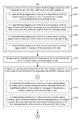
- FIGS. 5A-5C are flow charts illustrating an example method for throttling display of electronic messages in a computing system, in accordance with some implementations.
- a method for throttling display of electronic messages grouped into a message cluster includes, at a computing device, detecting occurrence of one or more cluster throttling trigger events for a first message cluster, of a first cluster type, in an email application. The method further includes, updating a set of properties for the first message cluster in accordance with the one or more cluster throttling trigger events and comparing the updated set of properties for the first message cluster to one or more cluster display throttling rules associated with the first message cluster. The method includes, in accordance with a determination that the set of properties for the first message cluster satisfies the one or more cluster display throttling rules, refreshing display of the first message cluster within a listing of electronic messages.
- refreshing display of the first message cluster within a listing of electronic messages comprises displaying the first message cluster at the top of the listing or re-ranking the first message cluster within the listing based upon one or more re-ranking criteria.
- one of the one or more re-ranking criteria is a function of a time of occurrence of the one or more cluster throttling trigger events.
- a cluster display throttling trigger event of the one or more cluster throttling trigger events is receipt of an incoming electronic message corresponding to the first message cluster.
- a cluster throttling trigger event of the one or more cluster throttling trigger events is the detection of passage of a predetermined amount of time since refreshing display of the first message cluster.
- a cluster display throttling trigger event of the one or more cluster throttling trigger events is detection of the occurrence of a particular time of day and/or the occurrence of a predetermined date.
- a cluster display throttling rule of the one or more cluster display throttling rules comprises receipt by the first message cluster of a predefined number of new electronic messages since previously refreshing display of the first message cluster. In some implementations, a cluster display throttling rule of the one or more cluster display throttling rules comprises receipt by the first message cluster of at least one new electronic message since previously refreshing display of the first message cluster, and occurrence of a particular time of day.
- a cluster display throttling rule of the one or more cluster display throttling rules comprises the first message cluster receiving at least one new electronic message since previously refreshing display of the first message cluster and passage of a predetermined amount of time since previously refreshing display of the first message cluster.
- a cluster display throttling rule of the one or more cluster display throttling rules comprises the first message cluster receiving at least one new electronic message since previously refreshing display of the first message cluster, where the at least one new electronic message is identified as having priority.
- At least a subset of the one or more cluster display throttling rules is user-generated.
- one cluster display throttling rule of the one or more cluster display throttling rules is a default rule for message clusters of the first cluster type.
- one cluster display throttling rule of the one or more cluster display throttling rules is a default rule for all message clusters displayed in the listing of electronic messages.
- the default rule for all message clusters displayed in the listing of electronic messages overrides all other cluster display throttling rules.
- satisfaction of the one or more cluster display throttling rules is based on a weighted combination of the one or more cluster display throttling rules.
- computing systems and non-transitory computer storage mediums for executing one or more steps of any of the above-described methods or any of the methods disclosed herein are also disclosed.
- FIG. 1 is a block diagram illustrating a computing system 100 , in accordance with some implementations.
- the computing system 100 includes one or more devices 102 (e.g., device 102 A, 102 B, 102 C, 102 D . . . , and 102 N), a communication network 104 , and a cluster throttling system 106 .
- a device 102 is a phone (mobile or landline, smart phone or otherwise), a tablet, a computer (mobile or otherwise), a fax machine, or an audio/video recorder.
- a device 102 obtains an electronic message from (e.g., drafted or generated by) a user of the device 102 , and transmits the electronic message to the cluster throttling system 106 for clustering with (e.g., grouping with or separating from) other electronic messages. For example, after determining that user Jack sends an email to user Mary, the device 102 transmits the email to the cluster throttling system 106 , which clusters messages for Mary.
- the electronic message acts as an incoming trigger event 111 for cluster throttling system 106 , that governs the display of the various message clusters 120 (e.g., moving a message cluster to the top of an email inbox).
- a trigger event is message-based trigger event, comprising a file transfer 111 - a (e.g., a photo, document, or video download/upload), an email 111 - b , an instant message 111 - c (e.g., a GOOGLE HANGOUT message), a fax message 111 - d , a social network update 111 - e (e.g., a GOOGLE PLUS update), or a voice message 111 - f .
- a file transfer 111 - a e.g., a photo, document, or video download/upload
- an email 111 - b e.g., an instant message 111 - c (e.g., a GOOGLE HANGOUT message)
- a fax message 111 - d e.g., a GOOGLE PLUS update
- voice message 111 - f e.g., a voice message 111 -
- an incoming trigger event 111 is a time-based trigger event, such as the occurrence of a particular time of day (e.g., 5 PM) or particular time of the week (e.g., 12:01 AM, Saturday morning).
- an incoming trigger event 111 is a duration of time (e.g., 1 day), and in some implementations, this duration of time is measured since the last time the message cluster was updated.
- a device 102 includes a messaging application 150 and optionally an analysis module 110 (similar to the analysis module 170 included in the cluster throttling system 106 ).
- the messaging application 150 processes incoming and outgoing electronic messages into and from the device 102 , such as an outgoing email sent by a user of the device 102 to another user, and a chat message by another user to a user of the device 102 .
- the analysis module 110 resident on the device 102 balances processing load with the analysis module 170 resident on the cluster throttling system 106 .
- the communication network 104 interconnects one or more devices 102 with each other, and with the cluster throttling system 106 .
- the communication network 104 optionally includes the Internet, one or more local area networks (LANs), one or more wide area networks (WANs), other types of networks, or a combination of such networks.
- LANs local area networks
- WANs wide area networks
- the cluster throttling system 106 includes an analysis module 170 , a trigger queue 112 , a collection of cluster throttling rules 114 (e.g., user or system-provided rules), and optionally a rule customization module 118 .
- a cluster throttling system 106 analyzes incoming trigger events 111 , such as receiving incoming electronic messages corresponding to one or more message clusters 120 , where a message cluster is one or more electronic messages having a collective, content-based association (e.g., a “Promotions” cluster of promotional emails, or a “Social Network” cluster of social network posts) and a common message type.
- incoming trigger events 111 get queued up for analysis by analysis module 170 of the cluster throttling system 106 , in trigger queue 112 .
- the cluster throttling system 106 identifies one or more message clusters (e.g., message cluster 120 - 1 ) associated with Trigger One 113 - 1 .
- a single trigger event corresponds to more than one message cluster (e.g., a time-based trigger event detecting occurrence of 12:01 AM on Saturday morning).
- cluster throttling system 106 and/or analysis module 170 updates a set of properties for the one or more message clusters associated with Trigger One 113 - 1 .
- Trigger One 113 - 1 is receipt of a new message associated with message cluster 120 - 1 , the properties for message cluster 120 - 1 are updated to reflect receipt of this additional message.
- Trigger One 113 - 1 is detection of occurrence of a particular day of the week (e.g., Saturday)
- the properties for message cluster 120 - 1 are updated to reflect that the particular day of the week has occurred.
- Trigger One 113 - 1 is detection of the passage of time since message cluster 120 - 1 had its display refreshed, the properties for message cluster 120 - 1 are updated to reflect this passage of time.
- these message cluster properties are updated and stored in the respective message clusters (e.g., the cluster properties for message cluster 120 - 1 stored with message cluster 120 - 1 ). In some cases, cluster properties for some or all of the message clusters in cluster throttling system 106 are updated and stored in cluster properties module 116 .
- analysis module 170 determines which one or more cluster throttling rules apply to the respective message cluster. For example, if Trigger One 113 - 1 corresponds to Message Cluster 120 - 1 , analysis module 170 determines that cluster throttling rules Rule One 114 - 1 and Rule Three 114 - 3 control display throttling of the cluster.
- cluster throttling system 106 and/or analysis module 170 analyzes the updated set of properties for the one or more identified message clusters against one or more cluster throttling rules applied to the respective message clusters (e.g., Rule One 114 - 1 and Rule Three 114 - 3 for message cluster 120 - 1 ).
- the same cluster throttling rule is applied to more than one message cluster.
- a message cluster of a particular type e.g., a travel message cluster
- one or more of the cluster throttling rules are user-generated, using rule customization module 118 .
- the one or more user-generated rules are created for only one particular message cluster, while in some cases the one or more user-generated rules can be applied to more than one message cluster.
- one cluster throttling rule has superseding authority over all other cluster throttling rules in cluster throttling system 106 .
- cluster throttling system 106 and/or analysis module 170 determines that the refreshed set of properties for a respective message cluster (e.g., message cluster 120 - 1 ) satisfies the one or more cluster display throttling rules associated with the respective message cluster (e.g., Rule One 114 - 1 , Rule Three 114 - 3 ). For example, if Trigger One 113 - 1 is a new message corresponding to message cluster 120 - 1 , and Rule One 114 - 1 is satisfied if the properties of message cluster 120 - 1 indicate that a new message has been received at the message cluster.
- cluster throttling system 106 refreshes display of the message cluster within a listing of email messages (e.g., an email inbox).
- Cluster throttling system 106 sends this information to communication network 104 to transmit to a device 102 .
- the analysis module 110 is a software or hardware component resident on the device 102 , such as a software package/application or a hardware chipset, for throttling display of clustered messages, and analysis module 170 on server 106 is not used. In some implementations, the analysis module 110 is not present and analysis module 170 , which exists separate from or independent of the device 102 is used (e.g., a GOOGLE mail cluster throttling/processing server that is connected with but not part of the device 102 , e.g., in the manner depicted in FIG. 1 with analysis module 170 ).
- the analysis module 110 is a software or hardware component resident on the device 102 , such as a software package/application or a hardware chipset, for throttling display of clustered messages, and analysis module 170 on server 106 is also used. That is, both analysis module 110 on device 102 and analysis module 170 on server 106 are used.
- some clustering rules 114 e.g. user-specified rules
- some clustering rules 114 e.g., system-provided rules
- the trigger queue 112 stores one or more electronic messages awaiting analysis by the analysis module 170 .
- the trigger queue 112 includes different types of electronic messages, such as a file transfer 111 - a (e.g., a photo, document, or video upload), an email 111 - b , an instant message 111 - c (e.g., a Google HANGOUT message), a fax message 111 - d , a social network update 111 - e (e.g., a GOOGLE PLUS update), or a voice message 111 - f .
- the trigger queue 112 includes various events, such as a passage of time since a respective message cluster was displayed, occurrence of a particular time of day or date, or activation of a new device 120 within computing system 100 .
- the collection of cluster throttling rules 114 include system and user-specified clustering rules.
- system-provided rules are determined by the cluster throttling system 106 (e.g., default cluster throttling rules), and user-specified rules are customized (e.g., added, removed, or modified) by a user.
- a rule customization module 118 enables a user to customize (e.g., add, remove, and modify) cluster throttling rules within the collection of cluster throttling rules 114 . These approaches enable customizing cluster throttling results to a user's specific needs.
- FIG. 2A is a block diagram illustrating a computing device 102 , in accordance with some implementations.
- the device 102 in some implementations includes one or more processing units CPU(s) 202 (also referred to as processors), one or more network interfaces 204 , a user interface 205 , a memory 206 , and one or more communication buses 208 for interconnecting these components.
- the communication buses 208 optionally include circuitry (sometimes called a chipset) that interconnects and controls communications between system components.
- the memory 206 typically includes high-speed random access memory, such as DRAM, SRAM, DDR RAM or other random access solid state memory devices; and optionally includes non-volatile memory, such as one or more magnetic disk storage devices, optical disk storage devices, flash memory devices, or other non-volatile solid state storage devices.
- the memory 206 optionally includes one or more storage devices remotely located from the CPU(s) 202 .
- the memory 206 or alternatively the non-volatile memory device(s) within the memory 206 , comprises a non-transitory computer readable storage medium.
- the memory 206 or alternatively the non-transitory computer readable storage medium stores the following programs, modules and data structures, or a subset thereof:
- the user interface 205 includes an input device (e.g., a keyboard, a mouse, a touchpad, a track pad, and a touch screen) for a user to interact with the device 102 .
- an input device e.g., a keyboard, a mouse, a touchpad, a track pad, and a touch screen
- one or more of the above identified elements are stored in one or more of the previously mentioned memory devices, and correspond to a set of instructions for performing a function described above.
- the above identified modules or programs (e.g., sets of instructions) need not be implemented as separate software programs, procedures or modules, and thus various subsets of these modules may be combined or otherwise re-arranged in various implementations.
- the memory 206 optionally stores a subset of the modules and data structures identified above. Furthermore, the memory 206 may store additional modules and data structures not described above.
- FIG. 2B is a block diagram illustrating a clustering throttling system 106 , in accordance with some implementations.
- the clustering throttling system 106 typically includes one or more processing units CPU(s) 250 (also referred to as processors), one or more network interfaces 254 , memory 256 , and one or more communication buses 252 for interconnecting these components.
- the communication buses 252 optionally include circuitry (sometimes called a chipset) that interconnects and controls communications between system components.
- the memory 256 includes high-speed random access memory, such as DRAM, SRAM, DDR RAM or other random access solid state memory devices; and optionally includes non-volatile memory, such as one or more magnetic disk storage devices, optical disk storage devices, flash memory devices, or other non-volatile solid state storage devices.
- the memory 256 optionally includes one or more storage devices remotely located from CPU(s) 250 .
- the memory 256 or alternatively the non-volatile memory device(s) within the memory 256 , comprises a non-transitory computer readable storage medium.
- the memory 256 or alternatively the non-transitory computer readable storage medium stores the following programs, modules and data structures, or a subset thereof:
- one or more of the above identified elements are stored in one or more of the previously mentioned memory devices, and correspond to a set of instructions for performing a function described above.
- the above identified modules or programs (e.g., sets of instructions) need not be implemented as separate software programs, procedures or modules, and thus various subsets of these modules may be combined or otherwise re-arranged in various implementations.
- the memory 256 optionally stores a subset of the modules and data structures identified above. Furthermore, the memory 256 may store additional modules and data structures not described above.
- FIGS. 2A and 2B show a “device 102 ” and a “clustering throttling system 106 ,” respectively, FIGS. 2A and 2B are intended more as functional description of the various features which may be present in computer systems than as a structural schematic of the implementations described herein. In practice, and as recognized by those of ordinary skill in the art, items shown separately could be combined and some items could be separated.
- FIGS. 3A-3D illustrate examples of message clusters and cluster display throttling, in accordance with some implementations.
- a user interface is shown for an email application, comprising a listing of electronic messages (e.g., in an email inbox).
- the listing of electronic messages is shown to comprise at least two message clusters, cluster 302 and cluster 304 .
- Cluster 302 is a group of electronic messages having a collective association, namely promotional material (e.g., advertisements for retail sales, newsletters from stores).
- promotional material e.g., advertisements for retail sales, newsletters from stores.
- cluster 302 comprises 9 new electronic messages
- cluster 304 comprises 1 new electronic message.
- a new electronic message refers to a message that has not been viewed, opened, acknowledged or read by the user of the email application.
- FIG. 3B illustrates exemplary contents of message cluster 302 , particularly email messages corresponding to promotional materials for various stores.
- the messages in the cluster 302 are considered to have been viewed or opened upon transitioning from the synopsis view of cluster 302 in FIG. 3A to the listing view of cluster 302 in FIG. 3B .
- the electronic messages listed in cluster 302 in FIG. 3B must be individually opened, in order to change the number of “new” messages within cluster 302 .
- FIG. 3C illustrates cluster 304 being displayed after receiving two additional electronic messages.
- the display of cluster 304 is not refreshed (e.g., promoted within the listing, reranked within the listing or placed at the top of the listing of electronic messages), upon receipt of an additional, or even two additional new electronic messages.
- This behavior reflects a setting for cluster 304 that “throttles” or adjusts the rate of display refresh for the cluster. In some embodiments, this setting takes the form of a rule.
- message cluster rules are user-generated.
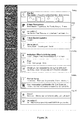
- FIG. 4 is an exemplary table 400 illustrating display throttling rules for electronic messages in a computing system, in accordance with some implementations.
- Table 400 comprises a Cluster column 402 referring to names or labels for specific clusters, and Cluster Type column 404 referring to a category for a particular cluster (e.g., Travel).
- a Cluster Type can also have a sub-type, such as sales/promotions (Luxury) and sales/promotions (Essentials).
- Table 400 also comprises Trigger Events column 406 , referring to particular trigger events that will invoke a display refresh of the corresponding message cluster.
- Table 400 also comprises a Rule number column 408 referring to an optional number assigned to a respective cluster throttling rule (e.g., a rule of the cluster throttling rules 114 , FIG. 1 ).
- Rule column 410 describes the general requirements of a particular rule.
- a respective cluster throttling rule is assigned only to one message cluster (e.g., rule 17 to the Gardening Tips cluster).
- a cluster throttling rule is assigned to more than one message cluster (e.g., rule 1 to the Black Friday Sales cluster and the Airfare Deals cluster).
- Default column 412 refers to whether or not the respective cluster throttling rule is a default rule.
- a cluster throttling rule is a default rule if it is set as the global default for all message clusters. In some embodiments, a cluster throttling rule is a default rule if it is set as a default rule for one or more message clusters. In some embodiments, a rule is a default rule if it is a default rule for all message clusters of a particular cluster type (e.g., Newsletters). In some embodiments, a cluster throttling rule is a default rule if it is either a global default rule or a default rule for one or more message clusters.
- FIG. 4 also comprises several rows, 414 - 436 .
- Row 414 and row 416 illustrate an exemplary message cluster “Black Friday Sales,” of a sales/promotions (Luxury) type, having two cluster throttling rules assigned to it, rule 1 and rule 11.
- rule 1 “Refresh display after accumulation of 5 new messages,” is set to respond to the trigger event of the “Black Friday Sales” message cluster receiving a new message.
- This rule is also set as the default rule.
- the system creates or assigns a default rule to a new message cluster. In some embodiments, this is done on the basis of the message cluster type.
- the “Black Friday Sales” cluster is also shown to have a “time-based” cluster throttling rule assigned to it. Rule 11, refreshes display of the “Black Friday Sales” cluster at least once per hour until Mon. Dec. 2, 2013 at 11:59 PM. For example, the user may have created this short term throttling rule to see promotional messages of his interest during the month of November.
- Table 400 also comprises row 418 and row 420 , illustrating an exemplary message cluster “Google+ Updates,” of a social network updates cluster type.
- This exemplary message cluster has two cluster throttling rules assigned to it, namely rule 4 and rule 15.
- rule 4 is set as the default rule, to refresh display of the message cluster after accumulation of 3 new messages, and responds to the trigger event of receiving a new social network post.
- rule 15 is a user-generated cluster throttling rule that refreshes display of the cluster immediately upon receipt of a message from Andy, a particular friend of the user of the email application.
- rule 15 supersedes rule 4 with respect to display of the “Google+ Updates” message cluster, because it is a user-generated rule.
- the most recently assigned rule to a message cluster has the highest priority for the respective message cluster (i.e., it supersedes all other rules assigned to the respective message cluster).
- Table 400 also comprises row 422 and row 424 , illustrating an exemplary message cluster “Airfare Deals,” of a travel cluster type.
- This exemplary message cluster has two cluster display throttling rules assigned to it, namely rule 1 and rule 8.
- rule 1 is set as the default rule, and is also a rule applied to the “Black Friday Sales” cluster in row 414 .
- Rule 8 illustrates a cluster display throttling rule associated with a keyword-based trigger event (e.g., refresh display immediately upon receipt of a message containing flights to Hawaii).
- Row 426 of table 400 illustrates another time-based trigger event (e.g., detect time to be 6:00 PM on a Friday) and corresponding cluster display throttling rule, Rule 10.
- a message cluster has only one associated cluster display throttling rule.
- the message cluster if it is a user-generated message cluster, it also requires a user-generated cluster display throttling rule.
- a message cluster does not have a cluster display throttling rule, and display of that message cluster is not throttled or adjusted within a listing of electronic messages.
- Row 428 and row 430 of table 400 illustrate an exemplary message cluster “Gardening Tips,” of a newsletters cluster type.
- This exemplary message cluster has two cluster display throttling rules assigned to it, namely Rule 17 and Rule 18.
- Row 428 and row 430 illustrate that the same cluster throttling trigger event can correspond to more than one cluster display throttling rule, even for a single, respective message cluster. For example, in row 428 and row 430 , the trigger event is receiving a new message corresponding to the “Gardening Tips” message cluster.
- Rule 17 and Rule 18 are “seasonal” time-based rules that are set to refresh display of the “Gardening Tips” message cluster much more frequently in the warmer months (e.g., March to September), than the colder months (e.g., October to February).
- a pair or a set of cluster throttling rules work together in tandem, therefore there is no default cluster display throttling rule among them.
- neither Rule 17 nor Rule 18 is set to be the default cluster display throttling rule for the “Gardening Tips” message cluster.
- Row 432 and row 434 of table 400 illustrate an exemplary message cluster “Grocery and Pharmacy” of the sales/promotions cluster type and essentials cluster sub-type.
- This exemplary message cluster has two cluster display throttling rules assigned to it, namely Rule 2 and Rule 21.
- Row 432 and row 434 illustrate an example of a message cluster having two cluster display throttling rules that have some contradiction to each other.
- Rule 2 refreshes display immediately upon receipt of a new message by the “Grocery and Pharmacy” message cluster, but Rule 21 ceases to refresh display of the message cluster during the hours of 9:00 AM and 5:00 PM, Monday to Friday.
- This example illustrates that in some embodiments, a message cluster has conflicting or contradictory cluster display throttling rules.
- the most recently applied cluster throttling rule takes precedence and supersedes the older rule or rules associated with the message cluster.
- a message cluster has a user-specified cluster display throttling rule associated with it, that user-specified (or user-generated) rule takes precedence.
- when one rule takes precedence over other cluster display throttling rules it only takes precedence during conditions where there is a conflict between the rules (e.g., the condition of detecting 9:00 AM to 5:00 PM, Monday to Friday with respect to Rule 2 and Rule 21).
- when one rule takes precedence over other cluster display throttling rules it renders the other conflicting rule or rules inactive.
- Row 436 of table 400 illustrates a master default cluster display throttling rule that applies to all message clusters.
- Rule 3 applies to all message clusters, and ceases to refresh display of all message clusters while the email application's auto-away response has been activated by the user.
- FIGS. 5A-5C illustrate a flow chart for method 500 of throttling clustered electronic messages.
- the method comprises detecting ( 502 ) occurrence of one or more cluster throttling trigger events for a first message cluster, of a first cluster type, in an email application.
- a cluster throttling trigger event ( 504 ) of the one or more cluster throttling trigger events is receipt of an incoming electronic message corresponding to the first message cluster (e.g., receiving a new promotional email in the “Black Friday Deals” message cluster, row 414 in FIG. 4 ).
- a cluster throttling trigger event ( 506 ) of the one or more cluster throttling trigger events is the detection of passage of a predetermined amount of time since previously refreshing display of the first message cluster (e.g., detecting 24 hours have passed since refreshing display of the respective message cluster). In some embodiments, this event is in combination with detecting receipt of at least one incoming electronic message corresponding to the first message cluster since previously refreshing display.
- a cluster throttling trigger event ( 508 ) of the one or more cluster throttling trigger events is detection of the occurrence of a particular time of day (e.g., 5:00 PM or Friday at 5:00 PM).
- a cluster throttling trigger event ( 510 ) of the one or more cluster throttling trigger events is detection of the occurrence of a date (e.g., October 31).
- the method further includes updating ( 512 ) a set of properties for the first message cluster in accordance with the one or more cluster throttling trigger events. For example, updating a set of properties for a respective message cluster with the number of new electronic messages since previously refreshing display of the respective message cluster. In another example, the set of properties for a respective message cluster is updated to include the passage of time since previously refreshing display of the respective message cluster.
- the method further includes comparing ( 514 ) the refreshed set of properties for the first message cluster to one or more cluster display throttling rules associated with the first message cluster.
- a cluster display throttling rule ( 516 ) of the one or more cluster display throttling rules comprises receipt by the first message cluster of a predefined number of new electronic messages since previously refreshing display of the first message cluster (e.g., Rule 1 in FIG. 4 , refresh display after accumulation of 5 new messages).
- a cluster display throttling rule ( 518 ) of the one or more cluster display throttling rules comprises receipt by the first message cluster of at least one new electronic message since previously refreshing display of the first message cluster, and occurrence of a particular time of day (e.g., Rule 10 in FIG. 4 , refresh display every Friday at 6:00 PM if there are new messages in the cluster).
- a cluster display throttling rule ( 520 ) of the one or more cluster display throttling rules comprises the first message cluster receiving at least one new electronic message since previously refreshing display of the first message cluster and passage of a predetermined amount of time since previously refreshing display of the first message cluster. For example, the rule requires a respective message cluster to have received at least one new message within the last 24 hours, to allow refreshing display of the message cluster.
- a cluster display throttling rule ( 522 ) of the one or more cluster display throttling rules comprises the first message cluster receiving at least one new electronic message since previously refreshing display of the first message cluster, where the at least one new electronic message is identified as having priority. For example, an electronic message is identified as having priority because it is a flagged or starred (e.g., user designated priority) message, or it is from a particular sender or it comprises one or more key words.
- At least a subset of the one or more cluster display throttling rules ( 524 ) is user-generated (e.g., Rule 15 for the Google+ Updates message cluster in FIG. 4 ).
- one cluster throttling rule ( 526 ) of the one or more cluster throttling rules is a default rule for message clusters of the first cluster type. For example, for all messages clusters of the “Travel” type, the default rule is to refresh display only after accumulation of 5 new messages in the message cluster since previously refreshing the display.
- one cluster throttling rule ( 528 ) of the one or more cluster throttling rules is a default rule for all message clusters displayed in the listing of electronic messages.
- all message clusters displayed in an email application inbox are subject to a default rule of ceasing to refresh all message clusters while the email application user has enabled an out of office message.
- the default rule for all message clusters ( 530 ) displayed in the listing of electronic messages overrides all other cluster throttling rules.
- the method further includes, in accordance with a determination that the set of properties for the first message cluster satisfies the one or more cluster display throttling rules, refreshing ( 532 ) display of the first message cluster within a listing of electronic messages. For example, in accordance with a determination that the set of properties for a respective cluster indicate that at least one new electronic message has been received in the last 24 hours, the respective message cluster is displayed at the top of a list of email messages in an email inbox if it is assigned a cluster display throttling rule requiring receipt of at least one new electronic message within the last 24 hours.
- refreshing display ( 534 ) of the first message cluster within a listing of electronic messages comprises displaying the first message cluster at the top of the listing (e.g., cluster 304 in FIG. 3D ).
- refreshing display ( 536 ) of the first message cluster within a listing of electronic messages comprises re-ranking the first message cluster within the listing based upon a time of occurrence of a first trigger throttling event in the one or more cluster throttling trigger events. For example re-ranking the first message cluster results in the promotion of the first message cluster within the listing of electronic messages, but does not necessarily result in the first message cluster being displayed at the top of the listing.
- satisfaction of the one or more cluster display throttling rules ( 540 ) is based on a weighted combination of the one or more cluster display throttling rules. For example, display of the respective message cluster is refreshed based on how well it met a weighted combination of its assigned rule satisfaction (e.g., 50% of Rule 1 satisfaction and 50% of Rule 2 satisfaction). In this example, even if the respective message cluster only satisfies one of its two rules, its display is still refreshed within the listing of electronic messages if the threshold for satisfaction of the weighted combination is a score or value of 0.4 (e.g., since the message cluster attained a score or value of 0.5).
- a weighted combination of the one or more cluster display throttling rules For example, display of the respective message cluster is refreshed based on how well it met a weighted combination of its assigned rule satisfaction (e.g., 50% of Rule 1 satisfaction and 50% of Rule 2 satisfaction). In this example, even if the respective message cluster only satisfies one of its two rules,
- refreshing display of the first message cluster within a listing of electronic messages is based on a rule-satisfaction score.
- a respective message cluster receives a “score” based on a weighted combination of its two cluster display throttling rules, one that requires at least 3 newly received electronic messages since previously refreshing display of the message cluster and the other requiring receipt of one or more newly received electronic messages indicating a priority (e.g., starred messages).
- a priority e.g., starred messages.
- this particular message cluster receives a high “score” and is correspondingly promoted within the listing of electronic messages when display of the respective message cluster is refreshed.
- first first
- second second
- first first
- second second
- first message cluster first message cluster
- the term “if” may be construed to mean “when” or “upon” or “in response to determining” or “in accordance with a determination” or “in response to detecting,” that a stated condition precedent is true, depending on the context.
- the phrase “if it is determined (that a stated condition precedent is true)” or “if (a stated condition precedent is true)” or “when (a stated condition precedent is true)” may be construed to mean “upon determining” or “in response to determining” or “in accordance with a determination” or “upon detecting” or “in response to detecting” that the stated condition precedent is true, depending on the context.
Landscapes
- Engineering & Computer Science (AREA)
- Business, Economics & Management (AREA)
- Human Resources & Organizations (AREA)
- Entrepreneurship & Innovation (AREA)
- Strategic Management (AREA)
- Computer Networks & Wireless Communication (AREA)
- Signal Processing (AREA)
- General Business, Economics & Management (AREA)
- Data Mining & Analysis (AREA)
- Economics (AREA)
- Marketing (AREA)
- Operations Research (AREA)
- Quality & Reliability (AREA)
- Tourism & Hospitality (AREA)
- Physics & Mathematics (AREA)
- General Physics & Mathematics (AREA)
- Theoretical Computer Science (AREA)
- Computer Hardware Design (AREA)
- Human Computer Interaction (AREA)
- Information Transfer Between Computers (AREA)
Abstract
Description
-
- an
operating system 210, which includes procedures for handling various basic system services and for performing hardware dependent tasks; - a network communication module (or instructions) 212 for connecting the
device 102 with other devices (e.g., the clustering system 106 and thedevices 102B . . . 102N) via one or more network interfaces 204 (wired or wireless), or the communication network 104 (FIG. 1 ); - a
user interface module 213 for displaying user interface components or controls (e.g., textbox, button, radio button, drop-down list) to a user; - a
messaging application 150 for processing and displaying incoming and outgoing electronic messages, e.g., using cluster graphics, including:- a cluster graphic 1 (214-1) that visually displays a corresponding message cluster (e.g., message cluster 120-1,
FIG. 1 ) according to cluster throttling rules Rule One 114-1 and Rule Three 114-3—both of which have been assigned to the message cluster corresponding to cluster graphic 1; - a cluster graphic 2 (214-2) that visually displays a corresponding message cluster (e.g., message cluster 120-2,
FIG. 1 ) according to cluster throttling rule Rule Two 114-2—which has been assigned to the message cluster corresponding to cluster graphic 2; and - a cluster graphic n (214-n) that visually displays a corresponding message cluster (e.g., message cluster 120-n,
FIG. 1 ) according to one or more cluster throttling rules that have been assigned to message cluster n;
- a cluster graphic 1 (214-1) that visually displays a corresponding message cluster (e.g., message cluster 120-1,
- optionally an
analysis module 110 for analyzing trigger events and cluster throttling rules, and throttling display of one or more message clusters in accordance with therewith.
- an
-
- an
operating system 258, which includes procedures for handling various basic system services and for performing hardware dependent tasks; - a network communication module (or instructions) 260 for connecting the clustering throttling system 106 with other devices (e.g., the devices 102) via the one or more network interfaces 254 (wired or wireless), or the communication network 104 (
FIG. 1 ); - an
analysis module 170 for conducting a content-based analysis on (e.g., incoming and outgoing) electronic messages and assigning electronic messages to one or more clusters in accordance with the content based analysis (e.g., content categories); - a
trigger event queue 112 for storing trigger events awaiting processing by the analysis module 170 (e.g., Trigger One 113-1, Trigger Two 113-2); - a collection of
cluster throttling rules 114, which specify the conditions or circumstances for allowing display of a message cluster to be refreshed within a listing of electronic messages; - optionally a
cluster properties module 116 for updating and storing cluster properties for some or all of the message clusters - optionally a
rule customization module 118 for enabling a user to customize (e.g., add, remove, and modify) the collection ofcluster throttling rules 114; and - one or
more message clusters 120 with corresponding cluster throttling rules assigned thereto, which include, for example:-
cluster 1 120-1 including:- Rule one 114-1; and
- Rule three 114-3;
-
cluster 2 120-2 including:- Rule two 114-2;
-
cluster 3 120-3; and - cluster N 120-N.
-
- an
Claims (20)
Priority Applications (1)
| Application Number | Priority Date | Filing Date | Title |
|---|---|---|---|
| US14/829,587 US10021053B2 (en) | 2013-12-31 | 2015-08-18 | Systems and methods for throttling display of electronic messages |
Applications Claiming Priority (2)
| Application Number | Priority Date | Filing Date | Title |
|---|---|---|---|
| US14/145,005 US9124546B2 (en) | 2013-12-31 | 2013-12-31 | Systems and methods for throttling display of electronic messages |
| US14/829,587 US10021053B2 (en) | 2013-12-31 | 2015-08-18 | Systems and methods for throttling display of electronic messages |
Related Parent Applications (1)
| Application Number | Title | Priority Date | Filing Date |
|---|---|---|---|
| US14/145,005 Continuation US9124546B2 (en) | 2013-12-31 | 2013-12-31 | Systems and methods for throttling display of electronic messages |
Publications (2)
| Publication Number | Publication Date |
|---|---|
| US20150358269A1 US20150358269A1 (en) | 2015-12-10 |
| US10021053B2 true US10021053B2 (en) | 2018-07-10 |
Family
ID=53483212
Family Applications (2)
| Application Number | Title | Priority Date | Filing Date |
|---|---|---|---|
| US14/145,005 Active US9124546B2 (en) | 2013-12-31 | 2013-12-31 | Systems and methods for throttling display of electronic messages |
| US14/829,587 Active 2034-10-25 US10021053B2 (en) | 2013-12-31 | 2015-08-18 | Systems and methods for throttling display of electronic messages |
Family Applications Before (1)
| Application Number | Title | Priority Date | Filing Date |
|---|---|---|---|
| US14/145,005 Active US9124546B2 (en) | 2013-12-31 | 2013-12-31 | Systems and methods for throttling display of electronic messages |
Country Status (1)
| Country | Link |
|---|---|
| US (2) | US9124546B2 (en) |
Families Citing this family (20)
| Publication number | Priority date | Publication date | Assignee | Title |
|---|---|---|---|---|
| USD763881S1 (en) * | 2013-11-22 | 2016-08-16 | Goldman, Sachs & Co. | Display screen or portion thereof with graphical user interface |
| US10104028B2 (en) | 2014-08-29 | 2018-10-16 | Google Llc | Systems and methods for improved processing of message queries |
| EP3139327A1 (en) * | 2015-09-03 | 2017-03-08 | Huawei Technologies Co., Ltd. | Random index pattern matching based email relations finder system |
| JP6018281B1 (en) * | 2015-11-11 | 2016-11-02 | Line株式会社 | Display control method, terminal, information processing apparatus, and program |
| US10057206B2 (en) | 2016-04-18 | 2018-08-21 | Salesforce.Com, Inc. | Combining updates of a social network feed |
| US10783533B2 (en) * | 2016-05-31 | 2020-09-22 | Coupa Software Incorporated | System for identification and resolution of opportunity triggers |
| US10338796B2 (en) * | 2016-07-27 | 2019-07-02 | Sap Se | Event services modeling framework for computer systems |
| JP2018036698A (en) * | 2016-08-29 | 2018-03-08 | 株式会社インテロール | Information processing device and method, program, and information processing system |
| US10841264B2 (en) * | 2016-09-21 | 2020-11-17 | Facebook, Inc. | Method and system for presenting a subset of messages in a modular inbox |
| FR3057080A1 (en) * | 2016-09-30 | 2018-04-06 | Orange | METHOD OF RETURNING A PLURALITY OF EXCHANGED MESSAGES WITH A CONVERSATIONAL AGENT |
| CN106685809B (en) * | 2017-02-24 | 2021-02-02 | 腾讯科技(深圳)有限公司 | Social circle generation method and device |
| CN109408159A (en) * | 2017-08-14 | 2019-03-01 | 阿里巴巴集团控股有限公司 | Interface message is shown and processing method, device and electronic equipment |
| CN108111395A (en) * | 2017-12-12 | 2018-06-01 | 安徽携行信息科技有限公司 | A kind of instant communicating system based on communication cloud |
| CN117453330A (en) * | 2018-01-29 | 2024-01-26 | 联想(北京)有限公司 | Information display method, information display device and electronic equipment |
| KR102734793B1 (en) * | 2019-04-03 | 2024-11-27 | 삼성전자주식회사 | Electronic device for displaying message and operating method thereof |
| US11075873B2 (en) * | 2019-04-22 | 2021-07-27 | Microsoft Technology Licensing, Llc | Inbox pause mode to facilitate focused use of an email client |
| CN110598143B (en) * | 2019-09-25 | 2021-05-11 | 腾讯科技(深圳)有限公司 | Method, related device and system for displaying instant messaging content |
| US11675849B2 (en) | 2019-12-20 | 2023-06-13 | Rovi Guides, Inc. | Systems and methods for re-ordering feed items based on a user scroll |
| US11853308B2 (en) * | 2019-12-20 | 2023-12-26 | Rovi Guides, Inc. | Systems and methods for re-ordering social media feed items |
| CN116319635A (en) * | 2023-02-06 | 2023-06-23 | 深圳华为云计算技术有限公司 | A message display method, device and computing device |
Citations (153)
| Publication number | Priority date | Publication date | Assignee | Title |
|---|---|---|---|---|
| US4914650A (en) | 1988-12-06 | 1990-04-03 | American Telephone And Telegraph Company | Bandwidth allocation and congestion control scheme for an integrated voice and data network |
| US5948040A (en) | 1994-06-24 | 1999-09-07 | Delorme Publishing Co. | Travel reservation information and planning system |
| US5948058A (en) | 1995-10-30 | 1999-09-07 | Nec Corporation | Method and apparatus for cataloging and displaying e-mail using a classification rule preparing means and providing cataloging a piece of e-mail into multiple categories or classification types based on e-mail object information |
| US6044260A (en) | 1997-09-02 | 2000-03-28 | Motorola, Inc. | Method of controlling the number of messages received by a personal messaging unit |
| US6057841A (en) | 1997-01-31 | 2000-05-02 | Microsoft Corporation | System and method for processing electronic messages with rules representing a combination of conditions, actions or exceptions |
| US6147977A (en) | 1997-12-12 | 2000-11-14 | Motorola, Inc. | Method and apparatus for processing messages based on originator and recipient priorities |
| US6232972B1 (en) | 1998-06-17 | 2001-05-15 | Microsoft Corporation | Method for dynamically displaying controls in a toolbar display based on control usage |
| US6252597B1 (en) | 1997-02-14 | 2001-06-26 | Netscape Communications Corporation | Scalable user interface for graphically representing hierarchical data |
| US6333973B1 (en) | 1997-04-23 | 2001-12-25 | Nortel Networks Limited | Integrated message center |
| US6351764B1 (en) | 1998-12-31 | 2002-02-26 | Michael Voticky | System and method for prioritizing communications messages |
| US6421709B1 (en) | 1997-12-22 | 2002-07-16 | Accepted Marketing, Inc. | E-mail filter and method thereof |
| US20020143871A1 (en) | 2001-01-23 | 2002-10-03 | Meyer David Francis | Meta-content analysis and annotation of email and other electronic documents |
| US20020160757A1 (en) | 2001-04-26 | 2002-10-31 | Moshe Shavit | Selecting the delivery mechanism of an urgent message |
| US6507866B1 (en) | 1999-07-19 | 2003-01-14 | At&T Wireless Services, Inc. | E-mail usage pattern detection |
| US20030020749A1 (en) | 2001-07-10 | 2003-01-30 | Suhayya Abu-Hakima | Concept-based message/document viewer for electronic communications and internet searching |
| US20030154212A1 (en) | 2002-01-28 | 2003-08-14 | International Business Machines Corporation | Method and apparatus for determining attributes among objects |
| US20030177190A1 (en) | 2001-11-27 | 2003-09-18 | International Business Machines Corporation | Method and apparatus for interaction with electronic mail from multiple sources |
| US20030195811A1 (en) | 2001-06-07 | 2003-10-16 | Hayes Marc F. | Customer messaging service |
| US20030214534A1 (en) | 2002-05-16 | 2003-11-20 | Uemura Marcelo R. | Displaying information to indicate both the importance and the urgency of the information |
| US20030233419A1 (en) | 2002-01-08 | 2003-12-18 | Joerg Beringer | Enhanced email management system |
| US6700591B1 (en) | 2000-05-04 | 2004-03-02 | Microsoft Corporation | Variable visual indicators based on predetermined characteristics |
| US6704772B1 (en) | 1999-09-20 | 2004-03-09 | Microsoft Corporation | Thread based email |
| US6725228B1 (en) | 2000-10-31 | 2004-04-20 | David Morley Clark | System for managing and organizing stored electronic messages |
| US20040078190A1 (en) | 2000-09-29 | 2004-04-22 | Fass Daniel C | Method and system for describing and identifying concepts in natural language text for information retrieval and processing |
| US20040153456A1 (en) | 2003-02-04 | 2004-08-05 | Elizabeth Charnock | Method and apparatus to visually present discussions for data mining purposes |
| US6778642B1 (en) | 1999-03-23 | 2004-08-17 | Verizon Laboratories Inc. | Unified messaging system |
| US20040254998A1 (en) | 2000-06-17 | 2004-12-16 | Microsoft Corporation | When-free messaging |
| US20050004990A1 (en) | 2003-07-01 | 2005-01-06 | Microsoft Corporation | Conversation grouping of electronic mail records |
| US20050080862A1 (en) | 2003-10-14 | 2005-04-14 | Kent Larry G. | Communication suite engine |
| US20050080851A1 (en) | 2003-10-14 | 2005-04-14 | Kent Larry G. | User interface for a communication suite |
| US20050102366A1 (en) | 2003-11-07 | 2005-05-12 | Kirsch Steven T. | E-mail filter employing adaptive ruleset |
| US20050114781A1 (en) | 2003-11-25 | 2005-05-26 | International Business Machines Corporation | Multi-column user interface for managing on-line threaded conversations |
| US20050138552A1 (en) | 2003-12-22 | 2005-06-23 | Venolia Gina D. | Clustering messages |
| US20050193076A1 (en) | 2004-02-17 | 2005-09-01 | Andrew Flury | Collecting, aggregating, and managing information relating to electronic messages |
| US20050193345A1 (en) | 2004-02-27 | 2005-09-01 | Research In Motion Limited | System and method for message display and management |
| US20050228790A1 (en) | 2004-04-12 | 2005-10-13 | Christopher Ronnewinkel | Coherent categorization scheme |
| US6961341B1 (en) | 1996-07-02 | 2005-11-01 | Microsoft Corporation | Adaptive bandwidth throttling for network services |
| US20050256968A1 (en) | 2004-05-12 | 2005-11-17 | Johnson Teddy C | Delaying browser requests |
| US20060010215A1 (en) | 2004-05-29 | 2006-01-12 | Clegg Paul J | Managing connections and messages at a server by associating different actions for both different senders and different recipients |
| US20060031340A1 (en) | 2004-07-12 | 2006-02-09 | Boban Mathew | Apparatus and method for advanced attachment filtering within an integrated messaging platform |
| US20060031347A1 (en) | 2004-06-17 | 2006-02-09 | Pekka Sahi | Corporate email system |
| US20060059238A1 (en) | 2004-05-29 | 2006-03-16 | Slater Charles S | Monitoring the flow of messages received at a server |
| US20060064410A1 (en) | 2004-09-20 | 2006-03-23 | Razza Anne M | System and method for providing an exit window on a user display device |
| US20060069734A1 (en) | 2004-09-01 | 2006-03-30 | Michael Gersh | Method and system for organizing and displaying message threads |
| US20060075044A1 (en) | 2004-09-30 | 2006-04-06 | Fox Kevin D | System and method for electronic contact list-based search and display |
| US20060095466A1 (en) | 2004-11-02 | 2006-05-04 | Daniell Stevens | Managing related data objects |
| US20060123360A1 (en) | 2004-12-03 | 2006-06-08 | Picsel Research Limited | User interfaces for data processing devices and systems |
| US20060173824A1 (en) | 2005-02-01 | 2006-08-03 | Metalincs Corporation | Electronic communication analysis and visualization |
| US20060173961A1 (en) | 2005-02-01 | 2006-08-03 | Microsoft Corporation | People-centric view of email |
| US20060206495A1 (en) | 2003-04-07 | 2006-09-14 | Johan Sebastiaan Van Gageldonk | Method and apparatus for grouping content items |
| US7120865B1 (en) | 1999-07-30 | 2006-10-10 | Microsoft Corporation | Methods for display, notification, and interaction with prioritized messages |
| US20060277504A1 (en) * | 2005-06-03 | 2006-12-07 | Research In Motion Limited | Displaying messages on handheld devices |
| US20070005592A1 (en) | 2005-06-21 | 2007-01-04 | International Business Machines Corporation | Computer-implemented method, system, and program product for evaluating annotations to content |
| US7167910B2 (en) | 2002-02-20 | 2007-01-23 | Microsoft Corporation | Social mapping of contacts from computer communication information |
| US20070038718A1 (en) | 2002-09-18 | 2007-02-15 | Advenix Corp. | Systems and methods for online marketing and advertising on e-mail systems |
| US7194516B2 (en) | 2003-10-23 | 2007-03-20 | Microsoft Corporation | Accessing different types of electronic messages through a common messaging interface |
| US20070106729A1 (en) | 2005-11-04 | 2007-05-10 | Research In Motion Limited | Method and system for updating message threads |
| US20070156669A1 (en) | 2005-11-16 | 2007-07-05 | Marchisio Giovanni B | Extending keyword searching to syntactically and semantically annotated data |
| US20070203991A1 (en) * | 2006-02-28 | 2007-08-30 | Microsoft Corporation | Ordering personal information using social metadata |
| US20070262861A1 (en) | 2006-05-15 | 2007-11-15 | Anderson Tommie K | Mobile asset tracking system and method |
| US20070277113A1 (en) | 2006-05-24 | 2007-11-29 | Kavita Agrawal | Optimization of calendar, intinerary, route plan, and pim efficiencies according to assimilated wireless service availability conditions |
| US20070299923A1 (en) | 2006-06-16 | 2007-12-27 | Skelly George J | Methods and systems for managing messaging |
| US7359947B2 (en) | 2003-07-31 | 2008-04-15 | International Business Machines Corporation | Autonomic e-mail processing system and method |
| US7386535B1 (en) | 2002-10-02 | 2008-06-10 | Q.Know Technologies, Inc. | Computer assisted and/or implemented method for group collarboration on projects incorporating electronic information |
| US7415504B2 (en) | 2001-02-26 | 2008-08-19 | Symantec Corporation | System and method for controlling distribution of network communications |
| US7421690B2 (en) | 2003-06-23 | 2008-09-02 | Apple Inc. | Threaded presentation of electronic mail |
| US20080215687A1 (en) | 2007-01-03 | 2008-09-04 | Madnani Rajkumar R | Mechanism for facilitating organization and accessing of emails |
| US7429993B2 (en) | 2004-09-17 | 2008-09-30 | Microsoft Corporation | Method and system for presenting functionally-transparent, unobtrusive on-screen windows |
| US7475120B1 (en) | 2008-03-10 | 2009-01-06 | International Business Machines Corporation | Auto removal of sent attachments |
| US20090037350A1 (en) * | 2007-01-18 | 2009-02-05 | Jubii Ip Limited | Method for automatically displaying electronic information received by a recipient in a sorted order and a communication system and/or system for exchanging information |
| US7506263B1 (en) | 2008-02-05 | 2009-03-17 | International Business Machines Corporation | Method and system for visualization of threaded email conversations |
| US20090089798A1 (en) | 2007-09-28 | 2009-04-02 | Microsoft Corporation | Electronic mail inbox with focused e-mails according to categories |
| US7539732B2 (en) | 2004-09-15 | 2009-05-26 | International Business Machines Corporation | Client based instant messenger queue limit |
| US7568011B2 (en) | 2006-04-04 | 2009-07-28 | Research In Motion Limited | Method and device for hiding messages |
| US20100017492A1 (en) * | 2000-07-24 | 2010-01-21 | Brian Reistad | Method and system for message pacing |
| US20100030798A1 (en) | 2007-01-23 | 2010-02-04 | Clearwell Systems, Inc. | Systems and Methods for Tagging Emails by Discussions |
| US20100049806A1 (en) | 2008-08-19 | 2010-02-25 | International Business Machines Corporation | Time-based messaging rules |
| US20100056221A1 (en) | 2008-09-03 | 2010-03-04 | Lg Electronics Inc. | Terminal, Controlling Method Thereof and Recordable Medium Thereof |
| US7689656B2 (en) | 2003-08-08 | 2010-03-30 | Teamon Systems, Inc. | Communications system providing message aggregation features and related methods |
| US7707255B2 (en) | 2003-07-01 | 2010-04-27 | Microsoft Corporation | Automatic grouping of electronic mail |
| US20100114855A1 (en) | 2008-10-30 | 2010-05-06 | Nec (China) Co., Ltd. | Method and system for automatic objects classification |
| US7730137B1 (en) | 2003-12-22 | 2010-06-01 | Aol Inc. | Restricting the volume of outbound electronic messages originated by a single entity |
| US7765212B2 (en) | 2005-12-29 | 2010-07-27 | Microsoft Corporation | Automatic organization of documents through email clustering |
| US20100199180A1 (en) | 2010-04-08 | 2010-08-05 | Atebits Llc | User Interface Mechanics |
| US7788329B2 (en) | 2000-05-16 | 2010-08-31 | Aol Inc. | Throttling electronic communications from one or more senders |
| US7814155B2 (en) | 2004-03-31 | 2010-10-12 | Google Inc. | Email conversation management system |
| US20100262922A1 (en) | 2008-12-31 | 2010-10-14 | Motorola, Inc. | Method and System for Processing Electronic Mail |
| US20100278453A1 (en) | 2006-09-15 | 2010-11-04 | King Martin T | Capture and display of annotations in paper and electronic documents |
| US20100306249A1 (en) | 2009-05-27 | 2010-12-02 | James Hill | Social network systems and methods |
| US20110010182A1 (en) | 2009-07-13 | 2011-01-13 | Microsoft Corporation | Electronic message organization via social groups |
| US7895537B2 (en) | 2003-12-29 | 2011-02-22 | International Business Machines Corporation | Method and apparatus for setting attributes and initiating actions through gestures |
| US20110072363A1 (en) | 2009-07-14 | 2011-03-24 | Carl Mandel | Presentation and sorting of email |
| US7958099B2 (en) | 2001-04-11 | 2011-06-07 | Lg Electronics Inc. | Unified management method of various types of messages of a personal information terminal |
| US7979501B1 (en) | 2004-08-06 | 2011-07-12 | Google Inc. | Enhanced message display |
| US7996900B2 (en) | 2008-03-14 | 2011-08-09 | Microsoft Corporation | Time travelling email messages after delivery |
| US8010613B2 (en) | 2007-05-24 | 2011-08-30 | International Business Machines Corporation | System and method for end-user management of E-mail threads using a single click |
| US20110231499A1 (en) | 2010-03-22 | 2011-09-22 | Research In Motion Limited | Management and display of grouped messages on a communication device |
| US8031845B2 (en) | 2003-12-29 | 2011-10-04 | International Business Machines Corporation | System for viewing information underlying lists and other contexts |
| US8041745B2 (en) | 2005-09-15 | 2011-10-18 | At&T Intellectual Property I, L.P. | Methods for managing aggregated address books |
| US20110289106A1 (en) | 2010-05-21 | 2011-11-24 | Rankin Jr Claiborne R | Apparatuses, methods and systems for a lead generating hub |
| US20110307804A1 (en) | 2010-06-11 | 2011-12-15 | Spierer Mitchell D | Electronic message management system and method |
| US8095400B2 (en) | 2006-03-06 | 2012-01-10 | Cbs Interactive, Inc. | Online waiting room system, method and computer program product |
| US20120013805A1 (en) | 2010-07-16 | 2012-01-19 | Isao Mihara | Apparatus and method for displaying content |
| US8140703B2 (en) | 1997-05-20 | 2012-03-20 | AOL, Inc. | Regulating users of online forums |
| US8150926B2 (en) | 2004-09-09 | 2012-04-03 | Microsoft Corporation | Organizing electronic mail messages into conversations |
| US20120102037A1 (en) | 2010-10-26 | 2012-04-26 | Mehmet Kivanc Ozonat | Message thread searching |
| US20120110085A1 (en) * | 2010-10-27 | 2012-05-03 | Prashant Malik | Indexing and Organizing Messages in a Messaging System Using Social Network Information |
| US8176130B2 (en) | 2003-10-14 | 2012-05-08 | At&T Intellectual Property I, L.P. | Processing rules for digital messages |
| US20120131095A1 (en) | 2010-11-22 | 2012-05-24 | Michael Luna | Optimization of resource polling intervals to satisfy mobile device requests |
| US20120149342A1 (en) | 2010-12-08 | 2012-06-14 | Gabriel Cohen | Priority Inbox Notifications and Synchronization for Mobile Messaging Application |
| US20120180021A1 (en) | 2011-01-07 | 2012-07-12 | Nathaniel David Byrd | Methods and systems for throttling calls to a service application through an open api |
| US8224902B1 (en) | 2004-02-04 | 2012-07-17 | At&T Intellectual Property Ii, L.P. | Method and apparatus for selective email processing |
| US20120185797A1 (en) | 2011-01-14 | 2012-07-19 | Alicia Thorsen | Grouping email messages into conversations |
| US20120185781A1 (en) | 2011-01-14 | 2012-07-19 | Angela Guzman | Email user interface |
| US8230350B2 (en) | 2009-07-03 | 2012-07-24 | Tweetdeck, Inc. | System and method for managing and displaying data messages |
| US8233885B2 (en) | 2006-09-08 | 2012-07-31 | Hewlett-Packard Development Company, L.P. | Apparatus and methods for providing enhanced mobile messaging services |
| US20120198053A1 (en) | 2006-01-24 | 2012-08-02 | Microsoft Corporation | Web Based Client/Server Notification Engine |
| US20120204191A1 (en) | 2011-02-07 | 2012-08-09 | Megan Shia | System and method for providing notifications on a mobile computing device |
| US20120210334A1 (en) | 2011-02-11 | 2012-08-16 | Research In Motion Limited | Communication device and method for coherent updating of collated message listings |
| US8281382B1 (en) | 2008-06-30 | 2012-10-02 | Amazon Technologies, Inc. | Dynamic throttling systems and services |
| US8286089B2 (en) | 2005-12-30 | 2012-10-09 | Research In Motion Limited | Representing new messages on a communication device |
| US20120271908A1 (en) | 2011-04-19 | 2012-10-25 | Michael Luna | Social caching for device resource sharing and management |
| US20120272160A1 (en) | 2011-02-23 | 2012-10-25 | Nova Spivack | System and method for analyzing messages in a network or across networks |
| US8307029B2 (en) | 2007-12-10 | 2012-11-06 | Yahoo! Inc. | System and method for conditional delivery of messages |
| US20130024440A1 (en) | 2011-07-22 | 2013-01-24 | Pascal Dimassimo | Methods, systems, and computer-readable media for semantically enriching content and for semantic navigation |
| US8375307B2 (en) | 2009-06-11 | 2013-02-12 | Lg Electronics Inc. | Mobile terminal and method for managing e-mail thereof |
| US20130055099A1 (en) | 2011-08-22 | 2013-02-28 | Rose Yao | Unified Messaging System with Integration of Call Log Data |
| US8402096B2 (en) | 2008-06-24 | 2013-03-19 | Microsoft Corporation | Automatic conversation techniques |
| US20130166280A1 (en) | 2011-12-21 | 2013-06-27 | Nuance Communications, Inc. | Concept Search and Semantic Annotation for Mobile Messaging |
| US20130165165A1 (en) | 2011-12-21 | 2013-06-27 | Nuance Communications, Inc. | Situation-Aware Message Presentation For Automotive Messaging |
| US8499042B2 (en) | 2004-01-30 | 2013-07-30 | Unwired Planet, Inc. | System for managing e-mail traffic |
| US20130212189A1 (en) | 2012-02-14 | 2013-08-15 | Ioannis VELISSARAKOS | Systems and methods for sharing online content |
| US8533274B2 (en) | 2004-03-31 | 2013-09-10 | Google Inc. | Retrieving and snoozing categorized conversations in a conversation-based email system |
| US8560619B1 (en) | 2011-09-09 | 2013-10-15 | Google Inc. | Email bankruptcy |
| US8577967B1 (en) | 2005-06-30 | 2013-11-05 | Google Inc. | Method and system for managing real-time communications in an email inbox |
| US20130297604A1 (en) | 2012-05-01 | 2013-11-07 | Research In Motion Limited | Electronic device and method for classification of communication data objects |
| US20130305187A1 (en) | 2012-05-09 | 2013-11-14 | Microsoft Corporation | User-resizable icons |
| US20130325705A1 (en) | 2012-05-29 | 2013-12-05 | Livingsocial, Inc. | Managing Merchant Communications |
| US20130332850A1 (en) | 2011-01-14 | 2013-12-12 | Apple Inc. | Presenting e-mail on a touch device |
| US20140047050A1 (en) * | 2012-08-13 | 2014-02-13 | Samsung Electronics Co., Ltd. | Method and electronic device for synchronizing emails |
| US20140046945A1 (en) | 2011-05-08 | 2014-02-13 | Vinay Deolalikar | Indicating documents in a thread reaching a threshold |
| US20140052797A1 (en) | 2012-08-20 | 2014-02-20 | Research In Motion Limited | Methods and devices for generating action item from email |
| US20140096032A1 (en) | 2012-10-01 | 2014-04-03 | Cellco Partnership D/B/A Verizon Wireless | Centralized media handling |
| US20140096033A1 (en) | 2008-03-06 | 2014-04-03 | Software Hot-House Ltd. | Enhancements to unified communications and messaging systems |
| US8701018B1 (en) | 2004-04-29 | 2014-04-15 | Paul Erich Keel | Methods and apparatus for managing information objects in an electronic personal information management system |
| US20140115495A1 (en) | 2012-10-18 | 2014-04-24 | Aol Inc. | Systems and methods for processing and organizing electronic content |
| US20140279016A1 (en) | 2010-03-07 | 2014-09-18 | Sailthru, Inc. | Behavioral tracking system and method in support of high-engagement communications |
| US20140280619A1 (en) * | 2013-03-14 | 2014-09-18 | International Business Machines Corporation | Systems and methods for grouping electronic messages |
| US20140280635A1 (en) | 2013-03-13 | 2014-09-18 | Microsoft Corporation | Providing an unseen message count across devices |
| US20140310324A1 (en) | 2013-04-16 | 2014-10-16 | Appsense Limited | Systems and methods for automatically sorting and indexing electronic files |
| US20140344711A1 (en) | 2013-05-17 | 2014-11-20 | Research In Motion Limited | Method and device for graphical indicator of electronic messages |
| US20140359480A1 (en) | 2013-06-04 | 2014-12-04 | Yahoo! Inc. | System and method for contextual mail recommendations |
| US20150088784A1 (en) | 2013-09-25 | 2015-03-26 | Avaya Inc. | System and method of message thread management |
-
2013
- 2013-12-31 US US14/145,005 patent/US9124546B2/en active Active
-
2015
- 2015-08-18 US US14/829,587 patent/US10021053B2/en active Active
Patent Citations (172)
| Publication number | Priority date | Publication date | Assignee | Title |
|---|---|---|---|---|
| US4914650A (en) | 1988-12-06 | 1990-04-03 | American Telephone And Telegraph Company | Bandwidth allocation and congestion control scheme for an integrated voice and data network |
| US5948040A (en) | 1994-06-24 | 1999-09-07 | Delorme Publishing Co. | Travel reservation information and planning system |
| US5948058A (en) | 1995-10-30 | 1999-09-07 | Nec Corporation | Method and apparatus for cataloging and displaying e-mail using a classification rule preparing means and providing cataloging a piece of e-mail into multiple categories or classification types based on e-mail object information |
| US6961341B1 (en) | 1996-07-02 | 2005-11-01 | Microsoft Corporation | Adaptive bandwidth throttling for network services |
| US6057841A (en) | 1997-01-31 | 2000-05-02 | Microsoft Corporation | System and method for processing electronic messages with rules representing a combination of conditions, actions or exceptions |
| US6252597B1 (en) | 1997-02-14 | 2001-06-26 | Netscape Communications Corporation | Scalable user interface for graphically representing hierarchical data |
| US6333973B1 (en) | 1997-04-23 | 2001-12-25 | Nortel Networks Limited | Integrated message center |
| US8572277B2 (en) | 1997-05-20 | 2013-10-29 | Facebook, Inc. | Self-policing, rate limiting online forums |
| US8140703B2 (en) | 1997-05-20 | 2012-03-20 | AOL, Inc. | Regulating users of online forums |
| US6044260A (en) | 1997-09-02 | 2000-03-28 | Motorola, Inc. | Method of controlling the number of messages received by a personal messaging unit |
| US6147977A (en) | 1997-12-12 | 2000-11-14 | Motorola, Inc. | Method and apparatus for processing messages based on originator and recipient priorities |
| US6421709B1 (en) | 1997-12-22 | 2002-07-16 | Accepted Marketing, Inc. | E-mail filter and method thereof |
| US6232972B1 (en) | 1998-06-17 | 2001-05-15 | Microsoft Corporation | Method for dynamically displaying controls in a toolbar display based on control usage |
| US6351764B1 (en) | 1998-12-31 | 2002-02-26 | Michael Voticky | System and method for prioritizing communications messages |
| US20050018819A1 (en) | 1999-03-23 | 2005-01-27 | Schmidt Albert L. | Unified messaging system |
| US6778642B1 (en) | 1999-03-23 | 2004-08-17 | Verizon Laboratories Inc. | Unified messaging system |
| US6507866B1 (en) | 1999-07-19 | 2003-01-14 | At&T Wireless Services, Inc. | E-mail usage pattern detection |
| US7120865B1 (en) | 1999-07-30 | 2006-10-10 | Microsoft Corporation | Methods for display, notification, and interaction with prioritized messages |
| US6704772B1 (en) | 1999-09-20 | 2004-03-09 | Microsoft Corporation | Thread based email |
| US6700591B1 (en) | 2000-05-04 | 2004-03-02 | Microsoft Corporation | Variable visual indicators based on predetermined characteristics |
| US7788329B2 (en) | 2000-05-16 | 2010-08-31 | Aol Inc. | Throttling electronic communications from one or more senders |
| US20040254998A1 (en) | 2000-06-17 | 2004-12-16 | Microsoft Corporation | When-free messaging |
| US20100017492A1 (en) * | 2000-07-24 | 2010-01-21 | Brian Reistad | Method and system for message pacing |
| US20040078190A1 (en) | 2000-09-29 | 2004-04-22 | Fass Daniel C | Method and system for describing and identifying concepts in natural language text for information retrieval and processing |
| US6725228B1 (en) | 2000-10-31 | 2004-04-20 | David Morley Clark | System for managing and organizing stored electronic messages |
| US20040199529A1 (en) | 2000-10-31 | 2004-10-07 | Caelo Software Inc. | System for managing and organizing stored electronic messages |
| US20020143871A1 (en) | 2001-01-23 | 2002-10-03 | Meyer David Francis | Meta-content analysis and annotation of email and other electronic documents |
| US7415504B2 (en) | 2001-02-26 | 2008-08-19 | Symantec Corporation | System and method for controlling distribution of network communications |
| US7958099B2 (en) | 2001-04-11 | 2011-06-07 | Lg Electronics Inc. | Unified management method of various types of messages of a personal information terminal |
| US20020160757A1 (en) | 2001-04-26 | 2002-10-31 | Moshe Shavit | Selecting the delivery mechanism of an urgent message |
| US20030195811A1 (en) | 2001-06-07 | 2003-10-16 | Hayes Marc F. | Customer messaging service |
| US20030020749A1 (en) | 2001-07-10 | 2003-01-30 | Suhayya Abu-Hakima | Concept-based message/document viewer for electronic communications and internet searching |
| US20030177190A1 (en) | 2001-11-27 | 2003-09-18 | International Business Machines Corporation | Method and apparatus for interaction with electronic mail from multiple sources |
| US20030233419A1 (en) | 2002-01-08 | 2003-12-18 | Joerg Beringer | Enhanced email management system |
| US20030154212A1 (en) | 2002-01-28 | 2003-08-14 | International Business Machines Corporation | Method and apparatus for determining attributes among objects |
| US7167910B2 (en) | 2002-02-20 | 2007-01-23 | Microsoft Corporation | Social mapping of contacts from computer communication information |
| US7536652B2 (en) | 2002-05-16 | 2009-05-19 | Microsoft Corporation | Using structures and urgency calculators for displaying information to indicate both the importance and the urgency of the information |
| US20030214534A1 (en) | 2002-05-16 | 2003-11-20 | Uemura Marcelo R. | Displaying information to indicate both the importance and the urgency of the information |
| US20050246658A1 (en) | 2002-05-16 | 2005-11-03 | Microsoft Corporation | Displaying information to indicate both the importance and the urgency of the information |
| US20070038718A1 (en) | 2002-09-18 | 2007-02-15 | Advenix Corp. | Systems and methods for online marketing and advertising on e-mail systems |
| US7386535B1 (en) | 2002-10-02 | 2008-06-10 | Q.Know Technologies, Inc. | Computer assisted and/or implemented method for group collarboration on projects incorporating electronic information |
| US20040153456A1 (en) | 2003-02-04 | 2004-08-05 | Elizabeth Charnock | Method and apparatus to visually present discussions for data mining purposes |
| US20060206495A1 (en) | 2003-04-07 | 2006-09-14 | Johan Sebastiaan Van Gageldonk | Method and apparatus for grouping content items |
| US7421690B2 (en) | 2003-06-23 | 2008-09-02 | Apple Inc. | Threaded presentation of electronic mail |
| US7895279B2 (en) | 2003-06-23 | 2011-02-22 | Apple Inc. | Threaded presentation of electronic mail |
| US7707255B2 (en) | 2003-07-01 | 2010-04-27 | Microsoft Corporation | Automatic grouping of electronic mail |
| US20050004990A1 (en) | 2003-07-01 | 2005-01-06 | Microsoft Corporation | Conversation grouping of electronic mail records |
| US8150930B2 (en) | 2003-07-01 | 2012-04-03 | Microsoft Corporation | Automatic grouping of electronic mail |
| US7359947B2 (en) | 2003-07-31 | 2008-04-15 | International Business Machines Corporation | Autonomic e-mail processing system and method |
| US7689656B2 (en) | 2003-08-08 | 2010-03-30 | Teamon Systems, Inc. | Communications system providing message aggregation features and related methods |
| US20050080862A1 (en) | 2003-10-14 | 2005-04-14 | Kent Larry G. | Communication suite engine |
| US20050080851A1 (en) | 2003-10-14 | 2005-04-14 | Kent Larry G. | User interface for a communication suite |
| US8108469B2 (en) | 2003-10-14 | 2012-01-31 | At&T Intellectual Property I, L.P. | User interface for a communication suite |
| US8176130B2 (en) | 2003-10-14 | 2012-05-08 | At&T Intellectual Property I, L.P. | Processing rules for digital messages |
| US7194516B2 (en) | 2003-10-23 | 2007-03-20 | Microsoft Corporation | Accessing different types of electronic messages through a common messaging interface |
| US20050102366A1 (en) | 2003-11-07 | 2005-05-12 | Kirsch Steven T. | E-mail filter employing adaptive ruleset |
| US20050114781A1 (en) | 2003-11-25 | 2005-05-26 | International Business Machines Corporation | Multi-column user interface for managing on-line threaded conversations |
| US7730137B1 (en) | 2003-12-22 | 2010-06-01 | Aol Inc. | Restricting the volume of outbound electronic messages originated by a single entity |
| US20050138552A1 (en) | 2003-12-22 | 2005-06-23 | Venolia Gina D. | Clustering messages |
| US8031845B2 (en) | 2003-12-29 | 2011-10-04 | International Business Machines Corporation | System for viewing information underlying lists and other contexts |
| US7895537B2 (en) | 2003-12-29 | 2011-02-22 | International Business Machines Corporation | Method and apparatus for setting attributes and initiating actions through gestures |
| US8499042B2 (en) | 2004-01-30 | 2013-07-30 | Unwired Planet, Inc. | System for managing e-mail traffic |
| US8224902B1 (en) | 2004-02-04 | 2012-07-17 | At&T Intellectual Property Ii, L.P. | Method and apparatus for selective email processing |
| US20050193076A1 (en) | 2004-02-17 | 2005-09-01 | Andrew Flury | Collecting, aggregating, and managing information relating to electronic messages |
| US20050193345A1 (en) | 2004-02-27 | 2005-09-01 | Research In Motion Limited | System and method for message display and management |
| US8583747B2 (en) | 2004-03-31 | 2013-11-12 | Google Inc. | Labeling messages of conversations and snoozing labeled conversations in a conversation-based email system |
| US8626851B2 (en) | 2004-03-31 | 2014-01-07 | Google Inc. | Email conversation management system |
| US7814155B2 (en) | 2004-03-31 | 2010-10-12 | Google Inc. | Email conversation management system |
| US8533274B2 (en) | 2004-03-31 | 2013-09-10 | Google Inc. | Retrieving and snoozing categorized conversations in a conversation-based email system |
| US20050228790A1 (en) | 2004-04-12 | 2005-10-13 | Christopher Ronnewinkel | Coherent categorization scheme |
| US8701018B1 (en) | 2004-04-29 | 2014-04-15 | Paul Erich Keel | Methods and apparatus for managing information objects in an electronic personal information management system |
| US20050256968A1 (en) | 2004-05-12 | 2005-11-17 | Johnson Teddy C | Delaying browser requests |
| US20060010215A1 (en) | 2004-05-29 | 2006-01-12 | Clegg Paul J | Managing connections and messages at a server by associating different actions for both different senders and different recipients |
| US20060059238A1 (en) | 2004-05-29 | 2006-03-16 | Slater Charles S | Monitoring the flow of messages received at a server |
| US20060031347A1 (en) | 2004-06-17 | 2006-02-09 | Pekka Sahi | Corporate email system |
| US20060031340A1 (en) | 2004-07-12 | 2006-02-09 | Boban Mathew | Apparatus and method for advanced attachment filtering within an integrated messaging platform |
| US7979501B1 (en) | 2004-08-06 | 2011-07-12 | Google Inc. | Enhanced message display |
| US20060069734A1 (en) | 2004-09-01 | 2006-03-30 | Michael Gersh | Method and system for organizing and displaying message threads |
| US8150926B2 (en) | 2004-09-09 | 2012-04-03 | Microsoft Corporation | Organizing electronic mail messages into conversations |
| US7539732B2 (en) | 2004-09-15 | 2009-05-26 | International Business Machines Corporation | Client based instant messenger queue limit |
| US7429993B2 (en) | 2004-09-17 | 2008-09-30 | Microsoft Corporation | Method and system for presenting functionally-transparent, unobtrusive on-screen windows |
| US20060064410A1 (en) | 2004-09-20 | 2006-03-23 | Razza Anne M | System and method for providing an exit window on a user display device |
| US20060075044A1 (en) | 2004-09-30 | 2006-04-06 | Fox Kevin D | System and method for electronic contact list-based search and display |
| US20060095466A1 (en) | 2004-11-02 | 2006-05-04 | Daniell Stevens | Managing related data objects |
| US20060123360A1 (en) | 2004-12-03 | 2006-06-08 | Picsel Research Limited | User interfaces for data processing devices and systems |
| US20060173961A1 (en) | 2005-02-01 | 2006-08-03 | Microsoft Corporation | People-centric view of email |
| US20060173824A1 (en) | 2005-02-01 | 2006-08-03 | Metalincs Corporation | Electronic communication analysis and visualization |
| US8065369B2 (en) | 2005-02-01 | 2011-11-22 | Microsoft Corporation | People-centric view of email |
| US20060277504A1 (en) * | 2005-06-03 | 2006-12-07 | Research In Motion Limited | Displaying messages on handheld devices |
| US20070005592A1 (en) | 2005-06-21 | 2007-01-04 | International Business Machines Corporation | Computer-implemented method, system, and program product for evaluating annotations to content |
| US8577967B1 (en) | 2005-06-30 | 2013-11-05 | Google Inc. | Method and system for managing real-time communications in an email inbox |
| US8041745B2 (en) | 2005-09-15 | 2011-10-18 | At&T Intellectual Property I, L.P. | Methods for managing aggregated address books |
| US20070106729A1 (en) | 2005-11-04 | 2007-05-10 | Research In Motion Limited | Method and system for updating message threads |
| US20070156669A1 (en) | 2005-11-16 | 2007-07-05 | Marchisio Giovanni B | Extending keyword searching to syntactically and semantically annotated data |
| US7765212B2 (en) | 2005-12-29 | 2010-07-27 | Microsoft Corporation | Automatic organization of documents through email clustering |
| US8286089B2 (en) | 2005-12-30 | 2012-10-09 | Research In Motion Limited | Representing new messages on a communication device |
| US20120198053A1 (en) | 2006-01-24 | 2012-08-02 | Microsoft Corporation | Web Based Client/Server Notification Engine |
| US20070203991A1 (en) * | 2006-02-28 | 2007-08-30 | Microsoft Corporation | Ordering personal information using social metadata |
| US8095400B2 (en) | 2006-03-06 | 2012-01-10 | Cbs Interactive, Inc. | Online waiting room system, method and computer program product |
| US7568011B2 (en) | 2006-04-04 | 2009-07-28 | Research In Motion Limited | Method and device for hiding messages |
| US20070262861A1 (en) | 2006-05-15 | 2007-11-15 | Anderson Tommie K | Mobile asset tracking system and method |
| US20070277113A1 (en) | 2006-05-24 | 2007-11-29 | Kavita Agrawal | Optimization of calendar, intinerary, route plan, and pim efficiencies according to assimilated wireless service availability conditions |
| US20070299923A1 (en) | 2006-06-16 | 2007-12-27 | Skelly George J | Methods and systems for managing messaging |
| US8233885B2 (en) | 2006-09-08 | 2012-07-31 | Hewlett-Packard Development Company, L.P. | Apparatus and methods for providing enhanced mobile messaging services |
| US20100278453A1 (en) | 2006-09-15 | 2010-11-04 | King Martin T | Capture and display of annotations in paper and electronic documents |
| US20080215687A1 (en) | 2007-01-03 | 2008-09-04 | Madnani Rajkumar R | Mechanism for facilitating organization and accessing of emails |
| US20090037350A1 (en) * | 2007-01-18 | 2009-02-05 | Jubii Ip Limited | Method for automatically displaying electronic information received by a recipient in a sorted order and a communication system and/or system for exchanging information |
| US20100030798A1 (en) | 2007-01-23 | 2010-02-04 | Clearwell Systems, Inc. | Systems and Methods for Tagging Emails by Discussions |
| US8010613B2 (en) | 2007-05-24 | 2011-08-30 | International Business Machines Corporation | System and method for end-user management of E-mail threads using a single click |
| US8239874B2 (en) | 2007-09-28 | 2012-08-07 | Microsoft Corporation | Inbox with focused messages according to categories |
| US20090089798A1 (en) | 2007-09-28 | 2009-04-02 | Microsoft Corporation | Electronic mail inbox with focused e-mails according to categories |
| US8307029B2 (en) | 2007-12-10 | 2012-11-06 | Yahoo! Inc. | System and method for conditional delivery of messages |
| US7506263B1 (en) | 2008-02-05 | 2009-03-17 | International Business Machines Corporation | Method and system for visualization of threaded email conversations |
| US20140096033A1 (en) | 2008-03-06 | 2014-04-03 | Software Hot-House Ltd. | Enhancements to unified communications and messaging systems |
| US7475120B1 (en) | 2008-03-10 | 2009-01-06 | International Business Machines Corporation | Auto removal of sent attachments |
| US7996900B2 (en) | 2008-03-14 | 2011-08-09 | Microsoft Corporation | Time travelling email messages after delivery |
| US20130159879A1 (en) | 2008-06-24 | 2013-06-20 | Microsoft Corporation | Automatic Conversation Techniques |
| US8402096B2 (en) | 2008-06-24 | 2013-03-19 | Microsoft Corporation | Automatic conversation techniques |
| US8281382B1 (en) | 2008-06-30 | 2012-10-02 | Amazon Technologies, Inc. | Dynamic throttling systems and services |
| US20100049806A1 (en) | 2008-08-19 | 2010-02-25 | International Business Machines Corporation | Time-based messaging rules |
| US20100056221A1 (en) | 2008-09-03 | 2010-03-04 | Lg Electronics Inc. | Terminal, Controlling Method Thereof and Recordable Medium Thereof |
| US20100114855A1 (en) | 2008-10-30 | 2010-05-06 | Nec (China) Co., Ltd. | Method and system for automatic objects classification |
| US20100262922A1 (en) | 2008-12-31 | 2010-10-14 | Motorola, Inc. | Method and System for Processing Electronic Mail |
| US20100306249A1 (en) | 2009-05-27 | 2010-12-02 | James Hill | Social network systems and methods |
| US8375307B2 (en) | 2009-06-11 | 2013-02-12 | Lg Electronics Inc. | Mobile terminal and method for managing e-mail thereof |
| US8230350B2 (en) | 2009-07-03 | 2012-07-24 | Tweetdeck, Inc. | System and method for managing and displaying data messages |
| US8656289B1 (en) | 2009-07-03 | 2014-02-18 | Tweetdeck, Inc. | System and method for managing and displaying data messages |
| US20110010182A1 (en) | 2009-07-13 | 2011-01-13 | Microsoft Corporation | Electronic message organization via social groups |
| US20110072363A1 (en) | 2009-07-14 | 2011-03-24 | Carl Mandel | Presentation and sorting of email |
| US20140279016A1 (en) | 2010-03-07 | 2014-09-18 | Sailthru, Inc. | Behavioral tracking system and method in support of high-engagement communications |
| US20110231499A1 (en) | 2010-03-22 | 2011-09-22 | Research In Motion Limited | Management and display of grouped messages on a communication device |
| US20100199180A1 (en) | 2010-04-08 | 2010-08-05 | Atebits Llc | User Interface Mechanics |
| US8448084B2 (en) | 2010-04-08 | 2013-05-21 | Twitter, Inc. | User interface mechanics |
| US20110289106A1 (en) | 2010-05-21 | 2011-11-24 | Rankin Jr Claiborne R | Apparatuses, methods and systems for a lead generating hub |
| US20130055105A1 (en) | 2010-06-11 | 2013-02-28 | Mitchell D. Spierer | Electronic Message Management System and Method |
| US20110307804A1 (en) | 2010-06-11 | 2011-12-15 | Spierer Mitchell D | Electronic message management system and method |
| US20120013805A1 (en) | 2010-07-16 | 2012-01-19 | Isao Mihara | Apparatus and method for displaying content |
| US20120102037A1 (en) | 2010-10-26 | 2012-04-26 | Mehmet Kivanc Ozonat | Message thread searching |
| US8499048B2 (en) | 2010-10-27 | 2013-07-30 | Facebook, Inc. | Indexing and organizing messages in a messaging system using social network information |
| US20120110085A1 (en) * | 2010-10-27 | 2012-05-03 | Prashant Malik | Indexing and Organizing Messages in a Messaging System Using Social Network Information |
| US20120131095A1 (en) | 2010-11-22 | 2012-05-24 | Michael Luna | Optimization of resource polling intervals to satisfy mobile device requests |
| US20120149342A1 (en) | 2010-12-08 | 2012-06-14 | Gabriel Cohen | Priority Inbox Notifications and Synchronization for Mobile Messaging Application |
| US20120180021A1 (en) | 2011-01-07 | 2012-07-12 | Nathaniel David Byrd | Methods and systems for throttling calls to a service application through an open api |
| US20130332850A1 (en) | 2011-01-14 | 2013-12-12 | Apple Inc. | Presenting e-mail on a touch device |
| US20120185781A1 (en) | 2011-01-14 | 2012-07-19 | Angela Guzman | Email user interface |
| US20120185797A1 (en) | 2011-01-14 | 2012-07-19 | Alicia Thorsen | Grouping email messages into conversations |
| US20120204191A1 (en) | 2011-02-07 | 2012-08-09 | Megan Shia | System and method for providing notifications on a mobile computing device |
| US20120210334A1 (en) | 2011-02-11 | 2012-08-16 | Research In Motion Limited | Communication device and method for coherent updating of collated message listings |
| US8375400B2 (en) | 2011-02-11 | 2013-02-12 | Research In Motion Limited | Communication device and method for coherent updating of collated message listings |
| US20130110953A1 (en) | 2011-02-11 | 2013-05-02 | Research In Motion Limited | Communication device and method for coherent updating of collated message listings |
| US20120272160A1 (en) | 2011-02-23 | 2012-10-25 | Nova Spivack | System and method for analyzing messages in a network or across networks |
| US20120271908A1 (en) | 2011-04-19 | 2012-10-25 | Michael Luna | Social caching for device resource sharing and management |
| US20140046945A1 (en) | 2011-05-08 | 2014-02-13 | Vinay Deolalikar | Indicating documents in a thread reaching a threshold |
| US20130024440A1 (en) | 2011-07-22 | 2013-01-24 | Pascal Dimassimo | Methods, systems, and computer-readable media for semantically enriching content and for semantic navigation |
| US20130055099A1 (en) | 2011-08-22 | 2013-02-28 | Rose Yao | Unified Messaging System with Integration of Call Log Data |
| US8560619B1 (en) | 2011-09-09 | 2013-10-15 | Google Inc. | Email bankruptcy |
| US20130165165A1 (en) | 2011-12-21 | 2013-06-27 | Nuance Communications, Inc. | Situation-Aware Message Presentation For Automotive Messaging |
| US20130166280A1 (en) | 2011-12-21 | 2013-06-27 | Nuance Communications, Inc. | Concept Search and Semantic Annotation for Mobile Messaging |
| US20130212189A1 (en) | 2012-02-14 | 2013-08-15 | Ioannis VELISSARAKOS | Systems and methods for sharing online content |
| US20130297604A1 (en) | 2012-05-01 | 2013-11-07 | Research In Motion Limited | Electronic device and method for classification of communication data objects |
| US20130305187A1 (en) | 2012-05-09 | 2013-11-14 | Microsoft Corporation | User-resizable icons |
| US20130325705A1 (en) | 2012-05-29 | 2013-12-05 | Livingsocial, Inc. | Managing Merchant Communications |
| US20140047050A1 (en) * | 2012-08-13 | 2014-02-13 | Samsung Electronics Co., Ltd. | Method and electronic device for synchronizing emails |
| US20140052797A1 (en) | 2012-08-20 | 2014-02-20 | Research In Motion Limited | Methods and devices for generating action item from email |
| US20140096032A1 (en) | 2012-10-01 | 2014-04-03 | Cellco Partnership D/B/A Verizon Wireless | Centralized media handling |
| US20140115495A1 (en) | 2012-10-18 | 2014-04-24 | Aol Inc. | Systems and methods for processing and organizing electronic content |
| US20140280635A1 (en) | 2013-03-13 | 2014-09-18 | Microsoft Corporation | Providing an unseen message count across devices |
| US20140280619A1 (en) * | 2013-03-14 | 2014-09-18 | International Business Machines Corporation | Systems and methods for grouping electronic messages |
| US20140310324A1 (en) | 2013-04-16 | 2014-10-16 | Appsense Limited | Systems and methods for automatically sorting and indexing electronic files |
| US20140344711A1 (en) | 2013-05-17 | 2014-11-20 | Research In Motion Limited | Method and device for graphical indicator of electronic messages |
| US20140359480A1 (en) | 2013-06-04 | 2014-12-04 | Yahoo! Inc. | System and method for contextual mail recommendations |
| US20150088784A1 (en) | 2013-09-25 | 2015-03-26 | Avaya Inc. | System and method of message thread management |
Non-Patent Citations (4)
| Title |
|---|
| Cohen, Learning Rules that classify E-mail, Feb. 22, 2002, 8 pgs. |
| Kandogan et al., "Avatar Semantic Search: A Database Approach to Information Retrieval", 2006, 3 pgs. |
| Soni, "An automatic email mining approach using semantic non-parametric K-means++ clustering", May 2013, 104 pgs. |
| Soni, "An automatic email mining approach using semantic non-parametric K—means++ clustering", May 2013, 104 pgs. |
Also Published As
| Publication number | Publication date |
|---|---|
| US20150188875A1 (en) | 2015-07-02 |
| US9124546B2 (en) | 2015-09-01 |
| US20150358269A1 (en) | 2015-12-10 |
Similar Documents
| Publication | Publication Date | Title |
|---|---|---|
| US9124546B2 (en) | Systems and methods for throttling display of electronic messages | |
| US11483274B2 (en) | Systems and methods for displaying labels in a clustering in-box environment | |
| US11544675B2 (en) | Contextually aware schedule services | |
| US10257127B2 (en) | Email personalization | |
| US9306893B2 (en) | Systems and methods for progressive message flow | |
| US9767189B2 (en) | Custom electronic message presentation based on electronic message category | |
| US10088973B2 (en) | Event scheduling presentation in a graphical user interface environment | |
| US9348897B2 (en) | Method and system for providing scheduling suggestions | |
| US20130007662A1 (en) | Prioritization of urgent tasks on mobile devices | |
| US20160321551A1 (en) | Semantic Locations Prediction | |
| US20150186494A1 (en) | Systems and methods for message categorization management | |
| US20150106737A1 (en) | Systems and methods for providing context-based user interface | |
| US11546282B2 (en) | Systems and methods for temporarily postponing messages | |
| US9542668B2 (en) | Systems and methods for clustering electronic messages | |
| US20170310630A1 (en) | User Context Mechanisms For Online Communication Platforms | |
| WO2017117645A1 (en) | Technologies for providing user centric interfaces | |
| CA3072343A1 (en) | Configuring an application feature using event records | |
| US20150046210A1 (en) | Method and system for intention object generation | |
| US9015192B1 (en) | Systems and methods for improved processing of personalized message queries | |
| US8560954B1 (en) | Displaying social annotation data | |
| US11057326B2 (en) | Social network activity modes | |
| US20150128051A1 (en) | User-configurable delivery of informational events | |
| WO2013098314A1 (en) | Seamless travel hive engine and method of same | |
| EP2451140A1 (en) | System and method for controlling the display of events updates on a mobile device |
Legal Events
| Date | Code | Title | Description |
|---|---|---|---|
| AS | Assignment |
Owner name: GOOGLE INC., CALIFORNIA Free format text: ASSIGNMENT OF ASSIGNORS INTEREST;ASSIGNORS:SHARP, PHILLIP;POLLOCK, XANDER;REEL/FRAME:036519/0851 Effective date: 20140307 |
|
| AS | Assignment |
Owner name: GOOGLE LLC, CALIFORNIA Free format text: CHANGE OF NAME;ASSIGNOR:GOOGLE INC.;REEL/FRAME:044695/0115 Effective date: 20170929 |
|
| AS | Assignment |
Owner name: GOOGLE LLC, CALIFORNIA Free format text: ASSIGNMENT OF ASSIGNORS INTEREST;ASSIGNOR:BOLOHAN, MATTHEW J.;REEL/FRAME:045966/0377 Effective date: 20180517 |
|
| STCF | Information on status: patent grant |
Free format text: PATENTED CASE |
|
| MAFP | Maintenance fee payment |
Free format text: PAYMENT OF MAINTENANCE FEE, 4TH YEAR, LARGE ENTITY (ORIGINAL EVENT CODE: M1551); ENTITY STATUS OF PATENT OWNER: LARGE ENTITY Year of fee payment: 4 |
|
| MAFP | Maintenance fee payment |
Free format text: PAYMENT OF MAINTENANCE FEE, 8TH YEAR, LARGE ENTITY (ORIGINAL EVENT CODE: M1552); ENTITY STATUS OF PATENT OWNER: LARGE ENTITY Year of fee payment: 8 |