RU213130U1 - BELT FOR LIFTING A LYING PATIENT WITH THE POSSIBILITY OF ITS SERVICE - Google Patents
BELT FOR LIFTING A LYING PATIENT WITH THE POSSIBILITY OF ITS SERVICE Download PDFInfo
- Publication number
- RU213130U1 RU213130U1 RU2022112820U RU2022112820U RU213130U1 RU 213130 U1 RU213130 U1 RU 213130U1 RU 2022112820 U RU2022112820 U RU 2022112820U RU 2022112820 U RU2022112820 U RU 2022112820U RU 213130 U1 RU213130 U1 RU 213130U1
- Authority
- RU
- Russia
- Prior art keywords
- patient
- belt
- possibility
- belts
- fasteners
- Prior art date
Links
- 239000004753 textile Substances 0.000 claims abstract description 13
- 238000012423 maintenance Methods 0.000 claims description 8
- 239000000463 material Substances 0.000 claims description 6
- 230000000774 hypoallergenic effect Effects 0.000 claims description 4
- 238000000034 method Methods 0.000 abstract description 9
- 238000011012 sanitization Methods 0.000 abstract description 8
- 230000006835 compression Effects 0.000 abstract description 3
- 238000007906 compression Methods 0.000 abstract description 3
- 238000012806 monitoring device Methods 0.000 abstract description 3
- 238000012546 transfer Methods 0.000 abstract description 3
- 238000003860 storage Methods 0.000 abstract description 2
- 206010033799 Paralysis Diseases 0.000 description 9
- 238000001467 acupuncture Methods 0.000 description 9
- 206010021639 Incontinence Diseases 0.000 description 4
- 230000013872 defecation Effects 0.000 description 4
- 210000001015 abdomen Anatomy 0.000 description 3
- 230000000638 stimulation Effects 0.000 description 3
- 229910000831 Steel Inorganic materials 0.000 description 2
- 238000003825 pressing Methods 0.000 description 2
- 239000010959 steel Substances 0.000 description 2
- OKTJSMMVPCPJKN-UHFFFAOYSA-N Carbon Chemical compound [C] OKTJSMMVPCPJKN-UHFFFAOYSA-N 0.000 description 1
- 206010046543 Urinary incontinence Diseases 0.000 description 1
- 238000013461 design Methods 0.000 description 1
- 230000000694 effects Effects 0.000 description 1
- 239000000945 filler Substances 0.000 description 1
- 229910021389 graphene Inorganic materials 0.000 description 1
- 238000010438 heat treatment Methods 0.000 description 1
- 239000011229 interlayer Substances 0.000 description 1
- 239000010410 layer Substances 0.000 description 1
- 230000000474 nursing effect Effects 0.000 description 1
- 238000002360 preparation method Methods 0.000 description 1
- 230000004936 stimulating effect Effects 0.000 description 1
- 229940098465 tincture Drugs 0.000 description 1
- 238000005303 weighing Methods 0.000 description 1
Images
Abstract
Полезная модель Пояс для подъема лежачего больного с возможностью его обслуживания относится к области устройств для подъема пациентов или инвалидов с возможностью их обслуживания. Технический результат полезной модели заключается в повышении удобства ухода за пациентом, достигается за счет наличия опорной планки с регулятором длины пояса, за счет которой осуществляется фиксация по участкам внутренней части пояса благодаря прижиму участков внешней части пояса, что обеспечивает надежный охват поясом пациента от одного бока до другого. Таким образом, при уходе за лежачим пациентом, в частности при его санитарной обработке, будет обеспечена его надежная фиксация, и как следствие, процедура ухода будет упрощена, и проводится с большим комфортом как для обслуживающего лица, так и для пациента. Также заявленный технический результат достигается за счет того, что к регулировочной опорной планке при помощи гаечных креплений шарнирно подсоединены два ремня, на конце которых смонтированы соединительные крепления, благодаря чему при помощи ремней можно проводить переваливание тела пациента с бока на бок, а при наличии опоры сверху, закрепив оба ремня на опоре, и при одновременном сжатии можно добиться незначительного подъема тела пациента, что вполне достаточно для проведения санитарной обработки, замены подгузника и других манипуляций. Таким образом, наличие ремней способствует уменьшению физических затрат обслуживающего лица, существенно упрощает и делает более удобной процедуру ухода за пациентом. Также заявленный технический результат достигается за счет того, что с одной из сторон внешней части пояса размещены текстильные застежки, позволяющие осуществлять крепление подгузника и технологических емкостей различной конфигурации для их временного использования при проведении медицинских манипуляций, таких как хранение приборов суточного мониторинга, выводных емкостей катетеров и дренажных помп и т.п. Возможность фиксации подгузника на текстильную застежку, а также удобное расположение приборов временного использования также существенно упрощает процедуру ухода за пациентом и повышает удобство ухода за ним. Достигнутый технический результат позволяет обеспечить возможность использования медоборудования, располагаемого на теле пациента; обеспечить возможность проведения санитарной обработки лежачего пациента физически слабым лицом; повысить комфортность пациента при проведении санитарной обработки физически слабым лицом; минимально дооборудовать помещение, в котором находится пациент. 2 з.п. ф-лы, 6 ил.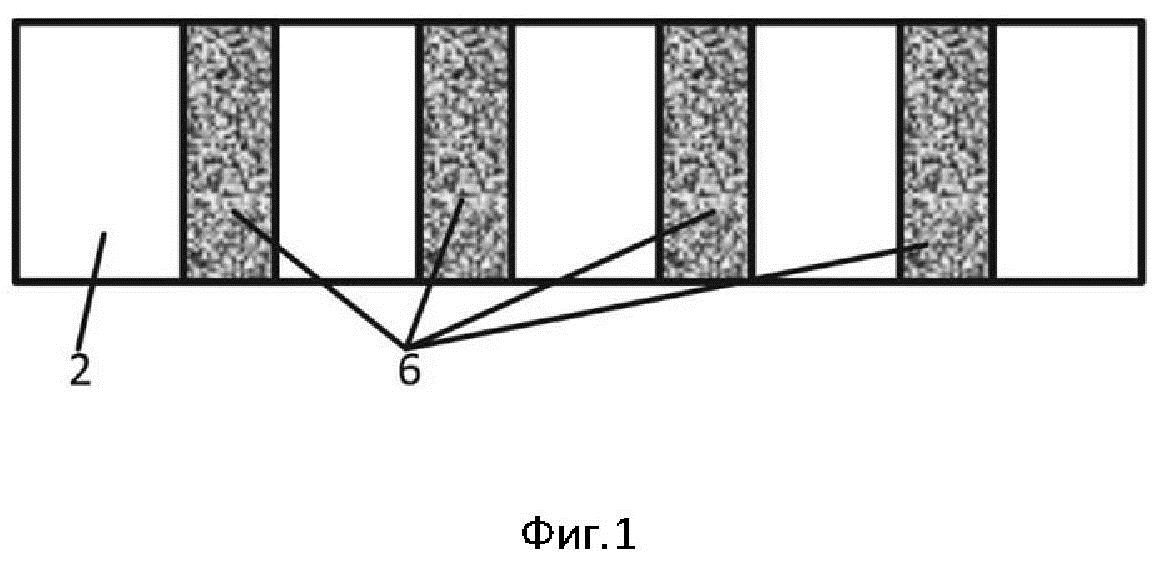
Description
Пояс для подъема лежачего больного с возможностью его обслуживания относится к области устройств для подъема пациентов или инвалидов с возможностью их обслуживания [A61G7/00, A61F13/00, A61F13/15].The belt for lifting the bedridden patient with the possibility of his service belongs to the field of devices for lifting patients or the disabled with the possibility of their service [A61G7/00, A61F13/00, A61F13/15].
Из уровня техники известна Многофункциональная комната помощи парализованным [CN202605151 (U), 2012-12-19], относящаяся к области оборудования койко-мест, в частности к многофункциональному кабинету помощи парализованным. Многофункциональная комната для помощи парализованным включает в себя опору, дефекационную комнату, расположенную с одной стороны опоры, дефекационное устройство, расположенное в дефекационной комнате, подъемное устройство, расположенное на опоре, стальной канатный узел, расположенный на подъемном устройстве в подвесной режим и рукав для помощи парализованным, установленный на стальном канате в подвесном режиме. Рукав для помощи парализованным надевается на тело пациента, и благодаря своему расположению многофункциональная комната для помощи парализованным может позволить парализованным самостоятельно выполнять ряд движений, таких как переворачивание, стояние и сидение, еда, чтение, писать, играть на компьютере и пользоваться туалетом, а многофункциональная комната для помощи парализованным удобна в использовании и может обеспечить самопомощь парализованным. From the prior art is known Multifunctional paralyzed care room [CN202605151 (U), 2012-12-19], related to the field of bed equipment, in particular to a multifunctional paralyzed care room. The multifunctional paralysis room includes a support, a defecation room located on one side of the support, a defecation device located in the defecation room, a lifting device located on the support, a steel rope assembly located on the lifting device in suspended mode and a sleeve for helping the paralyzed. mounted on a steel rope in suspended mode. The paralyzed assistance sleeve is put on the patient's body, and due to its positioning, the multifunctional paralysis room can allow the paralyzed to independently perform a number of movements, such as turning over, standing and sitting, eating, reading, writing, playing on the computer and using the toilet, and the multifunctional room for helping the paralyzed is convenient to use and can provide self-help to the paralyzed.
Недостатком аналога является его сложная и громоздкая конструкция, требующая больших материальных затрат для ее создания и обслуживания.The disadvantage of analogue is its complex and cumbersome design, requiring large material costs for its creation and maintenance.
Также из уровня техники известен Т-бандаж для ухода, лист и водонепроницаемый лист [JP2019068971 (A), 2019-05-09], в котором для решения проблемы с бумажным подгузником для взрослых, обычно используемым, когда у прикованного к постели человека возникает недержание мочи, при котором штаны пижамы или простыни не могут быть испачканы, даже если недержание мочи используется при использовании подгузника взрослого, и, следовательно, является физическим бременем. Путем использования заявленного решения может быть уменьшено количество лиц, осуществляющих уход, однако бумажный подгузник является одноразовым и дорогим, и, кроме того, его ощущение при ношении очень плохое. РЕШЕНИЕ: Усовершенствованная Т-образная повязка по настоящему изобретению предоставлена вместо бумажного подгузника в целях ухода за больными. В этом Т-образном бинте используется широкая горизонтальная лента и застежка-липучка, поэтому его замена проста и может не отстегнуться, а часть пучка Т-образного бинта можно заставить в некоторой степени прилипать к части промежности ухаживающего. Кроме того, в центре рядом с матрасом футон укладывают водонепроницаемую простыню, чтобы облегчить замену простыни при подготовке к недержанию, и простыню укладывают на нее. В результате, даже если пациент страдает недержанием мочи, простыню можно легко заменить. Also known in the art is a care T-band, a sheet, and a waterproof sheet [JP2019068971 (A), 2019-05-09], in which, to solve the problem of an adult paper diaper commonly used when a bedridden person has incontinence incontinence, in which pajama pants or sheets cannot be soiled, even if incontinence is used when using an adult diaper, and therefore is a physical burden. By using the claimed solution, the number of caregivers can be reduced, however, the paper diaper is disposable and expensive, and, moreover, its wearing feel is very poor. SOLUTION: The improved T-band of the present invention is provided in place of a paper diaper for nursing purposes. This T-bandage uses a wide horizontal band and Velcro, so its replacement is easy and may not come off, and the tuft part of the T-bandage can be made to stick to the caregiver's crotch part to some extent. In addition, a waterproof sheet is placed in the center next to the futon mattress to facilitate the replacement of the sheet in preparation for incontinence, and the sheet is laid on top of it. As a result, even if the patient suffers from urinary incontinence, the sheet can be easily replaced.
Недостатком аналога является сложность использования предлагаемого технического решения человеком, осуществляющим уход за пациентом, не имеющим достаточной физической силы, поскольку замена подгузника требует поднятия тела пациента.The disadvantage of the analogue is the difficulty of using the proposed technical solution by a person caring for a patient who does not have sufficient physical strength, since changing the diaper requires lifting the patient's body.
Наиболее близким по технической сущности является Медицинский инструмент для акупунктурных точек плеч, талии и живота взрослых [CN214596487 (U), 2021-11-05], применяемый для лечения акупунктурных точек на плече, талии и животе для взрослых, который содержит поясную часть, плечевую и заднюю части. Поясная часть состоит из корпуса пояса, устройство для акупунктурной стимуляции расположено на внутренней поверхности корпуса пояса, сетевые ленты расположены на двух концах корпуса пояса, промежуточный слой расположен в корпусе пояса, а источник питания расположен в прослойке и электрически соединен с устройством акупунктурной стимуляции; плечевая и задняя части состоят из спинного компонента и плечевых компонентов, два плечевых компонента жестко соединены с двумя концами заднего компонента соответственно, устройства для стимуляции акупунктурных точек расположены на внутренних поверхностях плечевых компонентов и спинного компонента, нижние концы плечевых элементов соединены с телом пояса посредством плечевых бандажей, а задние элементы соединены с телом пояса посредством задних бандажей; устройство для стимуляции акупунктурных точек состоит из холодного лазерного диода и нагревательного листа из графена. Устройство лазерной акупунктуры удобно в использовании, можно достичь лазерной акупунктуры, а коэффициент использования точек акупунктуры улучшен. The closest in technical essence is the Medical instrument for acupuncture points of the shoulders, waist and abdomen of adults [CN214596487 (U), 2021-11-05], used for the treatment of acupuncture points on the shoulder, waist and abdomen for adults, which contains a waist part, shoulder and back. The belt part consists of the belt body, the acupuncture stimulation device is located on the inner surface of the belt body, the network tapes are located at the two ends of the belt body, the intermediate layer is located in the belt body, and the power supply is located in the interlayer and is electrically connected to the acupuncture stimulation device; the shoulder and back parts are composed of the back component and the shoulder components, the two shoulder components are rigidly connected to the two ends of the back component, respectively, the devices for stimulating acupuncture points are located on the inner surfaces of the shoulder components and the back component, the lower ends of the shoulder elements are connected to the body of the belt by means of shoulder bandages , and the rear elements are connected to the body of the belt by means of rear bandages; The acupuncture point stimulation device consists of a cold laser diode and a graphene heating sheet. The laser acupuncture device is convenient to use, laser acupuncture can be achieved, and the utilization rate of acupuncture points is improved.
Технической проблемой прототипа является неудобство использования предлагаемого технического решения человеком, осуществляющим уход за пациентом. The technical problem of the prototype is the inconvenience of using the proposed technical solution by a person caring for a patient.
Задачей полезной модели является устранение недостатков прототипа.The purpose of the utility model is to eliminate the shortcomings of the prototype.
Технический результат полезной модели заключается в повышении удобства ухода за пациентом.The technical result of the utility model is to improve the convenience of patient care.
Заявленный технический результат достигается за счет того, что пояс для подъема лежачего больного с возможностью его обслуживания, содержащий внутреннюю часть пояса и внешнюю часть пояса, соединенные между собой текстильной застежкой, отличающийся тем, что с одной из сторон внешней части пояса на ее наружной стороне размещены текстильные застежки, с другой стороны внешней части пояса жестко закреплена регулировочная опорная планка, поверх которой размещена внутренняя часть пояса, на регулировочной опорной планке смонтирован регулятор длины пояса, представляющий собой подпружиненную возвратную скобу, выполненную с возможностью фиксации внутренней части пояса, при этом к регулировочной опорной планке при помощи гаечных креплений шарнирно подсоединены два ремня, на конце которых смонтированы соединительные крепления в виде текстильных застежек.The claimed technical result is achieved due to the fact that the belt for lifting a bedridden patient with the possibility of its maintenance, containing the inner part of the belt and the outer part of the belt, interconnected by a textile fastener, characterized in that on one side of the outer part of the belt on its outer side are placed textile fasteners, on the other side of the outer part of the belt, an adjusting support bar is rigidly fixed, on top of which the inner part of the belt is placed, a belt length regulator is mounted on the adjusting support bar, which is a spring-loaded return bracket, made with the possibility of fixing the inner part of the belt, while to the adjusting support two belts are pivotally connected to the bar using nut fasteners, at the end of which connecting fasteners in the form of textile fasteners are mounted.
В частности, внутренняя и внешняя части пояса выполнены из мягкого, износостойкого и гипоаллергенного материала.In particular, the inner and outer parts of the belt are made of soft, wear-resistant and hypoallergenic material.
В частности, ширина внутренней и внешней частей пояса одинакова.In particular, the width of the inner and outer parts of the belt is the same.
Краткое описание чертежей. Brief description of the drawings.
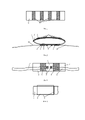
На фиг.1 показан вид спереди пояса для подъема лежачего больного с возможностью его обслуживания.Figure 1 shows a front view of the belt for lifting a bedridden patient with the possibility of its service.
На фиг.2 показан вид сверху пояса для подъема лежачего больного с возможностью его обслуживания.Figure 2 shows a top view of the belt for lifting a bedridden patient with the possibility of its maintenance.
На фиг.3 показан вид сзади пояс для подъема лежачего больного с возможностью его обслуживания.Figure 3 shows a rear view of the belt for lifting a bedridden patient with the possibility of its maintenance.
На фиг.4 показан держатель пояса.Figure 4 shows the belt holder.
На фиг.5 показан вариант крепления подгузника к поясу.Figure 5 shows a variant of fastening the diaper to the belt.
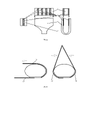
На фиг. 6 показаны варианты перемещения больного при помощи ремней, расположенных на поясе.In FIG. 6 shows options for moving the patient with the help of belts located on the belt.
На фигурах обозначено 1 – внутренняя часть, 2 – внешняя часть, 3 – внутреннее крепление, 4 – регулировочная опорная планка, 5 – регулятор длинны пояса, 6 – внешние крепления, 7 – подгузник, 8 – технологические емкости, 9 – гаечные крепления, 10 – ремни.The figures indicate 1 - inner part, 2 - outer part, 3 - internal fastening, 4 - adjusting support bar, 5 - belt length regulator, 6 - external fasteners, 7 - diaper, 8 - technological containers, 9 - nut fasteners, 10 - belts.
Осуществление полезной моделиImplementation of the utility model
Пояс для подъема лежачего больного с возможностью его обслуживания содержит внутреннюю часть 1 и внешнюю часть 2 (фиг. 1-3). Ширина обеих частей одинакова и подобрана исходя из роста и объема живота пациента. Внутренняя часть 1 выполнена из мягкого, износостойкого и гипоаллергенного материала и непосредственно прилежит к телу пациента. Внешняя часть 2 также выполнена из мягкого, износостойкого и гипоаллергенного материала. Между внутренней частью 1 и внешней частью 2 размещено внутреннее крепление 3, представляющее из себя текстильную застежку, обеспечивающую надежное сцепление. При этом с противоположной стороны пояса универсального для обслуживания лежачего больного, прилегающей к спине пациента, размещена регулировочная опорная планка 4 (фиг. 4), представляющая собой прямоугольную пластину, выполненную из прочного и гибкого материала. На регулировочной опорной планке 4 размещен регулятор длины пояса 5, представляющий собой подпружиненную возвратную скобу, фиксирующую по участкам внутреннюю часть 1. Фиксация обусловлена прижатием участков внешней части 2, находящихся над регулировочной опорной планкой 4, регулятором длинны пояса 5 к регулировочной опорной планке 4. Внешняя часть 2 жестко смонтирована к опорной планке 4. При скреплении с внутренней части 1 и внешней части 2 пациент спереди, от одного бока до другого, полностью охвачен внешней частью 2. На наружной стороне внешней части 2 размещены внешние крепления 6, представляющих собой текстильную застежку, для соединения пояса и подгузника 7 (фиг. 5). Подгузник 7 внутри заполнен наполнителем, аккумулирующим продукты дефекации пациента. Также внешние крепления 6 размещены на наружной поверхности регулировочной опорной планки 4. Одна часть внешних креплений 6 расположена на внешней части 2 пояса и на регулировочной опорной планке 4, другая часть расположена на подгузнике 7. Дополнительно, к внешним креплениям 6, расположенным на внешней части 2 пояса и на регулировочной опорной планке 4, смонтированы технологические емкости 8 различной конфигурации для их временного использования при проведении медицинских манипуляций, таких как хранение приборов суточного мониторинга, выводных емкостей катетеров и дренажных помп и т.п. К регулировочной опорной планке 4 при помощи гаечных креплений 9 шарнирно подсоединены два ремня 10, на конце которых смонтированы соединительные крепления в виде текстильных застежек (на фигуре не показаны), обеспечивающие надежное соединение концов ремней.The belt for lifting a bedridden patient with the possibility of its maintenance contains an
Пояс для подъема лежачего больного с возможностью его обслуживания используют следующим образом.A belt for lifting a bedridden patient with the possibility of its maintenance is used as follows.
Использование пояса для подъема лежачего больного с возможностью его обслуживания начинается с его настойки под тело пациента. Вначале под телом пациента размещается регулировочная опорная планка 4, к которой с одной из сторон жестко прикреплена внешняя часть 2 пояса. Далее в зазор между телом пациента и регулировочной опорной планкой 4 продевается внутренняя часть 1 пояса. Затем, продвигая под пациентом внутреннюю часть 1 пояса, добиваются такого его положения, при котором он может быть сцеплен с внешней частью 2 так, чтобы внешняя часть 2 полностью бы закрывала пациента спереди от одного бока до другого. В этом положении внутренняя часть 1 фиксируется к регулировочной опорной планке 4 при помощи регулятора длины пояса 5 путем прижатия. Далее внутренняя часть 1 пояса прижимается к телу пациента, а сверху накрывается внешней частью 2 пояса. Между собой внешняя часть 2 и внутренняя часть 1 фиксируется сцеплением внутреннего крепления 3, представляющего из себя текстильную застежку. Соответственно, одна часть внутреннего крепления 3 находится снаружи внутренней части 1 пояса, а другая часть внутреннего крепления расположено на внутренней поверхности внешней части 2 пояса. Исходя из потребностей пациента на внешних креплениях 6 могут быть размещены подгузник 7 и технологические емкости 8. При этом используя ремни 10, прикрепленные к регулировочной опорной планке 4 при помощи гаечных креплений 9, можно проводить санитарные и медицинские манипуляции с телом пациента (см. фиг.6). При помощи ремней 10 можно проводить переваливание тела пациента с бока на бок, а при наличии опоры сверху, закрепив оба ремня на опоре и при одновременном сжатии можно добиться незначительного подъема тела пациента, что вполне достаточно для проведения санитарной обработки, замены подгузника и других манипуляций. Причем все данные манипуляции может проводить лицо, не обладающее значительной физической силой. The use of a belt for lifting a lying patient with the possibility of its maintenance begins with its tincture under the patient's body. First, an adjusting
Технический результат – повышении удобства ухода за пациентом, достигается за счет наличия опорной планки с регулятором длинны пояса, за счет которой осуществляется, фиксация по участкам внутренней части пояса благодаря прижиму участков внешней части пояса, что обеспечивает надежный охват поясом пациента – от одного бока до другого. Таким образом, при уходе за лежачим пациентом, в частности при его санитарной обработке, будет обеспечена его надежная фиксация, и как следствие процедура ухода будет упрощена и проводиться с большим комфортом как для обслуживающего лица, так и для пациента. EFFECT: increased convenience of patient care, is achieved due to the presence of a support bar with a belt length regulator, due to which fixation is carried out in sections of the inner part of the belt due to the pressing of sections of the outer part of the belt, which ensures reliable coverage of the patient by the belt - from one side to the other . Thus, when caring for a bedridden patient, in particular during his sanitization, his reliable fixation will be ensured, and as a result, the care procedure will be simplified and carried out with greater comfort for both the attendant and the patient.
Также заявленный технический результат достигается за счет того, что к регулировочной опорной планке при помощи гаечных креплений шарнирно подсоединены два ремня на конце которых смонтированы соединительные крепления, благодаря чему при помощи ремней можно проводить переваливание тела пациента с бока на бок, а при наличии опоры сверху, закрепив оба ремня на опоре и при одновременном сжатии можно добиться незначительного подъема тела пациента, что вполне достаточно для проведения санитарной обработки, замены подгузника и других манипуляций. Таким образом наличие раменей способствует уменьшению физических затрат обслуживающего лица, существенно упрощает и делает более удобной процедуру ухода за пациентом.Also, the claimed technical result is achieved due to the fact that two belts are pivotally connected to the adjusting support bar using nut fasteners, at the end of which the connecting fasteners are mounted, due to which, using the belts, it is possible to transfer the patient's body from side to side, and if there is a support from above, by fixing both belts on a support and with simultaneous compression, it is possible to achieve a slight rise in the patient's body, which is quite enough for sanitization, changing a diaper and other manipulations. Thus, the presence of ramen helps to reduce the physical costs of the attendant, significantly simplifies and makes the patient care procedure more convenient.
Также заявленный технический результат достигается за счет того, что с одной из сторон внешней части пояса размещены текстильные застежки позволяющие осуществлять крепление подгузника и технологических емкостей различной конфигурации для их временного использования при проведении медицинских манипуляций, таких как хранение приборов суточного мониторинга, выводных емкостей катетеров и дренажных помп и т.п. Возможность фиксации подгузника на текстильную застежку, а также удобное расположение приборов временного использования также существенно упрощает процедуру ухода за пациентом и повышает удобство ухода за ним.Also, the claimed technical result is achieved due to the fact that on one side of the outer part of the belt there are textile fasteners that allow fastening the diaper and technological containers of various configurations for their temporary use during medical procedures, such as storing daily monitoring devices, catheter and drainage containers. pump, etc. The possibility of fixing the diaper on a textile fastener, as well as the convenient location of temporary use devices, also greatly simplifies the procedure for patient care and increases the convenience of caring for him.
Достигнутый технический результат позволяет:The achieved technical result allows:
обеспечить возможность использования медоборудования, располагаемого на теле пациента;ensure the possibility of using medical equipment located on the patient's body;
обеспечить возможность проведения санитарной обработки лежачего пациента физически слабым лицом;ensure the possibility of sanitizing a bedridden patient by a physically weak person;
повысить комфортность пациента при проведении санитарной обработки физически слабым лицом;increase the patient's comfort during sanitation by a physically weak person;
минимально дооборудовать помещение, в котором находится пациент.minimally equip the room in which the patient is located.
Заявителем был изготовлен опытный образец пояса для подъема лежачего больного с возможностью его обслуживания. Использование заявленного технического решения подтвердило заявленный технический результат. При обслуживании пациента с весом более 120 кг медицинский персонал провел все манипуляции по обслуживанию лежачего больного, при этом жалоб на дискомфорт у пациента не было. Опытный образец был использован многократно и у разных пациентов, жалоб также не было.The applicant has made a prototype belt for lifting a bedridden patient with the possibility of its service. The use of the claimed technical solution confirmed the claimed technical result. When servicing a patient weighing more than 120 kg, the medical staff performed all the manipulations for servicing a bedridden patient, while the patient had no complaints of discomfort. The prototype was used many times and in different patients, there were no complaints either.
Пример достижения технического результата является использование пояса для подъема лежачего больного с возможностью его обслуживания при замене подгузника. При данной манипуляции ремни, расположенные на поясе (фиг. 6), закрепляются над пациентом на опоре, в качестве которой может быть использовано устройство вспоможения для поднятия, обычно входящее в состав оборудования больничных коек. При сдавливании ремней друг навстречу другу тело пациента приподнимается. Образующегося зазора между телом пациента и койкой достаточно для замены подгузника. При этом пациент не испытывает дискомфорта, поскольку от него не требуется совершения каких-либо действий.An example of achieving a technical result is the use of a belt for lifting a bedridden patient with the possibility of servicing it when changing a diaper. In this manipulation, belts located on the belt (Fig. 6) are fixed above the patient on a support, which can be used as a lifting aid device, usually included in hospital bed equipment. When the belts are squeezed towards each other, the patient's body rises. The resulting gap between the patient's body and the bed is sufficient to change the diaper. In this case, the patient does not experience discomfort, since he is not required to perform any actions.
Заявленное устройство может изготавливаться на предприятии и является единым изделием, состоящем их механически соединенных функциональных элементов, а именно внутренней и внешней частей, внутреннего крепления, регулировочной опорной планки, регулятора длинны пояса, внешних креплений, подгузников и технологических емкостей, гаечных креплений, ремней.The claimed device can be manufactured at the enterprise and is a single product, consisting of mechanically connected functional elements, namely the inner and outer parts, internal fastening, adjusting support bar, belt length regulator, external fasteners, diapers and technological containers, nut fasteners, belts.
Claims (3)
Publications (1)
| Publication Number | Publication Date |
|---|---|
| RU213130U1 true RU213130U1 (en) | 2022-08-25 |
Family
ID=
Citations (5)
| Publication number | Priority date | Publication date | Assignee | Title |
|---|---|---|---|---|
| US5896859A (en) * | 1997-12-30 | 1999-04-27 | Carroll; John D. | Transfer belt |
| US6311346B1 (en) * | 1999-03-23 | 2001-11-06 | Heidi Goldman | Transfer belt |
| DE102009019716B3 (en) * | 2009-05-05 | 2010-06-02 | Gockel-Böhner, Doris | Standing aid for use in e.g. hospital to make patient to stand, has guides provided in area of lateral ends of retaining belt, and strap that is attached at bottom or upper limb of person |
| US20130254987A1 (en) * | 2010-09-03 | 2013-10-03 | Handicare Ab | Waist transfer belt |
| RU2651228C2 (en) * | 2015-11-13 | 2018-04-18 | Николай Фёдорович Объедков | Multi-functional wheel chair |
Patent Citations (5)
| Publication number | Priority date | Publication date | Assignee | Title |
|---|---|---|---|---|
| US5896859A (en) * | 1997-12-30 | 1999-04-27 | Carroll; John D. | Transfer belt |
| US6311346B1 (en) * | 1999-03-23 | 2001-11-06 | Heidi Goldman | Transfer belt |
| DE102009019716B3 (en) * | 2009-05-05 | 2010-06-02 | Gockel-Böhner, Doris | Standing aid for use in e.g. hospital to make patient to stand, has guides provided in area of lateral ends of retaining belt, and strap that is attached at bottom or upper limb of person |
| US20130254987A1 (en) * | 2010-09-03 | 2013-10-03 | Handicare Ab | Waist transfer belt |
| RU2651228C2 (en) * | 2015-11-13 | 2018-04-18 | Николай Фёдорович Объедков | Multi-functional wheel chair |
Similar Documents
| Publication | Publication Date | Title |
|---|---|---|
| US8322343B2 (en) | Lower extremity exerciser and positioning device | |
| CN204709225U (en) | A kind of rehabilitation medical treatment berth | |
| CN204655348U (en) | Facilitate the medical bedstead of the sick and wounded patient's defecation of spinal column | |
| US20030120191A1 (en) | Protective enclosure for body support | |
| CN209154309U (en) | Integral type suitable limb position pillow | |
| US20060009726A1 (en) | Protective enclosure for body support | |
| US6443920B1 (en) | Protective enclosure for body support | |
| CN221672407U (en) | Nursing pad for orthopedic patients lying in bed | |
| CN214343104U (en) | Nursing pad after hip joint operation | |
| KR102794278B1 (en) | Patient position change pad | |
| KR102760911B1 (en) | Patient position change pad | |
| CN220275781U (en) | A multifunctional anti-dislocation device after hip replacement surgery | |
| CN201115422Y (en) | Underpants | |
| US20060211975A1 (en) | Male genitalia support device, and method for supporting male genitalia | |
| Skinner | Nursing care of a patient on a Stryker frame | |
| JP2025113093A (en) | Box perforated mattress | |
| CN211382301U (en) | Nursing bed for nursing paralytic | |
| Madden et al. | To prevent helplessness and deformities | |
| JP3218215U (en) | Medical / nursing cushion | |
| CN209770632U (en) | Trousers type adjustable lower limb restraint strap | |
| Prochazka | Nursing Care in Hemiplegia | |
| Stanton | Rehabilitation Nursing Related to Stroke. | |
| Knapp | Practical Physical Medicine and Rehabilitation: Lecture 3. The Hemiplegic Patient—Physical Problems | |
| Bruck | Nursing the laminectomy patient | |
| US20080099028A1 (en) | Male Genitalia Support Device, and Method for Supporting Male Genitalia |