KR20130085841A - Silicon carbide powder and preparation method thereof - Google Patents
Silicon carbide powder and preparation method thereof Download PDFInfo
- Publication number
- KR20130085841A KR20130085841A KR1020120006950A KR20120006950A KR20130085841A KR 20130085841 A KR20130085841 A KR 20130085841A KR 1020120006950 A KR1020120006950 A KR 1020120006950A KR 20120006950 A KR20120006950 A KR 20120006950A KR 20130085841 A KR20130085841 A KR 20130085841A
- Authority
- KR
- South Korea
- Prior art keywords
- silicon carbide
- silicon
- carbide powder
- source
- carbon
- Prior art date
- Legal status (The legal status is an assumption and is not a legal conclusion. Google has not performed a legal analysis and makes no representation as to the accuracy of the status listed.)
- Ceased
Links
Images


Classifications
-
- C—CHEMISTRY; METALLURGY
- C01—INORGANIC CHEMISTRY
- C01B—NON-METALLIC ELEMENTS; COMPOUNDS THEREOF; METALLOIDS OR COMPOUNDS THEREOF NOT COVERED BY SUBCLASS C01C
- C01B32/00—Carbon; Compounds thereof
- C01B32/90—Carbides
- C01B32/914—Carbides of single elements
- C01B32/956—Silicon carbide
-
- C—CHEMISTRY; METALLURGY
- C01—INORGANIC CHEMISTRY
- C01B—NON-METALLIC ELEMENTS; COMPOUNDS THEREOF; METALLOIDS OR COMPOUNDS THEREOF NOT COVERED BY SUBCLASS C01C
- C01B32/00—Carbon; Compounds thereof
- C01B32/90—Carbides
- C01B32/914—Carbides of single elements
- C01B32/956—Silicon carbide
- C01B32/963—Preparation from compounds containing silicon
- C01B32/97—Preparation from SiO or SiO2
-
- C—CHEMISTRY; METALLURGY
- C04—CEMENTS; CONCRETE; ARTIFICIAL STONE; CERAMICS; REFRACTORIES
- C04B—LIME, MAGNESIA; SLAG; CEMENTS; COMPOSITIONS THEREOF, e.g. MORTARS, CONCRETE OR LIKE BUILDING MATERIALS; ARTIFICIAL STONE; CERAMICS; REFRACTORIES; TREATMENT OF NATURAL STONE
- C04B35/00—Shaped ceramic products characterised by their composition; Ceramics compositions; Processing powders of inorganic compounds preparatory to the manufacturing of ceramic products
- C04B35/515—Shaped ceramic products characterised by their composition; Ceramics compositions; Processing powders of inorganic compounds preparatory to the manufacturing of ceramic products based on non-oxide ceramics
- C04B35/56—Shaped ceramic products characterised by their composition; Ceramics compositions; Processing powders of inorganic compounds preparatory to the manufacturing of ceramic products based on non-oxide ceramics based on carbides or oxycarbides
- C04B35/565—Shaped ceramic products characterised by their composition; Ceramics compositions; Processing powders of inorganic compounds preparatory to the manufacturing of ceramic products based on non-oxide ceramics based on carbides or oxycarbides based on silicon carbide
-
- C—CHEMISTRY; METALLURGY
- C04—CEMENTS; CONCRETE; ARTIFICIAL STONE; CERAMICS; REFRACTORIES
- C04B—LIME, MAGNESIA; SLAG; CEMENTS; COMPOSITIONS THEREOF, e.g. MORTARS, CONCRETE OR LIKE BUILDING MATERIALS; ARTIFICIAL STONE; CERAMICS; REFRACTORIES; TREATMENT OF NATURAL STONE
- C04B35/00—Shaped ceramic products characterised by their composition; Ceramics compositions; Processing powders of inorganic compounds preparatory to the manufacturing of ceramic products
- C04B35/622—Forming processes; Processing powders of inorganic compounds preparatory to the manufacturing of ceramic products
- C04B35/64—Burning or sintering processes
-
- C—CHEMISTRY; METALLURGY
- C30—CRYSTAL GROWTH
- C30B—SINGLE-CRYSTAL GROWTH; UNIDIRECTIONAL SOLIDIFICATION OF EUTECTIC MATERIAL OR UNIDIRECTIONAL DEMIXING OF EUTECTOID MATERIAL; REFINING BY ZONE-MELTING OF MATERIAL; PRODUCTION OF A HOMOGENEOUS POLYCRYSTALLINE MATERIAL WITH DEFINED STRUCTURE; SINGLE CRYSTALS OR HOMOGENEOUS POLYCRYSTALLINE MATERIAL WITH DEFINED STRUCTURE; AFTER-TREATMENT OF SINGLE CRYSTALS OR A HOMOGENEOUS POLYCRYSTALLINE MATERIAL WITH DEFINED STRUCTURE; APPARATUS THEREFOR
- C30B25/00—Single-crystal growth by chemical reaction of reactive gases, e.g. chemical vapour-deposition growth
- C30B25/02—Epitaxial-layer growth
- C30B25/18—Epitaxial-layer growth characterised by the substrate
- C30B25/20—Epitaxial-layer growth characterised by the substrate the substrate being of the same materials as the epitaxial layer
-
- C—CHEMISTRY; METALLURGY
- C30—CRYSTAL GROWTH
- C30B—SINGLE-CRYSTAL GROWTH; UNIDIRECTIONAL SOLIDIFICATION OF EUTECTIC MATERIAL OR UNIDIRECTIONAL DEMIXING OF EUTECTOID MATERIAL; REFINING BY ZONE-MELTING OF MATERIAL; PRODUCTION OF A HOMOGENEOUS POLYCRYSTALLINE MATERIAL WITH DEFINED STRUCTURE; SINGLE CRYSTALS OR HOMOGENEOUS POLYCRYSTALLINE MATERIAL WITH DEFINED STRUCTURE; AFTER-TREATMENT OF SINGLE CRYSTALS OR A HOMOGENEOUS POLYCRYSTALLINE MATERIAL WITH DEFINED STRUCTURE; APPARATUS THEREFOR
- C30B29/00—Single crystals or homogeneous polycrystalline material with defined structure characterised by the material or by their shape
- C30B29/10—Inorganic compounds or compositions
- C30B29/36—Carbides
-
- C—CHEMISTRY; METALLURGY
- C01—INORGANIC CHEMISTRY
- C01P—INDEXING SCHEME RELATING TO STRUCTURAL AND PHYSICAL ASPECTS OF SOLID INORGANIC COMPOUNDS
- C01P2004/00—Particle morphology
- C01P2004/30—Particle morphology extending in three dimensions
-
- C—CHEMISTRY; METALLURGY
- C01—INORGANIC CHEMISTRY
- C01P—INDEXING SCHEME RELATING TO STRUCTURAL AND PHYSICAL ASPECTS OF SOLID INORGANIC COMPOUNDS
- C01P2004/00—Particle morphology
- C01P2004/30—Particle morphology extending in three dimensions
- C01P2004/32—Spheres
-
- C—CHEMISTRY; METALLURGY
- C01—INORGANIC CHEMISTRY
- C01P—INDEXING SCHEME RELATING TO STRUCTURAL AND PHYSICAL ASPECTS OF SOLID INORGANIC COMPOUNDS
- C01P2004/00—Particle morphology
- C01P2004/60—Particles characterised by their size
- C01P2004/61—Micrometer sized, i.e. from 1-100 micrometer
-
- Y—GENERAL TAGGING OF NEW TECHNOLOGICAL DEVELOPMENTS; GENERAL TAGGING OF CROSS-SECTIONAL TECHNOLOGIES SPANNING OVER SEVERAL SECTIONS OF THE IPC; TECHNICAL SUBJECTS COVERED BY FORMER USPC CROSS-REFERENCE ART COLLECTIONS [XRACs] AND DIGESTS
- Y10—TECHNICAL SUBJECTS COVERED BY FORMER USPC
- Y10T—TECHNICAL SUBJECTS COVERED BY FORMER US CLASSIFICATION
- Y10T428/00—Stock material or miscellaneous articles
- Y10T428/29—Coated or structually defined flake, particle, cell, strand, strand portion, rod, filament, macroscopic fiber or mass thereof
- Y10T428/2982—Particulate matter [e.g., sphere, flake, etc.]
Landscapes
- Chemical & Material Sciences (AREA)
- Organic Chemistry (AREA)
- Engineering & Computer Science (AREA)
- Inorganic Chemistry (AREA)
- Materials Engineering (AREA)
- Crystallography & Structural Chemistry (AREA)
- Metallurgy (AREA)
- Ceramic Engineering (AREA)
- Manufacturing & Machinery (AREA)
- Chemical Kinetics & Catalysis (AREA)
- General Chemical & Material Sciences (AREA)
- Structural Engineering (AREA)
- Carbon And Carbon Compounds (AREA)
- Crystals, And After-Treatments Of Crystals (AREA)
Abstract
실시예에 따른 탄화규소 분말 제조 방법은, 규소를 포함하는 규소원(Si source), 탄소를 포함하는 탄소원(C source) 및 탄화규소 씨드(SiC seed)를 혼합하여 혼합물을 형성하는 단계; 및 상기 혼합물을 반응시키는 단계를 포함한다.
실시예에 따른 탄화규소 분말은, β 타입의 결정상 및 5㎛ 내지 100㎛의 입경을 가지는 탄화규소 입자들을 포함한다.Silicon carbide powder production method according to the embodiment, comprising: forming a mixture by mixing a silicon source (Si source) containing silicon, a carbon source (C source) containing carbon and silicon carbide seeds (SiC seed); And reacting the mixture.
The silicon carbide powder according to the embodiment includes silicon carbide particles having a β type crystal phase and a particle diameter of 5 μm to 100 μm.
Description
실시예는 탄화규소 분말 및 이의 제조방법에 관한 것이다.The examples relate to silicon carbide powders and methods for their preparation.
탄화규소는 최근에 다양한 전자 소자 및 목적을 위한 반도체 재료로서 사용되고 있다. 탄화규소는 특히 물리적 강도 및 화학적 공격에 대한 높은 내성으로 인해 유용하다. 탄화규소는 또한 방사 경도(radiation hardness), 비교적 넓은 밴드갭, 높은 포화 전자 드리프트 속도(saturated electron drift velocity), 높은 조작 온도, 및 스펙트럼의 청색(blue), 보라(violet), 및 자외(ultraviolet) 영역에서의 높은 에너지 양자의 흡수 및 방출을 포함하는 우수한 전자적 성질을 가진다.Silicon carbide has recently been used as a semiconductor material for various electronic devices and purposes. Silicon carbide is particularly useful due to its physical strength and high resistance to chemical attack. Silicon carbide also has radiation hardness, relatively wide bandgap, high saturated electron drift velocity, high operating temperature, and spectral blue, violet, and ultraviolet It has excellent electronic properties including absorption and emission of high energy quantum in the region.
탄화규소 분말은 규소원(Si source)과 탄소원(C source) 등의 원료를 혼합한 후 가열하는 방법 등에 의해 제조될 수 있다. 탄화규소 분말의 제조방법으로서는 애치슨법, 탄소열환원공법, 액상고분자열분해법 또는 CVD 공법 등이 공지기술로서 알려져있다. 특히 고순도의 탄화규소 분말을 제조하기 위해서는 액상고분자열분해법 또는 탄소열환원공법을 이용하였다.Silicon carbide powder may be prepared by mixing a raw material such as a silicon source (Si source) and a carbon source (C source) and then heating. As a method for producing silicon carbide powder, the Acheson method, the carbon thermal reduction method, the liquid polymer pyrolysis method or the CVD method are known as known techniques. Particularly, in order to prepare high purity silicon carbide powder, liquid phase pyrolysis or carbon thermal reduction was used.
통상적으로 핫 프레스를 이용한 탄화규소 소결체를 제조하기 위해서는 0.5㎛ 내지 5㎛의 범위의 탄화규소 분말이 이용되나, 반응소결을 이용한 탄화규소 소결체를 제조하거나 또는 탄화규소 단결정 성장을 위해서는 10㎛ 이상의 입경을 가지는 탄화규소 분말이 요구된다.Typically, silicon carbide powder in the range of 0.5 μm to 5 μm is used to manufacture a silicon carbide sintered body using a hot press, but a silicon carbide powder using reaction sintering is used, or a particle size of 10 μm or more is used for silicon carbide single crystal growth. Eggplants require silicon carbide powder.
그러나, 상기 공법 등에 의해 제조되는 탄화규소 분말의 경우에는, 상기 탄화규소 분말의 입도를 제어하는데 어려움이 많다. 특히, 0.5㎛ 내지 5㎛의 범위를 벗어나는 입도를 형성하기 위해서는 현실적으로 한계가 있었다.However, in the case of the silicon carbide powder produced by the above method, it is difficult to control the particle size of the silicon carbide powder. In particular, in order to form a particle size outside the range of 0.5 ㎛ to 5 ㎛ was practically limited.
이에 따라, 10㎛ 이상의 입경을 가지는 탄화규소 분말을 제조할 수 있는 방법에 대한 필요성이 요구된다.Accordingly, there is a need for a method capable of producing silicon carbide powder having a particle diameter of 10 µm or more.
실시예는 원하는 입도, 특히 10㎛ 이상의 입경을 가지는 고순도의 탄화규소 분말을 낮은 온도에서 합성하여 제조되는 탄화규소 분말 및 이의 제조 방법을 제공하고자 한다.The embodiment is to provide a silicon carbide powder prepared by synthesizing a high purity silicon carbide powder having a desired particle size, in particular a particle size of 10㎛ or more at low temperature and a method for producing the same.
실시예에 따른 탄화규소 분말 제조 방법은, 규소를 포함하는 규소원(Si source), 탄소를 포함하는 탄소원(C source) 및 탄화규소 씨드(SiC seed)를 혼합하여 혼합물을 형성하는 단계; 및 상기 혼합물을 반응시키는 단계를 포함한다.Silicon carbide powder production method according to the embodiment, comprising: forming a mixture by mixing a silicon source (Si source) containing silicon, a carbon source (C source) containing carbon and silicon carbide seeds (SiC seed); And reacting the mixture.
실시예에 따른 탄화규소 분말은, β 타입의 결정상 및 5㎛ 내지 100㎛의 입경을 가지는 탄화규소 입자들을 포함한다.The silicon carbide powder according to the embodiment includes silicon carbide particles having a β type crystal phase and a particle diameter of 5 μm to 100 μm.
실시예에 의한 탄화규소 분말 제조 방법에 따르면, 규소원과 탄소원 및 탄화규소 씨드가 혼합하여 혼합물을 형성하고, 상기 반응에 의해 형성되는 탄화규소가 핵으로 작용하는 탄화규소 씨드와 결합하여 입성장을 하게 되므로, 최종적으로 10㎛ 이상의 입경을 가지는 탄화규소 분말을 제조할 수 있다.According to the silicon carbide powder manufacturing method according to the embodiment, the silicon source, the carbon source and the silicon carbide seed are mixed to form a mixture, and the silicon carbide formed by the reaction is combined with the silicon carbide seed acting as a nucleus to achieve grain growth. As a result, silicon carbide powder having a particle diameter of 10 μm or more can be manufactured.
따라서, 10㎛ 이상의 입경을 요구하는 반응소결을 이용한 탄화규소 소결체 또는 탄화규소 단결정 성장에 직접 원료로써 이용될 수 있다. Therefore, it can be used as a raw material directly for the growth of silicon carbide sintered compact or silicon carbide single crystal using reaction sintering requiring a particle diameter of 10 mu m or more.
또한, β 타입의 결정상을 포함하는 탄화규소 씨드가 탄화규소 분말의 핵으로 작용하므로, 고순도, 일례로 5N 이상의 순도를 가지는 탄화규소 분말을 제조할 수 있다,In addition, since silicon carbide seeds containing β-type crystal phases act as nuclei of silicon carbide powder, silicon carbide powder having high purity, for example, 5N or higher purity, can be produced.
따라서, 실시예는 고순도를 가지는 탄화규소 분말을 제조할 수 있다.Therefore, the embodiment can produce silicon carbide powder having high purity.
즉, 실시예는 고순도를 가지면서도, 입경의 크기를 용이하게 증가할 수 있는 탄화규소 분말 제조방법을 제공한다. That is, the embodiment provides a method for producing silicon carbide powder having high purity, which can easily increase the size of the particle diameter.
도 1은 실시예에 따른 탄화규소 분말 제조 방법을 도시한 공정 흐름도이다.
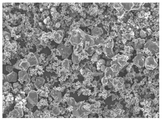
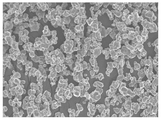
도 2 및 도 3은 제조예 1 및 제조예 2에 따라 제조된 탄화규소 분말의 주사전자현미경 사진이다.
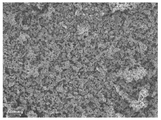
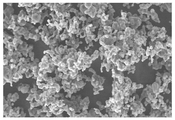
도 4 내지 도 6은 비교예 1 내지 비교예3에 따라 제조된 탄화규소 분말의 주사전자현미경 사진이다. 1 is a process flowchart illustrating a method of manufacturing silicon carbide powder according to an embodiment.
2 and 3 are scanning electron micrographs of the silicon carbide powder prepared according to Preparation Example 1 and Preparation Example 2.
4 to 6 is a scanning electron micrograph of the silicon carbide powder prepared according to Comparative Examples 1 to 3.
이하, 첨부한 도면을 참조하여 본 발명의 실시예에 따른 탄화규소 분말의 제조 방법을 상세하게 설명하면 다음과 같다. Hereinafter, a method of manufacturing silicon carbide powder according to an embodiment of the present invention with reference to the accompanying drawings in detail as follows.
도 1은 실시예에 따른 탄화규소 분말 제조 방법을 도시한 공정 흐름도이다. 1 is a process flowchart illustrating a method of manufacturing silicon carbide powder according to an embodiment.
도 1을 참조하면, 본 실시예에 따른 탄화규소 분말 제조 방법은, 규소를 포함하는 규소원(Si source), 탄소를 포함하는 탄소원(C source) 및 탄화규소 씨드(SiC seed)를 혼합하여 혼합물을 형성하는 단계; 및 상기 혼합물을 반응시키는 단계를 포함한다.Referring to FIG. 1, in the silicon carbide powder manufacturing method according to the present embodiment, a silicon source including silicon is mixed, a carbon source including carbon, and a silicon carbide seed are mixed. Forming a; And reacting the mixture.
각 단계를 좀더 상세하게 설명하면 다음과 같다.Each step is described in more detail as follows.
상기 혼합물을 형성하는 단계(ST10)에서는, 규소원, 탄소원 및 탄화규소 씨드를 준비하고, 이를 혼합하여 혼합된 원료를 형성한다.In the step of forming the mixture (ST10), a silicon source, a carbon source and silicon carbide seeds are prepared, and mixed to form a mixed raw material.
상기 규소원은 규소를 제공할 수 있는 다양한 물질을 포함할 수 있다. 일례로, 상기 규소원은 규소졸, 이산화규소, 미세 규소 및 석영 분말 등을 들 수 있다. 그러나 실시예가 이에 한정되는 것은 아니며 규소를 포함하는 유기 규소 화합물을 규소원으로 사용할 수 있다.The silicon source may include various materials capable of providing silicon. As an example, the silicon source may be silicon sol, silicon dioxide, fine silicon and quartz powder. However, the embodiment is not limited thereto, and an organosilicon compound including silicon may be used as the silicon source.
상기 탄소원은 고체 탄소원 또는 유기 탄소 화합물을 포함할 수 있다.The carbon source may include a solid carbon source or an organic carbon compound.
상기 고체 탄소원은 카본 블랙(carbon black), 카본 나노 튜브(carbon nano tube, CNT), 풀러렌(fullerene, C60) 등을 들 수 있다.The solid carbon source may be carbon black, carbon nano tube (CNT), fullerene (C 60 ), or the like.
상기 유기 탄소 화합물로는 페놀(phenol) 수지, 프랑(franc) 수지, 자일렌(xylene) 수지, 폴리이미드(polyimide), 폴리우레탄(polyunrethane), 폴리아크릴로니트릴(polyacrylonitrile), 폴리비닐 알콜(polyvinyl alcohol), 셀룰로오스(cellulose), 제당, 피치(pitch), 타르(tar) 등을 사용할 수 있다.The organic carbon compound may include a phenol resin, a franc resin, a xylene resin, a polyimide, a polyurethane, a polyacrylonitrile, and a polyvinyl alcohol. alcohol, cellulose, sugar, pitch, tar and the like can be used.
상기 탄화규소 씨드는 0.5㎛ 내지 5㎛의 입경을 가지고, β 타입의 결정상을 포함할 수 있다. 즉, 상기 탄화규소 씨드는 0.5㎛ 내지 5㎛의 입경을 가지는 베타 탄화규소 분말(β-SiC)를 포함할 수 있다.The silicon carbide seed has a particle diameter of 0.5 μm to 5 μm and may include a β type crystal phase. That is, the silicon carbide seed may include beta silicon carbide powder (β-SiC) having a particle diameter of 0.5 μm to 5 μm.
일반적으로, 탄화규소는α 타입의 결정상을 가지는 알파상 탄화규소(α-SiC)와 β 타입의 결정상을 가지는 베타상 탄화규소(β-SiC)가 있다. 알파상 탄화규소와 베타상 탄화규소는 구조면에서 서로 상이한데, 상기 알파상 탄화규소는 육방정계(hexagonal) 구조를 가지는데 반해, 상기 베타상 탄화규소는 입방체(cubic) 구조를 가진다. 이러한 상기 베타상 탄화규소는 고온에서 안정한 알파상 탄화규소로 전환이 될 수 있다.In general, silicon carbide includes alpha phase silicon carbide (α-SiC) having an α type crystal phase and beta phase silicon carbide (β-SiC) having a β type crystal phase. Alpha-phase silicon carbide and beta-phase silicon carbide are different from each other in structure. The alpha-phase silicon carbide has a hexagonal structure, whereas the beta-silicon carbide has a cubic structure. The beta-phase silicon carbide can be converted to alpha-phase silicon carbide stable at high temperature.
상기 베타상 탄화규소는 직접탄화법, 졸겔 공정을 이용한 탄소환원법 및 기상반응을 이용한 합성법 등에 의해 제조될 수 있다.The beta-phase silicon carbide may be prepared by a direct carbonization method, a carbon reduction method using a sol-gel process, and a synthesis method using a gas phase reaction.
이러한 베타상 탄화규소는 알루미늄(Al), 붕소(B), 칼슘(Ca), 철(Fe) 등의 금속 불순물의 함유량이 적기 때문에 알파상 탄화규소에 비해 고순도를 가질 수 있어, 탄화규소 분말을 이용하는 소결체 등의 강도 및 순도를 향상시킬 수 있다. Since the beta-phase silicon carbide has a low content of metal impurities such as aluminum (Al), boron (B), calcium (Ca), and iron (Fe), the beta-phase silicon carbide may have higher purity than the alpha-phase silicon carbide, The strength and purity of the sintered compact to be used can be improved.
이러한 규소원, 탄소원, 탄화규소 씨드는 용매를 이용한 습식 혼합 공정, 또는 용매를 이용하지 않은 건식 혼합 공정으로 혼합할 수 있다. 이때, 습식 혼합 공정에 의하면 탄소원과 규소원을 응집할 수 있어 생산성을 향상할 수 있다. 그리고 건식 혼합 공정에 의하면 용매 사용에 따른 비용 및 오염 문제를 방지할 수 있으며, 탄화 공정 등을 생략할 수 있어 공정을 단순화할 수 있다. Such silicon sources, carbon sources, and silicon carbide seeds may be mixed in a wet mixing process using a solvent or in a dry mixing process using no solvent. At this time, according to the wet mixing process, the carbon source and the silicon source can be aggregated and the productivity can be improved. In addition, according to the dry mixing process, it is possible to prevent the cost and contamination problems associated with the use of the solvent, and to simplify the process by omitting the carbonization process.
이러한 규소원, 탄소원, 탄화규소 씨드는 볼 밀(ball mill), 어트리션 밀(attrition bill) 등의 방법으로 혼합하여 혼합 분말을 회수한다. 혼합 분말은 체(sieve)에 의해 걸려져서 회수될 수 있다. The silicon source, carbon source, and silicon carbide seed are mixed by a method such as a ball mill, an attribution mill, and the like to recover the mixed powder. The mixed powder can be caught and recovered by a sieve.
상기 규소원 및 상기 탄소원은 일정한 질량 비율로 혼합될 수 있다. 예를 들어, 규소원에 포함된 규소에 대한 탄소원에 포함된 탄소의 몰(mole)비(이하 “규소에 대한 탄소의 몰비”)는 약 1:1.5 내지 1:3 일 수 있다. 규소에 대한 탄소의 몰비가 3을 초과하는 경우에는 탄소의 양이 많아 반응에 참여하지 않고 잔류하는 잔류 탄소의 양이 많아져서 회수율을 저하시킬 수 있다. 그리고 규소에 대한 탄소의 몰비가 1.5 미만인 경우에는 규소의 양이 많아 반응에 참여하지 않고 잔류하는 잔류 규소의 양이 많아져서 회수율을 저하시킬 수 있다. 즉 상기 규소에 대한 탄소의 몰비는 회수율을 고려하여 결정된 것이다. The silicon source and the carbon source may be mixed in a constant mass ratio. For example, the mole ratio of carbon included in the carbon source to silicon included in the silicon source (hereinafter “molar ratio of carbon to silicon”) may be about 1: 1.5 to 1: 3. When the molar ratio of carbon to silicon exceeds 3, the amount of carbon is large so that the amount of residual carbon remaining without participating in the reaction increases, which may lower the recovery rate. In addition, when the molar ratio of carbon to silicon is less than 1.5, the amount of silicon is large so that the amount of residual silicon remaining without participating in the reaction increases, which may lower the recovery rate. That is, the molar ratio of carbon to silicon is determined in consideration of the recovery rate.
상기 규소원이 반응 단계(ST20)의 고온에서 기체 상태로 휘발되는 것을 고려하면, 규소에 대한 탄소의 몰비를 1.8 내지 2.7로 할 수 있다. Considering that the silicon source is volatilized in a gaseous state at a high temperature in the reaction step ST20, the molar ratio of carbon to silicon may be 1.8 to 2.7.
또한, 상기 탄화규소 씨드는 상기 규소원과 일정한 비율로 혼합될 수 있다. 즉, 최종적으로 제조되는 탄화규소 분말의 입경 크기를 제어하기 위해, 상기 탄화규소 씨드는 일정한 비율로 혼합될 수 있다. 예를 들어, 상기 탄화규소 씨드와, 상기 탄화규소 씨드와 상기 규소원의 합의 몰비는 0.01:1 내지 0.2:1 일 수 있다. 바람직하게는, 상기 탄화규소 씨드와, 상기 탄화규소 씨드와 상기 규소원의 합의 몰비는 0.03:1 내지 0.1:1 일 수 있다. 즉, 상기 탄화규소 씨드에 포함되는 탄화규소와, 상기 탄화규소 씨드에 포함되는 탄화규소 및 상기 규소원에 포함된 규소의 합의 몰비는 0.01:1 내지 0.2:1이거나, 바람직하게는, 0.03:1 내지 0.1:1 일 수 있다.In addition, the silicon carbide seed may be mixed with the silicon source at a constant ratio. That is, in order to control the particle size of the finally produced silicon carbide powder, the silicon carbide seeds may be mixed in a constant ratio. For example, the molar ratio of the sum of the silicon carbide seed, the silicon carbide seed, and the silicon source may be 0.01: 1 to 0.2: 1. Preferably, the molar ratio of the sum of the silicon carbide seed, the silicon carbide seed, and the silicon source may be 0.03: 1 to 0.1: 1. That is, the molar ratio of the silicon carbide contained in the silicon carbide seed, the silicon carbide contained in the silicon carbide seed, and the silicon contained in the silicon source is 0.01: 1 to 0.2: 1, or preferably 0.03: 1. To 0.1: 1.
상기 탄화규소 씨드와, 상기 탄화규소 씨드 및 상기 규소원의 합의 몰비의 범위를 벗어나는 경우에는 최종적으로 제조되는 탄화규소 분말의 입경이 10㎛ 이하로 될 수 있어, 10㎛ 이상의 입경을 가지는 탄화규소 분말을 제조할 수 없다.If the silicon carbide seed, the silicon carbide seed and the silicon carbide is outside the range of the molar ratio of the sum of the sum of the silicon carbide powder finally produced can be 10㎛ or less, silicon carbide powder having a particle size of 10㎛ or more Cannot be prepared.
또한, 상기 탄화규소 씨드의 입경은 0.5㎛ 내지 5㎛일 수 있다. 즉, 상기 탄화규소 씨드는 상기 규소원과 탄소원을 혼합하고 직접탄화법, 졸겔 공정을 이용한 탄소환원법 및 기상반응을 이용한 합성법 등에 의해 반응시켜 제조되는 0.5㎛ 내지 5㎛의 입경을 가지는 탄화규소 분말일 수 있다.In addition, the particle size of the silicon carbide seed may be 0.5㎛ to 5㎛. That is, the silicon carbide seed may be a silicon carbide powder having a particle diameter of 0.5 μm to 5 μm prepared by mixing the silicon source and the carbon source and reacting by a direct carbonization method, a carbon reduction method using a sol-gel process, and a synthesis method using a gas phase reaction. have.
상기 0.5㎛ 내지 5㎛의 입경을 가지는 탄화규소 씨드는 상기 규소원과 탄소 원이 반응하여 형성된 탄화규소 분말과 결합하여 입성장을 할 수 있다. 상기 입성장에 대해서는 추후 설명한다.The silicon carbide seed having a particle diameter of 0.5 μm to 5 μm may be combined with silicon carbide powder formed by the reaction between the silicon source and the carbon source to allow grain growth. The grain growth will be described later.
상기 규소원, 상기 탄소원 및 상기 탄화규소 씨드는 균일하게 혼합되어 혼합물이 형성된다.The silicon source, the carbon source and the silicon carbide seed are mixed uniformly to form a mixture.
이어서, 혼합물을 반응시키는 단계(ST20)에서는 상기 혼합물이 반응하여, 탄화규소 분말을 형성한다. 좀더 구체적으로, 혼합 분말을 흑연 도가니에서 칙량한 후 고온 반응로, 일례로 흑연로(graphite)에 투입한 후 가열한다. 상기 탄화규소 분말이 형성되는 공정은 탄화(carbonization) 공정 및 합성(synthesis) 공정으로 구분될 수 있다.Subsequently, in the step ST20 of reacting the mixture, the mixture reacts to form silicon carbide powder. More specifically, the mixed powder is weighed in a graphite crucible and then heated in a high temperature reactor, for example, a graphite furnace and then heated. The process of forming the silicon carbide powder may be divided into a carbonization process and a synthesis process.
상기 탄화 공정에서는 상기 유기 탄소 화합물이 탄화되어 탄소가 생성될 수 있다. 상기 탄화 공정은 약 600℃ 내지 약 1200℃의 온도에서 진행된다. 더 자세하게, 상기 탄화 공정은 약 800℃ 내지 약 1100℃의 온도에서 진행된다. 상기 고체 탄소원을 탄소원으로 사용할 경우에는 상기 탄화공정은 진행하지 않을 수 있다.In the carbonization process, the organic carbon compound may be carbonized to generate carbon. The carbonization process proceeds at a temperature of about 600 ° C to about 1200 ° C. In more detail, the carbonization process proceeds at a temperature of about 800 ° C to about 1100 ° C. When the solid carbon source is used as the carbon source, the carbonization process may not proceed.
이후, 상기 합성 공정이 진행된다. 상기 합성 공정에서는 상기 규소원과 고체 탄소원이 반응하거나 또는 상기 규소원과 상기 유기 탄소 화합물이 반응하여, 아래의 반응식 1 및 2의 단계에 의하여 반응식 3의 전체 반응식에 의하여 탄화규소 분말이 형성된다. Thereafter, the synthesis process is performed. In the synthesis process, the silicon source and the solid carbon source are reacted or the silicon source and the organic carbon compound are reacted to form silicon carbide powder by the overall scheme of Scheme 3 by the steps of Schemes 1 and 2 below.
[반응식 1][Reaction Scheme 1]
SiO2(s) + C(s) -> SiO(g) + CO(g) SiO 2 (s) + C (s)-> SiO (g) + CO (g)
[반응식 2][Reaction Scheme 2]
SiO(g) + 2C(s) -> SiC(s) + CO(g)SiO (g) + 2C (s)-> SiC (s) + CO (g)
[반응식 3]Scheme 3
SiO2(s) + 3C(s) -> SiC(s) + 2CO(g) SiO 2 (s) + 3C (s)-> SiC (s) + 2CO (g)
상술한 바와 같은 반응이 원활하게 일어날 수 있도록 가열 온도는 1300℃ 이상일 수 있다. 이때, 실시예에 따른 탄화규소 분말 제조 방법은 가열 온도를 1300℃ 내지 1900℃로 하여 제조된 탄화규소가 저온 안정상인 베타상을 가지도록 할 수 있다. 상기 온도가 1300℃ 미만인 경우, 합성 반응이 원활하게 일어나지 않을 수 있고, 상기 온도가 1900℃를 초과하는 경우에는, 베타상 탄화규소가 아닌 알파상 탄화규소가 형성될 수 있다. 이러한 베타상은 미세한 입자로 이루어져서 탄화규소의 강도 등을 향상할 수 있고, 알파상에 비해 순도를 향상할 수 있다. 상기 합성 공정은 약 1시간 내지 7시간 동안 진행될 수 있다.The heating temperature may be 1300 ° C. or more so that the reaction as described above may occur smoothly. In this case, the silicon carbide powder manufacturing method according to the embodiment may be such that the silicon carbide produced at a heating temperature of 1300 ° C to 1900 ° C has a beta phase which is a low temperature stable phase. When the temperature is less than 1300 ° C, the synthesis reaction may not occur smoothly, when the temperature exceeds 1900 ° C, alpha phase silicon carbide may be formed rather than beta phase silicon carbide. The beta phase is made of fine particles can improve the strength of silicon carbide, etc., it is possible to improve the purity compared to the alpha phase. The synthesis process may be performed for about 1 hour to 7 hours.
이러한 반응 단계(ST20)는 비활성 분위기 또는 진공에서 이루어질 수 있다. 이는 탄화규소 분말의 합성 시 원하지 않는 부반응이 발생하는 것을 방지하기 위함이다. 그러나 본 발명이 이에 한정되는 것은 아니며, 다양한 분위기에서 가열이 이루어질 수 있다. This reaction step ST20 may be performed in an inert atmosphere or in a vacuum. This is to prevent unwanted side reactions from occurring during the synthesis of the silicon carbide powder. However, the present invention is not limited thereto, and heating may be performed in various atmospheres.
상기 반응에 의해 형성된 탄화규소 분말은 10㎛ 이상의 입경을 가질 수 있다. 바람직하게는 상기 반응에 의해 형성된 탄화규소 분말은 10㎛ 내지 100㎛의 입경을 가질 수 있다. 더 바람직하게는 상기 반응에 의해 형성된 탄화규소 분말은 10㎛ 내지 50㎛의 입경을 가질 수 있다. 또한, 상기 탄화규소 분말은 10㎛ 내지 20㎛의 입경을 가질 수 있다.Silicon carbide powder formed by the reaction may have a particle diameter of 10 ㎛ or more. Preferably, the silicon carbide powder formed by the reaction may have a particle diameter of 10 μm to 100 μm. More preferably, the silicon carbide powder formed by the reaction may have a particle diameter of 10 μm to 50 μm. In addition, the silicon carbide powder may have a particle diameter of 10 ㎛ to 20 ㎛.
상기 탄화규소 분말은 상기 규소원과 상기 탄소원이 반응하여 형성된 탄화규소와 탄화규소 씨드가 결합하여 10㎛ 이상의 입경을 가지는 탄화규소 분말을 형성할 수 있다.The silicon carbide powder may form silicon carbide powder having a particle diameter of 10 μm or more by combining silicon carbide and silicon carbide seeds formed by the reaction between the silicon source and the carbon source.
즉, 상기 탄화규소 씨드가 상기 반응 후에 탄화규소의 핵으로 작용하고, 상기 반응에 의해 형성된 탄화규소가 상기 핵에 결합하여 입성장하게 되므로, 10㎛ 이상의 입경을 가지는 탄화규소 분말을 형성할 수 있게 된다. 이때, 핵으로 작용하는 상기 탄화규소 씨드의 입경은 약 0.5㎛ 내지 5㎛일 수 있다.That is, since the silicon carbide seed acts as a nucleus of silicon carbide after the reaction, and the silicon carbide formed by the reaction bonds to the nucleus to grow grains, so that a silicon carbide powder having a particle diameter of 10 μm or more can be formed. do. At this time, the particle size of the silicon carbide seed acting as a nucleus may be about 0.5㎛ to 5㎛.
통상 규소원 및 탄소원의 반응에 의해 형성되는 탄화규소 분말은 0.5㎛ 내지 5㎛의 입경을 가지는데 반해, 상기 반응에 의해 형성되는 탄화규소 분말은 상기 탄화규소 씨드를 추가하여 상기 탄화규소 씨드가 입성장의 핵으로 작용하게 되어 최종 반응에 의해 제조되는 탄화규소 분말은 10㎛ 이상의 입경을 가질 수 있게 된다.Silicon carbide powder formed by the reaction of a silicon source and a carbon source usually has a particle diameter of 0.5 μm to 5 μm, whereas silicon carbide powder formed by the reaction adds the silicon carbide seed to form the silicon carbide seed. It acts as a nucleus of growth and the silicon carbide powder produced by the final reaction can have a particle diameter of 10 μm or more.
또한, 입자 크기가 0.5㎛ 내지 5㎛인 상기 탄화규소 씨드를 핵으로 이용하여 입성장 하게되므로, 고순도의 탄화규소 분말을 제조할 수 있다. 일례로, 5N 이상의 고순도를 가지는 탄화규소 분말을 제조할 수 있다. 바람직하게는 약 5N 내지 10N의 고순도를 가지는 탄화규소 분말을 제조할 수 있다.In addition, since the silicon carbide seed having a particle size of 0.5 μm to 5 μm is used as a nucleus, grain growth can be made. In one example, silicon carbide powder having a high purity of 5N or more can be produced. Preferably, silicon carbide powder having a high purity of about 5N to 10N may be prepared.
또한, 실시예에 따른 탄화규소 분말은 구형, 6면체 또는 12면체 등의 다양한 형상을 가질 수 있다. 따라서, CVD 공법에 의해 제조된 탄화규소 분말에 비해 유리한 형상을 가질 수 있다.In addition, the silicon carbide powder according to the embodiment may have a variety of shapes, such as spherical, hexahedron or dodecahedron. Therefore, it may have an advantageous shape compared to the silicon carbide powder produced by the CVD method.
이하, 제조예들 및 비교예들에 따른 탄화규소 분말의 제조 방법을 통하여 본 발명을 좀더 상세하게 설명한다. 이러한 제조예는 본 발명을 좀더 상세하게 설명하기 위하여 예시로 제시한 것에 불과하다. 따라서 본 발명이 이러한 제조예에 한정되는 것은 아니다. Hereinafter, the present invention will be described in more detail through the production method of silicon carbide powder according to Preparation Examples and Comparative Examples. These preparations are merely presented by way of example in order to explain the invention in more detail. Therefore, the present invention is not limited to these preparation examples.
제조예Manufacturing example 1 One
60g의 퓸드 실리카(fumed silica), 36g의 카본블랙 및 약 2.1g의 탄화규소 분말을 혼합하여, 혼합물 1이 형성되었다. 이때, 상기 탄화규소 분말은 β 타입의 결정상을 포함하며 1㎛의 평균 입경을 가졌다.Mixture 1 was formed by mixing 60 g fumed silica, 36 g carbon black and about 2.1 g silicon carbide powder. At this time, the silicon carbide powder contained a β-type crystal phase and had an average particle diameter of 1 μm.
이후, 상기 혼합물 1은 승온 온도를 5℃/min으로 하여 약 1700℃의 온도에서 약 3시간 동안 합성공정을 거쳐, 탄화규소 분말 1이 형성되었다.Thereafter, the mixture 1 was synthesized at a temperature of about 1700 ° C. for about 3 hours at an elevated temperature of 5 ° C./min, thereby forming silicon carbide powder 1.
제조예Manufacturing example 2 2
탄화규소 분말의 질량이 4.4g 만큼 포함되었다는 점을 제외하고는, 제조예 1과 동일한 조건 및 조성의 퓸드 실리카 및 카본블랙이 혼합되어 혼합물 2가 형성되었다.A mixture 2 was formed by mixing fumed silica and carbon black having the same conditions and composition as in Preparation Example 1, except that the mass of the silicon carbide powder contained 4.4 g.
이후, 제조예 1과 동일한 조건으로 합성 공정이 진행되어, 탄화규소 분말 2가 형성되었다.Thereafter, the synthesis process was carried out under the same conditions as in Preparation Example 1 to form silicon carbide powder 2.
비교예Comparative example 1 One
탄화규소 분말을 포함시키지 않고, 제조예 1과 동일한 조건 및 조성의 퓸드 실리카 및 카본블랙을 혼합하여 혼합물 3이 형성되었다.Mixture 3 was formed by mixing fumed silica and carbon black having the same conditions and composition as in Preparation Example 1 without including silicon carbide powder.
이후, 제조예 1과 동일한 조건으로 합성 공정이 진행되어, 탄화규소 분말 3이 형성되었다.Thereafter, the synthesis process was carried out under the same conditions as in Preparation Example 1 to form silicon carbide powder 3.
비교예Comparative example 2 2
탄화규소 분말의 질량이 26.5g 만큼 포함되었다는 점을 제외하고는, 제조예 1과 동일한 조건 및 조성의 퓸드 실리카 및 카본블랙이 혼합되어 혼합물 4가 형성되었다.Except for the fact that the mass of silicon carbide powder contained 26.5 g, fumed silica and carbon black having the same conditions and composition as in Preparation Example 1 were mixed to form Mixture 4.
이후, 제조예 1과 동일한 조건으로 합성 공정이 진행되어, 탄화규소 분말 4가 형성되었다.Thereafter, the synthesis process was carried out under the same conditions as in Preparation Example 1 to form silicon carbide powder 4.
비교예Comparative example 5 5
퓸드 실리카 및 카본블랙을 포함시키지 않고, β 타입의 결정상을 포함하며 1㎛의 평균 입경을 가지는 탄화규소 분말을 제조예 1과 동일한 조건으로 합성 공정을 진행하여, 탄화규소 분말 5가 형성되었다.Silicon carbide powder 5 was formed by synthesizing silicon carbide powder containing β-type crystal phase without an fumed silica and carbon black and having an average particle diameter of 1 μm under the same conditions as in Preparation Example 1.
표 1을 참조하면, 비교예 1 내지 3에 비하여 제조예 1 내지 2에 따른 탄화규소 분말의 평균 입경이 큰 것을 알 수 있다. 따라서, 탄화규소 씨드를 사용하여 탄화규소 분말의 입경을 증가시킬 수 있음을 알 수 있다. 즉, 규소원 및 탄소원에 상기 탄화규소 씨드를 추가하여 혼합 후 반응시키게 되면 최종 형성되는 탄화규소 분말 입자의 크기를 증가시킬 수 있음을 알 수 있다. 반면에, 탄화규소 씨드를 투입하지 않거나, 과량을 투입하게 되는 경우에는 탄화규소 분말 입자의 크기가 감소되는 것을을 알 수 있다.Referring to Table 1, it can be seen that the average particle diameter of the silicon carbide powder according to Preparation Examples 1 to 2 is larger than Comparative Examples 1 to 3. Therefore, it can be seen that the silicon carbide seed can be used to increase the particle diameter of the silicon carbide powder. That is, when the silicon carbide seed is added to the silicon source and the carbon source and reacted after mixing, it can be seen that the size of the final silicon carbide powder particles can be increased. On the other hand, when the silicon carbide seed is not added or an excessive amount is added, it can be seen that the size of the silicon carbide powder particles is reduced.
즉, 0.5㎛ 내지 5㎛의 입경을 가지고 β 타입의 결정상을 포함하는 탄화규소 씨드가 혼합됨으로써, 상기 탄화규소 씨드가 핵으로 작용하여 상기 반응에 의한 탄화규소와 결합하여 입성장 하게 되므로, 10㎛ 이상의 입경을 가지는 탄화규소 분말 제조할 수 있음을 알 수 있다.That is, silicon carbide seeds having a particle size of 0.5 μm to 5 μm and containing a β-type crystal phase are mixed, so that the silicon carbide seeds act as nuclei to be combined with silicon carbide by the reaction to grow grains. It can be seen that the silicon carbide powder having the above particle diameter can be produced.
상술한 실시예에 설명된 특징, 구조, 효과 등은 본 발명의 적어도 하나의 실시예에 포함되며, 반드시 하나의 실시예에만 한정되는 것은 아니다. 나아가, 각 실시예에서 예시된 특징, 구조, 효과 등은 실시예들이 속하는 분야의 통상의 지식을 가지는 자에 의하여 다른 실시예들에 대해서도 조합 또는 변형되어 실시 가능하다. 따라서 이러한 조합과 변형에 관계된 내용들은 본 발명의 범위에 포함되는 것으로 해석되어야 할 것이다. The features, structures, effects and the like described in the foregoing embodiments are included in at least one embodiment of the present invention and are not necessarily limited to one embodiment. Further, the features, structures, effects, and the like illustrated in the embodiments may be combined or modified in other embodiments by those skilled in the art to which the embodiments belong. Therefore, it should be understood that the present invention is not limited to these combinations and modifications.
또한, 이상에서 실시예들을 중심으로 설명하였으나 이는 단지 예시일 뿐 본 발명을 한정하는 것이 아니며, 본 발명이 속하는 분야의 통상의 지식을 가진 자라면 본 실시예의 본질적인 특성을 벗어나지 않는 범위에서 이상에 예시되지 않은 여러 가지의 변형과 응용이 가능함을 알 수 있을 것이다. 예를 들어, 실시예들에 구체적으로 나타난 각 구성 요소는 변형하여 실시할 수 있는 것이다. 그리고 이러한 변형과 응용에 관계된 차이점들은 첨부한 청구 범위에서 규정하는 본 발명의 범위에 포함되는 것으로 해석되어야 할 것이다. While the present invention has been particularly shown and described with reference to exemplary embodiments thereof, it is clearly understood that the same is by way of illustration and example only and is not to be construed as limiting the scope of the present invention. It can be seen that various modifications and applications are possible. For example, each component specifically shown in the embodiments may be modified. It is to be understood that the present invention may be embodied in many other specific forms without departing from the spirit or essential characteristics thereof.
Claims (13)
상기 혼합물을 반응시키는 단계를 포함하는 탄화규소 분말 제조방법.Mixing a silicon source containing silicon, a carbon source containing carbon, and silicon carbide seeds to form a mixture; And
Method for producing silicon carbide powder comprising the step of reacting the mixture.
상기 탄화규소 씨드의 입경은 0.5㎛ 내지 5㎛인 탄화규소 분말 제조방법.The method of claim 1,
Particle diameter of the silicon carbide seed is 0.5㎛ to 5㎛ silicon carbide powder manufacturing method.
상기 탄화규소 씨드는 β 타입의 결정상을 포함하는 탄화규소 분말 제조 방법.The method of claim 1,
The silicon carbide seed is a silicon carbide powder manufacturing method comprising a β-type crystal phase.
상기 규소원은 규소졸, 이산화규소, 미세 규소 및 석영 분말로 구성되는 그룹으로부터 선택되는 탄화규소 분말 제조 방법.The method of claim 1,
And the silicon source is selected from the group consisting of silicon sol, silicon dioxide, fine silicon and quartz powder.
상기 탄소원은 고체 탄소원 또는 유기 탄소 화합물을 포함하는 탄화규소 분말 제조 방법.The method of claim 1,
The carbon source is a method for producing silicon carbide powder comprising a solid carbon source or an organic carbon compound.
상기 고체 탄소원은 카본 블랙, 카본 나노 튜브 및 풀러렌으로 구성되는 그룹으로부터 선택되는 탄화규소 분말 제조 방법.6. The method of claim 5,
Wherein said solid carbon source is selected from the group consisting of carbon black, carbon nanotubes, and fullerenes.
상기 유기 탄소 화합물은 페놀 수지, 프랑 수지, 크실렌 수지, 폴리이미드, 폴리우레탄, 폴리아크릴로니트릴, 폴리비닐 알콜, 셀룰로오스, 피치, 타르 및 당류로 구성되는 그룹으로부터 선택되는 탄화규소 분말 제조 방법.The method of claim 5,
Wherein said organic carbon compound is selected from the group consisting of phenol resins, franc resins, xylene resins, polyimides, polyurethanes, polyacrylonitriles, polyvinyl alcohols, celluloses, pitches, tars and sugars.
상기 탄화규소와, 상기 탄화규소와 상기 규소원의 합의 몰비는, 0.01:1 내지 0.2:1인 탄화규소 분말 제조 방법.The method of claim 1,
The molar ratio of the sum of the said silicon carbide, the said silicon carbide, and the said silicon source is 0.01: 1-0.2: 1, The silicon carbide powder manufacturing method.
상기 탄화규소와, 상기 탄화규소와 상기 규소원의 합의 몰비는, 0.03:1 내지 0.1:1인 탄화규소 분말 제조 방법.The method of claim 1,
The molar ratio of the sum of the said silicon carbide, the said silicon carbide, and the said silicon source is 0.03: 1-0.1: 1, The silicon carbide powder manufacturing method.
상기 혼합물을 반응시키는 단계는 1300℃ 내지 1900℃의 온도에서 반응하는 탄화규소 분말 제조 방법.The method of claim 1,
Reacting the mixture is a method for producing silicon carbide powder is reacted at a temperature of 1300 ℃ to 1900 ℃.
상기 탄화규소 입자들의 입경 크기는 10㎛ 내지 50㎛ 인 탄화규소 분말.12. The method of claim 11,
The silicon carbide powder has a particle size of 10 μm to 50 μm.
상기 탄화규소 입자들의 입경 크기는 10㎛ 내지 20㎛ 인 탄화규소 분말.12. The method of claim 11,
The silicon carbide powder has a particle diameter of 10 μm to 20 μm.
Priority Applications (3)
| Application Number | Priority Date | Filing Date | Title |
|---|---|---|---|
| KR1020120006950A KR20130085841A (en) | 2012-01-20 | 2012-01-20 | Silicon carbide powder and preparation method thereof |
| US14/373,579 US9534316B2 (en) | 2012-01-20 | 2013-01-18 | Silicon carbide powder and method for manufacturing the same |
| PCT/KR2013/000442 WO2013109105A1 (en) | 2012-01-20 | 2013-01-18 | Silicon carbide powder and method for manufacturing the same |
Applications Claiming Priority (1)
| Application Number | Priority Date | Filing Date | Title |
|---|---|---|---|
| KR1020120006950A KR20130085841A (en) | 2012-01-20 | 2012-01-20 | Silicon carbide powder and preparation method thereof |
Publications (1)
| Publication Number | Publication Date |
|---|---|
| KR20130085841A true KR20130085841A (en) | 2013-07-30 |
Family
ID=48799470
Family Applications (1)
| Application Number | Title | Priority Date | Filing Date |
|---|---|---|---|
| KR1020120006950A Ceased KR20130085841A (en) | 2012-01-20 | 2012-01-20 | Silicon carbide powder and preparation method thereof |
Country Status (3)
| Country | Link |
|---|---|
| US (1) | US9534316B2 (en) |
| KR (1) | KR20130085841A (en) |
| WO (1) | WO2013109105A1 (en) |
Cited By (5)
| Publication number | Priority date | Publication date | Assignee | Title |
|---|---|---|---|---|
| WO2015068976A1 (en) * | 2013-11-08 | 2015-05-14 | 오씨아이 주식회사 | Silicon carbide powder and method for preparing silicon carbide |
| KR20150123114A (en) * | 2014-04-24 | 2015-11-03 | 엘지이노텍 주식회사 | Preparing method of silicon carbide powder |
| KR20170068333A (en) * | 2015-12-09 | 2017-06-19 | 엘지이노텍 주식회사 | Silicon carbide powder and method of fabrication the same |
| KR20170080290A (en) * | 2015-12-31 | 2017-07-10 | 엘지이노텍 주식회사 | Silicon carbide powder and method of fabrication the same |
| KR20200051266A (en) * | 2018-11-05 | 2020-05-13 | 성균관대학교산학협력단 | Fabrication method for porous alpha-phase silicon carbide |
Families Citing this family (6)
| Publication number | Priority date | Publication date | Assignee | Title |
|---|---|---|---|---|
| WO2013094934A1 (en) * | 2011-12-21 | 2013-06-27 | Lg Innotek Co., Ltd. | Method of fabricating silicon carbide powder |
| CN105603530B (en) * | 2016-01-12 | 2018-02-27 | 台州市一能科技有限公司 | For the raw material of carborundum crystals high-speed rapid growth and the growing method of carborundum crystals |
| CN110016718A (en) * | 2019-04-19 | 2019-07-16 | 天通凯成半导体材料有限公司 | A kind of processing method for growing silicon carbide crystal with high quality feedstock purification |
| CN112210294B (en) * | 2020-09-22 | 2021-11-23 | 广东极客亮技术有限公司 | Silicon carbide mildew-proof termite-proof coating, termite-proof wood and preparation method thereof |
| CN114477184B (en) * | 2022-01-12 | 2023-05-26 | 浙江工业大学 | A kind of preparation method of silicon carbide powder |
| EP4245722A1 (en) | 2022-03-14 | 2023-09-20 | Industriekeramik Hochrhein GmbH | Method and apparatus for producing sic |
Family Cites Families (7)
| Publication number | Priority date | Publication date | Assignee | Title |
|---|---|---|---|---|
| JPS5891027A (en) * | 1981-11-25 | 1983-05-30 | Toshiba Corp | Manufacture of silicon carbide powder |
| US5093039A (en) * | 1989-01-30 | 1992-03-03 | Kazunori Kijima | Highly pure sintered carbide with high electric conductivity and process of producing the same |
| DE59102334D1 (en) * | 1990-09-07 | 1994-09-01 | Starck H C Gmbh Co Kg | Process for the preparation of beta silicon carbide powder. |
| US5720933A (en) * | 1996-03-11 | 1998-02-24 | Srinivasan; Makuteswara | Process for preparing ceramic fibers |
| JP2000351614A (en) | 1999-06-10 | 2000-12-19 | Bridgestone Corp | Silicon carbide powder and its production |
| US7314593B2 (en) * | 2004-10-27 | 2008-01-01 | Council Of Scientific And Industrial Research | Process for preparing improved silicon carbide powder |
| EP2470473B1 (en) * | 2009-08-26 | 2017-12-20 | LG Innotek Co., Ltd. | Method for manufacturing silicon carbide pulverulent body |
-
2012
- 2012-01-20 KR KR1020120006950A patent/KR20130085841A/en not_active Ceased
-
2013
- 2013-01-18 WO PCT/KR2013/000442 patent/WO2013109105A1/en not_active Ceased
- 2013-01-18 US US14/373,579 patent/US9534316B2/en active Active
Cited By (6)
| Publication number | Priority date | Publication date | Assignee | Title |
|---|---|---|---|---|
| WO2015068976A1 (en) * | 2013-11-08 | 2015-05-14 | 오씨아이 주식회사 | Silicon carbide powder and method for preparing silicon carbide |
| KR101525694B1 (en) * | 2013-11-08 | 2015-06-03 | 오씨아이 주식회사 | Silicon carbaide powder and method of producing silicon carbaide |
| KR20150123114A (en) * | 2014-04-24 | 2015-11-03 | 엘지이노텍 주식회사 | Preparing method of silicon carbide powder |
| KR20170068333A (en) * | 2015-12-09 | 2017-06-19 | 엘지이노텍 주식회사 | Silicon carbide powder and method of fabrication the same |
| KR20170080290A (en) * | 2015-12-31 | 2017-07-10 | 엘지이노텍 주식회사 | Silicon carbide powder and method of fabrication the same |
| KR20200051266A (en) * | 2018-11-05 | 2020-05-13 | 성균관대학교산학협력단 | Fabrication method for porous alpha-phase silicon carbide |
Also Published As
| Publication number | Publication date |
|---|---|
| US9534316B2 (en) | 2017-01-03 |
| US20140363675A1 (en) | 2014-12-11 |
| WO2013109105A1 (en) | 2013-07-25 |
Similar Documents
| Publication | Publication Date | Title |
|---|---|---|
| US9534316B2 (en) | Silicon carbide powder and method for manufacturing the same | |
| JP5525050B2 (en) | Silicon carbide powder manufacturing method and system | |
| KR20130074708A (en) | Silicon carbide powder, preparation method thereof and single crystal growth method | |
| KR102017689B1 (en) | Method for preparing silicon carbide powder | |
| KR101897020B1 (en) | Silicon carbide powder, method for manufacturing the same and silicon carbide sintered body, method for manufacturing the same | |
| KR101349502B1 (en) | Method for manufacturing of silicon carbide powder | |
| KR102272432B1 (en) | Silicon carbide powder, method of fabrication the same and silicon carbide single crystal | |
| US20130129599A1 (en) | Silicon carbide and method for manufacturing the same | |
| KR101916270B1 (en) | Method of fabricating silicon carbide powder | |
| US20140209838A1 (en) | Method of fabricating silicon carbide | |
| KR20130020490A (en) | Silicon carbide and method for manufacturing the same | |
| KR101209967B1 (en) | Mixture of carbon and silicon carbide and method for the same, and method for manufacturing silicon carbide sintered body | |
| KR102413929B1 (en) | Silicon carbide powder, method of fabrication the same and silicon carbide single crystal | |
| KR102272431B1 (en) | Silicon carbide powder, method of fabrication the same and silicon carbide single crystal | |
| KR20120012345A (en) | Silicon carbide and method for manufacturing the same | |
| KR102346246B1 (en) | Silicon carbide powder synthetic material | |
| KR101897037B1 (en) | Method of fabricating silicon carbide powder | |
| KR102163295B1 (en) | Silicon carbide powder and method of fabrication the same | |
| KR101326917B1 (en) | Method of fabricating silicon carbide | |
| KR102491236B1 (en) | Silicon carbide powder and method of fabrication the same | |
| KR102355080B1 (en) | Silicon carbide powder | |
| KR101210218B1 (en) | Silicon carbide and method for manufacturing the same | |
| KR102318521B1 (en) | Silicon carbide powder | |
| KR102491237B1 (en) | Silicon carbide powder and method of fabrication the same |
Legal Events
| Date | Code | Title | Description |
|---|---|---|---|
| A201 | Request for examination | ||
| PA0109 | Patent application |
Patent event code: PA01091R01D Comment text: Patent Application Patent event date: 20120120 |
|
| PA0201 | Request for examination | ||
| E902 | Notification of reason for refusal | ||
| PE0902 | Notice of grounds for rejection |
Comment text: Notification of reason for refusal Patent event date: 20130729 Patent event code: PE09021S01D |
|
| PG1501 | Laying open of application | ||
| E601 | Decision to refuse application | ||
| PE0601 | Decision on rejection of patent |
Patent event date: 20131028 Comment text: Decision to Refuse Application Patent event code: PE06012S01D Patent event date: 20130729 Comment text: Notification of reason for refusal Patent event code: PE06011S01I |