EP4583524A1 - Photography method, electronic device, and computer-readable medium - Google Patents
Photography method, electronic device, and computer-readable medium Download PDFInfo
- Publication number
- EP4583524A1 EP4583524A1 EP24861807.6A EP24861807A EP4583524A1 EP 4583524 A1 EP4583524 A1 EP 4583524A1 EP 24861807 A EP24861807 A EP 24861807A EP 4583524 A1 EP4583524 A1 EP 4583524A1
- Authority
- EP
- European Patent Office
- Prior art keywords
- video
- audio
- shooting
- instruction
- received
- Prior art date
- Legal status (The legal status is an assumption and is not a legal conclusion. Google has not performed a legal analysis and makes no representation as to the accuracy of the status listed.)
- Pending
Links
Images



Classifications
-
- H—ELECTRICITY
- H04—ELECTRIC COMMUNICATION TECHNIQUE
- H04N—PICTORIAL COMMUNICATION, e.g. TELEVISION
- H04N5/00—Details of television systems
- H04N5/76—Television signal recording
- H04N5/91—Television signal processing therefor
- H04N5/92—Transformation of the television signal for recording, e.g. modulation, frequency changing; Inverse transformation for playback
- H04N5/9201—Transformation of the television signal for recording, e.g. modulation, frequency changing; Inverse transformation for playback involving the multiplexing of an additional signal and the video signal
-
- H—ELECTRICITY
- H04—ELECTRIC COMMUNICATION TECHNIQUE
- H04N—PICTORIAL COMMUNICATION, e.g. TELEVISION
- H04N5/00—Details of television systems
- H04N5/222—Studio circuitry; Studio devices; Studio equipment
- H04N5/262—Studio circuits, e.g. for mixing, switching-over, change of character of image, other special effects ; Cameras specially adapted for the electronic generation of special effects
- H04N5/265—Mixing
-
- G—PHYSICS
- G11—INFORMATION STORAGE
- G11B—INFORMATION STORAGE BASED ON RELATIVE MOVEMENT BETWEEN RECORD CARRIER AND TRANSDUCER
- G11B27/00—Editing; Indexing; Addressing; Timing or synchronising; Monitoring; Measuring tape travel
- G11B27/02—Editing, e.g. varying the order of information signals recorded on, or reproduced from, record carriers
- G11B27/031—Electronic editing of digitised analogue information signals, e.g. audio or video signals
-
- H—ELECTRICITY
- H04—ELECTRIC COMMUNICATION TECHNIQUE
- H04N—PICTORIAL COMMUNICATION, e.g. TELEVISION
- H04N23/00—Cameras or camera modules comprising electronic image sensors; Control thereof
- H04N23/60—Control of cameras or camera modules
- H04N23/62—Control of parameters via user interfaces
-
- H—ELECTRICITY
- H04—ELECTRIC COMMUNICATION TECHNIQUE
- H04N—PICTORIAL COMMUNICATION, e.g. TELEVISION
- H04N23/00—Cameras or camera modules comprising electronic image sensors; Control thereof
- H04N23/60—Control of cameras or camera modules
- H04N23/63—Control of cameras or camera modules by using electronic viewfinders
-
- H—ELECTRICITY
- H04—ELECTRIC COMMUNICATION TECHNIQUE
- H04N—PICTORIAL COMMUNICATION, e.g. TELEVISION
- H04N23/00—Cameras or camera modules comprising electronic image sensors; Control thereof
- H04N23/60—Control of cameras or camera modules
- H04N23/63—Control of cameras or camera modules by using electronic viewfinders
- H04N23/631—Graphical user interfaces [GUI] specially adapted for controlling image capture or setting capture parameters
-
- H—ELECTRICITY
- H04—ELECTRIC COMMUNICATION TECHNIQUE
- H04N—PICTORIAL COMMUNICATION, e.g. TELEVISION
- H04N5/00—Details of television systems
- H04N5/222—Studio circuitry; Studio devices; Studio equipment
- H04N5/262—Studio circuits, e.g. for mixing, switching-over, change of character of image, other special effects ; Cameras specially adapted for the electronic generation of special effects
- H04N5/272—Means for inserting a foreground image in a background image, i.e. inlay, outlay
-
- H—ELECTRICITY
- H04—ELECTRIC COMMUNICATION TECHNIQUE
- H04N—PICTORIAL COMMUNICATION, e.g. TELEVISION
- H04N5/00—Details of television systems
- H04N5/76—Television signal recording
- H04N5/765—Interface circuits between an apparatus for recording and another apparatus
- H04N5/77—Interface circuits between an apparatus for recording and another apparatus between a recording apparatus and a television camera
-
- H—ELECTRICITY
- H04—ELECTRIC COMMUNICATION TECHNIQUE
- H04N—PICTORIAL COMMUNICATION, e.g. TELEVISION
- H04N5/00—Details of television systems
- H04N5/76—Television signal recording
- H04N5/765—Interface circuits between an apparatus for recording and another apparatus
- H04N5/77—Interface circuits between an apparatus for recording and another apparatus between a recording apparatus and a television camera
- H04N5/772—Interface circuits between an apparatus for recording and another apparatus between a recording apparatus and a television camera the recording apparatus and the television camera being placed in the same enclosure
-
- H—ELECTRICITY
- H04—ELECTRIC COMMUNICATION TECHNIQUE
- H04N—PICTORIAL COMMUNICATION, e.g. TELEVISION
- H04N9/00—Details of colour television systems
- H04N9/79—Processing of colour television signals in connection with recording
- H04N9/80—Transformation of the television signal for recording, e.g. modulation, frequency changing; Inverse transformation for playback
- H04N9/82—Transformation of the television signal for recording, e.g. modulation, frequency changing; Inverse transformation for playback the individual colour picture signal components being recorded simultaneously only
- H04N9/8205—Transformation of the television signal for recording, e.g. modulation, frequency changing; Inverse transformation for playback the individual colour picture signal components being recorded simultaneously only involving the multiplexing of an additional signal and the colour video signal
- H04N9/8211—Transformation of the television signal for recording, e.g. modulation, frequency changing; Inverse transformation for playback the individual colour picture signal components being recorded simultaneously only involving the multiplexing of an additional signal and the colour video signal the additional signal being a sound signal
Definitions
- the embodiments of the present disclosure provide a shooting method, an electronic device, and a computer readable medium.
- an embodiment of the present disclosure provides a shooting method, including: in a case where an instruction to start shooting is received, reading and playing basic accompaniment audio, and shooting a 1 st video; separating video frames of the 1 st video and audio of the 1 st video from the 1 st video; in a case where an instruction to continue shooting is received, playing audio of an i th video, and shooting an (i+1) th video; separating video frames of the (i+1) th video and audio of the (i+1) th video from the (i+1) th video, wherein i is any integer greater than or equal to 1 and less than N, and N is a number of videos to be shot; in a case where an instruction to finish shooting is received, displaying the video frames of the 1 st video to video frames of an N th video on a display screen, and receiving layout adjustment parameters for the displayed frames of N videos on the display screen; and storing the video frames of the 1 st video to the video frames of the N th
- an embodiment of the present disclosure provides an electronic device, including: at least one processor; and a storage device having stored thereon at least one program which, when executed by the at least one processor, implements the shooting method described herein.
- an embodiment of the present disclosure provides a computer readable medium having stored thereon a computer program which, when executed by a processor, implements the shooting method described herein.
- FIG. 1 is a flowchart illustrating a shooting method according to an embodiment of the present disclosure.
- an embodiment of the present disclosure provides a shooting method, which may include operations 100 to 102.
- the method before receiving the instruction to start shooting, the method further includes: in a case where an instruction to shoot a synthesized video is received, displaying at least one control for acquiring the basic accompaniment audio; receiving a selection instruction for the control for acquiring the basic accompaniment audio, and turning on a camera to shoot a basic video in a case where the control for acquiring the basic accompaniment audio corresponding to the selection instruction is shooting with camera; and separating audio of the basic video from the basic video, and taking the audio of the basic video as the basic accompaniment audio.
- a user may enter a shooting page of the basic video by clicking on the control "camera".
- the method before receiving the instruction to start shooting, the method further includes: in a case where an instruction to shoot a synthesized video is received, displaying at least one control for acquiring the basic accompaniment audio; receiving a selection instruction for the control for acquiring the basic accompaniment audio, and selecting a video from an album in a case where the control for acquiring the basic accompaniment audio corresponding to the selection instruction is acquiring from album; and separating audio of the selected video from the selected video, and taking the audio of the selected video as the basic accompaniment audio.
- a user may enter an album page by clicking on the control "open album".
- the method before receiving the instruction to start shooting, the method further includes: in a case where an instruction to shoot a synthesized video is received, displaying at least one control for acquiring the basic accompaniment audio; receiving a selection instruction for the control for acquiring the basic accompaniment audio, opening an audio list on a preset path in a case where the control for acquiring the basic accompaniment audio corresponding to the selection instruction is acquiring from audio list, and taking a selected audio file as the basic accompaniment audio.
- a user may enter a display page of the audio list by clicking on the control "open audio list".
- the basic accompaniment audio when being played, may be played on a loop or not.
- a purpose of shooting the 1 st video while playing the basic accompaniment audio is to shoot the 1 st video with the basic accompaniment audio taken as an accompaniment.
- duration of the 1 st video may be manually controlled by a user or may be set in advance.
- synthesizing the video frames of the 1 st video to the video frames of the N th video and the audio of the N th video into the target video according to the layout adjustment parameters includes: respectively decoding the video frames of the 1 st video to the video frames of the N th video to obtain corresponding data in YUV format, scaling each frame of the data in the YUV format according to the layout adjustment parameters, and drawing the scaled data in the YUV format in a corresponding video playback region in a set layout mode to obtain first synthesized video frames; and decoding the audio of the N th video, and mixing and aligning the first synthesized video frames and the decoded audio to obtain the target video.
- synthesizing the video frames corresponding to the basic accompaniment audio, the video frames of the 1 st video to the video frames of the N th video, and the audio of the N th video into the target video according to the layout adjustment parameters includes: respectively decoding the video frames corresponding to the basic accompaniment audio, and the video frames of the 1 st video to the video frames of the N th video to obtain corresponding data in YUV format, scaling each frame of the data in the YUV format according to the layout adjustment parameters, and drawing the scaled data in the YUV format in a corresponding video playback region in a set layout mode to obtain second synthesized video frames; and decoding the audio of the N th video, and mixing and aligning the second synthesized video frames and the decoded audio to obtain the target video.
- the user may adopt the shooting method provided in the embodiments of the present disclosure, that is, the user may shoot a drum performance video with the camera to obtain VideoA1, and then separate video frames VideoA2 and audio AudioA from the drum performance video VideoA1.
- the audio AudioA of the drum performance video VideoA1 is played as an accompaniment
- a piano performance video is shot to obtain VideoB1
- video frames VideoB2 and audio AudioB are separated from the piano performance video VideoB1.
- the audio AudioB contains the sound of the drum and the sound of the piano.
- the video frames VideoA2, the video frames VideoB2, the video frames VideoC2, and the audio AudioC are synthesized into a multi-view performance video of the user playing the drum, playing the piano, and singing.
- another embodiment of the present disclosure provides an electronic device, including: at least one processor 301; and a storage device 302 having stored thereon at least one program which, when executed by the at least one processor 301, implements the shooting method described in any one of the above embodiments of the present disclosure.
- the electronic device further includes one or more input/output (I/O) interfaces 303, which is connected between the processor 301 and the storage device 302 and configured to enable information interaction between the processor 301 and the storage device 302.
- I/O input/output
- the processor 301 is a device having data processing capability, and includes, but is not limited to, a Central Processing Unit (CPU); the storage device 302 is a device having data storage capability, and includes, but is not limited to, a Random Access Memory (RAM, more specifically, a Synchronous Dynamic RAM (SDRAM), a Double Data Rate SDRAM (DDR SDRAM), etc.), a Read-Only Memory (ROM), an Electrically Erasable Programmable Read-Only Memory (EEPROM), and a flash memory (FLASH); and the I/O interface (read/write) interface 303 is connected between the processor 301 and the storage device 302, is capable of enabling the information interaction between the processor 301 and the storage device 302, and includes, but is not limited to, a data bus (Bus).
- a data bus Bus
- the processor 301, the storage device 302, and the I/O interface 303 are connected to each other through a bus 304, and then are connected to other components of a computing device.
- another embodiment of the present disclosure provides a computer readable medium having stored thereon a computer program which, when executed by a processor, implements the shooting method described in any one of the above embodiments of the present disclosure.
- Such software may be distributed on a computer-readable medium, which may include a computer storage medium (or a non-transitory medium) and a communication medium (or a transitory medium).
- a computer storage medium or a non-transitory medium
- a communication medium or a transitory medium
- computer storage medium includes volatile/nonvolatile and removable/non-removable media used in any method or technology for storing information (such as computer-readable instructions, data structures, program modules and other data).
- the computer storage medium includes, but is not limited to, an RAM (more specifically, an SDRAM, a DDR, etc.), an ROM, an EEPROM, a flash memory or other magnetic disks, a Compact Disc Read Only Memory (CD-ROM), a Digital Versatile Disc (DVD) or other optical discs, a magnetic cassette, a magnetic tape, a magnetic disk or other magnetic storage devices, or any other medium which can be configured to store desired information and can be accessed by a computer.
- the communication media generally include computer-readable instructions, data structures, program modules, or other data in modulated data signals such as carrier wave or other transmission mechanism, and may include any information delivery medium.
Landscapes
- Engineering & Computer Science (AREA)
- Multimedia (AREA)
- Signal Processing (AREA)
- Human Computer Interaction (AREA)
- Studio Devices (AREA)
Abstract
Description
- The present disclosure claims the priority to
Chinese Patent Application No. 202311159816.4 filed with the CNIPA on September 8, 2023 - Embodiments of the present disclosure relate to, but are not limited to, the technical field of audio and video processing.
- At present, when shooting videos with a camera, interaction with a video shot in last second or a video shot at a different time in a different space can be hardly realized without using video editing software. Even if a video with a demand for rhythm and melody is synthesize using the video editing software, the obtained effect is not ideal.
- The embodiments of the present disclosure provide a shooting method, an electronic device, and a computer readable medium.
- In a first aspect, an embodiment of the present disclosure provides a shooting method, including: in a case where an instruction to start shooting is received, reading and playing basic accompaniment audio, and shooting a 1st video; separating video frames of the 1st video and audio of the 1st video from the 1st video; in a case where an instruction to continue shooting is received, playing audio of an ith video, and shooting an (i+1)th video; separating video frames of the (i+1)th video and audio of the (i+1)th video from the (i+1)th video, wherein i is any integer greater than or equal to 1 and less than N, and N is a number of videos to be shot; in a case where an instruction to finish shooting is received, displaying the video frames of the 1st video to video frames of an Nth video on a display screen, and receiving layout adjustment parameters for the displayed frames of N videos on the display screen; and storing the video frames of the 1st video to the video frames of the Nth video and audio of the Nth video as a target video according to the layout adjustment parameters.
- In a second aspect, an embodiment of the present disclosure provides an electronic device, including: at least one processor; and a storage device having stored thereon at least one program which, when executed by the at least one processor, implements the shooting method described herein.
- In a third aspect, an embodiment of the present disclosure provides a computer readable medium having stored thereon a computer program which, when executed by a processor, implements the shooting method described herein.
-
-
FIG. 1 is a flowchart illustrating a shooting method according to an embodiment of the present disclosure; -
FIG. 2(a) is a schematic diagram of an initial page according to an embodiment of the present disclosure; -
FIG. 2(b) is a schematic diagram of a setup page according to an embodiment of the present disclosure; -
FIG. 2(c) is a schematic diagram of a shooting page according to an embodiment of the present disclosure; -
FIG. 2(d) is a schematic diagram of a countdown in a shooting page according to an embodiment of the present disclosure; -
FIG. 2(e) is a schematic diagram illustrating a countdown process when the shooting of a performance video is ended according to an embodiment of the present disclosure; -
FIG. 2(f) is a schematic diagram of a display page after the shooting of a performance video is ended according to an embodiment of the present disclosure; -
FIG. 2(g) is a schematic diagram of a preview interface according to an embodiment of the present disclosure; -
FIG. 2(h) is a schematic diagram illustrating deletion of a 2nd performance video according to an embodiment of the present disclosure; -
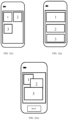
FIG. 2(i) is a schematic diagram of a grid layout according to an embodiment of the present disclosure; -
FIG. 2(j) is a schematic diagram of a vertical layout according to an embodiment of the present disclosure; -
FIG. 2(k) is a schematic diagram of a custom layout according to an embodiment of the present disclosure; and -
FIG. 3 is a block diagram of an electronic device according to another embodiment of the present disclosure. - In order to enable those of ordinary skill in the art to better understand the technical solutions of the present disclosure, a shooting method, an electronic device, and a computer readable medium provided in the present disclosure are described in detail below with reference to the drawings.
- Exemplary embodiments of the present disclosure will be described more fully below with reference to the drawings, but the exemplary embodiments described herein may be embodied in different forms and should not be interpreted as being limited to the embodiments described herein. Rather, the embodiments are provided to make the present disclosure thorough and complete, and may enable those of ordinary skill in the art to fully understand the scope of the present disclosure.
- The embodiments described herein and the features therein can be combined with one another if no conflict is incurred.
- The term "and/or" used herein includes any and all combinations of at least one associated listed item.
- The terms used herein are merely used to describe specific embodiments, and are not intended to limit the present disclosure. As used herein, "a" and "the" which indicate a singular form are intended to include a plural form, unless expressly stated in the context. It should be further understood that the term(s) "include" and/or "be made of" used herein indicate(s) the presence of the described features, integers, operations, elements and/or components, but do not exclude the presence or addition of at least one other feature, integer, operation, element, component and/or combinations thereof.
- Unless otherwise defined, all terms (including technical and scientific terms) used herein have the same meaning as commonly understood by those of ordinary skill in the art. It should be further understood that terms, such as those defined in commonly used dictionaries, should be interpreted as having a meaning that is consistent with a meaning in the context of the related technology and the background of the present disclosure, and should not be interpreted in an idealized or overly formal sense unless expressly so defined herein.
-
FIG. 1 is a flowchart illustrating a shooting method according to an embodiment of the present disclosure. - In a first aspect, referring to
FIG. 1 , an embodiment of the present disclosure provides a shooting method, which may includeoperations 100 to 102. - At
operation 100, in a case where an instruction to start shooting is received, basic accompaniment audio is read and played, and a 1st video is shot; and video frames of the 1st video and audio of the 1st video are separated from the 1st video. - In some exemplary embodiments, before receiving the instruction to start shooting, the method further includes: in a case where an instruction to shoot a synthesized video is received, displaying at least one control for acquiring the basic accompaniment audio; receiving a selection instruction for the control for acquiring the basic accompaniment audio, and turning on a camera to shoot a basic video in a case where the control for acquiring the basic accompaniment audio corresponding to the selection instruction is shooting with camera; and separating audio of the basic video from the basic video, and taking the audio of the basic video as the basic accompaniment audio. As shown in
FIG. 2(a) , a user may enter a shooting page of the basic video by clicking on the control "camera". - In some exemplary embodiments, before receiving the instruction to start shooting, the method further includes: in a case where an instruction to shoot a synthesized video is received, displaying at least one control for acquiring the basic accompaniment audio; receiving a selection instruction for the control for acquiring the basic accompaniment audio, and selecting a video from an album in a case where the control for acquiring the basic accompaniment audio corresponding to the selection instruction is acquiring from album; and separating audio of the selected video from the selected video, and taking the audio of the selected video as the basic accompaniment audio. As shown in
FIG. 2(a) , a user may enter an album page by clicking on the control "open album". - In some exemplary embodiments, before receiving the instruction to start shooting, the method further includes: in a case where an instruction to shoot a synthesized video is received, displaying at least one control for acquiring the basic accompaniment audio; receiving a selection instruction for the control for acquiring the basic accompaniment audio, opening an audio list on a preset path in a case where the control for acquiring the basic accompaniment audio corresponding to the selection instruction is acquiring from audio list, and taking a selected audio file as the basic accompaniment audio. As shown in
FIG. 2(a) , a user may enter a display page of the audio list by clicking on the control "open audio list". - In some exemplary embodiments, when being played, the basic accompaniment audio may be played on a loop or not.
- In some exemplary embodiments, a purpose of shooting the 1st video while playing the basic accompaniment audio is to shoot the 1st video with the basic accompaniment audio taken as an accompaniment.
- In some exemplary embodiments, when the basic accompaniment audio is played on a loop, duration of the 1st video may be manually controlled by a user or may be set in advance.
- In some exemplary embodiments, when the basic accompaniment audio is not played on a loop, the duration of the 1st video is the same as duration of the basic accompaniment audio. In this case, when a playback of the basic accompaniment audio ends, the shooting of the 1st video ends automatically.
- In some exemplary embodiments, a time interval between a moment when the playback of the basic accompaniment audio is started and a moment when the shooting of the 1st video is started is less than or equal to a preset time interval.
- In some exemplary embodiments, in a manual mode, in a case where an instruction to enter a shooting page is received, the shooting page is entered; in a case where the instruction to start shooting is received, the playback of the basic accompaniment audio is started, and the shooting of the 1st video is started; and when an instruction to stop shooting is received or the playback of the basic accompaniment audio ends, the shooting of the 1st video is ended, and the video frames of the 1st video and the audio of the 1st video are separated from the 1st video.
- In some exemplary embodiments, as shown in
FIG. 2(a) , the user may enter a setup page shown inFIG. 2(b) by clicking on an asterisk, and may set to adopt the manual mode or an automatic mode in the setup page, and if the user selects "automatic record" shown inFIG. 2(b) , the automatic mode is adopted; and if the user selects "manual record" (not shown inFIG. 2(b) ), the manual mode is adopted. - In some exemplary embodiments, the user may input the instruction to enter the shooting page by clicking on the sign "+" on a current display page, as shown in
FIG. 2(a) . - In some exemplary embodiments, the user may input the instruction to start shooting by clicking on a start button on the shooting page, and may input an instruction to end shooting by clicking on an end button on the shooting page, as shown in
FIG. 2(c) . - In some exemplary embodiments, in a case where the instruction to start shooting is received, a countdown begins, and the playback of the basic accompaniment audio and the shooting of the 1st video are started after the countdown ends.
- In some exemplary embodiments, in the automatic mode, in a case where the instruction to enter the shooting page is received, the shooting page is entered and a countdown begins, as shown in
FIG. 2(d) ; in a case where the countdown ends, the playback of the basic accompaniment audio and the shooting of the 1st video are started; and in a case where the playback of the basic accompaniment audio ends or the instruction to stop shooting is received, the shooting of the 1st video is ended. - In some exemplary embodiments, a countdown may begin before the playback of the basic accompaniment audio ends, and the shooting of the 1st video is ended when the countdown ends.
- In some exemplary embodiments, a countdown begins when the shooting of the 1st video is ended, as shown in
FIG. 2(e) , and a 2nd video is shot after the countdown ends. - In some exemplary embodiments, a time length for the countdown may be set in advance.
- In some exemplary embodiments, other special effects may be added during the countdown, such as at least one of sound of a tap of cymbals of a drum kit or an animation of a countdown digital screen stretching from a center point to all sides.
- In some exemplary embodiments, during the countdown which begins when the shooting of the 1st video is ended, a re-shoot button and a finish button are displayed at the bottom of a shooting screen, as shown in
FIG. 2(e) , and if the 1st video needs to be re-shot, the user may input a re-shoot instruction by clicking on the re-shoot button; and if the 1st video does not need to be re-shot, the user may input a shooting completion instruction by clicking on the finish button. - In some exemplary embodiments, the re-shoot instruction is received, the video frames of the 1st video and the audio of the 1st video separated from the 1st video are deleted, and the operation of reading and playing the basic accompaniment audio and shooting the 1st video is performed again.
- In some exemplary embodiments, the shooting completion instruction is received, and the video frames of the 1st video and the audio of the 1st video separated from the 1st video are stored.
- At
operation 101, in a case where an instruction to continue shooting is received, audio of an ith video is played, and an (i+1)th video is shot; and video frames of the (i+1)th video and audio of the (i+1)th video are separated from the (i+1)th video, with i being any integer greater than or equal to 1 and less than N, and N being the number of videos to be shot. - In some exemplary embodiments, when being played, the audio of the ith video is not played on a loop.
- In some exemplary embodiments, a purpose of shooting the (i+1)th video while playing the audio of the ith video is to shoot the (i+1)th video with the audio of the ith video taken as an accompaniment.
- In some exemplary embodiments, duration of the (i+1)th video is the same as that of the ith video.
- In some exemplary embodiments, a time interval between a moment when a playback of the audio of the ith video is started and a moment when the shooting of the (i+1)th video is started is less than or equal to a preset time interval.
- In some exemplary embodiments, in the manual mode, after the shooting of the ith video is ended, a display page shown in
FIG. 2(f) is returned to, and when the user clicks on a save button, the ith video is generated, and a box of a number "i" is displayed, as shown inFIG. 2(f) , with the box of the number "1" inFIG. 2(f) representing the 1 st video and the box of the number "2" inFIG. 2(f) representing the 2nd video; the video frames of the ith video and the audio of the ith video are separated from the ith video and are stored; when the instruction to enter the shooting page is received, the shooting page is entered; when the instruction to continue shooting is received, the playback of the audio of the ith video and the shooting of the (i+1)th video are started; and when the instruction to stop shooting is received or the playback of the audio of the ith video ends, the shooting of the (i+1)th video is ended, and the video frames of the (i+1)th video and the audio of the (i+1)th video are separated from the (i+1)th video. - In some exemplary embodiments, the user may input the instruction to enter the shooting page by clicking on the sign "+" on a current display page, as shown in
FIG. 2(f) . - In some exemplary embodiments, the user may input the instruction to continue shooting by clicking on the start button on the shooting page, and may input the instruction to end shooting by clicking on the end button on the shooting page, as shown in
FIG. 2(c) . - In some exemplary embodiments, when the instruction to continue shooting is received, a countdown begins, and the playback of the audio of the i th video and the shooting of the (i+1)th video are started after the countdown ends.
- In some exemplary embodiments, the user may enter a preview interface shown in
FIG. 2(g) by clicking on the box of the number "1" inFIG. 2(f) to preview the 1st video, and may enter the preview interface shown inFIG. 2(g) by clicking on the box of the number "2" inFIG. 2(f) to preview the 2nd video. - In some exemplary embodiments, the user may delete the 2nd video by long pressing the box of the number "2" in
FIG. 2(f) : as shown inFIG. 2(h) , after the user long presses the box of the number "2" inFIG. 2(f) , a sign "×" appears in the upper right corner of the box of the number "2", and the user may delete the 2nd video by clicking on the sign "x". - In some exemplary embodiments, in the automatic mode, after the shooting of the ith video is ended, the display page shown in
FIG. 2(f) is returned to, and when the user clicks on the save button, the ith video is generated, as shown inFIG. 2(f) , with the box of the number "1" inFIG. 2(f) representing the 1st video and the box of the number "2" inFIG. 2(f) representing the 2nd video; the video frames of the ith video and the audio of the ith video are separated from the ith video and are stored; and when the instruction to enter the shooting page is received, the shooting page is entered, and a countdown begins, for example, for the (i+1)th video, the shooting of the (i+1)th video is ended when the playback of the audio of the ith video ends or the instruction to stop shooting is received. - In some exemplary embodiments, a countdown may begin before the playback of the audio of the ith video ends, and the shooting of the (i+1)th video is ended when the countdown ends.
- In some exemplary embodiments, a countdown begins when the shooting of the (i+1)th video is ended, as shown in
FIG. 2(e) , and an (i+2)th video is shot after the countdown ends. - In some exemplary embodiments, a time length for the countdown may be set in advance.
- In some exemplary embodiments, other special effects may be added during the countdown, such as at least one of sound of a tap of cymbals of a drum kit or an animation of a countdown digital screen stretching from a center point to all sides.
- In some exemplary embodiments, during the countdown which begins when the shooting of the (i+1)th video is ended, the re-shoot button and the finish button are displayed at the bottom of a shooting screen, as shown in
FIG. 2(e) , and if the (i+1)th video needs to be re-shot, the user may input the re-shoot instruction by clicking on the re-shoot button; and if the (i+1)th video does not need to be re-shot, the user may input the shooting completion instruction by clicking on the finish button. - In some exemplary embodiments, the re-shoot instruction is received, the video frames of the (i+1)th video and the audio of the (i+1)th video separated from the (i+1)th video are deleted, and the operation of shooting the (i+1)th video while playing the audio of the ith video is performed again.
- In some exemplary embodiments, the shooting completion instruction is received, and the video frames the (i+1)th video and the audio of the (i+1)th video separated from the (i+1)th video are stored.
- At
operation 102, in a case where an instruction to finish shooting is received, the video frames of the 1st video to video frames of an Nth video are displayed on a display screen, and layout adjustment parameters for the displayed frames of the N videos on the display screen are received; and the video frames of the 1st video to the video frames of the Nth video and audio of the Nth video are stored as a target video according to the layout adjustment parameters. - In some exemplary embodiments, storing the video frames of the 1st video to the video frames of the Nth video and the audio of the Nth video as the target video according to the layout adjustment parameters includes: storing video frames corresponding to the basic accompaniment audio, the video frames of the 1st video to the video frames of the Nth video, and the audio of the Nth video as the target video according to the layout adjustment parameters.
- In some exemplary embodiments, the video frames corresponding to the basic accompaniment audio may be separated from a basic performance video.
- In some exemplary embodiments, the video frames corresponding to the basic accompaniment audio may be separated from the selected video.
- In some exemplary embodiments, duration of the target video is a minimum value among the duration of the 1st video to duration of the Nth video.
- In some exemplary embodiments, the 1 st video to the Nth video are performance videos of N different instruments, or performance videos of (N-1) different instruments and a singing video.
- In some exemplary embodiments, the 1 st video to the Nth video are performance videos of N different scenes, or performance videos of (N-1) different scenes and a singing video.
- In some exemplary embodiments, when the target video is synthesized, the video frames of the 1st video to the video frames of the Nth video may be laid out in any one layout mode including a grid layout, a vertical layout, and a custom layout, and the layout adjustment parameters are layout adjustment parameters corresponding to the layout modes.
- In some exemplary embodiments, when the target video is synthesized, the video frames corresponding to the basic accompaniment audio, and the video frames of the 1st video to the video frames of the Nth video may be laid out in any one layout mode including a grid layout, a vertical layout, and a custom layout, and the layout adjustment parameters are layout adjustment parameters corresponding to the layout modes.
- In some exemplary embodiments, the layout mode may be set in advance in the setup page shown in
FIG. 2(b) . - In some exemplary embodiments, the grid layout is to arrange in two columns, so as to facilitate comparison during displaying of two adjacent video frames, as shown in
FIG. 2(i) . - In some exemplary embodiments, the vertical layout is to arrange from top to bottom, as shown in
FIG. 2(j) . A width of a video playback region in the vertical layout is larger than that of a video playback region in the grid layout, so that the video content may be presented more completely. A composite width is based on the width of the video playback region, and a composite height is equal to a result of dividing a height of the video playback region by the number of videos. - In some exemplary embodiments, the custom layout is not limited to a video playback region, as shown in
FIG. 2(k) . The user may manually drag a video to change a location of the video, and may also press and hold a border of a video to change a size of the video. The videos may overlap from top to bottom, and a video in a lower layer may be covered by a video in an upper layer. - In some exemplary embodiments, synthesizing the video frames of the 1st video to the video frames of the Nth video and the audio of the Nth video into the target video according to the layout adjustment parameters includes: respectively decoding the video frames of the 1st video to the video frames of the Nth video to obtain corresponding data in YUV format, scaling each frame of the data in the YUV format according to the layout adjustment parameters, and drawing the scaled data in the YUV format in a corresponding video playback region in a set layout mode to obtain first synthesized video frames; and decoding the audio of the Nth video, and mixing and aligning the first synthesized video frames and the decoded audio to obtain the target video.
- In some exemplary embodiments, synthesizing the video frames corresponding to the basic accompaniment audio, the video frames of the 1st video to the video frames of the Nth video, and the audio of the Nth video into the target video according to the layout adjustment parameters includes: respectively decoding the video frames corresponding to the basic accompaniment audio, and the video frames of the 1st video to the video frames of the Nth video to obtain corresponding data in YUV format, scaling each frame of the data in the YUV format according to the layout adjustment parameters, and drawing the scaled data in the YUV format in a corresponding video playback region in a set layout mode to obtain second synthesized video frames; and decoding the audio of the Nth video, and mixing and aligning the second synthesized video frames and the decoded audio to obtain the target video.
- For example, if the user desires to shoot a multi-view video of himself playing the drum, playing the piano, and singing, the user may adopt the shooting method provided in the embodiments of the present disclosure, that is, the user may shoot a drum performance video with the camera to obtain VideoA1, and then separate video frames VideoA2 and audio AudioA from the drum performance video VideoA1.
- In a case where the audio AudioA of the drum performance video VideoA1 is played as an accompaniment, a piano performance video is shot to obtain VideoB1, and video frames VideoB2 and audio AudioB are separated from the piano performance video VideoB1. Here, the audio AudioB contains the sound of the drum and the sound of the piano.
- In a case where the audio AudioB of the piano performance video VideoB1 is played as an accompaniment, a singing video is shot to obtain VideoC1, and video frames VideoC2 and audio AudioC are separated from the singing video VideoC1. Here, the audio AudioC contains the sound of the drum, the sound of the piano, and the sound of the singing.
- Finally, the video frames VideoA2, the video frames VideoB2, the video frames VideoC2, and the audio AudioC are synthesized into a multi-view performance video of the user playing the drum, playing the piano, and singing.
- According to the shooting method provided in the embodiments of the present disclosure, the N videos are shot, the audio of the ith video is played as the accompaniment when the (i+1)th video is shot, and the shot N videos and the audio of the Nth video are finally synthesized into the target video. In this way, the problems of users' lack of video editing technology and troublesome mutli-file synthesis and management are solved, a video synthesis effect is improved, and the shooting method is applicable to multi-video synthesis scenarios such as shooting of practice videos of playing a musical instrument or singing.
- In a second aspect, as shown in
FIG. 3 , another embodiment of the present disclosure provides an electronic device, including: at least oneprocessor 301; and astorage device 302 having stored thereon at least one program which, when executed by the at least oneprocessor 301, implements the shooting method described in any one of the above embodiments of the present disclosure. - In some exemplary embodiments, the electronic device further includes one or more input/output (I/O) interfaces 303, which is connected between the
processor 301 and thestorage device 302 and configured to enable information interaction between theprocessor 301 and thestorage device 302. - The
processor 301 is a device having data processing capability, and includes, but is not limited to, a Central Processing Unit (CPU); thestorage device 302 is a device having data storage capability, and includes, but is not limited to, a Random Access Memory (RAM, more specifically, a Synchronous Dynamic RAM (SDRAM), a Double Data Rate SDRAM (DDR SDRAM), etc.), a Read-Only Memory (ROM), an Electrically Erasable Programmable Read-Only Memory (EEPROM), and a flash memory (FLASH); and the I/O interface (read/write)interface 303 is connected between theprocessor 301 and thestorage device 302, is capable of enabling the information interaction between theprocessor 301 and thestorage device 302, and includes, but is not limited to, a data bus (Bus). - In some embodiments, the
processor 301, thestorage device 302, and the I/O interface 303 are connected to each other through abus 304, and then are connected to other components of a computing device. - In a third aspect, another embodiment of the present disclosure provides a computer readable medium having stored thereon a computer program which, when executed by a processor, implements the shooting method described in any one of the above embodiments of the present disclosure.
- It should be understood by those of ordinary skill in the art that the functional modules/units in all or some of the operations, systems and devices in the above disclosed method may be implemented as software, firmware, hardware, or suitable combinations thereof. If implemented as hardware, the division between the functional modules/units stated above is not necessarily corresponding to the division of physical components; and for example, one physical component may have a plurality of functions, or one function or operation may be performed through cooperation of several physical components. Some or all of the physical components may be implemented as software executed by a processor, such as a CPU, a digital signal processor or a microprocessor, or may be implemented as hardware, or may be implemented as an integrated circuit, such as an application specific integrated circuit. Such software may be distributed on a computer-readable medium, which may include a computer storage medium (or a non-transitory medium) and a communication medium (or a transitory medium). As well known by those of ordinary skill in the art, the term "computer storage medium" includes volatile/nonvolatile and removable/non-removable media used in any method or technology for storing information (such as computer-readable instructions, data structures, program modules and other data). The computer storage medium includes, but is not limited to, an RAM (more specifically, an SDRAM, a DDR, etc.), an ROM, an EEPROM, a flash memory or other magnetic disks, a Compact Disc Read Only Memory (CD-ROM), a Digital Versatile Disc (DVD) or other optical discs, a magnetic cassette, a magnetic tape, a magnetic disk or other magnetic storage devices, or any other medium which can be configured to store desired information and can be accessed by a computer. In addition, it is well known by those of ordinary skill in the art that the communication media generally include computer-readable instructions, data structures, program modules, or other data in modulated data signals such as carrier wave or other transmission mechanism, and may include any information delivery medium.
- The present disclosure discloses the exemplary embodiments using specific terms, but the terms are merely used and should be merely interpreted as having general illustrative meanings, rather than for the purpose of limitation. Unless expressly stated, it is apparent to those of ordinary skill in the art that features, characteristics and/or elements described in connection with a particular embodiment can be used alone or in combination with features, characteristics and/or elements described in connection with other embodiments. Therefore, it should be understood by those of ordinary skill in the art that various changes in the forms and the details can be made without departing from the scope of the present disclosure of the appended claims.
Claims (10)
- A shooting method, comprising:in a case where an instruction to start shooting is received, reading and playing basic accompaniment audio, and shooting a 1st video; and separating video frames of the 1st video and audio of the 1st video from the 1st video;in a case where an instruction to continue shooting is received, playing audio of an ith video, and shooting an (i+1)th video; and separating video frames of the (i+1)th video and audio of the (i+1)th video from the (i+1)th video, wherein i is any integer greater than or equal to 1 and less than N, and N is a number of videos to be shot; andin a case where an instruction to finish shooting is received, displaying the video frames of the 1st video to video frames of an Nth video on a display screen, and receiving layout adjustment parameters for the displayed frames of N videos on the display screen; and storing the video frames of the 1st video to the video frames of the Nth video and audio of the Nth video as a target video according to the layout adjustment parameters.
- The shooting method of claim 1, wherein before receiving the instruction to start shooting, the method further comprises:in a case where an instruction to shoot a synthesized video is received, displaying at least one control for acquiring the basic accompaniment audio;receiving a selection instruction for the at least one control for acquiring the basic accompaniment audio, and turning on a camera to shoot a basic video in a case where a control for acquiring the basic accompaniment audio corresponding to the selection instruction is shooting with camera; andseparating audio of the basic video from the basic video, and taking the audio of the basic video as the basic accompaniment audio.
- The shooting method of claim 1, wherein before receiving the instruction to start shooting, the method further comprises:in a case where an instruction to shoot a synthesized video is received, displaying at least one control for acquiring the basic accompaniment audio;receiving a selection instruction for the at least one control for acquiring the basic accompaniment audio, and selecting a video from an album in a case where a control for acquiring the basic accompaniment audio corresponding to the selection instruction is acquiring from album; andseparating audio of the selected video from the selected video, and taking the audio of the selected video as the basic accompaniment audio.
- The shooting method of claim 1, wherein before receiving the instruction to start shooting, the method further comprises:in a case where an instruction to shoot a synthesized video is received, displaying at least one control for acquiring the basic accompaniment audio; andreceiving a selection instruction for the at least one control for acquiring the basic accompaniment audio, opening an audio list on a preset path in a case where a control for acquiring the basic accompaniment audio corresponding to the selection instruction is acquiring from audio list, and taking a selected audio file as the basic accompaniment audio.
- The shooting method of any one of claims 1 to 3, wherein storing the video frames of the 1st video to the video frames of the Nth video and the audio of the Nth video as the target video according to the layout adjustment parameters comprises:
storing video frames corresponding to the basic accompaniment audio, the video frames of the 1st video to the video frames of the Nth video, and the audio of the Nth video as the target video according to the layout adjustment parameters. - The shooting method of any one of claims 1 to 4, wherein duration of the target video is a minimum value among duration of the 1st video to duration of the Nth video.
- The shooting method of any one of claims 1 to 4, wherein in a case where an instruction to stop shooting is received or a playback of the basic accompaniment audio ends, the operation of separating the video frames of the 1st video and the audio of the 1st video from the 1st video is performed; and
in a case where the instruction to stop shooting is received or a playback of the audio of the ith video ends, the operation of separating the video frames of the (i+1)th video and the audio of the (i+1)th video from the (i+1)th video is performed. - The shooting method of any one of claims 1 to 4, wherein in a case where the instruction to start shooting is received, a countdown begins, and the operation of reading and playing the basic accompaniment audio and shooting the 1st video is performed after the countdown ends; or
in a case where the instruction to continue shooting is received, a countdown begins, and the operation of playing the audio of the ith video and shooting the (i+1)th video is performed after the countdown ends. - An electronic device, comprising:at least one processor; anda storage device having stored thereon at least one program which, when executed by the at least one processor, implements the shooting method of any one of claims 1 to 8.
- A computer readable medium having stored thereon a computer program which, when executed by a processor, implements the shooting method of any one of claims 1 to 8.
Applications Claiming Priority (2)
| Application Number | Priority Date | Filing Date | Title |
|---|---|---|---|
| CN202311159816.4A CN119603548A (en) | 2023-09-08 | 2023-09-08 | Photographing method, electronic device, and computer readable medium |
| PCT/CN2024/112708 WO2025050963A1 (en) | 2023-09-08 | 2024-08-16 | Photography method, electronic device, and computer-readable medium |
Publications (2)
| Publication Number | Publication Date |
|---|---|
| EP4583524A1 true EP4583524A1 (en) | 2025-07-09 |
| EP4583524A4 EP4583524A4 (en) | 2026-01-14 |
Family
ID=94827580
Family Applications (1)
| Application Number | Title | Priority Date | Filing Date |
|---|---|---|---|
| EP24861807.6A Pending EP4583524A4 (en) | 2023-09-08 | 2024-08-16 | PHOTOGRAPHIC METHOD, ELECTRONIC DEVICE AND COMPUTER-READABLE MEDIUM |
Country Status (4)
| Country | Link |
|---|---|
| EP (1) | EP4583524A4 (en) |
| KR (1) | KR20250061758A (en) |
| CN (1) | CN119603548A (en) |
| WO (1) | WO2025050963A1 (en) |
Family Cites Families (10)
| Publication number | Priority date | Publication date | Assignee | Title |
|---|---|---|---|---|
| US10638082B2 (en) * | 2014-08-28 | 2020-04-28 | Gregory A. Pearson, Inc. | Systems and methods for picture-in-picture video conference functionality |
| US10681408B2 (en) * | 2015-05-11 | 2020-06-09 | David Leiberman | Systems and methods for creating composite videos |
| US10943574B2 (en) * | 2018-05-21 | 2021-03-09 | Smule, Inc. | Non-linear media segment capture and edit platform |
| CN108900768A (en) * | 2018-07-12 | 2018-11-27 | 北京微播视界科技有限公司 | Video capture method, apparatus, terminal, server and storage medium |
| CN109068166B (en) * | 2018-08-17 | 2020-02-14 | 北京达佳互联信息技术有限公司 | Video synthesis method, device, equipment and storage medium |
| CN109451245A (en) * | 2018-12-27 | 2019-03-08 | 北京微播视界科技有限公司 | A kind of video capture method, apparatus, equipment and storage medium |
| CN112188307B (en) * | 2019-07-03 | 2022-07-01 | 腾讯科技(深圳)有限公司 | Video resource synthesis method and device, storage medium and electronic device |
| US11031043B1 (en) * | 2020-05-05 | 2021-06-08 | Facebook, Inc. | Video collaboration tool |
| CN114401368B (en) * | 2022-01-24 | 2024-05-03 | 杭州卡路里体育有限公司 | Processing method and device for simultaneous video |
| CN115515006B (en) * | 2022-08-19 | 2023-10-17 | 北京达佳互联信息技术有限公司 | Video processing method, device, electronic equipment and storage medium |
-
2023
- 2023-09-08 CN CN202311159816.4A patent/CN119603548A/en active Pending
-
2024
- 2024-08-16 KR KR1020257011324A patent/KR20250061758A/en active Pending
- 2024-08-16 WO PCT/CN2024/112708 patent/WO2025050963A1/en active Pending
- 2024-08-16 EP EP24861807.6A patent/EP4583524A4/en active Pending
Also Published As
| Publication number | Publication date |
|---|---|
| EP4583524A4 (en) | 2026-01-14 |
| WO2025050963A1 (en) | 2025-03-13 |
| CN119603548A (en) | 2025-03-11 |
| KR20250061758A (en) | 2025-05-08 |
Similar Documents
| Publication | Publication Date | Title |
|---|---|---|
| US11157154B2 (en) | Media-editing application with novel editing tools | |
| JP4261644B2 (en) | Multimedia editing method and apparatus | |
| US11747972B2 (en) | Media-editing application with novel editing tools | |
| US6683649B1 (en) | Method and apparatus for creating a multimedia presentation from heterogeneous media objects in a digital imaging device | |
| US6738075B1 (en) | Method and apparatus for creating an interactive slide show in a digital imaging device | |
| US20020054116A1 (en) | Method and apparatus for editing heterogeneous media objects in a digital imaging device | |
| RU2008136457A (en) | WATCHING A VIDEO USING A REDUCED PICTURE | |
| JP2004215281A (en) | Video recording / reproducing apparatus and control method thereof. | |
| JP2001005838A (en) | Electronic image document creation method and recording medium storing electronic image document creation program | |
| JPH11341350A (en) | Multimedia information editing and reproducing device, recording medium with multimedia information reproduction program and recording medium with sequence information respectively recorded on them | |
| JPH0771203B2 (en) | Signal recording device and signal processing device | |
| EP1492342A1 (en) | Information recording medium and manufacturing method thereof | |
| US20120251081A1 (en) | Image editing device, image editing method, and program | |
| JP2024522757A (en) | Video processing method, device, equipment and computer program | |
| WO2021052130A1 (en) | Video processing method, apparatus and device, and computer-readable storage medium | |
| JP2000350156A (en) | Moving image information storage method and recording medium storing the same | |
| JP2895064B2 (en) | Still image file method, still image reproducing device, still image file storage medium system, and still image file device | |
| EP4583524A1 (en) | Photography method, electronic device, and computer-readable medium | |
| JP2736070B2 (en) | Still image file editing device | |
| US20240179366A1 (en) | Mutable composite media | |
| JP2003309815A (en) | Information recording medium and production method therefor | |
| JP4692336B2 (en) | Image display system, image display apparatus, and image display method | |
| JP7794859B2 (en) | Image generation method, apparatus, device, and storage medium | |
| US20020168173A1 (en) | Method and apparatus for copying and processing audiovisual information | |
| AU719329B2 (en) | Multi-media editing method and apparatus |
Legal Events
| Date | Code | Title | Description |
|---|---|---|---|
| STAA | Information on the status of an ep patent application or granted ep patent |
Free format text: STATUS: THE INTERNATIONAL PUBLICATION HAS BEEN MADE |
|
| PUAI | Public reference made under article 153(3) epc to a published international application that has entered the european phase |
Free format text: ORIGINAL CODE: 0009012 |
|
| STAA | Information on the status of an ep patent application or granted ep patent |
Free format text: STATUS: REQUEST FOR EXAMINATION WAS MADE |
|
| 17P | Request for examination filed |
Effective date: 20250402 |
|
| AK | Designated contracting states |
Kind code of ref document: A1 Designated state(s): AL AT BE BG CH CY CZ DE DK EE ES FI FR GB GR HR HU IE IS IT LI LT LU LV MC ME MK MT NL NO PL PT RO RS SE SI SK SM TR |
|
| A4 | Supplementary search report drawn up and despatched |
Effective date: 20251211 |
|
| RIC1 | Information provided on ipc code assigned before grant |
Ipc: H04N 23/62 20230101AFI20251205BHEP Ipc: G11B 27/031 20060101ALI20251205BHEP Ipc: H04N 5/265 20060101ALI20251205BHEP |