EP4583465A1 - Method and apparatus for reporting bsr, communication device, and storage medium - Google Patents
Method and apparatus for reporting bsr, communication device, and storage medium Download PDFInfo
- Publication number
- EP4583465A1 EP4583465A1 EP22956751.6A EP22956751A EP4583465A1 EP 4583465 A1 EP4583465 A1 EP 4583465A1 EP 22956751 A EP22956751 A EP 22956751A EP 4583465 A1 EP4583465 A1 EP 4583465A1
- Authority
- EP
- European Patent Office
- Prior art keywords
- bsr
- terminal
- reporting
- assistance information
- access network
- Prior art date
- Legal status (The legal status is an assumption and is not a legal conclusion. Google has not performed a legal analysis and makes no representation as to the accuracy of the status listed.)
- Pending
Links
Images



Classifications
-
- H—ELECTRICITY
- H04—ELECTRIC COMMUNICATION TECHNIQUE
- H04W—WIRELESS COMMUNICATION NETWORKS
- H04W72/00—Local resource management
- H04W72/20—Control channels or signalling for resource management
- H04W72/21—Control channels or signalling for resource management in the uplink direction of a wireless link, i.e. towards the network
-
- H—ELECTRICITY
- H04—ELECTRIC COMMUNICATION TECHNIQUE
- H04W—WIRELESS COMMUNICATION NETWORKS
- H04W28/00—Network traffic management; Network resource management
- H04W28/02—Traffic management, e.g. flow control or congestion control
- H04W28/0278—Traffic management, e.g. flow control or congestion control using buffer status reports
-
- H—ELECTRICITY
- H04—ELECTRIC COMMUNICATION TECHNIQUE
- H04W—WIRELESS COMMUNICATION NETWORKS
- H04W72/00—Local resource management
- H04W72/12—Wireless traffic scheduling
- H04W72/1263—Mapping of traffic onto schedule, e.g. scheduled allocation or multiplexing of flows
-
- H—ELECTRICITY
- H04—ELECTRIC COMMUNICATION TECHNIQUE
- H04W—WIRELESS COMMUNICATION NETWORKS
- H04W8/00—Network data management
- H04W8/22—Processing or transfer of terminal data, e.g. status or physical capabilities
- H04W8/24—Transfer of terminal data
-
- H—ELECTRICITY
- H04—ELECTRIC COMMUNICATION TECHNIQUE
- H04W—WIRELESS COMMUNICATION NETWORKS
- H04W72/00—Local resource management
- H04W72/50—Allocation or scheduling criteria for wireless resources
- H04W72/56—Allocation or scheduling criteria for wireless resources based on priority criteria
- H04W72/566—Allocation or scheduling criteria for wireless resources based on priority criteria of the information or information source or recipient
- H04W72/569—Allocation or scheduling criteria for wireless resources based on priority criteria of the information or information source or recipient of the traffic information
Definitions
- the present disclosure relates to, but is not limited to, the field of wireless communication technology, and in particular, to a method and an apparatus for reporting the BSR, a communication device and a storage medium.
- the extended reality (XR) service is one of the service types supported by the network.
- the data of XR service is usually composed of a plurality of quality of service (QoS) streams, and the service volume is very large.
- QoS quality of service
- the QoS stream of XR needs to meet certain delay requirements during transmission, especially some data streams need to be delivered to the server at the same time for decoding, and the delay of any QoS stream will cause failure of joint decoding of the plurality of QoS streams. Therefore, how to schedule QoS streams is a problem that needs to be considered.
- the embodiments of the present disclosure disclose a method and an apparatus for reporting the BSR, a communication device and a storage medium.
- a method for reporting a BSR performed by a terminal, and the method including:
- the assistance information is used to indicate an urgency degree of scheduling data of the predefined service.
- the predefined service is an extended reality XR service.
- the assistance information is used by a network to determine a scheduling priority of scheduling the data of the predefined service.
- receiving a buffer status report (BSR) including assistance information sent by a terminal includes:
- a communication device including:
- a computer storage medium wherein the computer storage medium stores a computer executable program, and the executable program implements the method described in any embodiment of the present disclosure when executed by the processor.
- a buffer status report including assistance information is sent to an access network device, wherein, the assistance information is used to assist the access network device in performing data scheduling of a predefined service.
- the BSR includes assistance information indicating the urgency degree of scheduling data of the predefined service
- the access network device can schedule the data of the predefined service based on the urgency degree of scheduling data of the predefined service indicated by the assistance information for assisting the access network device in performing data scheduling of the predefined service.
- first, second, third, etc. may be used to describe various information in the embodiments of the present disclosure, these information should not be limited to these terms. These terms are only used to distinguish the same type of information from each other.
- first information may also be referred to as the second information, and similarly, the second information may also be referred to as the first information.
- word “if” as used herein may be interpreted as "at the time of... ! or “when... ! or "in response to determining that”.
- the user device 110 may also be a device of an unmanned aerial vehicle.
- the user device 110 may also be a vehicle-mounted device, such as a driving computer with wireless communication functions, or a wireless user device connected to an external driving computer.
- the user device 110 may also be a roadside device, such as a street lamp, a signal lamp or other roadside devices with wireless communication functions.
- the base station 120 may be a network-side device in a wireless communication system.
- the wireless communication system may be a 4th generation mobile communication technology (4G) system, also known as a long term evolution (LTE) system; or, the wireless communication system may be a 5G system, also known as a new air interface system or a 5G NR system. Alternatively, the wireless communication system may be a next generation system of the 5G system.
- the access network in the 5G system may be referred to as New Generation-Radio Access Network (NG-RAN).
- NG-RAN New Generation-Radio Access Network
- the above user device can be considered as the terminal device in the following embodiments.
- the wireless communication system may further include a network management device 130.
- a method for reporting a BSR is provided in the present embodiment, wherein the method is executed by a terminal, and the method includes:
- the assistance information is used to indicate an urgency degree of scheduling data of the predefined service.
- the assistance information is at least used to indicate: the delay budget information (delay mit) of scheduling data of the predefined service.
- the delay budget information can be duration information, for example, 1ms.
- the terminal involved in the present disclosure can be but is not limited to a mobile phone, a wearable device, a vehicle-mounted terminal, a road side unit (RSU,), a smart home terminal, an industrial sensor device and/or a medical device, etc.
- the terminal may be a Redcap terminal or a new air interface NR terminal of a predetermined version (e.g., an NR terminal of R17).
- the access network device involved in the present disclosure may be a base station, and the base station may be various types of base stations, such as a base station of a third generation mobile communication (3G) network, a base station of a fourth generation mobile communication (4G) network, a base station of a fifth generation mobile communication (5G) network, or other evolved base stations.
- 3G third generation mobile communication
- 4G fourth generation mobile communication
- 5G fifth generation mobile communication
- index0 may indicate a high level of urgency
- index1 may indicate a medium level of urgency
- index2 may indicate a low level of urgency. It should be noted that, if the assistance information indicates null, it may be determined as a low level of urgency.
- the access layer of the terminal may obtain assistance information from the non-access layer or the service layer.
- the terminal determines the assistance information based on implementation.
- the assistance information is obtained, wherein the assistance information is at least used to indicate: the urgency degree of scheduling a plurality of QoS data streams of the XR service.
- a buffer status report BSR including the assistance information is sent to the access network device.
- the assistance information is obtained, wherein the assistance information is at least used to indicate: the urgency degree of scheduling different data in the same logical channel of the XR service.
- a buffer status report BSR including the assistance information is sent to the access network device.
- a buffer status report BSR including the assistance information is sent to the access network device; wherein the assistance information is at least used to indicate: the urgency degree of scheduling the data of the predefined service; the assistance information is used by the network to determine the scheduling priority of scheduling the data of the predefined service. It should be noted that, the higher the scheduling priority of the data, the data will be scheduled first.
- the scheduling priority can be positively correlated with the urgency degree, for example, the higher the urgency degree is, the higher the scheduling priority is.
- the assistance information is carried by a predetermined information field of a media access control (MAC) control unit (CE) for sending the BSR.
- MAC media access control
- CE control unit
- an extended field namely, a scheduling indication Scheduling Index N
- N is added on the basis of the information field for sending the BSR in the related art, to indicate the urgency degree or the delay budget of scheduling data of the predefined service and other information, wherein N is an integer greater than or equal to 1.
- N is an integer greater than or equal to 1.
- the Scheduling Index N corresponding to different N values can be associated with different logical channel groups (LCGs), and different LCGs can be indicated by different identifiers IDs, such as LCG ID 1 and LCG ID 2 .
- LCGs logical channel groups
- the assistance information is associated with a predetermined logical channel identifier LCID.
- an extended logical channel identifier LCID can be added to indicate reporting of an extended BSR (i.e., the BSR includes assistance information).
- a reserved LCID can be used to indicate reporting of an extended BSR.
- configuration information sent by the access network device is received, wherein the configuration information is used to indicate one of the following: the terminal reporting the BSR with the terminal as a granularity; the terminal reporting the BSR with a logical channel group (LCG) as the granularity; and the terminal reporting the BSR with a logical channel as the granularity.
- the buffer status report (BSR) including assistance information is sent to an access network device, wherein the assistance information is at least used to indicate: the urgency degree or the delay budget of scheduling data of the predefined service and other information.
- the terminal needs to use the extended BSR reporting format to report the BSR, that is, the BSR needs to include the assistance information.
- reference information is sent to the access network device, wherein, the reference information indicates the terminal supporting or not supporting an ability to report the BSR; and/or, the reference information indicates the terminal expecting or not expecting to report the BSR.
- the configuration information sent by the access network device is received, wherein, the configuration information is used to indicate the terminal to report the BSR.
- the buffer status report (BSR) including assistance information is sent to an access network device, wherein the assistance information is used to indicate an urgency degree of scheduling data of the predefined service.
- configuration information sent by the access network device is received, wherein, the configuration information is used to indicate the terminal to report the BSR.
- the buffer status report (BSR) including assistance information is sent to an access network device, wherein the assistance information is at least used to indicate: the urgency degree or the delay budget of scheduling data of the predefined service and other information.
- the base station determines that the terminal is a terminal for performing the XR service, the terminal is notified that the specific logical channel needs to use the extended BSR reporting format.
- a method for reporting a BSR is provided in this embodiment, wherein the method is executed by a terminal, and the method includes:
- reference information is sent to the access network device, wherein, the reference information indicates the terminal supporting or not supporting an ability to report the BSR; and/or, the reference information indicates the terminal expecting or not expecting to report the BSR.
- the configuration information sent by the access network device is received, wherein, the configuration information is used to indicate the terminal to report the BSR.
- the buffer status report (BSR) including assistance information is sent to an access network device, wherein the assistance information is used to indicate an urgency degree or the delay budget of scheduling data of the predefined service and other information.
- a method for reporting a BSR is provided in this embodiment, wherein the method is performed by an access network device, and the method includes:
- the assistance information is at least used to indicate: the delay budget information (delay miter) of scheduling data of the predefined service.
- the delay budget information can be duration information, for example, 1ms.
- the terminal involved in the present disclosure can be but is not limited to a mobile phone, a wearable device, a vehicle-mounted terminal, a road side unit (RSU,), a smart home terminal, an industrial sensor device and/or a medical device, etc.
- the terminal may be a Redcap terminal or a new air interface NR terminal of a predetermined version (e.g., an NR terminal of R17).
- the access network device involved in the present disclosure may be a base station, and the base station may be various types of base stations, such as a base station of a third generation mobile communication (3G) network, a base station of a fourth generation mobile communication (4G) network, a base station of a fifth generation mobile communication (5G) network, or other evolved base stations.
- 3G third generation mobile communication
- 4G fourth generation mobile communication
- 5G fifth generation mobile communication
- the assistance information indicates one of the following:
- the assistance information indicates the delay budget information of scheduling the data of the predefined service; in one embodiment, the delay budget information may be quantified and then reported.
- a mapping relationship between an identifier and a duration may be established, and different identifiers may indicate different durations.
- the specific delay budget information corresponding to the index or code point may be notified by the network in advance or agreed upon by a protocol.
- the BSR sent by the terminal based on the reporting manner with the LCG as the granularity is received; wherein the assistance information is at least used to indicate: the urgency degree or the delay budget of scheduling data of the predefined service and other information.
- the base station when configuring the logical channel, configures the BSR reporting on the logical channel to use the extended BSR reporting, and at this time, the logical channel reporting will conduct the reporting using the extended BSR reporting.
- a method for reporting a BSR is provided in this embodiment, wherein the method is executed by an access network device, and the method includes:
- the base station determines that the terminal is a terminal for performing the XR service, the terminal is notified that the specific logical channel needs to use the extended BSR reporting format.
- a method for reporting a BSR is provided in this embodiment, wherein the method is executed by an access network device, and the method includes:
- reference information sent by the terminal is received, wherein, the reference information indicates the terminal supporting or not supporting an ability to report the BSR; and/or, the reference information indicates the terminal expecting or not expecting to report the BSR.
- the configuration information is determined based on the reference information.
- the configuration information is sent to terminal, wherein, the configuration information is used to indicate the terminal to report the BSR.
- the buffer status report (BSR) including assistance information sent by the terminal is received, wherein the assistance information is used to indicate the urgency degree delay or budget of scheduling data of the predefined service and other information.
- an apparatus for reporting BSR is provided in the embodiment of the present disclosure, wherein the apparatus includes:
- an apparatus for reporting BSR is provided in the embodiment of the present disclosure, wherein the apparatus includes:
- the embodiment of the present disclosure provides a communication device, the communication device including:
- the processor may include various types of storage media, the storage medium is a non-transitory computer storage medium, and can continue to memorize the information stored thereon after the communication device is powered off.
- the processor can be connected to the memory through a bus, etc., for reading the executable program stored on the memory.
- the embodiment of the present disclosure also provides a computer storage medium, wherein the computer storage medium stores a computer executable program, and the executable program implements the method of any embodiment of the present disclosure when executed by the processor.
- an embodiment of the present disclosure provides a structure of a terminal.
- a terminal 800 is provided by this embodiment.
- the terminal may be a mobile phone, a computer, a digital broadcast terminal, a messaging device, a game console, a tablet device, a medical device, a fitness device, a personal digital assistant, etc.
- the terminal 800 may include at least one or more of the following components: a processing component 802, a memory 804, a power component 806, a multimedia component 808, an audio component 810, an input/output (I/O) interface 812, a sensor component 814, and a communication component 816.
- the processing component 802 typically controls the overall operations of the terminal 800, such as the operations associated with display, telephone calls, data communications, camera operations, and recording operations.
- the processing component 802 can include one or more processors 820 to execute instructions to perform all or part of the steps in the above described methods.
- the processing component 802 can include one or more modules to facilitate the interaction between the processing component 802 and other components.
- the processing component 802 can include a multimedia module to facilitate the interaction between the multimedia component 808 and the processing component 802.
- a non-transitory computer-readable storage medium including instructions is also provided, such as a memory 804 including instructions, and the above instructions can be executed by the processor 820 of the terminal 800 to complete the above method.
- the non-transitory computer-readable storage medium can be a ROM, a random access memory (RAM), a CD-ROM, a magnetic tape, a floppy disk, and an optical data storage device.
Landscapes
- Engineering & Computer Science (AREA)
- Computer Networks & Wireless Communication (AREA)
- Signal Processing (AREA)
- Databases & Information Systems (AREA)
- Mobile Radio Communication Systems (AREA)
Abstract
Description
- The present disclosure relates to, but is not limited to, the field of wireless communication technology, and in particular, to a method and an apparatus for reporting the BSR, a communication device and a storage medium.
- The extended reality (XR) service is one of the service types supported by the network. In a scenario, the data of XR service is usually composed of a plurality of quality of service (QoS) streams, and the service volume is very large. However, the QoS stream of XR needs to meet certain delay requirements during transmission, especially some data streams need to be delivered to the server at the same time for decoding, and the delay of any QoS stream will cause failure of joint decoding of the plurality of QoS streams. Therefore, how to schedule QoS streams is a problem that needs to be considered.
- The embodiments of the present disclosure disclose a method and an apparatus for reporting the BSR, a communication device and a storage medium.
- According to the first aspect of the embodiment of the present disclosure, there is provided a method for reporting a BSR, performed by a terminal, and the method including:
- sending a buffer status report (BSR) including assistance information to an access network device,
- wherein, the assistance information is used to assist the access network device in performing data scheduling of a predefined service.
- In an embodiment, the assistance information is used to indicate an urgency degree of scheduling data of the predefined service.
- In an embodiment, the predefined service is an extended reality XR service.
- In an embodiment, the assistance information is carried by a predetermined information field of a media access control (MAC) control unit (CE) for sending the BSR.
- In an embodiment, the assistance information is associated with a predetermined logical channel identifier (LCID).
- In an embodiment, the method further includes:
- receiving configuration information sent by the access network device,
- wherein, the configuration information is used to indicate the terminal to report the BSR.
- In an embodiment, the configuration information is used to indicate one of the following:
- the terminal reporting the BSR with the terminal as a granularity;
- the terminal reporting the BSR with a logical channel group (LCG) as the granularity; and
- the terminal reporting the BSR with a logical channel as the granularity.
- In an embodiment, sending the buffer status report (BSR) including assistance information to an access network device includes:
- sending the BSR to the access network device based on a reporting manner with an LCG as a granularity;
or, - sending the BSR to the access network device based on a reporting manner with a single logical channel as the granularity.
- In an embodiment, the method further includes:
- sending reference information to the access network device,
- wherein, the reference information indicates the terminal supporting or not supporting an ability to report the BSR; and/or, the reference information indicates the terminal expecting or not expecting to report the BSR.
- According to the second aspect of the embodiment of the present disclosure, there is provided a method for reporting a BSR, performed by an access network device, and the method including:
- receiving a buffer status report (BSR) including assistance information sent by a terminal;
- wherein, the assistance information is used to assist the access network device in performing data scheduling of a predefined service.
- In an embodiment, the predefined service is an extended reality XR service.
- In an embodiment, the assistance information is used by a network to determine a scheduling priority of scheduling the data of the predefined service.
- In an embodiment, the assistance information is carried by a predetermined information field of a media access control (MAC) control unit (CE) for sending the BSR.
- In an embodiment, the assistance information is associated with a predetermined logical channel identifier (LCID).
- In an embodiment, the method further includes:
- sending configuration information to the terminal;
- wherein the configuration information is used to indicate the terminal to report the BSR.
- In an embodiment, the method further includes:
- receiving reference information sent by the terminal;
- wherein, the reference information indicates the terminal supporting or not supporting an ability to report the BSR; and/or, the reference information indicates the terminal expecting or not expecting to report the BSR;
- determining the configuration information based on the reference information.
- In an embodiment, the configuration information is used to indicate one of the following:
- the terminal reporting the BSR with the terminal as a granularity;
- the terminal reporting the BSR with a logical channel group (LCG) as the granularity; and
- the terminal reporting the BSR with a logical channel as the granularity.
- In an embodiment, receiving a buffer status report (BSR) including assistance information sent by a terminal includes:
- receiving the BSR sent by the terminal based on a reporting manner with an LCG as a granularity;
or, - receiving the BSR sent by the terminal based on a reporting manner with a single logical channel as the granularity.
- According to the third aspect of the embodiment of the present disclosure, there is provided an apparatus for reporting a BSR, including:
- a sending module, configured to send a buffer status report (BSR) including assistance information to an access network device,
- wherein, the assistance information is at least used to indicate an urgency degree of scheduling data of the predefined service.
- According to the fourth aspect of the embodiment of the present disclosure, there is provided an apparatus for reporting a BSR, including:
- a receiving module, configured to receive a buffer status report (BSR) including assistance information sent by a terminal;
- wherein, the assistance information is at least used to indicate an urgency degree of scheduling data of the predefined service.
- According to the fifth aspect of the embodiment of the present disclosure, there is provided a communication device, including:
- a processor; and
- a memory for storing executable instructions of the processor;
- wherein, the processor is configured to: implement the method described in any embodiment of the present disclosure when running the executable instructions.
- According to the sixth aspect of the embodiment of the present disclosure, there is provided a computer storage medium, wherein the computer storage medium stores a computer executable program, and the executable program implements the method described in any embodiment of the present disclosure when executed by the processor.
- In an embodiment of the present disclosure, a buffer status report (BSR) including assistance information is sent to an access network device, wherein, the assistance information is used to assist the access network device in performing data scheduling of a predefined service. Here, since the BSR includes assistance information indicating the urgency degree of scheduling data of the predefined service, after receiving the BSR, the access network device can schedule the data of the predefined service based on the urgency degree of scheduling data of the predefined service indicated by the assistance information for assisting the access network device in performing data scheduling of the predefined service. Compared with the manner in which the access network device randomly schedules the data of the predefined service, the data with a high urgency degree of the predefined service can be preferentially scheduled, the scheduling is performed based on the assistance information, which can ensure that the data with a high urgency degree can be successfully decoded, thereby improving the reliability of data transmission.
-
-
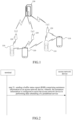
FIG. 1 is a schematic diagram of the structure of a wireless communication system according to an example embodiment. -
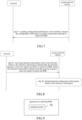
FIG. 2 is a schematic diagram of a flow chart of a method for reporting a BSR according to an example embodiment. -
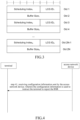
FIG. 3 is a schematic diagram of an information field according to an example embodiment. -
FIG. 4 is a schematic diagram of a flow chart of a method for reporting a BSR according to an example embodiment. -
FIG. 5 is a schematic diagram of a flow chart of a method for reporting a BSR according to an example embodiment. -
FIG. 6 is a schematic diagram of a flow chart of a method for reporting a BSR according to an example embodiment. -
FIG. 7 is a schematic diagram of a flow chart of a method for reporting a BSR according to an example embodiment. -
FIG. 8 is a schematic diagram of a flow chart of a method for reporting a BSR according to an example embodiment. -
FIG. 9 is a schematic diagram of an apparatus for reporting a BSR according to an example embodiment. -
FIG. 10 is a schematic diagram of an apparatus for reporting a BSR according to an example embodiment. -
FIG. 11 is a schematic diagram of a structure of a terminal according to an example embodiment. -
FIG. 12 is a block diagram of a base station according to an example embodiment. - The example embodiments will be described in detail here, and examples thereof are shown in the accompanying drawings. When the following description refers to the drawings, unless otherwise indicated, the same numbers in different drawings represent the same or similar elements. The implementations described in the following example embodiments do not represent all implementations consistent with the embodiments of the present disclosure. Instead, they are merely examples of apparatuses and methods consistent with some aspects of the embodiments of the present disclosure as detailed in the appended claims.
- The terms used in the embodiments of the present disclosure are only for the purpose of describing specific embodiments and are not intended to limit the embodiments of the present disclosure. The singular forms "one" and "the" used in the embodiments of the present disclosure and the appended claims are also intended to include plural forms unless the context clearly indicates otherwise. It should also be understood that the term "and/or" used herein refers to and includes any or all possible combinations of one or more associated listed items.
- It should be understood that although the terms first, second, third, etc. may be used to describe various information in the embodiments of the present disclosure, these information should not be limited to these terms. These terms are only used to distinguish the same type of information from each other. For example, without departing from the scope of the embodiments of the present disclosure, the first information may also be referred to as the second information, and similarly, the second information may also be referred to as the first information. Depending on the context, the word "if" as used herein may be interpreted as "at the time of... ..." or "when... ..." or "in response to determining that".
- For the purpose of simplicity and ease of understanding, the terms used in this article to characterize the size relationship are "greater than" or "less than". However, for those skilled in the art, it can be understood that the term "greater than" also covers the meaning of "greater than or equal to", and "less than" also covers the meaning of "less than or equal to".
- Please refer to
FIG. 1 , which shows a structural schematic diagram of a wireless communication system provided by an embodiment of the present disclosure. As shown inFIG. 1 , the wireless communication system is a communication system based on mobile communication technology, and the wireless communication system may include: a number ofuser devices 110 and a number ofbase stations 120. - The
user device 110 may be a device that provides voice and/or data connectivity to a user. Theuser device 110 can communicate with one or more core networks via a radio access network (RAN). Theuser device 110 may be an Internet of Things user device, such as a sensor device, a mobile phone, and a computer with an Internet of Things user device, for example, it may be a fixed, portable, pocket-sized, handheld, computer built-in, or vehicle-mounted apparatus, for example, a station (STA), a subscriber unit, a subscriber station, a mobile station, a mobile, a remote station, an access point, a remote terminal, an access terminal, a user terminal, a user agent, a user device, or user equipment. Alternatively, theuser device 110 may also be a device of an unmanned aerial vehicle. Alternatively, theuser device 110 may also be a vehicle-mounted device, such as a driving computer with wireless communication functions, or a wireless user device connected to an external driving computer. Alternatively, theuser device 110 may also be a roadside device, such as a street lamp, a signal lamp or other roadside devices with wireless communication functions. - The
base station 120 may be a network-side device in a wireless communication system. The wireless communication system may be a 4th generation mobile communication technology (4G) system, also known as a long term evolution (LTE) system; or, the wireless communication system may be a 5G system, also known as a new air interface system or a 5G NR system. Alternatively, the wireless communication system may be a next generation system of the 5G system. The access network in the 5G system may be referred to as New Generation-Radio Access Network (NG-RAN). - The
base station 120 may be an evolved base station (eNB) used in a 4G system. Alternatively, thebase station 120 may also be a base station (gNB) using a centralized distributed architecture in a 5G system. When thebase station 120 uses a centralized distributed architecture, it generally includes a central unit (CU) and at least two distributed units (DU). The central unit is provided with a protocol stack of a packet data convergence protocol (PDCP) layer, a radio link layer control protocol (RLC) layer, and a media access control (MAC) layer; the distributed unit is provided with a protocol stack of a physical (PHY) layer. The specific implementation method of thebase station 120 is not limited in the embodiment of the present disclosure. - A wireless connection can be established between the
base station 120 and theuser device 110 through a wireless air interface. In different implementations, the wireless air interface is a wireless air interface based on the fourth generation mobile communication network technology (4G) standard; or, the wireless air interface is a wireless air interface based on the fifth generation mobile communication network technology (5G) standard, for example, the wireless air interface is a new air interface; or, the wireless air interface can also be a wireless air interface based on the next generation mobile communication network technology standard of 5G. - In some embodiments, an E2E (End to End) connection can also be established between the
user devices 110, for example, scenarios such as V2V (vehicle to vehicle) communication, V2I (vehicle to infrastructure) communication and V2P (vehicle to pedestrian) communication in vehicle to everything (V2X) communication. - Here, the above user device can be considered as the terminal device in the following embodiments.
- In some embodiments, the wireless communication system may further include a
network management device 130. -
Several base stations 120 are respectively connected to thenetwork management device 130. Thenetwork management device 130 may be a core network device in the wireless communication system, for example, thenetwork management device 130 may be a mobility management entity (MME) in the Evolved Packet Core (EPC). Alternatively, the network management device may also be other core network devices, such as a Serving GateWay (SGW), a Public Data Network GateWay (PGW), a Policy and Charging Rules Function (PCRF) or a Home Subscriber Server (HSS), or the like. The embodiment of the present disclosure does not limit the implementation form of thenetwork management device 130. - In order to facilitate the understanding of those skilled in the art, the embodiment of the present disclosure lists a plurality of implementations to clearly illustrate the technical solution of the embodiment of the present disclosure. Those skilled in the art can understand that, the plurality of embodiments provided in the embodiments of the present disclosure can be executed separately, or can be executed together in combination with the methods of other embodiments in the embodiments of the present disclosure, or can also be executed separately or conjunctively in combination with some methods in other related technologies; the embodiments of the present disclosure do not limit this.
- As shown in
FIG. 2 , a method for reporting a BSR is provided in the present embodiment, wherein the method is executed by a terminal, and the method includes: - step 21, sending a buffer status report (BSR) including assistance information to an access network device,
- wherein, the assistance information is used to assist the access network device in performing data scheduling of a predefined service.
- In one embodiment, the assistance information is used to indicate an urgency degree of scheduling data of the predefined service. In one embodiment, the assistance information is at least used to indicate: the delay budget information (delay buget) of scheduling data of the predefined service. The delay budget information can be duration information, for example, 1ms.
- Here, the terminal involved in the present disclosure can be but is not limited to a mobile phone, a wearable device, a vehicle-mounted terminal, a road side unit (RSU,), a smart home terminal, an industrial sensor device and/or a medical device, etc. In some embodiments, the terminal may be a Redcap terminal or a new air interface NR terminal of a predetermined version (e.g., an NR terminal of R17).
- The access network device involved in the present disclosure may be a base station, and the base station may be various types of base stations, such as a base station of a third generation mobile communication (3G) network, a base station of a fourth generation mobile communication (4G) network, a base station of a fifth generation mobile communication (5G) network, or other evolved base stations.
- In one embodiment, the assistance information indicates one of the following:
- a high level of urgency;
- a medium level of urgency; and
- a low level of urgency.
- For example, "index0" may indicate a high level of urgency; "index1" may indicate a medium level of urgency; and "index2" may indicate a low level of urgency. It should be noted that, if the assistance information indicates null, it may be determined as a low level of urgency.
- In one embodiment, the assistance information indicates the delay budget information of scheduling the data of the predefined service;
in one embodiment, the delay budget information may be quantified and then reported. Here, a mapping relationship between an identifier and a duration may be established, and different identifiers may indicate different durations. - For example, the index "index0" may indicate that the delay budget is within range 1 (e.g., 0 to 10 ms); the index "index1" may indicate that the delay budget is within range 2 (e.g., 10 to 20 ms); and the index "index2" may indicate that the delay budget is within range 3 (e.g., 20 to 30 ms).
- The specific delay budget information corresponding to the index or code point may be notified by the network in advance or agreed upon by a protocol.
- In one embodiment, the urgency degree of scheduling data may be determined according to the delay requirement of transmitting data of a predefined service. For example, in response to the delay requirement of transmitting data of a predefined service being less than a delay threshold, it is determined that the urgency degree of scheduling the data is greater than a reference urgency level; or, in response to the delay requirement of transmitting data of a predefined service being greater than a delay threshold, it is determined that the urgency degree of scheduling the data is less than a reference urgency level.
- In one embodiment, the access layer of the terminal may obtain assistance information from the non-access layer or the service layer.
- In one embodiment, the terminal determines the assistance information based on implementation.
- In one embodiment, the assistance information is obtained, wherein the assistance information is at least used to indicate: an urgency degree of scheduling data of the predefined service. A buffer status report BSR including the assistance information is sent to the access network device.
- In one embodiment, the assistance information is obtained, wherein the assistance information is at least used to indicate: the urgency degree of scheduling a plurality of QoS data streams of the XR service. A buffer status report BSR including the assistance information is sent to the access network device.
- In one embodiment, the assistance information is obtained, wherein the assistance information is at least used to indicate: the urgency degree of scheduling different data in a QoS data stream of the XR service. A buffer status report BSR including the assistance information is sent to the access network device.
- In one embodiment, the assistance information is obtained, wherein the assistance information is at least used to indicate: the urgency degree of scheduling different data in the same logical channel of the XR service. A buffer status report BSR including the assistance information is sent to the access network device.
- In one embodiment, a buffer status report BSR including the assistance information is sent to the access network device; wherein the assistance information is at least used to indicate: the urgency degree of scheduling the data of the predefined service; the assistance information is used by the network to determine the scheduling priority of scheduling the data of the predefined service. It should be noted that, the higher the scheduling priority of the data, the data will be scheduled first. The scheduling priority can be positively correlated with the urgency degree, for example, the higher the urgency degree is, the higher the scheduling priority is.
- In one embodiment, the assistance information is carried by a predetermined information field of a media access control (MAC) control unit (CE) for sending the BSR. For example, referring to
FIG. 3 , an extended field, namely, a scheduling indication Scheduling IndexN, is added on the basis of the information field for sending the BSR in the related art, to indicate the urgency degree or the delay budget of scheduling data of the predefined service and other information, wherein N is an integer greater than or equal to 1. It should be noted that, the Scheduling IndexN corresponding to different N values can be associated with different logical channel groups (LCGs), and different LCGs can be indicated by different identifiers IDs, such as LCG ID1 and LCG ID2. - In one embodiment, the assistance information is associated with a predetermined logical channel identifier LCID. In one embodiment, an extended logical channel identifier LCID can be added to indicate reporting of an extended BSR (i.e., the BSR includes assistance information). For example, a reserved LCID can be used to indicate reporting of an extended BSR.
- In one embodiment, configuration information sent by the access network device is received, wherein, the configuration information is used to indicate the terminal to report the BSR. The buffer status report (BSR) including assistance information is sent to an access network device, wherein the assistance information is at least used to indicate: the urgency degree or the delay budget of scheduling data of the predefined service and other information.
- In one embodiment, configuration information sent by the access network device is received, wherein the configuration information is used to indicate one of the following: the terminal reporting the BSR with the terminal as a granularity; the terminal reporting the BSR with a logical channel group (LCG) as the granularity; and the terminal reporting the BSR with a logical channel as the granularity. The buffer status report (BSR) including assistance information is sent to an access network device, wherein the assistance information is at least used to indicate: the urgency degree or the delay budget of scheduling data of the predefined service and other information.
- It should be noted that, in the scenario where the reporting is performed at the granularity of the terminal, if the base station determines that the terminal is a terminal for performing the XR service, the terminal needs to use the extended BSR reporting format to report the BSR, that is, the BSR needs to include the assistance information.
- It should be noted that, in the scenario where the reporting is performed at the granularity of the logical channel group LCG, if the base station determines that the terminal is a terminal for performing the XR service, the terminal is notified that the specific LCG needs to use the extended BSR reporting format, while LCGs other than the specific LCG still use the BSR reporting format without the extension. The extended BSR reporting format means that the BSR needs to include the assistance information. In one embodiment, when the base station configures the logical channel group, it may configure the LCG to use an extended Buffer Status Report (BSR) for BSR reporting.
- It should be noted that, in the scenario where the BSR is reported at the granularity of the logical channel, if the base station determines that the terminal is a terminal for performing the XR service, the terminal is notified that the specific logical channel needs to use the extended BSR reporting format.
- In one embodiment, the BSR is sent to the access network device based on the reporting manner with the LCG as the granularity; wherein the assistance information is at least used to indicate: the urgency degree or the delay budget of scheduling data of the predefined service and other information.
- It should be noted that, when the base station configures the logical channel, the BSR reporting on the logical channel is configured to use the extended BSR reporting, and the BSR reporting on the LCG to which the logical channel belongs uses the extended BSR reporting.
- In one embodiment, if the BSR reporting is based on the LCG reporting, any logical channel configured to use the extended BSR reporting will make the BSR reporting on the LCG use the extended BSR reporting.
- In one embodiment, if the BSR reporting is based on the LCG reporting, all logical channels configured to use the extended BSR reporting will make the BSR reporting on the LCG use the extended BSR reporting.
- In one embodiment, the BSR is sent to the access network device based on a reporting manner with a single logical channel as the granularity, wherein the assistance information is at least used to indicate: the urgency degree or the delay budget of scheduling data of the predefined service and other information.
- In one embodiment, when configuring the logical channel, the base station configures the BSR reporting on the logical channel to use the extended BSR reporting, and at this time, the logical channel reporting will conduct the reporting using the extended BSR reporting.
- In one embodiment, reference information is sent to the access network device, wherein, the reference information indicates the terminal supporting or not supporting an ability to report the BSR; and/or, the reference information indicates the terminal expecting or not expecting to report the BSR. The configuration information sent by the access network device is received, wherein, the configuration information is used to indicate the terminal to report the BSR. The buffer status report (BSR) including assistance information is sent to an access network device, wherein the assistance information is used to indicate an urgency degree of scheduling data of the predefined service.
- In an embodiment of the present disclosure, a buffer status report (BSR) including assistance information is sent to an access network device, wherein, the assistance information is used to assist the access network device in performing data scheduling of a predefined service. Here, since the BSR includes assistance information indicating the urgency degree of scheduling data of the predefined service, after receiving the BSR, the access network device can schedule the data of the predefined service based on the urgency degree of scheduling data of the predefined service indicated by the assistance information for assisting the access network device in performing data scheduling of the predefined service. Compared with the manner in which the access network device randomly schedules the data of the predefined service, the data with a high urgency degree of the predefined service can be preferentially scheduled, the scheduling is performed based on the assistance information, which can ensure that the data with a high urgency degree can be successfully decoded, thereby improving the reliability of data transmission.
- It should be noted that, those skilled in the art can understand that the method provided in the embodiment of the present disclosure can be executed alone or together with some methods in the embodiment of the present disclosure or some methods in related technologies.
- As shown in
FIG. 4 , a method for reporting a BSR is provided in the present embodiment, wherein the method is executed by a terminal, and the method includes: - step 41, receiving configuration information sent by the access network device;
- wherein the configuration information is used to instruct the terminal to report the BSR.
- In one embodiment, configuration information sent by the access network device is received, wherein, the configuration information is used to indicate the terminal to report the BSR. The buffer status report (BSR) including assistance information is sent to an access network device, wherein the assistance information is at least used to indicate: the urgency degree or the delay budget of scheduling data of the predefined service and other information.
- In one embodiment, configuration information sent by the access network device is received, wherein the configuration information is used to indicate one of the following: the terminal reporting the BSR with the terminal as a granularity; the terminal reporting the BSR with a logical channel group (LCG) as the granularity; and the terminal reporting the BSR with a logical channel as the granularity. The buffer status report (BSR) including assistance information is sent to an access network device, wherein the assistance information is at least used to indicate: the urgency degree or the delay budget of scheduling data of the predefined service and other information.
- It should be noted that, in the scenario where the reporting is performed at the granularity of the terminal, if the base station determines that the terminal is a terminal for performing the XR service, the terminal needs to use the extended BSR reporting format to report the BSR, that is, the BSR needs to include the assistance information.
- It should be noted that, in the scenario where the reporting is performed at the granularity of the logical channel group LCG, if the base station determines that the terminal is a terminal for performing the XR service, the terminal is notified that the specific LCG needs to use the extended BSR reporting format, while LCGs other than the specific LCG still use the BSR reporting format without the extension. The extended BSR reporting format means that the BSR needs to include the assistance information. In one embodiment, when the base station configures the logical channel group, it may configure the LCG to use an extended Buffer Status Report (BSR) for BSR reporting.
- It should be noted that, in the scenario where the BSR is reported at the granularity of the logical channel, if the base station determines that the terminal is a terminal for performing the XR service, the terminal is notified that the specific logical channel needs to use the extended BSR reporting format.
- It should be noted that, those skilled in the art can understand that the method provided in the embodiment of the present disclosure can be executed alone or together with some methods in the embodiment of the present disclosure or some methods in related technologies.
- As shown in
FIG. 5 , a method for reporting a BSR is provided in this embodiment, wherein the method is executed by a terminal, and the method includes: -
step 51, sending reference information to an access network device; - wherein, the reference information indicates the terminal supporting or not supporting an ability to report the BSR; and/or, the reference information indicates the terminal expecting or not expecting to report the BSR.
- In one embodiment, reference information is sent to the access network device, wherein, the reference information indicates the terminal supporting or not supporting an ability to report the BSR; and/or, the reference information indicates the terminal expecting or not expecting to report the BSR. The configuration information sent by the access network device is received, wherein, the configuration information is used to indicate the terminal to report the BSR. The buffer status report (BSR) including assistance information is sent to an access network device, wherein the assistance information is used to indicate an urgency degree or the delay budget of scheduling data of the predefined service and other information.
- It should be noted that, those skilled in the art can understand that the method provided in the embodiment of the present disclosure can be executed alone or together with some methods in the embodiment of the present disclosure or some methods in related technologies.
- As shown in
FIG. 6 , a method for reporting a BSR is provided in this embodiment, wherein the method is performed by an access network device, and the method includes: - step 61, receiving a buffer status report BSR including assistance information sent by a terminal;
- wherein, the assistance information is used to assist the access network device in performing data scheduling of a predefined service.
- In one embodiment, the assistance information is at least configured to indicate an urgency degree of scheduling data of the predefined service.
- In one embodiment, the assistance information is at least used to indicate: the delay budget information (delay buget) of scheduling data of the predefined service. The delay budget information can be duration information, for example, 1ms.
- Here, the terminal involved in the present disclosure can be but is not limited to a mobile phone, a wearable device, a vehicle-mounted terminal, a road side unit (RSU,), a smart home terminal, an industrial sensor device and/or a medical device, etc. In some embodiments, the terminal may be a Redcap terminal or a new air interface NR terminal of a predetermined version (e.g., an NR terminal of R17).
- The access network device involved in the present disclosure may be a base station, and the base station may be various types of base stations, such as a base station of a third generation mobile communication (3G) network, a base station of a fourth generation mobile communication (4G) network, a base station of a fifth generation mobile communication (5G) network, or other evolved base stations.
- In one embodiment, the assistance information indicates one of the following:
- a high level of urgency;
- a medium level of urgency; and
- a low level of urgency.
- For example, "index0" may indicate a high level of urgency; "index1" may indicate a medium level of urgency; and "index2" may indicate a low level of urgency. It should be noted that, if the assistance information indicates null, it may be determined as a low level of urgency.
- In one embodiment, the assistance information indicates the delay budget information of scheduling the data of the predefined service;
in one embodiment, the delay budget information may be quantified and then reported. Here, a mapping relationship between an identifier and a duration may be established, and different identifiers may indicate different durations. - For example, the index "index0" may indicate that the delay budget is within range 1 (e.g., 0 to 10 ms); the index "index1" may indicate that the delay budget is within range 2 (e.g., 10 to 20 ms); and the index "index2" may indicate that the delay budget is within range 3 (e.g., 20 to 30 ms).
- The specific delay budget information corresponding to the index or code point may be notified by the network in advance or agreed upon by a protocol.
- In one embodiment, the urgency degree of scheduling data may be determined according to the delay requirement of transmitting data of a predefined service. For example, in response to the delay requirement of transmitting data of a predefined service being less than a delay threshold, it is determined that the urgency degree of scheduling the data is greater than a reference urgency level; or, in response to the delay requirement of transmitting data of a predefined service being greater than a delay threshold, it is determined that the urgency degree of scheduling the data is less than a reference urgency level.
- In one embodiment, the access layer of the terminal may obtain assistance information from the non-access layer or the service layer.
- In one embodiment, the terminal determines the assistance information based on implementation.
- In one embodiment, a buffer status report (BSR) including assistance information sent by a terminal is received, wherein the assistance information is at least used to indicate: the urgency degree of scheduling a plurality of QoS data streams of the XR service.
- In one embodiment, a buffer status report (BSR) including assistance information sent by a terminal is received, wherein the assistance information is at least used to indicate: the urgency degree of scheduling different data in a QoS data stream of the XR service.
- In one embodiment, a buffer status report (BSR) including assistance information sent by a terminal is received, wherein the assistance information is at least used to indicate: the urgency degree of scheduling different data in the same logical channel of the XR service.
- In one embodiment, a buffer status report (BSR) including assistance information sent by a terminal is received, wherein the assistance information is at least used to indicate: the urgency degree of scheduling the data of the predefined service; the scheduling priority of scheduling the data of the predefined service is determined based on the assistance information. It should be noted that, the higher the scheduling priority of the data, the data will be scheduled first. The scheduling priority can be positively correlated with the urgency degree, for example, the higher the urgency degree is, the higher the scheduling priority is.
- In one embodiment, the assistance information is carried by a predetermined information field of a media access control (MAC) control unit (CE) for sending the BSR. For example, still referring to
FIG. 3 , an extended field, namely, a scheduling indication Scheduling IndexN, is added on the basis of the information field for sending the BSR in the related art, to indicate the urgency degree or the delay budget of scheduling data of the predefined service and other information, wherein N is an integer greater than or equal to 1. It should be noted that, the Scheduling IndexN corresponding to different N values can be associated with different logical channel groups (LCGs), and different LCGs can be indicated by different identifiers IDs, such as LCG ID1 and LCG ID2. - In one embodiment, the assistance information is associated with a predetermined logical channel identifier LCID. In one embodiment, an extended logical channel identifier LCID can be added to indicate reporting of an extended BSR (i.e., the BSR includes assistance information). For example, a reserved LCID can be used to indicate reporting of an extended BSR.
- In one embodiment, configuration information is sent to the terminal, wherein, the configuration information is used to indicate the terminal to report the BSR. The buffer status report (BSR) including assistance information is sent to an access network device, wherein the assistance information is at least used to indicate: the urgency degree or the delay budget of scheduling data of the predefined service and other information.
- In one embodiment, configuration information is sent to the terminal, wherein the configuration information is used to indicate one of the following: the terminal reporting the BSR with the terminal as a granularity; the terminal reporting the BSR with a logical channel group (LCG) as the granularity; and the terminal reporting the BSR with a logical channel as the granularity. The buffer status report (BSR) including assistance information is sent to an access network device, wherein the assistance information is at least used to indicate: the urgency degree or the delay budget of scheduling data of the predefined service and other information.
- It should be noted that, in the scenario where the reporting is performed at the granularity of the terminal, if the base station determines that the terminal is a terminal for performing the XR service, the terminal needs to use the extended BSR reporting format to report the BSR, that is, the BSR needs to include the assistance information.
- It should be noted that, in the scenario where the reporting is performed at the granularity of the logical channel group LCG, if the base station determines that the terminal is a terminal for performing the XR service, the terminal is notified that the specific LCG needs to use the extended BSR reporting format, while LCGs other than the specific LCG still use the BSR reporting format without the extension. The extended BSR reporting format means that the BSR needs to include the assistance information. In one embodiment, when the base station configures the logical channel group, it may configure the LCG to use an extended Buffer Status Report (BSR) for BSR reporting.
- It should be noted that, in the scenario where the BSR is reported at the granularity of the logical channel, if the base station determines that the terminal is a terminal for performing the XR service, the terminal is notified that the specific logical channel needs to use the extended BSR reporting format.
- In one embodiment, the BSR sent by the terminal based on the reporting manner with the LCG as the granularity is received; wherein the assistance information is at least used to indicate: the urgency degree or the delay budget of scheduling data of the predefined service and other information.
- It should be noted that, when the base station configures the logical channel, the BSR reporting on the logical channel is configured to use the extended BSR reporting, and the BSR reporting on the LCG to which the logical channel belongs uses the extended BSR reporting.
- In one embodiment, if the BSR reporting is based on the LCG reporting, any logical channel configured to use the extended BSR reporting will make the BSR reporting on the LCG use the extended BSR reporting.
- In one embodiment, if the BSR reporting is based on the LCG reporting, all logical channels configured to use the extended BSR reporting will make the BSR reporting on the LCG use the extended BSR reporting.
- In one embodiment, the BSR sent by the terminal based on a reporting manner with a single logical channel as the granularity is received, wherein the assistance information is at least used to indicate: the urgency degree or the delay budget of scheduling data of the predefined service and other information.
- In one embodiment, when configuring the logical channel, the base station configures the BSR reporting on the logical channel to use the extended BSR reporting, and at this time, the logical channel reporting will conduct the reporting using the extended BSR reporting.
- In one embodiment, reference information sent by the terminal is received, wherein, the reference information indicates the terminal supporting or not supporting an ability to report the BSR; and/or, the reference information indicates the terminal expecting or not expecting to report the BSR. The configuration information is determined based on the reference information. The configuration information is sent to terminal, wherein, the configuration information is used to indicate the terminal to report the BSR. The buffer status report (BSR) including assistance information sent by the terminal is received, wherein the assistance information is used to indicate an urgency degree of scheduling data of the predefined service.
- It should be noted that, those skilled in the art can understand that the method provided in the embodiment of the present disclosure can be executed alone or together with some methods in the embodiment of the present disclosure or some methods in related technologies.
- As shown in
FIG. 7 , a method for reporting a BSR is provided in this embodiment, wherein the method is executed by an access network device, and the method includes: - step 71, sending configuration information to the terminal;
- wherein the configuration information is used to instruct the terminal to report the BSR.
- In one embodiment, configuration information is sent to the terminal, wherein, the configuration information is used to indicate the terminal to report the BSR. The buffer status report (BSR) including assistance information is sent to an access network device, wherein the assistance information is at least used to indicate: the urgency degree of scheduling data of the predefined service.
- In one embodiment, configuration information is sent to the terminal, wherein the configuration information is used to indicate one of the following: the terminal reporting the BSR with the terminal as a granularity; the terminal reporting the BSR with a logical channel group (LCG) as the granularity; and the terminal reporting the BSR with a logical channel as the granularity. The buffer status report (BSR) including assistance information is sent to an access network device, wherein the assistance information is at least used to indicate: the urgency degree or the delay budget of scheduling data of the predefined service and other information.
- It should be noted that, in the scenario where the reporting is performed at the granularity of the terminal, if the base station determines that the terminal is a terminal for performing the XR service, the terminal needs to use the extended BSR reporting format to report the BSR, that is, the BSR needs to include the assistance information.
- It should be noted that, in the scenario where the reporting is performed at the granularity of the logical channel group LCG, if the base station determines that the terminal is a terminal for performing the XR service, the terminal is notified that the specific LCG needs to use the extended BSR reporting format, while LCGs other than the specific LCG still use the BSR reporting format without the extension. The extended BSR reporting format means that the BSR needs to include the assistance information. In one embodiment, when the base station configures the logical channel group, it may configure the LCG to use an extended Buffer Status Report (BSR) for BSR reporting.
- It should be noted that, in the scenario where the BSR is reported at the granularity of the logical channel, if the base station determines that the terminal is a terminal for performing the XR service, the terminal is notified that the specific logical channel needs to use the extended BSR reporting format.
- It should be noted that, those skilled in the art can understand that the method provided in the embodiment of the present disclosure can be executed alone or together with some methods in the embodiment of the present disclosure or some methods in related technologies.
- As shown in
FIG. 8 , a method for reporting a BSR is provided in this embodiment, wherein the method is executed by an access network device, and the method includes: -
step 81, receiving reference information sent by the terminal; - wherein, the reference information indicates the terminal supporting or not supporting an ability to report the BSR; and/or, the reference information indicates the terminal expecting or not expecting to report the BSR;
- step 82, determining the configuration information based on the reference information.
- In one embodiment, reference information sent by the terminal is received, wherein, the reference information indicates the terminal supporting or not supporting an ability to report the BSR; and/or, the reference information indicates the terminal expecting or not expecting to report the BSR. The configuration information is determined based on the reference information. The configuration information is sent to terminal, wherein, the configuration information is used to indicate the terminal to report the BSR. The buffer status report (BSR) including assistance information sent by the terminal is received, wherein the assistance information is used to indicate the urgency degree delay or budget of scheduling data of the predefined service and other information.
- It should be noted that, those skilled in the art can understand that the method provided in the embodiment of the present disclosure can be executed alone or together with some methods in the embodiment of the present disclosure or some methods in related technologies.
- As shown in
FIG. 9 , an apparatus for reporting BSR is provided in the embodiment of the present disclosure, wherein the apparatus includes: - a sending
module 91, configured to send a buffer status report (BSR) including assistance information to an access network device, - wherein, the assistance information is used to assist the access network device in performing data scheduling of a predefined service.
- It should be noted that, those skilled in the art can understand that the method provided in the embodiment of the present disclosure can be executed alone or together with some methods in the embodiment of the present disclosure or some methods in related technologies.
- As shown in
FIG. 10 , an apparatus for reporting BSR is provided in the embodiment of the present disclosure, wherein the apparatus includes: - a
receiving module 101, configured to receive a buffer status report (BSR) including assistance information sent by a terminal; - wherein, the assistance information is used to assist the access network device in performing data scheduling of a predefined service.
- It should be noted that, those skilled in the art can understand that the method provided in the embodiment of the present disclosure can be executed alone or together with some methods in the embodiment of the present disclosure or some methods in related technologies.
- The embodiment of the present disclosure provides a communication device, the communication device including:
- a processor; and
- a memory for storing instructions executable by the processor;
- wherein, the processor is configured to: implement the method applied to any embodiment of the present disclosure when running the executable instructions.
- The processor may include various types of storage media, the storage medium is a non-transitory computer storage medium, and can continue to memorize the information stored thereon after the communication device is powered off.
- The processor can be connected to the memory through a bus, etc., for reading the executable program stored on the memory.
- The embodiment of the present disclosure also provides a computer storage medium, wherein the computer storage medium stores a computer executable program, and the executable program implements the method of any embodiment of the present disclosure when executed by the processor.
- Regarding the apparatus in the above embodiment, the specific manner in which each module performs the operation has been described in detail in the embodiment of the method, and will not be elaborated here.
- As shown in
FIG. 11 , an embodiment of the present disclosure provides a structure of a terminal. - Referring to
FIG. 11 , a terminal 800 is provided by this embodiment. Specifically, the terminal may be a mobile phone, a computer, a digital broadcast terminal, a messaging device, a game console, a tablet device, a medical device, a fitness device, a personal digital assistant, etc. - Referring to
FIG. 11 , the terminal 800 may include at least one or more of the following components: aprocessing component 802, amemory 804, apower component 806, amultimedia component 808, anaudio component 810, an input/output (I/O)interface 812, asensor component 814, and acommunication component 816. - The
processing component 802 typically controls the overall operations of the terminal 800, such as the operations associated with display, telephone calls, data communications, camera operations, and recording operations. Theprocessing component 802 can include one ormore processors 820 to execute instructions to perform all or part of the steps in the above described methods. Moreover, theprocessing component 802 can include one or more modules to facilitate the interaction between theprocessing component 802 and other components. For example, theprocessing component 802 can include a multimedia module to facilitate the interaction between themultimedia component 808 and theprocessing component 802. - The
memory 804 is configured to store various types of data to support the operation of the terminal 800. Examples of such data include instructions for any application or method operated on the terminal 800, the contact data, the phone book data, messages, pictures, videos, and the like. Thememory 804 can be implemented by any type of volatile or non-volatile storage device, or a combination thereof, such as a static random access memory (SRAM), an electrically erasable programmable read-only memory (EEPROM), an erasable programmable read-only memory (EPROM), a programmable read-only memory (PROM), a read-only memory (ROM), a magnetic memory, a flash memory, a magnetic or optical disk. - The
power component 806 provides power to various components of the terminal 800. Thepower component 806 can include a power management system, one or more power sources, and other components associated with the generation, management, and distribution of power for the terminal 800. - The
multimedia component 808 includes a screen providing an output interface between the terminal 800 and the user. In some embodiments, the screen can include a liquid crystal display (LCD) and a touch panel (TP). If the screen includes the touch panel, the screen can be implemented as a touch screen to receive input signals from the user. The touch panel includes one or more touch sensors to sense touches, swipes, and gestures on the touch panel. The touch sensors may not only sense a boundary of a touch or swipe action, but also detect the duration time and pressure associated with the touch or swipe action. In some embodiments, themultimedia component 808 includes a front camera and/or a rear camera. When the terminal 800 is in an operation mode, such as a photographing mode or a video mode, the front camera and/or the rear camera can receive external multimedia data. Each of the front camera and the rear camera may be a fixed optical lens system or have focus and optical zoom capability. - The
audio component 810 is configured to output and/or input an audio signal. For example, theaudio component 810 includes a microphone (MIC) configured to receive an external audio signal when the terminal 800 is in an operation mode, such as a call mode, a recording mode, and a voice recognition mode. The received audio signal may be further stored in thememory 804 or sent via thecommunication component 816. In some embodiments, theaudio component 810 also includes a speaker for outputting the audio signal. - The I/
O interface 812 provides an interface between theprocessing component 802 and peripheral interface modules, such as keyboards, a click wheels, buttons, and the like. These buttons may include, but not limited to, a home button, a volume button, a starting button, and a locking button. - The
sensor component 814 includes one or more sensors for providing state assessments of various aspects of the terminal 800. For example, thesensor component 814 can detect an open/closed state of thedevice 800, relative positioning of components, such as the display and the keypad of the terminal 800. Thesensor component 814 can also detect a change in position of one component of the terminal 800 or the terminal 800, the presence or absence of user contact with the terminal 800, an orientation, or an acceleration/deceleration of the terminal 800, and a change in temperature of the terminal 800. Thesensor component 814 can also include a proximity sensor configured to detect the presence of nearby objects without any physical contact. Thesensor component 814 can also include a light sensor, such as a CMOS or CCD image sensor, configured to use in imaging applications. In some embodiments, thesensor component 814 can also include an accelerometer sensor, a gyroscope sensor, a magnetic sensor, a pressure sensor, or a temperature sensor. - The
communication component 816 is configured to facilitate wired or wireless communication between the terminal 800 and other devices. The terminal 800 can access a wireless network based on a communication standard, such as Wi-Fi, 2G, 3G, or a combination thereof. In an example embodiment, thecommunication component 816 receives broadcast signals or broadcast associated information from an external broadcast management system via a broadcast channel. In an example embodiment, thecommunication component 816 also includes a near field communication (NFC) module to facilitate short-range communications. For example, the NFC module can be implemented based on radio frequency identification (RFID) technology, infrared data association (IrDA) technology, ultra-wideband (UWB) technology, Bluetooth (BT) technology and other technologies. - In an example embodiment, the terminal 800 may be implemented with one or more application specific integrated circuits (ASIC), digital signal processors (DSP), digital signal processing devices (DSPD), programmable logic devices (PLD), field programmable Gate arrays (FPGA), controllers, microcontrollers, microprocessors or other electronic components, to perform the above methods.
- In an example embodiment, a non-transitory computer-readable storage medium including instructions is also provided, such as a
memory 804 including instructions, and the above instructions can be executed by theprocessor 820 of the terminal 800 to complete the above method. For example, the non-transitory computer-readable storage medium can be a ROM, a random access memory (RAM), a CD-ROM, a magnetic tape, a floppy disk, and an optical data storage device. - As shown in
FIG. 12 , a structure of a base station is provided in an embodiment of the present disclosure. For example, thebase station 900 may be provided as anetwork side device 900. Referring toFIG. 12 , thebase station 900 may include aprocessing component 922, which further includes one or more processors, and memory resources represented by amemory 932, for storing instructions, such as application programs, that can be executed by processingcomponent 922. An application stored inmemory 932 may include one or more modules, each of which corresponds to a set of instructions. In addition, theprocessing component 922 is configured to execute instructions to execute any of the above methods applied to the base station. - The
base station 900 may also include apower supply component 926 configured to perform power management of thebase station 900, a wired orwireless network interface 950 configured to connect thebase station 900 to the network, and an input/output (I/O)interface 958. Thebase station 900 may operate based on an operating system stored in thememory 932, such as Windows Server TM, Mac OS X TM, Unix TM, Linux TM, FreeBSD TM or the like. - Other embodiments of the present disclosure will easily occur to those skilled in the art after considering the specification and practicing the disclosure disclosed herein. The present disclosure is intended to cover any variation, use or adaptation of the present disclosure, which follows the general principles of the present disclosure and includes common sense or common technical means in the technical field not disclosed in this disclosure. The specification and embodiments are to be regarded as example only, with the true scope and spirit of the disclosure being indicated by the attached claims.
- It should be understood that the present disclosure is not limited to the precise structure described above and shown in the drawings, and various modifications and changes can be made without departing from its scope. The scope of the present disclosure is limited only by the appended claims.
Claims (23)
- A method for reporting a BSR, performed by a terminal, and the method comprising:sending a buffer status report (BSR) comprising assistance information to an access network device,wherein the assistance information assists the access network device in performing data scheduling of a predefined service.
- The method according to claim 1, wherein the assistance information indicates an urgency degree of scheduling data of the predefined service.
- The method according to claim 1, wherein the predefined service is an extended reality XR service.
- The method according to claim 1, wherein the assistance information is carried by a predetermined information field of a media access control (MAC) control unit (CE) for sending the BSR.
- The method according to claim 4, wherein the assistance information is associated with a predetermined logical channel identifier (LCID).
- The method according to claim 1, further comprising:receiving configuration information sent by the access network device,wherein the configuration information indicates the terminal to report the BSR.
- The method according to claim 6, wherein the configuration information indicates one of:the terminal reporting the BSR with the terminal as a granularity;the terminal reporting the BSR with a logical channel group (LCG) as the granularity; andthe terminal reporting the BSR with a logical channel as the granularity.
- The method according to claim 1, wherein sending the buffer status report (BSR) comprising assistance information to an access network device comprises:sending the BSR to the access network device based on a reporting manner with an LCG as a granularity;
or,sending the BSR to the access network device based on a reporting manner with a single logical channel as the granularity. - The method according to claim 1, further comprising:sending reference information to the access network device,wherein the reference information indicates the terminal supporting or not supporting an ability to report the BSR; and/or, the reference information indicates the terminal expecting or not expecting to report the BSR.
- A method for reporting a BSR, performed by an access network device, and the method comprising:receiving a buffer status report (BSR) comprising assistance information sent by a terminal;wherein the assistance information assists the access network device in performing data scheduling of a predefined service.
- The method according to claim 10, wherein the assistance information indicates an urgency degree of scheduling data of the predefined service.
- The method according to claim 11, wherein the predefined service is an extended reality XR service.
- The method according to claim 11, wherein the assistance information is used by a network to determine a scheduling priority of scheduling the data of the predefined service.
- The method according to claim 10, wherein the assistance information is carried by a predetermined information field of a media access control (MAC) control unit (CE) for sending the BSR.
- The method according to claim 14, wherein the assistance information is associated with a predetermined logical channel identifier (LCID).
- The method according to claim 10, further comprising:sending configuration information to the terminal;wherein the configuration information indicates the terminal to report the BSR.
- The method according to claim 16, further comprising:receiving reference information sent by the terminal;wherein the reference information indicates the terminal supporting or not supporting an ability to report the BSR; and/or, the reference information indicates the terminal expecting or not expecting to report the BSR;determining the configuration information based on the reference information.
- The method according to claim 17, wherein the configuration information indicates one of:the terminal reporting the BSR with the terminal as a granularity;the terminal reporting the BSR with a logical channel group (LCG) as the granularity; andthe terminal reporting the BSR with a logical channel as the granularity.
- The method according to claim 10, wherein receiving a buffer status report (BSR) comprising assistance information sent by a terminal comprises:receiving the BSR sent by the terminal based on a reporting manner with an LCG as a granularity;
or,receiving the BSR sent by the terminal based on a reporting manner with a single logical channel as the granularity. - An apparatus for reporting a BSR, comprising:a sending module, configured to send a buffer status report (BSR) comprising assistance information to an access network device,wherein the assistance information assists the access network device in performing data scheduling of a predefined service.
- An apparatus for reporting a BSR, comprising:a receiving module, configured to receive a buffer status report (BSR) comprising assistance information sent by a terminal;wherein the assistance information assists the access network device in performing data scheduling of a predefined service.
- A communication device, comprising:an antenna;a memory; anda processor, connected to the antenna and the memory respectively, configured to control transmission and reception of the antenna by executing computer executable instructions stored on the memory, and capable of implementing the method provided in any one of claims 1 to 9 or 10 to 19.
- A computer storage medium, having computer executable instructions stored thereon, wherein the computer executable instructions are capable to implement the method provided in any one of claims 1 to 9 and 10 to 19 after being executed by a processor.
Applications Claiming Priority (1)
| Application Number | Priority Date | Filing Date | Title |
|---|---|---|---|
| PCT/CN2022/115639 WO2024044916A1 (en) | 2022-08-29 | 2022-08-29 | Method and apparatus for reporting bsr, communication device, and storage medium |
Publications (2)
| Publication Number | Publication Date |
|---|---|
| EP4583465A1 true EP4583465A1 (en) | 2025-07-09 |
| EP4583465A4 EP4583465A4 (en) | 2025-10-29 |
Family
ID=90100218
Family Applications (1)
| Application Number | Title | Priority Date | Filing Date |
|---|---|---|---|
| EP22956751.6A Pending EP4583465A4 (en) | 2022-08-29 | 2022-08-29 | METHOD AND DEVICE FOR BSR REPORTING, COMMUNICATION DEVICE AND STORAGE MEDIUM |
Country Status (6)
| Country | Link |
|---|---|
| US (1) | US20260067746A1 (en) |
| EP (1) | EP4583465A4 (en) |
| JP (1) | JP2025529938A (en) |
| KR (1) | KR20250055552A (en) |
| CN (1) | CN117957822A (en) |
| WO (1) | WO2024044916A1 (en) |
Family Cites Families (5)
| Publication number | Priority date | Publication date | Assignee | Title |
|---|---|---|---|---|
| CN104247541B (en) * | 2013-03-12 | 2018-04-20 | 华为技术有限公司 | Transmission data processing method and device |
| KR102385420B1 (en) * | 2017-06-15 | 2022-04-12 | 삼성전자 주식회사 | Method and apparatus for reporting network requested buffer status report in next generation mobile communication system |
| US12185397B2 (en) * | 2019-01-11 | 2024-12-31 | Lg Electronics Inc. | Method and apparatus for performing sidelink communication on basis of resource allocated by base station in NR V2X |
| US12317266B2 (en) * | 2021-01-15 | 2025-05-27 | Qualcomm Incorporated | UE indication of uplink scheduling parameters in wireless communications |
| CN115884402A (en) * | 2021-09-27 | 2023-03-31 | 维沃软件技术有限公司 | Auxiliary information reporting method, service configuration method, terminal and network side equipment |
-
2022
- 2022-08-29 EP EP22956751.6A patent/EP4583465A4/en active Pending
- 2022-08-29 WO PCT/CN2022/115639 patent/WO2024044916A1/en not_active Ceased
- 2022-08-29 CN CN202280003342.1A patent/CN117957822A/en active Pending
- 2022-08-29 US US19/106,875 patent/US20260067746A1/en active Pending
- 2022-08-29 JP JP2025512184A patent/JP2025529938A/en active Pending
- 2022-08-29 KR KR1020257009073A patent/KR20250055552A/en active Pending
Also Published As
| Publication number | Publication date |
|---|---|
| CN117957822A (en) | 2024-04-30 |
| WO2024044916A1 (en) | 2024-03-07 |
| EP4583465A4 (en) | 2025-10-29 |
| KR20250055552A (en) | 2025-04-24 |
| JP2025529938A (en) | 2025-09-09 |
| US20260067746A1 (en) | 2026-03-05 |
Similar Documents
| Publication | Publication Date | Title |
|---|---|---|
| US20240236940A9 (en) | Information transmission method and apparatus, and communication device and storage medium | |
| US12309629B2 (en) | Information processing methods, user equipment, and base station | |
| EP4037406A1 (en) | Method and apparatus for resource processing, and computer storage medium | |
| US12507243B2 (en) | Transmission scheduling method and communication device triggered by indication information of at least two second cells contained in the information field of a downlink control information (DCI) and the mapping relationship between the indication information and the second cells | |
| EP4319259A1 (en) | Measurement gap processing method and apparatus, and communication device and storage medium | |
| CN115398843B (en) | Methods and devices, communication equipment and storage media for reducing interference | |
| CN114080852B (en) | Methods, devices, communication equipment, and storage media for reporting capability information | |
| CN115633343B (en) | Tracking area updating method and device, communication equipment and storage medium | |
| US20250226963A1 (en) | Transmission direction determination method and apparatus, communication device, and storage medium | |
| EP4615046A1 (en) | Information transmission control method and apparatus, and communication device and storage medium | |
| EP4319258A1 (en) | Measurement gap pre-configuration processing method and apparatus, communication device, and storage medium | |
| CN111279778B (en) | Communication processing method, device and computer storage medium | |
| CN111096063B (en) | Discontinuous reception DRX processing method, device and computer storage medium | |
| JP7796900B2 (en) | Resource setting method, apparatus, communication device and storage medium | |
| EP4583465A1 (en) | Method and apparatus for reporting bsr, communication device, and storage medium | |
| CN114503693B (en) | Terminal power configuration method, device, communication equipment and storage medium | |
| EP4645944A1 (en) | Information transmission method and apparatus, communication device, and storage medium | |
| EP4447362A1 (en) | Method and apparatus for monitoring availability indication information, device, and storage medium | |
| EP4447495A1 (en) | Information processing method and apparatus, communication device and storage medium | |
| CN117859395A (en) | Logical channel scheduling method, device, communication equipment and storage medium | |
| RU2856336C2 (en) | Method and device for reporting buffer status report (bsr), communication device and data carrier | |
| WO2021142795A1 (en) | Data transmission method, apparatus, communication device, and storage medium | |
| CN115623876B (en) | Method, device, communication equipment and storage medium for transmitting capability information | |
| CN115735392B (en) | BWP indication method, device, communication equipment and storage medium | |
| US20250261190A1 (en) | System information transmission method and apparatus, communication device, and storage medium |
Legal Events
| Date | Code | Title | Description |
|---|---|---|---|
| STAA | Information on the status of an ep patent application or granted ep patent |
Free format text: STATUS: THE INTERNATIONAL PUBLICATION HAS BEEN MADE |
|
| PUAI | Public reference made under article 153(3) epc to a published international application that has entered the european phase |
Free format text: ORIGINAL CODE: 0009012 |
|
| STAA | Information on the status of an ep patent application or granted ep patent |
Free format text: STATUS: REQUEST FOR EXAMINATION WAS MADE |
|
| 17P | Request for examination filed |
Effective date: 20250328 |
|
| AK | Designated contracting states |
Kind code of ref document: A1 Designated state(s): AL AT BE BG CH CY CZ DE DK EE ES FI FR GB GR HR HU IE IS IT LI LT LU LV MC MK MT NL NO PL PT RO RS SE SI SK SM TR |
|
| A4 | Supplementary search report drawn up and despatched |
Effective date: 20250926 |
|
| RIC1 | Information provided on ipc code assigned before grant |
Ipc: H04L 27/00 20060101AFI20250922BHEP Ipc: H04W 8/24 20090101ALI20250922BHEP Ipc: H04W 28/02 20090101ALI20250922BHEP Ipc: H04W 72/21 20230101ALI20250922BHEP Ipc: H04W 72/566 20230101ALN20250922BHEP |
|
| DAV | Request for validation of the european patent (deleted) | ||
| DAX | Request for extension of the european patent (deleted) |