EP4583261A1 - Battery housing and battery - Google Patents
Battery housing and battery Download PDFInfo
- Publication number
- EP4583261A1 EP4583261A1 EP23862101.5A EP23862101A EP4583261A1 EP 4583261 A1 EP4583261 A1 EP 4583261A1 EP 23862101 A EP23862101 A EP 23862101A EP 4583261 A1 EP4583261 A1 EP 4583261A1
- Authority
- EP
- European Patent Office
- Prior art keywords
- shell
- cover plate
- battery housing
- recessed portion
- plate
- Prior art date
- Legal status (The legal status is an assumption and is not a legal conclusion. Google has not performed a legal analysis and makes no representation as to the accuracy of the status listed.)
- Pending
Links
Images






Classifications
-
- H—ELECTRICITY
- H01—ELECTRIC ELEMENTS
- H01M—PROCESSES OR MEANS, e.g. BATTERIES, FOR THE DIRECT CONVERSION OF CHEMICAL ENERGY INTO ELECTRICAL ENERGY
- H01M50/00—Constructional details or processes of manufacture of the non-active parts of electrochemical cells other than fuel cells, e.g. hybrid cells
- H01M50/10—Primary casings; Jackets or wrappings
- H01M50/102—Primary casings; Jackets or wrappings characterised by their shape or physical structure
- H01M50/103—Primary casings; Jackets or wrappings characterised by their shape or physical structure prismatic or rectangular
-
- H—ELECTRICITY
- H01—ELECTRIC ELEMENTS
- H01M—PROCESSES OR MEANS, e.g. BATTERIES, FOR THE DIRECT CONVERSION OF CHEMICAL ENERGY INTO ELECTRICAL ENERGY
- H01M50/00—Constructional details or processes of manufacture of the non-active parts of electrochemical cells other than fuel cells, e.g. hybrid cells
- H01M50/10—Primary casings; Jackets or wrappings
- H01M50/116—Primary casings; Jackets or wrappings characterised by the material
- H01M50/117—Inorganic material
- H01M50/119—Metals
-
- H—ELECTRICITY
- H01—ELECTRIC ELEMENTS
- H01M—PROCESSES OR MEANS, e.g. BATTERIES, FOR THE DIRECT CONVERSION OF CHEMICAL ENERGY INTO ELECTRICAL ENERGY
- H01M50/00—Constructional details or processes of manufacture of the non-active parts of electrochemical cells other than fuel cells, e.g. hybrid cells
- H01M50/10—Primary casings; Jackets or wrappings
- H01M50/147—Lids or covers
- H01M50/148—Lids or covers characterised by their shape
- H01M50/15—Lids or covers characterised by their shape for prismatic or rectangular cells
-
- H—ELECTRICITY
- H01—ELECTRIC ELEMENTS
- H01M—PROCESSES OR MEANS, e.g. BATTERIES, FOR THE DIRECT CONVERSION OF CHEMICAL ENERGY INTO ELECTRICAL ENERGY
- H01M50/00—Constructional details or processes of manufacture of the non-active parts of electrochemical cells other than fuel cells, e.g. hybrid cells
- H01M50/10—Primary casings; Jackets or wrappings
- H01M50/147—Lids or covers
- H01M50/155—Lids or covers characterised by the material
- H01M50/157—Inorganic material
- H01M50/159—Metals
-
- H—ELECTRICITY
- H01—ELECTRIC ELEMENTS
- H01M—PROCESSES OR MEANS, e.g. BATTERIES, FOR THE DIRECT CONVERSION OF CHEMICAL ENERGY INTO ELECTRICAL ENERGY
- H01M50/00—Constructional details or processes of manufacture of the non-active parts of electrochemical cells other than fuel cells, e.g. hybrid cells
- H01M50/10—Primary casings; Jackets or wrappings
- H01M50/147—Lids or covers
- H01M50/166—Lids or covers characterised by the methods of assembling casings with lids
- H01M50/169—Lids or covers characterised by the methods of assembling casings with lids by welding, brazing or soldering
-
- H—ELECTRICITY
- H01—ELECTRIC ELEMENTS
- H01M—PROCESSES OR MEANS, e.g. BATTERIES, FOR THE DIRECT CONVERSION OF CHEMICAL ENERGY INTO ELECTRICAL ENERGY
- H01M50/00—Constructional details or processes of manufacture of the non-active parts of electrochemical cells other than fuel cells, e.g. hybrid cells
- H01M50/10—Primary casings; Jackets or wrappings
- H01M50/172—Arrangements of electric connectors penetrating the casing
- H01M50/174—Arrangements of electric connectors penetrating the casing adapted for the shape of the cells
- H01M50/176—Arrangements of electric connectors penetrating the casing adapted for the shape of the cells for prismatic or rectangular cells
-
- H—ELECTRICITY
- H01—ELECTRIC ELEMENTS
- H01M—PROCESSES OR MEANS, e.g. BATTERIES, FOR THE DIRECT CONVERSION OF CHEMICAL ENERGY INTO ELECTRICAL ENERGY
- H01M50/00—Constructional details or processes of manufacture of the non-active parts of electrochemical cells other than fuel cells, e.g. hybrid cells
- H01M50/10—Primary casings; Jackets or wrappings
- H01M50/183—Sealing members
- H01M50/184—Sealing members characterised by their shape or structure
-
- H—ELECTRICITY
- H01—ELECTRIC ELEMENTS
- H01M—PROCESSES OR MEANS, e.g. BATTERIES, FOR THE DIRECT CONVERSION OF CHEMICAL ENERGY INTO ELECTRICAL ENERGY
- H01M50/00—Constructional details or processes of manufacture of the non-active parts of electrochemical cells other than fuel cells, e.g. hybrid cells
- H01M50/10—Primary casings; Jackets or wrappings
- H01M50/183—Sealing members
- H01M50/186—Sealing members characterised by the disposition of the sealing members
-
- H—ELECTRICITY
- H01—ELECTRIC ELEMENTS
- H01M—PROCESSES OR MEANS, e.g. BATTERIES, FOR THE DIRECT CONVERSION OF CHEMICAL ENERGY INTO ELECTRICAL ENERGY
- H01M50/00—Constructional details or processes of manufacture of the non-active parts of electrochemical cells other than fuel cells, e.g. hybrid cells
- H01M50/10—Primary casings; Jackets or wrappings
- H01M50/183—Sealing members
- H01M50/186—Sealing members characterised by the disposition of the sealing members
- H01M50/188—Sealing members characterised by the disposition of the sealing members the sealing members being arranged between the lid and terminal
-
- H—ELECTRICITY
- H01—ELECTRIC ELEMENTS
- H01M—PROCESSES OR MEANS, e.g. BATTERIES, FOR THE DIRECT CONVERSION OF CHEMICAL ENERGY INTO ELECTRICAL ENERGY
- H01M50/00—Constructional details or processes of manufacture of the non-active parts of electrochemical cells other than fuel cells, e.g. hybrid cells
- H01M50/10—Primary casings; Jackets or wrappings
- H01M50/183—Sealing members
- H01M50/19—Sealing members characterised by the material
- H01M50/193—Organic material
-
- H—ELECTRICITY
- H01—ELECTRIC ELEMENTS
- H01M—PROCESSES OR MEANS, e.g. BATTERIES, FOR THE DIRECT CONVERSION OF CHEMICAL ENERGY INTO ELECTRICAL ENERGY
- H01M50/00—Constructional details or processes of manufacture of the non-active parts of electrochemical cells other than fuel cells, e.g. hybrid cells
- H01M50/30—Arrangements for facilitating escape of gases
- H01M50/342—Non-re-sealable arrangements
- H01M50/3425—Non-re-sealable arrangements in the form of rupturable membranes or weakened parts, e.g. pierced with the aid of a sharp member
-
- H—ELECTRICITY
- H01—ELECTRIC ELEMENTS
- H01M—PROCESSES OR MEANS, e.g. BATTERIES, FOR THE DIRECT CONVERSION OF CHEMICAL ENERGY INTO ELECTRICAL ENERGY
- H01M50/00—Constructional details or processes of manufacture of the non-active parts of electrochemical cells other than fuel cells, e.g. hybrid cells
- H01M50/50—Current conducting connections for cells or batteries
- H01M50/543—Terminals
- H01M50/552—Terminals characterised by their shape
- H01M50/553—Terminals adapted for prismatic, pouch or rectangular cells
- H01M50/557—Plate-shaped terminals
-
- H—ELECTRICITY
- H01—ELECTRIC ELEMENTS
- H01M—PROCESSES OR MEANS, e.g. BATTERIES, FOR THE DIRECT CONVERSION OF CHEMICAL ENERGY INTO ELECTRICAL ENERGY
- H01M50/00—Constructional details or processes of manufacture of the non-active parts of electrochemical cells other than fuel cells, e.g. hybrid cells
- H01M50/50—Current conducting connections for cells or batteries
- H01M50/543—Terminals
- H01M50/562—Terminals characterised by the material
-
- H—ELECTRICITY
- H01—ELECTRIC ELEMENTS
- H01M—PROCESSES OR MEANS, e.g. BATTERIES, FOR THE DIRECT CONVERSION OF CHEMICAL ENERGY INTO ELECTRICAL ENERGY
- H01M50/00—Constructional details or processes of manufacture of the non-active parts of electrochemical cells other than fuel cells, e.g. hybrid cells
- H01M50/50—Current conducting connections for cells or batteries
- H01M50/543—Terminals
- H01M50/564—Terminals characterised by their manufacturing process
- H01M50/567—Terminals characterised by their manufacturing process by fixing means, e.g. screws, rivets or bolts
-
- H—ELECTRICITY
- H01—ELECTRIC ELEMENTS
- H01M—PROCESSES OR MEANS, e.g. BATTERIES, FOR THE DIRECT CONVERSION OF CHEMICAL ENERGY INTO ELECTRICAL ENERGY
- H01M50/00—Constructional details or processes of manufacture of the non-active parts of electrochemical cells other than fuel cells, e.g. hybrid cells
- H01M50/50—Current conducting connections for cells or batteries
- H01M50/572—Means for preventing undesired use or discharge
- H01M50/584—Means for preventing undesired use or discharge for preventing incorrect connections inside or outside the batteries
- H01M50/586—Means for preventing undesired use or discharge for preventing incorrect connections inside or outside the batteries inside the batteries, e.g. incorrect connections of electrodes
-
- H—ELECTRICITY
- H01—ELECTRIC ELEMENTS
- H01M—PROCESSES OR MEANS, e.g. BATTERIES, FOR THE DIRECT CONVERSION OF CHEMICAL ENERGY INTO ELECTRICAL ENERGY
- H01M50/00—Constructional details or processes of manufacture of the non-active parts of electrochemical cells other than fuel cells, e.g. hybrid cells
- H01M50/50—Current conducting connections for cells or batteries
- H01M50/572—Means for preventing undesired use or discharge
- H01M50/584—Means for preventing undesired use or discharge for preventing incorrect connections inside or outside the batteries
- H01M50/588—Means for preventing undesired use or discharge for preventing incorrect connections inside or outside the batteries outside the batteries, e.g. incorrect connections of terminals or busbars
-
- H—ELECTRICITY
- H01—ELECTRIC ELEMENTS
- H01M—PROCESSES OR MEANS, e.g. BATTERIES, FOR THE DIRECT CONVERSION OF CHEMICAL ENERGY INTO ELECTRICAL ENERGY
- H01M50/00—Constructional details or processes of manufacture of the non-active parts of electrochemical cells other than fuel cells, e.g. hybrid cells
- H01M50/50—Current conducting connections for cells or batteries
- H01M50/572—Means for preventing undesired use or discharge
- H01M50/584—Means for preventing undesired use or discharge for preventing incorrect connections inside or outside the batteries
- H01M50/59—Means for preventing undesired use or discharge for preventing incorrect connections inside or outside the batteries characterised by the protection means
- H01M50/593—Spacers; Insulating plates
-
- H—ELECTRICITY
- H01—ELECTRIC ELEMENTS
- H01M—PROCESSES OR MEANS, e.g. BATTERIES, FOR THE DIRECT CONVERSION OF CHEMICAL ENERGY INTO ELECTRICAL ENERGY
- H01M50/00—Constructional details or processes of manufacture of the non-active parts of electrochemical cells other than fuel cells, e.g. hybrid cells
- H01M50/60—Arrangements or processes for filling or topping-up with liquids; Arrangements or processes for draining liquids from casings
- H01M50/609—Arrangements or processes for filling with liquid, e.g. electrolytes
- H01M50/627—Filling ports
- H01M50/636—Closing or sealing filling ports, e.g. using lids
- H01M50/645—Plugs
-
- Y—GENERAL TAGGING OF NEW TECHNOLOGICAL DEVELOPMENTS; GENERAL TAGGING OF CROSS-SECTIONAL TECHNOLOGIES SPANNING OVER SEVERAL SECTIONS OF THE IPC; TECHNICAL SUBJECTS COVERED BY FORMER USPC CROSS-REFERENCE ART COLLECTIONS [XRACs] AND DIGESTS
- Y02—TECHNOLOGIES OR APPLICATIONS FOR MITIGATION OR ADAPTATION AGAINST CLIMATE CHANGE
- Y02E—REDUCTION OF GREENHOUSE GAS [GHG] EMISSIONS, RELATED TO ENERGY GENERATION, TRANSMISSION OR DISTRIBUTION
- Y02E60/00—Enabling technologies; Technologies with a potential or indirect contribution to GHG emissions mitigation
- Y02E60/10—Energy storage using batteries
Definitions
- the present disclosure relates to the technical field of batteries, and in particular to a battery housing and a battery.
- the present disclosure provides a battery housing, including:
- the outer ring body includes a connecting plate portion fitted with the body, and the recessed portion is located on an outer side of the connecting plate portion.
- the side frame is in a tube shape and further includes a second open end
- the shell includes a bottom plate connected to the second open end
- the cover plate and the bottom plate seal the first open end and the second open end, respectively, and structures of the cover plate and the bottom plate are the same or different.
- the battery housing further includes a positive electrode assembly connected to the shell, the positive electrode assembly includes a positive metal part, a conductive sheet located on an inner side of the shell, an inner insulation member separating the conductive sheet and the shell, and an outer insulation member separating the positive metal part and the shell, and the positive metal part includes a positive plate located on an outer side of the shell and a connecting column extending from the positive plate into the shell and connected to the conductive sheet.
- the outer insulation member includes an outer insulation sheet located between an outer surface of the shell and the positive plate and bosses surrounding an outer periphery of the positive plate;
- the inner insulation member includes an inner insulation sheet disposed between an inner surface of the shell and the conductive sheet, and when the positive electrode assembly is inclined, the inner insulation sheet is in contact with the cover plate or the bottom plate of the shell in advance of the conductive sheet.
- a second outer peripheral surface of the inner insulation sheet is located outside a third outer peripheral surface of the conductive sheet
- the inner insulation member further includes an isolation boss connected to the inner insulation sheet, and the isolation boss is located outside the conductive sheet and is used for preventing the conductive sheet from exceeding the second outer peripheral surface of the inner insulation sheet.
- the isolation boss is in an annular shape surrounding an outer periphery of the conductive sheet, the isolation boss is provided with a notch, and the conductive sheet is observable through the notch in a peripheral direction of the inner insulation member.
- the battery housing further includes a negative plate electrically connected to the shell, the shell is provided with a liquid injection hole, the battery housing further includes a liquid blocking plug connected to the shell and sealing the liquid injection hole, the shell, the cover plate and the liquid blocking plug are made of an alloy material, and the alloy material is stainless steel.
- the present disclosure provides a battery, including the battery housing as described above.
- the present embodiment provides a battery housing, including a shell 2 and a cover plate 3.
- the shape of the battery housing is not limited.
- the battery housing is in a rectangular shape as a whole.
- the battery housing may also be in an L shape, a round shape, a triangular shape, or other shapes.
- the shell 2 includes a side frame 20.
- the side frame 20 is in a sealed annular shape and includes a first open end 200.
- the cover plate 3 is disposed at the first open end 200, which is connected to the first open end 200 and seals the first open end 200.
- a space for accommodating cells and other parts is formed between the shell 2 and the cover plate 3.
- a covering direction of the cover plate 3 is consistent with a recessing direction of the recessed portion 4.
- the cover plate can be covered on the shell 2 in the recessing direction of the recessed portion 4, such that the cover plate 3 and the shell 2 are fitted through the recessed portion 4 during covering.
- the covering direction of the cover plate 3 is consistent with an axis direction A of the side frame 20.
- the recessed portion 4 is sunken into the shell 2 or the cover plate 3 in the axis direction A.
- an end surface 201 of the first open end 200 is provided with the recessed portion 4, the recessed portion 4 is communicated with an inner cavity 202 of the side frame 20, and an outer edge of the cover plate 3 is fitted into the recessed portion 4.
- the degree of freedom of the cover plate 3 in a peripheral direction is limited by the side frame 20, horizontal movement cannot be achieved, and positions of the cover plate and the shell 2 are more accurate, thereby better facilitating welding operation.
- the recessed portion 4 has a first surface 40 and a second surface 41 disposed at an angle, the first surface 40 is used for being fitted with the cover plate 3, and the second surface 41 is in an annular shape.
- the first surface 40 and the second surface 41 are perpendicular to each other.
- the second surface 41 is obliquely disposed, which is a pyramidal surface gradually increased toward the outside, and can achieve a guiding effect to facilitate the arrangement of the cover plate 3 in the recessed portion 4.
- a first outer peripheral surface 3a of the cover plate 3 is also a pyramidal surface adapted to the second surface 41 to reduce gaps between the two and improve the sealability.
- the shell 2 further includes a bottom plate 24 connected to the side frame 20, the bottom plate 24 and the cover plate 3 are located at two ends of the side frame 20, respectively, and the bottom plate 24 and the side frame 20 are integrally formed.
- the bottom plate 24 and the side frame 20 of the shell 2 can be formed by a stretch forming manner, and the shell 2 only has the first open end 200.
- an anti-explosion valve 30 can be disposed on the cover plate 3 or the shell 2 (for example, on the side frame 20 or the bottom plate 24) to improve the use safety of a battery.
- the anti-explosion valve 30 is preferably in an arc-shaped groove shape, further preferably in the shape of a quarter of a circular arc.
- the anti-explosion valve 30 is preferably disposed at a corner of the cover plate 3.
- the battery housing further includes a positive electrode assembly 5 connected to the shell 2.
- the positive electrode assembly 5 is connected to the side frame 20 and includes a positive metal part 50, a conductive sheet 51 located on an inner side of the shell 2, an inner insulation member 52 separating the conductive sheet 51 and the shell 2, and an outer insulation member 53 separating the positive metal part 50 and the shell 2.
- the positive metal part 50 is connected to the shell 2 by a riveting manner, the connecting column 501 of the positive metal part passes through an end portion of the conductive sheet 51 and is riveted to form an externally convex limiting protrusion portion 502, and the limiting protrusion portion 502 simultaneously fixes the conductive sheet 51, the inner insulation member 52 and the outer insulation member 53 to the shell 2.
- a through slot 532 is formed between the two bosses 531.
- the through slot 532 enables people to observe the fitting quality between the positive plate 500 and the outer insulation sheet 530 from a side surface (that is, a peripheral direction of the outer insulation member 53), thereby ensuring the reliable connection between the positive metal part 50 and the shell 2.
- a quantity of the bosses 531 is not limited to two.
- two bosses 531 can also be arranged in a width direction of the positive plate 500.
- the inner insulation member 52 is made of an insulation material and is used for separating the conductive sheet 51 and the shell 2 to prevent a short circuit caused by contact between the two.
- the material of the inner insulation member 52 may be, for example, a PFA plastic.
- the inner insulation member 52 includes an inner insulation sheet 520 disposed between an inner surface of the shell 2 and the conductive sheet 51.
- the positive metal part 50 may be inclined.
- the conductive sheet 51 may also be inclined by rotating around the connecting column 501. In this way, after a battery is completely manufactured, the conductive sheet 51 may undergo a short circuit due to contact with the cover plate 3 or the bottom plate 24.
- the inner insulation sheet 520 is configured to contact the cover plate 3 or the bottom plate 24 in advance of the conductive sheet 51 when the conductive sheet 51 is inclined, thereby improving the safety.
- a second outer peripheral surface 5200 of the inner insulation sheet 520 is located outside a third outer peripheral surface 511 of the conductive sheet 51. In this way, the inner insulation sheet 520 can be in contact with the cover plate 3 or the bottom plate 24 in advance of the conductive sheet 51.
- a notch 522 is formed on the isolation boss 521 of the inner insulation member 52.
- the conductive sheet 51 is observable through the notch 522 in a peripheral direction of the inner insulation member 52 to determine the fitting quality between the conductive sheet 51 and the inner insulation sheet 520.
- the negative plate 6 is connected to an outer surface of the shell 2, for example, connected to the shell 2 by a laser welding manner. Through arrangement of the negative plate 6, the thickness of the shell 2 can be increased. When a conductive member is welded to the negative plate 6, risks, such as weld penetration, can be effectively prevented, thereby preventing damage to the shell 2. Further, a material being easy to weld may be selected for the negative plate 6, thereby facilitating welding. In some embodiments, the negative plate 6 is a nickel sheet.
- the negative plate 6 may also be connected to the cover plate 3 or the bottom plate 24.
- the shell 2 is provided with a liquid injection hole 26, and a liquid may be injected into the shell 2 through the liquid injection hole 26.
- the battery housing further includes a liquid blocking plug 8 connected to the shell 2 and sealing the liquid injection hole 26.
- the liquid blocking plug 8 may be, for example, welded to the shell 2 by a laser welding manner.
- the shell 2, the cover plate 3 and the liquid blocking plug 8 are made of an alloy material, preferably made of stainless steel, and further preferably made of stainless steel 316L.
- the recessed portion 4 is disposed on the cover plate 3, but is not disposed on the shell 2.
- the convex portion 3c is located in the side frame 20, such that the degree of freedom of the cover plate 3 in a peripheral direction is limited, and horizontal movement cannot be achieved, thereby reliably improving the positional accuracy of the cover plate 3 and the shell 2 and facilitating welding operation.
- the recessed portion 4 includes a third surface 42 and a fourth surface 43 disposed at an angle, where the third surface 42 is used for being fitted with an end surface of the first open end 200, and the fourth surface 43 is in an annular shape.
- the third surface 42 and the fourth surface 43 are perpendicular to each other.
- the fourth surface 43 is obliquely disposed, is a pyramidal surface gradually decreased toward a side where the shell 2 is located, and can achieve a guiding effect to facilitate the arrangement of the cover plate 3 at an upper end of the shell 2.
- the first open end 200 is provided with an annular pyramidal surface 430 adapted to the fourth surface 43 and can be fitted with the fourth surface 43 to reduce gaps between the two and improve the sealability.
- the cover plate 3 is integrally formed, and a thickness of the body 32 is the same as that of the limiting portion 31.
- the annular limiting portion 31 is stretched on an outer edge of the cover plate 3 by a stretch forming manner.
- the shell 2 is also integrally formed, and a thickness of the side frame 20 is the same as that of the outer ring body 21.
- the outer ring body 21 is stretched at one end of the shell 2 by a stretch forming manner, and then the recessed portion 4 is formed on the outer ring body 21 by a stamping manner.
- the outer ring body 21 includes a horizontally disposed connecting plate portion 210, and the recessed portion 4 is located on an outer side of the connecting plate portion 210.
- the connecting plate portion 210 is used for being fitted with the body 32 to achieve a larger contact area when the cover plate 3 is connected to the shell 2, thereby facilitating laser welding and improving the firmness of connection.
- the bottom plate 24 may also be separately disposed with the side frame 20.
- the side frame 20 is in a tube shape, and further includes a second open end 203.
- the bottom plate 24 is connected to the second open end 203.
- the cover plate 3 and the bottom plate 24 seal the first open end 200 and the second open end 203, respectively.
- the side frame 20 is in a square tube shape. It may be understood that in other embodiments, the side frame 20 may also be in a round shape, an L shape, or other shapes.
- the bottom plate 24 is a flat plate shape, and is not positioned with the side frame 20 through the aforementioned recessed portion 4.
- one of the bottom plate 24 and the side frame 20 is provided with an annular recessed portion 4, and the other one is fitted with the recessed portion 4, that is, the two are positioned through the recessed portion 4.
- the structure and arrangement manner of the recessed portion 4 may refer to Embodiments 1 to 3.
- structures of the bottom plate 24 and the cover plate 3 may be the same or different. In the same case, the two are simultaneously limited by using the same structure of a recessed portion 4. In the different case, the two are limited by using different structures of recessed portions 4.
- outer edges of the bottom plate 24 and the cover plate 3 are both provided with an annular recessed portion 4.
- Two ends of the side frame 20 are fitted with the two recessed portions 4, respectively.
- a closed cavity for accommodating cells and other components is formed between the cover plate 3, the side frame 20 and the bottom plate 24.
- the cover plate 3 and the bottom plate 24 are both independent parts and are not integrally formed with the side frame 20. Therefore, transition parts for contraction, such as rounded corners, are not formed at connection positions of the side frame 20 with the cover plate 3 and the bottom plate 24, and the volume of an accommodating chamber 7 is not easily affected. Meanwhile, without the interference from the transition parts, such as the rounded corners, the shape of a cell disposed in the battery housing can be made to be fuller, and the space utilization rate is higher, such that the capacity of a prepared battery is also larger, thereby effectively improving the energy density of the battery.
- a material of the shell 2 and the cover plate 3 is preferably an alloy, such as, 316L stainless steel.
- the alloy has good ductility and can be made to be thinner, thereby further increasing the internal space of the battery housing.
- the cover plate 3 and the side frame 20 as well as the bottom plate 24 and the side frame 20 are both connected by a laser welding manner. An annular weld seam is formed by way of laser welding, which can achieve a good sealing effect.
- the present embodiment provides a battery, including the battery housing described above.
- the battery further includes a cell disposed in the battery housing.
- the cell includes a first lug and a second lug.
- the first lug is connected to the conductive sheet 51, and the second lug is connected to any one of the side frame 20, the cover plate 3 and the bottom plate 24.
- the positive metal part 50 and the negative plate 6 are used as a positive electrode and a negative electrode of the battery, respectively.
Landscapes
- Chemical & Material Sciences (AREA)
- Chemical Kinetics & Catalysis (AREA)
- Electrochemistry (AREA)
- General Chemical & Material Sciences (AREA)
- Inorganic Chemistry (AREA)
- Engineering & Computer Science (AREA)
- Manufacturing & Machinery (AREA)
- Sealing Battery Cases Or Jackets (AREA)
Abstract
Description
- INFORMATION OF PRIORITY: The present application claims priority to
Chinese Utility Model Patent Application No. 202222356572.6, filed on September 5, 2022 - The present disclosure relates to the technical field of batteries, and in particular to a battery housing and a battery.
- In related technologies, some batteries adopt alloys as battery housings. The alloys have higher hardness and ductility and have low thickness without the need of wider sealing edges and folding edges, thereby decreasing the volume of the batteries, and further improving the volume energy density of the batteries. For example,
FIG. 29 and FIG. 30 show a battery housing in related technologies. The battery housing includes alower shell 10 and anupper cover 11 sealing thelower shell 10, an upper edge of thelower shell 10 forms aflange edge 12 protruding and extending to an outer periphery, and theupper cover 11 is fitted with theflange edge 12. Thelower shell 10 includes abottom plate 100 and a side frame 101, and a joint between thebottom plate 100 and the side frame 101 is transited by arounded corner 102. - The
flange edge 12 and theupper cover 11 are connected by a welding manner. During welding, theupper cover 11 needs to be placed on an upper surface of theflange edge 12. Since fitted surfaces of the two are relatively flat, relative movement is likely to be caused during the welding, thus affecting a dimensional precision of the manufactured battery housing. To maintain relative fixation of positions of theupper cover 11 and thelower shell 10, a special jig is needed for positioning during the welding, such that outer peripheral surfaces of theupper cover 11 and theflange edge 12 are basically flush, thereby ensuring the dimensional precision of the manufactured battery housing. - In addition, in related technologies, the
lower shell 10 is formed by way of a stamping process, and thebottom plate 100 and the side frame 101 of the lower shell are integrated. Due to characteristics of the stamping process, therounded corner 102 is inevitably located at the joint between thebottom plate 100 and the side frame 101. Under the presence of therounded corner 102, the volume of thelower shell 10 is decreased, and meanwhile a shape of a cell is restricted, such that the volume of the cell is decreased, and the volume of thelower shell 10 cannot be fully utilized, thus affecting the capacity of a battery. - In addition, the
flange edge 12 of the battery housing needs to be cut during battery installation, and it is difficult to ensure the cutting quality and precision during cutting, thereby bringing more troubles to use the battery. - Therefore, it is necessary to improve the prior art to overcome the defects of the prior art.
- An objective of the present disclosure is to provide a battery housing and a battery. A cover plate of the battery housing can be conveniently positioned on a shell.
- To achieve the foregoing invention objective, in one aspect, the present disclosure provides a battery housing, including:
- a shell, including a side frame, where the side frame includes a first open end; and
- a cover plate, disposed at the first open end; and
- one of the shell and the cover plate is provided with an annular recessed portion, and the other one is fitted with the recessed portion.
- Further, a covering direction of the cover plate is consistent with a recessing direction of the recessed portion.
- Further, an end surface of the first open end is provided with the recessed portion, the recessed portion is communicated with an inner cavity of the side frame, and an outer edge of the cover plate is fitted into the recessed portion.
- Further, an outer edge of the cover plate is provided with the recessed portion, the recessed portion is communicated with a first outer peripheral surface of the cover plate and a surface of the cover plate facing the shell, and the first open end is fitted into the recessed portion.
- Further, the shell further includes an outer ring body connected to the side frame, a surface of the outer ring body facing the cover plate is provided with the recessed portion, and the cover plate includes a body and a limiting portion extending from an outer edge of the body into the recessed portion.
- Further, the cover plate includes at least two of the limiting portions disposed at an angle; alternatively,
the limiting portion is in an annular shape. - Further, the cover plate is integrally formed; and the shell is integrally formed.
- Further, the outer ring body includes a connecting plate portion fitted with the body, and the recessed portion is located on an outer side of the connecting plate portion.
- Further, the shell further includes a bottom plate connected to the side frame, the bottom plate and the cover plate are located at two ends of the side frame, respectively, and the bottom plate and the side frame are integrally formed.
- Further, the side frame is in a tube shape and further includes a second open end, the shell includes a bottom plate connected to the second open end, the cover plate and the bottom plate seal the first open end and the second open end, respectively, and structures of the cover plate and the bottom plate are the same or different.
- Further, the battery housing further includes a positive electrode assembly connected to the shell, the positive electrode assembly includes a positive metal part, a conductive sheet located on an inner side of the shell, an inner insulation member separating the conductive sheet and the shell, and an outer insulation member separating the positive metal part and the shell, and the positive metal part includes a positive plate located on an outer side of the shell and a connecting column extending from the positive plate into the shell and connected to the conductive sheet.
- Further, the outer insulation member includes an outer insulation sheet located between an outer surface of the shell and the positive plate and bosses surrounding an outer periphery of the positive plate;
- a quantity of the bosses is at least two, and a through slot is formed between any two of the adjacent bosses; alternatively,
- the bosses are in an annular shape and are provided with the through slots communicated with inner and outer walls thereof.
- Further, the inner insulation member includes an inner insulation sheet disposed between an inner surface of the shell and the conductive sheet, and when the positive electrode assembly is inclined, the inner insulation sheet is in contact with the cover plate or the bottom plate of the shell in advance of the conductive sheet.
- Further, a second outer peripheral surface of the inner insulation sheet is located outside a third outer peripheral surface of the conductive sheet, the inner insulation member further includes an isolation boss connected to the inner insulation sheet, and the isolation boss is located outside the conductive sheet and is used for preventing the conductive sheet from exceeding the second outer peripheral surface of the inner insulation sheet.
- Further, the isolation boss is in an annular shape surrounding an outer periphery of the conductive sheet, the isolation boss is provided with a notch, and the conductive sheet is observable through the notch in a peripheral direction of the inner insulation member.
- Further, the battery housing further includes a negative plate electrically connected to the shell, the shell is provided with a liquid injection hole, the battery housing further includes a liquid blocking plug connected to the shell and sealing the liquid injection hole, the shell, the cover plate and the liquid blocking plug are made of an alloy material, and the alloy material is stainless steel.
- In another aspect, the present disclosure provides a battery, including the battery housing as described above.
- Compared with the prior art, the present disclosure has the following beneficial effects.
- According to at least one embodiment of the present disclosure, the battery housing includes a shell and a cover plate, one of the shell and the cover plate is provided with an annular recessed portion, and the other one is fitted with the recessed portion. When the cover plate covers the first open end of the shell, the cover plate and the shell are limited by way of fitting with the recessed portion to prevent the cover plate from moving relative to the shell during welding, such that a positional accuracy is better, the welding is more convenient, and convenience is provided for ensuring a dimensional precision of the manufactured battery housing.
-
-
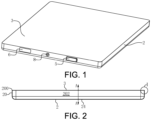
FIG. 1 is a schematic structural diagram of a battery housing in Embodiment 1. -
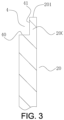
FIG. 2 is a schematic structural diagram of a shell in Embodiment 1. -
FIG. 3 is a cross sectional view of a side wall at a first open end in Embodiment 1. -
FIG. 4 is a partial enlarged view of a position I inFIG. 3 . -
FIG. 5 is a connection schematic diagram of a cover plate and a side frame in Embodiment 1, and in the figure, a second surface is obliquely disposed. -
FIG. 6 is a front view of the battery housing in Embodiment 1. -
FIG. 7 is a sectional view sectioned along a section line A-A inFIG. 6 . -
FIG. 8 is a partial enlarged view of a position II inFIG. 7 . -
FIG. 9 is an explosive view of the battery housing in Embodiment 1. -
FIG. 10 is a sectional view of an insulation member of the battery housing in Embodiment 1. -
FIG. 11 is a connection schematic diagram of an outer insulation member and a positive plate of the battery housing in Embodiment 1. -
FIG. 12 is a connection schematic diagram of the outer insulation member and the positive plate of the battery housing in Embodiment 1. -
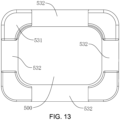
FIG. 13 is a connection schematic diagram of the outer insulation member and the positive plate of the battery housing in Embodiment 1. -
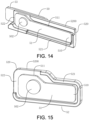
FIG. 14 is a schematic structural diagram of a positive electrode assembly of the battery housing in Embodiment 1. -
FIG. 15 is a connection schematic diagram of an inner insulation member and an inner conductive sheet in Embodiment 1. -
FIG. 16 is a connection schematic diagram of the inner insulation member and the inner conductive sheet in Embodiment 1. -
FIG. 17 is a sectional schematic diagram of the positive electrode assembly of the battery housing in Embodiment 1. -
FIG. 18 is a sectional view of a battery housing inEmbodiment 2. -
FIG. 19 is a cross sectional view of an edge of a cover plate inEmbodiment 2. -
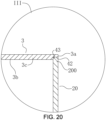
FIG. 20 is a partial enlarged view of III inFIG. 18 . -
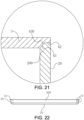
FIG. 21 is a connection schematic diagram of the cover plate and the side frame in Embodiment 1, and in the figure, a fourth surface is obliquely disposed. -
FIG. 22 is a sectional view of a battery housing inEmbodiment 3. -
FIG. 23 is a partial enlarged view of a position IV inFIG. 22 . -
FIG. 24 is a sectional view of the battery housing inEmbodiment 3. -
FIG. 25 is a partial enlarged view of a position V inFIG. 24 . -
FIG. 26 is a schematic diagram of an L-shaped cover plate inEmbodiment 3. -
FIG. 27 is a sectional view of a battery housing inEmbodiment 4. -
FIG. 28 is a partial enlarged view of a position VI inFIG. 27 . -
FIG. 29 is a schematic structural diagram of a battery housing according to an embodiment in related technologies. -
FIG. 30 is a sectional view of the battery housing shown inFIG. 29 . - To make the foregoing objectives, features and advantages of the present application understood more obviously and easily, specific implementations of the present application are illustrated in detail below in conjunction with the attached drawings. It is to be understood that specific embodiments described herein are intended only to interpret the present application, rather than to limit the present application. In addition, it should also be explained that to facilitate the description, the attached drawings only show a part, rather than all of structures, that are related to the present application. Based on the embodiments in the present application, all other embodiments obtained by a person of ordinary skill in the art without exerting creative efforts shall fall within the scope of protection of the present application.
- The terms "include" and "have" in the present application as well as any variations thereof are intended to cover non-exclusive inclusions. For example, a process, method, system, product or device including a series of steps or units is not limited to listed steps or units, but optionally further includes steps or units that are not listed, or optionally further includes other steps or units that are inherent to the process, method, product or device.
- Reference to the "embodiments" herein means that particular features, structures or characteristics described in conjunction with the embodiments may be included in at least one embodiment of the present application. The phrase referred at various positions of the specification neither necessarily indicates same embodiments, nor indicates independent or alternative embodiments that are mutually exclusive to other embodiments. A person skilled in the art explicitly or implicitly understands that the embodiments described herein may be combined with other embodiments.
- As shown in
FIG. 1 , the present embodiment provides a battery housing, including ashell 2 and acover plate 3. - The shape of the battery housing is not limited. For example, in the embodiment shown in
FIG. 1 , the battery housing is in a rectangular shape as a whole. In other embodiments, the battery housing may also be in an L shape, a round shape, a triangular shape, or other shapes. - The
shell 2 includes aside frame 20. Theside frame 20 is in a sealed annular shape and includes a firstopen end 200. Thecover plate 3 is disposed at the firstopen end 200, which is connected to the firstopen end 200 and seals the firstopen end 200. A space for accommodating cells and other parts is formed between theshell 2 and thecover plate 3. - One of the
shell 2 and thecover plate 3 is provided with an annular recessedportion 4, and the other one is fitted with the recessedportion 4. Theshell 2 and thecover plate 3 are positioned by way of fitting between the recessedportion 4 and theshell 2 or thecover plate 3 to prevent the two from moving relative to each other in a welding process, such that positions are more accurate. - As a preferred implementation, a covering direction of the
cover plate 3 is consistent with a recessing direction of the recessedportion 4. In this way, when thecover plate 3 covers the firstopen end 200 of theshell 2, the cover plate can be covered on theshell 2 in the recessing direction of the recessedportion 4, such that thecover plate 3 and theshell 2 are fitted through the recessedportion 4 during covering. Preferably, the covering direction of thecover plate 3 is consistent with an axis direction A of theside frame 20. In this case, the recessedportion 4 is sunken into theshell 2 or thecover plate 3 in the axis direction A. - In the present embodiment, as shown in
FIG. 2 to FIG. 4 , anend surface 201 of the firstopen end 200 is provided with the recessedportion 4, the recessedportion 4 is communicated with aninner cavity 202 of theside frame 20, and an outer edge of thecover plate 3 is fitted into the recessedportion 4. In this way, the degree of freedom of thecover plate 3 in a peripheral direction is limited by theside frame 20, horizontal movement cannot be achieved, and positions of the cover plate and theshell 2 are more accurate, thereby better facilitating welding operation. - The recessed
portion 4 has afirst surface 40 and asecond surface 41 disposed at an angle, thefirst surface 40 is used for being fitted with thecover plate 3, and thesecond surface 41 is in an annular shape. In some implementations, as shown inFIG. 3 andFIG. 4 , thefirst surface 40 and thesecond surface 41 are perpendicular to each other. In other implementations, as shown inFIG. 5 , thesecond surface 41 is obliquely disposed, which is a pyramidal surface gradually increased toward the outside, and can achieve a guiding effect to facilitate the arrangement of thecover plate 3 in the recessedportion 4. Preferably, a first outerperipheral surface 3a of thecover plate 3 is also a pyramidal surface adapted to thesecond surface 41 to reduce gaps between the two and improve the sealability. - In the present embodiment, as shown in
FIG. 2 , theshell 2 further includes abottom plate 24 connected to theside frame 20, thebottom plate 24 and thecover plate 3 are located at two ends of theside frame 20, respectively, and thebottom plate 24 and theside frame 20 are integrally formed. For example, thebottom plate 24 and theside frame 20 of theshell 2 can be formed by a stretch forming manner, and theshell 2 only has the firstopen end 200. - As a preferred implementation, as shown in
FIG. 6 andFIG. 7 , ananti-explosion valve 30 can be disposed on thecover plate 3 or the shell 2 (for example, on theside frame 20 or the bottom plate 24) to improve the use safety of a battery. Theanti-explosion valve 30 is preferably in an arc-shaped groove shape, further preferably in the shape of a quarter of a circular arc. Theanti-explosion valve 30 is preferably disposed at a corner of thecover plate 3. - The battery housing further includes a
positive electrode assembly 5 connected to theshell 2. Referring toFIG. 6 to FIG. 9 , thepositive electrode assembly 5 is connected to theside frame 20 and includes apositive metal part 50, aconductive sheet 51 located on an inner side of theshell 2, aninner insulation member 52 separating theconductive sheet 51 and theshell 2, and anouter insulation member 53 separating thepositive metal part 50 and theshell 2. - The
positive metal part 50 includes apositive plate 500 located on an outer side of theshell 2 and a connectingcolumn 501 disposed on thepositive plate 500. The connectingcolumn 501 is connected to theconductive sheet 51 after passing through theouter insulation member 53, theside frame 20 and theinner insulation member 52. A material of thepositive metal part 50 may be, for example, aluminum, which is in conductive connection with theconductive sheet 51. Theconductive sheet 51 is used for being electrically connected to a first lug of a battery cell. A material of theconductive sheet 51 is preferably the same as that of thepositive metal part 50. Preferably, thepositive metal part 50 is connected to theshell 2 by a riveting manner, the connectingcolumn 501 of the positive metal part passes through an end portion of theconductive sheet 51 and is riveted to form an externally convex limitingprotrusion portion 502, and the limitingprotrusion portion 502 simultaneously fixes theconductive sheet 51, theinner insulation member 52 and theouter insulation member 53 to theshell 2. - The
outer insulation member 53 is made of an insulation material and is used for separating thepositive metal part 50 and theshell 2 to prevent a short circuit caused by contact between the two. The material of theouter insulation member 53 may be, for example, a PFA plastic. As shown inFIG. 10 andFIG. 11 , theouter insulation member 53 includes anouter insulation sheet 530 disposed between an outer surface of theshell 2 and thepositive plate 500, and two strip-shapedbosses 531 located on an outer periphery of thepositive plate 500. As shown inFIG. 9 to FIG. 11 , theshell 2 is provided with a first throughhole 27, theouter insulation member 53 is provided with aconvex ring 533 connecting theouter insulation sheet 530 and theinner insulation member 52, and a second throughhole 523 is provided in theconvex ring 533. The connectingcolumn 501 enters theshell 2 through the second throughhole 523 to be connected to theconductive sheet 51. Through arrangement of theconvex ring 533, the contact between the connectingcolumn 501 and a hole wall of the first throughhole 27 can be effectively prevented, thereby improving an insulation effect. The twobosses 531 project outward from theouter insulation sheet 530, which are located on two sides of thepositive plate 500 in a length direction, respectively, and are used for preventing a short circuit caused by contact between an external object and thepositive metal part 50. - As shown in
FIG. 9 to FIG. 11 , a throughslot 532 is formed between the twobosses 531. The throughslot 532 enables people to observe the fitting quality between thepositive plate 500 and theouter insulation sheet 530 from a side surface (that is, a peripheral direction of the outer insulation member 53), thereby ensuring the reliable connection between thepositive metal part 50 and theshell 2. It can be understood that a quantity of thebosses 531 is not limited to two. For example, twobosses 531 can also be arranged in a width direction of thepositive plate 500. - Further, as shown in
FIG. 12 , thebosses 531 can also be arranged in an annular shape, and theannular bosses 531 can more comprehensively isolate the internalpositive plate 500. Thebosses 531 are provided with throughslots 532 communicated with inner and outer sides thereof, and a quantity of the throughsots 532 is not limited. For example, inFIG. 12 , one throughslot 532 is arranged on left and right sides of thepositive plate 500, respectively. In this way, the fitting quality between thepositive plate 500 and theouter insulation sheet 530 is observable from the two sides of thepositive plate 500. For another example, inFIG. 13 , throughslots 532 are arranged on left and right sides and upper and lower sides of thepositive plate 500, respectively. In this way, the fitting quality between thepositive plate 500 and theouter insulation sheet 530 is observable from the left and right sides and the upper and lower sides of thepositive plate 500. - Preferably, the
positive plate 500 is in a rectangular shape, and a position of the positive plate can be limited by thebosses 531 to prevent the positive plate from rotating. Since thepositive metal part 50 is possible to incline when being connected to theshell 2 by a riveting process or other processes, upper and lower ends of thepositive plate 500 are close to or even exceed upper and lower sides of theshell 2. Thepositive plate 500 and theshell 2 are likely to be directly conducted and have the risk of a short circuit due to contact with an external object. When thepositive plate 500 is blocked by thebosses 531, thebosses 531 can separate thepositive plate 500 and the external object, thereby improving the safety and reliability. Preferably, referring toFIG. 8 , a distance L0 between afirst surface 5000 of thepositive plate 500 and an outer surface of theside frame 20 is greater than a distance L1 between asecond surface 5310 of theboss 531 and the outer surface of theside frame 20. In this way, thepositive plate 500 is more convex, thereby facilitating the contact and connection with an external electrical device. - The
inner insulation member 52 is made of an insulation material and is used for separating theconductive sheet 51 and theshell 2 to prevent a short circuit caused by contact between the two. The material of theinner insulation member 52 may be, for example, a PFA plastic. As shown inFIG. 8 andFIG. 10 , theinner insulation member 52 includes aninner insulation sheet 520 disposed between an inner surface of theshell 2 and theconductive sheet 51. As described above, thepositive metal part 50 may be inclined. Similarly, theconductive sheet 51 may also be inclined by rotating around the connectingcolumn 501. In this way, after a battery is completely manufactured, theconductive sheet 51 may undergo a short circuit due to contact with thecover plate 3 or thebottom plate 24. To avoid the risk of the short circuit, in the present disclosure, theinner insulation sheet 520 is configured to contact thecover plate 3 or thebottom plate 24 in advance of theconductive sheet 51 when theconductive sheet 51 is inclined, thereby improving the safety. - As shown in
FIG. 14 , as a preferred implementation, a second outerperipheral surface 5200 of theinner insulation sheet 520 is located outside a third outerperipheral surface 511 of theconductive sheet 51. In this way, theinner insulation sheet 520 can be in contact with thecover plate 3 or thebottom plate 24 in advance of theconductive sheet 51. - Further, the
inner insulation member 52 further includes anisolation boss 521 connected to theconductive sheet 51. Theisolation boss 521 is located outside theconductive sheet 51 and is used for preventing theconductive sheet 51 from moving to exceed the second outerperipheral surface 5200 relative to theinner insulation sheet 52. In this way, it can be ensured that theconductive sheet 51 is unable to incline to exceed the outside of the second outerperipheral surface 5200 of theinner insulation sheet 52 relative to theinner insulation sheet 52, thereby further improving the safety. - The
isolation boss 521 can surround an entire outside of theconductive sheet 51, and can also surround only a partial outer periphery of theconductive sheet 51. Preferably, when theconductive sheet 51 is in a long strip shape, theisolation boss 521 at least surrounds an outer periphery of afar end 510 of theconductive sheet 51. Thefar end 510 refers to an end farther from the connectingcolumn 501 in a length direction of theconductive sheet 51. Since thefar end 510 is most likely to be in contact with thecover plate 3 or thebottom plate 24 when theconductive sheet 51 is rotated and inclined with the connectingcolumn 501 as an axis, theisolation boss 521 disposed to surround thefar end 510 can reliably ensure an isolation effect. - In some implementations, as shown in
FIG. 14 , theisolation boss 521 surrounds outer peripheries of a wide side and a long side of theconductive sheet 51. In some implementations, as shown inFIG. 15 , theisolation boss 521 surrounds outer perimeters of three sides of thefar end 510. In some embodiments, as shown inFIG. 16 , theisolation boss 521 is in an annular shape surrounding an outer periphery of theconductive sheet 51. - Similar to the through
slots 532 provided on theouter insulation member 53, as shown inFIG. 14 and FIG. 15 , anotch 522 is formed on theisolation boss 521 of theinner insulation member 52. Theconductive sheet 51 is observable through thenotch 522 in a peripheral direction of theinner insulation member 52 to determine the fitting quality between theconductive sheet 51 and theinner insulation sheet 520. - The
inner insulation member 52 and theouter insulation member 53 may be integrally formed, and may also be two independent parts. For example, in cases shown inFIG. 8 andFIG. 10 , theinner insulation member 52 and theouter insulation member 53 are integrally formed. In a case shown inFIG. 17 , theinner insulation member 52 and theouter insulation member 53 are two independent parts, and are connected to theside frame 20 through thepositive metal part 50. - The
shell 2 and thecover plate 3 are both made of an alloy. A second lug of the battery cell may be connected to any one of theside frame 20, thecover plate 3 and thebottom plate 24, such that theshell 2 and thecover plate 3 become a negative electrode of a battery. In some cases, when the battery is in use, conductive members, such as conductive sheets or wires, connected to the negative electrode need to be welded to the negative electrode of the battery. However, as theshell 2 and thecover plate 3 have low thickness, theshell 2 and thecover plate 3 are likely to be damaged by a conventional welding manner. Therefore, as a preferred implementation, referring toFIG. 1 andFIG. 9 , the battery housing further includes anegative plate 6 electrically connected to theshell 2. Thenegative plate 6 is connected to an outer surface of theshell 2, for example, connected to theshell 2 by a laser welding manner. Through arrangement of thenegative plate 6, the thickness of theshell 2 can be increased. When a conductive member is welded to thenegative plate 6, risks, such as weld penetration, can be effectively prevented, thereby preventing damage to theshell 2. Further, a material being easy to weld may be selected for thenegative plate 6, thereby facilitating welding. In some embodiments, thenegative plate 6 is a nickel sheet. - It may be understood that in addition to being connected to the
shell 2, thenegative plate 6 may also be connected to thecover plate 3 or thebottom plate 24. - As shown in
FIG. 1 andFIG. 9 , theshell 2 is provided with aliquid injection hole 26, and a liquid may be injected into theshell 2 through theliquid injection hole 26. The battery housing further includes aliquid blocking plug 8 connected to theshell 2 and sealing theliquid injection hole 26. Theliquid blocking plug 8 may be, for example, welded to theshell 2 by a laser welding manner. - The
shell 2, thecover plate 3 and theliquid blocking plug 8 are made of an alloy material, preferably made of stainless steel, and further preferably made of stainless steel 316L. - Differences between the present embodiment and Embodiment 1 are that in the present embodiment, the recessed
portion 4 is disposed on thecover plate 3, but is not disposed on theshell 2. - As shown in
FIG. 18 to FIG. 20 , an outer edge of thecover plate 3 is provided with the recessedportion 4. The recessedportion 4 is communicated with a first outerperipheral surface 3a of thecover plate 3 and asurface 3b of thecover plate 3 facing theshell 2. The firstopen end 200 is fitted into the recessedportion 4. Since an outer edge of thecover plate 3 is provided with the annular recessedportion 4, a part of thecover plate 3 located in the recessedportion 4 forms aconvex portion 3c. When the firstopen end 200 is fitted into the recessedportion 4, theconvex portion 3c is located in theside frame 20, such that the degree of freedom of thecover plate 3 in a peripheral direction is limited, and horizontal movement cannot be achieved, thereby reliably improving the positional accuracy of thecover plate 3 and theshell 2 and facilitating welding operation. - In the present embodiment, the recessed
portion 4 includes athird surface 42 and afourth surface 43 disposed at an angle, where thethird surface 42 is used for being fitted with an end surface of the firstopen end 200, and thefourth surface 43 is in an annular shape. In some implementations, as shown inFIG. 19 andFIG. 20 , thethird surface 42 and thefourth surface 43 are perpendicular to each other. In other implementations, as shown inFIG. 21 , thefourth surface 43 is obliquely disposed, is a pyramidal surface gradually decreased toward a side where theshell 2 is located, and can achieve a guiding effect to facilitate the arrangement of thecover plate 3 at an upper end of theshell 2. Preferably, the firstopen end 200 is provided with an annularpyramidal surface 430 adapted to thefourth surface 43 and can be fitted with thefourth surface 43 to reduce gaps between the two and improve the sealability. - Differences between the present embodiment and Embodiment 1 are that in the present embodiment, as shown in
FIG. 22 to FIG. 25 , theshell 2 includes anouter ring body 21 connected to theside frame 20, and theouter ring body 21 is in an annular shape, and is located at a top of the firstopen end 200 of theside frame 20 and projects along an outer periphery of theside frame 20. A surface of theouter ring body 21 facing thecover plate 3 is provided with the recessedportion 4. Thecover plate 3 includes a plate-shapedbody 32 and a limitingportion 31 extending from an outer edge of thebody 32 into the recessedportion 4. In the present embodiment, the recessedportion 4 is in an annular groove shape with only one opening end. - In some implementations, the
cover plate 3 includes at least two limitingportions 31 disposed at an angle. For example, one limitingportion 31 is disposed on two adjacent sides of therectangular cover plate 3, respectively. For another example, two limitingportions 31 are spaced apart on an outer edge of the circularfirst cover plate 3. Since the limitingportions 31 are disposed at an angle and are not parallel to each other, thecover plate 3 can be prevented from moving horizontally relative to theshell 2. - In other embodiments, the limiting
portion 31 is in an annular shape, and has a closer fit with the annular recessedportion 4, thereby having a better limiting effect. - As a preferred implementation, the
cover plate 3 is integrally formed, and a thickness of thebody 32 is the same as that of the limitingportion 31. For example, the annular limitingportion 31 is stretched on an outer edge of thecover plate 3 by a stretch forming manner. - As a preferred implementation, the
shell 2 is also integrally formed, and a thickness of theside frame 20 is the same as that of theouter ring body 21. For example, theouter ring body 21 is stretched at one end of theshell 2 by a stretch forming manner, and then the recessedportion 4 is formed on theouter ring body 21 by a stamping manner. - As shown in
FIG. 25 , theouter ring body 21 includes a horizontally disposed connectingplate portion 210, and the recessedportion 4 is located on an outer side of the connectingplate portion 210. The connectingplate portion 210 is used for being fitted with thebody 32 to achieve a larger contact area when thecover plate 3 is connected to theshell 2, thereby facilitating laser welding and improving the firmness of connection. - As described above, the battery housing is not limited to a rectangular shape. For example,
FIG. 26 shows acover plate 3 of an L-shaped battery housing. - It may be understood that in addition to being integrally formed with the
side frame 20, thebottom plate 24 may also be separately disposed with theside frame 20. - As shown in
FIG. 27 , in the present embodiment, theside frame 20 is in a tube shape, and further includes a secondopen end 203. Thebottom plate 24 is connected to the secondopen end 203. Thecover plate 3 and thebottom plate 24 seal the firstopen end 200 and the secondopen end 203, respectively. In the embodiment shown inFIG. 27 , theside frame 20 is in a square tube shape. It may be understood that in other embodiments, theside frame 20 may also be in a round shape, an L shape, or other shapes. - In some implementations, the
bottom plate 24 is a flat plate shape, and is not positioned with theside frame 20 through the aforementioned recessedportion 4. - In some implementations, one of the
bottom plate 24 and theside frame 20 is provided with an annular recessedportion 4, and the other one is fitted with the recessedportion 4, that is, the two are positioned through the recessedportion 4. The structure and arrangement manner of the recessedportion 4 may refer to Embodiments 1 to 3. Further, structures of thebottom plate 24 and thecover plate 3 may be the same or different. In the same case, the two are simultaneously limited by using the same structure of a recessedportion 4. In the different case, the two are limited by using different structures of recessedportions 4. - As shown in
FIG. 27 andFIG. 28 , in cases shown inFIG. 27 andFIG. 28 , outer edges of thebottom plate 24 and thecover plate 3 are both provided with an annular recessedportion 4. Two ends of theside frame 20 are fitted with the two recessedportions 4, respectively. A closed cavity for accommodating cells and other components is formed between thecover plate 3, theside frame 20 and thebottom plate 24. - Since the two ends of the
side frame 20 are sealed by using thecover plate 3 and thebottom plate 24, respectively, thecover plate 3 and thebottom plate 24 are both independent parts and are not integrally formed with theside frame 20. Therefore, transition parts for contraction, such as rounded corners, are not formed at connection positions of theside frame 20 with thecover plate 3 and thebottom plate 24, and the volume of anaccommodating chamber 7 is not easily affected. Meanwhile, without the interference from the transition parts, such as the rounded corners, the shape of a cell disposed in the battery housing can be made to be fuller, and the space utilization rate is higher, such that the capacity of a prepared battery is also larger, thereby effectively improving the energy density of the battery. - A material of the
shell 2 and thecover plate 3 is preferably an alloy, such as, 316L stainless steel. The alloy has good ductility and can be made to be thinner, thereby further increasing the internal space of the battery housing. Thecover plate 3 and theside frame 20 as well as thebottom plate 24 and theside frame 20 are both connected by a laser welding manner. An annular weld seam is formed by way of laser welding, which can achieve a good sealing effect. - The outer edges of the
cover plate 3 and thebottom plate 24 both do not exceed a fourth outerperipheral surface 28 of theside frame 20, and an annular externally convex portion is also not required to be disposed at an end portion of theside frame 20 to cooperate with thecover plate 3. In this way, the formed battery housing does not have an externally convex flange edge, thereby eliminating the step of cutting the flange edge during battery installation, and achieving installation more conveniently. Meanwhile, the fitting precision of thecover plate 2, thebottom plate 24 and theside frame 20 is higher, and the dimensional precision of the external shape of a battery is not affected due to the cutting of the flange edge. - The present embodiment provides a battery, including the battery housing described above.
- The battery further includes a cell disposed in the battery housing. The cell includes a first lug and a second lug. The first lug is connected to the
conductive sheet 51, and the second lug is connected to any one of theside frame 20, thecover plate 3 and thebottom plate 24. Thepositive metal part 50 and thenegative plate 6 are used as a positive electrode and a negative electrode of the battery, respectively. - The foregoing descriptions are merely specific implementations of the present disclosure, and any other improvements that are made based on the concept of the present disclosure are deemed to fall within the scope of protection of the present disclosure.
Claims (17)
- A battery housing, characterized by comprising:a shell (2), comprising a side frame (20), wherein the side frame (20) comprises a first open end (200); anda cover plate (3), disposed at the first open end (200),wherein one of the shell (2) and the cover plate (3) is provided with an annular recessed portion (4), and the other one is fitted with the recessed portion (4).
- The battery housing according to claim 1, characterized in that a covering direction of the cover plate (3) is consistent with a recessing direction of the recessed portion (4).
- The battery housing according to claim 1, characterized in that an end surface (201) of the first open end (200) is provided with the recessed portion (4), the recessed portion (4) is communicated with an inner cavity (202) of the side frame (20), and an outer edge of the cover plate (3) is fitted into the recessed portion (4).
- The battery housing according to claim 1, characterized in that an outer edge of the cover plate (3) is provided with the recessed portion (4), the recessed portion (4) is communicated with a first outer peripheral surface (3a) of the cover plate (3) and a surface of the cover plate (3) facing the shell (2), and the first open end (200) is fitted into the recessed portion (4).
- The battery housing according to claim 1, characterized in that the shell (2) further comprises an outer ring body (21) connected to the side frame (20), a surface of the outer ring body (21) facing the cover plate (3) is provided with the recessed portion (4), and the cover plate (3) comprises a body (32) and a limiting portion (31) extending from an outer edge of the body (32) into the recessed portion (4).
- The battery housing according to claim 5, characterized in that the cover plate (3) comprises at least two of the limiting portions (31) disposed at an angle; alternatively,
the limiting portion (31) is in an annular shape. - The battery housing according to claim 6, characterized in that the cover plate (3) is integrally formed; and the shell (2) is integrally formed.
- The battery housing according to claim 5, characterized in that the outer ring body (21) comprises a connecting plate portion (210) fitted with the body (32), and the recessed portion (4) is located on an outer side of the connecting plate portion (210).
- The battery housing according to claim 1, characterized in that the shell (2) further comprises a bottom plate (24) connected to the side frame (20), the bottom plate (24) and the cover plate (3) are located at two ends of the side frame (20) respectively, and the bottom plate (24) and the side frame (20) are integrally formed.
- The battery housing according to claim 1, characterized in that the side frame (20) is in a tube shape and further comprises a second open end (203), the shell (2) comprises a bottom plate (24) connected to the second open end (203), the cover plate (3) and the bottom plate (24) seal the first open end (200) and the second open end (203), respectively, and structures of the cover plate (3) and the bottom plate (24) are the same or different.
- The battery housing according to any one of claims 1 to 10, characterized in that the battery housing further comprises a positive electrode assembly (5) connected to the shell (2), the positive electrode assembly (5) comprises a positive metal part (50), a conductive sheet (51) located on an inner side of the shell (2), an inner insulation member (52) separating the conductive sheet (51) and the shell (2), and an outer insulation member (53) separating the positive metal part (50) and the shell (2), and the positive metal part (50) comprises a positive plate (500) located on an outer side of the shell (2) and a connecting column (501) extending from the positive plate (500) into the shell (2) and connected to the conductive sheet (51).
- The battery housing according to claim 11, characterized in that the outer insulation member (53) comprises an outer insulation sheet (530) located between an outer surface of the shell (2) and the positive plate (500) and bosses (531) surrounding an outer periphery of the positive plate (500);a quantity of the bosses (531) is at least two, and a through slot (532) is formed between any two of the adjacent bosses (531); alternatively,the bosses (531) are in an annular shape and are provided with the through slots (532) communicated with inner and outer walls thereof.
- The battery housing according to claim 11, characterized in that the inner insulation member (52) comprises an inner insulation sheet (520) disposed between an inner surface of the shell (2) and the conductive sheet (51), and when the positive electrode assembly (5) is inclined, the inner insulation sheet (520) is in contact with the cover plate (3) or the bottom plate (24) of the shell (2) in advance of the conductive sheet (51).
- The battery housing according to claim 13, characterized in that a second outer peripheral surface (5200) of the inner insulation sheet (520) is located outside a third outer peripheral surface (511) of the conductive sheet (51), the inner insulation member (52) further comprises an isolation boss (521) connected to the inner insulation sheet (520), and the isolation boss (521) is located outside the conductive sheet (51) and is used for preventing the conductive sheet (51) from exceeding the second outer peripheral surface (5200) of the inner insulation sheet (520).
- The battery housing according to claim 14, characterized in that the isolation boss (521) is in an annular shape surrounding an outer periphery of the conductive sheet (51), the isolation boss (521) is provided with a notch (522), and the conductive sheet (51) is observable through the notch (522) in a peripheral direction of the inner insulation member (52).
- The battery housing according to any one of claims 1 to 10, characterized in that the battery housing further comprises a negative plate (6) electrically connected to the shell (2), the shell (2) is provided with a liquid injection hole (26), the battery housing further comprises a liquid blocking plug (8) connected to the shell (2) and sealing the liquid injection hole (26), the shell (2), the cover plate (3) and the liquid blocking plug (8) are made of an alloy material, and the alloy material is stainless steel.
- A battery, characterized by comprising the battery housing according to any one of claims 1 to 16.
Applications Claiming Priority (2)
| Application Number | Priority Date | Filing Date | Title |
|---|---|---|---|
| CN202222356572.6U CN218334016U (en) | 2022-09-05 | 2022-09-05 | A battery case and battery |
| PCT/CN2023/110593 WO2024051401A1 (en) | 2022-09-05 | 2023-08-01 | Battery housing and battery |
Publications (1)
| Publication Number | Publication Date |
|---|---|
| EP4583261A1 true EP4583261A1 (en) | 2025-07-09 |
Family
ID=84833967
Family Applications (1)
| Application Number | Title | Priority Date | Filing Date |
|---|---|---|---|
| EP23862101.5A Pending EP4583261A1 (en) | 2022-09-05 | 2023-08-01 | Battery housing and battery |
Country Status (4)
| Country | Link |
|---|---|
| US (1) | US20260074330A1 (en) |
| EP (1) | EP4583261A1 (en) |
| CN (1) | CN218334016U (en) |
| WO (1) | WO2024051401A1 (en) |
Families Citing this family (5)
| Publication number | Priority date | Publication date | Assignee | Title |
|---|---|---|---|---|
| CN218334016U (en) * | 2022-09-05 | 2023-01-17 | 苏州中科瑞龙科技有限公司 | A battery case and battery |
| CN220121959U (en) * | 2023-03-15 | 2023-12-01 | 苏州中科瑞龙科技有限公司 | Battery shell, battery and electronic equipment |
| WO2025043578A1 (en) * | 2023-08-31 | 2025-03-06 | 苏州中科瑞龙科技有限公司 | Battery housing, battery, and electronic device |
| WO2025208898A1 (en) * | 2024-04-02 | 2025-10-09 | 苏州中科瑞龙科技有限公司 | Housing assembly and battery |
| CN118899602B (en) * | 2024-10-09 | 2025-02-14 | 中创新航科技集团股份有限公司 | Battery and battery pack |
Family Cites Families (6)
| Publication number | Priority date | Publication date | Assignee | Title |
|---|---|---|---|---|
| JP6124175B2 (en) * | 2013-02-20 | 2017-05-10 | 株式会社Gsユアサ | Electricity storage element |
| CN214313350U (en) * | 2020-12-21 | 2021-09-28 | 瑞声精密制造科技(常州)有限公司 | Button battery case and button battery |
| CN112993491A (en) * | 2021-02-05 | 2021-06-18 | 刘昌国 | Lithium battery, battery cell and assembly method |
| CN113571815B (en) * | 2021-07-23 | 2025-05-02 | 曙鹏科技(深圳)有限公司 | Button battery and method for manufacturing the same |
| CN216354451U (en) * | 2021-12-06 | 2022-04-19 | 珠海冠宇电池股份有限公司 | Battery shell and battery |
| CN218334016U (en) * | 2022-09-05 | 2023-01-17 | 苏州中科瑞龙科技有限公司 | A battery case and battery |
-
2022
- 2022-09-05 CN CN202222356572.6U patent/CN218334016U/en active Active
-
2023
- 2023-08-01 EP EP23862101.5A patent/EP4583261A1/en active Pending
- 2023-08-01 US US19/108,741 patent/US20260074330A1/en active Pending
- 2023-08-01 WO PCT/CN2023/110593 patent/WO2024051401A1/en not_active Ceased
Also Published As
| Publication number | Publication date |
|---|---|
| US20260074330A1 (en) | 2026-03-12 |
| CN218334016U (en) | 2023-01-17 |
| WO2024051401A1 (en) | 2024-03-14 |
Similar Documents
| Publication | Publication Date | Title |
|---|---|---|
| EP4583261A1 (en) | Battery housing and battery | |
| US12107286B2 (en) | Housing assembly of button cell, button cell and electronic product | |
| US6610443B2 (en) | One-piece header assembly for hermetic battery terminal feedthrough, fill and closure designs | |
| CN101079475B (en) | sealed battery | |
| WO2022267819A1 (en) | Battery housing, battery, and electronic device | |
| JP2006324244A (en) | Secondary battery | |
| WO2025082151A1 (en) | Battery | |
| US20250023146A1 (en) | Battery casing and battery | |
| KR20170116510A (en) | Secondary battery | |
| CN212907908U (en) | Cell structure and electric vehicles | |
| EP4693637A1 (en) | Cover plate assembly of battery and secondary battery comprising same | |
| WO2026045083A1 (en) | Battery housing, secondary battery and manufacturing method therefor | |
| CN220731646U (en) | Battery shell and battery | |
| CN221201337U (en) | Battery case for secondary battery | |
| CN220172337U (en) | Electrochemical device and electric equipment | |
| CN215933696U (en) | Button cell | |
| JP6373590B2 (en) | Battery and battery manufacturing method | |
| CN116031589A (en) | Battery cell, battery pack, electric vehicle and processing method | |
| CN222261218U (en) | Cover plate structure and battery | |
| CN223245857U (en) | Top cap module and battery | |
| KR102873732B1 (en) | Secondary battery | |
| CN224082527U (en) | Cylindrical battery | |
| CN221530105U (en) | Battery shell and battery | |
| CN223296926U (en) | Button cell convenient to welding | |
| CN218242207U (en) | Battery unit |
Legal Events
| Date | Code | Title | Description |
|---|---|---|---|
| STAA | Information on the status of an ep patent application or granted ep patent |
Free format text: STATUS: THE INTERNATIONAL PUBLICATION HAS BEEN MADE |
|
| PUAI | Public reference made under article 153(3) epc to a published international application that has entered the european phase |
Free format text: ORIGINAL CODE: 0009012 |
|
| STAA | Information on the status of an ep patent application or granted ep patent |
Free format text: STATUS: REQUEST FOR EXAMINATION WAS MADE |
|
| 17P | Request for examination filed |
Effective date: 20250402 |
|
| AK | Designated contracting states |
Kind code of ref document: A1 Designated state(s): AL AT BE BG CH CY CZ DE DK EE ES FI FR GB GR HR HU IE IS IT LI LT LU LV MC ME MK MT NL NO PL PT RO RS SE SI SK SM TR |
|
| DAV | Request for validation of the european patent (deleted) | ||
| DAX | Request for extension of the european patent (deleted) | ||
| RIC1 | Information provided on ipc code assigned before grant |
Ipc: H01M 50/103 20210101AFI20260120BHEP Ipc: H01M 50/15 20210101ALI20260120BHEP Ipc: H01M 50/169 20210101ALI20260120BHEP Ipc: H01M 50/119 20210101ALI20260120BHEP Ipc: H01M 50/159 20210101ALI20260120BHEP Ipc: H01M 50/176 20210101ALI20260120BHEP Ipc: H01M 50/184 20210101ALI20260120BHEP Ipc: H01M 50/188 20210101ALI20260120BHEP Ipc: H01M 50/193 20210101ALI20260120BHEP Ipc: H01M 50/342 20210101ALI20260120BHEP Ipc: H01M 50/557 20210101ALI20260120BHEP Ipc: H01M 50/562 20210101ALI20260120BHEP Ipc: H01M 50/567 20210101ALI20260120BHEP Ipc: H01M 50/586 20210101ALI20260120BHEP Ipc: H01M 50/593 20210101ALI20260120BHEP |