EP4583244A2 - Failure detection system for battery racks - Google Patents
Failure detection system for battery racks Download PDFInfo
- Publication number
- EP4583244A2 EP4583244A2 EP25170630.5A EP25170630A EP4583244A2 EP 4583244 A2 EP4583244 A2 EP 4583244A2 EP 25170630 A EP25170630 A EP 25170630A EP 4583244 A2 EP4583244 A2 EP 4583244A2
- Authority
- EP
- European Patent Office
- Prior art keywords
- temperature
- slope
- data
- micro
- controller
- Prior art date
- Legal status (The legal status is an assumption and is not a legal conclusion. Google has not performed a legal analysis and makes no representation as to the accuracy of the status listed.)
- Pending
Links
Images


Classifications
-
- G—PHYSICS
- G01—MEASURING; TESTING
- G01R—MEASURING ELECTRIC VARIABLES; MEASURING MAGNETIC VARIABLES
- G01R31/00—Arrangements for testing electric properties; Arrangements for locating electric faults; Arrangements for electrical testing characterised by what is being tested not provided for elsewhere
- G01R31/36—Arrangements for testing, measuring or monitoring the electrical condition of accumulators or electric batteries, e.g. capacity or state of charge [SoC]
- G01R31/385—Arrangements for measuring battery or accumulator variables
-
- G—PHYSICS
- G01—MEASURING; TESTING
- G01D—MEASURING NOT SPECIALLY ADAPTED FOR A SPECIFIC VARIABLE; ARRANGEMENTS FOR MEASURING TWO OR MORE VARIABLES NOT COVERED IN A SINGLE OTHER SUBCLASS; TARIFF METERING APPARATUS; MEASURING OR TESTING NOT OTHERWISE PROVIDED FOR
- G01D21/00—Measuring or testing not otherwise provided for
- G01D21/02—Measuring two or more variables by means not covered by a single other subclass
-
- G—PHYSICS
- G01—MEASURING; TESTING
- G01K—MEASURING TEMPERATURE; MEASURING QUANTITY OF HEAT; THERMALLY-SENSITIVE ELEMENTS NOT OTHERWISE PROVIDED FOR
- G01K1/00—Details of thermometers not specially adapted for particular types of thermometer
- G01K1/02—Means for indicating or recording specially adapted for thermometers
- G01K1/024—Means for indicating or recording specially adapted for thermometers for remote indication
-
- G—PHYSICS
- G01—MEASURING; TESTING
- G01K—MEASURING TEMPERATURE; MEASURING QUANTITY OF HEAT; THERMALLY-SENSITIVE ELEMENTS NOT OTHERWISE PROVIDED FOR
- G01K3/00—Thermometers giving results other than momentary value of temperature
- G01K3/005—Circuits arrangements for indicating a predetermined temperature
-
- G—PHYSICS
- G01—MEASURING; TESTING
- G01K—MEASURING TEMPERATURE; MEASURING QUANTITY OF HEAT; THERMALLY-SENSITIVE ELEMENTS NOT OTHERWISE PROVIDED FOR
- G01K3/00—Thermometers giving results other than momentary value of temperature
- G01K3/08—Thermometers giving results other than momentary value of temperature giving differences of values; giving differentiated values
-
- G—PHYSICS
- G01—MEASURING; TESTING
- G01R—MEASURING ELECTRIC VARIABLES; MEASURING MAGNETIC VARIABLES
- G01R31/00—Arrangements for testing electric properties; Arrangements for locating electric faults; Arrangements for electrical testing characterised by what is being tested not provided for elsewhere
-
- G—PHYSICS
- G01—MEASURING; TESTING
- G01R—MEASURING ELECTRIC VARIABLES; MEASURING MAGNETIC VARIABLES
- G01R31/00—Arrangements for testing electric properties; Arrangements for locating electric faults; Arrangements for electrical testing characterised by what is being tested not provided for elsewhere
- G01R31/36—Arrangements for testing, measuring or monitoring the electrical condition of accumulators or electric batteries, e.g. capacity or state of charge [SoC]
- G01R31/367—Software therefor, e.g. for battery testing using modelling or look-up tables
-
- G—PHYSICS
- G01—MEASURING; TESTING
- G01R—MEASURING ELECTRIC VARIABLES; MEASURING MAGNETIC VARIABLES
- G01R31/00—Arrangements for testing electric properties; Arrangements for locating electric faults; Arrangements for electrical testing characterised by what is being tested not provided for elsewhere
- G01R31/36—Arrangements for testing, measuring or monitoring the electrical condition of accumulators or electric batteries, e.g. capacity or state of charge [SoC]
- G01R31/382—Arrangements for monitoring battery or accumulator variables, e.g. SoC
- G01R31/3835—Arrangements for monitoring battery or accumulator variables, e.g. SoC involving only voltage measurements
-
- G—PHYSICS
- G01—MEASURING; TESTING
- G01R—MEASURING ELECTRIC VARIABLES; MEASURING MAGNETIC VARIABLES
- G01R31/00—Arrangements for testing electric properties; Arrangements for locating electric faults; Arrangements for electrical testing characterised by what is being tested not provided for elsewhere
- G01R31/36—Arrangements for testing, measuring or monitoring the electrical condition of accumulators or electric batteries, e.g. capacity or state of charge [SoC]
- G01R31/389—Measuring internal impedance, internal conductance or related variables
-
- G—PHYSICS
- G01—MEASURING; TESTING
- G01R—MEASURING ELECTRIC VARIABLES; MEASURING MAGNETIC VARIABLES
- G01R31/00—Arrangements for testing electric properties; Arrangements for locating electric faults; Arrangements for electrical testing characterised by what is being tested not provided for elsewhere
- G01R31/36—Arrangements for testing, measuring or monitoring the electrical condition of accumulators or electric batteries, e.g. capacity or state of charge [SoC]
- G01R31/392—Determining battery ageing or deterioration, e.g. state of health
-
- G—PHYSICS
- G01—MEASURING; TESTING
- G01R—MEASURING ELECTRIC VARIABLES; MEASURING MAGNETIC VARIABLES
- G01R31/00—Arrangements for testing electric properties; Arrangements for locating electric faults; Arrangements for electrical testing characterised by what is being tested not provided for elsewhere
- G01R31/36—Arrangements for testing, measuring or monitoring the electrical condition of accumulators or electric batteries, e.g. capacity or state of charge [SoC]
- G01R31/396—Acquisition or processing of data for testing or for monitoring individual cells or groups of cells within a battery
-
- G—PHYSICS
- G05—CONTROLLING; REGULATING
- G05B—CONTROL OR REGULATING SYSTEMS IN GENERAL; FUNCTIONAL ELEMENTS OF SUCH SYSTEMS; MONITORING OR TESTING ARRANGEMENTS FOR SUCH SYSTEMS OR ELEMENTS
- G05B19/00—Program-control systems
- G05B19/02—Program-control systems electric
- G05B19/04—Program control other than numerical control, i.e. in sequence controllers or logic controllers
- G05B19/042—Program control other than numerical control, i.e. in sequence controllers or logic controllers using digital processors
- G05B19/0423—Input/output
-
- G—PHYSICS
- G05—CONTROLLING; REGULATING
- G05B—CONTROL OR REGULATING SYSTEMS IN GENERAL; FUNCTIONAL ELEMENTS OF SUCH SYSTEMS; MONITORING OR TESTING ARRANGEMENTS FOR SUCH SYSTEMS OR ELEMENTS
- G05B19/00—Program-control systems
- G05B19/02—Program-control systems electric
- G05B19/04—Program control other than numerical control, i.e. in sequence controllers or logic controllers
- G05B19/042—Program control other than numerical control, i.e. in sequence controllers or logic controllers using digital processors
- G05B19/0428—Safety, monitoring
-
- H—ELECTRICITY
- H01—ELECTRIC ELEMENTS
- H01M—PROCESSES OR MEANS, e.g. BATTERIES, FOR THE DIRECT CONVERSION OF CHEMICAL ENERGY INTO ELECTRICAL ENERGY
- H01M10/00—Secondary cells; Manufacture thereof
- H01M10/42—Methods or arrangements for servicing or maintenance of secondary cells or secondary half-cells
- H01M10/48—Accumulators combined with arrangements for measuring, testing or indicating the condition of cells, e.g. the level or density of the electrolyte
- H01M10/482—Accumulators combined with arrangements for measuring, testing or indicating the condition of cells, e.g. the level or density of the electrolyte for several batteries or cells simultaneously or sequentially
-
- H—ELECTRICITY
- H01—ELECTRIC ELEMENTS
- H01M—PROCESSES OR MEANS, e.g. BATTERIES, FOR THE DIRECT CONVERSION OF CHEMICAL ENERGY INTO ELECTRICAL ENERGY
- H01M10/00—Secondary cells; Manufacture thereof
- H01M10/42—Methods or arrangements for servicing or maintenance of secondary cells or secondary half-cells
- H01M10/48—Accumulators combined with arrangements for measuring, testing or indicating the condition of cells, e.g. the level or density of the electrolyte
- H01M10/486—Accumulators combined with arrangements for measuring, testing or indicating the condition of cells, e.g. the level or density of the electrolyte for measuring temperature
Definitions
- the default section is 2 hours and the computation frequency is 1 minute. During every 2 hours, 1 first trend data is generated every minute, so 120 first trend data are generated every 2 hours.
- the micro-controller 220 respectively compares the 120 first trend data of the default section with the standard deviation, collects the first trend data that are greater than the standard deviation to obtain the first quantity (such as 58 first trend data), and collects the first trend data that are less than or equal to the standard deviation to obtain the second quantity (such as 62 first trend data). Then, the micro-controller 220 compares the first quantity with the second quantity.
- Fig. 3 is a block diagram illustrating a failure detection system for battery racks by detecting temperature to monitor anomaly states of the battery racks in accordance with an embodiment of the present disclosure.
- the battery racks 400 includes multiple battery modules 410, and every battery module 410 includes multiple battery cells 420.
- the battery racks failure detection system 20 is configured to detect the temperature of the battery racks 400 and to determine whether the battery racks 400 are at the abnormal state.
- the battery racks failure detection system 20 includes a temperature data retrieving module 330 and a micro-controller 320.
- the temperature data retrieving module 330 is coupled to the micro-controller 320.
- the battery racks failure detection system 20 includes a storage medium (not shown in the figures) and is configured to store the temperature data of the detected battery racks 400.
- the temperature data is the time-temperature curve, for example. Because the temperature data retrieving module 330 may identify the position of the battery rack 400, the position of an abnormal battery rack from the battery racks 400 may be traced when the micro-controller 320 detects that the temperature condition is abnormal.
- Fig. 4 is a flowchart illustrating a failure detection method for battery racks by detecting temperature in accordance with an embodiment of the present disclosure. The description is provided incorporating Fig. 3 and Fig. 4 .
- step S405 the temperature data retrieving module 330 continuously senses the temperature data of the battery racks 400.
- step S410 the micro-controller 320 uses the temperature data to compute a temperature slope, a maximum temperature, and a minimum temperature of the multiple temperature feature data.
- step S420 the micro-controller 320 uses the temperature difference data to compute a Z score of the battery racks 400.
- step S425 the micro-controller 320 respectively sets a first discrete score (level) to the temperature slope, sets a second discrete score to the maximum temperature, sets a third discrete score to the minimum temperature, and sets a fourth discrete score to the Z score.
- step S430 the micro-controller 320 adds up the first discrete score, the second discrete score, the third discrete score, and the fourth discrete score to obtain a grading value of the battery racks 400.
- step S435 the micro-controller 320 determines whether the grading value is greater than an abnormal threshold. If the grading value is greater than the abnormal threshold, the micro-controller 320 performs step S440. If the grading value is less than or equal to the abnormal threshold, the micro-controller 320 performs step S445, confirms that there is no abnormal state, and keeps monitoring process.
- step S440 the micro-controller 320 generates an alarm message. Because the alarm message indicates the position of the maximum temperature or the minimum temperature of the temperature feature data, it represents the position of the battery rack 400 which is abnormal, and the user may get the information on which battery rack 400 is abnormal by the alarm message.
- the micro-controller 320 takes all the temperature data of the battery racks 400 as one computation group to compute the temperature slope of the temperature data, gets the maximum temperature and the minimum temperature, computes the temperature difference data, and uses the temperature difference data to compute the Z score of each battery rack 400.
- step S405 the temperature data retrieving module 330 continuously senses the temperature data, these temperature data represent the temperature of the battery rack 400 where the temperature data retrieving module 330 is disposed.
- the micro-controller 320 performs the data pre-processing process on the temperature data, such as imputing missing values.
- step S410 the micro-controller 320 uses the temperature data to compute the temperature slope of the temperature data of the battery racks 400.
- the temperature data is the time-temperature curve.
- the temperature slope includes a maximum temperature slope and a minimum temperature slope.
- the micro-controller 320 retrieves a piece of the temperature data by one time window and obtains the maximum temperature and the minimum temperature of the temperature data.
- the micro-controller 320 slides the time window to retrieve multiple maximum window temperature values T max and multiple minimum window temperature values T min each corresponding to one time window.
- T max( i ) the maximum window temperature value of the ith time window
- T min( i ) the minimum window temperature value
- the micro-controller 320 uses two maximum window temperature values T max( i +1) and T max( i ) of two adjacent time windows to compute the maximum temperature slope, and uses the two minimum window temperature values T min( i +1) and T min( i ) of two adjacent time windows to compute the minimum temperature slope.
- the adjacent time windows may overlap in time domain.
- the length of the time window is 8 minutes, and two adjacent time windows overlap in 4 minutes. If 8:00 is the starting point, the range of a first time window is from 8:00 to 8:07, and the range of a second time window is from 8:04 to 8:11.
- the micro-controller 320 respectively gets the maximum window temperature value T max(1) and the minimum window temperature value T min(1) of the first time window (from 8:00 to 8:07) and the maximum window temperature value T max(2) and the minimum window temperature value T min(2) of the second time window (from 8:04 to 8:11).
- the overlapping length between two time windows is not limited herein. Two time windows overlap with each other in half of the time window length is taken as one example for the following description.
- the micro-controller 320 computes the maximum temperature slope according to the maximum window temperature values of two adjacent time windows.
- the micro-controller 320 computes the minimum temperature slope according to the minimum window temperature values of two adjacent time windows.
- step S410 the micro-controller 320 obtains the maximum temperature and the minimum temperature per minute from the multiple temperature feature data. For example, the micro-controller 320 records the maximum temperature maxT and the minimum temperature minT in 1 minute from 8:00:00 to 8:00:59. Based on the similar process of continuous monitoring and computation, the micro-controller 320 obtains multiple maximum temperatures maxT and multiple minimum temperatures minT.
- step S415 the micro-controller 320 continuously computes the temperature difference data between two adjacent time intervals in the computation frequency.
- the micro-controller 320 computes the temperature difference data ⁇ T between two temperature data that are spaced apart from 1 minute. For example, micro-controller 320 subtracts the temperature data at 8:01 from the temperature data at 8:00 to obtain the temperature difference data ⁇ T that represents 8:01. Because the temperature data retrieving module 330 continuously retrieves the temperature data, the temperature difference data ⁇ T are continuously generated in step S415.
- step S420 the micro-controller 320 uses the temperature difference data ⁇ T to compute the Z score.
- step S425 the micro-controller 320 sets the first discrete score to the temperature slope, such as obtained in step S410.
- the micro-controller 320 continuously computes the maximum temperature slope and the minimum temperature slope of every two paired time windows among multiple time windows.
- S max(i) represents the ith maximum temperature slope (the slope obtained by the maximum window temperature values of the ith and (i+1)th time windows)
- S min(i) represents the ith minimum temperature slope (the slope obtained by the minimum window temperature values of the ith and (i+1)th time windows).
- multiple continuous time windows include a first window, a second window, and a third window.
- the micro-controller 320 uses the maximum window temperature values and the minimum window temperature values of the first window and the second window to respectively compute the first maximum temperature slope S max(1) and the first minimum temperature slope S min(1) , and uses the maximum window temperature values and the minimum window temperature value of the second window and the third window to respectively compute the second maximum temperature slope S max(2) and the second minimum temperature slope S min(2).
- the micro-controller 320 determines which slope condition the temperature slope belongs to be based on the numerical size relationship of the first maximum temperature slope S max(1) , the first minimum temperature slope S min(1) , the second maximum temperature slope S max(2) , and the second minimum temperature slope S min(2) .
- the slope condition is illustrated in TABLE I. TABLE I: Determinations Slope Condition S max(1) ⁇ S max(2) & S min(1) ⁇ S min(2) First Condition S max(1) > S max(2) & S min(1) ⁇ S min(2) Second Condition S max(1) ⁇ S max(2) & S min(1) > S min(2) Third Condition S maX(1) > S max(2) & S min(1) > S min(2) Fourth Condition
- the slope condition belongs to the first condition. If the first maximum temperature slope S max(1) is greater than the second maximum temperature slope S max(2) and the first minimum temperature slope S min(1) is less than the second minimum temperature slope S min(2) , it indicates the temperature variation that the low temperature shows the inclining trend. In this case, the slope condition belongs to the second condition.
- the slope condition belongs to the third condition. If the first maximum temperature slope S max(1) is greater than the second maximum temperature slope S max(2) and the first minimum temperature slope S min(1) is greater than the second minimum temperature slope S min(2) , it indicates the temperature variation that the high temperature shows the inclining trend. In this case, the slope condition belongs to the third condition. If the first maximum temperature slope S max(1) is greater than the second maximum temperature slope S max(2) and the first minimum temperature slope S min(1) is greater than the second minimum temperature slope S min(2) , it indicates the temperature variation that the high temperature and the low temperature decrease (i.e., the temperature decreases entirely). In this case, the slope condition belongs to the fourth condition.
- the micro-controller 320 sets the first discrete score to the temperature slope according to the obtained slope condition incorporated with the slope difference S diff , as shown in TABLE II.
- TABLE II Slope Condition Determination Of The Slope Condition First Discrete Score First Condition S diff > Thr : abnormal on increasing high temperature 3 S diff ⁇ Thr : working normally 0
- > Thr battery working abnormally 3 Second Condition
- ⁇ Thr working normally 0
- the micro-controller 320 After computing the maximum temperature slope and the minimum temperature slope of two adjacent time windows (step S410), the micro-controller 320 computes the difference between the maximum temperature slope and the minimum temperature slope to obtain the slope difference between two time windows.
- the micro-controller 320 subtracts the minimum temperature slope S min(1) from the maximum temperature slope S max(1) , and the difference is taken as the slope difference S diff (1) .
- the micro-controller 320 sets the value of the first discrete score based on the slope difference S diff and the fluctuating threshold Thr. As shown in TABLE II, when the slope difference S diff is greater than the fluctuating threshold Thr at the first condition, it represents that the inclining trend of the high temperature is at an abnormal state, and the first discrete score is set to be 3; on the contrary, when the slope difference S diff is less than the fluctuating threshold Thr, it represents that the inclining trend of the high temperature is at a normal state, and the first discrete score is set to be 0.
- the fluctuating threshold is 1.25, but it is not limited to the value.
- the micro-controller 320 determines that the high temperature of the battery racks 400 may induce a risk, so the second discrete score is set to be 2.
- step S425 the micro-controller 320 sets the third discrete score to the minimum temperature obtained in step S410.
- the setting conditions are shown in TABLE IV.
- the micro-controller 320 sets the fourth discrete score to be 0.
- the micro-controller 320 sets the fourth discrete score to be 1.
- the micro-controller 320 sets the fourth discrete score to be 2.
- the abnormal threshold is a numeral value 6.
- the first discrete score is 3 (i.e., abnormal on increasing high temperature at first condition)
- the second discrete score is 0 (i.e., the maximum temperature per minute is not over 40°C)
- the third discrete score is 0 (i.e., the minimum temperature per minute is greater than 10°C)
- the fourth discrete score is 1 (i.e., the temperature fluctuation may induce risk)
- the sum of the four discrete scores is 4, that is, the grading value is 4. Because the numerical value 4 does not exceed the abnormal threshold, i.e., the numerical value 6, the micro-controller 320 determines that there is no abnormal state in the battery racks 400.
- the first discrete score is 3 (i.e., the rising range of the high temperature is enormous in the third condition)
- the second discrete score is 2 (i.e., the maximum temperature per minute is over 40°C and the battery racks 400 are idle)
- the third discrete score is 1 (i.e., the minimum temperature per minute is less than 10°C and the battery racks 400 are idle)
- the fourth discrete score is 0 (i.e., the temperature fluctuation is still acceptable)
- the sum of the four discrete scores is 6, that is, the grading value is 6. Because the numerical value 6 is equal to the abnormal threshold 6, the micro-controller 320 determines that the battery racks 400 may work at an abnormal state.
- the user may get the information on which battery rack 400 works at the abnormal state through the alarm message. According to the embodiments above, the user may find the corresponding battery rack 400 based on the abnormal maximum temperature maxT, so countermeasures against the abnormal conditions may be provided to prevent disasters.
- the failure detection method for the battery racks by detecting the temperature is suitable for one or more battery racks in the present disclosure, and it is not limited to the number of the battery racks 400 shown in Fig. 3 .
- the scenario in Fig. 3 may provide multiple battery racks 400, and the battery racks failure detection system 20 includes multiple temperature data retrieving modules 330.
- Each temperature data retrieving module 330 is disposed on one battery rack 400 and configured to sense the temperature data of the battery rack 400 where the temperature data retrieving module 330 is disposed.
- the micro-controller 320 is coupled to all the temperature data retrieving modules 330 to perform the steps of detecting the temperature of the battery racks for the abnormal detection.
- Fig. 5 is a block diagram illustrating a failure detection system for battery racks by detecting voltage to monitor anomaly states of the battery racks in accordance with another embodiment of the present disclosure.
- each battery rack 400 includes multiple battery modules 410, and each battery module 410 includes multiple battery cells 420.
- the battery racks failure detection system 30 includes multiple voltage data retrieving modules 510 and the micro-controller 520. Every voltage data retrieving module 510 is coupled to the micro-controller 520. In the embodiment, every voltage data retrieving module 510 is disposed on a corresponding one of the battery racks 400 and configured to sense the voltage data of every battery cell 420 of each battery module 410.
- the battery racks failure detection system 30 is configured to perform the failure detection method for battery racks 400 by detecting voltage. For example, every voltage data retrieving module 510 sends the voltage data to the micro-controller 520, and the micro-controller 520 performs the failure detection method provided in Fig. 2 .
- Fig. 6 is a block diagram illustrating a failure detection system for battery racks by detecting voltage and temperature at the same time to monitor anomaly states of the battery racks in accordance with another embodiment of the present disclosure.
- every voltage data retrieving module 610 is disposed on each corresponding one of the battery racks 400 and configured to sense the voltage data of each battery cell 620 of each battery module 610.
- every temperature data retrieving module 630 is disposed on each corresponding one of the battery racks 400 and configured to sense the temperature data of each battery rack 400.
- the battery racks failure detection system 40 is configured to detect the voltage and temperature at the same time to perform the failure detection method for the battery racks 400. For example, every voltage data retrieving module 610 sends the voltage data to the micro-controller 620, every temperature data retrieving module 630 sends the temperature data to the micro-controller 620, and the micro-controller 620 performs the failure detection method provided in Fig. 2 and Fig. 4 .
- the micro-controller may be, but not limited to, a Digital Signal Processor (DSP), an Application Specific Integrated Circuit (ASIC), a Central Processing Unit (CPU), a System on Chip (SoC), a Field Programmable Gate Array (FPGA), a Network Processor IC, or the combination of the components above.
- DSP Digital Signal Processor
- ASIC Application Specific Integrated Circuit
- CPU Central Processing Unit
- SoC System on Chip
- FPGA Field Programmable Gate Array
- Network Processor IC or the combination of the components above.
- the battery racks may be the energy storage system, such as the battery station for vehicle equipment, the energy storage system for green energy, and the like.
- the battery racks failure detection system and the failure detection method may be provided to detect the battery racks or the energy storage system.
- the failure detection method and failure detection system for the battery racks by detecting the voltage and the temperature considering the detection of the voltage and the temperature may not only detect the abnormal states in battery racks in advance but also enhance the precision of anomaly detection. Furthermore, the corresponding measures may also be taken in response to the position of the abnormal voltage and/or temperature to find the corresponding battery racks, so that disasters may be prevented.
Landscapes
- Physics & Mathematics (AREA)
- General Physics & Mathematics (AREA)
- Engineering & Computer Science (AREA)
- Manufacturing & Machinery (AREA)
- Chemical & Material Sciences (AREA)
- Chemical Kinetics & Catalysis (AREA)
- Electrochemistry (AREA)
- General Chemical & Material Sciences (AREA)
- Automation & Control Theory (AREA)
- Secondary Cells (AREA)
- Tests Of Electric Status Of Batteries (AREA)
Abstract
Description
- The disclosure generally relates to a detection method for battery racks, and more particularly to a failure detection method for battery racks.
- During the operation of charging or discharging, batteries may experience a decline in performance due to overvoltage or overheating conditions. In some cases, battery malfunctions caused by overvoltage or overheating can lead to the disablement of the device.
- Existing monitoring mechanisms for battery operation primarily focus on monitoring state characteristics such as voltage, current, or temperature to assess whether any abnormal conditions occurred. However, existing methods have some shortcomings: relying on a single state characteristic for abnormality judgment may result in misjudgments due to the inability to consider other state characteristics of the battery.
- On the other hand, temperature characteristics of the battery are also used as part of the factors for evaluating the battery's condition, such as the maximum or minimum temperature. Actually, the battery exhibits corresponding states based on operations or idle conditions of the device. For example, the battery temperature decreases when the device is in an idle state. Therefore, evaluating the battery health simply based on temperature increase or decrease may lead to erroneous detection results due to the lack of consideration for the device operation.
- One of the exemplary embodiments is to provide a failure detection method for battery racks, configured to be performed by a battery racks failure detection system including a temperature data retrieving module and a micro-controller. The battery racks include multiple battery modules. The failure detection method includes steps of: (a) sensing a temperature data of the battery racks by the temperature data retrieving module, and using the temperature data, by the micro-controller, to compute a temperature slope, a maximum temperature and a minimum temperature of multiple temperature feature data; (b) continuously computing, by the micro-controller, a temperature difference data of the temperature data in a computation frequency, and using the temperature difference data to compute a Z score; (c) setting, by the micro-controller, a first discrete score to the temperature slope, a second discrete score to the maximum temperature, a third discrete score to the minimum temperature, and a fourth discrete score to the Z score; (d) adding up, by the micro-controller, the first discrete score, the second discrete score, the third discrete score, and the fourth discrete score to obtain a grading value; and (e) evaluating, by the micro-controller, whether the battery racks are at an abnormal state according to the grading value, and generating an alarm message when evaluating that the battery racks are at the abnormal state, wherein the alarm message indicates that a position of the maximum temperature or the minimum temperature represents the battery racks being abnormal.
-
-
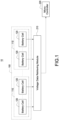
Fig. 1 is a block diagram illustrating a failure detection system for battery racks by detecting voltage to monitor anomaly states of the battery racks in accordance with an embodiment of the present disclosure. -
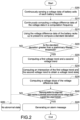
Fig. 2 is a flowchart illustrating a failure detection method for battery racks by detection voltage in accordance with an embodiment of the present disclosure. -
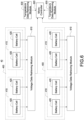
Fig. 3 is a block diagram illustrating a failure detection system for battery racks by detecting temperature to monitor anomaly states of the battery racks in accordance with an embodiment of the present disclosure. -
Fig. 4 is a flowchart illustrating a failure detection method for battery racks by detecting temperature in accordance with an embodiment of the present disclosure. -
Fig. 5 is a block diagram illustrating a failure detection system for battery racks by detecting voltage to monitor anomaly states of the battery racks in accordance with another embodiment of the present disclosure. -
Fig. 6 is a block diagram illustrating a failure detection system for battery racks by detecting voltage and temperature at the same time to monitor anomaly states of the battery racks in accordance with an embodiment of the present disclosure. - Reference will now be made in detail to the present embodiments of the disclosure, examples of which are illustrated in the accompanying drawings. Wherever possible, the same reference numbers are used in the drawings and the description to refer to the same or like parts.
- The failure detection system and failure detection method for battery racks are provided to monitor a short-term and a long-term voltage variation trend of the battery racks. The short-term and long-term variation trends having two different periods are referred, and an intersection of the trends is applied to double check the rise and decline states of the voltage variation. Furthermore, the retrieved voltage data is used for a regression computation, and the slope of the voltage variation in each corresponding time section is computed. Therefore, the voltage variation trend and the slope of the voltage variation are synthetically judged to determine whether any possible precursor of overvoltage in the battery racks may occur, so the condition that the overvoltage problem will occur may be known in advance.
- The failure detection system and failure detection method for battery racks also monitor temperature variations of the battery racks. Specifically, the time window is adopted to be one data group to compute a high temperature variation trend and low temperature variation trend of the battery racks, and the maximum temperature and the minimum temperature per time unit (every minute) are also considered. Based on the analyzed data above, the disclosure provides a diagnosis of any portent of abnormality, so as to predominate the abnormalities of the battery racks in advance.
-
Fig. 1 is a block diagram illustrating a failure detection system for battery racks by detecting voltage to monitor anomaly states of the battery racks in accordance with an embodiment of the present disclosure. - In the embodiment, as shown in
Fig. 1 , thebattery rack 100 includesmultiple battery modules 110, and eachbattery module 110 includesmultiple battery cells 120. - The battery racks
failure detection system 10 includes a voltagedata retrieving module 210 and a micro-controller 220. The voltagedata retrieving module 210 is coupled to the micro-controller 220. - The voltage
data retrieving module 210 is configured to sense voltage data of eachbattery cell 120 of eachbattery module 110. The battery racksfailure detection system 10 includes a storage medium (not shown in figures) configured to store the voltage data sensed from each battery cell 200. The voltage data is, for example, a time-voltage curve. Because the voltagedata retrieving module 210 may identify eachbattery cell 120, all positions of thebattery cells 120 occurring abnormal condition may be traced when the micro-controller 220 detects the abnormalities of the voltage. -
Fig. 2 is a flowchart illustrating a failure detection method for battery racks by detection voltage in accordance with an embodiment of the present disclosure. The description is provided incorporatingFig. 1 andFig. 2 . - In step S205, the voltage
data retrieving module 210 continuously senses the voltage data of eachbattery cell 120 of everybattery module 110. - In step S210, the micro-controller 220 continuously computes a voltage difference data of each
battery cell 120 in a computation frequency according to the voltage data of eachbattery cell 120. To clarify the description, the voltage difference data of onebattery cell 120 is provided as one example, and the micro-controller 220 performs the same detection process to everybattery cell 120 of the battery racks 100. - In step S215, the micro-controller 220 uses the voltage difference data up to present of the battery racks 100 to compute a standard deviation σ.
- In step S220, the micro-controller 220 determines whether the standard deviation is greater than a preliminary threshold. If the standard deviation is greater than the preliminary threshold, it represents that the variation of the voltage difference data up to present is enormous, so the micro-controller 220 preliminarily determines the possibility of the battery racks 100 causing the voltage abnormality and performs step S225. If the standard deviation is equal to or less than the preliminary threshold, the micro-controller 220 performs step S250 and determines that the battery racks 100 are not at the abnormal state.
- In step S225, the micro-controller 220 obtains a first voltage trend according to the voltage difference data of each first period and obtains a second voltage trend according to the voltage difference data of each second period.
- In step S230, the micro-controller 220 computes an intersection of the first voltage trend and the second voltage trend to obtain a voltage trend state.
- In step S235, the micro-controller 220 uses the voltage difference data of the second period to compute a voltage slope.
- In step S240, the micro-controller 220 determines whether the voltage trend state matches a potentially abnormal state and the voltage slope is greater than a slope threshold. If the determinations are YES, the micro-controller 220 performs step S245. If one of the determinations is NO, the micro-controller 220 performs step S250 and decides that there is no abnormal state.
- In step S245, the micro-controller 220 generates an alarm message. Because the alarm message carries information on the positions of the battery cells that the voltage difference data is greater than the preliminary threshold, the user may get the information on which battery cells encounter the overvoltage by the alarm message.
- Detailed descriptions of all steps are provided below.
- In step S205, the voltage
data retrieving module 210 continuously retrieves the voltage data of eachbattery cell 120 of the battery racks 100, and the micro-controller 220 performs a data pre-processing process to the voltage data, such as imputing missing values. - In step S210, the micro-controller 220 continuously computes the voltage difference data between two voltage data adjacent in time in a computation frequency. In one embodiment, because the voltage
data retrieving module 210 continuously retrieves the voltage data of eachbattery cell 120 of the battery racks 100, and the micro-controller 220 computes the voltage difference data ΔV between two adjacent voltage data every minute. Because the voltagedata retrieving module 210 keeps retrieving the voltage data, the voltage difference data ΔV are generated continuously in step S210. - In step S215, the micro-controller 220 computes the standard deviation σ of all the voltage difference data ΔV in step S210. In the embodiment, the standard deviation σ is updated in each minute.
- In one embodiment, the voltage
data retrieving module 210 continuously retrieves voltage data of everybattery cell 120 of the battery racks 100. Themicro-controller 220 computes the voltage difference data of two voltage data adjacent in time in the computation frequency (such as every minute) based on the voltage data of everybattery cell 120, and takes all the voltage difference data generated in real-time as the samples having continuity in time to compute the standard deviation σ. - In step S220, the
micro-controller 220 compares the standard deviation σ with the preliminary threshold to preliminarily evaluate the abnormal state of the battery racks 100. For example, when the standard deviation σ is greater than the preliminary threshold, themicro-controller 220 preliminarily evaluates that the battery racks 100 are at a potentially abnormal state but does not send any alarm message. Themicro-controller 220 further observes the actual condition of abnormalities in a long-term voltage trend and a short-term voltage trend. - In step S225, the
micro-controller 220 computes the first voltage trend (also called the 'short-term voltage trend') according to the voltage difference data ΔV of each first period. In one example, the first period is 2 hours. Themicro-controller 220 computes the difference (first trend data) between the voltage difference data ΔV of the current time and the time 2 hours before the current time with the frequency of a minute. For example, themicro-controller 220 computes the differences: the voltage difference data ΔV at 10 a.m. is reduced by the voltage difference data ΔV at 8 a.m., the voltage difference data ΔV at 10:01 a.m. is reduced by the voltage difference data ΔV at 8:01 a.m., and so on. Following the rules above, themicro-controller 220 takes all the difference values of the first period as the multiple first trend data, and the multiple first trend data forms the first voltage trend. - The first trend data is illustrated as the formula: ΔVLast round difference = ΔVcurrent - ΔVLast round, where ΔVcurrent is the voltage difference data of the time of the current period, ΔVLast round is the voltage difference data of the time of the previous period, and ΔVLast round difference is the difference of the voltage difference data.
- Similarly, the
micro-controller 220 computes the second voltage trend (also called the 'long-term trend') according to the voltage difference data ΔV of every second period. In one example, the second period is 24 hours (1 day). Themicro-controller 220 computes the difference between the voltage difference data ΔV of the current time and the time 24 hours before the current time with the frequency of a day (data interval). For example, themicro-controller 220 computes the differences: the voltage difference data ΔV at 8 a.m. 2 February is reduced by the voltage difference data ΔV at 8 a.m. 1 February, the voltage difference data ΔV at 8:01 a.m. 2 February is reduced by the voltage difference data ΔV at 8:01 a.m. 1 February., and so on. Following the rules above, themicro-controller 220 takes all the difference values of the second period as the multiple second trend data, and the multiple second trend data forms the second voltage trend. - The second trend data is illustrated as the function: ΔVLast day difference = ΔVcurrent - ΔVLast day , where ΔVcurrent is the voltage difference data of the time of the current period, ΔVLast day is the voltage difference data of the time of the previous period, and, ΔVLast day difference is the difference of the voltage difference data.
- In one embodiment, the interval of the second period is longer than the interval of the first period.
- In one embodiment, the ratio of the interval of the first period to the interval of the second period is 1:X, where the variable X is any positive integer that is equal to or greater than 12.
- In step S230, the
micro-controller 220 computes an intersection of the first voltage trend and the second voltage trend in every default section to obtain the voltage trend state. In one embodiment, themicro-controller 220 computes a first quantity, which represents the number of the multiple first trend data that is greater than Y times the standard deviation every default section. Also, themicro-controller 220 computes a second quantity, which represents the number of the multiple first trend data that is less than or equal to Y times the standard deviation in every default section. Themicro-controller 220 then evaluates the first voltage trend according to the first quantity and the second quantity. The variable Y is a positive integer that is equal to or greater than 1 (such as 3). To clarify the description, 1 time the standard deviation is taken as one example to be compared with the first trend data. - In one example, the default section is 2 hours and the computation frequency is 1 minute. During every 2 hours, 1 first trend data is generated every minute, so 120 first trend data are generated every 2 hours. The
micro-controller 220 respectively compares the 120 first trend data of the default section with the standard deviation, collects the first trend data that are greater than the standard deviation to obtain the first quantity (such as 58 first trend data), and collects the first trend data that are less than or equal to the standard deviation to obtain the second quantity (such as 62 first trend data). Then, themicro-controller 220 compares the first quantity with the second quantity. When the first quantity is greater than the second quantity, it represents that the voltage variation trend taking the first period as a basis is at a dispersing state, and themicro-controller 220 may further confirm that the voltage is at an abnormal state and determine that the first voltage trend is at a positive trend. When the first quantity is less than or equal to the second quantity, it represents that the voltage variation trend taking the first period as a basis is at a centered and stable state, and themicro-controller 220 may further confirm that the voltage is at a normal state and determine that the first voltage trend is at a stable trend. - Similarly, the
micro-controller 220 computes a third quantity, which presents the number of the multiple second trend data that is greater than Y times the standard deviation in every default section. Also, themicro-controller 220 computes a fourth quantity, which presents the number of the multiple second trend data that is less than or equal to Y times the standard deviation in every default section. Themicro-controller 220 then evaluates the second voltage trend according to the third quantity and the fourth quantity. The variable Y is a positive integer that is equal to or greater than 1 (such as 3). To clarify the description, 1 time the standard deviation is taken as one example to be compared with the second trend data. - In one example, the default section is 2 hours and the computation frequency is 1 minute. During every 2 hours, 1 second trend data is generated every minute, so 120 second trend data are generated every 2 hours. The
micro-controller 220 respectively compares the 120 second trend data with the standard deviation, collects the second trend data that are greater than the standard deviation to obtain the third quantity (such as 21 second trend data), and collects the second trend data that are less than or equal to the standard deviation to obtain the fourth quantity (such as 99 second trend data). Then, themicro-controller 220 compares the third quantity with the fourth quantity. When the third quantity is greater than the fourth quantity, it represents that the voltage variation trend taking the second period as a basis is at a dispersing state, and themicro-controller 220 may further confirm that the voltage is at an abnormal state and determine that the second voltage trend is at the positive trend. When the third quantity is less than or equal to the fourth quantity, it represents that the voltage variation trend taking the second period as a basis is at a centered and stable state, and themicro-controller 220 may further confirm that the voltage is at a normal state and determine that the second voltage trend is at a stable trend. - In one embodiment, the standard deviation may be computed based on all the voltage difference data of all the battery cells (in this case, the trend data of every battery cell is compared with the same standard deviation). Or, the standard deviation may be computed based on all the voltage difference data of the battery cell its own, so every cell has one corresponding standard deviation, and the corresponding standard deviation is compared with the trend data owned by every battery cell.
- Referred back to step S230, the
micro-controller 220 respectively computes the intersection of the first voltage trend and the second voltage trend in every default section to obtain the voltage trend state. In one embodiment, themicro-controller 220 computes the intersection of the first voltage trend (classified as the short-term trend) and the second voltage trend (classified as the long-term trend) to obtain the evaluation data in each default section by comprehensively considering the voltage variation trends of different periods. In one embodiment, when the first voltage trend is the positive trend and the second voltage trend is the positive trend, the intersection of the two voltage trends indicates the positive trend. Therefore, themicro-controller 220 obtains a final result about the voltage trend in the default section, i.e., the positive trend (indicating the potentially abnormal state). In another embodiment, when one of the first voltage trend and the second voltage trend is the stable trend, themicro-controller 220 obtains a final result about the voltage trend in the default section, i.e., the stable trend. Themicro-controller 220 computes the intersection of the first voltage trend and the second voltage trend of each default section. Therefore, themicro-controller 220 obtains the voltage trend state (such as the state of the positive trend or the stable trend) of each default section (such as every 2 hours). For example, themicro-controller 220 may make the evaluation result every 2 hours that the voltage trend state is the positive trend or the stable trend. - The
micro-controller 220 obtains distribution data of multiple time and voltage difference data of eachbattery cell 120 in step S210. In one embodiment, themicro-controller 220 computes a polynomial regression function that fits the actual distribution data of the time and the voltage difference data the most and uses the polynomial regression function to compute the voltage slope of the voltage difference data of each second period. For example, themicro-controller 220 finds the most fitting polynomial regression function Y = ax2 + bx + c, where a, b, and c are constant values, x is time, and Y is the voltage difference data. Then, themicro-controller 220 computes the voltage slope by the difference between the voltage difference data of 2 adjacent hours and the difference between the time (i.e., 2 hours). - The voltage slope may be illustrated as the function: Slope rate = (ΔVLast - ΔVFirst )/(ΔTEnd - ΔTstart), where ΔVFirst and ΔTstart are the voltage difference data and the time of the starting point of the second period, and ΔVLast and ΔTEnd are the voltage difference data and the time of the endpoint of the second period.
- In step S240, when determining that the voltage trend state is the positive trend (matching the potentially abnormal state) and the voltage slope is greater than the slope threshold, the
micro-controller 220 confirms the abnormal state and generates the alarm message (step S245). Otherwise, themicro-controller 220 confirms that there is no abnormal state (step S250). - In one embodiment, the alarm message indicates the position of the battery cells corresponding to the voltage difference data that the standard deviation is greater than the preliminary threshold.
-
Fig. 3 is a block diagram illustrating a failure detection system for battery racks by detecting temperature to monitor anomaly states of the battery racks in accordance with an embodiment of the present disclosure. - In the embodiment, as shown in
Fig. 3 , the battery racks 400 includesmultiple battery modules 410, and everybattery module 410 includesmultiple battery cells 420. In the embodiment, the battery racks failure detection system 20 is configured to detect the temperature of the battery racks 400 and to determine whether the battery racks 400 are at the abnormal state. - The battery racks failure detection system 20 includes a temperature
data retrieving module 330 and amicro-controller 320. The temperaturedata retrieving module 330 is coupled to themicro-controller 320. - In one embodiment, the temperature
data retrieving module 330 is disposed at onebattery rack 400 and configured to sense the temperature data of whichbattery rack 400 it is disposed. - The battery racks failure detection system 20 includes a storage medium (not shown in the figures) and is configured to store the temperature data of the detected battery racks 400. The temperature data is the time-temperature curve, for example. Because the temperature
data retrieving module 330 may identify the position of thebattery rack 400, the position of an abnormal battery rack from the battery racks 400 may be traced when themicro-controller 320 detects that the temperature condition is abnormal. -
Fig. 4 is a flowchart illustrating a failure detection method for battery racks by detecting temperature in accordance with an embodiment of the present disclosure. The description is provided incorporatingFig. 3 andFig. 4 . - In step S405, the temperature
data retrieving module 330 continuously senses the temperature data of the battery racks 400. - In step S410, the
micro-controller 320 uses the temperature data to compute a temperature slope, a maximum temperature, and a minimum temperature of the multiple temperature feature data. - In step S415, the
micro-controller 320 continuously uses the temperature data to compute temperature difference data of the battery racks 400 in a computation frequency. - In step S420, the
micro-controller 320 uses the temperature difference data to compute a Z score of the battery racks 400. - In step S425, the
micro-controller 320 respectively sets a first discrete score (level) to the temperature slope, sets a second discrete score to the maximum temperature, sets a third discrete score to the minimum temperature, and sets a fourth discrete score to the Z score. - In step S430, the
micro-controller 320 adds up the first discrete score, the second discrete score, the third discrete score, and the fourth discrete score to obtain a grading value of the battery racks 400. - In step S435, the
micro-controller 320 determines whether the grading value is greater than an abnormal threshold. If the grading value is greater than the abnormal threshold, themicro-controller 320 performs step S440. If the grading value is less than or equal to the abnormal threshold, themicro-controller 320 performs step S445, confirms that there is no abnormal state, and keeps monitoring process. - In step S440, the
micro-controller 320 generates an alarm message. Because the alarm message indicates the position of the maximum temperature or the minimum temperature of the temperature feature data, it represents the position of thebattery rack 400 which is abnormal, and the user may get the information on whichbattery rack 400 is abnormal by the alarm message. - Detailed descriptions of all steps are provided below.
- In one embodiment, the
micro-controller 320 takes all the temperature data of the battery racks 400 as one computation group to compute the temperature slope of the temperature data, gets the maximum temperature and the minimum temperature, computes the temperature difference data, and uses the temperature difference data to compute the Z score of eachbattery rack 400. - In step S405, the temperature
data retrieving module 330 continuously senses the temperature data, these temperature data represent the temperature of thebattery rack 400 where the temperaturedata retrieving module 330 is disposed. Themicro-controller 320 performs the data pre-processing process on the temperature data, such as imputing missing values. - In step S410, the
micro-controller 320 uses the temperature data to compute the temperature slope of the temperature data of the battery racks 400. In one embodiment, the temperature data is the time-temperature curve. - In one embodiment, the temperature slope includes a maximum temperature slope and a minimum temperature slope. The
micro-controller 320 retrieves a piece of the temperature data by one time window and obtains the maximum temperature and the minimum temperature of the temperature data. Themicro-controller 320 slides the time window to retrieve multiple maximum window temperature values Tmax and multiple minimum window temperature values Tmin each corresponding to one time window. To clarify the description, the maximum window temperature value of the ith time window is represented by T max(i), and the minimum window temperature value is represented by T min(i). Themicro-controller 320 uses two maximum window temperature values T max(i+1) and T max(i) of two adjacent time windows to compute the maximum temperature slope, and uses the two minimum window temperature values T min(i+1) and T min(i) of two adjacent time windows to compute the minimum temperature slope. - In one embodiment, the adjacent time windows may overlap in time domain. For example, the length of the time window is 8 minutes, and two adjacent time windows overlap in 4 minutes. If 8:00 is the starting point, the range of a first time window is from 8:00 to 8:07, and the range of a second time window is from 8:04 to 8:11. The
micro-controller 320 respectively gets the maximum window temperature value T max(1) and the minimum window temperature value T min(1) of the first time window (from 8:00 to 8:07) and the maximum window temperature value T max(2) and the minimum window temperature value T min(2) of the second time window (from 8:04 to 8:11). It should be noted that the overlapping length between two time windows is not limited herein. Two time windows overlap with each other in half of the time window length is taken as one example for the following description. - In one embodiment, the
micro-controller 320 computes the maximum temperature slope according to the maximum window temperature values of two adjacent time windows. The maximum temperature slope is illustrated as the function:
micro-controller 320 retrieves the maximum window temperature value T max(1) of the time interval from 8:00 to 8:07 and the maximum window temperature value T max(2) of the time interval from 8:04 to 8:11, computes the difference T max(2) - T max(1) between the maximum window temperature values of two adjacent time windows, and divides the difference T max(2) - T max(1) by the length (e.g., 8 minutes) of the time window to obtain a quotient to be the maximum temperature slope of one corresponding time window, which is illustrated as the function: S max(1) =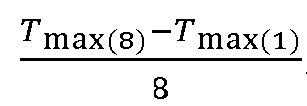
- Similarly, the
micro-controller 320 computes the minimum temperature slope according to the minimum window temperature values of two adjacent time windows. The minimum temperature slope is illustrated as the function:
micro-controller 320 retrieves the minimum window temperature value T min(1) of the time interval from 8:00 to 8:07 and the minimum window temperature value T min(2) of the time interval from 8:04 to 8:11, computes the difference T min(2) - T min(1) between the minimum window temperature values of the two adjacent time windows, and divides the difference T min(2) - T min(1) by the length (e.g., 8 minutes) of the time window to obtain a quotient to be the minimum temperature slope of one corresponding time window, which is illustrated as the function:
- In step S410, the
micro-controller 320 obtains the maximum temperature and the minimum temperature per minute from the multiple temperature feature data. For example, the micro-controller 320 records the maximum temperature maxT and the minimum temperature minT in 1 minute from 8:00:00 to 8:00:59. Based on the similar process of continuous monitoring and computation, themicro-controller 320 obtains multiple maximum temperatures maxT and multiple minimum temperatures minT. - In step S415, the
micro-controller 320 continuously computes the temperature difference data between two adjacent time intervals in the computation frequency. In one embodiment, themicro-controller 320 computes the temperature difference data ΔT between two temperature data that are spaced apart from 1 minute. For example,micro-controller 320 subtracts the temperature data at 8:01 from the temperature data at 8:00 to obtain the temperature difference data ΔT that represents 8:01. Because the temperaturedata retrieving module 330 continuously retrieves the temperature data, the temperature difference data ΔT are continuously generated in step S415. - In step S420, the
micro-controller 320 uses the temperature difference data ΔT to compute the Z score. In one embodiment, the Z score is illustrated as the function:
- In step S425, the
micro-controller 320 sets the first discrete score to the temperature slope, such as obtained in step S410. Considering multiple adjacent time windows, themicro-controller 320 continuously computes the maximum temperature slope and the minimum temperature slope of every two paired time windows among multiple time windows. To clarify the description, S max(i) represents the ith maximum temperature slope (the slope obtained by the maximum window temperature values of the ith and (i+1)th time windows) and S min(i) represents the ith minimum temperature slope (the slope obtained by the minimum window temperature values of the ith and (i+1)th time windows). - In one embodiment, multiple continuous time windows include a first window, a second window, and a third window. The
micro-controller 320 uses the maximum window temperature values and the minimum window temperature values of the first window and the second window to respectively compute the first maximum temperature slope S max(1) and the first minimum temperature slope S min(1), and uses the maximum window temperature values and the minimum window temperature value of the second window and the third window to respectively compute the second maximum temperature slope S max(2) and the second minimum temperature slope S min(2). - In one embodiment, the
micro-controller 320 determines which slope condition the temperature slope belongs to be based on the numerical size relationship of the first maximum temperature slope S max(1), the first minimum temperature slope S min(1), the second maximum temperature slope S max(2), and the second minimum temperature slope S min(2). The slope condition is illustrated in TABLE I.TABLE I: Determinations Slope Condition S max(1) < S max(2) & S min(1) < S min(2) First Condition S max(1) > S max(2) & S min(1) < S min(2) Second Condition S max(1) < S max(2) & S min(1) > S min(2) Third Condition S maX(1) > S max(2) & S min(1) > S min(2) Fourth Condition - As shown in TABLE I, if the first maximum temperature slope S max(1) is less than the second maximum temperature slope S max(2) and the first minimum temperature slope S min(1) is less than the second minimum temperature slope S min(2), it indicates the temperature variation that the high temperature still increases and the low temperature also shows an inclining trend (i.e., the temperature increases entirely). In this case, the slope condition belongs to the first condition. If the first maximum temperature slope S max(1) is greater than the second maximum temperature slope S max(2) and the first minimum temperature slope S min(1) is less than the second minimum temperature slope S min(2), it indicates the temperature variation that the low temperature shows the inclining trend. In this case, the slope condition belongs to the second condition. If the first maximum temperature slope S max(1) is less than the second maximum temperature slope S max(2) and the first minimum temperature slope S min(1) is greater than the second minimum temperature slope S min(2), it indicates the temperature variation that the high temperature shows the inclining trend. In this case, the slope condition belongs to the third condition. If the first maximum temperature slope S max(1) is greater than the second maximum temperature slope S max(2) and the first minimum temperature slope S min(1) is greater than the second minimum temperature slope S min(2), it indicates the temperature variation that the high temperature and the low temperature decrease (i.e., the temperature decreases entirely). In this case, the slope condition belongs to the fourth condition.
- In one embodiment, the
micro-controller 320 sets the first discrete score to the temperature slope according to the obtained slope condition incorporated with the slope difference Sdiff, as shown in TABLE II.TABLE II: Slope Condition Determination Of The Slope Condition First Discrete Score First Condition Sdiff > Thr: abnormal on increasing high temperature 3 Sdiff < Thr: working normally 0 |Sdiff | > Thr: battery working abnormally 3 Second Condition |Sdiff | < Thr: working normally 0 Third Condition Sdiff > 1.5 × Thr : battery working abnormally 3 Sdiff < 1.5 × Thr: working normally 0 Fourth Condition (no condition): working normally 0 - In one embodiment, after computing the maximum temperature slope and the minimum temperature slope of two adjacent time windows (step S410), the
micro-controller 320 computes the difference between the maximum temperature slope and the minimum temperature slope to obtain the slope difference between two time windows. The slope difference is illustrated as the function: Sdiff = S max(i) - S min(i). For example, themicro-controller 320 subtracts the minimum temperature slope S min(1) from the maximum temperature slope S max(1), and the difference is taken as the slope difference S diff(1) . - Regarding each slope condition, the
micro-controller 320 sets the value of the first discrete score based on the slope difference Sdiff and the fluctuating threshold Thr. As shown in TABLE II, when the slope difference Sdiff is greater than the fluctuating threshold Thr at the first condition, it represents that the inclining trend of the high temperature is at an abnormal state, and the first discrete score is set to be 3; on the contrary, when the slope difference Sdiff is less than the fluctuating threshold Thr, it represents that the inclining trend of the high temperature is at a normal state, and the first discrete score is set to be 0. When an absolute value of the slope difference Sdiff is greater than the fluctuating threshold Thr at the second condition, it represents that the rising range of the low temperature is enormous, and the first discrete score is set to be 3; on the contrary, the rising range of the low temperature is still acceptable, and the first discrete score is set to be 0. When the slope difference Sdiff is greater than times the fluctuating threshold (such as 1.5 times the fluctuating threshold) at the third condition, it represents that the rising range of the high temperature is enormous, and the first discrete score is set to be 3; on the contrary, the rising range of the high temperature is still acceptable, and the first discrete score is set to be 0. At the fourth condition, both the high temperature and the low temperature show a declining trend, that is, the temperature does not increase entirely, so the first discrete score is set to be 0. - In one embodiment, the fluctuating threshold is 1.25, but it is not limited to the value.
- In step S425, the
micro-controller 320 sets the second discrete score to the maximum temperature obtained in step S410. The setting conditions are shown in TABLE III.TABLE III: Parameter Setting Condition Second Discrete Score maximum temperature (per minute) maxT maxT ≤ 40°C 0 maxT > 40°C & |current| > 1 1 maxT > 40°C & |current| ≤ 1 2 - In one embodiment, the
micro-controller 320 specifies the maximum temperature maxT every minute and sets the corresponding second discrete score. In one embodiment, themicro-controller 320 determines whether the maximum temperature maxT reaches the abnormal critical point, e.g., 40°C, but it is not limited to the value. - As shown in TABLE III, when the maximum temperature maxT is less than or equal to 40°C, the
micro-controller 320 determines that the battery racks 400 work normally and sets the second discrete score to be 0. When the maximum temperature maxT is greater than 40°C and the current (absolute value) is greater than 1, it represents that the battery racks 400 are in the working state. Accordingly, themicro-controller 320 determines that the high temperature may induce a low risk and sets the second discrete score to be 1. When the maximum temperature maxT is greater than 40°C and the current (absolute value) is less than or equal to 1, it represents that the battery racks 400 are at idle state currently. Because the temperature of the battery racks 400 in the idle state should present a lower value than they work in normal situations (e.g., lower than 40°C), themicro-controller 320 determines that the high temperature of the battery racks 400 may induce a risk, so the second discrete score is set to be 2. - In step S425, the
micro-controller 320 sets the third discrete score to the minimum temperature obtained in step S410. The setting conditions are shown in TABLE IV.TABLE IV: Parameter Setting Condition Third Discrete Score Minimum Temperature (per minute) minT minT > 10°C 0 minT < 10°C & |current| < 1 1 minT < 10°C & |current| ≥ 1 2 - In one embodiment, the
micro-controller 320 specifies the minimum temperature minT every minute and sets the corresponding third discrete score. In one embodiment, themicro-controller 320 determines whether the minimum temperature minT reaches the abnormal critical point, e.g., 10°C, but it is not limited to the value. - As shown in TABLE IV, when the minimum temperature minT is greater than 10°C, the
micro-controller 320 determines that the battery racks 400 work normally and sets the third discrete score to be 0. When the minimum temperature minT is less than 10°C and the current (absolute value) is less than 1, it represents that the battery racks 400 are in the idle state. Accordingly, themicro-controller 320 determines that the low temperature may induce a low risk and sets the third discrete score to be 1. When the minimum temperature minT is less than 10°C and the current (absolute value) is greater than or equal to 1, it represents that the battery racks 400 are in the working state. Because the temperature of the battery racks 400 in the working state should present a higher value than they are idle (e.g., higher than 10°C), themicro-controller 320 determines that the low temperature of the battery racks 400 may be abnormal and sets the third discrete score to be 2. - In step S425, the
micro-controller 320 sets the fourth discrete score to the Z score obtained in step S420. The setting conditions are shown in TABLE V.TABLE V: Parameter Setting Condition Fourth Discrete Score Z score Z < 5 0 5 ≤ Z ≤ 10 1 Z > 10 2 - In one embodiment, two critical points of the Z score are 5 and 10, but they are not limited to the values.
- As shown in TABLE V, when the Z score is less than 5, it represents that the temperature variation of the battery racks 400 remains in the acceptable range, and the
micro-controller 320 sets the fourth discrete score to be 0. When the Z score is between 5 and 10, it represents that the temperature variation of the battery racks 400 fluctuates with larger values and may induce a risk. Therefore, themicro-controller 320 sets the fourth discrete score to be 1. When the Z score is greater than 10, it represents that the temperature variations of the battery racks 400 fluctuate much more than normal conditions and may induce a high risk. Therefore, themicro-controller 320 sets the fourth discrete score to be 2. - In step S430, the
micro-controller 320 adds the first discrete score, the second discrete score, the third discrete score, and the fourth discrete score to obtain the sum of the four parameters, and the sum is taken as the grading value. - In step S435, when the grading value is greater than or equal to the abnormal threshold, the
micro-controller 320 generates the alarm message. - In one embodiment, the abnormal threshold is a numeral value 6. For example, when the first discrete score is 3 (i.e., abnormal on increasing high temperature at first condition), the second discrete score is 0 (i.e., the maximum temperature per minute is not over 40°C), the third discrete score is 0 (i.e., the minimum temperature per minute is greater than 10°C), and the fourth discrete score is 1 (i.e., the temperature fluctuation may induce risk), the sum of the four discrete scores is 4, that is, the grading value is 4. Because the numerical value 4 does not exceed the abnormal threshold, i.e., the numerical value 6, the
micro-controller 320 determines that there is no abnormal state in the battery racks 400. - When the first discrete score is 3 (i.e., the rising range of the high temperature is enormous in the third condition), the second discrete score is 2 (i.e., the maximum temperature per minute is over 40°C and the battery racks 400 are idle), the third discrete score is 1 (i.e., the minimum temperature per minute is less than 10°C and the battery racks 400 are idle), and the fourth discrete score is 0 (i.e., the temperature fluctuation is still acceptable), the sum of the four discrete scores is 6, that is, the grading value is 6. Because the numerical value 6 is equal to the abnormal threshold 6, the
micro-controller 320 determines that the battery racks 400 may work at an abnormal state. - Because the alarm message indicates the position corresponding to the maximum temperature or the minimum temperature of the temperature feature data, where the position infers which
battery rack 400 works at the abnormal state, the user may get the information on whichbattery rack 400 works at the abnormal state through the alarm message. According to the embodiments above, the user may find thecorresponding battery rack 400 based on the abnormal maximum temperature maxT, so countermeasures against the abnormal conditions may be provided to prevent disasters. - In one embodiment, the failure detection method for the battery racks by detecting the temperature is suitable for one or more battery racks in the present disclosure, and it is not limited to the number of the battery racks 400 shown in
Fig. 3 . For example, the scenario inFig. 3 may providemultiple battery racks 400, and the battery racks failure detection system 20 includes multiple temperaturedata retrieving modules 330. Each temperaturedata retrieving module 330 is disposed on onebattery rack 400 and configured to sense the temperature data of thebattery rack 400 where the temperaturedata retrieving module 330 is disposed. Themicro-controller 320 is coupled to all the temperaturedata retrieving modules 330 to perform the steps of detecting the temperature of the battery racks for the abnormal detection. -
Fig. 5 is a block diagram illustrating a failure detection system for battery racks by detecting voltage to monitor anomaly states of the battery racks in accordance with another embodiment of the present disclosure. - In the embodiment, as shown in
Fig. 5 , themultiple battery racks 400 are applied in the scenario. Eachbattery rack 400 includesmultiple battery modules 410, and eachbattery module 410 includesmultiple battery cells 420. - The battery racks
failure detection system 30 includes multiple voltagedata retrieving modules 510 and themicro-controller 520. Every voltagedata retrieving module 510 is coupled to themicro-controller 520. In the embodiment, every voltagedata retrieving module 510 is disposed on a corresponding one of the battery racks 400 and configured to sense the voltage data of everybattery cell 420 of eachbattery module 410. - In one embodiment, the battery racks
failure detection system 30 is configured to perform the failure detection method forbattery racks 400 by detecting voltage. For example, every voltagedata retrieving module 510 sends the voltage data to themicro-controller 520, and themicro-controller 520 performs the failure detection method provided inFig. 2 . -
Fig. 6 is a block diagram illustrating a failure detection system for battery racks by detecting voltage and temperature at the same time to monitor anomaly states of the battery racks in accordance with another embodiment of the present disclosure. - In the embodiment, as shown in
Fig. 6 , the scenario considers multiple battery racks 400. Eachbattery rack 400 includesmultiple battery modules 410, and eachbattery module 410 includesmultiple battery cells 420. - The battery racks
failure detection system 40 includes multiple voltagedata retrieving modules 610, amicro-controller 620, and multiple temperaturedata retrieving modules 630. Every voltagedata retrieving module 610 and every temperaturedata retrieving module 630 are respectively coupled to themicro-controller 620. - In the embodiment, every voltage
data retrieving module 610 is disposed on each corresponding one of the battery racks 400 and configured to sense the voltage data of eachbattery cell 620 of eachbattery module 610. - In the embodiment, every temperature
data retrieving module 630 is disposed on each corresponding one of the battery racks 400 and configured to sense the temperature data of eachbattery rack 400. - In one embodiment, the battery racks
failure detection system 40 is configured to detect the voltage and temperature at the same time to perform the failure detection method for the battery racks 400. For example, every voltagedata retrieving module 610 sends the voltage data to themicro-controller 620, every temperaturedata retrieving module 630 sends the temperature data to themicro-controller 620, and themicro-controller 620 performs the failure detection method provided inFig. 2 andFig. 4 . - In one embodiment, the micro-controller may be, but not limited to, a Digital Signal Processor (DSP), an Application Specific Integrated Circuit (ASIC), a Central Processing Unit (CPU), a System on Chip (SoC), a Field Programmable Gate Array (FPGA), a Network Processor IC, or the combination of the components above.
- In one embodiment, the battery racks may be the energy storage system, such as the battery station for vehicle equipment, the energy storage system for green energy, and the like. The battery racks failure detection system and the failure detection method may be provided to detect the battery racks or the energy storage system.
- Accordingly, the failure detection method and failure detection system for the battery racks by detecting the voltage and the temperature considering the detection of the voltage and the temperature may not only detect the abnormal states in battery racks in advance but also enhance the precision of anomaly detection. Furthermore, the corresponding measures may also be taken in response to the position of the abnormal voltage and/or temperature to find the corresponding battery racks, so that disasters may be prevented.
Claims (6)
- A failure detection method for battery racks (100, 400), performed by a battery racks failure detection system (10, 20, 30, 40) comprising a temperature data retrieving module (330, 630) and a micro-controller (220, 320, 520, 620), wherein the battery racks (100, 400) comprise multiple battery modules (110, 410), and the failure detection method comprises:step (a) sensing a temperature data of the battery racks (100, 400) by the temperature data retrieving module (330, 630), and using the temperature data, by the micro-controller (220, 320, 520, 620), to compute a temperature slope, a maximum temperature, and a minimum temperature of multiple temperature feature data;step (b) continuously computing, by the micro-controller (220, 320, 520, 620), a temperature difference data of the temperature data in a computation frequency, and using the temperature difference data to compute a Z score;step (c) setting, by the micro-controller (220, 320, 520, 620), a first discrete score to the temperature slope, a second discrete score to the maximum temperature, a third discrete score to the minimum temperature, and a fourth discrete score to the Z score;step (d) adding up, by the micro-controller, the first discrete score, the second discrete score, the third discrete score, and the fourth discrete score to obtain a grading value; andstep (e) evaluating, by the micro-controller (220, 320, 520, 620), whether the battery racks (100, 400) are at an abnormal state according to the grading value, and generating an alarm message when evaluating that the battery racks (100, 400) are at the abnormal state, wherein the alarm message indicates that a position of the maximum temperature or the minimum temperature represents the battery racks (100, 400) being abnormal.
- The failure detection method of claim 1, wherein the temperature slope comprises a maximum temperature slope and a minimum temperature slope, and step of computing the temperature slope in the step (a) comprises:step (a1) obtaining, by the micro-controller, a maximum window temperature value and a minimum window temperature value of the temperature data in a time window;step (a2) computing the maximum temperature slope between the maximum window temperature values of two adjacent time windows; andstep (a3) computing the minimum temperature slope between the minimum window temperature values of two adjacent time windows, wherein the two adjacent time windows partially overlap.
- The failure detection method in any of the preceding claims, wherein after computing the maximum temperature slope and the minimum temperature slope of the two adjacent time windows, further comprises a step (a4): computing, by the micro-controller (220, 320, 520, 620), the difference between the maximum temperature slope and the minimum temperature slope to obtain a slope difference of the two adjacent time windows.
- The failure detection method in any of the preceding claims, wherein the step (c) computing a first maximum temperature slope, a first minimum temperature slope, a second maximum temperature slope, and a second minimum temperature slope by two adjacent time windows to one set from three adjacent time windows, and setting the first discrete score by multiple slope conditions, wherein the multiple slope conditions comprise that:the first maximum temperature slope is less than the second maximum temperature slope, the first minimum temperature slope is less than the second minimum temperature slope, and the slope difference is greater than a fluctuating threshold;the first maximum temperature slope is greater than the second maximum temperature slope, the first minimum temperature slope is less than the second minimum temperature slope, and an absolute value of the slope difference is greater than the fluctuating threshold;the first maximum temperature slope is less than the second maximum temperature slope, the first minimum temperature slope is greater than the second minimum temperature slope, and the slope difference is greater than times of the fluctuating threshold; andthe first maximum temperature slope is greater than the second maximum temperature slope, and the first minimum temperature slope is greater than the second minimum temperature slope.
- The failure detection method in any of the preceding claims, wherein the step (b) comprises:continuously computing the difference of the temperature of adjacent time in the computation frequency of each minute to obtain the temperature difference data;continuously computing an average value of the temperature difference data and the standard deviation up to present; andusing the average value and the standard deviation to compute the Z score of a current temperature, wherein the Z score is

- The failure detection method in any of the preceding claims, wherein the step (c) further comprises:continuously detecting the maximum temperature of the temperature data in each minute, and setting the second discrete score according to the maximum temperature and a charge-discharge state of current;continuously detecting the minimum temperature of the temperature data in each minute, and setting the third discrete score according to the minimum temperature and the charge-discharge state of the current; andsetting the fourth discrete score according to a range of the Z score.
Applications Claiming Priority (2)
| Application Number | Priority Date | Filing Date | Title |
|---|---|---|---|
| CN202311841506.0A CN120233244A (en) | 2023-12-29 | 2023-12-29 | Fault detection method and fault detection system applied to battery cabinet |
| EP24180067.1A EP4579260A1 (en) | 2023-12-29 | 2024-06-04 | Failure detection method and failure detection system for battery racks |
Related Parent Applications (2)
| Application Number | Title | Priority Date | Filing Date |
|---|---|---|---|
| EP24180067.1A Division EP4579260A1 (en) | 2023-12-29 | 2024-06-04 | Failure detection method and failure detection system for battery racks |
| EP24180067.1A Division-Into EP4579260A1 (en) | 2023-12-29 | 2024-06-04 | Failure detection method and failure detection system for battery racks |
Publications (2)
| Publication Number | Publication Date |
|---|---|
| EP4583244A2 true EP4583244A2 (en) | 2025-07-09 |
| EP4583244A3 EP4583244A3 (en) | 2025-09-17 |
Family
ID=91431520
Family Applications (2)
| Application Number | Title | Priority Date | Filing Date |
|---|---|---|---|
| EP25170630.5A Pending EP4583244A3 (en) | 2023-12-29 | 2024-06-04 | Failure detection system for battery racks |
| EP24180067.1A Pending EP4579260A1 (en) | 2023-12-29 | 2024-06-04 | Failure detection method and failure detection system for battery racks |
Family Applications After (1)
| Application Number | Title | Priority Date | Filing Date |
|---|---|---|---|
| EP24180067.1A Pending EP4579260A1 (en) | 2023-12-29 | 2024-06-04 | Failure detection method and failure detection system for battery racks |
Country Status (3)
| Country | Link |
|---|---|
| US (1) | US12613281B2 (en) |
| EP (2) | EP4583244A3 (en) |
| CN (1) | CN120233244A (en) |
Families Citing this family (1)
| Publication number | Priority date | Publication date | Assignee | Title |
|---|---|---|---|---|
| CN121049748B (en) * | 2025-10-31 | 2026-02-13 | 杭州泰鼎检测技术有限公司 | Energy storage battery aging detection method and device based on cross overlap differential algorithm |
Family Cites Families (15)
| Publication number | Priority date | Publication date | Assignee | Title |
|---|---|---|---|---|
| CN104333093B (en) | 2014-11-20 | 2018-03-23 | 宁德时代新能源科技股份有限公司 | Electric cabinet management method and device and battery management system |
| US10823786B2 (en) | 2017-07-28 | 2020-11-03 | Northstar Battery Company, Llc | Battery with internal monitoring system |
| TWI632387B (en) | 2017-11-23 | 2018-08-11 | 台達電子工業股份有限公司 | Battery module with abnormality detection function and power storage apparatus and method of controlling the same |
| CN111551858A (en) | 2020-04-30 | 2020-08-18 | 四川享锂来科技有限公司 | Battery parameter remote acquisition system |
| CN111653840B (en) * | 2020-06-08 | 2021-07-09 | 中国第一汽车股份有限公司 | An early warning method, device, equipment and storage medium |
| ES3051518T3 (en) * | 2020-08-10 | 2025-12-29 | Lg Energy Solution Ltd | Battery abnormality diagnosis apparatus and method |
| US11621573B2 (en) * | 2020-10-30 | 2023-04-04 | GM Global Technology Operations LLC | Drooping cell detection and state of cell health monitoring |
| CN115461634B (en) * | 2020-11-27 | 2025-10-28 | 株式会社Lg新能源 | Battery diagnostic device, battery diagnostic method, battery pack, and vehicle |
| CN112924875B (en) | 2021-01-28 | 2024-01-09 | 维沃移动通信有限公司 | Battery testing methods, devices and electronic equipment |
| CN113219361B (en) * | 2021-03-16 | 2024-02-27 | 上海派能能源科技股份有限公司 | Abnormal self-discharge diagnosis method and system for lithium ion battery pack |
| WO2023120054A1 (en) * | 2021-12-21 | 2023-06-29 | パナソニックIpマネジメント株式会社 | Anomaly detection system, anomaly detection method, and anomaly detection program |
| CN115356642A (en) | 2022-08-18 | 2022-11-18 | 三门核电有限公司 | A method for monitoring and evaluating battery status |
| CN115407216B (en) | 2022-08-19 | 2024-12-03 | 国网山东省电力公司莱芜供电公司 | Ring main unit storage battery health status on-line monitoring system |
| CN116106756A (en) | 2023-02-10 | 2023-05-12 | 国网安徽省电力有限公司 | A real-time monitoring device for abnormal state of equipment in a DC power station |
| CN116879788A (en) | 2023-07-04 | 2023-10-13 | 广东鸿昊升能源科技有限公司 | Energy storage electric cabinet safety detection method, device, equipment and storage medium |
-
2023
- 2023-12-29 CN CN202311841506.0A patent/CN120233244A/en active Pending
-
2024
- 2024-06-04 EP EP25170630.5A patent/EP4583244A3/en active Pending
- 2024-06-04 EP EP24180067.1A patent/EP4579260A1/en active Pending
- 2024-06-06 US US18/735,954 patent/US12613281B2/en active Active
Also Published As
| Publication number | Publication date |
|---|---|
| EP4583244A3 (en) | 2025-09-17 |
| US12613281B2 (en) | 2026-04-28 |
| EP4579260A1 (en) | 2025-07-02 |
| US20250216466A1 (en) | 2025-07-03 |
| CN120233244A (en) | 2025-07-01 |
Similar Documents
| Publication | Publication Date | Title |
|---|---|---|
| EP4040174B1 (en) | Apparatus and method for diagnosing battery | |
| US7856328B2 (en) | Systems, methods and circuits for determining potential battery failure based on a rate of change of internal impedance | |
| CN114441979B (en) | Pressure drop cell detection and cell health monitoring | |
| CN111579121B (en) | Method for diagnosing faults of temperature sensor in new energy automobile battery pack on line | |
| EP4583244A2 (en) | Failure detection system for battery racks | |
| CN118920661B (en) | Battery pack charge and discharge adjusting method and device based on capacity check | |
| CN117388732B (en) | High power density DC power supply safety monitoring method and system | |
| CN120891404B (en) | A safety early warning method and system for a lithium battery management system | |
| CN120949100B (en) | A battery testing method and system | |
| CN115856648B (en) | A method for identifying and automatically correcting temperature acquisition faults | |
| TWI882619B (en) | Failure detection method and system for battery racks | |
| JP7678643B2 (en) | Voltage Detector | |
| CN117517968A (en) | A data center lead-acid battery anomaly detection method | |
| JP7575911B2 (en) | Energy Storage System | |
| CN119535080B (en) | Method, device, equipment and storage medium for diagnosing faults of power adapter | |
| CN120468664B (en) | Battery fault diagnosis method based on combination of DBSCAN, experience distribution function and information entropy | |
| TWI812455B (en) | Diagnostic method of energy storage system | |
| CN120891417A (en) | Battery management methods, devices, equipment, storage media, and software products | |
| CN120949050A (en) | Power battery performance early warning methods, systems, media, program products and terminals | |
| CN121208679A (en) | Secondary battery aging test method and secondary battery management system | |
| CN116577670A (en) | A battery pack remaining life estimation system | |
| KR20240100239A (en) | Battery management system and operation method tehreof | |
| CN121208628A (en) | Secondary battery aging test method and secondary battery management system | |
| CN120087943A (en) | Real-time vehicle maintenance monitoring and management method based on Internet of Things technology | |
| CN120669147A (en) | Health state evaluation system and method applied to lithium battery of electric automobile |
Legal Events
| Date | Code | Title | Description |
|---|---|---|---|
| PUAI | Public reference made under article 153(3) epc to a published international application that has entered the european phase |
Free format text: ORIGINAL CODE: 0009012 |
|
| STAA | Information on the status of an ep patent application or granted ep patent |
Free format text: STATUS: THE APPLICATION HAS BEEN PUBLISHED |
|
| AC | Divisional application: reference to earlier application |
Ref document number: 4579260 Country of ref document: EP Kind code of ref document: P |
|
| AK | Designated contracting states |
Kind code of ref document: A2 Designated state(s): AL AT BE BG CH CY CZ DE DK EE ES FI FR GB GR HR HU IE IS IT LI LT LU LV MC ME MK MT NL NO PL PT RO RS SE SI SK SM TR |
|
| REG | Reference to a national code |
Ref country code: DE Ref legal event code: R079 Free format text: PREVIOUS MAIN CLASS: H01M0010480000 Ipc: G01R0031392000 |
|
| PUAL | Search report despatched |
Free format text: ORIGINAL CODE: 0009013 |
|
| AK | Designated contracting states |
Kind code of ref document: A3 Designated state(s): AL AT BE BG CH CY CZ DE DK EE ES FI FR GB GR HR HU IE IS IT LI LT LU LV MC ME MK MT NL NO PL PT RO RS SE SI SK SM TR |
|
| RIC1 | Information provided on ipc code assigned before grant |
Ipc: G01R 31/392 20190101AFI20250812BHEP Ipc: G01R 31/396 20190101ALI20250812BHEP Ipc: H01M 10/48 20060101ALI20250812BHEP Ipc: G01R 31/3835 20190101ALI20250812BHEP |
|
| STAA | Information on the status of an ep patent application or granted ep patent |
Free format text: STATUS: REQUEST FOR EXAMINATION WAS MADE |
|
| 17P | Request for examination filed |
Effective date: 20251022 |