EP4583103A2 - Übertragungsagnostische präsentationsbasierte programmlautstärke - Google Patents
Übertragungsagnostische präsentationsbasierte programmlautstärke Download PDFInfo
- Publication number
- EP4583103A2 EP4583103A2 EP25178877.4A EP25178877A EP4583103A2 EP 4583103 A2 EP4583103 A2 EP 4583103A2 EP 25178877 A EP25178877 A EP 25178877A EP 4583103 A2 EP4583103 A2 EP 4583103A2
- Authority
- EP
- European Patent Office
- Prior art keywords
- loudness
- content
- substreams
- substream
- presentation data
- Prior art date
- Legal status (The legal status is an assumption and is not a legal conclusion. Google has not performed a legal analysis and makes no representation as to the accuracy of the status listed.)
- Pending
Links
Images

Classifications
-
- G—PHYSICS
- G10—MUSICAL INSTRUMENTS; ACOUSTICS
- G10L—SPEECH ANALYSIS TECHNIQUES OR SPEECH SYNTHESIS; SPEECH RECOGNITION; SPEECH OR VOICE PROCESSING TECHNIQUES; SPEECH OR AUDIO CODING OR DECODING
- G10L19/00—Speech or audio signals analysis-synthesis techniques for redundancy reduction, e.g. in vocoders; Coding or decoding of speech or audio signals, using source filter models or psychoacoustic analysis
- G10L19/04—Speech or audio signals analysis-synthesis techniques for redundancy reduction, e.g. in vocoders; Coding or decoding of speech or audio signals, using source filter models or psychoacoustic analysis using predictive techniques
- G10L19/16—Vocoder architecture
- G10L19/167—Audio streaming, i.e. formatting and decoding of an encoded audio signal representation into a data stream for transmission or storage purposes
-
- G—PHYSICS
- G10—MUSICAL INSTRUMENTS; ACOUSTICS
- G10L—SPEECH ANALYSIS TECHNIQUES OR SPEECH SYNTHESIS; SPEECH RECOGNITION; SPEECH OR VOICE PROCESSING TECHNIQUES; SPEECH OR AUDIO CODING OR DECODING
- G10L19/00—Speech or audio signals analysis-synthesis techniques for redundancy reduction, e.g. in vocoders; Coding or decoding of speech or audio signals, using source filter models or psychoacoustic analysis
- G10L19/04—Speech or audio signals analysis-synthesis techniques for redundancy reduction, e.g. in vocoders; Coding or decoding of speech or audio signals, using source filter models or psychoacoustic analysis using predictive techniques
- G10L19/16—Vocoder architecture
- G10L19/18—Vocoders using multiple modes
- G10L19/24—Variable rate codecs, e.g. for generating different qualities using a scalable representation such as hierarchical encoding or layered encoding
-
- G—PHYSICS
- G10—MUSICAL INSTRUMENTS; ACOUSTICS
- G10L—SPEECH ANALYSIS TECHNIQUES OR SPEECH SYNTHESIS; SPEECH RECOGNITION; SPEECH OR VOICE PROCESSING TECHNIQUES; SPEECH OR AUDIO CODING OR DECODING
- G10L21/00—Speech or voice signal processing techniques to produce another audible or non-audible signal, e.g. visual or tactile, in order to modify its quality or its intelligibility
- G10L21/02—Speech enhancement, e.g. noise reduction or echo cancellation
- G10L21/0316—Speech enhancement, e.g. noise reduction or echo cancellation by changing the amplitude
- G10L21/0324—Details of processing therefor
- G10L21/034—Automatic adjustment
Definitions
- the invention pertains to audio signal processing, and more particularly, to encoding and decoding of audio data bitstreams in order to attain a desired loudness level of an output audio signal.
- Dolby AC-4 is an audio format for distributing rich media content efficiently.
- AC-4 provides a flexible framework to broadcasters and content producers to distribute and encode content in an efficient way.
- Content can be distributed over a number of substreams, for example, M&E (Music and effects) in one substream and dialog in a second substream.
- M&E Music and effects
- the loudness of the content needs to be known with some degree of accuracy.
- Current loudness requirements have tolerances of 2 dB (ATSC A/85), 0.5 dB (EBU R128) while some specifications have tolerances as low as 0.1 dB. This means that the loudness of an output audio signal with a commentary track and with dialog in a first language should be substantially the same as the loudness of an output audio signal without the commentary track and with dialog in a second language.
- DRC data comprises at least one set of the one or more DRC gains.
- DRC data may thus comprise multiple DRC profiles corresponding to DRC modes, each providing different user experience of the audio output signal.
- this embodiment may provide an efficient decoder, with a reduced computational complexity.
- the bitstream comprises two or more separate bitstreams, each comprising at least one of said plurality of content substreams
- the step of decoding the one or more content substreams referenced by the selected presentation data structure comprises: separately decoding, for each specific bitstream of the two or more separate bitstreams, the content substream(s) out of the referenced content substreams comprised in the specific bitstream.
- each separate bitstream may be received by a separate decoder which decodes the content substream(s) provided in the separate bitstream which is/are needed according to the selected presentation structure. This may improve the decoding speed since the separate decoders can work in parallel. Consequently, the decoding made by the separate decoders may at least partly overlap. However, it should be noted that the decoding made by the separate decoders need not to overlap.
- Each decoder may process the decoded substream(s) on the basis of the loudness data referenced by the selected presentation data structure, and/or apply DRC gains, and/or apply mixing coefficients to the decoded substream(s).
- the processed or unprocessed content substreams may then be provided from all of the at least two decoders to a mixing component for forming the output audio signal.
- the mixing component performs the loudness processing and/or applies the DRC gains and/or applies mixing coefficients.
- a first decoder may receive a first bitstream of the two or more separate bitstreams through a first infrastructure (e.g.
- a second decoder receives a second bitstream of the two or more separate bitstreams over a second infrastructure (e.g. over internet).
- said one or more presentation data structures are present in all of the two or more separate bitstreams.
- the presentation definition and loudness data is present in all separate decoders. This allows independent operation of the decoders until the mixing component.
- the references to substreams not present in the corresponding bitstream may be indicated as provided externally.
- a decoder for processing a bitstream comprising a plurality of content substreams, each representing an audio signal
- the decoder comprising: a receiving component configured for receiving the bitstream; a demultiplexer configured for extracting, from the bitstream, one or more presentation data structures, each comprising a reference to at least one of said content substreams and further comprising a reference to a metadata substream representing loudness data descriptive of the combination of the referenced one or more content substreams; a playback state component configured for receiving data indicating a selected presentation data structure among the one or more presentation data structures, and a desired loudness level; and a mixing component configured for decoding the one or more content substreams referenced by the selected presentation data structure, and for forming an output audio signal on the basis of the decoded content substreams, wherein the mixing component is further configured for processing the decoded one or more content substreams or the output audio signal to attain said desired loudness level on the basis of the loudness data reference by the selected
- example embodiments propose encoding methods, encoders, and computer program products for encoding.
- the proposed methods, encoders and computer program products may generally have the same features and advantages.
- features of the second aspect may have the same advantages as corresponding features of the first aspect.
- an audio encoding method including: receiving a plurality of content substreams representing respective audio signals; defining one or more presentation data structures, each referring to at least one of said plurality of content substreams; for each of the one or more presentation data structures, applying a predefined loudness function to obtain loudness data descriptive of the combination of the referenced one or more content substreams, and including a reference to the loudness data from the presentation data structure; and forming a bitstream comprising said plurality of content substreams, said one or more presentation data structures and the loudness data referenced by the presentation data structures.
- the term "content substream” encompasses substreams both within a bitstream and within an audio signal.
- An audio encoder typically receives audio signals which are then encoded into bitstreams.
- the audio signals may be grouped, wherein each group can be characterized as individual encoder input audio signals. Each group may then be encoded into a substream.
- the predefined loudness function relates only to such time segments of the audio signal that represent dialog.
- the predefined loudness function includes at least one of: frequency-dependent weighting of the audio signal, channel-dependent weighting of the audio signal, disregarding of segments of the audio signal with a signal power below a threshold value, computing an energy measure of the audio signal.
- an audio encoder comprising: a loudness component configured to apply a predefined loudness function to obtain loudness data descriptive of a combination of one or more content substreams representing respective audio signals; presentation data component configured to define one or more presentation data structures, each comprising a reference to one or more content substreams out of a plurality of content substreams and a reference to loudness data descriptive of a combination of the referenced content substreams; and a multiplexing component configured to form a bitstream comprising said plurality of content substreams, said one or more presentation data structures and the loudness data referenced by the presentation data structures.
- Figure 1 shows by way of example a generalized block diagram of a decoder 100 for processing a bitstream P and attaining a desired loudness level of an output audio signal 114.
- the decoder 100 comprises a receiving component (not shown) configured for receiving the bitstream P comprising a plurality of content substreams, each representing an audio signal.
- the decoder 100 further comprises a demultiplexer 102 configured for extracting, from the bitstream P, one or more presentation data structures 104.
- Each presentation data structure comprises a reference to at least one of said content substreams.
- a presentation data structure, or presentation is a description of which content substreams are to be combined.
- content substreams coded in two or more separate substreams may be combined into one presentation.
- Each presentation data structure further comprise a reference to a metadata substream representing loudness data descriptive of the combination of the referenced one or more content substreams.
- the different substreams 412, 205 which may be referenced by the extracted one or more presentation data structures 104 are shown. Out of the three presentation data structures 104, a selected presentation data structure 110 is chosen.
- the bitstream P comprises the content substreams 412, the metadata substream 205 and the one or more presentation data structures 104.
- the content substreams 412 may for example comprise a substream for the music, a substream for the effects, a substream for the ambience, a substream for English dialog, a substream for Spanish dialog, a substream for associated audio (AA) in English, e.g. an English commentary track, and a substream for AA in Spanish, e.g. a Spanish commentary track.
- all the content substreams 412 are coded in the same bitstream P, but as noted above, this is not always the case.
- Broadcasters of the audio content may use a single bitstream configuration, e.g. a single packet identifier (PID) configuration in the MPEG standard, or a multiple bitstream configuration, e.g. a dual-PID configuration, to transmit the audio content to their clients, i.e. to a decoder.
- PID packet identifier
- the present disclosure introduces an intermediate level in the form of substream groups which reside between the presentation layer and substream layer.
- Content substream groups may group or reference one or more content substreams. Presentations may then reference content substream groups.
- the content substreams music, effects and ambience are grouped to form a content substream group 410, which the selected presentation data structure 110 refers 404 to.
- Content substream groups offer more flexibility in combining content substreams.
- the substream group level provides a means to collect or group several content substreams into a unique group, e.g., a content substream group 410 comprising music, effects and ambience.
- a content substream group e.g. for music and effects, or for music, effects and ambience
- a content substream can be used for more than one presentation, e.g. in conjunction with an English or a Spanish dialog.
- a content substream can also be used in more than one content substream groups.
- using content substream groups may provide possibilities to mix a larger number of content substreams for a presentation.
- a presentation 104, 110 will always consist of one or more substream groups.
- the selected presentation data structure 110 in figure 4 comprises a reference 404 to the content substream group 410 composed of one or more of the content substreams.
- the selected presentation data structure 110 further comprises a reference to a content substream for Spanish dialog and a reference to a content substream for AA in Spanish.
- the selected presentation data structure 110 comprises a reference 406 to a metadata substream 205 representing loudness data 408 descriptive of the combination of the referenced one or more content substreams.
- the other two presentation data structures of the plurality of presentation data structures 104 may comprise similar data as the selected presentation data structure 110.
- the bitstream P may comprise additional metadata substreams similar to the metadata substream 205, wherein these additional metadata substreams are referenced from the other presentation data structures.
- each presentation data structure of the plurality of presentation data structures 104 may reference a dedicated loudness data.
- the selected presentation data structure may change over time, i.e. if the user decides to turn of the Spanish commentary track, AA (ES).
- the bitstream P comprises a plurality of time frames, and wherein the data (reference 108 in figure 1 ) indicating the selected presentation data structure among the one or more presentation data structures 104 are independently assignable for each time frame.
- the bitstream P comprises a plurality of time frames.
- the one or more presentation data structures 104 may relate to different time segments of the bitstream P.
- the demultiplexer (reference 102 in figure 1 ) may be configured for extracting, from the bitstream P, and for a first of said plurality of time frames, one or more presentation data structures, and further configured for extracting, from the bitstream P, and for a second of said plurality of time frames, one or more presentation data structures different from said the one or more presentation data structures extracted from the first of said plurality of time frames.
- the data (reference 108 in figure 1 ) indicating the selected presentation data structure indicates a selected presentation data structure for the time frame for which it is assigned.
- the decoder 100 further comprises a playback state component 106.
- the playback state component 106 is configured to receiving data 108 indicating a selected presentation data structure 110 among the one or more presentation data structures 104.
- the data 108 also comprises a desired loudness level.
- the data 108 may be provided by a consumer of the audio content that will be decoded by the decoder 100.
- the desired loudness value may also be a decoder specific setting, depending on the playback equipment which will be used for playback of the output audio signal. The consumer may for example choose that the audio content should comprise Spanish dialog as understood from above.
- the decoder 100 further comprises a mixing component which receives the selected presentation data structure 110 from the playback state component 106 and decodes the one or more content substreams referenced by the selected presentation data structure 110 from the bitstream P. According to some embodiments, only the one or more content substreams referenced by the selected presentation data structure 110 are decoded by the mixing component. Consequently, in case the consumer has chosen a presentation with e.g. Spanish dialog, any content substream representing English dialog will not be decoded which reduces the computational complexity of the decoder 100.
- the mixing component 112 is configured for forming an output audio signal 114 on the basis of the decoded content substreams.
- the mixing component 112 is configured for processing the decoded one or more content substreams or the output audio signal to attain said desired loudness level on the basis of the loudness data referenced by the selected presentation data structure 110.
- FIGs 2 and 3 describe different embodiments of the mixing component 112.
- the bitstream P is received by a substream decoding component 202 which, based on the selected presentation data structure 110, decodes the one or more content substreams 204 referenced by the selected presentation data structure 110 from the bitstream P.
- the one or more decoded content substreams 204 are then transmitted to a component 206 for forming an output audio signal 114 on the basis of the decoded content substreams 204 and a metadata substream 205.
- the component 206 may for example take into account any time-dependent spatial position data included in the content substream(s) 204 when forming the audio output signal.
- the component 206 may further take into account DRC data comprised in the metadata substream 205.
- a loudness component 210 processes the output audio signal 114 on the basis of the DRC data.
- the component 206 receives mixing coefficients (described below) from the presentation data structure 110 (not shown in figure 2 ) and applies these to the corresponding content substreams 204.
- the output audio signal 114* is then transmitted to a loudness component 210 which, on the basis of loudness data (included in the metadata substream 205) referenced by the selected presentation data structure 110 and the desired loudness level comprised in the data 108, processes the output audio signal 114* to attain said desired loudness level and thus outputs a loudness processed output audio signal 114.
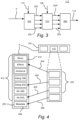
- FIG 3 a similar mixing component 112 is shown.
- the component 206 for forming an output audio signal and the loudness component 210 have changed positions with each other. Consequently, the loudness component 210 processes the decoded one or more content substreams 204 to attain said desired loudness level (on the basis of loudness data included in the metadata substream 205) and outputs one or more loudness processed content substreams 204*. These are then transmitted to the component 206 for forming an output audio signal which outputs the loudness processed output audio signal 114.
- DRC data (included in the metadata substream 205) may be applied either in the component 206 or in the loudness component 210.
- the component 206 receives mixing coefficients (described below) from the presentation data structure 110 (not shown in figure 3 ) and applies these to the corresponding content substreams 204*.
- Each of the one or more presentation data structures 104 comprises dedicated loudness data that indicates exactly what the loudness of the content substreams referenced by the presentation data structure will be when decoded.
- the loudness data may for example represent the dialnorm value.
- the loudness data represent values of a loudness function applying gating to its audio input signal. This may improve the accuracy of the loudness data. For example, if the loudness data is based on a band-limiting loudness function, background noise of the audio input signal will not be taken into consideration when calculating the loudness data, since frequency bands that contain only static may be disregarded.
- the loudness data may represent values of a loudness function relating to such time segments of an audio input signal that represent dialog. This is in line with the ATSC A/85 standard where dialnorm is defined explicitly with respect to the loudness of the dialog (Anchor Element): "The value of the dialnorm parameter indicates the loudness of the Anchor Element of the content”.
- the selected presentation data structure further references at least one mixing coefficient to be applied to the two or more content substreams.
- the mixing coefficient(s) may be used for providing a modified relative loudness level between the content substreams referenced by the selected presentation. These mixing coefficients may be applied as wideband gains to a channel/object in a content substream before mixing it with the channel/object in the other content substream(s).
- Table 1 below indicates an example of object transmission.
- Objects are clustered in categories which are distributed over several substreams. All presentation data structures combine the music and effects that contain the main part of the audio content without the dialog. This combination is thus a content substream group.
- a certain language e.g. English (D#1) or Spanish D#2.
- the content substream comprises one associated audio substream in English (Desc#1), and one associated audio substream in Spanish (Desc#2).
- the associated audio may comprise enhancement audio such as audio description, narrator for the hard of hearing, narrator for vision-impaired, commentary track etc.
- presentation 2 references, for each substream of the two or more substreams, one mixing coefficient to be applied to the respective substreams.
- Presentation 3 includes a Spanish description stream for vision-impaired. This stream was recorded in a booth and is too loud to be mixed straight into the presentation and is therefore attenuated by 6 dB.
- presentation 3 references, for each substream of the two or more substreams, one mixing coefficient to be applied to the respective substreams.
- the user or consumer of the audio content can provide user input such that the output audio signal deviates from the selected presentation data structure.
- dialog enhancement or dialog attenuation may be requested by the user, or the user may want to perform some sort of scene personalization, e.g. increase the volume of the effects.
- alternative mixing coefficients may be provided which are used when combining two or more decoded content substreams for forming the output audio signal. This may influence the loudness level of the audio output signal.
- each of the decoded one or more content substreams may comprise substream-level loudness data descriptive of a loudness level of the content substream. The substream-level loudness data may then be used for compensating the loudness data for providing loudness consistency.
- the substream-level loudness data may be similar to the loudness data referenced by the presentation data structure, and may advantageously represent values of a loudness function, optionally with a larger range to cover the generally quieter signals in a content substream.
- DN(P) be the presentation dialnorm
- DN(S i ) the substream loudness of substream i.
- DN P DE log 10 10 10 DN S M & E + 1 0 DN S D + 9 + offset
- the presentation data structure further comprises a reference to dynamic range compression, DRC, data for the referenced one or more content substreams 204.
- DRC dynamic range compression
- This DRC data can be used for processing the decoded one or more content substreams 204 by applying one or more DRC gains to the decoded one or more content substreams 204 or the output audio signal 114.
- the one or more DRC gains may be included in the DRC data, or they can be calculated based on one or more compression curves comprised in the DRC data.
- the decoder 100 calculates a loudness value for each of the referenced one or more content substreams 204 or for the output audio signal 114 using a predefined loudness function and then uses the loudness value(s) for mapping to DRC gains using the compression curve(s).
- the mapping of the loudness values may comprise a smoothing operation of the DRC gains.
- the DRC data of referenced by the presentation data structure corresponds to multiple DRC profiles.
- These DRC profiles are custom tailored to the particular audio signal to which they can be applied.
- the profiles may range from no compression ("None"), to fairly light compression (e.g. "Music Light”) all the way to extremely aggressive compression (e.g. "Speech").
- the DRC data may comprise multiple sets of DRC gains, or multiple compression curves from which the multiple sets of DRC gains can be obtained.
- the referenced DRC data may according to embodiments be comprised in the metadata substream 205 in figure 4 .
- bitstream P may according to some embodiments comprise two or more separate bitstreams, and the content substreams may in this case be coded into different bitstreams.
- the one or more presentation data structures are in this case advantageously included in all of the separate bitstreams which means that several decoders, one for each separate bitstream, can work separately and totally independently to decode the content substreams referenced by the selected presentation data structure (also provided to each separate decoder).
- the decoders can work in parallel.
- Each separate decoder decodes the substreams that exist in the separate bitstream which it receives.
- the each separate decoder performs the processing of the content substreams decoded by it, to attain the desired loudness level.
- the processed content substreams are then provided to a further mixing component which forms the output audio signal, with the desired loudness level.
- each separate decoder provides its decoded, and unprocessed, substreams to the further mixing component which performs the loudness processing and then forms the output audio signal from all of the one or more content substreams referenced by the selected presentation data structure, or first mixes the one or more content substreams and performs the loudness processing on the mixed signal.
- each separate decoder performs a mixing operation on two or more of its decoded substreams. A further mixing component then mixes the pre-mixed contributions of the separate decoders.
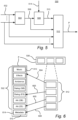
- Figure 5 in conjunction with figure 6 shows by way of example an audio encoder 500.
- the encoder 500 comprises a presentation data component 504 configured to define one or more presentation data structures 506, each comprising a reference 604, 605 to one or more content substreams 612 out of a plurality of content substreams 502 and a reference 608 to loudness data 510 descriptive of a combination of the referenced content substreams 612.
- the encoder 500 further comprises a loudness component 508 configured to apply a predefined loudness function 514 to obtain loudness data 510 descriptive of a combination of one or more content substreams representing respective audio signals.
- the encoder further comprises a multiplexing component 512 configured to form a bitstream P comprising said plurality of content substreams, said one or more presentation data structures 506 and the loudness data 510 referenced by said one or more presentation data structures 506.
- the loudness data 510 typically comprise several loudness data instances, one for each of said one or more presentation data structures 506.
- the encoder 500 may further be adapted to for each of the one or more presentation data structures 506, determining dynamic range compression, DRC, data for the referenced one or more content substreams.
- the DRC data quantifies at least one desired compression curve or at least one set of DRC gains.
- the DRC data is included in the bitstream P.
- the DRC data and the loudness data 510 may according to embodiments be included in a metadata substream 614. As discussed above, loudness data is typically presentation dependent. Moreover, the DRC data may also be presentation dependent. In these cases, loudness data, and if applicable, DRC data for a specific presentation data structure are included in a dedicated metadata substream 614 for that specific presentation data structure.
- the encoder may further be adapted to, for each of the plurality of content substreams 502, applying the predefined loudness function to obtain substream-level loudness data of the content substream; and including said substream-level loudness data in the bitstream.
- the predefined loudness function may relate to gating of the audio signal. According to other embodiments, the predefined loudness function relates only to such time segments of the audio signal that represent dialog.
- the predefined loudness function may according to some embodiments include at least one of:
- the loudness function is non-linear. This means that in case the loudness data were only calculated from the different content substreams, the loudness for a certain presentation could not be calculated by adding the loudness data of the referenced content substreams together. Moreover, when combining different audio tracks, i.e. content substreams, together for simultaneous playback, a combined effect between coherent/incoherent parts or in different frequency regions of the different audio tracks may appear which further makes addition of the loudness data for the audio track mathematically impossible.
- the devices and methods disclosed hereinabove may be implemented as software, firmware, hardware or a combination thereof.
- the division of tasks between functional units referred to in the above description does not necessarily correspond to the division into physical units; to the contrary, one physical component may have multiple functionalities, and one task may be carried out by several physical components in cooperation.
- Certain components or all components may be implemented as software executed by a digital signal processor or microprocessor, or be implemented as hardware or as an application-specific integrated circuit.
- Such software may be distributed on computer readable media, which may comprise computer storage media (or non-transitory media) and communication media (or transitory media).
- Computer storage media includes both volatile and nonvolatile, removable and non-removable media implemented in any method or technology for storage of information such as computer readable instructions, data structures, program modules or other data.
- Computer storage media includes, but is not limited to, RAM, ROM, EEPROM, flash memory or other memory technology, CD-ROM, digital versatile disks (DVD) or other optical disk storage, magnetic cassettes, magnetic tape, magnetic disk storage or other magnetic storage devices, or any other medium which can be used to store the desired information and which can be accessed by a computer.
Landscapes
- Engineering & Computer Science (AREA)
- Human Computer Interaction (AREA)
- Signal Processing (AREA)
- Health & Medical Sciences (AREA)
- Audiology, Speech & Language Pathology (AREA)
- Computational Linguistics (AREA)
- Physics & Mathematics (AREA)
- Acoustics & Sound (AREA)
- Multimedia (AREA)
- Quality & Reliability (AREA)
- Stereophonic System (AREA)
- Circuit For Audible Band Transducer (AREA)
- Tone Control, Compression And Expansion, Limiting Amplitude (AREA)
- Two-Way Televisions, Distribution Of Moving Picture Or The Like (AREA)
Applications Claiming Priority (6)
| Application Number | Priority Date | Filing Date | Title |
|---|---|---|---|
| US201462062479P | 2014-10-10 | 2014-10-10 | |
| EP24168916.5A EP4372746B1 (de) | 2014-10-10 | 2015-10-06 | Übertragungsagnostische präsentationsbasierte programmlautstärke |
| EP15787750.7A EP3204943B1 (de) | 2014-10-10 | 2015-10-06 | Übertragungsagnostische präsentationsbasierte programmlautstärke |
| PCT/US2015/054264 WO2016057530A1 (en) | 2014-10-10 | 2015-10-06 | Transmission-agnostic presentation-based program loudness |
| EP22166776.9A EP4060661B1 (de) | 2014-10-10 | 2015-10-06 | Übertragungsagnostische präsentationsbasierte programmlautstärke |
| EP18209378.1A EP3518236B8 (de) | 2014-10-10 | 2015-10-06 | Übertragungsagnostische präsentationsbasierte programmlautstärke |
Related Parent Applications (4)
| Application Number | Title | Priority Date | Filing Date |
|---|---|---|---|
| EP24168916.5A Division EP4372746B1 (de) | 2014-10-10 | 2015-10-06 | Übertragungsagnostische präsentationsbasierte programmlautstärke |
| EP22166776.9A Division EP4060661B1 (de) | 2014-10-10 | 2015-10-06 | Übertragungsagnostische präsentationsbasierte programmlautstärke |
| EP15787750.7A Division EP3204943B1 (de) | 2014-10-10 | 2015-10-06 | Übertragungsagnostische präsentationsbasierte programmlautstärke |
| EP18209378.1A Division EP3518236B8 (de) | 2014-10-10 | 2015-10-06 | Übertragungsagnostische präsentationsbasierte programmlautstärke |
Publications (2)
| Publication Number | Publication Date |
|---|---|
| EP4583103A2 true EP4583103A2 (de) | 2025-07-09 |
| EP4583103A3 EP4583103A3 (de) | 2025-08-13 |
Family
ID=54364679
Family Applications (5)
| Application Number | Title | Priority Date | Filing Date |
|---|---|---|---|
| EP24168916.5A Active EP4372746B1 (de) | 2014-10-10 | 2015-10-06 | Übertragungsagnostische präsentationsbasierte programmlautstärke |
| EP15787750.7A Active EP3204943B1 (de) | 2014-10-10 | 2015-10-06 | Übertragungsagnostische präsentationsbasierte programmlautstärke |
| EP25178877.4A Pending EP4583103A3 (de) | 2014-10-10 | 2015-10-06 | Übertragungsagnostische präsentationsbasierte programmlautstärke |
| EP22166776.9A Active EP4060661B1 (de) | 2014-10-10 | 2015-10-06 | Übertragungsagnostische präsentationsbasierte programmlautstärke |
| EP18209378.1A Active EP3518236B8 (de) | 2014-10-10 | 2015-10-06 | Übertragungsagnostische präsentationsbasierte programmlautstärke |
Family Applications Before (2)
| Application Number | Title | Priority Date | Filing Date |
|---|---|---|---|
| EP24168916.5A Active EP4372746B1 (de) | 2014-10-10 | 2015-10-06 | Übertragungsagnostische präsentationsbasierte programmlautstärke |
| EP15787750.7A Active EP3204943B1 (de) | 2014-10-10 | 2015-10-06 | Übertragungsagnostische präsentationsbasierte programmlautstärke |
Family Applications After (2)
| Application Number | Title | Priority Date | Filing Date |
|---|---|---|---|
| EP22166776.9A Active EP4060661B1 (de) | 2014-10-10 | 2015-10-06 | Übertragungsagnostische präsentationsbasierte programmlautstärke |
| EP18209378.1A Active EP3518236B8 (de) | 2014-10-10 | 2015-10-06 | Übertragungsagnostische präsentationsbasierte programmlautstärke |
Country Status (6)
| Country | Link |
|---|---|
| US (6) | US10453467B2 (de) |
| EP (5) | EP4372746B1 (de) |
| JP (9) | JP6676047B2 (de) |
| CN (7) | CN112164406B (de) |
| ES (3) | ES2980796T3 (de) |
| WO (1) | WO2016057530A1 (de) |
Families Citing this family (8)
| Publication number | Priority date | Publication date | Assignee | Title |
|---|---|---|---|---|
| US8027479B2 (en) * | 2006-06-02 | 2011-09-27 | Coding Technologies Ab | Binaural multi-channel decoder in the context of non-energy conserving upmix rules |
| EP4372746B1 (de) * | 2014-10-10 | 2025-06-25 | Dolby Laboratories Licensing Corporation | Übertragungsagnostische präsentationsbasierte programmlautstärke |
| WO2016194563A1 (ja) * | 2015-06-02 | 2016-12-08 | ソニー株式会社 | 送信装置、送信方法、メディア処理装置、メディア処理方法および受信装置 |
| JP7309734B2 (ja) | 2018-02-15 | 2023-07-18 | ドルビー ラボラトリーズ ライセンシング コーポレイション | 音量制御方法および装置 |
| WO2020020043A1 (en) | 2018-07-25 | 2020-01-30 | Dolby Laboratories Licensing Corporation | Compressor target curve to avoid boosting noise |
| EP3803861B1 (de) | 2019-08-27 | 2022-01-19 | Dolby Laboratories Licensing Corporation | Dialogverbesserung mit adaptiver glättung |
| WO2021054072A1 (ja) | 2019-09-17 | 2021-03-25 | キヤノン株式会社 | カートリッジ及び画像形成装置 |
| WO2025190810A1 (en) | 2024-03-11 | 2025-09-18 | Dolby International Ab | Systems and methods for spatial fidelity improving dialogue estimation |
Family Cites Families (96)
| Publication number | Priority date | Publication date | Assignee | Title |
|---|---|---|---|---|
| US5612900A (en) * | 1995-05-08 | 1997-03-18 | Kabushiki Kaisha Toshiba | Video encoding method and system which encodes using a rate-quantizer model |
| JPH10187190A (ja) | 1996-12-25 | 1998-07-14 | Victor Co Of Japan Ltd | 音響信号処理方法及び音響信号処理装置 |
| JP3196778B1 (ja) * | 2001-01-18 | 2001-08-06 | 日本ビクター株式会社 | 音声符号化方法及び音声復号化方法 |
| GB2373975B (en) | 2001-03-30 | 2005-04-13 | Sony Uk Ltd | Digital audio signal processing |
| US7240001B2 (en) * | 2001-12-14 | 2007-07-03 | Microsoft Corporation | Quality improvement techniques in an audio encoder |
| US7072477B1 (en) | 2002-07-09 | 2006-07-04 | Apple Computer, Inc. | Method and apparatus for automatically normalizing a perceived volume level in a digitally encoded file |
| US7454331B2 (en) * | 2002-08-30 | 2008-11-18 | Dolby Laboratories Licensing Corporation | Controlling loudness of speech in signals that contain speech and other types of audio material |
| US7502743B2 (en) * | 2002-09-04 | 2009-03-10 | Microsoft Corporation | Multi-channel audio encoding and decoding with multi-channel transform selection |
| US7551745B2 (en) | 2003-04-24 | 2009-06-23 | Dolby Laboratories Licensing Corporation | Volume and compression control in movie theaters |
| US7398207B2 (en) * | 2003-08-25 | 2008-07-08 | Time Warner Interactive Video Group, Inc. | Methods and systems for determining audio loudness levels in programming |
| US8131134B2 (en) * | 2004-04-14 | 2012-03-06 | Microsoft Corporation | Digital media universal elementary stream |
| US7587254B2 (en) * | 2004-04-23 | 2009-09-08 | Nokia Corporation | Dynamic range control and equalization of digital audio using warped processing |
| US7617109B2 (en) * | 2004-07-01 | 2009-11-10 | Dolby Laboratories Licensing Corporation | Method for correcting metadata affecting the playback loudness and dynamic range of audio information |
| US7729673B2 (en) | 2004-12-30 | 2010-06-01 | Sony Ericsson Mobile Communications Ab | Method and apparatus for multichannel signal limiting |
| TWI397903B (zh) * | 2005-04-13 | 2013-06-01 | Dolby Lab Licensing Corp | 編碼音訊之節約音量測量技術 |
| TW200638335A (en) * | 2005-04-13 | 2006-11-01 | Dolby Lab Licensing Corp | Audio metadata verification |
| TWI517562B (zh) | 2006-04-04 | 2016-01-11 | 杜比實驗室特許公司 | 用於將多聲道音訊信號之全面感知響度縮放一期望量的方法、裝置及電腦程式 |
| EP2002426B1 (de) * | 2006-04-04 | 2009-09-02 | Dolby Laboratories Licensing Corporation | Lautstärkemessung von tonsignalen und änderung im mdct-bereich |
| CA2648237C (en) * | 2006-04-27 | 2013-02-05 | Dolby Laboratories Licensing Corporation | Audio gain control using specific-loudness-based auditory event detection |
| US20080025530A1 (en) | 2006-07-26 | 2008-01-31 | Sony Ericsson Mobile Communications Ab | Method and apparatus for normalizing sound playback loudness |
| US7822498B2 (en) | 2006-08-10 | 2010-10-26 | International Business Machines Corporation | Using a loudness-level-reference segment of audio to normalize relative audio levels among different audio files when combining content of the audio files |
| JP2008197199A (ja) * | 2007-02-09 | 2008-08-28 | Matsushita Electric Ind Co Ltd | オーディオ符号化装置及びオーディオ復号化装置 |
| JP2008276876A (ja) | 2007-04-27 | 2008-11-13 | Toshiba Corp | 音声出力装置及び音声出力方法 |
| CN101681618B (zh) | 2007-06-19 | 2015-12-16 | 杜比实验室特许公司 | 利用频谱修改的响度测量 |
| US8315398B2 (en) * | 2007-12-21 | 2012-11-20 | Dts Llc | System for adjusting perceived loudness of audio signals |
| KR101024924B1 (ko) * | 2008-01-23 | 2011-03-31 | 엘지전자 주식회사 | 오디오 신호의 처리 방법 및 이의 장치 |
| EP2106159A1 (de) | 2008-03-28 | 2009-09-30 | Deutsche Thomson OHG | Lautsprecherplatte mit einem Mikrophon und Verfahren zur Nutzung beider Elemente |
| US20090253457A1 (en) | 2008-04-04 | 2009-10-08 | Apple Inc. | Audio signal processing for certification enhancement in a handheld wireless communications device |
| US8295504B2 (en) | 2008-05-06 | 2012-10-23 | Motorola Mobility Llc | Methods and devices for fan control of an electronic device based on loudness data |
| US8315396B2 (en) | 2008-07-17 | 2012-11-20 | Fraunhofer-Gesellschaft Zur Foerderung Der Angewandten Forschung E.V. | Apparatus and method for generating audio output signals using object based metadata |
| KR101545582B1 (ko) * | 2008-10-29 | 2015-08-19 | 엘지전자 주식회사 | 단말기 및 그 제어 방법 |
| US7755526B2 (en) * | 2008-10-31 | 2010-07-13 | At&T Intellectual Property I, L.P. | System and method to modify a metadata parameter |
| JP2010135906A (ja) | 2008-12-02 | 2010-06-17 | Sony Corp | クリップ防止装置及びクリップ防止方法 |
| US8428758B2 (en) | 2009-02-16 | 2013-04-23 | Apple Inc. | Dynamic audio ducking |
| US8406431B2 (en) | 2009-07-23 | 2013-03-26 | Sling Media Pvt. Ltd. | Adaptive gain control for digital audio samples in a media stream |
| DK2465113T3 (en) | 2009-08-14 | 2015-04-07 | Koninkl Kpn Nv | PROCEDURE, COMPUTER PROGRAM PRODUCT AND SYSTEM FOR DETERMINING AN CONCEPT QUALITY OF A SOUND SYSTEM |
| WO2011044153A1 (en) | 2009-10-09 | 2011-04-14 | Dolby Laboratories Licensing Corporation | Automatic generation of metadata for audio dominance effects |
| FR2951896A1 (fr) | 2009-10-23 | 2011-04-29 | France Telecom | Procede d'encapsulation de sous-flux de donnees, procede de desencapsulation et programmes d'ordinateur correspondants |
| CN102725791B (zh) * | 2009-11-19 | 2014-09-17 | 瑞典爱立信有限公司 | 用于音频编解码中的响度和锐度补偿的方法和设备 |
| TWI529703B (zh) | 2010-02-11 | 2016-04-11 | 杜比實驗室特許公司 | 用以非破壞地正常化可攜式裝置中音訊訊號響度之系統及方法 |
| TWI525987B (zh) * | 2010-03-10 | 2016-03-11 | 杜比實驗室特許公司 | 在單一播放模式中組合響度量測的系統 |
| EP2367286B1 (de) * | 2010-03-12 | 2013-02-20 | Harman Becker Automotive Systems GmbH | Automatische Korrektur der Lautstärke von Audiosignalen |
| PL2381574T3 (pl) | 2010-04-22 | 2015-05-29 | Fraunhofer Ges Forschung | Urządzenie i sposób do modyfikacji wejściowego sygnału audio |
| US8510361B2 (en) * | 2010-05-28 | 2013-08-13 | George Massenburg | Variable exponent averaging detector and dynamic range controller |
| CN103003877B (zh) | 2010-08-23 | 2014-12-31 | 松下电器产业株式会社 | 声音信号处理装置及声音信号处理方法 |
| JP5903758B2 (ja) | 2010-09-08 | 2016-04-13 | ソニー株式会社 | 信号処理装置および方法、プログラム、並びにデータ記録媒体 |
| US8908874B2 (en) * | 2010-09-08 | 2014-12-09 | Dts, Inc. | Spatial audio encoding and reproduction |
| CA2809040C (en) | 2010-09-22 | 2016-05-24 | Dolby Laboratories Licensing Corporation | Audio stream mixing with dialog level normalization |
| AU2011311543B2 (en) | 2010-10-07 | 2015-05-21 | Fraunhofer-Gesellschaft Zur Foerderung Der Angewandten Forschung E.V | Apparatus and method for level estimation of coded audio frames in a bit stream domain |
| WO2014124377A2 (en) | 2013-02-11 | 2014-08-14 | Dolby Laboratories Licensing Corporation | Audio bitstreams with supplementary data and encoding and decoding of such bitstreams |
| TWI665659B (zh) * | 2010-12-03 | 2019-07-11 | 美商杜比實驗室特許公司 | 音頻解碼裝置、音頻解碼方法及音頻編碼方法 |
| US8989884B2 (en) | 2011-01-11 | 2015-03-24 | Apple Inc. | Automatic audio configuration based on an audio output device |
| JP2012235310A (ja) | 2011-04-28 | 2012-11-29 | Sony Corp | 信号処理装置および方法、プログラム、並びにデータ記録媒体 |
| US8965774B2 (en) | 2011-08-23 | 2015-02-24 | Apple Inc. | Automatic detection of audio compression parameters |
| JP5845760B2 (ja) | 2011-09-15 | 2016-01-20 | ソニー株式会社 | 音声処理装置および方法、並びにプログラム |
| EP2575375B1 (de) * | 2011-09-28 | 2015-03-18 | Nxp B.V. | Steuerung eines Lautsprecherausgangs |
| JP2013102411A (ja) | 2011-10-14 | 2013-05-23 | Sony Corp | 音声信号処理装置、および音声信号処理方法、並びにプログラム |
| US9892188B2 (en) | 2011-11-08 | 2018-02-13 | Microsoft Technology Licensing, Llc | Category-prefixed data batching of coded media data in multiple categories |
| EP2791938B8 (de) | 2011-12-15 | 2016-05-04 | Fraunhofer Gesellschaft zur Förderung der angewandten Forschung e.V. | Vorrichtung, verfahren und computerprogramm zur vermeidung von clipping-artefakten |
| JP5909100B2 (ja) * | 2012-01-26 | 2016-04-26 | 日本放送協会 | ラウドネスレンジ制御システム、伝送装置、受信装置、伝送用プログラム、および受信用プログラム |
| TWI517142B (zh) | 2012-07-02 | 2016-01-11 | Sony Corp | Audio decoding apparatus and method, audio coding apparatus and method, and program |
| US9761229B2 (en) | 2012-07-20 | 2017-09-12 | Qualcomm Incorporated | Systems, methods, apparatus, and computer-readable media for audio object clustering |
| EP2891149A1 (de) | 2012-08-31 | 2015-07-08 | Dolby Laboratories Licensing Corporation | Verarbeitung von audioobjekten in codierten haupt- und nebenaudiosignalen |
| US9413322B2 (en) | 2012-11-19 | 2016-08-09 | Harman International Industries, Incorporated | Audio loudness control system |
| JP6271586B2 (ja) | 2013-01-16 | 2018-01-31 | ドルビー・インターナショナル・アーベー | Hoaラウドネスレベルを測定する方法及びhoaラウドネスレベルを測定する装置 |
| EP2757558A1 (de) | 2013-01-18 | 2014-07-23 | Fraunhofer-Gesellschaft zur Förderung der angewandten Forschung e.V. | Niveaueinstellung der Zeitbereichsebene zur Audiosignaldekodierung oder -kodierung |
| KR20240055146A (ko) | 2013-01-21 | 2024-04-26 | 돌비 레버러토리즈 라이쎈싱 코오포레이션 | 상이한 재생 디바이스들에 걸친 라우드니스 및 동적 범위의 최적화 |
| UA129991C2 (uk) * | 2013-01-21 | 2025-10-08 | Долбі Лабораторіс Лайсензін Корпорейшн | Блок та спосіб обробки звукового сигналу, носій інформації |
| EP2948947B1 (de) | 2013-01-28 | 2017-03-29 | Fraunhofer-Gesellschaft zur Förderung der angewandten Forschung e.V. | Verfahren und vorrichtung zur normalisierten audiowiedergabe von medien mit und ohne eingebettete lautstärkemetadaten auf neuen medienvorrichtungen |
| US20140257799A1 (en) * | 2013-03-08 | 2014-09-11 | Daniel Shepard | Shout mitigating communication device |
| US9559651B2 (en) | 2013-03-29 | 2017-01-31 | Apple Inc. | Metadata for loudness and dynamic range control |
| US9607624B2 (en) | 2013-03-29 | 2017-03-28 | Apple Inc. | Metadata driven dynamic range control |
| TWM487509U (zh) * | 2013-06-19 | 2014-10-01 | 杜比實驗室特許公司 | 音訊處理設備及電子裝置 |
| JP2015050685A (ja) | 2013-09-03 | 2015-03-16 | ソニー株式会社 | オーディオ信号処理装置および方法、並びにプログラム |
| US9875746B2 (en) | 2013-09-19 | 2018-01-23 | Sony Corporation | Encoding device and method, decoding device and method, and program |
| US9300268B2 (en) | 2013-10-18 | 2016-03-29 | Apple Inc. | Content aware audio ducking |
| WO2015059087A1 (en) | 2013-10-22 | 2015-04-30 | Fraunhofer-Gesellschaft zur Förderung der angewandten Forschung e.V. | Concept for combined dynamic range compression and guided clipping prevention for audio devices |
| US9240763B2 (en) | 2013-11-25 | 2016-01-19 | Apple Inc. | Loudness normalization based on user feedback |
| US9276544B2 (en) | 2013-12-10 | 2016-03-01 | Apple Inc. | Dynamic range control gain encoding |
| CA3162763C (en) | 2013-12-27 | 2025-07-08 | Sony Corporation | DECODING APPARATUS, METHOD AND PROGRAM |
| US9608588B2 (en) | 2014-01-22 | 2017-03-28 | Apple Inc. | Dynamic range control with large look-ahead |
| US9654076B2 (en) | 2014-03-25 | 2017-05-16 | Apple Inc. | Metadata for ducking control |
| CA2942743C (en) | 2014-03-25 | 2018-11-13 | Fraunhofer-Gesellschaft Zur Forderung Der Angewandten Forschung E.V. | Audio encoder device and an audio decoder device having efficient gain coding in dynamic range control |
| CA2950197C (en) | 2014-05-28 | 2019-01-15 | Fraunhofer-Gesellschaft Zur Forderung Der Angewandten Forschung E.V. | Data processor and transport of user control data to audio decoders and renderers |
| RU2699406C2 (ru) | 2014-05-30 | 2019-09-05 | Сони Корпорейшн | Устройство обработки информации и способ обработки информации |
| CA2953242C (en) | 2014-06-30 | 2023-10-10 | Sony Corporation | Information processing apparatus and information processing method |
| KR102304052B1 (ko) * | 2014-09-05 | 2021-09-23 | 엘지전자 주식회사 | 디스플레이 장치 및 그의 동작 방법 |
| EP4372746B1 (de) | 2014-10-10 | 2025-06-25 | Dolby Laboratories Licensing Corporation | Übertragungsagnostische präsentationsbasierte programmlautstärke |
| TWI631835B (zh) | 2014-11-12 | 2018-08-01 | 弗勞恩霍夫爾協會 | 用以解碼媒體信號之解碼器、及用以編碼包含用於主要媒體資料之元資料或控制資料的次要媒體資料之編碼器 |
| US20160315722A1 (en) | 2015-04-22 | 2016-10-27 | Apple Inc. | Audio stem delivery and control |
| US10109288B2 (en) | 2015-05-27 | 2018-10-23 | Apple Inc. | Dynamic range and peak control in audio using nonlinear filters |
| ES2870749T3 (es) | 2015-05-29 | 2021-10-27 | Fraunhofer Ges Forschung | Dispositivo y procedimiento para el control de volumen |
| ES2936089T3 (es) | 2015-06-17 | 2023-03-14 | Fraunhofer Ges Forschung | Control de intensidad del sonido para interacción del usuario en sistemas de codificación de audio |
| US9837086B2 (en) | 2015-07-31 | 2017-12-05 | Apple Inc. | Encoded audio extended metadata-based dynamic range control |
| US9934790B2 (en) | 2015-07-31 | 2018-04-03 | Apple Inc. | Encoded audio metadata-based equalization |
| US10341770B2 (en) | 2015-09-30 | 2019-07-02 | Apple Inc. | Encoded audio metadata-based loudness equalization and dynamic equalization during DRC |
-
2015
- 2015-10-06 EP EP24168916.5A patent/EP4372746B1/de active Active
- 2015-10-06 EP EP15787750.7A patent/EP3204943B1/de active Active
- 2015-10-06 ES ES22166776T patent/ES2980796T3/es active Active
- 2015-10-06 WO PCT/US2015/054264 patent/WO2016057530A1/en not_active Ceased
- 2015-10-06 ES ES24168916T patent/ES3036395T3/es active Active
- 2015-10-06 EP EP25178877.4A patent/EP4583103A3/de active Pending
- 2015-10-06 JP JP2017518908A patent/JP6676047B2/ja active Active
- 2015-10-06 EP EP22166776.9A patent/EP4060661B1/de active Active
- 2015-10-06 CN CN202011037639.9A patent/CN112164406B/zh active Active
- 2015-10-06 EP EP18209378.1A patent/EP3518236B8/de active Active
- 2015-10-06 CN CN201580054844.7A patent/CN107112023B/zh active Active
- 2015-10-06 CN CN202410804922.1A patent/CN119252269A/zh active Pending
- 2015-10-06 CN CN202011037624.2A patent/CN112185402B/zh active Active
- 2015-10-06 CN CN202410780672.2A patent/CN119296555A/zh active Pending
- 2015-10-06 US US15/517,482 patent/US10453467B2/en active Active
- 2015-10-06 CN CN202011037206.3A patent/CN112185401B/zh active Active
- 2015-10-06 CN CN202410612775.8A patent/CN118553253A/zh active Pending
- 2015-10-06 ES ES18209378T patent/ES2916254T3/es active Active
-
2017
- 2017-08-15 US US15/677,919 patent/US10566005B2/en active Active
-
2020
- 2020-02-13 US US16/790,352 patent/US11062721B2/en active Active
- 2020-03-11 JP JP2020041513A patent/JP6701465B1/ja active Active
- 2020-05-01 JP JP2020081044A patent/JP7023313B2/ja active Active
-
2021
- 2021-07-09 US US17/372,295 patent/US12080308B2/en active Active
-
2022
- 2022-02-08 JP JP2022017625A patent/JP7350111B2/ja active Active
-
2023
- 2023-09-12 JP JP2023147277A patent/JP7636025B2/ja active Active
-
2024
- 2024-08-30 US US18/820,818 patent/US20240428815A1/en active Pending
- 2024-08-30 US US18/820,623 patent/US20240420717A1/en active Pending
-
2025
- 2025-02-05 JP JP2025017204A patent/JP7675296B2/ja active Active
- 2025-02-05 JP JP2025017205A patent/JP7675297B2/ja active Active
- 2025-04-25 JP JP2025072821A patent/JP7735604B2/ja active Active
- 2025-08-27 JP JP2025140913A patent/JP2025176056A/ja active Pending
Also Published As
Similar Documents
| Publication | Publication Date | Title |
|---|---|---|
| US20240420717A1 (en) | Transmission-agnostic presentation-based program loudness | |
| US20260051331A1 (en) | Transmission-agnostic presentation-based program loudness | |
| HK40072553A (en) | Transmission-agnostic presentation-based program loudness | |
| HK40104049B (en) | Transmission-agnostic presentation-based program loudness | |
| HK40104049A (en) | Transmission-agnostic presentation-based program loudness | |
| HK40072553B (en) | Transmission-agnostic presentation-based program loudness | |
| HK40004345A (en) | Transmission-agnostic presentation-based program loudness | |
| HK40004345B (en) | Transmission-agnostic presentation-based program loudness | |
| HK40035959A (en) | Transmission-agnostic presentation-based program loudness | |
| HK40035955A (en) | Transmission-agnostic presentation-based program loudness | |
| HK40035952A (en) | Transmission-agnostic presentation-based program loudness |
Legal Events
| Date | Code | Title | Description |
|---|---|---|---|
| PUAI | Public reference made under article 153(3) epc to a published international application that has entered the european phase |
Free format text: ORIGINAL CODE: 0009012 |
|
| STAA | Information on the status of an ep patent application or granted ep patent |
Free format text: STATUS: THE APPLICATION HAS BEEN PUBLISHED |
|
| AC | Divisional application: reference to earlier application |
Ref document number: 3204943 Country of ref document: EP Kind code of ref document: P Ref document number: 3518236 Country of ref document: EP Kind code of ref document: P Ref document number: 4060661 Country of ref document: EP Kind code of ref document: P Ref document number: 4372746 Country of ref document: EP Kind code of ref document: P |
|
| AK | Designated contracting states |
Kind code of ref document: A2 Designated state(s): AL AT BE BG CH CY CZ DE DK EE ES FI FR GB GR HR HU IE IS IT LI LT LU LV MC MK MT NL NO PL PT RO RS SE SI SK SM TR |
|
| PUAL | Search report despatched |
Free format text: ORIGINAL CODE: 0009013 |
|
| STAA | Information on the status of an ep patent application or granted ep patent |
Free format text: STATUS: REQUEST FOR EXAMINATION WAS MADE |
|
| 17P | Request for examination filed |
Effective date: 20250710 |
|
| AK | Designated contracting states |
Kind code of ref document: A3 Designated state(s): AL AT BE BG CH CY CZ DE DK EE ES FI FR GB GR HR HU IE IS IT LI LT LU LV MC MK MT NL NO PL PT RO RS SE SI SK SM TR |
|
| RIC1 | Information provided on ipc code assigned before grant |
Ipc: G10L 19/16 20130101AFI20250708BHEP |
|
| GRAP | Despatch of communication of intention to grant a patent |
Free format text: ORIGINAL CODE: EPIDOSNIGR1 |
|
| STAA | Information on the status of an ep patent application or granted ep patent |
Free format text: STATUS: GRANT OF PATENT IS INTENDED |
|
| P01 | Opt-out of the competence of the unified patent court (upc) registered |
Free format text: CASE NUMBER: UPC_APP_5591_4583103/2025 Effective date: 20250902 |
|
| REG | Reference to a national code |
Ref country code: HK Ref legal event code: DE Ref document number: 40123671 Country of ref document: HK |
|
| INTG | Intention to grant announced |
Effective date: 20250929 |
|
| GRAS | Grant fee paid |
Free format text: ORIGINAL CODE: EPIDOSNIGR3 |
|
| GRAA | (expected) grant |
Free format text: ORIGINAL CODE: 0009210 |
|
| STAA | Information on the status of an ep patent application or granted ep patent |
Free format text: STATUS: THE PATENT HAS BEEN GRANTED |