EP4583044A1 - Training device, image segmentation device, training method, and program - Google Patents
Training device, image segmentation device, training method, and program Download PDFInfo
- Publication number
- EP4583044A1 EP4583044A1 EP23860126.4A EP23860126A EP4583044A1 EP 4583044 A1 EP4583044 A1 EP 4583044A1 EP 23860126 A EP23860126 A EP 23860126A EP 4583044 A1 EP4583044 A1 EP 4583044A1
- Authority
- EP
- European Patent Office
- Prior art keywords
- evaluation value
- image
- segmentation
- model
- recognition target
- Prior art date
- Legal status (The legal status is an assumption and is not a legal conclusion. Google has not performed a legal analysis and makes no representation as to the accuracy of the status listed.)
- Pending
Links
Images



Classifications
-
- G—PHYSICS
- G06—COMPUTING OR CALCULATING; COUNTING
- G06T—IMAGE DATA PROCESSING OR GENERATION, IN GENERAL
- G06T7/00—Image analysis
- G06T7/10—Segmentation; Edge detection
- G06T7/11—Region-based segmentation
-
- G—PHYSICS
- G06—COMPUTING OR CALCULATING; COUNTING
- G06V—IMAGE OR VIDEO RECOGNITION OR UNDERSTANDING
- G06V10/00—Arrangements for image or video recognition or understanding
- G06V10/20—Image preprocessing
- G06V10/26—Segmentation of patterns in the image field; Cutting or merging of image elements to establish the pattern region, e.g. clustering-based techniques; Detection of occlusion
-
- G—PHYSICS
- G06—COMPUTING OR CALCULATING; COUNTING
- G06T—IMAGE DATA PROCESSING OR GENERATION, IN GENERAL
- G06T2207/00—Indexing scheme for image analysis or image enhancement
- G06T2207/20—Special algorithmic details
- G06T2207/20081—Training; Learning
-
- G—PHYSICS
- G06—COMPUTING OR CALCULATING; COUNTING
- G06T—IMAGE DATA PROCESSING OR GENERATION, IN GENERAL
- G06T2207/00—Indexing scheme for image analysis or image enhancement
- G06T2207/20—Special algorithmic details
- G06T2207/20084—Artificial neural networks [ANN]
-
- G—PHYSICS
- G06—COMPUTING OR CALCULATING; COUNTING
- G06V—IMAGE OR VIDEO RECOGNITION OR UNDERSTANDING
- G06V10/00—Arrangements for image or video recognition or understanding
- G06V10/70—Arrangements for image or video recognition or understanding using pattern recognition or machine learning
- G06V10/82—Arrangements for image or video recognition or understanding using pattern recognition or machine learning using neural networks
Definitions
- the present invention relates to a learning apparatus, an image segmentation apparatus, a learning method, and a program.
- Patent Document 1 discloses a method to improve the resolution of recognition for linear cracks and other objects by semantic segmentation using deep learning that assigns labels to all pixels in an image.
- Patent Document 1 JP 2021-184163 A
- An object of the present invention is to provide a technique of accurately and efficiently recognizing linear-shaped objects.
- the second evaluation value acquisition unit may include: a first element product calculation unit configured to calculate a first element product matrix obtained by multiplying elements of correct matrix data indicating a correct position of a segmentation mask of the recognition target, and matrix data obtained by moving the correct position of the segmentation mask; a second element product calculation unit configured to calculate a second element product matrix obtained by multiplying elements of prediction matrix data indicating a predicted position of the segmentation mask of the recognition target, and matrix data obtained by moving the predicted position of the segmentation mask as with the correct segmentation mask; and an evaluation value calculation unit configured to calculate the second evaluation value with a difference between the first element product matrix and the second element product matrix as the second loss function.
- An image segmentation apparatus is configured to perform segmentation of a recognition target in an image using a model, in which the model is a model trained by the learning apparatus according to Supplementary Note 1, and the image segmentation apparatus comprises a segmentation execution unit configured to perform the segmentation of the recognition target in the image using the model learned.
- the accuracy of evaluation for the features of the continuity of the linear-shaped object is improved, and thus linear-shaped objects can be correctly recognized.
- a program according to an aspect of the present invention is a program for a computer configured to execute training of a model in an image segmentation apparatus configured to perform segmentation of a recognition target in an image using the model, the program being configured to cause the computer to function as: a first evaluation value acquisition unit configured to acquire a first evaluation value calculated by a first loss function configured to evaluate a feature configured to identify the recognition target in the image; a second evaluation value acquisition unit configured to acquire a second evaluation value calculated by a second loss function configured to evaluate a continuity of the recognition target identified in the image; and a learning execution unit configured to perform learning to optimize the model by performing backpropagation based on the first evaluation value and the second evaluation value.
- the first element product calculation unit 1021 calculates a first element product matrix (MT1) by multiplying elements of a correct matrix (GT1) corresponding to correct data (ground truth) indicating a correct position of the segmentation mask for the recognition target in the image (the region of the element indicated by "1" in the drawing), and a matrix (GT2) obtained by moving the position of the segmentation mask with respect to the GT1 (step (1)).
- MT1 first element product matrix
- GT1 correct matrix
- GT2 a correct matrix obtained by moving the position of the segmentation mask with respect to the GT1
- M ⁇ k , ⁇ h , ⁇ w M ⁇ 0 0 ⁇ M ⁇ ⁇ h , ⁇ w Note that M ⁇ 0 0 is the matrix GT3 M ⁇ ⁇ h , ⁇ w is the matrix GT4 M ⁇ k , ⁇ h , ⁇ w is the element product matrix MT2.
- the image segmentation apparatus 2 acquires image data to be subjected to segmentation (step S201).
- the learning model for image segmentation is optimized by adding the evaluation value calculated by the loss function weighted by the contour of the recognition target, it is possible to obtain a model that is adapted to the features of indefinite contours of linear-shaped objects. For example, according to this embodiment, it is possible to accurately generate masks even for a fence composed of intertwined wires and the like, for which it may be difficult to accurately recognize the contours of the overlapping parts.
- the model of segmentation according to the present embodiment may be applied to semantic segmentation as well, although it can perform instance segmentation with good accuracy.
- a learning apparatus configured to train a model in an image segmentation apparatus configured to perform segmentation of a recognition target in an image using the model, the learning apparatus including:
- the learning apparatus further including: a third evaluation value acquisition unit configured to acquire a third evaluation value calculated by a third loss function configured to evaluate a feature that emphasizes a contour of the recognition target, in which the learning execution unit performs learning to optimize the model by performing backpropagation based on the first evaluation value, the second evaluation value, and the third evaluation value.
- a third evaluation value acquisition unit configured to acquire a third evaluation value calculated by a third loss function configured to evaluate a feature that emphasizes a contour of the recognition target, in which the learning execution unit performs learning to optimize the model by performing backpropagation based on the first evaluation value, the second evaluation value, and the third evaluation value.
- the second evaluation value acquisition unit includes:
Landscapes
- Engineering & Computer Science (AREA)
- Physics & Mathematics (AREA)
- General Physics & Mathematics (AREA)
- Theoretical Computer Science (AREA)
- Multimedia (AREA)
- Computer Vision & Pattern Recognition (AREA)
- Image Analysis (AREA)
Abstract
A learning apparatus configured to train a model in an image segmentation apparatus configured to perform segmentation of a recognition target in an image using the model, the learning apparatus including: a first evaluation value acquisition unit configured to acquire a first evaluation value calculated by a first loss function configured to evaluate a feature configured to identify the recognition target in the image; a second evaluation value acquisition unit configured to acquire a second evaluation value calculated by a second loss function configured to evaluate a continuity of the recognition target identified in the image; and a learning execution unit configured to perform learning to optimize the model by performing backpropagation based on the first evaluation value and the second evaluation value.
Description
- This application claims the benefit of priority to
Japanese Patent Application No. 2022-139818 filed on September 2, 2022 - The present invention relates to a learning apparatus, an image segmentation apparatus, a learning method, and a program.
- In everyday life and in industrial settings, there are numerous situations in which linear-shaped objects are to be recognized. For this reason, there is a need for a technology that can accurately recognize linear-shaped objects in the field of image recognition technology, which has been utilized in recent years.
For example,Patent Document 1 discloses a method to improve the resolution of recognition for linear cracks and other objects by semantic segmentation using deep learning that assigns labels to all pixels in an image. - Patent Document 1:
JP 2021-184163 A - However, the known methods cannot accurately and efficiently evaluate features such as the continuity of linear-shaped objects and indefinite shapes of their contours.
- An object of the present invention is to provide a technique of accurately and efficiently recognizing linear-shaped objects.
- To achieve the above-described object, the present invention employs the following configurations.
A learning apparatus according to an aspect of the present invention is configured to train a model in an image segmentation apparatus configured to perform segmentation of a recognition target in an image using the model, the learning apparatus including: a first evaluation value acquisition unit configured to acquire a first evaluation value calculated by a first loss function configured to evaluate a feature configured to identify the recognition target in the image; a second evaluation value acquisition unit configured to acquire a second evaluation value calculated by a second loss function configured to evaluate a continuity of the recognition target identified in the image; and a learning execution unit configured to perform learning to optimize the model by performing backpropagation based on the first evaluation value and the second evaluation value.
With the above-mentioned configuration, the accuracy of evaluation for the features of the continuity of the linear-shaped object is improved, and thus a model that correctly recognizes a linear-shaped object can be generated. - A third evaluation value acquisition unit configured to acquire a third evaluation value calculated by a third loss function configured to evaluate a feature that emphasizes a contour of the recognition target may be provided. The learning execution unit may perform learning to optimize the model by performing backpropagation based on the first evaluation value, the second evaluation value, and the third evaluation value. In this manner, the accuracy of evaluation for the features of contours of indefinite shapes of linear-shaped objects is improved, and thus a model that correctly recognizes a linear-shaped object can be generated.
- The second evaluation value acquisition unit may include: a first element product calculation unit configured to calculate a first element product matrix obtained by multiplying elements of correct matrix data indicating a correct position of a segmentation mask of the recognition target, and matrix data obtained by moving the correct position of the segmentation mask; a second element product calculation unit configured to calculate a second element product matrix obtained by multiplying elements of prediction matrix data indicating a predicted position of the segmentation mask of the recognition target, and matrix data obtained by moving the predicted position of the segmentation mask as with the correct segmentation mask; and an evaluation value calculation unit configured to calculate the second evaluation value with a difference between the first element product matrix and the second element product matrix as the second loss function. This enables learning of a model suitable for evaluating the features of the continuity of linear-shaped objects.
- The recognition target may be an object having a linear shape, and the first element product calculation unit may calculate a first element product matrix obtained by multiplying elements of matrix data obtained by moving the correct position of the segmentation mask in a longitudinal direction of the linear shape. This enables learning of a model suitable for evaluating the features of the continuity of linear-shaped objects.
- An image segmentation apparatus according to an aspect of the present invention is configured to perform segmentation of a recognition target in an image using a model, in which the model is a model trained by the learning apparatus according to
Supplementary Note 1, and the image segmentation apparatus comprises a segmentation execution unit configured to perform the segmentation of the recognition target in the image using the model learned. In this manner, the accuracy of evaluation for the features of the continuity of the linear-shaped object is improved, and thus linear-shaped objects can be correctly recognized. - A learning method according to an aspect of the present invention is a method of training a model in an image segmentation apparatus configured to perform segmentation of a recognition target in an image using the model, the learning method including the steps of: acquiring a first evaluation value calculated by a first loss function configured to evaluate a feature configured to identify the recognition target in the image; acquiring a second evaluation value calculated by a second loss function configured to evaluate a continuity of the recognition target identified in the image; and performing learning to optimize the model by performing backpropagation based on the first evaluation value and the second evaluation value. With the above-mentioned configuration, the accuracy of evaluation for the features of the continuity of the linear-shaped object is improved, and thus a model that correctly recognizes a linear-shaped object can be generated.
- A program according to an aspect of the present invention is a program for a computer configured to execute training of a model in an image segmentation apparatus configured to perform segmentation of a recognition target in an image using the model, the program being configured to cause the computer to function as: a first evaluation value acquisition unit configured to acquire a first evaluation value calculated by a first loss function configured to evaluate a feature configured to identify the recognition target in the image; a second evaluation value acquisition unit configured to acquire a second evaluation value calculated by a second loss function configured to evaluate a continuity of the recognition target identified in the image; and a learning execution unit configured to perform learning to optimize the model by performing backpropagation based on the first evaluation value and the second evaluation value. With the above-mentioned configuration, the accuracy of evaluation for the features of the continuity of the linear-shaped object is improved, and thus a model that correctly recognizes a linear-shaped object can be generated.
- According to the present invention, it is possible to provide a technique of accurately and efficiently recognizing linear-shaped objects.
-
-
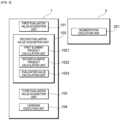
FIG. 1 is a diagram illustrating an overview of alearning apparatus 1 and animage segmentation apparatus 2 according to the embodiment of the present invention. -
FIG. 2 is a diagram illustrating an exemplary hardware configuration of thelearning apparatus 1 and theimage segmentation apparatus 2 according to the embodiment of the present invention. -
FIG. 3 is a diagram illustrating an exemplary functional configuration of thelearning apparatus 1 and theimage segmentation apparatus 2 according to the embodiment of the present invention. -
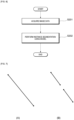
FIG. 4 is a flowchart illustrating a procedure for learning of a model by thelearning apparatus 1 according to the embodiment of the present invention. -
FIG. 5 is a diagram for describing a calculation method of a second evaluation value by thelearning apparatus 1 according to the embodiment of the present invention. -
FIG. 6 is a flowchart illustrating a procedure for segmentation by animage segmentation apparatus 2 according to the embodiment of the present invention. -
FIG. 7 is a diagram for describing segmentation of a linear-shaped object according to the embodiment of the present invention. - An embodiment according to an aspect of the present invention (hereinafter referred to also as "the present embodiment") is described below with reference to the drawings. However, the embodiment described below is merely an example of the invention in all respects. It goes without saying that various improvements and variations may be made without departing from the scope of the invention. In other words, in implementing the invention, specific configurations according to the embodiments may be adopted as appropriate. Although the data in this embodiment is described in natural language, it is more specifically specified in a pseudo-language, command, parameter, machine language, etc., which can be recognized by a computer.
- With reference to
FIG. 1 , an exemplary scene to which the present invention is applied is described.FIG. 1 is a diagram illustrating an overview of alearning apparatus 1 and animage segmentation apparatus 2 according to the present invention. Theimage segmentation apparatus 2 performs instance segmentation of a recognition target in an image using a learned model that has been trained by the learning apparatus in asegmentation execution unit 201. - The learned model that has been trained by the learning apparatus is suitable for segmentation of linear-shaped objects such as wires and electric cables. The
learning apparatus 1 acquires a first evaluation value calculated by a first loss function in a first evaluationvalue acquisition unit 101, acquires a second evaluation value calculated by a second loss function in a second evaluationvalue acquisition unit 102, and executes learning by backpropagation based on the first evaluation value and the second evaluation value in alearning execution unit 104. The first evaluation value is a value that evaluates the features that identify the recognition target in the image, and the second evaluation value is a value that evaluates the continuity of the recognition target identified in the image. - Next, with reference to
FIG. 2 , the following describes exemplary hardware configurations of thelearning apparatus 1 and theimage segmentation apparatus 2 according to the present embodiment. - As illustrated in
FIG. 2 , thelearning apparatus 1 is a computer that includes, as hardware resources, aprocessor 11, amain memory 12, an input/output interface 13, acommunication interface 14, and astorage apparatus 15. Thestorage apparatus 15 is a computer-readable recording medium such as a semiconductor memory (e.g., a volatile memory or a nonvolatile memory), or a disk medium (e.g., a magnetic recording medium or a magneto-optical recording medium). Thestorage apparatus 15 stores programs for causing theprocessor 11 to train a model for segmentation of the recognition target in the image, models to be trained, data sets of images to be used for training, and the like. The programs are read from thestorage apparatus 15 into themain memory 12, and interpreted and executed by theprocessor 11 to execute various functions. - The
image segmentation apparatus 2 is a computer that includes, as hardware resources, aprocessor 21, amain memory 22, an input/output interface 23, acommunication interface 24, and astorage apparatus 25. Thestorage apparatus 25 is a computer-readable recording medium such as a semiconductor memory (e.g., a volatile memory or a nonvolatile memory), or a disk medium (e.g., a magnetic recording medium or a magneto-optical recording medium). Thestorage apparatus 25 stores programs for causing theprocessor 21 to execute segmentation of the recognition target in the image using learned models, and learned models. The programs are read from thestorage apparatus 25 into themain memory 22 and interpreted and executed by theprocessor 21 to execute various functions. - Next, with reference to
FIG. 3 , exemplary functional configurations of thelearning apparatus 1 and theimage segmentation apparatus 2 according to the present embodiment are described.FIG. 3 is a block diagram illustrating a function module executed by theprocessor 11 of thelearning apparatus 1 and aprocessor 12 of theimage segmentation apparatus 2. As illustrated inFIG. 3 , the function modules executed by theprocessor 11 of thelearning apparatus 1 include the first evaluationvalue acquisition unit 101, the second evaluationvalue acquisition unit 102, a third evaluationvalue acquisition unit 103, and thelearning execution unit 104. The second evaluationvalue acquisition unit 102 includes a first elementproduct calculation unit 1021, a second elementproduct calculation unit 1022, and an evaluationvalue calculation unit 1023. - In addition, the function module executed by the
processor 21 of theimage segmentation apparatus 2 includes thesegmentation execution unit 201. - Next, a procedure for learning of a model by the
learning apparatus 1 according to the present embodiment is described with reference to the flowchart ofFIG. 4 . The data set of images to be used for machine learning includes linear-shaped objects such as wires and electric cables, and machine learning optimizes the model for correct segmentation of these linear-shaped objects as recognition targets. - First, in the first evaluation
value acquisition unit 101, the first evaluation value is calculated using a loss function (first loss function) for evaluating features for performing instance segmentation of training images (step S101). As a loss function, a discriminative loss may be used, for example. - Next, in the second evaluation
value acquisition unit 102, the second evaluation value is calculated using a loss function (second loss function) for evaluating the continuity of the recognition target identified in the training image (step S102). - The calculation of the second evaluation value is elaborated with reference to
FIG. 5 . First, the first elementproduct calculation unit 1021 calculates a first element product matrix (MT1) by multiplying elements of a correct matrix (GT1) corresponding to correct data (ground truth) indicating a correct position of the segmentation mask for the recognition target in the image (the region of the element indicated by "1" in the drawing), and a matrix (GT2) obtained by moving the position of the segmentation mask with respect to the GT1 (step (1)). - In the case where the recognition target is a linear-shaped object, the first element
product calculation unit 1021 may set the GT2 as a matrix obtained by moving in the longitudinal direction of the linear shape the correct position of the segmentation mask in the matrix GT1. - Here, the element product matrix MT1 (Mk, Δh, Δw) of the matrix GT1 (M (0, 0)) and the matrix GT2 (M (Δh, Δw)) obtained by moving the mask position by h in a vertical direction and by w in a lateral direction can be expressed by the following equation.

- Next, the second element
product calculation unit 1022 calculates a second element product matrix (MT2) by multiplying elements of a prediction matrix (GT3) indicating a predicted position of the segmentation mask of the recognition target (a region MS surrounded by the frame in the drawing), and a matrix obtained by moving the position of the segmentation mask with respect to the GT3 (GT4) (step (2)). - Note that, the movement of the position of the segmentation mask with respect to the matrix GT3 is performed in the same manner as the movement of the position of the segmentation mask with respect to the matrix GT1 in the step (1). The element product matrix MT2 of the matrix GT3 and the matrix GT4 obtained by moving the mask position by h in the vertical direction and by w in the lateral direction can be expressed by the following equations.


- Next, the evaluation
value calculation unit 1023 calculates the second evaluation value with the difference between the first element product matrix MT1 obtained in the step (1) and the second element product matrix MT2 obtained in the step (2) as the second loss function (step (3)). The second loss function (Lsmooth) can be expressed by the following equation. In the following equation, A[i, j] represents the element in the i-th row and j-th column of matrix A. In addition, N corresponds to the batch size during the training. Use of Lsmooth enables learning in consideration of continuity, but it also has the effect of blurring the contours of the recognition target. Therefore, in the next step, a loss function that emphasizes the contours is utilized.
- Next, the third evaluation
value acquisition unit 103 calculates a third evaluation value using a loss function (third loss function) for evaluating a feature that emphasizes the contour of the recognition target (step S103). The third evaluation value is obtained by calculating the loss function using M', which is obtained by weighting with the contour the correct data (GT) of the semantic mask of the recognition target. Specifically, a focal loss (Ledge) can be used as in the following equation, for example.
- M' is a semantic GT mask weighted by the contour, and is given by the following equation. F is an edge image that is calculated from the correct data, and normalized in the range of [0, 1]. Pixels equal to or greater than a threshold value thr on the edge image are emphasized by α (e.g., α=2) times weighting.

- Next, the learning
execution unit 104 optimizes the model by performing backpropagation based on the first evaluation value calculated at step S101, the second evaluation value calculated at step S102 and the third evaluation value calculated at step S103 (step S104). - Next, a procedure for segmentation by the
image segmentation apparatus 2 according to the present embodiment is described with reference to the flowchart ofFIG. 6 .
Theimage segmentation apparatus 2 acquires image data to be subjected to segmentation (step S201). - Next, the
segmentation execution unit 201 executes instance segmentation of the image data using the model optimized by the learning apparatus 1 (step S202). - As described above, according to the present embodiment, the learning model for performing image segmentation is optimized using an evaluation value calculated by a loss function that evaluates the continuity of the recognition target, in addition to an evaluation value calculated by a loss function such as a discriminative loss, which is commonly used. This enables generation of a learning model suitable for evaluating the features of the continuity of linear-shaped objects. In the segmentation of elongated objects such as electric cables, segmentation prediction may result in a broken shape as illustrated in
FIG. 7(B) even when the object actually has a shape that connects two points as illustrated inFIG. 7(A) . According to the present embodiment, the model is evaluated in consideration of the continuity, and thus a model that does not generate such broken masks can be obtained. - Further, since the learning model for image segmentation is optimized by adding the evaluation value calculated by the loss function weighted by the contour of the recognition target, it is possible to obtain a model that is adapted to the features of indefinite contours of linear-shaped objects. For example, according to this embodiment, it is possible to accurately generate masks even for a fence composed of intertwined wires and the like, for which it may be difficult to accurately recognize the contours of the overlapping parts.
- The model of segmentation according to the present embodiment may be applied to semantic segmentation as well, although it can perform instance segmentation with good accuracy.
- The above-described embodiments of the present invention are merely examples of the present invention in every respect. It goes without saying that various improvements and variations may be made without departing from the scope of the invention. Some or all of the above embodiments may also be described as, but not limited to, the following supplementary notes.
- A learning apparatus configured to train a model in an image segmentation apparatus configured to perform segmentation of a recognition target in an image using the model, the learning apparatus including:
- a first evaluation value acquisition unit configured to acquire a first evaluation value calculated by a first loss function configured to evaluate a feature configured to identify the recognition target in the image;
- a second evaluation value acquisition unit configured to acquire a second evaluation value calculated by a second loss function configured to evaluate a continuity of the recognition target identified in the image; and
- a learning execution unit configured to perform learning to optimize the model by performing backpropagation based on the first evaluation value and the second evaluation value.
- The learning apparatus according to
Supplementary Note 1, further including: a third evaluation value acquisition unit configured to acquire a third evaluation value calculated by a third loss function configured to evaluate a feature that emphasizes a contour of the recognition target, in which
the learning execution unit performs learning to optimize the model by performing backpropagation based on the first evaluation value, the second evaluation value, and the third evaluation value. - The learning apparatus according to
Supplementary Note 1, in which the second evaluation value acquisition unit includes: - a first element product calculation unit configured to calculate a first element product matrix obtained by multiplying elements of correct matrix data indicating a correct position of a segmentation mask of the recognition target, and matrix data obtained by moving the correct position of the segmentation mask;
- a second element product calculation unit configured to calculate a second element product matrix obtained by multiplying elements of prediction matrix data indicating a predicted position of the segmentation mask of the recognition target, and matrix data obtained by moving the predicted position of the segmentation mask as with the correct segmentation mask; and
- an evaluation value calculation unit configured to calculate the second evaluation value with a difference between the first element product matrix and the second element product matrix as the second loss function.
- The learning apparatus according to
Supplementary Note 3, in which the recognition target is an object having a linear shape, and
the first element product calculation unit calculates a first element product matrix obtained by multiplying elements of matrix data obtained by moving the correct position of the segmentation mask in a longitudinal direction of the linear shape. - An image segmentation apparatus configured to perform segmentation of a recognition target in an image using a model, in which
- the model is a model trained by the learning apparatus according to
Supplementary Note 1, and - the image segmentation apparatus comprises a segmentation execution unit configured to perform the segmentation of the recognition target in the image using the model learned.
- A learning method of training a model in an image segmentation apparatus configured to perform segmentation of a recognition target in an image using the model, the learning method including the steps of:
- acquiring a first evaluation value calculated by a first loss function configured to evaluate a feature configured to identify the recognition target in the image; acquiring a second evaluation value calculated by a second loss function configured to evaluate a continuity of the recognition target identified in the image; and
- performing learning to optimize the model by performing backpropagation based on the first evaluation value and the second evaluation value.
- A program for a computer configured to execute training of a model in an image segmentation apparatus configured to perform segmentation of a recognition target in an image using the model, the program being configured to cause the computer to function as:
- a first evaluation value acquisition unit configured to acquire a first evaluation value calculated by a first loss function configured to evaluate a feature configured to identify the recognition target in the image;
- a second evaluation value acquisition unit configured to acquire a second evaluation value calculated by a second loss function configured to evaluate a continuity of the recognition target identified in the image; and
- a learning execution unit configured to perform learning to optimize the model by performing backpropagation based on the first evaluation value and the second evaluation value.
- 1...Learning Apparatus, 2... Image Segmentation Apparatus, 11, 21... Processor, 12, 22... Main Memory, 13, 23... Input/Output Interface, 14, 24... Communication Interface, 15, 25... Storage Apparatus, 101... First Evaluation Value Acquisition Unit, 102... Second Evaluation Value Acquisition Unit, 103...Third Evaluation Value Acquisition Unit, 104... Learning Execution Unit, 201... Segmentation Execution Unit, 1021... First Element Product Calculation Unit, 1022... Second Element Product Calculation Unit, 1023... Evaluation Value Calculation Unit
Claims (7)
- A learning apparatus configured to train a model in an image segmentation apparatus configured to perform segmentation of a recognition target in an image using the model, the learning apparatus including:a first evaluation value acquisition unit configured to acquire a first evaluation value calculated by a first loss function configured to evaluate a feature configured to identify the recognition target in the image;a second evaluation value acquisition unit configured to acquire a second evaluation value calculated by a second loss function configured to evaluate a continuity of the recognition target identified in the image; anda learning execution unit configured to perform learning to optimize the model by performing backpropagation based on the first evaluation value and the second evaluation value.
- The learning apparatus according to claim 1, further comprising:a third evaluation value acquisition unit configured to acquire a third evaluation value calculated by a third loss function configured to evaluate a feature that emphasizes a contour of the recognition target, whereinthe learning execution unit performs learning to optimize the model by performing backpropagation based on the first evaluation value, the second evaluation value, and the third evaluation value.
- The learning apparatus according to claim 1, wherein the second evaluation value acquisition unit includes:a first element product calculation unit configured to calculate a first element product matrix obtained by multiplying elements of correct matrix data indicating a correct position of a segmentation mask of the recognition target, and matrix data obtained by moving the correct position of the segmentation mask;a second element product calculation unit configured to calculate a second element product matrix obtained by multiplying elements of prediction matrix data indicating a predicted position of the segmentation mask of the recognition target, and matrix data obtained by moving the predicted position of the segmentation mask as with the correct segmentation mask; andan evaluation value calculation unit configured to calculate the second evaluation value with a difference between the first element product matrix and the second element product matrix as the second loss function.
- The learning apparatus according to claim 3, whereinthe recognition target is an object having a linear shape, andthe first element product calculation unit calculates a first element product matrix obtained by multiplying elements of matrix data obtained by moving the correct position of the segmentation mask in a longitudinal direction of the linear shape.
- An image segmentation apparatus configured to perform segmentation of a recognition target in an image using a model, whereinthe model is a model trained by the learning apparatus according to claim 1, andthe image segmentation apparatus comprises a segmentation execution unit configured to perform the segmentation of the recognition target in the image using the model learned.
- A learning method of training a model in an image segmentation apparatus configured to perform segmentation of a recognition target in an image using the model, the learning method including the steps of:acquiring a first evaluation value calculated by a first loss function configured to evaluate a feature configured to identify the recognition target in the image;acquiring a second evaluation value calculated by a second loss function configured to evaluate a continuity of the recognition target identified in the image; andperforming learning to optimize the model by performing backpropagation based on the first evaluation value and the second evaluation value.
- A program for a computer configured to execute training of a model in an image segmentation apparatus configured to perform segmentation of a recognition target in an image using the model, the program being configured to cause the computer to function as:a first evaluation value acquisition unit configured to acquire a first evaluation value calculated by a first loss function configured to evaluate a feature configured to identify the recognition target in the image;a second evaluation value acquisition unit configured to acquire a second evaluation value calculated by a second loss function configured to evaluate a continuity of the recognition target identified in the image; anda learning execution unit configured to perform learning to optimize the model by performing backpropagation based on the first evaluation value and the second evaluation value.
Applications Claiming Priority (2)
| Application Number | Priority Date | Filing Date | Title |
|---|---|---|---|
| JP2022139818A JP2024035390A (en) | 2022-09-02 | 2022-09-02 | Learning device, image segmentation device, learning method, and program |
| PCT/JP2023/030132 WO2024048363A1 (en) | 2022-09-02 | 2023-08-22 | Training device, image segmentation device, training method, and program |
Publications (2)
| Publication Number | Publication Date |
|---|---|
| EP4583044A1 true EP4583044A1 (en) | 2025-07-09 |
| EP4583044A4 EP4583044A4 (en) | 2026-08-12 |
Family
ID=90099599
Family Applications (1)
| Application Number | Title | Priority Date | Filing Date |
|---|---|---|---|
| EP23860126.4A Pending EP4583044A4 (en) | 2022-09-02 | 2023-08-22 | TRAINING DEVICE, IMAGE SEGMENTATION DEVICE, TRAINING PROCEDURES AND PROGRAM |
Country Status (4)
| Country | Link |
|---|---|
| EP (1) | EP4583044A4 (en) |
| JP (1) | JP2024035390A (en) |
| CN (1) | CN119768828A (en) |
| WO (1) | WO2024048363A1 (en) |
Family Cites Families (2)
| Publication number | Priority date | Publication date | Assignee | Title |
|---|---|---|---|---|
| JP7623107B2 (en) | 2020-05-21 | 2025-01-28 | 清水建設株式会社 | Learning device, crack detection device, learning method, and crack detection method |
| CN112926556B (en) * | 2021-04-28 | 2023-05-02 | 上海大学 | Semantic segmentation-based aerial photography transmission line broken strand identification method and system |
-
2022
- 2022-09-02 JP JP2022139818A patent/JP2024035390A/en active Pending
-
2023
- 2023-08-22 EP EP23860126.4A patent/EP4583044A4/en active Pending
- 2023-08-22 WO PCT/JP2023/030132 patent/WO2024048363A1/en not_active Ceased
- 2023-08-22 CN CN202380060880.9A patent/CN119768828A/en active Pending
Also Published As
| Publication number | Publication date |
|---|---|
| EP4583044A4 (en) | 2026-08-12 |
| WO2024048363A1 (en) | 2024-03-07 |
| CN119768828A (en) | 2025-04-04 |
| JP2024035390A (en) | 2024-03-14 |
Similar Documents
| Publication | Publication Date | Title |
|---|---|---|
| US12400135B2 (en) | System, method, and program for predicting information | |
| US20230186056A1 (en) | Grabbing detection method based on rp-resnet | |
| Shi et al. | Learning by planning: Language-guided global image editing | |
| US7308030B2 (en) | Object activity modeling method | |
| CN111753986B (en) | Dynamic testing method and device for deep learning models | |
| CN112733875A (en) | Apparatus and method for generating synthetic data in a generating network | |
| JP6955233B2 (en) | Predictive model creation device, predictive model creation method, and predictive model creation program | |
| CN118333979B (en) | Belt tear detection method and system based on discrete state selectable space model | |
| US20260134268A1 (en) | Verification of perception systems | |
| US20230325658A1 (en) | Conditional output generation through data density gradient estimation | |
| CN121095960B (en) | Image text recognition method, system, storage medium and device based on mask diffusion model | |
| CN118247799B (en) | A method for phrase-level localization using text-to-image diffusion model | |
| CN114207676A (en) | Handwriting recognition method and device, electronic equipment and storage medium | |
| KR20220073444A (en) | Method and apparatus for tracking object and terminal for performing the method | |
| WO2022190301A1 (en) | Learning device, learning method, and computer-readable medium | |
| CN118968602A (en) | Facial emotion recognition method, device and storage medium | |
| CN121074367A (en) | Unmanned vehicle inspection small target detection method based on efficient attention mechanism | |
| CN116450825B (en) | Text classification methods, devices, terminal equipment, and storage media | |
| CN113159049A (en) | Training method and device of weak supervision semantic segmentation model, storage medium and terminal | |
| CN111177381A (en) | Slot filling and intention detection joint modeling method based on context vector feedback | |
| CN115546571A (en) | A scene-oriented text subtitle generation method based on the main target | |
| WO2025265056A1 (en) | Weight averaged rewarded policy training for machine learning models | |
| JP6472005B2 (en) | Basic frequency pattern prediction apparatus, method, and program | |
| JP2025018206A (en) | Training device, training method, machine learning model, action determination device, action determination method, and program | |
| CN116229228B (en) | Small target detection method based on center-surround mechanism |
Legal Events
| Date | Code | Title | Description |
|---|---|---|---|
| STAA | Information on the status of an ep patent application or granted ep patent |
Free format text: STATUS: THE INTERNATIONAL PUBLICATION HAS BEEN MADE |
|
| PUAI | Public reference made under article 153(3) epc to a published international application that has entered the european phase |
Free format text: ORIGINAL CODE: 0009012 |
|
| STAA | Information on the status of an ep patent application or granted ep patent |
Free format text: STATUS: REQUEST FOR EXAMINATION WAS MADE |
|
| 17P | Request for examination filed |
Effective date: 20250224 |
|
| AK | Designated contracting states |
Kind code of ref document: A1 Designated state(s): AL AT BE BG CH CY CZ DE DK EE ES FI FR GB GR HR HU IE IS IT LI LT LU LV MC ME MK MT NL NO PL PT RO RS SE SI SK SM TR |
|
| DAV | Request for validation of the european patent (deleted) | ||
| DAX | Request for extension of the european patent (deleted) | ||
| A4 | Supplementary search report drawn up and despatched |
Effective date: 20260707 |