EP4582856A2 - Glasses provided with a light source, system comprising such glasses and a glasses case for such glasses - Google Patents
Glasses provided with a light source, system comprising such glasses and a glasses case for such glasses Download PDFInfo
- Publication number
- EP4582856A2 EP4582856A2 EP25173104.8A EP25173104A EP4582856A2 EP 4582856 A2 EP4582856 A2 EP 4582856A2 EP 25173104 A EP25173104 A EP 25173104A EP 4582856 A2 EP4582856 A2 EP 4582856A2
- Authority
- EP
- European Patent Office
- Prior art keywords
- glasses
- light
- frame
- light source
- eyes
- Prior art date
- Legal status (The legal status is an assumption and is not a legal conclusion. Google has not performed a legal analysis and makes no representation as to the accuracy of the status listed.)
- Pending
Links
Images





Classifications
-
- G—PHYSICS
- G02—OPTICS
- G02C—SPECTACLES; SUNGLASSES OR GOGGLES INSOFAR AS THEY HAVE THE SAME FEATURES AS SPECTACLES; CONTACT LENSES
- G02C11/00—Non-optical adjuncts; Attachment thereof
- G02C11/04—Illuminating means
-
- A—HUMAN NECESSITIES
- A61—MEDICAL OR VETERINARY SCIENCE; HYGIENE
- A61N—ELECTROTHERAPY; MAGNETOTHERAPY; RADIATION THERAPY; ULTRASOUND THERAPY
- A61N5/00—Radiation therapy
- A61N5/06—Radiation therapy using light
- A61N5/0613—Apparatus adapted for a specific treatment
- A61N5/0618—Psychological treatment
-
- G—PHYSICS
- G02—OPTICS
- G02C—SPECTACLES; SUNGLASSES OR GOGGLES INSOFAR AS THEY HAVE THE SAME FEATURES AS SPECTACLES; CONTACT LENSES
- G02C7/00—Optical parts
- G02C7/10—Filters, e.g. for facilitating adaptation of the eyes to the dark; Sunglasses
-
- A—HUMAN NECESSITIES
- A61—MEDICAL OR VETERINARY SCIENCE; HYGIENE
- A61N—ELECTROTHERAPY; MAGNETOTHERAPY; RADIATION THERAPY; ULTRASOUND THERAPY
- A61N5/00—Radiation therapy
- A61N5/06—Radiation therapy using light
- A61N2005/0626—Monitoring, verifying, controlling systems and methods
-
- A—HUMAN NECESSITIES
- A61—MEDICAL OR VETERINARY SCIENCE; HYGIENE
- A61N—ELECTROTHERAPY; MAGNETOTHERAPY; RADIATION THERAPY; ULTRASOUND THERAPY
- A61N5/00—Radiation therapy
- A61N5/06—Radiation therapy using light
- A61N2005/0632—Constructional aspects of the apparatus
- A61N2005/0633—Arrangements for lifting or hinging the frame which supports the light sources
-
- A—HUMAN NECESSITIES
- A61—MEDICAL OR VETERINARY SCIENCE; HYGIENE
- A61N—ELECTROTHERAPY; MAGNETOTHERAPY; RADIATION THERAPY; ULTRASOUND THERAPY
- A61N5/00—Radiation therapy
- A61N5/06—Radiation therapy using light
- A61N2005/0635—Radiation therapy using light characterised by the body area to be irradiated
- A61N2005/0643—Applicators, probes irradiating specific body areas in close proximity
- A61N2005/0645—Applicators worn by the patient
- A61N2005/0647—Applicators worn by the patient the applicator adapted to be worn on the head
- A61N2005/0648—Applicators worn by the patient the applicator adapted to be worn on the head the light being directed to the eyes
-
- A—HUMAN NECESSITIES
- A61—MEDICAL OR VETERINARY SCIENCE; HYGIENE
- A61N—ELECTROTHERAPY; MAGNETOTHERAPY; RADIATION THERAPY; ULTRASOUND THERAPY
- A61N5/00—Radiation therapy
- A61N5/06—Radiation therapy using light
- A61N2005/065—Light sources therefor
- A61N2005/0651—Diodes
-
- A—HUMAN NECESSITIES
- A61—MEDICAL OR VETERINARY SCIENCE; HYGIENE
- A61N—ELECTROTHERAPY; MAGNETOTHERAPY; RADIATION THERAPY; ULTRASOUND THERAPY
- A61N5/00—Radiation therapy
- A61N5/06—Radiation therapy using light
- A61N2005/0658—Radiation therapy using light characterised by the wavelength of light used
- A61N2005/0662—Visible light
- A61N2005/0663—Coloured light
-
- A—HUMAN NECESSITIES
- A61—MEDICAL OR VETERINARY SCIENCE; HYGIENE
- A61N—ELECTROTHERAPY; MAGNETOTHERAPY; RADIATION THERAPY; ULTRASOUND THERAPY
- A61N5/00—Radiation therapy
- A61N5/06—Radiation therapy using light
- A61N2005/0664—Details
- A61N2005/0665—Reflectors
-
- G—PHYSICS
- G02—OPTICS
- G02C—SPECTACLES; SUNGLASSES OR GOGGLES INSOFAR AS THEY HAVE THE SAME FEATURES AS SPECTACLES; CONTACT LENSES
- G02C11/00—Non-optical adjuncts; Attachment thereof
- G02C11/10—Electronic devices other than hearing aids
-
- H—ELECTRICITY
- H02—GENERATION; CONVERSION OR DISTRIBUTION OF ELECTRIC POWER
- H02J—ELECTRIC POWER NETWORKS; CIRCUIT ARRANGEMENTS OR SYSTEMS FOR SUPPLYING OR DISTRIBUTING ELECTRIC POWER; SYSTEMS FOR STORING ELECTRIC ENERGY
- H02J50/00—Circuit arrangements or systems for wireless supply or distribution of electric power
- H02J50/10—Circuit arrangements or systems for wireless supply or distribution of electric power using inductive coupling
Definitions
- the invention relates to a glasses provided with a light source for illuminating at least a portion of the eye of a subject wearing the glasses and relates to a system comprising such a glasses.
- the invention also relates to a glasses case.
- WO2014/162271 shows and describes a light therapy device provided with a frame and a number of light sources.
- the frame comprises two earpieces, a light emitting panel, a light guiding plate and a nose attachment means for positioning the device onto the nose of the user.
- Figure 6 of WO2014/162271 shows an embodiment of the light guiding plate of the light therapy device.
- This light guiding plate is roughened locally or coated with white paint in order to reflect the light from the light emitting panel to the eyes of the user.
- the light guiding plate is not transparent, which means that the user of the light therapy device is not able to look through the glass unimpeded due to the reflected light on the coating and/or on the roughness.
- the spectacle glasses are transparent continuously, which means that during the execution of a light treatment with the glasses the wearer can look through the spectacle glasses unhindered and the wearer is capable to perform daily routine tasks.
- the artificial light emitted by a light source in the glasses it is possible to influence the circadian rhythm of a wearer of the glasses such that for example discomfort of a jetlag and working in shifts/night shifts can be decreased and/or even be prevented.
- the layout of the glasses attractive from the viewpoint of design as less components as possible are assembled in the glasses.
- the light treatment can be started and terminated automatically at a predetermined time-point without the necessity for the wearer of the glasses to perform an act.
- the light originating from the light source is delivered to the eyes directly or indirectly from above, which means that the light is delivered above the spectacle glasses to the eye of the subject wearing the glasses.
- a wearer of the glasses will experience no hindrance from the artificial light delivered from above to the eyes during a light treatment.
- the invention also relates to a system comprising the glasses described in this document with a communication unit and an external device provided with a processor, and in addition a computer program which, when in use, effectuates the processor to control the at least one light source in the glasses according to a predetermined program, wherein preferably the desired program can be selected by the wearer of the glasses.
- the external device is preferably a portable apparatus such as a smartphone / tablet or the like, wherein the computer program can be an app that is installable on the telephone which app can communicate wirelessly with the glasses via Bluetooth technology, for example to periodically start or to end a light treatment according to a predetermined or selected program.
- the glasses is designed so that the support frame of the frame only partially encloses the perimeter of the spectacle glasses.
- portions of the surface of the support frame side facing the wearer's eye are designed such that the light to be reflected is diffused.
- portions of the support frame facing the wearer's eye can be curved such that the light to be reflected is directed to a position in the eye.
- the side of the support frame facing the wearer's eye may be provided with whitening agents.
- the LEDs for emitting the blue light and UV light may be provided with filters for filtering the eye-damaging part of the light spectrum of the light emitted by the light source, such as, for example, UV radiation having a wavelength between 10 and 400 nanometer. These filters can also be provided elsewhere in the glasses to prevent a malicious part of the light emitted with the light source from reaching the eye.
- the frame 5 can be provided with two hinging frame legs.
- the glasses 1 In the position of use of the glasses 1 with unfolded hinging frame legs, the glasses 1 can be worn by a person, such that each spectacle glass 3a, 3b is positioned in front of one of the two eyes of a person aided by frame 5 for positioning on the ears and nose of the person.
- the glasses 1 By hinging the frame legs towards each other in the direction of the spectacle glasses 3a, 3b, the glasses 1 is brought from the unfolded state to a compact folded state, such that it is stored, for example, in a glasses case (not shown).
- the glasses case and the glasses can be provided with Qi technology such that the battery of the glasses is wirelessly chargeable. Furthermore, the glasses case itself can be provided with a battery such that the glasses case without cables can wirelessly charge the battery of the glasses by using the battery of the glasses case.
- An alternative glasses can be provided with two transparent spectacle glasses enclosed in a frame, wherein each spectacle glass is positioned in front of an eye of a person by a frame for positioning on the ears and the nose of said person, the glasses further provided with at least one light source integrated in the frame, wherein above the spectacle glass the frame is provided with at least a light guiding element for indirect delivery of light substantially from above the spectacle glass to the eyes, the light originating from at least one light source.
- the alternative glasses comprises a light guiding element with notches as herein described and as shown in the Figures.
- the alternative glasses may comprise a frame with a nose frame part, which nose frame part at, at least, a nose frame side portion facing the eye, reflects to the eye at least partially the direct or indirect incident light thereon originating from the light source.
Landscapes
- Health & Medical Sciences (AREA)
- Physics & Mathematics (AREA)
- Ophthalmology & Optometry (AREA)
- Biomedical Technology (AREA)
- Engineering & Computer Science (AREA)
- Optics & Photonics (AREA)
- General Physics & Mathematics (AREA)
- General Health & Medical Sciences (AREA)
- Nuclear Medicine, Radiotherapy & Molecular Imaging (AREA)
- Public Health (AREA)
- Social Psychology (AREA)
- Radiology & Medical Imaging (AREA)
- Life Sciences & Earth Sciences (AREA)
- Animal Behavior & Ethology (AREA)
- Psychology (AREA)
- Pathology (AREA)
- Veterinary Medicine (AREA)
- Psychiatry (AREA)
- Hospice & Palliative Care (AREA)
- Developmental Disabilities (AREA)
- Child & Adolescent Psychology (AREA)
- Eyeglasses (AREA)
Abstract
Description
- The invention relates to a glasses provided with a light source for illuminating at least a portion of the eye of a subject wearing the glasses and relates to a system comprising such a glasses. The invention also relates to a glasses case.
-
WO2014/162271 shows and describes a light therapy device provided with a frame and a number of light sources. The frame comprises two earpieces, a light emitting panel, a light guiding plate and a nose attachment means for positioning the device onto the nose of the user.Figure 6 ofWO2014/162271 shows an embodiment of the light guiding plate of the light therapy device. This light guiding plate is roughened locally or coated with white paint in order to reflect the light from the light emitting panel to the eyes of the user. During a light treatment the light guiding plate is not transparent, which means that the user of the light therapy device is not able to look through the glass unimpeded due to the reflected light on the coating and/or on the roughness. - It is an aim of the current invention to provide a designer glasses for exposing the eyes to artificial light in a beneficial manner related to energy-consumption and which glasses can be worn continuously without hampering the sight of the wearer during a light treatment.
- This aim is achieved with a glasses comprising the aspects as defined in
claim 1. - With such a glasses an effective light treatment can be executed, wherein the spectacle glasses are transparent continuously, which means that during the execution of a light treatment with the glasses the wearer can look through the spectacle glasses unhindered and the wearer is capable to perform daily routine tasks. With the artificial light emitted by a light source in the glasses it is possible to influence the circadian rhythm of a wearer of the glasses such that for example discomfort of a jetlag and working in shifts/night shifts can be decreased and/or even be prevented. In order for making the layout of the glasses attractive from the viewpoint of design as less components as possible are assembled in the glasses. Therefore, for example the number of light sources is preferably kept to a minimum, for example at maximum four light sources positioned at a distance from each other which are preferably configured as energy-efficient light-emitting diodes. A minimum number of components in the glasses not only results in a saving of space, though also for a reduction of the energy consumption of the glasses. Herewith the volume and mass of the battery can be kept minimally, which contributes in an enhanced manner to a more compact glasses for the execution of artificial-light treatment. By providing a compact glasses the glasses appears as a regular glasses without light source with regard to design. Herewith the glasses can be worn continuously in the public without standing out that a light treatment can be executed with the glasses. Furthermore the light treatment can be started and terminated automatically at a predetermined time-point without the necessity for the wearer of the glasses to perform an act. In order to guarantee the effective performance of the artificial light in the glasses without being at the expense of the vision through the transparent spectacle glasses or an increased energy consumption, the light originating from the light source is delivered to the eyes directly or indirectly from above, which means that the light is delivered above the spectacle glasses to the eye of the subject wearing the glasses. A wearer of the glasses will experience no hindrance from the artificial light delivered from above to the eyes during a light treatment. The light source will for the purpose be integrated in the portions of the frame positioned above the eyes or in the frame legs, wherein in case of a light source in a frame leg the artificial light is guided to the portions of the frame positioned above the eyes by light guides and subsequently delivered to the eyes in an indirect manner. The delivery of light to the eyes in an indirect manner provides more comfort to the user of the glasses than when the light is guided to the eyes directly via the light source. In order to optimize in the glasses in an energy-beneficial manner the amount of artificial light to the eyes, the lower part of the frame at least comprising the nose frame part is configured such that a nose frame side portion which is at least facing the eye of the wearer reflects at least in part the directly or indirectly incident light originating from the light source. This reflection of the nose frame side portion which is facing the eye of the wearer is at least 50%, preferably more than 85%. This way, artificial light that is lost otherwise during a light treatment is yet reflected to the eyes of the user.
- An additional optional feature for the frame of the glasses is that at least portions of the surface of the nose frame side portion which is facing the eye of the wearer reflect the light diffusely. This way the comfort for a user can be increased during a light treatment. Another optional feature is to configure at least portions of the nose frame side portion which is facing the eye of the wearer curved to direct the reflected light specifically to the eye or to a desired location in the eye in order to enhance the effect of the artificial light such that the duration of the light treatment can be shortened, allowing a decrease in the energy consumption of the glasses.
- With such a configured glasses a maximum result is achieved in an energy beneficial way with the artificial light emitted by a light source. Lowering the number of components and the total energy consumption of the glasses when in use results in an increased freedom of design for the glasses or sunglasses for executing a treatment with artificial light, such that with regard to the appearance it is possible to establish an attractive designer glasses for the execution of a light treatment.
- For example, by using the glasses with artificial light treatment during winter day with relatively short periods of day light, it is possible for the wearer of the glasses' body to artificially lengthen the period of day light during winter, such that the wearer's condition can be improved with the glasses or the energy level of the wearer can be enlarged. In addition, the glasses can be used to optimize the moment at which a performance has to be delivered. For an athlete it is for example not unthinkable that the performance to be delivered takes place for commercial reasons at a time of the day that is less beneficial for the body of the athlete such as for example late in the evening. By using the glasses with the light source therein blue light can be emitted to the eyes of the wearer whereby the production of melatonin is inhibited and the production of cortisol is stimulated at a moment at which presumably the reverse natural effect would occur without glasses. This way, the day-night effects on a human being that regularly hinder a top performance are minimized.
- The spectacle glasses can be made of glass or plastic. The spectacle glasses can be connected with each other as one piece.
- The use of whitening agents, also referred to as optical brighteners, can enhance the percentage of reflectance of visible light even to above 100 percent. The whitening agents converse invisible ultraviolet light that is harmful to the eye to visible blue light, such that the perceived reflection is higher than the initial amount of light originating from the light source. The whitening agent establishes that radiation is added to the reflection of the visible light.
- For simulating a dark environment the glasses can be provided with filter lenses that filter the blue spectrum of the (day) light and the UV light. Transparent red spectacle glasses are for example suitable for simulating a dark environment. This way, the biological production of the hormone melatonin is not suppressed, such that the body receives an endogenous signal to reduce the day time activities and to prepare for the night.
- For delivery of light originating from a light source in an indirect way to the eyes a light guiding element can be used. By applying a light guiding element in the glasses the glasses becomes more user friendly during a light treatment because this way direct emission of light originating from the light source is minimized. The light guiding element can be integrated in the frame. The light guiding element comprises notches in an upper surface thereof for reflecting the light originating from the light source when in use to a desired position. When the glasses are worn the light guiding element is located above the eyes. The notches preferably extend transversely to a longitudinal direction of the elongated light guiding element, wherein the notches in the direction of the nose frame part deepen uniformly for reflecting the light originating from the light source to the desired position in the eye. The notches have a triangular cross-section wherein the distance between the centers of the notches is almost constant. This ensures an even distribution of light.
- The frame of the glasses can be provided with a support frame for supporting the spectacle glasses. The support frame comprises a support-frame upper portion which is positioned above the eyes when the glasses are worn correctly, and which extends between the frame legs of the glasses. The center of the support-frame upper portion can be connected to the nose frame part. The support-frame upper portion of the glasses can be provided with the above mentioned light guiding element in order to indirectly guide the artificial light from above from the at least one light source to the eyes. Moreover, indirect emission allows for more freedom in design since the position of the light source is optimizable. The light source is for example positioned further away from the eye such that the eye experiences no or just minimal hinder from the warmth produced by the light source.
- The support frame of the frame encloses at least half of the perimeter of the spectacle glasses wherein at least the portion of the support frame at eye level when the glasses are worn and/or the portion of the support frame that is located lower than the eye when the glasses are worn reflects the directly or indirectly emitted light from the light source at the side of the support frame that is facing the eye of the wearer. The reflection is at least 50%, preferably more than 85%.
- The invention also relates to a system comprising the glasses described in this document with a communication unit and an external device provided with a processor, and in addition a computer program which, when in use, effectuates the processor to control the at least one light source in the glasses according to a predetermined program, wherein preferably the desired program can be selected by the wearer of the glasses. The external device is preferably a portable apparatus such as a smartphone / tablet or the like, wherein the computer program can be an app that is installable on the telephone which app can communicate wirelessly with the glasses via Bluetooth technology, for example to periodically start or to end a light treatment according to a predetermined or selected program.
- The invention also relates to a glasses case for a glasses described in this application, wherein the glasses case and the glasses are provided with for example Qi technology such that the battery of the glasses placed in the glasses case is wirelessly chargeable by magnetic induction. Preferably, the glasses case comprises its own battery such that the portable glasses case can be used for charging the glasses without cables.
- Other additional aspects of the glasses are described in the dependent claims.
- The glasses is now explained by an embodiment as shown in the incorporated figures, wherein:
-
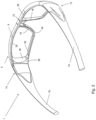
Figure 1 shows a front perspective view of a glasses; -
Figure 2 shows a rear perspective view of a glasses; -
Figure 3 shows an exploded rear view of the glasses shown inFigure 1 and2 ; -
Figure 4 shows an exploded front view of the glasses shown inFigure 1 and2 ; -
Figure 5 shows an exploded side view of the glasses shown inFigure 1 and2 ; -
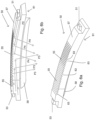
Figures 6a and 6b show a light guiding element for another embodiment of the glasses; -
Figure 7 shows a perspective rear view of a glasses; and -
Figure 8 shows an embodiment of a nose frame part and light guiding elements being a single part. - In the figures, corresponding parts have the same reference number.
- The
figures 1-5 show aglasses 1 comprising twotransparent spectacle glasses frame 5. Thespectacle glasses spectacle glasses frame 5, such that the user can exchange the filter lenses for filtering blue light and/or UV light for filter lenses for filtering red light, or, when desired, for conventional spectacle glasses. - The
frame 5 further comprises twoframe legs figures 1 and2 theglasses 1 is shown in use position in which theglasses 1 can be worn by an individual. Eachspectacle glass frame 5 positioned at the ears and the nose of said individual. The glasses shown in the figures can be provided as sun glasses withspectacle glasses - The
frame 5 further comprises asupport frame 9 for supportingspectacle glasses support frame 9 is connected at a first extremity 11 (left extremity inFigure 1 ) with a firstframe side part 12 and connected at a second extremity 13 (right extremity inFigure 1 ) with a secondframe side part 14. Theframe side parts legs support frame 9. - The
glasses 1 is provided with two light sources (not shown), wherein the first light source in the firstframe side part 12 is incorporated into an extremity thereof located near thespectacle glass 3a, whereas the second light source in the secondframe side part 14 is incorporated into an extremity thereof located near thespectacle glass 3b. - The light sources are light-emitting diodes (LEDs), which LEDs can emit red and/or blue light. The blue light has a wavelength of 480-500 nanometer. The red light has a wavelength of 660-700 nanometer. It is possible to provide the
glasses 1 with blue-light emitting LEDs, only. With the LEDs a light treatment can be performed with theglasses 1, for inhibiting or stimulating the wearer's production of melatonin / cortisol. - The
support frame 9 comprises anose frame part 15. Thenose frame part 15 is that portion of theframe 5 which is located around the nose when theglasses 1 is worn by a user. Thenose frame part 15 comprises a nose contact surface, a nose framefront side portion 19 directed away from the wearer, aninner surface 16 for supporting a part of the spectacle glass as well as a noseframe side portion 17 facing the eye when theglasses 1 is worn. In the presentedglasses 1 the nose contact surface and the nose framefront side portion 19 seamlessly form one piece. Thesupport frame 9 comprises also a support frameupper part 23 which is positioned above the eyes of the wearer when theglasses 1 is worn correctly, and which extents in betweenframe legs glasses 1. At its center, the support frameupper part 23 is connected with thenose frame part 15. - As shown in
Figures 3-5 , the support frameupper part 23 of theglasses 1 is provided with two plate-shaped elongatedlight guiding elements light guiding elements extremity element nose frame part 15, is in connection with the LEDs in theframe side parts light guiding elements upper part 23. It is possible that in theglasses 1 no artificial light is emitted directly from a LED to the eyes of a user, such that the light treatment executed with theglasses 1 is only using indirect light. This way, for the wearer the comfort of theglasses 1 during a light treatment is enhanced. -
Figure 7 shows an embodiment of the glasses of the invention, wherein thenose frame part 15 and thelight guiding elements unit 28 with a nose frame part and two light guiding elements.Figure 8 shows such aunit 28 with a nose frame part and two light guiding elements, according to the invention, wherein the separate parts building upunit 28, namely thenose frame part 15 and thelight guiding elements unit 28 with a nose frame part and two light guiding elements thenose frame part 15 connects thelight guiding elements unit 28 with a nose frame part and two light guiding elements in a glasses of the invention alternative to anose frame part 15 andlight guiding elements - The sides of the
support frame 9 that are facing the eyes of the wearer and that are positioned below thelight guiding elements frame side portion 17, reflect the artificial light that is coming indirectly from thelight guiding elements support frame 9 located below thelight guiding elements frame side portion 17, such that the amount of light emitted to the eyes is increased. These sides ofsupport frame 9 comprise support frame sides 35, 36 facing the eyes, which extents in theglasses 1 between the noseframe side portion 17 and the support frameupper part 23. The reflecting sides of thesupport frame 9 can comprise inner surfaces that surround thespectacle glass inner surface 16 of the nose frame part and the otherinner surfaces support frame 9 located below thelight guiding elements - In addition, the
glasses 1 is provided with asoft lining 40 for enhancing the comfort of the wearer of theglasses 1. Then, it is possible to provide at least the sides of the lining that are facing the eyes as reflecting lining in order to reflect the incident indirect light from thelight guiding elements - The light reflecting parts of the
glasses 1, such as the sides of thesupport frame 9 and/or the lining, reflect the incident light for at least 50%, preferably for more than 85%. - With the glasses of the invention it is possible to project 4 lux at minimum and 6 lux at maximum at the level of the retina, and 36 lux at minimum and 50 lux at maximum at the level of the eye. Said light intensity is essential for executing an effective artificial light treatment.
- The
Figures 6A, 6B show another embodiment of thelight guiding element 50. Thislight guiding element 50 can be assembled in the support frameupper part 23 of theglasses 1 shown inFigures 1-5 at the same position as thelight guiding element - The elongated
light guiding element 50 is provided with afirst LED 51, as well as with asecond LED 53. For executing a light treatment, with thelight guiding element 50 no further light sources are required in the glasses (not shown). The elongatedlight guiding element 50 is provided with anupper side 57 partly provided withnotches 55, as well as aportion 59 protruding at thebottom side 61. - The portions of
upper side 57 located nearby theLEDs notches 55. Thenotches 55 are provided between the flat portions of the upper side. The portion withnotches 55 is larger than the two flat end-portions together. Thenotches 55 extend transversely to the longitudinal direction of the elongatedlight guiding element 50. The cross-section of eachnotch 55 is triangular. Thenotches 55 become evenly deeper toward thesecond LED 53, while the distance between thecenters 63 of the consecutive notches remains constant. - The
LEDs light guiding element 50 in the direction indicated by the arrows P1 and P2 to thenotches 55. The artificial light is reflected by thenotches 55 in the direction indicated by arrows P3 and P4 to the eye of a user. - The
light guiding element 50 is preferably made of polycarbonate (e.g., ALCOM pwl 10 / 1.1 WT1302-05LB). It is possible to add colored or light reflective pigments to the material so that the light can be reflected to the eyes diffusely. - The
frame 5 is provided with a control unit such as a circuit board (PCB) and a battery. Optionally, theframe 5 may be provided with a memory storage. These components may be located in theframe side portions frame legs - The
glasses 1 may be part of a system further comprising an external device comprising a processor as well as a computer program which, in use, causes the processor to control the LEDs in the glasses in accordance with a predetermined program. - It is possible that the glasses is designed so that the support frame of the frame only partially encloses the perimeter of the spectacle glasses.
- It is also possible that at least portions of the surface of the support frame side facing the wearer's eye are designed such that the light to be reflected is diffused. Also, portions of the support frame facing the wearer's eye can be curved such that the light to be reflected is directed to a position in the eye. Further, the side of the support frame facing the wearer's eye may be provided with whitening agents.
- The LEDs for emitting the blue light and UV light may be provided with filters for filtering the eye-damaging part of the light spectrum of the light emitted by the light source, such as, for example, UV radiation having a wavelength between 10 and 400 nanometer. These filters can also be provided elsewhere in the glasses to prevent a malicious part of the light emitted with the light source from reaching the eye.
- It is further possible to provide the glasses with at least a light source integrated centrally in the frame, for direct and / or indirect delivering light to the eyes substantially from above.
- The
frame 5 can be provided with two hinging frame legs. In the position of use of theglasses 1 with unfolded hinging frame legs, theglasses 1 can be worn by a person, such that eachspectacle glass frame 5 for positioning on the ears and nose of the person. By hinging the frame legs towards each other in the direction of thespectacle glasses glasses 1 is brought from the unfolded state to a compact folded state, such that it is stored, for example, in a glasses case (not shown). - The glasses case and the glasses can be provided with Qi technology such that the battery of the glasses is wirelessly chargeable. Furthermore, the glasses case itself can be provided with a battery such that the glasses case without cables can wirelessly charge the battery of the glasses by using the battery of the glasses case.
- An alternative glasses can be provided with two transparent spectacle glasses enclosed in a frame, wherein each spectacle glass is positioned in front of an eye of a person by a frame for positioning on the ears and the nose of said person, the glasses further provided with at least one light source integrated in the frame, wherein above the spectacle glass the frame is provided with at least a light guiding element for indirect delivery of light substantially from above the spectacle glass to the eyes, the light originating from at least one light source. The alternative glasses comprises a light guiding element with notches as herein described and as shown in the Figures. Optionally, the alternative glasses may comprise a frame with a nose frame part, which nose frame part at, at least, a nose frame side portion facing the eye, reflects to the eye at least partially the direct or indirect incident light thereon originating from the light source.
Claims (13)
- Glasses (1) for exposing the eyes to artificial light emitted by a light source comprising a frame (5) which comprises- at least one light source integrated in the frame (5),- an upper portion (23) of the frame extending between two frame legs (7a, 7b), and- a nose frame part (15) connected to the center of the upper portion of the frame (5) wherein the at least one light source is provided for direct and/or indirect delivery of light to the eyes from above.
- Glasses (1) according to claim 1, wherein the glasses further comprise a light guiding element integrated in the frame (5) located above the eyes for indirect delivery of light originating from the at least one light source.
- Glasses (1) according to claim 1 or 2, wherein the frame is provided with at least one light guiding element (5) for indirect delivery of light originating from the at least one light source substantially from above to the eyes.
- Glasses (1) according to any one of the preceding claims, wherein the nose frame part (15) comprises a nose frame side portion (17) which is at least facing the eye and is configured to reflect at least partially the direct or indirect light originating from the at least one light source to the eye.
- Glasses (1) according to any one of the preceding claims, wherein the light source is at least one light-emitting diode which can emit blue light, wherein the blue light has a wavelength of 464-480 nanometer.
- Glasses (1) according to any one of the preceding claims, wherein the light source is at least one light-emitting diode which can emit red light, wherein the red light has a wavelength of 660-700 nanometer.
- Glasses (1) according to any one of the preceding claims, wherein the glasses (1) further comprise transparent spectacle glasses (3a, 3b).
- Glasses (1) according to any one of the preceding claims, wherein the glasses (1) further comprise transparent spectacle glasses (3a, 3b) and wherein said glasses (3a, 3b) are configured not to hamper the sight of the wearer.
- Glasses (1) according to any one of the preceding claims, wherein the frame comprises a communication device, preferably a USB port for providing a wired connection and/or a Bluetooth chip for providing a wireless connection.
- A system comprising the glasses (1) according to any of the preceding claims, wherein the system further comprises an external device provided with a processor and a computer program which, in use, causes the processor to control the at least one light source in the glasses (1) in accordance with a predetermined program, wherein preferably the predetermined program is chosen by a wearer of the glasses (1).
- A glasses case comprising the glasses (1) according to any one of the preceding claims, wherein the glasses case is provided with a charging technology, preferably a wireless chargeable technology such as magnetic induction, for charging the battery of the glasses (1) when being placed in the glasses case.
- Glasses (1) according to any one of claims 1 - 9 for use in a method of inhibiting the production of melatonin of a wearer, wherein the method comprises using the glasses (1) according to any of the preceding claims by the wearer.
- Glasses (1) for use according to claim 12, wherein blue light with a wavelength of 464-480 nanometer is emitted to the eyes of the wearer.
Applications Claiming Priority (3)
| Application Number | Priority Date | Filing Date | Title |
|---|---|---|---|
| NL2016539A NL2016539B1 (en) | 2016-04-04 | 2016-04-04 | Glasses provided with a light source, system comprising such glasses and glasses box for such glasses. |
| EP17718435.5A EP3439738B1 (en) | 2016-04-04 | 2017-04-04 | Glasses provided with a light source |
| PCT/NL2017/050211 WO2017176115A1 (en) | 2016-04-04 | 2017-04-04 | Glasses provided with a light source, system comprising such glasses and a glasses case for such glasses |
Related Parent Applications (2)
| Application Number | Title | Priority Date | Filing Date |
|---|---|---|---|
| EP17718435.5A Division-Into EP3439738B1 (en) | 2016-04-04 | 2017-04-04 | Glasses provided with a light source |
| EP17718435.5A Division EP3439738B1 (en) | 2016-04-04 | 2017-04-04 | Glasses provided with a light source |
Publications (2)
| Publication Number | Publication Date |
|---|---|
| EP4582856A2 true EP4582856A2 (en) | 2025-07-09 |
| EP4582856A3 EP4582856A3 (en) | 2025-09-10 |
Family
ID=56889128
Family Applications (2)
| Application Number | Title | Priority Date | Filing Date |
|---|---|---|---|
| EP17718435.5A Active EP3439738B1 (en) | 2016-04-04 | 2017-04-04 | Glasses provided with a light source |
| EP25173104.8A Pending EP4582856A3 (en) | 2016-04-04 | 2017-04-04 | Glasses provided with a light source, system comprising such glasses and a glasses case for such glasses |
Family Applications Before (1)
| Application Number | Title | Priority Date | Filing Date |
|---|---|---|---|
| EP17718435.5A Active EP3439738B1 (en) | 2016-04-04 | 2017-04-04 | Glasses provided with a light source |
Country Status (7)
| Country | Link |
|---|---|
| US (1) | US11269197B2 (en) |
| EP (2) | EP3439738B1 (en) |
| AU (1) | AU2017248071A1 (en) |
| CA (1) | CA3058882A1 (en) |
| ES (1) | ES3055167T3 (en) |
| NL (1) | NL2016539B1 (en) |
| WO (1) | WO2017176115A1 (en) |
Families Citing this family (10)
| Publication number | Priority date | Publication date | Assignee | Title |
|---|---|---|---|---|
| WO2019123174A1 (en) * | 2017-12-21 | 2019-06-27 | Юрий Михайлович ТУМА | Spectacles |
| RU180298U1 (en) * | 2017-12-21 | 2018-06-08 | Юрий Михайлович Тума | GLASSES |
| WO2020070243A1 (en) | 2018-10-03 | 2020-04-09 | Sula Health Limited | A light therapy device |
| CN118311787A (en) * | 2019-03-25 | 2024-07-09 | 华为技术有限公司 | Glasses with wireless charging receiving circuit, glasses case and system for glasses |
| CN111068180A (en) * | 2019-12-05 | 2020-04-28 | 北京小米移动软件有限公司 | Phototherapy glasses and glasses cases |
| US20220105356A1 (en) * | 2020-10-01 | 2022-04-07 | Osram Opto Semiconductors Gmbh | Portable device for treating a patient with light and method for operating the portable device |
| DE102021117326A1 (en) | 2021-07-05 | 2023-01-05 | Ford Global Technologies, Llc | Method for preventing driver fatigue in a motor vehicle |
| US12332504B2 (en) * | 2022-08-31 | 2025-06-17 | Healyan Gmbh | Portable light apparatus, charging device for a portable light apparatus and control system for a portable light apparatus |
| CN116271551A (en) * | 2023-02-15 | 2023-06-23 | 光朗(海南)生物科技有限责任公司 | A spectacle-type photofeeding instrument |
| US20250328014A1 (en) * | 2024-04-19 | 2025-10-23 | Bienvenido Daniel Castro | Eyeglass Translation System |
Citations (1)
| Publication number | Priority date | Publication date | Assignee | Title |
|---|---|---|---|---|
| WO2014162271A2 (en) | 2013-04-03 | 2014-10-09 | Branislav Nikolic | Light therapy device and method |
Family Cites Families (13)
| Publication number | Priority date | Publication date | Assignee | Title |
|---|---|---|---|---|
| DE3512093A1 (en) | 1985-03-29 | 1986-10-02 | Siemens AG, 1000 Berlin und 8000 München | METHOD FOR PRODUCING A FLAT LIGHTING UNIT |
| WO1989008476A1 (en) | 1988-03-11 | 1989-09-21 | Rosenthal Norman E | Portable light dosage system |
| DE10103922A1 (en) * | 2001-01-30 | 2002-08-01 | Physoptics Opto Electronic Gmb | Interactive data viewing and operating system |
| US6857739B1 (en) * | 2004-06-08 | 2005-02-22 | Peter Watson | Illuminated eyewear and a method for illuminating eyewear |
| US7175273B2 (en) * | 2005-02-09 | 2007-02-13 | Ching-Hui Lee | Eyeglasses having light emitting function |
| CN201543118U (en) * | 2009-11-25 | 2010-08-11 | 胡明云 | Health-care glasses |
| CN101819334B (en) * | 2010-04-01 | 2013-04-17 | 夏翔 | Multifunctional electronic glasses |
| US9248309B2 (en) * | 2011-02-04 | 2016-02-02 | Johnson & Johnson Vision Care, Inc. | Light therapy system including spectacle frames and contact lenses |
| US9112332B2 (en) | 2012-06-14 | 2015-08-18 | Palo Alto Research Center Incorporated | Electron beam pumped vertical cavity surface emitting laser |
| CN203491750U (en) * | 2013-10-08 | 2014-03-19 | 百度在线网络技术(北京)有限公司 | Intelligent glasses wireless charging system, glasses case and pair of intelligent glasses |
| EP2887129B1 (en) | 2013-12-23 | 2020-04-22 | Essilor International | Transparent optical article having a colorless appearance |
| US10137311B2 (en) * | 2014-07-17 | 2018-11-27 | Troy HUDSON | Light therapy glasses and mobile application |
| CN105451330B (en) | 2014-09-25 | 2019-07-30 | 阿里巴巴集团控股有限公司 | Mobile terminal positioning method and device based on electromagnetic signal |
-
2016
- 2016-04-04 NL NL2016539A patent/NL2016539B1/en active
-
2017
- 2017-04-04 CA CA3058882A patent/CA3058882A1/en active Pending
- 2017-04-04 ES ES17718435T patent/ES3055167T3/en active Active
- 2017-04-04 WO PCT/NL2017/050211 patent/WO2017176115A1/en not_active Ceased
- 2017-04-04 EP EP17718435.5A patent/EP3439738B1/en active Active
- 2017-04-04 US US16/090,874 patent/US11269197B2/en active Active
- 2017-04-04 EP EP25173104.8A patent/EP4582856A3/en active Pending
- 2017-04-04 AU AU2017248071A patent/AU2017248071A1/en not_active Abandoned
Patent Citations (1)
| Publication number | Priority date | Publication date | Assignee | Title |
|---|---|---|---|---|
| WO2014162271A2 (en) | 2013-04-03 | 2014-10-09 | Branislav Nikolic | Light therapy device and method |
Also Published As
| Publication number | Publication date |
|---|---|
| EP3439738B1 (en) | 2025-09-17 |
| CA3058882A1 (en) | 2017-10-12 |
| EP3439738C0 (en) | 2025-09-17 |
| EP3439738A1 (en) | 2019-02-13 |
| AU2017248071A1 (en) | 2018-11-22 |
| EP4582856A3 (en) | 2025-09-10 |
| ES3055167T3 (en) | 2026-02-10 |
| US11269197B2 (en) | 2022-03-08 |
| NL2016539B1 (en) | 2017-10-10 |
| WO2017176115A1 (en) | 2017-10-12 |
| US20190179172A1 (en) | 2019-06-13 |
Similar Documents
| Publication | Publication Date | Title |
|---|---|---|
| US11269197B2 (en) | Glasses provided with a light source, system comprising such glasses and a glasses case for such glasses | |
| US20260061218A1 (en) | Glasses provided with a photon source, system comprising such glasses and use of such glasses in phototherapy | |
| EP2670481B1 (en) | Spectacles for light therapy | |
| EP2670482B1 (en) | Light therapy system including spectacle frames and contact lenses | |
| US20160016004A1 (en) | Light therapy glasses and mobile application | |
| WO2017036091A1 (en) | Multi-region irradiation lighting module structure for intelligent sleeping device | |
| KR101058473B1 (en) | Sleep Therapy Light Therapy | |
| CN205094776U (en) | A wearable LED eye -shade for improving sleep | |
| US20250065145A1 (en) | Light therapy device attachable to an arm of an eyeglass frame | |
| CN204815380U (en) | A kind of LED light melatonin regulating biological clock beauty instrument | |
| JP2014198096A (en) | Light stimulation device | |
| HK1190105A (en) | Light therapy system including spectacle frames and contact lenses | |
| HK1190105B (en) | Light therapy system including spectacle frames and contact lenses | |
| HK1191885B (en) | Spectacles for light therapy | |
| HK1191886B (en) | Light therapy system including spectacle frames and contact lenses | |
| AU2012212144A1 (en) | Light therapy system including spectacle frames and contact lenses |
Legal Events
| Date | Code | Title | Description |
|---|---|---|---|
| PUAI | Public reference made under article 153(3) epc to a published international application that has entered the european phase |
Free format text: ORIGINAL CODE: 0009012 |
|
| STAA | Information on the status of an ep patent application or granted ep patent |
Free format text: STATUS: THE APPLICATION HAS BEEN PUBLISHED |
|
| AC | Divisional application: reference to earlier application |
Ref document number: 3439738 Country of ref document: EP Kind code of ref document: P |
|
| AK | Designated contracting states |
Kind code of ref document: A2 Designated state(s): AL AT BE BG CH CY CZ DE DK EE ES FI FR GB GR HR HU IE IS IT LI LT LU LV MC MK MT NL NO PL PT RO RS SE SI SK SM TR |
|
| REG | Reference to a national code |
Ref country code: DE Ref legal event code: R079 Free format text: PREVIOUS MAIN CLASS: G02C0011040000 Ipc: A61N0005060000 |
|
| PUAL | Search report despatched |
Free format text: ORIGINAL CODE: 0009013 |
|
| AK | Designated contracting states |
Kind code of ref document: A3 Designated state(s): AL AT BE BG CH CY CZ DE DK EE ES FI FR GB GR HR HU IE IS IT LI LT LU LV MC MK MT NL NO PL PT RO RS SE SI SK SM TR |
|
| RIC1 | Information provided on ipc code assigned before grant |
Ipc: A61N 5/06 20060101AFI20250805BHEP Ipc: G02C 11/04 20060101ALI20250805BHEP |
|
| STAA | Information on the status of an ep patent application or granted ep patent |
Free format text: STATUS: REQUEST FOR EXAMINATION WAS MADE |
|
| 17P | Request for examination filed |
Effective date: 20260303 |