EP4582706A1 - Fastening element with fixation wax and method for fastening said fastening element to a workpiece - Google Patents
Fastening element with fixation wax and method for fastening said fastening element to a workpiece Download PDFInfo
- Publication number
- EP4582706A1 EP4582706A1 EP24150477.8A EP24150477A EP4582706A1 EP 4582706 A1 EP4582706 A1 EP 4582706A1 EP 24150477 A EP24150477 A EP 24150477A EP 4582706 A1 EP4582706 A1 EP 4582706A1
- Authority
- EP
- European Patent Office
- Prior art keywords
- fastening element
- wax
- fixation
- workpiece
- protective foil
- Prior art date
- Legal status (The legal status is an assumption and is not a legal conclusion. Google has not performed a legal analysis and makes no representation as to the accuracy of the status listed.)
- Pending
Links
Images
Classifications
-
- F—MECHANICAL ENGINEERING; LIGHTING; HEATING; WEAPONS; BLASTING
- F16—ENGINEERING ELEMENTS AND UNITS; GENERAL MEASURES FOR PRODUCING AND MAINTAINING EFFECTIVE FUNCTIONING OF MACHINES OR INSTALLATIONS; THERMAL INSULATION IN GENERAL
- F16B—DEVICES FOR FASTENING OR SECURING CONSTRUCTIONAL ELEMENTS OR MACHINE PARTS TOGETHER, e.g. NAILS, BOLTS, CIRCLIPS, CLAMPS, CLIPS OR WEDGES; JOINTS OR JOINTING
- F16B47/00—Suction cups for attaching purposes; Equivalent means using adhesives
- F16B47/003—Suction cups for attaching purposes; Equivalent means using adhesives using adhesives for attaching purposes
-
- F—MECHANICAL ENGINEERING; LIGHTING; HEATING; WEAPONS; BLASTING
- F16—ENGINEERING ELEMENTS AND UNITS; GENERAL MEASURES FOR PRODUCING AND MAINTAINING EFFECTIVE FUNCTIONING OF MACHINES OR INSTALLATIONS; THERMAL INSULATION IN GENERAL
- F16B—DEVICES FOR FASTENING OR SECURING CONSTRUCTIONAL ELEMENTS OR MACHINE PARTS TOGETHER, e.g. NAILS, BOLTS, CIRCLIPS, CLAMPS, CLIPS OR WEDGES; JOINTS OR JOINTING
- F16B37/00—Nuts or like thread-engaging members
- F16B37/04—Devices for fastening nuts to surfaces, e.g. sheets, plates
- F16B37/048—Non-releasable devices
-
- F—MECHANICAL ENGINEERING; LIGHTING; HEATING; WEAPONS; BLASTING
- F16—ENGINEERING ELEMENTS AND UNITS; GENERAL MEASURES FOR PRODUCING AND MAINTAINING EFFECTIVE FUNCTIONING OF MACHINES OR INSTALLATIONS; THERMAL INSULATION IN GENERAL
- F16B—DEVICES FOR FASTENING OR SECURING CONSTRUCTIONAL ELEMENTS OR MACHINE PARTS TOGETHER, e.g. NAILS, BOLTS, CIRCLIPS, CLAMPS, CLIPS OR WEDGES; JOINTS OR JOINTING
- F16B11/00—Connecting constructional elements or machine parts by sticking or pressing them together, e.g. cold pressure welding
- F16B11/006—Connecting constructional elements or machine parts by sticking or pressing them together, e.g. cold pressure welding by gluing
Definitions
- the present invention relates to a fastening element having pre-applied joining material and a method of using the same.
- the adhesive bonding technique (or gluing technique or adhering technique) has been established as a joining method in car body panel construction in particular. Instead of welding the bolts or other fasteners to workpieces, they are adhesively bonded (or glued) to the workpiece.
- Fastening elements of this kind comprising a fastening section and a contact surface are glued to bodywork parts or workpieces of an automobile, for instance.
- a second component to be fastened to the bodywork can subsequently be fastened to the fastening sections of the fastening elements.
- the adhesive for holding the fastening element on the workpiece is usually applied to the contact surface of the fastening element in a fluid state.
- the fastening element is then placed onto the workpiece. It is necessary in this case for the fastening element to be held against the carrier component until the glue has hardened and is therefore providing its holding force.
- additional measures are required to accelerate the hardening (for example UV radiation) or the fastening element must be held on the workpiece for a comparatively long time until the hardening is sufficiently advanced. Prolonged holding of this kind is time-consuming and undesirable. Holding the fastening element by mechanical means increases the assembly costs.
- Document DE102014118973 discloses a fastener having a joining face which has an application region.
- a joining material or an adhesive
- the adhesive is generally applied in a heated state and is then cooled down again.
- the fastener produced in this way is then transported with the adhesive, for example from a place of production to a place where the fastener is to be adhered or bonded or glued to a support face of a workpiece, such as a car body panel, for example.
- a cooling chain is used.
- the fasteners are stored and transported in cool boxes. More particularly, the fastener is stored in a frozen state and also transported in a refrigerated state in order to ensure a storage period that lasts several months.
- Using cooling chains is particularly complicated and expensive. Monitoring the temperature may be necessary and there is a risk of the cooling chain breaking during storage and/or transportation.
- a fastening element comprising a contact glue for preliminarily holding the fastening element on a carrier component and a permanent glue for permanently holding the fastening element.
- the gluing forces of the contact glue are not sufficient to hold the fastening element on the carrier component securely during operation.
- This is the function of the permanent glue, which provides greater adhesive force than the contact glue after hardening.
- the adhesive forces of the contact glue are sufficient, however, to hold the fastening element securely in the prescribed position on the carrier component while the permanent glue hardens.
- a risk remains that the two different glue interferes with each other.
- the two glues or also called adhesives
- the fastening element cannot be transported with the glues applied.
- EP3330548 discloses a fastener having a joining material with a first adhesive material and a second, different adhesive material, and wherein the first adhesive material covers the second adhesive material.
- the first adhesive material can remain rigid and solid at room temperature.
- application EP23189285.2 is directed to a fastening element comprising at least one fastening section, and a contact surface possibly facing away from the at least one fastening section, wherein a permanent adhesive is applied to a first area of the contact surface, and the contact surface also comprises a second area, different from the first area, wherein a fixation wax is applied on the second area, different from the first area and wherein an anti-tack coating is applied to the fixation wax.
- fastening elements are satisfactory. However, there is still a need to provide a fastening element to be glued on a workpiece which can be easily assembled, used and transported, and perform a strong joining. More particularly, it is important to decrease the risk for the fastening elements to glue together when they transported or stored in bulk.
- the present invention provides a fastening element according to claim 1. More particularly, the fastening element is provided with a joining surface which has an application area to which a fixation wax is applied, wherein a protective foil is arranged on the fixation wax.
- the fixation wax is a tacky wax, for instance a wax similar to the THOWAX STICK-ON-WACHS commercialized by YETI-DENTALO.
- the fixation wax enables an immediate holding of the fastening element.
- the wax is plastically deformable at ambient temperature and melt from a particular threshold temperature, and the wax generates cohesive strength. Therefore, the use of a fixation wax instead of a fixation adhesive or glue is particularly advantageous.
- the protective foil added above the fixation wax eliminate any risk of fastening elements being glued together during transport or storage. There is also no need of monitoring the temperature during transport or storage.
- the protective foil can easily be placed above the fixation wax.
- the fastening element is a stud which has a shank extending along a central axis and a flange extending transversely thereto.
- the joining surface is arranged on an upper side of the flange facing away from the shank, and wherein a diameter of the application area is smaller than a diameter of the joining surface.
- the application area is formed by a recess and the fixation wax extends in the recess.
- the fixation wax extends in the recess.
- the volume of the fixation wax is greater than the interior volume of the recess.
- the recess is a circular recess centred on the flange.
- Fig. 1 shows a fastening element 10 comprising a fastening section and a joining surface 12.
- the fastening section is a shaft 14 extending along a longitudinal axis X.
- the shaft 14 can for instance be a threaded shaft.
- the shaft is adapted to be connected to a component (not shown) to reliably join a workpiece to the component.
- the fastening element 10 of Fig. 1 further comprises a flange 16 formed on and extending radially to an end of the shaft 14.
- the flange can be a circular flange with a flange diameter.
- the flange 16 is radially delimited by an outer edge and comprises a top surface which forms the joining surface.
- the fastening element 10 is a stud (or glue stud).
Landscapes
- Engineering & Computer Science (AREA)
- General Engineering & Computer Science (AREA)
- Mechanical Engineering (AREA)
- Standing Axle, Rod, Or Tube Structures Coupled By Welding, Adhesion, Or Deposition (AREA)
- Connection Of Plates (AREA)
Abstract
Method for fastening a fastening element (10,10') with a workpiece and fastening element (10,10'), for example stud, with a joining surface (12) which has an application area (18) to which a fixation wax (20) is applied, wherein a protective foil (24) is arranged on the fixation wax (20). The joining element may thus be easily stored and transported in bulk and fixed or glued to a workpiece without removing the protective foil (24).
Description
- The present invention relates to a fastening element having pre-applied joining material and a method of using the same.
- It is known, for example, in the technical field of joining fasteners to workpieces to weld metallic bolts to metallic workpieces. This method, known as "stud welding", is used, in particular, in the automotive industry in order to weld bolts to car body panels, wherein fixing clips made of plastic are fixed to connect to the bolts, to which fixing clips cables, wires etc. are fixed.
- Due to the fact that composite materials that are able to be welded less well or are non-metallic are being increasingly used, for example, in car body construction, such as plastics, fibre composite components, etc., the adhesive bonding technique (or gluing technique or adhering technique) has been established as a joining method in car body panel construction in particular. Instead of welding the bolts or other fasteners to workpieces, they are adhesively bonded (or glued) to the workpiece.
- Fastening elements of this kind comprising a fastening section and a contact surface are glued to bodywork parts or workpieces of an automobile, for instance. A second component to be fastened to the bodywork can subsequently be fastened to the fastening sections of the fastening elements.
- The adhesive for holding the fastening element on the workpiece is usually applied to the contact surface of the fastening element in a fluid state. The fastening element is then placed onto the workpiece. It is necessary in this case for the fastening element to be held against the carrier component until the glue has hardened and is therefore providing its holding force. Depending on the accessibility of the fastening location for the fastening element and the materials to be used, under certain circumstances, additional measures are required to accelerate the hardening (for example UV radiation) or the fastening element must be held on the workpiece for a comparatively long time until the hardening is sufficiently advanced. Prolonged holding of this kind is time-consuming and undesirable. Holding the fastening element by mechanical means increases the assembly costs.
- Document
DE102014118973 discloses a fastener having a joining face which has an application region. A joining material (or an adhesive) at least partially covers the application region. The adhesive is generally applied in a heated state and is then cooled down again. The fastener produced in this way is then transported with the adhesive, for example from a place of production to a place where the fastener is to be adhered or bonded or glued to a support face of a workpiece, such as a car body panel, for example. During storage and transportation, it is important to avoid an unwanted chemical crosslinking reaction of the joining material before the actual adhering process. In order to avoid this unwanted chemical crosslinking reaction of the joining material, nowadays, a cooling chain is used. For example, the fasteners are stored and transported in cool boxes. More particularly, the fastener is stored in a frozen state and also transported in a refrigerated state in order to ensure a storage period that lasts several months. Using cooling chains is particularly complicated and expensive. Monitoring the temperature may be necessary and there is a risk of the cooling chain breaking during storage and/or transportation. - It is also known from
EP2802785A1 to use a fastening element comprising a contact glue for preliminarily holding the fastening element on a carrier component and a permanent glue for permanently holding the fastening element. The gluing forces of the contact glue are not sufficient to hold the fastening element on the carrier component securely during operation. This is the function of the permanent glue, which provides greater adhesive force than the contact glue after hardening. The adhesive forces of the contact glue are sufficient, however, to hold the fastening element securely in the prescribed position on the carrier component while the permanent glue hardens. However, a risk remains that the two different glue interferes with each other. Besides, the two glues (or also called adhesives) have to be applied on the fastening element on site, the fastening element cannot be transported with the glues applied. - To avoid these problems,
EP3330548 discloses a fastener having a joining material with a first adhesive material and a second, different adhesive material, and wherein the first adhesive material covers the second adhesive material. The first adhesive material can remain rigid and solid at room temperature. - To mitigate these drawbacks, application
EP23189285.2 - Such fastening elements are satisfactory. However, there is still a need to provide a fastening element to be glued on a workpiece which can be easily assembled, used and transported, and perform a strong joining. More particularly, it is important to decrease the risk for the fastening elements to glue together when they transported or stored in bulk.
- Accordingly, the present invention provides a fastening element according to claim 1. More particularly, the fastening element is provided with a joining surface which has an application area to which a fixation wax is applied, wherein a protective foil is arranged on the fixation wax. The fixation wax is a tacky wax, for instance a wax similar to the THOWAX STICK-ON-WACHS commercialized by YETI-DENTALO. The fixation wax enables an immediate holding of the fastening element. Besides, the wax is plastically deformable at ambient temperature and melt from a particular threshold temperature, and the wax generates cohesive strength. Therefore, the use of a fixation wax instead of a fixation adhesive or glue is particularly advantageous. The protective foil added above the fixation wax eliminate any risk of fastening elements being glued together during transport or storage. There is also no need of monitoring the temperature during transport or storage. The protective foil can easily be placed above the fixation wax.
- In an embodiment, the fastening element is a stud which has a shank extending along a central axis and a flange extending transversely thereto. In an embodiment, the joining surface is arranged on an upper side of the flange facing away from the shank, and wherein a diameter of the application area is smaller than a diameter of the joining surface.
- In an embodiment, the application area is formed by a recess and the fixation wax extends in the recess. Thus, the wax application is facilitated.
- In an embodiment, the recess is circular. The circular recess can easily be manufactured.
- In an embodiment, the volume of the fixation wax is greater than the interior volume of the recess.
- In an embodiment, the recess is a circular recess centred on the flange.
- In an embodiment, the protective foil has the same size or is slightly greater than the application area.
- In an embodiment, the protective foil is an aluminium foil. In an alternative embodiments, plastic foil or thin paper sheet may also be used as protective foils.
- In an embodiment, the protective foil comprises a first surface facing the fixation wax and a second surface, opposite the first surface, and wherein the first surface comprises an adhesive coating.
- The present disclosure is also directed to a method for fastening a fastening element with a workpiece comprising the steps of:
- providing a fastening element as described above,
- providing a workpiece
- arranging the contact surface of the fastening element facing the workpiece
- pushing the fastening element against the workpiece such that the fixation wax overflows the edges of the protective foil and the fixation wax gets into contact with the surface of the workpiece.
- In an embodiment, a tool presses the protective foil in the direction of the fixation was before pushing the fastening element against the workpiece. The tool may be integrated to an automated joining machine for instance.
- A specific embodiment of the present invention will now be described, by way of example only and with reference to the accompanying drawings, of which:
-
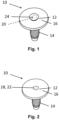
Fig. 1 shows a perspective view of a fastening element according to a first embodiment comprising a shaft and a flange with a joining surface and an application area, a fixation wax being provided in the application area and a protective foil covering the fixation wax; -
Fig. 2 shows the fastening element ofFig. 1 without the protective foil or the fixation wax; -
Fig. 3 shows the fastening element ofFig. 1 without the protective foil, but with the fixation wax; -
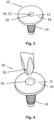
Fig. 4 shows the fastening element ofFig. 1 with a tool for pressing the protective foil; -
Fig. 5 shows the fastening element ofFig. 4 the fixation wax exposed at the edge of the protective foil; -
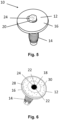
Fig. 6 shows a fastening element according to a second embodiment, comprising a permanent adhesive being provided on a first area of the joining surface, and the fixation wax being provided on the application area, the application area being different from the first area. - Unless otherwise indicated, the same reference numbers in the figures refer to identical or similar objects.
-
Fig. 1 shows afastening element 10 comprising a fastening section and a joiningsurface 12. The fastening section is ashaft 14 extending along a longitudinal axis X. Theshaft 14 can for instance be a threaded shaft. The shaft is adapted to be connected to a component (not shown) to reliably join a workpiece to the component. Thefastening element 10 ofFig. 1 further comprises aflange 16 formed on and extending radially to an end of theshaft 14. The flange can be a circular flange with a flange diameter. Theflange 16 is radially delimited by an outer edge and comprises a top surface which forms the joining surface. Thefastening element 10 is a stud (or glue stud). - The joining
surface 12 comprises anapplication area 18 destined to receive a fixation wax 20 (or a drop of fixation wax). Thefixation wax 20 is a tacky wax. Tacky wax is a wax and therefore easily plastically deformable at ambient temperature but unlike normal wax it has a tacky surface in its solid state. The fixation wax may for instance be a wax similar to the THOWAX STICK-ON-WACHS commercialized by YETI-DENTAL®. Thefixation wax 20 has sufficient adhesive forces to hold thefastening element 10 on the workpiece. The application area is, as shown inFig. 2 , for instance defined by arecess 22. Therecess 22 may be in the middle of the flange. In other words, the bottom of the recess forms the application area. - The
fixation wax 20 may have the shape of a drop extending within therecess 22. The volume of the fixation wax for instance is slightly greater than the volume of the recess. The drop protrudes from the recess, such that a portion of the fixation wax is above the plane formed by the joining surface. - As seen in
Fig. 1 andFig. 4 , thefixation wax 20 is covered by aprotective foil 24. The protective foil covered thefixation wax 20. The dimension of theprotective foil 24 is slightly greater than the dimension of the drop of wax on the joining surface, such that said fixation wax is entirely covered. However, theprotective foil 24 does not cover the entire joining surface, such that during the joining process, the fixation wax may overflow the edges of the protective foil and thefixation wax 20 gets into contact with the surface of the workpiece. - The
protective foil 24 sticks to thefixation wax 20. Theprotective foil 24 is for instance an aluminium foil. In an alternative or additional embodiment, theprotective foil 24 may have an adhesive surface to further increase transport safety. The adhesive surface faces the fixation wax. The adhesive surface then also can also adhere to the bolt flange around the protective wax and more pressure is required to push thefixation wax 20 out from the protective foil. These further limits exposure of the wax due to vibrations during transport. - When the fastening element of
Fig. 1 has to be glued to a workpiece, thefixation wax 20 is pressed out sideways past theprotective foil 24 and fixes thefastening element 10 to the workpiece. For improved fixing, and particularly when using an adhesive surface that adheres to the joiningsurface 12, theprotective foil 24 may be first pressed with atool 26, as depicted inFig. 4 . Thetool 26 applies an effort on theprotective foil 24 andfixation wax 20 along the longitudinal direction to presses the fixation wax out from below the protective foil, as shown inFig. 5 . This can be done manually or automatically in a feeder of a joining machine. Using thetool 26 allows to press out a larger volume of fixation wax and reduces the surface area of the protective foil. -
Fig. 6 shows a further embodiment of a fastening element 10'. The joining surface comprises afirst area 28 and theapplication area 18. Thefirst area 28 is destined to receive apermanent adhesive 30. Two components systems and moisture-curing one-component systems with medium or high viscosity and anaerobical curing one component systems may be used aspermanent adhesives 30. The fastening element 10' is thus fixed solely by the tackiness and toughness of the uncross linked adhesive mass alone. A permanently plastic medium to high viscosity sealing compound could also be used, but this could lead to contamination of the production environment. Thepermanent adhesive 30 is for instance an epoxy resin adhesive, a polyurethane resin adhesive or an adhesive resin component comprising methacrylate monomers, amines and additional rubbers and toughening agents. Thepermanent adhesive 30 may also be an adhesive for low-energy surfaces (polyurethane resin adhesive, polypropylene adhesive), a thermally and/or electrically conductive adhesive, a flexible adhesive and/or a FST (Fire, Smoke, and Toxicity) compliant adhesive. More generally, the permanent adhesive may be any cold curing adhesive. Thefixation wax 20 will enable for instance an immediate holding of the fastening element, wherein the permanent adhesive will allow a stronger joining. For instance, the fastening element 10' will be pushed against the workpiece such that thefixation wax 20 gets into contact with the surface of the workpiece for preliminarily holding the fastening element on the workpiece, while thepermanent adhesive 30 for permanently holding the fastening element on the workpiece becomes squeezed and can slowly cure. - The fastening element 10' is thus directly preliminary held onto the workpiece with the
fixation wax 20 which comes into contact with the workpiece after being squeezed to the workpiece. In the state of the fastening element 10' held by thefixation wax 20 securely in the prescribed position on the workpiece, thepermanent adhesive 30 can then harden without further holding measures, of a mechanical nature for example, being necessary. When thepermanent adhesive 30 is completely hardened, it transmits a significantly greater holding action than the fixation wax. - The fastening element is hereby described as a stud, but in other embodiments, the fastening element may be a stud, a nut, a retainer, a spacer, a cable binder or any kind of fastener comprising a joining surface.
- fastening
element 10 10' - joining
surface 12 -
shaft 14 - longitudinal axis X
-
flange 16 -
application area 18 -
fixation wax 20 -
recess 22 -
protective foil 24 -
tool 26 -
first area 28 -
permanent adhesive 30
Claims (12)
- Fastening element (10) with a joining surface which has an application area to which a fixation wax is applied, wherein a protective foil is arranged on the fixation wax.
- Fastening element (10) according to claim 1, wherein the fastening element is a stud which has a shank extending along a central axis and a flange extending transversely thereto.
- Fastening element (10) according to claim 1 or 2, wherein the joining surface is arranged on an upper side of the flange facing away from the shank, and wherein a diameter of the application area is smaller than a diameter of the joining surface.
- Fastening element (10) according to any of claims 1 to 3, wherein the application area is formed by a recess and the fixation wax extends in the recess.
- Fastening element (10) according to claim 4, wherein the recess is circular.
- Fastening element according to claim 4 or 5, wherein the volume of the fixation wax is greater than the interior volume of the recess.
- Fastening element according to claims 2 and any of claims 4 to 6, wherein the recess is a circular recess centred on the flange.
- Fastening element (10) according to any of claims 1 to 6, wherein the protective foil has the same size or is slightly greater than the application area.
- Fastening element (10) according to any of claims 1 to 7, wherein the protective foil is an aluminium foil.
- Fastening element (10) according to any of claims 1 to 8, wherein the protective foil comprises a first surface facing the fixation wax and a second surface, opposite the first surface, and wherein the first surface comprises an adhesive coating.
- Method for fastening a fastening element with a workpiece comprising the steps of:- providing a fastening element according to any of claims 1 to 8,- providing a workpiece arranging the contact surface of the fastening element facing the workpiece;- pushing the fastening element against the workpiece such that the fixation wax overflows the edges of the protective foil and the fixation wax gets into contact with the surface of the workpiece.
- Method according to claim 9, wherein a tool presses the protective foil in the direction of the fixation was before pushing the fastening element against the workpiece.
Priority Applications (2)
| Application Number | Priority Date | Filing Date | Title |
|---|---|---|---|
| EP24150477.8A EP4582706A1 (en) | 2024-01-05 | 2024-01-05 | Fastening element with fixation wax and method for fastening said fastening element to a workpiece |
| PCT/EP2024/086454 WO2025146340A1 (en) | 2024-01-05 | 2024-12-16 | Fastening element with fixation wax and method for fastening said fastening element to a workpiece |
Applications Claiming Priority (1)
| Application Number | Priority Date | Filing Date | Title |
|---|---|---|---|
| EP24150477.8A EP4582706A1 (en) | 2024-01-05 | 2024-01-05 | Fastening element with fixation wax and method for fastening said fastening element to a workpiece |
Publications (1)
| Publication Number | Publication Date |
|---|---|
| EP4582706A1 true EP4582706A1 (en) | 2025-07-09 |
Family
ID=89474042
Family Applications (1)
| Application Number | Title | Priority Date | Filing Date |
|---|---|---|---|
| EP24150477.8A Pending EP4582706A1 (en) | 2024-01-05 | 2024-01-05 | Fastening element with fixation wax and method for fastening said fastening element to a workpiece |
Country Status (2)
| Country | Link |
|---|---|
| EP (1) | EP4582706A1 (en) |
| WO (1) | WO2025146340A1 (en) |
Citations (4)
| Publication number | Priority date | Publication date | Assignee | Title |
|---|---|---|---|---|
| US4822224A (en) * | 1987-11-05 | 1989-04-18 | Chrysler Motors Corporation | Harness retainer stud |
| WO2013106362A1 (en) * | 2012-01-11 | 2013-07-18 | Illinois Tool Works Inc. | Method for gluing a fastening element on a carrier component of an automobile and fastening element |
| DE102014118973A1 (en) | 2014-12-18 | 2016-06-23 | Newfrey Llc | Joining component and method for its production |
| EP3330548A1 (en) | 2016-11-30 | 2018-06-06 | Newfrey LLC | Fixing element and method for its production |
-
2024
- 2024-01-05 EP EP24150477.8A patent/EP4582706A1/en active Pending
- 2024-12-16 WO PCT/EP2024/086454 patent/WO2025146340A1/en active Pending
Patent Citations (5)
| Publication number | Priority date | Publication date | Assignee | Title |
|---|---|---|---|---|
| US4822224A (en) * | 1987-11-05 | 1989-04-18 | Chrysler Motors Corporation | Harness retainer stud |
| WO2013106362A1 (en) * | 2012-01-11 | 2013-07-18 | Illinois Tool Works Inc. | Method for gluing a fastening element on a carrier component of an automobile and fastening element |
| EP2802785A1 (en) | 2012-01-11 | 2014-11-19 | Illinois Tool Works Inc. | Method for gluing a fastening element on a carrier component of an automobile and fastening element |
| DE102014118973A1 (en) | 2014-12-18 | 2016-06-23 | Newfrey Llc | Joining component and method for its production |
| EP3330548A1 (en) | 2016-11-30 | 2018-06-06 | Newfrey LLC | Fixing element and method for its production |
Also Published As
| Publication number | Publication date |
|---|---|
| WO2025146340A1 (en) | 2025-07-10 |
Similar Documents
| Publication | Publication Date | Title |
|---|---|---|
| EP2108029B1 (en) | Ultrasonic energy for adhesive bonding | |
| KR102700767B1 (en) | Securing a second object to a first object | |
| EP1660270B1 (en) | Method of combining welding and adhesive bonding for joining metal components | |
| US20030167620A1 (en) | Rivet and method for riveting metal members therewith | |
| US5253965A (en) | Piercing fastener with adhesive | |
| US20090202294A1 (en) | Mechanical method for improving bond joint strength | |
| US20080149256A1 (en) | Method and apparatus to minimize adhesive induced distortion | |
| DE4402550A1 (en) | Adhesive fastening element for holding components or functional parts on carrier parts | |
| US20180223894A1 (en) | Joining component and method for its production | |
| EP2802785B1 (en) | Method for gluing a fastening element on a carrier component of an automobile | |
| CA2256381A1 (en) | Method of joining rail vehicle components and subassemblies by adhesion | |
| US20110209814A1 (en) | Method of and apparatus for weld-bonding workpieces | |
| KR101518354B1 (en) | A method of assembling glass on its holder by gluing, and means for implementing the method | |
| WO2025146340A1 (en) | Fastening element with fixation wax and method for fastening said fastening element to a workpiece | |
| Adderley | Adhesive bonding | |
| EP1401688B1 (en) | Procedure for repairing vehicle bodies with adhesively bonded replacement panels | |
| JP4193663B2 (en) | Method of joining metal members | |
| US20230286222A1 (en) | Method for joining a fastener to a workpiece | |
| EP4502403A1 (en) | Fastening element with adhesive and methods for using and manufacturing the same | |
| JP2024045802A (en) | Bonded structure and its dismantling method | |
| SU841769A1 (en) | Method of performing adhesive-riveted connection | |
| JP2004307550A (en) | Temporary fixing method of adhesive structure | |
| Wilson | Practical applications of structural adhesives | |
| Beck et al. | Automotive structural bonding | |
| Goldberg | Adhesive Bonding and Mechanical Fasteners |
Legal Events
| Date | Code | Title | Description |
|---|---|---|---|
| PUAI | Public reference made under article 153(3) epc to a published international application that has entered the european phase |
Free format text: ORIGINAL CODE: 0009012 |
|
| STAA | Information on the status of an ep patent application or granted ep patent |
Free format text: STATUS: THE APPLICATION HAS BEEN PUBLISHED |
|
| AK | Designated contracting states |
Kind code of ref document: A1 Designated state(s): AL AT BE BG CH CY CZ DE DK EE ES FI FR GB GR HR HU IE IS IT LI LT LU LV MC ME MK MT NL NO PL PT RO RS SE SI SK SM TR |
|
| STAA | Information on the status of an ep patent application or granted ep patent |
Free format text: STATUS: REQUEST FOR EXAMINATION WAS MADE |
|
| 17P | Request for examination filed |
Effective date: 20260109 |