EP4582676A2 - Cooling system for a gas turbine engine - Google Patents
Cooling system for a gas turbine engine Download PDFInfo
- Publication number
- EP4582676A2 EP4582676A2 EP25179198.4A EP25179198A EP4582676A2 EP 4582676 A2 EP4582676 A2 EP 4582676A2 EP 25179198 A EP25179198 A EP 25179198A EP 4582676 A2 EP4582676 A2 EP 4582676A2
- Authority
- EP
- European Patent Office
- Prior art keywords
- case portion
- inlet
- strut
- extends
- axis
- Prior art date
- Legal status (The legal status is an assumption and is not a legal conclusion. Google has not performed a legal analysis and makes no representation as to the accuracy of the status listed.)
- Pending
Links
Images

Classifications
-
- F—MECHANICAL ENGINEERING; LIGHTING; HEATING; WEAPONS; BLASTING
- F01—MACHINES OR ENGINES IN GENERAL; ENGINE PLANTS IN GENERAL; STEAM ENGINES
- F01D—NON-POSITIVE DISPLACEMENT MACHINES OR ENGINES, e.g. STEAM TURBINES
- F01D9/00—Stators
- F01D9/06—Fluid supply conduits to nozzles or the like
- F01D9/065—Fluid supply or removal conduits traversing the working fluid flow, e.g. for lubrication-, cooling-, or sealing fluids
-
- F—MECHANICAL ENGINEERING; LIGHTING; HEATING; WEAPONS; BLASTING
- F02—COMBUSTION ENGINES; HOT-GAS OR COMBUSTION-PRODUCT ENGINE PLANTS
- F02C—GAS-TURBINE PLANTS; AIR INTAKES FOR JET-PROPULSION PLANTS; CONTROLLING FUEL SUPPLY IN AIR-BREATHING JET-PROPULSION PLANTS
- F02C7/00—Features, components parts, details or accessories, not provided for in, or of interest apart form groups F02C1/00 - F02C6/00; Air intakes for jet-propulsion plants
- F02C7/12—Cooling of plants
- F02C7/16—Cooling of plants characterised by cooling medium
- F02C7/18—Cooling of plants characterised by cooling medium the medium being gaseous, e.g. air
-
- F—MECHANICAL ENGINEERING; LIGHTING; HEATING; WEAPONS; BLASTING
- F01—MACHINES OR ENGINES IN GENERAL; ENGINE PLANTS IN GENERAL; STEAM ENGINES
- F01D—NON-POSITIVE DISPLACEMENT MACHINES OR ENGINES, e.g. STEAM TURBINES
- F01D25/00—Component parts, details, or accessories, not provided for in, or of interest apart from, other groups
- F01D25/08—Cooling; Heating; Heat-insulation
- F01D25/12—Cooling
-
- F—MECHANICAL ENGINEERING; LIGHTING; HEATING; WEAPONS; BLASTING
- F01—MACHINES OR ENGINES IN GENERAL; ENGINE PLANTS IN GENERAL; STEAM ENGINES
- F01D—NON-POSITIVE DISPLACEMENT MACHINES OR ENGINES, e.g. STEAM TURBINES
- F01D5/00—Blades; Blade-carrying members; Heating, heat-insulating, cooling or antivibration means on the blades or the members
- F01D5/02—Blade-carrying members, e.g. rotors
- F01D5/08—Heating, heat-insulating or cooling means
- F01D5/081—Cooling fluid being directed on the side of the rotor disc or at the roots of the blades
- F01D5/082—Cooling fluid being directed on the side of the rotor disc or at the roots of the blades on the side of the rotor disc
-
- F—MECHANICAL ENGINEERING; LIGHTING; HEATING; WEAPONS; BLASTING
- F01—MACHINES OR ENGINES IN GENERAL; ENGINE PLANTS IN GENERAL; STEAM ENGINES
- F01D—NON-POSITIVE DISPLACEMENT MACHINES OR ENGINES, e.g. STEAM TURBINES
- F01D9/00—Stators
- F01D9/02—Nozzles; Nozzle boxes; Stator blades; Guide conduits, e.g. individual nozzles
- F01D9/04—Nozzles; Nozzle boxes; Stator blades; Guide conduits, e.g. individual nozzles forming ring or sector
- F01D9/041—Nozzles; Nozzle boxes; Stator blades; Guide conduits, e.g. individual nozzles forming ring or sector using blades
-
- F—MECHANICAL ENGINEERING; LIGHTING; HEATING; WEAPONS; BLASTING
- F05—INDEXING SCHEMES RELATING TO ENGINES OR PUMPS IN VARIOUS SUBCLASSES OF CLASSES F01-F04
- F05D—INDEXING SCHEME FOR ASPECTS RELATING TO NON-POSITIVE-DISPLACEMENT MACHINES OR ENGINES, GAS-TURBINES OR JET-PROPULSION PLANTS
- F05D2220/00—Application
- F05D2220/30—Application in turbines
- F05D2220/32—Application in turbines in gas turbines
- F05D2220/321—Application in turbines in gas turbines for a special turbine stage
- F05D2220/3216—Application in turbines in gas turbines for a special turbine stage for a special compressor stage
- F05D2220/3219—Application in turbines in gas turbines for a special turbine stage for a special compressor stage for the last stage of a compressor or a high pressure compressor
-
- F—MECHANICAL ENGINEERING; LIGHTING; HEATING; WEAPONS; BLASTING
- F05—INDEXING SCHEMES RELATING TO ENGINES OR PUMPS IN VARIOUS SUBCLASSES OF CLASSES F01-F04
- F05D—INDEXING SCHEME FOR ASPECTS RELATING TO NON-POSITIVE-DISPLACEMENT MACHINES OR ENGINES, GAS-TURBINES OR JET-PROPULSION PLANTS
- F05D2260/00—Function
- F05D2260/20—Heat transfer, e.g. cooling
- F05D2260/205—Cooling fluid recirculation, i.e. after cooling one or more components is the cooling fluid recovered and used elsewhere for other purposes
-
- F—MECHANICAL ENGINEERING; LIGHTING; HEATING; WEAPONS; BLASTING
- F05—INDEXING SCHEMES RELATING TO ENGINES OR PUMPS IN VARIOUS SUBCLASSES OF CLASSES F01-F04
- F05D—INDEXING SCHEME FOR ASPECTS RELATING TO NON-POSITIVE-DISPLACEMENT MACHINES OR ENGINES, GAS-TURBINES OR JET-PROPULSION PLANTS
- F05D2260/00—Function
- F05D2260/60—Fluid transfer
- F05D2260/601—Fluid transfer using an ejector or a jet pump
-
- Y—GENERAL TAGGING OF NEW TECHNOLOGICAL DEVELOPMENTS; GENERAL TAGGING OF CROSS-SECTIONAL TECHNOLOGIES SPANNING OVER SEVERAL SECTIONS OF THE IPC; TECHNICAL SUBJECTS COVERED BY FORMER USPC CROSS-REFERENCE ART COLLECTIONS [XRACs] AND DIGESTS
- Y02—TECHNOLOGIES OR APPLICATIONS FOR MITIGATION OR ADAPTATION AGAINST CLIMATE CHANGE
- Y02T—CLIMATE CHANGE MITIGATION TECHNOLOGIES RELATED TO TRANSPORTATION
- Y02T50/00—Aeronautics or air transport
- Y02T50/60—Efficient propulsion technologies, e.g. for aircraft
Definitions
- Exemplary embodiments of the present disclosure pertain to the art of gas turbine engines, more particularly, to gas turbine engine cooling.
- Add-on cooling systems may be provided to direct a cooling fluid to various components of the gas turbine engine that may result in increased weight, increased cost, increased space claims, as well as reductions in durability associated with the add on cooling system.
- a gas turbine engine having a central longitudinal axis that includes a compressor section.
- the compressor section includes a plurality of blades extending from a rotor, a guide vane, and a diffuser case.
- the guide vane is disposed axially downstream of the plurality of blades.
- the guide vane has an outer vane platform, an inner vane platform spaced apart from the rotor along the central longitudinal axis, and an airfoil extending between the outer vane platform and the inner vane platform.
- the diffuser case is disposed axially downstream of the guide vane.
- the diffuser case has a first case portion that is disposed adjacent to the outer vane platform, a second case portion that is disposed adjacent to the inner vane platform, and a strut extending between the first case portion and the second case portion.
- the strut has a leading surface, a trailing surface disposed opposite the leading surface, and a pair of side surfaces extending between the leading surface and the trailing surface.
- the strut defines an inlet that extends from the leading surface towards the trailing surface and a passageway that extends from the inlet.
- the inlet may be radially aligned with a mid-point of the airfoil relative to the inner vane platform and the outer vane platform.
- the gas turbine engine may further comprise a tangential onboard injection system having an injector, a body, and a feed passage that is fluidly connected to the passageway.
- the compressor section includes a guide vane and a diffuser case.
- the guide vane has an outer vane platform, an inner vane platform, and an airfoil extending between the outer vane platform and the inner vane platform.
- the diffuser case has a first case portion disposed adjacent to the outer vane platform, a second case portion that is disposed adjacent to the inner vane platform, and a strut extending between the first case portion and the second case portion.
- the strut defines an inlet that extends from a leading surface of the strut towards a trailing surface of the strut along a first axis that is disposed generally parallel to the central longitudinal axis.
- the compressor section may further comprise a tangential air injection system that extends between and is connected to the inner vane platform and the second case portion.
- Low pressure turbine 46 pressure ratio is pressure measured prior to inlet of low pressure turbine 46 as related to the pressure at the outlet of the low pressure turbine 46 prior to an exhaust nozzle.
- the geared architecture 48 may be an epicyclic gear train, such as a planetary gear system or other gear system, with a gear reduction ratio of greater than about 2.3:1. It should be understood, however, that the above parameters are only exemplary of one embodiment of a geared architecture engine and that the present disclosure is applicable to other gas turbine engines including direct drive turbofans.
- the fan section 22 of the engine 20 is designed for a particular flight condition--typically cruise at about 0.8 Mach and about 35,000 feet (10,668 meters).
- 'TSFC' Thrust Specific Fuel Consumption
- Low fan pressure ratio is the pressure ratio across the fan blade alone, without a Fan Exit Guide Vane (“FEGV”) system.
- the integrally formed cooling system 60 may be applied to the latter stages of the high pressure compressor 52, however the integrally formed cooling system 60 may be applied to other portions of the compressor section 24 or other portions of the gas turbine engine 20.
- the compressor section 24 includes a plurality of blades or a blade 70, a plurality of guide vanes or a guide vane 72, a tangential air injection system 74, and a diffuser case 76.
- the blade 70 radially extends from a disk or a rotor 80 such that the blade 70 is rotatable about the central longitudinal axis A of the gas turbine engine 20.
- Each blade 70 is secured to the disk or rotor 80 such that blade 70 is further away from axis A than the disk or rotor 80.
- the blade 70 extends radially away from the disk or rotor 80 such that the blade 70 is at a further radial distance from the axis A than the disk or rotor 80.
- the guide vane 72 is disposed axially downstream of the blade 70 along or relative to the central longitudinal axis A.
- the guide vane 72 has an outer vane platform 82, an inner vane platform 84, and an airfoil 86 that extends between the outer vane platform 82 and the inner vane platform 84.
- the outer vane platform 82 is disposed radially outboard of the inner vane platform 84, relative to the central longitudinal axis A.
- the inner vane platform 84 is disposed radially inboard of the outer vane platform 82, relative to the central longitudinal axis A. In other words, the outer vane platform 82 is at a further radial distance from the central longitudinal axis A than the inner vane platform 84.
- the inner vane platform 84 is spaced apart from the rotor 80 such that a gap 90 is disposed between or defined between the inner vane platform 84 and the rotor 80.
- the recirculation circuit 62 extends or flows through the gap 90 to redirect a cooling air stream back towards a leading edge of the airfoil 86 of the guide vane 72, to provide a cooling effect to the blade 70 extending from the rotor 80 and/or the airfoil 86 of the guide vane 72.
- the tangential air injection system 74 extends between and engages the inner vane platform 84 of the guide vane 72 and a portion of the diffuser case 76, as will be described later.
- the tangential air injection system 74 includes an injector 100, a body 102, and a feed passage 104.
- the injector 100 is connected to the inner vane platform 84 and is disposed radially between the inner vane platform 84 and the central longitudinal axis A.
- the injector 100 extends towards the gap 90.
- the injector 100 may be provided separately from the body 102 and may extend through the body 102 or the injector 100 may be integrally formed with the body 102.
- the body 102 extends between the injector 100 and a portion of the diffuser case 76.
- the feed passage 104 is defined between the body 102 and the portion of the diffuser case 76.
- the injector 100 is fluidly connected to the feed passage 104 and injects fluid received through the feed passage 104 into or towards the gap 90.
- a first flow surface or first flow area 120 extends along inner surfaces of the outer vane platform 82 and the first case portion 110.
- a second flows surface or second flow area 122 extends along inner surfaces of the inner vane platform 84 and the second case portion 112.
- a mid-flow area 124 is disposed between the first flow area 120 and the second flow area 122.
- Local temperatures or bulk temperatures proximate the first flow area 120 and proximate the second flow area 122 have a higher temperature as compared to local temperatures proximate the mid-flow area 124 through which a streamline 126 that extends through a mid-span or midpoint of the airfoil 86 of the guide vane 72 extends.
- the strut 114 includes a leading surface 130, a trailing surface 132 disposed opposite the leading surface 130, and a pair of side surfaces (first and second side surfaces) 134 that extend between the pair of side surfaces 134.
- a diffuser cavity 136 is defined between the leading surface 130, the airfoil 86, and portions of the first case portion 110, the outer vane platform 82, the inner vane platform 84, and the second case portion 112.
- a fluid pressure within the diffuser cavity 136 is generally less than a fluid pressure within the gap 90.
- the inlet 140 has a first height, h1, measured proximate the leading surface 130 of the strut 114 between radially opposed surfaces of the inlet 140 along the second axis 152.
- the inlet 140 has a second height, h2, measured aft or downstream of the leading surface 130 and the first height, h1, between radially opposed surfaces of the inlet 140 that extends along the second axis 152.
- the first height, h1, is greater than the second height, h2, as shown in FIG. 3 .
- the first height, h1, is less than the second height, h2, as shown in FIG. 4 .
Landscapes
- Engineering & Computer Science (AREA)
- Mechanical Engineering (AREA)
- General Engineering & Computer Science (AREA)
- Chemical & Material Sciences (AREA)
- Combustion & Propulsion (AREA)
- Physics & Mathematics (AREA)
- Fluid Mechanics (AREA)
- Structures Of Non-Positive Displacement Pumps (AREA)
- Turbine Rotor Nozzle Sealing (AREA)
Abstract
Description
- Exemplary embodiments of the present disclosure pertain to the art of gas turbine engines, more particularly, to gas turbine engine cooling.
- Compressor pressure ratios have been steadily increasing leading to increases in compressor exit temperatures. This increase in compressor exit temperature may push the material limits of various components of the gas turbine engine. Add-on cooling systems may be provided to direct a cooling fluid to various components of the gas turbine engine that may result in increased weight, increased cost, increased space claims, as well as reductions in durability associated with the add on cooling system.
- Disclosed is a gas turbine engine having a central longitudinal axis that includes a compressor section. The compressor section includes a plurality of blades extending from a rotor, a guide vane, and a diffuser case. The guide vane is disposed axially downstream of the plurality of blades. The guide vane has an outer vane platform, an inner vane platform spaced apart from the rotor along the central longitudinal axis, and an airfoil extending between the outer vane platform and the inner vane platform. The diffuser case is disposed axially downstream of the guide vane. The diffuser case has a first case portion that is disposed adjacent to the outer vane platform, a second case portion that is disposed adjacent to the inner vane platform, and a strut extending between the first case portion and the second case portion. The strut has a leading surface, a trailing surface disposed opposite the leading surface, and a pair of side surfaces extending between the leading surface and the trailing surface. The strut defines an inlet that extends from the leading surface towards the trailing surface and a passageway that extends from the inlet.
- The inlet may be radially aligned with a mid-point of the airfoil relative to the inner vane platform and the outer vane platform.
- The gas turbine engine may further comprise a tangential onboard injection system having an injector, a body, and a feed passage that is fluidly connected to the passageway.
- The feed passage may be defined between the body and the second case portion.
- A gap may be defined between the rotor and the inner vane platform.
- The injector may extend towards the gap.
- Also disclosed is a compressor section arranged about a central longitudinal axis of a gas turbine engine. The compressor section includes a guide vane and a diffuser case. The guide vane has an outer vane platform, an inner vane platform, and an airfoil extending between the outer vane platform and the inner vane platform. The diffuser case has a first case portion disposed adjacent to the outer vane platform, a second case portion that is disposed adjacent to the inner vane platform, and a strut extending between the first case portion and the second case portion. The strut defines an inlet that extends from a leading surface of the strut towards a trailing surface of the strut along a first axis that is disposed generally parallel to the central longitudinal axis.
- The strut may define a passageway that extends from the inlet through the second case portion along a second axis that is disposed transverse to the central longitudinal axis.
- The compressor section may further comprise a tangential air injection system that extends between and is connected to the inner vane platform and the second case portion.
- The tangential air injection system may have an injector that is connected to the inner vane platform and a body that extends between the injector and the second case portion.
- A feed passage may be defined between the body and the second case portion, the feed passage being fluidly connected to the injector and the passageway.
- A recirculation circuit may be defined along a gas flow path that flows along a mid-point of an airfoil that is disposed between the inner vane platform and the outer vane platform, through the inlet, through the passageway, through the feed passage, through the injector, and towards a leading edge of the airfoil.
- Further disclosed is a cooling system for a compressor section of a gas turbine engine. The cooling system includes an inlet, a passageway, and a feed passage. The inlet is defined by a strut of a diffuser case that extends between a first case portion and a second case portion. The inlet extends from a leading surface towards a trailing surface along a first axis. The passageway is defined by the strut and extends from the inlet towards the second case portion along a second axis that is disposed transverse to the first axis. The feed passage is defined between a body of a tangential onboard injection system that extends between and is connected to an inner vane platform of a guide vane and the second case portion. The feed passage extends along an axis that is disposed parallel to the first axis.
- The inlet may be aligned along a mid-point of the strut that is disposed between the first case portion and the second case portion.
- The cooling system may further comprise an injector that is fluidly connected to the feed passage.
- The inlet may have a first height that extends along the second axis and disposed proximate the leading surface of the strut and the inlet may have a second height that extends along the second axis and is spaced apart from the leading surface of the strut.
- The first height may be greater than the second height.
- The first height may be less than the second height.
- The following descriptions are provided by way of example only and should not be considered limiting in any way. With reference to the accompanying drawings, like elements are numbered alike:
-
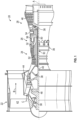
FIG. 1 is a partial cross-sectional view of a gas turbine engine; -
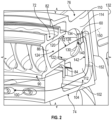
FIG. 2 is a partial cross-sectional view of a rear portion of the compressor section of the gas turbine engine; -
FIG. 3 is another partial cross-sectional view of a rear portion of the compressor section of the gas turbine engine; and -
FIG. 4 is yet another partial cross-sectional view of a rear portion of the compressor section of the gas turbine engine. - A detailed description of one or more embodiments of the disclosed apparatus and method are presented herein by way of exemplification and not limitation with reference to the Figures.
-
FIG. 1 schematically illustrates agas turbine engine 20. Thegas turbine engine 20 is disclosed herein as a two-spool turbofan that generally incorporates afan section 22, acompressor section 24, acombustor section 26 and aturbine section 28. Alternative engines might include other systems or features. Thefan section 22 drives air along a bypass flow path B in a bypass duct, while thecompressor section 24 drives air along a core flow path C for compression and communication into thecombustor section 26 then expansion through theturbine section 28. Although depicted as a two-spool turbofan gas turbine engine in the disclosed non-limiting embodiment, it should be understood that the concepts described herein are not limited to use with two-spool turbofans as the teachings may be applied to other types of turbine engines including three-spool architectures. - The
exemplary engine 20 generally includes alow speed spool 30 and ahigh speed spool 32 mounted for rotation about an engine central longitudinal axis A relative to an enginestatic structure 36 viaseveral bearing systems 38. It should be understood thatvarious bearing systems 38 at various locations may alternatively or additionally be provided, and the location ofbearing systems 38 may be varied as appropriate to the application. - The
low speed spool 30 generally includes aninner shaft 40 that interconnects afan 42, alow pressure compressor 44 and alow pressure turbine 46. Theinner shaft 40 is connected to thefan 42 through a speed change mechanism, which in exemplarygas turbine engine 20 is illustrated as a gearedarchitecture 48 to drive thefan 42 at a lower speed than thelow speed spool 30. Thehigh speed spool 32 includes anouter shaft 50 that interconnects ahigh pressure compressor 52 andhigh pressure turbine 54. Acombustor 56 is arranged inexemplary gas turbine 20 between thehigh pressure compressor 52 and thehigh pressure turbine 54. An enginestatic structure 36 is arranged generally between thehigh pressure turbine 54 and thelow pressure turbine 46. The enginestatic structure 36 further supports bearingsystems 38 in theturbine section 28. Theinner shaft 40 and theouter shaft 50 are concentric and rotate viabearing systems 38 about the engine central longitudinal axis A which is collinear with their longitudinal axes. - The core airflow is compressed by the
low pressure compressor 44 then thehigh pressure compressor 52, mixed and burned with fuel in thecombustor 56, then expanded over thehigh pressure turbine 54 andlow pressure turbine 46. Theturbines low speed spool 30 andhigh speed spool 32 in response to the expansion. It will be appreciated that each of the positions of thefan section 22,compressor section 24,combustor section 26,turbine section 28, and fandrive gear system 48 may be varied. For example,gear system 48 may be located aft ofcombustor section 26 or even aft ofturbine section 28, andfan section 22 may be positioned forward or aft of the location ofgear system 48. - The
engine 20 in one example is a high-bypass geared aircraft engine. In a further example, theengine 20 bypass ratio is greater than about six (6), with an example embodiment being greater than about ten (10), the gearedarchitecture 48 is an epicyclic gear train, such as a planetary gear system or other gear system, with a gear reduction ratio of greater than about 2.3 and thelow pressure turbine 46 has a pressure ratio that is greater than about five. In one disclosed embodiment, theengine 20 bypass ratio is greater than about ten (10:1), the fan diameter is significantly larger than that of thelow pressure compressor 44, and thelow pressure turbine 46 has a pressure ratio that is greater than about five (5:1).Low pressure turbine 46 pressure ratio is pressure measured prior to inlet oflow pressure turbine 46 as related to the pressure at the outlet of thelow pressure turbine 46 prior to an exhaust nozzle. The gearedarchitecture 48 may be an epicyclic gear train, such as a planetary gear system or other gear system, with a gear reduction ratio of greater than about 2.3:1. It should be understood, however, that the above parameters are only exemplary of one embodiment of a geared architecture engine and that the present disclosure is applicable to other gas turbine engines including direct drive turbofans. - A significant amount of thrust is provided by the bypass flow B due to the high bypass ratio. The
fan section 22 of theengine 20 is designed for a particular flight condition--typically cruise at about 0.8 Mach and about 35,000 feet (10,668 meters). The flight condition of 0.8 Mach and 35,000 ft (10,668 meters), with the engine at its best fuel consumption--also known as "bucket cruise Thrust Specific Fuel Consumption ('TSFC')"--is the industry standard parameter of lbm of fuel being burned divided by lbf of thrust the engine produces at that minimum point. "Low fan pressure ratio" is the pressure ratio across the fan blade alone, without a Fan Exit Guide Vane ("FEGV") system. The low fan pressure ratio as disclosed herein according to one non-limiting embodiment is less than about 1.45. "Low corrected fan tip speed" is the actual fan tip speed in ft/sec divided by an industry standard temperature correction of [(Tram °R)/(518.7 °R)]0.5. The "Low corrected fan tip speed" as disclosed herein according to one non-limiting embodiment is less than about 1150 ft/second (350.5 m/sec). - Referring to
FIGS. 2-4 , an integrally formedcooling system 60 may be provided with thecompressor section 24 of thegas turbine engine 20. The integrally formed coolingsystem 60 avoids the use of external or integrated heat exchangers and instead takes advantage of a thermal gradient phenomenon within the airflow that flows through at least one stage of thecompressor section 24. The integrally formed coolingsystem 60 is arranged to provide arecirculation circuit 62 that is defined along a gas flow path that routes a portion of a central flow along a stream line from an aft portion of thecompressor section 24 towards a more forward portion of thecompressor section 24. The integrally formed coolingsystem 60 may be applied to the latter stages of thehigh pressure compressor 52, however the integrally formed coolingsystem 60 may be applied to other portions of thecompressor section 24 or other portions of thegas turbine engine 20. Referring toFIGS. 2 and3 , thecompressor section 24 includes a plurality of blades or ablade 70, a plurality of guide vanes or aguide vane 72, a tangentialair injection system 74, and adiffuser case 76. - The
blade 70 radially extends from a disk or arotor 80 such that theblade 70 is rotatable about the central longitudinal axis A of thegas turbine engine 20. Eachblade 70 is secured to the disk orrotor 80 such thatblade 70 is further away from axis A than the disk orrotor 80. In other words, theblade 70 extends radially away from the disk orrotor 80 such that theblade 70 is at a further radial distance from the axis A than the disk orrotor 80. Theguide vane 72 is disposed axially downstream of theblade 70 along or relative to the central longitudinal axis A. - The
guide vane 72 has anouter vane platform 82, aninner vane platform 84, and anairfoil 86 that extends between theouter vane platform 82 and theinner vane platform 84. Theouter vane platform 82 is disposed radially outboard of theinner vane platform 84, relative to the central longitudinal axis A. Theinner vane platform 84 is disposed radially inboard of theouter vane platform 82, relative to the central longitudinal axis A. In other words, theouter vane platform 82 is at a further radial distance from the central longitudinal axis A than theinner vane platform 84. - The
inner vane platform 84 is spaced apart from therotor 80 such that agap 90 is disposed between or defined between theinner vane platform 84 and therotor 80. Therecirculation circuit 62 extends or flows through thegap 90 to redirect a cooling air stream back towards a leading edge of theairfoil 86 of theguide vane 72, to provide a cooling effect to theblade 70 extending from therotor 80 and/or theairfoil 86 of theguide vane 72. - The tangential
air injection system 74 extends between and engages theinner vane platform 84 of theguide vane 72 and a portion of thediffuser case 76, as will be described later. The tangentialair injection system 74 includes aninjector 100, abody 102, and afeed passage 104. Theinjector 100 is connected to theinner vane platform 84 and is disposed radially between theinner vane platform 84 and the central longitudinal axis A. Theinjector 100 extends towards thegap 90. Theinjector 100 may be provided separately from thebody 102 and may extend through thebody 102 or theinjector 100 may be integrally formed with thebody 102. Thebody 102 extends between theinjector 100 and a portion of thediffuser case 76. Thefeed passage 104 is defined between thebody 102 and the portion of thediffuser case 76. Theinjector 100 is fluidly connected to thefeed passage 104 and injects fluid received through thefeed passage 104 into or towards thegap 90. - The
diffuser case 76 is disposed axially downstream of theguide Vane 72 along the central longitudinal axis A. Thediffuser case 76 includes afirst case portion 110, asecond case portion 112, and a vane or strut 114 that extends between thefirst case portion 110 and thesecond case portion 112. Thefirst case portion 110 is disposed adjacent to theouter vane platform 82 such that thefirst case portion 110 is disposed radially outboard of thesecond case portion 112, relative to the central longitudinal axis A. Thesecond case portion 112 is disposed adjacent to theinner vane platform 84 such that thesecond case portion 112 is disposed radially inboard of thefirst case portion 110, relative to the central longitudinal axis A. In other words, thefirst case portion 110 is at a further radial distance from the central longitudinal axis A than thesecond case portion 112. Thestrut 114 radially extends between thefirst case portion 110 and thesecond case portion 112. - A first flow surface or
first flow area 120 extends along inner surfaces of theouter vane platform 82 and thefirst case portion 110. A second flows surface orsecond flow area 122 extends along inner surfaces of theinner vane platform 84 and thesecond case portion 112. Amid-flow area 124 is disposed between thefirst flow area 120 and thesecond flow area 122. Local temperatures or bulk temperatures proximate thefirst flow area 120 and proximate thesecond flow area 122 have a higher temperature as compared to local temperatures proximate themid-flow area 124 through which astreamline 126 that extends through a mid-span or midpoint of theairfoil 86 of theguide vane 72 extends. - The
strut 114 includes a leadingsurface 130, a trailingsurface 132 disposed opposite the leadingsurface 130, and a pair of side surfaces (first and second side surfaces) 134 that extend between the pair of side surfaces 134. A diffuser cavity 136 is defined between the leadingsurface 130, theairfoil 86, and portions of thefirst case portion 110, theouter vane platform 82, theinner vane platform 84, and thesecond case portion 112. A fluid pressure within the diffuser cavity 136 is generally less than a fluid pressure within thegap 90. - The
strut 114 defines aninlet 140 and apassageway 142. Theinlet 140 is radially aligned with the mid-point or mid-span of theairfoil 86 of theguide vane 72 such that theinlet 140 receives airflow that flows along thestreamline 126 through themid-flow area 124. Theinlet 140 extends from the leadingsurface 130 towards the trailingsurface 132 along afirst axis 150 that is disposed generally parallel to the central longitudinal axis A and is disposed parallel and coaxial with thestreamline 126. Theinlet 140 is disposed between the pair of side surfaces 134. - The
passageway 142 extends from theinlet 140 through thesecond case portion 112 along asecond axis 152 that is disposed transverse to the central longitudinal axis A and is disposed transverse to thefirst axis 150. Thepassageway 142 is fluidly connected to theinlet 140 and thefeed passage 104. Therecirculation circuit 62 of the integrally formed coolingsystem 60 is defined by theinlet 140 of thestrut 114, thepassageway 142 of thestrut 114, thefeed passage 104 that is defined between the tangentialair injection system 74 and theinner vane platform 84, and theinjector 100. Thestrut 114 may define another passageway 144 that is disposed axially downstream of thepassageway 142 and is disposed parallel to thepassageway 142. Thepassageway 142 is fluidly isolated from another passageway 144. - The
recirculation circuit 62 is arranged such that a fluid flow flows along a gas flow path along thestreamline 126 through theinlet 140, through thepassageway 142, through thefeed passage 104, through theinjector 100 and into thegap 90. The fluid flow directs the cooler air, relative to the hotter air proximate thefirst flow area 120 and thesecond flow area 122, within themid-flow area 124 proximate the midpoint of theairfoil 86 of theguide vane 72 through thestrut 114 and through the tangentialair injection system 74 back to a forward portion of theairfoil 86 of theguide vane 72 and/or an aft portion of theblade 70 and therotor 80 to cool theblade 70 and therotor 80 and possibly theguide vane 72. This flow further occurs due to the higher fluid pressure proximate theinlet 140 and the lower fluid pressure proximate thegap 90. - The
inlet 140 has a first height, h1, measured proximate the leadingsurface 130 of thestrut 114 between radially opposed surfaces of theinlet 140 along thesecond axis 152. Theinlet 140 has a second height, h2, measured aft or downstream of the leadingsurface 130 and the first height, h1, between radially opposed surfaces of theinlet 140 that extends along thesecond axis 152. The first height, h1, is greater than the second height, h2, as shown inFIG. 3 . The first height, h1, is less than the second height, h2, as shown inFIG. 4 . - The
recirculation circuit 62 of the integrally formed coolingsystem 60 routes cooler gas path flow toward a region between theairfoil 86 of theguide vane 72 and theblade 70 androtor 80, without flowing through any type of internal or external heat exchanger system. Therecirculation circuit 62 provides a simple, compact, and integral way to obtain cooling improvement and therefore improve component life of various components of thecompressor section 24. - The term "about" is intended to include the degree of error associated with measurement of the particular quantity based upon the equipment available at the time of filing the application. For example, "about" can include a range of ± 8% or 5%, or 2% of a given value.
- The terminology used herein is for the purpose of describing particular embodiments only and is not intended to be limiting of the present disclosure. As used herein, the singular forms "a", "an" and "the" are intended to include the plural forms as well, unless the context clearly indicates otherwise. It will be further understood that the terms "comprises" and/or "comprising," when used in this specification, specify the presence of stated features, integers, steps, operations, elements, and/or components, but do not preclude the presence or addition of one or more other features, integers, steps, operations, element components, and/or groups thereof.
- While the present disclosure has been described with reference to an exemplary embodiment or embodiments, it will be understood by those skilled in the art that various changes may be made and equivalents may be substituted for elements thereof without departing from the scope of the present disclosure. In addition, many modifications may be made to adapt a particular situation or material to the teachings of the present disclosure without departing from the essential scope thereof. Therefore, it is intended that the present disclosure not be limited to the particular embodiment disclosed as the best mode contemplated for carrying out this present disclosure, but that the present disclosure will include all embodiments falling within the scope of the claims.
- The following clauses set out features of the invention which may or may not presently be claimed in this application, but which may form the basis for future amendment or a divisional application.
- 1. A gas turbine engine (20) having a central longitudinal axis (A), comprising: a compressor section (24), comprising: a plurality of blades (70) extending from a rotor (80), a guide vane (72) disposed axially downstream of the plurality of blades, the guide vane having an outer vane platform (82), an inner vane platform (84) spaced apart from the rotor along the central longitudinal axis, and an airfoil (86) extending between the outer vane platform and the inner vane platform, and a diffuser case (76) disposed axially downstream of the guide vane, the diffuser case having a first case portion (110) that is disposed adjacent to the outer vane platform, a second case portion (112) that is disposed adjacent to the inner vane platform, and a strut (114) extending between the first case portion and the second case portion, the strut having a leading surface (130), a trailing surface (132) disposed opposite the leading surface, and a pair of side surfaces (134) extending between the leading surface and the trailing surface, the strut defining an inlet (140) that extends from the leading surface towards the trailing surface and a passageway (142) that extends from the inlet.
- 2. The gas turbine engine (20) of clause 1, the inlet (140) is radially aligned with a mid-point of the airfoil (86) relative to the inner vane platform (84) and the outer vane platform (82).
- 3. The gas turbine engine (20) of clause 1 or 2, further comprising a tangential onboard injection system having an injector (100), a body (102), and a feed passage (104) that is fluidly connected to the passageway (142).
- 4. The gas turbine engine (20) of clause 3, the feed passage (104) is defined between the body (102) and the second case portion (112).
- 5. The gas turbine engine (20) of clause 3 or 4, a gap (90) is defined between the rotor (80) and the inner vane platform (84), optionally the injector extends towards the gap.
- 6. A compressor section (24) arranged about a central longitudinal axis (A) of a gas turbine engine (20), comprising: a guide vane (72) having an outer vane platform (82), an inner vane platform (84), and an airfoil (86) extending between the outer vane platform and the inner vane platform; and a diffuser case (76) having a first case portion (110) disposed adjacent to the outer vane platform, a second case portion (112) that is disposed adjacent to the inner vane platform, and a strut (114) extending between the first case portion and the second case portion, the strut defining an inlet (140) that extends from a leading surface (130) of the strut towards a trailing surface (132) of the strut along a first axis that is disposed generally parallel to the central longitudinal axis.
- 7. The compressor section (24) of clause 6, the strut (114) defining a passageway (142) that extends from the inlet (140) through the second case portion (112) along a second axis that is disposed transverse to the central longitudinal axis.
- 8. The compressor section (24) of clause 7, further comprising: a tangential air injection system that extends between and is connected to the inner vane platform (84) and the second case portion (112).
- 9. The compressor section (24) of clause 8, the tangential air injection system having an injector (100) that is connected to the inner vane platform (84) and a body (102) that extends between the injector and the second case portion (112).
- 10. The compressor section (24) of clause 9, a feed passage (104) is defined between the body (102) and the second case portion (112), the feed passage (104) is fluidly connected to the injector (100) and the passageway (142).
- 11. The compressor section (24) of clause 10, a recirculation circuit (62) is defined along a gas flow path that flows along a mid-point of an airfoil (86) that is disposed between the inner vane platform (84) and the outer vane platform (82), through the inlet (140), through the passageway (142), through the feed passage (104), through the injector (100), and towards a leading edge of the airfoil.
- 12. A cooling system for a compressor section (24) of a gas turbine engine (20), the cooling system comprising: an inlet (140) defined by a strut (114) of a diffuser case (76) that extends between a first case portion (110) and a second case portion (112), the inlet extending from a leading surface (130) towards a trailing surface (132) along a first axis; a passageway (142) defined by the strut, the passageway extends from the inlet towards the second case portion along a second axis that is disposed transverse to the first axis; and a feed passage (104) defined between a body of a tangential onboard injection system that extends between and is connected to an inner vane platform (84) of a guide vane (72) and the second case portion (112), the feed passage extending along an axis that is disposed parallel to the first axis.
- 13. The cooling system of clause 12, the inlet (140) aligned along a mid-point of the strut (114) that is disposed between the first case portion (110) and the second case portion (112), and/or further comprising: an injector (100) that is fluidly connected to the feed passage (104).
- 14. The cooling system of clause 12 or 13, the inlet (140) having a first height (h1) that extends along the second axis and disposed proximate the leading surface (130) of the strut (114) and the inlet having a second height (h2) that extends along the second axis and is spaced apart from the leading surface of the strut.
- 15. The cooling system of clause 14, the first height (h1) is greater than the second height (h2), or the first height (h1) is less than the second height (h2).
Claims (12)
- A compressor section (24) arranged about a central longitudinal axis (A) of a gas turbine engine (20), comprising:a guide vane (72) having an outer vane platform (82), an inner vane platform (84), and an airfoil (86) extending between the outer vane platform and the inner vane platform; anda diffuser case (76) having a first case portion (110) disposed adjacent to the outer vane platform, a second case portion (112) that is disposed adjacent to the inner vane platform, and a strut (114) extending between the first case portion and the second case portion, the strut defining an inlet (140) that extends from a leading surface (130) of the strut towards a trailing surface (132) of the strut along a first axis that is disposed generally parallel to the central longitudinal axis.
- The compressor section (24) of claim 1, the strut (114) defining a passageway (142) that extends from the inlet (140) through the second case portion (112) along a second axis that is disposed transverse to the central longitudinal axis.
- The compressor section (24) of claim 2, further comprising a tangential air injection system that extends between and is connected to the inner vane platform (84) and the second case portion (112).
- The compressor section (24) of claim 3, the tangential air injection system having an injector (100) that is connected to the inner vane platform (84) and a body (102) that extends between the injector and the second case portion (112).
- The compressor section (24) of claim 4, a feed passage (104) is defined between the body (102) and the second case portion (112), the feed passage (104) is fluidly connected to the injector (100) and the passageway (142).
- The compressor section (24) of claim 5, a recirculation circuit (62) is defined along a gas flow path that flows along a mid-point of an airfoil (86) that is disposed between the inner vane platform (84) and the outer vane platform (82), through the inlet (140), through the passageway (142), through the feed passage (104), through the injector (100), and towards a leading edge of the airfoil.
- A cooling system for a compressor section (24) of a gas turbine engine (20), the cooling system comprising:an inlet (140) defined by a strut (114) of a diffuser case (76) that extends between a first case portion (110) and a second case portion (112), the inlet extending from a leading surface (130) towards a trailing surface (132) along a first axis;a passageway (142) defined by the strut, the passageway extends from the inlet towards the second case portion along a second axis that is disposed transverse to the first axis; anda feed passage (104) defined between a body of a tangential onboard injection system that extends between and is connected to an inner vane platform (84) of a guide vane (72) and the second case portion (112), the feed passage extending along an axis that is disposed parallel to the first axis.
- The cooling system of claim 7, the inlet (140) aligned along a mid-point of the strut (114) that is disposed between the first case portion (110) and the second case portion (112).
- The cooling system of claim 7 or 8, comprising an injector (100) that is fluidly connected to the feed passage (104).
- The cooling system of claim 7, 8 or 9, the inlet (140) having a first height (h1) that extends along the second axis and disposed proximate the leading surface (130) of the strut (114) and the inlet having a second height (h2) that extends along the second axis and is spaced apart from the leading surface of the strut.
- The cooling system of claim 10, the first height (h1) is greater than the second height (h2).
- The cooling system of claim 10, the first height (h1) is less than the second height (h2).
Applications Claiming Priority (2)
| Application Number | Priority Date | Filing Date | Title |
|---|---|---|---|
| US16/844,683 US20210317785A1 (en) | 2020-04-09 | 2020-04-09 | Cooling system for a gas turbine engine |
| EP21167484.1A EP3919721B1 (en) | 2020-04-09 | 2021-04-08 | Cooling system for a gas turbine engine |
Related Parent Applications (1)
| Application Number | Title | Priority Date | Filing Date |
|---|---|---|---|
| EP21167484.1A Division EP3919721B1 (en) | 2020-04-09 | 2021-04-08 | Cooling system for a gas turbine engine |
Publications (2)
| Publication Number | Publication Date |
|---|---|
| EP4582676A2 true EP4582676A2 (en) | 2025-07-09 |
| EP4582676A3 EP4582676A3 (en) | 2025-10-08 |
Family
ID=75438670
Family Applications (2)
| Application Number | Title | Priority Date | Filing Date |
|---|---|---|---|
| EP21167484.1A Active EP3919721B1 (en) | 2020-04-09 | 2021-04-08 | Cooling system for a gas turbine engine |
| EP25179198.4A Pending EP4582676A3 (en) | 2020-04-09 | 2021-04-08 | Cooling system for a gas turbine engine |
Family Applications Before (1)
| Application Number | Title | Priority Date | Filing Date |
|---|---|---|---|
| EP21167484.1A Active EP3919721B1 (en) | 2020-04-09 | 2021-04-08 | Cooling system for a gas turbine engine |
Country Status (2)
| Country | Link |
|---|---|
| US (1) | US20210317785A1 (en) |
| EP (2) | EP3919721B1 (en) |
Family Cites Families (12)
| Publication number | Priority date | Publication date | Assignee | Title |
|---|---|---|---|---|
| US2859910A (en) * | 1954-03-29 | 1958-11-11 | Edward A Stalker | Stators for axial flow compressors |
| US3291447A (en) * | 1965-02-15 | 1966-12-13 | Gen Electric | Steam turbine rotor cooling |
| US4435123A (en) * | 1982-04-19 | 1984-03-06 | United Technologies Corporation | Cooling system for turbines |
| US4822244A (en) * | 1987-10-15 | 1989-04-18 | United Technologies Corporation | Tobi |
| GB2251031B (en) * | 1990-12-19 | 1995-01-18 | Rolls Royce Plc | Cooling air pick up |
| WO1995004225A1 (en) * | 1993-08-02 | 1995-02-09 | Siemens Aktiengesellschaft | Process and device for tapping a partial stream from a stream of compressed gas |
| WO2014134519A1 (en) * | 2013-02-28 | 2014-09-04 | United Technologies Corporation | Method and apparatus for collecting pre-diffuser airflow and routing it to combustor pre-swirlers |
| EP2994627B1 (en) * | 2013-05-10 | 2021-06-30 | Raytheon Technologies Corporation | Diffuser case strut for a turbine engine |
| US10253632B2 (en) * | 2013-12-30 | 2019-04-09 | United Technologies Corporation | Compressor rim thermal management |
| US20170051751A1 (en) * | 2015-08-19 | 2017-02-23 | United Technologies Corporation | Seal assembly for rotational equipment |
| US20180119619A1 (en) * | 2016-11-02 | 2018-05-03 | Pratt & Whitney Canada Corp. | Gas turbine engine with bleed slots and method of forming |
| US10837314B2 (en) * | 2018-07-06 | 2020-11-17 | Rolls-Royce Corporation | Hot section dual wall component anti-blockage system |
-
2020
- 2020-04-09 US US16/844,683 patent/US20210317785A1/en active Pending
-
2021
- 2021-04-08 EP EP21167484.1A patent/EP3919721B1/en active Active
- 2021-04-08 EP EP25179198.4A patent/EP4582676A3/en active Pending
Also Published As
| Publication number | Publication date |
|---|---|
| US20210317785A1 (en) | 2021-10-14 |
| EP3919721A1 (en) | 2021-12-08 |
| EP4582676A3 (en) | 2025-10-08 |
| EP3919721B1 (en) | 2025-05-28 |
Similar Documents
| Publication | Publication Date | Title |
|---|---|---|
| EP3889535B1 (en) | Duct mounted heat exchanger | |
| EP3060760B1 (en) | Airfoil with skin core cooling | |
| EP3514332A1 (en) | Dual-wall impingement cavity for components of gas turbine engines | |
| US10724381B2 (en) | Cooling passage with structural rib and film cooling slot | |
| US10697307B2 (en) | Hybrid cooling schemes for airfoils of gas turbine engines | |
| EP3354853A1 (en) | Turbine blade with slot film cooling | |
| EP3112596A1 (en) | Gas turbine engine airfoil with bi-axial skin cooling passage and corresponding gas turbine engine | |
| US11408302B2 (en) | Film cooling hole arrangement for gas turbine engine component | |
| EP3467260A1 (en) | Gas turbine engine airfoil with bowed tip | |
| EP3556996B1 (en) | Blade with inlet orifice on forward face of root | |
| EP3919721B1 (en) | Cooling system for a gas turbine engine | |
| US10914178B2 (en) | Airfoils having tapered tip flag cavity and cores for forming the same | |
| EP3556997B1 (en) | Blade with inlet orifice on aft face of root | |
| US10815794B2 (en) | Baffle for components of gas turbine engines | |
| US11078844B2 (en) | Thermal gradient reducing device for gas turbine engine component | |
| US10975702B2 (en) | Platform cooling arrangement for a gas turbine engine | |
| EP3907373B1 (en) | Turbine blade cooling hole combination | |
| EP3181869A1 (en) | Compressor core inner diameter cooling | |
| EP3667030B1 (en) | Modular variable vane assembly for a compressor section of a gas turbine engine | |
| EP3502417B1 (en) | Platform flow turning elements for gas turbine engine components | |
| EP3453833B1 (en) | Airfoil and corresponding gas turbine engine | |
| US10697310B2 (en) | Multiple source impingement baffles for gas turbine engine components |
Legal Events
| Date | Code | Title | Description |
|---|---|---|---|
| PUAI | Public reference made under article 153(3) epc to a published international application that has entered the european phase |
Free format text: ORIGINAL CODE: 0009012 |
|
| STAA | Information on the status of an ep patent application or granted ep patent |
Free format text: STATUS: THE APPLICATION HAS BEEN PUBLISHED |
|
| AC | Divisional application: reference to earlier application |
Ref document number: 3919721 Country of ref document: EP Kind code of ref document: P |
|
| AK | Designated contracting states |
Kind code of ref document: A2 Designated state(s): AL AT BE BG CH CY CZ DE DK EE ES FI FR GB GR HR HU IE IS IT LI LT LU LV MC MK MT NL NO PL PT RO RS SE SI SK SM TR |
|
| REG | Reference to a national code |
Ref country code: DE Ref legal event code: R079 Free format text: PREVIOUS MAIN CLASS: F01D0025120000 Ipc: F01D0005080000 |
|
| PUAL | Search report despatched |
Free format text: ORIGINAL CODE: 0009013 |
|
| AK | Designated contracting states |
Kind code of ref document: A3 Designated state(s): AL AT BE BG CH CY CZ DE DK EE ES FI FR GB GR HR HU IE IS IT LI LT LU LV MC MK MT NL NO PL PT RO RS SE SI SK SM TR |
|
| RIC1 | Information provided on ipc code assigned before grant |
Ipc: F01D 5/08 20060101AFI20250904BHEP Ipc: F01D 9/06 20060101ALI20250904BHEP Ipc: F01D 25/12 20060101ALI20250904BHEP |
|
| STAA | Information on the status of an ep patent application or granted ep patent |
Free format text: STATUS: REQUEST FOR EXAMINATION WAS MADE |