EP4582455A1 - Fusion protein comprising taci polypeptide and use thereof - Google Patents
Fusion protein comprising taci polypeptide and use thereof Download PDFInfo
- Publication number
- EP4582455A1 EP4582455A1 EP23859331.3A EP23859331A EP4582455A1 EP 4582455 A1 EP4582455 A1 EP 4582455A1 EP 23859331 A EP23859331 A EP 23859331A EP 4582455 A1 EP4582455 A1 EP 4582455A1
- Authority
- EP
- European Patent Office
- Prior art keywords
- polypeptide
- taci
- linker
- bcma
- seq
- Prior art date
- Legal status (The legal status is an assumption and is not a legal conclusion. Google has not performed a legal analysis and makes no representation as to the accuracy of the status listed.)
- Pending
Links
Images





Classifications
-
- A—HUMAN NECESSITIES
- A61—MEDICAL OR VETERINARY SCIENCE; HYGIENE
- A61P—SPECIFIC THERAPEUTIC ACTIVITY OF CHEMICAL COMPOUNDS OR MEDICINAL PREPARATIONS
- A61P37/00—Drugs for immunological or allergic disorders
- A61P37/02—Immunomodulators
- A61P37/06—Immunosuppressants, e.g. drugs for graft rejection
-
- A—HUMAN NECESSITIES
- A61—MEDICAL OR VETERINARY SCIENCE; HYGIENE
- A61P—SPECIFIC THERAPEUTIC ACTIVITY OF CHEMICAL COMPOUNDS OR MEDICINAL PREPARATIONS
- A61P37/00—Drugs for immunological or allergic disorders
- A61P37/02—Immunomodulators
-
- C—CHEMISTRY; METALLURGY
- C07—ORGANIC CHEMISTRY
- C07K—PEPTIDES
- C07K14/00—Peptides having more than 20 amino acids; Gastrins; Somatostatins; Melanotropins; Derivatives thereof
- C07K14/435—Peptides having more than 20 amino acids; Gastrins; Somatostatins; Melanotropins; Derivatives thereof from animals; from humans
- C07K14/705—Receptors; Cell surface antigens; Cell surface determinants
- C07K14/70578—NGF-receptor/TNF-receptor superfamily, e.g. CD27, CD30, CD40, CD95
-
- C—CHEMISTRY; METALLURGY
- C07—ORGANIC CHEMISTRY
- C07K—PEPTIDES
- C07K16/00—Immunoglobulins [IG], e.g. monoclonal or polyclonal antibodies
- C07K16/18—Immunoglobulins [IG], e.g. monoclonal or polyclonal antibodies against material from animals or humans
- C07K16/28—Immunoglobulins [IG], e.g. monoclonal or polyclonal antibodies against material from animals or humans against receptors, cell surface antigens or cell surface determinants
- C07K16/2866—Immunoglobulins [IG], e.g. monoclonal or polyclonal antibodies against material from animals or humans against receptors, cell surface antigens or cell surface determinants against receptors for cytokines, lymphokines, interferons
-
- A—HUMAN NECESSITIES
- A61—MEDICAL OR VETERINARY SCIENCE; HYGIENE
- A61K—PREPARATIONS FOR MEDICAL, DENTAL OR TOILETRY PURPOSES
- A61K38/00—Medicinal preparations containing peptides
-
- C—CHEMISTRY; METALLURGY
- C07—ORGANIC CHEMISTRY
- C07K—PEPTIDES
- C07K2317/00—Immunoglobulins specific features
- C07K2317/20—Immunoglobulins specific features characterized by taxonomic origin
- C07K2317/21—Immunoglobulins specific features characterized by taxonomic origin from primates, e.g. man
-
- C—CHEMISTRY; METALLURGY
- C07—ORGANIC CHEMISTRY
- C07K—PEPTIDES
- C07K2317/00—Immunoglobulins specific features
- C07K2317/50—Immunoglobulins specific features characterized by immunoglobulin fragments
- C07K2317/52—Constant or Fc region; Isotype
- C07K2317/522—CH1 domain
-
- C—CHEMISTRY; METALLURGY
- C07—ORGANIC CHEMISTRY
- C07K—PEPTIDES
- C07K2317/00—Immunoglobulins specific features
- C07K2317/70—Immunoglobulins specific features characterized by effect upon binding to a cell or to an antigen
- C07K2317/76—Antagonist effect on antigen, e.g. neutralization or inhibition of binding
-
- C—CHEMISTRY; METALLURGY
- C07—ORGANIC CHEMISTRY
- C07K—PEPTIDES
- C07K2319/00—Fusion polypeptide
- C07K2319/30—Non-immunoglobulin-derived peptide or protein having an immunoglobulin constant or Fc region, or a fragment thereof, attached thereto
-
- C—CHEMISTRY; METALLURGY
- C07—ORGANIC CHEMISTRY
- C07K—PEPTIDES
- C07K2319/00—Fusion polypeptide
- C07K2319/32—Fusion polypeptide fusions with soluble part of a cell surface receptor, "decoy receptors"
-
- C—CHEMISTRY; METALLURGY
- C07—ORGANIC CHEMISTRY
- C07K—PEPTIDES
- C07K2319/00—Fusion polypeptide
- C07K2319/70—Fusion polypeptide containing domain for protein-protein interaction
Definitions
- the present disclosure relates to the field of biopharmaceuticals and particularly to a fusion protein comprising a TACI polypeptide and use thereof in the treatment of diseases, especially autoimmune diseases.
- SLE Systemic lupus erythematosus
- ANAs antinuclear antibodies
- the causes of SLE are complex and involve factors such as genetic predisposition, environments, hormones, and autoantibodies.
- the disease has a prolonged course with highly variable clinical symptoms among individuals, reflecting its significant heterogeneity.
- SLE has a high incidence rate. In China alone, there are over one million SLE patients. The global incidence rate is approximately (30 to 50)/100,000 people, and the incidence rate in women is 10 times higher than in men.
- the activation of the type I interferon pathway plays a critical role in the pathogenesis of SLE. It can promote the activation of multiple types of immune cells closely related to SLE development, such as plasmacytoid dendritic cells (pDCs) and B cells.
- pDCs plasmacytoid dendritic cells
- B cells B cells.
- pDCs plasmacytoid dendritic cells
- SLEDAI SLE disease activity index
- Anifrolumab developed by AstraZeneca, is a monoclonal antibody targeting type I interferon (IFN) receptor subunit 1 (IFNAR1).
- B lymphocyte stimulator also known as BAFF
- a proliferation-inducing ligand APRIL
- B lymphocyte stimulator also known as BAFF
- APRIL A proliferation-inducing ligand
- TNF tumor necrosis factor
- SLE B lymphocyte-related autoimmune diseases
- BAFF membrane-bound BAFF
- Furin convertase a biologically active trimeric form of BAFF is released.
- BAFF is expressed on various cell types, including monocytes, dendritic cells, and bone marrow stromal cells.
- APRIL exists in a different form than TNF ligand family members do.
- APRIL is processed in the Golgi apparatus by Furin convertase and then secreted directly as a soluble trimeric form into the extracellular space.
- BAFF and APRIL have been found to have three receptors: B cell maturation antigen (BCMA), transmembrane activator and CAMEL interactor (TACI), and the BAFF receptor (BAFF-R, also known as Br3). They are all members of the TNF receptor family. The extracellular region of TNF receptors contains multiple cysteine-rich domains (CRDs), and each CRD has 6 cysteines that form 3 disulfide bonds. These CRDs fulfill the function of binding to a ligand.
- BAFF and APRIL have different capabilities to bind to these three receptors: BAFF binds more strongly to TACI than to BCMA, while APRIL binds more strongly to BCMA than to TACI.
- BAFF-R is a unique high-affinity receptor for BAFF and does not bind to APRIL.
- TACI is a type III transmembrane protein.
- Human TACI is a polypeptide of 293 amino acids and contains a protein N-terminal region (amino acid residues 1-165), a transmembrane region (amino acid residues 166-186), and an intracellular region (amino acid residues 187-293).
- the extracellular region contains two CRDs (CRD1 and CRD2), and CRD1 has a weaker affinity for BAFF and APRIL than CRD2.
- CRD1 and CRD2 CRD1 has a weaker affinity for BAFF and APRIL than CRD2.
- Studies have shown that only in human TACI, exon 2 can be skipped, resulting in a short form of TACI that lacks the CRD1 domain. This short form of TACI can bind to BAFF and APRIL as effectively as the long form.
- Atacicept is a BAFF/APRIL Trap developed by ZymoGenetics. The molecular format fuses a natural TACI extracellular region and an IgG1-Fc fragment (lacking Fc ⁇ R binding activity), i.e., TACI-Fc.
- Telitacicept (RCT-18) is a TACI-Fc molecule developed by RemeGen. Both telitacicept and atacicept can target the cytokines BAFF and APRIL simultaneously. Compared to belimumab, which only inhibits BAFF, TACI-Fc, which inhibits both BAFF and APRIL, can more effectively reduce immune responses in the body, thereby achieving treatment of SLE. Phase II clinical studies have shown that the high-dose group of telitacicept achieved a significantly higher SLE responder index (SRI-4) at 48 weeks than the placebo control group (79.2% vs. 32.0%) and reached the primary endpoint, suggesting that inhibiting APRIL may be crucial for treating lupus erythematosus.
- SRI-4 SLE responder index
- the amino acid residue substitutions in the first subunit include one or more amino acid substitutions selected from positions 354, 356, 358, and 366
- the amino acid residue substitutions in the second subunit include one or more amino acid substitutions selected from positions 349, 356, 358, 366, 368, and 407.
- the first subunit comprises one or more amino acid substitutions selected from 354C, 356E, 358M, and 366W
- the second subunit comprises one or more amino acid substitutions selected from 349C, 356E, 358M, 366S, 368A, and 407V.
- the fusion protein comprising a TACI polypeptide and a BCMA polypeptide comprises a polypeptide chain set forth in any one of (I)-(VIII) below:
- the linkers are amino acid sequences represented by (G m S n ) h or (GGNGT) h (SEQ ID NO: 75) or (YGNGT) n (SEQ ID NO: 76) or (EPKSS) h (SEQ ID NO: 77), wherein m and n are each independently selected from an integer of 1-8 (e.g., 1, 2, 3, 4, 5, 6, 7, or 8), and h is independently selected from an integer of 1-20 (e.g., 1, 2, 3, 4, 5, 6, 7, 8, 9, 10, 11, 12, 13, 14, 15, 16, 17, 18, 19, or 20).
- the linkers are (GxS) y linkers, wherein x is selected from an integer of 1-5, and y is selected from an integer of 1-6; for example, the linkers are linkers set forth in any one of SEQ ID NOs: 39-41.
- the linkers have an amino acid sequence represented by (G 4 S) y (SEQ ID NO: 78), wherein y is independently selected from an integer of 1-6 (for example, y is 1, 2, 3, 4, 5, or 6).
- a fusion protein comprising a TACI polypeptide and a BCMA polypeptide
- the fusion protein comprising a polypeptide set forth in any one of SEQ ID NOs: 31-38, 69, and 70 or having at least 90% sequence identity thereto.
- the fusion protein is a multimer, e.g., a dimer (e.g., a homodimer or a heterodimer).
- a fusion protein comprising a TACI polypeptide and a BCMA polypeptide
- the TACI polypeptide may be a variant, and the variant has 1 to 10 (1, 2, 3, 4, 5, 6, 7, 8, 9, or 10) amino acid mutations
- a fusion protein comprising a TACI polypeptide and a BCMA polypeptide
- the BCMA polypeptide may be a variant, and the variant has 1 to 10 (1, 2, 3, 4, 5, 6, 7, 8, 9, or 10) amino acid mutations
- the amino acid mutations may be conservative replacements, substitutions, or modifications, and/or deletions and additions that do not affect functionality.
- the fusion protein comprising a TACI polypeptide and an anti-IFNAR1 antibody comprises one or more (e.g., 2, 3, or 4) anti-IFNAR1 antibodies.
- the fusion protein comprising a TACI polypeptide and an anti-IFNAR1 antibody comprises polypeptide chains set forth in any one of (I)-(VIII) below:
- the linkers are amino acid sequences represented by (G m S n ) h or (GGNGT) h or (YGNGT) n or (EPKSS) h , wherein m and n are each independently selected from an integer of 1-8 (e.g., 1, 2, 3, 4, 5, 6, 7, or 8), and h is independently selected from an integer of 1-20 (e.g., 1, 2, 3, 4, 5, 6, 7, 8, 9, 10, 11, 12, 13, 14, 15, 16, 17, 18, 19, or 20).
- the linkers are (GxS) y linkers, wherein x is selected from an integer of 1-5, and y is selected from an integer of 1-6; for example, the linkers are linkers set forth in any one of SEQ ID NOs: 39-41.
- the linkers have an amino acid sequence represented by (G 4 S) y , wherein y is independently selected from an integer of 1-6 (for example, y is 1, 2, 3, 4, 5, or 6).
- a fusion protein comprising a TACI polypeptide and an anti-IFNAR1 antibody
- the fusion protein comprising: a first polypeptide chain set forth in any one of SEQ ID NOs: 51-53 and 62 or having at least 80% or at least 90% sequence identity thereto, and a second polypeptide chain set forth in SEQ ID NO: 54 or having at least 80% or at least 90% sequence identity thereto; a first polypeptide chain set forth in SEQ ID NO: 55 or having at least 80% or at least 90% sequence identity thereto, and a second polypeptide chain set forth in any one of SEQ ID NOs: 56-60 or having at least 80% or at least 90% sequence identity thereto; or a first polypeptide chain set forth in SEQ ID NO: 61 or having at least 80% or at least 90% sequence identity thereto, and a second polypeptide chain set forth in any one of SEQ ID NOs: 56-60 or having at least 80% or at least 90% sequence identity thereto.
- the aforementioned fusion protein comprises two identical first polypeptide chains and two identical second polypeptide chains.
- the present disclosure provides a fusion protein comprising a TACI polypeptide and an anti-IFNAR1 antibody, wherein the TACI polypeptide may be a variant, and the variant has 1 to 10 (1, 2, 3, 4, 5, 6, 7, 8, 9, or 10) amino acid mutations; the amino acid mutations may be conservative replacements, substitutions, or modifications, and/or deletions and additions that do not affect functionality.
- a protein or molecule is provided, and the protein or molecule competes with the aforementioned fusion protein comprising a TACI polypeptide and an anti-IFNAR1 antibody for binding to BAFF and/or APRIL or blocks the binding of the fusion protein to BAFF and/or APRIL.
- the TACI polypeptide is any one of the TACI polypeptides provided above by the present disclosure
- the BCMA polypeptide is any one of the BCMA polypeptides provided above by the present disclosure
- the anti-IFNAR1 antibody is any one of the anti-IFNAR1 antibodies provided above by the present disclosure.
- the antibody fusion protein comprising a TACI polypeptide, a BCMA polypeptide, and an anti-IFNAR1 antibody comprises one or more (e.g., 2, 3, 4, 5, or 6) TACI polypeptides. In some embodiments, the antibody fusion protein comprising a TACI polypeptide, a BCMA polypeptide, and an anti-IFNAR1 antibody comprises one or more (e.g., 2, 3, 4, 5, or 6) BCMA polypeptides. In some embodiments, the antibody fusion protein comprising a TACI polypeptide, a BCMA polypeptide, and an anti-IFNAR1 antibody comprises one or more (e.g., 2, 3, or 4) anti-IFNAR1 antibodies.
- the aforementioned antibody fusion protein comprising a TACI polypeptide, a BCMA polypeptide, and an anti-IFNAR1 antibody comprises one aforementioned TACI polypeptide and one aforementioned BCMA polypeptide, or two aforementioned TACI polypeptides and two aforementioned BCMA polypeptides, or three aforementioned TACI polypeptides and three aforementioned BCMA polypeptides, or four aforementioned TACI polypeptides and four aforementioned BCMA polypeptides, or two aforementioned TACI polypeptides and one aforementioned BCMA polypeptide, or one aforementioned TACI polypeptide and two aforementioned BCMA polypeptides, or three aforementioned TACI polypeptides and one aforementioned BCMA polypeptide, or one aforementioned TACI polypeptide and three aforementioned BCMA polypeptides, and one anti-IFNAR1 antibody; when the fusion protein comprises two or more aforementioned TACI polypeptide
- the fusion protein comprising a TACI polypeptide, a BCMA polypeptide, and an anti-IFNAR1 antibody according to any one of the foregoing comprises polypeptide chains set forth in any one of (I)-(VIII) below:
- the linkers are amino acid sequences represented by (G m S n ) h or (GGNGT) h or (YGNGT) n or (EPKSS) h , wherein m and n are each independently selected from an integer of 1-8 (e.g., 1, 2, 3, 4, 5, 6, 7, or 8), and h is independently selected from an integer of 1-20 (e.g., 1, 2, 3, 4, 5, 6, 7, 8, 9, 10, 11, 12, 13, 14, 15, 16, 17, 18, 19, or 20).
- the linkers are (GxS) y linkers, wherein x is selected from an integer of 1-5, and y is selected from an integer of 1-6; for example, the linkers are linkers set forth in any one of SEQ ID NOs: 39-41.
- the linkers have an amino acid sequence represented by (G 4 S) y , wherein y is independently selected from an integer of 1-6 (for example, y is 1, 2, 3, 4, 5, or 6).
- a fusion protein comprising a TACI polypeptide, a BCMA polypeptide, and an anti-IFNAR1 antibody
- the fusion protein comprising: a first polypeptide chain set forth in SEQ ID NO: 55 or having at least 80% or at least 90% sequence identity thereto, and a second polypeptide chain set forth in any one of SEQ ID NOs: 63-66, 71, and 72 or having at least 80% or at least 90% sequence identity thereto;
- the aforementioned fusion protein comprises two identical first polypeptide chains and two identical second polypeptide chains.
- the present disclosure provides a fusion protein comprising a TACI polypeptide, a BCMA polypeptide, and an anti-IFNAR1 antibody, wherein the TACI polypeptide may be a variant, and the variant has 1 to 10 (1, 2, 3, 4, 5, 6, 7, 8, 9, or 10) amino acid mutations; the amino acid mutations may be conservative replacements, substitutions, or modifications, and/or deletions and additions that do not affect functionality.
- a protein or molecule is provided, and the protein or molecule competes with the aforementioned fusion protein comprising a TACI polypeptide, a BCMA polypeptide, and an anti-IFNAR1 antibody for binding to BAFF and/or APRIL or blocks the binding of the fusion protein to BAFF and/or APRIL.
- the fusion protein comprising a TACI polypeptide and a BCMA polypeptide the fusion protein comprising a TACI polypeptide and an IFNAR1 antibody, and the fusion protein comprising a TACI polypeptide, a BCMA polypeptide, and an IFNAR1 antibody have one or more of the following properties or functions:
- the protein comprising a TACI polypeptide provided by the present disclosure has one or more of the following functional activities:
- the fusion protein comprising a TACI polypeptide and a BCMA polypeptide provided above by the present disclosure has one or more of the following functional activities:
- the antibody fusion protein comprising a TACI polypeptide, a BCMA polypeptide, and an anti-IFNAR1 antibody provided above by the present disclosure has one or more of the following functional activities:
- a product or combination comprising any one of the fusion proteins comprising a TACI polypeptide and a BCMA polypeptide described above in the present disclosure and further an antibody.
- a product or combination is provided, the product or combination comprising any one of the TACI polypeptides described above in the present disclosure and further an antibody.
- the antibody is an anti-IFNAR1 antibody, e.g., anifrolumab.
- a complex comprising any one of the TACI polypeptides described above in the present disclosure and any one of the BCMA polypeptides described above in the present disclosure.
- the TACI polypeptide and the BCMA polypeptide may be operably linked directly or by any one of the linkers described above in the present disclosure, or may not be linked.
- a complex comprising: any one of the TACI polypeptides described above in the present disclosure and any one of the BCMA polypeptides described above in the present disclosure; or any one of the TACI polypeptides described above in the present disclosure and any one of the anti-IFNAR1 antibodies described above in the present disclosure; or any one of the BCMA polypeptides described above in the present disclosure and any one of the anti-IFNAR1 antibodies described above in the present disclosure; or any one of the TACI polypeptides described above in the present disclosure and any one of the anti-IFNAR1 antibodies described above in the present disclosure and any one of the BCMA polypeptides described above in the present disclosure.
- the TACI polypeptide, the BCMA polypeptide, and the anti-IFNAR1 antibody may be operably linked directly or by any one of the linkers described above in the present disclosure, or may not be linked.
- the nucleic acid of the present disclosure may also be in the form of a vector, and it may be present in the vector and/or may be part of the vector.
- the vector is, e.g., a plasmid, cosmid, YAC, or viral vector.
- the vector may especially be an expression vector, i.e., a vector that provides for in vitro and/or in vivo (i.e., in suitable host cells, host organisms, and/or expression systems) expression of the CD40-binding molecule.
- the expression vector generally comprises at least one of the nucleic acids of the present disclosure, which is operatively linked to one or more suitable expression regulatory elements (e.g., promoters, enhancers, and terminators).
- Mammalian cells include, for example, HEK293 cells, CHO cells, BHK cells, HeLa cells, COS cells, and the like.
- the cells of the present disclosure are unable to develop into complete plants or animal individuals.
- the present disclosure provides a method for preparing a TACI polypeptide, a BCMA polypeptide, a fusion protein comprising a TACI polypeptide and a BCMA polypeptide, a fusion protein comprising a TACI polypeptide and an antibody (e.g., an anti-IFNAR1 antibody), a fusion protein comprising a TACI polypeptide and a BCMA polypeptide and an antibody (e.g., an anti-IFNAR1 antibody), a product, a combination, or a complex, the method comprising expressing the aforementioned polypeptides, fusion proteins, product, combination, or complex in a host cell as described above and isolating the polypeptides, fusion proteins, product, combination, or complex from the host cell.
- the method may further comprise a purification step.
- the method may further comprise a filtration step and a concentration step.
- Soluble mixtures and polymers can also be removed by conventional methods, such as molecular sieves and ion exchange. The resulting products need to be immediately frozen, such as at -70 °C, or lyophilized.
- the polypeptides, fusion proteins, product, combination, or complex may be prepared and purified using conventional methods.
- a cDNA sequence encoding the fusion protein can be cloned and recombined into an expression vector.
- the recombinant expression vector can stably transfect CHO cells.
- Mammalian expression systems can result in protein glycosylation (e.g., at the highly conserved N-terminus of the Fc region). Positive clones are obtained and expanded in a culture medium in a bioreactor to produce protein.
- the culture medium with secreted protein can be purified, collected, filtered, and concentrated using conventional techniques. Soluble mixtures and multimers can also be removed by conventional methods, such as molecular sieves and ion exchange.
- the polypeptides, fusion proteins, products, combinations, or complexes of the present disclosure may also be obtained by other protein production methods known in the art, such as chemical synthesis, including solid-phase or liquid-phase synthesis.
- compositions comprising a therapeutically effective amount of a TACI polypeptide, a BCMA polypeptide, a fusion protein comprising a TACI polypeptide and a BCMA polypeptide, a fusion protein comprising a TACI polypeptide and an antibody (e.g., an anti-IFNAR1 antibody), a fusion protein comprising a TACI polypeptide and a BCMA polypeptide and an antibody (e.g., an anti-IFNAR1 antibody), a product, a combination, a complex, or a polynucleotide, and one or more pharmaceutically acceptable excipients, diluents, or carriers.
- a composition e.g., a pharmaceutical composition, comprising a therapeutically effective amount of a TACI polypeptide, a BCMA polypeptide, a fusion protein comprising a TACI polypeptide and a BCMA polypeptide, a fusion protein comprising a TACI polypeptide and an
- a unit dose of the pharmaceutical composition may comprise 0.01 to 99 weight% of any one of the polypeptides, fusion proteins, product, combination, complex, or polynucleotide according to the foregoing.
- the amount of any one of the polypeptides, fusion proteins, product, combination, complex, or polynucleotide according to the foregoing in a unit dose of the pharmaceutical composition is 0.1-2000 mg; in some specific embodiments, the amount is 1-1000 mg.
- the present disclosure provides a kit comprising a TACI polypeptide, a BCMA polypeptide, a fusion protein comprising a TACI polypeptide and a BCMA polypeptide, a fusion protein comprising a TACI polypeptide and an antibody (e.g., an anti-IFNAR1 antibody), a fusion protein comprising a TACI polypeptide and a BCMA polypeptide and an antibody (e.g., an anti-IFNAR1 antibody), a product, a combination, a complex, or a polynucleotide of the present disclosure.
- a diagnostic reagent comprising the polynucleotide described above and related diagnostic use are further provided.
- the present disclosure provides a method for treating or ameliorating a disease or disorder, the method comprising administering to a subject in need thereof a therapeutically effective amount of any one of the TACI polypeptides, the BCMA polypeptides, the fusion proteins comprising a TACI polypeptide and a BCMA polypeptide, the fusion proteins comprising a TACI polypeptide and an antibody (e.g., an anti-IFNAR1 antibody), the fusion proteins comprising a TACI polypeptide and a BCMA polypeptide and an antibody (e.g., an anti-IFNAR1 antibody), the products, the combinations, the complexes, the polynucleotides, or the pharmaceutical compositions described above in the present disclosure.
- the disease or disorder is a disease or disorder associated with TACI, BCMA, and/or IFN expression.
- use in combination with a BCMA polypeptide is further included.
- a method for treating a disease or disorder with any one of the fusion proteins comprising a BCMA polypeptide and an anti-IFNAR1 antibody described above in the present disclosure or pharmaceutical use of any one of the fusion proteins comprising a BCMA polypeptide and an anti-IFNAR1 antibody described above in the present disclosure.
- use in combination with a TACI polypeptide is further included.
- the anti-IFNAR1 antibody is, for example, anifrolumab.
- a method for treating or ameliorating a B cell disorder or an autoimmune disease comprising a step of administering to a subject in need thereof a therapeutically effective amount of a TACI polypeptide, a BCMA polypeptide, a fusion protein comprising a TACI polypeptide and a BCMA polypeptide, a fusion protein comprising a TACI polypeptide and an antibody (e.g., an anti-IFNAR1 antibody), a fusion protein comprising a TACI polypeptide and a BCMA polypeptide and an antibody (e.g., an anti-IFNAR1 antibody), a product, a combination, a complex, a polynucleotide, or a pharmaceutical composition of the present disclosure.
- an antibody e.g., an anti-IFNAR1 antibody
- a TACI polypeptide, a BCMA polypeptide, a fusion protein comprising a TACI polypeptide and a BCMA polypeptide a fusion protein comprising a TACI polypeptide and an antibody (e.g., an anti-IFNAR1 antibody), a fusion protein comprising a TACI polypeptide and a BCMA polypeptide and an antibody (e.g., an anti-IFNAR1 antibody), a product, a combination, a complex, a polynucleotide, or a pharmaceutical composition of the present disclosure in the preparation of a medicament for treating or preventing a disease.
- an antibody e.g., an anti-IFNAR1 antibody
- an anti-IFNAR1 antibody e.g., an anti-IFNAR1 antibody
- the disease or disorder is a B cell disorder or an autoimmune disease.
- the disease or disorder is associated with TACI expression, or with BCMA expression, or with IFN expression, or with the expression of any two or three of TACI, BCMA, and IFNs.
- the expression is, for example, overexpression or aberrant expression.
- the autoimmune disease is selected from systemic lupus erythematosus, myasthenia gravis, multiple sclerosis, insulin-dependent diabetes mellitus, Crohn's disease, rheumatoid arthritis, polyarticular juvenile rheumatoid arthritis, and psoriatic arthritis.
- the B cell disorder is selected from tumors, chronic leukocytic leukemia, multiple myeloma, non-Hodgkin's lymphoma, post-transplant lymphoproliferative disorder, and light chain gammopathy.
- the autoimmune disease is systemic lupus erythematosus.
- cytokine is a general term for proteins that are released by a cell population to act on other cells as intercellular mediators.
- cytokines include lymphokines, monokines, chemokines, and traditional polypeptide hormones.
- exemplary cytokines include: IL-2, IFN- ⁇ , IL-6, TNF ⁇ , IL-17, and IL-5.
- TACI transmembrane activator and calcium modulator and cyclophilin ligand-interactor
- Human TACI belongs to the TNFR superfamily, is a polypeptide of 293 amino acids, and contains a protein N-terminal region (amino acid residues 1-165, see SEQ ID NO: 1 of the present disclosure), a transmembrane region (amino acid residues 166-186), and an intracellular region (amino acid residues 187-293).
- the extracellular region contains two CRDs (cysteine-rich pseudo-repeats) (CRD1 and CRD2).
- the "CRD1" of TACI in the present disclosure encompasses wild-type human TACI's CRD1 (e.g., amino acids at positions 33-67 of SEQ ID NO: 1) and variants thereof.
- the "CRD2" of TACI in the present disclosure encompasses wild-type human TACI's CRD2 (e.g., amino acids at positions 70-104 or 69-104 of SEQ ID NO: 1) and variants thereof (including, but not limited to, variants of one or more of the amino acids at positions 69, 72, 73, 77, 85, 102, and 103 of SEQ ID NO: 1 of the present disclosure, e.g., the variants set forth in SEQ ID NOs: 6-29).
- the CRD1 and CRD2 of TACI and variants thereof are all capable of binding to APRIL and/or BAFF, e.g., APRIL and BAFF simultaneously, and methods for detecting the binding are well known in the art. See, e.g., those provided in the examples of the present disclosure.
- BCMA B cell maturation antigen
- Human BCMA protein is a polypeptide of 184 amino acids and contains a protein N-terminal region (amino acid residues 1-50; see amino acids at positions 1-50 of SEQ ID NO: 30 of the present disclosure), a transmembrane region (amino acid residues 51-93), and an intracellular region (amino acid residues 94-184).
- the extracellular region of BCMA contains a CRD (or referred to as CRD1).
- TACI extracellular region and “TACI extracellular domain” are interchangeable with each other, and "BCMA extracellular region” and “BCMA extracellular domain” are interchangeable with each other.
- Interferon ⁇ receptor-1 Interferon ⁇ receptor-1
- IFNAR1 Interferon ⁇ receptor-1
- IFNAR-1 antigen an immunogen that has been modified by human IFNAR-1.
- human antibodies of the present disclosure may cross-react with IFNAR-1 from species other than human or other proteins structurally related to human IFNAR-1 (e.g., human IFNAR-1 homologs).
- the antibodies may be completely specific for human IFNAR-1 and not exhibit species or other types of cross-reactivity.
- the complete cDNA sequence of human IFNAR-1 has the GenBank accession number NM_000629.
- antibody is used in the broadest sense and encompasses a variety of antibody structures, including, but not limited to monoclonal antibodies, polyclonal antibodies; monospecific antibodies, multispecific antibodies (e.g., bispecific antibodies); and full-length antibodies, and antibody fragments (or antigen-binding fragments, or antigen-binding moieties) so long as they exhibit the desired antigen-binding activity.
- An antibody may refer to an immunoglobulin that is a four-peptide-chain structure formed by linking two heavy chains and two light chains by interchain disulfide bonds. The heavy chain constant regions of an immunoglobulin differ in their amino acid composition and arrangement, and thus in their antigenicity.
- immunoglobulins can be divided into five classes, or isotypes of immunoglobulins, namely IgM, IgD, IgG, IgA, and IgE, with their corresponding heavy chains being ⁇ chain, ⁇ chain, ⁇ chain, and ⁇ chain, respectively.
- Ig of the same class can be divided into different subclasses according to differences in the amino acid composition of the hinge regions and the number and positions of disulfide bonds of the heavy chains; for example, IgG can be divided into IgG1, IgG2, IgG3, and IgG4.
- Light chains are divided into ⁇ or ⁇ chains according to differences in the constant regions.
- Each of the five classes of Ig may have a ⁇ chain or ⁇ chain.
- CDRs For the determination or definition of "CDRs", the deterministic depiction of CDRs and identification of residues comprising antigen-binding sites of the antibody can be accomplished by resolving the structure of the antibody and/or resolving the structure of the antibody-ligand complex. This can be accomplished by any one of a variety of techniques known to those skilled in the art, such as X-ray crystallography. A variety of analysis methods can be used to identify CDRs, including but not limited to the Kabat numbering scheme, the Chothia numbering scheme, the AbM numbering scheme, the IMGT numbering scheme, the contact definition, and the conformational definition.
- the Kabat numbering scheme is a standard for numbering residues in antibodies and is generally used to identify CDRs (see, e.g., Johnson & Wu, 2000, Nucleic Acids Res., 28:214-8 ).
- the Chothia numbering scheme is similar to the Kabat numbering scheme, except that it takes into account the position of certain structural loop regions. (see, e.g., Chothia et al., 1986, J. Mol. Biol., 196:901-17 ; Chothia et al., 1989, Nature, 342:877-83 ).
- the AbM numbering scheme adopts a computer program integration suite for modeling antibody structures manufactured by Oxford Molecular Group (see, e.g., Martin et al., 1989, Proc Natl Acad Sci (USA), 86:9268-9272 ; " AbMTM, A Computer Program for Modeling Variable Regions of Antibodies", Oxford, UK; Oxford Molecular, Ltd. ).
- the AbM numbering scheme adopts a combination of a knowledge database and the de-novo method to model the tertiary structure of antibodies from basic sequences (see those described in Samudrala et al., 1999, "Ab Initio Protein Structure Prediction Using a Combined Hierarchical Approach", PROTEINS, Structure, Function and Genetics Suppl., 3:194-198 ).
- the contact definition is based on the analysis of the available complex crystal structures (see, e.g., MacCallum et al., 1996, J. Mol. Biol., 5:732-45 ).
- the positions of the CDRs can be identified as residues that contribute to antigen binding (see, e.g., Makabe et al., 2008, Journal of Biological Chemistry, 283:1156-1166 ).
- other CDR boundary definitions may not strictly follow one of the methods described above, but still overlap with at least a portion of the Kabat CDRs, although they may be shortened or lengthened based on predictions or experimental results that a particular residue or a particular group of residues do not significantly affect the antigen binding.
- a CDR may refer to a CDR defined by any method known in the art, including combinations of methods.
- the correspondence between the various numbering schemes is well known to those skilled in the art, and examples are shown in Table 1 below.
- Table 1 Relationships between CDR numbering schemes
- Kabat numbering scheme is applied to the sequences of the variable regions and CDRs in the present disclosure.
- Fc region or “fragment crystallizable region” is used to define the C-terminal region of the heavy chain of an antibody, including native Fc regions and engineered Fc regions.
- the Fc region comprises two identical or different subunits.
- the Fc region of the human IgG heavy chain is defined as extending from the amino acid residue at position Cys226 or from Pro230 to its carboxyl terminus.
- Suitable Fc regions used for the antibodies described herein include Fc regions of human IgG1, IgG2 (IgG2A and IgG2B), IgG3, and IgG4.
- the boundaries of the Fc region may also be varied, for example, by deleting the C-terminal lysine of the Fc region (residue 447 according to the EU numbering scheme) or deleting the C-terminal glycine and lysine of the Fc region (residues 446 and 447 according to the EU numbering scheme).
- the numbering scheme for the Fc region is the EU numbering scheme, also known as the EU index.
- homology refers to sequence similarity between two polynucleotide sequences or between two polypeptides.
- positions in two compared sequences are occupied by identical nucleotides or amino acid monomer subunits, e.g., if the position of each of two DNA molecules is occupied by an identical nucleotide, the molecules are homologous at that position.
- the homology percentage between two sequences is a function of the number of matching or homologous positions shared by the two sequences divided by the number of positions compared ⁇ 100%. For example, if 6 out of 10 positions are matched or homologous when two sequences are optimally aligned, the two sequences are 60% homologous. In general, when two sequences are aligned, comparison is performed to obtain the maximum homology percentage.
- amino acid mutation includes amino acid substitutions (also known as amino acid replacements), deletions, insertions, and modifications. Any combination of substitutions, deletions, insertions, and modifications can be made to obtain a final construct, as long as the final construct possesses the desired properties, such as reduced binding to the Fc receptor.
- Amino acid sequence deletions and insertions include deletions and insertions at the amino terminus and/or the carboxyl terminus of a polypeptide chain.
- Specific amino acid mutations may be amino acid substitutions.
- the amino acid mutation is a non-conservative amino acid substitution, i.e., the replacement of one amino acid with another amino acid having different structural and/or chemical properties.
- Amino acid substitutions include replacement with non-naturally occurring amino acids or with derivatives of the 20 native amino acids (e.g., 4-hydroxyproline, 3-methylhistidine, ornithine, homoserine, and 5-hydroxylysine).
- Amino acid mutations can be generated using genetic or chemical methods well known in the art. Genetic methods may include site-directed mutagenesis, PCR, gene synthesis, and the like. It is contemplated that methods for altering amino acid side chain groups other than genetic engineering, such as chemical modification, may also be used. Various names may be used herein to indicate the same amino acid mutation.
- the expression of "position + amino acid residue” may be used to denote an amino acid residue at a specific position. For example, 366W indicates that an amino acid residue at position 366 is W. T366W indicates that an amino acid residue at position 366 is mutated from the original T to W.
- conservative replacement refers to replacement by another amino acid residue having similar properties to the original amino acid residue.
- lysine, arginine, and histidine have similar properties in that they have basic side chains
- aspartic acid and glutamic acid have similar properties in that they have acidic side chains.
- glycine, asparagine, glutamine, serine, threonine, tyrosine, cysteine, and tryptophan have similar properties in that they have uncharged polar side chains
- alanine, valine, leucine, threonine, isoleucine, proline, phenylalanine, and methionine have similar properties in that they have nonpolar side chains.
- tyrosine, phenylalanine, tryptophan, and histidine have similar properties in that they have aromatic side chains.
- polypeptide or "protein” is used interchangeably herein and refers to a polymer of amino acid residues.
- the terms apply to amino acid polymers in which one or more amino acid residues are artificial chemical mimics of corresponding naturally occurring amino acids, as well as to naturally occurring amino acid polymers and non-naturally occurring amino acid polymers. Unless otherwise stated, a particular polypeptide sequence also implicitly encompasses conservatively modified variants thereof.
- nucleic acid is used interchangeably herein with the term “polynucleotide” and refers to deoxyribonucleotide or ribonucleotide and a polymer thereof in either single-stranded or double-stranded form.
- the term encompasses nucleic acids comprising known nucleotide analogs or modified backbone residues or linkages, which are synthetic, naturally occurring, and non-naturally occurring, have similar binding properties to the reference nucleic acid, and are metabolized in a manner similar to the reference nucleotide.
- isolated nucleic acid refers to a polynucleotide that has been separated from components of its natural environment.
- the isolated nucleic acid includes a polynucleotide comprised in a cell that generally comprises the polynucleotide, but the polynucleotide is present extrachromosomally or at a chromosomal position different from its natural chromosomal position.
- An isolated nucleic acid encoding a polypeptide or a fusion protein refers to one or more polynucleotides encoding the polypeptide or fusion protein, including such one or more polynucleotides in a single vector or separate vectors, and such one or more polynucleotides present at one or more positions in a host cell.
- a particular nucleic acid sequence also implicitly encompasses conservatively modified variants thereof (e.g., degenerate codon substitutions) and complementary sequences, as well as the sequence explicitly indicated.
- degenerate codon substitutions may be obtained by generating sequences in which the third position of one or more selected (or all) codons is substituted with mixed bases and/or deoxyinosine residues.
- effector function refers to biological activities that can be attributed to the Fc region of an antibody (either the native sequence Fc region or the amino acid sequence variant Fc region) and vary with the antibody isotype.
- effector functions of an antibody include, but are not limited to: C1q binding and complement-dependent cytotoxicity, Fc receptor binding, antibody-dependent cell-mediated cytotoxicity (ADCC), phagocytosis, down-regulation of cell surface receptors (e.g., B cell receptors), and B cell activation.
- the value of the dissociation constant can be determined directly by well-known methods and can be calculated by methods such as those described by Caceci et al (1984, Byte 9:340-362 ) even for complex mixtures.
- K D can be determined by using a dual filtration nitrocellulose filter binding assay such as that disclosed by Wong & Lohman (1993, Proc. Natl. Acad. Sci. USA 90:5428-5432 ).
- binding kinetics and binding affinity of the antibody can also be evaluated by standard assays known in the art, such as surface plasmon resonance (SPR), e.g., by using the Biacore TM system or KinExA.
- SPR surface plasmon resonance
- the binding affinities associated with different molecular interactions, e.g., the binding affinities of different antibodies for a given antigen, can be compared by comparing the K D values of antibody/antigen complexes.
- the specificity of an interaction can be evaluated by determining and comparing the K D value for the interaction of interest (e.g., a specific interaction between an antibody and an antigen) with the K D value for an interaction not of interest (e.g., a control antibody known not to bind to the target antigen).
- the K D value for the interaction of interest e.g., a specific interaction between an antibody and an antigen
- the K D value for an interaction not of interest e.g., a control antibody known not to bind to the target antigen
- linker refers to a linker unit that links two polypeptide fragments, and generally has some flexibility, such that the use of the linker does not result in the loss of the original function of the protein domain.
- linkers present in the same structure may be identical or different.
- the linker may be a peptide linker comprising one or more amino acids, typically about 1-30, 2-24, or 3-15 amino acids.
- the linkers used in the present disclosure may be identical or different.
- fusion means that components (e.g., a TACI polypeptide and a BCMA polypeptide) are linked by a covalent bond, either directly or via one or more linkers.
- linker is a peptide linker
- the covalent bond is a peptide bond.
- Treating can refer to, for example, therapeutic, pharmacokinetic, diagnostic, research, and experimental methods.
- the treatment of cells comprises contacting a reagent with cells and contacting the reagent with a fluid, where the fluid is in contact with the cells.
- Treating also refer to treating, e.g., a cell, by a reagent, diagnosis, a binding composition, or by another cell in vitro and ex vivo.
- Treating when applied to humans, veterinary or research subjects, refers to therapeutic treatment, preventive or prophylactic measures, and research and diagnostic applications.
- Treatment refers to administering a therapeutic agent, such as a composition comprising any one of the antibodies or the antigen-binding fragments thereof or fusion proteins thereof of the present disclosure, either internally or externally to a subject who has had, is suspected of having, or is predisposed to having one or more diseases or symptoms thereof on which the therapeutic agent is known to have a therapeutic effect.
- a therapeutic agent such as a composition comprising any one of the antibodies or the antigen-binding fragments thereof or fusion proteins thereof of the present disclosure, either internally or externally to a subject who has had, is suspected of having, or is predisposed to having one or more diseases or symptoms thereof on which the therapeutic agent is known to have a therapeutic effect.
- the therapeutic agent is administered in an amount effective to alleviate one or more disease symptoms in the subject or population being treated, whether by inducing regression of such symptoms or inhibiting the development of such symptoms into any clinically measurable degree.
- the amount of therapeutic agent effective to alleviate any particular disease symptom may vary depending on factors such as the disease state, the age and weight of the subject, and the capability of the drug to produce a desired therapeutic effect in the subject. Whether a disease symptom has been alleviated can be evaluated by any clinical testing methods commonly used by doctors or other health care professionals to evaluate the severity or progression of the symptom.
- embodiments of the present disclosure may be ineffective in alleviating the disease symptom of interest in a certain subject, they shall alleviate the disease symptom of interest in a statistically significant number of subjects as determined by any statistical test method known in the art, such as the Student's t-test, Chi-square test, U-test by Mann and Whitney, Kruskal-Wallis test (H-test), Jonckheere-Terpstra test, and Wilcoxon test.
- any statistical test method known in the art such as the Student's t-test, Chi-square test, U-test by Mann and Whitney, Kruskal-Wallis test (H-test), Jonckheere-Terpstra test, and Wilcoxon test.
- Effective amount comprises an amount sufficient to ameliorate or prevent a symptom or sign of a medical disorder.
- An effective amount also means an amount sufficient to allow or facilitate diagnosis.
- the effective amount for a particular subject or veterinary subject may vary depending on factors such as the disorder to be treated, the general health of the subject, the method and route and dosage of administration, and the severity of side effects.
- An effective amount may be the maximum dose or administration regimen to avoid significant side effects or toxic effects.
- host cell refers to cells into which exogenous nucleic acids have been introduced, including progenies of such cells.
- Host cells include “transformants” and “transformed cells”, which include primary transformed cells and progeny derived therefrom, regardless of the number of passages. Progeny may not be completely identical to parent cells in terms of nucleic acid content and may contain mutations. Mutant progenies that have the same function or biological activity as the cells screened or selected from the initially transformed cells are included herein.
- Host cells include prokaryotic and eukaryotic host cells, wherein eukaryotic host cells include, but are not limited to, mammalian cells, insect cell lines, plant cells, and fungal cells.
- Mammalian host cells include human, mouse, rat, canine, monkey, porcine, goat, bovine, equine, and hamster cells, including but not limited to, Chinese hamster ovary (CHO) cells, NSO, SP2 cells, HeLa cells, baby hamster kidney (BHK) cells, monkey kidney cells (COS), human hepatocellular carcinoma cells (e.g., Hep G2), A549 cells, 3T3 cells, and HEK-293 cells.
- CHO Chinese hamster ovary
- NSO Chinese hamster ovary
- SP2 cells HeLa cells
- BHK baby hamster kidney
- COS monkey kidney cells
- human hepatocellular carcinoma cells e.g., Hep G2
- A549 cells 3T3 cells
- HEK-293 cells HEK-293 cells.
- a fusion protein comprising a TACI polypeptide and a BCMA polypeptide encompasses all molecules of fusion proteins comprising a TACI polypeptide and a BCMA polypeptide of the present disclosure.
- a fusion protein comprising a TACI polypeptide and an anti-IFNAR1 antibody encompasses all molecules of fusion proteins comprising a TACI polypeptide of the present disclosure and an anti-IFNAR1 antibody (or an antigen-binding fragment thereof).
- a fusion protein comprising a TACI polypeptide and a BCMA polypeptide and an anti-IFNAR1 antibody encompasses all molecules of fusion proteins comprising a TACI polypeptide, a BCMA polypeptide, and an anti-IFNAR1 antibody (or an antigen-binding fragment thereof) of the present disclosure.
- the fusion protein may comprise one or more effector molecules, e.g., in the form of a conjugate.
- effector molecule alone may be therapeutically active (e.g., have anti-tumor activity or immune-activating or inhibiting activity) or have a detecting function, and may be in any form, such as biologically active proteins (e.g. enzymes), other antibody or antibody fragments, synthetic or naturally occurring polymers, nucleic acids and fragments thereof (DNA and RNA and fragments thereof), radionuclides (particularly radioiodides), radioisotopes, chelated metals, nanoparticles and reporter groups (e.g., fluorescent compounds) or compounds that can be detected by NMR or ESR spectroscopy. Conjugation of effector molecules to the fusion proteins of the present disclosure can be achieved by conventional methods.
- biologically active proteins e.g. enzymes
- other antibody or antibody fragments synthetic or naturally occurring polymers
- nucleic acids and fragments thereof DNA and RNA and fragments thereof
- radionuclides particularly radioiodides
- radioisotopes chelated metals
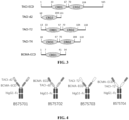
- TACI sequence fragments with different lengths were designed, and the C-terminus of TACI-ECD or its fragments was directly fused with the N-terminus of human IgG1's Fc (SEQ ID NO: 3) to construct TACI-Fc fusion proteins (including full-length TACI-ECD-Fc and TACI-9-Fc); 293E (EBNA1 gene-modified human embryonic kidney cells) was transfected for expression, and the products were purified to give TACI-Fc fusion proteins containing two identical polypeptide chains (their structure is shown in FIG. 1 ). RCT-18 (telitacicept) was used as a positive control.
- the non-underlined part is a TACI sequence (positions 13 to 118 of the human TACI extracellular region, numbered in natural order), and the underlined part is an Fc sequence.
- the non-underlined part is a TACI sequence (positions 30 to 110 of the human TACI extracellular region, numbered in natural order) and the linker EPKSS (indicated in italics), and the underlined part is an Fc sequence.
- TACI-Fc fusion proteins were analyzed by mass spectrometry, and the results show that TACI-9-Fc had no cleavage fragment, but TACI cleavage fragments were detected for both the positive control RCT-18 and full-length TACI-ECD-Fc (results not shown).
- the above TACI-Fc fusion proteins' function of blocking the binding of BAFF to BAFF-R was further assessed as follows: The receptor protein was diluted with a pH 7.4 PBS (BasalMedia, B320) buffer to 2 ⁇ g/mL, and the resulting dilution was added to a 96-well microplate (Corning, 3590) at 100 ⁇ L/well. The plate was incubated overnight at 4 °C. After the liquid was discarded, 1% Casein blocking solution (Thermo, 37528) was added at 200 ⁇ L/well for blocking, and the plate was incubated at 37 °C for 2 h.
- BasalMedia, B320 BasalMedia, B320
- PBST buffer pH 7.4 PBS containing 0.1% tween-20
- streptavidin-HRP Invitrogen, 434323, diluted in a 1:4000 ratio
- the plate was incubated at 37 °C for 1 h. The supernatant was removed. After the plate was washed 3 times with PBST, the chromogenic substrate TMB (KPL, 5120-0077) was added at 100 ⁇ L/well. The plate was incubated at room temperature for 10-15 min, and 1 M H 2 SO 4 was added at 50 ⁇ L/well to stop the reaction. The absorbance at 450 nm was measured using a microplate reader. Curves for the inhibition of the binding of the ligand to the receptor were fitted using software, and IC 50 values were calculated.
- the sources of the ligand and the receptor protein used are as follows: BAFF (Sino biological, 10056-HNCH) and BAFF-R (Sino biological, 16079-H02H).
- TACI-9-Fc and RCT-18 blocked the binding of BAFF to BAFF-R with IC 50 values of 5.02 nM and 27.48 nM, respectively.
- the functional activity of TACI-9-Fc was significantly stronger than that of the control RCT-18. Therefore, TACI-9 is considered a potential candidate molecule.
- the above constructed TACI-Fc fusion proteins were analyzed by mass spectrometry, and the experimental results are shown in Table 2.
- the experimental results show that the TACI-Fc fusion proteins constructed using the TACI-9 truncated fragments did not undergo TACI polypeptide cleavage.
- the plate was washed with PBST.
- An HRP-mouse anti-human Fc antibody (GenScript, Cat: A01854-200) was diluted with Blocking Buffer. Incubation was performed at 37 °C for 40 min.
- the plate was washed with PBST. 100 ⁇ L of TMB substrate solution (Biopanda, Cat: TMB-S-003) was added, and color development was performed at 37 °C for 3 min. 100 ⁇ L of ELISA stop solution (Solarbio, Cat: C1058) was added. OD450 was measured.
- the TACI-BCMA fusion proteins described in Example 4 were each linked to the C-terminus of the light chain of the antibody anifrolumab by linker 1.
- B613301 and B613302 were obtained by linking the fusion protein of TACI-d2 and BCMA-ECD to the C-terminus of the light chain of the antibody anifrolumab by linker 1.
- B613303 and B613304 were obtained by linking the fusion protein of TACI-T2 and BCMA-ECD to the C-terminus of the light chain of the antibody anifrolumab by linker 1.
- the heavy chains of B613301, B613302, B613303, and B613304 are all anifrolumab's full-length heavy chain (SEQ ID NO: 55), and the specific sequences of their light chains are shown below, with light chain constant regions underlined:
- Example 10 Inhibition of Activity of Type I Interferons by Fusion Proteins of Anifrolumab and TACI-BCMA
- test antibodies were added, and the plate was incubated at 37 °C for 30 min.
- IFN- ⁇ (Sino biological, Cat: 10704-HNAS) with a final concentration of 0.01 ng/mL was added, and the plate was incubated at 37 °C for 24 h.
- 20 ⁇ L of the culture supernatant was taken and mixed with 180 ⁇ L of Quanti-Blue (InvivoGen, Cat: rep-qbs) in a new 96-well plate. The plate was incubated at 37 °C for 1 h, and OD655 was measured.
- B613301, B613302, and B613303, which are fusion proteins of anifrolumab and TACI-BCMA, to bind to BAFF and APRIL were assessed by ELISA as follows: BAFF (PeproTech, Cat: 310-13) or ARPIL (Acro Biosystems, Cat: APL-H52D1) was diluted to 1 ⁇ g/mL with PBS, and a 96-well plate (Costar, Cat: 3590) was coated with the dilution overnight at 4 °C. The plate was washed with PBST and blocked with Blocking Buffer (PBST containing 1% BSA) at 37 °C for 1 h. The plate was tapped. The test antibodies were diluted with Blocking Buffer.
- BCMA-ECD-1 (amino acid residues 1-43) and BCMA-ECD-2 (amino acid residues 1-41) exclude risky sites that are likely to exist in the non-CRD domains of BCMA, such as the glycosylation sites (amino acid residues 42-44, NAS) and the deamidation sites (amino acid residues 47-48, NS). Excluding risky sites enables fusion proteins to be more homogeneous.
- B637301 was obtained by fusing TACI-19-16 to the N-terminus of BCMA-ECD-1 and then linking TACI-19-16-BCMA-ECD-1 to the C-terminus of the light chain of the antibody anifrolumab by linker 1;
- B637302 was obtained by fusing TACI-19-16 to the C-terminus of BCMA-ECD-2 and then linking BCMA-ECD-2-TACI-19-16 to the C-terminus of the light chain of the antibody anifrolumab by linker 1;
- B746201 was obtained by fusing TACI-19-16 to the C-terminus of BCMA-ECD-2 and then linking BCMA-ECD-2-TACI-19-16 to the C-terminus of the heavy chain of the antibody anifrolumab by linker 2.
- the pDC functional experiment was as follows: Freshly isolated healthy human PBMCs were cultured in vitro in a 1640 basal culture medium containing GlutaMAX (with a sugar concentration of 11 mM), seeded in a 96-well plate at a density of 3 ⁇ 10 6 /mL, stimulated with 0.5 ⁇ M CpG-A ODN 2216 (InvivoGen cat: tlrl-2216), and treated with gradient concentrations of anifrolumab, B637302, B606401, and IgG1 isotype. After 24 h, the level of IFN- ⁇ cytokine secretion in the cell culture supernatant was determined using a human IFN- ⁇ kit (Cisbio cat: 62HIFNAPEG).
- Human B cells were isolated from fresh healthy human PBMCs using a B cell sorting kit (Stemcell cat: 17954), cultured in vitro in a 1640 basal culture medium containing GlutaMAX (Gibco cat: 72400-47), seeded in a 96-well plate at a density of 1 ⁇ 10 5 /well, and stimulated with 2 ⁇ g/mL CpG-B 2006 (InvivoGen cat: tlrl-2006) and 250 U/mL IFN- ⁇ (Biolegend cat: 592704).
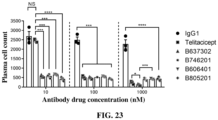
- telitacicept or anifrolumab alone did not exhibit significant inhibitory activity against plasma cell production, while B637302 and B606401 did. See B of FIG. 24 .
- anifrolumab alone did not exhibit significant inhibitory activity, telitacicept alone exhibited some activity, and B637302 is also significantly superior to telitacicept in activity.
- C of FIG. 24 Under the condition of 1000 nM drug treatment, anifrolumab alone exhibited some activity, and fusion proteins B637302 and B606401 are also significantly superior to anifrolumab in activity. See D of FIG. 24 .
- Drug concentration (nM) CD27 + CD38 + plasma cell count
- IgG1 Anifrolumab Telitacicept B637302 B606401 Mean value Standard deviation Mean value Standard deviation Mean value Standard deviation Mean value Standard deviation Mean value Standard deviation 10 3370 297 4312 546 3906 230 1754 308 2275 416 100 3964 111 3703 198 2056 142 1391 259 1457 714 1000 3918 111 1633 297 1015 113 704 416 1054 136
- Peripheral blood was collected at time points days 1 and 3, PBMCs were separated, and the mRNA expression levels of genes downstream of IFN- ⁇ (such as ISG-15, IFI13, MX-1, and HERC5) were measured by QPCR. See A of FIG. 25 and B of FIG. 25 .
- PBMCs were collected at 2 h post-induction and assayed for pSTAT1 by flow cytometry, and the results show that B637302, B606401, and anifrolumab are comparable in inhibitory activity against hIFN- ⁇ .
- D and E of FIG. 25 the QPCR measurements of the mRNA expression levels of ISG on days 1, 3, and 7 also show similar results, which are consistent with the results of the foregoing in vitro reporter molecule tests and biological activity experiments.
- mice were induced by intraperitoneal injection of 3 ⁇ g of BAFF (BAF-H52D4-1mg, AcroBio) and 0.5 ⁇ g of APRIL (APL-H52D1-1mg, AcroBio).
- BAFF BAF-H52D4-1mg, AcroBio
- APRIL APL-H52D1-1mg, AcroBio
- the drugs telitacicept, B637302, and B606401, as well as PBS were intraperitoneally injected to treat the mice.
- Peripheral blood was collected on days 4 and 7, and the IgA levels in the plasma were measured by ELISA (A of FIG. 26 ).
- results show that there were no significant differences in IgA level between the PBS group and the administration groups on days 0 and 2 (results not shown), while B637302, B606401, and telitacicept significantly inhibited IgA production on days 4 and 7 compared to the PBS control group. See B of FIG. 26 and C of FIG. 26 . Moreover, the results from day 7 also show that under equimolar administration conditions, B637302 > B606401 > telitacicept in terms of efficacy. See C of FIG. 26 . This is consistent with the results of the foregoing in vitro ELISA binding assays for BAFF and APRIL and in vitro biological activity experiments.
Landscapes
- Health & Medical Sciences (AREA)
- Chemical & Material Sciences (AREA)
- Immunology (AREA)
- Life Sciences & Earth Sciences (AREA)
- Organic Chemistry (AREA)
- Medicinal Chemistry (AREA)
- General Health & Medical Sciences (AREA)
- Proteomics, Peptides & Aminoacids (AREA)
- Biochemistry (AREA)
- Molecular Biology (AREA)
- Genetics & Genomics (AREA)
- Biophysics (AREA)
- Engineering & Computer Science (AREA)
- Bioinformatics & Cheminformatics (AREA)
- Veterinary Medicine (AREA)
- Public Health (AREA)
- Pharmacology & Pharmacy (AREA)
- Animal Behavior & Ethology (AREA)
- Zoology (AREA)
- Chemical Kinetics & Catalysis (AREA)
- General Chemical & Material Sciences (AREA)
- Nuclear Medicine, Radiotherapy & Molecular Imaging (AREA)
- Gastroenterology & Hepatology (AREA)
- Toxicology (AREA)
- Cell Biology (AREA)
- Transplantation (AREA)
- Peptides Or Proteins (AREA)
- Medicines That Contain Protein Lipid Enzymes And Other Medicines (AREA)
- Preparation Of Compounds By Using Micro-Organisms (AREA)
- Micro-Organisms Or Cultivation Processes Thereof (AREA)
- Epidemiology (AREA)
Abstract
Description
- The present disclosure claims priority to Chinese Patent Application No.
CN202211041405.0, titled "FUSION PROTEIN COMPRISING TACI POLYPEPTIDE AND USE THEREOF" and filed on August 29, 2022 - The present disclosure relates to the field of biopharmaceuticals and particularly to a fusion protein comprising a TACI polypeptide and use thereof in the treatment of diseases, especially autoimmune diseases.
- Systemic lupus erythematosus (SLE) is an autoimmune disease that affects various tissues and organs in the human body, such as the skin on the face and the kidneys. A distinguishing characteristic of SLE is the production of antibodies against the patient's own tissue antigens, such as antinuclear antibodies (ANAs). The causes of SLE are complex and involve factors such as genetic predisposition, environments, hormones, and autoantibodies. The disease has a prolonged course with highly variable clinical symptoms among individuals, reflecting its significant heterogeneity. In addition, SLE has a high incidence rate. In China alone, there are over one million SLE patients. The global incidence rate is approximately (30 to 50)/100,000 people, and the incidence rate in women is 10 times higher than in men.
- The activation of the type I interferon pathway plays a critical role in the pathogenesis of SLE. It can promote the activation of multiple types of immune cells closely related to SLE development, such as plasmacytoid dendritic cells (pDCs) and B cells. 60% to 80% of SLE patients exhibit high expression of type I interferons, and there is a positive correlation between type I interferon levels and SLE disease activity index (SLEDAI) scores. Anifrolumab, developed by AstraZeneca, is a monoclonal antibody targeting type I interferon (IFN) receptor subunit 1 (IFNAR1). It antagonizes the related activities of all type I interferons (IFN-α, IFN-β, IFN-ω, etc.), thereby controlling the progression of SLE. In the phase III TULIP-2 clinical trial, 47.8% of patients treated with anifrolumab showed improvement in the British Isles Lupus Assessment Group-based Composite Lupus Assessment (BICLA) score, compared to 31.5% in the placebo group, suggesting an improvement in disease activity across all affected organs and a reduction in the use of glucocorticoids. However, in another phase III (TULIP-1) clinical trial with the SLE responder index SRI-4 as the endpoint, no significant improvement in disease scores was observed (36% vs. 40%). These results demonstrate the potential of targeting the type I interferon pathway to treat SLE, but targeting IFNAR1 alone may not provide sufficient efficacy.
- Both B lymphocyte stimulator (BLyS), also known as BAFF, and A proliferation-inducing ligand (APRIL) are crucial factors for the differentiation and maturation of B lymphocytes and for promoting the survival of plasma cells. They belong to the tumor necrosis factor (TNF) ligand family. The overexpression of these two factors is an important driving force behind several B lymphocyte-related autoimmune diseases, such as SLE. Members of the TNF ligand family are often synthesized as transmembrane proteins, and it is common for membrane-anchored proteins to be hydrolyzed by proteases and then released from the cell surface. BAFF is a type II transmembrane protein that exists in both membrane-bound and soluble forms. After the membrane-bound BAFF is cleaved by Furin convertase, a biologically active trimeric form of BAFF is released. BAFF is expressed on various cell types, including monocytes, dendritic cells, and bone marrow stromal cells. APRIL exists in a different form than TNF ligand family members do. APRIL is processed in the Golgi apparatus by Furin convertase and then secreted directly as a soluble trimeric form into the extracellular space.
- BAFF and APRIL have been found to have three receptors: B cell maturation antigen (BCMA), transmembrane activator and CAMEL interactor (TACI), and the BAFF receptor (BAFF-R, also known as Br3). They are all members of the TNF receptor family. The extracellular region of TNF receptors contains multiple cysteine-rich domains (CRDs), and each CRD has 6 cysteines that form 3 disulfide bonds. These CRDs fulfill the function of binding to a ligand. BAFF and APRIL have different capabilities to bind to these three receptors: BAFF binds more strongly to TACI than to BCMA, while APRIL binds more strongly to BCMA than to TACI. BAFF-R is a unique high-affinity receptor for BAFF and does not bind to APRIL.
- TACI is a type III transmembrane protein. Human TACI is a polypeptide of 293 amino acids and contains a protein N-terminal region (amino acid residues 1-165), a transmembrane region (amino acid residues 166-186), and an intracellular region (amino acid residues 187-293). The extracellular region contains two CRDs (CRD1 and CRD2), and CRD1 has a weaker affinity for BAFF and APRIL than CRD2. Studies have shown that only in human TACI,
exon 2 can be skipped, resulting in a short form of TACI that lacks the CRD1 domain. This short form of TACI can bind to BAFF and APRIL as effectively as the long form. Due to TACI's high affinities for BAFF and APRIL, fusing the soluble portion of the extracellular region of TACI with the Fc fragment of an IgG can block the binding of BAFF and APRIL to TACI, BCMA, and BAFFR receptors on the cell membrane surface, inhibiting BAFF and APRIL's biological activity and thereby treating autoimmune diseases. Atacicept is a BAFF/APRIL Trap developed by ZymoGenetics. The molecular format fuses a natural TACI extracellular region and an IgG1-Fc fragment (lacking FcγR binding activity), i.e., TACI-Fc. Telitacicept (RCT-18) is a TACI-Fc molecule developed by RemeGen. Both telitacicept and atacicept can target the cytokines BAFF and APRIL simultaneously. Compared to belimumab, which only inhibits BAFF, TACI-Fc, which inhibits both BAFF and APRIL, can more effectively reduce immune responses in the body, thereby achieving treatment of SLE. Phase II clinical studies have shown that the high-dose group of telitacicept achieved a significantly higher SLE responder index (SRI-4) at 48 weeks than the placebo control group (79.2% vs. 32.0%) and reached the primary endpoint, suggesting that inhibiting APRIL may be crucial for treating lupus erythematosus. - BCMA is a type III transmembrane protein. Human BCMA protein is a polypeptide of 184 amino acids and contains a protein N-terminal region (amino acid residues 1-50), a transmembrane region (amino acid residues 51-93), and an intracellular region (amino acid residues 94-184). BCMA contains a CRD in the extracellular region, and it binds more strongly to APRIL than TACI. BCMA can promote the survival of plasma cells, negatively affecting autoimmune diseases. BCMA is also involved in the development of humoral immunity (e.g., antibody production) and immune-related diseases. No BCMA extracellular region or its fusion proteins have entered clinical trials yet.
- Conventional treatments for SLE mainly include antimalarials, glucocorticoids, and immunosuppressants. Several major hormonal therapies are basic treatments. Clinicians adjust the dosage of hormones based on the SLE patient's disease activity and, on this basis, add immunosuppressants, biologics, or other treatments. Compared to rheumatoid arthritis, psoriatic arthritis, and ankylosing spondylitis, there are very few new therapies approved for SLE, especially biologics. Used widely as basic therapeutic agents, traditional hormones have poor selectivity and long-term side effects. Belimumab is the only new targeted therapy drug approved in the past 50 years in China. Therefore, there is an urgent need to develop new, safe, and effective targeted drugs to meet the significant clinical demand for SLE treatment.
- As the overexpression of BAFF/APRIL is closely related to autoimmune diseases, targeting these molecules to block their activity can reduce the development of disease and ameliorate disease symptoms, thereby achieving alleviation and treatment of autoimmune diseases. The related receptors that block BAFF/APRIL signaling can specifically act on target cells and are expected to become new biologics for treating autoimmune diseases. Therefore, there is an urgent need in the art to develop new compounds that can effectively inhibit or block the BAFF/APRIL pathway. The present disclosure provides a fusion protein containing a TACI polypeptide, which has the potential to become a safe and effective clinical treatment for autoimmune diseases, such SLE.
- The present disclosure provides a fusion protein of a new structure comprising a TACI polypeptide, a nucleic acid encoding same, a vector, a host cell, a pharmaceutical composition, a method for treating or ameliorating a disease (e.g., a B cell disorder or an autoimmune disease) with same, and pharmaceutical use thereof.
- The present disclosure provides a fusion protein, and the fusion protein is selected from the following structures:
- (1) comprising a TACI polypeptide;
- (2) comprising a BCMA polypeptide;
- (3) comprising a TACI polypeptide and a BCMA polypeptide;
- (4) comprising a TACI polypeptide and an antibody (e.g., an anti-IFNAR1 antibody);
- (5) comprising a BCMA polypeptide and an antibody (e.g., an anti-IFNAR1 antibody); and
- (6) comprising a TACI polypeptide, a BCMA polypeptide, and an antibody (e.g., an anti-IFNAR1 antibody).
- In some embodiments, the TACI polypeptide comprises a CRD1 and/or a CRD2 of a TACI extracellular region, e.g., a CRD2 of a TACI extracellular region.
- In some embodiments, the TACI polypeptide comprises a polypeptide selected from any one of (1)-(6) below:
- (1) the amino acid residues at positions 68-105 of SEQ ID NO: 1, or a variant thereof;
- (2) SEQ ID NO: 1 or a polypeptide having at least 90% sequence identity thereto;
- (3) the amino acid residues at positions 33-67 of SEQ ID NO: 1;
- (4) the amino acid residues at positions 70-104 of SEQ ID NO: 1, or a variant thereof;
- (5) the amino acid residues at positions 30-110, 69-111, 69-112, 13-118, or 33-104 of SEQ ID NO: 1, or a variant thereof; and
- (6) the amino acid residues at positions 68-106, 68-107, or 68-108 of SEQ ID NO: 1, or a variant thereof.
- In some specific embodiments, the variant has one or more amino acid mutations selected from
positions 69, 72, 73, 77, 85, 102, and 103. - In some specific embodiments, the variant has one or more amino acid replacements selected from 69T or 69R, 72S, 73E or 73Q, 77E, 85T or 85A, 102A or 102R, and 103Y.
- In some specific embodiments, the variant has an amino acid replacement or a combination of replacements selected from any one of the following: 69T; 72S; 73E; 73Q; 77E; 69R/85T; 69R/85A; 102A; 69R/85T/102R; 73E/77E; 72S/73E/77E; 69T/102A; 69T/103Y; 69T/102A and 103Y; and 69T/73E/77E/102A.
- In some specific embodiments, the present disclosure uses "
mutation 1/mutation 2" to mean that bothmutation 1 andmutation 2 are present in the variant after mutation. For example, "69T/102A" means that the mutant comprises amino acid mutations 69T and 102A; "69T/73E/77E/102A" means that the mutant comprises amino acid mutations 69T, 73E, 77E, and 102A. - In some specific embodiments, the variant has a combination of amino acid replacements 69T/73E/77E/102A, for example, a combination of amino acid replacements L69T/K73E/K77E/Y102A.
- The sites of the amino acid mutations are amino acid residue sites numbered in natural order relative to the TACI extracellular region (SEQ ID NO: 1). For example, "the variant has an amino acid mutation selected from
position 69" means that the amino acid residue corresponding to position 69 of SEQ ID NO: 1 has a mutation. - In some embodiments, the amino acid sequence of the TACI polypeptide comprises an amino acid sequence selected from any one of SEQ ID NOs: 1, 2, and 6-29.
- In the present disclosure, "at least 90% (sequence) identity" encompasses at least 90%, at least 91%, at least 92%, at least 93%, at least 94%, at least 95%, at least 96%, at least 97%, at least 98%, at least 99%, or 100% (sequence) identity; "at least 80% (sequence) identity" encompasses at least 80%, at least 81%, at least 82%, at least 83%, at least 84%, at least 85%, at least 86%, at least 87%, at least 88%, at least 89%, at least 90%, at least 91%, at least 92%, at least 93%, at least 94%, at least 95%, at least 96%, at least 97%, at least 98%, at least 99%, or 100% (sequence) identity.
- In some embodiments, the BCMA polypeptide comprises a CRD1 of a BCMA extracellular region.
- In some embodiments, the BCMA polypeptide comprises the amino acid residues at positions 7-41 of SEQ ID NO: 30.
- In some embodiments, the BCMA polypeptide comprises an amino acid sequence set forth in any one of SEQ ID NOs: 30, 67, and 68 or having at least 90% sequence identity thereto.
- In some embodiments, the antibody in the fusion protein is an anti-IFNAR1 antibody or an antigen-binding fragment thereof.
- In some embodiments, the anti-IFNAR1 antibody or the antigen-binding fragment thereof comprises a heavy chain variable region (VH) and a light chain variable region (VL), wherein the heavy chain variable region comprises a HCDR1, a HCDR2, and a HCDR3, and the amino acid sequences of the HCDR1, the HCDR2, and the HCDR3 are set forth in SEQ ID NOs: 45-47, respectively; the light chain variable region comprises a LCDR1, a LCDR2, and a LCDR3, and the amino acid sequences of the LCDR1, the LCDR2, and the LCDR3 are set forth in SEQ ID NOs: 48-50, respectively.
- In some embodiments, the amino acid sequence of the heavy chain variable region of the anti-IFNAR1 antibody is set forth in SEQ ID NO: 43 or has at least 90% sequence identity thereto, and the amino acid sequence of the light chain variable region is set forth in SEQ ID NO: 44 or has at least 90% sequence identity thereto.
- In some embodiments, the amino acid sequence of the heavy chain of the anti-IFNAR1 antibody is set forth in SEQ ID NO: 55 or has at least 80% sequence identity thereto, and the amino acid sequence of the light chain is set forth in SEQ ID NO: 54 or has at least 80% sequence identity thereto.
- In some embodiments, the amino acid sequence of the heavy chain of the anti-IFNAR1 antibody is set forth in SEQ ID NO: 61 or has at least 80% sequence identity thereto, and the amino acid sequence of the light chain is set forth in SEQ ID NO: 54 or has at least 80% sequence identity thereto.
- In some embodiments, the present disclosure incorporates anifrolumab, sifalimumab, and the entirety of the anti-IFNAR1 antibodies or the antigen-binding fragments thereof in
WO20062002177A WO2009100309A (e.g., 3F11, 4G5, 11E2, and 9D4),WO2020156474A (e.g., 7G4 and 10C5),WO2020057541A (e.g., 8G11H and 485G10H),CN201610634601.7 CN201510685200.X WO2012162367A as the anti-IFNAR1 antibody of the present disclosure. - As previously described, the present disclosure provides a fusion protein comprising a TACI polypeptide and a BCMA polypeptide, a fusion protein comprising a TACI polypeptide and an anti-IFNAR1 antibody (or an antigen-binding fragment thereof), or a fusion protein comprising a TACI polypeptide, a BCMA polypeptide, and an anti-IFNAR1 antibody (or an antigen-binding fragment thereof).
- In some embodiments, the fusion protein further comprises a heavy chain constant region (Fc region) of an immunoglobulin. In some specific embodiments, the Fc region comprises two subunits capable of associating. In some embodiments, the two subunits are a first subunit and a second subunit that are identical or different. In some embodiments, the Fc region is an Fc region of IgG, IgA, IgM, or IgD; in some embodiments, the Fc region is an Fc region of human IgG1, IgG2, IgG3, or IgG4, e.g., an Fc region of human IgG1, or, e.g., an Fc region set forth in SEQ ID NO: 3.
- In some embodiments, the Fc region in the fusion protein comprises one or more amino acid substitutions compared to a wild-type Fc region, and the amino acid substitutions are capable of reducing the binding of the Fc region to an Fc receptor (FcR); in some embodiments, the amino acid substitutions are capable of reducing the binding of the Fc region to an Fcγ receptor (FcγR); in some embodiments, the Fc region has YTE mutations (M252Y, S254T, and T256E), S228P, L234F, L235E, L234F/L235E, L234A/L235A, or L234F/L235E/P331S mutations, and the mutation sites are numbered according to the EU index.
- In some embodiments, the Fc region in the fusion protein comprises a first subunit and a second subunit capable of associating with each other, and the first subunit and second subunit have one or more amino acid substitutions for reducing homodimerization. In some embodiments, the first subunit has a knob structure according to the knob-into-hole technique, and the second subunit has a hole structure according to the knob-into-hole technique; or the first subunit has a hole structure according to the knob-into-hole technique, and the second subunit has a knob structure according to the knob-into-hole technique. In some embodiments, the amino acid residue substitutions in the first subunit include one or more amino acid substitutions selected from positions 354, 356, 358, and 366, and the amino acid residue substitutions in the second subunit include one or more amino acid substitutions selected from positions 349, 356, 358, 366, 368, and 407. In some embodiments, the first subunit comprises one or more amino acid substitutions selected from 354C, 356E, 358M, and 366W, and the second subunit comprises one or more amino acid substitutions selected from 349C, 356E, 358M, 366S, 368A, and 407V. In some embodiments, the first subunit comprises amino acid substitutions 354C, 356E, 358M, and 366W, and the second subunit comprises amino acid substitutions 349C, 356E, 358M, 366S, 368A, and 407V.
- In some embodiments, the TACI polypeptide is any one of the TACI polypeptides provided above by the present disclosure, and the BCMA polypeptide is any one of the BCMA polypeptides provided above by the present disclosure.
- In some embodiments, the fusion protein comprises one or more (e.g., 2, 3, 4, 5, or 6) said TACI polypeptides and one or more (e.g., 2, 3, 4, 5, or 6) said BCMA polypeptides. In some embodiments, the fusion protein comprises one said TACI polypeptide and one said BCMA polypeptide, or two said TACI polypeptides and two said BCMA polypeptides, or three said TACI polypeptides and three said BCMA polypeptides, or four said TACI polypeptides and four said BCMA polypeptides, or two said TACI polypeptides and one said BCMA polypeptide, or one said TACI polypeptide and two said BCMA polypeptides, or three said TACI polypeptides and one said BCMA polypeptide, or one said TACI polypeptide and three said BCMA polypeptides; when the fusion protein comprises two or more said TACI polypeptides, the TACI polypeptides may be TACI polypeptides with identical or different sequences provided by the present disclosure; when the fusion protein comprises two or more said BCMA polypeptides, the BCMA polypeptides may be BCMA polypeptides with identical or different sequences provided by the present disclosure.
- In some embodiments, in the fusion protein, the TACI polypeptide and a subunit of the Fc region are linked in any order; optionally, the TACI polypeptide is linked to the first subunit or the second subunit of the Fc region by a linker or directly. In some embodiments, in any one of the aforementioned fusion proteins, the BCMA polypeptide and a subunit of the Fc region are linked in any order; optionally, the BCMA polypeptide is linked to the first subunit or the second subunit of the Fc region by a linker or directly. In some embodiments, the C-terminus of the TACI polypeptide is linked to the N-terminus of the first subunit or the second subunit of the Fc region by a linker or directly, or the N-terminus of the TACI polypeptide is linked to the C-terminus of the first subunit or the second subunit of the Fc region by a linker or directly. In some embodiments, the C-terminus of the BCMA polypeptide is linked to the N-terminus of the first subunit or the second subunit of the Fc region by a linker or directly, or the N-terminus of the BCMA polypeptide is linked to the C-terminus of the first subunit or the second subunit of the Fc region by a linker or directly.
- In some embodiments, the fusion protein comprising a TACI polypeptide and a BCMA polypeptide comprises a polypeptide chain set forth in any one of (I)-(VIII) below:
- (I) [TACI polypeptide]-[linker 1]a-[BCMA polypeptide]-[linker 2]b-[Fc region]e;
- (II) [BCMA polypeptide]-[linker 1]a-[TACI polypeptide]-[linker 2]b-[Fc region]e;
- (III) [Fc region]e-[linker 3]c-[TACI polypeptide]-[linker 4]d-[BCMA polypeptide];
- (IV) [Fc region]e-[linker 3]c-[BCMA polypeptide]-[linker 4]d-[TACI polypeptide];
- (V) [TACI polypeptide 1]-[linker 1]a-[BCMA polypeptide 1]-[linker 2]b-[Fc region]e-[linker 3]c-[TACI polypeptide 2]-[linker 4]d-[BCMA polypeptide 2];
- (VI) [BCMA polypeptide 1]-[linker 1]a-[TACI polypeptide 1]-[linker 2]b-[Fc region]e-[linker 3]c-[BCMA polypeptide 2]-[linker 4]d-[TACI polypeptide 2];
- (VII) [TACI polypeptide 1]-[linker 1]a-[BCMA polypeptide 1]-[linker 2]b-[Fc region]e-[linker 3]c-[BCMA polypeptide 2]-[linker 4]d-[TACI polypeptide 2]; and
- (VIII) [BCMA polypeptide 1]-[linker 1]a-[TACI polypeptide 1]-[linker 2]b-[Fc region]e-[linker 3]c-[TACI polypeptide 2]-[linker 4]d-[BCMA polypeptide 2];
- In some embodiments, the linkers are amino acid sequences represented by (GmSn)h or (GGNGT)h (SEQ ID NO: 75) or (YGNGT)n (SEQ ID NO: 76) or (EPKSS)h (SEQ ID NO: 77), wherein m and n are each independently selected from an integer of 1-8 (e.g., 1, 2, 3, 4, 5, 6, 7, or 8), and h is independently selected from an integer of 1-20 (e.g., 1, 2, 3, 4, 5, 6, 7, 8, 9, 10, 11, 12, 13, 14, 15, 16, 17, 18, 19, or 20). In some specific embodiments, the linkers are (GxS)y linkers, wherein x is selected from an integer of 1-5, and y is selected from an integer of 1-6; for example, the linkers are linkers set forth in any one of SEQ ID NOs: 39-41. For example, the linkers have an amino acid sequence represented by (G4S)y (SEQ ID NO: 78), wherein y is independently selected from an integer of 1-6 (for example, y is 1, 2, 3, 4, 5, or 6).
- In some embodiments, a fusion protein comprising a TACI polypeptide and a BCMA polypeptide is provided, the fusion protein comprising a polypeptide set forth in any one of SEQ ID NOs: 31-38, 69, and 70 or having at least 90% sequence identity thereto.
- In some embodiments, the fusion protein is a multimer, e.g., a dimer (e.g., a homodimer or a heterodimer).
- In some embodiments, a fusion protein comprising a TACI polypeptide and a BCMA polypeptide is provided, wherein the TACI polypeptide may be a variant, and the variant has 1 to 10 (1, 2, 3, 4, 5, 6, 7, 8, 9, or 10) amino acid mutations; in some embodiments, a fusion protein comprising a TACI polypeptide and a BCMA polypeptide is provided, wherein the BCMA polypeptide may be a variant, and the variant has 1 to 10 (1, 2, 3, 4, 5, 6, 7, 8, 9, or 10) amino acid mutations; the amino acid mutations may be conservative replacements, substitutions, or modifications, and/or deletions and additions that do not affect functionality.
- In some embodiments, a protein or molecule is provided, and the protein or molecule competes with the fusion protein comprising a TACI polypeptide and a BCMA polypeptide, the TACI polypeptide, or the BCMA polypeptide for binding to BAFF and/or APRIL or blocks the binding of the fusion protein comprising a TACI polypeptide and a BCMA polypeptide, the TACI polypeptide, or the BCMA polypeptide to BAFF and/or APRIL.
- In some embodiments, the TACI polypeptide is any one of the TACI polypeptides provided above by the present disclosure, and the anti-IFNAR1 antibody is any one of the anti-IFNAR1 antibodies provided above by the present disclosure.
- In some embodiments, the fusion protein comprising a TACI polypeptide and an anti-IFNAR1 antibody comprises one or more (e.g., 2, 3, 4, 5, or 6) TACI polypeptides.
- In some embodiments, the fusion protein comprising a TACI polypeptide and an anti-IFNAR1 antibody comprises one or more (e.g., 2, 3, or 4) anti-IFNAR1 antibodies.
- In some embodiments, the fusion protein comprising a TACI polypeptide and an anti-IFNAR1 antibody comprises polypeptide chains set forth in any one of (I)-(VIII) below:
- (I) a first polypeptide chain that is, from the N-terminus to the C-terminus, [TACI polypeptide]-[linker 1]a-[antibody heavy chain], and a second polypeptide chain that is an antibody light chain;
- (II) a first polypeptide chain that is, from the N-terminus to the C-terminus, [antibody heavy chain]-[linker 2]b-[TACI polypeptide], and a second polypeptide chain that is an antibody light chain;
- (III) a first polypeptide chain that is an antibody heavy chain, and a second polypeptide chain that is, from the N-terminus to the C-terminus, [TACI polypeptide]-[linker 3]c-[antibody light chain];
- (IV) a first polypeptide chain that is an antibody heavy chain, and a second polypeptide chain that is, from the N-terminus to the C-terminus, [antibody light chain]-[linker 4]d-[TACI polypeptide];
- (V) a first polypeptide chain that is, from the N-terminus to the C-terminus, [TACI polypeptide 1]-[linker 1]a-[antibody heavy chain], and a second polypeptide chain that is, from the N-terminus to the C-terminus, [antibody light chain]-[linker 4]d-[TACI polypeptide 2];
- (VI) a first polypeptide chain that is, from the N-terminus to the C-terminus, [antibody heavy chain]-[linker 2]b-[TACI polypeptide 1], and a second polypeptide chain that is, from the N-terminus to the C-terminus, [TACI polypeptide 2]-[linker 3]c-[antibody light chain];
- (VII) a first polypeptide chain that is, from the N-terminus to the C-terminus, [TACI polypeptide 1]-[linker 1]a-[antibody heavy chain]-[linker 2]b-[TACI polypeptide 2], and a second polypeptide chain that is an antibody light chain; and
- (VIII) a first polypeptide chain that is an antibody heavy chain, and a second polypeptide chain that is, from the N-terminus to the C-terminus, [TACI polypeptide 1]-[linker 3]c-[antibody light chain]-[linker 4]d-[TACI polypeptide 2];
- In some embodiments, the linkers are amino acid sequences represented by (GmSn)h or (GGNGT)h or (YGNGT)n or (EPKSS)h, wherein m and n are each independently selected from an integer of 1-8 (e.g., 1, 2, 3, 4, 5, 6, 7, or 8), and h is independently selected from an integer of 1-20 (e.g., 1, 2, 3, 4, 5, 6, 7, 8, 9, 10, 11, 12, 13, 14, 15, 16, 17, 18, 19, or 20). In some specific embodiments, the linkers are (GxS)y linkers, wherein x is selected from an integer of 1-5, and y is selected from an integer of 1-6; for example, the linkers are linkers set forth in any one of SEQ ID NOs: 39-41. For example, the linkers have an amino acid sequence represented by (G4S)y, wherein y is independently selected from an integer of 1-6 (for example, y is 1, 2, 3, 4, 5, or 6).
- In some embodiments, a fusion protein comprising a TACI polypeptide and an anti-IFNAR1 antibody is provided, the fusion protein comprising: a first polypeptide chain set forth in any one of SEQ ID NOs: 51-53 and 62 or having at least 80% or at least 90% sequence identity thereto, and a second polypeptide chain set forth in SEQ ID NO: 54 or having at least 80% or at least 90% sequence identity thereto;
a first polypeptide chain set forth in SEQ ID NO: 55 or having at least 80% or at least 90% sequence identity thereto, and a second polypeptide chain set forth in any one of SEQ ID NOs: 56-60 or having at least 80% or at least 90% sequence identity thereto; or a first polypeptide chain set forth in SEQ ID NO: 61 or having at least 80% or at least 90% sequence identity thereto, and a second polypeptide chain set forth in any one of SEQ ID NOs: 56-60 or having at least 80% or at least 90% sequence identity thereto. - In some embodiments, the aforementioned fusion protein comprises two identical first polypeptide chains and two identical second polypeptide chains.
- In some embodiments, the present disclosure provides a fusion protein comprising a TACI polypeptide and an anti-IFNAR1 antibody, wherein the TACI polypeptide may be a variant, and the variant has 1 to 10 (1, 2, 3, 4, 5, 6, 7, 8, 9, or 10) amino acid mutations; the amino acid mutations may be conservative replacements, substitutions, or modifications, and/or deletions and additions that do not affect functionality.
- In some embodiments, a protein or molecule is provided, and the protein or molecule competes with the aforementioned fusion protein comprising a TACI polypeptide and an anti-IFNAR1 antibody for binding to BAFF and/or APRIL or blocks the binding of the fusion protein to BAFF and/or APRIL.
- In some embodiments, the TACI polypeptide is any one of the TACI polypeptides provided above by the present disclosure, the BCMA polypeptide is any one of the BCMA polypeptides provided above by the present disclosure, and the anti-IFNAR1 antibody is any one of the anti-IFNAR1 antibodies provided above by the present disclosure.
- In some embodiments, the antibody fusion protein comprising a TACI polypeptide, a BCMA polypeptide, and an anti-IFNAR1 antibody comprises one or more (e.g., 2, 3, 4, 5, or 6) TACI polypeptides. In some embodiments, the antibody fusion protein comprising a TACI polypeptide, a BCMA polypeptide, and an anti-IFNAR1 antibody comprises one or more (e.g., 2, 3, 4, 5, or 6) BCMA polypeptides. In some embodiments, the antibody fusion protein comprising a TACI polypeptide, a BCMA polypeptide, and an anti-IFNAR1 antibody comprises one or more (e.g., 2, 3, or 4) anti-IFNAR1 antibodies. In some embodiments, the aforementioned antibody fusion protein comprising a TACI polypeptide, a BCMA polypeptide, and an anti-IFNAR1 antibody comprises one aforementioned TACI polypeptide and one aforementioned BCMA polypeptide, or two aforementioned TACI polypeptides and two aforementioned BCMA polypeptides, or three aforementioned TACI polypeptides and three aforementioned BCMA polypeptides, or four aforementioned TACI polypeptides and four aforementioned BCMA polypeptides, or two aforementioned TACI polypeptides and one aforementioned BCMA polypeptide, or one aforementioned TACI polypeptide and two aforementioned BCMA polypeptides, or three aforementioned TACI polypeptides and one aforementioned BCMA polypeptide, or one aforementioned TACI polypeptide and three aforementioned BCMA polypeptides, and one anti-IFNAR1 antibody; when the fusion protein comprises two or more aforementioned TACI polypeptides, the TACI polypeptides may be TACI polypeptides with identical or different sequences provided by the present disclosure; when the fusion protein comprises two or more aforementioned BCMA polypeptides, the BCMA polypeptides may be BCMA polypeptides with identical or different sequences provided by the present disclosure.
- In some embodiments, the fusion protein comprising a TACI polypeptide, a BCMA polypeptide, and an anti-IFNAR1 antibody according to any one of the foregoing comprises polypeptide chains set forth in any one of (I)-(VIII) below:
- (I) a first polypeptide chain that is, from the N-terminus to the C-terminus, [TACI polypeptide and BCMA polypeptide domain]-[linker 1]a-[antibody heavy chain], and a second polypeptide chain that is an antibody light chain;
- (II) a first polypeptide chain that is, from the N-terminus to the C-terminus, [antibody heavy chain]-[linker 2]b-[TACI polypeptide and BCMA polypeptide domain], and a second polypeptide chain that is an antibody light chain;
- (III) a first polypeptide chain that is an antibody heavy chain, and a second polypeptide chain that is, from the N-terminus to the C-terminus, [TACI polypeptide and BCMA polypeptide domain]-[linker 3]c-[antibody light chain];
- (IV) a first polypeptide chain that is an antibody heavy chain, and a second polypeptide chain that is, from the N-terminus to the C-terminus, [antibody light chain]-[linker 4]d-[TACI polypeptide and BCMA polypeptide domain];
- (V) a first polypeptide chain that is, from the N-terminus to the C-terminus, [TACI polypeptide and BCMA polypeptide domain 1]-[linker 1]a-[antibody heavy chain], and a second polypeptide chain that is, from the N-terminus to the C-terminus, [antibody light chain]-[linker 4]d-[TACI polypeptide and BCMA polypeptide domain 2];
- (VI) a first polypeptide chain that is, from the N-terminus to the C-terminus, [antibody heavy chain]-[linker 2]b-[TACI polypeptide and BCMA polypeptide domain 1], and a second polypeptide chain that is, from the N-terminus to the C-terminus, [TACI polypeptide and BCMA polypeptide domain 2]-[linker 3]c-[antibody light chain];
- (VII) a first polypeptide chain that is, from the N-terminus to the C-terminus, [TACI polypeptide and BCMA polypeptide domain 1]-[linker 1]a-[antibody heavy chain]-[linker 2]b-[TACI polypeptide and BCMA polypeptide domain 2], and a second polypeptide chain that is an antibody light chain; and
- (VIII) a first polypeptide chain that is an antibody heavy chain, and a second polypeptide chain that is, from the N-terminus to the C-terminus, [TACI polypeptide and BCMA polypeptide domain 1]-[linker 3]c-[antibody light chain]-[linker 4]d-[TACI polypeptide and BCMA polypeptide domain 2];
- represents a peptide bond; the linkers are polypeptides capable of fulfilling the function of linking;
linker 1,linker 2,linker 3,linker 4, andlinker 5 may be identical or different; a, b, c, d, and e are each independently 0 or 1; a, b, c, and d are each independently 0 or 1. In solution (I), a is 1 or 0. In solution (II), b is 1 or 0. In solution (III), c is 1 or 0. In solution (IV), d is 1 or 0. In solution (V), a and d may be 0 or 1 simultaneously, or a is 0 and d is 1, or a is 1 and d is 0; in solution (VI), b and c may be 0 or 1 simultaneously, or b is 0 and c is 1, or b is 1 and c is 0; in solution (VII), a and b may be 0 or 1 simultaneously, or a is 0 and b is 1, or a is 1 and b is 0; in solution (VIII), c and d may be 0 or 1 simultaneously, or c is 0 and d is 1, or c is 1 and d is 0; in the above solutions, e may be independently 0 or 1. - In some embodiments, the linkers are amino acid sequences represented by (GmSn)h or (GGNGT)h or (YGNGT)n or (EPKSS)h, wherein m and n are each independently selected from an integer of 1-8 (e.g., 1, 2, 3, 4, 5, 6, 7, or 8), and h is independently selected from an integer of 1-20 (e.g., 1, 2, 3, 4, 5, 6, 7, 8, 9, 10, 11, 12, 13, 14, 15, 16, 17, 18, 19, or 20). In some specific embodiments, the linkers are (GxS)y linkers, wherein x is selected from an integer of 1-5, and y is selected from an integer of 1-6; for example, the linkers are linkers set forth in any one of SEQ ID NOs: 39-41. For example, the linkers have an amino acid sequence represented by (G4S)y, wherein y is independently selected from an integer of 1-6 (for example, y is 1, 2, 3, 4, 5, or 6).
- In some embodiments, a fusion protein comprising a TACI polypeptide, a BCMA polypeptide, and an anti-IFNAR1 antibody is provided, the fusion protein comprising: a first polypeptide chain set forth in SEQ ID NO: 55 or having at least 80% or at least 90% sequence identity thereto, and a second polypeptide chain set forth in any one of SEQ ID NOs: 63-66, 71, and 72 or having at least 80% or at least 90% sequence identity thereto;
- a first polypeptide chain set forth in SEQ ID NO: 61 or having at least 80% or at least 90% sequence identity thereto, and a second polypeptide chain set forth in any one of SEQ ID NOs: 63-66, 71, and 72 or having at least 80% or at least 90% sequence identity thereto; or
- a first polypeptide chain set forth in SEQ ID NO: 73 or 74 or having at least 80% or at least 90% sequence identity thereto, and a second polypeptide chain set forth in SEQ ID NO: 54 or having at least 80% or at least 90% sequence identity thereto.
- In some embodiments, the aforementioned fusion protein comprises two identical first polypeptide chains and two identical second polypeptide chains.
- In some embodiments, the present disclosure provides a fusion protein comprising a TACI polypeptide, a BCMA polypeptide, and an anti-IFNAR1 antibody, wherein the TACI polypeptide may be a variant, and the variant has 1 to 10 (1, 2, 3, 4, 5, 6, 7, 8, 9, or 10) amino acid mutations; the amino acid mutations may be conservative replacements, substitutions, or modifications, and/or deletions and additions that do not affect functionality.
- In some embodiments, a protein or molecule is provided, and the protein or molecule competes with the aforementioned fusion protein comprising a TACI polypeptide, a BCMA polypeptide, and an anti-IFNAR1 antibody for binding to BAFF and/or APRIL or blocks the binding of the fusion protein to BAFF and/or APRIL.
- In some embodiments, the fusion protein comprising a TACI polypeptide and a BCMA polypeptide, the fusion protein comprising a TACI polypeptide and an IFNAR1 antibody, and the fusion protein comprising a TACI polypeptide, a BCMA polypeptide, and an IFNAR1 antibody have one or more of the following properties or functions:
- (a) the activity of binding to BAFF;
- (b) the activity of binding to APRIL;
- (c) reducing the concentration of a serum immunoglobulin (e.g., IgE or IgM);
- (d) reducing the weight of the spleen;
- (e) inhibiting or blocking the BAFF/APRIL pathway; and
- (f) reducing the number of B cells.
- In some embodiments, the protein comprising a TACI polypeptide provided by the present disclosure (e.g., TACI-Fc) has one or more of the following functional activities:
- a. being not prone to producing fragments resulting from the cleavage of the TACI polypeptide; in some embodiments, the cleavage may be detected by mass spectrometry, e.g., the TACI cleavage analysis method in Example 2;
- b. blocking the binding of BAFF to BAFF-R; in some embodiments, TACI-Fc blocks the binding of BAFF to BAFF-R with an IC50 value of less than 23 nM, less than 10 nM, less than 6 nM, less than 5 nM, less than 4 nM, less than 3 nM, less than 2 nM, less than 1 nM, or less, as determined by an ELISA method; in some embodiments, the method for determining the IC50 value is described in Example 1;
- c. the ability to bind to BAFF; in some embodiments, the TACI-Fc binds to BAFF with an EC50 value of less than 5 nM, 1 nM, 0.5 nM, 0.4 nM, 0.3 nM, 0.2 nM, 0.1 nM, or less, as determined by an ELISA method, e.g., the ELISA binding assay of Example 2 (coating with the antigen protein);
- d. inhibiting BAFF-induced B cell proliferation; in some embodiments, TACI-Fc inhibits BAFF-induced B cell proliferation with an IC50 value of less than 0.3 nM, less than 0.2 nM, less than 0.1 nM, 0.06 nM, less than 0.05 nM, less than 0.01 nM, or less, as determined by an ELISA method, e.g., the ELISA assay in Example 17;
- e. inhibiting APRIL-induced B cell proliferation; in some embodiments, TACI-Fc inhibits APRIL-induced B cell proliferation with an IC50 value of less than 3 nM, less than 2 nM, less than 1 nM, less than 0.5 nM, less than 0.4 nM, less than 0.3 nM, 0.2 nM, less than 0.1 nM, less than 0.05, or less, as determined by an ELISA method;
- f. binding to human BAFF and/or human APRIL with a high affinity; in some embodiments, the affinity was measured by a Biacore method; in some embodiments, the TACI-Fc fusion protein binds to human BAFF with a KD value of less than 1E-10 M, less than 9E-11 M, 8E-11 M, or less; in some embodiments, the TACI-Fc fusion protein binds to human APRIL with a KD value of less than 2.3E-11 M, less than 2.0E-11 M, 1.9E-11 M, 1.3E-11 M, or less;
- g. a good in vivo pharmacokinetic profile; in some embodiments, TACI-Fc has a half-life of greater than 4 days in rats; and/or
- h. good stability; in some embodiments, after the TACI-Fc has been stored at a constant temperature of 40 °C for four weeks, the TACI-Fc fusion protein is still able to maintain a purity of 94% or higher (SEC%); in some embodiments, the TACI-Fc has a pI value of less than 9, less than 8, less than 7, less than 6, or less, as determined by "18cProt/TrEMBL" system analysis.
- In some embodiments, the fusion protein comprising a TACI polypeptide and a BCMA polypeptide provided above by the present disclosure has one or more of the following functional activities:
- a. being not prone to producing fragments resulting from the cleavage of the TACI polypeptide; in some embodiments, the cleavage may be detected by mass spectrometry, e.g., the TACI cleavage analysis method in Example 2;
- b. the ability to bind to BAFF; in some embodiments, the fusion protein binds to BAFF with an EC50 value of less than 1 nM, 0.5 nM, 0.4 nM, 0.3 nM, 0.2 nM, 0.1 nM, or less, as determined by an ELISA method, e.g., the ELISA assay of Example 5;
- c. the ability to bind to APRIL; in some embodiments, the fusion protein binds to APRIL with an EC50 value of less than 1 nM, 0.5 nM, 0.4 nM, 0.3 nM, 0.2 nM, 0.1 nM, or less, as determined by an ELISA method, e.g., the ELISA assay of Example 5;
- d. a good in vivo pharmacokinetic profile; and
- e. good stability.
- In some embodiments, the antibody fusion protein comprising a TACI polypeptide, a BCMA polypeptide, and an anti-IFNAR1 antibody provided above by the present disclosure has one or more of the following functional activities:
- a. being not prone to producing fragments resulting from the cleavage of the TACI polypeptide; in some embodiments, the cleavage may be detected by mass spectrometry, e.g., the TACI cleavage analysis method in Example 2;
- b. inhibiting the activity of type I interferons; in some embodiments, the fusion protein has an inhibition rate against the activity of IFNs consistent with or similar to that of an anti-IFNAR1 antibody (e.g., anifrolumab), wherein the inhibition rate is determined by an IFN-α/β reporter gene method in vitro, e.g., the experiment in Example 10; the inhibition rate is determined by assessing the expression of the mRNA of the ISG gene downstream of IFN-α in PBMCs in vivo, e.g., the experiment in Example 21;
- c. the ability to bind to BAFF; in some embodiments, the fusion protein binds to BAFF with an EC50 value of less than 1.5 nM, 1 nM, 0.5 nM, 0.4 nM, 0.3 nM, 0.2 nM, 0.1 nM, or less, as determined by an ELISA method, e.g., the ELISA assay of Example 11;
- d. the ability to bind to APRIL; in some embodiments, the fusion protein binds to APRIL with an EC50 value of less than 0.5 nM, 0.4 nM, 0.3 nM, 0.2 nM, 0.1 nM, or less, as determined by an ELISA method, e.g., the ELISA assay of Example 11;
- e. inhibiting IFN-α secretion; in some embodiments, the fusion protein has a capability to inhibit the secretion of cytokine IFN-α from plasmacytoid dendritic cells (pDCs) consistent with or similar to that of an anti-IFNAR1 antibody (e.g., anifrolumab), wherein the inhibition capability is measured, e.g., by the method in Example 15; in some embodiments, the fusion protein has a capability to inhibit IFN-α-induced in vitro differentiation of B cells into plasma cells consistent with or similar to that of an anti-IFNAR1 antibody (e.g., anifrolumab), wherein the inhibition capability is measured, e.g., by the method in Example 16;
- f. inhibiting plasma cell differentiation and inhibiting BAFF-induced B cell proliferation; in some embodiments, the fusion protein inhibits BAFF-induced B cell proliferation, with an inhibition rate of at least 50%, at least 40%, at least 30%, at least 20%, or at least 10%, wherein the inhibition rate is the ratio of the B cell count after the antibody fusion protein is added to the B cell count after IgG1, at an equal concentration, is added and is determined by FACS, e.g., the method in Example 17;
- g. inhibiting APRIL-induced B cell proliferation; in some embodiments, the fusion protein inhibits APRIL-induced B cell proliferation, with an inhibition rate of at least 50%, at least 40%, at least 30%, at least 20%, or at least 10%, wherein the inhibition rate is the ratio of the B cell count after the antibody fusion protein is added to the B cell count after IgG1, at an equal concentration, is added and is determined by FACS, e.g., the method in Example 18;
- h. inhibiting BAFF and APRIL-induced plasma cell production; in some embodiments, the fusion protein inhibits BAFF and APRIL-induced plasma cell production, with an inhibition rate of at least 90%, at least 80%, at least 70%, at least 60%, at least 50%, at least 40%, at least 30%, or at least 20%, wherein the inhibition rate is the ratio of the B cell count after the antibody fusion protein is added to the B cell count after IgG1, at an equal concentration, is added and is determined by FACS, e.g., the method in Example 19;
- i. inhibiting IgA production in vivo; in some embodiments, the fusion protein inhibits IgA production in vivo, with an inhibition rate of at least 80%, at least 70%, at least 60%, at least 50%, at least 40%, or at least 30%, wherein the inhibition rate is relative to an equal concentration of PBS and is determined by ELISA, e.g., the method in Example 22;
- j. a good in vivo pharmacokinetic profile; and
- k. good stability.
- In addition, in some embodiments, a product or combination is provided, the product or combination comprising any one of the fusion proteins comprising a TACI polypeptide and a BCMA polypeptide described above in the present disclosure and further an antibody. In some embodiments, a product or combination is provided, the product or combination comprising any one of the TACI polypeptides described above in the present disclosure and further an antibody. In some embodiments, the antibody is an anti-IFNAR1 antibody, e.g., anifrolumab.
- In some embodiments, a complex is provided, the complex comprising any one of the TACI polypeptides described above in the present disclosure and any one of the BCMA polypeptides described above in the present disclosure. Optionally, the TACI polypeptide and the BCMA polypeptide may be operably linked directly or by any one of the linkers described above in the present disclosure, or may not be linked.
- In some embodiments, a complex is provided, the complex comprising: any one of the TACI polypeptides described above in the present disclosure and any one of the BCMA polypeptides described above in the present disclosure; or any one of the TACI polypeptides described above in the present disclosure and any one of the anti-IFNAR1 antibodies described above in the present disclosure; or any one of the BCMA polypeptides described above in the present disclosure and any one of the anti-IFNAR1 antibodies described above in the present disclosure; or any one of the TACI polypeptides described above in the present disclosure and any one of the anti-IFNAR1 antibodies described above in the present disclosure and any one of the BCMA polypeptides described above in the present disclosure. Optionally, the TACI polypeptide, the BCMA polypeptide, and the anti-IFNAR1 antibody may be operably linked directly or by any one of the linkers described above in the present disclosure, or may not be linked.
- The present disclosure provides an (isolated) polynucleotide encoding any one of the TACI polypeptides, the BCMA polypeptides, the fusion proteins comprising a TACI polypeptide and a BCMA polypeptide, the fusion proteins comprising a TACI polypeptide and an antibody (e.g., an anti-IFNAR1 antibody), the fusion proteins comprising a TACI polypeptide and a BCMA polypeptide and an antibody (e.g., an anti-IFNAR1 antibody), the products, the combinations, or the complexes described above in the present disclosure. The polynucleotide may be DNA or RNA (e.g., mRNA).
- The nucleic acid of the present disclosure may also be in the form of a vector, and it may be present in the vector and/or may be part of the vector. The vector is, e.g., a plasmid, cosmid, YAC, or viral vector. The vector may especially be an expression vector, i.e., a vector that provides for in vitro and/or in vivo (i.e., in suitable host cells, host organisms, and/or expression systems) expression of the CD40-binding molecule. The expression vector generally comprises at least one of the nucleic acids of the present disclosure, which is operatively linked to one or more suitable expression regulatory elements (e.g., promoters, enhancers, and terminators). The selection of the elements and their sequences for expression in a particular host is within the knowledge of those skilled in the art. Regulatory elements and other elements useful or necessary for the expression of the TACI polypeptides, the BCMA polypeptides, the fusion proteins comprising a TACI polypeptide and a BCMA polypeptide, the fusion proteins comprising a TACI polypeptide and an antibody (e.g., an anti-IFNAR1 antibody), the fusion proteins comprising a TACI polypeptide and a BCMA polypeptide and an antibody (e.g., an anti-IFNAR1 antibody), the products, the combinations, or the complexes of the present disclosure include, e.g., promoters, enhancers, terminators, integration factors, selection labels, leader sequences, and reporter genes.
- The nucleic acid of the present disclosure may be prepared or obtained by known means (e.g., by automatic DNA synthesis and/or recombinant DNA techniques) based on information on the amino acid sequence of the polypeptide of the present disclosure, and/or may be isolated from a suitable natural source.
- The present disclosure provides a recombinant host cell for expressing or capable of expressing one or more of the TACI polypeptides, the BCMA polypeptides, the fusion proteins comprising a TACI polypeptide and a BCMA polypeptide, the fusion proteins comprising a TACI polypeptide and an antibody (e.g., an anti-IFNAR1 antibody), the fusion proteins comprising a TACI polypeptide and a BCMA polypeptide and an antibody (e.g., an anti-IFNAR1 antibody), the products, the combinations, or the complexes of the present disclosure, and/or comprising the nucleic acid or vector of the present disclosure.
- In some embodiments, the host cell is a bacterial cell, a fungal cell, or a mammalian cell.
- Bacterial cells include, e.g., cells of gram-negative bacterial strains (e.g., Escherichia coli strains, Proteus strains, and Pseudomonas strains), and gram-positive bacterial strains (e.g., Bacillus strains, Streptomyces strains, Staphylococcus strains, and Lactococcus strains).
- Fungal cells include, e.g., cells of the species Trichoderma, Neurospora, and Aspergillus; or cells of the species Saccharomyces (e.g., Saccharomyces cerevisiae), Schizosaccharomyces (e.g., Schizosaccharomyces pombe), Pichia (e.g., Pichia pastoris and Pichia methanolica), and Hansenula.
- Mammalian cells include, for example, HEK293 cells, CHO cells, BHK cells, HeLa cells, COS cells, and the like.
- However, amphibian cells, insect cells, plant cells, and any other cells used in the art for expressing heterologous proteins may also be used in the present disclosure.
- The cells of the present disclosure are unable to develop into complete plants or animal individuals.
- The present disclosure provides a method for preparing a TACI polypeptide, a BCMA polypeptide, a fusion protein comprising a TACI polypeptide and a BCMA polypeptide, a fusion protein comprising a TACI polypeptide and an antibody (e.g., an anti-IFNAR1 antibody), a fusion protein comprising a TACI polypeptide and a BCMA polypeptide and an antibody (e.g., an anti-IFNAR1 antibody), a product, a combination, or a complex, the method comprising expressing the aforementioned polypeptides, fusion proteins, product, combination, or complex in a host cell as described above and isolating the polypeptides, fusion proteins, product, combination, or complex from the host cell. Optionally, the method may further comprise a purification step. Optionally, the method may further comprise a filtration step and a concentration step. Soluble mixtures and polymers can also be removed by conventional methods, such as molecular sieves and ion exchange. The resulting products need to be immediately frozen, such as at -70 °C, or lyophilized.
- The polypeptides, fusion proteins, product, combination, or complex may be prepared and purified using conventional methods. For example, a cDNA sequence encoding the fusion protein can be cloned and recombined into an expression vector. The recombinant expression vector can stably transfect CHO cells. Mammalian expression systems can result in protein glycosylation (e.g., at the highly conserved N-terminus of the Fc region). Positive clones are obtained and expanded in a culture medium in a bioreactor to produce protein. The culture medium with secreted protein can be purified, collected, filtered, and concentrated using conventional techniques. Soluble mixtures and multimers can also be removed by conventional methods, such as molecular sieves and ion exchange. However, the polypeptides, fusion proteins, products, combinations, or complexes of the present disclosure may also be obtained by other protein production methods known in the art, such as chemical synthesis, including solid-phase or liquid-phase synthesis.
- The present disclosure provides a composition, e.g., a pharmaceutical composition, comprising a therapeutically effective amount of a TACI polypeptide, a BCMA polypeptide, a fusion protein comprising a TACI polypeptide and a BCMA polypeptide, a fusion protein comprising a TACI polypeptide and an antibody (e.g., an anti-IFNAR1 antibody), a fusion protein comprising a TACI polypeptide and a BCMA polypeptide and an antibody (e.g., an anti-IFNAR1 antibody), a product, a combination, a complex, or a polynucleotide, and one or more pharmaceutically acceptable excipients, diluents, or carriers.
- In some specific embodiments, a unit dose of the pharmaceutical composition may comprise 0.01 to 99 weight% of any one of the polypeptides, fusion proteins, product, combination, complex, or polynucleotide according to the foregoing. In some specific embodiments, the amount of any one of the polypeptides, fusion proteins, product, combination, complex, or polynucleotide according to the foregoing in a unit dose of the pharmaceutical composition is 0.1-2000 mg; in some specific embodiments, the amount is 1-1000 mg.
- The present disclosure provides a kit comprising a TACI polypeptide, a BCMA polypeptide, a fusion protein comprising a TACI polypeptide and a BCMA polypeptide, a fusion protein comprising a TACI polypeptide and an antibody (e.g., an anti-IFNAR1 antibody), a fusion protein comprising a TACI polypeptide and a BCMA polypeptide and an antibody (e.g., an anti-IFNAR1 antibody), a product, a combination, a complex, or a polynucleotide of the present disclosure. In some embodiments, a diagnostic reagent comprising the polynucleotide described above and related diagnostic use are further provided.
- In some embodiments, the present disclosure provides a method for treating or ameliorating a disease or disorder, the method comprising administering to a subject in need thereof a therapeutically effective amount of any one of the TACI polypeptides, the BCMA polypeptides, the fusion proteins comprising a TACI polypeptide and a BCMA polypeptide, the fusion proteins comprising a TACI polypeptide and an antibody (e.g., an anti-IFNAR1 antibody), the fusion proteins comprising a TACI polypeptide and a BCMA polypeptide and an antibody (e.g., an anti-IFNAR1 antibody), the products, the combinations, the complexes, the polynucleotides, or the pharmaceutical compositions described above in the present disclosure. In some embodiments, the disease or disorder is a disease or disorder associated with TACI, BCMA, and/or IFN expression.
- In some embodiments, provided is a method for treating a disease or disorder with the combination of any one of the TACI polypeptides described above in the present disclosure, any one of the BCMA polypeptides described above in the present disclosure, and any one of the anti-IFNAR1 antibodies described above in the present disclosure, or pharmaceutical use of any one of the TACI polypeptides described above in the present disclosure, any one of the BCMA polypeptides described above in the present disclosure, and any one of the anti-IFNAR1 antibodies described above in the present disclosure. In some embodiments, provided is a method for treating a disease or disorder with the combination of any one of the TACI polypeptides described above in the present disclosure and any one of the anti-IFNAR1 antibodies described above in the present disclosure, or pharmaceutical use of any one of the TACI polypeptides described above in the present disclosure and any one of the anti-IFNAR1 antibodies described above in the present disclosure. In some specific embodiments, use in combination with a BCMA polypeptide is further included. In some embodiments, provided is a method for treating a disease or disorder with any one of the fusion proteins comprising a BCMA polypeptide and an anti-IFNAR1 antibody described above in the present disclosure, or pharmaceutical use of any one of the fusion proteins comprising a BCMA polypeptide and an anti-IFNAR1 antibody described above in the present disclosure. In some specific embodiments, use in combination with a TACI polypeptide is further included. The anti-IFNAR1 antibody is, for example, anifrolumab.
- In some embodiments, provided is a method for treating or ameliorating a B cell disorder or an autoimmune disease, the method comprising a step of administering to a subject in need thereof a therapeutically effective amount of a TACI polypeptide, a BCMA polypeptide, a fusion protein comprising a TACI polypeptide and a BCMA polypeptide, a fusion protein comprising a TACI polypeptide and an antibody (e.g., an anti-IFNAR1 antibody), a fusion protein comprising a TACI polypeptide and a BCMA polypeptide and an antibody (e.g., an anti-IFNAR1 antibody), a product, a combination, a complex, a polynucleotide, or a pharmaceutical composition of the present disclosure. In some embodiments, provided is use of a TACI polypeptide, a BCMA polypeptide, a fusion protein comprising a TACI polypeptide and a BCMA polypeptide, a fusion protein comprising a TACI polypeptide and an antibody (e.g., an anti-IFNAR1 antibody), a fusion protein comprising a TACI polypeptide and a BCMA polypeptide and an antibody (e.g., an anti-IFNAR1 antibody), a product, a combination, a complex, a polynucleotide, or a pharmaceutical composition of the present disclosure in the preparation of a medicament for treating or preventing a disease.
- In some embodiments, the disease or disorder is a B cell disorder or an autoimmune disease.
- In some embodiments, the disease or disorder is associated with TACI expression, or with BCMA expression, or with IFN expression, or with the expression of any two or three of TACI, BCMA, and IFNs. The expression is, for example, overexpression or aberrant expression.
- In some embodiments, the autoimmune disease is selected from systemic lupus erythematosus, myasthenia gravis, multiple sclerosis, insulin-dependent diabetes mellitus, Crohn's disease, rheumatoid arthritis, polyarticular juvenile rheumatoid arthritis, and psoriatic arthritis. In some embodiments, the B cell disorder is selected from tumors, chronic leukocytic leukemia, multiple myeloma, non-Hodgkin's lymphoma, post-transplant lymphoproliferative disorder, and light chain gammopathy. In some embodiments, the autoimmune disease is systemic lupus erythematosus.
- In order to facilitate the understanding of the present disclosure, some technical and scientific terms are specifically defined below. Unless otherwise specifically defined herein, all other technical and scientific terms used herein have the meanings generally understood by those of ordinary skill in the art to which the present disclosure pertains. The three-letter and single-letter codes for amino acids used in the present disclosure are as described in J. biol. chem., 243, p3558 (1968).
- As used in the present disclosure, the singular forms "a", "an", and "the" include plural referents unless the context clearly dictates otherwise.
- Unless otherwise clearly stated in the context, throughout the description and the claims, the words "comprise", "have", "include", and the like, should be construed in an inclusive sense as opposed to an exclusive or exhaustive sense.
- The term "cytokine" is a general term for proteins that are released by a cell population to act on other cells as intercellular mediators. Examples of such cytokines include lymphokines, monokines, chemokines, and traditional polypeptide hormones. Exemplary cytokines include: IL-2, IFN-γ, IL-6, TNFα, IL-17, and IL-5.
- As described in the present disclosure, TACI (transmembrane activator and calcium modulator and cyclophilin ligand-interactor) is a membrane-bound receptor. Human TACI belongs to the TNFR superfamily, is a polypeptide of 293 amino acids, and contains a protein N-terminal region (amino acid residues 1-165, see SEQ ID NO: 1 of the present disclosure), a transmembrane region (amino acid residues 166-186), and an intracellular region (amino acid residues 187-293). The extracellular region contains two CRDs (cysteine-rich pseudo-repeats) (CRD1 and CRD2). The "CRD1" of TACI in the present disclosure encompasses wild-type human TACI's CRD1 (e.g., amino acids at positions 33-67 of SEQ ID NO: 1) and variants thereof. The "CRD2" of TACI in the present disclosure encompasses wild-type human TACI's CRD2 (e.g., amino acids at positions 70-104 or 69-104 of SEQ ID NO: 1) and variants thereof (including, but not limited to, variants of one or more of the amino acids at
positions 69, 72, 73, 77, 85, 102, and 103 of SEQ ID NO: 1 of the present disclosure, e.g., the variants set forth in SEQ ID NOs: 6-29). The CRD1 and CRD2 of TACI and variants thereof are all capable of binding to APRIL and/or BAFF, e.g., APRIL and BAFF simultaneously, and methods for detecting the binding are well known in the art. See, e.g., those provided in the examples of the present disclosure. - As described in the present disclosure, BCMA (B cell maturation antigen) is a membrane-bound receptor. Human BCMA protein is a polypeptide of 184 amino acids and contains a protein N-terminal region (amino acid residues 1-50; see amino acids at positions 1-50 of SEQ ID NO: 30 of the present disclosure), a transmembrane region (amino acid residues 51-93), and an intracellular region (amino acid residues 94-184). The extracellular region of BCMA contains a CRD (or referred to as CRD1). The "CRD1" of BCMA in the present disclosure encompasses wild-type human BCMA's CRD1 (e.g., amino acids at positions 7-41 of SEQ ID NO: 30 of the present disclosure) and variants thereof. The CRD1 of BCMA and variants thereof are all capable of binding to APRIL and/or BAFF, e.g., APRIL and BAFF simultaneously, and methods for detecting the binding are well known in the art. See, e.g., those provided in the examples of the present disclosure.
- As used in the present disclosure, "TACI extracellular region" and "TACI extracellular domain" are interchangeable with each other, and "BCMA extracellular region" and "BCMA extracellular domain" are interchangeable with each other.
- The terms "interferon α", "IFNα", "IFNa", "IFNA", and "IFN alpha" are used interchangeably and intended to refer to IFNα proteins encoded by a functional gene of the interferon α gene locus, which has 75% or greater sequence identity to IFNα1 (the protein encoded by GenBank accession number NP_076918 or GenBank accession number NM_024013). Examples of IFNα subtypes include IFNα1, α2a, α2b, α4, α4b α5, α6, α7, α8, α10, α13, α14, α16, α17, and α21. "Interferon α" and "IFNα" are intended to encompass recombinant forms of the various IFNα subtypes, as well as naturally occurring preparations that comprise IFNα proteins, such as leukocyte IFN and lymphoblast IFN.
- The terms "Interferon α receptor-1", "IFNAR1", "IFNAR-1", and "IFNAR-1 antigen" are used interchangeably and include variants, isoforms, species homologs of human IFNAR-1, and analogs having at least one common epitope with IFNAR-1. Therefore, in some embodiments, human antibodies of the present disclosure may cross-react with IFNAR-1 from species other than human or other proteins structurally related to human IFNAR-1 (e.g., human IFNAR-1 homologs). In other embodiments, the antibodies may be completely specific for human IFNAR-1 and not exhibit species or other types of cross-reactivity. The complete cDNA sequence of human IFNAR-1 has the GenBank accession number NM_000629.
- The term "and/or" is intended to include two meanings, "and" and "or". For example, the phrase "A, B, and/or C" is intended to encompass each of the following: A, B, and C; A, B, or C; A or C; A or B; B or C; A and C; A and B; B and C; A (alone); B (alone); and C (alone).
- The term "antibody" is used in the broadest sense and encompasses a variety of antibody structures, including, but not limited to monoclonal antibodies, polyclonal antibodies; monospecific antibodies, multispecific antibodies (e.g., bispecific antibodies); and full-length antibodies, and antibody fragments (or antigen-binding fragments, or antigen-binding moieties) so long as they exhibit the desired antigen-binding activity. An antibody may refer to an immunoglobulin that is a four-peptide-chain structure formed by linking two heavy chains and two light chains by interchain disulfide bonds. The heavy chain constant regions of an immunoglobulin differ in their amino acid composition and arrangement, and thus in their antigenicity. Accordingly, immunoglobulins can be divided into five classes, or isotypes of immunoglobulins, namely IgM, IgD, IgG, IgA, and IgE, with their corresponding heavy chains being µ chain, δ chain, γ chain, α chain, and ε chain, respectively. Ig of the same class can be divided into different subclasses according to differences in the amino acid composition of the hinge regions and the number and positions of disulfide bonds of the heavy chains; for example, IgG can be divided into IgG1, IgG2, IgG3, and IgG4. Light chains are divided into κ or λ chains according to differences in the constant regions. Each of the five classes of Ig may have a κ chain or λ chain. In the antibody heavy and light chains, the sequences of about 110 amino acids near the N-terminus vary considerably and thus are referred to as variable regions (V regions); the remaining amino acid sequences near the C-terminus are relatively stable and thus are referred to as constant regions (C regions). The variable regions comprise 3 hypervariable regions (CDRs) and 4 framework regions (FRs) with relatively conservative sequences. The 3 hypervariable regions determine the specificity of the antibody and thus are also known as complementarity-determining regions (CDRs). Each of the light chain variable regions (VLs) and the heavy chain variable regions (VHs) consists of 3 CDRs and 4 FRs arranged from the amino-terminus to the carboxyl-terminus in the following order: FR1, CDR1, FR2, CDR2, FR3, CDR3, and FR4. The 3 CDRs of the light chain refer to LCDR1, LCDR2, and LCDR3; and the 3 CDRs of the heavy chain refer to HCDR1, HCDR2, and HCDR3. As used in the present disclosure, "antibody" encompasses "antigen-binding fragment", and the "antigen-binding fragment" includes a single-chain antibody (i.e., full-length heavy and light chains); Fab, a modified Fab, Fab', a modified Fab', F(ab')2, Fv, Fab-Fv, Fab-dsFv, a single-domain antibody (e.g., VH or VL or VHH), scFv, a bivalent or trivalent or tetravalent antibody, Bis-scFv, a diabody, a tribody, a triabody, a tetrabody and an epitope-binding fragment of any one of the above (see, e.g., Holliger and Hudson, 2005, Nature Biotech. 23 (9):1126-1136; Adair and Lawson, 2005, Drug Design Reviews-Online 2 (3), 209-217).
- For the determination or definition of "CDRs", the deterministic depiction of CDRs and identification of residues comprising antigen-binding sites of the antibody can be accomplished by resolving the structure of the antibody and/or resolving the structure of the antibody-ligand complex. This can be accomplished by any one of a variety of techniques known to those skilled in the art, such as X-ray crystallography. A variety of analysis methods can be used to identify CDRs, including but not limited to the Kabat numbering scheme, the Chothia numbering scheme, the AbM numbering scheme, the IMGT numbering scheme, the contact definition, and the conformational definition. The Kabat numbering scheme is a standard for numbering residues in antibodies and is generally used to identify CDRs (see, e.g., Johnson & Wu, 2000, Nucleic Acids Res., 28:214-8). The Chothia numbering scheme is similar to the Kabat numbering scheme, except that it takes into account the position of certain structural loop regions. (see, e.g., Chothia et al., 1986, J. Mol. Biol., 196:901-17; Chothia et al., 1989, Nature, 342:877-83). The AbM numbering scheme adopts a computer program integration suite for modeling antibody structures manufactured by Oxford Molecular Group (see, e.g., Martin et al., 1989, Proc Natl Acad Sci (USA), 86:9268-9272; "AbMTM, A Computer Program for Modeling Variable Regions of Antibodies", Oxford, UK; Oxford Molecular, Ltd.). The AbM numbering scheme adopts a combination of a knowledge database and the de-novo method to model the tertiary structure of antibodies from basic sequences (see those described in Samudrala et al., 1999, "Ab Initio Protein Structure Prediction Using a Combined Hierarchical Approach", PROTEINS, Structure, Function and Genetics Suppl., 3:194-198). The contact definition is based on the analysis of the available complex crystal structures (see, e.g., MacCallum et al., 1996, J. Mol. Biol., 5:732-45). In the conformational definition, the positions of the CDRs can be identified as residues that contribute to antigen binding (see, e.g., Makabe et al., 2008, Journal of Biological Chemistry, 283:1156-1166). In addition, other CDR boundary definitions may not strictly follow one of the methods described above, but still overlap with at least a portion of the Kabat CDRs, although they may be shortened or lengthened based on predictions or experimental results that a particular residue or a particular group of residues do not significantly affect the antigen binding. As used in the present disclosure, a CDR may refer to a CDR defined by any method known in the art, including combinations of methods. The correspondence between the various numbering schemes is well known to those skilled in the art, and examples are shown in Table 1 below.
Table 1. Relationships between CDR numbering schemes CDR IMGT Kabat AbM Chothia Contact HCDR1 27-38 31-35 26-35 26-32 30-35 HCDR2 56-65 50-65 50-58 52-56 47-58 HCDR3 105-117 95-102 95-102 95-102 93-101 LCDR1 27-38 24-34 24-34 24-34 30-36 LCDR2 56-65 50-56 50-56 50-56 46-55 LCDR3 105-117 89-97 89-97 89-97 89-96 - Unless otherwise stated, the Kabat numbering scheme is applied to the sequences of the variable regions and CDRs in the present disclosure.
- The term "Fc region" or "fragment crystallizable region" is used to define the C-terminal region of the heavy chain of an antibody, including native Fc regions and engineered Fc regions. In some embodiments, the Fc region comprises two identical or different subunits. In some embodiments, the Fc region of the human IgG heavy chain is defined as extending from the amino acid residue at position Cys226 or from Pro230 to its carboxyl terminus. Suitable Fc regions used for the antibodies described herein include Fc regions of human IgG1, IgG2 (IgG2A and IgG2B), IgG3, and IgG4. In some embodiments, the boundaries of the Fc region may also be varied, for example, by deleting the C-terminal lysine of the Fc region (residue 447 according to the EU numbering scheme) or deleting the C-terminal glycine and lysine of the Fc region (residues 446 and 447 according to the EU numbering scheme). Unless otherwise stated, the numbering scheme for the Fc region is the EU numbering scheme, also known as the EU index.
- The term "homology" or "identity" refers to sequence similarity between two polynucleotide sequences or between two polypeptides. When positions in two compared sequences are occupied by identical nucleotides or amino acid monomer subunits, e.g., if the position of each of two DNA molecules is occupied by an identical nucleotide, the molecules are homologous at that position. The homology percentage between two sequences is a function of the number of matching or homologous positions shared by the two sequences divided by the number of positions compared × 100%. For example, if 6 out of 10 positions are matched or homologous when two sequences are optimally aligned, the two sequences are 60% homologous. In general, when two sequences are aligned, comparison is performed to obtain the maximum homology percentage.
- The term "amino acid mutation" includes amino acid substitutions (also known as amino acid replacements), deletions, insertions, and modifications. Any combination of substitutions, deletions, insertions, and modifications can be made to obtain a final construct, as long as the final construct possesses the desired properties, such as reduced binding to the Fc receptor. Amino acid sequence deletions and insertions include deletions and insertions at the amino terminus and/or the carboxyl terminus of a polypeptide chain. Specific amino acid mutations may be amino acid substitutions. In one embodiment, the amino acid mutation is a non-conservative amino acid substitution, i.e., the replacement of one amino acid with another amino acid having different structural and/or chemical properties. Amino acid substitutions include replacement with non-naturally occurring amino acids or with derivatives of the 20 native amino acids (e.g., 4-hydroxyproline, 3-methylhistidine, ornithine, homoserine, and 5-hydroxylysine). Amino acid mutations can be generated using genetic or chemical methods well known in the art. Genetic methods may include site-directed mutagenesis, PCR, gene synthesis, and the like. It is contemplated that methods for altering amino acid side chain groups other than genetic engineering, such as chemical modification, may also be used. Various names may be used herein to indicate the same amino acid mutation. Herein, the expression of "position + amino acid residue" may be used to denote an amino acid residue at a specific position. For example, 366W indicates that an amino acid residue at position 366 is W. T366W indicates that an amino acid residue at position 366 is mutated from the original T to W.
- It should be understood that when an amino acid sequence is defined in the claims using a position + a residue, the amino acid at that position before mutation does not limit the technical solutions.
- The term "conservative replacement" refers to replacement by another amino acid residue having similar properties to the original amino acid residue. For example, lysine, arginine, and histidine have similar properties in that they have basic side chains, and aspartic acid and glutamic acid have similar properties in that they have acidic side chains. Additionally, glycine, asparagine, glutamine, serine, threonine, tyrosine, cysteine, and tryptophan have similar properties in that they have uncharged polar side chains, and alanine, valine, leucine, threonine, isoleucine, proline, phenylalanine, and methionine have similar properties in that they have nonpolar side chains. In addition, tyrosine, phenylalanine, tryptophan, and histidine have similar properties in that they have aromatic side chains. Thus, it will be apparent to those skilled in the art that even when an amino acid residue in a group exhibiting similar properties as described above is replaced, it will not exhibit a particular change in properties.
- The term "polypeptide" or "protein" is used interchangeably herein and refers to a polymer of amino acid residues. The terms apply to amino acid polymers in which one or more amino acid residues are artificial chemical mimics of corresponding naturally occurring amino acids, as well as to naturally occurring amino acid polymers and non-naturally occurring amino acid polymers. Unless otherwise stated, a particular polypeptide sequence also implicitly encompasses conservatively modified variants thereof.
- The term "nucleic acid" is used interchangeably herein with the term "polynucleotide" and refers to deoxyribonucleotide or ribonucleotide and a polymer thereof in either single-stranded or double-stranded form. The term encompasses nucleic acids comprising known nucleotide analogs or modified backbone residues or linkages, which are synthetic, naturally occurring, and non-naturally occurring, have similar binding properties to the reference nucleic acid, and are metabolized in a manner similar to the reference nucleotide. Examples of such analogs include, but are not limited to, phosphorothioate, phosphoramidate, methylphosphonate, chiral-methylphosphonate, 2-O-methyl ribonucleotide, and peptide-nucleic acid (PNA). "Isolated" nucleic acid refers to a polynucleotide that has been separated from components of its natural environment. The isolated nucleic acid includes a polynucleotide comprised in a cell that generally comprises the polynucleotide, but the polynucleotide is present extrachromosomally or at a chromosomal position different from its natural chromosomal position. An isolated nucleic acid encoding a polypeptide or a fusion protein refers to one or more polynucleotides encoding the polypeptide or fusion protein, including such one or more polynucleotides in a single vector or separate vectors, and such one or more polynucleotides present at one or more positions in a host cell. Unless otherwise stated, a particular nucleic acid sequence also implicitly encompasses conservatively modified variants thereof (e.g., degenerate codon substitutions) and complementary sequences, as well as the sequence explicitly indicated. Specifically, as detailed below, degenerate codon substitutions may be obtained by generating sequences in which the third position of one or more selected (or all) codons is substituted with mixed bases and/or deoxyinosine residues.
- The term "effector function" refers to biological activities that can be attributed to the Fc region of an antibody (either the native sequence Fc region or the amino acid sequence variant Fc region) and vary with the antibody isotype. Examples of effector functions of an antibody include, but are not limited to: C1q binding and complement-dependent cytotoxicity, Fc receptor binding, antibody-dependent cell-mediated cytotoxicity (ADCC), phagocytosis, down-regulation of cell surface receptors (e.g., B cell receptors), and B cell activation.
- The term "binding affinity" or "affinity" is used in the present disclosure as a measure of the strength of a non-covalent interaction between two molecules (e.g., between an antibody or a portion thereof and an antigen or between a ligand and a receptor). The binding affinity between two molecules can be quantified by determining the dissociation constant (KD). KD can be determined by measuring the kinetics of complex formation and dissociation by using, e.g., the surface plasmon resonance (SPR) method (Biacore). The rate constants corresponding to the association and dissociation of a monovalent complex are referred to as the association rate constant ka (or kon) and the dissociation rate constant kd (or koff), respectively. KD is related to ka and kd by the equation KD = kd/ka. The value of the dissociation constant can be determined directly by well-known methods and can be calculated by methods such as those described by Caceci et al (1984, Byte 9:340-362) even for complex mixtures. For example, KD can be determined by using a dual filtration nitrocellulose filter binding assay such as that disclosed by Wong & Lohman (1993, Proc. Natl. Acad. Sci. USA 90:5428-5432). Other standard assays for evaluating the binding ability of an antibody to a target antigen are known in the art and include, for example, ELISA, western blot, RIA, and flow cytometry, as well as other assays exemplified elsewhere in the present disclosure. The binding kinetics and binding affinity of the antibody can also be evaluated by standard assays known in the art, such as surface plasmon resonance (SPR), e.g., by using the Biacore™ system or KinExA. The binding affinities associated with different molecular interactions, e.g., the binding affinities of different antibodies for a given antigen, can be compared by comparing the KD values of antibody/antigen complexes. Similarly, the specificity of an interaction can be evaluated by determining and comparing the KD value for the interaction of interest (e.g., a specific interaction between an antibody and an antigen) with the KD value for an interaction not of interest (e.g., a control antibody known not to bind to the target antigen).
- The term "linker" refers to a linker unit that links two polypeptide fragments, and generally has some flexibility, such that the use of the linker does not result in the loss of the original function of the protein domain. Herein, the linkers present in the same structure may be identical or different. The linker may be a peptide linker comprising one or more amino acids, typically about 1-30, 2-24, or 3-15 amino acids. The linkers used in the present disclosure may be identical or different.
- The term "fusion" or "linkage" means that components (e.g., a TACI polypeptide and a BCMA polypeptide) are linked by a covalent bond, either directly or via one or more linkers. When the linker is a peptide linker, the covalent bond is a peptide bond. "Giving", "administering", and "treating", when applied to animals, humans, experimental subjects, cells, tissues, organs, or biological fluid, refer to contact of an exogenous drug, a therapeutic agent, a diagnostic agent, or a composition with the animals, humans, subjects, cells, tissues, organs, or biological fluid. "Giving", "administering", and "treating" can refer to, for example, therapeutic, pharmacokinetic, diagnostic, research, and experimental methods. The treatment of cells comprises contacting a reagent with cells and contacting the reagent with a fluid, where the fluid is in contact with the cells. "Giving", "administering", and "treating" also refer to treating, e.g., a cell, by a reagent, diagnosis, a binding composition, or by another cell in vitro and ex vivo. "Treating", when applied to humans, veterinary or research subjects, refers to therapeutic treatment, preventive or prophylactic measures, and research and diagnostic applications.
- "Treatment" refers to administering a therapeutic agent, such as a composition comprising any one of the antibodies or the antigen-binding fragments thereof or fusion proteins thereof of the present disclosure, either internally or externally to a subject who has had, is suspected of having, or is predisposed to having one or more diseases or symptoms thereof on which the therapeutic agent is known to have a therapeutic effect. Generally, the therapeutic agent is administered in an amount effective to alleviate one or more disease symptoms in the subject or population being treated, whether by inducing regression of such symptoms or inhibiting the development of such symptoms into any clinically measurable degree. The amount of therapeutic agent effective to alleviate any particular disease symptom (also referred to as the "therapeutically effective amount") may vary depending on factors such as the disease state, the age and weight of the subject, and the capability of the drug to produce a desired therapeutic effect in the subject. Whether a disease symptom has been alleviated can be evaluated by any clinical testing methods commonly used by doctors or other health care professionals to evaluate the severity or progression of the symptom. Although embodiments of the present disclosure (e.g., treatment methods or products) may be ineffective in alleviating the disease symptom of interest in a certain subject, they shall alleviate the disease symptom of interest in a statistically significant number of subjects as determined by any statistical test method known in the art, such as the Student's t-test, Chi-square test, U-test by Mann and Whitney, Kruskal-Wallis test (H-test), Jonckheere-Terpstra test, and Wilcoxon test.
- "Effective amount" comprises an amount sufficient to ameliorate or prevent a symptom or sign of a medical disorder. An effective amount also means an amount sufficient to allow or facilitate diagnosis. The effective amount for a particular subject or veterinary subject may vary depending on factors such as the disorder to be treated, the general health of the subject, the method and route and dosage of administration, and the severity of side effects. An effective amount may be the maximum dose or administration regimen to avoid significant side effects or toxic effects.
- The terms "host cell", "host cell line", and "host cell culture" are used interchangeably and refer to cells into which exogenous nucleic acids have been introduced, including progenies of such cells. Host cells include "transformants" and "transformed cells", which include primary transformed cells and progeny derived therefrom, regardless of the number of passages. Progeny may not be completely identical to parent cells in terms of nucleic acid content and may contain mutations. Mutant progenies that have the same function or biological activity as the cells screened or selected from the initially transformed cells are included herein. Host cells include prokaryotic and eukaryotic host cells, wherein eukaryotic host cells include, but are not limited to, mammalian cells, insect cell lines, plant cells, and fungal cells. Mammalian host cells include human, mouse, rat, canine, monkey, porcine, goat, bovine, equine, and hamster cells, including but not limited to, Chinese hamster ovary (CHO) cells, NSO, SP2 cells, HeLa cells, baby hamster kidney (BHK) cells, monkey kidney cells (COS), human hepatocellular carcinoma cells (e.g., Hep G2), A549 cells, 3T3 cells, and HEK-293 cells.
- "Optional" or "optionally" means that the event or circumstance subsequently described may, but does not necessarily occur; this description includes instances where the event or circumstance occurs or does not occur. For example, "optionally comprising 1-3 antibody heavy chain variable regions" means that the antibody heavy chain variable region of a particular sequence may, but does not necessarily, exist.
- As used in the present disclosure, "a fusion protein comprising a TACI polypeptide and a BCMA polypeptide" encompasses all molecules of fusion proteins comprising a TACI polypeptide and a BCMA polypeptide of the present disclosure.
- "A fusion protein comprising a TACI polypeptide and an anti-IFNAR1 antibody" encompasses all molecules of fusion proteins comprising a TACI polypeptide of the present disclosure and an anti-IFNAR1 antibody (or an antigen-binding fragment thereof).
- "A fusion protein comprising a TACI polypeptide and a BCMA polypeptide and an anti-IFNAR1 antibody" encompasses all molecules of fusion proteins comprising a TACI polypeptide, a BCMA polypeptide, and an anti-IFNAR1 antibody (or an antigen-binding fragment thereof) of the present disclosure. For example, the fusion protein may comprise one or more effector molecules, e.g., in the form of a conjugate.
- The "effector molecule" alone may be therapeutically active (e.g., have anti-tumor activity or immune-activating or inhibiting activity) or have a detecting function, and may be in any form, such as biologically active proteins (e.g. enzymes), other antibody or antibody fragments, synthetic or naturally occurring polymers, nucleic acids and fragments thereof (DNA and RNA and fragments thereof), radionuclides (particularly radioiodides), radioisotopes, chelated metals, nanoparticles and reporter groups (e.g., fluorescent compounds) or compounds that can be detected by NMR or ESR spectroscopy. Conjugation of effector molecules to the fusion proteins of the present disclosure can be achieved by conventional methods.
-
-
FIG. 1 shows a schematic diagram of the structure of fusion proteins of TACI and Fc. -
FIG. 2 shows a schematic diagram of ligands BAFF and APRIL interacting with receptors BAFF-R, TACI, and BCMA. BAFF is a membrane expressed protein and functions in the form of a soluble trimer after undergoing protease digestion. BAFF can bind to BAFF-R, TACI, and BCMA. APRIL is a soluble trimeric protein and can bind to TACI and BCMA. The thicker the black arrows, the stronger the interactions. The thinner the black arrows, the weaker the interactions. -
FIG. 3 shows schematic diagrams of different TACI and BCMA protein domains, including TACI-ECD, TACI-d2, TACI-T2, TACI-T4, and BCMA-ECD. -
FIG. 4 shows schematic diagrams of the structures of TACI-BCMA fusion proteins, including B575701, B575702, B575703, and B575704. -
FIG. 5 shows the capabilities of TACI-BCMA fusion proteins (B575701, B575702, B575703, and B575704) to bind to BAFF as measured by ELISA, with telitacicept and IgG1 isotype as controls. -
FIG. 6 shows the capabilities of TACI-BCMA fusion proteins (B575701, B575702, B575703, and B575704) to bind to APRIL as measured by ELISA, with telitacicept and IgG1 isotype as controls. -
FIG. 7 shows schematic diagrams of domains TACI-CRD2 and TACI-19-16, including TACI-CRD2 and TACI-19-16. -
FIG. 8 shows schematic diagrams of the structures of fusion proteins of anifrolumab and TACI-T4 (B385801, B385802, B385803, B385804, B498301, and B498302) and fusion proteins of anifrolumab and TACI-19-16 (B606401, B606401-LALA, B805201, and B805201-LALA; the LALA mutations are mutations L234A/L235A in Fc, and the same applies hereinafter). -
FIG. 9 shows the inhibitory effects of fusion proteins of anifrolumab and TACI-T4 on the activity of IFN-β, wherein A ofFIG. 9 shows the inhibitory effects of B385801, B385802, B385803, and B385804 on the activity of IFN-β; B ofFIG. 9 shows the inhibitory effects of B385804, B498301, and B498302 on the activity of IFN-β; C of -
FIG. 9 shows the inhibitory effect of B606401 on the activity of IFN-β, with anifrolumab and IgG1 isotype as controls. -
FIG. 10 shows the capabilities of fusion proteins of anifrolumab and TACI-T4 to bind to BAFF as measured by ELISA, wherein A ofFIG. 10 shows the capabilities of B385801, B385802, B385803, and B385804 to bind to BAFF, with atacicept, telitacicept, and IgG1 isotype as controls. B ofFIG. 10 shows the capabilities of B385804, B498301, and B498302 to bind to BAFF; C ofFIG. 10 shows the capability of B606401 to bind to BAFF, with telitacicept and IgG1 isotype as controls. -
FIG. 11 shows schematic diagrams of the structures of fusion proteins of anifrolumab and TACI-BCMA, including B613301, B613302, B613303, and B613304. -
FIG. 12 shows the inhibitory effects of fusion proteins of anifrolumab and TACI-BCMA (B613301, B613302, and B613303) on the activity of IFN-β, with anifrolumab and IgG1 isotype as controls. -
FIG. 13 shows the capabilities of fusion proteins of anifrolumab and TACI-BCMA (B613301, B613302, and B613303) to bind to BAFF as measured by ELISA, with telitacicept and IgG1 isotype as controls. -
FIG. 14 shows the capabilities of fusion proteins of anifrolumab and TACI-BCMA (B613301, B613302, and B613303) to bind to APRIL as measured by ELISA, with telitacicept and IgG1 isotype as controls. -
FIG. 15 shows schematic diagrams of the structures of a fusion protein of anifrolumab, TACI-19-16, and BCMA-ECD-1 (B637301) and fusion proteins of anifrolumab, TACI-19-16, and BCMA-ECD-2 (B637302, B637302-LALA, B746201, and B746201-LALA). -
FIG. 16 shows the inhibitory effects of fusion proteins of anifrolumab, TACI-19-16, and BCMA (B637302 and B746201) and fusion proteins of anifrolumab and TACI-19-16 (B606401 and B805201) on the activity of IFN-β, with anifrolumab and IgG1 isotype as controls. -
FIG. 17 shows the capabilities of B637302, B746201, B606401, and B805201 to bind to BAFF as measured by ELISA, with telitacicept and IgG1 isotype as controls. -
FIG. 18 shows the capabilities of B637302, B746201, B606401, and B805201 to bind to APRIL as measured by ELISA, with telitacicept and IgG1 isotype as controls. -
FIG. 19 shows the results of a functional experiment of pDCs among PBMCs. Human PBMCs cultured in vitro were stimulated with CpG-A and treated with gradient concentrations of B637302 and B606401, with anifrolumab and IgG1 isotype as controls. After 24 h, the level of secreted IFN-α in the supernatant was measured. -
FIG. 20 shows the results of an in vitro plasma cell differentiation experiment. B cells sorted from human PBMCs were cultured in vitro and treated with CpG-B and IFN-α and gradient concentrations of B637302, B746201, B606401, and B805201, with anifrolumab and IgG1 isotype as controls. After 4 days, the plasma cell (CD27+ CD38+) differentiation proportion was determined by flow cytometry. -
FIG. 21 shows the results of a BAFF-induced in vitro B cell proliferation experiment. B cells sorted from human PBMCs were labeled with CTV and then cultured in vitro. IL-4, anti-IgM, CD40L, and IL-17 were added as basal stimulation signals. On this basis, BAFF was added to induce B cell proliferation, and the cells were treated with gradient concentrations of B637302, B606401, and B805201, with telitacicept and IgG1 isotype as controls. Onday 5, B cell proliferation signals were detected by flow cytometry, with drug concentrations of 100 nM, 300 nM, and 1000 nM. -
FIG. 22 shows an APRIL-induced in vitro B cell proliferation experiment. B cells sorted from human PBMCs were labeled with CTV and then cultured in vitro. IL-4, anti-IgM, CD40L, and IL-17 were added as basal stimulation signals. On this basis, APRIL was added to induce B cell proliferation, and the cells were treated with gradient concentrations of B637302 and B606401, with telitacicept and IgG1 isotype as controls. Onday 5, B cell proliferation signals were detected by flow cytometry, with drug concentrations of 100 nM, 300 nM, and 1000 nM. -
FIG. 23 shows a BAFF + APRIL-induced in vitro plasma cell production experiment. B cells sorted from human PBMCs were cultured in vitro. Ondays 1 to 4, CpG-B was added for stimulation. Ondays 4 to 10, CpG-B was removed, IL-6 + IL-10 + IL-21 was added, and the culture was continued. On this basis, 500 ng/mL BAFF and 50 ng/mL APRIL were added ondays 4 to 7, and 50 ng/mL BAFF and 500 ng/mL APRIL were added ondays 7 to 10 to induce in vitro production of plasma cells. The cells were treated with different concentrations (10, 100, and 1000 nM) of drugs B637302, B606401, B606401, and B805201 ondays 4 to 10, with telitacicept and IgG1 isotype as controls. Onday 10, plasma cells were counted by flow cytometry. -
FIG. 24 shows an IFN-α, BAFF, and APRIL three-factor-induced in vitro plasma cell production experiment. A ofFIG. 24 shows a schematic diagram of the process of the experiment: B cells sorted from human PBMCs were cultured in vitro. Ondays 1 to 4, CpG-B and IFN-α were added for stimulation. Ondays 4 to 10, CpG-B was removed, IL-6 + IL-10 + IL-21 was added, and the culture was continued. On this basis, 500 ng/mL BAFF and 50 ng/mL APRIL were added ondays 4 to 7, and 50 ng/mL BAFF and 500 ng/mL APRIL were added ondays 7 to 10 to induce in vitro production of plasma cells. The cells were treated with different concentrations (10, 100, and 1000 nM) of drugs B637302 and B606401 ondays 0 to 10, with telitacicept and IgG1 isotype as controls. Onday 10, plasma cells were counted by flow cytometry. B, C, and D ofFIG. 24 shows assay results for 10 nM, 100 nM, and 1000 nM drug treatments, respectively. -
FIG. 25 shows the results of a PEG-IFN-α-induced PBMC-humanized mouse PD experiment. A ofFIG. 25 shows a schematic diagram of the process of the experiment: B-NDG immunodeficient mice were humanized by injection of PBMCs into the tail vein and induced by intraperitoneal injection of PEG-IFN-α. In this model, drugs B637302 and B606401, at different concentrations, were intraperitoneally injected to treat the mice, with anifrolumab and PBS as controls. B ofFIG. 25 shows a schematic diagram of IFN-α inducing a downstream signaling pathway. C ofFIG. 25 shows pSTAT1 levels in PBMCs collected at 2 h. D, E, and F ofFIG. 25 show the mRNA expression levels of a gene downstream of IFN-α in PBMCs collected attime points days -
FIG. 26 shows the results of a BAFF + APRIL-induced mouse PD experiment. A ofFIG. 26 shows a schematic diagram of the process of the experiment: C57/B6 mice were induced by intraperitoneal injection of BAFF + APRIL. In this model, drugs B637302 and B606401, at different concentrations, were intraperitoneally injected to treat the mice, with telitacicept and PBS as controls. Peripheral blood was collected ondays FIG. 26 show the IgA levels in the plasma of the blood collected ondays - In
FIGs. 21-26 , the statistical method Student's t-test was used, * p < 0.05, ** p < 0.01, *** p < 0.001, and **** p < 0.0001. - The present disclosure is further described with reference to the following examples, but these examples are not intended to limit the scope of the present disclosure.
- Experimental procedures without specific conditions indicated in the examples or test examples of the present disclosure are generally conducted under conventional conditions, or under conditions recommended by the manufacturers of the starting materials or commercial products. See Sambrook et al., Molecular Cloning: A Laboratory Manual, Cold Spring Harbor Laboratory Press; Current Protocols in Molecular Biology, Ausubel et al., Greene Publishing Association, Wiley Interscience, NY. Reagents without specific origins indicated are commercially available conventional reagents.
- Due to the presence of multiple protease cutting sites in the sequence of TACI, full-length TACI is susceptible to cleavage after expression. In this experiment, TACI sequence fragments with different lengths were designed, and the C-terminus of TACI-ECD or its fragments was directly fused with the N-terminus of human IgG1's Fc (SEQ ID NO: 3) to construct TACI-Fc fusion proteins (including full-length TACI-ECD-Fc and TACI-9-Fc); 293E (EBNA1 gene-modified human embryonic kidney cells) was transfected for expression, and the products were purified to give TACI-Fc fusion proteins containing two identical polypeptide chains (their structure is shown in
FIG. 1 ). RCT-18 (telitacicept) was used as a positive control. - Their sequences are shown below:
- > TACI-ECD (the amino acid residues at
positions 1 to 165 of wild-type human TACI)

- > TACI-9 (
positions 68 to 108 of human TACI-ECD, numbered in natural order)
SLSCRKEQGKFYDHLLRDCISCASICGQHPKQCAYFCENKL SEQ ID NO: 2 - > The Fc sequence of human IgG1

- > Telitacicept (RCT-18)

- > Atacicept

- Note: In the sequence of telitacicept (RCT-18), the non-underlined part is a TACI sequence (
positions 13 to 118 of the human TACI extracellular region, numbered in natural order), and the underlined part is an Fc sequence. In the sequence of atacicept, the non-underlined part is a TACI sequence (positions 30 to 110 of the human TACI extracellular region, numbered in natural order) and the linker EPKSS (indicated in italics), and the underlined part is an Fc sequence. - The obtained TACI-Fc fusion proteins were analyzed by mass spectrometry, and the results show that TACI-9-Fc had no cleavage fragment, but TACI cleavage fragments were detected for both the positive control RCT-18 and full-length TACI-ECD-Fc (results not shown).
- The above TACI-Fc fusion proteins' function of blocking the binding of BAFF to BAFF-R was further assessed as follows: The receptor protein was diluted with a pH 7.4 PBS (BasalMedia, B320) buffer to 2 µg/mL, and the resulting dilution was added to a 96-well microplate (Corning, 3590) at 100 µL/well. The plate was incubated overnight at 4 °C. After the liquid was discarded, 1% Casein blocking solution (Thermo, 37528) was added at 200 µL/well for blocking, and the plate was incubated at 37 °C for 2 h. After the blocking, the blocking solution was discarded, and the plate was washed 3 times with a PBST buffer (pH 7.4 PBS containing 0.1% tween-20) and set aside for later use. A biotinylated ligand protein at a fixed concentration was mixed with a serially diluted antibody or fusion protein, and the mixture was pre-incubated at 37 °C for 30 min and then added to the blocked microplate. The plate was incubated at 37 °C for 1.5 h. After the incubation, the plate was washed 3 times with PBST, and streptavidin-HRP (Invitrogen, 434323, diluted in a 1:4000 ratio) was added at 100 µL/well. The plate was incubated at 37 °C for 1 h. The supernatant was removed. After the plate was washed 3 times with PBST, the chromogenic substrate TMB (KPL, 5120-0077) was added at 100 µL/well. The plate was incubated at room temperature for 10-15 min, and 1 M H2SO4 was added at 50 µL/well to stop the reaction. The absorbance at 450 nm was measured using a microplate reader. Curves for the inhibition of the binding of the ligand to the receptor were fitted using software, and IC50 values were calculated. The sources of the ligand and the receptor protein used are as follows: BAFF (Sino biological, 10056-HNCH) and BAFF-R (Sino biological, 16079-H02H).
- The results show that TACI-9-Fc and RCT-18 blocked the binding of BAFF to BAFF-R with IC50 values of 5.02 nM and 27.48 nM, respectively. The functional activity of TACI-9-Fc was significantly stronger than that of the control RCT-18. Therefore, TACI-9 is considered a potential candidate molecule.
- The sequence of TACI was further truncated on the basis of TACI-9, and the functional activity of the truncated TACI fragments was assessed. The sequences of the further truncated TACI fragments are shown below:
- > TACI-10 (obtained by C-terminally truncating TACI-9 by 1 amino acid, "L") (
positions 68 to 107 of human TACI-ECD, numbered in natural order)
SLSCRKEQGKFYDHLLRDCISCASICGQHPKQCAYFCENK (SEQ ID NO: 6) - > TACI-11 (obtained by C-terminally truncating TACI-9 by 2 amino acids, "KL") (
positions 68 to 106 of human TACI-ECD, numbered in natural order)
SLSCRKEQGKFYDHLLRDCISCASICGQHPKQCAYFCEN (SEQ ID NO: 7) - > TACI-12 (obtained by C-terminally truncating TACI-9 by 3 amino acids, "NKL") (
positions 68 to 105 of human TACI-ECD, numbered in natural order)
SLSCRKEQGKFYDHLLRDCISCASICGQHPKQCAYFCE (SEQ ID NO: 8) - The C-terminus of the above truncated TACI fragments was directly fused with the N-terminus of human IgG's Fc (SEQ ID NO: 3) to construct TACI-Fc fusion proteins. 293E was transfected for expression, and the products were purified to give TACI-Fc fusion proteins containing two identical polypeptides (their structure is shown in
FIG. 1 ). - The above constructed TACI-Fc fusion proteins were analyzed by mass spectrometry, and the experimental results are shown in Table 2. The experimental results show that the TACI-Fc fusion proteins constructed using the TACI-9 truncated fragments did not undergo TACI polypeptide cleavage.
- In addition, the BAFF binding activity of the constructed TACI-Fc fusion proteins was assessed, and the TACI-Fc fusion proteins' functional activity of blocking the binding of BAFF to BAFF-R was assessed (see Example 1 for the experimental method).
- The BAFF binding activity of the TACI-Fc fusion proteins was assessed as follows: BAFF (Sino biological, 10056-HNCH) protein was diluted with a pH 7.4 PBS (BasalMedia, B320) buffer to 1 µg/mL, and the resulting dilution was added to a 96-well microplate (Corning, 3590) at 100 µL/well. The plate was incubated overnight at 4 °C. After the liquid was discarded, 5% skim milk (BD, 232100), diluted with PBS, was added at 300 µL/well for blocking, and the plate was incubated at 37 °C for 2 h. After the blocking, the blocking solution was discarded, and the plate was washed 3 times with a PBST buffer (pH 7.4 PBS containing 0.1% tween-20). Serially diluted test antibody or fusion protein solutions were added at 100 µL/well, and the plate was incubated at 37 °C for 1 h. After the incubation, the plate was washed 3 times with PBST, and mouse anti-human IgG (H+L) (Jackson ImmunoResearch, 209-035-088, diluted in a 1:8000 ratio) was added at 100 µL/well. The plate was incubated at 37 °C for 1 h. After the plate was washed 3 times with PBST, the chromogenic substrate TMB (KPL, 5120-0077) was added at 100 µL/well. The plate was incubated at room temperature for 10-15 min, and 1 M H2SO4 was added at 50 µL/well to stop the reaction. The absorbance at 450 nm was measured using a microplate reader. Curves for the binding of the antibodies to the antigen were fitted using software, and EC50 values were calculated.
- The results in Table 2 show that the BAFF binding activity of fusion proteins TACI-10-Fc, TACI-11-Fc, and TACI-12-Fc, constructed using TACI-9's truncated fragments TACI-10, TACI-11, and TACI-12, and their functional activity of blocking the binding of BAFF to BAFF-R are at the same level as those of fusion protein TACI-9-Fc.
Table 2. The functional activity of TACI-Fc fusion proteins and the results of the mass spectrometry detection of cleavage Fusion Protein TACI cleavage analysis EC50 (nM) for binding of TACI-Fc to BAFF IC50 (nM) for TACI-Fc blocking binding of BAFF to BAFF-R TACI-9-Fc No cleavage 0.4903 2.09 TACI-10-Fc No cleavage 0.5606 2.7 TACI-11-Fc No cleavage 0.5841 2.621 TACI-12-Fc No cleavage 0.8944 3.862 - TACI protein is prone to aggregation in neutral solutions. To further improve the stability of TACI, Molecular Operating Environment (MOE) software was used to analyze the hydrophobic and ionic groups in TACI fragments based on the crystal structure of TACI (PDB ID: 1XU1), and several amino acid residues in TACI-9 were subjected to amino acid replacement to reduce the area of exposed hydrophobic and ionic groups of TACI protein, thereby reducing TACI aggregation and improving the stability of TACI while substantially maintaining the functional activity of TACI. The amino acid sequences of the engineered TACI fragments are shown below:
- > TACI-9-1 (TACI-9 with replacement L69T)
S T SCRKEQGKFYDHLLRDCISCASICGQHPKQCAYFCENKL (SEQ ID NO: 9) - > TACI-9-2 (TACI-9 with mutation R72S)
SLSC S KEQGKFYDHLLRDCISCASICGQHPKQCAYFCENKL (SEQ ID NO: 10) - > TACI-9-3 (TACI-9 with mutation K73E)
SLSCR E EQGKFYDHLLRDCISCASICGQHPKQCAYFCENKL (SEQ ID NO: 11) - > TACI-9-4 (TACI-9 with mutation K73Q)
SLSCR Q EQGKFYDHLLRDCISCASICGQHPKQCAYFCENKL (SEQ ID NO: 12) - > TACI-9-5 (TACI-9 with mutation K77E)
SLSCRKE Q GEFYDHLLRDCISCASICGQHPKQCAYFCENKL (SEQ ID NO: 13) - > TACI-9-6 (TACI-9 with mutations L69R and D85T)
S R SCRKEQGKFYDHLLR T CISCASICGQHPKQCAYFCENKL (SEQ ID NO: 14) - > TACI-9-7 (TACI-9 with mutations L69R and D85A)
S R SCRKEQGKFYDHLLR A CISCASICGQHPKQCAYFCENKL (SEQ ID NO: 15) - > TACI-9-8 (TACI-9 with mutation Y102A)
SLSCRKEQGKFYDHLLRDCISCASICGQHPKQCA A FCENKL (SEQ ID NO: 16) - > TACI-9-9 (TACI-9 with mutations L69R, D85T, and Y102R)
S R SCRKEQGKFYDHLLR T CISCASICGQHPKQCA R FCENKL (SEQ ID NO: 17) - > TACI-9-10 (TACI-9 with mutations K73E and K77E)
SLSCR E EQG E FYDHLLRDCISCASICGQHPKQCAYFCENKL (SEQ ID NO: 18) - > TACI-9-11 (TACI-9 with mutations R72S, K73E, and K77E)
SLSC SE EQG E FYDHLLRDCISCASICGQHPKQCAYFCENKL (SEQ ID NO: 19) - > TACI-9-12 (TACI-9 with mutations L69T and Y102A)
S T SCRKEQGKFYDHLLRDCISCASICGQHPKQCA A FCENKL (SEQ ID NO: 20) - > TACI-9-13 (TACI-9 with mutations L69T and F103Y)
S T SCRKEQGKFYDHLLRDCISCASICGQHPKQCAY Y CENKL (SEQ ID NO: 21) - > TACI-9-14 (TACI-9 with mutations L69T, Y102A, and F103Y)
S T SCRKEQGKFYDHLLRDCISCASICGQHPKQCA AY CENKL (SEQ ID NO: 22) - > TACI-9-15 (TACI-9 with mutations L69T, K73E, K77E, and Y102A)
S T SCR E EQG E FYDHLLRDCISCASICGQHPKQCA A FCENKL (SEQ ID NO: 23) - Note: In the above sequences, the underlined parts are amino acid residues after mutation.
- The C-terminus of the above TACI fragments obtained by engineering TACI-9 was fused to the N-terminus of human IgG's Fc (SEQ ID NO: 3) to construct TACI-Fc fusion proteins (their structure is shown in
FIG. 1 ). 293E was transfected for expression, and the products were then purified by Protein A affinity chromatography to TACI-Fc fusion proteins containing two identical polypeptide chains. - The BAFF binding activity of the constructed TACI-Fc fusion proteins was assessed (see Example 2 for the experimental method), and the results are shown in Table 3:
Table 3. The BAFF binding activity of TACI-Fc fusion proteins TACI-Fc fusion protein TACI sequence mutation site(s) EC50 (nM) for binding of TACI-Fc fusion proteins to BAFF TACI-9-Fc None 0.4181 TACI-9-1-Fc L69T 0.3820 TACI-9-2-Fc R72S 0.2785 TACI-9-3-Fc K73E 0.2654 TACI-9-4-Fc K73Q 0.4695 TACI-9-5-Fc K77E 0.1456 TACI-9-6-Fc L69R, D85T 0.3672 TACI-9-7-Fc L69R, D85A 0.7273 TACI-9-8-Fc Y102A 0.1999 TACI-9-9-Fc L69R, D85T, Y102R 0.9368 TACI-9-10-Fc K73E, K77E 0.1199 TACI-9-11-Fc R72S, K73E, K77E 0.1950 TACI-9-12-Fc L69T, Y102A 0.1223 TACI-9-13-Fc L69T, F103Y 0.4327 TACI-9-14-Fc L69T, Y102A, F103Y 0.2233 TACI-9-15-Fc L69T, K73E, K77E, Y102A 0.0869 Note: The mutation sites in the table are amino acid residue sites (numbered in natural order) relative to TACI-ECD (SEQ ID NO: 1). For example, "L69T" indicates that the amino acid residue at position 69 (numbered in natural order) of the sequence SEQ ID NO: 1 is mutated from L to T. - In addition, some of the TACI-Fc fusion proteins obtained by purification were exchanged into a PBS solution using an ultrafiltration tube, and the presence of precipitates in the TACI-Fc fusion protein solutions was determined by the observation of the appearances of the solutions. The experimental results show that there was no precipitate in the solutions of the TACI-Fc fusion proteins constructed by the engineered TACI fragments, while there was a precipitate generated in the solution of RCT-18 in PBS (results not shown).
- Truncated forms of TACI-9-15 (TACI-9-15a, TACI-9-15b, and TACI-9-15c) are further provided, and their amino acid sequences are shown below:
- > TACI-9-15a
STSCREEQGEFYDHLLRDCISCASICGQHPKQCAAFCENK (SEQ ID NO: 24) - > TACI-9-15b
STSCREEQGEFYDHLLRDCISCASICGQHPKQCAAFCEN (SEQ ID NO: 25) - > TACI-9-15c (i.e., TACI-19-16)
STSCREEQGEFYDHLLRDCISCASICGQHPKQCAAFCE (SEQ ID NO: 26). - As previously mentioned, both atacicept and telitacicept are BAFF/APRIL antagonists in the molecular format of TACI-Fc. As shown in
FIG. 2 , both TACI and BCMA can bind to BAFF and APRIL. TACI has a relatively strong capability to bind to BAFF and a relatively weak capability to bind to APRIL. BCMA has a relatively strong capability to bind to APRIL. BCMA and TACI were designed as fusion proteins, in hope of improving the neutralizing activity against APRIL. - As shown in
FIG. 3 , TACI-ECD is defined as a TACI extracellular region containing amino acid residues 1-165; TACI-d2 is a CRD2 ligand-binding domain containing amino acid residues 69-111; TACI-T2 is a CRD1 and CRD2 ligand-binding domain containing amino acid residues 13-118; TACI-T4 is a CRD1 and CRD2 ligand-binding domain containing amino acid residues 30-110; BCMA-ECD is a BCMA extracellular region containing amino acid residues 1-54. - As shown in
FIG. 4, 4 formats of fusion proteins containing a TACI polypeptide and a BCMA polypeptide were designed. Fusion proteins B575701 and B575702 were obtained by linking TACI-d2 and the BCMA-ECD sequence and fusing with human wild-type IgG1-Fc. Fusion proteins B575703 and B575704 were obtained by linking TACI-T2 and the BCMA-ECD sequence and fusing with human wild-type IgG1-Fc. - The sequence of TACI-ECD is set forth in SEQ ID NO: 1. The remaining sequences are shown below, with human IgG1 Fc underlined. The G at the last position of SEQ ID NO: 27 may also be absent.
- > TACI-d2 (SEQ ID NO: 27)
LSCRKEQGKFYDHLLRDCISCASICGQHPKQCAYFCENKLRSPG - > TACI-T2 (SEQ ID NO: 28)

- > TACI-T4 (SEQ ID NO: 29)

- > BCMA-ECD (SEQ ID NO: 30)

- > TACI-d2-BCMA-ECD (SEQ ID NO: 31)

- > BCMA-ECD-TACI-d2 (SEQ ID NO: 32)

- > TACI-T2-BCMA-ECD (SEQ ID NO: 33)

- > BCMA-ECD-TACI-T2 (SEQ ID NO: 34)

- B575701, B575702, B575703, and B575704 were obtained by linking human IgG1's Fc (SEQ ID NO: 3) to the C-termini of TACI-d2-BCMA-ECD, BCMA-ECD-TACI-d2, TACI-T2-BCMA-ECD, and BCMA-ECD-TACI-T2, respectively. In the following sequences, the Fc is underlined.
- > B575701 (SEQ ID NO: 35)

- > B575702 (SEQ ID NO: 36)

- > B575703 (SEQ ID NO: 37)

- > B575704 (SEQ ID NO: 38)


- The coding gene sequences for the above proteins were synthesized and subcloned into pcDNA3.4. 50 µg of expression plasmids were diluted with a culture medium and well mixed, and 200 µL of a transfection reagent was diluted with a culture medium and well mixed. These two were combined and well mixed and then incubated at 37 °C for 15 min. The mixture was added dropwise to a HEK293 cell suspension. The cell suspension was incubated on a 37 °C shaker for one week and centrifuged at 8000 rpm for 5 min, and the supernatant was collected. A Protein A affinity chromatography column was equilibrated with 20 mL of 1× PBS at a flow rate of 1 mL/min. The protein supernatant was loaded at a flow rate of 1 mL/min. The non-specifically bound protein was rinsed with 20 mL of 1× PBS at a flow rate of 1 mL/min. Finally, elution was performed using a pH 3.4 citric acid buffer at a flow rate of 1 mL/min, and the eluted protein was transferred to a dialysis bag and dialyzed against 1× PBS to be exchanged into the PBS storage buffer. Analysis showed that the protein of interest was obtained.
- The capabilities of TACI-BCMA fusion proteins (B575701, B575702, B575703, and B575704) to bind to BAFF and APRIL were assessed by ELISA as follows:
BAFF (PeproTech, Cat: 310-13) or ARPIL (Acro Biosystems, Cat: APL-H52D1) was diluted to 1 µg/mL with PBS, and a 96-well plate (Costar, Cat: 3590) was coated with the dilution overnight at 4 °C. The plate was washed with PBST and blocked with Blocking Buffer (PBST containing 1% BSA) at 37 °C for 1 h. The plate was tapped. The test antibodies were diluted with Blocking Buffer. Incubation was performed at 37 °C for 1.5 h. The plate was washed with PBST. An HRP-mouse anti-human Fc antibody (GenScript, Cat: A01854-200) was diluted with Blocking Buffer. Incubation was performed at 37 °C for 40 min. The plate was washed with PBST. 100 µL of TMB substrate solution (Biopanda, Cat: TMB-S-003) was added, and color development was performed at 37 °C for 3 min. 100 µL of ELISA stop solution (Solarbio, Cat: C1058) was added. OD450 was measured. - The results are shown in Table 4 and
FIG. 5 . All 4 fusion proteins can bind significantly to BAFF and exhibit stronger binding capabilities than telitacicept. The capability of B575702 to bind to BAFF is consistent with that of B575704, and their EC50 values decreased to 1/4 of that of telitacicept. The capability of B575701 to bind to BAFF is consistent with that of B575703, and their EC50 values decreased to 1/2 of that of telitacicept.Table 4. The binding of TACI-BCMA fusion proteins to BAFF BAFF binding Telitacicept B575701 B575702 B575703 B575704 Emax (nM) 2.279 2.313 2.236 2.431 2.290 EC50 (nM) 0.7132 0.3240 0.1664 0.3523 0.1867 - As shown in Table 5 and
FIG. 6 . The 4 fusion proteins can bind significantly to APRIL, and their binding capabilities are substantially consistent with each other. The capabilities of the 4 fusion proteins to bind to APRIL are all stronger than that of telitacicept, and their EC50 values decreased to 1/4 to 1/3 of that of telitacicept.Table 5. The binding of TACI-BCMA fusion proteins to APRIL APRIL binding Telitacicept B575701 B575702 B575703 B575704 Emax (nM) 2.625 2.695 2.640 2.777 2.684 EC50(nM) 0.7106 0.2046 0.1712 0.2643 0.1887 - Anifrolumab is an antagonist targeting IFNAR1. It blocks the activation of cells by type I interferons through IFNAR1 and is used as a treatment for systemic lupus erythematosus. As shown in
FIG. 7 , TACI-CRD2 is a CRD2 ligand-binding domain containing amino acid residues 68-105, and TACI-19-16 is a polypeptide of TACI-CRD2 with several amino acid mutations (L69T, K73E, K77E, and Y102A). - As shown in
FIG. 8 , TACI-T4 or TACI-19-16 was linked to the N- or C-terminus of the heavy or light chain of anifrolumab by linkers with different lengths. B385801 was obtained by linking TACI-T4 to the N-terminus of the heavy chain of anifrolumab bylinker 1, which was (G4S)2. B385802 was obtained by linking TACI-T4 to the C-terminus of the heavy chain of anifrolumab bylinker 1. B385803 was obtained by linking TACI-T4 to the N-terminus of the light chain of anifrolumab bylinker 1. B385804 was obtained by linking TACI-T4 to the C-terminus of the light chain of anifrolumab bylinker 1. B498301 was obtained by linking TACI-T4 to the C-terminus of the light chain of anifrolumab bylinker 2, which was (G4S)3. B498302 was obtained by linking TACI-T4 to the C-terminus of the light chain of anifrolumab bylinker 3, which was (G4S)4. B606401 was obtained by linking TACI-19-16 to the C-terminus of the light chain of anifrolumab bylinker 1. B805201 was obtained by linking TACI-19-16 to the C-terminus of the heavy chain of anifrolumab bylinker 2. B606401-LALA was obtained by linking TACI-19-16 to the C-terminus of the light chain of anifrolumab bylinker 1, and the Fc moiety is a human IgG1 Fc with mutations L234A and L235A. B805201-LALA was obtained by linking TACI-19-16 to the C-terminus of the heavy chain of anifrolumab bylinker 2, and the Fc moiety is a human IgG1 Fc with mutations L234A and L235A. - TACI-19-16 is set forth in SEQ ID NO: 26, and the other sequences are shown below:
- > Linker 1 (SEQ ID NO: 39)
GGGGSGGGGS - > Linker 2 (SEQ ID NO: 40)
GGGGSGGGGSGGGGS - > Linker 3 (SEQ ID NO: 41)
GGGGSGGGGSGGGGSGGGGS - > TACI-CRD2 (SEQ ID NO: 42, the same as SEQ ID NO: 8)
SLSCRKEQGKFYDHLLRDCISCASICGQHPKQCAYFCE - > The VH of anifrolumab (SEQ ID NO: 43)

- > The VL of anifrolumab (SEQ ID NO: 44)

- > The HCDR1 of anifrolumab (SEQ ID NO: 45)
NYWIA - > The HCDR2 of anifrolumab (SEQ ID NO: 46)
IIYPGDSDIRYSPSFQG - > The HCDR3 of anifrolumab (SEQ ID NO: 47)
HDIEGFDY - > The LCDR1 of anifrolumab (SEQ ID NO: 48)
RASQSVSSSFFA - > The LCDR2 of anifrolumab (SEQ ID NO: 49)
GASSRAT - > The LCDR3 of anifrolumab (SEQ ID NO: 50)
QQYDSSAIT - > The heavy chain of B385801 (SEQ ID NO: 51)

- > The heavy chain of B385802 (SEQ ID NO: 52)


- > The heavy chain of B805201 (SEQ ID NO: 53)

- > The light chains of B385801, B385802, B805201, and B805201-LALA (SEQ ID NO: 54)

- > The heavy chains of B385803, B385804, B498301, B498302, and B606401 (SEQ ID NO: 55)

- > The light chain of B385803 (SEQ ID NO: 56)

- > The light chain of B385804 (SEQ ID NO: 57)


- > The light chain of B498301 (SEQ ID NO: 58)

- > The light chain of B498302 (SEQ ID NO: 59)

- > The light chains of B606401 and B606401-LALA (SEQ ID NO: 60)

- > The heavy chain of B606401-LALA (SEQ ID NO: 61)

- > The heavy chain of B805201-LALA (SEQ ID NO: 62)


- The underlined part in the heavy chain is the Fc region of an IgG, the underlined part in the light chain is CH1, and the italicized part is a linker.
- The protein preparation method provided in Example 1 was used. Transient transfection and protein expression were performed, and the proteins were loaded onto a Protein A affinity chromatography column and eluted. Analysis showed that the protein of interest was obtained.
- The inhibitory effects of B385801, B385802, B385803, B385804, B498301, B498302, and B606401, which are fusion proteins of anifrolumab and TACI, on the activity of IFN-α/β were assessed using a HEK-Blue IFN-α/β cell (InvivoGen, Cat: hkb-ifnab) kit as follows:
HEK-Blue™ IFN-α/β cells were digested, resuspended to 2.8E5/mL in a DMEM culture medium containing 10% FBS and 1% P/S (Gibco, Cat: 11995065), and seeded in a 96-well plate. The test proteins were added, and the plate was incubated at 37 °C for 30 min. IFN-β (Sino biological, Cat: 10704-HNAS) with a final concentration of 0.01 ng/mL was added, and the plate was incubated at 37 °C for 24 h. 20 µL of the culture supernatant was taken and mixed with 180 µL of Quanti-Blue (InvivoGen, Cat: rep-qbs) in a new 96-well plate. The plate was incubated at 37 °C for 1 h, and OD655 was measured. - The results show that all the above 7 fusion proteins exhibited inhibitory effects on the activity of IFN-α/β; the activity of B385801 and B385803 is relatively weak and is followed by the activity of B385802; the activity of B385804, B498301, B498302, and B606401 is substantially comparable to that of anifrolumab (A of
FIG. 9 , B ofFIG. 9, and C of FIG. 9 ). - The capabilities of B385801, B385802, B385803, B385804, B498301, B498302, and B606401, which are fusion proteins of anifrolumab and TACI, to bind to BAFF were assessed by ELISA as follows:
BAFF (PeproTech, Cat: 310-13) was diluted to 1 µg/mL with PBS, and a 96-well plate was coated with the dilution overnight at 4 °C. The plate was washed with PBST and blocked with Blocking Buffer (PBST containing 1% BSA) at 37 °C for 1 h. The plate was tapped. The test antibodies were diluted with Blocking Buffer. Incubation was performed at 37 °C for 1.5 h. The plate was washed with PBST. An HRP-mouse anti-human Fc antibody (GenScript, Cat: A01854-200) was diluted with Blocking Buffer. Incubation was performed at 37 °C for 40 min. The plate was washed with PBST. 100 µL of TMB substrate solution (Biopanda, Cat: TMB-S-003) was added, and color development was performed at 37 °C for 3 min. 100 µL of ELISA stop solution (Solarbio, Cat: C1058) was added. OD450 was measured. - The results are shown in
A of FIG. 10 to C of FIG. 10 and Table 6 and indicate that the 7 fusion proteins can bind significantly to BAFF. B385801, B385803, and B606401 exhibited the strongest capabilities to bind to BAFF, and their capabilities are stronger than those of telitacicept and atacicept. The capability of B385802 to bind to BAFF is relatively weak. The capabilities of B385804, B498301, and B498302 to bind to BAFF are consistent with each other and slightly weaker than that of telitacicept. The length of the linker did not affect the capability of TACI to bind to BAFF.Table 6. The binding of fusion proteins of anifrolumab and TACI to BAFF BAFF binding Telitacicept B606401 Emax (nM) 2.236 1.484 EC50 (nM) 0.8006 0.1138 - Referring to
FIG. 11 , the TACI-BCMA fusion proteins described in Example 4 were each linked to the C-terminus of the light chain of the antibody anifrolumab bylinker 1. B613301 and B613302 were obtained by linking the fusion protein of TACI-d2 and BCMA-ECD to the C-terminus of the light chain of the antibody anifrolumab bylinker 1. B613303 and B613304 were obtained by linking the fusion protein of TACI-T2 and BCMA-ECD to the C-terminus of the light chain of the antibody anifrolumab bylinker 1. - The heavy chains of B613301, B613302, B613303, and B613304 are all anifrolumab's full-length heavy chain (SEQ ID NO: 55), and the specific sequences of their light chains are shown below, with light chain constant regions underlined:
- > The light chain of B613301 (SEQ ID NO: 63)

- > The light chain of B613302 (SEQ ID NO: 64)


- > The light chain of B613303 (SEQ ID NO: 65)

- > The light chain of B613304 (SEQ ID NO: 66)

- The protein preparation method provided in Example 4 was used. Transient transfection and protein expression were performed, and the proteins were loaded onto a Protein A affinity chromatography column and eluted. Analysis showed that the protein of interest was obtained.
- The inhibitory effects of B613301, B613302, and B613303, which are fusion proteins of anifrolumab and TACI-BCMA in Example 9, on the activity of IFN-α/β were assessed using a HEK-Blue IFN-α/β cell (InvivoGen, Cat: hkb-ifnab) kit as follows:
HEK-Blue™ IFN-α/β cells were digested, resuspended to 2.8E5/mL in a DMEM culture medium containing 10% FBS and 1% P/S (Gibco, Cat: 11995065), and seeded in a 96-well plate (Costar, Cat: 3599). The test antibodies were added, and the plate was incubated at 37 °C for 30 min. IFN-β (Sino biological, Cat: 10704-HNAS) with a final concentration of 0.01 ng/mL was added, and the plate was incubated at 37 °C for 24 h. 20 µL of the culture supernatant was taken and mixed with 180 µL of Quanti-Blue (InvivoGen, Cat: rep-qbs) in a new 96-well plate. The plate was incubated at 37 °C for 1 h, and OD655 was measured. - The results are shown in
FIG. 12 and indicate that all 3 fusion proteins can inhibit the activity of IFN-α/β; the 3 fusion proteins are comparable in activity, and their activity is consistent with that of anifrolumab. This indicates that fusing TACI-BCMA to anifrolumab, particularly to the C-terminus of the light chain, hardly affected the activity of anifrolumab. - The capabilities of B613301, B613302, and B613303, which are fusion proteins of anifrolumab and TACI-BCMA, to bind to BAFF and APRIL were assessed by ELISA as follows:
BAFF (PeproTech, Cat: 310-13) or ARPIL (Acro Biosystems, Cat: APL-H52D1) was diluted to 1 µg/mL with PBS, and a 96-well plate (Costar, Cat: 3590) was coated with the dilution overnight at 4 °C. The plate was washed with PBST and blocked with Blocking Buffer (PBST containing 1% BSA) at 37 °C for 1 h. The plate was tapped. The test antibodies were diluted with Blocking Buffer. Incubation was performed at 37 °C for 1.5 h. The plate was washed with PBST. An HRP-mouse anti-human Fc antibody (GenScript, Cat: A01854-200) was diluted with Blocking Buffer. Incubation was performed at 37 °C for 40 min. The plate was washed with PBST. 100 µL of TMB substrate solution (Biopanda, Cat: TMB-S-003) was added, and color development was performed at 37 °C for 3 min. 100 µL of ELISA stop solution (Solarbio, Cat: C1058) was added. OD450 was measured. - Referring to
FIG. 13 and Table 7, the results show that all 3 fusion proteins bound significantly to BAFF. The capability of B613302 to bind to BAFF is significantly stronger than that of telitacicept, and its EC50 value decreased to 1/8 to 1/7 of that of telitacicept. This indicates that placing TACI at the C-terminus of BCMA (as in the case of B613302) may be more conducive to maintaining the capability to bind to BAFF.Table 7. The binding of fusion proteins of anifrolumab and TACI-BCMA to BAFF BAFF binding Telitacicept B613301 B613302 B613303 Emax (nM) 2.236 1.647 1.780 1.763 EC50 (nM) 0.8006 1.294 0.1042 0.4483 - Referring to
FIG. 14 and Table 8, the results show that all 3 fusion proteins bound significantly to APRIL. The bindings of B613301, B613302, and B613303 to APRIL were substantially consistent with each other, and their EC50 values decreased to 1/10 to 1/6 of that of telitacicept. The results indicate that the fusion proteins with fused BCMA did exhibit enhanced binding to APRIL.Table 8. The binding of fusion proteins of anifrolumab and TACI-BCMA to APRIL APRIL binding Telitacicept B613301 B613302 B613303 Emax (nM) 2.498 2.489 2.515 2.328 EC50 (nM) 1.255 0.2009 0.1236 0.1506 - BCMA-ECD-1 (amino acid residues 1-43) and BCMA-ECD-2 (amino acid residues 1-41) exclude risky sites that are likely to exist in the non-CRD domains of BCMA, such as the glycosylation sites (amino acid residues 42-44, NAS) and the deamidation sites (amino acid residues 47-48, NS). Excluding risky sites enables fusion proteins to be more homogeneous.
- As shown in
FIG. 15 , B637301 was obtained by fusing TACI-19-16 to the N-terminus of BCMA-ECD-1 and then linking TACI-19-16-BCMA-ECD-1 to the C-terminus of the light chain of the antibody anifrolumab bylinker 1; B637302 was obtained by fusing TACI-19-16 to the C-terminus of BCMA-ECD-2 and then linking BCMA-ECD-2-TACI-19-16 to the C-terminus of the light chain of the antibody anifrolumab bylinker 1; B746201 was obtained by fusing TACI-19-16 to the C-terminus of BCMA-ECD-2 and then linking BCMA-ECD-2-TACI-19-16 to the C-terminus of the heavy chain of the antibody anifrolumab bylinker 2. B637302-LALA was obtained by fusing TACI-19-16 to the C-terminus of BCMA-ECD-2 and then linking BCMA-ECD-2-TACI-19-16 to the C-terminus of the light chain of the antibody anifrolumab bylinker 1, and the Fc moiety of the antibody anifrolumab is a human IgG1 Fc with mutations L234A and L235A. B746201-LALA was obtained by fusing TACI-19-16 to the C-terminus of BCMA-ECD-2 and then linking BCMA-ECD-2-TACI-19-16 to the C-terminus of the heavy chain of the antibody anifrolumab bylinker 2, and the Fc moiety of the antibody anifrolumab is a human IgG1 Fc with mutations L234A and L235A. SeeFIG. 15 . - > BCMA-ECD-1 (SEQ ID NO: 67)
MLQMAGQCSQNEYFDSLLHACIPCQLRCSSNTPPLTCQRYCNA - > BCMA-ECD-2 (SEQ ID NO: 68)
MLQMAGQCSQNEYFDSLLHACIPCQLRCSSNTPPLTCQRYC - > TACI-19-16-BCMA-ECD-1 (SEQ ID NO: 69)

- > BCMA-ECD-2-TACI-19-16 (SEQ ID NO: 70)

- The heavy chains of B637301 and B637302 are both anifrolumab's heavy chain SEQ ID NO: 55, and the sequences of their light chains are shown below:
- > The light chain of B637301 (SEQ ID NO: 71)

- > The light chains of B637302 and B637302-LALA (SEQ ID NO: 72)

- The heavy chain of B637302-LALA is SEQ ID NO: 61.
> The heavy chain of B746201 (SEQ ID NO: 73)
- The light chains of B746201 and B746201-LALA are anifrolumab's light chain SEQ ID NO: 54.
> The heavy chain of B746201-LALA (SEQ ID NO: 74)
- Fusion proteins B637301, B637302, and B746201 were expressed and purified. SDS-PAGE analysis showed that the antibody heavy and light chains linked with TACI-BCMA appeared as single bands (results not shown). The results indicate that excluding sites at risk of glycosylation in the sequence of BCMA protein enables fusion proteins to be more homogeneous.
- The inhibitory effects of fusion proteins of anifrolumab and TACI-19-16-BCMA (B606401, B637302, B746201, and B805201) on the activity of IFN-α/β were assessed using a HEK-Blue IFN-α/β cell (InvivoGen, Cat: hkb-ifnab) kit as follows:
HEK-Blue™ IFN-α/β cells were digested, resuspended to 2.8E5/mL in a DMEM culture medium containing 10% FBS and 1% P/S (Gibco, Cat: 11995065), and seeded in a 96-well plate (Costar, Cat: 3599). The test antibodies were added, and the plate was incubated at 37 °C for 30 min. IFN-β (Sino biological, Cat: 10704-HNAS) with a final concentration of 0.01 ng/mL was added, and the plate was incubated at 37 °C for 24 h. 20 µL of the culture supernatant was taken and mixed with 180 µL of Quanti-Blue (InvivoGen, Cat: rep-qbs) in a new 96-well plate. The plate was incubated at 37 °C for 1 h, and OD655 was measured. - Referring to
FIG. 16 and Table 9, the results show that all 4 fusion proteins can inhibit the activity of IFN-α/β; the 4 fusion proteins are comparable in activity, and their activity is consistent with that of anifrolumab.Table 9. Results for the inhibition of the activity of type I interferons by fusion proteins of anifrolumab and TACI-19-16-BCMA Antibody drug Anifrolumab B637302 B746201 B606401 B805201 IC50 (nM) 1.53 1.59 1.64 1.94 1.63 - The capabilities of fusion proteins B606401, B637302, B746201, and B805201 to bind to BAFF and APRIL were assessed by ELISA as follows:
BAFF (PeproTech, Cat: 310-13) or ARPIL (Acro Biosystems, Cat: APL-H52D1) was diluted to 1 µg/mL with PBS, and a 96-well plate was coated with the dilution overnight at 4 °C. The plate was washed with PBST and blocked with Blocking Buffer (PBST containing 1% BSA) at 37 °C for 1 h. The plate was tapped. The test antibodies were diluted with Blocking Buffer. Incubation was performed at 37 °C for 1.5 h. The plate was washed with PBST. An HRP-mouse anti-human Fc antibody (GenScript, Cat: A01854-200) was diluted with Blocking Buffer. Incubation was performed at 37 °C for 40 min. The plate was washed with PBST. 100 µL of TMB substrate solution (Biopanda, Cat: TMB-S-003) was added, and color development was performed at 37 °C for 3 min. 100 µL of ELISA stop solution (Solarbio, Cat: C1058) was added. OD450 was measured. - Referring to
FIG. 17 and Table 10, all 4 fusion proteins bound significantly to BAFF, and the capabilities of all 4 fusion proteins to bind to BAFF are stronger than that of telitacicept. The capabilities of B606401 and B637302 to bind to BAFF are comparable, and their EC50 values decreased to 1/4 to 1/3 of that of telitacicept. The capabilities of B746201 and B805201 to bind to BAFF are comparable, and their EC50 values decreased to 1/2 of that of telitacicept.Table 10. The binding of fusion proteins of anifrolumab and TACI-19-16-BCMA to BAFF BAFF binding Telitacicept B637302 B746201 B606401 B805201 Emax (nM) 2.792 2.609 2.353 2.621 2.218 EC50 (nM) 0.2555 0.0772 0.1290 0.0823 0.1169 - Referring to
FIG. 18 and Table 11, all 4 fusion proteins bound significantly to APRIL. The EC50 value for the capability of B637302 to bind to APRIL decreased to 1/7 to 1/6 of that of telitacicept. The capabilities of B746201 and B805201 to bind to APRIL are comparable, and their EC50 values decreased to 1/3 of that of telitacicept. The capability of B606401 to bind to APRIL is comparable to that of telitacicept.Table 11. The binding of fusion proteins of anifrolumab and TACI-19-16-BCMA to APRIL APRIL binding Telitacicept B637302 B746201 B606401 B805201 Emax (nM) 2.984 2.899 2.798 2.814 2.855 EC50 (nM) 0.5356 0.0819 0.1794 0.6072 0.1820 - To evaluate the in vitro efficacy of fusion proteins of anifrolumab and TACI-19-16-BCMA, a method for testing IFNAR1 antagonist bioactive molecules in vitro was established. The pDC functional experiment was as follows: Freshly isolated healthy human PBMCs were cultured in vitro in a 1640 basal culture medium containing GlutaMAX (with a sugar concentration of 11 mM), seeded in a 96-well plate at a density of 3 × 10⁶/mL, stimulated with 0.5 µM CpG-A ODN 2216 (InvivoGen cat: tlrl-2216), and treated with gradient concentrations of anifrolumab, B637302, B606401, and IgG1 isotype. After 24 h, the level of IFN-α cytokine secretion in the cell culture supernatant was determined using a human IFN-α kit (Cisbio cat: 62HIFNAPEG).
- The results show that B637302, B606401, and the control antibody anifrolumab can all inhibit IFN-α production in a dose-dependent manner and are comparable in inhibitory activity (
FIG. 19 ). - To evaluate the antagonistic bioactivity of fusion proteins of anifrolumab and TACI-19-16-BCMA against IFNAR1, an in vitro plasma cell differentiation functional experimental method was established. Specifically, the method was as follows: Human B cells were isolated from fresh healthy human PBMCs using a B cell sorting kit (Stemcell cat: 17954), cultured in vitro in a 1640 basal culture medium containing GlutaMAX (Gibco cat: 72400-47), seeded in a 96-well plate at a density of 1 × 10⁵/well, stimulated with 2 µg/mL CpG-B 2006 (InvivoGen cat: tlrl-2006) and 250 U/mL IFN-α (Biolegend cat: 592704), and further treated with gradient concentrations of anifrolumab, B637302, B746201, B606401, B805201, and IgG1 isotype as a control. After 4 days, the plasma cell (CD27+ CD38+) differentiation proportion was determined by flow cytometry.
- Referring to
FIG. 20 , the results show that B637302, B746201, B606401, B805201, and the control antibody anifrolumab can all effectively inhibit IFN-α-induced in vitro differentiation of B cells into plasma cells in a dose-dependent manner, with IC50 values of 10.75 nM, 1.895 nM, 17.45 nM, 6.208 nM, and 12.66 nM, respectively, suggesting that the inhibitory activity of the fusion proteins is comparable to that of the control antibody anifrolumab. - To evaluate the in vitro efficacy of fusion proteins of anifrolumab and TACI-19-16-BCMA, a method for testing TACI-BCMA antagonist bioactive molecules in vitro was established. The steps of the BAFF-induced in vitro B cell proliferation experiment were as follows: Human B cells were isolated from fresh healthy human PBMCs using a B cell sorting kit (Stemcell cat: 17954), labeled with CTV (Invitrogen cat: C34557), cultured in vitro in a 1640 basal culture medium containing GlutaMAX (Gibco cat: 72400-47), and seeded in a 96-well plate at a density of 1 × 10⁵/well. 20 µg/mL anti-human IgM antibody (Jacksonimmuno cat: 109-006-129), 10 ng/mL recombinant human IL-4 (PeproTech cat: AF-200-04-20), 100 ng/mL CD40L (R&D cat: 2706-CL-025/CF), 1.5 µg/mL anti-His antibody (R&D cat: MAB050-500), and 1 ng/mL recombinant human IL-17 (SinoBiological cat:12047-HNAS) were added, and 200 ng/mL recombinant human BAFF (R&D cat: 7537-BF-025/CF) was further added for stimulation. On this basis, the B cells were treated with gradient concentrations of telitacicept, B637302, B606401, B80521, and IgG1 isotype. After 5 days, B cell proliferation signals were detected by flow cytometry.
- The results show that, referring to Table 12, B637302, B606401, B805201, and the control telitacicept can all effectively inhibit BAFF-induced in vitro proliferation of B cells in a dose-dependent manner. Referring to
FIG. 21 , the inhibitory effects of B637302 and B805201 are significantly stronger than that of telitacicept; under the condition of 10 nM low-concentration drug treatment, telitacicept did not exhibit inhibitory activity, while B637302, B606401, and B805201 all exhibited significant activity of inhibiting plasma cell differentiation.Table 12. BAFF-induced B cell proliferation results Drug concentration (nM) Flow cytometry proliferating B cell proportion (%) IgG1 Telitacicept B637302 B606401 B805201 Mean value Standard deviation Mean value Standard deviation Mean value Standard deviation Mean value Standard deviation Mean value Standard deviation 10 40.15 0.21 36.00 2.69 23.75 0.21 28.13 1.46 20.37 2.42 100 40.60 0.44 30.73 0.87 22.20 1.13 25.27 0.59 24.33 0.12 1000 33.97 3.52 24.33 0.81 10.93 0.70 17.87 0.31 14.97 1.16 - To evaluate the in vitro efficacy of fusion proteins of anifrolumab and TACI-19-16-BCMA, a method for testing TACI-BCMA antagonist bioactive molecules in vitro was established. The steps of the APRIL-induced in vitro B cell proliferation experiment were as follows: Human B cells were isolated from fresh healthy human PBMCs using a B cell sorting kit (Stemcell cat: 17954), labeled with CTV (Invitrogen cat: C34557), cultured in vitro in a 1640 basal culture medium containing GlutaMAX (Gibco cat: 72400-47), and seeded in a 96-well plate at a density of 1 × 10⁵/well. 20 µg/mL anti-human IgM antibody (Jacksonimmuno cat: 109-006-129), 10 ng/mL recombinant human IL-4 (PeproTech cat: AF-200-04-20), 100 ng/mL CD40L (R&D cat: 2706-CL-025/CF), 1.5 µg/mL anti-His antibody (R&D cat: MAB050-500), and 1 ng/mL recombinant human IL-17 (SinoBiological cat:12047-HNAS) were added, and 20 ng/mL recombinant human ARPIL (R&D cat: 5860-AP-010/CF) was further added for stimulation. On this basis, the B cells were treated with gradient concentrations of telitacicept, B637302, B606401, and IgG1 isotype. After 5 days, B cell proliferation signals were detected by flow cytometry.
- The results show that: referring to Table 13 and
FIG. 22 , B637302, B606401, and the control telitacicept can all effectively inhibit APRIL-induced in vitro proliferation of B cells in a dose-dependent manner, and B637302 is significantly superior to telitacicept in efficacy; under the condition of 1000 nM drug treatment, B606401 is also significantly superior to telitacicept in efficacy.Table 13. APRIL-induced B cell proliferation results Drug concentration (nM) Flow cytometry proliferating B cell proportion (%) IgG1 Telitacicept B637302 B606401 Mean value Standard deviation Mean value Standard deviation Mean value Standard deviation Mean value Standard deviation 4.12 55.30 48.07 0.42 50.60 1.23 52.00 1.56 12.35 54.80 1.61 49.23 0.21 50.70 1.57 52.87 1.80 37.04 56.63 1.42 50.07 1.26 53.63 0.49 53.63 0.98 111.11 55.83 0.72 50.33 0.98 51.53 0.90 53.07 0.74 333.33 56.27 1.06 49.13 0.49 47.97 1.36 50.57 0.74 1000.00 53.27 1.10 46.30 1.01 33.60 0.30 40.33 1.74 - To evaluate the TACI-BCMA bioactivity of fusion proteins of anifrolumab and TACI-19-16-BCMA, a BAFF + APRIL-induced in vitro plasma cell production experimental method was established. Specifically, the process was as follows: Human B cells were isolated from fresh healthy human PBMCs using a B cell sorting kit (Stemcell cat: 17954), cultured in vitro in a 1640 basal culture medium containing GlutaMAX (Gibco cat: 72400-47), seeded in a 96-well plate at a density of 1 × 10⁵/well, and stimulated with 2 µg/mL CpG-B 2006 (InvivoGen cat: tlrl-2006). On
day 4, the culture medium was replaced, and 10 ng/mL recombinant human IL-6, 50 ng/mL recombinant human IL-10 (Peprotech cat: 200-10), 50 ng/mL recombinant human IL-21 (Peprotech cat: AF-200-21-10), 500 ng/mL recombinant human BAFF (R&D cat: 7537-BF-025/CF), and 50 ng/mL recombinant human ARPIL (R&D cat: 5860-AP-010/CF) were added for stimulation. After 7 days, half of the culture medium was replaced, the concentrations of BAFF and ARPIL were adjusted to 50 ng/mL and 500 ng/mL, and the concentrations of the other stimulation signals remained unchanged. In this process, the cells were treated with gradient concentrations of telitacicept, B637302, B746201, B606401, B805201, and IgG1 isotype ondays 4 to 10, and plasma cells (CD27+ CD38+) were counted by flow cytometry onday 10. - Referring to Table 14, the plasma cell counts obtained by flow cytometry on
day 10 show that BAFF and ARPIL can effectively induce in vitro production of plasma cells. Referring toFIG. 23 , under the condition of 10 nM drug treatment, telitacicept cannot inhibit plasma cell production, while B637302, B746201, B606401, and B805201 can significantly inhibit plasma cell production, indicating that B637302, B746201, B606401, and B805201 are superior to telitacicept in inhibitory activity against BAFF and ARPIL; under the condition of 100 nM drug treatment, all 4 test drugs and telitacicept can significantly inhibit plasma cell production; under the condition of 1000 nM drug treatment, B637302 exhibited the best inhibitory activity against plasma cell production and is superior to telitacicept.Table 14. BAFF + APRIL-induced plasma cell production results Drug concentration (nM) CD27+ CD38+ plasma cell count IgG1 Telitacicept B637302 B746201 B606401 B805201 Mean value Standard deviation Mean value Standard deviation Mean value Standard deviation Mean value Standard deviation Mean value Standard deviation Mean value Standard deviation 10 2687 432 2451 110 563 76 575 112 654 34 434 107 100 2496 256 510 80 482 60 520 0 549 29 426 32 1000 2279 379 230 82 137 30 410 101 426 27 438 106 - To evaluate the synergistic bioactivity of anifrolumab and TACI-BCMA in fusion proteins of anifrolumab and TACI-19-16-BCMA in the process of B cells differentiating into plasma cells and in the process of plasma cell production, an IFN-α + BAFF + APRIL-induced in vitro plasma cell production experimental method was established. Specifically, the process was as follows: Human B cells were isolated from fresh healthy human PBMCs using a B cell sorting kit (Stemcell cat: 17954), cultured in vitro in a 1640 basal culture medium containing GlutaMAX (Gibco cat: 72400-47), seeded in a 96-well plate at a density of 1 × 10⁵/well, and stimulated with 2 µg/mL CpG-B 2006 (InvivoGen cat: tlrl-2006) and 250 U/mL IFN-α (Biolegend cat: 592704). On
day 4, the culture medium was replaced, and 10 ng/mL recombinant human IL-6, 50 ng/mL recombinant human IL-10 (Peprotech cat: 200-10), 15 ng/mL recombinant human IL-21 (Peprotech cat: AF-200-21-10), 500 ng/mL recombinant human BAFF (R&D cat: 7537-BF-025/CF), and 50 ng/mL recombinant human ARPIL (R&D cat: 5860-AP-010/CF) were added for stimulation. After 7 days, half of the culture medium was replaced, the concentrations of BAFF and ARPIL were adjusted to 50 ng/mL and 500 ng/mL, and the concentrations of the other stimulation signals remained unchanged. In this process, the cells were treated with gradient concentrations of anifrolumab, telitacicept, B637302, B606401, and IgG1 isotype ondays 0 to 10, and plasma cells (CD27+ CD38+) were counted by flow cytometry on day 10 (A ofFIG. 24 ). - In the in vitro plasma cell production synergistic experiment, through optimization of experimental conditions, IFN-α and BAFF + APRIL were found to be capable of synergistically promoting the differentiation and production of plasma cells under the condition of 15 ng/mL IL-21, and their promoting effects are comparable. Therefore, the inhibitory activity of various protein drugs at different concentrations was compared under that condition. The results show that B637302, B606401, telitacicept, and anifrolumab can all inhibit plasma cell production in a dose-dependent manner. See Table 15 and B to D of
FIG. 24 . Under the condition of 10 nM low-concentration drug treatment, telitacicept or anifrolumab alone did not exhibit significant inhibitory activity against plasma cell production, while B637302 and B606401 did. See B ofFIG. 24 . Under the condition of 100 nM drug treatment, anifrolumab alone did not exhibit significant inhibitory activity, telitacicept alone exhibited some activity, and B637302 is also significantly superior to telitacicept in activity. See C ofFIG. 24 . Under the condition of 1000 nM drug treatment, anifrolumab alone exhibited some activity, and fusion proteins B637302 and B606401 are also significantly superior to anifrolumab in activity. See D ofFIG. 24 .Table 15. IFN-α + BAFF + APRIL-induced plasma cell production results Drug concentration (nM) CD27+ CD38+ plasma cell count IgG1 Anifrolumab Telitacicept B637302 B606401 Mean value Standard deviation Mean value Standard deviation Mean value Standard deviation Mean value Standard deviation Mean value Standard deviation 10 3370 297 4312 546 3906 230 1754 308 2275 416 100 3964 111 3703 198 2056 142 1391 259 1457 714 1000 3918 111 1633 297 1015 113 704 416 1054 136 - To assess the in vivo efficacy of the anifrolumab end in fusion proteins of anifrolumab and TACI-19-16-BCMA, B-NDG immunodeficient mice were humanized by injection of 2 × 10⁷ PBMCs into the tail vein and induced by intraperitoneal injection of 0.6 µg of PEG-IFN-α (PEGASYS®, Roche). In this model, the drugs anifrolumab, B637302, and B606401, as well as PBS, at different concentrations, were intraperitoneally injected to treat the mice. PBMCs were collected at 2 h, and pSTAT1 (#9167, Cell Signaling Technology) levels were measured by flow cytometry. Peripheral blood was collected at
time points days A of FIG. 25 and B of FIG. 25 . - Referring to C of
FIG. 25 , PBMCs were collected at 2 h post-induction and assayed for pSTAT1 by flow cytometry, and the results show that B637302, B606401, and anifrolumab are comparable in inhibitory activity against hIFN-α. Referring to D and E ofFIG. 25 , the QPCR measurements of the mRNA expression levels of ISG ondays - To assess the in vivo efficacy of the TACI-19-16-BCMA end in fusion proteins of anifrolumab and TACI-19-16-BCMA, C57/B6 mice were induced by intraperitoneal injection of 3 µg of BAFF (BAF-H52D4-1mg, AcroBio) and 0.5 µg of APRIL (APL-H52D1-1mg, AcroBio). In this model, the drugs telitacicept, B637302, and B606401, as well as PBS, at different concentrations were intraperitoneally injected to treat the mice. Peripheral blood was collected on
days FIG. 26 ). - The results show that there were no significant differences in IgA level between the PBS group and the administration groups on
days 0 and 2 (results not shown), while B637302, B606401, and telitacicept significantly inhibited IgA production ondays B of FIG. 26 and C of FIG. 26 . Moreover, the results fromday 7 also show that under equimolar administration conditions, B637302 > B606401 > telitacicept in terms of efficacy. See C ofFIG. 26 . This is consistent with the results of the foregoing in vitro ELISA binding assays for BAFF and APRIL and in vitro biological activity experiments.
Claims (29)
- A fusion protein, comprising:(a) a TACI polypeptide and an anti-IFNAR1 antibody or an antigen-binding fragment thereof, or(b) a TACI polypeptide, a BCMA polypeptide, and an anti-IFNAR1 antibody or an antigen-binding fragment thereof,wherein the TACI polypeptide comprises a CRD1 and/or a CRD2 of a TACI extracellular region;preferably, the BCMA polypeptide comprises a CRD1 of a BCMA extracellular region.
- The fusion protein according to claim 1, wherein:the TACI polypeptide comprises a polypeptide selected from any one of (1)-(6) below:(1) the amino acid residues at positions 68-105 of SEQ ID NO: 1, or a variant thereof;(2) SEQ ID NO: 1 or a polypeptide having at least 95% sequence identity thereto;(3) the amino acid residues at positions 33-67 of SEQ ID NO: 1;(4) the amino acid residues at positions 70-104 of SEQ ID NO: 1, or a variant thereof;(5) the amino acid residues at positions 30-110, 69-111, 69-112, 13-118, or 33-104 of SEQ ID NO: 1, or a variant thereof; and(6) the amino acid residues at positions 68-106, 68-107, or 68-108 of SEQ ID NO: 1, ora variant thereof;preferably, the variant has one or more amino acid mutations selected from positions 69, 72, 73, 77, 85, 102, and 103;more preferably, the variant has one or more amino acid replacements selected from 69T or 69R, 72S, 73E or 73Q, 77E, 85T or 85A, 102A or 102R, and 103Y;most preferably, the variant has an amino acid replacement or a combination of amino acid replacements selected from any one of the following:69T; 72S; 73E; 73Q; 77E; 69R and 85T; 69R and 85A; 102A; 69R, 85T, and 102R; 73E and 77E; 72S, 73E, and 77E; 69T and 102A; 69T and 103Y; 69T, 102A, and 103Y; and 69T, 73E, 77E, and 102A;amino acid residues are numbered in natural order according to the sequence set forth in SEQ ID NO: 1.
- The fusion protein according to any one of claims 1-2, wherein the TACI polypeptide comprises an amino acid sequence selected from any one of SEQ ID NOs: 1, 2, and 6-29.
- The fusion protein according to any one of claims 1-3, wherein the anti-IFNAR1 antibody or the antigen-binding fragment thereof comprises a heavy chain variable region and a light chain variable region, wherein:the heavy chain variable region comprises a HCDR1, a HCDR2, and a HCDR3, and the amino acid sequences of the HCDR1, the HCDR2, and the HCDR3 are set forth in SEQ ID NOs: 45-47, respectively;the light chain variable region comprises a LCDR1, a LCDR2, and a LCDR3, and the amino acid sequences of the HCDR1, the HCDR2, and the HCDR3 are set forth in SEQ ID NOs: 48-50, respectively.
- The fusion protein according to claim 4, wherein:the heavy chain variable region comprises an amino acid sequence set forth in SEQ ID NO: 43 or having at least 90% sequence identity thereto;the light chain variable region comprises an amino acid sequence set forth in SEQ ID NO: 44 or having at least 90% sequence identity thereto.
- The fusion protein according to any one of the preceding claims, comprising an Fc region of an immunoglobulin, preferably an Fc region of IgG1, and more preferably an Fc region set forth in SEQ ID NO: 3.
- The fusion protein according to claim 6, wherein the Fc region comprises one or more amino acid mutations capable of reducing binding of the Fc to an FcR; preferably, the one or more amino acid mutations are capable of reducing binding of the Fc to an FcγR; more preferably, the one or more amino acid mutations are any one of the following amino acid mutations or combinations of amino acid mutations: 234A; 235A; 234F; 235E; 234F and 235E; 234A and 235A; and 234F, 235E, and 331S;
mutation sites are defined according to the EU numbering scheme. - The fusion protein according to any one of claims 1-7, wherein the anti-IFNAR1 antibody comprises a heavy chain and a light chain; the heavy chain comprises an amino acid sequence set forth in SEQ ID NO: 55 or 61 or having at least 90% sequence identity thereto, and the light chain comprises an amino acid sequence set forth in SEQ ID NO: 54 or having at least 90% sequence identity thereto.
- The fusion protein according to any one of the preceding claims, comprising polypeptide chains set forth in any one of (I)-(VIII) below:(I) a first polypeptide chain that is, from the N-terminus to the C-terminus, [TACI polypeptide]-[linker 1]a-[antibody heavy chain], and a second polypeptide chain that is an antibody light chain;(II) a first polypeptide chain that is, from the N-terminus to the C-terminus, [antibody heavy chain]-[linker 2]b-[TACI polypeptide], and a second polypeptide chain that is an antibody light chain;(III) a first polypeptide chain that is an antibody heavy chain, and a second polypeptide chain that is, from the N-terminus to the C-terminus, [TACI polypeptide]-[linker 3]c-[antibody light chain];(IV) a first polypeptide chain that is an antibody heavy chain, and a second polypeptide chain that is, from the N-terminus to the C-terminus, [antibody light chain]-[linker 4]d-[TACI polypeptide];(V) a first polypeptide chain that is, from the N-terminus to the C-terminus, [TACI polypeptide 1]-[linker 1]a-[antibody heavy chain], and a second polypeptide chain that is, from the N-terminus to the C-terminus, [antibody light chain]-[linker 4]d-[TACI polypeptide 2];(VI) a first polypeptide chain that is, from the N-terminus to the C-terminus, [antibody heavy chain]-[linker 2]b-[TACI polypeptide 1], and a second polypeptide chain that is, from the N-terminus to the C-terminus, [TACI polypeptide 2]-[linker 3]c-[antibody light chain];(VII) a first polypeptide chain that is, from the N-terminus to the C-terminus, [TACI polypeptide 1]-[linker 1]a-[antibody heavy chain]-[linker 2]b-[TACI polypeptide 2], and a second polypeptide chain that is an antibody light chain; and(VIII) a first polypeptide chain that is an antibody heavy chain, and a second polypeptide chain that is, from the N-terminus to the C-terminus, [TACI polypeptide 1]-[linker 3]c-[antibody light chain]-[linker 4]d-[TACI polypeptide 2];wherein:- represents a peptide bond;linker 1, linker 2, linker 3, and linker 4 may be identical or different;the TACI polypeptide, the TACI polypeptide 1, and the TACI polypeptide 2 are each independently selected from the TACI polypeptide defined in any one of claims 1-3, and TACI polypeptide 1 and TACI polypeptide 2 may be identical or different;a, b, c, and d are each independently 0 or 1;the antibody is the anti-IFNAR1 antibody defined in any one of claims 4-5;preferably, the linker 1, linker 2, linker 3, and linker 4 are each independently (GxS)y, wherein x is an integer of 1-5, and y is an integer of 1-6;more preferably, the amino acid sequences of the linker 1, linker 2, linker 3, and linker 4 are each independently set forth in any one of SEQ ID NOs: 39-41.
- The fusion protein according to any one of the preceding claims, comprising:two identical first polypeptide chains set forth in any one of SEQ ID NOs: 51-53 and 62 and two identical second polypeptide chains set forth in SEQ ID NO: 54; ortwo identical first polypeptide chains set forth in SEQ ID NO: 55 and two identical second polypeptide chains set forth in any one of SEQ ID NOs: 56-60; ortwo identical first polypeptide chains set forth in SEQ ID NO: 61 and two identical second polypeptide chains set forth in any one of SEQ ID NOs: 56-60.
- The fusion protein according to claim 1, wherein the BCMA polypeptide comprisesthe amino acid residues at positions 7-41 of SEQ ID NO: 30;preferably, the amino acid sequence of the BCMA polypeptide comprises a sequence selected from any one of SEQ ID NOs: 30, 67, and 68.
- The fusion protein according to any one of claims 1-11, comprising polypeptide chains set forth in any one of (i)-(viii) below:(i) a first polypeptide chain that is, from the N-terminus to the C-terminus, [TACI polypeptide and BCMA polypeptide domain]-[linker 1]a-[antibody heavy chain], and a second polypeptide chain that is an antibody light chain;(ii) a first polypeptide chain that is, from the N-terminus to the C-terminus, [antibody heavy chain]-[linker 2]b-[TACI polypeptide and BCMA polypeptide domain], and a second polypeptide chain that is an antibody light chain;(iii) a first polypeptide chain that is an antibody heavy chain, and a second polypeptide chain that is, from the N-terminus to the C-terminus, [TACI polypeptide and BCMA polypeptide domain]-[linker 3]c-[antibody light chain];(iv) a first polypeptide chain that is an antibody heavy chain, and a second polypeptide chain that is, from the N-terminus to the C-terminus, [antibody light chain]-[linker 4]d-[TACI polypeptide and BCMA polypeptide domain];(v) a first polypeptide chain that is, from the N-terminus to the C-terminus, [TACI polypeptide and BCMA polypeptide domain 1]-[linker 1]a-[antibody heavy chain], and a second polypeptide chain that is, from the N-terminus to the C-terminus, [antibody light chain]-[linker 4]d-[TACI polypeptide and BCMA polypeptide domain 2];(vi) a first polypeptide chain that is, from the N-terminus to the C-terminus, [antibody heavy chain]-[linker 2]b-[TACI polypeptide and BCMA polypeptide domain 1], and a second polypeptide chain that is, from the N-terminus to the C-terminus, [TACI polypeptide and BCMA polypeptide domain 2]-[linker 3]c-[antibody light chain];(vii) a first polypeptide chain that is, from the N-terminus to the C-terminus, [TACI polypeptide and BCMA polypeptide domain 1]-[linker 1]a-[antibody heavy chain]-[linker 2]b-[TACI polypeptide and BCMA polypeptide domain 2], and a second polypeptide chain that is an antibody light chain; and(viii) a first polypeptide chain that is an antibody heavy chain, and a second polypeptide chain that is, from the N-terminus to the C-terminus, [TACI polypeptide and BCMA polypeptide domain 1]-[linker 3]c-[antibody light chain]-[linker 4]d-[TACI polypeptide and BCMA polypeptide domain 2];wherein:the [TACI polypeptide and BCMA polypeptide domain], the [TACI polypeptide and BCMA polypeptide domain 1], and the [TACI polypeptide and BCMA polypeptide domain 2] are, from the N-terminus to the C-terminus: [TACI polypeptide]-[linker 5]e-[BCMA polypeptide] or [BCMA polypeptide]-[linker 5]e-[TACI polypeptide];the [TACI polypeptide and BCMA polypeptide domain 1] and the [TACI polypeptide and BCMA polypeptide domain 2] may be identical or different, and the BCMA polypeptide domain 1 and the BCMA polypeptide domain 2 may be identical or different;the TACI polypeptide is selected from the TACI polypeptide defined in any one of claims 1-3, the BCMA polypeptide is selected from the BCMA polypeptide defined in claim 1 or 11, and the antibody is selected from the anti-IFNAR1 antibody defined in any one of claims 4-8;wherein:- represents a peptide bond;the linker 1, linker 2, linker 3, linker 4, and linker 5 may be identical or different; a, b, c, d, and e are each independently 0 or 1;preferably, the linker 1, linker 2, linker 3, linker 4, and linker 5 are each independently (GxS)y, wherein x is an integer of 1-5, and y is an integer of 1-6;more preferably, the amino acid sequences of the linker 1, linker 2, linker 3, linker 4, and linker 5 are each independently set forth in any one of SEQ ID NOs: 39-41.
- The fusion protein according to any one of claims 1-12, comprising: two identical first polypeptide chains set forth in SEQ ID NO: 55 and two identical second polypeptide chains set forth in any one of SEQ ID NOs: 63-66, 71, and 72;two identical first polypeptide chains set forth in SEQ ID NO: 61 and two identical second polypeptide chains set forth in any one of SEQ ID NOs: 63-66, 71, and 72; ortwo identical first polypeptide chains set forth in SEQ ID NO: 73 or 74 and two identical second polypeptide chains set forth in any one of SEQ ID NO: 54.
- A fusion protein, comprising a TACI polypeptide and a BCMA polypeptide, wherein:the TACI polypeptide comprises a CRD1 and/or a CRD2 of a TACI extracellular domain;the BCMA polypeptide comprises a CRD1 of a BCMA extracellular domain;preferably, the TACI polypeptide and the BCMA polypeptide are linked directly or by a linker.
- The fusion protein according to claim 14, wherein the TACI polypeptide comprisesa polypeptide selected from any one of (1)-(6) below:(1) the amino acid residues at positions 68-105 of SEQ ID NO: 1, or a variant thereof;(2) SEQ ID NO: 1 or a polypeptide having at least 95% sequence identity thereto;(3) the amino acid residues at positions 33-67 of SEQ ID NO: 1;(4) the amino acid residues at positions 70-104 of SEQ ID NO: 1, or a variant thereof;(5) the amino acid residues at positions 30-110, 69-111, 69-112, 13-118, or 33-104 of SEQ ID NO: 1, or a variant thereof; and(6) the amino acid residues at positions 68-106, 68-107, or 68-108 of SEQ ID NO: 1, ora variant thereof;preferably, the variant has one or more amino acid mutations selected from positions 69, 72, 73, 77, 85, 102, and 103;more preferably, the variant has one or more amino acid replacements selected from 69T or 69R, 72S, 73E or 73Q, 77E, 85T or 85A, 102A or 102R, and 103Y;most preferably, the variant has an amino acid replacement or a combination of amino acid replacements selected from any one of the following: 69T; 72S; 73E; 73Q; 77E; 69R and 85T; 69R and 85A; 102A; 69R, 85T, and 102R; 73E and 77E; 72S, 73E, and 77E; 69T and 102A; 69T and 103Y; 69T, 102A, and 103Y; and 69T, 73E, 77E, and 102A;amino acid residues are numbered in natural order according to the sequence set forth in SEQ ID NO: 1.
- The fusion protein according to claim 14 or 15, wherein the TACI polypeptide comprises an amino acid sequence selected from any one of SEQ ID NOs: 1, 2, and 6-29.
- The fusion protein according to any one of claims 14-16, wherein the BCMA polypeptide comprises the amino acid residues at positions 7-41 of SEQ ID NO: 30.
- The fusion protein according to claim 17, wherein the amino acid sequence of the BCMA polypeptide comprises a sequence selected from any one of SEQ ID NOs: 30, 67, and 68.
- The fusion protein according to any one of claims 14-18, further comprising an Fc region of an immunoglobulin, preferably an Fc region of IgG1, and more preferably an Fc region set forth in SEQ ID NO: 3.
- The fusion protein according to claim 19, wherein the Fc region comprises one or more amino acid mutations capable of reducing binding of the Fc to an FcR; preferably, the one or more amino acid mutations are capable of reducing binding of the Fc to an FcγR; more preferably, the one or more amino acid mutations are any one of the following amino acid mutations or combinations of amino acid mutations: 234A; 235A; 234F; 235E; 234F and 235E; 234A and 235A; and 234F, 235E, and 331S;
mutation sites are defined according to the EU numbering scheme. - The fusion protein according to any one of claims 14-20, comprising a polypeptide chain set forth in any one of (I)-(VIII) below:(I) [TACI polypeptide]-[linker 1]a-[BCMA polypeptide]-[linker 2]b-[Fc region]e;(II) [BCMA polypeptide]-[linker 1]a-[TACI polypeptide]-[linker 2]b-[Fc region]e;(III) [Fc region]e-[linker 3]c-[TACI polypeptide]-[linker 4]d-[BCMA polypeptide];(IV) [Fc region]e-[linker 3]c-[BCMA polypeptide]-[linker 4]d-[TACI polypeptide];(V) [TACI polypeptide 1]-[linker 1]a-[BCMA polypeptide 1]-[linker 2]b-[Fc region]e-[linker 3]c-[TACI polypeptide 2]-[linker 4]d-[BCMA polypeptide 2];(VI) [BCMA polypeptide 1]-[linker 1]a-[TACI polypeptide 1]-[linker 2]b-[Fc region]e-[linker 3]c-[BCMA polypeptide 2]-[linker 4]d-[TACI polypeptide 2];(VII) [TACI polypeptide 1]-[linker 1]a-[BCMA polypeptide 1]-[linker 2]b-[Fc region]e-[linker 3]c-[BCMA polypeptide 2]-[linker 4]d-[TACI polypeptide 2]; and(VIII) [BCMA polypeptide 1]-[linker 1]a-[TACI polypeptide 1]-[linker 2]b-[Fc region]e-[linker 3]c-[TACI polypeptide 2]-[linker 4]d-[BCMA polypeptide 2];wherein:- represents a peptide bond, and the linker 1, linker 2, linker 3, and linker 4 may be identical or different;the TACI polypeptide 1 and the TACI polypeptide 2 are selected from the TACI polypeptide defined in any one of claims 14-16, and the TACI polypeptide 1 and the TACI polypeptide 2 may be identical or different;the BCMA polypeptide 1 and the BCMA polypeptide 2 are selected from the BCMA polypeptide defined in any one of claims 14-18, and the BCMA polypeptide 1 and the BCMA polypeptide 2 may be identical or different;a, b, c, d, and e are each independently 0 or 1;preferably, the linker 1, linker 2, linker 3, and linker 4 are each independently (GxS)y, wherein x is an integer of 1-5, and y is an integer of 1-6;more preferably, the amino acid sequences of the linker 1, linker 2, linker 3, linker 4, and linker 5 are each independently set forth in any one of SEQ ID NOs: 39-41.
- The fusion protein according to any one of claims 14-21, comprising the amino acid sequence set forth in any one of SEQ ID NOs: 31-38, 69, and 70.
- The fusion protein according to any one of claims 14-22, wherein the fusion protein is a dimer.
- A complex, comprising:the TACI polypeptide defined in any one of claims 1-3, the anti-IFNAR1 antibody defined in any one of claims 4-8, and the BCMA polypeptide defined in claim 1 or 11; orthe TACI polypeptide defined in any one of claims 14-23 and the BCMA polypeptide defined in any one of claims 14-23.
- A pharmaceutical composition, comprising:the fusion protein according to any one of claims 1-23 or the complex according to claim 24, andone or more pharmaceutically acceptable carriers, diluents, or excipients.
- A polynucleotide, wherein the polynucleotide encodes:the fusion protein according to any one of claims 1-23, orthe complex according to claim 24.
- A host cell, comprising or expressing the polynucleotide according to claim 26.
- A method for treating or ameliorating a disease or disorder, comprising a step of administering to a subject in need thereof a therapeutically effective amount of the fusion protein according to any one of claims 1-23, the complex according to claim 24, the pharmaceutical composition according to claim 25, or the polynucleotide according to claim 26, wherein:preferably, the disease or disorder is a B cell disorder or an autoimmune disease;more preferably, the B cell disorder or the autoimmune disease is a disease or disorder associated with TACI and/or BCMA expression;most preferably, the autoimmune disease is systemic lupus erythematosus.
- A method for preparing the fusion protein according to any one of claims 1-23 or the complex according to claim 24, comprising culturing the host cell according to claim 27 and expressing the fusion protein or complex, wherein optionally, the method comprises isolating or purifying the fusion protein or complex.
Applications Claiming Priority (2)
| Application Number | Priority Date | Filing Date | Title |
|---|---|---|---|
| CN202211041405 | 2022-08-29 | ||
| PCT/CN2023/115448 WO2024046301A1 (en) | 2022-08-29 | 2023-08-29 | Fusion protein comprising taci polypeptide and use thereof |
Publications (2)
| Publication Number | Publication Date |
|---|---|
| EP4582455A1 true EP4582455A1 (en) | 2025-07-09 |
| EP4582455A4 EP4582455A4 (en) | 2026-03-25 |
Family
ID=90100370
Family Applications (1)
| Application Number | Title | Priority Date | Filing Date |
|---|---|---|---|
| EP23859331.3A Pending EP4582455A4 (en) | 2022-08-29 | 2023-08-29 | Fusion protein with taci-polypeptide and use thereof |
Country Status (8)
| Country | Link |
|---|---|
| EP (1) | EP4582455A4 (en) |
| JP (1) | JP2025529796A (en) |
| KR (1) | KR20250057823A (en) |
| CN (1) | CN119585314A (en) |
| AU (1) | AU2023335543A1 (en) |
| MX (1) | MX2025002123A (en) |
| TW (1) | TW202411257A (en) |
| WO (1) | WO2024046301A1 (en) |
Cited By (1)
| Publication number | Priority date | Publication date | Assignee | Title |
|---|---|---|---|---|
| EP4582804A4 (en) * | 2022-08-29 | 2026-01-14 | Jiangsu Hengrui Pharmaceuticals Co Ltd | METHOD FOR SCREENING AND PRODUCING AN IMMUNE MODULATOR |
Families Citing this family (1)
| Publication number | Priority date | Publication date | Assignee | Title |
|---|---|---|---|---|
| WO2026061495A1 (en) * | 2024-09-20 | 2026-03-26 | 长春金赛药业有限责任公司 | Fc fusion protein which blocks action of baff and april on receptors thereof |
Family Cites Families (11)
| Publication number | Priority date | Publication date | Assignee | Title |
|---|---|---|---|---|
| US7662381B2 (en) | 2004-06-21 | 2010-02-16 | Medarex, Inc. | Interferon alpha receptor 1 antibodies and their uses |
| CN101323643B (en) * | 2007-06-15 | 2010-12-01 | 烟台荣昌生物工程有限公司 | Optimized TACI-Fc fusion protein |
| KR20160070165A (en) | 2008-02-08 | 2016-06-17 | 메디뮨 엘엘씨 | Anti-ifnar1 antibodies with reduced fc ligand affinity |
| BR112013030242A2 (en) | 2011-05-25 | 2016-12-06 | Medimmune Llc | Method of treating an autoimmune disorder in a human subject |
| US10562954B2 (en) * | 2014-05-12 | 2020-02-18 | Shanghai Kanda Biotechnology Co., Ltd. | Fusion protein inhibiting TACI-BAFF complex formation and preparation method therefor and use thereof |
| JP7013632B2 (en) * | 2018-09-18 | 2022-02-01 | アイ-エムエービー バイオファーマ (ハンジョウ) カンパニー リミテッド | Anti-IFNAR1 antibody for the treatment of autoimmune diseases |
| CN115925950A (en) | 2019-01-31 | 2023-04-07 | 广东旋玉健康生物科技有限公司 | Novel Anti-IFNAR1 Antibody |
| WO2020252421A2 (en) * | 2019-06-14 | 2020-12-17 | Cugene, Inc. | Novel interleukin-2 variants and bifunctional fusion molecules thereof |
| KR20220034742A (en) * | 2019-12-24 | 2022-03-18 | 레메젠 코, 리미티드 | TACI-FC fusion protein and uses thereof |
| US20240279310A1 (en) * | 2021-05-07 | 2024-08-22 | Alpine Immune Sciences, Inc. | Methods of dosing and treatment with a taci-fc fusion immunomodulatory protein |
| AU2023335547A1 (en) * | 2022-08-29 | 2025-02-27 | Jiangsu Hengrui Pharmaceuticals Co., Ltd. | Method for screening and preparing immunomodulator |
-
2023
- 2023-08-29 KR KR1020257009244A patent/KR20250057823A/en active Pending
- 2023-08-29 JP JP2025508757A patent/JP2025529796A/en active Pending
- 2023-08-29 AU AU2023335543A patent/AU2023335543A1/en active Pending
- 2023-08-29 TW TW112132570A patent/TW202411257A/en unknown
- 2023-08-29 CN CN202380055707.XA patent/CN119585314A/en active Pending
- 2023-08-29 EP EP23859331.3A patent/EP4582455A4/en active Pending
- 2023-08-29 WO PCT/CN2023/115448 patent/WO2024046301A1/en not_active Ceased
-
2025
- 2025-02-21 MX MX2025002123A patent/MX2025002123A/en unknown
Cited By (1)
| Publication number | Priority date | Publication date | Assignee | Title |
|---|---|---|---|---|
| EP4582804A4 (en) * | 2022-08-29 | 2026-01-14 | Jiangsu Hengrui Pharmaceuticals Co Ltd | METHOD FOR SCREENING AND PRODUCING AN IMMUNE MODULATOR |
Also Published As
| Publication number | Publication date |
|---|---|
| CN119585314A (en) | 2025-03-07 |
| MX2025002123A (en) | 2025-04-02 |
| WO2024046301A1 (en) | 2024-03-07 |
| EP4582455A4 (en) | 2026-03-25 |
| JP2025529796A (en) | 2025-09-09 |
| KR20250057823A (en) | 2025-04-29 |
| TW202411257A (en) | 2024-03-16 |
| AU2023335543A1 (en) | 2025-02-27 |
Similar Documents
| Publication | Publication Date | Title |
|---|---|---|
| US20190367611A1 (en) | Monomeric human igg1 fc and bispecific antibodies | |
| JP7597784B2 (en) | Agents that interfere with thymic stromal lymphopoietin (TSLP) receptor signaling | |
| AU2014233685B2 (en) | Anti-CD52 antibodies | |
| EP4582455A1 (en) | Fusion protein comprising taci polypeptide and use thereof | |
| EP4324853A1 (en) | Multi-specific antibody targeting bcma | |
| EP4582804A1 (en) | Method for screening and preparing immunomodulator | |
| WO2020053300A1 (en) | Improved anti-flt3 antigen binding proteins | |
| EP4292610A1 (en) | Variant antibodies that bind gamma-delta t cell receptors | |
| CA3239826A1 (en) | Caninized antibodies to canine interleukin-31 receptor alpha ii | |
| CN118510815A (en) | Immunoconjugates and uses thereof | |
| US20260125451A1 (en) | Fusion protein comprising taci polypeptide and use thereof | |
| JP2023523794A (en) | engineered immunoglobulin | |
| US20250277046A1 (en) | Antibody-based soluble and membrane-bound tweak mimicking agonists with fcyr-independent activity | |
| WO2026058155A1 (en) | Antibodies targeting il-31 | |
| EP4725970A1 (en) | Preparation and use of anti-gprc5d/bcma/cd3 trispecific antibody | |
| HK40110084A (en) | Antibodies and igg fusion proteins with an extended half-life | |
| CN121873202A (en) | IL-2 mutant, PD1 antibody X IL-2 mutant fusion protein and application thereof | |
| HK40007765A (en) | Bispecific heterodimeric fusion proteins containing il-15/il-15ralpha fc-fusion proteins and pd-1 antibody fragments | |
| HK1219963B (en) | Anti-cd52 antibodies |
Legal Events
| Date | Code | Title | Description |
|---|---|---|---|
| STAA | Information on the status of an ep patent application or granted ep patent |
Free format text: STATUS: THE INTERNATIONAL PUBLICATION HAS BEEN MADE |
|
| PUAI | Public reference made under article 153(3) epc to a published international application that has entered the european phase |
Free format text: ORIGINAL CODE: 0009012 |
|
| STAA | Information on the status of an ep patent application or granted ep patent |
Free format text: STATUS: REQUEST FOR EXAMINATION WAS MADE |
|
| 17P | Request for examination filed |
Effective date: 20250321 |
|
| AK | Designated contracting states |
Kind code of ref document: A1 Designated state(s): AL AT BE BG CH CY CZ DE DK EE ES FI FR GB GR HR HU IE IS IT LI LT LU LV MC ME MK MT NL NO PL PT RO RS SE SI SK SM TR |
|
| DAV | Request for validation of the european patent (deleted) | ||
| DAX | Request for extension of the european patent (deleted) | ||
| RIC1 | Information provided on ipc code assigned before grant |
Ipc: C07K 19/00 20060101AFI20251125BHEP Ipc: C07K 16/18 20060101ALI20251125BHEP Ipc: C12N 15/62 20060101ALI20251125BHEP Ipc: C12N 15/63 20060101ALI20251125BHEP Ipc: A61K 38/16 20060101ALI20251125BHEP Ipc: A61P 37/06 20060101ALI20251125BHEP Ipc: C07K 16/28 20060101ALI20251125BHEP Ipc: C07K 14/705 20060101ALI20251125BHEP Ipc: A61K 38/00 20060101ALI20251125BHEP |
|
| A4 | Supplementary search report drawn up and despatched |
Effective date: 20260223 |
|
| RIC1 | Information provided on ipc code assigned before grant |
Ipc: C07K 16/28 20060101ALI20260217BHEP Ipc: C07K 14/705 20060101ALI20260217BHEP Ipc: A61K 38/00 20060101ALI20260217BHEP Ipc: C07K 19/00 20060101AFI20260217BHEP Ipc: C07K 16/18 20060101ALI20260217BHEP Ipc: C12N 15/62 20060101ALI20260217BHEP Ipc: C12N 15/63 20060101ALI20260217BHEP Ipc: A61K 38/16 20060101ALI20260217BHEP Ipc: A61P 37/06 20060101ALI20260217BHEP |