EP4582413A1 - Aryltetrahydropyridine compound and pest control agent - Google Patents
Aryltetrahydropyridine compound and pest control agent Download PDFInfo
- Publication number
- EP4582413A1 EP4582413A1 EP23860540.6A EP23860540A EP4582413A1 EP 4582413 A1 EP4582413 A1 EP 4582413A1 EP 23860540 A EP23860540 A EP 23860540A EP 4582413 A1 EP4582413 A1 EP 4582413A1
- Authority
- EP
- European Patent Office
- Prior art keywords
- halo
- alkyl
- alkoxy
- aryltetrahydropyridine
- halogen atom
- Prior art date
- Legal status (The legal status is an assumption and is not a legal conclusion. Google has not performed a legal analysis and makes no representation as to the accuracy of the status listed.)
- Pending
Links
Classifications
-
- A—HUMAN NECESSITIES
- A61—MEDICAL OR VETERINARY SCIENCE; HYGIENE
- A61P—SPECIFIC THERAPEUTIC ACTIVITY OF CHEMICAL COMPOUNDS OR MEDICINAL PREPARATIONS
- A61P33/00—Antiparasitic agents
-
- A—HUMAN NECESSITIES
- A01—AGRICULTURE; FORESTRY; ANIMAL HUSBANDRY; HUNTING; TRAPPING; FISHING
- A01N—PRESERVATION OF BODIES OF HUMANS OR ANIMALS OR PLANTS OR PARTS THEREOF; BIOCIDES, e.g. AS DISINFECTANTS, AS PESTICIDES OR AS HERBICIDES; PEST REPELLANTS OR ATTRACTANTS; PLANT GROWTH REGULATORS
- A01N43/00—Biocides, pest repellants or attractants, or plant growth regulators containing heterocyclic compounds
- A01N43/34—Biocides, pest repellants or attractants, or plant growth regulators containing heterocyclic compounds having rings with one nitrogen atom as the only ring hetero atom
- A01N43/40—Biocides, pest repellants or attractants, or plant growth regulators containing heterocyclic compounds having rings with one nitrogen atom as the only ring hetero atom six-membered rings
-
- A—HUMAN NECESSITIES
- A01—AGRICULTURE; FORESTRY; ANIMAL HUSBANDRY; HUNTING; TRAPPING; FISHING
- A01N—PRESERVATION OF BODIES OF HUMANS OR ANIMALS OR PLANTS OR PARTS THEREOF; BIOCIDES, e.g. AS DISINFECTANTS, AS PESTICIDES OR AS HERBICIDES; PEST REPELLANTS OR ATTRACTANTS; PLANT GROWTH REGULATORS
- A01N43/00—Biocides, pest repellants or attractants, or plant growth regulators containing heterocyclic compounds
- A01N43/48—Biocides, pest repellants or attractants, or plant growth regulators containing heterocyclic compounds having rings with two nitrogen atoms as the only ring hetero atoms
- A01N43/54—1,3-Diazines; Hydrogenated 1,3-diazines
-
- A—HUMAN NECESSITIES
- A01—AGRICULTURE; FORESTRY; ANIMAL HUSBANDRY; HUNTING; TRAPPING; FISHING
- A01N—PRESERVATION OF BODIES OF HUMANS OR ANIMALS OR PLANTS OR PARTS THEREOF; BIOCIDES, e.g. AS DISINFECTANTS, AS PESTICIDES OR AS HERBICIDES; PEST REPELLANTS OR ATTRACTANTS; PLANT GROWTH REGULATORS
- A01N43/00—Biocides, pest repellants or attractants, or plant growth regulators containing heterocyclic compounds
- A01N43/48—Biocides, pest repellants or attractants, or plant growth regulators containing heterocyclic compounds having rings with two nitrogen atoms as the only ring hetero atoms
- A01N43/56—1,2-Diazoles; Hydrogenated 1,2-diazoles
-
- A—HUMAN NECESSITIES
- A01—AGRICULTURE; FORESTRY; ANIMAL HUSBANDRY; HUNTING; TRAPPING; FISHING
- A01N—PRESERVATION OF BODIES OF HUMANS OR ANIMALS OR PLANTS OR PARTS THEREOF; BIOCIDES, e.g. AS DISINFECTANTS, AS PESTICIDES OR AS HERBICIDES; PEST REPELLANTS OR ATTRACTANTS; PLANT GROWTH REGULATORS
- A01N43/00—Biocides, pest repellants or attractants, or plant growth regulators containing heterocyclic compounds
- A01N43/48—Biocides, pest repellants or attractants, or plant growth regulators containing heterocyclic compounds having rings with two nitrogen atoms as the only ring hetero atoms
- A01N43/58—1,2-Diazines; Hydrogenated 1,2-diazines
-
- A—HUMAN NECESSITIES
- A01—AGRICULTURE; FORESTRY; ANIMAL HUSBANDRY; HUNTING; TRAPPING; FISHING
- A01N—PRESERVATION OF BODIES OF HUMANS OR ANIMALS OR PLANTS OR PARTS THEREOF; BIOCIDES, e.g. AS DISINFECTANTS, AS PESTICIDES OR AS HERBICIDES; PEST REPELLANTS OR ATTRACTANTS; PLANT GROWTH REGULATORS
- A01N43/00—Biocides, pest repellants or attractants, or plant growth regulators containing heterocyclic compounds
- A01N43/48—Biocides, pest repellants or attractants, or plant growth regulators containing heterocyclic compounds having rings with two nitrogen atoms as the only ring hetero atoms
- A01N43/60—1,4-Diazines; Hydrogenated 1,4-diazines
-
- A—HUMAN NECESSITIES
- A01—AGRICULTURE; FORESTRY; ANIMAL HUSBANDRY; HUNTING; TRAPPING; FISHING
- A01N—PRESERVATION OF BODIES OF HUMANS OR ANIMALS OR PLANTS OR PARTS THEREOF; BIOCIDES, e.g. AS DISINFECTANTS, AS PESTICIDES OR AS HERBICIDES; PEST REPELLANTS OR ATTRACTANTS; PLANT GROWTH REGULATORS
- A01N43/00—Biocides, pest repellants or attractants, or plant growth regulators containing heterocyclic compounds
- A01N43/72—Biocides, pest repellants or attractants, or plant growth regulators containing heterocyclic compounds having rings with nitrogen atoms and oxygen or sulfur atoms as ring hetero atoms
- A01N43/82—Biocides, pest repellants or attractants, or plant growth regulators containing heterocyclic compounds having rings with nitrogen atoms and oxygen or sulfur atoms as ring hetero atoms five-membered rings with three ring hetero atoms
-
- A—HUMAN NECESSITIES
- A01—AGRICULTURE; FORESTRY; ANIMAL HUSBANDRY; HUNTING; TRAPPING; FISHING
- A01N—PRESERVATION OF BODIES OF HUMANS OR ANIMALS OR PLANTS OR PARTS THEREOF; BIOCIDES, e.g. AS DISINFECTANTS, AS PESTICIDES OR AS HERBICIDES; PEST REPELLANTS OR ATTRACTANTS; PLANT GROWTH REGULATORS
- A01N53/00—Biocides, pest repellants or attractants, or plant growth regulators containing cyclopropane carboxylic acids or derivatives thereof
-
- A—HUMAN NECESSITIES
- A01—AGRICULTURE; FORESTRY; ANIMAL HUSBANDRY; HUNTING; TRAPPING; FISHING
- A01P—BIOCIDAL, PEST REPELLANT, PEST ATTRACTANT OR PLANT GROWTH REGULATORY ACTIVITY OF CHEMICAL COMPOUNDS OR PREPARATIONS
- A01P5/00—Nematocides
-
- A—HUMAN NECESSITIES
- A01—AGRICULTURE; FORESTRY; ANIMAL HUSBANDRY; HUNTING; TRAPPING; FISHING
- A01P—BIOCIDAL, PEST REPELLANT, PEST ATTRACTANT OR PLANT GROWTH REGULATORY ACTIVITY OF CHEMICAL COMPOUNDS OR PREPARATIONS
- A01P7/00—Arthropodicides
- A01P7/04—Insecticides
-
- A—HUMAN NECESSITIES
- A61—MEDICAL OR VETERINARY SCIENCE; HYGIENE
- A61K—PREPARATIONS FOR MEDICAL, DENTAL OR TOILETRY PURPOSES
- A61K31/00—Medicinal preparations containing organic active ingredients
- A61K31/33—Heterocyclic compounds
- A61K31/395—Heterocyclic compounds having nitrogen as a ring hetero atom, e.g. guanethidine or rifamycins
- A61K31/435—Heterocyclic compounds having nitrogen as a ring hetero atom, e.g. guanethidine or rifamycins having six-membered rings with one nitrogen as the only ring hetero atom
- A61K31/44—Non condensed pyridines; Hydrogenated derivatives thereof
- A61K31/4412—Non condensed pyridines; Hydrogenated derivatives thereof having oxo groups directly attached to the heterocyclic ring
-
- A—HUMAN NECESSITIES
- A61—MEDICAL OR VETERINARY SCIENCE; HYGIENE
- A61K—PREPARATIONS FOR MEDICAL, DENTAL OR TOILETRY PURPOSES
- A61K31/00—Medicinal preparations containing organic active ingredients
- A61K31/33—Heterocyclic compounds
- A61K31/395—Heterocyclic compounds having nitrogen as a ring hetero atom, e.g. guanethidine or rifamycins
- A61K31/435—Heterocyclic compounds having nitrogen as a ring hetero atom, e.g. guanethidine or rifamycins having six-membered rings with one nitrogen as the only ring hetero atom
- A61K31/44—Non condensed pyridines; Hydrogenated derivatives thereof
- A61K31/4418—Non condensed pyridines; Hydrogenated derivatives thereof having a carbocyclic group directly attached to the heterocyclic ring, e.g. cyproheptadine
-
- A—HUMAN NECESSITIES
- A61—MEDICAL OR VETERINARY SCIENCE; HYGIENE
- A61K—PREPARATIONS FOR MEDICAL, DENTAL OR TOILETRY PURPOSES
- A61K31/00—Medicinal preparations containing organic active ingredients
- A61K31/33—Heterocyclic compounds
- A61K31/395—Heterocyclic compounds having nitrogen as a ring hetero atom, e.g. guanethidine or rifamycins
- A61K31/435—Heterocyclic compounds having nitrogen as a ring hetero atom, e.g. guanethidine or rifamycins having six-membered rings with one nitrogen as the only ring hetero atom
- A61K31/44—Non condensed pyridines; Hydrogenated derivatives thereof
- A61K31/4427—Non condensed pyridines; Hydrogenated derivatives thereof containing further heterocyclic ring systems
-
- A—HUMAN NECESSITIES
- A61—MEDICAL OR VETERINARY SCIENCE; HYGIENE
- A61K—PREPARATIONS FOR MEDICAL, DENTAL OR TOILETRY PURPOSES
- A61K31/00—Medicinal preparations containing organic active ingredients
- A61K31/33—Heterocyclic compounds
- A61K31/395—Heterocyclic compounds having nitrogen as a ring hetero atom, e.g. guanethidine or rifamycins
- A61K31/435—Heterocyclic compounds having nitrogen as a ring hetero atom, e.g. guanethidine or rifamycins having six-membered rings with one nitrogen as the only ring hetero atom
- A61K31/44—Non condensed pyridines; Hydrogenated derivatives thereof
- A61K31/4427—Non condensed pyridines; Hydrogenated derivatives thereof containing further heterocyclic ring systems
- A61K31/443—Non condensed pyridines; Hydrogenated derivatives thereof containing further heterocyclic ring systems containing a five-membered ring with oxygen as a ring hetero atom
-
- A—HUMAN NECESSITIES
- A61—MEDICAL OR VETERINARY SCIENCE; HYGIENE
- A61K—PREPARATIONS FOR MEDICAL, DENTAL OR TOILETRY PURPOSES
- A61K31/00—Medicinal preparations containing organic active ingredients
- A61K31/33—Heterocyclic compounds
- A61K31/395—Heterocyclic compounds having nitrogen as a ring hetero atom, e.g. guanethidine or rifamycins
- A61K31/435—Heterocyclic compounds having nitrogen as a ring hetero atom, e.g. guanethidine or rifamycins having six-membered rings with one nitrogen as the only ring hetero atom
- A61K31/44—Non condensed pyridines; Hydrogenated derivatives thereof
- A61K31/4427—Non condensed pyridines; Hydrogenated derivatives thereof containing further heterocyclic ring systems
- A61K31/4436—Non condensed pyridines; Hydrogenated derivatives thereof containing further heterocyclic ring systems containing a heterocyclic ring having sulfur as a ring hetero atom
-
- A—HUMAN NECESSITIES
- A61—MEDICAL OR VETERINARY SCIENCE; HYGIENE
- A61K—PREPARATIONS FOR MEDICAL, DENTAL OR TOILETRY PURPOSES
- A61K31/00—Medicinal preparations containing organic active ingredients
- A61K31/33—Heterocyclic compounds
- A61K31/395—Heterocyclic compounds having nitrogen as a ring hetero atom, e.g. guanethidine or rifamycins
- A61K31/435—Heterocyclic compounds having nitrogen as a ring hetero atom, e.g. guanethidine or rifamycins having six-membered rings with one nitrogen as the only ring hetero atom
- A61K31/44—Non condensed pyridines; Hydrogenated derivatives thereof
- A61K31/4427—Non condensed pyridines; Hydrogenated derivatives thereof containing further heterocyclic ring systems
- A61K31/4439—Non condensed pyridines; Hydrogenated derivatives thereof containing further heterocyclic ring systems containing a five-membered ring with nitrogen as a ring hetero atom, e.g. omeprazole
-
- A—HUMAN NECESSITIES
- A61—MEDICAL OR VETERINARY SCIENCE; HYGIENE
- A61K—PREPARATIONS FOR MEDICAL, DENTAL OR TOILETRY PURPOSES
- A61K31/00—Medicinal preparations containing organic active ingredients
- A61K31/33—Heterocyclic compounds
- A61K31/395—Heterocyclic compounds having nitrogen as a ring hetero atom, e.g. guanethidine or rifamycins
- A61K31/435—Heterocyclic compounds having nitrogen as a ring hetero atom, e.g. guanethidine or rifamycins having six-membered rings with one nitrogen as the only ring hetero atom
- A61K31/44—Non condensed pyridines; Hydrogenated derivatives thereof
- A61K31/4427—Non condensed pyridines; Hydrogenated derivatives thereof containing further heterocyclic ring systems
- A61K31/444—Non condensed pyridines; Hydrogenated derivatives thereof containing further heterocyclic ring systems containing a six-membered ring with nitrogen as a ring heteroatom, e.g. amrinone
-
- A—HUMAN NECESSITIES
- A61—MEDICAL OR VETERINARY SCIENCE; HYGIENE
- A61K—PREPARATIONS FOR MEDICAL, DENTAL OR TOILETRY PURPOSES
- A61K31/00—Medicinal preparations containing organic active ingredients
- A61K31/33—Heterocyclic compounds
- A61K31/395—Heterocyclic compounds having nitrogen as a ring hetero atom, e.g. guanethidine or rifamycins
- A61K31/495—Heterocyclic compounds having nitrogen as a ring hetero atom, e.g. guanethidine or rifamycins having six-membered rings with two or more nitrogen atoms as the only ring heteroatoms, e.g. piperazine or tetrazines
- A61K31/4965—Non-condensed pyrazines
- A61K31/497—Non-condensed pyrazines containing further heterocyclic rings
-
- A—HUMAN NECESSITIES
- A61—MEDICAL OR VETERINARY SCIENCE; HYGIENE
- A61K—PREPARATIONS FOR MEDICAL, DENTAL OR TOILETRY PURPOSES
- A61K31/00—Medicinal preparations containing organic active ingredients
- A61K31/33—Heterocyclic compounds
- A61K31/395—Heterocyclic compounds having nitrogen as a ring hetero atom, e.g. guanethidine or rifamycins
- A61K31/495—Heterocyclic compounds having nitrogen as a ring hetero atom, e.g. guanethidine or rifamycins having six-membered rings with two or more nitrogen atoms as the only ring heteroatoms, e.g. piperazine or tetrazines
- A61K31/50—Pyridazines; Hydrogenated pyridazines
- A61K31/501—Pyridazines; Hydrogenated pyridazines not condensed and containing further heterocyclic rings
-
- A—HUMAN NECESSITIES
- A61—MEDICAL OR VETERINARY SCIENCE; HYGIENE
- A61K—PREPARATIONS FOR MEDICAL, DENTAL OR TOILETRY PURPOSES
- A61K31/00—Medicinal preparations containing organic active ingredients
- A61K31/33—Heterocyclic compounds
- A61K31/395—Heterocyclic compounds having nitrogen as a ring hetero atom, e.g. guanethidine or rifamycins
- A61K31/495—Heterocyclic compounds having nitrogen as a ring hetero atom, e.g. guanethidine or rifamycins having six-membered rings with two or more nitrogen atoms as the only ring heteroatoms, e.g. piperazine or tetrazines
- A61K31/505—Pyrimidines; Hydrogenated pyrimidines, e.g. trimethoprim
- A61K31/506—Pyrimidines; Hydrogenated pyrimidines, e.g. trimethoprim not condensed and containing further heterocyclic rings
-
- A—HUMAN NECESSITIES
- A61—MEDICAL OR VETERINARY SCIENCE; HYGIENE
- A61P—SPECIFIC THERAPEUTIC ACTIVITY OF CHEMICAL COMPOUNDS OR MEDICINAL PREPARATIONS
- A61P33/00—Antiparasitic agents
- A61P33/02—Antiprotozoals, e.g. for leishmaniasis, trichomoniasis, toxoplasmosis
-
- A—HUMAN NECESSITIES
- A61—MEDICAL OR VETERINARY SCIENCE; HYGIENE
- A61P—SPECIFIC THERAPEUTIC ACTIVITY OF CHEMICAL COMPOUNDS OR MEDICINAL PREPARATIONS
- A61P33/00—Antiparasitic agents
- A61P33/10—Anthelmintics
-
- A—HUMAN NECESSITIES
- A61—MEDICAL OR VETERINARY SCIENCE; HYGIENE
- A61P—SPECIFIC THERAPEUTIC ACTIVITY OF CHEMICAL COMPOUNDS OR MEDICINAL PREPARATIONS
- A61P33/00—Antiparasitic agents
- A61P33/14—Ectoparasiticides, e.g. scabicides
-
- A—HUMAN NECESSITIES
- A61—MEDICAL OR VETERINARY SCIENCE; HYGIENE
- A61P—SPECIFIC THERAPEUTIC ACTIVITY OF CHEMICAL COMPOUNDS OR MEDICINAL PREPARATIONS
- A61P43/00—Drugs for specific purposes, not provided for in groups A61P1/00-A61P41/00
-
- C—CHEMISTRY; METALLURGY
- C07—ORGANIC CHEMISTRY
- C07D—HETEROCYCLIC COMPOUNDS
- C07D211/00—Heterocyclic compounds containing hydrogenated pyridine rings, not condensed with other rings
- C07D211/04—Heterocyclic compounds containing hydrogenated pyridine rings, not condensed with other rings with only hydrogen or carbon atoms directly attached to the ring nitrogen atom
- C07D211/80—Heterocyclic compounds containing hydrogenated pyridine rings, not condensed with other rings with only hydrogen or carbon atoms directly attached to the ring nitrogen atom having two double bonds between ring members or between ring members and non-ring members
- C07D211/84—Heterocyclic compounds containing hydrogenated pyridine rings, not condensed with other rings with only hydrogen or carbon atoms directly attached to the ring nitrogen atom having two double bonds between ring members or between ring members and non-ring members with hetero atoms or with carbon atoms having three bonds to hetero atoms, with at the most one bond to halogen directly attached to ring carbon atoms
-
- C—CHEMISTRY; METALLURGY
- C07—ORGANIC CHEMISTRY
- C07D—HETEROCYCLIC COMPOUNDS
- C07D211/00—Heterocyclic compounds containing hydrogenated pyridine rings, not condensed with other rings
- C07D211/04—Heterocyclic compounds containing hydrogenated pyridine rings, not condensed with other rings with only hydrogen or carbon atoms directly attached to the ring nitrogen atom
- C07D211/80—Heterocyclic compounds containing hydrogenated pyridine rings, not condensed with other rings with only hydrogen or carbon atoms directly attached to the ring nitrogen atom having two double bonds between ring members or between ring members and non-ring members
- C07D211/84—Heterocyclic compounds containing hydrogenated pyridine rings, not condensed with other rings with only hydrogen or carbon atoms directly attached to the ring nitrogen atom having two double bonds between ring members or between ring members and non-ring members with hetero atoms or with carbon atoms having three bonds to hetero atoms, with at the most one bond to halogen directly attached to ring carbon atoms
- C07D211/90—Carbon atoms having three bonds to hetero atoms with at the most one bond to halogen
-
- C—CHEMISTRY; METALLURGY
- C07—ORGANIC CHEMISTRY
- C07D—HETEROCYCLIC COMPOUNDS
- C07D401/00—Heterocyclic compounds containing two or more hetero rings, having nitrogen atoms as the only ring hetero atoms, at least one ring being a six-membered ring with only one nitrogen atom
- C07D401/02—Heterocyclic compounds containing two or more hetero rings, having nitrogen atoms as the only ring hetero atoms, at least one ring being a six-membered ring with only one nitrogen atom containing two hetero rings
- C07D401/04—Heterocyclic compounds containing two or more hetero rings, having nitrogen atoms as the only ring hetero atoms, at least one ring being a six-membered ring with only one nitrogen atom containing two hetero rings directly linked by a ring-member-to-ring-member bond
-
- C—CHEMISTRY; METALLURGY
- C07—ORGANIC CHEMISTRY
- C07D—HETEROCYCLIC COMPOUNDS
- C07D401/00—Heterocyclic compounds containing two or more hetero rings, having nitrogen atoms as the only ring hetero atoms, at least one ring being a six-membered ring with only one nitrogen atom
- C07D401/02—Heterocyclic compounds containing two or more hetero rings, having nitrogen atoms as the only ring hetero atoms, at least one ring being a six-membered ring with only one nitrogen atom containing two hetero rings
- C07D401/10—Heterocyclic compounds containing two or more hetero rings, having nitrogen atoms as the only ring hetero atoms, at least one ring being a six-membered ring with only one nitrogen atom containing two hetero rings linked by a carbon chain containing aromatic rings
-
- C—CHEMISTRY; METALLURGY
- C07—ORGANIC CHEMISTRY
- C07D—HETEROCYCLIC COMPOUNDS
- C07D401/00—Heterocyclic compounds containing two or more hetero rings, having nitrogen atoms as the only ring hetero atoms, at least one ring being a six-membered ring with only one nitrogen atom
- C07D401/02—Heterocyclic compounds containing two or more hetero rings, having nitrogen atoms as the only ring hetero atoms, at least one ring being a six-membered ring with only one nitrogen atom containing two hetero rings
- C07D401/12—Heterocyclic compounds containing two or more hetero rings, having nitrogen atoms as the only ring hetero atoms, at least one ring being a six-membered ring with only one nitrogen atom containing two hetero rings linked by a chain containing hetero atoms as chain links
-
- C—CHEMISTRY; METALLURGY
- C07—ORGANIC CHEMISTRY
- C07D—HETEROCYCLIC COMPOUNDS
- C07D401/00—Heterocyclic compounds containing two or more hetero rings, having nitrogen atoms as the only ring hetero atoms, at least one ring being a six-membered ring with only one nitrogen atom
- C07D401/14—Heterocyclic compounds containing two or more hetero rings, having nitrogen atoms as the only ring hetero atoms, at least one ring being a six-membered ring with only one nitrogen atom containing three or more hetero rings
-
- C—CHEMISTRY; METALLURGY
- C07—ORGANIC CHEMISTRY
- C07D—HETEROCYCLIC COMPOUNDS
- C07D403/00—Heterocyclic compounds containing two or more hetero rings, having nitrogen atoms as the only ring hetero atoms, not provided for by group C07D401/00
- C07D403/02—Heterocyclic compounds containing two or more hetero rings, having nitrogen atoms as the only ring hetero atoms, not provided for by group C07D401/00 containing two hetero rings
- C07D403/12—Heterocyclic compounds containing two or more hetero rings, having nitrogen atoms as the only ring hetero atoms, not provided for by group C07D401/00 containing two hetero rings linked by a chain containing hetero atoms as chain links
-
- C—CHEMISTRY; METALLURGY
- C07—ORGANIC CHEMISTRY
- C07D—HETEROCYCLIC COMPOUNDS
- C07D405/00—Heterocyclic compounds containing both one or more hetero rings having oxygen atoms as the only ring hetero atoms, and one or more rings having nitrogen as the only ring hetero atom
- C07D405/02—Heterocyclic compounds containing both one or more hetero rings having oxygen atoms as the only ring hetero atoms, and one or more rings having nitrogen as the only ring hetero atom containing two hetero rings
- C07D405/10—Heterocyclic compounds containing both one or more hetero rings having oxygen atoms as the only ring hetero atoms, and one or more rings having nitrogen as the only ring hetero atom containing two hetero rings linked by a carbon chain containing aromatic rings
-
- C—CHEMISTRY; METALLURGY
- C07—ORGANIC CHEMISTRY
- C07D—HETEROCYCLIC COMPOUNDS
- C07D405/00—Heterocyclic compounds containing both one or more hetero rings having oxygen atoms as the only ring hetero atoms, and one or more rings having nitrogen as the only ring hetero atom
- C07D405/02—Heterocyclic compounds containing both one or more hetero rings having oxygen atoms as the only ring hetero atoms, and one or more rings having nitrogen as the only ring hetero atom containing two hetero rings
- C07D405/12—Heterocyclic compounds containing both one or more hetero rings having oxygen atoms as the only ring hetero atoms, and one or more rings having nitrogen as the only ring hetero atom containing two hetero rings linked by a chain containing hetero atoms as chain links
-
- C—CHEMISTRY; METALLURGY
- C07—ORGANIC CHEMISTRY
- C07D—HETEROCYCLIC COMPOUNDS
- C07D405/00—Heterocyclic compounds containing both one or more hetero rings having oxygen atoms as the only ring hetero atoms, and one or more rings having nitrogen as the only ring hetero atom
- C07D405/14—Heterocyclic compounds containing both one or more hetero rings having oxygen atoms as the only ring hetero atoms, and one or more rings having nitrogen as the only ring hetero atom containing three or more hetero rings
-
- C—CHEMISTRY; METALLURGY
- C07—ORGANIC CHEMISTRY
- C07D—HETEROCYCLIC COMPOUNDS
- C07D413/00—Heterocyclic compounds containing two or more hetero rings, at least one ring having nitrogen and oxygen atoms as the only ring hetero atoms
- C07D413/02—Heterocyclic compounds containing two or more hetero rings, at least one ring having nitrogen and oxygen atoms as the only ring hetero atoms containing two hetero rings
- C07D413/04—Heterocyclic compounds containing two or more hetero rings, at least one ring having nitrogen and oxygen atoms as the only ring hetero atoms containing two hetero rings directly linked by a ring-member-to-ring-member bond
-
- C—CHEMISTRY; METALLURGY
- C07—ORGANIC CHEMISTRY
- C07D—HETEROCYCLIC COMPOUNDS
- C07D413/00—Heterocyclic compounds containing two or more hetero rings, at least one ring having nitrogen and oxygen atoms as the only ring hetero atoms
- C07D413/14—Heterocyclic compounds containing two or more hetero rings, at least one ring having nitrogen and oxygen atoms as the only ring hetero atoms containing three or more hetero rings
-
- C—CHEMISTRY; METALLURGY
- C07—ORGANIC CHEMISTRY
- C07D—HETEROCYCLIC COMPOUNDS
- C07D417/00—Heterocyclic compounds containing two or more hetero rings, at least one ring having nitrogen and sulfur atoms as the only ring hetero atoms, not provided for by group C07D415/00
- C07D417/02—Heterocyclic compounds containing two or more hetero rings, at least one ring having nitrogen and sulfur atoms as the only ring hetero atoms, not provided for by group C07D415/00 containing two hetero rings
- C07D417/12—Heterocyclic compounds containing two or more hetero rings, at least one ring having nitrogen and sulfur atoms as the only ring hetero atoms, not provided for by group C07D415/00 containing two hetero rings linked by a chain containing hetero atoms as chain links
-
- C—CHEMISTRY; METALLURGY
- C07—ORGANIC CHEMISTRY
- C07D—HETEROCYCLIC COMPOUNDS
- C07D417/00—Heterocyclic compounds containing two or more hetero rings, at least one ring having nitrogen and sulfur atoms as the only ring hetero atoms, not provided for by group C07D415/00
- C07D417/14—Heterocyclic compounds containing two or more hetero rings, at least one ring having nitrogen and sulfur atoms as the only ring hetero atoms, not provided for by group C07D415/00 containing three or more hetero rings
Definitions
- the present invention relates to novel aryltetrahydropyridine compounds and salts thereof, production intermediates therefor, and a pesticide, an agrochemical, a control agent, an insecticide or acaricide, an agent for seed treatment, and an agent for soil treatment each containing such a compound and/or a salt thereof as an active ingredient.
- Patent Literatures 1, 2 A certain class of aryltetrahydropyridine compounds is known to exhibit pesticidal activity (for example, Patent Literatures 1, 2).
- novel aryltetrahydropyridine compounds according to the present invention which are represented by a formula (1) shown below, have superior pesticidal activity, in particular, superior activity for killing insects and killing acarians, and completed the present invention.
- the present invention relates to an aryltetrahydropyridine compound represented by the following formula (1) or a salt thereof.
- the present invention can provide a novel aryltetrahydropyridine compound or a salt thereof useful as a pesticide, in particular, as an insecticide.
- the presently invented compound For compounds according to the present invention (hereinafter, also referred to as "the presently invented compound"), which are represented by the formula (1), the existence of tautomers represented by a formula shown below are expected, and the definition of the presently invented compound represented by the formula (1) includes all of the tautomers and mixtures containing the tautomers at any ratio.
- optically active forms due to the presence of one or two or more asymmetric carbon atoms or asymmetric sulfur atoms for the presently invented compound, and the definition of the presently invented compound includes all of the optically active forms and racemates.
- rotational isomers for the presently invented compound because of limited bond rotation caused by steric hindrance between substituents, and the definition of the presently invented compound includes all of the rotational isomers and mixtures containing diastereomers at any ratio.
- Salts that can be formed from the presently invented compound according to a conventional method include: salts of hydrohalic acid such as hydrofluoric acid, hydrochloric acid, hydrobromic acid, and hydroiodic acid; salts of inorganic acid such as nitric acid, sulfuric acid, phosphoric acid, chloric acid, and perchloric acid; salts of sulfonic acid such as methanesulfonic acid, ethanesulfonic acid, trifluoromethanesulfonic acid, benzenesulfonic acid, and p-toluenesulfonic acid; salts of carboxylic acid such as formic acid, acetic acid, propionic acid, trifluoroacetic acid, fumaric acid, tartaric acid, oxalic acid, maleic acid, malic acid, succinic acid, benzoic acid, mandelic acid, ascorbic acid, lactic acid, gluconic acid, and citric acid; salts of amino acid such as glut
- n-, i-, s-, and tert- mean normal, iso, secondary, and tertiary, respectively.
- halogen atom in the present specification include a fluorine atom, a chlorine atom, bromine atom, and an iodine atom.
- halo in the present specification indicates such a halogen atom.
- C a -C b alkyl in the present specification indicates a linear or branched hydrocarbon group having a to b carbon atoms, specific examples include methyl, ethyl, n-propyl, i-propyl, n-butyl, i-butyl, s-butyl, tert-butyl, n-pentyl, 1,1-dimethylpropyl, and n-hexyl, and appropriate one according to the specified numbers of carbon atoms is selected therefrom.
- halo (C a -C b ) alkyl in the present specification indicates a linear or branched hydrocarbon group having a to b carbon atoms in which hydrogen atoms bonding to carbon atoms are arbitrarily substituted by a halogen atom, wherein if the alkyl group is substituted with two or more halogen atoms, the halogen atoms may be same or different from each other.
- halo (C a -C b ) alkenyl in the present specification indicates a linear or branched unsaturated hydrocarbon group having a to b carbon atoms in which hydrogen atoms bonding to carbon atoms are arbitrarily substituted by a halogen atom, and having one or two or more double bonds in the molecule; wherein if the alkenyl group is substituted with two or more halogen atoms, the halogen atoms may be same or different from each other.
- Specific examples include 2,2-dichlorovinyl, 2-fluoro-2-propenyl, 2-chloro-2-propenyl, 3-chloro-2-propenyl, 2-bromo-2-propenyl, 3,3-difluoro-2-propenyl, 2,3-dichloro-2-propenyl, 3,3-dichloro-2-propenyl, 2,3,3-trifluoro-2-propenyl, 2,3,3-trichloro-2-propenyl, 1-(trifluoromethyl)ethenyl, 4,4-difluoro-3-butenyl, 3,4,4-trifluoro-3-butenyl, and 3-chloro-4,4,4-trifluoro-2-butenyl, and appropriate one according to the specified numbers of carbon atoms is selected therefrom.
- C a -C b alkynyl in the present specification indicates a linear or branched unsaturated hydrocarbon group having a to b carbon atoms and having one or two or more triple bonds, specific examples include ethynyl, propargyl, 2-butynyl, 3-butynyl, 1-pentynyl, and 1-hexynyl, and appropriate one according to the specified numbers of carbon atoms is selected therefrom.
- Specific examples include 2-chloroethynyl, 2-bromoethynyl, 2-iodoethynyl, 3-chloro-2-propynyl, 3-bromo-2-propynyl, and 3-iodo-2-propynyl, and appropriate one according to the specified numbers of carbon atoms is selected therefrom.
- C a -C b alkenyloxy indicates an alkenyl-O- group, wherein the alkenyl has a to b carbon atoms and has the above meaning, specific examples include 2-propenyloxy, 2-butenyloxy, 2-methyl-2-propenyloxy, and 3-methyl-2-butenyloxy, and appropriate one according to the specified numbers of carbon atoms is selected therefrom.
- halo (C a -C b ) alkenyloxy indicates a haloalkenyl-O- group, wherein the haloalkenyl has a to b carbon atoms and has the above meaning, specific examples include 3,3-difluoroallyloxy and 3,3-dichloroallyloxy, and appropriate one according to the specified numbers of carbon atoms is selected therefrom.
- C a -C b alkynyloxy indicates an alkynyl-O- group, wherein the alkynyl has a to b carbon atoms and has the above meaning, specific examples include ethynyloxy, propargyloxy, 2-butynyloxy, 1-pentynyloxy, and 1-hexynyloxy, and appropriate one according to the specified numbers of carbon atoms is selected therefrom.
- halo (C a -C b ) alkynyloxy indicates a haloalkynyl-O- group, wherein the haloalkynyl has a to b carbon atoms and has the above meaning, specific examples include 3-chloro-2-propynyloxy, 3-bromo-2-propynyloxy, and 3-iodo-2-propynyloxy, and appropriate one according to the specified numbers of carbon atoms is selected therefrom.
- C a -C b alkylthio indicates an alkyl-S- group, wherein the alkyl has a to b carbon atoms and has the above meaning, specific examples include methylthio, ethylthio, n-propylthio, i-propylthio, n-butylthio, i-butylthio, s-butylthio, and tert-butylthio, and appropriate one according to the specified numbers of carbon atoms is selected therefrom.
- halo (C a -C b ) alkylthio indicates a haloalkyl-S- group, wherein the haloalkyl has a to b carbon atoms and has the above meaning, specific examples include difluoromethylthio, trifluoromethylthio, chlorodifluoromethylthio, bromodifluoromethylthio, 2,2,2-trifluoroethylthio, 1,1,2,2-tetrafluoroethylthio, 2-chloro-1,1,2-trifluoroethylthio, pentafluoroethylthio, 1,1,2,3,3,3-hexafluoropropylthio, heptafluoropropylthio, 1,2,2,2-tetrafluoro-1-(trifluoromethyl)ethylthio, and nonafluorobutylthio, and appropriate one according to the specified numbers of carbon atoms is selected therefrom
- C a -C b alkenylthio indicates an alkenyl-S- group, wherein the alkenyl has a to b carbon atoms and has the above meaning, specific examples include 2-propenylthio, 2-butenylthio, 2-methyl-2-propenylthio, and 3-methyl-2-butenylthio, and appropriate one according to the specified numbers of carbon atoms is selected therefrom.
- halo (C a -C b ) alkenylthio indicates a haloalkenyl-S- group, wherein the haloalkenyl has a to b carbon atoms and has the above meaning, specific examples include 2-fluoro-2-propenylthio, 2-chloro-2-propenylthio, 3,3-difluoro-2-propenylthio, 3,3-dichloro-2-propenylthio, 2,3,3-trifluoro-2-propenylthio, 4,4-difluoro-3-butenylthio, and 3,4,4-trifluoro-3-butenylthio, and appropriate one according to the specified numbers of carbon atoms is selected therefrom.
- C a -C b alkylsulfinyl indicates an alkyl-S(O)- group, wherein the alkyl has a to b carbon atoms and has the above meaning, specific examples include methylsulfinyl, ethylsulfinyl, n-propylsulfinyl, i-propylsulfinyl, n-butylsulfinyl, i-butylsulfinyl, S-butylsulfinyl, and tert-butylsulfinyl, and appropriate one according to the specified numbers of carbon atoms is selected therefrom.
- halo (C a -C b ) alkylsulfinyl indicates a haloalkyl-S(O)- group, wherein the haloalkyl has a to b carbon atoms and has the above meaning, specific examples include difluoromethylsulfinyl, trifluoromethylsulfinyl, chlorodifluoromethylsulfinyl, bromodifluoromethylsulfinyl, 2,2,2-trifluoroethylsulfinyl, 1,2,2,2-tetrafluoro-1-(trifluoromethyl)ethylsulfinyl, and nonafluorobutylsulfinyl, and appropriate one according to the specified numbers of carbon atoms is selected therefrom.
- halo (C a -C b ) alkenylsulfinyl indicates a haloalkenyl-S(O)- group, wherein the haloalkenyl has a to b carbon atoms and has the above meaning, specific examples include 2-fluoro-2-propenylsulfinyl, 2-chloro-2-propenylsulfinyl, 3,3-difluoro-2-propenylsulfinyl, 3,3-dichloro-2-propenylsulfinyl, 4,4-difluoro-3-butenylsulfinyl, and 3,4,4-trifluoro-3-butenylsulfinyl, and appropriate one according to the specified numbers of carbon atoms is selected therefrom.
- C a -C b alkynylsulfinyl indicates an alkynyl-S(O)- group, wherein the alkynyl has a to b carbon atoms and has the above meaning, specific examples include 2-propynylsulfinyl and 2-butynylsulfinyl, and appropriate one according to the specified numbers of carbon atoms is selected therefrom.
- halo (C a -C b ) alkynylsulfinyl indicates a haloalkynyl-S(O)- group, wherein the haloalkynyl has a to b carbon atoms and has the above meaning, specific examples include 3-chloro-2-propynylsulfinyl, 3-bromo-2-propynylsulfinyl, and 3-iodo-2-propynylsulfinyl, and appropriate one according to the specified numbers of carbon atoms is selected therefrom.
- C a -C b alkylsulfonyl indicates an alkyl-SO 2 - group, wherein the alkyl has a to b carbon atoms and has the above meaning, specific examples include methylsulfonyl, ethylsulfonyl, n-propylsulfonyl, i-propylsulfonyl, n-butylsulfonyl, i-butylsulfonyl, s-butylsulfonyl, and tert-butylsulfonyl, and appropriate one according to the specified numbers of carbon atoms is selected therefrom.
- halo (C a -C b ) alkylsulfonyl indicates a haloalkyl-SO 2 - group, wherein the haloalkyl has a to b carbon atoms and has the above meaning, specific examples include difluoromethylsulfonyl, trifluoromethylsulfonyl, chlorodifluoromethylsulfonyl, bromodifluoromethylsulfonyl, 2,2,2-trifluoroethylsulfonyl, 1,1,2,2-tetrafluoroethylsulfonyl, and 2-chloro-1,1,2-trifluoroethylsulfonyl, and appropriate one according to the specified numbers of carbon atoms is selected therefrom.
- C a -C b alkenylsulfonyl indicates an alkenyl-SO 2 - group, wherein the alkenyl has a to b carbon atoms and has the above meaning, specific examples include 2-propenylsulfonyl, 2-butenylsulfonyl, 2-methyl-2-propenylsulfonyl, and 3-methyl-2-butenylsulfonyl, and appropriate one according to the specified numbers of carbon atoms is selected therefrom.
- halo (C a -C b ) alkenylsulfonyl indicates a haloalkenyl-SO 2 - group, wherein the haloalkenyl has a to b carbon atoms and has the above meaning, specific examples include 2-fluoro-2-propenylsulfonyl, 2-chloro-2-propenylsulfonyl, 3,3-difluoro-2-propenylsulfonyl, 3,3-dichloro-2-propenylsulfonyl, 4,4-difluoro-3-butenylsulfonyl, and 3,4,4-trifluoro-3-butenylsulfonyl, and appropriate one according to the specified numbers of carbon atoms is selected therefrom.
- C a -C b alkynylsulfonyl indicates an alkynyl-SO 2 - group, wherein the alkynyl has a to b carbon atoms and has the above meaning, specific examples include 2-propynylsulfonyl and 2-butynylsulfonyl, and appropriate one according to the specified numbers of carbon atoms is selected therefrom.
- halo (C a -C b ) alkynylsulfonyl indicates a haloalkynyl-SO 2 - group, wherein the haloalkynyl has a to b carbon atoms and has the above meaning, specific examples include 3-chloro-2-propynylsulfonyl, 3-bromo-2-propynylsulfonyl, and 3-iodo-2-propynylsulfonyl, and appropriate one according to the specified numbers of carbon atoms is selected therefrom.
- C a -C b alkylamino indicates an amino group in which one of the hydrogen atoms is substituted by alkyl having a to b carbon atoms and having the above meaning, specific examples include methylamino, ethylamino, n-propylamino, i-propylamino, n-butylamino, i-butylamino, and tert-butylamino, and appropriate one according to the specified numbers of carbon atoms is selected therefrom.
- halo (C a -C b ) alkylamino indicates an amino group in which one of the hydrogen atoms is substituted by haloalkyl having a to b carbon atoms and having the above meaning, specific examples include 2,2,2-trifluoroethylamino, 2-chloro-2,2-difluoroethylamino, and 3,3,3-trifluoropropylamino, and appropriate one according to the specified numbers of carbon atoms is selected therefrom.
- di (C a -C b ) alkylamino indicates an amino group in which each of the hydrogen atoms is substituted by alkyl having a to b carbon atoms and having the above meaning, wherein the two alkyl groups may be same or different from each other, specific examples include dimethylamino, ethyl(methyl)amino, diethylamino, n-propyl(methyl)amino, i-propyl(methyl)amino, di(n-propyl)amino, and di(n-butyl)amino, and appropriate one according to the specified numbers of carbon atoms is selected therefrom.
- dihalo (C a -C b ) alkylamino indicates an amino group in which each of the hydrogen atoms is substituted by haloalkyl having a to b carbon atoms and having the above meaning, wherein the two haloalkyl groups may be same or different from each other, specific examples include bis(2,2,2-trifluoroethyl)amino, and appropriate one according to the specified numbers of carbon atoms is selected therefrom.
- C a -C b cycloalkyl in the present specification indicates a cyclic saturated hydrocarbon group having a to b carbon atoms, and the cyclic saturated hydrocarbon group can form a three- to ten-membered single cyclic or composite cyclic structure.
- Each ring may be arbitrarily substituted with alkyl to accord with the specified numbers of carbon atoms.
- Specific examples include cyclopropyl, 1-methylcyclopropyl, 2-methylcyclopropyl, 2,2-dimethylcyclopropyl, cyclobutyl, cyclopentyl, and cyclohexyl, and appropriate one according to the specified numbers of carbon atoms is selected therefrom.
- C a -C b alkylcarbonyl indicates an alkyl-C(O)- group, wherein the alkyl has a to b carbon atoms and has the above meaning, specific examples include acetyl, propionyl, butyryl, isobutyryl, valeryl, isovaleryl, 2-methylbutanoyl, pivaloyl, hexanoyl, and heptanoyl, and appropriate one according to the specified numbers of carbon atoms is selected therefrom.
- halo (C a -C b ) alkylcarbonyl indicates a haloalkyl-C(O)- group, wherein the haloalkyl has a to b carbon atoms and has the above meaning, specific examples include fluoroacetyl, chloroacetyl, difluoroacetyl, dichloroacetyl, trifluoroacetyl, chlorodifluoroacetyl, bromodifluoroacetyl, trichloroacetyl, pentafluoropropionyl, heptafluorobutanoyl, and 3-chloro-2,2-dimethylpropanoyl, and appropriate one according to the specified numbers of carbon atoms is selected therefrom.
- C a -C b alkoxycarbonyl in the present specification indicates an alkyl-O-C(O)- group, wherein the alkyl has a to b carbon atoms and has the above meaning, specific examples include methoxycarbonyl, ethoxycarbonyl, n-propyloxycarbonyl, i-propyloxycarbonyl, n-butoxycarbonyl, i-butoxycarbonyl, s-butoxycarbonyl, tert-butoxycarbonyl, and 2-ethylhexyloxycarbonyl, and appropriate one according to the specified numbers of carbon atoms is selected therefrom.
- halo (C a -C b ) alkoxycarbonyl indicates a haloalkyl-O-C(O)- group, wherein the haloalkyl has a to b carbon atoms and has the above meaning, specific examples include chloromethoxycarbonyl, 2-chloroethoxycarbonyl, 2,2-difluoroethoxycarbonyl, 2,2,2-trifluoroethoxycarbonyl, and 2,2,2-trichloroethoxycarbonyl, and appropriate one according to the specified numbers of carbon atoms is selected therefrom.
- C a -C b alkylaminocarbonyl indicates a carbamoyl group in which one of the hydrogen atoms is substituted by alkyl having a to b carbon atoms and having the above meaning, specific examples include methylcarbamoyl, ethylcarbamoyl, n-propylcarbamoyl, i-propylcarbamoyl, n-butylcarbamoyl, i-butylcarbamoyl, s-butylcarbamoyl, and tert-butylcarbamoyl, and appropriate one according to the specified numbers of carbon atoms is selected therefrom.
- halo (C a -C b ) alkylaminocarbonyl indicates a carbamoyl group in which one of the hydrogen atoms is substituted by haloalkyl having a to b carbon atoms and having the above meaning, specific examples include 2-fluoroethylcarbamoyl, 2-chloroethylcarbamoyl, 2,2-difluoroethylcarbamoyl, and 2,2,2-trifluoroethylcarbamoyl, and appropriate one according to the specified numbers of carbon atoms is selected therefrom.
- di (C a -C b ) alkylaminocarbonyl indicates a carbamoyl group in which each of the hydrogen atoms is substituted by alkyl having a to b carbon atoms and having the above meanings, wherein the two alkyl groups may be same or different from each other.
- N,N-dimethylcarbamoyl N-ethyl-N-methylcarbamoyl, N,N-diethylcarbamoyl, N,N-di(n-propyl)carbamoyl, and N,N-di(n-butyl)carbamoyl, and appropriate one according to the specified numbers of carbon atoms is selected therefrom.
- C a -C b alkylcarbonyloxy indicates an alkyl-C(O)-O- group, wherein the alkyl has a to b carbon atoms and has the above meaning, specific examples include acetyloxy, propionyloxy, butyryloxy, and isobutyryloxy, and appropriate one according to the specified numbers of carbon atoms is selected therefrom.
- C a -C b alkoxycarbonyloxy indicates an alkoxy-C(O)-O- group, wherein the alkoxy has a to b carbon atoms and has the above meaning, specific examples include methoxycarbonyloxy, ethoxycarbonyloxy, i-butyloxycarbonyloxy, and tert-butyloxycarbonyloxy, and appropriate one according to the specified numbers of carbon atoms is selected therefrom.
- C a -C b alkylsulfonyloxy indicates an alkylsulfonyl-O- group, wherein the alkylsulfonyl has a to b carbon atoms and has the above meaning, specific examples include methylsulfonyloxy, ethylsulfonyloxy, n-propylsulfonyloxy, and i-propylsulfonyloxy, and appropriate one according to the specified numbers of carbon atoms is selected therefrom.
- halo (C a -C b ) alkylsulfonyloxy indicates a haloalkylsulfonyl-O- group, wherein the haloalkylsulfonyl has a to b carbon atoms and has the above meaning, specific examples include difluoromethylsulfonyloxy, trifluoromethylsulfonyloxy, chlorodifluoromethylsulfonyloxy, and bromodifluoromethylsulfonyloxy, and appropriate one according to the specified numbers of carbon atoms is selected therefrom.
- C a -C b alkylaminosulfonyl indicates a sulfamoyl group in which one of the hydrogen atoms is substituted by alkyl having a to b carbon atoms and having the above meaning, specific examples include methylsulfamoyl, ethylsulfamoyl, n-propylsulfamoyl, i-propylsulfamoyl, n-butylsulfamoyl, i-butylsulfamoyl, s-butylsulfamoyl, and tert-butylsulfamoyl, and appropriate one according to the specified numbers of carbon atoms is selected therefrom.
- di (C a -C b ) alkylaminosulfonyl indicates a sulfamoyl group in which each of the hydrogen atoms is substituted by alkyl having a to b carbon atoms and having the above meaning, wherein the two alkyl groups may be same or different from each other, specific examples include N,N-dimethylsulfamoyl, N-ethyl-N-methylsulfamoyl, N,N-diethylsulfamoyl, N,N-di(n-propyl)sulfamoyl, and N,N-di(n-butyl)sulfamoyl, and appropriate one according to the specified numbers of carbon atoms is selected therefrom.
- C a -C b cycloalkylcarbonyl indicates a cycloalkyl-C(O)- group, wherein the cycloalkyl has a to b carbon atoms and has the above meaning, specific examples include cyclopropylcarbonyl, 2-methylcyclopropylcarbonyl, and cyclobutylcarbonyl, and appropriate one according to the specified numbers of carbon atoms is selected therefrom.
- halo (C a -C b ) cycloalkylcarbonyl indicates a halocycloalkyl-C(O)- group, wherein the halocycloalkyl has a to b carbon atoms and has the above meaning, specific examples include 2,2-dichlorocyclopropylcarbonyl and 2,2-dichloro-1-methylcyclopropylcarbonyl, and appropriate one according to the specified numbers of carbon atoms is selected therefrom.
- (C a -C b ) alkyl substituted with R 6 indicates an alkyl group, wherein the alkyl has a to b carbon atoms and has the above meaning, in which any hydrogen atoms bonding to carbon atoms are partly or totally substituted by one or more substituents R 6 , and appropriate one according to the specified numbers of carbon atoms is selected therefrom; wherein if two or more substituents R 6 are present, the substituents R 6 may be same or different from each other.
- phenyl substituted with R 8 in the present specification indicates a phenyl group in which any hydrogen atoms bonding to carbon atoms are substituted by one or more substituents R 8 ; wherein if two or more substituents R 8 are present, the substituents R 8 may be same or different from each other.
- (C a -C b ) alkyl substituted with R 9 indicates an alkyl group, wherein the alkyl has a to b carbon atoms and has the above meaning, in which any hydrogen atoms bonding to carbon atoms are partly or totally substituted by one or more substituents R 9 , and appropriate one according to the specified numbers of carbon atoms is selected therefrom; wherein if two or more substituents R 9 are present, the substituents R 9 may be same or different from each other.
- phenyl substituted with R 10 in the present specification indicates a phenyl group in which any hydrogen atoms bonding to carbon atoms are substituted by one or more substituents R 10 ; wherein if two or more substituents R 10 are present, the substituents R 10 may be same or different from each other.
- phenyl substituted with R 11 in the present specification indicates a phenyl group in which any hydrogen atoms bonding to carbon atoms are substituted by one or more substituents R 11 ; wherein if two or more substituents R 11 are present, the substituents R 11 may be same or different from each other.
- the presently invented compound represented by the formula (1) can be produced with any of methods shown below. Description given below merely shows examples, and the presently invented compound represented by the formula (1) may be produced with another method.
- the presently invented compound represented by the formula (1) is also referred to as “presently invented compound (1)”
- a (the) compound represented by a formula (2) is also referred to as “compound (2)”.
- Other compounds are described in the same manner as this.
- Presently invented compound (1) can be produced by reacting compound (2) and compound (3): wherein Ja represents Ja-1 or Ja-2, J, Q, G, X, Y, A 1 , R 1 , R 2 , and R 3 have the same meaning as described above, Ga represents, for example, a halogen atom, and Gb represents, for example, B(OH) 2 .
- compound (3) Some kinds of compound (3) are known compounds, and some of them are obtainable as commercially available products. Even compounds other than them can be produced according to synthesis methods for the known compounds.
- Presently invented compound (1) can be produced by reacting compound (4) and compound (5): wherein J, Q, X, Y, R 2 , and R 3 have the same meaning as described above, and Qa represents C 1 -C 6 alkoxy.
- Presently invented compound (1) can be produced by reacting compound (4) and compound (5) in a solvent or without any solvent.
- the solvent to be used needs to be inert to the reaction, and examples thereof include the solvents shown as examples in Production Method 1.
- the reaction may be performed with a base.
- Examples of the applicable base include the bases shown as examples in Production Method 1.
- the amount of usage (equivalent) of the base can be 0.1 to 100 equivalents per equivalent of compound (4).
- the reaction temperature can be set to any temperature between -78°C and the reflux temperature of the reaction mixture, and the reaction time, which depends on the concentrations of the reaction substrates and the reaction temperature, can be arbitrarily set typically in the range of 5 minutes to 100 hours.
- Compound (4) can be produced by using a method known to the public through publication, for example, according to a method described in International Publication No. WO 2021/261562 .
- compound (5) Some kinds of compound (5) are known compounds, and some of them are obtainable as commercially available products. Even compounds other than them can be produced according to synthesis methods for the known compounds.
- Compound (1a) which is presently invented compound (1) in which J represents J-2, can be produced by reacting compound (6): wherein, Q, G, X, Y, R 2 , and R 3 have the same meanings as described above.
- Compound (1a) can be produced by reacting compound (6) in a solvent or without any solvent.
- the solvent to be used needs to be inert to the reaction, and examples thereof include the solvents shown as examples in Production Method 1.
- the reaction may be performed with a base.
- Examples of the applicable base include the bases shown as examples in Production Method 1.
- the amount of usage (equivalent) of the base can be 0.1 to 100 equivalents per equivalent of compound (6).
- the reaction temperature can be set to any temperature between -78°C and the reflux temperature of the reaction mixture, and the reaction time, which depends on the concentrations of the reaction substrates and the reaction temperature, can be arbitrarily set typically in the range of 5 minutes to 100 hours.
- Compound (6) to be used in Production Method 3 can be produced according to the following reaction formula: wherein Q, G, X, Y, R 2 , and R 3 have the same meanings as described above, and Jb represents C 1 -C 6 alkyl.
- Compound (8) can be produced by reacting compound (9) with compound (5) by using a method known to the public through publication, for example, according to a method described in International Publication No. WO 2016/118611 .
- compound (9) Some kinds of compound (9) are known compounds, and some of them are obtainable as commercially available products. Even compounds other than them can be produced by using a method known to the public through publication, for example, according to a method described in The Journal of Organic Chemistry, 2004, vol. 69, pp. 130 to 141 .
- Compound (7) can be produced by reacting compound (8) by using a method known to the public through publication, for example, according to a method described in The Journal of Organic Chemistry, 2006, vol. 24, pp. 9045 to 9050 .
- Compound (6) can be produced by reacting compound (7) with compound (10) by using a method known to the public through publication, for example, according to a method described in Synthetic Communications, 2006, vol. 36, pp. 729 to 741 .
- compound (10) Some kinds of compound (10) are known compounds, and some of them are obtainable as commercially available products. Even compounds other than them can be produced according to a method described in Bioorganic & Medicinal Chemistry, 2018, vol. 26, pp. 1713 to 1726 .
- the reaction mixture after the completion of the reaction can be subjected to conventional aftertreatment such as direct concentration, or dissolution in organic solvent, washing with water, and then concentration, or putting in iced water, extraction with organic solvent, and then concentration, giving the target presently invented compound. If the need of purification arises, separation and purification can be performed with any purification method such as recrystallization, a column chromatograph, a thin--layer chromatograph, and separation with a liquid chromatograph.
- Examples of production intermediates for the presently invented compound that can be produced with any of those methods include compounds shown in Table 1 to Table 6.
- pesticides in the present invention means noxious insect control agents against harmful arthropods, for example, in the field of agriculture and horticulture or in the field of livestock industry and/or hygiene (internal parasites and external parasites in mammals or birds as livestock or pets, and sanitary insects and nuisance insects at home and in industry).
- agrochemicals in the present invention means, for example, insecticides or acaricides, nematicides, herbicides, and microbicides in the field of agriculture and horticulture.
- sanitary insects herein means, for example, harmful invertebrates that give rise to severe pain or allergic symptoms such as puffiness and itching and cause lethal anaphylactic shock in some cases by stinging a target animal, and occasionally spread serious diseases to bring about death in some cases through blood-sucking, invertebrates that come in contact with foods and thereby contaminate the foods with pathogens such as viruses, bacteria, and parasites in some cases, invertebrates that cause allergic diseases such as bronchial asthma, rhinitis, conjunctivitis, and atopic dermatitis via their living bodies, dead bodies, exuviae, feces, etc., as allergens, invertebrates that cause economic damage by damaging foods, cloths, housing, etc., through eating, and invertebrates that do not cause direct damage but give rise to unpleasant feelings through generation in and/or invasion into human residential environments.
- harmful invertebrates that give rise to severe pain or allergic symptoms such as puffiness and itching and cause le
- the term means ants, which bite with their mandibles, wasps, which sting with their stings, mosquitoes and assassin bags, which suck blood from skin, and termites, which are omnivorous and cause damage to buildings such as houses.
- nuisance insects refers to noxious insects that do not directly harm humans in human living environments but give rise to unpleasant feelings to cause mental damage through their appearances and shapes.
- insects examples include the following organisms, but not limited to them in the present invention.
- Examples of noxious insects include:
- the presently invented compound is effective for pests that have developed resistance to an existing insecticide such as an organophosphorus compound, a carbamate compound, and a pyrethroid compound.
- the presently invented compound can effectively control pests belonging to insects such as Collembola, Dictyoptera (Blattodea), Orthoptera, Isoptera, Thysanoptera, Hemiptera (Heteroptera and Homoptera), Lepidoptera, Coleoptera, Hymenoptera, Diptera, Isoptera (Siphonaptera), and Phthiraptera, crustaceans such as Arguloida, Siphonostomatoida and Cyclopoida, mites, gastropods, cestodes, trematodes, nematodes, protozoans, and so on, at low concentration.
- insects such as Collembola, Dictyoptera (Blattodea), Orthoptera, Isoptera, Thysanoptera, Hemiptera (Heteroptera and Homoptera), Lepidoptera, Coleoptera, Hymenoptera, Diptera, Isoptera (Siphonaptera),
- the presently invented compound has a very useful feature to cause almost no adverse effect on mammals, fishes, crustaceans, and beneficial insects (useful insects such as honeybees and bumblebees, and natural enemies such as Aphelinidae, Aphidiinae, tachinid fly, Orius spp., and Phytoseiidae).
- the presently invented compound is mixed with a proper solid carrier or liquid carrier with addition of a surfactant, a penetrant, a spreader, a thickening agent, an antifreezing agent, a binder, an anticaking agent, a disintegrant, a defoamer, a preservative, an antidegradant, or any other agent, as desired, and the resultant can be formulated into a formulation of an arbitrary dosage form such as a soluble concentrate, an emulsifiable concentrate, a wettable powder, a water-soluble powder, a water-dispersible granule, a water-soluble granule, a suspension concentrate, a concentrated emulsion, a suspoemulsion, a microemulsion, a dustable powder, a granule tablet, and an emulsifiable gel for practical use.
- the formulation of an arbitrary dosage form can be encapsulated for use
- the solid carrier examples include natural mineral materials such as quartz, calcite, meerschaum, dolomite, chalk, kaolinite, pyrophyllite, sericite, hallosite, metahallosite, kibushi clay, gairome clay, pottery stone, ZEEKLITE, allophane, shirasu, mica, talc, bentonite, activated clay, acid clay, pumice, attapulgite, zeolite, and diatomaceous earth; calcined products of natural mineral materials such as calcined clay, perlite, silas balloons, vermiculite, attapulgus clay, and calcined diatomaceous earth; inorganic salts such as magnesium carbonate, calcium carbonate, sodium carbonate, sodium hydrogen carbonate, ammonium sulfate, sodium sulfate, magnesium sulfate, diammonium hydrogen phosphate, ammonium dihydrogen phosphate, and potassium chloride; saccharides such as glucose, fructo
- liquid carrier examples include aromatic hydrocarbons such as xylene, alkyl (such as C 9 or C 10 ) benzene, phenylxylylethane, and alkyl (such as C 1 or C 3 ) naphthalene; aliphatic hydrocarbons such as machine oil, normal paraffin, isoparaffin, and naphthene; mixtures of aromatic hydrocarbon and aliphatic hydrocarbon such as kerosene; alcohols such as ethanol, isopropyl alcohol, cyclohexanol, phenoxyethanol, and benzyl alcohol; polyhydric alcohols such as ethylene glycol, propylene glycol, diethylene glycol, hexylene glycol, polyethylene glycol, and polypropylene glycol; ethers such as propylcellosolve, butylcellosolve, phenylcellosolve, propylene glycol monomethyl ether, propylene glycol monoethyl ether, propylene glycol monoprop
- One of those solid carriers and liquid carriers may be used singly; alternatively, two or more thereof may be used in combination.
- the preferred dose of presently invented compound (1) depends on the type of the target parasite to be controlled, the species of the target animal to be subjected to administration, the administration method, or any other factor, and is 0.01 to 100 mg/kg, and preferably 0.01 to 50 mg/kg per body weight of the target animal to be subjected to administration in typical cases.
- the dose for dogs which can depend on the breed or age of the targeted dog or the external parasite to be controlled, is typically 1 to 5000 mg/kg, and preferably 1 to 100 mg/kg per 1 kg fresh weight of the targeted dog.
- the number of the feeding of a dog in a day depends on dog breed, age, and habit, and is typically said to be three to four times per day for dogs younger than half a year of age, twice to three times per day for dogs older than half a year of age and younger than a year of age, twice per day for about one- to five-year old adult dogs, and about twice to three times per day for six-year-old or older senior dogs.
- the word feeding refers to an act of eating for the purpose of taking nutrients, and an act of giving a feed or the like that is intended to be given for what is called teaching or training a dog is not included.
- Examples of the dosage form for transdermal administration include solid preparations such as powders; semi-solid preparations such as creams, salves and ointments, pastes, and gels; and liquid preparations such as sprays, aerosols, solutions and emulsions, suspensions, and lotions.
- a solid preparation to be used for oral administration can be prepared by mixing presently invented compound (1) or a salt thereof and one or two or more diluents and binders suitable for oral administration, and, if necessary, a physiologically acceptable excipient such as a lubricant, a disintegrant, a dye, and a pigment, and shaping the resultant to give a desired shape.
- diluents and binders examples include saccharides or saccharide derivatives such as lactose, sucrose, mannitol, and sorbitol; starches such as corn starch, wheat starch, rice starch, and potato starch; celluloses or cellulose derivatives such as methylcellulose, carboxymethylcellulose, hydroxyethylcellulose, hydroxypropylcellulose, and hydroxypropylmethylcellulose; proteins or protein derivatives such as zein and gelatin; and honey, gum arabic mucilage, and synthetic polymer compounds such as polyvinyl alcohol and polyvinylpyrrolidone.
- saccharides or saccharide derivatives such as lactose, sucrose, mannitol, and sorbitol
- starches such as corn starch, wheat starch, rice starch, and potato starch
- celluloses or cellulose derivatives such as methylcellulose, carboxymethylcellulose, hydroxyethylcellulose, hydroxypropylcellulose, and hydroxypropylmethyl
- Examples of the lubricant include magnesium stearate, and examples of the disintegrant include cellulose, agar, alginic acid, crosslinked polyvinylpyrrolidinone, and carbonic acid salts.
- a liquid preparation can be directly administered transdermally or by injection, or mixed with an animal feed and orally administered, or orally administered after dilution with water, or transdermally administered, or sprinkled in an animal-raring environment such as livestock sheds.
- a solution or emulsion for injection can be intravenously, intramuscularly, or subcutaneously administered.
- a solution or emulsion for injection can be prepared by dissolving the active compound in a proper solvent and, if necessary, adding an excipient such as a solubilizer, an acid, a base, a buffering salt, an antioxidant, and a protectant.
- Examples of the proper solvent include water, ethanol, butanol, benzyl alcohol, glycerin, propylene glycol, polyethylene glycol, N-methylpyrrolidone, a mixture of any of them, physiologically acceptable vegetable oil, and synthetic oil suitable for injection.
- solubilizer examples include polyvinylpyrrolidone, polyoxyethylated castor oil, and polyoxyethylated sorbitan ester.
- Examples of the protectant include benzyl alcohol, trichlorobutanol, p-hydroxybenzoic acid ester, and n-butanol.
- a solution or emulsion for oral administration can be administered directly or with dilution.
- a solution or emulsion for oral administration can be prepared in the same manner as for the solution or emulsion for injection.
- a solution or emulsion for use on skin can be administered by dropping, spreading, rubbing, spraying, or sprinkling, or applying by soaking (soaking, bathing or washing).
- Such a solution or emulsion can be prepared in the same manner as for the solution or emulsion for injection.
- a pour-on agent and spot-on agent can be allowed to systemically act by dropping at a limited position on skin or spraying thereon to soak the skin with the active compound.
- a pour-on agent and spot-on agent can be prepared by dissolving, suspending, or emulsifying active ingredients in a proper skin-compatible solvent or solvent mixture. If necessary, an auxiliary agent such as a surfactant, a coloring agent, an absorption promoter, an antioxidant, a photostabilizer, and an adhesive may be added.
- an auxiliary agent such as a surfactant, a coloring agent, an absorption promoter, an antioxidant, a photostabilizer, and an adhesive may be added.
- Examples of the proper solvent include water, alkanol, glycol, polyethylene glycol, polypropylene glycol, glycerin, benzyl alcohol, phenylethanol, phenoxyethanol, ethyl acetate, butyl acetate, benzyl benzoate, dipropylene glycol monomethyl ether, diethylene glycol monobutyl ether, acetone, methyl ethyl ketone, aromatic and/or aliphatic hydrocarbons, vegetable or synthetic oil, DMF (N,N-dimethylformamide), liquid paraffin, light liquid paraffin, silicone, dimethylacetamide, and N-methylpyrrolidone or 2,2-dimethyl-4-oxy-methylene-1,3-dioxolane.
- water alkanol
- glycol polyethylene glycol
- polypropylene glycol glycerin
- benzyl alcohol phenylethanol
- phenoxyethanol ethyl acetate
- butyl acetate
- absorption promoter examples include DMSO (dimethyl sulfoxide), isopropyl myristate, dipropylene glycol pelargonate, silicone oil, aliphatic esters, triglycerides, and fatty alcohols.
- antioxidants examples include sulfurous acid salts, metabisulfurous acid salts, ascorbic acid, butylhydroxytoluene, butylhydroxyanisole, and tocopherol.
- An emulsion can be administered through oral administration, transdermal administration, or injection.
- An emulsion can be prepared by dissolving active ingredients in a hydrophobic phase or hydrophilic phase, and homogenizing the resultant with a solvent of another phase by using a proper emulsifying agent with further addition of an auxiliary agent such as a coloring agent, an absorption promoter, a protectant, an antioxidant, a shading agent, and a thickening substance, if necessary.
- hydrophobic phase examples include paraffin oil, silicone oil, sesame oil, almond oil, castor oil, synthetic triglyceride, ethyl stearate, di-n-butyl adipate, hexyl laurate, dipropylene glycol pelargonate, esters of branched short-chain fatty acid and saturated fatty acid having a chain length of C16 to C18, isopropyl myristate, isopropyl palmitate, caprylates/caprates of saturated aliphatic alcohol having a chain length of C12 to C18, isopropyl stearate, oleyl oleate, decyl oleate, ethyl oleate, ethyl lactate, wax-like fatty acid esters, dibutyl phthalate, diisopropyl adipate, isotridecyl alcohol, 2-octyldodecanol, cetylstearate, 2-o
- hydrophilic phase examples include water, propylene glycol, glycerin, and sorbitol.
- the emulsifying agent examples include nonionic surfactants such as polyoxyethylated castor oil, polyoxyethylated sorbitan monoolefinate, sorbitan monostearate, glycerin monostearate, polyoxyethyl stearate, and alkylphenol polyglycol ether; amphoteric surfactants such disodium N-lauryl- ⁇ -iminodipropionate and lecithin; anionic surfactants such as sodium laurylsulfate, fatty alcohol sulfuric ether, and monoethanolamine salts of mono/dialkyl polyglycol orthophosphate; and cationic surfactants such as cetyltrimethylammonium chloride.
- nonionic surfactants such as polyoxyethylated castor oil, polyoxyethylated sorbitan monoolefinate, sorbitan monostearate, glycerin monostearate, polyoxyethyl stearate, and al
- auxiliary agents include carboxymethylcellulose, methylcellulose, polyacrylate, arginate, gelatin, gum arabic, polyvinylpyrrolidone, polyvinyl alcohol, methyl vinyl ether, copolymers with maleic anhydride, polyethylene glycol, waxes, and colloidal silica.
- a semi-solid preparation can be administered by applying to or spreading on skin, or by introducing into a body cavity.
- a gel can be prepared by adding a sufficient amount of a thickener for generating a transparent substance having ointment-like viscosity to a solution prepared as described above for the solution or emulsion for injection.
- blend examples of formulations containing the presently invented compound are not limited thereto.
- the word "part” means part by mass.
- Olethers include an anticaking agent and an antidegradant.
- Opters include a spreader and an antidegradant.
- Opters include an antifreezing agent and a thickening agent.
- Olethers include a binder and an antidegradant.
- Opters include an antifreezing agent and a spreader.
- Olethers include a binder and an antidegradant.
- Opters include an anti-drift agent and an antidegradant.
- the formulation is sprinkled after 1- to 10000-fold dilution with water, or directly sprinkled without dilution.
- the presently invented compound may be mixed with a chemical of other type in formulation or application, as necessary.
- Application of a mixture is expected to result in cost reduction due to reduction in the amount of application, and extension of the control spectrum and higher pesticidal effect due to the synergistic action of the mixed chemical. In this case, it is even possible to combine with multiple known chemicals at the same time.
- Examples of the type of agrochemical to be mixed with the presently invented compound for use include compounds described in The Pesticide Manual, 18th ed., 2018 and The Pesticide Manual, 19th ed., 2021 .
- Examples of the specific common names of the compounds, together with antiparasitic drugs and antibiotics to be mixed for use as a veterinary drug, are as follow, but not necessarily limited thereto.
- Insecticides abamectin, acephate, acequinocyl, acetamiprid, acrinathrin, acynonapyr, afidopyropen, afoxolaner, alanycarb, aldicarb, allethrin, alpha-cypermethrin, alpha-endosulfan, amidoflumet, amitraz, azamethiphos, azinphos-ethyl, azinphos-methyl, azocyclotin, Bacillus thuringiensis, bendiocarb, benfluthrin, benfuracarb, bensultap, benzoximate, benzpyrimoxan, beta-cyfluthrin, beta-cypermethrin, bifenazate, bifenthrin, bioallethrin, bioresmethrin, bistrifluron, broflanilide, bromopropy
- Microbicides acibenzolar-S-methyl, acypetacs, aldimorph, allyl alcohol, ametoctradin, aminopyrifen, amisulbrom, amobam, ampropylfos, anilazine, azaconazole, azithiram, azoxystrobin, barium polysulfide, benalaxyl, benalaxyl-M, benodanil, benomyl, benquinox, bentaluron, benthiavalicarb-isopropyl, benthiazole, benzamacril, benzamorf, benzovindiflupyr, binapacryl, biphenyl, bitertanol, bixafen, blasticidin-S, bordeaux mixture, boscalid, bromuconazole, bupirimate, buthiobate, butylamine, calcium polysulfide, captafol, captan, carbamorph
- Nematicides aldoxycarb, benclothiaz, cadusafos, cyclobutrifluram, DBCP, dichlofenthion, DSP, ethoprophos, fenamiphos, fensulfothion, fluazaindolizine, fluensulfone, fosthiazate, fosthietan, imicyafos, isamidofos, isazofos, oxamyl, thionazin, tioxazafen, and trifluenfuronate, and so on.
- Drugs for parasites esfenvalerate, fenpropathrin, fenvalerate, cypermethrin, bifenthrin, cypermethrin, deltamethrin, etofenprox, lambda-cyhalothrin, permethrin, tefluthrin, zeta-cypermethrin, acetamiprid, clothianidin, dinotefuran, imidacloprid, nitenpyram, thiamethoxam, chromafenozide, fenoxycarb, lufenuron, methoprene, pyriproxyfen, triflumuron, chlorpyrifos, chlorpyrifos-methyl, diazinon, dichlorvos, fenitrothion, fenthion, malathion, pirimiphos-methyl, tetrachlorvinphos, ethiprole
- Antibiotics amoxicillin, ampicillin, cefapirin, cefazolin sodium, cefquinome, ceftiofur, penicillin, chlortetracycline, oxytetracycline, danofloxacin, difloxacin, oxolinic acid, enrofloxacin, florfenicol, lincomycin, lomefloxacin, marbofloxacin, miloxacin, miramycin, norfloxacin, ofloxacin, orbifloxacin, valnemulin, thiamphenicol, tiamulin fumarate, tilmicosin phosphate, acetylisovaleryltylosin, tylosin phosphate, tulathromycin, ketoconazole, miconazole nitrate, and clavulanic acid, and so on.
- the presently invented compound has superior insecticidal and acaricidal activity against many noxious insects in agriculture, spider mites, and internal or external parasites in mammals or birds, and also exerts sufficient control effect against noxious insects that have acquired resistance to existing insecticides.
- the presently invented compound causes almost no adverse effect on mammals, fishes, and beneficial insects, and has low persistence with light environmental loads. Accordingly, the present invention can provide novel useful pesticides.
- the medium pressure separation apparatus YFLC-Wprep (flow rate: 18 ml/min, silica gel 40- ⁇ m-column) manufactured by YAMAZEN CORPORATION was used.
- Step 1 Synthesis of ethyl 3-(5-bromo-6-chloropyridin-3-yl)-3-(3-ethoxy-3-oxopropanamide)propanoate
- Step 2 Synthesis of ethyl 5'-bromo-6'-chloro-4-hydroxy-6-oxo-1,2,3,6-tetrahydro-[2,3'-bipyridine]-5-carboxylate
- Step 3 Synthesis of ethyl 6'-chloro-6"-fluoro-4-hydroxy-6-oxo-1,2,3,6-tetrahydro-[2,3':5',3"-terpyridine]-5-carboxylate
- Step 1 Synthesis of di-tert-butyl 5-((5-fluoropyridin-2-yl)carbamoyl)-4-hydroxy-6-oxo-3,6-dihydropyridine-1,2(2H)-dicarboxylate
- Step 2 Synthesis of 5-((5-fluoropyridin-2-yl)carbamoyl)-4-hydroxy-6-oxo-1,2,3,6-tetrahydropyridine-2-carboxylic acid
- Step 3 Synthesis of 6-(((2-fluoroisonicotinimidamide)oxy)carbonyl)-N-(5-fluoropyridin-2-yl)-4-hydroxy-2-oxo-1,2,5,6-tetrahydropyridine-3-carboxamide
- the presently invented compound and production intermediates can be synthesized according to Production Methods and Synthesis Examples.
- Examples of aryltetrahydropyridine compounds produced in the same manner as in Synthesis Examples 1 to 3 are shown in Table 7 to Table 12, but the aryltetrahydropyridine compound of the present invention is not limited to them.
- Examples of production intermediates produced in the same manner as in Intermediate Synthesis Examples 1 and 2 are shown in Table 13 to Table 15, but the production intermediate of the present invention is not limited to them.
- G-1, G-2, G-3, G-4, G-5, G-6a, G-7, G-8a, G-9, G-10, G-11, G-12, G-13, G-14, G-15, G-16, G-17, G-18, G-19, G-20, G-27, G-28, and G-40 indicate the following structures.
- the notations D-1, D-2, and D-3 indicate the following structures.
- the numbers given to the structural formulas are each a number indicating the position of substitution with the substituent (Z 1 ) t1 , (Z 1 ) t2 , (Z 1 ) t3 , (Z 1 ) t4 , (Z 1 ) t5 , (Z 2 ) t2 , (Z 2 ) t3 , (Z 2 ) t4 , (Z 2 ) t5 , (Z 5 ) t3 , (Z 5 ) t5 or (Z 5 ) t8 ; for example, "Q-1(4-F)", “G-2", and “G-1(2-OCH 3 , 4-OCH 3 )" in the tables mean “4-fluorophenyl", “phenyl", and "2,6-dimethoxypyridin-3-yl", respectively.
- melting point (unit: °C)
- the notation "*1" indicates that the compound is an oily substance or resin-like compound without melting point.
- > in description of melting point in the tables indicates that the melting point of the compound is higher than the temperature shown; for example, the notation ">300” indicates that the compound did not melt at 300°C. [Table 7] No.
- Test Example 1 Insecticidal test for brown rice planthoppers
- a 10% by mass emulsion of the presently invented compound prepared according to the above formulation example for an emulsion was diluted with water containing a spreader to prepare a chemical solution having a concentration of 500 ppm. Rice leaf sheaths were soaked in the chemical solution for approximately 10 seconds. After the completion of the soaking operation, the rice leaf sheaths treated with the chemical solution were air-dried, and then put in test tubes. Into each test tube, five third-instar brown rice planthoppers ( Nilaparvata lugens ) larvae were released, and the test tubes were capped with sponge and accommodated in a thermostatic room at 25°C.
- the presently invented compound 1-001, 1-002, 1-003, 1-013, 1-014, 1-020, 2-001, 2-005, 2-008, 2-009, 2-010, 2-011, 2-012, 2-013, 2-014, 2-016, 2-018, 2-019, 2-020, 2-021, 2-022, 2-023, 2-024, 2-025, 2-027, 2-028, 2-029, 2-030, 2-031, 2-032, 2-033, 2-034, 2-035, 2-036, 2-037, 2-038, 2-039, 2-040, 2-041, 2-042, 2-043, 2-044, 2-045, 2-047, 2-048, 2-049, 2-050, 2-051, 2-052, 2-053, 2-054, 2-055, 2-056, 2-057, 2-058, 2-059, 2-060, 2-061, 2-0
- the presently invented compound 1-001, 1-004, 1-005, 1-006, 1-007, 1-008, 1-009, 1-010, 1-011, 1-012, 1-014, 1-015, 1-016, 1-017, 1-019, 1-020, 1-021, 1-023, 2-003, 2-005, 2-007, 2-010, 2-023, 2-032, 2-034, 2-035, 2-036, 2-040, 2-041, 2-042, 2-044, 2-045, 2-046, 2-047, 2-048, 2-049, 2-053, 2-054, 2-056, 2-057, 2-058, 2-062, 2-063, 2-064, 2-067, 2-068, 2-077, 2-083, 2-086, 2-087, 2-091, 2-097, 2-098, 2-099, 2-100, 2-104, 2-112, 2-115, 2-117, 2-
- Test Example 3 Insecticidal activity against western flower thrips
- the presently invented compound 1-001, 1-002, 1-003, 1-005, 1-007, 1-008, 1-009, 1-010, 1-011, 1-013, 1-014, 1-015, 1-016, 1-017, 1-019, 1-020, 1-022, 1-023, 1-024, 2-001, 2-005, 2-008, 2-009, 2-010, 2-011, 2-012, 2-013, 2-014, 2-016, 2-018, 2-019, 2-020, 2-021, 2-022, 2-024, 2-025, 2-027, 2-028, 2-029, 2-030, 2-031, 2-032, 2-033, 2-034, 2-035, 2-036, 2-037, 2-038, 2-039, 2-040, 2-041, 2-042, 2-044, 2-045, 2-047, 2-048, 2-049, 2-050, 2-0
- the presently invented compound 1-001, 1-002, 1-003, 1-004, 1-005, 1-006, 1-007, 1-008, 1-009, 1-010, 1-011, 1-013, 1-014, 1-015, 1-016, 1-017, 1-018, 1-019, 1-020, 1-021, 1-022, 1-023, 1-024, 2-001, 2-005, 2-008, 2-009, 2-010, 2-011, 2-012, 2-013, 2-014, 2-016, 2-017, 2-018, 2-019, 2-020, 2-021, 2-022, 2-024, 2-025, 2-027, 2-028, 2-029, 2-030, 2-031, 2-032, 2-033, 2-034, 2-035, 2-036, 2-038, 2-039, 2-040, 2-041, 2-042, 2-044, 2-045, 2-0
- each glass container having an inner wall surface area of 25 cm 2 were coated with 250 ⁇ l of the chemical solution, and acetone was then volatilized to form a thin film of the compound on the inner wall of the glass container.
- Each of the glass containers used had an inner wall of 25 cm 2 , and the amount of the applied chemical was 10 ⁇ g/cm 2 .
- the presently invented compound 1-006, 1-007, 2-120, 2-127, 2-128, 2-151, 2-153, 3-082, 3-100, 3-101, 3-114, 3-128, 3-129, 3-166, 3-186, 3-200, 3-208
- each glass container having an inner wall surface area of 25 cm 2 were coated with 250 ⁇ l of the chemical solution, and acetone was then volatilized to form a thin film of the compound on the inner wall of the glass container.
- Each of the glass containers used had an inner wall of 35 cm 2 , and the amount of the applied chemical was 10 ⁇ g/cm 2 .
Landscapes
- Chemical & Material Sciences (AREA)
- Organic Chemistry (AREA)
- Life Sciences & Earth Sciences (AREA)
- Health & Medical Sciences (AREA)
- General Health & Medical Sciences (AREA)
- Veterinary Medicine (AREA)
- Engineering & Computer Science (AREA)
- Plant Pathology (AREA)
- Zoology (AREA)
- Environmental Sciences (AREA)
- Pest Control & Pesticides (AREA)
- Wood Science & Technology (AREA)
- Medicinal Chemistry (AREA)
- Public Health (AREA)
- Animal Behavior & Ethology (AREA)
- Pharmacology & Pharmacy (AREA)
- Dentistry (AREA)
- Agronomy & Crop Science (AREA)
- Chemical Kinetics & Catalysis (AREA)
- General Chemical & Material Sciences (AREA)
- Epidemiology (AREA)
- Nuclear Medicine, Radiotherapy & Molecular Imaging (AREA)
- Tropical Medicine & Parasitology (AREA)
- Insects & Arthropods (AREA)
- Bioinformatics & Cheminformatics (AREA)
- Pyridine Compounds (AREA)
- Agricultural Chemicals And Associated Chemicals (AREA)
- Plural Heterocyclic Compounds (AREA)
- Nitrogen Condensed Heterocyclic Rings (AREA)
- Pharmaceuticals Containing Other Organic And Inorganic Compounds (AREA)
Abstract

Description
- The present invention relates to novel aryltetrahydropyridine compounds and salts thereof, production intermediates therefor, and a pesticide, an agrochemical, a control agent, an insecticide or acaricide, an agent for seed treatment, and an agent for soil treatment each containing such a compound and/or a salt thereof as an active ingredient.
- A certain class of aryltetrahydropyridine compounds is known to exhibit pesticidal activity (for example, Patent Literatures 1, 2).
-
- Patent Literature 1: International Publication No.
WO 2021/261562 - Patent Literature 2: International Publication No.
WO 2023/127806 - However, use of chemicals for many years may cause the outbreak of noxious insects and pests that have acquired resistance to existing insecticides. Accordingly, development of a novel chemical having a superior pesticidal effect is always demanded.
- The present inventors have diligently studied for solving the problem to find that novel aryltetrahydropyridine compounds according to the present invention, which are represented by a formula (1) shown below, have superior pesticidal activity, in particular, superior activity for killing insects and killing acarians, and completed the present invention.
- Specifically, the present invention relates to an aryltetrahydropyridine compound represented by the following formula (1) or a salt thereof.
A formula (1):
- Q represents Q-1, Q-2, Q-3, Q-4, Q-5, Q-6, Q-7, Q-8, Q-9, Q-10, Q-11, Q-12, Q-13, Q-14, Q-15, Q-16, Q-17, Q-18, Q-19, Q-20, Q-21, Q-22, Q-23, Q-24, Q-25, Q-26, Q-27, Q-28, Q-29, Q-30, Q-31, Q-32, Q-33, Q-34, Q-35, Q-36, Q-37, Q-38, Q-39, Q-40, Q-41, Q-42, Q-43, Q-44, Q-45, Q-46, Q-47, Q-48, Q-49, Q-50, Q-51, Q-52, Q-53, Q-54, Q-55 or Q-56,


- Z1 represents a halogen atom, C1-C6 alkyl, C2-C6 alkenyl, C2-C6 alkynyl, halo (C1-C6) alkyl, halo (C2-C6) alkenyl, halo (C2-C6) alkynyl, C1-C6 alkoxy, halo (C1-C6) alkoxy, C2-C6 alkoxy (C1-C6) alkoxy, C2-C6 alkenyloxy, halo (C2-C6) alkenyloxy, C2-C6 alkynyloxy, halo (C2-C6) alkynyloxy, C1-C6 alkylthio, C1-C6 alkylsulfinyl, C1-C6 alkylsulfonyl, halo (C1-C6) alkylthio, halo (C1-C6) alkylsulfinyl, halo (C1-C6) alkylsulfonyl, C2-C6 alkenylthio, C2-C6 alkenylsulfinyl, C2-C6 alkenylsulfonyl, halo (C2-C6) alkenylthio, halo (C2-C6) alkenylsulfinyl, halo (C2-C6) alkenylsulfonyl, C2-C6 alkynylthio, C2-C6 alkynylsulfinyl, C2-C6 alkynylsulfonyl, halo (C2-C6) alkynylthio, halo (C2-C6) alkynylsulfinyl, halo (C2-C6) alkynylsulfonyl, -NH2, C1-C6 alkylamino, di (C1-C6) alkylamino, halo (C1-C6) alkylamino, dihalo (C1-C6) alkylamino, formyl, carboxy, C1-C6 alkylcarbonyl, halo (C1-C6) alkylcarbonyl, C1-C6 alkoxycarbonyl, halo (C1-C6) alkoxycarbonyl, C1-C6 alkylaminocarbonyl, halo (C1-C6) alkylaminocarbonyl, di (C1-C6) alkylaminocarbonyl, hydroxy, C1-C6 alkylcarbonyloxy, C1-C6 alkoxycarbonyloxy, C1-C6 alkylsulfonyloxy, halo (C1-C6) alkylsulfonyloxy, -SO3H, C1-C6 alkylaminosulfonyl, di (C1-C6) alkylaminosulfonyl, -C(=NOR12)R13, cyano or nitro,
- R12 represents a hydrogen atom or C1-C6 alkyl,
- R13 represents a hydrogen atom or C1-C6 alkyl,
- Z3 represents a hydrogen atom or C1-C6 alkyl,
- J represents J-1 or J-2,

- A1 represents a nitrogen atom or CH,
- G represents G-1, G-2, G-3, G-4, G-5, G-6, G-7, G-8, G-9, G-10, G-11, G-12, G-13, G-14, G-15, G-16, G-17, G-18, G-19, G-20, G-21, G-22, G-23, G-24, G-25, G-26, G-27, G-28, G-29, G-30, G-31, G-32, G-33, G-34, G-35, G-36, G-37, G-38, G-39, G-40, G-41, G-42, G-43, G-44, G-45, G-46, G-47, G-48, G-49, G-50, G-51, G-52, G-53, G-54, G-55, G-56, G-57, G-58, G-59, G-60 or G-61,


- Z2 represents a halogen atom, C1-C6 alkyl, C2-C6 alkenyl, C2-C6 alkynyl, halo (C1-C6) alkyl, halo (C2-C6) alkenyl, halo (C2-C6) alkynyl, C1-C6 alkoxy, halo (C1-C6) alkoxy, C1-C6 alkoxy (C1-C6) alkoxy, C2-C6 alkenyloxy, halo (C2-C6) alkenyloxy, C2-C6 alkynyloxy, halo (C2-C6) alkynyloxy, C1-C6 alkylthio, C1-C6 alkylsulfinyl, C1-C6 alkylsulfonyl, halo (C1-C6) alkylthio, halo (C1-C6) alkylsulfinyl, halo (C1-C6) alkylsulfonyl, C2-C6 alkenylthio, C2-C6 alkenylsulfinyl, C2-C6 alkenylsulfonyl, halo (C2-C6) alkenylthio, halo (C2-C6) alkenylsulfinyl, halo (C2-C6) alkenylsulfonyl, C2-C6 alkynylthio, C2-C6 alkynylsulfinyl, C2-C6 alkynylsulfonyl, halo (C2-C6) alkynylthio, halo (C2-C6) alkynylsulfinyl, halo (C2-C6) alkynylsulfonyl, -NH2, C1-C6 alkylamino, di (C1-C6) alkylamino, halo (C1-C6) alkylamino, dihalo (C1-C6) alkylamino, formyl, carboxy, C1-C6 alkylcarbonyl, halo (C1-C6) alkylcarbonyl, C1-C6 alkoxycarbonyl, halo (C1-C6) alkoxycarbonyl, C1-C6 alkylaminocarbonyl, halo (C1-C6) alkylaminocarbonyl, di (C1-C6) alkylaminocarbonyl, hydroxy, C1-C6 alkylcarbonyloxy, C1-C6 alkoxycarbonyloxy, C1-C6 alkylsulfonyloxy, halo (C1-C6) alkylsulfonyloxy, -SO3H, C1-C6 alkylaminosulfonyl, di (C1-C6) alkylaminosulfonyl, -C(=NOR14)R15, nitro or cyano,
- R14 represents a hydrogen atom or C1-C6 alkyl,
- R15 represents a hydrogen atom or C1-C6 alkyl,
- Z4 represents C1-C6 alkyl,
- R1 represents a hydrogen atom, a halogen atom, halo (C1-C6) alkyl, C1-C6 alkyl or cyano,
- R2 represents a hydrogen atom, C1-C6 alkyl, halo (C1-C6) alkyl, C2-C6 alkenyl, C2-C6 alkynyl, C3-C6 cycloalkyl, -C(O)R4, -C(O)OR5, D-1, D-2 or D-3,

- R4 represents C1-C6 alkyl, C2-C6 alkenyl, C2-C6 alkynyl, C3-C6 cycloalkyl, C1-C6 alkylcarbonyl, di (C1-C6) alkylamino or (C1-C6) alkyl substituted with R6,
- R6 represents a halogen atom, C1-C6 alkoxy, cyano, nitro, phenyl or phenyl substituted with R8,
- Z5 represents a halogen atom, C1-C6 alkyl, C1-C6 alkoxy, cyano or nitro,
- R8 represents a halogen atom, C1-C6 alkyl, C1-C6 alkoxy, cyano or nitro,
- R5 represents C1-C6 alkyl, C2-C6 alkenyl, C2-C6 alkynyl, C3-C6 cycloalkyl, (C1-C6) alkyl substituted with R9, phenyl or phenyl substituted with R10,
- R9 represents a halogen atom, C1-C6 alkoxy, cyano, nitro, phenyl or phenyl substituted with R11,
- R10 represents a halogen atom, C1-C6 alkyl, C1-C6 alkoxy, cyano or nitro,
- R11 represents a halogen atom, C1-C6 alkyl, C1-C6 alkoxy, cyano or nitro,
- R3 represents a hydrogen atom, C1-C6 alkyl, halo (C1-C6) alkyl, C2-C6 alkenyl, C2-C6 alkynyl, C3-C6 cycloalkyl or C1-C6 alkylcarbonyl,
- X represents an oxygen atom or a sulfur atom,
- Y represents an oxygen atom or a sulfur atom,
- t1 represents an integer of 0 or 1,
- t2 represents an integer of 0, 1 or 2,
- t3 represents an integer of 0, 1, 2 or 3,
- t4 represents an integer of 0, 1, 2, 3 or 4,
- t5 represents an integer of 0, 1, 2, 3, 4 or 5, and
- t8 represents an integer of 0, 1, 2, 3 or 4.
- Compounds according to the present invention, which are represented by the formula (1), exert superior insecticidal and acaricidal activity against many noxious insects in agriculture, spider mites, and internal or external parasites in mammals or birds. Accordingly, the present invention can provide a novel aryltetrahydropyridine compound or a salt thereof useful as a pesticide, in particular, as an insecticide.
- For compounds according to the present invention (hereinafter, also referred to as "the presently invented compound"), which are represented by the formula (1), the existence of tautomers represented by a formula shown below are expected, and the definition of the presently invented compound represented by the formula (1) includes all of the tautomers and mixtures containing the tautomers at any ratio.


- There may be geometric isomers of E-form and Z-form for the presently invented compound for some kinds of substituent, and the definition of the presently invented compound includes all of the E-form and the Z-form, and mixtures containing the E-form and the Z-form at any ratio.
- There may exist optically active forms due to the presence of one or two or more asymmetric carbon atoms or asymmetric sulfur atoms for the presently invented compound, and the definition of the presently invented compound includes all of the optically active forms and racemates.
- There may exist tautomers for the presently invented compound for some kinds of substituent, and the definition of the presently invented compound includes all of the tautomers and mixtures containing the tautomers at any ratio.
- There may exist one or two or more rotational isomers for the presently invented compound because of limited bond rotation caused by steric hindrance between substituents, and the definition of the presently invented compound includes all of the rotational isomers and mixtures containing diastereomers at any ratio.
- Salts that can be formed from the presently invented compound according to a conventional method include: salts of hydrohalic acid such as hydrofluoric acid, hydrochloric acid, hydrobromic acid, and hydroiodic acid; salts of inorganic acid such as nitric acid, sulfuric acid, phosphoric acid, chloric acid, and perchloric acid; salts of sulfonic acid such as methanesulfonic acid, ethanesulfonic acid, trifluoromethanesulfonic acid, benzenesulfonic acid, and p-toluenesulfonic acid; salts of carboxylic acid such as formic acid, acetic acid, propionic acid, trifluoroacetic acid, fumaric acid, tartaric acid, oxalic acid, maleic acid, malic acid, succinic acid, benzoic acid, mandelic acid, ascorbic acid, lactic acid, gluconic acid, and citric acid; salts of amino acid such as glutamic acid and aspartic acid; salts of alkali metal such as lithium, sodium, and potassium; salts of alkaline earth metal such as calcium, barium, and magnesium; a salt of aluminum; and quaternary ammonium salts such as a tetramethylammonium salt, a tetrabutylammonium salt, and a benzyltrimethylammonium salt.
- Next, specific examples of the substituents shown in the present specification will be shown in the following. There, n-, i-, s-, and tert- mean normal, iso, secondary, and tertiary, respectively.
- Examples of "halogen atom" in the present specification include a fluorine atom, a chlorine atom, bromine atom, and an iodine atom. The term "halo" in the present specification indicates such a halogen atom.
- The expression "Ca-Cb alkyl" in the present specification indicates a linear or branched hydrocarbon group having a to b carbon atoms, specific examples include methyl, ethyl, n-propyl, i-propyl, n-butyl, i-butyl, s-butyl, tert-butyl, n-pentyl, 1,1-dimethylpropyl, and n-hexyl, and appropriate one according to the specified numbers of carbon atoms is selected therefrom.
- The expression "halo (Ca-Cb) alkyl" in the present specification indicates a linear or branched hydrocarbon group having a to b carbon atoms in which hydrogen atoms bonding to carbon atoms are arbitrarily substituted by a halogen atom, wherein if the alkyl group is substituted with two or more halogen atoms, the halogen atoms may be same or different from each other. Specific examples include fluoromethyl, chloromethyl, bromomethyl, iodomethyl, difluoromethyl, dichloromethyl, trifluoromethyl, chlorodifluoromethyl, trichloromethyl, bromodifluoromethyl, 1-fluoroethyl, 2-fluoroethyl, 2-chloroethyl, 2-bromoethyl, 2,2-difluoroethyl, 2,2,2-trifluoroethyl, 2-chloro-2,2-difluoroethyl, 2,2,2-trichloroethyl, 2-bromo-2,2-difluoroethyl, 1,1,2,2-tetrafluoroethyl, 2-chloro-1,1,2-trifluoroethyl, 2-chloro-1,1,2,2-tetrafluoroethyl, pentafluoroethyl, 2,2-difluoropropyl, 3,3,3-trifluoropropyl, 3-bromo-3,3-difluoropropyl, 2,2,3,3-tetrafluoropropyl, 2,2,3,3,3-pentafluoropropyl, 1,1,2,3,3,3-hexafluoropropyl, heptafluoropropyl, 2,2,2-trifluoro-1-(methyl)ethyl, 2,2,2-trifluoro-1-(trifluoromethyl)ethyl, 1,2,2,2-tetrafluoro-1-(trifluoromethyl)ethyl, 2,2,3,4,4,4-hexafluorobutyl, 2,2,3,3,4,4,4-heptafluorobutyl, and nonafluorobutyl, and appropriate one according to the specified numbers of carbon atoms is selected therefrom.
- The expression "Ca-Cb alkenyl" in the present specification indicates a linear or branched unsaturated hydrocarbon group having a to b carbon atoms and having one or two or more double bonds in the molecule, specific examples include vinyl, 1-propenyl, 2-propenyl, 1-methylethenyl, 2-butenyl, 2-methyl-2-propenyl, 3-methyl-2-butenyl, and 1,1-dimethyl-2-propenyl, and appropriate one according to the specified numbers of carbon atoms is selected therefrom.
- The expression "halo (Ca-Cb) alkenyl" in the present specification indicates a linear or branched unsaturated hydrocarbon group having a to b carbon atoms in which hydrogen atoms bonding to carbon atoms are arbitrarily substituted by a halogen atom, and having one or two or more double bonds in the molecule; wherein if the alkenyl group is substituted with two or more halogen atoms, the halogen atoms may be same or different from each other. Specific examples include 2,2-dichlorovinyl, 2-fluoro-2-propenyl, 2-chloro-2-propenyl, 3-chloro-2-propenyl, 2-bromo-2-propenyl, 3,3-difluoro-2-propenyl, 2,3-dichloro-2-propenyl, 3,3-dichloro-2-propenyl, 2,3,3-trifluoro-2-propenyl, 2,3,3-trichloro-2-propenyl, 1-(trifluoromethyl)ethenyl, 4,4-difluoro-3-butenyl, 3,4,4-trifluoro-3-butenyl, and 3-chloro-4,4,4-trifluoro-2-butenyl, and appropriate one according to the specified numbers of carbon atoms is selected therefrom.
- The expression "Ca-Cb alkynyl" in the present specification indicates a linear or branched unsaturated hydrocarbon group having a to b carbon atoms and having one or two or more triple bonds, specific examples include ethynyl, propargyl, 2-butynyl, 3-butynyl, 1-pentynyl, and 1-hexynyl, and appropriate one according to the specified numbers of carbon atoms is selected therefrom.
- The expression "halo (Ca-Cb) alkynyl" in the present specification indicates a linear or branched unsaturated hydrocarbon group having a to b carbon atoms in which hydrogen atoms bonding to carbon atoms are arbitrarily substituted by a halogen atom, and having one or two or more triple bonds in the molecule; wherein if the alkynyl group is substituted with two or more halogen atoms, the halogen atoms may be same or different from each other. Specific examples include 2-chloroethynyl, 2-bromoethynyl, 2-iodoethynyl, 3-chloro-2-propynyl, 3-bromo-2-propynyl, and 3-iodo-2-propynyl, and appropriate one according to the specified numbers of carbon atoms is selected therefrom.
- The expression "Ca-Cb alkoxy" in the present specification indicates an alkyl-O- group, wherein the alkyl has a to b carbon atoms and has the above meaning, specific examples include methoxy, ethoxy, n-propyloxy, i-propyloxy, n-butyloxy, i-butyloxy, s-butyloxy, tert-butyloxy, and 2-ethylhexyloxy, and appropriate one according to the specified numbers of carbon atoms is selected therefrom.
- The expression "halo (Ca-Cb) alkoxy" in the present specification indicates a haloalkyl-O- group, wherein the haloalkyl has a to b carbon atoms and has the above meaning, specific examples include difluoromethoxy, trifluoromethoxy, chlorodifluoromethoxy, bromodifluoromethoxy, 2-fluoroethoxy, 2-chloroethoxy, 2,2,2-trifluoroethoxy, 1,1,2,2,-tetrafluoroethoxy, 2-chloro-1,1,2-trifluoroethoxy, and 1,1,2,3,3,3-hexafluoropropyloxy, and appropriate one according to the specified numbers of carbon atoms is selected therefrom.
- The expression "Ca-Cb alkoxy (Cd-Ce) alkoxy" in the present specification indicates an alkoxy group having d to e carbon atoms, wherein the alkoxy group has the above meaning, in which hydrogen atoms bonding to carbon atoms are arbitrarily substituted by any Ca-Cb alkoxy group having the above meaning, specific examples include methoxymethoxy and 2-methoxyethoxy, and appropriate one according to the specified numbers of carbon atoms is selected therefrom.
- The expression "Ca-Cb alkenyloxy" in the present specification indicates an alkenyl-O- group, wherein the alkenyl has a to b carbon atoms and has the above meaning, specific examples include 2-propenyloxy, 2-butenyloxy, 2-methyl-2-propenyloxy, and 3-methyl-2-butenyloxy, and appropriate one according to the specified numbers of carbon atoms is selected therefrom.
- The expression "halo (Ca-Cb) alkenyloxy" in the present specification indicates a haloalkenyl-O- group, wherein the haloalkenyl has a to b carbon atoms and has the above meaning, specific examples include 3,3-difluoroallyloxy and 3,3-dichloroallyloxy, and appropriate one according to the specified numbers of carbon atoms is selected therefrom.
- The expression "Ca-Cb alkynyloxy" in the present specification indicates an alkynyl-O- group, wherein the alkynyl has a to b carbon atoms and has the above meaning, specific examples include ethynyloxy, propargyloxy, 2-butynyloxy, 1-pentynyloxy, and 1-hexynyloxy, and appropriate one according to the specified numbers of carbon atoms is selected therefrom.
- The expression "halo (Ca-Cb) alkynyloxy" in the present specification indicates a haloalkynyl-O- group, wherein the haloalkynyl has a to b carbon atoms and has the above meaning, specific examples include 3-chloro-2-propynyloxy, 3-bromo-2-propynyloxy, and 3-iodo-2-propynyloxy, and appropriate one according to the specified numbers of carbon atoms is selected therefrom.
- The expression "Ca-Cb alkylthio" in the present specification indicates an alkyl-S- group, wherein the alkyl has a to b carbon atoms and has the above meaning, specific examples include methylthio, ethylthio, n-propylthio, i-propylthio, n-butylthio, i-butylthio, s-butylthio, and tert-butylthio, and appropriate one according to the specified numbers of carbon atoms is selected therefrom.
- The expression "halo (Ca-Cb) alkylthio" in the present specification indicates a haloalkyl-S- group, wherein the haloalkyl has a to b carbon atoms and has the above meaning, specific examples include difluoromethylthio, trifluoromethylthio, chlorodifluoromethylthio, bromodifluoromethylthio, 2,2,2-trifluoroethylthio, 1,1,2,2-tetrafluoroethylthio, 2-chloro-1,1,2-trifluoroethylthio, pentafluoroethylthio, 1,1,2,3,3,3-hexafluoropropylthio, heptafluoropropylthio, 1,2,2,2-tetrafluoro-1-(trifluoromethyl)ethylthio, and nonafluorobutylthio, and appropriate one according to the specified numbers of carbon atoms is selected therefrom.
- The expression "Ca-Cb alkenylthio" in the present specification indicates an alkenyl-S- group, wherein the alkenyl has a to b carbon atoms and has the above meaning, specific examples include 2-propenylthio, 2-butenylthio, 2-methyl-2-propenylthio, and 3-methyl-2-butenylthio, and appropriate one according to the specified numbers of carbon atoms is selected therefrom.
- The expression "halo (Ca-Cb) alkenylthio" in the present specification indicates a haloalkenyl-S- group, wherein the haloalkenyl has a to b carbon atoms and has the above meaning, specific examples include 2-fluoro-2-propenylthio, 2-chloro-2-propenylthio, 3,3-difluoro-2-propenylthio, 3,3-dichloro-2-propenylthio, 2,3,3-trifluoro-2-propenylthio, 4,4-difluoro-3-butenylthio, and 3,4,4-trifluoro-3-butenylthio, and appropriate one according to the specified numbers of carbon atoms is selected therefrom.
- The expression "Ca-Cb alkynylthio" in the present specification indicates an alkynyl-S- group, wherein the alkynyl has a to b carbon atoms and has the above meaning, specific examples include propynylthio, butynylthio, pentynylthio, and hexynylthio, and appropriate one according to the specified numbers of carbon atoms is selected therefrom.
- The expression "halo (Ca-Cb) alkynylthio" in the present specification indicates a haloalkynyl-S- group, wherein the haloalkynyl has a to b carbon atoms and has the above meaning, specific examples include 3-chloro-2-propynylthio, 3-bromo-2-propynylthio, and 3-iodo-2-propynylthio, and appropriate one according to the specified numbers of carbon atoms is selected therefrom.
- The expression "Ca-Cb alkylsulfinyl" in the present specification indicates an alkyl-S(O)- group, wherein the alkyl has a to b carbon atoms and has the above meaning, specific examples include methylsulfinyl, ethylsulfinyl, n-propylsulfinyl, i-propylsulfinyl, n-butylsulfinyl, i-butylsulfinyl, S-butylsulfinyl, and tert-butylsulfinyl, and appropriate one according to the specified numbers of carbon atoms is selected therefrom.
- The expression "halo (Ca-Cb) alkylsulfinyl" in the present specification indicates a haloalkyl-S(O)- group, wherein the haloalkyl has a to b carbon atoms and has the above meaning, specific examples include difluoromethylsulfinyl, trifluoromethylsulfinyl, chlorodifluoromethylsulfinyl, bromodifluoromethylsulfinyl, 2,2,2-trifluoroethylsulfinyl, 1,2,2,2-tetrafluoro-1-(trifluoromethyl)ethylsulfinyl, and nonafluorobutylsulfinyl, and appropriate one according to the specified numbers of carbon atoms is selected therefrom.
- The expression "Ca-Cb alkenylsulfinyl" in the present specification indicates an alkenyl-S(O)- group, wherein the alkenyl has a to b carbon atoms and has the above meaning, specific examples include 2-propenylsulfinyl, 2-butenylsulfinyl, 2-methyl-2-propenylsulfinyl, and 3-methyl-2-butenylsulfinyl, and appropriate one according to the specified numbers of carbon atoms is selected therefrom.
- The expression "halo (Ca-Cb) alkenylsulfinyl" in the present specification indicates a haloalkenyl-S(O)- group, wherein the haloalkenyl has a to b carbon atoms and has the above meaning, specific examples include 2-fluoro-2-propenylsulfinyl, 2-chloro-2-propenylsulfinyl, 3,3-difluoro-2-propenylsulfinyl, 3,3-dichloro-2-propenylsulfinyl, 4,4-difluoro-3-butenylsulfinyl, and 3,4,4-trifluoro-3-butenylsulfinyl, and appropriate one according to the specified numbers of carbon atoms is selected therefrom.
- The expression "Ca-Cb alkynylsulfinyl" in the present specification indicates an alkynyl-S(O)- group, wherein the alkynyl has a to b carbon atoms and has the above meaning, specific examples include 2-propynylsulfinyl and 2-butynylsulfinyl, and appropriate one according to the specified numbers of carbon atoms is selected therefrom.
- The expression "halo (Ca-Cb) alkynylsulfinyl" in the present specification indicates a haloalkynyl-S(O)- group, wherein the haloalkynyl has a to b carbon atoms and has the above meaning, specific examples include 3-chloro-2-propynylsulfinyl, 3-bromo-2-propynylsulfinyl, and 3-iodo-2-propynylsulfinyl, and appropriate one according to the specified numbers of carbon atoms is selected therefrom.
- The expression "Ca-Cb alkylsulfonyl" in the present specification indicates an alkyl-SO2- group, wherein the alkyl has a to b carbon atoms and has the above meaning, specific examples include methylsulfonyl, ethylsulfonyl, n-propylsulfonyl, i-propylsulfonyl, n-butylsulfonyl, i-butylsulfonyl, s-butylsulfonyl, and tert-butylsulfonyl, and appropriate one according to the specified numbers of carbon atoms is selected therefrom.
- The expression "halo (Ca-Cb) alkylsulfonyl" in the present specification indicates a haloalkyl-SO2- group, wherein the haloalkyl has a to b carbon atoms and has the above meaning, specific examples include difluoromethylsulfonyl, trifluoromethylsulfonyl, chlorodifluoromethylsulfonyl, bromodifluoromethylsulfonyl, 2,2,2-trifluoroethylsulfonyl, 1,1,2,2-tetrafluoroethylsulfonyl, and 2-chloro-1,1,2-trifluoroethylsulfonyl, and appropriate one according to the specified numbers of carbon atoms is selected therefrom.
- The expression "Ca-Cb alkenylsulfonyl" in the present specification indicates an alkenyl-SO2- group, wherein the alkenyl has a to b carbon atoms and has the above meaning, specific examples include 2-propenylsulfonyl, 2-butenylsulfonyl, 2-methyl-2-propenylsulfonyl, and 3-methyl-2-butenylsulfonyl, and appropriate one according to the specified numbers of carbon atoms is selected therefrom.
- The expression "halo (Ca-Cb) alkenylsulfonyl" in the present specification indicates a haloalkenyl-SO2- group, wherein the haloalkenyl has a to b carbon atoms and has the above meaning, specific examples include 2-fluoro-2-propenylsulfonyl, 2-chloro-2-propenylsulfonyl, 3,3-difluoro-2-propenylsulfonyl, 3,3-dichloro-2-propenylsulfonyl, 4,4-difluoro-3-butenylsulfonyl, and 3,4,4-trifluoro-3-butenylsulfonyl, and appropriate one according to the specified numbers of carbon atoms is selected therefrom.
- The expression "Ca-Cb alkynylsulfonyl" in the present specification indicates an alkynyl-SO2- group, wherein the alkynyl has a to b carbon atoms and has the above meaning, specific examples include 2-propynylsulfonyl and 2-butynylsulfonyl, and appropriate one according to the specified numbers of carbon atoms is selected therefrom.
- The expression "halo (Ca-Cb) alkynylsulfonyl" in the present specification indicates a haloalkynyl-SO2- group, wherein the haloalkynyl has a to b carbon atoms and has the above meaning, specific examples include 3-chloro-2-propynylsulfonyl, 3-bromo-2-propynylsulfonyl, and 3-iodo-2-propynylsulfonyl, and appropriate one according to the specified numbers of carbon atoms is selected therefrom.
- The expression "Ca-Cb alkylamino" in the present specification indicates an amino group in which one of the hydrogen atoms is substituted by alkyl having a to b carbon atoms and having the above meaning, specific examples include methylamino, ethylamino, n-propylamino, i-propylamino, n-butylamino, i-butylamino, and tert-butylamino, and appropriate one according to the specified numbers of carbon atoms is selected therefrom.
- The expression "halo (Ca-Cb) alkylamino" in the present specification indicates an amino group in which one of the hydrogen atoms is substituted by haloalkyl having a to b carbon atoms and having the above meaning, specific examples include 2,2,2-trifluoroethylamino, 2-chloro-2,2-difluoroethylamino, and 3,3,3-trifluoropropylamino, and appropriate one according to the specified numbers of carbon atoms is selected therefrom.
- The expression "di (Ca-Cb) alkylamino" in the present specification indicates an amino group in which each of the hydrogen atoms is substituted by alkyl having a to b carbon atoms and having the above meaning, wherein the two alkyl groups may be same or different from each other, specific examples include dimethylamino, ethyl(methyl)amino, diethylamino, n-propyl(methyl)amino, i-propyl(methyl)amino, di(n-propyl)amino, and di(n-butyl)amino, and appropriate one according to the specified numbers of carbon atoms is selected therefrom.
- The expression "dihalo (Ca-Cb) alkylamino" in the present specification indicates an amino group in which each of the hydrogen atoms is substituted by haloalkyl having a to b carbon atoms and having the above meaning, wherein the two haloalkyl groups may be same or different from each other, specific examples include bis(2,2,2-trifluoroethyl)amino, and appropriate one according to the specified numbers of carbon atoms is selected therefrom.
- The expression "Ca-Cb cycloalkyl" in the present specification indicates a cyclic saturated hydrocarbon group having a to b carbon atoms, and the cyclic saturated hydrocarbon group can form a three- to ten-membered single cyclic or composite cyclic structure. Each ring may be arbitrarily substituted with alkyl to accord with the specified numbers of carbon atoms. Specific examples include cyclopropyl, 1-methylcyclopropyl, 2-methylcyclopropyl, 2,2-dimethylcyclopropyl, cyclobutyl, cyclopentyl, and cyclohexyl, and appropriate one according to the specified numbers of carbon atoms is selected therefrom.
- The expression "Ca-Cb alkylcarbonyl" in the present specification indicates an alkyl-C(O)- group, wherein the alkyl has a to b carbon atoms and has the above meaning, specific examples include acetyl, propionyl, butyryl, isobutyryl, valeryl, isovaleryl, 2-methylbutanoyl, pivaloyl, hexanoyl, and heptanoyl, and appropriate one according to the specified numbers of carbon atoms is selected therefrom.
- The expression "halo (Ca-Cb) alkylcarbonyl" in the present specification indicates a haloalkyl-C(O)- group, wherein the haloalkyl has a to b carbon atoms and has the above meaning, specific examples include fluoroacetyl, chloroacetyl, difluoroacetyl, dichloroacetyl, trifluoroacetyl, chlorodifluoroacetyl, bromodifluoroacetyl, trichloroacetyl, pentafluoropropionyl, heptafluorobutanoyl, and 3-chloro-2,2-dimethylpropanoyl, and appropriate one according to the specified numbers of carbon atoms is selected therefrom.
- The expression "Ca-Cb alkoxycarbonyl" in the present specification indicates an alkyl-O-C(O)- group, wherein the alkyl has a to b carbon atoms and has the above meaning, specific examples include methoxycarbonyl, ethoxycarbonyl, n-propyloxycarbonyl, i-propyloxycarbonyl, n-butoxycarbonyl, i-butoxycarbonyl, s-butoxycarbonyl, tert-butoxycarbonyl, and 2-ethylhexyloxycarbonyl, and appropriate one according to the specified numbers of carbon atoms is selected therefrom.
- The expression "halo (Ca-Cb) alkoxycarbonyl" in the present specification indicates a haloalkyl-O-C(O)- group, wherein the haloalkyl has a to b carbon atoms and has the above meaning, specific examples include chloromethoxycarbonyl, 2-chloroethoxycarbonyl, 2,2-difluoroethoxycarbonyl, 2,2,2-trifluoroethoxycarbonyl, and 2,2,2-trichloroethoxycarbonyl, and appropriate one according to the specified numbers of carbon atoms is selected therefrom.
- The expression "Ca-Cb alkylaminocarbonyl" in the present specification indicates a carbamoyl group in which one of the hydrogen atoms is substituted by alkyl having a to b carbon atoms and having the above meaning, specific examples include methylcarbamoyl, ethylcarbamoyl, n-propylcarbamoyl, i-propylcarbamoyl, n-butylcarbamoyl, i-butylcarbamoyl, s-butylcarbamoyl, and tert-butylcarbamoyl, and appropriate one according to the specified numbers of carbon atoms is selected therefrom.
- The expression "halo (Ca-Cb) alkylaminocarbonyl" in the present specification indicates a carbamoyl group in which one of the hydrogen atoms is substituted by haloalkyl having a to b carbon atoms and having the above meaning, specific examples include 2-fluoroethylcarbamoyl, 2-chloroethylcarbamoyl, 2,2-difluoroethylcarbamoyl, and 2,2,2-trifluoroethylcarbamoyl, and appropriate one according to the specified numbers of carbon atoms is selected therefrom.
- The expression "di (Ca-Cb) alkylaminocarbonyl" in the present specification indicates a carbamoyl group in which each of the hydrogen atoms is substituted by alkyl having a to b carbon atoms and having the above meanings, wherein the two alkyl groups may be same or different from each other. Specific examples include N,N-dimethylcarbamoyl, N-ethyl-N-methylcarbamoyl, N,N-diethylcarbamoyl, N,N-di(n-propyl)carbamoyl, and N,N-di(n-butyl)carbamoyl, and appropriate one according to the specified numbers of carbon atoms is selected therefrom.
- The expression "Ca-Cb alkylcarbonyloxy" in the present specification indicates an alkyl-C(O)-O- group, wherein the alkyl has a to b carbon atoms and has the above meaning, specific examples include acetyloxy, propionyloxy, butyryloxy, and isobutyryloxy, and appropriate one according to the specified numbers of carbon atoms is selected therefrom.
- The expression "Ca-Cb alkoxycarbonyloxy" in the present specification indicates an alkoxy-C(O)-O- group, wherein the alkoxy has a to b carbon atoms and has the above meaning, specific examples include methoxycarbonyloxy, ethoxycarbonyloxy, i-butyloxycarbonyloxy, and tert-butyloxycarbonyloxy, and appropriate one according to the specified numbers of carbon atoms is selected therefrom.
- The expression "Ca-Cb alkylsulfonyloxy" in the present specification indicates an alkylsulfonyl-O- group, wherein the alkylsulfonyl has a to b carbon atoms and has the above meaning, specific examples include methylsulfonyloxy, ethylsulfonyloxy, n-propylsulfonyloxy, and i-propylsulfonyloxy, and appropriate one according to the specified numbers of carbon atoms is selected therefrom.
- The expression "halo (Ca-Cb) alkylsulfonyloxy" in the present specification indicates a haloalkylsulfonyl-O- group, wherein the haloalkylsulfonyl has a to b carbon atoms and has the above meaning, specific examples include difluoromethylsulfonyloxy, trifluoromethylsulfonyloxy, chlorodifluoromethylsulfonyloxy, and bromodifluoromethylsulfonyloxy, and appropriate one according to the specified numbers of carbon atoms is selected therefrom.
- The expression "Ca-Cb alkylaminosulfonyl" in the present specification indicates a sulfamoyl group in which one of the hydrogen atoms is substituted by alkyl having a to b carbon atoms and having the above meaning, specific examples include methylsulfamoyl, ethylsulfamoyl, n-propylsulfamoyl, i-propylsulfamoyl, n-butylsulfamoyl, i-butylsulfamoyl, s-butylsulfamoyl, and tert-butylsulfamoyl, and appropriate one according to the specified numbers of carbon atoms is selected therefrom.
- The expression "di (Ca-Cb) alkylaminosulfonyl" in the present specification indicates a sulfamoyl group in which each of the hydrogen atoms is substituted by alkyl having a to b carbon atoms and having the above meaning, wherein the two alkyl groups may be same or different from each other, specific examples include N,N-dimethylsulfamoyl, N-ethyl-N-methylsulfamoyl, N,N-diethylsulfamoyl, N,N-di(n-propyl)sulfamoyl, and N,N-di(n-butyl)sulfamoyl, and appropriate one according to the specified numbers of carbon atoms is selected therefrom.
- The expression "Ca-Cb cycloalkylcarbonyl" in the present specification indicates a cycloalkyl-C(O)- group, wherein the cycloalkyl has a to b carbon atoms and has the above meaning, specific examples include cyclopropylcarbonyl, 2-methylcyclopropylcarbonyl, and cyclobutylcarbonyl, and appropriate one according to the specified numbers of carbon atoms is selected therefrom.
- The expression "halo (Ca-Cb) cycloalkylcarbonyl" in the present specification indicates a halocycloalkyl-C(O)- group, wherein the halocycloalkyl has a to b carbon atoms and has the above meaning, specific examples include 2,2-dichlorocyclopropylcarbonyl and 2,2-dichloro-1-methylcyclopropylcarbonyl, and appropriate one according to the specified numbers of carbon atoms is selected therefrom.
- The expression "(Ca-Cb) alkyl substituted with R6" in the present specification indicates an alkyl group, wherein the alkyl has a to b carbon atoms and has the above meaning, in which any hydrogen atoms bonding to carbon atoms are partly or totally substituted by one or more substituents R6, and appropriate one according to the specified numbers of carbon atoms is selected therefrom; wherein if two or more substituents R6 are present, the substituents R6 may be same or different from each other.
- The expression "phenyl substituted with R8" in the present specification indicates a phenyl group in which any hydrogen atoms bonding to carbon atoms are substituted by one or more substituents R8; wherein if two or more substituents R8 are present, the substituents R8 may be same or different from each other.
- The expression "(Ca-Cb) alkyl substituted with R9" in the present specification indicates an alkyl group, wherein the alkyl has a to b carbon atoms and has the above meaning, in which any hydrogen atoms bonding to carbon atoms are partly or totally substituted by one or more substituents R9, and appropriate one according to the specified numbers of carbon atoms is selected therefrom; wherein if two or more substituents R9 are present, the substituents R9 may be same or different from each other.
- The expression "phenyl substituted with R10" in the present specification indicates a phenyl group in which any hydrogen atoms bonding to carbon atoms are substituted by one or more substituents R10; wherein if two or more substituents R10 are present, the substituents R10 may be same or different from each other.
- The expression "phenyl substituted with R11" in the present specification indicates a phenyl group in which any hydrogen atoms bonding to carbon atoms are substituted by one or more substituents R11; wherein if two or more substituents R11 are present, the substituents R11 may be same or different from each other.
- Next, production methods for the presently invented compound represented by the formula (1) will be described in the following. For example, the presently invented compound can be produced with any of methods shown below. Description given below merely shows examples, and the presently invented compound represented by the formula (1) may be produced with another method. Hereinafter, "the presently invented compound represented by the formula (1)" is also referred to as "presently invented compound (1)", and "a (the) compound represented by a formula (2)" is also referred to as "compound (2)". Other compounds are described in the same manner as this.
- Presently invented compound (1) can be produced by reacting compound (2) and compound (3):


- Presently invented compound (1) can be produced by reacting compound (2) and compound (3) in a solvent or without any solvent.
- If a solvent is used, the solvent to be used needs to be inert to the reaction, and examples thereof include: water; alcoholic solvents such as methanol and ethanol; ether solvents such as diethyl ether, tetrahydrofuran, 1,4-dioxane, and 1,2-dimethoxyethane; aromatic hydrocarbon solvents such as benzene, xylene, and toluene; aliphatic hydrocarbon solvents such as pentane, hexane, and cyclohexane; halogenated hydrocarbon solvents such as dichloromethane, chloroform, and 1,2-dichloroethane; nitrile solvents such as acetonitrile and propionitrile; amide solvents such as N,N-dimethylformamide, N,N-dimethylacetamide, N-methylpyrrolidone, and N,N'-dimethylimidazolidinone; dimethyl sulfoxide; and mixed solvents of any of them.
- The reaction may be performed with a base. Examples of the applicable base include: organic bases such as pyridine, 2,6-lutidine, 4-dimethylaminopyridine, triethylamine, diisopropylethylamine, tributylamine, N,N-dimethylaniline, 1,4-diazabicyclo[2.2.2]octane (DABCO), 1,8-diazabicyclo[5.4.0]-7-undecene (DBU), and 1,5-diazabicyclo[4.3.0]-5-nonene (DBN); inorganic bases such as sodium hydroxide, potassium hydroxide, sodium hydride, sodium hydrogen carbonate, potassium carbonate, cesium carbonate, and potassium phosphate; and metal alkoxides such as sodium methoxide, sodium ethoxide, and potassium tert-butoxide. The amount of usage (equivalent) of the base can be 0.1 to 100 equivalents per equivalent of compound (2).
- The reaction can be performed in the presence of a palladium catalyst. Examples of the palladium catalyst include a [1,1'-bis(diphenylphosphino)ferrocene]palladium (divalent) dichloride dichloromethane adduct. The amount of usage of the palladium catalyst can be 0.005 to 20 equivalents per equivalent of compound (2).
- The reaction can be performed in the presence of a ligand. Examples of the ligand include 1,1'-bis(diphenylphosphino)ferrocene. The amount of usage of the ligand can be 0.005 to 20 equivalents per equivalent of compound (2).
- The reaction temperature can be set to any temperature between -78°C and the reflux temperature of the reaction mixture, and the reaction time, which depends on the concentrations of the reaction substrates and the reaction temperature, can be arbitrarily set typically in the range of 5 minutes to 100 hours.
- Compound (2) can be produced by using a method known to the public through publication, for example, according to a method described in International Publication No.
WO 2021/261562 . - Some kinds of compound (3) are known compounds, and some of them are obtainable as commercially available products. Even compounds other than them can be produced according to synthesis methods for the known compounds.
- Presently invented compound (1) can be produced by reacting compound (4) and compound (5):

- Presently invented compound (1) can be produced by reacting compound (4) and compound (5) in a solvent or without any solvent.
- If a solvent is used, the solvent to be used needs to be inert to the reaction, and examples thereof include the solvents shown as examples in Production Method 1.
- The reaction may be performed with a base. Examples of the applicable base include the bases shown as examples in Production Method 1. The amount of usage (equivalent) of the base can be 0.1 to 100 equivalents per equivalent of compound (4).
- The reaction temperature can be set to any temperature between -78°C and the reflux temperature of the reaction mixture, and the reaction time, which depends on the concentrations of the reaction substrates and the reaction temperature, can be arbitrarily set typically in the range of 5 minutes to 100 hours.
- Compound (4) can be produced by using a method known to the public through publication, for example, according to a method described in International Publication No.
WO 2021/261562 . - Some kinds of compound (5) are known compounds, and some of them are obtainable as commercially available products. Even compounds other than them can be produced according to synthesis methods for the known compounds.
- Compound (1a), which is presently invented compound (1) in which J represents J-2, can be produced by reacting compound (6):

- Compound (1a) can be produced by reacting compound (6) in a solvent or without any solvent.
- If a solvent is used, the solvent to be used needs to be inert to the reaction, and examples thereof include the solvents shown as examples in Production Method 1.
- The reaction may be performed with a base. Examples of the applicable base include the bases shown as examples in Production Method 1. The amount of usage (equivalent) of the base can be 0.1 to 100 equivalents per equivalent of compound (6).
- The reaction temperature can be set to any temperature between -78°C and the reflux temperature of the reaction mixture, and the reaction time, which depends on the concentrations of the reaction substrates and the reaction temperature, can be arbitrarily set typically in the range of 5 minutes to 100 hours.
- Compound (6) to be used in Production Method 3 can be produced according to the following reaction formula:

- Compound (8) can be produced by reacting compound (9) with compound (5) by using a method known to the public through publication, for example, according to a method described in International Publication No.
WO 2016/118611 . - Some kinds of compound (9) are known compounds, and some of them are obtainable as commercially available products. Even compounds other than them can be produced by using a method known to the public through publication, for example, according to a method described in The Journal of Organic Chemistry, 2004, vol. 69, pp. 130 to 141.
- Compound (7) can be produced by reacting compound (8) by using a method known to the public through publication, for example, according to a method described in The Journal of Organic Chemistry, 2006, vol. 24, pp. 9045 to 9050.
- Compound (6) can be produced by reacting compound (7) with compound (10) by using a method known to the public through publication, for example, according to a method described in Synthetic Communications, 2006, vol. 36, pp. 729 to 741.
- Some kinds of compound (10) are known compounds, and some of them are obtainable as commercially available products. Even compounds other than them can be produced according to a method described in Bioorganic & Medicinal Chemistry, 2018, vol. 26, pp. 1713 to 1726.
- In each of the reactions of Production Methods 1 to 3 and Reaction Formula 1, the reaction mixture after the completion of the reaction can be subjected to conventional aftertreatment such as direct concentration, or dissolution in organic solvent, washing with water, and then concentration, or putting in iced water, extraction with organic solvent, and then concentration, giving the target presently invented compound. If the need of purification arises, separation and purification can be performed with any purification method such as recrystallization, a column chromatograph, a thin--layer chromatograph, and separation with a liquid chromatograph.
- Examples of production intermediates for the presently invented compound that can be produced with any of those methods include compounds shown in Table 1 to Table 6.
- In the tables, the notations Q-1, Q-2, Q-3, Q-4, Q-6, Q-9, Q-10, and Q-12a indicate the following structures.

- In the tables, the notations G-1, G-2, G-3, and G-7 indicate the following structures.

- The numbers given to the structural formulas are each a number indicating the position of substitution with the substituent (Z1)t2, (Z1)t3, (Z1)t4, (Z1)t5, (Z2)t4 or (Z2)t5; for example, "Q-1(4-F)" in the tables means "4-fluorophenyl", wherein "Q-1" means "phenyl".
[Table 1] 
Q Q-1 Q-1(4-F) Q-1(4-Cl) Q-1(4-Br) Q-1(4-I) Q-1(4-CN) Q-1(4-CH3) Q-1(4-CF3) Q-2 Q-2(4-F) Q-2(4-Cl) Q-2(4-Br) Q-2(4-I) Q-2(4-CN) Q-2(4-CH3) Q-2(4-CF3) Q-3 Q-3(4-F) Q-3(4-Cl) Q-3(4-Br) Q-3(4-I) Q-3(4-CN) Q-3(4-CH3) Q-3(4-CF3) Q-4 Q-4(4-F) Q-4(4-Cl) Q-4(4-Br) Q-4(4-I) Q-4(4-CN) Q-4(4-CH3) Q-4(4-CF3) Q-6 Q-6(4-F) Q-6(4-Cl) Q-6(4-Br) Q-6(4-I) Q-6(4-CN) Q-6(4-CH3) Q-6(4-CF3) Q-9 Q-9(4-F) Q-9(4-Cl) Q-9(4-Br) Q-9(4-I) Q-9(4-CN) Q-9(4-CH3) Q-9(4-CF3) Q-10 Q-10(3-F) Q-10(3-Cl) Q-10(3-Br) Q-10(3-I) Q-10(3-CN) Q-10(3-CH3) Q-10(3-CF3) Q-12a Q-12a(4-F) Q-12a(4-Cl) Q-12a(4-Br) Q-12a(4-I) Q-12a(4-CN) Q-12a(4-CH3) Q-12a(4-CF3) Q-1(3-F) Q-1(3-Cl) Q-1(3-Br) Q-1(3-I) Q-1(3-CN) Q-1(3-CH3) Q-1(3-CF3) Q-1(2-F) Q-1(2-Cl) Q-1(2-Br) Q-1(2-I) Q-1(2-CN) Q-1(2-CH3) Q-1(2-CF3) Q-3(3-F) Q-3(3-Cl) Q-3(3-Br) Q-3(3-I) Q-3(3-CN) Q-3(3-CH3) Q-3(3-CF3) Q-3(5-F) Q-3(5-Cl) Q-3(5-Br) Q-3(5-I) Q-3(5-CN) Q-3(5-CH3) Q-3(5-CF3) Q-3(6-F) Q-3(6-Cl) Q-3(6-Br) Q-3(6-I) Q-3(6-CN) Q-3(6-CH3) Q-3(6-CF3) Q-4(3-F) Q-4(3-Cl) Q-4(3-Br) Q-4(3-I) Q-4(3-CN) Q-4(3-CH3) Q-4(3-CF3) Q-6(3-F) Q-6(3-Cl) Q-6(3-Br) Q-6(3-I) Q-6(3-CN) Q-6(3-CH3) Q-6(3-CF3) Q-9(3-F) Q-9(3-Cl) Q-9(3-Br) Q-9(3-I) Q-9(3-CN) Q-9(3-CH3) Q-9(3-CF3) [Table 2] 
Q Q-1 Q-1(4-F) Q-1(4-Cl) Q-1(4-Br) Q-1(4-I) Q-1(4-CN) Q-1(4-CH3) Q-1(4-CF3) Q-2 Q-2(4-F) Q-2(4-Cl) Q-2(4-Br) Q-2(4-I) Q-2(4-CN) Q-2(4-CH3) Q-2(4-CF3) Q-3 Q-3(4-F) Q-3(4-Cl) Q-3(4-Br) Q-3(4-I) Q-3(4-CN) Q-3(4-CH3) Q-3(4-CF3) Q-4 Q-4(4-F) Q-4(4-Cl) Q-4(4-Br) Q-4(4-I) Q-4(4-CN) Q-4(4-CH3) Q-4(4-CF3) Q-6 Q-6(4-F) Q-6(4-Cl) Q-6(4-Br) Q-6(4-I) Q-6(4-CN) Q-6(4-CH3) Q-6(4-CF3) Q-9 Q-9(4-F) Q-9(4-Cl) Q-9(4-Br) Q-9(4-I) Q-9(4-CN) Q-9(4-CH3) Q-9(4-CF3) Q-10 Q-10(3-F) Q-10(3-Cl) Q-10(3-Br) Q-10(3-I) Q-10(3-CN) Q-10(3-CH3) Q-10(3-CF3) Q-12a Q-12a(4-F) Q-12a(4-Cl) Q-12a(4-Br) Q-12a(4-I) Q-12a(4-CN) Q-12a(4-CH3) Q-12a(4-CF3) Q-1(3-F) Q-1(3-Cl) Q-1(3-Br) Q-1(3-I) Q-1(3-CN) Q-1(3-CH3) Q-1(3-CF3) Q-1(2-F) Q-1(2-Cl) Q-1(2-Br) Q-1(2-I) Q-1(2-CN) Q-1(2-CH3) Q-1(2-CF3) Q-3(3-F) Q-3(3-Cl) Q-3(3-Br) Q-3(3-I) Q-3(3-CN) Q-3(3-CH3) Q-3(3-CF3) Q-3(5-F) Q-3(5-Cl) Q-3(5-Br) Q-3(5-I) Q-3(5-CN) Q-3(5-CH3) Q-3(5-CF3) Q-3(6-F) Q-3(6-Cl) Q-3(6-Br) Q-3(6-I) Q-3(6-CN) Q-3(6-CH3) Q-3(6-CF3) Q-4(3-F) Q-4(3-Cl) Q-4(3-Br) Q-4(3-I) Q-4(3-CN) Q-4(3-CH3) Q-4(3-CF3) Q-6(3-F) Q-6(3-Cl) Q-6(3-Br) Q-6(3-I) Q-6(3-CN) Q-6(3-CH3) Q-6(3-CF3) Q-9(3-F) Q-9(3-Cl) Q-9(3-Br) Q-9(3-I) Q-9(3-CN) Q-9(3-CH3) Q-9(3-CF3) [Table 3] 
R1 G51 H Cl H Br H I F Cl F Br F I Cl Cl Cl Br Cl I CHF2 Cl CHF2 Br CHF2 I CF3 Cl CF3 Br CF3 I [Table 4] 
G51 Cl Br I [Table 5] 
R1 G Cl G-7 Cl G-1 Cl G-3 Cl G-2 Cl G-7(3-F) Cl G-7(4-F) Cl G-7(5-F) Cl G-7(6-F) Cl G-1(2-F) Cl G-1(4-F) Cl G-1(5-F) Cl G-1(6-F) Cl G-3(2-F) Cl G-3(3-F) Cl G-2(2-F) Cl G-2(3-F) Cl G-2(4-F) Cl G-2(2-F,4-F) Cl G-2(2-F,5-F) Cl G-7(3-Cl) Cl G-7(4-Cl) Cl G-7(5-Cl) Cl G-7(6-Cl) Cl G-1(2-Cl) Cl G-1(4-Cl) Cl G-1(5-Cl) Cl G-1(6-Cl) Cl G-3(2-Cl) Cl G-3(3-Cl) Cl G-2(2-Cl) Cl G-2(3-Cl) Cl G-2(4-Cl) Cl G-2(2-Cl,4-Cl) Cl G-2(2-Cl,5-Cl) Cl G-7(3-CH3) Cl G-7(4-CH3) Cl G-7(5-CH3) Cl G-7(6-CH3) Cl G-1(2-CH3) Cl G-1(4-CH3) Cl G-1(5-CH3) Cl G-1(6-CH3) Cl G-3(2-CH3) Cl G-3(3-CH3) Cl G-2(2-CH3) Cl G-2(3-CH3) Cl G-2(4-CH3) Cl G-2(2-CH3,4-CH3) Cl G-2(2-CH3,5-CH3) Cl G-7(3-CF3) Cl G-7(4-CF3) Cl G-7(5-CF3) Cl G-7(6-CF3) Cl G-1(2-CF3) Cl G-1(4-CF3) Cl G-1(5-CF3) Cl G-1(6-CF3) Cl G-3(2-CF3) Cl G-3(3-CF3) Cl G-2(2-CF3) Cl G-2(3-CF3) Cl G-2(4-CF3) Cl G-2(2-CF3,4-CF3) Cl G-2(2-CF3,5-CF3) CF3 G-7 CF3 G-1 CF3 G-3 CF3 G-2 CF3 G-7(3-F) CF3 G-7(4-F) CF3 G-7(5-F) CF3 G-7(6-F) CF3 G-1(2-F) CF3 G-1(4-F) CF3 G-1(5-F) CF3 G-1(6-F) CF3 G-3(2-F) CF3 G-3(3-F) CF3 G-2(2-F) CF3 G-2(3-F) CF3 G-2(4-F) CF3 G-2(2-F,4-F) CF3 G-2(2-F,5-F) CF3 G-7(3-Cl) CF3 G-7(4-Cl) CF3 G-7(5-Cl) CF3 G-7(6-Cl) CF3 G-1(2-Cl) CF3 G-1(4-Cl) CF3 G-1(5-Cl) CF3 G-1(6-Cl) CF3 G-3(2-Cl) CF3 G-3(3-Cl) CF3 G-2(2-Cl) CF3 G-2(3-Cl) CF3 G-2(4-Cl) CF3 G-2(2-Cl,4-Cl) CF3 G-2(2-Cl,5-Cl) CF3 G-7(3-CH3) CF3 G-7(4-CH3) CF3 G-7(5-CH3) CF3 G-7(6-CH3) CF3 G-1(2-CH3) CF3 G-1(4-CH3) CF3 G-1(5-CH3) CF3 G-1(6-CH3) CF3 G-3(2-CH3) CF3 G-3(3-CH3) CF3 G-2(2-CH3) CF3 G-2(3-CH3) CF3 G-2(4-CH3) CF3 G-2(2-CH3,4-CH3) CF3 G-2(2-CH3,5-CH3) CF3 G-7(3-CF3) CF3 G-7(4-CF3) CF3 G-7(5-CF3) CF3 G-7(6-CF3) CF3 G-1(2-CF3) CF3 G-1(4-CF3) CF3 G-1(5-CF3) CF3 G-1(6-CF3) CF3 G-3(2-CF3) CF3 G-3(3-CF3) CF3 G-2(2-CF3) CF3 G-2(3-CF3) CF3 G-2(4-CF3) CF3 G-2(2-CF3,4-CF3) CF3 G-2(2-CF3,5-CF3) [Table 6] 
G G-7 G-1 G-3 G-2 G-7(3-F) G-7(4-F) G-7(5-F) G-7(6-F) G-1(2-F) G-1(4-F) G-1(5-F) G-1(6-F) G-3(2-F) G-3(3-F) G-2(2-F) G-2(3-F) G-2(4-F) G-2(2-F,4-F) G-2(2-F,5-F) G-7(3-Cl) G-7(4-Cl) G-7(5-Cl) G-7(6-Cl) G-1(2-Cl) G-1(4-Cl) G-1(5-Cl) G-1(6-Cl) G-3(2-Cl) G-3(3-Cl) G-2(2-Cl) G-2(3-Cl) G-2(4-Cl) G-2(2-Cl,4-Cl) G-2(2-Cl,5-Cl) G-7(3-CH3) G-7(4-CH3) G-7(5-CH3) G-7(6-CH3) G-1(2-CH3) G-1(4-CH3) G-1(5-CH3) G-1(6-CH3) G-3(2-CH3) G-3(3-CH3) G-2(2-CH3) G-2(3-CH3) G-2(4-CH3) G-2(2-CH3,4-CH3) G-2(2-CH3,5-CH3) G-7(3-CF3) G-7(4-CF3) G-7(5-CF3) G-7(6-CF3) G-1(2-CF3) G-1(4-CF3) G-1(5-CF3) G-1(6-CF3) G-3(2-CF3) G-3(3-CF3) G-2(2-CF3) G-2(3-CF3) G-2(4-CF3) G-2(2-CF3,4-CF3) G-2(2-CF3,5-CF3) - The term pesticides in the present invention means noxious insect control agents against harmful arthropods, for example, in the field of agriculture and horticulture or in the field of livestock industry and/or hygiene (internal parasites and external parasites in mammals or birds as livestock or pets, and sanitary insects and nuisance insects at home and in industry).
- The term agrochemicals in the present invention means, for example, insecticides or acaricides, nematicides, herbicides, and microbicides in the field of agriculture and horticulture.
- The term sanitary insects herein means, for example, harmful invertebrates that give rise to severe pain or allergic symptoms such as puffiness and itching and cause lethal anaphylactic shock in some cases by stinging a target animal, and occasionally spread serious diseases to bring about death in some cases through blood-sucking, invertebrates that come in contact with foods and thereby contaminate the foods with pathogens such as viruses, bacteria, and parasites in some cases, invertebrates that cause allergic diseases such as bronchial asthma, rhinitis, conjunctivitis, and atopic dermatitis via their living bodies, dead bodies, exuviae, feces, etc., as allergens, invertebrates that cause economic damage by damaging foods, cloths, housing, etc., through eating, and invertebrates that do not cause direct damage but give rise to unpleasant feelings through generation in and/or invasion into human residential environments. More specifically, the term means ants, which bite with their mandibles, wasps, which sting with their stings, mosquitoes and assassin bags, which suck blood from skin, and termites, which are omnivorous and cause damage to buildings such as houses.
- The term nuisance insects herein refers to noxious insects that do not directly harm humans in human living environments but give rise to unpleasant feelings to cause mental damage through their appearances and shapes.
- Specific examples of insects, mites, crustaceans, mollusks, nematodes, external parasites, and internal parasites that can be controlled with the presently invented compound include the following organisms, but not limited to them in the present invention.
- Examples of noxious insects include:
- Lepidoptera; allium leafminer (Acrolepiopsis sapporensis), yam leafminer (Acrolepiopsis suzukiella), smaller tea tortrix (Adoxophyes honmai), summer fruit tortrix (Adoxophyes orana fasciata), fruit-piercing moth (Adris tyrannus), sweet potato leaf worm (Aedia leucomelas), black cutworm (Agrotis ipsilon), turnip moth (Agrotis segetum), cotton leafworm (Alabama argillacea), Asiatic leafroller (Archips breviplicanus), apple tortrix (Archips fuscocupreanus), oriental tussock moth (Artaxa subflava), bamboo zygaenid (Artona martini), Japanese giant looper (Ascotis selenaria), Asiatic common looper (Autographa nigrisigna), pear leaf miner (Bucculatrix pyrivorella), tea leafroller (Caloptilia theivora), peach fruit moth (Carposina sasakii), rice stem borer (Chilo suppressalis), rice leafroller (Cnaphalocrocis medinalis), yellow peach moth (Conogethes punctiferalis), carpenter moth (Cossus insularis), three-spotted plusia (Ctenoplusia agnata), codling moth (Cydia pomonella), pine moth (Dendrolimus spectabilis), Japanese hemlock caterpillar (Dendrolimus superans), cucumber moth (Diaphania indica), sugarcane borer (Diatraea saccharalis), Eilema fuscodorsalis (Eilema fuscodorsalis), Eilema laevis (Eilema laevis), lesser corn stalk borer (Elasmopalpus lignosellus), grape berry moth (Endopiza viteana), limabean pod borer (Etiella zinckenella), Euproctis piperita, tea tussock moth (Euproctis pseudoconspersa), Japanese bamboo lappet moth (Euthrix albomaculata), drinker moth (Euthrix potatoria), oriental lappet (Gastropacha orientalis), mulberry pyralid (Glyphodes pyloalis), plum fruit moth (Grapholita dimorpha), oriental fruit moth (Grapholita molesta), sweetpotato leaffolder (Helcystogramma triannulella), cotton bollworm (Helicoverpa armigera), oriental tobacco budworm (Helicoverpa assulta), corn earworm (Helicoverpa zea), tobacco budworm (Heliothis virescens), cabbage webworm (Hellula undalis), oriental tea tortrix (Homona magnanima), fall webworm moth (Hyphantria cunea), pearleaf worm (Illiberis pruni), prunus bud moth (Illiberis rotundata), Quercus lasiocampid (Kunugia undans), Quercus lasiocampid (Kunugia yamadai), soybean pod borer (Leguminivora glycinivorella), mulberry tiger moth (Lemyra imparilis), gypsy moth (Lymantria dispar), peach leafminer (Lyonetia clerkella), Lyonetia prunifoliella malinella, cabbage armyworm (Mamestra brassicae), tomato hornworm (Manduca quinquemaculata), tobacco hornworm (Manduca sexta), soybean podworm (Matsumuraeses phaseoli), oriental moth (Monema flavescens), rice green caterpillar (Naranga aenescens), white-spotted tussock moth (Orgyia thyellina), Asian corn borer (Ostrinia furnacalis), European corn borer (Ostrinia nubilalis), adzuki bean borer (Ostrinia scapulalis), dark fruit-tree tortrix (Pandemis heparana), bluegrass webworm (Parapediasia teterrella), green cochlid (Parasa consocia), Parasa lepida, Chinese cochlid (Parasa sinica), straight swift (Parnara guttata), pink bollworm (Pectinophora gossypiella), citrus leafminer (Phyllocnistis citrella), apple leafminer (Phyllonorycter ringoniella), large white (Pieris brassicae), cabbage white butterfly (Pieris rapae crucivora), diamondback moth (Plutella xylostella), oriental armyworm (Pseudaletia separata), soybean looper (Pseudoplusia includens), swan moth (Sphrageidus similis), lawn grass cutworm (Spodoptera depravata), southern armyworm (Spodoptera eridania), beet armyworm (Spodoptera exigua), fall armyworm (Spodoptera frugiperda), cotton leafworm (Spodoptera littoralis), common cutworm (Spodoptera litura), persimmon fruit moth (Stathmopoda masinissa), peach tree borer (Synanthedon exitiosa), cherry tree borer (Synanthedon hector), Toleria romanovi, and cabbage looper (Trichoplusia ni),
- Coleoptera; common bean weevil (Acanthoscelides obtectus), cupreous chafer (Anomala cuprea), soybean beetle (Anomala rufocuprea), Asian long-horn beetle (Anoplophora glabripennis), white-spotted longicorn beetle (Anoplophora malasiaca), boll weevil (Anthonomus grandis), cucurbit leaf beetle (Aulacophora femoralis), adzuki bean beetle (Callosobruchus chinensis), beet flea beetle (Chaetocnema concinna), sweetpotato weevil (Cylas formicarius), leaf beetle (Demotina fasciculata), northern corn rootworm (Diabrotica barberi), southern corn rootworm (Diabrotica undecimpunctata), western corn rootworm (Diabrotica virgifera), rice plant weevil (Echinocnemus squameus), Mexican been beetle (Epilachna varivestis), large twenty-eight-spotted ladybird (Epilachna vigintioctomaculata), twenty-eight-spotted ladybird (Epilachna vigintioctopunctata), Epuraea domina, West Indian sweet potato weevil (Euscepes postfasciatus), citrus flower chafer (Gametis jucunda), white-fringed beetle (Graphognatus leucoloma), yellowish elongate chafer (Heptophylla picea), alfalfa weevil (Hypera postica), tobacco beetle (Lasioderma serricorne), Colorado potato beetle (Leptinotarsa decemlineata), rice water weevil (Lissohoptrus oryzophilus), sweetpotato wireworm (Melanotus fortnumi), sugarcane wireworm (Melanotus tamsuyensis), pollen beetle (Meligethes aeneus), Japanese pine sawyer (Monochamus alternatus), black vine weevil (Otiorhynchus sulcatus), rice leaf beetle (Oulema oryzae), rove beetle (Paederus fuscipes), mustard leaf beetle (Phaedon cochleariae), striped flea beetle (Phyllotreta striolata), Japanese beetle (Popillia japonica), yellow-spotted longicorn beetle (Psacothea hilaris), solanum flea beetle (Psylliodes angusticollis), peach curculio (Rhynchites heros), granary weevil (Sitophilus granarius), maize weevil (Sitophilus zeamais), hunting billbug (Sphenophorus venatus vestitus), yellow mealworm (Tenebrio molitor), red flour beetle (Tribolium castaneum), and grape borer (Xylotrechus pyrrhoderus),
- Hymenoptera; chestnut sawfly (Apethymus kuri), large rose sawfly (Arge pagana), cabbage sawfly (Athalia infumata), turnip sawfly (Athalia rosae), Japanese carpenter ant (Camponotus japonicus), chestnut gall wasp (Dryocosmus kuriphilus), army ant (Eciton burchellii, E. schmitti), Argentine ant (Linepithema humile), pharaoh ant (Monomorium pharaonis), bulldog ant (Myrmecia spp.), European pine sawfly (Neodiprion sertifer), fire ant (Solenopsis spp.), Asian giant hornet (Vespa mandarinia), Japanese yellow hornet (Vespa simillima),
- Diptera; yellow fever mosquito (Aedes aegypti), Asian tiger mosquito (Aedes albopictus), Aedes spp., Aedes taeniorhynchus, rice leaf miner (Agromyza oryzae), Mexican fruit fly (Anastrepha ludens), African malaria mosquito (Anopheles gambiae), African malaria mosquito (Anopheles hyrcanus sinensis), Anopheles koreicus, Anopheles lesteri, Anopheles maculipennis, Anopheles spp., soybean pod gall midge (Asphondylia yushimai), Atylotus spp., melon fly (Bactrocera cucurbitae), oriental fruit fly (Bactrocera dorsalis), Queensland fruit fly (Bactrocera tryoni), Japanese orange fly (Bactrocera tsuneonis), Boophthora erythrocephala, Braula coeca, Braula spp., Calliphora erythrocephala, Calliphora lata, Calliphora spp., bottle fly (Calliphora vicina), Mediterranean fruit fly (Ceratitis capitata), pea leaf miner (Chromatomyia horticola), Old World screw-worm fly (Chrysomya bezziana), blow fly (Chrysomya chloropyga), oriental latrine fly (Chrysomya megacephala), Chrysomya spp., splayed deerfly (Chrysops caecutiens), Chrysops relictus, Chrysops spp., deer fly (Chrysops suavis), Chrysozona pluvialis, New World screw-worm fly (Cochliomyia hominivorax), house mosquito (Culex pipiens molestus), house mosquito (Culex pipiens pallens), southern house mosquito (Culex quinquefasciatus), Culex tarsalis, Culex tritaeniorhynchus, Culex spp., biting midge (Culicoides arakawae), Culicoides spp., bot fly (Cuterebra spp.,) onion fly (Delia antiqua), seed corn maggot (Delia platura), human botfly (Dermatobia hominis), Japanese fruit fly (Drosophila suzukii), Eusimulium spp., lesser house fly (Fannia canicularis), Fannia spp., horse nose bot fly (Gasterophilus haemorrhoidalis), Gasterophilus inermis, horse bot fly (Gasterophilus intestinalis), throat bot fly (Gasterophilus nasalis), Gasterophilus nigricornis, Gasterophilus pecorum, Gasterophilus spp., tsetse fly (Glossina morsitans, G. palpalis), Glossina spp., horn fly (Haematobia irritans), Haematobia irritans exigua, Haematobia spp., Haematobia stimulans, Haematopota italic, common horse fly (Haematopota pluvialis), Haematopota spp., forest fly (Hippobosca equina), Hippobosca spp., Hippobosca variegate, Hybomitra ciurea, Hybomitra spp., smaller rice leaf miner (Hydrellia griseola), Hydrotaea albipuncta, sheep headfly (Hydrotaea irritans), Hydrotaea spp., warble fly (Hypoderma bovis), common cattle grub (Hypoderma lineatum), Hypoderma spp., black gnat (Leptoconops nipponensis), Lipoptena capreoli, Lipoptena cervi, Lipoptena spp., cabbage leafminer (Liriomyza brassicae), tomato leaf miner (Liriomyza bryoniae), stone leek leafminer (Liriomyza chinensis), pea leafminer (Liriomyza huidobrensis), tomato leafminer (Liriomyza sativae), serpentine leafminer (Liriomyza trifolii), Australian sheep blowfly (Lucilia cuprina), green bottle fly (Lucilia illustris), common green bottle fly (Lucilia sericata), Lucilia spp., Lutzomyia spp., hessian fly (Mayetiola destructor), sheep ked (Melophagus ovinus), Melophagus spp., sweat fly (Morellia simplex), Morellia spp., face fly (Musca autumnalis), housefly (Musca domestica), Musca spp., Australian bush fly (Musca vetustissima), Odagmia ornate, Odagmia spp., sheep nasal bot fly (Oestrus ovis), Oestrus spp., beet leaf miner (Pegomya cunicularia), Philipomyia spp., Phlebotomus longipalpis, Phlebotomus papatasi, sandfly (Phlebotomus spp.), black blow fly (Phormia regina), Prosimulium yezoensis, northern blowfly (Protophormia terraenovae), Przhevalskiana silenus, apple maggot (Rhagoletis pomonella), Rhinoestrus spp., flesh fly (Sarcophaga carnaria), flesh fly (Sarcophaga peregrina), Sarcophaga spp., black fly (Simulium ochraceum), Simulium reptans, Simulium spp., orange wheat blossom midge (Sitodiplosis mosellana), stable fly (Stomoxys calcitrans), Stomoxys spp., Tabanus atratus, Tabanus bromius, greenhead horse fly (Tabanus nigrovittatus), Tabanus spodopterus, Tabanus spp., Tabanus sudeticus, horse fly (Tabanus trigonus), moth fly (Telmatoscopus albipunctatus), Tipula paludosa, Tipula spp., Wilhelmia equine, Wilhelmia spp., and Wohlfahrtia spp.,
- Heteroptera (Hemiptera); green stink bug (Acrosternum hilare), pea aphid (Acyrthosiphon pisum), camellia spiny whitefly (Aleurocanthus camelliae), orange spiny whitefly (Aleurocanthus spiniferus), Indian cotton leafhopper (Amrasca devastans), California red scale (Aonidiella aurantii), cowpea aphid (Aphis craccivora), black bean aphid (Aphis fabae), soybean aphid (Aphis glycines), cotton aphid (Aphis gossypii), green apple aphid (Aphis pomi), spiraea aphid (Aphis spiraecola), pale greenplant bug (Apolygus spinolae), grape leafhopper (Arboridia apicalis), foxglove aphid (Aulacorthum solani), Beardsley leafhopper (Balclutha saltuella), silverleaf whitefly (Bemisia argentifolii), sweetpotato whitefly (Bemisia tabaci), true chinch bug (Blissus leucopterus), leafcurl plum aphid (Brachycaudus helichrysi), cabbage aphid (Brevicoryne brassicae), oriental chinch bug (Cavelerius saccharivorus), Indian wax scale (Ceroplastes ceriferus), red wax scale (Ceroplastes rubens), walnut aphid (Chromaphis juglandicola), bed bug (Cimex lectularius), rice stink bug (Cletus punctiger), citricola scale (Coccus pseudomagnoliarum), San Jose scale (Comstockaspis perniciosa), citrus whitefly (Dialeurodes citri), Asian citrus psyllid (Diaphorina citri), Dichelops furcatus, Russian wheat aphid (Diuraphis noxia), sloe bug (Dolycoris baccarum), giant margarodid scale (Drosicha corpulenta), rosy apple aphid (Dysaphis plantaginea), red cotton bug (Dysdercus cingulatus), potato leafhopper (Empoasca fabae), Empoasca nipponica, tea green leafhopper (Empoasca onukii), bean's smaller green leafhopper (Empoasca sakaii), grape leafhopper (Epiacanthus stramineus), wooly apple aphid (Eriosoma lanigerum), cabbage bug (Eurydema rugosa), brown stink bug (Euschistus servus), white-spotted spined bug (Eysarcoris aeneus), Eysarcoris lewisi, white-spotted stink bug (Eysarcoris ventralis), tea scale (Fiorinia theae), shield bug (Glaucias subpunctatus), island fleahopper (Halticus insularis), brown marmorated stink bug (Halyomorpha halys), mealy plum aphid (Hyalopterus pruni), cottony cushion scale (Icerya purchasi), small brown planthopper (Laodelphax striatellus), rice bug (Leptocorisa chinensis), turnip aphid (Lipaphis erysimi), western tarnished plant bug (Lygus hesperus), tarnished plant bug (Lygus lineolaris), potato aphid (Macrosiphum euphorbiae), aster leafhopper (Macrosteles fascifrons), grape Leafhopper (Macrosteles striifrons), sugarcane spittlebug (Mahanarva fimbriolata), black-margined aphid (Monellia caryella), green peach aphid (Myzus persicae), lettuce aphid (Nasonovia ribisnigri), onion aphid (Neotoxoptera formosana), green rice leafhopper (Nephotettix cincticeps), eastern green stink bug (Nezara antennata), southern green stink bug (Nezara viridula), brown rice planthopper (Nilaparvata lugens), squash bug (Paradasynus spinosus), cotton mealy bug (Phenacoccus solani), red-banded stink bug (Piezodorus guildinii), red-banded shield bug (Piezodorus hybneri), citrus mealybug (Planococcus citri), Japanese mealybug (Planococcus kraunhiae), brown-winged green bug (Plautia crossota), peony scale (Pseudaonidia paeoniae), cotton fleahopper (Pseudatomoscelis seriatus), mulberry scale (Pseudaulacaspis pentagona), white peach scale (Pseudaulacaspis prunicola), Comstock mealybug (Pseudococcus comstocki), grape mealybug (Pseudococcus maritimus), pear sucker (Psylla pyrisuga), blood-sucking bug (Rhodnius prolixus), bird cherry-oat aphid (Rhopalosiphum padi), rice root aphid (Rhopalosiphum rufiabdominalis), rhopalid bug (Rhopalus maculatus), bean bug (Riptortus clavatus), greenbug (Schizaphis graminum), Japanese black rice bug (Scotinophora lurida), corn leaf aphid (Sitobion akebiae), English grain aphid (Sitobion avenae), white-backed rice planthopper (Sogatella furcifera), rice stink bug (Stenodema sibiricum), sorghum plant bug (Stenotus rubrovittatus), azalea lace bug (Stephanitis pyrioides), seed bug (Togo hemipterus), black citrus aphid (Toxoptera aurantii), brown citrus aphid (Toxoptera citricida), greenhouse whitefly (Trialeurodes vaporariorum), kissing bug (Triatoma dimidiata), kissing bug (Triatoma infestans), rice leaf bug (Trigonotylus caelestialium), citrus snow scale (Unaspis citri), euonymus scale (Unaspis euonymi), arrowhead scale (Unaspis yanonensis), and grape phylloxera (Viteus vitifolii),
- Thysanoptera; flower thrips (Frankliniella intonsa), western flower thrips (Frankliniella occidentalis), greenhouse thrips (Heliothrips haemorrhoidalis), Japanese gall-forming thrips (Ponticulothrips diospyrosi), yellow tea thrips (Scirtothrips dorsalis), melon thrips (Thrips palmi), and onion thrips (Thrips tabaci),
- Orthoptera; Australian plague locust (Chortoicetes terminifera), oriental mole cricket (Gryllotalpa orientalis), migratory locust (Locusta migratoria), lesser paddy grasshopper (Oxya japonica), rice grasshopper (Oxya yezoensis), desert locust (Schistocerca gregaria), and emma field cricket (Teleogryllus emma),
- Blattodea (Dictyoptera); German cockroach (Blattella germanica), Formosan subterranean termite (Coptotermes formosanus), daikoku dry-wood termite (Cryptotermes domesticus), western dry-wood termite (Incisitermes minor), black-winged subterranean termite (Odontotermes formosanus), American cockroach (Periplaneta americana), smoky-brown cockroach (Periplaneta fuliginosa), Japanese cockroach (Periplaneta japonica), and Japanese subterranean termite (Reticulitermes speratus),
- Isoptera; Coptotermes formosanus, Reticulitermes speratus, and Odontotermes formosanus,
- Acari; cyclamen mite (Phytonemus pallidus), broad mite (Polyphagotarsonemus latus), Tarsonemus bilobatus, Penthaleus erythrocephalus, winter grain mite (Penthaleus major), rice spider mite (Oligonychus shinkajii), citrus red mite (Panonychus citri), Panonychus mori, European red mite (Panonychus ulmi), Kanzawa spider mite (Tetranychus kanzawai), two-spotted spider mite (Tetranychus urticae), Acaphylla theavagrans, dry bulb mite (Aceria tulipae), tomato erineum mite (Aculops lycopersici), pink citrus rust mite (Aculops pelekassi), apple rust mite (Aculus schlechtendali), Eriophyes chibaensis, Phyllocoptruta oleivora, bulb mite (Rhizoglyphus robini), mold mite (Tyrophagus putrescentiae), Tyrophagus similis, Acarapis spp., honey bee tracheal mite (Acarapis woodi), Acarus spp., lone star tick (Amblyomma americanum), cayenne tick (Amblyomma cajennense), South African bont tick (Amblyomma hebraeum), gulf coast tick (Amblyomma maculatum), Amblyomma spp., tropical bont tick (Amblyomma variegatum), fowl tick (Argas persicus), pigeon tick (Argas reflexus), Argas spp., blue cattle tick (Boophilus annulatus), Boophilus calceratus, African blue tick (Boophilus decoloratus), tropical cattle tick (Boophilus microplus), Boophilus spp., Caloglyphus spp., Chelacaropsis moorei, Cheyletiella blakei, rabbit fur mite (Cheyletiella parasitovorax), Cheyletiella spp., Cheyletiella yasguri, Cheyletus eruditus, Cheyletus malaccensis, chorioptic mange mite (Chorioptes bovis), Chorioptes spp., Cytodites spp., cattle follicle mite (Demodex bovis), Demodex caballi, dog follicle mite (Demodex canis), Demodex caprae, cat follicle mite (Demodex cati), Demodex equi, face mite (Demodex folliculorum), Demodex ovis, Demodex spp., Sarcoptes suis mite (Demodex suis), winter tick (Dermacentor albipictus), Rocky Mountain wood tick (Dermacentor andersoni), ornate sheep tick (Dermacentor marginatus), meadow tick (Dermacentor pictus), ornate dog tick (Dermacentor reticulatus), Dermacentor spp., American dog tick (Dermacentor variabilis), poultry red mite (Dermanyssus gallinae), Dermanyssus spp., American house dust mite (Dermatophagoides farina), house dust mite (Dermatophagoides pteronyssinus), Eutrombicula wichmanni, storage mite (Glycyphagus destructor), house itch mite (Glycyphagus domesticus), Haemaphysalis cinnabarina, common rodent tick (Haemaphysalis concinna), yellow dog tick (Haemaphysalis leachi), bush tick (Haemaphysalis longicornis), Haemaphysalis otophila, red sheep tick (Haemaphysalis punctate), Haemophysalis spp., Haplochthonius simplex, trombiculid mite (Helenicula miyagawai), tortoise tick (Hyalomma aegyptium), Hyalomma anatolicum, bont-legged tick (Hyalomma marginatum), Hyalomma mauritanicus, Hyalomma spp., small smooth bont-legged tick (Hyalomma transiens), Hypodectes spp., dog tick (Ixodes canisuga), hedgehog tick (Ixodes hexagonus), Australian paralysis tick (Ixodes holocyclus), western black-legged tick (Ixodes pilosus), castor bean tick (Ixodes ricinus), karoo paralysis tick (Ixodes rubicundus), deer tick (Ixodes scapularis), Ixodes spp., Knemidocoptes spp., Laminosioptes spp., Leptotrombidium akamushi, Leptotrombidium pallida, tsutsugamushi mite (Leptotrombidium scutellare), Listrophorus spp., feather mite (Megninia cubitalis), Myobia spp., Neoschoengastia xerothermobia, harvest mite (Neotrombicula autumnalis), Neotrombicula desaleri, cat mange mite (Notoedres cati), Notoedres spp., Ornithocheyletia spp., soft tick (Ornithodorus moubata), Ornithodorus spp., tropical fowl mite (Ornithonyssus bursa), Ornithonyssus spp., northern fowl mite (Ornithonyssus sylviarum), spinose ear tick (Otobius megnini), Otobius spp., dog ear mite (Otodectes cynotis), Otodectes spp., canine nasal mite (Pneumonyssoides caninum), Pneumonyssoides mange, Pneumonyssus spp., Pneumonyssus spp., Psorergates spp., psoroptic mite (Psoroptes communis), rabbit ear mite (Psoroptes cuniculi), Psoroptes equi, sheep scab mite (Psoroptes ovis), Psoergates ovis (Psoroptes ovis), Psoroptes spp., feather mite (Pterolichus obtusus), Pterolichus spp., Raillietia spp., brown ear tick (Rhipicephalus appendiculatus), brown ear tick (Rhipicephalus bursa), Rhipicephalus capensis, Asian blue tick (Rhipicephalus evertsi), kennel tick (Rhipicephalus sanguineus), Rhipicephalus spp., Rhipicephalus turanicus, Rhipicephalus zambeziensis, Sarcoptes bovis, Sarcoptes equi, Sarcoptes ovis, Sarcoptes rupicaprae (= S. caprae), itch mite (Sarcoptes scabiei), Sarcoptes spp., Sarcoptes suis, itch mite (Sarcoptis canis), Sternostoma spp., Trombicula akamushi, Trombicula spp., cheese mite (Tyrophagus putrescentiae), Tyrophagus spp., varroa mite (Varroa jacobsoni), and Varroa spp.,
- Phthiraptera (Anoplurida); short-nosed cattle louse (Haematopinus eurysternus), tail switch louse (Haematopinus quadripertusus), Haematopinus spp., large pig louse (Haematopinus suis), buffalo louse (Haematopinus tuberculatus), rabbit louse (Haemodipsus ventricosus), dog sucking louse (Linognathus setosus), Linognathus spp., long-nosed cattle louse (Linognathus vituri), head louse (Pediculus humanus), Pediculus spp., mouse louse (Polyplax serratus), crab louse (Pthirus pubis), Pthirus spp., little blue cattle louse (Solenopotes capillatus), and Solenopotes spp.,
- Mallophaga; goat biting louse (Bovicola caprae), Bovicola limbata, sheep body louse (Bovicola ovis), Bovicola spp., chicken head louse (Cuclotogaster heterographa), cattle chewing louse (Damalinia bovis), Felicola spp., cat louse (Felicola subrostrata), brown chicken louse (Goniodes dissmilis), fluff louse (Goniodes gallinae), large hen louse (Goniodes gigas), Lepikentron ovis, Lepikentron spp., wing louse (Lipeurus caponis), body louse (Menacanthus cornutus), small body louse (Menacanthus pallidulus), Menacanthus spp., chicken body louse (Menacanthus stramineus), chicken shaft louse (Menopon gallinae), Menopon spp., dog biting louse (Trichodectes canis), Trichodectes spp., Werneckiella equi, and Werneckiella spp., and
- Siphonaptera; hen flea (Ceratophyllus gallinae), dog flea (Ctenocephalides canis), cat flea (Ctenocephalides felis), sticktight flea (Echidnophaga gallinacean), human flea (Pulex irritans), chigoe flea (Tunga penetrans), and oriental rat flea (Xenopsylla cheopis), and
- monogeneans (Monogenea); Benedenia epinepheli, Benedenia hoshinai, Benedenia sekii, Benedenia seriolae, Bivagina tai, sea louse (Caligus curtus), Caligus elongates, Caligus labaracis, Caligus longipedis, Caligus orientalis, Caligus teres, Dactylogyrus spp., Gyrodactylus spp., Heteraxine heterocerca, Heterobothrium okamotoi, Lamellodiscus spp., copepod (Lepeophtheirus cuneifer), Lepeophtheirus hippoglossi, Lepeophtheirus pectoralis, salmon louse (Lepeophtheirus salmonis), Microcotyle sebastis, Microcotyle sebastisci, Neobenedenia, Neobenedenia congeri, Neobenedenia girellae, Neoheterobothrium hirame, Polystoma spp., Pseudocaligus fugu, and Zeuxapta japonica,
- cestodes (Cestoda); Andyra spp., Anoplocephala spp., Avitellina spp., Bertiella spp., Bothridium spp., Cittotaenia spp., Davainea spp., Diorchis spp., Manson's tapeworm (Diphyllobothrium erinacei), fish tapeworm (Diphyllobothrium latum), Diphyllobothrium spp., Diphyllogonoporus spp., Diplopylidium spp., dog tapeworm (Dipylidium caninum), Dipylidium spp., dog tapeworm (Echinococcus granulosus), fox tapeworm (Echinococcus multilocularis), Echinococcus spp., Echinocotyle spp., Echinolepsis spp., Hydatigera spp., Hymenolepis diminuta, Hymenolepis spp., Joyeuxiella spp., Ligura spp., Mesocestoides spp., Moniezia benedeni, Moniezia spp., Paranoplocephala spp., Raillietina spp., Schistocephalus spp., Spirometra spp., Stilesia spp., beef tapeworm (Taenia saginata), pork tapeworm (Taenia solium), Taenia spp., cat tapeworm (Taenia taeniaeformis), Thysaniezia spp., and Thysanosomsa spp.,
- trematodes (Trematoda); Austrobilharzia spp., Brachylaema spp., Calicophoron spp., Catatropis spp., Chinese river fluke (Clonorchis sinensis), Clonorchis spp., Collyriclum spp., Cotylophoron spp., Cyclocoelum spp., Dicrocoelium spp., Diplostomum spp., Echinochasmus spp., Echinoparyphium spp., Echinostoma spp., Eurytrema coelomaticum, pancreas fluke (Eurytrema pancreaticum), Eurytrema spp., liver fluke (Fasciola gigantica), sheep liver fluke (Fasciola hepatica), Fasciola spp., Fasciolides spp., large intestinal fluke (Fasciolopsis bruski), Fasciolopsis spp., Fischoederius spp., Gastrothylacus spp., Gigantobilharzia spp., Gigantocotyle spp., Heterophyes spp., Hypoderaeum spp., Leucochloridium spp., Metagonimus spp., Metorchis spp., Nanophyetus spp., Notocotylus spp., Opisthorchis spp., Ornithobilharzia spp., Paragonimus spp., oriental lung fluke (Paragonimus westermani), Paramphistomum spp., Plagiorchis spp., Posthodiplostomum spp., Prosthogonimus spp., urinary blood fluke (Schistosoma haematobium), oriental blood fluke (Schistosoma japonicum), Schistosoma mansoni, Schistosoma spp., Trichobilharzia spp., Troglotrema spp., and Typhlocoelum spp.,
- nematodes (Nematoda); Aelurostrongylus spp., Amidostomum spp., Ancylostoma spp., Angiostrongylus spp., Anisakis spp., chicken roundworm (Ascaridia galli), Ascaridia spp., Ascaris spp., pig roundworm (Ascaris suum), Aspiculuris spp., Brugia spp., Bunostomum spp., Capillaria spp., Chabertia spp., intestinal worm (Cooperia oncophora), Cooperia spp., Crenosoma spp., Cyathostoma spp., Cyclococercus spp., Cylicostephanus spp., Cylindropharynx spp., Cystocaulus spp., Dictyocaulus spp., dog filaria (Dirofilaria immitis), Dirofilaria spp., Dracunculus spp., Draschia spp., Elaphostrongylus spp., Enoplida, Enterobius spp., Filaroides spp., Filicollis spp., Globocephalus spp., Gnathostoma spp., Gongylonema spp., Gyalocephalus spp., Habronema spp., barber's pole worm (Haemonchus contortus), Haemonchus spp., Heterakis spp., Hyostrongylus spp., Litomosoides spp., Loa spp., Macracanthorhynchus spp., Marshallagia spp., Metastrongylus spp., Micronema spp., Moniliformis spp., Muellerius spp., Nematodirus spp., Neostrongylus spp., Obeliscoides spp., Oeophagostomum dentatum, Oesophagodontus spp., Oesophagostomum radiatum, Oesophagostomum spp., Ollulanus spp., Onchocerca gibsoni, Onchocerca spp., brown stomach worm (Ostertagia ostertagi), Ostertagia spp., Oxyuris spp., Parabronema spp., Paracrenosoma spp., Parafilaria spp., Parafilaroides spp., Parascaris spp., Parelaphostrongylus spp., Passalurus spp., Physaloptera spp., Pneumostrongylus spp., Poteriostomum spp., Prostenorchis spp., Protostrongylus spp., Setaria spp., Spicocaulus spp., Stephanofilaria spp., Stephanurus spp., Strongyloides spp., Strongylus spp., Syngamus spp., Syphacia spp., Thelazia spp., Toxascaris spp., Toxocara spp., Trichinella spp., Trichomosoides spp., Enoplidae (Trichonema spp.), ruminant nematode (Trichostrongylus colubriformis), Trichostrongylus spp., Trichuris spp., Triodontophorus spp., Uncinaria spp., and Wuchereria spp., and
- protozoans (Protozoa); Babesis spp., Eimeria acervulina, Eimeria bovis, Eimeria brunette, Eimeria maxima, Eimeria necatrix, Eimeria ovinoidalis, Eimeria spp., Eimeria tenella, Entamoeba histolytica, Giardia spp., Histomanas spp., Plasmodium spp., Theileria spp., Toxoplasma spp., Trichomonadidae spp., and Trypanosomsa cruzi.
- In addition, the presently invented compound is effective for pests that have developed resistance to an existing insecticide such as an organophosphorus compound, a carbamate compound, and a pyrethroid compound.
- Specifically, the presently invented compound can effectively control pests belonging to insects such as Collembola, Dictyoptera (Blattodea), Orthoptera, Isoptera, Thysanoptera, Hemiptera (Heteroptera and Homoptera), Lepidoptera, Coleoptera, Hymenoptera, Diptera, Isoptera (Siphonaptera), and Phthiraptera, crustaceans such as Arguloida, Siphonostomatoida and Cyclopoida, mites, gastropods, cestodes, trematodes, nematodes, protozoans, and so on, at low concentration.
- On the other hand, the presently invented compound has a very useful feature to cause almost no adverse effect on mammals, fishes, crustaceans, and beneficial insects (useful insects such as honeybees and bumblebees, and natural enemies such as Aphelinidae, Aphidiinae, tachinid fly, Orius spp., and Phytoseiidae).
- In using the presently invented compound, typically, the presently invented compound is mixed with a proper solid carrier or liquid carrier with addition of a surfactant, a penetrant, a spreader, a thickening agent, an antifreezing agent, a binder, an anticaking agent, a disintegrant, a defoamer, a preservative, an antidegradant, or any other agent, as desired, and the resultant can be formulated into a formulation of an arbitrary dosage form such as a soluble concentrate, an emulsifiable concentrate, a wettable powder, a water-soluble powder, a water-dispersible granule, a water-soluble granule, a suspension concentrate, a concentrated emulsion, a suspoemulsion, a microemulsion, a dustable powder, a granule tablet, and an emulsifiable gel for practical use. For labor saving and enhanced safety, the formulation of an arbitrary dosage form can be encapsulated for use in a water-soluble capsule or a water-soluble package such as a bag of a water-soluble film.
- Examples of the solid carrier include natural mineral materials such as quartz, calcite, meerschaum, dolomite, chalk, kaolinite, pyrophyllite, sericite, hallosite, metahallosite, kibushi clay, gairome clay, pottery stone, ZEEKLITE, allophane, shirasu, mica, talc, bentonite, activated clay, acid clay, pumice, attapulgite, zeolite, and diatomaceous earth; calcined products of natural mineral materials such as calcined clay, perlite, silas balloons, vermiculite, attapulgus clay, and calcined diatomaceous earth; inorganic salts such as magnesium carbonate, calcium carbonate, sodium carbonate, sodium hydrogen carbonate, ammonium sulfate, sodium sulfate, magnesium sulfate, diammonium hydrogen phosphate, ammonium dihydrogen phosphate, and potassium chloride; saccharides such as glucose, fructose, sucrose, and lactose; polysaccharides such as starch, powdered cellulose, and dextrin; organic substances such as urea, urea derivatives, benzoic acid, and salts of benzoic acid; plant materials such as wood powder, cork powder, corn rachises, walnut shells, and tobacco stems; fly ash, white carbon (e.g., hydrated synthetic silica, anhydrous synthetic silica, hydrated synthetic silicate), and fertilizers.
- Examples of the liquid carrier include aromatic hydrocarbons such as xylene, alkyl (such as C9 or C10) benzene, phenylxylylethane, and alkyl (such as C1 or C3) naphthalene; aliphatic hydrocarbons such as machine oil, normal paraffin, isoparaffin, and naphthene; mixtures of aromatic hydrocarbon and aliphatic hydrocarbon such as kerosene; alcohols such as ethanol, isopropyl alcohol, cyclohexanol, phenoxyethanol, and benzyl alcohol; polyhydric alcohols such as ethylene glycol, propylene glycol, diethylene glycol, hexylene glycol, polyethylene glycol, and polypropylene glycol; ethers such as propylcellosolve, butylcellosolve, phenylcellosolve, propylene glycol monomethyl ether, propylene glycol monoethyl ether, propylene glycol monopropyl ether, propylene glycol monobutyl ether, and propylene glycol monophenyl ether; ketones such as acetophenone, cyclohexanone, and γ-butyrolactone; esters such as aliphatic acid methyl esters, succinic acid dialkyl esters, glutamic acid dialkyl esters, adipic acid dialkyl esters, and phthalic acid dialkyl esters; acid amides such as N-alkyl (such as C1, C8 or C12) pyrrolidone; fats and oils such as soybean oil, linseed oil, rapeseed oil, coconut oil, cottonseed oil, and castor oil; and dimethyl sulfoxide and water.
- One of those solid carriers and liquid carriers may be used singly; alternatively, two or more thereof may be used in combination.
- Examples of the surfactant include nonionic surfactants such as polyoxyethylene alkyl ethers, polyoxyethylene alkyl (mono or di)phenyl ethers, polyoxyethylene (mono, di or tri)styrylphenyl ethers, polyoxyethylene polyoxypropylene block copolymers, polyoxyethylene fatty acid (mono or di)esters, sorbitan fatty acid esters, polyoxyethylene sorbitan fatty acid esters, a castor oil ethylene oxide adduct, acetylene glycol, acetylene alcohol, an ethylene oxide adduct of acetylene glycol, an ethylene oxide adduct of acetylene alcohol, and alkyl glycosides; anionic surfactants such as alkylsulfate salts, alkylbenzenesulfonic acid salts, ligninsulfonic acid salts, alkylsulfosuccinic acid salts, naphthalenesulfonic acid salts, alkylnaphthalenesulfonic acid salts, salts of a formalin condensate of naphthalenesulfonic acid, salts of a formalin condensate of alkylnaphthalenesulfonic acid, polyoxyethylene alkyl ether sulfonate or phosphate salts, polyoxyethylene (mono or di) alkylphenyl ether sulfonate or phosphate salts, polyoxyethylene (mono, di or tri) styrylphenyl ether sulfonate or phosphate salts, polycarboxylic acid salts (e.g., polyacrylic acid salts, polymaleic acid salts, copolymers of maleic acid and an olefin), and polystyrenesulfonic acid salts; cationic surfactants such as alkylamine salts and alkyl quaternary ammonium salts; amphoteric surfactants such as those of amino acid type and betaine type; and silicone surfactants, and fluorine-containing surfactants.
- The surfactant content for those surfactants is not limited to a particular value, but desired to be in the range of 0.05 to 20 parts by mass relative to 100 parts by mass of the presently invented compound in typical cases. One of those surfactants may be used singly; alternatively, two or more thereof may be used in combination.
- The amount of application of the presently invented compound depends on the situation of application, time of application, application method, cultivated crop, etc., and about 0.005 to 50 kg per hectare (ha), as an amount of the active ingredient, is appropriate in typical cases.
- In using the presently invented compound for controlling internal or external parasites in mammals and birds as livestock and pets, an effective amount of the presently invented compound can be administered together with formulation excipients, for example, by: oral administration; parenteral administration such as injection (intramuscular, subcutaneous, intravenous, intraperitoneal, etc.); transdermal administration such as soaking, spraying, bathing, washing, pouring-on and spotting-on, and dusting; or transnasal administration. The presently invented compound can be administered in the form of a shaped product with a slip, a plate, a band, a collar, an ear mark, a limb band, an indicator, or the like.
- In administration, the presently invented compound can be formulated into an arbitrary dosage form suitable for the route of administration.
- In eliminating an external or internal parasite with the presently invented compound, the preferred dose of presently invented compound (1) depends on the type of the target parasite to be controlled, the species of the target animal to be subjected to administration, the administration method, or any other factor, and is 0.01 to 100 mg/kg, and preferably 0.01 to 50 mg/kg per body weight of the target animal to be subjected to administration in typical cases. In particular, the dose for dogs, which can depend on the breed or age of the targeted dog or the external parasite to be controlled, is typically 1 to 5000 mg/kg, and preferably 1 to 100 mg/kg per 1 kg fresh weight of the targeted dog.
- In eliminating an external or internal parasite by administering the presently invented compound, the frequency of administration depends on the type of the target parasite to be controlled, the species of the target animal to be subjected to administration, the administration method, or any other factor, and can be arbitrarily set in the range, from every day to once a year in typical cases. The frequency of administration is preferably once a week to once per six months, and more preferably every day (every 24 hours), every month, once a month, once every two months, once every three months, or once every six months.
- For time of administration to a dog in using the presently invented compound for controlling an external parasite in a dog, for example, the presently invented compound is orally administered to a dog at a time immediately 30 minutes before the beginning of feeding or 120 minutes after the end of feeding. The time 30 minutes before the beginning of feeding and the time 120 minutes after the end of feeding are based on an act of eating a feed given to a dog for the purpose of nutrient intake. In the case that a dog is allowed to have a feeding time of 20 minutes, for example, the specified time is between the time 30 minutes before the beginning of feeding and the time 120 minutes after the end of feeding, within 170 minutes in total, on the basis of an act of having a meal. Also included is the case that feeding is temporarily suspended in the middle of the feeding, the presently invented compound is orally administered, and then feeding is restarted. The word feeding herein refers to an act of eating a feed by an animal.
- The number of the feeding of a dog in a day depends on dog breed, age, and habit, and is typically said to be three to four times per day for dogs younger than half a year of age, twice to three times per day for dogs older than half a year of age and younger than a year of age, twice per day for about one- to five-year old adult dogs, and about twice to three times per day for six-year-old or older senior dogs. In the present invention, the word feeding refers to an act of eating for the purpose of taking nutrients, and an act of giving a feed or the like that is intended to be given for what is called teaching or training a dog is not included.
- Examples of the arbitrary dosage form to be prepared include solid preparations such as powders, granules, wettable powders, pellets, tablets, boluses, capsules, and shaped products containing the active compound; liquid preparations such as solutions and emulsions for injection, solutions and emulsions for oral administration, and solutions and emulsions for use on skin or in a body cavity; solution preparations such as pour-on agents, spot-on agents, suspension concentrates, and emulsions; and semi-solid preparations such as salves and ointments and gels.
- Examples of the dosage form for oral administration of the presently invented compound include solid preparations such as tablets, chewables, capsules, pills, boluses, granules, and powders; semi-solid preparations such as pastes and gels, and liquid preparations such as drinks.
- Examples of the dosage form for transdermal administration include solid preparations such as powders; semi-solid preparations such as creams, salves and ointments, pastes, and gels; and liquid preparations such as sprays, aerosols, solutions and emulsions, suspensions, and lotions.
- Examples of the dosage form for administration by injection include liquid preparations such as solutions and emulsions and suspensions, and examples of the dosage form for transnasal administration include liquid preparations such as aerosols.
- Examples of the dosage form for sprinkling in an animal-raring environment such as livestock sheds include solid preparations such as wettable powders, dusts, and granules; and liquid preparations such as emulsions and suspension concentrates.
- It should be noted that formulations to be used for the parasiticide of the present invention are not limited to those dosage forms.
- A solid preparation can be directly orally administered, or transdermally administered after diluting with water, or used, for example, by sprinkling in an animal-raring environment such as livestock sheds.
- A solid preparation to be used for oral administration can be prepared by mixing presently invented compound (1) or a salt thereof and one or two or more diluents and binders suitable for oral administration, and, if necessary, a physiologically acceptable excipient such as a lubricant, a disintegrant, a dye, and a pigment, and shaping the resultant to give a desired shape.
- Examples of the diluents and binders include saccharides or saccharide derivatives such as lactose, sucrose, mannitol, and sorbitol; starches such as corn starch, wheat starch, rice starch, and potato starch; celluloses or cellulose derivatives such as methylcellulose, carboxymethylcellulose, hydroxyethylcellulose, hydroxypropylcellulose, and hydroxypropylmethylcellulose; proteins or protein derivatives such as zein and gelatin; and honey, gum arabic mucilage, and synthetic polymer compounds such as polyvinyl alcohol and polyvinylpyrrolidone.
- Examples of the lubricant include magnesium stearate, and examples of the disintegrant include cellulose, agar, alginic acid, crosslinked polyvinylpyrrolidinone, and carbonic acid salts.
- In particular, for solid agents such as chewable agents among solid preparations for use in oral administration, excipients that impart taste, texture, and flavor preferred by animals to be subjected to administration are also used, but carriers and excipients for use in solid preparations of the pesticide composition are not limited thereto.
- For example, a liquid preparation can be directly administered transdermally or by injection, or mixed with an animal feed and orally administered, or orally administered after dilution with water, or transdermally administered, or sprinkled in an animal-raring environment such as livestock sheds.
- A solution or emulsion for injection can be intravenously, intramuscularly, or subcutaneously administered. A solution or emulsion for injection can be prepared by dissolving the active compound in a proper solvent and, if necessary, adding an excipient such as a solubilizer, an acid, a base, a buffering salt, an antioxidant, and a protectant.
- Examples of the proper solvent include water, ethanol, butanol, benzyl alcohol, glycerin, propylene glycol, polyethylene glycol, N-methylpyrrolidone, a mixture of any of them, physiologically acceptable vegetable oil, and synthetic oil suitable for injection.
- Examples of the solubilizer include polyvinylpyrrolidone, polyoxyethylated castor oil, and polyoxyethylated sorbitan ester.
- Examples of the protectant include benzyl alcohol, trichlorobutanol, p-hydroxybenzoic acid ester, and n-butanol.
- A solution or emulsion for oral administration can be administered directly or with dilution. A solution or emulsion for oral administration can be prepared in the same manner as for the solution or emulsion for injection.
- A suspension concentrate, an emulsion, or the like can be administered directly or with dilution, transdermally, or by environmental process.
- A solution or emulsion for use on skin can be administered by dropping, spreading, rubbing, spraying, or sprinkling, or applying by soaking (soaking, bathing or washing). Such a solution or emulsion can be prepared in the same manner as for the solution or emulsion for injection.
- A pour-on agent and spot-on agent can be allowed to systemically act by dropping at a limited position on skin or spraying thereon to soak the skin with the active compound.
- A pour-on agent and spot-on agent can be prepared by dissolving, suspending, or emulsifying active ingredients in a proper skin-compatible solvent or solvent mixture. If necessary, an auxiliary agent such as a surfactant, a coloring agent, an absorption promoter, an antioxidant, a photostabilizer, and an adhesive may be added.
- Examples of the proper solvent include water, alkanol, glycol, polyethylene glycol, polypropylene glycol, glycerin, benzyl alcohol, phenylethanol, phenoxyethanol, ethyl acetate, butyl acetate, benzyl benzoate, dipropylene glycol monomethyl ether, diethylene glycol monobutyl ether, acetone, methyl ethyl ketone, aromatic and/or aliphatic hydrocarbons, vegetable or synthetic oil, DMF (N,N-dimethylformamide), liquid paraffin, light liquid paraffin, silicone, dimethylacetamide, and N-methylpyrrolidone or 2,2-dimethyl-4-oxy-methylene-1,3-dioxolane.
- Examples of the absorption promoter include DMSO (dimethyl sulfoxide), isopropyl myristate, dipropylene glycol pelargonate, silicone oil, aliphatic esters, triglycerides, and fatty alcohols.
- Examples of the antioxidant include sulfurous acid salts, metabisulfurous acid salts, ascorbic acid, butylhydroxytoluene, butylhydroxyanisole, and tocopherol.
- An emulsion can be administered through oral administration, transdermal administration, or injection. An emulsion can be prepared by dissolving active ingredients in a hydrophobic phase or hydrophilic phase, and homogenizing the resultant with a solvent of another phase by using a proper emulsifying agent with further addition of an auxiliary agent such as a coloring agent, an absorption promoter, a protectant, an antioxidant, a shading agent, and a thickening substance, if necessary.
- Examples of the hydrophobic phase (oil) include paraffin oil, silicone oil, sesame oil, almond oil, castor oil, synthetic triglyceride, ethyl stearate, di-n-butyl adipate, hexyl laurate, dipropylene glycol pelargonate, esters of branched short-chain fatty acid and saturated fatty acid having a chain length of C16 to C18, isopropyl myristate, isopropyl palmitate, caprylates/caprates of saturated aliphatic alcohol having a chain length of C12 to C18, isopropyl stearate, oleyl oleate, decyl oleate, ethyl oleate, ethyl lactate, wax-like fatty acid esters, dibutyl phthalate, diisopropyl adipate, isotridecyl alcohol, 2-octyldodecanol, cetylstearyl alcohol, and oleyl alcohol.
- Examples of the hydrophilic phase include water, propylene glycol, glycerin, and sorbitol.
- Examples of the emulsifying agent include nonionic surfactants such as polyoxyethylated castor oil, polyoxyethylated sorbitan monoolefinate, sorbitan monostearate, glycerin monostearate, polyoxyethyl stearate, and alkylphenol polyglycol ether; amphoteric surfactants such disodium N-lauryl-β-iminodipropionate and lecithin; anionic surfactants such as sodium laurylsulfate, fatty alcohol sulfuric ether, and monoethanolamine salts of mono/dialkyl polyglycol orthophosphate; and cationic surfactants such as cetyltrimethylammonium chloride.
- Examples of other auxiliary agents include carboxymethylcellulose, methylcellulose, polyacrylate, arginate, gelatin, gum arabic, polyvinylpyrrolidone, polyvinyl alcohol, methyl vinyl ether, copolymers with maleic anhydride, polyethylene glycol, waxes, and colloidal silica.
- A semi-solid preparation can be administered by applying to or spreading on skin, or by introducing into a body cavity. A gel can be prepared by adding a sufficient amount of a thickener for generating a transparent substance having ointment-like viscosity to a solution prepared as described above for the solution or emulsion for injection.
- Next, formulation examples with the presently invented compound are shown. However, blend examples of formulations containing the presently invented compound are not limited thereto. In the following blend examples, the word "part" means part by mass.
-
- Presently invented compound: 0.1 to 80 parts
- Solid carrier: 5 to 98.9 parts
- Surfactant: 1 to 10 parts
- Others: 0 to 5 parts
- Examples of "Others" include an anticaking agent and an antidegradant.
-
- Presently invented compound: 0.1 to 30 parts
- Liquid carrier: 45 to 95 parts
- Surfactant: 4.9 to 15 parts
- Others: 0 to 10 parts
- Examples of "Others" include a spreader and an antidegradant.
-
- Presently invented compound: 0.1 to 70 parts
- Liquid carrier: 15 to 98.89 parts
- Surfactant: 1 to 12 parts
- Others: 0.01 to 30 parts
- Examples of "Others" include an antifreezing agent and a thickening agent.
-
- Presently invented compound: 0.1 to 90 parts
- Solid carrier: 0 to 98.9 parts
- Surfactant: 1 to 20 parts
- Others: 0 to 10 parts
- Examples of "Others" include a binder and an antidegradant.
-
- Presently invented compound: 0.01 to 70 parts
- Liquid carrier: 20 to 99.99 parts
- Others: 0 to 10 parts
- Examples of "Others" include an antifreezing agent and a spreader.
-
- Presently invented compound: 0.01 to 80 parts
- Solid carrier: 10 to 99.99 parts
- Others: 0 to 10 parts
- Examples of "Others" include a binder and an antidegradant.
-
- Presently invented compound: 0.01 to 30 parts
- Solid carrier: 65 to 99.99 parts
- Others: 0 to 5 parts
- Examples of "Others" include an anti-drift agent and an antidegradant.
- Next, formulation examples with the presently invented compound as an active ingredient are specifically shown, but the present invention is not limited thereto. Presently invented compound No. 1-001 shown in the following refers to N-(4-fluorophenyl)-6-[3-(6-fluoropyridin-3-yl)-4-(trifluoromethyl)phenyl]-4-hydroxy-2-oxo-1,2,5,6-tetrahydropyridine-3-carboxamide shown later in Synthesis Example 1.
-
- Presently invented compound No. 1-001: 20 parts
- Pyrophyllite: 74 parts
- SORPOL 5039: 4 parts
- (product name, TOHO Chemical Industry Co., Ltd., mixture of nonionic surfactant and anionic surfactant)
- CARPLEX #80D: 2 parts
- (product name, Shionogi & Co., Ltd., synthetic hydrated silicate)
- These are homogenously mixed and pulverized to give a wettable powder.
-
- Presently invented compound No. 1-001: 5 parts
- Xylene: 75 parts
- N-Methylpyrrolidone: 15 parts
- SORPOL 2680: 5 parts
- (product name, TOHO Chemical Industry Co., Ltd., mixture of nonionic surfactant and anionic surfactant)
- These are homogenously mixed to give an emulsion.
-
- Presently invented compound No. 1-001: 25 parts
- AGRISOL S-710: 10 parts
- (product name, Kao Corporation, nonionic surfactant)
- RUNOX 1000C: 0.5 parts
- (product name, TOHO Chemical Industry Co., Ltd., anionic surfactant)
- Xanthan gum: 0.2 parts
- Water: 64.3 parts
- These are homogenously mixed, and then wet-pulverized to give a suspension.
-
- Presently invented compound No. 1-001: 75 parts
- HITENOL NE-15: 5 parts
- (Product name, DKS Co. Ltd., anionic surfactant)
- VANILLEX N: 10 parts
- (product name, Nippon Paper Industries Co., Ltd., anionic surfactant)
- CARPLEX #80D: 10 parts
- (product name, Shionogi & Co., Ltd., synthetic hydrated silicate)
- These are homogenously mixed and pulverized, a small amount of water is then added, the mixture is stirred and mixed and granulated with an extrusion granulator, and the resultant is dried to give a granular wettable powder.
-
- Presently invented compound No. 1-001: 5 parts
- Bentonite: 50 parts
- Talc: 45 parts
- These are homogenously mixed and pulverized, a small amount of water is then added, the mixture is stirred and mixed and granulated with an extrusion granulator, and the resultant is dried to give a granule.
-
- Presently invented compound No. 1-001: 3 parts
- CARPLEX #80D: 0.5 parts
- (product name, Shionogi & Co., Ltd., synthetic hydrated silicate)
- Kaolinite: 95 parts
- Diisopropyl phosphate: 1.5 parts
- These are homogeneously mixed and pulverized to give a powder.
- In use, the formulation is sprinkled after 1- to 10000-fold dilution with water, or directly sprinkled without dilution.
-
- Presently invented compound No. 1-001: 25 parts
- Sodium diisobutylnaphthalenesulfonate: 1 part
- Calcium n-dodecylbenzenesulfonate: 10 parts
- Alkylaryl poly glycol ether: 12 parts
- Sodium salt of naphthalenesulfonic acid-formalin condensate: 3 parts
- Emulsion-type silicone: 1 part
- Silicon dioxide: 3 parts
- Kaolin: 45 parts
-
- Presently invented compound No. 1-001: 20 parts
- Polyoxyethylene lauryl ether: 3 parts
- Sodium dioctylsulfosuccinate: 3.5 parts
- Dimethyl sulfoxide: 37 parts
- 2-Propanol: 36.5 parts
-
- Presently invented compound No. 1-001: 2 parts
- Dimethyl sulfoxide: 10 parts
- 2-Propanol: 35 parts
- Acetone: 53 parts
-
- Presently invented compound No. 1-001: 5 parts
- Hexylene glycol: 50 parts
- 2-Propanol: 45 parts
-
- Presently invented compound No. 1-001: 5 parts
- Propylene glycol monomethyl ether: 50 parts
- Dipropylene glycol: 45 parts
-
- Presently invented compound No. 1-001: 2 parts
- Light liquid paraffin: 98 parts
-
- Presently invented compound No. 1-001: 2 parts
- Light liquid paraffin: 58 parts
- Olive oil: 30 parts
- O.D.O: 9 parts
- (product name, The Nisshin OilliO Group, Ltd., medium-chain fatty acid oil)
- Shin-Etsu Silicone: 1 part
- In using as an agrochemical or a veterinary drug, the presently invented compound may be mixed with a chemical of other type in formulation or application, as necessary. Application of a mixture is expected to result in cost reduction due to reduction in the amount of application, and extension of the control spectrum and higher pesticidal effect due to the synergistic action of the mixed chemical. In this case, it is even possible to combine with multiple known chemicals at the same time.
- Examples of the type of agrochemical to be mixed with the presently invented compound for use include compounds described in The Pesticide Manual, 18th ed., 2018 and The Pesticide Manual, 19th ed., 2021. Examples of the specific common names of the compounds, together with antiparasitic drugs and antibiotics to be mixed for use as a veterinary drug, are as follow, but not necessarily limited thereto.
- Insecticides: abamectin, acephate, acequinocyl, acetamiprid, acrinathrin, acynonapyr, afidopyropen, afoxolaner, alanycarb, aldicarb, allethrin, alpha-cypermethrin, alpha-endosulfan, amidoflumet, amitraz, azamethiphos, azinphos-ethyl, azinphos-methyl, azocyclotin, Bacillus thuringiensis, bendiocarb, benfluthrin, benfuracarb, bensultap, benzoximate, benzpyrimoxan, beta-cyfluthrin, beta-cypermethrin, bifenazate, bifenthrin, bioallethrin, bioresmethrin, bistrifluron, broflanilide, bromopropylate, buprofezin, butocarboxim, carbaryl, carbofuran, carbosulfan, cartap, chinomethionat, chlorantraniliprole, chlorethoxyfos, chlorfenapyr, chlorfenvinphos, chlorfluazuron, chlormephos, chlorobenzilate, chloroprallethrin, chlorpyrifos, chlorpyrifos-methyl, chromafenozide, clofentezine, clothianidin, cyanophos, cyantraniliprole, cyclaniliprole, cycloprothrin, cyenopyrafen, cyetpyrafen, cyflumetofen, cyfluthrin, cyhalodiamide, cyhalothrin, cyhexatin, cypermethrin, cyphenothrin, cyproflanilide, cyromazine, deltamethrin, diacloden, diafenthiuron, diazinon, dichlorvos, dicloromezotiaz, dicofol, dienochlor, diflovidazin, diflubenzuron, dimefluthrin, dimethoate, dimethylvinphos, dimpropyridaz, dinotefuran, diofenolan, disulfoton, DNOC, d-T-80-phthalthrin (d-tetramethrin), emamectin-benzoate, empenthrin, endosulfan, EPN, epsilon-metofluthrin, epsilon-momfluorothrin, esfenvalerate, ethiofencarb, ethiprole, etofenprox, etoxazole, etrimfos, Febantel, fenazaquin, fenbutatin oxide, fenitrothion, fenmezoditiaz, fenobucarb, fenothiocarb, fenoxycarb, fenpropathrin, fenpyroximate, fenthion, fenvalerate, fipronil, flometoquin, flonicamid, fluacrypyrim, fluazuron, flubendiamide, fluchlordiniliprole, flucycloxuron, flucythrinate, flufenerim, flufenoxuron, flufenprox, flufiprole, fluhexafon, flumethrin, flupentiofenox, flupyradifurone, flupyrimin, flupyroxystrobin, fluralaner, fluvalinate, fluxametamide, fonophos, formetanate, formothion, furathiocarb, gamma-cyhalothrin, halfenprox, halofenozide, heptafluthrin, hexaflumuron, hexythiazox, hydramethylnon, imidacloprid, imiprothrin, indazapyroxamet, indoxacarb, indoxacarb-MP, isocycloseram, isofenphos, isoprocarb, isoxathion, kappa-bifenthrin, kappa-tefluthrin, lambda-cyhalothrin, ledprona, lepimectin, lufenuron, malathion, meperfluthrin, metaflumizone, metalcarb, metaldehyde, methacrifos, methamidophos, methidathion, methomyl, methoprene, methoxychlor, methoxyfenozide, methyl bromide, metofluthrin, milbemectin, momfluorothrin, monocrotophos, muscalure, nicofluprole, nitenpyram, novaluron, noviflumuron, omethoate, oxazosulfyl, oxydemeton-methyl, oxydeprofos, parathion, parathion-methyl, pentachlorophenol, permethrin, phenothrin, phenthoate, phorate, phosalone, phosmet, phosphamidon, phoxim, pirimicarb, pirimiphos-methyl, praziquantel, profenofos, profluthrin, propaphos, propargite, prothiofos, protrifenbute, pyflubumide, pymetrozine, pyraclofos, pyrafluprole, pyrethrins, pyridaben, pyridalyl, pyrifluquinazon, pyrimidifen, pyriprole, pyriproxyfen, resmethrin, rotenone, silafluofen, spidoxamat, spinetoram, spinosad, spirobudifen, spirodiclofen, spiromesifen, spiropidion, spirotetramat, spiromesifen, sulfiflumin, sulfotep, sulfoxaflor, sulprofos, tau-fluvalinate, tebfenozide, tebufenpyrad, teflubenzuron, tefluthrin, terbufos, tetrachlorantraniliprole, tetrachlorvinphos, tetramethrin, tetramethylfluthrin, tetraniliprole, thiacloprid, thiamethoxam, thiocyclam, thiodicarb, thiofanox, thiometon, tiorantraniliprole, tolfenpyrad, tralomethrin, transfluthrin, triazamate, triazuron, trichlorfon, triflumezopyrim, triflumuron, tyclopyrazoflor, vamidothion, and zeta-cypermethrin, and so on.
- Microbicides: acibenzolar-S-methyl, acypetacs, aldimorph, allyl alcohol, ametoctradin, aminopyrifen, amisulbrom, amobam, ampropylfos, anilazine, azaconazole, azithiram, azoxystrobin, barium polysulfide, benalaxyl, benalaxyl-M, benodanil, benomyl, benquinox, bentaluron, benthiavalicarb-isopropyl, benthiazole, benzamacril, benzamorf, benzovindiflupyr, binapacryl, biphenyl, bitertanol, bixafen, blasticidin-S, bordeaux mixture, boscalid, bromuconazole, bupirimate, buthiobate, butylamine, calcium polysulfide, captafol, captan, carbamorph, carbendazim, carboxin, carpropamid, carvone, cheshunt mixture, chinomethionat, chlobenthiazone, chloraniformethane, chloranil, chlorfenazole, chloroneb, chloroinconazide, chloropicrin, chlorothalonil, chlorquinox, chlozolinate, climbazole, copper acetate, copper carbonate basic, copper hydroxide, copper naphthenate, copper oleate, basic copper chloride (copper oxychloride), copper sulfate, basic copper sulfate, copper zinc chromate, coumoxystrobin, cresol, cufraneb, cuprobam, cyazofamid, cyclafuramid, cycloheximide, cyflufenamid, cymoxanil, cypendazole, cyproconazole, cyprodinil, cyprofuram, dazomet, debacarb, decafentin, dehydroacetic acid, dichlobentiazox, dichlofluanid, dichlone, dichlorophen, dichlozoline, diclobutrazol, diclocymet, diclomezine, dicloran, diethofencarb, difenoconazole, diflumetorim, dimethirimol, dimethomorph, dimoxystrobin, diniconazole, diniconazole-M, dinobuton, dinocap, dinocap-4, dinocap-6, dinocton, dinosulfon, dinoterbon, diphenylamine, dipymetitrone, dipyrithione, disulfiram, ditalimfos, dithianon, DNOC, dodemorph, dodine, drazoxolon, edifenphos, enestrobin, enoxastrobin, epoxiconazole, ethaboxam, etaconazole, etem, ethirimol, ethoxyquin, etridiazole, famoxadone, fenamidone, fenaminosulf, fenaminstrobin, fenapanil, fenarimol, fenbuconazole, fenfuram, fenhexamid, fenitropan, fenoxanil, fenpiclonil, fenpicoxamid, fenpropidin, fenpropimorph, fenpyrazamine, fentin, ferbam, ferimzone, florylpicoxamid, fluazinam, flubeneteram, fludioxonil, flufenoxadiazam, flufenoxystrobin, fluindapyr, flumetylsulforim, flumetover, flumorph, fluopicolide, fluopimomide, fluopyram, fluoroimide, fluotrimazole, fluoxapiprolin, fluoxastrobin, fluoxytioconazole, fluquinconazole, flusilazole, flusulfamide, flutolanil, flutianil, flutriafol, fluxapyroxad, folpet, fosetyl-aluminium, fthalide, fuberidazole, furalaxyl, furametpyr, furcarbanil, furconazole, furconazole-cis, furmecyclox, furophanate, glyodin, griseofulvin, guazatine, halacrinate, hexachlorobenzene, hexaconazole, hexylthiofos, 8-hydroxyquinoline sulfate, hymexazol, imazalil, imibenconazole, iminoctadine-albesilate, iminoctadine-triacetate, inpyrfluxam, iodocarb, ipconazole, ipfentrifluconazole, ipflufenoquin, iprobenfos, iprodione, iprovalicarb, isofetamid, isoflucypram, isotianil, isoprothiolane, isopyrazam, isovaledione, kasugamycin, kresoxim-methyl, laminarin, mancopper, mancozeb, mandestrobin, mandipropamid, maneb, mebenil, mecarbinzid, mefentrifluconazole, mepanipyrim, mepronil, meptyldinocap, metalaxyl, metalaxyl-M, metam, metarylpicoxamid, metazoxolon, metconazole, methasulfocarb, methfuroxam, metyltetraprole, metiram, metominostrobin, metrafenone, metsulfovax, milneb, myclobutanil, myclozolin, nabam, naftifine, natamycin, organonickel (nickel bis(dimethyldithiocarbamate), nitrostyrene, nitrothal-isopropyl, nuarimol, octhilinone, ofurace, orysastrobin, oxadixyl, oxathiapiprolin, oxyquinoline copper (oxine copper), oxpoconazole fumarate, oxycarboxin, pefurazoate, penconazole, pencycuron, penflufen, pentachlorophenol, penthiopyrad, 2-phenylphenol, phosdiphen, phthalide, picarbutrazox, picoxystrobin, piperalin, polycarbamate, polyoxins, polyoxorim, potassium azide, potassium hydrogen carbonate, probenazole, prochloraz, procymidone, propamocarb hydrochloride, propiconazole, propineb, proquinazid, prothiocarb, pyrazophos, pyribencarb, pyrifenox, pyrimethanil, pyriminostrobin, pyroquilon, prothiocarb, prothioconazole, pydiflumetofen, pyracarbolid, pyraclostrobin, pyrametostrobin, pyraoxystrobin, pyrapropoyne, pyraziflumid, pyridachlometyl, pyridinitril, pyriofenone, pyrisoxazole, pyroxychlor, pyroxyfur, quinacetol-sulfate, quinazamid, quinconazole, quinoxyfen, quinofumelin, quintozene, rabenzazole, salicylanilide, seboctylamine, sedaxane, silthiofam, simeconazole, sodium hydrogen carbonate, sodium hypochlorite, spiroxamine, sulfur, tebuconazole, tebufloquin, tecloftalam, tecnazene, tecoram, tetraconazole, thiabendazole, thiadifluor, thicyofen, thifluzamide, thiochlorfenphim, thiophanate, thiophanate-methyl, thiram, tiadinil, tioxymid, tolclofos-methyl, tolprocarb, tolylfluanid, triadimefon, triadimenol, triamiphos, triarimol, triazbutil, triazoxide, tributyltin oxide, trichlamide, triclopyricarb, tricyclazole, tridemorph, trifloxystrobin, triflumizole, triforine, triticonazole, validamycin, valifenalate, vinclozolin, zarilamid, zinc naphthenate, zinc sulfate, zineb, ziram, zoxamide, shiitake mycelium extract, and shiitake fruiting body extract, and so on.
- Nematicides: aldoxycarb, benclothiaz, cadusafos, cyclobutrifluram, DBCP, dichlofenthion, DSP, ethoprophos, fenamiphos, fensulfothion, fluazaindolizine, fluensulfone, fosthiazate, fosthietan, imicyafos, isamidofos, isazofos, oxamyl, thionazin, tioxazafen, and trifluenfuronate, and so on.
- Drugs for parasites: esfenvalerate, fenpropathrin, fenvalerate, cypermethrin, bifenthrin, cypermethrin, deltamethrin, etofenprox, lambda-cyhalothrin, permethrin, tefluthrin, zeta-cypermethrin, acetamiprid, clothianidin, dinotefuran, imidacloprid, nitenpyram, thiamethoxam, chromafenozide, fenoxycarb, lufenuron, methoprene, pyriproxyfen, triflumuron, chlorpyrifos, chlorpyrifos-methyl, diazinon, dichlorvos, fenitrothion, fenthion, malathion, pirimiphos-methyl, tetrachlorvinphos, ethiprole, fipronil, propoxur, carbaryl, bendiocarb, metoxadiazone, fenobucarb, carbofuran, afoxolaner, fluralaner, fluxametamide, sarolaner, lotilaner, tigolaner, esafoxolaner, modoflaner, umifoxolaner, mivorilaner, avermectin, ivermectin, doramectin, eprinomectin, maduramycin, milbemycin, milbemycin oxime, moxidectin, selamectin, indoxacarb, amitraz, bistrifluron, spinosad, albendazole, atovaquone, bithionol, cambendazole, carnidazole, chloroquine, clazuril, clorsulon, closantel, coumaphos, dichlorophen, diethylcarbamazine, diminazene, dinitolmide, dithiazanine iodide, emodepside, epsiprantel, febantel, fenbendazole, flubendazole, glycalpyramide, imidocarb, levamisole, mebendazole, mebendazole, mefloquine hydrochloride, melarsamine hydrochloride, metronidazole, metyridine, monepantel, morantel tartrate, niclosamide, oxantel pamoate, oxantel tartrate, oxibendazole, oxyclozanide, piperazine adipate, piperazine citrate, piperazine phosphate, praziquantel, pyrantel pamoate, rafoxanide, tetramisole hydrochloride, thiabendazole, and triclabendazole, and so on.
- Antibiotics: amoxicillin, ampicillin, cefapirin, cefazolin sodium, cefquinome, ceftiofur, penicillin, chlortetracycline, oxytetracycline, danofloxacin, difloxacin, oxolinic acid, enrofloxacin, florfenicol, lincomycin, lomefloxacin, marbofloxacin, miloxacin, mirosamycin, norfloxacin, ofloxacin, orbifloxacin, valnemulin, thiamphenicol, tiamulin fumarate, tilmicosin phosphate, acetylisovaleryltylosin, tylosin phosphate, tulathromycin, ketoconazole, miconazole nitrate, and clavulanic acid, and so on.
- The presently invented compound has superior insecticidal and acaricidal activity against many noxious insects in agriculture, spider mites, and internal or external parasites in mammals or birds, and also exerts sufficient control effect against noxious insects that have acquired resistance to existing insecticides. In addition, the presently invented compound causes almost no adverse effect on mammals, fishes, and beneficial insects, and has low persistence with light environmental loads. Accordingly, the present invention can provide novel useful pesticides.
- Based on the preceding description, embodiments of the present invention relates to [1] to [83] in the following.
- [1] An aryltetrahydropyridine compound or a salt thereof, the aryltetrahydropyridine compound represented by a formula (1):

- Q represents Q-1, Q-2, Q-3, Q-4, Q-5, Q-6, Q-7, Q-8, Q-9, Q-10, Q-11, Q-12, Q-13, Q-14, Q-15, Q-16, Q-17, Q-18, Q-19, Q-20, Q-21, Q-22, Q-23, Q-24, Q-25, Q-26, Q-27, Q-28, Q-29, Q-30, Q-31, Q-32, Q-33, Q-34, Q-35, Q-36, Q-37, Q-38, Q-39, Q-40, Q-41, Q-42, Q-43, Q-44, Q-45, Q-46, Q-47, Q-48, Q-49, Q-50, Q-51, Q-52, Q-53, Q-54, Q-55 or Q-56,


- Z1 represents a halogen atom, C1-C6 alkyl, C2-C6 alkenyl, C2-C6 alkynyl, halo (C1-C6) alkyl, halo (C2-C6) alkenyl, halo (C2-C6) alkynyl, C1-C6 alkoxy, halo (C1-C6) alkoxy, C2-C6 alkoxy (C1-C6) alkoxy, C2-C6 alkenyloxy, halo (C2-C6) alkenyloxy, C2-C6 alkynyloxy, halo (C2-C6) alkynyloxy, C1-C6 alkylthio, C1-C6 alkylsulfinyl, C1-C6 alkylsulfonyl, halo (C1-C6) alkylthio, halo (C1-C6) alkylsulfinyl, halo (C1-C6) alkylsulfonyl, C2-C6 alkenylthio, C2-C6 alkenylsulfinyl, C2-C6 alkenylsulfonyl, halo (C2-C6) alkenylthio, halo (C2-C6) alkenylsulfinyl, halo (C2-C6) alkenylsulfonyl, C2-C6 alkynylthio, C2-C6 alkynylsulfinyl, C2-C6 alkynylsulfonyl, halo (C2-C6) alkynylthio, halo (C2-C6) alkynylsulfinyl, halo (C2-C6) alkynylsulfonyl, -NH2, C1-C6 alkylamino, di (C1-C6) alkylamino, halo (C1-C6) alkylamino, dihalo (C1-C6) alkylamino, formyl, carboxy, C1-C6 alkylcarbonyl, halo (C1-C6) alkylcarbonyl, C1-C6 alkoxycarbonyl, halo (C1-C6) alkoxycarbonyl, C1-C6 alkylaminocarbonyl, halo (C1-C6) alkylaminocarbonyl, di (C1-C6) alkylaminocarbonyl, hydroxy, C1-C6 alkylcarbonyloxy, C1-C6 alkoxycarbonyloxy, C1-C6 alkylsulfonyloxy, halo (C1-C6) alkylsulfonyloxy, -SO3H, C1-C6 alkylaminosulfonyl, di (C1-C6) alkylaminosulfonyl, -C(=NOR12)R13, cyano or nitro,
- R12 represents a hydrogen atom or C1-C6 alkyl,
- R13 represents a hydrogen atom or C1-C6 alkyl,
- Z3 represents a hydrogen atom or C1-C6 alkyl,
- J represents J-1 or J-2,

- A1 represents a nitrogen atom or CH,
- G represents G-1, G-2, G-3, G-4, G-5, G-6, G-7, G-8, G-9, G-10, G-11, G-12, G-13, G-14, G-15, G-16, G-17, G-18, G-19, G-20, G-21, G-22, G-23, G-24, G-25, G-26, G-27, G-28, G-29, G-30, G-31, G-32, G-33, G-34, G-35, G-36, G-37, G-38, G-39, G-40, G-41, G-42, G-43, G-44, G-45, G-46, G-47, G-48, G-49, G-50, G-51, G-52, G-53, G-54, G-55, G-56, G-57, G-58, G-59, G-60 or G-61,


- Z2 represents a halogen atom, C1-C6 alkyl, C2-C6 alkenyl, C2-C6 alkynyl, halo (C1-C6) alkyl, halo (C2-C6) alkenyl, halo (C2-C6) alkynyl, C1-C6 alkoxy, halo (C1-C6) alkoxy, C1-C6 alkoxy (C1-C6) alkoxy, C2-C6 alkenyloxy, halo (C2-C6) alkenyloxy, C2-C6 alkynyloxy, halo (C2-C6) alkynyloxy, C1-C6 alkylthio, C1-C6 alkylsulfinyl, C1-C6 alkylsulfonyl, halo (C1-C6) alkylthio, halo (C1-C6) alkylsulfinyl, halo (C1-C6) alkylsulfonyl, C2-C6 alkenylthio, C2-C6 alkenylsulfinyl, C2-C6 alkenylsulfonyl, halo (C2-C6) alkenylthio, halo (C2-C6) alkenylsulfinyl, halo (C2-C6) alkenylsulfonyl, C2-C6 alkynylthio, C2-C6 alkynylsulfinyl, C2-C6 alkynylsulfonyl, halo (C2-C6) alkynylthio, halo (C2-C6) alkynylsulfinyl, halo (C2-C6) alkynylsulfonyl, -NH2, C1-C6 alkylamino, di (C1-C6) alkylamino, halo (C1-C6) alkylamino, dihalo (C1-C6) alkylamino, formyl, carboxy, C1-C6 alkylcarbonyl, halo (C1-C6) alkylcarbonyl, C1-C6 alkoxycarbonyl, halo (C1-C6) alkoxycarbonyl, C1-C6 alkylaminocarbonyl, halo (C1-C6) alkylaminocarbonyl, di (C1-C6) alkylaminocarbonyl, hydroxy, C1-C6 alkylcarbonyloxy, C1-C6 alkoxycarbonyloxy, C1-C6 alkylsulfonyloxy, halo (C1-C6) alkylsulfonyloxy, -SO3H, C1-C6 alkylaminosulfonyl, di (C1-C6) alkylaminosulfonyl, -C(=NOR14)R15, nitro or cyano,
- R14 represents a hydrogen atom or C1-C6 alkyl,
- R15 represents a hydrogen atom or C1-C6 alkyl,
- Z4 represents C1-C6 alkyl,
- R1 represents a hydrogen atom, a halogen atom, halo (C1-C6) alkyl, C1-C6 alkyl or cyano,
- R2 represents a hydrogen atom, C1-C6 alkyl, halo (C1-C6) alkyl, C2-C6 alkenyl, C2-C6 alkynyl, C3-C6 cycloalkyl, -C(O)R4, -C(O)OR5, D-1, D-2 or D-3,


- R4 represents C1-C6 alkyl, C2-C6 alkenyl, C2-C6 alkynyl, C3-C6 cycloalkyl, C1-C6 alkylcarbonyl, di (C1-C6) alkylamino or (C1-C6) alkyl substituted with R6,
- R6 represents a halogen atom, C1-C6 alkoxy, cyano, nitro, phenyl or phenyl substituted with R8,
- Z5 represents a halogen atom, C1-C6 alkyl, C1-C6 alkoxy, cyano or nitro,
- R8 represents a halogen atom, C1-C6 alkyl, C1-C6 alkoxy, cyano or nitro,
- R5 represents C1-C6 alkyl, C2-C6 alkenyl, C2-C6 alkynyl, C3-C6 cycloalkyl, (C1-C6) alkyl substituted with R9, phenyl or phenyl substituted with R10,
- R9 represents a halogen atom, C1-C6 alkoxy, cyano, nitro, phenyl or phenyl substituted with R11,
- R10 represents a halogen atom, C1-C6 alkyl, C1-C6 alkoxy, cyano or nitro,
- R11 represents a halogen atom, C1-C6 alkyl, C1-C6 alkoxy, cyano or nitro,
- R3 represents a hydrogen atom, C1-C6 alkyl, halo (C1-C6) alkyl, C2-C6 alkenyl, C2-C6 alkynyl, C3-C6 cycloalkyl or C1-C6 alkylcarbonyl,
- X represents an oxygen atom or a sulfur atom,
- Y represents an oxygen atom or a sulfur atom,
- t1 represents an integer of 0 or 1,
- t2 represents an integer of 0, 1 or 2,
- t3 represents an integer of 0, 1, 2 or 3,
- t4 represents an integer of 0, 1, 2, 3 or 4,
- t5 represents an integer of 0, 1, 2, 3, 4 or 5, and
- t8 represents an integer of 0, 1, 2, 3 or 4.
- Q represents Q-1, Q-2, Q-3, Q-4, Q-5, Q-6, Q-7, Q-8, Q-9, Q-10, Q-11, Q-12, Q-13, Q-14, Q-15, Q-16, Q-17, Q-18, Q-19, Q-20, Q-21, Q-22, Q-23, Q-24, Q-25, Q-26, Q-27, Q-28, Q-29, Q-30, Q-31, Q-32, Q-33, Q-34, Q-35, Q-36, Q-37, Q-38, Q-39, Q-40, Q-41, Q-42, Q-43, Q-44, Q-45, Q-46, Q-47, Q-48, Q-49, Q-50, Q-51, Q-52, Q-53, Q-54, Q-55 or Q-56,
- [2] The aryltetrahydropyridine compound according to [1] or a salt thereof, wherein
A1 represents a nitrogen atom. - [3] The aryltetrahydropyridine compound according to any one of [1] to [2] or a salt thereof, wherein
- Z1 represents a halogen atom, C1-C6 alkyl, C2-C6 alkenyl, C2-C6 alkynyl, halo (C1-C6) alkyl, C1-C6 alkoxy, halo (C1-C6) alkoxy, C1-C6 alkylthio, C1-C6 alkylsulfinyl, C1-C6 alkylsulfonyl, halo (C1-C6) alkylthio, halo (C1-C6) alkylsulfinyl, halo (C1-C6) alkylsulfonyl, -NH2, C1-C6 alkylamino, di (C1-C6) alkylamino, carboxy, C1-C6 alkylcarbonyl, C1-C6 alkoxycarbonyl, C1-C6 alkylaminocarbonyl, di (C1-C6) alkylaminocarbonyl, hydroxy, C1-C6 alkylcarbonyloxy, C1-C6 alkylsulfonyloxy, cyano or nitro,
- Z2 represents a halogen atom, C1-C6 alkyl, C2-C6 alkenyl, C2-C6 alkynyl, halo (C1-C6) alkyl, halo (C2-C6) alkenyl, halo (C2-C6) alkynyl, C1-C6 alkoxy, halo (C1-C6) alkoxy, C1-C6 alkylthio, C1-C6 alkylsulfinyl, C1-C6 alkylsulfonyl, halo (C1-C6) alkylthio, halo (C1-C6) alkylsulfinyl, halo (C1-C6) alkylsulfonyl, -NH2, C1-C6 alkylamino, di (C1-C6) alkylamino, carboxy, C1-C6 alkylcarbonyl, C1-C6 alkoxycarbonyl, C1-C6 alkylaminocarbonyl, di (C1-C6) alkylaminocarbonyl, hydroxy, C1-C6 alkylcarbonyloxy, C1-C6 alkylsulfonyloxy, -C(=NOR14)R15, nitro or cyano,
- Z5 represents a halogen atom, C1-C6 alkyl or C1-C6 alkoxy,
- R1 represents a hydrogen atom, a halogen atom or halo (C1-C6) alkyl,
- R2 represents a hydrogen atom, -C(O)R4, -C(O)OR5, D-1, D-2 or D-3,
- R3 represents a hydrogen atom,
- Q represents Q-1, Q-2, Q-3, Q-4, Q-5, Q-6, Q-7, Q-8, Q-9, Q-10, Q-11, Q-12, Q-13, Q-14, Q-15, Q-16, Q-17, Q-18, Q-19, Q-20, Q-21, Q-22, Q-23, Q-25, Q-26, Q-27, Q-29, Q-30, Q-31, Q-32, Q-33, Q-38, Q-39, Q-40, Q-41, Q-42, Q-43, Q-44, Q-45, Q-46, Q-47, Q-50, Q-51, Q-52 or Q-54, and
- G represents G-1, G-2, G-3, G-4, G-5, G-6, G-7, G-8, G-9, G-10, G-11, G-12, G-13, G-14, G-15, G-16, G-17, G-18, G-19, G-20, G-21, G-22, G-23, G-24, G-25, G-26, G-27, G-28, G-29, G-30, G-31, G-32, G-33, G-34, G-35, G-37, G-38, G-40, G-41, G-42, G-43, G-45, G-47, G-48, G-50, G-53, G-54, G-55 or G-57.
- [4] The aryltetrahydropyridine compound according to any one of [1] to [3] or a salt thereof, wherein
- J represents J-1, and
- A1 represents a nitrogen atom.
- [5] The aryltetrahydropyridine compound according to any one of [1] to [3] or a salt thereof, wherein
J represents J-2. - [6] The aryltetrahydropyridine compound according to any one of [1] to [5] or a salt thereof, wherein
G represents G-1, G-3, G-4, G-5, G-7, G-9, G-10, G-11, G-12, G-13, G-14, G-15, G-16, G-17, G-18, G-19, G-20, G-21, G-22, G-23, G-24, G-25, G-26, G-27, G-28, G-29, G-30, G-31, G-32, G-34, G-35, G-37, G-38, G-40, G-41, G-42, G-43, G-45, G-47, G-48, G-50, G-53, G-55 or G-57. - [7] The aryltetrahydropyridine compound according to [1] or a salt thereof, wherein
- Q represents Q-1, Q-2, Q-3, Q-4, Q-5, Q-6, Q-7, Q-8, Q-9, Q-10, Q-11, Q-12, Q-13, Q-14, Q-20, Q-22, Q-29, Q-31, Q-45 or Q-52,
- Z1 represents a halogen atom, C1-C6 alkyl, C2-C6 alkenyl, C2-C6 alkynyl, halo (C1-C6) alkyl, C1-C6 alkoxy, halo (C1-C6) alkoxy, C1-C6 alkylthio, C1-C6 alkylsulfinyl, C1-C6 alkylsulfonyl, halo (C1-C6) alkylthio, carboxy, C1-C6 alkylcarbonyl, C1-C6 alkoxycarbonyl, C1-C6 alkylaminocarbonyl, hydroxy, cyano or nitro,
- G represents G-1, G-2, G-3, G-4, G-5, G-6, G-7, G-8, G-9, G-10, G-11, G-12, G-13, G-14, G-15, G-16, G-17, G-18, G-19, G-20, G-27, G-28 or G-40,
- Z2 represents a halogen atom, C1-C6 alkyl, C2-C6 alkenyl, halo (C1-C6) alkyl, C1-C6 alkoxy, halo (C1-C6) alkoxy, C1-C6 alkylthio, C1-C6 alkylsulfinyl, C1-C6 alkylsulfonyl, di (C1-C6) alkylamino, C1-C6 alkylcarbonyl, C1-C6 alkoxycarbonyl, hydroxy, -C(=NOR14)R15, nitro or cyano,
- R14 represents C1-C6 alkyl,
- R1 represents a hydrogen atom, a halogen atom or halo (C1-C6) alkyl,
- R2 represents a hydrogen atom, -C(O)R4, -C(O)OR5, D-1, D-2 or D-3,
- R4 represents C1-C6 alkyl, C3-C6 cycloalkyl, C1-C6 alkylcarbonyl or (C1-C6) alkyl substituted with R6,
- R6 represents a halogen atom or C1-C6 alkoxy,
- Z5 represents C1-C6 alkyl,
- R5 represents C1-C6 alkyl or C2-C6 alkenyl,
- R3 represents a hydrogen atom, and
- X represents an oxygen atom.
- [8] The aryltetrahydropyridine compound according to [7] or a salt thereof, wherein
G represents G-1, G-3, G-4, G-5, G-7, G-9, G-10, G-11, G-12, G-13, G-14, G-15, G-16, G-17, G-18, G-19, G-20, G-27, G-28 or G-40. - [9] The aryltetrahydropyridine compound according to [8] or a salt thereof, wherein
- Q represents Q-1, Q-2, Q-3, Q-4, Q-5, Q-6, Q-7, Q-8, Q-9, Q-10, Q-12, Q-13, Q-14, Q-20, Q-22, Q-29 or Q-45,
- Z1 represents a halogen atom, C1-C6 alkyl, halo (C1-C6) alkyl, C1-C6 alkoxy, halo (C1-C6) alkoxy, C1-C6 alkylthio, C1-C6 alkylsulfinyl, C1-C6 alkylsulfonyl, halo (C1-C6) alkylthio, C1-C6 alkoxycarbonyl, cyano or nitro,
- Z3 represents C1-C6 alkyl, and
- Z2 represents a halogen atom, C1-C6 alkyl, halo (C1-C6) alkyl, C1-C6 alkoxy, halo (C1-C6) alkoxy, C1-C6 alkylthio, C1-C6 alkylsulfinyl, C1-C6 alkylsulfonyl, hydroxy, nitro or cyano.
- [10] The aryltetrahydropyridine compound according to [9] or a salt thereof, wherein
- J represents J-1,
- A1 represents a nitrogen atom,
- Q represents Q-1, Q-2, Q-3, Q-4, Q-5, Q-6, Q-7, Q-8, Q-9, Q-12, Q-13, Q-14 or Q-22,
- G represents G-1, G-3, G-4 or G-5,
- Z2 represents a halogen atom, C1-C6 alkyl, halo (C1-C6) alkyl, C1-C6 alkoxy, halo (C1-C6) alkoxy or nitro,
- R2 represents a hydrogen atom or -C(O)OR5,
- R5 represents C1-C6 alkyl, and
- Y represents an oxygen atom.
- [11] The aryltetrahydropyridine compound according to [10] or a salt thereof, wherein
- Q represents Q-1, Q-2, Q-3, Q-4, Q-6, Q-9 or Q-12,
- Z1 represents a halogen atom, C1-C6 alkyl, halo (C1-C6) alkyl, cyano or nitro,
- G represents G-1 or G-3,
- Z2 represents a halogen atom, C1-C6 alkyl or halo (C1-C6) alkyl,
- R1 represents a halogen atom or halo (C1-C6) alkyl, and
- R2 represents a hydrogen atom.
- [12] The aryltetrahydropyridine compound according to [11] or a salt thereof, wherein
- J represents J-2,
- Q represents Q-1, Q-2, Q-3, Q-4, Q-6, Q-9, Q-10, Q-12, Q-20, Q-29 or Q-45,
- Z1 represents a halogen atom, C1-C6 alkyl, halo (C1-C6) alkyl, C1-C6 alkoxy, C1-C6 alkoxycarbonyl, cyano or nitro,
- G represents G-1, G-3, G-7, G-9, G-10, G-11, G-12, G-13, G-14, G-15, G-16, G-17, G-18, G-19, G-20, G-27, G-28 or G-40, and
- Z2 represents a halogen atom, C1-C6 alkyl, halo (C1-C6) alkyl, C1-C6 alkoxy, C1-C6 alkylthio, C1-C6 alkylsulfinyl, C1-C6 alkylsulfonyl or hydroxy.
- [13] The aryltetrahydropyridine compound according to [12] or a salt thereof, wherein
- Q represents Q-1, Q-2, Q-3, Q-4, Q-6, Q-9 or Q-12,
- Z1 represents a halogen atom, C1-C6 alkyl, halo (C1-C6) alkyl, cyano or nitro, G represents G-1, G-3 or G-7,
- Z2 represents a halogen atom, C1-C6 alkyl or halo (C1-C6) alkyl, and
- R2 represents a hydrogen atom.
- [14] The aryltetrahydropyridine compound according to any one of [1] to [6] or a salt thereof, wherein
Q represents Q-1, Q-2, Q-3, Q-4, Q-5, Q-6, Q-7, Q-8, Q-11, Q-14, Q-15, Q-16, Q-17 or Q-18. - [15] The aryltetrahydropyridine compound according to any one of [1] to [8] or a salt thereof, wherein
Q represents Q-1, Q-2, Q-3, Q-4, Q-5, Q-6, Q-7, Q-8, Q-11 or Q-14. - [16] The aryltetrahydropyridine compound according to any one of [1] to [13] or a salt thereof, wherein
Q represents Q-1. - [17] The aryltetrahydropyridine compound according to any one of [1] to [6] or a salt thereof, wherein
Q represents Q-2, Q-3, Q-4, Q-5, Q-6, Q-7, Q-8, Q-14, Q-15, Q-16, Q-17 or Q-18. - [18] The aryltetrahydropyridine compound according to any one of [1] to [9] or a salt thereof, wherein
Q represents Q-2, Q-3, Q-4, Q-5, Q-6, Q-7, Q-8 or Q-14. - [19] The aryltetrahydropyridine compound according to any one of [1] to [6] or a salt thereof, wherein
Q represents Q-9, Q-10, Q-12, Q-13, Q-19, Q-20, Q-21, Q-22, Q-23, Q-25, Q-26, Q-27, Q-29, Q-30, Q-31, Q-32, Q-33, Q-38, Q-39, Q-40, Q-41, Q-42, Q-43, Q-44, Q-45, Q-46, Q-47, Q-50, Q-51, Q-52 or Q-54. - [20] The aryltetrahydropyridine compound according to any one of [1] to [8] or a salt thereof, wherein
Q represents Q-9, Q-12, Q-13, Q-20, Q-22, Q-31, Q-45 or Q-52. - [21] The aryltetrahydropyridine compound according to any one of [1] to [6] or a salt thereof, wherein
Q represents Q-12, Q-30, Q-31, Q-32, Q-33, Q-40, Q-45, Q-47, Q-49, Q-52, Q-55 or Q-56. - [22] The aryltetrahydropyridine compound according to any one of [1] to [8] or a salt thereof, wherein
Q represents Q-31, Q-45 or Q-52. - [23] The aryltetrahydropyridine compound according to any one of [1] to [6] or a salt thereof, wherein
Q represents Q-9, Q-13, Q-25, Q-26, Q-27, Q-29, Q-39, Q-42, Q-44, Q-46, Q-51 or Q-54. - [24] The aryltetrahydropyridine compound according to any one of [1] to [8] or a salt thereof, wherein
Q represents Q-9 or Q-13. - [25] The aryltetrahydropyridine compound according to any one of [1] to [6] or a salt thereof, wherein
Q represents Q-10, Q-19, Q-20, Q-21, Q-22, Q-23, Q-38, Q-41, Q-43 or Q-50. - [26] The aryltetrahydropyridine compound according to any one of [1] to [8] or a salt thereof, wherein
Q represents Q-10, Q-20 or Q-22. - [27] The aryltetrahydropyridine compound according to any one of [1] to [8] or a salt thereof, wherein
Q represents Q-1, Q-2, Q-3, Q-4, Q-6, Q-9, Q-10 or Q-12. - [28] The aryltetrahydropyridine compound according to any one of [1] to [13] or a salt thereof, wherein
Q represents Q-1, Q-2, Q-3, Q-4, Q-6, Q-9 or Q-12. - [29] The aryltetrahydropyridine compound according to any one of [1] to [13] or a salt thereof, wherein
Q represents Q-1, Q-2, Q-3, Q-4 or Q-6. - [30] The aryltetrahydropyridine compound according to any one of [1] to [8] or a salt thereof, wherein
Q represents Q-9, Q-10 or Q-12. - [31] The aryltetrahydropyridine compound according to any one of [1] to [13] or a salt thereof, wherein
Q represents Q-9 or Q-12. - [32] The aryltetrahydropyridine compound according to any one of [1] to [2] and [14] to [31] or a salt thereof, wherein
Z1 represents a halogen atom, C1-C6 alkyl, C2-C6 alkenyl, C2-C6 alkynyl, halo (C1-C6) alkyl, halo (C2-C6) alkenyl, halo (C2-C6) alkynyl, C1-C6 alkoxy, halo (C1-C6) alkoxy, C2-C6 alkoxy (C1-C6) alkoxy, C2-C6 alkenyloxy, halo (C2-C6) alkenyloxy, C2-C6 alkynyloxy, halo (C2-C6) alkynyloxy, C1-C6 alkylthio, C1-C6 alkylsulfinyl, C1-C6 alkylsulfonyl, halo (C1-C6) alkylthio, halo (C1-C6) alkylsulfinyl, halo (C1-C6) alkylsulfonyl, C2-C6 alkenylthio, C2-C6 alkenylsulfinyl, C2-C6 alkenylsulfonyl, halo (C2-C6) alkenylthio, halo (C2-C6) alkenylsulfinyl, halo (C2-C6) alkenylsulfonyl, C2-C6 alkynylthio, C2-C6 alkynylsulfinyl, C2-C6 alkynylsulfonyl, halo (C2-C6) alkynylthio, halo (C2-C6) alkynylsulfinyl, halo (C2-C6) alkynylsulfonyl, cyano or nitro. - [33] The aryltetrahydropyridine compound according to any one of [1] to [2] and [14] to [31] or a salt thereof, wherein
Z1 represents a halogen atom, C1-C6 alkyl, C2-C6 alkenyl, C2-C6 alkynyl, halo (C1-C6) alkyl, -NH2, C1-C6 alkylamino, di (C1-C6) alkylamino, halo (C1-C6) alkylamino, dihalo (C1-C6) alkylamino, formyl, carboxy, C1-C6 alkylcarbonyl, halo (C1-C6) alkylcarbonyl, C1-C6 alkoxycarbonyl, halo (C1-C6) alkoxycarbonyl, C1-C6 alkylaminocarbonyl, halo (C1-C6) alkylaminocarbonyl, di (C1-C6) alkylaminocarbonyl, cyano or nitro. - [34] The aryltetrahydropyridine compound according to any one of [1] to [13] or a salt thereof, wherein
Z1 represents a halogen atom, C1-C6 alkyl, halo (C1-C6) alkyl, cyano or nitro. - [35] The aryltetrahydropyridine compound according to any one of [1] to [13] or a salt thereof, wherein
Z1 represents a halogen atom, C1-C6 alkyl, halo (C1-C6) alkyl or cyano. - [36] The aryltetrahydropyridine compound according to any one of [1] to [35] or a salt thereof, wherein
Z3 represents C1-C6 alkyl. - [37] The aryltetrahydropyridine compound according to any one of [1] to [35] or a salt thereof, wherein
Z3 represents a hydrogen atom. - [38] The aryltetrahydropyridine compound according to any one of [1] and [14] to [37] or a salt thereof, wherein
G represents G-1, G-3, G-4, G-5, G-6, G-7, G-8, G-9, G-10, G-11, G-12, G-13, G-14, G-15, G-16, G-17, G-18, G-19, G-20, G-21, G-22, G-23, G-24, G-25, G-26, G-27, G-28, G-29, G-30, G-31, G-32, G-33, G-34, G-35, G-36, G-37, G-38, G-39, G-40, G-41, G-42, G-43, G-44, G-45, G-46, G-47, G-48, G-49, G-50, G-51, G-52, G-53, G-54, G-55, G-56, G-57, G-58, G-59, G-60 or G-61. - [39] The aryltetrahydropyridine compound according to any one of [1] to [2] and [14] to [37] or a salt thereof, wherein
G represents G-1, G-3, G-5, G-6, G-7, G-8, G-11, G-17, G-18, G-19, G-20, G-21, G-22, G-23, G-24, G-32, G-33, G-34, G-35, G-36, G-37, G-38, G-39, G-47, G-48, G-49, G-50, G-51, G-52, G-53, G-54, G-55, G-56, G-57, G-58, G-59, G-60 or G-61. - [40] The aryltetrahydropyridine compound according to any one of [1] to [6] and [14] to [37] or a salt thereof, wherein
G represents G-1, G-3, G-5, G-7, G-11, G-17, G-18, G-19, G-20, G-21, G-22, G-23, G-24, G-32, G-34, G-35, G-36, G-37, G-38, G-47, G-48, G-50, G-53, G-55 or G-57. - [41] The aryltetrahydropyridine compound according to any one of [1] to [5], [7], and [14] to [37] or a salt thereof, wherein
G represents G-1, G-3, G-5, G-6, G-7, G-8, G-11, G-17 or G-19. - [42] The aryltetrahydropyridine compound according to any one of [1] to [9] and [14] to [37] or a salt thereof, wherein
G represents G-1, G-3, G-5, G-7, G-11, G-17 or G-19. - [43] The aryltetrahydropyridine compound according to any one of [1] to [9], [12], and [14] to [37] or a salt thereof, wherein
G represents G-1, G-3, G-7, G-11, G-17 or G-19. - [44] The aryltetrahydropyridine compound according to any one of [1] to [5] and [14] to [37] or a salt thereof, wherein
G represents G-1, G-2, G-3, G-5, G-7, G-11, G-17, G-18, G-19, G-20, G-21, G-22, G-23 or G-24. - [45] The aryltetrahydropyridine compound according to any one of [1] to [7] and [14] to [37] or a salt thereof, wherein
G represents G-1, G-2, G-3, G-5, G-7, G-11, G-17 or G-19. - [46] The aryltetrahydropyridine compound according to any one of [1] to [9] and [14] to [37] or a salt thereof, wherein
G represents G-1, G-3, G-5, G-7, G-11, G-17 or G-19. - [47] The aryltetrahydropyridine compound according to any one of [1] to [9], [12], and [14] to [37] or a salt thereof, wherein
G represents G-1, G-3, G-7, G-11, G-17 or G-19. - [48] The aryltetrahydropyridine compound according to any one of [1] to [9], [12], and [14] to [37] or a salt thereof, wherein
G represents G-1, G-3 or G-7. - [49] The aryltetrahydropyridine compound according to any one of [1] to [37] or a salt thereof, wherein
G represents G-1 or G-3. - [50] The aryltetrahydropyridine compound according to any one of [1] to [49] or a salt thereof, wherein
- t1 represents an integer of 0,
- t2 represents an integer of 0,
- t3 represents an integer of 0 or 1,
- t4 represents an integer of 0, 1 or 2, and
- t5 represents an integer of 0 or 1.
- [51] The aryltetrahydropyridine compound according to any one of [1] to [50] or a salt thereof, wherein
- Q represents Q-2, Q-3, Q-4, Q-6, Q-9, Q-12 or Q-14,
- Z1 represents a halogen atom or C1-C6 alkyl,
- Z3 represents C1 alkyl,
- J represents J-1 or J-2,
- A1 represents a nitrogen atom,
- G represents G-1, G-3 or G-7,
- Z2 represents a halogen atom,
- R1 represents a halogen atom or halo (C1-C6) alkyl,
- R2 represents a hydrogen atom,
- R3 represents a hydrogen atom,
- X represents an oxygen atom,
- Y represents an oxygen atom,
- t2 represents an integer of 0, and
- t4 represents an integer of 0, 1 or 2.
- [52] The aryltetrahydropyridine compound according to any one of [1] to [50] or a salt thereof, wherein
- Q represents Q-2, Q-3, Q-4, Q-6, Q-9 or Q-12,
- Z1 represents a halogen atom or C1-C6 alkyl,
- Z3 represents C1 alkyl,
- J represents J-1,
- A1 represents a nitrogen atom,
- G represents G-1 or G-3,
- Z2 represents a halogen atom,
- R1 represents a halogen atom or halo (C1-C6) alkyl,
- R2 represents a hydrogen atom,
- R3 represents a hydrogen atom,
- X represents an oxygen atom,
- Y represents an oxygen atom,
- t2 represents an integer of 0, and
- t4 represents an integer of 0, 1 or 2.
- [53] The aryltetrahydropyridine compound according to any one of [1] to [51] or a salt thereof, wherein
- Q represents Q-2, Q-3, Q-4, Q-6, Q-9 or Q-12,
- Z1 represents a halogen atom or C1-C6 alkyl,
- Z3 represents C1 alkyl,
- J represents J-2,
- G represents G-1 or G-3,
- Z2 represents a halogen atom,
- R1 represents a halogen atom or halo (C1-C6) alkyl,
- R2 represents a hydrogen atom,
- R3 represents a hydrogen atom,
- X represents an oxygen atom,
- Y represents an oxygen atom,
- t2 represents an integer of 0, and
- t4 represents an integer of 0, 1 or 2.
- [54] The aryltetrahydropyridine compound according to any one of [1] to [53] or a salt thereof, wherein
- Q represents Q-2 or Q-3,
- G represents G-1 or G-3, and
- t4 represents an integer of 0, 1 or 2.
- [55] The aryltetrahydropyridine compound according to any one of [1] to [54] or a salt thereof, wherein
R1 represents a halogen atom or halo (C1-C6) alkyl. - [56] The aryltetrahydropyridine compound according to any one of [1] to [50] or a salt thereof, wherein
- R2 represents a hydrogen atom, C1-C6 alkyl, C2-C6 alkenyl, -C(O)R4 or-C(O)OR5,
- R4 represents C1-C6 alkyl, and
- R5 represents C1-C6 alkyl.
- [57] The aryltetrahydropyridine compound according to [56] or a salt thereof, wherein
R2 represents a hydrogen atom or C1-C6 alkyl. - [58] The aryltetrahydropyridine compound according to [57] or a salt thereof, wherein
R2 represents a hydrogen atom. - [59] The aryltetrahydropyridine compound according to any one of [1] to [58] or a salt thereof, wherein
R3 represents a hydrogen atom. - [60] The aryltetrahydropyridine compound according to any one of [1] to [59] or a salt thereof, wherein
- X represents an oxygen atom, and
- Y represents an oxygen atom.
- [61] An aryltetrahydropyridine compound or a salt thereof, the aryltetrahydropyridine compound represented by a formula (1):


- Q represents Q-1, Q-2, Q-3 or Q-4,

- Z1 represents a halogen atom, halo (C1-C6) alkyl or cyano,
- G represents G-1,

- Z2 represents a halogen atom, C1-C6 alkyl, halo (C1-C6) alkyl, C1-C6 alkoxy or cyano,
- R1 represents a halogen atom or halo (C1-C6) alkyl,
- R2 represents a hydrogen atom,
- R3 represents a hydrogen atom,
- A1 represents a nitrogen atom or CH,
- X represents an oxygen atom or a sulfur atom,
- Y represents an oxygen atom or a sulfur atom,
- t3 represents an integer of 0, 1, 2 or 3,
- t4 represents an integer of 0, 1, 2, 3 or 4, and
- t5 represents an integer of 0, 1, 2, 3, 4 or 5.
- Q represents Q-1, Q-2, Q-3 or Q-4,
- [62] The aryltetrahydropyridine compound according to [61] or a salt thereof, wherein
- Q represents Q-1,
- Z1 represents a halogen atom,
- Z2 represents a halogen atom or C1-C6 alkoxy,
- X represents an oxygen atom,
- Y represents an oxygen atom,
- t4 represents an integer of 1, and
- t5 represents an integer of 1.
- [63] An aryltetrahydropyridine compound or a salt thereof, the aryltetrahydropyridine compound represented by a formula (1):

- Q represents Q-1, Q-2, Q-3, Q-4, Q-5, Q-6 or Q-7,

- Z1 represents a halogen atom, C1-C6 alkyl, halo (C1-C6) alkyl, C1-C6 alkoxy, halo (C1-C6) alkoxy, C1-C6 alkylthio, C1-C6 alkylsulfinyl, C1-C6 alkylsulfonyl, halo (C1-C6) alkylthio or cyano,
- G represents G-1, G-2, G-3, G-4, G-5 or G-6,
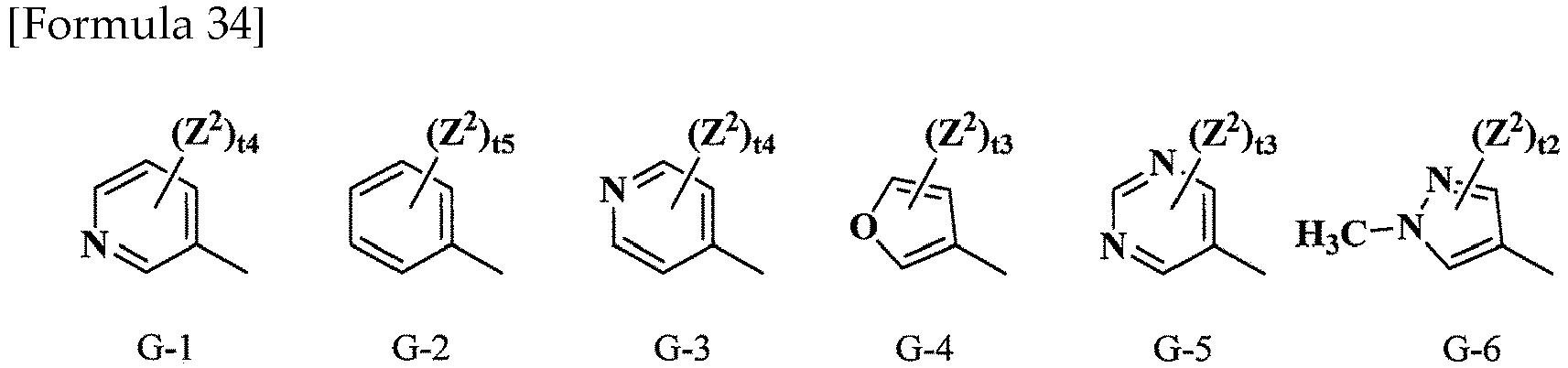
- Z2 represents a halogen atom, C1-C6 alkyl, C2-C6 alkenyl, halo (C1-C6) alkyl, C1-C6 alkoxy, halo (C1-C6) alkoxy, C1-C6 alkylthio, C1-C6 alkylsulfinyl, C1-C6 alkylsulfonyl, C1-C6 alkylcarbonyl, nitro or cyano,
- R1 represents a hydrogen atom, a halogen atom or halo (C1-C6) alkyl,
- R2 represents a hydrogen atom, C1-C6 alkyl or C2-C6 alkynyl,
- R3 represents a hydrogen atom or C1-C6 alkyl,
- A1 represents a nitrogen atom or CH,
- X represents an oxygen atom or a sulfur atom,
- Y represents an oxygen atom or a sulfur atom,
- t2 represents an integer of 0, 1 or 2,
- t3 represents an integer of 0, 1, 2 or 3,
- t4 represents an integer of 0, 1, 2, 3 or 4, and
- t5 represents an integer of 0, 1, 2, 3, 4 or 5.
- Q represents Q-1, Q-2, Q-3, Q-4, Q-5, Q-6 or Q-7,
- [64] The aryltetrahydropyridine compound according to [63] or a salt thereof, wherein
- Z1 represents a halogen atom, C1-C6 alkyl, halo (C1-C6) alkyl, C1-C6 alkylthio, C1-C6 alkylsulfinyl, C1-C6 alkylsulfonyl, halo (C1-C6) alkylthio or cyano,
- Z2 represents a halogen atom, C1-C6 alkyl, C2-C6 alkenyl, halo (C1-C6) alkyl, C1-C6 alkoxy, halo (C1-C6) alkoxy, C1-C6 alkylthio, C1-C6 alkylsulfonyl, C1-C6 alkylcarbonyl, nitro or cyano,
- R2 represents a hydrogen atom,
- R3 represents a hydrogen atom,
- X represents an oxygen atom, and
- Y represents an oxygen atom.
- [65] An aryltetrahydropyridine compound or a salt thereof, the aryltetrahydropyridine compound represented by a formula (1):
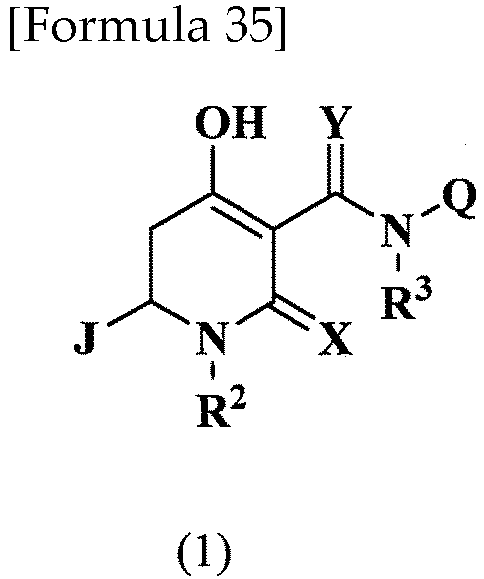
- Q represents Q-1, Q-2, Q-3, Q-4, Q-5, Q-6, Q-7 or Q-8,

- Z1 represents a halogen atom, C1-C6 alkyl, halo (C1-C6) alkyl, C1-C6 alkoxy, halo (C1-C6) alkoxy, C1-C6 alkylthio, C1-C6 alkylsulfinyl, C1-C6 alkylsulfonyl, halo (C1-C6) alkylthio or cyano,
- J represents J-1 or J-2,

- G represents G-1, G-2, G-3, G-4, G-5, G-6, G-7, G-8 or G-9,

- Z2 represents a halogen atom, C1-C6 alkyl, C2-C6 alkenyl, halo (C1-C6) alkyl, C1-C6 alkoxy, halo (C1-C6) alkoxy, C1-C6 alkylthio, C1-C6 alkylsulfinyl, C1-C6 alkylsulfonyl, C1-C6 alkylcarbonyl, nitro or cyano,
- R1 represents a hydrogen atom, a halogen atom or halo (C1-C6) alkyl,
- R2 represents a hydrogen atom, C1-C6 alkyl or C2-C6 alkynyl,
- R3 represents a hydrogen atom or C1-C6 alkyl,
- A1 represents a nitrogen atom or CH,
- X represents an oxygen atom or a sulfur atom,
- Y represents an oxygen atom or a sulfur atom,
- t2 represents an integer of 0, 1 or 2,
- t3 represents an integer of 0, 1, 2 or 3,
- t4 represents an integer of 0, 1, 2, 3 or 4, and
- t5 represents an integer of 0, 1, 2, 3, 4 or 5.
- Q represents Q-1, Q-2, Q-3, Q-4, Q-5, Q-6, Q-7 or Q-8,
- [66] The aryltetrahydropyridine compound according to [65] or a salt thereof, wherein
- Z1 represents a halogen atom, C1-C6 alkyl, halo (C1-C6) alkyl, C1-C6 alkoxy, C1-C6 alkylthio, C1-C6 alkylsulfinyl, C1-C6 alkylsulfonyl, halo (C1-C6) alkylthio or cyano,
- Z2 represents a halogen atom, C1-C6 alkyl, C2-C6 alkenyl, halo (C1-C6) alkyl, C1-C6 alkoxy, halo (C1-C6) alkoxy, C1-C6 alkylthio, C1-C6 alkylsulfonyl, C1-C6 alkylcarbonyl, nitro or cyano,
- R2 represents a hydrogen atom,
- R3 represents a hydrogen atom,
- X represents an oxygen atom, and
- Y represents an oxygen atom.
- [67] An aryltetrahydropyridine compound or a salt thereof, the aryltetrahydropyridine compound represented by a formula (1):

- Q represents Q-1, Q-2, Q-3, Q-4, Q-5, Q-6, Q-7, Q-8 or Q-9,


- Z1 represents a halogen atom, C1-C6 alkyl, halo (C1-C6) alkyl, C1-C6 alkoxy, halo (C1-C6) alkoxy, C1-C6 alkylthio, C1-C6 alkylsulfinyl, C1-C6 alkylsulfonyl, halo (C1-C6) alkylthio, cyano or nitro,
- J represents J-1 or J-2,

- G represents G-1, G-2, G-3, G-4, G-5, G-6, G-7, G-8 or G-9,

- Z2 represents a halogen atom, C1-C6 alkyl, C2-C6 alkenyl, halo (C1-C6) alkyl, C1-C6 alkoxy, halo (C1-C6) alkoxy, C1-C6 alkylthio, C1-C6 alkylsulfinyl, C1-C6 alkylsulfonyl, C1-C6 alkylcarbonyl, nitro or cyano,
- R1 represents a hydrogen atom, a halogen atom or halo (C1-C6) alkyl,
- R2 represents a hydrogen atom, C1-C6 alkyl, C2-C6 alkynyl or C1-C6 alkoxycarbonyl,
- R3 represents a hydrogen atom or C1-C6 alkyl,
- A1 represents a nitrogen atom or CH,
- X represents an oxygen atom or a sulfur atom,
- Y represents an oxygen atom or a sulfur atom,
- t2 represents an integer of 0, 1 or 2,
- t3 represents an integer of 0, 1, 2 or 3,
- t4 represents an integer of 0, 1, 2, 3 or 4, and
- t5 represents an integer of 0, 1, 2, 3, 4 or 5.
- Q represents Q-1, Q-2, Q-3, Q-4, Q-5, Q-6, Q-7, Q-8 or Q-9,
- [68] The aryltetrahydropyridine compound according to [67] or a salt thereof, wherein
- Z1 represents a halogen atom, C1-C6 alkyl, halo (C1-C6) alkyl, C1-C6 alkoxy, halo (C1-C6) alkoxy, C1-C6 alkylthio, C1-C6 alkylsulfinyl, C1-C6 alkylsulfonyl, halo (C1-C6) alkylthio or cyano,
- Z2 represents a halogen atom, C1-C6 alkyl, C2-C6 alkenyl, halo (C1-C6) alkyl, C1-C6 alkoxy, halo (C1-C6) alkoxy, C1-C6 alkylthio, C1-C6 alkylsulfonyl, C1-C6 alkylcarbonyl, nitro or cyano,
- R2 represents a hydrogen atom,
- R3 represents a hydrogen atom,
- X represents an oxygen atom, and
- Y represents an oxygen atom.
- [69] An aryltetrahydropyridine compound or a salt thereof, the aryltetrahydropyridine compound represented by a formula (1):

- Q represents Q-1, Q-2, Q-3, Q-4, Q-5, Q-6, Q-7, Q-8, Q-9, Q-10, Q-11, Q-12 or Q-13,

- Z1 represents a halogen atom, C1-C6 alkyl, C2-C6 alkenyl, C2-C6 alkynyl, halo (C1-C6) alkyl, C1-C6 alkoxy, halo (C1-C6) alkoxy, C1-C6 alkylthio, C1-C6 alkylsulfinyl, C1-C6 alkylsulfonyl, halo (C1-C6) alkylthio, hydroxy, cyano or nitro,
- J represents J-1 or J-2,

- G represents G-1, G-2, G-3, G-4, G-5, G-6, G-7, G-8, G-9, G-10, G-11, G-12, G-13, G-14, G-15, G-16 or G-17,

- Z2 represents a halogen atom, C1-C6 alkyl, C2-C6 alkenyl, halo (C1-C6) alkyl, C1-C6 alkoxy, halo (C1-C6) alkoxy, C1-C6 alkylthio, C1-C6 alkylsulfinyl, C1-C6 alkylsulfonyl, C1-C6 alkylcarbonyl, hydroxy, nitro or cyano,
- R1 represents a hydrogen atom, a halogen atom or halo (C1-C6) alkyl,
- R2 represents a hydrogen atom, C1-C6 alkyl, C2-C6 alkenyl, C2-C6 alkynyl, -C(O)R4 or -C(O)OR5
- R4 represents C1-C6 alkyl, C3-C6 cycloalkyl, C1-C6 alkylcarbonyl or (Ca-Cb) alkyl substituted with R6,
- R6 represents a halogen atom or C1-C6 alkoxy,
- R5 represents C1-C6 alkyl or C2-C6 alkenyl,
- R3 represents a hydrogen atom or C1-C6 alkyl,
- A1 represents a nitrogen atom or CH,
- X represents an oxygen atom or a sulfur atom,
- Y represents an oxygen atom or a sulfur atom,
- t1 represents an integer of 0 or 1,
- t2 represents an integer of 0, 1 or 2,
- t3 represents an integer of 0, 1, 2 or 3,
- t4 represents an integer of 0, 1, 2, 3 or 4, and
- t5 represents an integer of 0, 1, 2, 3, 4 or 5.
- Q represents Q-1, Q-2, Q-3, Q-4, Q-5, Q-6, Q-7, Q-8, Q-9, Q-10, Q-11, Q-12 or Q-13,
- [70] The aryltetrahydropyridine compound according to [69] or a salt thereof, wherein
- Z2 represents a halogen atom, C1-C6 alkyl, C2-C6 alkenyl, halo (C1-C6) alkyl, C1-C6 alkoxy, halo (C1-C6) alkoxy, C1-C6 alkylthio, C1-C6 alkylsulfonyl, C1-C6 alkylcarbonyl, hydroxy, nitro or cyano,
- R2 represents a hydrogen atom, -C(O)R4 or -C(O)OR5,
- R3 represents a hydrogen atom,
- X represents an oxygen atom, and
- Y represents an oxygen atom.
- [71] A production intermediate for the aryltetrahydropyridine compound according to any one of [1] to [70] or a salt thereof, the production intermediate represented by a formula (1-1):


- A1 represents a nitrogen atom,
- G represents G-1, G-2, G-3, G-4, G-5, G-6, G-7, G-8, G-9, G-10, G-11, G-12, G-13, G-14, G-15, G-16, G-17, G-18, G-19, G-20, G-27, G-28 or G-40,

- Z2 represents a halogen atom, C1-C6 alkyl, C2-C6 alkenyl, halo (C1-C6) alkyl, C1-C6 alkoxy, halo (C1-C6) alkoxy, C1-C6 alkylthio, C1-C6 alkylsulfinyl, C1-C6 alkylsulfonyl, di (C1-C6) alkylamino, C1-C6 alkylcarbonyl, C1-C6 alkoxyarbonyl, hydroxy, -C(=NOR14)R15, nitro or cyano,
- R14 represents C1-C6 alkyl,
- R15 represents a hydrogen atom or C1-C6 alkyl,
- Z4 represents C1-C6 alkyl,
- R1 represents a hydrogen atom, a halogen atom or halo (C1-C6) alkyl,
- R51 represents C1-C6 alkyl,
- t2 represents an integer of 0, 1 or 2,
- t3 represents an integer of 0, 1, 2 or 3,
- t4 represents an integer of 0, 1, 2, 3 or 4, and
- t5 represents an integer of 0, 1, 2, 3, 4 or 5.
- [72] The production intermediate according to [71] for the aryltetrahydropyridine compound or a salt thereof, wherein
- J represents J-1,
- G represents G-1, G-2 or G-3,
- Z2 represents a halogen atom or C1-C6 alkyl, and
- R1 represents a halogen atom or halo (C1-C6) alkyl.
- [73] A production intermediate for the aryltetrahydropyridine compound according to any one of [1] to [70] or a salt thereof, the production intermediate represented by a formula (1-2):

- R2 represents a hydrogen atom, -C(O)R4 or -C(O)OR5,
- R4 represents C1-C6 alkyl,
- R5 represents C1-C6 alkyl,
- Q represents Q-1, Q-2, Q-3, Q-4, Q-5, Q-6, Q-7, Q-8, Q-9, Q-10, Q-11, Q-12, Q-13, Q-14, Q-20, Q-22, Q-29, Q-31, Q-45 or Q-52,


- Z1 represents a halogen atom, C1-C6 alkyl, C2-C6 alkenyl, C2-C6 alkynyl, halo (C1-C6) alkyl, C1-C6 alkoxy, halo (C1-C6) alkoxy, C1-C6 alkylthio, C1-C6 alkylsulfinyl, C1-C6 alkylsulfonyl, halo (C1-C6) alkylthio, carboxy, C1-C6 alkylcarbonyl, C1-C6 alkoxycarbonyl, C1-C6 alkylaminocarbonyl, hydroxy, cyano or nitro,
- Z3 represents a hydrogen atom or C1-C6 alkyl,
- t1 represents an integer of 0 or 1,
- t2 represents an integer of 0, 1 or 2,
- t3 represents an integer of 0, 1, 2 or 3,
- t4 represents an integer of 0, 1, 2, 3 or 4, and
- t5 represents an integer of 0, 1, 2, 3, 4 or 5.
- [74] The production intermediate according to [73] for the aryltetrahydropyridine compound or a salt thereof, wherein
- Q represents Q-1, Q-2, Q-3, Q-4, Q-6 or Q-9,
- Z1 represents a halogen atom, C1-C6 alkyl or cyano, and
R2 represents a hydrogen atom or -C(O)OR5.
- [75] A pesticide containing one or two or more selected from the aryltetrahydropyridine compound according to any one of [1] to [70] and salts thereof as an active ingredient.
- [76] An agrochemical containing one or two or more selected from the aryltetrahydropyridine compound according to any one of [1] to [70] and salts thereof as an active ingredient.
- [77] A control agent for an internal or external parasite in a mammal or a bird, the control agent containing one or two or more selected from the aryltetrahydropyridine compound according to any one of [1] to [70] and salts thereof as an active ingredient.
- [78] The control agent according to [77], wherein the external parasite is a species belonging to Siphonaptera or a species belonging to Acari.
- [79] An insecticide or acaricide containing one or two or more selected from the aryltetrahydropyridine compound according to any one of [1] to [70] and salts thereof as an active ingredient.
- [80] An agent for seed treatment, the agent containing one or two or more selected from the aryltetrahydropyridine compound according to any one of [1] to [70] and salts thereof as an active ingredient.
- [81] The agent for seed treatment according to [80], wherein the seed treatment is performed by soaking.
- [82] An agent for soil treatment, the agent containing one or two or more selected from the aryltetrahydropyridine compound according to any one of [1] to [70] and salts thereof as an active ingredient.
- [83] The agent for soil treatment according to [82], wherein the soil treatment is performed by soil drenching.
- The following more specifically describes the present invention by showing Synthesis Examples and Test Examples for the presently invented compound as Examples, but the present invention is not limited by them.
- For medium pressure preparative liquid chromatography shown in Synthesis Examples, the medium pressure separation apparatus YFLC-Wprep (flow rate: 18 ml/min, silica gel 40-µm-column) manufactured by YAMAZEN CORPORATION was used.
- Chemical shift values in proton nuclear magnetic resonance spectra (hereinafter, referred to as 1H-NMR) shown below were determined with use of Me4Si (tetramethylsilane) as a standard substance in deuterated chloroform solvent at 300 MHz (model: JNM-ECX300 or JNM-ECP300, manufactured by JEOL Ltd.) or 400 MHz (model: JNM-ECZ400S, manufactured by JEOL Ltd.). Signs for chemical shift values in 1H-NMR have the following meanings. s: singlet, d: doublet, dd: double doublet, t: triplet, q: quartet, m: multiplet, brs: broad singlet
- To a mixed solution of 94 mg of 6-[3-bromo-4(trifluoromethyl)phenyl]-N-(4-fluorophenyl)-4-hydroxy-2-oxo-1,2,5,6-tetrahydropyridine-3-carboxamide, 1.6 ml of 1,4-dioxane, and 0.4 ml of water, 42 mg of 2-fluoropyridine-5-boronic acid, 83 mg of potassium carbonate, and 16 mg of a [1,1'-bis(diphenylphosphino)ferrocene]palladium (divalent) dichloride dichloromethane adduct were added, and the resultant was stirred under a nitrogen atmosphere at 90°C for 5 hours. After the completion of the reaction, 5 ml of 1 mol/l hydrochloric acid was added, and extraction was performed with ethyl acetate (5 ml × 3 times). The resulting organic layer was dehydrated and dried with anhydrous sodium sulfate, and the solvent was then distilled off under reduced pressure. The resulting residue was purified by medium pressure preparative liquid chromatography [gradient from n-hexane:ethyl acetate = 100:0 to 0:100 (volume ratio, the same applies hereinafter)], giving 31 mg of the target substance as a white solid.
- Melting point: 200 to 202°C
- 1H-NMR (300 MHz): δ 11.5-12.0 (m, 1H), 8.18 (brs, 1H), 7.85 (d, J = 8.7 Hz, 1H), 7.65-7.8 (m, 1H), 7.4-7.65 (m, 4H), 7.33 (brs, 1H), 6.95-7.1 (m, 3H), 5.45-5.7 (m, 1H), 4.8-5.0 (m, 1H), 2.75-3.0 (m, 2H).
- To a mixed solution of 100 mg of ethyl 6'-chloro-6"-fluoro-4-hydroxy-6-oxo-1,2,3,6-tetrahydro-[2,3':5',3"-terpyridine]-5-carboxylate and 0.7 ml of 1,4-dioxane, 32 mg of 4-chloroaniline was added, and the resultant was stirred at 80°C for 1 hour. After the completion of the reaction, the solvent was distilled off under reduced pressure. The resulting residue was washed with a mixed solution of ethyl acetate:n-hexane = 1:2, giving 41 mg of the target substance as a pale brown solid.
- Melting point: 199 to 201°C
- 1H-NMR (300 MHz): δ 11.6 (brs, 1H), 8.48 (brs, 1H), 8.29 (brs, 1H), 7.85-8.0 (m, 1H), 7.65-7.8 (m, 1H), 7.4-7.6 (m, 2H), 7.25-7.35 (m, 2H), 7.05-7.15 (m, 2H), 5.3-5.8 (m, 1H), 4.85-4.95 (m, 1H), 2.7-3.05 (m, 2H).
- To a mixed solution of 50 mg of 6-(((2-fluoroisonicotinimidamide)oxy)carbonyl)-N-(5-fluoropyridin-2-yl)-4-hydroxy-2-oxo-1,2,5,6-tetrahydropyridine-3-carboxamide and 1.7 ml of toluene, 17 mg of triethylamine was added, and the resultant was stirred at 110°C for 3 hours. After the completion of the reaction, the solvent was distilled off under reduced pressure. To the resulting residue, 5 ml of 1 mol/l hydrochloric acid was added, and extraction was performed with ethyl acetate (5 ml × 3 times). The resulting organic layer was dehydrated and dried with anhydrous sodium sulfate, and the solvent was then distilled off under reduced pressure. To the resulting residue, 1 ml of N,N-dimethylformamide, 3 ml of water, and 1 ml of 1 mol/l hydrochloric acid were added. A solid precipitated was collected by filtration, giving 39 mg of the target substance as a white solid.
Melting point: 159 to 161°C - The following shows a synthesis example for the production intermediate used in Synthesis Example 2 for the presently invented compound.
- To a mixed solution of 13 g of ethyl 3-amino-3-(5-bromo-6-chloropyridin-3-yl)propanoate, 142 ml of ethyl acetate, 7.2 g of sodium hydrogen carbonate, and 142 ml of water, 6.7 g of ethyl malonyl chloride was added at 0°C. After the completion of the reaction, the resulting organic layer was dehydrated and dried with brine and anhydrous sodium sulfate, and the solvent was then distilled off under reduced pressure; thus, 18 g of the target substance was given as a brown oily substance.
- 1H-NMR (300 MHz): δ 8.3-8.4 (m, 2H), 7.9-7.95 (m, 1H), 5.35-5.5 (m, 1H), 4.24 (q, J = 7.2 Hz, 2H), 4.13 (q, J = 7.2 Hz, 2H), 3.36 (brs, 2H), 2.89 (d, J = 5.7 Hz, 2H), 1.31 (t, J = 7.2 Hz, 3H), 1.20 (t, J = 7.2 Hz, 3H).
- To a mixed solution of 22 g of ethyl 3-(5-bromo-6-chloropyridin-3-yl)-3-(3-ethoxy-3-oxopropanamide)propanoate and 94 ml of dehydrated ethanol, 2.0 g of sodium hydride [manufactured by YONEYAMA YAKUHIN KOGYO CO., LTD., product name: sodium hydride. oily (ca. 63% by mass), purity: 57.5 to 67.5%, product code: 03414] was added, and the resultant was stirred under a nitrogen atmosphere at 55°C for 5 hours. After the completion of the reaction, the solvent was distilled off under reduced pressure. To the resulting residue, 150 ml of diipropyl ether was added, and extraction was performed with 150 ml of water. To the resulting aqueous layer, 35% by mass hydrochloric acid was added until the pH reached 2, and extraction was performed with a mixed solution of ethyl acetate:tetrahydrofuran = 9:1 (150 ml × 3 times). The resulting organic layer was dehydrated and dried with brine and anhydrous sodium sulfate, and the solvent was then distilled off under reduced pressure; thus, 16 g of the target substance was given as a brown solid.
- Melting point: 124 to 126°C
- 1H-NMR (400 MHz): δ 8.36 (d, J = 2.0 Hz, 1H), 7.98 (d, J = 2.4 Hz, 1H), 6.00 (brs, 1H), 4.7-4.8 (m, 1H), 4.35-4.5 (m, 2H), 2.7-3.05 (m, 2H), 1.40 (t, J = 7.2 Hz, 3H).
- To a mixed solution of 5.6 g of ethyl 5'-bromo-6'-chloro-4-hydroxy-6-oxo-1,2,3,6-tetrahydro-[2,3'-bipyridine]-5-carboxylate, 40 ml of 1,4-dioxane, and 10 ml of water, 1.9 g of 2-fluoropyridine-5-boronic acid, 9.5 g of tripotassium phosphate, and 606 mg of a [1,1'-bis(diphenylphosphino)ferrocene]palladium (divalent) dichloride dichloromethane adduct were added, and the resultant was stirred under a nitrogen atmosphere at 55°C for 2 hours. After the completion of the reaction, 200 ml of diisopropyl ether was added, and extraction was performed with a mixed solution of 10 g of potassium carbonate and 74 ml of water. To the resulting aqueous layer, 35% by mass hydrochloric acid was added until the pH reached 2, and extraction was performed with ethyl acetate (150 ml × 3 times). The resulting organic layer was dehydrated and dried with brine and anhydrous sodium sulfate, and the solvent was then distilled off under reduced pressure. The resulting residue was washed with a mixed solution of ethanol:diisopropyl ether = 1:2, giving 2.0 g of the target substance as a pale brown solid.
- Melting point: 178 to 180°C
- 1H-NMR (400 MHz): δ 8.47 (d, J = 2.4 Hz, 1H), 8.30 (brs, 1H), 7.9-8.0 (m, 1H), 7.71 (d, J = 2.0 Hz, 1H), 7.05-7.1 (m, 1H), 5.70 (brs, 1H), 4.8-4.9 (m, 2H), 4.35-4.5 (m, 2H), 2.7-3.05 (m, 2H), 1.40 (t, J = 7.2 Hz, 3H).
- The following shows a synthesis example for the production intermediate used in Synthesis Example 3 for the presently invented compound.
- To a mixed solution of 18.3 g of di-tert-butyl 4-hydroxy-6-oxo-3,6-dihydropyridine-1,2(2H)-dicarboxylate and 60 ml of acetonitrile, 4.0 g of imidazole and 6.6 g of 1,1'-carbonyldiimidazole were added, and the resultant was stirred at 85°C for 30 minutes. After cooling to room temperature, 6.6 g of 5-fluoropyridin-2-amine was added, and the resultant was stirred for 18 hours. Thereto, 350 ml of diisopropyl ether was added, the resultant was stirred at 0°C for 1.5 hours, and a solid precipitated was collected by filtration. The resulting solid was washed with a mixed solution of acetonitrile:diisopropyl ether = 1:5, giving 26.3 g of the target substance as a pale red solid.
Melting point: 152 to 154°C - To a mixed solution of 15.4 g of di-tert-butyl 5-((5-fluoropyridin-2-yl)carbamoyl)-4-hydroxy-6-oxo-3,6-dihydropyridine-1,2(2H)-dicarboxylate and 70 ml of dichloromethane, 50 ml of trifluoroacetic acid was added, and the resultant was stirred at room temperature for 25 hours. Thereto, 140 ml of toluene was added, and the solvent was distilled off under reduced pressure. Thereto, 100 ml of toluene was added, and the solvent was distilled off under reduced pressure. Thereto, 100 ml of toluene was added, and the solvent was distilled off under reduced pressure. Thereto, 100 ml of chloroform was added, and a solid was collected by filtration. The solid obtained was washed with chloroform, giving 14.6 g of the target substance as a white solid.
Melting point: 223 to 225°C - To a mixed solution of 100 mg of 5-((5-fluoropyridin-2-yl)carbamoyl)-4-hydroxy-6-oxo-1,2,3,6-tetrahydropyridine-2-carboxylic acid, 55 mg of 2-fluoro-N-hydroxyisonicotinimidamide, and 4 ml of N,N-dimethylformamide, 72 mg of 1-(3-dimethylaminopropyl)-3-ethylcarbodiimide hydrochloride and 5 mg of 1-hydroxy-7-azabenzotriazole were added, and the resultant was stirred at room temperature for 1 hour. After the completion of the reaction, 12 ml of water and 1 ml of 1 mol/l hydrochloric acid were added, and a solid precipitated was collected by filtration. The solid obtained was washed with water, giving 80 mg of the target substance as a white solid.
Melting point: 146 to 148°C - The presently invented compound and production intermediates can be synthesized according to Production Methods and Synthesis Examples. Examples of aryltetrahydropyridine compounds produced in the same manner as in Synthesis Examples 1 to 3 are shown in Table 7 to Table 12, but the aryltetrahydropyridine compound of the present invention is not limited to them. Examples of production intermediates produced in the same manner as in Intermediate Synthesis Examples 1 and 2 are shown in Table 13 to Table 15, but the production intermediate of the present invention is not limited to them.
- The notations Q-1, Q-2, Q-3, Q-4, Q-5, Q-6, Q-7, Q-8, Q-9, Q-10, Q-11, Q-12a, Q-12b, Q-13, Q-14, Q-20, Q-22, Q-29, Q-31a, Q-45a, and Q-52a in the tables indicate the following structures.


- The notations G-1, G-2, G-3, G-4, G-5, G-6a, G-7, G-8a, G-9, G-10, G-11, G-12, G-13, G-14, G-15, G-16, G-17, G-18, G-19, G-20, G-27, G-28, and G-40 indicate the following structures.


- The notations D-1, D-2, and D-3 indicate the following structures.

- The numbers given to the structural formulas are each a number indicating the position of substitution with the substituent (Z1)t1, (Z1)t2, (Z1)t3, (Z1)t4, (Z1)t5, (Z2)t2, (Z2)t3, (Z2)t4, (Z2)t5, (Z5)t3, (Z5)t5 or (Z5)t8; for example, "Q-1(4-F)", "G-2", and "G-1(2-OCH3, 4-OCH3)" in the tables mean "4-fluorophenyl", "phenyl", and "2,6-dimethoxypyridin-3-yl", respectively.
- The notations "i-Bu" and "c-Pr" in the tables indicate an isobutyl group and a cyclopropyl group, respectively.
- "m.p." is melting point (unit: °C), and the notation "*1" indicates that the compound is an oily substance or resin-like compound without melting point. ">" in description of melting point in the tables indicates that the melting point of the compound is higher than the temperature shown; for example, the notation ">300" indicates that the compound did not melt at 300°C.
[Table 7] 
No. R1 Q G m.p.(°C) 1-001 CF3 Q-1(4-F) G-1(4-F) 200-202 1-002 CF3 Q-1(4-F) G-1(5-F) 188-190 1-003 CF3 Q-1(4-F) G-1(4-OCH3) 95-97 1-004 CF3 Q-1(4-F) G-2 96-98 1-005 CF3 Q-1(4-F) G-2(2-F) 177-179 1-006 CF3 Q-1(4-F) G-2(3-F) 157-159 1-007 CF3 Q-1(4-F) G-2(4-F) 176-178 1-008 CF3 Q-1(4-F) G-2(2-SCH3) 195-197 1-009 CF3 Q-1(4-F) G-2(4-SCH3) 121-123 1-010 CF3 Q-1(4-F) G-2(2-COCH3) 181-183 1-011 CF3 Q-1(4-F) G-2(3-COCH3) 159-161 1-012 CF3 Q-1(4-F) G-2(4-COCH3) 176-178 1-013 CF3 Q-1(4-F) G-1 232-234 1-014 CF3 Q-1(4-F) G-3 176-178 1-015 CF3 Q-1(4-F) G-4 174-176 1-016 CF3 Q-1(4-F) G-2(2-OCH3) 187-189 1-017 CF3 Q-1(4-F) G-2(3-OCH3) 137-139 1-018 CF3 Q-1(4-F) G-2(4-OCH3) 174-176 1-019 CF3 Q-1(4-F) G-2(4-SO2CH3) 204-206 1-020 CF3 Q-1(4-F) G-1(2-OCH3,4-OCH3) 177-179 1-021 CF3 Q-1(4-F) G-1(4-CF3) 199-200 1-022 CF3 Q-1(4-F) G-2(3-CN) 164-166 1-023 CF3 Q-1(4-F) G-2(4-CN) 209-211 1-024 CF3 Q-1(4-F) G-1(4-CN) 226-228 [Table 8] 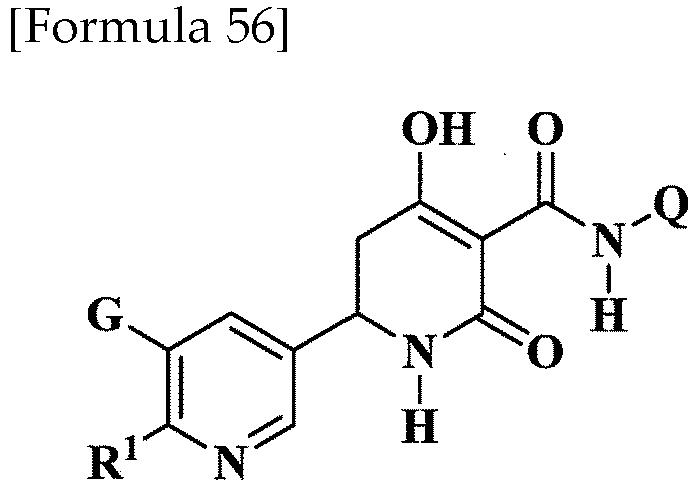
No. R1 Q G m.p.(°C) 2-001 Cl Q-1(4-F) G-1(4-F) 210-212 2-002 H Q-1(4-F) G-2(2-CF3) 212-216 2-003 H Q-1(4-F) G-2(3-CF3) 175-177 2-004 H Q-1(4-F) G-2(4-CF3) 191-193 2-005 H Q-1(4-F) G-1(4-F) 236-238 2-006 H Q-1(4-F) G-1(4-OCHF2) 200-202 2-007 H Q-1(4-F) G-1(4-OCH2CH2CH3) 187-189 2-008 Cl Q-2(4-F) G-1(4-F) 131-133 2-009 Cl Q-3(4-F) G-1(4-F) 174-176 2-010 Cl Q-2(4-Cl) G-1(4-F) 169-171 2-011 Cl Q-4(4-Cl) G-1(4-F) 223-225 2-012 Cl Q-2(4-CF3) G-1(4-F) 197-199 2-013 Cl Q-2(4-CN) G-1(4-F) 105-107 2-014 Cl Q-1(4-F) G-1(4-OCH3) 172-174 2-015 Cl Q-1(4-SO2CH3) G-1(4-OCH3) 186-188 2-016 Cl Q-2(4-F) G-1(4-OCH3) 189-192 2-017 Cl Q-2(4-Cl) G-1(4-OCH3) 201-204 2-018 Cl Q-3(4-F) G-6a 139-141 2-019 Cl Q-3(4-F) G-1 176-178 2-020 Cl Q-3(4-F) G-3 174-176 2-021 Cl Q-3(4-F) G-4 131-134 2-022 Cl Q-3(4-F) G-1(2-OCH3) 129-131 2-023 Cl Q-2(4-F) G-1 144-147 2-024 Cl Q-2(4-F) G-5 164-166 2-025 Cl Q-2(4-F) G-1(2-OCH3) 138-140 2-026 Cl Q-7(4-CF3) G-1(4-F) 197-199 2-027 Cl Q-2(4-F) G-2(4-F) 186-188 2-028 Cl Q-2(4-F) G-1(5-F) 124-126 2-029 Cl Q-2(4-F) G-1(5-OCH3) 117-119 2-030 Cl Q-3(4-F) G-2(4-F) 162-164 2-031 Cl Q-3(4-F) G-3(3-OCH3) 169-171 2-032 Cl Q-3(4-F) G-2 122-124 2-033 Cl Q-2(4-F) G-1(6-OCH3) 164-166 2-034 Cl Q-3(4-F) G-1(2-F) 161-163 2-035 Cl Q-1(4-Cl) G-1(4-F) 199-201 2-036 Cl Q-1(4-Br) G-1(4-F) 202-204 2-037 Cl Q-1(4-CF3) G-1(4-F) 202-204 2-038 Cl Q-1(4-SCF3) G-1(4-F) 196-198 2-039 Cl Q-1(4-SCH3) G-1(4-F) 174-176 2-040 Cl Q-1(3-F,4-F) G-1(4-F) 142-144 2-041 Cl Q-1(2-F,4-F) G-1(4-F) 167-169 2-042 Cl Q-1(4-F) G-1(4-Cl) 234-236 2-043 Cl Q-1(4-SOCH3) G-1(4-Cl) 237-239 2-044 Cl Q-3(4-CN) G-1(4-Cl) 199-201 2-045 Cl Q-4(4-Cl) G-1(4-Cl) 209-211 2-046 Cl Q-5(4-Cl) G-1(4-Cl) 206-208 2-047 Cl Q-3(4-Cl) G-3 194-196 2-048 Cl Q-2(4-Cl) G-1(5-F) 224-226 2-049 Cl Q-3(4-F) G-1(5-F) 192-194 2-050 Cl Q-4(4-Br) G-1(5-F) 240-242 2-051 Cl Q-6(4-CF3) G-1(5-F) 195-197 2-052 Cl Q-5(4-Cl) G-1(5-F) 201-203 2-053 Cl Q-2(4-Br) G-1(5-F) 224-226 2-054 Cl Q-2(4-CF3) G-1(5-F) 185-187 2-055 Cl Q-2(4-CN) G-1(5-F) 237-239 2-056 Cl Q-3(4-CF3) G-1(5-F) 205-207 2-057 Cl Q-3(4-CN) G-1(5-F) 246-248 2-058 Cl Q-1(4-F) G-1(5-F) 231-233 2-059 Cl Q-4(4-CF3) G-1(5-F) 135-137 2-060 Cl Q-6(4-Cl) G-1(5-F) 220-222 2-061 Cl Q-6(4-Br) G-1(5-F) 217-219 2-062 Cl Q-1(4-CH3) G-1(4-F) 219-221 2-063 Cl Q-3(4-CH3) G-1(4-F) 171-173 2-064 Cl Q-3(4-Cl) G-2(4-CH2CH3) 174-176 2-065 Cl Q-3(4-Cl) G-2(4-CH=CH2) 149-151 2-066 Cl Q-3(4-Cl) G-2(4-COCH3) 187-189 2-067 Cl Q-3(4-Cl) G-2(3-CH3) 161-163 2-068 Cl Q-3(4-Cl) G-2(3-OCH3) 112-114 2-069 Cl Q-3(4-Cl) G-2(3-COCH3) 131-133 2-070 Cl Q-1(4-CN) G-2(4-F) 205-207 2-071 Cl Q-1(4-CN) G-1(5-F) 160-162 2-072 Cl Q-1(4-CN) G-1(4-OCH3) 177-179 2-073 Cl Q-7(4-CF3) G-2(4-F) 185-187 2-074 Cl Q-7(4-CF3) G-1(5-F) 246-248 2-075 Cl Q-7(4-CF3) G-1(4-OCH3) 222-224 2-076 Cl Q-3(4-Cl) G-1(4-NO2) 204-206 2-077 Cl Q-3(4-Cl) G-2(4-OCH3) 122-124 2-078 Cl Q-3(4-Cl) G-2(4-SCH3) 122-124 2-079 Cl Q-3(4-Cl) G-2(4-CN) 139-141 2-080 Cl Q-3(4-Cl) G-2(3-F) 182-184 2-081 Cl Q-3(4-Cl) G-2(3-SCH3) 150-152 2-082 Cl Q-3(4-Cl) G-2 129-131 2-083 Cl Q-1(4-CN) G-1(4-F) 197-199 2-084 Cl Q-3(4-Cl) G-1(4-F) 205-207 2-085 Cl Q-4(4-Br) G-1(4-F) 215-217 2-086 Cl Q-3(4-F,6-F) G-1(4-F) 207-209 2-087 Cl Q-6(4-Cl) G-1(4-F) 190-192 2-088 Cl Q-3(4-CN) G-1(4-F) 195-197 2-089 Cl Q-1(4-F) G-2 222-224 2-090 Cl Q-1(4-CN) G-2 220-222 2-091 Cl Q-2(4-F) G-2 205-207 2-092 Cl Q-2(4-Cl) G-2 229-231 2-093 Cl Q-2(4-CN) G-2 174-176 2-094 Cl Q-3(4-CN) G-2 171-173 2-095 Cl Q-4(4-Cl) G-2 217-219 2-096 Cl Q-3 G-1(4-F) 99-101 2-097 Cl Q-2(4-CN) G-1 222-224 2-098 Cl Q-4(4-Cl) G-1 186-188 2-099 Cl Q-4(4-Br) G-1 234-236 2-100 Cl Q-6(4-Cl) G-1 237-239 2-101 Cl Q-8 G-1(4-F) 121-123 2-102 Cl Q-2(4-OCH3) G-1(4-F) 136-138 2-103 Cl Q-3(4-F,6-Cl) G-1(4-F) 129-131 2-104 Cl Q-3(4-F,6-CH3) G-1(4-F) 159-161 2-105 Cl Q-2(2-F,4-CH3) G-1(4-F) 211-213 2-106 Cl Q-2(2-CH3,4-F) G-1(4-F) 110-112 2-107 Cl Q-3(4-F,5-CH3) G-1(4-F) 181-183 2-108 Cl Q-3(3-CH3,4-F) G-1(4-F) 208-210 2-109 Cl Q-2(2-F,4-F) G-1(4-F) 200-201 2-110 Cl Q-3(4-Cl,6-Cl) G-1(4-F) 138-140 2-111 Cl Q-3(4-Cl,6-F) G-1(4-F) 186-188 2-112 Cl Q-3(4-CH3,6-F) G-1(4-F) 151-153 2-113 Cl Q-1(4-F) G-3(3-F) 228-230 2-114 Cl Q-2(4-F) G-3(3-F) 186-188 2-115 Cl Q-3(4-F) G-3(3-F) 208-210 2-116 Cl Q-2(2-CN,4-Cl) G-1(4-F) 209-211 2-117 Cl Q-2(4-Cl,6-OCH3) G-1(4-F) 201-203 2-118 Cl Q-2(2-OCH3,4-Cl) G-1(4-F) 129-131 2-119 Cl Q-2(4-CH3) G-1(4-F) 161-163 2-120 Cl Q-6(4-CH3) G-1(4-F) 97-99 2-121 Cl Q-1(4-OCF3) G-1(4-F) 214-216 2-122 Cl Q-3(4-CF3,6-F) G-1(4-F) 177-179 2-123 Cl Q-6(4-Br) G-1(4-F) 186-188 2-124 Cl Q-2(4-F,5-CH3) G-1(4-F) 181-183 2-125 Cl Q-2(4-F,6-CH3) G-1(4-F) 187-189 2-126 Cl Q-2(4-Cl,5-Cl) G-1(4-F) 169-171 2-127 Cl Q-3(4-Cl,6-CN) G-1(4-F) 182-184 2-128 Cl Q-2(2-Cl,4-Cl) G-1(4-F) 211-213 2-129 Cl Q-2(4-Cl,5-CH3) G-1(4-F) 156-158 2-130 Cl Q-3(4-Cl,6-CH3) G-1(4-F) 177-179 2-131 Cl Q-4(4-Cl,6-Cl) G-1(4-F) 186-188 2-132 Cl Q-3(3-F,4-Br) G-1(4-F) 171-173 2-133 Cl Q-4 G-1(4-F) 146-148 2-134 Cl Q-6 G-1(4-F) 151-153 2-135 Cl Q-9 G-1(4-F) 199-201 2-136 Cl Q-3(5-F) G-1(4-F) 124-126 2-137 Cl Q-2(5-F) G-1(4-F) 226-228 2-138 Cl Q-3(4-Br,6-F) G-1(4-F) 159-161 2-139 Cl Q-2(4-Br,5-F) G-1(4-F) 219-221 2-140 Cl Q-3(4-Br,5-F) G-1(4-F) 218-220 2-141 Cl Q-3(3-F) G-1(4-F) 187-189 2-142 Cl Q-3(6-F) G-1(4-F) 181-183 2-143 Cl Q-4(4-CN) G-1(4-F) 169-171 2-144 Cl Q-3(4-Br) G-1(4-F) 206-208 2-145 Cl Q-3(4-CF3) G-1(4-F) 209-211 2-146 Cl Q-2(4-F) G-1(5-Cl) 122-124 2-147 Cl Q-4 G-1(5-Cl) 172-174 2-148 Cl Q-4 G-1(5-CH3) 191-193 2-149 Cl Q-4 G-1(4-CH3) 191-193 2-150 Cl Q-3(3-Cl) G-1(4-F) 187-189 2-151 Cl Q-3(3-CH3) G-1(4-F) 197-199 2-152 Cl Q-3(4-NO2) G-1(4-F) 202-204 2-153 Cl Q-3(5-CH3) G-1(4-F) 107-109 2-154 Cl Q-9(4-CH3) G-1(4-F) 207-209 2-155 Cl Q-2(4-Cl) G-3(3-F) 191-193 2-156 Cl Q-3(4-Cl) G-3(3-F) 180-182 2-157 Cl Q-3 G-3(3-F) 201-203 2-158 Cl Q-1(4-CN) G-3(3-F) 219-221 2-159 Cl Q-3(4-CN) G-3(3-F) 221-223 2-160 Cl Q-3(4-F,6-F) G-3(3-F) 199-201 2-161 Cl Q-4 G-3(3-F) 205-207 2-162 Cl Q-3(4-CH3) G-3(3-F) 192-194 2-163 Cl Q-3(4-Cl,6-F) G-3(3-F) 183-185 2-164 Cl Q-9 G-3(3-F) 212-214 2-165 Cl Q-6(4-Cl) G-3(3-F) 199-201 2-166 Cl Q-3(6-F) G-3(3-F) 202-204 2-167 CF3 Q-3(4-F) G-1(4-F) 178-180 2-168 CF3 Q-2(4-F) G-1(4-F) 174-176 2-169 CF3 Q-3(4-Cl) G-1(4-F) 191-193 2-170 CF3 Q-2(4-Cl) G-1(4-F) 131-132 2-171 CF3 Q-3(4-CH3) G-1(4-F) 111-113 2-172 CF3 Q-12a G-1(4-F) 191-193 2-173 CF3 Q-9(4-CH3) G-1(4-F) 199-201 2-174 CF3 Q-9(4-Cl) G-1(4-F) 159-161 2-175 CF3 Q-4(4-Cl) G-1(4-F) 204-206 2-176 CF3 Q-4 G-1(4-F) 194-196 2-177 CF3 Q-3(4-Br) G-1(4-F) 186-188 2-178 CF3 Q-1(4-F) G-1(4-F) 201-203 2-179 CF3 Q-3(4-CF3) G-1(4-F) 204-206 2-180 CF3 Q-6(4-Cl) G-1(4-F) 182-184 2-181 CF3 Q-3(4-Cl,6-F) G-1(4-F) 181-183 2-182 CF3 Q-3(4-F,6-F) G-1(4-F) 199-201 2-183 CF3 Q-1(4-CN) G-1(4-F) 172-174 2-184 CF3 Q-9 G-1(4-F) 199-201 2-185 CF3 Q-13(4-CH3) G-1(4-F) 191-193 2-186 Cl Q-3(4-F) G-3(3-Cl) 162-164 2-187 Cl Q-3(4-Cl) G-3(3-Cl) 124-126 2-188 Cl Q-4(4-Cl) G-3(3-Cl) 131-133 2-189 Cl Q-2(4-Cl) G-3(3-Cl) 171-173 2-190 Cl Q-3 G-3(3-Cl) 142-144 2-191 CF3 Q-3(4-F) G-3(3-F) 169-171 2-192 CF3 Q-2(4-F) G-3(3-F) 149-151 2-193 CF3 Q-3(4-Cl) G-3(3-F) 112-114 2-194 CF3 Q-2(4-Cl) G-3(3-F) 136-138 2-195 CF3 Q-3(4-CH3) G-3(3-F) 116-118 2-196 CF3 Q-12a G-3(3-F) 101-103 2-197 CF3 Q-9(4-CH3) G-3(3-F) 111-113 2-198 CF3 Q-4(4-Cl) G-3(3-F) 154-156 2-199 CF3 Q-3 G-3(3-F) 151-153 2-200 CF3 Q-3 G-1(4-F) 136-138 2-201 CF3 Q-4 G-3(3-F) 157-159 2-202 CF3 Q-3(4-Br) G-3(3-F) 174-176 2-203 CF3 Q-1(4-F) G-3(3-F) 172-174 2-204 CF3 Q-3(4-CF3) G-3(3-F) 116-118 2-205 CF3 Q-6(4-Cl) G-3(3-F) 141-143 2-206 CF3 Q-3(4-Cl,6-F) G-3(3-F) 154-156 2-207 CF3 Q-3(4-F,6-F) G-3(3-F) 159-161 2-208 CF3 Q-1(4-CN) G-3(3-F) 144-146 2-209 CF3 Q-9 G-3(3-F) 114-116 2-210 CF3 Q-13(4-CH3) G-3(3-F) 168-170 2-211 CF3 Q-3(3-F) G-3(3-F) 149-151 2-212 CF3 Q-3(6-F) G-3(3-F) 99-101 2-213 CF3 Q-3(4-CN) G-3(3-F) 112-114 2-214 CF3 Q-2(4-CN) G-3(3-F) 122-124 2-215 CF3 Q-2(4-CF3) G-3(3-F) 112-114 2-216 CF3 Q-4(4-Br) G-3(3-F) 177-179 2-217 CF3 Q-6(4-Br) G-3(3-F) 144-146 2-218 CF3 Q-1(4-CH3) G-3(3-F) 187-189 2-219 CF3 Q-3(3-Cl) G-3(3-F) 164-166 2-220 Cl Q-3(4-Cl) G-2(4-F) 146-148 2-221 Cl Q-2(4-Cl) G-2(4-F) 199-201 2-222 Cl Q-3(4-CH3) G-2(4-F) 162-164 2-223 Cl Q-12a G-2(4-F) 107-109 2-224 Cl Q-9(4-CH3) G-2(4-F) 156-158 2-225 Cl Q-4(4-Cl) G-2(4-F) 156-158 2-226 Cl Q-3 G-2(4-F) 141-143 2-227 Cl Q-4 G-2(4-F) 132-134 2-228 Cl Q-3(4-CN) G-2(4-F) 122-124 2-229 Cl Q-1(4-F) G-2(4-F) 187-189 2-230 Cl Q-3(4-CF3) G-2(4-F) 164-166 2-231 Cl Q-6(4-Cl) G-2(4-F) 171-173 2-232 Cl Q-3(4-Cl,6-F) G-2(4-F) 174-176 2-233 Cl Q-2(4-CN) G-2(4-F) 200-202 2-234 Cl Q-2(4-CF3) G-2(4-F) 181-183 2-235 Cl Q-9 G-2(4-F) 154-156 2-236 Cl Q-13(4-CH3) G-2(4-F) 184-186 2-237 Cl Q-11 G-2(4-F) 161-163 2-238 Cl Q-6 G-2(4-F) 127-129 2-239 Cl Q-13 G-2(4-F) 146-148 2-240 Cl Q-10(3-CH3) G-2(4-F) 172-174 2-241 Cl Q-1(4-OH) G-2(4-F) 129-131 2-242 Cl Q-1(4-CH=CH2) G-2(4-F) 182-184 2-243 Cl Q-1(4-C≡CH) G-2(4-F) 164-166 2-244 CF3 Q-3(4-F) G-2(4-F) 111-113 2-245 CF3 Q-3(4-F) G-2(4-OCH3) 167-169 2-246 CF3 Q-3(4-F) G-2(3-F) 159-161 2-247 CF3 Q-3(4-F) G-2(3-OCH3) 144-146 2-248 CF3 Q-3(4-F) G-2(2-CH3) 176-178 2-249 CF3 Q-3(4-F) G-2(2-F) 216-218 2-250 CF3 Q-3(4-F) G-2(2-OCH3) 174-176 2-251 CF3 Q-3(4-F) G-1 136-138 2-252 Cl Q-3(4-F) G-2(3-CH3) 176-178 2-253 Cl Q-2(4-F) G-2(3-CH3) 179-181 2-254 Cl Q-2(4-Cl) G-2(3-CH3) 201-203 2-255 Cl Q-3(4-CH3) G-2(3-CH3) 179-181 2-256 Cl Q-12a G-2(3-CH3) 171-173 2-257 Cl Q-9(4-CH3) G-2(3-CH3) 207-209 2-258 Cl Q-1(4-OCH3) G-2(3-CH3) 202-204 2-259 Cl Q-4(4-Cl) G-2(3-CH3) 196-198 2-260 Cl Q-3 G-2(3-CH3) 111-113 2-261 Cl Q-4 G-2(3-CH3) 181-183 2-262 Cl Q-3(4-CN) G-2(3-CH3) 179-181 2-263 Cl Q-1(4-F) G-2(3-CH3) 202-204 2-264 Cl Q-6(4-Cl) G-2(3-CH3) 174-176 2-265 Cl Q-3(4-Cl,6-F) G-2(3-CH3) 181-183 2-266 Cl Q-2(4-CN) G-2(3-CH3) 189-191 2-267 Cl Q-2(4-CF3) G-2(3-CH3) 204-206 2-268 Cl Q-9 G-2(3-CH3) 197-199 2-269 Cl Q-1(4-CN) G-2(3-CH3) 172-174 2-270 Cl Q-11 G-2(3-CH3) 152-154 2-271 Cl Q-6 G-2(3-CH3) 126-128 2-272 Cl Q-3(3-CH3) G-2(3-CH3) 179-181 2-273 Cl Q-3(5-CH3) G-2(3-CH3) 182-184 2-274 Cl Q-2(2-Cl) G-2(3-CH3) 187-189 2-275 Cl Q-2(2-F) G-2(3-CH3) 164-166 2-276 Cl Q-3(3-Cl) G-2(3-CH3) 191-193 2-277 Cl Q-3(3-F) G-2(3-CH3) 186-188 2-278 Cl Q-3(4-NO2) G-2(3-CH3) 187-189 2-279 Cl Q-1(4-NO2) G-2(3-CH3) 172-174 2-280 Cl Q-1(4-C≡CH) G-2(3-CH3) 169-171 2-281 Cl Q-6(3-Cl) G-2(3-CH3) 147-149 2-282 Cl Q-1(4-CH3) G-2(3-CH3) 186-188 2-283 Cl Q-8(3-Cl) G-2(3-CH3) 137-139 2-284 Cl Q-1(3-SCH3) G-2(3-CH3) 191-193 2-285 Cl Q-1(3-SO2CH3) G-2(3-CH3) 156-158 2-286 Cl Q-22 G-1(4-F) *1 2-287 Cl Q-2 G-1(4-F) *1 2-288 Cl Q-14 G-1(4-F) *1 2-289 Cl Q-5 G-1(4-F) *1 2-290 Cl Q-31a G-2(4-F) 139-140 2-291 Cl Q-52a G-2(4-F) 152-154 2-292 Cl Q-1(4-C(O)OCH3) G-2(4-F) 194-196 2-293 Cl Q-1 (4-C(O)OH) G-2(4-F) 231-233 2-294 Cl Q-1(4-C(O)N(H)CH3) G-2(4-F) 212-214 2-295 Cl Q-1(4-C(O)CH3) G-2(4-F) 211-213 2-296 Cl Q-1(4-C(O)OC(CH3)3) G-2(4-F) 156-158 2-297 CF3 Q-3(4-F) G-3(3-CF3) 129-131 2-298 CF3 Q-3(4-F) G-3(3-CH3) 206-208 2-299 Cl Q-3(4-CF3) G-3(3-F) 182-184 2-300 Cl Q-4(4-Cl) G-3(3-F) 172-174 2-301 Cl Q-2(4-CN) G-3(3-F) 216-218 2-302 Cl Q-3(3-CH3) G-3(3-F) 207-209 2-303 Cl Q-3(4-Br) G-3(3-F) 191-193 2-304 Cl Q-4(4-Br) G-3(3-F) 154-156 2-305 Cl Q-3(3-F) G-3(3-F) 209-211 [Table 9] 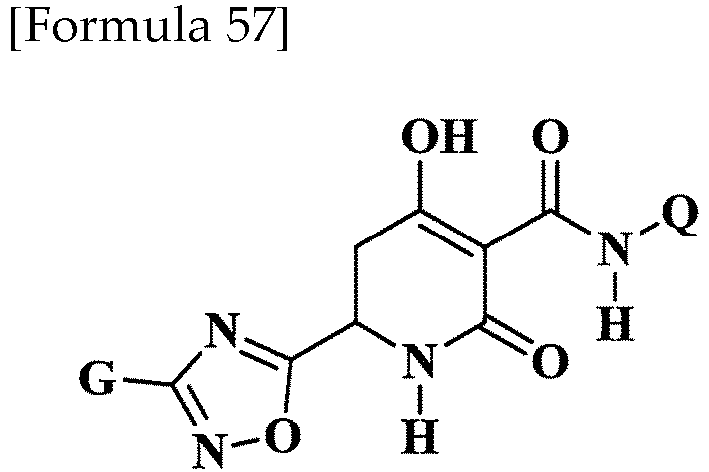
No. Q G m.p.(°C) 3-001 Q-1(4-F) G-2 200-202 3-002 Q-1(4-F) G-2(2-CF3) 177-179 3-003 Q-1(4-F) G-2(4-Cl) 228-230 3-004 Q-1(4-F) G-2(4-CF3) 217-219 3-005 Q-1(4-F) G-2(3-CF3) 181-183 3-006 Q-1(4-F) G-7 206-208 3-007 Q-1(4-F) G-1 207-209 3-008 Q-1(4-F) G-2(4-SO2CH3) 226-228 3-009 Q-1(4-F) G-7(4-F) 201-203 3-010 Q-1(4-F) G-2(4-F) 228-230 3-011 Q-1(4-F) G-2(3-F) 221-223 3-012 Q-1(4-F) G-2(2-F) 207-209 3-013 Q-1(4-F) G-6a(2-Cl) 238-240 3-014 Q-1(4-F) G-8a 230-232 3-015 Q-1(4-F) G-1(4-Cl) 230-232 3-016 Q-1(4-F) G-1(4-F) 216-218 3-017 Q-2(4-Cl) G-2 230-232 3-018 Q-2(4-Cl) G-2(3-F) 225-227 3-019 Q-2(4-Cl) G-2(2-F) 229-231 3-020 Q-1(4-F) G-7(3-F) 222-224 3-021 Q-1(4-F) G-1(5-F) 208-210 3-022 Q-1(4-F) G-3(3-F) 216-218 3-023 Q-1(4-F) G-7(6-F) 215-217 3-024 Q-1(4-F) G-9(5-Br) 210-212 3-025 Q-1(4-F) G-7(5-F) 193-195 3-026 Q-1(4-F) G-2(2-F,5-F) 241-243 3-027 Q-1(4-F) G-2(3-F,4-F) 212-214 3-028 Q-1(4-F) G-2(3-Br) 199-201 3-029 Q-1(4-F) G-2(3-Cl) 208-210 3-030 Q-1(4-F) G-2(3-CH3) 191-193 3-031 Q-1(4-F) G-3 239-241 3-032 Q-2(4-F) G-1(4-F) 228-230 3-033 Q-1(4-F) G-2(2-F,3-F) 242-244 3-034 Q-1(4-F) G-2(3-F,5-F) 219-221 3-035 Q-3(4-F) G-1(4-F) 214-216 3-036 Q-3(4-F) G-3(3-F) 159-161 3-037 Q-2(4-F) G-3(3-F) 216-218 3-038 Q-2(4-F) G-3 229-231 3-039 Q-3(4-F) G-7(3-F) 187-189 3-040 Q-3(4-F) G-7(6-F) 189-191 3-041 Q-3(4-F) G-7(5-F) 206-208 3-042 Q-3(4-F) G-7(4-F) 169-171 3-043 Q-3(4-F) G-6a(2-Cl) 181-183 3-044 Q-3(4-F) G-3 197-199 3-045 Q-3(4-F) G-7 207-209 3-046 Q-2(4-F) G-7(3-F) 191-193 3-047 Q-2(4-F) G-7(6-F) 197-199 3-048 Q-2(4-F) G-6a(2-Cl) 222-224 3-049 Q-3(4-F) G-2(2-F,3-F) 192-194 3-050 Q-3(4-F) G-2(2-F,5-F) 207-209 3-051 Q-3(4-F) G-2(3-Br) 197-199 3-052 Q-3(4-F) G-2(3-Cl) 199-201 3-053 Q-3(4-F) G-2(3-CH3) 194-196 3-054 Q-3(4-F) G-1(4-Cl) 241-243 3-055 Q-3(4-F) G-2 187-189 3-056 Q-3(4-F) G-2(4-F) 177-179 3-057 Q-3(4-F) G-2(3-F) 191-193 3-058 Q-3(4-F) G-2(2-F) 196-198 3-059 Q-3(4-F) G-2(3-F,5-F) 186-187 3-060 Q-2(4-Cl) G-3(3-F) 217-221 3-061 Q-3(4-F) G-3(3-CH3) 101-103 3-062 Q-3(4-F) G-2(3-F,4-F) 194-196 3-063 Q-3(4-F) G-2(2-F,4-F) 192-194 3-064 Q-3(4-F) G-3(2-F) 204-206 3-065 Q-3 G-3(3-F) 194-196 3-066 Q-4(4-Br) G-3(3-F) 199-201 3-067 Q-6(4-Cl) G-3(3-F) 199-201 3-068 Q-3(4-Br) G-3(3-F) 221-223 3-069 Q-3(4-Cl) G-3(3-F) 209-211 3-070 Q-2(4-CN) G-3(3-F) 231-233 3-071 Q-1(4-CN) G-3(3-F) 203-205 3-072 Q-3(4-CN) G-3(3-F) 97-99 3-073 Q-3(4-F,6-F) G-3(3-F) 97-99 3-074 Q-1(4-Cl) G-3(3-F) 209-211 3-075 Q-4 G-3(3-F) 167-169 3-076 Q-4(4-Cl) G-3(3-F) 187-189 3-077 Q-3(4-Cl,6-F) G-3(3-F) 131-133 3-078 Q-3(4-CF3) G-3(3-F) 129-131 3-079 Q-2(4-Cl) G-1(4-F) 224-226 3-080 Q-2(4-Cl) G-2(4-F) 241-243 3-081 Q-2(4-F) G-7(4-F) 198-200 3-082 Q-2(4-F) G-2(4-F) 224-226 3-083 Q-3(4-F) G-1(5-F) 189-191 3-084 Q-3(4-F) G-2(3-CF3) 184-186 3-085 Q-3(4-F) G-8a 207-209 3-086 Q-3(4-F) G-9(5-Br) 144-146 3-087 Q-3(4-F) G-1(4-CH3) 232-234 3-088 Q-3(4-F) G-10 185-187 3-089 Q-1(4-F) G-3(3-CH3) 207-209 3-090 Q-1(4-F) G-3(3-Cl) 196-198 3-091 Q-3(4-F) G-11 217-219 3-092 Q-3(4-F) G-12 209-211 3-093 Q-3(4-F) G-13 212-214 3-094 Q-3(4-F) G-13(3-CH3) 211-212 3-095 Q-3(4-F) G-14 207-209 3-096 Q-3(4-F) G-15 199-201 3-097 Q-3(4-F) G-16 211-212 3-098 Q-3(4-F) G-3(3-Cl) 174-177 3-099 Q-3(4-F) G-3(3-OH) 201-203 3-100 Q-3(4-F) G-3(3-OCH3) 144-146 3-101 Q-3(4-F) G-1(4-OH) 214-216 3-102 Q-3(4-Cl) G-1(4-F) 182-184 3-103 Q-3 G-1(4-F) 184-186 3-104 Q-3(4-CH3) G-1(4-F) 185-187 3-105 Q-9(4-CH3) G-1(4-F) 208-210 3-106 Q-1(2-F,4-Cl) G-3(3-F) 182-184 3-107 Q-1(3-F,4-F) G-3(3-F) 174-176 3-108 Q-1(3-F,5-F) G-3(3-F) 212-214 3-109 Q-1(4-F) G-9 222-224 3-110 Q-3(4-F) G-9 218-220 3-111 Q-1(4-F) G-17 226-228 3-112 Q-3(4-F) G-17 219-221 3-113 Q-3(4-F) G-6a(2-Cl,5-CH3) 159-161 3-114 Q-3(4-F) G-6a(2-Cl,5-Cl) 171-173 3-115 Q-1(4-F) G-6a(2-Cl,5-Cl) 199-201 3-116 Q-2(4-OCH3) G-3(3-F) 202-204 3-117 Q-1(4-F) G-2(4-N(CH3)2) 222-225 3-118 Q-3(4-F) G-2(4-N(CH3)2) 219-220 3-119 Q-3(4-F) G-7(3-CH3) 208-210 3-120 Q-1(3-Cl,4-NO2) G-3(3-F) 279-281 3-121 Q-20(3-CH3) G-3(3-F) 298-300 3-122 Q-12a G-3(3-F) 201-203 3-123 Q-45a G-3(3-F) 209-211 3-124 Q-3(4-F) G-2(3-C(=NOCH3)H) 184-186 3-125 Q-3(4-F) G-2(3-C(=NOCH3)CH3) 211-213 3-126 Q-2 G-3(3-F) 191-193 3-127 Q-3(4-CH3) G-2(4-F) 182-184 3-128 Q-3(4-CH3) G-2(3-F) 167-169 3-129 Q-3(4-CH3) G-2(2-F) 157-159 3-130 Q-3(4-F) G-1(5-CH3) 229-231 3-131 Q-1(4-F) G-2(2-F,4-F) 213-215 3-132 Q-3 G-2(2-F,4-F) 196-198 3-133 Q-3(4-F) G-3(3-CF3) 209-211 3-134 Q-3(4-F) G-19 196-198 3-135 Q-3(4-F) G-6a(5-Cl) 186-188 3-136 Q-4(4-Cl) G-6a(2-Cl,5-CH3) 179-181 3-137 Q-3(4-F) G-2(4-OCH3) 199-201 3-138 Q-3(4-F) G-2(3-F,4-F,5-F) 214-216 3-139 Q-3(4-F) G-2(2-F,4-F,5-F) 222-224 3-140 Q-3(4-F) G-2(2-Cl,4-F) 162-164 3-141 Q-3(4-F) G-2(3-Cl,4-F) 197-199 3-142 Q-3(4-F) G-2(2-F,4-Cl) 201-203 3-143 Q-3(4-F) G-2(2-F,6-Cl) 189-191 3-144 Q-3(4-F) G-2(2-F,4-F,6-F) 181-183 3-145 Q-3(4-F) G-2(3-F,4-Cl) 194-196 3-146 Q-3(4-F) G-2(3-Br,4-F) 199-201 3-147 Q-3(4-F) G-7(4-Cl,6-Cl) 192-194 3-148 Q-3(4-F) G-7(4-CF3,6-Cl) 177-179 3-149 Q-3(4-F) G-1(4-CF3) 197-199 3-150 Q-3(4-CH3) G-3 >300 3-151 Q-3(4-CH3) G-1 238-240 3-152 Q-3(4-CH3) G-7 203-205 3-153 Q-3(4-F) G-7(5-CH3) 194-196 3-154 Q-12a G-2(2-F,4-F) 92-94 3-155 Q-3(4-Cl) G-2(2-F,4-F) 206-208 3-156 Q-2(4-F) G-2(2-F,4-F) 216-218 3-157 Q-1(2-F,4-F) G-2(2-F,4-F) 221-223 3-158 Q-3 G-6a(2-Cl) 196-198 3-159 Q-3(4-F) G-6a(2-Cl,5-CF3) 79-81 3-160 Q-3(4-F) G-6a(5-CF3) 79-81 3-161 Q-1(3-F,4-F) G-2(2-F,4-F) 229-231 3-162 Q-1(4-CN) G-3(3-CH3) 194-196 3-163 Q-3(5-CH3) G-3(3-F) 181-183 3-164 Q-3(4-F) G-3(3-Br) 181-183 3-165 Q-3(4-CH3) G-3(3-F) *1 3-166 Q-1(2-F,6-F) G-3(3-F) *1 3-167 Q-3(4-CH3) G-17 233-235 3-168 Q-3(4-CH3) G-9 191-193 3-169 Q-3(4-CH3) G-3(3-Cl) 187-189 3-170 Q-3 G-6a(2-Cl,5-Cl) 167-169 3-171 Q-9 G-6a(2-Cl,5-Cl) 202-204 3-172 Q-3(4-Cl,6-F) G-3(3-CH3) 174-176 3-173 Q-4(4-Cl) G-3(3-CH3) 206-208 3-174 Q-3(3-CH3) G-2(2-F,4-F) 192-194 3-175 Q-3(5-CH3) G-2(2-F,4-F) 174-176 3-176 Q-3(4-CH3) G-3(3-CH3) 117-119 3-177 Q-2 G-2(2-F,4-F) 189-191 3-178 Q-3(4-CH3) G-2(2-F,4-F) 209-211 3-179 Q-3(4-OCH3) G-3(3-F) 201-203 3-180 Q-3(4-Cl) G-2(3-F) 196-198 3-181 Q-3(4-Cl) G-3 221-223 3-182 Q-3(4-Cl) G-7 197-199 3-183 Q-3(4-Cl) G-3(3-Cl) 169-171 3-184 Q-3 G-2(4-F) 192-194 3-185 Q-3 G-2(3-F) 152-154 3-186 Q-3 G-2(2-F) 162-164 3-187 Q-3 G-3(3-Cl) 177-179 3-188 Q-3(4-F) G-2(3-NO2) 174-176 3-189 Q-3(4-F) G-2(4-CN) 224-226 3-190 Q-3(4-F) G-2(3-OCH3) 171-173 3-191 Q-3(4-F) G-2(3-OCF3) 164-166 3-192 Q-3(4-F) G-2(3-CN) 211-213 3-193 Q-3(4-F) G-2(3-C(O)OCH2CH3) 184-186 3-194 Q-3(3-F) G-3(3-F) 218-220 3-195 Q-3(3-F) G-3(3-CH3) 197-199 3-196 Q-3(3-F) G-2(2-F,4-F) 207-209 3-197 Q-3(3-F) G-3(3-Cl) 201-203 3-198 Q-9 G-3(3-CH3) 226-228 3-199 Q-3(5-F) G-2(2-F,4-F) 182-184 3-200 Q-12b G-3(3-F) 151-153 3-201 Q-12a(4-CH3) G-3(3-F) 214-216 3-202 Q-12a G-2(4-F) 189-191 3-203 Q-12a G-2(3-F) 174-176 3-204 Q-12a G-1(4-F) 169-171 3-205 Q-12a G-3(3-Cl) 186-188 3-206 Q-12a G-3(3-CH3) 164-166 3-207 Q-12a G-2(3-F,4-F) 181-183 3-208 Q-12a G-6a(2-Cl,5-Cl) *1 3-209 Q-1(4-CN) G-3(3-Cl) 182-184 3-210 Q-1(4-CN) G-1(4-F) 235-236 3-211 Q-2(4-Cl) G-3 222-224 3-212 Q-3(4-F) G-20 218-220 3-213 Q-2(4-F) G-3(3-CF3) 189-191 3-214 Q-2(4-Cl) G-3(3-CF3) 179-181 3-215 Q-12a G-3(3-CF3) 211-213 3-216 Q-2(4-F) G-3(3-Cl) 172-174 3-217 Q-2(4-F) G-3(3-CH3) 211-213 3-218 Q-3(4-F) G-16(3-Cl) 239-241 3-219 Q-3(3-CH3) G-3(3-Cl) 201-203 3-220 Q-3(3-CH3) G-3(3-CH3) 192-194 3-221 Q-3(3-CH3) G-1(4-F) 202-204 3-222 Q-3(3-CF3) G-3(3-F) 177-179 3-223 Q-3 G-3(3-CF3) 199-201 3-224 Q-1(4-F) G-3(3-CF3) 184-186 3-225 Q-4(4-Cl) G-3(3-CF3) 190-192 3-226 Q-9 G-3(3-CF3) 202-204 3-227 Q-3(4-F) G-28 211-213 3-228 Q-2(4-Cl) G-3(3-Cl) 187-189 3-229 Q-3(4-Br) G-3 236-238 3-230 Q-3(4-Br) G-1 241-243 3-231 Q-3(4-Br) G-7 217-219 3-232 Q-3(4-Br) G-3(3-Cl) 191-193 3-233 Q-3(3-Br) G-1(4-F) 184-186 3-234 Q-3(4-F) G-9(4-Cl) 209-211 3-235 Q-3(4-F) G-9(2-Cl) 202-204 3-236 Q-3(5-F) G-3(3-Cl) 199-201 3-237 Q-3(3-F) G-1(4-F) 191-193 3-238 Q-3(6-F) G-3(3-F) 162-164 3-239 Q-3(6-F) G-3(3-Cl) 176-178 3-240 Q-3(6-F) G-3(3-CH3) 181-183 3-241 Q-3(6-F) G-1(4-F) 196-198 3-242 Q-12a(4-Br) G-3(3-F) 229-231 3-243 Q-12a(4-CF3) G-3(3-F) 206-208 3-244 Q-3(4-F) G-15(4-CF3) 215-217 3-245 Q-9 G-3(3-Cl) 246-248 3-246 Q-9 G-3(3-F) 255-257 3-247 Q-9 G-1(4-F) 220-221 3-248 Q-1(2-F,3-Cl) G-3(3-F) 241-243 3-249 Q-3(3-OCH3) G-3(3-F) 187-189 3-250 Q-3(3-C(O)OCH3) G-3(3-F) 201-203 3-251 Q-12a(4-Br) G-3(3-CH3) 212-214 3-252 Q-12a(4-Br) G-1(4-F) 219-221 3-253 Q-3(4-F) G-40 177-179 3-254 Q-3(4-F) G-28(4-Cl,5-Cl) 184-186 3-255 Q-3(4-F) G-11(3-Cl) 184-186 3-256 Q-3(4-F) G-11(6-Cl) 191-193 3-257 Q-4 G-1(4-F) 162-164 3-258 Q-4 G-3(3-Cl) 197-199 3-259 Q-4 G-3(3-CH3) 226-228 3-260 Q-4 G-3(3-CF3) 204-206 3-261 Q-4 G-7(4-F) 201-203 3-262 Q-4 G-28(4-Cl,5-Cl) 194-195 3-263 Q-3 G-28(4-Cl,5-Cl) 211-213 3-264 Q-3(4-F) G-16(3-CF3) 206-208 3-265 Q-3(4-F) G-27 203-206 3-266 Q-1(2-CH3,4-CH3) G-3(3-F) 217-219 3-267 Q-1(3-Cl,4-CH3) G-3(3-F) 203-205 3-268 Q-4(4-Cl) G-3(3-Cl) 148-150 3-269 Q-4(4-Cl) G-1(4-F) 187-189 3-270 Q-3(4-Cl,6-F) G-3(3-Cl) 143-145 3-271 Q-3(4-Cl,6-F) G-1(4-F) 170-172 3-272 Q-1(3-F,4-F) G-3(3-Cl) 189-191 3-273 Q-1(3-F,4-F) G-3(3-CH3) 110-112 3-274 Q-1(3-F,4-F) G-1(4-F) 122-124 3-275 Q-12a(4-CF3) G-3(3-CH3) 119-121 3-276 Q-12a(4-CF3) G-1(4-F) 164-166 3-277 Q-3(4-F) G-3(3-SCH3) 201-203 3-278 Q-3(4-F) G-3(3-S(O)CH3) 179-181 3-279 Q-3(4-F) G-3(3-S(O)2CH3) 209-211 3-280 Q-4(4-CH3) G-3(3-F) 149-151 3-281 Q-3(3-F) G-3(3-CF3) 130-132 3-282 Q-3(5-F) G-3(3-CF3) 136-139 3-283 Q-3(3-CH3) G-3(3-CF3) 164-166 3-284 Q-3(4-CH3) G-3(3-CF3) 151-153 3-285 Q-3(6-F) G-3(3-CF3) 61-63 3-286 Q-3 G-3(3-CH3) 161-163 3-287 Q-9(3-CH3) G-3(3-F) 144-146 3-288 Q-9(3-CH3) G-3(3-Cl) 140-142 3-289 Q-9(3-CH3) G-3(3-CH3) 156-158 3-290 Q-9(3-CH3) G-1(4-F) 158-160 3-291 Q-29(3-CH2CH3) G-3(3-F) 136-138 3-292 Q-3(4-Cl,6-F) G-3(3-CF3) 88-91 3-293 Q-3(4-F) G-18 198-200 3-294 Q-10(3-CH3) G-3(3-F) 204-206 [Table 10] 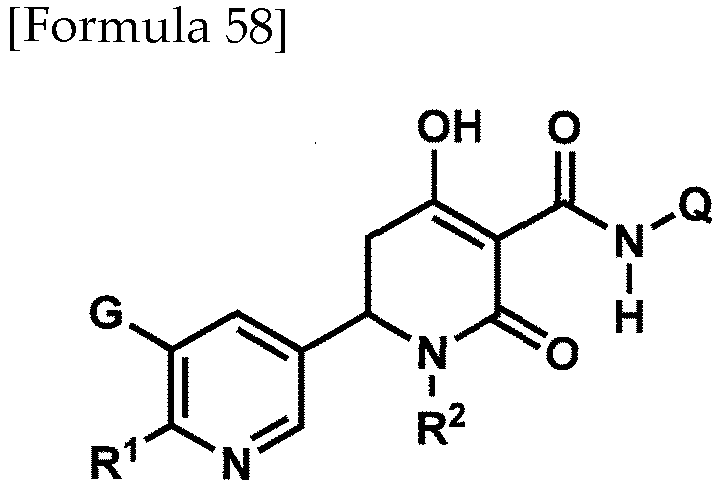
No. R1 Q G R2 m.p.(°C) 4-001 Cl Q-3(4-F) G-1(4-F) C(O)OCH2CH3 117-119 [Table 11] 
No. Q G R2 m.p.(°C) 5-001 Q-3(4-F) G-3(3-F) C(O)OCH2CH3 *1 5-002 Q-3(4-F) G-3(3-F) C(O)i-Bu *1 5-003 Q-3(4-F) G-3(3-F) C(O)c-Pr 121-123 5-004 Q-3(4-F) G-3(3-F) C(O)CH2OCH3 *1 5-005 Q-3(4-F) G-3(3-F) C(O)OCH3 *1 5-006 Q-3(4-F) G-3(3-F) C(O)C(O)CH2CH3 137-139 5-007 Q-3(4-F) G-3(3-F) C(O)OCH2CH=CH2 148-150 5-008 Q-3(4-F) G-3(3-F) C(O)CH3 190-192 5-009 Q-3(4-F) G-3(3-F) C(O)CH2CF3 204-206 5-010 Q-2(4-F) G-3(3-F) C(O)OCH3 83-85 5-011 Q-2(4-F) G-3(3-F) C(O)CH2OCH3 86-88 5-012 Q-2(4-F) G-3(3-F) C(O)CH3 *1 5-013 Q-3(4-F) G-3(3-F) D-1(2-CH3) 188-191 5-014 Q-3(4-F) G-3(3-F) D-2 *1 5-015 Q-3(4-F) G-3(3-F) D-3 *1 5-016 Q-2(4-F) G-3(3-F) D-3 113-115 [Table 12] 
No. Q G m.p.(°C) 6-001 Q-2(4-Cl) G-3(3-F) 196-198 6-002 Q-3(4-F) G-3(3-F) 200-202 6-003 Q-3(4-F) G-2(4-F) 181-182 6-004 Q-3(4-F) G-2(2-F,4-F) 169-172 6-005 Q-3(4-F) G-3(3-CH3) 191-192 [Table 13] 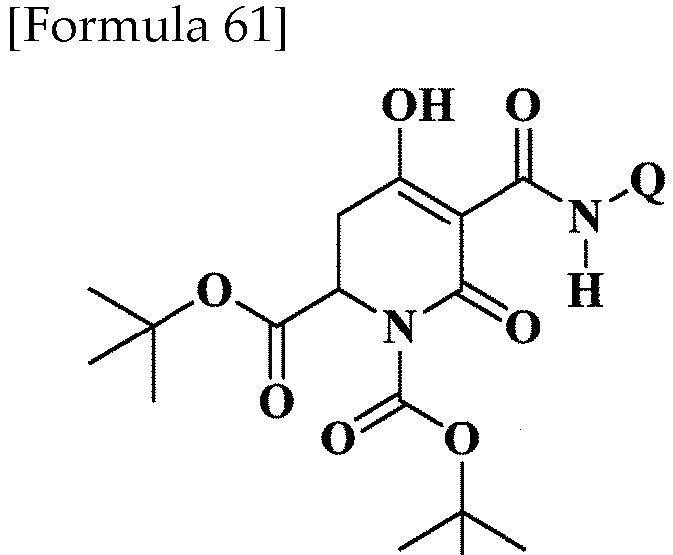
No. Q m.p.(°C) i1-001 Q-1 i1-002 Q-1(4-F) 151-153 i1-003 Q-1(4-Cl) i1-004 Q-1(4-Br) i1-005 Q-1(4-I) i1-006 Q-1(4-CN) 161-163 i1-007 Q-1(4-CH3) i1-008 Q-1(4-CF3) i1-009 Q-2 i1-010 Q-2(4-F) 144-146 i1-011 Q-2(4-Cl) 172-174 i1-012 Q-2(4-Br) i1-013 Q-2(4-I) i1-014 Q-2(4-CN) i1-015 Q-2(4-CH3) i1-016 Q-2(4-CF3) i1-017 Q-3 154-156 i1-018 Q-3(4-F) 152-154 i1-019 Q-3(4-Cl) 182-184 i1-020 Q-3(4-Br) 186-188 i1-021 Q-3(4-I) i1-022 Q-3(4-CN) i1-023 Q-3(4-CH3) 167-169 i1-024 Q-3(4-CF3) i1-025 Q-4 146-148 i1-026 Q-4(4-F) i1-027 Q-4(4-Cl) 174-176 i1-028 Q-4(4-Br) 164-166 i1-029 Q-4(4-I) i1-030 Q-4(4-CN) i1-031 Q-4(4-CH3) i1-032 Q-4(4-CF3) i1-033 Q-6 i1-034 Q-6(4-F) i1-035 Q-6(4-Cl) 154-156 i1-036 Q-6(4-Br) i1-037 Q-6(4-I) i1-038 Q-6(4-CN) i1-039 Q-6(4-CH3) i1-040 Q-6(4-CF3) i1-041 Q-9 182-184 i1-042 Q-9(4-F) i1-043 Q-9(4-Cl) 186-188 i1-044 Q-9(4-Br) 166-168 i1-045 Q-9(4-I) i1-046 Q-9(4-CN) i1-047 Q-9(4-CH3) i1-048 Q-9(4-CF3) [Table 14] 
No. Q m.p.(°C) i2-002 Q-1(4-F) 205-207 i2-006 Q-1(4-CN) 246-248 i2-010 Q-2(4-F) 186-188 i2-011 Q-2(4-Cl) 243-245 i2-017 Q-3 171-173 i2-018 Q-3(4-F) 211-213 i2-019 Q-3(4-Cl) 199-201 i2-020 Q-3(4-Br) 191-193 i2-023 Q-3(4-CH3) 174-176 i2-025 Q-4 224-226 i2-027 Q-4(4-Cl) 222-224 i2-041 Q-9 206-208 [Table 15] 
No. R1 G m.p.(°C) i5-003 Cl G-3 181-183 i5-004 Cl G-2 162-164 i5-010 Cl G-1(4-F) 178-180 i5-014 Cl G-3(3-F) 184-186 i5-017 Cl G-2(4-F) 159-161 i5-029 Cl G-3(3-Cl) 174-176 i5-040 Cl G-1(4-CH3) 196-198 i5-044 Cl G-3(3-CH3) 182-184 i5-078 CF3 G-3(3-F) 159-161 - Table 16 shows 1H-NMR data for compounds as the presently invented compound for which melting point is not shown. Chemical shift values in proton nuclear magnetic resonance spectra (hereinafter, referred to as 1H-NMR) shown below were determined with use of Me4Si (tetramethylsilane) as a standard substance at 300 MHz (model: JNM-ECX300 or JNM-ECP300, manufactured by JEOL Ltd.) or 400 MHz (model: JNM-ECZ400S, manufactured by JEOL Ltd.). Signs for chemical shift values in 1H-NMR have meanings shown below, and the notation "*2" indicates that any signal corresponding to a proton of OH or NH was not observed.
s: singlet, d: doublet, dd: double doublet, t: triplet, q: quartet, m: multiplet, brs: broad singlet[Table 16] No. 1H-NMR (Me4Si) 2-286 (400MHz, DMSO-d6, *2):δ12.4(brs, 1H), 8.50(brs, 1H), 8.40(brs, 1H), 8.25-8.15(m, 1H), 8.10-8.00(m, 1H), 7.92(brs, 1H), 7.40-7.30(m, 2H), 7.20-7.10(m, 1H), 5.15-4.90(m, 2H), 2.60-3.1(m, 1H). 2-287 (400MHz, DMSO-d6):δ12.1 and 11.9(brs, 1H), 8.7-8.8(m, 2H), 8.5-8.6(brs, 1H), 8.4-8.5(m, 1H), 8.3-8.4(m, 1H), 8.2-8.3(m, 1H), 8.05-8.15(m, 1H), 7.95-8.05(m, 1H), 7.35-7.45(m, 2H), 4.9-5.1(m, 1H), 2.8-3.2(m, 2H). 2-288 (400MHz, DMSO-d6):612.4(brs, 1H), 8.9-9.0(m, 1H), 8.7-8.9(brs, 1H), 8.5-8.6(m, 1H), 8.4(brs, 2H), 8.15-8.3(m, 1H), 8.05-8.15(m, 1H), 7.5-7.7(m, 2H), 7.3-7.4(m, 1H), 4.85-4.95(m, 1H), 2.8-3.0(m, 2H). 2-289 (400MHz, DMSO-d6, *2):δ9.68(brs, 1H), 9.02(brs, 1H), 8.5-8.6(m, 2H), 8.4-8.5(m, 1H), 8.2-8.35(m, 2H), 8.1(brs, 1H), 7.7-7.8(m, 1H), 7.35-7.45(m, 1H), 5.05(brs, 1H), 2.8-3.2(m, 2H). 3-165 (400MHz, CDCl3):δ12.1(brs, 1H), 8.77(brs, 1H), 8.47(d, J=4.8Hz, 1H), 8.17(brs, 1H), 7.8-7.95(m, 1H), 7.6-7.7(m, 2H), 7.0-7.15(m, 1H), 5.25-5.55(m, 1H), 3.0-3.1(m, 2H), 2.07(s, 3H). 3-166 (400MHz, CDCl3):δ10.9(brs, 1H), 8.35-8.5(m, 2H), 7.8-7.95(m, 2H), 7.6-7.7(m, 2H), 6.9-7.1(m, 1H), 5.1-5.2(m, 1H), 3.0-3.3(m, 2H). 3-208 (300MHz, DMSO-d6, *2): 11.90-12.06(m, 1H), 9.63-8.68(m, 1H), 7.67(brs, 1H), 6.39-6.52(m, 1H), 5.23-5.55(m, 1H), 3.91(s, 3H), 3.80(s, 3H), 3.56(dd, J=17.7, 7.5Hz, 1H), 2.86-3.15(m, 1H). 5-001 (400MHz, CDCl3, *2):δ11.7(brs, 1H), 8.37(d, J=5.2Hz, 1H), 8.23(d, J=3.2Hz, 1H), 8.04(dd, J=13.2, 4.0Hz, 1H), 7.8-7.85(m, 1H), 7.57(brs, 1H), 7.4-7.5(m, 1H), 6.0-6.1(m, 1H), 4.46(q, J=7.2Hz, 2H) , 3.45-3.55(m, 1H), 3.25-3.35(m, 1H), 1.43(t, J=7.2Hz, 3H). 5-002 (400MHz, CDCl3, *2):δ11.7(brs, 1H), 8.36(d, J=5.2Hz, 1H), 8.25(d, J=3.2Hz, 1H), 8.08(dd, J=9.2, 4.0Hz, 1H), 7.75-7.85(m, 1H), 7.55(brs, 1H), 7.4-7.5(m, 1H), 6.3-6.4(m, 1H), 3.39(d, J=4.4Hz, 2H), 3.1-3.2(m, 1H), 2.8-2.9(m, 1H), 2.15-2.25(m, 1H), 1.06(d, J=6.8Hz, 3H), 1.0(d, J=6.8Hz, 3H). 5-004 (400MHz, CDCl3, *2):δ11.5(brs, 1H), 8.37(d, J=5.2Hz, 1H), 8.25(d, J=2.8Hz, 1H), 8.07(dd, J=9.2, 4.0Hz, 1H), 7.75-7.85(m, 1H), 7.55(brs, 1H), 7.4-7.5(m, 1H), 6.4-6.45(m, 1H), 4.92(d, J=18Hz, 1H) , 4.66(d, J=18Hz, 1H), 3.54(s, 3H), 3.43(d, J=4.4Hz, 2H). 5-005 (400MHz, CDCl3, *2):δ11.7(brs, 1H), 8.37(d, J=5.2Hz, 1H), 8.21(d, J=2.4Hz, 1H), 8.0-8.1(m, 1H), 7.8-7.85(m, 1H), 7.55-7.65(m, 1H), 7.4-7.5(m, 1H), 6.06(dd, J=6.4, 1.6Hz, 1H), 4.02(s, 3H), 3.4-3.55(m 1H), 3.3-3.4(m, 1H). 5-012 (400MHz, CDCl3, *2):δ11.4(brs, 1H), 8.35-8.45(m, 2H), 8.05-8.15(m, 1H), 7.8-7.85(m, 1H), 7.55-7.6(m, 1H), 6.9-7.0(m, 1H), 6.3-6.4(m, 1H), 3.41(d, J=4.0Hz, 2H), 2.73(s, 3H). 5-014 (400MHz, CDCl3, *2):δ11.5(brs, 1H), 8.37(d, J=5.2Hz, 1H), 8.25(d, J=2.8Hz, 1H), 8.07(dd, J=9.2, 4.0Hz, 1H), 7.75-7.85(m, 1H), 7.55(brs, 1H), 7.4-7.5(m, 1H), 6.4-6.45(m, 1H), 3.65-3.75(m, 4H), 3.25-3.3(m, 4H), 2.8-2.9(m, 1H), 2.0-2.2(m, 1H). 5-015 (400MHz, CDCl3, *2):δ11.6(brs, 1H), 8.36(d, J=5.2Hz, 1H), 8.21(d, J=3.2Hz, 1H), 8.06(dd, J=9.2, 4.0Hz, 1H), 7.75-7.85(m, 1H), 7.55-7.65(m, 2H), 7.4-7.5(m, 1H), 7.3-7.35(m, 1H), 6.55-6.6(m, 1H) , 5.8-5.85(m 1H), 3.61(dd, J=18.0, 7.2Hz, 1H) , 3.3-3.45(m, 1H). - Next, the usefulness of the presently invented compound as a pesticide will be specifically described in Test Examples shown in the following, but the present invention is not limited thereto.
- A 10% by mass emulsion of the presently invented compound prepared according to the above formulation example for an emulsion was diluted with water containing a spreader to prepare a chemical solution having a concentration of 500 ppm. Rice leaf sheaths were soaked in the chemical solution for approximately 10 seconds. After the completion of the soaking operation, the rice leaf sheaths treated with the chemical solution were air-dried, and then put in test tubes. Into each test tube, five third-instar brown rice planthoppers (Nilaparvata lugens) larvae were released, and the test tubes were capped with sponge and accommodated in a thermostatic room at 25°C. Six days after the accommodation, the number of dead brown rice planthoppers individuals in the test tubes were examined, and the death rate was calculated from a calculation formula shown below. The test was carried out in duplicate.
Death rate (%) = (number of dead individuals / number of tested individuals) × 100 - The result showed that the following compounds exhibited death rates of 90% or more.
The presently invented compound: 1-001, 1-002, 1-003, 1-013, 1-014, 1-020, 2-001, 2-005, 2-008, 2-009, 2-010, 2-011, 2-012, 2-013, 2-014, 2-016, 2-018, 2-019, 2-020, 2-021, 2-022, 2-023, 2-024, 2-025, 2-027, 2-028, 2-029, 2-030, 2-031, 2-032, 2-033, 2-034, 2-035, 2-036, 2-037, 2-038, 2-039, 2-040, 2-041, 2-042, 2-043, 2-044, 2-045, 2-047, 2-048, 2-049, 2-050, 2-051, 2-052, 2-053, 2-054, 2-055, 2-056, 2-057, 2-058, 2-059, 2-060, 2-061, 2-062, 2-063, 2-067, 2-069, 2-071, 2-074, 2-076, 2-077, 2-079, 2-080, 2-081, 2-082, 2-083, 2-084, 2-085, 2-086, 2-087, 2-088, 2-089, 2-090, 2-091, 2-092, 2-093, 2-094, 2-095, 2-096, 2-097, 2-098, 2-099, 2-100, 2-101, 2-102, 2-103, 2-104, 2-105, 2-106, 2-107, 2-108, 2-109, 2-110, 2-111, 2-112, 2-113, 2-114, 2-115, 2-116, 2-117, 2-118, 2-119, 2-120, 2-122, 2-123, 2-124, 2-125, 2-126, 2-127, 2-128, 2-129, 2-130, 2-132, 2-133, 2-134, 2-135, 2-136, 2-137, 2-138, 2-139, 2-140, 2-141, 2-142, 2-143, 2-144, 2-145, 2-146, 2-147, 2-150, 2-151, 2-152, 2-153, 2-154, 2-155, 2-156, 2-157, 2-158, 2-159, 2-160, 2-161, 2-162, 2-163, 2-164, 2-165, 2-166, 2-167, 2-168, 2-169, 2-170, 2-171, 2-172, 2-173, 2-174, 2-175, 2-176, 2-177, 2-178, 2-179, 2-180, 2-181, 2-182, 2-183, 2-184, 2-186, 2-187, 2-188, 2-189, 2-190, 2-191, 2-192, 2-193, 2-194, 2-195, 2-196, 2-197, 2-198, 2-199, 2-200, 2-201, 2-202, 2-203, 2-204, 2-205, 2-206, 2-207, 2-208, 2-209, 2-211, 2-212, 2-213, 2-214, 2-215, 2-216, 2-217, 2-218, 2-219, 2-222, 2-223, 2-227, 2-228, 2-231, 2-232, 2-233, 2-235, 2-238, 2-240, 2-244, 2-245, 2-246, 2-247, 2-248, 2-249, 2-250, 2-251, 2-252, 2-253, 2-254, 2-255, 2-256, 2-259, 2-260, 2-261, 2-262, 2-263, 2-264, 2-265, 2-267, 2-268, 2-269, 2-271, 2-272, 2-273, 2-276, 2-277, 2-287, 2-288, 2-289, 2-290, 2-297, 2-298, 2-299, 2-300, 2-301, 2-302, 2-303, 2-304, 2-305, 3-001, 3-002, 3-005, 3-006, 3-007, 3-009, 3-010, 3-011, 3-012, 3-013, 3-014, 3-015, 3-016, 3-017, 3-018, 3-020, 3-021, 3-022, 3-023, 3-024, 3-025, 3-026, 3-027, 3-028, 3-029, 3-030, 3-031, 3-032, 3-033, 3-034, 3-035, 3-036, 3-037, 3-038, 3-039, 3-040, 3-041, 3-042, 3-043, 3-044, 3-045, 3-046, 3-047, 3-048, 3-049, 3-050, 3-051, 3-052, 3-053, 3-055, 3-056, 3-057, 3-058, 3-059, 3-060, 3-061, 3-062, 3-063, 3-064, 3-065, 3-066, 3-067, 3-068, 3-069, 3-070, 3-071, 3-072, 3-073, 3-074, 3-075, 3-076, 3-077, 3-078, 3-079, 3-080, 3-081, 3-082, 3-083, 3-084, 3-085, 3-086, 3-087, 3-088, 3-089, 3-090, 3-091, 3-092, 3-093, 3-094, 3-095, 3-096, 3-097, 3-098, 3-100, 3-102, 3-103, 3-104, 3-105, 3-106, 3-107, 3-108, 3-110, 3-111, 3-112, 3-113, 3-114, 3-115, 3-116, 3-119, 3-121, 3-122, 3-123, 3-126, 3-127, 3-129, 3-130, 3-131, 3-132, 3-133, 3-134, 3-135, 3-136, 3-138, 3-139, 3-140, 3-141, 3-144, 3-146, 3-147, 3-152, 3-153, 3-154, 3-155, 3-156, 3-157, 3-158, 3-159, 3-160, 3-161, 3-162, 3-163, 3-164, 3-165, 3-166, 3-168, 3-169, 3-170, 3-171, 3-172, 3-173, 3-174, 3-175, 3-176, 3-177, 3-178, 3-179, 3-180, 3-182, 3-183, 3-184, 3-185, 3-186, 3-187, 3-188, 3-189, 3-190, 3-191, 3-192, 3-193, 3-194, 3-195, 3-196, 3-197, 3-198, 3-199, 3-200, 3-201, 3-202, 3-203, 3-204, 3-205, 3-206, 3-207, 3-208, 3-209, 3-210, 3-213, 3-214, 3-215, 3-216, 3-217, 3-219, 3-220, 3-221, 3-223, 3-224, 3-225, 3-226, 3-227, 3-228, 3-232, 3-233, 3-234, 3-235, 3-236, 3-237, 3-238, 3-239, 3-240, 3-241, 3-242, 3-243, 3-244, 3-245, 3-246, 3-249, 3-250, 3-251, 3-252, 3-253, 3-254, 3-255, 3-256, 3-257, 3-258, 3-259, 3-260, 3-261, 3-262, 3-263, 3-264, 3-265, 3-268, 3-269, 3-270, 3-271, 3-272, 3-273, 3-274, 3-275, 3-276, 3-277, 3-278, 3-279, 3-280, 3-281, 3-283, 3-284, 3-285, 3-286, 3-287, 3-288, 3-289, 3-290, 3-291, 3-292, 3-293, 3-294, 4-001, 5-001, 5-002, 5-003, 5-004, 5-005, 5-006, 5-007, 5-008, 5-009, 5-010, 5-011, 5-012, 5-013, 5-014, 5-015, 5-016, 6-001, 6-002, 6-003, 6-004, 6-005 - Wet absorbent cotton was laid on each glass dish having an inner diameter of 3 cm, a Chinese olive leaf cut into a circle having a diameter of 3 cm was placed thereon, and four wingless green peach aphids (Myzus persicae) imagoes were released. After a day, a 10% by mass emulsion of the presently invented compound prepared according to the above formulation example for an emulsion was diluted with water containing a spreader to prepare a chemical solution having a concentration of 500 ppm. The chemical solution prepared was sprinkled (2.5 mg/cm2) with a rotary tower sprinkler, and the dishes were capped and accommodated in a thermostatic room at 25°C. Six days after the accommodation, the number of dead green peach aphids individuals in the dishes were examined, and the death rate was calculated from the same calculation formula as in Test Example 1. The test was carried out in duplicate.
- The result showed that the following compounds exhibited death rates of 90% or more.
The presently invented compound: 1-001, 1-004, 1-005, 1-006, 1-007, 1-008, 1-009, 1-010, 1-011, 1-012, 1-014, 1-015, 1-016, 1-017, 1-019, 1-020, 1-021, 1-023, 2-003, 2-005, 2-007, 2-010, 2-023, 2-032, 2-034, 2-035, 2-036, 2-040, 2-041, 2-042, 2-044, 2-045, 2-046, 2-047, 2-048, 2-049, 2-053, 2-054, 2-056, 2-057, 2-058, 2-062, 2-063, 2-064, 2-067, 2-068, 2-077, 2-083, 2-086, 2-087, 2-091, 2-097, 2-098, 2-099, 2-100, 2-104, 2-112, 2-115, 2-117, 2-120, 2-124, 2-125, 2-126, 2-137, 2-141, 2-146, 2-151, 2-155, 2-156, 2-157, 2-158, 2-159, 2-160, 2-161, 2-162, 2-163, 2-165, 2-167, 2-169, 2-170, 2-172, 2-173, 2-179, 2-180, 2-182, 2-183, 2-184, 2-186, 2-189, 2-192, 2-194, 2-196, 2-197, 2-198, 2-199, 2-200, 2-201, 2-202, 2-203, 2-208, 2-213, 2-214, 2-216, 2-217, 2-219, 2-242, 2-244, 2-245, 2-247, 2-250, 2-251, 2-253, 2-254, 2-255, 2-257, 2-264, 2-265, 2-266, 2-267, 2-268, 2-271, 2-273, 2-274, 2-278, 2-280, 2-281, 2-284, 2-285, 2-292, 2-298, 2-303, 3-002, 3-009, 3-011, 3-013, 3-014, 3-015, 3-017, 3-020, 3-022, 3-024, 3-027, 3-028, 3-033, 3-039, 3-042, 3-044, 3-049, 3-051, 3-053, 3-054, 3-055, 3-056, 3-058, 3-059, 3-060, 3-064, 3-070, 3-072, 3-074, 3-075, 3-080, 3-095, 3-096, 3-097, 3-098, 3-099, 3-100, 3-107, 3-109, 3-110, 3-111, 3-112, 3-117, 3-118, 3-119, 3-122, 3-123, 3-125, 3-126, 3-128, 3-129, 3-131, 3-132, 3-133, 3-134, 3-136, 3-137, 3-139, 3-142, 3-144, 3-148, 3-164, 3-166, 3-167, 3-170, 3-173, 3-174, 3-178, 3-179, 3-181, 3-183, 3-192, 3-194, 3-196, 3-200, 3-202, 3-204, 3-205, 3-206, 3-207, 3-208, 3-210, 3-213, 3-215, 3-217, 3-219, 3-222, 3-224, 3-225, 3-226, 3-228, 3-229, 3-230, 3-232, 3-236, 3-241, 3-246, 3-248, 3-249, 3-251, 3-252, 3-253, 3-254, 3-257, 3-265, 3-266, 3-268, 3-269, 3-270, 3-271, 3-272, 3-273, 3-274, 3-275, 3-276, 3-277, 3-278, 3-279, 3-280, 3-281, 3-291, 4-001, 5-002, 5-007, 5-009, 5-011, 5-012, 5-013, 5-015, 5-016, 6-001, 6-004 - Wet filter paper was laid on each styrol cup having an inner diameter of 7 cm, and a common bean leaf cut into a 3 cm square was placed thereon, and inoculated with 20 western flower thrips (Frankliniella occidentalis) larvae. A 10% by mass emulsion of the presently invented compound prepared according to the above formulation example for an emulsion was diluted with water containing a spreader to prepare a chemical solution having a concentration of 500 ppm. For each styrol cup, 2.5 ml of the chemical solution prepared was sprinkled (2.5 mg/cm2) with a rotary tower sprinkler. After 2 days, the number of dead western flower thrips individuals in the styrol cups were examined, and the death rate was calculated from the same calculation formula as in Test Example 1. The test was carried out in duplicate.
- The result showed that the following compounds exhibited death rates of 90% or more.
The presently invented compound: 1-001, 1-002, 1-003, 1-005, 1-007, 1-008, 1-009, 1-010, 1-011, 1-013, 1-014, 1-015, 1-016, 1-017, 1-019, 1-020, 1-022, 1-023, 1-024, 2-001, 2-005, 2-008, 2-009, 2-010, 2-011, 2-012, 2-013, 2-014, 2-016, 2-018, 2-019, 2-020, 2-021, 2-022, 2-024, 2-025, 2-027, 2-028, 2-029, 2-030, 2-031, 2-032, 2-033, 2-034, 2-035, 2-036, 2-037, 2-038, 2-039, 2-040, 2-041, 2-042, 2-044, 2-045, 2-047, 2-048, 2-049, 2-050, 2-053, 2-054, 2-055, 2-056, 2-057, 2-058, 2-059, 2-062, 2-063, 2-067, 2-068, 2-069, 2-071, 2-072, 2-073, 2-074, 2-076, 2-077, 2-078, 2-079, 2-080, 2-081, 2-082, 2-083, 2-084, 2-085, 2-086, 2-087, 2-088, 2-089, 2-090, 2-091, 2-092, 2-093, 2-094, 2-095, 2-096, 2-099, 2-100, 2-101, 2-102, 2-103, 2-104, 2-105, 2-106, 2-107, 2-108, 2-109, 2-110, 2-111, 2-112, 2-113, 2-114, 2-115, 2-116, 2-117, 2-118, 2-119, 2-120, 2-121, 2-122, 2-123, 2-124, 2-125, 2-126, 2-127, 2-128, 2-129, 2-130, 2-131, 2-132, 2-133, 2-134, 2-135, 2-136, 2-137, 2-138, 2-139, 2-140, 2-141, 2-142, 2-143, 2-144, 2-145, 2-146, 2-147, 2-150, 2-151, 2-152, 2-153, 2-154, 2-155, 2-156, 2-157, 2-158, 2-159, 2-160, 2-161, 2-162, 2-163, 2-164, 2-165, 2-166, 2-167, 2-168, 2-169, 2-170, 2-171, 2-172, 2-173, 2-174, 2-175, 2-176, 2-177, 2-178, 2-179, 2-180, 2-181, 2-182, 2-183, 2-184, 2-186, 2-187, 2-188, 2-189, 2-190, 2-191, 2-192, 2-193, 2-194, 2-195, 2-196, 2-198, 2-199, 2-200, 2-201, 2-202, 2-203, 2-204, 2-206, 2-207, 2-208, 2-209, 2-211, 2-212, 2-213, 2-214, 2-215, 2-216, 2-218, 2-219, 2-220, 2-221, 2-222, 2-223, 2-224, 2-225, 2-226, 2-227, 2-228, 2-229, 2-230, 2-231, 2-232, 2-233, 2-235, 2-238, 2-239, 2-240, 2-244, 2-245, 2-246, 2-247, 2-248, 2-249, 2-250, 2-251, 2-252, 2-253, 2-254, 2-255, 2-256, 2-257, 2-258, 2-259, 2-260, 2-261, 2-262, 2-263, 2-265, 2-269, 2-271, 2-272, 2-273, 2-276, 2-277, 2-279, 2-280, 2-281, 2-282, 2-287, 2-288, 2-296, 2-297, 2-298, 2-299, 2-300, 2-301, 2-302, 2-303, 2-304, 2-305, 3-001, 3-003, 3-005, 3-006, 3-007, 3-009, 3-010, 3-011, 3-012, 3-013, 3-014, 3-015, 3-016, 3-018, 3-020, 3-021, 3-022, 3-023, 3-024, 3-025, 3-026, 3-027, 3-028, 3-029, 3-030, 3-031, 3-032, 3-034, 3-035, 3-036, 3-037, 3-038, 3-039, 3-040, 3-041, 3-042, 3-043, 3-044, 3-045, 3-046, 3-047, 3-048, 3-049, 3-050, 3-051, 3-052, 3-054, 3-055, 3-056, 3-057, 3-058, 3-059, 3-060, 3-061, 3-062, 3-063, 3-064, 3-065, 3-066, 3-067, 3-068, 3-069, 3-070, 3-071, 3-072, 3-073, 3-074, 3-075, 3-076, 3-077, 3-078, 3-079, 3-080, 3-081, 3-082, 3-083, 3-084, 3-085, 3-086, 3-088, 3-089, 3-090, 3-091, 3-092, 3-095, 3-096, 3-097, 3-098, 3-100, 3-102, 3-103, 3-104, 3-105, 3-106, 3-107, 3-108, 3-109, 3-111, 3-113, 3-114, 3-115, 3-116, 3-120, 3-121, 3-122, 3-123, 3-124, 3-126, 3-127, 3-128, 3-129, 3-131, 3-132, 3-133, 3-134, 3-135, 3-138, 3-139, 3-140, 3-141, 3-144, 3-145, 3-146, 3-147, 3-154, 3-155, 3-156, 3-157, 3-159, 3-160, 3-161, 3-163, 3-164, 3-165, 3-169, 3-170, 3-171, 3-172, 3-173, 3-174, 3-175, 3-176, 3-177, 3-179, 3-180, 3-183, 3-184, 3-185, 3-186, 3-187, 3-188, 3-189, 3-190, 3-191, 3-192, 3-195, 3-197, 3-199, 3-200, 3-202, 3-204, 3-205, 3-206, 3-207, 3-208, 3-209, 3-210, 3-213, 3-214, 3-215, 3-216, 3-217, 3-219, 3-220, 3-221, 3-223, 3-224, 3-225, 3-226, 3-227, 3-228, 3-232, 3-233, 3-234, 3-235, 3-236, 3-238, 3-239, 3-240, 3-241, 3-242, 3-243, 3-244, 3-245, 3-246, 3-249, 3-250, 3-252, 3-253, 3-254, 3-255, 3-256, 3-257, 3-258, 3-259, 3-260, 3-261, 3-262, 3-263, 3-264, 3-265, 3-267, 3-268, 3-269, 3-270, 3-271, 3-272, 3-273, 3-274, 3-275, 3-277, 3-278, 3-279, 3-280, 3-281, 3-282, 3-283, 3-284, 3-285, 3-286, 3-287, 3-288, 3-289, 3-292, 3-294, 4-001, 5-001, 5-002, 5-003, 5-004, 5-005, 5-006, 5-007, 5-008, 5-009, 5-010, 5-011, 5-012, 5-013, 5-014, 5-015, 5-016, 6-001, 6-002, 6-003, 6-004 - A 10% by mass emulsion of the presently invented compound prepared according to the above formulation example for an emulsion was diluted with water containing a spreader to prepare a chemical solution having a concentration of 500 ppm. Chinese olive leaves were soaked in the chemical solution for approximately 10 seconds. After the completion of the soaking operation, the Chinese olive leaves treated with the chemical solution were air-dried, and then put in dishes. Into each dish, five third-instar diamondback moths (Plutella xylostella) larvae were released, and the dishes were capped and accommodated in a thermostatic room at 25°C. Six days after the accommodation, the number of dead diamondback moths individuals in the dishes were examined, and the death rate was calculated from the same calculation formula as in Test Example 1. The test was carried out in duplicate.
- The result showed that the following compounds exhibited death rates of 90% or more.
The presently invented compound: 1-001, 1-002, 1-003, 1-004, 1-005, 1-006, 1-007, 1-008, 1-009, 1-010, 1-011, 1-013, 1-014, 1-015, 1-016, 1-017, 1-018, 1-019, 1-020, 1-021, 1-022, 1-023, 1-024, 2-001, 2-005, 2-008, 2-009, 2-010, 2-011, 2-012, 2-013, 2-014, 2-016, 2-017, 2-018, 2-019, 2-020, 2-021, 2-022, 2-024, 2-025, 2-027, 2-028, 2-029, 2-030, 2-031, 2-032, 2-033, 2-034, 2-035, 2-036, 2-038, 2-039, 2-040, 2-041, 2-042, 2-044, 2-045, 2-048, 2-049, 2-050, 2-055, 2-057, 2-058, 2-060, 2-061, 2-062, 2-063, 2-064, 2-066, 2-067, 2-068, 2-069, 2-072, 2-073, 2-076, 2-077, 2-078, 2-079, 2-080, 2-081, 2-082, 2-083, 2-084, 2-085, 2-086, 2-087, 2-088, 2-089, 2-090, 2-091, 2-092, 2-093, 2-094, 2-095, 2-096, 2-097, 2-098, 2-099, 2-100, 2-101, 2-102, 2-103, 2-104, 2-105, 2-106, 2-107, 2-108, 2-109, 2-110, 2-111, 2-112, 2-113, 2-114, 2-115, 2-117, 2-118, 2-119, 2-121, 2-122, 2-123, 2-124, 2-125, 2-126, 2-127, 2-128, 2-129, 2-130, 2-131, 2-132, 2-133, 2-134, 2-135, 2-136, 2-137, 2-138, 2-139, 2-140, 2-141, 2-142, 2-143, 2-144, 2-145, 2-146, 2-147, 2-148, 2-150, 2-151, 2-152, 2-153, 2-154, 2-155, 2-156, 2-157, 2-158, 2-159, 2-160, 2-161, 2-162, 2-163, 2-164, 2-166, 2-167, 2-168, 2-169, 2-170, 2-171, 2-172, 2-174, 2-175, 2-176, 2-177, 2-178, 2-179, 2-181, 2-182, 2-183, 2-184, 2-186, 2-187, 2-188, 2-189, 2-190, 2-191, 2-192, 2-193, 2-194, 2-195, 2-196, 2-197, 2-198, 2-199, 2-200, 2-201, 2-202, 2-203, 2-204, 2-205, 2-206, 2-207, 2-208, 2-209, 2-211, 2-212, 2-213, 2-214, 2-215, 2-216, 2-217, 2-218, 2-219, 2-220, 2-221, 2-222, 2-223, 2-224, 2-225, 2-226, 2-227, 2-228, 2-229, 2-231, 2-232, 2-233, 2-234, 2-235, 2-237, 2-240, 2-241, 2-242, 2-243, 2-244, 2-245, 2-246, 2-247, 2-248, 2-249, 2-250, 2-251, 2-252, 2-253, 2-254, 2-255, 2-256, 2-257, 2-259, 2-260, 2-261, 2-262, 2-263, 2-264, 2-265, 2-267, 2-268, 2-269, 2-271, 2-272, 2-273, 2-274, 2-276, 2-277, 2-278, 2-279, 2-280, 2-282, 2-283, 2-287, 2-288, 2-295, 2-297, 2-298, 2-299, 2-300, 2-301, 2-302, 2-303, 2-304, 2-305, 3-001, 3-002, 3-003, 3-004, 3-005, 3-006, 3-007, 3-009, 3-010, 3-011, 3-012, 3-013, 3-014, 3-015, 3-016, 3-017, 3-018, 3-019, 3-020, 3-021, 3-022, 3-023, 3-024, 3-025, 3-026, 3-027, 3-028, 3-029, 3-030, 3-031, 3-032, 3-033, 3-034, 3-035, 3-036, 3-037, 3-038, 3-039, 3-040, 3-041, 3-042, 3-043, 3-044, 3-046, 3-048, 3-049, 3-050, 3-051, 3-052, 3-053, 3-054, 3-055, 3-056, 3-057, 3-058, 3-059, 3-060, 3-061, 3-062, 3-063, 3-064, 3-065, 3-066, 3-067, 3-068, 3-069, 3-070, 3-071, 3-072, 3-073, 3-074, 3-075, 3-076, 3-077, 3-078, 3-079, 3-080, 3-081, 3-082, 3-083, 3-084, 3-085, 3-086, 3-088, 3-089, 3-090, 3-092, 3-093, 3-095, 3-096, 3-097, 3-098, 3-099, 3-100, 3-102, 3-103, 3-104, 3-105, 3-106, 3-107, 3-108, 3-109, 3-110, 3-113, 3-114, 3-115, 3-116, 3-119, 3-122, 3-123, 3-124, 3-125, 3-126, 3-127, 3-128, 3-129, 3-131, 3-132, 3-133, 3-134, 3-135, 3-136, 3-138, 3-139, 3-140, 3-141, 3-142, 3-143, 3-144, 3-145, 3-146, 3-147, 3-154, 3-155, 3-156, 3-157, 3-158, 3-159, 3-160, 3-161, 3-162, 3-163, 3-164, 3-165, 3-166, 3-169, 3-170, 3-172, 3-173, 3-174, 3-175, 3-176, 3-177, 3-178, 3-179, 3-180, 3-183, 3-184, 3-185, 3-186, 3-187, 3-188, 3-189, 3-190, 3-191, 3-192, 3-193, 3-194, 3-195, 3-196, 3-197, 3-198, 3-199, 3-200, 3-202, 3-203, 3-204, 3-205, 3-207, 3-208, 3-209, 3-210, 3-212, 3-213, 3-214, 3-215, 3-216, 3-217, 3-219, 3-220, 3-221, 3-222, 3-223, 3-224, 3-225, 3-226, 3-227, 3-228, 3-230, 3-232, 3-233, 3-234, 3-235, 3-236, 3-237, 3-238, 3-239, 3-240, 3-241, 3-243, 3-244, 3-246, 3-248, 3-249, 3-251, 3-252, 3-253, 3-254, 3-255, 3-256, 3-257, 3-258, 3-259, 3-260, 3-262, 3-263, 3-264, 3-265, 3-268, 3-269, 3-270, 3-271, 3-272, 3-273, 3-274, 3-275, 3-276, 3-277, 3-279, 3-280, 3-281, 3-282, 3-283, 3-284, 3-285, 3-286, 3-292, 4-001, 5-001, 5-002, 5-003, 5-004, 5-005, 5-006, 5-007, 5-008, 5-009, 5-010, 5-011, 5-012, 5-013, 5-014, 5-015, 5-016, 6-001, 6-002, 6-003, 6-004, 6-005 - In 1 ml of acetone, 1 mg of the presently invented compound was dissolved to prepare a chemical solution having a concentration of 1000 ppm. The bottom surface and side surface of each glass container having an inner wall surface area of 25 cm2 were coated with 250 µl of the chemical solution, and acetone was then volatilized to form a thin film of the compound on the inner wall of the glass container. Each of the glass containers used had an inner wall of 25 cm2, and the amount of the applied chemical was 10 µg/cm2.
- Into each of the treated glass containers, five kennel ticks (Rhipicephalus sanguineus) protonymphs (mixed-sex) were released, and the glass containers were capped and accommodated in a thermostatic room at 25°C. Two days after the release, the number of dead tick individuals were examined, and the death rate was calculated from the same calculation formula as in Test Example 1.
- The result showed that the following compounds exhibited death rates of 50% or more.
The presently invented compound: 1-006, 1-007, 2-120, 2-127, 2-128, 2-151, 2-153, 3-082, 3-100, 3-101, 3-114, 3-128, 3-129, 3-166, 3-186, 3-200, 3-208 - In 1 ml of acetone, 1 mg of the presently invented compound was dissolved to prepare a chemical solution having a concentration of 1000 ppm. The bottom surface and side surface of each glass container having an inner wall surface area of 25 cm2 were coated with 250 µl of the chemical solution, and acetone was then volatilized to form a thin film of the compound on the inner wall of the glass container. Each of the glass containers used had an inner wall of 35 cm2, and the amount of the applied chemical was 10 µg/cm2.
- Into each of the treated glass containers, five cat fleas (Ctenocephalides felis) imagoes (mixed-sex) were released, and the glass containers were capped and accommodated in a thermostatic room at 25°C. Three days after the release, the number of dead flea individuals were examined, and the death rate was calculated from the same calculation formula as in Test Example 1.
- The result showed that the following compounds exhibited death rates of 50% or more.
The presently invented compound: 1-001, 1-002, 1-003, 1-004, 1-005, 1-006, 1-007, 1-008, 1-009, 1-011, 1-012, 1-014, 1-015, 1-016, 1-017, 1-018, 1-019, 1-020, 1-021, 1-023, 1-024, 2-001, 2-005, 2-008, 2-009, 2-010, 2-011, 2-012, 2-013, 2-014, 2-018, 2-019, 2-020, 2-021, 2-022, 2-024, 2-025, 2-027, 2-028, 2-029, 2-030, 2-031, 2-032, 2-033, 2-034, 2-035, 2-036, 2-037, 2-038, 2-039, 2-040, 2-041, 2-042, 2-044, 2-045, 2-047, 2-049, 2-058, 2-062, 2-063, 2-065, 2-067, 2-068, 2-069, 2-071, 2-072, 2-073, 2-076, 2-077, 2-078, 2-079, 2-080, 2-081, 2-082, 2-083, 2-084, 2-085, 2-086, 2-087, 2-088, 2-089, 2-090, 2-091, 2-092, 2-093, 2-094, 2-095, 2-096, 2-097, 2-098, 2-099, 2-100, 2-101, 2-102, 2-103, 2-104, 2-105, 2-107, 2-108, 2-109, 2-110, 2-111, 2-112, 2-113, 2-114, 2-115, 2-116, 2-117, 2-118, 2-119, 2-120, 2-121, 2-122, 2-123, 2-124, 2-125, 2-126, 2-127, 2-128, 2-129, 2-130, 2-131, 2-132, 2-133, 2-134, 2-135, 2-136, 2-137, 2-138, 2-139, 2-140, 2-141, 2-142, 2-144, 2-145, 2-146, 2-147, 2-148, 2-150, 2-151, 2-152, 2-153, 2-154, 2-155, 2-156, 2-157, 2-158, 2-159, 2-160, 2-161, 2-162, 2-163, 2-164, 2-165, 2-166, 2-167, 2-168, 2-169, 2-170, 2-171, 2-172, 2-173, 2-174, 2-175, 2-176, 2-177, 2-178, 2-179, 2-180, 2-181, 2-182, 2-183, 2-184, 2-186, 2-187, 2-188, 2-189, 2-190, 2-191, 2-192, 2-193, 2-194, 2-195, 2-196, 2-197, 2-198, 2-199, 2-200, 2-201, 2-202, 2-203, 2-204, 2-205, 2-206, 2-207, 2-208, 2-209, 2-211, 2-212, 2-213, 2-214, 2-215, 2-216, 2-217, 2-218, 2-219, 2-220, 2-221, 2-222, 2-223, 2-224, 2-225, 2-226, 2-227, 2-228, 2-229, 2-231, 2-232, 2-233, 2-235, 2-238, 2-240, 2-244, 2-245, 2-246, 2-247, 2-248, 2-249, 2-250, 2-251, 2-252, 2-253, 2-254, 2-255, 2-256, 2-257, 2-259, 2-260, 2-261, 2-263, 2-264, 2-267, 2-269, 2-270, 2-271, 2-272, 2-273, 2-274, 2-275, 2-276, 2-277, 2-278, 2-279, 2-280, 2-282, 2-283, 2-290, 2-297, 2-298, 2-299, 2-300, 2-301, 2-302, 2-303, 2-304, 2-305, 3-001, 3-003, 3-005, 3-006, 3-007, 3-009, 3-010, 3-011, 3-012, 3-013, 3-014, 3-016, 3-018, 3-019, 3-020, 3-021, 3-022, 3-023, 3-024, 3-025, 3-026, 3-027, 3-028, 3-029, 3-030, 3-031, 3-032, 3-033, 3-034, 3-035, 3-036, 3-037, 3-039, 3-040, 3-042, 3-043, 3-044, 3-045, 3-047, 3-048, 3-049, 3-050, 3-053, 3-055, 3-056, 3-057, 3-058, 3-059, 3-060, 3-061, 3-062, 3-063, 3-064, 3-065, 3-066, 3-068, 3-069, 3-071, 3-072, 3-073, 3-074, 3-075, 3-076, 3-077, 3-079, 3-080, 3-081, 3-082, 3-083, 3-084, 3-085, 3-086, 3-088, 3-089, 3-090, 3-091, 3-092, 3-093, 3-094, 3-095, 3-096, 3-097, 3-098, 3-100, 3-101, 3-102, 3-103, 3-105, 3-106, 3-107, 3-108, 3-109, 3-110, 3-113, 3-114, 3-115, 3-121, 3-122, 3-123, 3-127, 3-128, 3-129, 3-131, 3-132, 3-133, 3-135, 3-136, 3-138, 3-139, 3-140, 3-141, 3-144, 3-145, 3-146, 3-154, 3-155, 3-156, 3-157, 3-158, 3-159, 3-160, 3-161, 3-164, 3-166, 3-167, 3-168, 3-169, 3-170, 3-171, 3-172, 3-173, 3-174, 3-175, 3-176, 3-177, 3-178, 3-179, 3-180, 3-181, 3-182, 3-183, 3-184, 3-185, 3-186, 3-187, 3-188, 3-189, 3-190, 3-191, 3-192, 3-193, 3-194, 3-195, 3-196, 3-197, 3-199, 3-200, 3-203, 3-205, 3-207, 3-208, 3-209, 3-210, 3-212, 3-213, 3-214, 3-215, 3-216, 3-217, 3-219, 3-220, 3-221, 3-222, 3-223, 3-224, 3-225, 3-226, 3-227, 3-228, 3-232, 3-233, 3-234, 3-235, 3-236, 3-237, 3-238, 3-239, 3-243, 3-246, 3-248, 3-249, 3-254, 3-257, 3-263, 3-264, 3-265, 3-268, 3-269, 3-270, 3-271, 3-272, 3-273, 3-274, 3-275, 3-277, 3-278, 3-280, 3-281, 3-282, 3-283, 3-284, 3-285, 3-286, 3-287, 3-291, 3-292, 3-294, 4-001, 5-001, 5-002, 5-003, 5-004, 5-005, 5-006, 5-007, 5-008, 5-009, 5-010, 5-011, 5-012, 5-013, 5-014, 5-015, 5-016, 6-001, 6-002, 6-004, 6-005 - Agar medium with 1% potato dextrose was aliquoted into 60-µl portions in a 96-well plate, and 30 µl of sterilized water containing Trichostrongylus axei eggs and a freeze-dried Escherichia coli OP50 strain (five eggs, 10 µg/10 µl Escherichia coli) was added to each well. From above, 10 µl of test chemical solution B of the presently invented compound was added to each well, and the plate was left to stand under dark conditions at 25°C. The number of unhatched eggs and the number of inactive larvae 4 days after the addition of the chemical were counted, and the efficacy (%) to the untreated plot was calculated from the following expression.
Efficacy (%) = [(number of unhatched eggs in treated plot + number of inactive larvae) / (number of unhatched eggs in untreated plot + number of inactive larvae + number of active larvae)] × 100 - The result showed that the following compounds among the tested compounds exhibited efficacies (%) of 50% or more.
The presently invented compound: 2-003, 2-035, 2-038, 2-056, 2-070, 2-088, 2-103, 2-115, 2-120, 2-126, 2-128, 2-129, 2-130, 2-131, 2-132, 2-133, 2-136, 2-138, 2-139, 2-142, 2-144, 2-145, 2-147, 2-153, 2-155, 2-156, 2-158, 2-160, 2-161, 2-164, 2-165, 2-166, 2-167, 2-169, 2-170, 2-171, 2-172, 2-173, 2-177, 2-179, 2-180, 2-181, 2-184, 2-188, 2-191, 2-192, 2-193, 2-194, 2-197, 2-201, 2-202, 2-203, 2-204, 2-206, 2-208, 2-211, 2-214, 2-218, 2-219, 2-220, 2-221, 2-225, 2-229, 2-232, 2-234, 2-235, 2-238, 2-239, 2-240, 2-244, 2-245, 2-246, 2-247, 2-248, 2-249, 2-250, 2-251, 2-252, 2-254, 2-255, 2-256, 2-262, 2-263, 2-264, 2-266, 2-270, 2-271, 2-272, 2-273, 2-274, 2-275, 2-277, 2-278, 2-279, 2-289, 2-290, 2-291, 2-292, 2-296, 2-297, 2-299, 2-303, 2-304, 3-011, 3-027, 3-031, 3-060, 3-061, 3-064, 3-065, 3-070, 3-071, 3-074, 3-076, 3-078, 3-082, 3-083, 3-085, 3-086, 3-087, 3-089, 3-097, 3-098, 3-100, 3-102, 3-107, 3-110, 3-114, 3-117, 3-121, 3-124, 3-125, 3-126, 3-127, 3-128, 3-129, 3-136, 3-137, 3-138, 3-139, 3-141, 3-143, 3-144, 3-145, 3-146, 3-148, 3-152, 3-154, 3-155, 3-157, 3-158, 3-161, 3-163, 3-164, 3-166, 3-169, 3-170, 3-171, 3-174, 3-175, 3-180, 3-183, 3-190, 3-192, 3-195, 3-199, 3-202, 3-209, 3-211, 3-216, 3-222, 3-226, 3-232, 3-233, 3-237, 3-239, 3-249, 3-250, 3-261, 3-263, 3-267, 3-268, 3-270, 3-271, 3-274, 3-275, 3-277, 3-279, 3-283, 3-285, 3-293, 5-001, 5-004, 5-005, 5-006, 5-007, 5-009, 5-010, 5-011, 5-012, 5-013, 5-015, 5-016, 6-001 - The aryltetrahydropyridine compound of the present invention or a salt thereof has superior pesticidal activity, and is applicable as a pesticide.
Claims (26)
- An aryltetrahydropyridine compound or a salt thereof, the aryltetrahydropyridine compound represented by a formula (1):
 Q represents Q-1, Q-2, Q-3, Q-4, Q-5, Q-6, Q-7, Q-8, Q-9, Q-10, Q-11, Q-12, Q-13, Q-14, Q-15, Q-16, Q-17, Q-18, Q-19, Q-20, Q-21, Q-22, Q-23, Q-24, Q-25, Q-26, Q-27, Q-28, Q-29, Q-30, Q-31, Q-32, Q-33, Q-34, Q-35, Q-36, Q-37, Q-38, Q-39, Q-40, Q-41, Q-42, Q-43, Q-44, Q-45, Q-46, Q-47, Q-48, Q-49, Q-50, Q-51, Q-52, Q-53, Q-54, Q-55 or Q-56,

 Z1 represents a halogen atom, C1-C6 alkyl, C2-C6 alkenyl, C2-C6 alkynyl, halo (C1-C6) alkyl, halo (C2-C6) alkenyl, halo (C2-C6) alkynyl, C1-C6 alkoxy, halo (C1-C6) alkoxy, C2-C6 alkoxy (C1-C6) alkoxy, C2-C6 alkenyloxy, halo (C2-C6) alkenyloxy, C2-C6 alkynyloxy, halo (C2-C6) alkynyloxy, C1-C6 alkylthio, C1-C6 alkylsulfinyl, C1-C6 alkylsulfonyl, halo (C1-C6) alkylthio, halo (C1-C6) alkylsulfinyl, halo (C1-C6) alkylsulfonyl, C2-C6 alkenylthio, C2-C6 alkenylsulfinyl, C2-C6 alkenylsulfonyl, halo (C2-C6) alkenylthio, halo (C2-C6) alkenylsulfinyl, halo (C2-C6) alkenylsulfonyl, C2-C6 alkynylthio, C2-C6 alkynylsulfinyl, C2-C6 alkynylsulfonyl, halo (C2-C6) alkynylthio, halo (C2-C6) alkynylsulfinyl, halo (C2-C6) alkynylsulfonyl, -NH2, C1-C6 alkylamino, di (C1-C6) alkylamino, halo (C1-C6) alkylamino, dihalo (C1-C6) alkylamino, formyl, carboxy, C1-C6 alkylcarbonyl, halo (C1-C6) alkylcarbonyl, C1-C6 alkoxycarbonyl, halo (C1-C6) alkoxycarbonyl, C1-C6 alkylaminocarbonyl, halo (C1-C6) alkylaminocarbonyl, di (C1-C6) alkylaminocarbonyl, hydroxy, C1-C6 alkylcarbonyloxy, C1-C6 alkoxycarbonyloxy, C1-C6 alkylsulfonyloxy, halo (C1-C6) alkylsulfonyloxy, -SO3H, C1-C6 alkylaminosulfonyl, di (C1-C6) alkylaminosulfonyl, -C(=NOR12)R13, cyano or nitro,R12 represents a hydrogen atom or C1-C6 alkyl,R13 represents a hydrogen atom or C1-C6 alkyl,Z3 represents a hydrogen atom or C1-C6 alkyl,J represents J-1 or J-2,
 A1 represents a nitrogen atom or CH,G represents G-1, G-2, G-3, G-4, G-5, G-6, G-7, G-8, G-9, G-10, G-11, G-12, G-13, G-14, G-15, G-16, G-17, G-18, G-19, G-20, G-21, G-22, G-23, G-24, G-25, G-26, G-27, G-28, G-29, G-30, G-31, G-32, G-33, G-34, G-35, G-36, G-37, G-38, G-39, G-40, G-41, G-42, G-43, G-44, G-45, G-46, G-47, G-48, G-49, G-50, G-51, G-52, G-53, G-54, G-55, G-56, G-57, G-58, G-59, G-60 or G-61,

 Z2 represents a halogen atom, C1-C6 alkyl, C2-C6 alkenyl, C2-C6 alkynyl, halo (C1-C6) alkyl, halo (C2-C6) alkenyl, halo (C2-C6) alkynyl, C1-C6 alkoxy, halo (C1-C6) alkoxy, C1-C6 alkoxy (C1-C6) alkoxy, C2-C6 alkenyloxy, halo (C2-C6) alkenyloxy, C2-C6 alkynyloxy, halo (C2-C6) alkynyloxy, C1-C6 alkylthio, C1-C6 alkylsulfinyl, C1-C6 alkylsulfonyl, halo (C1-C6) alkylthio, halo (C1-C6) alkylsulfinyl, halo (C1-C6) alkylsulfonyl, C2-C6 alkenylthio, C2-C6 alkenylsulfinyl, C2-C6 alkenylsulfonyl, halo (C2-C6) alkenylthio, halo (C2-C6) alkenylsulfinyl, halo (C2-C6) alkenylsulfonyl, C2-C6 alkynylthio, C2-C6 alkynylsulfinyl, C2-C6 alkynylsulfonyl, halo (C2-C6) alkynylthio, halo (C2-C6) alkynylsulfinyl, halo (C2-C6) alkynylsulfonyl, -NH2, C1-C6 alkylamino, di (C1-C6) alkylamino, halo (C1-C6) alkylamino, dihalo (C1-C6) alkylamino, formyl, carboxy, C1-C6 alkylcarbonyl, halo (C1-C6) alkylcarbonyl, C1-C6 alkoxycarbonyl, halo (C1-C6) alkoxycarbonyl, C1-C6 alkylaminocarbonyl, halo (C1-C6) alkylaminocarbonyl, di (C1-C6) alkylaminocarbonyl, hydroxy, C1-C6 alkylcarbonyloxy, C1-C6 alkoxycarbonyloxy, C1-C6 alkylsulfonyloxy, halo (C1-C6) alkylsulfonyloxy, -SO3H, C1-C6 alkylaminosulfonyl, di (C1-C6) alkylaminosulfonyl, -C(=NOR14)R15, nitro or cyano,R14 represents a hydrogen atom or C1-C6 alkyl,R15 represents a hydrogen atom or C1-C6 alkyl,Z4 represents C1-C6 alkyl,R1 represents a hydrogen atom, a halogen atom, halo (C1-C6) alkyl, C1-C6 alkyl or cyano,R2 represents a hydrogen atom, C1-C6 alkyl, halo (C1-C6) alkyl, C2-C6 alkenyl, C2-C6 alkynyl, C3-C6 cycloalkyl, -C(O)R4, -C(O)OR5, D-1, D-2 or D-3,
 R4 represents C1-C6 alkyl, C2-C6 alkenyl, C2-C6 alkynyl, C3-C6 cycloalkyl, C1-C6 alkylcarbonyl, di (C1-C6) alkylamino or (C1-C6) alkyl substituted with R6,R6 represents a halogen atom, C1-C6 alkoxy, cyano, nitro, phenyl or phenyl substituted with R8,Z5 represents a halogen atom, C1-C6 alkyl, C1-C6 alkoxy, cyano or nitro,R8 represents a halogen atom, C1-C6 alkyl, C1-C6 alkoxy, cyano or nitro,R5 represents C1-C6 alkyl, C2-C6 alkenyl, C2-C6 alkynyl, C3-C6 cycloalkyl, (C1-C6) alkyl substituted with R9, phenyl or phenyl substituted with R10,R9 represents a halogen atom, C1-C6 alkoxy, cyano, nitro, phenyl or phenyl substituted with R11,R10 represents a halogen atom, C1-C6 alkyl, C1-C6 alkoxy, cyano or nitro,R11 represents a halogen atom, C1-C6 alkyl, C1-C6 alkoxy, cyano or nitro,R3 represents a hydrogen atom, C1-C6 alkyl, halo (C1-C6) alkyl, C2-C6 alkenyl, C2-C6 alkynyl, C3-C6 cycloalkyl or C1-C6 alkylcarbonyl,X represents an oxygen atom or a sulfur atom,Y represents an oxygen atom or a sulfur atom,t1 represents an integer of 0 or 1,t2 represents an integer of 0, 1 or 2,t3 represents an integer of 0, 1, 2 or 3,t4 represents an integer of 0, 1, 2, 3 or 4,t5 represents an integer of 0, 1, 2, 3, 4 or 5 andt8 represents an integer of 0, 1, 2, 3 or 4.
 - The aryltetrahydropyridine compound according to claim 1 or a salt thereof, wherein
A1 represents a nitrogen atom. - The aryltetrahydropyridine compound according to any one of claims 1 to 2 or a salt thereof, whereinZ1 represents a halogen atom, C1-C6 alkyl, C2-C6 alkenyl, C2-C6 alkynyl, halo (C1-C6) alkyl, C1-C6 alkoxy, halo (C1-C6) alkoxy, C1-C6 alkylthio, C1-C6 alkylsulfinyl, C1-C6 alkylsulfonyl, halo (C1-C6) alkylthio, halo (C1-C6) alkylsulfinyl, halo (C1-C6) alkylsulfonyl, -NH2, C1-C6 alkylamino, di (C1-C6) alkylamino, carboxy, C1-C6 alkylcarbonyl, C1-C6 alkoxycarbonyl, C1-C6 alkylaminocarbonyl, di (C1-C6) alkylaminocarbonyl, hydroxy, C1-C6 alkylcarbonyloxy, C1-C6 alkylsulfonyloxy, cyano or nitro,Z2 represents a halogen atom, C1-C6 alkyl, C2-C6 alkenyl, C2-C6 alkynyl, halo (C1-C6) alkyl, halo (C2-C6) alkenyl, halo (C2-C6) alkynyl, C1-C6 alkoxy, halo (C1-C6) alkoxy, C1-C6 alkylthio, C1-C6 alkylsulfinyl, C1-C6 alkylsulfonyl, halo (C1-C6) alkylthio, halo (C1-C6) alkylsulfinyl, halo (C1-C6) alkylsulfonyl, -NH2, C1-C6 alkylamino, di (C1-C6) alkylamino, carboxy, C1-C6 alkylcarbonyl, C1-C6 alkoxycarbonyl, C1-C6 alkylaminocarbonyl, di (C1-C6) alkylaminocarbonyl, hydroxy, C1-C6 alkylcarbonyloxy, C1-C6 alkylsulfonyloxy, -C(=NOR14)R15, nitro or cyano,Z5 represents a halogen atom, C1-C6 alkyl or C1-C6 alkoxy,R1 represents a hydrogen atom, a halogen atom or halo (C1-C6) alkyl,R2 represents a hydrogen atom, -C(O)R4, -C(O)OR5, D-1, D-2 or D-3,R3 represents a hydrogen atom,Q represents Q-1, Q-2, Q-3, Q-4, Q-5, Q-6, Q-7, Q-8, Q-9, Q-10, Q-11, Q-12, Q-13, Q-14, Q-15, Q-16, Q-17, Q-18, Q-19, Q-20, Q-21, Q-22, Q-23, Q-25, Q-26, Q-27, Q-29, Q-30, Q-31, Q-32, Q-33, Q-38, Q-39, Q-40, Q-41, Q-42, Q-43, Q-44, Q-45, Q-46, Q-47, Q-50, Q-51, Q-52 or Q-54, andG represents G-1, G-2, G-3, G-4, G-5, G-6, G-7, G-8, G-9, G-10, G-11, G-12, G-13, G-14, G-15, G-16, G-17, G-18, G-19, G-20, G-21, G-22, G-23, G-24, G-25, G-26, G-27, G-28, G-29, G-30, G-31, G-32, G-33, G-34, G-35, G-37, G-38, G-40, G-41, G-42, G-43, G-45, G-47, G-48, G-50, G-53, G-54, G-55 or G-57.
- The aryltetrahydropyridine compound according to any one of claims 1 to 3 or a salt thereof, whereinJ represents J-1, andA1 represents a nitrogen atom.
- The aryltetrahydropyridine compound according to any one of claims 1 to 3 or a salt thereof, wherein
J represents J-2. - The aryltetrahydropyridine compound according to any one of claims 1 to 5 or a salt thereof, wherein
G represents G-1, G-3, G-4, G-5, G-7, G-9, G-10, G-11, G-12, G-13, G-14, G-15, G-16, G-17, G-18, G-19, G-20, G-21, G-22, G-23, G-24, G-25, G-26, G-27, G-28, G-29, G-30, G-31, G-32, G-34, G-35, G-37, G-38, G-40, G-41, G-42, G-43, G-45, G-47, G-48, G-50, G-53, G-55 or G-57. - The aryltetrahydropyridine compound according to claim 1 or a salt thereof, whereinQ represents Q-1, Q-2, Q-3, Q-4, Q-5, Q-6, Q-7, Q-8, Q-9, Q-10, Q-11, Q-12, Q-13, Q-14, Q-20, Q-22, Q-29, Q-31, Q-45 or Q-52,Z1 represents a halogen atom, C1-C6 alkyl, C2-C6 alkenyl, C2-C6 alkynyl, halo (C1-C6) alkyl, C1-C6 alkoxy, halo (C1-C6) alkoxy, C1-C6 alkylthio, C1-C6 alkylsulfinyl, C1-C6 alkylsulfonyl, halo (C1-C6) alkylthio, carboxy, C1-C6 alkylcarbonyl, C1-C6 alkoxycarbonyl, C1-C6 alkylaminocarbonyl, hydroxy, cyano or nitro,G represents G-1, G-2, G-3, G-4, G-5, G-6, G-7, G-8, G-9, G-10, G-11, G-12, G-13, G-14, G-15, G-16, G-17, G-18, G-19, G-20, G-27, G-28 or G-40,Z2 represents a halogen atom, C1-C6 alkyl, C2-C6 alkenyl, halo (C1-C6) alkyl, C1-C6 alkoxy, halo (C1-C6) alkoxy, C1-C6 alkylthio, C1-C6 alkylsulfinyl, C1-C6 alkylsulfonyl, di (C1-C6) alkylamino, C1-C6 alkylcarbonyl, C1-C6 alkoxycarbonyl, hydroxy, -C(=NOR14)R15, nitro or cyano,R14 represents C1-C6 alkyl,R1 represents a hydrogen atom, a halogen atom or halo (C1-C6) alkyl,R2 represents a hydrogen atom, -C(O)R4, -C(O)OR5, D-1, D-2 or D-3,R4 represents C1-C6 alkyl, C3-C6 cycloalkyl, C1-C6 alkylcarbonyl or (C1-C6) alkyl substituted with R6,R6 represents a halogen atom or C1-C6 alkoxy,Z5 represents C1-C6 alkyl,R5 represents C1-C6 alkyl or C2-C6 alkenyl,R3 represents a hydrogen atom, andX represents an oxygen atom.
- The aryltetrahydropyridine compound according to claim 7 or a salt thereof, wherein
G represents G-1, G-3, G-4, G-5, G-7, G-9, G-10, G-11, G-12, G-13, G-14, G-15, G-16, G-17, G-18, G-19, G-20, G-27, G-28 or G-40. - The aryltetrahydropyridine compound according to claim 8 or a salt thereof, whereinQ represents Q-1, Q-2, Q-3, Q-4, Q-5, Q-6, Q-7, Q-8, Q-9, Q-10, Q-12, Q-13, Q-14, Q-20, Q-22, Q-29 or Q-45,Z1 represents a halogen atom, C1-C6 alkyl, halo (C1-C6) alkyl, C1-C6 alkoxy, halo (C1-C6) alkoxy, C1-C6 alkylthio, C1-C6 alkylsulfinyl, C1-C6 alkylsulfonyl, halo (C1-C6) alkylthio, C1-C6 alkoxycarbonyl, cyano or nitro,Z3 represents C1-C6 alkyl, andZ2 represents a halogen atom, C1-C6 alkyl, halo (C1-C6) alkyl, C1-C6 alkoxy, halo (C1-C6) alkoxy, C1-C6 alkylthio, C1-C6 alkylsulfinyl, C1-C6 alkylsulfonyl, hydroxy, nitro or cyano.
- The aryltetrahydropyridine compound according to claim 9 or a salt thereof, whereinJ represents J-1,A1 represents a nitrogen atom,Q represents Q-1, Q-2, Q-3, Q-4, Q-5, Q-6, Q-7, Q-8, Q-9, Q-12, Q-13, Q-14 or Q-22,G represents G-1, G-3, G-4 or G-5,Z2 represents a halogen atom, C1-C6 alkyl, halo (C1-C6) alkyl, C1-C6 alkoxy, halo (C1-C6) alkoxy or nitro,R2 represents a hydrogen atom or -C(O)OR5,R5 represents C1-C6 alkyl, andY represents an oxygen atom.
- The aryltetrahydropyridine compound according to claim 10 or a salt thereof, whereinQ represents Q-1, Q-2, Q-3, Q-4, Q-6, Q-9 or Q-12,Z1 represents a halogen atom, C1-C6 alkyl, halo (C1-C6) alkyl, cyano or nitro,G represents G-1 or G-3,Z2 represents a halogen atom, C1-C6 alkyl or halo (C1-C6) alkyl,R1 represents a halogen atom or halo (C1-C6) alkyl, andR2 represents a hydrogen atom.
- The aryltetrahydropyridine compound according to claim 9 or a salt thereof, whereinJ represents J-2,Q represents Q-1, Q-2, Q-3, Q-4, Q-6, Q-9, Q-10, Q-12, Q-20, Q-29 or Q-45,Z1 represents a halogen atom, C1-C6 alkyl, halo (C1-C6) alkyl, C1-C6 alkoxy, C1-C6 alkoxycarbonyl, cyano or nitro,G represents G-1, G-3, G-7, G-9, G-10, G-11, G-12, G-13, G-14, G-15, G-16, G-17, G-18, G-19, G-20, G-27, G-28 or G-40, andZ2 represents a halogen atom, C1-C6 alkyl, halo (C1-C6) alkyl, C1-C6 alkoxy, C1-C6 alkylthio, C1-C6 alkylsulfinyl, C1-C6 alkylsulfonyl or hydroxy.
- The aryltetrahydropyridine compound according to claim 12 or a salt thereof, whereinQ represents Q-1, Q-2, Q-3, Q-4, Q-6, Q-9 or Q-12,Z1 represents a halogen atom, C1-C6 alkyl, halo (C1-C6) alkyl, cyano or nitro,G represents G-1, G-3 or G-7,Z2 represents a halogen atom, C1-C6 alkyl or halo (C1-C6) alkyl, andR2 represents a hydrogen atom.
- A production intermediate for the aryltetrahydropyridine compound according to any one of claims 1 to 13 or a salt thereof, the production intermediate represented by a formula (1-1):


 A1 represents a nitrogen atom,G represents G-1, G-2, G-3, G-4, G-5, G-6, G-7, G-8, G-9, G-10, G-11, G-12, G-13, G-14, G-15, G-16, G-17, G-18, G-19, G-20, G-27, G-28 or G-40,
 Z2 represents a halogen atom, C1-C6 alkyl, C2-C6 alkenyl, halo (C1-C6) alkyl, C1-C6 alkoxy, halo (C1-C6) alkoxy, C1-C6 alkylthio, C1-C6 alkylsulfinyl, C1-C6 alkylsulfonyl, di (C1-C6) alkylamino, C1-C6 alkylcarbonyl, C1-C6 alkoxyarbonyl, hydroxy, -C(=NOR14)R15, nitro or cyano,R14 represents C1-C6 alkyl,R15 represents a hydrogen atom or C1-C6 alkyl,Z4 represents C1-C6 alkyl,R1 represents a hydrogen atom, a halogen atom or halo (C1-C6) alkyl,R51 represents C1-C6 alkyl,t2 represents an integer of 0, 1 or 2,t3 represents an integer of 0, 1, 2 or 3,t4 represents an integer of 0, 1, 2, 3 or 4, andt5 represents an integer of 0, 1, 2, 3, 4 or 5.
 - The production intermediate according to claim 14 for the aryltetrahydropyridine compound or a salt thereof, whereinJ represents J-1,G represents G-1, G-2 or G-3,Z2 represents a halogen atom or C1-C6 alkyl, andR1 represents a halogen atom or halo (C1-C6) alkyl.
- A production intermediate for the aryltetrahydropyridine compound according to any one of claims 1 to 13 or a salt thereof, the production intermediate represented by a formula (1-2):
 R2 represents a hydrogen atom, -C(O)R4 or -C(O)OR5,R4 represents C1-C6 alkyl,R5 represents C1-C6 alkyl,Q represents Q-1, Q-2, Q-3, Q-4, Q-5, Q-6, Q-7, Q-8, Q-9, Q-10, Q-11, Q-12, Q-13, Q-14, Q-20, Q-22, Q-29, Q-31, Q-45 or Q-52,
 Z1 represents a halogen atom, C1-C6 alkyl, C2-C6 alkenyl, C2-C6 alkynyl, halo (C1-C6) alkyl, C1-C6 alkoxy, halo (C1-C6) alkoxy, C1-C6 alkylthio, C1-C6 alkylsulfinyl, C1-C6 alkylsulfonyl, halo (C1-C6) alkylthio, carboxy, C1-C6 alkylcarbonyl, C1-C6 alkoxycarbonyl, C1-C6 alkylaminocarbonyl, hydroxy, cyano or nitro,Z3 represents a hydrogen atom or C1-C6 alkyl,t1 represents an integer of 0 or 1,t2 represents an integer of 0, 1 or 2,t3 represents an integer of 0, 1, 2 or 3,t4 represents an integer of 0, 1, 2, 3 or 4, andt5 represents an integer of 0, 1, 2, 3, 4 or 5.
 - The production intermediate according to claim 16 for the aryltetrahydropyridine compound or a salt thereof, whereinQ represents Q-1, Q-2, Q-3, Q-4, Q-6 or Q-9,Z1 represents a halogen atom, C1-C6 alkyl or cyano, andR2 represents a hydrogen atom or -C(O)OR5.
- A pesticide comprising one or two or more selected from the aryltetrahydropyridine compound according to any one of claims 1 to 13 and salts thereof as an active ingredient.
- An agrochemical comprising one or two or more selected from the aryltetrahydropyridine compound according to any one of claims 1 to 13 and salts thereof as an active ingredient.
- A control agent for an internal or external parasite in a mammal or a bird, the control agent comprising one or two or more selected from the aryltetrahydropyridine compound according to any one of claims 1 to 13 and salts thereof as an active ingredient.
- The control agent according to claim 20, wherein the external parasite is a species belonging to Siphonaptera or a species belonging to Acari.
- An insecticide or acaricide comprising one or two or more selected from the aryltetrahydropyridine compound according to any one of claims 1 to 13 and salts thereof as an active ingredient.
- An agent for seed treatment, the agent comprising one or two or more selected from the aryltetrahydropyridine compound according to any one of claims 1 to 13 and salts thereof as an active ingredient.
- The agent for seed treatment according to claim 23, wherein the seed treatment is performed by soaking.
- An agent for soil treatment, the agent comprising one or two or more selected from the aryltetrahydropyridine compound according to any one of claims 1 to 13 and salts thereof as an active ingredient.
- The agent for soil treatment according to claim 25, wherein the soil treatment is performed by soil drenching.
Applications Claiming Priority (6)
| Application Number | Priority Date | Filing Date | Title |
|---|---|---|---|
| JP2022139441 | 2022-09-01 | ||
| JP2022185884 | 2022-11-21 | ||
| JP2023002272 | 2023-01-11 | ||
| JP2023049089 | 2023-03-24 | ||
| JP2023108955 | 2023-06-30 | ||
| PCT/JP2023/032082 WO2024048778A1 (en) | 2022-09-01 | 2023-09-01 | Aryltetrahydropyridine compound and pest control agent |
Publications (1)
| Publication Number | Publication Date |
|---|---|
| EP4582413A1 true EP4582413A1 (en) | 2025-07-09 |
Family
ID=90097989
Family Applications (1)
| Application Number | Title | Priority Date | Filing Date |
|---|---|---|---|
| EP23860540.6A Pending EP4582413A1 (en) | 2022-09-01 | 2023-09-01 | Aryltetrahydropyridine compound and pest control agent |
Country Status (13)
| Country | Link |
|---|---|
| EP (1) | EP4582413A1 (en) |
| JP (1) | JPWO2024048778A1 (en) |
| KR (1) | KR20250056934A (en) |
| CN (1) | CN119790037A (en) |
| AU (1) | AU2023335206A1 (en) |
| CL (1) | CL2025000525A1 (en) |
| CO (1) | CO2025004117A2 (en) |
| DO (1) | DOP2025000042A (en) |
| IL (1) | IL319260A (en) |
| MA (1) | MA71198A1 (en) |
| MX (1) | MX2025002499A (en) |
| PE (1) | PE20251584A1 (en) |
| WO (1) | WO2024048778A1 (en) |
Families Citing this family (1)
| Publication number | Priority date | Publication date | Assignee | Title |
|---|---|---|---|---|
| WO2026027375A1 (en) | 2024-07-29 | 2026-02-05 | Bayer Aktiengesellschaft | Hydroxy-dihydropyridinone carboxamides as pesticides |
Family Cites Families (4)
| Publication number | Priority date | Publication date | Assignee | Title |
|---|---|---|---|---|
| RU2009106214A (en) * | 2006-07-26 | 2010-09-10 | Новартис АГ (CH) | Undecaprenylpyrophosphate synthase inhibitors |
| CN107108526A (en) | 2015-01-22 | 2017-08-29 | R·P·小沃勒尔 | Bifunctional compounds and use for lowering uric acid levels |
| CN115916752B (en) * | 2020-06-26 | 2025-05-06 | 日本农药株式会社 | Aryltetrahydropyridine derivatives or their salts, insecticides containing the same and methods of use thereof |
| JPWO2023127806A1 (en) | 2021-12-28 | 2023-07-06 |
-
2023
- 2023-09-01 KR KR1020257008591A patent/KR20250056934A/en active Pending
- 2023-09-01 MA MA71198A patent/MA71198A1/en unknown
- 2023-09-01 PE PE2025000471A patent/PE20251584A1/en unknown
- 2023-09-01 AU AU2023335206A patent/AU2023335206A1/en active Pending
- 2023-09-01 JP JP2024544601A patent/JPWO2024048778A1/ja active Pending
- 2023-09-01 WO PCT/JP2023/032082 patent/WO2024048778A1/en not_active Ceased
- 2023-09-01 IL IL319260A patent/IL319260A/en unknown
- 2023-09-01 CN CN202380062820.0A patent/CN119790037A/en active Pending
- 2023-09-01 EP EP23860540.6A patent/EP4582413A1/en active Pending
-
2025
- 2025-02-26 CL CL2025000525A patent/CL2025000525A1/en unknown
- 2025-02-26 DO DO2025000042A patent/DOP2025000042A/en unknown
- 2025-02-28 MX MX2025002499A patent/MX2025002499A/en unknown
- 2025-03-29 CO CONC2025/0004117A patent/CO2025004117A2/en unknown
Also Published As
| Publication number | Publication date |
|---|---|
| CO2025004117A2 (en) | 2025-04-28 |
| IL319260A (en) | 2025-04-01 |
| PE20251584A1 (en) | 2025-06-16 |
| CL2025000525A1 (en) | 2025-04-25 |
| CN119790037A (en) | 2025-04-08 |
| MA71198A1 (en) | 2026-07-31 |
| AU2023335206A1 (en) | 2025-04-10 |
| JPWO2024048778A1 (en) | 2024-03-07 |
| DOP2025000042A (en) | 2025-05-15 |
| MX2025002499A (en) | 2025-04-02 |
| KR20250056934A (en) | 2025-04-28 |
| WO2024048778A1 (en) | 2024-03-07 |
Similar Documents
| Publication | Publication Date | Title |
|---|---|---|
| JP2013082699A (en) | Pyrazole derivative and pest control agent | |
| JP2013082704A (en) | Thiazole derivative and pest control agent | |
| JP2013129651A (en) | Thiazole derivative and pest control agent | |
| JP2013129653A (en) | Triazole derivative and pest control agent | |
| EP3428166A1 (en) | Condensed heterocyclic compound and pest control agent | |
| JP2012188418A (en) | Triazole derivative, and pest control agent | |
| CA2878247A1 (en) | Oxime-substituted amide compound and pest control agent | |
| JP2010083883A (en) | Isoxazoline-substituted benzamide compound and harmful organism-controlling agent | |
| JP2010235590A (en) | Substituted isoxazoline compound and pesticide | |
| TW201620868A (en) | Oxime-substituted amide compound and pest control agent | |
| JP2014208631A (en) | Pyridine derivative and pest control agent | |
| TW201536725A (en) | Substituted phenol ether compound and agent for controlling pest | |
| JP2010168367A (en) | Substituted isoxazoline compound or substituted enone oxime compound, and pesticide | |
| TW202124378A (en) | Condensed heterocyclic compound and noxious organism control agent capable of effectively eliminating insects or mites | |
| JP2014015447A (en) | Pyrazole derivative and pest control agent | |
| JP2018024658A (en) | Condensed heterocyclic compound and pest control agent | |
| WO2014007395A1 (en) | Pyrazole or thiazole derivative, salt thereof, and pest control agent | |
| JP2014111559A (en) | Pyrazole derivative and pest controlling agent | |
| AU2023335206A1 (en) | Aryltetrahydropyridine compound and pest control agent | |
| JP2018024657A (en) | Condensed heterocyclic compound and pest control agent | |
| JP2018024660A (en) | Amide compound and pest control agent | |
| JP2025174863A (en) | Pesticide composition and pest control method | |
| JP2015227325A (en) | Pyrazole or thiazole derivative or salt thereof and pest control agent | |
| HK40126866A (en) | Aryltetrahydropyridine compound and pest control agent | |
| OA22119A (en) | Aryltetrahydropyridine Compound And Pest Control Agent. |
Legal Events
| Date | Code | Title | Description |
|---|---|---|---|
| STAA | Information on the status of an ep patent application or granted ep patent |
Free format text: STATUS: THE INTERNATIONAL PUBLICATION HAS BEEN MADE |
|
| PUAI | Public reference made under article 153(3) epc to a published international application that has entered the european phase |
Free format text: ORIGINAL CODE: 0009012 |
|
| STAA | Information on the status of an ep patent application or granted ep patent |
Free format text: STATUS: REQUEST FOR EXAMINATION WAS MADE |
|
| 17P | Request for examination filed |
Effective date: 20250313 |
|
| AK | Designated contracting states |
Kind code of ref document: A1 Designated state(s): AL AT BE BG CH CY CZ DE DK EE ES FI FR GB GR HR HU IE IS IT LI LT LU LV MC ME MK MT NL NO PL PT RO RS SE SI SK SM TR |
|
| DAV | Request for validation of the european patent (deleted) | ||
| DAX | Request for extension of the european patent (deleted) | ||
| REG | Reference to a national code |
Ref country code: HK Ref legal event code: DE Ref document number: 40126866 Country of ref document: HK |