EP4580279A1 - Sidelink communication method and apparatus, and device, storage medium and program product - Google Patents
Sidelink communication method and apparatus, and device, storage medium and program product Download PDFInfo
- Publication number
- EP4580279A1 EP4580279A1 EP22960286.7A EP22960286A EP4580279A1 EP 4580279 A1 EP4580279 A1 EP 4580279A1 EP 22960286 A EP22960286 A EP 22960286A EP 4580279 A1 EP4580279 A1 EP 4580279A1
- Authority
- EP
- European Patent Office
- Prior art keywords
- information
- prs
- terminal device
- transmission
- resource
- Prior art date
- Legal status (The legal status is an assumption and is not a legal conclusion. Google has not performed a legal analysis and makes no representation as to the accuracy of the status listed.)
- Pending
Links
Images




Classifications
-
- H—ELECTRICITY
- H04—ELECTRIC COMMUNICATION TECHNIQUE
- H04L—TRANSMISSION OF DIGITAL INFORMATION, e.g. TELEGRAPHIC COMMUNICATION
- H04L5/00—Arrangements affording multiple use of the transmission path
- H04L5/003—Arrangements for allocating sub-channels of the transmission path
- H04L5/0048—Allocation of pilot signals, i.e. of signals known to the receiver
- H04L5/0051—Allocation of pilot signals, i.e. of signals known to the receiver of dedicated pilots, i.e. pilots destined for a single user or terminal
-
- H—ELECTRICITY
- H04—ELECTRIC COMMUNICATION TECHNIQUE
- H04L—TRANSMISSION OF DIGITAL INFORMATION, e.g. TELEGRAPHIC COMMUNICATION
- H04L5/00—Arrangements affording multiple use of the transmission path
- H04L5/003—Arrangements for allocating sub-channels of the transmission path
- H04L5/0048—Allocation of pilot signals, i.e. of signals known to the receiver
-
- H—ELECTRICITY
- H04—ELECTRIC COMMUNICATION TECHNIQUE
- H04L—TRANSMISSION OF DIGITAL INFORMATION, e.g. TELEGRAPHIC COMMUNICATION
- H04L5/00—Arrangements affording multiple use of the transmission path
- H04L5/0091—Signalling for the administration of the divided path, e.g. signalling of configuration information
- H04L5/0094—Indication of how sub-channels of the path are allocated
-
- H—ELECTRICITY
- H04—ELECTRIC COMMUNICATION TECHNIQUE
- H04W—WIRELESS COMMUNICATION NETWORKS
- H04W72/00—Local resource management
- H04W72/02—Selection of wireless resources by user or terminal
-
- H—ELECTRICITY
- H04—ELECTRIC COMMUNICATION TECHNIQUE
- H04W—WIRELESS COMMUNICATION NETWORKS
- H04W72/00—Local resource management
- H04W72/04—Wireless resource allocation
-
- H—ELECTRICITY
- H04—ELECTRIC COMMUNICATION TECHNIQUE
- H04W—WIRELESS COMMUNICATION NETWORKS
- H04W72/00—Local resource management
- H04W72/20—Control channels or signalling for resource management
-
- H—ELECTRICITY
- H04—ELECTRIC COMMUNICATION TECHNIQUE
- H04W—WIRELESS COMMUNICATION NETWORKS
- H04W76/00—Connection management
- H04W76/10—Connection setup
- H04W76/14—Direct-mode setup
Definitions
- Embodiments of the present disclosure relate to the technical field of communications, and in particular, relate to a method and apparatus for sidelink (SL) communication, and a device, a storage medium and a program product thereof.
- SL sidelink
- the access network 12 includes a plurality of access network devices 14.
- the access network may be referred to as a new generation-radio access network (NG-RAN).
- the access network device 14 is a device deployed in the access network 12 to provide a wireless communication function for the terminal device 13.
- the access network device 14 may refer to various forms of macro base stations, micro base stations, relay stations, access points, and the like.
- the name of devices with a function of the access network device may vary in systems employing different radio access technologies.
- the device is referred to as a gNodeB or a gNB in the 5G NR system.
- the term "access network device" may be referred to by different names with the evolution of communication technologies.
- step 1 the terminal device takes all available resources within a resource selection window as a set of resources A.
- the terminal device transmits the data in some slots within a sensing window and does not perform monitoring, all resources in slots corresponding to the slots within the selection window are excluded.
- the terminal device uses a set of values for a "resource reservation period" field in a configuration of the resource pool in use to determine a corresponding slot within the selection window.
- RSRP reference signal received power
- PSSCH physical sidelink shared channel
- the SL-RSRP threshold is increased by 3 dB, and step 1 is performed again.
- Possible values for X are ⁇ 20, 35, 50 ⁇ , and the terminal device determines the parameter X from the set of values based on a priority of to-be-transmitted data.
- the SL-RSRP threshold is related to a priority carried in the PSCCH monitored by the terminal device and the priority of the to-be-transmitted data of the terminal device. The terminal device takes the remaining resources after the resource exclusion in the set of resources A as a candidate set of resources.
- step 2 the terminal device randomly selects a plurality of resources from the candidate set of resources as transmission resources in initial transmission and retransmission.
- T proc,1 is 3, 5, 9, or 17 slots.
- T 2 min is less than a remaining delay budget of a service
- T 2 min ⁇ T 2 ⁇ the remaining delay budget of the service. Otherwise, T 2 is equal to a packet delay budget (PDB) of a data packet in units of slots.
- PDB packet delay budget
- the second mode is performed according to the following two steps:
- a physical layer of the terminal device excludes a resource unsuitable for SL transmission from the resource selection window based on a channel monitoring result.
- the terminal device selects all available resources belonging to a resource pool used by the terminal device within the resource selection window as a set of resources A.
- Any resource in the set of resources A is denoted as R (x, y), wherein x and y respectively indicate a frequency domain position and a time domain position of the resource.
- An initial quantity of resources in the set of resources A is denoted as Mtotal.
- Ptxlg represents the number of logical slots converted from a resource reservation period Ptx of the terminal device.
- Tscal is equal to a value of milliseconds converted from T2.
- the RSRP threshold is determined based on a priority P1 carried over the PSCCH monitored by the terminal device and the priority P2 of the to-be-transmitted data of the terminal device.
- a configuration of the resource pool used by the terminal device includes an SL-RSRP threshold table, and the SL-RSRP threshold table contains SL-RSRP thresholds corresponding to all priority combinations.
- the configuration of the resource pool may be configured by a network or may be pre-configured. In the case that remaining resources in the set of resources A after the resource exclusion are less than M total *X%, the SL-RSRP threshold is increased by 3 dB, and step 1 is performed again. Possible values for X are ⁇ 20, 35, 50 ⁇ .
- the configuration of the resource pool used by the terminal device includes a corresponding relationship between a priority and the possible value for X. The terminal device determines a value for X based on the priority of the to-be-transmitted data and the corresponding relationship.
- a terminal device randomly selects a transmission resource from a resource pool or selects a transmission resource based on a monitoring result.
- This resource selection mode may avoid interference between terminal devices to some extent, but still has the following problems:
- a terminal device B selects a resource based on monitoring and transmits SL data to a terminal device A over the resource.
- the terminal device B and a terminal device C fail to monitor each other's transmission because these two terminal devices are far away from each other. Therefore, the terminal device B and the terminal device C may choose the same transmission resource, and data transmitted by the terminal device C interferes with data transmitted by the terminal device B. This is a problem of the hidden node.
- Half-duplex problem In the case that a terminal device selects a transmission resource by monitoring, within a sensing window, where the terminal device transmits SL data in a slot, due to a limitation of a half-duplex mode, the terminal device fails to receive, in the slot, data from another terminal device, and there is no monitoring result. Therefore, when performing resource exclusion, the terminal device excludes all resources corresponding to the slot within a selection window to avoid interference with the another terminal device. Due to the limitation of the half-duplex mode, the terminal device may exclude many resources that do not need to be excluded.
- the UE-B may preferentially select the resource from the available IUC-RS, such that reliability of receiving the SL data by the target receiver terminal device is improved.
- the IUC-RS may altematively be a set of resources unsuitable for use by the UE-B.
- the UE-B avoids selecting a resource from the IUC-RS, such that problems such as a hidden terminal device and the limitation of the half-duplex mode are avoided.
- the 3GPP introduces positioning based on an SL PRS in Rel-18.
- the SL PRS may be transmitted within a dedicated resource pool or may be transmitted within a shared resource pool together with another SL channel.
- the second terminal device receives the first information from the first terminal device.
- the message for carrying the first information includes sixth information.
- the sixth information is used for indicating whether the first information is used for transmission of an SL PRS or used for transmission of an SL channel or signal other than the SL PRS.
- the first condition includes at least one of: the SL PRS to be transmitted to the first terminal device is present; SL information other than the SL PRS to be transmitted to the first terminal device is present; or a trigger condition determined by the second terminal device based on self-implementation for transmitting the second information is met.
- the second terminal device transmits the second information to the first terminal device. For example, before transmitting the SL PRS to the first terminal device, the second terminal device transmits the second information to the first terminal device.
- the second terminal device transmits the second information to the first terminal device. For example, before transmitting a mode of transmitting the SL PRS to the first terminal device, the second terminal device transmits the second information to the first terminal device.
- the second information is separately carried by the MAC CE.
- the second information is separately carried by second-stage SCI.
- the second information is jointly carried by the MAC CE and the second-stage SCI.
- the second information is carried in a 2-C format of the second-stage SCI
- the seventh information is carried in a "Number of Subchannel" bit field.
- a value indicated by the "Number of Subchannel” bit field is greater than or equal to the number of subchannels contained in the resource pool.
- the "Number of Subchannel” bit field may contain log 2 N subChannel SL + 1 bits, wherein N subChannel SL represents the number of subchannels contained in the resource pool.
- the second information is carried in the MAC CE
- the seventh information is carried in a "Number of Subchannel" field.
- a value indicated by the "Number of Subchannel” field in the MAC CE is greater than or equal to the number of subchannels contained in the resource pool.
- the value indicated by the "Number of Subchannel” field in the MAC CE is 27 or 28.
- the second information is jointly carried by the second-stage SCI and the MAC CE
- the seventh information is carried in the "Number of Subchannel” bit field and the "Number of Subchannel” field.
- a value indicated by the "Number of Subchannel” bit field and the "Number of Subchannel” field is equal to the number of subchannels contained in the resource pool.
- the number of PRBs contained in the resource pool is indicated by a resource pool configuration parameter "sl-RB-Number".
- the size of the subchannel contained in the resource pool is indicated by a resource pool configuration parameter "sl-SubchannelSize".
- the second terminal device selects a transmission resource for the SL PRS based on the first information.
- the second terminal device selects the transmission resource for the SL PRS from the set of resources suitable for use by the second terminal device; and/or the second terminal device selects the transmission resource for the SL PRS from a remaining resource excluding the set of resources unsuitable for use by the second terminal device.
- the first information is used for indicating the set of resources unsuitable for use by the second terminal device
- the second terminal device selects the transmission resource for the SL PRS from the remaining resource excluding the set of resources unsuitable for use by the second terminal device.
- the first information is used for indicating the set of resources suitable for use by the second terminal device and the set of resources unsuitable for use by the second terminal device
- the second terminal device selects the transmission resource for the SL PRS from the set of resources suitable for use by the second terminal device and the remaining resource excluding the set of resources unsuitable for use by the second terminal device.
- FIG. 9 is a flowchart of a method for SL communication according to some embodiments of the present disclosure.
- the SL PRS is transmitted within a shared resource pool 910, or the SL PRS is transmitted within a dedicated resource pool 920, wherein a resource within the dedicated resource pool 920 is further used for transmitting the SL channel or signal other than the SL PRS.
- the SL channel includes a PSCCH and a PSSCH.
- an available resource reservation period within the resource pool configured by a radio resource control (RRC) parameter "SL-ResourceReservePeriod" is applicable to the SL PRS and the SL channel or signal other than the SL PRS.
- RRC radio resource control
- the second information does not distinguish whether the requested first information is used for transmission of the SL PRS or used for transmission of the SL channel or signal other than the SL PRS.
- the second information is used for requesting to acquire the first information indicating the set of resources suitable for use by the second terminal device.
- the first terminal device is a target receiver terminal device to which the second terminal device transmits the SL PRS
- the first terminal device is a target receiver terminal device to which the second terminal device transmits the SL channel or signal other than SL PRS
- the first terminal device determines the set of resources suitable for use by the second terminal device, if the first terminal device does not want to perform SL reception in a slot n due to a half-duplex operation, the first terminal device should exclude a resource in the slot n from the determined set of resources suitable for use by the second terminal device.
- the second terminal device is only capable of selecting the transmission resource for the SL PRS and/or the SL channel or signal other than SL PRS from the set of resources suitable for use by the second terminal device.
- the second information is used for requesting to acquire the first information indicating the set of resources unsuitable for use by the second terminal device.
- the first terminal device is the target receiver terminal device to which the second terminal device transmits the SL PRS, or in the case that the first terminal device is the target receiver terminal device to which the second terminal device transmits the SL channel or signal other than SL PRS
- the first terminal device determines the set of resources unsuitable for use by the second terminal device, if the first terminal device does not want to perform the SL reception in the slot n due to the half-duplex operation, the first terminal device should include the resource in the slot n in the determined set of resources unsuitable for use by the second terminal device.
- the second terminal device selects the transmission resource for the SL PRS and/or the SL channel or signal other than SL PRS from the remaining resource excluding the set of resources unsuitable for use by the second terminal device.
- the message for carrying the second information includes third information.
- the third information is used for indicating whether the first information requested by the second information is used for transmission of the SL PRS or used for transmission of the SL channel or signal other than the SL PRS.
- the second information is carried in the 2-C format of the second-stage SCI
- the third information is carried in a "Padding bits" bit field.
- the second information is carried in the MAC CE
- the third information is carried in an "R" field of an "Inter-UE Coordination Request MAC CE”
- a new field is added in the "Inter-UE Coordination Request MAC CE" to carry the third information.
- the second information is used for requesting to acquire the first information indicating the set of resources suitable for use by the second terminal device, and the first information requested by the second information is used for transmission of the SL PRS.
- the first terminal device is the target receiver terminal device to which the second terminal device transmits the SL PRS
- the first terminal device determines the set of resources suitable for use by the second terminal device, if the first terminal device does not want to perform the SL reception in the slot n due to the half-duplex operation, the first terminal device should exclude the resource in the slot n from the determined set of resources suitable for use by the second terminal device.
- the second terminal device is only capable of selecting the transmission resource for the SL PRS from the set of resources suitable for use by the second terminal device.
- the second information is used for requesting to acquire the first information indicating the set of resources unsuitable for use by the second terminal device, and the first information requested by the second information is used for transmission of the SL PRS.
- the first terminal device is the target receiver terminal device to which the second terminal device transmits the SL PRS
- the first terminal device determines the set of resources unsuitable for use by the second terminal device, if the first terminal device does not want to perform the SL reception in the slot n due to the half-duplex operation, the first terminal device should include the resource in the slot n in the determined set of resources unsuitable for use by the second terminal device.
- the second terminal device selects the transmission resource for the SL PRS from the remaining resource excluding the set of resources unsuitable for use by second terminal device.
- the message for carrying the second information includes the third information.
- the third information is used for indicating whether the first information requested by the second information is used for transmission of the SL PRS or used for transmission of the SL channel or signal other than the SL PRS.
- the second information is carried in the 2-C format of the second-stage SCI, and a value indicated by a "Resource set type” bit field is 0, the third information is carried in the "Padding bits” bit field.
- the third information is carried in the "R” field of the "Inter-UE Coordination Request MAC CE"; or the new field is added in the "Inter-UE Coordination Request MAC CE" to carry the third information.
- the second information is used for requesting to acquire the first information for indicating the set of resources suitable for use by the second terminal device, and the first information requested by the second information is used for transmission of the SL PRS.
- the first terminal device is the target receiver terminal device to which the second terminal device transmits the SL PRS
- the first terminal device determines the set of resources suitable for use by the second terminal device, if the first terminal device does not want to perform the SL reception in the slot n due to the half-duplex operation, the first terminal device should exclude the resource in the slot n from the determined set of resources suitable for use by the second terminal device.
- the second terminal device is only capable of selecting the transmission resource for the SL PRS from the set of resources suitable for use by the second terminal device.
- the second information is used for requesting to acquire the first information for indicating the set of resources unsuitable for use by the second terminal device.
- the first terminal device is the target receiver terminal device to which the second terminal device transmits the SL PRS, or in the case that the first terminal device is the target receiver terminal device to which the second terminal device transmits the SL channel or signal other than SL PRS
- the first terminal device determines the set of resources unsuitable for use by the second terminal device, if the first terminal device does not want to perform the SL reception in the slot n due to the half-duplex operation, the first terminal device should include the resource in the slot n in the determined set of resources unsuitable for use by the second terminal device.
- the second terminal device selects the transmission resource for the SL PRS and/or the SL channel or signal other than SL PRS from the remaining resource excluding the set of resources unsuitable for use by the second terminal device.
- the second information does not distinguish whether the requested first information is used for transmission of the SL PRS or used for transmission of the SL channel or signal other than the SL PRS.
- the second information is understood as that the requested first information is used for transmission of the SL PRS.
- the second information is used for requesting to acquire the first information indicating the set of resources suitable for use by the second terminal device.
- the first terminal device is the target receiver terminal device to which the second terminal device transmits the SL PRS
- the first terminal device determines the set of resources suitable for use by the second terminal device, if the first terminal device does not want to perform the SL reception in the slot n due to the half-duplex operation, the first terminal device should exclude the resource in the slot n from the determined set of resources suitable for use by the second terminal device.
- the second terminal device is only capable of selecting the transmission resource for the SL PRS from the set of resources suitable for use by the second terminal device.
- the second information is used for requesting to acquire the first information indicating the set of resources unsuitable for use by the second terminal device.
- the first terminal device is the target receiver terminal device to which the second terminal device transmits the SL PRS
- the first terminal device determines the set of resources unsuitable for use by the second terminal device, if the first terminal device does not want to perform the SL reception in the slot n due to the half-duplex operation, the first terminal device should include the resource in the slot n in the determined set of resources unsuitable for use by the second terminal device.
- the second terminal device selects the transmission resource for the SL PRS from the remaining resource excluding the set of resources unsuitable for use by second terminal device.
- the SL channel includes a PSCCH and a PSSCH.
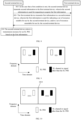
- the start time unit of the resource selection window 1110 indicated by the fourth information is a slot a
- an end time unit is a slot b.
- a subset 1 is the first resource subset, that is, a resource belonging to the first resource subset is present in the slot a
- the first information requested by the second information is used for transmission of the SL PRS.
- a subset 2 is the first resource subset, that is, no resource belonging to the first resource subset is present in the slot a
- the first information requested by the second information is used for transmission of the SL channel or signal other than the SL PRS.
- the resource selection window is understood to include a resource belonging to the first resource subset within a time period from the start time unit to the end time unit.
- the resource selection window is understood to include a resource belonging to the second resource subset within the time period from start time unit to the end time unit.
- the message for carrying the second information includes the fourth information used for indicating the resource selection window.
- the second information is carried in the 2-C format of the second-stage SCI
- the fourth information is carried in the "Resource selection window location” bit field.
- the start time unit of the resource selection window 1110 indicated by the fourth information is the slot a
- the end time unit is the slot b.
- the second information does not distinguish whether the requested first information is used for transmission of the SL PRS or used for transmission of the SL channel or signal other than the SL PRS.
- the second information is understood as that the requested first information is used for transmission of the SL PRS
- the resource selection window is understood that the resources from the slot a to the slot b belong to the first resource subset.
- the second information is used for requesting to acquire the first information indicating the set of resources suitable for use by the second terminal device.
- the first terminal device is a target receiver terminal device to which the second terminal device transmits the SL PRS
- the first terminal device determines the set of resources suitable for use by the second terminal device, if the first terminal device does not want to perform SL reception in a slot n due to a half-duplex operation, the first terminal device should exclude a resource in the slot n from the determined set of resources suitable for use by the second terminal device.
- the second terminal device is only capable of selecting the transmission resource for the SL PRS from the set of resources suitable for use by the second terminal device.
- the second information is used for requesting to acquire the first information indicating the set of resources unsuitable for use by the second terminal device.
- the first terminal device is the target receiver terminal device to which the second terminal device transmits the SL PRS
- the first terminal device determines the set of resources unsuitable for use by the second terminal device, if the first terminal device does not want to perform the SL reception in the slot n due to the half-duplex operation, the first terminal device should include the resource in the slot n in the determined set of resources unsuitable for use by the second terminal device.
- the second terminal device selects the transmission resource for the SL PRS from the remaining resource excluding the set of resources unsuitable for use by second terminal device.
- the first terminal device determines the first information based on content of the first information requested by the second information transmitted by the second terminal device. In this way, accuracy of the first information is improved, and the quality of the SL PRS resource selected by the second terminal device is further improved, and hence the accuracy of the SL positioning is improved.
- FIG. 12 is a schematic diagram of a method for SL communication according to some embodiments of the present disclosure.
- the SL PRS is transmitted within a dedicated resource pool 1210, and the dedicated resource pool is not used for transmitting the SL channel or signal other than the SL PRS.
- the dedicated resource pool is associated with one SL communication resource pool, and one SL communication resource pool is associated with only one dedicated resource pool.
- an association relationship between the dedicated resource pool and an SL communication resource pool is indicated by configuration signaling in a resource pool configuration process.
- the second information in the case that the first information requested by the second information is used for transmission of the SL PRS, the second information is transmitted within the SL communication resource pool associated with the dedicated resource pool.
- the second information is transmitted within the SL communication resource pool associated with the dedicated resource pool.
- the message for carrying the second information includes third information.
- the third information is used for indicating whether the first information requested by the second information is used for transmission of the SL PRS or used for transmission of the SL channel or signal other than the SL PRS.
- the second information is carried in the MAC CE
- the third information is carried in an "R" field of an "Inter-UE Coordination Request MAC CE".
- the "R" field is set to 1
- the third information is carried by a new MAC CE different from the "Inter-UE Coordination Request MAC CE”.
- the new MAC CE is identified by a logical channel ID greater than 62, it indicates that the first information requested by the second information is used for transmission of the SL PRS.
- the message for carrying the first information includes sixth information.
- the sixth information is used for indicating whether the first information is used for transmission of the SL PRS or used for transmission of the SL channel or signal other than the SL PRS.
- the first information is carried in the MAC CE
- the sixth information is carried in the "R" field of the "Inter-UE Coordination Information MAC CE".
- one or more "R” fields is set to 1, it indicates that the first information is used for transmission of the SL PRS.
- one or more of the last four "R" fields of the "Inter-UE Coordination Information MAC CE" are set to 1 to indicate that the first information is used for transmission of the SL PRS.
- the dedicated resource pool is associated with one SL communication resource pool, and one SL communication resource pool is associated with a plurality of dedicated resource pools.
- the SL communication resource pool 1310 is associated with dedicated resource pools 1320, 1330, and 1340.
- an association relationship between the plurality of dedicated resource pools and the SL communication resource pool, as well as an index corresponding to each dedicated resource pool are indicated by the configuration signaling in the resource pool configuration process.
- the second information in the case that the first information requested by the second information is used for transmission of the SL PRS, the second information is transmitted within the SL communication resource pool associated with the dedicated resource pool.
- the second information is transmitted within the SL communication resource pool associated with the dedicated resource pool.
- the message for carrying the second information includes fifth information, wherein the fifth information is used for indicating the index of the dedicated resource pool.
- the second information is carried by the new MAC CE different from the "Inter-UE Coordination Request MAC CE"
- the new MAC CE is identified by the logical channel ID greater than 62
- the new MAC CE contains one field for carrying the fifth information.
- the message for carrying the first information includes eighth information, wherein the eighth information is used for indicating the index of the dedicated resource pool.
- the first information is carried by the "Inter-UE Coordination Information MAC CE", and one or more "R" fields of the MAC CE is used for indicating the index of the dedicated resource pool corresponding to the first information.
- one or more of the last four "R” fields are used for indicating the index of the dedicated resource pool corresponding to the first information.
- in order to distinguish from the first information used for transmission of the SL channel or signal other than the SL PRS in the case that all the "R" fields used for indicating the index of the dedicated resource pool are set to 0, they are not used for indicating the index of the dedicated resource pool.
- the first terminal device determines the first information based on content of the first information requested by the second information transmitted by the second terminal device. In this way, accuracy of the first information is improved, and the quality of the SL PRS resource selected by the second terminal device is further improved, and hence the accuracy of the SL positioning is improved.
- FIG. 14 is a block diagram of an apparatus for SL communication according to some embodiments of the present disclosure.
- the apparatus for SL communication has functions for implementing the examples of the above method for SL communication.
- the function may be implemented by hardware, or may be implemented by hardware executing corresponding software.
- the apparatus for SL communication may be the second terminal device described above or may be provided in the second terminal device.
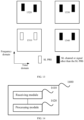
- the apparatus 1400 may include a receiving module 1410 and a processing module 1420.
- the first condition includes at least one of the following items:
- the SL PRS is transmitted within a shared resource pool, or the SL PRS is transmitted within a dedicated resource pool, wherein a resource within the dedicated resource pool is further used for transmitting an SL channel or signal other than the SL PRS.
- the second information does not distinguish whether the requested first information is used for transmission of the SL PRS or used for transmission of the SL channel or signal other than the SL PRS; or
- a message for carrying the second information includes third information.
- the third information is used for indicating whether the first information requested by the second information is used for transmission of the SL PRS or used for transmission of the SL channel or signal other than the SL PRS.
- the second information distinguishes whether the requested first information is used for transmission of the SL PRS or used for transmission of the SL channel or signal other than the SL PRS; or in the case that the second terminal device requests the set of resources suitable or unsuitable for use by the second terminal device within the dedicated resource pool, the second information does not distinguish whether the requested first information is used for transmission of the SL PRS or used for transmission of the SL channel or signal other than the SL PRS, wherein the second information is understood as that the requested first information is used for transmission of the SL PRS.
- a message for carrying the second information includes fourth information used for indicating a resource selection window.
- the SL PRS is transmitted within a dedicated resource pool, and the dedicated resource pool is not used for transmitting an SL channel or signal other than the SL PRS.
- the second information is transmitted within an SL communication resource pool associated with the dedicated resource pool.
- the dedicated resource pool is associated with one SL communication resource pool, and one SL communication resource pool is associated with only one dedicated resource pool.
- the dedicated resource pool is associated with one SL communication resource pool, and one SL communication resource pool is associated with a plurality of dedicated resource pools.
- a message for carrying the second information includes fifth information, wherein the fifth information is used for indicating an index of the dedicated resource pool.
- the message for carrying the second information is at least one of a MAC CE or SCI.
- the first information is transmitted by the first terminal device in a case that a second condition is met, wherein the second condition includes at least one of the following items:
- selecting the transmission resource for the SL PRS based on the first information includes:
- a message for carrying the first information includes sixth information.
- the sixth information is used for indicating whether the first information is used for transmission of the SL PRS or used for transmission of the SL channel or signal other than the SL PRS.
- the message for carrying the first information is a MAC CE.
- the second terminal device selects the transmission resource for the SL PRS from the set of resources suitable for use by the second terminal device and/or the remaining resource excluding the set of resources unsuitable for use by the second terminal device. In this way, quality of the SL PRS resource selected by the second terminal device is improved, and hence accuracy of SL positioning is improved.
- FIG. 16 is a block diagram of an apparatus for SL communication according to some embodiments of the present disclosure.
- the apparatus has functions for implementing the examples of the above method for SL communication.
- the function may be implemented by hardware, or may be implemented by hardware executing corresponding software.
- the apparatus may be the first terminal device described above or may be provided in the first terminal device.
- the apparatus 1600 may include a transmitting module 1610.
- the transmitting module 1610 is configured to transmit first information to a second terminal device.
- the first information is used for indicating a set of resources suitable for use by the second terminal device, and/or a set of resources unsuitable for use by the second terminal device.
- the apparatus 1600 further includes a receiving module 1620.
- the receiving module 1620 is configured to receive second information from the second terminal device, wherein the second information is used for requesting to acquire the first information.
- the second information is transmitted by the second terminal device in a case that a first condition is met, wherein the first condition includes at least one of the following items:
- the SL PRS is transmitted within a shared resource pool, or the SL PRS is transmitted within a dedicated resource pool, wherein a resource within the dedicated resource pool is further used for transmitting an SL channel or signal other than the SL PRS.
- the second information does not distinguish whether the requested first information is used for transmission of the SL PRS or used for transmission of the SL channel or signal other than the SL PRS; or
- a message for carrying the second information includes third information.
- the third information is used for indicating whether the first information requested by the second information is used for transmission of the SL PRS or used for transmission of the SL channel or signal other than the SL PRS.
- the SL PRS is transmitted within a dedicated resource pool, and the dedicated resource pool includes a first resource subset and a second resource subset.
- the first resource subset is a resource subset for transmitting the SL PRS
- the second resource subset is a resource subset for transmitting an SL channel or signal other than the SL PRS.
- the second information is transmitted within an SL communication resource pool associated with the dedicated resource pool.
Landscapes
- Engineering & Computer Science (AREA)
- Signal Processing (AREA)
- Computer Networks & Wireless Communication (AREA)
- Mobile Radio Communication Systems (AREA)
Abstract
Description
- Embodiments of the present disclosure relate to the technical field of communications, and in particular, relate to a method and apparatus for sidelink (SL) communication, and a device, a storage medium and a program product thereof.
- In SL communication, a terminal device may select a transmission resource from a resource pool by means of monitoring.
- In related arts, a method for SL communication is provided, in which the terminal device may select, by means of monitoring, a resource for transmitting an SL positioning reference signal (PRS) from the resource pool. However, how the terminal device selects the resource for transmitting the SL PRS requires further research.
- Embodiments of the present disclosure provide a method and apparatus for SL communication, and a device, a storage medium and a program product. The technical solutions are as follows.
- According to some embodiments of the present disclosure, a method for SL communication is provided. The SL communication method is applicable to a second terminal device, and includes:
- receiving first information from a first terminal device, wherein the first information is used for indicating a set of resources suitable for use by the second terminal device, and/or a set of resources unsuitable for use by the second terminal device; and
- selecting a transmission resource for an SL PRS based on the first information.
- According to some embodiments of the present disclosure, a method for SL communication is provided. The SL communication method is applicable to a first terminal device, and includes:
transmitting first information to a second terminal device, wherein the first information is used for indicating a set of resources suitable for use by the second terminal device, and/or a set of resources unsuitable for use by the second terminal device. - According to some embodiments of the present disclosure, an apparatus for SL communication is provided. The apparatus includes:
- a receiving module, configured to receive first information from a first terminal device, wherein the first information is used for indicating a set of resources suitable for use by a second terminal device, and/or a set of resources unsuitable for use by the second terminal device; and
- a processing module, configured to select a transmission resource for an SL PRS based on the first information.
- According to some embodiments of the present disclosure, an apparatus for SL communication is provided. The apparatus includes:
a transmitting module, configured to transmit first information to a second terminal device, wherein the first information is used for indicating a set of resources suitable for use by the second terminal device, and/or a set of resources unsuitable for use by the second terminal device. - According to some embodiments of the present disclosure, a terminal device is provided. The terminal device includes a processor and a memory. The memory is configured to store one or more computer programs. The processor is configured to load and run the one or more computer programs, to cause the terminal device to perform the resource exclusion method described above.
- According to some embodiments of the present disclosure, a computer-readable storage medium is provided. The storage medium stores one or more computer programs, wherein the one or more computer programs, when loaded and run by a processor, cause the processor to perform the method for SL communication described above.
- According to some embodiments of the present disclosure, a chip is provided. The chip includes a programmable logic circuit and/or one or more program instructions, wherein the chip, when running, is caused to perform the method for SL communication described above.
- According to some embodiments of the present disclosure, a computer program product is provided. The computer program product includes one or more computer programs stored in a computer-readable storage medium. The one or more computer programs, when read from the computer-readable storage medium and run by a processor, cause the processor to perform the method for SL communication described above.
- The technical solutions according to the embodiments of the present disclosure achieve the following beneficial effects:
Based on the set of resources suitable for use by the second terminal device and/or the set of resources unsuitable for use by the second terminal device that are/is indicated by the first information from the first terminal device, the second terminal device selects the transmission resource for the SL PRS from the set of resources suitable for use by the second terminal device and/or a remaining resource excluding the set of resources unsuitable for use by the second terminal device. In this way, quality of the SL PRS resource selected by the second terminal device is improved, such that accuracy of SL positioning is improved. -
-
FIG. 1 is a schematic diagram of a network architecture according to some embodiments of the present disclosure; -
FIG. 2 is a schematic diagram of SL communication within a coverage area of a network according to some embodiments of the present disclosure; -
FIG. 3 is a schematic diagram of SL communication partially within network coverage according to some embodiments of the present disclosure; -
FIG. 4 is a schematic diagram of SL communication beyond network coverage according to some embodiments of the present disclosure; -
FIG. 5 is a schematic diagram of a second resource selection mode according to some embodiments of the present disclosure; -
FIG. 6 is a schematic diagram of a hidden node according to some embodiments of the present disclosure; -
FIG. 7 is a schematic diagram of an exposed node according to some embodiments of the present disclosure; -
FIG. 8 is a flowchart of a method for SL communication according to some embodiments of the present disclosure; -
FIG. 9 is a schematic diagram of a method for SL communication according to some embodiments of the present disclosure; -
FIG. 10 is schematic diagram of a method for SL communication according to some embodiments of the present disclosure; -
FIG. 11 is a schematic diagram of a resource selection window according to some embodiments of the present disclosure; -
FIG. 12 is a schematic diagram of a method for SL communication according to some embodiments of the present disclosure; -
FIG. 13 is schematic diagram of an association relationship between a dedicated resource pool and an SL communication resource pool according to some embodiments of the present disclosure; -
FIG. 14 is a block diagram of an apparatus for SL communication according to some embodiments of the present disclosure; -
FIG. 15 is a block diagram of an apparatus for SL communication according to some embodiments of the present disclosure; -
FIG. 16 is a block diagram of an apparatus for SL communication according to some embodiments of the present disclosure; -
FIG. 17 is a block diagram of an apparatus for SL communication according to some embodiments of the present disclosure; and -
FIG. 18 is a schematic structural diagram of a terminal device according to some embodiments of the present disclosure. - For clearer descriptions of the objectives, technical solutions, and advantages of the present disclosure, embodiments of the present disclosure are further described in detail hereinafter with reference to the accompanying drawings.
- A network architecture and a service scenario described in the embodiments of the present disclosure are intended to describe the technical solutions according to the embodiments of the present disclosure more clearly, and do not constitute limitations on the technical solutions according to the embodiments of the present disclosure. Those of ordinary skill in the art may understand that, with evolution of the network architecture and emergence of a new service scenario, the technical solutions according to the embodiments of the present disclosure are also applicable to a similar technical problem.
-
FIG. 1 is a schematic diagram of a network architecture according to some embodiments of the present disclosure. The network architecture may include acore network 11, anaccess network 12, and aterminal device 13. - The
core network 11 includes a plurality of core network devices. Each of the core network devices mainly functions to provide user connection, user management, and service bearing, and provide an interface to an external network as a bearer network. For example, in a 5th generation (5G) new radio (NR) system, the core network may include an access and mobility management function (AMF) entity, a user plane function (UPF) entity, a session management function (SMF) entity, and other devices. - The
access network 12 includes a plurality ofaccess network devices 14. In the 5G NR system, the access network may be referred to as a new generation-radio access network (NG-RAN). Theaccess network device 14 is a device deployed in theaccess network 12 to provide a wireless communication function for theterminal device 13. Theaccess network device 14 may refer to various forms of macro base stations, micro base stations, relay stations, access points, and the like. The name of devices with a function of the access network device may vary in systems employing different radio access technologies. For example, the device is referred to as a gNodeB or a gNB in the 5G NR system. The term "access network device" may be referred to by different names with the evolution of communication technologies. For convenience of description, in the embodiments of the present disclosure, the above devices providing the wireless communication function for theterminal device 13 are collectively referred to as the access network device. In addition, in the embodiments of the present disclosure, unless otherwise specified, the mentioned network device is the access network device such as a base station. - A plurality of
terminal devices 13 are usually deployed, and one or moreterminal devices 13 may be distributed in a cell managed by each of theaccess network devices 14. Theterminal device 13 may include various handheld devices, vehicle-mounted devices, wearable devices, computing devices, or other processing devices connected to a wireless modem that have the wireless communication function, and various forms of user devices, mobile stations (MSs), and the like. For convenience of description, the devices described above are collectively referred to as the terminal device. Theaccess network device 14 communicates with the core network device using a specific air technology, such as an NG interface in the 5G NR system. Theaccess network device 14 communicates with theterminal device 13 using a specific air technology, such as a Uu interface. In addition, in the embodiments of the present disclosure, both the terminal device and user equipment (UE) are usually used interchangeably, but they express a same meaning. - The terminal devices 13 (such as the vehicle-mounted device and another device like another vehicle-mounted device, a mobile phone, or a road side unit (RSU)) may communicate with each other over a direct communication interface (such as a PC5 interface). Correspondingly, a communication link established based on the direct communication interface may be referred to as a direct link or an SL. SL transmission means that communication data transmission is carried out directly between terminal devices over the SL, which is different from a traditional cellular system in which communication data is received or transmitted over the access network device. The SL transmission has characteristics of a short delay and a small overhead, and is suitable for communication between two terminal devices that are geographically close to each other (such as a vehicle-mounted device and another peripheral device geographically close to the vehicle-mounted device). It should be noted that in
FIG. 1 , only vehicle to vehicle (V2V) communication in a vehicle-to-everything (V2X) scenario is taken as an example, and an SL technology is appliable to a scenario in which terminal devices communicate directly with each other. In other words, the terminal device in the present disclosure is any device that conducts communication using the SL technology. - The "5G NR system" in the embodiments of the present disclosure may also be referred to as a 5G system or an NR system, but those skilled in the art may understand its meaning. The technical solutions according to the embodiments of the present disclosure may be applicable to the 5G NR system, and may also be applicable to evolved systems of the 5G NR system.
- Before the technical solutions of the present disclosure are described, some background technical knowledge involved in the present disclosure is described. The following related technologies, as optional solutions, may be arbitrarily combined with the technical solutions according to the embodiments of the present disclosure, and all fall within the protection scope of the embodiments of the present disclosure. The embodiments of the present disclosure include at least part of the following content.
- Based on network coverage of a terminal device engaged in the communication, the SL communication may be categorized into SL communication within the network coverage, SL communication partially within the network coverage, and SL communication beyond the network coverage.
- In the SL communication within the network coverage, all terminal devices engaged in the SL communication are within a coverage area of the same access network device (base station). Therefore, these terminal devices may conduct the SL communication based on the same SL configuration by receiving configuration signaling of the access network device (base station). For example, as shown in
FIG. 2 , both aUE 1 and aUE 2 are within a network coverage area of abase station 1. - In the SL communication partially within the network coverage, some terminal devices engaged in the SL communication are within a coverage area of an access network device (base station). These terminal devices are capable of receiving configuration signaling of the access network device (base station), and conducting the SL communication based on a configuration of the access network device (base station). A terminal device beyond the network coverage area is incapable of receiving the configuration signaling of the access network device (base station). In this case, the terminal device beyond the network coverage area determines an SL configuration based on pre-configuration information and information carried over a physical sidelink broadcast channel (PSBCH) transmitted by the terminal device within the network coverage area, and conducts the SL communication. For example, as shown in
FIG. 3 , theUE 1 is within the network coverage area of abase station 1, while theUE 2 is beyond the network coverage area of thebase station 1. - In the SL communication beyond the network coverage, all terminal devices engaged in the SL communication are beyond a network coverage area. Therefore, all the terminal devices determine an SL configuration based on pre-configuration information and conduct the SL communication. For example, as shown in
FIG. 4 , both theUE 1 and theUE 2 are beyond a network coverage area of thebase station 1. - The D2D communication is a D2D-based SL transmission technology, which is different from a method in which communication data is received or transmitted by a base station in a traditional cellular system. Therefore, the D2D communication has a higher spectral efficiency and a lower transmission delay. An Internet of vehicles system adopts direct communication between terminal devices. Two transmission modes are defined in the 3rd Generation Partnership Project (3GPP): a first mode and a second mode.
- In the first mode, a transmission resource of the terminal device is allocated by the base station, and the terminal device transmits data on an SL over the resource allocated by the base station. The base station may allocate a resource for single-transmission to the terminal device or allocate a resource for semi-static transmission to the terminal device. As shown in
FIG. 2 , the terminal device is within the network coverage area, and the network allocates a transmission resource for SL transmission to the terminal device. - In the second mode, the terminal device autonomously selects a resource from a resource pool and transmits data over the resource. As shown in
FIG. 4 , the terminal device is beyond a coverage area of a cell, and autonomously selects the transmission resource from a pre-configured resource pool and conducts the SL transmission over the transmission resource. Alternatively, as shown inFIG. 2 , the terminal device autonomously selects the transmission resource from a resource pool configured by the network and conducts the SL transmission over the transmission resource. - Resource selection in the second mode is performed by the following two steps.
- In
step 1, the terminal device takes all available resources within a resource selection window as a set of resources A. - In the case that the terminal device transmits the data in some slots within a sensing window and does not perform monitoring, all resources in slots corresponding to the slots within the selection window are excluded. The terminal device uses a set of values for a "resource reservation period" field in a configuration of the resource pool in use to determine a corresponding slot within the selection window.
- In the case that the terminal device monitors a physical sidelink control channel (PSCCH) within the sensing window, reference signal received power (RSRP) of the PSCCH or RSRP of a physical sidelink shared channel (PSSCH) scheduled by the PSCCH is measured. In the case that the measured RSRP is greater than a sidelink reference signal received power (SL-RSRP) threshold and it is determined, based on resource reservation information in sidelink control information (SCI) transmitted in the PSCCH, that a reserved resource is within the resource selection window, the corresponding resource is excluded from the set of resources A. In the case that remaining resources in the set of resources A are insufficient to account for X% of all the resources before the resource exclusion, the SL-RSRP threshold is increased by 3 dB, and
step 1 is performed again. Possible values for X are {20, 35, 50}, and the terminal device determines the parameter X from the set of values based on a priority of to-be-transmitted data. In addition, the SL-RSRP threshold is related to a priority carried in the PSCCH monitored by the terminal device and the priority of the to-be-transmitted data of the terminal device. The terminal device takes the remaining resources after the resource exclusion in the set of resources A as a candidate set of resources. - In
step 2, the terminal device randomly selects a plurality of resources from the candidate set of resources as transmission resources in initial transmission and retransmission. - As shown in
FIG. 5 , a terminal device triggers resource selection or reselection in a slot n, and a resource selection window starts from n+T1 and ends at n+T2, wherein 0<=T1<=Tproc,1. In the case that a subcarrier spacing is 15 kHz, 30 kHz, 60 kHz, or 120 kHz, Tproc,1 is 3, 5, 9, or 17 slots. In the case that T 2min is less than a remaining delay budget of a service, T 2min ≤ T 2 ≤ the remaining delay budget of the service. Otherwise, T 2 is equal to a packet delay budget (PDB) of a data packet in units of slots. A set of values for T 2min is {1, 5, 10, 20}*2µ slots, wherein µ=0, 1, 2, or 3, respectively corresponding to the subcarrier spacings of 15 kHz, 30 kHz, 60 kHz, or 120 kHz. The terminal device determines T 2min from the value set based on the priority of to-be-transmitted data of the terminal device. [n+T1, n+T2] is referred to as the resource selection window. - The terminal device performs resource monitoring from n-T0 to n-Tproc,0, and a value of the T0 is 100 milliseconds or 1100 milliseconds. In the case that the subcarrier spacing is 15 kHz, 30 kHz, 60 kHz, or 120 kHz, Tproc,0 is 1 slot, 1 slot, 2 slots, or 4 slots. [n-T0 to n-Tproc,0] is referred to as a resource sensing window.
- The second mode is performed according to the following two steps:
Instep 1, a physical layer of the terminal device excludes a resource unsuitable for SL transmission from the resource selection window based on a channel monitoring result. - The terminal device selects all available resources belonging to a resource pool used by the terminal device within the resource selection window as a set of resources A. Any resource in the set of resources A is denoted as R (x, y), wherein x and y respectively indicate a frequency domain position and a time domain position of the resource. An initial quantity of resources in the set of resources A is denoted as Mtotal.
- In step 1-1, in the case that the terminal device transmits the data in a slot a within the sensing window and does not perform monitoring, the terminal device determines whether a slot a+q*Prxlg overlaps with a resource R (x, y+j*Ptxlg). In the case that they overlap, the resource R (x, y) is excluded from the set of resources A. j=0, 1, 2, 3, ..., and C-1. C is determined based on a random counter value generated by the terminal device. Ptxlg represents the number of logical slots converted from a resource reservation period Ptx of the terminal device. Prxlg represents the number of logical slots converted from Prx, wherein Prx represents any resource reservation period allowed in the resource pool. In the case that Prx<Tscal and n-m<=Prxlg, Q=[Tscal/Prx]. Otherwise, Q=1. Tscal is equal to a value of milliseconds converted from T2.
- In step 1-2, in the case that the terminal device monitors, on a vth frequency domain resource E (v, m) within a slot m in the sensing window, first SCI transmitted over a PSCCH, the terminal device measures SL-RSRP of the PSCCH or SL-RSRP of a PSSCH scheduled by the PSCCH (namely, the SL-RSRP of the corresponding PSSCH that is transmitted in the same slot as the PSCCH). In the case that the measured SL-RSRP is greater than an SL-RSRP threshold and intra-transport block (TB) resource reservation is activated in the resource pool used by the UE, the terminal device assumes that first SCI containing the same content is received on a slot m+q*Prxlg. q=1, 2, 3, ..., and Q. In the case that Prx< Tscal and n-m<=Prxlg, Q=[Tscal/Prx]. Otherwise, Q=1. The Tscal is equal to the value of milliseconds converted from T2. Prxlg represents the number of logical slots converted from the Prx, wherein Prx is a resource reservation period indicated by a "resource reservation period" field in the first SCI that is transmitted over the PSCCH monitored by the terminal device. The terminal device determines whether resources indicated by "Time resource assignment" and "Frequency resource assignment" fields in the first SCI received in the slot m and a Qth piece of first SCI that is assumed to be received overlap with the resource R (x, y+j*Ptxlg). In the case that they overlap, the corresponding resource R (x, y) is excluded from the set of resources A. j=0, 1, 2, 3, ..., and C-1. C is determined based on the random counter value generated by the terminal device. Ptxlg represents the number of logical slots converted from the Ptx, wherein Ptx is a resource reservation period determined by the terminal device that performs resource selection.
- The RSRP threshold is determined based on a priority P1 carried over the PSCCH monitored by the terminal device and the priority P2 of the to-be-transmitted data of the terminal device. A configuration of the resource pool used by the terminal device includes an SL-RSRP threshold table, and the SL-RSRP threshold table contains SL-RSRP thresholds corresponding to all priority combinations. The configuration of the resource pool may be configured by a network or may be pre-configured. In the case that remaining resources in the set of resources A after the resource exclusion are less than Mtotal*X%, the SL-RSRP threshold is increased by 3 dB, and
step 1 is performed again. Possible values for X are {20, 35, 50}. The configuration of the resource pool used by the terminal device includes a corresponding relationship between a priority and the possible value for X. The terminal device determines a value for X based on the priority of the to-be-transmitted data and the corresponding relationship. - The physical layer of the terminal device reports the set of resources A after the resource exclusion as a candidate set of resources to a higher layer, namely a medium access control (MAC) layer of the terminal device.
- In
step 2, the MAC layer of the terminal device randomly selects a resource from the reported candidate set of resources and transmits the data over the resource. That is, the terminal device randomly selects the resource from the candidate set of resources and transmits the data over the resource. - In the second mode (which is also referred to as the second transmission mode), a terminal device randomly selects a transmission resource from a resource pool or selects a transmission resource based on a monitoring result. This resource selection mode may avoid interference between terminal devices to some extent, but still has the following problems:
- Hidden node: As shown in
FIG. 6 , a terminal device B selects a resource based on monitoring and transmits SL data to a terminal device A over the resource. The terminal device B and a terminal device C fail to monitor each other's transmission because these two terminal devices are far away from each other. Therefore, the terminal device B and the terminal device C may choose the same transmission resource, and data transmitted by the terminal device C interferes with data transmitted by the terminal device B. This is a problem of the hidden node. - Half-duplex problem: In the case that a terminal device selects a transmission resource by monitoring, within a sensing window, where the terminal device transmits SL data in a slot, due to a limitation of a half-duplex mode, the terminal device fails to receive, in the slot, data from another terminal device, and there is no monitoring result. Therefore, when performing resource exclusion, the terminal device excludes all resources corresponding to the slot within a selection window to avoid interference with the another terminal device. Due to the limitation of the half-duplex mode, the terminal device may exclude many resources that do not need to be excluded.
- Terminal device exposure: As shown in
FIG. 7 , both a transmitter terminal device B and a transmitter terminal device C may monitor each other, but a target receiver terminal device A of the transmitter terminal device B is far away from the transmitter terminal device C, and a target receiver terminal device D of the transmitter terminal device C is far away from the transmitter terminal device B. In this case, even if the transmitter terminal device B and the transmitter terminal device C use the same time frequency resource, reception of respective target receiver terminal devices of the transmitter terminal device B and the transmitter terminal device C is not affected. However, because the two parties are geographically close to each other, signal received power detected by the two parties in a monitoring process may be very high, and therefore, the two parties may choose orthogonal video resources. Ultimately, resource utilization efficiency may be decreased. - Power consumption: In the above monitoring process, a terminal device needs to continuously perform resource monitoring to determine which resources are available. However, the continuous resource monitoring by the terminal device requires a large energy consumption. This is not a problem for a vehicle-mounted terminal device because the vehicle-mounted terminal has power supply equipment. However, for a handheld terminal device, an excessive power consumption can quickly cause the terminal device to run out of power. Therefore, how to reduce an power consumption of the terminal device is also a problem that needs to be considered in a resource selection process.
- Due to the problems in the resource selection process in the above second transmission mode, a resource selection scheme based on inter-UE coordination has been introduced. That is, based on the resource monitoring used in the second transmission mode, one terminal device (UE-A) may transmit an inter-UE coordination (IUC) message to another terminal device (UE-B) to assist the UE-B in resource selection. In the case that an explicit request is received from the UE-B or a specific condition is met, the UE-A may determine the IUC message based on a resource monitoring result. The IUC message may include an IUC resource set (IUC-RS). The UE-A transmits the IUC-RS to the UE-B. The IUC-RS may be a set of resources suitable for use by the UE-B. When selecting a resource for transmitting SL data to a target receiver terminal device, the UE-B may preferentially select the resource from the available IUC-RS, such that reliability of receiving the SL data by the target receiver terminal device is improved. The IUC-RS may altematively be a set of resources unsuitable for use by the UE-B. The UE-B avoids selecting a resource from the IUC-RS, such that problems such as a hidden terminal device and the limitation of the half-duplex mode are avoided.
- In 3GPP R-17, 3GPP RAN conducted research on "NR positioning enhancement" and "scenarios and requirements for NR positioning use cases within coverage, partially within coverage, and beyond coverage". The research on the "scenarios and requirements for NR positioning use cases within coverage, partially within coverage, and beyond coverage" focuses on V2X and public safety use cases, and research results are recorded in TR38.845. In addition, SA1 has established a requirement for a "ranging-based service" in TS22.261 and a positioning accuracy requirement for IIoT usage in the scenario beyond the coverage in TS22.104. The 3GPP needs to research and develop an SL positioning solution to support the use cases, scenarios, and requirements determined in these activities. In order to improve positioning accuracy, especially for positioning of a terminal device beyond coverage of a cellular network, the 3GPP introduces positioning based on an SL PRS in Rel-18. According to a current conclusion, the SL PRS may be transmitted within a dedicated resource pool or may be transmitted within a shared resource pool together with another SL channel.
- Some embodiments of the present disclosure provide a method for SL communication. The SL communication method selects, based on coordination information between terminal devices, a resource for transmitting an SL PRS, such that quality of the SL PRS resource selected by the terminal device is improved, and hence accuracy of SL positioning is enhanced. The coordination information includes information for indicating a set of resources suitable for use by the terminal device, and/or a set of resources unsuitable for use by the terminal device.
-
FIG. 8 is a flowchart of a method for SL communication according to some embodiments of the present disclosure. The SL communication method may include at least one of the followingprocesses 810 to 830. - In process 820, a first terminal device transmits first information to a second terminal device, wherein the first information is used for indicating a set of resources suitable for use by the second terminal device, and/or a set of resources unsuitable for use by the second terminal device.
- Correspondingly, the second terminal device receives the first information from the first terminal device.
- In some embodiments, a message for carrying the first information is a MAC CE.
- In some embodiments, the message for carrying the first information includes sixth information. The sixth information is used for indicating whether the first information is used for transmission of an SL PRS or used for transmission of an SL channel or signal other than the SL PRS.
- In some embodiments,
process 810 is performed before the process 820. In the case that a first condition is met, the second terminal device transmits second information to the first terminal device, wherein the second information is used for requesting to acquire the first information. - In some embodiments, the first condition includes at least one of: the SL PRS to be transmitted to the first terminal device is present; SL information other than the SL PRS to be transmitted to the first terminal device is present; or a trigger condition determined by the second terminal device based on self-implementation for transmitting the second information is met.
- In some embodiments, in the case that the SL PRS to be transmitted to the first terminal device is present, the second terminal device transmits the second information to the first terminal device. For example, before transmitting the SL PRS to the first terminal device, the second terminal device transmits the second information to the first terminal device.
- In some embodiments, in the case that the SL information other than the SL PRS, transmitted to the first terminal device is present, the second terminal device transmits the second information to the first terminal device. For example, before transmitting a mode of transmitting the SL PRS to the first terminal device, the second terminal device transmits the second information to the first terminal device.
- In some embodiments, in the case that the trigger condition determiner by the second terminal device based on the self-implementation for transmitting the second information is met, the second terminal device transmits the second information to the first terminal device.
- In some embodiments, a message for carrying the second information is at least one of: a MAC control element (CE) or SCI.
- For example, the second information is separately carried by the MAC CE. For example, the second information is separately carried by second-stage SCI. For example, the second information is jointly carried by the MAC CE and the second-stage SCI.
- In some embodiments, the first information is transmitted by the first terminal device in the case that a second condition is met. The second condition includes at least one of: the second information is received from the first terminal device, wherein the second information is used for requesting to acquire the first information; other information to be transmitted together with the first information to the second terminal device is present; or a trigger condition determined by the first terminal device based on self-implementation for transmitting the first information is met.
- In some embodiments, in the case that the second information is received from the second terminal, the first terminal device transmits the first information to the second terminal device.
- In some embodiments, in the case that the other information to be transmitted together with the first information to the second terminal device is present, the first terminal device transmits the first information to the second terminal device.
- In some embodiments, in the case that the trigger condition determined by the first terminal device based on self-implementation for transmitting the first information is met, the first terminal device transmits the first information to the second terminal device.
- In some embodiments, in the case that the number of physical resource blocks (PRBs) contained in a resource pool requested by the second information is greater than a product of the number of subchannels contained in the resource pool and a size of the subchannel, the information for carrying the second information includes seventh information. The seventh information is used for indicating that a frequency domain size of a resource requested by the second information is the number of PRBs contained in the resource pool.
- In some embodiments, the second information is carried in a 2-C format of the second-stage SCI, and the seventh information is carried in a "Number of Subchannel" bit field. For example, a value indicated by the "Number of Subchannel" bit field is greater than or equal to the number of subchannels contained in the resource pool. For example, the "Number of Subchannel" bit field may contain


- In some embodiments, the second information is carried in the MAC CE, and the seventh information is carried in a "Number of Subchannel" field. For example, a value indicated by the "Number of Subchannel" field in the MAC CE is greater than or equal to the number of subchannels contained in the resource pool. For example, the value indicated by the "Number of Subchannel" field in the MAC CE is 27 or 28.
- In some embodiments, the second information is jointly carried by the second-stage SCI and the MAC CE, and the seventh information is carried in the "Number of Subchannel" bit field and the "Number of Subchannel" field. For example, a value indicated by the "Number of Subchannel" bit field and the "Number of Subchannel" field is equal to the number of subchannels contained in the resource pool.
- In some embodiments, the number of PRBs contained in the resource pool is indicated by a resource pool configuration parameter "sl-RB-Number".
- In some embodiments, the number of subchannels contained in the resource pool is indicated by a resource pool configuration parameter "sl-NumSubchannel".
- In some embodiments, the size of the subchannel contained in the resource pool is indicated by a resource pool configuration parameter "sl-SubchannelSize".
- In
process 830, the second terminal device selects a transmission resource for the SL PRS based on the first information. - In some embodiments, the second terminal device selects the transmission resource for the SL PRS from the set of resources suitable for use by the second terminal device; and/or the second terminal device selects the transmission resource for the SL PRS from a remaining resource excluding the set of resources unsuitable for use by the second terminal device.
- In some embodiments, the first information is used for indicating the set of resources suitable for use by the second terminal device, the second terminal selects the transmission resource for the SL PRS from the set of resources suitable for use by the second terminal device.
- In some embodiments, the first information is used for indicating the set of resources unsuitable for use by the second terminal device, the second terminal device selects the transmission resource for the SL PRS from the remaining resource excluding the set of resources unsuitable for use by the second terminal device.
- In some embodiments, the first information is used for indicating the set of resources suitable for use by the second terminal device and the set of resources unsuitable for use by the second terminal device, the second terminal device selects the transmission resource for the SL PRS from the set of resources suitable for use by the second terminal device and the remaining resource excluding the set of resources unsuitable for use by the second terminal device.
- In the technical solutions according to the embodiments of the present disclosure, based on the set of resources suitable for use by the second terminal device and/or the set of resources unsuitable for use by the second terminal device that are/is indicated by the first information transmitted by the first terminal device, the second terminal device selects the transmission resource for the SL PRS from the set of resources suitable for use by the second terminal device and/or the remaining resource excluding the set of resources unsuitable for use by the second terminal device. In this way, quality of the SL PRS resource selected by the second terminal device is improved, and hence accuracy of SL positioning is improved.
-
FIG. 9 is a flowchart of a method for SL communication according to some embodiments of the present disclosure. The SL PRS is transmitted within a sharedresource pool 910, or the SL PRS is transmitted within adedicated resource pool 920, wherein a resource within the dedicatedresource pool 920 is further used for transmitting the SL channel or signal other than the SL PRS. - In some embodiments, the SL channel includes a PSCCH and a PSSCH.
- In some embodiments, the transmission of the SL PRS may provide a PSCCH indication. In the case that a value of a "Priority" field in a PSCCH indicating the transmission of the SL PRS is the same as a value of a "Priority" field in a PSCCH indicating the transmission of the SL channel or signal other than the SL PRS, the SL PRS and the SL channel or signal other than the SL PRS that are scheduled by the two PSCCHs have a same absolute priority.
- In some embodiments, an available resource reservation period within the resource pool configured by a radio resource control (RRC) parameter "SL-ResourceReservePeriod" is applicable to the SL PRS and the SL channel or signal other than the SL PRS.
- In some embodiments, the second information does not distinguish whether the requested first information is used for transmission of the SL PRS or used for transmission of the SL channel or signal other than the SL PRS.
- In some embodiments, the second information is used for requesting to acquire the first information indicating the set of resources suitable for use by the second terminal device. In the case that the first terminal device is a target receiver terminal device to which the second terminal device transmits the SL PRS, or in the case that the first terminal device is a target receiver terminal device to which the second terminal device transmits the SL channel or signal other than SL PRS, when the first terminal device determines the set of resources suitable for use by the second terminal device, if the first terminal device does not want to perform SL reception in a slot n due to a half-duplex operation, the first terminal device should exclude a resource in the slot n from the determined set of resources suitable for use by the second terminal device. In this case, the second terminal device is only capable of selecting the transmission resource for the SL PRS and/or the SL channel or signal other than SL PRS from the set of resources suitable for use by the second terminal device.
- In some embodiments, the second information is used for requesting to acquire the first information indicating the set of resources unsuitable for use by the second terminal device. In the case that the first terminal device is the target receiver terminal device to which the second terminal device transmits the SL PRS, or in the case that the first terminal device is the target receiver terminal device to which the second terminal device transmits the SL channel or signal other than SL PRS, when the first terminal device determines the set of resources unsuitable for use by the second terminal device, if the first terminal device does not want to perform the SL reception in the slot n due to the half-duplex operation, the first terminal device should include the resource in the slot n in the determined set of resources unsuitable for use by the second terminal device. In this case, the second terminal device selects the transmission resource for the SL PRS and/or the SL channel or signal other than SL PRS from the remaining resource excluding the set of resources unsuitable for use by the second terminal device.
- In some embodiments, the second information distinguishes whether the requested first information is used for transmission of the SL PRS or used for transmission of the SL channel or signal other than the SL PRS.
- In some embodiments, the message for carrying the second information includes third information. The third information is used for indicating whether the first information requested by the second information is used for transmission of the SL PRS or used for transmission of the SL channel or signal other than the SL PRS.
- For example, the second information is carried in the 2-C format of the second-stage SCI, the third information is carried in a "Padding bits" bit field.
- For example, the second information is carried in the MAC CE, the third information is carried in an "R" field of an "Inter-UE Coordination Request MAC CE"; or a new field is added in the "Inter-UE Coordination Request MAC CE" to carry the third information.
- In some embodiments, the second information is used for requesting to acquire the first information indicating the set of resources suitable for use by the second terminal device, and the first information requested by the second information is used for transmission of the SL PRS. In the case that the first terminal device is the target receiver terminal device to which the second terminal device transmits the SL PRS, when the first terminal device determines the set of resources suitable for use by the second terminal device, if the first terminal device does not want to perform the SL reception in the slot n due to the half-duplex operation, the first terminal device should exclude the resource in the slot n from the determined set of resources suitable for use by the second terminal device. In this case, the second terminal device is only capable of selecting the transmission resource for the SL PRS from the set of resources suitable for use by the second terminal device.
- In some embodiments, the second information is used for requesting to acquire the first information indicating the set of resources unsuitable for use by the second terminal device, and the first information requested by the second information is used for transmission of the SL PRS. In the case that the first terminal device is the target receiver terminal device to which the second terminal device transmits the SL PRS, when the first terminal device determines the set of resources unsuitable for use by the second terminal device, if the first terminal device does not want to perform the SL reception in the slot n due to the half-duplex operation, the first terminal device should include the resource in the slot n in the determined set of resources unsuitable for use by the second terminal device. In this case, the second terminal device selects the transmission resource for the SL PRS from the remaining resource excluding the set of resources unsuitable for use by second terminal device.
- In some embodiments, in the case that the second information is used for requesting the set of resources suitable for use by the second terminal device, the second information distinguishes whether the requested first information is used for transmission of the SL PRS or used for transmission of the SL channel or signal other than the SL PRS. In the case that the second information is used for requesting the set of resources unsuitable for use by the second terminal device, the second information does not distinguish whether the requested first information is used for transmission of the SL PRS or used for transmission of the SL channel or signal other than the SL PRS.
- In some embodiments, the message for carrying the second information includes the third information. The third information is used for indicating whether the first information requested by the second information is used for transmission of the SL PRS or used for transmission of the SL channel or signal other than the SL PRS.
- For example, the second information is carried in the 2-C format of the second-stage SCI, and a value indicated by a "Resource set type" bit field is 0, the third information is carried in the "Padding bits" bit field.
- For example, in the case that the second information is carried in the MAC CE, and a value indicated by an "RT" field is 0, the third information is carried in the "R" field of the "Inter-UE Coordination Request MAC CE"; or the new field is added in the "Inter-UE Coordination Request MAC CE" to carry the third information.
- In some embodiments, the second information is used for requesting to acquire the first information for indicating the set of resources suitable for use by the second terminal device, and the first information requested by the second information is used for transmission of the SL PRS. In the case that the first terminal device is the target receiver terminal device to which the second terminal device transmits the SL PRS, when the first terminal device determines the set of resources suitable for use by the second terminal device, if the first terminal device does not want to perform the SL reception in the slot n due to the half-duplex operation, the first terminal device should exclude the resource in the slot n from the determined set of resources suitable for use by the second terminal device. In this case, the second terminal device is only capable of selecting the transmission resource for the SL PRS from the set of resources suitable for use by the second terminal device.
- In some embodiments, the second information is used for requesting to acquire the first information for indicating the set of resources unsuitable for use by the second terminal device. In the case that the first terminal device is the target receiver terminal device to which the second terminal device transmits the SL PRS, or in the case that the first terminal device is the target receiver terminal device to which the second terminal device transmits the SL channel or signal other than SL PRS, when the first terminal device determines the set of resources unsuitable for use by the second terminal device, if the first terminal device does not want to perform the SL reception in the slot n due to the half-duplex operation, the first terminal device should include the resource in the slot n in the determined set of resources unsuitable for use by the second terminal device. In this case, the second terminal device selects the transmission resource for the SL PRS and/or the SL channel or signal other than SL PRS from the remaining resource excluding the set of resources unsuitable for use by the second terminal device.
- In some embodiments, in the case that the second terminal device requests the set of resources suitable or unsuitable for use by the second terminal device within the dedicated resource pool, the second information does not distinguish whether the requested first information is used for transmission of the SL PRS or used for transmission of the SL channel or signal other than the SL PRS. The second information is understood as that the requested first information is used for transmission of the SL PRS.
- In some embodiments, the second information is used for requesting to acquire the first information indicating the set of resources suitable for use by the second terminal device. In the case that the first terminal device is the target receiver terminal device to which the second terminal device transmits the SL PRS, when the first terminal device determines the set of resources suitable for use by the second terminal device, if the first terminal device does not want to perform the SL reception in the slot n due to the half-duplex operation, the first terminal device should exclude the resource in the slot n from the determined set of resources suitable for use by the second terminal device. In this case, the second terminal device is only capable of selecting the transmission resource for the SL PRS from the set of resources suitable for use by the second terminal device.
- In some embodiments, the second information is used for requesting to acquire the first information indicating the set of resources unsuitable for use by the second terminal device. In the case that the first terminal device is the target receiver terminal device to which the second terminal device transmits the SL PRS, when the first terminal device determines the set of resources unsuitable for use by the second terminal device, if the first terminal device does not want to perform the SL reception in the slot n due to the half-duplex operation, the first terminal device should include the resource in the slot n in the determined set of resources unsuitable for use by the second terminal device. In this case, the second terminal device selects the transmission resource for the SL PRS from the remaining resource excluding the set of resources unsuitable for use by second terminal device.
- In the technical solutions according to the embodiments of the present disclosure, in the case that the SL PRS is transmitted within the shared resource pool, or in the case that the SL PRS is transmitted within the dedicated resource pool and the resource within the dedicated resource pool is further used for transmitting the SL channel or signal other than THE SL PRS, the first terminal device determines the first information based on content of the first information requested by the second information transmitted by the second terminal device. In this way, accuracy of the first information is improved, and the quality of the SL PRS resource selected by the second terminal device is further improved, and hence the accuracy of the SL positioning is improved.
-
FIG. 10 is a flowchart of a method for SL communication according to some embodiments of the present disclosure. The SL PRS is transmitted within adedicated resource pool 1010, and thededicated resource pool 1010 includes afirst resource subset 1011 and asecond resource subset 1012. Thefirst resource subset 1011 is a resource subset used for transmitting the SL PRS, and thesecond resource subset 1012 is a resource subset used for transmitting the SL channel or signal other than the SL PRS. - In some embodiments, the SL channel includes a PSCCH and a PSSCH.
- In some embodiments, the second information distinguishes whether the requested first information is used for transmission of the SL PRS or used for transmission of the SL channel or signal other than the SL PRS.
- In some embodiments, the message for carrying the second information includes fourth information used for indicating a resource selection window.
- For example, the second information is carried in the 2-C format of the second-stage SCI, the fourth information is carried in a "Resource selection window location" bit field.
- For example, the second information is carried in the MAC CE, the third information is carried in a resource selection window indication field "RSWL" of an "Inter-UE Coordination Request MAC CE".
- In some embodiments, in the case that a resource belonging to the first resource subset is present within a start time unit of the resource selection window indicated by the fourth information, the first information requested by the second information is used for transmission of the SL PRS; or in the case that no resource belonging to the first resource subset is present within a start time unit of the resource selection window indicated by the fourth information, the first information requested by second information is used for transmission of the SL channel or signal other than the SL PRS.
- For example, as shown in
FIG. 11 , the start time unit of theresource selection window 1110 indicated by the fourth information is a slot a, and an end time unit is a slot b. In the case that asubset 1 is the first resource subset, that is, a resource belonging to the first resource subset is present in the slot a, the first information requested by the second information is used for transmission of the SL PRS. In the case that asubset 2 is the first resource subset, that is, no resource belonging to the first resource subset is present in the slot a, the first information requested by the second information is used for transmission of the SL channel or signal other than the SL PRS. - In some embodiments, in the case that the first information requested by the second information is used for transmission of the SL PRS, the resource selection window is understood to include a resource belonging to the first resource subset within a time period from the start time unit to the end time unit. In the case that the first information requested by the second information is used for transmission of the SL channel or signal other than the SL PRS, the resource selection window is understood to include a resource belonging to the second resource subset within the time period from start time unit to the end time unit.
- For example, as shown in
FIG. 11 , the start time unit of theresource selection window 1110 indicated by the fourth information is the slot a and the end time unit is the slot b, in the case that the first information requested by the second information is used for transmission of the SL PRS, the resource selection window is understood to include a resource belonging to the first resource subset within a time period from the slot a to the slot b. For example, when thesubset 1 is the first resource subset, the resource selection window is understood to include resources that are of thesubset 1 and overlapped with theresource selection window 1110, namely, resources from the slot a to a slot c. In the case that the first information requested by the second information is used for transmission of the SL channel or signal other than the SL PRS, the resource selection window is understood to include a resource belonging to the second resource subset within the time period from the slot a to the slot b. For example, when thesubset 1 is the second resource subset, the resource selection window is understood to include the resources that are of thesubset 1 and overlapped with theresource selection window 1110, namely, the resources from the slot a to the slot c. - In some embodiments, in the case that the second terminal device requests the set of resources suitable or unsuitable for use by the second terminal device within the dedicated resource pool, the second information does not distinguish whether the requested first information is used for transmission of the SL PRS or used for transmission of the SL channel or signal other than the SL PRS. The second information is understood as that the requested first information is used for transmission of the SL PRS.
- In some embodiments, the message for carrying the second information includes the fourth information used for indicating the resource selection window.
- For example, the second information is carried in the 2-C format of the second-stage SCI, the fourth information is carried in the "Resource selection window location" bit field.
- For example, the second information is carried in the MAC CE, the third information is carried in the resource selection window indication field "RSWL" of the "Inter-UE Coordination Request MAC CE".
- For example, as shown in
FIG. 11 , the start time unit of theresource selection window 1110 indicated by the fourth information is the slot a, and the end time unit is the slot b. In the case that the second terminal device requests the set of resources suitable or unsuitable for use by the second terminal device within the dedicated resource pool, the second information does not distinguish whether the requested first information is used for transmission of the SL PRS or used for transmission of the SL channel or signal other than the SL PRS. The second information is understood as that the requested first information is used for transmission of the SL PRS, and the resource selection window is understood that the resources from the slot a to the slot b belong to the first resource subset. - In some embodiments, the second information is used for requesting to acquire the first information indicating the set of resources suitable for use by the second terminal device. In the case that the first terminal device is a target receiver terminal device to which the second terminal device transmits the SL PRS, when the first terminal device determines the set of resources suitable for use by the second terminal device, if the first terminal device does not want to perform SL reception in a slot n due to a half-duplex operation, the first terminal device should exclude a resource in the slot n from the determined set of resources suitable for use by the second terminal device. In this case, the second terminal device is only capable of selecting the transmission resource for the SL PRS from the set of resources suitable for use by the second terminal device.
- In some embodiments, the second information is used for requesting to acquire the first information indicating the set of resources unsuitable for use by the second terminal device. In the case that the first terminal device is the target receiver terminal device to which the second terminal device transmits the SL PRS, when the first terminal device determines the set of resources unsuitable for use by the second terminal device, if the first terminal device does not want to perform the SL reception in the slot n due to the half-duplex operation, the first terminal device should include the resource in the slot n in the determined set of resources unsuitable for use by the second terminal device. In this case, the second terminal device selects the transmission resource for the SL PRS from the remaining resource excluding the set of resources unsuitable for use by second terminal device.
- In the technical solutions according to the embodiments of the present disclosure, in the case that the SL PRS is transmitted within the dedicated resource pool, and the dedicated resource pool includes the first resource subset for transmitting the SL PRS and the second resource subset for transmitting the SL channel or signal other than the SL PRS, the first terminal device determines the first information based on content of the first information requested by the second information transmitted by the second terminal device. In this way, accuracy of the first information is improved, and the quality of the SL PRS resource selected by the second terminal device is further improved, and hence the accuracy of the SL positioning is improved.
-
FIG. 12 is a schematic diagram of a method for SL communication according to some embodiments of the present disclosure. The SL PRS is transmitted within adedicated resource pool 1210, and the dedicated resource pool is not used for transmitting the SL channel or signal other than the SL PRS. - In some embodiments, the dedicated resource pool is associated with one SL communication resource pool, and one SL communication resource pool is associated with only one dedicated resource pool.
- In some embodiments, an association relationship between the dedicated resource pool and an SL communication resource pool is indicated by configuration signaling in a resource pool configuration process.
- In some embodiments, in the case that the first information requested by the second information is used for transmission of the SL PRS, the second information is transmitted within the SL communication resource pool associated with the dedicated resource pool.
- That is, in the case that the first information requested by the second information is used for transmission of the SL PRS, regardless of whether the second information is used for requesting to acquire the first information indicating the resource suitable for use by the second terminal device or used for requesting to acquire the first information indicating the set of resources unsuitable for use by the second terminal device, the second information is transmitted within the SL communication resource pool associated with the dedicated resource pool.
- For example, the message for carrying the second information includes third information. The third information is used for indicating whether the first information requested by the second information is used for transmission of the SL PRS or used for transmission of the SL channel or signal other than the SL PRS.
- For example, the second information is carried in the MAC CE, the third information is carried in an "R" field of an "Inter-UE Coordination Request MAC CE". In the case that the "R" field is set to 1, it indicates that the first information requested by the second message is used for transmission of the SL PRS. Alternatively, the third information is carried by a new MAC CE different from the "Inter-UE Coordination Request MAC CE". In the case that the new MAC CE is identified by a logical channel ID greater than 62, it indicates that the first information requested by the second information is used for transmission of the SL PRS.
- In some embodiments, the message for carrying the first information includes sixth information. The sixth information is used for indicating whether the first information is used for transmission of the SL PRS or used for transmission of the SL channel or signal other than the SL PRS.
- In some embodiments, the first information is carried in the MAC CE, and the sixth information is carried in the "R" field of the "Inter-UE Coordination Information MAC CE". In the case that one or more "R" fields is set to 1, it indicates that the first information is used for transmission of the SL PRS. For example, one or more of the last four "R" fields of the "Inter-UE Coordination Information MAC CE" are set to 1 to indicate that the first information is used for transmission of the SL PRS.
- For example, the sixth information is carried by the new MAC CE different from the "Inter-UE Coordination Information MAC CE". In the case that the new MAC CE is identified by the logical channel ID greater than 62, it indicates that the first information is used for transmission of the SL PRS.
- In some embodiments, the dedicated resource pool is associated with one SL communication resource pool, and one SL communication resource pool is associated with a plurality of dedicated resource pools.
- For example, as shown in
FIG. 13 , the SLcommunication resource pool 1310 is associated withdedicated resource pools - In some embodiments, an association relationship between the plurality of dedicated resource pools and the SL communication resource pool, as well as an index corresponding to each dedicated resource pool are indicated by the configuration signaling in the resource pool configuration process.
- In some embodiments, in the case that the first information requested by the second information is used for transmission of the SL PRS, the second information is transmitted within the SL communication resource pool associated with the dedicated resource pool.
- That is, in the case that the first information requested by the second information is used for transmission of the SL PRS, regardless of whether the second information is used for requesting to acquire the first information indicating the resource suitable for use by the second terminal device or used for requesting to acquire the first information indicating the set of resources unsuitable for use by the second terminal device, the second information is transmitted within the SL communication resource pool associated with the dedicated resource pool.
- In some embodiments, the message for carrying the second information includes fifth information, wherein the fifth information is used for indicating the index of the dedicated resource pool.
- In some embodiments, the second information is carried by the new MAC CE different from the "Inter-UE Coordination Request MAC CE", the new MAC CE is identified by the logical channel ID greater than 62, and the new MAC CE contains one field for carrying the fifth information.
- In some embodiments, the message for carrying the first information includes eighth information, wherein the eighth information is used for indicating the index of the dedicated resource pool.
- In some embodiments, the first information is carried by the "Inter-UE Coordination Information MAC CE", and one or more "R" fields of the MAC CE is used for indicating the index of the dedicated resource pool corresponding to the first information. For example, one or more of the last four "R" fields are used for indicating the index of the dedicated resource pool corresponding to the first information. In some embodiments, in order to distinguish from the first information used for transmission of the SL channel or signal other than the SL PRS, in the case that all the "R" fields used for indicating the index of the dedicated resource pool are set to 0, they are not used for indicating the index of the dedicated resource pool.
- For example, the first information is carried by the new MAC CE different from the "Inter-UE Coordination Information MAC CE", the new MAC CE is identified by the logical channel ID greater than 62, and the new MAC CE contains one field for carrying the eighth information.
- In the technical solutions according to the embodiments of the present disclosure, in the case that the SL PRS is transmitted within the dedicated resource pool and the dedicated resource pool is not used for transmitting the SL channel or signal other than the SL PRS, the first terminal device determines the first information based on content of the first information requested by the second information transmitted by the second terminal device. In this way, accuracy of the first information is improved, and the quality of the SL PRS resource selected by the second terminal device is further improved, and hence the accuracy of the SL positioning is improved.
- The following are apparatus embodiments of the present disclosure, which may be used to perform the method embodiments of the present disclosure. For details not disclosed in the apparatus embodiments of the present disclosure, reference may be made to the method embodiments of the present disclosure.
-
FIG. 14 is a block diagram of an apparatus for SL communication according to some embodiments of the present disclosure. The apparatus for SL communication has functions for implementing the examples of the above method for SL communication. The function may be implemented by hardware, or may be implemented by hardware executing corresponding software. The apparatus for SL communication may be the second terminal device described above or may be provided in the second terminal device. As shown inFIG. 14 , theapparatus 1400 may include areceiving module 1410 and aprocessing module 1420. - The
receiving module 1410 is configured to receive first information from a first terminal device. The first information is used for indicating a set of resources suitable for use by the second terminal device, and/or a set of resources unsuitable for use by the second terminal device. - The
processing module 1420 is configured to select a transmission resource for an SL PRS based on the first information. - In some embodiments, as shown in
FIG. 15 , theapparatus 1400 further includes atransmitting module 1430. - The
transmitting module 1430 is configured to: in a case that a first condition is met, transmit second information to the first terminal device, wherein the second information is used for requesting to acquire the first information. - The first condition includes at least one of the following items:
- the SL PRS to be transmitted to the first terminal device is present;
- SL information other than the SL PRS to be transmitted to the first terminal device is present; and
- a trigger condition determined by the second terminal device based on self-implementation for transmitting the second information is met.
- In some embodiments, the SL PRS is transmitted within a shared resource pool, or the SL PRS is transmitted within a dedicated resource pool, wherein a resource within the dedicated resource pool is further used for transmitting an SL channel or signal other than the SL PRS.
- The second information does not distinguish whether the requested first information is used for transmission of the SL PRS or used for transmission of the SL channel or signal other than the SL PRS; or
- the second information distinguishes whether the requested first information is used for transmission of the SL PRS or used for transmission of the SL channel or signal other than the SL PRS; or
- in the case that the second information is used for requesting the set of resources suitable for use by the second terminal device, the second information distinguishes whether the requested first information is used for transmission of the SL PRS or used for transmission of the SL channel or signal other than the SL PRS; or in the case that the second information is used for requesting the set of resources unsuitable for use by the second terminal device, the second information does not distinguish whether the requested first information is used for transmission of the SL PRS or used for transmission of the SL channel or signal other than the SL PRS; or
- in the case that the second terminal device requests the set of resources suitable or unsuitable for use by the second terminal device within the dedicated resource pool, the second information does not distinguish whether the requested first information is used for transmission of the SL PRS or used for transmission of the SL channel or signal other than the SL PRS, wherein the second information is understood as that the requested first information is used for transmission of the SL PRS.
- In some embodiments, a message for carrying the second information includes third information. The third information is used for indicating whether the first information requested by the second information is used for transmission of the SL PRS or used for transmission of the SL channel or signal other than the SL PRS.
- In some embodiments, the SL PRS is transmitted within a dedicated resource pool, and the dedicated resource pool includes a first resource subset and a second resource subset. The first resource subset is a resource subset for transmitting the SL PRS, and the second resource subset is a resource subset for transmitting an SL channel or signal other than the SL PRS.
- The second information distinguishes whether the requested first information is used for transmission of the SL PRS or used for transmission of the SL channel or signal other than the SL PRS; or
in the case that the second terminal device requests the set of resources suitable or unsuitable for use by the second terminal device within the dedicated resource pool, the second information does not distinguish whether the requested first information is used for transmission of the SL PRS or used for transmission of the SL channel or signal other than the SL PRS, wherein the second information is understood as that the requested first information is used for transmission of the SL PRS. - In some embodiments, a message for carrying the second information includes fourth information used for indicating a resource selection window.
- In the case that a resource belonging to the first resource subset is present within a start time unit of the resource selection window indicated by the fourth information, the first information requested by the second information is used for transmission of the SL PRS; or
in the case that no resource belonging to the first resource subset is present within a start time unit of the resource selection window indicated by the fourth information, the first information requested by the second information is used for transmission of the SL channel or signal other than the SL PRS. - In some embodiments, in a case that the first information requested by the second information is used for transmission of the SL PRS, the resource selection window is understood to include a resource belonging to the first resource subset within a time period from the start time unit to an end time unit; or
in a case that the first information requested by the second information is used for transmission of the SL channel or signal other than the SL PRS, the resource selection window is understood to include a resource belonging to the second resource subset within a time period from the start time unit to an end time unit. - In some embodiments, the SL PRS is transmitted within a dedicated resource pool, and the dedicated resource pool is not used for transmitting an SL channel or signal other than the SL PRS.
- In the case that the first information requested by the second information is used for transmission of the SL PRS, the second information is transmitted within an SL communication resource pool associated with the dedicated resource pool.
- In some embodiments, the dedicated resource pool is associated with one SL communication resource pool, and one SL communication resource pool is associated with only one dedicated resource pool.
- In some embodiments, the dedicated resource pool is associated with one SL communication resource pool, and one SL communication resource pool is associated with a plurality of dedicated resource pools.
- A message for carrying the second information includes fifth information, wherein the fifth information is used for indicating an index of the dedicated resource pool.
- In some embodiments, the message for carrying the second information is at least one of a MAC CE or SCI.
- In some embodiments, the first information is transmitted by the first terminal device in a case that a second condition is met, wherein the second condition includes at least one of the following items:
- the second information is received from the first terminal device, wherein the second information is used for requesting to acquire the first information;
- other information to be transmitted together with the first information to the second terminal device is present; or
- a trigger condition determined by the first terminal device based on self-implementation for transmitting for transmitting the first information is met.
- In some embodiments, wherein selecting the transmission resource for the SL PRS based on the first information includes:
- selecting the transmission resource for the SL PRS from the set of resources suitable for use by the second terminal device; and/or
- selecting the transmission resource for the SL PRS from a remaining resource excluding the set of resources unsuitable for use by the second terminal device.
- In some embodiments, a message for carrying the first information includes sixth information. The sixth information is used for indicating whether the first information is used for transmission of the SL PRS or used for transmission of the SL channel or signal other than the SL PRS.
- In some embodiments, the message for carrying the first information is a MAC CE.
- In the technical solutions according to the embodiments of the present disclosure, based on the set of resources suitable for use by the second terminal device and/or the set of resources unsuitable for use by the second terminal device that are/is indicated by the first information transmitted by the first terminal device, the second terminal device selects the transmission resource for the SL PRS from the set of resources suitable for use by the second terminal device and/or the remaining resource excluding the set of resources unsuitable for use by the second terminal device. In this way, quality of the SL PRS resource selected by the second terminal device is improved, and hence accuracy of SL positioning is improved.
-
FIG. 16 is a block diagram of an apparatus for SL communication according to some embodiments of the present disclosure. The apparatus has functions for implementing the examples of the above method for SL communication. The function may be implemented by hardware, or may be implemented by hardware executing corresponding software. The apparatus may be the first terminal device described above or may be provided in the first terminal device. As shown inFIG. 16 , theapparatus 1600 may include atransmitting module 1610. - The
transmitting module 1610 is configured to transmit first information to a second terminal device. The first information is used for indicating a set of resources suitable for use by the second terminal device, and/or a set of resources unsuitable for use by the second terminal device. - In some embodiments, as shown in
FIG. 17 , theapparatus 1600 further includes areceiving module 1620. - The
receiving module 1620 is configured to receive second information from the second terminal device, wherein the second information is used for requesting to acquire the first information. - The second information is transmitted by the second terminal device in a case that a first condition is met, wherein the first condition includes at least one of the following items:
- an SL PRS to be transmitted to the first terminal device is present;
- SL information other than the SL PRS to be transmitted to the first terminal device is present; or
- a trigger condition determined by the second terminal device based on self-implementation for transmitting the second information is met.
- In some embodiments, the SL PRS is transmitted within a shared resource pool, or the SL PRS is transmitted within a dedicated resource pool, wherein a resource within the dedicated resource pool is further used for transmitting an SL channel or signal other than the SL PRS.
- The second information does not distinguish whether the requested first information is used for transmission of the SL PRS or used for transmission of the SL channel or signal other than the SL PRS; or
- the second information distinguishes whether the requested first information is used for transmission of the SL PRS or used for transmission of the SL channel or signal other than the SL PRS; or
- in the case that the second information is used for requesting the set of resources suitable for use by the second terminal device, the second information distinguishes whether the requested first information is used for transmission of the SL PRS or used for transmission of the SL channel or signal other than the SL PRS; or in the case that the second information is used for requesting the set of resources unsuitable for use by the second terminal device, the second information does not distinguish whether the requested first information is used for transmission of the SL PRS or used for transmission of the SL channel or signal other than the SL PRS; or
- in the case that the second terminal device requests the set of resources suitable or unsuitable for use by the second terminal device within the dedicated resource pool, the second information does not distinguish whether the requested first information is used for transmission of the SL PRS or used for transmission of the SL channel or signal other than the SL PRS, wherein the second information is understood as that the requested first information is used for transmission of the SL PRS.
- In some embodiments, a message for carrying the second information includes third information. The third information is used for indicating whether the first information requested by the second information is used for transmission of the SL PRS or used for transmission of the SL channel or signal other than the SL PRS.
- In some embodiments, the SL PRS is transmitted within a dedicated resource pool, and the dedicated resource pool includes a first resource subset and a second resource subset. The first resource subset is a resource subset for transmitting the SL PRS, and the second resource subset is a resource subset for transmitting an SL channel or signal other than the SL PRS.
- The second information distinguishes whether the requested first information is used for transmission of the SL PRS or used for transmission of the SL channel or signal other than the SL PRS; or
in the case that the second terminal device requests the set of resources suitable or unsuitable for use by the second terminal device within the dedicated resource pool, the second information does not distinguish whether the requested first information is used for transmission of the SL PRS or used for transmission of the SL channel or signal other than the SL PRS, wherein the second information is understood as that the requested first information is used for transmission of the SL PRS. - In some embodiments, a message for carrying the second information includes fourth information used for indicating a resource selection window.
- In the case that a resource belonging to the first resource subset is present within a start time unit of the resource selection window indicated by the fourth information, the first information requested by the second information is used for transmission of the SL PRS; or
in the case that no resource belonging to the first resource subset is present within a start time unit of the resource selection window indicated by the fourth information, the first information requested by the second information is used for transmission of the SL channel or signal other than the SL PRS. - In some embodiments, in a case that the first information requested by the second information is used for transmission of the SL PRS, the resource selection window is understood to include a resource belonging to the first resource subset within a time period from the start time unit to an end time unit; or
in a case that the first information requested by the second information is used for transmission of the SL channel or signal other than the SL PRS, the resource selection window is understood to include a resource belonging to the second resource subset within a time period from the start time unit to an end time unit. - In some embodiments, the SL PRS is transmitted within a dedicated resource pool, and the dedicated resource pool is not used for transmitting an SL channel or signal other than the SL PRS.
- In the case that the first information requested by the second information is used for transmission of the SL PRS, the second information is transmitted within an SL communication resource pool associated with the dedicated resource pool.
- In some embodiments, the dedicated resource pool is associated with one SL communication resource pool, and one SL communication resource pool is associated with only one dedicated resource pool.
- In some embodiments, the dedicated resource pool is associated with one SL communication resource pool, and one SL communication resource pool is associated with a plurality of dedicated resource pools.
- A message for carrying the second information includes fifth information, wherein the fifth information is used for indicating an index of the dedicated resource pool.
- In some embodiments, the message for carrying the second information is at least one of a MAC CE and SCI.
- In some embodiments, the first information is transmitted by the first terminal device in a case that a second condition is met, and the second condition includes at least one of the following items:
- the second information is received from the first terminal device, wherein the second information is used for requesting to acquire the first information;
- there is other information to be transmitted together with the first information to the second terminal device is present; or
- a trigger condition determined by the first terminal device based on self-implementation for transmitting the first information is met.
- In some embodiments, a message for carrying the first information includes sixth information. The sixth information is used for indicating whether the first information is used for transmission of the SL PRS or used for transmission of the SL channel or signal other than the SL PRS.
- In some embodiments, the message for carrying the first information is a MAC CE.
- In the technical solutions according to the embodiments of the present disclosure, based on the set of resources suitable for use by the second terminal device and/or the set of resources unsuitable for use by the second terminal device that are/is indicated by the first information transmitted by the first terminal device, the second terminal device selects the transmission resource for the SL PRS from the set of resources suitable for use by the second terminal device and/or a remaining resource excluding the set of resources unsuitable for use by the second terminal device. In this way, quality of the SL PRS resource selected by the second terminal device is improved, and hence accuracy of SL positioning is improved.
-
FIG. 18 is a schematic structural diagram of a terminal device according to some embodiments of the present disclosure. Theterminal device 1800 may include aprocessor 1801, atransceiver 1802, and amemory 1803. Theprocessor 1801 is configured to implement the functions of theabove processing module 1420, and thetransceiver 1802 is configured to implement the functions of theabove transmitting module 1430, thetransmitting module 1610, and/or thereceiving module 1410, thereceiving module 1620. - The
processor 1801 includes one or more processing cores. Theprocessor 1801 runs various functional applications and perform information processing by running one or more software programs and modules. Theprocessor 1801 is configured to perform other processes performed by the terminal device in the above method embodiments except for the transmitting and receiving processes. - The
transceiver 1802 may include a receiver and a transmitter. For example, the receiver and the transmitter may be implemented as a same wireless communication component, and the wireless communication component may include a wireless communication chip and a radio frequency (RF) antenna. Thetransceiver 1802 is configured to perform the transmitting and/or receiving processes performed by the terminal device in the above method embodiments. - The
memory 1803 may be connected to theprocessor 1801 and thetransceiver 1802. - The
memory 1803 may be configured to store one or more computer programs run by the processor, and theprocessor 1801 is configured to run the computer program to implement each process in the above method embodiments. - In some exemplary embodiments, the
processor 1801 is configured to receive first information from a first terminal device, wherein the first information is used for indicating a set of resources suitable for use by a second terminal device, and/or a set of resources unsuitable for use by the second terminal device; and select a transmission resource for an SL PRS based on the first information. - In other exemplary embodiments, the
processor 1801 is configured to transmit first information to a second terminal device, wherein the first information is used for indicating a set of resources suitable for use by the second terminal device, and/or a set of resources unsuitable for use by second terminal device. - For details not described in the embodiments, reference may be made to the description in the above embodiments, and details are not described herein any further.
- In addition, the memory may be practiced by any type of volatile or non-volatile storage device or a combination thereof. The volatile or non-volatile storage device includes but is not limited to: a magnetic disk or an optical disc, an electrically erasable programmable read-only memory (EEPROM), an erasable programmable read-only memory (EPROM), a static random-access memory (SRAM), a read-only memory (ROM), a magnetic memory, a flash memory, or a programmable read-only memory (PROM).
- Some embodiments of the present disclosure further provide a computer-readable storage medium. The storage medium stores one or more computer programs, and the one or more computer programs is configured to be loaded and run by a processor to implement the above method for SL communication. In some embodiments, the computer-readable storage medium may include a ROM, a random-access memory (RAM), a solid-state drive (SSD), an optical disc, or the like. The RAM may include a resistance random access memory (ReRAM) and a dynamic random-access memory (DRAM).
- The embodiments of the present disclosure further provide a chip, including a programmable logic circuit and/or one or more program instructions. The chip, when running, is caused to implement the above SL communication method.
- The embodiments of the present disclosure further provide a computer program product. The computer program product includes one or more computer programs stored in a computer-readable storage medium. The one or more computer instructions, when read from the computer-readable storage medium and executed by a processor, cause the processor to implement the above SL communication method.
- It should be understood that the term "indication" mentioned in the embodiments of the present disclosure may be a direct indication, an indirect indication, or an indication that an association relationship is present. For example, "A indicates B" may mean that A directly indicates B, for example, B may be obtained through A; or may mean that A indirectly indicates B, for example, A indicates C through which B may be obtained; or may mean an association relationship is present between A and B.
- In the description of the embodiments of the present disclosure, the term "corresponding" may indicate a direct corresponding relationship or an indirect corresponding relationship between two items, or an association relationship between the two items, or a relationship such as indicating and being indicated, configuring and being configured, or the like.
- In some embodiments of the present disclosure, the term "predefinition" may be implemented by pre-storing a corresponding code, a corresponding table, or another method that may be used to indicate relevant information in a device (such as a terminal device or a network device), and a specific implementation thereof is not limited in the present disclosure. For example, the term "predefined" may be "defined" in a protocol.
- In some embodiments of the present disclosure, the term "protocol" may be a standard protocol in the field of communication, and for example, may include an LTE protocol, an NR protocol, and a related protocol appliable to a future communication system. This is not limited in the present disclosure.
- The term "a plurality of" herein means two or more. The term "and/or" describes association relationship of associated objects, and it indicates three types of relationships. For example, the phrase "A and/or B" means (A), (B), or (A and B). The character "/" usually indicates an "or" relationship between the associated objects.
- The term "greater than or equal to" herein may mean "greater than or equal to" or just "greater", and the term "less than or equal to" may mean less than or equal to or just "less than".
- In addition, the serial numbers of the processes described herein only exemplifies one possible execution sequence among the processes. In some other embodiments, the above processes may also be executed without following the numbering sequence. For example, two processes with different serial numbers are executed simultaneously or in an order reverse to the order shown in the figures. This is not limited in the embodiments of the present disclosure.
- Those skilled in the art should be aware that in the above one or more examples, the functions described in the embodiments of the present disclosure may be implemented by hardware, software, firmware, or any combination thereof. The functions, when implemented by software, may be stored in a computer-readable medium or transmitted as at least one instruction or code on the computer-readable medium. The computer-readable medium includes a computer storage medium and a communication medium. The communication medium includes any medium that facilitates transfer of a computer program from one place to another. The storage medium may be any available medium accessible by a general-purpose computer or a special-purpose computer.
- Described above is merely exemplary embodiments of the present disclosure and is not intended to limit the present disclosure. Any modification, equivalent replacement, and improvement, and the like, made within the spirit and principle of the present disclosure shall be fall within the protection scope of the present disclosure.
Claims (62)
- A method for sidelink (SL) communication, applicable to a second terminal device, the method comprising:receiving first information from a first terminal device, wherein the first information is used for indicating a set of resources suitable for use by the second terminal device, and/or a set of resources unsuitable for use by the second terminal device; andselecting a transmission resource for an SL positioning reference signal (PRS) based on the first information.
- The method according to claim 1, wherein prior to receiving the first information from the first terminal device, the method further comprises:in a case that a first condition is met, transmitting second information to the first terminal device, wherein the second information is used for requesting to acquire the first information;wherein the first condition comprises at least one of the following items:an SL PRS to be transmitted to the first terminal device is present;SL information other than an SL PRS to be transmitted to the first terminal device is present; ora trigger condition determined by the second terminal device based on self-implementation for transmitting the second information is met.
- The method according to claim 2, wherein the SL PRS is transmitted within a shared resource pool, or the SL PRS is transmitted within a dedicated resource pool, wherein a resource within the dedicated resource pool is further used for transmitting an SL channel or signal other than the SL PRS; andthe second information does not distinguish whether the requested first information is used for transmission of the SL PRS or used for transmission of the SL channel or signal other than the SL PRS; orthe second information distinguishes whether the requested first information is used for transmission of the SL PRS or used for transmission of the SL channel or signal other than the SL PRS; orin a case that the second information is used for requesting the set of resources suitable for use by the second terminal device, the second information distinguishes whether the requested first information is used for transmission of the SL PRS or used for transmission of the SL channel or signal other than the SL PRS; or in a case that the second information is used for requesting the set of resources unsuitable for use by the second terminal device, the second information does not distinguish whether the requested first information is used for transmission of the SL PRS or used for transmission of the SL channel or signal other than the SL PRS; orin a case that the second terminal device requests the set of resources suitable or unsuitable for use by the second terminal device within the dedicated resource pool, the second information does not distinguish whether the requested first information is used for transmission of the SL PRS or used for transmission of the SL channel or signal other than the SL PRS, wherein the second information is understood as that the requested first information is used for transmission of the SL PRS.
- The method according to claim 3, wherein a message for carrying the second information comprises third information, wherein the third information is used for indicating whether the first information requested by the second information is used for transmission of the SL PRS or used for transmission of the SL channel or signal other than the SL PRS.
- The method according to claim 2, wherein the SL PRS is transmitted within a dedicated resource pool, the dedicated resource pool comprising a first resource subset and a second resource subset, wherein the first resource subset is a resource subset for transmitting the SL PRS, and the second resource subset is a resource subset for transmitting an SL channel or signal other than the SL PRS; andthe second information distinguishes whether the requested first information is used for transmission of the SL PRS or used for transmission of the SL channel or signal other than the SL PRS; orin a case that the second terminal device requests the set of resources suitable or unsuitable for use by the second terminal device within the dedicated resource pool, the second information does not distinguish whether the requested first information is used for transmission of the SL PRS or used for transmission of the SL channel or signal other than the SL PRS, wherein the second information is understood as that the requested first information is used for transmission of the SL PRS.
- The method according to claim 5, wherein a message for carrying the second information comprises fourth information used for indicating a resource selection window; andin a case that a resource belonging to the first resource subset is present within a start time unit of the resource selection window indicated by the fourth information, the first information requested by the second information is used for transmission of the SL PRS; orin a case that no resource belonging to the first resource subset is present within a start time unit of the resource selection window indicated by the fourth information, the first information requested by the second information is used for transmission of the SL channel or signal other than the SL PRS.
- The method according to claim 6, whereinin a case that the first information requested by the second information is used for transmission of the SL PRS, the resource selection window is understood to comprise a resource belonging to the first resource subset within a time period from the start time unit to an end time unit; orin a case that the first information requested by the second information is used for transmission of the SL channel or signal other than the SL PRS, the resource selection window is understood to comprise a resource belonging to the second resource subset within a time period from the start time unit to an end time unit.
- The method according to claim 2, wherein the SL PRS is transmitted within a dedicated resource pool, wherein the dedicated resource pool is not used for transmitting an SL channel or signal other than the SL PRS; and
in a case that the first information requested by the second information is used for transmission of the SL PRS, the second information is transmitted within an SL communication resource pool associated with the dedicated resource pool. - The method according to claim 8, wherein the dedicated resource pool is associated with one SL communication resource pool, and one SL communication resource pool is associated with only one dedicated resource pool.
- The method according to claim 8, whereinthe dedicated resource pool is associated with one SL communication resource pool, and one SL communication resource pool is associated with a plurality of dedicated resource pools; anda message for carrying the second information comprises fifth information, wherein the fifth information is used for indicating an index of the dedicated resource pool.
- The method according to any one of claims 2 to 10, wherein the message for carrying the second information is at least one of a medium access control (MAC) control element (CE) or sidelink control information (SCI).
- The method according to any one of claims 1 to 11, wherein the first information is transmitted by the first terminal device in a case that a second condition is met, wherein the second condition comprises at least one of the following items:the second information is received from the first terminal device, wherein the second information is used for requesting to acquire the first information;other information to be transmitted together with the first information to the second terminal device is present; ora trigger condition determined by the first terminal device based on self-implementation for transmitting the first information is met.
- The method according to any one of claims 1 to 12, wherein selecting the transmission resource for the SL PRS based on the first information comprises:selecting the transmission resource for the SL PRS from the set of resources suitable for use by the second terminal device; and/orselecting the transmission resource for the SL PRS from a remaining resource excluding the set of resources unsuitable for use by the second terminal device.
- The method according to any one of claims 1 to 13, wherein a message for carrying the first information comprises sixth information, wherein the sixth information is used for indicating whether the first information is used for transmission of the SL PRS or used for transmission of the SL channel or signal other than the SL PRS.
- The method according to any one of claims 1 to 14, wherein a message for carrying the first information is a medium access control (MAC) control element (CE).
- A method for sidelink (SL) communication, applicable to a first terminal device, the method comprising:
transmitting first information to a second terminal device, wherein the first information is used for indicating a set of resources suitable for use by the second terminal device, and/or a set of resources unsuitable for use by the second terminal device. - The method according to claim 16, wherein prior to transmitting the first information to the second terminal device, the method further comprises:receiving second information from the second terminal device, wherein the second information is used for requesting to acquire the first information;wherein the second information is transmitted by the second terminal device in a case that a first condition is met, wherein the first condition comprises at least one of the following items:an SL PRS to be transmitted to the first terminal device is present;SL information other than an SL PRS to be transmitted to the first terminal device is present; ora trigger condition determined by the second terminal device based on self-implementation for transmitting the second information is met.
- The method according to claim 17, wherein the SL PRS is transmitted within a shared resource pool, or the SL PRS is transmitted within a dedicated resource pool, wherein a resource within the dedicated resource pool is further used for transmitting an SL channel or signal other than the SL PRS; andthe second information does not distinguish whether the requested first information is used for transmission of the SL PRS or used for transmission of the SL channel or signal other than the SL PRS; orthe second information distinguishes whether the requested first information is used for transmission of the SL PRS or used for transmission of the SL channel or signal other than the SL PRS; orin a case that the second information is used for requesting the set of resources suitable for use by the second terminal device, the second information distinguishes whether the requested first information is used for transmission of the SL PRS or used for transmission of the SL channel or signal other than the SL PRS; or in a case that the second information is used for requesting the set of resources unsuitable for use by the second terminal device, the second information does not distinguish whether the requested first information is used for transmission of the SL PRS or used for transmission of the SL channel or signal other than the SL PRS; orin a case that the second terminal device requests the set of resources suitable or unsuitable for use by the second terminal device within the dedicated resource pool, the second information does not distinguish whether the requested first information is used for transmission of the SL PRS or used for transmission of the SL channel or signal other than the SL PRS, wherein the second information is understood as that the requested first information is used for transmission of the SL PRS.
- The method according to claim 18, wherein a message for carrying the second information comprises third information, wherein the third information is used for indicating whether the first information requested by the second information is used for transmission of the SL PRS or used for transmission of the SL channel or signal other than the SL PRS.
- The method according to claim 17 wherein the SL PRS is transmitted within a dedicated resource pool, the dedicated resource pool comprising a first resource subset and a second resource subset, wherein the first resource subset is a resource subset for transmitting the SL PRS, and the second resource subset is a resource subset for transmitting an SL channel or signal other than the SL PRS; andthe second information distinguishes whether the requested first information is used for transmission of the SL PRS or used for transmission of the SL channel or signal other than the SL PRS; orin a case that the second terminal device requests the set of resources suitable or unsuitable for use by the second terminal device within the dedicated resource pool, the second information does not distinguish whether the requested first information is used for transmission of the SL PRS or used for transmission of the SL channel or signal other than the SL PRS, wherein the second information is understood as that the requested first information is used for transmission of the SL PRS.
- The method according to claim 20, wherein a message for carrying the second information comprises fourth information used for indicating a resource selection window; andin a case that a resource belonging to the first resource subset is present within a start time unit of the resource selection window indicated by the fourth information, the first information requested by the second information is used for transmission of the SL PRS; orin a case that no resource belonging to the first resource subset is present within a start time unit of the resource selection window indicated by the fourth information, the first information requested by the second information is used for transmission of the SL channel or signal other than the SL PRS.
- The method according to claim 21, whereinin a case that the first information requested by the second information is used for transmission of the SL PRS, the resource selection window is understood to comprise a resource belonging to the first resource subset within a time period from the start time unit to an end time unit; orin a case that the first information requested by the second information is used for transmission of the SL channel or signal other than the SL PRS, the resource selection window is understood to comprise a resource belonging to the second resource subset within a time period from the start time unit to an end time unit.
- The method according to claim 17, wherein the SL PRS is transmitted within a dedicated resource pool, wherein the dedicated resource pool is not used for transmitting an SL channel or signal other than the SL PRS; and
in a case that the first information requested by the second information is used for transmission of the SL PRS, the second information is transmitted within an SL communication resource pool associated with the dedicated resource pool. - The method according to claim 23, wherein the dedicated resource pool is associated with one SL communication resource pool, and one SL communication resource pool is associated with only one dedicated resource pool.
- The method according to claim 23, wherein the dedicated resource pool is associated with one SL communication resource pool, and one SL communication resource pool is associated with a plurality of dedicated resource pools; and
a message for carrying the second information comprises fifth information, wherein the fifth information is used for indicating an index of the dedicated resource pool. - The method according to any one of claims 17 to 25, wherein the message for carrying the second information is at least one of a medium access control (MAC) control element (CE) or sidelink control information (SCI).
- The method according to any one of claims 16 to 26, wherein the first information is transmitted by the first terminal device in a case that a second condition is met, wherein the second condition comprises at least one of the following items:the second information is received from the first terminal device, wherein the second information is used for requesting to acquire the first information;other information to be transmitted together with the first information to the second terminal device is present; anda trigger condition determined by the first terminal device based on self-implementation for transmitting the first information is met.
- The method according to any one of claims 16 to 27, wherein a message for carrying the first information comprises sixth information, wherein the sixth information is used for indicating whether the first information is used for transmission of the SL PRS or used for transmission of the SL channel or signal other than the SL PRS.
- The method according to any one of claims 16 to 28, wherein a message for carrying the first information is a medium access control (MAC) control element (CE).
- An apparatus for sidelink (SL) communication, comprising:a receiving module, configured to receive first information from a first terminal device, wherein the first information is used for indicating a set of resources suitable for use by a second terminal device, and/or a set of resources unsuitable for use by the second terminal device; anda processing module, configured to select a transmission resource for an SL PRS based on the first information.
- The apparatus according to claim 30, further comprising:a transmitting module, configured to: in a case that a first condition is met, transmit second information to the first terminal device, wherein the second information is used for requesting to acquire the first information;wherein the first condition comprises at least one of the following items:an SL PRS to be transmitted to the first terminal device is present;SL information other than an SL PRS to be transmitted to the first terminal device is present; ora trigger condition determined by the second terminal device based on self-implementation for transmitting the second information is met.
- The apparatus according to claim 31, wherein the SL PRS is transmitted within a shared resource pool, or the SL PRS is transmitted within a dedicated resource pool, wherein a resource within the dedicated resource pool is further used for transmitting an SL channel or signal other than the SL PRS; andthe second information does not distinguish whether the requested first information is used for transmission of the SL PRS or used for transmission of the SL channel or signal other than the SL PRS; orthe second information distinguishes whether the requested first information is used for transmission of the SL PRS or used for transmission of the SL channel or signal other than the SL PRS; orin a case that the second information is used for requesting the set of resources suitable for use by the second terminal device, the second information distinguishes whether the requested first information is used for transmission of the SL PRS or used for transmission of the SL channel or signal other than the SL PRS; or in a case that the second information is used for requesting the set of resources unsuitable for use by the second terminal device, the second information does not distinguish whether the requested first information is used for transmission of the SL PRS or used for transmission of the SL channel or signal other than the SL PRS; orin a case that the second terminal device requests the set of resources suitable or unsuitable for use by the second terminal device within the dedicated resource pool, the second information does not distinguish whether the requested first information is used for transmission of the SL PRS or used for transmission of the SL channel or signal other than the SL PRS, wherein the second information is understood as that the requested first information is used for transmission of the SL PRS.
- The apparatus according to claim 32, wherein a message for carrying the second information comprises third information, wherein the third information is used for indicating whether the first information requested by the second information is used for transmission of the SL PRS or used for transmission of the SL channel or signal other than the SL PRS.
- The apparatus according to claim 31, wherein the SL PRS is transmitted within a dedicated resource pool, the dedicated resource pool comprising a first resource subset and a second resource subset, wherein the first resource subset is a resource subset for transmitting the SL PRS, and the second resource subset is a resource subset for transmitting an SL channel or signal other than the SL PRS; andthe second information distinguishes whether the requested first information is used for transmission of the SL PRS or used for transmission of the SL channel or signal other than the SL PRS; orin a case that the second terminal device requests the set of resources suitable or unsuitable for use by the second terminal device within the dedicated resource pool, the second information does not distinguish whether the requested first information is used for transmission of the SL PRS or used for transmission of the SL channel or signal other than the SL PRS, wherein the second information is understood as that the requested first information is used for transmission of the SL PRS.
- The apparatus according to claim 34, wherein a message for carrying the second information comprises fourth information used for indicating a resource selection window; andin a case that a resource belonging to the first resource subset is present within a start time unit of the resource selection window indicated by the fourth information, the first information requested by the second information is used for transmission of the SL PRS; orin a case that no resource belonging to the first resource subset is present within a start time unit of the resource selection window indicated by the fourth information, the first information requested by the second information is used for transmission of the SL channel or signal other than the SL PRS.
- The apparatus according to claim 35, whereinin a case that the first information requested by the second information is used for transmission of the SL PRS, the resource selection window is understood to comprise a resource belonging to the first resource subset within a time period from the start time unit to an end time unit; orin a case that the first information requested by the second information is used for transmission of the SL channel or signal other than the SL PRS, the resource selection window is understood to comprise a resource belonging to the second resource subset within a time period from the start time unit to an end time unit.
- The apparatus according to claim 31, wherein the SL PRS is transmitted within a dedicated resource pool, wherein the dedicated resource pool is not used for transmitting an SL channel or signal other than the SL PRS; and
in a case that the first information requested by the second information is used for transmission of the SL PRS, the second information is transmitted within an SL communication resource pool associated with the dedicated resource pool. - The apparatus according to claim 37, wherein the dedicated resource pool is associated with one SL communication resource pool, and one SL communication resource pool is associated with only one dedicated resource pool.
- The apparatus according to claim 37, wherein the dedicated resource pool is associated with one SL communication resource pool, and one SL communication resource pool is associated with a plurality of dedicated resource pools; and
a message for carrying the second information comprises fifth information, wherein the fifth information is used for indicating an index of the dedicated resource pool. - The apparatus according to any one of claims 31 to 39, wherein the message for carrying the second information is at least one of a medium access control (MAC) control element (CE) or SCI.
- The apparatus according to any one of claims 30 to 40, wherein the first information is transmitted by the first terminal device in a case that a second condition is met, wherein the second condition comprises at least one of the following items:the second information is received from the first terminal device, wherein the second information is used for requesting to acquire the first information;other information to be transmitted together with the first information to the second terminal device is present; ora trigger condition determined by the first terminal device based on self-implementation for transmitting the first information is met.
- The apparatus according to any one of claims 30 to 41, wherein selecting the transmission resource for the SL PRS based on the first information comprises:selecting the transmission resource for the SL PRS from the set of resources suitable for use by the second terminal device; and/orselecting the transmission resource for the SL PRS from a remaining resource excluding the set of resources unsuitable for use by the second terminal device.
- The apparatus according to any one of claims 30 to 42, wherein a message for carrying the first information comprises sixth information, wherein the sixth information is used for indicating whether the first information is used for transmission of the SL PRS or used for transmission of the SL channel or signal other than the SL PRS.
- The apparatus according to any one of claims 30 to 43, wherein a message for carrying the first information is a medium access control (MAC) control element (CE).
- An apparatus for SL communication, comprising:
a transmitting module, configured to transmit first information to a second terminal device, wherein the first information is used for indicating a set of resources suitable for use by the second terminal device, and/or a set of resources unsuitable for use by the second terminal device. - The apparatus according to claim 45, further comprising:a receiving module, configured to receive second information from the second terminal device, wherein the second information is used for requesting to acquire the first information;wherein the second information is transmitted by the second terminal device in a case that a first condition is met, wherein the first condition comprises at least one of the following items:an SL PRS to be transmitted to the first terminal device is present;SL information other than an SL PRS to be transmitted to the first terminal device is present; ora trigger condition determined by the second terminal device based on self-implementation for transmitting the second information is met.
- The apparatus according to claim 46, wherein the SL PRS is transmitted within a shared resource pool, or the SL PRS is transmitted within a dedicated resource pool, wherein a resource within the dedicated resource pool is further used for transmitting an SL channel or signal other than the SL PRS; andthe second information does not distinguish whether the requested first information is used for transmission of the SL PRS or used for transmission of the SL channel or signal other than the SL PRS; orthe second information distinguishes whether the requested first information is used for transmission of the SL PRS or used for transmission of the SL channel or signal other than the SL PRS; orin a case that the second information is used for requesting the set of resources suitable for use by the second terminal device, the second information distinguishes whether the requested first information is used for transmission of the SL PRS or used for transmission of the SL channel or signal other than the SL PRS; or in a case that the second information is used for requesting the set of resources unsuitable for use by the second terminal device, the second information does not distinguish whether the requested first information is used for transmission of the SL PRS or used for transmission of the SL channel or signal other than the SL PRS; orin a case that the second terminal device requests the set of resources suitable or unsuitable for use by the second terminal device within the dedicated resource pool, the second information does not distinguish whether the requested first information is used for transmission of the SL PRS or used for transmission of the SL channel or signal other than the SL PRS, wherein the second information is understood as that the requested first information is used for transmission of the SL PRS.
- The apparatus according to claim 47, wherein a message for carrying the second information comprises third information, wherein the third information is used for indicating whether the first information requested by the second information is used for transmission of the SL PRS or used for transmission of the SL channel or signal other than the SL PRS.
- The apparatus according to claim 46, wherein the SL PRS is transmitted within a dedicated resource pool, the dedicated resource pool comprising a first resource subset and a second resource subset, wherein the first resource subset is a resource subset for transmitting the SL PRS, and the second resource subset is a resource subset for transmitting an SL channel or signal other than the SL PRS; andthe second information distinguishes whether the requested first information is used for transmission of the SL PRS or used for transmission of the SL channel or signal other than the SL PRS; orin a case that the second terminal device requests the set of resources suitable or unsuitable for use by the second terminal device within the dedicated resource pool, the second information does not distinguish whether the requested first information is used for transmission of the SL PRS or used for transmission of the SL channel or signal other than the SL PRS, wherein the second information is understood as that the requested first information is used for transmission of the SL PRS.
- The apparatus according to claim 49, wherein a message for carrying the second information comprises fourth information used for indicating a resource selection window; andin a case that a resource belonging to the first resource subset is present within a start time unit of the resource selection window indicated by the fourth information, the first information requested by the second information is used for transmission of the SL PRS; orin a case that no resource belonging to the first resource subset is present within a start time unit of the resource selection window indicated by the fourth information, the first information requested by the second information is used for transmission of the SL channel or signal other than the SL PRS.
- The apparatus according to claim 50, whereinin a case that the first information requested by the second information is used for transmission of the SL PRS, the resource selection window is understood to comprise a resource belonging to the first resource subset within a time period from the start time unit to an end time unit; orin a case that the first information requested by the second information is used for transmission of the SL channel or signal other than the SL PRS, the resource selection window is understood to comprise a resource belonging to the second resource subset within a time period from the start time unit to an end time unit.
- The apparatus according to claim 46, wherein the SL PRS is transmitted within a dedicated resource pool, wherein the dedicated resource pool is not used for transmitting an SL channel or signal other than the SL PRS; and
in a case that the first information requested by the second information is used for transmission of the SL PRS, the second information is transmitted within an SL communication resource pool associated with the dedicated resource pool. - The apparatus according to claim 52, wherein the dedicated resource pool is associated with one SL communication resource pool, and one SL communication resource pool is associated with only one dedicated resource pool.
- The apparatus according to claim 52, wherein the dedicated resource pool is associated with one SL communication resource pool, and one SL communication resource pool is associated with a plurality of dedicated resource pools; and
a message for carrying the second information comprises fifth information, wherein the fifth information is used for indicating an index of the dedicated resource pool. - The apparatus according to any one of claims 46 to 54, wherein the message for carrying the second information is at least one of a medium access control (MAC) control element (CE) or sidelink control information (SCI).
- The apparatus according to any one of claims 45 to 55, wherein the first information is transmitted by the first terminal device in a case that a second condition is met, wherein the second condition comprises at least one of the following items:the second information is received from the first terminal device, wherein the second information is used for requesting to acquire the first information;there is other information to be transmitted together with the first information to the second terminal device is present; anda trigger condition determined by the first terminal device based on self-implementation for transmitting the first information is met.
- The apparatus according to any one of claims 45 to 56, wherein a message for carrying the first information comprises sixth information, wherein the sixth information is used for indicating whether the first information is used for transmission of the SL PRS or used for transmission of the SL channel or signal other than the SL PRS.
- The apparatus according to any one of claims 45 to 57, wherein a message for carrying the first information is a medium access control (MAC) control element (CE).
- A terminal device, comprising: a processor and a memory, wherein the memory is configured to store one or more computer programs, wherein the processor is configured to load and run the one or more computer programs, to cause the terminal device to perform the method as defined in any one of claims 1 to 15, or perform the method as defined in any one of claims 16 to 29.
- A computer-readable storage medium, storing one or more computer programs, wherein the one or more computer programs, when loaded and run by a processor, cause the processor to perform the method as defined in any one of claims 1 to 15, or perform the method as defined in any one of claims 16 to 29.
- A chip, comprising: a programmable logic circuit and/or one or more program instructions, wherein the chip, when running, is caused to perform the method as defined in any one of claims 1 to 15, or perform the method as defined in any one of claims 16 to 29.
- A computer program product, comprising one or more computer programs stored in a computer-readable storage medium, wherein the one or more computer programs, when read from the computer-readable storage medium and run by a processor, cause the processor to perform the method as defined in any one of claims 1 to 15, or perform the method as defined in any one of claims 16 to 29.
Applications Claiming Priority (1)
| Application Number | Priority Date | Filing Date | Title |
|---|---|---|---|
| PCT/CN2022/123231 WO2024065664A1 (en) | 2022-09-30 | 2022-09-30 | Sidelink communication method and apparatus, and device, storage medium and program product |
Publications (2)
| Publication Number | Publication Date |
|---|---|
| EP4580279A1 true EP4580279A1 (en) | 2025-07-02 |
| EP4580279A4 EP4580279A4 (en) | 2025-10-22 |
Family
ID=90475573
Family Applications (1)
| Application Number | Title | Priority Date | Filing Date |
|---|---|---|---|
| EP22960286.7A Pending EP4580279A4 (en) | 2022-09-30 | 2022-09-30 | Method and device for sidelink communication, as well as device, storage medium and program product |
Country Status (4)
| Country | Link |
|---|---|
| US (1) | US20250175304A1 (en) |
| EP (1) | EP4580279A4 (en) |
| CN (1) | CN119404576A (en) |
| WO (1) | WO2024065664A1 (en) |
Families Citing this family (1)
| Publication number | Priority date | Publication date | Assignee | Title |
|---|---|---|---|---|
| EP4661534A1 (en) * | 2023-01-30 | 2025-12-10 | LG Electronics Inc. | Method and apparatus for selecting transmission resource for reference signal within pool of dedicated resource |
Family Cites Families (6)
| Publication number | Priority date | Publication date | Assignee | Title |
|---|---|---|---|---|
| US11601235B2 (en) * | 2020-03-19 | 2023-03-07 | Qualcomm Incorporated | Determination of positioning reference signal resources in out-of-coverage sidelink-assisted cooperative positioning |
| US12127239B2 (en) * | 2020-04-03 | 2024-10-22 | Comcast Cable Communications, Llc | Wireless resource selection |
| WO2022040939A1 (en) * | 2020-08-25 | 2022-03-03 | Oppo广东移动通信有限公司 | Wireless communication methods and terminal devices |
| WO2022141465A1 (en) * | 2020-12-31 | 2022-07-07 | 华为技术有限公司 | Resource selection method and device |
| EP4074115A1 (en) * | 2021-01-14 | 2022-10-19 | Ofinno, LLC | Request message transmission for sidelink inter-ue coordination |
| WO2024058639A1 (en) * | 2022-09-18 | 2024-03-21 | 엘지전자 주식회사 | Method and device for indicating resource reservation information for sl positioning |
-
2022
- 2022-09-30 EP EP22960286.7A patent/EP4580279A4/en active Pending
- 2022-09-30 CN CN202280097393.5A patent/CN119404576A/en active Pending
- 2022-09-30 WO PCT/CN2022/123231 patent/WO2024065664A1/en not_active Ceased
-
2025
- 2025-01-29 US US19/040,851 patent/US20250175304A1/en active Pending
Also Published As
| Publication number | Publication date |
|---|---|
| WO2024065664A1 (en) | 2024-04-04 |
| CN119404576A (en) | 2025-02-07 |
| US20250175304A1 (en) | 2025-05-29 |
| EP4580279A4 (en) | 2025-10-22 |
Similar Documents
| Publication | Publication Date | Title |
|---|---|---|
| JP7087069B2 (en) | Methods and equipment for carrier aggregation in side-link communication | |
| US11012845B2 (en) | Device-to-device discovery communication | |
| US11616625B2 (en) | Wireless communication method, terminal, and network device | |
| US20120129540A1 (en) | Signaling mixed resource allocations for D2D communications | |
| TW202019201A (en) | Method of handling communication in unlicensed spectrum and related communication device | |
| US20260020054A1 (en) | Method and device for determining persistent listen-before-talk failure, and storage medium | |
| US12507299B2 (en) | Communication method and sidelink device | |
| US10798708B2 (en) | Method for data transmission in wireless network, apparatus, and system | |
| US20210153170A1 (en) | Terminal device, base-station device, and communication system | |
| CN115428490B (en) | Edge link sending and receiving method and device | |
| WO2023008080A1 (en) | Wireless terminal and method therefor | |
| CN112188633A (en) | Communication method and device | |
| US11963162B2 (en) | Data transmission method and device based on uplink grant-free scheduling, and storage medium | |
| US20230074305A1 (en) | Resource determining method, apparatus, and system | |
| JP7694611B2 (en) | Uplink transmission method, uplink scheduling method, device and communication system | |
| CN116530189A (en) | Resource reselection assisting method and device and resource reselection method and device | |
| US20240340702A1 (en) | Method for resource indication, terminal device, and network device | |
| US11889474B2 (en) | Method for carrier selection in vehicle to everything system and terminal device | |
| US20250175304A1 (en) | Method for sidelink communication, and device | |
| US20250227719A1 (en) | Method for wireless communication, and device | |
| US20240422799A1 (en) | Coexistence of different sidelink protocols | |
| US20230224927A1 (en) | Method and device for resource allocation in v2x system | |
| US20210368480A1 (en) | Communication system and terminal device | |
| CN110830192A (en) | System message indication, determination method and device, storage medium, base station, user equipment | |
| CN113647167B (en) | Uplink information transmission method and device |
Legal Events
| Date | Code | Title | Description |
|---|---|---|---|
| STAA | Information on the status of an ep patent application or granted ep patent |
Free format text: STATUS: THE INTERNATIONAL PUBLICATION HAS BEEN MADE |
|
| PUAI | Public reference made under article 153(3) epc to a published international application that has entered the european phase |
Free format text: ORIGINAL CODE: 0009012 |
|
| STAA | Information on the status of an ep patent application or granted ep patent |
Free format text: STATUS: REQUEST FOR EXAMINATION WAS MADE |
|
| 17P | Request for examination filed |
Effective date: 20250326 |
|
| AK | Designated contracting states |
Kind code of ref document: A1 Designated state(s): AL AT BE BG CH CY CZ DE DK EE ES FI FR GB GR HR HU IE IS IT LI LT LU LV MC MK MT NL NO PL PT RO RS SE SI SK SM TR |
|
| A4 | Supplementary search report drawn up and despatched |
Effective date: 20250922 |
|
| RIC1 | Information provided on ipc code assigned before grant |
Ipc: H04W 72/04 20230101AFI20250916BHEP Ipc: H04W 76/14 20180101ALI20250916BHEP Ipc: H04L 5/00 20060101ALI20250916BHEP Ipc: H04W 72/02 20090101ALI20250916BHEP Ipc: H04W 72/20 20230101ALI20250916BHEP |
|
| DAV | Request for validation of the european patent (deleted) | ||
| DAX | Request for extension of the european patent (deleted) | ||
| STAA | Information on the status of an ep patent application or granted ep patent |
Free format text: STATUS: EXAMINATION IS IN PROGRESS |
|
| 17Q | First examination report despatched |
Effective date: 20260217 |