EP4580067A1 - Apparatus and method of scheduling and operating processors for decoding forward error correction codewords - Google Patents
Apparatus and method of scheduling and operating processors for decoding forward error correction codewords Download PDFInfo
- Publication number
- EP4580067A1 EP4580067A1 EP23220746.4A EP23220746A EP4580067A1 EP 4580067 A1 EP4580067 A1 EP 4580067A1 EP 23220746 A EP23220746 A EP 23220746A EP 4580067 A1 EP4580067 A1 EP 4580067A1
- Authority
- EP
- European Patent Office
- Prior art keywords
- processor
- decoding
- rate
- processors
- time slot
- Prior art date
- Legal status (The legal status is an assumption and is not a legal conclusion. Google has not performed a legal analysis and makes no representation as to the accuracy of the status listed.)
- Pending
Links
Images



Classifications
-
- H—ELECTRICITY
- H03—ELECTRONIC CIRCUITRY
- H03M—CODING; DECODING; CODE CONVERSION IN GENERAL
- H03M13/00—Coding, decoding or code conversion, for error detection or error correction; Coding theory basic assumptions; Coding bounds; Error probability evaluation methods; Channel models; Simulation or testing of codes
- H03M13/03—Error detection or forward error correction by redundancy in data representation, i.e. code words containing more digits than the source words
- H03M13/05—Error detection or forward error correction by redundancy in data representation, i.e. code words containing more digits than the source words using block codes, i.e. a predetermined number of check bits joined to a predetermined number of information bits
- H03M13/11—Error detection or forward error correction by redundancy in data representation, i.e. code words containing more digits than the source words using block codes, i.e. a predetermined number of check bits joined to a predetermined number of information bits using multiple parity bits
- H03M13/1102—Codes on graphs and decoding on graphs, e.g. low-density parity check [LDPC] codes
- H03M13/1105—Decoding
-
- H—ELECTRICITY
- H04—ELECTRIC COMMUNICATION TECHNIQUE
- H04L—TRANSMISSION OF DIGITAL INFORMATION, e.g. TELEGRAPHIC COMMUNICATION
- H04L1/00—Arrangements for detecting or preventing errors in the information received
- H04L1/004—Arrangements for detecting or preventing errors in the information received by using forward error control
- H04L1/0045—Arrangements at the receiver end
-
- H—ELECTRICITY
- H03—ELECTRONIC CIRCUITRY
- H03M—CODING; DECODING; CODE CONVERSION IN GENERAL
- H03M13/00—Coding, decoding or code conversion, for error detection or error correction; Coding theory basic assumptions; Coding bounds; Error probability evaluation methods; Channel models; Simulation or testing of codes
- H03M13/65—Purpose and implementation aspects
- H03M13/6508—Flexibility, adaptability, parametrability and configurability of the implementation
-
- H—ELECTRICITY
- H03—ELECTRONIC CIRCUITRY
- H03M—CODING; DECODING; CODE CONVERSION IN GENERAL
- H03M13/00—Coding, decoding or code conversion, for error detection or error correction; Coding theory basic assumptions; Coding bounds; Error probability evaluation methods; Channel models; Simulation or testing of codes
- H03M13/65—Purpose and implementation aspects
- H03M13/6561—Parallelized implementations
-
- H—ELECTRICITY
- H04—ELECTRIC COMMUNICATION TECHNIQUE
- H04L—TRANSMISSION OF DIGITAL INFORMATION, e.g. TELEGRAPHIC COMMUNICATION
- H04L1/00—Arrangements for detecting or preventing errors in the information received
- H04L1/004—Arrangements for detecting or preventing errors in the information received by using forward error control
- H04L1/0045—Arrangements at the receiver end
- H04L1/0047—Decoding adapted to other signal detection operation
- H04L1/005—Iterative decoding, including iteration between signal detection and decoding operation
-
- H—ELECTRICITY
- H04—ELECTRIC COMMUNICATION TECHNIQUE
- H04L—TRANSMISSION OF DIGITAL INFORMATION, e.g. TELEGRAPHIC COMMUNICATION
- H04L43/00—Arrangements for monitoring or testing data switching networks
- H04L43/16—Threshold monitoring
Definitions
- Various examples relate to an apparatus and a method of scheduling and an apparatus and a method of operating processors for decoding forward error correction codewords.
- FEC forward error correction
- FEC codewords are decoded in a transceiver in iterations.
- FEC codewords are assigned to processors for decoding.
- a scheduler may operate a subset of the processors or all processors for decoding FEC codewords.
- a method of operating processors for decoding forward error correction, FEC, codewords comprising determining a rate of an increment in processors that are active for decoding FEC codewords, and inhibiting activation of a processor for decoding FEC packets when the rate of the increment is larger than a first threshold.
- the method of operating processors comprises determining a rate of a decrement in processors that are active for decoding FEC codewords, and inhibiting to deactivate a processor for decoding FEC codewords when the rate of the decrement is larger than a second threshold.
- the method of operating processors comprises sending an indication to inhibit deactivation of a processor for decoding FEC codewords when the rate of the decrement is larger than the second threshold.
- the method of operating processors comprises determining the rate of increment or the rate of decrement depending on a difference between the first input and the second input wherein the difference of minus one indicates that no processor is activated and one processor is deactivated in the time slot, wherein the difference of plus one indicates that one processor is activated and no processor is deactivated in the time slot, wherein the difference of zero indicates that no processor is activated and no processor is deactivated in the time slot.
- the first apparatus 102 is configured for decoding forward error correction, FEC, codewords.
- the difference 120 of minus one indicates that no processor is activated and one processor 108 is deactivated in the time slot.
- the indication 128 to inhibit deactivation of a processor 108 may be a value of one.
- the second apparatus 104 is configured for determining a rate of a decrement 124 in processors 108 that are active for decoding FEC codewords.
- the second apparatus 104 is configured for inhibiting deactivation of a processor 108 for decoding FEC codewords when the rate of the decrement 124 is larger than a second threshold.
- the second apparatus 104 may comprise a third comparator 130 that is configured for comparing the rate of the decrement 124 to the second threshold and to output the indication 128 to inhibit deactivation of a processor 108 in case the rate of the decrement 124 is larger than the second threshold, and otherwise not to output the indication 128 to inhibit deactivation of a processor 108.
- the second apparatus 104 may be configured for outputting the value of one as indication 128 to inhibit deactivation of a processor 108.
- Figure 5 depicts a sequence diagram of a time slot.
- the sequence diagram comprises steps of a method in the first apparatus 102 of scheduling processors 108 for decoding FEC codewords and a method in the second apparatus 104 of operating the processors 108 for decoding FEC codewords according to the first example.
- the first apparatus 102 activates or deactivates processors 108 of the first apparatus 102.
- the scheduling algorithm activates or deactivates processors 108.
- the step 302 comprises determining the first output 112 and the second output 114.
- the first output 112 is provided as first input to the second apparatus 104.
- the second output 114 is provided as second input to the second apparatus 104.
- the second apparatus 104 determines the rate of the increment in processors 108 that are active for decoding FEC codewords.
- the step 304 may comprise determining the rate of the decrement in processors 108 that are active for decoding FEC codewords.
- the step 304 comprises applying the low pass filter 122 to the difference 120 for determining the rate of increment 124 or the rate of decrement 124.
- the activation of a processor 108 for decoding FEC codewords may be inhibited, when the rate of the increment is larger than the first threshold.
- the deactivation of a processor 108 for decoding FEC codewords may be inhibited, when the rate of the decrement is larger than the second threshold.
- the indication 116 to inhibit to activate a processor 108 for decoding FEC codewords is sent when the rate of the increment is larger than the first threshold.
- the indication 128 to inhibit to deactivate a processor 108 for decoding FEC codewords is sent when the rate of the decrement is larger than the second threshold.
- a step 306 the activation of a processor 108 for decoding FEC codewords is inhibited upon receiving the indication 116 to inhibit activation of a processor 108.
- the deactivation of a processor 108 for decoding FEC codewords is inhibited upon receiving the indication 128 to inhibit deactivation of a processor 108.
- a FEC codeword for decoding is allocated to a free processor 108, if a free processor 108 is available.
- a FEC codeword for decoding may be kept waiting in the memory buffer.
- a FEC codeword for decoding may be allocated to a running processor 108.
- Figure 6 depicts a sequence diagram of a time slot.
- the sequence diagram comprises steps of a method in the first apparatus 102 of scheduling processors 108 for decoding FEC codewords and a method in the second apparatus 104 of operating the processors 108 for decoding FEC codewords according to the second example.
- the first apparatus 102 activates or deactivates processors 108 of the first apparatus 102.
- the scheduling algorithm activates or deactivates processors 108.
- the second apparatus 104 determines the rate of the increment in processors 108 that are active for decoding FEC codewords.
- the step 604 comprises determining the rate of increment or the rate of decrement depending on the difference 120 between the first input and the second input.
- the step 604 comprises applying the low pass filter 122 to the difference 120 for determining the rate of increment 124 or the rate of decrement 124.
- the activation of a processor 108 for decoding FEC codewords may be inhibited, when the rate of the increment is larger than the first threshold.
- the deactivation of a processor 108 for decoding FEC codewords may be inhibited, when the rate of the decrement is larger than the second threshold.
- the indication 128 to inhibit deactivation of a processor 108 for decoding packets in the FEC is sent when the rate of the decrement is larger than the second threshold.
- a step 606 the activation of a processor 108 for decoding FEC codewords is inhibited upon receiving the indication 116 to inhibit activation of a processor 108.
- step 606 the deactivation of a processor 108 for decoding FEC codewords is inhibited upon receiving the indication 128 to inhibit deactivation of a processor 108.
- a FEC codeword for decoding is allocated to a free processor 108, if a free processor 108 is available.
- a FEC codeword for decoding may be kept waiting in the memory buffer.
- a FEC codeword for decoding may be allocated to a running processor 108.
Landscapes
- Engineering & Computer Science (AREA)
- Computer Networks & Wireless Communication (AREA)
- Signal Processing (AREA)
- Physics & Mathematics (AREA)
- Probability & Statistics with Applications (AREA)
- Theoretical Computer Science (AREA)
- Detection And Prevention Of Errors In Transmission (AREA)
- Error Detection And Correction (AREA)
Abstract
An apparatus for and a method of operating processors (108) for decoding forward error correction, FEC, codewords, wherein the method comprises determining a rate of an increment in processors (108) that are active for decoding FEC codewords, and inhibiting (116) activation of a processor (108) for decoding FEC codewords when the rate of the increment is larger than a first threshold.
An apparatus for and a method of scheduling processors (108) for decoding forward error correction, FEC, codewords, wherein the method comprises receiving an indication (116) to inhibit activation of a processor (108) for decoding FEC codewords, and to inhibit activation of a processor (108) for decoding FEC codewords upon receiving the indication (116) to inhibit activation of a processor (108), or receiving an indication to inhibit deactivation of a processor (108) for decoding FEC codewords, and to inhibit deactivation of a processor (108) for decoding FEC codewords upon receiving the indication to inhibit deactivation of a processor (108).
Description
- Various examples relate to an apparatus and a method of scheduling and an apparatus and a method of operating processors for decoding forward error correction codewords.
- In forward error correction, FEC, FEC codewords are decoded in a transceiver in iterations. FEC codewords are assigned to processors for decoding. A scheduler may operate a subset of the processors or all processors for decoding FEC codewords.
- A method of operating processors for decoding forward error correction, FEC, codewords, wherein the method comprises determining a rate of an increment in processors that are active for decoding FEC codewords, and inhibiting activation of a processor for decoding FEC packets when the rate of the increment is larger than a first threshold.
- According to some examples, the method of operating processors comprises determining a rate of a decrement in processors that are active for decoding FEC codewords, and inhibiting to deactivate a processor for decoding FEC codewords when the rate of the decrement is larger than a second threshold.
- According to some examples, the method of operating processors comprises sending an indication to inhibit deactivation of a processor for decoding FEC codewords when the rate of the decrement is larger than the second threshold.
- According to some examples, the method of operating processors comprises sending an indication to inhibit activation of a processor for decoding FEC codewords when the rate of the increment is larger than the first threshold.
- According to some examples, the method of operating processors comprises receiving a first input indicating a count of processors that are activated in a time slot, wherein the count of one indicates that one processor is activated in the time slot, wherein the count of zero indicates that no processor is activated in the time slot, and receiving a second input indicating a count of processors that are deactivated in the processing of FEC codewords in the time slot, wherein the count of one indicates that one processor is deactivated in the time slot, wherein the count of zero indicates that no processor is deactivated in the time slot, and determining the rate of increment or the rate of decrement depending on the first input and the second input.
- According to some examples, the method of operating processors comprises determining the rate of increment or the rate of decrement depending on a difference between the first input and the second input wherein the difference of minus one indicates that no processor is activated and one processor is deactivated in the time slot, wherein the difference of plus one indicates that one processor is activated and no processor is deactivated in the time slot, wherein the difference of zero indicates that no processor is activated and no processor is deactivated in the time slot.
- According to some examples, the method of operating processors comprises applying a low pass filter to the difference for determining the rate of increment or the rate of decrement.
- A method of scheduling processors for decoding forward error correction, FEC, codewords, wherein the method comprises receiving an indication to inhibit activation of a processor for decoding FEC codewords, and to inhibit activation of a processor for decoding FEC codewords upon receiving the indication to inhibit activation of a processor, or receiving an indication to inhibit deactivation of a processor for decoding FEC codewords, and to inhibit deactivation of a processor for decoding FEC codewords upon receiving the indication to inhibit deactivation of a processor.
- According to some examples, the method of scheduling processors comprises allocating a FEC codeword for decoding to a free processor, if a free processor is available, keeping a FEC codeword for decoding waiting in a memory buffer, or allocating a FEC codeword for decoding to a running processor.
- According to some examples, the method of scheduling processors comprises sending a first output indicating a count of processors that are activated in the time slot, and sending a second output indicating a count of processors that are deactivated in the processing of FEC codewords in the time slot.
- An apparatus for operating processors for decoding forward error correction, FEC, codewords, wherein the apparatus is configured for determining a rate of an increment in processors that are active for decoding FEC codewords, and inhibiting activation of a processor for decoding FEC codewords when the rate of the increment is larger than a first threshold.
- According to some examples, the apparatus for operating processors is configured for determining a rate of a decrement in processors that are active for decoding FEC codewords, and inhibiting deactivation of a processor for decoding FEC codewords when the rate of the decrement is larger than a second threshold.
- According to some examples, the apparatus for operating processors is configured for sending an indication to inhibit deactivation of a processor for decoding FEC codewords when the rate of the decrement is larger than the second threshold.
- According to some examples, the apparatus for operating processors is configured for sending an indication to inhibit activation of a processor for decoding FEC codewords when the rate of the increment is larger than the first threshold.
- According to some examples, the apparatus for operating processors is configured for receiving a first input indicating a count of processors that are activated in a time slot, wherein the count of one indicates that one processor is activated in the time slot, wherein the count of zero indicates that no processor is activated in the time slot, and receiving a second input indicating a count of processors that are deactivated in the processing of FEC codewords in the time slot, wherein the count of one indicates that one processor is deactivated in the time slot, wherein the count of zero indicates that no processor is deactivated in the time slot, and determining the rate of increment or the rate of decrement depending on the first input and the second input.
- According to some examples, the apparatus for operating processors is configured for determining the rate of increment or the rate of decrement depending on a difference between the first input and the second input, wherein the difference of minus one indicates that no processor is activated and one processor is deactivated in the time slot, wherein the difference of plus one indicates that one processor is activated and no processor is deactivated in the time slot, wherein the difference of zero indicates that no processor is activated and no processor is deactivated in the time slot.
- According to some examples, the apparatus for operating processors is configured for applying a low pass filter to the difference for determining the rate of increment or the rate of decrement.
- An apparatus for scheduling processors for decoding forward error correction, FEC, codewords, wherein the apparatus is configured for receiving an indication to inhibit activation of a processor for decoding FEC codewords, and to inhibit activation of a processor for decoding FEC codewords upon receiving the indication to inhibit activation of a processor, or receiving an indication to inhibit deactivation of a processor for decoding FEC codewords, and to inhibit deactivation of a processor for decoding FEC codewords upon receiving the indication to inhibit deactivation of a processor.
- According to some examples, the apparatus for scheduling processors is configured for allocating a FEC codeword for decoding to a free processor, if a free processor is available, keeping a FEC codeword for decoding waiting in a memory buffer, or allocating a FEC codeword for decoding to a running processor.
- According to some examples, the apparatus for scheduling processors is configured for sending a first output indicating a count of processors that are activated in the time slot, and sending a second output indicating a count of processors that are deactivated in the processing of FEC codewords in the time slot.
- A computer program comprising instructions, which, when executed by an apparatus, cause the apparatus to at least perform the method of operating processors or the method of scheduling processors.
-
-
Fig. 1 schematically depicts a first apparatus and a second apparatus according to a first example, -
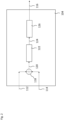
Fig. 2 schematically depicts the second apparatus according to the first example, -
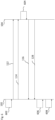
Fig. 3 depicts a sequence diagram according to the first example, -
Fig. 4 schematically depicts a first apparatus and a second apparatus according to a second example, -
Fig. 5 schematically depicts the second apparatus according to the second example, -
Fig. 6 depicts a sequence diagram according to the second example. -
Figure 1 schematically depicts afirst apparatus 102 and asecond apparatus 104 according to a first example. - The
first apparatus 102 may be part of a digital signal processing (DSP) chain of a coherent transceiver. - The
first apparatus 102 is configured for decoding forward error correction, FEC, codewords. - According to an example, the
first apparatus 102 is configured to decode FEC codewords of a Low-Density Parity-Check Code (LDPC) for the FEC. - The
first apparatus 102 is configured to decode an input FEC codeword in iterations. An average number of iterations per input FEC codeword, depends on the FEC code design, the FEC coding gain and the working Signal to Noise Ratio (SNR) - The
first apparatus 102 comprises ascheduler 106 andprocessors 108. - The
processors 108 are configured for decoding the input FEC codeword. - The
scheduler 106 is configured to schedule theprocessors 108 with asignal 110. - According to an example, the
scheduler 106 is configured for operating a subset of theprocessors 108 or allprocessors 108 in a time slot for decoding the input FEC codeword, in a load-balancing configuration. According to an example, thescheduler 106 is configured for operating the subset of theprocessors 108 or all processors in parallel in the time slot. - The
scheduler 106 may be configured for scheduling theprocessors 108 with a scheduling algorithm which allocates theprocessors 108 to FEC codewords as required to achieve a target Bit Error Rate, BER, minimizing both a number of activeparallel processors 108 and the processing in each processor. - The
scheduler 106 is configured for activating or for deactivatingindividual processors 108 via thesignal 110. In this context, activating aprocessor 108 may refer to turning on theprocessor 108 or operating theprocessor 108 in a first power mode, wherein theprocessor 108 consumes a first amount of power. In this context, deactivating theprocessor 108 may refer to turning off theprocessor 108 or operating theprocessor 108 in a second power mode, wherein theprocessor 108 consumes a second amount of power. The second amount of power is less than the first amount of power. - The scheduling algorithm is based on the observation that in LDPC codes only a low number of iterations is typically necessary to decode most of the FEC codeword, while only very few require an exceptionally high number of iterations. By employing the
processors 108 flexibly, thesecond apparatus 104 is capable of decoding with a variable number of iterations per FEC codeword. Thescheduler 106 is configured for deactivating at least oneprocessor 108 for FEC codewords that require a low number of iterations and for activating at least oneprocessor 108 for FEC codewords that require a high number of iterations. This reduces the overall power consumption of thesecond apparatus 104. - According to the first example, the
first apparatus 102 is configured for receiving anindication 116 to inhibit activation of aprocessor 108 for decoding FEC codewords, and to inhibit activation of aprocessor 108 for decoding FEC codewords upon receiving theindication 116 to inhibit activation of aprocessor 108. - According to an example, the
indication 116 to inhibit activation of aprocessor 108 may be a value of one. - The
first apparatus 102 may be configured for allocating a FEC codeword for decoding to afree processor 108 upon receiving theindication 116 to inhibit activation of aprocessor 108, if afree processor 108 is available. - The
first apparatus 102 may be configured for keeping a FEC codeword for decoding waiting in a memory buffer upon receiving theindication 116 to inhibit activation of aprocessor 108. - The
first apparatus 102 may be configured for allocating a FEC codeword for decoding to a runningprocessor 108 upon receiving theindication 116 to inhibit activation of aprocessor 108. - The
first apparatus 102 may be configured for sending afirst output 112 indicating a count ofprocessors 108 that are activated in the time slot. - The
first apparatus 102 may be configured for sending asecond output 114 indicating a count ofprocessors 108 that are deactivated in the processing of FEC codewords in the time slot. - The
second apparatus 104 is configured for operating theprocessors 108 for decoding FEC codewords. - The
second apparatus 104 is configured for receiving a first input indicating a count ofprocessors 108 that are activated in a time slot. The first input may be thefirst output 112 of thefirst apparatus 102. - According to an example, in the first input or the
first output 112, the count of one indicates that oneprocessor 108 is activated in the time slot. - According to an example, in the first input or the
first output 112, the count of zero indicates that no processor is activated in the time slot. - The
second apparatus 104 is configured for receiving a second input indicating a count ofprocessors 108 that are activated in a time slot. The second input may be thesecond output 114 of thefirst apparatus 102. - According to an example, in the second input or the
second output 112, the count of one indicates that oneprocessor 108 is deactivated in the time slot. - According to an example, in the second input or the
second output 112, the count of zero indicates that no processor is deactivated in the time slot. - The
second apparatus 104 comprises afirst comparator 118 that is configured for determining adifference 120 between the first input and the second input. - The
difference 120 of minus one indicates that no processor is activated and oneprocessor 108 is deactivated in the time slot. - The
difference 120 of plus one indicates that oneprocessor 108 is activated and no processor is deactivated in the time slot. - The
difference 120 of zero indicates that no processor is activated and no processor is deactivated in the time slot. - The
second apparatus 104 is configured for determining a rate ofincrement 124 or a rate ofdecrement 124 depending on thedifference 120. - The
second apparatus 104 is configured for applying alow pass filter 122 to thedifference 120 for determining the rate ofincrement 124 or the rate ofdecrement 124. - The
second apparatus 104 is configured for determining the rate of anincrement 124 inprocessors 108 that are active for decoding FEC codewords. - The
second apparatus 104 is configured for inhibiting activation of aprocessor 108 for decoding FEC codewords when the rate of theincrement 124 is larger than a first threshold. - According to the first example, the
second apparatus 104 may comprise asecond comparator 126 that is configured for comparing the rate of theincrement 124 to the first threshold and to output theindication 116 to inhibit activation of aprocessor 108 in case the rate of theincrement 124 is larger than the first threshold, and otherwise not to output theindication 116 to inhibit activation of aprocessor 108. - According to an example, the
second apparatus 104 may be configured for outputting the value of one asindication 116 to inhibit activation of aprocessor 108. -
Figure 3 schematically depicts thefirst apparatus 102 and thesecond apparatus 104 according to a second example. Thefirst apparatus 102 and thesecond apparatus 104 according to the second example are configured as described for the first example. - According to the second example, the
first apparatus 102 is configured for receiving anindication 128 to inhibit deactivation of aprocessor 108 for decoding FEC codewords, and to inhibit deactivation of aprocessor 108 for decoding FEC codewords upon receiving theindication 128 to inhibit deactivation of aprocessor 108. - According to an example, the
indication 128 to inhibit deactivation of aprocessor 108 may be a value of one. - According to the second example, the
second apparatus 104 is configured for determining a rate of adecrement 124 inprocessors 108 that are active for decoding FEC codewords. - According to the second example, the
second apparatus 104 is configured for inhibiting deactivation of aprocessor 108 for decoding FEC codewords when the rate of thedecrement 124 is larger than a second threshold. - According to the second example, the
second apparatus 104 may comprise athird comparator 130 that is configured for comparing the rate of thedecrement 124 to the second threshold and to output theindication 128 to inhibit deactivation of aprocessor 108 in case the rate of thedecrement 124 is larger than the second threshold, and otherwise not to output theindication 128 to inhibit deactivation of aprocessor 108. - According to an example, the
second apparatus 104 may be configured for outputting the value of one asindication 128 to inhibit deactivation of aprocessor 108. -
Figure 5 depicts a sequence diagram of a time slot. The sequence diagram comprises steps of a method in thefirst apparatus 102 ofscheduling processors 108 for decoding FEC codewords and a method in thesecond apparatus 104 of operating theprocessors 108 for decoding FEC codewords according to the first example. - In a
step 302, thefirst apparatus 102 activates or deactivatesprocessors 108 of thefirst apparatus 102. - According to an example, the scheduling algorithm activates or deactivates
processors 108. - The
step 302 comprises determining thefirst output 112 and thesecond output 114. - The
first output 112 is provided as first input to thesecond apparatus 104. Thesecond output 114 is provided as second input to thesecond apparatus 104. - In a
step 304, thesecond apparatus 104 determines the rate of the increment inprocessors 108 that are active for decoding FEC codewords. - The
step 304 may comprise determining the rate of the decrement inprocessors 108 that are active for decoding FEC codewords. - According to an example, the
step 304 comprises determining the rate of increment or the rate of decrement depending on thedifference 120 between the first input and the second input. - According to an example, the
step 304 comprises applying thelow pass filter 122 to thedifference 120 for determining the rate ofincrement 124 or the rate ofdecrement 124. - In the time slot, the activation of a
processor 108 for decoding FEC codewords may be inhibited, when the rate of the increment is larger than the first threshold. - In the time slot, the deactivation of a
processor 108 for decoding FEC codewords may be inhibited, when the rate of the decrement is larger than the second threshold. - The
indication 116 to inhibit to activate aprocessor 108 for decoding FEC codewords is sent when the rate of the increment is larger than the first threshold. - The
indication 128 to inhibit to deactivate aprocessor 108 for decoding FEC codewords is sent when the rate of the decrement is larger than the second threshold. - In a
step 306, the activation of aprocessor 108 for decoding FEC codewords is inhibited upon receiving theindication 116 to inhibit activation of aprocessor 108. - In the
step 306, the deactivation of aprocessor 108 for decoding FEC codewords is inhibited upon receiving theindication 128 to inhibit deactivation of aprocessor 108. - In a
step 308, a FEC codeword for decoding is allocated to afree processor 108, if afree processor 108 is available. - In the
step 308, a FEC codeword for decoding may be kept waiting in the memory buffer. - In the
step 308, a FEC codeword for decoding may be allocated to a runningprocessor 108. -
Figure 6 depicts a sequence diagram of a time slot. The sequence diagram comprises steps of a method in thefirst apparatus 102 ofscheduling processors 108 for decoding FEC codewords and a method in thesecond apparatus 104 of operating theprocessors 108 for decoding FEC codewords according to the second example. - In a
step 602, thefirst apparatus 102 activates or deactivatesprocessors 108 of thefirst apparatus 102. - According to an example, the scheduling algorithm activates or deactivates
processors 108. - The
step 602 comprises determining thefirst output 112 and thesecond output 114. - The
first output 112 is provided as first input to thesecond apparatus 104. Thesecond output 114 is provided as second input to thesecond apparatus 104. - In a
step 604, thesecond apparatus 104 determines the rate of the increment inprocessors 108 that are active for decoding FEC codewords. - The
step 604 comprises determining the rate of the decrement inprocessors 108 that are active for decoding FEC codewords. - According to an example, the
step 604 comprises determining the rate of increment or the rate of decrement depending on thedifference 120 between the first input and the second input. - According to an example, the
step 604 comprises applying thelow pass filter 122 to thedifference 120 for determining the rate ofincrement 124 or the rate ofdecrement 124. - In the time slot, the activation of a
processor 108 for decoding FEC codewords may be inhibited, when the rate of the increment is larger than the first threshold. - In the time slot, the deactivation of a
processor 108 for decoding FEC codewords may be inhibited, when the rate of the decrement is larger than the second threshold. - The
indication 116 to inhibit activation of aprocessor 108 for decoding FEC codewords is sent when the rate of the increment is larger than the first threshold. - The
indication 128 to inhibit deactivation of aprocessor 108 for decoding packets in the FEC is sent when the rate of the decrement is larger than the second threshold. - In a
step 606, the activation of aprocessor 108 for decoding FEC codewords is inhibited upon receiving theindication 116 to inhibit activation of aprocessor 108. - In the
step 606, the deactivation of aprocessor 108 for decoding FEC codewords is inhibited upon receiving theindication 128 to inhibit deactivation of aprocessor 108. - In a
step 608, a FEC codeword for decoding is allocated to afree processor 108, if afree processor 108 is available. - In the
step 608, a FEC codeword for decoding may be kept waiting in the memory buffer. - In the
step 608, a FEC codeword for decoding may be allocated to a runningprocessor 108.
Claims (21)
- A method of operating processors (108) for decoding forward error correction, FEC, codewords, wherein the method comprises determining (304, 604) a rate of an increment in processors (108) that are active for decoding FEC codewords, and inhibiting (116) activation of a processor (108) for decoding FEC packets when the rate of the increment is larger than a first threshold.
- The method according to claim 1, wherein the method comprises determining (604) a rate of a decrement in processors (108) that are active for decoding FEC codewords, and inhibiting (128) deactivation of a processor (108) for decoding FEC codewords when the rate of the decrement is larger than a second threshold.
- The method according to claim 2, wherein the method comprises sending an indication (128) to inhibit deactivation of a processor (108) for decoding FEC codewords when the rate of the decrement is larger than the second threshold.
- The method according to one of the preceding claims,
wherein the method comprises sending (116) an indication to inhibit activation of a processor (108) for decoding FEC codewords when the rate of the increment is larger than the first threshold. - The method according to one of the preceding claims,
wherein the method comprises receiving a first input (112) indicating a count of processors (108) that are activated in a time slot, wherein the count of one indicates that one processor (108) is activated in the time slot, wherein the count of zero indicates that no processor is activated in the time slot, and receiving a second input (114) indicating a count of processors that are deactivated in the processing of FEC codewords in the time slot, wherein the count of one indicates that one processor (108) is deactivated in the time slot, wherein the count of zero indicates that no processor is deactivated in the time slot, and determining (304, 604) the rate of increment or the rate of decrement depending on the first input and the second input. - The method according to claim 5, wherein the method comprises determining (304, 604) the rate of increment or the rate of decrement depending on a difference (120) between the first input (112) and the second input (114), wherein the difference (120) of minus one indicates that no processor is activated and one processor (108) is deactivated in the time slot, wherein the difference (120) of plus one indicates that one processor (108) is activated and no processor is deactivated in the time slot, wherein the difference (120) of zero indicates that no processor is activated and no processor is deactivated in the time slot.
- The method according to claim 5 or 6, wherein the method comprises applying (304, 604) a low pass filter (122) to the difference (120) for determining the rate of increment (124) or the rate of decrement (124).
- A method of scheduling processors (108) for decoding forward error correction, FEC, codewords, wherein the method comprises receiving an indication (116) to inhibit activation of a processor (108) for decoding FEC codewords, and to inhibit (306, 606) activation of a processor (108) for decoding FEC codewords upon receiving the indication (116) to inhibit activation of a processor (108), or receiving an indication (128) to inhibit deactivation of a processor (108) for decoding FEC codewords, and to inhibit (606) deactivation of a processor (108) for decoding FEC codewords upon receiving the indication (128) to inhibit deactivation of a processor (108).
- The method according to claim 8, wherein the method comprises allocating (308, 608) a FEC codeword for decoding to a free processor, (108) if a free processor (108) is available, keeping (308, 608) a FEC codeword for decoding waiting in a memory buffer, or allocating (308, 608) a FEC codeword for decoding to a running processor (108).
- The method according to one of the claims 8 or 9,
wherein the method comprises sending a first output (112) indicating a count of processors (108) that are activated in the time slot, and sending a second output (114) indicating a count of processors (108) that are deactivated in the processing of FEC codewords in the time slot. - An apparatus (104) for operating processors (108) for decoding forward error correction, FEC, codewords, wherein the apparatus (104) is configured for determining a rate of an increment (124) in processors (108) that are active for decoding FEC codewords, and inhibiting activation of a processor (108) for decoding FEC codewords when the rate of the increment (124) is larger than a first threshold.
- The apparatus (104) according to claim 11, wherein the apparatus (104) is configured for determining a rate of a decrement (124) in processors (108) that are active for decoding FEC codewords, and inhibiting deactivation of a processor (108) for decoding FEC codewords when the rate of the decrement (124) is larger than a second threshold.
- The apparatus (104) according to claim 12, wherein the apparatus (104) is configured for sending an indication (128) to inhibit deactivation of a processor (108) for decoding FEC codewords when the rate of the decrement (124) is larger than the second threshold.
- The apparatus (104) according to one of the claims 11 or 12, wherein the apparatus (104) is configured for sending an indication (116) to inhibit activation of a processor (108) for decoding FEC codewords when the rate of the increment (124) is larger than the first threshold.
- The apparatus (104) according to one of the claims 11 to 14, wherein the apparatus (104) is configured for receiving a first input (112) indicating a count of processors (108) that are activated in a time slot, wherein the count of one indicates that one processor (108) is activated in the time slot, wherein the count of zero indicates that no processor is activated in the time slot, and receiving a second input (114) indicating a count of processors (108) that are deactivated in the processing of FEC codewords in the time slot, wherein the count of one indicates that one processor (108) is deactivated in the time slot, wherein the count of zero indicates that no processor is deactivated in the time slot, and determining the rate of increment (124) or the rate of decrement (124) depending on the first input (112) and the second input (114).
- The apparatus (104) according to claim 15, wherein the apparatus (104) is configured for determining the rate of increment (124) or the rate of decrement (124) depending on a difference (120) between the first input (112) and the second input (114), wherein the difference (120) of minus one indicates that no processor is activated and one processor (108) is deactivated in the time slot, wherein the difference (120) of plus one indicates that one processor (108) is activated and no processor is deactivated in the time slot, wherein the difference (120) of zero indicates that no processor is activated and no processor is deactivated in the time slot.
- The apparatus (104) according to claim 15 or 16,
wherein the apparatus (104) is configured for applying a low pass filter (122) to the difference (120) for determining the rate of increment (124) or the rate of decrement (124)120104102. - An apparatus (102) for scheduling processors for decoding forward error correction, FEC, codewords, wherein the apparatus (102) is configured for receiving an indication (116) to inhibit activation of a processor (108) for decoding FEC codewords, and to inhibit activation of a processor (108) for decoding FEC codewords upon receiving the indication (116) to inhibit to activate a processor (108), or receiving an indication (128) to inhibit deactivation of a processor (108) for decoding FEC codewords, and to inhibit deactivation of a processor (108) for decoding packets upon receiving the indication (128) to inhibit deactivation of a processor (108).
- The apparatus (102) according to claim 18, wherein the apparatus (102) is configured for allocating a FEC codewordfor decoding to a free processor (108), if a free processor (108) is available, keeping a FEC codeword for decoding waiting in a memory buffer, or allocating a FEC codeword for decoding to a running processor (108).
- The apparatus (102) according to one of the claims 18 or 19, wherein the apparatus (102) is configured for sending a first output (112) indicating a count of processors (108) that are activated in the time slot, and sending a second output (114) indicating a count of processors (108) that are deactivated in the processing of FEC codewords in the time slot.
- A computer program comprising instructions, which, when executed by an apparatus (104, 102) that is configured to execute the computer program, cause the apparatus (104, 102) to at least perform the method of operating processors (104) or the method of scheduling processors (108).
Priority Applications (3)
| Application Number | Priority Date | Filing Date | Title |
|---|---|---|---|
| EP23220746.4A EP4580067A1 (en) | 2023-12-29 | 2023-12-29 | Apparatus and method of scheduling and operating processors for decoding forward error correction codewords |
| CN202411893765.2A CN120238242A (en) | 2023-12-29 | 2024-12-20 | Apparatus and method for scheduling and operating a processor for decoding forward error correction codewords |
| US19/001,780 US20250219761A1 (en) | 2023-12-29 | 2024-12-26 | Apparatus and method of scheduling and operating processors for decoding forward error correction codewords |
Applications Claiming Priority (1)
| Application Number | Priority Date | Filing Date | Title |
|---|---|---|---|
| EP23220746.4A EP4580067A1 (en) | 2023-12-29 | 2023-12-29 | Apparatus and method of scheduling and operating processors for decoding forward error correction codewords |
Publications (1)
| Publication Number | Publication Date |
|---|---|
| EP4580067A1 true EP4580067A1 (en) | 2025-07-02 |
Family
ID=89428654
Family Applications (1)
| Application Number | Title | Priority Date | Filing Date |
|---|---|---|---|
| EP23220746.4A Pending EP4580067A1 (en) | 2023-12-29 | 2023-12-29 | Apparatus and method of scheduling and operating processors for decoding forward error correction codewords |
Country Status (3)
| Country | Link |
|---|---|
| US (1) | US20250219761A1 (en) |
| EP (1) | EP4580067A1 (en) |
| CN (1) | CN120238242A (en) |
Citations (2)
| Publication number | Priority date | Publication date | Assignee | Title |
|---|---|---|---|---|
| EP2819310A1 (en) * | 2013-06-26 | 2014-12-31 | Alcatel Lucent | Iterative error decoder with cascaded decoding blocks and a feedback decoding block |
| EP3331180A1 (en) * | 2016-11-30 | 2018-06-06 | Alcatel Lucent | Flexible fec decoder for high speed wdm transmission |
-
2023
- 2023-12-29 EP EP23220746.4A patent/EP4580067A1/en active Pending
-
2024
- 2024-12-20 CN CN202411893765.2A patent/CN120238242A/en active Pending
- 2024-12-26 US US19/001,780 patent/US20250219761A1/en active Pending
Patent Citations (2)
| Publication number | Priority date | Publication date | Assignee | Title |
|---|---|---|---|---|
| EP2819310A1 (en) * | 2013-06-26 | 2014-12-31 | Alcatel Lucent | Iterative error decoder with cascaded decoding blocks and a feedback decoding block |
| EP3331180A1 (en) * | 2016-11-30 | 2018-06-06 | Alcatel Lucent | Flexible fec decoder for high speed wdm transmission |
Non-Patent Citations (1)
| Title |
|---|
| GABRIEL FALCAO ET AL: "Portable LDPC Decoding on Multicores Using OpenCL [Applications Corner]", IEEE SIGNAL PROCESSING MAGAZINE, IEEE, USA, vol. 29, no. 4, 1 July 2012 (2012-07-01), pages 81 - 109, XP011447405, ISSN: 1053-5888, DOI: 10.1109/MSP.2012.2192212 * |
Also Published As
| Publication number | Publication date |
|---|---|
| US20250219761A1 (en) | 2025-07-03 |
| CN120238242A (en) | 2025-07-01 |
Similar Documents
| Publication | Publication Date | Title |
|---|---|---|
| US8869000B2 (en) | Methods and systems for efficient decoding of concatenated error correction codes | |
| GB2601948A (en) | Parallel decoding of QC-LDPC codes using a compact base graph representation | |
| US8171367B2 (en) | Stopping criteria in iterative decoders | |
| US7966505B2 (en) | Method and apparatus for power reduction in iterative decoders | |
| JP5122551B2 (en) | Broadcast receiver and method for optimizing the log likelihood mapper scale factor | |
| RU2414077C2 (en) | Channel switching signal generating circuit and channel switching signal generating method | |
| CN1290267C (en) | Decoder having fast decoder and Read solomon decoder and its method | |
| US10256846B2 (en) | Non-uniform quantization of log likelihood ratios | |
| US8086928B2 (en) | Methods and systems for terminating an iterative decoding process of a forward error correction block | |
| US8321744B2 (en) | Channel adaptive iterative turbo decoder system and method | |
| US20020168033A1 (en) | Turbo decoder | |
| JP2006523985A (en) | Early termination of turbo decoder iterations | |
| CN110024297A (en) | The system and method for the dynamic pretreatment selection scheme based on log-likelihood ratio in low-density parity-check decoder | |
| US20250219761A1 (en) | Apparatus and method of scheduling and operating processors for decoding forward error correction codewords | |
| EP2819310A1 (en) | Iterative error decoder with cascaded decoding blocks and a feedback decoding block | |
| EP3331180B1 (en) | Flexible fec decoder for high speed wdm transmission | |
| Larsson et al. | Piggybacking an additional lonely bit on linearly coded payload data | |
| EP1446888B1 (en) | Non linear scaling of reliability values in a turbo decoder system | |
| US20130007558A1 (en) | Error correcting code decoding device, decoding method, and mobile station apparatus | |
| EP2239857A1 (en) | Radio communication device and error correction/encoding method | |
| EP2732573B1 (en) | Method for compressing soft values | |
| KR100362912B1 (en) | Apparatus for stopping recursive decoding and turbo decoder comprising it | |
| US20250167812A1 (en) | Systems and methods for decoding codewords | |
| KR102197751B1 (en) | Syndrome-based hybrid decoding apparatus for low-complexity error correction of block turbo codes and method thereof | |
| US8910015B2 (en) | Efficient implementation to perform iterative decoding with large iteration counts |
Legal Events
| Date | Code | Title | Description |
|---|---|---|---|
| PUAI | Public reference made under article 153(3) epc to a published international application that has entered the european phase |
Free format text: ORIGINAL CODE: 0009012 |
|
| STAA | Information on the status of an ep patent application or granted ep patent |
Free format text: STATUS: THE APPLICATION HAS BEEN PUBLISHED |
|
| AK | Designated contracting states |
Kind code of ref document: A1 Designated state(s): AL AT BE BG CH CY CZ DE DK EE ES FI FR GB GR HR HU IE IS IT LI LT LU LV MC ME MK MT NL NO PL PT RO RS SE SI SK SM TR |
|
| STAA | Information on the status of an ep patent application or granted ep patent |
Free format text: STATUS: REQUEST FOR EXAMINATION WAS MADE |
|
| 17P | Request for examination filed |
Effective date: 20250708 |