EP4579667A1 - Method for extending peptide linkers between peptides - Google Patents
Method for extending peptide linkers between peptides Download PDFInfo
- Publication number
- EP4579667A1 EP4579667A1 EP24221062.3A EP24221062A EP4579667A1 EP 4579667 A1 EP4579667 A1 EP 4579667A1 EP 24221062 A EP24221062 A EP 24221062A EP 4579667 A1 EP4579667 A1 EP 4579667A1
- Authority
- EP
- European Patent Office
- Prior art keywords
- peptide linkers
- peptide
- amino acids
- prob
- terminal
- Prior art date
- Legal status (The legal status is an assumption and is not a legal conclusion. Google has not performed a legal analysis and makes no representation as to the accuracy of the status listed.)
- Pending
Links
Images


Classifications
-
- G—PHYSICS
- G16—INFORMATION AND COMMUNICATION TECHNOLOGY [ICT] SPECIALLY ADAPTED FOR SPECIFIC APPLICATION FIELDS
- G16B—BIOINFORMATICS, i.e. INFORMATION AND COMMUNICATION TECHNOLOGY [ICT] SPECIALLY ADAPTED FOR GENETIC OR PROTEIN-RELATED DATA PROCESSING IN COMPUTATIONAL MOLECULAR BIOLOGY
- G16B35/00—ICT specially adapted for in silico combinatorial libraries of nucleic acids, proteins or peptides
- G16B35/20—Screening of libraries
-
- C—CHEMISTRY; METALLURGY
- C07—ORGANIC CHEMISTRY
- C07K—PEPTIDES
- C07K1/00—General methods for the preparation of peptides, i.e. processes for the organic chemical preparation of peptides or proteins of any length
-
- G—PHYSICS
- G16—INFORMATION AND COMMUNICATION TECHNOLOGY [ICT] SPECIALLY ADAPTED FOR SPECIFIC APPLICATION FIELDS
- G16B—BIOINFORMATICS, i.e. INFORMATION AND COMMUNICATION TECHNOLOGY [ICT] SPECIALLY ADAPTED FOR GENETIC OR PROTEIN-RELATED DATA PROCESSING IN COMPUTATIONAL MOLECULAR BIOLOGY
- G16B20/00—ICT specially adapted for functional genomics or proteomics, e.g. genotype-phenotype associations
- G16B20/50—Mutagenesis
-
- G—PHYSICS
- G16—INFORMATION AND COMMUNICATION TECHNOLOGY [ICT] SPECIALLY ADAPTED FOR SPECIFIC APPLICATION FIELDS
- G16B—BIOINFORMATICS, i.e. INFORMATION AND COMMUNICATION TECHNOLOGY [ICT] SPECIALLY ADAPTED FOR GENETIC OR PROTEIN-RELATED DATA PROCESSING IN COMPUTATIONAL MOLECULAR BIOLOGY
- G16B5/00—ICT specially adapted for modelling or simulations in systems biology, e.g. gene-regulatory networks, protein interaction networks or metabolic networks
- G16B5/20—Probabilistic models
Definitions
- P11 is peptide amino acids connected to the N-terminal of the peptide linkers
- L1 is the amino acids of the N-terminal of the peptide linkers
- P11 and L1 satisfy the following formula:
- L1 is the amino acids of the N-terminal of the peptide linkers
- L2 is middle amino acids of the peptide linkers
- L1 and L2 satisfy the following formula:
- L2 is middle amino acids of the peptide linkers
- L3 is the amino acids of the C-terminal of the peptide linkers
- L2 and L3 satisfy the following formula:
- the disclosure provides a method for extending peptide linkers between peptides by adopting the concept of greedy algorithm, retaining the properties of the best peptide linkers in the current state, and reducing the range of amino acid searches to extend the peptide linkers, which therefore effectively reduces unnecessary operations, thereby reducing time and operation costs while maintaining the effectiveness of the peptide linker.
- the solid position is the point that is expected to be cut off, while the hollow position indicates the opposite.
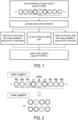
- FIG. 1 is a flow chart of a method for extending peptide linkers between peptides according to an embodiment of the disclosure.
- n is, for example, 3, that is, all combinations of peptide linkers of length of 3 are listed, but the disclosure is not limited thereto, and can be adjusted to different peptide linker lengths according to actual needs.
- a combination of a best peptide linker is generated.
- the disclosure retains the properties of the best peptide linker in its current state, and extends the peptide linker by narrowing the scope of the amino acid search to find the combination of the best peptide linker after the extending.
- the method for extending peptide linkers between peptides of the disclosure is mainly in that when the length of the peptide linker is extended, the scope of search can be narrowed to reduce the cost of computing time.
- the peptide linker combination is extended outwardly.
- the first condition is that a cutting point of the peptide linker is in the middle, and the center of the extended peptide linker is selected from the amino acid of the cutting point of the best peptide linker of length of 3. If the length of the extended peptide linker is an even number, there are two center positions. In more detail, the first condition is that the cutting point of the peptide linker is located at the central position of the peptide linker sequence. When the length of the peptide linker is an odd number (for example, 3), the central position is the amino acid in the middle of the sequence. When the length of the peptide linker is an even number, the central position refers to the position between two adjacent amino acids in the middle of the sequence.
- L1, L2, and L3 are the positions of the peptide linker
- P1k is the peptide connected to the N-terminal of the peptide linker
- P2k is the peptide connected to the C-terminal of the peptide linker, where k represents the distance from the peptide linker.
- the center point is fixed to the amino acid of L2.
- the center point of the best peptide linker of length of 4 is only considered to be Y.
- the amino acid conditions for extending the N-terminal (head) of the peptide linker include the following three points.
- L1 is the N-terminal amino acid of the peptide linker
- L2 is the middle amino acid of the peptide linker, which satisfy the following formula:
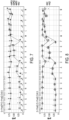
- FIG. 7 and FIG. 8 are schematic diagrams considering the second condition according to an embodiment of the disclosure.
Landscapes
- Chemical & Material Sciences (AREA)
- Health & Medical Sciences (AREA)
- Life Sciences & Earth Sciences (AREA)
- Engineering & Computer Science (AREA)
- Physics & Mathematics (AREA)
- Bioinformatics & Cheminformatics (AREA)
- General Health & Medical Sciences (AREA)
- Molecular Biology (AREA)
- Biophysics (AREA)
- Bioinformatics & Computational Biology (AREA)
- Spectroscopy & Molecular Physics (AREA)
- Organic Chemistry (AREA)
- Theoretical Computer Science (AREA)
- Medical Informatics (AREA)
- Evolutionary Biology (AREA)
- Biotechnology (AREA)
- Genetics & Genomics (AREA)
- Analytical Chemistry (AREA)
- Biochemistry (AREA)
- Proteomics, Peptides & Aminoacids (AREA)
- Library & Information Science (AREA)
- Medicinal Chemistry (AREA)
- Probability & Statistics with Applications (AREA)
- Physiology (AREA)
- Peptides Or Proteins (AREA)
Abstract
Provided is a method for extending peptide linkers between peptides, including the following steps. All combinations of the peptide linkers of a length of n are listed, and a combination of a best peptide linker is generated. After that, a first condition and a second condition are considered to extend the peptide linkers. The first condition is that a cutting point of the peptide linkers is in the middle, and a center of extending the peptide linkers is selected from amino acids of a cutting point of the best peptide linker. The second condition is that amino acids of a N-terminal and amino acids of a C-terminal of the peptide linkers are searched, and the amino acids of the N-terminal and the amino acids of the C-terminal have a higher probability of being cut off.
Description
- This disclosure relates to a method for extending peptide linkers, and in particular, to a method for extending peptide linkers between peptides.
- With the advancement of next-generation gene sequencing and artificial intelligence, personalized cancer vaccines have emerged as one of the modalities for cancer treatment. The production and manufacturing process of personalized cancer vaccines encompasses the following: prioritization and selection of tumor neoantigens, followed by the utilization of peptide linkers to concatenate high-priority peptides, thereby facilitating subsequent production, manufacturing, and vaccine administration. Peptide linkers not only serve to connect various potential tumor neoantigens but also play an auxiliary role in enhancing the likelihood of peptide incorporation into the immune response mechanism.
- Considering the cost of synthesizing peptide linkers and their efficacy, the optimal length of peptide linkers remains a subject of debate. The current viable approach involves employing combinatorial methods to explore and validate various lengths and amino acid combinations. However, this methodology results in an exponential increase in time and computational costs associated with identifying the optimal peptide linkers, correlating with the length of the linker and the number of peptides to be linked. Consequently, there is a need to develop a method for extending peptide linkers between peptides that reduces time and computational costs while maintaining the efficacy of the peptide linkers.
- The disclosure provides a method for extending peptide linkers between peptides, capable of reducing time and computational costs while maintaining the efficacy of the peptide linkers.
- A method for extending peptide linkers between peptides of the disclosure includes the following. All combinations of the peptide linkers of a length of n are listed, and a combination of a best peptide linker is generated. After that, a first condition and a second condition are considered to extend the peptide linkers. The first condition is that a cutting point of the peptide linkers is in the middle, and a center of extending the peptide linkers is selected from amino acids of a cutting point of the best peptide linker. The second condition is that amino acids of a N-terminal and amino acids of a C-terminal of the peptide linkers are searched, and the amino acids of the N-terminal and the amino acids of the C-terminal have a higher probability of being cut off.
- In an embodiment of the disclosure, when a length of an extended peptide linker is an even number, two center positions exit.
- In an embodiment of the disclosure, in the second condition, P11 is peptide amino acids connected to the N-terminal of the peptide linkers, L1 is the amino acids of the N-terminal of the peptide linkers, and P11 and L1 satisfy the following formula:
- Prob(P11)-Prob(L1)>0.5,
- where Prob(x) represents probability of being cut off at a x position.
- In an embodiment of the disclosure, in the second condition, L1 is the amino acids of the N-terminal of the peptide linkers, L2 is middle amino acids of the peptide linkers, and L1 and L2 satisfy the following formula:
- Prob(L2)-Prob(L1)>0.5,
- where Prob(x) represents probability of being cut off at a x position.
- In an embodiment of the disclosure, in the second condition, L2 is middle amino acids of the peptide linkers, L3 is the amino acids of the C-terminal of the peptide linkers, and L2 and L3 satisfy the following formula:
- Prob(L2)-Prob(L3)>0.5,
- where Prob(x) represents probability of being cut off at a x position.
- Based on the above, the disclosure provides a method for extending peptide linkers between peptides by adopting the concept of greedy algorithm, retaining the properties of the best peptide linkers in the current state, and reducing the range of amino acid searches to extend the peptide linkers, which therefore effectively reduces unnecessary operations, thereby reducing time and operation costs while maintaining the effectiveness of the peptide linker.
- To make the aforementioned more comprehensible, several embodiments accompanied with drawings are described in detail as follows.
- The accompanying drawings are included to provide a further understanding of the disclosure, and are incorporated in and constitute a part of this specification. The drawings illustrate example embodiments of the disclosure and, together with the description, serve to explain the principles of the disclosure.
-
FIG. 1 is a flow chart of a method for extending peptide linkers between peptides according to an embodiment of the disclosure. -
FIG. 2 ,FIG. 3, and FIG. 4 are schematic diagrams of a method for considering A first condition according to an embodiment of the disclosure. -
FIG. 5 and FIG. 6 are schematic diagrams of a method for considering a second condition according to an embodiment of the disclosure. -
FIG. 7 and FIG. 8 are schematic diagrams considering the second condition according to an embodiment of the disclosure. - Embodiments are enumerated below and described in detail with reference to the drawings. However, the embodiments provided are not intended to limit the scope of the disclosure. In addition, the terms "including", "comprising", "having", etc. used in the article are all open terms, which means "including but not limited to".
- In the drawings of the disclosure, the solid position is the point that is expected to be cut off, while the hollow position indicates the opposite.
-
FIG. 1 is a flow chart of a method for extending peptide linkers between peptides according to an embodiment of the disclosure. - Please refer to
FIG. 1 . In the method for extending peptide linkers between peptides in the disclosure, all combinations of peptide linkers of length of n are listed first, and there are a total of 20 common amino acids, so that there is a combination of 20^n. In this embodiment, n is, for example, 3, that is, all combinations of peptide linkers of length of 3 are listed, but the disclosure is not limited thereto, and can be adjusted to different peptide linker lengths according to actual needs. - After that, continuing referring to
FIG. 1 , a combination of a best peptide linker is generated. Although extending the peptide linker increases the number of search combinations, the disclosure retains the properties of the best peptide linker in its current state, and extends the peptide linker by narrowing the scope of the amino acid search to find the combination of the best peptide linker after the extending. The method for extending peptide linkers between peptides of the disclosure is mainly in that when the length of the peptide linker is extended, the scope of search can be narrowed to reduce the cost of computing time. In this embodiment, based on the best peptide linker with a peptide linker length of 3, the peptide linker combination is extended outwardly. When extending, a first condition and a second condition are considered to extend the peptide linker, which is described in detail below with reference to the drawings for the first and second conditions and the second condition, respectively. -
FIG. 2 ,FIG. 3, and FIG. 4 are schematic diagrams of a method for considering a first condition according to an embodiment of the disclosure. - Please refer to
FIG. 2 andFIG. 3 first. The first condition is that a cutting point of the peptide linker is in the middle, and the center of the extended peptide linker is selected from the amino acid of the cutting point of the best peptide linker of length of 3. If the length of the extended peptide linker is an even number, there are two center positions. In more detail, the first condition is that the cutting point of the peptide linker is located at the central position of the peptide linker sequence. When the length of the peptide linker is an odd number (for example, 3), the central position is the amino acid in the middle of the sequence. When the length of the peptide linker is an even number, the central position refers to the position between two adjacent amino acids in the middle of the sequence. L1, L2, and L3 are the positions of the peptide linker, P1k is the peptide connected to the N-terminal of the peptide linker, and P2k is the peptide connected to the C-terminal of the peptide linker, where k represents the distance from the peptide linker. Assuming that the cutting point of the best peptide linker of length of 3 is L2, the center point is fixed to the amino acid of L2. Please refer toFIG. 4 . For example, if the best peptide linker of length of 3 is EYC and the cutting point is Y, the center point of the best peptide linker of length of 4 is only considered to be Y. -
FIG. 5 and FIG. 6 are schematic diagrams of a method for considering a second condition according to an embodiment of the disclosure. Based on the fact that the head and tail of the peptide linker can affect the ease with which the peptide itself can be cut, the second condition is to search for the N-terminal amino acid and C-terminal amino acid of the peptide linker. The N-terminal amino acid and C-terminal amino acid exhibit a higher probability of being cut off. - Please refer to
FIG. 5 . The amino acid conditions for extending the N-terminal (head) of the peptide linker include the following three points. - The first point is the relationship between peptide linker and peptide. P11 is the C-terminal amino acid of the peptide connected to the N-terminal of the peptide linker, and L1 is the N-terminal amino acid of the peptide linker, which satisfy the following formula:
- Prob(P11)-Prob(L1)>0.5 ,
- where Prob(x) represents the probability of being cut off at the x position.
- The second point is the relationship between peptide linkers. L1 is the N-terminal amino acid of the peptide linker, and L2 is the middle amino acid of the peptide linker, which satisfy the following formula:
- Prob(L2)-Prob(L1)>0.5 ,
- where Prob(x) represents the probability of being cut off at the x position.
- The third point is the intersection of the two relationships. If there is no intersection, use the following distance formula to sort from small to large and then take TopN, but not limited to P13, can also be to P1k:
|[0,0,1,0,1]-[Prob(P13),Prob(P12),Prob(P11),Prob(L1),Prob(L2)]|. - Please refer to
FIG. 6 . The amino acid conditions for extending the C-terminal (tail) of the peptide linker include the following three points. - The first point is the relationship between the peptide linker and the peptide, for example, it satisfies the following formula:
all(Prob(L3),Prob(21),Prob(22),Prob(23))<0.5 - The second point is the relationship between peptide linkers. L2 is the middle amino acid of the peptide linker, and L3 is the C-terminal amino acid of the peptide linker, which satisfy the following formula:
- Prob(L2)-Prob(L3)>0.5 ,
- where Prob(x) represents the probability of being cut off at the x position.
- The third point is the intersection of the two relationships. If there is no intersection, use the following distance formula to sort from small to large and then take TopN, but not limited to P23, can also be to P2k:
|[1,0,0,0,0]-[Prob(L2),Prob(L3),Prob(P21),Prob(P22),Prob(P23)]|. - In this embodiment, multiple methods can be integrated, using Pepsickle or NetCleave, to equalize the number of methods, thereby increasing the quantity of peptide linkers through similarity, consequently generating amino acids with a high probability of being cut off.
-
FIG. 7 and FIG. 8 are schematic diagrams considering the second condition according to an embodiment of the disclosure. - Please refer to
FIG. 7 . In this example, the N-terminal (head) of the peptide linker is used as an example to explore the relationship between the peptide linker and the peptide. There are 8 amino acids that meet the conditions (T, S, Q, E, N, H, G, C). Please refer toFIG. 8 to explore the relationship between peptide linkers, and there are 10 amino acids that meet the conditions (T, S, Q, E, N, H, G, C, A, D). Integrating the intersection of the above results, the amino acid candidates are T, S, Q, E, N, H, G, C, narrowing the number of amino acids from 20 to 8. - In this way, compared to the prior art, if the length of the peptide linker is set to 3, there are 20 amino acid possibilities at each position, so a peptide linker with a length of 3 will generate 8000 combinations. If the length of the peptide linker is set to 4, then 160,000 combinations will be generated, and so on. In addition to the exponential increase in time and calculation, the calculation of all peptide linkers of length of 4 will count peptide linkers that are already poorly characterized at length of 3, resulting in wasted calculations and a reduction in the effectiveness of the peptide linkers. In comparison, as shown in Table 1 below, the method of extending peptide linkers between peptides of the present disclosure reduces time by 79% compared to the prior art.
Table 1 Method Length of peptide linker Number of peptide linker combinations Pepsickle time NetCleave time Prior art 3 8000 4.7 mins 6.2 mins 4 160000 60 mins 96 mins Present disclosure 4 far less than 160000 13 mins 21 mins - To sum up, the disclosure provides a method for extending peptide linkers between peptides by adopting the concept of greedy algorithm, retaining the properties of the best peptide linkers in the current state, and reducing the range of amino acid searches to extend the peptide linkers. In more detail, the first and second conditions are considered to extend the peptide linker, with the first condition being that the peptide linker is cut in the middle, and the second condition being that the head and tail of the peptide linker affects the ease with which the peptide itself can be cut. Therefore, the method for extending peptide linkers between peptides of the disclosure can effectively reduce unnecessary operations, thereby reducing time and operation costs while maintaining the effectiveness of the peptide linker.
Claims (5)
- A method for extending peptide linkers between peptides, comprising:listing all combinations of the peptide linkers of a length of n;generating a combination of a best peptide linker; andconsidering a first condition and a second condition to extend the peptide linkers,wherein the first condition is that a cutting point of the peptide linkers is in the middle, and a center of extending the peptide linkers is selected from amino acids of a cutting point of the best peptide linker,
the second condition is that amino acids of a N-terminal and amino acids of a C-terminal of the peptide linkers are searched, and the amino acids of the N-terminal and the amino acids of the C-terminal have a higher probability of being cut off. - The method for extending peptide linkers between peptides according to claim 1, wherein when a length of an extended peptide linker is an even number, two center positions exit.
- The method for extending peptide linkers between peptides according to claim 1, wherein in the second condition, P11 is peptide amino acids connected to the N-terminal of the peptide linkers, L1 is the amino acids of the N-terminal of the peptide linkers, and P11 and L1 satisfy the following formula:Prob(P11)-Prob(L1)>0.5,where Prob(x) represents probability of being cut off at a x position.
- The method for extending peptide linkers between peptides according to claim 1, wherein in the second condition, L1 is the amino acids of the N-terminal of the peptide linkers, L2 is middle amino acids of the peptide linkers, and L1 and L2 satisfy the following formula:Prob(L2)-Prob(L1)>0.5,where Prob(x) represents probability of being cut off at a x position.
- The method for extending peptide linkers between peptides according to claim 1, wherein in the second condition, L2 is middle amino acids of the peptide linkers, L3 is the amino acids of the C-terminal of the peptide linkers, and L2 and L3 satisfy the following formula:Prob(L2)-Prob(L3)>0.5,where Prob(x) represents probability of being cut off at a x position.
Applications Claiming Priority (2)
| Application Number | Priority Date | Filing Date | Title |
|---|---|---|---|
| US202363615272P | 2023-12-27 | 2023-12-27 | |
| TW113144875A TW202525831A (en) | 2023-12-27 | 2024-11-21 | Method for extending peptide linkers between peptides |
Publications (1)
| Publication Number | Publication Date |
|---|---|
| EP4579667A1 true EP4579667A1 (en) | 2025-07-02 |
Family
ID=93925352
Family Applications (1)
| Application Number | Title | Priority Date | Filing Date |
|---|---|---|---|
| EP24221062.3A Pending EP4579667A1 (en) | 2023-12-27 | 2024-12-18 | Method for extending peptide linkers between peptides |
Country Status (2)
| Country | Link |
|---|---|
| US (1) | US20250215047A1 (en) |
| EP (1) | EP4579667A1 (en) |
Citations (1)
| Publication number | Priority date | Publication date | Assignee | Title |
|---|---|---|---|---|
| US20190346442A1 (en) * | 2016-04-18 | 2019-11-14 | The Broad Institute, Inc. | Improved hla epitope prediction |
-
2024
- 2024-12-13 US US18/979,681 patent/US20250215047A1/en active Pending
- 2024-12-18 EP EP24221062.3A patent/EP4579667A1/en active Pending
Patent Citations (1)
| Publication number | Priority date | Publication date | Assignee | Title |
|---|---|---|---|---|
| US20190346442A1 (en) * | 2016-04-18 | 2019-11-14 | The Broad Institute, Inc. | Improved hla epitope prediction |
Non-Patent Citations (3)
| Title |
|---|
| CHEN XIAOYING ET AL: "Fusion protein linkers: Property, design and functionality", ADVANCED DRUG DELIVERY REVIEWS, ELSEVIER, AMSTERDAM , NL, vol. 65, no. 10, 29 September 2012 (2012-09-29), pages 1357 - 1369, XP028737352, ISSN: 0169-409X, DOI: 10.1016/J.ADDR.2012.09.039 * |
| TEUFEL ET AL: "DeepPeptide", BIOINFROMATICS, 9 October 2023 (2023-10-09), XP093271127 * |
| TEUFEL FELIX ET AL: "DeepPeptide predicts cleaved peptides in proteins using conditional random fields", BIOINFORMATICS (ONLINE), vol. 39, no. 10, 3 October 2023 (2023-10-03), GB, US, NL, XP093271123, ISSN: 1367-4811, Retrieved from the Internet <URL:https://academic.oup.com/bioinformatics/article-pdf/39/10/btad616/52241432/btad616.pdf> DOI: 10.1093/bioinformatics/btad616 * |
Also Published As
| Publication number | Publication date |
|---|---|
| US20250215047A1 (en) | 2025-07-03 |
Similar Documents
| Publication | Publication Date | Title |
|---|---|---|
| Shen et al. | Once quantization-aware training: High performance extremely low-bit architecture search | |
| JP7253257B2 (en) | Antimicrobial Peptides with Alpha Core Helices | |
| Bobu et al. | Adapting to continuously shifting domains | |
| US20190018019A1 (en) | Methods and systems for de novo peptide sequencing using deep learning | |
| Durani | Protein design with L-and D-α-amino acid structures as the alphabet | |
| WO2018210010A1 (en) | Array element arrangement method for l-type array antenna based on inheritance of acquired characteristics | |
| IL291346B1 (en) | Augmenting attention-based neural networks to selectively attend to past inputs | |
| US20240411325A1 (en) | Goods delivery method and apparatus, and server | |
| US20250215047A1 (en) | Method for extending peptide linkers between peptides | |
| Zhao et al. | EBAMP: An efficient de novo broad-spectrum antimicrobial peptide discovery framework | |
| US20140281786A1 (en) | Layered decoding architecture with reduced number of hardware buffers for ldpc codes | |
| Chen et al. | moPPIt-v3: Motif-specific peptides generated via multi-objective-guided discrete flow matching | |
| US20170116152A1 (en) | Local processing apparatus and data transceiving method thereof | |
| WO2024102733A2 (en) | Sequence-based framework to design peptide-guided degraders | |
| CN106452675B (en) | A spherical decoding method for polar codes | |
| Lin et al. | The antimicrobial peptides P-113Du and P-113Tri function against Candida albicans | |
| CN109146167B (en) | Method, device, system and storage medium for seeking shortest grain transportation path | |
| US7983717B2 (en) | Method for fast recovery of normal services | |
| Kline et al. | Case commentary: long-term fosmanogepix use in a transplant recipient with disseminated aspergillosis caused by azole-resistant Aspergillus calidoustus | |
| Huang et al. | Evaluation of minimum zone sphericity by combining single-space contraction strategy with multi-directional adaptive search algorithm | |
| TW202525831A (en) | Method for extending peptide linkers between peptides | |
| CN119141529A (en) | Three-dimensional path planning method for micro-assembly cooperative robot | |
| JP2017525357A5 (en) | ||
| Gotovac et al. | On detection of small objects from aerial images | |
| Hong et al. | A 125,582 vector/s throughput and 95.1% accuracy ANN searching processor with neuro-fuzzy vision cache for real-time object recognition |
Legal Events
| Date | Code | Title | Description |
|---|---|---|---|
| PUAI | Public reference made under article 153(3) epc to a published international application that has entered the european phase |
Free format text: ORIGINAL CODE: 0009012 |
|
| STAA | Information on the status of an ep patent application or granted ep patent |
Free format text: STATUS: THE APPLICATION HAS BEEN PUBLISHED |
|
| AK | Designated contracting states |
Kind code of ref document: A1 Designated state(s): AL AT BE BG CH CY CZ DE DK EE ES FI FR GB GR HR HU IE IS IT LI LT LU LV MC ME MK MT NL NO PL PT RO RS SE SI SK SM TR |
|
| STAA | Information on the status of an ep patent application or granted ep patent |
Free format text: STATUS: REQUEST FOR EXAMINATION WAS MADE |
|
| 17P | Request for examination filed |
Effective date: 20251212 |