EP4579627A1 - Communication system - Google Patents
Communication system Download PDFInfo
- Publication number
- EP4579627A1 EP4579627A1 EP22956407.5A EP22956407A EP4579627A1 EP 4579627 A1 EP4579627 A1 EP 4579627A1 EP 22956407 A EP22956407 A EP 22956407A EP 4579627 A1 EP4579627 A1 EP 4579627A1
- Authority
- EP
- European Patent Office
- Prior art keywords
- prediction
- information
- roadside unit
- qos
- vehicle
- Prior art date
- Legal status (The legal status is an assumption and is not a legal conclusion. Google has not performed a legal analysis and makes no representation as to the accuracy of the status listed.)
- Pending
Links
Images






Classifications
-
- H—ELECTRICITY
- H04—ELECTRIC COMMUNICATION TECHNIQUE
- H04L—TRANSMISSION OF DIGITAL INFORMATION, e.g. TELEGRAPHIC COMMUNICATION
- H04L67/00—Network arrangements or protocols for supporting network services or applications
- H04L67/01—Protocols
- H04L67/12—Protocols specially adapted for proprietary or special-purpose networking environments, e.g. medical networks, sensor networks, networks in vehicles or remote metering networks
-
- H—ELECTRICITY
- H04—ELECTRIC COMMUNICATION TECHNIQUE
- H04W—WIRELESS COMMUNICATION NETWORKS
- H04W24/00—Supervisory, monitoring or testing arrangements
- H04W24/02—Arrangements for optimising operational condition
-
- G—PHYSICS
- G08—SIGNALLING
- G08G—TRAFFIC CONTROL SYSTEMS
- G08G1/00—Traffic control systems for road vehicles
- G08G1/09—Arrangements for giving variable traffic instructions
- G08G1/0962—Arrangements for giving variable traffic instructions having an indicator mounted inside the vehicle, e.g. giving voice messages
- G08G1/0967—Systems involving transmission of highway information, e.g. weather, speed limits
- G08G1/096766—Systems involving transmission of highway information, e.g. weather, speed limits where the system is characterised by the origin of the information transmission
- G08G1/096783—Systems involving transmission of highway information, e.g. weather, speed limits where the system is characterised by the origin of the information transmission where the origin of the information is a roadside individual element
-
- H—ELECTRICITY
- H04—ELECTRIC COMMUNICATION TECHNIQUE
- H04L—TRANSMISSION OF DIGITAL INFORMATION, e.g. TELEGRAPHIC COMMUNICATION
- H04L67/00—Network arrangements or protocols for supporting network services or applications
- H04L67/50—Network services
- H04L67/56—Provisioning of proxy services
- H04L67/561—Adding application-functional data or data for application control, e.g. adding metadata
-
- H—ELECTRICITY
- H04—ELECTRIC COMMUNICATION TECHNIQUE
- H04L—TRANSMISSION OF DIGITAL INFORMATION, e.g. TELEGRAPHIC COMMUNICATION
- H04L67/00—Network arrangements or protocols for supporting network services or applications
- H04L67/50—Network services
- H04L67/56—Provisioning of proxy services
- H04L67/565—Conversion or adaptation of application format or content
- H04L67/5651—Reducing the amount or size of exchanged application data
-
- H—ELECTRICITY
- H04—ELECTRIC COMMUNICATION TECHNIQUE
- H04W—WIRELESS COMMUNICATION NETWORKS
- H04W4/00—Services specially adapted for wireless communication networks; Facilities therefor
- H04W4/30—Services specially adapted for particular environments, situations or purposes
- H04W4/40—Services specially adapted for particular environments, situations or purposes for vehicles, e.g. vehicle-to-pedestrians [V2P]
-
- H—ELECTRICITY
- H04—ELECTRIC COMMUNICATION TECHNIQUE
- H04W—WIRELESS COMMUNICATION NETWORKS
- H04W4/00—Services specially adapted for wireless communication networks; Facilities therefor
- H04W4/30—Services specially adapted for particular environments, situations or purposes
- H04W4/40—Services specially adapted for particular environments, situations or purposes for vehicles, e.g. vehicle-to-pedestrians [V2P]
- H04W4/44—Services specially adapted for particular environments, situations or purposes for vehicles, e.g. vehicle-to-pedestrians [V2P] for communication between vehicles and infrastructures, e.g. vehicle-to-cloud [V2C] or vehicle-to-home [V2H]
Definitions
- Step ST131 The MEC VAE client 230 of the roadside unit 200 executes signal processing for converting the QoS sustainability to a state processable by the MEC V2X application 220.
- Step ST134 The V2X application 110 of the vehicle 100 performs the V2X adaptation depending on the contents of the QoS sustainability.
- the prediction device 700 does not predict the QoS for IQN requests transmitted by an indefinitely large number of vehicles.
- the prediction device 700 makes the prediction of the QoS only for an IQN request transmitted by the roadside unit 200. Accordingly, the communication system is capable of reducing the load on the prediction device 700.
- the roadside unit 200 receives a plurality of IQN requests from a plurality of vehicles.
- a plurality of IQN requests is received, the following process is executed in the communication system.
- the prediction timing is included in the information to be used for the QoS prediction.
- the roadside unit 200 transmits the plurality of IQN requests, information to be used for a plurality of QoS predictions corresponding to the plurality of IQN requests, and the position information regarding the roadside unit 200.
- the prediction device 700 Upon receiving the plurality of IQN requests, the information to be used for the plurality of QoS predictions, and the position information regarding the roadside unit 200, the prediction device 700 assigns priority rankings to the plurality of IQN requests based on a plurality of prediction timings included in the information to be used for the plurality of QoS predictions and a present time. Specifically, the prediction device 700 assigns the priority rankings to the plurality of IQN requests in order of closeness to the present time. The prediction device 700 predicts the QoSs based on the priority rankings. Accordingly, the prediction device 700 is capable of predicting the QoSs in order corresponding to the prediction timings.
- the vehicle 100 receives the QoS sustainability via the roadside unit 200.
- the description will be given of a case where the vehicle 100 receives the QoS sustainability from the base station 300.
- Fig. 8 is a diagram showing a communication system in the second embodiment. Fig. 8 indicates that the vehicle 100 receives the QoS sustainability from the base station 300.
- Fig. 9 is a diagram showing the details of the vehicle in the second embodiment.
- the vehicle 100 further includes a radio interface 130 and a VAE client 140.
- the radio interface 130 receives the QoS sustainability from the base station 300.
- the radio interface 130 transmits the QoS sustainability to the VAE client 140.
- the VAE client 140 performs signal processing for adapting to API on the QoS sustainability and transmits the QoS sustainability to the V2X application 110. Accordingly, the V2X application 110 is capable of performing the V2X adaptation depending on the contents of the QoS sustainability.
- Fig. 10 is a sequence diagram (No. 1) showing an example of a process executed in the communication system in the second embodiment.
- the process in Fig. 10 differs from the process in Fig. 6 in that step ST124a is executed.
- the step ST124a in Fig. 10 will be described below.
- the description will be omitted for processing other than the step ST124a.
- the V2X application server 500 is left out in Fig. 10 .
- Step ST124a The VAE server 400 transmits the QoS sustainability to the VAE client 140 of the vehicle 100 via the base station 300.
- Fig. 11 is a sequence diagram (No. 2) showing the example of the process executed in the communication system in the second embodiment.
- the process in Fig. 11 differs from the process in Fig. 7 in that step ST131a is executed.
- the step ST131a in Fig. 10 will be described below.
- the step ST131a is executed after the step ST124a.
- the V2X application server 500 is left out in Fig. 11 .
- Step ST131a The VAE client 140 of the vehicle 100 transmits the QoS sustainability to the V2X application 110.
- Step ST131b The V2X application 110 of the vehicle 100 performs the V2X adaptation depending on the contents of the QoS sustainability.
- the vehicle 100 may receive the QoS sustainability from the prediction device 700.
- the prediction device 700 may transmit the QoS sustainability to the vehicle 100 not via the roadside unit 200.
- the QoS sustainability is received by the vehicle 100 not via the roadside unit 200.
- the vehicle 100 can quickly receive the QoS sustainability.
- V2X application server 100: vehicle, 110: V2X application, 120: radio interface, 130: radio interface, 140: VAE client, 200: roadside unit, 210: radio interface, 220: MEC V2X application, 230: MEC VAE client, 240: radio interface, 300: base station, 400: VAE server, 500: V2X application server, 600: NEF, 700: prediction device, 900: vehicle, 901: OAM, 902: NWDAF, 903: NEF, 904: V2X application server, 910: V2X application client, 911: VAE client, 912: NWDAF/NEF, 913: VAE server, 914: V2X application server
Landscapes
- Engineering & Computer Science (AREA)
- Signal Processing (AREA)
- Computer Networks & Wireless Communication (AREA)
- General Physics & Mathematics (AREA)
- Life Sciences & Earth Sciences (AREA)
- Physics & Mathematics (AREA)
- Atmospheric Sciences (AREA)
- Library & Information Science (AREA)
- Health & Medical Sciences (AREA)
- Computing Systems (AREA)
- General Health & Medical Sciences (AREA)
- Medical Informatics (AREA)
- Mobile Radio Communication Systems (AREA)
- Traffic Control Systems (AREA)
Abstract
Description
- The present disclosure relates to a communication system.
- Remote driving, autonomous driving, automatic parking, and so forth have been known as V2X services. In order to implement a V2X service, Quality of Service (QoS) is predicted. If a notification of the result of the prediction is sent to a vehicle, the vehicle is capable of initiating the vehicle's action, such as stoppage of the traveling, deceleration or steering operation, before the QoS deteriorates. Incidentally, this notification is referred to also as an " In-advance QoS Notification (IQN)". Further, this action is referred to also as a "V2X adaptation".
- For example, an IQN sequence is described in chapter 6.4.1 of
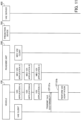
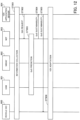
Non-patent Reference 1. A system that sends the IQN will be described below by usingFig. 12. Fig. 12 shows a system in a 5G network. The system includes avehicle 900, an Operation and Maintenance (OAM) 901, a Network Data Analytic Function (NWDAF) 902, a Network Exposure Function (NEF) 903 and aV2X application server 904. When theV2X application server 904 provides a result of the prediction of the QoS regarding a V2X service to thevehicle 900, information such as position information regarding thevehicle 900, a requested QoS, and a QoS threshold value is collected (step ST901). TheV2X application server 904 transmits an In-advance QoS Notification (IQN) request (step ST902). The NWDAF 902 receives the IQN request via the NEF 903. The QoS is predicted based on the collected information (step ST903). The NWDAF 902 transmits QoS sustainability (a result of the prediction) to the V2X application server 904 (step ST904). TheV2X application server 904 transmits the QoS sustainability to the vehicle 900 (step ST905). Accordingly, the V2X adaptation is performed (step ST906). - Further, for example, an IQN sequence is described in chapter 5 of
Non-patent Reference 2. A system that sends the IQN will be described below by usingFig. 13. Fig. 13 shows a system in a 5G network. The system includes aV2X application client 910, a VAEclient 911, an NWDAF/NEF 912, a VAEserver 913 and aV2X application server 914. The VAEserver 913 receives the QoS sustainability (step ST911). The VAEserver 913 transmits the QoS sustainability to the VAE client 911 (step ST912). The VAEclient 911 executes signal processing for converting the QoS sustainability to a state processable in a vehicle (step ST913). The VAEclient 911 transmits the QoS sustainability to the V2X application client 910 (step ST914). Accordingly, theV2X application client 910 is capable of performing the V2X adaptation (step ST915). - Furthermore, for example, chapter 4.9 of Non-patent
Reference 3 proposes a Multi-access Edge Computing (MEC) platform.Fig. 14 indicates that a MEC application #1 (IQN analytics) for making the QoS prediction and a MEC application #2 (V2X app A) and a MEC application #3 (V2X app B) for performing a V2X service are arranged in a MEC host. -
- Non-patent Reference 1: 3GPP TS 23.287 V17.3.0, 2022
- Non-patent Reference 2: 5GAA TR-200055, 2020
- Non-patent Reference 3: 5GAA TR A-190176, 2019
- Incidentally, a device including the NWDAF predicts the QoS for an indefinitely large number of vehicles. Therefore, the load on the device is necessitated to be high.
- An object of the present disclosure is to reduce the load on a device that predicts the QoS.
- A communication system according to an aspect of the present disclosure is provided. The communication system includes a roadside unit that transmits request information indicating a prediction request of communication quality, prediction using information as information to be used for prediction of the communication quality, and position information upon receiving the request information from a vehicle, a service provision device that provides the vehicle with a service, and a prediction device that predicts the communication quality of a communication path from the service provision device to the roadside unit based on the prediction using information and the position information regarding the roadside unit upon receiving the request information, the prediction using information and the position information regarding the roadside unit.
- According to the present disclosure, the load on a device that predicts the QoS can be reduced.
-
-
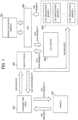
Fig. 1 is a diagram showing a communication system in a first embodiment. -
Fig. 2 is a diagram showing details of a vehicle in the first embodiment. -
Fig. 3 is a diagram showing details of a roadside unit in the first embodiment. -
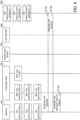
Fig. 4 is a sequence diagram (No. 1) showing an example of a process executed in the communication system in the first embodiment. -
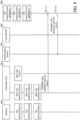
Fig. 5 is a sequence diagram (No. 2) showing the example of the process executed in the communication system in the first embodiment. -
Fig. 6 is a sequence diagram (No. 3) showing the example of the process executed in the communication system in the first embodiment. -
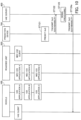
Fig. 7 is a sequence diagram (No. 4) showing the example of the process executed in the communication system in the first embodiment. -
Fig. 8 is a diagram showing a communication system in a second embodiment. -
Fig. 9 is a diagram showing details of a vehicle in the second embodiment. -
Fig. 10 is a sequence diagram (No. 1) showing an example of a process executed in the communication system in the second embodiment. -
Fig. 11 is a sequence diagram (No. 2) showing the example of the process executed in the communication system in the second embodiment. -
Fig. 12 is a diagram (No. 1) showing an example of a system capable of performing a V2X adaptation. -
Fig. 13 is a diagram (No. 2) showing an example of the system capable of performing the V2X adaptation. -
Fig. 14 is a diagram showing an example of the MEC platform. - Embodiments will be described below with reference to the drawings. The following embodiments are just examples and a variety of modifications are possible within the scope of the present disclosure.
-
Fig. 1 is a diagram showing a communication system in a first embodiment. The communication system includes a roadside unit (RSU) 200, aV2X application server 500 and aprediction device 700. Further, the communication system may include avehicle 100, abase station 300, a VAEserver 400 and an NEF 600. - The
vehicle 100 transmits an IQN request to theroadside unit 200. The IQN request is referred to also as request information. The request information is information indicating a prediction request of communication quality. The communication quality is the QoS. - Upon receiving the IQN request from the
vehicle 100, theroadside unit 200 transmits the IQN request, information to be used for the QoS prediction, and position information regarding theroadside unit 200. Incidentally, the information to be used for the QoS prediction is referred to also as prediction using information. Further, the information to be used for the QoS prediction can be information received from thevehicle 100. The information to be used for the QoS prediction can also be information stored in theroadside unit 200 or information stored in a device connectable to theroadside unit 200. Furthermore, the position information regarding theroadside unit 200 is information stored in theroadside unit 200, for example. - The
base station 300 may be referred to as a radio base station. Thebase station 300 transmits the IQN request, the information to be used for the QoS prediction, and the position information regarding theroadside unit 200 to theV2X application server 500. - The
V2X application server 500 is referred to also as a service provision device. TheV2X application server 500 provides thevehicle 100 with a service. In the following description, this service is assumed to be a V2X service. TheV2X application server 500 can be either a real server or a virtual server. Upon receiving the IQN request, the information to be used for the QoS prediction, and the position information regarding theroadside unit 200, theV2X application server 500 transmits the IQN request, the information to be used for the QoS prediction, and the position information regarding theroadside unit 200 to theprediction device 700 via theNEF 600. - The
NEF 600 may be implemented by one device. It is permissible even if theNEF 600 is included in theprediction device 700. - The
prediction device 700 includes an NWDAF. Theprediction device 700 receives the IQN request, the information to be used for the QoS prediction, and the position information regarding theroadside unit 200. Theprediction device 700 may receive the information including the IQN request, the information to be used for the QoS prediction, and the position information regarding theroadside unit 200 from theroadside unit 200 or thebase station 300. Theprediction device 700 predicts the QoS based on the information to be used for the QoS prediction and the position information regarding theroadside unit 200. Specifically, theprediction device 700 predicts the QoS of a communication path from theV2X application server 500 to theroadside unit 200. For example, the contents of the QoS may include an error ratio, a delay, a bit rate, and so forth of the communication path. - The
prediction device 700 transmits QoS sustainability as a result of the prediction of the QoS to thevehicle 100 via devices such as theroadside unit 200. - In the following, the communication system will be described in detail.
-
Fig. 2 is a diagram showing the details of the vehicle in the first embodiment. Thevehicle 100 includes aV2X application 110 and aradio interface 120. TheV2X application 110 and theradio interface 120 will be described later. -
Fig. 3 is a diagram showing the details of the roadside unit in the first embodiment. Theroadside unit 200 includes aradio interface 210, aMEC V2X application 220, aMEC VAE client 230 and aradio interface 240. Theradio interface 210, theMEC V2X application 220, theMEC VAE client 230 and theradio interface 240 will be described later. - Next, a process executed in the communication system will be described below by using a sequence diagram.
-
Fig. 4 is a sequence diagram (No. 1) showing an example of the process executed in the communication system in the first embodiment. - In
Fig. 4 andFigs. 5 to 7 which will be explained later, illustration of thebase station 300 and theNEF 600 is left out. - (Step ST101) The
vehicle 100 hoping for a V2X service registers the V2X service in theV2X application server 500. - (Step ST102) The
V2X application server 500 provides thevehicle 100 with the V2X service. - (Step ST103) The
V2X application 110 of thevehicle 100 transmits the IQN request and the information to be used for the QoS prediction to thenearest roadside unit 200 via theradio interface 120. Incidentally, the information to be used for the QoS prediction may be, for example, a V2X service type regarding the IQN, a requested QoS, a QoS prediction period, a QoS threshold value at the time of notifying of the IQN, an identification number of thevehicle 100 that transmitted the IQN request, and so forth. The QoS prediction period may be represented also as prediction timing. -
Fig. 5 is a sequence diagram (No. 2) showing the example of the process executed in the communication system in the first embodiment. - (Step ST111) The
MEC V2X application 220 of theroadside unit 200 transmits the IQN request, the information to be used for the QoS prediction, and the position information regarding theroadside unit 200 to theV2X application server 500 via thebase station 300. - (Step ST112) The
V2X application server 500 transmits the IQN request, the information to be used for the QoS prediction, and the position information regarding theroadside unit 200 to theprediction device 700 via theNEF 600. -
Fig. 6 is a sequence diagram (No. 3) showing the example of the process executed in the communication system in the first embodiment. - (Step ST121) The
prediction device 700 predicts the QoS of the communication path from theV2X application server 500 to theroadside unit 200 based on the information to be used for the QoS prediction, the position information regarding theroadside unit 200, and so forth. - (Step ST122) The
prediction device 700 transmits the QoS sustainability as a result of the prediction of the QoS to theVAE server 400 via theNEF 600. - (Step ST123) The
VAE server 400 performs signal processing for adapting to API on the QoS sustainability. - (Step ST124) The
VAE server 400 transmits the QoS sustainability to theroadside unit 200 via thebase station 300. -
Fig. 7 is a sequence diagram (No. 4) showing the example of the process executed in the communication system in the first embodiment. - (Step ST131) The
MEC VAE client 230 of theroadside unit 200 executes signal processing for converting the QoS sustainability to a state processable by theMEC V2X application 220. - (Step ST132) The
MEC VAE client 230 of theroadside unit 200 transmits the QoS sustainability to theMEC V2X application 220. - (Step ST133) The
MEC V2X application 220 of theroadside unit 200 transmits the QoS sustainability to thevehicle 100 that transmitted the IQN request via theradio interface 210. - (Step ST134) The
V2X application 110 of thevehicle 100 performs the V2X adaptation depending on the contents of the QoS sustainability. - According to the first embodiment, the
prediction device 700 does not predict the QoS for IQN requests transmitted by an indefinitely large number of vehicles. Theprediction device 700 makes the prediction of the QoS only for an IQN request transmitted by theroadside unit 200. Accordingly, the communication system is capable of reducing the load on theprediction device 700. - Further, there are cases where the
roadside unit 200 receives a plurality of IQN requests from a plurality of vehicles. When a plurality of IQN requests is received, the following process is executed in the communication system.
First, the prediction timing is included in the information to be used for the QoS prediction. Theroadside unit 200 transmits the plurality of IQN requests, information to be used for a plurality of QoS predictions corresponding to the plurality of IQN requests, and the position information regarding theroadside unit 200. Upon receiving the plurality of IQN requests, the information to be used for the plurality of QoS predictions, and the position information regarding theroadside unit 200, theprediction device 700 assigns priority rankings to the plurality of IQN requests based on a plurality of prediction timings included in the information to be used for the plurality of QoS predictions and a present time. Specifically, theprediction device 700 assigns the priority rankings to the plurality of IQN requests in order of closeness to the present time. Theprediction device 700 predicts the QoSs based on the priority rankings. Accordingly, theprediction device 700 is capable of predicting the QoSs in order corresponding to the prediction timings. - Next, a second embodiment will be described below. In the second embodiment, the description will be given mainly of features different from those in the first embodiment. In the second embodiment, the description is omitted for features in common with the first embodiment.
- In the first embodiment, the
vehicle 100 receives the QoS sustainability via theroadside unit 200. In the second embodiment, the description will be given of a case where thevehicle 100 receives the QoS sustainability from thebase station 300. -
Fig. 8 is a diagram showing a communication system in the second embodiment.Fig. 8 indicates that thevehicle 100 receives the QoS sustainability from thebase station 300. - Next, the
vehicle 100 will be described in detail below. -
Fig. 9 is a diagram showing the details of the vehicle in the second embodiment. Thevehicle 100 further includes aradio interface 130 and aVAE client 140. - The
radio interface 130 receives the QoS sustainability from thebase station 300. Theradio interface 130 transmits the QoS sustainability to theVAE client 140. - The
VAE client 140 performs signal processing for adapting to API on the QoS sustainability and transmits the QoS sustainability to theV2X application 110. Accordingly, theV2X application 110 is capable of performing the V2X adaptation depending on the contents of the QoS sustainability. -
Fig. 10 is a sequence diagram (No. 1) showing an example of a process executed in the communication system in the second embodiment. The process inFig. 10 differs from the process inFig. 6 in that step ST124a is executed. Thus, the step ST124a inFig. 10 will be described below. Then, the description will be omitted for processing other than the step ST124a. Incidentally, theV2X application server 500 is left out inFig. 10 . - (Step ST124a) The
VAE server 400 transmits the QoS sustainability to theVAE client 140 of thevehicle 100 via thebase station 300. -
Fig. 11 is a sequence diagram (No. 2) showing the example of the process executed in the communication system in the second embodiment. The process inFig. 11 differs from the process inFig. 7 in that step ST131a is executed. Thus, the step ST131a inFig. 10 will be described below. Incidentally, the step ST131a is executed after the step ST124a. Further, theV2X application server 500 is left out inFig. 11 . - (Step ST131a) The
VAE client 140 of thevehicle 100 transmits the QoS sustainability to theV2X application 110. - (Step ST131b) The
V2X application 110 of thevehicle 100 performs the V2X adaptation depending on the contents of the QoS sustainability. - The
vehicle 100 may receive the QoS sustainability from theprediction device 700. In other words, theprediction device 700 may transmit the QoS sustainability to thevehicle 100 not via theroadside unit 200. - As above, the QoS sustainability is received by the
vehicle 100 not via theroadside unit 200. Thus, in the second embodiment, thevehicle 100 can quickly receive the QoS sustainability. - Features in the embodiments described above can be appropriately combined with each other.
- 100: vehicle, 110: V2X application, 120: radio interface, 130: radio interface, 140: VAE client, 200: roadside unit, 210: radio interface, 220: MEC V2X application, 230: MEC VAE client, 240: radio interface, 300: base station, 400: VAE server, 500: V2X application server, 600: NEF, 700: prediction device, 900: vehicle, 901: OAM, 902: NWDAF, 903: NEF, 904: V2X application server, 910: V2X application client, 911: VAE client, 912: NWDAF/NEF, 913: VAE server, 914: V2X application server
Claims (3)
- A communication system comprising:a roadside unit that transmits request information indicating a prediction request of communication quality, prediction using information as information to be used for prediction of the communication quality, and position information upon receiving the request information from a vehicle;a service provision device that provides the vehicle with a service; anda prediction device that predicts the communication quality of a communication path from the service provision device to the roadside unit based on the prediction using information and the position information regarding the roadside unit upon receiving the request information, the prediction using information and the position information regarding the roadside unit.
- The communication system according to claim 1,
whereinthe prediction using information includes prediction timing,the roadside unit transmits the plurality of pieces of the request information, a plurality of pieces of the prediction using information corresponding to the plurality of pieces of the request information, and the position information regarding the roadside unit upon receiving a plurality of pieces of the request information from a plurality of vehicles, andthe prediction device assigns priority rankings to the plurality of pieces of the request information based on a plurality of prediction timings included in the plurality of pieces of the prediction using information and a present time and predicts the communication quality based on the priority rankings upon receiving the plurality of pieces of the request information, the plurality of pieces of the prediction using information, and the position information regarding the roadside unit. - The communication system according to claim 1,
wherein a result of the prediction is received by the vehicle not via the roadside unit.
Applications Claiming Priority (1)
| Application Number | Priority Date | Filing Date | Title |
|---|---|---|---|
| PCT/JP2022/031558 WO2024042579A1 (en) | 2022-08-22 | 2022-08-22 | Communication system |
Publications (2)
| Publication Number | Publication Date |
|---|---|
| EP4579627A1 true EP4579627A1 (en) | 2025-07-02 |
| EP4579627A4 EP4579627A4 (en) | 2025-09-10 |
Family
ID=90012802
Family Applications (1)
| Application Number | Title | Priority Date | Filing Date |
|---|---|---|---|
| EP22956407.5A Pending EP4579627A4 (en) | 2022-08-22 | 2022-08-22 | COMMUNICATION SYSTEM |
Country Status (5)
| Country | Link |
|---|---|
| US (1) | US20260032464A1 (en) |
| EP (1) | EP4579627A4 (en) |
| JP (1) | JP7686158B2 (en) |
| CN (1) | CN119698647A (en) |
| WO (1) | WO2024042579A1 (en) |
Family Cites Families (4)
| Publication number | Priority date | Publication date | Assignee | Title |
|---|---|---|---|---|
| EP3634017B1 (en) * | 2018-10-02 | 2024-03-06 | Volkswagen Aktiengesellschaft | Predicting quality of service for a communication link of a device of a vehicle along a planned travel route |
| WO2020253934A1 (en) * | 2019-06-17 | 2020-12-24 | Huawei Technologies Co., Ltd. | Potential qos change notification methods and nodes for assisting application adjustment |
| US12045738B2 (en) * | 2020-12-23 | 2024-07-23 | Intel Corporation | Transportation operator collaboration system |
| JP7046274B1 (en) * | 2021-02-05 | 2022-04-01 | 三菱電機株式会社 | Communication management device, communication management method, communication management program, driving support device, driving support method and driving support program |
-
2022
- 2022-08-22 JP JP2024542453A patent/JP7686158B2/en active Active
- 2022-08-22 CN CN202280099127.6A patent/CN119698647A/en active Pending
- 2022-08-22 WO PCT/JP2022/031558 patent/WO2024042579A1/en not_active Ceased
- 2022-08-22 US US18/992,383 patent/US20260032464A1/en active Pending
- 2022-08-22 EP EP22956407.5A patent/EP4579627A4/en active Pending
Also Published As
| Publication number | Publication date |
|---|---|
| WO2024042579A1 (en) | 2024-02-29 |
| US20260032464A1 (en) | 2026-01-29 |
| JP7686158B2 (en) | 2025-05-30 |
| JPWO2024042579A1 (en) | 2024-02-29 |
| EP4579627A4 (en) | 2025-09-10 |
| CN119698647A (en) | 2025-03-25 |
Similar Documents
| Publication | Publication Date | Title |
|---|---|---|
| US12526686B2 (en) | System and method for managing V2X communication between a vehicle and a receiving device | |
| US11108866B2 (en) | Method and devices for dynamic management of a server application on a server platform | |
| CN112823559B (en) | Reallocation and reservation of resources for high priority communications and QoS feedback | |
| US11051210B2 (en) | Method and system for network slice allocation | |
| EP3804277B1 (en) | Mobile edge computing applications management for wireless networks | |
| EP3440882B1 (en) | Semi-persistent resource allocation enhancement for v2x communication | |
| US20110312369A1 (en) | System, base station and method of controlling system | |
| US6768905B2 (en) | Method and processor for determining loading of a telecommunications system and applications of the system-loading determination | |
| KR20200065051A (en) | Entity, network, and user equipment for V2X applications as well as V2X services | |
| CN105141649A (en) | System and method for transmitting data of vehicle | |
| KR20220004458A (en) | Commnuication control apparatus, commnuication control method, vehicle commnuication terminal and vehicle-to-vehicle commnuication method | |
| US9344988B2 (en) | Method and system for managing mass registration scenario in two-way radio system | |
| EP4579627A1 (en) | Communication system | |
| US7839799B2 (en) | Middleware components for bundling service invocations | |
| US20070111733A1 (en) | System and method for piggybacking data across an open data channel of a wireless device | |
| US9894493B2 (en) | Telematics provisioning method | |
| CN110661830B (en) | Resource scheduling method and device, vehicle-mounted terminal, base station and vehicle networking system | |
| US7952996B2 (en) | Method and apparatus for assessing traffic load of a communication network | |
| CN119521140B (en) | Method, apparatus, device, storage medium and program product for data transmission | |
| CN114116164A (en) | Information publishing method and device | |
| US5613207A (en) | Method for transmitting messages in a communication system | |
| KR20090044662A (en) | Static user detection system, method and method for controlling call admission using wireless communication system | |
| CN117278658A (en) | An unmanned driving system and a communication method for the unmanned driving system | |
| KR102889055B1 (en) | Apparatus and method for monitoring abnormality of IoT routers | |
| CN119211877B (en) | Unmanned aerial vehicle and vehicle communication method and system based on time delay |
Legal Events
| Date | Code | Title | Description |
|---|---|---|---|
| STAA | Information on the status of an ep patent application or granted ep patent |
Free format text: STATUS: THE INTERNATIONAL PUBLICATION HAS BEEN MADE |
|
| PUAI | Public reference made under article 153(3) epc to a published international application that has entered the european phase |
Free format text: ORIGINAL CODE: 0009012 |
|
| STAA | Information on the status of an ep patent application or granted ep patent |
Free format text: STATUS: REQUEST FOR EXAMINATION WAS MADE |
|
| 17P | Request for examination filed |
Effective date: 20250213 |
|
| AK | Designated contracting states |
Kind code of ref document: A1 Designated state(s): AL AT BE BG CH CY CZ DE DK EE ES FI FR GB GR HR HU IE IS IT LI LT LU LV MC MK MT NL NO PL PT RO RS SE SI SK SM TR |
|
| A4 | Supplementary search report drawn up and despatched |
Effective date: 20250808 |
|
| RIC1 | Information provided on ipc code assigned before grant |
Ipc: G08G 1/09 20060101AFI20250804BHEP Ipc: H04L 67/12 20220101ALI20250804BHEP Ipc: H04L 67/561 20220101ALI20250804BHEP Ipc: H04L 67/5651 20220101ALI20250804BHEP Ipc: H04W 4/44 20180101ALI20250804BHEP |
|
| DAV | Request for validation of the european patent (deleted) | ||
| DAX | Request for extension of the european patent (deleted) |