EP4579613A1 - System and method to determine crop growth stage nutrient deficiencies - Google Patents
System and method to determine crop growth stage nutrient deficiencies Download PDFInfo
- Publication number
- EP4579613A1 EP4579613A1 EP24220886.6A EP24220886A EP4579613A1 EP 4579613 A1 EP4579613 A1 EP 4579613A1 EP 24220886 A EP24220886 A EP 24220886A EP 4579613 A1 EP4579613 A1 EP 4579613A1
- Authority
- EP
- European Patent Office
- Prior art keywords
- crop
- nutrient
- leaf
- deficient
- unhealthy
- Prior art date
- Legal status (The legal status is an assumption and is not a legal conclusion. Google has not performed a legal analysis and makes no representation as to the accuracy of the status listed.)
- Pending
Links
Images



Classifications
-
- G—PHYSICS
- G06—COMPUTING OR CALCULATING; COUNTING
- G06V—IMAGE OR VIDEO RECOGNITION OR UNDERSTANDING
- G06V20/00—Scenes; Scene-specific elements
- G06V20/10—Terrestrial scenes
- G06V20/188—Vegetation
-
- A—HUMAN NECESSITIES
- A01—AGRICULTURE; FORESTRY; ANIMAL HUSBANDRY; HUNTING; TRAPPING; FISHING
- A01C—PLANTING; SOWING; FERTILISING
- A01C21/00—Methods of fertilising, sowing or planting
- A01C21/007—Determining fertilization requirements
-
- G—PHYSICS
- G06—COMPUTING OR CALCULATING; COUNTING
- G06V—IMAGE OR VIDEO RECOGNITION OR UNDERSTANDING
- G06V10/00—Arrangements for image or video recognition or understanding
- G06V10/70—Arrangements for image or video recognition or understanding using pattern recognition or machine learning
- G06V10/764—Arrangements for image or video recognition or understanding using pattern recognition or machine learning using classification, e.g. of video objects
-
- G—PHYSICS
- G06—COMPUTING OR CALCULATING; COUNTING
- G06V—IMAGE OR VIDEO RECOGNITION OR UNDERSTANDING
- G06V10/00—Arrangements for image or video recognition or understanding
- G06V10/70—Arrangements for image or video recognition or understanding using pattern recognition or machine learning
- G06V10/82—Arrangements for image or video recognition or understanding using pattern recognition or machine learning using neural networks
-
- G—PHYSICS
- G06—COMPUTING OR CALCULATING; COUNTING
- G06V—IMAGE OR VIDEO RECOGNITION OR UNDERSTANDING
- G06V20/00—Scenes; Scene-specific elements
- G06V20/60—Type of objects
- G06V20/68—Food, e.g. fruit or vegetables
Definitions
- the disclosure herein generally relates to crop health assessment, and, more particularly, to system and method to determine crop growth stage nutrient deficiencies.
- Agriculture is a most important factor contributing to civils, sustainability, and food security around the world. Agriculture places high priority on crop monitoring enabling early detection of pests and diseases, optimizing resource use, and promotes sustainable practices. Technological advances in agriculture provides early detection of diseases in crops. Crop filed monitoring supports farmers in making informed decisions, increasing productivity, and minimizing environmental impact, which results in improved economic outcomes and long-term agricultural sustainability. In crop monitoring, nutrients play an important role in plant growth. Nutrient deficiencies reduce crop yields and plant growth. Plants require nutrients in small or large amounts throughout their life cycle and when nutrients are not available in sufficient quantities, plants show symptoms of nutrient deficiency. Nutrient deficiencies affect plant growth and yield. Diagnosing plant nutrient deficiencies is important for farmers and fertilizer industries to gain optimum crop production and minimize cultivation costs.
- Existing techniques identifies macronutrient deficiencies based on leaf color index and plant nutrient deficiencies such as nitrogen, Sulphur, and the like.
- Existing image processing methods analyze digital image and measures plant morphological feature from a health perspective. Such methods lack in identifying macronutrients and micronutrients deficiency.
- diagnosing nutrient deficiencies based on full plant image analysis according to plant growth stages reduces accuracy of deficiency detection. Some methods diagnose nutritional deficiencies in indoor daily light source condition only.
- Some methods use color and shape of the leaves only and not all morphological features to diagnose the nutrient deficiency.
- Some existing techniques uses morphological features such as length, thickness, and the width of each crop part including a leaf, a node, a flower, and a fruit but they do not detect color of leaves, spots on leaves, curling of leaves with plant growth stage.
- a system to determine crop growth stage nutrient deficiencies includes receiving from an image capturing device controlled by one or more hardware processor, a plurality of crop images of one or more crop fields and a crop age calculated from a planting day to a current day, wherein for each crop the image capturing device captures a top view, a front view, a right side view and a left side view and each crop field includes two or more field crops.
- a trained single shot deep learning network determines a current crop growth stage from a plurality of crop growth stages for each crop by extracting a plurality of morphological features associated with the crop.
- the plurality of crop growth stages comprise at least one of a vegetative stage, a flowering stage, and a maturity stage.
- a balanced plant nutrition index (BPNI) value is computed to classify a health state of the crop into one of a healthy crop or an unhealthy crop based on healthy morphological features, the crop growth stage of the crop and the plurality of morphological features.
- the unhealthy crop is segmented into a plurality of regions comprising a lower leaf, a middle leaf, an upper leaf, and a terminal bud region based on pixel length, and identifying at least one affected area associated with the plurality of regions, wherein the affected area includes at least one of a leaf discoloration, and a leaf having white stripes, dead spot, curling, burns, and stains. Further, a plurality of nutrient deficiencies corresponding to the current crop growth stage of the unhealthy crop are identified based on the affected area associated with at least one region.
- a first nutrient deficient percentage and a second nutrient deficient percentage is computed based on the corresponding crop growth stage (i) a first nutrient deficient percentage for each deficiency having a high significance nutrients and (ii) a second nutrient deficient percentage of each deficient having a low significance nutrients.
- a first nutrient deficiency score and a second nutrient deficiency score is computed.
- the first deficiency score is a product of average of nutrient deficient percentage of all high significance nutrients and a high weight.
- the second deficiency score is the product of average of nutrient deficient percentage of all low important nutrients and a low weight.
- a method to determine crop growth stage nutrient deficiencies includes receiving from an image capturing device controlled by one or more hardware processor, a plurality of crop images of one or more crop fields and a crop age calculated from a planting day to a current day, wherein for each crop the image capturing device captures a top view, a front view, a right side view and a left side view and each crop field includes two or more field crops.
- a trained single shot deep learning network determines a current crop growth stage from a plurality of crop growth stages for each crop by extracting a plurality of morphological features associated with the crop.
- the plurality of crop growth stages comprise at least one of a vegetative stage, a flowering stage, and a maturity stage.
- BPNI balanced plant nutrition index
- BPNI balanced plant nutrition index
- the unhealthy crop is segmented into a plurality of regions comprising a lower leaf, a middle leaf, an upper leaf, and a terminal bud region based on pixel length, and identifying at least one affected area associated with the plurality of regions, wherein the affected area includes at least one of a leaf discoloration, and a leaf having white stripes, dead spot, curling, burns, and stains. Further, a plurality of nutrient deficiencies corresponding to the current crop growth stage of the unhealthy crop are identified based on the affected area associated with at least one region.
- a first nutrient deficient percentage and a second nutrient deficient percentage is computed based on the corresponding crop growth stage (i) a first nutrient deficient percentage for each deficiency having a high significance nutrients and (ii) a second nutrient deficient percentage of each deficient having a low significance nutrients.
- a first nutrient deficiency score and a second nutrient deficiency score is computed.
- the first deficiency score is a product of average of nutrient deficient percentage of all high significance nutrients and a high weight.
- the second deficiency score is the product of average of nutrient deficient percentage of all low important nutrients and a low weight.
- a total nutrient deficiency score is computed by averaging a sum of the first nutrient deficiency score, the second nutrient deficiency score, and the BPNI, and recommending the deficient nutrients for the unhealthy crop when the total nutrient deficiency score is at least within a range level.
- non-transitory machine-readable information storage mediums comprising one or more instructions, which when executed by one or more hardware processors perform actions includes receiving from an image capturing device controlled by one or more hardware processor, a plurality of crop images of one or more crop fields and a crop age calculated from a planting day to a current day, wherein for each crop the image capturing device captures a top view, a front view, a right side view and a left side view and each crop field includes two or more field crops. Further a trained single shot deep learning network determines a current crop growth stage from a plurality of crop growth stages for each crop by extracting a plurality of morphological features associated with the crop.
- the plurality of crop growth stages comprise at least one of a vegetative stage, a flowering stage, and a maturity stage. Further, a balanced plant nutrition index (BPNI) value is computed to classify a health state of the crop into one of a healthy crop or an unhealthy crop based on healthy morphological features, the crop growth stage of the crop and the plurality of morphological features.
- BPNI balanced plant nutrition index
- the unhealthy crop is segmented into a plurality of regions comprising a lower leaf, a middle leaf, an upper leaf, and a terminal bud region based on pixel length, and identifying at least one affected area associated with the plurality of regions, wherein the affected area includes at least one of a leaf discoloration, and a leaf having white stripes, dead spot, curling, burns, and stains. Further, a plurality of nutrient deficiencies corresponding to the current crop growth stage of the unhealthy crop are identified based on the affected area associated with at least one region.
- a first nutrient deficient percentage and a second nutrient deficient percentage is computed based on the corresponding crop growth stage (i) a first nutrient deficient percentage for each deficiency having a high significance nutrients and (ii) a second nutrient deficient percentage of each deficient having a low significance nutrients.
- a first nutrient deficiency score and a second nutrient deficiency score is computed.
- the first deficiency score is a product of average of nutrient deficient percentage of all high significance nutrients and a high weight.
- the second deficiency score is the product of average of nutrient deficient percentage of all low important nutrients and a low weight.
- a total nutrient deficiency score is computed by averaging a sum of the first nutrient deficiency score, the second nutrient deficiency score, and the BPNI, and recommending the deficient nutrients for the unhealthy crop when the total nutrient deficiency score is at least within a range level.
- crop health refers to a healthy crop having all nutrients as required in proper quantities.
- Crop nutrient deficiency refers to nutrient deficiencies symptoms that occurred in the crop.
- Crop growth stage nutrients refers to nutrients required for different growth stage.
- nutrient deficiency is not diagnosed based on full plant image analysis according to the plant growth stage which causes less accurate detection of deficiencies. Some techniques diagnose nutrient deficiency in indoor daily light source condition only. In another existing method nutrient deficiencies are identified with aerial photographs lacking top to bottom scanning of plants which causes ineffective diagnose of deficiencies. This use color and shape of the leaves only and not all morphological features to diagnose the nutrient deficiency.
- Diagnosing correct nutrient deficiencies in the plant is very challenging based on plant image analysis during the cropping season. Normally plant requires sixteen essential elements for proper growth, development and complete the life cycle. When nutrients are not available in sufficient quantity, plants show nutrient deficiency symptoms. It is very challenging to apply the fertilizers according to the correct nutrient deficiency in the plant, based on the plant image during cropping season.
- Embodiments herein provide a method and system for determining crop growth stage nutrient deficiencies.
- the system may be alternatively referred as a crop growth stage nutrient system.
- the system enables assessing nutrient deficiency using image processing techniques according to current crop growth stage. Plants require nutrients for proper growth and development. Due to nutrient deficiencies, plants exhibit various morphological symptoms.
- the method enables diagnosing crop health nutrient deficiencies in plant by evaluating morphological features of the plant using a balanced plant nutrition index (BPNI) and full plant images analysis. Diagnosing nutrient deficiencies at current crop growth stage can be more beneficial for recommendation of fertilizer application during the cropping season to get the optimum production.
- BPNI balanced plant nutrition index
- FIG. 1 through FIG.7 where similar reference characters denote corresponding features consistently throughout the figures, there are shown preferred embodiments, and these embodiments are described in the context of the following exemplary system and/or method.
- the processor (s) 104 can be one or more hardware processors 104.
- the one or more hardware processors 104 can be implemented as one or more microprocessors, microcomputers, microcontrollers, digital signal processors, central processing units, state machines, logic circuitries, and/or any devices that manipulate signals based on operational instructions.
- the processor(s) 104 is configured to fetch and execute computer-readable instructions stored in the memory.
- the system 100 can be implemented in a variety of computing systems, such as laptop computers, notebooks, hand-held devices, workstations, mainframe computers, servers, a network cloud, and the like.
- the I/O interface(s) 106 can include a variety of software and hardware interfaces, for example, a web interface, a graphical user interface, and the like and can facilitate multiple communications within a wide variety of networks N/W and protocol types, including wired networks, for example, LAN, cable, etc., and wireless networks, such as WLAN, cellular, or satellite.
- the I/O interface (s) 106 can include one or more ports for connecting a number of devices (nodes) of the system 100 to one another or to another server.
- the memory 102 may include any computer-readable medium known in the art including, for example, volatile memory, such as static random-access memory (SRAM) and dynamic random-access memory (DRAM), and/or non-volatile memory, such as read only memory (ROM), erasable programmable ROM, flash memories, hard disks, optical disks, and magnetic tapes.
- volatile memory such as static random-access memory (SRAM) and dynamic random-access memory (DRAM)
- DRAM dynamic random-access memory
- non-volatile memory such as read only memory (ROM), erasable programmable ROM, flash memories, hard disks, optical disks, and magnetic tapes.
- the memory 102 includes a plurality of modules 108 can also include various sub-modules as depicted in FIG.2 such as a crop growth state identifier 202, a crop health assessor 204, a BPNI value unit 206, a crop nutrient deficiency detector 208, and a crop nutrient deficiency level detector 210.
- the plurality of modules 108 include programs or coded instructions that supplement applications or functions performed by the system 100 for executing different steps involved in the process of determining crop growth stage nutrient deficiencies of the system 100.
- the plurality of modules 108 can include routines, programs, objects, components, and data structures, which performs particular tasks or implement particular abstract data types.
- the plurality of modules 110 may also be used as, signal processor(s), node machine(s), logic circuitries, and/or any other device or component that manipulates signals based on operational instructions. Further, the plurality of modules 108 can be used by hardware, by computer-readable instructions executed by the one or more hardware processors 104, or by a combination thereof.
- the memory 102 may comprise information pertaining to input(s)/output(s) of each step performed by the processor(s) 104 of the system 100 and methods of the present disclosure. Functions of the components of system 100, for identifying malicious agent while handling user request having at least one sensitive attribute, are explained in conjunction with FIG.2 , FIG.3A and FIG.3B providing flow diagram, architectural overviews, and performance analysis of the system 100.
- a farmer requests the system to determine growth nutrient deficiencies of the crop from a crop field by providing a plurality of crop images as input.
- the farmer captures a plurality of crop images via an image capturing device.
- the system 200 analyses the plurality of crop images to determine nutrient deficiencies of the crop.
- the said method is suggested for continuous monitoring of plant health status.
- This method analyses the plurality of crop images and classifies the nutrient deficiencies in crop by analyzing their crop growth stage and examining leaf characteristics. This helps farmers to adjust the supply of nutrients to the plant.
- the three main characteristics for identifying nutrient deficiencies are color, crop health, location and shape of a leaf and combination thereof.
- the crop growth state identifier 202 receives the plurality of crop images of one or more crop fields and a crop age calculated from a planting day to a current day. From each crop a plurality of morphological features associated with the crop are extracted to determine a current crop growth stage.
- the crop health assessor 204 assesses a health state of the crop into at least one of a healthy crop or an unhealthy crop.
- the BPNI value unit 206 calculates the balanced plant nutrition index (BPNI) value to classify the health state of the crop.
- BPNI balanced plant nutrition index
- the crop nutrient deficiency detector 208 determines a plurality of regions of the leaf of the unhealthy crop and identifies a plurality of nutrient deficiencies corresponding to the current crop growth stage of the unhealthy crop.
- FIG.3A and FIG.3B depicts a flow diagram of an example process for determining growth stage nutrient deficiency level using the system of FIG. 1 , in accordance with an embodiment of the present disclosure.
- the system 100 comprises one or more data storage devices or the memory 102 operatively coupled to the processor(s) 104 and is configured to store instructions for execution of steps of a method 300 by the processor(s) or one or more hardware processors 104.
- the steps of the method 300 of the present disclosure will now be explained with reference to the components or blocks of the system 100 as depicted in FIG.1 through FIG.2 , and the steps of flow diagram as depicted in FIG.3A , FIG.3B and FIG.7 .
- process steps, method steps, techniques or the like may be described in a sequential order, such processes, methods, and techniques may be configured to work in alternate orders. In other words, any sequence or order of steps that may be described does not necessarily indicate a requirement that the steps to be performed in that order.
- the steps of processes described herein may be performed in any order practical. Further, some steps may be performed simultaneously.
- a one or more hardware processor receive from an image capturing device a plurality of crop images of one or more crop fields and a crop age calculated from a planting day to a current day. For each crop the image capturing device captures a top view, a front view, a right side view and a left side view and each crop field includes two or more field crops;
- the farmer utilizes the image capturing device to capture the plurality of crop images of one or more crop fields.
- the crop soyabean is used for explanation.
- the image capturing device may include an IR camera, or an RGB camera and the like or combination of both.
- the image capturing device captures each crop in each view and captures every part of the crop.
- Crop age is the number of days from sowing or transplanting of the crop.
- Normally plant requires sixteen essential elements which is classified in two categories based on requirement by the crop such as 1. Micronutrients and 2. Macro nutrients.
- Deficiency symptoms of highly mobile nutrient such as N, P, K, Mo, and Mg appear first in the lower part or old leaf of the plant.
- Deficiency symptoms of less mobile or immobile Nutrients such as Ca, B, S, Cu, Fe, Cl and Mn appears first in the upper leaf of the plant and deficiency symptoms of moderate mobile nutrients such as Zn appears in the middle leaf of plant.
- the one or more hardware processors determine by a trained single shot deep learning network via the one or more hardware processors, a crop growth stage from a plurality of crop growth stages for each crop by extracting a plurality of morphological features associated with the crop, wherein the plurality of crop growth stages includes at least one of a vegetative stage, a flowering stage, and a maturity stage.
- the crop health assessor 204 (referring now to FIG.5 ) the crop health for each crop is determined by counting a number of flowers, a number of fruits, a number of branches, a number of nodes and an internode.
- the plant height, leaf length, a leaf breadth, a mean leaf area, a size of internode, a length of internode, a fruit length, a fruit width, a fruit thickness are measured by counting the pixel number.
- the plurality of healthy morphological features are obtained for the current crop growth stage based on a reference dataset and determining if the average values of the current crop growth stage is above the reference dataset.
- the reference dataset (for example for soybean) for the vegetative state average plant height is 30 cm, leaf area for 15 days age is 0.47 dm 2 , leaf area for 30 days age is 2.47 dm 2 , etc.
- leaf area for 45 days age is 4.28 dm 2
- Number of flowers are 12, etc.
- maturity stage average plant height is 60 cm, leaf area for 75 days age is 2.93 dm 2 , number of pods are 55, fruit length is 4.57 cm, fruit width is 5.45, fruit thickness is 1.11 cm, number of branches are 4, and the like.
- crop growth stage is “N stages” and is not limited to the vegetative stage, the flowering stage, and the maturity stage.
- NIR is a near-infrared light
- Red is a visible red light
- MChi is a number of healthy morphological features
- MCti is a total number of morphological features in particular crop growth stage.
- the BPNI predefined threshold value ranges between -0.5 to 1. The health state of the crop is classified as healthy crop when the BPNI value is lesser than a predefined threshold value and the unhealthy crop when the BPNI value is lesser than the predefined threshold value.
- the one or more hardware processors segmenting the unhealthy crop into a plurality of regions comprising a lower leaf, a middle leaf, an upper leaf, and a terminal bud region based on pixel length, and identifying at least one affected area associated with the plurality of regions, wherein the affected area includes at least one of a leaf discoloration, and a leaf having white stripes, dead spot, curling, burns, and stains.
- the crop nutrient deficiency detector 208 fetches output from the BPNI value estimator 206. Initially, each captured crop image is segmented into the plurality of regions comprising the lower leaf, the middle leaf, the upper leaf, and the terminal bud region according to the pixel length of image. Each region will be of total pixel length of image divided by four.
- the trained single shot deep learning network embedded into the crop nutrient deficiency detector 208 detects the location of discolored leaves at various affected area in the crop image.
- the upper leaf region is affected following deficiency symptoms includes such as (i) complete yellow leaf without dead spots are identified, (ii) purple leaf with dark green color, (iii) marginal yellow leaf with dead spots on margin. If the lower leaf region is affected following deficiency symptoms includes complete yellow leaf.
- the one or more hardware processors identify a plurality of nutrient deficiencies corresponding to the current crop growth stage of the unhealthy crop based on the affected area associated with at least one region;
- the crop nutrient deficiency detector 208 locates at least one affected area associated with the plurality of regions of the unhealthy crop. As described above every nutrient deficiency symptom flags missing of nutrient in the crop which is essentially required. Various nutrients plays vital role in its functions, for example,
- the high significance deficiency nutrients for the vegetative stage includes nitrogen, phosphorous, potassium and sulphur.
- nitrogen, phosphorous, potassium are detected, and sulphur is detected in the upper leaf region.
- the nutrient deficiency is nitrogen (N) if complete yellow leaf without dead spots were detected in the lower leaf region.
- the nutrient deficiency is classified as sulphur (S) deficiency if complete yellow leaf is detected in upper leaf region.
- the one or more hardware processors compute for the unhealthy crop based on the corresponding crop growth stage (i) a first nutrient deficient percentage for each deficiency having a high significance nutrients and (ii) a second nutrient deficient percentage of each deficient having a low significance nutrients.
- the crop nutrient deficiency level detector 210 obtains the plurality of nutrient deficiencies corresponding to the current crop growth of the unhealthy crop as input from the crop nutrient deficiency detector 208. Based on the plurality of nutrient deficiencies, the method computes the first nutrient deficient percentage having the high significance for each deficient nutrient and the first nutrient deficient percentage having the low significance for each deficient nutrient.
- the high significance deficiency nutrients for the flowering stage includes potassium, sulphur, copper, and boron.
- the nutrient deficiency is potassium (K) if marginal yellow leaf with dead spots on margin are detected in lower leaf region.
- the nutrient deficiency is sulphur (S) if complete yellow leaf is detected in upper leaf region.
- the nutrient deficiency is copper (Cu) if slight interveinal yellow leaf with whited tips are detected in upper leaf region.
- the nutrient deficiency is boron (B) if yellow leaf with upward curling and without dead spots are detected in terminal bud region.
- the high significance deficiency nutrients for the maturity stage includes nitrogen, phosphorous, potassium, boron, copper, magnesium, manganese, ferrous and zinc.
- the nutrient deficiency is nitrogen (N) if complete yellow leaf without dead spots is detected in lower leaf region.
- the nutrient deficiency is phosphorus (P) if purple leaf with dark green color is detected in lower leaf region.
- the nutrient deficiency is potassium (K) if marginal yellow leaf with dead spots on margin are detected in lower leaf region.
- the nutrient deficiency boron (B) if yellow leaf with upward curling and without dead spots are detected in terminal bud region.
- the nutrient deficiency is copper (Cu) if slight interveinal yellow with whited tips are detected in upper leaf region.
- the nutrient deficiency is magnesium (Mg) if interveinal yellow leaf is detected in lower leaf region.
- the nutrient deficiency is iron (Fe) if yellow leaf with interveinal white color is detected in upper leaf region.
- the nutrient deficiency is manganese (Mn) if interveinal yellow leaf is detected in upper leaf region.
- the nutrient deficiency is zinc (Zn) if yellow leaf with dead spots and brown to white stripes are detected in middle leaf region.
- the total nutrient deficiency score generator 210a generates the first nutrient deficiency score based on the high significance nutrients and the second nutrient deficiency score for the unhealthy crop based on the low significance nutrients.
- the high weight is assigned to nutrient deficiencies detected in at least one current crop growth stage.
- the high weight being 0.7 and the low weight being 0.3 for all the plurality of crop growth stages.
- the one or more hardware processors compute a total nutrient deficiency score by averaging a sum of the first nutrient deficiency score, the second nutrient deficiency score, and the BPNI, and recommending the deficient nutrients for the unhealthy crop when the total nutrient deficiency score is at least within a range level as represented in Equation 2,
- Total nutrient deficiency score ⁇ [( AP a1 ⁇ HW ) + ( AP a2 ⁇ LW )] ⁇ 0.5 ⁇ + ⁇ (1 - BPNI ) ⁇ 0.5 ⁇ 100 ⁇
- Such computer-readable storage means contain program-code means for implementation of one or more steps of the method, when the program runs on a server or mobile device or any suitable programmable device.
- the hardware device can be any kind of device which can be programmed including e.g., any kind of computer like a server or a personal computer, or the like, or any combination thereof.
Landscapes
- Engineering & Computer Science (AREA)
- Theoretical Computer Science (AREA)
- Multimedia (AREA)
- General Physics & Mathematics (AREA)
- Physics & Mathematics (AREA)
- Evolutionary Computation (AREA)
- Health & Medical Sciences (AREA)
- General Health & Medical Sciences (AREA)
- Databases & Information Systems (AREA)
- Computing Systems (AREA)
- Medical Informatics (AREA)
- Software Systems (AREA)
- Computer Vision & Pattern Recognition (AREA)
- Artificial Intelligence (AREA)
- Life Sciences & Earth Sciences (AREA)
- Soil Sciences (AREA)
- Environmental Sciences (AREA)
- Hydroponics (AREA)
- Management, Administration, Business Operations System, And Electronic Commerce (AREA)
Abstract
This disclosure relates generally to system and method to determine crop growth stage nutrient deficiencies. Diagnosing correct nutrient deficiencies in the plant is very challenging based on plant image analysis during the cropping season. The method of the present disclosure enables assessing nutrient deficiency using image processing techniques according to current crop growth stage. The method receives from an image capturing device a plurality of crop images of one or more crop fields. Further, trained single shot deep learning network determines a crop growth stage from a plurality of crop growth stages for each crop by extracting a plurality of morphological features. Then, the health state of the crop is determined based on a balanced plant nutrition index (BPNI) value. Further, a plurality of nutrient deficiencies corresponding to the current crop growth stage of the unhealthy crop. Further, a total nutrient deficiency score for deficient nutrients of the unhealthy crop.
Description
- The present application claims priority to
Indian application no. 202321089147, filed on December 27, 2023 - The disclosure herein generally relates to crop health assessment, and, more particularly, to system and method to determine crop growth stage nutrient deficiencies.
- Agriculture is a most important factor contributing to livelihoods, sustainability, and food security around the world. Agriculture places high priority on crop monitoring enabling early detection of pests and diseases, optimizing resource use, and promotes sustainable practices. Technological advances in agriculture provides early detection of diseases in crops. Crop filed monitoring supports farmers in making informed decisions, increasing productivity, and minimizing environmental impact, which results in improved economic outcomes and long-term agricultural sustainability. In crop monitoring, nutrients play an important role in plant growth. Nutrient deficiencies reduce crop yields and plant growth. Plants require nutrients in small or large amounts throughout their life cycle and when nutrients are not available in sufficient quantities, plants show symptoms of nutrient deficiency. Nutrient deficiencies affect plant growth and yield. Diagnosing plant nutrient deficiencies is important for farmers and fertilizer industries to gain optimum crop production and minimize cultivation costs.
- Existing techniques identifies macronutrient deficiencies based on leaf color index and plant nutrient deficiencies such as nitrogen, Sulphur, and the like. Existing image processing methods analyze digital image and measures plant morphological feature from a health perspective. Such methods lack in identifying macronutrients and micronutrients deficiency. Alternatively, diagnosing nutrient deficiencies based on full plant image analysis according to plant growth stages reduces accuracy of deficiency detection. Some methods diagnose nutritional deficiencies in indoor daily light source condition only.
- Identifying nutrient deficiencies with aerial photographs lacks top to bottom scanning of plants which causes ineffective diagnose of deficiencies. Some methods use color and shape of the leaves only and not all morphological features to diagnose the nutrient deficiency. Some existing techniques uses morphological features such as length, thickness, and the width of each crop part including a leaf, a node, a flower, and a fruit but they do not detect color of leaves, spots on leaves, curling of leaves with plant growth stage.
- Existing techniques diagnosing nutrient deficiencies are very expensive and time consuming. Diagnosing correct nutrient deficiencies in the plant is very challenging based on plant image analysis during the cropping season. Detecting and classifying nutrient deficiencies in each crop through analysis study of plant growth stages and leaf characteristics is tedious and time consuming. Potentially it is essential to help farmers adjust the supply of nutrients to plants, color, plant health, leaf position, and shape to determine nutrient deficiencies.
- Embodiments of the present disclosure present technological improvements as solutions to one or more of the above-mentioned technical problems recognized by the inventors in conventional systems. For example, in one embodiment, a system to determine crop growth stage nutrient deficiencies is provided. The system includes receiving from an image capturing device controlled by one or more hardware processor, a plurality of crop images of one or more crop fields and a crop age calculated from a planting day to a current day, wherein for each crop the image capturing device captures a top view, a front view, a right side view and a left side view and each crop field includes two or more field crops. Further a trained single shot deep learning network determines a current crop growth stage from a plurality of crop growth stages for each crop by extracting a plurality of morphological features associated with the crop. The plurality of crop growth stages comprise at least one of a vegetative stage, a flowering stage, and a maturity stage. Further, a balanced plant nutrition index (BPNI) value is computed to classify a health state of the crop into one of a healthy crop or an unhealthy crop based on healthy morphological features, the crop growth stage of the crop and the plurality of morphological features.
- Further, the unhealthy crop is segmented into a plurality of regions comprising a lower leaf, a middle leaf, an upper leaf, and a terminal bud region based on pixel length, and identifying at least one affected area associated with the plurality of regions, wherein the affected area includes at least one of a leaf discoloration, and a leaf having white stripes, dead spot, curling, burns, and stains. Further, a plurality of nutrient deficiencies corresponding to the current crop growth stage of the unhealthy crop are identified based on the affected area associated with at least one region.
- Further, for the unhealthy crop a first nutrient deficient percentage and a second nutrient deficient percentage is computed based on the corresponding crop growth stage (i) a first nutrient deficient percentage for each deficiency having a high significance nutrients and (ii) a second nutrient deficient percentage of each deficient having a low significance nutrients. Furthermore, for the unhealthy crop a first nutrient deficiency score and a second nutrient deficiency score is computed. The first deficiency score is a product of average of nutrient deficient percentage of all high significance nutrients and a high weight. The second deficiency score is the product of average of nutrient deficient percentage of all low important nutrients and a low weight.
- Then, a total nutrient deficiency score is computed by averaging a sum of the first nutrient deficiency score, the second nutrient deficiency score, and the BPNI, and recommending the deficient nutrients for the unhealthy crop when the total nutrient deficiency score is at least within a range level.
- In another aspect, a method to determine crop growth stage nutrient deficiencies is provided. The method includes receiving from an image capturing device controlled by one or more hardware processor, a plurality of crop images of one or more crop fields and a crop age calculated from a planting day to a current day, wherein for each crop the image capturing device captures a top view, a front view, a right side view and a left side view and each crop field includes two or more field crops. Further a trained single shot deep learning network determines a current crop growth stage from a plurality of crop growth stages for each crop by extracting a plurality of morphological features associated with the crop. The plurality of crop growth stages comprise at least one of a vegetative stage, a flowering stage, and a maturity stage. Further, a balanced plant nutrition index (BPNI) value is computed to classify a health state of the crop into one of a healthy crop or an unhealthy crop based on healthy morphological features, the crop growth stage of the crop and the plurality of morphological features.
- Further, the unhealthy crop is segmented into a plurality of regions comprising a lower leaf, a middle leaf, an upper leaf, and a terminal bud region based on pixel length, and identifying at least one affected area associated with the plurality of regions, wherein the affected area includes at least one of a leaf discoloration, and a leaf having white stripes, dead spot, curling, burns, and stains. Further, a plurality of nutrient deficiencies corresponding to the current crop growth stage of the unhealthy crop are identified based on the affected area associated with at least one region.
- Further, for the unhealthy crop a first nutrient deficient percentage and a second nutrient deficient percentage is computed based on the corresponding crop growth stage (i) a first nutrient deficient percentage for each deficiency having a high significance nutrients and (ii) a second nutrient deficient percentage of each deficient having a low significance nutrients. Furthermore, for the unhealthy crop a first nutrient deficiency score and a second nutrient deficiency score is computed. The first deficiency score is a product of average of nutrient deficient percentage of all high significance nutrients and a high weight. The second deficiency score is the product of average of nutrient deficient percentage of all low important nutrients and a low weight.
- Then, a total nutrient deficiency score is computed by averaging a sum of the first nutrient deficiency score, the second nutrient deficiency score, and the BPNI, and recommending the deficient nutrients for the unhealthy crop when the total nutrient deficiency score is at least within a range level.
- In yet another aspect, provides one or more non-transitory machine-readable information storage mediums comprising one or more instructions, which when executed by one or more hardware processors perform actions includes receiving from an image capturing device controlled by one or more hardware processor, a plurality of crop images of one or more crop fields and a crop age calculated from a planting day to a current day, wherein for each crop the image capturing device captures a top view, a front view, a right side view and a left side view and each crop field includes two or more field crops. Further a trained single shot deep learning network determines a current crop growth stage from a plurality of crop growth stages for each crop by extracting a plurality of morphological features associated with the crop. The plurality of crop growth stages comprise at least one of a vegetative stage, a flowering stage, and a maturity stage. Further, a balanced plant nutrition index (BPNI) value is computed to classify a health state of the crop into one of a healthy crop or an unhealthy crop based on healthy morphological features, the crop growth stage of the crop and the plurality of morphological features.
- Further, the unhealthy crop is segmented into a plurality of regions comprising a lower leaf, a middle leaf, an upper leaf, and a terminal bud region based on pixel length, and identifying at least one affected area associated with the plurality of regions, wherein the affected area includes at least one of a leaf discoloration, and a leaf having white stripes, dead spot, curling, burns, and stains. Further, a plurality of nutrient deficiencies corresponding to the current crop growth stage of the unhealthy crop are identified based on the affected area associated with at least one region.
- Further, for the unhealthy crop a first nutrient deficient percentage and a second nutrient deficient percentage is computed based on the corresponding crop growth stage (i) a first nutrient deficient percentage for each deficiency having a high significance nutrients and (ii) a second nutrient deficient percentage of each deficient having a low significance nutrients. Furthermore, for the unhealthy crop a first nutrient deficiency score and a second nutrient deficiency score is computed. The first deficiency score is a product of average of nutrient deficient percentage of all high significance nutrients and a high weight. The second deficiency score is the product of average of nutrient deficient percentage of all low important nutrients and a low weight.
- Then, a total nutrient deficiency score is computed by averaging a sum of the first nutrient deficiency score, the second nutrient deficiency score, and the BPNI, and recommending the deficient nutrients for the unhealthy crop when the total nutrient deficiency score is at least within a range level.
- It is to be understood that both the foregoing general description and the following detailed description are exemplary and explanatory only and are not restrictive of the invention, as claimed.
- The accompanying drawings, which are incorporated in and constitute a part of this disclosure, illustrate exemplary embodiments and, together with the description, serve to explain the disclosed principles:
-
FIG.1 is an illustrative system (alternatively referred as crop growth nutrient system), in accordance with some embodiments of the present disclosure. -
FIG.2 illustrates a block diagram of an example crop for determining growth stage nutrient deficiency level, in accordance with an embodiment of the present disclosure. -
FIG.3A andFIG.3B depicts a flow diagram of an example process for determining growth stage nutrient deficiency level using the system ofFIG. 1 , in accordance with an embodiment of the present disclosure. -
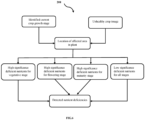
FIG.4 depicts a crop growth stage identifier determining a current crop growth stage of each crop from a crop image using the system ofFIG.2 , in accordance with an embodiment of the present disclosure. -
FIG. 5 depicts a crop health assessor to determine health state of the crop of each crop from the crop image using the system ofFIG.2 , in accordance with an embodiment of the present disclosure. -
FIG.6 depicts nutrient deficiencies detected for an unhealthy crop using the system ofFIG.2 , in accordance with an embodiment of the present disclosure. -
FIG.7 depicts a total nutrient deficiency score computed for the deficient nutrients for the unhealthy crop using the system ofFIG.2 , in accordance with an embodiment of the present disclosure. - Exemplary embodiments are described with reference to the accompanying drawings. In the figures, the left-most digit(s) of a reference number identifies the figure in which the reference number first appears. Wherever convenient, the same reference numbers are used throughout the drawings to refer to the same or like parts. While examples and features of disclosed principles are described herein, modifications, adaptations, and other implementations are possible without departing from the scope of the disclosed embodiments.
- As used herein, the term "crop health" refers to a healthy crop having all nutrients as required in proper quantities.
- "Crop nutrient deficiency" refers to nutrient deficiencies symptoms that occurred in the crop.
- "Crop growth stage nutrients" refers to nutrients required for different growth stage.
- The advent of image processing technology in agriculture offers a potentially effective means of extracting "crop health" information to monitor crop growth. Adopting precision agriculture practices associated with the application of spatially variable inputs to improve the efficiency of agricultural production requires deployment of accurate and reliable crop monitoring techniques. Recent advances in precision agriculture over the past few years have substantially enhanced the efficiency of applying spatially variable agronomic inputs for irrigation, such as fertilizers, pesticides, seeds, and water. This can be attributed to the increasing number of innovations that can be achieved using new technologies that are capable of monitoring field crops for varying spatial and temporal changes.
- Existing technique identify nutrient deficiency based on leaf color index and identifies only few nutrient deficiencies in plant like nitrogen, sulphur deficiency and the like. Image processing methods like analysis of digital Image and measuring the plant morphological feature from a health perspective lack in identifying macronutrients and micronutrients deficiency.
- In another existing technique nutrient deficiency is not diagnosed based on full plant image analysis according to the plant growth stage which causes less accurate detection of deficiencies. Some techniques diagnose nutrient deficiency in indoor daily light source condition only. In another existing method nutrient deficiencies are identified with aerial photographs lacking top to bottom scanning of plants which causes ineffective diagnose of deficiencies. This use color and shape of the leaves only and not all morphological features to diagnose the nutrient deficiency.
- Diagnosing correct nutrient deficiencies in the plant is very challenging based on plant image analysis during the cropping season. Normally plant requires sixteen essential elements for proper growth, development and complete the life cycle. When nutrients are not available in sufficient quantity, plants show nutrient deficiency symptoms. It is very challenging to apply the fertilizers according to the correct nutrient deficiency in the plant, based on the plant image during cropping season.
- Major challenges for determining crop growth stage nutrient deficiencies includes,
- 1. Diagnosing the nutrient deficiency without disturbing the plant and soil is within a short amount of time (in situ diagnosis).
- 2. Diagnosing the correct nutrient deficiency based on visual image analysis in different crop growth stages.
- 3. Measuring the plant morphological features such as a leaf discoloration, a shape and size of leaf, a plant growth disorder or deficiency leaf position, and combination thereof.
- Embodiments herein provide a method and system for determining crop growth stage nutrient deficiencies. The system may be alternatively referred as a crop growth stage nutrient system. The system enables assessing nutrient deficiency using image processing techniques according to current crop growth stage. Plants require nutrients for proper growth and development. Due to nutrient deficiencies, plants exhibit various morphological symptoms. The method enables diagnosing crop health nutrient deficiencies in plant by evaluating morphological features of the plant using a balanced plant nutrition index (BPNI) and full plant images analysis. Diagnosing nutrient deficiencies at current crop growth stage can be more beneficial for recommendation of fertilizer application during the cropping season to get the optimum production. Diagnosing nutrient deficiency symptoms based on visual image analysis can help apply sufficient amounts of nutrients at the right time to achieve optimal crop production. Correct plant nutrient deficiencies are important for farmers and fertilizer industries to gain optimum crop production and minimize the cost of cultivation. Identifying overall nutrient deficiency level is challenging and useful for recommendation of fertilizer application. Nutrient deficiency with crop growth stage is beneficial for recommendation of fertilizer application during the cropping season to achieve optimal production. The disclosed system is further explained with the method as described in conjunction with
FIG. 1 to FIG.7 below. - Referring now to the drawings, and more particularly to
FIG. 1 through FIG.7 , where similar reference characters denote corresponding features consistently throughout the figures, there are shown preferred embodiments, and these embodiments are described in the context of the following exemplary system and/or method. -
FIG. 1 is an illustrative system (alternatively referred as crop growth nutrient system), in accordance with some embodiments of the present disclosure. In an embodiment, thebatch processing system 100 includes processor (s) 104, communication interface (s), alternatively referred as or input/output (I/O) interface(s) 106, and one or more data storage devices ormemory 102 operatively coupled to the processor (s) 104. Thesystem 100, with the processor(s) is configured to execute functions of one or more functional blocks of thesystem 100. - Referring to the components of the
system 100, in an embodiment, the processor (s) 104 can be one ormore hardware processors 104. In an embodiment, the one ormore hardware processors 104 can be implemented as one or more microprocessors, microcomputers, microcontrollers, digital signal processors, central processing units, state machines, logic circuitries, and/or any devices that manipulate signals based on operational instructions. Among other capabilities, the processor(s) 104 is configured to fetch and execute computer-readable instructions stored in the memory. In an embodiment, thesystem 100 can be implemented in a variety of computing systems, such as laptop computers, notebooks, hand-held devices, workstations, mainframe computers, servers, a network cloud, and the like. - The I/O interface(s) 106 can include a variety of software and hardware interfaces, for example, a web interface, a graphical user interface, and the like and can facilitate multiple communications within a wide variety of networks N/W and protocol types, including wired networks, for example, LAN, cable, etc., and wireless networks, such as WLAN, cellular, or satellite. In an embodiment, the I/O interface (s) 106 can include one or more ports for connecting a number of devices (nodes) of the
system 100 to one another or to another server. - The
memory 102 may include any computer-readable medium known in the art including, for example, volatile memory, such as static random-access memory (SRAM) and dynamic random-access memory (DRAM), and/or non-volatile memory, such as read only memory (ROM), erasable programmable ROM, flash memories, hard disks, optical disks, and magnetic tapes. - In an embodiment, the
memory 102 includes a plurality ofmodules 108 can also include various sub-modules as depicted inFIG.2 such as a cropgrowth state identifier 202, acrop health assessor 204, aBPNI value unit 206, a cropnutrient deficiency detector 208, and a crop nutrientdeficiency level detector 210. The plurality ofmodules 108 include programs or coded instructions that supplement applications or functions performed by thesystem 100 for executing different steps involved in the process of determining crop growth stage nutrient deficiencies of thesystem 100. The plurality ofmodules 108, amongst other things, can include routines, programs, objects, components, and data structures, which performs particular tasks or implement particular abstract data types. The plurality of modules 110 may also be used as, signal processor(s), node machine(s), logic circuitries, and/or any other device or component that manipulates signals based on operational instructions. Further, the plurality ofmodules 108 can be used by hardware, by computer-readable instructions executed by the one ormore hardware processors 104, or by a combination thereof. - The
memory 102 may comprise information pertaining to input(s)/output(s) of each step performed by the processor(s) 104 of thesystem 100 and methods of the present disclosure. Functions of the components ofsystem 100, for identifying malicious agent while handling user request having at least one sensitive attribute, are explained in conjunction withFIG.2 ,FIG.3A andFIG.3B providing flow diagram, architectural overviews, and performance analysis of thesystem 100. -
FIG.2 illustrates a block diagram of an example crop for determining growth stage nutrient deficiency level, in accordance with an embodiment of the present disclosure. Thesystem 200 may be an example of the system 100 (FIG. 1 ). In an example embodiment, thesystem 200 may be embodied in, or is in direct communication with the system, for example the system 100 (FIG.1 ). In an embodiment, thesystem 200 may be alternatively referred as a data privacy risk assessment system. Thesystem 200 includes a cropgrowth stage identifier 202, acrop health assessor 204, aBPNI value unit 206, a cropnutrient deficiency detector 208, and a crop nutrientdeficiency level detector 210. - Referring to an example, where a farmer requests the system to determine growth nutrient deficiencies of the crop from a crop field by providing a plurality of crop images as input. The farmer captures a plurality of crop images via an image capturing device. The
system 200 analyses the plurality of crop images to determine nutrient deficiencies of the crop. - The said method is suggested for continuous monitoring of plant health status. There are number of diseases depending on various plant species. Treatment for these diseases are also different. So having the clarity of disease is the most important factor affecting plant health to prevent it. This method analyses the plurality of crop images and classifies the nutrient deficiencies in crop by analyzing their crop growth stage and examining leaf characteristics. This helps farmers to adjust the supply of nutrients to the plant. The three main characteristics for identifying nutrient deficiencies are color, crop health, location and shape of a leaf and combination thereof.
- The crop
growth state identifier 202 receives the plurality of crop images of one or more crop fields and a crop age calculated from a planting day to a current day. From each crop a plurality of morphological features associated with the crop are extracted to determine a current crop growth stage. - The
crop health assessor 204 assesses a health state of the crop into at least one of a healthy crop or an unhealthy crop. - The
BPNI value unit 206 calculates the balanced plant nutrition index (BPNI) value to classify the health state of the crop. - The crop
nutrient deficiency detector 208 determines a plurality of regions of the leaf of the unhealthy crop and identifies a plurality of nutrient deficiencies corresponding to the current crop growth stage of the unhealthy crop. - The crop nutrient
deficiency level detector 210 determines nutrient deficiency score and overall nutrient deficiency level. -
FIG.3A andFIG.3B depicts a flow diagram of an example process for determining growth stage nutrient deficiency level using the system ofFIG. 1 , in accordance with an embodiment of the present disclosure. - In an embodiment, the
system 100 comprises one or more data storage devices or thememory 102 operatively coupled to the processor(s) 104 and is configured to store instructions for execution of steps of amethod 300 by the processor(s) or one ormore hardware processors 104. The steps of themethod 300 of the present disclosure will now be explained with reference to the components or blocks of thesystem 100 as depicted inFIG.1 through FIG.2 , and the steps of flow diagram as depicted inFIG.3A ,FIG.3B andFIG.7 . Although process steps, method steps, techniques or the like may be described in a sequential order, such processes, methods, and techniques may be configured to work in alternate orders. In other words, any sequence or order of steps that may be described does not necessarily indicate a requirement that the steps to be performed in that order. The steps of processes described herein may be performed in any order practical. Further, some steps may be performed simultaneously. - Referring to the steps of the
method 300, at step 302 a one or more hardware processor receive from an image capturing device a plurality of crop images of one or more crop fields and a crop age calculated from a planting day to a current day. For each crop the image capturing device captures a top view, a front view, a right side view and a left side view and each crop field includes two or more field crops; - Referring to the above example, the farmer utilizes the image capturing device to capture the plurality of crop images of one or more crop fields. For example, the crop soyabean is used for explanation. The image capturing device may include an IR camera, or an RGB camera and the like or combination of both. The image capturing device captures each crop in each view and captures every part of the crop. Crop age is the number of days from sowing or transplanting of the crop.
- Plant nutrients play a vital role in plant growth and development. Plants require nutrients in small and large quantities for a complete life cycle. When nutrients are not available in sufficient quantities, plants show nutrient deficiency symptoms. It is noted that nutrient deficiencies affects plant growth and yield. Diagnosing nutritional deficiencies in plant based on image analysis during the cropping season.
- Normally plant requires sixteen essential elements which is classified in two categories based on requirement by the crop such as 1. Micronutrients and 2. Macro nutrients.
- 1. Macronutrients includes Nitrogen (N), phosphorous (P), potassium (K), sulfur (S), calcium (Ca), and magnesium (Mg).
- 2. Micronutrients includes copper (Cu), iron (Fe), manganese (Mn), zinc (Zn), boron (B), chloride (Cl), and molybdenum (Mo).
- Classification of the nutrient deficiency symptoms based on nutrient mobility in the plant is very difficult. Deficiency symptoms of highly mobile nutrient such as N, P, K, Mo, and Mg appear first in the lower part or old leaf of the plant. Deficiency symptoms of less mobile or immobile Nutrients such as Ca, B, S, Cu, Fe, Cl and Mn appears first in the upper leaf of the plant and deficiency symptoms of moderate mobile nutrients such as Zn appears in the middle leaf of plant.
- Referring to the steps of the
method 300, atstep 304 the one or more hardware processors determine by a trained single shot deep learning network via the one or more hardware processors, a crop growth stage from a plurality of crop growth stages for each crop by extracting a plurality of morphological features associated with the crop, wherein the plurality of crop growth stages includes at least one of a vegetative stage, a flowering stage, and a maturity stage. - The plurality of crop images are provided as input to the trained single shot deep learning network to determine the current crop growth stage for each crop. Referring now to
FIG.4 , the cropgrowth stage identifier 202 identifies the crop plant growth stage based on the plurality of morphological features extracted from the crop. The plurality of morphological features may include a trifoliate leaves, a flower, pods, fruits, and the like. The plurality of crop growth stages are detected as the vegetative stage if the model detects trifoliate leaves without flower and pods. The flowering stage is detected if the model detects flowers and the maturity stage if model detects pods. - Referring to the steps of the
method 300, atstep 306 the one or more hardware processors compute a balanced plant nutrition index (BPNI) value to classify a health state of the crop into at least one of a healthy crop or an unhealthy crop based on healthy morphological features, the current crop growth stage of the crop and the plurality of morphological features. - In one embodiment, the crop health assessor 204 (referring now to
FIG.5 ) the crop health for each crop is determined by counting a number of flowers, a number of fruits, a number of branches, a number of nodes and an internode. The plant height, leaf length, a leaf breadth, a mean leaf area, a size of internode, a length of internode, a fruit length, a fruit width, a fruit thickness are measured by counting the pixel number. Further, the plurality of healthy morphological features are obtained for the current crop growth stage based on a reference dataset and determining if the average values of the current crop growth stage is above the reference dataset. The reference dataset (for example for soybean) for the vegetative state average plant height is 30 cm, leaf area for 15 days age is 0.47 dm2, leaf area for 30 days age is 2.47 dm2, etc. For flowering stage average plant height is 40 cm, leaf area for 45 days age is 4.28 dm2,Number of flowers are 12, etc. For maturity stage average plant height is 60 cm, leaf area for 75 days age is 2.93 dm2, number of pods are 55, fruit length is 4.57 cm, fruit width is 5.45, fruit thickness is 1.11 cm, number of branches are 4, and the like. - It is noted that the crop growth stage is "N stages" and is not limited to the vegetative stage, the flowering stage, and the maturity stage.
- In one embodiment, the
BPNI value estimator 206 classifies the crop health state and is calculated as represented in Equation 1,
- Referring to the steps of the
method 300, atstep 308 the one or more hardware processors segmenting the unhealthy crop into a plurality of regions comprising a lower leaf, a middle leaf, an upper leaf, and a terminal bud region based on pixel length, and identifying at least one affected area associated with the plurality of regions, wherein the affected area includes at least one of a leaf discoloration, and a leaf having white stripes, dead spot, curling, burns, and stains. - Once the current crop growth stage (for example soyabean) is identified, different nutrient deficiencies will be detected respective to the current growth stage of the crop. The crop
nutrient deficiency detector 208 fetches output from theBPNI value estimator 206. Initially, each captured crop image is segmented into the plurality of regions comprising the lower leaf, the middle leaf, the upper leaf, and the terminal bud region according to the pixel length of image. Each region will be of total pixel length of image divided by four. The trained single shot deep learning network embedded into the cropnutrient deficiency detector 208 detects the location of discolored leaves at various affected area in the crop image. - For example, in the soyabean if the upper leaf region is affected following deficiency symptoms includes such as (i) complete yellow leaf without dead spots are identified, (ii) purple leaf with dark green color, (iii) marginal yellow leaf with dead spots on margin. If the lower leaf region is affected following deficiency symptoms includes complete yellow leaf.
- Referring to the steps of the
method 300, atstep 310 the one or more hardware processors identify a plurality of nutrient deficiencies corresponding to the current crop growth stage of the unhealthy crop based on the affected area associated with at least one region; - Referring now to
FIG.6 , the cropnutrient deficiency detector 208 locates at least one affected area associated with the plurality of regions of the unhealthy crop. As described above every nutrient deficiency symptom flags missing of nutrient in the crop which is essentially required. Various nutrients plays vital role in its functions, for example, - 1. Nitrogen (N) plays a very important role in protein synthesis and plant growth. Its deficiency symptoms appear first on lower or old leaf of plant, leaf color changed in uniform yellowing with stunted plant growth.
- 2. Phosphorus (P) is essential for energy storage and transfer and responsible for proper plant root growth development. Phosphorus deficiency symptoms appear on lower/ old leaf and leaves turn purplish, dark green in color and causes stunted growth of plant.
- 3. Potassium is an enzyme activator and promotes metabolism activities and it's important to develop resistance against disease. Potassium deficiency symptoms appear on lower/ old leaf causing yellowing with necrotic spot from margin of leaf.
- 4. Magnesium (Mg) is an important component of chlorophyll and promotes plant enzymes activities. Magnesium deficiency symptoms seen on lower/old leaf causing interveinal yellowing and reduced the leaf size.
- 5. Calcium (ca) plays a major role in the creation and structural support of cell walls. Calcium is immobile in plants, so its deficiency symptoms appear on new or upper leaf of the plant. The younger leaves turn from tips with dead spot, crinkle, distortion of leaves.
- 6. Iron (Fe) plays role in synthesis of chlorophyll and various enzymes. Iron deficiency symptoms appear on younger leaves causing Interveinal yellowing with white color on leaves.
- 7. Manganese (Mn) is essential for photosynthesis and respiration. Manganese deficiency symptoms appear on younger leaves with Interveinal yellowing of leaves.
- 8. Zinc (Zn) is an important part of enzyme and plant growth regulator activators of the plant. Zinc deficiency symptoms appear on middle position of plant leaves with interveinal yellowing with bronzing and dead spot appears on leaves.
- 9. Chlorine (Cl) plays a major role in stomata regulation and leaf structure. Chlorine deficient plants show symptoms such as reduced leaf growth, burning from tip and margin with chlorosis.
- 10. Boron (B) is important for cell wall structure and division at growing tips of plant.
- 11. Copper (Cu) is involved in enzymes functioning and protein synthesis.
- 12. Sulphur (S) plays an important role in the creation of amino acids, protein, vitamins, and oil.
- 13. Molybdenum (Mo) plays a major role in nitrogen fixation in legume crops and enzymes activity.
- In one embodiment, for unhealthy crop the high significance deficiency nutrients for the vegetative stage includes nitrogen, phosphorous, potassium and sulphur. In the lower leaf region nitrogen, phosphorous, potassium are detected, and sulphur is detected in the upper leaf region.
- The nutrient deficiency is nitrogen (N) if complete yellow leaf without dead spots were detected in the lower leaf region. The nutrient deficiency classified as phosphorus (P) deficiency if purple leaf with dark green color is detected in lower leaf region for the lower leaf region. The nutrient deficiency classified as potassium (K) deficiency if marginal yellow leaf with dead spots on margin are detected in the lower leaf region. The nutrient deficiency is classified as sulphur (S) deficiency if complete yellow leaf is detected in upper leaf region.
- Referring to the steps of the
method 300, atstep 312 the one or more hardware processors compute for the unhealthy crop based on the corresponding crop growth stage (i) a first nutrient deficient percentage for each deficiency having a high significance nutrients and (ii) a second nutrient deficient percentage of each deficient having a low significance nutrients. - Referring the above example soyabean and
FIG.7 the crop nutrientdeficiency level detector 210 obtains the plurality of nutrient deficiencies corresponding to the current crop growth of the unhealthy crop as input from the cropnutrient deficiency detector 208. Based on the plurality of nutrient deficiencies, the method computes the first nutrient deficient percentage having the high significance for each deficient nutrient and the first nutrient deficient percentage having the low significance for each deficient nutrient. - In one embodiment, for unhealthy crop the high significance deficiency nutrients for the flowering stage includes potassium, sulphur, copper, and boron. The nutrient deficiency is potassium (K) if marginal yellow leaf with dead spots on margin are detected in lower leaf region. The nutrient deficiency is sulphur (S) if complete yellow leaf is detected in upper leaf region. The nutrient deficiency is copper (Cu) if slight interveinal yellow leaf with whited tips are detected in upper leaf region. The nutrient deficiency is boron (B) if yellow leaf with upward curling and without dead spots are detected in terminal bud region.
- In one embodiment, for unhealthy crop the high significance deficiency nutrients for the maturity stage includes nitrogen, phosphorous, potassium, boron, copper, magnesium, manganese, ferrous and zinc. The nutrient deficiency is nitrogen (N) if complete yellow leaf without dead spots is detected in lower leaf region. The nutrient deficiency is phosphorus (P) if purple leaf with dark green color is detected in lower leaf region. The nutrient deficiency is potassium (K) if marginal yellow leaf with dead spots on margin are detected in lower leaf region. The nutrient deficiency boron (B) if yellow leaf with upward curling and without dead spots are detected in terminal bud region. The nutrient deficiency is copper (Cu) if slight interveinal yellow with whited tips are detected in upper leaf region. The nutrient deficiency is magnesium (Mg) if interveinal yellow leaf is detected in lower leaf region. The nutrient deficiency is iron (Fe) if yellow leaf with interveinal white color is detected in upper leaf region. The nutrient deficiency is manganese (Mn) if interveinal yellow leaf is detected in upper leaf region. The nutrient deficiency is zinc (Zn) if yellow leaf with dead spots and brown to white stripes are detected in middle leaf region.
- In one embodiment, for unhealthy crop the low significance deficiency nutrients for the all stages includes molybdenum, chlorine, and calcium, The nutrient deficiency is Molybdenum (Mo) if marginal yellow leaf with dead spots between veins are detected in lower leaf region. The nutrient deficiency is Chlorine (Cl) if yellow leaf with dark green vein and leaf burning from tip and margin is detected in upper leaf region. The nutrient deficiency is Calcium (ca) if yellow leaf with upward curling and dead spot and distortion is detected in terminal buds.
- Referring to the steps of the
method 300, atstep 314 the one or more hardware processors compute for the unhealthy crop a first nutrient deficiency score and a second nutrient deficiency score, wherein the first deficiency score is a product of average of nutrient deficient percentage of all high significance nutrients and a high weight, wherein the second deficiency score is the product of average of nutrient deficient percentage of all low important nutrients and a low weight; - The total nutrient deficiency score generator 210a generates the first nutrient deficiency score based on the high significance nutrients and the second nutrient deficiency score for the unhealthy crop based on the low significance nutrients.
- The high weight is assigned to nutrient deficiencies detected in at least one current crop growth stage. The high weight being 0.7 and the low weight being 0.3 for all the plurality of crop growth stages.
- Referring to the steps of the
method 300, atstep 316 the one or more hardware processors compute a total nutrient deficiency score by averaging a sum of the first nutrient deficiency score, the second nutrient deficiency score, and the BPNI, and recommending the deficient nutrients for the unhealthy crop when the total nutrient deficiency score is at least within a range level as represented in Equation 2,Total nutrient deficiency score = {[(APa1 ∗ HW) + (APa2 ∗ LW)] χ0.5} + {(1 - BPNI) ∗ 0.5 ∗ 100} - AP a1 is an average of affected percentage of all detected high weighted deficient nutrients for the corresponding crop growth stage,
- AP a2 is average of affected percentage of all detected low weighted deficient nutrients for the corresponding crop growth stage.
- Further,
deficient nutrients recommender 210b recommends the deficient nutrients for the crop based on the corresponding crop growth stage. Thedeficient nutrients recommender 210b categorizes the deficient nutrients based on a range level. The range level includes a first range level, a second range level and a third range level. The first range level is 30%, the second range level is between 30%-70%, and the third range level is above 70%. - The total nutrient deficiency score is within the first range level. The method yields output with name of nutrient deficiencies with overall low crop nutrient deficiency level providing high yield.
- If the total nutrient deficiency score is within the second range level the method yields output with name of nutrient deficiencies with overall medium crop nutrient deficiency level providing medium yield.
- If the total nutrient deficiency score is within the second range level the method yields output with name of nutrient deficiencies with overall high crop nutrient deficiency level providing low yield.
- The written description describes the subject matter herein to enable any person skilled in the art to make and use the embodiments. The scope of the subject matter embodiments is defined by the claims and may include other modifications that occur to those skilled in the art. Such other modifications are intended to be within the scope of the claims if they have similar elements that do not differ from the literal language of the claims or if they include equivalent elements with insubstantial differences from the literal language of the claims.
- The embodiments of present disclosure herein addresses unresolved problem of nutrient deficiency detection based on current crop growth stage. The embodiment, thus provides system and method to determine crop growth stage nutrient deficiencies. Moreover, the embodiments herein further provides correct nutrient deficiencies in the crop providing a diagnosing plan in the plant based on plant image analysis during the cropping season. The method also provides overall crop nutrient deficiency level such as micronutrient and macro nutrient.
- It is to be understood that the scope of the protection is extended to such a program and in addition to a computer-readable means having a message therein; such computer-readable storage means contain program-code means for implementation of one or more steps of the method, when the program runs on a server or mobile device or any suitable programmable device. The hardware device can be any kind of device which can be programmed including e.g., any kind of computer like a server or a personal computer, or the like, or any combination thereof. The device may also include means which could be e.g., hardware means like e.g., an application-specific integrated circuit (ASIC), a field-programmable gate array (FPGA), or a combination of hardware and software means, e.g., an ASIC and an FPGA, or at least one microprocessor and at least one memory with software processing components located therein. Thus, the means can include both hardware means, and software means. The method embodiments described herein could be implemented in hardware and software. The device may also include software means. Alternatively, the embodiments may be implemented on different hardware devices, e.g., using a plurality of CPUs.
- The embodiments herein can comprise hardware and software elements. The embodiments that are implemented in software include but are not limited to, firmware, resident software, microcode, etc. The functions performed by various components described herein may be implemented in other components or combinations of other components. For the purposes of this description, a computer-usable or computer readable medium can be any apparatus that can comprise, store, communicate, propagate, or transport the program for use by or in connection with the instruction execution system, apparatus, or device.
- The illustrated steps are set out to explain the exemplary embodiments shown, and it should be anticipated that ongoing technological development will change the manner in which particular functions are performed. These examples are presented herein for purposes of illustration, and not limitation. Further, the boundaries of the functional building blocks have been arbitrarily defined herein for the convenience of the description. Alternative boundaries can be defined so long as the specified functions and relationships thereof are appropriately performed. Alternatives (including equivalents, extensions, variations, deviations, etc., of those described herein) will be apparent to persons skilled in the relevant art(s) based on the teachings contained herein. Such alternatives fall within the scope of the disclosed embodiments. Also, the words "comprising," "having," "containing," and "including," and other similar forms are intended to be equivalent in meaning and be open ended in that an item or items following any one of these words is not meant to be an exhaustive listing of such item or items or meant to be limited to only the listed item or items. It must also be noted that as used herein and in the appended claims, the singular forms "a," "an," and "the" include plural references unless the context clearly dictates otherwise.
- Furthermore, one or more computer-readable storage media may be utilized in implementing embodiments consistent with the present disclosure. A computer-readable storage medium refers to any type of physical memory on which information or data readable by a processor may be stored. Thus, a computer-readable storage medium may store instructions for execution by one or more processors, including instructions for causing the processor(s) to perform steps or stages consistent with the embodiments described herein. The term "computer-readable medium" should be understood to include tangible items and exclude carrier waves and transient signals, i.e., be non-transitory. Examples include random access memory (RAM), read-only memory (ROM), volatile memory, nonvolatile memory, hard drives, CD ROMs, DVDs, flash drives, disks, and any other known physical storage media.
- It is intended that the disclosure and examples be considered as exemplary only, with a true scope of disclosed embodiments being indicated by the following claims.
Claims (15)
- A processor-implemented method to determine crop growth stage nutrient deficiencies, the method comprising:receiving (302) from an image capturing device controlled by one or more hardware processor, a plurality of crop images of one or more crop fields and a crop age calculated from a planting day to a current day, wherein for each crop the image capturing device captures a top view, a front view, a right side view and a left side view and each crop field includes two or more field crops;determining (304) by a trained single shot deep learning network executed by the one or more hardware processors, a current crop growth stage from a plurality of crop growth stages for each crop by extracting a plurality of morphological features associated with the crop, wherein the plurality of crop growth stages comprise at least one of a vegetative stage, a flowering stage, and a maturity stage;computing (306) via the one or more hardware processors, a balanced plant nutrition index (BPNI) value to classify a health state of the crop into one of a healthy crop or an unhealthy crop based on healthy morphological features, the crop growth stage of the crop and the plurality of morphological features;segmenting (308) via the one or more hardware processors, the unhealthy crop into a plurality of regions comprising a lower leaf, a middle leaf, an upper leaf, and a terminal bud region based on pixel length, and identifying at least one affected area associated with the plurality of regions, wherein the affected area includes at least one of a leaf discoloration, and a leaf having white stripes, dead spot, curling, burns, and stains;identifying (310) via the one or more hardware processors a plurality of nutrient deficiencies corresponding to the current crop growth stage of the unhealthy crop based on the affected area associated with at least one region;computing (312) for the unhealthy crop via the one or more hardware processors based on the corresponding crop growth stage (i) a first nutrient deficient percentage for each deficiency having a high significance nutrients and (ii) a second nutrient deficient percentage of each deficient having a low significance nutrients;computing (314) for the unhealthy crop via the one or more hardware processors, a first nutrient deficiency score and a second nutrient deficiency score, wherein the first deficiency score is a product of average of nutrient deficient percentage of all high significance nutrients and a high weight, wherein the second deficiency score is the product of average of nutrient deficient percentage of all low important nutrients and a low weight; andcomputing (316) via the one or more hardware processors, a total nutrient deficiency score for deficient nutrients of the unhealthy crop by averaging a sum of the first nutrient deficiency score, the second nutrient deficiency score, and the BPNI, and recommending the deficient nutrients for the unhealthy crop when the total nutrient deficiency score is at least within a range level.
- The processor implemented method of claim 1, wherein the crop growth stage of the crop is classified into one of (i) the vegetative stage when trifoliate leaves without flower and pods are detected (ii) the flowering stage when flowers are detected and (iii) the maturity stage when pods are detected.
- The processor implemented method of claim 1, wherein the crop health of each crop is determined by,counting a number of flowers, a number of fruits, a number of branches, a number of nodes, and an internode, and measuring the plant height, leaf length, a leaf breadth, a mean leaf area, a size of internode, a length of internode, fruit length, fruit width, fruit thickness by counting the pixel number; anddetermining the healthy morphological features of the crop for the corresponding crop growth stage if the plurality of morphological features are above a reference dataset.
- The processor implemented method of claim 3, wherein the reference dataset comprises at least one of a plant height, a leaf length, a leaf breadth, a mean leaf area, a size of internode, a length of internode, fruit length, fruit width, fruit thickness a color of leaf, a numbers of node, a numbers of internode a number of plant leaf, a number of branches, a number of flowers, a fruit, and a number of tillers.
- The processor implemented method of claim 1, wherein the health state of the crop is classified as healthy crop when the BPNI value is lesser than a predefined threshold value, and unhealthy crop when the BPNI value is equal to or greater than the predefined threshold value.
- The processor implemented method of claim 1, recommending the nutrients deficient for the unhealthy crop,wherein a low crop nutrient deficiency level with corresponding deficient nutrients are recommended when the total nutrient deficiency score is within a first range level,wherein a medium crop nutrient deficiency level with corresponding deficient nutrients are recommended when the total nutrient deficiency score is within a second range level, andwherein a high crop nutrient deficiency level with corresponding deficient nutrients are recommended when the total nutrient deficiency score is within a third range level.
- A system (100) to determine crop growth stage nutrient deficiencies comprising:a memory (102) storing instructions;one or more communication interfaces (106); andone or more hardware processors (104) coupled to the memory (102) via the one or more communication interfaces (106), wherein the one or more hardware processors (104) are configured by the instructions to:receive from an image capturing device a plurality of crop images of one or more crop fields and a crop age calculated from a planting day to a current day, wherein for each crop the image capturing device captures a top view, a front view, a right side view and a left side view and each crop field includes two or more field crops;determine by a trained single shot deep learning network a crop growth stage from a plurality of crop growth stages for each crop by extracting a plurality of morphological features associated with the crop, wherein the plurality of crop growth stages comprise at least one of a vegetative stage, a flowering stage, and a maturity stage;compute a balanced plant nutrition index (BPNI) value to classify a health state of the crop into one of a healthy crop or an unhealthy crop based on healthy morphological features, the crop growth stage of the crop and the plurality of morphological features;segment the unhealthy crop into a plurality of regions comprising a lower leaf, a middle leaf, an upper leaf, and a terminal bud region based on pixel length, and identifying at least one affected area associated with the plurality of regions, wherein the affected area includes at least one of a leaf discoloration, and a leaf having white stripes, dead spot, curling, burns, and stains;identify a plurality of nutrient deficiencies corresponding to the current crop growth stage of the unhealthy crop based on the affected area associated with at least one region;compute for the unhealthy crop based on the corresponding crop growth stage (i) a first nutrient deficient percentage for each deficiency having a high significance nutrients and (ii) a second nutrient deficient percentage of each deficient having a low significance nutrients;compute for the unhealthy crop a first nutrient deficiency score and a second nutrient deficiency score, wherein the first deficiency score is a product of average of nutrient deficient percentage of all high significance nutrients and a high weight, wherein the second deficiency score is the product of average of nutrient deficient percentage of all low important nutrients and a low weight; andcompute a total nutrient deficiency score for deficient nutrients of the unhealthy crop by averaging a sum of the first nutrient deficiency score, the second nutrient deficiency score, and the BPNI, and recommending the deficient nutrients for the unhealthy crop when the total nutrient deficiency score is at least within a range level.
- The system of claim 7, wherein the crop growth stage of the crop is classified into one of (i) the vegetative stage when trifoliate leaves without flower and pods are detected (ii) the flowering stage when flowers are detected and (iii) the maturity stage when pods are detected.
- The system of claim 7, wherein the crop health of each crop is determined by,counting a number of flowers, a number of fruits, a number of branches, a number of nodes, and an internode, and measuring the plant height, leaf length, a leaf breadth, a mean leaf area, a size of internode, a length of internode, fruit length, fruit width, fruit thickness by counting the pixel number; anddetermining the healthy morphological features of the crop for the corresponding crop growth stage if the plurality of morphological features are above a reference dataset.
- The system of claim 9, wherein the reference dataset comprises at least one of a plant height, a leaf length, a leaf breadth, a mean leaf area, a size of internode, a length of internode, fruit length, fruit width, fruit thickness, a numbers of node, a numbers of internode, a number of plant leaf, a number of branches, a number of flowers, fruit, and a number of tillers.
- The system of claim 7, wherein the health state of the crop is classified as healthy crop when the BPNI value is lesser than a predefined threshold value, and unhealthy crop when the BPNI value is equal to or greater than the predefined threshold value.
- The system of claim 7, recommending the nutrients deficient for the unhealthy crop,wherein a low crop nutrient deficiency level with corresponding deficient nutrients are recommended when the total nutrient deficiency score is within a first range level,wherein a medium crop nutrient deficiency level with corresponding deficient nutrients are recommended when the total nutrient deficiency score is within a second range level, andwherein a high crop nutrient deficiency level with corresponding deficient nutrients are recommended when the total nutrient deficiency score is within a third range level.
- One or more non-transitory machine-readable information storage mediums comprising one or more instructions which when executed by one or more hardware processors cause:receiving from an image capturing device a plurality of crop images of one or more crop fields and a crop age calculated from a planting day to a current day, wherein for each crop the image capturing device captures a top view, a front view, a right side view and a left side view and each crop field includes two or more field crops;determining by a trained single shot deep learning network a current crop growth stage from a plurality of crop growth stages for each crop by extracting a plurality of morphological features associated with the crop, wherein the plurality of crop growth stages comprise at least one of a vegetative stage, a flowering stage, and a maturity stage;computing a balanced plant nutrition index (BPNI) value to classify a health state of the crop into one of a healthy crop or an unhealthy crop based on healthy morphological features, the crop growth stage of the crop and the plurality of morphological features;segmenting the unhealthy crop into a plurality of regions comprising a lower leaf, a middle leaf, an upper leaf, and a terminal bud region based on pixel length, and identifying at least one affected area associated with the plurality of regions, wherein the affected area includes at least one of a leaf discoloration, and a leaf having white stripes, dead spot, curling, burns, and stains;identifying a plurality of nutrient deficiencies corresponding to the current crop growth stage of the unhealthy crop based on the affected area associated with at least one region;computing for the unhealthy crop based on the corresponding crop growth stage (i) a first nutrient deficient percentage for each deficiency having a high significance nutrients and (ii) a second nutrient deficient percentage of each deficient having a low significance nutrients;computing for the unhealthy crop a first nutrient deficiency score and a second nutrient deficiency score, wherein the first deficiency score is a product of average of nutrient deficient percentage of all high significance nutrients and a high weight, wherein the second deficiency score is the product of average of nutrient deficient percentage of all low important nutrients and a low weight; andcomputing a total nutrient deficiency score for deficient nutrients of the unhealthy crop by averaging a sum of the first nutrient deficiency score, the second nutrient deficiency score, and the BPNI, and recommending the deficient nutrients for the unhealthy crop when the total nutrient deficiency score is at least within a range level.
- The one or more non-transitory machine-readable information storage mediums of claim 13, wherein the crop growth stage of the crop is classified into one of (i) the vegetative stage when trifoliate leaves without flower and pods are detected (ii) the flowering stage when flowers are detected and (iii) the maturity stage when pods are detected.
- The one or more non-transitory machine-readable information storage mediums of claim 13, wherein the crop health of each crop is determined by,counting a number of flowers, a number of fruits, a number of branches, a number of nodes, and an internode, and measuring the plant height, leaf length, a leaf breadth, a mean leaf area, a size of internode, a length of internode, fruit length, fruit width, fruit thickness by counting the pixel number; anddetermining the healthy morphological features of the crop for the corresponding crop growth stage if the plurality of morphological features are above a reference dataset.
Applications Claiming Priority (1)
| Application Number | Priority Date | Filing Date | Title |
|---|---|---|---|
| IN202321089147 | 2023-12-27 |
Publications (1)
| Publication Number | Publication Date |
|---|---|
| EP4579613A1 true EP4579613A1 (en) | 2025-07-02 |
Family
ID=93926406
Family Applications (1)
| Application Number | Title | Priority Date | Filing Date |
|---|---|---|---|
| EP24220886.6A Pending EP4579613A1 (en) | 2023-12-27 | 2024-12-18 | System and method to determine crop growth stage nutrient deficiencies |
Country Status (2)
| Country | Link |
|---|---|
| US (1) | US20250218173A1 (en) |
| EP (1) | EP4579613A1 (en) |
Families Citing this family (1)
| Publication number | Priority date | Publication date | Assignee | Title |
|---|---|---|---|---|
| CN121258280B (en) * | 2025-12-04 | 2026-03-27 | 浙江大学 | A machine learning-based intelligent fertilization management method and system |
Citations (2)
| Publication number | Priority date | Publication date | Assignee | Title |
|---|---|---|---|---|
| WO2019133973A1 (en) * | 2017-12-29 | 2019-07-04 | Ohio State Innovation Foundation | Crop health sensing system |
| US20230274541A1 (en) * | 2022-02-25 | 2023-08-31 | X Development Llc | Aggregate trait estimation for agricultural plots |
-
2024
- 2024-12-18 EP EP24220886.6A patent/EP4579613A1/en active Pending
- 2024-12-19 US US18/987,452 patent/US20250218173A1/en active Pending
Patent Citations (2)
| Publication number | Priority date | Publication date | Assignee | Title |
|---|---|---|---|---|
| WO2019133973A1 (en) * | 2017-12-29 | 2019-07-04 | Ohio State Innovation Foundation | Crop health sensing system |
| US20230274541A1 (en) * | 2022-02-25 | 2023-08-31 | X Development Llc | Aggregate trait estimation for agricultural plots |
Also Published As
| Publication number | Publication date |
|---|---|
| US20250218173A1 (en) | 2025-07-03 |
Similar Documents
| Publication | Publication Date | Title |
|---|---|---|
| Zhou et al. | Strawberry maturity classification from UAV and near-ground imaging using deep learning | |
| AU2020102100A4 (en) | Disease detection using iot and machine learning in rice crops | |
| US11763452B2 (en) | Training method, evaluation method, electronic device and storage medium | |
| CN116453003B (en) | Method and system for intelligently identifying rice growth vigor based on unmanned aerial vehicle monitoring | |
| US20250218173A1 (en) | System and method to determine crop growth stage nutrient deficiencies | |
| Sara et al. | VegNet: An organized dataset of cauliflower disease for a sustainable agro-based automation system | |
| Yarra et al. | A dual-dataset study on deep learning-based tropical fruit classification | |
| Zou et al. | A deep learning image augmentation method for field agriculture | |
| Kaufmane et al. | QuinceSet: Dataset of annotated Japanese quince images for object detection | |
| Kavitha et al. | CNN ensemble approach for early detection of sugarcane diseases: a comparison | |
| Ndikumana et al. | Development of a deep-learning phenotyping tool for analyzing image-based strawberry phenotypes | |
| Rathore | Application of artificial intelligence in agriculture including horticulture | |
| Riz et al. | Wild Berry image dataset collected in Finnish forests and peatlands using drones | |
| Bryan et al. | Lettuce root development and monitoring system using machine learning in hydroponics | |
| Dombale et al. | Plant Leaf Disease Detection Using Machine Learning | |
| Randive et al. | Exploring deep learning approaches for detecting nutritional deficiencies in crop leaves: A comprehensive overview | |
| Dharmaratne et al. | Estimating rice crop (Oryza sativa L.) parameters during the'Yala'season in Sri Lanka using UAV multispectral indices | |
| Shakarji et al. | Classification of Tomato Diseases Using Deep Learning Method. | |
| BR102024027340A2 (en) | SYSTEM AND METHOD IMPLEMENTED BY A PROCESSOR TO DETERMINE NUTRIENT DEFICIENCIES IN THE GROWTH STAGE OF CROPS AND NON-TRANSIENT MACHINE-READABLE INFORMATION STORING MEANS | |
| Choudhury et al. | On Digital Twin for a High Yielding Soybean Variety Towards Optimal Field Recommendations | |
| Nayeem et al. | A comprehensive image dataset of Plum leaf and fruit for disease classification | |
| Feng et al. | A real-time monitoring and control system for crop | |
| Gatkal et al. | Machine learning in agriculture | |
| EP4627903A1 (en) | Method and system for real-time estimation of soil organic-carbon with multimodal sensing of crop fields | |
| Jayanthi et al. | Harnessing Computer Vision for Agricultural Transformation: Insights, Techniques, and Applications |
Legal Events
| Date | Code | Title | Description |
|---|---|---|---|
| PUAI | Public reference made under article 153(3) epc to a published international application that has entered the european phase |
Free format text: ORIGINAL CODE: 0009012 |
|
| STAA | Information on the status of an ep patent application or granted ep patent |
Free format text: STATUS: THE APPLICATION HAS BEEN PUBLISHED |
|
| AK | Designated contracting states |
Kind code of ref document: A1 Designated state(s): AL AT BE BG CH CY CZ DE DK EE ES FI FR GB GR HR HU IE IS IT LI LT LU LV MC ME MK MT NL NO PL PT RO RS SE SI SK SM TR |
|
| STAA | Information on the status of an ep patent application or granted ep patent |
Free format text: STATUS: REQUEST FOR EXAMINATION WAS MADE |
|
| 17P | Request for examination filed |
Effective date: 20250804 |