EP4579512A1 - Neutronics/thermal-hydraulics coupling method and system for three-dimensional reactor core of pressurized water reactor - Google Patents
Neutronics/thermal-hydraulics coupling method and system for three-dimensional reactor core of pressurized water reactor Download PDFInfo
- Publication number
- EP4579512A1 EP4579512A1 EP22909507.0A EP22909507A EP4579512A1 EP 4579512 A1 EP4579512 A1 EP 4579512A1 EP 22909507 A EP22909507 A EP 22909507A EP 4579512 A1 EP4579512 A1 EP 4579512A1
- Authority
- EP
- European Patent Office
- Prior art keywords
- thermal
- reactor core
- program
- mesh
- hydraulic
- Prior art date
- Legal status (The legal status is an assumption and is not a legal conclusion. Google has not performed a legal analysis and makes no representation as to the accuracy of the status listed.)
- Pending
Links
Images


Classifications
-
- G—PHYSICS
- G06—COMPUTING OR CALCULATING; COUNTING
- G06F—ELECTRIC DIGITAL DATA PROCESSING
- G06F30/00—Computer-aided design [CAD]
- G06F30/20—Design optimisation, verification or simulation
- G06F30/23—Design optimisation, verification or simulation using finite element methods [FEM] or finite difference methods [FDM]
-
- G—PHYSICS
- G21—NUCLEAR PHYSICS; NUCLEAR ENGINEERING
- G21D—NUCLEAR POWER PLANT
- G21D3/00—Control of nuclear power plant
- G21D3/001—Computer implemented control
- G21D3/005—Thermo-hydraulic simulations
-
- G—PHYSICS
- G06—COMPUTING OR CALCULATING; COUNTING
- G06F—ELECTRIC DIGITAL DATA PROCESSING
- G06F2111/00—Details relating to CAD techniques
- G06F2111/10—Numerical modelling
-
- G—PHYSICS
- G06—COMPUTING OR CALCULATING; COUNTING
- G06F—ELECTRIC DIGITAL DATA PROCESSING
- G06F2119/00—Details relating to the type or aim of the analysis or the optimisation
- G06F2119/08—Thermal analysis or thermal optimisation
-
- G—PHYSICS
- G06—COMPUTING OR CALCULATING; COUNTING
- G06F—ELECTRIC DIGITAL DATA PROCESSING
- G06F2119/00—Details relating to the type or aim of the analysis or the optimisation
- G06F2119/14—Force analysis or force optimisation, e.g. static or dynamic forces
-
- Y—GENERAL TAGGING OF NEW TECHNOLOGICAL DEVELOPMENTS; GENERAL TAGGING OF CROSS-SECTIONAL TECHNOLOGIES SPANNING OVER SEVERAL SECTIONS OF THE IPC; TECHNICAL SUBJECTS COVERED BY FORMER USPC CROSS-REFERENCE ART COLLECTIONS [XRACs] AND DIGESTS
- Y02—TECHNOLOGIES OR APPLICATIONS FOR MITIGATION OR ADAPTATION AGAINST CLIMATE CHANGE
- Y02E—REDUCTION OF GREENHOUSE GAS [GHG] EMISSIONS, RELATED TO ENERGY GENERATION, TRANSMISSION OR DISTRIBUTION
- Y02E30/00—Energy generation of nuclear origin
- Y02E30/30—Nuclear fission reactors
Definitions
- the invention relates to the technical field of neutronics/thermal-hydraulics coupling calculation for PWR core, in particular to a neutronics/thermal-hydraulics coupling method and system for three-dimensional reactor core of pressurized water reactor.
- the reactor high-precision integrated simulation system is the simulation support environment of the nuclear safety critical system assimilation platform technology, and the core of the nuclear safety critical system assimilation platform. It mainly comprises a high-resolution and high-precision nuclear reactor numerical calculation model, simultaneously needs to meet the real-time requirement, can describe the physical mechanism of a reactor in steady-state and transient process, It truly represents the physical phenomena of various operating conditions and accident conditions, and provides theoretical support and data engine for the assimilation platform.
- NESTLE neutronic program and the RELAP5 thermal-hydraulic program have been coupled for use in simulation system simulations.
- NESTLE is a three-dimensional neutronics transient code developed by North Carolina State University, which has quarter-core and full-core computing capability. It uses the nodal expansion method to realize the discrete solution of three-dimensional space mesh, and combines with the coarse-mesh finite difference method to improve the computing speed.
- RELAP5 was developed by Idaho National Engineering Laboratory as a safety review process for the United States Nuclear Regulatory Commission. The process uses a two-fluid six-equation model, which is mainly suitable for PWR thermal-hydraulic analysis. It can not only simulate the transient calculation of LWR in any case, but also calculate the non-nuclear system. It has a very strong thermal-hydraulic calculation ability of PWR system.
- the neutronics program and the thermal-hydraulic program are combined at a code level, the key physical quantity transferred in the middle is directly transferred through a variable at the code level, and then the neutronics program and the thermal-hydraulic program are compiled into a dynamic link library for use, so that the dynamic link library is used in a black box mode, and internal code logic and data transfer logic are not clear.
- the model cannot be adjusted according to the specific type and arrangement of PWR, which has great limitation and limited application.
- the technical problem to be solved by the present invention is to provide a neutronics/thermal-hydraulics coupling method and system for three-dimensional reactor core of pressurized water reactor, with respect to at least one defect in the related art mentioned in the above background art that a neutronics program and a thermal-hydraulic program cannot be externally coupled, and thus a high-precision simulation requirement cannot be obtained.
- the technical solution adopted by the present invention to solve its technical problem is to construct a neutronics/thermal-hydraulics coupling method for three-dimensional reactor core of pressurized water reactor, comprises the following steps:
- the neutronics/thermal-hydraulics coupling method for three-dimensional reactor core of pressurized water reactor before the step S10, it further comprises:
- the state information of the fuel assembly comprises a basic section coefficient, a coolant temperature fitting coefficient, a fuel temperature fitting coefficient, a boron concentration fitting coefficient, and a coolant density fitting coefficient; and a difference value between the coolant temperature and a reference operating condition, a difference value between the fuel temperature and the reference operating condition, a difference valve between the boron concentration and the reference operating condition as well as a difference valve between the coolant density and the reference operating condition.
- the processing the section of the semi-inserted segment of the control rod comprises:
- the physical parameters comprise boron concentration, fuel temperature, coolant temperature, coolant density, xenon samarium poison nucleus density and power distribution.
- the exchanging and transferring of the physical parameters comprises: Transmitting the power distribution calculated by the core physical program to the thermal-hydraulic program, and transmitting the boron concentration, the fuel temperature distribution, the coolant temperature distribution, and the coolant density distribution calculated by the thermal-hydraulic program to the reactor core physical program.
- the step of establishing a mapping relationship between the reactor core physical program mesh and the thermal-hydraulic program mesh comprises: Corresponding each component of the reactor core physical program to a mesh, dividing the reactor core into a plurality of regions radially in the thermal-hydraulic mesh, and mapping each parameter in the thermal-hydraulic mesh in the form of a single mesh in the reactor core physical program mesh; Transmitting a parameter of the thermal-hydraulic program mesh to all the reactor core physical program meshs in the region in the thermal-hydraulic program mesh.
- the invention also constructs a neutronics/thermal-hydraulics coupling system for three-dimensional reactor core of pressurized water reactor, which comprises: a neutron diffusion calculation module is used for performing three-dimensional steady-state and transient-state neutron diffusion calculation by using a nonlinear iteration coarse-mesh finite difference method and a ⁇ -Method according to section parameter information
- a generation module is used for generating a reactor core physical program and establishing a corresponding physical model according to the material arrangement and the geometric dimension of the reactor core;
- a mesh mapping module is used for establishing a mapping relationship between the reactor core physical program mesh and the thermal-hydraulic program mesh according to the material arrangement of the reactor core.
- the system further comprises:
- the state information of the fuel assembly comprises a basic section coefficient, a coolant temperature fitting coefficient, a fuel temperature fitting coefficient, a boron concentration fitting coefficient, and a coolant density fitting coefficient; and a difference value between the coolant temperature and a reference operating condition, a difference value between the fuel temperature and the reference operating condition, a difference valve between the boron concentration and the reference operating condition as well as a difference valve between the coolant density and the reference operating condition.
- the processing module is further used for: Obtaining a uniform section of the mesh region by subjecting the mesh region of the control rod at the insertion portion of the segment to section processing.
- the physical parameters include boron concentration, fuel temperature, coolant temperature, coolant density, xenon samarium poison nucleus density and power distribution.
- the exchanging and transferring the physical parameters comprises: Transmitting the power distribution calculated by the core physical program to the thermal-hydraulic program, and transmitting the boron concentration, the fuel temperature distribution, the coolant temperature distribution, and the coolant density distribution calculated by the thermal-hydraulic program to the core physical program.
- the data exchange module is further used for:
- each component of the reactor core physical program corresponds to a mesh, dividing the reactor core into a plurality of regions radially in the thermal hydraulic mesh, and mapping each parameter in the thermal-hydraulic mesh in the form of a single mesh in the reactor core physical program mesh; Transmitting a parameter of the thermal-hydraulic program mesh to all the reactor core physical program meshs in the region in the thermal-hydraulic program mesh.
- the invention discloses a neutronics/thermal-hydraulics coupling method and system for three-dimensional reactor core of pressurized water reactor.
- Three-dimensional steady state and transient state neutron diffusion calculation is carried out on a pressurized water reactor simulation platform according to section parameter information to obtain a reactor core physical program, and a corresponding physical model is established according to the actual arrangement condition of the reactor core; Compiling a reactor core physical program into a dynamic link library, calling the dynamic link library to obtain a simulation result output by the reactor core physical program, calling the dynamic link library compiled by a thermal-hydraulic program, receiving the simulation result output by the thermal hydraulic program, exchanging physical parameters of the simulation results in a platform, and realizing reactor core nuclear thermal coupling calculation of simulation.
- the mapping relationship between the core physics code mesh and the thermal-hydraulic code mesh is obtained for the actual core arrangement.
- the reactor core physical program and the thermal-hydraulic program developed by the invention are externally coupled, so that the limitation that the reactor core physical program and the thermal-hydraulic program are coupled completely in a black box is broken, and geometric modeling and meshing can be carried out aiming at a specific reactor core, and functions are added to meet the requirements of simulation development of a pressurized water reactor..
- the present invention constructs a neutronics/thermal-hydraulics coupling method for three-dimensional reactor core of pressurized water reactor, which comprises the following steps:
- the method before step S10, the method further comprises:
- the state information of the fuel assembly includes a base section coefficient, a coolant temperature fitting coefficient, a fuel temperature fitting coefficient, a boron concentration fitting coefficient and a coolant density fitting coefficient as well as the difference between the coolant temperature and a reference operating condition, the difference between the fuel temperature and the reference operating condition, the difference between boron concentration and the reference operating condition and the difference between coolant density and reference operating condition.
- ⁇ x, g ⁇ represents the value of the macroscopic section X of the g-th group
- a 1,x,g represents the basic section coefficient
- a (n+1),x,g represents the coolant temperature fitting coefficient
- a (n+3),x,g a ( (n + 3), X and G) represent the fuel temperature fitting coefficient
- a (n+5)x,g is the boron concentration fitting coefficient.
- the a (n+7),x,g a _ ( (n + 7), X, G) represents the fitting coefficient representing the coolant density
- ⁇ T c ⁇ T _ C represents the difference between the coolant temperature and the reference operating condition
- ⁇ T f represents the difference between the fuel temperature and the reference operating condition
- ⁇ ppm ⁇ ppm represents the difference between the boron concentration and the reference operating condition
- ⁇ c ⁇ ⁇ _ C represents the difference between the coolant density and the reference operating condition.
- d ⁇ x, g represents the residual value of the g-th group macroscopic section X of the control rod compared with the fuel assembly.
- step S02 as shown in FIG. 2 , a part of the control rod is inserted into the middle mesh on the left side in the figure, and a uniform cross section in the middle mesh on the right side is obtained after section processing.
- step S10 the section parameter information necessary for the neutron diffusion calculation is provided for step S10 through steps S00, S01, and S02.
- step S30 the core physical program in step S20 is compiled into a dynamic link library, and the physics model is also stored in the dynamic link library.
- the interface functions are reserved for the transfer of key physical parameter data.
- a new core modeling can be directly carried out, and a new dynamic link library can be generated for application.
- step S40 the dynamic link library of step S30 is called on the 3KEYMASTER platform through a task file written in C language, as shown in FIG. 3 , and the core physical program can be interfaced with the 3KEYMASTER platform through an interface function.
- the physical parameters include boron concentration, fuel temperature, coolant temperature, coolant density, xenon samarium poison nucleus density, and power distribution.
- the 3KEYMASTER platform issues control command signal data to the task file, and the task file executes and sends data to the reactor core physical program. After the reactor core physical program finishes running, the task file will read and transmit the simulation results output by the reactor core physical program to the 3KEYMASTER platform.
- step S50 the task file written by the C language calls the dynamic link library compiled by the thermal-hydraulic program to realize the docking between the thermal-hydraulic program and the 3 KEYMASTER platform, and the dynamic link library compiled by the thermal-hydraulic programs is already present in the original 3 KEYMASTER platform.
- the 3KEYMASTER platform issues control command signal data to the task file, and the task file executes and sends data to the thermal-hydraulic program. After the thermal-hydraulic program finishes running, the task file will read and transmit the simulation results output by the thermal-hydraulics program to the 3KEYMASTER platform.
- the key physical parameters are exchanged through the "point table file" on the 3KEYMASTER platform through step S40 and step S50, so as to realize the key physical parameter transfer between the reactor core physical program and the thermal-hydraulic program.
- exchanging and transferring the physical parameters includes: Transmitting the power distribution calculated by the core physical program i to the thermal-hydraulic program, and transmitting the boron concentration, fuel temperature distribution, coolant temperature distribution and coolant density distribution calculated by the thermal-hydraulic program are transferred to the reactor core physical program.
- exchanging and transferring the physical parameters comprising: Transmitting the power distribution calculated by the core physical program to the thermal-hydraulic program, and transmitting the boron concentration, fuel temperature distribution, coolant temperature distribution and coolant density distribution calculated by the thermal-hydraulic program are transferred to the reactor core physical program.
- each assembly of the reactor core physical program corresponds to one mesh, and the thermal-hydraulic mesh radially divides the core into 9 regions, which are respectively divided into regions A to I.
- each parameter is mapped in the thermal-hydraulic mesh in the form of a single mesh; and in the thermal-hydraulic program mesh, the parameters of one thermal-hydraulic program mesh are transmitted to all reactor core physical program meshs in the region.
- the present invention further provides a neutronics/thermal-hydraulics coupling system for three-dimensional reactor core of pressurized water reactor, comprising:
- the state information of the fuel assembly includes a base cross section coefficient, a coolant temperature fitting coefficient, a fuel temperature fitting coefficient, a boron concentration fitting coefficient, and a coolant density fitting coefficient as well as the difference between the coolant temperature and a reference operating condition, the difference between the fuel temperature and the reference operating condition, the difference between boron concentration and the reference operating condition and the difference between the coolant density and the reference operating condition.
- ⁇ x, g ⁇ represents the value of macroscopic section X of the g-th group
- a 1,x,g a _ (1, X, G) represents the basic section coefficient
- a (n+1)x,g represents the fitting coefficient of coolant temperature
- X and G) represent the fitting coefficient of fuel temperature
- the a (n+5),x,g a _ ( (m + 5) represents the boron concentration fitting coefficient
- the a (n+7),x,g a _ ( (n + 7), X, G) represents the fitting coefficient representing the coolant density
- ⁇ T c ⁇ T _ C represents the difference between the coolant temperature and the reference condition
- ⁇ T f represents the difference between the fuel temperature and the reference condition
- ⁇ ppm ⁇ ppm represents the difference between the boron concentration and the reference condition
- ⁇ c ⁇ ⁇ _ C represents the difference between the cool
- the section parameter information necessary for the neutron diffusion calculation is provided to the neutron diffusion calculation module through the feedback module, the calculation module, and the processing module.
- the compiling module compiles the reactor core physical program in the generating module into a dynamic link library, and stores the physics model in the dynamic link library.
- the interface functions are reserved for the transfer of key physical parameter data.
- a new reactor core modeling can be carried out directly, and a new dynamic link library can be generated for application.
- the physical parameters include boron concentration, fuel temperature, coolant temperature, coolant density, xenon samarium poison nucleus density, and power distribution.
- the 3KEYMASTER platform issues control command signal data to the task file, and the task file executes and sends data to the reactor core physical program.
- the task file When the running of the reactor core physical program is finished, the task file will read and transmit the simulation results output by the reactor core physical program to the 3KEYMASTER platform.
- the second calling module calls a dynamic link library compiled by a thermal-hydraulic program through a task file written by a C language to realize the butt joint of the thermal-hydraulic program and the 3 KEYMASTER platform, and the dynamic link library compiled by the thermal-hydraulic program already exists in the original 3 KEYMASTER platform.
- the 3KEYMASTER platform issues control command signal data to the task file, and the task file executes and sends data to the thermal-hydraulic program. After the thermal-hydraulic program finishes running, the task file will read and transmit the simulation results output by the thermal-hydraulic program to the 3KEYMASTER platform.
- key physical parameters are exchanged on a 3KEYMASTER platform through a point table file by a first calling module and a second calling module, so that key physical parameters of a reactor core physical program and a thermal-hydraulic program are transferred.
- exchanging the physical parameters includes: The power distribution calculated by the core physical program is transferred to the thermal hydraulic program, and the boron concentration, fuel temperature distribution, coolant temperature distribution and coolant density distribution calculated by the thermal hydraulic program are transferred to the core physical program.
- the exchanging the physical parameter comprises: The power distribution calculated by the reactor core physical program is transferred to the thermal-hydraulic program, and the boron concentration, fuel temperature distribution, coolant temperature distribution and coolant density distribution calculated by the thermal-hydraulic program are transferred to the reactor core physical program.
- each assembly of the reactor core physical program corresponds to one mesh, and the thermal-hydraulic mesh radially divides the core into 9 regions, which are respectively divided into regions A to I.
- each parameter is mapped in the thermal hydraulic mesh in the form of a single mesh; and in the thermal-hydraulic program mesh, the parameters of one thermal-hydraulic program mesh are transmitted to all reactor core physical program meshs in the region.
- the invention discloses a neutronics/thermal-hydraulics coupling method and system for a three-dimensional reactor core of a pressurized water reactor.
- Three-dimensional steady state and transient state neutron diffusion calculation is carried out on a pressurized water reactor simulation platform according to section parameter information to obtain a reactor core physical program, and a corresponding physical model is established according to the actual arrangement condition of the reactor core; Compiling a reactor core physical program into a dynamic link library, calling the dynamic link library to obtain a simulation result output by the reactor core physical program, calling the dynamic link library compiled by a thermal-hydraulic program, receiving the simulation result output by the thermal-hydraulic program, exchanging physical parameters of the simulation results in a platform, and realizing reactor core nuclear thermal coupling calculation of simulation.
- the mapping relationship between the core physics code mesh and the thermal-hydraulic code mesh is obtained for the actual core arrangement.
- the reactor core physical program and the thermal-hydraulic program developed by the invention are externally coupled, so that the limitation that the reactor core physical program and the thermal-hydraulic program are coupled completely in a black box is broken, and geometric modeling and meshing can be carried out aiming at a specific reactor core, and functions are added to meet the requirements of simulation development of a pressurized water reactor.
Landscapes
- Engineering & Computer Science (AREA)
- Physics & Mathematics (AREA)
- General Engineering & Computer Science (AREA)
- Theoretical Computer Science (AREA)
- Computer Hardware Design (AREA)
- Evolutionary Computation (AREA)
- Geometry (AREA)
- General Physics & Mathematics (AREA)
- Plasma & Fusion (AREA)
- High Energy & Nuclear Physics (AREA)
- Monitoring And Testing Of Nuclear Reactors (AREA)
- Management, Administration, Business Operations System, And Electronic Commerce (AREA)
Abstract
Description
- The invention relates to the technical field of neutronics/thermal-hydraulics coupling calculation for PWR core, in particular to a neutronics/thermal-hydraulics coupling method and system for three-dimensional reactor core of pressurized water reactor.
- The reactor high-precision integrated simulation system is the simulation support environment of the nuclear safety critical system assimilation platform technology, and the core of the nuclear safety critical system assimilation platform. It mainly comprises a high-resolution and high-precision nuclear reactor numerical calculation model, simultaneously needs to meet the real-time requirement, can describe the physical mechanism of a reactor in steady-state and transient process, It truly represents the physical phenomena of various operating conditions and accident conditions, and provides theoretical support and data engine for the assimilation platform.
- At present, the NESTLE neutronic program and the RELAP5 thermal-hydraulic program have been coupled for use in simulation system simulations. NESTLE is a three-dimensional neutronics transient code developed by North Carolina State University, which has quarter-core and full-core computing capability. It uses the nodal expansion method to realize the discrete solution of three-dimensional space mesh, and combines with the coarse-mesh finite difference method to improve the computing speed. RELAP5 was developed by Idaho National Engineering Laboratory as a safety review process for the United States Nuclear Regulatory Commission. The process uses a two-fluid six-equation model, which is mainly suitable for PWR thermal-hydraulic analysis. It can not only simulate the transient calculation of LWR in any case, but also calculate the non-nuclear system. It has a very strong thermal-hydraulic calculation ability of PWR system.
- According to the technical scheme, the neutronics program and the thermal-hydraulic program are combined at a code level, the key physical quantity transferred in the middle is directly transferred through a variable at the code level, and then the neutronics program and the thermal-hydraulic program are compiled into a dynamic link library for use, so that the dynamic link library is used in a black box mode, and internal code logic and data transfer logic are not clear. The model cannot be adjusted according to the specific type and arrangement of PWR, which has great limitation and limited application.
- The technical problem to be solved by the present invention is to provide a neutronics/thermal-hydraulics coupling method and system for three-dimensional reactor core of pressurized water reactor, with respect to at least one defect in the related art mentioned in the above background art that a neutronics program and a thermal-hydraulic program cannot be externally coupled, and thus a high-precision simulation requirement cannot be obtained.
- The technical solution adopted by the present invention to solve its technical problem is to construct a neutronics/thermal-hydraulics coupling method for three-dimensional reactor core of pressurized water reactor, comprises the following steps:
- S10, performing three-dimensional steady-state and transient-state neutron diffusion calculation by using a nonlinear iterative coarse- mesh finite difference method and a θ-Method according to section parameter information,
- S20, generating a reactor core physical program, and establishing a corresponding physical model according to the material arrangement and the geometric dimension of the reactor core;
- S30, compiling the reactor core physical program into a dynamic link library, and storing the physical model in the dynamic link library;
- S40, calling the dynamic link library, and receiving the simulation result output by the reactor core physical program;
- S50, calling a dynamic link library compiled by the thermal-hydraulic program, and receiving a simulation result output by the thermal-hydraulic program;
- S60, exchanging and transferring physical parameters between the reactor core physical program and the thermal-hydraulic program;
- S70, establishing a mapping relationship between the reactor core physical program mesh and the thermal-hydraulic program mesh according to the material arrangement of the reactor core.
- Preferably, in the neutronics/thermal-hydraulics coupling method for three-dimensional reactor core of pressurized water reactor, before the step S10, it further comprises:
- S00, obtaining a feedback value of the section parameter information according to the state information of each fuel assembly;
- S01, calculating the steady-state poison nucleon density at the initial moment of simulation, setting the steady-state poison nucleon density as the initial poison nucleon density, and calculating the transient-state poison nucleon density in real time in the simulation process;
- And S02, processing the section of the semi-inserted segment of the control rod to obtain the real state of the section reaction of the segment.
- Preferably, in the neutronics/thermal-hydraulics coupling method for three-dimensional reactor core of pressurized water reactor of the present invention, The state information of the fuel assembly comprises a basic section coefficient, a coolant temperature fitting coefficient, a fuel temperature fitting coefficient, a boron concentration fitting coefficient, and a coolant density fitting coefficient; and a difference value between the coolant temperature and a reference operating condition, a difference value between the fuel temperature and the reference operating condition, a difference valve between the boron concentration and the reference operating condition as well as a difference valve between the coolant density and the reference operating condition.
- Preferably, in the neutronics/thermal-hydraulics coupling method for three-dimensional reactor core of pressurized water reactor of the present invention, the processing the section of the semi-inserted segment of the control rod comprises:
- Obtaining a uniform section of the mesh region by subjecting the mesh region of the control rod at the insertion portion of the segment to section processing.
- Preferably, in the neutronics/thermal-hydraulics coupling method for three-dimensional reactor core of pressurized water reactor according to the present invention, the physical parameters comprise boron concentration, fuel temperature, coolant temperature, coolant density, xenon samarium poison nucleus density and power distribution.
- Preferably, in the neutronics/thermal-hydraulics coupling method for three-dimensional reactor core of pressurized water reactor of the present invention, the exchanging and transferring of the physical parameters comprises:
Transmitting the power distribution calculated by the core physical program to the thermal-hydraulic program, and transmitting the boron concentration, the fuel temperature distribution, the coolant temperature distribution, and the coolant density distribution calculated by the thermal-hydraulic program to the reactor core physical program. - Preferably, in the neutronics/thermal-hydraulics coupling method for three-dimensional reactor core of pressurized water reactor of the present invention, the step of establishing a mapping relationship between the reactor core physical program mesh and the thermal-hydraulic program mesh comprises:
Corresponding each component of the reactor core physical program to a mesh, dividing the reactor core into a plurality of regions radially in the thermal-hydraulic mesh, and mapping each parameter in the thermal-hydraulic mesh in the form of a single mesh in the reactor core physical program mesh; Transmitting a parameter of the thermal-hydraulic program mesh to all the reactor core physical program meshs in the region in the thermal-hydraulic program mesh. - The invention also constructs a neutronics/thermal-hydraulics coupling system for three-dimensional reactor core of pressurized water reactor, which comprises:
a neutron diffusion calculation module is used for performing three-dimensional steady-state and transient-state neutron diffusion calculation by using a nonlinear iteration coarse-mesh finite difference method and a θ-Method according to section parameter information - A generation module is used for generating a reactor core physical program and establishing a corresponding physical model according to the material arrangement and the geometric dimension of the reactor core;
- a compiling module is used for compiling the reactor core physical program into a dynamic link library and storing the physical model in the dynamic link library;
- a first calling module is used for calling the dynamic link library and receiving the simulation result output by the reactor core physical program;
- a second calling module is used for calling a dynamic link library compiled from a thermal-hydraulic program, and receiving a simulation result output by the thermal-hydraulic program;
- a data exchange module is used for exchanging and transferring physical parameters between the reactor core physical program and the thermal-hydraulic program;
- And a mesh mapping module is used for establishing a mapping relationship between the reactor core physical program mesh and the thermal-hydraulic program mesh according to the material arrangement of the reactor core.
- Preferably, in the neutronics/thermal-hydraulics coupling system for three-dimensional reactor core of pressurized water reactor of the present invention, the system further comprises:
- a feedback module is used for obtaining a feedback value of the section parameter information according to the state information of each fuel assembly;
- a calculation module is used for calculating the steady-state poison nucleon density at the initial moment of simulation, setting the steady-state poison nucleon density as the initial poison nucleon density, and calculating the transient-state poison nucleon density in real time in the simulation process;
- Preferably, in the neutronics/thermal-hydraulics coupling system for three-dimensional reactor core of pressurized water reactor of the present invention, The state information of the fuel assembly comprises a basic section coefficient, a coolant temperature fitting coefficient, a fuel temperature fitting coefficient, a boron concentration fitting coefficient, and a coolant density fitting coefficient; and a difference value between the coolant temperature and a reference operating condition, a difference value between the fuel temperature and the reference operating condition, a difference valve between the boron concentration and the reference operating condition as well as a difference valve between the coolant density and the reference operating condition.
- Preferably, in the neutronics/thermal-hydraulics coupling system for three-dimensional reactor core of pressurized water reactor of the present invention, the processing module is further used for:
Obtaining a uniform section of the mesh region by subjecting the mesh region of the control rod at the insertion portion of the segment to section processing. - Preferably, in the neutronics/thermal-hydraulics coupling system for three-dimensional reactor core of pressurized water reactor of the present invention, the physical parameters include boron concentration, fuel temperature, coolant temperature, coolant density, xenon samarium poison nucleus density and power distribution.
- Preferably, in the neutronics/thermal-hydraulics coupling system for three-dimensional reactor core of pressurized water reactor of the present invention, the exchanging and transferring the physical parameters comprises:
Transmitting the power distribution calculated by the core physical program to the thermal-hydraulic program, and transmitting the boron concentration, the fuel temperature distribution, the coolant temperature distribution, and the coolant density distribution calculated by the thermal-hydraulic program to the core physical program. - Preferably, in the neutronics/thermal-hydraulics coupling system for three-dimensional reactor core of pressurized water reactor of the present invention, the data exchange module is further used for:
- Corresponding each component of the reactor core physical program to a mesh, dividing the reactor core into a plurality of regions radially in the thermal hydraulic mesh, and mapping each parameter in the thermal-hydraulic mesh in the form of a single mesh in the reactor core physical program mesh; Transmitting a parameter of the thermal-hydraulic program mesh to all the reactor core physical program meshs in the region in the thermal-hydraulic program mesh.
- By implement the invention, the following beneficial effect are achieved:
The invention discloses a neutronics/thermal-hydraulics coupling method and system for three-dimensional reactor core of pressurized water reactor. Three-dimensional steady state and transient state neutron diffusion calculation is carried out on a pressurized water reactor simulation platform according to section parameter information to obtain a reactor core physical program, and a corresponding physical model is established according to the actual arrangement condition of the reactor core; Compiling a reactor core physical program into a dynamic link library, calling the dynamic link library to obtain a simulation result output by the reactor core physical program, calling the dynamic link library compiled by a thermal-hydraulic program, receiving the simulation result output by the thermal hydraulic program, exchanging physical parameters of the simulation results in a platform, and realizing reactor core nuclear thermal coupling calculation of simulation. The mapping relationship between the core physics code mesh and the thermal-hydraulic code mesh is obtained for the actual core arrangement. The reactor core physical program and the thermal-hydraulic program developed by the invention are externally coupled, so that the limitation that the reactor core physical program and the thermal-hydraulic program are coupled completely in a black box is broken, and geometric modeling and meshing can be carried out aiming at a specific reactor core, and functions are added to meet the requirements of simulation development of a pressurized water reactor.. - The present invention will be further described with reference to the accompanying drawings and embodiments, in which:
-
FIG. 1 is a schematic flow chart of a neutronics/thermal-hydraulics coupling method for three-dimensional reactor core of pressurized water reactor according to the present invention; -
FIG. 2 is a schematic representation of a cross-sectional treatment of a control rod insertion segment of the present invention; -
FIG. 3 is a schematic diagram of the physical parameter exchange transfer of the present invention; -
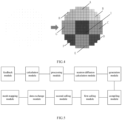
FIG. 4 is a mapping diagram of a core physical program mesh and a thermal-hydraulics program mesh according to the present invention; -
FIG. 5 is a block diagram of the neutronics/thermal-hydraulics coupling system for three-dimensional reactor core of pressurized water reactor of the present invention. - For a clearer understanding of the technical features, objects, and effects of the present invention, specific embodiments of the present invention will now be described in detail with reference to the accompanying drawings.
- It should be noted that the flowcharts shown in the drawings are only illustrative and do not necessarily include all of the elements and operations/steps, nor are they necessarily performed in the order described. For example, some operations/steps can be decomposed, while others can be combined or partially combined, so the actual order of execution may change according to the actual situation.
- The block diagrams shown in the drawings are merely functional entities and do not necessarily correspond to physically separate entities. That is, these functional entities may be implemented in the form of software, or in one or more hardware modules or integrated circuits, or in different network and/or processor devices and/or microcontroller devices.
- In this embodiment, as shown in
FIG. 1 , the present invention constructs a neutronics/thermal-hydraulics coupling method for three-dimensional reactor core of pressurized water reactor, which comprises the following steps: - S10, performing three-dimensional steady-state and transient-state neutron diffusion calculation by using a nonlinear iterative coarse-mesh finite difference method and a θ-Methods according to the section parameter information
- S20, generating a reactor core physical program, and establishing a corresponding physical model according to the material arrangement and the geometric dimension of the reactor core;
- S30, compiling a reactor core physical program into a dynamic link library, and storing a physical model in the dynamic link library;
- S40, calling a dynamic link library, and receiving the simulation result output by the reactor core physical program;
- S50, calling a dynamic link library compiled by the thermal-hydraulic program, and receiving a simulation result output by the thermal hydraulic program;
- S60, exchanging and transferring physical parameters between a reactor core physical program and a thermal hydraulic program;
- And S70, establishing a mapping relationship between a reactor core physical program mesh and a thermal-hydraulic program mesh according to the material arrangement of the reactor core.
- In some embodiments, before step S10, the method further comprises:
- S00, obtaining a feedback value of section parameter information according to the state information of each fuel assembly;
- S01, calculating the steady-state poison nucleon density at the initial moment of simulation, setting the steady-state poison nucleon density as the initial poison nucleon density, and calculating the transient poison nucleon density in real time in the simulation process;
- S02, processing the section of the semi-inserted segment of the control rod to obtain the real state of the section reaction of the segment.
- In some embodiments, the state information of the fuel assembly includes a base section coefficient, a coolant temperature fitting coefficient, a fuel temperature fitting coefficient, a boron concentration fitting coefficient and a coolant density fitting coefficient as well as the difference between the coolant temperature and a reference operating condition, the difference between the fuel temperature and the reference operating condition, the difference between boron concentration and the reference operating condition and the difference between coolant density and reference operating condition.
- Specifically, in step S00, the calculation of the core physical program requires the section information, and the section parameter feedback calculation capability needs to be realized according to the status information of each component, and the section feedback formula is as follows:

- In the above formula, Σx, gΣ represents the value of the macroscopic section X of the g-th group, a1,x,g represents the basic section coefficient, a(n+1),x,g represents the coolant temperature fitting coefficient, a(n+3),x,ga ( (n + 3), X and G) represent the fuel temperature fitting coefficient, and a(n+5)x,g is the boron concentration fitting coefficient. The a(n+7),x,ga _ ( (n + 7), X, G) represents the fitting coefficient representing the coolant density, ΔTcΔ T _ C represents the difference between the coolant temperature and the reference operating condition,

- For the fuel assembly with control rod insertion, the section parameters need to add a residual term to the above formula, which is expressed as follows:

- In the above formula, d Σ x, g represents the residual value of the g-th group macroscopic section X of the control rod compared with the fuel assembly.
- Specifically, in step S02, as shown in
FIG. 2 , a part of the control rod is inserted into the middle mesh on the left side in the figure, and a uniform cross section in the middle mesh on the right side is obtained after section processing. - Specifically, the section parameter information necessary for the neutron diffusion calculation is provided for step S10 through steps S00, S01, and S02.
- Specifically, in step S30, the core physical program in step S20 is compiled into a dynamic link library, and the physics model is also stored in the dynamic link library. At the same time, the interface functions are reserved for the transfer of key physical parameter data. For a new core arrangement, a new core modeling can be directly carried out, and a new dynamic link library can be generated for application.
- Specifically, in step S40, the dynamic link library of step S30 is called on the 3KEYMASTER platform through a task file written in C language, as shown in
FIG. 3 , and the core physical program can be interfaced with the 3KEYMASTER platform through an interface function. - In some embodiments, the physical parameters include boron concentration, fuel temperature, coolant temperature, coolant density, xenon samarium poison nucleus density, and power distribution.
- Specifically, the 3KEYMASTER platform issues control command signal data to the task file, and the task file executes and sends data to the reactor core physical program. After the reactor core physical program finishes running, the task file will read and transmit the simulation results output by the reactor core physical program to the 3KEYMASTER platform.
- Specifically, in step S50, the task file written by the C language calls the dynamic link library compiled by the thermal-hydraulic program to realize the docking between the thermal-hydraulic program and the 3 KEYMASTER platform, and the dynamic link library compiled by the thermal-hydraulic programs is already present in the original 3 KEYMASTER platform. As shown in
FIG. 3 , the 3KEYMASTER platform issues control command signal data to the task file, and the task file executes and sends data to the thermal-hydraulic program. After the thermal-hydraulic program finishes running, the task file will read and transmit the simulation results output by the thermal-hydraulics program to the 3KEYMASTER platform. - Specifically, the key physical parameters are exchanged through the "point table file" on the 3KEYMASTER platform through step S40 and step S50, so as to realize the key physical parameter transfer between the reactor core physical program and the thermal-hydraulic program.
- In some embodiments, exchanging and transferring the physical parameters includes:
Transmitting the power distribution calculated by the core physical program i to the thermal-hydraulic program, and transmitting the boron concentration, fuel temperature distribution, coolant temperature distribution and coolant density distribution calculated by the thermal-hydraulic program are transferred to the reactor core physical program. - In some embodiments, exchanging and transferring the physical parameters comprising:
Transmitting the power distribution calculated by the core physical program to the thermal-hydraulic program, and transmitting the boron concentration, fuel temperature distribution, coolant temperature distribution and coolant density distribution calculated by the thermal-hydraulic program are transferred to the reactor core physical program. - Specifically, the core arrangement of 177 assemblies is designed, and the mapping relationship between the reactor core physical program mesh and the thermal-hydraulic program mesh is shown in
FIG. 4 . Each assembly of the reactor core physical program corresponds to one mesh, and the thermal-hydraulic mesh radially divides the core into 9 regions, which are respectively divided into regions A to I. In the reactor core physical program mesh, each parameter is mapped in the thermal-hydraulic mesh in the form of a single mesh; and in the thermal-hydraulic program mesh, the parameters of one thermal-hydraulic program mesh are transmitted to all reactor core physical program meshs in the region. - In this embodiment, as shown in
FIG. 5 , the present invention further provides a neutronics/thermal-hydraulics coupling system for three-dimensional reactor core of pressurized water reactor, comprising: - a neutron diffusion calculation module is use for performing three-dimensional steady-state and transient-state neutron diffusion calculation by adopt a nonlinear iteration coarse mesh finite difference method and a θ-Methods according to section parameter information
- a generation module is used for generating a reactor core physical program and establishing a corresponding physical model according to the material arrangement and the geometric dimension of the reactor core;
- a compiling module is used for compiling the reactor core physical program into a dynamic link library and storing the physical model in the dynamic link library;
- s first calling module is used for calling a dynamic link library and receiving and obtaining a simulation result output by a reactor core physical program;
- s second calling module is used for calling a dynamic link library compiled by the thermal-hydraulic program and receiving the simulation result output by the thermal-hydraulic program;
- a data exchange module is used for exchanging and transferring physical parameters between the reactor core physical program and the thermal-hydraulic program;
- In some embodiments, further comprising:
- a feedback module is used for obtaining the feedback value of the section parameter information according to the state information of each fuel assembly;
- a calculation module is used for calculating the steady-state poison nucleon density at the initial moment of simulation, setting the steady-state poison nucleon density as the initial poison nucleon density, and calculating the transient-state poison nucleon density in real time in the simulation process;
- In some embodiments, the state information of the fuel assembly includes a base cross section coefficient, a coolant temperature fitting coefficient, a fuel temperature fitting coefficient, a boron concentration fitting coefficient, and a coolant density fitting coefficient as well as the difference between the coolant temperature and a reference operating condition, the difference between the fuel temperature and the reference operating condition, the difference between boron concentration and the reference operating condition and the difference between the coolant density and the reference operating condition.
- Specifically, in the feedback module, the calculation of the reactor core physical program requires the section information, and the section parameter feedback calculation capability needs to be realized according to the status information of each component. The section feedback formula is as follows:

- In the above formula, Σ x, gΣ represents the value of macroscopic section X of the g-th group, a1,x,g
a _ (1, X, G) represents the basic section coefficient, a(n+1)x,g represents the fitting coefficient of coolant temperature, a(n+3),x,ga ( (n + 3), X and G) represent the fitting coefficient of fuel temperature, the a(n+5),x,ga _ ( (m + 5) represents the boron concentration fitting coefficient, The a(n+7),x,ga _ ( (n + 7), X, G) represents the fitting coefficient representing the coolant density, ΔTcΔ T _ C represents the difference between the coolant temperature and the reference condition,
- For the fuel assembly with control rod insertion, the section parameters need to add a residual term to the above formula, which is expressed as follows:

- In the above formula, d Σ x, gd d represents the residual value of the g-th group macroscopic section X of the control rod compared with the fuel assembly.
- Specifically, in the processing module, as shown in
FIG. 2 , some control rods are inserted into the middle mesh on the left side of the figure, and a uniform section in the middle mesh on the right side can be obtained after section processing. - Specifically, the section parameter information necessary for the neutron diffusion calculation is provided to the neutron diffusion calculation module through the feedback module, the calculation module, and the processing module.
- Specifically, the compiling module compiles the reactor core physical program in the generating module into a dynamic link library, and stores the physics model in the dynamic link library. At the same time, the interface functions are reserved for the transfer of key physical parameter data. For a new reactor core arrangement, a new reactor core modeling can be carried out directly, and a new dynamic link library can be generated for application.
- Specifically, the first calling module calls the dynamic link library of the compiling module through a task file written in C language on the 3 KEYMASTER platform, as shown in
FIG. 3 , and the reactor core physical program can be interfaced with the 3 KEYMASTER platform through an interface function. - In some embodiments, the physical parameters include boron concentration, fuel temperature, coolant temperature, coolant density, xenon samarium poison nucleus density, and power distribution.
- Specifically, the 3KEYMASTER platform issues control command signal data to the task file, and the task file executes and sends data to the reactor core physical program. When the running of the reactor core physical program is finished, the task file will read and transmit the simulation results output by the reactor core physical program to the 3KEYMASTER platform.
- Specifically, the second calling module calls a dynamic link library compiled by a thermal-hydraulic program through a task file written by a C language to realize the butt joint of the thermal-hydraulic program and the 3 KEYMASTER platform, and the dynamic link library compiled by the thermal-hydraulic program already exists in the original 3 KEYMASTER platform. As shown in
FIG. 3 , the 3KEYMASTER platform issues control command signal data to the task file, and the task file executes and sends data to the thermal-hydraulic program. After the thermal-hydraulic program finishes running, the task file will read and transmit the simulation results output by the thermal-hydraulic program to the 3KEYMASTER platform. - Specifically, key physical parameters are exchanged on a 3KEYMASTER platform through a point table file by a first calling module and a second calling module, so that key physical parameters of a reactor core physical program and a thermal-hydraulic program are transferred.
- In some embodiments, exchanging the physical parameters includes:
The power distribution calculated by the core physical program is transferred to the thermal hydraulic program, and the boron concentration, fuel temperature distribution, coolant temperature distribution and coolant density distribution calculated by the thermal hydraulic program are transferred to the core physical program. - In some embodiments, the exchanging the physical parameter comprises:
The power distribution calculated by the reactor core physical program is transferred to the thermal-hydraulic program, and the boron concentration, fuel temperature distribution, coolant temperature distribution and coolant density distribution calculated by the thermal-hydraulic program are transferred to the reactor core physical program. - Specifically, the core arrangement of 177 assemblies is designed, and the mapping relationship between the reactor core physical program mesh and the thermal-hydraulic program mesh is shown in
FIG. 4 . Each assembly of the reactor core physical program corresponds to one mesh, and the thermal-hydraulic mesh radially divides the core into 9 regions, which are respectively divided into regions A to I. In the reactor core physical program mesh, each parameter is mapped in the thermal hydraulic mesh in the form of a single mesh; and in the thermal-hydraulic program mesh, the parameters of one thermal-hydraulic program mesh are transmitted to all reactor core physical program meshs in the region. - By implement that invention, the following beneficial effect are achieved:
The invention discloses a neutronics/thermal-hydraulics coupling method and system for a three-dimensional reactor core of a pressurized water reactor. Three-dimensional steady state and transient state neutron diffusion calculation is carried out on a pressurized water reactor simulation platform according to section parameter information to obtain a reactor core physical program, and a corresponding physical model is established according to the actual arrangement condition of the reactor core; Compiling a reactor core physical program into a dynamic link library, calling the dynamic link library to obtain a simulation result output by the reactor core physical program, calling the dynamic link library compiled by a thermal-hydraulic program, receiving the simulation result output by the thermal-hydraulic program, exchanging physical parameters of the simulation results in a platform, and realizing reactor core nuclear thermal coupling calculation of simulation. The mapping relationship between the core physics code mesh and the thermal-hydraulic code mesh is obtained for the actual core arrangement. The reactor core physical program and the thermal-hydraulic program developed by the invention are externally coupled, so that the limitation that the reactor core physical program and the thermal-hydraulic program are coupled completely in a black box is broken, and geometric modeling and meshing can be carried out aiming at a specific reactor core, and functions are added to meet the requirements of simulation development of a pressurized water reactor. - It should be understood that the above embodiments only represent the preferred embodiments of the present invention, and the description is more specific and detailed, but it should not be understood as limiting the patent scope of the present invention; It should be noted that, for those of ordinary skill in the art, the above technical features can be freely combined, and several modifications and improvements can be made without departing from the concept of the present invention, which all fall within the scope of protection of the present invention; Accordingly, it is intended that all changes and modifications which come within the scope of the appended claims shall be construed accordingly.
Claims (14)
- A neutronics/thermal-hydraulics coupling method for three-dimensional reactor core of pressurized water reactor, applied to a PWR simulation platform, wherein comprising the following steps:S10, performing three-dimensional steady-state and transient-state neutron diffusion calculation by using a nonlinear iterative coarse-mesh finite difference method and a θ-Method according to section parameter information;S20, generating a reactor core physical program, and establishing a corresponding physical model according to the material arrangement and the geometric dimension of the reactor core;S30, compiling the reactor core physical program into a dynamic link library, and storing the physical model in the dynamic link library;S40, calling the dynamic link library, and receiving the simulation result output by the reactor core physical program;S50, calling a dynamic link library compiled by the thermal-hydraulic program, and receiving a simulation result output by the thermal-hydraulic program;S60, exchanging and transferring physical parameters between the reactor core physical program and the thermal-hydraulic program;S70, establishing a mapping relationship between the reactor core physical program mesh and the thermal-hydraulic program mesh according to the material arrangement of the reactor core.
- The neutronics/thermal-hydraulics coupling method for three-dimensional reactor core of pressurized water reactor according to claim 1, wherein before step S10, the method further comprising:S00, obtaining a feedback value of the section parameter information according to the state information of each fuel assembly;S01, calculating the steady-state poison nucleon density at the initial moment of simulation, setting the steady-state poison nucleon density as the initial poison nucleon density, and calculating the transient-state poison nucleon density in real time in the simulation process;and S02, processing the section of the semi-inserted segment of the control rod to obtain the real state of the section reaction of the segment.
- The neutronics/thermal-hydraulics coupling method for three-dimensional reactor core of pressurized water reactor according to claim 2, wherein the state information of the fuel assembly comprises a basic section coefficient, a coolant temperature fitting coefficient, a fuel temperature fitting coefficient, a boron concentration fitting coefficient, and a coolant density fitting coefficient; and a difference value between the coolant temperature and a reference operating condition, a difference value between the fuel temperature and the reference operating condition, a difference valve between the boron concentration and the reference operating condition as well as a difference valve between the coolant density and the reference operating condition.
- The neutronics/thermal-hydraulics coupling method for three-dimensional reactor core of pressurized water reactor according to claim 2, wherein the processing the section of semi-inserted segment of the control rod comprising:
obtaining a uniform section of the mesh region by subjecting the mesh region of the control rod at the insertion portion of the segment to section processing. - The neutronics/thermal-hydraulics coupling method for three-dimensional reactor core of pressurized water reactor of claim 1, wherein the physical parameters comprise boron concentration, fuel temperature, coolant temperature, coolant density, xenon samarium poison nucleus density and power distribution.
- The neutronics/thermal-hydraulics coupling method for three-dimensional reactor core of pressurized water reactor according to claim 5, wherein the exchanging and transferring the physical parameters comprising:
transmitting the power distribution calculated by the core physical program to the thermal-hydraulic program, and transmitting the boron concentration, the fuel temperature distribution, the coolant temperature distribution, and the coolant density distribution calculated by the thermal-hydraulic program to the reactor core physical program. - The neutronics/thermal-hydraulics coupling method for three-dimensional reactor core of pressurized water reactor according to claim 1, wherein the step of establishing a mapping relationship between the reactor core physical program mesh and the thermal-hydraulics program mesh comprising:
Corresponding each component of the reactor core physical program to a mesh, dividing the reactor core into a plurality of regions radially by the thermal-hydraulic mesh, and mapping each parameter in the thermal-hydraulic mesh in the form of a single mesh in the reactor core physical program mesh;transmitting a parameter of the thermal-hydraulic program mesh to all the reactor core physical program meshs in the region in the thermal-hydraulic program mesh. - A neutronics/thermal-hydraulics coupling system for three-dimensional reactor core of pressurized water reactor, applied to a pressurized water reactor simulation platform, comprising:a neutron diffusion calculation module is used for performing three-dimensional steady-state and transient-state neutron diffusion calculation by using a nonlinear iteration coarse-mesh finite difference method and a θ-Method according to section parameter informationa generation module is used for generating a reactor core physical program and establishing a corresponding physical model according to the material arrangement and the geometric dimension of the reactor core;a compiling module is used for compiling the reactor core physical program into a dynamic link library and storing the physical model in the dynamic link library;a first calling module is used for calling the dynamic link library and receiving the simulation result output by the reactor core physical program;a second calling module is used for calling a dynamic link library compiled from a thermal-hydraulic program, and receiving a simulation result output by the thermal-hydraulic program;a data exchange module is used for exchanging and transferring physical parameters between the reactor core physical program and the thermal-hydraulic program;and a mesh mapping module is used for establishing a mapping relationship between the reactor core physical program mesh and the thermal-hydraulic program mesh according to the material arrangement of the reactor core.
- The neutronics/thermal-hydraulics coupling system for three-dimensional reactor core of pressurized water reactor according to claim 8, further comprising:a feedback module is used for obtaining a feedback value of the section parameter information according to the state information of each fuel assembly;a calculation module is used for calculating the steady-state poison nucleon density at the initial moment of simulation, setting the steady-state poison nucleon density as the initial poison nucleon density, and calculating the transient-state poison nucleon density in real time in the simulation process;and a processing module is used for processing the section of the semi-inserted segment of the control rod to obtain the real state of the section reaction of the segment.
- The neutronics/thermal-hydraulics coupling system for three-dimensional reactor core of pressurized water reactor according to claim 9, wherein the state information of the fuel assembly comprises a basic section coefficient, a coolant temperature fitting coefficient, a fuel temperature fitting coefficient, a boron concentration fitting coefficient, and a coolant density fitting coefficient; and a difference value between the coolant temperature and a reference operating condition, a difference value between the fuel temperature and the reference operating condition, a difference valve between the boron concentration and the reference operating condition as well as a difference valve between the coolant density and the reference operating condition.
- The neutronics/thermal-hydraulics coupling system for three-dimensional reactor core of pressurized water reactor of claim 9, wherein the processing module is further used for:
obtaining a uniform section of the mesh region by subjecting the mesh region of the control rod at the insertion portion of the segment to section processing. - The neutronics/thermal-hydraulics coupling system for three-dimensional reactor core of pressurized water reactor of claim 8, wherein the physical parameters include boron concentration, fuel temperature, coolant temperature, coolant density, xenon samarium poison nucleus density, and power distribution.
- The neutronics/thermal-hydraulics coupling system for three-dimensional reactor core of pressurized water reactor of claim 12, wherein the exchanging and transferring the physical parameters comprising:
transmitting the power distribution calculated by the core physical program to the thermal-hydraulic program, and transmitting the boron concentration, the fuel temperature distribution, the coolant temperature distribution, and the coolant density distribution calculated by the thermal-hydraulic program to the core physical program. - The neutronics/thermal-hydraulics coupling system for three-dimensional reactor core of pressurized water reactor of claim 8, wherein the data exchange module is further used for:
Corresponding each component of the reactor core physical program to a mesh, dividing the reactor core into a plurality of areas radially by the thermal-hydraulic mesh, and mapping each parameter in the thermal-hydraulic mesh in the form of a single mesh in the reactor core physical program mesh; transmitting a parameter of the thermal-hydraulic program mesh to all the reactor core physical program meshs in the region in the thermal-hydraulic program mesh.
Applications Claiming Priority (2)
| Application Number | Priority Date | Filing Date | Title |
|---|---|---|---|
| CN202211008780.5A CN115358125B (en) | 2022-08-22 | 2022-08-22 | A pressurized water reactor three-dimensional core nuclear thermal coupling method and system |
| PCT/CN2022/127785 WO2023116189A1 (en) | 2022-08-22 | 2022-10-26 | Neutronics/thermal-hydraulics coupling method and system for three-dimensional reactor core of pressurized water reactor |
Publications (2)
| Publication Number | Publication Date |
|---|---|
| EP4579512A1 true EP4579512A1 (en) | 2025-07-02 |
| EP4579512A4 EP4579512A4 (en) | 2025-12-17 |
Family
ID=84003214
Family Applications (1)
| Application Number | Title | Priority Date | Filing Date |
|---|---|---|---|
| EP22909507.0A Pending EP4579512A4 (en) | 2022-08-22 | 2022-10-26 | NEUTRON/THERMAL HYDRAULIC COUPLING METHOD AND SYSTEM FOR THREE-DIMENSIONAL RECIRCUIT CORE OF A PRESSURE WATER RECIRCUIT |
Country Status (3)
| Country | Link |
|---|---|
| EP (1) | EP4579512A4 (en) |
| CN (1) | CN115358125B (en) |
| WO (1) | WO2023116189A1 (en) |
Families Citing this family (18)
| Publication number | Priority date | Publication date | Assignee | Title |
|---|---|---|---|---|
| CN116842752B (en) * | 2023-07-19 | 2024-04-12 | 东南大学 | A simplified nonlinear modeling method for pressurized water reactor nuclear power plant at system level |
| CN117216824B (en) * | 2023-09-11 | 2024-10-11 | 中国船舶集团有限公司第七〇九研究所 | An adaptive modeling method and system based on simulation effectiveness |
| CN117454627B (en) * | 2023-10-30 | 2024-05-28 | 上海交通大学 | Numerical Reactor Nuclear-Thermal-Material Coupling Simulation Method Based on Unified Grid |
| CN117742969B (en) * | 2023-12-28 | 2024-09-10 | 中国核动力研究设计院 | Grid mapping analysis method and system for reactor core MOC program and CFD program |
| CN117593474B (en) * | 2024-01-18 | 2024-04-09 | 西安交通大学 | A method for reconstructing three-dimensional power distribution in pressurized water reactor core |
| CN118133579B (en) * | 2024-05-07 | 2024-07-16 | 中国人民解放军国防科技大学 | Grid simulation method, device, computer equipment and memory for nuclear proliferation phenomenon |
| CN118709383A (en) * | 2024-06-12 | 2024-09-27 | 中广核研究院有限公司 | Nuclear thermal fluid-solid coupling analytical method, electronic equipment, and storage medium |
| CN119150741B (en) * | 2024-09-19 | 2025-10-17 | 西安交通大学 | Liquid metal cooling fast reactor pin-by-pin steady-state physical thermal coupling analysis method |
| CN119268908B (en) * | 2024-10-25 | 2025-10-21 | 中国核动力研究设计院 | A method for measuring the lifting force of pressurized water reactor fuel assembly |
| CN119808621B (en) * | 2024-12-06 | 2025-11-25 | 华北电力大学 | A three-dimensional integrated thermal-hydraulic calculation method for lead-based cold microreactors developed based on UDF. |
| CN119939797B (en) * | 2024-12-10 | 2026-01-06 | 江苏核电有限公司 | A method for coupling VVER unit system program with neutron dynamics program |
| CN119962181B (en) * | 2025-01-08 | 2025-11-25 | 中国科学技术大学 | A multiphysics coupling calculation method and apparatus based on the COMSOL platform |
| CN119989989B (en) * | 2025-02-24 | 2025-11-14 | 哈尔滨工程大学 | A numerical solution method and system for reactor core thermal-hydraulic systems based on data assimilation |
| CN120452562B (en) * | 2025-03-13 | 2025-11-11 | 上海交通大学 | Cross-scale core-heat-material coupling simulation method for pressurized water reactor oxidation corrosion products |
| CN120278013B (en) * | 2025-03-24 | 2025-12-02 | 西安交通大学 | A reactor core thermal coupling calculation method based on an embedded physical knowledge neural network. |
| CN120409219B (en) * | 2025-04-17 | 2026-04-24 | 哈尔滨工程大学 | Reactor thermal hydraulic characteristic rapid prediction method based on dynamic mode decomposition and deep learning |
| CN120951889B (en) * | 2025-10-17 | 2025-12-26 | 中国科学院合肥物质科学研究院 | Methods and systems for simulating and analyzing the thermal-hydraulic characteristics of nuclear reactors under real sea conditions |
| CN121543513A (en) * | 2026-01-16 | 2026-02-17 | 上海交通大学 | A method and system for calculating gas-liquid two-phase nuclear thermal coupling in lead-based reactor cores |
Family Cites Families (6)
| Publication number | Priority date | Publication date | Assignee | Title |
|---|---|---|---|---|
| CN105653869B (en) * | 2016-01-05 | 2018-09-11 | 中国核动力研究设计院 | A kind of supercritical water reactor reactor core Three dimensional transient method for analyzing performance |
| KR101734289B1 (en) * | 2016-03-03 | 2017-05-24 | 한국원자력연구원 | Apparatus and method for validity evaluation of nuclear power plant |
| CN108846190B (en) * | 2018-06-05 | 2022-04-12 | 哈尔滨工程大学 | A nuclear-thermal coupled simulation method for pressurized water reactor fuel assemblies |
| CN111414722B (en) * | 2020-03-19 | 2021-11-09 | 西安交通大学 | Simulation method for physical and thermal coupling of nuclear reactor core |
| CN112906271B (en) * | 2021-02-22 | 2022-02-11 | 中国核动力研究设计院 | Reactor transient physical thermal full-coupling fine numerical simulation method and system |
| CN113094947B (en) * | 2021-03-29 | 2022-10-28 | 西安交通大学 | Nuclear thermal coupling analysis method for nuclear reactor core |
-
2022
- 2022-08-22 CN CN202211008780.5A patent/CN115358125B/en active Active
- 2022-10-26 EP EP22909507.0A patent/EP4579512A4/en active Pending
- 2022-10-26 WO PCT/CN2022/127785 patent/WO2023116189A1/en not_active Ceased
Also Published As
| Publication number | Publication date |
|---|---|
| CN115358125B (en) | 2023-06-09 |
| CN115358125A (en) | 2022-11-18 |
| EP4579512A4 (en) | 2025-12-17 |
| WO2023116189A1 (en) | 2023-06-29 |
Similar Documents
| Publication | Publication Date | Title |
|---|---|---|
| CN115358125B (en) | A pressurized water reactor three-dimensional core nuclear thermal coupling method and system | |
| CN105653869B (en) | A kind of supercritical water reactor reactor core Three dimensional transient method for analyzing performance | |
| Martineau et al. | Multiphysics for nuclear energy applications using a cohesive computational framework | |
| García-Herranz et al. | Multiscale neutronics/thermal-hydraulics coupling with COBAYA4 code for pin-by-pin PWR transient analysis | |
| Nikitin et al. | A coordinate transformation method to simulate non-uniform radial deformation of nuclear reactor cores | |
| Ivanov et al. | Features and performance of a coupled three-dimensional thermal-hydraulic/kinetics TRAC-PF1/NEM pressurized water reactor (PWR) analysis code | |
| Kozlowski et al. | Consistent comparison of the codes RELAP5/PARCS and TRAC-M/PARCS for the OECD MSLB coupled code benchmark | |
| Akbas et al. | Thermal-hydraulics and neutronic code coupling for RELAP/SCDAPSIM/MOD4. 0 | |
| CN104133965A (en) | Transient analysis method applied to two-pass core | |
| Martínez-Quiroga et al. | NIRK3D and 3DKIN: General Description and current status of the new 3D kinetics capabilities of RELAP5/SCDAPSIM/MOD4. 0 | |
| Girieud et al. | Science version 2: the most recent capabilities of the Framatome 3-D nuclear code package | |
| Lauranto et al. | Validation of the Ants-TRACE code system with VVER-1000 coolant transient benchmarks | |
| Fiorina et al. | Creation of an OpenFOAM fuel performance class based on FRED and integration into the GeN-foam multi-physics code | |
| Grudzinski et al. | Supplement to the NUBOW-3D Manual | |
| Epiney et al. | RISMC industry application# 1 (ECCS/LOCA): Core characterization automation: Lattice codes interface for PHISICS/RELAP5-3D | |
| Dubois et al. | ANTARES: a new IRSN computational chain for safety analysis | |
| Schneidesch et al. | Development and application of Tractebel's multi-physics simulation capacity for advanced reactor safety evaluation | |
| Nguyen et al. | MPOGen: A Python package to prepare few-group homogenized cross sections for core calculations by APOLLO3® | |
| Pawel et al. | Transient analysis of the SPERT III E-core experiment with nTRACER/SPHINCS code system | |
| Yang et al. | A New Monte-Carlo-based iterative method for neutron noise calculation | |
| Smith et al. | A hybrid few-group homogenization approach for coupled nodal diffusion-thermal hydraulic analysis of nuclear thermal propulsion reactors | |
| Lawrence | Nodal method for three-dimensional fast-reactor calculations in hexagonal geometry | |
| Bajorek | A regulator’s perspective on the state of the art in nuclear thermal hydraulics | |
| Dudley et al. | The reactor core neutronic model for the PBMR plant training simulator | |
| Abarca et al. | Development and verification of T-TRACE/PANTHER coupled code |
Legal Events
| Date | Code | Title | Description |
|---|---|---|---|
| STAA | Information on the status of an ep patent application or granted ep patent |
Free format text: STATUS: THE INTERNATIONAL PUBLICATION HAS BEEN MADE |
|
| PUAI | Public reference made under article 153(3) epc to a published international application that has entered the european phase |
Free format text: ORIGINAL CODE: 0009012 |
|
| STAA | Information on the status of an ep patent application or granted ep patent |
Free format text: STATUS: REQUEST FOR EXAMINATION WAS MADE |
|
| 17P | Request for examination filed |
Effective date: 20250108 |
|
| AK | Designated contracting states |
Kind code of ref document: A1 Designated state(s): AL AT BE BG CH CY CZ DE DK EE ES FI FR GB GR HR HU IE IS IT LI LT LU LV MC ME MK MT NL NO PL PT RO RS SE SI SK SM TR |
|
| REG | Reference to a national code |
Ref country code: DE Ref legal event code: R079 Free format text: PREVIOUS MAIN CLASS: G06F0030230000 Ipc: G21D0003000000 |
|
| DAV | Request for validation of the european patent (deleted) | ||
| DAX | Request for extension of the european patent (deleted) | ||
| A4 | Supplementary search report drawn up and despatched |
Effective date: 20251113 |
|
| RIC1 | Information provided on ipc code assigned before grant |
Ipc: G21D 3/00 20060101AFI20251107BHEP Ipc: G06F 30/23 20200101ALI20251107BHEP |