EP4578986A1 - Cold rolled steel sheet for hot-press forming having excellent surface quality, hot-press-formed member, and method for manufacturing same - Google Patents
Cold rolled steel sheet for hot-press forming having excellent surface quality, hot-press-formed member, and method for manufacturing same Download PDFInfo
- Publication number
- EP4578986A1 EP4578986A1 EP23857640.9A EP23857640A EP4578986A1 EP 4578986 A1 EP4578986 A1 EP 4578986A1 EP 23857640 A EP23857640 A EP 23857640A EP 4578986 A1 EP4578986 A1 EP 4578986A1
- Authority
- EP
- European Patent Office
- Prior art keywords
- steel sheet
- cold
- oxide layer
- temperature
- rolled steel
- Prior art date
- Legal status (The legal status is an assumption and is not a legal conclusion. Google has not performed a legal analysis and makes no representation as to the accuracy of the status listed.)
- Pending
Links
Images

Classifications
-
- C—CHEMISTRY; METALLURGY
- C22—METALLURGY; FERROUS OR NON-FERROUS ALLOYS; TREATMENT OF ALLOYS OR NON-FERROUS METALS
- C22C—ALLOYS
- C22C38/00—Ferrous alloys, e.g. steel alloys
- C22C38/18—Ferrous alloys, e.g. steel alloys containing chromium
- C22C38/34—Ferrous alloys, e.g. steel alloys containing chromium with more than 1.5% by weight of silicon
-
- B—PERFORMING OPERATIONS; TRANSPORTING
- B21—MECHANICAL METAL-WORKING WITHOUT ESSENTIALLY REMOVING MATERIAL; PUNCHING METAL
- B21D—WORKING OR PROCESSING OF SHEET METAL OR METAL TUBES, RODS OR PROFILES WITHOUT ESSENTIALLY REMOVING MATERIAL; PUNCHING METAL
- B21D22/00—Shaping without cutting, by stamping, spinning, or deep-drawing
- B21D22/02—Stamping using rigid devices or tools
- B21D22/022—Stamping using rigid devices or tools by heating the blank or stamping associated with heat treatment
-
- B—PERFORMING OPERATIONS; TRANSPORTING
- B21—MECHANICAL METAL-WORKING WITHOUT ESSENTIALLY REMOVING MATERIAL; PUNCHING METAL
- B21C—MANUFACTURE OF METAL SHEETS, WIRE, RODS, TUBES, PROFILES OR LIKE SEMI-MANUFACTURED PRODUCTS OTHERWISE THAN BY ROLLING; AUXILIARY OPERATIONS USED IN CONNECTION WITH METAL-WORKING WITHOUT ESSENTIALLY REMOVING MATERIAL
- B21C47/00—Winding-up, coiling or winding-off metal wire, metal band or other flexible metal material characterised by features relevant to metal processing only
- B21C47/02—Winding-up or coiling
-
- C—CHEMISTRY; METALLURGY
- C21—METALLURGY OF IRON
- C21D—MODIFYING THE PHYSICAL STRUCTURE OF FERROUS METALS; GENERAL DEVICES FOR HEAT TREATMENT OF FERROUS OR NON-FERROUS METALS OR ALLOYS; MAKING METAL MALLEABLE, e.g. BY DECARBURISATION OR TEMPERING
- C21D1/00—General methods or devices for heat treatment, e.g. annealing, hardening, quenching or tempering
- C21D1/18—Hardening; Quenching with or without subsequent tempering
-
- C—CHEMISTRY; METALLURGY
- C21—METALLURGY OF IRON
- C21D—MODIFYING THE PHYSICAL STRUCTURE OF FERROUS METALS; GENERAL DEVICES FOR HEAT TREATMENT OF FERROUS OR NON-FERROUS METALS OR ALLOYS; MAKING METAL MALLEABLE, e.g. BY DECARBURISATION OR TEMPERING
- C21D6/00—Heat treatment of ferrous alloys
- C21D6/002—Heat treatment of ferrous alloys containing Cr
-
- C—CHEMISTRY; METALLURGY
- C21—METALLURGY OF IRON
- C21D—MODIFYING THE PHYSICAL STRUCTURE OF FERROUS METALS; GENERAL DEVICES FOR HEAT TREATMENT OF FERROUS OR NON-FERROUS METALS OR ALLOYS; MAKING METAL MALLEABLE, e.g. BY DECARBURISATION OR TEMPERING
- C21D6/00—Heat treatment of ferrous alloys
- C21D6/005—Heat treatment of ferrous alloys containing Mn
-
- C—CHEMISTRY; METALLURGY
- C21—METALLURGY OF IRON
- C21D—MODIFYING THE PHYSICAL STRUCTURE OF FERROUS METALS; GENERAL DEVICES FOR HEAT TREATMENT OF FERROUS OR NON-FERROUS METALS OR ALLOYS; MAKING METAL MALLEABLE, e.g. BY DECARBURISATION OR TEMPERING
- C21D6/00—Heat treatment of ferrous alloys
- C21D6/008—Heat treatment of ferrous alloys containing Si
-
- C—CHEMISTRY; METALLURGY
- C21—METALLURGY OF IRON
- C21D—MODIFYING THE PHYSICAL STRUCTURE OF FERROUS METALS; GENERAL DEVICES FOR HEAT TREATMENT OF FERROUS OR NON-FERROUS METALS OR ALLOYS; MAKING METAL MALLEABLE, e.g. BY DECARBURISATION OR TEMPERING
- C21D8/00—Modifying the physical properties of ferrous metals or ferrous alloys by deformation combined with, or followed by, heat treatment
- C21D8/02—Modifying the physical properties of ferrous metals or ferrous alloys by deformation combined with, or followed by, heat treatment during manufacturing of plates or strips
-
- C—CHEMISTRY; METALLURGY
- C21—METALLURGY OF IRON
- C21D—MODIFYING THE PHYSICAL STRUCTURE OF FERROUS METALS; GENERAL DEVICES FOR HEAT TREATMENT OF FERROUS OR NON-FERROUS METALS OR ALLOYS; MAKING METAL MALLEABLE, e.g. BY DECARBURISATION OR TEMPERING
- C21D8/00—Modifying the physical properties of ferrous metals or ferrous alloys by deformation combined with, or followed by, heat treatment
- C21D8/02—Modifying the physical properties of ferrous metals or ferrous alloys by deformation combined with, or followed by, heat treatment during manufacturing of plates or strips
- C21D8/0221—Modifying the physical properties of ferrous metals or ferrous alloys by deformation combined with, or followed by, heat treatment during manufacturing of plates or strips characterised by the working steps
- C21D8/0226—Hot rolling
-
- C—CHEMISTRY; METALLURGY
- C21—METALLURGY OF IRON
- C21D—MODIFYING THE PHYSICAL STRUCTURE OF FERROUS METALS; GENERAL DEVICES FOR HEAT TREATMENT OF FERROUS OR NON-FERROUS METALS OR ALLOYS; MAKING METAL MALLEABLE, e.g. BY DECARBURISATION OR TEMPERING
- C21D8/00—Modifying the physical properties of ferrous metals or ferrous alloys by deformation combined with, or followed by, heat treatment
- C21D8/02—Modifying the physical properties of ferrous metals or ferrous alloys by deformation combined with, or followed by, heat treatment during manufacturing of plates or strips
- C21D8/0221—Modifying the physical properties of ferrous metals or ferrous alloys by deformation combined with, or followed by, heat treatment during manufacturing of plates or strips characterised by the working steps
- C21D8/0236—Cold rolling
-
- C—CHEMISTRY; METALLURGY
- C21—METALLURGY OF IRON
- C21D—MODIFYING THE PHYSICAL STRUCTURE OF FERROUS METALS; GENERAL DEVICES FOR HEAT TREATMENT OF FERROUS OR NON-FERROUS METALS OR ALLOYS; MAKING METAL MALLEABLE, e.g. BY DECARBURISATION OR TEMPERING
- C21D8/00—Modifying the physical properties of ferrous metals or ferrous alloys by deformation combined with, or followed by, heat treatment
- C21D8/02—Modifying the physical properties of ferrous metals or ferrous alloys by deformation combined with, or followed by, heat treatment during manufacturing of plates or strips
- C21D8/0247—Modifying the physical properties of ferrous metals or ferrous alloys by deformation combined with, or followed by, heat treatment during manufacturing of plates or strips characterised by the heat treatment
- C21D8/0263—Modifying the physical properties of ferrous metals or ferrous alloys by deformation combined with, or followed by, heat treatment during manufacturing of plates or strips characterised by the heat treatment following hot rolling
-
- C—CHEMISTRY; METALLURGY
- C21—METALLURGY OF IRON
- C21D—MODIFYING THE PHYSICAL STRUCTURE OF FERROUS METALS; GENERAL DEVICES FOR HEAT TREATMENT OF FERROUS OR NON-FERROUS METALS OR ALLOYS; MAKING METAL MALLEABLE, e.g. BY DECARBURISATION OR TEMPERING
- C21D8/00—Modifying the physical properties of ferrous metals or ferrous alloys by deformation combined with, or followed by, heat treatment
- C21D8/02—Modifying the physical properties of ferrous metals or ferrous alloys by deformation combined with, or followed by, heat treatment during manufacturing of plates or strips
- C21D8/0247—Modifying the physical properties of ferrous metals or ferrous alloys by deformation combined with, or followed by, heat treatment during manufacturing of plates or strips characterised by the heat treatment
- C21D8/0273—Final recrystallisation annealing
-
- C—CHEMISTRY; METALLURGY
- C21—METALLURGY OF IRON
- C21D—MODIFYING THE PHYSICAL STRUCTURE OF FERROUS METALS; GENERAL DEVICES FOR HEAT TREATMENT OF FERROUS OR NON-FERROUS METALS OR ALLOYS; MAKING METAL MALLEABLE, e.g. BY DECARBURISATION OR TEMPERING
- C21D8/00—Modifying the physical properties of ferrous metals or ferrous alloys by deformation combined with, or followed by, heat treatment
- C21D8/02—Modifying the physical properties of ferrous metals or ferrous alloys by deformation combined with, or followed by, heat treatment during manufacturing of plates or strips
- C21D8/0278—Modifying the physical properties of ferrous metals or ferrous alloys by deformation combined with, or followed by, heat treatment during manufacturing of plates or strips involving a particular surface treatment
-
- C—CHEMISTRY; METALLURGY
- C21—METALLURGY OF IRON
- C21D—MODIFYING THE PHYSICAL STRUCTURE OF FERROUS METALS; GENERAL DEVICES FOR HEAT TREATMENT OF FERROUS OR NON-FERROUS METALS OR ALLOYS; MAKING METAL MALLEABLE, e.g. BY DECARBURISATION OR TEMPERING
- C21D8/00—Modifying the physical properties of ferrous metals or ferrous alloys by deformation combined with, or followed by, heat treatment
- C21D8/02—Modifying the physical properties of ferrous metals or ferrous alloys by deformation combined with, or followed by, heat treatment during manufacturing of plates or strips
- C21D8/04—Modifying the physical properties of ferrous metals or ferrous alloys by deformation combined with, or followed by, heat treatment during manufacturing of plates or strips to produce plates or strips for drawing, e.g. for deep-drawing
- C21D8/0421—Modifying the physical properties of ferrous metals or ferrous alloys by deformation combined with, or followed by, heat treatment during manufacturing of plates or strips to produce plates or strips for drawing, e.g. for deep-drawing characterised by the working steps
- C21D8/0426—Hot rolling
-
- C—CHEMISTRY; METALLURGY
- C21—METALLURGY OF IRON
- C21D—MODIFYING THE PHYSICAL STRUCTURE OF FERROUS METALS; GENERAL DEVICES FOR HEAT TREATMENT OF FERROUS OR NON-FERROUS METALS OR ALLOYS; MAKING METAL MALLEABLE, e.g. BY DECARBURISATION OR TEMPERING
- C21D8/00—Modifying the physical properties of ferrous metals or ferrous alloys by deformation combined with, or followed by, heat treatment
- C21D8/02—Modifying the physical properties of ferrous metals or ferrous alloys by deformation combined with, or followed by, heat treatment during manufacturing of plates or strips
- C21D8/04—Modifying the physical properties of ferrous metals or ferrous alloys by deformation combined with, or followed by, heat treatment during manufacturing of plates or strips to produce plates or strips for drawing, e.g. for deep-drawing
- C21D8/0421—Modifying the physical properties of ferrous metals or ferrous alloys by deformation combined with, or followed by, heat treatment during manufacturing of plates or strips to produce plates or strips for drawing, e.g. for deep-drawing characterised by the working steps
- C21D8/0436—Cold rolling
-
- C—CHEMISTRY; METALLURGY
- C21—METALLURGY OF IRON
- C21D—MODIFYING THE PHYSICAL STRUCTURE OF FERROUS METALS; GENERAL DEVICES FOR HEAT TREATMENT OF FERROUS OR NON-FERROUS METALS OR ALLOYS; MAKING METAL MALLEABLE, e.g. BY DECARBURISATION OR TEMPERING
- C21D8/00—Modifying the physical properties of ferrous metals or ferrous alloys by deformation combined with, or followed by, heat treatment
- C21D8/02—Modifying the physical properties of ferrous metals or ferrous alloys by deformation combined with, or followed by, heat treatment during manufacturing of plates or strips
- C21D8/04—Modifying the physical properties of ferrous metals or ferrous alloys by deformation combined with, or followed by, heat treatment during manufacturing of plates or strips to produce plates or strips for drawing, e.g. for deep-drawing
- C21D8/0447—Modifying the physical properties of ferrous metals or ferrous alloys by deformation combined with, or followed by, heat treatment during manufacturing of plates or strips to produce plates or strips for drawing, e.g. for deep-drawing characterised by the heat treatment
- C21D8/0463—Modifying the physical properties of ferrous metals or ferrous alloys by deformation combined with, or followed by, heat treatment during manufacturing of plates or strips to produce plates or strips for drawing, e.g. for deep-drawing characterised by the heat treatment following hot rolling
-
- C—CHEMISTRY; METALLURGY
- C21—METALLURGY OF IRON
- C21D—MODIFYING THE PHYSICAL STRUCTURE OF FERROUS METALS; GENERAL DEVICES FOR HEAT TREATMENT OF FERROUS OR NON-FERROUS METALS OR ALLOYS; MAKING METAL MALLEABLE, e.g. BY DECARBURISATION OR TEMPERING
- C21D9/00—Heat treatment, e.g. annealing, hardening, quenching or tempering, adapted for particular articles; Furnaces therefor
- C21D9/46—Heat treatment, e.g. annealing, hardening, quenching or tempering, adapted for particular articles; Furnaces therefor for sheet metals
-
- C—CHEMISTRY; METALLURGY
- C21—METALLURGY OF IRON
- C21D—MODIFYING THE PHYSICAL STRUCTURE OF FERROUS METALS; GENERAL DEVICES FOR HEAT TREATMENT OF FERROUS OR NON-FERROUS METALS OR ALLOYS; MAKING METAL MALLEABLE, e.g. BY DECARBURISATION OR TEMPERING
- C21D9/00—Heat treatment, e.g. annealing, hardening, quenching or tempering, adapted for particular articles; Furnaces therefor
- C21D9/46—Heat treatment, e.g. annealing, hardening, quenching or tempering, adapted for particular articles; Furnaces therefor for sheet metals
- C21D9/48—Heat treatment, e.g. annealing, hardening, quenching or tempering, adapted for particular articles; Furnaces therefor for sheet metals deep-drawing sheets
-
- C—CHEMISTRY; METALLURGY
- C22—METALLURGY; FERROUS OR NON-FERROUS ALLOYS; TREATMENT OF ALLOYS OR NON-FERROUS METALS
- C22C—ALLOYS
- C22C38/00—Ferrous alloys, e.g. steel alloys
- C22C38/001—Ferrous alloys, e.g. steel alloys containing N
-
- C—CHEMISTRY; METALLURGY
- C22—METALLURGY; FERROUS OR NON-FERROUS ALLOYS; TREATMENT OF ALLOYS OR NON-FERROUS METALS
- C22C—ALLOYS
- C22C38/00—Ferrous alloys, e.g. steel alloys
- C22C38/002—Ferrous alloys, e.g. steel alloys containing In, Mg, or other elements not provided for in one single group C22C38/001 - C22C38/60
-
- C—CHEMISTRY; METALLURGY
- C22—METALLURGY; FERROUS OR NON-FERROUS ALLOYS; TREATMENT OF ALLOYS OR NON-FERROUS METALS
- C22C—ALLOYS
- C22C38/00—Ferrous alloys, e.g. steel alloys
- C22C38/005—Ferrous alloys, e.g. steel alloys containing rare earths, i.e. Sc, Y, Lanthanides
-
- C—CHEMISTRY; METALLURGY
- C22—METALLURGY; FERROUS OR NON-FERROUS ALLOYS; TREATMENT OF ALLOYS OR NON-FERROUS METALS
- C22C—ALLOYS
- C22C38/00—Ferrous alloys, e.g. steel alloys
- C22C38/008—Ferrous alloys, e.g. steel alloys containing tin
-
- C—CHEMISTRY; METALLURGY
- C22—METALLURGY; FERROUS OR NON-FERROUS ALLOYS; TREATMENT OF ALLOYS OR NON-FERROUS METALS
- C22C—ALLOYS
- C22C38/00—Ferrous alloys, e.g. steel alloys
- C22C38/02—Ferrous alloys, e.g. steel alloys containing silicon
-
- C—CHEMISTRY; METALLURGY
- C22—METALLURGY; FERROUS OR NON-FERROUS ALLOYS; TREATMENT OF ALLOYS OR NON-FERROUS METALS
- C22C—ALLOYS
- C22C38/00—Ferrous alloys, e.g. steel alloys
- C22C38/04—Ferrous alloys, e.g. steel alloys containing manganese
-
- C—CHEMISTRY; METALLURGY
- C22—METALLURGY; FERROUS OR NON-FERROUS ALLOYS; TREATMENT OF ALLOYS OR NON-FERROUS METALS
- C22C—ALLOYS
- C22C38/00—Ferrous alloys, e.g. steel alloys
- C22C38/06—Ferrous alloys, e.g. steel alloys containing aluminium
-
- C—CHEMISTRY; METALLURGY
- C22—METALLURGY; FERROUS OR NON-FERROUS ALLOYS; TREATMENT OF ALLOYS OR NON-FERROUS METALS
- C22C—ALLOYS
- C22C38/00—Ferrous alloys, e.g. steel alloys
- C22C38/18—Ferrous alloys, e.g. steel alloys containing chromium
- C22C38/20—Ferrous alloys, e.g. steel alloys containing chromium with copper
-
- C—CHEMISTRY; METALLURGY
- C22—METALLURGY; FERROUS OR NON-FERROUS ALLOYS; TREATMENT OF ALLOYS OR NON-FERROUS METALS
- C22C—ALLOYS
- C22C38/00—Ferrous alloys, e.g. steel alloys
- C22C38/18—Ferrous alloys, e.g. steel alloys containing chromium
- C22C38/22—Ferrous alloys, e.g. steel alloys containing chromium with molybdenum or tungsten
-
- C—CHEMISTRY; METALLURGY
- C22—METALLURGY; FERROUS OR NON-FERROUS ALLOYS; TREATMENT OF ALLOYS OR NON-FERROUS METALS
- C22C—ALLOYS
- C22C38/00—Ferrous alloys, e.g. steel alloys
- C22C38/18—Ferrous alloys, e.g. steel alloys containing chromium
- C22C38/28—Ferrous alloys, e.g. steel alloys containing chromium with titanium or zirconium
-
- C—CHEMISTRY; METALLURGY
- C22—METALLURGY; FERROUS OR NON-FERROUS ALLOYS; TREATMENT OF ALLOYS OR NON-FERROUS METALS
- C22C—ALLOYS
- C22C38/00—Ferrous alloys, e.g. steel alloys
- C22C38/18—Ferrous alloys, e.g. steel alloys containing chromium
- C22C38/32—Ferrous alloys, e.g. steel alloys containing chromium with boron
-
- C—CHEMISTRY; METALLURGY
- C22—METALLURGY; FERROUS OR NON-FERROUS ALLOYS; TREATMENT OF ALLOYS OR NON-FERROUS METALS
- C22C—ALLOYS
- C22C38/00—Ferrous alloys, e.g. steel alloys
- C22C38/18—Ferrous alloys, e.g. steel alloys containing chromium
- C22C38/38—Ferrous alloys, e.g. steel alloys containing chromium with more than 1.5% by weight of manganese
-
- C—CHEMISTRY; METALLURGY
- C22—METALLURGY; FERROUS OR NON-FERROUS ALLOYS; TREATMENT OF ALLOYS OR NON-FERROUS METALS
- C22C—ALLOYS
- C22C38/00—Ferrous alloys, e.g. steel alloys
- C22C38/18—Ferrous alloys, e.g. steel alloys containing chromium
- C22C38/40—Ferrous alloys, e.g. steel alloys containing chromium with nickel
- C22C38/42—Ferrous alloys, e.g. steel alloys containing chromium with nickel with copper
-
- C—CHEMISTRY; METALLURGY
- C22—METALLURGY; FERROUS OR NON-FERROUS ALLOYS; TREATMENT OF ALLOYS OR NON-FERROUS METALS
- C22C—ALLOYS
- C22C38/00—Ferrous alloys, e.g. steel alloys
- C22C38/18—Ferrous alloys, e.g. steel alloys containing chromium
- C22C38/40—Ferrous alloys, e.g. steel alloys containing chromium with nickel
- C22C38/44—Ferrous alloys, e.g. steel alloys containing chromium with nickel with molybdenum or tungsten
-
- C—CHEMISTRY; METALLURGY
- C22—METALLURGY; FERROUS OR NON-FERROUS ALLOYS; TREATMENT OF ALLOYS OR NON-FERROUS METALS
- C22C—ALLOYS
- C22C38/00—Ferrous alloys, e.g. steel alloys
- C22C38/18—Ferrous alloys, e.g. steel alloys containing chromium
- C22C38/40—Ferrous alloys, e.g. steel alloys containing chromium with nickel
- C22C38/50—Ferrous alloys, e.g. steel alloys containing chromium with nickel with titanium or zirconium
-
- C—CHEMISTRY; METALLURGY
- C22—METALLURGY; FERROUS OR NON-FERROUS ALLOYS; TREATMENT OF ALLOYS OR NON-FERROUS METALS
- C22C—ALLOYS
- C22C38/00—Ferrous alloys, e.g. steel alloys
- C22C38/18—Ferrous alloys, e.g. steel alloys containing chromium
- C22C38/40—Ferrous alloys, e.g. steel alloys containing chromium with nickel
- C22C38/54—Ferrous alloys, e.g. steel alloys containing chromium with nickel with boron
-
- C—CHEMISTRY; METALLURGY
- C22—METALLURGY; FERROUS OR NON-FERROUS ALLOYS; TREATMENT OF ALLOYS OR NON-FERROUS METALS
- C22C—ALLOYS
- C22C38/00—Ferrous alloys, e.g. steel alloys
- C22C38/18—Ferrous alloys, e.g. steel alloys containing chromium
- C22C38/40—Ferrous alloys, e.g. steel alloys containing chromium with nickel
- C22C38/58—Ferrous alloys, e.g. steel alloys containing chromium with nickel with more than 1.5% by weight of manganese
-
- C—CHEMISTRY; METALLURGY
- C22—METALLURGY; FERROUS OR NON-FERROUS ALLOYS; TREATMENT OF ALLOYS OR NON-FERROUS METALS
- C22C—ALLOYS
- C22C38/00—Ferrous alloys, e.g. steel alloys
- C22C38/60—Ferrous alloys, e.g. steel alloys containing lead, selenium, tellurium, or antimony, or more than 0.04% by weight of sulfur
-
- C—CHEMISTRY; METALLURGY
- C23—COATING METALLIC MATERIAL; COATING MATERIAL WITH METALLIC MATERIAL; CHEMICAL SURFACE TREATMENT; DIFFUSION TREATMENT OF METALLIC MATERIAL; COATING BY VACUUM EVAPORATION, BY SPUTTERING, BY ION IMPLANTATION OR BY CHEMICAL VAPOUR DEPOSITION, IN GENERAL; INHIBITING CORROSION OF METALLIC MATERIAL OR INCRUSTATION IN GENERAL
- C23C—COATING METALLIC MATERIAL; COATING MATERIAL WITH METALLIC MATERIAL; SURFACE TREATMENT OF METALLIC MATERIAL BY DIFFUSION INTO THE SURFACE, BY CHEMICAL CONVERSION OR SUBSTITUTION; COATING BY VACUUM EVAPORATION, BY SPUTTERING, BY ION IMPLANTATION OR BY CHEMICAL VAPOUR DEPOSITION, IN GENERAL
- C23C28/00—Coating for obtaining at least two superposed coatings either by methods not provided for in a single one of groups C23C2/00 - C23C26/00 or by combinations of methods provided for in subclasses C23C and C25C or C25D
- C23C28/04—Coating for obtaining at least two superposed coatings either by methods not provided for in a single one of groups C23C2/00 - C23C26/00 or by combinations of methods provided for in subclasses C23C and C25C or C25D only coatings of inorganic non-metallic material
-
- C—CHEMISTRY; METALLURGY
- C21—METALLURGY OF IRON
- C21D—MODIFYING THE PHYSICAL STRUCTURE OF FERROUS METALS; GENERAL DEVICES FOR HEAT TREATMENT OF FERROUS OR NON-FERROUS METALS OR ALLOYS; MAKING METAL MALLEABLE, e.g. BY DECARBURISATION OR TEMPERING
- C21D2211/00—Microstructure comprising significant phases
- C21D2211/002—Bainite
-
- C—CHEMISTRY; METALLURGY
- C21—METALLURGY OF IRON
- C21D—MODIFYING THE PHYSICAL STRUCTURE OF FERROUS METALS; GENERAL DEVICES FOR HEAT TREATMENT OF FERROUS OR NON-FERROUS METALS OR ALLOYS; MAKING METAL MALLEABLE, e.g. BY DECARBURISATION OR TEMPERING
- C21D2211/00—Microstructure comprising significant phases
- C21D2211/003—Cementite
-
- C—CHEMISTRY; METALLURGY
- C21—METALLURGY OF IRON
- C21D—MODIFYING THE PHYSICAL STRUCTURE OF FERROUS METALS; GENERAL DEVICES FOR HEAT TREATMENT OF FERROUS OR NON-FERROUS METALS OR ALLOYS; MAKING METAL MALLEABLE, e.g. BY DECARBURISATION OR TEMPERING
- C21D2211/00—Microstructure comprising significant phases
- C21D2211/005—Ferrite
-
- C—CHEMISTRY; METALLURGY
- C21—METALLURGY OF IRON
- C21D—MODIFYING THE PHYSICAL STRUCTURE OF FERROUS METALS; GENERAL DEVICES FOR HEAT TREATMENT OF FERROUS OR NON-FERROUS METALS OR ALLOYS; MAKING METAL MALLEABLE, e.g. BY DECARBURISATION OR TEMPERING
- C21D2211/00—Microstructure comprising significant phases
- C21D2211/008—Martensite
Definitions
- the present disclosure relates to a cold-rolled steel sheet for hot press forming, a hot press formed member, and manufacturing methods thereof, and in particular, to a cold-rolled steel sheet for hot press forming and a hot press formed member that have excellent surface quality, and manufacturing methods thereof.
- Patent Document 1 suggests that ultra-high strength with a tensile strength of 1,600 MPa or more may be secured by heating an Al-Si plated steel sheet to 850°C or higher, and then performing hot press forming and quenching with a press to form a structure of a member with martensite.
- corrosion resistance and spot weldability may be secured without shot blasting due to an alloyed layer and a diffusion layer formed by Fe diffusion from a base material to a plating layer during a heat treatment.
- Patent Document 1 U.S. Patent No. 6,296,805 (published on October 2, 2001 )
- An aspect of the present disclosure is to provide a cold-rolled steel sheet for hot press forming and a hot press formed member that have excellent surface quality, and manufacturing methods thereof.
- a cold-rolled steel sheet includes a base steel sheet and a first oxide layer formed on the base steel sheet, wherein the first oxide layer contains two or more of Fe, Mn, Cr, and Si, and has a thickness of 5 to 500 nm.
- the base steel sheet may contain, by wt%, 0.05 to 0.4% of C, 0.5 to 3.0% of Si, 0.3 to 5.0% of Cr, 0.01 to 4.0% of Mn, 0.001 to 0.4% of Al, 0.001 to 0.05% of P, 0.0001 to 0.02% of S, 0.001 to 0.02% of N, and a balance of Fe and other unavoidable impurities.
- the base steel sheet may contain one or more of 0.001 to 0.4% of Ti, 0.001 to 0.4% of Nb, 0.001 to 0.4% of Zr, 0.001 to 0.4% of V, 0.0001 to 0.01% of B, 0.001 to 1.0% of Mo, 0.001 to 1.0% of W, 0.005 to 2.0% of Cu, 0.005 to 2.0% of Ni, 0.001 to 1.0% of Sb, 0.001 to 1.0% of Sn, and 0.0001 to 0.02% of REM.
- a sum of contents of Si, Mn, and Cr in the first oxide layer may be 30% or more in terms of wt%.
- the cold-rolled steel sheet may have a microstructure containing 5 area% or more of ferrite and cementite.
- a member includes a base steel sheet; a first oxide layer formed on the base steel sheet; and a second oxide layer formed on the first oxide layer,
- the base steel sheet may contain, by wt%, 0.05 to 0.4% of C, 0.5 to 3.0% of Si, 0.3% or more and less than 5.0% of Cr, 0.01 to 4.0% of Mn, 0.001 to 0.4% of Al, 0.001 to 0.05% of P, 0.0001 to 0.02% of S, 0.001 to 0.02% of N, and a balance of Fe and other unavoidable impurities.
- the base steel sheet may contain one or more of 0.001 to 0.4% of Ti, 0.001 to 0.4% of Nb, 0.001 to 0.4% of Zr, 0.001 to 0.4% of V, 0.0001 to 0.01% of B, 0.001 to 1.0% of Mo, 0.001 to 1.0% of W, 0.005 to 2.0% of Cu, 0.005 to 2.0% of Ni, 0.001 to 1.0% of Sb, 0.001 to 1.0% of Sn, and 0.0001 to 0.02% of REM.
- a sum of contents of Si, Mn, and Cr in the second oxide layer may be less than 30% in terms of wt%.
- the member may have a microstructure containing martensite or bainite as a main phase.
- a tensile strength of the member may be 500 MPa or more.
- a manufacturing method of a cold-rolled steel sheet includes: reheating a steel slab;
- the steel slab may contain, by wt%, 0.05 to 0.4% of C, 0.5 to 3.0% of Si, 0.3 to 5.0% of Cr, 0.01 to 4.0% of Mn, 0.001 to 0.4% of Al, 0.001 to 0.05% of P, 0.0001 to 0.02% of S, 0.001 to 0.02% of N, and a balance of Fe and other unavoidable impurities.
- the steel slab may contain one or more of 0.001 to 0.4% of Ti, 0.001 to 0.4% of Nb, 0.001 to 0.4% of Zr, 0.001 to 0.4% of V, 0.0001 to 0.01% of B, 0.001 to 1.0% of Mo, 0.001 to 1.0% of W, 0.005 to 2.0% of Cu, 0.005 to 2.0% of Ni, 0.001 to 1.0% of Sb, 0.001 to 1.0% of Sn, and 0.0001 to 0.02% of REM.
- the reheating may be performed in a temperature range of 1,000 to 1,300°C,
- the continuous annealing may be performed in a steel sheet temperature range of 700 to 900°C, and a continuous annealing time may be 1 to 1,000 seconds.
- a manufacturing method of a member includes: performing a heat treatment on a cold-rolled steel sheet;
- the heating may be performed to the heating temperature at an atmosphere temperature increase rate of 1 to 1,000°C/s.
- the heating temperature may be 700 to 1,000°C, and the heating time may be 150 to 1,000 seconds.
- the cooling may be performed to an Mf temperature or lower at a cooling rate of 10 to 1,000°C/s.
- a cold-rolled steel sheet for hot press forming and a hot press formed member that may be applied to an automobile structural reinforcement or reinforcing material and have excellent surface quality and impact resistance without a plating process and a shot blasting process, and manufacturing methods thereof.
- the inventors of the present disclosure have recognized a problem that, in the case of a non-plated cold-rolled steel sheet for hot press forming, excellent surface quality of a member cannot be secured due to an oxide layer formed during a heat treatment performed in the manufacture of a hot press formed member, and a shot blasting process is absolutely necessary to remove the oxide layer, and have conducted intensive studies to solve the problem while securing excellent surface quality.
- a composite oxide layer having a target thickness may be formed during annealing by precisely controlling an alloy composition and manufacturing conditions, in particular, contents of Cr, Si, and Mn and a rate of change in atmosphere temperature during annealing, and excellent surface quality may be secured without a shot blasting process by controlling hot press forming process conditions, thereby completing the present disclosure.
- a cold-rolled steel sheet according to an aspect of the present disclosure may include a base steel sheet and a first oxide layer formed on the base steel sheet.
- % indicating a content of each element is based on weight.
- the base steel sheet of the cold-rolled steel sheet according to an aspect of the present disclosure may contain, by wt%, 0.05 to 0.4% of C, 0.5 to 3.0% of Si, 0.3 to 5.0% of Cr, 0.01 to 4.0% of Mn, 0.001 to 0.4% of Al, 0.001 to 0.05% of P, 0.0001 to 0.02% of S, 0.001 to 0.02% of N, and a balance of Fe and other unavoidable impurities.
- Carbon (C) is an essential element for increasing strength of a heat-treated member and needs to be added appropriately.
- a content of carbon (C) is less than 0.05%, it may be difficult to secure sufficient strength.
- the content of carbon (C) exceeds 0.4%, when a hot-rolled material is cold-rolled, cold rollability of the hot-rolled material is significantly deteriorated because the strength of the hot-rolled material is excessively high, and spot weldability may be significantly deteriorated.
- a lower limit of carbon (C) may be 0.06%.
- an upper limit of carbon (C) may be 0.38%, and according to still another aspect, the upper limit may be 0.36%.
- Silicon (Si) may play an important role in forming a silicon (Si)-based oxide layer by being concentrated on a surface of a cold-rolled steel sheet when annealing the cold-rolled steel sheet on a continuous annealing line, and may also play a role in securing spot weldability of a member by suppressing the formation of Fe, Mn, and Cr oxide layers in a hot press forming process.
- a content of silicon (Si) is less than 0.5%, the effects described above may be insufficient.
- a lower limit of silicon (Si) may be 0.8%.
- an upper limit of silicon (Si) may be 2.8%.
- Chromium (Cr) may serve to not only improve hardenability of a steel sheet, but also help a Si-based amorphous oxide layer to be stably formed on a surface layer by an appropriate reaction with Si.
- a content of chromium (Cr) is less than 0.3%, the effects described above may be insufficient.
- a lower limit of chromium (Cr) may be 0.5%.
- an upper limit of chromium (Cr) may be 4.5%.
- Manganese (Mn) may be added to secure a solid solution strengthening effect and to reduce a critical cooling rate for securing martensite in a hot press formed member.
- a content of manganese (Mn) is less than 0.01%, the effects described above may be insufficient.
- a lower limit of manganese (Mn) may be 0.05%.
- an upper limit of manganese (Mn) may be 3.9%, and according to still another aspect, the upper limit may be 3.8%.
- Aluminum (Al) may increase cleanness of the steel, together with Si, through deoxidation action in steelmaking.
- a content of aluminum (Al) is less than 0.001%, the effects described above may be insufficient.
- a lower limit of aluminum (Al) may be 0.005%.
- an Ac3 temperature increases excessively, and thus, a heating temperature may need to be increased.
- an upper limit of aluminum (Al) may be 0.3%, and according to still another aspect, the upper limit may be 0.2%.
- Phosphorus (P) is an impurity, and a lot of manufacturing costs may be required to control a content of phosphorus (P) to less than 0.001%, and thus, a lower limit of the content of phosphorus (P) may be limited to 0.001%.
- a lower limit of the content of phosphorus (P) may be limited to 0.001%.
- an upper limit of phosphorus (P) may be 0.03%.
- Sulfur (S) is an impurity, and a lot of manufacturing costs may be required to control a content of sulfur (S) to less than 0.0001%, and thus, a lower limit of the content of sulfur (S) may be limited to 0.0001%.
- a lower limit of the content of sulfur (S) may be limited to 0.0001%.
- an upper limit of sulfur (S) may be 0.01%.
- Molybdenum (Mo) and tungsten (W) may be added to improve hardenability and strength through a precipitation strengthening effect and to refine grains.
- a content of molybdenum (Mo) and tungsten (W) is less than 0.001%, the effects described above may be insufficient, and when the content of molybdenum (Mo) and tungsten (W) exceeds 1.0%, the effects may be saturated, and an increase in costs may occur.
- Copper (Cu) may be added as an element that improves strength by forming fine precipitates.
- copper (Cu) when copper (Cu) is added alone, hot brittleness may occur, and thus, nickel (Ni) may be added, if necessary.
- Ni nickel
- a content of copper (Cu) and nickel (Ni) is less than 0.005%, the effects described above may be insufficient, and when the content of copper (Cu) and nickel (Ni) exceeds 2.0%, costs may increase excessively.
- a rare earth element (REM) may control the activity of Fe in steel, such that a thickness of Fe scale formed on the surface layer during hot press forming may be controlled.
- the REM element is added in an amount of 0.0001% or more.
- the content of the rare earth element (REM) exceeds 0.02%, the ability to control Fe activity may be lost, resulting in deterioration of surface quality.
- the rare earth element (REM) may be controlled to 0.01% or less.
- the first oxide layer is a composite oxide layer containing two or more of Fe, Mn, Cr, and Si, in which two or more of the elements are formed, and in order to control a thickness of the second oxide layer of the member after hot press forming, precise thickness control is required by controlling an atmosphere temperature increase rate when a cold-rolled steel sheet is manufactured.
- a sum of contents of Si, Mn, and Cr in terms of wt% of the first oxide layer itself may be 30% or more, and according to another aspect, the sum of the contents may be 90% or less.
- an upper limit of the thickness may be 490 nm, and according to another aspect, a lower limit of the thickness may be 5.5 nm.
- the first oxide layer of the present disclosure may be formed continuously or discontinuously.
- % indicating a fraction of a microstructure is based on area.
- the cold-rolled steel sheet according to an aspect of the present disclosure may contain ferrite and cementite.
- an area fraction thereof is not particularly limited, and more preferably, the area fraction of ferrite and cementite may be 5 area% or more.
- the microstructure features may refer to a microstructure of the base steel sheet of the cold-rolled steel sheet. Without considering this, bainite, martensite, and the like may be contained without exclusion.
- the member according to an aspect of the present disclosure may include a base steel sheet, a first oxide layer formed on the base steel sheet, and a second oxide layer formed on the first oxide layer.
- composition of the base steel sheet of the member according to an aspect of the present disclosure is the same as the composition of the cold-rolled steel sheet described above, and thus will not be described.
- the second oxide layer according to an aspect of the present disclosure may be formed of an Fe-based oxide and may have a thickness of 0.1 to 10 ⁇ m.
- a sum of contents of Si, Mn, and Cr in terms of wt% of the second oxide layer itself may be less than 30%, and preferably exceeds 0%.
- % indicating a fraction of a microstructure is based on area.
- the member according to an aspect of the present disclosure may have a microstructure containing martensite or bainite as a main phase.
- the hot press formed member of the present disclosure may contain martensite or bainite as a main phase to secure high strength. More specifically, the microstructure features may refer to a microstructure of the base steel sheet of the member.
- the main phase may refer to a phase having the largest area fraction among several phases forming the microstructure.
- the area fraction of the main phase is not particularly limited, and according to an aspect of the present disclosure, the area fraction of the main phase may be 5 area% or more.
- a cold-rolled steel sheet according to an aspect of the present disclosure may be manufactured by subjecting a steel slab satisfying the alloy composition described above to reheating, hot rolling, coiling, cool rolling, and continuous annealing.
- a steel slab satisfying the alloy composition of the present disclosure may be reheated to a temperature range of 1,000 to 1,300°C.
- the reheating temperature is lower than 1,000°C, it is difficult to homogenize a slab structure, and when the temperature exceeds 1,300°C, excessive oxide formation and an increase in manufacturing costs may occur.
- the reheated steel slab may be hot-rolled at a finish rolling temperature of Ar3 to 1,000°C.
- finish rolling temperature is lower than Ar3
- two-phase region rolling may easily occur, such that a mixed grain structure may occur on a surface layer, and it may be difficult to control the shape of the hot-rolled steel sheet.
- the temperature exceeds 1,000°C, grains of the hot-rolled steel sheet may be coarsened.
- the hot-rolled steel sheet may be cooled and coiled in a temperature range of Ms to 750°C.
- a cooling rate is not particularly limited, and air cooling may be performed.
- the coiled steel sheet may be cold-rolled.
- a reduction ratio of the cold rolling is not particularly limited, and the cold rolling may be performed at a reduction ratio of 30 to 80% to secure a target thickness.
- the cold rolling may be performed to control the thickness of the steel sheet more precisely, and pickling may be performed before the cold rolling.
- the cold-rolled steel sheet may be subjected to continuous annealing, and during the continuous annealing, a temperature increase rate at an atmosphere temperature of room temperature to 700°C may be 3.0 to 20.0°C/s, a temperature increase rate at an atmosphere temperature of 700 to 800°C may be 0.08 to 1.5°C/s, a temperature increase rate at an atmosphere temperature of 800 to 900°C may be 0.01 to 1.5°C/s, and a temperature increase rate at an atmosphere temperature of 900 to 1,000°C may be 0.01 to 1.0°C/s.
- a temperature increase rate of the atmosphere temperature is more strictly controlled.
- the temperature increase rate of the atmosphere temperature is below the suggested lower limit, since the first oxide layer is formed excessively and the thickness thereof exceeds 500 nm, a second oxide layer having a sufficient thickness is not secured after hot press forming, and thus, phosphatability may be deteriorated, and excellent surface quality may not be secured.
- the temperature increase rate of the atmosphere temperature exceeds the suggested upper limit, since the formation of the first oxide layer is insufficient, the second oxide layer is formed excessively after hot press forming, which may cause deterioration of surface quality such as surface scale peeling.
- the continuous annealing may be performed in a steel sheet temperature range of 700 to 900°C.
- the annealing temperature is lower than 700°, it may be difficult to restore and recrystallize a rolled structure created by cold rolling.
- the temperature exceeds 900°C the annealing equipment may be deteriorated, which may lead to an increase in process costs due to frequent equipment replacement.
- a continuous annealing time may be 1 to 1,000 seconds.
- the annealing time is shorter than 1 second, it is difficult to obtain the annealing effect, and when the time is longer than 1,000 seconds, the productivity may be reduced.
- the member according to an aspect of the present disclosure may be manufactured by subjecting a cold-rolled steel sheet manufactured by the method described above to a heat treatment, hot press forming, and cooling.
- the cold-rolled steel sheet according to an aspect of the present disclosure may be subjected to a heat treatment, in which an A value defined in the following Relational Expression 1 may be 0.6 to 1.0, and the heat treatment may be performed by heating the cold-rolled steel sheet to the heating temperature at a temperature increase rate of 1 to 1,000°C/s.
- the heating temperature and the heating time may be controlled through Relational Expression 1.
- the A value defined in Relational Expression 1 is less than 0.6, in the case where the heat treatment is performed, the thickness of the second oxide layer is insufficient, such that phosphatability may be deteriorated, resulting in difficulties in securing excellent surface quality.
- the value exceeds 1.0 the thickness of the second oxide layer is excessive, which makes it difficult to secure excellent surface quality due to peeling of the oxide layer.
- the temperature increase rate in the heat treatment step may mean a temperature increase rate of the atmosphere in the continuous annealing furnace.
- the temperature increase rate is less than 1°C/s, it may be difficult to secure sufficient productivity, and when the rate exceeds 1,000°C/s, an equipment requiring excessive costs may be required.
- the heating temperature may be 700°C or higher and 1,000°C or lower.
- the heating time according to an aspect of the present disclosure may be 150 seconds or longer and 1,000 seconds or shorter.
- A T + 0.2 t / 1 , 210
- T represents a heating temperature and a unit thereof is °C
- t represents a total heating time and a unit thereof is a second.
- the heat-treated steel sheet may be subjected to hot press forming, and then cooled to an Mf temperature or lower at a cooling rate of 10 to 1,000°C/s.
- cooling rate is less than 10°C/s, unwanted ferrite and pearlite may be formed, and it is difficult to secure a desired level of tensile strength.
- rate exceeds 1,000°C/s, an expensive special cooling equipment is required to control the rate, which may reduce productivity.
- the hot press formed member according to an aspect of the present disclosure manufactured as described above has a tensile strength of 500 MPa or more, and may secure excellent strength and impact resistance.
- Slabs having the compositions shown in Table 1 and having a thickness of 40 mm were melted in vacuum, heated at 1,200°C for 1 hour in a heating furnace, and hot-rolled at a finish rolling temperature of 900°C, thereby manufacturing hot-rolled steel sheets having a final thickness of 3 mm.
- the hot-rolled steel sheets were air-cooled and coiled at 600°C, and then, the hot-rolled steel sheets were pickled and then cold-rolled at a cold reduction ratio of 50%, thereby manufacturing cold-rolled steel sheets.
- the cold-rolled steel sheets manufactured as described above were subjected to continuous annealing under the conditions shown in Table 2, and at this time, the continuous annealing was performed at a steel sheet temperature of 780°C.
- a heat treatment was performed under the conditions shown in Table 2, and cooling was performed after hot press forming. During the heat treatment, a temperature increase rate of 5°C/s was applied, and after hot press forming, cooling was performed to room temperature at a cooling rate of 30°C/s.
- Table 2 Specimen Nos.
- T represents a heating temperature and a unit thereof is °C
- t represents a total heating time and a unit thereof is a second.
- Table 3 shows the measured thickness of the first oxide layer of the cold-rolled steel sheet after continuous annealing, and also shows the thickness of the second oxide layer of the member after the subsequent heat treatment, hot press forming, and cooling.
- the thickness of the first oxide layer was measured using a transmission electron microscope (TEM), and the thickness of the second oxide layer was measured at three locations using a transmission electron microscope (TEM) and electron beam microanalysis (EPMA) and then was expressed as the average result.
- TEM transmission electron microscope
- EPMA electron beam microanalysis
- Phosphate coverage was determined by observing a structure with a scanning electron microscope (SEM) and then measuring an area of a portion where phosphate crystals were not formed to determine whether the quality was deteriorated. At this time, when the portion where phosphate crystals were formed exceeded 70%, it was determined that the phosphate properties were good.
- the yield strength, the tensile strength, and the elongation of the manufactured members were measured and shown. For the yield strength, the tensile strength, and the elongation, a tensile test was performed at room temperature using JIS-5 specimens according to the ISO 6892 standard. [Table 3] Specimen Nos.
- the first oxide layer and the second oxide layer were formed within the thickness ranges suggested in the present disclosure, and excellent surface quality was secured even after hot press forming.
- FIG. 1 illustrates photographs of the surface quality after hot press forming of each of Inventive Example 2 and Comparative Example 10.
- Comparative Example 10 a thick oxide was formed compared to Inventive Example 2, and it was confirmed that the quality was deteriorated.
- FIG. 2 illustrates the phosphate coverage after hot press forming of each of Inventive Example 1 and Comparative Example 2. In Comparative Example 2, it was confirmed that less than 70% of phosphate crystals were formed.
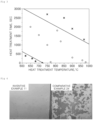
- FIG. 3 illustrates the change in surface quality according to the heat treatment temperature and time conditions.
- the surface state was observed by controlling the hot press forming temperature and time, and it was confirmed that, when the heat treatment conditions were outside the ranges limited by Relational Expression 1, scale peeling occurred on the surface layer due to excessive formation of the second oxide layer on the surface layer after the heat treatment, or phosphatability was deteriorated due to excessive formation of the first oxide layer, which showed that the surface quality was deteriorated.
- FIG. 4 illustrates photographs obtained by observing the surfaces after hot press forming of Invention Example 11 and Comparative Example 24.
- Comparative Example 24 in which the heat treatment conditions exceeded the heat treatment conditions limited by Relational Expression 1, when the surface was observed with the naked eye in comparison with Inventive Example 11, scale was confirmed.
Landscapes
- Chemical & Material Sciences (AREA)
- Engineering & Computer Science (AREA)
- Mechanical Engineering (AREA)
- Materials Engineering (AREA)
- Metallurgy (AREA)
- Organic Chemistry (AREA)
- Thermal Sciences (AREA)
- Physics & Mathematics (AREA)
- Crystallography & Structural Chemistry (AREA)
- Inorganic Chemistry (AREA)
- Chemical Kinetics & Catalysis (AREA)
- Heat Treatment Of Sheet Steel (AREA)
- Heat Treatment Of Articles (AREA)
Abstract
Description
- The present disclosure relates to a cold-rolled steel sheet for hot press forming, a hot press formed member, and manufacturing methods thereof, and in particular, to a cold-rolled steel sheet for hot press forming and a hot press formed member that have excellent surface quality, and manufacturing methods thereof.
- Recently, a number of studies have been conducted on automobile structural members to improve fuel efficiency through weight reduction of automobiles and to improve impact resistance through high strength. In particular, a lot of members manufactured by hot press forming have been applied to automobile structural members.
- Patent Document 1 suggests that ultra-high strength with a tensile strength of 1,600 MPa or more may be secured by heating an Al-Si plated steel sheet to 850°C or higher, and then performing hot press forming and quenching with a press to form a structure of a member with martensite. In addition, it is disclosed that corrosion resistance and spot weldability may be secured without shot blasting due to an alloyed layer and a diffusion layer formed by Fe diffusion from a base material to a plating layer during a heat treatment.
- However, in the case of the Al-Si plated steel sheet, an Al-Si plating layer needs to be formed, and a separate plating process is required, which reduces cost efficiency and productivity.
- On the other hand, in the case of non-plated materials, spot weldability cannot be secured due to an oxide layer formed during the heat treatment, a shot blasting process is necessary to remove the oxide layer, and it is difficult to secure corrosion resistance.
- Therefore, there is a demand for developing a cold-rolled steel sheet for hot press forming and a hot press formed member that may secure excellent corrosion resistance and spot weldability without a plating process and a shot blasting process, and manufacturing methods thereof.
- (Patent Document 1)
U.S. Patent No. 6,296,805 (published on October 2, 2001 ) - An aspect of the present disclosure is to provide a cold-rolled steel sheet for hot press forming and a hot press formed member that have excellent surface quality, and manufacturing methods thereof.
- An object of the present disclosure is not limited to the above description. Those skilled in the art will have no difficulties in understanding the additional objects of the present disclosure from the overall descriptions of the present specification.
- According to an aspect of the present disclosure, a cold-rolled steel sheet includes a base steel sheet and a first oxide layer formed on the base steel sheet,
wherein the first oxide layer contains two or more of Fe, Mn, Cr, and Si, and has a thickness of 5 to 500 nm. - The base steel sheet may contain, by wt%, 0.05 to 0.4% of C, 0.5 to 3.0% of Si, 0.3 to 5.0% of Cr, 0.01 to 4.0% of Mn, 0.001 to 0.4% of Al, 0.001 to 0.05% of P, 0.0001 to 0.02% of S, 0.001 to 0.02% of N, and a balance of Fe and other unavoidable impurities.
- The base steel sheet may contain one or more of 0.001 to 0.4% of Ti, 0.001 to 0.4% of Nb, 0.001 to 0.4% of Zr, 0.001 to 0.4% of V, 0.0001 to 0.01% of B, 0.001 to 1.0% of Mo, 0.001 to 1.0% of W, 0.005 to 2.0% of Cu, 0.005 to 2.0% of Ni, 0.001 to 1.0% of Sb, 0.001 to 1.0% of Sn, and 0.0001 to 0.02% of REM.
- A sum of contents of Si, Mn, and Cr in the first oxide layer may be 30% or more in terms of wt%.
- The cold-rolled steel sheet may have a microstructure containing 5 area% or more of ferrite and cementite.
- According to another aspect of the present disclosure, a member includes a base steel sheet; a first oxide layer formed on the base steel sheet; and a second oxide layer formed on the first oxide layer,
- wherein the first oxide layer contains two or more of Fe, Mn, Cr, and Si, and
- the second oxide layer is formed of an Fe-based oxide and has a thickness of 0.1 to 10 µm.
- The base steel sheet may contain, by wt%, 0.05 to 0.4% of C, 0.5 to 3.0% of Si, 0.3% or more and less than 5.0% of Cr, 0.01 to 4.0% of Mn, 0.001 to 0.4% of Al, 0.001 to 0.05% of P, 0.0001 to 0.02% of S, 0.001 to 0.02% of N, and a balance of Fe and other unavoidable impurities.
- The base steel sheet may contain one or more of 0.001 to 0.4% of Ti, 0.001 to 0.4% of Nb, 0.001 to 0.4% of Zr, 0.001 to 0.4% of V, 0.0001 to 0.01% of B, 0.001 to 1.0% of Mo, 0.001 to 1.0% of W, 0.005 to 2.0% of Cu, 0.005 to 2.0% of Ni, 0.001 to 1.0% of Sb, 0.001 to 1.0% of Sn, and 0.0001 to 0.02% of REM.
- A sum of contents of Si, Mn, and Cr in the second oxide layer may be less than 30% in terms of wt%.
- The member may have a microstructure containing martensite or bainite as a main phase.
- A tensile strength of the member may be 500 MPa or more.
- According to still another aspect of the present disclosure, a manufacturing method of a cold-rolled steel sheet includes: reheating a steel slab;
- hot rolling the reheated steel slab;
- cooling and coiling the hot-rolled steel sheet;
- cold rolling the coiled steel sheet; and
- performing continuous annealing on the cold-rolled steel sheet,
- wherein during the continuous annealing, a temperature increase rate at an atmosphere temperature of room temperature to 700°C is 3.0 to 20.0°C/s, a temperature increase rate at an atmosphere temperature of 700 to 800°C is 0.08 to 1.5°C/s, a temperature increase rate at an atmosphere temperature of 800 to 900°C is 0.01 to 1.5°C/s, and a temperature increase rate at an atmosphere temperature of 900 to 1,000°C is 0.01 to 1.0°C/s.
- The steel slab may contain, by wt%, 0.05 to 0.4% of C, 0.5 to 3.0% of Si, 0.3 to 5.0% of Cr, 0.01 to 4.0% of Mn, 0.001 to 0.4% of Al, 0.001 to 0.05% of P, 0.0001 to 0.02% of S, 0.001 to 0.02% of N, and a balance of Fe and other unavoidable impurities.
- The steel slab may contain one or more of 0.001 to 0.4% of Ti, 0.001 to 0.4% of Nb, 0.001 to 0.4% of Zr, 0.001 to 0.4% of V, 0.0001 to 0.01% of B, 0.001 to 1.0% of Mo, 0.001 to 1.0% of W, 0.005 to 2.0% of Cu, 0.005 to 2.0% of Ni, 0.001 to 1.0% of Sb, 0.001 to 1.0% of Sn, and 0.0001 to 0.02% of REM.
- The reheating may be performed in a temperature range of 1,000 to 1,300°C,
- the hot rolling may be performed at a finish rolling temperature of Ar3 to 1,000°C,
- the coiling may be performed in a temperature range of Ms to 750°C, and
- the cold rolling may be performed at a reduction ratio of 30 to 80%.
- The continuous annealing may be performed in a steel sheet temperature range of 700 to 900°C, and a continuous annealing time may be 1 to 1,000 seconds.
- According to still another aspect of the present disclosure, a manufacturing method of a member includes: performing a heat treatment on a cold-rolled steel sheet; and
- performing hot press forming on the heat-treated steel sheet and then cooling the hot press formed steel sheet,
- wherein during the heat treatment, an A value defined in the following Relational Expression 1 is 0.6 to 1.0:

- (wherein T represents a heating temperature and a unit thereof is °C, and t represents a total heating time and a unit thereof is a second).
- During the heat treatment, the heating may be performed to the heating temperature at an atmosphere temperature increase rate of 1 to 1,000°C/s.
- During the heat treatment, the heating temperature may be 700 to 1,000°C, and the heating time may be 150 to 1,000 seconds.
- After the hot press forming, during the cooling, the cooling may be performed to an Mf temperature or lower at a cooling rate of 10 to 1,000°C/s.
- According to an aspect of the present disclosure, it is possible to provide a cold-rolled steel sheet for hot press forming and a hot press formed member that have excellent surface quality, and manufacturing methods thereof.
- According to an aspect of the present disclosure, it is possible to provide a cold-rolled steel sheet for hot press forming and a hot press formed member that may be applied to an automobile structural reinforcement or reinforcing material and have excellent surface quality and impact resistance without a plating process and a shot blasting process, and manufacturing methods thereof.
-
-
FIG. 1 illustrates surface quality after hot press forming of each of Inventive Example 2 and Comparative Example 10. -
FIG. 2 illustrates phosphate coverage after hot press forming of each of Inventive Example 1 and Comparative Example 2. -
FIG. 3 illustrates a change in surface quality according to hot press forming conditions. -
FIG. 4 illustrates photographs obtained by observing surfaces after hot press forming of Invention Example 11 and Comparative Example 24. - Hereinafter, preferred exemplary embodiments in the present disclosure will be described. The exemplary embodiments in the present disclosure may be modified in various forms, and the scope of the present disclosure should not be interpreted to be limited to the exemplary embodiments set forth below. The exemplary embodiments are provided in order to describe the present disclosure in more detail to those skilled in the art to which the present disclosure pertains.
- The inventors of the present disclosure have recognized a problem that, in the case of a non-plated cold-rolled steel sheet for hot press forming, excellent surface quality of a member cannot be secured due to an oxide layer formed during a heat treatment performed in the manufacture of a hot press formed member, and a shot blasting process is absolutely necessary to remove the oxide layer, and have conducted intensive studies to solve the problem while securing excellent surface quality.
- As a result, the inventors of the present disclosure have confirmed that a composite oxide layer having a target thickness may be formed during annealing by precisely controlling an alloy composition and manufacturing conditions, in particular, contents of Cr, Si, and Mn and a rate of change in atmosphere temperature during annealing, and excellent surface quality may be secured without a shot blasting process by controlling hot press forming process conditions, thereby completing the present disclosure.
- Hereinafter, the present disclosure will be described in detail.
- Hereinafter, a cold-rolled steel sheet of the present disclosure will be described in detail.
- A cold-rolled steel sheet according to an aspect of the present disclosure may include a base steel sheet and a first oxide layer formed on the base steel sheet.
- Hereinafter, a composition of the base steel sheet of the cold-rolled steel sheet according to an aspect of the present disclosure will be described in detail.
- In the present disclosure, unless otherwise specified, % indicating a content of each element is based on weight.
- The base steel sheet of the cold-rolled steel sheet according to an aspect of the present disclosure may contain, by wt%, 0.05 to 0.4% of C, 0.5 to 3.0% of Si, 0.3 to 5.0% of Cr, 0.01 to 4.0% of Mn, 0.001 to 0.4% of Al, 0.001 to 0.05% of P, 0.0001 to 0.02% of S, 0.001 to 0.02% of N, and a balance of Fe and other unavoidable impurities.
- Carbon (C) is an essential element for increasing strength of a heat-treated member and needs to be added appropriately. When a content of carbon (C) is less than 0.05%, it may be difficult to secure sufficient strength. On the other hand, when the content of carbon (C) exceeds 0.4%, when a hot-rolled material is cold-rolled, cold rollability of the hot-rolled material is significantly deteriorated because the strength of the hot-rolled material is excessively high, and spot weldability may be significantly deteriorated. According to another aspect of the present disclosure, a lower limit of carbon (C) may be 0.06%. According to still another aspect of the present disclosure, an upper limit of carbon (C) may be 0.38%, and according to still another aspect, the upper limit may be 0.36%.
- Silicon (Si) may play an important role in forming a silicon (Si)-based oxide layer by being concentrated on a surface of a cold-rolled steel sheet when annealing the cold-rolled steel sheet on a continuous annealing line, and may also play a role in securing spot weldability of a member by suppressing the formation of Fe, Mn, and Cr oxide layers in a hot press forming process. When a content of silicon (Si) is less than 0.5%, the effects described above may be insufficient. According to another aspect of the present disclosure, a lower limit of silicon (Si) may be 0.8%. On the other hand, when the content of silicon (Si) exceeds 3.0%, an excessively thick Si-based amorphous oxide layer is formed, which may cause deterioration of spot weldability. According to still another aspect of the present disclosure, an upper limit of silicon (Si) may be 2.8%.
- Chromium (Cr) may serve to not only improve hardenability of a steel sheet, but also help a Si-based amorphous oxide layer to be stably formed on a surface layer by an appropriate reaction with Si. When a content of chromium (Cr) is less than 0.3%, the effects described above may be insufficient. According to another aspect of the present disclosure, a lower limit of chromium (Cr) may be 0.5%. On the other hand, when the content of chromium (Cr) exceeds 5.0%, the effects may be saturated and the manufacturing costs may increase. According to still another aspect of the present disclosure, an upper limit of chromium (Cr) may be 4.5%.
- Manganese (Mn) may be added to secure a solid solution strengthening effect and to reduce a critical cooling rate for securing martensite in a hot press formed member. When a content of manganese (Mn) is less than 0.01%, the effects described above may be insufficient. According to another aspect of the present disclosure, a lower limit of manganese (Mn) may be 0.05%. On the other hand, when the content of manganese (Mn) exceeds 4.0%, since strength of a steel sheet before a hot press forming process increases excessively, it may be difficult to perform a blanking work, and due to excessive addition of alloy iron, costs of raw materials may increase and spot weldability may be deteriorated. According to another aspect of the present disclosure, an upper limit of manganese (Mn) may be 3.9%, and according to still another aspect, the upper limit may be 3.8%.
- Aluminum (Al) may increase cleanness of the steel, together with Si, through deoxidation action in steelmaking. When a content of aluminum (Al) is less than 0.001%, the effects described above may be insufficient. According to another aspect of the present disclosure, a lower limit of aluminum (Al) may be 0.005%. On the other hand, when the content of aluminum (Al) exceeds 0.4%, an Ac3 temperature increases excessively, and thus, a heating temperature may need to be increased. According to still another aspect of the present disclosure, an upper limit of aluminum (Al) may be 0.3%, and according to still another aspect, the upper limit may be 0.2%.
- Phosphorus (P) is an impurity, and a lot of manufacturing costs may be required to control a content of phosphorus (P) to less than 0.001%, and thus, a lower limit of the content of phosphorus (P) may be limited to 0.001%. On the other hand, when the content of phosphorus (P) exceeds 0.05%, weldability of a hot press formed member may be significantly deteriorated. According to another aspect of the present disclosure, an upper limit of phosphorus (P) may be 0.03%.
- Sulfur (S) is an impurity, and a lot of manufacturing costs may be required to control a content of sulfur (S) to less than 0.0001%, and thus, a lower limit of the content of sulfur (S) may be limited to 0.0001%. On the other hand, when the content of sulfur (S) exceeds 0.02%, ductility, impact properties, and weldability of a member may be deteriorated. According to another aspect of the present disclosure, an upper limit of sulfur (S) may be 0.01%.
- Nitrogen (N) is an impurity, and a lot of manufacturing costs may be required to control a content of nitrogen (N) to less than 0.001%, and thus, a lower limit of the content of nitrogen (N) may be limited to 0.001%. On the other hand, a content of nitrogen (N) exceeds 0.02%, a slab may be sensitive to cracks during casting, and impact properties may be deteriorated. According to an aspect of the present disclosure, an upper limit of nitrogen (N) may be 0.01%.
- The steel material of the present disclosure may contain a balance of iron (Fe) and unavoidable impurities in addition to the composition described above. Since the unavoidable impurities may be unintentionally incorporated in a general manufacturing process, the unavoidable impurities may not be excluded. Since these impurities are known to those skilled in a general steel manufacturing field, all the contents thereof are not particularly described in the present specification.
- The base steel sheet of the cold-rolled steel sheet according to an aspect of the present disclosure may contain one or more of 0.001 to 0.4% of Ti, 0.001 to 0.4% of Nb, 0.001 to 0.4% of Zr, 0.001 to 0.4% of V, 0.0001 to 0.01% of B, 0.001 to 1.0% of Mo, 0.001 to 1.0% of W, 0.005 to 2.0% of Cu, 0.005 to 2.0% of Ni, 0.001 to 1.0% of Sb, 0.001 to 1.0% of Sn, and 0.0001 to 0.02% of REM.
- Titanium (Ti), niobium (Nb), zirconium (Zr), and vanadium (V) are effective in improving strength of a heat-treated member by forming fine precipitates and are effective in stabilizing retained austenite and improving impact toughness by inducing grain refinement. When a content of titanium (Ti), niobium (Nb), zirconium (Zr), and vanadium (V) (in a case where two or more types are added, the sum of these elements) is less than 0.001%, the effects described above may be insufficient, and when the content of titanium (Ti), niobium (Nb), zirconium (Zr), and vanadium (V) exceeds 0.4%, the effects may be saturated, and an increase in cost may be caused due to excessive addition of alloy iron.
- Boron (B) is an element that may improve hardenability even with a small amount of addition, and segregates at prior austenite grain boundaries and thus may suppress brittleness of a hot press formed member caused by boundary segregation of P and/or S. When a content of boron (B) is less than 0.001%, the effects described above may be insufficient, and when the content of boron (B) exceeds 0.01%, the effects may be saturated, and hot brittleness may occur when a hot rolling is performed. According to an aspect of the present disclosure, an upper limit of boron (B) may be 0.005%.
- Molybdenum (Mo) and tungsten (W) may be added to improve hardenability and strength through a precipitation strengthening effect and to refine grains. When a content of molybdenum (Mo) and tungsten (W) is less than 0.001%, the effects described above may be insufficient, and when the content of molybdenum (Mo) and tungsten (W) exceeds 1.0%, the effects may be saturated, and an increase in costs may occur.
- Copper (Cu) may be added as an element that improves strength by forming fine precipitates. In addition, when copper (Cu) is added alone, hot brittleness may occur, and thus, nickel (Ni) may be added, if necessary. When a content of copper (Cu) and nickel (Ni) is less than 0.005%, the effects described above may be insufficient, and when the content of copper (Cu) and nickel (Ni) exceeds 2.0%, costs may increase excessively.
- Antimony (Sb) and tin (Sn) have the effect of suppressing the formation of oxides that may be formed at grain boundaries on a surface layer of a hot-rolled material of a steel to which Si is added, and thus may suppress dent defects caused by separation of the grain boundaries on the surface layer during annealing of a cold-rolled material. In order to obtain these effects, antimony (Sb) and tin (Sn) may be added in an amount of 0.001% or more. On the other hand, when the content of antimony (Sb) and tin (Sn) exceeds 1.0%, costs may increase excessively, and these elements may be solid-dissolved in slab grain boundaries, causing coil edge cracks during hot rolling.
- A rare earth element (REM) may control the activity of Fe in steel, such that a thickness of Fe scale formed on the surface layer during hot press forming may be controlled. In order to obtain these effects, it is preferable that the REM element is added in an amount of 0.0001% or more. On the other hand, the content of the rare earth element (REM) exceeds 0.02%, the ability to control Fe activity may be lost, resulting in deterioration of surface quality. According to an aspect of the present disclosure, the rare earth element (REM) may be controlled to 0.01% or less.
- The first oxide layer according to an aspect of the present disclosure may contain two or more of Fe, Mn, Cr, and Si, and may have a thickness of 5 to 500 nm.
- The first oxide layer is a composite oxide layer containing two or more of Fe, Mn, Cr, and Si, in which two or more of the elements are formed, and in order to control a thickness of the second oxide layer of the member after hot press forming, precise thickness control is required by controlling an atmosphere temperature increase rate when a cold-rolled steel sheet is manufactured. According to an aspect of the present disclosure, a sum of contents of Si, Mn, and Cr in terms of wt% of the first oxide layer itself may be 30% or more, and according to another aspect, the sum of the contents may be 90% or less.
- When the thickness of the first oxide layer is less than 5 nm, after hot press forming, the second oxide layer is formed excessively thick, and thus, the effect of improving surface quality may be insufficient, and it is difficult to secure excellent surface quality. On the other hand, when the thickness exceeds 500 nm, it is not easy to form a second oxide layer after hot press forming, and thus, phosphatability may be deteriorated, which may make it difficult to secure excellent surface quality and to secure sufficient plating corrosion resistance. According to an aspect of the present disclosure, an upper limit of the thickness may be 490 nm, and according to another aspect, a lower limit of the thickness may be 5.5 nm. The first oxide layer of the present disclosure may be formed continuously or discontinuously.
- The first oxide layer according to an aspect of the present disclosure may contain two or more of Fe, Mn, Cr, and Si, and may have a thickness of 5.0 to 500.0 nm.
- Hereinafter, a microstructure of the cold-rolled steel sheet of the present disclosure will be described in detail.
- In the present disclosure, unless otherwise specified, % indicating a fraction of a microstructure is based on area.
- The cold-rolled steel sheet according to an aspect of the present disclosure may contain ferrite and cementite. In the present disclosure, an area fraction thereof is not particularly limited, and more preferably, the area fraction of ferrite and cementite may be 5 area% or more.
- When a blank is manufactured using a cold-rolled steel sheet to manufacture a hot press formed member, if strength of the cold-rolled steel sheet is excessive, mold abrasion may easily occur. More specifically, the microstructure features may refer to a microstructure of the base steel sheet of the cold-rolled steel sheet. Without considering this, bainite, martensite, and the like may be contained without exclusion.
- Hereinafter, a member of the present disclosure will be described in detail.
- The member according to an aspect of the present disclosure may include a base steel sheet, a first oxide layer formed on the base steel sheet, and a second oxide layer formed on the first oxide layer.
- The composition of the base steel sheet of the member according to an aspect of the present disclosure is the same as the composition of the cold-rolled steel sheet described above, and thus will not be described.
- The second oxide layer according to an aspect of the present disclosure may be formed of an Fe-based oxide and may have a thickness of 0.1 to 10 µm.
- When the thickness of the second oxide layer exceeds 10 µm, there is a problem that it is difficult to secure excellent surface quality, such as oxide peeling on the surface layer after hot press forming due to excessive oxide formation. On the other hand, when the thickness is less than 0.1 µm, phosphatability may be deteriorated, which may make it difficult to secure excellent surface quality. According to an aspect of the present disclosure, a sum of contents of Si, Mn, and Cr in terms of wt% of the second oxide layer itself may be less than 30%, and preferably exceeds 0%.
- Hereinafter, a microstructure of the member of the present disclosure will be described in detail.
- In the present disclosure, unless otherwise specified, % indicating a fraction of a microstructure is based on area.
- The member according to an aspect of the present disclosure may have a microstructure containing martensite or bainite as a main phase.
- The hot press formed member of the present disclosure may contain martensite or bainite as a main phase to secure high strength. More specifically, the microstructure features may refer to a microstructure of the base steel sheet of the member. In the present disclosure, the main phase may refer to a phase having the largest area fraction among several phases forming the microstructure. The area fraction of the main phase is not particularly limited, and according to an aspect of the present disclosure, the area fraction of the main phase may be 5 area% or more.
- Hereinafter, manufacturing methods of a cold-rolled steel sheet and a member of the present disclosure will be described in detail.
- A cold-rolled steel sheet according to an aspect of the present disclosure may be manufactured by subjecting a steel slab satisfying the alloy composition described above to reheating, hot rolling, coiling, cool rolling, and continuous annealing.
- A steel slab satisfying the alloy composition of the present disclosure may be reheated to a temperature range of 1,000 to 1,300°C.
- When the reheating temperature is lower than 1,000°C, it is difficult to homogenize a slab structure, and when the temperature exceeds 1,300°C, excessive oxide formation and an increase in manufacturing costs may occur.
- The reheated steel slab may be hot-rolled at a finish rolling temperature of Ar3 to 1,000°C.
- When the finish rolling temperature is lower than Ar3, two-phase region rolling may easily occur, such that a mixed grain structure may occur on a surface layer, and it may be difficult to control the shape of the hot-rolled steel sheet. On the other hand, when the temperature exceeds 1,000°C, grains of the hot-rolled steel sheet may be coarsened.
- The hot-rolled steel sheet may be cooled and coiled in a temperature range of Ms to 750°C.
- When the coiling temperature is lower than Ms (martensite transformation start temperature), the strength of the hot-rolled steel sheet increases excessively, which may cause deterioration of cold rollability. On the other hand, when the temperature exceeds 750°C, an increase in thickness of the oxide layer and grain boundary oxidation on the surface layer occur, and thus, pickling properties may be deteriorated, and separation of grain boundaries on the surface layer may occur during annealing in a continuous annealing furnace. During cooling, a cooling rate is not particularly limited, and air cooling may be performed.
- The coiled steel sheet may be cold-rolled.
- In the present disclosure, a reduction ratio of the cold rolling is not particularly limited, and the cold rolling may be performed at a reduction ratio of 30 to 80% to secure a target thickness.
- In the present disclosure, the cold rolling may be performed to control the thickness of the steel sheet more precisely, and pickling may be performed before the cold rolling.
- The cold-rolled steel sheet may be subjected to continuous annealing, and during the continuous annealing, a temperature increase rate at an atmosphere temperature of room temperature to 700°C may be 3.0 to 20.0°C/s, a temperature increase rate at an atmosphere temperature of 700 to 800°C may be 0.08 to 1.5°C/s, a temperature increase rate at an atmosphere temperature of 800 to 900°C may be 0.01 to 1.5°C/s, and a temperature increase rate at an atmosphere temperature of 900 to 1,000°C may be 0.01 to 1.0°C/s.
- During the continuous annealing, in order to precisely control the thickness of the first oxide layer on the surface layer, in the present disclosure, a temperature increase rate of the atmosphere temperature is more strictly controlled. When the temperature increase rate of the atmosphere temperature is below the suggested lower limit, since the first oxide layer is formed excessively and the thickness thereof exceeds 500 nm, a second oxide layer having a sufficient thickness is not secured after hot press forming, and thus, phosphatability may be deteriorated, and excellent surface quality may not be secured. On the other hand, when the temperature increase rate of the atmosphere temperature exceeds the suggested upper limit, since the formation of the first oxide layer is insufficient, the second oxide layer is formed excessively after hot press forming, which may cause deterioration of surface quality such as surface scale peeling.
- According to an aspect of the present disclosure, the continuous annealing may be performed in a steel sheet temperature range of 700 to 900°C. When the annealing temperature is lower than 700°, it may be difficult to restore and recrystallize a rolled structure created by cold rolling. On the other hand, when the temperature exceeds 900°C, the annealing equipment may be deteriorated, which may lead to an increase in process costs due to frequent equipment replacement.
- According to an aspect of the present disclosure, a continuous annealing time may be 1 to 1,000 seconds. When the annealing time is shorter than 1 second, it is difficult to obtain the annealing effect, and when the time is longer than 1,000 seconds, the productivity may be reduced.
- The member according to an aspect of the present disclosure may be manufactured by subjecting a cold-rolled steel sheet manufactured by the method described above to a heat treatment, hot press forming, and cooling.
- The cold-rolled steel sheet according to an aspect of the present disclosure may be subjected to a heat treatment, in which an A value defined in the following Relational Expression 1 may be 0.6 to 1.0, and the heat treatment may be performed by heating the cold-rolled steel sheet to the heating temperature at a temperature increase rate of 1 to 1,000°C/s.
- In the present disclosure, in order to precisely control the thickness of the second oxide layer, the heating temperature and the heating time may be controlled through Relational Expression 1. When the A value defined in Relational Expression 1 is less than 0.6, in the case where the heat treatment is performed, the thickness of the second oxide layer is insufficient, such that phosphatability may be deteriorated, resulting in difficulties in securing excellent surface quality. On the other hand, when the value exceeds 1.0, the thickness of the second oxide layer is excessive, which makes it difficult to secure excellent surface quality due to peeling of the oxide layer.
- The temperature increase rate in the heat treatment step may mean a temperature increase rate of the atmosphere in the continuous annealing furnace. When the temperature increase rate is less than 1°C/s, it may be difficult to secure sufficient productivity, and when the rate exceeds 1,000°C/s, an equipment requiring excessive costs may be required. According to an aspect of the present disclosure, the heating temperature may be 700°C or higher and 1,000°C or lower. The heating time according to an aspect of the present disclosure may be 150 seconds or longer and 1,000 seconds or shorter.
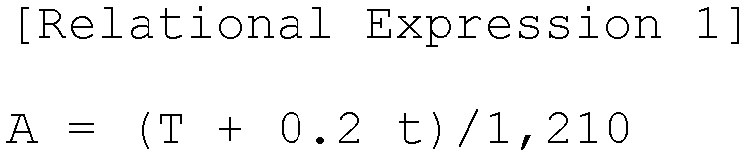
- (In the expression, T represents a heating temperature and a unit thereof is °C, and t represents a total heating time and a unit thereof is a second.)
- The heat-treated steel sheet may be subjected to hot press forming, and then cooled to an Mf temperature or lower at a cooling rate of 10 to 1,000°C/s.
- When the cooling rate is less than 10°C/s, unwanted ferrite and pearlite may be formed, and it is difficult to secure a desired level of tensile strength. On the other hand, when the rate exceeds 1,000°C/s, an expensive special cooling equipment is required to control the rate, which may reduce productivity.
- In a case where cooling is stopped when a cooling end temperature exceeds Mf (martensite transformation end temperature) and then cooling is performed to room temperature again, it may be difficult to secure shape fixability of the hot press formed member.
- The hot press formed member according to an aspect of the present disclosure manufactured as described above has a tensile strength of 500 MPa or more, and may secure excellent strength and impact resistance.
- Hereinafter, the present disclosure will be described in more detail with reference to Examples. However, the following Examples are provided to illustrate and describe the present disclosure in detail, but are not intended to limit the scope of the present disclosure.
- Hereinafter, the present disclosure will be described in more detail with reference to Examples. However, the following Examples are provided to illustrate and describe the present disclosure in detail, but are not intended to limit the scope of the present disclosure.
- Slabs having the compositions shown in Table 1 and having a thickness of 40 mm were melted in vacuum, heated at 1,200°C for 1 hour in a heating furnace, and hot-rolled at a finish rolling temperature of 900°C, thereby manufacturing hot-rolled steel sheets having a final thickness of 3 mm. The hot-rolled steel sheets were air-cooled and coiled at 600°C, and then, the hot-rolled steel sheets were pickled and then cold-rolled at a cold reduction ratio of 50%, thereby manufacturing cold-rolled steel sheets.
[Table 1] Steel type Alloy composition (wt%) C Si Mn P S Al Cr Mo Ti B N A 0.33 1.93 3.46 0.0056 0.0082 0.002 4.89 0.489 0.021 0.0025 0.0024 B 0.32 0.94 2.00 0.0066 0.0015 0.009 0.85 0.085 0.015 0.0020 0.0023 C 0.06 2.66 2.18 0.0046 0.0001 0.008 0.65 0.065 0.025 0.0011 0.0021 D 0.16 1.21 2.43 0.0033 0.0026 0.007 1.40 0.140 0.017 0.0230 0.0041 E 0.10 2.15 1.66 0.0027 0.0086 0.001 3.90 0.390 0.018 0.0000 0.0028 F 0.18 2.92 1.78 0.0090 0.0043 0.005 0.33 0.033 0.021 0.0018 0.0045 G 0.33 1.52 1.70 0.0055 0.0083 0.002 0.46 0.012 0.010 0.0000 0.0049 H 0.10 0.06 3.62 0.0092 0.0071 0.001 4.90 0.490 0.095 0.0020 0.0037 I 0.36 1.93 0.42 0.0027 0.0036 0.008 5.12 0.512 0.004 0.0000 0.0047 J 0.25 1.44 0.86 0.0016 0.0045 0.005 5.75 0.575 0.072 0.0004 0.0028 K 0.24 1.39 0.63 0.0038 0.0047 0.004 0.21 0.021 0.100 0.0024 0.0048 L 0.32 0.35 1.00 0.0079 0.0070 0.007 1.62 0.162 0.061 0.0000 0.0043 M 0.07 1.09 2.50 0.0080 0.0085 0.008 6.66 0.666 0.069 0.0015 0.0021 N 0.19 0.26 2.32 0.0120 0.0014 0.007 0.05 0.013 0.053 0.0019 0.0050 O 0.08 2.45 3.81 0.0033 0.0095 0.007 0.20 0.410 0.041 0.0023 0.0048 P 0.39 3.02 3.89 0.0035 0.0003 0.007 7.86 0.250 0.051 0.0000 0.0034 Q 0.14 0.90 0.009 0.0050 0.0007 0.006 1.80 0.180 0.057 0.0009 0.0031 R 0.14 0.90 4.23 0.0050 0.0007 0.006 1.75 0.175 0.057 0.0250 0.0025 - The cold-rolled steel sheets manufactured as described above were subjected to continuous annealing under the conditions shown in Table 2, and at this time, the continuous annealing was performed at a steel sheet temperature of 780°C. In addition, a heat treatment was performed under the conditions shown in Table 2, and cooling was performed after hot press forming. During the heat treatment, a temperature increase rate of 5°C/s was applied, and after hot press forming, cooling was performed to room temperature at a cooling rate of 30°C/s.
[Table 2] Specimen Nos. Steel type Continuous annealing Heat treatment Atmosphere temperature increase rate according to temperature section (°C/s) Temperature (°C) Time (s) Relational Expression 1 Room temperature to 700 (°C) 700 to 800 (°C) 800 to 900 (°C) 90 to 1000 (°C) 1 A 18.0 1.19 1.20 0.50 900.0 300.0 0.793 2 B 7.3 1.39 0.12 0.13 900.0 300.0 0.793 3 C 9.2 0.12 1.34 0.98 900.0 300.0 0.793 4 D 9. 0 1. 44 1. 42 0.90 900.0 300.0 0.793 5 E 4.4 0.16 0.92 0.49 900.0 300.0 0.793 6 F 3.8 0.10 0.88 0.88 900.0 300.0 0.793 7 G 6.7 0.97 0.25 0.30 900.0 300.0 0.793 8 H 6.8 0.25 0.05 0.70 900.0 300.0 0.793 9 I 10.1 0.92 0.51 0.24 900.0 300.0 0.793 10 J 5.6 1.02 0.61 0.41 900.0 300.0 0.793 11 K 10.4 0.84 1.29 0.55 900.0 300.0 0.793 12 L 4.4 1. 45 0.39 0.21 900.0 300.0 0.793 13 M 9.7 0.74 0.13 0.14 900.0 300.0 0.793 14 N 17.4 0.43 0.58 0.88 900.0 300.0 0.793 15 O 3.2 0.38 0.19 0.09 900.0 300.0 0.793 16 P 5.6 0.13 1.09 0.16 900.0 300.0 0.793 17 Q 6.5 1.43 0.63 0.59 900.0 300.0 0.793 18 R 9.6 1.18 0.85 0.56 900.0 300.0 0.793 19 A 18.04 1.19 1.20 0.50 900.0 300.0 0.793 20 A 6.78 0.13 1.82 0.78 900.0 300.0 0.793 21 A 8.74 0.07 0.29 0.39 900.0 300.0 0.793 22 A 8.73 0.76 0.006 0.20 900.0 300.0 0.793 23 A 8.43 0.21 1.12 1.22 900.0 300.0 0.793 24 C 9.22 0.12 1.34 0.98 900.0 300.0 0.793 25 C 1.77 0.96 1.44 0.30 900.0 300.0 0.793 26 C 8.34 1. 96 0.84 0.02 900.0 300.0 0.793 27 C 7.63 0.10 2.46 0.18 900.0 300.0 0.793 28 C 5.17 0.90 0.61 0.008 900.0 300.0 0.793 29 D 8.98 1.44 1.42 0.90 900.0 300.0 0.793 30 D 25.0 0.19 0.07 0.64 900.0 300.0 0.793 31 D 1. 92 0.19 1.20 2.18 900.0 300.0 0.793 32 D 5.50 1.77 0.00 0.54 900.0 300.0 0.793 33 B 7.3 1.39 0.12 0.13 900.0 300.0 0.79 34 B 7.3 1.39 0.12 0.13 700 10 0.58 35 B 7.3 1.39 0.12 0.13 1000 2400 1.22 36 E 4.4 0.16 0.92 0.49 900.0 300.0 0.79 37 E 4.4 0.16 0.92 0.49 720 10 0.59 38 E 4.4 0.16 0.92 0.49 980 2800 1. 27 39 F 3.8 0.10 0.88 0.88 900.0 300.0 0.79 40 F 3.8 0.10 0.88 0.88 690 10 0.57 41 F 3.8 0.10 0.88 0.88 1020 2000 1.17 42 G 6.7 0. 97 0.25 0.30 900.0 300.0 0.79 43 G 6.7 0. 97 0.25 0.30 670 100 0.57 44 G 6.7 0. 97 0.25 0.30 970 3600 1. 40 
- (In the expression, T represents a heating temperature and a unit thereof is °C, and t represents a total heating time and a unit thereof is a second.)
- Table 3 shows the measured thickness of the first oxide layer of the cold-rolled steel sheet after continuous annealing, and also shows the thickness of the second oxide layer of the member after the subsequent heat treatment, hot press forming, and cooling. Here, the thickness of the first oxide layer was measured using a transmission electron microscope (TEM), and the thickness of the second oxide layer was measured at three locations using a transmission electron microscope (TEM) and electron beam microanalysis (EPMA) and then was expressed as the average result. In addition, for the items with quality deterioration, scale peeling was observed with the naked eye and shown, and in the observation with the naked eye, when peeling of scale with an area of 5 mm2 or more occurred at 10 points or more, it was determined that the quality was deteriorated. Phosphate coverage was determined by observing a structure with a scanning electron microscope (SEM) and then measuring an area of a portion where phosphate crystals were not formed to determine whether the quality was deteriorated. At this time, when the portion where phosphate crystals were formed exceeded 70%, it was determined that the phosphate properties were good. In addition, the yield strength, the tensile strength, and the elongation of the manufactured members were measured and shown. For the yield strength, the tensile strength, and the elongation, a tensile test was performed at room temperature using JIS-5 specimens according to the ISO 6892 standard.
[Table 3] Specimen Nos. Steel type Cold-rolled steel sheet Member Member Classification Fist oxide layer Second oxide layer Items with quality deterioration Phosphate coverage (%) Physical properties Thickness (nm) Thickness (µm) Yield strength (MPa) Tensile strength (MPa) Elongation (%) 1 A 474.4 0.19 - 86.1 1410 2012 5.3 Inventive Example 1 2 B 8.3 8.53 - 98.2 1352 2009 6 Inventive Example 2 3 C 36.0 7.59 - 92.9 425 639 15.2 Inventive Example 3 4 D 151.8 4.60 - 75.0 715 1109 9. 8 Inventive Example 4 5 E 291.1 2.62 - 81.1 826 1084 13.5 Inventive Example 5 6 F 149.4 5.58 - 90.8 979 1210 12.6 Inventive Example 6 7 G 5.1 9.66 - 95.1 1495 2162 4.8 Inventive Example 7 8 H 3.9 12.15 Scale - 908 1127 13 Comparative Example 1 9 I 641.1 0.080 Phosphate 58.3 1347 1982 4.3 Comparative Example 2 10 J 965.5 0.032 Phosphate 61.8 1125 1610 6.2 Comparative Example 3 11 K 4.2 11.86 Scale - 1059 1477 7.4 Comparative Example 4 12 L 1.7 22.58 Scale - 1455 1962 4.7 Comparative Example 5 13 M 933.1 0.042 Phosphate 57.7 853 1066 17.1 Comparative Example 6 14 N 2.5 17.15 Scale - 988 1077 19.3 Comparative Example 7 15 O 713.3 0.060 Phosphate 67.1 1001 1225 7.8 Comparative Example 8 16 P 999.4 0.011 Phosphate 55.1 1465 2062 4.5 Comparative Example 9 17 Q 1.45 30.97 Scale - 894 1250 11.5 Comparative Example 10 18 R 726.5 0.057 Phosphate 68.0 901 1267 12.3 Comparative Example 11 19 A 474.4 0.19 - 86.1 1418 2010 5.2 Inventive Example 8 20 A 2.1 19.10 Scale - 1476 2053 5.3 Comparative Example 12 21 A 761.2 0.05 Phosphate 48.3 1400 2072 3.4 Comparative Example 13 22 A 686.7 0.05 Phosphate 57.8 1398 2025 5.3 Comparative Example 14 23 A 4.7 16.97 Scale - 1415 2007 5.2 Comparative Example 15 24 C 36.0 7.59 - 92.9 421 637 14.4 Inventive Example 9 25 C 604.7 0.08 Phosphate 53.5 411 633 13.9 Comparative Example 16 26 C 4.6 15.67 Scale - 471 654 16 Comparative Example 17 27 C 3. 9 17.84 Scale - 486 699 16.2 Comparative Example 18 28 C 717.0 0.05 Phosphate 63.5 493 696 13.6 Comparative Example 19 29 D 151.8 4.60 - 75.0 728 1160 9.3 Inventive Example 10 30 D 540.0 0.09 Phosphate 48.5 723 1017 9. 6 Comparative Example 20 31 D 861.2 0.04 Phosphate 54.0 712 1143 9.5 Comparative Example 21 32 D 848.0 0.04 Phosphate 60.0 736 1037 9. 6 Comparative Example 22 33 B 8.3 8.53 - 98.2 1362 2056 5.9 Inventive Example 11 34 B 8.3 0.069 Phosphate 47.7 1334 1998 5.2 Comparative Example 23 35 B 8.3 27.36 Scale - 1366 2016 5.2 Comparative Example 24 36 E 291.1 2.62 - 81.1 862 1023 13.8 Inventive Example 12 37 E 291.1 0.079 Phosphate 55.8 855 1012 12.6 Comparative Example 25 38 E 291.1 29.70 Scale - 861 1017 12.1 Comparative Example 26 39 F 149.4 5.58 - 90.8 974 1274 11.1 Inventive Example 13 40 F 149.4 0.06 Phosphate 64.9 963 1237 11.6 Comparative Example 27 41 F 149.4 17.84 Scale - 955 1231 12.7 Comparative Example 28 42 G 5.1 9.66 - 95.1 1516 2136 4.4 Inventive Example 14 43 G 5.1 0.05 Phosphate 42.7 1526 2196 4.6 Comparative Example 29 44 G 5.1 35.16 Scale - 1438 2158 4.5 Comparative Example 30 - In the cold-rolled steel sheet and the member satisfying the alloy composition and the manufacturing conditions of the present disclosure, the first oxide layer and the second oxide layer were formed within the thickness ranges suggested in the present disclosure, and excellent surface quality was secured even after hot press forming.
-
FIG. 1 illustrates photographs of the surface quality after hot press forming of each of Inventive Example 2 and Comparative Example 10. In Comparative Example 10, a thick oxide was formed compared to Inventive Example 2, and it was confirmed that the quality was deteriorated. -
FIG. 2 illustrates the phosphate coverage after hot press forming of each of Inventive Example 1 and Comparative Example 2. In Comparative Example 2, it was confirmed that less than 70% of phosphate crystals were formed. -
FIG. 3 illustrates the change in surface quality according to the heat treatment temperature and time conditions. The surface state was observed by controlling the hot press forming temperature and time, and it was confirmed that, when the heat treatment conditions were outside the ranges limited by Relational Expression 1, scale peeling occurred on the surface layer due to excessive formation of the second oxide layer on the surface layer after the heat treatment, or phosphatability was deteriorated due to excessive formation of the first oxide layer, which showed that the surface quality was deteriorated. -
FIG. 4 illustrates photographs obtained by observing the surfaces after hot press forming of Invention Example 11 and Comparative Example 24. In Comparative Example 24 in which the heat treatment conditions exceeded the heat treatment conditions limited by Relational Expression 1, when the surface was observed with the naked eye in comparison with Inventive Example 11, scale was confirmed. - In Comparative Examples 1, 4, 5, 7, and 10, since the content of each element was below the required range suggested by the present disclosure, the formation of the first oxide layer was not appropriate, and as illustrated in
FIG. 1 , the thickness of the second oxide layer after hot press forming exceeded 10 µm, and surface scale was excessively formed after hot press forming; thus, excellent surface quality was not secured. - In Comparative Examples 2, 3, 6, 8, 9, and 11, the content of each component exceeded the required range suggested by the present disclosure, and thus, the first oxide layer was excessively formed after annealing. Due to this, a sufficient second oxide layer was not formed during hot press forming, and less than 70% of phosphate crystals were formed, and thus, the surface quality was deteriorated.
- In addition, in the cases of Comparative Examples 12, 15, 17, 18, and 20 in which, during the continuous annealing, the temperature increase rate in each section exceeded any one of the ranges suggested by the present disclosure, as the first oxide layer was not sufficiently formed, the second oxide layer was excessively formed after hot press forming, and thus, scale peeling on the surface layer occurred and excellent surface quality was not secured.
- In the cases of Comparative Examples 13, 14, 16, and 19, as the atmosphere temperature increase rate in each section was below the lower limit of the temperature increase rate limited in the present disclosure, phosphatability was deteriorated due to excessive formation of the first oxide layer, and thus, excellent surface quality was not secured.
- In addition, even in the cases of Comparative Examples 21 and 22 in which some of the atmosphere temperatures in the respective sections were below the lower limit value or exceeded the upper limit value, as the first oxide layer was excessively formed and the second oxide layer was not easily formed after hot press forming, phosphatability was deteriorated, and thus, excellent surface quality was not secured.
- In the cases of Comparative Examples 23, 25, 27, and 29, as the conditions were below the lower limits of the conditions limited in Relational Expression 1, the second oxide layer was not sufficiently formed, resulting in deterioration of phosphatability, and in the cases of Comparative Examples 24, 26, 28, and 30 in which the conditions exceeded the upper limits of the suggested ranges, as the thickness of the formed second oxide layer was thick, a large amount of Fe scale was formed, and thus, the surface quality was deteriorated.
- Hereinabove, the present disclosure has been described in detail with reference to the exemplary embodiments, but other exemplary embodiments having different forms are possible. Therefore, the technical spirit and scope of the claims set forth below are not limited by the exemplary embodiments.
Claims (20)
- A cold-rolled steel sheet comprising: a base steel sheet and a first oxide layer formed on the base steel sheet,
wherein the first oxide layer contains two or more of Fe, Mn, Cr, and Si, and has a thickness of 5 to 500 nm. - The cold-rolled steel sheet of claim 1, wherein the base steel sheet contains, by wt%, 0.05 to 0.4% of C, 0.5 to 3.0% of Si, 0.3 to 5.0% of Cr, 0.01 to 4.0% of Mn, 0.001 to 0.4% of Al, 0.001 to 0.05% of P, 0.0001 to 0.02% of S, 0.001 to 0.02% of N, and a balance of Fe and other unavoidable impurities.
- The cold-rolled steel sheet of claim 2, wherein the base steel sheet contains one or more of 0.001 to 0.4% of Ti, 0.001 to 0.4% of Nb, 0.001 to 0.4% of Zr, 0.001 to 0.4% of V, 0.0001 to 0.01% of B, 0.001 to 1.0% of Mo, 0.001 to 1.0% of W, 0.005 to 2.0% of Cu, 0.005 to 2.0% of Ni, 0.001 to 1.0% of Sb, 0.001 to 1.0% of Sn, and 0.0001 to 0.02% of REM.
- The cold-rolled steel sheet of any one of claims 1 to 3, wherein a sum of contents of Si, Mn, and Cr in the first oxide layer is 30% or more in terms of wt%.
- The cold-rolled steel sheet of any one of claims 1 to 4, wherein the cold-rolled steel sheet has a microstructure containing 5 area% or more of ferrite and cementite.
- A member comprising: a base steel sheet; a first oxide layer formed on the base steel sheet; and a second oxide layer formed on the first oxide layer,wherein the first oxide layer contains two or more of Fe, Mn, Cr, and Si, andthe second oxide layer is formed of an Fe-based oxide and has a thickness of 0.1 to 10 µm.
- The member of claim 6, wherein the base steel sheet contains, by wt%, 0.05 to 0.4% of C, 0.5 to 3.0% of Si, 0.3% or more and less than 5.0% of Cr, 0.01 to 4.0% of Mn, 0.001 to 0.4% of Al, 0.001 to 0.05% of P, 0.0001 to 0.02% of S, 0.001 to 0.02% of N, and a balance of Fe and other unavoidable impurities.
- The member of claim 7, wherein the base steel sheet contains one or more of 0.001 to 0.4% of Ti, 0.001 to 0.4% of Nb, 0.001 to 0.4% of Zr, 0.001 to 0.4% of V, 0.0001 to 0.01% of B, 0.001 to 1.0% of Mo, 0.001 to 1.0% of W, 0.005 to 2.0% of Cu, 0.005 to 2.0% of Ni, 0.001 to 1.0% of Sb, 0.001 to 1.0% of Sn, and 0.0001 to 0.02% of REM.
- The member of any one of claims 6 to 8, wherein a sum of contents of Si, Mn, and Cr in the second oxide layer is less than 30% in terms of wt%.
- The member of any one of claims 6 to 9, wherein the member has a microstructure containing martensite or bainite as a main phase.
- The member of any one of claims 6 to 10, wherein a tensile strength of the member is 500 MPa or more.
- A manufacturing method of a cold-rolled steel sheet, comprising:reheating a steel slab;hot rolling the reheated steel slab;cooling and coiling the hot-rolled steel sheet;cold rolling the coiled steel sheet; andperforming continuous annealing on the cold-rolled steel sheet,wherein during the continuous annealing, a temperature increase rate at an atmosphere temperature of room temperature to 700°C is 3.0 to 20.0°C/s, a temperature increase rate at an atmosphere temperature of 700 to 800°C is 0.08 to 1.5°C/s, a temperature increase rate at an atmosphere temperature of 800 to 900°C is 0.01 to 1.5°C/s, and a temperature increase rate at an atmosphere temperature of 900 to 1,000°C is 0.01 to 1.0°C/s.
- The manufacturing method of claim 12, wherein the steel slab contains, by wt%, 0.05 to 0.4% of C, 0.5 to 3.0% of Si, 0.3 to 5.0% of Cr, 0.01 to 4.0% of Mn, 0.001 to 0.4% of Al, 0.001 to 0.05% of P, 0.0001 to 0.02% of S, 0.001 to 0.02% of N, and a balance of Fe and other unavoidable impurities.
- The manufacturing method of claim 13, wherein the steel slab contains one or more of 0.001 to 0.4% of Ti, 0.001 to 0.4% of Nb, 0.001 to 0.4% of Zr, 0.001 to 0.4% of V, 0.0001 to 0.01% of B, 0.001 to 1.0% of Mo, 0.001 to 1.0% of W, 0.005 to 2.0% of Cu, 0.005 to 2.0% of Ni, 0.001 to 1.0% of Sb, 0.001 to 1.0% of Sn, and 0.0001 to 0.02% of REM.
- The manufacturing method of any one of claims 12 to 14, wherein the reheating is performed in a temperature range of 1,000 to 1,300°C,the hot rolling is performed at a finish rolling temperature of Ar3 to 1,000°C,the coiling is performed in a temperature range of Ms to 750°C, andthe cold rolling is performed at a reduction ratio of 30 to 80%.
- The manufacturing method of any one of claims 12 to 15, wherein the continuous annealing is performed in a steel sheet temperature range of 700 to 900°C, and a continuous annealing time is 1 to 1,000 seconds.
- A manufacturing method of a member, comprising:performing a heat treatment on the cold-rolled steel sheet of any one of claims 12 to 16; andperforming hot press forming on the heat-treated steel sheet and then cooling the hot press formed steel sheet,wherein during the heat treatment, an A value defined in the following Relational Expression 1 is 0.6 to 1.0:
 where T represents a heating temperature and a unit thereof is°C, and t represents a total heating time and a unit thereof is a second.
 - The manufacturing method of claim 17, wherein during the heat treatment, the heating is performed to the heating temperature at an atmosphere temperature increase rate of 1 to 1,000°C/s.
- The manufacturing method of claim 17 or 18, wherein during the heat treatment, the heating temperature is 700 to 1,000°C, and the heating time is 150 to 1,000 seconds.
- The manufacturing method of any one of claims 17 to 19, wherein after the hot press forming, during the cooling, the cooling is performed to an Mf temperature or lower at a cooling rate of 10 to 1,000°C/s.
Applications Claiming Priority (2)
| Application Number | Priority Date | Filing Date | Title |
|---|---|---|---|
| KR1020220104736A KR20240027174A (en) | 2022-08-22 | 2022-08-22 | Cold rolled steel sheet for hot press forming and hot press forming part having excellent surface quality and manufacturing method thereof |
| PCT/KR2023/012140 WO2024043606A1 (en) | 2022-08-22 | 2023-08-17 | Cold rolled steel sheet for hot-press forming having excellent surface quality, hot-press-formed member, and method for manufacturing same |
Publications (2)
| Publication Number | Publication Date |
|---|---|
| EP4578986A1 true EP4578986A1 (en) | 2025-07-02 |
| EP4578986A4 EP4578986A4 (en) | 2025-12-10 |
Family
ID=90013589
Family Applications (1)
| Application Number | Title | Priority Date | Filing Date |
|---|---|---|---|
| EP23857640.9A Pending EP4578986A4 (en) | 2022-08-22 | 2023-08-17 | Cold-rolled steel sheet for hot-press forming with excellent surface quality, hot-pressed element and method for its production |
Country Status (7)
| Country | Link |
|---|---|
| US (1) | US20260097428A1 (en) |
| EP (1) | EP4578986A4 (en) |
| JP (1) | JP2025528244A (en) |
| KR (1) | KR20240027174A (en) |
| CN (1) | CN119698492A (en) |
| MX (1) | MX2025002172A (en) |
| WO (1) | WO2024043606A1 (en) |
Cited By (1)
| Publication number | Priority date | Publication date | Assignee | Title |
|---|---|---|---|---|
| US20260092350A1 (en) * | 2024-09-30 | 2026-04-02 | GM Global Technology Operations LLC | Pre-oxidized, coating-free press hardened steel |
Family Cites Families (12)
| Publication number | Priority date | Publication date | Assignee | Title |
|---|---|---|---|---|
| FR2780984B1 (en) | 1998-07-09 | 2001-06-22 | Lorraine Laminage | COATED HOT AND COLD STEEL SHEET HAVING VERY HIGH RESISTANCE AFTER HEAT TREATMENT |
| JP5181517B2 (en) * | 2007-04-13 | 2013-04-10 | Jfeスチール株式会社 | Steel sheet for hot pressing |
| JP4900179B2 (en) * | 2007-10-11 | 2012-03-21 | Jfeスチール株式会社 | Manufacturing method of steel plate for can |
| CA2829327C (en) * | 2011-03-18 | 2017-02-14 | Nippon Steel & Sumitomo Metal Corporation | Steel sheet for hot stamped member and method of production of same |
| WO2015001367A1 (en) * | 2013-07-04 | 2015-01-08 | Arcelormittal Investigación Y Desarrollo Sl | Cold rolled steel sheet, method of manufacturing and vehicle |
| KR101696052B1 (en) * | 2014-12-24 | 2017-01-13 | 주식회사 포스코 | Forming part having excellent corrosion resistance and manufacturing method thereof |
| CN107427889B (en) * | 2015-03-31 | 2019-10-25 | 日本制铁株式会社 | Steel sheet for hot stamping, method for producing same, and hot stamped product |
| KR20170075046A (en) * | 2015-12-22 | 2017-07-03 | 주식회사 포스코 | Hot pressed part having excellent corrosion resistance and method for manufacturing same |
| KR101830527B1 (en) * | 2016-09-26 | 2018-02-21 | 주식회사 포스코 | Cold rolled steel sheet for hot press forming and hot presse forming part having excellent corrosion property and spot weldability, and manufacturing method thereof |
| US11530469B2 (en) * | 2019-07-02 | 2022-12-20 | GM Global Technology Operations LLC | Press hardened steel with surface layered homogenous oxide after hot forming |
| KR102485012B1 (en) * | 2020-12-17 | 2023-01-04 | 주식회사 포스코 | High strength steel sheet having excellent workability and method for manufacturing the same |
| CN114045441B (en) * | 2021-11-16 | 2022-09-20 | 攀钢集团攀枝花钢铁研究院有限公司 | Reinforced plastic dual-phase steel for 800 MPa-level continuous annealing and preparation method thereof |
-
2022
- 2022-08-22 KR KR1020220104736A patent/KR20240027174A/en active Pending
-
2023
- 2023-08-17 EP EP23857640.9A patent/EP4578986A4/en active Pending
- 2023-08-17 CN CN202380061522.XA patent/CN119698492A/en active Pending
- 2023-08-17 JP JP2025511409A patent/JP2025528244A/en active Pending
- 2023-08-17 US US19/105,470 patent/US20260097428A1/en active Pending
- 2023-08-17 WO PCT/KR2023/012140 patent/WO2024043606A1/en not_active Ceased
-
2025
- 2025-02-21 MX MX2025002172A patent/MX2025002172A/en unknown
Cited By (1)
| Publication number | Priority date | Publication date | Assignee | Title |
|---|---|---|---|---|
| US20260092350A1 (en) * | 2024-09-30 | 2026-04-02 | GM Global Technology Operations LLC | Pre-oxidized, coating-free press hardened steel |
Also Published As
| Publication number | Publication date |
|---|---|
| CN119698492A (en) | 2025-03-25 |
| WO2024043606A1 (en) | 2024-02-29 |
| US20260097428A1 (en) | 2026-04-09 |
| MX2025002172A (en) | 2025-04-02 |
| JP2025528244A (en) | 2025-08-26 |
| EP4578986A4 (en) | 2025-12-10 |
| KR20240027174A (en) | 2024-03-04 |
Similar Documents
| Publication | Publication Date | Title |
|---|---|---|
| KR102153194B1 (en) | Ultra high strength and high ductility cold rolled steel sheet with superior resistance to liquid metal embrittlment(lme) cracking, plated steel sheet and method for manufacturing the same | |
| JP6777272B1 (en) | Hot-dip galvanized steel sheet and its manufacturing method | |
| CN100591789C (en) | High-strength steel sheet having excellent softening resistance and excellent burring workability in weld heat-affected zone and method for producing same | |
| CN111684091B (en) | High-strength cold-rolled steel sheet, high-strength plated steel sheet, and methods for producing these | |
| EP3473742B1 (en) | Ultrahigh-strength high-ductility steel sheet having excellent yield strength, and manufacturing method therefor | |
| EP3889283B1 (en) | High-strength steel sheet and method for producing the same | |
| US11299793B2 (en) | Steel sheet having excellent resistance to liquid metal embrittlement cracks and method for manufacturing the same | |
| JP2005528519A5 (en) | ||
| US12037656B2 (en) | High strength steel sheet having excellent ductility and workability, and method for manufacturing same | |
| EP3922744B1 (en) | Hot dip galvanized steel sheet and method for producing same | |
| JP2019533083A (en) | Cold-rolled steel sheet for hot forming excellent in corrosion resistance and spot weldability, hot-formed member, and manufacturing method thereof | |
| EP4234750A1 (en) | Ultra high strength steel sheet having excellent ductility and method for manufacturing thereof | |
| CN114945690A (en) | Steel sheet and method for producing same | |
| JP2025157499A (en) | Hot forming parts | |
| EP4407058A1 (en) | High strength cold rolled steel sheet having excellent surface quality and low mechanical property deviation and manufacturing method of same | |
| EP4578986A1 (en) | Cold rolled steel sheet for hot-press forming having excellent surface quality, hot-press-formed member, and method for manufacturing same | |
| EP3388541B1 (en) | High-strength steel sheet for warm working, and method for producing same | |
| EP3708691B1 (en) | Manufacturing method for ultrahigh-strength and high-ductility steel sheet having excellent cold formability | |
| JP7648620B2 (en) | Steel material for hot forming, hot forming member, and manufacturing method thereof | |
| JP2024538879A (en) | Cold-rolled heat-treated steel sheet and its manufacturing method | |
| EP4273282B1 (en) | Steel sheet | |
| EP4407060A1 (en) | High-strength cold-rolled steel sheet having excellent surface quality and low material variation, and method for manufacturing same | |
| KR20250041451A (en) | Hot formed part and mehod for manufacturing thereof | |
| KR20250041469A (en) | Steel material for hot forming, hot formed part, and mehod for manufacturing thereof | |
| KR20250093734A (en) | Cold rolled steel sheet and manufacturing method thereof |
Legal Events
| Date | Code | Title | Description |
|---|---|---|---|
| STAA | Information on the status of an ep patent application or granted ep patent |
Free format text: STATUS: THE INTERNATIONAL PUBLICATION HAS BEEN MADE |
|
| PUAI | Public reference made under article 153(3) epc to a published international application that has entered the european phase |
Free format text: ORIGINAL CODE: 0009012 |
|
| STAA | Information on the status of an ep patent application or granted ep patent |
Free format text: STATUS: REQUEST FOR EXAMINATION WAS MADE |
|
| 17P | Request for examination filed |
Effective date: 20250227 |
|
| AK | Designated contracting states |
Kind code of ref document: A1 Designated state(s): AL AT BE BG CH CY CZ DE DK EE ES FI FR GB GR HR HU IE IS IT LI LT LU LV MC ME MK MT NL NO PL PT RO RS SE SI SK SM TR |
|
| REG | Reference to a national code |
Ref country code: DE Ref legal event code: R079 Free format text: PREVIOUS MAIN CLASS: C22C0038380000 Ipc: C21D0006000000 |
|
| DAV | Request for validation of the european patent (deleted) | ||
| DAX | Request for extension of the european patent (deleted) | ||
| A4 | Supplementary search report drawn up and despatched |
Effective date: 20251111 |
|
| RIC1 | Information provided on ipc code assigned before grant |
Ipc: C21D 6/00 20060101AFI20251105BHEP Ipc: C21D 8/02 20060101ALI20251105BHEP Ipc: C21D 9/46 20060101ALI20251105BHEP Ipc: C22C 38/44 20060101ALI20251105BHEP Ipc: C22C 38/00 20060101ALI20251105BHEP Ipc: C22C 38/34 20060101ALI20251105BHEP Ipc: C22C 38/38 20060101ALI20251105BHEP Ipc: C22C 38/50 20060101ALI20251105BHEP Ipc: C23C 28/04 20060101ALI20251105BHEP Ipc: C22C 38/54 20060101ALI20251105BHEP Ipc: C22C 38/02 20060101ALI20251105BHEP Ipc: C22C 38/32 20060101ALI20251105BHEP Ipc: C22C 38/58 20060101ALI20251105BHEP Ipc: C22C 38/28 20060101ALI20251105BHEP Ipc: C22C 38/04 20060101ALI20251105BHEP Ipc: C22C 38/60 20060101ALI20251105BHEP Ipc: C22C 38/06 20060101ALI20251105BHEP Ipc: C22C 38/22 20060101ALI20251105BHEP Ipc: C22C 38/20 20060101ALI20251105BHEP |