EP4578971A1 - Ni-based alloy having excellent high-temperature oxidation resistance - Google Patents
Ni-based alloy having excellent high-temperature oxidation resistance Download PDFInfo
- Publication number
- EP4578971A1 EP4578971A1 EP23857019.6A EP23857019A EP4578971A1 EP 4578971 A1 EP4578971 A1 EP 4578971A1 EP 23857019 A EP23857019 A EP 23857019A EP 4578971 A1 EP4578971 A1 EP 4578971A1
- Authority
- EP
- European Patent Office
- Prior art keywords
- based alloy
- oxidation resistance
- alloy
- less
- temperature oxidation
- Prior art date
- Legal status (The legal status is an assumption and is not a legal conclusion. Google has not performed a legal analysis and makes no representation as to the accuracy of the status listed.)
- Pending
Links
Images

Classifications
-
- C—CHEMISTRY; METALLURGY
- C22—METALLURGY; FERROUS OR NON-FERROUS ALLOYS; TREATMENT OF ALLOYS OR NON-FERROUS METALS
- C22C—ALLOYS
- C22C19/00—Alloys based on nickel or cobalt
- C22C19/03—Alloys based on nickel or cobalt based on nickel
-
- C—CHEMISTRY; METALLURGY
- C22—METALLURGY; FERROUS OR NON-FERROUS ALLOYS; TREATMENT OF ALLOYS OR NON-FERROUS METALS
- C22C—ALLOYS
- C22C19/00—Alloys based on nickel or cobalt
- C22C19/007—Alloys based on nickel or cobalt with a light metal (alkali metal Li, Na, K, Rb, Cs; earth alkali metal Be, Mg, Ca, Sr, Ba, Al Ga, Ge, Ti) or B, Si, Zr, Hf, Sc, Y, lanthanides, actinides, as the next major constituent
-
- C—CHEMISTRY; METALLURGY
- C22—METALLURGY; FERROUS OR NON-FERROUS ALLOYS; TREATMENT OF ALLOYS OR NON-FERROUS METALS
- C22F—CHANGING THE PHYSICAL STRUCTURE OF NON-FERROUS METALS AND NON-FERROUS ALLOYS
- C22F1/00—Changing the physical structure of non-ferrous metals or alloys by heat treatment or by hot or cold working
- C22F1/10—Changing the physical structure of non-ferrous metals or alloys by heat treatment or by hot or cold working of nickel or cobalt or alloys based thereon
-
- C—CHEMISTRY; METALLURGY
- C22—METALLURGY; FERROUS OR NON-FERROUS ALLOYS; TREATMENT OF ALLOYS OR NON-FERROUS METALS
- C22C—ALLOYS
- C22C19/00—Alloys based on nickel or cobalt
- C22C19/03—Alloys based on nickel or cobalt based on nickel
- C22C19/05—Alloys based on nickel or cobalt based on nickel with chromium
- C22C19/058—Alloys based on nickel or cobalt based on nickel with chromium without Mo and W
-
- Y—GENERAL TAGGING OF NEW TECHNOLOGICAL DEVELOPMENTS; GENERAL TAGGING OF CROSS-SECTIONAL TECHNOLOGIES SPANNING OVER SEVERAL SECTIONS OF THE IPC; TECHNICAL SUBJECTS COVERED BY FORMER USPC CROSS-REFERENCE ART COLLECTIONS [XRACs] AND DIGESTS
- Y02—TECHNOLOGIES OR APPLICATIONS FOR MITIGATION OR ADAPTATION AGAINST CLIMATE CHANGE
- Y02E—REDUCTION OF GREENHOUSE GAS [GHG] EMISSIONS, RELATED TO ENERGY GENERATION, TRANSMISSION OR DISTRIBUTION
- Y02E60/00—Enabling technologies; Technologies with a potential or indirect contribution to GHG emissions mitigation
- Y02E60/10—Energy storage using batteries
Definitions
- Ni-based alloys having excellent high-temperature oxidation resistance are used in members such as trays or the like used in oxidation and firing furnaces to prevent the contamination of products with oxide scale produced by the members.
- Ni-based alloys for example, a Ni-based alloy containing, by mass, 2.0% to 5.0% of Al, 0.1% to 2.5% of Si, 0.8% to 4.0% of Cr, 0.1% to 1.5% of Mn, 0.001% to 0.01% of B, 0.001% to 0.1% of Zr, and the balance being Ni and inevitable impurities has been made (Patent Document 1).
- Ni-based alloy for example, containing, by mass, 2.0% to 5.0% of Al, 0.1% to 2.5% of Si, 0.1% to 1.5% of Mn, 0.001% to 0.01% of B, 0.001% to 0.1% of Zr, and the balance being Ni and inevitable impurities has also been made as such a Ni-based ally (Patent Document 2).
- Patent Document 1 JP 2014-080675 A
- Patent Document 2 JP 2015-045035 A
- An object of the present invention is to provide a Ni-based alloy that can maintain excellent high-temperature oxidation resistance even though the Cr content is reduced (or no Cr is added).
- the present invention is a Ni-based alloy containing, by mass, 2.0% to 5.0% of Al, 0.1% to 2.5% of Si, 0.1% to 1.5% of Mn, 0.4% to 3.0% of V, 0.001% to 0.05% of B, 0.001% to 0.1% of Zr, and the balance of Ni with inevitable impurities.
- the V content is 1.0% to 3.0%.
- the Ni-based alloy further contains 2.0% or less of Mo in addition to such an element composition.
- the present invention enables a Ni-based alloy to maintain excellent high-temperature oxidation resistance even though the Cr content is reduced (or even no Cr is added).
- the present invention is characterized by the finding of a Ni-based alloy that can maintain the high-temperature oxidation resistance of Patent Document 1 even though the Cr content is reduced, or no Cr is added.
- the Ni-based alloy of the present invention will be described in detail in terms of the reasons for the numerical limitation of the constituent elements in the composition.
- the Al content is 2.0% to 5.0% by mass (hereinafter simply expressed as "%").
- % the Al content is 2.5% or more, more preferably 3.0% or more, and still more preferably 3.5% or more.
- it is 4.7% or less, more preferably 4.5% or less, and still more preferably 4.2% or less.
- Si is an element that increases high-temperature oxidation resistance. However, excessively high Si content causes the alloy to crack easily during hot working. Accordingly, the Si content is 0.1% to 2.5%. Preferably, it is 0.3% or more, more preferably 0.6% or more, and still more preferably 0.8% or more. Also, preferably, it is 2.2% or less, more preferably 1.9% or less, and still more preferably 1.7% or less.
- Mn is an element that increases high-temperature strength. However, excessively high Mn content reduces high-temperature oxidation resistance. Accordingly, the Mn content is 0.1% to 1.5%. Preferably, it is 0.2% or more, more preferably 0.3% or more, and still more preferably 0.4% or more. Also, preferably, it is 1.2% or less, more preferably 0.9% or less, and still more preferably 0.6% or less.
- V is an element that increases high-temperature oxidation resistance and is, therefore, a useful alternative to Cr.
- excessively high V content increases the amount of precipitation of ⁇ ' phases (Ni 3 Al intermetallic compound) and results in reduced hot workability.
- the V content is 0.4% to 3.0%.
- it is 0.7% or more, more preferably 0.9% or more, and still more preferably 1.0% or more.
- it is 1.1% or more, still further preferably 1.2% or more, and yet further preferably 1.3% or more.
- it is 2.7% or less, more preferably 2.4% or less, and still more preferably 2.1% or less.
- it is 1.8% or less, still further preferably 1.6% or less, and yet further preferably 1.4% or less.
- B and Zr improve the hot forgeability of the Ni-based alloy in coexistence. This is probably because the coexistence of B and Zr strengthens the grain boundaries of the Ni-based alloy and, thus, reduces the grain boundary rupture during hot forging.
- the Zr content is 0.001% to 0.1%.
- it is 0.005% or more, more preferably 0.007% or more, still more preferably 0.01% or more, and still further preferably 0.03% or more.
- it is 0.08% or less, more preferably 0.07% or less, still more preferably 0.06% or less, and still further preferably 0.04% or less.
- Mo contributes to the improvement of high-temperature oxidation resistance and high-temperature strength and is, therefore, an element that can be added as needed. Since adding a trace amount of Mo can further increase high-temperature oxidation resistance, Mo is a useful element as an alternative to Cr. However, excessively high Mo content increases high-temperature strength and accordingly reduces hot workability. Therefore, the Mo content, if added, is 2.0% or less. Preferably, it is 1.6% or less, more preferably 1.2% or less, still more preferably 0.8% or less, and still further preferably 0.6% or less. Also, the Mo content, if added, is preferably 0.1% or more, more preferably 0.2% or more, and still more preferably 0.3% or more.
- the Ni-based alloy of the present invention contains the above-described elements, and the balance can be Ni and inevitable impurities.
- Cr may be added, provided that it is in a small amount, for example, 0% to 0.5%.
- the Cr content is 0.3% or less, more preferably 0.1% or less.
- the Ni-based alloy of the present invention is excellent in hot workability as well as high-temperature oxidation resistance and, therefore, can be provided in the form of plates, wires, or tubes by applying hot working to the ingot in various manners, such as forging and rolling.
- These materials are worked into jigs and members, for example, members such as chip capacitor firing trays, lithium battery positive electrode material firing trays, CVD apparatus members, PVD apparatus members, LCD apparatus members, and semiconductor manufacturing apparatus members.
- Ni-based alloy can also be used for various applications requiring high-temperature oxidation resistance and hot forgeability, such as oxidation furnace members, firing furnace members, muffles for firing silver-tin, process jigs for manufacturing cemented carbide, and retorts for firing special powder (e.g., LED materials).
- Alloy 10 corresponds to the Ni-based alloy of Patent Document 1.
- Alloy 11 corresponds to the Ni-based alloy of Patent Document 2.
- the resulting ingot was heated to a temperature of 1200°C and, in this state, subjected to hot forging to produce a plate with dimensions of 25 mm in thickness and 50 mm in width. At this time, the temperature of the resulting plate was about 800°C at the end of hot forging. All the Ni-based alloys could be forged to the above dimensions without cracking or other problems.
- the resulting forged material was further worked to a length of 100 mm by machining. Table 1 No. Element composition (mass%) Note Al Si Cr Mn V B Zr Mo Ni* 1 3.9 1.4 - 0.4 1.4 0.004 0.01 - Bal. Invention Example 2 2.9 1.3 - 0.4 1.4 0.004 0.01 - Bal.
- the above-prepared Ni-based alloys 1 to 5, 10, and 11 were subjected to repetitive oxidation tests in the following manner to evaluate the high-temperature oxidation resistance.
- test pieces were polished and finally finished with a #320 water-resistant emery paper, thus producing test pieces with a thickness of 5 mm, a width of 15 mm, and a length of 15 mm, three for each alloy.
- the polished test pieces were degreased using ultrasonic cleaning by being immersed in a metal cleaner and a Fine Solve (both produced by Sankyo Chemical Co., Ltd.) and ethanol in this order.
- the surface area (A 0 ) was calculated by measuring the entire surface of the test piece, and the initial mass (W 0 ) before the test was also measured.
- the test pieces were subjected to oxidation tests in the same manner as in Example 1.
- the amount of mass change per surface area ( ⁇ W x ) of the test pieces was calculated, and the results are presented in FIG. 3 .
- the calculated amount of mass change ( ⁇ W x ) is the average of the values obtained for the three test pieces of each alloy.
- the Ni-based alloys of invention examples could sufficiently maintain their excellent high-temperature oxidation resistance even though the Cr content was reduced.
- Alloy 12 corresponds to the Ni-based alloy of Patent Document 1.
- Alloy 13 corresponds to the Ni-based alloy of Patent Document 2.
- Alloys 14 to 16 are the Ni-based alloys for comparison and contain no V but contain Mo.
- the resulting ingot was heated to a temperature of 1200°C and, in this state, subjected to hot forging to produce a plate with dimensions of 25 mm in thickness and 50 mm in width. At this time, the temperature of the resulting plate was about 800°C at the end of hot forging. All the Ni-based alloys could be forged to the above dimensions without cracking or other problems.
- the resulting forged material was further worked into a plate with a thickness of 7 mm, a width of 17 mm, and a length of 60 mm by machining.
- the surfaces of the metal pieces were polished and finally finished with a #320 water-resistant emery paper, thus producing test pieces with a thickness of 5 mm, a width of 15 mm, and a length of 15 mm, three for each alloy.
- the polished test pieces were degreased and subjected to the calculation of their surface area (A 0 ) and measurement of the initial mass (W 0 ) before tests in the same manner as in Example 1.
- oxidation tests were conducted for evaluating high-temperature oxidation resistance. The tests were conducted at 700°C, and the holding time was set at 1 h, 10 h, and 100 h. After the oxidation test, the amount of mass change per surface area ( ⁇ W x ) of the test pieces was calculated. The calculated amount of mass change ( ⁇ W x ) is the average of the values of the three test pieces of each alloy.
Landscapes
- Chemical & Material Sciences (AREA)
- Engineering & Computer Science (AREA)
- Materials Engineering (AREA)
- Mechanical Engineering (AREA)
- Metallurgy (AREA)
- Organic Chemistry (AREA)
- Physics & Mathematics (AREA)
- Thermal Sciences (AREA)
- Crystallography & Structural Chemistry (AREA)
- Forging (AREA)
Abstract
Description
- The present invention relates to a Ni-based alloy.
- In general, Ni-based alloys having excellent high-temperature oxidation resistance are used in members such as trays or the like used in oxidation and firing furnaces to prevent the contamination of products with oxide scale produced by the members. As such Ni-based alloys, for example, a Ni-based alloy containing, by mass, 2.0% to 5.0% of Al, 0.1% to 2.5% of Si, 0.8% to 4.0% of Cr, 0.1% to 1.5% of Mn, 0.001% to 0.01% of B, 0.001% to 0.1% of Zr, and the balance being Ni and inevitable impurities has been made (Patent Document 1). Another Ni-based alloy, for example, containing, by mass, 2.0% to 5.0% of Al, 0.1% to 2.5% of Si, 0.1% to 1.5% of Mn, 0.001% to 0.01% of B, 0.001% to 0.1% of Zr, and the balance being Ni and inevitable impurities has also been made as such a Ni-based ally (Patent Document 2).
- The Ni-based alloys of
Patent Documents Patent Document 1 is also suitable as an alloy that forms CVD apparatus members, PVD apparatus members, LCD apparatus members, semiconductor manufacturing apparatus members, and the like. -
Patent Document 1: JP 2014-080675 A Patent Document 2: JP 2015-045035 A - The excellent high-temperature oxidation resistance of the Ni-based alloy of
Patent Document 1 is ensured by the effect of containing Cr, as well as others. However, in a process in which the alloy ofPatent Document 1 is used in an apparatus or the like for producing a lithium battery positive electrode material, if the positive electrode material is contaminated with Cr-containing oxide scale, the properties of the positive electrode material may be degraded and result in a reduced service life of the lithium battery. It is, therefore, desirable that the Cr content can be reduced. The Ni-based alloy ofPatent Document 2 is effective in this respect but allows for improvement in terms of high-temperature oxidation resistance. - If the high-temperature oxidation resistance of
Patent Document 1 is maintained even with reduced Cr content, or even with no Cr content, of a Ni-based alloy, such a Ni-based alloy would be beneficial in terms of the above. - An object of the present invention is to provide a Ni-based alloy that can maintain excellent high-temperature oxidation resistance even though the Cr content is reduced (or no Cr is added).
- Specifically, the present invention is a Ni-based alloy containing, by mass, 2.0% to 5.0% of Al, 0.1% to 2.5% of Si, 0.1% to 1.5% of Mn, 0.4% to 3.0% of V, 0.001% to 0.05% of B, 0.001% to 0.1% of Zr, and the balance of Ni with inevitable impurities. Preferably, the V content is 1.0% to 3.0%. The Ni-based alloy further contains 2.0% or less of Mo in addition to such an element composition.
- The present invention enables a Ni-based alloy to maintain excellent high-temperature oxidation resistance even though the Cr content is reduced (or even no Cr is added).
-
-
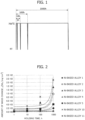
FIG. 1 is a representation of repetitive oxidation tests conducted in an Example. -
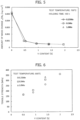
FIG. 2 is a plot of results of the repetitive oxidation tests conducted in an Example. -
FIG. 3 is a plot of results of the repetitive oxidation tests conducted in an Example. -
FIG. 4 is a plot of results of the repetitive oxidation tests conducted in an Example. -
FIG. 5 is a plot of results of the repetitive oxidation tests conducted in an Example. -
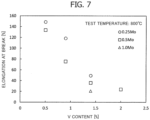
FIG. 6 is a plot of results of tensile tests conducted in an Example. -
FIG. 7 is a plot of results of tensile tests conducted in an Example. - The present invention is characterized by the finding of a Ni-based alloy that can maintain the high-temperature oxidation resistance of
Patent Document 1 even though the Cr content is reduced, or no Cr is added. The Ni-based alloy of the present invention will be described in detail in terms of the reasons for the numerical limitation of the constituent elements in the composition. - Al is an element that forms an alumina coating over the surface of the Ni-based alloy to increase the high-temperature oxidation resistance and reduce the production of oxide scale. However, excessively high Al content causes y' phases (Ni3Al intermetallic compound) to precipitate in the matrix of the Ni-based alloy and results in reduced hot workability, making it difficult to work the alloy.
- Accordingly, the Al content is 2.0% to 5.0% by mass (hereinafter simply expressed as "%"). Preferably, it is 2.5% or more, more preferably 3.0% or more, and still more preferably 3.5% or more. Also, preferably, it is 4.7% or less, more preferably 4.5% or less, and still more preferably 4.2% or less.
- Si is an element that increases high-temperature oxidation resistance. However, excessively high Si content causes the alloy to crack easily during hot working. Accordingly, the Si content is 0.1% to 2.5%. Preferably, it is 0.3% or more, more preferably 0.6% or more, and still more preferably 0.8% or more. Also, preferably, it is 2.2% or less, more preferably 1.9% or less, and still more preferably 1.7% or less.
- Mn is an element that increases high-temperature strength. However, excessively high Mn content reduces high-temperature oxidation resistance. Accordingly, the Mn content is 0.1% to 1.5%. Preferably, it is 0.2% or more, more preferably 0.3% or more, and still more preferably 0.4% or more. Also, preferably, it is 1.2% or less, more preferably 0.9% or less, and still more preferably 0.6% or less.
- V is an element that increases high-temperature oxidation resistance and is, therefore, a useful alternative to Cr. However, excessively high V content increases the amount of precipitation of γ' phases (Ni3Al intermetallic compound) and results in reduced hot workability. Accordingly, the V content is 0.4% to 3.0%. Preferably, it is 0.7% or more, more preferably 0.9% or more, and still more preferably 1.0% or more. Further preferably, it is 1.1% or more, still further preferably 1.2% or more, and yet further preferably 1.3% or more. Also, preferably, it is 2.7% or less, more preferably 2.4% or less, and still more preferably 2.1% or less. Further preferably, it is 1.8% or less, still further preferably 1.6% or less, and yet further preferably 1.4% or less.
- B and Zr improve the hot forgeability of the Ni-based alloy in coexistence. This is probably because the coexistence of B and Zr strengthens the grain boundaries of the Ni-based alloy and, thus, reduces the grain boundary rupture during hot forging.
- Also, excessively low B content is not effective in the above improvement as desired, whereas excessively high B content conversely degrades the hot forgeability. Accordingly, the B content is 0.001% to 0.05%. Preferably, it is 0.003% or more, more preferably 0.005% or more, and still more preferably 0.007% or more. Also, preferably, it is 0.04% or less, more preferably 0.03% or less, still more preferably 0.02 % or less, and still further preferably 0.01% or less.
- Similarly, excessively low Zr content is not effective in the above improvement as desired, whereas excessively high Zr content conversely degrades the hot forgeability. Accordingly, the Zr content is 0.001% to 0.1%. Preferably, it is 0.005% or more, more preferably 0.007% or more, still more preferably 0.01% or more, and still further preferably 0.03% or more. Also, preferably, it is 0.08% or less, more preferably 0.07% or less, still more preferably 0.06% or less, and still further preferably 0.04% or less.
- Mo contributes to the improvement of high-temperature oxidation resistance and high-temperature strength and is, therefore, an element that can be added as needed. Since adding a trace amount of Mo can further increase high-temperature oxidation resistance, Mo is a useful element as an alternative to Cr. However, excessively high Mo content increases high-temperature strength and accordingly reduces hot workability. Therefore, the Mo content, if added, is 2.0% or less. Preferably, it is 1.6% or less, more preferably 1.2% or less, still more preferably 0.8% or less, and still further preferably 0.6% or less. Also, the Mo content, if added, is preferably 0.1% or more, more preferably 0.2% or more, and still more preferably 0.3% or more.
- The Ni-based alloy of the present invention contains the above-described elements, and the balance can be Ni and inevitable impurities. In such implementation, Cr may be added, provided that it is in a small amount, for example, 0% to 0.5%. Preferably, the Cr content is 0.3% or less, more preferably 0.1% or less.
- The Ni-based alloy of the present invention is excellent in hot workability as well as high-temperature oxidation resistance and, therefore, can be provided in the form of plates, wires, or tubes by applying hot working to the ingot in various manners, such as forging and rolling. These materials are worked into jigs and members, for example, members such as chip capacitor firing trays, lithium battery positive electrode material firing trays, CVD apparatus members, PVD apparatus members, LCD apparatus members, and semiconductor manufacturing apparatus members. The Ni-based alloy can also be used for various applications requiring high-temperature oxidation resistance and hot forgeability, such as oxidation furnace members, firing furnace members, muffles for firing silver-tin, process jigs for manufacturing cemented carbide, and retorts for firing special powder (e.g., LED materials).
- Materials were blended in predetermined proportions, melted in a vacuum melting furnace, and then cast to produce 10 kg of a Ni-based alloy ingot having the alloy composition presented in Table 1.
Alloy 10 corresponds to the Ni-based alloy ofPatent Document 1.Alloy 11 corresponds to the Ni-based alloy ofPatent Document 2. - Subsequently, the resulting ingot was heated to a temperature of 1200°C and, in this state, subjected to hot forging to produce a plate with dimensions of 25 mm in thickness and 50 mm in width. At this time, the temperature of the resulting plate was about 800°C at the end of hot forging. All the Ni-based alloys could be forged to the above dimensions without cracking or other problems. The resulting forged material was further worked to a length of 100 mm by machining.
Table 1 No. Element composition (mass%) Note Al Si Cr Mn V B Zr Mo Ni* 1 3.9 1.4 - 0.4 1.4 0.004 0.01 - Bal. Invention Example 2 2.9 1.3 - 0.4 1.4 0.004 0.01 - Bal. 3 2.9 1.1 - 0.4 1.4 0.004 0.01 - Bal. 4 3.9 1.4 - 0.4 1.4 0.004 0.01 0.5 Bal. 5 3.8 1.4 - 0.3 1.9 0.003 0.01 - Bal. 10 3.9 1.5 2.0 0.5 - 0.003 0.01 - Bal. Comparative Example 11 4.0 1.4 - 0.5 - 0.003 0.01 - Bal. * Inclusive of impurities - The above-prepared Ni-based
alloys 1 to 5, 10, and 11 were subjected to repetitive oxidation tests in the following manner to evaluate the high-temperature oxidation resistance. - First, the above-produced plates with a thickness t of 25 mm were worked into test pieces, each measuring 15 mm × 15 mm × 10 mm t. Then, the surface of each test piece was polished and finally finished with a #300 water-resistant emery paper. The polished test piece was degreased using ultrasonic cleaning by being immersed in a metal cleaner and a Fine Solve (both produced by Sankyo Chemical Co., Ltd.) and ethanol in this order. Then, the surface area (A0) was calculated by measuring the entire surface of the test piece, and the initial mass (W0) before the test was also measured.
- Subsequently, each test piece of Ni-based
alloys 1 to 5, 10, and 11 was subjected to repetitive oxidation tests by repeating cycles of heating, holding, and cooling in the air. The tests were conducted at 700°C, and the holding time was set at 1 h, 10 h, 100 h, and 1000 h on a logarithmic scale.FIG. 1 illustrates a thermal cycle of the test conditions ("RT" inFIG. 1 denotes room temperature). - The mass (Wx) of the test pieces was measured at each end of the thermal cycles (number of repetitions X = 1 to 4) in
FIG. 1 . Furthermore, the amount of mass change (ΔWx) per surface area was calculated by subtracting the initial mass (W0) from the mass (Wx) and dividing the resulting value by the surface area (A0). The amount of mass change (ΔWx) increases according to the rate of oxide scale formation and, when the oxide scale falls off, turns negative. The amounts of mass change (ΔWx) were plotted as an increase by oxidation on a graph at each holding time, and the state of oxide scale formation and separation was numerically determined for each time for evaluating high-temperature oxidation resistance. The following equation (1) was used for calculation.FIG. 2 presents the results.
- The results presented in
FIG. 2 show that the high-temperature oxidation resistances of Ni-basedalloys 1 to 5, which are invention examples, were superior to that of Ni-basedalloy 11, which is a comparative example. In particular, the high-temperature oxidation resistance of Ni-basedalloy 4 was similar to that of Ni-basedalloy 10, suggesting that the Ni-based alloy could maintain its excellent high-temperature oxidation resistance even though the Cr content was reduced. - The plates of Ni-based
alloys - Then, the surfaces of the metal pieces were polished and finally finished with a #320 water-resistant emery paper, thus producing test pieces with a thickness of 5 mm, a width of 15 mm, and a length of 15 mm, three for each alloy. The polished test pieces were degreased using ultrasonic cleaning by being immersed in a metal cleaner and a Fine Solve (both produced by Sankyo Chemical Co., Ltd.) and ethanol in this order. Then, the surface area (A0) was calculated by measuring the entire surface of the test piece, and the initial mass (W0) before the test was also measured. Then, the test pieces were subjected to oxidation tests in the same manner as in Example 1. The test temperature was set at 700°C, and the number of thermal cycles was one with a holding time of 100 h (number of cycles X = 1).
- After the oxidation test, the amount of mass change per surface area (ΔWx) of the test pieces was calculated, and the results are presented in
FIG. 3 . The calculated amount of mass change (ΔWx) is the average of the values obtained for the three test pieces of each alloy. The Ni-based alloys of invention examples could sufficiently maintain their excellent high-temperature oxidation resistance even though the Cr content was reduced. - Materials were blended in predetermined proportions, melted in a vacuum melting furnace, and then cast to produce 10 kg of a Ni-based alloy ingot having the alloy composition presented in Table 2. Alloy 12 corresponds to the Ni-based alloy of
Patent Document 1. Alloy 13 corresponds to the Ni-based alloy ofPatent Document 2. Alloys 14 to 16 are the Ni-based alloys for comparison and contain no V but contain Mo. - Subsequently, the resulting ingot was heated to a temperature of 1200°C and, in this state, subjected to hot forging to produce a plate with dimensions of 25 mm in thickness and 50 mm in width. At this time, the temperature of the resulting plate was about 800°C at the end of hot forging. All the Ni-based alloys could be forged to the above dimensions without cracking or other problems. The resulting forged material was further worked into a plate with a thickness of 7 mm, a width of 17 mm, and a length of 60 mm by machining. The resulting plate was heat-treated by air-cooling from 900°C under the assumption of the form of the final product (that is, for grain refinement in the microstructure) and then machined into a metal piece with a thickness of 7 mm, a width of 17 mm, and a length of 17 mm.
Table 2 No. Element composition (mass%) Note Al Si Cr Mn V B Zr Mo Ni* 12 3.9 1.4 1.9 0.5 - 0.004 0.01 - Bal. Comparative Example 13 3.9 1.4 - 0.5 - 0.004 0.01 - Bal. 14 4.0 1.4 - 0.5 - 0.003 0.01 0.25 Bal. 15 4.0 1.4 - 0.5 - 0.004 0.01 0.5 Bal. 16 4.0 1.4 - 0.5 - 0.006 0.01 1.0 Bal. 17 4.0 1.4 - 0.4 1.4 0.004 0.01 - Bal. Invention Example 18 4.0 1.4 - 0.4 2.0 0.003 0.01 - Bal. 19 4.1 1.4 - 0.4 1.4 0.004 0.01 0.5 Bal. 20 4.0 1.4 - 0.4 2.0 0.004 0.01 0.5 Bal. 21 4.0 1.4 - 0.4 0.9 0.004 0.01 0.5 Bal. 22 3.8 1.4 - 0.5 0.5 0.003 0.01 0.5 Bal. 23 4.0 1.4 - 0.4 1.4 0.004 0.01 1.0 Bal. 24 4.0 1.5 - 0.4 1.4 0.004 0.01 0.24 Bal. 25 4.0 1.4 - 0.4 0.9 0.004 0.01 0.25 Bal. 26 3.9 1.4 - 0.5 0.5 0.004 0.01 0.25 Bal. * Inclusive of impurities - For the above-described Ni-based alloys 12 to 16 (comparative examples) and 17 to 26 (invention examples), the surfaces of the metal pieces were polished and finally finished with a #320 water-resistant emery paper, thus producing test pieces with a thickness of 5 mm, a width of 15 mm, and a length of 15 mm, three for each alloy. The polished test pieces were degreased and subjected to the calculation of their surface area (A0) and measurement of the initial mass (W0) before tests in the same manner as in Example 1. Then, oxidation tests were conducted for evaluating high-temperature oxidation resistance. The tests were conducted at 700°C, and the holding time was set at 1 h, 10 h, and 100 h. After the oxidation test, the amount of mass change per surface area (ΔWx) of the test pieces was calculated. The calculated amount of mass change (ΔWx) is the average of the values of the three test pieces of each alloy.
-
FIG. 4 shows the relationship between the holding time and the amount of mass change (ΔWx). The elements not contained are represented as "0"%. The results ofalloys 14 and 21 to 26 are omitted. First,alloys 13, 15, and 16 were compared, and the results showed that the presence of Mo in Ni-based alloys reduces the amount of mass change (ΔWx) exhibited in alloy 13, which is a known alloy, even though V is not added. However, the reduction in mass change was not as great as those of alloys 17 to 20 as invention examples, which contain V. - Among alloys 17 to 20 according to the present invention,
alloys alloy 20 are reduced to the level comparable to those of alloy 12. Thus, it is confirmed that the present invention in which the addition of V and further addition of Mo are combined is effective in improving oxidation resistance. - With regard to the above results,
FIG. 5 shows the relationship between the V content and the amount of mass change (ΔWx) at a holding time of 100 h for each Mo content of Mo-containing Ni-based alloys. InFIG. 5 , circular marks indicate alloys containing about 0.25% of Mo (alloys 14, 24, 25, and 26); square marks indicate alloys containing about 0.5% of Mo (alloys alloys 14 and 15, which do not contain V, and the other alloys suggest that only when Mo is added to the Ni-based alloy containing an amount of V, according to the present invention, the addition of Mo can produce the effect of improving oxidation resistance. - Furthermore, to confirm that the Ni-base alloys of the present invention could be forged without cracking or other problems in the hot forging operation described above, Ni-based alloys discussed in
FIG. 5 other thanalloys 14 and 15 were subjected to tensile tests at 800°C, which is the assumed forging end temperature. The results are presented inFIGs. 6 and7 . Basically, increasing the amount of V increases the tensile strength of the Ni-based alloys and reduces the elongation at break of the alloys. The tensile strength and the elongation at break are 360 MPa or less and 20% or more, respectively, from which sufficient hot workability is determined to be maintained.
Claims (3)
- ANi-based alloy having excellent high-temperature oxidation resistance, comprising, by mass,2.0% to 5.0% of Al,0.1% to 2.5% of Si,0.1% to 1.5% of Mn,0.4% to 3.0% of V,0.001% to 0.05 % of B,0.001% to 0.1% of Zr, andthe balance of Ni with inevitable impurities.
- The Ni-based alloy having excellent high-temperature oxidation resistance according to claim 1, wherein the Ni-based alloy comprises 1.0% to 3.0% by mass of V.
- The Ni-based alloy having excellent high-temperature oxidation resistance according to claim 1 or 2, further comprising 2.0% by mass or less of Mo.
Applications Claiming Priority (3)
| Application Number | Priority Date | Filing Date | Title |
|---|---|---|---|
| JP2022134399 | 2022-08-25 | ||
| JP2023033241 | 2023-03-03 | ||
| PCT/JP2023/025822 WO2024042902A1 (en) | 2022-08-25 | 2023-07-13 | Ni-based alloy having excellent high-temperature oxidation resistance |
Publications (2)
| Publication Number | Publication Date |
|---|---|
| EP4578971A1 true EP4578971A1 (en) | 2025-07-02 |
| EP4578971A4 EP4578971A4 (en) | 2026-08-05 |
Family
ID=90013117
Family Applications (1)
| Application Number | Title | Priority Date | Filing Date |
|---|---|---|---|
| EP23857019.6A Pending EP4578971A4 (en) | 2022-08-25 | 2023-07-13 | Ni-based alloy with excellent high-temperature oxidation resistance |
Country Status (5)
| Country | Link |
|---|---|
| EP (1) | EP4578971A4 (en) |
| JP (1) | JP7420325B1 (en) |
| KR (1) | KR102961406B1 (en) |
| CN (1) | CN119421966A (en) |
| WO (1) | WO2024042902A1 (en) |
Family Cites Families (6)
| Publication number | Priority date | Publication date | Assignee | Title |
|---|---|---|---|---|
| JPS6043897B2 (en) * | 1978-09-07 | 1985-10-01 | 日本特殊陶業株式会社 | Nickel alloy for spark plug electrodes |
| JP3265601B2 (en) * | 1991-03-26 | 2002-03-11 | 住友金属工業株式会社 | Nickel-base heat-resistant alloy |
| JPH0853729A (en) * | 1994-08-09 | 1996-02-27 | Mitsubishi Materials Corp | Ni-based alloy |
| JP6153256B2 (en) * | 2012-09-27 | 2017-06-28 | 日立金属Mmcスーパーアロイ株式会社 | Ni-base alloy excellent in hot forgeability, high-temperature oxidation resistance and high-temperature halogen gas corrosion resistance, and member using this Ni-base alloy |
| JP6164736B2 (en) * | 2013-08-27 | 2017-07-19 | 日立金属Mmcスーパーアロイ株式会社 | Ni-base alloy excellent in hot forgeability, high-temperature oxidation resistance and high-temperature halogen gas corrosion resistance, and member using this Ni-base alloy |
| JP6864858B2 (en) * | 2019-03-04 | 2021-04-28 | 日立金属株式会社 | Ni-based corrosion-resistant alloy powder for laminated molding, manufacturing method of laminated molded products using this powder |
-
2023
- 2023-07-13 JP JP2023556895A patent/JP7420325B1/en active Active
- 2023-07-13 KR KR1020247041558A patent/KR102961406B1/en active Active
- 2023-07-13 EP EP23857019.6A patent/EP4578971A4/en active Pending
- 2023-07-13 WO PCT/JP2023/025822 patent/WO2024042902A1/en not_active Ceased
- 2023-07-13 CN CN202380049469.1A patent/CN119421966A/en active Pending
Also Published As
| Publication number | Publication date |
|---|---|
| KR20250011174A (en) | 2025-01-21 |
| KR102961406B1 (en) | 2026-05-08 |
| WO2024042902A1 (en) | 2024-02-29 |
| JP7420325B1 (en) | 2024-01-23 |
| JPWO2024042902A1 (en) | 2024-02-29 |
| CN119421966A (en) | 2025-02-11 |
| EP4578971A4 (en) | 2026-08-05 |
Similar Documents
| Publication | Publication Date | Title |
|---|---|---|
| TWI645049B (en) | Processable high strength, oxidation resistant Ni-Cr-Co-Mo-Al alloy | |
| CN102586652B (en) | For the Ni-Cr-Co alloy of advanced gas turbine engines | |
| EP2675931B1 (en) | HIGH TEMPERATURE LOW THERMAL EXPANSION Ni-Mo-Cr ALLOY | |
| RU2507290C2 (en) | Heat-resistant alloy suitable for welding and resistant to oxidation | |
| EP0648850A1 (en) | Nickel-based alloy | |
| EP3612656B1 (en) | Precipitation hardenable cobalt-nickel base superalloy and article made thereform | |
| BR112016011060B1 (en) | hardening nickel-chromium-iron-titanium-aluminum alloy, and its uses | |
| EP2826877A2 (en) | Hot-forgeable Nickel-based superalloy excellent in high temperature strength | |
| JP7137709B2 (en) | Ni-based alloys, heat and corrosion resistant parts, parts for heat treatment furnaces | |
| JP6153256B2 (en) | Ni-base alloy excellent in hot forgeability, high-temperature oxidation resistance and high-temperature halogen gas corrosion resistance, and member using this Ni-base alloy | |
| US20200340081A1 (en) | Nickel-based alloy for hot forging die, hot forging die using same, and method for manufacturing forged product | |
| EP3719152A1 (en) | Ni-BASED ALLOY FOR HOT-WORKING DIE, AND HOT-FORGING DIE USING SAME | |
| EP3689493B1 (en) | Method for producing hot-forged material | |
| EP3040432B1 (en) | Ni-based alloy with excellent hot forgeability, resistance to high-temperature oxidation, and resistance to high-temperature halogen-gas corrosion, and member comprising said ni-based alloy | |
| US20260071302A1 (en) | Ni-based alloy having excellent high-temperature oxidation resistance | |
| RU2351673C1 (en) | CAST ALLOY ON BASIS OF INTERMETALLIDE Ni3Al AND PRODUCT IMPLEMENTED FROM IT | |
| JP7420325B1 (en) | Ni-based alloy with excellent high temperature oxidation resistance | |
| JPH07316697A (en) | Ni-based alloy with excellent workability and corrosion resistance | |
| JP2001152208A (en) | Oxide dispersion strengthened Ni-based alloy wire and method of manufacturing the same | |
| JPH083668A (en) | Ni-based alloy with excellent strength and corrosion resistance | |
| JPH07316699A (en) | Corrosion resistant nitride-dispersed Ni-based alloy with high hardness and strength | |
| JPH0633206A (en) | Method for heat-treating ni-base alloy | |
| JPH06240391A (en) | Nickel-tungsten alloy excellent in high temperature strength, method for producing the same, and jig for hot working using the same | |
| JPH07316700A (en) | Corrosion resistant nitride-dispersed Ni-based alloy with high hardness and strength | |
| JPH0277539A (en) | Corrosion-resistant ni-base alloy having excellent bendability |
Legal Events
| Date | Code | Title | Description |
|---|---|---|---|
| STAA | Information on the status of an ep patent application or granted ep patent |
Free format text: STATUS: THE INTERNATIONAL PUBLICATION HAS BEEN MADE |
|
| PUAI | Public reference made under article 153(3) epc to a published international application that has entered the european phase |
Free format text: ORIGINAL CODE: 0009012 |
|
| STAA | Information on the status of an ep patent application or granted ep patent |
Free format text: STATUS: REQUEST FOR EXAMINATION WAS MADE |
|
| 17P | Request for examination filed |
Effective date: 20250218 |
|
| AK | Designated contracting states |
Kind code of ref document: A1 Designated state(s): AL AT BE BG CH CY CZ DE DK EE ES FI FR GB GR HR HU IE IS IT LI LT LU LV MC ME MK MT NL NO PL PT RO RS SE SI SK SM TR |
|
| DAV | Request for validation of the european patent (deleted) | ||
| DAX | Request for extension of the european patent (deleted) | ||
| REG | Reference to a national code |
Ref country code: DE Ref legal event code: R079 Free format text: PREVIOUS MAIN CLASS: C22C0019030000 Ipc: C22C0019000000 |
|
| A4 | Supplementary search report drawn up and despatched |
Effective date: 20260703 |
|
| RIC1 | Information provided on ipc code assigned before grant |
Ipc: C22C 19/00 20060101AFI20260702BHEP Ipc: C22C 19/03 20060101ALI20260702BHEP Ipc: C22F 1/00 20060101ALI20260702BHEP Ipc: C22F 1/10 20060101ALI20260702BHEP Ipc: C22C 19/05 20060101ALN20260702BHEP |