EP4578385A1 - Flexible polymeric dry electrode with conducting capabilities - Google Patents
Flexible polymeric dry electrode with conducting capabilities Download PDFInfo
- Publication number
- EP4578385A1 EP4578385A1 EP23220777.9A EP23220777A EP4578385A1 EP 4578385 A1 EP4578385 A1 EP 4578385A1 EP 23220777 A EP23220777 A EP 23220777A EP 4578385 A1 EP4578385 A1 EP 4578385A1
- Authority
- EP
- European Patent Office
- Prior art keywords
- electrode
- dry electrode
- flexible polymeric
- previous
- conductive
- Prior art date
- Legal status (The legal status is an assumption and is not a legal conclusion. Google has not performed a legal analysis and makes no representation as to the accuracy of the status listed.)
- Withdrawn
Links
Images
Classifications
-
- A—HUMAN NECESSITIES
- A61—MEDICAL OR VETERINARY SCIENCE; HYGIENE
- A61B—DIAGNOSIS; SURGERY; IDENTIFICATION
- A61B5/00—Measuring for diagnostic purposes; Identification of persons
- A61B5/24—Detecting, measuring or recording bioelectric or biomagnetic signals of the body or parts thereof
- A61B5/25—Bioelectric electrodes therefor
- A61B5/263—Bioelectric electrodes therefor characterised by the electrode materials
- A61B5/268—Bioelectric electrodes therefor characterised by the electrode materials containing conductive polymers, e.g. PEDOT:PSS polymers
-
- A—HUMAN NECESSITIES
- A61—MEDICAL OR VETERINARY SCIENCE; HYGIENE
- A61B—DIAGNOSIS; SURGERY; IDENTIFICATION
- A61B5/00—Measuring for diagnostic purposes; Identification of persons
- A61B5/145—Measuring characteristics of blood in vivo, e.g. gas concentration or pH-value ; Measuring characteristics of body fluids or tissues, e.g. interstitial fluid or cerebral tissue
- A61B5/1468—Measuring characteristics of blood in vivo, e.g. gas concentration or pH-value ; Measuring characteristics of body fluids or tissues, e.g. interstitial fluid or cerebral tissue using chemical or electrochemical methods, e.g. by polarographic means
- A61B5/1486—Measuring characteristics of blood in vivo, e.g. gas concentration or pH-value ; Measuring characteristics of body fluids or tissues, e.g. interstitial fluid or cerebral tissue using chemical or electrochemical methods, e.g. by polarographic means using enzyme electrodes, e.g. with immobilised oxidase
-
- A—HUMAN NECESSITIES
- A61—MEDICAL OR VETERINARY SCIENCE; HYGIENE
- A61B—DIAGNOSIS; SURGERY; IDENTIFICATION
- A61B5/00—Measuring for diagnostic purposes; Identification of persons
- A61B5/145—Measuring characteristics of blood in vivo, e.g. gas concentration or pH-value ; Measuring characteristics of body fluids or tissues, e.g. interstitial fluid or cerebral tissue
- A61B5/1468—Measuring characteristics of blood in vivo, e.g. gas concentration or pH-value ; Measuring characteristics of body fluids or tissues, e.g. interstitial fluid or cerebral tissue using chemical or electrochemical methods, e.g. by polarographic means
-
- A—HUMAN NECESSITIES
- A61—MEDICAL OR VETERINARY SCIENCE; HYGIENE
- A61B—DIAGNOSIS; SURGERY; IDENTIFICATION
- A61B5/00—Measuring for diagnostic purposes; Identification of persons
- A61B5/24—Detecting, measuring or recording bioelectric or biomagnetic signals of the body or parts thereof
- A61B5/25—Bioelectric electrodes therefor
- A61B5/263—Bioelectric electrodes therefor characterised by the electrode materials
- A61B5/265—Bioelectric electrodes therefor characterised by the electrode materials containing silver or silver chloride
Definitions
- the present invention is part of the technical sector of electrodes for the monitoring of physical, electrophysiological, electrochemical, chemical or biological signals, which allow monitoring of different parameters, both in medical and/or non-medical environments.
- the present invention describes a flexible polymeric electrode, which allows to support biological material for the realization of electrophysiological, physical and/or chemical measures, while ensuring electrical conductivity and sufficient biocompatibility to guarantee its safety in prolonged use, which, in addition, does not require the application of gels when used superficially, in direct contact with the user's skin.
- Electrodes are used for the monitoring of parameters such as the recording of electrical pulses in living organisms. The most common applications are the electrodes used in pacemakers, electrocardiograms or electrostimulators.
- biopolymers because the use of organic materials in the development of bioelectrodes has been considerably extended, particularly the use of synthetic materials, or renewable materials obtained from natural resources, commonly referred to as biopolymers.
- the use of synthetic polymers as support materials has the advantages of allowing the selection of the monomers that compose it, depending on the final application of the electrode itself, including or not biological material as incorporated enzymes.
- the type of monomers is determined by their structure and properties, such as solubility, porosity, stability, as well as their resistant and mechanical properties. In addition, they allow the modification of chemical groups for the subsequent functionalization of the electrode.
- biopolymers that is, polymers of natural origin
- biodegradability low toxicity
- an excellent affinity for proteins which makes them optimal materials for the immobilization of enzymes and other elements of biological recognition, minimizing the negative effects in terms of the stability of the enzyme.
- biocompatibility properties allow its use in applications for implantable or wearable devices.
- the most developed strategies are based on the use of biopolymers and carbonaceous materials to increase the conductive capacity.
- the most prominent strategies are the Buckypaper, the use of electrospun materials, and polymer membranes.
- the Buckypaper is based on the use of macroscopic sheets formed from carbon nanomaterials that, despite not being composed of polymeric materials, their configuration is flexible and have charge transfer capacity and biocompatibility.
- the biggest advantage they have is that it is not necessary to include an additional support that acts as a current collector.
- they are lightweight materials and can be processed with different shapes and sizes. However, they have low conductivity, which is insufficient in certain applications.
- Electro-spin materials are based on the use of large-length nanofibers, with constant diameter and heterogeneous composition, with high porosity and large surface area, which are also biocompatible and with high mechanical strength. Its advantage is that, due to the heterogeneity of materials, properties adapted to the enzyme and its particular application can be obtained. However, they present a very laborious synthesis process.
- Polymeric membranes have a large surface area, which allows the efficient bonding of immobilized biological material.
- they have good porosity, comprising the pores of a well-defined size and structure, which facilitate the immobilization of biomolecules, not only on the surface of the support itself, but also inside the pores.
- they have a good diffusion capacity and mechanical stability.
- the polymeric material is soluble in water, which may be chitosan among others, which includes carbon black as a filling material, obtaining a gel that guarantees excellent biocompatibility and sensitivity.
- WO 2020107345 describes an implantable flexible electrode, which comprises at least one functional layer that can be of conductive materials, such as graphene, carbon nanotubes or polypyrrole.
- This electrode requires the use of polymer hydrogel, such as chitosan, in the electrode stimulation area.
- the flexible polymeric electrode with conductive capabilities that the invention proposes is configured, therefore, as a remarkable novelty within its field of application, since, according to its implementation and exhaustively, the objectives indicated are achieved, being the characteristic details that make it possible and that distinguish them, conveniently included in the final claims that accompany this description.
- the present invention describes a flexible polymeric membrane with conductive capacities, which comprises a support made as a flexible polymeric membrane, with at least a biocompatible support material, to which a carbon-based material is added, preferably a nanomaterial, to improve the conductive properties.
- the flexible polymer membrane object of the present invention can be doped with a conductive polymer and/or a metal element that increases the conductivity of the electrode.
- the invention proposes different applications of the polymeric electrode with conductive capabilities.
- the invention describes the use of the flexible polymeric electrode with conductive capabilities, as a dry electrode that is used to record and monitor signals of a physical nature (electrophysiological) without the need to use gel, such as an electrocardiogram or an electroencephalogram, so that the electrode is in direct contact with the patient's skin in order to monitor the electrical signals.
- a dry electrode that is used to record and monitor signals of a physical nature (electrophysiological) without the need to use gel, such as an electrocardiogram or an electroencephalogram, so that the electrode is in direct contact with the patient's skin in order to monitor the electrical signals.
- This dry electrode comprises a support made as a flexible polymeric membrane, with at least one biocompatible support material, to which a carbon-based material is added, preferably a nanomaterial, to improve its conductive properties. In addition, it could be doped with a conductive polymer or metal.
- the invention describes an electrode for the registration and monitoring of chemical or biological signals, which will include a biological and/or chemical recognition element, allowing its use as a sensor of chemical, electrical and/or biological parameters.
- This electrode comprises a support made as a flexible polymer membrane, with at least one biocompatible support material, to which a carbon-based material is added, preferably a nanomaterial, to improve its conductive properties, in addition, it could be doped with a conductive polymer.
- the chemical and/or biological recognition element is chosen from among those in the following list: a protein and/or an enzyme and/or a peptide and/or an antibody and/or a nanoantibody and/or a DNA sequence and/or an RNA sequence and/or a CRISPR system and/ or any biological recognition element derived from the previous elements or an ionophore or a molecular printing polymer (MIPs) or synthetic molecular recognition polymers or any chemical recognition element derived from the above elements.
- MIPs molecular printing polymer
- any of the electrodes described above may include components with elastic properties, which allow their elastic deformation without breakage or erroneous operation.
- the flexible polymer electrode with conductive capabilities, and the set of elements described, represent an innovation of structural and constitutive characteristics unknown until now, reasons that, together with its practical usefulness, provide it with sufficient foundation to obtain the privilege of exclusivity that is requested.
- the combination of the biocompatible component and the carbon-based material is doped with a conductive polymeric material, such as polypyrrole or PEDOT; and/or with a metal element, such as the use of gold or silver nanoparticles.
- a conductive polymeric material such as polypyrrole or PEDOT
- a metal element such as the use of gold or silver nanoparticles.
- the fixing means (1) can be of different types, such as, for example, and not limited to, an adhesive element or a flexible support such as elastic band or similar, as long as contact with the skin is guaranteed.
- Electrode for recording and monitoring physical, chemical or biological signals
- the biocompatible component is chitosan
- the carbon-based material is carbon black
- the combination of the biocompatible component and the carbon-based material is doped with a conductive polymeric material, such as polypyrrole or PEDOT; and/or with a metal element, such as the use of gold or silver nanoparticles.
- a conductive polymeric material such as polypyrrole or PEDOT
- a metal element such as the use of gold or silver nanoparticles.
- the combination of chitosan and carbon black will be doped with a conductive polymeric material, particularly polypyrrole, which improves electronic transfer with respect to conventional electrodes.
- a conductive polymeric material particularly polypyrrole
- the chemical and/or biological recognition element is chosen from the following list: a protein and/or an enzyme and/or a peptide and/or an antibody and/or a nanoantibody and/or a DNA sequence and/or an RNA sequence and/or a CRISPR system and/or any biological recognition element derived directly or indirectly from the above elements.
- the biological recognition element can be chosen from among those in the following list: an ionophore or a molecular printing polymer (MIPs) or synthetic molecular recognition polymers or any chemical recognition element derived directly or indirectly from the above elements.
- MIPs molecular printing polymer
- synthetic molecular recognition polymers any chemical recognition element derived directly or indirectly from the above elements.
Landscapes
- Life Sciences & Earth Sciences (AREA)
- Health & Medical Sciences (AREA)
- Physics & Mathematics (AREA)
- Biomedical Technology (AREA)
- Medical Informatics (AREA)
- Veterinary Medicine (AREA)
- Public Health (AREA)
- Biophysics (AREA)
- Pathology (AREA)
- Engineering & Computer Science (AREA)
- General Health & Medical Sciences (AREA)
- Heart & Thoracic Surgery (AREA)
- Animal Behavior & Ethology (AREA)
- Molecular Biology (AREA)
- Surgery (AREA)
- Optics & Photonics (AREA)
- Chemical & Material Sciences (AREA)
- Chemical Kinetics & Catalysis (AREA)
- General Chemical & Material Sciences (AREA)
- Measurement And Recording Of Electrical Phenomena And Electrical Characteristics Of The Living Body (AREA)
- Materials For Medical Uses (AREA)
Abstract
Flexible polymer electrode, which allows to support biological material for the realization of electrophysiological, physical, chemical and/or biological measures ensuring sufficient biocompatibility to guarantee its safety in prolonged use, which in addition, does not require the application of gels when used superficially, in direct contact with the patient's skin, from a flexible polymeric membrane, with at least one biocompatible support material, which includes: a synthetic or natural biocompatible component and a carbon-based material, which may be doped with a conductive polymer and/or a metallic element.
Description
- The present invention is part of the technical sector of electrodes for the monitoring of physical, electrophysiological, electrochemical, chemical or biological signals, which allow monitoring of different parameters, both in medical and/or non-medical environments.
- In particular, the present invention describes a flexible polymeric electrode, which allows to support biological material for the realization of electrophysiological, physical and/or chemical measures, while ensuring electrical conductivity and sufficient biocompatibility to guarantee its safety in prolonged use, which, in addition, does not require the application of gels when used superficially, in direct contact with the user's skin.
- Electrodes are used for the monitoring of parameters such as the recording of electrical pulses in living organisms. The most common applications are the electrodes used in pacemakers, electrocardiograms or electrostimulators.
- In the latter applications, it is necessary to install in vivo electrodes, where the interaction between the electrodes and their host determines their viability in the body, especially in the long term.
- There are many materials that are supposed to be biocompatible and potentially suitable to be implanted in living tissues, however, living tissues and organisms often respond by causing epithelialization, making their use difficult.
- In this sense, one of the strategies to avoid this type of phenomenon would be the design of flat and flexible electrodes, without edges, and with rounded shapes, that have a small thickness.
- Currently, polymeric materials are widely known, which offer numerous advantages for the design of electrodes, both for their lightness, malleability, corrosion resistance and low cost, as well as for their electrical, mechanical and optical properties.
- Particularly, when they are used in electrochemical applications, their behavior is that of a semiconductor, so it is necessary to increase the conductivity of polymers. One of the most used strategies is the preparation of composites, that is, materials composed of a heterogeneous mixture of materials; including nanomaterials that improve the properties of polymers.
- On the other hand, for the preparation and development of bioelectrodes, different types of conductive organic polymers are used, but their use in the development of certain implantable or wearable devices is limited by their biocompatibility, low conductivity or affinity for biomolecules, and reduced possibility of adapting to different configurations.
- That is why the use of organic materials in the development of bioelectrodes has been considerably extended, particularly the use of synthetic materials, or renewable materials obtained from natural resources, commonly referred to as biopolymers.
- The use of synthetic polymers as support materials has the advantages of allowing the selection of the monomers that compose it, depending on the final application of the electrode itself, including or not biological material as incorporated enzymes. The type of monomers is determined by their structure and properties, such as solubility, porosity, stability, as well as their resistant and mechanical properties. In addition, they allow the modification of chemical groups for the subsequent functionalization of the electrode.
- However, the use of polymers as support elements for the biological material, presents the limitation that the synthesis involves a slow, laborious process that involves a high cost.
- On the other hand, biopolymers, that is, polymers of natural origin, have a plurality of properties due to their own nature, such as biodegradability, low toxicity and an excellent affinity for proteins, which makes them optimal materials for the immobilization of enzymes and other elements of biological recognition, minimizing the negative effects in terms of the stability of the enzyme. In addition, its biocompatibility properties allow its use in applications for implantable or wearable devices.
- An advantage offered by biopolymers is that they are obtained through simple procedures, being sometimes obtained from by-products of industrial processes, which reduces costs and frames them in the field of the circular economy.
- Biopolymers include proteins such as albumin, and materials of biological origin such as collagen, cellulose, keratin, carrageenan, chitin, chitosan or alginate.
- Chitosan is the most widely used biopolymer as an enzyme immobilization support, due to its excellent biocompatibility properties and its low cost, in addition to its ability to be configured in a multitude of morphologies.
- Within bioelectrodes, there are numerous manufacturing techniques that include chitosan, the most used being the compact tablets of carbonic materials, rigid carbon electrodes or metals such as gold or platinum, on which additional layers of different materials are deposited, in order to modify their properties and maximize the electronic transfer or load of immobilized biological material.
- However, these manufacturing modes are unsuitable to be integrated into the human body, since most of them are rigid, with low conductivity or are not biocompatible since they are mainly used in the development of biosensors for in vitro analysis.
- That is why it is necessary to develop flexible systems that can be used in in vivo applications, that have sufficient conductivity, can adapt to tissues and body surfaces, without causing allergic or toxic reactions in the individual, as well as being able to withstand the deformations and tensions of the daily routine.
- Therefore, the development of flexible and biocompatible bioelectrodes, which allow the immobilization of biological recognition elements, and that have conductive and electronic transfer capacity to build applicable biosensor electrodes, is of particular interest.
- In this sense, the most developed strategies are based on the use of biopolymers and carbonaceous materials to increase the conductive capacity. Among the most prominent strategies are the Buckypaper, the use of electrospun materials, and polymer membranes.
- The Buckypaper is based on the use of macroscopic sheets formed from carbon nanomaterials that, despite not being composed of polymeric materials, their configuration is flexible and have charge transfer capacity and biocompatibility. The biggest advantage they have is that it is not necessary to include an additional support that acts as a current collector. In addition, they are lightweight materials and can be processed with different shapes and sizes. However, they have low conductivity, which is insufficient in certain applications.
- Electro-spin materials are based on the use of large-length nanofibers, with constant diameter and heterogeneous composition, with high porosity and large surface area, which are also biocompatible and with high mechanical strength. Its advantage is that, due to the heterogeneity of materials, properties adapted to the enzyme and its particular application can be obtained. However, they present a very laborious synthesis process.
- Polymeric membranes have a large surface area, which allows the efficient bonding of immobilized biological material. In addition, they have good porosity, comprising the pores of a well-defined size and structure, which facilitate the immobilization of biomolecules, not only on the surface of the support itself, but also inside the pores. Likewise, they have a good diffusion capacity and mechanical stability.
- Its flexibility characteristics make it easy to prepare with different morphologies, adapting to any application.
- The need to apply these elements in in viva systems makes it necessary to make advances in the design that improve the density of power obtained, the output voltage, the operational stability of biodevices and the appropriate characteristics for the immobilization of biological recognition elements. In addition, it is necessary that they have other properties such as high contact area, electrical conductivity and mechanical stability.
- In this sense, we can find in the state of the art different documents that refer to this type of electrodes.
- We can find, for example, the document
WO2018218969 , which describes the development of an electrode composed of a substrate of mainly non-woven fibers, which uses a layer of adhered conductive gel for use in an electrocardiogram and electroencephalogram apparatus. - In particular, the polymeric material is soluble in water, which may be chitosan among others, which includes carbon black as a filling material, obtaining a gel that guarantees excellent biocompatibility and sensitivity.
- We can also find document
US 20210268152 , which describes a conductive and biocompatible membrane capable of transporting the electrical potential of a cardiac impulse. This membrane comprises gelatin, a conductive polymer and a biocompatible component, where the conductive polymer can be polypyrrole, and the biocompatible component can be chitosan, among others. - We can also find document
WO 2020107345 , which describes an implantable flexible electrode, which comprises at least one functional layer that can be of conductive materials, such as graphene, carbon nanotubes or polypyrrole. This electrode requires the use of polymer hydrogel, such as chitosan, in the electrode stimulation area. - We can also find document
US 20010031988 , which describes a biological electrode for bioelectric control and/or bioelectric stimulation, which consists of an electrode of biodegradable material, such as chitosan, which is used as a matrix that acquires conductivity after adding a conductive filler, which can be carbon black. Likewise, it is indicated that the electrode requires a conductive gel. - We can also find different scientific publications that refer to the use of flexible electrodes such as the one entitled "Flexible and Conductive Bioelectrodes Based on Chitosan-Carbon Black Membranes: Towards the Development of Wearable Bioelectrodes" by Mireia Buaki-Sogó, Laura Garcia-Carmona, Mayte Gil-Agusti, Marta Garcia-Pellicer and Alfredo Quijano-López published in 2021, which describes the synthesis of a chitosan membrane with carbon black.
- The flexible polymeric electrode with conductive capabilities that the invention proposes is configured, therefore, as a remarkable novelty within its field of application, since, according to its implementation and exhaustively, the objectives indicated are achieved, being the characteristic details that make it possible and that distinguish them, conveniently included in the final claims that accompany this description.
- The present invention tries to solve the problems indicated above, in particular, it tries to offer a flexible, conductive polymeric electrode that allows to support biological material for the realization of electrophysiological, physical and/or chemical measures, ensuring enough biocompatibility to guarantee its safety in prolonged use, which in addition, does not require the application of gels when used superficially, in direct contact with the user's skin.
- Specifically, the present invention describes a flexible polymeric membrane with conductive capacities, which comprises a support made as a flexible polymeric membrane, with at least a biocompatible support material, to which a carbon-based material is added, preferably a nanomaterial, to improve the conductive properties.
- In addition, the flexible polymer membrane object of the present invention can be doped with a conductive polymer and/or a metal element that increases the conductivity of the electrode.
- Based on the previous description, the invention proposes different applications of the polymeric electrode with conductive capabilities.
- First of all, the invention describes the use of the flexible polymeric electrode with conductive capabilities, as a dry electrode that is used to record and monitor signals of a physical nature (electrophysiological) without the need to use gel, such as an electrocardiogram or an electroencephalogram, so that the electrode is in direct contact with the patient's skin in order to monitor the electrical signals.
- This dry electrode comprises a support made as a flexible polymeric membrane, with at least one biocompatible support material, to which a carbon-based material is added, preferably a nanomaterial, to improve its conductive properties. In addition, it could be doped with a conductive polymer or metal.
- As described above, it is a dry electrode, so it does not need the application of additional conductive gels, which over time may stop working properly, not allowing a good signal to be achieved, so they must be replaced, or that may cause irritation on the user's skin during prolonged exposures.
- Secondly, the invention describes an electrode for the registration and monitoring of chemical or biological signals, which will include a biological and/or chemical recognition element, allowing its use as a sensor of chemical, electrical and/or biological parameters.
- This electrode comprises a support made as a flexible polymer membrane, with at least one biocompatible support material, to which a carbon-based material is added, preferably a nanomaterial, to improve its conductive properties, in addition, it could be doped with a conductive polymer.
- In particular, the chemical and/or biological recognition element is chosen from among those in the following list: a protein and/or an enzyme and/or a peptide and/or an antibody and/or a nanoantibody and/or a DNA sequence and/or an RNA sequence and/or a CRISPR system and/ or any biological recognition element derived from the previous elements or an ionophore or a molecular printing polymer (MIPs) or synthetic molecular recognition polymers or any chemical recognition element derived from the above elements.
- In particular, any of the electrodes described above may include components with elastic properties, which allow their elastic deformation without breakage or erroneous operation.
- Likewise, they can also include elastic fixing media, plastics and/or any other type of flexible support. In this way, apart from the common uses of electrodes in medical fields, they can also be used as wearable or portable devices, being able to overcome those disadvantages of the state of the art, such as the wearing of watches in certain sports, or the impossibility of using chest bands.
- In this way, a flexible polymeric electrode is achieved with improved characteristics of biocompatibility in dermal and oral models, flexibility, adaptability, and conduction of electricity, which is obtained from a simple procedure free of toxic and low cost products, which also includes a composition that can be framed within the scope of the circular economy in terms of waste recovery, since chitosan can be obtained from the skins of seafood and crustaceans; and compostability, both of chitosan and carbonated material.
- The flexible polymer electrode with conductive capabilities, and the set of elements described, represent an innovation of structural and constitutive characteristics unknown until now, reasons that, together with its practical usefulness, provide it with sufficient foundation to obtain the privilege of exclusivity that is requested.
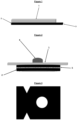
- To complement the description that is being made and in order to help a better understanding of the characteristics of the invention, a set of drawings is attached as an integral part of said description, where, with an illustrative and non-limiting nature, what has been represented has been following:
-
Figure 1 .- First example of a dry electrode for the monitoring of electrophysiological signals. -
Figure 2 .- Second example of a dry electrode for the monitoring of electrophysiological signals. -
Figure 3 .- Example of the realization of an electrode with a central hole. -
- 1. Fixing means
- 2. Chitosan membrane
- 3. Connection tongue
- 4. Connector
- 5. Conductive adhesive tape
- In the following detailed description of the preferred embodiments, reference is made to the attached drawings that are part of this report, and in which specific preferred embodiments in which the invention can be carried out are shown as an illustration.
- In a first mode of realization, the present invention describes a flexible polymer electrode with conductive capabilities, which is configured from a flexible polymer membrane, with at least one biocompatible support material, which includes:
- A synthetic or natural biocompatible component
- A carbon-based material, which is preferably a nanomaterial.
- In a preferred embodiment of the previous one, the polymeric electrode is doped with a conductive polymer, such as polypyrrole or PEDOT, and/or a metallic element, such as gold or silver metallic nanoparticles, for example; that improve the conductivity of the electrode.
- In a preferred embodiment, it is described that the support material is chitosan, which is used in an amount between 1% and 2% by weight, in a solution of acetic acid between 0.02 mol/l and 0.7 mol/l.
- In the same way, in another preferred embodiment, the porous material based on coal is carbon black, which is used in an amount between 10% and 150% by weight, with respect to the used mass of chitosan.
- In particular, the amount of carbon black used will be exactly 100% by weight with respect to the mass of chitosan used.
- By using the above compounds, within the ranges of values given, the applicants have managed to increase the conductive capacity of the electrode by between 10 and 100 orders of magnitude, depending on the amount of carbon black used.
- In a preferred embodiment, the invention will include a component with elastic properties, such as an elastomer or similar, so that the electrode can be used in applications that include elastic elements.
- Because the inclusion of the elements described, the invention achieves a biocompatible electrode, with better electronic transfer, and good mechanical properties of traction, torsion and bending. In addition, it is a simple synthesis free of toxic products that can be produced at a low cost.
- In a second way of carrying out the invention, a dry electrode for the recording and monitoring of electrophysiological signals is described, which includes a flexible polymeric membrane according to the previous mode of realization, that is, it comprises a flexible polymeric membrane with a biocompatible support that comprises at least one synthetic or natural biocompatible component and at least one carbon-based material, preferably a nanomaterial.
- In a preferred embodiment, the biocompatible component is chitosan, and the carbon-based material is carbon black.
- In addition, preferably, the combination of the biocompatible component and the carbon-based material is doped with a conductive polymeric material, such as polypyrrole or PEDOT; and/or with a metal element, such as the use of gold or silver nanoparticles.
- In a preferred embodiment of the previous one, the flexible polymer membrane may comprise a component with elastic properties.
- In another preferred embodiment, the electrode can include means of fixing textiles, plastics and/or any other type of flexible support, so that the electrode can be included in textile or similar garments
An example of application would consist of a sports garment, which includes a dry electrode according to the previous realization, and that the user uses during sports practices with the objective of constantly monitoring electrophysiological parameters, such as heart rate, without the need to wear other electronic devices, such as a sports watch or similar. - Based on the figures attached to this report, two examples of the realization of dry electrodes for the monitoring of electrophysiological signals are shown.
-
Figure 1 and Figure 2 shows a realization in which the fixing means (1) press and guarantee the contact of the chitosan membrane (2) with the patient's skin without using gel, comprising a connection tongue (3) that will serve as a direct connection to the electrocardiograph through the use of a connection clamp or similar. - The fixing means (1) can be of different types, such as, for example, and not limited to, an adhesive element or a flexible support such as elastic band or similar, as long as contact with the skin is guaranteed.
- On the other hand, in
Figure 2 , a similar system is observed, with fixing means (1) that guarantee the contact of the chitosan membrane (2) with the patient's skin, comprising a connector (4), which will be connected to the electrocardiographs through the normal means of connection. - Finally, in
Figure 3 it can be observed a mode of realization that the inventors found advantageous, in which a central hole is included that prevents the deformation of the electrode by being attached to the user's skin, maximizing the contact between the electrode and the user's skin. - In a third way of carrying out the invention, an electrode for the recording and monitoring of physical, chemical or biological signals is described, which includes a flexible polymer membrane with a biocompatible support material that comprises at least one synthetic or natural biocompatible component and at least one coal-based material, with at least one biological and/or chemical recognition element, configured to be used as a sensor of chemical, electrical and/or biological parameters.
- In a preferred embodiment, the biocompatible component is chitosan, and the carbon-based material is carbon black.
- In addition, preferably, the combination of the biocompatible component and the carbon-based material is doped with a conductive polymeric material, such as polypyrrole or PEDOT; and/or with a metal element, such as the use of gold or silver nanoparticles.
- Preferably, the combination of chitosan and carbon black will be doped with a conductive polymeric material, particularly polypyrrole, which improves electronic transfer with respect to conventional electrodes.
- In particular, the chemical and/or biological recognition element is chosen from the following list: a protein and/or an enzyme and/or a peptide and/or an antibody and/or a nanoantibody and/or a DNA sequence and/or an RNA sequence and/or a CRISPR system and/or any biological recognition element derived directly or indirectly from the above elements.
- Likewise, the biological recognition element can be chosen from among those in the following list: an ionophore or a molecular printing polymer (MIPs) or synthetic molecular recognition polymers or any chemical recognition element derived directly or indirectly from the above elements.
- According to the previous realizations of sensors, both electrophysiological and physical, chemical or biological, a sensor is obtained that does not require the use of conductive gel when measuring the parameters.
- Likewise, it is a sensor with superior oral and dermal biocompatibility compared to conventional commercial electrodes.
- Sufficiently described the nature of the present invention, as well as the way to put it into practice, it is not considered necessary to make its explanation more extensive so that any expert in the field understands its scope and the advantages that are derived from it, stating that, within its essentiality, it may be put into practice in other forms of realization that differ in detail from the one indicated by way of example, and to which the protection that is obtained will also reach, provided that its fundamental principle is not altered, modified or changed.
Claims (20)
- Flexible polymeric dry electrode with conductive capabilities configured from a flexible polymeric membrane with at least one biocompatible support material characterized in that the support material comprises a synthetic or natural biocompatible component and a carbon-based material.
- Flexible polymeric dry electrode with conductive capabilities according to the previous claim characterized in that is doped with a conductive polymer and/or a metallic element.
- Flexible polymeric dry electrode with conductive capabilities according to claim 2, characterized in that the conductive polymer is polypyrrole or PEDOT.
- Flexible polymeric dry electrode with conductive capabilities according to claim 2 or 3 characterized in that the metal element are metal nanoparticles.
- Flexible polymeric dry electrode with conductive capabilities according to any of the previous claims characterized in that the biocompatible support material is chitosan.
- Flexible polymeric dry electrode with conductive capabilities according to the previous claim characterized in that chitosan is used in an amount of 2% by weight of chitosan, in a solution of acetic acid between 0.02 mol/l and 0.7 mol/l.
- Flexible polymeric dry electrode with conductive capabilities according to any of the previous claims characterized in that the carbon-based material is carbon black.
- Flexible polymeric dry electrode with conductive capabilities according to the previous claim characterized in that the carbon black is used in an amount between 10% and 150% by weight with respect to the mass used of chitosan.
- Flexible polymeric dry electrode with conductive capabilities according to the previous claim characterized in that carbon black is used in an amount of 100% by weight with respect to the mass used of chitosan.
- Flexible polymeric dry electrode with conductive capabilities according to any of the preceding claims characterized in that comprises a component with elastic properties.
- Dry electrode for the registration and monitoring of electrophysiological signals characterized in that includes a flexible polymer membrane with a biocompatible support material that comprises at least a combination of a synthetic or natural biocompatible component and a carbon-based material.
- Dry electrode for the registration and monitoring of electrophysiological signals according to the previous claim characterized in that the biocompatible component is chitosan and the carbon-based material is carbon black.
- Dry electrode for the registration and monitoring of electrophysiological signals according to the previous claims characterized in that the combination of the synthetic or natural biocompatible component and the carbon-based material is doped with a conductive polymer and/or a metallic element.
- Dry electrode for the registration and monitoring of electrophysiological signals according to any of the preceding claims characterized in that the flexible polymeric membrane comprises a component with elastic properties.
- Dry electrode for the registration and monitoring of electrophysiological signals according to the previous claim characterized in that comprises fixing means, which are textile, plastic and/or flexible supports.
- Electrode for the recording and monitoring of physical, chemical or biological signals characterized in that includes a flexible polymer membrane with a biocompatible support material that comprises at least a combination of a synthetic or natural biocompatible component and a carbon-based material, with at least one biological and/or chemical recognition element that is configured to be used as a biosensor of chemical, electrical and/ or biological parameters.
- Electrode for the registration and monitoring of physical, chemical or biological signals according to the previous claim characterized in that the biocompatible component is chitosan and the carbon-based material is carbon black.
- Electrode for the registration and monitoring of physical, chemical or biological signals according to any of the preceding claims characterized in that the combination of the synthetic or natural biocompatible component and the carbon-based material is doped with a conductive polymer and/or a metallic element.
- Electrode for the registration and monitoring of physical, chemical or biological signals according to the previous claim characterized in that the chemical and/or biological recognition element is a protein and/or an enzyme and/or a peptide and/or an antibody and/or a nanoantibody and/or a DNA sequence and/or an RNA sequence and/or a CRISPR system and/or any biological recognition element derived directly or indirectly from the above elements.
- Electrode for the registration and monitoring of physical, chemical or biological signals according to any of the preceding claims characterized in that the biological recognition element is an ionophore or a molecular printing polymer (MIPs) or synthetic molecular recognition polymers or any chemical recognition element derived directly or indirectly from the above elements.
Priority Applications (3)
| Application Number | Priority Date | Filing Date | Title |
|---|---|---|---|
| EP23220777.9A EP4578385A1 (en) | 2023-12-29 | 2023-12-29 | Flexible polymeric dry electrode with conducting capabilities |
| EP25227501.1A EP4700381A3 (en) | 2023-12-29 | 2023-12-29 | ELECTRODE FOR RECORDING AND MONITORING PHYSICAL, CHEMICAL OR BIOLOGICAL SIGNALS |
| PCT/EP2024/088134 WO2025141002A1 (en) | 2023-12-29 | 2024-12-20 | Flexible polymeric dry electrode with conducting capabilities |
Applications Claiming Priority (1)
| Application Number | Priority Date | Filing Date | Title |
|---|---|---|---|
| EP23220777.9A EP4578385A1 (en) | 2023-12-29 | 2023-12-29 | Flexible polymeric dry electrode with conducting capabilities |
Related Child Applications (1)
| Application Number | Title | Priority Date | Filing Date |
|---|---|---|---|
| EP25227501.1A Division EP4700381A3 (en) | 2023-12-29 | 2023-12-29 | ELECTRODE FOR RECORDING AND MONITORING PHYSICAL, CHEMICAL OR BIOLOGICAL SIGNALS |
Publications (1)
| Publication Number | Publication Date |
|---|---|
| EP4578385A1 true EP4578385A1 (en) | 2025-07-02 |
Family
ID=89474895
Family Applications (2)
| Application Number | Title | Priority Date | Filing Date |
|---|---|---|---|
| EP23220777.9A Withdrawn EP4578385A1 (en) | 2023-12-29 | 2023-12-29 | Flexible polymeric dry electrode with conducting capabilities |
| EP25227501.1A Pending EP4700381A3 (en) | 2023-12-29 | 2023-12-29 | ELECTRODE FOR RECORDING AND MONITORING PHYSICAL, CHEMICAL OR BIOLOGICAL SIGNALS |
Family Applications After (1)
| Application Number | Title | Priority Date | Filing Date |
|---|---|---|---|
| EP25227501.1A Pending EP4700381A3 (en) | 2023-12-29 | 2023-12-29 | ELECTRODE FOR RECORDING AND MONITORING PHYSICAL, CHEMICAL OR BIOLOGICAL SIGNALS |
Country Status (2)
| Country | Link |
|---|---|
| EP (2) | EP4578385A1 (en) |
| WO (1) | WO2025141002A1 (en) |
Citations (4)
| Publication number | Priority date | Publication date | Assignee | Title |
|---|---|---|---|---|
| US20010031988A1 (en) | 2000-04-13 | 2001-10-18 | Tohru Kurata | Biological electrode |
| WO2018218969A1 (en) | 2017-06-02 | 2018-12-06 | 深圳市前海未来无限投资管理有限公司 | Detection electrode, and electrocardiogram and electroencephalogram signal detection apparatus |
| WO2020107345A1 (en) | 2018-11-29 | 2020-06-04 | 深圳先进技术研究院 | Functionalized implantable flexible electrode and application thereof |
| US20210268152A1 (en) | 2013-02-05 | 2021-09-02 | University Health Network | Conductive membrane for heart conditions |
-
2023
- 2023-12-29 EP EP23220777.9A patent/EP4578385A1/en not_active Withdrawn
- 2023-12-29 EP EP25227501.1A patent/EP4700381A3/en active Pending
-
2024
- 2024-12-20 WO PCT/EP2024/088134 patent/WO2025141002A1/en active Pending
Patent Citations (4)
| Publication number | Priority date | Publication date | Assignee | Title |
|---|---|---|---|---|
| US20010031988A1 (en) | 2000-04-13 | 2001-10-18 | Tohru Kurata | Biological electrode |
| US20210268152A1 (en) | 2013-02-05 | 2021-09-02 | University Health Network | Conductive membrane for heart conditions |
| WO2018218969A1 (en) | 2017-06-02 | 2018-12-06 | 深圳市前海未来无限投资管理有限公司 | Detection electrode, and electrocardiogram and electroencephalogram signal detection apparatus |
| WO2020107345A1 (en) | 2018-11-29 | 2020-06-04 | 深圳先进技术研究院 | Functionalized implantable flexible electrode and application thereof |
Non-Patent Citations (3)
| Title |
|---|
| BUAKI-SOGÓ MIREIA ET AL: "Flexible and Conductive Bioelectrodes Based on Chitosan-Carbon Black Membranes: Towards the Development of Wearable Bioelectrodes", NANOMATERIALS, vol. 11, no. 8, 12 August 2021 (2021-08-12), pages 2052, XP093196912, ISSN: 2079-4991, DOI: 10.3390/nano11082052 * |
| GARCÍA-CARMONA LAURA ET AL: "Development of Flexible, Conductive and Biocompatible Chitosan-Based Miniaturized Bioelectrodes for Enzymatic Glucose Biofuel Cells", E3S WEB OF CONFERENCES, vol. 334, 1 January 2022 (2022-01-01), pages 08002, XP093196909, ISSN: 2267-1242, DOI: 10.1051/e3sconf/202233408002 * |
| MIREIA BUAKI-SOGOLAURA GARCIA-CARMONAMAYTE GIL-AGUSTIMARTA GARCIA-PELLICERALFREDO QUIJANO-LOPEZ: "Flexible and Conductive Bioelectrodes Based on Chitosan-Carbon Black Membranes: Towards the Development of Wearable Bioelectrodes", 2021 |
Also Published As
| Publication number | Publication date |
|---|---|
| WO2025141002A1 (en) | 2025-07-03 |
| EP4700381A2 (en) | 2026-02-25 |
| EP4700381A3 (en) | 2026-05-20 |
Similar Documents
| Publication | Publication Date | Title |
|---|---|---|
| Chenani et al. | Challenges and advances of hydrogel-based wearable electrochemical biosensors for real-time monitoring of biofluids: from lab to market. A review | |
| Gamboa et al. | Recent progress in biomedical sensors based on conducting polymer hydrogels | |
| Yang et al. | Adhesive biocomposite electrodes on sweaty skin for long-term continuous electrophysiological monitoring | |
| Rodrigues et al. | Skin-integrated wearable systems and implantable biosensors: a comprehensive review | |
| Saeidi et al. | Electrochemical wearable biosensors and bioelectronic devices based on hydrogels: mechanical properties and electrochemical behavior | |
| Chinnadayyala et al. | Nonenzymatic determination of glucose at near neutral pH values based on the use of nafion and platinum black coated microneedle electrode array | |
| Hua et al. | Hydrogel-based bioelectronics and their applications in health monitoring | |
| Liang et al. | Strategies for interface issues and challenges of neural electrodes | |
| Rasitanon et al. | Wearable Electrodes for Lactate: Applications in Enzyme‐Based Sensors and Energy Biodevices | |
| Alsaafeen et al. | One-pot synthesis of a robust crosslinker-free thermo-reversible conducting hydrogel electrode for epidermal electronics | |
| Duan et al. | Recent advances of stretchable nanomaterial-based hydrogels for wearable sensors and electrophysiological signals monitoring | |
| CN115586230B (en) | A flexible wearable sweat electrochemical sensor and sweat monitoring method and application | |
| Kim et al. | Recent advances in nanomaterial‐based biosignal sensors | |
| Yadav et al. | Advanced self-powered biofuel cells with capacitor and nanogenerator for biomarker sensing | |
| Lv et al. | Recent advances in the application of nanomaterials in enzymatic glucose sensors | |
| Veronica et al. | Ionogels and eutectogels for stable and long-term EEG and EMG signal acquisition | |
| Tu et al. | Tissue-like conductive Ti3C2/sodium alginate hybrid hydrogel for electrochemical sensing | |
| Xing et al. | Design and manufacturing of soft electronics for in situ biochemical sensing | |
| Sheng et al. | Flexible and stretchable electrodes for in vivo electrophysiological and electrochemical monitoring | |
| Ji et al. | Progress in the flexible and stretchable epidermal electrodes for wearable ECG monitoring | |
| Lyu et al. | Soft, disruptive and wearable electrochemical biosensors | |
| Zhou et al. | Design and applications of conductive polymers in wearable electrophysiological sensing | |
| Hoveizavi et al. | Wearable biosensors incorporating nanocomposites: advancements, applications, and future directions | |
| Ciftci et al. | Biosensor applications of bacterial cellulose in therapeutic technologies: a comprehensive review | |
| CN110865101A (en) | A flexible biosensor and its application |
Legal Events
| Date | Code | Title | Description |
|---|---|---|---|
| PUAI | Public reference made under article 153(3) epc to a published international application that has entered the european phase |
Free format text: ORIGINAL CODE: 0009012 |
|
| STAA | Information on the status of an ep patent application or granted ep patent |
Free format text: STATUS: THE APPLICATION HAS BEEN PUBLISHED |
|
| AK | Designated contracting states |
Kind code of ref document: A1 Designated state(s): AL AT BE BG CH CY CZ DE DK EE ES FI FR GB GR HR HU IE IS IT LI LT LU LV MC ME MK MT NL NO PL PT RO RS SE SI SK SM TR |
|
| STAA | Information on the status of an ep patent application or granted ep patent |
Free format text: STATUS: THE APPLICATION HAS BEEN WITHDRAWN |
|
| 18W | Application withdrawn |
Effective date: 20260102 |