EP4576854A1 - Method for verifying the conformity of a ndef message - Google Patents
Method for verifying the conformity of a ndef message Download PDFInfo
- Publication number
- EP4576854A1 EP4576854A1 EP23218052.1A EP23218052A EP4576854A1 EP 4576854 A1 EP4576854 A1 EP 4576854A1 EP 23218052 A EP23218052 A EP 23218052A EP 4576854 A1 EP4576854 A1 EP 4576854A1
- Authority
- EP
- European Patent Office
- Prior art keywords
- token
- ndef message
- transponder
- previous
- ndef
- Prior art date
- Legal status (The legal status is an assumption and is not a legal conclusion. Google has not performed a legal analysis and makes no representation as to the accuracy of the status listed.)
- Pending
Links
Images

Classifications
-
- H—ELECTRICITY
- H04—ELECTRIC COMMUNICATION TECHNIQUE
- H04W—WIRELESS COMMUNICATION NETWORKS
- H04W12/00—Security arrangements; Authentication; Protecting privacy or anonymity
- H04W12/06—Authentication
-
- H—ELECTRICITY
- H04—ELECTRIC COMMUNICATION TECHNIQUE
- H04L—TRANSMISSION OF DIGITAL INFORMATION, e.g. TELEGRAPHIC COMMUNICATION
- H04L9/00—Cryptographic mechanisms or cryptographic arrangements for secret or secure communications; Network security protocols
- H04L9/32—Cryptographic mechanisms or cryptographic arrangements for secret or secure communications; Network security protocols including means for verifying the identity or authority of a user of the system or for message authentication, e.g. authorization, entity authentication, data integrity or data verification, non-repudiation, key authentication or verification of credentials
- H04L9/321—Cryptographic mechanisms or cryptographic arrangements for secret or secure communications; Network security protocols including means for verifying the identity or authority of a user of the system or for message authentication, e.g. authorization, entity authentication, data integrity or data verification, non-repudiation, key authentication or verification of credentials involving a third party or a trusted authority
- H04L9/3213—Cryptographic mechanisms or cryptographic arrangements for secret or secure communications; Network security protocols including means for verifying the identity or authority of a user of the system or for message authentication, e.g. authorization, entity authentication, data integrity or data verification, non-repudiation, key authentication or verification of credentials involving a third party or a trusted authority using tickets or tokens, e.g. Kerberos
-
- H—ELECTRICITY
- H04—ELECTRIC COMMUNICATION TECHNIQUE
- H04B—TRANSMISSION
- H04B5/00—Near-field transmission systems, e.g. inductive or capacitive transmission systems
- H04B5/70—Near-field transmission systems, e.g. inductive or capacitive transmission systems specially adapted for specific purposes
- H04B5/72—Near-field transmission systems, e.g. inductive or capacitive transmission systems specially adapted for specific purposes for local intradevice communication
-
- H—ELECTRICITY
- H04—ELECTRIC COMMUNICATION TECHNIQUE
- H04L—TRANSMISSION OF DIGITAL INFORMATION, e.g. TELEGRAPHIC COMMUNICATION
- H04L9/00—Cryptographic mechanisms or cryptographic arrangements for secret or secure communications; Network security protocols
- H04L9/06—Cryptographic mechanisms or cryptographic arrangements for secret or secure communications; Network security protocols the encryption apparatus using shift registers or memories for block-wise or stream coding, e.g. DES systems or RC4; Hash functions; Pseudorandom sequence generators
- H04L9/0643—Hash functions, e.g. MD5, SHA, HMAC or f9 MAC
-
- H—ELECTRICITY
- H04—ELECTRIC COMMUNICATION TECHNIQUE
- H04L—TRANSMISSION OF DIGITAL INFORMATION, e.g. TELEGRAPHIC COMMUNICATION
- H04L9/00—Cryptographic mechanisms or cryptographic arrangements for secret or secure communications; Network security protocols
- H04L9/32—Cryptographic mechanisms or cryptographic arrangements for secret or secure communications; Network security protocols including means for verifying the identity or authority of a user of the system or for message authentication, e.g. authorization, entity authentication, data integrity or data verification, non-repudiation, key authentication or verification of credentials
- H04L9/3236—Cryptographic mechanisms or cryptographic arrangements for secret or secure communications; Network security protocols including means for verifying the identity or authority of a user of the system or for message authentication, e.g. authorization, entity authentication, data integrity or data verification, non-repudiation, key authentication or verification of credentials using cryptographic hash functions
-
- H—ELECTRICITY
- H04—ELECTRIC COMMUNICATION TECHNIQUE
- H04W—WIRELESS COMMUNICATION NETWORKS
- H04W4/00—Services specially adapted for wireless communication networks; Facilities therefor
- H04W4/80—Services using short range communication, e.g. near-field communication [NFC], radio-frequency identification [RFID] or low energy communication
-
- H—ELECTRICITY
- H04—ELECTRIC COMMUNICATION TECHNIQUE
- H04L—TRANSMISSION OF DIGITAL INFORMATION, e.g. TELEGRAPHIC COMMUNICATION
- H04L2209/00—Additional information or applications relating to cryptographic mechanisms or cryptographic arrangements for secret or secure communication H04L9/00
- H04L2209/34—Encoding or coding, e.g. Huffman coding or error correction
-
- H—ELECTRICITY
- H04—ELECTRIC COMMUNICATION TECHNIQUE
- H04L—TRANSMISSION OF DIGITAL INFORMATION, e.g. TELEGRAPHIC COMMUNICATION
- H04L2209/00—Additional information or applications relating to cryptographic mechanisms or cryptographic arrangements for secret or secure communication H04L9/00
- H04L2209/80—Wireless
- H04L2209/805—Lightweight hardware, e.g. radio-frequency identification [RFID] or sensor
Definitions
- the present invention relates to a method for verifying the conformity of a NDEF message on the basis of a processing of a previous NDEF message sent by a same transponder to an electronic system.
- Personal computing devices include wireless handheld devices such as smart phones and tablet devices.
- Wireless handheld devices are configured to operate within wireless communication systems and are widely deployed to provide various telecommunication services such as telephony, video, data, messaging, and broadcasts. Further, wireless handheld devices may be configured to communicate using a variety of frequencies and applicable coverage areas, such as cellular communications, wireless local area network (WLAN) communications, NFC (acronym for "Near Field Communication”), RFID (acronym for "Radio Frequency Identification” ) , etc. These communication methods are used to provided and share information to the operator and the multiple sources using the communication methods. The information may be process over a plurality of the sources.
- WLAN wireless local area network
- NFC near Field Communication
- RFID acronym for "Radio Frequency Identification”
- NFC can operate in a short-range wireless technology, which typically requires a "near-field” separation (e.g., of 10 cm or less).
- NFC involves an initiator and a target, the initiator actively generates an RF field that can power a passive target. The target may then transmit one or more messages to the initiator using the power of the RF field. This enables NFC targets to take low-complexity form factors such as unpowered tags, stickers, or cards, etc.
- the invention relates to a method for verifying the conformity of a NDEF message on the basis of a processing of a previous NDEF message sent by a same transponder to an electronic system configured to process such messages, the method consisting of in:
- the invention relates to a system for verifying the conformity of a NDEF message based on a processing of a previous NDEF message sent by a same transponder to an electronic system configured to process such messages the system implementing this method.
- a transponder 2 also called tag, which is included in a device such as an NFC Tag.
- This transponder 2 consists of a chip (also referred to as an "integrated circuit ) and an antenna.
- This transponder 2 can include a support element, also known as an "inlay”, preferably made of plastic or paper, comprising an adhesive layer. This support element is designed to carry said antenna and chip which are moreover connected together.
- Such a transponder 2 may be associated with, attached to, or included in, an object or an article. It is understandable that in such a context, this object/article is part of this system 1. Such an object/article is for example: a garment, a label, a poster, a vehicle license plate, etc.
- these system 1 and method can verify the conformity of a NDEF message MC, MS based on a processing of a previous NDEF message MP sent by the same transponder 2.
- verifying the conformity of a NDEF message MC, MS consists of verifying only the validity of this NDEF message MC, MS in a non-connected mode, or verifying the validity and the authenticity of this NDEF message MC, MS in a connected mode.
- this verification is carried out on the basis of a NDEF message MP, previously transmitted by the transponder 2.
- Each of these NDEF message MP, MC and MS is an NFC Forum Data Exchange Format message.
- the NDEF defines here an encapsulation format of information during information exchange, where the information is transmitted between the transponder reader 4 (or between an NFC terminal) and the transponder 2 (or an NFC tag).
- the NDEF is a lightweight binary message format, and it can be used to encapsulate information like one or more transponder-defined-data of any type and any size.
- transponder-defined data comprise at least one NDEF Record consisting in a NDEF Record Header and a NDEF Record Payload.
- This NDEF Record Payload comprises generic data GD and a token Ti, comprising token data.
- the generic data include for example:
- the token T i+1 can be defined by the following formula:
- T i+a CT i + a ⁇ RN i + a ⁇ V i + a i > 0 and a > 1 with :
- the token Ti, T i+1 , T i+a of each NDEF message MP, MC, MS generated by the transponder 2 can also include additional data concatenated with those previously described. These additional data may concern information on at least one data included in the generated NDEF message MP, MC, MS that is to say at least one data comprised in the generic data GD or in this token Ti, T i+1 , T i+a .
- Such additional data comprises for example a cyclic redundancy check value (also called by the acronym "CRC value" ) consistent with at least one data of the generic data GD (for example: a SN, an URI, etc) and/or at least one data of the token Ti, T i+1 , T i+a .
- CRC value also called by the acronym "CRC value”
- the system 1 for verifying the conformity of a NDEF message MC, MS includes the transponder 2 as well as an electronic system 3 configured to process the NDEF messages MP, MC, MS that it receives.
- the electronic system 3 may consist solely of a transponder reader 4, or of a transponder reader 4 and a server 5.
- this transponder reader 4 can be for example an NFC terminal or an NFC device.
- the NFC terminal is a terminal having an NFC function, such as a mobile phone, a tablet computer, or a camera.
- Such a transponder reader 4 integrates a control unit 7 including hardware and software resources in particular at least one processor cooperating with memory components.
- This control unit 7 is a logical entity responsible for transmitting data to a communication module 8 including a radio frequency interface, in this case an NFC radio frequency interface.
- this control unit 7 is configured to manage communications with the transponder 2, as well as with the server 5 when the electronic system 3 includes one, in order to process the NDEF messages MP, MC, MS received.
- the communication module 8 is configured to establish a connection and manage data exchanges with this transponder 2 as well as with the server 5 when the electronic system 3 includes one.
- the server 5 offers services accessible via a network and it can be hardware or software server 5.
- a server 5 comprises a controller 10 and a database 6, this database 6 being connected to this controller 10 and comprising data relating notably to NDEF messages MP, MC, MS received.
- control module 11 which comprises:
- control module 11 comprises:
- the database 6 of the server 5 can comprise in a non-limitative and non-exhaustive way: the local counter Ci and the random number RNi of the last NDEF message received and processed/controlled, in our embodiments this last NDEF message is the previous NDEF message MP.
- the system 1 is able to implement a method for verifying the conformity of the NDEF message MC, MS received by the electronic system 3 from the transponder 2, on the basis of a processing of a previous NDEF message MP sent by the same transponder 2 to this electronic system 3 configured to process such messages MP, MC, MS.
- Such a method includes a step of transmission 20 of the NDEF message MC, MS by the transponder 2 to the electronic system 3.
- This NDEF message MC, MS is transmitted to the electronic system 3, consecutively (regarding MC) or successively (regarding MS) to the previous NDEF message MP, after this last one has also been generated and transmitted by this same transponder 2 to this electronic system 3.
- Such a step 20 comprises a sub-step of establishing 21 a communication between the transponder 2 and the electronic system 3. More specifically, this communication is established between this transponder 2 and the transponder reader 4 of this electronic system 3, over a short distance. This short distance is configured to establish near-field communication between this transponder 2 and the transponder reader 4.
- this step 20 includes a sub-step for designing 22 this NDEF message MC, MS to be transmitted to the electronic system 3.
- This sub-step 22 is implemented by the transponder 2 and more particularly by its chip.
- Such a sub-step 22 comprises a phase of generating 23 transponder-defined data constituting this NDEF message MC, MS, this data comprising at least one NDEF Record consisting in generic data GD and the token T i+1 , T i+a . It is understood that these generic data GD and/or the token T i+1 , T i+a can be included in one or several records.
- the method comprises a step for controlling 24 the regularity of the token T i+1 , T i+a of this NDEF message MC, MS received.
- a step for controlling 24 the regularity can be: a step for controlling 24 the validity only of the NDEF message MC, MS in the non-connected mode, and a step for controlling 24 the validity and the authenticity of the NDEF message MC, MS in connected mode.
- this step 24 includes a sub step of verification 25 of the integrity of data of this token T i+1 , T i+a and/or the generic data GD, based on this cyclic redundancy check value comprised in the data constituting the token T i+1 , T i+a .
- control module 11 of the electronic system 3 - for example the controller 10 and/or the control unit 7 - can implement the CRC algorithm based on this CRC value in order to verify the integrity of the data of the token T i+1 , T i+a and/or the generic data GD.
- the step 24 comprises a sub-step for checking 26 that the random number RN i+1 , RN i+a is different from the random number RNi included in the token Ti of the previous NDEF message MP.
- this random number RNi is already stored in the database 6 of the server 5 in the case the electronic system 3 comprises both the server 5 and the transponder reader 4. Otherwise, in the case the electronic system 3 consists solely of a transponder reader 4, the previous NDEF message MP is locally and temporarily stored in the memory elements of the control unit 7. In this context, if this random number RN i+1 , RN i+a is different than the random number RNi, then proceed to the following check with the sub-step 27.
- a difference between these two random numbers RN i+1 , RN i+a and RNi means that the two NDEF messages - the previous message MP and the NDEF message MC, MS received - are different, and that these two random numbers RN i+1 , RN i+a and RNi evolve randomly.
- the step 24 also comprises a further sub-step for checking 27 that the counter token CT i+1 , CT i+a of the NDEF message MC, MS received, is different from the counter token CTi included in the token Ti of the previous NDEF message MP.
- the local counter Ci comprised in this counter token CTi is also already stored in the database 6 of the server 5.
- the electronic system 3 consists solely of a transponder reader 4
- the previous NDEF message MP is locally and temporarily stored in the memory elements of the control unit 7.
- this counter token CT i+1 , CT i+a is different than the counter token CTi, then proceed to the following check with the sub-step 28.
- the difference between these two counters token CT i+1 , CT i+a and CTi means that the two NDEF messages MP, MC, MS - the previous message MP and the NDEF message MC, MS received - are different, and that these two counters token CT i+1 , CT i+a and CTi evolve random ly.
- the step 24 comprises a sub-step for checking 28 that a one-way function value V i+1 , V i+a included in the token T i+1 , T i+a of this NDEF message MC, MS received, is equal to the one-way function value V c computed by the electronic system 3, notably by the transponder reader 4 and/or the server 5.
- the one-way function value V c is computed from the random number RNi already stored in the database 6 of the server 5, and/or comprised in the previous NDEF message MP.
- the two NDEF messages MP and MC - the previous message MP and the consecutive NDEF message MC received - are chained and consecutively linked together.
- the validity of the token T i+1 of this NDEF message MC received is verified. Consequently, the validity of this NDEF message MC is also verified.
- step 24 includes a sub-step for storing 29 in the database 6 of the server 5: the local counter value C i+1 contained in the counter token CT i+1 and the random number RN i+1 extracted from the NDEF message MC.
- the NDEF message received is not a consecutive NDEF message MC.
- the previous NDEF message MP and the NDEF message received MS are not consecutive NDEF messages. This particular situation happens when one or more NDEF messages may have been transmitted by the transponder 2 and not received by the electronic system 3, e.g., the server 5.
- the sub-step 28 comprises a phase for computing 30 the one-way function value V c from an exclusive OR logic function applied between the token counter value CT i+a comprised in the token T i+a of the received NDEF message MS and a local counter C L calculated by incrementing the local counter Ci of the previous NDEF message MP from a number "a" until said calculated one-way function value V c is equal to said one-way function value V i+a .
- This number a is, for example, an increment number a, with a > 1, when the local counter values Ci and C i+a are generated from incremental local counters.
- Such a phase 30 contributes to extract the random number RN i+a-1 contained in the token counter value CT i+a in order to compute the one-way function value V c . It must be notice here that the random number RN i+a-1 is the random number of the NDEF message never received by the electronic system 3 and from which the NDEF message MS received - the so-called successive NDEF message MS - is consecutive.
- the computed local counter C L is incremented from the increment number "a", with a > 1, until the computed one-way function value V c is equal to the received one-way function value V i+a , and therefore until this computed local counter C L is equal to the local counter C i+a of the token counter value CT i+a .
- the number "a” can be a random increment “a” when the local counter values C i and C i+a are generated from random local counters with this random number "a” which is comprised in a specific range of values and stored in the database 6 of the server 5.
Landscapes
- Engineering & Computer Science (AREA)
- Computer Security & Cryptography (AREA)
- Computer Networks & Wireless Communication (AREA)
- Signal Processing (AREA)
- Power Engineering (AREA)
- Mobile Radio Communication Systems (AREA)
Abstract
- transmitting (20) the NDEF message (MC, MS) by the transponder (2) to the electronic system (3) in which this NDEF message (MC, MS) is designed (22) by the transponder (2) in generating (23) transponder-defined data constituting this NDEF message (MC, MS), these transponder-defined data comprising at least one NDEF Record consisting in generic data (GD) and a token (Ti+1, Ti+a) including data containing a random number (RNi+1, RNi+a) and a one-way function value (Vi+1, Vi+a) computed from a random number (RNi) contained in the previous NDEF message (MP);
- controlling (24) the regularity of the token (Ti+1, Ti+a) comprised in the NDEF message (MC, MS) received by the electronic system (3); and
- broadcasting (37) an informative message relating to conformity of the NDEF message (MC, MS) when the regularity of this token (Ti+1, Ti+a) has been controlled.
Description
- The present invention relates to a method for verifying the conformity of a NDEF message on the basis of a processing of a previous NDEF message sent by a same transponder to an electronic system.
- Advances in technology have resulted in smaller and more powerful personal computing devices. Personal computing devices include wireless handheld devices such as smart phones and tablet devices.
- Wireless handheld devices are configured to operate within wireless communication systems and are widely deployed to provide various telecommunication services such as telephony, video, data, messaging, and broadcasts. Further, wireless handheld devices may be configured to communicate using a variety of frequencies and applicable coverage areas, such as cellular communications, wireless local area network (WLAN) communications, NFC (acronym for "Near Field Communication"), RFID (acronym for "Radio Frequency Identification"), etc. These communication methods are used to provided and share information to the operator and the multiple sources using the communication methods. The information may be process over a plurality of the sources.
- NFC can operate in a short-range wireless technology, which typically requires a "near-field" separation (e.g., of 10 cm or less). NFC involves an initiator and a target, the initiator actively generates an RF field that can power a passive target. The target may then transmit one or more messages to the initiator using the power of the RF field. This enables NFC targets to take low-complexity form factors such as unpowered tags, stickers, or cards, etc.
- There exists a need for further improvements in NFC technologies.
- The invention relates to a method for verifying the conformity of a NDEF message on the basis of a processing of a previous NDEF message sent by a same transponder to an electronic system configured to process such messages, the method consisting of in:
- transmitting the NDEF message by the transponder to the electronic system in which this NDEF message is designed by the transponder in generating transponder-defined data constituting this NDEF message, these transponder-defined data comprising at least one NDEF Record consisting in generic data and a token including data containing a random number and a one-way function value computed from a random number contained in the previous NDEF message;
- controlling the regularity of the token comprised in the NDEF message received by the electronic system; and
- broadcasting an informative message relating to conformity of the NDEF message when the regularity of this token has been controlled.
- In other embodiments:
- the step of control of the regularity of the token comprises a verification of the integrity of data of the token and/or the generic data associated to this token based on a cyclic redundancy check value included in the data constituting the token;
- the step of control of the regularity of the token comprises a check that the random number included in the token is different from the random number included in the previous NDEF message;
- the step of control of the regularity of the token comprises a check that the counter token included in the token is different from the counter token included in the token of the previous NDEF message;
- the step of control of the regularity of the token comprises a check that the one-way function value included in the token of this NDEF message received is equal to the one-way function value computed by the electronic system;
- when the two one-way function values are not equal, the check comprises computing the one-way function value from an exclusive OR logic function applied between the token counter value comprised in the token of the received NDEF message and a local counter calculated by incrementing the local counter of the preceding NDEF message from a number until said calculated one-way function value is equal to said one-way function value;
- this number is an increment number when the local counter values are generated from incremental local counters;
- this number is a random number when the local counter values are generated from random local counters;
- the step of control of the regularity of the token comprises a check that a local counter value included in the token counter value of the token of the NDEF message received, is equal to a local counter value computed based on a local counter value comprised in the token of the previous NDEF message;
- the step of control of the regularity of the token comprises a check that a local counter value is strictly greater than the local counter value comprised in the token of the previous NDEF message;
- the step of control of the regularity of the token comprises a check that a local counter value is strictly smaller than the computed local counter value incremented by the constant value equal to one, this local counter value being computed based on the local counter value.
- The invention relates to a system for verifying the conformity of a NDEF message based on a processing of a previous NDEF message sent by a same transponder to an electronic system configured to process such messages the system implementing this method.
- In other embodiments:
- the electronic system consisting of a transponder reader and a server to which this transponder reader is connected;
- the electronic system consisting solely of a transponder reader.
- The present invention will be described subsequently in more detail with reference to the attached drawing, given by way of examples, but in no way limited thereto, in which:
-
Figure 1 is a system for verifying the conformity of a NDEF message more specifically here the validity of this message, the system comprising a transponder and an electronic system including only a transponder reader, according to embodiments of the present disclosure; -
Figure 2 is a system for verifying the conformity of a NDEF message more specifically here the validity and the authenticity of this message, the system comprising a transponder and an electronic system including a transponder reader and a server, according to embodiments of the present disclosure; and -
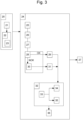
Figure 3 is a flow chart of a method for verifying the authenticity of the NDEF message, according to embodiments of the present disclosure. - The following description is intended to illustrate specific embodiments of the invention, and not to limit the invention. Thus, nothing in this detailed description is intended to imply that any particular feature, characteristic or component is essential to the invention. The invention is defined only by the claims.
- Referring now to the
figures 1, 2 and3 , embodiments of the present invention, relate to asystem 1 and a method for verifying the conformity of a NDEF message MC, MS transmitted by atransponder 2 also called tag, which is included in a device such as an NFC Tag. Thistransponder 2 consists of a chip (also referred to as an "integrated circuit) and an antenna. Thistransponder 2 can include a support element, also known as an "inlay", preferably made of plastic or paper, comprising an adhesive layer. This support element is designed to carry said antenna and chip which are moreover connected together. - Such a
transponder 2 may be associated with, attached to, or included in, an object or an article. It is understandable that in such a context, this object/article is part of thissystem 1. Such an object/article is for example: a garment, a label, a poster, a vehicle license plate, etc. - In the embodiments of the invention, these
system 1 and method can verify the conformity of a NDEF message MC, MS based on a processing of a previous NDEF message MP sent by thesame transponder 2. In this context, verifying the conformity of a NDEF message MC, MS consists of verifying only the validity of this NDEF message MC, MS in a non-connected mode, or verifying the validity and the authenticity of this NDEF message MC, MS in a connected mode. Moreover, this verification is carried out on the basis of a NDEF message MP, previously transmitted by thetransponder 2. These non-connected and connected modes will be explained in more detail later. - It can be noted that, in this context, the previous NDEF message MP and the NDEF message referenced "MC" are consecutive messages and the previous NDEF message MP and the NDEF message referenced "MS" are successive messages. It may be noted that the previous NDEF message MP can be also called "first NDEF message" transmitted by the
transponder 2, and the NDEF messages MC, MS, "a second NDEF message". - Each of these NDEF message MP, MC and MS, is an NFC Forum Data Exchange Format message. The NDEF defines here an encapsulation format of information during information exchange, where the information is transmitted between the transponder reader 4 (or between an NFC terminal) and the transponder 2 (or an NFC tag). The NDEF is a lightweight binary message format, and it can be used to encapsulate information like one or more transponder-defined-data of any type and any size.
- These transponder-defined data comprise at least one NDEF Record consisting in a NDEF Record Header and a NDEF Record Payload. This NDEF Record Payload comprises generic data GD and a token Ti, comprising token data. In this context, the generic data include for example:
- a serial number of the
transponder 2 also called by the acronym "SN"; - a flag or any information describing the current state of the transponder;
- a uniform resource identifier also called by the acronym "URI";
- an image;
- an object/article information;
- a message or device signature;
- a text (e.g., plaintext) ;
- a signature and/or length associated with at least one of the generic data;
- etc.
- In the embodiments of the invention, these generic data GD are all concatenated together with the data of the token Ti in order to form the transponder-defined-data. More specifically and for a better understanding of the embodiments of this invention, the previous NDEF message MP can be defined by this following formula:

- MP: the previous NDEF message;
- GD: the generic data comprising for example the URI, the SN and/or any information describing the previous state of the
transponder 2; - Ti: the token of this previous NDEF message associated with these generic data GD, with i > 0.
- In this previous NDEF message MP, the token Ti can be defined by the following formula:

- CTi: a token counter value computed from an exclusive OR logic function applied between a random number RNi-1 comprised in a previously generated NDEF message (prior to this previous NDEF message MP) transmitted by the
transponder 2, and a local counter Ci, this token counter value being defined by the following formula:
- RNi: a random number of this previous NDEF message MP;
- Vi: an one-way function value computed from the random number RNi-1 comprised in a previously generated NDEF message (prior to this previous NDEF message MP) transmitted by the
transponder 2, this one-way function value can be defined by the following formula:
- In these embodiments of this invention, the NDEF message MC generated by the
transponder 2 consecutively to the previous NDEF message MP, can be defined by the following formula:
- MC: the consecutive NDEF message generated by the
transponder 2, directly following the generation of a previous NDEF message MP; - GD: the generic data comprising for example the URI, the SN and/or any information describing the consecutive state of the
transponder 2; - Ti+1: the token of this consecutive NDEF message MC associated with these generic data GD, with i > 0.
- In this consecutive NDEF message MC, the token Ti+1 can be defined by the following formula:
-

- CTi+1: a token counter value computed from an exclusive OR logic function applied between a random number RNi comprised in the previous NDEF message MP and a local counter Ci+1, this token counter value being defined by the following formula:

- RNi+1: a random number of this consecutive NDEF message MC;
- Vi+1: a one-way function value computed from the random number RNi comprised in the previous NDEF message MP transmitted by the
transponder 2, this one-way function value being defined by the following formula:
- In these embodiments of this invention, the NDEF message MS generated by the
transponder 2 successively to the previous NDEF message MP, can be defined by the following formula:
- MS: the successive NDEF message generated by the
transponder 2 following the previous NDEF message MP, between these two messages, one or more NDEF messages may have been transmitted by thetransponder 2 and not received by theelectronic system 3, e.g., theserver 5; - GD: the generic data comprising for example the URI, the SN and/or any information describing the successive state of the
transponder 2; - Ti+a: the token of this successive NDEF message MS associated with these generic data GD, with i > 0 and a > 1;
- In this successive NDEF message MS, the token Ti+a can be defined by the following formula:

- CTi+a: a token counter value computed from an exclusive OR logic function applied between a random number RNi+a-1 of a NDEF message never received by the
electronic system 3 and which has been emitted by thetransponder 2 after the previous message MP and before this successive NDEF message MS, and a local counter value Ci+a, the token counter value being defined by this formula: (RNi+a-1 xor Ci+a) - RNi+a: a random number comprised in this successive NDEF message MS;
- Vi+a: a one-way function value computed from the random number RNi+a-1, this one-way function value can be defined by the following formula:

- It can be noted that, the token Ti, Ti+1, Ti+a of each NDEF message MP, MC, MS generated by the
transponder 2 can also include additional data concatenated with those previously described. These additional data may concern information on at least one data included in the generated NDEF message MP, MC, MS that is to say at least one data comprised in the generic data GD or in this token Ti, Ti+1, Ti+a. Such additional data comprises for example a cyclic redundancy check value (also called by the acronym "CRC value") consistent with at least one data of the generic data GD (for example: a SN, an URI, etc) and/or at least one data of the token Ti, Ti+1, Ti+a. - In the embodiments of this invention, the
system 1 for verifying the conformity of a NDEF message MC, MS, includes thetransponder 2 as well as anelectronic system 3 configured to process the NDEF messages MP, MC, MS that it receives. - In this context, the
electronic system 3 may consist solely of atransponder reader 4, or of atransponder reader 4 and aserver 5. - In this
electronic system 3, thistransponder reader 4 can be for example an NFC terminal or an NFC device. The NFC terminal is a terminal having an NFC function, such as a mobile phone, a tablet computer, or a camera. - Such a
transponder reader 4 integrates acontrol unit 7 including hardware and software resources in particular at least one processor cooperating with memory components. Thiscontrol unit 7 is a logical entity responsible for transmitting data to acommunication module 8 including a radio frequency interface, in this case an NFC radio frequency interface. In this context, thiscontrol unit 7 is configured to manage communications with thetransponder 2, as well as with theserver 5 when theelectronic system 3 includes one, in order to process the NDEF messages MP, MC, MS received. Thus, thecommunication module 8 is configured to establish a connection and manage data exchanges with thistransponder 2 as well as with theserver 5 when theelectronic system 3 includes one. - This
transponder reader 4 also includes abroadcast module 9 configured to diffuse an informative message MI relating to the verification of the conformity of a NDEF message MC, MS received, i.e., whether or not this NDEF message MC, MS is valid, or valid and authentic. Such abroadcast module 9 is connected to thecontrol unit 7 of thetransponder reader 4, and comprises: - a display module such as a screen displaying a visual representation of the informative message MI; and/or
- an audio module such as a loudspeaker for broadcasting a sound wave relating to this informative message MI.
- In this
electronic system 3, theserver 5 offers services accessible via a network and it can be hardware orsoftware server 5. Such aserver 5 comprises acontroller 10 and adatabase 6, thisdatabase 6 being connected to thiscontroller 10 and comprising data relating notably to NDEF messages MP, MC, MS received. - To a better understanding of the invention, the
electronic system 3 includes acontrol module 11 which comprises: - solely the
control unit 7 of thetransponder reader 4, when thiselectronic system 3 consists solely of atransponder reader 4; or - this
control unit 7 and thecontroller 10 of theserver 5 when thiselectronic system 3 comprises both, i.e., theserver 5 and thetransponder reader 4. - Moreover, in this
electronic system 3, thecontrol module 11 comprises: - one or several one-way functions that can be used when a NDEF message MP, MC, MS, is processed and also cyclic redundancy check (known by the acronym "CRC") algorithms to control the consistency of at least one data of the generic data GD (for example: a SN, an URI, etc) and/or at least one data of the token Ti, Ti+1, Ti+a; and
- the
database 6 of theserver 5 when thiselectronic system 3 comprises both, i.e., theserver 5 and thetransponder reader 4, as depicted inFigure 2 . - Furthermore, the
database 6 of theserver 5 can comprise in a non-limitative and non-exhaustive way: the local counter Ci and the random number RNi of the last NDEF message received and processed/controlled, in our embodiments this last NDEF message is the previous NDEF message MP. - In reference to
figure 3 , thesystem 1 is able to implement a method for verifying the conformity of the NDEF message MC, MS received by theelectronic system 3 from thetransponder 2, on the basis of a processing of a previous NDEF message MP sent by thesame transponder 2 to thiselectronic system 3 configured to process such messages MP, MC, MS. - As already discussed, this method is implemented by the
electronic system 3 comprising: - the
transponder reader 4 configured solely for verifying the conformity, more specifically the validity, of the NDEF message MC received by theelectronic system 3 from thetransponder 2, in the so-called "non-connected mode" or "offline mode", as depicted infigure 1 ; or - the
transponder reader 4 and theserver 5 for verifying the conformity, more specifically the validity and the authenticity, of the NDEF message MC, MS received by theelectronic system 3 from thetransponder 2, in the so called "connected mode" or "online mode", as depicted infigure 2 . - Such a method includes a step of
transmission 20 of the NDEF message MC, MS by thetransponder 2 to theelectronic system 3. This NDEF message MC, MS is transmitted to theelectronic system 3, consecutively (regarding MC) or successively (regarding MS) to the previous NDEF message MP, after this last one has also been generated and transmitted by thissame transponder 2 to thiselectronic system 3. - Such a
step 20 comprises a sub-step of establishing 21 a communication between thetransponder 2 and theelectronic system 3. More specifically, this communication is established between thistransponder 2 and thetransponder reader 4 of thiselectronic system 3, over a short distance. This short distance is configured to establish near-field communication between thistransponder 2 and thetransponder reader 4. - Then, this
step 20 includes a sub-step for designing 22 this NDEF message MC, MS to be transmitted to theelectronic system 3. This sub-step 22 is implemented by thetransponder 2 and more particularly by its chip. Such a sub-step 22 comprises a phase of generating 23 transponder-defined data constituting this NDEF message MC, MS, this data comprising at least one NDEF Record consisting in generic data GD and the token Ti+1, Ti+a. It is understood that these generic data GD and/or the token Ti+1, Ti+a can be included in one or several records. - Thereafter, the method comprises a step for controlling 24 the regularity of the token Ti+1, Ti+a of this NDEF message MC, MS received. Indeed, in this method, if the token Ti+1, Ti+a is conformed/compliant then the validity in non-connected mode, or the validity and the authenticity in connected mode of the NDEF message MC, MS is verified. Such a
step 24 is implemented by theelectronic system 3. In this context, it can be noticed that this step for controlling 24 the regularity can be: a step for controlling 24 the validity only of the NDEF message MC, MS in the non-connected mode, and a step for controlling 24 the validity and the authenticity of the NDEF message MC, MS in connected mode. - When the data constituting this token Ti+1, Ti+a comprises additional data like for example a cyclic redundancy check value consistent with at least one data of the generic data GD and/or at least one data of that token Ti+1, Ti+a, this
step 24 includes a sub step ofverification 25 of the integrity of data of this token Ti+1, Ti+a and/or the generic data GD, based on this cyclic redundancy check value comprised in the data constituting the token Ti+1, Ti+a. During this sub-step 25, thecontrol module 11 of the electronic system 3 - for example thecontroller 10 and/or the control unit 7 - can implement the CRC algorithm based on this CRC value in order to verify the integrity of the data of the token Ti+1, Ti+a and/or the generic data GD. - Once the integrity of the data has been verified, the
step 24 comprises a sub-step for checking 26 that the random number RNi+1, RNi+a is different from the random number RNi included in the token Ti of the previous NDEF message MP. As discussed before, this random number RNi is already stored in thedatabase 6 of theserver 5 in the case theelectronic system 3 comprises both theserver 5 and thetransponder reader 4. Otherwise, in the case theelectronic system 3 consists solely of atransponder reader 4, the previous NDEF message MP is locally and temporarily stored in the memory elements of thecontrol unit 7. In this context, if this random number RNi+1, RNi+a is different than the random number RNi, then proceed to the following check with the sub-step 27. A difference between these two random numbers RNi+1, RNi+a and RNi means that the two NDEF messages - the previous message MP and the NDEF message MC, MS received - are different, and that these two random numbers RNi+1, RNi+a and RNi evolve randomly. - The
step 24 also comprises a further sub-step for checking 27 that the counter token CTi+1, CTi+a of the NDEF message MC, MS received, is different from the counter token CTi included in the token Ti of the previous NDEF message MP. In the same way as for the random number RNi and in the case theelectronic system 3 comprises both theserver 5 and thetransponder reader 4, the local counter Ci comprised in this counter token CTi is also already stored in thedatabase 6 of theserver 5. Otherwise, in the case theelectronic system 3 consists solely of atransponder reader 4, the previous NDEF message MP is locally and temporarily stored in the memory elements of thecontrol unit 7. Thus, if this counter token CTi+1, CTi+a is different than the counter token CTi, then proceed to the following check with the sub-step 28. It should be noted that the difference between these two counters token CTi+1, CTi+a and CTi means that the two NDEF messages MP, MC, MS - the previous message MP and the NDEF message MC, MS received - are different, and that these two counters token CTi+1, CTi+a and CTi evolve random ly. - Furthermore, the
step 24 comprises a sub-step for checking 28 that a one-way function value Vi+1, Vi+a included in the token Ti+1, Ti+a of this NDEF message MC, MS received, is equal to the one-way function value Vc computed by theelectronic system 3, notably by thetransponder reader 4 and/or theserver 5. During this sub-step 28, the one-way function value Vc is computed from the random number RNi already stored in thedatabase 6 of theserver 5, and/or comprised in the previous NDEF message MP. As discussed before, thecontrol module 11 of the electronic system 3 - thecontrol unit 7 of thetransponder reader 4 and/or thecontroller 10 of the server 5 - computes this one-way function value Vc by executing the following mathematical function:
- Vc: the computed one-way function value;
- H: the one-way function executed by the
control module 11, for example the cryptographic hash function; - RNi: the random number provided by the previous NDEF message MP, and/or already stored in the
database 6 of theserver 5. - In this context, if the one-way function value Vi+1 included in the NDEF message MC is equal to the one-way function value Vc computed, the two NDEF messages MP and MC - the previous message MP and the consecutive NDEF message MC received - are chained and consecutively linked together. At this stage, and following verifications performed during
steps - At this stage, following this sub-step 28,
step 24 includes a sub-step for storing 29 in thedatabase 6 of the server 5: the local counter value Ci+1 contained in the counter token CTi+1 and the random number RNi+1 extracted from the NDEF message MC. - During the sub-step for checking 28, if the one-way function value Vi+a is not equal to the computed one-way function value Vc, this means that the NDEF message received is not a consecutive NDEF message MC. In other words, the previous NDEF message MP and the NDEF message received MS are not consecutive NDEF messages. This particular situation happens when one or more NDEF messages may have been transmitted by the
transponder 2 and not received by theelectronic system 3, e.g., theserver 5. - For memory, this successive NDEF message MS is defined by the formula:


- In this case, when the NDEF message is a successive NDEF message MS of the previous NDEF message MP, that means not a consecutive one, the sub-step 28 comprises a phase for computing 30 the one-way function value Vc from an exclusive OR logic function applied between the token counter value CTi+a comprised in the token Ti+a of the received NDEF message MS and a local counter CL calculated by incrementing the local counter Ci of the previous NDEF message MP from a number "a" until said calculated one-way function value Vc is equal to said one-way function value Vi+a. This number a is, for example, an increment number a, with a > 1, when the local counter values Ci and Ci+a are generated from incremental local counters.
- Such a
phase 30 contributes to extract the random number RNi+a-1 contained in the token counter value CTi+a in order to compute the one-way function value Vc. It must be notice here that the random number RNi+a-1 is the random number of the NDEF message never received by theelectronic system 3 and from which the NDEF message MS received - the so-called successive NDEF message MS - is consecutive. Therefore, during thisphase 30 the computed local counter CL is incremented from the increment number "a", with a > 1, until the computed one-way function value Vc is equal to the received one-way function value Vi+a, and therefore until this computed local counter CL is equal to the local counter Ci+a of the token counter value CTi+a. - In other words, the computed one-way function value Vc can be defined by the following mathematical formula:

- Vc: the computed one-way function value when the NDEF messages referenced MP and MS are not consecutives messages received by the
electronic system 3; - CTi+a: the token counter value comprised in the token Ti+a of the NDEF message received, here the so-called successive NDEF message MS;
- CL: the computed local counter value obtained by incrementing the local counter Ci of the previous NDEF message MP according to the increment number "a", with a > 1, this computed local counter being defined by the formula: CL = Ci + a;
- RNi+a-1: the random number of the NDEF message never received by the
electronic system 3 and which has been emitted by thetransponder 2 after the previous message MP et before this NDEF message referenced MS; - a: the increment number of an incremental counter;
- Vi+a: the one-way function value included in the token Ti+a of the NDEF message MS received.
- Once the equality between these two one-way function values Vi+a, Vc has been verified, the
step 24 includes a sub-step of storing 31 in thedatabase 6 of theserver 5, the computed local counter value CL (= Ci+a) and the random number RNi+a related to this successive NDEF message MS. Indeed, in this context, the computed local counter value CL (= Ci+a) and the random number RNi+a are considered to be respectively the local counter value and the random number included in this successive NDEF message MS. - In embodiments of the invention and regarding the phase for computing 30, the number "a" can be a random increment "a" when the local counter values Ci and Ci+a are generated from random local counters with this random number "a" which is comprised in a specific range of values and stored in the
database 6 of theserver 5. - In this context, the equality between these two one-way function values Vi+a and Vc means that the two NDEF messages MP and MS - the previous message MP and the successive NDEF message MS received - are chained and successively linked together. At this stage, and following verifications performed during
steps - This step for controlling 24 also includes a further sub-step for checking 32 that a local counter value Ci+1, Ci+a included in the token counter value CTi+1, CTi+a of the token Ti+1, Ti+a of the NDEF message MC, MS received, is equal to a local counter value Cp computed based on a local counter value Ci comprised in the token Ti of the previous NDEF message MP.
- This sub-step 32 comprises a phase of extraction/
determination 33 of the local counter value Ci+1, Ci+a from an exclusive OR logic function applied between the random number RNi comprised in the token Ti of the previous NDEF message MP and the token counter value CTi+1, CTi+a included in the token Ti+1, Ti+a of the NDEF message MC, MS received. During this sub-step 32, thecontrol module 11 of thiselectronic system 3, e.g., thecontroller 10 of theserver 5, executes this formula:
- RNi: the random number provided by the previous NDEF message MP, this number being already stored in the
database 6 of theserver 5; - CTi+a: the token counter value, this value being computed from an exclusive OR logic function applied between the random number RNi comprised in the previous NDEF message MP, and the local counter Ci+a.
- Note that in this formula is valid in the case of a successive NDEF message MC received. In the case of a consecutive NDEF message MC, the formula is the following one:

- RNi: the random number provided by the previous NDEF message MP, this number being already stored in the
database 6 of theserver 5; - CTi+1: the token counter value, this value being computed from an exclusive OR logic function applied between the random number RNi comprised in the previous NDEF message MP, and the local counter Ci+1.
- During this sub-step 32, when the local counter value Ci+1, Ci+a and the computed local counter value Cp, are values from incremental local counters with an increment number "a" with a > 0, this sub-step 32 comprises a phase for computing 34 the local counter value Cp by incrementing the value of the local counter value Ci comprised in the token Ti of the previous NDEF message MP, with the increment number a. This local counter value Ci is already stored in the
database 6 of theserver 5. - Thus, if the local counter value Ci+1, Ci+a included in the NDEF message MC, MS is equal to the computed local counter value Cp the authenticity of the token Ti+1, Ti+a of this NDEF message MC, MS received is verified. Consequently, the authenticity of this NDEF message MC, MS is also verified. That can be verified by this formula:

- Ci+a: the local counter value of the successive NDEF message MS;
- Ci: the local counter value of the previous NDEF message MP;
- Cp: the computed local counter value defined by the mathematical formula:

- a: the increment number.
- Note that in this formula is valid in the case of a successive NDEF message MC received. In the case of a consecutive NDEF message MC, the formula is the following one:

- Ci+1: the local counter value of the consecutive NDEF message MC;
- Ci: the local counter value of the previous NDEF message MP;
- Cp: the computed local counter value defined by the mathematical formula:

- b: the increment number.
- In remarks, if the local counter value Ci+1, Ci+a, is less than the computed local counter value Cp, the authenticity of the token Ti+1, Ti+a of this NDEF message MC, MS received is not guaranteed. Consequently, the authenticity of this NDEF message MC, MS is also not guaranteed and that NDEF message MC, MS can be a replayed NDEF message. In addition, if the local counter value Ci+1, Ci+a is greater than the computed local counter value Cp, the authenticity of the token Ti+1, Ti+a of this NDEF message MC, MS received is also not guaranteed. Consequently, the authenticity of this NDEF message MC, MS is also not guaranteed and that NDEF message MC, MS can be malicious data.
- During this sub-step 32, the increment number "a" can be replaced by a random number "a" when the local counter value Ci+1, Ci+a and the computed local counter value Cp, are values from random local counters. Such a random number "a" contributes to generate random number comprised in a predefined range of values stored in the
database 6 of theserver 5. - In this context, the sub-step 32 comprises a phase for computing 35 the local counter value Cp by adding the random number "a" to the local counter value Ci. The local counter value Ci which is included in the token Ti of the previous NDEF message MP, is already stored into the
database 6 of thisserver 5. - This step for controlling 24 also includes a sub-step for checking 36 that the local counter value Ci+1, Ci+a is strictly:
- greater than the local counter value Ci comprised in the token Ti of the previous NDEF message MP; and
- smaller than the computed local counter value Cp incremented by the constant value equal to "1", this local counter value Cp being computed based on the local counter value Ci.
- In this context, if the local counter value Ci+1, Ci+a included into the NDEF message MC, MS received, is comprised between this local counter value Ci and that computed local counter value Cp incremented by the constant value equal to the number one, the authenticity of the token Ti+1, Ti+a of this NDEF message MC, MS received is guaranteed. Consequently, the authenticity of this NDEF message MS, MC is also guaranteed. That can be verified by this formula:

- Ci+a: the local counter value of the NDEF message MS;
- Ci: the local counter value of the previous NDEF message MP;
- Cp: the computed local counter value being defined by the mathematical formula: Cp = Ci + a, with "a" a random increment;
- Note that in this formula is valid in the case of a successive NDEF message MC received. In the case of a consecutive NDEF message MC, the formula is the following one:

- Ci+1: the local counter value of the NDEF message MC;
- Ci: the local counter value of the previous NDEF message MP;
- Cp: the computed local counter value being defined by the mathematical formula: Cp = Ci + b, with "b" a random increment;
- In remarks, if the local counter value Ci+1, Ci+a is less than or equal to local counter value Ci, the authenticity of the token Ti+1, Ti+a of this NDEF message MC, MS received is not guaranteed. Consequently, the authenticity of this NDEF message MC, MS is also not guaranteed. In this context, such a NDEF message MC, MS can be a replayed NDEF message. In addition, if the local counter value Ci+1, Ci+a is greater than or equal to the computed local counter value Cp incremented by the constant value equal to the number one, the authenticity of the token Ti+1, Ti+a of this NDEF message MC, MS received is also not guaranteed. Consequently, the authenticity of this NDEF message MC, MS is also not guaranteed and that NDEF message MC, MS can be malicious data.
- It is understood here that the validity and the authenticity of the token Ti+1, Ti+a of this NDEF message MC, MS received is verified and guaranteed by executing the sub-steps 25, 26, 27, 28, 30, 32 and 36 successively, simultaneously or in any order. It can be noted here that these sub-steps for checking referenced 25, 26, 27, 28, 30, 32 and 36, can also be called first, second, third, fourth, fifth, sixth and seventh sub-steps for checking respectively.
- In addition, it should be noted that this step for controlling 24 the validity and the authenticity of the token Ti+1, Ti+a of this NDEF message MC, MS comprising these sub-steps 25, 26, 27, 28, 30, 32 and 36 are implemented by the
control module 11 of theelectronic system 3. More specifically, thisstep 24 can be implemented by the transponder reader 4 (its control unit 7) and/or by the server 5 (itscontroller 10 and its database 6). - In some embodiments, the sub-step referenced 25, 26, 27 and 28 can be implemented by the
control unit 7 of thetransponder reader 4 without the need to be connected to aserver 5. In other words, these sub-steps 25, 26, 27 and 28 can be implemented by thetransponder reader 4 only. In this way, only the validity of the token Ti+1 of this NDEF message MC received can be verified here in the non-connected mode mentioned above. - Similarly, in some embodiments, the additional sub-steps referenced 29, 30, 31, 32 and 36 may be implemented by the
server 5 that has received the NDEF message MC, MS from thetransponder reader 4. In this way, the validity and the authenticity of the token Ti+1, Ti+a of this NDEF message MC, MS received can be verified and guaranteed here in the connected mode previously mentioned. - In other embodiments, this step for controlling 24 can also be implemented by the
transponder 2 andserver 5 together, for example by sharing the implementation of at least one of these sub-steps 25, 26, 27, 28, 29, 30, 31, 32 and 36. - Then the method comprises a step for broadcasting 37 an informative message MI related to the conformity of the the NDEF message MC, MS that is to say the validity only or the validity and the authenticity of this NDEF message MC, MS. During this
step 37, once the step for controlling 24 the validity of the token Ti+1, Ti+a of this NDEF message MC, MS is achieved, thecontroller 10 of theserver 5 generates an informative message MI to thetransponder reader 4 based on the result of this control. This result is a validation or a non-validation of the validity only or the validity and the authenticity of this NDEF message MC, MS. Such an informative message MI can be for example a visual message or an audio message. This informative message MI is broadcasted by thetransponder reader 4 and can be generated by thetransponder reader 4 in the non-connected mode or by theserver 5 in the connected mode. - The foregoing is only illustrative of preferred embodiments of the present invention. The present invention is not limited to the above embodiments. It should be understood that further improvements and changes that are directly derived or conceived by those skilled in the art without departing from the basic concept of the present invention should be considered to be included in the protective scope of the present invention.
Claims (12)
- Method for verifying the conformity of a NDEF message (MC, MS) based on a processing of a previous NDEF message (MP) sent by a same transponder (2) to an electronic system (3) configured to process such messages (MP, MC, MS), the method consisting of in:- transmitting (20) the NDEF message (MC, MS) by the transponder (2) to the electronic system (3) in which this NDEF message (MC, MS) is designed (22) by the transponder (2) in generating (23) transponder-defined data constituting this NDEF message (MC, MS), these transponder-defined data comprising at least one NDEF Record consisting in generic data (GD) and a token (Ti+1, Ti+a) including data containing a random number (RNi+1, RNi+a) and a one-way function value (Vi+1, Vi+a) computed from a random number (RNi) contained in the previous NDEF message (MP);- controlling (24) the regularity of the token (Ti+1, Ti+a) comprised in the NDEF message (MC, MS) received by the electronic system (3); and- broadcasting (37) an informative message relating to conformity of the NDEF message (MC, MS) when the regularity of this token (Ti+1, Ti+a) has been controlled.
- The method according to the previous claim wherein controlling (24) the regularity of the token (Ti+1, Ti+a) comprises a verification (25) of the integrity of data of the token (Ti+1,Ti+a) and/or the generic data (GD) associated to this token (Ti+1,Ti+a) based on a cyclic redundancy check value included in the data constituting the token (Ti+1 ,Ti+a).
- The method according to any of the preceding claims, wherein controlling (24) the regularity of the token (Ti+1, Ti+a) comprises a check (26) that the random number (RNi+1, RNi+a) included in the token (Ti+1, Ti+a) is different from the random number (RNi) included in the previous NDEF message (MP).
- The method according to any of the preceding claims, wherein controlling (24) the regularity of the token (Ti+1,Ti+a) comprises a check (27) that the counter token (CTi+1, CTi+a) included in the token (Ti+1, Ti+a) is different from the counter token (CTi) included in the token (Ti) of the previous NDEF message (MP).
- The method according to any of the preceding claims, wherein controlling (24) the regularity of the token (Ti+1,Ti+a) comprises a check (28) that the one-way function value (Vi+1, Vi+a) included in the token (Ti+1, Ti+a) of this NDEF message (MC, MS) received is equal to the one-way function value (Vc) computed by the electronic system (3).
- The method according to the previous claim, wherein when the two one-way function values (Vi+a, Vc) are not equal, the check (28) comprises computing (30) the one-way function value (Vc) from an exclusive OR logic function applied between the token counter value (CTi+a) comprised in the token (Ti+a) of the received NDEF message (MS) and a local counter (CL) calculated by incrementing the local counter (Ci) of the preceding NDEF message (MP) from a number until said calculated one-way function value (Vc) is equal to said one-way function value (Vi+a).
- The method according to the previous claim, wherein this number is:- an increment number (a) when the local counter values (Ci) and (Ci+a) are generated from incremental local counters; or- a random number (a) when the local counter values (Ci) and (Ci+a) are generated from random local counters.
- The method according to any of the preceding claims, wherein controlling (24) the regularity of the token (Ti+1, Ti+a) comprises a check (32) that a local counter value (Ci+1, Ci+a) included in the token counter value (CTi+1, CTi+a) of the token (Ti+1, Ti+a) of the NDEF message (MC, MS) received, is equal to a local counter value (Cp) computed based on a local counter value (Ci) comprised in the token (Ti) of the previous NDEF message (MP).
- The method according to any of the preceding claims, wherein controlling (24) the regularity of the token (Ti+1, Ti+a) comprises a check (36) that a local counter value (Ci+1, Ci+a) is strictly:- greater than the local counter value (Ci) comprised in the token (Ti) of the previous NDEF message (MP); and- smaller than the computed local counter value (Cp) incremented by the constant value equal to the number one, this local counter value (Cp) being computed based on the local counter value (Ci).
- System (1) for verifying the conformity of a NDEF message (MC, MS) based on a processing of a previous NDEF message (MP) sent by a same transponder (2) to an electronic system (3) configured to process such messages (MP, MC, MS), the system (1) implementing the method according to any of the preceding claims.
- System (1) according to the previous claim, wherein the electronic system (3) consisting of a transponder reader (4) and a server (5) to which this transponder reader (4) is connected.
- System (1) according to the claim 11, wherein the electronic system (3) consisting solely of a transponder reader (4).
Priority Applications (2)
| Application Number | Priority Date | Filing Date | Title |
|---|---|---|---|
| EP23218052.1A EP4576854A1 (en) | 2023-12-19 | 2023-12-19 | Method for verifying the conformity of a ndef message |
| US18/965,569 US20250202703A1 (en) | 2023-12-19 | 2024-12-02 | Method for verifying the conformity of a ndef message |
Applications Claiming Priority (1)
| Application Number | Priority Date | Filing Date | Title |
|---|---|---|---|
| EP23218052.1A EP4576854A1 (en) | 2023-12-19 | 2023-12-19 | Method for verifying the conformity of a ndef message |
Publications (1)
| Publication Number | Publication Date |
|---|---|
| EP4576854A1 true EP4576854A1 (en) | 2025-06-25 |
Family
ID=89224187
Family Applications (1)
| Application Number | Title | Priority Date | Filing Date |
|---|---|---|---|
| EP23218052.1A Pending EP4576854A1 (en) | 2023-12-19 | 2023-12-19 | Method for verifying the conformity of a ndef message |
Country Status (2)
| Country | Link |
|---|---|
| US (1) | US20250202703A1 (en) |
| EP (1) | EP4576854A1 (en) |
Citations (3)
| Publication number | Priority date | Publication date | Assignee | Title |
|---|---|---|---|---|
| US20130241709A1 (en) * | 2011-09-20 | 2013-09-19 | Sony Corporation | Near field communication reader device, near field communication tag device, near field communication system and near field communication method |
| US20150019892A1 (en) * | 2013-07-15 | 2015-01-15 | Motorola Mobility Llc | Low-power near-field communication authentication |
| US20200092087A1 (en) * | 2018-09-14 | 2020-03-19 | Qualcomm Incorporated | Apparatus and methods for authentication using message exchange |
-
2023
- 2023-12-19 EP EP23218052.1A patent/EP4576854A1/en active Pending
-
2024
- 2024-12-02 US US18/965,569 patent/US20250202703A1/en active Pending
Patent Citations (3)
| Publication number | Priority date | Publication date | Assignee | Title |
|---|---|---|---|---|
| US20130241709A1 (en) * | 2011-09-20 | 2013-09-19 | Sony Corporation | Near field communication reader device, near field communication tag device, near field communication system and near field communication method |
| US20150019892A1 (en) * | 2013-07-15 | 2015-01-15 | Motorola Mobility Llc | Low-power near-field communication authentication |
| US20200092087A1 (en) * | 2018-09-14 | 2020-03-19 | Qualcomm Incorporated | Apparatus and methods for authentication using message exchange |
Also Published As
| Publication number | Publication date |
|---|---|
| US20250202703A1 (en) | 2025-06-19 |
Similar Documents
| Publication | Publication Date | Title |
|---|---|---|
| US11930360B2 (en) | Method and system for updating certificate issuer public key, and related device | |
| EP1875758B1 (en) | Limited configuration access to mobile terminal features | |
| KR20180069074A (en) | A method and apparatus for downloading a profile to an embedded universal integrated circuit card (eUICC) | |
| US20020147926A1 (en) | Method and apparatus for authentication using remote multiple access SIM technology | |
| EP2274892A1 (en) | Secure push messages | |
| CN112602104A (en) | System and method for password authentication of contactless cards | |
| US10785026B2 (en) | Executing electronic contract on NFC enabled mobile devices | |
| US10032240B2 (en) | Executing electronic contract on NFC enabled mobile devices | |
| US20120166801A1 (en) | Mutual authentication system and method for mobile terminals | |
| CN110069949A (en) | A kind of electronic contract signature method, apparatus, equipment and medium | |
| US20250202703A1 (en) | Method for verifying the conformity of a ndef message | |
| Baek et al. | Secure and lightweight authentication protocol for NFC tag based services | |
| Asaduzzaman et al. | A security-aware near field communication architecture | |
| CN111818492B (en) | Bluetooth beacon, data transmission method thereof, and readable storage medium | |
| EP3908950B1 (en) | Near field communication forum data exchange format (ndef) messages with authenticated encryption | |
| CN108449776B (en) | Network path planning method, node equipment and computer storage medium | |
| CN116015898B (en) | Information processing methods, devices, equipment, storage media and products | |
| CN117768881A (en) | Ranging positioning method, positioning system, chip and storage medium | |
| US20180227720A1 (en) | Method and system for providing information data | |
| CN112369059B (en) | Near Field Communication Forum Data Exchange Format (NDEF) messages | |
| CN113268775B (en) | Photo processing method, device and system and computer readable storage medium | |
| CN119031364B (en) | A user identification card, data transmission method, device, medium and product | |
| US20250063546A1 (en) | Mapping mode determination method/apparatus/device and storage medium | |
| EP4525359A1 (en) | Method for transferring esim profile data | |
| US20260019272A1 (en) | Data Processing Method, Communication Device, and Non-Transitory Readable Storage Medium |
Legal Events
| Date | Code | Title | Description |
|---|---|---|---|
| PUAI | Public reference made under article 153(3) epc to a published international application that has entered the european phase |
Free format text: ORIGINAL CODE: 0009012 |
|
| STAA | Information on the status of an ep patent application or granted ep patent |
Free format text: STATUS: THE APPLICATION HAS BEEN PUBLISHED |
|
| AK | Designated contracting states |
Kind code of ref document: A1 Designated state(s): AL AT BE BG CH CY CZ DE DK EE ES FI FR GB GR HR HU IE IS IT LI LT LU LV MC ME MK MT NL NO PL PT RO RS SE SI SK SM TR |
|
| P01 | Opt-out of the competence of the unified patent court (upc) registered |
Free format text: CASE NUMBER: APP_31988/2025 Effective date: 20250702 |
|
| STAA | Information on the status of an ep patent application or granted ep patent |
Free format text: STATUS: REQUEST FOR EXAMINATION WAS MADE |
|
| 17P | Request for examination filed |
Effective date: 20260102 |
|
| R17P | Request for examination filed (corrected) |
Effective date: 20251230 |