EP4576403A1 - Battery and method for manufacturing battery - Google Patents
Battery and method for manufacturing battery Download PDFInfo
- Publication number
- EP4576403A1 EP4576403A1 EP23854693.1A EP23854693A EP4576403A1 EP 4576403 A1 EP4576403 A1 EP 4576403A1 EP 23854693 A EP23854693 A EP 23854693A EP 4576403 A1 EP4576403 A1 EP 4576403A1
- Authority
- EP
- European Patent Office
- Prior art keywords
- current collector
- electrode
- collector plate
- magnetized
- welded
- Prior art date
- Legal status (The legal status is an assumption and is not a legal conclusion. Google has not performed a legal analysis and makes no representation as to the accuracy of the status listed.)
- Pending
Links
Images



Classifications
-
- H—ELECTRICITY
- H01—ELECTRIC ELEMENTS
- H01M—PROCESSES OR MEANS, e.g. BATTERIES, FOR THE DIRECT CONVERSION OF CHEMICAL ENERGY INTO ELECTRICAL ENERGY
- H01M50/00—Constructional details or processes of manufacture of the non-active parts of electrochemical cells other than fuel cells, e.g. hybrid cells
- H01M50/10—Primary casings; Jackets or wrappings
- H01M50/102—Primary casings; Jackets or wrappings characterised by their shape or physical structure
- H01M50/107—Primary casings; Jackets or wrappings characterised by their shape or physical structure having curved cross-section, e.g. round or elliptic
-
- H—ELECTRICITY
- H01—ELECTRIC ELEMENTS
- H01G—CAPACITORS; CAPACITORS, RECTIFIERS, DETECTORS, SWITCHING DEVICES, LIGHT-SENSITIVE OR TEMPERATURE-SENSITIVE DEVICES OF THE ELECTROLYTIC TYPE
- H01G11/00—Hybrid capacitors, i.e. capacitors having different positive and negative electrodes; Electric double-layer [EDL] capacitors; Processes for the manufacture thereof or of parts thereof
- H01G11/66—Current collectors
- H01G11/70—Current collectors characterised by their structure
-
- H—ELECTRICITY
- H01—ELECTRIC ELEMENTS
- H01G—CAPACITORS; CAPACITORS, RECTIFIERS, DETECTORS, SWITCHING DEVICES, LIGHT-SENSITIVE OR TEMPERATURE-SENSITIVE DEVICES OF THE ELECTROLYTIC TYPE
- H01G11/00—Hybrid capacitors, i.e. capacitors having different positive and negative electrodes; Electric double-layer [EDL] capacitors; Processes for the manufacture thereof or of parts thereof
- H01G11/78—Cases; Housings; Encapsulations; Mountings
- H01G11/82—Fixing or assembling a capacitive element in a housing, e.g. mounting electrodes, current collectors or terminals in containers or encapsulations
-
- H—ELECTRICITY
- H01—ELECTRIC ELEMENTS
- H01M—PROCESSES OR MEANS, e.g. BATTERIES, FOR THE DIRECT CONVERSION OF CHEMICAL ENERGY INTO ELECTRICAL ENERGY
- H01M10/00—Secondary cells; Manufacture thereof
- H01M10/05—Accumulators with non-aqueous electrolyte
- H01M10/058—Construction or manufacture
- H01M10/0587—Construction or manufacture of accumulators having only wound construction elements, i.e. wound positive electrodes, wound negative electrodes and wound separators
-
- H—ELECTRICITY
- H01—ELECTRIC ELEMENTS
- H01M—PROCESSES OR MEANS, e.g. BATTERIES, FOR THE DIRECT CONVERSION OF CHEMICAL ENERGY INTO ELECTRICAL ENERGY
- H01M50/00—Constructional details or processes of manufacture of the non-active parts of electrochemical cells other than fuel cells, e.g. hybrid cells
- H01M50/50—Current conducting connections for cells or batteries
- H01M50/531—Electrode connections inside a battery casing
- H01M50/533—Electrode connections inside a battery casing characterised by the shape of the leads or tabs
-
- H—ELECTRICITY
- H01—ELECTRIC ELEMENTS
- H01M—PROCESSES OR MEANS, e.g. BATTERIES, FOR THE DIRECT CONVERSION OF CHEMICAL ENERGY INTO ELECTRICAL ENERGY
- H01M50/00—Constructional details or processes of manufacture of the non-active parts of electrochemical cells other than fuel cells, e.g. hybrid cells
- H01M50/50—Current conducting connections for cells or batteries
- H01M50/531—Electrode connections inside a battery casing
- H01M50/536—Electrode connections inside a battery casing characterised by the method of fixing the leads to the electrodes, e.g. by welding
-
- H—ELECTRICITY
- H01—ELECTRIC ELEMENTS
- H01G—CAPACITORS; CAPACITORS, RECTIFIERS, DETECTORS, SWITCHING DEVICES, LIGHT-SENSITIVE OR TEMPERATURE-SENSITIVE DEVICES OF THE ELECTROLYTIC TYPE
- H01G11/00—Hybrid capacitors, i.e. capacitors having different positive and negative electrodes; Electric double-layer [EDL] capacitors; Processes for the manufacture thereof or of parts thereof
- H01G11/74—Terminals, e.g. extensions of current collectors
-
- Y—GENERAL TAGGING OF NEW TECHNOLOGICAL DEVELOPMENTS; GENERAL TAGGING OF CROSS-SECTIONAL TECHNOLOGIES SPANNING OVER SEVERAL SECTIONS OF THE IPC; TECHNICAL SUBJECTS COVERED BY FORMER USPC CROSS-REFERENCE ART COLLECTIONS [XRACs] AND DIGESTS
- Y02—TECHNOLOGIES OR APPLICATIONS FOR MITIGATION OR ADAPTATION AGAINST CLIMATE CHANGE
- Y02E—REDUCTION OF GREENHOUSE GAS [GHG] EMISSIONS, RELATED TO ENERGY GENERATION, TRANSMISSION OR DISTRIBUTION
- Y02E60/00—Enabling technologies; Technologies with a potential or indirect contribution to GHG emissions mitigation
- Y02E60/10—Energy storage using batteries
-
- Y—GENERAL TAGGING OF NEW TECHNOLOGICAL DEVELOPMENTS; GENERAL TAGGING OF CROSS-SECTIONAL TECHNOLOGIES SPANNING OVER SEVERAL SECTIONS OF THE IPC; TECHNICAL SUBJECTS COVERED BY FORMER USPC CROSS-REFERENCE ART COLLECTIONS [XRACs] AND DIGESTS
- Y02—TECHNOLOGIES OR APPLICATIONS FOR MITIGATION OR ADAPTATION AGAINST CLIMATE CHANGE
- Y02P—CLIMATE CHANGE MITIGATION TECHNOLOGIES IN THE PRODUCTION OR PROCESSING OF GOODS
- Y02P70/00—Climate change mitigation technologies in the production process for final industrial or consumer products
- Y02P70/50—Manufacturing or production processes characterised by the final manufactured product
Definitions
- the present disclosure relates to a battery and a battery manufacturing method.
- a battery which includes an electrode group formed by winding a first electrode and a second electrode with a separator interposed therebetween, and a current collector plate having a welded portion that is welded to the first electrode (e.g., PTL 1 ( Japanese Laid-Open Patent Publication No. 2011-170972 )).
- PTL 1 Japanese Laid-Open Patent Publication No. 2011-170972
- the welded portion of the current collector plate is formed through TIG welding.
- PTL 1 Japanese Laid-Open Patent Publication No. 2011-170972
- one objective of the present disclosure is to suppress an internal short circuit in a battery.
- the battery includes: an electrode group formed by winding a first electrode and a second electrode with a separator interposed therebetween; and a first current collector plate having at least one welded portion welded to the first electrode, in which the first current collector plate has at least a pair of magnetized portions that are arranged to sandwich the welded portion and are magnetized, and a magnetic force of the welded portion is smaller than a magnetic force of the magnetized portions.
- the manufacturing method includes: a first preparation step of preparing an electrode group formed by winding a first electrode and a second electrode with a separator interposed therebetween; a second preparation step of preparing a first current collector plate having at least one portion to be welded; a magnetization step of magnetizing the first current collector plate; and a welding step of welding the first current collector plate to the first electrode via the portion to be welded, in which in the welding step, the portion to be welded becomes a welded portion welded to the first electrode, and regions on both sides of the welded portion in the first current collector plate remain as at least a pair of magnetized portions having a magnetic force larger than a magnetic force of the welded portion.
- Embodiments of the battery and the battery manufacturing method according to the present disclosure are described below by way of example. However, the present disclosure is not limited to the examples described below. In the following description, specific numerical values and materials may be given as examples, but other numerical values and materials may also be applied as long as the effect of the present disclosure is obtained.
- a battery according to the present disclosure may be a primary battery such as a lithium primary battery, or a secondary battery such as an alkaline storage battery (nickel-metal hydride battery, nickel-cadmium battery, etc.), a lithium ion battery, or a lithium metal secondary battery.
- the battery according to the present disclosure includes an electrode group and a first current collector plate.
- the category of secondary batteries also includes electricity storage devices (e.g., lithium ion capacitors) in which at least one of a positive electrode and a negative electrode is an electrode that develops capacitance through a Faraday reaction.
- the electrode group is formed by winding a first electrode and a second electrode with a separator interposed therebetween.
- the electrode group is a wound electrode group having a first electrode, a second electrode, and a separator interposed between the two electrodes.
- the electrode group has a columnar outer shape, and may have, for example, a cylindrical or prismatic outer shape.
- One of the first electrode and the second electrode is a positive electrode, and the other of the first electrode and the second electrode is a negative electrode.
- the first electrode, the second electrode, and the separator may each be in the form of a long sheet (or a strip).
- the first electrode may have a first current collector in the form of a long sheet, and a first active material layer supported on the first current collector.
- the second electrode may have a second current collector in the form of a long sheet, and a second active material layer supported on the second current collector.
- the separator may be constituted of a porous sheet that is ion-permeable and has insulating properties. Examples of the porous sheet include a thin film having micropores, a woven fabric, and a nonwoven fabric.
- the first active material layer may be provided on both sides of the first current collector, or on one side of the first current collector.
- the first current collector is a positive electrode current collector (e.g., may be constituted of an aluminum foil or an aluminum alloy foil), and the first active material layer is a positive electrode active material layer (e.g., may include a lithium-containing transition metal oxide).
- the first electrode is a negative electrode
- the first current collector is a negative electrode current collector (e.g., may be constituted of a copper foil or a copper alloy foil), and a negative electrode active material layer (e.g., may include a carbonaceous material) may be provided as the first active material layer.
- the first current collector plate has at least one welded portion welded to the first electrode. If the first electrode is a positive electrode, the first current collector plate is a positive current collector plate (e.g., may be constituted of stainless steel, titanium, a titanium alloy, aluminum, or an aluminum alloy). If the first electrode is a negative electrode, the first current collector plate is a negative electrode current collector plate (e.g., may be constituted of nickel, a nickel alloy, copper, or a copper alloy).
- the welded portion may be formed through any type of welding (e.g., laser welding or resistance welding).
- the surface of the first current collector plate may be subjected to plating (e.g., lead-tin plating, nickel-tin plating, zinc-nickel plating, chrome plating, zinc plating, nickel plating, etc.) to improve weldability.
- plating e.g., lead-tin plating, nickel-tin plating, zinc-nickel plating, chrome plating, zinc plating, nickel plating, etc.
- the constituent materials of the first current collector plate and the like may fly off and be scattered. As described above, the scattered materials at this time may cause an internal short circuit.
- the first current collector plate of the present disclosure further includes at least a pair of magnetized portions that are arranged to sandwich the welded portion and are magnetized. Such a magnetized portion captures any scattered materials that may be generated when forming the welded portion, making it less likely that an internal short circuit will occur.
- a magnetic force of the welded portion is smaller than a magnetic force of the magnetized portions. This makes it possible to efficiently concentrate the magnetic field generated by the pair of magnetized portions in the vicinity of the welded portion, thereby increasing the probability of capturing the scattered materials.
- the welded portion need not be magnetic.
- the magnetic field generated by the pair of magnetized portions can be concentrated more efficiently in the vicinity of the welded portion, further increasing the probability of capturing the scattered materials.
- a magnetization direction of one magnetized portion and a magnetization direction of the other magnetized portion may be mutually opposite directions.
- the magnetization direction of the one magnetized portion may be a direction from one side to another side in an axial direction of the battery
- the magnetization direction of the other magnetized portion may be a direction from the other side to the one side in the axial direction of the battery.
- a magnetic loop that circulates around the welded portion is generated between the pair of magnetized portions, further increasing the probability of capturing the scattered materials.
- the magnetization direction of the one magnetized portion and the magnetization direction of the other magnetized portion may be the same direction.
- the magnetization directions of both magnetized portions may be from the one side to the other side in the axial direction of the battery, or may be the opposite direction. In this configuration, since it is possible to use a magnet that is entirely magnetized in one direction to magnetize the pair of magnetized portions, it is easy to form the pair of magnetized portions.
- the width of the welded portion may be larger on the side opposite to the first electrode than on the first electrode side.
- the width of the welded portion may increase toward the side opposite to the first electrode from the first electrode side.
- the width of the welded portion at the end on the first electrode side may be, for example, 0.3 mm or more and 1.2 mm or less.
- the width of the welded portion may be, for example, 0.15 mm or more and 0.6 mm or less as an overall average value (or an average value of any five points).
- the battery manufacturing method according to the present disclosure can be used to manufacture, for example, the battery described above.
- the battery manufacturing method according to the present disclosure includes a first preparation step, a second preparation step, a magnetization step, and a welding step.
- an electrode group is prepared by winding a first electrode and a second electrode with a separator interposed therebetween.
- a first current collector plate having at least one portion to be welded is prepared.
- the portion to be welded is a portion that is to be welded in the welding step, and is not required to have characteristics (e.g., composition, shape, etc.) different from those of surrounding portions.
- the first current collector plate is magnetized.
- the first current collector plate may be magnetized using a magnet, or in some cases, may be magnetized using a magnetizing coil. However, from the viewpoint of controllability of the magnetization direction, it is preferable that the first current collector plate is magnetized by using a magnet.
- the first current collector plate is welded to the first electrode via the portion to be welded.
- the welding may be of any type, and for example, may be laser welding or resistance welding.
- the portion to be welded becomes a welded portion that is welded to the first electrode, and regions on both sides of the welded portion on the first current collector plate (or regions arranged to sandwich the welded portion) remain as at least a pair of magnetized portions having a magnetic force larger than the magnetic force of the welded portion.
- Such a pair of magnetized portions can capture scattered materials (made of the constituent materials of the first current collector plate, etc.) that may be generated in the welding step, thereby making it possible to suppress an internal short circuit in the battery.
- the welded portion may be completely demagnetized.
- the region of the first current collector plate corresponding to one magnetized portion and the region of the first current collector plate corresponding to the other magnetized portion may be magnetized in mutually opposite directions. This makes it possible to even more efficiently capture scattered materials generated in the welding step.
- the region of the first current collector plate corresponding to the one magnetized portion and the region of the first current collector plate corresponding to the other magnetized portion may be magnetized in the same direction. In this case, the magnetization can be easily performed.
- the first current collector plate may be magnetized by a magnet having a residual magnetic flux density of 8000 G or more.
- the residual magnetic flux density of the magnet may be, for example, 8000 G or more, preferably 9000 G or more, and more preferably 10000 G or more.
- the first current collector plate can be magnetized with a strength sufficient to capture scattered materials.
- the portion to be welded may have a recessed shape that is recessed more than the regions on both sides thereof.
- the first current collector plate may be magnetized by bringing a magnet close to the first current collector plate from an opening side of the recessed portion to be welded.
- the distance between the portion to be welded and the magnet is longer than the distance between the magnet and the regions on both sides of the portion to be welded.
- the portion to be welded is magnetized less strongly than the regions on both sides thereof.
- the regions on both sides of the portion to be welded correspond to regions that will remain as magnetized portions in the welding step. Accordingly, with this configuration, the strength relationship of the magnetic forces between the welded portion and the magnetized portions according to the present disclosure can be more easily achieved.
- materials scattered during welding are captured by the first current collector plate having the magnetized portions, and therefore an internal short circuit in the battery caused by the scattered materials can be suppressed.
- constituent elements and steps described above can be applied to the constituent elements and steps of the battery and the battery manufacturing method of the example described below.
- the constituent elements and steps of the battery and the battery manufacturing method of the example described below may be modified based on the above description.
- matters described below may be applied to the above-described embodiment.
- constituent elements and steps of the battery and the battery manufacturing method of the example described below constituent elements and steps that are not essential to the battery and the battery manufacturing method according to the present disclosure may also be omitted. Note that the diagrams shown below are schematic and do not accurately reflect the shapes and numbers of actual members.
- a battery 10 of this embodiment is a secondary battery capable of repeated charging and discharging, and may be, for example, a lithium secondary battery (lithium metal secondary battery) or a lithium ion battery.
- a lithium secondary battery lithium metal secondary battery
- a lithium ion battery lithium ion battery
- the battery 10 of this embodiment includes a wound electrode group 20, a first current collector plate 60, a second current collector plate 70, a case 40, and a sealing plate 51, as shown in FIG. 1 .
- the electrode group 20 is formed by winding a first electrode 21 and a second electrode 25 that are each in the form of a long sheet with a separator 29 in the form of a long sheet interposed therebetween.
- the first electrode 21 is a positive electrode and the second electrode 25 is a negative electrode, but there is no limitation to this.
- the separator 29 is exposed at the outermost peripheral portion of the electrode group 20, there is no limitation to this.
- a first current collector 22 or a second current collector 26 described below may be exposed at the outermost peripheral portion of the electrode group 20.
- the first electrode 21 has the first current collector 22 in the form of a long sheet and a first active material layer (not shown) provided on the surface of the first current collector 22.
- the first active material layer is provided on both sides of the first current collector 22, but there is no limitation to this.
- the first current collector is constituted of, for example, an aluminum foil or an aluminum alloy foil.
- the first current collector 22 includes a first exposed portion 23 that is located at one end (the upper end in FIG. 1 ) in a direction perpendicular to the longitudinal direction of the first current collector 22, and on which the first active material layer is not provided.
- the first exposed portion 23 is a strip-shaped region extending along the longitudinal direction of the first current collector 22.
- the second electrode 25 includes the second current collector 26 in the form of a long sheet.
- the second electrode 25 further includes a second active material layer (not shown) provided on the surface of the second current collector 26, but there is no limitation to this.
- the second current collector 26 is constituted of, for example, a copper foil or a copper alloy foil.
- the second current collector 26 includes a second exposed portion 27 that is located at one end (the lower end in FIG. 1 ) in a direction perpendicular to the longitudinal direction of the second current collector 26, and on which the second active material layer is not provided.
- the second exposed portion 27 is a strip-shaped region extending along the longitudinal direction of the second current collector 26.
- the first current collector plate 60 is connected to the first exposed portion 23 through welding, and is electrically connected to the first current collector 22.
- the first current collector plate 60 is constituted of, for example, stainless steel. The configuration of the first current collector plate 60 will be described in detail later.
- the second current collector plate 70 is connected to the second exposed portion 27 through welding, and is electrically connected to the second current collector 26.
- the second current collector plate 70 is constituted of, for example, a nickel alloy.
- the second current collector plate 70 may have a configuration similar to that of the first current collector plate 60, which will be described later.
- the second current collector plate 70 may also include a groove portion serving as a welded portion and a pair of magnetized portions arranged on both sides of the groove portion.
- the case 40 is made of metal and is formed into a bottomed cylindrical shape with an opening at one end (the upper end in FIG. 1 ).
- a welding member 41 is provided on the inner bottom surface of the case 40, and the second current collector plate 70 is welded to this welding member 41. Accordingly, the case 40 of this embodiment functions as an external negative electrode terminal.
- the first current collector plate 60 is plate-shaped as a whole.
- the first current collector plate 60 has a central portion 61, an outer peripheral ring portion 62, and a plurality of (in this example, four) arm portions 63 extending radially between the central portion 61 and the outer peripheral ring portion 62.
- Each arm portion 63 has a groove portion 63a formed therein, which extends along the direction in which the arm portion 63 extends.
- the groove portion 63a is welded to the first exposed portion 23 of the first electrode 21, which is not shown in FIGS. 2 and 3 .
- the width of the groove portion 63a is larger on the side opposite to the first electrode 21 (upper side in FIG. 3 ) than on the first electrode 21 side (lower side in FIG. 3 ). Specifically, the width of the groove portion 63a increases from the first electrode 21 side toward the opposite side.
- the groove portion 63a is an example of a welded portion.
- the groove portion 63a has no magnetic force (or has zero magnetic force), whereas the pair of magnetized portions 63b are magnetized. Accordingly, the magnetic force of the groove portion 63a is smaller than the magnetic force of the magnetized portion 63b. Note that the groove portion 63a may have a non-zero magnetic force that is smaller than the magnetic force of the magnetized portions 63b.
- the battery manufacturing method of this embodiment includes a first preparation step, a second preparation step, a magnetization step, and a welding step.
- the electrode group 20 is prepared by winding the first electrode 21 and the second electrode 25 with the separator 29 interposed therebetween.
- the first current collector plate 60 is magnetized using a magnet 80 having a plurality of poles (four in this example).
- the magnet 80 has a residual magnetic flux density of 8000 G or more.
- the first current collector plate 60 is magnetized while aligning the boundaries between the poles of the magnet 80 with the groove portions 63a.
- the first current collector plate 60 is magnetized by bringing the magnet 80 close to the first current collector plate 60 from the opening side of the groove portions 63a (the upper side in FIG. 4(a) ).
- the region of the first current collector plate 60 corresponding to the one magnetized portion 63b and the region of the first current collector plate 60 corresponding to the other magnetized portion 63b are magnetized in mutually opposite directions.
- the first current collector plate 60 is welded to the first exposed portion 23 of the first electrode 21 via the groove portions 63a through, for example, laser welding.
- the first electrode 21 and the first current collector plate 60 are welded together by irradiating the regions indicated by broken lines in FIG. 4(b) with a laser L.
- the groove portions 63a are completely demagnetized, whereas the regions on both sides of each of the groove portions 63a are not demagnetized.
- the regions on both sides of the groove portion 63a remain as the pair of magnetized portions 63b having a magnetic force larger than the magnetic force of the groove portion 63a.
- the second current collector plate 70 is welded to the second current collector 26 to form an electrode group unit (not shown), the obtained electrode group unit is accommodated in and joined to the case 40, and after injection of an electrolytic solution and sealing with the sealing plate 51, the battery 10 of this embodiment can be obtained.
- a second embodiment of the present disclosure will be described.
- a battery 10 of this embodiment differs from the first embodiment in the configuration of the first current collector plate 60. The following mainly describes the differences from the above-described first embodiment.
- both magnetized portions 63b are magnetized such that the upper surfaces are N poles and the lower surfaces are S poles. Note that the magnetization direction of the magnetized portions 63b may be a direction opposite to that described above.
- the first current collector plate 60 is magnetized using a magnet 80 that is entirely magnetized in one direction.
- the region of the first current collector plate 60 corresponding to the one magnetized portion 63b and the region of the first current collector plate 60 corresponding to the other magnetized portion 63b are magnetized in the same direction.
- a battery including:
- the battery according to technology 1 or 2 in which in the pair of magnetized portions, a magnetization direction of one of the magnetized portions and a magnetization direction of another of the magnetized portions are mutually opposite directions.
- the battery according to technology 1 or 2 in which in the pair of magnetized portions, a magnetization direction of one of the magnetized portions and a magnetization direction of another of the magnetized portions are the same direction.
- a battery manufacturing method including:
- the battery manufacturing method in which in the magnetization step, a region of the first current collector plate corresponding to one of the magnetized portions and a region of the first current collector plate corresponding to another of the magnetized portions are magnetized in mutually opposite directions.
- the battery manufacturing method in which in the magnetization step, a region of the first current collector plate corresponding to one of the magnetized portions and a region of the first current collector plate corresponding to another of the magnetized portions are magnetized in the same direction.
- the first current collector plate is magnetized by a magnet having a residual magnetic flux density of 8000 G or more.
- the present disclosure can be used in a battery and a battery manufacturing method.
Landscapes
- Engineering & Computer Science (AREA)
- Power Engineering (AREA)
- Chemical & Material Sciences (AREA)
- Chemical Kinetics & Catalysis (AREA)
- Electrochemistry (AREA)
- General Chemical & Material Sciences (AREA)
- Microelectronics & Electronic Packaging (AREA)
- Manufacturing & Machinery (AREA)
- Connection Of Batteries Or Terminals (AREA)
- Secondary Cells (AREA)
- Primary Cells (AREA)
Abstract
Description
- The present disclosure relates to a battery and a battery manufacturing method.
- Conventionally, a battery has been known which includes an electrode group formed by winding a first electrode and a second electrode with a separator interposed therebetween, and a current collector plate having a welded portion that is welded to the first electrode (e.g., PTL 1 (
Japanese Laid-Open Patent Publication No. 2011-170972 - PTL 1:
Japanese Laid-Open Patent Publication No. 2011-170972 - However, when the welded portion is formed, constituent materials of the current collector plate and the like may fly off and be scattered. Such scattered materials are usually conductive and there is a risk that they will, for example, get between the first electrode and the second electrode, causing an electrical short circuit between them, which will result in a so-called internal short circuit. In this situation, one objective of the present disclosure is to suppress an internal short circuit in a battery.
- One aspect of the present disclosure relates to a battery. The battery includes: an electrode group formed by winding a first electrode and a second electrode with a separator interposed therebetween; and a first current collector plate having at least one welded portion welded to the first electrode, in which the first current collector plate has at least a pair of magnetized portions that are arranged to sandwich the welded portion and are magnetized, and a magnetic force of the welded portion is smaller than a magnetic force of the magnetized portions.
- Another aspect of the present disclosure relates to a battery manufacturing method. The manufacturing method includes: a first preparation step of preparing an electrode group formed by winding a first electrode and a second electrode with a separator interposed therebetween; a second preparation step of preparing a first current collector plate having at least one portion to be welded; a magnetization step of magnetizing the first current collector plate; and a welding step of welding the first current collector plate to the first electrode via the portion to be welded, in which in the welding step, the portion to be welded becomes a welded portion welded to the first electrode, and regions on both sides of the welded portion in the first current collector plate remain as at least a pair of magnetized portions having a magnetic force larger than a magnetic force of the welded portion.
- According to the present disclosure, it is possible to suppress an internal short circuit in a battery.
- The novel features of the present invention are set forth in the appended claims, but the present invention, both in terms of structure and content, together with other objects and features of the present application, will be better understood from the following detailed description taken in conjunction with the drawings.
-
-
FIG. 1 is a vertical cross-sectional view showing a configuration of a battery of a first embodiment. -
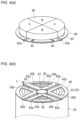
FIG. 2 is a perspective view showing a first current collector plate of the first embodiment. -
FIG. 3 is a cross-sectional view taken along line III-III inFIG. 2 . -
FIGS. 4(a) and 4(b) are perspective views for illustrating a battery manufacturing method of the first embodiment, whereFIG. 4(a) shows a magnetization step andFIG. 4(b) shows a welding step. -
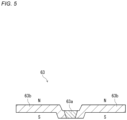
FIG. 5 is a view corresponding toFIG. 3 , showing a first current collector plate of a second embodiment. -
FIG. 6 is a perspective view showing a magnetization step of the second embodiment. - Embodiments of the battery and the battery manufacturing method according to the present disclosure are described below by way of example. However, the present disclosure is not limited to the examples described below. In the following description, specific numerical values and materials may be given as examples, but other numerical values and materials may also be applied as long as the effect of the present disclosure is obtained.
- A battery according to the present disclosure may be a primary battery such as a lithium primary battery, or a secondary battery such as an alkaline storage battery (nickel-metal hydride battery, nickel-cadmium battery, etc.), a lithium ion battery, or a lithium metal secondary battery. The battery according to the present disclosure includes an electrode group and a first current collector plate. In the present disclosure, the category of secondary batteries also includes electricity storage devices (e.g., lithium ion capacitors) in which at least one of a positive electrode and a negative electrode is an electrode that develops capacitance through a Faraday reaction.
- The electrode group is formed by winding a first electrode and a second electrode with a separator interposed therebetween. In other words, the electrode group is a wound electrode group having a first electrode, a second electrode, and a separator interposed between the two electrodes. The electrode group has a columnar outer shape, and may have, for example, a cylindrical or prismatic outer shape. One of the first electrode and the second electrode is a positive electrode, and the other of the first electrode and the second electrode is a negative electrode.
- The first electrode, the second electrode, and the separator may each be in the form of a long sheet (or a strip). The first electrode may have a first current collector in the form of a long sheet, and a first active material layer supported on the first current collector. The second electrode may have a second current collector in the form of a long sheet, and a second active material layer supported on the second current collector. The separator may be constituted of a porous sheet that is ion-permeable and has insulating properties. Examples of the porous sheet include a thin film having micropores, a woven fabric, and a nonwoven fabric.
- Hereinafter, taking a lithium ion battery as an example, the first active material layer may be provided on both sides of the first current collector, or on one side of the first current collector. If the first electrode is a positive electrode, the first current collector is a positive electrode current collector (e.g., may be constituted of an aluminum foil or an aluminum alloy foil), and the first active material layer is a positive electrode active material layer (e.g., may include a lithium-containing transition metal oxide). If the first electrode is a negative electrode, the first current collector is a negative electrode current collector (e.g., may be constituted of a copper foil or a copper alloy foil), and a negative electrode active material layer (e.g., may include a carbonaceous material) may be provided as the first active material layer.
- The first current collector plate has at least one welded portion welded to the first electrode. If the first electrode is a positive electrode, the first current collector plate is a positive current collector plate (e.g., may be constituted of stainless steel, titanium, a titanium alloy, aluminum, or an aluminum alloy). If the first electrode is a negative electrode, the first current collector plate is a negative electrode current collector plate (e.g., may be constituted of nickel, a nickel alloy, copper, or a copper alloy). The welded portion may be formed through any type of welding (e.g., laser welding or resistance welding). The surface of the first current collector plate may be subjected to plating (e.g., lead-tin plating, nickel-tin plating, zinc-nickel plating, chrome plating, zinc plating, nickel plating, etc.) to improve weldability.
- When the welded portion is formed, the constituent materials of the first current collector plate and the like may fly off and be scattered. As described above, the scattered materials at this time may cause an internal short circuit. In contrast, the first current collector plate of the present disclosure further includes at least a pair of magnetized portions that are arranged to sandwich the welded portion and are magnetized. Such a magnetized portion captures any scattered materials that may be generated when forming the welded portion, making it less likely that an internal short circuit will occur. In addition, a magnetic force of the welded portion is smaller than a magnetic force of the magnetized portions. This makes it possible to efficiently concentrate the magnetic field generated by the pair of magnetized portions in the vicinity of the welded portion, thereby increasing the probability of capturing the scattered materials.
- The welded portion need not be magnetic. In this configuration, the magnetic field generated by the pair of magnetized portions can be concentrated more efficiently in the vicinity of the welded portion, further increasing the probability of capturing the scattered materials.
- In the pair of magnetized portions, a magnetization direction of one magnetized portion and a magnetization direction of the other magnetized portion may be mutually opposite directions. For example, the magnetization direction of the one magnetized portion may be a direction from one side to another side in an axial direction of the battery, and the magnetization direction of the other magnetized portion may be a direction from the other side to the one side in the axial direction of the battery. In this configuration, a magnetic loop that circulates around the welded portion is generated between the pair of magnetized portions, further increasing the probability of capturing the scattered materials.
- In the pair of magnetized portions, the magnetization direction of the one magnetized portion and the magnetization direction of the other magnetized portion may be the same direction. For example, the magnetization directions of both magnetized portions may be from the one side to the other side in the axial direction of the battery, or may be the opposite direction. In this configuration, since it is possible to use a magnet that is entirely magnetized in one direction to magnetize the pair of magnetized portions, it is easy to form the pair of magnetized portions.
- The width of the welded portion may be larger on the side opposite to the first electrode than on the first electrode side. For example, the width of the welded portion may increase toward the side opposite to the first electrode from the first electrode side. The width of the welded portion at the end on the first electrode side may be, for example, 0.3 mm or more and 1.2 mm or less. The width of the welded portion may be, for example, 0.15 mm or more and 0.6 mm or less as an overall average value (or an average value of any five points).
- The battery manufacturing method according to the present disclosure can be used to manufacture, for example, the battery described above. The battery manufacturing method according to the present disclosure includes a first preparation step, a second preparation step, a magnetization step, and a welding step.
- In the first preparation step, an electrode group is prepared by winding a first electrode and a second electrode with a separator interposed therebetween.
- In the second preparation step, a first current collector plate having at least one portion to be welded is prepared. The portion to be welded is a portion that is to be welded in the welding step, and is not required to have characteristics (e.g., composition, shape, etc.) different from those of surrounding portions.
- In the magnetization step, the first current collector plate is magnetized. The first current collector plate may be magnetized using a magnet, or in some cases, may be magnetized using a magnetizing coil. However, from the viewpoint of controllability of the magnetization direction, it is preferable that the first current collector plate is magnetized by using a magnet.
- In the welding step, the first current collector plate is welded to the first electrode via the portion to be welded. The welding may be of any type, and for example, may be laser welding or resistance welding. In the welding step, the portion to be welded becomes a welded portion that is welded to the first electrode, and regions on both sides of the welded portion on the first current collector plate (or regions arranged to sandwich the welded portion) remain as at least a pair of magnetized portions having a magnetic force larger than the magnetic force of the welded portion. Such a pair of magnetized portions can capture scattered materials (made of the constituent materials of the first current collector plate, etc.) that may be generated in the welding step, thereby making it possible to suppress an internal short circuit in the battery.
- In the welding step, the welded portion may be completely demagnetized. For example, it is conceivable to completely demagnetize the welded portion by heating the entire welded portion to a temperature larger than or equal to the Curie temperature of the constituent material of the first current collector plate.
- In the magnetization step, the region of the first current collector plate corresponding to one magnetized portion and the region of the first current collector plate corresponding to the other magnetized portion may be magnetized in mutually opposite directions. This makes it possible to even more efficiently capture scattered materials generated in the welding step.
- In the magnetization step, the region of the first current collector plate corresponding to the one magnetized portion and the region of the first current collector plate corresponding to the other magnetized portion may be magnetized in the same direction. In this case, the magnetization can be easily performed.
- In the magnetization step, the first current collector plate may be magnetized by a magnet having a residual magnetic flux density of 8000 G or more. The residual magnetic flux density of the magnet may be, for example, 8000 G or more, preferably 9000 G or more, and more preferably 10000 G or more. By using a magnet having such a residual magnetic flux density, the first current collector plate can be magnetized with a strength sufficient to capture scattered materials.
- In the first current collector plate, the portion to be welded may have a recessed shape that is recessed more than the regions on both sides thereof. In the magnetization step, the first current collector plate may be magnetized by bringing a magnet close to the first current collector plate from an opening side of the recessed portion to be welded. As a result, in the magnetization step, the distance between the portion to be welded and the magnet is longer than the distance between the magnet and the regions on both sides of the portion to be welded. Accordingly, the portion to be welded is magnetized less strongly than the regions on both sides thereof. Here, the regions on both sides of the portion to be welded correspond to regions that will remain as magnetized portions in the welding step. Accordingly, with this configuration, the strength relationship of the magnetic forces between the welded portion and the magnetized portions according to the present disclosure can be more easily achieved.
- As described above, according to the present disclosure, materials scattered during welding are captured by the first current collector plate having the magnetized portions, and therefore an internal short circuit in the battery caused by the scattered materials can be suppressed.
- Hereinafter, an example of a battery and a battery manufacturing method according to the present disclosure will be specifically described with reference to the drawings. The constituent elements and steps described above can be applied to the constituent elements and steps of the battery and the battery manufacturing method of the example described below. The constituent elements and steps of the battery and the battery manufacturing method of the example described below may be modified based on the above description. In addition, the matters described below may be applied to the above-described embodiment. Among the constituent elements and steps of the battery and the battery manufacturing method of the example described below, constituent elements and steps that are not essential to the battery and the battery manufacturing method according to the present disclosure may also be omitted. Note that the diagrams shown below are schematic and do not accurately reflect the shapes and numbers of actual members.
- A first embodiment of the present disclosure will be described. A
battery 10 of this embodiment is a secondary battery capable of repeated charging and discharging, and may be, for example, a lithium secondary battery (lithium metal secondary battery) or a lithium ion battery. Hereinafter, the configuration of thebattery 10 will first be described, followed by a description of a battery manufacturing method. - The
battery 10 of this embodiment includes awound electrode group 20, a firstcurrent collector plate 60, a secondcurrent collector plate 70, acase 40, and a sealingplate 51, as shown inFIG. 1 . - The
electrode group 20 is formed by winding afirst electrode 21 and asecond electrode 25 that are each in the form of a long sheet with aseparator 29 in the form of a long sheet interposed therebetween. In this embodiment, thefirst electrode 21 is a positive electrode and thesecond electrode 25 is a negative electrode, but there is no limitation to this. Although theseparator 29 is exposed at the outermost peripheral portion of theelectrode group 20, there is no limitation to this. For example, a firstcurrent collector 22 or a secondcurrent collector 26 described below may be exposed at the outermost peripheral portion of theelectrode group 20. - The
first electrode 21 has the firstcurrent collector 22 in the form of a long sheet and a first active material layer (not shown) provided on the surface of the firstcurrent collector 22. In this embodiment, the first active material layer is provided on both sides of the firstcurrent collector 22, but there is no limitation to this. The first current collector is constituted of, for example, an aluminum foil or an aluminum alloy foil. - The first
current collector 22 includes a first exposedportion 23 that is located at one end (the upper end inFIG. 1 ) in a direction perpendicular to the longitudinal direction of the firstcurrent collector 22, and on which the first active material layer is not provided. The first exposedportion 23 is a strip-shaped region extending along the longitudinal direction of the firstcurrent collector 22. - The
second electrode 25 includes the secondcurrent collector 26 in the form of a long sheet. In this embodiment, thesecond electrode 25 further includes a second active material layer (not shown) provided on the surface of the secondcurrent collector 26, but there is no limitation to this. The secondcurrent collector 26 is constituted of, for example, a copper foil or a copper alloy foil. - The second
current collector 26 includes a second exposedportion 27 that is located at one end (the lower end inFIG. 1 ) in a direction perpendicular to the longitudinal direction of the secondcurrent collector 26, and on which the second active material layer is not provided. The second exposedportion 27 is a strip-shaped region extending along the longitudinal direction of the secondcurrent collector 26. - The first
current collector plate 60 is connected to the first exposedportion 23 through welding, and is electrically connected to the firstcurrent collector 22. The firstcurrent collector plate 60 is constituted of, for example, stainless steel. The configuration of the firstcurrent collector plate 60 will be described in detail later. - The second
current collector plate 70 is connected to the second exposedportion 27 through welding, and is electrically connected to the secondcurrent collector 26. The secondcurrent collector plate 70 is constituted of, for example, a nickel alloy. The secondcurrent collector plate 70 may have a configuration similar to that of the firstcurrent collector plate 60, which will be described later. For example, the secondcurrent collector plate 70 may also include a groove portion serving as a welded portion and a pair of magnetized portions arranged on both sides of the groove portion. - The
case 40 is made of metal and is formed into a bottomed cylindrical shape with an opening at one end (the upper end inFIG. 1 ). A weldingmember 41 is provided on the inner bottom surface of thecase 40, and the secondcurrent collector plate 70 is welded to thiswelding member 41. Accordingly, thecase 40 of this embodiment functions as an external negative electrode terminal. - The sealing
plate 51 seals the opening of thecase 40. Agasket 52 is disposed on the peripheral edge of the sealingplate 51, and the inside of thecase 40 is hermetically sealed by crimping the open end of thecase 40 to thegasket 52. The sealingplate 51 is electrically connected to the firstcurrent collector plate 60 via ametal tab 53. Accordingly, the sealingplate 51 of this embodiment functions as an external positive electrode terminal. - As shown in
FIGS. 2 and3 , the firstcurrent collector plate 60 is plate-shaped as a whole. The firstcurrent collector plate 60 has acentral portion 61, an outerperipheral ring portion 62, and a plurality of (in this example, four)arm portions 63 extending radially between thecentral portion 61 and the outerperipheral ring portion 62. Eacharm portion 63 has agroove portion 63a formed therein, which extends along the direction in which thearm portion 63 extends. Thegroove portion 63a is welded to the first exposedportion 23 of thefirst electrode 21, which is not shown inFIGS. 2 and3 . The width of thegroove portion 63a is larger on the side opposite to the first electrode 21 (upper side inFIG. 3 ) than on thefirst electrode 21 side (lower side inFIG. 3 ). Specifically, the width of thegroove portion 63a increases from thefirst electrode 21 side toward the opposite side. Thegroove portion 63a is an example of a welded portion. - Each
arm portion 63 has a pair ofmagnetized portions 63b that are arranged to sandwich thegroove portion 63a and are magnetized. The pair ofmagnetized portions 63b extend in the direction in which thearm portion 63 extends. In the pair ofmagnetized portions 63b, a magnetization direction of onemagnetized portion 63b and a magnetization direction of the othermagnetized portion 63b are mutually opposite directions. Specifically, onemagnetized portion 63b (themagnetized portion 63b on the left side inFIG. 3 ) is magnetized such that the bottom surface is an N pole and the top surface is an S pole, whereas the othermagnetized portion 63b is magnetized such that the top surface is an N pole and the bottom surface is an S pole. - In this embodiment, the
groove portion 63a has no magnetic force (or has zero magnetic force), whereas the pair ofmagnetized portions 63b are magnetized. Accordingly, the magnetic force of thegroove portion 63a is smaller than the magnetic force of themagnetized portion 63b. Note that thegroove portion 63a may have a non-zero magnetic force that is smaller than the magnetic force of themagnetized portions 63b. - Next, a method for manufacturing the above-described
battery 10 will be described. The battery manufacturing method of this embodiment includes a first preparation step, a second preparation step, a magnetization step, and a welding step. - In the first preparation step, the
electrode group 20 is prepared by winding thefirst electrode 21 and thesecond electrode 25 with theseparator 29 interposed therebetween. - In the second preparation step, the first
current collector plate 60 having the plurality of (four in this example)groove portions 63a is prepared. Thegroove portions 63a are examples of portions to be welded. - In the magnetization step, as shown in
FIG. 4(a) , the firstcurrent collector plate 60 is magnetized using amagnet 80 having a plurality of poles (four in this example). Themagnet 80 has a residual magnetic flux density of 8000 G or more. In the magnetization step, the firstcurrent collector plate 60 is magnetized while aligning the boundaries between the poles of themagnet 80 with thegroove portions 63a. In the magnetization step, the firstcurrent collector plate 60 is magnetized by bringing themagnet 80 close to the firstcurrent collector plate 60 from the opening side of thegroove portions 63a (the upper side inFIG. 4(a) ). As a result, the region of the firstcurrent collector plate 60 corresponding to the onemagnetized portion 63b and the region of the firstcurrent collector plate 60 corresponding to the othermagnetized portion 63b are magnetized in mutually opposite directions. - In the welding step, as shown in
FIG. 4(b) , the firstcurrent collector plate 60 is welded to the first exposedportion 23 of thefirst electrode 21 via thegroove portions 63a through, for example, laser welding. In the welding step, thefirst electrode 21 and the firstcurrent collector plate 60 are welded together by irradiating the regions indicated by broken lines inFIG. 4(b) with a laser L. In the welding step, thegroove portions 63a are completely demagnetized, whereas the regions on both sides of each of thegroove portions 63a are not demagnetized. As a result, in eacharm portion 63 of the firstcurrent collector plate 60, the regions on both sides of thegroove portion 63a remain as the pair ofmagnetized portions 63b having a magnetic force larger than the magnetic force of thegroove portion 63a. - Thereafter, the second
current collector plate 70 is welded to the secondcurrent collector 26 to form an electrode group unit (not shown), the obtained electrode group unit is accommodated in and joined to thecase 40, and after injection of an electrolytic solution and sealing with the sealingplate 51, thebattery 10 of this embodiment can be obtained. - A second embodiment of the present disclosure will be described. A
battery 10 of this embodiment differs from the first embodiment in the configuration of the firstcurrent collector plate 60. The following mainly describes the differences from the above-described first embodiment. - As shown in
FIG. 5 , in this embodiment, in the pair ofmagnetized portions 63b, a magnetization direction of onemagnetized portion 63b and a magnetization direction of the othermagnetized portion 63b are the same direction. Specifically, in this embodiment, bothmagnetized portions 63b are magnetized such that the upper surfaces are N poles and the lower surfaces are S poles. Note that the magnetization direction of themagnetized portions 63b may be a direction opposite to that described above. - As shown in
FIG. 6 , in the magnetization step of this embodiment, the firstcurrent collector plate 60 is magnetized using amagnet 80 that is entirely magnetized in one direction. As a result, the region of the firstcurrent collector plate 60 corresponding to the onemagnetized portion 63b and the region of the firstcurrent collector plate 60 corresponding to the othermagnetized portion 63b are magnetized in the same direction. - The above description of the embodiments discloses the following technologies.
- A battery including:
- an electrode group formed by winding a first electrode and a second electrode with a separator interposed therebetween; and
- a first current collector plate having at least one welded portion welded to the first electrode,
- in which the first current collector plate has at least a pair of magnetized portions that are arranged to sandwich the welded portion and are magnetized, and
- a magnetic force of the welded portion is smaller than a magnetic force of the magnetized portions.
- The battery according to technology 1, in which the welded portion has no magnetic force.
- The battery according to technology 1 or 2, in which in the pair of magnetized portions, a magnetization direction of one of the magnetized portions and a magnetization direction of another of the magnetized portions are mutually opposite directions.
- The battery according to technology 1 or 2, in which in the pair of magnetized portions, a magnetization direction of one of the magnetized portions and a magnetization direction of another of the magnetized portions are the same direction.
- The battery according to any one of technologies 1 to 4, in which a width of the welded portion is larger on a side opposite to the first electrode than on the first electrode side.
- A battery manufacturing method including:
- a first preparation step of preparing an electrode group formed by winding a first electrode and a second electrode with a separator interposed therebetween;
- a second preparation step of preparing a first current collector plate having at least one portion to be welded;
- a magnetization step of magnetizing the first current collector plate; and
- a welding step of welding the first current collector plate to the first electrode via the portion to be welded,
- in which in the welding step, the portion to be welded becomes a welded portion welded to the first electrode, and regions on both sides of the welded portion in the first current collector plate remain as at least a pair of magnetized portions having a magnetic force larger than a magnetic force of the welded portion.
- The battery manufacturing method according to technology 6, in which in the welding step, the welded portion is completely demagnetized.
- The battery manufacturing method according to technology 6 or 7, in which in the magnetization step, a region of the first current collector plate corresponding to one of the magnetized portions and a region of the first current collector plate corresponding to another of the magnetized portions are magnetized in mutually opposite directions.
- The battery manufacturing method according to any one of technology 6 or 7, in which in the magnetization step, a region of the first current collector plate corresponding to one of the magnetized portions and a region of the first current collector plate corresponding to another of the magnetized portions are magnetized in the same direction.
- The battery manufacturing method according to any one of technologies 6 to 9, in which in the magnetization step, the first current collector plate is magnetized by a magnet having a residual magnetic flux density of 8000 G or more.
- The battery manufacturing method according to
technology 10, - in which in the first current collector plate, the portion to be welded has a recessed shape that is recessed with respect to regions on both sides of the portion to be welded, and
- in the magnetization step, the first current collector plate is magnetized by bringing the magnet close to the first current collector plate from an opening side of the portion to be welded that has the recessed shape.
- Although the present invention has been described in terms of presently preferred embodiments, such disclosure is not to be interpreted as limiting. Various modifications and variations will no doubt become apparent to those skilled in the art to which this invention pertains upon reading the above disclosure. It is therefore intended that the appended claims be interpreted as encompassing all such variations and modifications as do not depart from the true spirit and scope of the invention.
- The present disclosure can be used in a battery and a battery manufacturing method.
-
- 10: battery
- 20: electrode group
- 21: first electrode
22: first current collector
23: first exposed portion - 25: second electrode
26: second current collector
27: second exposed portion - 29: separator
- 21: first electrode
- 40: case
- 41: welding member
- 51: sealing plate
- 52: gasket
- 53: metal tab
- 60: first current collector plate
- 61: central portion
- 62: outer peripheral ring portion
- 63: arm portion
- 63a: groove portion (welded portion, portion to be welded)
- 63b: magnetized portion
- 70: second current collector plate
- 20: electrode group
- 80: magnet
- L: laser
Claims (11)
- A battery comprising:an electrode group formed by winding a first electrode and a second electrode with a separator interposed therebetween; anda first current collector plate having at least one welded portion welded to the first electrode,wherein the first current collector plate has at least a pair of magnetized portions that are arranged to sandwich the welded portion and are magnetized, anda magnetic force of the welded portion is smaller than a magnetic force of the magnetized portions.
- The battery according to claim 1, wherein the welded portion has no magnetic force.
- The battery according to claim 1 or 2, wherein in the pair of magnetized portions, a magnetization direction of one of the magnetized portions and a magnetization direction of another of the magnetized portions are mutually opposite directions.
- The battery according to claim 1 or 2, wherein in the pair of magnetized portions, a magnetization direction of one of the magnetized portions and a magnetization direction of another of the magnetized portions are the same direction.
- The battery according to claim 1 or 2, wherein a width of the welded portion is larger on a side opposite to the first electrode than on the first electrode side.
- A battery manufacturing method comprising:a first preparation step of preparing an electrode group formed by winding a first electrode and a second electrode with a separator interposed therebetween;a second preparation step of preparing a first current collector plate having at least one portion to be welded;a magnetization step of magnetizing the first current collector plate; anda welding step of welding the first current collector plate to the first electrode via the portion to be welded,wherein in the welding step, the portion to be welded becomes a welded portion welded to the first electrode, and regions on both sides of the welded portion in the first current collector plate remain as at least a pair of magnetized portions having a magnetic force larger than a magnetic force of the welded portion.
- The battery manufacturing method according to claim 6, wherein in the welding step, the welded portion is completely demagnetized.
- The battery manufacturing method according to claim 6 or 7, wherein in the magnetization step, a region of the first current collector plate corresponding to one of the magnetized portions and a region of the first current collector plate corresponding to another of the magnetized portions are magnetized in mutually opposite directions.
- The battery manufacturing method according to claim 6 or 7, wherein in the magnetization step, a region of the first current collector plate corresponding to one of the magnetized portions and a region of the first current collector plate corresponding to another of the magnetized portions are magnetized in the same direction.
- The battery manufacturing method according to claim 6 or 7, wherein in the magnetization step, the first current collector plate is magnetized by a magnet having a residual magnetic flux density of 8000 G or more.
- The battery manufacturing method according to claim 10,wherein in the first current collector plate, the portion to be welded has a recessed shape that is recessed with respect to regions on both sides of the portion to be welded, andin the magnetization step, the first current collector plate is magnetized by bringing the magnet close to the first current collector plate from an opening side of the portion to be welded that has the recessed shape.
Applications Claiming Priority (2)
| Application Number | Priority Date | Filing Date | Title |
|---|---|---|---|
| JP2022130676 | 2022-08-18 | ||
| PCT/JP2023/019784 WO2024038654A1 (en) | 2022-08-18 | 2023-05-26 | Battery and method for manufacturing battery |
Publications (2)
| Publication Number | Publication Date |
|---|---|
| EP4576403A1 true EP4576403A1 (en) | 2025-06-25 |
| EP4576403A4 EP4576403A4 (en) | 2025-12-17 |
Family
ID=89941782
Family Applications (1)
| Application Number | Title | Priority Date | Filing Date |
|---|---|---|---|
| EP23854693.1A Pending EP4576403A4 (en) | 2022-08-18 | 2023-05-26 | BATTERY AND METHOD FOR MAKING THE BATTERY |
Country Status (4)
| Country | Link |
|---|---|
| EP (1) | EP4576403A4 (en) |
| JP (1) | JPWO2024038654A1 (en) |
| CN (1) | CN119768965A (en) |
| WO (1) | WO2024038654A1 (en) |
Family Cites Families (5)
| Publication number | Priority date | Publication date | Assignee | Title |
|---|---|---|---|---|
| US5015818A (en) * | 1988-12-30 | 1991-05-14 | Zenith Electronics Corporation | Magnetic collector for FTM laser weld debris and method |
| JP2011170972A (en) * | 2008-06-17 | 2011-09-01 | Panasonic Corp | Method of manufacturing secondary battery |
| KR101750484B1 (en) * | 2014-12-19 | 2017-06-23 | 주식회사 엘지화학 | Apparatus for Inspection of Welding State of Clad to Battery Cell |
| US12199312B2 (en) * | 2019-03-28 | 2025-01-14 | Panasonic Intellectual Property Management Co., Ltd. | Battery and manufacturing method for battery |
| CN210743993U (en) * | 2019-10-30 | 2020-06-12 | 宁德时代新能源科技股份有限公司 | Top cover assembly, secondary battery, battery module, and device |
-
2023
- 2023-05-26 WO PCT/JP2023/019784 patent/WO2024038654A1/en not_active Ceased
- 2023-05-26 CN CN202380060159.XA patent/CN119768965A/en active Pending
- 2023-05-26 EP EP23854693.1A patent/EP4576403A4/en active Pending
- 2023-05-26 JP JP2024541424A patent/JPWO2024038654A1/ja active Pending
Also Published As
| Publication number | Publication date |
|---|---|
| EP4576403A4 (en) | 2025-12-17 |
| WO2024038654A1 (en) | 2024-02-22 |
| JPWO2024038654A1 (en) | 2024-02-22 |
| CN119768965A (en) | 2025-04-04 |
Similar Documents
| Publication | Publication Date | Title |
|---|---|---|
| US12237463B2 (en) | Sealed battery and assembled battery | |
| EP2254176A1 (en) | Rechargeable battery | |
| US20120088137A1 (en) | Nonaqueous electrolyte secondary battery | |
| CN102804473A (en) | Button cell having winding electrode and method for the production thereof | |
| KR20120018723A (en) | Jelly-roll of improved structure and secondary battery comprising the same | |
| JP2016178025A (en) | Power storage element | |
| CN108496264B (en) | Electric storage element | |
| US10727468B2 (en) | Battery with lead weld region bump | |
| US10658695B2 (en) | Battery having a prismatic metal housing | |
| JP2025528940A (en) | Energy storage cell and method for manufacturing such an energy storage cell | |
| CN107808946A (en) | Charge storage element | |
| KR20190041852A (en) | Guide member, Method of making stacked type battery using the guide member and Stacked type battery manufactured therefrom | |
| US20110262798A1 (en) | Electrochemical storage element | |
| EP4576403A1 (en) | Battery and method for manufacturing battery | |
| JPH06124696A (en) | Cylindrical battery | |
| CN109478693B (en) | Energy storage element and method for manufacturing energy storage element | |
| KR100277638B1 (en) | Electrode assembly manufacturing method and electrode assembly and battery using the electrode assembly | |
| CN112563681A (en) | Nonaqueous electrolyte secondary battery | |
| KR100788559B1 (en) | Secondary battery | |
| JP2004241353A (en) | Terminal structure of storage element and storage element | |
| JP2024042132A (en) | Wound electrode body, secondary battery, and manufacturing method of secondary battery | |
| JP2023135233A (en) | Energy storage element | |
| EP4621980A1 (en) | Battery | |
| JP2007087704A (en) | Nonaqueous electrolyte secondary battery | |
| US11824168B2 (en) | Battery |
Legal Events
| Date | Code | Title | Description |
|---|---|---|---|
| STAA | Information on the status of an ep patent application or granted ep patent |
Free format text: STATUS: THE INTERNATIONAL PUBLICATION HAS BEEN MADE |
|
| PUAI | Public reference made under article 153(3) epc to a published international application that has entered the european phase |
Free format text: ORIGINAL CODE: 0009012 |
|
| STAA | Information on the status of an ep patent application or granted ep patent |
Free format text: STATUS: REQUEST FOR EXAMINATION WAS MADE |
|
| 17P | Request for examination filed |
Effective date: 20250206 |
|
| AK | Designated contracting states |
Kind code of ref document: A1 Designated state(s): AL AT BE BG CH CY CZ DE DK EE ES FI FR GB GR HR HU IE IS IT LI LT LU LV MC ME MK MT NL NO PL PT RO RS SE SI SK SM TR |
|
| DAV | Request for validation of the european patent (deleted) | ||
| DAX | Request for extension of the european patent (deleted) | ||
| A4 | Supplementary search report drawn up and despatched |
Effective date: 20251119 |
|
| RIC1 | Information provided on ipc code assigned before grant |
Ipc: H01M 50/533 20210101AFI20251113BHEP Ipc: H01G 11/70 20130101ALI20251113BHEP Ipc: H01G 11/74 20130101ALI20251113BHEP Ipc: H01G 11/86 20130101ALI20251113BHEP Ipc: H01M 10/04 20060101ALI20251113BHEP Ipc: H01M 50/536 20210101ALI20251113BHEP |
|
| RAP3 | Party data changed (applicant data changed or rights of an application transferred) |
Owner name: PANASONIC ENERGY CO., LTD. |