EP4576306A1 - Aluminum battery - Google Patents
Aluminum battery Download PDFInfo
- Publication number
- EP4576306A1 EP4576306A1 EP24205574.7A EP24205574A EP4576306A1 EP 4576306 A1 EP4576306 A1 EP 4576306A1 EP 24205574 A EP24205574 A EP 24205574A EP 4576306 A1 EP4576306 A1 EP 4576306A1
- Authority
- EP
- European Patent Office
- Prior art keywords
- aluminum
- electrolyte
- additive
- ionic liquid
- disclosure
- Prior art date
- Legal status (The legal status is an assumption and is not a legal conclusion. Google has not performed a legal analysis and makes no representation as to the accuracy of the status listed.)
- Pending
Links
Images


Classifications
-
- H—ELECTRICITY
- H01—ELECTRIC ELEMENTS
- H01M—PROCESSES OR MEANS, e.g. BATTERIES, FOR THE DIRECT CONVERSION OF CHEMICAL ENERGY INTO ELECTRICAL ENERGY
- H01M10/00—Secondary cells; Manufacture thereof
- H01M10/05—Accumulators with non-aqueous electrolyte
- H01M10/056—Accumulators with non-aqueous electrolyte characterised by the materials used as electrolytes, e.g. mixed inorganic/organic electrolytes
- H01M10/0564—Accumulators with non-aqueous electrolyte characterised by the materials used as electrolytes, e.g. mixed inorganic/organic electrolytes the electrolyte being constituted of organic materials only
- H01M10/0566—Liquid materials
- H01M10/0567—Liquid materials characterised by the additives
-
- H—ELECTRICITY
- H01—ELECTRIC ELEMENTS
- H01M—PROCESSES OR MEANS, e.g. BATTERIES, FOR THE DIRECT CONVERSION OF CHEMICAL ENERGY INTO ELECTRICAL ENERGY
- H01M10/00—Secondary cells; Manufacture thereof
- H01M10/05—Accumulators with non-aqueous electrolyte
- H01M10/054—Accumulators with insertion or intercalation of metals other than lithium, e.g. with magnesium or aluminium
-
- H—ELECTRICITY
- H01—ELECTRIC ELEMENTS
- H01M—PROCESSES OR MEANS, e.g. BATTERIES, FOR THE DIRECT CONVERSION OF CHEMICAL ENERGY INTO ELECTRICAL ENERGY
- H01M10/00—Secondary cells; Manufacture thereof
- H01M10/05—Accumulators with non-aqueous electrolyte
- H01M10/056—Accumulators with non-aqueous electrolyte characterised by the materials used as electrolytes, e.g. mixed inorganic/organic electrolytes
- H01M10/0564—Accumulators with non-aqueous electrolyte characterised by the materials used as electrolytes, e.g. mixed inorganic/organic electrolytes the electrolyte being constituted of organic materials only
- H01M10/0566—Liquid materials
- H01M10/0568—Liquid materials characterised by the solutes
-
- H—ELECTRICITY
- H01—ELECTRIC ELEMENTS
- H01M—PROCESSES OR MEANS, e.g. BATTERIES, FOR THE DIRECT CONVERSION OF CHEMICAL ENERGY INTO ELECTRICAL ENERGY
- H01M10/00—Secondary cells; Manufacture thereof
- H01M10/05—Accumulators with non-aqueous electrolyte
- H01M10/056—Accumulators with non-aqueous electrolyte characterised by the materials used as electrolytes, e.g. mixed inorganic/organic electrolytes
- H01M10/0564—Accumulators with non-aqueous electrolyte characterised by the materials used as electrolytes, e.g. mixed inorganic/organic electrolytes the electrolyte being constituted of organic materials only
- H01M10/0566—Liquid materials
- H01M10/0569—Liquid materials characterised by the solvents
-
- H—ELECTRICITY
- H01—ELECTRIC ELEMENTS
- H01M—PROCESSES OR MEANS, e.g. BATTERIES, FOR THE DIRECT CONVERSION OF CHEMICAL ENERGY INTO ELECTRICAL ENERGY
- H01M4/00—Electrodes
- H01M4/02—Electrodes composed of, or comprising, active material
- H01M4/13—Electrodes for accumulators with non-aqueous electrolyte, e.g. for lithium-accumulators; Processes of manufacture thereof
- H01M4/134—Electrodes based on metals, Si or alloys
-
- H—ELECTRICITY
- H01—ELECTRIC ELEMENTS
- H01M—PROCESSES OR MEANS, e.g. BATTERIES, FOR THE DIRECT CONVERSION OF CHEMICAL ENERGY INTO ELECTRICAL ENERGY
- H01M4/00—Electrodes
- H01M4/02—Electrodes composed of, or comprising, active material
- H01M4/36—Selection of substances as active materials, active masses, active liquids
- H01M4/38—Selection of substances as active materials, active masses, active liquids of elements or alloys
-
- H—ELECTRICITY
- H01—ELECTRIC ELEMENTS
- H01M—PROCESSES OR MEANS, e.g. BATTERIES, FOR THE DIRECT CONVERSION OF CHEMICAL ENERGY INTO ELECTRICAL ENERGY
- H01M4/00—Electrodes
- H01M4/02—Electrodes composed of, or comprising, active material
- H01M4/64—Carriers or collectors
- H01M4/66—Selection of materials
- H01M4/661—Metal or alloys, e.g. alloy coatings
-
- H—ELECTRICITY
- H01—ELECTRIC ELEMENTS
- H01M—PROCESSES OR MEANS, e.g. BATTERIES, FOR THE DIRECT CONVERSION OF CHEMICAL ENERGY INTO ELECTRICAL ENERGY
- H01M4/00—Electrodes
- H01M4/02—Electrodes composed of, or comprising, active material
- H01M2004/026—Electrodes composed of, or comprising, active material characterised by the polarity
- H01M2004/027—Negative electrodes
-
- Y—GENERAL TAGGING OF NEW TECHNOLOGICAL DEVELOPMENTS; GENERAL TAGGING OF CROSS-SECTIONAL TECHNOLOGIES SPANNING OVER SEVERAL SECTIONS OF THE IPC; TECHNICAL SUBJECTS COVERED BY FORMER USPC CROSS-REFERENCE ART COLLECTIONS [XRACs] AND DIGESTS
- Y02—TECHNOLOGIES OR APPLICATIONS FOR MITIGATION OR ADAPTATION AGAINST CLIMATE CHANGE
- Y02E—REDUCTION OF GREENHOUSE GAS [GHG] EMISSIONS, RELATED TO ENERGY GENERATION, TRANSMISSION OR DISTRIBUTION
- Y02E60/00—Enabling technologies; Technologies with a potential or indirect contribution to GHG emissions mitigation
- Y02E60/10—Energy storage using batteries
Definitions
- the disclosure relates to an aluminum battery.
- An aluminum battery of the disclosure includes a positive electrode, a negative electrode, a separator, and an electrolyte.
- the separator is disposed between the positive electrode and the negative electrode.
- the electrolyte is impregnated into the separator, the positive electrode, and the negative electrode.
- the electrolyte includes aluminum halide, ionic liquid, and an additive, and the additive includes a pyridine compound.
- the pyridine compound has an electron withdrawing functional group.
- the electron withdrawing functional group is selected from one of nitrile, amide, acyl chloride, carboxyl-, and alkoxycarbonyl-.
- the electron withdrawing functional group is located at a position 2, a position 3, or a position 4 of the pyridine compound.
- a weight ratio of the additive in the electrolyte is greater than or equal to 0.048wt% and less than or equal to 0. 16wt%.
- a weight ratio of the aluminum halide in the electrolyte is between 49wt% and 65wt%.
- a weight ratio of the ionic liquid in the electrolyte is between 35wt% and 51wt%.
- a total weight ratio of the aluminum halide, the ionic liquid, and the additive in the electrolyte is 100wt%.
- the aluminum halide includes aluminum chloride
- the ionic liquid includes 1-ethyl-3-methylimidazolium chloride.
- the negative electrode includes an aluminum foil, a copper foil, or a nickel foil.
- the disclosure introduces the electrolyte including the pyridine compound with the electron withdrawing functional group into the design of the aluminum battery.
- the electrolyte including the pyridine compound with the electron withdrawing functional group By adjusting the charged state of nitrogen on the pyridine compound through the electron withdrawing functional group, a fine aluminum core is formed.
- the generation of the aluminum metal dendrites can be suppressed during the charging process to prevent short circuits, and the reaction area can be increased during the discharging process, thereby enabling the aluminum battery to have excellent performance in terms of service life and/or electrical properties.
- a size range between a first value and a second value means that the size range may cover the first value, the second value, and any value between the first value and the second value.
- an aluminum battery includes a positive electrode, a negative electrode, a separator, and an electrolyte.
- the separator is disposed between the positive electrode and the negative electrode, and the electrolyte is impregnated into the separator, the positive electrode, and the negative electrode.
- the positive electrode, the negative electrode, the separator, and the electrolyte can be configured with each other in a suitable manner known in the aluminum battery field, and the disclosure is not limited thereto.
- the electrolyte includes aluminum halide, ionic liquid, and an additive
- the additive includes a pyridine compound.
- the pyridine compound has an electron withdrawing functional group.
- the electrolyte including the pyridine compound with the electron withdrawing functional group is introduced into the design of the aluminum battery.
- the electrolyte including the pyridine compound with the electron withdrawing functional group is introduced into the design of the aluminum battery.
- a fine aluminum core is formed.
- the generation of the aluminum metal dendrites can be suppressed during the charging process to prevent short circuits, and the reaction area can be increased during the discharging process, thereby enabling the aluminum battery to have excellent performance in terms of service life and/or electrical properties.
- the electrolyte uses the aluminum halide and the ionic liquid that can produce active substances such as aluminum ions, which is not the electrolyte component that is used in other battery types.
- the aforementioned additive will be adsorbed on the negative electrode during the charging process of aluminum battery, whereby the growth crystal plane of the electrodeposited layer may be changed, the reaction of electrodeposition may be inhibited, the electrodeposition potential may be increased, and the aluminum core deposition rate may be affected. Therefore, the fine aluminum core can be obtained, and then a dense, uniform, and flat electrodeposited layer (aluminum metal layer) can be obtained. In this way, the formation of the spike-like aluminum dendrites can be avoided, such that it is not easy to cause short circuits and the service life of the aluminum battery may be improved.
- the reaction area can be increased, thereby improving the reaction capacity and enhancing the aluminum dissolving performance, and increasing the battery capacity.
- the electron withdrawing functional group is selected from one of nitrile, amide, acyl chloride, carboxyl-, and alkoxycarbonyl-, and is located at a position 2, a position 3, or a position 4 of the pyridine compound (as shown in the structural formula 1).
- the pyridine compound can be 4-cyanopyridine. Since the polarization ability of the nitrile at position 4 is better than the polarization ability at other positions, it is easier for the pyridine compound to form delocalized electrons to the nitrile, thereby increasing the polarization ability of the pyridine compound. Therefore, the electron density of the nitrogen atoms on the pyridine decreases and is more easily adsorbed on the negative electrode. As a result, the electrodeposition potential is increased and the electrodeposited aluminum core can be made smaller and more uniform, but the disclosure is not limited thereto.
- the electrolyte does not include organic solvents and/or lithium salts (LiPF 6 , LiBF 4 , LiClO 4 , LiASF 6 ), but the disclosure is not limited thereto. According to actual design requirements, the electrolyte may also include organic solvents and/or lithium salts.
- a weight of the aluminum halide is greater than a weight of the ionic liquid, and a weight of the ionic liquid is greater than a weight of the additive, but the disclosure is not limited thereto.
Landscapes
- Chemical & Material Sciences (AREA)
- Engineering & Computer Science (AREA)
- Electrochemistry (AREA)
- General Chemical & Material Sciences (AREA)
- Chemical Kinetics & Catalysis (AREA)
- Manufacturing & Machinery (AREA)
- Physics & Mathematics (AREA)
- Condensed Matter Physics & Semiconductors (AREA)
- General Physics & Mathematics (AREA)
- Inorganic Chemistry (AREA)
- Materials Engineering (AREA)
- Secondary Cells (AREA)
- Cell Electrode Carriers And Collectors (AREA)
- Hybrid Cells (AREA)
- Primary Cells (AREA)
Abstract
An aluminum battery includes a positive electrode, a negative electrode, a separator, and an electrolyte. The separator is disposed between the positive electrode and the negative electrode. The electrolyte is impregnated into the separator, the positive electrode, and the negative electrode. The electrolyte includes aluminum halide, ionic liquid, and an additive, and the additive includes a pyridine compound. The pyridine compound has an electron withdrawing functional group.
Description
- The disclosure relates to an aluminum battery.
- In the current aluminum battery, the electrolyte thereof is composed of aluminum chloride and ionic liquid. During the charging and discharging process of the aluminum battery, the half-reaction of the negative electrode is the electrochemical deposition of the aluminum metal. The aluminum metal dendrites generated by this half-reaction may easily grow on the separator, and may penetrate the separator and contact the positive electrode, causing the positive and negative electrodes to conduct and cause a short circuit of the battery, thereby affecting the service life and performance of the aluminum battery.
- The disclosure provides an aluminum battery that has excellent performance in terms of service life and/or electrical properties.
- An aluminum battery of the disclosure includes a positive electrode, a negative electrode, a separator, and an electrolyte. The separator is disposed between the positive electrode and the negative electrode. The electrolyte is impregnated into the separator, the positive electrode, and the negative electrode. The electrolyte includes aluminum halide, ionic liquid, and an additive, and the additive includes a pyridine compound. The pyridine compound has an electron withdrawing functional group.
- In an embodiment of the disclosure, the electron withdrawing functional group is selected from one of nitrile, amide, acyl chloride, carboxyl-, and alkoxycarbonyl-.
- In an embodiment of the disclosure, the electron withdrawing functional group is located at a
position 2, aposition 3, or a position 4 of the pyridine compound. - In an embodiment of the disclosure, in the electrolyte, a weight of the aluminum halide is greater than a weight of the ionic liquid, and a weight of the ionic liquid is greater than a weight of the additive.
- In an embodiment of the disclosure, a weight ratio of the additive in the electrolyte is greater than or equal to 0.048wt% and less than or equal to 0. 16wt%.
- In an embodiment of the disclosure, a weight ratio of the aluminum halide in the electrolyte is between 49wt% and 65wt%.
- In an embodiment of the disclosure, a weight ratio of the ionic liquid in the electrolyte is between 35wt% and 51wt%.
- In an embodiment of the disclosure, a total weight ratio of the aluminum halide, the ionic liquid, and the additive in the electrolyte is 100wt%.
- In an embodiment of the disclosure, the aluminum halide includes aluminum chloride, and the ionic liquid includes 1-ethyl-3-methylimidazolium chloride.
- In an embodiment of the disclosure, the negative electrode includes an aluminum foil, a copper foil, or a nickel foil.
- Based on the above, the disclosure introduces the electrolyte including the pyridine compound with the electron withdrawing functional group into the design of the aluminum battery. By adjusting the charged state of nitrogen on the pyridine compound through the electron withdrawing functional group, a fine aluminum core is formed. In this way, the generation of the aluminum metal dendrites can be suppressed during the charging process to prevent short circuits, and the reaction area can be increased during the discharging process, thereby enabling the aluminum battery to have excellent performance in terms of service life and/or electrical properties.
- In order to make the above-mentioned features and advantages of the disclosure clearer and easier to understand, the following embodiments are given and described in details with accompanying drawings as follows.
-
-
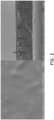
FIG. 1 andFIG. 2 are schematic diagrams of surface analysis results of embodiments and a comparative example. -
FIG. 3 is a schematic diagram of service life test results after embodiments and a comparative example were assembled into aluminum batteries. - In order for the content of the disclosure to be easier to understand, the following embodiments are given as examples in which the disclosure can actually be implemented. For the sake of clarity, many practical details are described in the following description. However, it should be understood that the practical details should not be used to limit the disclosure. In other words, in some embodiments of the disclosure, the practical details are unnecessary.
- In order to clearly illustrate the disclosure, the description of known aluminum battery design rules is omitted here. Persons of ordinary skill in the art may design according to actual requirements without departing from the spirit and scope of the disclosure.
- Unless otherwise defined, all terms (including technical and scientific terms) used herein have the same meaning as commonly understood by persons of ordinary skill in the art to which this disclosure belongs.
- Unless otherwise stated, the term "between" used in the specification to define a value range is intended to cover a range equal to and between the stated endpoint values. For example, a size range between a first value and a second value means that the size range may cover the first value, the second value, and any value between the first value and the second value.
- In the embodiment, an aluminum battery includes a positive electrode, a negative electrode, a separator, and an electrolyte. The separator is disposed between the positive electrode and the negative electrode, and the electrolyte is impregnated into the separator, the positive electrode, and the negative electrode. Here, the positive electrode, the negative electrode, the separator, and the electrolyte can be configured with each other in a suitable manner known in the aluminum battery field, and the disclosure is not limited thereto.
- In addition, the electrolyte includes aluminum halide, ionic liquid, and an additive, and the additive includes a pyridine compound. The pyridine compound has an electron withdrawing functional group. Accordingly, in the embodiment, the electrolyte including the pyridine compound with the electron withdrawing functional group is introduced into the design of the aluminum battery. By adjusting the charged state of nitrogen on the pyridine compound through the electron withdrawing functional group, a fine aluminum core is formed. In this way, the generation of the aluminum metal dendrites can be suppressed during the charging process to prevent short circuits, and the reaction area can be increased during the discharging process, thereby enabling the aluminum battery to have excellent performance in terms of service life and/or electrical properties. Since the disclosure is designed for the aluminum battery, the electrolyte uses the aluminum halide and the ionic liquid that can produce active substances such as aluminum ions, which is not the electrolyte component that is used in other battery types.
- Furthermore, the aforementioned additive will be adsorbed on the negative electrode during the charging process of aluminum battery, whereby the growth crystal plane of the electrodeposited layer may be changed, the reaction of electrodeposition may be inhibited, the electrodeposition potential may be increased, and the aluminum core deposition rate may be affected. Therefore, the fine aluminum core can be obtained, and then a dense, uniform, and flat electrodeposited layer (aluminum metal layer) can be obtained. In this way, the formation of the spike-like aluminum dendrites can be avoided, such that it is not easy to cause short circuits and the service life of the aluminum battery may be improved. During the discharging process, due to the fine aluminum core, the reaction area can be increased, thereby improving the reaction capacity and enhancing the aluminum dissolving performance, and increasing the battery capacity.
- In some embodiments, the electron withdrawing functional group is selected from one of nitrile, amide, acyl chloride, carboxyl-, and alkoxycarbonyl-, and is located at a
position 2, aposition 3, or a position 4 of the pyridine compound (as shown in the structural formula 1). As an example, the pyridine compound can be 4-cyanopyridine. Since the polarization ability of the nitrile at position 4 is better than the polarization ability at other positions, it is easier for the pyridine compound to form delocalized electrons to the nitrile, thereby increasing the polarization ability of the pyridine compound. Therefore, the electron density of the nitrogen atoms on the pyridine decreases and is more easily adsorbed on the negative electrode. As a result, the electrodeposition potential is increased and the electrodeposited aluminum core can be made smaller and more uniform, but the disclosure is not limited thereto.
- In some embodiments, the electrolyte does not include organic solvents and/or lithium salts (LiPF6, LiBF4, LiClO4, LiASF6), but the disclosure is not limited thereto. According to actual design requirements, the electrolyte may also include organic solvents and/or lithium salts.
- In some embodiments, in the electrolyte, a weight of the aluminum halide is greater than a weight of the ionic liquid, and a weight of the ionic liquid is greater than a weight of the additive, but the disclosure is not limited thereto.
- In some embodiments, a weight ratio of the additive in the electrolyte is greater than or equal to 0.048wt% and less than or equal to 0.16wt%. When the weight ratio added to the electrolyte exceeds 0.16 wt%, powder will precipitate from the electrolyte, causing turbidity and precipitation. Therefore, the above additive can have better performance within the weight ratio range, but the disclosure is not limited thereto. Here, corresponding to the aforementioned use weight ratio range, the concentration of the additive in the electrolyte is less than or equal to 20mM, but the disclosure is not limited thereto.
- In some embodiments, a weight ratio of the aluminum halide in the electrolyte is between 49wt% and 65wt%, but the disclosure is not limited thereto.
- In some embodiments, a weight ratio of the ionic liquid in the electrolyte is between 35wt% and 51wt%, but the disclosure is not limited thereto.
- In some embodiments, a total weight ratio of the aluminum halide, the ionic liquid, and the additive in the electrolyte is 100wt%. In other words, the electrolyte is only composed of the aluminum halide, the ionic liquid, and the additive including the pyridine compound.
- In some embodiments, the aluminum halide includes aluminum chloride (AlCl3), and the ionic liquid includes 1-ethyl-3-methylimidazolium chloride, but the disclosure is not limited thereto.
- In some embodiments, since the synergistic effect of the additive including the pyridine compound and the aluminum foil, the copper foil, or the nickel foil can achieve better results, a material of the negative electrode preferably includes the aluminum foil, the copper foil, or the nickel foil, but the disclosure not limited thereto.
- In some embodiments, a thickness of the negative electrode is between 10 microns and 100 microns, but the disclosure is not limited thereto.
- In some embodiments, a material of the positive electrode includes a nickel foil coated with graphite slurry, but the disclosure is not limited thereto.
- In some embodiments, a thickness of the positive electrode is between 100 microns and 300 microns, but the disclosure is not limited thereto.
- In some embodiments, a material of the separator includes glass fiber or other suitable polymer fibers/films, but the disclosure is not limited thereto.
- In some embodiments, a thickness of the separator is between 20 microns and 500 microns, but the disclosure is not limited thereto.
- Hereinafter, with reference to embodiments and a comparative example, the efficacy of the aluminum battery of the disclosure will be described in more detail. In addition, although the following embodiments are described, without departing from the scope of the disclosure, the details of the materials used, the procedures and the like may be suitably changed, and the disclosure should not be limitedly construed by the embodiments described below.
- An electrolyte of
Embodiment 1 included aluminum chloride (aluminum halide), 1-ethyl-3-methylimidazolium chloride (ionic liquid), and 4-cyanopyridine (additive). A molar ratio of the aluminum chloride/1-ethyl-3-methylimidazolium chloride was 1.8:1. An addition ratio of the 4-cyanopyridine was 6 mM. A weight ratio of the aluminum chloride in the electrolyte was 62.048wt%, a weight ratio of the 1-ethyl-3-methylimidazolium chloride (EMIC) in the electrolyte was 37.904wt%, and a weight ratio of the 4-cyanopyridine in the electrolyte was 0.048wt%. - An electrolyte of
Embodiment 2 is similar to the electrolyte ofEmbodiment 1, except that an addition ratio of 4-cyanopyridine in the electrolyte ofEmbodiment 2 was 10 mM, a weight ratio of aluminum chloride in the electrolyte was 62.03wt%, a weight ratio of 1-ethyl-3-methylimidazolium chloride (EMIC) in the electrolyte was 37.89wt%, and a weight ratio of 4-cyanopyridine in the electrolyte was 0.08wt%. - An electrolyte of
Embodiment 3 is similar to the electrolyte ofEmbodiment 1, except that an addition ratio of 4-cyanopyridine in the electrolyte ofEmbodiment 3 was 20 mM, a weight ratio of aluminum chloride in the electrolyte was 64.19wt%, a weight ratio of 1-ethyl-3-methylimidazolium chloride (EMIC) in the electrolyte was 35.65wt%, and a weight ratio of 4-cyanopyridine in the electrolyte was 0.16wt%. - An electrolyte of Comparative Example 1 is similar to the electrolyte of
Embodiment 1, except that the electrolyte of Comparative Example 1 did not include an additive, a weight ratio of aluminum chloride in the electrolyte was 62.1wt%, and a weight ratio of 1-ethyl-3-methylimidazolium chloride (EMIC) in the electrolyte was 37.9wt%. - The test results are shown in
FIG. 1 to FIG. 3 and Table 1 and the conclusions are as follows. The capacity retention (%) in Table 1 is defined as the ratio of the discharge capacity value of the aluminum battery after charging and discharging cycles to the discharge capacity value of the aluminum battery after initial stabilization.Table 1 Capacity retention after 50 cycles Capacity retention after 100 cycles Capacity retention after 150 cycles Capacity retention after 200 cycles Comparative Embodiment 185% 85% 79% 46 % Embodiment 1 94% 91% 85% 76 % Embodiment 2 100% 100% 96% 76 % Embodiment 3 100% 100% 100% 100% -
FIG. 1 andFIG. 2 are schematic diagrams of surface analysis results of embodiments and a comparative example.FIG. 1 andFIG. 2 show electrochemical deposition reactions (the negative electrode is copper foil, the positive electrode is aluminum foil) using the electrolyte of Comparative Example 1 andEmbodiment 1 respectively in a potentiostat (Autolab electrochemical workstation), in which the aluminum metal was electrodeposited on the copper foil with a current density of 6 mA and a deposition time of 30 minutes to obtain the electrodeposited aluminum layer, and then a surface analysis was performed using an SEM electron microscope. - From the results in
FIG. 1 , it can be seen that the surface formed by the electrolyte of Comparative Example 1 is obviously rough, and the aluminum core was large and uneven. From the results ofFIG. 2 , it can be seen that the surface formed by the electrolyte ofEmbodiment 1 had a higher flatness, and the electrodeposited layer was dense and uniform. In addition, since the electrodeposited layer was denser, the thickness of the electrodeposited layer was also smaller than the thickness of the electrodeposited layer formed by the electrolyte of Comparative Example 1, which confirmed that the density and uniformity of the electrodeposited layer were indeed improved. - It can be seen from the results in Table 1 that in Comparative Example 1, the capacity retention was 85% in the initial 50 cycles of charging and discharging cycles, and after 200 cycles, the capacity retention was only 46%; in
Embodiment 1, the capacity retention was 94% in the first 50 cycles, and 76% remained after 200 cycles of charging and discharging; inEmbodiment 2, the capacity retention was 100% in the first 50 cycles, and 76% remained after 200 cycles of charging and discharging; inEmbodiment 3, the capacity retention was 100% in the first 50 cycles and continued to maintain 100% after 200 cycles of charging and discharging. It can be seen that the additive effectively improved the electrical performance, and when the concentration (added amount) of the additive increased, the capacity retention tended to be better, which meant that when the aluminum core formed a finer aluminum layer, the surface area increased, allowing it to perform the aluminum dissolving reaction more efficiently, such that the discharge capacity was less likely to decline after multiple cycles of charging and discharging. -
FIG. 3 is a schematic diagram of service life test results after embodiments and a comparative example were assembled into aluminum batteries.FIG. 3 shows the test results of the power and the service life of a coin cell assembled usingEmbodiment 1,Embodiment 2,Embodiment 3, and Comparative Example 1 as the electrolyte, aluminum foil as the negative electrode, nickel foil coated with graphite slurry as the positive electrode, and glass fiber as the separator, in which charging and discharging tests was performed using a charging and discharging machine at a charging and discharging rate of 4C. - It can be seen from the results in
FIG. 3 that in terms of the service life performance of the aluminum battery, the aluminum battery including the electrolyte of Comparative Example 1 had an average of 121 cycles, the aluminum battery including the electrolyte ofEmbodiment 1 had an average of 184 cycles, the aluminum battery including the electrolyte ofEmbodiment 2 had an average of 204 cycles, and the aluminum battery including the electrolyte ofEmbodiment 3 had an average of 220 cycles, thereby confirming that the aluminum battery including the electrolyte ofEmbodiment 1,Embodiment 2, andEmbodiment 3 achieved a service life better than the service life of the aluminum battery including the electrolyte of Comparative Example 1. That is to say, the increase in the additive does not affect the service life of the aluminum battery and the flat electrodeposited layer did not easily generate spike-like dendrites, such that it was not easy to cause short circuits and the service life performance of the battery was gradually improved. - To sum up, the disclosure introduces the electrolyte including the pyridine compound with the electron withdrawing functional group into the design of the aluminum battery. By adjusting the charged state of nitrogen on the pyridine compound through the electron withdrawing functional group, a fine aluminum core is formed. In this way, the generation of the aluminum metal dendrites can be suppressed during the charging process to prevent short circuits, and the reaction area can be increased during the discharging process, thereby enabling the aluminum battery to have excellent performance in terms of service life and/or electrical properties.
Claims (10)
- An aluminum battery, comprising:a positive electrode;a negative electrode;a separator, disposed between the positive electrode and the negative electrode; andan electrolyte, impregnated into the separator, the positive electrode, and the negative electrode, wherein the electrolyte comprises aluminum halide, ionic liquid, and an additive, the additive comprises a pyridine compound, and the pyridine compound has an electron withdrawing functional group.
- The aluminum battery according to claim 1, wherein the electron withdrawing functional group is selected from one of nitrile, amide, acyl chloride, carboxyl-, and alkoxycarbonyl-.
- The aluminum battery according to claim 1, wherein the electron withdrawing functional group is located at a position 2, a position 3, or a position 4 of the pyridine compound.
- The aluminum battery according to claim 1, wherein in the electrolyte, a weight of the aluminum halide is greater than a weight of the ionic liquid, and a weight of the ionic liquid is greater than a weight of the additive.
- The aluminum battery according to claim 1, wherein a weight ratio of the additive in the electrolyte is greater than or equal to 0.048wt% and less than or equal to 0.16wt%.
- The aluminum battery according to claim 1, wherein a weight ratio of the aluminum halide in the electrolyte is between 49wt% and 65wt%.
- The aluminum battery according to claim 1, wherein a weight ratio of the ionic liquid in the electrolyte is between 35wt% and 51wt%.
- The aluminum battery according to claim 1, wherein a total weight ratio of the aluminum halide, the ionic liquid, and the additive in the electrolyte is 100 wt%.
- The aluminum battery according to claim 1, wherein the aluminum halide comprises aluminum chloride, and the ionic liquid comprises 1-ethyl-3-methylimidazolium chloride.
- The aluminum battery according to claim 1, wherein the negative electrode comprises an aluminum foil, a copper foil, or a nickel foil.
Applications Claiming Priority (1)
| Application Number | Priority Date | Filing Date | Title |
|---|---|---|---|
| TW112149387A TWI847940B (en) | 2023-12-19 | 2023-12-19 | Aluminum battery |
Publications (1)
| Publication Number | Publication Date |
|---|---|
| EP4576306A1 true EP4576306A1 (en) | 2025-06-25 |
Family
ID=92929199
Family Applications (1)
| Application Number | Title | Priority Date | Filing Date |
|---|---|---|---|
| EP24205574.7A Pending EP4576306A1 (en) | 2023-12-19 | 2024-10-09 | Aluminum battery |
Country Status (5)
| Country | Link |
|---|---|
| US (1) | US20250201919A1 (en) |
| EP (1) | EP4576306A1 (en) |
| JP (1) | JP7786761B2 (en) |
| KR (1) | KR20250095486A (en) |
| TW (1) | TWI847940B (en) |
Citations (3)
| Publication number | Priority date | Publication date | Assignee | Title |
|---|---|---|---|---|
| WO2019195605A1 (en) * | 2018-04-04 | 2019-10-10 | Ab Systems, Inc. (Us) | Glass fiber composite separator |
| US20200212489A1 (en) * | 2018-12-27 | 2020-07-02 | Industrial Technology Research Institute | Electrolyte composition and metal-ion battery employing the same |
| TWI755656B (en) * | 2018-12-27 | 2022-02-21 | 財團法人工業技術研究院 | Electrolyte composition for aluminum-ion battery and aluminum-ion battery employing the same |
Family Cites Families (2)
| Publication number | Priority date | Publication date | Assignee | Title |
|---|---|---|---|---|
| CN104078705B (en) * | 2014-07-03 | 2016-03-23 | 南京中储新能源有限公司 | A kind of secondary aluminium cell and electrolyte thereof |
| CN111244543A (en) * | 2020-01-15 | 2020-06-05 | 松山湖材料实验室 | High-voltage lithium-ion battery electrolyte additive, electrolyte, battery and method for forming the same |
-
2023
- 2023-12-19 TW TW112149387A patent/TWI847940B/en active
-
2024
- 2024-07-04 US US18/764,321 patent/US20250201919A1/en active Pending
- 2024-08-05 JP JP2024128651A patent/JP7786761B2/en active Active
- 2024-10-02 KR KR1020240133582A patent/KR20250095486A/en active Pending
- 2024-10-09 EP EP24205574.7A patent/EP4576306A1/en active Pending
Patent Citations (3)
| Publication number | Priority date | Publication date | Assignee | Title |
|---|---|---|---|---|
| WO2019195605A1 (en) * | 2018-04-04 | 2019-10-10 | Ab Systems, Inc. (Us) | Glass fiber composite separator |
| US20200212489A1 (en) * | 2018-12-27 | 2020-07-02 | Industrial Technology Research Institute | Electrolyte composition and metal-ion battery employing the same |
| TWI755656B (en) * | 2018-12-27 | 2022-02-21 | 財團法人工業技術研究院 | Electrolyte composition for aluminum-ion battery and aluminum-ion battery employing the same |
Also Published As
| Publication number | Publication date |
|---|---|
| JP2025097894A (en) | 2025-07-01 |
| TWI847940B (en) | 2024-07-01 |
| KR20250095486A (en) | 2025-06-26 |
| US20250201919A1 (en) | 2025-06-19 |
| TW202527351A (en) | 2025-07-01 |
| JP7786761B2 (en) | 2025-12-16 |
Similar Documents
| Publication | Publication Date | Title |
|---|---|---|
| Hong et al. | An effective descriptor for the screening of electrolyte additives toward the stabilization of Zn metal anodes | |
| Chen et al. | Polyvinyl alcohol coating induced preferred crystallographic orientation in aqueous zinc battery anodes | |
| EP3257099B1 (en) | High salt concentration electrolytes for rechargeable lithium battery | |
| Zhao et al. | In situ formation of highly controllable and stable Na 3 PS 4 as a protective layer for Na metal anode | |
| US20100136434A1 (en) | Electrolytic Copper Foil for Lithium Rechargeable Battery and Process for Producing the Copper Foil | |
| Wu et al. | Dual Additives for Stabilizing Li Deposition and SEI Formation in Anode‐Free Li‐Metal Batteries | |
| Liu et al. | Coordinating zincophilic sites and a solvation shell for a dendrite-free Zn anode under the synergistic effects of polyacrylonitrile and dimethyl sulfoxide | |
| Xie et al. | Exploring the effect of lithium halide artificial SEI on the electrochemical performance of lithium metal batteries | |
| Chen et al. | Enhancement of the lithium cycling capability using Li–Zn alloy substrate for lithium metal batteries | |
| KR20210052056A (en) | Negative electrode for lithium secondary battery, method of preparing the saem, and lithium secondary battery using the same | |
| US11145861B2 (en) | Method of improved performance in metal electrodes for batteries | |
| Li et al. | Pentafluoropyridine additive induced SEI film regulation and remarkable performance improvement of the lithium primary batteries | |
| CN112151759A (en) | Lithium metal cathode, preparation method and lithium ion battery | |
| EP4576306A1 (en) | Aluminum battery | |
| JPH05234583A (en) | Negative electrode for lithium secondary battery and lithium secondary battery using it | |
| Lin et al. | Influence of CsNO3 as electrolyte additive on electrochemical property of lithium anode in rechargeable battery | |
| KR20200132515A (en) | Lithium metal secondary battery comprising additive for lithium metal secondary battery | |
| US11283112B2 (en) | Method for manipulating an energy storage device | |
| Liu et al. | Lithiophilic Zn–Ag alloy film-modified Cu current collector prepared by magnetron sputtering for stable lithium metal batteries | |
| KR20230092403A (en) | Zinc metal electrode and its manufacturing method | |
| KR20230082381A (en) | Anode for lithium secondary battery, method of manufacturing the same and lithium secondary battery comprising the same | |
| KR102902699B1 (en) | Electrolyte composition for lithium metal battery containing sulfite solvent | |
| Qiao et al. | Molecular engineering of multi-polar groups enables long-term stable Zn anodes at high current density | |
| JPH06140026A (en) | Lithium secondary battery | |
| KR20250146794A (en) | Benzene-based electrolyte additive with controlled functional group for stabilizing anode surface for lithium metal battery |
Legal Events
| Date | Code | Title | Description |
|---|---|---|---|
| PUAI | Public reference made under article 153(3) epc to a published international application that has entered the european phase |
Free format text: ORIGINAL CODE: 0009012 |
|
| STAA | Information on the status of an ep patent application or granted ep patent |
Free format text: STATUS: REQUEST FOR EXAMINATION WAS MADE |
|
| 17P | Request for examination filed |
Effective date: 20241009 |
|
| AK | Designated contracting states |
Kind code of ref document: A1 Designated state(s): AL AT BE BG CH CY CZ DE DK EE ES FI FR GB GR HR HU IE IS IT LI LT LU LV MC ME MK MT NL NO PL PT RO RS SE SI SK SM TR |