EP4575990A1 - Method and device for anonymizing reidentification data in a visual tracking system - Google Patents
Method and device for anonymizing reidentification data in a visual tracking system Download PDFInfo
- Publication number
- EP4575990A1 EP4575990A1 EP23218043.0A EP23218043A EP4575990A1 EP 4575990 A1 EP4575990 A1 EP 4575990A1 EP 23218043 A EP23218043 A EP 23218043A EP 4575990 A1 EP4575990 A1 EP 4575990A1
- Authority
- EP
- European Patent Office
- Prior art keywords
- tracking
- reidentification
- data items
- image sources
- data
- Prior art date
- Legal status (The legal status is an assumption and is not a legal conclusion. Google has not performed a legal analysis and makes no representation as to the accuracy of the status listed.)
- Granted
Links
Images

Classifications
-
- G—PHYSICS
- G06—COMPUTING OR CALCULATING; COUNTING
- G06F—ELECTRIC DIGITAL DATA PROCESSING
- G06F21/00—Security arrangements for protecting computers, components thereof, programs or data against unauthorised activity
- G06F21/60—Protecting data
- G06F21/62—Protecting access to data via a platform, e.g. using keys or access control rules
- G06F21/6218—Protecting access to data via a platform, e.g. using keys or access control rules to a system of files or objects, e.g. local or distributed file system or database
- G06F21/6245—Protecting personal data, e.g. for financial or medical purposes
- G06F21/6254—Protecting personal data, e.g. for financial or medical purposes by anonymising data, e.g. decorrelating personal data from the owner's identification
-
- G—PHYSICS
- G06—COMPUTING OR CALCULATING; COUNTING
- G06T—IMAGE DATA PROCESSING OR GENERATION, IN GENERAL
- G06T7/00—Image analysis
- G06T7/20—Analysis of motion
- G06T7/292—Multi-camera tracking
-
- G—PHYSICS
- G06—COMPUTING OR CALCULATING; COUNTING
- G06F—ELECTRIC DIGITAL DATA PROCESSING
- G06F21/00—Security arrangements for protecting computers, components thereof, programs or data against unauthorised activity
- G06F21/10—Protecting distributed programs or content, e.g. vending or licensing of copyrighted material ; Digital rights management [DRM]
- G06F21/16—Program or content traceability, e.g. by watermarking
-
- G—PHYSICS
- G06—COMPUTING OR CALCULATING; COUNTING
- G06F—ELECTRIC DIGITAL DATA PROCESSING
- G06F21/00—Security arrangements for protecting computers, components thereof, programs or data against unauthorised activity
- G06F21/60—Protecting data
- G06F21/602—Providing cryptographic facilities or services
-
- G—PHYSICS
- G06—COMPUTING OR CALCULATING; COUNTING
- G06F—ELECTRIC DIGITAL DATA PROCESSING
- G06F21/00—Security arrangements for protecting computers, components thereof, programs or data against unauthorised activity
- G06F21/60—Protecting data
- G06F21/604—Tools and structures for managing or administering access control systems
-
- G—PHYSICS
- G06—COMPUTING OR CALCULATING; COUNTING
- G06F—ELECTRIC DIGITAL DATA PROCESSING
- G06F3/00—Input arrangements for transferring data to be processed into a form capable of being handled by the computer; Output arrangements for transferring data from processing unit to output unit, e.g. interface arrangements
- G06F3/01—Input arrangements or combined input and output arrangements for interaction between user and computer
- G06F3/011—Arrangements for interaction with the human body, e.g. for user immersion in virtual reality
- G06F3/013—Eye tracking input arrangements
-
- G—PHYSICS
- G06—COMPUTING OR CALCULATING; COUNTING
- G06T—IMAGE DATA PROCESSING OR GENERATION, IN GENERAL
- G06T7/00—Image analysis
- G06T7/20—Analysis of motion
- G06T7/223—Analysis of motion using block-matching
-
- G—PHYSICS
- G06—COMPUTING OR CALCULATING; COUNTING
- G06T—IMAGE DATA PROCESSING OR GENERATION, IN GENERAL
- G06T7/00—Image analysis
- G06T7/20—Analysis of motion
- G06T7/246—Analysis of motion using feature-based methods, e.g. the tracking of corners or segments
-
- G—PHYSICS
- G06—COMPUTING OR CALCULATING; COUNTING
- G06V—IMAGE OR VIDEO RECOGNITION OR UNDERSTANDING
- G06V10/00—Arrangements for image or video recognition or understanding
- G06V10/20—Image preprocessing
- G06V10/25—Determination of region of interest [ROI] or a volume of interest [VOI]
-
- G—PHYSICS
- G06—COMPUTING OR CALCULATING; COUNTING
- G06V—IMAGE OR VIDEO RECOGNITION OR UNDERSTANDING
- G06V10/00—Arrangements for image or video recognition or understanding
- G06V10/70—Arrangements for image or video recognition or understanding using pattern recognition or machine learning
- G06V10/74—Image or video pattern matching; Proximity measures in feature spaces
- G06V10/75—Organisation of the matching processes, e.g. simultaneous or sequential comparisons of image or video features; Coarse-fine approaches, e.g. multi-scale approaches; using context analysis; Selection of dictionaries
-
- G—PHYSICS
- G06—COMPUTING OR CALCULATING; COUNTING
- G06V—IMAGE OR VIDEO RECOGNITION OR UNDERSTANDING
- G06V20/00—Scenes; Scene-specific elements
- G06V20/70—Labelling scene content, e.g. deriving syntactic or semantic representations
-
- G—PHYSICS
- G06—COMPUTING OR CALCULATING; COUNTING
- G06T—IMAGE DATA PROCESSING OR GENERATION, IN GENERAL
- G06T2207/00—Indexing scheme for image analysis or image enhancement
- G06T2207/10—Image acquisition modality
- G06T2207/10004—Still image; Photographic image
-
- G—PHYSICS
- G06—COMPUTING OR CALCULATING; COUNTING
- G06T—IMAGE DATA PROCESSING OR GENERATION, IN GENERAL
- G06T2207/00—Indexing scheme for image analysis or image enhancement
- G06T2207/10—Image acquisition modality
- G06T2207/10016—Video; Image sequence
-
- G—PHYSICS
- G06—COMPUTING OR CALCULATING; COUNTING
- G06T—IMAGE DATA PROCESSING OR GENERATION, IN GENERAL
- G06T2207/00—Indexing scheme for image analysis or image enhancement
- G06T2207/20—Special algorithmic details
- G06T2207/20092—Interactive image processing based on input by user
- G06T2207/20104—Interactive definition of region of interest [ROI]
-
- G—PHYSICS
- G06—COMPUTING OR CALCULATING; COUNTING
- G06V—IMAGE OR VIDEO RECOGNITION OR UNDERSTANDING
- G06V20/00—Scenes; Scene-specific elements
- G06V20/50—Context or environment of the image
- G06V20/52—Surveillance or monitoring of activities, e.g. for recognising suspicious objects
Definitions
- the present disclosure relates to the field of visual tracking systems.
- it proposes a novel method and device for anonymizing reidentification data in a visual tracking system, as well as a novel method and device for performing visual tracking using anonymized reidentification data.
- reidentification data As reID data, it is customary to use feature vectors that each represent a visual appearance of a tracking target.
- a feature vector may be described as a low-dimensional representation of the image data, which on the one hand economizes the data volume to be handled and on the other hand allows accurate matching.
- the system owner may consent to using this re-identification data in combination with reidentification data from a second image source but disallow its use together with reidentification data from a third image source; in other words, the permitted use of the reidentification data is across the FOVs of the first and second image sources.
- an unauthorized party eavesdropper
- a technical mechanism should cause his tracking attempts to fail.
- a visual tracking system having as its main components
- the input to this computation is feature vectors which each represent a visual appearance of a detected tracking target.
- the method excludes searching for matching reidentification data items among reidentification data items that have been computed using different one-way functions and/or searching for matching reidentification data items among reidentification data items that have been computed using a one-way function that has been modified by two or more different tracking-rights tokens.
- devices or device clusters which comprise processing circuitry that is configured to perform the method according to the second aspect (providing anonymized data for facilitating reidentification) or the method according to the third aspect (performing visual tracking).
- the present disclosure further proposes a computer program containing instructions for causing a computer to carry out the above method.
- the computer program may be stored or distributed on a data carrier.
- a “data carrier” may be a transitory data carrier, such as modulated electromagnetic or optical waves, or a non-transitory data carrier.
- Non-transitory data carriers include volatile and non-volatile memories, such as permanent and non-permanent storage media of magnetic, optical or solid-state type. Still within the scope of "data carrier”, such memories may be fixedly mounted or portable.
- the same tracking-rights token is used to modify the one-way function h for all image sources in the visual tracking system.
- the one-way function h is instead modified - still for all image sources in the visual tracking system - by a substitute tracking-rights token. This allows the tracking clients to perform reidentification in FOVs of all image sources in the visual tracking system but inside one validity period at a time.
- the term "reidentification data" refers to the quantity or variable which forms the basis of the reidentification process, the matching process where image data from different times and locations are identified as referring to the same tracking target, such as a person or an object.
- the reID data may be a proxy for the actual image data, such as feature vectors derived from the image data.
- the feature vectors may be referred to as reID data items.
- the reID data may be provided in the form of non-anonymized data (e.g., feature vectors) or as anonymized data (e.g., hashes of feature vectors ).
- the reID data shall be provided as anonymized data. Hashing and other types of anonymization process may bring with them a change in data type; for example, a hash of a vector may be a scalar, although special hashing techniques exist that return a vector.
- a "location" X ( m i ) of a subarea m i can refer to the subarea's position in an image or to a geoposition.
- the geoposition may correspond to the position of the image source which acquired the image, which is independent of the subarea's position in the image. Further, the geoposition may be an approximate position of the portion of the image source's FOV that the subarea m i depicts.
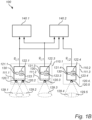
- Figure 1A shows a visual tracking system 100 suitable for performing visual tracking of tracking targets P 1 , P 2 , P 3 .
- the tracking targets P 1 , P 2 , P 3 which may be persons or inanimate objects, are exemplified in figure 1A as a vehicle P 1 and two different persons P 2 , P 3 .
- the technology of visual tracking may be said to rest on an assumption that the tracking targets are possible to recognize with high accuracy based on visual features that are unique or substantially unique within the scope of the visual tracking.
- the unique visual features may include body height, posture, build, facial features and (a combination of) garments and shoes.
- the license plate may be a preferred choice.
- a possible output of the visual tracking may be a list of the locations and indications of when the tracking target was present at these locations.
- the visual tracking system 100 in figure 1A comprises four image sources 120.1, 120.2, 120.3, 120.4, which are arranged to provide images of respective FOVs 129.1, 129.2, 129.3, 129.4, and at least two tracking clients 140.1, 140.2.
- Each tracking client 140 comprises processing circuitry 141 and a memory 142, wherein the memory 142 is suitable for storing, among others, a computer program 143 which is executable by the processing circuitry 141, as well as input and output data of a reidentification process.
- the visual tracking system 100 further comprises an anonymization layer 130; the anonymization layer 130 is a virtual entity which is here implemented in a coordinating entity 150.
- the coordinating entity 150 may be implemented in a dedicated server or host computer in a computer network, or as a process executing on a computer or a virtual machine with additional responsibilities in the visual tracking system 100.
- the coordinating entity 150 runs on processing circuitry 151 and has a memory 152 at its disposal; the functioning of the coordinating entity 150 may be codified as a computer program 153.
- the image sources 120, coordinating entity 150 and tracking clients 140 are linked by wired or wireless data connections, e.g., by being connected to a common data network.
- the data connections from the image sources 120 to the coordinating entity 150 should preferably be protected from unauthorized parties as they convey feature vectors that have not yet undergone anonymization.
- the data connections are sensitive also in such embodiments of the visual tracking system 100 where the feature vectors are computed in the coordinating entity 150, namely, since the data connections convey image data.
- the data connections can be protected from eavesdropping and other attacks by unauthorized parties by means of adequate end-to-end encryption, tunneling, or by letting the data connections pass only through physically protected wired lines - such as a device-internal bus - which are sensibly safe from intrusion.
- the novel techniques proposed herein are utilized to delimit the scope of the visual tracking spatially, and more precisely such that the first tracking client 140.1 shall be permitted to perform visual tracking in the FOVs of a first group 110.1 comprising the first image source 120.1 and the second image source 120.2, and such that the second tracking client 140.2 shall be permitted to perform visual tracking in the FOVs of a second group 110.2 comprising the third image source 120.3 and the fourth image source 120.4.
- the first tracking client 140.1 is supplied with location-annotated first reidentification data items g 1,1 , g 2,1 , g 3,1 , ....
- the second tracking client 140.2 is supplied with location-annotated second reidentification data items g 1,2 , g 2,2 , g 3,2 , ....
- a third and fourth tracking client 140.3, 140.4 may perform reidentification in the FOVs of the second group 110.2 of image sources on the basis of the location-annotated second reidentification data items.
- the image sources 120.1, 120.2, 120.3, 120.4 comprise lenses, photosensitive components (image sensors) and image-processing components, by which they provide digital image data representing still images or video sequences of their respective FOVs 129.1, 129.2, 129.3, 129.4.
- the image sources 120 may for example be digital video cameras.
- each image source 120 further comprises processing circuitry 121 configured to detect subareas m 1 , m 2 , ..., m 6 in said images M such that each subarea contains a tracking target.
- the upper portion of figure 4 refers to an example where this detection process is applied to four images M ; from what can be observed visually, subareas m 1 , m 4 , m 6 contain the same person at different locations (and consequently, at different points in time), subarea m 5 contains a different person, and subareas m 2 , m 3 contain the same vehicle.
- the detection maybe based on an object detection algorithm or an object classification algorithm, such as a body-part detection algorithm, face detection algorithm, or in the case of vehicles an algorithm configured to detect alphanumeric characters (e.g., on a license plate) or visual features of a vehicle.
- the algorithms can be configured to output bounding boxes, or otherwise separate bounding-box postprocessing may be performed downstream of the algorithm, whereby the subareas m 1 , m 2 , ..., m 6 are obtained.
- each subarea m i preferably carries a globally unique index i .
- the index may be a single index from a sequence shared by all image sources.
- the processing circuitry 121 of the image sources 120 in figure 1A is further configured to compute, for each of the subareas m 1 , m 2 , ... , m 6 , respective feature vectors (or appearance vectors) denoted f ( m 1 ), f ( m 2 ), ... , f ( m 6 ), which represent a visual appearance of the tracking target or targets in these subareas m 1 , m 2 , ... , m 6 .
- a feature vector may alternatively be represented in the form of a string of characters, such as the following string of 43 characters in the base64 alphabet: aAPjFcw7bOw74uD4GEVdpo5vo-Sal1eoguVkYuwc1srRbboOFhLOVOwUPA, which represents 128 bytes of 3 bits each.
- the feature vector together with a suitable distance metric is the basis for matching in the reidentification process, i.e., the assessment whether two feature vectors are sufficiently close with respect to the distance metric that they shall be treated as relating to the same tracking target.
- Various approaches to person reidentification within this framework are reviewed in the following references:
- a feature vector may be described as a low-dimensional representation of the visual appearance of the tracking target.
- the feature vectors may be low-dimensional in the sense that they comprise a small number of components and/or that each component takes values in a set with finite cardinality, e.g., by rounding real numbers to integers.
- a match of two feature vectors x ( x 1 , x 2 , ... , x N )
- y ( y 1 , y 2 , ...
- the feature vectors are computed by a machine-learning model, such as a convolutional neural network (CNN), which has been trained to mimic correct or human-like reidentification decisions.
- the training may include supervised or unsupervised learning.
- the computations do not follow any transparent definition (which is anyhow not essential to the teachings herein) and their result normally cannot be interpreted unambiguously, e.g., in terms of aspects of the appearance of the tracking target. Further, the computations can only be repeated faithfully by the machine-learning model itself.
- the feature vectors computed in this manner can either be compared with respect to a distance metric on closed form - like in equations (2) and (3) - or with respect to a distance metric computed by a machine-learning model.
- the architecture shown in figure 1A where the anonymization layer is centralized in the coordinating entity 150 may avoid a need to hand out tracking-rights tokens to multiple parallel processes and/or it may simplify the replacement of a tracking-rights token when a validity period expires. It is understood that, when steps 210 and 211 are performed in the image sources 120 (or co-located therewith), they may correspond to multiple processes which execute in parallel; for example, there may be one process that detects subareas m i and computes feature vectors f ( m i ) for each image source.
- the tracking-rights token ⁇ 1 may be represented as a bitstring.
- the notation [ ⁇ , ⁇ ] refers to a combining operation, such as string concatenation.
- the quantity (4) may have the appearance of a single number, a bitstring, an alphanumeric string, a vector or the like.
- the one-way function is assumed to be noninvertible and sensibly collisionless.
- a hash function can be used, particularly a cryptographic hash function that provides a safety level considered adequate in view of the sensitivity of the image data. Examples are SHA-256, SHA3-512, RSA-1024 and possibly MD5.
- a recipient of the reidentification data items g 1,1 , g 2,1 , g 3,1 , ... can use the reidentification data items without knowing the value of the tracking-rights token ⁇ 1 .
- a proximity-preserving one-way function h proximity-preserving hash function
- the function h is proximity-preserving if, for all feature vectors x, y such that d ( x, y ) ⁇ D 0 , it holds that d h x , h y ⁇ D 0 ′ where D 0 ′ is constant.
- the proximity-preserving one-way function h shall be such that d h x ⁇ , h y ⁇ ⁇ D 0 ′ for some constant D 0 ′ , where ⁇ is a tracking-rights identifier.
- the distance function has to be defined differently when applied to the reidentification data items, since they have a different format or datatype, but this is implicit here so as not to burden the notation unnecessarily.
- the use of a proximity-preserving one-way function will allow a tracking client further downstream in the processing chain to search for matches based on a modified version of the proximity test (3), namely: d g j , 1 , g j ′ , 1 ⁇ D 0 ′ .
- the proximity-preserving property can be achieved by dividing the feature vector into shorter sub-vectors (which have one or more components each) and hashing each sub-vector separately; in such embodiments, the reidentification data item comprises a number of sub-hashes (salted by the tracking-rights token) of the sub-vectors. If the feature vector is divided into sub-vectors with one component each, which are hashed individually, the resulting reidentification data item can be a vector of the same length as the feature vector. Further proximity-preserving hash functions are described in Y. Weiss et al., "Spectral Hashing", in: D. Koller et al. (eds.), Advances in Neural Information Processing Systems 21 (NIPS 2008), ISBN 9781605609492 .
- the reidentification data items g 1,1 , g 2,1 , g 3,1 , ... are annotated with the corresponding locations X ( m 1 ) , X ( m 2 ) , X ( m 3 ) , ... and they are disclosed, in step 213.1, to the tracking clients that are permitted to perform visual tracking in the FOVs of the first subgroup 111.1 of image sources.
- Disclosing the reidentification data items to the tracking clients may include sending them in a message to the tracking clients or storing them in a shared memory to which the tracking clients have access.
- the shared memory may be configured as a publication/subscription (Pub/Sub) messaging service.
- the first tracking client 140.1 is permitted to perform visual tracking in the FOVs of the first subgroup 111.1 of image sources.
- Annotating a reidentification data item does not necessarily imply any modification of the reidentification data item itself; rather, the annotating may be achieved by storing the reidentification data item and its location in a common data structure (as figure 4 suggests), in associated fields of a table and/or by creating a pointer or another computer-readable association from the location to the reidentification data item or vice versa.
- These reidentification data items g 1,2 , g 2,2 , g 3,2 , ... are annotated with the corresponding locations X( m 1 ), X ( m 2 ), X ( m 3 ) , ...
- the second tracking client 140.2 - and the optional third and fourth tracking clients 140.3, 140.4 - are permitted to perform visual tracking in the FOVs of the second subgroup 111.2 of image sources.
- the provision of the first and second reidentification data items corresponds to the processes 403.1 and 403.2, respectively.
- the annotating of the second reidentification data items with locations is illustrated as process 404.
- the method 200 further includes a step 214 of preventing access to the feature vectors. Measures are to be taken to stop any party to inspect or access the feature vectors, or to render such attempts very difficult. To prevent access to the feature vectors, as explained above, the feature vectors can be conveyed on data connections which are protected from eavesdropping and other attacks by unauthorized parties. Further, when the feature vectors are stored or cached, an adequately protected memory can be used. It noted that step 214 is limited, at least in some embodiments, to preventing access to those feature vectors that are under the control of the anonymization layer 130, e.g., which are stored in a memory of a component acting as anonymization layer. In such embodiments, it may be the responsibility of other components of the visual tracking system 100 to prevent access outside the scope of the control of the anonymization layer 130, say, to protect access to data connections upstream of the anonymization layer 130 on which the feature vectors are conveyed.
- FIG 3 the behavior of an individual tracking client 140 will now be described in terms of the method 300. It is appreciated that the same operations may be performed in a general-purpose processor.
- the method 300 will be described from the point of view of a tracking client authorized to perform visual tracking of tracking targets in FOVs of a first group 110.1 of image sources, namely, those for which the first tracking-rights token ⁇ 1 has been used to generate the reidentification data items. In the running example, this corresponds to the first tracking client 140.1.
- the tracking client receives first reidentification data items g i ,1 .
- This may include receiving the first reidentification data items g i ,1 in a message or fetching them from a shared memory.
- the scope of the visual tracking is spatially delimited thanks to the non-matchability (1), it may be acceptable to make the first reidentification data items g i ,1 and any second reidentification data items g i ,2 , third first reidentification data items etc. available in the same shared memory.
- Each said first reidentification data item has been derived from a feature vector f ( m i ) which represents a visual appearance of a tracking target in a subarea m i of an image obtained from an image source in the first group, and each first reidentification data item has been annotated with a location X ( m i ) of the respective subarea.
- the first reidentification data items have more precisely been provided using the predefined one-way function h modified by the first tracking-rights token ⁇ 1 specific to the first group of image sources.
- the tracking client then proceeds to search, in step 311, for matching reidentification data items among the received first reidentification data items g i ,1 .
- a further process executing on the processing circuitry 121.3 provides reidentification data items from a further image source 120.3 using the first tracking-rights token ⁇ 1 .
- the first tracking-rights token ⁇ 1 is thus specific to a group of image sources consisting of image sources 120.1, 120.2, 120.3 (and possibly more).
Landscapes
- Engineering & Computer Science (AREA)
- Theoretical Computer Science (AREA)
- General Physics & Mathematics (AREA)
- Physics & Mathematics (AREA)
- Multimedia (AREA)
- Computer Vision & Pattern Recognition (AREA)
- General Engineering & Computer Science (AREA)
- Software Systems (AREA)
- Health & Medical Sciences (AREA)
- General Health & Medical Sciences (AREA)
- Bioethics (AREA)
- Computer Security & Cryptography (AREA)
- Computer Hardware Design (AREA)
- Databases & Information Systems (AREA)
- Medical Informatics (AREA)
- Technology Law (AREA)
- Human Computer Interaction (AREA)
- Automation & Control Theory (AREA)
- Computing Systems (AREA)
- Artificial Intelligence (AREA)
- Computational Linguistics (AREA)
- Evolutionary Computation (AREA)
- Image Analysis (AREA)
Abstract
detecting (210), in images obtained from a plurality of image sources, subareas which each contain a tracking target;
computing (211), for each subarea, a feature vector which represents a visual appearance of the tracking target therein;
for a first/second subgroup of the image sources, providing (212.1/2) first/second reidentification data items by anonymizing each feature vector using a predefined one-way function modified by a first/second tracking-rights token, and disclosing (213.1/2) the first/second reidentification data items annotated with locations of the respective subareas to a first/second tracking client, wherein the second tracking-rights token is distinct from the first tracking-rights token; and
preventing (214) access to the feature vectors.
Description
- The present disclosure relates to the field of visual tracking systems. In particular, it proposes a novel method and device for anonymizing reidentification data in a visual tracking system, as well as a novel method and device for performing visual tracking using anonymized reidentification data.
- Recent technological development in the field of object reidentification have made available more robust ways of visually tracking a target, such as a person or object, within the field-of-view (FOV) of one camera or across the FOVs of several cameras. This is highly useful in applications like object search and loitering detection. According to an established and widely practiced paradigm, the visual tracking is not performed on image data directly but on so-called reidentification data (reID data). As reID data, it is customary to use feature vectors that each represent a visual appearance of a tracking target. A feature vector may be described as a low-dimensional representation of the image data, which on the one hand economizes the data volume to be handled and on the other hand allows accurate matching.
- The visual tracking may be performed by a tracking client which is separate from the camera that acquired the original image data. In this case, the image data has to be transferred from the camera to the tracking client over a data connection, which raises concerns of unwanted dissemination of personal data, e.g., by eavesdropping. Transfer of image data is usually unavoidable if visual tracking is to be performed across the FOVs of several cameras. The concerns of dissemination are equally justified if the camera supplies the tracking client with reID data instead of image data, as the reID data may enable unauthorized tracking of a previously identified target.
- In view of these concerns, it would be desirable to preprocess or modify the reidentification data at the source such that the scope of the visual tracking is delimited with respect to space and/or time. To mention one example of spatial delimitation, a system owner may want to specify that the reidentification data from one image source is only to be used for visual tracking within the FOV of that image source.
- In another example, the system owner may consent to using this re-identification data in combination with reidentification data from a second image source but disallow its use together with reidentification data from a third image source; in other words, the permitted use of the reidentification data is across the FOVs of the first and second image sources. In the event an unauthorized party (eavesdropper) gains access to the reidentification data, a technical mechanism should cause his tracking attempts to fail.
- One objective of the present disclosure is to make available methods and devices for delimiting the scope of visual tracking with respect to space and/or time. (Here, a scope is said to be delimited with respect to space if it is limited to a number of specified image sources, even if the spatial locations of the image sources are not known.) A further objective is to make available such methods and devices that anonymize the data on which the visual tracking is based. A further objective is to make available methods and devices for providing reidentification data which supports reidentification only in the FOVs of specific groups of image sources. A further objective is to make available such methods and devices that protect anonymity. A still further objective is to propose methods and devices for performing visual tracking using anonymized data.
- At least some of these objectives are achieved by the invention as defined by the independent claims. The dependent claims relate to advantageous embodiments of the invention.
- In a first aspect of the present disclosure, there is provided a visual tracking system having as its main components
- a plurality of image sources,
- an anonymization layer, and
- a plurality of tracking clients.
- Advantageously, because the anonymization layer prevents access to the feature vectors (and the anonymization layer is separate from the tracking clients), and because the first and second reidentification data items are generated by means of distinct tracking-rights tokens σ 1, σ 2 which are specific to respective first/second groups of image sources, each tracking client is restricted to performing reidentification in the FOVs of its respective group of image sources. If hypothetically the first tracking client attempted to perform reidentification in a set containing both the first and second reidentification data items, then the first tracking client would never find a match between one of the first reidentification data items and one of the second reidentification data items. Thanks to the one-way function's property of being collisionless, even if the function h is applied to the same feature vector f(m 0), the distinctness of the tracking-rights tokens σ 1 ≠ σ 2 will ensure that

- Again due to the one-way property of the function h, the feature vectors f(mi ) are anonymized. A party downstream of the anonymization layer cannot reconstruct the feature vectors f(mi ) from one of the reidentification data items g i,1 , g i,2 . Even with complete access to a large set of reidentification data, it is a computationally infeasible task to invert the function h.
- In a second aspect of the present disclosure, there is provided a method of providing anonymized data for facilitating reidentification in a visual tracking system. The method comprises: detecting, in images obtained from a plurality of image sources, subareas mi which each contain a tracking target; computing, for each subarea, a feature vector f(mi ) which represents a visual appearance of the tracking target therein. For a first subgroup of the image sources, first reidentification data items g i,1 = h([f(mi ), σ 1]) are provided by anonymizing each feature vector using a predefined one-way function h modified by a first tracking-rights token σ 1; and the first reidentification data items annotated with locations X(mi ) of the respective subareas are disclosed to a first tracking client. For a second subgroup of the image sources, second reidentification data items g i,2 = h([f(mi ), σ 2]) are provided by anonymizing each feature vector using the predefined one-way function h, which is now modified by a second first tracking-rights token σ 2 which is distinct from the first tracking-rights token; and the second reidentification data items annotated with locations X(mi ) of the respective subareas are disclosed to a second tracking client. The method further comprises preventing access to the feature vectors.
- The method according to the second aspect facilitates (i.e., assists, supports, enables) reidentification to be performed in a visual tracking system in that it supplies the reidentification data items among which the tracking clients will search for matches, for thereby following a tracking target. As explained above, the proposed way of generating the reidentification data items also ensures anonymity. Further, thanks to the distinctness of the tracking-rights tokens, the reidentification data items are generated in a way that delimits the scope of visual tracking to specified subgroups of image sources. It is possible to execute multiple instances of the method according to the second aspect such that the first tracking-rights token σ 1 is specific not only to the first subgroup of image sources but to a first group of image sources that includes the first subgroup and/or such that the second tracking-rights token σ 2 is specific not only to the second subgroup of image sources but to a second group of image sources that includes the second subgroup. For example, the first group of image sources may consist of the first subgroup and one further subgroup for which an independent process generates reidentification data items using an identical first tracking-rights token σ 1.
- Some steps of method of the second aspect can be performed in the anonymization layer, and some steps can possibly be performed in the image sources as well. In implementations of the method, it is possible to delegate the steps of detecting subareas mi and computing a feature vector f(mi ) for each subarea to the image sources. Accordingly, the anonymization layer need not perform more than the following steps:
- For a first subgroup of the image sources, first reidentification data items are provided by anonymizing each feature vector using a predefined one-way function h modified by a first tracking-rights token; and the first reidentification data items annotated with locations of the respective subareas are disclosed to a first tracking client.
- For a second subgroup of the image sources, second reidentification data items are provided by anonymizing each feature vector using the function h modified by a second tracking-rights token; and the second reidentification data items annotated with locations of the respective subareas are disclosed to a second tracking client.
- The access to the feature vectors is prevented.
- According to a third aspect of the present disclosure, there is provided a method for performing visual tracking of tracking targets in fields-of-view of a first group of image sources. The method comprises: receiving first reidentification data items g i,1; searching for matching reidentification data items among the first re-identification data items; and for a set of mutually matching reidentification data items, following one tracking target on the basis of the locations with which the mutually matching reidentification data items are annotated. According to the third aspect, each first reidentification data item has been derived from a feature vector f(mi ) which represents a visual appearance of a tracking target in a subarea of an image obtained from an image source in the first group, and each first reidentification data item is annotated with a location of the respective subarea. Further, all the first reidentification data items have been computed using a predefined one-way function h modified by a first tracking-rights token σ 1 which is specific to the first group of image sources.
- The method according to the third aspect makes visual tracking possible despite the reidentification data being provided in the form of anonymized data. In particular, the method may include searching for matching reidentification data items among a set of reidentification data items that have been computed using a single predefined one-way function h modified by a single tracking-rights token σ 1. (As explained above, the input to this computation is feature vectors which each represent a visual appearance of a detected tracking target.) This is to say, the method excludes searching for matching reidentification data items among reidentification data items that have been computed using different one-way functions and/or searching for matching reidentification data items among reidentification data items that have been computed using a one-way function that has been modified by two or more different tracking-rights tokens.
- In fourth and fifth aspects of the present disclosure, there are provided devices or device clusters which comprise processing circuitry that is configured to perform the method according to the second aspect (providing anonymized data for facilitating reidentification) or the method according to the third aspect (performing visual tracking).
- The present disclosure further proposes a computer program containing instructions for causing a computer to carry out the above method. The computer program may be stored or distributed on a data carrier. As used herein, a "data carrier" may be a transitory data carrier, such as modulated electromagnetic or optical waves, or a non-transitory data carrier. Non-transitory data carriers include volatile and non-volatile memories, such as permanent and non-permanent storage media of magnetic, optical or solid-state type. Still within the scope of "data carrier", such memories may be fixedly mounted or portable.
- Some embodiments delimit the scope of visual tracking with respect to time as well, namely, by ceasing to use (in the anonymization layer) the first tracking-rights token σ 1 after a validity period of the first tracking-rights token has expired. The anonymization layer may henceforth anonymize the feature vectors using the predefined one-way function h modified by a substitute first tracking-rights token


- To delimit the scope of visual tracking with respect to time only, the same tracking-rights token is used to modify the one-way function h for all image sources in the visual tracking system. When a validity period of the tracking-rights token expires, the one-way function h is instead modified - still for all image sources in the visual tracking system - by a substitute tracking-rights token. This allows the tracking clients to perform reidentification in FOVs of all image sources in the visual tracking system but inside one validity period at a time.
- For the purposes of the present disclosure, the term "reidentification data" (or reID data) refers to the quantity or variable which forms the basis of the reidentification process, the matching process where image data from different times and locations are identified as referring to the same tracking target, such as a person or an object. The reID data may be a proxy for the actual image data, such as feature vectors derived from the image data. In individualized form, the feature vectors may be referred to as reID data items. The reID data may be provided in the form of non-anonymized data (e.g., feature vectors) or as anonymized data (e.g., hashes of feature vectors ). According to the first, second and further aspects of this disclosure, the reID data shall be provided as anonymized data. Hashing and other types of anonymization process may bring with them a change in data type; for example, a hash of a vector may be a scalar, although special hashing techniques exist that return a vector.
- As used herein, a "location" X(mi ) of a subarea mi can refer to the subarea's position in an image or to a geoposition. The geoposition may correspond to the position of the image source which acquired the image, which is independent of the subarea's position in the image. Further, the geoposition may be an approximate position of the portion of the image source's FOV that the subarea mi depicts.
- Generally, all terms used in the claims are to be interpreted according to their ordinary meaning in the technical field, unless explicitly defined otherwise herein. All references to "a/an/the element, apparatus, component, means, step, etc." are to be interpreted openly as referring to at least one instance of the element, apparatus, component, means, step, etc., unless explicitly stated otherwise. The steps of any method disclosed herein do not have to be performed in the exact order described, unless this is explicitly stated.
- Aspects and embodiments are now described, by way of example, with reference to the accompanying drawings, on which:
-
figures 1A and1B shows two visual tracking systems; -
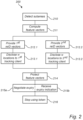
figure 2 is a flowchart of a method for providing anonymized data for facilitating reidentification in a visual tracking system; -
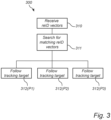
figure 3 is a flowchart of a method for performing visual tracking of tracking targets based on anonymized reidentification data; and -
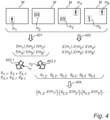
figure 4 illustrates the generating of anonymized reidentification data from acquired images. - The aspects of the present disclosure will now be described more fully hereinafter with reference to the accompanying drawings, on which certain embodiments of the invention are shown. These aspects may, however, be embodied in many different forms and should not be construed as limiting; rather, these embodiments are provided by way of example so that this disclosure will be thorough and complete, and to fully convey the scope of all aspects of the invention to those skilled in the art. Like numbers refer to like elements throughout the description.
-
Figure 1A shows avisual tracking system 100 suitable for performing visual tracking of tracking targets P1, P2, P3. The tracking targets P1, P2, P3, which may be persons or inanimate objects, are exemplified infigure 1A as a vehicle P1 and two different persons P2, P3. Conceptually, the technology of visual tracking may be said to rest on an assumption that the tracking targets are possible to recognize with high accuracy based on visual features that are unique or substantially unique within the scope of the visual tracking. In the case of a person, the unique visual features may include body height, posture, build, facial features and (a combination of) garments and shoes. In the case of a vehicle, the license plate may be a preferred choice. For each tracking target, a possible output of the visual tracking may be a list of the locations and indications of when the tracking target was present at these locations. - The
visual tracking system 100 infigure 1A comprises four image sources 120.1, 120.2, 120.3, 120.4, which are arranged to provide images of respective FOVs 129.1, 129.2, 129.3, 129.4, and at least two tracking clients 140.1, 140.2. Each tracking client 140 comprises processing circuitry 141 and a memory 142, wherein the memory 142 is suitable for storing, among others, a computer program 143 which is executable by the processing circuitry 141, as well as input and output data of a reidentification process. Thevisual tracking system 100 further comprises ananonymization layer 130; theanonymization layer 130 is a virtual entity which is here implemented in a coordinatingentity 150. The coordinatingentity 150 may be implemented in a dedicated server or host computer in a computer network, or as a process executing on a computer or a virtual machine with additional responsibilities in thevisual tracking system 100. The coordinatingentity 150 runs on processingcircuitry 151 and has amemory 152 at its disposal; the functioning of the coordinatingentity 150 may be codified as acomputer program 153. - The image sources 120, coordinating
entity 150 and tracking clients 140 are linked by wired or wireless data connections, e.g., by being connected to a common data network. As will be explained below, the data connections from the image sources 120 to the coordinatingentity 150 should preferably be protected from unauthorized parties as they convey feature vectors that have not yet undergone anonymization. (These data connections are sensitive also in such embodiments of thevisual tracking system 100 where the feature vectors are computed in the coordinatingentity 150, namely, since the data connections convey image data.) The data connections can be protected from eavesdropping and other attacks by unauthorized parties by means of adequate end-to-end encryption, tunneling, or by letting the data connections pass only through physically protected wired lines - such as a device-internal bus - which are sensibly safe from intrusion. - In the
visual tracking system 100 offigure 1A , the novel techniques proposed herein are utilized to delimit the scope of the visual tracking spatially, and more precisely such that the first tracking client 140.1 shall be permitted to perform visual tracking in the FOVs of a first group 110.1 comprising the first image source 120.1 and the second image source 120.2, and such that the second tracking client 140.2 shall be permitted to perform visual tracking in the FOVs of a second group 110.2 comprising the third image source 120.3 and the fourth image source 120.4. For this purpose, the first tracking client 140.1 is supplied with location-annotated first reidentification data items g 1,1, g 2,1, g 3,1, .... and the second tracking client 140.2 is supplied with location-annotated second reidentification data items g 1,2, g 2,2, g 3,2, .... - Without departing from the scope of the present disclosure, it is possible to supply more than one tracking client with reidentification data originating from the same group of image sources. As suggested by the dashed boxes in the upper right corner of
figure 1A , a third and fourth tracking client 140.3, 140.4 may perform reidentification in the FOVs of the second group 110.2 of image sources on the basis of the location-annotated second reidentification data items. - The functioning of the different components of the
visual tracking system 100 will now be described in greater detail. The image sources 120.1, 120.2, 120.3, 120.4 comprise lenses, photosensitive components (image sensors) and image-processing components, by which they provide digital image data representing still images or video sequences of their respective FOVs 129.1, 129.2, 129.3, 129.4. The image sources 120 may for example be digital video cameras. - In the example shown in
figure 1A , each image source 120 further comprises processing circuitry 121 configured to detect subareas m 1, m 2, ..., m 6 in said images M such that each subarea contains a tracking target. The upper portion offigure 4 refers to an example where this detection process is applied to four images M; from what can be observed visually, subareas m 1, m 4 , m 6 contain the same person at different locations (and consequently, at different points in time), subarea m 5 contains a different person, and subareas m 2, m 3 contain the same vehicle. The detection maybe based on an object detection algorithm or an object classification algorithm, such as a body-part detection algorithm, face detection algorithm, or in the case of vehicles an algorithm configured to detect alphanumeric characters (e.g., on a license plate) or visual features of a vehicle. In different implementations, the algorithms can be configured to output bounding boxes, or otherwise separate bounding-box postprocessing may be performed downstream of the algorithm, whereby the subareas m 1, m 2, ..., m 6 are obtained. As far as notation is concerned, each subarea mi preferably carries a globally unique index i. The index may be a single index from a sequence shared by all image sources. Alternatively, it may be a combination of multiple sub-indices (e.g., i = (i 1, i 2, i 3)), in which the respective sub-indices refer to a sequence of the image sources (i 1), a sequence of the images captured by each image source (i 2) and/or a sequence of the subareas within each image (i 3). - The processing circuitry 121 of the image sources 120 in
figure 1A is further configured to compute, for each of the subareas m 1, m 2, ... , m 6, respective feature vectors (or appearance vectors) denoted f(m 1), f(m 2), ... , f(m 6), which represent a visual appearance of the tracking target or targets in these subareas m 1, m 2, ... , m 6. The first feature vector may for example be a vector of numbers, e.g., f(m 1) = (9,8,7,6,5,4,3,2,1,0), which have a known or unknown significance in feature space. A feature vector may alternatively be represented in the form of a string of characters, such as the following string of 43 characters in the base64 alphabet:
aAPjFcw7bOw74uD4GEVdpo5vo-Sal1eoguVkYuwc1srRbboOFhLOVOwUPA, which represents 128 bytes of 3 bits each. In the prior art, the feature vector together with a suitable distance metric is the basis for matching in the reidentification process, i.e., the assessment whether two feature vectors are sufficiently close with respect to the distance metric that they shall be treated as relating to the same tracking target. Various approaches to person reidentification within this framework are reviewed in the following references: - M. Ye et al., "Deep Learning for Person Re-identification: A Survey and Outlook", arXiv preprint, arXiv:2001.04193 (2021);
- Zahra et al., "Person re-identification: A retrospective on domain specific open challenges and future trends", Pattern Recognition, vol. 142 (2023), 109669, DOI: 10.1016/j.patcog.2023.109669; and
- L. Zheng et al., "Person re-identification: Past, present and future", arXiv preprint, arXiv:1610.02984 (2016).
- In broad terms, a feature vector may be described as a low-dimensional representation of the visual appearance of the tracking target. The feature vector may for example be a license number represented as alphanumeric characters read from an image of a license plate of a vehicle (e.g., f(m1 ) = 'ABC123'). In this example, according to prior art reidentification technology, a match may require equality of all characters, or else the vehicles will not be recognized as identical.
- In another example, the feature vectors are computed based on a transparent ('handcrafted', human-defined) definition, such as a color- or texture-based characteristic (e.g., weighted color histogram, maximally stable color regions, recurrent high-structured patches), or an attribute-based characteristic (e.g., garments, biometrics). Such a definition of the feature vector is independent of whether the target is provided with artificial labeling, which a license plate constitutes. The computation of the feature vectors may further take into account aspects that can be derived from video data, such as appearances from multiple viewing angles or movement patterns of the targets. The feature vectors may be low-dimensional in the sense that they comprise a small number of components and/or that each component takes values in a set with finite cardinality, e.g., by rounding real numbers to integers. In this case, according to prior art reidentification technology, a match of two feature vectors x = (x 1, x 2 , ... , xN ), y = (y 1 , y 2 , ... , yN ) may correspond to complete equality of the vector components:


- In a third example, the feature vectors are computed by a machine-learning model, such as a convolutional neural network (CNN), which has been trained to mimic correct or human-like reidentification decisions. The training may include supervised or unsupervised learning. When the feature vectors are computed in this manner, the computations do not follow any transparent definition (which is anyhow not essential to the teachings herein) and their result normally cannot be interpreted unambiguously, e.g., in terms of aspects of the appearance of the tracking target. Further, the computations can only be repeated faithfully by the machine-learning model itself. Depending on how the machine-learning model has been trained, the feature vectors computed in this manner can either be compared with respect to a distance metric on closed form - like in equations (2) and (3) - or with respect to a distance metric computed by a machine-learning model.
- In
figure 4 ,reference number 401 denotes the process that provides the feature vectors f(m 1), f(m 2), ... , f(m 6) on the basis of the images M. In the examplevisual tracking system 100 illustrated infigure 1A , an instance of thisprocess 401 runs in the respective image source 120 that acquired the image M. In other embodiments, theprocess 401 may run in a coordinatingentity 150 of thevisual tracking system 100. - A
further process 402 determines locations X(m 1), X(m 2), ... , X(m 6) of the subareas m 1, m 2, ... , m 6. Each location can refer to the subarea's mi position in the image M (e.g., in pixel coordinates or expressed as percentages of the FOV dimensions) or it can be a geoposition (e.g., expressed in a global reference frame, such as WGS84). For definiteness, if the location is expressed in pixel coordinates, local geocoordinates or other local coordinates, the location should preferably contain a direct or indirect identifier of the image source. The geoposition may correspond to the (fixed) position of the image source 120 which acquired the image, which is independent of the subarea's position in the image. Further, the geoposition may be an approximate position of the portion of the image source's FOV that the subarea mi depicts. Thus, at least for some definitions of the location X(mi ), it is possible to implement theprocess 402 in the image source 120 or in another component of thevisual tracking system 100, such as in the coordinatingentity 150, provided this other component has access to relevant information, such as the geopositions of the image sources 120, or geopositions of different portions of the FOV of an image source 120 which may have been estimated in advance. The locations X(m 1), X(m 2), ... , X(m 6) are made available to the component(s) acting as theanonymization layer 130. - The functioning of the
anonymization layer 130 will now be described in terms of themethod 200 illustrated by the flowchart infigure 2 . Theinitial steps processes figure 4 . As mentioned, they can be performed either in the image sources 120 (or co-located therewith), in a coordinatingentity 150, or even in a different component of thevisual tracking system 100. Theinitial steps anonymization layer 130 or upstream thereof. In some embodiments, thus, theanonymization layer 130 may be configured to perform juststeps 212, 213 and 214. The architecture shown infigure 1A , where the anonymization layer is centralized in the coordinatingentity 150 may avoid a need to hand out tracking-rights tokens to multiple parallel processes and/or it may simplify the replacement of a tracking-rights token when a validity period expires. It is understood that, whensteps - Steps 212 and 213 are performed once for each subgroup 111 of image sources and may thus be repeated for two or more subgroups 111. For each execution of steps 212 and 213, a different tracking-rights token shall be used. In such embodiments where the
anonymization layer 130 is not implemented in theprocessing circuitry 151 of the coordinatingentity 150 but is distributed over multiple processors 121.1, 121.3, 121.4 (seefigure 1B ) which are co-located with respective ones of the image sources 120.1, 120.3, 120.4, it may occur that two instances of the method 200 - which executes on two differences processors - use identical tracking-rights tokens σ 1 with respect to two different subgroups 111.1, 111.2 of image sources. In this setup, it may be considered that the tracking-rights token σ 1 is specific to a group of image sources 110.1 which is the union of the two subgroups 111.1, 111.2. - For a first subgroup 111.1 of image sources, step 212 includes providing 212.1 first reidentification data items by anonymizing each feature vector using a predefined one-way function h, wherein the one-way function h is modified by a first tracking-rights token σ 1, as follows:

- The one-way function is assumed to be noninvertible and sensibly collisionless. As a one-way function, a hash function can be used, particularly a cryptographic hash function that provides a safety level considered adequate in view of the sensitivity of the image data. Examples are SHA-256, SHA3-512, RSA-1024 and possibly MD5. When applied as shown in (4), the tracking-rights token may be considered to act as a cryptographic salt of the one-way function; conceptually, it defines a modified one-way function H(x) = h([x, σ 1]). Because of the non-invertibility of the one-way function h - even with knowledge of the tracking-rights token σ 1 - it is not always necessary to treat the tracking-rights token σ 1 as a secret. Further, a recipient of the reidentification data items g 1,1, g 2,1, g 3,1, ..., such as a tracking client 140, can use the reidentification data items without knowing the value of the tracking-rights token σ 1.
- As explained above, feature vectors are an example of reidentification data which can be used in reidentification processes. Several useful definitions of feature vectors are known in the art, and they can be categorized based on whether equality (2) shall be required for determining a match, or whether a nonzero separation less than a threshold D 0 shall be accepted as a match too, according to the condition (3). Also the reidentification data items g i,1 are a type of reidentification data which can be used in reidentification processes substantially in line with state-of-the-art technology, that is, without a need for drastic adaptations on the recipient side.
- If the underlying feature vectors are defined such that equality (2) shall be required, the recipient can use the reidentification data items g 1,1, g 2,1, g 3,1, ... directly. This is because equality g j,1 = g j',1 will imply that the underlying feature vectors are equal too, f(mj ) = f(mj' ), thanks to h being collisionless.
- If instead the underlying feature vectors are defined such that a nonzero separation less than a threshold D 0 is accepted as a match (condition (3)), a proximity-preserving one-way function h (proximity-preserving hash function) should be used. The function h is proximity-preserving if, for all feature vectors x, y such that d(x, y) < D 0, it holds that


- The reidentification data items g 1,1, g 2,1, g3,1, ... are annotated with the corresponding locations X(m 1), X(m 2), X(m 3), ... and they are disclosed, in step 213.1, to the tracking clients that are permitted to perform visual tracking in the FOVs of the first subgroup 111.1 of image sources. Disclosing the reidentification data items to the tracking clients may include sending them in a message to the tracking clients or storing them in a shared memory to which the tracking clients have access. The shared memory may be configured as a publication/subscription (Pub/Sub) messaging service. In the present example, the first tracking client 140.1 is permitted to perform visual tracking in the FOVs of the first subgroup 111.1 of image sources. Annotating a reidentification data item does not necessarily imply any modification of the reidentification data item itself; rather, the annotating may be achieved by storing the reidentification data item and its location in a common data structure (as
figure 4 suggests), in associated fields of a table and/or by creating a pointer or another computer-readable association from the location to the reidentification data item or vice versa. - For a second subgroup 111.2 of image sources, step 212 includes providing 212.2 first reidentification data items by anonymizing each feature data item using the predefined one-way function h modified by a second tracking-rights token σ 2, as follows:

- In
figure 4 , the provision of the first and second reidentification data items corresponds to the processes 403.1 and 403.2, respectively. The annotating of the second reidentification data items with locations is illustrated asprocess 404. There is a corresponding process (not shown) of annotating the first reidentification data items with locations. - The
method 200 further includes astep 214 of preventing access to the feature vectors. Measures are to be taken to stop any party to inspect or access the feature vectors, or to render such attempts very difficult. To prevent access to the feature vectors, as explained above, the feature vectors can be conveyed on data connections which are protected from eavesdropping and other attacks by unauthorized parties. Further, when the feature vectors are stored or cached, an adequately protected memory can be used. It noted thatstep 214 is limited, at least in some embodiments, to preventing access to those feature vectors that are under the control of theanonymization layer 130, e.g., which are stored in a memory of a component acting as anonymization layer. In such embodiments, it may be the responsibility of other components of thevisual tracking system 100 to prevent access outside the scope of the control of theanonymization layer 130, say, to protect access to data connections upstream of theanonymization layer 130 on which the feature vectors are conveyed. - Turning to
figure 3 , the behavior of an individual tracking client 140 will now be described in terms of themethod 300. It is appreciated that the same operations may be performed in a general-purpose processor. Themethod 300 will be described from the point of view of a tracking client authorized to perform visual tracking of tracking targets in FOVs of a first group 110.1 of image sources, namely, those for which the first tracking-rights token σ 1 has been used to generate the reidentification data items. In the running example, this corresponds to the first tracking client 140.1. - In an
initial step 310, the tracking client receives first reidentification data items g i,1. This may include receiving the first reidentification data items g i,1 in a message or fetching them from a shared memory. In fact, because the scope of the visual tracking is spatially delimited thanks to the non-matchability (1), it may be acceptable to make the first reidentification data items g i,1 and any second reidentification data items g i,2, third first reidentification data items etc. available in the same shared memory. Each said first reidentification data item has been derived from a feature vector f(mi ) which represents a visual appearance of a tracking target in a subarea mi of an image obtained from an image source in the first group, and each first reidentification data item has been annotated with a location X(mi ) of the respective subarea. As explained above, the first reidentification data items have more precisely been provided using the predefined one-way function h modified by the first tracking-rights token σ 1 specific to the first group of image sources. To execute thepresent method 300, it is not essential that the tracking client is able to confirm that the first reidentification data items have been provided in this particular manner; the fact that the reidentification data items are anonymized feature data items may not even be transparent to the tracking client. - The tracking client then proceeds to search, in
step 311, for matching reidentification data items among the received first reidentification data items g i,1. - If the underlying feature vectors f(mi ) are discrete-valued or otherwise defined in such manner (e.g., projection on low-dimensional subspace, rounding to integer values) that they shall be considered to match only in the case of complete equality (2), then the reidentification data items too match if all their components are equal. This is to say, the tracking client searches for sets G P1 of first reidentification data items such that all pairs of data items g j,1, g j',1 ∈ G P1 satisfy an equality condition, g j,1 = g j',1. Because the one-way function h modified with the first tracking-rights token σ 1 is collisionless, the equality condition implies that the underlying feature vectors are equal as well, f(mj ) = f(mj' ). Each such set G P1 , G P2 , G P3 can be considered to correspond to one tracking target P1, P2, P3.
- If instead the underlying feature vectors are defined such that a nonzero separation less than a threshold D 0 is accepted as a match, according to the above criterion (3), and a proximity-preserving one-way function has been used, then the tracking client assesses whether the reidentification data items match by means of the test (3'). The set G P1 may be populated iteratively in accordance with a rule such that a new reidentification data item g k+1,1 shall be added to the set G P1 if the set contains at least one reidentification data item g j,1 such that

- In
step 312, for each of the sets G P1 , G P2 , G P3 of mutually matching reidentification data items, the tracking client follows a corresponding tracking target P1, P2, P3 on the basis of the locations with which the mutually matching reidentification data items are annotated. The output ofstep 312 may have the format of a "track", a trajectory of the tracking target P1, P2, P3 from which the tracking target's location as a function of time can be understood, e.g., a table which maps points in time to locations or vice versa. Various graphical output formats ofstep 312 are possible as well. - This concludes the description of the basic functionalities of the
visual tracking system 100 in accordance with a basic architecture. Some alternative embodiments will now be described. - With respect to the architecture of the
visual tracking system 100,figure 1B shows a structure which differs from that offigure 1A in the following respects. - The
anonymization layer 130 is implemented in a distributed way. The processes which are proper to theanonymization layer 130 are performed in respective processing circuitry 121.1, 121.3, 121.4 which is co-located with the respective (physical) image sources. This corresponds toprocesses 403, 404 infigure 4 and tosteps 212, 213, 214 infigure 2 . An advantage of performing these processes in processing circuitry co-located with the image sources is that transfer of image data and/or feature vectors over an external and potentially unsafe data network can be avoided, which is in the interest of data security. - Also the processes that provide the feature vectors are performed in the processing circuitry 121.1, 121.3, 121.4 co-located with the image sources. This corresponds to
processes figure 4 and tosteps figure 2 . - The reidentification data items from two (physical) image sources 120.1, 120.2 are provided, using a first tracking-rights token σ 1, in a common process executing on the processing circuitry 121.1. The image sources 120.1, 120.2 can be considered to constitute a subgroup 111.1. The FOVs of the image sources 120.1, 120.2 partially overlap.
- A further process executing on the processing circuitry 121.3 provides reidentification data items from a further image source 120.3 using the first tracking-rights token σ 1. The first tracking-rights token σ 1 is thus specific to a group of image sources consisting of image sources 120.1, 120.2, 120.3 (and possibly more).
- The two image sources 120.4, 120.5 correspond to different halves of the FOV of a single physical image source. The splitting of the FOV of the physical image source can be achieved by an optical arrangement or by digital image processing. The reidentification data items from these two (virtual) image sources 120.4, 120.5 are provided, using a second tracking-rights token σ 2, in a common process executing on the processing circuitry 121.4.
- With respect to reidentification/tracking rights, the tracking clients 140 and image sources 120 can be in a one-to-one, a one-to-many, a many-to-one or a many-to-many relationship. Here, both tracking clients 140.1, 140.2 are authorized to perform reidentification in the FOVs of image sources 120.1, 120.2 and 120.3 and using the first reidentification data items g i,1. The second tracking client 140.2 is additionally authorized to perform reidentification in the FOVs of the fourth and fifth image sources 120.4, 120.5 and using the second reidentification data items g i,2.
- The above visible differences between
figures 1A and1B illustrate architectural variations which can be practiced when the teachings of the present disclosure are implemented. The variations can be practiced alone or in various combinations. - In some embodiments, the scope of visual tracking is delimited with respect to time, namely, by adding to the method 200 a
step 216 where theanonymization layer 130 ceases to use the first tracking-rights token σ 1 after a validity period of the first tracking-rights token has expired. Theanonymization layer 130 may henceforth anonymize the feature vectors using the predefined one-way function h modified by a substitute first tracking-rights token
- The validity period of the first tracking-rights token σ 1 may be predetermined, such as every full hour or every full day. If not, the expiry time of the validity period can be determined dynamically. For this purpose, the inventor envisions two different but equivalent solutions which are suitable depending on whether the
anonymization layer 130 is implemented using a centralized or distributed architecture. - In the case of a distributed implementation like the one shown in
figure 1B , astep 215a of negotiating between a first device 130.1 (e.g., processing circuitry 121.1) which performs one instance of themethod 200 using the first tracking-rights token σ 1 and at least one further device 130.2 (e.g., processing circuitry 121.3) which perform respective further instances of themethod 200 using the same first tracking-rights token σ 1. Thenegotiation step 215a may start with one device proposing an expiry time expressed in a common time base (network time), after which the further devices approve this proposal unanimously, or at least one of the further devices rejects it while making a counterproposal for the expiry time. The devices are configured to abide by an approved expiry time. - Whenever a coordinating
entity 150 is available in the visual tracking system 100 - that is, whether the implementation of the anonymizedlayer 130 is centralized or distributed - it is possible to determine the expiry of the validity period of the first tracking-rights token σ 1 by means of a decision taken by the coordinatingentity 150. In a distributed implementation (figure 1B ), the decision on the validity time is sent from the coordinatingentity 150 to the various clusters of processing circuitry 121 co-located with the image sources 120 that function - together - as theanonymization layer 130 of thevisual tracking system 100. The clusters of processing circuitry, which execute respective instances ofmethod 200, are configured to behave consistently with the decided expiry time, i.e., stop using the tracking-rights token. In a centralized implementation (figure 1A ), the coordinatingentity 150 receives its decision internally, in the sense that it makes the decision and behaves accordingly when the expiry time is reached. For the avoidance of doubt, it is clarified that the coordinatingentity 150 can be responsible for the decision-making concerning the expiry of the validity period even if the processes relating to theanonymization layer 130 are entrusted to other components of thevisual tracking network 100. - The expiry of a tracking-rights token's validity period primarily affects the anonymization layer. However, it may as well be communicated to the tracking clients which use the reidentification data items generated by the anonymization layer, such that these tracking clients may restrict their searching (
step 311 in method 300) for matching reidentification data items in time to the validity period of each tracking-rights token. This may avoid spending processing resources on pointless searching, knowing that the tracking client will never find a match between reidentification data items generated before and after a tracking-rights token substitution. - To summarize, a visual tracking system has been proposed in which image sources perform object detection on captured images to determine a feature vector and location information (e.g., a bounding box) for each detected object or person (hereinafter: target). Each image source irreversibly anonymizes the determined feature vector together with a tracking-rights token to create an anonymized feature vector (reidentification data item). The image source then sends the reidentification data item together with the associated location information as metadata to a tracking client, which is authorized to perform target tracking in the relevant areas.
- The proposed solution can be described as a method, performed in a visual tracking system (camera system) for tracking targets which are detected by the image sources therein. In broad terms, the following acts are performed.
- Each image source is provided with a set of tracking-rights tokens. Each tracking-rights token is valid for a predetermined validity period, and it implements - on a technical level - the tracking client's different entitlements to track targets.
- An image source, for each target that it detects, creates a metadata structure comprising an anonymized feature vector and location information for the detected target. Further, the anonymized feature vector is an anonymization of a combination of a feature vector for the detected target and a respective tracking-right token from said set. The anonymization of the combination of the feature vector and the respective right identifier of the set is ideally collision-resistant and irreversible.
- For each image source and each detected target, the metadata structures are transmitted to a tracking client device which is authorized to track detected targets.
- Each tracking client that is in receipt of two or more metadata structures compares the anonymized feature vectors of the different metadata structures. When it finds a match between the anonymized feature vectors, it adds the location information of the two received metadata structures to a track associated with the anonymized feature vectors (which may in turn be associated with a detected target).
- The aspects of the present disclosure have mainly been described above with reference to a few embodiments. However, as is readily appreciated by a person skilled in the art, other embodiments than the ones disclosed above are equally possible within the scope of the invention, as defined by the appended patent claims.
Claims (15)
- A visual tracking system (100) comprising:a plurality of image sources (120) configured to provide images (M) within respective fields-of-view (129), each image source configured- to detect, in images obtained from the image sources, subareas (mi ) which each contain a tracking target (P1, P2, P3); and- to compute, for each subarea, a feature vector (f(mi )) which represents a visual appearance of the tracking target therein;an anonymization layer (130) configured- to provide first reidentification data items (g i,1 = h([f(mi ), σ 1])) by anonymizing each feature vector using a predefined one-way function (h) modified by a first tracking-rights token (σ 1), which first tracking-rights token is specific to a first group (110.1) of at least one of the image sources;- to provide second reidentification data items (g i,2 = h([f(mi ), σ 2])) by anonymizing each feature vector using the predefined one-way function (h) modified by a second tracking-rights token (σ 2), which second tracking-rights token is specific to a second group (110.2) of at least one of the image sources and is distinct from the first tracking-rights token; and- to disclose the first and second reidentification data items annotated with locations (X(mi )) of the respective subareas to tracking clients, while preventing access to the feature vectors;a plurality of tracking clients configured to perform reidentification of tracking targets using data obtained from the anonymization layer, including:- a first tracking client (140.1), which is authorized to perform reidentification in fields-of-view of the first group of image sources and to acquire the location-annotated first reidentification data items; and- a second tracking client (140.2), which is authorized to perform reidentification in fields-of-view of the second group of image sources and to acquire the location-annotated second reidentification data items,wherein the anonymization layer is implemented in processing circuitry separate from the tracking clients.
- The visual tracking system (100) of claim 1, wherein the anonymization layer (130) is implemented in processing circuitry (151) of a coordinating entity (150) in the visual tracking system and/or in processing circuitry (121) which is co-located with respective ones of the image sources (120).
- A method (200) of providing anonymized data for facilitating reidentification in a visual tracking system (100), the method comprising:detecting (210), in images (M) obtained from a plurality of image sources (120), subareas (mi ) which each contain a tracking target (P1, P2, P3);computing (211), for each subarea, a feature vector (f(mi )) which represents a visual appearance of the tracking target therein;for a first subgroup (111.1) of the image sources,- providing (212.1) first reidentification data items (g i,1 = h([f(mi ), σ 1])) by anonymizing each feature vector using a predefined one-way function (h) modified by a first tracking-rights token (σ 1); and- disclosing (213.1) the first reidentification data items annotated with locations (X(mi )) of the respective subareas to a first tracking client (140.1);for a second subgroup (111.3) of the image sources,- providing (212.2) second reidentification data items (g i,2 = h([f(mi ), σ 2])) by anonymizing each feature vector using the predefined one-way function (h) modified by a second first tracking-rights token (σ 2) which is distinct from the first tracking-rights token; and- disclosing (213.2) the second reidentification data items annotated with locations of the respective subareas to a second tracking client (140.2);preventing (214) access to the feature vectors.
- The method (200) of claim 3, wherein the first tracking-rights token (σ 1) is specific to a group (110.1) of image sources that includes the first subgroup (111.1), and/or the second tracking-rights token (σ 2) is specific to a group (110.2) of image sources that includes the second subgroup (111.3).
- The method (200) of claim 3 or 4, further comprising:
ceasing (216) to use the first tracking-rights token (σ 1) after expiry of a validity period thereof. - The method (200) of claim 5, further comprising:
performing (215a) a negotiation between a device (130.1) performing the method and at least one further device (130.2) which uses the first tracking-rights token (σ 1) concerning the expiry of the validity period thereof. - The method (200) of claim 5, further comprising:
receiving (215b) an indication of the expiry of the validity period of the first tracking-rights token (σ 1) decided by a coordinating entity (150) in a visual tracking system (100). - The method (200) of any of claims 5 to 7, wherein, after the expiry of the validity period of the first tracking-rights token (σ 1), the feature vectors for the first subgroup (111.1) of the image sources are anonymized using the predefined one-way function (h) modified by a substitute first tracking-rights token (

- The method (200) of any of claims 3 to 8, wherein:the computation (211) of the feature vectors (f(mi )) takes values in a discrete set; and/orthe one-way function (h) used for providing the reidentification data items (g i,1, g i,2) is proximity-preserving.
- The method (200) of any of claims 3 to 9, wherein the providing (212) of the reidentification data items includes applying the tracking-rights tokens (σ 1, σ 2) that modify the predefined one-way function as cryptographic salts.
- The method (200) of any of claims 3 to 10, wherein the tracking targets (P1, P2, P3) include a person and/or an inanimate object.
- A method (300) for performing visual tracking of tracking targets (P1, P2, P3) in fields-of-view (129) of a first group (110.1) of image sources (120), the method comprising:receiving (310) first reidentification data items (g i,1), each first reidentification data item derived from a feature vector (f(mi )) which represents a visual appearance of a tracking target in a subarea of an image obtained from an image source in the first group, and each first reidentification data item annotated with a location of the respective subarea, wherein the first reidentification data items have been computed using a predefined one-way function (h) modified by a first tracking-rights token (σ 1) specific to the first group of image sources;searching (311) for matching reidentification data items among the first reidentification data items; andfor a set of mutually matching reidentification data items, following (312) one tracking target on the basis of the locations with which the mutually matching reidentification data items are annotated.
- The method (300) of claim 12, wherein said searching (311) for matching reidentification data items is restricted in time to a validity period of the first tracking-rights token (σ 1).
- A device or device cluster comprising processing circuitry (121, 141, 151) configured to perform the method (200, 300) of any of claims 3 to 13.
- A computer program (123, 143, 153) comprising instructions which, when the program is executed by a computer, cause the computer to carry out the method (200, 300) of any of claims 3 to 13.
Priority Applications (4)
| Application Number | Priority Date | Filing Date | Title |
|---|---|---|---|
| EP23218043.0A EP4575990B1 (en) | 2023-12-19 | 2023-12-19 | Method and device for anonymizing reidentification data in a visual tracking system |
| KR1020240174758A KR20250095517A (en) | 2023-12-19 | 2024-11-29 | Method and device for anonymizing reidentification data in a visual tracking system |
| US18/978,214 US12675891B2 (en) | 2023-12-19 | 2024-12-12 | Method and device for anonymizing reidentification data in a visual tracking system |
| CN202411839393.5A CN120182332B (en) | 2023-12-19 | 2024-12-13 | Method and device for anonymizing re-identification data in visual tracking system |
Applications Claiming Priority (1)
| Application Number | Priority Date | Filing Date | Title |
|---|---|---|---|
| EP23218043.0A EP4575990B1 (en) | 2023-12-19 | 2023-12-19 | Method and device for anonymizing reidentification data in a visual tracking system |
Publications (3)
| Publication Number | Publication Date |
|---|---|
| EP4575990A1 true EP4575990A1 (en) | 2025-06-25 |
| EP4575990C0 EP4575990C0 (en) | 2025-10-29 |
| EP4575990B1 EP4575990B1 (en) | 2025-10-29 |
Family
ID=89224599
Family Applications (1)
| Application Number | Title | Priority Date | Filing Date |
|---|---|---|---|
| EP23218043.0A Active EP4575990B1 (en) | 2023-12-19 | 2023-12-19 | Method and device for anonymizing reidentification data in a visual tracking system |
Country Status (4)
| Country | Link |
|---|---|
| US (1) | US12675891B2 (en) |
| EP (1) | EP4575990B1 (en) |
| KR (1) | KR20250095517A (en) |
| CN (1) | CN120182332B (en) |
Families Citing this family (1)
| Publication number | Priority date | Publication date | Assignee | Title |
|---|---|---|---|---|
| US20260029249A1 (en) * | 2024-07-29 | 2026-01-29 | Qualcomm Incorporated | Associating high-definition map model predictions |
Citations (1)
| Publication number | Priority date | Publication date | Assignee | Title |
|---|---|---|---|---|
| EP3971734A1 (en) * | 2020-09-22 | 2022-03-23 | Grazper Technologies ApS | Evaluation device for re-identification and corresponding method, system and computer program |
Family Cites Families (23)
| Publication number | Priority date | Publication date | Assignee | Title |
|---|---|---|---|---|
| US20140184803A1 (en) | 2012-12-31 | 2014-07-03 | Microsoft Corporation | Secure and Private Tracking Across Multiple Cameras |
| US9824236B2 (en) * | 2015-05-19 | 2017-11-21 | Accenture Global Services Limited | System for anonymizing and aggregating protected information |
| WO2018102919A1 (en) * | 2016-12-05 | 2018-06-14 | Avigilon Corporation | System and method for appearance search |
| US10896345B2 (en) | 2017-06-02 | 2021-01-19 | Fujitsu Limited | Feature vector generation and encryption |
| US10395385B2 (en) * | 2017-06-27 | 2019-08-27 | Qualcomm Incorporated | Using object re-identification in video surveillance |
| US10607484B2 (en) * | 2017-12-28 | 2020-03-31 | Intel Corporation | Privacy-preserving distributed visual data processing |
| CN108446680B (en) | 2018-05-07 | 2021-12-21 | 西安电子科技大学 | Privacy protection method and system in face authentication system based on edge calculation |
| US10943287B1 (en) * | 2019-10-25 | 2021-03-09 | 7-Eleven, Inc. | Topview item tracking using a sensor array |
| US11004219B1 (en) * | 2019-10-25 | 2021-05-11 | 7-Eleven, Inc. | Vector-based object re-identification during image tracking |
| AU2020360121B2 (en) * | 2019-10-04 | 2025-12-04 | Indivd Ab | Methods and systems for anonymously tracking and/or analysing individuals based on biometric data |
| JP7331610B2 (en) * | 2019-10-11 | 2023-08-23 | オムロン株式会社 | Image anonymization device, image anonymization method, and program |
| JP7354752B2 (en) * | 2019-10-15 | 2023-10-03 | オムロン株式会社 | Image anonymization device, image anonymization method, and program |
| US11887372B2 (en) * | 2019-10-25 | 2024-01-30 | 7-Eleven, Inc. | Image-based self-serve beverage detection and assignment |
| US11023740B2 (en) * | 2019-10-25 | 2021-06-01 | 7-Eleven, Inc. | System and method for providing machine-generated tickets to facilitate tracking |
| US11450011B2 (en) * | 2019-10-25 | 2022-09-20 | 7-Eleven, Inc. | Adaptive item counting algorithm for weight sensor using sensitivity analysis of the weight sensor |
| US11587243B2 (en) * | 2019-10-25 | 2023-02-21 | 7-Eleven, Inc. | System and method for position tracking using edge computing |
| DE102020111045A1 (en) | 2020-04-23 | 2021-10-28 | HELLA GmbH & Co. KGaA | Procedures for protecting personal data |
| EP4040319B1 (en) * | 2021-02-09 | 2022-12-14 | Axis AB | Devices and methods for safe storage of media containing personal data and erasure of stored personal data |
| KR102473801B1 (en) | 2021-07-07 | 2022-12-05 | 주식회사 딥핑소스 | Method for annonymous tracking objects in places and device using them |
| CN114463863B (en) | 2021-12-20 | 2025-06-03 | 浙江工业大学 | Non-reversible face information encryption and face recognition method based on generative adversarial network |
| CN115941273B (en) | 2022-11-07 | 2025-06-24 | 西安电子科技大学广州研究院 | A privacy-preserving pedestrian re-identification method and system |
| US20240193497A1 (en) * | 2022-11-28 | 2024-06-13 | Standard Cognition, Corp. | Subject-tracking in a cashier-less shopping store for autonomous checkout for improving item and shelf placement and for performing spatial analytics using spatial data and the subject-tracking |
| US20240212027A1 (en) * | 2022-12-27 | 2024-06-27 | Standard Cognition, Corp. | Systems and methods for associating anonymously tracked shoppers to accounts in an autonomous shopping store |
-
2023
- 2023-12-19 EP EP23218043.0A patent/EP4575990B1/en active Active
-
2024
- 2024-11-29 KR KR1020240174758A patent/KR20250095517A/en active Pending
- 2024-12-12 US US18/978,214 patent/US12675891B2/en active Active
- 2024-12-13 CN CN202411839393.5A patent/CN120182332B/en active Active
Patent Citations (1)
| Publication number | Priority date | Publication date | Assignee | Title |
|---|---|---|---|---|
| EP3971734A1 (en) * | 2020-09-22 | 2022-03-23 | Grazper Technologies ApS | Evaluation device for re-identification and corresponding method, system and computer program |
Non-Patent Citations (4)
| Title |
|---|
| L. ZHENG ET AL.: "Person re-identification: Past, present and future'', arXiv preprint", ARXIV: 1610.02984, 2016 |
| M. YE ET AL.: "Deep Learning for Person Re-identification: A Survey and Outlook", ARXIV:2001.04193, 2021 |
| Y. WEISS ET AL.: "Advances in Neural Information Processing Systems 21", article "Spectral Hashing" |
| ZAHRA ET AL.: "Person re-identification: A retrospective on domain specific open challenges and future trends", PATTERN RECOGNITION, vol. 142, 2023, pages 109669 |
Also Published As
| Publication number | Publication date |
|---|---|
| KR20250095517A (en) | 2025-06-26 |
| US12675891B2 (en) | 2026-07-07 |
| CN120182332A (en) | 2025-06-20 |
| CN120182332B (en) | 2026-06-19 |
| EP4575990C0 (en) | 2025-10-29 |
| EP4575990B1 (en) | 2025-10-29 |
| US20250200765A1 (en) | 2025-06-19 |
Similar Documents
| Publication | Publication Date | Title |
|---|---|---|
| De Cristofaro | An overview of privacy in machine learning | |
| Neff et al. | REVAMP 2 T: real-time edge video analytics for multicamera privacy-aware pedestrian tracking | |
| Zhang et al. | Privacy-preserving machine learning through data obfuscation | |
| CN110941855B (en) | Stealing and defending method for neural network model under AIoT scene | |
| Bajaj et al. | A state-of-the-art review on adversarial machine learning in image classification | |
| US12530475B2 (en) | System and method for object recognition and privacy preservation | |
| Subramanian et al. | Hybrid quantum enhanced federated learning for cyber attack detection | |
| CN114255440B (en) | Anonymous re-identification device, system and method | |
| US20250200765A1 (en) | Method and device for anonymizing reidentification data in a visual tracking system | |
| Wu et al. | Federated transformer: Multi-party vertical federated learning on practical fuzzily linked data | |
| Priya et al. | AI powered authentication for smart home security—a survey | |
| Singha et al. | Combination of optimization methods in a multistage approach for a deep neural network model | |
| Bandarapu et al. | Blockchain-based federated learning framework for malicious node detection in internet of vehicles (IoV) networks using fog and cloud computing | |
| Demertzis et al. | A Blockchained Secure and Integrity-Preserved Architecture for Military Logistics Operations | |
| Aleisa | Enhancing security in cps industry 5.0 using lightweight mobilenetv3 with adaptive optimization technique | |
| US20250292618A1 (en) | Altering card device attributes in response to detecting a proximity intrusion | |
| CN119888622B (en) | Law enforcement place management supervision method and system based on deep learning | |
| Deshpande et al. | Triple DES with Radial Basis Function Networks for Securing in Process of CCTV Footage Images. | |
| Akcay et al. | From see to shield: Ml-assisted fine-grained access control for visual data | |
| Muhammed et al. | Federated Learning for Secure and Privacy-Preserving Facial Recognition: Advances, Challenges, and Research Directions | |
| Afzal et al. | Lightweight CNN-based edge computing with hybrid chaotic encryption for secure and efficient image transmission in IoT networks | |
| Grover et al. | Keeping it low-key: modern-day approaches to privacy-preserving machine learning | |
| He et al. | AI‐Driven Secure Map Construction for UAV Inspection in Edge‐Cloud Collaborative IIoT Systems | |
| US20250139241A1 (en) | A Method of Preventing Capture of an AI Module and an AI System Thereof | |
| Hazzazi et al. | High accuracy indoor positioning system using Galois field-based cryptography and hybrid deep learning |
Legal Events
| Date | Code | Title | Description |
|---|---|---|---|
| PUAI | Public reference made under article 153(3) epc to a published international application that has entered the european phase |
Free format text: ORIGINAL CODE: 0009012 |
|
| STAA | Information on the status of an ep patent application or granted ep patent |
Free format text: STATUS: REQUEST FOR EXAMINATION WAS MADE |
|
| 17P | Request for examination filed |
Effective date: 20240903 |
|
| AK | Designated contracting states |
Kind code of ref document: A1 Designated state(s): AL AT BE BG CH CY CZ DE DK EE ES FI FR GB GR HR HU IE IS IT LI LT LU LV MC ME MK MT NL NO PL PT RO RS SE SI SK SM TR |
|
| GRAP | Despatch of communication of intention to grant a patent |
Free format text: ORIGINAL CODE: EPIDOSNIGR1 |
|
| STAA | Information on the status of an ep patent application or granted ep patent |
Free format text: STATUS: GRANT OF PATENT IS INTENDED |
|
| INTG | Intention to grant announced |
Effective date: 20250808 |
|
| GRAS | Grant fee paid |
Free format text: ORIGINAL CODE: EPIDOSNIGR3 |
|
| GRAA | (expected) grant |
Free format text: ORIGINAL CODE: 0009210 |
|
| STAA | Information on the status of an ep patent application or granted ep patent |
Free format text: STATUS: THE PATENT HAS BEEN GRANTED |
|
| AK | Designated contracting states |
Kind code of ref document: B1 Designated state(s): AL AT BE BG CH CY CZ DE DK EE ES FI FR GB GR HR HU IE IS IT LI LT LU LV MC ME MK MT NL NO PL PT RO RS SE SI SK SM TR |
|
| REG | Reference to a national code |
Ref country code: CH Ref legal event code: F10 Free format text: ST27 STATUS EVENT CODE: U-0-0-F10-F00 (AS PROVIDED BY THE NATIONAL OFFICE) Effective date: 20251029 Ref country code: GB Ref legal event code: FG4D |
|
| REG | Reference to a national code |
Ref country code: IE Ref legal event code: FG4D |
|
| U01 | Request for unitary effect filed |
Effective date: 20251029 |
|
| U07 | Unitary effect registered |
Designated state(s): AT BE BG DE DK EE FI FR IT LT LU LV MT NL PT RO SE SI Effective date: 20251104 |
|
| U20 | Renewal fee for the european patent with unitary effect paid |
Year of fee payment: 3 Effective date: 20251119 |
|
| PG25 | Lapsed in a contracting state [announced via postgrant information from national office to epo] |
Ref country code: ES Free format text: LAPSE BECAUSE OF FAILURE TO SUBMIT A TRANSLATION OF THE DESCRIPTION OR TO PAY THE FEE WITHIN THE PRESCRIBED TIME-LIMIT Effective date: 20251029 |
|
| PG25 | Lapsed in a contracting state [announced via postgrant information from national office to epo] |
Ref country code: NO Free format text: LAPSE BECAUSE OF FAILURE TO SUBMIT A TRANSLATION OF THE DESCRIPTION OR TO PAY THE FEE WITHIN THE PRESCRIBED TIME-LIMIT Effective date: 20260129 |
|
| PG25 | Lapsed in a contracting state [announced via postgrant information from national office to epo] |
Ref country code: HR Free format text: LAPSE BECAUSE OF FAILURE TO SUBMIT A TRANSLATION OF THE DESCRIPTION OR TO PAY THE FEE WITHIN THE PRESCRIBED TIME-LIMIT Effective date: 20251029 |
|
| PG25 | Lapsed in a contracting state [announced via postgrant information from national office to epo] |
Ref country code: RS Free format text: LAPSE BECAUSE OF FAILURE TO SUBMIT A TRANSLATION OF THE DESCRIPTION OR TO PAY THE FEE WITHIN THE PRESCRIBED TIME-LIMIT Effective date: 20260129 |
|
| PG25 | Lapsed in a contracting state [announced via postgrant information from national office to epo] |
Ref country code: IS Free format text: LAPSE BECAUSE OF FAILURE TO SUBMIT A TRANSLATION OF THE DESCRIPTION OR TO PAY THE FEE WITHIN THE PRESCRIBED TIME-LIMIT Effective date: 20260228 |
|
| PG25 | Lapsed in a contracting state [announced via postgrant information from national office to epo] |
Ref country code: PL Free format text: LAPSE BECAUSE OF FAILURE TO SUBMIT A TRANSLATION OF THE DESCRIPTION OR TO PAY THE FEE WITHIN THE PRESCRIBED TIME-LIMIT Effective date: 20251029 |
|
| PG25 | Lapsed in a contracting state [announced via postgrant information from national office to epo] |
Ref country code: SM Free format text: LAPSE BECAUSE OF FAILURE TO SUBMIT A TRANSLATION OF THE DESCRIPTION OR TO PAY THE FEE WITHIN THE PRESCRIBED TIME-LIMIT Effective date: 20251029 |
|
| PG25 | Lapsed in a contracting state [announced via postgrant information from national office to epo] |
Ref country code: MC Free format text: LAPSE BECAUSE OF FAILURE TO SUBMIT A TRANSLATION OF THE DESCRIPTION OR TO PAY THE FEE WITHIN THE PRESCRIBED TIME-LIMIT Effective date: 20251029 |
|
| PG25 | Lapsed in a contracting state [announced via postgrant information from national office to epo] |
Ref country code: CZ Free format text: LAPSE BECAUSE OF FAILURE TO SUBMIT A TRANSLATION OF THE DESCRIPTION OR TO PAY THE FEE WITHIN THE PRESCRIBED TIME-LIMIT Effective date: 20251029 |
|
| PG25 | Lapsed in a contracting state [announced via postgrant information from national office to epo] |
Ref country code: SK Free format text: LAPSE BECAUSE OF FAILURE TO SUBMIT A TRANSLATION OF THE DESCRIPTION OR TO PAY THE FEE WITHIN THE PRESCRIBED TIME-LIMIT Effective date: 20251029 |