EP4575960A1 - Method for getting the agreement of the user to pursue a contactless financial transaction - Google Patents
Method for getting the agreement of the user to pursue a contactless financial transaction Download PDFInfo
- Publication number
- EP4575960A1 EP4575960A1 EP23307255.2A EP23307255A EP4575960A1 EP 4575960 A1 EP4575960 A1 EP 4575960A1 EP 23307255 A EP23307255 A EP 23307255A EP 4575960 A1 EP4575960 A1 EP 4575960A1
- Authority
- EP
- European Patent Office
- Prior art keywords
- payment instrument
- payment
- sensor
- tap
- contactless
- Prior art date
- Legal status (The legal status is an assumption and is not a legal conclusion. Google has not performed a legal analysis and makes no representation as to the accuracy of the status listed.)
- Withdrawn
Links
Images
Classifications
-
- G—PHYSICS
- G06—COMPUTING OR CALCULATING; COUNTING
- G06Q—INFORMATION AND COMMUNICATION TECHNOLOGY [ICT] SPECIALLY ADAPTED FOR ADMINISTRATIVE, COMMERCIAL, FINANCIAL, MANAGERIAL OR SUPERVISORY PURPOSES; SYSTEMS OR METHODS SPECIALLY ADAPTED FOR ADMINISTRATIVE, COMMERCIAL, FINANCIAL, MANAGERIAL OR SUPERVISORY PURPOSES, NOT OTHERWISE PROVIDED FOR
- G06Q20/00—Payment architectures, schemes or protocols
- G06Q20/30—Payment architectures, schemes or protocols characterised by the use of specific devices or networks
- G06Q20/34—Payment architectures, schemes or protocols characterised by the use of specific devices or networks using cards, e.g. integrated circuit [IC] cards or magnetic cards
- G06Q20/352—Contactless payments by cards
-
- G—PHYSICS
- G06—COMPUTING OR CALCULATING; COUNTING
- G06K—GRAPHICAL DATA READING; PRESENTATION OF DATA; RECORD CARRIERS; HANDLING RECORD CARRIERS
- G06K19/00—Record carriers for use with machines and with at least a part designed to carry digital markings
- G06K19/06—Record carriers for use with machines and with at least a part designed to carry digital markings characterised by the kind of the digital marking, e.g. shape, nature, code
- G06K19/067—Record carriers with conductive marks, printed circuits or semiconductor circuit elements, e.g. credit or identity cards also with resonating or responding marks without active components
- G06K19/07—Record carriers with conductive marks, printed circuits or semiconductor circuit elements, e.g. credit or identity cards also with resonating or responding marks without active components with integrated circuit chips
- G06K19/0716—Record carriers with conductive marks, printed circuits or semiconductor circuit elements, e.g. credit or identity cards also with resonating or responding marks without active components with integrated circuit chips at least one of the integrated circuit chips comprising a sensor or an interface to a sensor
-
- G—PHYSICS
- G06—COMPUTING OR CALCULATING; COUNTING
- G06K—GRAPHICAL DATA READING; PRESENTATION OF DATA; RECORD CARRIERS; HANDLING RECORD CARRIERS
- G06K19/00—Record carriers for use with machines and with at least a part designed to carry digital markings
- G06K19/06—Record carriers for use with machines and with at least a part designed to carry digital markings characterised by the kind of the digital marking, e.g. shape, nature, code
- G06K19/067—Record carriers with conductive marks, printed circuits or semiconductor circuit elements, e.g. credit or identity cards also with resonating or responding marks without active components
- G06K19/07—Record carriers with conductive marks, printed circuits or semiconductor circuit elements, e.g. credit or identity cards also with resonating or responding marks without active components with integrated circuit chips
- G06K19/073—Special arrangements for circuits, e.g. for protecting identification code in memory
- G06K19/07309—Means for preventing undesired reading or writing from or onto record carriers
- G06K19/07345—Means for preventing undesired reading or writing from or onto record carriers by activating or deactivating at least a part of the circuit on the record carrier, e.g. ON/OFF switches
-
- G—PHYSICS
- G06—COMPUTING OR CALCULATING; COUNTING
- G06Q—INFORMATION AND COMMUNICATION TECHNOLOGY [ICT] SPECIALLY ADAPTED FOR ADMINISTRATIVE, COMMERCIAL, FINANCIAL, MANAGERIAL OR SUPERVISORY PURPOSES; SYSTEMS OR METHODS SPECIALLY ADAPTED FOR ADMINISTRATIVE, COMMERCIAL, FINANCIAL, MANAGERIAL OR SUPERVISORY PURPOSES, NOT OTHERWISE PROVIDED FOR
- G06Q20/00—Payment architectures, schemes or protocols
- G06Q20/08—Payment architectures
- G06Q20/20—Point-of-sale [POS] network systems
- G06Q20/204—Point-of-sale [POS] network systems comprising interface for record bearing medium or carrier for electronic funds transfer or payment credit
-
- G—PHYSICS
- G06—COMPUTING OR CALCULATING; COUNTING
- G06Q—INFORMATION AND COMMUNICATION TECHNOLOGY [ICT] SPECIALLY ADAPTED FOR ADMINISTRATIVE, COMMERCIAL, FINANCIAL, MANAGERIAL OR SUPERVISORY PURPOSES; SYSTEMS OR METHODS SPECIALLY ADAPTED FOR ADMINISTRATIVE, COMMERCIAL, FINANCIAL, MANAGERIAL OR SUPERVISORY PURPOSES, NOT OTHERWISE PROVIDED FOR
- G06Q20/00—Payment architectures, schemes or protocols
- G06Q20/30—Payment architectures, schemes or protocols characterised by the use of specific devices or networks
- G06Q20/32—Payment architectures, schemes or protocols characterised by the use of specific devices or networks using wireless devices
- G06Q20/327—Short range or proximity payments by means of M-devices
-
- G—PHYSICS
- G06—COMPUTING OR CALCULATING; COUNTING
- G06Q—INFORMATION AND COMMUNICATION TECHNOLOGY [ICT] SPECIALLY ADAPTED FOR ADMINISTRATIVE, COMMERCIAL, FINANCIAL, MANAGERIAL OR SUPERVISORY PURPOSES; SYSTEMS OR METHODS SPECIALLY ADAPTED FOR ADMINISTRATIVE, COMMERCIAL, FINANCIAL, MANAGERIAL OR SUPERVISORY PURPOSES, NOT OTHERWISE PROVIDED FOR
- G06Q20/00—Payment architectures, schemes or protocols
- G06Q20/30—Payment architectures, schemes or protocols characterised by the use of specific devices or networks
- G06Q20/34—Payment architectures, schemes or protocols characterised by the use of specific devices or networks using cards, e.g. integrated circuit [IC] cards or magnetic cards
- G06Q20/341—Active cards, i.e. cards including their own processing means, e.g. including an IC or chip
-
- G—PHYSICS
- G06—COMPUTING OR CALCULATING; COUNTING
- G06Q—INFORMATION AND COMMUNICATION TECHNOLOGY [ICT] SPECIALLY ADAPTED FOR ADMINISTRATIVE, COMMERCIAL, FINANCIAL, MANAGERIAL OR SUPERVISORY PURPOSES; SYSTEMS OR METHODS SPECIALLY ADAPTED FOR ADMINISTRATIVE, COMMERCIAL, FINANCIAL, MANAGERIAL OR SUPERVISORY PURPOSES, NOT OTHERWISE PROVIDED FOR
- G06Q20/00—Payment architectures, schemes or protocols
- G06Q20/30—Payment architectures, schemes or protocols characterised by the use of specific devices or networks
- G06Q20/34—Payment architectures, schemes or protocols characterised by the use of specific devices or networks using cards, e.g. integrated circuit [IC] cards or magnetic cards
- G06Q20/354—Card activation or deactivation
-
- G—PHYSICS
- G06—COMPUTING OR CALCULATING; COUNTING
- G06Q—INFORMATION AND COMMUNICATION TECHNOLOGY [ICT] SPECIALLY ADAPTED FOR ADMINISTRATIVE, COMMERCIAL, FINANCIAL, MANAGERIAL OR SUPERVISORY PURPOSES; SYSTEMS OR METHODS SPECIALLY ADAPTED FOR ADMINISTRATIVE, COMMERCIAL, FINANCIAL, MANAGERIAL OR SUPERVISORY PURPOSES, NOT OTHERWISE PROVIDED FOR
- G06Q20/00—Payment architectures, schemes or protocols
- G06Q20/38—Payment protocols; Details thereof
- G06Q20/40—Authorisation, e.g. identification of payer or payee, verification of customer or shop credentials; Review and approval of payers, e.g. check credit lines or negative lists
- G06Q20/401—Transaction verification
- G06Q20/4014—Identity check for transactions
- G06Q20/40145—Biometric identity checks
-
- G—PHYSICS
- G06—COMPUTING OR CALCULATING; COUNTING
- G06Q—INFORMATION AND COMMUNICATION TECHNOLOGY [ICT] SPECIALLY ADAPTED FOR ADMINISTRATIVE, COMMERCIAL, FINANCIAL, MANAGERIAL OR SUPERVISORY PURPOSES; SYSTEMS OR METHODS SPECIALLY ADAPTED FOR ADMINISTRATIVE, COMMERCIAL, FINANCIAL, MANAGERIAL OR SUPERVISORY PURPOSES, NOT OTHERWISE PROVIDED FOR
- G06Q20/00—Payment architectures, schemes or protocols
- G06Q20/38—Payment protocols; Details thereof
- G06Q20/42—Confirmation, e.g. check or permission by the legal debtor of payment
- G06Q20/425—Confirmation, e.g. check or permission by the legal debtor of payment using two different networks, one for transaction and one for security confirmation
-
- G—PHYSICS
- G07—CHECKING-DEVICES
- G07F—COIN-FREED OR LIKE APPARATUS
- G07F7/00—Mechanisms actuated by objects other than coins to free or to actuate vending, hiring, coin or paper currency dispensing or refunding apparatus
- G07F7/08—Mechanisms actuated by objects other than coins to free or to actuate vending, hiring, coin or paper currency dispensing or refunding apparatus by coded identity card or credit card or other personal identification means
- G07F7/0806—Details of the card
- G07F7/0813—Specific details related to card security
-
- G—PHYSICS
- G07—CHECKING-DEVICES
- G07F—COIN-FREED OR LIKE APPARATUS
- G07F7/00—Mechanisms actuated by objects other than coins to free or to actuate vending, hiring, coin or paper currency dispensing or refunding apparatus
- G07F7/08—Mechanisms actuated by objects other than coins to free or to actuate vending, hiring, coin or paper currency dispensing or refunding apparatus by coded identity card or credit card or other personal identification means
- G07F7/0806—Details of the card
- G07F7/0833—Card having specific functional components
-
- G—PHYSICS
- G07—CHECKING-DEVICES
- G07F—COIN-FREED OR LIKE APPARATUS
- G07F7/00—Mechanisms actuated by objects other than coins to free or to actuate vending, hiring, coin or paper currency dispensing or refunding apparatus
- G07F7/08—Mechanisms actuated by objects other than coins to free or to actuate vending, hiring, coin or paper currency dispensing or refunding apparatus by coded identity card or credit card or other personal identification means
- G07F7/0806—Details of the card
- G07F7/0833—Card having specific functional components
- G07F7/084—Additional components relating to data transfer and storing, e.g. error detection, self-diagnosis
-
- G—PHYSICS
- G07—CHECKING-DEVICES
- G07F—COIN-FREED OR LIKE APPARATUS
- G07F7/00—Mechanisms actuated by objects other than coins to free or to actuate vending, hiring, coin or paper currency dispensing or refunding apparatus
- G07F7/08—Mechanisms actuated by objects other than coins to free or to actuate vending, hiring, coin or paper currency dispensing or refunding apparatus by coded identity card or credit card or other personal identification means
- G07F7/0873—Details of the card reader
- G07F7/0893—Details of the card reader the card reader reading the card in a contactless manner
Definitions
- the present invention relates to methods for getting the agreement of the user to pursue a financial transaction involving a contactless payment instrument. It relates particularly to methods of controlling execution of a financial transaction in which a payment instrument and a banking terminal exchange data through a contactless communication channel.
- Financial transactions or electronic funds transfers are done today through the interaction of a payment instrument with a connected payment terminal, and the exchange of a payload with a remote server.
- the financial transaction may be a payment carried out via a Point-Of-Sale (POS) terminal or a cash withdrawal via an Automated Teller Machine (ATM).
- POS Point-Of-Sale
- ATM Automated Teller Machine
- Such transactions are called in-person transactions (or proximity transactions or face-to-face transactions) because the cardholder is at the same location as the payment terminal.
- Conventional banking terminals can communicate with a payment instrument through a contact communication protocol (e.g. payment instrument inserted in the banking terminal) or contactless communication protocol (e.g. payment instrument is placed in proximity to the banking terminal).
- a contact communication protocol e.g. payment instrument inserted in the banking terminal
- contactless communication protocol e.g. payment instrument is placed in proximity to the banking terminal
- contactless payment instruments are physical smart cards devoid of a battery. Such contactless smart cards retrieve energy of the electromagnetic field produced by the contactless reader of the banking terminal to power the chip embedded in the smart card.
- the payment instrument may need to establish another communication channel with a third apparatus in order to provide some transaction data to the user.
- the payment instrument can send the money amount of a pending payment transaction to the user's smartphone that can display or vocalize the amount.
- the user can check that the amount declared in the pending transaction is the same as the price of the service or item being purchased. Since the user can thus detect an attempted fraud on the part of the seller, security is improved.
- the payment instrument must comply with strict time constraints for sending messages to the banking terminal. These time constraints depend on the specifications of the used contactless communication protocol.
- Establishing a second communication channel with a third apparatus and sending transaction data to the third apparatus is time consuming.
- the invention aims at solving the above-mentioned technical problem.
- An object of the present invention is a method for managing a contactless payment transaction between a payment terminal and a payment instrument which is assigned to a user.
- the payment instrument comprises a hardware sensor and a contactless unit able to communicate a in contactless mode with the payment terminal.
- the payment instrument gets a transaction data from the payment terminal, and during a second tap subsequent to the first tap, the payment instrument sends to the payment terminal a decision data reflecting an agreement or a refusal of the user to pursue the contactless payment transaction.
- the payment instrument comprises a wireless unit able to communicate through a wireless channel with a personal equipment, said wireless unit being different from the contactless unit.
- the payment instrument During said first tap, as soon as the payment instrument detects an electromagnetic field generated by the payment terminal, the payment instrument immediately powers the wireless unit, then sends said transaction data to the personal equipment through the wireless channel.
- the payment instrument may comprise a role parameter specifying a role of the sensor during the second tap.
- the payment instrument may detect whether the sensor is activated or not and may determine a status of the sensor. If the status complies with the role specified by the role parameter, the payment instrument may set the decision data with a value reflecting the agreement of the user to pursue the contactless payment transaction, otherwise, the payment instrument may set the decision data with a value reflecting the refusal of the user to pursue the contactless payment transaction.
- the senor may be a push button, a capacitive button, a mechanical sensor, an optical sensor, an electrical sensor or a biometric sensor configured to detect a presence of a finger of the user.
- the payment instrument may comprise a role setting specifying a role of the sensor during the first tap.
- the payment instrument may detect whether the sensor is activated or not as soon as the payment instrument detects an electromagnetic field generated by the payment terminal and may determine a status of the sensor. If status complies with the role specified by the role setting, the payment instrument may immediately power the wireless unit, then may send said transaction data to the personal equipment through the wireless channel.
- the payment instrument may be a smart card, a ring, a keychain, or a bracelet.
- the wireless channel may be a Bluetooth Low Energy ® broadcast or advertising.
- the personal equipment may be a phone, a connected watch, a connected bracelet, or a Personal Digital Assistant (PDA) and is configured to provide said transaction data to the user by display or vocalization.
- PDA Personal Digital Assistant
- the payment instrument comprises a hardware sensor and a contactless unit able to communicate a in contactless mode with the payment terminal for handling a contactless payment transaction.
- the payment instrument is configured to get a transaction data from the payment terminal, and during a second tap subsequent to the first tap, the payment instrument is configured to send to the payment terminal a decision data reflecting an agreement of the user to pursue the contactless payment transaction.
- the payment instrument comprises a wireless unit able to communicate through a wireless channel with a personal equipment. The wireless unit is different from the contactless unit.
- the payment instrument is configured to immediately power the wireless unit, then to send said transaction data to the personal equipment through the wireless channel.
- the payment instrument may comprise a role parameter specifying a role of the sensor during a second tap.
- the payment instrument may be configured to detect whether the sensor is activated or not and may determine a status of the sensor. If the status complies with the role specified by the role parameter, the payment instrument may be configured to set the decision data with a value reflecting the agreement of the user to pursue the contactless payment transaction. Otherwise, the payment instrument may be configured to set the decision data with a value reflecting the refusal of the user to pursue the contactless payment transaction.
- the senor may be a push button, a capacitive button, a mechanical sensor, an optical sensor, an electrical sensor or a biometric sensor configured to detect a presence of a finger of the user.
- the payment instrument may be a smart card, a ring, a keychain, or a bracelet.
- Another object of the present invention is system comprising a payment instrument according to the invention and a personal device.
- the payment instrument comprises a first key and the personal device comprises a second key. Both said first and second keys have been defined during a pairing operation.
- the payment instrument and the personal device are configured to secure the wireless channel using both said first and second keys.
- the invention may apply to any type of contactless payment instrument usually associated to a user (also called cardholder).
- the payment instrument may be implemented in a wide variety of form factors such as physical smart card, smartwatch, or wearable device for instance.
- Conventional contactless smart cards are designed to fully establish a contactless communication session with a contactless reader as soon as they detect the electromagnetic field generated by the contactless reader.
- conventional smart cards automatically perform with the contactless reader a handshake and anti-collision procedure in a time short enough to go unnoticed by the user, in order to offer the possibility of starting an application transaction (such as a payment transaction) as quickly as possible.
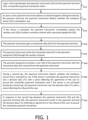
- Figure 1 shows an exemplary flow diagram for managing a contactless payment transaction according to an example of the invention.
- the payment instrument 10 is a physical banking card intended to be used by its associated genuine user 50 (i.e. bank customer or cardholder) for payment transactions or cash withdrawals.
- the payment instrument 10 embeds a secure element comprising a hardware processing unit, a memory storing an operating system and a banking application designed to contribute to payment services.
- the payment instrument 10 can be a proximity card comprising a contactless unit able to communicate through a contactless protocol as defined by the ISO 14443 standard or Near Field Communications (NFC) standards for instance.
- the payment instrument can be configured to communicate through a contact communication protocol in addition to the contactless communication protocol.
- the payment instrument 10 comprises a hardware sensor 52 which can be a button or a fingerprint sensor for instance.
- the payment instrument comprises a wireless unit able to communicate with a personal equipment 30 (or apparatus) through a contactless communication session relying on a contactless technology like Wi-Fi (as defined by ISO/CEI 8802-11 standard), Bluetooth Low Energy ® (BLE) or Ultra-Wideband (UWB) for instance.
- Wi-Fi as defined by ISO/CEI 8802-11 standard
- BLE Bluetooth Low Energy ®
- UWB Ultra-Wideband
- the wireless unit is different from the contactless unit.
- the personal equipment 30 is a smartphone used by the user of the payment instrument and both the payment instrument and the personal equipment are able to communicate through Bluetooth Low Energy ® (BLE) protocol.
- BLE Bluetooth Low Energy ®
- step S10 A tap is to manually bring the payment instrument closed enough to the payment terminal so that the payment instrument can be powered by the electromagnetic field generated by the contactless reader of the payment terminal.
- the tap of step S10 is named the first tap.
- the payment instrument 10 In response to a first tap leading to the start of a financial transaction with the payment terminal 20, the payment instrument 10 is configured to receive a transaction data 61 prepared and sent by the payment terminal.
- the transaction data 61 comprises on or more applicative parameters intrinsic to the transaction, like the money amount, the date, or the currency for example.
- the payment instrument during this first tap, as soon as the payment instrument detects the electromagnetic field generated by the payment terminal, the payment instrument immediately powers the wireless unit to initiate a wireless channel with the personal equipment.
- the payment instrument can comprise a role setting 54 specifying a role of the sensor during the first tap.
- the role setting can specify that the sensor must be activated during the first tap to request powering the wireless unit as soon as possible.
- the payment instrument can determine the status of the sensor during the first tap. The status reflects the activation of the sensor during this first tap.
- the payment instrument detects whether the sensor is currently activated or not by the user during the first tap (Step S12). In other words, as soon as the secure element is powered by the energy retrieved from the electromagnetic field, the secure element interrogates the sensor (or the controller of the sensor depending on the internal architecture of the payment instrument) to find out if the sensor is currently activated by the user.
- the payment instrument can behave as a conventional payment instrument that does not attempt to establish a wireless communication channel with the personal equipment.
- the payment instrument immediately powers the wireless unit to initiate a wireless channel with the personal equipment (Step S14).
- the starting of the physical components of the wireless unit can take a significant amount of time, for instance between 750 and 1250 milliseconds.
- the payment instrument powers the wireless unit before a contactless communication channel is fully established between the payment instrument and the payment terminal.
- the payment instrument receives transaction data 61 from the payment terminal (Step S16) .
- the transaction data are applicative parameters specific to the pending transaction, like the money amount, the type of transaction or an identifier of the merchant.
- the payment instrument sends the received transaction data to the personal equipment through the wireless channel (Step S18).
- the personal equipment Upon receipt of the transaction data, the personal equipment provides the user with the transaction data by display or audio (Step S20).
- the user is now aware of the real value transaction parameters that are taken into account by the payment instrument to carry out the payment transaction. Thus, the user is now able to accept or deny pursuing the transaction.
- the payment instrument establishes a new contactless communication channel with the payment terminal, then sends to the payment terminal a decision data 71 reflecting an agreement or a refusal of the user to pursue the contactless payment transaction (Step 24).
- the payment instrument comprises a role parameter 53 specifying a role of the sensor during a second tap.
- the role parameter can specify that the sensor must be activated during the second tap to signify the user's agreement.
- the role parameter can specify that the sensor should not be activated during the second tap to signify the user's agreement.
- the payment instrument can determine the status of the sensor during the second tap. The status reflects the activation of the sensor. Thus, the payment instrument can detect whether the hardware sensor is currently activated or not by the user (Step S22). The payment instrument can check if the determined status complies with the role specified by the role parameter 53. If the status complies with the role specified by the role parameter (e.g.
- the payment instrument can set the decision data with a value reflecting the agreement of the user to pursue the contactless payment transaction.
- the payment instrument can set the decision data with a value reflecting the refusal of the user to pursue the contactless payment transaction.
- the secure element of the payment instrument can monitor (directly or via a sensor controller) the hardware sensor during the second tap to check whether the sensor is activated by the user during the second tap.
- the hardware sensor can be a push button, a capacitive button, a mechanical sensor, an optical sensor, or an electrical sensor.
- the hardware sensor can be a biometric sensor and the payment instrument can consider the sensor as activated either when the sensor detects the presence of a part of the user's body near its detection area or if the captured biometric data corresponds to a pre-recorded reference pattern.
- the biometric sensor may be a fingerprint sensor.
- the payment instrument may check that the first tap and the second tap are performed with the same payment terminal and refuse to continue the transaction if this is not the case.
- the initially received transaction data may comprise a first identifier of the payment terminal
- the payment instrument may receive from the payment terminal a second identifier of the payment terminal in response to the second tap, and the payment instrument can refuse the transaction is the first and second identifiers are different.
- the payment instrument may check that the first tap and the second tap are done within a limited time and refuse to continue the transaction if this is not the case.
- the initially received transaction data can comprise a first timestamp.
- the payment instrument can receive from the payment terminal a second timestamp and the payment instrument can check the difference between the first and second timestamps is less than a predefined duration.
- the payment instrument may comprise a first key and the personal equipment may comprise a second key.
- both said first and second keys may have being defined and stored during a prior pairing operation between the payment instrument and the personal equipment.
- These keys may be symmetric keys or items of a public/private key pair.
- the payment instrument can encipher data sent to the personal equipment using the first key and the personal equipment can decipher the received data using the second key.
- the personal equipment is not limited to a phone and may be a tablet PC, a Personal Digital Assistant (PDA) or a wearable device like a ring, a keychain, a bracelet or a pair of glasses for instance.
- PDA Personal Digital Assistant
- the payment instrument is not limited to a smart card and may be a payment ring, a payment keychain, or a payment bracelet for instance.
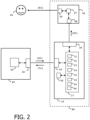
- Figure 2 shows a diagram of architecture of a system for managing a contactless payment transaction according to an example of the invention.
- the system 80 is a payment system comprising both a payment instrument 10 assigned to a user 50 and a personal device 30.
- the payment instrument 10 is a smart card having a secure element 17 including both a hardware processor and a non-volatile memory.
- the smart card 10 comprises a physical communication interface 16 able to exchange data with a payment terminal 20 through a contactless channel.
- the smart card 10 comprises another physical communication interface 18 able to exchange data with the personal device 30 through a wireless communication session relying on a wireless technology.
- the smart card 10 is designed to communicate with the personal device 30 through a Bluetooth Low Energy ® (BLE) channel.
- BLE Bluetooth Low Energy ®
- the payment terminal 20 may be a conventional Point-Of-Sale (POS) terminal or an Automated Teller Machine (ATM). It comprises a hardware processor (not shown), a banking application 23 able to manage financial transactions, and a physical communication interface 22 adapted to exchange data with the payment instrument 10 in contactless mode.
- the communication interface 22 may be adapted to exchange data through a communication session compliant with ISO/IEC-14443 standard or Near Field Communications (NFC) specifications.
- the payment instrument comprises a hardware sensor 52 and the secure element 17 comprise a first set 11 of program instructions designed to monitor the hardware sensor 52 during a tap.
- the hardware sensor 52 can be a push button, a capacitive button, a mechanical sensor, an optical sensor or an electrical sensor. In some embodiments, the hardware sensor 52 can be a biometric sensor like a fingerprint scanner.
- the secure element 17 comprises a second set 12 and a third set 13 of program instructions.
- the second set of program instructions is designed to detect whether the hardware sensor is currently activated or not during said first tap as soon as the payment instrument detects an electromagnetic field generated by the payment terminal.
- the third set 13 of program instructions is designed to immediately power the wireless unit 18 if the hardware sensor is activated during the first tap.
- the secure element 17 comprises a third set 13 of program instructions designed to immediately power the wireless unit 18 during the first tap whether the sensor is activated or not.
- the secure element 17 comprises a fourth set 14 of program instructions (e.g. a banking application) designed to get transaction data 61 from the payment terminal 20 and to send said transaction data 61 to the personal equipment 30 through the wireless channel which is established between the payment instrument and the personal equipment.
- a fourth set 14 of program instructions e.g. a banking application
- the wireless unit 18 is compliant with Bluetooth Low Energy ® (BLE).
- BLE Bluetooth Low Energy ®
- the fourth set 14 of program instructions is adapted to send the transaction data 61 using the advertising mode or the broadcast mode of BLE.
- the fourth set 14 of program instructions is adapted to fully establish a bidirectional communication channel with the personal device 30 then to send the transaction data 61 through the bidirectional communication channel.
- the sending of application data linked to the pending financial transaction is only necessary in one direction, namely from the payment instrument 10 to the personal device 30.
- the fourth set 14 of program instructions is also designed to record in a non-volatile memory of the secure element an historical data 19 including one or more parameters of the transaction.
- Such transaction parameters may be received along with the transaction data 61.
- the transaction parameters can be one or more of the following items: a money amount, a type of transaction, a date, a time, an identifier of the payment terminal 20, an identifier of the merchant to whom the payment terminal 20 is assigned, or a currency for instance.
- the stored historical data 19 can include an indicator indicating that a financial transaction is in progress.
- the secure element 17 is configured to execute (by its hardware processor) both said first, second and third sets of program instructions as soon as the payment instrument is powered by electromagnetic field of the payment terminal.
- the secure element 17 can be configured to execute the fourth set 14 of program instructions after execution of said first, second and third sets of program instructions.
- the secure element 17 comprises a fifth set 15 of program instructions designed to detect that a second tap occurred for the same transaction as the first tap.
- the fifth set 15 of program instructions can be designed to rely on both the stored historical data 19 and new application data received from the payment terminal 20 to check whether the two taps occurred for the same financial transaction.
- both first and second taps belong to (are part of) the same financial transaction from the payment instrument's point of view.
- Such financial transaction is known as a double tap transaction.
- the fifth set 15 of program instructions is also designed to generate a decision data 71 with a value reflecting either the authorization or the refusal to pursue the contactless payment transaction.
- the fifth set 15 of program instructions is designed to send the generated decision data 71 to the payment terminal 20 via the contactless unit 16.
- the payment instrument can comprise a role parameter 53 specifying a role of the sensor during a second tap.
- the role parameter can specify that the sensor must be activated during the second tap to validate agreement of the user to pursue the transaction. Conversely, the role parameter can specify that the sensor should not be activated during the second tap to signify the user's agreement.
- the fifth set 15 of program instructions can be also designed to determine the status of the sensor during the second tap. The status reflects the activation of the sensor. Thus, the payment instrument can detect whether the hardware sensor is currently activated or not by the user.
- the fifth set 15 of program instructions can be also designed to check if the determined status complies with the role specified by the role parameter 53. If the status complies with the role specified by the role parameter (e.g.
- the payment instrument can set the decision data 71 with a value reflecting the agreement of the user to pursue the contactless payment transaction.
- the fifth set 15 of program instructions can be also designed to set the decision data with a value reflecting the refusal of the user to pursue the contactless payment transaction.
- the fifth set 15 of program instructions can be adapted to reset or delete at least a part of the historical data 19 after the decision data 71 is sent to the payment terminal 20.
- the hardware sensor can be a conventional push button, a capacitive button, a mechanical sensor, an optical sensor, an electrical sensor, or a biometric sensor configured to detect a presence of a finger of the user.
- the personal device 30 can be a phone, a tablet PC, a Personal Digital Assistant (PDA) or a wearable device like a ring, a keychain, a bracelet, or a pair of glasses.
- PDA Personal Digital Assistant
- the personal device 30 has a user interface 33 designed to provide the user 50 with information by audio or display.
- the personal device 30 has a communication unit 38 able to communicate with the wireless unit 18 of the payment instrument 10.
- the communication unit 38 is compliant with BLE ® .
- the personal device 30 comprises a companion application 37 able to get transaction data 61 sent by the payment instrument via the wireless unit 18 and the communication unit 38 and to present the transaction data 61 to the user through the user interface 33.
- the banking application 37 is implemented as a set of software instructions executed by a hardware processor embedded in the personal device 30.
- the companion application 37 is designed to retrieve the transaction data 61 by deciphering a received message using a key that has been stored in the personal device during a previous pairing operation.
- the payment instrument uses a corresponding key to encipher data sent to the personal device 30.
- the corresponding key has been stored in non-volatile memory of the payment instrument during the previous pairing operation.
- the invention is not limited to Banking smart cards and applies to any payment instruments able to participate to a financial transaction.
- the cardholder of the payment instrument can check some transaction parameters through the user interface of their personal device before accepting or rejecting the pending payment transaction.
- a hacked or fake payment terminal cannot cheat the user by displaying an amount different from the transaction amount sent to the payment instrument.
- the duration of the whole payment transaction remains reasonable for the user and easy to perform.
- Some embodiments of the invention are well-suited to allow visually impaired people to securely perform a payment transaction in which at least one essential transaction parameter is vocalized by their personal apparatus.
Landscapes
- Engineering & Computer Science (AREA)
- Business, Economics & Management (AREA)
- General Physics & Mathematics (AREA)
- Physics & Mathematics (AREA)
- Accounting & Taxation (AREA)
- Theoretical Computer Science (AREA)
- General Business, Economics & Management (AREA)
- Strategic Management (AREA)
- Microelectronics & Electronic Packaging (AREA)
- Computer Hardware Design (AREA)
- Computer Security & Cryptography (AREA)
- Finance (AREA)
- Computer Networks & Wireless Communication (AREA)
- General Engineering & Computer Science (AREA)
- Development Economics (AREA)
- Economics (AREA)
- Financial Or Insurance-Related Operations Such As Payment And Settlement (AREA)
Abstract
The invention is a method for managing a contactless financial transaction involving a payment instrument (10) assigned to a user (50) and comprising both a sensor (52) and a contactless unit (16) able to communicate a in contactless mode with a payment terminal. During a first tap, the payment instrument gets a transaction data (61) from the payment terminal, and during a second tap after the first tap, the payment instrument sends to the payment terminal a decision data (71) reflecting an agreement or a refusal of the user to pursue the transaction. The payment instrument comprises a wireless unit (15) for communicating with a personal equipment (30). During the first tap, as soon as the payment instrument detects an electromagnetic field, the payment instrument immediately powers the wireless unit, then sends the transaction data to the personal equipment.
Description
- The present invention relates to methods for getting the agreement of the user to pursue a financial transaction involving a contactless payment instrument. It relates particularly to methods of controlling execution of a financial transaction in which a payment instrument and a banking terminal exchange data through a contactless communication channel.
- Financial transactions or electronic funds transfers are done today through the interaction of a payment instrument with a connected payment terminal, and the exchange of a payload with a remote server. For example, the financial transaction may be a payment carried out via a Point-Of-Sale (POS) terminal or a cash withdrawal via an Automated Teller Machine (ATM). Such transactions are called in-person transactions (or proximity transactions or face-to-face transactions) because the cardholder is at the same location as the payment terminal.
- Conventional banking terminals can communicate with a payment instrument through a contact communication protocol (e.g. payment instrument inserted in the banking terminal) or contactless communication protocol (e.g. payment instrument is placed in proximity to the banking terminal).
- Many existing contactless payment instruments are physical smart cards devoid of a battery. Such contactless smart cards retrieve energy of the electromagnetic field produced by the contactless reader of the banking terminal to power the chip embedded in the smart card.
- During a financial transaction involving both a banking terminal and a payment instrument communicating through a contactless communication protocol, the payment instrument may need to establish another communication channel with a third apparatus in order to provide some transaction data to the user. For instance, the payment instrument can send the money amount of a pending payment transaction to the user's smartphone that can display or vocalize the amount. Thus, the user can check that the amount declared in the pending transaction is the same as the price of the service or item being purchased. Since the user can thus detect an attempted fraud on the part of the seller, security is improved.
- However, during a contactless transaction, the payment instrument must comply with strict time constraints for sending messages to the banking terminal. These time constraints depend on the specifications of the used contactless communication protocol.
- Establishing a second communication channel with a third apparatus and sending transaction data to the third apparatus is time consuming.
- There is a need to allow a contactless payment instrument to send transaction data to a third apparatus during a contactless financial transaction carried out with a banking terminal.
- The invention aims at solving the above-mentioned technical problem.
- An object of the present invention is a method for managing a contactless payment transaction between a payment terminal and a payment instrument which is assigned to a user. The payment instrument comprises a hardware sensor and a contactless unit able to communicate a in contactless mode with the payment terminal.
- During a first tap between the payment instrument and the payment terminal, the payment instrument gets a transaction data from the payment terminal, and during a second tap subsequent to the first tap, the payment instrument sends to the payment terminal a decision data reflecting an agreement or a refusal of the user to pursue the contactless payment transaction.
- The payment instrument comprises a wireless unit able to communicate through a wireless channel with a personal equipment, said wireless unit being different from the contactless unit.
- During said first tap, as soon as the payment instrument detects an electromagnetic field generated by the payment terminal, the payment instrument immediately powers the wireless unit, then sends said transaction data to the personal equipment through the wireless channel.
- Advantageously, the payment instrument may comprise a role parameter specifying a role of the sensor during the second tap. During the second tap, the payment instrument may detect whether the sensor is activated or not and may determine a status of the sensor. If the status complies with the role specified by the role parameter, the payment instrument may set the decision data with a value reflecting the agreement of the user to pursue the contactless payment transaction, otherwise, the payment instrument may set the decision data with a value reflecting the refusal of the user to pursue the contactless payment transaction.
- Advantageously, the sensor may be a push button, a capacitive button, a mechanical sensor, an optical sensor, an electrical sensor or a biometric sensor configured to detect a presence of a finger of the user.
- Advantageously, the payment instrument may comprise a role setting specifying a role of the sensor during the first tap. During said first tap, the payment instrument may detect whether the sensor is activated or not as soon as the payment instrument detects an electromagnetic field generated by the payment terminal and may determine a status of the sensor. If status complies with the role specified by the role setting, the payment instrument may immediately power the wireless unit, then may send said transaction data to the personal equipment through the wireless channel.
- Advantageously, the payment instrument may be a smart card, a ring, a keychain, or a bracelet.
- Advantageously, the wireless channel may be a Bluetooth Low Energy ® broadcast or advertising.
- Advantageously, the personal equipment may be a phone, a connected watch, a connected bracelet, or a Personal Digital Assistant (PDA) and is configured to provide said transaction data to the user by display or vocalization.
- Another object of the present invention is a payment instrument assigned to a user. The payment instrument comprises a hardware sensor and a contactless unit able to communicate a in contactless mode with the payment terminal for handling a contactless payment transaction. During a first tap between the payment instrument and the payment terminal, the payment instrument is configured to get a transaction data from the payment terminal, and during a second tap subsequent to the first tap, the payment instrument is configured to send to the payment terminal a decision data reflecting an agreement of the user to pursue the contactless payment transaction. The payment instrument comprises a wireless unit able to communicate through a wireless channel with a personal equipment. The wireless unit is different from the contactless unit. During the first tap, as soon as the payment instrument detects an electromagnetic field generated by the payment terminal, the payment instrument is configured to immediately power the wireless unit, then to send said transaction data to the personal equipment through the wireless channel.
- Advantageously, the payment instrument may comprise a role parameter specifying a role of the sensor during a second tap. During the second tap, the payment instrument may be configured to detect whether the sensor is activated or not and may determine a status of the sensor. If the status complies with the role specified by the role parameter, the payment instrument may be configured to set the decision data with a value reflecting the agreement of the user to pursue the contactless payment transaction. Otherwise, the payment instrument may be configured to set the decision data with a value reflecting the refusal of the user to pursue the contactless payment transaction.
- Advantageously, the sensor may be a push button, a capacitive button, a mechanical sensor, an optical sensor, an electrical sensor or a biometric sensor configured to detect a presence of a finger of the user.
- Advantageously, during said first tap, the payment instrument may be configured to detect whether the sensor is activated or not as soon as the payment instrument detects an electromagnetic field generated by the payment terminal. If the sensor is activated, the payment instrument may be configured to immediately power the wireless unit, then to send said transaction data to the personal equipment through the wireless channel.
- Advantageously, the payment instrument may be a smart card, a ring, a keychain, or a bracelet.
- Another object of the present invention is system comprising a payment instrument according to the invention and a personal device. The payment instrument comprises a first key and the personal device comprises a second key. Both said first and second keys have been defined during a pairing operation. The payment instrument and the personal device are configured to secure the wireless channel using both said first and second keys.
- Advantageously, the personal device may be a phone, a tablet PC, a Personal Digital Assistant or a wearable device like a ring, a keychain, a bracelet, or a pair of glasses.
- Other characteristics and advantages of the present invention will emerge more clearly from reading the following description of a number of preferred embodiments of the invention with reference to the corresponding accompanying drawings in which:
-
Fig. 1 shows an exemplary flow diagram for managing a contactless payment transaction according to an example of the invention; and -
Fig. 2 shows a diagram of architecture of a system for managing a contactless payment transaction according to an example of the invention. - The invention may apply to any type of contactless payment instrument usually associated to a user (also called cardholder). The payment instrument may be implemented in a wide variety of form factors such as physical smart card, smartwatch, or wearable device for instance.
- Conventional contactless smart cards are designed to fully establish a contactless communication session with a contactless reader as soon as they detect the electromagnetic field generated by the contactless reader. Thus, as soon as they are powered by a electromagnetic field, conventional smart cards automatically perform with the contactless reader a handshake and anti-collision procedure in a time short enough to go unnoticed by the user, in order to offer the possibility of starting an application transaction (such as a payment transaction) as quickly as possible.
-
Figure 1 shows an exemplary flow diagram for managing a contactless payment transaction according to an example of the invention. - In this example, the
payment instrument 10 is a physical banking card intended to be used by its associated genuine user 50 (i.e. bank customer or cardholder) for payment transactions or cash withdrawals. - The
payment instrument 10 embeds a secure element comprising a hardware processing unit, a memory storing an operating system and a banking application designed to contribute to payment services. Thepayment instrument 10 can be a proximity card comprising a contactless unit able to communicate through a contactless protocol as defined by the ISO 14443 standard or Near Field Communications (NFC) standards for instance. - The payment instrument can be configured to communicate through a contact communication protocol in addition to the contactless communication protocol.
- The
payment instrument 10 comprises ahardware sensor 52 which can be a button or a fingerprint sensor for instance. - The payment instrument comprises a wireless unit able to communicate with a personal equipment 30 (or apparatus) through a contactless communication session relying on a contactless technology like Wi-Fi (as defined by ISO/CEI 8802-11 standard), Bluetooth Low Energy® (BLE) or Ultra-Wideband (UWB) for instance.
- The wireless unit is different from the contactless unit.
- Preferably, the
personal equipment 30 is a smartphone used by the user of the payment instrument and both the payment instrument and the personal equipment are able to communicate through Bluetooth Low Energy® (BLE) protocol. - Let us assume that the user of the payment instrument wants to perform a face-to-face payment transaction with a
payment terminal 20. In other words, the payment instrument and the payment terminal are placed close to each other. The user may tap the payment instrument on the payment terminal to allow the start of the payment transaction at step S10. A tap is to manually bring the payment instrument closed enough to the payment terminal so that the payment instrument can be powered by the electromagnetic field generated by the contactless reader of the payment terminal. The tap of step S10 is named the first tap. - In response to a first tap leading to the start of a financial transaction with the
payment terminal 20, thepayment instrument 10 is configured to receive atransaction data 61 prepared and sent by the payment terminal. Thetransaction data 61 comprises on or more applicative parameters intrinsic to the transaction, like the money amount, the date, or the currency for example. - In one embodiment, during this first tap, as soon as the payment instrument detects the electromagnetic field generated by the payment terminal, the payment instrument immediately powers the wireless unit to initiate a wireless channel with the personal equipment.
- In another embodiment, the payment instrument can comprise a role setting 54 specifying a role of the sensor during the first tap. The role setting can specify that the sensor must be activated during the first tap to request powering the wireless unit as soon as possible. The payment instrument can determine the status of the sensor during the first tap. The status reflects the activation of the sensor during this first tap. As soon as the payment instrument detects the electromagnetic field generated by the payment terminal, the payment instrument detects whether the sensor is currently activated or not by the user during the first tap (Step S12). In other words, as soon as the secure element is powered by the energy retrieved from the electromagnetic field, the secure element interrogates the sensor (or the controller of the sensor depending on the internal architecture of the payment instrument) to find out if the sensor is currently activated by the user.
- If the sensor status does not match the role setting 54, the payment instrument can behave as a conventional payment instrument that does not attempt to establish a wireless communication channel with the personal equipment.
- If the status does comply with the role setting 54, the payment instrument immediately powers the wireless unit to initiate a wireless channel with the personal equipment (Step S14). The starting of the physical components of the wireless unit (including loading a firmware and launching it) can take a significant amount of time, for instance between 750 and 1250 milliseconds.
- It is to be noted that in all embodiments the payment instrument powers the wireless unit before a contactless communication channel is fully established between the payment instrument and the payment terminal.
- Once the contactless communication channel is fully established between the payment instrument and the payment terminal, the payment instrument receives
transaction data 61 from the payment terminal (Step S16) . The transaction data are applicative parameters specific to the pending transaction, like the money amount, the type of transaction or an identifier of the merchant. - Then the payment instrument sends the received transaction data to the personal equipment through the wireless channel (Step S18).
- Upon receipt of the transaction data, the personal equipment provides the user with the transaction data by display or audio (Step S20).
- The user is now aware of the real value transaction parameters that are taken into account by the payment instrument to carry out the payment transaction. Thus, the user is now able to accept or deny pursuing the transaction.
- During a second tap subsequent to the first tap, the payment instrument establishes a new contactless communication channel with the payment terminal, then sends to the payment terminal a
decision data 71 reflecting an agreement or a refusal of the user to pursue the contactless payment transaction (Step 24). - In some embodiments, the payment instrument comprises a
role parameter 53 specifying a role of the sensor during a second tap. The role parameter can specify that the sensor must be activated during the second tap to signify the user's agreement. Conversely, the role parameter can specify that the sensor should not be activated during the second tap to signify the user's agreement. The payment instrument can determine the status of the sensor during the second tap. The status reflects the activation of the sensor. Thus, the payment instrument can detect whether the hardware sensor is currently activated or not by the user (Step S22). The payment instrument can check if the determined status complies with the role specified by therole parameter 53. If the status complies with the role specified by the role parameter (e.g. the sensor is activated during the second tap and the role parameter specifying that the sensor must be activated during the second tap to validate the user's agreement), the payment instrument can set the decision data with a value reflecting the agreement of the user to pursue the contactless payment transaction. In case of discrepancy between the role parameter and the determined status, the payment instrument can set the decision data with a value reflecting the refusal of the user to pursue the contactless payment transaction. Thus, after getting the transaction data (I.e., at least one relevant transaction parameter) via the personal equipment, the user can decide to approve the pending transaction by activating the hardware sensor during the second tap. - In some embodiments, the secure element of the payment instrument can monitor (directly or via a sensor controller) the hardware sensor during the second tap to check whether the sensor is activated by the user during the second tap.
- In some embodiments, the hardware sensor can be a push button, a capacitive button, a mechanical sensor, an optical sensor, or an electrical sensor.
- In some embodiments, the hardware sensor can be a biometric sensor and the payment instrument can consider the sensor as activated either when the sensor detects the presence of a part of the user's body near its detection area or if the captured biometric data corresponds to a pre-recorded reference pattern. Preferably, the biometric sensor may be a fingerprint sensor.
- In some embodiments, the payment instrument may check that the first tap and the second tap are performed with the same payment terminal and refuse to continue the transaction if this is not the case. For example, the initially received transaction data may comprise a first identifier of the payment terminal, the payment instrument may receive from the payment terminal a second identifier of the payment terminal in response to the second tap, and the payment instrument can refuse the transaction is the first and second identifiers are different.
- In some embodiments, the payment instrument may check that the first tap and the second tap are done within a limited time and refuse to continue the transaction if this is not the case. For example, the initially received transaction data (first tap) can comprise a first timestamp. During the second tap, the payment instrument can receive from the payment terminal a second timestamp and the payment instrument can check the difference between the first and second timestamps is less than a predefined duration.
- In some embodiments, the payment instrument may comprise a first key and the personal equipment may comprise a second key. Typically, both said first and second keys may have being defined and stored during a prior pairing operation between the payment instrument and the personal equipment. These keys may be symmetric keys or items of a public/private key pair. The payment instrument can encipher data sent to the personal equipment using the first key and the personal equipment can decipher the received data using the second key.
- The personal equipment is not limited to a phone and may be a tablet PC, a Personal Digital Assistant (PDA) or a wearable device like a ring, a keychain, a bracelet or a pair of glasses for instance.
- The payment instrument is not limited to a smart card and may be a payment ring, a payment keychain, or a payment bracelet for instance.
-
Figure 2 shows a diagram of architecture of a system for managing a contactless payment transaction according to an example of the invention. - In this example, the
system 80 is a payment system comprising both apayment instrument 10 assigned to auser 50 and apersonal device 30. Thepayment instrument 10 is a smart card having asecure element 17 including both a hardware processor and a non-volatile memory. - The
smart card 10 comprises aphysical communication interface 16 able to exchange data with apayment terminal 20 through a contactless channel. - The
smart card 10 comprises anotherphysical communication interface 18 able to exchange data with thepersonal device 30 through a wireless communication session relying on a wireless technology. Preferably, thesmart card 10 is designed to communicate with thepersonal device 30 through a Bluetooth Low Energy® (BLE) channel. - It should be noted that the physical communication interfaces 18 and 16 are separate.
- The
payment terminal 20 may be a conventional Point-Of-Sale (POS) terminal or an Automated Teller Machine (ATM). It comprises a hardware processor (not shown), abanking application 23 able to manage financial transactions, and aphysical communication interface 22 adapted to exchange data with thepayment instrument 10 in contactless mode. For instance, thecommunication interface 22 may be adapted to exchange data through a communication session compliant with ISO/IEC-14443 standard or Near Field Communications (NFC) specifications. - The payment instrument comprises a
hardware sensor 52 and thesecure element 17 comprise afirst set 11 of program instructions designed to monitor thehardware sensor 52 during a tap. - The
hardware sensor 52 can be a push button, a capacitive button, a mechanical sensor, an optical sensor or an electrical sensor. In some embodiments, thehardware sensor 52 can be a biometric sensor like a fingerprint scanner. - In some embodiments, the
secure element 17 comprises asecond set 12 and athird set 13 of program instructions. The second set of program instructions is designed to detect whether the hardware sensor is currently activated or not during said first tap as soon as the payment instrument detects an electromagnetic field generated by the payment terminal. The third set 13 of program instructions is designed to immediately power thewireless unit 18 if the hardware sensor is activated during the first tap. - In some embodiments, the
secure element 17 comprises athird set 13 of program instructions designed to immediately power thewireless unit 18 during the first tap whether the sensor is activated or not. - The
secure element 17 comprises afourth set 14 of program instructions (e.g. a banking application) designed to gettransaction data 61 from thepayment terminal 20 and to send saidtransaction data 61 to thepersonal equipment 30 through the wireless channel which is established between the payment instrument and the personal equipment. - Preferably, the
wireless unit 18 is compliant with Bluetooth Low Energy® (BLE). In some embodiments, thefourth set 14 of program instructions is adapted to send thetransaction data 61 using the advertising mode or the broadcast mode of BLE. In some embodiments, thefourth set 14 of program instructions is adapted to fully establish a bidirectional communication channel with thepersonal device 30 then to send thetransaction data 61 through the bidirectional communication channel. - It should be noted that according to the invention, the sending of application data linked to the pending financial transaction is only necessary in one direction, namely from the
payment instrument 10 to thepersonal device 30. - The fourth set 14 of program instructions is also designed to record in a non-volatile memory of the secure element an
historical data 19 including one or more parameters of the transaction. Such transaction parameters may be received along with thetransaction data 61. The transaction parameters can be one or more of the following items: a money amount, a type of transaction, a date, a time, an identifier of thepayment terminal 20, an identifier of the merchant to whom thepayment terminal 20 is assigned, or a currency for instance. The storedhistorical data 19 can include an indicator indicating that a financial transaction is in progress. - The
secure element 17 is configured to execute (by its hardware processor) both said first, second and third sets of program instructions as soon as the payment instrument is powered by electromagnetic field of the payment terminal. - The
secure element 17 can be configured to execute thefourth set 14 of program instructions after execution of said first, second and third sets of program instructions. - The
secure element 17 comprises afifth set 15 of program instructions designed to detect that a second tap occurred for the same transaction as the first tap. The fifth set 15 of program instructions can be designed to rely on both the storedhistorical data 19 and new application data received from thepayment terminal 20 to check whether the two taps occurred for the same financial transaction. - It should be noted that both first and second taps belong to (are part of) the same financial transaction from the payment instrument's point of view. Such financial transaction is known as a double tap transaction.
- The fifth set 15 of program instructions is also designed to generate a
decision data 71 with a value reflecting either the authorization or the refusal to pursue the contactless payment transaction. The fifth set 15 of program instructions is designed to send the generateddecision data 71 to thepayment terminal 20 via thecontactless unit 16. - In some embodiments, the payment instrument can comprise a
role parameter 53 specifying a role of the sensor during a second tap. The role parameter can specify that the sensor must be activated during the second tap to validate agreement of the user to pursue the transaction. Conversely, the role parameter can specify that the sensor should not be activated during the second tap to signify the user's agreement. The fifth set 15 of program instructions can be also designed to determine the status of the sensor during the second tap. The status reflects the activation of the sensor. Thus, the payment instrument can detect whether the hardware sensor is currently activated or not by the user. The fifth set 15 of program instructions can be also designed to check if the determined status complies with the role specified by therole parameter 53. If the status complies with the role specified by the role parameter (e.g. the sensor is not activated during the second tap and the role parameter specifying that the sensor should not be activated during the second tap to validate the user's agreement), the payment instrument can set thedecision data 71 with a value reflecting the agreement of the user to pursue the contactless payment transaction. In case of discrepancy between the role parameter and the determined status, thefifth set 15 of program instructions can be also designed to set the decision data with a value reflecting the refusal of the user to pursue the contactless payment transaction. Thus, after getting the transaction data (I.e., at least one relevant transaction parameter) via the personal equipment, the user can decide to approve the pending transaction by activating or not the hardware sensor during the second tap. - In some embodiments, the
fifth set 15 of program instructions can be adapted to reset or delete at least a part of thehistorical data 19 after thedecision data 71 is sent to thepayment terminal 20. - The hardware sensor can be a conventional push button, a capacitive button, a mechanical sensor, an optical sensor, an electrical sensor, or a biometric sensor configured to detect a presence of a finger of the user.
- The
personal device 30 can be a phone, a tablet PC, a Personal Digital Assistant (PDA) or a wearable device like a ring, a keychain, a bracelet, or a pair of glasses. - The
personal device 30 has auser interface 33 designed to provide theuser 50 with information by audio or display. Thepersonal device 30 has acommunication unit 38 able to communicate with thewireless unit 18 of thepayment instrument 10. Preferably, thecommunication unit 38 is compliant with BLE®. - The
personal device 30 comprises acompanion application 37 able to gettransaction data 61 sent by the payment instrument via thewireless unit 18 and thecommunication unit 38 and to present thetransaction data 61 to the user through theuser interface 33. - Preferably, the
banking application 37 is implemented as a set of software instructions executed by a hardware processor embedded in thepersonal device 30. - In some embodiments, the
companion application 37 is designed to retrieve thetransaction data 61 by deciphering a received message using a key that has been stored in the personal device during a previous pairing operation. In such embodiments, the payment instrument uses a corresponding key to encipher data sent to thepersonal device 30. The corresponding key has been stored in non-volatile memory of the payment instrument during the previous pairing operation. - The invention is not limited to the described embodiments or examples. In particular, the described examples and embodiments may be combined.
- The invention is not limited to Banking smart cards and applies to any payment instruments able to participate to a financial transaction.
- Thanks to some embodiments of the invention, during a proximity payment transaction performed with a payment terminal, the cardholder of the payment instrument can check some transaction parameters through the user interface of their personal device before accepting or rejecting the pending payment transaction. Thus, a hacked or fake payment terminal cannot cheat the user by displaying an amount different from the transaction amount sent to the payment instrument.
- Thanks to some embodiments of the invention, the duration of the whole payment transaction remains reasonable for the user and easy to perform.
- Some embodiments of the invention are well-suited to allow visually impaired people to securely perform a payment transaction in which at least one essential transaction parameter is vocalized by their personal apparatus.
Claims (15)
- A method for managing a contactless payment transaction between a payment terminal (20) and a payment instrument (10) assigned to a user (50), the payment instrument comprising a hardware sensor (52) and a contactless unit (16) able to communicate a in contactless mode with the payment terminal,during a first tap between the payment instrument and the payment terminal, the payment instrument gets a transaction data (61) from the payment terminal, and during a second tap subsequent to the first tap, the payment instrument sends to the payment terminal a decision data (71) reflecting an agreement or a refusal of the user to pursue the contactless payment transaction,wherein, the payment instrument comprises a wireless unit (15) able to communicate through a wireless channel with a personal equipment (30), said wireless unit being different from the contactless unit,wherein during said first tap, as soon as the payment instrument detects an electromagnetic field generated by the payment terminal, the payment instrument immediately powers the wireless unit (15), then sends said transaction data (61) to the personal equipment (30) through the wireless channel.
- The method according to claim 1, wherein the payment instrument comprises a role parameter (53) specifying a role of the sensor during the second tap, wherein during the second tap, the payment instrument detects whether the sensor is activated or not and determines a status of the sensor, and
wherein, if the status complies with the role specified by the role parameter, the payment instrument sets the decision data (71) with a value reflecting the agreement of the user to pursue the contactless payment transaction, otherwise, the payment instrument sets the decision data (71) with a value reflecting the refusal of the user to pursue the contactless payment transaction. - The method according to claim 1, wherein the sensor is a push button, a capacitive button, a mechanical sensor, an optical sensor, an electrical sensor or a biometric sensor configured to detect a presence of a finger of the user.
- The method according to claim 1, wherein the payment instrument comprises a role setting (54) specifying a role of the sensor during the first tap, wherein during said first tap, the payment instrument detects whether the sensor is activated or not as soon as the payment instrument detects an electromagnetic field generated by the payment terminal and determines a status of the sensor, and
wherein, if status complies with the role specified by the role setting, the payment instrument immediately powers the wireless unit (15), then sends said transaction data (61) to the personal equipment (30) through the wireless channel. - The method according to claim 1, wherein the payment instrument is a smart card, a ring, a keychain, or a bracelet.
- The method according to claim 1, wherein the wireless channel is a Bluetooth Low Energy ® broadcast.
- The method according to claim 1, wherein the personal equipment (30) is a phone, a connected watch, a connected bracelet or a PDA and is configured to provide said transaction data to the user by display or vocalization.
- A payment instrument (10) assigned to a user (50), the payment instrument comprising a hardware sensor (52) and a contactless unit (16) able to communicate a in contactless mode with the payment terminal for handling a contactless payment transaction,during a first tap between the payment instrument and the payment terminal, the payment instrument is configured to get a transaction data (61) from the payment terminal, and during a second tap subsequent to the first tap, the payment instrument is configured to send to the payment terminal a decision data (71) reflecting an agreement of the user to pursue the contactless payment transaction,wherein, the payment instrument comprises a wireless unit (15) able to communicate through a wireless channel with a personal equipment (30), said wireless unit being different from the contactless unit,wherein during said first tap, as soon as the payment instrument detects an electromagnetic field generated by the payment terminal, the payment instrument is configured to immediately power the wireless unit (15), then to send said transaction data (61) to the personal equipment (30) through the wireless channel.
- The payment instrument according to claim 8, wherein the payment instrument comprises a role parameter (53) specifying a role of the sensor during a second tap, wherein during the second tap, the payment instrument is configured to detect whether the sensor is activated or not and determines a status of the sensor, and
wherein, if the status complies with the role specified by the role parameter, the payment instrument is configured to set the decision data (71) with a value reflecting the agreement of the user to pursue the contactless payment transaction and otherwise, the payment instrument is configured to set the decision data with a value reflecting the refusal of the user to pursue the contactless payment transaction. - The payment instrument according to claim 8, wherein the sensor is a push button, a capacitive button, a mechanical sensor, an optical sensor, an electrical sensor or a biometric sensor configured to detect a presence of a finger of the user.
- The payment instrument according to claim 8, wherein during said first tap, the payment instrument is configured to detect whether the sensor is activated or not as soon as the payment instrument detects an electromagnetic field generated by the payment terminal, and
wherein, if the sensor is activated, the payment instrument is configured to immediately power the wireless unit (15), then to send said transaction data (61) to the personal equipment (30) through the wireless channel. - The payment instrument according to claim 8, wherein the payment instrument is a smart card, a ring, a keychain, or a bracelet.
- The payment instrument according to claim 8, wherein the wireless channel is a Bluetooth Low Energy ® broadcast.
- A system (80) comprising the payment instrument according to claim 8 and a personal device (30),wherein the payment instrument comprises a first key (13) and the personal device comprises a second key (33), both said first and second keys having been defined during a pairing operation;wherein the payment instrument and the personal device are configured to secure the wireless channel using both said first and second keys.
- The system according to claim 14, wherein the personal device is a phone, a tablet PC, a Personal Digital Assistant or a wearable device like a ring, a keychain, a bracelet or a pair of glasses.
Priority Applications (2)
| Application Number | Priority Date | Filing Date | Title |
|---|---|---|---|
| EP23307255.2A EP4575960A1 (en) | 2023-12-19 | 2023-12-19 | Method for getting the agreement of the user to pursue a contactless financial transaction |
| PCT/EP2024/083619 WO2025131588A1 (en) | 2023-12-19 | 2024-11-26 | Method for getting the agreement of the user to pursue a financial transaction |
Applications Claiming Priority (1)
| Application Number | Priority Date | Filing Date | Title |
|---|---|---|---|
| EP23307255.2A EP4575960A1 (en) | 2023-12-19 | 2023-12-19 | Method for getting the agreement of the user to pursue a contactless financial transaction |
Publications (1)
| Publication Number | Publication Date |
|---|---|
| EP4575960A1 true EP4575960A1 (en) | 2025-06-25 |
Family
ID=90054122
Family Applications (1)
| Application Number | Title | Priority Date | Filing Date |
|---|---|---|---|
| EP23307255.2A Withdrawn EP4575960A1 (en) | 2023-12-19 | 2023-12-19 | Method for getting the agreement of the user to pursue a contactless financial transaction |
Country Status (2)
| Country | Link |
|---|---|
| EP (1) | EP4575960A1 (en) |
| WO (1) | WO2025131588A1 (en) |
Citations (10)
| Publication number | Priority date | Publication date | Assignee | Title |
|---|---|---|---|---|
| WO2009039419A1 (en) * | 2007-09-21 | 2009-03-26 | Wireless Dynamics, Inc. | Wireless smart card and integrated personal area network, near field communication and contactless payment system |
| US20140214674A1 (en) * | 2013-01-29 | 2014-07-31 | Reliance Communications, Llc. | Method and system for conducting secure transactions with credit cards using a monitoring device |
| WO2016168398A1 (en) * | 2015-04-14 | 2016-10-20 | Capital One Services, LLC. | A system, method, and apparatus for a dynamic transaction card |
| US20180108018A1 (en) * | 2016-10-13 | 2018-04-19 | Kona I Co., Ltd. | Fingerprint Recognition Card and Method for Operating Fingerprint Recognition Card |
| US20200273036A1 (en) * | 2019-02-21 | 2020-08-27 | Capital One Services, Llc | Touch authentication of multiple users or operating modes for a transaction card |
| US20210103914A1 (en) * | 2019-10-03 | 2021-04-08 | Visa International Service Association | Gesture-Controlled Payment Instrument |
| EP3968293A1 (en) * | 2020-09-10 | 2022-03-16 | Kona I Co., Ltd. | Multi-card including fingerprint input unit and payment method using the same |
| EP4053772A1 (en) * | 2021-03-04 | 2022-09-07 | Thales DIS France SA | Method for managing a transaction with a smart card |
| EP4120165A1 (en) * | 2021-07-16 | 2023-01-18 | Thales DIS France SA | Method for managing a smart card |
| WO2023043749A1 (en) * | 2021-09-14 | 2023-03-23 | Visa International Service Association | Card with surface features for account selection |
-
2023
- 2023-12-19 EP EP23307255.2A patent/EP4575960A1/en not_active Withdrawn
-
2024
- 2024-11-26 WO PCT/EP2024/083619 patent/WO2025131588A1/en active Pending
Patent Citations (10)
| Publication number | Priority date | Publication date | Assignee | Title |
|---|---|---|---|---|
| WO2009039419A1 (en) * | 2007-09-21 | 2009-03-26 | Wireless Dynamics, Inc. | Wireless smart card and integrated personal area network, near field communication and contactless payment system |
| US20140214674A1 (en) * | 2013-01-29 | 2014-07-31 | Reliance Communications, Llc. | Method and system for conducting secure transactions with credit cards using a monitoring device |
| WO2016168398A1 (en) * | 2015-04-14 | 2016-10-20 | Capital One Services, LLC. | A system, method, and apparatus for a dynamic transaction card |
| US20180108018A1 (en) * | 2016-10-13 | 2018-04-19 | Kona I Co., Ltd. | Fingerprint Recognition Card and Method for Operating Fingerprint Recognition Card |
| US20200273036A1 (en) * | 2019-02-21 | 2020-08-27 | Capital One Services, Llc | Touch authentication of multiple users or operating modes for a transaction card |
| US20210103914A1 (en) * | 2019-10-03 | 2021-04-08 | Visa International Service Association | Gesture-Controlled Payment Instrument |
| EP3968293A1 (en) * | 2020-09-10 | 2022-03-16 | Kona I Co., Ltd. | Multi-card including fingerprint input unit and payment method using the same |
| EP4053772A1 (en) * | 2021-03-04 | 2022-09-07 | Thales DIS France SA | Method for managing a transaction with a smart card |
| EP4120165A1 (en) * | 2021-07-16 | 2023-01-18 | Thales DIS France SA | Method for managing a smart card |
| WO2023043749A1 (en) * | 2021-09-14 | 2023-03-23 | Visa International Service Association | Card with surface features for account selection |
Also Published As
| Publication number | Publication date |
|---|---|
| WO2025131588A1 (en) | 2025-06-26 |
Similar Documents
| Publication | Publication Date | Title |
|---|---|---|
| AU2009292921B2 (en) | Apparatus and method for preventing unauthorized access to payment application installed in contactless payment device | |
| AU2023266392A1 (en) | Digital transaction system and method with a virtual companion card | |
| US20200356984A1 (en) | Transaction recording | |
| KR20160015375A (en) | Authorizing transactions using mobile device based rules | |
| US20160210634A1 (en) | Method and system for processing payments | |
| US12106278B2 (en) | Rules engine for communication round trips optimization of kernel-in-cloud payment transaction | |
| TWI794155B (en) | Apparatus and method for communicating with a digital transaction processing unit (dtpu) | |
| AU2017213235A1 (en) | Apparatus and method for externally controlling a digital transaction processing unit (DTPU) | |
| TWI861681B (en) | Withdrawal operation system and withdrawal operation method based on application | |
| WO2025131588A1 (en) | Method for getting the agreement of the user to pursue a financial transaction | |
| EP4407547A1 (en) | Method for managing a financial transaction | |
| EP4571620A1 (en) | Method for managing a payment transaction | |
| EP4518388A1 (en) | Method for relay attack protection of monetary transactions | |
| US20260094145A1 (en) | Method for providing a user with control over a payment card | |
| AU2016253607B2 (en) | Apparatus and method for preventing unauthorized access to application installed in a device | |
| AU2015202512B2 (en) | Apparatus and method for preventing unauthorized access to application installed in mobile device | |
| EP4710278A1 (en) | Method, computer-readable media, control device and finance application terminal | |
| AU2022279484A1 (en) | Pparatus and method for directly communicating with a digital transaction processing unit (dtpu) | |
| WO2022162436A1 (en) | Method for replicating an input device | |
| KR20100059760A (en) | System for managing mobile remote electronic bankbook | |
| KR20100059759A (en) | Mobile financial transaction method |
Legal Events
| Date | Code | Title | Description |
|---|---|---|---|
| PUAI | Public reference made under article 153(3) epc to a published international application that has entered the european phase |
Free format text: ORIGINAL CODE: 0009012 |
|
| STAA | Information on the status of an ep patent application or granted ep patent |
Free format text: STATUS: THE APPLICATION HAS BEEN PUBLISHED |
|
| AK | Designated contracting states |
Kind code of ref document: A1 Designated state(s): AL AT BE BG CH CY CZ DE DK EE ES FI FR GB GR HR HU IE IS IT LI LT LU LV MC ME MK MT NL NO PL PT RO RS SE SI SK SM TR |
|
| STAA | Information on the status of an ep patent application or granted ep patent |
Free format text: STATUS: THE APPLICATION IS DEEMED TO BE WITHDRAWN |
|
| 18D | Application deemed to be withdrawn |
Effective date: 20260103 |