EP4575855A1 - Virtual machine architecture comprising a secure element, secure element and corresponding method for accessing the secure element - Google Patents
Virtual machine architecture comprising a secure element, secure element and corresponding method for accessing the secure element Download PDFInfo
- Publication number
- EP4575855A1 EP4575855A1 EP24217113.0A EP24217113A EP4575855A1 EP 4575855 A1 EP4575855 A1 EP 4575855A1 EP 24217113 A EP24217113 A EP 24217113A EP 4575855 A1 EP4575855 A1 EP 4575855A1
- Authority
- EP
- European Patent Office
- Prior art keywords
- secure element
- logical
- administrative
- logical secure
- instances
- Prior art date
- Legal status (The legal status is an assumption and is not a legal conclusion. Google has not performed a legal analysis and makes no representation as to the accuracy of the status listed.)
- Pending
Links
Images


Classifications
-
- G—PHYSICS
- G06—COMPUTING OR CALCULATING; COUNTING
- G06F—ELECTRIC DIGITAL DATA PROCESSING
- G06F21/00—Security arrangements for protecting computers, components thereof, programs or data against unauthorised activity
- G06F21/50—Monitoring users, programs or devices to maintain the integrity of platforms, e.g. of processors, firmware or operating systems
- G06F21/52—Monitoring users, programs or devices to maintain the integrity of platforms, e.g. of processors, firmware or operating systems during program execution, e.g. stack integrity ; Preventing unwanted data erasure; Buffer overflow
- G06F21/53—Monitoring users, programs or devices to maintain the integrity of platforms, e.g. of processors, firmware or operating systems during program execution, e.g. stack integrity ; Preventing unwanted data erasure; Buffer overflow by executing in a restricted environment, e.g. sandbox or secure virtual machine
-
- G—PHYSICS
- G06—COMPUTING OR CALCULATING; COUNTING
- G06F—ELECTRIC DIGITAL DATA PROCESSING
- G06F9/00—Arrangements for program control, e.g. control units
- G06F9/06—Arrangements for program control, e.g. control units using stored programs, i.e. using an internal store of processing equipment to receive or retain programs
- G06F9/44—Arrangements for executing specific programs
- G06F9/455—Emulation; Interpretation; Software simulation, e.g. virtualisation or emulation of application or operating system execution engines
- G06F9/45533—Hypervisors; Virtual machine monitors
- G06F9/45558—Hypervisor-specific management and integration aspects
-
- G—PHYSICS
- G06—COMPUTING OR CALCULATING; COUNTING
- G06F—ELECTRIC DIGITAL DATA PROCESSING
- G06F21/00—Security arrangements for protecting computers, components thereof, programs or data against unauthorised activity
- G06F21/70—Protecting specific internal or peripheral components, in which the protection of a component leads to protection of the entire computer
- G06F21/71—Protecting specific internal or peripheral components, in which the protection of a component leads to protection of the entire computer to assure secure computing or processing of information
- G06F21/77—Protecting specific internal or peripheral components, in which the protection of a component leads to protection of the entire computer to assure secure computing or processing of information in smart cards
-
- G—PHYSICS
- G06—COMPUTING OR CALCULATING; COUNTING
- G06F—ELECTRIC DIGITAL DATA PROCESSING
- G06F9/00—Arrangements for program control, e.g. control units
- G06F9/06—Arrangements for program control, e.g. control units using stored programs, i.e. using an internal store of processing equipment to receive or retain programs
- G06F9/44—Arrangements for executing specific programs
- G06F9/455—Emulation; Interpretation; Software simulation, e.g. virtualisation or emulation of application or operating system execution engines
- G06F9/45533—Hypervisors; Virtual machine monitors
- G06F9/45545—Guest-host, i.e. hypervisor is an application program itself, e.g. VirtualBox
-
- G—PHYSICS
- G06—COMPUTING OR CALCULATING; COUNTING
- G06F—ELECTRIC DIGITAL DATA PROCESSING
- G06F9/00—Arrangements for program control, e.g. control units
- G06F9/06—Arrangements for program control, e.g. control units using stored programs, i.e. using an internal store of processing equipment to receive or retain programs
- G06F9/44—Arrangements for executing specific programs
- G06F9/455—Emulation; Interpretation; Software simulation, e.g. virtualisation or emulation of application or operating system execution engines
- G06F9/45533—Hypervisors; Virtual machine monitors
- G06F9/45558—Hypervisor-specific management and integration aspects
- G06F2009/4557—Distribution of virtual machine instances; Migration and load balancing
-
- G—PHYSICS
- G06—COMPUTING OR CALCULATING; COUNTING
- G06F—ELECTRIC DIGITAL DATA PROCESSING
- G06F9/00—Arrangements for program control, e.g. control units
- G06F9/06—Arrangements for program control, e.g. control units using stored programs, i.e. using an internal store of processing equipment to receive or retain programs
- G06F9/44—Arrangements for executing specific programs
- G06F9/455—Emulation; Interpretation; Software simulation, e.g. virtualisation or emulation of application or operating system execution engines
- G06F9/45533—Hypervisors; Virtual machine monitors
- G06F9/45558—Hypervisor-specific management and integration aspects
- G06F2009/45587—Isolation or security of virtual machine instances
Definitions
- One or more embodiments can be applied to Secure Element in integrated circuit cards such as, for instance, Universal Integrated Circuit Cards, UICCs or embedded UICCs, eUICCs.
- integrated circuit cards such as, for instance, Universal Integrated Circuit Cards, UICCs or embedded UICCs, eUICCs.
- the Android architecture is requested to support multiple instances of Linux (or Linux-Android) executing in parallel.
- a Secure Element 14 is shown associated to the host 11 of the hypervisor 12, which can be represented for instance by an UICC.
- the hypervisor 12 used to host multiple virtual machines may comprise, in the automotive field, e.g., one virtual machine hosting an instance 13 i of the operative system for each display (e.g., dashboard/infotainment) .
- the hypervisor 12 may run for instance on a System On Chip (SoC) which represents the terminal, i.e., the host 11, interfaced to a secure element or card 14.
- SoC System On Chip
- the terminal corresponding to the host 11 can be another device with a processing unit or microcontroller.
- a mechanism to select multiple application instances at the same time is represented by logical channels, for instance as defined in ISO/IEC 7816-4.
- Applets to take advantage of multi-session functionality can interoperate from different logical channels and can be selected multiple times in different channels (Multiselectable Applets).
- the card, or the Secure Element might handle security information on one logical channel, while data is accessed on a second logical channel, while the third logical channel takes care of data encoding operations.
- ISO and then ETSI
- ETSI TS 102 221 is introduced a solution with the Logical Secure Interfaces (LSI) and Logical Secure Element (LSE), which defines a clear division between the various Logical Secure Elements.
- LSI Logical Secure Interfaces
- LSE Logical Secure Element
- Each Logical Secure Element acts and is handled by the terminal/host like a separate Secure Element.
- Each Logical Secure Element operates logically independently from the others.
- Logical channel context is not the application context.
- Java card context is associated to package. So it is the same for all instances. Instances must have a different AID (Application Identifier), which is a problem as the fixed AID is handled by the Hardware Abstraction Layer front and back ends in the terminal which provides software routines that provide programs with access to the hardware resources represented by the Secure Element.
- AID Application Identifier
- the Logical Secure Element may solve the context and AID problem, but introduces a memory footprint problem due to loading same ELF (Executable Load File) multiple times (in different LSE).
- ELF is the container in the Secure Element of the executable code of the applications, which are instead Executable Modules.
- ELF Provider capable of loading/updating/deleting ELFs
- Operational Logical Secure Element linked to the shared ELF
- said operations of extradition comprise installing to extradite application instances from said administrative Logical Secure Element to other Logical Secure Elements in said set, and said managing comprise managing an upgrade on said package in said administrative Logical Secure Element having application instances in other Logical Secure Elements and deleting said package in said administrative Logical Secure Element and the corresponding application instances in said other Logical Secure Elements.
- Solutions as described herein refer also to a method for managing access to a Secure Element in a virtual machine architecture comprising a set of guest virtual machines supervised by a hypervisor running on a host, on which respective instances of a guest operative system, in particular Android operative system, are executed, said method comprising providing a set of Logical Secure Elements said Secure Element, providing among said Logical Secure Elements an administrative Logical Secure Element performing administrative commands, uploading a shared Java Card package in said administrative Logical Secure Element, said administrative commands performing operations of extradition of instances of applications in said shared Java Card package in other Logical Secure Elements in said set and managing said application instances in said package and extradited.
- Solutions as described herein facilitate accessing the LSEs maintaining a low memory footprint.
- the administrative logical Element 141 is configured to perform administrative commands. Also in such administrative logical Element 141 a shared Java Card package is uploaded (indicated with 143 in figure 3 ) having instances extradited in the other Operational Logical Secure Elements 142 1 ...142 n .
- the abovementioned shared package 143 is a package comprising the executable code of the applications, in particular the ELF.
- the administrative logical Element 141 has the same isolation properties as the other Operational Logical Secure Elements 142 1 ...142 n , i.e. the administrative logical Element 141 acts and is handled by the terminal/host 11 like a separate Secure Element. However, each Operational Logical Secure Element 142 1 ...142 n also operates logically independently from the others, as the Logical Secure Element defined in the Specification 102.221. All Logical Secure Elements, 141, 142 1 ...142 n are thus accessed through respective Logical Secure Interface (LSI), not shown in Figure 2 .
- LSI Logical Secure Interface
- the administrative logical Element 141 is configured to perform, i.e., execute, a set of administrative commands, in particular GlobalPlatform commands, which allow it to overcome the logical barrier defined between the Logical Secure Elements through the access through the LSI.
- this performs deletion of a shared package which delete also all the instances in all Logical Secure Elements 141, 142 1 ...142 n , i.e. including the administrative Logical Secure Element 141.
- the administrative Logical Secure Element 141 is then configured to operate the same other operations (e.g., SELECT, GET STATUS, etc.) as defined by the ETSI specification, i.e., its visibility is limited to its context (and not includes the other LSE).
- other operations e.g., SELECT, GET STATUS, etc.
- Each LSE 141, 142 1 ...142 n is associated with a Security Domain Root (LSE-SDR) 141S.
- the Security Domain is an application which is installed at the beginning in the SE, or LSE in this case.
- the Issuer Security Domain manages the card content with respect to the issuer, in this case the LSE-SDR is the only entity in the LSEs to have a unique Application Identifier, e.g. 0xA0000000001, indicated with 144, in figure 2 , which allows the the administrative Logical Secure Element 141 to correctly extradite applications.
- LSE-SDR 141s are hidden by the high-level, or first level, of the operative systems 13i because the such first level only communicate with well-known AID application, i.e. applications with AID which are already known to the HAL, thus when a high level call from an Android application is managed by the corresponding HAL, the related AID is referenced.
- AID application i.e. applications with AID which are already known to the HAL
- the LSE-SDR 141s are not used by the guest operating systems 13i since such guest operating systems 13i communicate only first level applications, i.e., applet with an AID known to the first level.
- the unique AID 144 is an AID specifically defined for the operation of the administrative Logical Secure Element 141, not recognized by the first level of guest operating systems 13i.
- FIG 2 it is shown as mentioned a first configuration of the Secure Element 14, e.g., an eUICC, associated to the host 11 and accessed by the virtual machines 131...135, which comprises the set of LSEs 141, 12, in a first install operation T11 is installed an LSE_SDR 11S.
- a first install operation T11 is installed an LSE_SDR 11S.
- LSE_SDR 11S In this case is used a conventional INSTALL [FOR INSTALL] GlobalPlatform command.
- a second operation of install for extradition T12 is performed inserting Instances of the LSE-SDR 11S in each of the n operational LSE, 142 1 ...142 n .
- FIG 4 it is shown that the shared package 143 in the Administrative LSE 141 performs an upgrade of the ELF interacting T31 with LSE_SDR Administrative LSE 141 which then manages to apply the upgrading steps, defined for instance by GP 2.3 Amd H spec, T32 to all the other LSE_SDR of LSEs 142 using the unique AID 144 to access the respective LSE-SDR for managing the card (or SE) content.
- the virtual machine architecture comprising a set of guest virtual machines supervised by a hypervisor, e.g., 12 running on a host, e.g. the processor unit 11 or a microcontroller or a computer, on which respective instances of a guest operative system, e.g., 13 i , in particular Linux or Android Linux operative system, are executed, such architecture comprising at least a secure element, in the example 14, such as a UICC or eUICC or eSE, accessible by said set of virtual machines, said architecture 10 comprising a set of Logical Secure Elements, , e.g., 141, 142 1 ...142 n in said secure element 14, comprises among said Logical Secure Elements 141, 142 1 ...142 n an administrative Logical Secure Element 141.
- a hypervisor e.g., 12 running on a host, e.g. the processor unit 11 or a microcontroller or a computer, on which respective instances of a guest operative system, e.g.,
- Such administrative Logical Secure Element with respect to the other Logical Secure Element is further configured to perform administrative commands, e.g., operations T12, T31, T32.
- administrative Logical Secure Element 141 is uploaded a shared Java Card package, e.g., an Executable Load File 143, said administrative commands performing operations of extradition, e.g., T21, T22, of instances of applications in said shared Java Card package 143 in other Logical Secure Elements, e.g., 142 1 ...142 n , in said set and managing, e.g. operations T32, T31, said application instances in said package 143 and extradited, i.e. the instances of the packages 143 installed by extradition in the other Logical Secure Elements, e.g., 142 1 ...142 n .
- the whole (virtual machines and hypervisor) architecture may comprise more than one secure element (for example eUICC and eSE), which can be accessed by different subset of guest operating system running in corresponding virtual machines.
- eUICC and eSE secure element
Landscapes
- Engineering & Computer Science (AREA)
- Software Systems (AREA)
- Theoretical Computer Science (AREA)
- Physics & Mathematics (AREA)
- General Engineering & Computer Science (AREA)
- General Physics & Mathematics (AREA)
- Computer Security & Cryptography (AREA)
- Computer Hardware Design (AREA)
- Mathematical Physics (AREA)
- Stored Programmes (AREA)
Abstract
said architecture comprising generating a set of Logical Secure Elements (141, 1421...142n) in said secure element (14) using a logical channel to select multiple application instances at the same time,
creating multiple instances of an Applet with different AIDs, which can be selected on multiple logical channels at the same time, wherein
said architecture comprises among the Logical Secure Elements an administrative Logical Secure Element (141) configured to perform administrative commands and in which is uploaded a shared Java Card package having instances extradited in other LSE, said administrative commands comprising
installing to extradite application instances from said administrative Logical Secure Element (141) to other Logical Secure Elements (1421...142n), managing an upgrade (ELF UPGRADE) on said package in said administrative Logical Secure Element (141) having instances in other Logical Secure Elements (1421...142n); deleting said package in said administrative Logical Secure Element (141) and the corresponding application instances in said other Logical Secure Elements (1421...142n).
Description
- The description relates to an architecture comprising a set of guest virtual machines supervised by a hypervisor running on a host computer, on which respective instances of a guest operative system, in particular Linux or Linux-Android operative system, are executed, such architecture comprising at least a Secure Element accessible by said set of virtual machines.
- One or more embodiments can be applied to Secure Element in integrated circuit cards such as, for instance, Universal Integrated Circuit Cards, UICCs or embedded UICCs, eUICCs.
- In technical fields such as the automotive field, the Android architecture is requested to support multiple instances of Linux (or Linux-Android) executing in parallel.
- A virtual machine architecture, i.e. an architecture comprising a set of virtual machines hosted, or supervised, i.e. managed, by a so-called hypervisor, i.e. a virtual machine monitor, on which respective instances of an operative system are executed, may be used. In this environment, if at least a Secure Element, i.e., a tamper-resistant platform (typically a one chip secure microcontroller) capable of securely hosting applications and their confidential and cryptographic data, in particular in accordance with the rules and security requirements set forth by a set of well-identified trusted authorities, is comprised in the architecture, a same Secure Element shall be accessible, in terms of cryptographic services and cryptographic keys storing services, by different virtual machines.
- To this regard in
figure 1 a virtual machine architecture 10 is shown schematically, which comprises ahost 11, e.g., a processing unit, comprising for instance a CPU and volatile and non-volatile memory, then thehost 11 hosts avirtual machine monitor 12, also called hypervisor, i.e. a virtual machine monitor which supervises the virtual machines, i.e. it may create and manage the virtual machines. Thehost 11 in particular corresponds to a processing unit which runs an operating system which runs the hypervisor, i.e.virtual machine monitor 12. - The
hypervisor 12, in a manner known per se, by the virtualization process is able to create a set of guest virtual machines each running an instance 131...135 of an operative system for instance Android. A set refers here to a group of one or more elements, e.g., one or more virtual machines. - A
Secure Element 14 is shown associated to thehost 11 of thehypervisor 12, which can be represented for instance by an UICC. - Such architecture 10 comprising a set of virtual machines may refer to a terminal, as host, e.g. a user terminal, which is interfaced to an integrated circuit card, e.g. a UICC as mentioned, by a terminal-card, or terminal-UICC interface. In this case, the UICC is assimilated to such
Secure Element 14, i.e. embodies suchSecure Element 14. Alternatively, embedded UICC (eUICC) or integrated UICC (iUICC) can embody theSecure Element 14, which also may be embodied by an eSE (embedded Secure Element) or an iSE (integrated Secure Element). - The
hypervisor 12 used to host multiple virtual machines, may comprise, in the automotive field, e.g., one virtual machine hosting an instance 13i of the operative system for each display (e.g., dashboard/infotainment) . - The
hypervisor 12 may run for instance on a System On Chip (SoC) which represents the terminal, i.e., thehost 11, interfaced to a secure element orcard 14. This in particular in an automotive embodiment, although in general the terminal corresponding to thehost 11 can be another device with a processing unit or microcontroller. - In particular a virtual machine architecture as just described represents a multi-application capable terminal, i.e. a terminal that can support more than one first level application with possibly separate user verification requirements for each application. The applications seen by the terminal are first level applications (e.g. SIM, USIM). As defined for instance in the specification ETSI TS 102 221, in this context, i.e., of Secure Elements, e.g., integrated circuit cards or Secure Elements, Logical Secure Element (LSE) are secure element functionalities, applications and files grouped together to act like an independent secure element (e.g. UICC), in particular when multiple Logical Secure Element interfaces are supported, A Logical Secure element Interface (LSI) is instead a logical connection between an endpoint in the terminal, e.g. SoC, running the hypervisor, and one Logical Secure Element or LSE. More specifically each LSE is connected to a LSI, selecting the LSI through the command MANAGE LSI is possible to communicate with the LSE. Thus, the LSI operate as external interfaces.
- A mechanism to select multiple application instances at the same time is represented by logical channels, for instance as defined in ISO/IEC 7816-4. Applets to take advantage of multi-session functionality can interoperate from different logical channels and can be selected multiple times in different channels (Multiselectable Applets). For example, the card, or the Secure Element, might handle security information on one logical channel, while data is accessed on a second logical channel, while the third logical channel takes care of data encoding operations. By following this design, it is possible to access information owned by a different applet without having to deselect the currently selected applet that is handling session information. ISO (and then ETSI) defines a maximum of 20 logical channel.
- Thus, for instance within the environment of the specification ETSI TS 102 221 it is possible to operate with Multiple Instances and Multiselectable Applets. It is in particular possible to create multiple instances of an Applet with different AIDs (Application Identifiers). As mentioned, Multiselectable Applets are Applets having the capability of being selected on multiple logical channels at the same time.
- In the specification ETSI TS 102 221 is introduced a solution with the Logical Secure Interfaces (LSI) and Logical Secure Element (LSE), which defines a clear division between the various Logical Secure Elements. Each Logical Secure Element acts and is handled by the terminal/host like a separate Secure Element. Each Logical Secure Element operates logically independently from the others.
- Thus, it is known to use logical channels, where one instance of an applet is shared among all logical channels, and Multiple Instances of the Applet, one for each user. There is a unique application java context. Logical channel context is not the application context.
- For the Multiple Instances, Java card context is associated to package. So it is the same for all instances. Instances must have a different AID (Application Identifier), which is a problem as the fixed AID is handled by the Hardware Abstraction Layer front and back ends in the terminal which provides software routines that provide programs with access to the hardware resources represented by the Secure Element.
- The Logical Secure Element may solve the context and AID problem, but introduces a memory footprint problem due to loading same ELF (Executable Load File) multiple times (in different LSE). The ELF is the container in the Secure Element of the executable code of the applications, which are instead Executable Modules.
- In other words, there is a waste of resources in case the same binary (Executable Load File) is loaded in each Logical Secure Element (footprint problem), the Logical Secure Element mechanism being thus sufficient to deliver the product but is not efficient.
- Also there is no division of roles between the entity which provides the shared content (ELF Provider), capable of loading/updating/deleting ELFs and the entity that receives the shared content, here called an Operational Logical Secure Element, linked to the shared ELF.
- An object of one or more embodiments is to contribute in providing solutions reducing the memory footprint while using a set of Logical Secure Elements in a virtual machine architecture.
- According to one or more embodiments, that object is achieved via a virtual machine architecture having the features set forth in the claims that follow.
- One or more embodiments concern a corresponding Secure Element and corresponding method of managing a Secure Element in a virtual machine architecture.
- The claims are an integral part of the technical teaching provided in respect of the embodiments.
- Solutions as described herein include a virtual machine architecture comprising a set of guest virtual machines supervised by a hypervisor running on a host, on which respective instances of a guest operative system, in particular Android operative system, are executed, said architecture comprising at least a secure element accessible by said set of virtual machines,
- said architecture comprising a set of Logical Secure Elements in said Secure Element,
- wherein
- said architecture comprises among said Logical Secure Elements an administrative Logical Secure Element configured to perform administrative commands, and in which is uploaded a shared Java Card package, said administrative commands performing operations of extradition of instances of applications in said shared Java Card package in other Logical Secure Elements in said set and managing said application instances in said package and extradited.
- In various embodiments, said operations of extradition comprise installing to extradite application instances from said administrative Logical Secure Element to other Logical Secure Elements in said set, and said managing comprise managing an upgrade on said package in said administrative Logical Secure Element having application instances in other Logical Secure Elements and deleting said package in said administrative Logical Secure Element and the corresponding application instances in said other Logical Secure Elements.
- In various embodiments, said architecture is configured to perform an installation of LSE Security Domain roots by performing an installation of a LSE Security Domain roots in the administrative Logical Secure Element then performing an installation for extradition of said LSE Security Domain root in other Logical Secure Elements.
- In various embodiments, each Logical Secure Element is associated with a Security Domain Root with a unique application identifier which is not seen by the guest operating systems, to allow the administrative Logical Secure Element to perform said administrative operations, in particular extradite applications, using the LSE Security Domain Root corresponding to said unique application identifier, said Security Domain Root being configured to perform Card Content Management.
- In various embodiments, said administrative Logical Secure Element is installed before the other Logical Secure Elements.
- Solutions as described herein refer also to a Secure Element operating with a virtual machine architecture according to embodiments.
- Solutions as described herein refer also to a method for managing access to a Secure Element in a virtual machine architecture comprising a set of guest virtual machines supervised by a hypervisor running on a host, on which respective instances of a guest operative system, in particular Android operative system, are executed, said method comprising providing a set of Logical Secure Elements said Secure Element,
providing among said Logical Secure Elements an administrative Logical Secure Element performing administrative commands, uploading a shared Java Card package in said administrative Logical Secure Element, said administrative commands performing operations of extradition of instances of applications in said shared Java Card package in other Logical Secure Elements in said set and managing said application instances in said package and extradited. - In various embodiments, said operations of extradition comprise installing to extradite application instances from said administrative Logical Secure Element to other Logical Secure Elements in said set, and said managing comprise managing an upgrade on said package in said administrative Logical Secure Element having application instances in other Logical Secure Elements and deleting said package in said administrative Logical Secure Element and the corresponding application instances in said other Logical Secure Elements.
- In various embodiments, the method comprises installing LSE Security Domain roots by performing an installation of a LSE Security Domain root in the administrative Logical Secure Element then performing an installation for extradition of said LSE Security Domain root in other Logical Secure Elements.
- In various embodiments, each Logical Secure Element is associated with a Security Domain Root with a unique application identifier which is not seen by the guest operating systems, to allow the administrative Logical Secure Element to extradite applications using the LSE Security Domain Root corresponding to said unique application identifier, said Security Domain Root performing Card Content Management.
- Solutions as described herein refer also to a method for managing access to a Secure Element in a virtual machine architecture comprising a set of guest virtual machines supervised by a hypervisor running on a host computer, comprising the operations according to embodiments.
- Solutions as described herein facilitate accessing the LSEs maintaining a low memory footprint.
- One or more embodiments will now be described, by way of example only, with reference to the annexed figures, wherein:
-
Figure 1 has been described in the foregoing; -
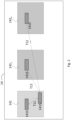
Figure 2 , shows schematically Logical Secure Elements in Secure Element operating in a virtual machine architecture, in a first configuration according to an embodiment of the solution here described; -
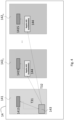
Figure 3 , shows schematically Logical Secure Elements in Secure Element operating in a virtual machine architecture, in a second configuration according to an embodiment of the solution here described; -
Figure 4 shows schematically Logical Secure Elements in Secure Element operating in a virtual machine architecture, in a third configuration according to an embodiment of the solution here described - Corresponding numerals and symbols in the different figures generally refer to corresponding parts unless otherwise indicated.
- The figures are drawn to clearly illustrate the relevant aspects of the embodiments and are not necessarily drawn to scale.
- The edges of features drawn in the figures do not necessarily indicate the termination of the extent of the feature.
- In the ensuing description one or more specific details are illustrated, aimed at providing an in-depth understanding of examples of embodiments of this description. The embodiments may be obtained without one or more of the specific details, or with other methods, components, materials, etc. In other cases, known structures, materials, or operations are not illustrated or described in detail so that certain aspects of embodiments will not be obscured.
- Reference to "an embodiment" or "one embodiment" in the framework of the present description is intended to indicate that a particular configuration, structure, or characteristic described in relation to the embodiment is comprised in at least one embodiment. Hence, phrases such as "in an embodiment" or "in one embodiment" that may be present in one or more points of the present description do not necessarily refer to one and the same embodiment.
- Moreover, particular configurations, structures, or characteristics may be combined in any adequate way in one or more embodiments.
- The headings/references used herein are provided merely for convenience and hence do not define the extent of protection or the scope of the embodiments.
- For simplicity and ease of explanation, throughout this description, and unless the context indicates otherwise, like parts or elements are indicated in the various figures with like reference signs, and a corresponding description will not be repeated for each and every figure.
- With reference to
figure 2 , the solution here described provides a solution providing in theSecure Element 14 comprised in the virtual machine architecture 10 offigure 1 a set of Logical Secure Elements, 141, 1421...142n. Such set of Logical Secure Elements, 141, 1421...142n comprises an administrativelogical Element 141, while the other Logical Secure Elements are Operational LogicalSecure Elements 1421...142n. - According to the solution here described the administrative
logical Element 141 is configured to perform administrative commands. Also in such administrative logical Element 141 a shared Java Card package is uploaded (indicated with 143 infigure 3 ) having instances extradited in the other Operational LogicalSecure Elements 1421...142n. In this context, the abovementioned sharedpackage 143 is a package comprising the executable code of the applications, in particular the ELF. - The administrative
logical Element 141 has the same isolation properties as the other Operational LogicalSecure Elements 1421...142n, i.e. the administrativelogical Element 141 acts and is handled by the terminal/host 11 like a separate Secure Element. However, each Operational LogicalSecure Element 1421...142n also operates logically independently from the others, as the Logical Secure Element defined in the Specification 102.221. All Logical Secure Elements, 141, 1421...142n are thus accessed through respective Logical Secure Interface (LSI), not shown inFigure 2 . - The administrative
logical Element 141 however as mentioned is configured to perform, i.e., execute, a set of administrative commands, in particular GlobalPlatform commands, which allow it to overcome the logical barrier defined between the Logical Secure Elements through the access through the LSI. - In particular, such set of administrative commands comprises the following three commands:
- a first command to perform the extradition application instances from said administrative Logical
Secure Element 141 to the other Logical Secure Elements, 1421...142n; this command may correspond to INSTALL [for extradition] such as defined in GlobalPlatform Card Specification 2.3.1; - a second command for managing an upgrade on
such package 143 in the administrative LogicalSecure Element 141 having instances in other LogicalSecure Elements 1421...142n, i.e. for managing an upgrade of the ELF; this command may correspond to MANAGE ELF UPGRADE as per GlobalPlatform Executable Load File Upgrade 1.1; - a third command for deleting said package in said administrative Logical
Secure Element 141 and the corresponding application instances in said other LogicalSecure Elements 1421...142n. This also may be in the form of DELETE (object and related object)in GlobalPlatform Card Specification 2.3.1 (specifically in paragraph 5.2.1.2 and 11.2.2.2). To this regard the Global Platform command DELETE can be performed on a package with option P2=0x80 which means: Delete object and related object. In this way, not only the package but also all Applications instantiated from it, are deleted. - Thus, this performs deletion of a shared package which delete also all the instances in all Logical
Secure Elements Secure Element 141. - The administrative Logical
Secure Element 141 is then configured to operate the same other operations (e.g., SELECT, GET STATUS, etc.) as defined by the ETSI specification, i.e., its visibility is limited to its context (and not includes the other LSE). - According to embodiment of the solution here described, the administrative Logical
Secure Element 141 is the first Logical Secure Element installed on thesecure element 14, and it is used to configure all the other LSEs as better explained with reference tofigures 2-4 . - Each
LSE figure 2 , which allows the the administrative LogicalSecure Element 141 to correctly extradite applications. LSE-SDR 141s are hidden by the high-level, or first level, of the operative systems 13i because the such first level only communicate with well-known AID application, i.e. applications with AID which are already known to the HAL, thus when a high level call from an Android application is managed by the corresponding HAL, the related AID is referenced. - LSEs-SDR 141a are used for Card Content Management.
- Thus, the LSE-SDR 141s are not used by the guest operating systems 13i since such guest operating systems 13i communicate only first level applications, i.e., applet with an AID known to the first level. The
unique AID 144 is an AID specifically defined for the operation of the administrative LogicalSecure Element 141, not recognized by the first level of guest operating systems 13i. - The LSE-SDR 141s have a
unique application identifier 144, since they are used to operate card content management of the LogicalSecure Element - In
figure 2 it is shown as mentioned a first configuration of theSecure Element 14, e.g., an eUICC, associated to thehost 11 and accessed by thevirtual machines 131...135, which comprises the set ofLSEs - Then, as shown in
figure 3 , a shared package, 143, is installed (T21) in theadministrative LSE 141 by thehost 11, e.g., an ELF, 143 installed, which instances are then extradited T22 in theother LSE 1421...142n, using theunique AID 144 to access the respective LSE-SDR for managing the card (or SE) content. - In
figure 4 , it is shown that the sharedpackage 143 in theAdministrative LSE 141 performs an upgrade of the ELF interacting T31 withLSE_SDR Administrative LSE 141 which then manages to apply the upgrading steps, defined for instance by GP 2.3 Amd H spec, T32 to all the other LSE_SDR ofLSEs 142 using theunique AID 144 to access the respective LSE-SDR for managing the card (or SE) content. - So it is managed the ELF upgrade which effect is reflected on all applet instances in
LSEs 142. - The deletion, not shown in the figures, of a group of a shared packages deletes all the instances in all
LSE 12. - Thus, in summary, the virtual machine architecture, e.g., 10, here described, comprising a set of guest virtual machines supervised by a hypervisor, e.g., 12 running on a host, e.g. the
processor unit 11 or a microcontroller or a computer, on which respective instances of a guest operative system, e.g., 13i, in particular Linux or Android Linux operative system, are executed, such architecture comprising at least a secure element, in the example 14, such as a UICC or eUICC or eSE, accessible by said set of virtual machines, said architecture 10 comprising a set of Logical Secure Elements, , e.g., 141, 1421...142n in saidsecure element 14, comprises among said LogicalSecure Elements Secure Element 141. Such administrative Logical Secure Element, with respect to the other Logical Secure Element is further configured to perform administrative commands, e.g., operations T12, T31, T32. In the administrative LogicalSecure Element 141 is uploaded a shared Java Card package, e.g., anExecutable Load File 143, said administrative commands performing operations of extradition, e.g., T21, T22, of instances of applications in said sharedJava Card package 143 in other Logical Secure Elements, e.g., 1421...142n, in said set and managing, e.g. operations T32, T31, said application instances in saidpackage 143 and extradited, i.e. the instances of thepackages 143 installed by extradition in the other Logical Secure Elements, e.g., 1421...142n. - Such operations of extradition comprise installing, e.g., T22, to extradite application instances from said administrative Logical Secure Element, 141 to other Logical Secure Elements, 1421...142n, in said set, and performing said managing, e.g., T31, T32, comprises managing an upgrade, e.g., ELF UPGRADE, on said package, e.g. ELF 143), in said administrative Logical Secure Element, 141, having application instances in other Logical
Secure Elements 1421...142n, and deleting said package, e.g., 143 in the administrative Logical Secure Element, 141 and the corresponding application instances in the other Logical Secure Elements, 1421...142n. - According to another aspect of the solution the Secure Element, 14, is configured to perform an installation of LSE Security Domain roots, e.g., 141S, i.e. roots of specific Security Domain to operate with the administrative Logical Secure Element, by performing an installation of a LSE Security Domain roots, e.g., 141S, in the administrative Logical Secure Element then performing an installation for extradition of said LSE
Security Domain root 141S in other Logical Secure Elements, e.g., 1421...142n. - Also each Logical Secure Element, 1421...142n, is associated with a Security Domain Root, e.g., 141S, with a unique application identifier, e.g., 144, which is not seen by the guest operating systems 13i. In other words, the
identifier 144 can be reached even if LSE-SDR 141S is not known by the virtual machine as a first level application. This to allow the administrative Logical Secure Element, 141, to perform administrative operations, in particular, extradition of applications using the LSESecurity Domain Root 141S corresponding to saidunique application identifier 144, said Security Domain Root being configured to perform Card Content Management. - Solutions as described herein, due to shared package or ELF, allow to decrease the memory footprint.
- Then, due to the introduction of the administrative Logical Secure Element, it is introduced a privileged user that can perform administrative commands across all other Logical Secure Elements.
- Without prejudice to the underlying principles, the details and the embodiments may vary, even significantly, with respect to what has been described by way of example only without departing from the scope of the embodiments.
- The whole (virtual machines and hypervisor) architecture may comprise more than one secure element (for example eUICC and eSE), which can be accessed by different subset of guest operating system running in corresponding virtual machines.
- As mentioned the solution preferably applies to Secure Elements according to the specification ETSI TS 102 221 and may use commands within the meaning of GlobalPlatform Card Specification.
- The extent of protection is determined by the annexed claims.
Claims (10)
- A virtual machine architecture (10) comprising a set of guest virtual machines supervised by a hypervisor (12) running on a host (11), on which respective instances of a guest operative system (13i), in particular Android operative system, are executed, said architecture comprising at least a secure element (14) accessible by said set of virtual machines,said architecture comprising a set of Logical Secure Elements (141, 1421...142n) in said secure element (14),whereinsaid architecture comprises (10) among said Logical Secure Elements (141, 1421...142n) an administrative Logical Secure Element (141) configured to perform administrative commands (T12, T31, T32), and in which is uploaded a shared Java Card package (143), said administrative commands performing operations of extradition (T21, T22) of instances of applications in said shared Java Card package (143) in other Logical Secure Elements (1421...142n) in said set and managing (T32, T31) said application instances in said package and extradited.
- An architecture (10) according to claim 1, wherein said administrative Logical Secure Element (141) configured to perform said operations of extradition (T21, T22) is configured to install to extradite (T22) application instances from said administrative Logical Secure Element (141) to other Logical Secure Elements (1421...142n) in said set, and configured to perform said managing (T31, T32) comprise configured to manage an upgrade (ELF UPGRADE) on said package (143) in said administrative Logical Secure Element (141) having application instances in other Logical Secure Elements (1421...142n) and configured to delete said package (143) in said administrative Logical Secure Element (141) and the corresponding application instances in said other Logical Secure Elements (1421...142n).
- An architecture (10) according to claim 1 or 2, configured to perform an installation of LSE Security Domain roots (141S) by performing an installation of a LSE Security Domain roots (141S) in the administrative Logical Secure Element then performing an installation for extradition of said LSE Security Domain root (141S) in other Logical Secure Elements (1421...142n).
- An architecture (10) according to the previous claim, wherein each Logical Secure Element (1421...142n) is associated with a Security Domain Root (141S) with a unique application identifier (144) which is not seen by the guest operating systems (13i), to allow the administrative Logical Secure Element (141) to perform said administrative operations, in particular extradite applications, using the LSE Security Domain Root (141S) corresponding to said unique application identifier (144), said Security Domain Root being configured to perform Card Content Management.
- An architecture (10) according to any of the previous claims, wherein said administrative Logical Secure Element (141) is installed before the other Logical Secure Elements.
- A Secure Element operating with a virtual machine architecture (10) according to any of claim 1 to 5.
- A method for managing access to a Secure Element (14) in a virtual machine architecture (10) comprising a set of guest virtual machines managed by a hypervisor (12) running on a host (11), on which respective instances of a guest operative system (13i), in particular Android operative system, are executed, said method comprising providing a set of Logical Secure Elements (141, 1421...142n) in said Secure Element (14),providing among said Logical Secure Elements (141, 1421...142n) an administrative Logical Secure Element (141), the method comprising performing at the administrative Logical Secure Element (141) administrative commands (T12, T31, T32),uploading a shared Java Card package (143) in said administrative Logical Secure Element (141), said administrative commands performing operations of extradition (T21, T22) of instances of applications in said shared Java Card package (143) in other Logical Secure Elements (1421...142n) in said set andmanaging (T32, T31) said application instances in said package and extradited.
- A method according to claim 7, wherein said operations of extradition (T21, T22) comprise installing (T22) to extradite application instances from said administrative Logical Secure Element (141) to other Logical Secure Elements (1421...142n) in said set, and said managing (T31, T32) comprise managing an upgrade (ELF UPGRADE) on said package (143) in said administrative Logical Secure Element (141) having application instances in other Logical Secure Elements (1421...142n) and deleting said package in said administrative Logical Secure Element (141) and the corresponding application instances in said other Logical Secure Elements (1421...142n) .
- A method according to claim 8, comprising installing LSE Security Domain roots (141S) by performing an installation of a LSE Security Domain root (141S) in the administrative Logical Secure Element then performing an installation for extradition of said LSE Security Domain root (141S) in other Logical Secure Elements (1421...142n),.
- A method according to the previous claim, wherein each Logical Secure Element (1421...142n) is associated with a Security Domain Root (141S) with a unique application identifier (144) which is not seen by the guest operating systems (13i), to allow the administrative Logical Secure Element (141) to extradite applications using the LSE Security Domain Root (141S) corresponding to said unique application identifier (144), said Security Domain Root performing Card Content Management.
Applications Claiming Priority (1)
| Application Number | Priority Date | Filing Date | Title |
|---|---|---|---|
| IT102023000027306A IT202300027306A1 (en) | 2023-12-20 | 2023-12-20 | VIRTUAL MACHINE ARCHITECTURE, COMPRISING A SECURE ELEMENT, SECURE ELEMENT, AND CORRESPONDING PROCEDURE FOR ACCESSING THE SECURE ELEMENT |
Publications (1)
| Publication Number | Publication Date |
|---|---|
| EP4575855A1 true EP4575855A1 (en) | 2025-06-25 |
Family
ID=89983573
Family Applications (1)
| Application Number | Title | Priority Date | Filing Date |
|---|---|---|---|
| EP24217113.0A Pending EP4575855A1 (en) | 2023-12-20 | 2024-12-03 | Virtual machine architecture comprising a secure element, secure element and corresponding method for accessing the secure element |
Country Status (3)
| Country | Link |
|---|---|
| US (1) | US20250208897A1 (en) |
| EP (1) | EP4575855A1 (en) |
| IT (1) | IT202300027306A1 (en) |
Citations (1)
| Publication number | Priority date | Publication date | Assignee | Title |
|---|---|---|---|---|
| US20060174352A1 (en) * | 2001-07-25 | 2006-08-03 | Seagate Technology Llc | Method and apparatus for providing versatile services on storage devices |
-
2023
- 2023-12-20 IT IT102023000027306A patent/IT202300027306A1/en unknown
-
2024
- 2024-11-21 US US18/955,624 patent/US20250208897A1/en active Pending
- 2024-12-03 EP EP24217113.0A patent/EP4575855A1/en active Pending
Patent Citations (1)
| Publication number | Priority date | Publication date | Assignee | Title |
|---|---|---|---|---|
| US20060174352A1 (en) * | 2001-07-25 | 2006-08-03 | Seagate Technology Llc | Method and apparatus for providing versatile services on storage devices |
Non-Patent Citations (2)
| Title |
|---|
| "Smart Cards; UICC Application Programming Interface (UICC API) for Java Card (TM) (Release 17)", vol. SET TEC, no. V17.5.1, 13 September 2023 (2023-09-13), pages 1 - 48, XP014470192, Retrieved from the Internet <URL:http://www.etsi.org/deliver/etsi_ts/102200_102299/102241/17.05.01_60/ts_102241v170501p.pdf> [retrieved on 20230913] * |
| IDEMIA ET AL: "? Addition of LSEs and LSIs", vol. SET - SET-WG-T, 1 December 2021 (2021-12-01), pages 1 - 5, XP014435027, Retrieved from the Internet <URL:ftp://docbox.etsi.org/SET/SET-WG-T/05-CONTRIBUTIONS/2022/2022_05_03_PL_SETTEC%2397/SCPTEC(21)000183_CR_102_241_R17_Addition_of_LSEs_and_LSIs.docx> [retrieved on 20211201] * |
Also Published As
| Publication number | Publication date |
|---|---|
| US20250208897A1 (en) | 2025-06-26 |
| IT202300027306A1 (en) | 2025-06-20 |
Similar Documents
| Publication | Publication Date | Title |
|---|---|---|
| EP2764461B1 (en) | Secure element comprising separated containers and corresponding method | |
| US7607175B2 (en) | Techniques for permitting access across a context barrier on a small footprint device using an entry point object | |
| EP2497055B1 (en) | Secure portable object | |
| KR101002489B1 (en) | Method and computer readable recording medium enabling a single implementation of one or more operations common to both kernel mode processing and user mode processing | |
| US7395535B2 (en) | Techniques for permitting access across a context barrier in a small footprint device using global data structures | |
| EP3935537B1 (en) | Secure execution guest owner environmental controls | |
| EP2549380A1 (en) | Information processing device, virtual machine generation method, and application software distribution system | |
| US7478389B2 (en) | Techniques for implementing security on a small footprint device using a context barrier | |
| US6922835B1 (en) | Techniques for permitting access across a context barrier on a small footprint device using run time environment privileges | |
| US7093122B1 (en) | Techniques for permitting access across a context barrier in a small footprint device using shared object interfaces | |
| CN107329762B (en) | Method and system for describing and integrating software service | |
| EP3286682B1 (en) | Method of managing applications in a secure element when updating the operating system | |
| CN106228090A (en) | One how main security domain Java smart card and its implementation | |
| US20250208897A1 (en) | Virtual machine architecture comprising a secure element, secure element and corresponding method for accessing the secure element | |
| WO2025163354A1 (en) | Secure element comprising a set of logical secure elements, virtual machine architecture accessing a corresponding secure element and corresponding method for operating the secure element | |
| EP4421624A1 (en) | Method of updating a software installed on a secure element | |
| US20250272131A1 (en) | Virtual machine architecture for accessing a secure element, and corresponding method for accessing a secure element | |
| US20260141105A1 (en) | Universal integrated chip card, uicc, for managing profiles, and method | |
| KR102758329B1 (en) | Java Card, Java Card Applet Update System Using the Same, and Java Card Applet Update Method | |
| EP3683708A1 (en) | Method for managing a package of an application | |
| HK1256083A1 (en) | Hot upgrading method and device for kernel modules and virtual machine system | |
| HK1256083B (en) | Hot upgrading method and device for kernel modules and virtual machine system | |
| AU2004200637A1 (en) | Techniques for permitting access across a context barrier on a small footprint device using run time environment privileges |
Legal Events
| Date | Code | Title | Description |
|---|---|---|---|
| PUAI | Public reference made under article 153(3) epc to a published international application that has entered the european phase |
Free format text: ORIGINAL CODE: 0009012 |
|
| STAA | Information on the status of an ep patent application or granted ep patent |
Free format text: STATUS: THE APPLICATION HAS BEEN PUBLISHED |
|
| AK | Designated contracting states |
Kind code of ref document: A1 Designated state(s): AL AT BE BG CH CY CZ DE DK EE ES FI FR GB GR HR HU IE IS IT LI LT LU LV MC ME MK MT NL NO PL PT RO RS SE SI SK SM TR |
|
| STAA | Information on the status of an ep patent application or granted ep patent |
Free format text: STATUS: REQUEST FOR EXAMINATION WAS MADE |
|
| 17P | Request for examination filed |
Effective date: 20251222 |
|
| GRAP | Despatch of communication of intention to grant a patent |
Free format text: ORIGINAL CODE: EPIDOSNIGR1 |
|
| STAA | Information on the status of an ep patent application or granted ep patent |
Free format text: STATUS: GRANT OF PATENT IS INTENDED |
|
| INTG | Intention to grant announced |
Effective date: 20260212 |
|
| GRAS | Grant fee paid |
Free format text: ORIGINAL CODE: EPIDOSNIGR3 |
|
| GRAA | (expected) grant |
Free format text: ORIGINAL CODE: 0009210 |
|
| STAA | Information on the status of an ep patent application or granted ep patent |
Free format text: STATUS: THE PATENT HAS BEEN GRANTED |