EP4575780A1 - Online scheduling for adaptive embedded systems - Google Patents
Online scheduling for adaptive embedded systems Download PDFInfo
- Publication number
- EP4575780A1 EP4575780A1 EP23219808.5A EP23219808A EP4575780A1 EP 4575780 A1 EP4575780 A1 EP 4575780A1 EP 23219808 A EP23219808 A EP 23219808A EP 4575780 A1 EP4575780 A1 EP 4575780A1
- Authority
- EP
- European Patent Office
- Prior art keywords
- model
- tasks
- meta
- task
- fault
- Prior art date
- Legal status (The legal status is an assumption and is not a legal conclusion. Google has not performed a legal analysis and makes no representation as to the accuracy of the status listed.)
- Pending
Links
Images

Classifications
-
- G—PHYSICS
- G06—COMPUTING OR CALCULATING; COUNTING
- G06F—ELECTRIC DIGITAL DATA PROCESSING
- G06F9/00—Arrangements for program control, e.g. control units
- G06F9/06—Arrangements for program control, e.g. control units using stored programs, i.e. using an internal store of processing equipment to receive or retain programs
- G06F9/46—Multiprogramming arrangements
- G06F9/48—Program initiating; Program switching, e.g. by interrupt
- G06F9/4806—Task transfer initiation or dispatching
- G06F9/4843—Task transfer initiation or dispatching by program, e.g. task dispatcher, supervisor, operating system
- G06F9/4881—Scheduling strategies for dispatcher, e.g. round robin, multi-level priority queues
-
- G—PHYSICS
- G06—COMPUTING OR CALCULATING; COUNTING
- G06F—ELECTRIC DIGITAL DATA PROCESSING
- G06F9/00—Arrangements for program control, e.g. control units
- G06F9/06—Arrangements for program control, e.g. control units using stored programs, i.e. using an internal store of processing equipment to receive or retain programs
- G06F9/46—Multiprogramming arrangements
- G06F9/50—Allocation of resources, e.g. of the central processing unit [CPU]
- G06F9/5005—Allocation of resources, e.g. of the central processing unit [CPU] to service a request
- G06F9/5027—Allocation of resources, e.g. of the central processing unit [CPU] to service a request the resource being a machine, e.g. CPUs, Servers, Terminals
-
- G—PHYSICS
- G06—COMPUTING OR CALCULATING; COUNTING
- G06F—ELECTRIC DIGITAL DATA PROCESSING
- G06F9/00—Arrangements for program control, e.g. control units
- G06F9/06—Arrangements for program control, e.g. control units using stored programs, i.e. using an internal store of processing equipment to receive or retain programs
- G06F9/46—Multiprogramming arrangements
- G06F9/48—Program initiating; Program switching, e.g. by interrupt
- G06F9/4806—Task transfer initiation or dispatching
- G06F9/4843—Task transfer initiation or dispatching by program, e.g. task dispatcher, supervisor, operating system
- G06F9/4881—Scheduling strategies for dispatcher, e.g. round robin, multi-level priority queues
- G06F9/4893—Scheduling strategies for dispatcher, e.g. round robin, multi-level priority queues taking into account power or heat criteria
-
- G—PHYSICS
- G06—COMPUTING OR CALCULATING; COUNTING
- G06N—COMPUTING ARRANGEMENTS BASED ON SPECIFIC COMPUTATIONAL MODELS
- G06N3/00—Computing arrangements based on biological models
- G06N3/02—Neural networks
- G06N3/04—Architecture, e.g. interconnection topology
- G06N3/049—Temporal neural networks, e.g. delay elements, oscillating neurons or pulsed inputs
-
- G—PHYSICS
- G06—COMPUTING OR CALCULATING; COUNTING
- G06N—COMPUTING ARRANGEMENTS BASED ON SPECIFIC COMPUTATIONAL MODELS
- G06N3/00—Computing arrangements based on biological models
- G06N3/02—Neural networks
- G06N3/06—Physical realisation, i.e. hardware implementation of neural networks, neurons or parts of neurons
- G06N3/063—Physical realisation, i.e. hardware implementation of neural networks, neurons or parts of neurons using electronic means
-
- G—PHYSICS
- G06—COMPUTING OR CALCULATING; COUNTING
- G06N—COMPUTING ARRANGEMENTS BASED ON SPECIFIC COMPUTATIONAL MODELS
- G06N3/00—Computing arrangements based on biological models
- G06N3/02—Neural networks
- G06N3/08—Learning methods
- G06N3/088—Non-supervised learning, e.g. competitive learning
Definitions
- the present disclosure is concerned with adaptive embedded systems, particularly adaptive safety-critical real-time embedded systems and methods for generating schedules for such systems.
- Embedded systems are electronic hardware and software systems integrated within a larger system to perform dedicated tasks within that system. Such systems have many applications and are used in many environments where several tasks need to be performed for different purposes and at different times/based on or using different parameters. Avionics, for example, use embedded systems for performing the many tasks that need to be executed in an aircraft e.g. navigation, communication, flight control and monitoring. Such systems have to meet strict safety standards and regulations, provide real-time data processing, fault tolerance and fail-safe mechanisms, particularly when performing safety-critical tasks.
- Embedded systems are realised using processors. Whilst some systems are realised with single-core processors, that run a single process at a time, there has been a move to multi-core processors - i.e. processors having multiple cores, either homogenous or heterogeneous, on the same die - to provide increase in performance for the same footprint and power consumption.
- multi-core processors i.e. processors having multiple cores, either homogenous or heterogeneous, on the same die - to provide increase in performance for the same footprint and power consumption.
- the use of multiple cores simplifies frequency scaling and scheduling and improves heat dissipation compared to single core processors.
- Embedded systems rely on static configurations (including cores, memory, networks, software parameters, data communication channels, mapping and scheduling) of hardware and of software run on that hardware, in order to meet the task timing requirements.
- many embedded systems are adaptive embedded systems configured to change their configuration to operate in different modes at selected times or in selected conditions. This improves efficiency and performance, since the same embedded system can be used to operate in several modes, recognising that the different modes will not be needed at the same time, rather than requiring a separate system for each mode of operation.
- scheduling changes are also required to avoid delays or interference.
- transient or permanent faults e.g. overheating, short-circuit, etc.
- Adaptive embedded systems may be configured to adapt their operation in the face of such faults, but such adaptations can still result in delays or interference.
- Adaptive embedded systems currently known focus either on mode-change adaptation - i.e. deal with the requirements in changing mode of operation - or on fault-based adaptation - i.e. adapt their operation in response to occurrence of a specific type of fault.
- embedded systems are being designed to operate in more and more modes and are also vulnerable to many different types of fault. None of the current systems is able to adapt the system by collectively addressing all mode configurations and all possible faults.
- schedules to be generated quickly, in real time, when a transition occurs in a manner that minimises power consumption and processing time and equipment.
- a method of generating schedules for an adaptive embedded system comprising: deriving task sets of all possible tasks to be performed by the embedded system; deriving sets of all possible hardware configurations of the embedded system; creating a multi-model system having a multi-model defining the adaptivity of the system for all possible tasks and all possible hardware and all combinations thereof, the adaptivity defining how the system can change operation responsive to a mode change requirement and/or occurrence of a fault; solving a scheduling problem for the models of the multi-model system in a neuromorphic accelerator implemented by spiked neural networks; and providing schedule instructions to the system, for performance of tasks, based on the solution.
- an adaptive embedded system including: one or more processor cores for performing tasks according to a schedule; a task model of all possible tasks to be performed by the one or more processors; a hardware architecture model of all possible hardware configurations for the system; a multi-model system for generating multi-models from the task model and the hardware architecture model, defining the adaptivity of the system for all possible tasks and all possible hardware and all combinations thereof, the adaptivity defining how the system can change operation responsive to a mode change requirement and/or occurrence of a fault; a neuromorphic accelerator implemented by spiked neural networks, configured to solve a scheduling problem for the models of the multi-model system; and a mapping and schedule module (60) configured to providing schedule instructions to the system, for performance of tasks, based on the solution.
- Figures 1 to 4 show, for the purposes of background explanation, timing schedules for an adaptive embedded system in an aircraft, implemented on a processor having two cores, core 0 and core 1.
- the system provides the functionality of the radio and the radar as well as two other tasks - one of low criticality functionality and one of high criticality functionality.
- Figure 1 shows the planned scheduling for these four tasks in a first mode which, in this case, is while the aircraft is cruising.
- the software for operating the radio and the radar is provided on the first core - core 0.
- the software for performing the other two tasks is implemented on the second core - core 1.
- the deadline for changing the radio operation ( ⁇ Radio deadline') is at 5.25 time units
- the deadline for changing the radar operation (Radar deadline) is at 7 units of time.
- the scheduling is designed, within the constraints of the deadlines, to enable the radar to scan for large objects in its immediate flight path, and to alternate with radio operation according to the schedule.
- the high and low criticality tasks will be performed, in parallel with the radio and radar operation, according to their schedule on Core 1.
- the same embedded system may be configured to change its operation (i.e. is adaptive) according to e.g. the aircraft mission phase or flight phase.
- a second mode for the embedded system is the search mode.
- the scheduling of the four tasks adapts e.g. to the example shown in Fig. 2 .
- the radio deadline or time constraint
- the radar deadline is shortened (in this example to 4.5 time units) since, in a search mode, where the radar is searching for survivors below the aircraft e.g. in a search and rescue mission, the radar is looking for smaller objects in all directions and requires different frequencies/periods of operation.
- the scheduling is, therefore, adapted and now the radar operation is performed alternately with the low criticality task by the first core, core 0, while the radio tasks are performed with the high criticality tasks on the second core, core 1.
- Figures 3 and 4 illustrate adaptivity of the system in response to a core overheat fault. If a core overheats, the operating frequency of that core may be reduced, to lessen the load on the core and avoid permanent damage to the core, which means that tasks executed by that core may take longer.
- the scheduling is adapted such that the radio and the radar functionalities are separated out between the two cores, and the high criticality function is performed by the same core as the radar, thus reducing the processing load on the first core and ensuring all of the safety critical tasks can be performed within their time constraints.
- the low criticality task is, in this case, dropped because, with inclusion of this task, with the potential longer execution times of the overheated core, the system deadlines would be violated.
- Fig. 4 shows overheating fault adaptivity for the search mode (described above with reference to Fig. 2 ) when the first core, core 0, overheats. Again, the low criticality task is dropped so that the radar task can be performed within its time constraints even if it requires longer execution time.
- each version of the generic architecture, GA describes a static configuration of the hardware.
- the MMS and the GA describe a unique system state. For this unique state, the real-time mapping and scheduling problem can be solved either using existing theory or by posing it as an optimization problem to an optimisation engine.
- the present disclosure provides a way of implementing the optimisation solution or optimisation engine in a novel manner, making use of a neuromorphic accelerator (also referred to as a neuromorphic engine), such that the schedules at each transition or for each new configuration are generated online or immediately, by the accelerator, using spiked neural networks, SNNs, that are triggered by the changing events that give rise to the need for a new schedule.
- a neuromorphic accelerator also referred to as a neuromorphic engine
- the various tasks are defined in a task model 10, and the architecture (hardware) that runs the tasks is defined as an architecture model 20.
- the system state from the MMS module is provided to a neuromorphic optimisation engine 40 and/or to schedulers 50 that use existing real-time theory, which provide instructions for mapping and scheduling, 60.
- a schedule is generated for each possible state that the system has been designed to operate in.
- a neuromorphic accelerator as the optimisation engine, these schedules are generated in real time, as the triggering event occurs, rather than needing to be calculated offline, previously. This solution, therefore, does not consume as much processing power, since the optimisation will only be performed when it is actually needed.
- the neuromorphic optimisation engine 40 is used, as shown in Figs. 6 and 7 . This enables a more adaptive rescheduling of tasks, more quickly, than would be possible using theory 50 when a large amount of computation is required.
- the neuromorphic engine is configured to solve the problem using values from a source state and a target state.
- the optimisation criteria can be time, space, energy, thermal, separation or a linear combination thereof.
- Theoretical schedule generation can also be used for the vertical transitions from normal cruise to overheat cruise modes and from normal search to overheat search modes.
- cruise and search modes are just examples of two different operation modes of the system, and overheating is just one example of a fault type.
- schedules can be generated for all possible mode type transitions and all possible faults.
- the methodology of this disclosure also allows transitions in a diagonal manner e.g. in this example, between the normal cruise mode and the overheat search mode (e.g. if a transition from cruise mode to search mode is required and the overheat fault is detected) and between the normal search mode and the overheat cruise mode, in a single computation, rather than indirectly via the horizontal and vertical transition computations.
- the neuromorphic engine and its use for 'online' solving of optimisation problems, will now be described further.
- a neuromorphic accelerator specifically, using spiked neural networks, SNNs, means that the optimisation can be performed quickly, 'online' in response to any event, even those which have not been anticipated, and, further, the optimisation only needs to be performed as such an event occurs, and not in advance.
- SNNs effectively simulate the behaviour of individual neurons through discrete spikes or action potentials which are triggered when the neuron's membrane reaches a trigger threshold.
- the spikes or action potentials then propagate through the network communicating information and triggering subsequent neural activity.
- the disclosure is concerned with using SNNs in a neuromorphic engine to solve the above-mentioned optimisation problem of finding an appropriate schedule at run-time of the embedded system.
- Figure 7 represents a typical heterogenous architecture of the type present in many multi-core processor on-chip systems.
- the multiple cores here Core 0, Core 1, Core 2, Core 3, although other numbers of cores are possible
- their tasks are managed by a so-called 'hypervisor' 70 e.g. according to an initial schedule.
- the neuromorphic accelerator 400 is constantly monitoring, measuring and gathering information on the execution times of each task on each core. This body of information is saved and used by the neuromorphic accelerator 400 to find new schedule solutions when needed, since the timing information of each task is being updated and monitored at any time. This allows the accelerator to learn.
- the hypervisor 70 sends a request for a solution to the neuromorphic accelerator 400 which, using the updated timing and task information, as well as the modelled adaptivity described above, can generate an optimised schedule solution in effectively real-time or very close to real-time, and send the schedule back to the hypervisor to control the cores/tasks according to the new schedule (as described above).
- the neuromorphic accelerator using SNNs, can be implemented in various known ways, e.g. on an FPGA as described, for example, in C. Frenkel, M. Lefebvre, J-D Legat and D. Bol, 'A 0.086-mm212.7-pJ/SOP 64k-Synapse 256 Neuron Online-Learning Digital Spiking Neuromorphic Processor in 28-nm CMOS,' IEEE Transactions on Biomedical Circuits and Systems, vol. 13, no. 1, pp. 145-156, 2019 , or using a specific ASIC peripheral as in e.g. Brainchip Akida Neuromorphoc Core: https://brainchip.com/akida-neural-processor-soc/.
- LIF Leaky Integrate and Fire
- the neurons receives spikes from input synapses e.g. due to fault detection or mode transition, and the neurons fire or trigger when a threshold is exceeded.
- the dynamic nature of these neurons allows the model to naturally encode the temporal dependency of input events (e.g. faults) that may otherwise be missed using external recurrence mechanisms. Furthermore, if no spike is produced, no processing occurs, thus reducing power consumption.
- SNN models are also advantageous in their ability to learn and adapt to new inputs.
- Synapse weights can be updated following plasticity rules such as spike driven synaptic plasticity (SDSP).
- SDSP spike driven synaptic plasticity
- the weighting in Hebbian-based networks self-organise and converge to an attractor in weight space during their lifetime. This feature can be implemented in the neuromorphic engine of the present disclosure which can ensure that the systems is updated even based on events that may have occurred during an offline training phase.
Landscapes
- Engineering & Computer Science (AREA)
- Theoretical Computer Science (AREA)
- Software Systems (AREA)
- Physics & Mathematics (AREA)
- General Physics & Mathematics (AREA)
- General Engineering & Computer Science (AREA)
- General Health & Medical Sciences (AREA)
- Biomedical Technology (AREA)
- Data Mining & Analysis (AREA)
- Evolutionary Computation (AREA)
- Biophysics (AREA)
- Molecular Biology (AREA)
- Computing Systems (AREA)
- Computational Linguistics (AREA)
- Artificial Intelligence (AREA)
- Mathematical Physics (AREA)
- Life Sciences & Earth Sciences (AREA)
- Health & Medical Sciences (AREA)
- Feedback Control In General (AREA)
- Management, Administration, Business Operations System, And Electronic Commerce (AREA)
Abstract
A method of generating schedules for an adaptive embedded system, the method comprising: deriving task sets of all possible tasks to be performed by the embedded system; deriving sets of all possible hardware configurations of the embedded system; creating a multi-model system having a multi-model defining the adaptivity of the system for all possible tasks and all possible hardware and all combinations thereof, the adaptivity defining how the system can change operation responsive to a mode change requirement and/or occurrence of a fault; solving a scheduling problem for the models of the multi-model system in a neuromorphic accelerator implemented by spiked neural networks; and providing schedule instructions to the system, for performance of tasks, based on the solution.
Description
- The present disclosure is concerned with adaptive embedded systems, particularly adaptive safety-critical real-time embedded systems and methods for generating schedules for such systems.
- Embedded systems are electronic hardware and software systems integrated within a larger system to perform dedicated tasks within that system. Such systems have many applications and are used in many environments where several tasks need to be performed for different purposes and at different times/based on or using different parameters. Avionics, for example, use embedded systems for performing the many tasks that need to be executed in an aircraft e.g. navigation, communication, flight control and monitoring. Such systems have to meet strict safety standards and regulations, provide real-time data processing, fault tolerance and fail-safe mechanisms, particularly when performing safety-critical tasks.
- Embedded systems are realised using processors. Whilst some systems are realised with single-core processors, that run a single process at a time, there has been a move to multi-core processors - i.e. processors having multiple cores, either homogenous or heterogeneous, on the same die - to provide increase in performance for the same footprint and power consumption. The use of multiple cores simplifies frequency scaling and scheduling and improves heat dissipation compared to single core processors. On the other hand, having multiple cores running tasks in parallel can give rise to scheduling problems, especially where resources are shared between the cores, and present challenges, especially in real-time and safety-critical systems, in scheduling when the embedded systems are configured to change between two or more modes, depending on use conditions/environmental conditions and/or in the case of occurrence of faults in the system such as overheating or one of many other types of fault that can occur. It is important that the systems are provided with scheduling that ensures the multiple applications running on a single core do not interfere with each other and, further, that each core will execute its designated tasks in the proper sequence at all times, and within an acceptable time period. It is also important to be able to manage the tasks in the case of faults in the system.
- Embedded systems rely on static configurations (including cores, memory, networks, software parameters, data communication channels, mapping and scheduling) of hardware and of software run on that hardware, in order to meet the task timing requirements. On the other hand, many embedded systems are adaptive embedded systems configured to change their configuration to operate in different modes at selected times or in selected conditions. This improves efficiency and performance, since the same embedded system can be used to operate in several modes, recognising that the different modes will not be needed at the same time, rather than requiring a separate system for each mode of operation. When switching between modes, however, scheduling changes are also required to avoid delays or interference. Furthermore, transient or permanent faults e.g. overheating, short-circuit, etc. may occur in the embedded system itself or on its input sensors and/or output actuators. Again, these faults will impact the scheduling and performance of tasks. Adaptive embedded systems may be configured to adapt their operation in the face of such faults, but such adaptations can still result in delays or interference.
- Adaptive embedded systems currently known focus either on mode-change adaptation - i.e. deal with the requirements in changing mode of operation - or on fault-based adaptation - i.e. adapt their operation in response to occurrence of a specific type of fault. These days, however, embedded systems are being designed to operate in more and more modes and are also vulnerable to many different types of fault. None of the current systems is able to adapt the system by collectively addressing all mode configurations and all possible faults. There is, therefore, a need for generating schedules for embedded systems that address these needs. Furthermore, there is a need for these schedules to be generated quickly, in real time, when a transition occurs in a manner that minimises power consumption and processing time and equipment.
- According to this disclosure, there is provided a method of generating schedules for an adaptive embedded system, the method comprising: deriving task sets of all possible tasks to be performed by the embedded system; deriving sets of all possible hardware configurations of the embedded system; creating a multi-model system having a multi-model defining the adaptivity of the system for all possible tasks and all possible hardware and all combinations thereof, the adaptivity defining how the system can change operation responsive to a mode change requirement and/or occurrence of a fault; solving a scheduling problem for the models of the multi-model system in a neuromorphic accelerator implemented by spiked neural networks; and providing schedule instructions to the system, for performance of tasks, based on the solution.
- Also provided is an adaptive embedded system including: one or more processor cores for performing tasks according to a schedule; a task model of all possible tasks to be performed by the one or more processors; a hardware architecture model of all possible hardware configurations for the system; a multi-model system for generating multi-models from the task model and the hardware architecture model, defining the adaptivity of the system for all possible tasks and all possible hardware and all combinations thereof, the adaptivity defining how the system can change operation responsive to a mode change requirement and/or occurrence of a fault; a neuromorphic accelerator implemented by spiked neural networks, configured to solve a scheduling problem for the models of the multi-model system; and a mapping and schedule module (60) configured to providing schedule instructions to the system, for performance of tasks, based on the solution.
- Examples of the method of this disclosure will now be described with reference to the drawings. It should be noted that these are examples only, and variations are possible within the scope of the claims.
-
Figure 1 shows a nominal schedule of a first mode of operation for an example embedded system, for the purposes of explanation. -
Figure 2 shows a nominal schedule of a second mode of operation for the example embedded system ofFigure 1 , for the purposes of explanation. -
Figure 3 shows a nominal schedule of a fault state for the first mode of operation for the example embedded system ofFigure 1 , for the purposes of explanation. -
Figure 4 shows a nominal schedule of a fault state for the second mode of operation for the example embedded system ofFigure 2 , for the purposes of explanation. -
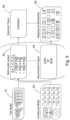
Figure 5 is a schematic diagram illustrating a solving process for adaptive embedded systems. -
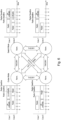
Figure 6 is a schematic diagram to explain one method of the disclosure. -
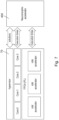
Figure 7 is a schematic of an example processing platform and the use of the neuromorphic accelerator for optimisation analysis according to this disclosure. -
Figures 1 to 4 show, for the purposes of background explanation, timing schedules for an adaptive embedded system in an aircraft, implemented on a processor having two cores,core 0 andcore 1. The system provides the functionality of the radio and the radar as well as two other tasks - one of low criticality functionality and one of high criticality functionality.Figure 1 shows the planned scheduling for these four tasks in a first mode which, in this case, is while the aircraft is cruising. The software for operating the radio and the radar is provided on the first core -core 0. The software for performing the other two tasks is implemented on the second core -core 1. In this example, the deadline for changing the radio operation (`Radio deadline') is at 5.25 time units, and the deadline for changing the radar operation (Radar deadline) is at 7 units of time. In this 'cruise' mode, in the example, the scheduling is designed, within the constraints of the deadlines, to enable the radar to scan for large objects in its immediate flight path, and to alternate with radio operation according to the schedule. Similarly, the high and low criticality tasks will be performed, in parallel with the radio and radar operation, according to their schedule onCore 1. - The same embedded system may be configured to change its operation (i.e. is adaptive) according to e.g. the aircraft mission phase or flight phase. In the example shown, a second mode for the embedded system is the search mode. When the system is switched to this mode, the scheduling of the four tasks adapts e.g. to the example shown in
Fig. 2 . Here the radio deadline (or time constraint) is unchanged, but the radar deadline is shortened (in this example to 4.5 time units) since, in a search mode, where the radar is searching for survivors below the aircraft e.g. in a search and rescue mission, the radar is looking for smaller objects in all directions and requires different frequencies/periods of operation. To enable the search mode to be reliably informed, the scheduling is, therefore, adapted and now the radar operation is performed alternately with the low criticality task by the first core,core 0, while the radio tasks are performed with the high criticality tasks on the second core,core 1. -
Figures 3 and 4 illustrate adaptivity of the system in response to a core overheat fault. If a core overheats, the operating frequency of that core may be reduced, to lessen the load on the core and avoid permanent damage to the core, which means that tasks executed by that core may take longer. In the cruise mode (described above with reference toFig. 1 ), and if thefirst core 0 is overheating, the scheduling is adapted such that the radio and the radar functionalities are separated out between the two cores, and the high criticality function is performed by the same core as the radar, thus reducing the processing load on the first core and ensuring all of the safety critical tasks can be performed within their time constraints. The low criticality task is, in this case, dropped because, with inclusion of this task, with the potential longer execution times of the overheated core, the system deadlines would be violated. - Similarly,
Fig. 4 shows overheating fault adaptivity for the search mode (described above with reference toFig. 2 ) when the first core,core 0, overheats. Again, the low criticality task is dropped so that the radar task can be performed within its time constraints even if it requires longer execution time. - In known systems, methods are known for generating schedules for mode changing systems and methods are known for generating schedules for adapting to particular types of fault, but there is no technique that address these collectively. This problem is addressed by a method designed by the inventors and set out in a copending application, which is designed to generate schedules for adaptive systems as they adapt to different modes and different faults. Rather than modelling each different configuration, the methodology here explicitly models the adaptivity of the system using a Model of Computation that encompasses multiple sub-models (multi-model) and a generic Architecture Model (AM). By explicitly modelling adaptivity, any type and number of required changes can be modelled, as well as their combination/any combination thereof, and existing solvers can be used. The use of MoC and AM integrates existing scheduling techniques but also extends to cover new cases of change.
- Some definitions will be given to help understand the description that follows.
- System State: - The set of values for the system parameters e.g. number of tasks, their dependencies, their execution requirements, number of Processing Elements (PEs), their configuration, their interconnection, number of available memory locations, their connections to PEs, etc.
- Adaptation: - Any change in the system parameters i.e. transitioning from a system state to another system state.
- Mapping: - The assignment of tasks to Pes and their dependencies to memory locations.
- Scheduling: - The order and timing of execution of tasks.
- Multi-Model: - A model with N sub-models, being a vectored version of the task model extended with data-dependency concepts, defined as MMS = (T, P, D, E, T, ↓), where:
- T is the set of task-sets (meta-set);
- P is the meta-set of periods of the task meta-set;
- D is the meta-set of deadlines of the task meta-set;
- E is the meta-set of data dependencies. The set of dependencies are divided into two disjoint subsets containing the mandatory and optional dependencies, i.e. E=Ei m U Ei o and Ei m ∩ Ei o = Ø for all i ∈ [0,N-1];
- ↑ is the meta-set of production rates of each source task in the meta-set of dependencies;
- ↓ is the meta-set of consumption rates of each destination task in the meta-set of dependencies;
- Generic Architecture Model: - A tuple GA = (C, L, M, N) where:
- C is a set of sets of Pes, each set c ∈ C is called a computing cluster, with each computing cluster c containing one or more cores k, i.e. k ∈ c;
- L ⊆ C × C is a set of links among computing clusters that form the network;
- M is a set of memory banks/locations;
- N is the set of network channels of a network interface.
- Further, in order for the model to be correct, several consistency conditions have to be met, which have been formal defined. This include (but are not limited to):
- 1. Tasks should start no earlier than their period.
- 2. Tasks should finish no later than their period.
- 3. Tasks should finish no later than their deadline.
- 4. A task should start after all preceding tasks have finished.
- 5. A task should start if and only if there is enough data produced by its predecessors.
- 6. No task should be executed in a processor that already executes another task.
- 7. All data produced are eventually consumed.
- 8. All tasks are assigned to a time partition.
- 9. All time partitions are aligned i.e. there is no time partition that starts or ends in the middle of another time partition.
- 10. Tasks should be executed in a particular type of PE.
- 11. No symmetric solutions should be generated.
- According to the methodology, each version of the multi-model system, defined as MMS = (T, P, D, E, ↑, ↓), describes one static configuration of the system from a software perspective and its timing requirements, and each version of the generic architecture, GA, describes a static configuration of the hardware. Together, the MMS and the GA describe a unique system state. For this unique state, the real-time mapping and scheduling problem can be solved either using existing theory or by posing it as an optimization problem to an optimisation engine.
- The present disclosure provides a way of implementing the optimisation solution or optimisation engine in a novel manner, making use of a neuromorphic accelerator (also referred to as a neuromorphic engine), such that the schedules at each transition or for each new configuration are generated online or immediately, by the accelerator, using spiked neural networks, SNNs, that are triggered by the changing events that give rise to the need for a new schedule. An example of the methodology is seen in
Fig. 5 . - In
Fig 5 , the various tasks (software) are defined in atask model 10, and the architecture (hardware) that runs the tasks is defined as anarchitecture model 20. These are provided to themulti-model system module 30 that defines the MMS. The system state from the MMS module is provided to aneuromorphic optimisation engine 40 and/or toschedulers 50 that use existing real-time theory, which provide instructions for mapping and scheduling, 60. Using this modelling methodology, a schedule is generated for each possible state that the system has been designed to operate in. By using a neuromorphic accelerator as the optimisation engine, these schedules are generated in real time, as the triggering event occurs, rather than needing to be calculated offline, previously. This solution, therefore, does not consume as much processing power, since the optimisation will only be performed when it is actually needed. - To allow for the adaptivity of the system - i.e. to provide scheduling for the system when it transitions from one system state to another e.g. due to a mode change or in response to a fault, the
neuromorphic optimisation engine 40 is used, as shown inFigs. 6 and7 . This enables a more adaptive rescheduling of tasks, more quickly, than would be possible usingtheory 50 when a large amount of computation is required. The neuromorphic engine is configured to solve the problem using values from a source state and a target state. The optimisation criteria can be time, space, energy, thermal, separation or a linear combination thereof. - Applying the
neuromorphic engine 40 to the examples described above with reference toFigs. 1 to 4 , and now with reference toFig. 6 , transitioning from a source state in cruise mode as inFig. 1 (now in the top left corner ofFig. 6 ) to a target state of nominal search mode (shown inFig. 2 and now in the top right corner ofFig. 6 ), the conventional theoretical calculation can be used from the model in theMMS module 30. Similarly, known theory can be used when transitioning from overheat cruise operation (Fig. 3 and now bottom left ofFig. 6 ) to overheat search operation (Fig. 4 and now bottom right ofFig. 6 ). Theoretical schedule generation can also be used for the vertical transitions from normal cruise to overheat cruise modes and from normal search to overheat search modes. In the description, cruise and search modes are just examples of two different operation modes of the system, and overheating is just one example of a fault type. By modelling the adaptivity in the multi-model system, schedules can be generated for all possible mode type transitions and all possible faults. - In addition to the horizontal and vertical transitions described above, using theory, the methodology of this disclosure also allows transitions in a diagonal manner e.g. in this example, between the normal cruise mode and the overheat search mode (e.g. if a transition from cruise mode to search mode is required and the overheat fault is detected) and between the normal search mode and the overheat cruise mode, in a single computation, rather than indirectly via the horizontal and vertical transition computations.
- By using a model of the system adaptivity, multi-processor systems, networks and even systems of systems can be mapped and scheduled quickly and reliably and within defined parameter constrains. Existing theory can be encompassed whilst also enabling new theories to be developed. The methodology enables rigorous analysis for fault-tolerance of adaptive systems and can be integrated with existing toolchains such as AADL.
- The neuromorphic engine, and its use for 'online' solving of optimisation problems, will now be described further. Rather than the optimisation engine having to anticipate all possible transition events/failures and calculate corresponding schedules, using a neuromorphic accelerator, specifically, using spiked neural networks, SNNs, means that the optimisation can be performed quickly, 'online' in response to any event, even those which have not been anticipated, and, further, the optimisation only needs to be performed as such an event occurs, and not in advance.
- SNNs effectively simulate the behaviour of individual neurons through discrete spikes or action potentials which are triggered when the neuron's membrane reaches a trigger threshold. The spikes or action potentials then propagate through the network communicating information and triggering subsequent neural activity.
- The disclosure is concerned with using SNNs in a neuromorphic engine to solve the above-mentioned optimisation problem of finding an appropriate schedule at run-time of the embedded system.
-
Figure 7 represents a typical heterogenous architecture of the type present in many multi-core processor on-chip systems. In this example, the multiple cores (hereCore 0,Core 1,Core 2,Core 3, although other numbers of cores are possible), and their tasks, are managed by a so-called 'hypervisor' 70 e.g. according to an initial schedule. At run-time, theneuromorphic accelerator 400 is constantly monitoring, measuring and gathering information on the execution times of each task on each core. This body of information is saved and used by theneuromorphic accelerator 400 to find new schedule solutions when needed, since the timing information of each task is being updated and monitored at any time. This allows the accelerator to learn. - If a fault, and/or need for mode change is detected, and adaptation of the scheduling is, therefore, needed, the
hypervisor 70 sends a request for a solution to theneuromorphic accelerator 400 which, using the updated timing and task information, as well as the modelled adaptivity described above, can generate an optimised schedule solution in effectively real-time or very close to real-time, and send the schedule back to the hypervisor to control the cores/tasks according to the new schedule (as described above). - The neuromorphic accelerator, using SNNs, can be implemented in various known ways, e.g. on an FPGA as described, for example, in C. Frenkel, M. Lefebvre, J-D Legat and D. Bol, 'A 0.086-mm212.7-pJ/SOP 64k-Synapse 256 Neuron Online-Learning Digital Spiking Neuromorphic Processor in 28-nm CMOS,' IEEE Transactions on Biomedical Circuits and Systems, vol. 13, no. 1, pp. 145-156, 2019, or using a specific ASIC peripheral as in e.g. Brainchip Akida Neuromorphoc Core: https://brainchip.com/akida-neural-processor-soc/.
- Various neuron models are known in SNN architectures, and this methodology is not limited to any one model. One example is the Leaky Integrate and Fire (LIF) neuron, but different neuron models could also be used. The neurons receives spikes from input synapses e.g. due to fault detection or mode transition, and the neurons fire or trigger when a threshold is exceeded. The dynamic nature of these neurons allows the model to naturally encode the temporal dependency of input events (e.g. faults) that may otherwise be missed using external recurrence mechanisms. Furthermore, if no spike is produced, no processing occurs, thus reducing power consumption.
- SNN models are also advantageous in their ability to learn and adapt to new inputs. Synapse weights can be updated following plasticity rules such as spike driven synaptic plasticity (SDSP). The weighting in Hebbian-based networks self-organise and converge to an attractor in weight space during their lifetime. This feature can be implemented in the neuromorphic engine of the present disclosure which can ensure that the systems is updated even based on events that may have occurred during an offline training phase.
Claims (12)
- A method of generating schedules for an adaptive embedded system, the method comprising:deriving task sets of all possible tasks to be performed by the embedded system;deriving sets of all possible hardware configurations of the embedded system;creating a multi-model system having a multi-model defining the adaptivity of the system for all possible tasks and all possible hardware and all combinations thereof, the adaptivity defining how the system can change operation responsive to a mode change requirement and/or occurrence of a fault;solving a scheduling problem for the models of the multi-model system in a neuromorphic accelerator implemented by spiked neural networks; andproviding schedule instructions to the system, for performance of tasks, based on the solution.
- The method of claim 1, wherein the multi-model defines adaptivity in response to all possible mode changes and all possible fault occurrences for the system.
- The method of claim 1 or 2, wherein the multi-model is a model with N sub-models, being a vectored version of a task model extended with data-dependency concepts, defined as MMS = (T, P, D, E, ↑, ↓), where:T is a meta-set of task sets;P is a meta-set of periods of the task meta-set;D is a meta-set of deadlines of the task meta-set;E is a meta-set of data dependencies divided into two disjoint subsets containing mandatory and optional dependencies, i.e. E=Ei m ∪ Ei o and Ei m ∩ Ei o = Ø for all i ∈ [0,N-1];T is a meta-set of production rates of each source task in the meta-set of dependencies;↓ is a meta-set of consumption rates of each destination task in the meta-set of dependencies.
- The method of any preceding claim, wherein the set of all possible hardware configurations is a set of versions of a generic architecture.
- The method of any preceding claim, wherein the spiked neural networks are triggered by the mode change requirement and/or occurrence of a fault.
- An adaptive embedded system including:one or more processor cores for performing tasks according to a schedule;a task model (10) of all possible tasks to be performed by the one or more processors;a hardware architecture model (20) of all possible hardware configurations for the system;a multi-model system (30) for generating multi-models from the task model and the hardware architecture model, defining the adaptivity of the system for all possible tasks and all possible hardware and all combinations thereof, the adaptivity defining how the system can change operation responsive to a mode change requirement and/or occurrence of a fault;a neuromorphic accelerator implemented by spiked neural networks, configured to solve a scheduling problem for the models of the multi-model system; and a mapping and schedule module (60) configured to providing schedule instructions to the system, for performance of tasks, based on the solution.
- The system of claim 6, further comprising real-time theory schedulers (50) configured to provide scheduling information to the mapping and schedule module (60).
- The system of claim 6 or 7, having one or more processors each having a plurality of processor cores.
- An aircraft control system including one or more embedded systems as claimed in claim 6, 7 or 8.
- The system of claim 9, wherein the tasks include radar operation and radio operation.
- The system of claim 10, where a mode change requirement includes changing operation from a navigation mode to a search mode.
- The system of claim 10 or 11, wherein the fault includes a core overheat fault.
Priority Applications (2)
| Application Number | Priority Date | Filing Date | Title |
|---|---|---|---|
| EP23219808.5A EP4575780A1 (en) | 2023-12-22 | 2023-12-22 | Online scheduling for adaptive embedded systems |
| US18/960,907 US20250208915A1 (en) | 2023-12-22 | 2024-11-26 | Online scheduling for adaptive embedded systems |
Applications Claiming Priority (1)
| Application Number | Priority Date | Filing Date | Title |
|---|---|---|---|
| EP23219808.5A EP4575780A1 (en) | 2023-12-22 | 2023-12-22 | Online scheduling for adaptive embedded systems |
Publications (1)
| Publication Number | Publication Date |
|---|---|
| EP4575780A1 true EP4575780A1 (en) | 2025-06-25 |
Family
ID=89321732
Family Applications (1)
| Application Number | Title | Priority Date | Filing Date |
|---|---|---|---|
| EP23219808.5A Pending EP4575780A1 (en) | 2023-12-22 | 2023-12-22 | Online scheduling for adaptive embedded systems |
Country Status (2)
| Country | Link |
|---|---|
| US (1) | US20250208915A1 (en) |
| EP (1) | EP4575780A1 (en) |
Citations (1)
| Publication number | Priority date | Publication date | Assignee | Title |
|---|---|---|---|---|
| US20160378550A1 (en) * | 2015-06-29 | 2016-12-29 | International Business Machines Corporation | Optimization of application workflow in mobile embedded devices |
-
2023
- 2023-12-22 EP EP23219808.5A patent/EP4575780A1/en active Pending
-
2024
- 2024-11-26 US US18/960,907 patent/US20250208915A1/en active Pending
Patent Citations (1)
| Publication number | Priority date | Publication date | Assignee | Title |
|---|---|---|---|---|
| US20160378550A1 (en) * | 2015-06-29 | 2016-12-29 | International Business Machines Corporation | Optimization of application workflow in mobile embedded devices |
Non-Patent Citations (3)
| Title |
|---|
| C. FRENKELM. LEFEBVREJ-D LEGATD. BOL: "A 0.086-mm212.7-pJ/SOP 64k-Synapse 256 Neuron Online- Learning Digital Spiking Neuromorphic Processor in 28-nm CMOS", IEEE TRANSACTIONS ON BIOMEDICAL CIRCUITS AND SYSTEMS, vol. 13, no. 1, 2019, pages 145 - 156 |
| KOROUSIC-SELJAK B ET AL: "OPTIMIZATION OF MULTIPROCESSOR REAL-TIME EMBEDDED SYSTEM STRUCTURES", PROCEEDINGS OF THE MEDITERRANEAN ELECTROTECHNICAL CONFERENCE. ANTALYA, TURKEY, APR. 12 -14, 1994; [PROCEEDINGS OF THE MEDITERRANEAN ELECTROTECHNICAL CONFERENCE], NEW YORK, IEEE, US, vol. 1, 12 April 1994 (1994-04-12), pages 313 - 316, XP000506147, ISBN: 978-0-7803-1773-4 * |
| ZENO JONKE ET AL: "Solving Constraint Satisfaction Problems with Networks of Spiking Neurons", FRONTIERS IN NEUROSCIENCE, vol. 10, 30 March 2016 (2016-03-30), CH, XP055475590, ISSN: 1662-4548, DOI: 10.3389/fnins.2016.00118 * |
Also Published As
| Publication number | Publication date |
|---|---|
| US20250208915A1 (en) | 2025-06-26 |
Similar Documents
| Publication | Publication Date | Title |
|---|---|---|
| US10970623B2 (en) | System and method for training artificial intelligence systems using a sima based processor | |
| US9412064B2 (en) | Event-based communication in spiking neuron networks communicating a neural activity payload with an efficacy update | |
| US20250291920A1 (en) | Apparatus and Application Device for Protection of Intrusion to Property | |
| Chen et al. | Quality optimization of adaptive applications via deep reinforcement learning in energy harvesting edge devices | |
| Hafaiedh et al. | A distributed formal-based model for self-healing behaviors in autonomous systems: from failure detection to self-recovery: IB Hafaiedh, MB Slimane | |
| US12585251B2 (en) | Method for the distributed calculation of computational tasks | |
| US20250208915A1 (en) | Online scheduling for adaptive embedded systems | |
| Alshaer et al. | Graph neural networks based meta-scheduling in adaptive time-triggered systems | |
| Khamis et al. | Control system design based on modern embedded systems | |
| EP4557094A1 (en) | Generating schedules for an adaptive embedded system | |
| Shevchenko | Towards Self-Healing Cloud Infrastructure: Automated Recovery Methods and Their Effectiveness | |
| Mouraud et al. | Damned: A distributed and multithreaded neural event-driven simulation framework | |
| EP4220428A1 (en) | Generation of an index for a data storage | |
| Oh et al. | Design of very lightweight agents for reactive embedded systems | |
| Martiniuk et al. | Task optimisation in multiprocessor embedded systems | |
| Riaz et al. | Challenges with providing reliability assurance for self-adaptive cyber-physical systems | |
| Chauhan | Implementing Real-Time Learning for Adaptive Interrupt Handling | |
| RU2857785C1 (en) | Distributed expert decision support system for intelligent control of on-board distributed information and computing environment | |
| Cavadov | Intelligent Control Systems | |
| Alshaer et al. | Adaptive approach to enhance machine learning scheduling algorithms during runtime using reinforcement learning in metascheduling applications | |
| Cornell | Real-time systems: modeling, design, and applications | |
| Babaoglu et al. | Cognified distributed computing | |
| Li et al. | CANAO: A Cloud-Aware Native Agentic AI Framework for Adaptive Task Orchestration in Cloud-Native Environments | |
| Wang et al. | Enabling Learning-Based Efficiency Optimizer with Shadow Cycles in Resource-Constrained Autonomous Embedded Systems | |
| CN122021925A (en) | Execution path control method and equipment for pulse neural network reasoning |
Legal Events
| Date | Code | Title | Description |
|---|---|---|---|
| PUAI | Public reference made under article 153(3) epc to a published international application that has entered the european phase |
Free format text: ORIGINAL CODE: 0009012 |
|
| STAA | Information on the status of an ep patent application or granted ep patent |
Free format text: STATUS: THE APPLICATION HAS BEEN PUBLISHED |
|
| AK | Designated contracting states |
Kind code of ref document: A1 Designated state(s): AL AT BE BG CH CY CZ DE DK EE ES FI FR GB GR HR HU IE IS IT LI LT LU LV MC ME MK MT NL NO PL PT RO RS SE SI SK SM TR |
|
| STAA | Information on the status of an ep patent application or granted ep patent |
Free format text: STATUS: REQUEST FOR EXAMINATION WAS MADE |
|
| 17P | Request for examination filed |
Effective date: 20260102 |
|
| STAA | Information on the status of an ep patent application or granted ep patent |
Free format text: STATUS: THE APPLICATION IS DEEMED TO BE WITHDRAWN |