EP4575779A1 - User task processing method and apparatus, device, and medium - Google Patents
User task processing method and apparatus, device, and medium Download PDFInfo
- Publication number
- EP4575779A1 EP4575779A1 EP24719961.5A EP24719961A EP4575779A1 EP 4575779 A1 EP4575779 A1 EP 4575779A1 EP 24719961 A EP24719961 A EP 24719961A EP 4575779 A1 EP4575779 A1 EP 4575779A1
- Authority
- EP
- European Patent Office
- Prior art keywords
- task
- machine learning
- learning model
- prompt
- triggering condition
- Prior art date
- Legal status (The legal status is an assumption and is not a legal conclusion. Google has not performed a legal analysis and makes no representation as to the accuracy of the status listed.)
- Pending
Links
Images



Classifications
-
- G—PHYSICS
- G06—COMPUTING OR CALCULATING; COUNTING
- G06N—COMPUTING ARRANGEMENTS BASED ON SPECIFIC COMPUTATIONAL MODELS
- G06N20/00—Machine learning
-
- G—PHYSICS
- G06—COMPUTING OR CALCULATING; COUNTING
- G06Q—INFORMATION AND COMMUNICATION TECHNOLOGY [ICT] SPECIALLY ADAPTED FOR ADMINISTRATIVE, COMMERCIAL, FINANCIAL, MANAGERIAL OR SUPERVISORY PURPOSES; SYSTEMS OR METHODS SPECIALLY ADAPTED FOR ADMINISTRATIVE, COMMERCIAL, FINANCIAL, MANAGERIAL OR SUPERVISORY PURPOSES, NOT OTHERWISE PROVIDED FOR
- G06Q10/00—Administration; Management
- G06Q10/10—Office automation; Time management
- G06Q10/109—Time management, e.g. calendars, reminders, meetings or time accounting
-
- G—PHYSICS
- G06—COMPUTING OR CALCULATING; COUNTING
- G06Q—INFORMATION AND COMMUNICATION TECHNOLOGY [ICT] SPECIALLY ADAPTED FOR ADMINISTRATIVE, COMMERCIAL, FINANCIAL, MANAGERIAL OR SUPERVISORY PURPOSES; SYSTEMS OR METHODS SPECIALLY ADAPTED FOR ADMINISTRATIVE, COMMERCIAL, FINANCIAL, MANAGERIAL OR SUPERVISORY PURPOSES, NOT OTHERWISE PROVIDED FOR
- G06Q10/00—Administration; Management
- G06Q10/10—Office automation; Time management
-
- G—PHYSICS
- G06—COMPUTING OR CALCULATING; COUNTING
- G06F—ELECTRIC DIGITAL DATA PROCESSING
- G06F3/00—Input arrangements for transferring data to be processed into a form capable of being handled by the computer; Output arrangements for transferring data from processing unit to output unit, e.g. interface arrangements
- G06F3/16—Sound input; Sound output
- G06F3/167—Audio in a user interface, e.g. using voice commands for navigating, audio feedback
-
- G—PHYSICS
- G06—COMPUTING OR CALCULATING; COUNTING
- G06F—ELECTRIC DIGITAL DATA PROCESSING
- G06F40/00—Handling natural language data
- G06F40/30—Semantic analysis
-
- G—PHYSICS
- G06—COMPUTING OR CALCULATING; COUNTING
- G06F—ELECTRIC DIGITAL DATA PROCESSING
- G06F9/00—Arrangements for program control, e.g. control units
- G06F9/06—Arrangements for program control, e.g. control units using stored programs, i.e. using an internal store of processing equipment to receive or retain programs
- G06F9/44—Arrangements for executing specific programs
- G06F9/451—Execution arrangements for user interfaces
- G06F9/453—Help systems
-
- G—PHYSICS
- G06—COMPUTING OR CALCULATING; COUNTING
- G06F—ELECTRIC DIGITAL DATA PROCESSING
- G06F9/00—Arrangements for program control, e.g. control units
- G06F9/06—Arrangements for program control, e.g. control units using stored programs, i.e. using an internal store of processing equipment to receive or retain programs
- G06F9/46—Multiprogramming arrangements
- G06F9/48—Program initiating; Program switching, e.g. by interrupt
- G06F9/4806—Task transfer initiation or dispatching
- G06F9/4843—Task transfer initiation or dispatching by program, e.g. task dispatcher, supervisor, operating system
-
- G—PHYSICS
- G06—COMPUTING OR CALCULATING; COUNTING
- G06F—ELECTRIC DIGITAL DATA PROCESSING
- G06F9/00—Arrangements for program control, e.g. control units
- G06F9/06—Arrangements for program control, e.g. control units using stored programs, i.e. using an internal store of processing equipment to receive or retain programs
- G06F9/46—Multiprogramming arrangements
- G06F9/48—Program initiating; Program switching, e.g. by interrupt
- G06F9/4806—Task transfer initiation or dispatching
- G06F9/4843—Task transfer initiation or dispatching by program, e.g. task dispatcher, supervisor, operating system
- G06F9/485—Task life-cycle, e.g. stopping, restarting, resuming execution
- G06F9/4856—Task life-cycle, e.g. stopping, restarting, resuming execution resumption being on a different machine, e.g. task migration, virtual machine migration
- G06F9/4862—Task life-cycle, e.g. stopping, restarting, resuming execution resumption being on a different machine, e.g. task migration, virtual machine migration the task being a mobile agent, i.e. specifically designed to migrate
- G06F9/4868—Task life-cycle, e.g. stopping, restarting, resuming execution resumption being on a different machine, e.g. task migration, virtual machine migration the task being a mobile agent, i.e. specifically designed to migrate with creation or replication
-
- G—PHYSICS
- G06—COMPUTING OR CALCULATING; COUNTING
- G06N—COMPUTING ARRANGEMENTS BASED ON SPECIFIC COMPUTATIONAL MODELS
- G06N3/00—Computing arrangements based on biological models
- G06N3/02—Neural networks
- G06N3/08—Learning methods
-
- G—PHYSICS
- G06—COMPUTING OR CALCULATING; COUNTING
- G06N—COMPUTING ARRANGEMENTS BASED ON SPECIFIC COMPUTATIONAL MODELS
- G06N5/00—Computing arrangements using knowledge-based models
- G06N5/04—Inference or reasoning models
- G06N5/041—Abduction
-
- G—PHYSICS
- G06—COMPUTING OR CALCULATING; COUNTING
- G06Q—INFORMATION AND COMMUNICATION TECHNOLOGY [ICT] SPECIALLY ADAPTED FOR ADMINISTRATIVE, COMMERCIAL, FINANCIAL, MANAGERIAL OR SUPERVISORY PURPOSES; SYSTEMS OR METHODS SPECIALLY ADAPTED FOR ADMINISTRATIVE, COMMERCIAL, FINANCIAL, MANAGERIAL OR SUPERVISORY PURPOSES, NOT OTHERWISE PROVIDED FOR
- G06Q10/00—Administration; Management
- G06Q10/10—Office automation; Time management
- G06Q10/109—Time management, e.g. calendars, reminders, meetings or time accounting
- G06Q10/1097—Time management, e.g. calendars, reminders, meetings or time accounting using calendar-based scheduling for task assignment
-
- H—ELECTRICITY
- H04—ELECTRIC COMMUNICATION TECHNIQUE
- H04L—TRANSMISSION OF DIGITAL INFORMATION, e.g. TELEGRAPHIC COMMUNICATION
- H04L12/00—Data switching networks
- H04L12/28—Data switching networks characterised by path configuration, e.g. LAN [Local Area Networks] or WAN [Wide Area Networks]
- H04L12/2803—Home automation networks
- H04L12/2816—Controlling appliance services of a home automation network by calling their functionalities
- H04L12/282—Controlling appliance services of a home automation network by calling their functionalities based on user interaction within the home
-
- G—PHYSICS
- G05—CONTROLLING; REGULATING
- G05B—CONTROL OR REGULATING SYSTEMS IN GENERAL; FUNCTIONAL ELEMENTS OF SUCH SYSTEMS; MONITORING OR TESTING ARRANGEMENTS FOR SUCH SYSTEMS OR ELEMENTS
- G05B2219/00—Program-control systems
- G05B2219/10—Plc systems
- G05B2219/16—Plc to applications
- G05B2219/163—Domotique, domestic, home control, automation, smart, intelligent house
Definitions
- a method for processing a user task is provided.
- a user input represented in a natural language is received from a user.
- the user input indicates a task to be executed.
- a task type of the task is determined based on the user input.
- a subsequent task of the task is created to provide the execution result of the task by a machine learning model when a triggering condition for the task is met.
- an apparatus for processing a user task includes: a receiving module configured to receive a user input represented in a natural language from a user, the user input indicating a task to be executed; a determination module configured to determine a task type of the task based on the user input; and a creation module configured to, in response to determining that the task type indicates an execution result of the task is unable to be obtained within a predetermined time period, create a subsequent task of the task to provide the execution result of the task by a machine learning model when a triggering condition for the task is met.
- a computer readable storage medium having stored thereon a computer program that, when executed by a processor, causes the processor to implement the method according to the first aspect of the present disclosure.
- prompt information is sent to the user to explicitly inform the user that the requested operation would acquire and use the user's personal information. Therefore, according to the prompt information, the user may decide on his/her own whether to provide the personal information to the software or hardware, such as electronic devices, applications, servers, or storage media that execute operations of the technical solutions of the subject matter described herein.
- the term "in response to” used here refers to the state where the corresponding event occurs or the condition is satisfied. It will be understood that the timing of subsequent actions executed in response to the event or condition is not necessarily strongly related to the time when the event occurs or the condition is satisfied. For example, in some cases, subsequent actions can be executed immediately when the event occurs or the condition is satisfied, while in other cases, subsequent actions can be executed after a period of time after the event occurs or the condition is satisfied.
- the machine learning model 140 may call various built-in or third-party tools to execute tasks. These tools may be functions, APIs, microservices, or other programs that may accomplish specific tasks. By calling these tools, the machine learning model 140 may execute various tasks, such as obtaining weather forecasts, searching for information, and calculating data.
- the machine learning model 140 may first parse the user's input, determine the user's needs, and then select an appropriate tool to execute the task based on the needs. For example, the machine learning model may call tools for weather forecasting to provide weather information, call search tools to return expected search results, and so on.
- the execution of tasks may require multiple interactions between the machine learning model and the tool, such as sending requests, receiving responses, and processing results.
- a task type 220 of the task may be determined based on the user input 210.
- the task type 220 may include instant tasks and non-instant tasks.
- instant tasks may represent tasks that may obtain execution results within a predetermined time period (such as 1 second, 5 seconds, or other lengths), and non-instant tasks may represent tasks that cannot obtain execution results within a predetermined time period. If the judgment result at block 230 is "No", a subsequent task 240 of the task may be created.
- FIG. 3 illustrates a block diagram 300 of a process for determining a task type, triggering condition, and task content of a task according to some implementations of the present disclosure.
- a prompt e.g., referred to as a first prompt
- the prompt 310 may instruct that the task type 220 is determined by the machine learning model.
- the prompt may be determined based on various methods currently known and/or to be developed in the future.
- the prompt 310 may be provided to the machine learning model 140 and a response 320 may be received from the machine learning model 140.
- the powerful ability of the machine learning model 140 may be further utilized to determine the triggering condition and/or a task content for the task from the user input 210.
- the triggering condition may represent a condition used to trigger the execution results of the task, such as "8 a.m. tomorrow" and "when the task is completed” in the previous example.
- the task content may define the specific content of the task to be executed, such as "providing a weather forecast for Beijing” and “providing weather forecasts for 100 cities nationwide” in the previous example.
- the corresponding prompt 310 may be built, and the prompt 310 may further instruct the machine learning model 140 to determine the triggering condition and the task content for the task.
- the response 320 from the machine learning model 140 will include relevant information about the triggering condition and task content, and the triggering condition 330 and task content 332 of the task may be determined based on the response 320. In this way, the complexity of the digital assistant 130 may be simplified, and the powerful processing power of the machine learning model 140 may be called to provide more accurate triggering condition and task content.
- the subsequent task of the task may be created based on the triggering condition 330 and the task content 332, so that the subsequent task 240 may execute the specified task content 332 by the machine learning model 140 when the triggering condition 330 of the task is met, and then provide the execution results of the task.
- another prompt e.g., referred to as a second prompt
- the prompt may instruct the machine learning model 140 to execute the task content.
- the subsequent task may be configured to provide the second prompt to the machine learning model based on the triggering condition.
- a session 410 may be provided between the user and the digital assistant, with the left side representing the user and the right side representing the digital assistant.
- the user input 420 may indicate: "please provide a weather forecast for Beijing at 8 a.m. tomorrow".
- the digital assistant 130 may call on the capabilities of the machine learning model 140 to determine: a triggering condition 422 is "at 8 a.m. tomorrow", and a task content 424 is "provide a weather forecast for Beijing”.
- a subsequent task 450 may be created locally at the digital assistant 130. In this way, without modifying the machine learning model, the function of processing non-instant tasks may be completed by adding a processing interface locally at the digital assistant 130.
- the digital assistant 130 may provide a response 430 to indicate to the user that the user request has been received and that the execution result of the task will be provided later.
- a prompt may be created based on the task content 424, such as "please provide a weather forecast for Beijing".
- the subsequent task may be executed to provide an execution result when the triggering condition is met.
- the prompt may be sent to the machine learning model 140 when the current time point reaches 8 a.m. the next day.
- the machine learning model 140 may quickly call a weather forecast tool to query the weather forecast for Beijing and provide a response to the digital assistant 130 upon receiving the prompt. In this way, the user may ensure that they obtain the execution result at the specified future time point by delaying the task.
- an execution result 440 may be returned to the user based on the response of the machine learning model 140.
- the current time may be presented at the head of the execution result 440, and then the weather forecast for Beijing may be provided.
- the response of the machine learning model 140 is rapid and may ensure that the user obtains the execution result at the specified time point.
- the triggering condition 422 may be adjusted, such as adjusting the predetermined time point to be earlier by 1 second (or other time length).
- a prompt may be provided to the machine learning model 140 at 07:59:59 a.m. the next day to ensure that the user receives the weather forecast at 08:00 a.m.
- the user input described above only involves creating one subsequent task
- the user input may involve a plurality of subsequent tasks.
- the user input may represent "provide a weather forecast for Beijing at 8 a.m. every day".
- a cyclic subsequent task may be created at the digital assistant 130, that is, sending prompts to the machine learning model at 8 a.m. every day to obtain Beijing's weather forecast.
- FIG. 5 illustrates a block diagram 500 for creating a subsequent task according to some implementations of the present disclosure.
- a session 510 may be provided between the user and the digital assistant.
- a user input 520 may represent: "Please count weather forecasts for 100 cities nationwide”.
- the digital assistant 130 may call the ability of the machine learning model 140 to determine: a triggering condition 522 is "when statistics are completed", and a task content 524 is "provide weather forecasts for 100 cities nationwide”.
- a subsequent task 550 may be created locally at the digital assistant 130.
- the prompt may be immediately provided to the machine learning model.
- a response 530 may be provided to provide feedback to the user on the user input 520 to indicate that the user input is being processed.
- the digital assistant 130 may be a client tool created by the user 110 and/or other users to communicate with the machine learning model.
- the digital assistant 130 may include a preset task, that is, the preset task is added to the digital assistant 130 during the creation of the digital assistant 130. See FIG. 6 for more details on creating the digital assistant 130, which illustrates a block diagram 600 of a process of adding a preset task during the creation of a digital assistant according to some implementations of the present disclosure.
- the control 660 allows users to create a scheduling task in the natural language during a session with the digital assistant 130.
- the digital assistant 130 may operate according to the process described above when receiving the user input. For example, based on the user input, a corresponding prompt is generated, and based on the machine learning model's reply to the prompt, it is determined whether a subsequent task needs to be created. If it is determined that the task specified by the user input belongs to a non-instant task, a subsequent task is created. At this time, assuming that digital assistant 130 receives "please provide a weather forecast for Beijing at 8 a.m. tomorrow", the digital assistant 130 will create subsequent tasks in the manner described above, and provide the weather forecast at 8 a.m. the next day.
- a dialog box 622 for a preset task may be called to add a preset task to the digital assistant.
- the creator 610 may execute an interaction 640, may enter a triggering condition for the preset task in box 630, and may enter a task content of the preset task in box 632, and so on.
- a preset task 650 will be included in the created digital assistant 130.
- a subsequent task of the preset task may be configured so that the generated prompt is provided to the machine learning model at a future time point (e.g., 09:00 a.m. every Saturday). Subsequently, the subsequent task of the preset task may be executed to provide the execution result based on a response of the machine learning model to the prompt. At this time, the machine learning model will receive the prompt "provide a weather forecast for Shanghai" at 09:00 a.m. every Saturday, and return the weather forecast for Shanghai to the Digital Assistant 130. In this way, the machine learning model may be called regularly at the digital assistant 130 to complete the preset task.
- a new way of calling a machine learning model to process user tasks is provided.
- user tasks that cannot obtain execution results within a predetermined time period may be processed more flexibly and efficiently by creating delayed tasks and asynchronous tasks.
- determining the task type includes: generating, based on the user input, a first prompt instructing the machine learning model to determine the task type; providing the first prompt to the machine learning model; and determining the task type based on a first response of the machine learning model for the first prompt.
- the first prompt further instructs the machine learning model to determine the triggering condition and a task content for the task
- creating the subsequent task comprises: determining, based on the first response, the triggering condition and the task content for the task; and creating the subsequent task of the task based on the triggering condition and the task content.
- the method 700 further includes: executing the subsequent task of the preset task to provide the execution result based on a third response of the machine learning model for the third prompt.
- FIG. 8 illustrates a block diagram of an apparatus 800 for processing a user task according to some implementations of the present disclosure.
- the apparatus 800 includes: a receiving module 810 configured to receive a user input represented in a natural language from a user, the user input indicating a task to be executed; a determination module 820 configured to determine a task type of the task based on the user input; and a creation module 830 configured to, in response to determining that the task type indicates an execution result of the task is unable to be obtained within a predetermined time period, create a subsequent task of the task to provide the execution result of the task by a machine learning model when a triggering condition for the task is met.
- the determination module 820 includes: a first generation module configured to generate, based on the user input, a first prompt instructing the machine learning model to determine the task type; a providing module configured to provide the first prompt to the machine learning model; and a type determination module configured to determine the task type based on a first response of the machine learning model for the first prompt.
- the configuration module includes: a second providing module configured to, in response to determining that the triggering condition indicates the execution result of the task is to be provided when the task is completed, provide the second prompt to the machine learning model; and a feedback module configured to provide feedback for the user input, the feedback indicating that the user input is being processed.
- the execution module includes: a response-based providing module configured to provide the execution result of the task based on a second response of the machine learning model for the second prompt.
- the apparatus 800 is executed at a digital assistant for accessing the machine learning model, and the creation module is further configured to create the subsequent task at the digital assistant.
- the digital assistant further includes a preset task that is added to the digital assistant during creation
- the apparatus 800 further includes: a triggering condition determination module configured to, in response to determining that the preset task is activated, determine a triggering condition for the preset task; and a preset-based creation module configured to create a subsequent task of the preset task to provide an execution result of the preset task based on the machine learning model when the triggering condition for the preset task is met.
- the triggering condition for the preset task indicates that the execution result of the preset task is to be provided at a predetermined future time point
- the preset-based creation module includes: a third generation module configured to generate, based on the preset task, a third prompt indicating a task content for calling the machine learning model to execute the preset task; and a preset-based providing module configured to configure the subsequent task of the preset task to provide the second prompt to the machine learning model at a future time point.
- the computer-readable program instructions may be loaded onto a computer, other programmable data processing apparatus, or other devices, so that a series of operational steps may be executed on a computer, other programmable data processing apparatus, or other devices, to generate a computer-implemented process, such that the instructions which execute on a computer, other programmable data processing apparatuses, or other devices implement the functions/acts specified in one or more blocks in the flowchart and/or the block diagram.
- each block in the block diagram and/or the flowchart, and combinations of blocks in the block diagram and/or the flowchart may be implemented by a dedicated hardware-based system that executes the specified functions or acts, or by the combination of dedicated hardware and computer instructions.
Landscapes
- Engineering & Computer Science (AREA)
- Theoretical Computer Science (AREA)
- Software Systems (AREA)
- Physics & Mathematics (AREA)
- Business, Economics & Management (AREA)
- General Physics & Mathematics (AREA)
- Human Resources & Organizations (AREA)
- General Engineering & Computer Science (AREA)
- Data Mining & Analysis (AREA)
- Strategic Management (AREA)
- Entrepreneurship & Innovation (AREA)
- Artificial Intelligence (AREA)
- Evolutionary Computation (AREA)
- Computing Systems (AREA)
- Mathematical Physics (AREA)
- Quality & Reliability (AREA)
- Tourism & Hospitality (AREA)
- Economics (AREA)
- Marketing (AREA)
- Human Computer Interaction (AREA)
- General Business, Economics & Management (AREA)
- Operations Research (AREA)
- Health & Medical Sciences (AREA)
- Computational Linguistics (AREA)
- General Health & Medical Sciences (AREA)
- Medical Informatics (AREA)
- Audiology, Speech & Language Pathology (AREA)
- Computer Vision & Pattern Recognition (AREA)
- Signal Processing (AREA)
- Computer Networks & Wireless Communication (AREA)
- Automation & Control Theory (AREA)
- Multimedia (AREA)
- Life Sciences & Earth Sciences (AREA)
- Biomedical Technology (AREA)
- Biophysics (AREA)
- Molecular Biology (AREA)
- Machine Translation (AREA)
Abstract
Description
- The present application claims priority to
Chinese Patent Application No. 2023114158113 filed on October 27, 2023 - Exemplary implementations of the present disclosure generally relate to processing a user task, and more particularly to a method, apparatus, device, and computer readable storage medium for processing a user task that do not immediately provide an execution result by a machine learning model.
- Machine learning technology has been widely used in various fields. In existing solutions, machine learning models can understand the user's language input, interact with the users in real time, and generate appropriate responses. Machine learning models can usually call various built-in or third-party tools to execute tasks. However, for some tasks, the execution results cannot be obtained within a predetermined time period. At this time, the users need to maintain a dialogue with the machine learning model at all times, which may prevent the users from executing other tasks, thereby causing unnecessary resource waste and other issues. At this time, it is expected to process such tasks in a more effective manner.
- In a first aspect of the present disclosure, a method for processing a user task is provided. In this method, a user input represented in a natural language is received from a user. The user input indicates a task to be executed. A task type of the task is determined based on the user input. In response to determining that the task type indicates an execution result of the task is unable to be obtained within a predetermined time period, a subsequent task of the task is created to provide the execution result of the task by a machine learning model when a triggering condition for the task is met.
- In a second aspect of the present disclosure, an apparatus for processing a user task is provided. The apparatus includes: a receiving module configured to receive a user input represented in a natural language from a user, the user input indicating a task to be executed; a determination module configured to determine a task type of the task based on the user input; and a creation module configured to, in response to determining that the task type indicates an execution result of the task is unable to be obtained within a predetermined time period, create a subsequent task of the task to provide the execution result of the task by a machine learning model when a triggering condition for the task is met.
- In a third aspect of the present disclosure, an electronic device is provided. The electronic device includes: at least one processing unit; and at least one memory, the at least one memory being coupled to the at least one processing unit and storing instructions for execution by the at least one processing unit, the instructions, when executed by the at least one processing unit, causing the electronic device to execute the method according to the first aspect of the present disclosure.
- In a fourth aspect of the present disclosure, there is provided a computer readable storage medium having stored thereon a computer program that, when executed by a processor, causes the processor to implement the method according to the first aspect of the present disclosure.
- It should be understood that the content described in this section is neither intended to limit the key features or important features of the implementations of the present disclosure, nor is it intended to limit the scope of the present disclosure. Other features of the present disclosure will become readily understood through the following description.
- In the following text, the above and other features, advantages, and aspects of each implementation of the present disclosure will become more apparent in conjunction with the accompanying drawings and with reference to the following detailed description. In the drawings, the same or similar reference numerals indicate the same or similar elements, where:
-
FIG. 1 illustrates a block diagram of an application environment in which an exemplary implementation according to the present disclosure may be implemented; -
FIG. 2 illustrates a block diagram of a process for processing a user task according to some implementations of the present disclosure; -
FIG. 3 illustrates a block diagram of a process for determining a task type, triggering condition, and task content of a task according to some implementations of the present disclosure; -
FIG. 4 illustrates a block diagram of creating a subsequent task according to some implementations of the present disclosure. -
FIG. 5 illustrates a block diagram of creating a subsequent task according to some implementations of the present disclosure. -
FIG. 6 illustrates a block diagram of a process of adding a preset task in the process of creating a digital assistant according to some implementations of the present disclosure; -
FIG. 7 illustrates a flowchart of a method for processing a user task according to some implementations of the present disclosure. -
FIG. 8 illustrates a block diagram of an apparatus for processing a user task according to some implementations of the present disclosure; and -
FIG. 9 illustrates a block diagram of a device capable of implementing multiple implementations of the present disclosure. - Implementations of the present disclosure will be described in more detail below with reference to the accompanying drawings. Although some implementations of the present disclosure are shown in the drawings, it would be appreciated that the present disclosure can be implemented in various forms and should not be interpreted as limited to the implementations described herein. On the contrary, these implementations are provided for a more thorough and complete understanding of the present disclosure. It would be appreciated that the drawings and implementations of the present disclosure are only for illustrative purposes and are not intended to limit the scope of protection of the present disclosure.
- In the description of the implementations of the present disclosure, the term "including" and similar terms should be understood as open-ended inclusion, that is, "including but not limited to". The term "based on" should be understood as "at least partially based on". The terms "one implementation" or "the implementation" should be understood as "at least one implementation". The term "some implementations" should be understood as "at least some implementations". The following may also include other explicit and implicit definitions. As used herein, the term "model" can represent the association relationship between various data. For example, the above-mentioned association relationship can be obtained based on various technical solutions currently known and/or to be developed in the future.
- It is to be understood that data involved in the present technical solution (including but not limited to the data itself, the acquisition or use of the data) should comply with requirements of corresponding laws and regulations and relevant rules.
- It is to be understood that, before applying the technical solutions disclosed in various implementations of the present disclosure, the user should be informed of the type, scope of use, and use scenario of the personal information involved in the subject matter described herein in an appropriate manner in accordance with relevant laws and regulations, and user authorization should be obtained.
- For example, in response to receiving an active request from the user, prompt information is sent to the user to explicitly inform the user that the requested operation would acquire and use the user's personal information. Therefore, according to the prompt information, the user may decide on his/her own whether to provide the personal information to the software or hardware, such as electronic devices, applications, servers, or storage media that execute operations of the technical solutions of the subject matter described herein.
- As an optional but non-limiting implementation, in response to receiving an active request from the user, the way of sending the prompt information to the user may, for example, include a pop-up window, and the prompt information may be presented in the form of text in the pop-up window. In addition, the pop-up window may also carry a select control for the user to choose to "agree" or "disagree" to provide the personal information to the electronic device.
- It is to be understood that the above process of notifying and obtaining the user authorization is only illustrative and does not limit the implementations of the present disclosure. Other methods that satisfy relevant laws and regulations are also applicable to the implementations of the present disclosure.
- The term "in response to" used here refers to the state where the corresponding event occurs or the condition is satisfied. It will be understood that the timing of subsequent actions executed in response to the event or condition is not necessarily strongly related to the time when the event occurs or the condition is satisfied. For example, in some cases, subsequent actions can be executed immediately when the event occurs or the condition is satisfied, while in other cases, subsequent actions can be executed after a period of time after the event occurs or the condition is satisfied.
- The machine learning model can understand the user's language input, interact with the user in real time, and generate appropriate responses.
FIG. 1 illustrates a block diagram 100 of an application environment that can be implemented according to an exemplary implementation of the present disclosure. As shown inFIG. 1 , a user 110 may access amachine learning model 140 via aclient device 120. Specifically, the user 110 may call themachine learning model 140 via a user interface of themachine learning model 140; alternatively, and/or additionally, themachine learning model 140 may be called via a digital assistant 130 (such as a client application) installed at theclient device 120. - Furthermore, the
machine learning model 140 may call various built-in or third-party tools to execute tasks. These tools may be functions, APIs, microservices, or other programs that may accomplish specific tasks. By calling these tools, themachine learning model 140 may execute various tasks, such as obtaining weather forecasts, searching for information, and calculating data. When themachine learning model 140 receives a user request, it may first parse the user's input, determine the user's needs, and then select an appropriate tool to execute the task based on the needs. For example, the machine learning model may call tools for weather forecasting to provide weather information, call search tools to return expected search results, and so on. The execution of tasks may require multiple interactions between the machine learning model and the tool, such as sending requests, receiving responses, and processing results. - However, current machine learning models mainly rely on real-time dialogue interaction, which means they cannot process tasks that need to be executed at specific times or conditions. For example, users may want to receive weather forecasts at 8 a.m. every day or receive reminders when a battery level is below 20%, etc. The users cannot obtain execution results within the predetermined time period, and they need to maintain a dialogue with the machine learning model at all times. In other words, existing machine learning models cannot meet these needs because they cannot execute tasks without user interaction. This greatly limits the functionality and application field of machine learning models. At this time, it is expected to process user tasks that cannot obtain execution results within the predetermined time period in a more flexible and effective manner.
- In order to at least partially address the shortcomings in existing solutions, a method for processing a user task is proposed according to an exemplary implementation of the present disclosure. Referring to
FIG. 2 , a summary of an exemplary implementation of the present disclosure is described.FIG. 2 illustrates a block diagram 200 of a process for processing a user task according to some implementations of the present disclosure. As shown inFIG. 2 , auser input 210 represented in a natural language from the user 110 may be received, which may indicate a task to be executed. For example, an example ofuser input 210 may include "Please provide a weather forecast for Beijing at 8 a.m. tomorrow", "Please provide weather forecasts for 100 cities nationwide", and so on. - A
task type 220 of the task may be determined based on theuser input 210. Here, thetask type 220 may include instant tasks and non-instant tasks. For example, instant tasks may represent tasks that may obtain execution results within a predetermined time period (such as 1 second, 5 seconds, or other lengths), and non-instant tasks may represent tasks that cannot obtain execution results within a predetermined time period. If the judgment result atblock 230 is "No", asubsequent task 240 of the task may be created. - It should be understood that the
subsequent task 240 may indicate that the task is not executed immediately at present, but the execution result of the task is provided by themachine learning model 140 when the triggering condition of the task is met. As shown atblock 250, if the triggering condition of the task is met, anexecution result 260 of the task is provided to the user 110. Specifically, assuming that theuser input 210 as "please provide a weather forecast for Beijing at 8 a.m. tomorrow", the triggering condition may be "8 a.m. tomorrow", and when the current time reaches 8 a.m. the next day, the weather forecast for Beijing is provided to the user 110. For another example, assuming that theuser input 210 as "please provide weather forecasts for 100 cities nationwide", it will take some time to execute the task, so the triggering condition may be "when the task is completed", providing the weather forecasts for 100 cities nationwide to the user 110. - With the exemplary implementations of the present disclosure, the
subsequent task 240 may be used to provide the execution results of the task when the triggering condition of the task is met. In this way, it is not necessary for the user to always maintain a dialogue with the machine learning model, and execution results of the task may be provided without the user interacting with the machine learning model. - The summary of an example implementation according to the present disclosure has been described, and more details about processing a user task are described below. According to an example implementation of the present disclosure, the method according to an example implementation of the present disclosure may be executed in the
digital assistant 130. Here, thedigital assistant 130 may be a pre-created application that may call themachine learning model 140, and thedigital assistant 130 may act as an intermediary between the user and themachine learning model 140, thereby calling the comprehensive processing capabilities of themachine learning model 140 to serve the user 110. - According to an example implementation of the present disclosure, the
digital assistant 130 may receive theuser input 210 represented in the natural language from the user. The task type 110 that determines the task represented by theuser input 210 may be executed locally at thedigital assistant 130. For example, the task type 110 may be determined by algorithms such as language analysis. Alternatively, and/or additionally, the ability of themachine learning model 140 may be called by thedigital assistant 130 to determine thetask type 220. Here, themachine learning model 140 may be a large language model (LLM). -
FIG. 3 illustrates a block diagram 300 of a process for determining a task type, triggering condition, and task content of a task according to some implementations of the present disclosure. As shown inFIG. 3 , in the process of determining thetask type 220, a prompt (e.g., referred to as a first prompt) 310 may be generated based on theuser input 210. Here, the prompt 310 may instruct that thetask type 220 is determined by the machine learning model. The prompt may be determined based on various methods currently known and/or to be developed in the future. Further, the prompt 310 may be provided to themachine learning model 140 and aresponse 320 may be received from themachine learning model 140. Further, thetask type 220 may be determined based on theresponse 320 of the machine learning model for the prompt 310. In this way, the complexity of thedigital assistant 130 may be simplified, and the powerful processing power of themachine learning model 140 may be called to determine the task type in a more accurate manner. - According to an example implementation of the present disclosure, the powerful ability of the
machine learning model 140 may be further utilized to determine the triggering condition and/or a task content for the task from theuser input 210. Here, the triggering condition may represent a condition used to trigger the execution results of the task, such as "8 a.m. tomorrow" and "when the task is completed" in the previous example. Furthermore, the task content may define the specific content of the task to be executed, such as "providing a weather forecast for Beijing" and "providing weather forecasts for 100 cities nationwide" in the previous example. - At this time, the corresponding prompt 310 may be built, and the prompt 310 may further instruct the
machine learning model 140 to determine the triggering condition and the task content for the task. At this time, theresponse 320 from themachine learning model 140 will include relevant information about the triggering condition and task content, and the triggeringcondition 330 andtask content 332 of the task may be determined based on theresponse 320. In this way, the complexity of thedigital assistant 130 may be simplified, and the powerful processing power of themachine learning model 140 may be called to provide more accurate triggering condition and task content. - According to an example implementation of the present disclosure, the subsequent task of the task may be created based on the triggering
condition 330 and thetask content 332, so that thesubsequent task 240 may execute the specifiedtask content 332 by themachine learning model 140 when the triggeringcondition 330 of the task is met, and then provide the execution results of the task. Specifically, in the process of creating the subsequent task of the task based on the triggeringcondition 330 and thetask content 332, another prompt (e.g., referred to as a second prompt) may be generated for thetask content 332. Here, the prompt may instruct themachine learning model 140 to execute the task content. Further, the subsequent task may be configured to provide the second prompt to the machine learning model based on the triggering condition. - Referring to
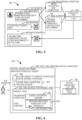
FIG. 4 for more details on creating a subsequent task, which illustrates a block diagram 400 for creating a subsequent task according to some implementations of the present disclosure. As shown inFIG. 4 , asession 410 may be provided between the user and the digital assistant, with the left side representing the user and the right side representing the digital assistant. For example, the user input 420 may indicate: "please provide a weather forecast for Beijing at 8 a.m. tomorrow". At this point, thedigital assistant 130 may call on the capabilities of themachine learning model 140 to determine: a triggeringcondition 422 is "at 8 a.m. tomorrow", and atask content 424 is "provide a weather forecast for Beijing". Furthermore, asubsequent task 450 may be created locally at thedigital assistant 130. In this way, without modifying the machine learning model, the function of processing non-instant tasks may be completed by adding a processing interface locally at thedigital assistant 130. - According to an example implementation of the present disclosure, in the process of configuring the subsequent task, if it is determined that the triggering condition indicates that the execution result of the task is to be provided at a predetermined future time point, the second prompt may be provided to the machine learning model at the predetermined future time point. In this example, the triggering condition explicitly specifies a future time point, at which time a delay type
subsequent task 450 may be created. According to an example implementation of the present disclosure, the delay type may represent that the task is not executed and the execution result is not provided immediately, but the execution of the task is delayed and the task is executed when the current time reaches the specified future time point. In this way, the task may be executed at an appropriate time point that meets the user need, thereby providing the execution result. - According to an example implementation of the present disclosure, the
digital assistant 130 may provide aresponse 430 to indicate to the user that the user request has been received and that the execution result of the task will be provided later. Specifically, a prompt may be created based on thetask content 424, such as "please provide a weather forecast for Beijing". - According to an example implementation of the present disclosure, the subsequent task may be executed to provide an execution result when the triggering condition is met. Specifically, the prompt may be sent to the
machine learning model 140 when the current time point reaches 8 a.m. the next day. Furthermore, themachine learning model 140 may quickly call a weather forecast tool to query the weather forecast for Beijing and provide a response to thedigital assistant 130 upon receiving the prompt. In this way, the user may ensure that they obtain the execution result at the specified future time point by delaying the task. - Then, an
execution result 440 may be returned to the user based on the response of themachine learning model 140. For example, the current time may be presented at the head of theexecution result 440, and then the weather forecast for Beijing may be provided. It should be understood that the response of themachine learning model 140 is rapid and may ensure that the user obtains the execution result at the specified time point. Alternatively, and/or additionally, the triggeringcondition 422 may be adjusted, such as adjusting the predetermined time point to be earlier by 1 second (or other time length). At this time, a prompt may be provided to themachine learning model 140 at 07:59:59 a.m. the next day to ensure that the user receives the weather forecast at 08:00 a.m. - It should be understood that although the user input described above only involves creating one subsequent task, alternatively and/or additionally, the user input may involve a plurality of subsequent tasks. For example, the user input may represent "provide a weather forecast for Beijing at 8 a.m. every day". At this time, a cyclic subsequent task may be created at the
digital assistant 130, that is, sending prompts to the machine learning model at 8 a.m. every day to obtain Beijing's weather forecast. - Referring to
FIG. 4 , the case of the triggering condition involving the predetermined future time point has been described. Alternatively, and/or additionally, the triggering condition may also involve "task completion". Referring toFIG. 5 for more details,FIG. 5 illustrates a block diagram 500 for creating a subsequent task according to some implementations of the present disclosure. As shown inFIG. 5 , asession 510 may be provided between the user and the digital assistant. For example, a user input 520 may represent: "Please count weather forecasts for 100 cities nationwide". At this time, thedigital assistant 130 may call the ability of themachine learning model 140 to determine: a triggeringcondition 522 is "when statistics are completed", and atask content 524 is "provide weather forecasts for 100 cities nationwide". Further, asubsequent task 550 may be created locally at thedigital assistant 130. - According to an example implementation of the present disclosure, in the process of configuring subsequent tasks, if it is determined that the triggering condition indicates providing the execution result of the task when it is completed, it indicates that executing the task will take a long time, so the prompt may be immediately provided to the machine learning model. In order to avoid long waits by the user, a
response 530 may be provided to provide feedback to the user on the user input 520 to indicate that the user input is being processed. - In this example, the triggering condition does not explicitly specify a future time point, and an asynchronous type of
subsequent task 550 may be created at this time. According to an example implementation of the present disclosure, the asynchronous type may represent that the execution result cannot be provided immediately but based on the callback message from the machine learning model, the execution result is provided when the task is completed. In this way, the execution result may be provided immediately when the task is completed. Thedigital assistant 130 may provide the user with the weather forecasts for 100 cities nationwide based on the response from the machine learning model. In this way, the user does not need to keep thesession 510 and wait for a long time, but may obtain the execution result immediately when the task is completed through the asynchronous task. - According to an example implementation of the present disclosure, the
digital assistant 130 may be a client tool created by the user 110 and/or other users to communicate with the machine learning model. At this time, thedigital assistant 130 may include a preset task, that is, the preset task is added to thedigital assistant 130 during the creation of thedigital assistant 130. SeeFIG. 6 for more details on creating thedigital assistant 130, which illustrates a block diagram 600 of a process of adding a preset task during the creation of a digital assistant according to some implementations of the present disclosure. - As shown in
FIG. 6 , acreator 610 may use atool 620 for creating digital assistants to create thedigital assistant 130. Intool 620 for creating digital assistants, acontrol 660 may indicate whether to allow the user of the generateddigital assistant 130 to create a subsequent task during the session. Specifically, if thecontrol 660 is not selected, thedigital assistant 130 will operate in a conventional manner. - If the
control 660 is selected, it allows users to create a scheduling task in the natural language during a session with thedigital assistant 130. At this time, thedigital assistant 130 may operate according to the process described above when receiving the user input. For example, based on the user input, a corresponding prompt is generated, and based on the machine learning model's reply to the prompt, it is determined whether a subsequent task needs to be created. If it is determined that the task specified by the user input belongs to a non-instant task, a subsequent task is created. At this time, assuming thatdigital assistant 130 receives "please provide a weather forecast for Beijing at 8 a.m. tomorrow", thedigital assistant 130 will create subsequent tasks in the manner described above, and provide the weather forecast at 8 a.m. the next day. Alternatively, and/or additionally, if thecontrol 660 is selected, the creator may further use acontrol 670 to set reminder statements. For example, "please ask a question in the dialog box" may be set. At this time, when the digital assistant interacts with the user for the first time, it will remind the user to set a task through the dialog box. - Alternatively, and/or additionally, during the creation of the
digital assistant 130, adialog box 622 for a preset task may be called to add a preset task to the digital assistant. For example, thecreator 610 may execute aninteraction 640, may enter a triggering condition for the preset task inbox 630, and may enter a task content of the preset task inbox 632, and so on. At this time, apreset task 650 will be included in the createddigital assistant 130. - According to an example implementation of the present disclosure, the user of the
digital assistant 130 may select to activate or disable thepreset task 650. If it is determined that thepreset task 650 is activated, the triggering condition of the preset task may be determined. At this time, the triggering condition may be determined locally at the digital assistant 130 (such as reading from local storage, etc.). Furthermore, a subsequent task of the preset task may be created to provide the execution result of the preset task based on the machine learning model when the triggering condition of the preset task is met. In this way, it is allowed to receive user tasks in a more diverse way, thereby receiving user input in a more convenient and efficient manner. - According to an example implementation of the present disclosure, the preset task may be processed in a manner similar to that described above. Specifically, if the triggering condition of the preset task indicates that the execution result of the preset task will be provided at a predetermined future time point, the preset task may be processed in a manner similar to
FIG. 4 . Specifically, a prompt (e.g., called a third prompt) may be generated based on the preset task, which may indicate that the task content of the preset task may be executed by calling the machine learning model. In the example ofFIG. 6 , the prompt may represent "provide a weather forecast for Shanghai". - Furthermore, a subsequent task of the preset task may be configured so that the generated prompt is provided to the machine learning model at a future time point (e.g., 09:00 a.m. every Saturday). Subsequently, the subsequent task of the preset task may be executed to provide the execution result based on a response of the machine learning model to the prompt. At this time, the machine learning model will receive the prompt "provide a weather forecast for Shanghai" at 09:00 a.m. every Saturday, and return the weather forecast for Shanghai to the
Digital Assistant 130. In this way, the machine learning model may be called regularly at thedigital assistant 130 to complete the preset task. Alternatively and/or additionally, another time point may be determined based on the future time point, such as sending the prompt to the machine learning model at 08:59:59 a.m. (or other time points) one second in advance, so that the user may receive the response to the prompt on time. - With the example implementations of the present disclosure, a new way of calling a machine learning model to process user tasks is provided. In this way, user tasks that cannot obtain execution results within a predetermined time period may be processed more flexibly and efficiently by creating delayed tasks and asynchronous tasks.
-
FIG. 7 illustrates a flowchart of amethod 700 for processing a user task according to some implementations of the present disclosure. Atblock 710, a user input represented in a natural language is received from a user. The user input indicates a task to be executed. Atblock 720, a task type of the task is determined based on the user input. Atblock 730, it is determined whether the task type indicates an execution result of the task is unable to be obtained within a predetermined time period. If the result atblock 730 is "yes", themethod 700 proceeds to block 740. Atblock 740, a subsequent task of the task is created to provide the execution result of the task by a machine learning model when a triggering condition for the task is met. - According to an example implementation of the present disclosure, determining the task type includes: generating, based on the user input, a first prompt instructing the machine learning model to determine the task type; providing the first prompt to the machine learning model; and determining the task type based on a first response of the machine learning model for the first prompt.
- According to an example implementation of the present disclosure, the first prompt further instructs the machine learning model to determine the triggering condition and a task content for the task, and creating the subsequent task comprises: determining, based on the first response, the triggering condition and the task content for the task; and creating the subsequent task of the task based on the triggering condition and the task content.
- According to an example implementation of the present disclosure, creating the subsequent task of the task based on the triggering condition and the task content comprises: generating, based on the task content, a second prompt instructing the machine learning model to execute the task content; and configuring the subsequent task to provide the second prompt to the machine learning model based on the triggering condition.
- According to an example implementation of the present disclosure, configuring the subsequent task to provide the second prompt to the machine learning model based on the triggering condition comprises: in response to determining that the triggering condition indicates the execution result of the task is to be provided at a predetermined future time point, providing the second prompt to the machine learning model based on any of: providing, at the predetermined future time point, the second prompt to the machine learning model; and providing, at a further time point determined based on the predetermined future time point, the second prompt to the machine learning model.
- According to an example implementation of the present disclosure, configuring the subsequent task to provide the second prompt to the machine learning model based on the triggering condition comprises: in response to determining that the triggering condition indicates the execution result of the task is to be provided when the task is completed, providing the second prompt to the machine learning model; and providing feedback for the user input, the feedback indicating that the user input is being processed.
- According to an exemplary implementation of the present disclosure, the
method 700 further includes: executing the subsequent task to provide the execution result when the triggering condition is met. - According to an exemplary implementation of the present disclosure, providing the execution result when the triggering condition is met comprises: providing the execution result of the task based on a second response of the machine learning model for the second prompt.
- According to an example implementation of the present disclosure, the
method 700 is executed at a digital assistant for accessing the machine learning model, and creating the subsequent task comprises: creating the subsequent task at the digital assistant. - According to an example implementation of the present disclosure, the digital assistant further comprises a preset task that is added to the digital assistant during creation of the digital assistant, and the method further comprises: in response to determining that the preset task is activated, determining a triggering condition for the preset task; and creating a subsequent task of the preset task to provide an execution result of the preset task based on the machine learning model when the triggering condition for the preset task is met.
- According to an example implementation of the present disclosure, the triggering condition for the preset task indicates that the execution result of the preset task is to be provided at a predetermined future time point, and creating the subsequent task of the preset task comprises: generating, based on the preset task, a third prompt indicating a task content for calling the machine learning model to execute the preset task; and configuring the subsequent task of the preset task to provide the second prompt to the machine learning model according to any of: providing, at the predetermined future time point, the second prompt to the machine learning model; and providing, at a further time point determined according to the predetermined future time point, the second prompt to the machine learning model.
- According to an example implementation of the present disclosure, the
method 700 further includes: executing the subsequent task of the preset task to provide the execution result based on a third response of the machine learning model for the third prompt. -
FIG. 8 illustrates a block diagram of anapparatus 800 for processing a user task according to some implementations of the present disclosure. Theapparatus 800 includes: a receivingmodule 810 configured to receive a user input represented in a natural language from a user, the user input indicating a task to be executed; adetermination module 820 configured to determine a task type of the task based on the user input; and acreation module 830 configured to, in response to determining that the task type indicates an execution result of the task is unable to be obtained within a predetermined time period, create a subsequent task of the task to provide the execution result of the task by a machine learning model when a triggering condition for the task is met. - According to an example implementation of the present disclosure, the
determination module 820 includes: a first generation module configured to generate, based on the user input, a first prompt instructing the machine learning model to determine the task type; a providing module configured to provide the first prompt to the machine learning model; and a type determination module configured to determine the task type based on a first response of the machine learning model for the first prompt. - According to an example implementation of the present disclosure, the first prompt further instructs the machine learning model to determine the triggering condition and a task content for the task, and the
creation module 830 includes: an information determination module configured to determine, based on the first response, the triggering condition and the task content for the task; and a task creation module configured to create the subsequent task of the task based on the triggering condition and the task content. - According to an example implementation of the present disclosure, the task creation module includes: a second generation module configured to generate, based on the task content, a second prompt instructing the machine learning model to execute the task content; and a configuration module configured to configure the subsequent task to provide the second prompt to the machine learning model based on the triggering condition.
- According to an example implementation of the present disclosure, the configuration module includes: a first providing module configured to, in response to determining that the triggering condition indicates the execution result of the task is to be provided at a predetermined future time point, provide the second prompt to the machine learning model.
- According to an example implementation of the present disclosure, the configuration module includes: a second providing module configured to, in response to determining that the triggering condition indicates the execution result of the task is to be provided when the task is completed, provide the second prompt to the machine learning model; and a feedback module configured to provide feedback for the user input, the feedback indicating that the user input is being processed.
- According to an exemplary implementation of the present disclosure, the
apparatus 800 further includes: an execution module configured to execute the subsequent task to provide the execution result when the triggering condition is met. - According to an example implementation of the present disclosure, the execution module includes: a response-based providing module configured to provide the execution result of the task based on a second response of the machine learning model for the second prompt.
- According to an example implementation of the present disclosure, the
apparatus 800 is executed at a digital assistant for accessing the machine learning model, and the creation module is further configured to create the subsequent task at the digital assistant. - According to an example implementation of the present disclosure, the digital assistant further includes a preset task that is added to the digital assistant during creation, and the
apparatus 800 further includes: a triggering condition determination module configured to, in response to determining that the preset task is activated, determine a triggering condition for the preset task; and a preset-based creation module configured to create a subsequent task of the preset task to provide an execution result of the preset task based on the machine learning model when the triggering condition for the preset task is met. - According to an example implementation of the present disclosure, the triggering condition for the preset task indicates that the execution result of the preset task is to be provided at a predetermined future time point, and the preset-based creation module includes: a third generation module configured to generate, based on the preset task, a third prompt indicating a task content for calling the machine learning model to execute the preset task; and a preset-based providing module configured to configure the subsequent task of the preset task to provide the second prompt to the machine learning model at a future time point.
- According to an example implementation of the present disclosure, the
apparatus 800 further includes: a preset task execution module configured to execute the subsequent task of the preset task to provide the execution result based on a third response of the machine learning model for the third prompt. -
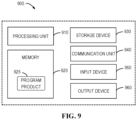
FIG. 9 illustrates a block diagram of adevice 900 capable of implementing multiple implementations of the disclosure. It should be understood that thecomputing device 900 shown inFIG. 9 is merely exemplary and should not constitute any limitation on the functionality and scope of the implementations described herein. Thecomputing device 900 shown inFIG. 9 may be used to implement the methods described above. - As shown in
FIG. 9 , thecomputing device 900 is in the form of a general computing device. The components ofcomputing device 900 may include, but are not limited to, one or more processors orprocessing units 910, amemory 920, astorage device 930, one ormore communication units 940, one ormore input devices 950, and one ormore output devices 960. Theprocessing unit 910 may be an actual or virtual processor and can execute various processes based on the programs stored in thememory 920. In a multiprocessor system, multiple processing units execute computer executable instructions in parallel to improve the parallel processing capability of thecomputing device 900. - The
computing device 900 typically includes multiple computer storage medium. Such medium may be any available medium that is accessible to thecomputing device 900, including but not limited to volatile and non-volatile medium, removable and non-removable medium. Thememory 920 may be volatile memory (for example, a register, cache, a random access memory (RAM)), a non-volatile memory (for example, a read-only memory (ROM), an electrically erasable programmable read-only memory (EEPROM), a flash memory), or any combination thereof. Thestorage device 930 may be any removable or non-removable medium, and may include a machine readable medium such as a flash drive, a disk, or any other medium, which may be used to store information and/or data (such as training data for training) and may be accessed within thecomputing device 900. - The
computing device 900 may further include additional removable /non-removable, volatile/non-volatile storage medium. Although not shown inFIG. 9 , a disk driver for reading from or writing to a removable, non-volatile disk (such as a "floppy disk"), and an optical disk driver for reading from or writing to a removable, non-volatile optical disk may be provided. In these cases, each driver may be connected to the bus (not shown) by one or more data medium interfaces. Thememory 920 may include acomputer program product 925, which has one or more program units configured to execute various methods or acts of various implementations of the present disclosure. - The
communication unit 940 communicates with a further computing device through the communication medium. In addition, functions of components in thecomputing device 900 may be implemented by a single computing cluster or multiple computing machines, which can communicate through a communication connection. Therefore, thecomputing device 900 may be operated in a networking environment using a logical connection with one or more other servers, a network personal computer (PC), or another network node. - The
input device 950 may be one or more input devices, such as a mouse, a keyboard, a trackball, etc. Theoutput device 960 may be one or more output devices, such as a display, a speaker, a printer, etc. Thecomputing device 900 may also communicate with one or more external devices (not shown) through thecommunication unit 940 as required. The external device, such as a storage device, a display device, etc., communicate with one or more devices that enable users to interact with thecomputing device 900, or communicate with any device (for example, a network card, a modem, etc.) that makes thecomputing device 900 communicate with one or more other computing devices. Such communication may be executed via an input/output (I/O) interface (not shown). - According to the example implementations of the present disclosure, a computer-readable storage medium is provided, on which a computer-executable instruction or computer program is stored, wherein the computer-executable instructions is executed by the processor to implement the method described above. According to the example implementations of the present disclosure, a computer program product is also provided. The computer program product is physically stored on a non-transient computer-readable medium and includes computer-executable instructions, which are executed by the processor to implement the method described above. According to the exemplary implementations of the present disclosure, a computer program product is provided having stored thereon a computer program, and when the program is executed by a processor, the method described above is implemented.
- Various aspects of the present disclosure are described herein with reference to the flow chart and/or the block diagram of the method, the apparatus, the device and the computer program product implemented in accordance with the present disclosure. It would be appreciated that each block of the flowchart and/or the block diagram and the combination of each block in the flowchart and/or the block diagram may be implemented by computer-readable program instructions.
- These computer-readable program instructions may be provided to the processing units of general-purpose computers, specialized computers, or other programmable data processing devices to produce a machine that generates an apparatus to implement the functions/actions specified in one or more blocks in the flow chart and/or the block diagram when these instructions are executed through the computer or other programmable data processing apparatuses. These computer-readable program instructions may also be stored in a computer-readable storage medium. These instructions enable a computer, a programmable data processing apparatus and/or other devices to work in a specific way. Therefore, the computer-readable medium containing the instructions includes a product, which includes instructions to implement various aspects of the functions/actions specified in one or more blocks in the flowchart and/or the block diagram.
- The computer-readable program instructions may be loaded onto a computer, other programmable data processing apparatus, or other devices, so that a series of operational steps may be executed on a computer, other programmable data processing apparatus, or other devices, to generate a computer-implemented process, such that the instructions which execute on a computer, other programmable data processing apparatuses, or other devices implement the functions/acts specified in one or more blocks in the flowchart and/or the block diagram.
- The flowchart and the block diagram in the drawings show the possible architecture, functions and operations of the system, the method and the computer program product implemented in accordance with the present disclosure. In this regard, each block in the flowchart or the block diagram may represent a part of a unit, a program segment or instructions, which contains one or more executable instructions for implementing the specified logic function. In some alternative implementations, the functions labeled in the block may also occur in a different order from those labeled in the drawings. For example, two consecutive blocks may actually be executed in parallel, and sometimes can also be executed in a reverse order, depending on the function involved. It should also be noted that each block in the block diagram and/or the flowchart, and combinations of blocks in the block diagram and/or the flowchart, may be implemented by a dedicated hardware-based system that executes the specified functions or acts, or by the combination of dedicated hardware and computer instructions.
- Each implementation of the present disclosure has been described above. The above description is an example, not exhaustive, and is not limited to the disclosed implementations. Without departing from the scope and spirit of the described implementations, many modifications and changes are obvious to ordinary skill in the art. The selection of terms used in the present disclosure aims to best explain the principles, practical application or improvement of technology in the market of each implementation, or to enable other ordinary skill in the art to understand the various implementations disclosed herein.
Claims (15)
- A method for processing a user task, comprising:receiving a user input represented in a natural language from a user, the user input indicating a task to be executed;determining a task type of the task based on the user input; andin response to determining that the task type indicates an execution result of the task is unable to be obtained within a predetermined time period, creating a subsequent task of the task to provide the execution result of the task by a machine learning model when a triggering condition for the task is met.
- The method of claim 1, wherein determining the task type comprises:generating, based on the user input, a first prompt instructing the machine learning model to determine the task type;providing the first prompt to the machine learning model; anddetermining the task type based on a first response of the machine learning model for the first prompt.
- The method of claim 2, wherein the first prompt further instructs the machine learning model to determine the triggering condition and a task content for the task, and creating the subsequent task comprises:determining, based on the first response, the triggering condition and the task content for the task; andcreating the subsequent task of the task based on the triggering condition and the task content.
- The method of claim 3, wherein creating the subsequent task of the task based on the triggering condition and the task content comprises:generating, based on the task content, a second prompt instructing the machine learning model to execute the task content; andconfiguring the subsequent task to provide the second prompt to the machine learning model based on the triggering condition.
- The method of claim 4, wherein configuring the subsequent task to provide the second prompt to the machine learning model based on the triggering condition comprises: in response to determining that the triggering condition indicates the execution result of the task is to be provided at a predetermined future time point, providing the second prompt to the machine learning model based on any of:providing, at the predetermined future time point, the second prompt to the machine learning model; andproviding, at a further time point determined based on the predetermined future time point, the second prompt to the machine learning model.
- The method of claim 4, wherein configuring the subsequent task to provide the second prompt to the machine learning model based on the triggering condition comprises:in response to determining that the triggering condition indicates the execution result of the task is to be provided when the task is completed, providing the second prompt to the machine learning model; andproviding feedback for the user input, the feedback indicating that the user input is being processed.
- The method of claim 4, further comprising: executing the subsequent task to provide the execution result when the triggering condition is met.
- The method of claim 7, wherein providing the execution result when the triggering condition is met comprises: providing the execution result of the task based on a second response of the machine learning model for the second prompt.
- The method of claim 1, wherein the method is executed at a digital assistant for accessing the machine learning model, and creating the subsequent task comprises: creating the subsequent task at the digital assistant.
- The method of claim 9, wherein the digital assistant further comprises a preset task that is added to the digital assistant during creation of the digital assistant, and the method further comprises:in response to determining that the preset task is activated, determining a triggering condition for the preset task; andcreating a subsequent task of the preset task to provide an execution result of the preset task based on the machine learning model when the triggering condition for the preset task is met.
- The method of claim 10, wherein the triggering condition for the preset task indicates that the execution result of the preset task is to be provided at a predetermined future time point, and creating the subsequent task of the preset task comprises:generating, based on the preset task, a third prompt indicating a task content for calling the machine learning model to execute the preset task; andconfiguring the subsequent task of the preset task to provide the second prompt to the machine learning model according to any of:providing, at the predetermined future time point, the second prompt to the machine learning model; andproviding, at a further time point determined according to the predetermined future time point, the second prompt to the machine learning model.
- The method of claim 11, further comprising: executing the subsequent task of the preset task to provide the execution result based on a third response of the machine learning model for the third prompt.
- An apparatus for processing a user task, comprising:a receiving module configured to receive a user input represented in a natural language from a user, the user input indicating a task to be executed;a determination module configured to determine a task type of the task based on the user input; anda creation module configured to, in response to determining that the task type indicates an execution result of the task is unable to be obtained within a predetermined time period, create a subsequent task of the task to provide the execution result of the task by a machine learning model when a triggering condition for the task is met.
- An electronic device, comprising:at least one processing unit; andat least one memory, the at least one memory being coupled to the at least one processing unit and storing instructions for execution by the at least one processing unit, the instructions, when executed by the at least one processing unit, causing the electronic device to perform a method according to any of claims 1 to 12.
- A computer readable storage medium having stored thereon a computer program which, when executed by a processor, causes the processor to implement a method according to any of claims 1 to 12.
Applications Claiming Priority (2)
| Application Number | Priority Date | Filing Date | Title |
|---|---|---|---|
| CN202311415811.3A CN119903933A (en) | 2023-10-27 | 2023-10-27 | Method, apparatus, device and medium for processing user tasks |
| PCT/CN2024/081050 WO2025086526A1 (en) | 2023-10-27 | 2024-03-11 | User task processing method and apparatus, device, and medium |
Publications (2)
| Publication Number | Publication Date |
|---|---|
| EP4575779A1 true EP4575779A1 (en) | 2025-06-25 |
| EP4575779A4 EP4575779A4 (en) | 2026-04-08 |
Family
ID=95469047
Family Applications (1)
| Application Number | Title | Priority Date | Filing Date |
|---|---|---|---|
| EP24719961.5A Pending EP4575779A4 (en) | 2023-10-27 | 2024-03-11 | USER TASK PROCESSING METHOD AND DEVICE, DEVICE AND MEDIUM |
Country Status (4)
| Country | Link |
|---|---|
| US (1) | US12572896B2 (en) |
| EP (1) | EP4575779A4 (en) |
| CN (1) | CN119903933A (en) |
| WO (1) | WO2025086526A1 (en) |
Family Cites Families (7)
| Publication number | Priority date | Publication date | Assignee | Title |
|---|---|---|---|---|
| CN107003999B (en) | 2014-10-15 | 2020-08-21 | 声钰科技 | System and method for subsequent responses to user's prior natural language input |
| US10747954B2 (en) | 2017-10-31 | 2020-08-18 | Baidu Usa Llc | System and method for performing tasks based on user inputs using natural language processing |
| EP3959713B1 (en) * | 2019-05-31 | 2023-08-23 | Apple Inc. | Voice assistant discoverability through on-device targeting and personalization |
| CN110853645A (en) * | 2019-12-02 | 2020-02-28 | 三星电子(中国)研发中心 | Method and device for recognizing voice command |
| CN114661899A (en) * | 2022-02-15 | 2022-06-24 | 北京结慧科技有限公司 | Task creating method and device, computer equipment and storage medium |
| CN115810355A (en) * | 2022-11-04 | 2023-03-17 | 合肥善达信息科技有限公司 | Kitchen intelligent voice assistant integrated system |
| CN115858119A (en) | 2022-11-30 | 2023-03-28 | 东软集团股份有限公司 | Delay task processing method, device, electronic device and storage medium |
-
2023
- 2023-10-27 CN CN202311415811.3A patent/CN119903933A/en active Pending
-
2024
- 2024-03-11 WO PCT/CN2024/081050 patent/WO2025086526A1/en active Pending
- 2024-03-11 EP EP24719961.5A patent/EP4575779A4/en active Pending
- 2024-04-12 US US18/634,744 patent/US12572896B2/en active Active
Also Published As
| Publication number | Publication date |
|---|---|
| WO2025086526A1 (en) | 2025-05-01 |
| US12572896B2 (en) | 2026-03-10 |
| EP4575779A4 (en) | 2026-04-08 |
| US20250138890A1 (en) | 2025-05-01 |
| CN119903933A (en) | 2025-04-29 |
Similar Documents
| Publication | Publication Date | Title |
|---|---|---|
| US12235840B2 (en) | Database query optimization via parameter-sensitive plan selection | |
| US20240144100A1 (en) | Method, apparatus, device and medium for training contrastive learning model | |
| US12468921B2 (en) | Pipelining and parallelizing graph execution method for neural network model computation and apparatus thereof | |
| CN111930283B (en) | Message display method and computing device | |
| CN111444158A (en) | Long-short term user portrait generation method, device, equipment and readable storage medium | |
| WO2026001052A1 (en) | Task processing method and apparatus, device, and computer-readable storage medium | |
| US12572896B2 (en) | Processing a user task | |
| CN115858667A (en) | Method, apparatus, device and storage medium for synchronizing data | |
| WO2025223031A1 (en) | Information processing method and apparatus, and device and storage medium | |
| WO2026001060A1 (en) | Information processing method and apparatus, device, and storage medium | |
| WO2025223030A1 (en) | Information processing method and apparatus, and device and storage medium | |
| WO2026001042A1 (en) | Information processing method and apparatus, and device and storage medium | |
| JP2026512322A (en) | Methods, apparatus, devices, and storage media for creating applications. | |
| CN112099794A (en) | Front-end project construction method and device | |
| WO2024240149A1 (en) | Method and apparatus for application processing, and device and storage medium | |
| CN109547563B (en) | Message push processing method and device, storage medium and server | |
| US11328018B2 (en) | System and method for state dependency based task execution and natural language response generation | |
| CN113268268A (en) | Management and control method and device of software development kit, computer equipment and medium | |
| US20250150418A1 (en) | Method, apparatus, device and storage medium for session interaction | |
| US20250147735A1 (en) | Method, apparatus, device and storage medium for message processing | |
| US20250258712A1 (en) | Method, device, and storage medium for data processing | |
| US20260050494A1 (en) | Method, device and storage medium for function invocation | |
| WO2026091972A1 (en) | Task processing method and apparatus, device, storage medium, and program product | |
| US20250390290A1 (en) | Estimation based just-in-time compiling | |
| US20260086857A1 (en) | Method, apparatus, device, and medium for managing tool in application |
Legal Events
| Date | Code | Title | Description |
|---|---|---|---|
| STAA | Information on the status of an ep patent application or granted ep patent |
Free format text: STATUS: UNKNOWN |
|
| STAA | Information on the status of an ep patent application or granted ep patent |
Free format text: STATUS: THE INTERNATIONAL PUBLICATION HAS BEEN MADE |
|
| PUAI | Public reference made under article 153(3) epc to a published international application that has entered the european phase |
Free format text: ORIGINAL CODE: 0009012 |
|
| STAA | Information on the status of an ep patent application or granted ep patent |
Free format text: STATUS: REQUEST FOR EXAMINATION WAS MADE |
|
| 17P | Request for examination filed |
Effective date: 20250429 |
|
| AK | Designated contracting states |
Kind code of ref document: A1 Designated state(s): AL AT BE BG CH CY CZ DE DK EE ES FI FR GB GR HR HU IE IS IT LI LT LU LV MC ME MK MT NL NO PL PT RO RS SE SI SK SM TR |
|
| REG | Reference to a national code |
Ref country code: DE Ref legal event code: R079 Free format text: PREVIOUS MAIN CLASS: G06F0009460000 Ipc: G06F0040300000 |
|
| A4 | Supplementary search report drawn up and despatched |
Effective date: 20260310 |
|
| RIC1 | Information provided on ipc code assigned before grant |
Ipc: G06F 40/30 20200101AFI20260304BHEP Ipc: G06F 3/16 20060101ALI20260304BHEP Ipc: G06F 9/48 20060101ALI20260304BHEP Ipc: G06N 20/00 20190101ALI20260304BHEP Ipc: G06N 3/08 20230101ALI20260304BHEP Ipc: G06Q 10/10 20230101ALI20260304BHEP |